Airport Announcements Teacher Guide Airport Alert
Teacher Instruction Guide
Lesson 1
Lesson Overview
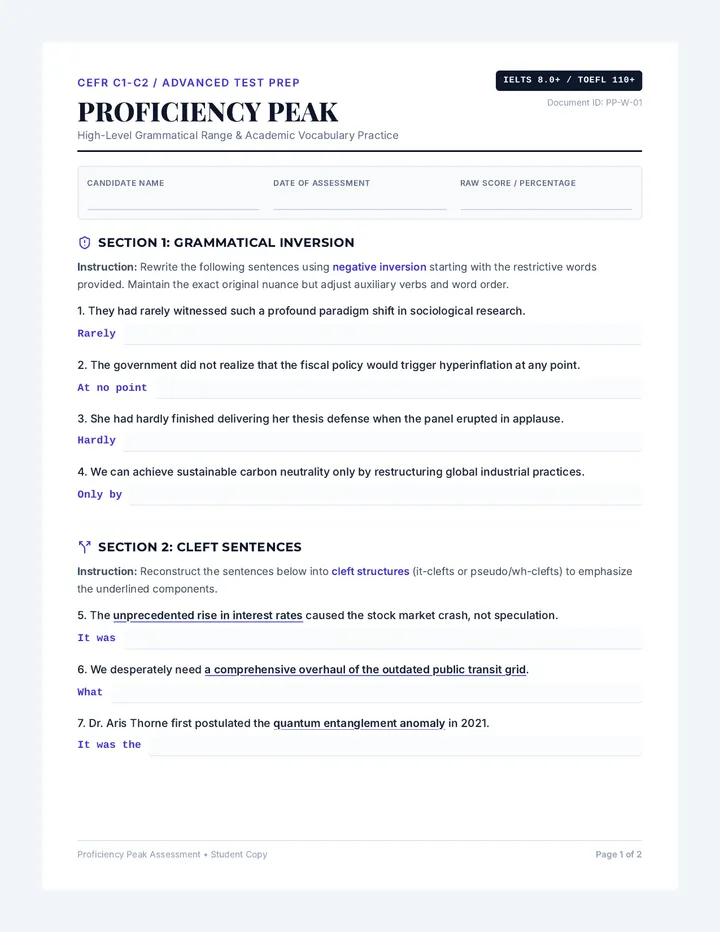
This lesson focuses on high-stakes listening in a noisy, pressurized environment: the international airport. Students will learn to ignore "fluff" and zero in on critical data points like flight numbers, gates, and times.
Key Vocabulary
La Puerta / El Portón
Gate
Retrasado / Demorado
Delayed
Vuelo / Salida
Flight / Departure
Cambio de última hora
Last-minute change
The Listening Scripts (Read Aloud)
Read these at a brisk, natural pace. Mimic airport background noise if possible.
Announcement 1: Gate Change
"Atención pasajeros del vuelo IB-3402 con destino a Madrid. Ha habido un cambio de última hora. La salida ya no será por la puerta B-12. Repito, el vuelo IB-3402 ahora saldrá desde la puerta C-05. El abordaje comenzará en quince minutos."
Announcement 2: Delay & Voucher
"Lamentamos informar que el vuelo AR-550 a Buenos Aires tiene un retraso de tres horas debido al clima. Por favor, acérquense al mostrador de la aerolínea para recoger un vale de comida de diez euros. La nueva hora de salida estimada es a las dieciocho treinta."
Announcement 3: Final Boarding
"Último llamado para los pasajeros García y Martínez del vuelo MX-101 a la Ciudad de México. El cierre de puertas es inminente en la puerta A-24. Repito, García y Martínez, favor de presentarse de inmediato."
Teaching Tips
First Listen: Just for gist. (Where are they going?)
Second Listen: Specific details. (What is the gate/time?)
Third Listen: Verification. (Are there any special instructions?)
Remind students that they don't need to translate every word ("Atención", "Lamentamos", etc.) to understand the core message.
Airport Alerts Worksheet Flight Log & Itinerary
International Travel Simulation
Passenger Name
Date
1
The Gate Change
Listen to the first announcement and update your boarding pass info below.
Flight Number
Original Gate
B-12
NEW GATE
2
Delay Alert
The weather has turned! Capture the details of the delay.
Destination
Duration of Delay
New Departure Time
Airline Compensation
3
Final Call
Who is in trouble? Identify the missing passengers.
Names of Passengers (2)
Gate Number
Destination
Traveler's Notebook Series
Airport Alert Slides Airport Alert
Survival Spanish: Lesson 1
The Situation
You are at Madrid-Barajas Airport.
Your flight leaves in 45 minutes, but the screens just went black.
The only way to know where to go is to listen to the overhead announcements.
ESCÚCHAME
Survival Strategy
1. Filter the Noise
Ignore "Estimados pasajeros" and "Lamentamos informar". These are polite fillers.
2. Hunt for Anchors
Listen for nouns and numbers: Vuelo, Puerta, Hora, Ciudad.
3. Tone Matters
Does the voice sound apologetic? (Delay) Urgent? (Final call) Informational? (Gate change)
4. Ready?
Get your Flight Log ready. The first announcement is coming...
City Navigation Teacher Guide Navigating Madrid
Teacher Script & Key
Lesson 2
Objectives
Students will follow rapid directions given in the imperative (mandatos) and identify specific landmarks on a map based on a listening passage.
Key Vocabulary (Imperatives)
Siga recto
Go straight
Gire a la...
Turn to the...
Cruce la calle
Cross the street
Hasta llegar a
Until reaching
A mano derecha
On the right
La esquina
The corner
The Script: "Virtual Drop-off"
Read at a natural speed. Start at 'Puerta del Sol' on the student map.
The Taxi Driver's Rapid Route
"Bueno, estamos en la Puerta del Sol. Para llegar a su hotel, primero siga recto por la Calle de Alcalá. Cruce la Plaza de Cibeles y continúe derecho. Al llegar a la esquina con la calle Alfonso Doce, gire a la derecha. Camine dos cuadras. Verá una entrada grande de un parque a mano izquierda, pero no entre. Siga una cuadra más y doble a la izquierda. Su hotel está justo al lado del Museo del Prado. ¡Buen viaje!"
The Answer Key
Start: Puerta del Sol
Path: Straight on Alcalá -> Through Cibeles -> Right on Alfonso XII -> Left after two blocks.
Final Destination: Hotel Ritz (adjacent to El Prado).
City Navigation Worksheet Madrid Express
Real-Time Route Tracing
Instrucciones:
Put your pen on Puerta del Sol (START). Listen to the taxi driver's directions and trace the path he describes. Label your final destination.
Puerta del Sol
Start Here
Plaza de Cibeles
Museo del Prado
Parque del Retiro
???
Calle Alfonso XII
Calle de Alcalá
Key Movements
Did you cross the Plaza?
Which way did you turn at Alfonso XII?
Final Destination Name
Command Capture
Write down 3 command verbs (mandatos) you heard:
City Navigation Slides Perdido en Madrid
Survival Spanish: Lesson 2
The Command Center
Listen for "Mandatos"
Siga (Continue/Go)
Gire / Doble (Turn)
Cruce (Cross)
Pare (Stop)
"Directions are like a puzzle. If you miss one turn, the whole picture changes."
Focus on the verb and the landmark.
Visual Landmarks
Puerta del Sol
The center of Madrid
Plaza de Cibeles
Famous fountain & square
Museo del Prado
World-class art museum
READY YOUR MAPS!
Market Transactions Teacher Guide Market Money
Teacher Scripts & Pricing Guide
Lesson 3
Lesson Focus
This lesson targets rapid-fire numerical listening and the social cues of bargaining. Students need to distinguish between an initial offer and a final price.
The Script: Mexico City Market
Read with varying energy—the vendor should be enthusiastic, the buyer should be hesitant.
Interaction 1: The Leather Bag
Vendedor: "¡Pásale, joven! Mire esta bolsa de cuero auténtico. Solo ochocientos pesos."
Comprador: "Híjole, es muy cara. ¿No me la deja en quinientos?"
Vendedor: "¡No, hombre! Quinientos es muy poco. Se la dejo en seiscientos cincuenta y es mi última oferta."
Comprador: "Sale, trato hecho."
Interaction 2: Fruit & Spices
Vendedor: "Llévese el kilo de mangos por cuarenta y cinco pesos."
Comprador: "Dame dos kilos. ¿Y la canela?"
Vendedor: "La canela está en noventa pesos el frasco. Por todo serían doscientos pesos, pero se lo dejo en ciento ochenta."
Key Concepts for Students
Bargaining Phrases: "¿Cuánto cuesta?", "¿Es lo menos?", "Se lo dejo en...", "Trato hecho".
Numbers: Focus on the difference between 60/70 (sesenta/setenta) and 100/500 (cien/quinientos).
Currency Context: 800 Pesos (approx $40 USD) vs 800 Euros (approx $880 USD). Context is everything!
Answer Key
Item Start Price Final Price Bolsa de cuero 800 pesos 650 pesos Frutas/Canela 200 pesos (Total) 180 pesos
Market Transactions Worksheet El Mercado
Price Comparison & Bargaining Tracker
Listen to the interaction. Don't just write the first number you hear! The price often changes during the conversation.
Articulo 1: La Bolsa
Mexico / Pesos
Initial Ask (The Vendor's First Price)
$
The Counter-Offer (The Buyer's Ask)
$
FINAL AGREED PRICE
$
Articulo 2: Frutas y Canela
Mexico / Pesos
Price per Kilo (Mangos)
Price per Frasco (Canela)
Original Total
Discounted Total
Vocabulary Check
Listen for these phrases. Check them off when you hear them:
"¡Pásale, joven!"
"Es muy cara."
"Última oferta."
"Trato hecho."
Market Transactions Slides Money Mastery
Survival Spanish: Lesson 3
The Art of the Deal
Step 1: The Hook
"¡Mire que bonito! Barato, barato..."
Step 2: The High Price
The vendor starts high. You never pay the first price.
Step 3: The Regateo
Negotiating. Use phrases like:
"¿No me lo deja en...?"
$$$
Money Talk
Listen for numbers in the hundreds (cientos) and thousands (miles).
Know Your Currency
El Peso
Used in Mexico, Argentina, Colombia. Numbers can get BIG (e.g., $1,000 MXN ≈ $60 USD).
El Euro
Used in Spain. Numbers are typically smaller (e.g., €50 for a nice dinner).
"If you hear 1.000 (mil) in Spain, you're buying something very expensive!"
Restaurant Interactions Teacher Guide Bistro Briefing
Teacher Script & Order Key
Lesson 4
Objectives
Students will identify specific ingredients, daily specials, and modifications (allergies/preferences) in a fast-paced restaurant environment.
The Script: "Platos del Día"
Read at a fast, slightly "bored" waiter pace. Do not repeat unless asked in the second round.
Announcement of Specials
"Buenas tardes. Hoy tenemos tres platos especiales. Primero, una ensalada de tomate y queso de cabra con vinagreta de miel. Segundo, tenemos salmón a la plancha servido con espárragos y papas al horno. Y por último, nuestra famosa paella de mariscos con camarones y calamares. ¿Les traigo algo de tomar primero?"
Dialogue: Allergy Concerns
Cliente: "Disculpe, ¿la paella tiene cacahuetes? Es que soy alérgico a los frutos secos."
Camarero: "No, la paella no tiene cacahuetes, pero sí tiene mariscos, obviamente. Si prefiere, podemos hacer el salmón sin mantequilla, si tiene problemas con los lácteos."
Cliente: "Perfecto. Y para ella, la ensalada pero sin nueces, por favor."
Vocabulary Focus
A la plancha: Grilled
Al horno: Baked
Frutos secos: Nuts/Dried fruit
Cacahuetes: Peanuts
Answer Key
Special 1: Ensalada (tomate, queso de cabra, miel)
Special 2: Salmón (espárragos, papas)
Special 3: Paella (camarones, calamares)
Allergy/Mod: No cacahuetes (nuts), sin mantequilla (dairy), sin nueces (walnuts).
Bistro Briefing Worksheet Guest Check
Comanda de Restaurante
Table No.
12
Especiales del Día
Listen to the waiter list the three specials and their main ingredients.
PLATO 1: ENSALADA
Ingredientes adicionales...
PLATO 2: SALMÓN
Acompañamientos...
PLATO 3: PAELLA
Proteínas...
Restricciones Alimentarias
Listen to the conversation about allergies. What must be changed?
ALERGIA DETECTADA
SUBSTITUCIÓN / CAMBIO
Tu Pedido (Your Order)
Based on what you heard, what would YOU order? Be specific about any changes.
Gracias por su visita
Restaurant Transactions Slides Bistro Briefing
Survival Spanish: Lesson 4
The Fast-Talking Waiter
In Spanish-speaking countries, waiters often recite specials from memory and very quickly.
Your Mission:
Identify the Main Protein and the Sides. Don't worry about the adjectives (delicioso, fresco, etc.).
Survival Vocab: Allergies
Soy alérgico/a a...
I am allergic to...
¿Contiene...?
Does it contain...?
Sin...
Without...
Frutos secos
Nuts (Essential!)
"Listening for 'Sin' can literally be a lifesaver."
Emergency Response Teacher Guide Emergency Response
Teacher Script & Assessment Guide
Lesson 5
The Challenge
This final lesson tests students' ability to handle emotional, rapid-fire Spanish in a high-stakes scenario. They must bypass the "panic" and extract actionable data.
The Script: The Lost Backpack
Read with heavy breathing and a frantic, fast tone. Simulate a bad phone connection if possible.
Voicemail from "Mateo"
"¡Oye, contesta! Soy Mateo. Escucha, he tenido un problema grave. He perdido mi mochila en el metro... creo que fue en la línea cuatro, cerca de la estación de Goya. ¡Tenía mi pasaporte y todo mi dinero dentro! Por favor, tienes que ir a la oficina de objetos perdidos en Sol. Ellos cierran a las ocho de la noche. Si no lo recupero hoy, no puedo viajar mañana. ¡Llámame en cuanto puedas!"
Urgency Vocabulary
Socorro / Ayuda: Help
Objetos perdidos: Lost and found
Me han robado: I've been robbed
Llamen a la policía: Call the police
Urgencias: Emergency room
Tengo prisa: I'm in a hurry
Grading Key (The 5 Ws)
Who: Mateo (a friend/travel companion).
What: Lost backpack (mochila) containing passport and money.
Where: Metro Line 4, near Goya station.
When: Must act before 8:00 PM (closing time).
Action Required: Go to the Lost and Found office in Sol.
Emergency Incident Report Informe de Incidente
OFFICIAL EMERGENCY LOG — TRAVELER ASSIST
Case Number
ESP-992-B
Reporting Agent (Student Name)
Priority Level
LOW
MEDIUM
CRITICAL
I. ORIGIN OF CALL
Caller Identity
Tone/Emotional State
II. DESCRIPTION OF INCIDENT
Main Problem (What happened?)
Critical Items Involved
Example: Documentos, Dinero...
III. SPATIAL & TEMPORAL DATA
Specific Location (Station/Line)
Deadline/Closing Time
IV. ACTION PLAN (What do we do now?)
Instruction Summary
Emergency Protocols Verified
Travel Emergency Slides Emergency Alert
Survival Spanish: Final Mission
The Final Challenge
In an emergency, your brain naturally panics. Your job is to stay calm.
"Don't translate every word. Look for the nouns of life or death: Passport, Medicine, Police, Deadline."
TIMING
LOCATION
IDENTITY
OBJECTS
Urgent Action Phrases
!
Tienes que ir...
You have to go...
!
Cierran a las...
They close at...
!
He perdido mi...
I have lost my...
!
¡Ayúdame!
Help me!
VOICEMAIL INCOMING...