Register Rules Slides Register Rules
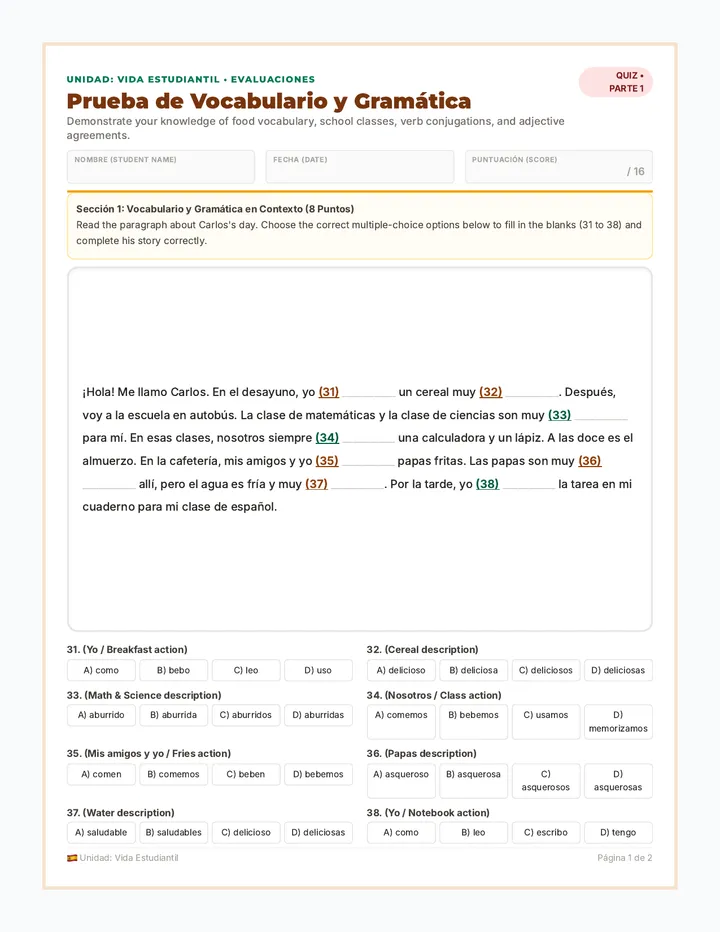
Mastering Tu vs. Vous
SÉRIE : ÉTIQUETTE PROFESSIONNELLE
The Social Faux Pas
L'Accroche
"Tutoiement is not for everyone..."
Imagine calling the President of France "tu" in a formal interview. What message does that send? Is it friendly... or insulting?
Watch the provided clip: The Interview Incident
The French Divide
TU
Informal / Friendly
Close friends and siblings
Children and pets
Teachers or Employers
VOUS
Formal / Respectful
Anyone in a position of authority
Strangers and elders
Always used for plural (Groups)
When in Doubt, VOUS it Out
In French culture, using vous is a sign of respect, not coldness. It is much easier to recover from being "too formal" than from being "disrespectful."
Step 1
Start with Vous
Step 2
Wait for them to suggest Tu
Step 3
Transition only then
Vite ! Tu ou Vous ?
1. Meeting your boss's spouse for the first time.
?
2. Asking a shopkeeper for the price of a croissant.
?
3. Shouting at your younger brother to stop bothering you.
?
Be ready to explain your reasoning!
Register Analysis Worksheet Social Register Analysis
Le Tutoiement vs. Le Vouvoiement
Nom:
Date:
Contextual Overview
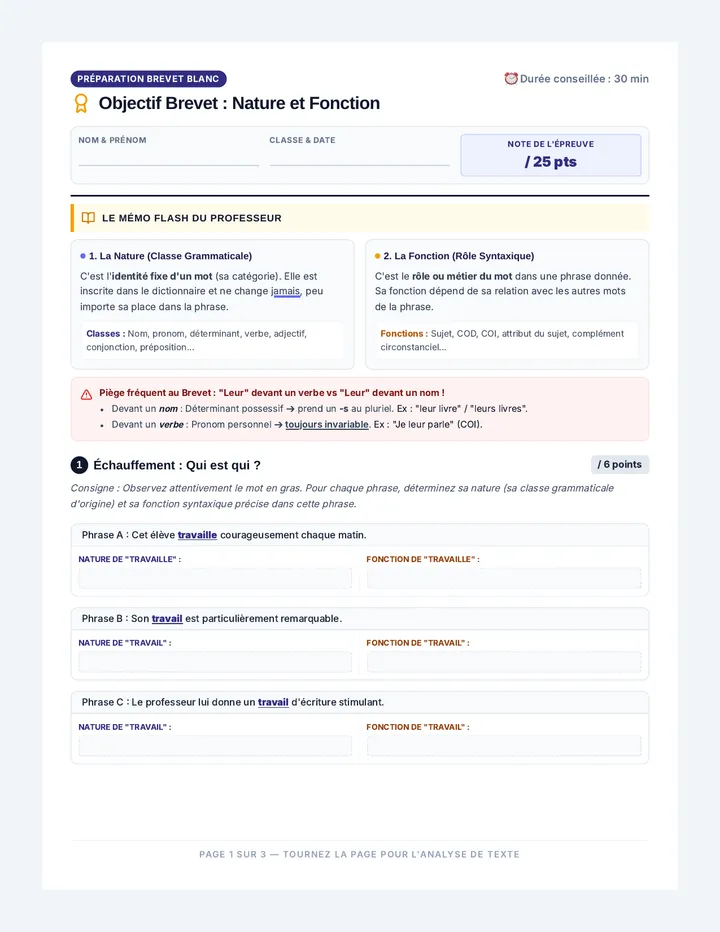
In French, choosing between tu and vous is more than a grammar choice; it defines the nature of your relationship. Using the incorrect register can be perceived as an act of aggression, extreme coldness, or inappropriate intimacy.
Part 1: The Social Spectrum
Determine whether "tu" or "vous" is most appropriate for the following individuals. Check the box and provide a brief justification based on social distance or hierarchy .
Your first-time interviewer at a tech firm.
Tu
Vous
A 6-year-old child in a park asking for help.
Tu
Vous
Your high school science teacher.
Tu
Vous
Your best friend's grandfather.
Tu
Vous
Part 2: Case Study Deep Dive
Read the following scenario and answer the analysis questions below.
Scenario: The Ambitious Intern
Marc is a 17-year-old intern at a prestigious Parisian marketing agency. On his first day, he meets the Creative Director, Mme. Lefebvre. Mme. Lefebvre is 45 and very well-respected. Marc wants to appear modern and approachable, so he greets her with:
"Salut ! Tu vas bien ?"
1. Identify the specific sociolinguistic errors in Marc's greeting. List at least two.
2. How might Mme. Lefebvre perceive Marc based on this interaction? What impact could this have on his professional future?
3. Rewrite the greeting correctly to match the professional expectations of the environment.
"_____________________________________________________________________________"
Part 3: Cultural Translation
English does not have a "tu" vs. "vous" distinction (we only use "you"). How do we show the same levels of respect or familiarity in English without different pronouns?
Greeting Protocol Slides Greeting Protocol
The First 10 Seconds of Success
2
Protocoles de Salutation
The "Job Interview" Entrance
In a professional setting, the first 10 seconds determine your reputation.
"On n'a jamais une deuxième chance de faire une bonne première impression."
— French Proverb
Eye Contact
Posture
Handshake
Tone
The "Holy Trinity" of Greetings
Bonjour
Used until sunset (~18h00).
"Bonjour, Madame."
Bonsoir
Used in the evening.
"Bonsoir, Monsieur."
Enchanté(e)
"Pleased to meet you." Only for first meetings.
"Enchanté de faire votre connaissance."
Pro Tip: Never just say "Bonjour." Always add the title: "Bonjour, Monsieur."
Comment allez-vous ?
The Inquiry
"Comment allez-vous ?"
The Response
"Je vais bien, merci. Et vous ?"
Note the phrasing: Use merci and immediately return the question with et vous ?
Physical Protocol: Hands or Cheeks?
La Poignée de Main
• Firm but brief
• Direct eye contact
• Standard for professional settings
• Used when meeting strangers or superiors
La Bise
• Air kisses on the cheek (usually 2)
• Standard for friends/family
• ⚠️ Generally not for first-time professional meetings
RULE: If they extend a hand, take it. If they lean in, follow their lead!
First Impressions Activity Premier Contact
Formal Greetings & Role-Play Scenarios
Binôme:
Date:
Part 1: Interaction Scenarios
With a partner, choose three of the following scenarios to act out. Focus on proper greeting, eye contact, and the "handshake protocol."
Scenario A
The Job Interview
You are entering the office of a recruiter at 10:00 AM. You have never met them before.
Scenario B
The Guest Speaker
It is 7:00 PM. You are greeting a visiting professor after their lecture at a university event.
Scenario C
The Shopkeeper
You enter a small boutique at 3:00 PM. You need to catch the owner's attention politely.
Scenario D
The Neighbor's Guest
You meet an elderly relative of your neighbor at a dinner party. It is late evening.
Part 2: Peer Observation
Observe your partner as they perform. Mark which protocols they followed correctly.
Criteria Trial 1 Trial 2 Trial 3 Correct Greeting (Bonjour vs Bonsoir) ☐ ☐ ☐ Inclusion of Title (Monsieur / Madame) ☐ ☐ ☐ Proper Physical Contact (Handshake/Nod) ☐ ☐ ☐ Eye Contact & Posture ☐ ☐ ☐ Polite Inquiry (Comment allez-vous ?) ☐ ☐ ☐
Part 3: Reflexion Culturelle
Which part of the formal greeting felt most unnatural to you? Why?
In a French professional context, why is it considered rude to say "Bonjour" without a name or title following it?
Introduction Mastery Slides Making Connections
Professional Introductions and Protocol
3
Les Présentations
The Essential Phrase
"Je vous présente..."
[ I present to you... ]
This is the most formal way to introduce one person to another. It demonstrates that you are facilitating a professional connection.
Protocol: Who goes first?
1
The Person of Higher Status
Address them first.
2
The Person Being Introduced
Name them second.
The Formula:
"[Title], je vous présente [Name]."
Example: "Monsieur le Maire, je vous présente Marc, notre stagiaire."
Providing Context
Don't just say a name. Give a reason for the connection.
Self-Introduction
"Je me présente : Marc Dupont."
"Je suis étudiant à l'Université de Paris."
Introducing Others
"C'est mon collègue."
"Il travaille sur le projet marketing."
Always follow up with: "Enchanté(e)."
Quick Check: Who is Introduced?
Scenario 1
You are introducing your best friend to your school principal.
"Monsieur le Proviseur, je vous présente..."
Scenario 2
You are introducing a new employee to the CEO.
"Madame la Directrice, je vous présente..."
Remember: The person of higher status is addressed first!
Social Facilitator Activity The Social Facilitator
Professional Introduction Workshop
Nom:
Date:
The Introduction Formula
1. [Address Superior]
2. "Je vous présente..."
3. [Name of Person 2]
4. [Brief Context/Role]
Example: "Madame la Directrice, je vous présente Thomas. Il est notre nouveau chef de projet."
Part 2: Character Scenarios
Work in groups of three. One person is the Facilitator , one is the Superior , and one is the Introduced Party . Rotate roles and write your script for one round below.
Character A
Mme. Dubois
CEO of a Bank
Character B
Marc
Summer Intern
Character C
The Manager
Your Role: Facilitator
Write your introduction script (en français):
Part 3: Strategic Analysis
Why must you address the superior first?
Why is context ("He is an intern") important?
Vocabulaire Utile
Stagiaire: Intern
Collègue: Colleague
Directeur/trice: Director
Collaborateur: Associate
Honorific Mastery Slides Honorific Mastery
The Power of Titles and Respect
4
Titres et Honorifiques
The "Big Three"
Monsieur
(M.)
Used for any adult male.
Madame
(Mme)
Used for any adult female.
Mademoiselle
(Mlle)
No longer used in official professional French context.
Rule: Never use just "Bonjour" - always add the honorific.
Titles in Sentences
In French, you often use the title within the sentence to maintain distance and respect.
Address + Professional Title
"Monsieur le Directeur"
"Madame la Présidente"
"Monsieur le Professeur"
The Linguistic Shift
When speaking directly to a person of status, you replace their name with their title.
"Puis-je vous aider, Madame la Directrice ?"
Titre Challenge: Match the Form
1. A Mayor (Male)
Monsieur le Maire Le Maire Dupont
2. A CEO (Female)
Madame la PDG Madame directrice
3. A Doctor (Gender Neutral)
Docteur [Nom] Monsieur le Docteur
Note: For medical doctors, "Docteur [Nom]" is standard. For high officials, the "Monsieur/Madame le [Titre]" is strictly required.
The "No Name" Nuance
In very formal French, it is often more polite NOT to use the person's last name after "Monsieur" or "Madame."
Too Direct / Familiar
"Bonjour, Madame Lefebvre."
Perfectly Formal
"Bonjour, Madame."
When in doubt, stop at "Madame" or "Monsieur." It is safer and more elegant.
Title Match Activity Le Match des Titres
Navigating Professional Honorifics
Nom:
Part 1: The Title Match
Match the English job title/description to the most appropriate formal French address used in professional settings.
1. The Mayor of a city (Male)
2. A High School Principal (Female)
3. A Medical Doctor (First Meeting)
4. The President of a Company (Male)
5. A University Professor
A. Madame la Proviseure
B. Monsieur le Professeur
C. Monsieur le Maire
D. Docteur [Nom de famille]
E. Monsieur le Président
Part 2: Courteous Integration
Rewrite the following sentences to be more formal by replacing the general "Monsieur/Madame" with the person's specific professional title.
Example: "Bonjour, Monsieur." (To a Male Professor)
Response: "Bonjour, Monsieur le Professeur."
1. "Puis-je vous parler, Madame ?" (To the President of a Company)
Réponse : ________________________________________________________________
2. "Enchanté de vous rencontrer, Monsieur." (To the Mayor of the town)
Réponse : ________________________________________________________________
3. "Voici mon dossier, Madame." (To your School Principal)
Réponse : ________________________________________________________________
Part 3: Cultural Nuance
In a professional French meeting, you have been introduced to Mme. Martin. For the rest of the conversation, do you address her as "Madame Martin" or simply "Madame"? Explain your choice based on protocol.
Simulation Event Slides Simulation Culminante
Le Sommet Mondial
International Networking Event 2026
Genève, Suisse
The Setting
Welcome to the Global Economic & Cultural Forum. You are here as a representative of your industry, academic institution, or government agency.
"The connections you make today will define your career tomorrow."
Location:
Palais des Nations
Protocoles du Sommet
Register Check
VOUS is mandatory. No exceptions. Using "tu" is grounds for an immediate social disqualification.
Physicality
Brief, firm handshakes. Maintain eye contact. Respect personal space (la bulle sociale).
Honorifics
Use Monsieur/Madame or Monsieur le Directeur. Never use first names without explicit invitation.
Your Mission
01
Self-Introduction
Introduce yourself to at least 3 delegates you haven't met. State your role and organization.
02
Social Facilitation
Facilitate 2 introductions between other delegates using "Je vous présente...".
Le Défi :
The Elevator Pitch
You have 30 seconds to explain why your presence at the forum matters. Be brief, be brilliant, be formal.
Start Circulating
"Puis-je me présenter ? Je m'appelle..."
GREETINGS INTRODUCTIONS NETWORKING DEBRIEF
Networking Persona Cards Cartes d'Identité
Networking Simulation Persona Cards
Cut out your assigned persona card. This is your identity for the duration of the Global Forum. Study your title and organization carefully—you must introduce yourself and others with perfect professional etiquette.
Délégué(e) Officiel
M. Julien Roche
Directeur des Innovations
Organisation : SolarTech France
GENÈVE 2026 • FORUM ÉCONOMIQUE
Délégué(e) Officiel
Mme Claire Valery
Présidente-Directrice Générale (PDG)
Organisation : Banque de Montréal
GENÈVE 2026 • FORUM ÉCONOMIQUE
Délégué(e) Officiel
M. Alexandre Dumas
Chef de Cabinet
Organisation : Ministère de la Culture
GENÈVE 2026 • FORUM ÉCONOMIQUE
Délégué(e) Officiel
Mme Sarah Benali
Responsable Logistique
Organisation : Croix-Rouge Internationale
GENÈVE 2026 • FORUM ÉCONOMIQUE
Délégué(e) Officiel
M. Luc Moreau
Stagiaire de Recherche
Organisation : Institut Pasteur
GENÈVE 2026 • FORUM ÉCONOMIQUE
Délégué(e) Officiel
Mme Isabelle Lebrun
Chargée de Communication
Organisation : UNESCO
GENÈVE 2026 • FORUM ÉCONOMIQUE