Oracle Bone Mystery Slides Oracle Bone Mystery
Unlocking the Secrets of 3,000-Year-Old Scripts
Unit: Ink Origins Lesson 01
日
Sun
月
Moon
The 3,000-Year-Old Puzzle
Oracle Bone Art
Scratches on a turtle shell?
Imagine you are a king in ancient China. You want to know if it will rain tomorrow.
Scribes would carve questions into bones or shells, heat them until they cracked, and "read" the cracks!
These carvings were the very first Chinese characters.
What is a Pictograph?
Picto-
From the Latin pictus , meaning "painted" or "drawn."
-Graph
From the Greek graphein , meaning "to write."
A Pictograph is a character that looks like the object it represents.
?
Guess the Ancestor
Symbol A
VS
Symbol B
One is the Sun (Rì) and one is the Moon (Yuè). Which is which?
Nature's Blueprints
Mountain (Shān)
Look at the peaks!
River / Water (Shuǐ)
Flowing currents...
Time to Decode
Grab your "Bone Scratches Decoder" worksheet. You'll be matching 3,000-year-old drawings to the things we see in nature today.
Success Criteria
Can you spot the visual patterns?
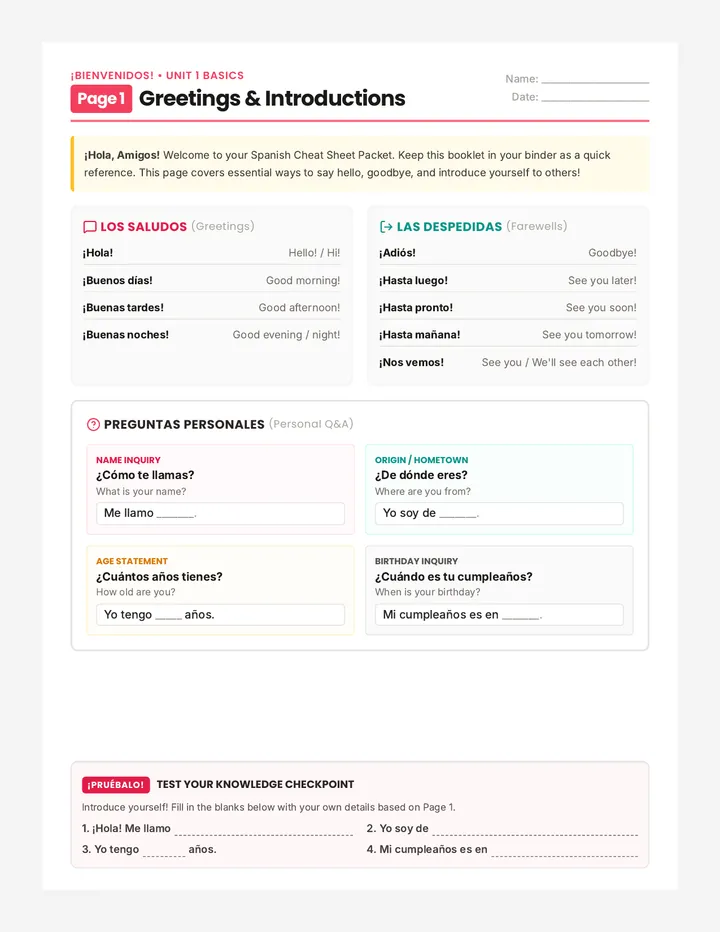
Bone Scratches Decoder Worksheet Bone Scratches Decoder
Lesson 01: Exploring Oracle Bone Script
Name:
Date:
1
The Ancient Matchmaker
Draw a line connecting the 3,000-year-old **Oracle Bone Script** to its modern **Meaning** and its modern **Mandarin Character**.
Oracle Script
Meaning
Modern Form
MOUNTAIN
月
SUN
山
MOON
日
2
The Artist's Eye
Choose one of the symbols above. Explain **one specific visual detail** that helps you remember what it means. (For example: "The dot in the sun represents the center of the star.")
3
Create Your Own Script
If you had to create a "pictograph" for the word **TREE** using only simple lines (just like the ancient scribes), what would it look like? Draw it in the box below.
Your Oracle Bone Drawing
Draw your "Tree" symbol here.
Did you know?
The modern Chinese character for tree is **木 (mù)**. Does your drawing look anything like it? Why or why not?
古代
Shell Seeker Facilitation Teacher Guide T
Shell Seeker Facilitation
Teacher's Instructional Guide • Lesson 01
Lesson Overview
This lesson introduces students to the ancient origins of Mandarin Chinese characters. By focusing on **Oracle Bone Script** (jiǎgǔwén), students will understand that Chinese writing began as literal drawings of the world. This foundation is crucial for developing visual mnemonics in later lessons.
Essential Question
"How can a simple drawing evolve into a complex writing system?"
Quick Stats
Duration
45-60 Minutes
Key Characters
日, 月, 山, 水
Subject Area
Literacy / History
Instructional Flow
01
The Hook: The Turtle Shell Mystery (10 mins)
Display the first slides. Ask students: "If you lived 3,000 years ago and had no paper, what would you write on?" Explain the history of divining through bone cracking. Stress that these were actual questions asked by kings.
02
Visual Analysis: Pictographs (15 mins)
Use the slides to define "Pictograph." Guide students through the guessing games for Sun and Moon. Ask: "What visual features make the ancient 'Sun' look like a real sun?" (The center dot represents the solar core/pupil of an eye).
03
Worksheet: The Decoder (20 mins)
Hand out the "Bone Scratches Decoder." Students should work independently to match the symbols. For Part 3, encourage them to be as minimal as possible—remind them they are "carving" this into a hard bone!
Questions to Spark Curiosity
"Why do you think the characters became more 'square' and less 'curvy' over time?" (Hint: It's easier to brush-paint straight lines than round ones!)
"If we didn't have emojis today, how would you write a text message using only pictures?"
Differentiation
Support
Provide students with photos of real mountains and rivers to place next to their ancient scripts for side-by-side comparison.
Extension
Challenge students to combine two pictographs to make a new word (e.g., Sun + Moon = Bright/Brightly).
Elemental Morphing Slides Elemental Morphing
From Drawings to Symbols: The 3-Stage Evolution
Lesson 02
How Characters Change
Stage 1
The Pictograph
A literal drawing of the object.
Stage 2
Traditional
Complex strokes for formal writing.
Stage 3
Simplified
Faster to write, fewer strokes.
FIRE (Huǒ)
火
Pictograph
火 Traditional
火 Simplified
"For some characters like 'Fire', the Traditional and Simplified forms stayed the same!"
WATER (Shuǐ)
水
水
水
The central "flow" of the river became the vertical hook stroke. The ripples became the side strokes!
WOOD / TREE (Mù)
木
木
木
See the trunk? See the branches? See the roots?
EARTH / SOIL (Tǔ)
土
土
土
A mound of earth sitting on the ground. Simple and solid.
The Scribe's Studio
You are now a master of the elements. Your task: Draw the evolution of each character on your "Nature's Strokes" worksheet.
Practice makes mastery
Nature's Strokes Practice Worksheet Nature's Strokes Practice
Lesson 02: Elemental Morphing
Name:
**Task:** For each element, draw the three stages of its evolution. Then, practice writing the modern character in the grid. Remember to follow the strokes exactly as shown in the presentation!
Element
Pictograph
Traditional
Simplified
Practice Box
FIRE
huǒ
火
WATER
shuǐ
水
WOOD
mù
木
EARTH
tǔ
土
The Scribe's Choice
Which of the four elements was the hardest to draw in its "Traditional" form? Why do you think that stage was replaced by a simpler version later on?
Ink Origins • Lesson 02 • Elemental Morphing Workshop
Elemental Keys Answer Key K
Elemental Keys
Teacher Answer Key • Lesson 02
Element: Fire (Huǒ)
Pictograph
火
火
Note: The Traditional and Simplified forms are identical for "Fire."
Element: Water (Shuǐ)
Pictograph
水
水
Element: Wood (Mù)
Pictograph
木
木
Element: Earth (Tǔ)
Pictograph
土
土
Watch Out For:
**Stroke Order:** Ensure students are starting from top-to-bottom and left-to-right.
**The Vertical Line:** In "Water" (水), the central vertical line should have a small hook at the bottom.
**Proportion:** In "Earth" (土), the bottom horizontal line is longer than the top one. If they are equal, it might look like "Scholar" (士).
Hiding Animals Slides 马鱼鸟 马鱼鸟
Hiding Animals
Can You Spot the Secret Features?
Lesson 03
The Horse (Mǎ)
马
Wait... where did the legs go?
Horse: 马
1 The top part is the **Mane** and **Head**.
! The bottom line represents the **Galloping Legs**!
The Fish (Yú)
鱼
Traditional: 魚
See the four dots at the bottom? In ancient writing, those were the **Fins** and **Tail**.
Simplified: 鱼
The four dots turned into a single **Smooth Line**. It's much faster to swim (and write) this way!
The Bird (Niǎo)
鸟
The Eye is Key!
The character 鸟 has a tiny horizontal dash inside the top box.
That dash is the Bird's Eye.
Don't let it fly away!
"If you remove the dash, you get the character for **Crow** (wū) because you can't see a black bird's eye!"
Become a Visual Detective
Observe
Look for legs, tails, and eyes.
Trace
Feel the strokes turn into shapes.
Mnemonic
Create a story to lock it in.
Critter Cues Matching Cards Critter Cues: Memory Cards
Lesson 03 • Card Set
**Instructions:** Cut out these cards along the dashed lines. Mix them up and try to match the **Ancient Drawing** to its **Modern Character**. For a challenge, play a game of "Concentration" (face-down memory) with a partner!
Ancient Form
? ? ?
Modern Character
马
Horse (Mǎ)
Ancient Form
? ? ?
Modern Character
鱼
Fish (Yú)
Ancient Form
? ? ?
Modern Character
鸟
Bird (Niǎo)
Ink Origins • Lesson 03 • Mnemonic Game Cards
Trace the Tail Worksheet Trace the Tail
Lesson 03: Visual Mnemonics
Visual Evidence Worksheet
1
The Feature Detective
Look closely at the modern characters below. Circle the specific stroke that represents the "hidden" animal feature.
马
Find the Legs/Tail
"One long stroke for the galloping motion."
鱼
Find the Fins/Body
"The scale-filled body and the flow of the tail."
鸟
Find the Eye
"A single dash that makes the bird alive."
2
Mnemonic Mastery
Choose one of the animals above. Draw a **cartoon picture** around the character to show how the strokes fit into the animal's body. Then, write a one-sentence "Memory Story" to help you remember it.
Drawing Area
Example Story:
"The **Horse** has a long mane (top part) and one big jumping leg (bottom stroke) to run fast!"
Your Story:
3
Stroke Practice
马
鱼
鸟
Invisible Ideas Slides Invisible Ideas
How Do You Draw Something You Can't See?
Lesson 04
The Horizon Trick
If you want to draw **"UP"** or **"DOWN"**, you first need a reference point.
Imagine a horizontal line represents the **Ground** or the **Horizon**.
Everything else is relative to that line!
上
下
Above
Below
上
UP (Shàng)
"The vertical line points ABOVE the horizon."
下
DOWN (Xià)
"The vertical line points BELOW the horizon."
MIDDLE (Zhōng)
中
Target
In ancient times, this looked like a **Drum** or a **Target** with an arrow shooting right through the center.
If you cut a box exactly in half with a vertical stroke, you are in the **MIDDLE**.
"China is called **Zhōngguó** (Middle Kingdom) because it was thought to be at the center of the world!"
Size & Scale
人
Person (Rén)
Two simple legs walking.
大
Big (Dà)
A person with their arms stretched wide!
Wait! Look closely: **大** is just **人** with a horizontal line (arms) added!
Spatial Reasoning
Time to test your spatial skills. Head over to your "Spatial Symbols" worksheet to map out these invisible ideas.
Upper • Lower • Central • Expansion
Spatial Symbols Worksheet Spatial Symbols
Lesson 04: Abstract Ideas
Name:
1
The Horizon Map
Look at the diagram below. Place the correct Mandarin character in the empty boxes based on their position relative to the center line.
?
Upper Zone
中
Center (Already Done!)
Lower Zone
?
Choose from: 上 (up) or 下 (down)
2
Growth of an Idea
Follow the transformation from **Person** to **Big**. Fill in the blanks with the correct meanings.
人
Meaning:
——
Wide Arms
大
Meaning:
3
The Spatial Riddle
How would you describe the character **中** (Middle) to a friend who has never seen it before? Use the concept of "splitting the box."
Ink Origins • Lesson 04 • Spatial Reasoning Workshop
Abstract Check Exit Ticket 大
Abstract Check
Exit Ticket
1. The Horizon Line
Draw the modern character for **DOWN** in the circle below.
2. Logic Leap
If **人** means person and **大** means big, why do you think **天** (Tiān) means "Sky" or "Heaven"?
(Hint: What is above the big person's head?)
Name:
Done
大
Abstract Check
Exit Ticket
1. The Horizon Line
Draw the modern character for **DOWN** in the circle below.
2. Logic Leap
If **人** means person and **大** means big, why do you think **天** (Tiān) means "Sky" or "Heaven"?
(Hint: What is above the big person's head?)
Name:
Done
Museum Masterpieces Slides 文字史 书法艺
Museum Masterpieces
The Ink Origins Final Portfolio Project
Summative Project
The Curator's Mission
You have been hired as a curator for the **International Museum of Writing**.
Your task is to create a 5-panel exhibit that shows how Mandarin characters grew from ancient drawings into modern script.
Requirements:
Select 5 characters from our unit.
Show the 3 stages of evolution.
Write a "Curator's Note" for each.
Use your best "scribe" handwriting.
What a Panel Looks Like
Exhibit 01: The Mountain (Shān)
山
Ancient
Stage 1
Traditional
Stage 2
山
Stage 3
"The ancient mountain looks like three jagged peaks. Over time, the peaks became straight, vertical lines sitting on a flat base (the ground)."
Your Character Gallery
Choose 5 favorites from our lessons!
日
Sun
月
Moon
火
Fire
水
Water
马
Horse
鱼
Fish
鸟
Bird
上
Up
...and many more! Check your previous worksheets.
The Gallery Opening
At the end of class, we will hang our portfolios on the wall for a **Gallery Walk**. Prepare to show your expertise!
Curators, Begin!
Etymology Exhibit Portfolio 馆长证
Visual Etymology
Exhibition Portfolio
Museum Curator Name
Institution / Class
"A character is more than just a word; it is a story that has been told for three thousand years."
Exhibit 01
Subject:
字
Oracle Bone
Traditional
Modern
Curator's Note:
Explain the evolution here...
Exhibit 02
Subject:
字
Curator's Note:
Exhibit 03
Subject:
Exhibit 04
Exhibit 05
Curator's Checklist C
Curator's Checklist
Self-Assessment & Rubric • Lesson 05
Before we open the museum for the Gallery Walk, use this checklist to ensure your exhibits are ready for the public. A great curator is precise, artistic, and informative!
Visual Accuracy
I have included all **3 stages** of evolution for all 5 characters.
My **Oracle Bone** drawings look like the ancient scripts we studied (no modern details added).
My **Modern Characters** follow the correct stroke order and proportions.
Curator's Notes
I explained **what the original picture was** for each character.
I described **how the lines changed** (e.g., "The curves became straight squares").
My handwriting is **clear and legible** for museum visitors to read.
Presentation
My portfolio has a completed **Title Page** with my name.
I used **ink or dark pencil** so the characters "pop" off the page.
Master Curator Feedback
Historian Skill
Ancient Accuracy
Scribe Skill
Modern Form
Curator Skill
Explanation