Stress Trap Slides
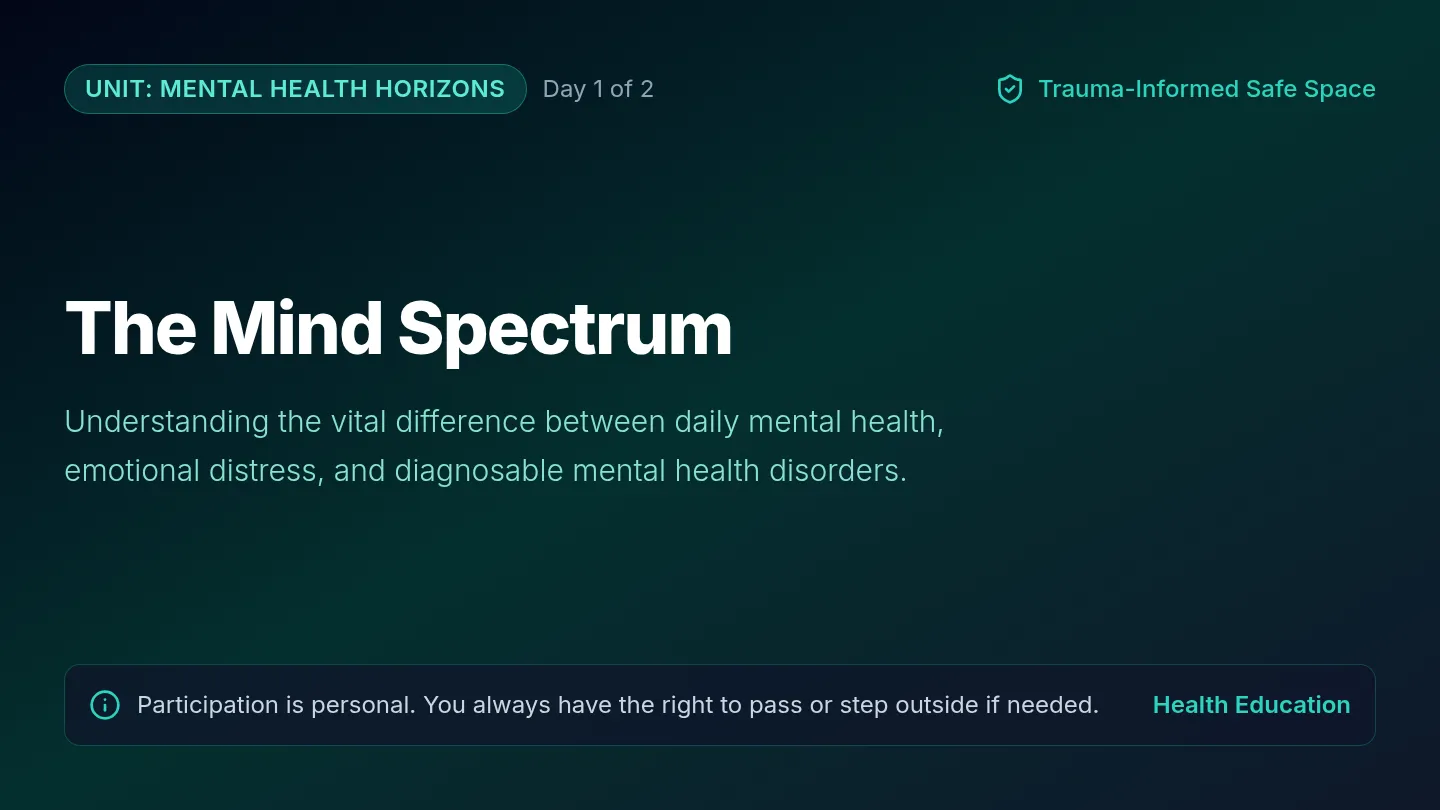
Biology of Addiction
The Stress Trap
Biological Reality vs. Perceived Relief
Mission Parameters
01
Analyze Physiology
Break down how depressants and stimulants disrupt the central nervous system.
02
Evaluate the Rebound
Investigate why chemical "relief" leads to increased anxiety and biological fatigue.
03
Design Resilience
Map healthy alternatives that work with the body's natural chemistry.
Lab Briefing: Discussion
"Why do you think people believe alcohol relaxes them if science says it increases anxiety long-term?"
5:00 Minutes
Share 2-3 Ideas
Observation: Biological Interference
Eyes on Deck
Embedded media
Instructions
On your Neural Response Worksheet, complete the T-Chart identifying:
- Immediate Feeling
- Long-term Biological Impact
Key Pauses
- 0:28 Stress Response Basics
- 1:33 The Stimulant Irony
- 2:42 Resource Checklist
The Biological "Why"
Depressants
Slows down the Central Nervous System (CNS).
- Interferes with decision-making and coordination.
- Long-term: Actually increases baseline anxiety and depression.
Stimulants
Artificial acceleration of physiological systems.
- Mimics stress symptoms (high heart rate, blood pressure).
- The Crash: Leaves user more tired, irritable, and stressed than before.
The Rebound Effect
Why chemical shortcuts fail the brain.
Phase 1: Use
Substance masks stress signals or numbs the brain's "alarm" system.
Phase 2: The Rebound
The body attempts to compensate, making you more sensitive to stress when the chemical wears off.
"Instead of helping you deal with stress, drugs and alcohol can actually make things worse."
Biological Resilience
Venting
Talking to a trusted person reduces cortisol levels and activates logical processing.
Movement
Exercise releases endorphins—natural chemicals that boost mood without a crash.
Resources
988
Suicide & Crisis Line
Stress Circuit Mapping
You are now a biology forensic artist. Your task is to map the internal circuits of stress and coping.
Circuit A
The Vicious Cycle: Chemical coping leading to the biological crash.
Circuit B
The Resilient Cycle: Natural endorphins and sustainable relief.
Neural Response Worksheet
Neural Response Worksheet
Topic: Biological Impact of Substances
Name:
Date:
Observation Instructions
As you watch the video, document the physiological interactions for each substance category. Pay close attention to the difference between how a person feels immediately versus what is actually happening to their Central Nervous System (CNS).
| Substance Category | Immediate Feeling (Perceived) | Biological Impact (Long-term) |
|---|
| | |
| Alcohol | | |
Depressant | | |
|
Stimulants
Caffeine, Adderall | | |
|
Opioids
Painkillers, Heroin | | |
Definition Lab
Central Nervous System (CNS):
The complex of nerve tissues that controls the activities of the body, including the brain and spinal cord.
Endorphins:
Natural chemicals produced by the body to relieve stress and pain; they work similarly to opioids but without the crash.
The Irony Question
Why is it biologically ironic that people use stimulants (like caffeine or nicotine) to "deal with stress"?
Stress Circuit Activity
Stress Circuit Mapping
Activity: Physiological Flowchart Analysis
SCHEMATIC 042-B
Name: __________________________ Date: ___________________________
Circuit A: The Stress Trap
Map the cycle of substance use. Show how temporary relief leads to a biological crash and increased baseline stress.
Circuit B: Resilience Loop
Map a healthy coping mechanism (exercise or talking). Show how natural endorphins create sustainable relief.
A Chemical Coping Cycle
B Healthy Resilience Loop
Include: Stress Trigger Include: Substance / Action Include: Biological Sensation Include: Long-term Result Include: CNS Interaction
Biology Reflection Journal
Biology Reflection Journal
Student: __________________________
Session: ___________________________
"
Today's Reflection
"How does understanding the biology of addiction change your view on using substances to cope with stress?"
Key Term Review
The Rebound Effect
Think about the specific substances we discussed (Alcohol, Stimulants, Opioids). How do their physical effects compare to the feeling of natural endorphins?