Nutrition Digest Study Guide
Nutrition & Digestive Health
Unit Study Guide • Page 1: Nutrients & Food Groups
Total Points _____ / 65
Name:
Period:
Date:
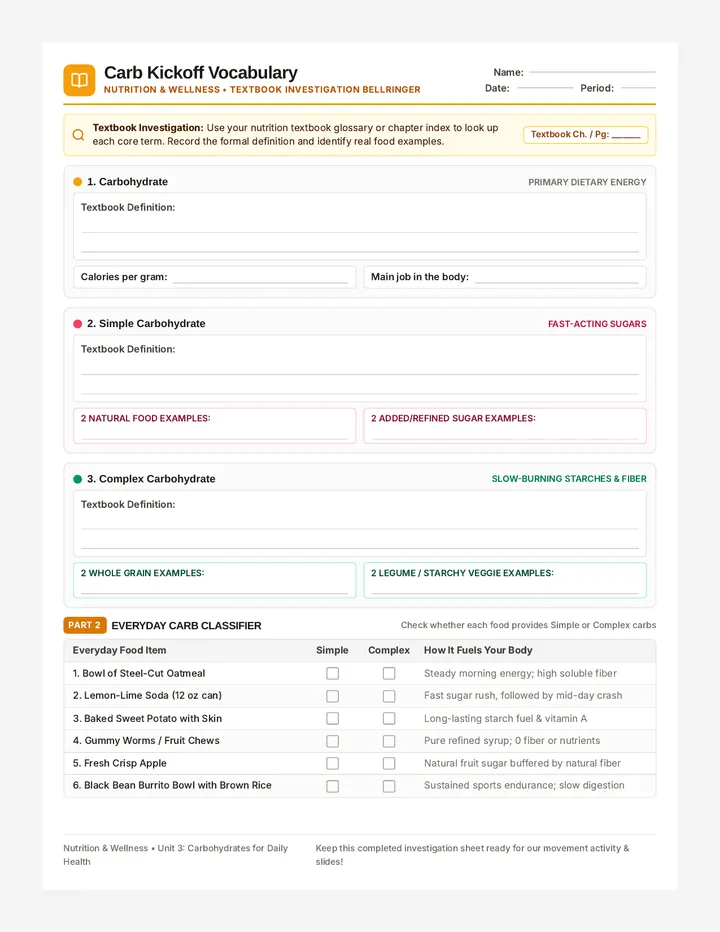
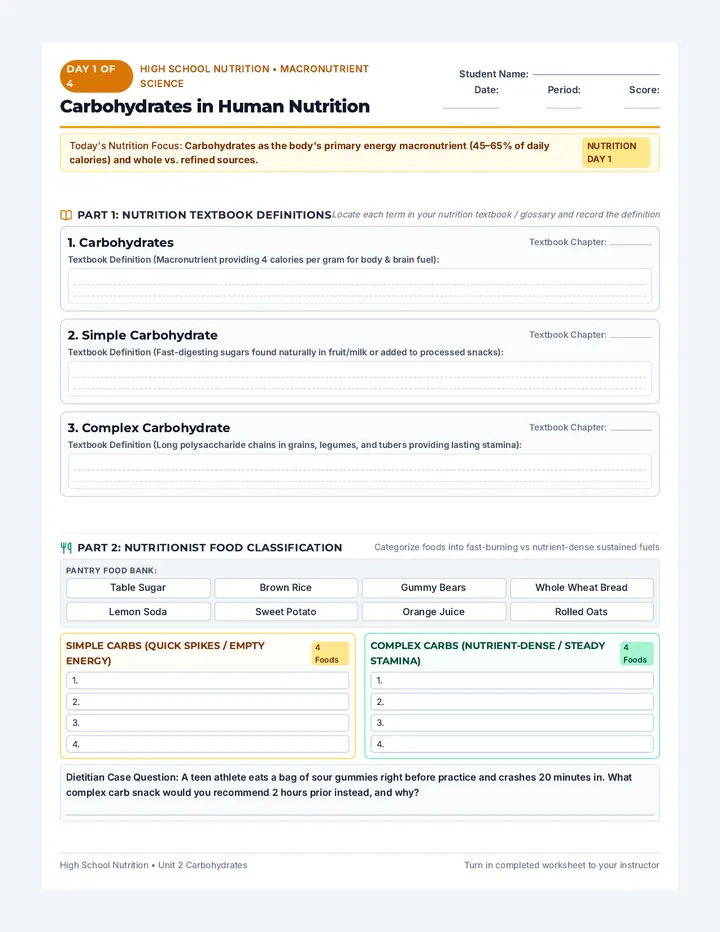
Part 1: Macronutrients & MyPlate Blueprint
MyPlate Plant Proportions: State what fraction of your total meal plate should be composed of plant foods, and name the two distinct food groups that make up this portion:
Recommended Plate Fraction:
Plant Food Group 1:
Plant Food Group 2:
Whole Grain Classification: List two specific examples of whole grains (which preserve the bran, germ, and endosperm), and state one key nutritional advantage of whole grains over refined grains:
Whole Grain Example 1:
Whole Grain Example 2:
Nutritional Advantage (Fiber/Minerals):
Complex Carbohydrates & Fiber Sources: Identify the MyPlate food group that provides the bulk of complex carbohydrates and roughage, and name two nutrient-dense staple foods from this group:
Primary Food Group:
Nutrient-Dense Food 1:
Nutrient-Dense Food 2:
Immediate Fuel Metabolism: Why are carbohydrates the human body's preferred source of immediate cellular energy? Name two vital organ systems or tissues that rely on glucose as their primary fuel:
Why Preferred (Conversion to Glucose):
Glucose-Dependent Tissue 1:
Glucose-Dependent Tissue 2:
Whole Fruit vs. Strained Juice: Explain two distinct physiological reasons why eating a whole orange or apple is healthier than drinking an equal serving of 100% fruit juice:
Physiological Reason 1 (Fiber & Blood Sugar Rate):
Physiological Reason 2 (Satiety & Fullness Cues):
Unit: Human Wellness & Digestive Health Page 1 of 4 Turn over for Part 2 →
Nutrient Synthesis & Digestion Dynamics
Unit Study Guide • Page 2: Protein Chemistry & GI Mechanics
Student Name:
Part 2: Protein Chemistry & Mechanical Digestion
Smoothie Recipe Modification: Name two distinct whole-food ingredients (no processed protein powders) you can blend into a fruit smoothie to significantly increase protein, and identify which food category each belongs to:
Whole-Food Addition 1 & Food Group:
Whole-Food Addition 2 & Food Group:
Protein Multi-Functionality: Beyond muscle repair, describe three other critical physiological jobs dietary proteins perform in the human body:
Biological Function 1:
Biological Function 2:
Biological Function 3:
Mastication in the Oral Cavity: Describe the two complementary purposes of chewing food thoroughly before swallowing:
Mechanical Purpose (Surface Area & Grinding):
Biochemical Purpose (Saliva & Amylase Action):
Gastrointestinal Motility: Name the involuntary wave-like muscular contraction that propels food through the digestive tract, and list two specific organs where this occurs:
Scientific Term for Contraction:
GI Organ 1:
GI Organ 2:
Alimentary Canal Sequencing: Number the 5 digestive organs in sequential order (1–5) and write one primary function that occurs within each organ:
Mouth [ ___ ] Primary Function:
Esophagus [ ___ ] Primary Function:
Stomach [ ___ ] Primary Function:
Small Int. [ ___ ] Primary Function:
Large Int. [ ___ ] Primary Function:
Unit: Human Wellness & Digestive Health Page 2 of 4 Turn over for Absorption & Accessory Organs →
Absorption Physiology & Food Processing
Unit Study Guide • Page 3: Intestinal Architecture & Food Science
Student Name:
Part 3: Digestive Absorption & Food Modification
Nutrient Absorption Epicenter: Identify the primary organ where >90% of nutrient absorption occurs, and name three major classes of nutrients absorbed into the bloodstream across its walls:
Primary Organ Name:
Nutrient Class 1:
Nutrient Class 2:
Nutrient Class 3:
Microscopic Surface Architecture: Name the microscopic, finger-like projections coating the small intestine, and explain two critical reasons why expanding surface area is essential for health:
Microscopic Structure Term:
Why Surface Area Matters (Reason 1):
Why Surface Area Matters (Reason 2):
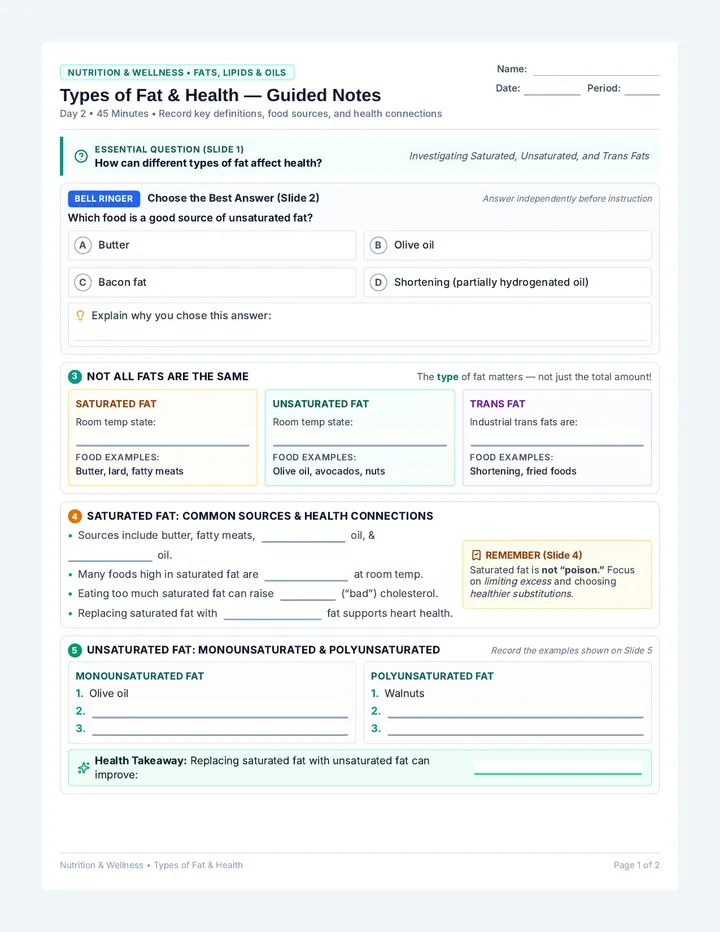
Lipid Digestion Teamwork: Describe the complementary roles of the liver and gallbladder in digesting fats, and state what bile physically does to large fat droplets:
Liver's Physiological Role:
Gallbladder's Role:
Physical Effect of Bile on Lipids:
Colon Fluid Reclamation: Identify the primary substance the large intestine reabsorbs into the bloodstream from remaining indigestible matter before waste is compacted for excretion:
Primary Reabsorbed Substance:
Processed Foods: What does it mean if a food is "processed," and what is one simple way a natural food can be changed?
What makes a food "processed"?
One example of how a food is changed (e.g., freezing, cooking, canning):
Unit: Human Wellness & Digestive Health Page 3 of 4 Turn over for Label Literacy & Wellness →
Consumer Label Literacy & Lifelong Wellness
Unit Study Guide • Page 4: Critical Thinking, Policy & Culture
Student Name:
Part 4: Label Evaluation, Dietary Guidelines & Social Influences
- Nutrition Label Investigation: The "Good" vs. "Bad" Food Debate
Multi-Evidence Analysis
Nutrition Facts
Oat & Honey Bar • 1 bar (45g)
Calories 190
Total Fat 6g 8%
Saturated Fat 1g 5%
Sodium 115mg 5%
Total Carb 29g 11%
Dietary Fiber 4g 14%
Total Sugars 14g
Incl. 12g Added Sugars 24%
Protein 5g 10%
• Case for "GOOD / HEALTHY" (Cite 2 positive nutrients & state who benefits):
Positive Factor 1:
Positive Factor 2:
• Case for "BAD / LIMIT" (Cite 2 concerning nutrients & health risks):
Concerning Factor 1:
Concerning Factor 2:
Dietitian Synthesis: Why avoid rigid "good vs. bad" labels? (Consider portion, activity level, and whole-diet balance):
Dietary Guidelines Goals: State two major objectives outlined in the Dietary Guidelines for Americans:
National Objective 1:
National Objective 2:
Heart-Healthy Habits: Name two simple food choices that help keep your heart and blood vessels healthy:
1. Better fat choice (e.g., plant oils instead of solid butter):
2. Healthy nutrient to eat more of (e.g., fiber from beans/oats):
Chronic vs. Acute Conditions: Name two chronic diseases influenced by nutrition, and explain two ways chronic diseases differ from acute illnesses:
Chronic Disease 1:
Chronic Disease 2:
Key Difference 1:
Key Difference 2:
Cultural & Staple Foods: Name two staple crops and give one example of a cultural food tradition:
2 Global Staple Crops:
Cultural Feast / Tradition:
Economic Grocery Influences: List two practical strategies to maintain high nutrition when fresh produce prices rise:
Budget Strategy 1:
Budget Strategy 2:
Holistic Wellness Dimensions: Name two wellness dimensions beyond physical health (e.g. mental, social) and how diet impacts them:
Wellness Dimension 1:
Wellness Dimension 2:
Unit: Human Wellness & Digestive Health Page 4 of 4 • End of Study Guide Review all concepts thoroughly before the exam