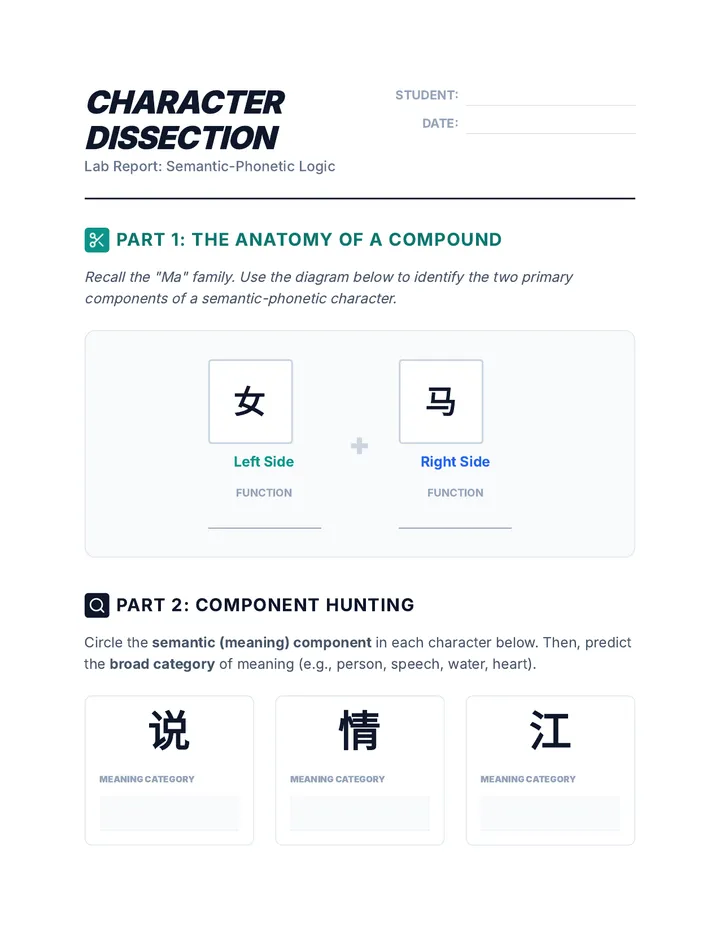
Semantic-phonetic composition, stroke order nuances, and character radicals. Strengthens reading and writing proficiency through common HSK 3-4 level characters and compound word formation.
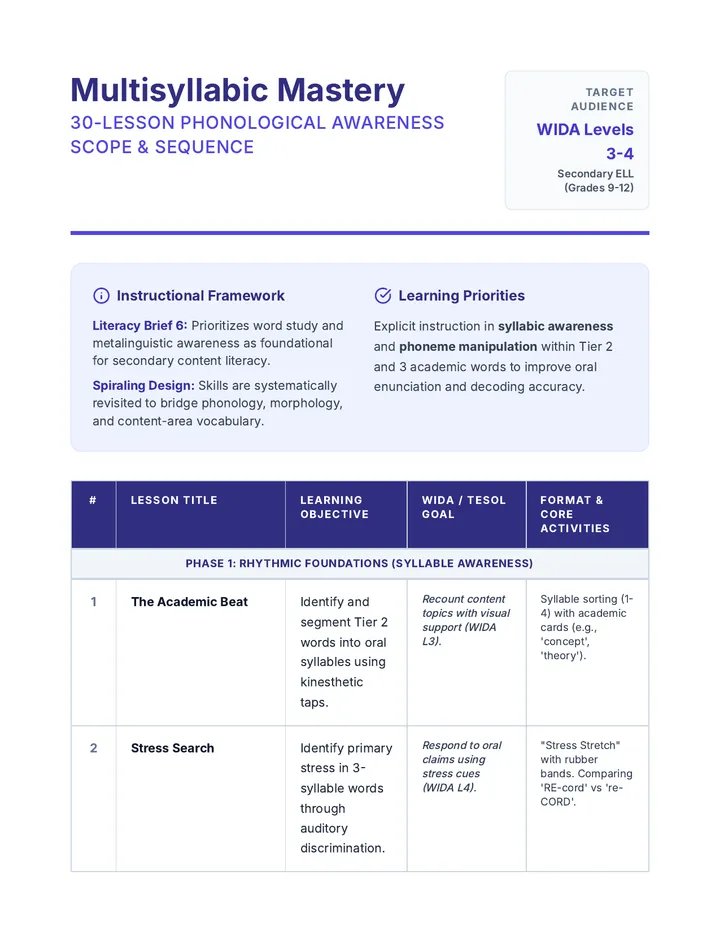
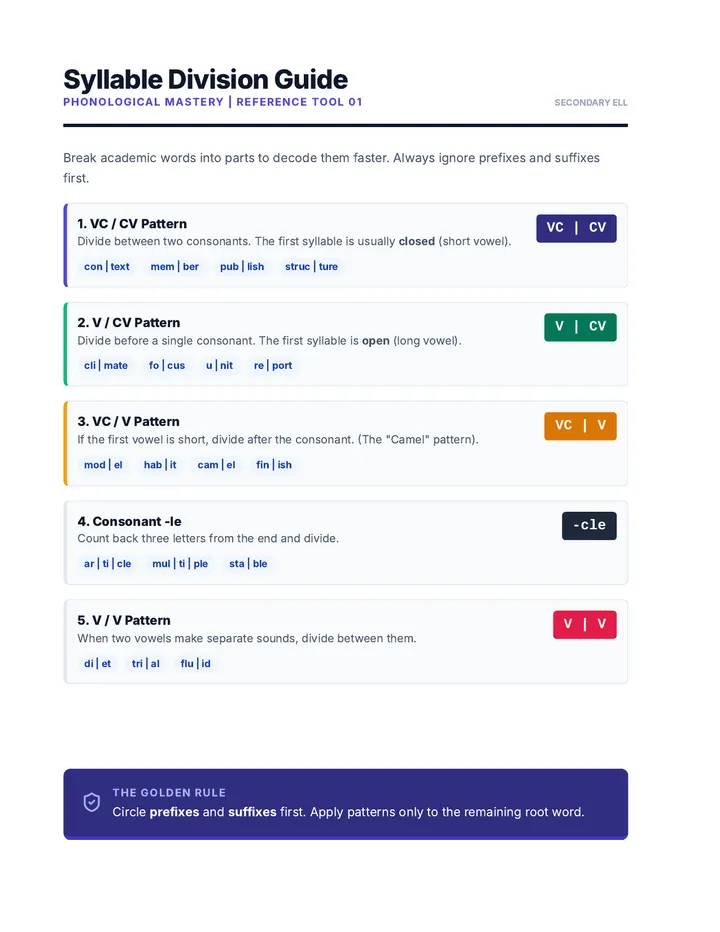
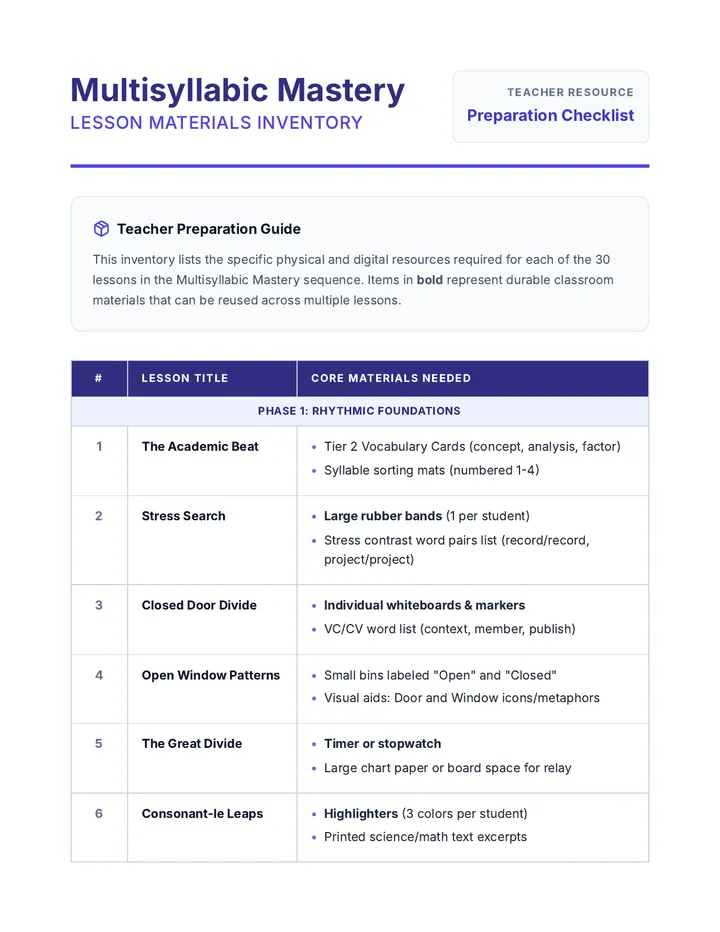
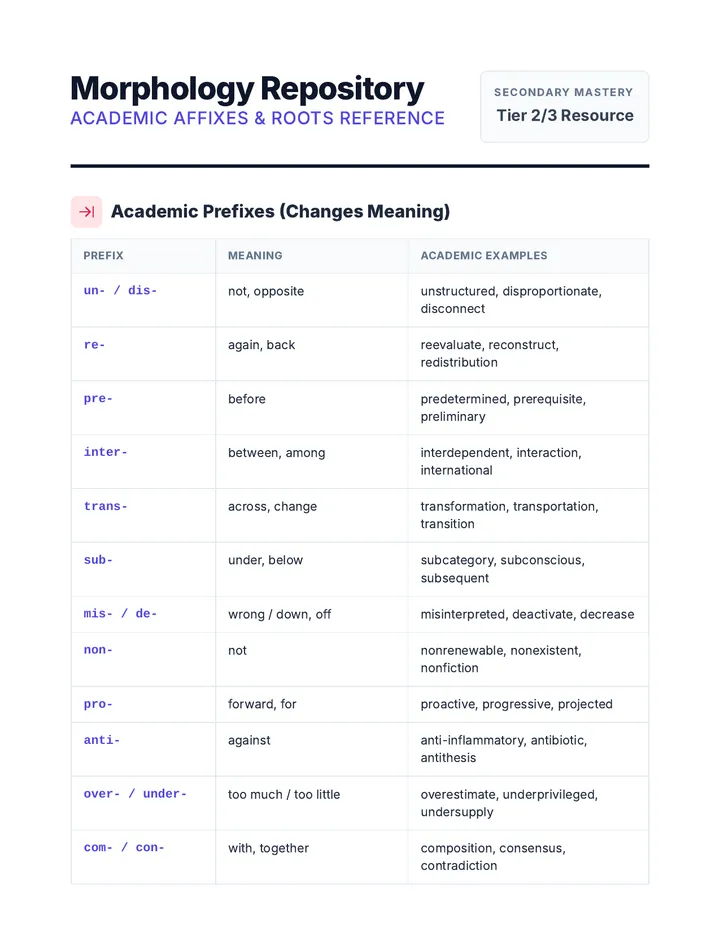
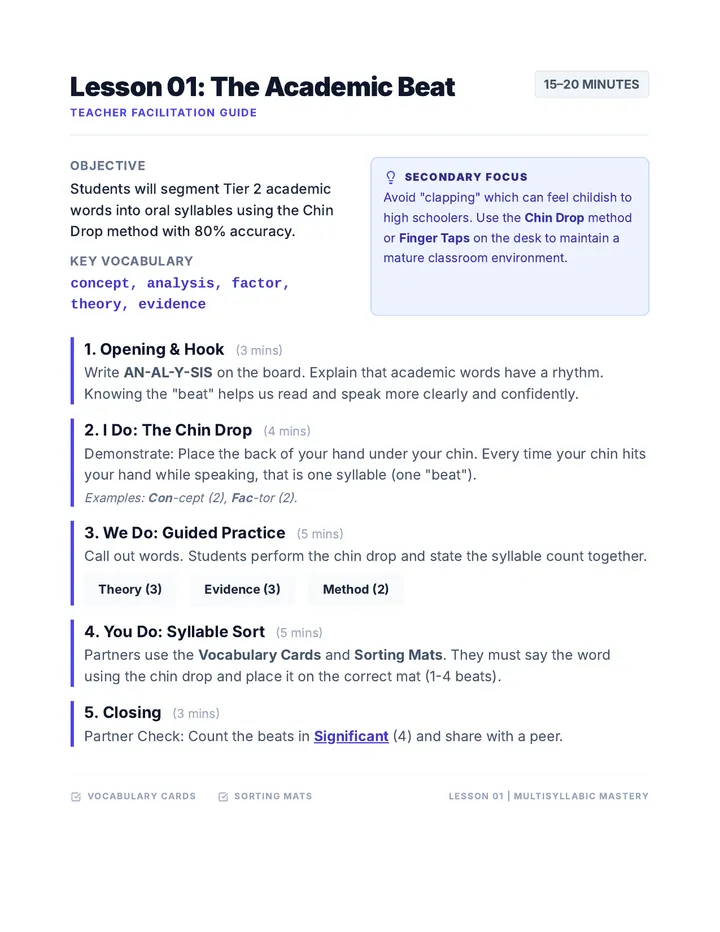
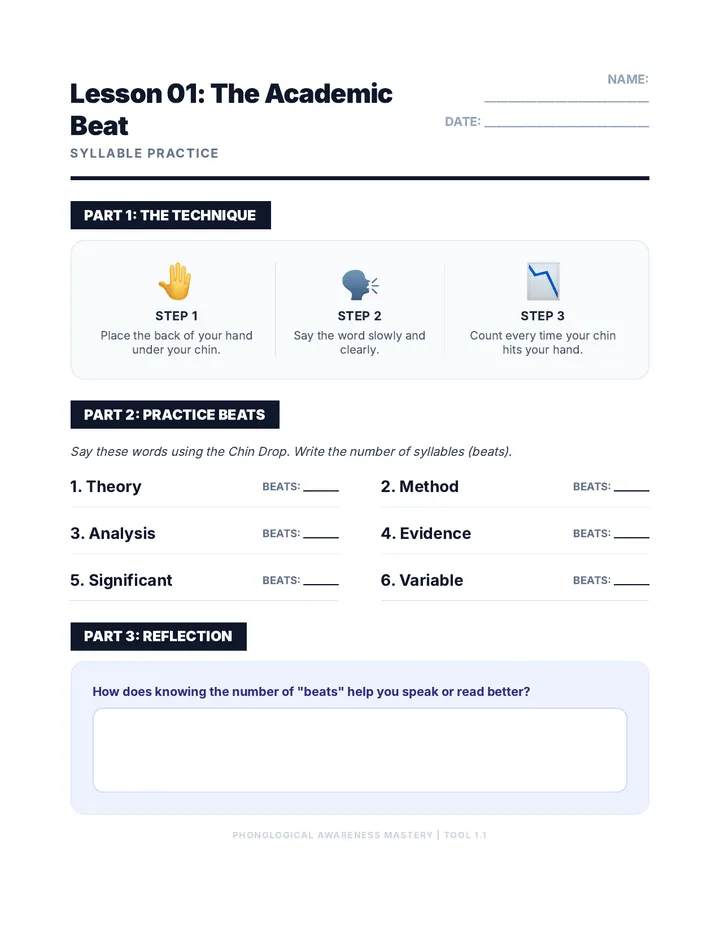
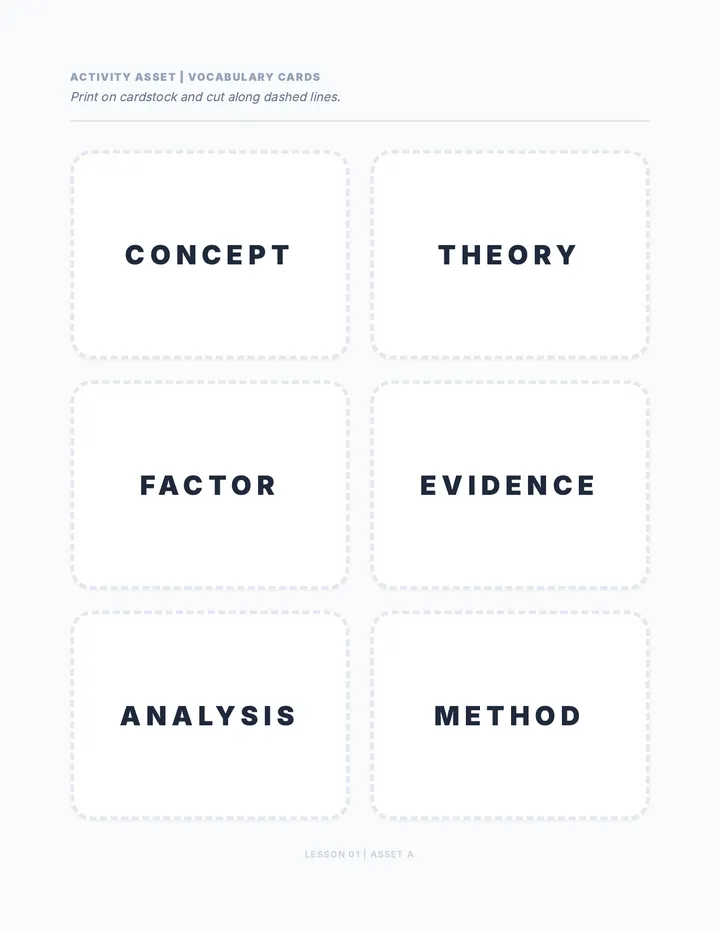
A comprehensive program for teaching phonological awareness to secondary ELLs, focusing on multisyllabic academic vocabulary and phoneme manipulation.
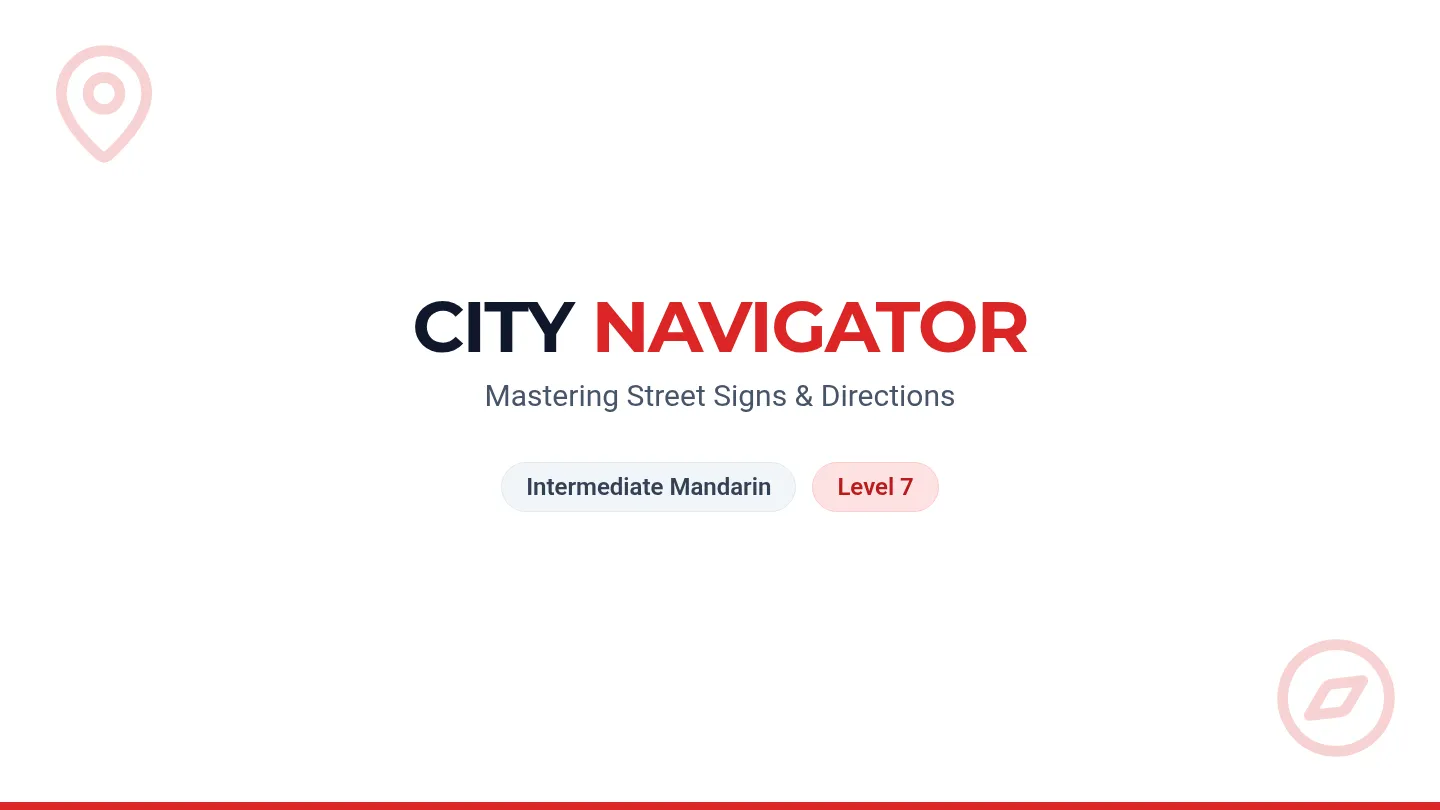
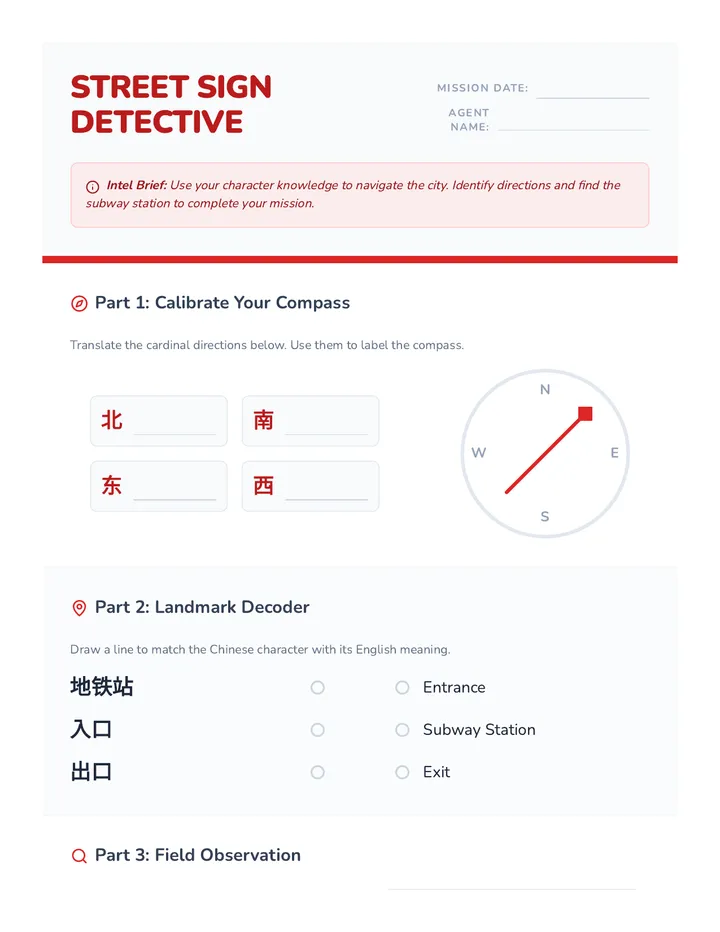
A project-based sequence for 7th-grade students focusing on interpreting authentic Mandarin Chinese texts, including street signs, menus, stylized fonts, and digital interfaces. Students apply character recognition skills to real-world survival scenarios and create a final travel guide.
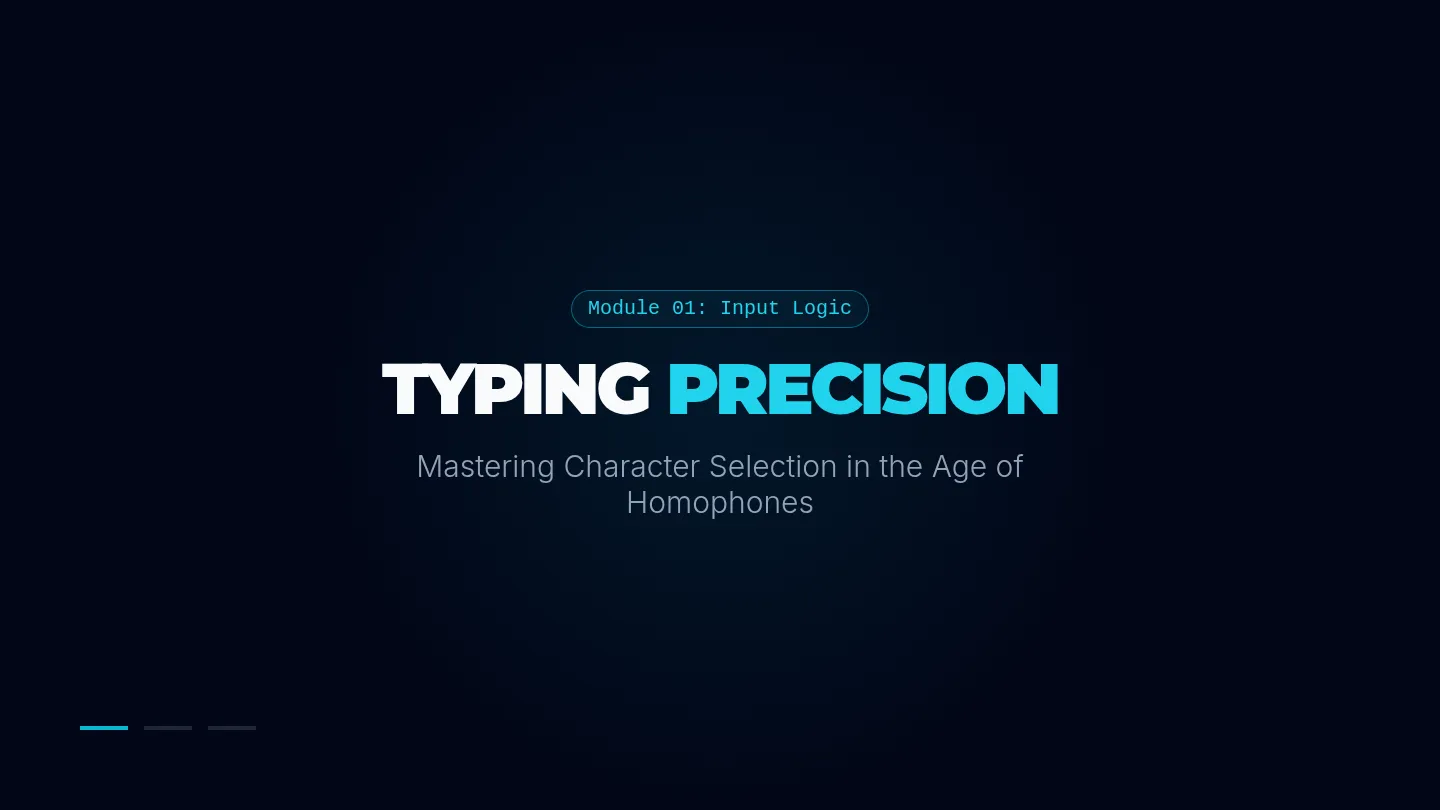
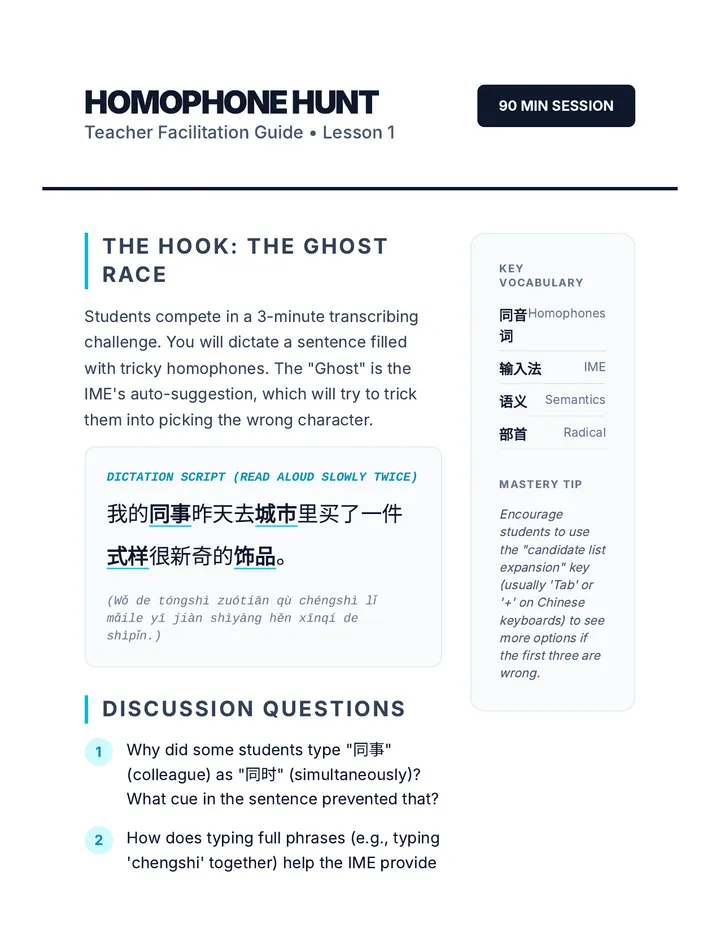
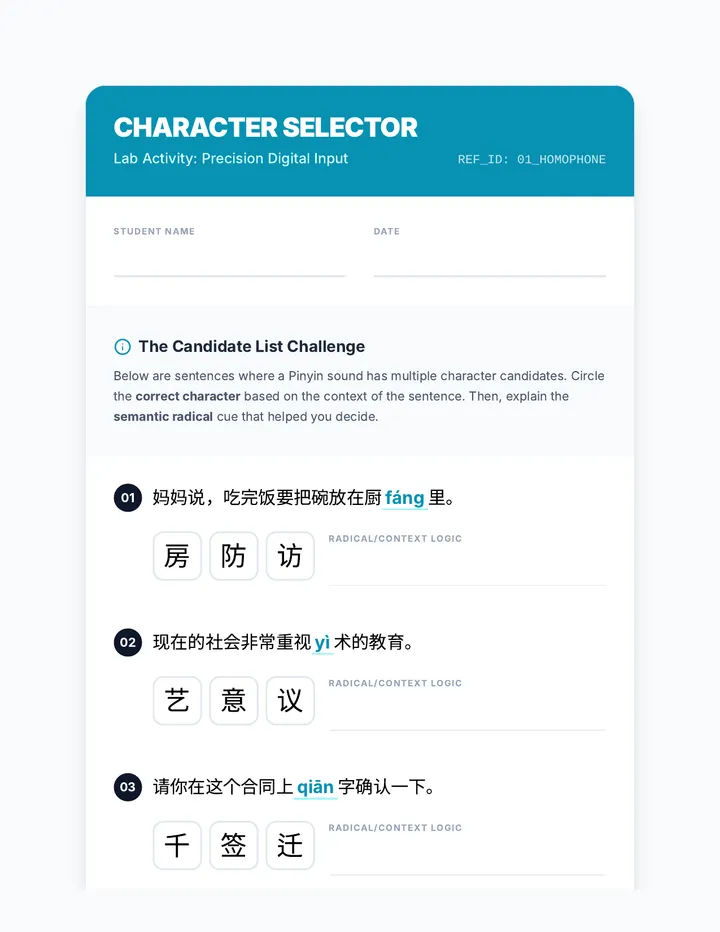
This advanced Mandarin sequence focuses on the nuances of character selection in digital environments. Students master homophone differentiation, navigate complex app interfaces, and analyze modern internet slang to communicate with precision and cultural fluency in a digital-first world.
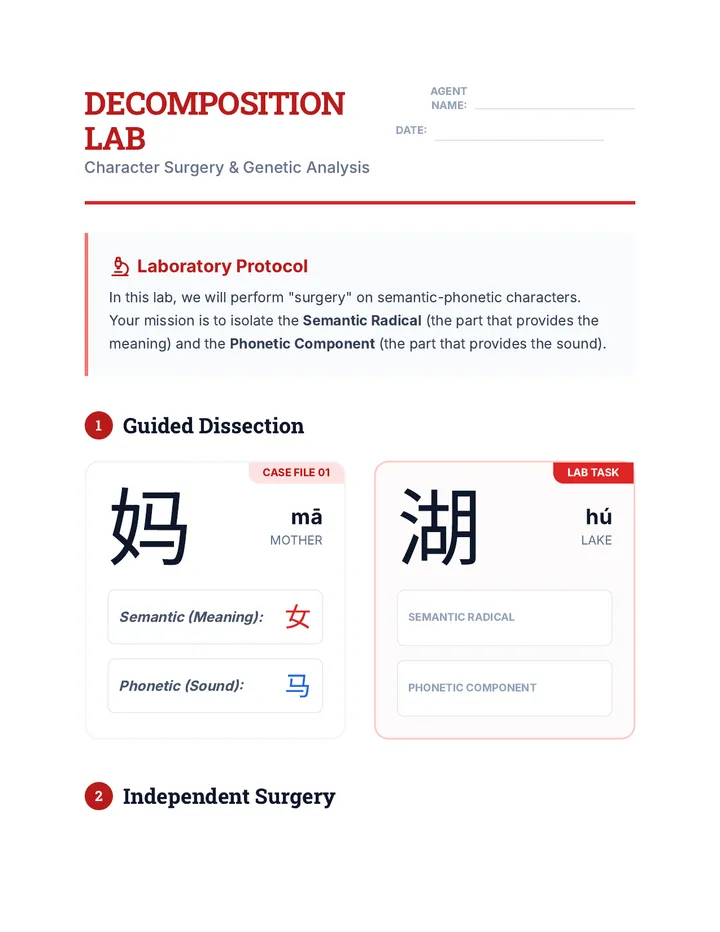
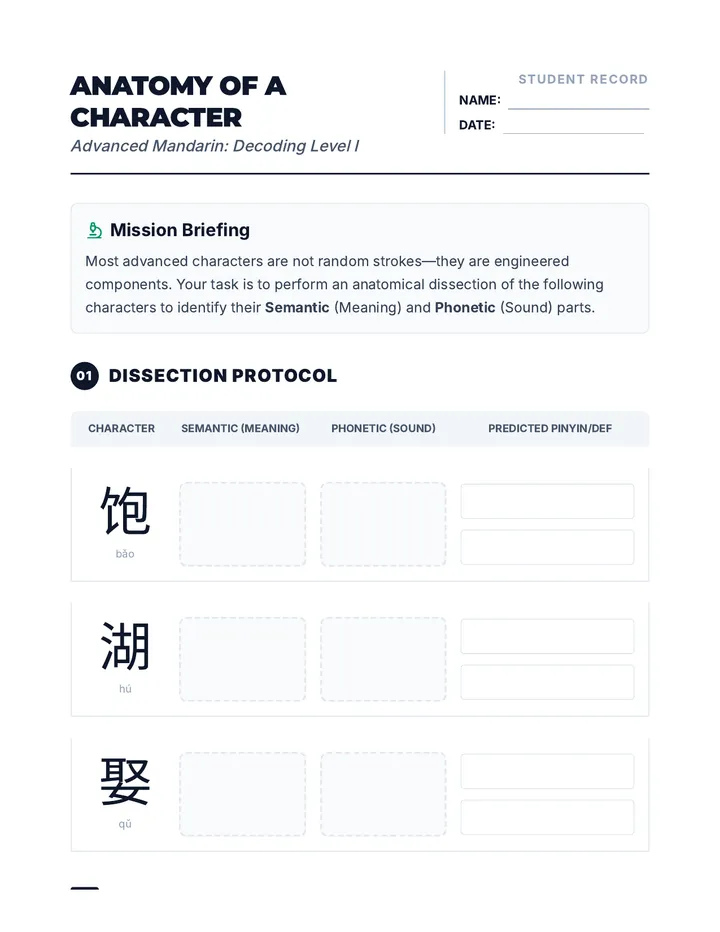
This inquiry-based sequence demystifies the structure of semantic-phonetic characters, which make up the vast majority of the Chinese writing system. Students move from rote memorization to analytical decoding by identifying the 'meaning' component (radical) and the 'sound' component (phonetic) within intermediate-level characters.
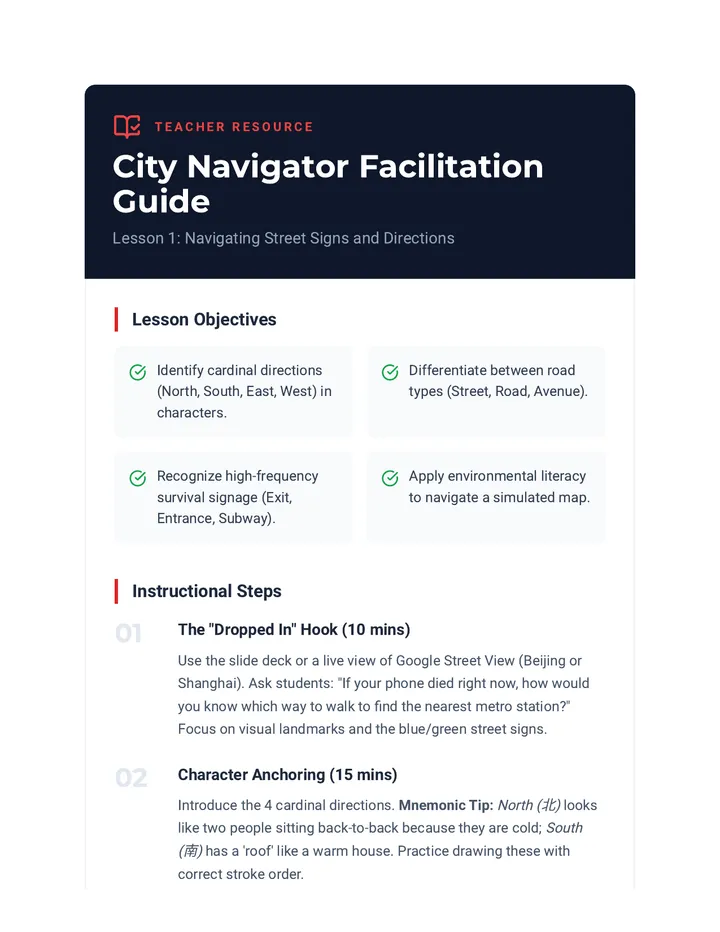
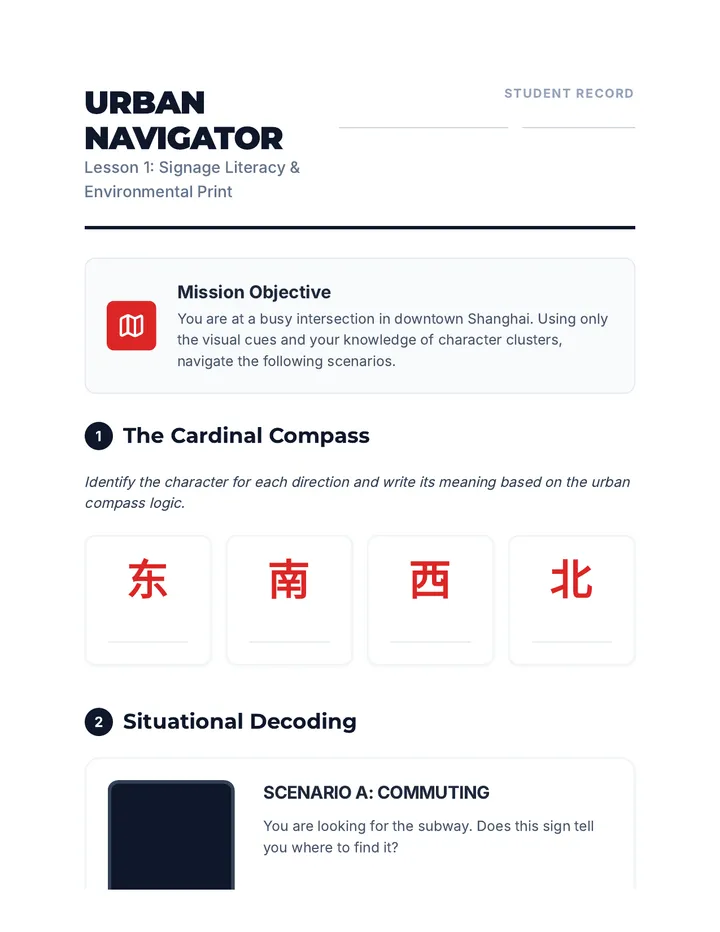
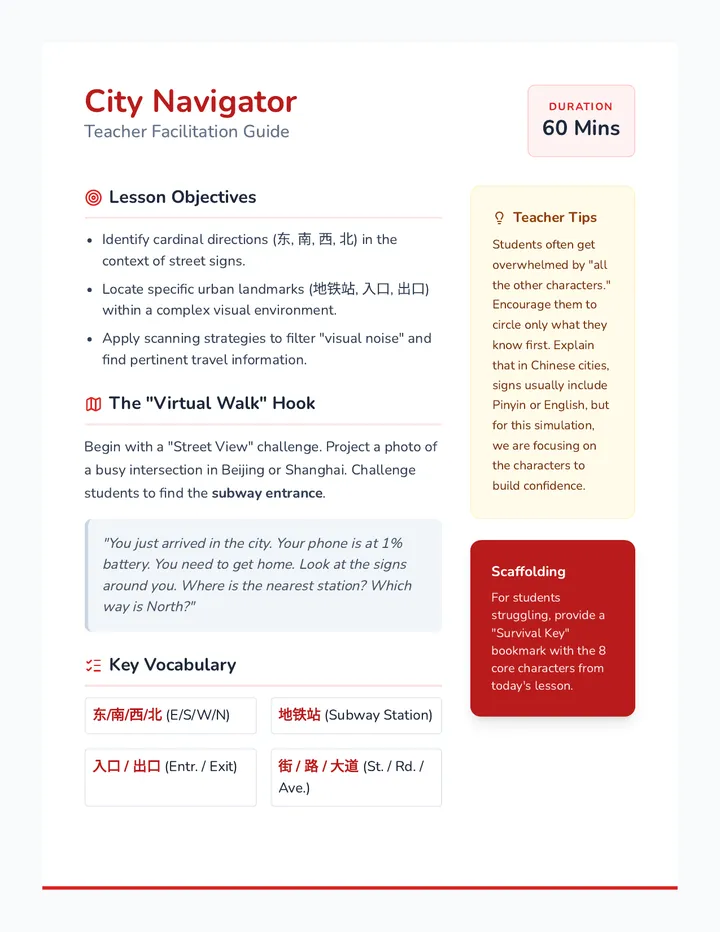
This sequence bridges the gap between classroom character learning and real-world application for graduate-level learners. By analyzing authentic artifacts like signage, menus, and business cards, students develop the 'environmental literacy' needed to navigate Mandarin-speaking urban and professional spaces.
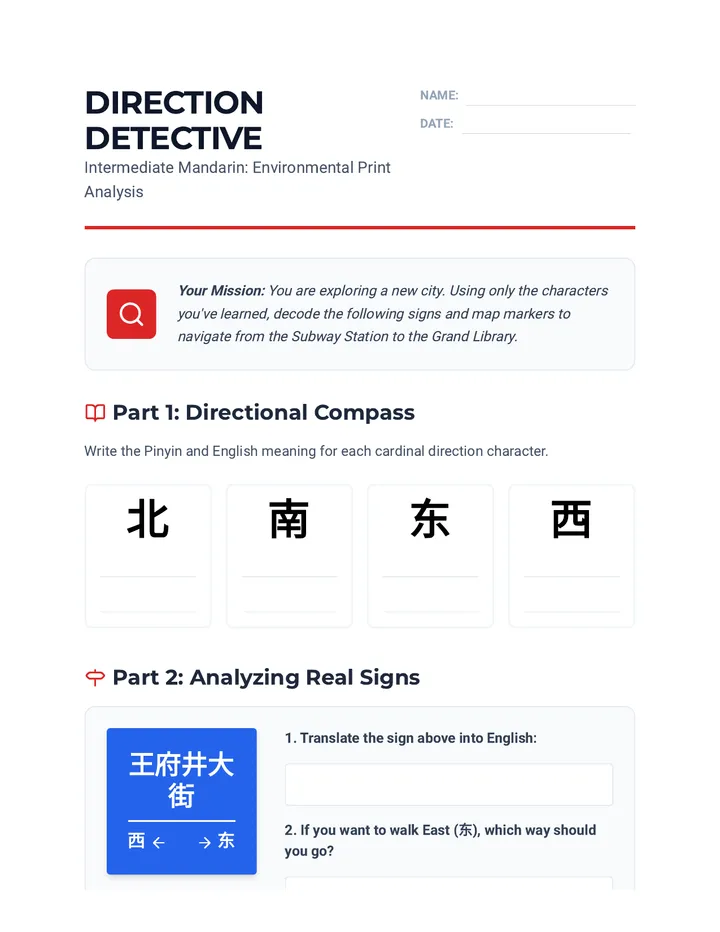
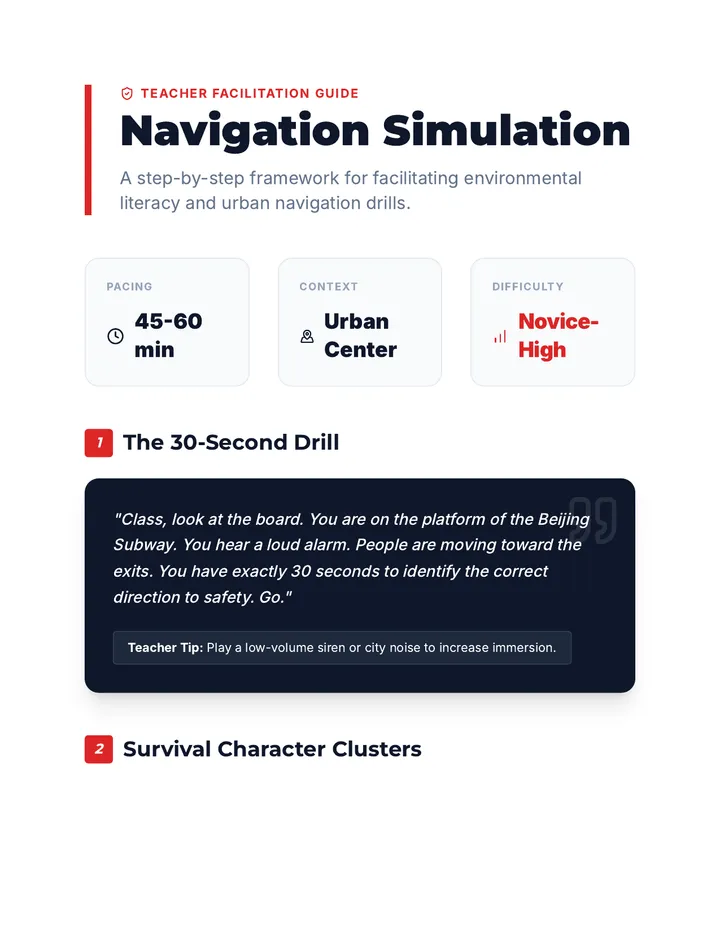
This simulation-heavy sequence applies intermediate Mandarin character knowledge to real-world survival scenarios like menus, street signs, and digital messages. Students focus on scanning for keywords and using context clues to navigate a Chinese-speaking environment.
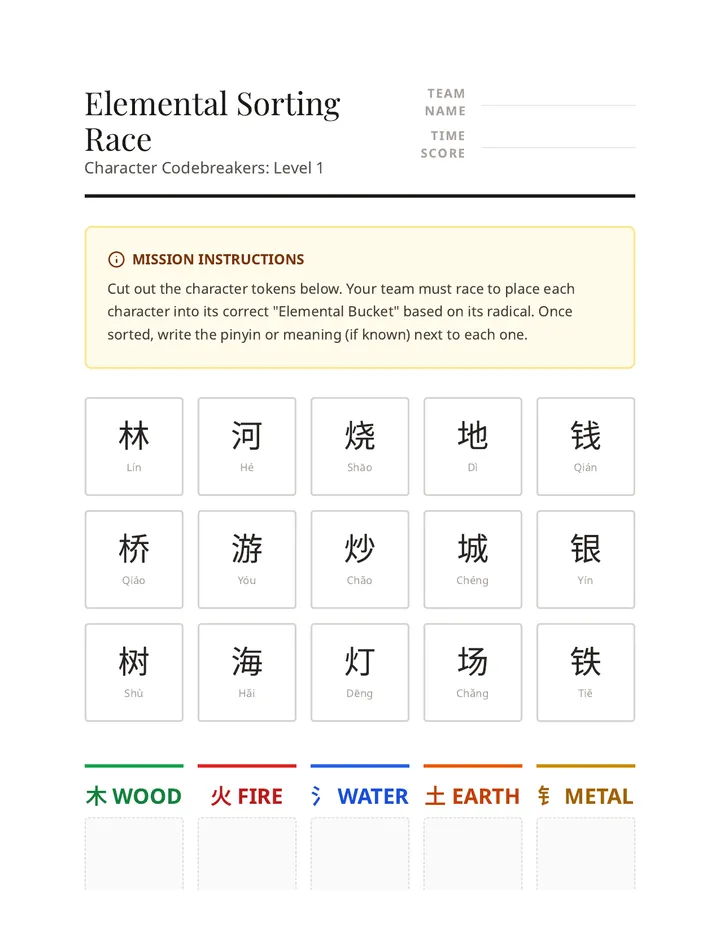
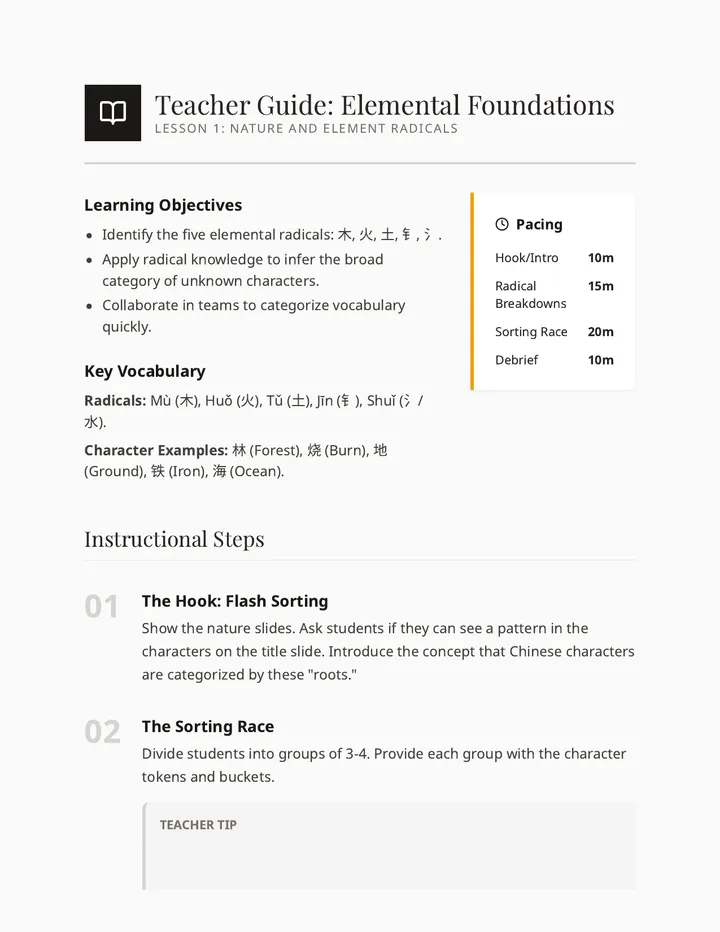
This intermediate Mandarin sequence transforms students into 'Character Codebreakers.' By analyzing the high-frequency radicals that form the building blocks of Chinese characters, students learn to infer meaning in new vocabulary related to nature, emotion, action, and abstract concepts, culminating in a dictionary scavenger hunt.
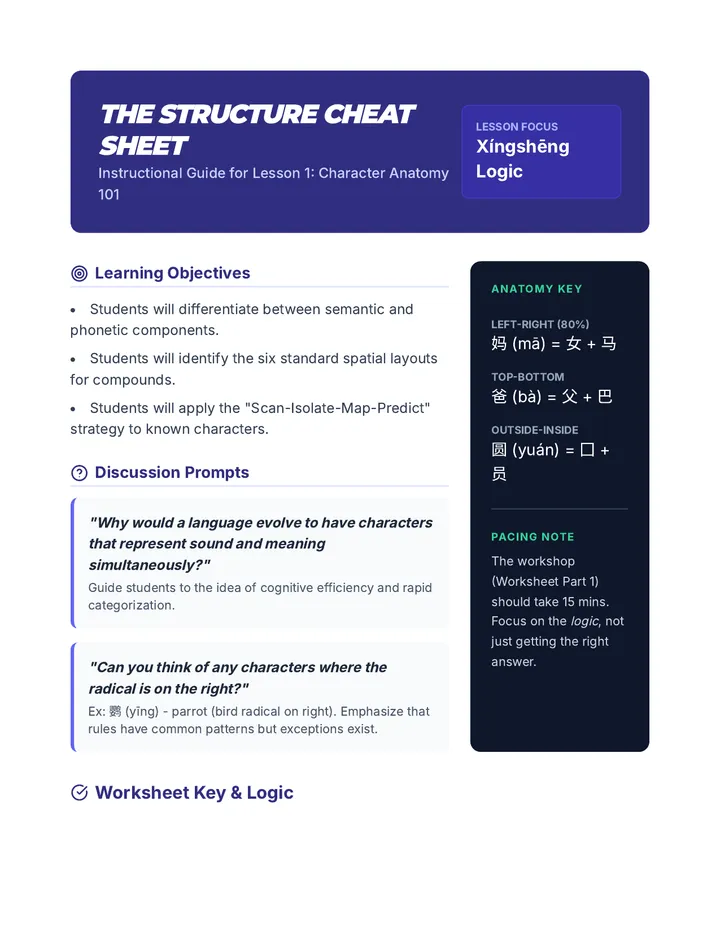
A comprehensive 9th-grade sequence focused on the structural analysis of Phonetic-Semantic (xíngshēng) Mandarin characters. Students develop advanced decoding strategies by identifying meaning-based radicals and sound-based components to predict pronunciation and meaning in unfamiliar texts.
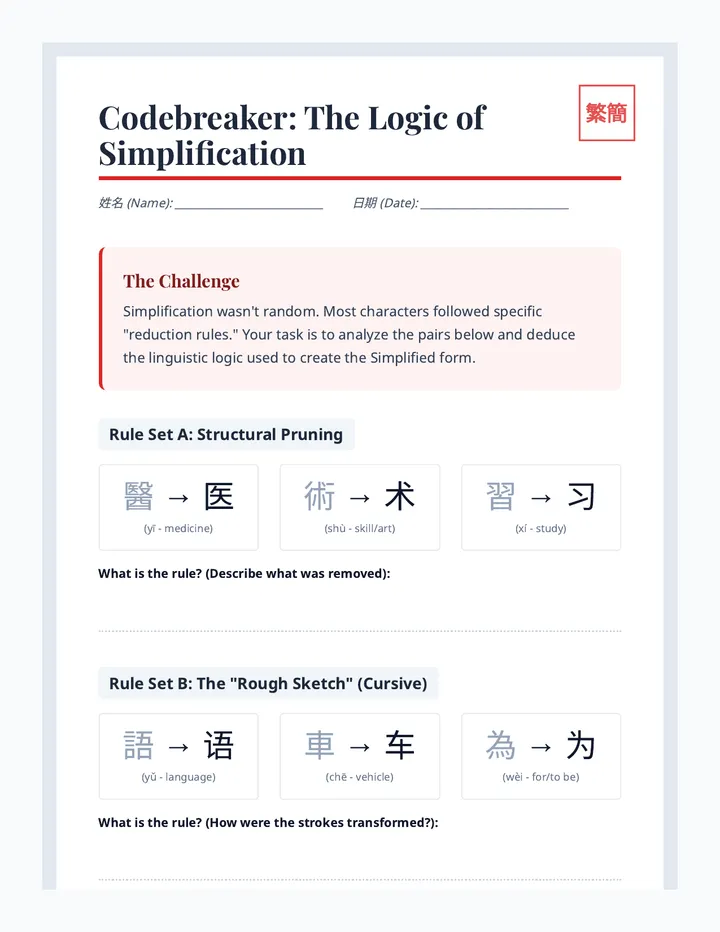
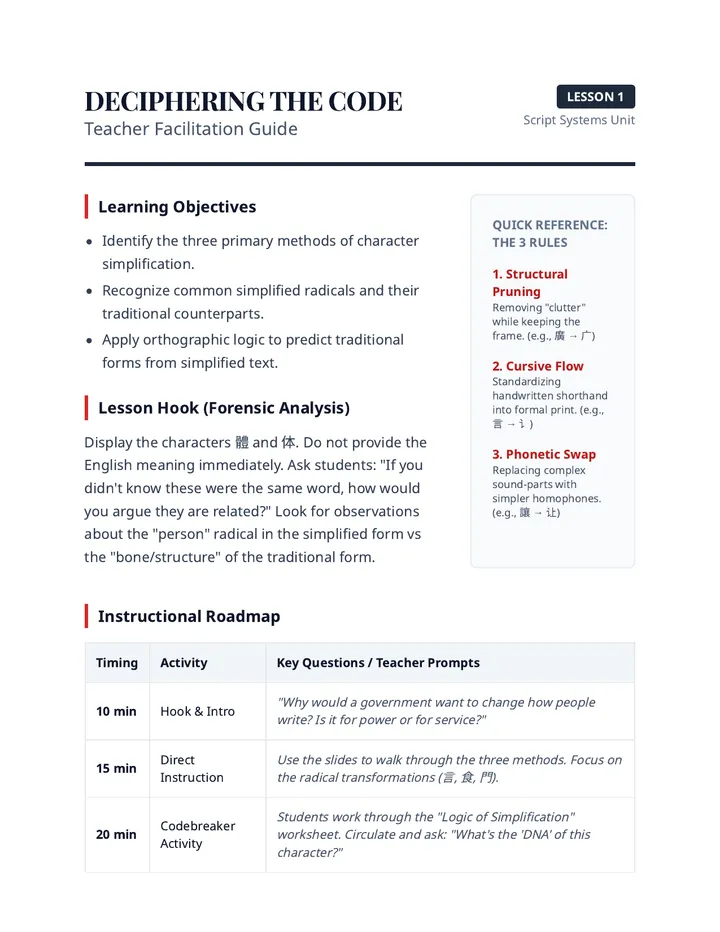
A comprehensive 12th Grade Mandarin Chinese unit exploring the linguistic logic, cultural history, and practical application of Simplified and Traditional character systems to develop global Sinophone literacy.
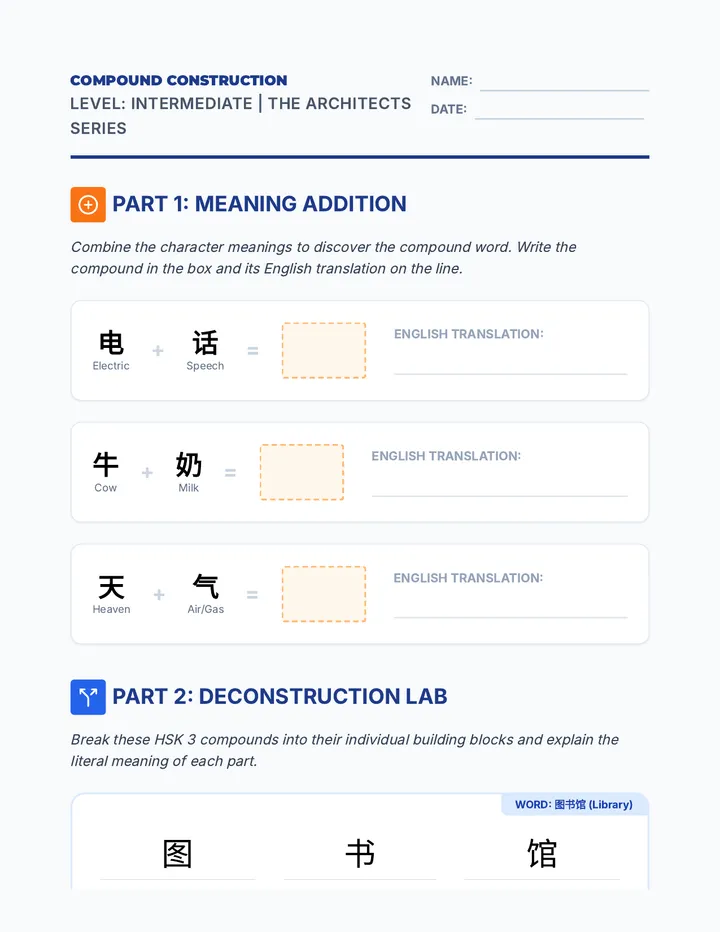
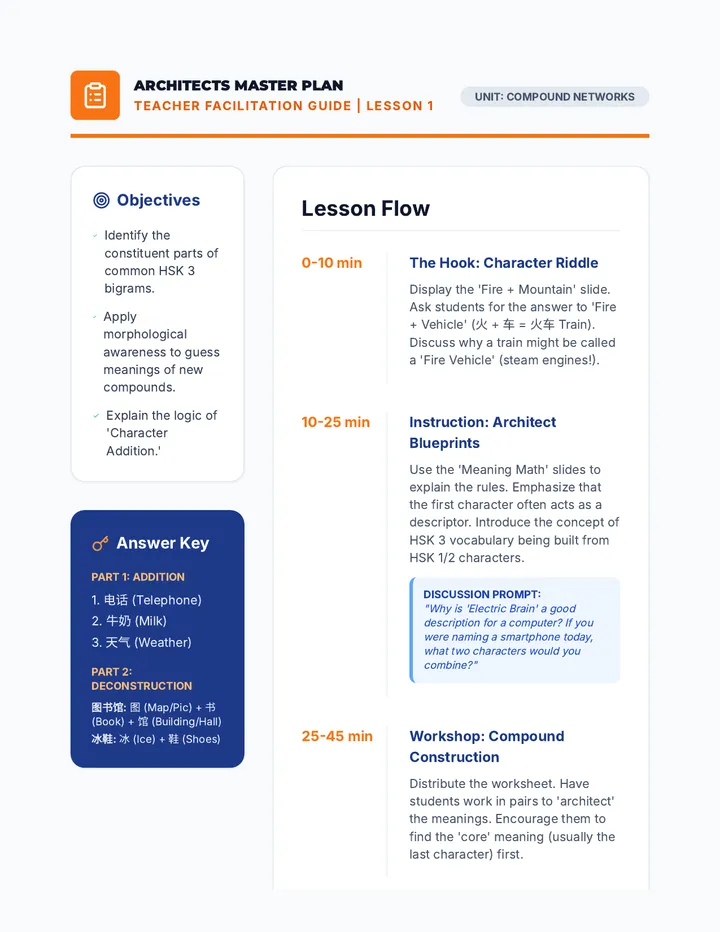
A 5-lesson sequence for 7th-grade Mandarin students focusing on the logic of compound words, from simple bigrams to complex idioms (chengyu). Students act as 'Character Architects,' deconstructing and rebuilding vocabulary to master intermediate HSK 3 concepts.
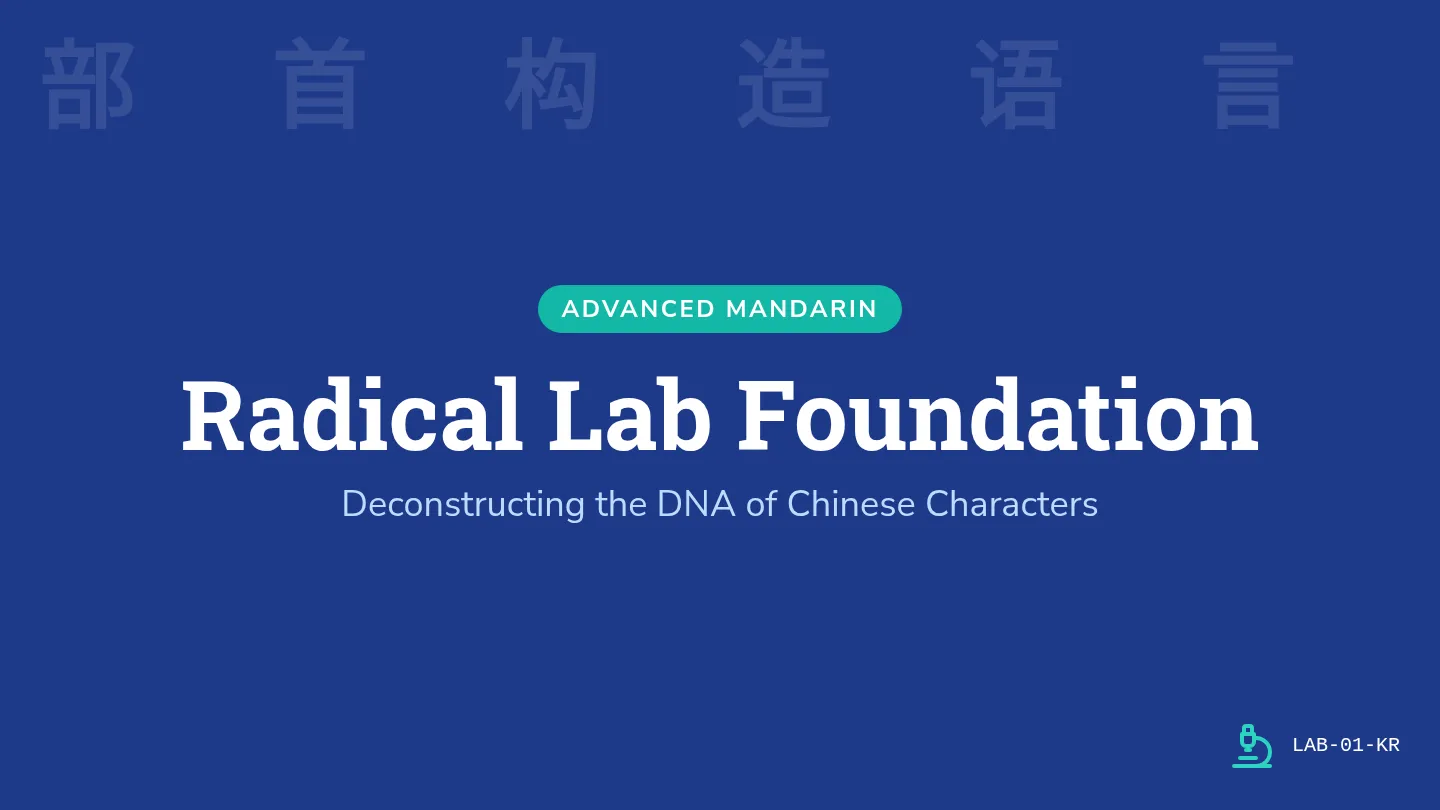
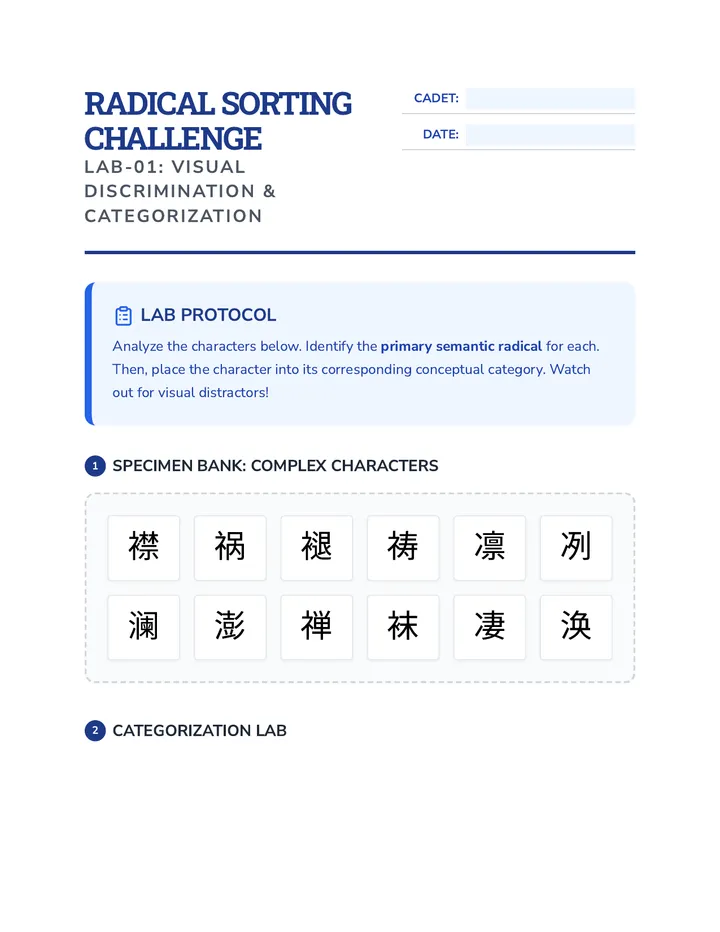
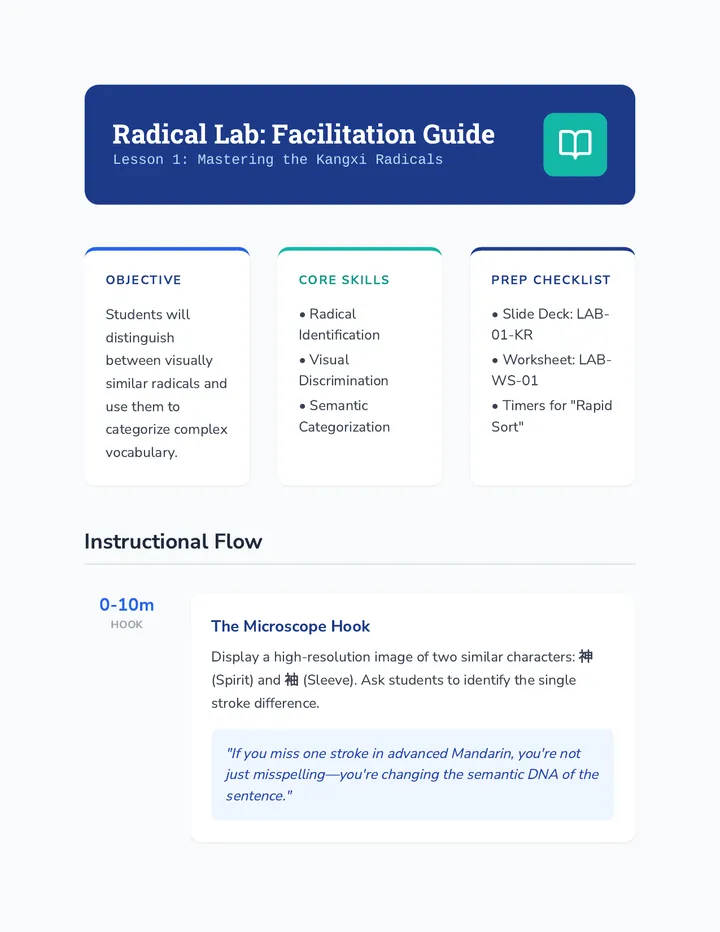
A comprehensive unit for advanced Mandarin students focused on the structural logic of Chinese characters, emphasizing radical analysis, semantic categorization, and lookup strategies for independent reading.
An intermediate Mandarin Chinese sequence for 8th graders focusing on the semantic-phonetic structure of characters. Students move from basic component identification to analyzing complex character families and predicting the pronunciation of unknown characters.