Manipulating materials to create form and volume in three-dimensional space. Focuses on additive and subtractive techniques using media such as clay, wire, and found objects.
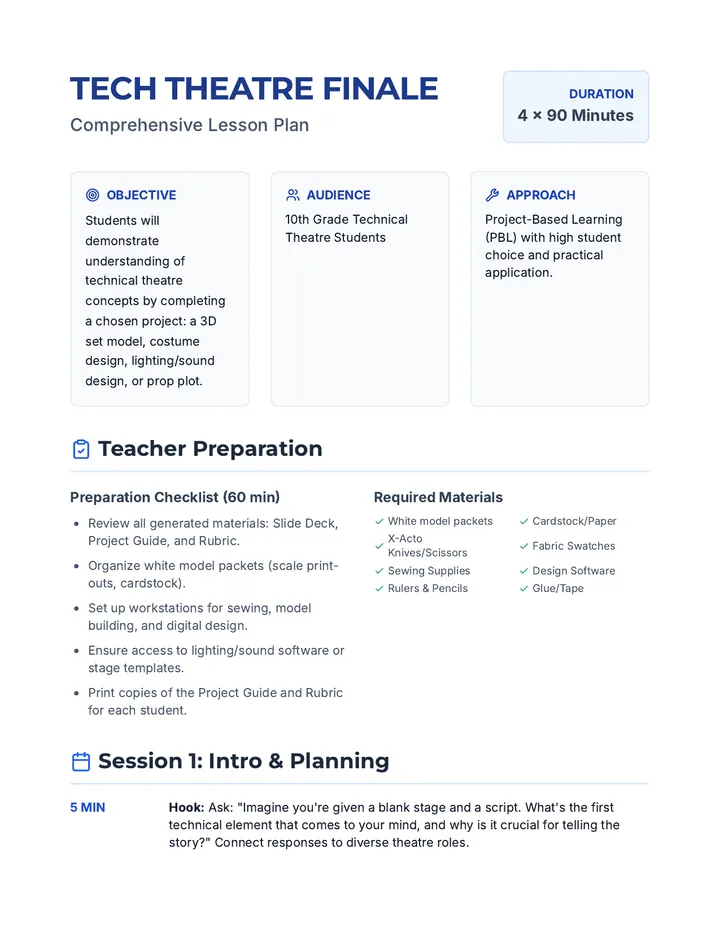
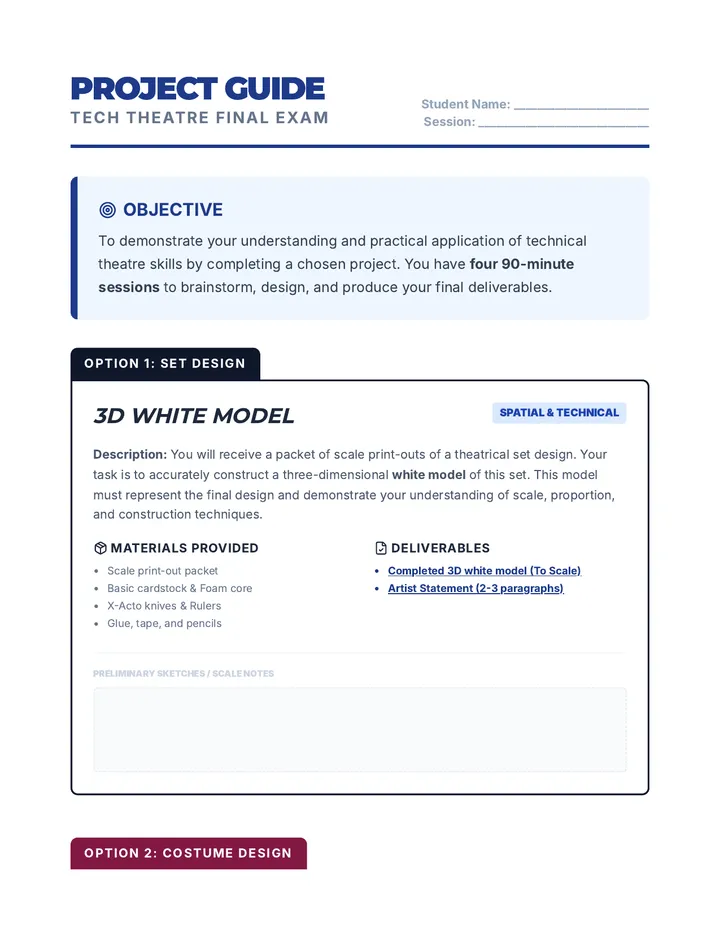
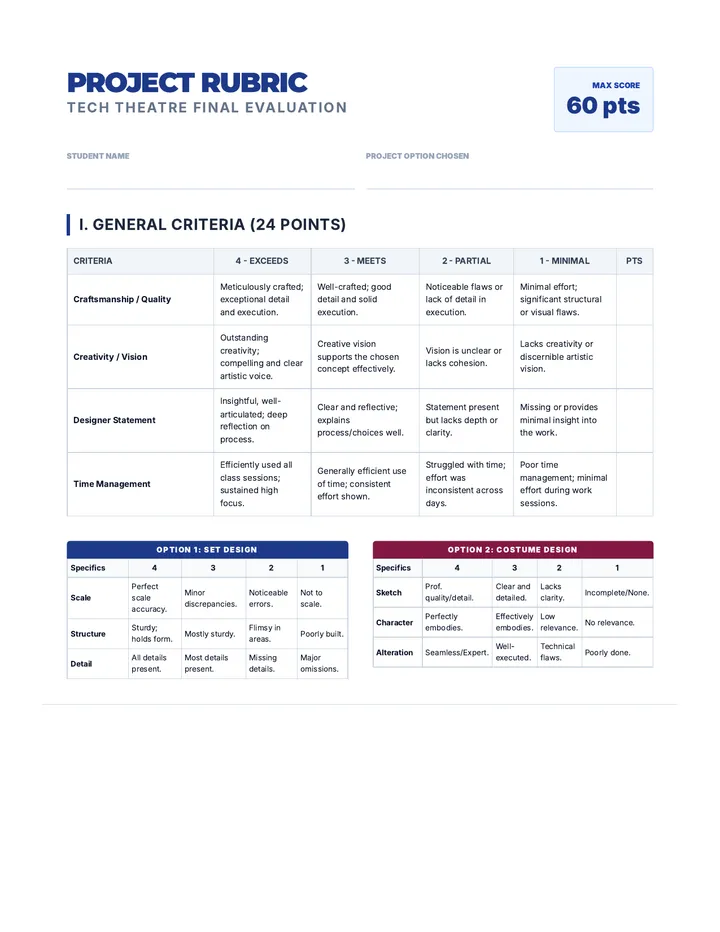
A 4-session project-based final exam where 10th-grade students demonstrate technical theatre mastery through set, costume, lighting, sound, or prop design.
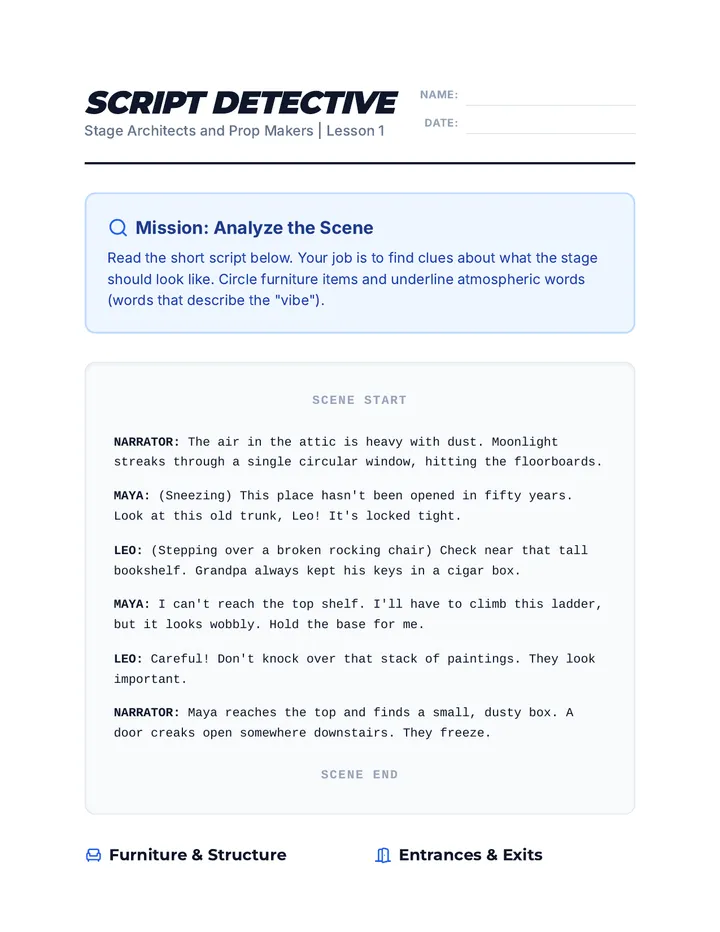
This hands-on sequence introduces 4th graders to the visual and engineering side of theater. Students analyze scripts to design environments, draft scale floor plans, build 3D scenic models, and fabricate props, emphasizing spatial reasoning and storytelling through physical space.
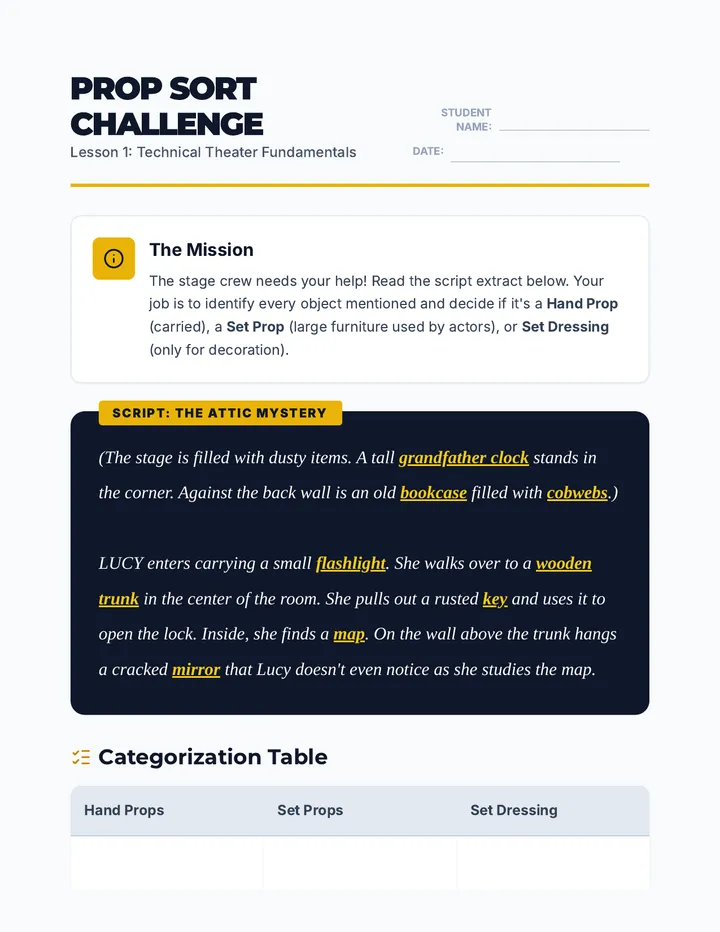
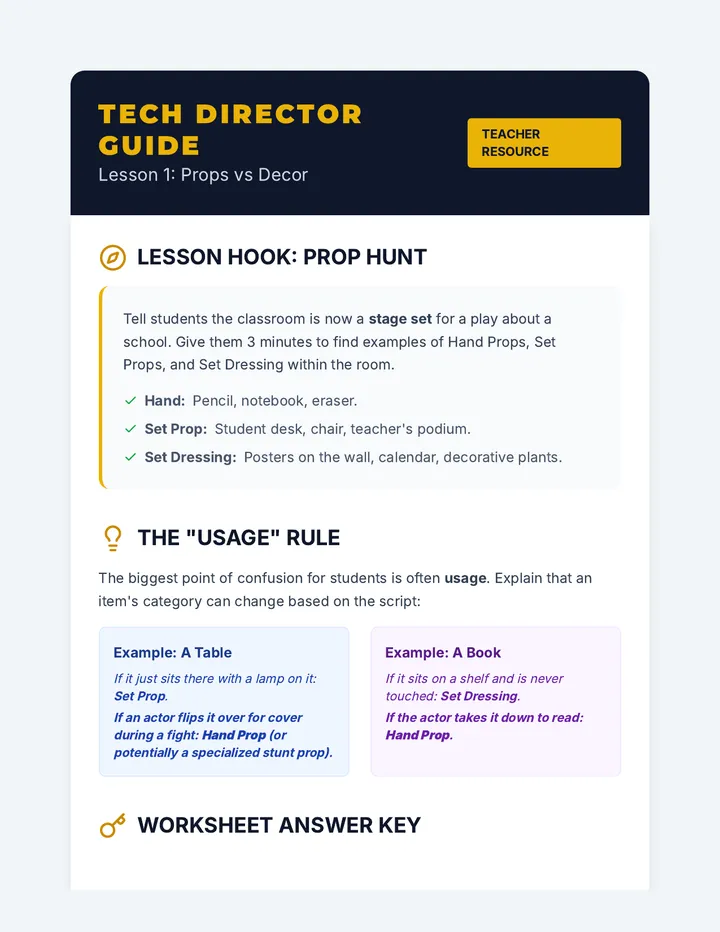
Students investigate how costumes and properties (props) function as tools for character development and storytelling. The sequence guides students through the process of distinguishing between prop types, exploring costume psychology, fabricating safe props, and mastering backstage organization.
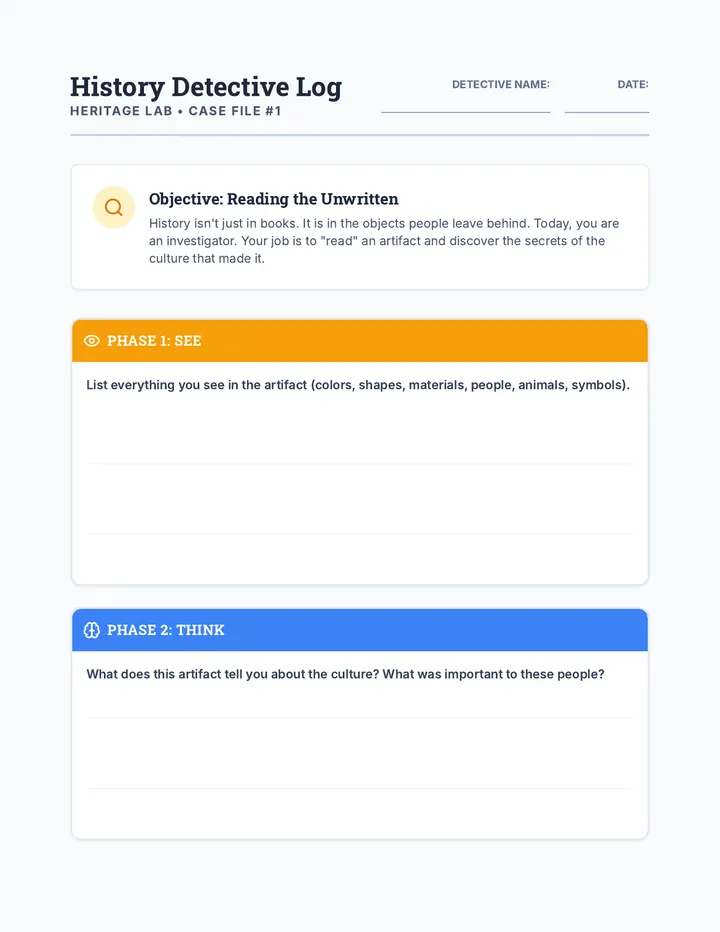
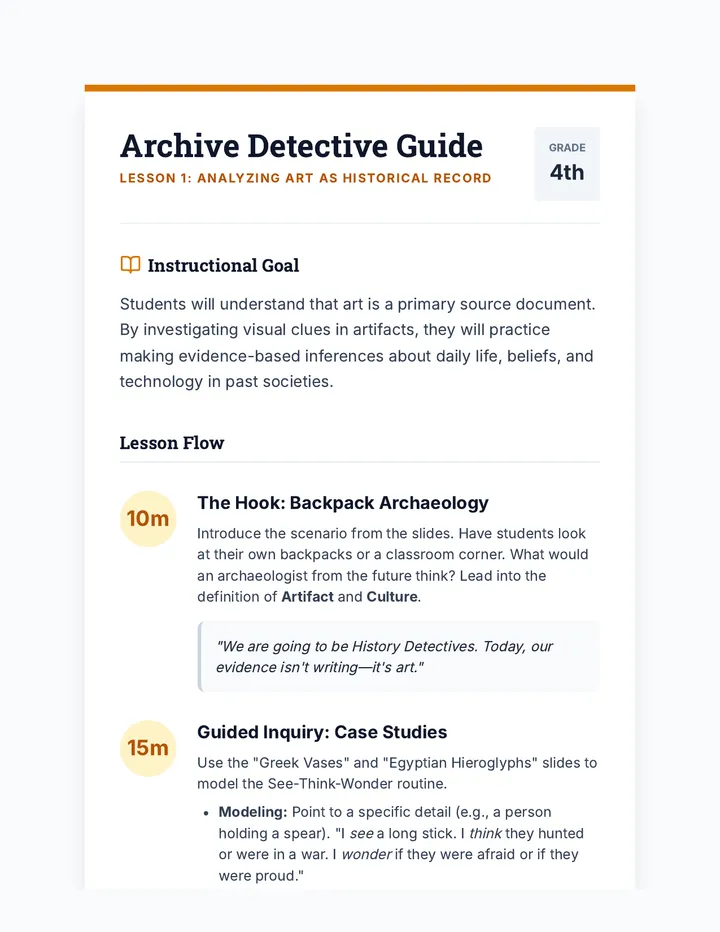
This 4th-grade sequence explores how traditional arts and crafts function as vessels for cultural heritage. Students learn to 'read' artifacts like narrative quilts and pottery as historical texts, ultimately creating their own heritage artifacts to preserve personal or family stories.
A 5-lesson unit exploring kinetic sculpture through the lens of Alexander Calder's mobiles. Students merge art history with physics principles like balance and center of gravity to create their own hanging sculptures.
A comprehensive 2nd Grade unit introducing students to the tactile properties of clay and fundamental hand-building techniques including pinch pots, coil construction, and the slip-and-score method. Students explore additive sculpture and surface texture to create unique 3D works of art.
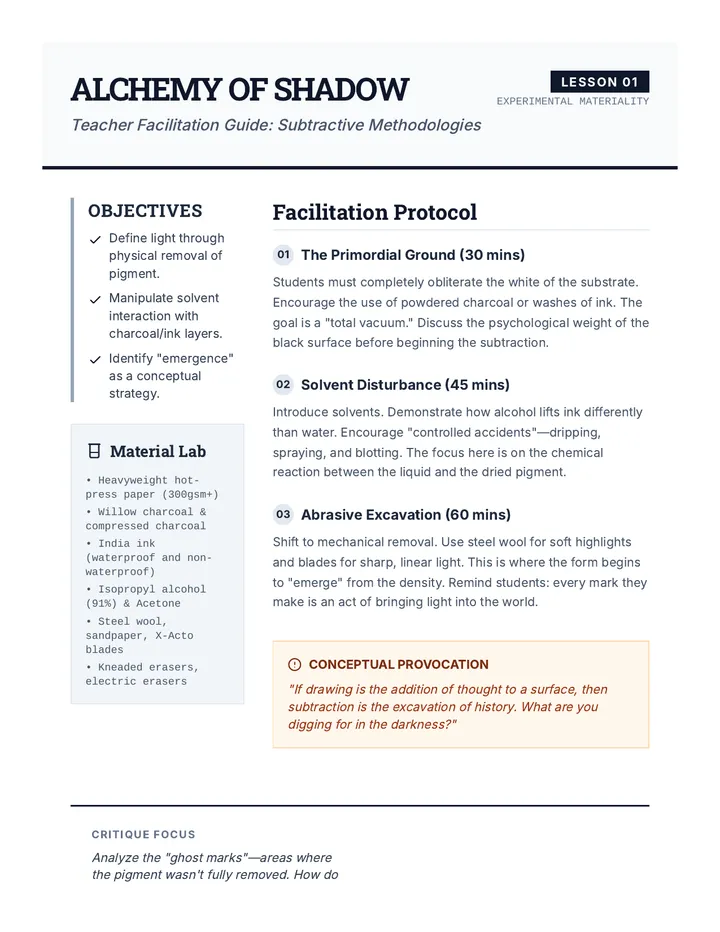
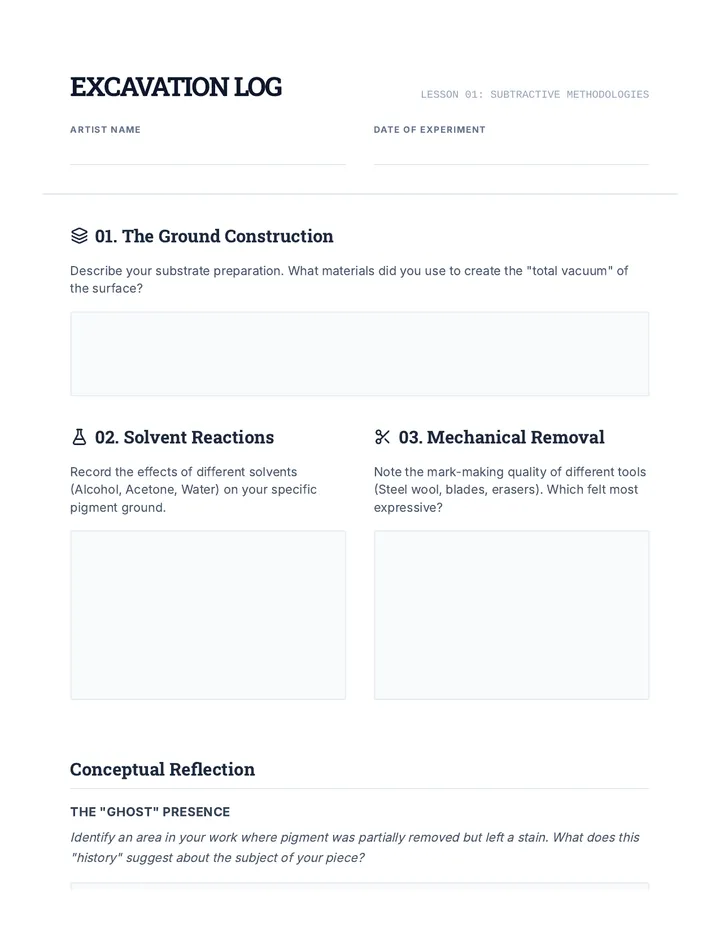
A graduate-level exploration of the intersection between medium and meaning. Students innovate with traditional materials, exploring chemical interactions, substrate manipulation, and mixed-media synthesis to develop a unique 'mark-making' vocabulary where physical texture contributes to conceptual depth.
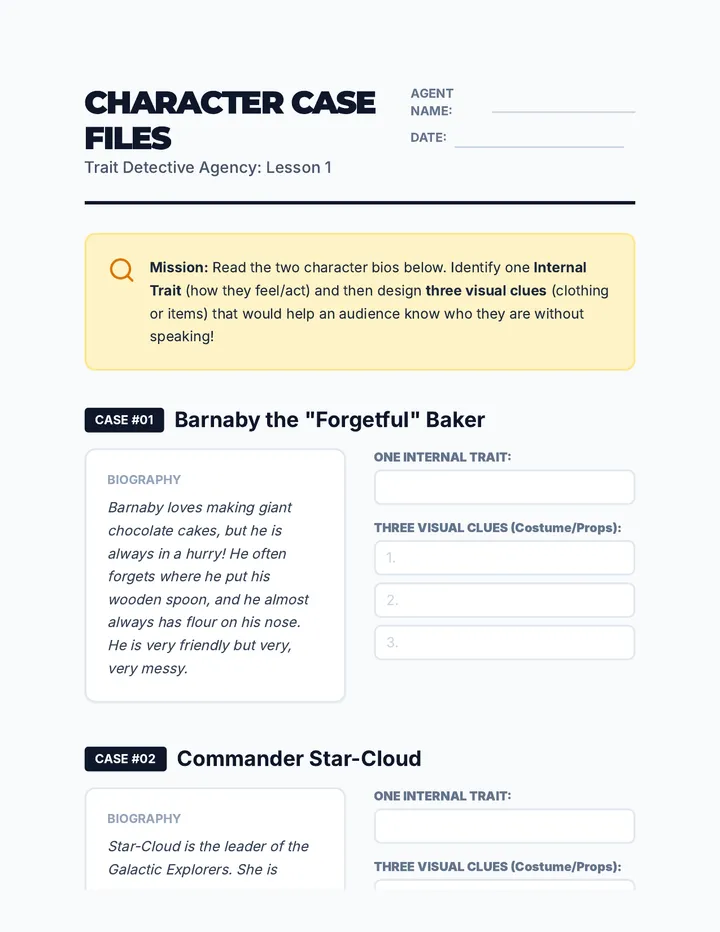
A design-focused sequence for 3rd graders on how costumes and props communicate character. Students analyze traits, select costume elements, and build cardboard props to bring characters to life.
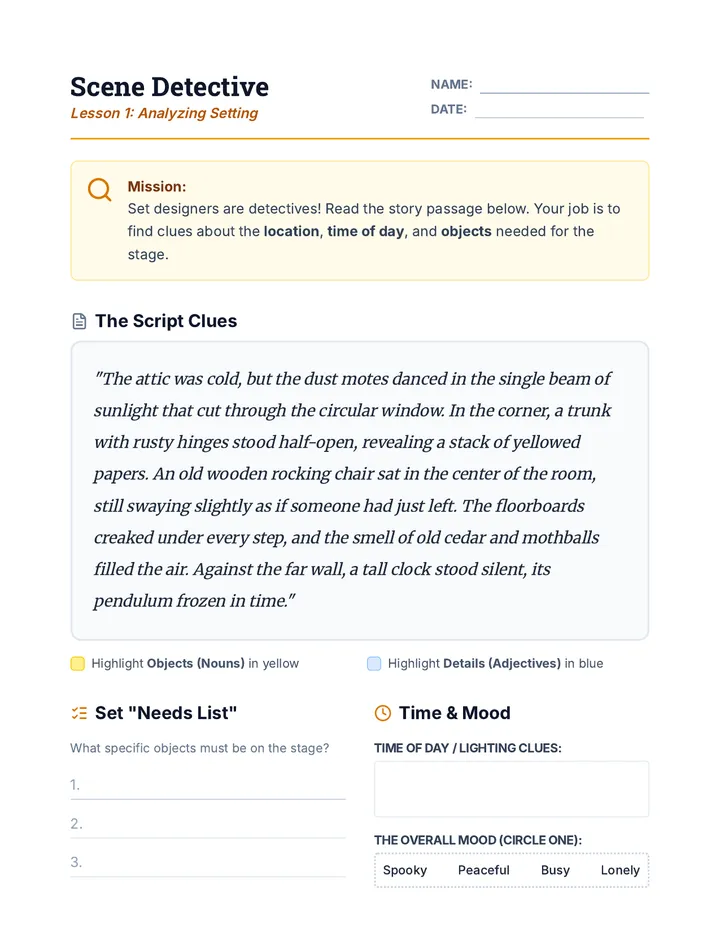
A project-based unit where 3rd-grade students learn the art of set design by transforming story descriptions into miniature 3D scale models. Students analyze text, draft layouts, and construct shoebox dioramas to communicate time, place, and mood.
A project-based sequence for 4th graders exploring the technical world of theater production. Students learn to manipulate space, materials, sound, and light to tell compelling stories, culminating in a design showcase.
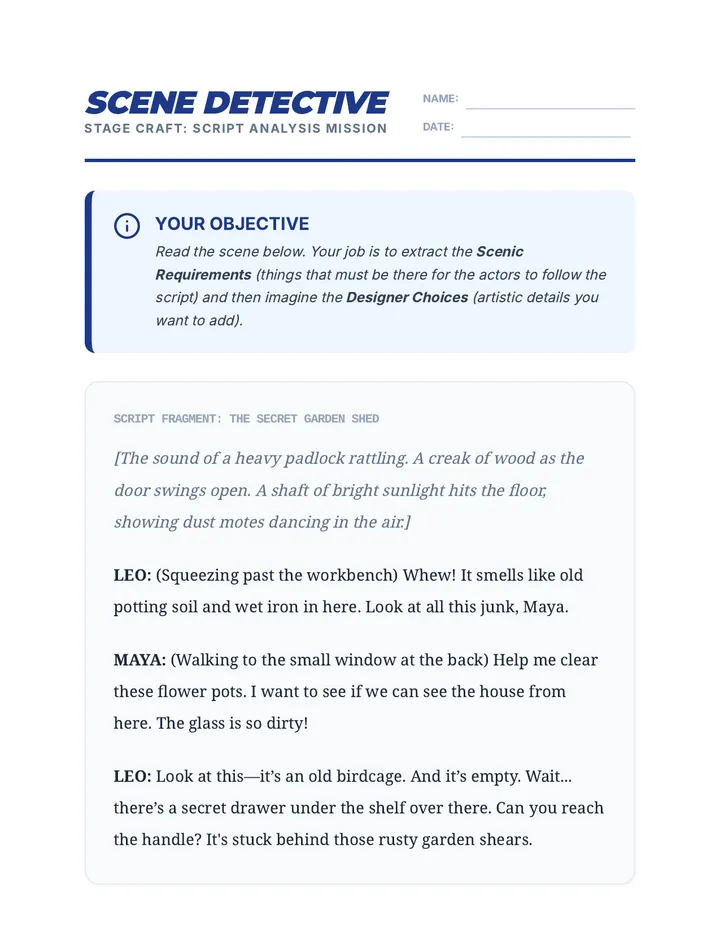
Students step into the shoes of a set designer to transform a written script into a physical world through script analysis, floor planning, mood boards, and 3D model construction. The sequence emphasizes how visual choices in color, texture, and space support the storytelling.
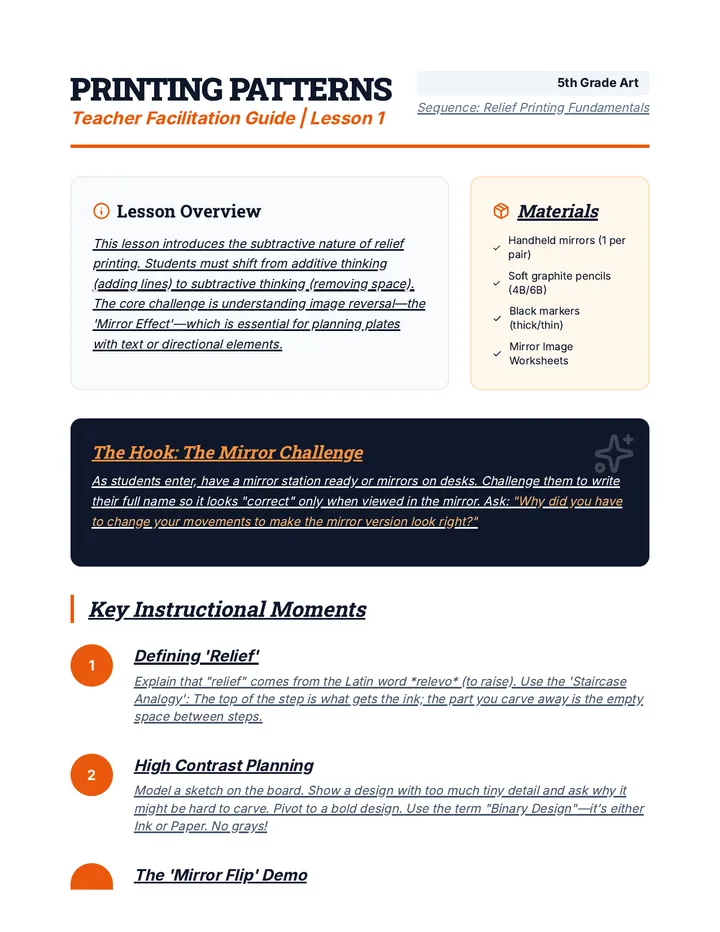
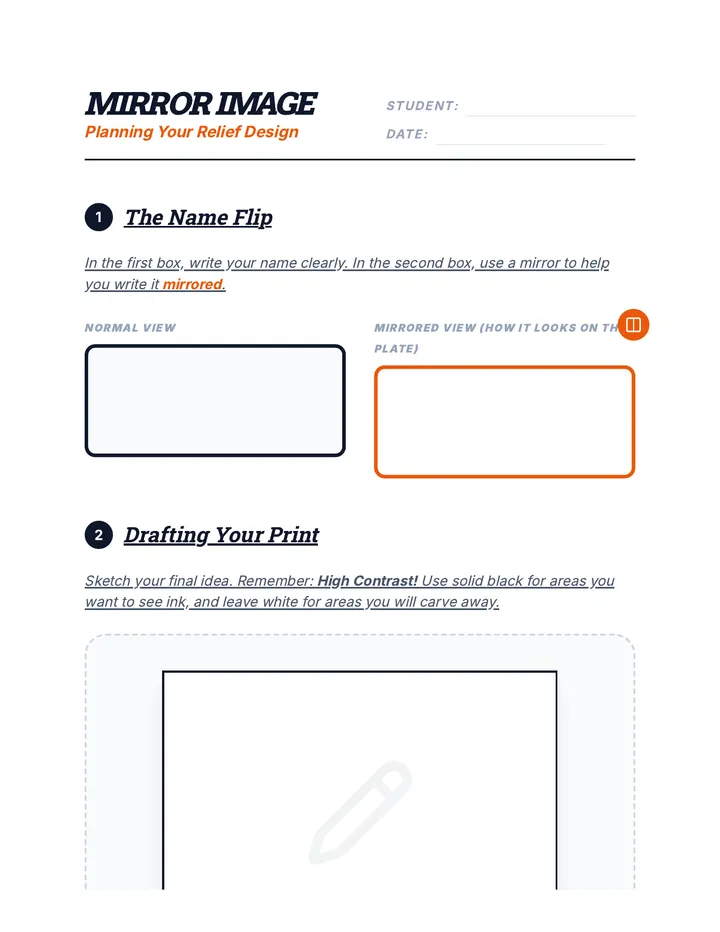
A comprehensive 5th-grade art sequence introducing the subtractive process of relief printing. Students progress from conceptualizing mirrored imagery and carving soft blocks to mastering ink application and producing a numbered edition of prints.
A 90-minute introductory art lesson for middle schoolers focusing on the three foundational clay sculpting techniques: coiling, pinching, and slab building. Students will explore different clay types, master basic tools, and apply their skills to create a unique clay figure.
Students will learn the basics of fly tying, understanding its purpose in fishing and identifying key components of a fly. This hands-on activity introduces a practical skill, fostering an appreciation for entomology and craft. Designed for 7th-grade students, this single-session lesson is 30 minutes long.
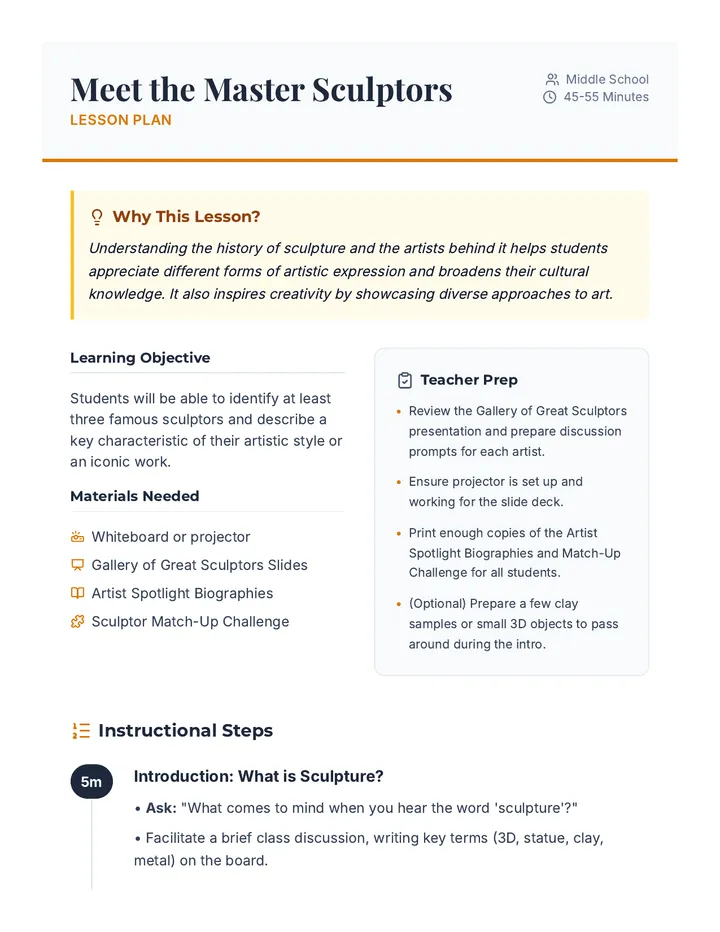
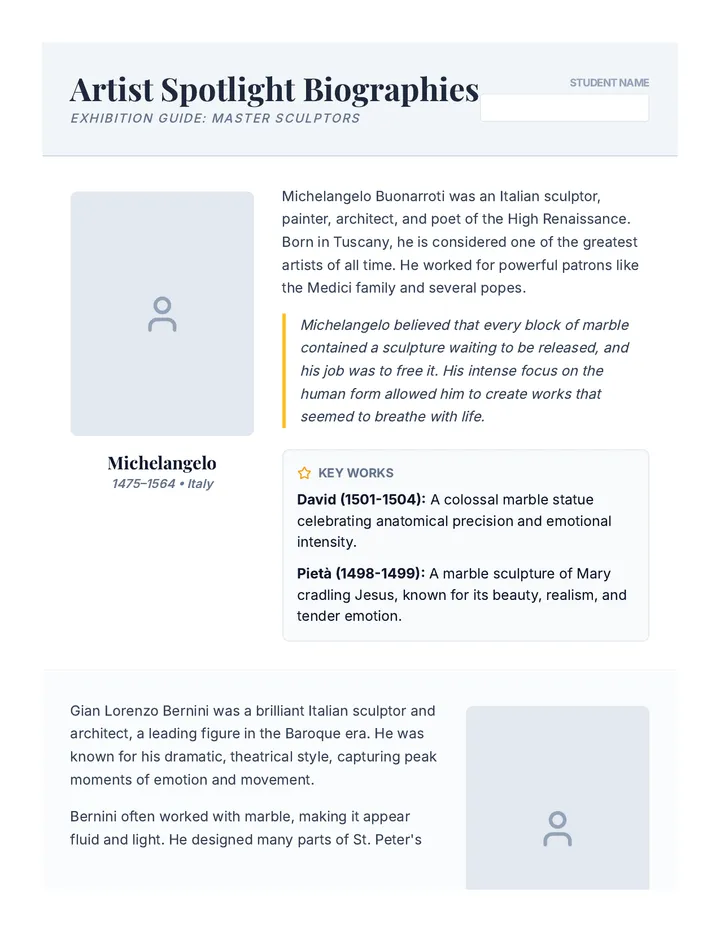
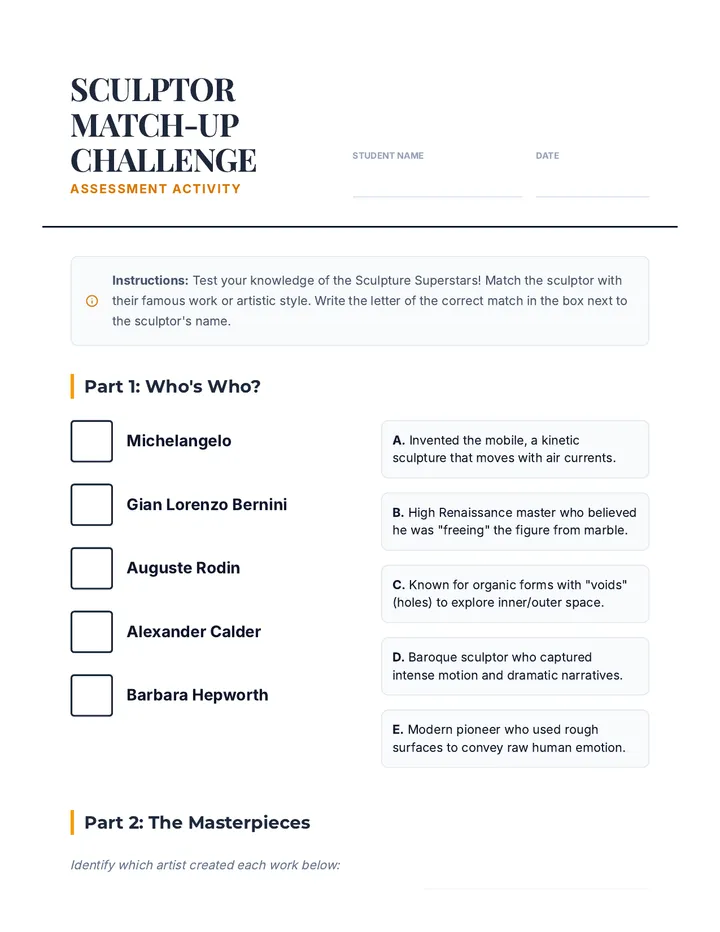
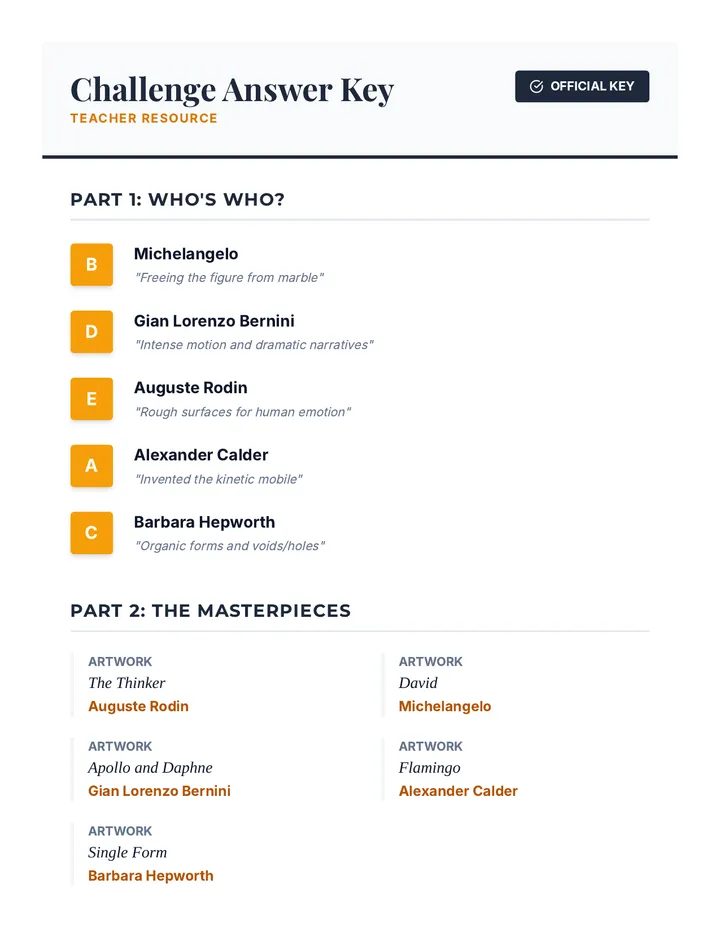
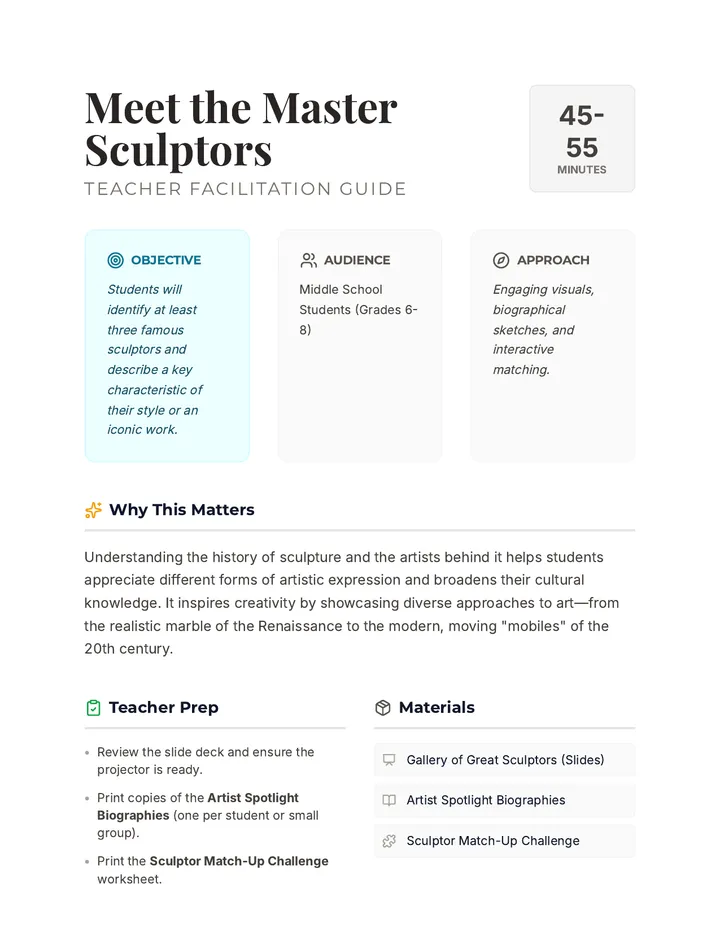
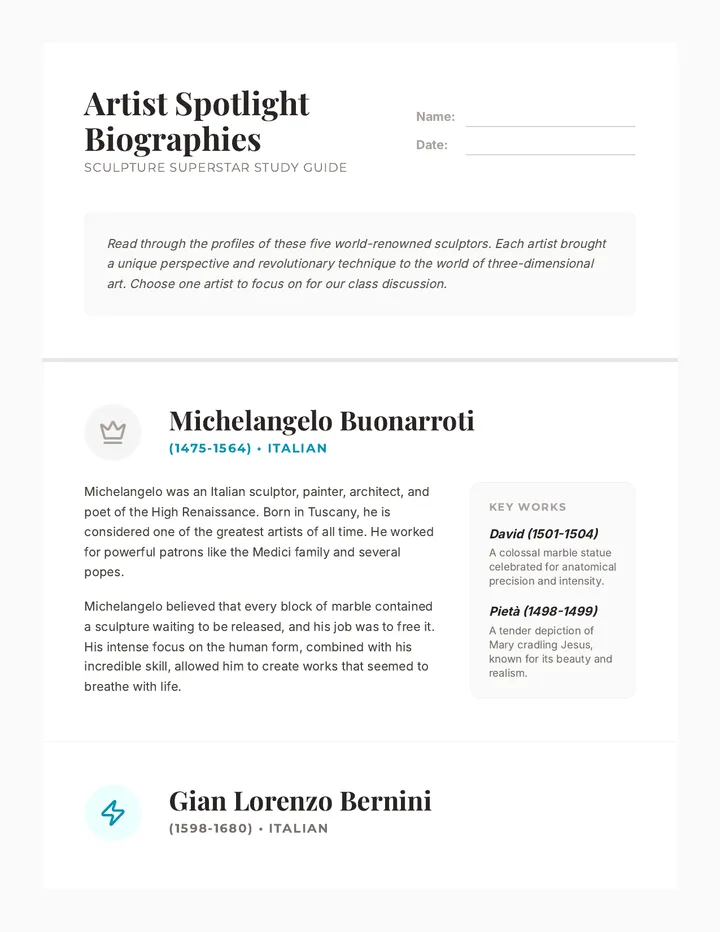
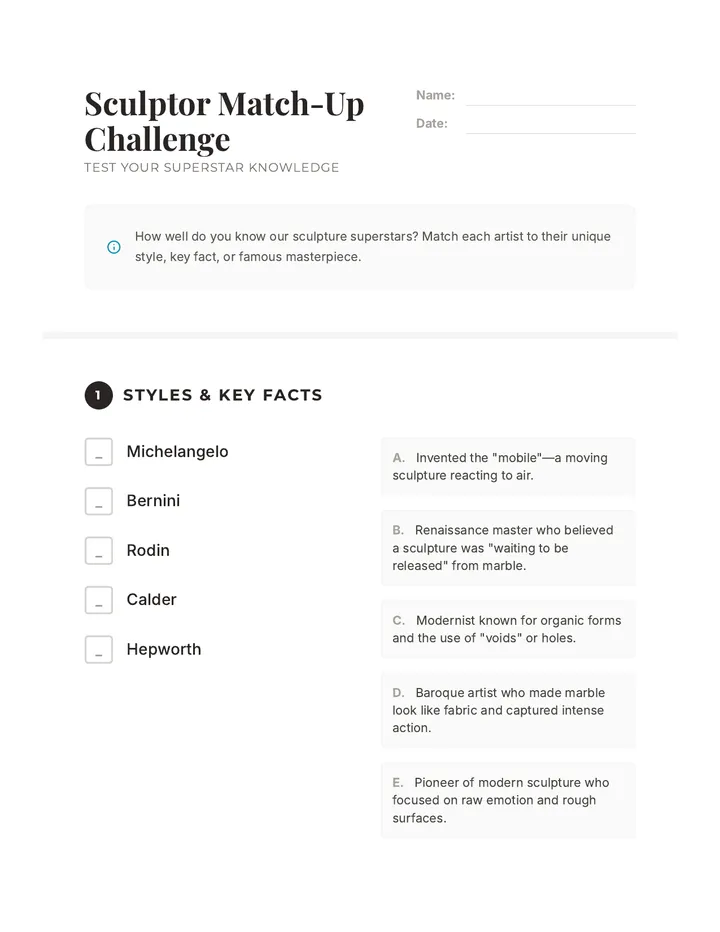
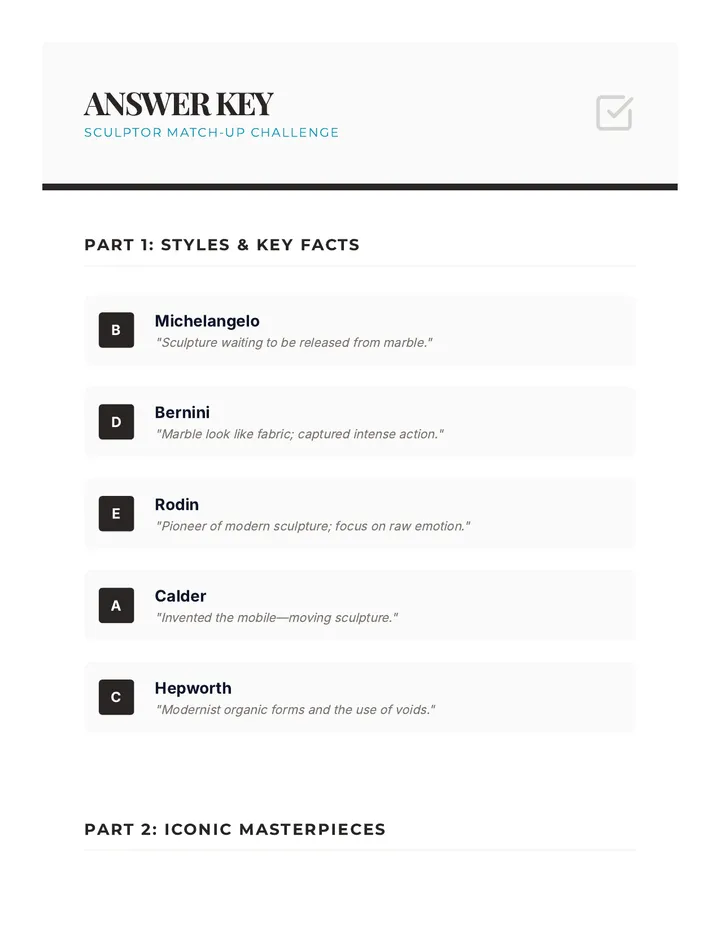
Students explore the lives and works of five iconic sculptors—Michelangelo, Bernini, Rodin, Calder, and Hepworth—through a gallery-style presentation, biographical readings, and a matching challenge.
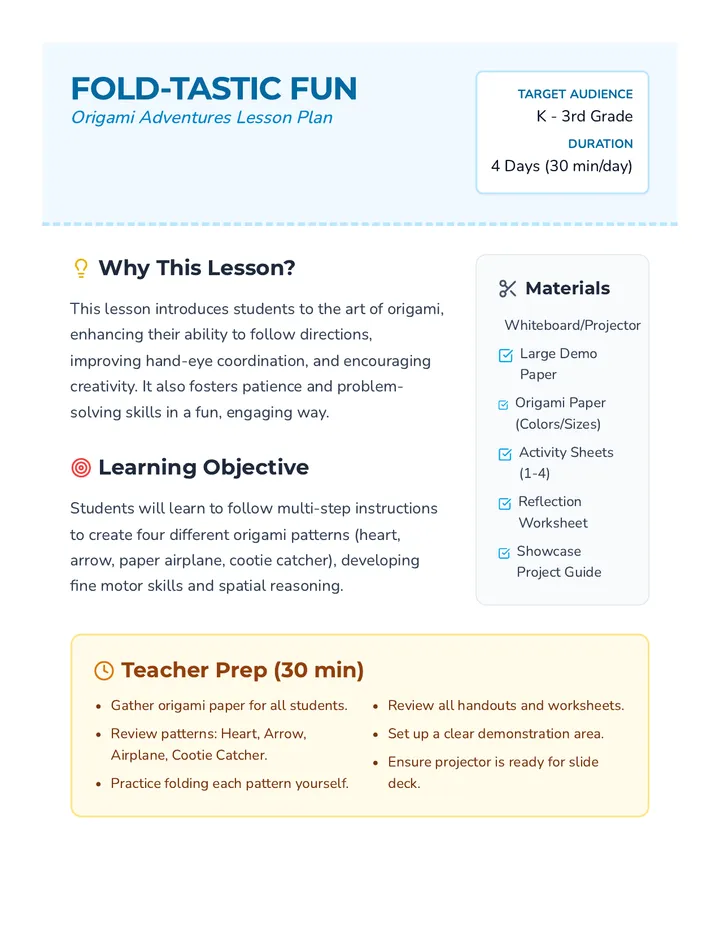
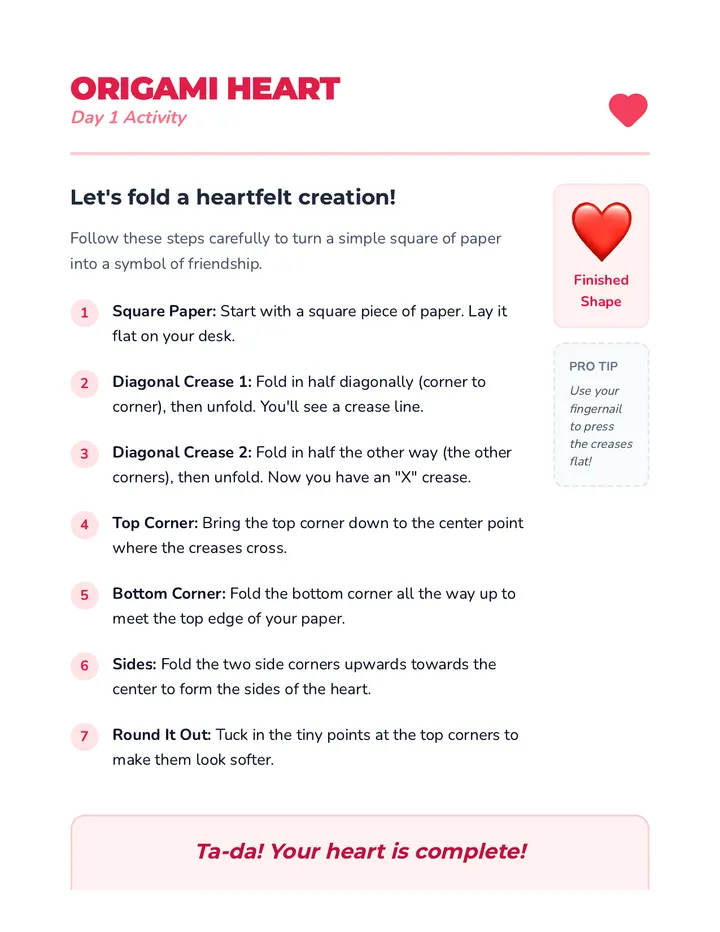
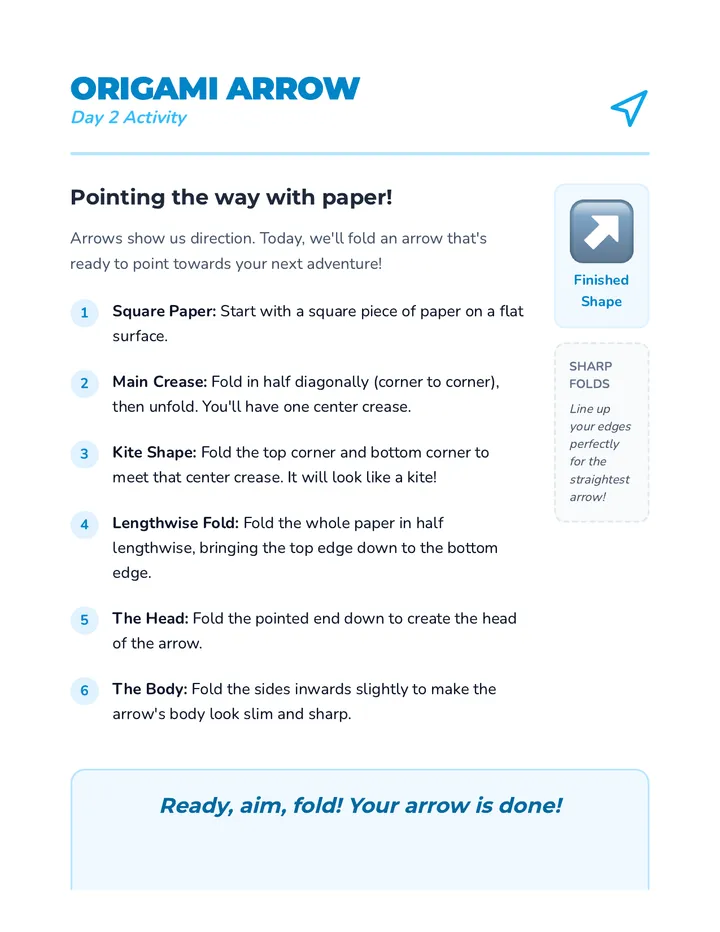
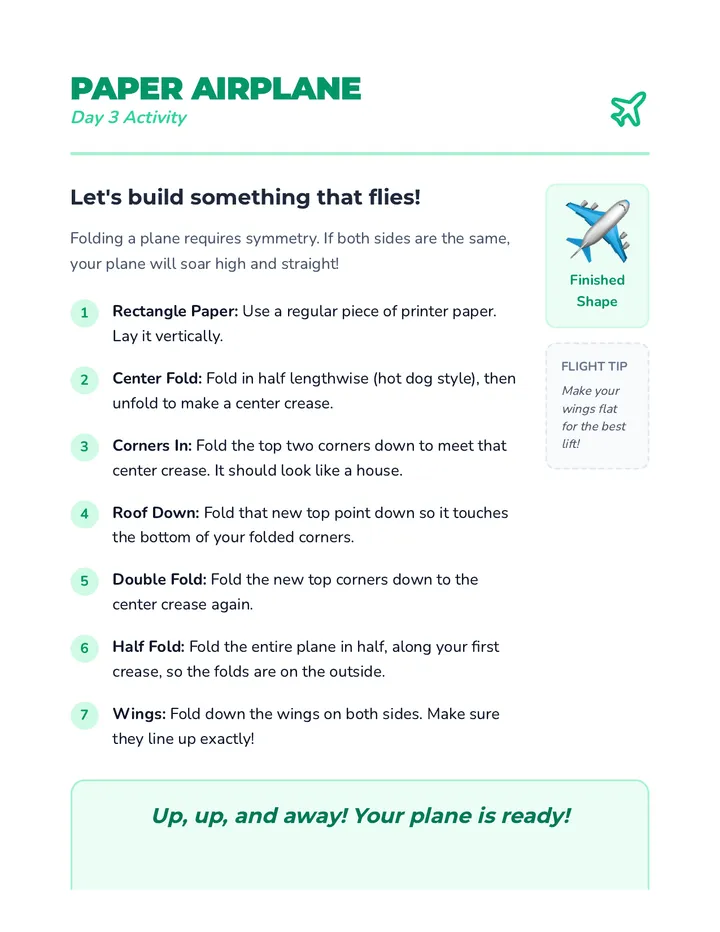
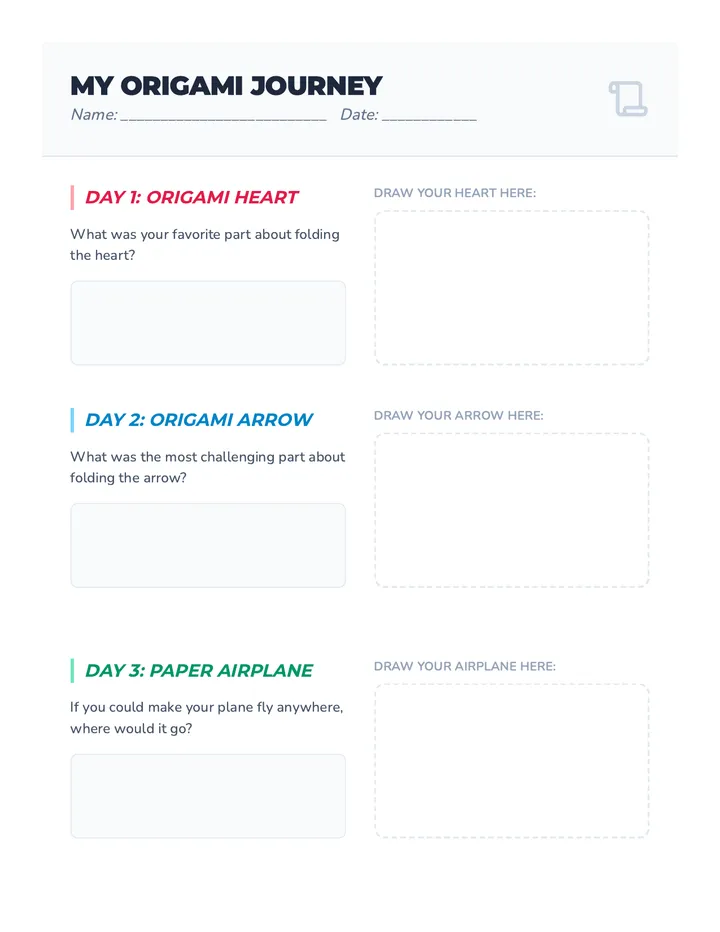
A four-day introductory origami course for K-3 students, teaching fine motor skills and patience through the creation of hearts, arrows, airplanes, and cootie catchers.
A foundational Art 1 lesson introducing collage techniques and composition, drawing inspiration from National Geographic's visual storytelling. Students explore historical context, collect found materials, and practice compositional principles through hands-on exercises.
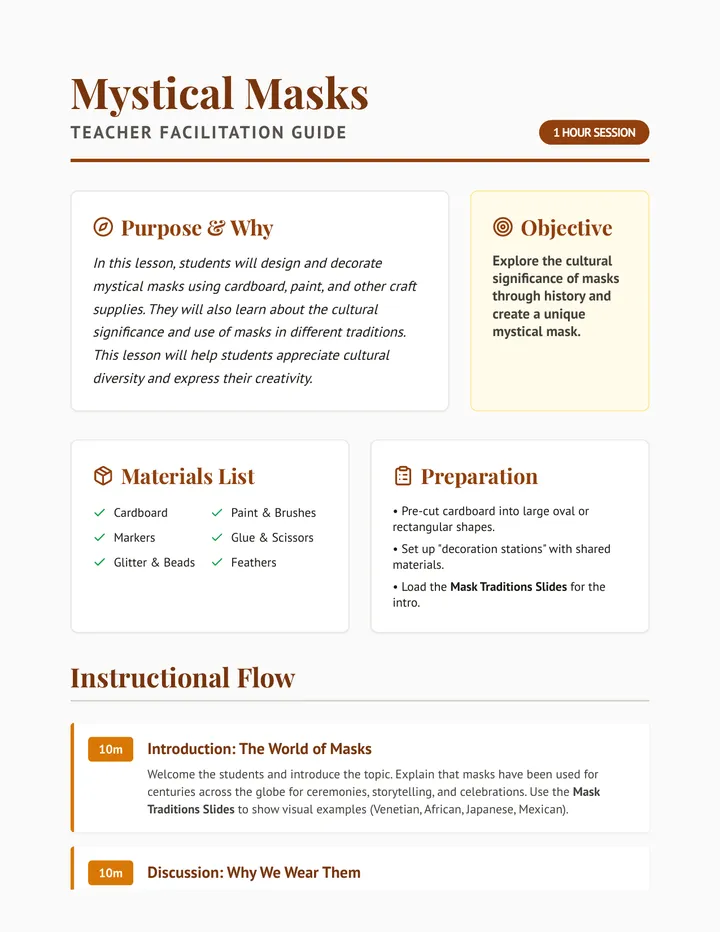
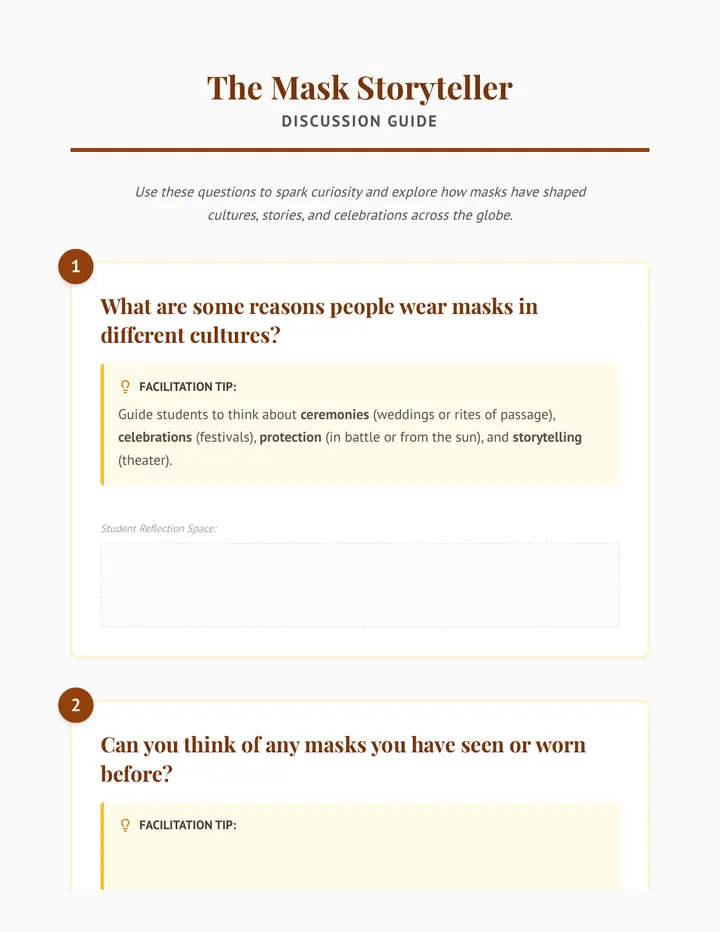
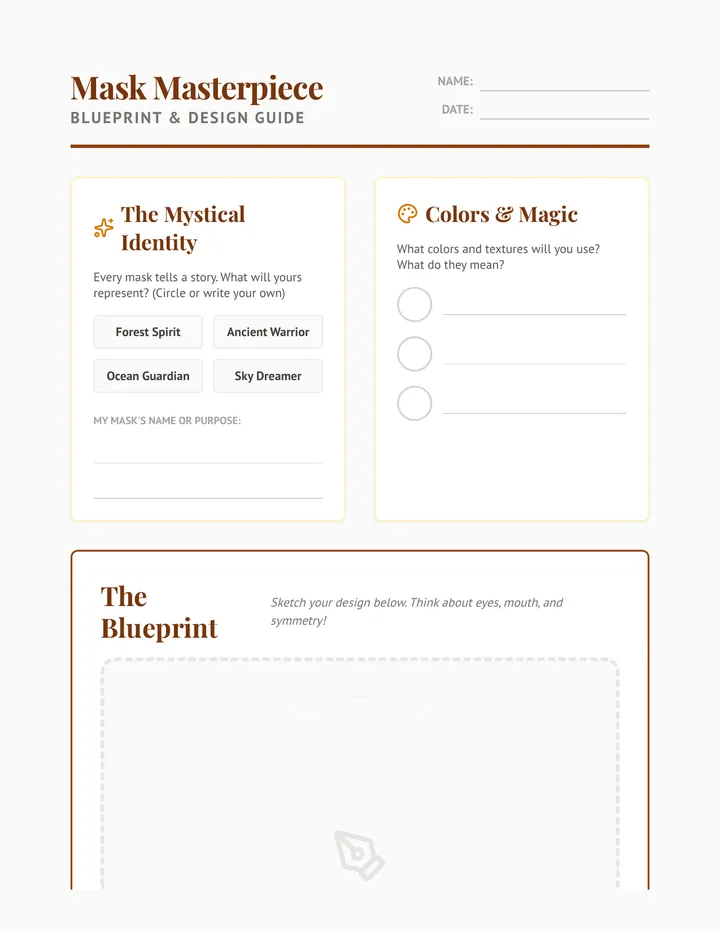
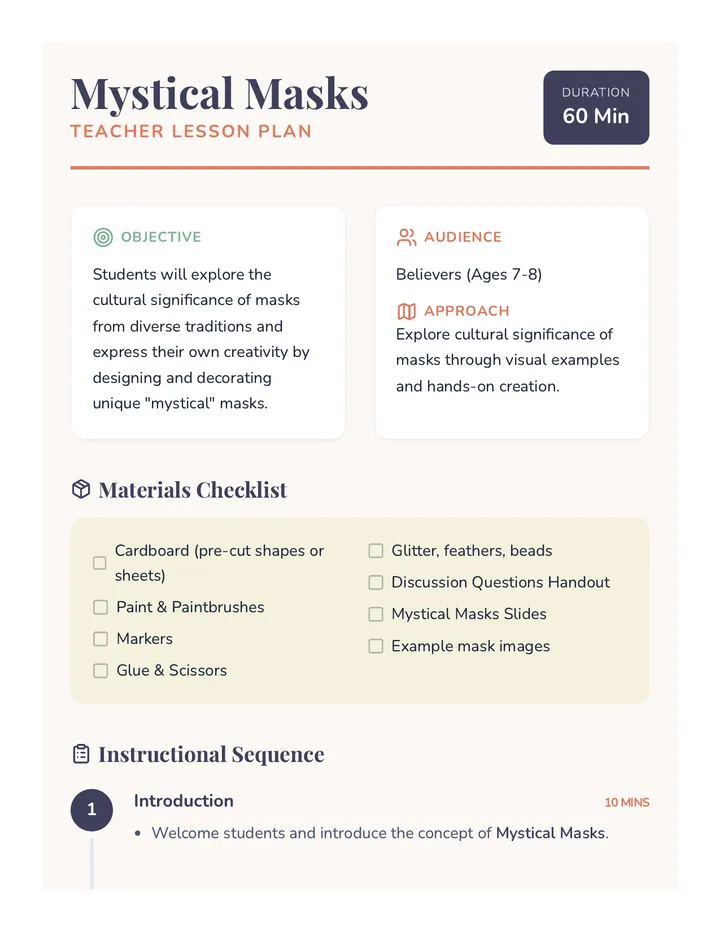
Students explore the cultural significance of masks from around the world and design their own mystical masks using cardboard and craft supplies.
A hands-on lesson where students learn the art of papermaking using recycled materials, combining environmental science with creative crafting.
Students explore the cultural significance of masks from around the world and design their own mystical masks using cardboard and craft supplies. This lesson encourages creative expression and appreciation for global traditions.
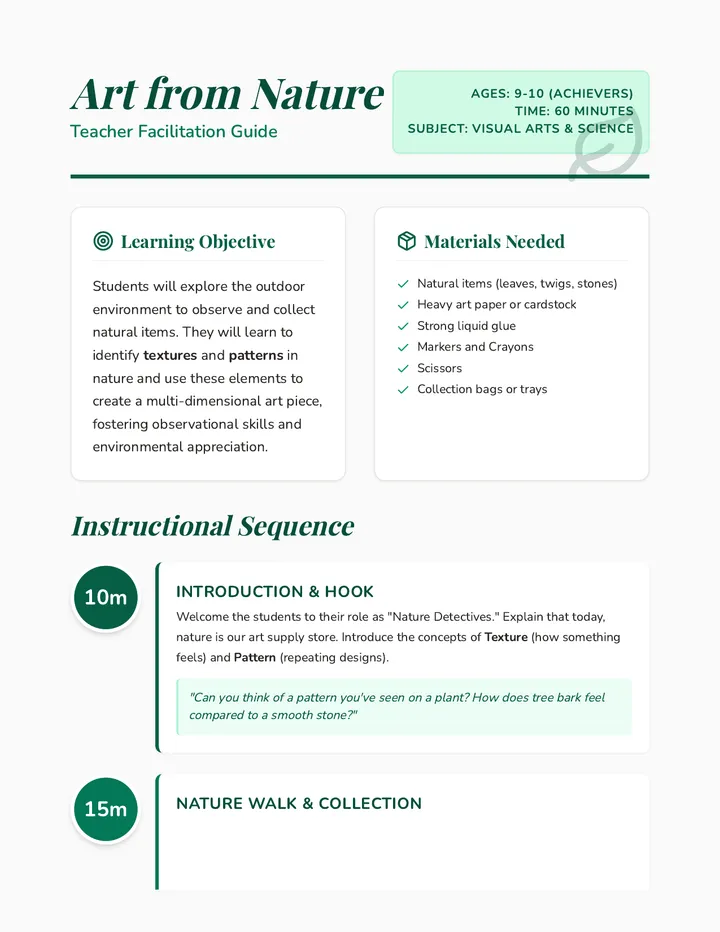
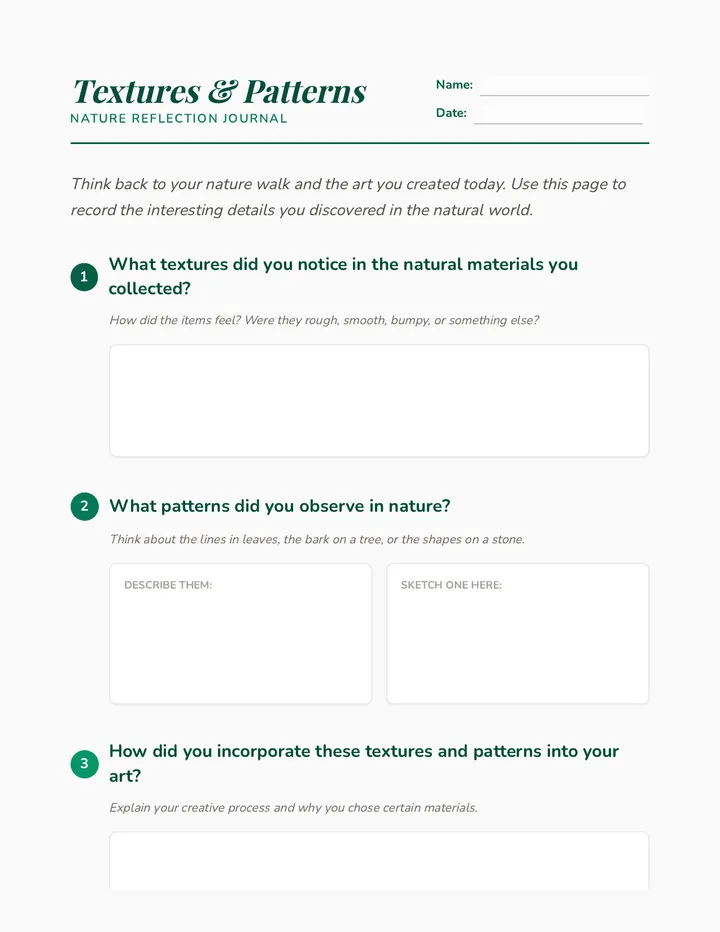
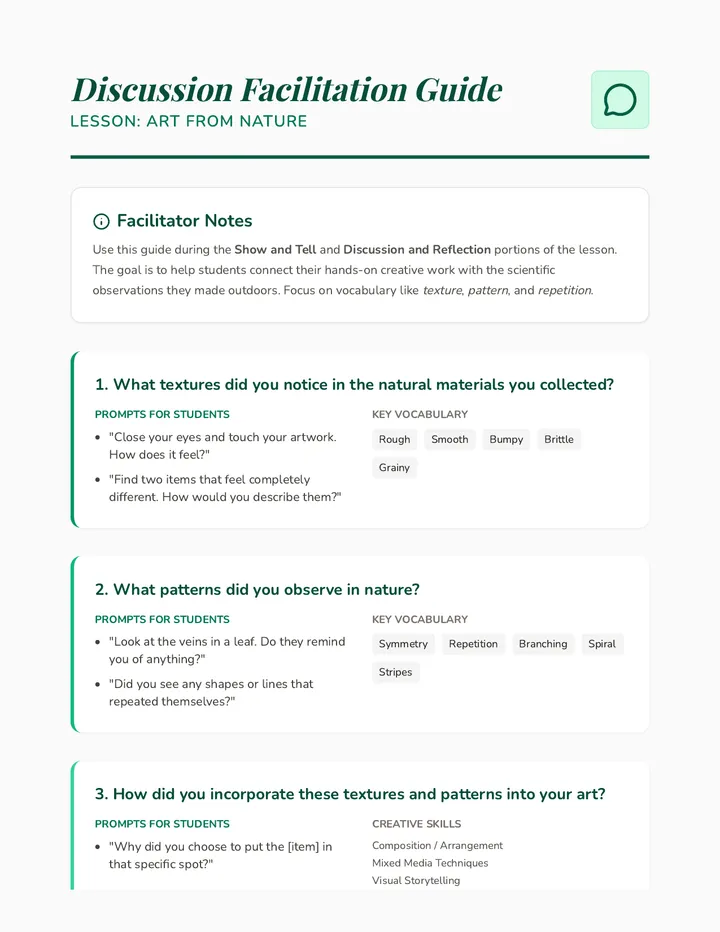
Students will use natural materials to create unique art pieces, learning about textures and patterns found in nature. This lesson helps students appreciate the beauty of nature and develop their creativity and observational skills.
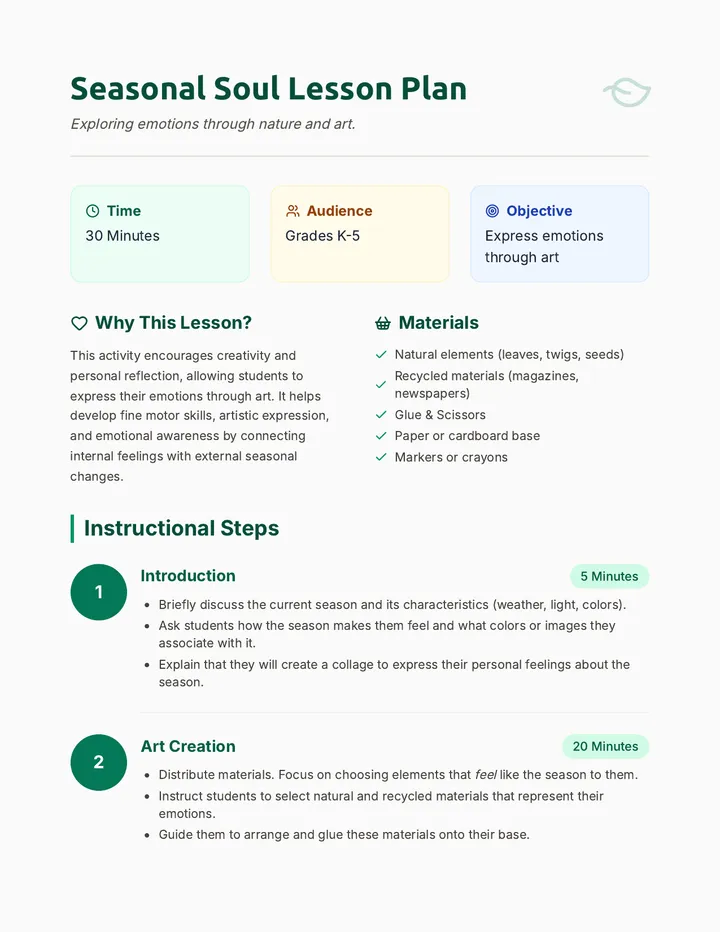
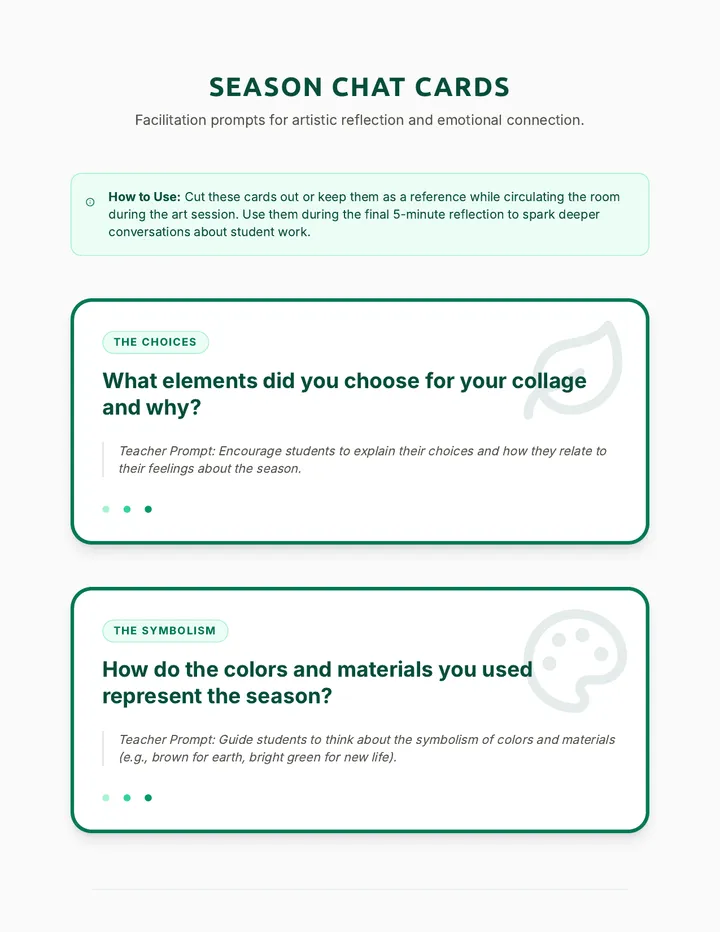
In this lesson, students will create collage artworks that represent their feelings about the current season using elements from nature and recycled materials. This activity encourages creativity and personal reflection, allowing students to express their emotions through art. It helps develop fine motor skills, artistic expression, and emotional awareness.
A lesson designed for 4th graders to explore different creative processes and discover their unique artistic methods through hands-on activities and reflection.
A middle school art history lesson introducing students to iconic sculptors like Michelangelo, Bernini, Rodin, Calder, and Hepworth through visual presentations and biographical studies.