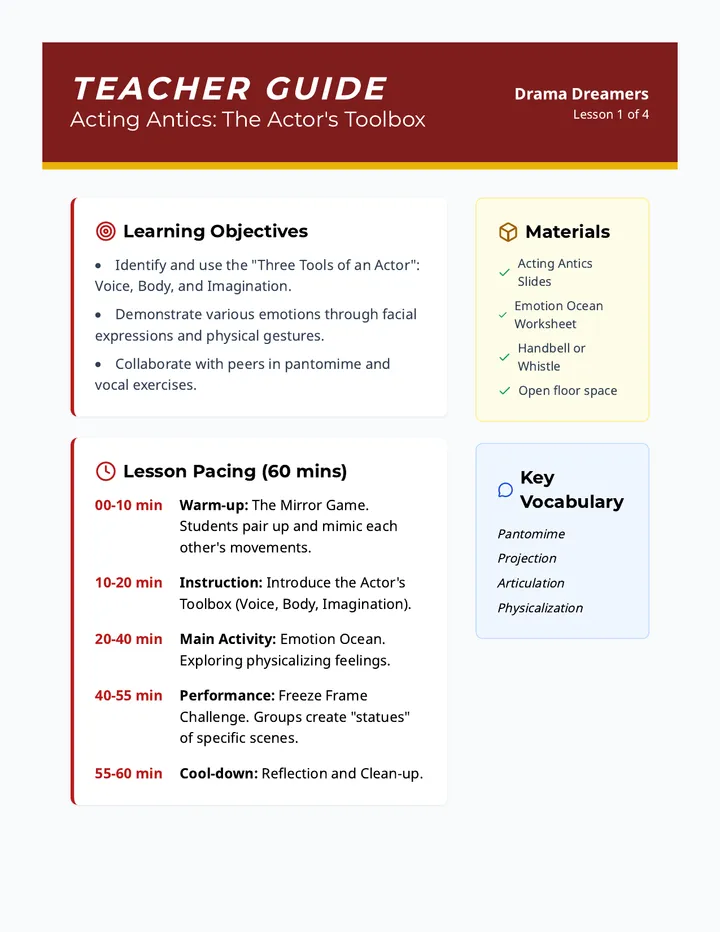
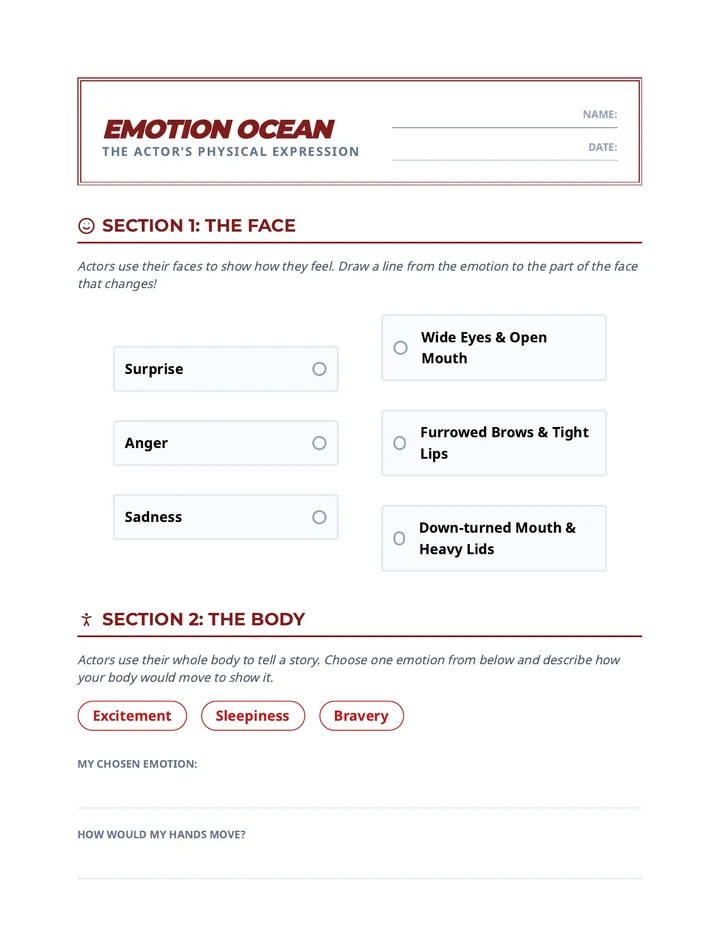
Scenario-based role-play, character development, and improvisational storytelling techniques. Strengthens social-emotional skills and creative problem-solving through collaborative world-building.
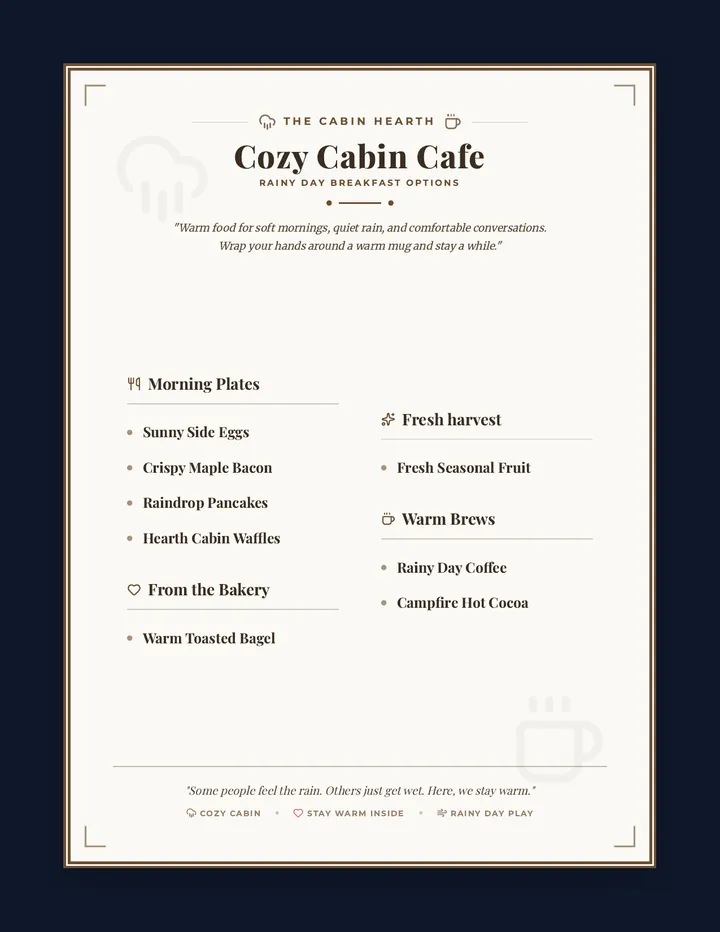
A cozy, rainy-day themed single-page breakfast menu featuring eggs, bacon, pancakes, waffles, fresh fruit, coffee, and a bagel. Clean minimalist layout without prices or descriptions, perfect for creative reading or dramatic play.
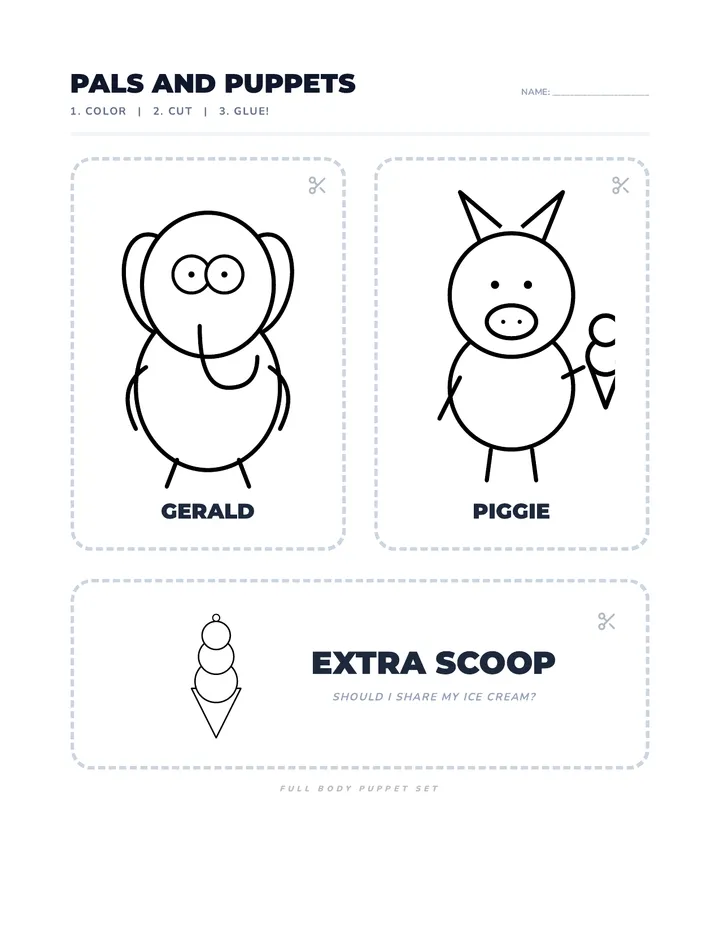
An updated coloring and cutout activity sheet featuring full-body versions of Gerald and Piggie, with Piggie holding an ice cream cone, plus an extra ice cream for sharing.
A comprehensive introduction to theater for elementary students, covering acting techniques, playwriting, stage types, theater history, and technical "behind the scenes" magic. Students move from basic expression to designing and performing with confidence.
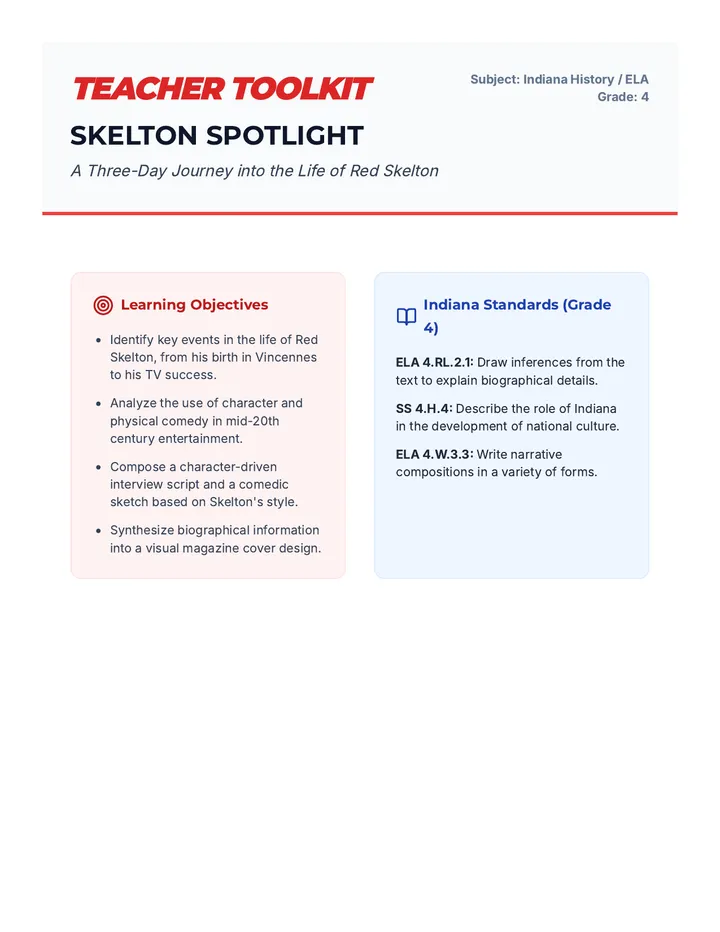
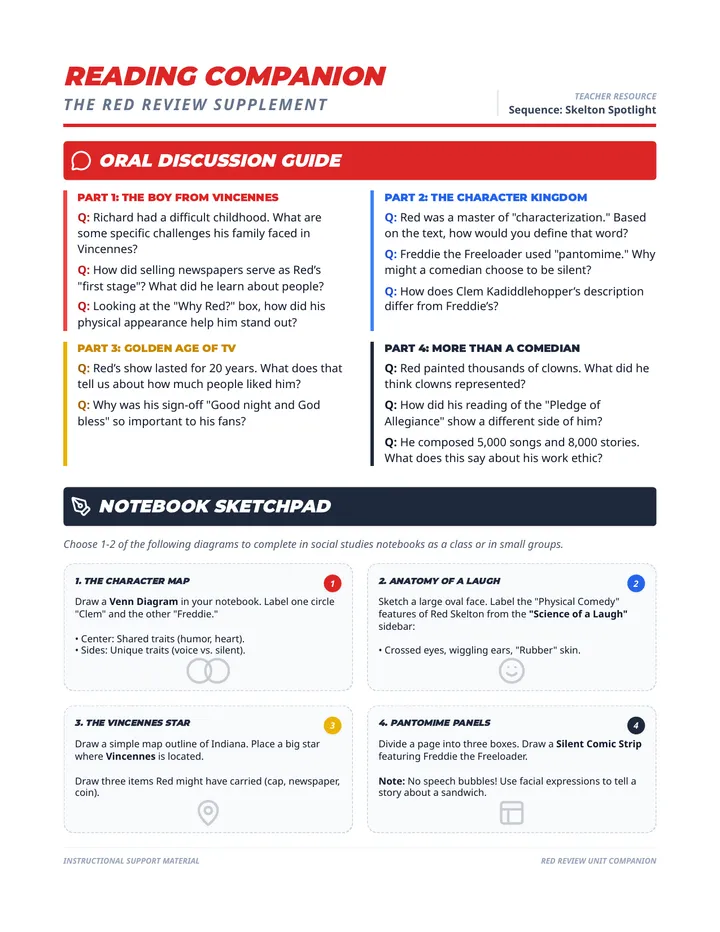
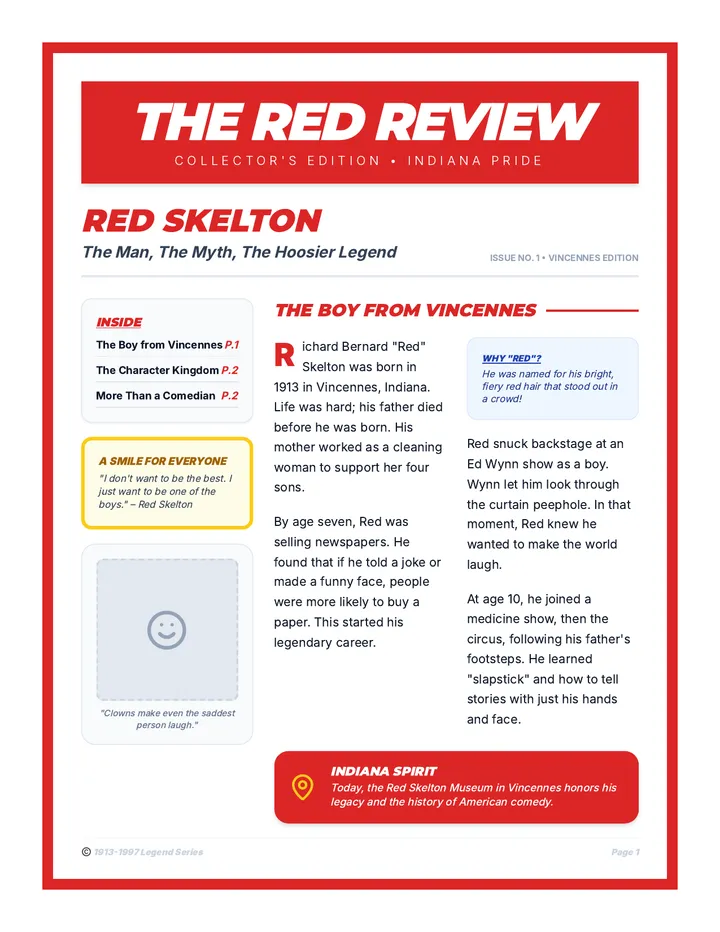
A three-day exploration of the life and legacy of Indiana-born comedian Red Skelton, presented in a vibrant magazine format. Students explore his early life in Vincennes, his iconic characters, and his lasting impact on American comedy through reading and creative performance activities.
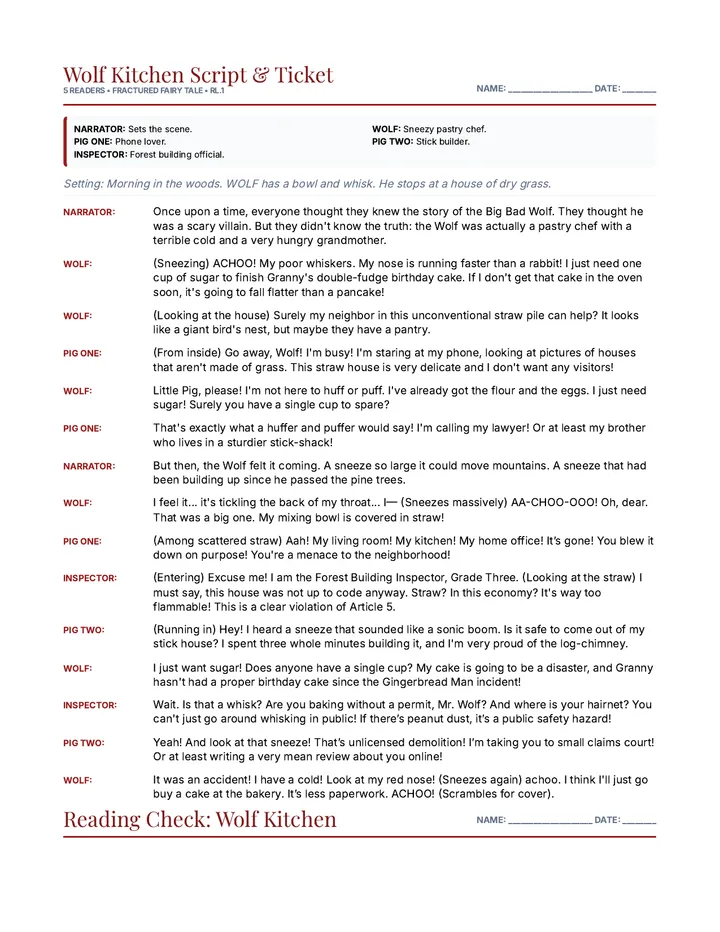
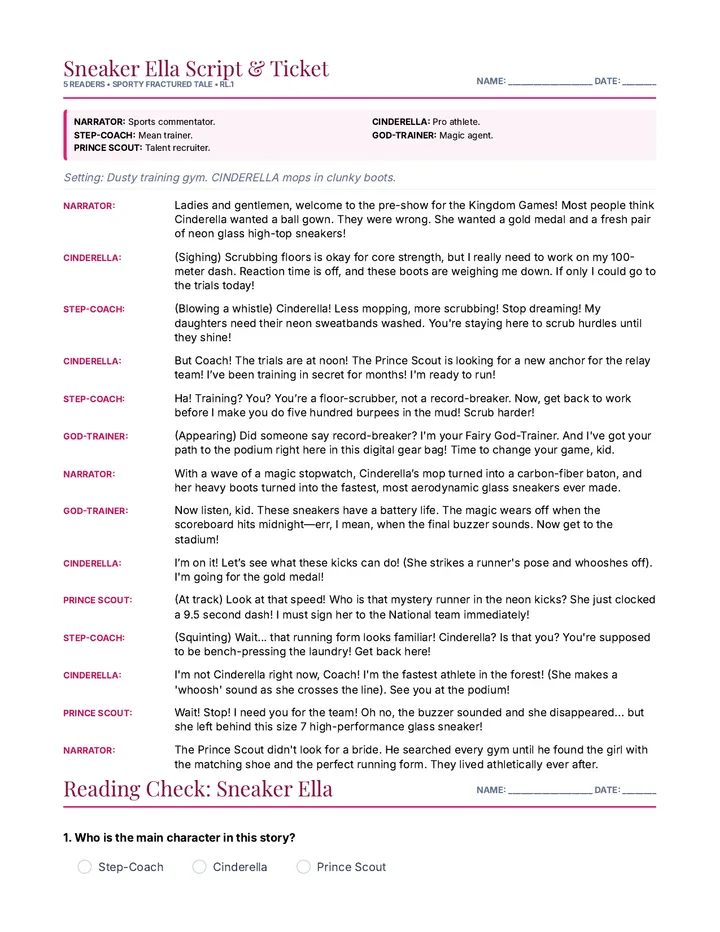
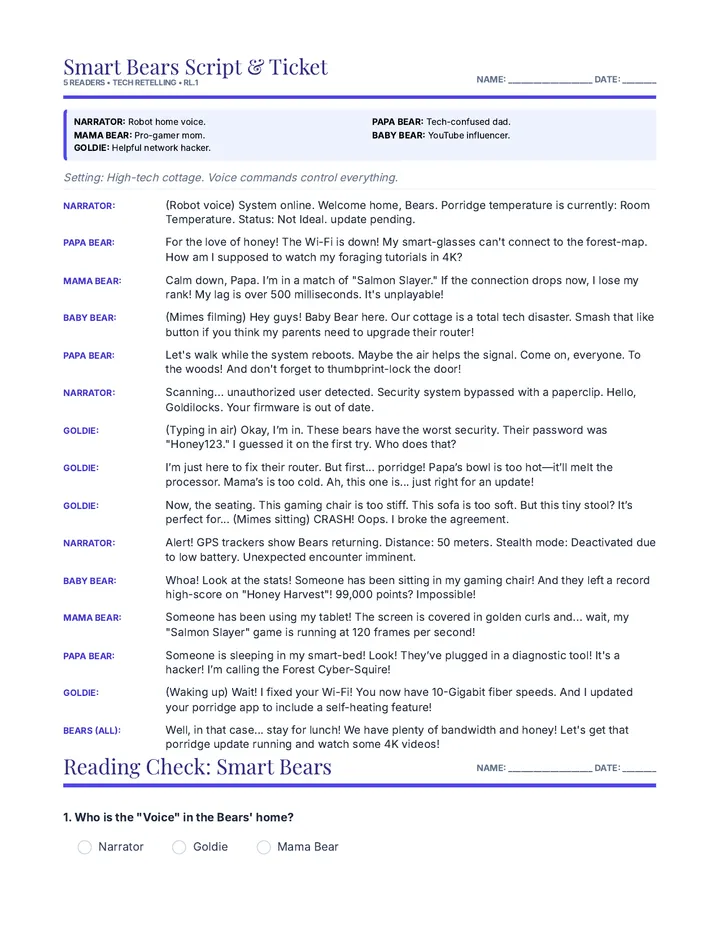
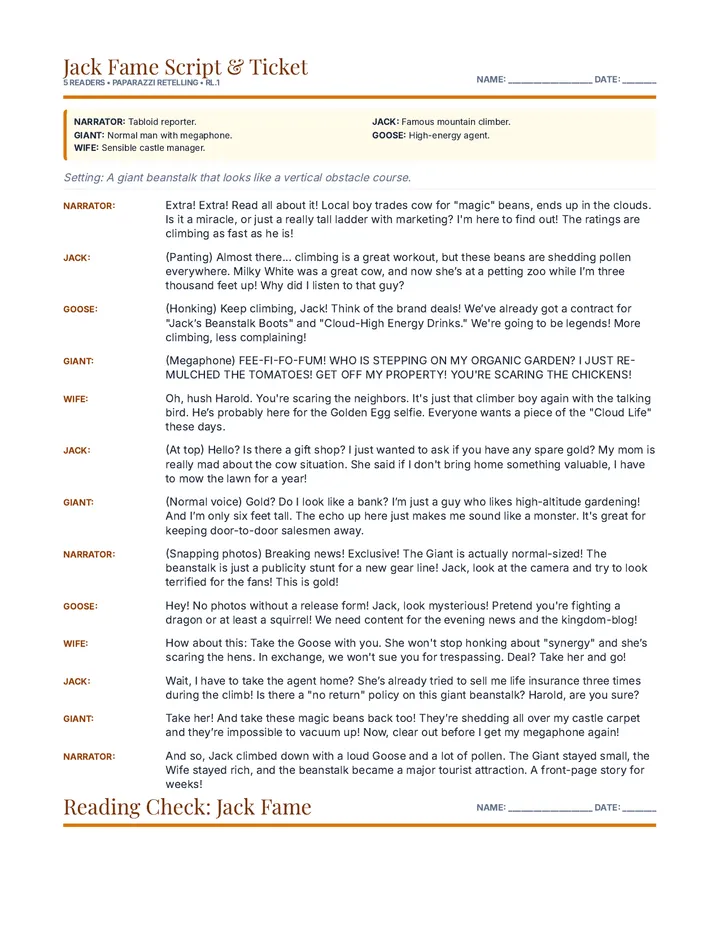
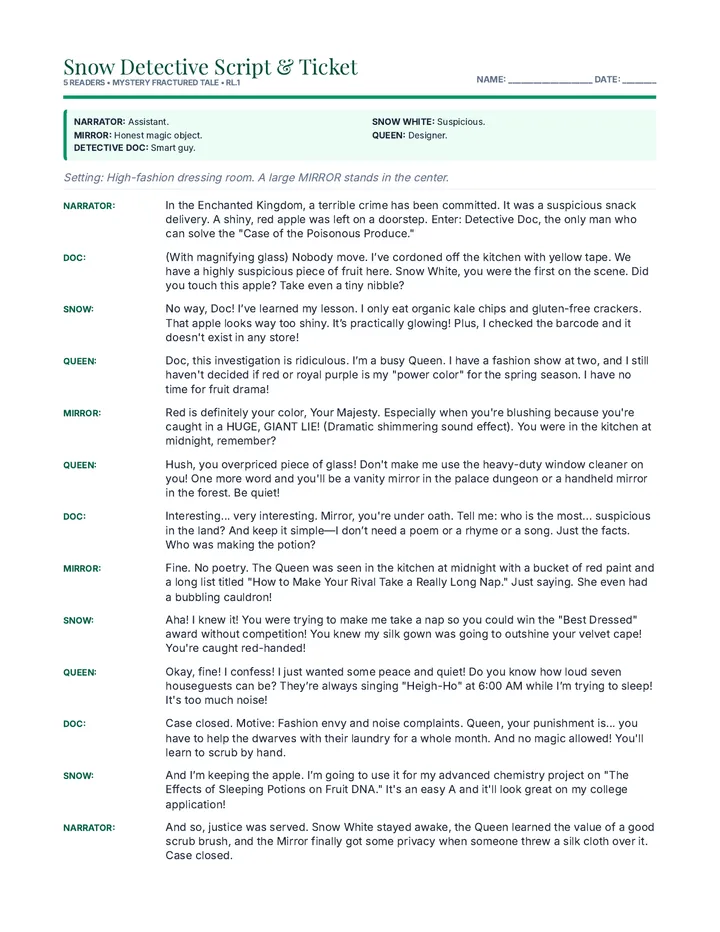
A collection of five fractured fairy tale reader's theater scripts designed for groups of five students, focusing on fluency, expression, and creative retelling.
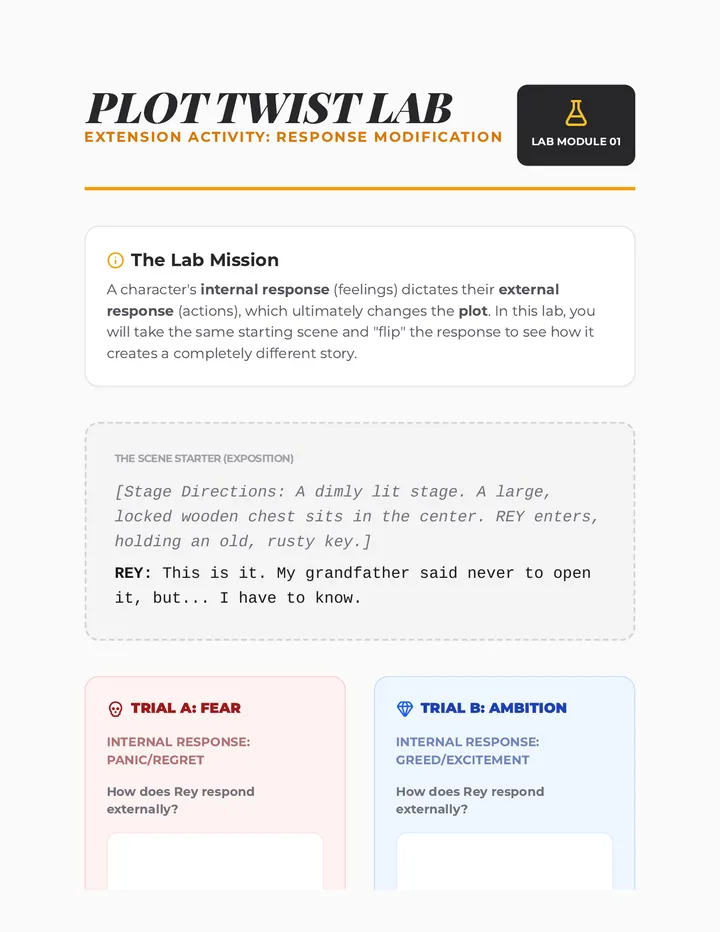
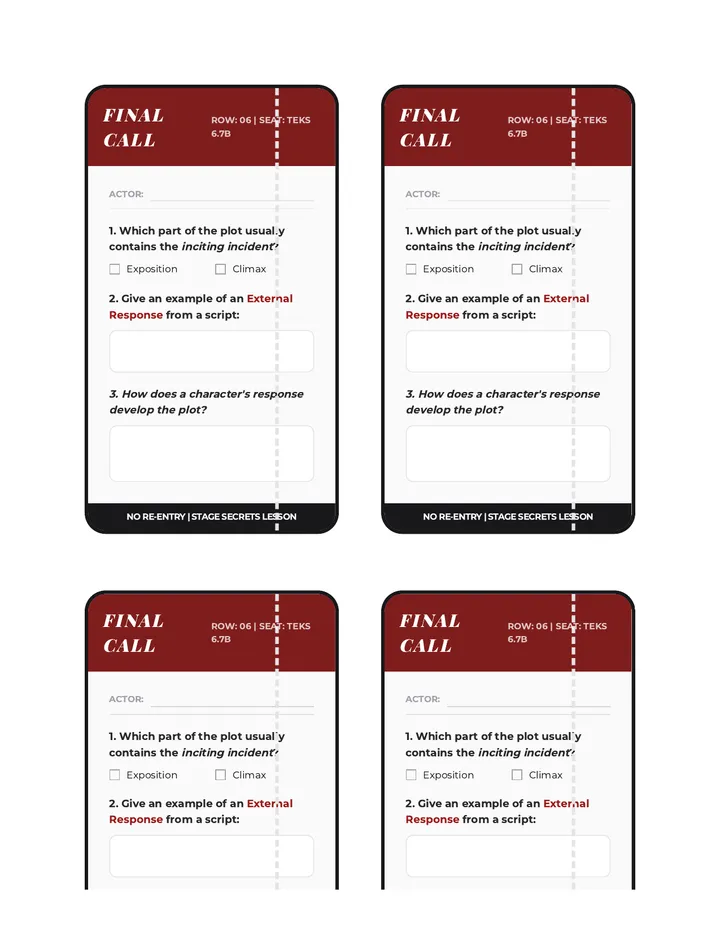
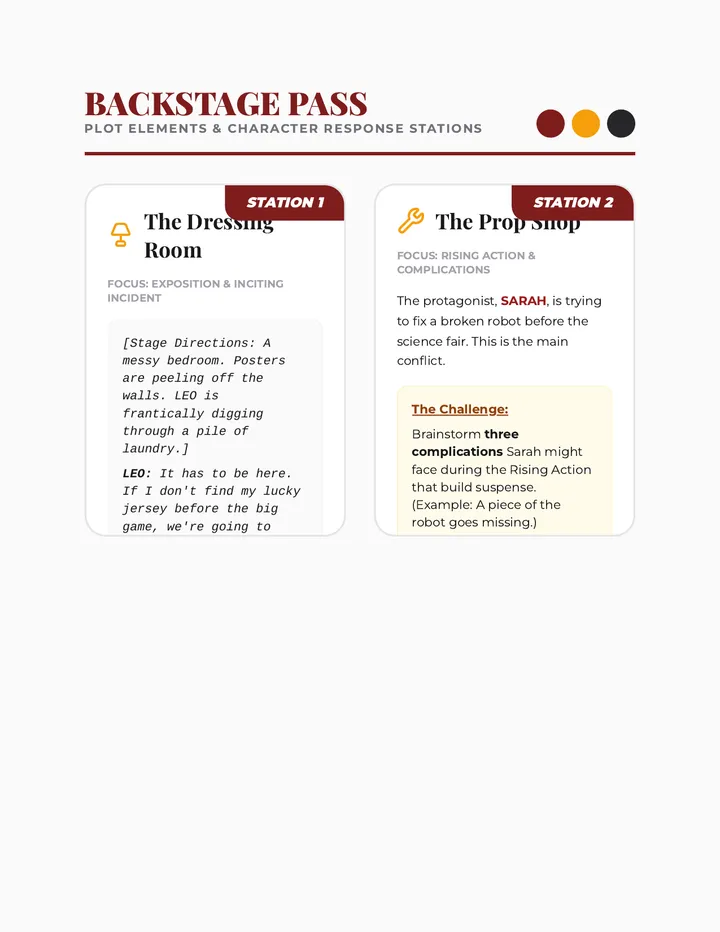
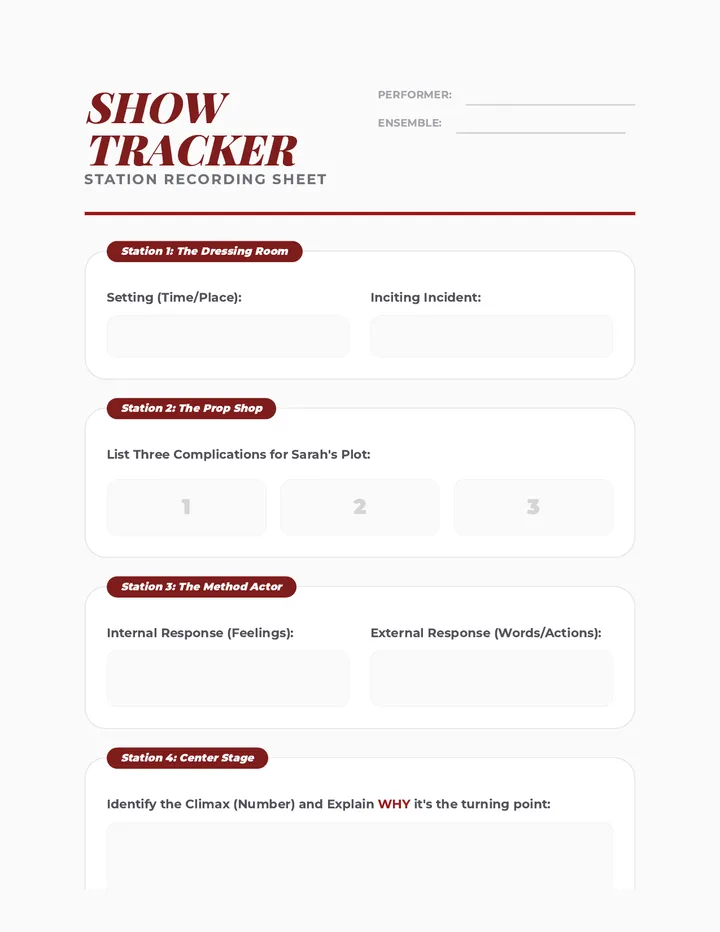
A unit focused on play structure, fluency, and social-emotional problem solving through mystery-themed scripts. Students analyze plot elements while practicing performance skills.
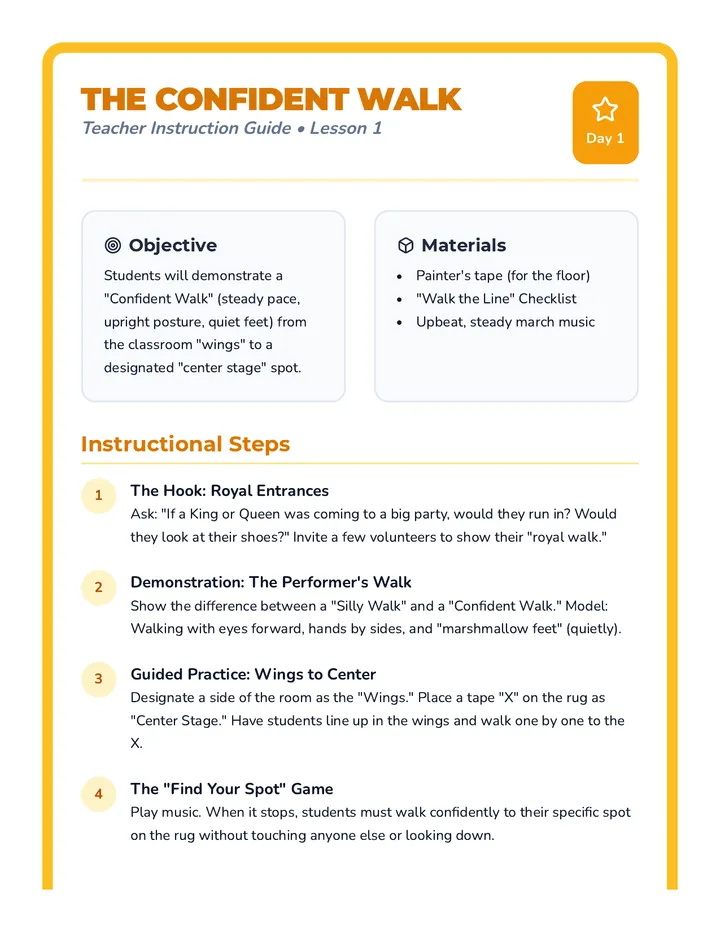
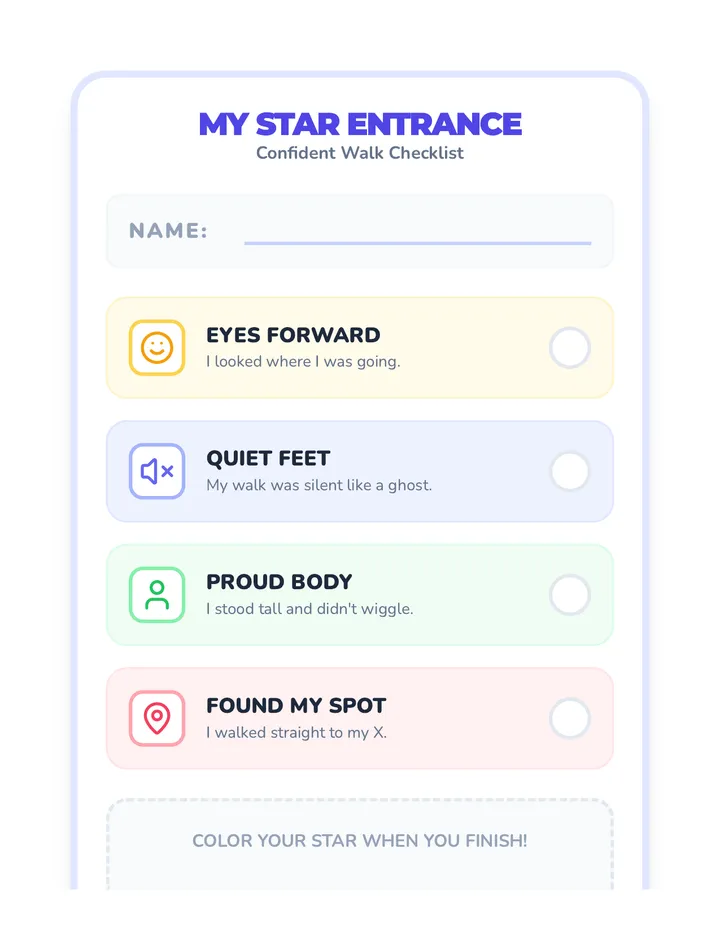
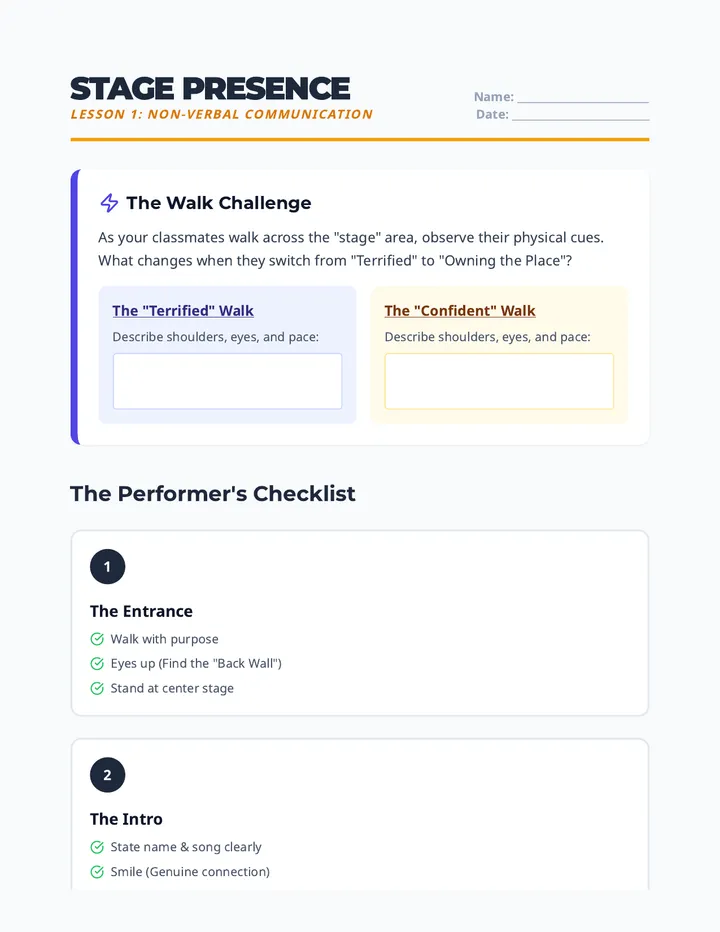
A Kindergarten music sequence focused on stage presence, performance routine, and building confidence through role-play and preparation. Students learn the full cycle of a performance, from walking on stage to the final bow.
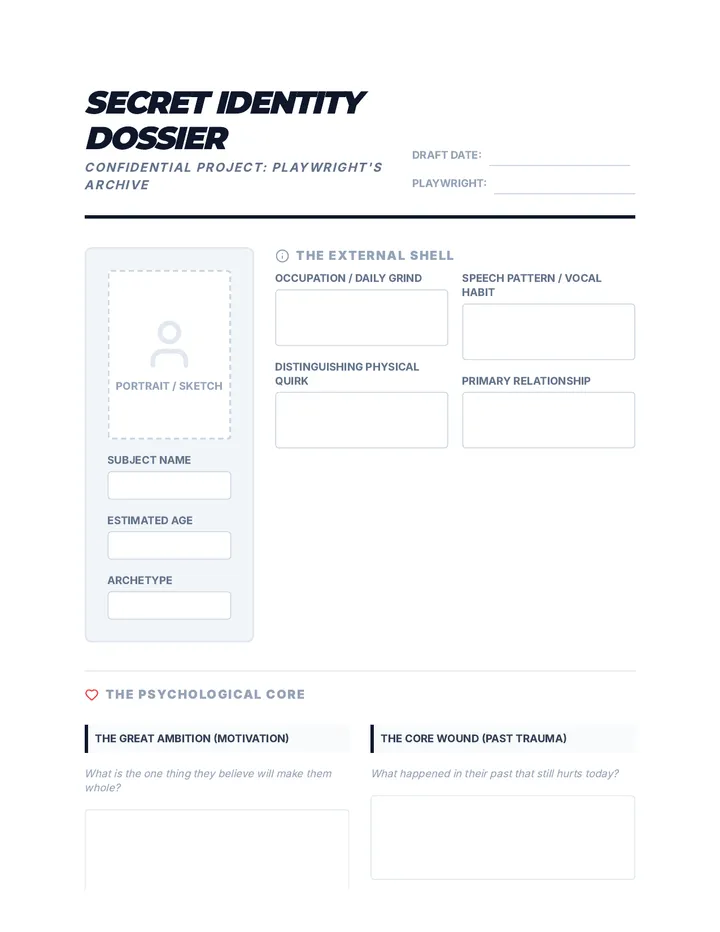
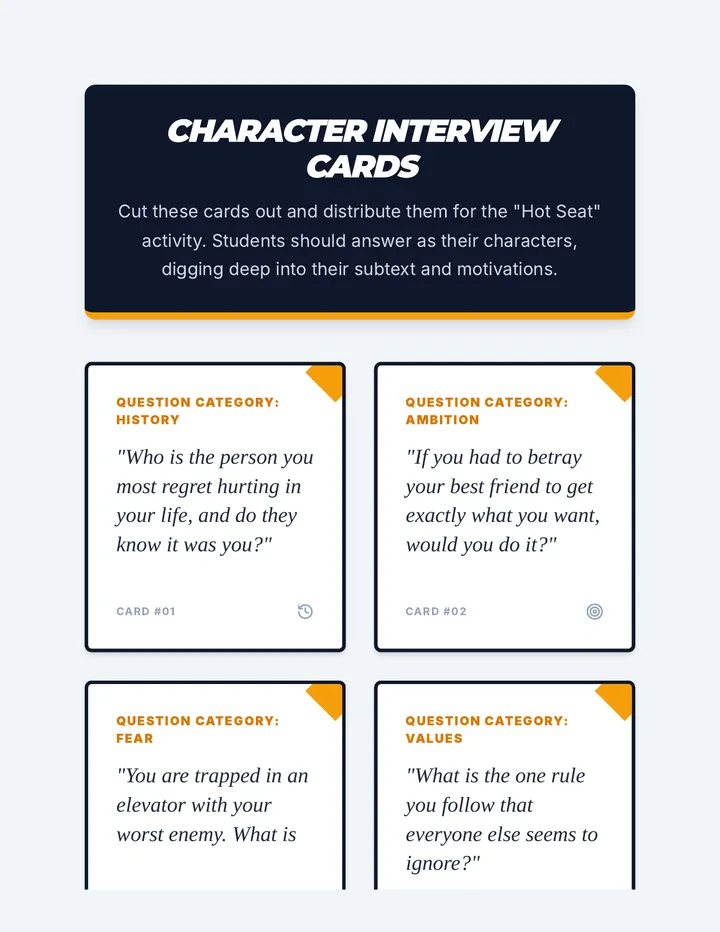
A comprehensive playwriting sequence that takes 10th-grade students from initial character creation to a polished ten-minute play script. Students explore archetypes, master narrative structure, learn the importance of stage business, and engage in the collaborative revision process of a table read.
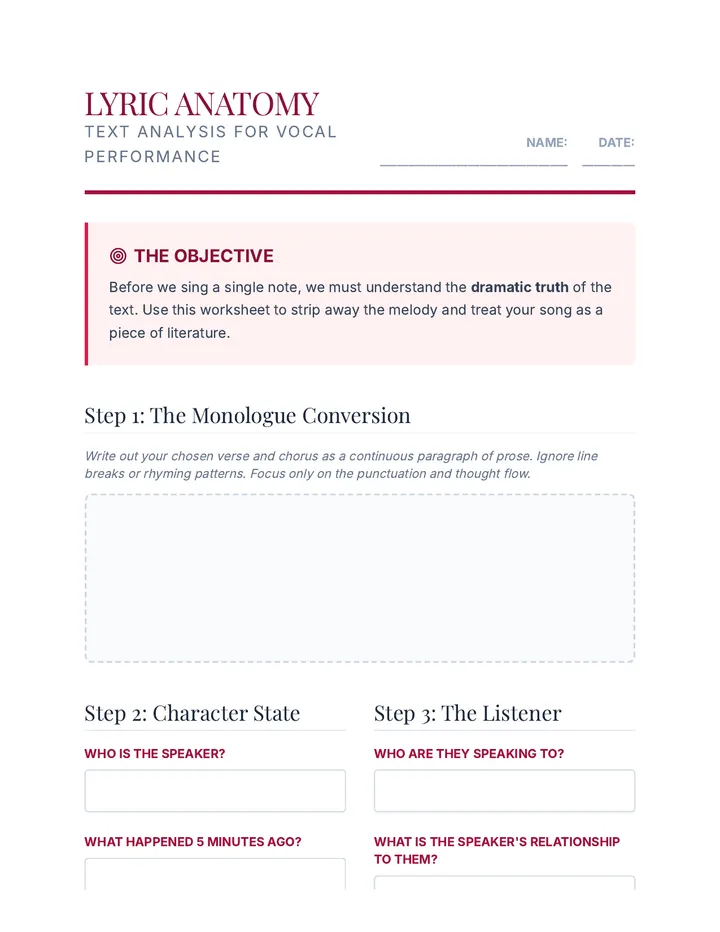
This advanced performance sequence for graduate vocalists bridges the gap between technical vocal production and authentic theatrical embodiment. Students move from deep text analysis and subtexting to physical movement (Laban efforts) and stage optics, culminating in a synthesized performance where vocal technique serves dramatic intent.
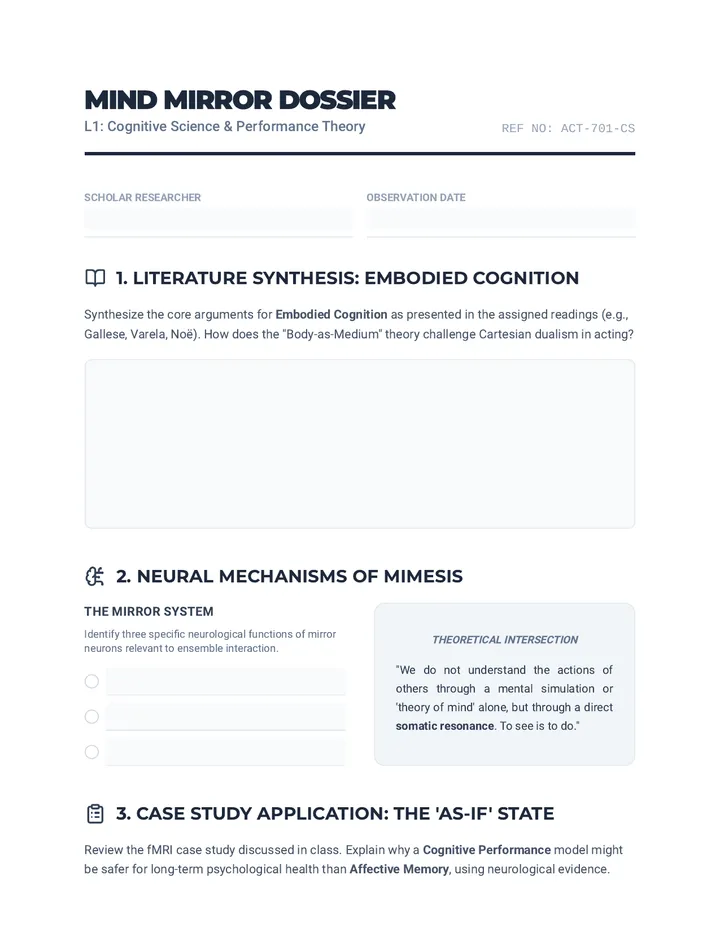
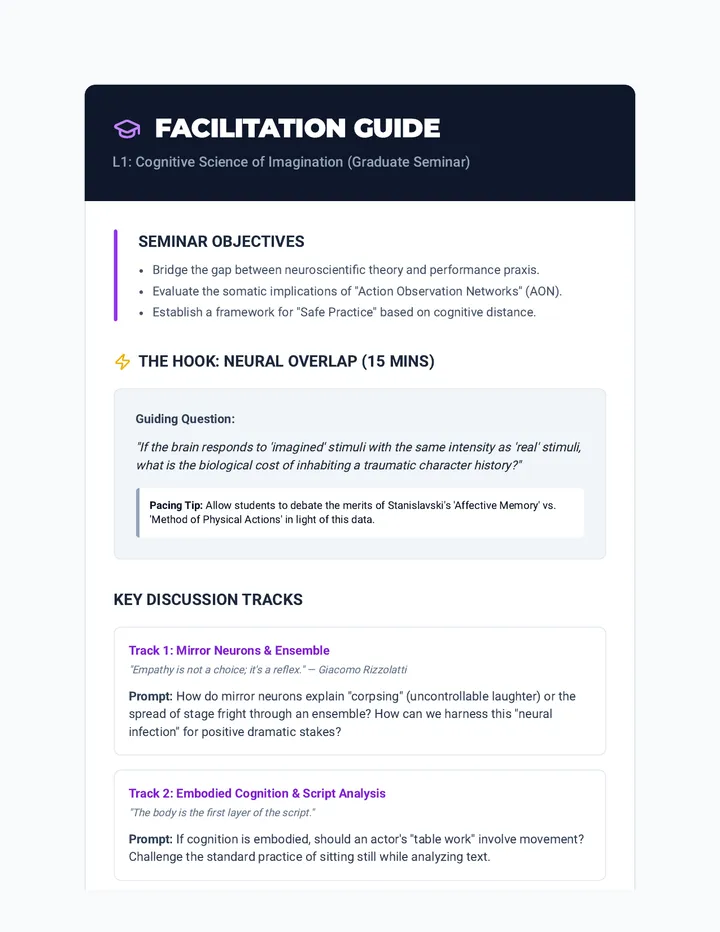
A graduate-level sequence exploring the intersection of cognitive neuroscience and performance theory, focusing on how actors use psychological mechanisms to build and sustain authentic characters.
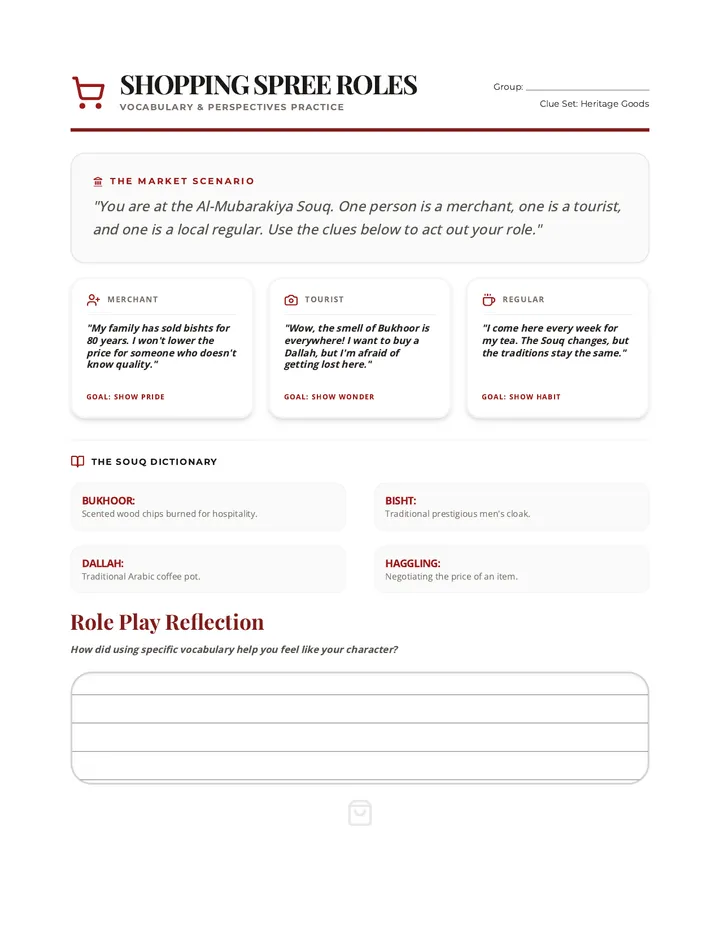
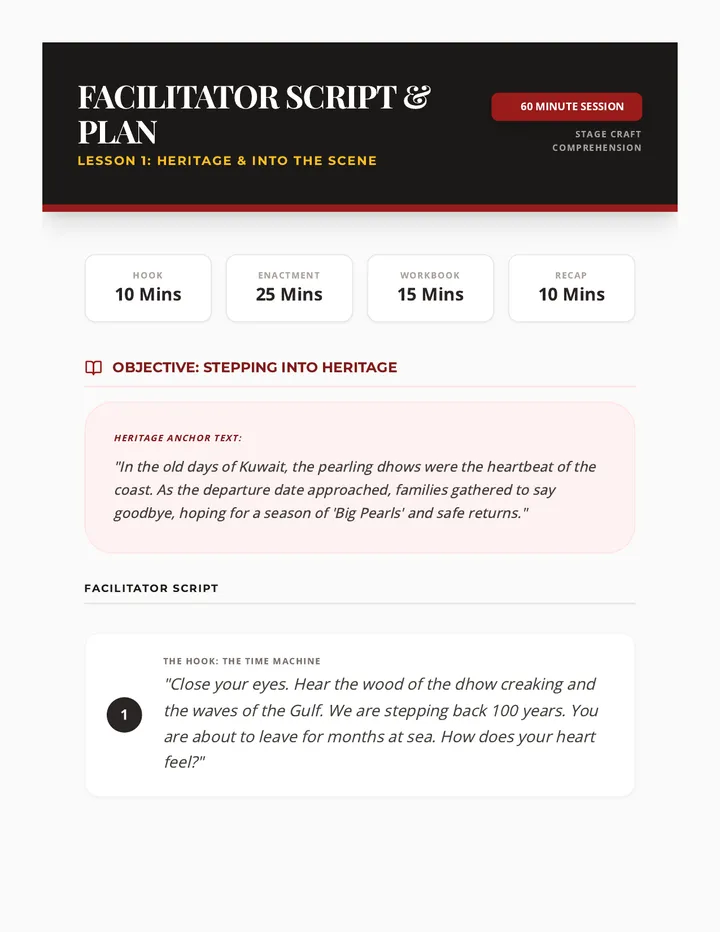
A 12-lesson unit utilizing drama and enactment techniques to deepen reading comprehension, themed around Kuwaiti heritage, global travel, healthy lifestyles, and environmental science for grades 3-8. Focused on skills in action across Before, During, and After reading phases.
A 5-lesson theater arts sequence for 5th graders focused on creating multi-dimensional stage characters through profile building, improvisation, monologue writing, and dialogue refinement. Students move from external traits to internal motivations, learning how to create friction and unique voices for the stage.
This sequence guides 6th-grade students through the intersection of vocal technique, performance psychology, and genre stylization. Students explore how to adapt their voice and physical presence for Folk and Musical Theater while building the emotional resilience needed for public performance.
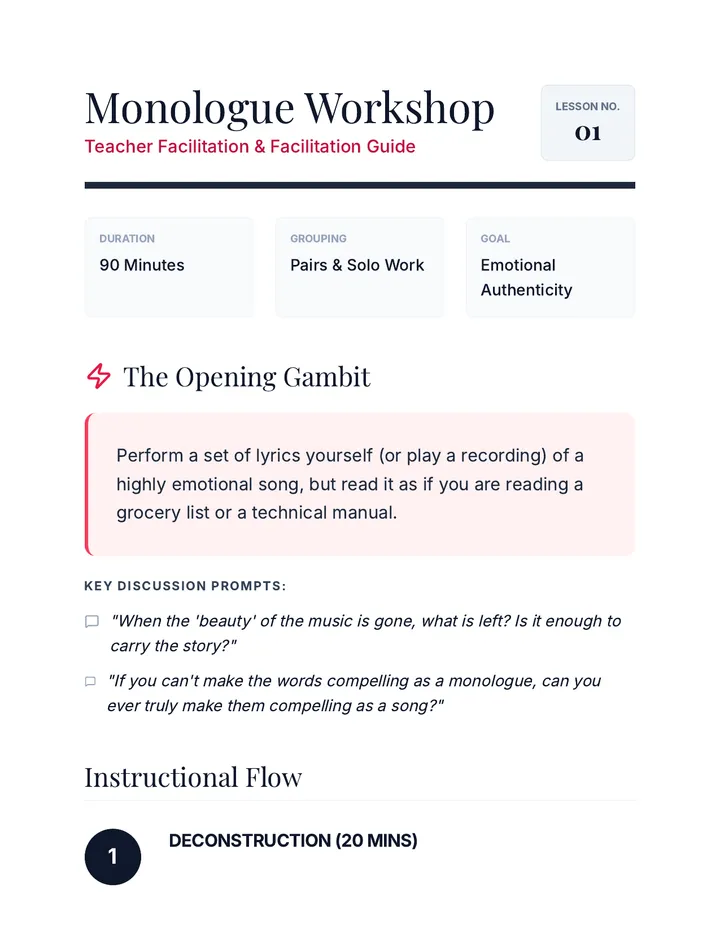
A comprehensive vocal performance sequence for 12th graders focusing on the intersection of acting and singing. Students learn to treat songs as monologues, identify subtext and objectives, map musical arcs, and use vocal timbre as an expressive tool for storytelling.
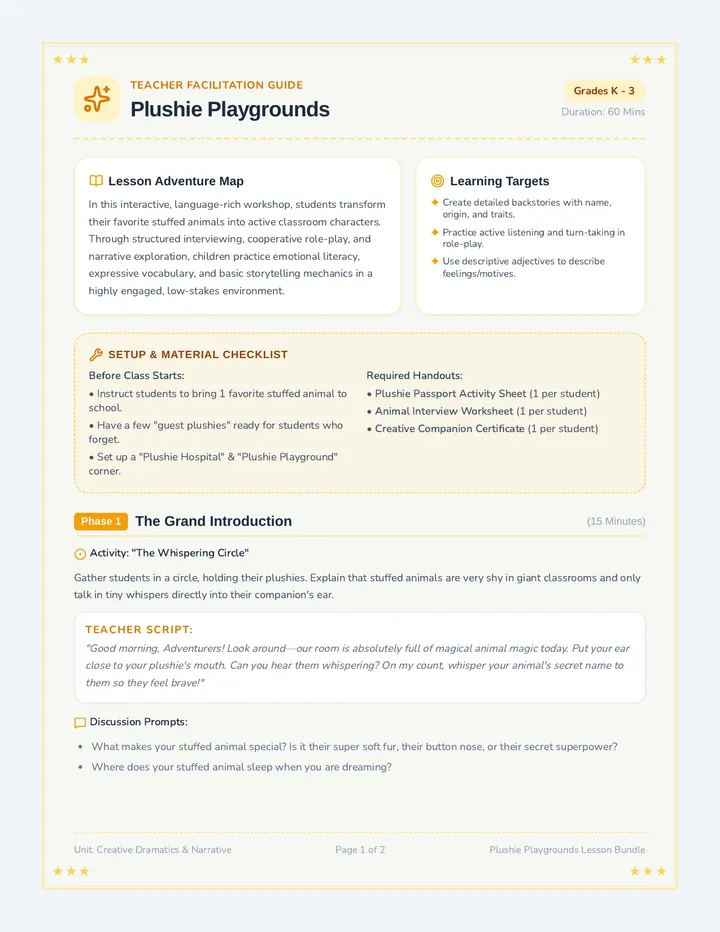
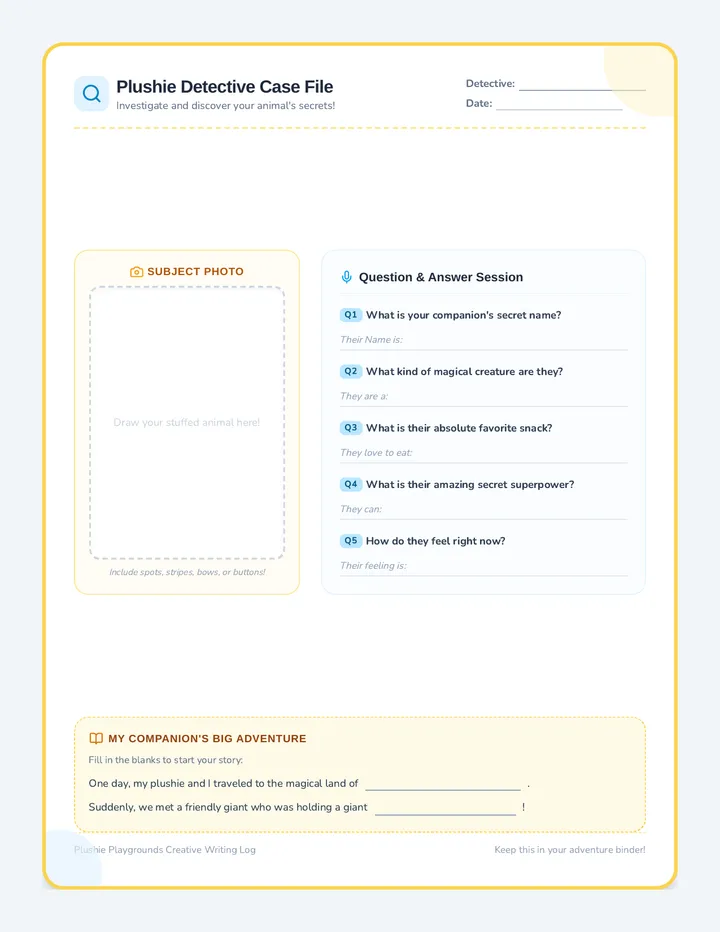
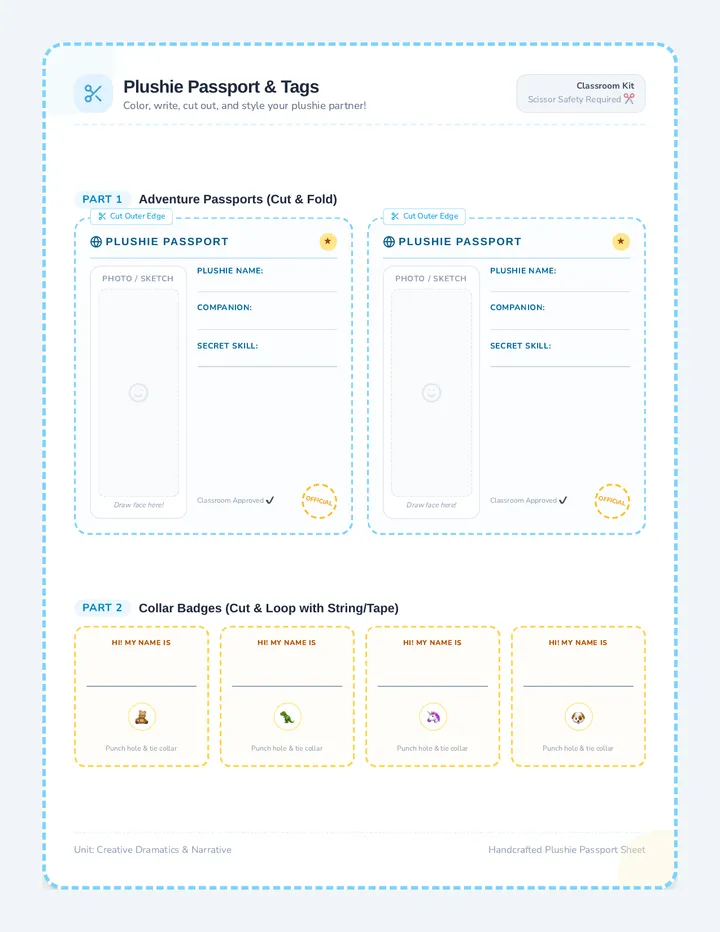
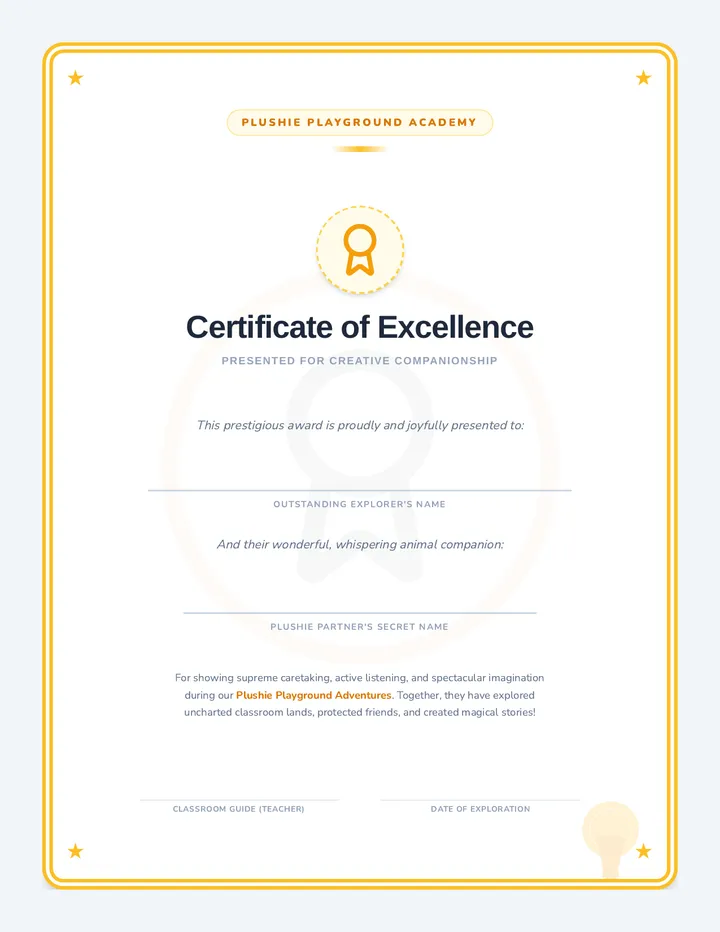
A detailed creative play and language lesson where students bring their stuffed animals to life through structured storytelling, interviewing, and role-play. Includes step-by-step teacher facilitation, printable name tags, an interactive interview worksheet, and companion certificates.
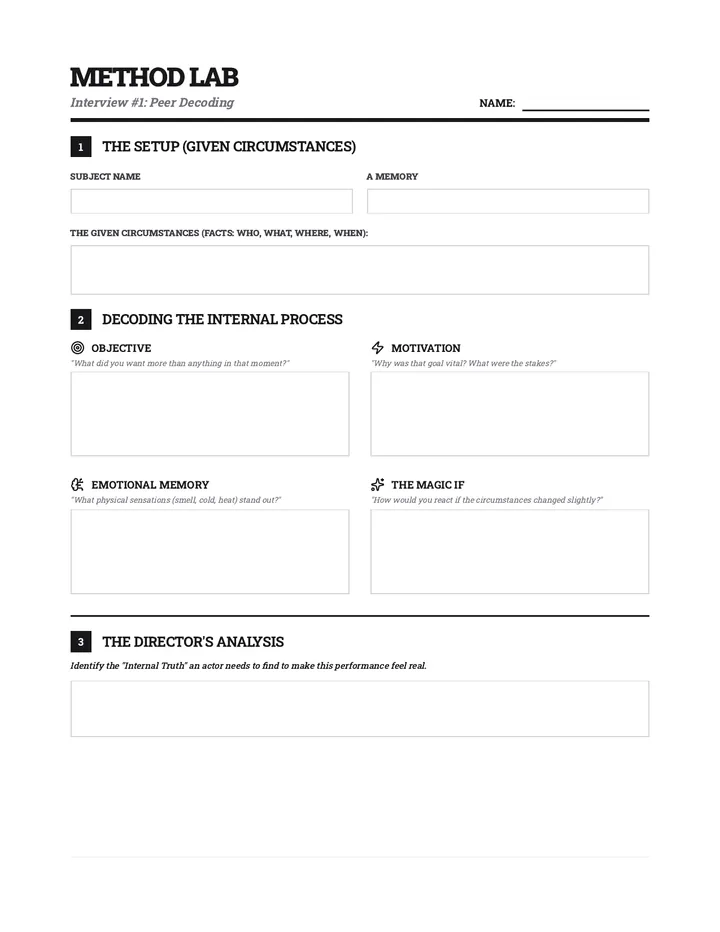
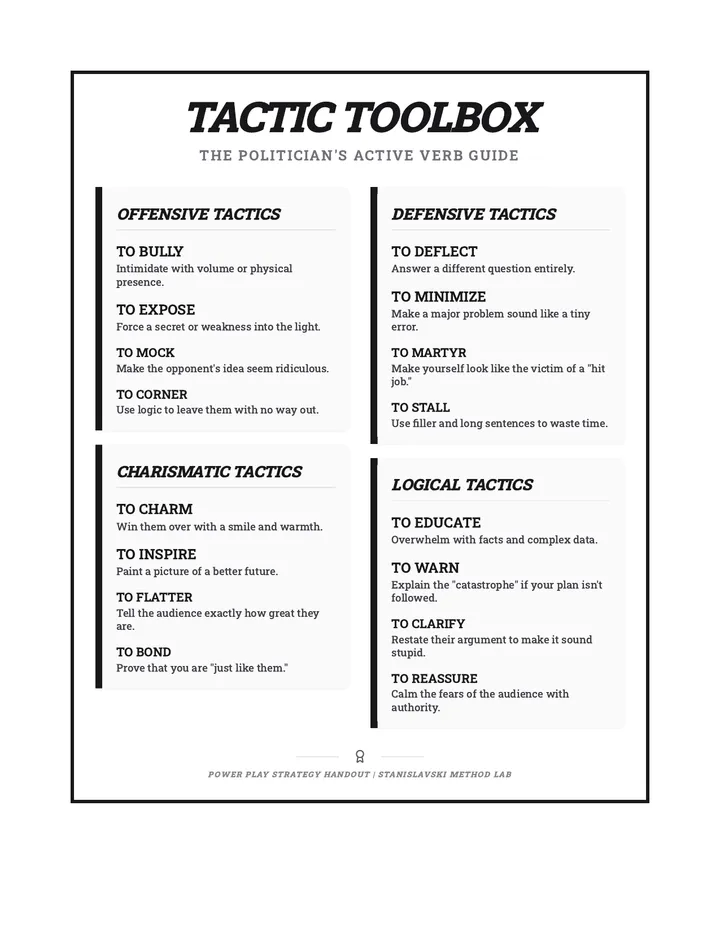
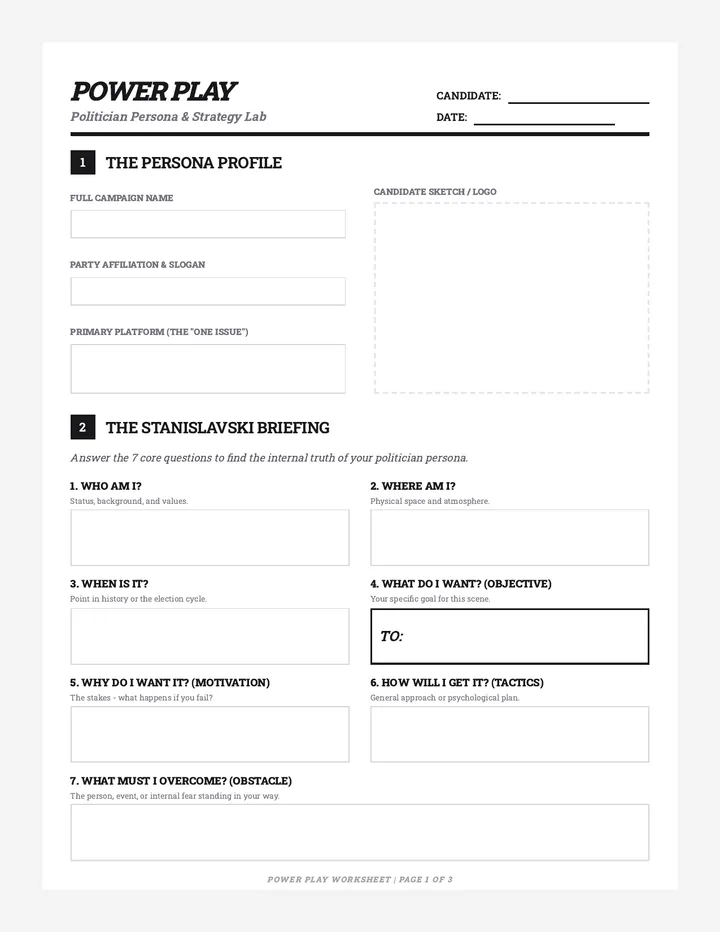
A deep dive into Stanislavski's 'System', focusing on using real-world experiences to inform character work through peer interviews.
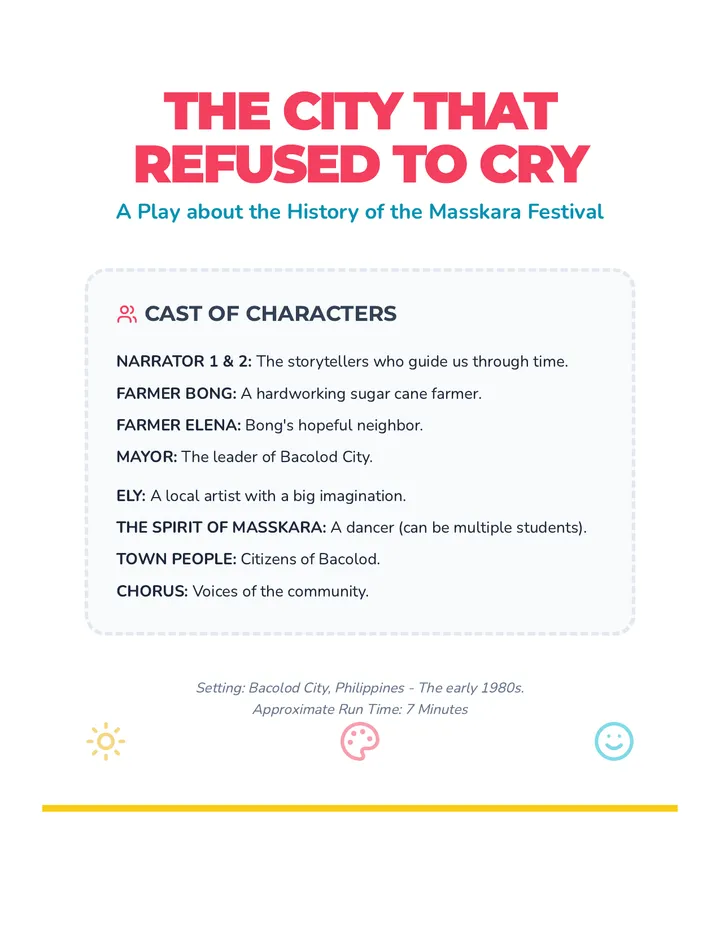
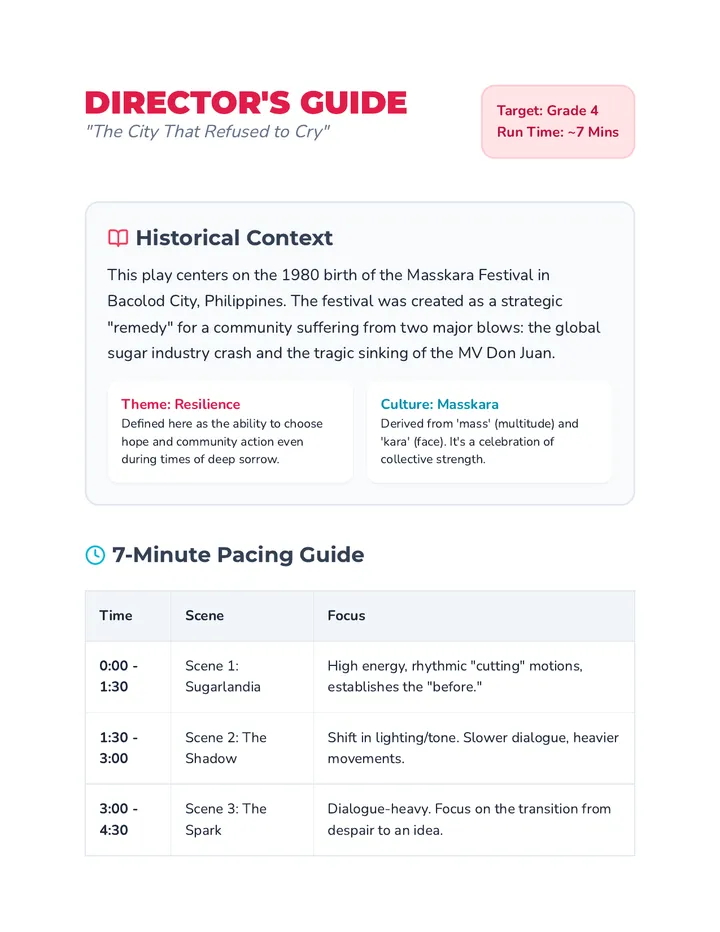
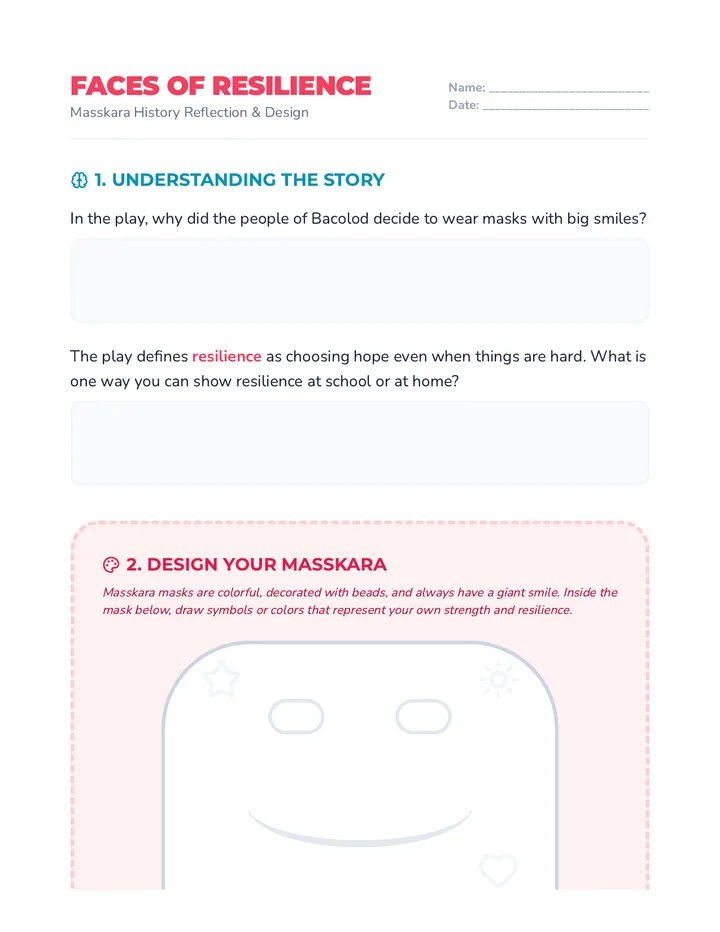
A 7-minute historical play and supporting materials that explore the origins of the Masskara Festival in Bacolod City, Philippines, focusing on themes of resilience and community spirit during the 1980s.
A dynamic lesson on non-verbal communication with two paths: a challenging 'Mime Master' level for older students and a simplified 'Lunch Bunch' version designed for 2nd grade social-emotional learning and casual play.
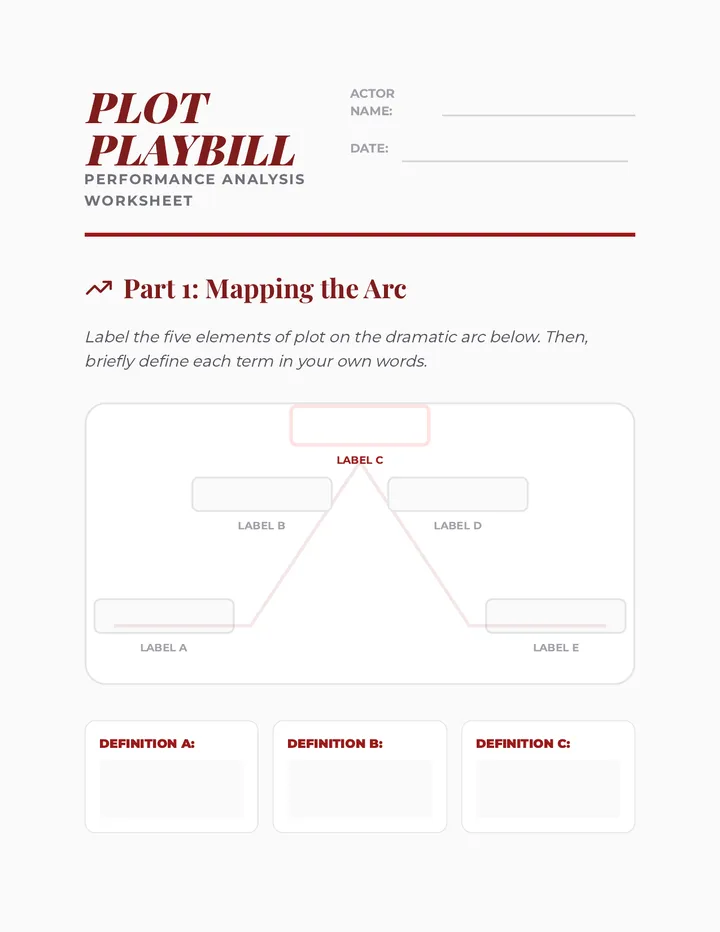
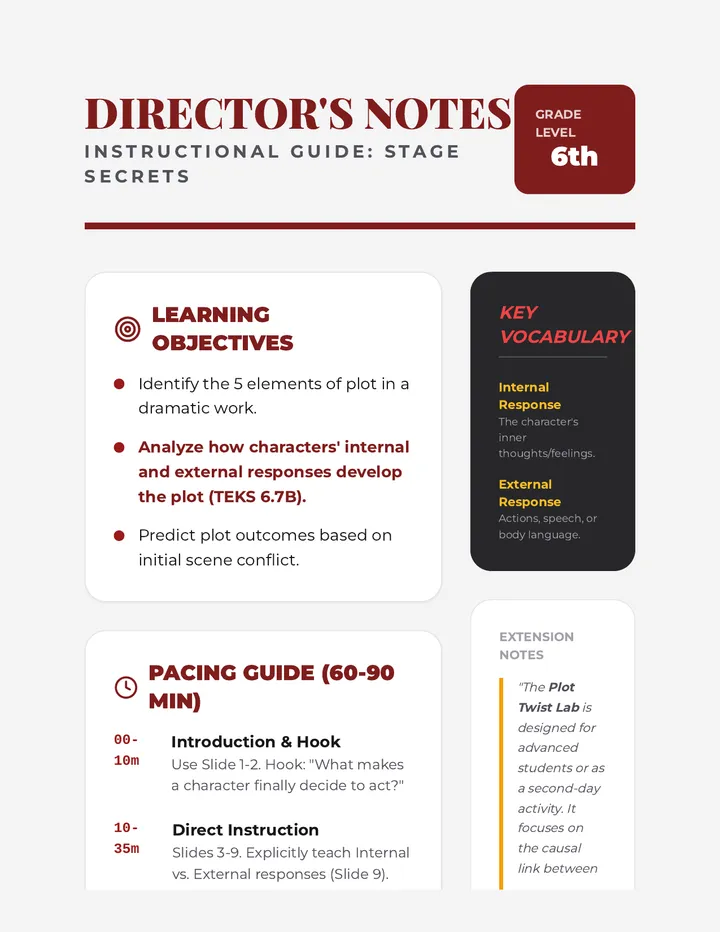
Students will explore the five elements of plot specifically within the context of dramatic scripts, learning how playwrights build tension and resolve conflict on stage.
Students explore the cultural significance of Hula in Hawaii, learning about its storytelling power through rhythm and movement, and analyzing its influence and representation in musical theatre productions.
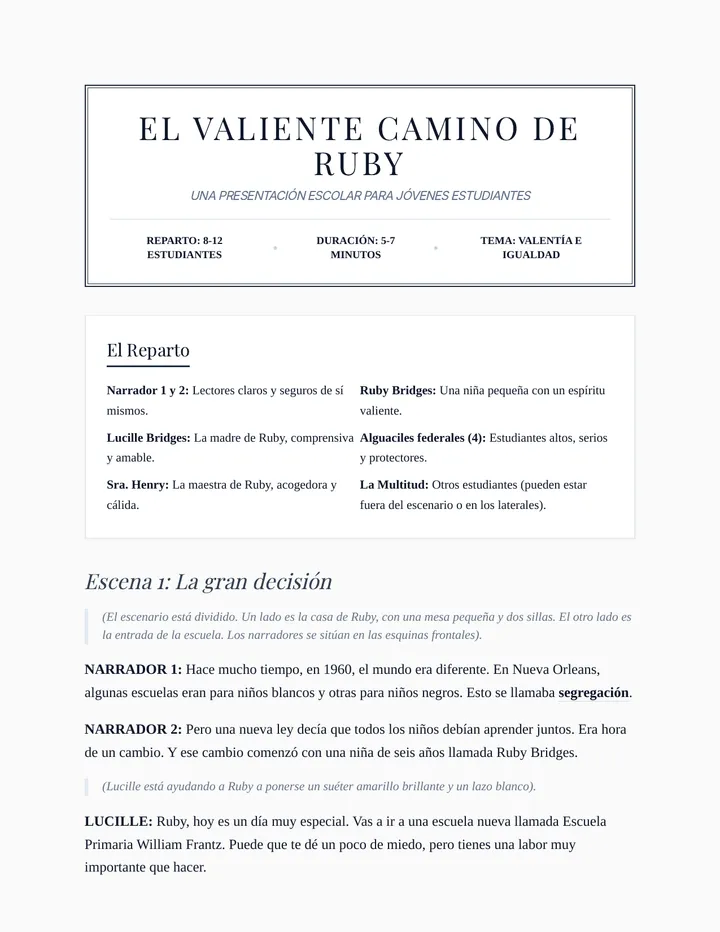
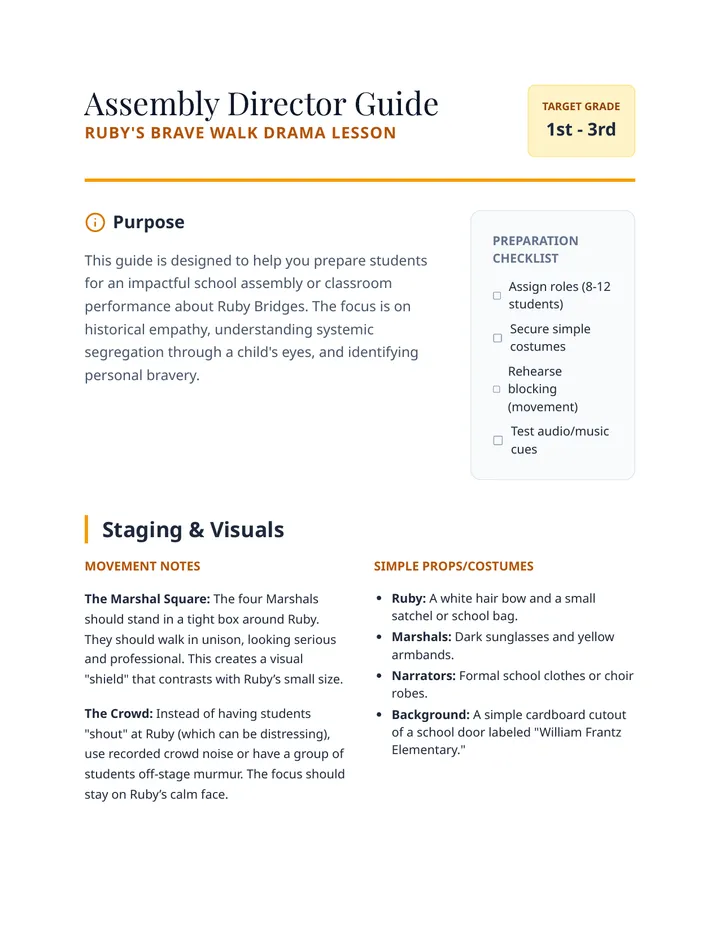
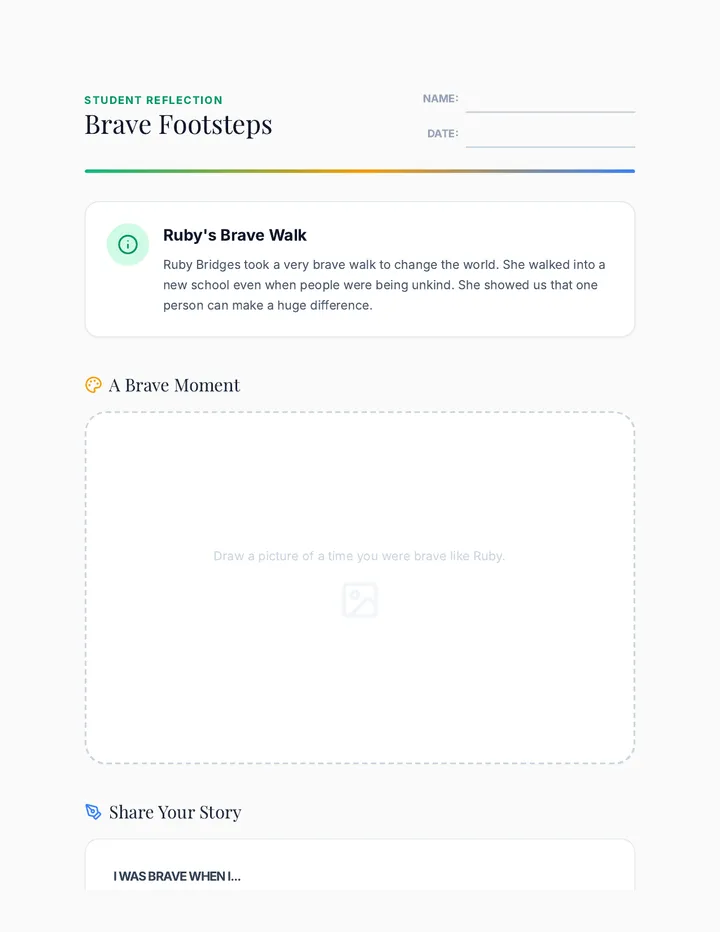
A short, impactful drama lesson centered around a school assembly script about Ruby Bridges. Students explore themes of bravery and segregation through performance, visual storytelling, and personal reflection.
A physical and creative lesson introducing students to the art of mime, focusing on non-verbal communication, self-expression, and teamwork through silent performances.
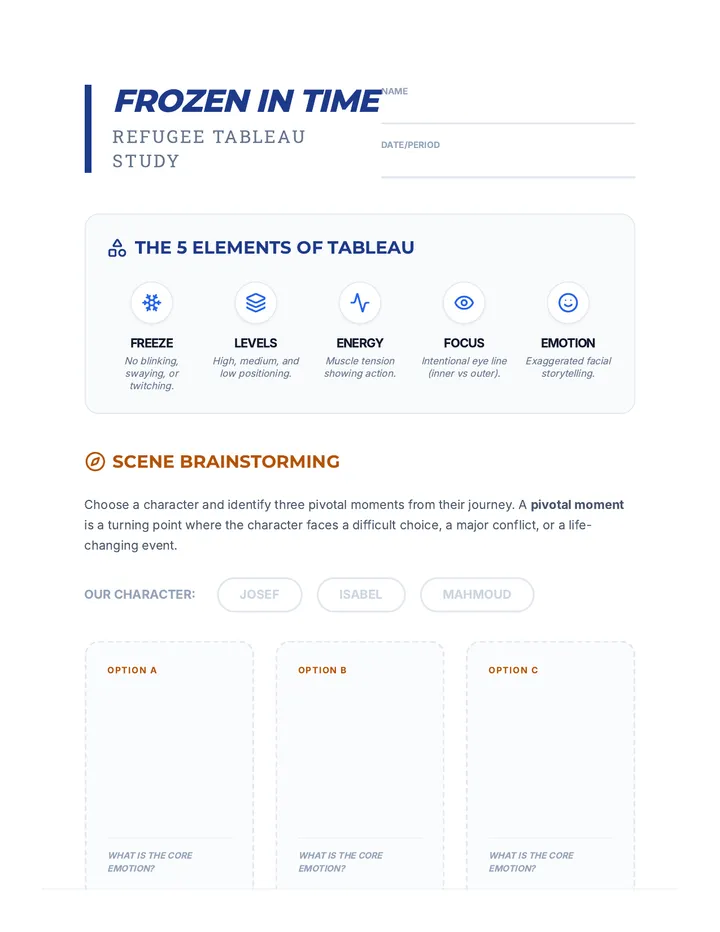
A lesson focused on using the dramatic technique of tableau to explore pivotal moments and emotional themes in Alan Gratz's 'Refugee'. Students will learn the five elements of tableau and work in groups to create living pictures of the three main characters' journeys.
A high-energy drama and literacy lesson focused on prosody, tone, and vocal expression. Students practice reading the same sentence in various moods to discover how delivery changes meaning.
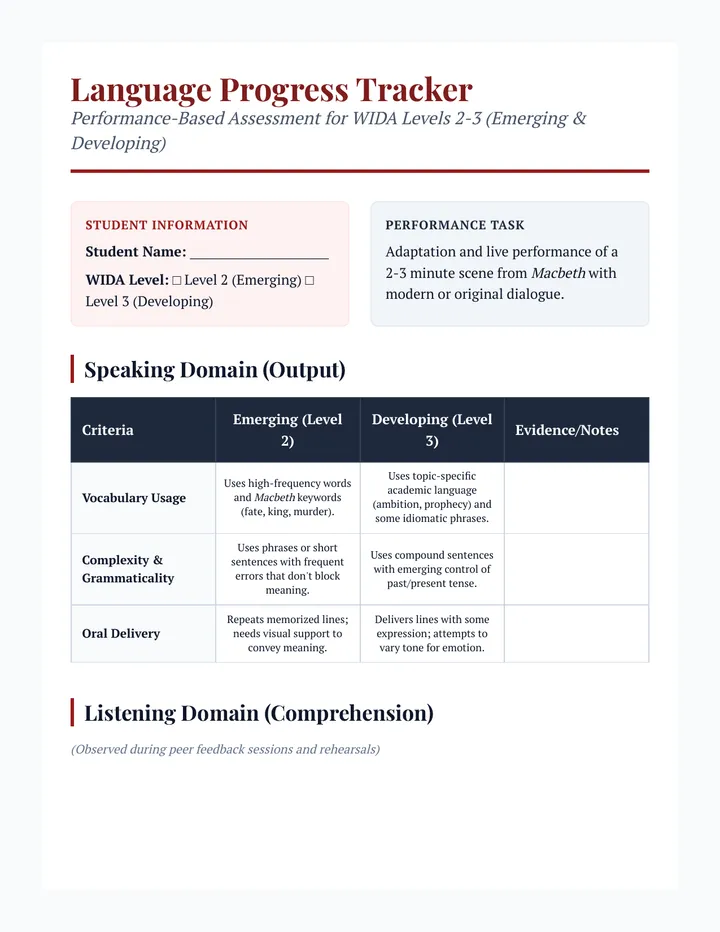
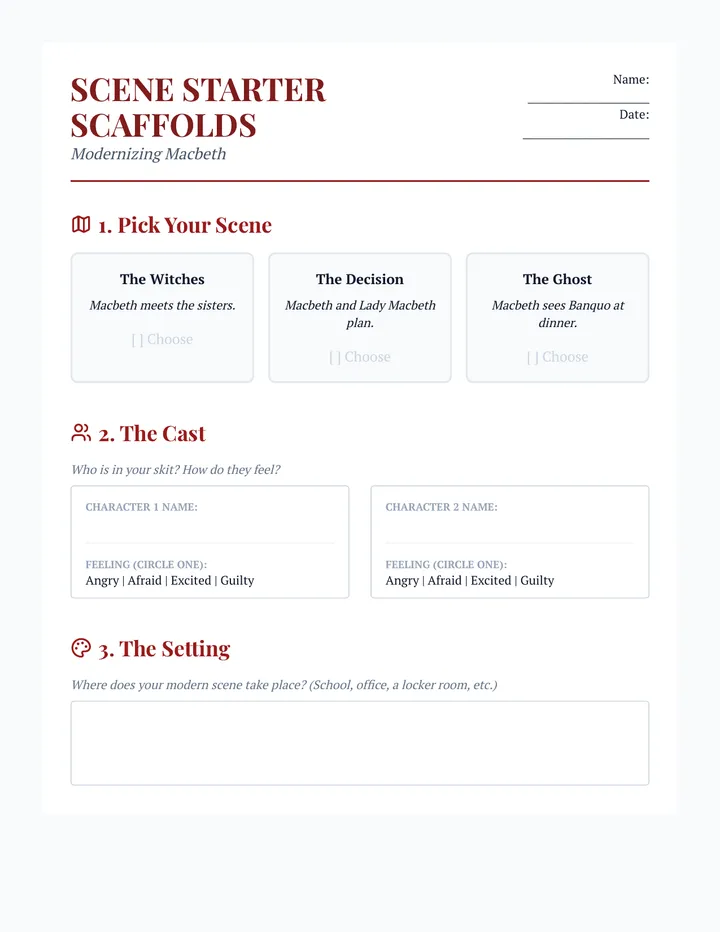
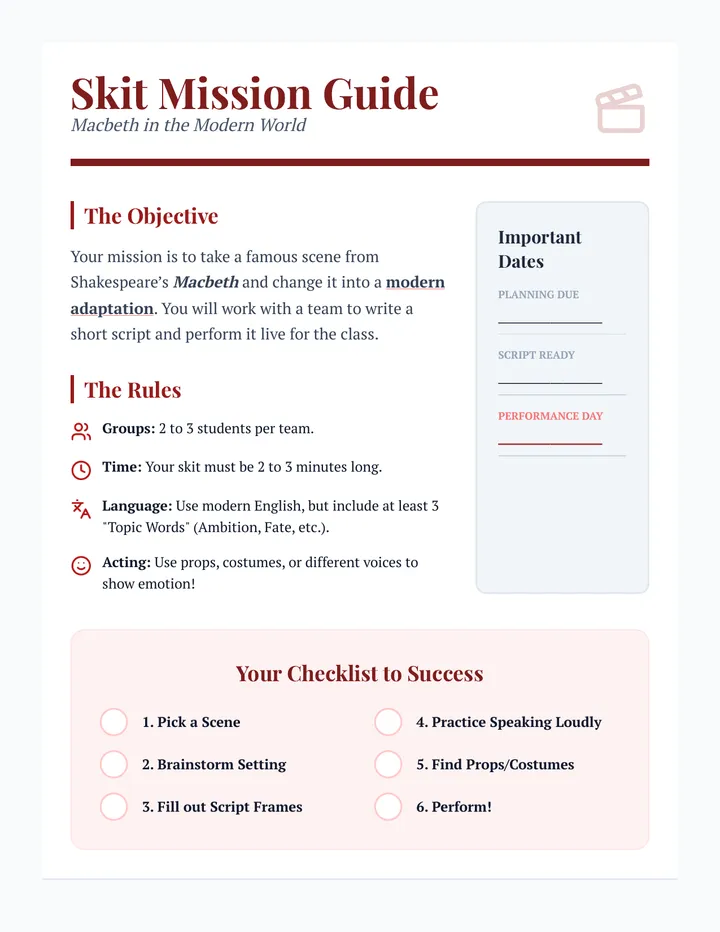
A performance-based task where students adapt and perform scenes from Macbeth. It includes specific scaffolds and assessment tools designed for WIDA Level 2-3 ELLs to demonstrate growth in speaking and listening.