Soup Craft Slides
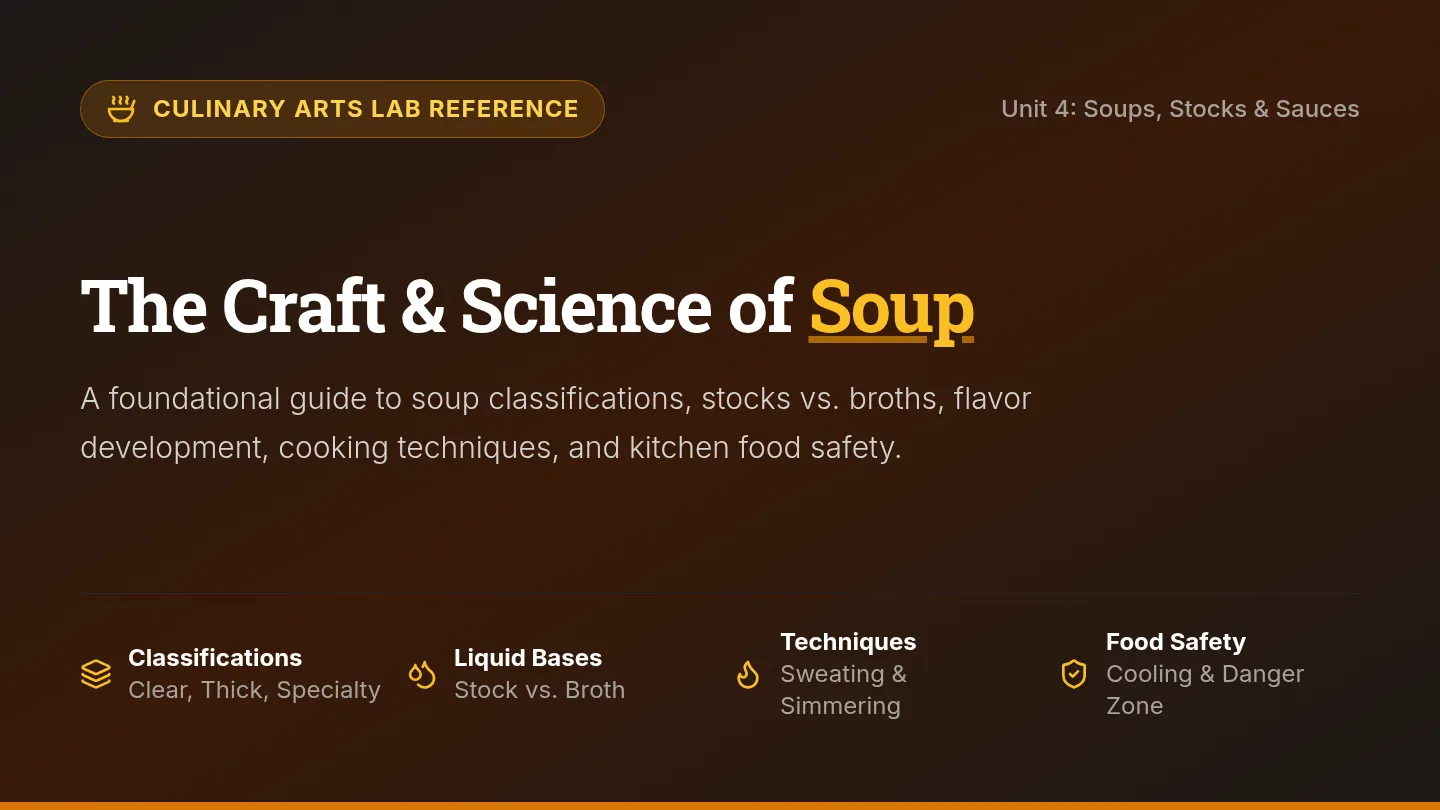
Culinary Arts Lab Reference
Unit 4: Soups, Stocks & Sauces
The Craft & Science of Soup
A foundational guide to soup classifications, stocks vs. broths, flavor development, cooking techniques, and kitchen food safety.
Classifications
Clear, Thick, Specialty
Liquid Bases
Stock vs. Broth
Techniques
Sweating & Simmering
Food Safety
Cooling & Danger Zone
What is a Soup?
Part 1 Concept
A soup is a liquid food prepared by combining a flavorful liquid base with solid ingredients such as meat, poultry, seafood, vegetables, grains, and seasonings through simmering.
1. Liquid Base
The foundation: stock, broth, milk, cream, tomato juice, or water.
2. Aromatics
Mirepoix (onion, carrot, celery), garlic, herbs, and spices that build aroma.
3. Main Body
Meats, poultry, legumes, pasta, potatoes, or hearty cut vegetables.
4. Seasoning
Salt, pepper, acid (lemon/vinegar), and garnishes added before service.
Three Major Soup Classifications
Assignment Part 1 (Q2)
Category 1
Clear Soups
Unthickened broths or clarified stocks. They are transparent, light-bodied, and contain delicate garnishes or vegetables.
Classic Examples:
Consommé, Chicken Noodle Soup, Vegetable Broth, French Onion
Category 2
Thick Soups
Opaque and viscous. Thickened using a roux (flour + fat), a vegetable/starch purée, dairy cream, or an emulsion.
Classic Examples:
Clam Chowder, Cream of Broccoli, Lobster Bisque, Split Pea Purée
Category 3
Specialty Soups
Regional, cultural, or unique preparations that do not fit neatly into clear or thick, often served cold or with native ingredients.
Classic Examples:
Chilled Gazpacho, Louisiana Gumbo, Vietnamese Phở, Ukrainian Borscht
Stock vs. Broth: The Key Differences
Assignment Part 1 (Q3)
Stock (Fond)
- Primary Ingredient: Made with animal bones, mirepoix, and aromatics.
- Body & Gelatin: Long simmering extracts natural gelatin, yielding rich mouthfeel and viscosity.
- Seasoning: Left unseasoned or lightly seasoned so it can reduce without turning salty.
- Culinary Role: Foundation building block for soups, sauces, and braises.
Broth (Bouillon)
- Primary Ingredient: Made with meaty pieces (meat + bones) or vegetables alone.
- Body & Flavor: Lighter body (less gelatin), but intense, clean meat or vegetable flavor.
- Seasoning: Fully seasoned with salt and herbs; ready to sip directly as a standalone dish.
- Culinary Role: Finished sipping soup or base for quick, light clear soups.
Quick Memory Trick: Bones make Stock (body & gelatin); Meat makes Broth (seasoned & sippable).
Soup Ingredients & Their Culinary Roles
Assignment Part 2
Mirepoix (Aromatics)
2:1:1 ratio of onions, carrots, and celery. Forms the aromatic savory base and deep background sweetness.
Liquid Base
Stock, broth, milk, or coconut milk. Dissolves soluble flavors and extracts nutrients while controlling overall consistency.
Thickeners (Roux / Starch)
Roux (equal parts fat + flour), cornstarch slurry, or puréed potatoes to provide body, velvet texture, and prevent separation.
Proteins
Chicken, beef, beans, lentils, or tofu. Imparts umami, satiety (fullness), and textural substance to make the soup hearty.
Starches & Grains
Rice, barley, or noodles. Absorbs broth flavor, adds chew, and contributes natural starches that thicken the broth slightly.
Herbs & Acid Balancers
Thyme, bay leaf, lemon juice, or vinegar. Brightens heavy fats, wakes up tastebuds, and enhances complex aromas.
Assignment Tip: When listing your 6 ingredients, explain how each transforms the soup (texture, aroma, body, color, or taste).
Recipe Planning: Step-by-Step Cooking Method
Assignment Part 3 (Q3)
Step 1
Sweat / Brown
Heat fat in a heavy pot. Sauté aromatics (mirepoix, garlic) over medium-low heat until soft and translucent (sweating) without scorching.
Builds flavor foundation
Step 2
Deglaze & Add Base
Pour in liquid base (stock/broth). Scrape up the caramelized fond from the bottom of the pot to incorporate rich flavor.
Captures pan drippings
Step 3
Simmer & Skim
Add proteins/vegetables. Bring to a boil, then immediately reduce heat to a gentle simmer (185°F–200°F). Skim surface foam.
Ensures clarity & tenderness
Step 4
Finish & Adjust
Add delicate greens, dairy, or cooked grains. Taste critically; adjust salt, pepper, and a splash of acid right before hot service.
Balances seasoning profile
Pro Culinary Rule: Always add quick-cooking ingredients (fresh spinach, cooked pasta) in the final minutes so they retain vibrant texture and color.
Kitchen Technique Essentials
Assignment Part 4 (Q1–3)
1. Uniform Knife Cuts
Cutting vegetables into even, consistent sizes ensures that all pieces cook at the exact same rate. Uneven cuts result in some pieces turning mushy while others remain raw and crunchy.
Also creates balanced, bite-sized spoonfuls.
2. Temperature Control
Soup should gently simmer (185°–200°F), never violently boil. Boiling emulsifies fat and impurities, making broth cloudy, breaking delicate vegetable structures, and curdling dairy.
Simmering preserves clarity & tenderness.
3. Taste & Adjust
As liquid simmers and evaporates, flavors concentrate. Tasting before service allows the chef to calibrate salt levels, balance acid, enhance pepper, and ensure perfect serving temperature.
Never serve un-tasted soup to guests!
Soup Food Safety & Sanitation
Assignment Part 4 (Q4)
The Danger Zone
Bacteria rapidly multiply between 40°F and 140°F. Soups left sitting at room temperature are prime breeding grounds for foodborne pathogens like Bacillus cereus and Clostridium perfringens.
Two-Stage Cooling
Large soup pots hold heat for hours. Soups must cool from 135°F to 70°F within 2 hours, and from 70°F to 41°F within 4 more hours using an ice-water bath, ice paddles, or dividing into shallow pans.
Safe Reheating
When reheating chilled soup for service, heat to an internal temperature of at least 165°F (74°C) for 15 seconds within 2 hours. Never use hot-holding steam tables to heat cold soup.
Key takeaway for your assignment: Mentioning the Temperature Danger Zone (40°F–140°F), rapid cooling methods, or reheating to 165°F provides a strong food safety answer.
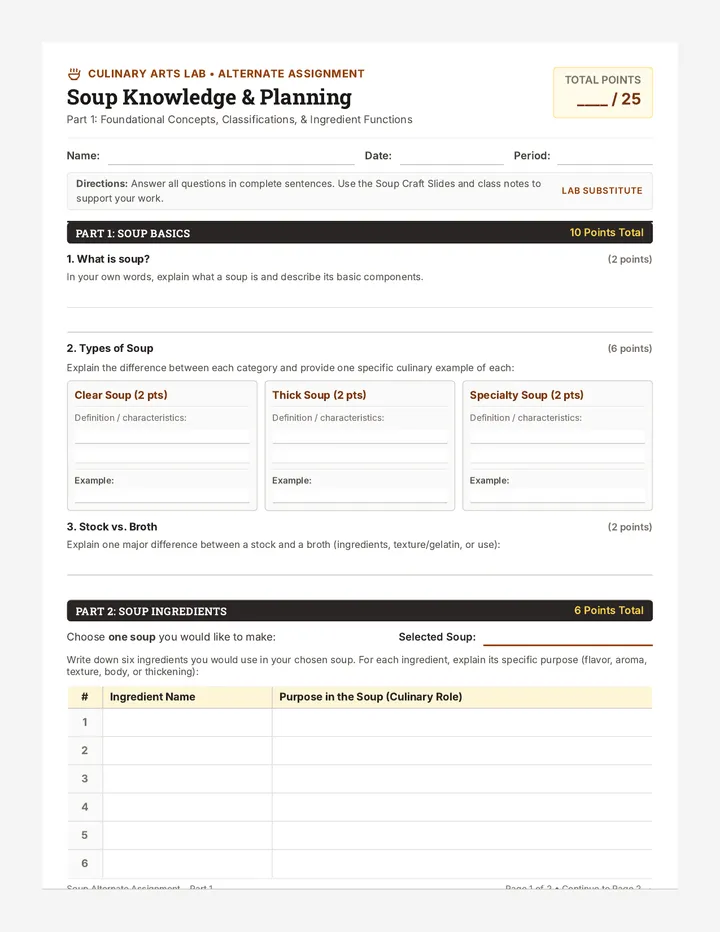
Soup Planning Worksheet
Culinary Arts Lab • Alternate Assignment
Soup Knowledge & Planning
Part 1: Foundational Concepts, Classifications, & Ingredient Functions
Total Points ____ / 25
Name:
Date:
Period:
Directions: Answer all questions in complete sentences. Use the Soup Craft Slides and class notes to support your work. Lab Substitute
Part 1: Soup Basics 10 Points Total
1. What is soup? (2 points)
In your own words, explain what a soup is and describe its basic components.
2. Types of Soup (6 points)
Explain the difference between each category and provide one specific culinary example of each:
Clear Soup (2 pts)
Definition / characteristics:
Example:
Thick Soup (2 pts)
Definition / characteristics:
Example:
Specialty Soup (2 pts)
Definition / characteristics:
Example:
3. Stock vs. Broth (2 points)
Explain one major difference between a stock and a broth (ingredients, texture/gelatin, or use):
Part 2: Soup Ingredients 6 Points Total
Choose one soup you would like to make:
Selected Soup:
Write down six ingredients you would use in your chosen soup. For each ingredient, explain its specific purpose (flavor, aroma, texture, body, or thickening):
| # | Ingredient Name | Purpose in the Soup (Culinary Role) |
|---|
| 1 | | |
| 2 | | |
| 3 | | |
| 4 | | |
| 5 | | |
| 6 | | |
Soup Alternate Assignment – Part 1 Page 1 of 2 • Continue to Page 2 →
Soup Knowledge & Planning | Parts 3 & 4: Execution & Kitchen Knowledge
Student Name:
Part 3: Recipe Planning 5 Points Total
Using the specific soup you selected in Part 2, complete the following planning questions:
1. Soup Classification (1 point)
What type of soup is it? (Clear, Thick, or Specialty):
2. Liquid / Cooking Base (1 point)
What liquid/base will you use? (e.g., chicken stock, vegetable broth, milk):
3. Step-by-Step Cooking Method (3 points)
Explain how you would cook the soup from beginning to end. Include :