Sleep Hygiene Facilitation Guide Sleep Hygiene 101
Designing the Perfect Sleep Environment
DURATION: 60 Minutes
AUDIENCE: Grade 6
FORMAT: Tier 1 Classroom
LEARNING OBJECTIVE
Students will learn and apply sleep hygiene practices to understand how their environment and habits impact their physical and mental well-being.
INSTRUCTIONAL APPROACH
A blended learning experience featuring direct instruction, multimedia exploration, and collaborative design-based learning.
MATERIALS & PREPARATION
Slide Deck: For visual instruction and video playback.
Video: "How to Sleep Better" (link in slides).
Handout: Sleep Hygiene Tips (one per student).
Project Supplies: Chart paper and colorful markers.
Exit Ticket: Three-question survey for closing.
Prep: Arrange desks for group work before the session begins.
LESSON PROCEDURE
05 Mins
Introduction & Hook
Greet the class and talk about why sleep is a "superpower" for our brains.
Quick Poll: "How many of you felt like you could have slept for another 2 hours today?"Introduce the concept of Sleep Hygiene : the habits and environment that lead to great sleep.
10 Mins
Watch & Discuss
Play the "How to Sleep Better" video.
Ask students to spot 3 specific environmental factors mentioned.
Short Q&A: "Which tip surprised you the most?"
25 Mins
Group Project: The Sleep Sanctuary
Divide the class into teams of 3-4.
Task: Design a "Sleep Sanctuary" bedroom blueprint on chart paper.Must include labels for: Lighting, Tech-Free Zone, Temperature Control, and Comfort.
Circulate and ask: "How would this feature help someone fall asleep faster?"
10 Mins
Gallery Walk & Presentations
Groups briefly pitch their best design feature to the class.
Highlight innovative ideas (e.g., sound machines, red-tinted light bulbs).
10 Mins
Closure & Exit Ticket
Distribute the Sleep Hygiene Tips Handout for home use.
Have students complete the Exit Ticket individually.
Challenge: Choose ONE tip to try tonight!
Sleep Hygiene Presentation Slides Sleep Hygiene 101
Designing the Perfect Sleep Environment
Is Sleep a Superpower?
How do you feel after a great night of sleep?
High Energy
Better Memory
Happier Mood
What happens when we don't get enough?
Grumpiness
Brain Fog
Slower Reactions
How to Sleep Better
Click to view the video resource:
Watch Video Tutorial
Look for: Environmental factors
Note: One tip you can use
What is "Sleep Hygiene"?
"The habits and environmental factors that help you get a healthy night’s sleep."
It's about setting the stage so your brain and body can actually shut down and recover properly.
The 5 Golden Rules
Be Consistent
Same time, every day. Yes, even weekends!
Unplug Technology
Screens stop the brain's sleep hormone (Melatonin).
Cool & Quiet
A cool room signals your body it's time to rest.
Rituals Matter
Reading or stretching prepares the mind.
Stop Clock Watching
Looking at the time increases stress. Turn the clock away!
Project:
The Sleep Sanctuary
In your groups, use your chart paper to design the ultimate sleep-friendly bedroom.
DRAW
A Blueprint
LABEL
Specific Features
EXPLAIN
Why it works
Presenting Your Sanctuary
You have 60 seconds!
Focus on your most unique or effective design feature.
What to share:
• How do you block light?
• Where do phones go?
• What keeps it cool?
Tonight's Challenge
"I will commit to ONE new sleep habit starting tonight."
No phone 1hr before Same bedtime Read a book
Complete your Exit Ticket
Sleep Hygiene Tips Handout Sleep Hygiene Tips
Master Your Sleep Superpower
Sleep hygiene refers to the habits and environment that help you get a great night's rest. Use these tips to transform your bedroom into a sleep sanctuary!
Develop a Relaxing Bedtime Ritual
Give your brain a "heads up" that it's time to sleep. Engage in calming activities like reading a physical book, gentle stretching, or listening to soft music 30-60 minutes before bed.
Maintain a Regular Sleep Schedule
Our bodies have internal clocks! Try to go to bed and wake up at the same time every day—even on weekends—to help your body know exactly when it's time to snooze.
Stop Watching the Clock
Looking at the clock when you can't fall asleep causes stress and "sleep anxiety." Turn your clock away from the bed or move it across the room so you aren't tempted to check it.
Create an Optimal Environment
Your room should be the 3 D's: Dark, Discreetly Quiet, and Degrees-Cool . Use blackout curtains, earplugs, or a fan to keep the environment perfect for rest.
Unplug from Technology
The "Blue Light" from screens tricks your brain into thinking it's daytime. Keep electronics out of the bedroom and avoid screens at least 1 hour before you want to sleep.
Tonight's Mini-Mission:
Pick just ONE tip from above and try it tonight. See how much better you feel tomorrow!
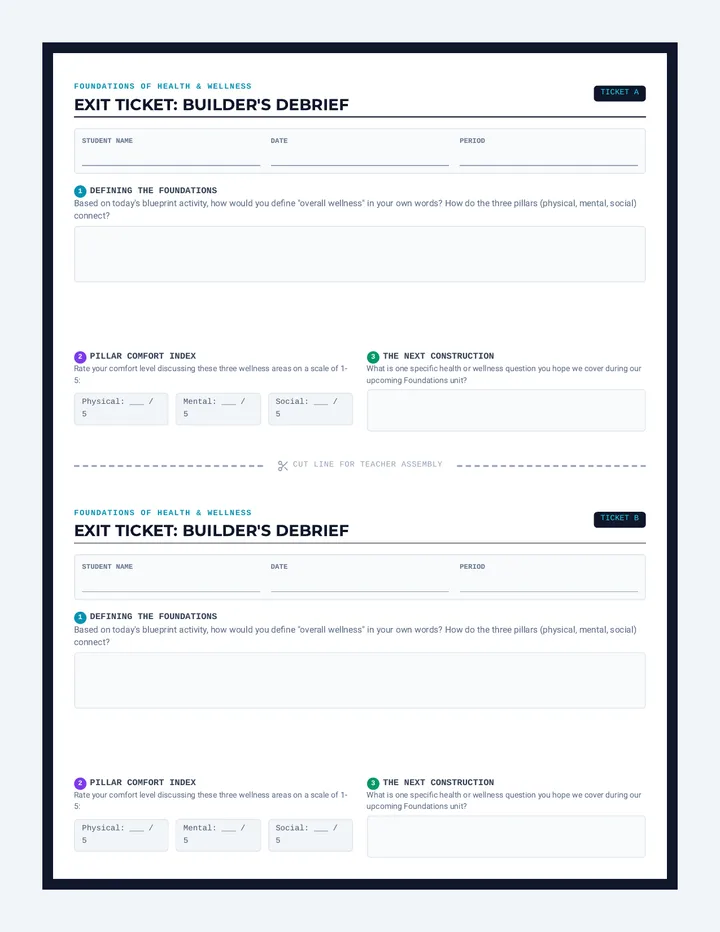
Sleep Check Exit Ticket Sleep Check Exit Ticket
Reflect on your sleep hygiene journey!
Student Name
Date
01 What are TWO environmental factors that help a person sleep better?
02 Why is "Blue Light" from electronics bad for sleep?
03 Which sleep habit are you most likely to try starting tonight?
No screens before bed
Consistent wake-up time
Reading to wind down
Turning off the clock
"A well-rested brain is a powerful brain." — Sleep Hygiene 101
Sleep Sanctuary Project Guide Sleep Sanctuary
Design Specification & Blueprint Guide
THE MISSION
Your group has been hired to design the ultimate sleep-friendly bedroom for a student who struggles to wake up for school. Your design must be scientifically proven to improve sleep hygiene.
Blueprint Requirements
Light Control
Temp Control
Tech-Free Zone
Sound Management
Comfort Setup
Labeled Features
Group Roles
Chief Architect Leads the drawing and layout.
Hygiene Expert Ensures all 5 Golden Rules are met.
Lead Annotator Writes the labels and explanations.
Spokesperson Presents the design to the class.
Brainstorming Prompts
The Dark Side
"How will you block the early morning sun? Are there any glowing gadgets that need to be hidden?"
The Chill Zone
"What features keep the sleeper cool? Fans? Specific bedding? Window placement?"
No-Fly Zone
"Where do phones and tablets go? Design a 'tech parking lot' far away from the pillow."
The Zen Ritual
"Where does the bedtime ritual happen? Is there a reading chair? A place for stretching?"
Success Criteria
Your design is successful if a classmate can look at it and identify at least three specific sleep hygiene tips in action!