Vaping Science Lesson Plan The Science Behind Vaping
Understanding Chemical Impact and Health Risks
6th Grade Science
45 Minutes
Tier 1 Instruction
Lab Experiment
Whole Class / Groups
Why This Matters
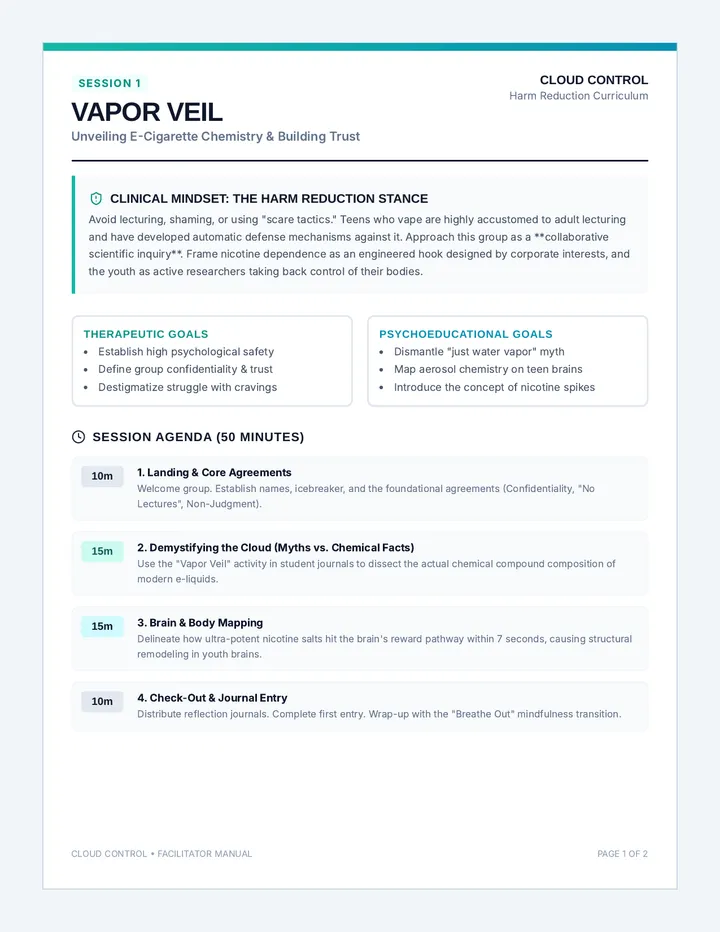
Students will explore the chemical components of vape juice and how they affect the human body. By conducting a simple experiment to understand the impact of these chemicals on lung tissue, students are educated on the health risks associated with vaping, promoting informed decision-making.
Learning Objective
Students will be able to identify key ingredients in vape juice and describe their physiological impacts on the respiratory system and developing brain.
Required Materials
Vape Juice Ingredients Handout
Vaping Worksheet & Quiz
Lesson Slide Deck
Experiment: Cotton balls, vinegar, water, clear containers
Video: "What Causes Addiction?"
Step-by-Step Instructions
5 MIN
Introduction & Hook
Begin by asking students what they know about vaping. Discuss its popularity among teens. Introduce the objective: to understand the chemical components of vape juice and their actual effects on the human body.
10 MIN
Reading: Vape Juice Ingredients
Distribute the Vape Juice Ingredients Handout . Read through it as a class. Facilitate a short discussion about which ingredients sound familiar and which are surprising. Highlight respiratory irritation and nicotine's impact on the heart.
6 MIN
Multimedia: The Mechanics of Addiction
Watch the video "What Causes Addiction, and Why Is It So Hard to Treat?". After watching, discuss the relationship between nicotine delivery in vapes and the brain's reward system.
15 MIN
Experiment: Simulating Lung Tissue
Divide students into groups. Provide cotton balls (lungs) and liquids. Control: Cotton ball in water. Vape Sim: Cotton ball in vinegar. Have students observe the texture, smell, and structure changes over 5-10 minutes.
10 MIN
Discussion & Assessment
Facilitate a discussion using the Vaping Discussion prompts. Use the Worksheet for reflection and the Quiz as a final check for understanding.
5 MIN
Closure
Summarize key points. Remind students that many "flavors" are designed to mask harmful chemicals. Emphasize informed decision-making for long-term health.
Vaping Science Slides The Science Behind Vaping
Analyzing Chemicals & Biological Impact
6th Grade Health
Today's Mission
1
Identify the chemical components of vape juice.
2
Understand how these chemicals impact lung tissue and the heart .
3
Examine the mechanics of addiction through nicotine exposure.
Inside the Liquid
Vape juice (e-liquid) is more than just "flavored water."
Propylene Glycol (PG)
Used to produce vapor. Known to cause respiratory irritation.
Vegetable Glycerin (VG)
Thick liquid for clouds. Can cause lung issues in some users.
Nicotine
Highly addictive. Raises heart rate & blood pressure. Harmful to developing brains.
Flavorings
Chemicals meant to be eaten, not inhaled . Some are toxic when vaped.
Video Study
What Causes Addiction, and Why Is It So Hard to Treat?
Click below to view on the platform
demo.lennylearning.org/view/what-causes-addiction-and-why-is-it-so-hard-to-treat
How does nicotine trick the brain?
Why is it hard to quit?
What happens to the reward system?
Lab: Simulating Lung Tissue
The Setup
Cotton Balls = Lung Tissue
Water = Clean Air
Vinegar = Vape Chemical Simulator
Observation Tasks
Smell (don't sniff too hard!)
Texture & Firmness
Color/Visual changes
Hypothesis
"If lung tissue is exposed to harsh acidic chemicals (like those in vapes), then the tissue structure will..."
Lab Debrief
Q1
What happened to the cotton ball in the vinegar compared to the water?
Q2
How might these changes affect someone's ability to breathe deeply or exercise?
Q3
Why do companies add sweet flavors to chemicals that are harmful?
Your Lungs, Your Choice
Vaping introduces foreign chemicals and highly addictive substances into your body during a critical time for brain and lung development.
Information is Power!
Vape Juice Ingredients Handout Vaping Chemical Analysis
Fact Sheet: Components of Vape Juice & Health Impacts
Vape juice, also known as e-liquid or e-juice, is the substance heated inside a vaping device to create an aerosol. While often marketed as simple water vapor with flavors, chemical analysis reveals a complex mixture of substances that can affect the body in several ways.
Key Components
Propylene Glycol (PG)
A colorless, odorless liquid used to produce the visible "cloud" or vapor. It is commonly found in stage fog machines.
Potential Effect: Can cause respiratory irritation and dry throat.
Vegetable Glycerin (VG)
A thick, sweet liquid derived from plant oils. It creates a thicker vapor.
Potential Effect: Generally considered safe for ingestion, but can cause respiratory issues and inflammation when inhaled.
Nicotine
A highly addictive stimulant found in the tobacco plant.
Effect: Increases heart rate and blood pressure.
Effect: Harmful to developing brains (which continue growing until age 25).
Flavorings
Chemicals used to create flavors like "Blueberry" or "Cotton Candy." These chemicals are often safe to eat but haven't been tested for lung safety.
Potential Effect: Some flavor chemicals (like diacetyl) can be toxic and damaging to lung tissue when inhaled.
Did You Know?
The heating process in vapes can also create new chemicals not originally in the liquid, including heavy metals like nickel, tin, and lead from the heating coil.
Vaping Discussion Guide Lab Debrief: Vaping Science
Discussion prompts to reflect on observations and data.
1
Observation Analysis
What physical differences did you observe between the cotton balls soaked in water and those soaked in vinegar? Think about color, texture, and how they felt.
Discussion Focus
Guide students to see that while water (clean air) leaves the "tissue" unchanged, the acid (chemicals) can degrade the fibers. Relate this to how lung tissue loses elasticity.
2
Physiological Impact
Based on our handout, how do the specific ingredients in vape juice (like nicotine and flavorings) affect the human body beyond just the lungs?
Discussion Focus
Ensure students mention heart rate (nicotine) and brain development. Connect the sweet flavors to the marketing tactics used to target younger people.
3
Informed Decision Making
Why is it important to understand the *actual* chemicals in vapes, rather than just trusting the packaging or advertisements?
Discussion Focus
Highlight that long-term health is worth more than a temporary trend. Discuss how information empowers them to say "no" with confidence.
Vaping Science Worksheet Lab Report: Vaping Science
Document #402-B
Name:
Date:
1. Chemical Analysis
List three main ingredients found in vape juice and describe one potential effect each has on the body.
Ingredient
Potential Effect on Body
2. Experiment Observations
Describe the experiment you conducted and the results you observed. How did the cotton ball react to the simulation chemical compared to the water?
3. Critical Thinking
Why is it especially important for young people (whose brains and lungs are still developing) to avoid vaping?
Project Health Awareness • Grade 6 Science Dept.
Vaping Science Quiz Vaping Science Check
Post-Lesson Assessment
Student Name:
Score:
1
Which of the following is a common ingredient in vape juice used to create the visible vapor clouds?
Propylene Glycol
Distilled Water
Granulated Sugar
Sea Salt
2
What is a primary physiological effect of nicotine on the human body?
Decreases heart rate
Increases heart rate
Improves lung capacity
Lowers blood pressure
3
Why is it important to understand the chemical risks of vaping?
To make informed health decisions
To help friends find better flavors
To learn how to hide vapes from parents
To ignore scientific warnings
4
Short Answer: Describe one way vaping can harm a developing brain.
Vaping Science Quiz Key Answer Key
Vaping Science Assessment
Teacher Resource
1
Which of the following is a common ingredient in vape juice used to create the visible vapor clouds?
Propylene Glycol
Reasoning: Propylene Glycol (PG) is a primary base liquid used in vapes because of its ability to aerosolize into a thick, visible vapor when heated.
2
What is a primary physiological effect of nicotine on the human body?
Increases heart rate
Reasoning: Nicotine is a stimulant that triggers the release of adrenaline, which naturally increases heart rate and blood pressure.
3
Why is it important to understand the chemical risks of vaping?
To make informed health decisions
Reasoning: Understanding the science behind vaping allows students to look past marketing and peer pressure to make choices based on health data.
4
Describe one way vaping can harm a developing brain.
Sample Correct Answer: Nicotine exposure during adolescence can disrupt the formation of brain circuits that control attention, learning, and impulse control. It can also change the brain's reward system, making it easier to become addicted to other substances later in life.
Vaping Parent Handout Parent Information Guide
Understanding the Risks of Vaping:
Supporting Healthy Decisions at Home
What is Vaping?
Vaping involves inhaling an aerosol (often mistaken for "vapor") produced by an e-cigarette or similar device. These devices heat a liquid that usually contains nicotine, flavorings, and other chemicals.
Critical Health Risks
Respiratory Issues: Vaping chemicals can cause lung inflammation, irritation, and damage similar to bronchitis or asthma.
Brain Development: Adolescent brains are still developing until age 25. Nicotine exposure can permanently change how the brain handles attention, learning, and addiction.
Heart Health: Nicotine is a stimulant that places extra stress on the cardiovascular system by raising heart rate and blood pressure.
Ingredients
• Propylene Glycol
• Vegetable Glycerin
• Addictive Nicotine
• Flavoring Chemicals
• Trace Heavy Metals
Talking Tips
"I'm learning about the science of vaping. I'm worried about how it affects your lungs. What have you heard about it from your friends?"
How to Support Your Child
Start the Conversation Early
Don't wait for a "teachable moment." Be proactive and share facts about health risks before peer pressure starts.
Be a Role Model
If you use tobacco or vaping products, talk honestly about how hard it is to quit and your desire for them to stay healthy.
Set Clear Expectations
Clearly state your family's stance. Focus on health and safety rather than just "following rules."
Stay Informed
Knowledge of current devices (many of which look like USB drives or pens) helps you recognize potential use.
Reliable Sources
CDC.gov/tobacco • Lung.org • DrugAbuse.gov
Provided by the Grade 6 Science & Health Department