Knife Cuts Prep Worksheet
Culinary Knife Skills
Knife Cuts Prep Worksheet
Total Score ____ / 30 pts
Name:
Date:
Period:
Part 1: Precision Cut Concepts
6 questions × 2 pts = 12 pts
Circle the letter of the best answer for each question based on the slideshow.
1. Why square off a vegetable before making precision cuts? (2 pts)
- A. To make the vegetable cook slower
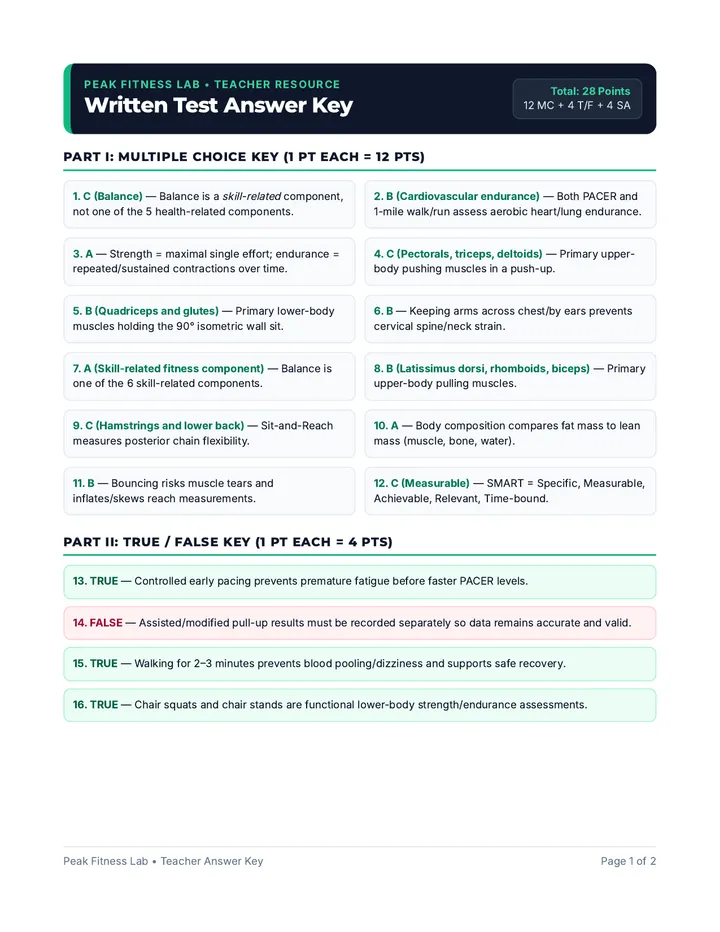
- B. To create flat, stable surfaces for safety & uniformity
- C. To avoid using a cutting board
- D. To turn round vegetables into rondelles
2. Which is the smallest dice cut and starts with a julienne? (2 pts)
- A. Small dice
- B. Batonnet
- C. Brunoise
- D. Medium dice
3. Which stick cut is also called the "french fry cut"? (2 pts)
- A. Batonnet
- B. Julienne
- C. Chiffonade
- D. Rondelle
4. Which cut makes thin ribbons from leafy herbs like basil? (2 pts)
- A. Mince
- B. Baton
- C. Rondelle
- D. Chiffonade
5. Why do recipes specify small, medium, or large dice? (2 pts)
- A. Larger cuts cook faster than smaller cuts
- B. Cut size controls cooking time and even cooking
- C. All vegetables naturally grow in square shapes
- D. Uniform cuts are only used for raw salads
6. Which cut is chopped so finely (1/16" cube) it "melts" in? (2 pts)
- A. Brunoise
- B. Julienne
- C. Mince
- D. Small dice
Part 2: Cut Dimensions & Identification
6 items × 1 pt = 6 pts
Write the correct cut name from the Word Bank in the blank column for each dimension and use.
Word Bank: Batonnet • Julienne • Large Dice • Medium Dice • Rondelle • Small Dice • Baton • Brunoise
| Standard Dimensions / Shape |
Common Use / Description |
Cut Name (1 pt each) |
| 1/8" × 1/8" × 2" (matchsticks) |
Quick-cooking stir-fries or raw garnishes |
|
| 1/4" × 1/4" × 2" (stick cut) |
French fries, veggie trays, cheese boards |
|
| 1/4" × 1/4" × 1/4" (cube) |
Uniform cubes cut from batonnets |
|
| 1/2" × 1/2" × 1/2" (cube) |
Chunky stews or home fries |
|
| 3/4" × 3/4" × 3/4" (cube) |
Long-cooking stocks, stews, and roasts |
|
| Round slices & coins |
Crosswise disks of carrots or cucumbers |
|
Knife Cuts Prep Worksheet (Page 2) Name:
Part 3: Technique & Culinary Application
6 questions × 2 pts = 12 pts
Answer each question in complete sentences using details from the slideshow.
1. Step-by-Step Technique: Explain how to perform the "cigar-roll" method for a chiffonade cut, and name two ingredients commonly cut this way. (2 pts)
2. From Stick to Cube: Describe how a brunoise cut is made from a julienne cut, and how a medium dice is made from a baton. (2 pts)
3. Kitchen Trade-Offs: What is one preparation downside of making a large dice, and why are uniform cuts still worth the effort? (2 pts)
4. Cylindrical Produce: Describe the cutting method used to make a rondelle cut, and name two vegetables commonly prepared this way. (2 pts)
5. Mince vs. Brunoise: How does a mince compare to a brunoise in size, and why is mincing ideal for garlic, shallots, and ginger? (2 pts)
6. Chef's Scenario: You are prepping a hearty 2-hour stew, plus fresh garlic and basil to finish it. Which cuts should you use for (a) the stew vegetables, (b) the garlic, and (c) the basil? (2 pts)
Check your work: Part 1 (12 pts) + Part 2 (6 pts) + Part 3 (12 pts) = 30 pts total Knife Cuts Review
Knife Cuts Answer Key
Culinary Knife Skills • Teacher Resource
Knife Cuts Answer Key
Answer Key 30 pts Total
Aligned with the Knife Cuts Prep Worksheet. Correct answers are highlighted below with scoring guidance.
Part 1: Precision Cut Concepts
6 questions × 2 pts = 12 pts
1. Why square off a vegetable before making precision cuts? (2 pts)
- A. To make the vegetable cook slower
- B. To create flat, stable surfaces for safety & uniformity
- C. To avoid using a cutting board
- D. To turn round vegetables into rondelles
2. Which is the smallest dice cut and starts with a julienne? (2 pts)
- A. Small dice
- B. Batonnet
- C. Brunoise
- D. Medium dice
3. Which stick cut is also called the "french fry cut"? (2 pts)
- A. Batonnet
- B. Julienne
- C. Chiffonade
- D. Rondelle
4. Which cut makes thin ribbons from leafy herbs like basil? (2 pts)
- A. Mince
- B. Baton
- C. Rondelle
- D. Chiffonade
5. Why do recipes specify small, medium, or large dice? (2 pts)
- A. Larger cuts cook faster than smaller cuts
- B. Cut size controls cooking time and even cooking
- C. All vegetables naturally grow in square shapes
- D. Uniform cuts are only used for raw salads
6. Which cut is chopped so finely (1/16" cube) it "melts" in? (2 pts)
- A. Brunoise
- B. Julienne
- C. Mince
- D. Small dice
Part 2: Cut Dimensions & Identification
6 items × 1 pt = 6 pts
Note: Baton and Brunoise are distractors in the Word Bank and are not used in the table below.
| Standard Dimensions / Shape |
Common Use / Description |
Correct Cut Name (1 pt) |
| 1/8" × 1/8" × 2" (matchsticks) |
Quick-cooking stir-fries or raw garnishes |
Julienne |
| 1/4" × 1/4" × 2" (stick cut) |
French fries, veggie trays, cheese boards |
Batonnet |
| 1/4" × 1/4" × 1/4" (cube) |
Uniform cubes cut from batonnets |
Small Dice |
| 1/2" × 1/2" × 1/2" (cube) |
Chunky stews or home fries |
Medium Dice |
| 3/4" × 3/4" × 3/4" (cube) |
Long-cooking stocks, stews, and roasts |
Large Dice |
| Round slices & coins |
Crosswise disks of carrots or cucumbers |
Rondelle |
Knife Cuts Answer Key (Page 2) Teacher Scoring Guide
Part 3: Technique & Culinary Application
6 questions × 2 pts = 12 pts
Accept equivalent student phrasing that captures the key culinary concepts below.
1. Step-by-Step Technique: Explain how to perform the "cigar-roll" method for a chiffonade cut, and name two ingredients commonly cut this way. (2 pts)
Model Answer: Stack flat leaves on top of each other, roll them tightly into a cylinder (cigar shape), and slice crosswise into thin ribbons. Common ingredients: basil, spinach, mint, or sage (any two). (1 pt method + 1 pt two ingredients)
2. From Stick to Cube: Describe how a brunoise cut is made from a julienne cut, and how a medium dice is made from a baton. (2 pts)
Model Answer: Gather julienne matchsticks (1/8" × 1/8" × 2") and slice crosswise every 1/8" to form tiny brunoise cubes. Gather batons (1/2" × 1/2" × 2") and slice crosswise every 1/2" to form medium dice cubes. (1 pt each)
3. Kitchen Trade-Offs: What is one preparation downside of making a large dice, and why are uniform cuts still worth the effort? (2 pts)
Model Answer: Squaring off produce into large 3/4" cubes creates more vegetable trim/waste (or takes extra time/effort). Uniform cuts are worth it because all pieces cook evenly at the same rate and give the dish a neat, professional presentation. (1 pt downside + 1 pt benefit)
4. Cylindrical Produce: Describe the cutting method used to make a rondelle cut, and name two vegetables commonly prepared this way. (2 pts)
Model Answer: Slice a cylindrical vegetable straight across (perpendicular to its length) into even round disks or coins. Common vegetables: carrots, cucumbers, zucchini, or parsnips (any two). (1 pt method + 1 pt two vegetables)
5. Mince vs. Brunoise: How does a mince compare to a brunoise in size, and why is mincing ideal for garlic, shallots, and ginger? (2 pts)
Model Answer: A mince (1/16" or smaller) is much finer than a brunoise (1/8" cube). Mincing is ideal for aromatics because tiny pieces release maximum flavor/aroma and disperse or "melt" evenly without leaving harsh chunks. (1 pt size + 1 pt reason)
6. Chef's Scenario: You are prepping a hearty 2-hour stew, plus fresh garlic and basil to finish it. Which cuts should you use for (a) the stew vegetables, (b) the garlic, and (c) the basil? (2 pts)
Model Answer: (a) Large dice (holds up during a long 2-hour simmer without turning mushy), (b) Mince (melts evenly into the stew base), and (c) Chiffonade (delicate ribbons for finishing/garnish). (All 3 correct = 2 pts; 2 correct = 1 pt)
Scoring Summary: Part 1 (12 pts) + Part 2 (6 pts) + Part 3 (12 pts) = 30 pts total Knife Cuts Answer Key