Kitchen Lingo Quiz
Kitchen Lingo Quiz
Recipe Terms Vocabulary Assessment
Name:
Date: Score: / 21
Part 1: Common Recipe Terms
Circle the best answer (8 pts)
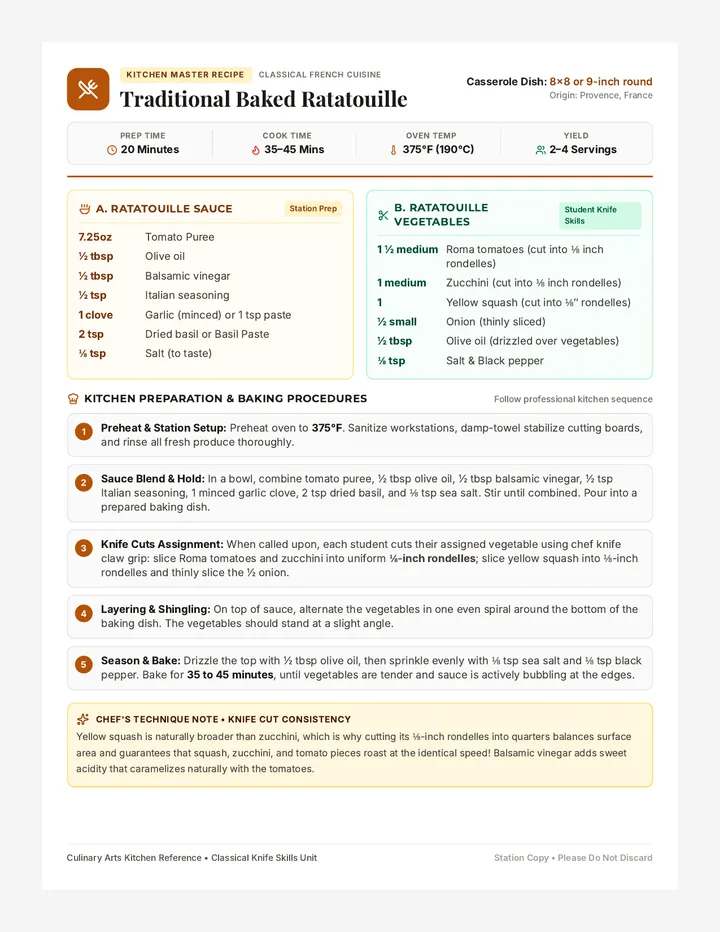
1. What does yield tell you in a recipe?
A. How long the food must bake
B. Amount of servings or pieces it makes
C. The oven temperature needed
D. How many utensils you will need
2. Which term means time spent preparing and combining ingredients?
A. Cook Time
B. Portion Size
C. Prep Time
D. Preheat
3. What is cook time?
A. Time ingredients actively cook or bake
B. Time spent washing and chopping
C. Time food sits in spices overnight
D. Time needed to cool before serving
4. Portion size refers to the:
A. Total weight of all ingredients
B. Size of the baking pan used
C. Number of steps in the recipe
D. Amount or size of an individual serving
5. Why do recipes tell you to preheat the oven?
A. To clean the oven racks first
B. To reach a specific temperature before use
C. To keep food warm after baking
D. To boil liquid faster on the stove
6. What happens when you marinate food?
A. Soak in oil, vinegar, or spices for flavor
B. Drain off liquid using a colander
C. Coat a baking sheet with butter
D. Beat butter and sugar until airy
7. Which method cooks food in liquid that is rapidly bubbling?
A. Simmer
B. Strain
C. Boil
D. Fold
8. How does simmering differ from boiling?
A. Simmering uses no liquid at all
B. Simmering keeps liquid bubbling gently
C. Simmering happens inside a cold oven
D. Simmering requires a whisk or mixer
Part 2: Prep & Kitchen Actions
Use the Word Bank (3 pts)
Word Bank:
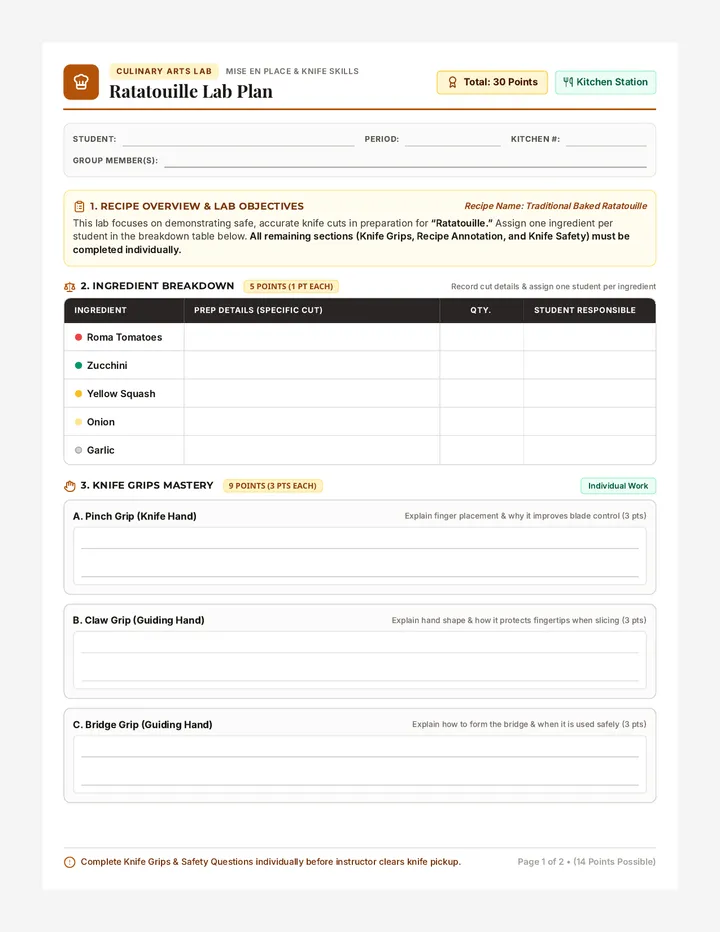
Grease Marinate Mise en place Strain
9. Organizing and preparing all of your ingredients before you begin cooking is called .
10. Before pouring cake batter into a pan, you should it with oil or butter so the cake does not stick.
11. After boiling pasta, use a colander or sieve to off the hot water.
Kitchen Lingo Quiz — Page 2 Name:
Part 3: Mixing Terms
Write the matching letter (7 pts)
12. Mix
13. Blend
14. Cream
15. Stir
16. Beat
17. Whip or Whisk
18. Fold
A. Gently combining a lighter ingredient with a heavier one while preserving as much air as possible.
B. Mixing all ingredients together with a utensil, usually a spoon, using a circular motion.
C. Fat (typically butter) and sugar are beaten together until they take on a light, airy texture.
D. Combining two or more ingredients until the mixture is thoroughly combined and uniform in texture.
E. Air is incorporated into foods like whipping cream and egg whites through very vigorous mixing.
F. Ingredients are mixed so thoroughly that they become one.
G. Mixing ingredients vigorously in a back-and-forth, up-and-down, and around-and-around motion until smooth.
Part 4: Cutting Verbs
Short Answer (3 pts)
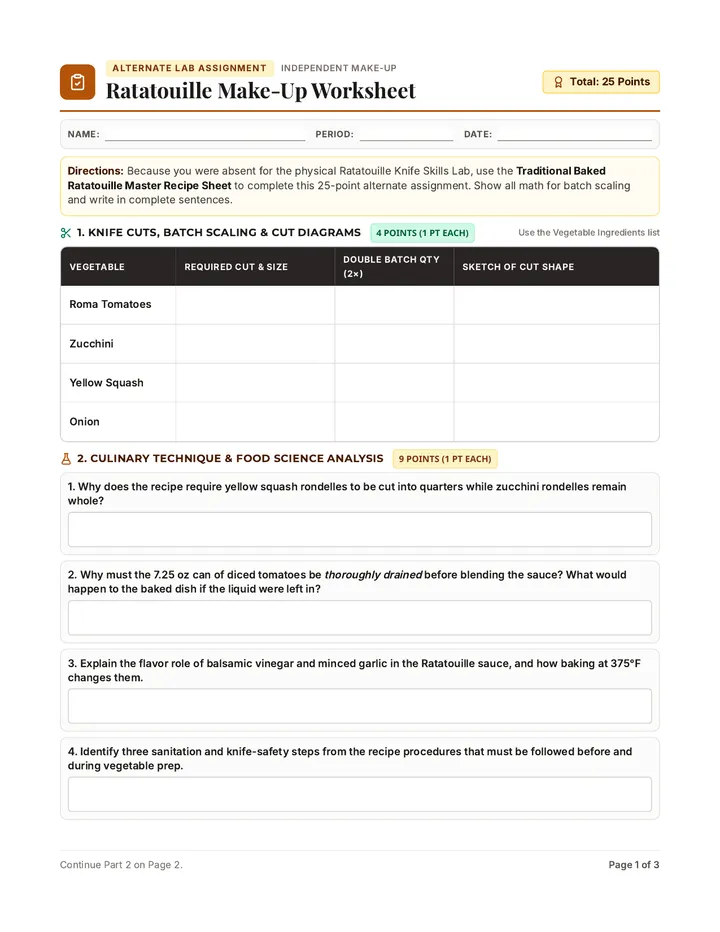
Identify the correct cutting verb (Dice, Chop, or Slice) for each kitchen task and explain what the cut looks like.
19. A soup recipe calls for carrots cut into small cubes of a consistent size. Which cutting verb is this, and why is consistency important?
20. You need to roughly cut celery into bite-sized pieces for a stir-fry. Which cutting verb should you use, and how is it different from dicing?
21. You are preparing tomatoes for sandwiches and want thin, uniform pieces cut across the grain. Which cutting verb describes this technique?
Kitchen Lingo Answer Key
Kitchen Lingo Answer Key
Teacher Grading Guide • 21 Points Total
1 Point Per Question
Part 1: Common Recipe Terms (8 pts)
1. B — Amount of servings or pieces it makes (Yield)
2. C — Prep Time
3. A — Time ingredients actively cook or bake (Cook Time)
4. D — Amount or size of an individual serving (Portion Size)
5. B — To reach a specific temperature before use (Preheat)
6. A — Soak in oil, vinegar, or spices for flavor/tenderness (Marinate)
7. C — Boil (rapidly bubbling liquid)
8. B — Simmering keeps liquid bubbling gently, not boiling
Part 3: Mixing Terms (7 pts)
12. D — Mix: combine until uniform in texture
13. F — Blend: mixed so thoroughly they become one
14. C — Cream: beat fat and sugar until light and airy
15. B — Stir: circular motion with a spoon/utensil
16. G — Beat: vigorous back-and-forth, up-and-down, circular motion
17. E — Whip or Whisk: incorporate air vigorously
18. A — Fold: gently combine light and heavy ingredients
Part 2: Prep & Kitchen Actions (3 pts)
9. Mise en place — organizing and preparing ingredients before cooking
10. Grease — applying fat (oil or butter) to a pan/sheet to prevent sticking
11. Strain — using a colander or sieve to drain off liquid
Part 4: Cutting Verbs — Sample Responses (3 pts)
19. Dice
Sample answer: Dice. Consistent cube sizes ensure that all pieces cook evenly at the same rate (and look neat in the soup).
20. Chop
Sample answer: Chop. Chopping produces rough, bite-sized pieces that do not need to be exact, whereas dicing requires uniform, small cubes.
21. Slice
Sample answer: Slice. Slicing means cutting an ingredient into thin, uniform, even pieces across the grain.