A 50-minute introduction to fundamental cooking techniques, focusing on heat management and timing through the lens of a vegetable stir-fry.
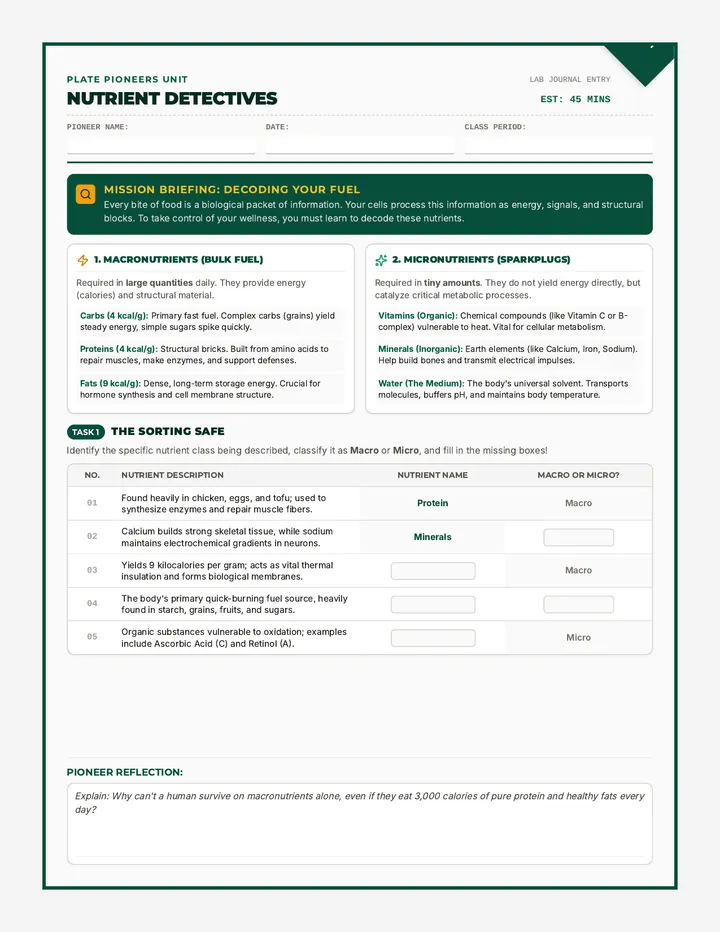
An introductory high school nutrition unit designed for the first week of school, blending foundational food science with personal wellness. Delivered via student-directed print-and-go packets, this sequence requires minimal substitute teacher intervention while keeping students highly engaged.
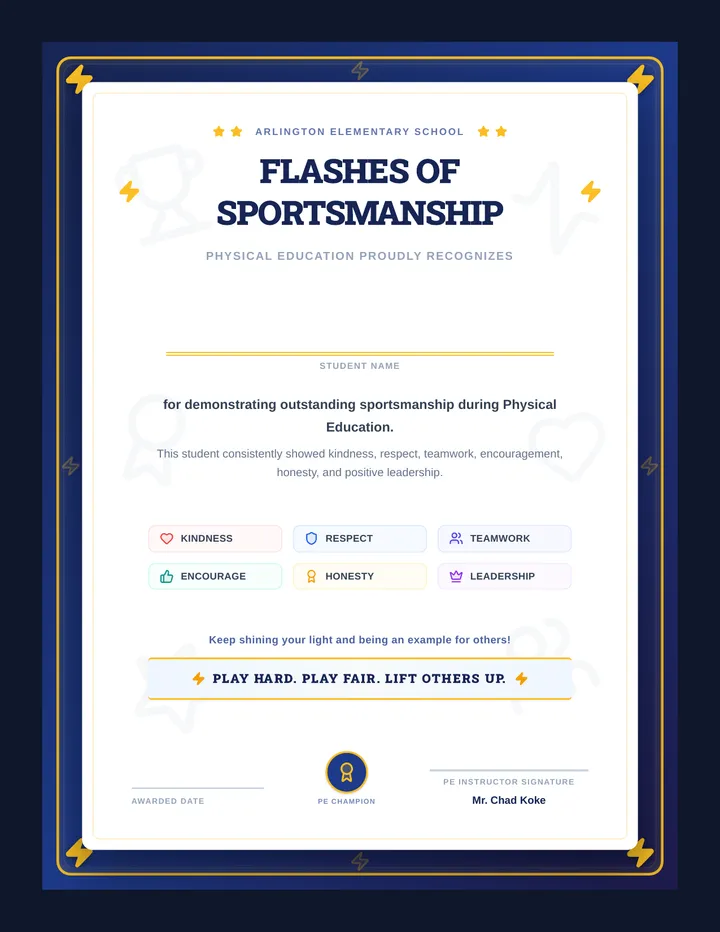
A reward and tracking system for physical education that celebrates outstanding student sportsmanship with lightning-themed certificates and tracking charts.
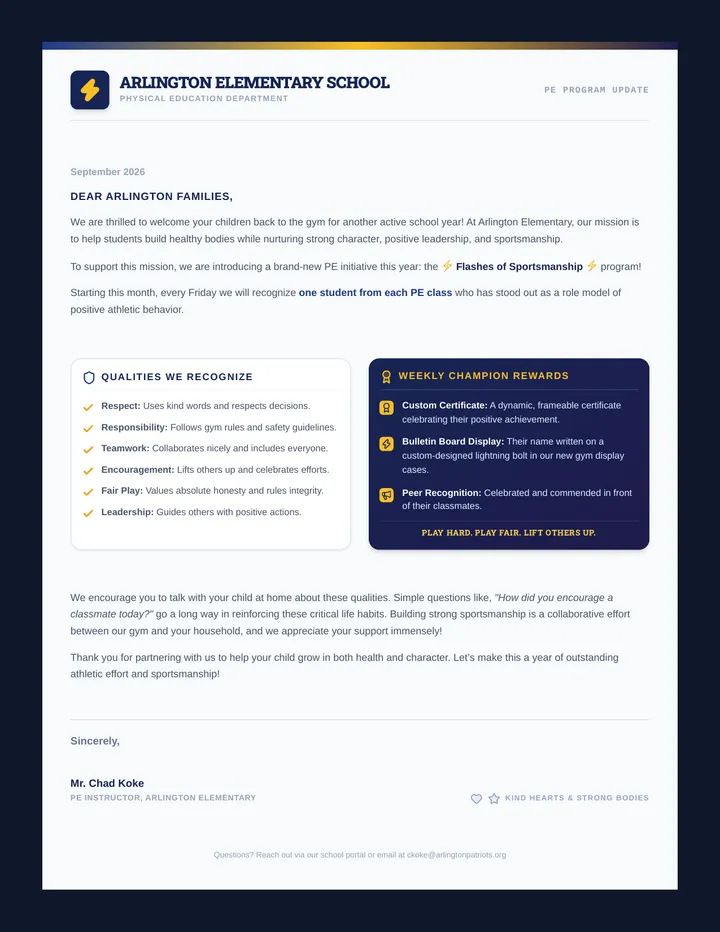
A warm and professional 1-page parent letter introducing Arlington Elementary's new 'Flashes of Sportsmanship' PE recognition program. Explains the core values, weekly rewards, and how parents can support positive character at home.
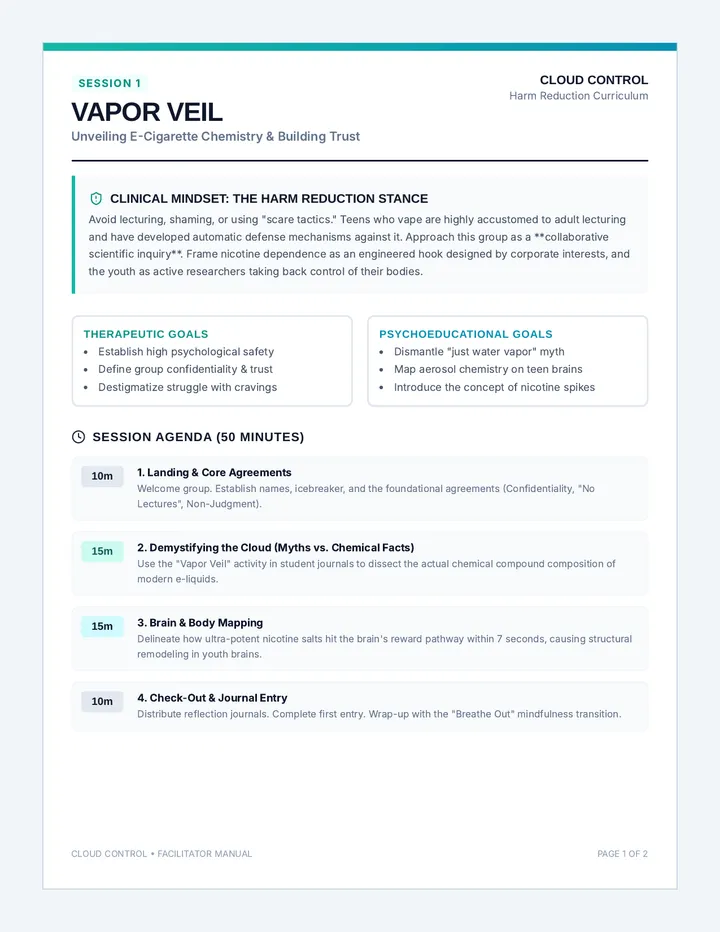
A comprehensive, 4-session harm reduction curriculum for high school support groups addressing vaping. Focuses on physical effects, industry marketing traps, trigger identification, and action-oriented gradual reduction plans.
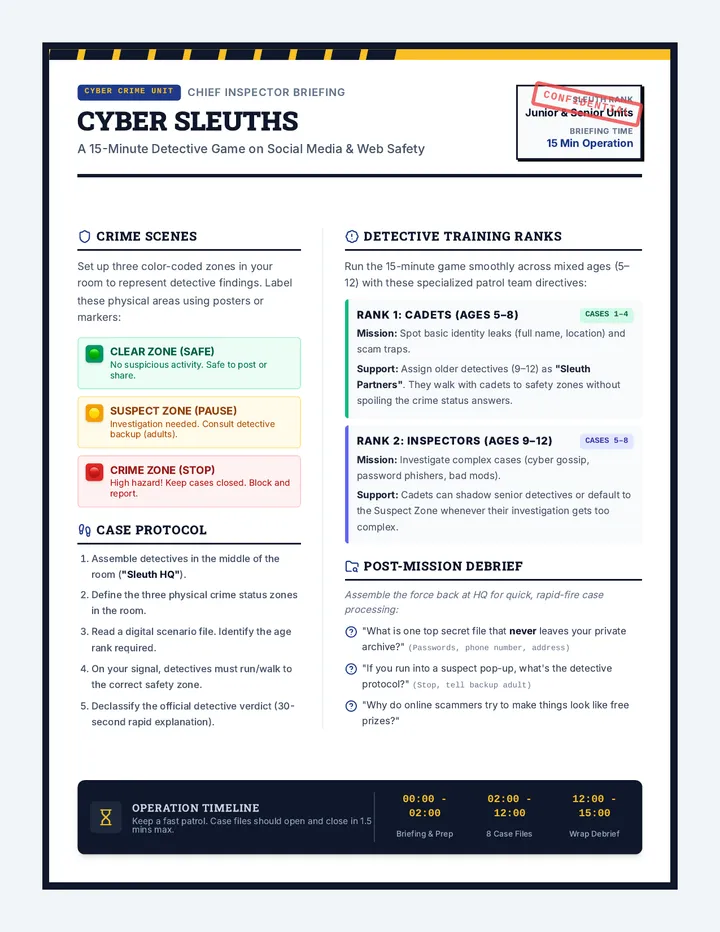
A high-energy, 15-minute movement game designed to teach kids ages 5-12 how to make smart, safe decisions online. Through rapid-fire scenario cards, students act as Cyber Sleuths to solve digital cases and investigate cyber threats.
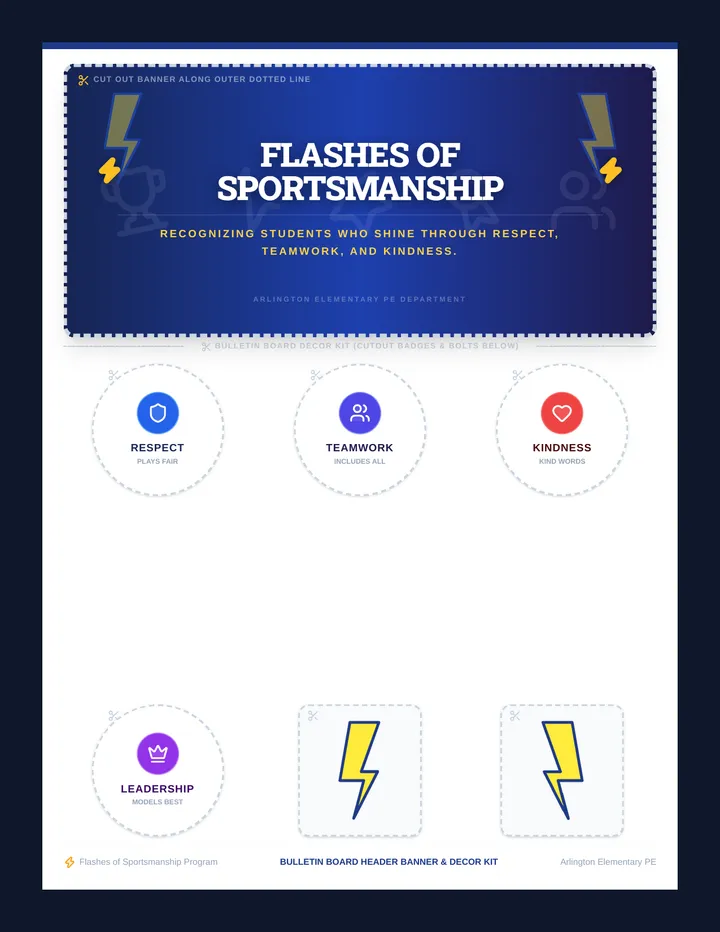
A printable athletic bulletin board banner kit. Features a large header banner styled in electric blue, bright yellow lightning, and white lettering, plus 6 varsity-style value badges and 2 logo-style lightning bolts for decoration.
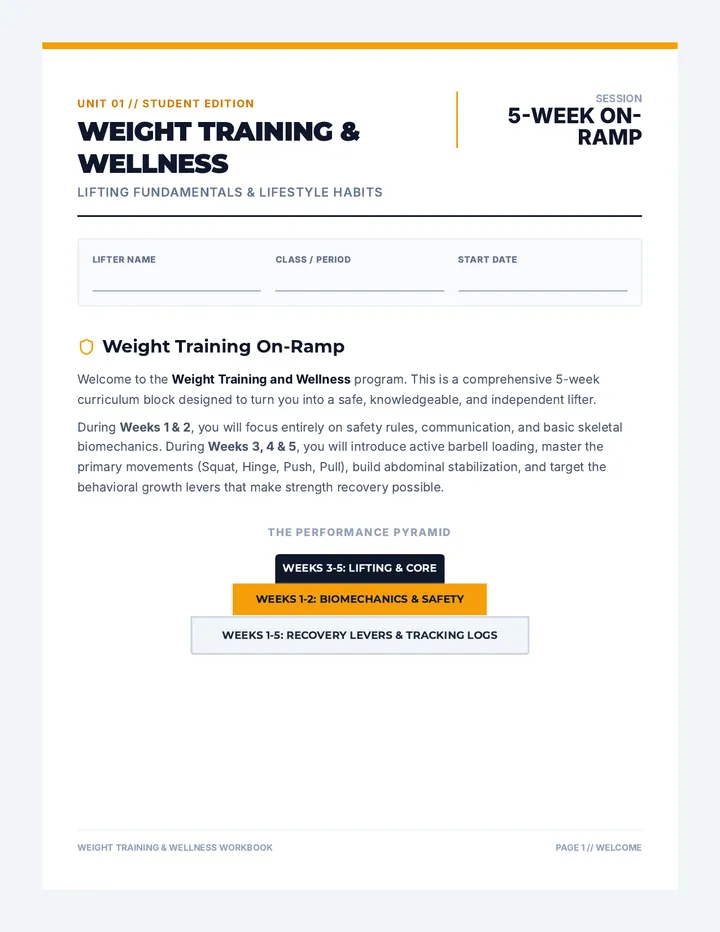
A robust 5-week introductory curriculum sequence detailing lifting safety, spotting, the Big 4 movement patterns, and supporting healthy recovery habits.
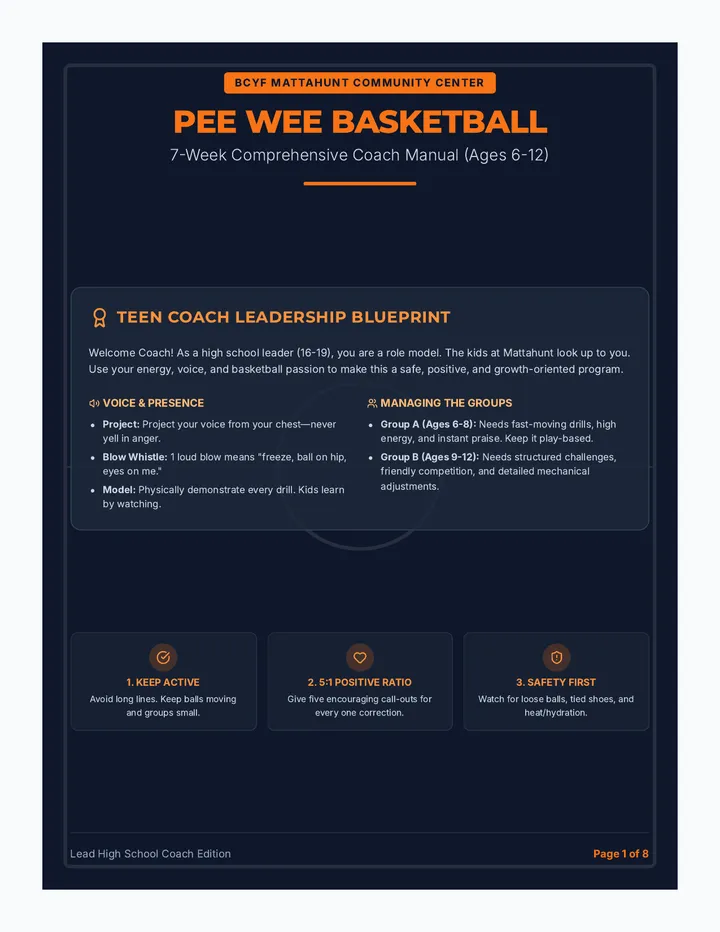
A comprehensive 7-week youth basketball program designed for 6-12 year olds, led by high school student coaches. Focuses on progressive skill building, team dynamics, and positive leadership at the BCYF Mattahunt Community Center.
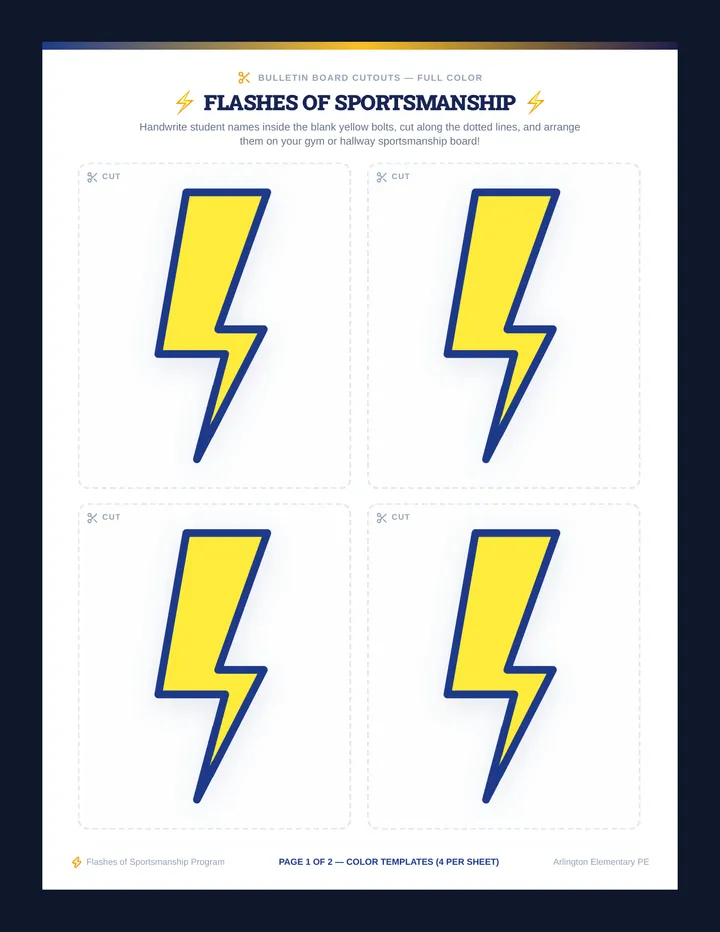
A 2-page printable lightning bolt bulletin board template for physical education, featuring a custom-designed lightning bolt matching the Arlington Patriots logo geometry. Includes 4 blank writeable bolts per sheet in full-color and black-and-white.
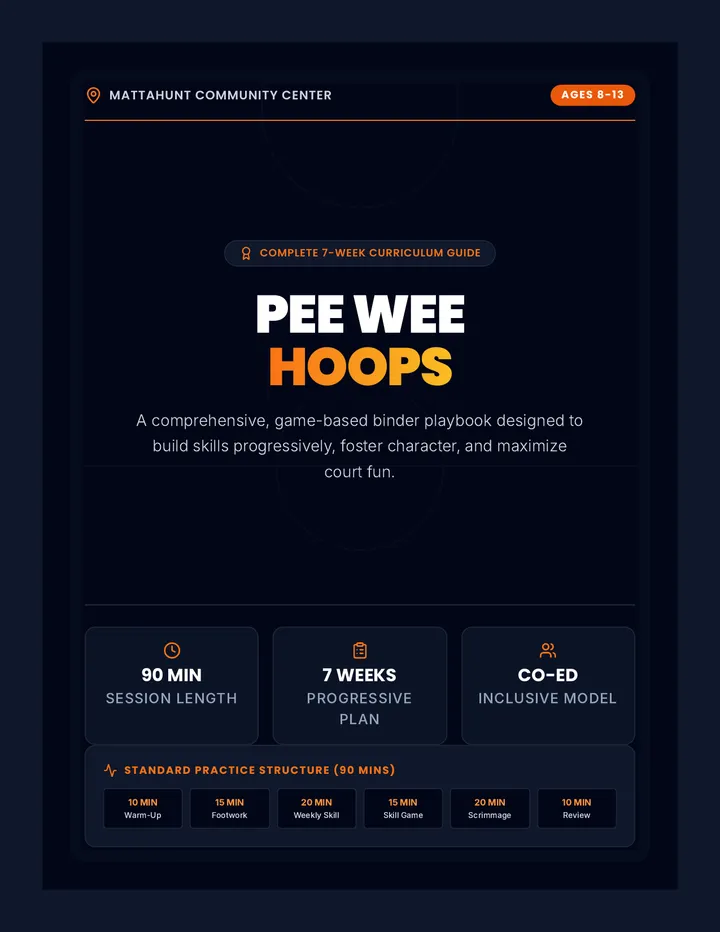
A comprehensive 7-week progressive basketball curriculum for youth ages 8-13 at Mattahunt Community Center. The sequence focuses on progressive skill-building, game-based learning, and character development.
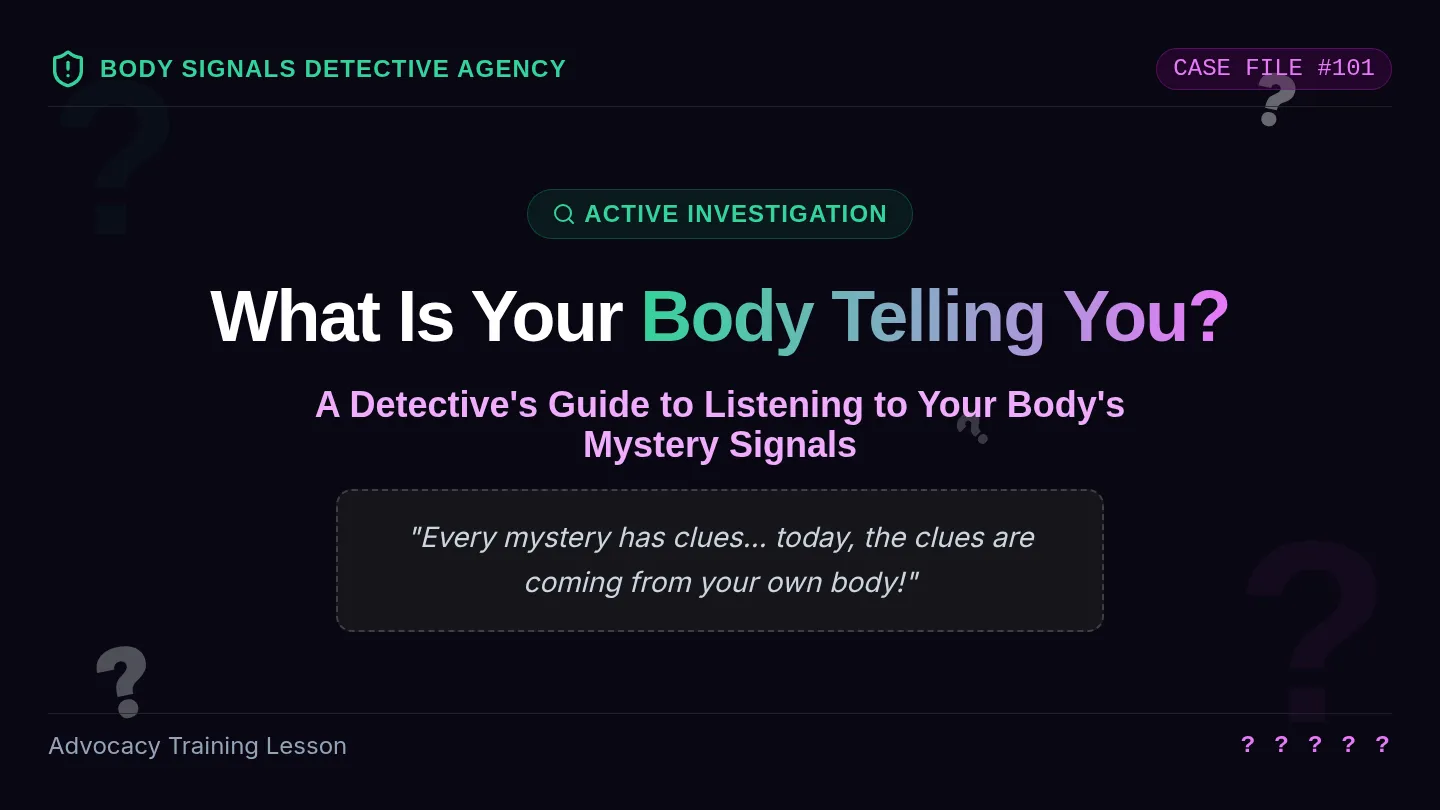
An advocacy lesson focused on helping students identify, interpret, and respond to their body's physical and emotional signals through a fun mystery-themed format.
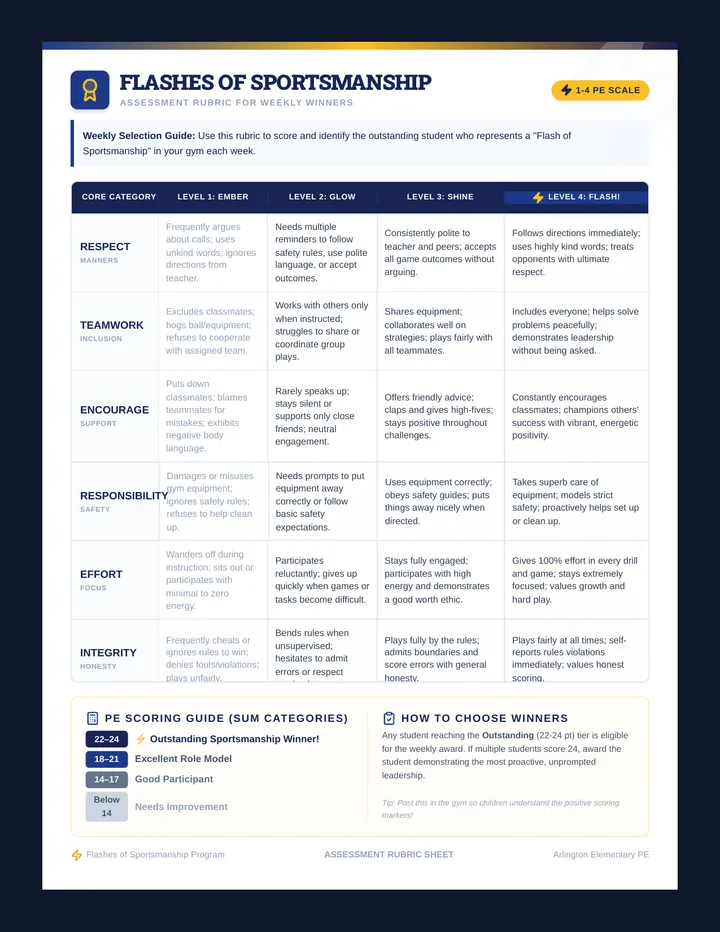
An elementary physical education rubric for tracking sportsmanship. Features a 1-4 scale across 6 key core values with an integrated scoring guide aligned to the lightning theme.