Cette évaluation de compréhension porte sur le roman 'L'enfant Océan' de Jean-Claude Mourlevat. Elle permet d'évaluer la saisie de l'intrigue, des personnages et des thèmes par les élèves de CM2 à travers un quiz et une tâche d'expression écrite.
A culminating celebration where students showcase their Flamenco steps and present their cultural portfolio from the past six weeks.
Learn the history and ingredients of Spain's most famous dish, paella, and explore how food brings communities together.
Discover the whimsical world of 'Gigantes y Cabezudos' (Giants and Big-Heads) seen in Spanish town festivals and create festive masks.
Dive into the fiery traditions of Valencia's Las Fallas festival and the floral elegance of Seville's Feria de Abril.
Learn the foundational movements of Flamenco dance, including expressive arm gestures (braceo) and basic footwork patterns (zapateado).
Explore the soulful roots of Flamenco music, focusing on the rhythmic art of 'palmas' (clapping) and the sounds of the Spanish guitar.
Introduce Spain's geography and the social custom of 'tapas' through map-based exploration and a creative menu-designing activity.
A multisensory lesson focusing on the phonetic distinction between the English short /ɪ/ and long /i/ sounds, specifically designed for students bridging from Spanish.
A comprehensive toolkit for teachers to track, document, and support student English language proficiency growth using TELPAS criteria across all four domains.
A collection of formal invitation flyers for the FEL Recognition Ceremony, provided in multiple languages to ensure all families can celebrate their student's transition from English Language Education services.
Students become language detectives to decode common English idioms, comparing literal illustrations with figurative meanings to build deep comprehension of non-literal language.
A beginner-friendly introduction to the differences between Simple Present and Present Continuous, focusing on routines and immediate actions.
A comprehensive lesson on the morphology and spelling of the suffixes -ary, -ery, and -ory, focusing on word meaning and root connections rather than rote memorization.
An introductory lesson on the history and vocabulary of Cinco de Mayo, focusing on the Battle of Puebla and the cultural significance of the holiday. Students explore key historical figures and the concept of bravery through guided instruction and collaborative activities.
A dual-language exploration of the iconic Mexican market bag (bolsa de mandado), focusing on its history, utility, and cultural significance in Mexican traditions.
A foundational exploration of the first three chapters of Harry Potter and the Sorcerer's Stone, focusing on bilingual comprehension and key vocabulary.
A lesson focused on the suffixes -en, -ize, and -ify. Students investigate how these suffixes transform base words into verbs representing actions or states.
A lesson focused on the suffixes -ful, -ous, and -ious. Students analyze how these suffixes form adjectives from nouns, representing full of or having qualities of.
A fast-paced Italian vocabulary game for A1/A2 students covering food, travel, daily life, and general topics. Includes a presentation for class gameplay, printable game boards, and a teacher facilitation guide.
A lesson focused on the suffixes -al, -ial, and -ic. Students analyze how these suffixes form adjectives from nouns, representing relating to or having qualities of.
A lesson focused on the suffixes -ty and -ity. Students analyze how these suffixes form nouns from adjectives, representing states or qualities.
A lesson focused on identifying and using different types of sentences in Japanese: statements, questions, commands, and exclamations. Students will learn the appropriate punctuation for each.
A lesson focused on location and category suffixes (-ary, -ery, -ory). Students analyze how these suffixes form nouns and adjectives related to places, groups, and qualities.
A lesson focused on abstract suffixes (-ment, -less, -ness). Students explore how these suffixes form nouns and adjectives related to states, qualities, and actions.
A lesson focused on agentive suffixes (-er, -or, -ian, -ist). Students analyze how these suffixes identify people who perform specific actions or hold certain roles.
A lesson focused on comparative and superlative suffixes (-er, -est, -ier, -iest). Students explore how these suffixes change adjectives to compare two or more things.
A lesson focused on the suffixes -y, -ly, and -ily. Students analyze how these suffixes change word meanings and usage through contextual application.
A lesson focused on the prefixes sub-, com-, pro-, and en-. Students apply their knowledge of these prefixes to identify and use words in various contexts.
A lesson focused on the prefixes re-, ex-, in-, and de-. Students explore meanings like "again," "out," "in," and "down" through application.
A lesson focused on the prefixes pre-, fore-, post-, and after-. Students practice using these temporal and directional prefixes in context.
A lesson focused on the prefixes in-, un-, dis-, and mis-. Students analyze meanings and usage through contextual sentences and word puzzles.
A comprehensive vocabulary unit focusing on advanced roots, suffixes, and prefix assimilation from Sorts 42-50. This lesson includes practice sentences for all 200+ words, word scrambles, and a crossword puzzle to reinforce derivational relations.
The final restaurant simulation where students act as servers and customers.
Finalizing scripts and props for the restaurant skit performance.
Mastering courtesy expressions and ordering food in a cafe setting.
Exploring food labels and authentic menus to prepare for the restaurant project.
Live performances of the student-written telenovelas.
Collaborative script writing and rehearsal for the first major project.
Navigating a city using street signs and maps in Spanish.
Describing family and emotions with a focus on dramatic expression for the telenovela.
Learning school-related vocabulary using authentic schedules and creating student ID cards.
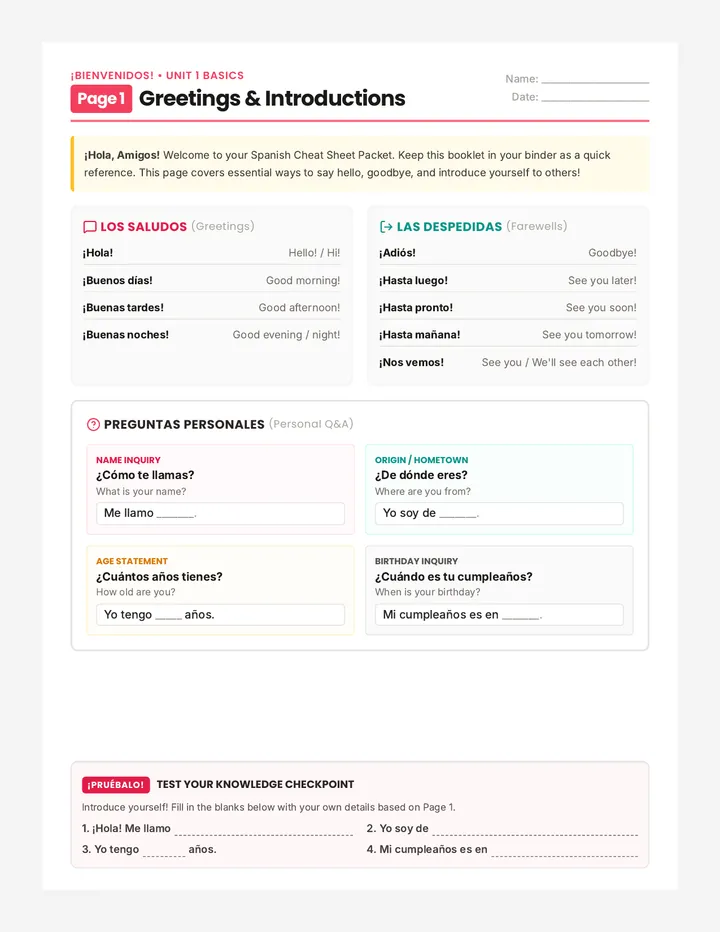
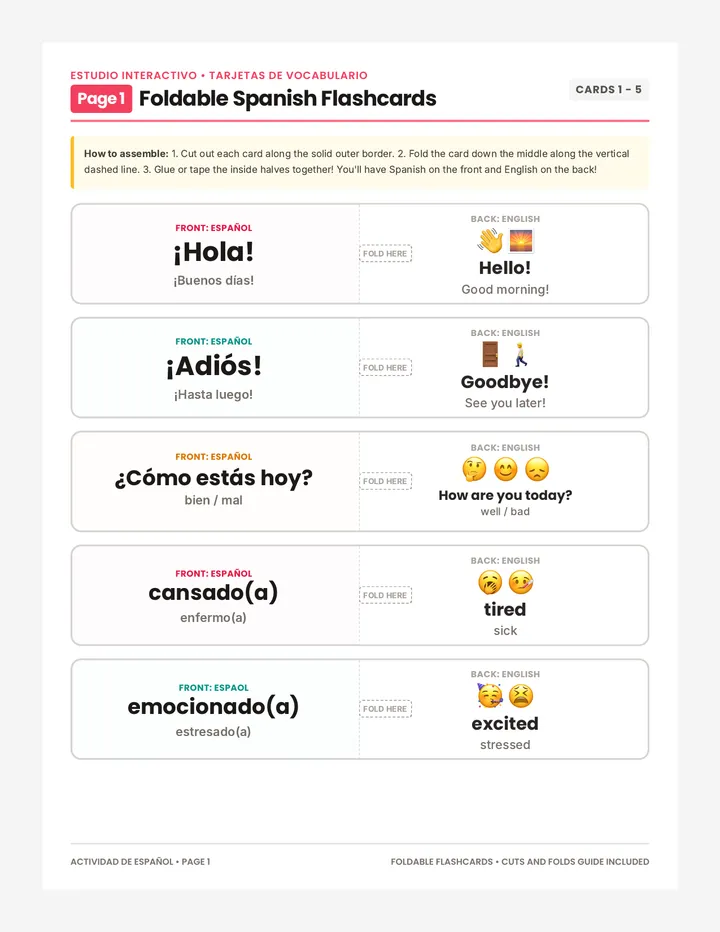
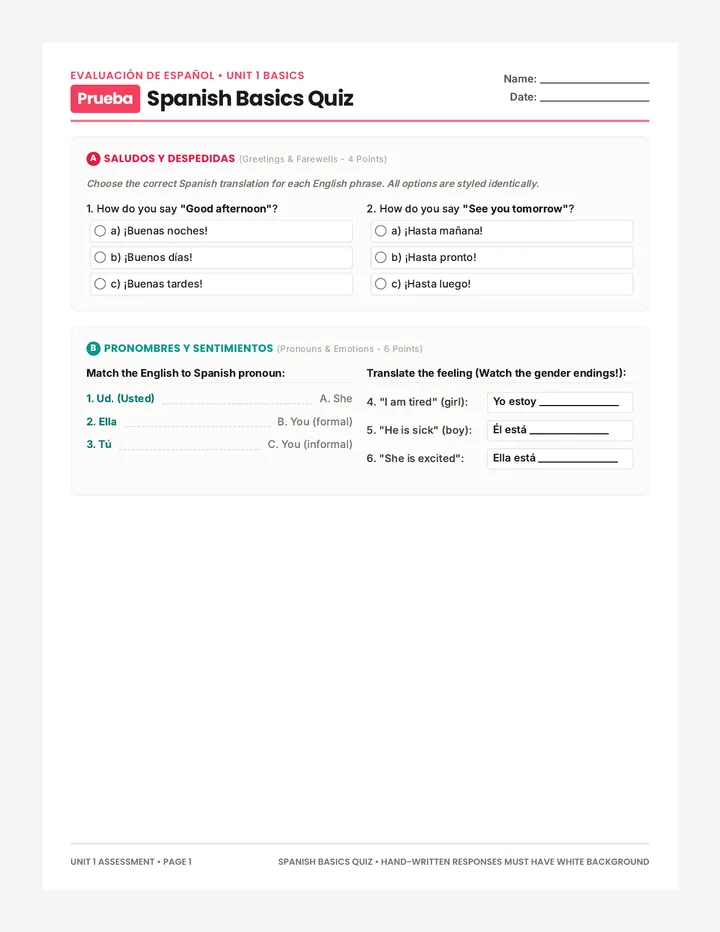
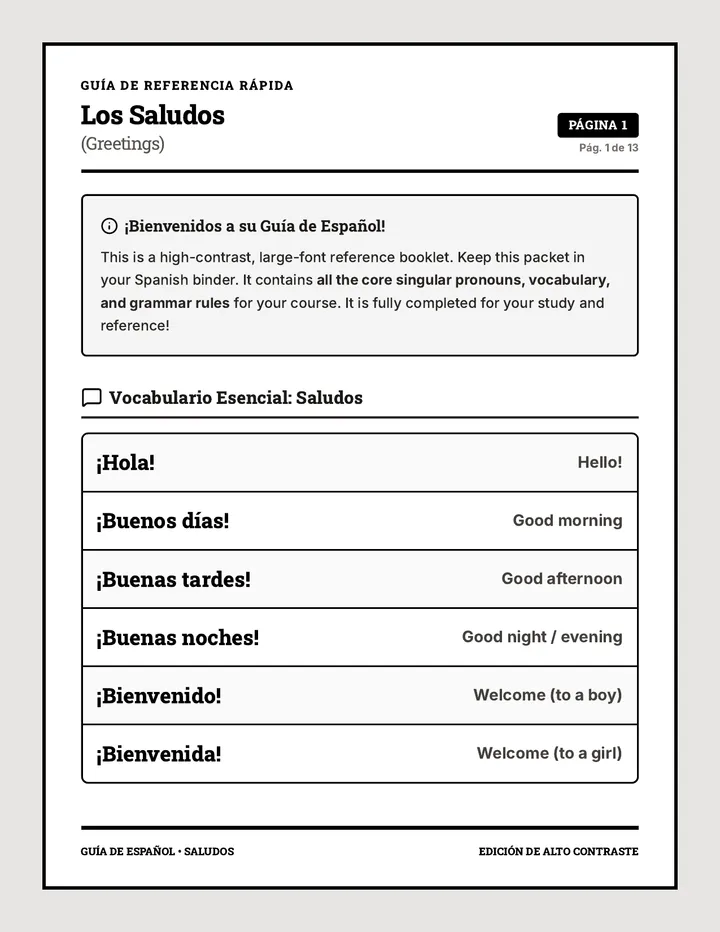
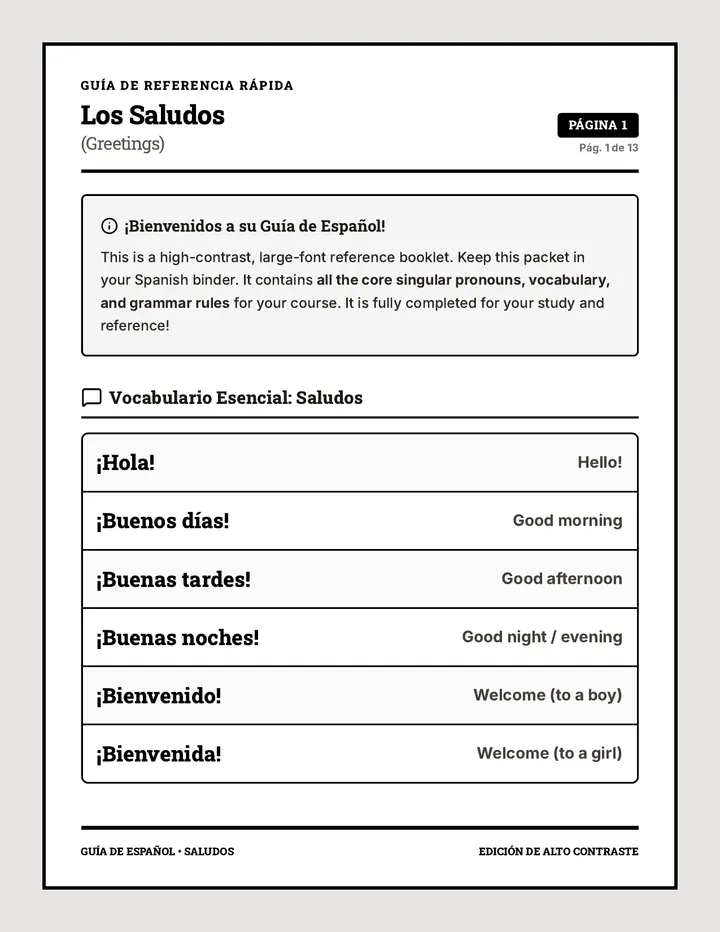
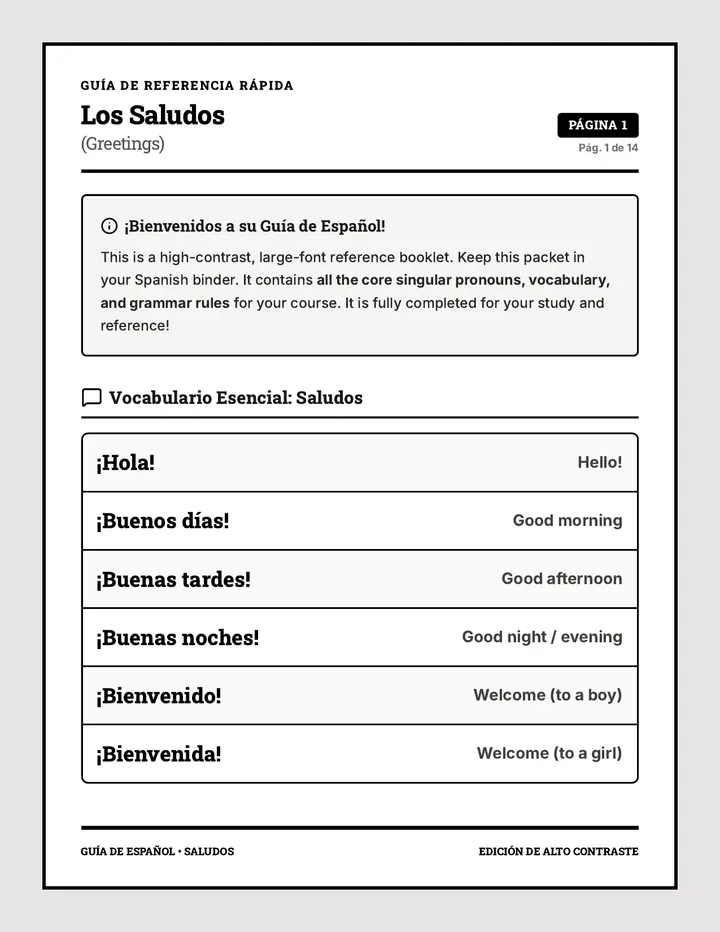
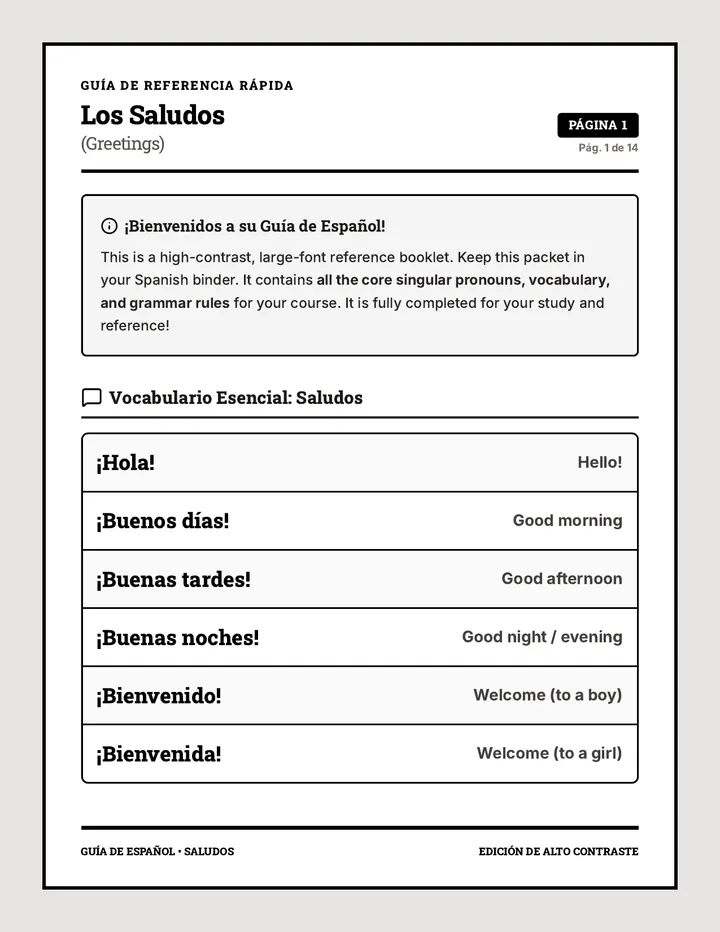
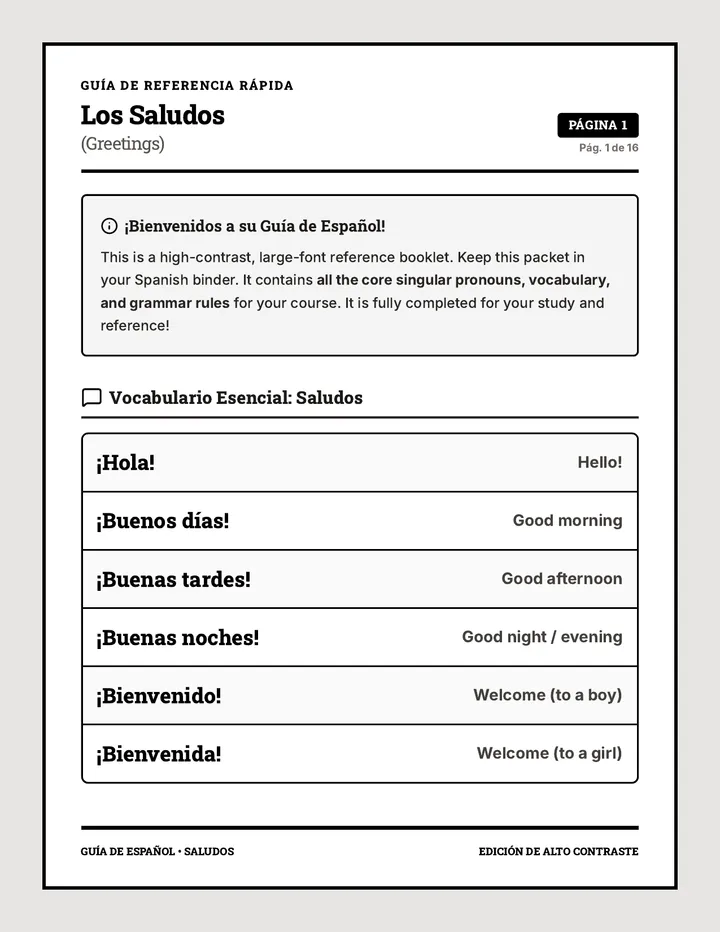
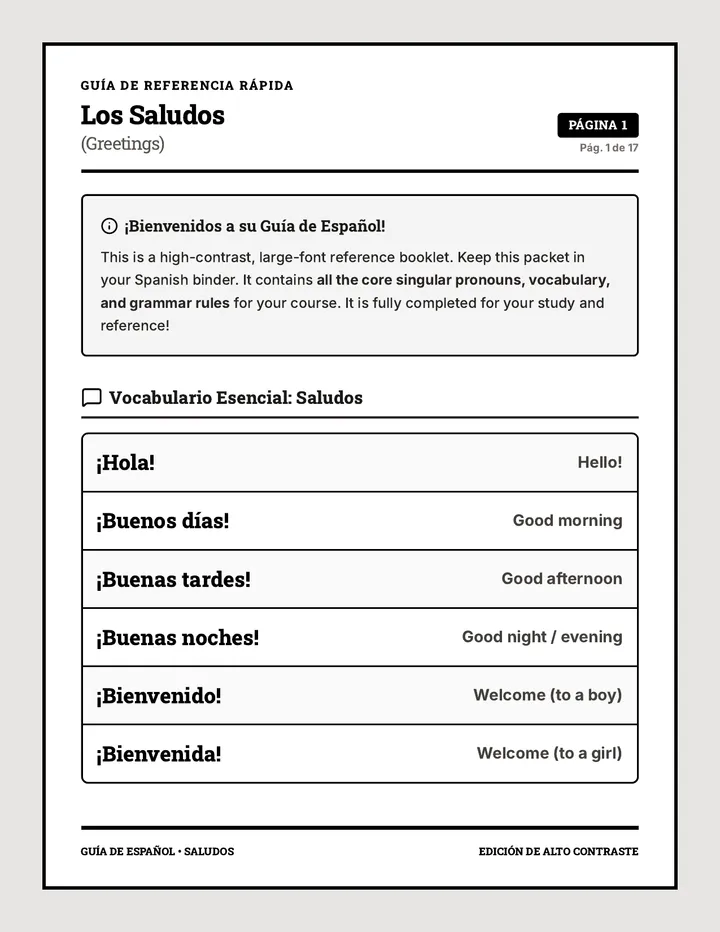
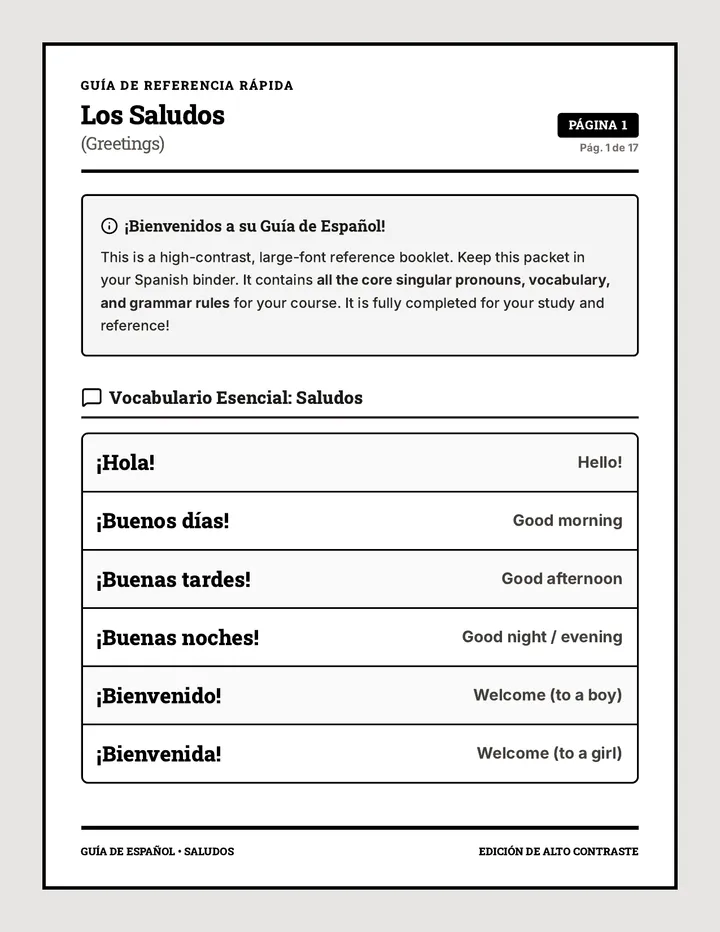
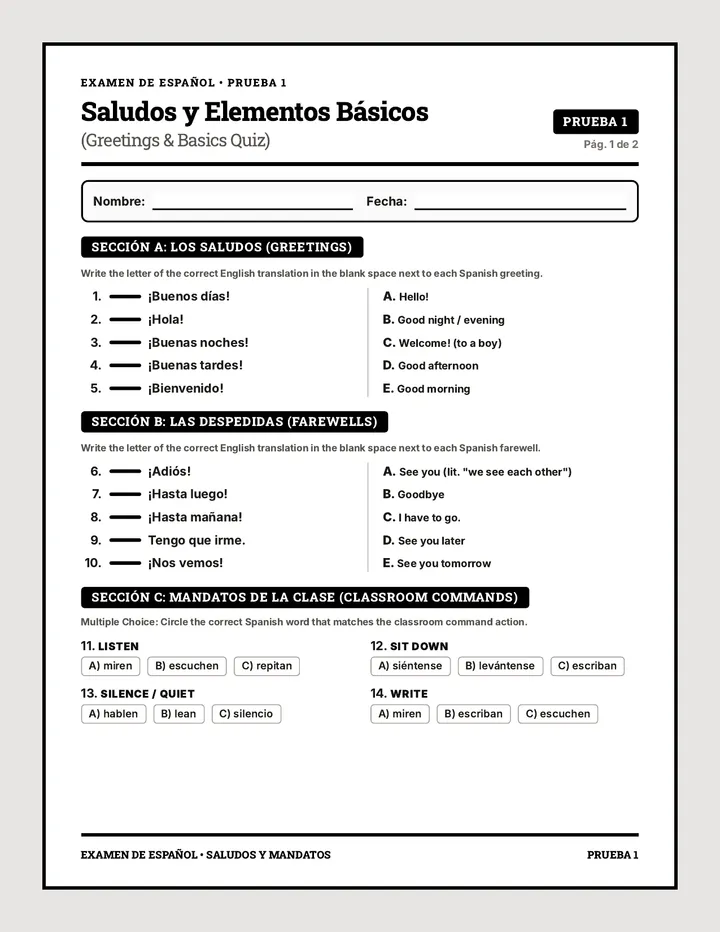
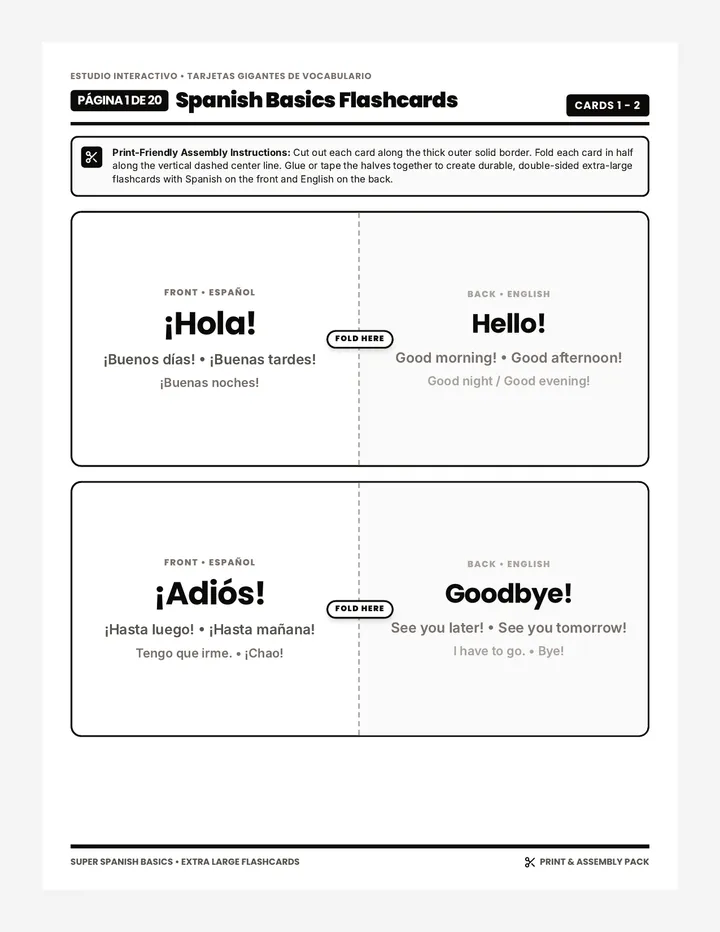
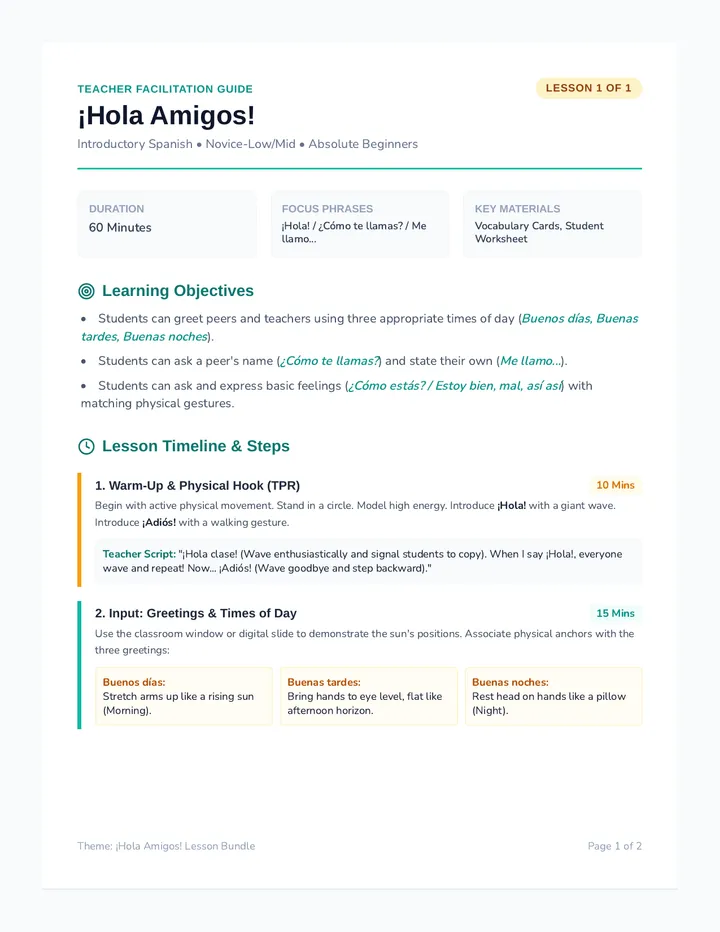
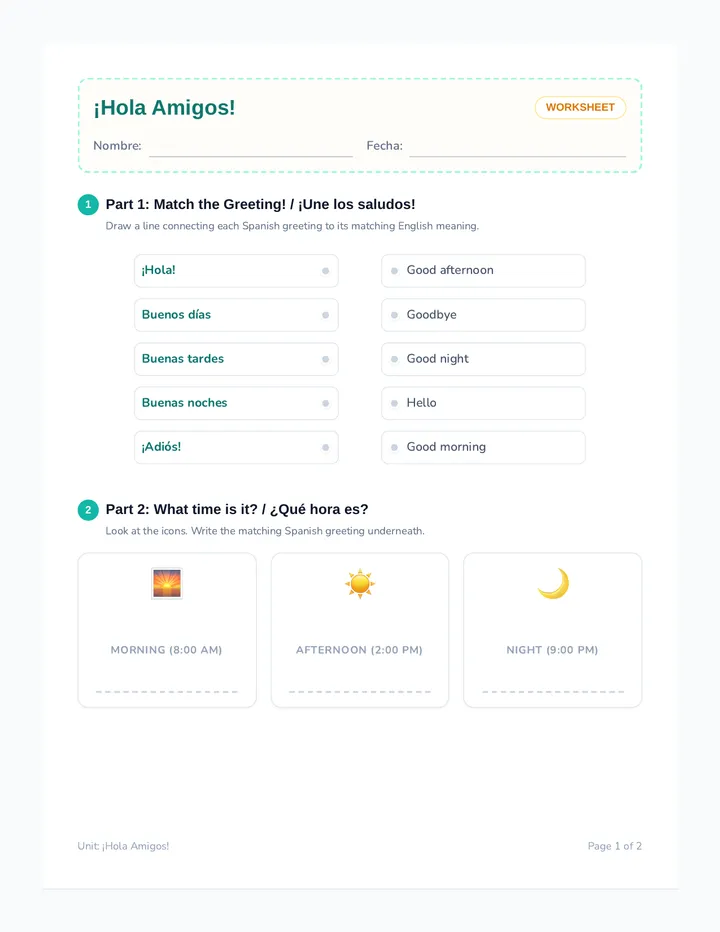
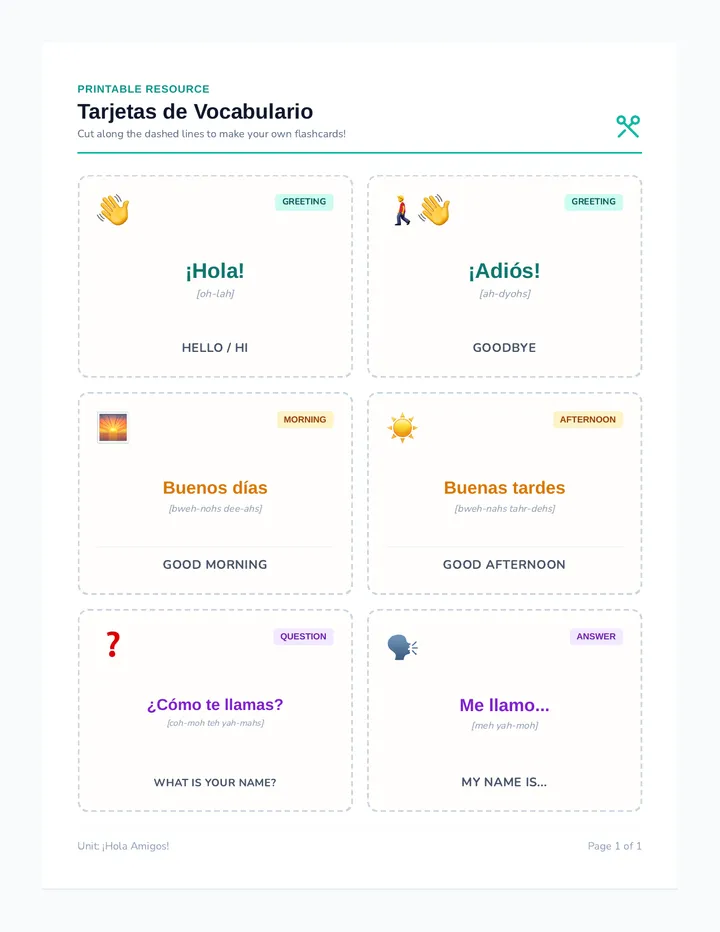
Introduction to basic greetings, names, and the concept of the telenovela project.
Una lección vibrante sobre modismos y expresiones comunes en español y sus equivalentes en inglés, explorando significados literales y figurados.
An introductory lesson on Japanese numbers 1-20 using Picture Talk and visual aids to build immediate comprehension through counting familiar objects.
Introduction aux salutations de base et aux règles de politesse en milieu bamanan, combinant lecture et expression orale.
Apprentissage des premières consonnes et formation des syllabes simples pour commencer à lire des mots de deux lettres.
Introduction aux voyelles du Bamanankan (a, e, ɛ, i, o, ɔ, u) et à la nasalisation, avec des exercices de tracé et de reconnaissance auditive.