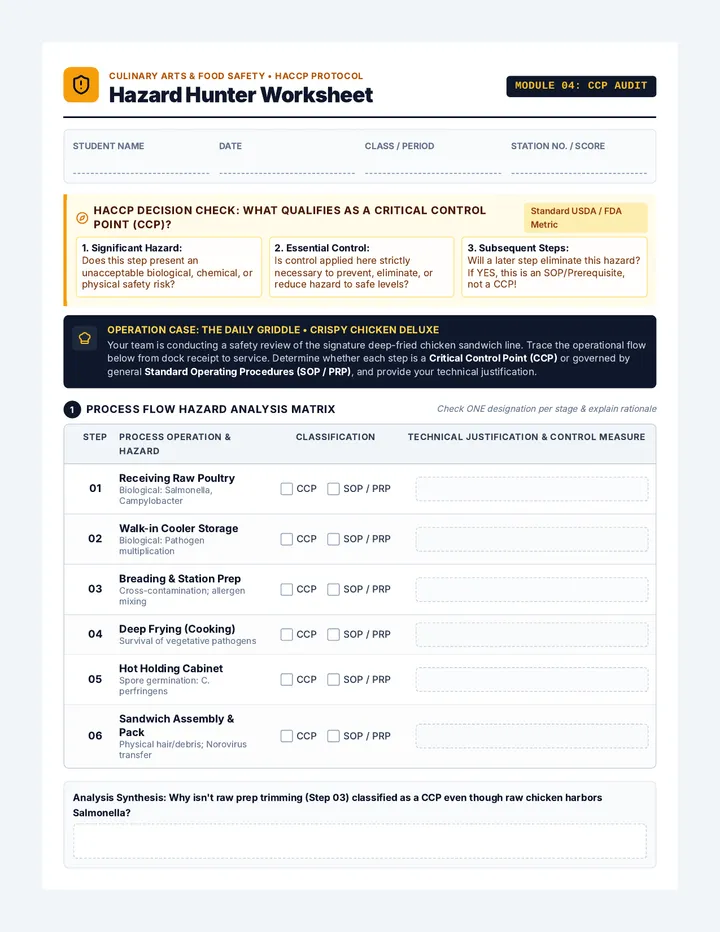
A comprehensive culinary arts lesson focused on commercial kitchen sanitation, chemical handling safety, warewashing sequences, and food safety inspection compliance.
Part 4: Workplace Inspection — Violations & Corrective SOPs
9 Points (3 pts each: 1 pt hazard, 2 pts SOP)
Model Audit Findings (Accept any 3 of the following 4 major violations):
1 Hazard Identified: Used noon rag without disassembling slicer blade guard.
Corrective SOP:
Fully disassemble blade carriage; wash, rinse, and sanitize each part separately. Use a fresh, single-use sanitizing cloth from a newly mixed sanitizer bucket tested at proper PPM.
2 Hazard Identified: Oven cleaner applied without safety gloves; used dish sponge.
Corrective SOP:
Mandatory PPE (chemical-resistant rubber gloves & eye protection) required for caustic oven cleaners. Discard sponges (bacterial harborage/chemical erosion); use commercial scrubbing pads.
Invert sheet pans individually on drying racks to air dry (prevent mold/bacteria). Relocate all cleaning chemicals to a designated chemical locker or bottom shelf below and away from food.
Part 5: Kitchen Floor Decision Matrix
6 Points (3 pts each scenario)
The 4-Hour Rule Key
Mandatory 4-hour re-sanitizing:
Pathogen Bloom: Bacteria reproduce to dangerous thresholds within 4 hours at room temp (TDZ 41°F–135°F). Even if visually clean, microscopic bacterial biofilms form; FDA Food Code mandates full wash/rinse/sanitize every 4 hours of continuous use.
Unlabeled Bottle Key
OSHA protocol execution:
Immediate Quarantine: Remove bottle immediately from food zone. Never guess or smell contents. Notify chef/manager to verify and dispose of or label with chemical name, dilution, and hazard warnings per OSHA HazCom standard.
Part 6: Health Inspector Debrief (Exemplar Rubric)
8 Points (Rubric Breakdown Below)
Master Exemplar Response:
Cleaning vs. Sanitizing: Cleaning removes physical soil and food films where microbes thrive. Sanitizing destroys biological pathogens (Salmonella, Norovirus, Listeria) that soap alone cannot kill.
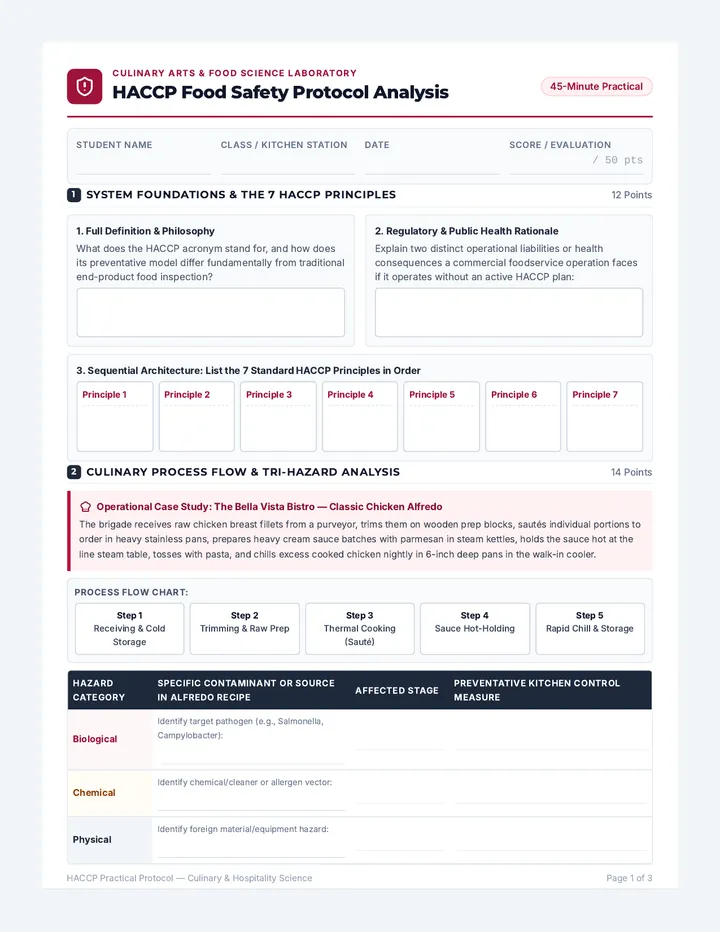
Hazard Distinction: Physical hazards (loose steel wool fibers, glass) cause bodily injury; chemical hazards (unlabeled cleaners, toxic residue) induce poisoning; biological hazards (bacteria/viruses) cause foodborne illness.
Impact & Consequences: Contamination triggers illness outbreaks, hospitalization of vulnerable guests, mandatory health department closure, loss of food license, severe civil lawsuits, and business bankruptcy.
Scoring: Clear distinction (3 pts) • Hazard classification (3 pts) • Public health & legal impacts (2 pts)
Protecting specialized coatings from physical and toxic damage:
• Steel wool is strictly banned
• Scratches release toxic PTFE
• Use soft nylon pads & soak
Eliminates physical & chemical hazard
The 4-Hour Rule
Food-contact surfaces in active use must be sanitized every 4 hours:
• Bacteria bloom in 4 hours
• Microscopic biofilms form
• Mandatory wash/rinse/sanitize
FDA Food Code standard
Dry bins (flour, grain) must also be scheduled for regular sanitation to prevent mold, pests, and allergens. Slide 5 of 7
Shift Audit Part 4 Inspection Analysis
Case Study: Closing Shift Violations
Alex's 10:45 PM Incident Log
Alex's Actions
"Alex unplugged the slicer and wiped the blade with a rag soaking since noon. He sprayed oven cleaner inside without gloves using a sponge. Afterward, he stacked wet pans flat together and stored cleaner above burger buns."
Identify 3 violations & corrective SOPs
1
Violation: Noon Rag & Incomplete Disassembly
Corrective SOP: Disassemble blade parts; wash, rinse, and sanitize each part. Use a fresh single-use rag from a tested sanitizer bucket.
2
Violation: Cleaner Without PPE + Sponge Use
Corrective SOP: Wear rubber gloves & eye splash protection. Sponges trap bacteria and erode in chemicals; use commercial scrub pads.
3
Violation: Wet-Nesting Sheet Pans & Cleaner Over Buns
Corrective SOP: Invert pans individually to air-dry (prevents mold). Relocate all chemicals to a designated closet below food.
Health inspectors classify chemical contamination over food as an immediate critical violation. Slide 6 of 7
Synthesis & Mastery Part 6 Inspector Debrief
The Three Contaminant Categories
Health Code Compliance
Physical Hazards
Foreign objects that cause cuts, choking, or dental injury:
• Loose steel wool fragments
• Broken glass / chipped ware
• Metal shavings from slicers
Prevention: Approved Tools Only
Chemical Hazards
Toxic cleaning chemicals or sanitizers that cause poisoning: