Lenny.com
Explore
Create
ActivitiesNewMathEnglish Language ArtsScience & EngineeringSocial StudiesGlobal LanguagesHealth & Physical EducationSpecial EducationCounseling & Life SkillsArts & CreativityESL
Lenny.com
Lenny.com
Explore
Create
ActivitiesNewMathEnglish Language ArtsScience & EngineeringSocial StudiesGlobal LanguagesHealth & Physical EducationSpecial EducationCounseling & Life SkillsArts & CreativityESL
Lenny.com
Lenny.com

Solutions

Lenny for EducatorsLenny for SchoolsLenny for Districts

Product

ExploreSign inCreateSupportAbout

Resources

Getting startedMTSS Acceleration Program

© 2026 Lenny Learning Inc.

TermsPrivacyAccessibility
LinkedInInstagramX
Lenny

Hydration

Identifies the role of water in bodily functions and physical performance. Examines signs of dehydration and strategies for maintaining optimal fluid balance throughout the day.

Health & Physical EducationMovement Skills and ConceptsBody ControlLocomotor SkillsNon-Locomotor SkillsFine Motor SkillsManipulative SkillsBalance and CoordinationSpatial AwarenessMovement PatternsRhythmic Activities and DanceRhythm and TimingDance BasicsIndividual and Dual SportsGymnastics and TumblingTrack and FieldRacket SportsSelf-Defense and Martial ArtsTeam SportsCooperative GamesSportsmanshipTeam CommunicationBasketball SkillsSoccer SkillsVolleyball SkillsFootball SkillsGame StrategiesFitness and Physical ActivityCardio FitnessFlexibility and StretchingMuscular Strength and EnduranceSetting Fitness GoalsHealthy HabitsHygiene PracticesSleep and RestPhysical Activity HabitsHydrationInjury PreventionBody Awareness and Self-CareDisease PreventionHealth Decision-MakingHelp-Seeking and Self-AdvocacyMental HealthMental Health BasicsEmotional AwarenessStress ManagementCoping StrategiesMindfulness PracticesBreathing and Relaxation TechniquesMeditation BasicsResilience and PerseveranceHealthy RelationshipsSocial and Emotional SkillsHelp-Seeking and Support SystemsDigital WellbeingNutritionNutrition BasicsFood GroupsBalanced MealsHealthy Eating HabitsReading Food LabelsPersonal SafetyRecognizing Unsafe SituationsHuman and Child TraffickingStranger DangerPersonal BoundariesFire and Water SafetyEmergency ResponseConflict Resolution BasicsInternet and Social Media SafetySafe Personal RelationshipsSubstance AwarenessTobacco AwarenessAlcohol AwarenessCannabis AwarenessOpioid AwarenessStimulant AwarenessPrescription Drug AwarenessRefusing Peer PressureOutdoor and Adventure ActivitiesOutdoor Recreation SafetyHiking and OrienteeringTeam Building Activities

Videos

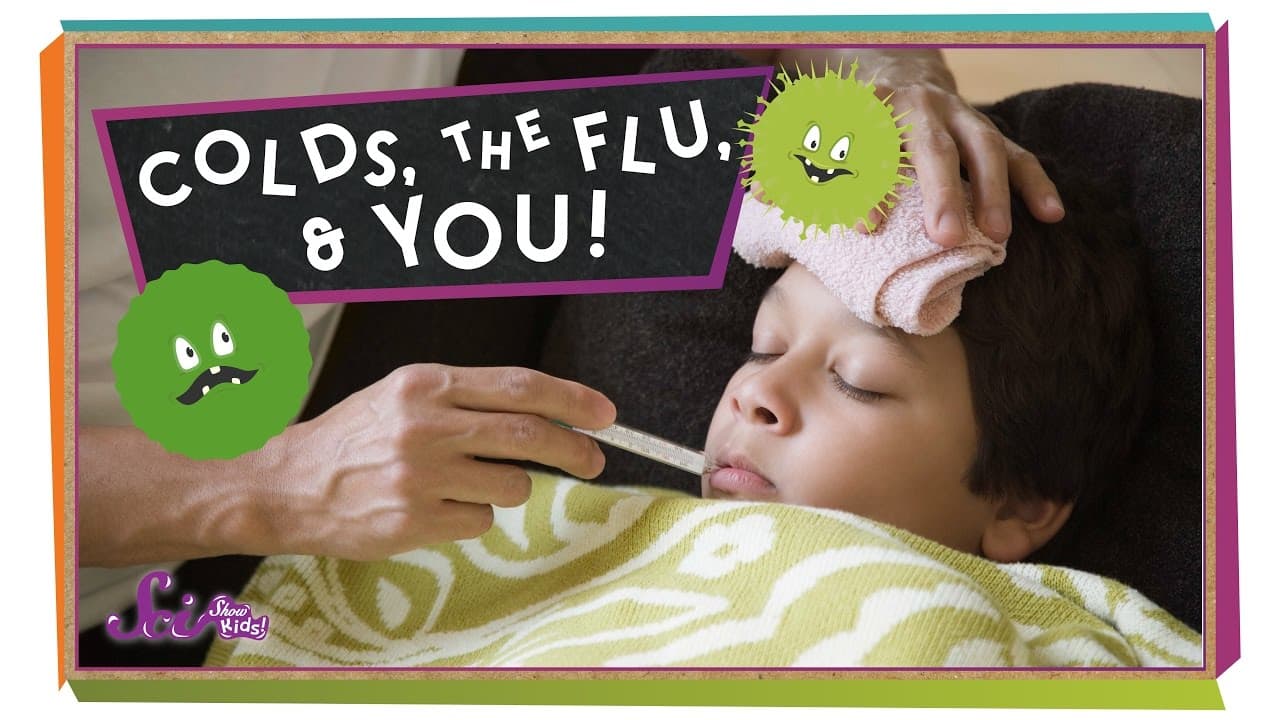
How the Flu Works and How Your Body Fights It

How the Flu Works and How Your Body Fights It

This engaging science video explains the biology behind the common cold and the flu, specifically tailored for young learners. Hosted by Jessi and her robot friend Squeaks, the video breaks down what causes sickness (viruses), how these microscopic invaders enter the body, and the specific mechanisms the body uses to fight back. It demystifies scary or unpleasant symptoms like runny noses, sneezing, and fevers by reframing them as heroic efforts by the body's defense system to expel germs.

SciShow KidsSciShow Kids

4mins 16s

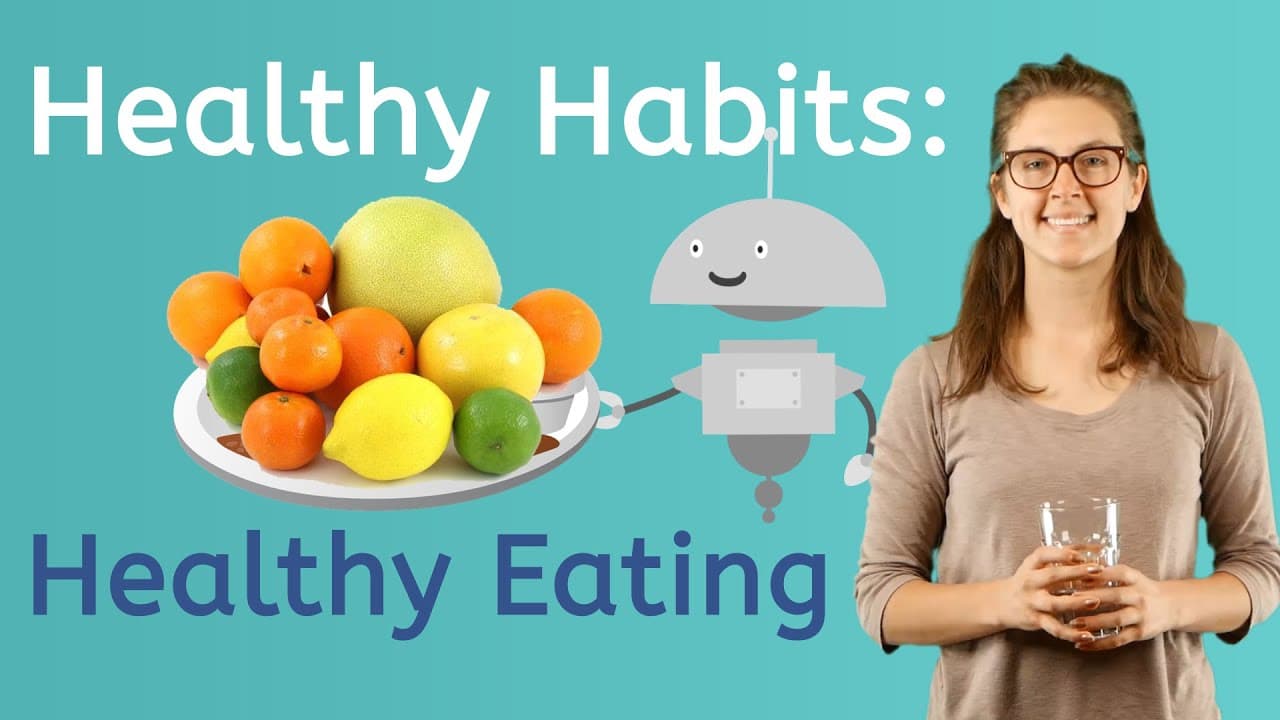
How Food Fuels Your Body and Why Nutrition Matters

How Food Fuels Your Body and Why Nutrition Matters

This comprehensive educational video guides students through the fundamentals of healthy eating, using relatable analogies to explain why nutrition is essential for the body. The host, Kylie, breaks down the complex topic of diet into manageable concepts, starting with the idea that food is fuel for the body just like gas is for a car. She emphasizes the importance of eating regular meals to maintain energy levels and introduces the concept of balanced nutrition through the five main food groups.

Miacademy & MiaPrep Learning ChannelMiacademy & MiaPrep Learning Channel

6mins 23s

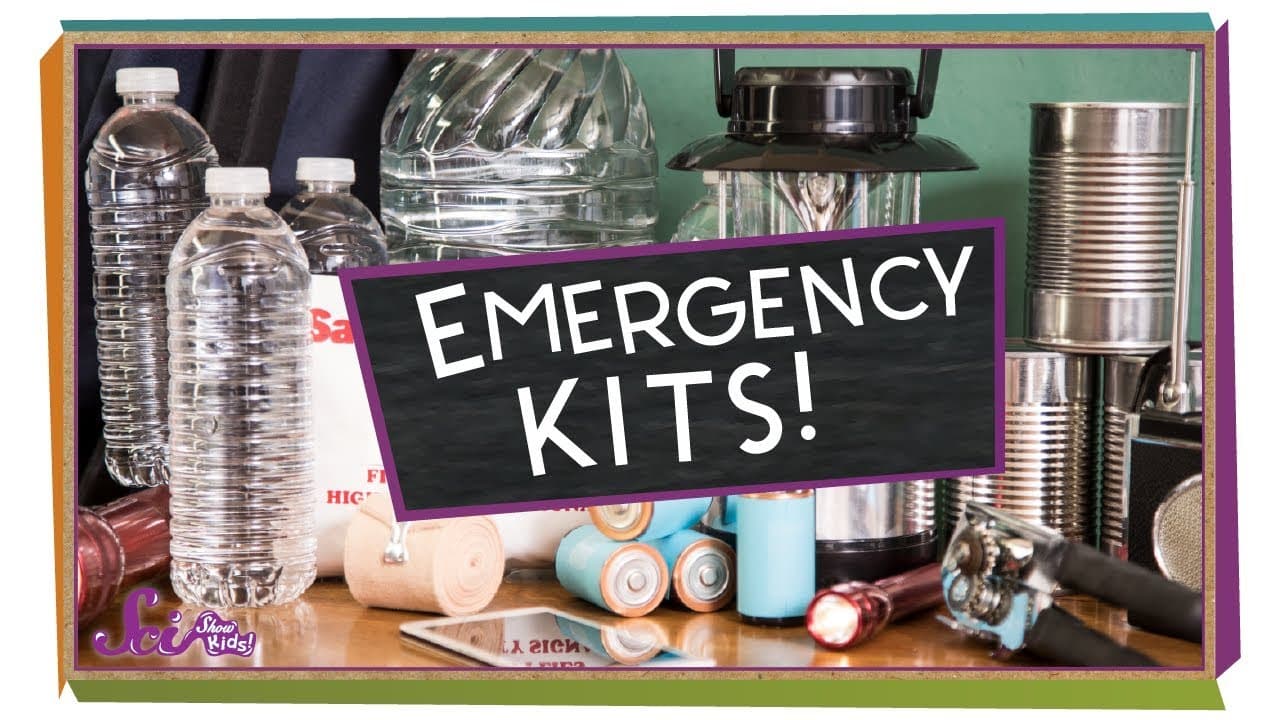
Building Your Own Emergency Kit

Building Your Own Emergency Kit

In this engaging episode of SciShow Kids, host Jessi and her robot friend Squeaks guide young viewers through the process of building an emergency kit. Using a gentle and reassuring tone, the video defines what an emergency is—comparing it to a spilled glass of juice that simply needs to be cleaned up—and explains why being prepared helps keep us safe. The narrative focuses on preparation for natural events like floods or storms that might require staying indoors for a few days, making the concept of emergency preparedness accessible and non-threatening for children. The video systematically breaks down the essential categories of items needed in a kit: medical supplies, water, hygiene, food, power/lighting, warmth, and entertainment. It covers practical details, such as the math behind how much water to store per person, the science of why canned food lasts longer, and the importance of having non-electric light sources like flashlights. Special attention is given to hygiene items like toothbrushes and soap, which are often overlooked in basic survival lists. For educators, this video is an excellent resource for Health, Safety, and Social Studies units. It provides a concrete way to discuss safety without causing anxiety, turning the abstract concept of "preparedness" into a hands-on activity. The content naturally integrates cross-curricular skills, including mathematics (calculating necessary water supplies) and science (understanding food preservation and weather-related safety), making it a versatile tool for early elementary classrooms.
SciShow KidsSciShow Kids

4mins 52s

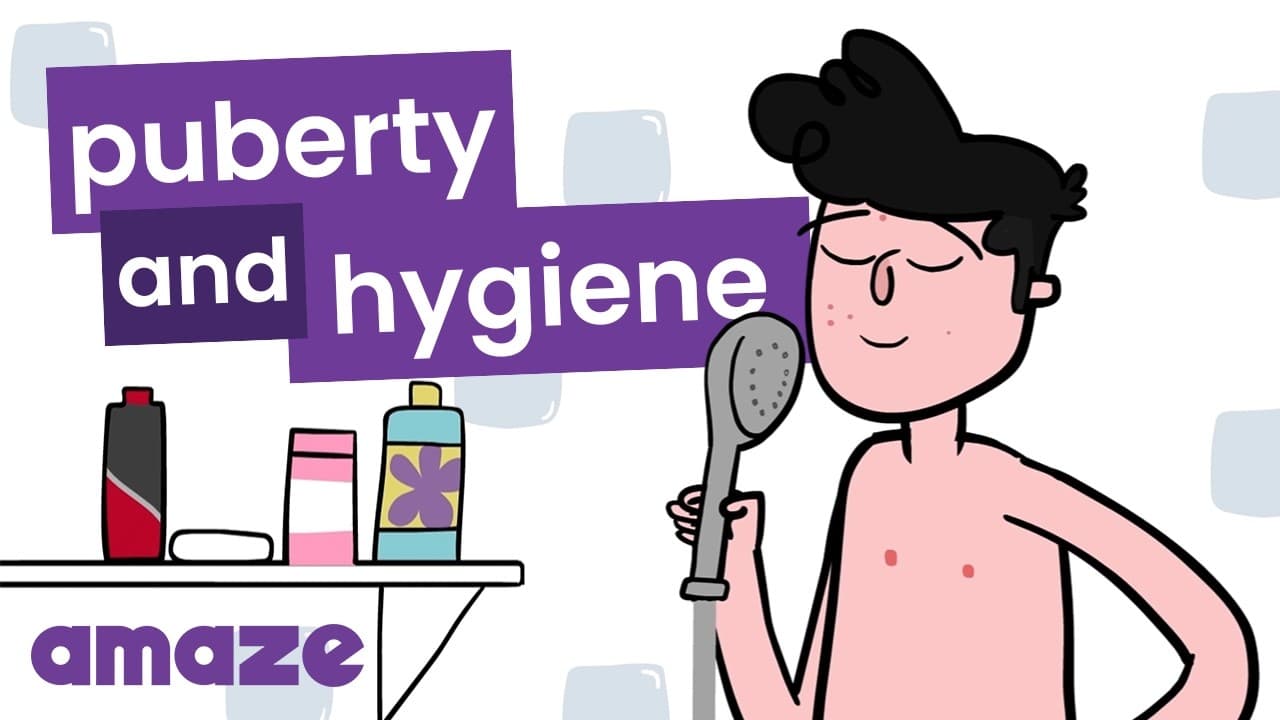
Taking Care of Your Body During Puberty

Taking Care of Your Body During Puberty

This animated health education video provides a humorous yet informative guide to the physical changes associated with puberty, specifically focusing on hygiene. Narrated by a relatable teen vlogger character named Jane, the video normalizes common experiences like body odor, acne, and hair growth. It explains the biological reasons behind these changes, such as increased hormone production and sweat gland activity, removing the stigma often associated with them. The content offers practical, actionable advice for maintaining hygiene during this developmental stage. It covers essential habits like daily showering with soap, using deodorant, wearing clean clothes, and establishing a skincare routine. The video also emphasizes that while these changes are universal, individual experiences may vary, reinforcing the importance of doing what feels right and comfortable for one's own body. Teachers and parents will find this video particularly useful as a conversation starter for sensitive topics. Its lighthearted tone and clear explanations make it an excellent resource for health classes, helping students transition from anxiety about body changes to understanding and self-care. It empowers students with the knowledge to manage their hygiene confidently and promotes a healthy lifestyle through sleep, exercise, and nutrition.

AMAZE OrgAMAZE Org

2mins 46s

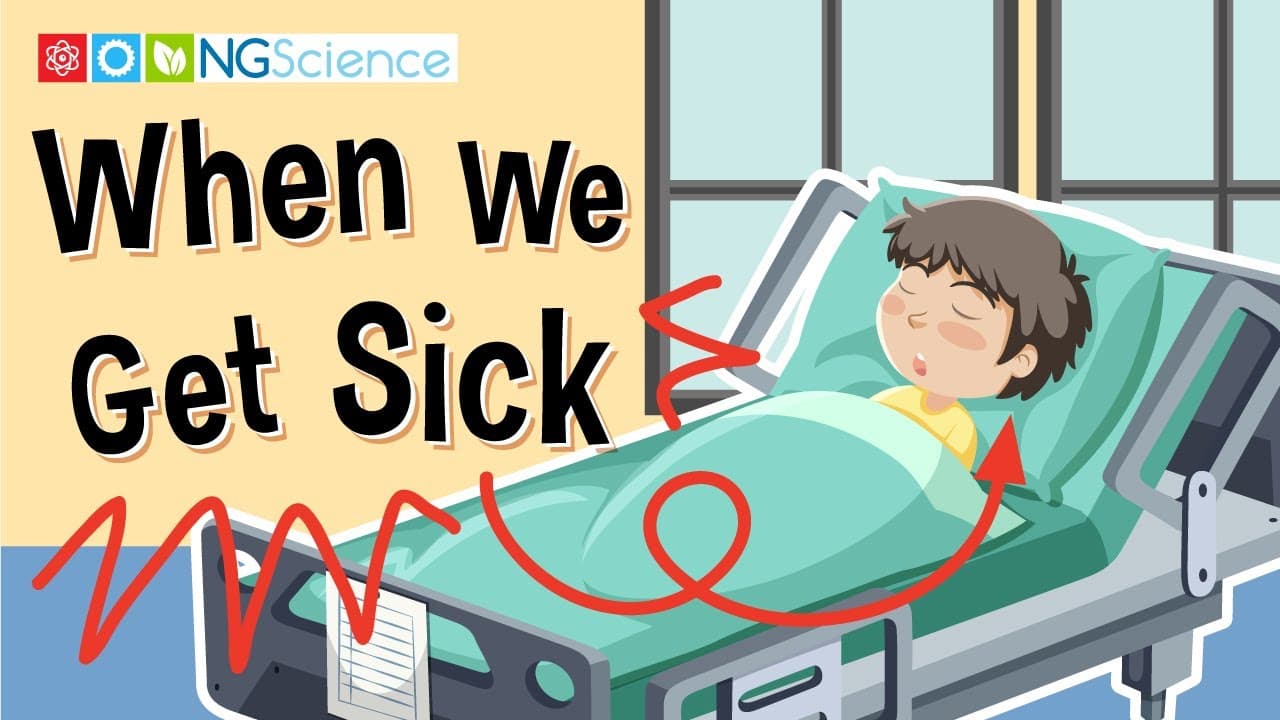
How to Take Care of Yourself When You Are Sick

How to Take Care of Yourself When You Are Sick

This educational video provides a clear, step-by-step guide for children on how to recognize when they are sick and what actions they should take to recover. It covers common symptoms like sore throats, colds, and the flu, emphasizing the importance of self-care to help the body fight off illness. The narration is gentle and reassuring, making it suitable for young viewers who might feel anxious about being unwell. The video outlines essential health behaviors including communicating with adults, getting adequate rest, hydration, nutrition, and hygiene practices like hand washing and mask-wearing. It explains the 'why' behind these actions—for instance, how sleep provides energy to fight germs and how fluids keep the body hydrated. It also addresses social responsibility by explaining how staying home and washing hands prevents spreading germs to others. For educators, this video serves as an excellent tool for Health and Science units focused on the human body, hygiene, and personal responsibility. It helps build functional health literacy by giving students a concrete checklist of actions to take when they feel unwell, empowering them to advocate for their own health needs and understand the role of doctors and rest in recovery.

Next Generation ScienceNext Generation Science

2mins 14s

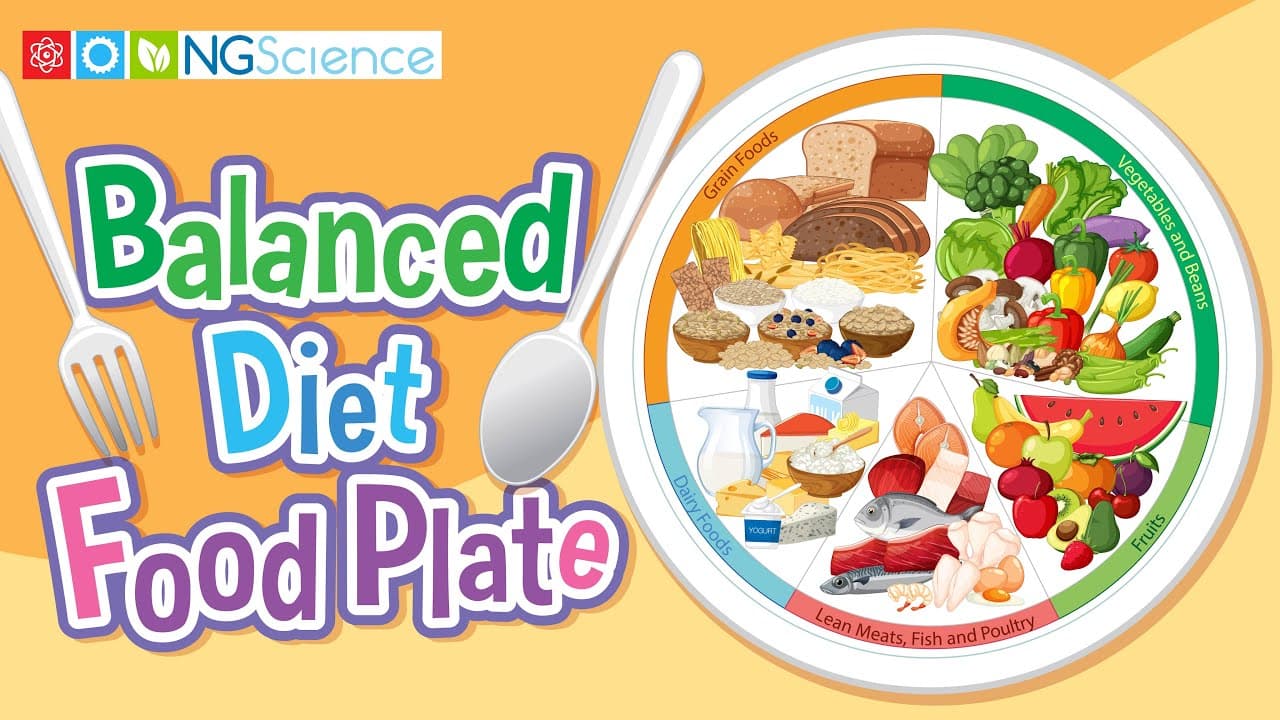
How to Build a Healthy Balanced Diet Plate

How to Build a Healthy Balanced Diet Plate

This educational video provides a clear and practical guide to understanding nutrition through the concept of the Balanced Diet Food Plate. It breaks down the abstract idea of a "balanced diet" into concrete visual representations, explaining that healthy eating means consuming the right types of food in the right amounts. The video uses a segmented plate diagram to visually demonstrate the proportions of different food groups—grains, vegetables and beans, fruits, proteins (meats/fish), and dairy—needed for optimal health. The content systematically explores each section of the food plate, offering specific examples of foods within each category (like whole wheat bread for grains or salmon for proteins) and their nutritional benefits (carbohydrates for energy, calcium for bones). It also provides tangible serving size guidelines, often using easy-to-understand comparisons like "the size of your palm" or specific measurements like "half a cup." Crucially, the video addresses hydration and the role of healthy oils, ensuring a holistic view of nutrition. For educators, this video serves as an excellent foundational tool for health and science units. It simplifies complex nutritional guidelines into an actionable model that students can apply to their daily lives. Teachers can use it to spark discussions about personal eating habits, menu planning, and the biological functions of different nutrients. Its visual approach makes it particularly effective for helping students visualize portion control and variety without needing complex calorie counting.

Next Generation ScienceNext Generation Science

4mins 3s

Materials

Adulting Celebration Chart 2 Player Final Fix 2

Adulting Celebration Chart 2 Player Final Fix 2

The ultimate compact version of the Adulting Celebration Chart with ultra-reduced line spacing and minimal vertical gaps. It utilizes tiny icons, condensed font sizes, and tight leading to provide a high-density workplace tracking experience that fits multiple players and comprehensive metrics in a single printable view. It moves metric descriptions inline to save vertical space.

SM

Shelley Morgan

Gym Ready Syllabus Slides

Gym Ready Syllabus Slides

A vibrant, visually engaging slide presentation tailored for Kindergarten and 1st Grade Health and Fitness classes, featuring simplified language, clear pictorial cues, Ms. Byndon's gym entry and exit routines, whistle signals, and positive behavior rewards.

N

nbyndon

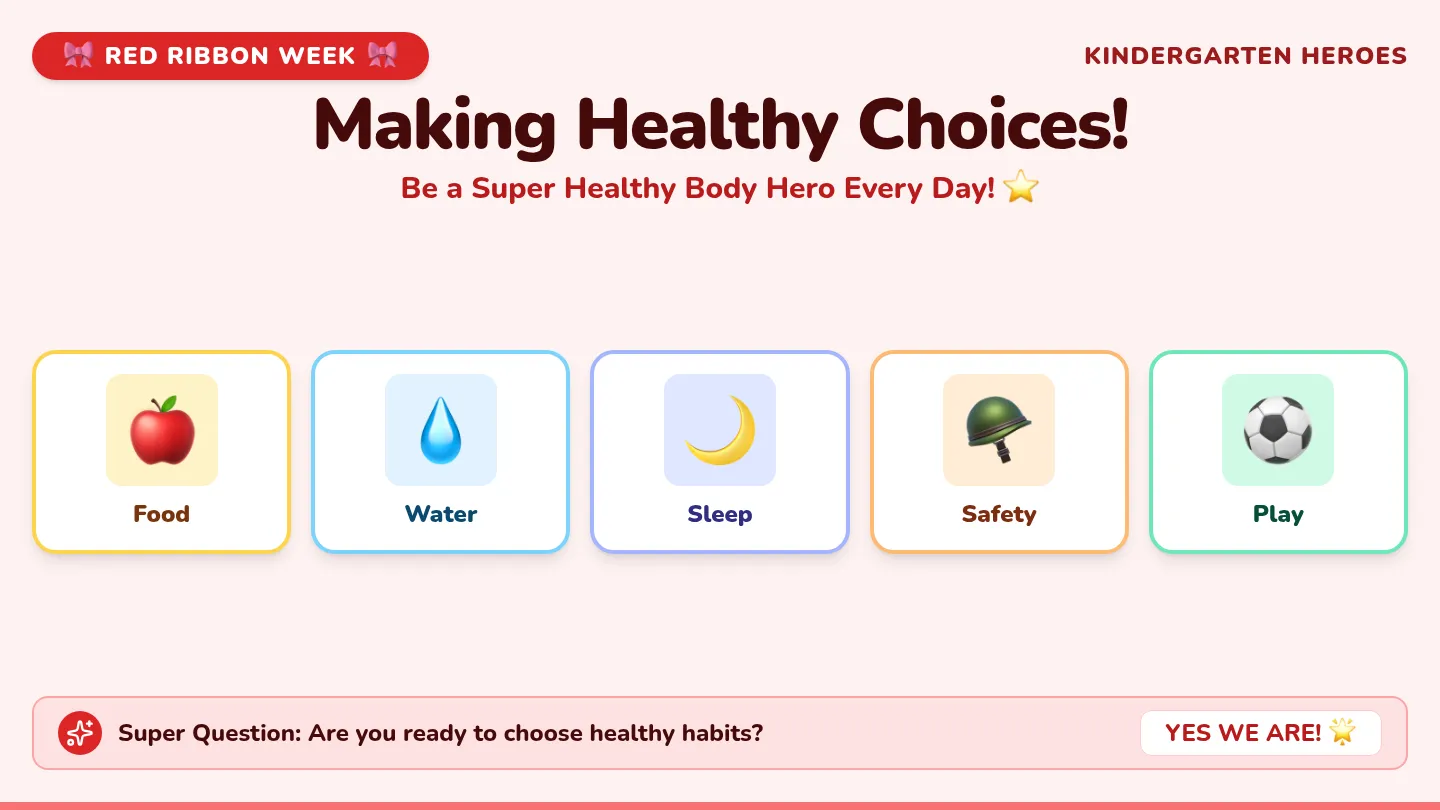
Healthy Choices Slides

Healthy Choices Slides

A 6-slide kindergarten presentation for Red Ribbon Week on making healthy choices, featuring a celebratory title slide followed by giant visual slides for food (with blueberries), water, sleep, transportation safety gear, and active play.

IN

I needRosa Vazquez

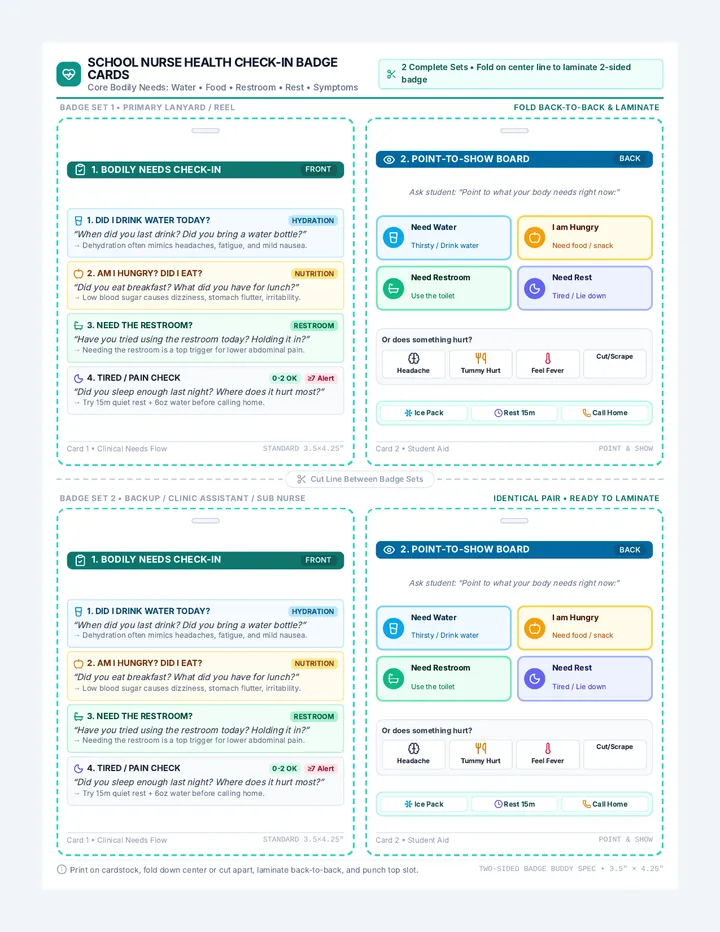
Health Check-In Badge Checklist

Health Check-In Badge Checklist

A print-and-laminate school nurse badge checklist focused on core bodily check-in prompts: drinking water, hunger and food intake, restroom needs, rest, and symptom identification.

CS

Courtney Scherer

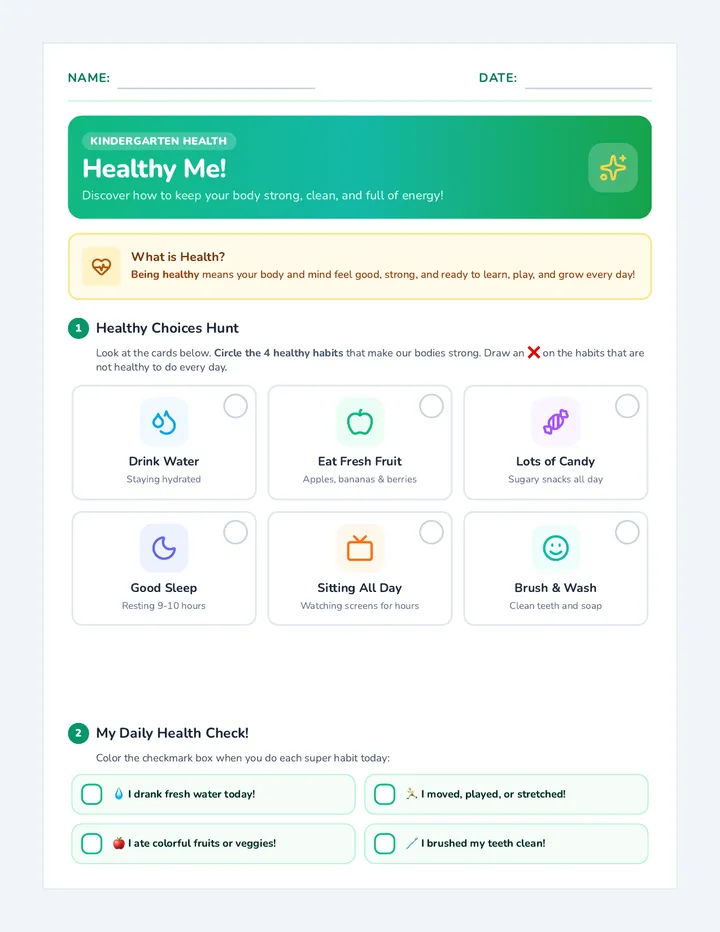
Healthy Me Worksheet

Healthy Me Worksheet

A 2-page print-ready Kindergarten and 1st Grade worksheet exploring the fundamentals of health, including physical habits, nutrition, hygiene, emotional well-being, and a guided draw-and-write reflection.

S

SD

Elegance Care Tracker

Elegance Care Tracker

A beautifully designed, feminine, and elegant weekly self-care routine tracker in Arabic. Features organized sections for face routine, AM/PM body care, weekly water intake, and personal notes in pastel pink tones with optimized, highly legible font sizes.

YA

Yara Alqwaizani

Sequences

Summer Safety Hero Slides

Summer Safety Academy

A multi-grade social-emotional learning unit focused on 'Summer Safety Heroes'. Lessons are tailored for different developmental levels, from 1st-grade foundations to 3rd-grade scientific mastery and risk management.

HM

Heidi Moore

26
Safety Squad Teacher Guide

Kitchen Heroes Academy

A 12-week introductory cooking curriculum for elementary students focusing on safety, nutrition, and the emotional connection to food.

CC

Chara C.

74
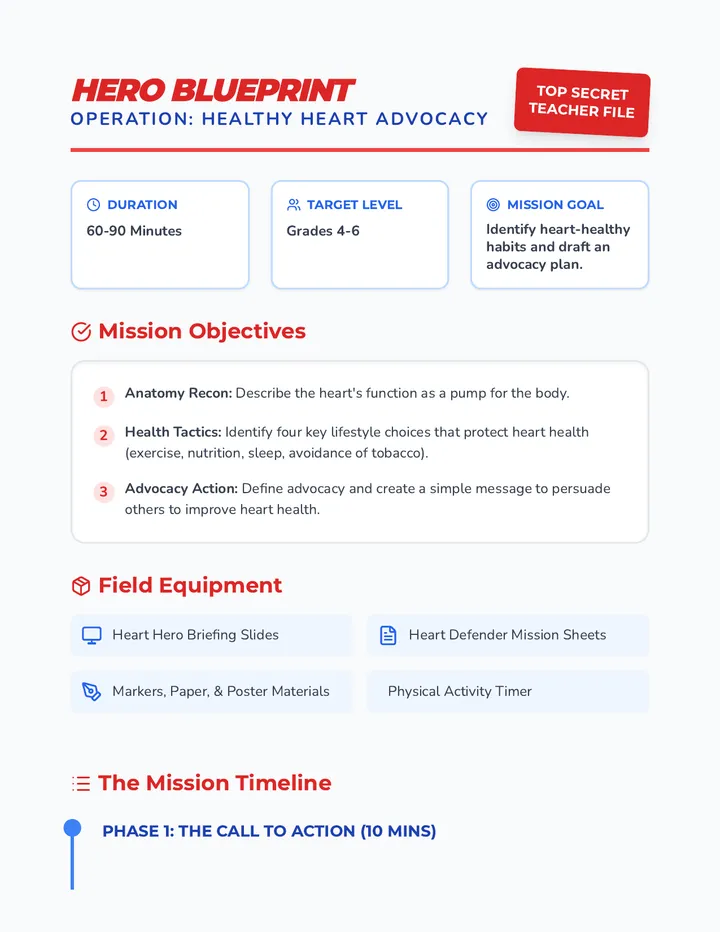
Hero Blueprint Lesson Plan

Heart Hero HQ

A comprehensive lesson sequence designed to empower students to become 'Heart Heroes' through education and advocacy for cardiovascular health.

KB

Kelly Brown

6
Heart Smarts Teacher Guide

Blueprint for Balance

A three-part developmental series exploring Emotional Intelligence and its role within the four dimensions of holistic health: physical, emotional, social, and spiritual.

KG

Kate Goodwin

19
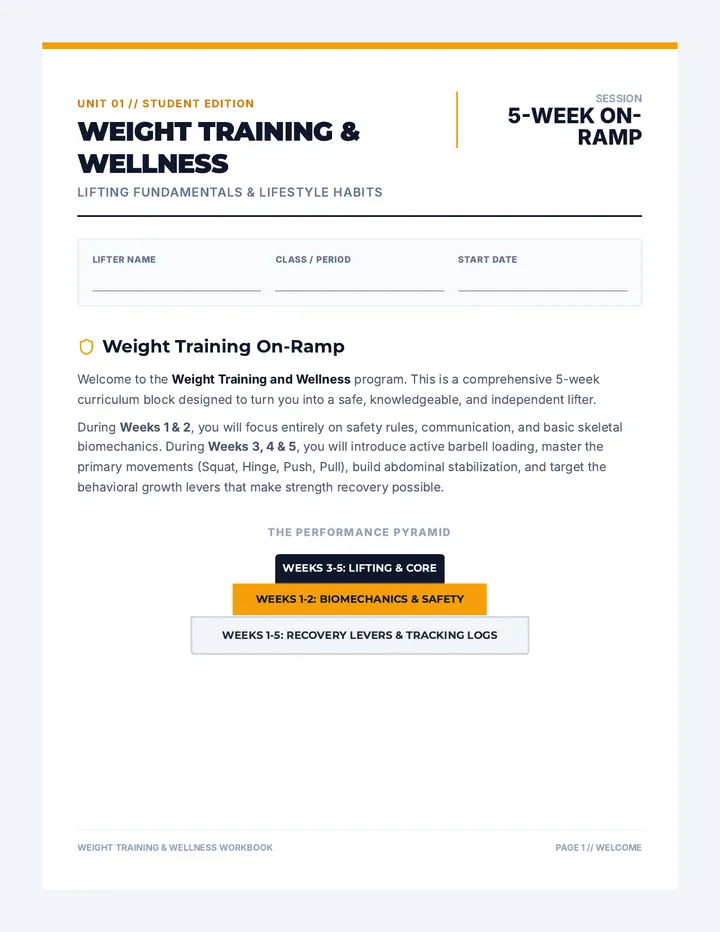
Weight Training and Wellness Student Workbook

On Ramp

A robust 2-week introductory curriculum sequence detailing strength training benefits, basic muscle anatomy, how muscles produce movement, movement patterns, compound vs. isolation exercises, and essential resistance training vocabulary.

RD

Rebecca Del Nigro

3
Snack Science Slides

Body Fuel Lab

A functional nutritional science sequence for high school Essential Skills classrooms, teaching healthy eating, meal planning, hydration, and grocery shopping through visual guides, hands-on games, and differentiated worksheets.

P

Patrick.Kelly

12