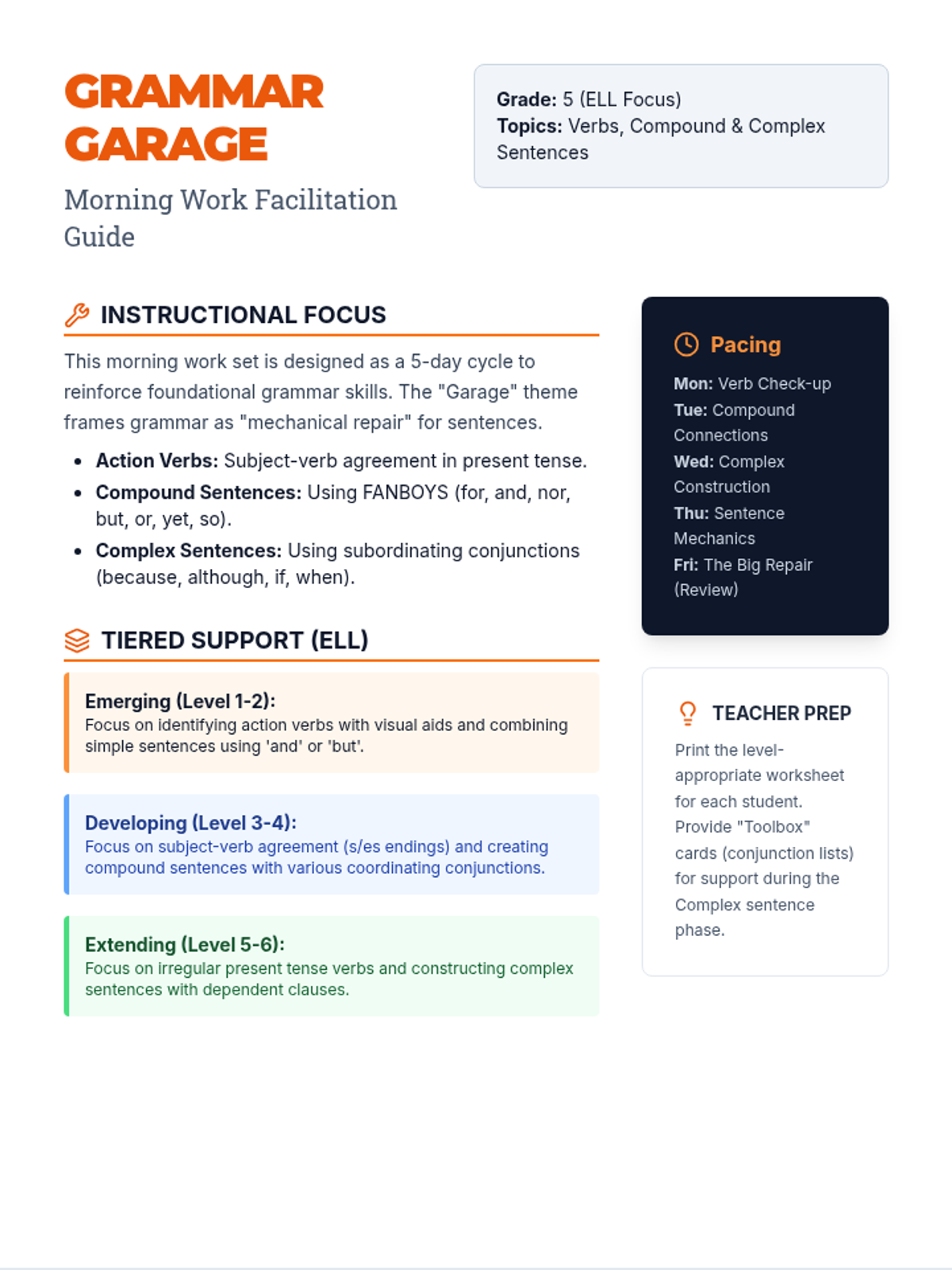
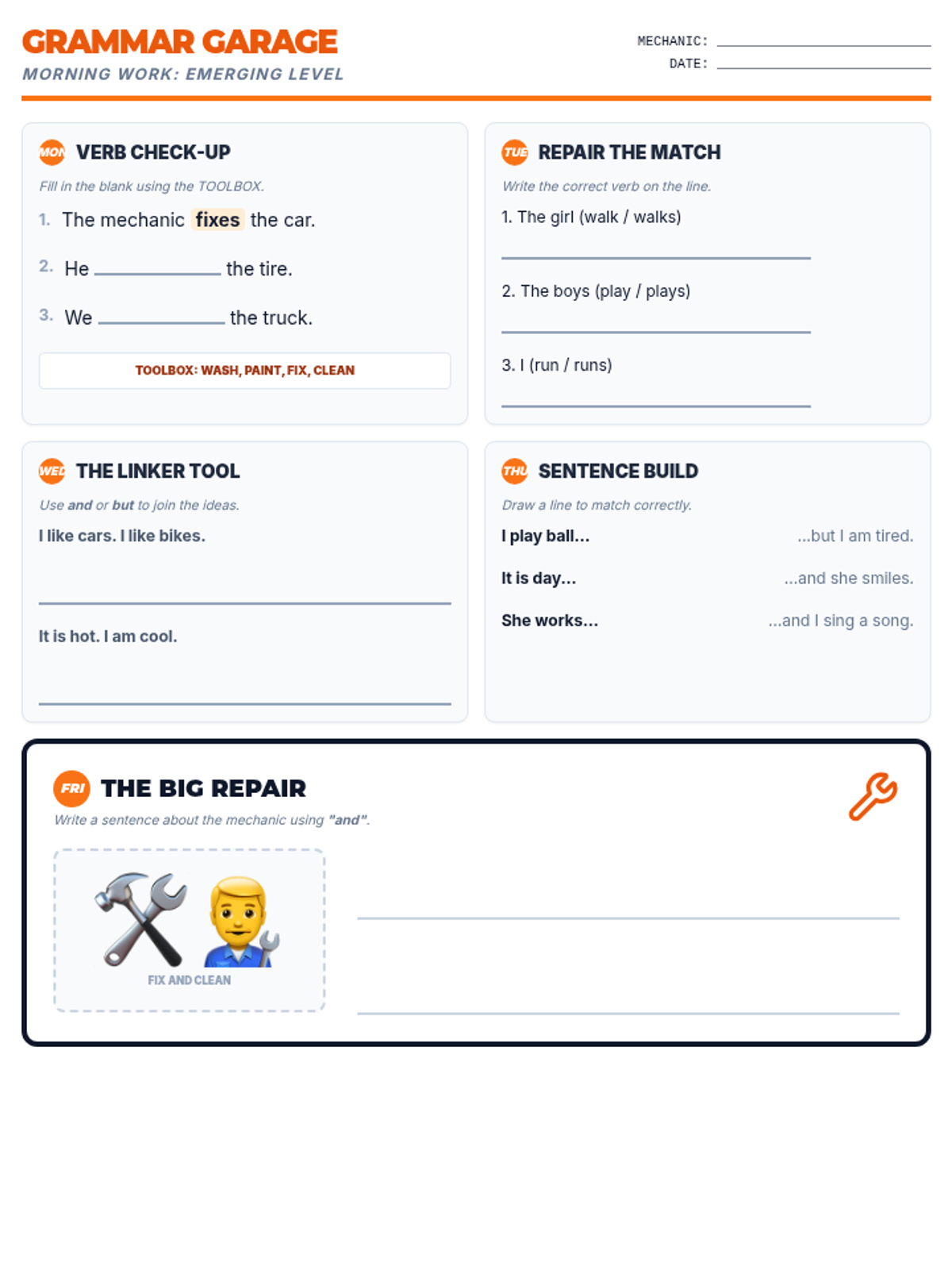
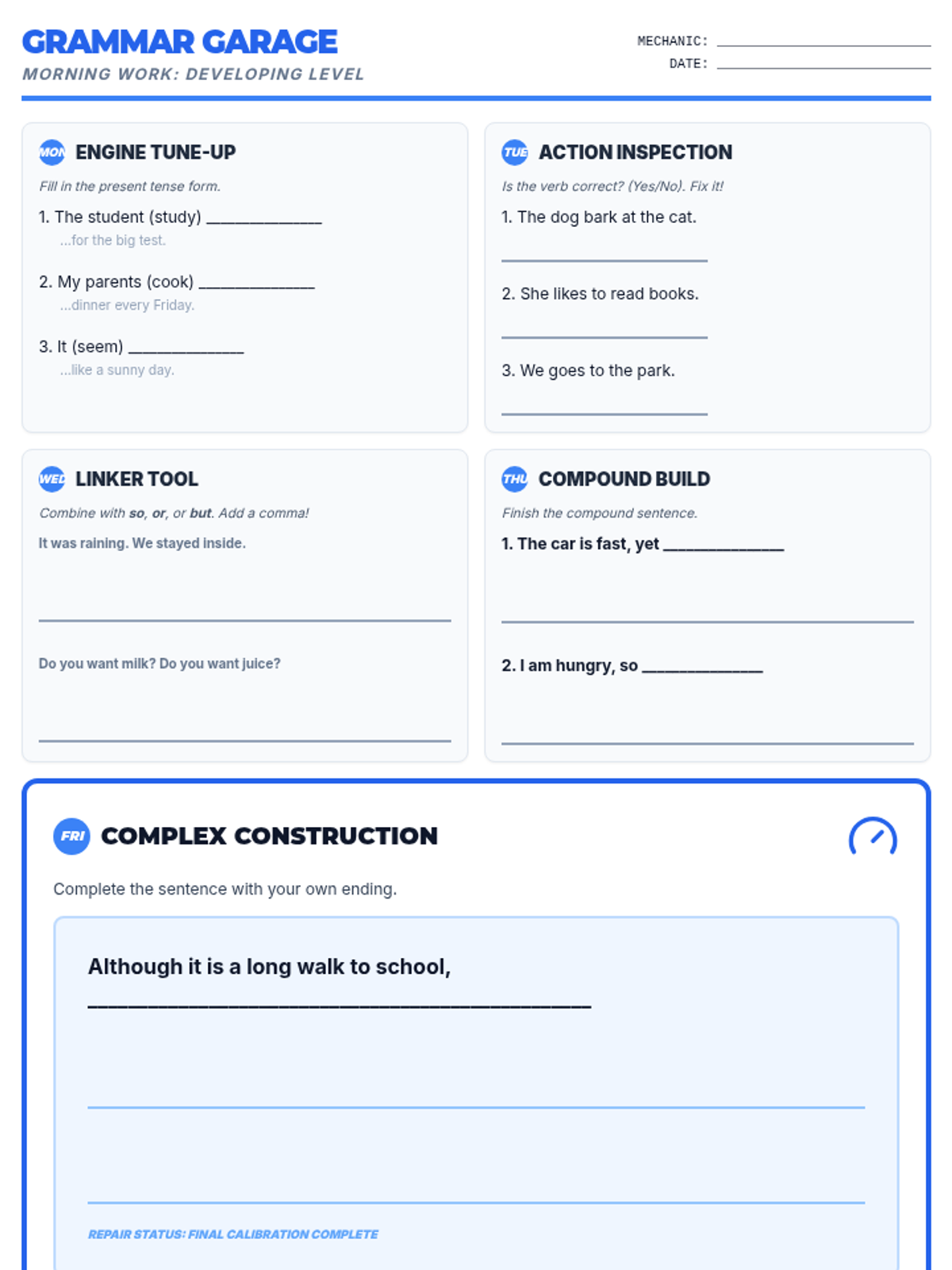
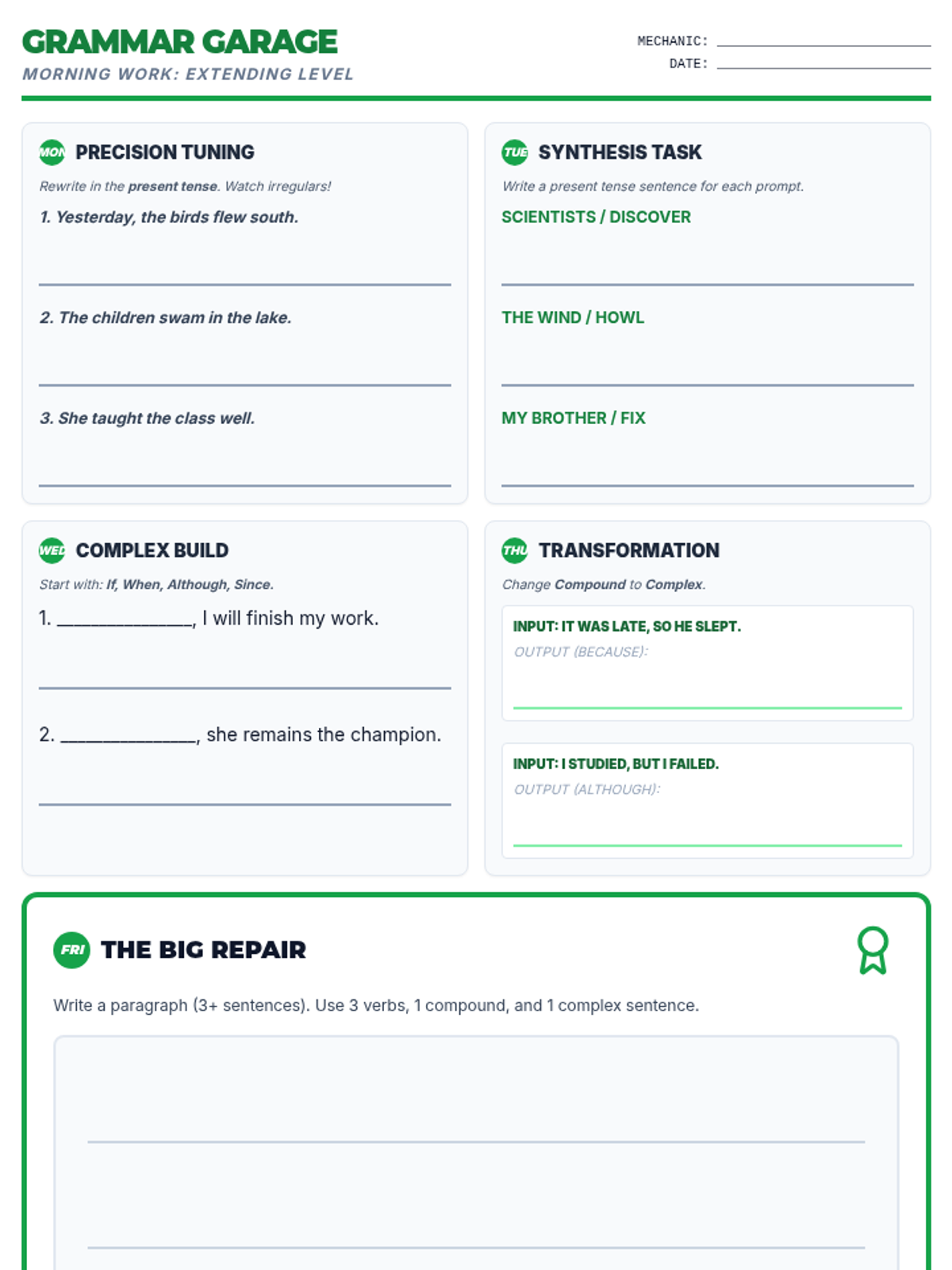
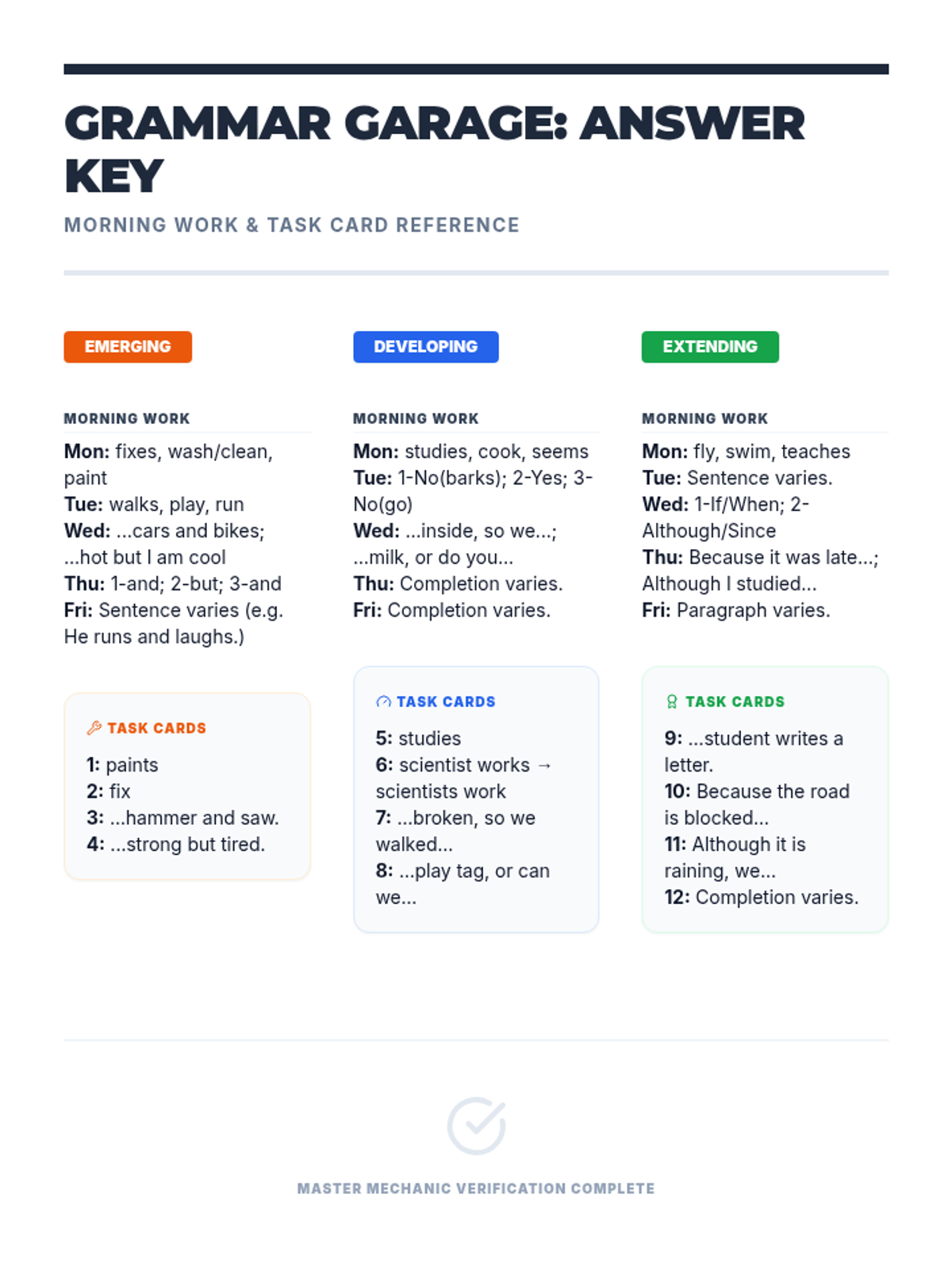
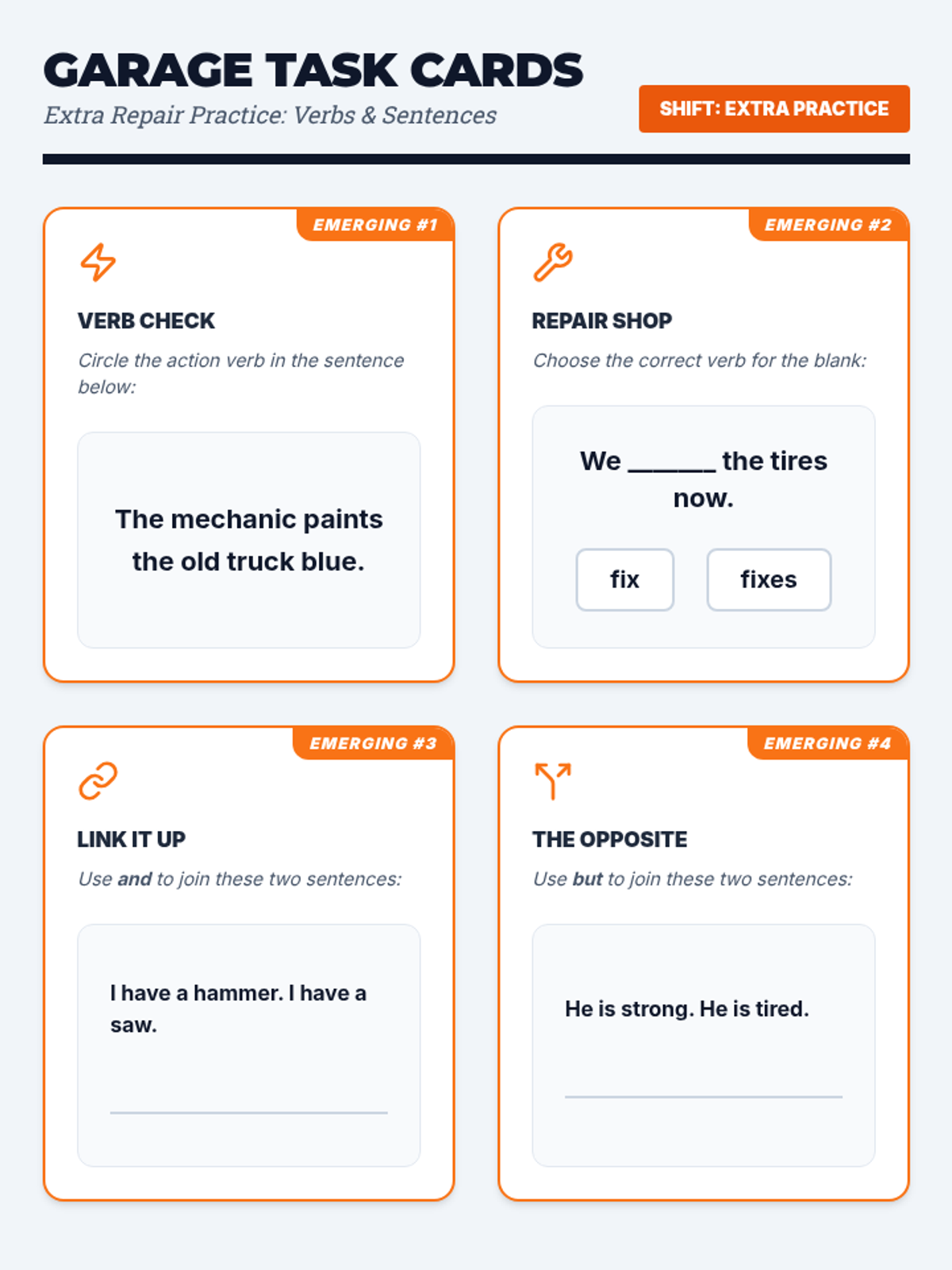
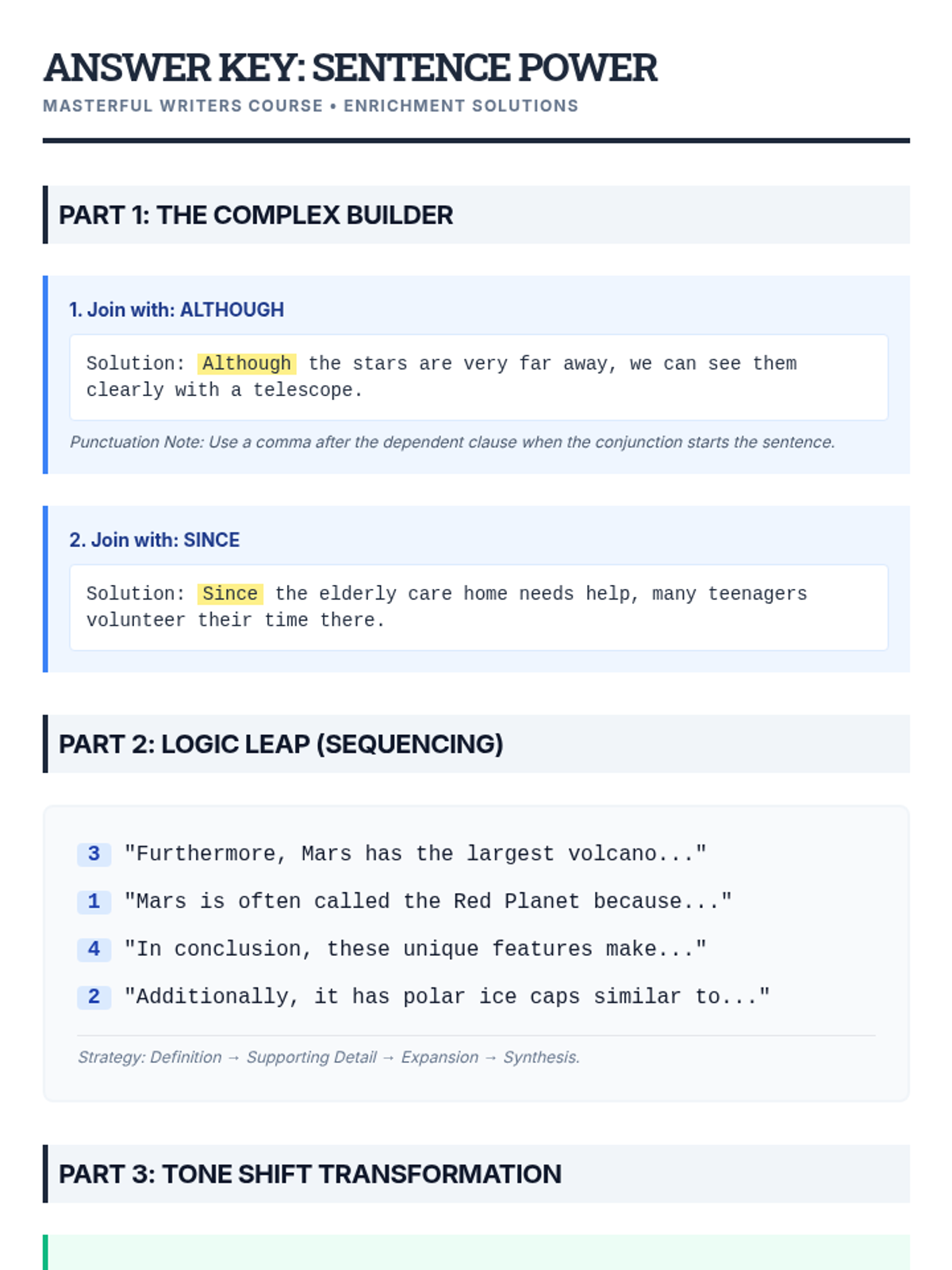
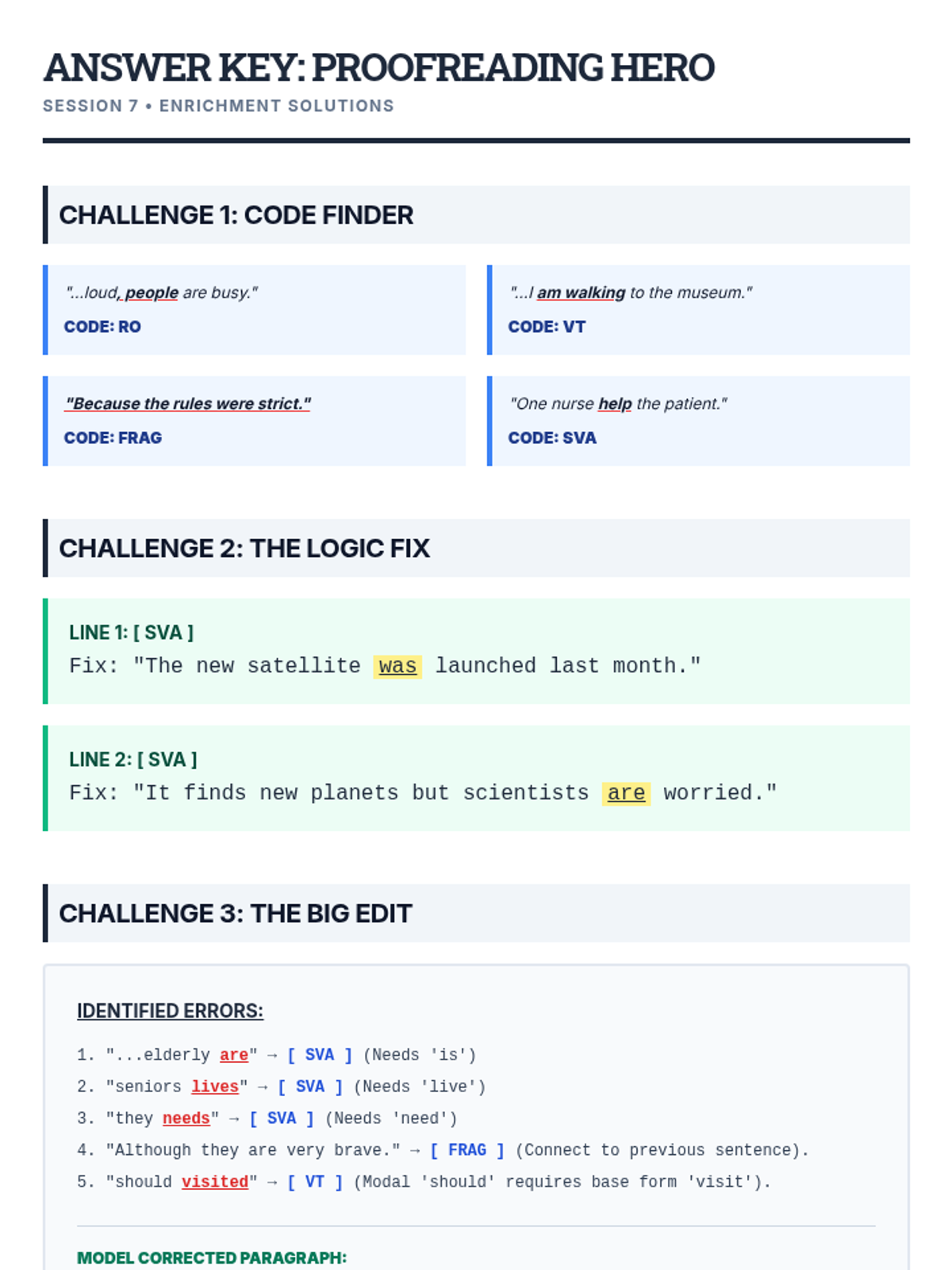
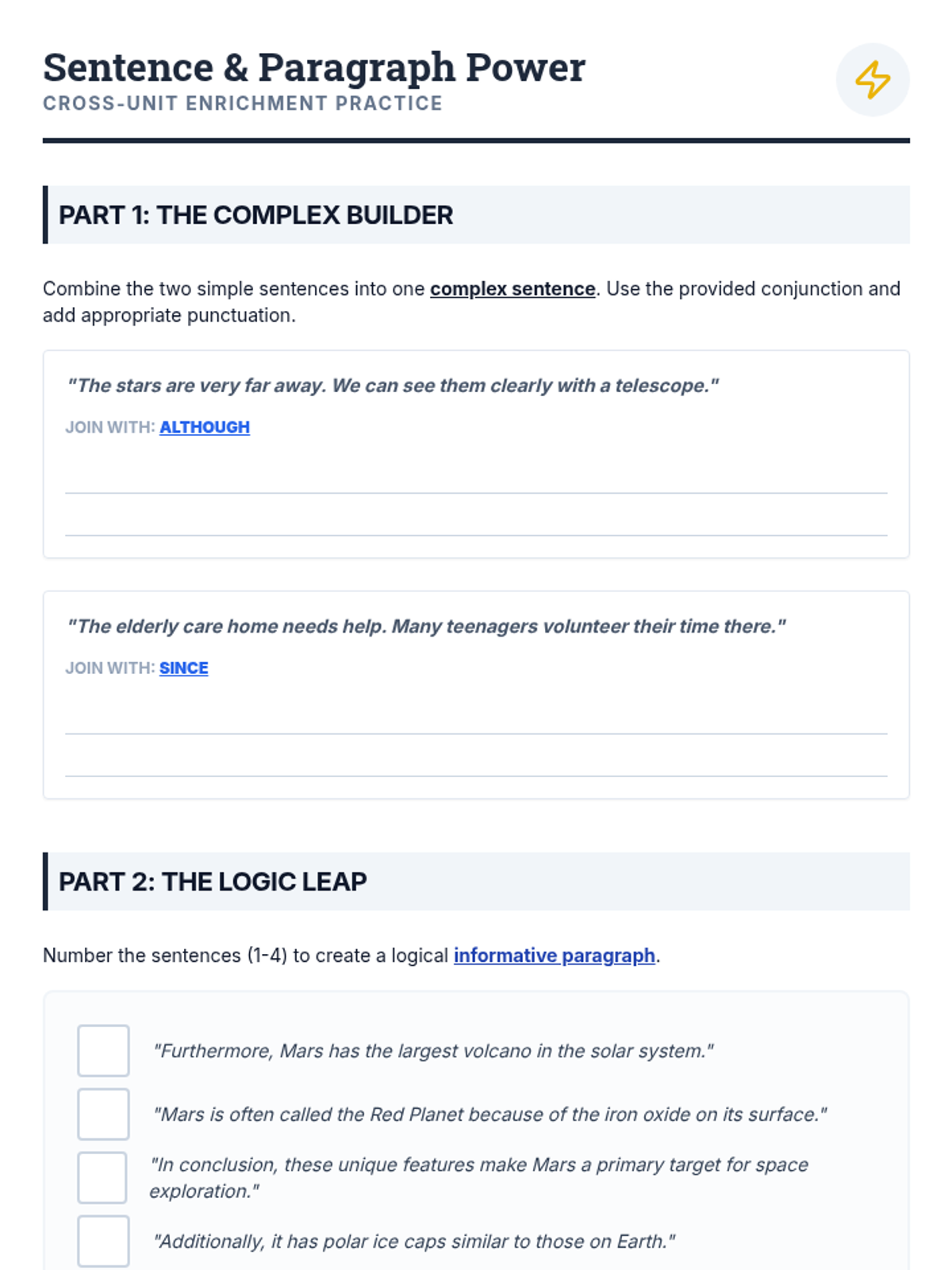
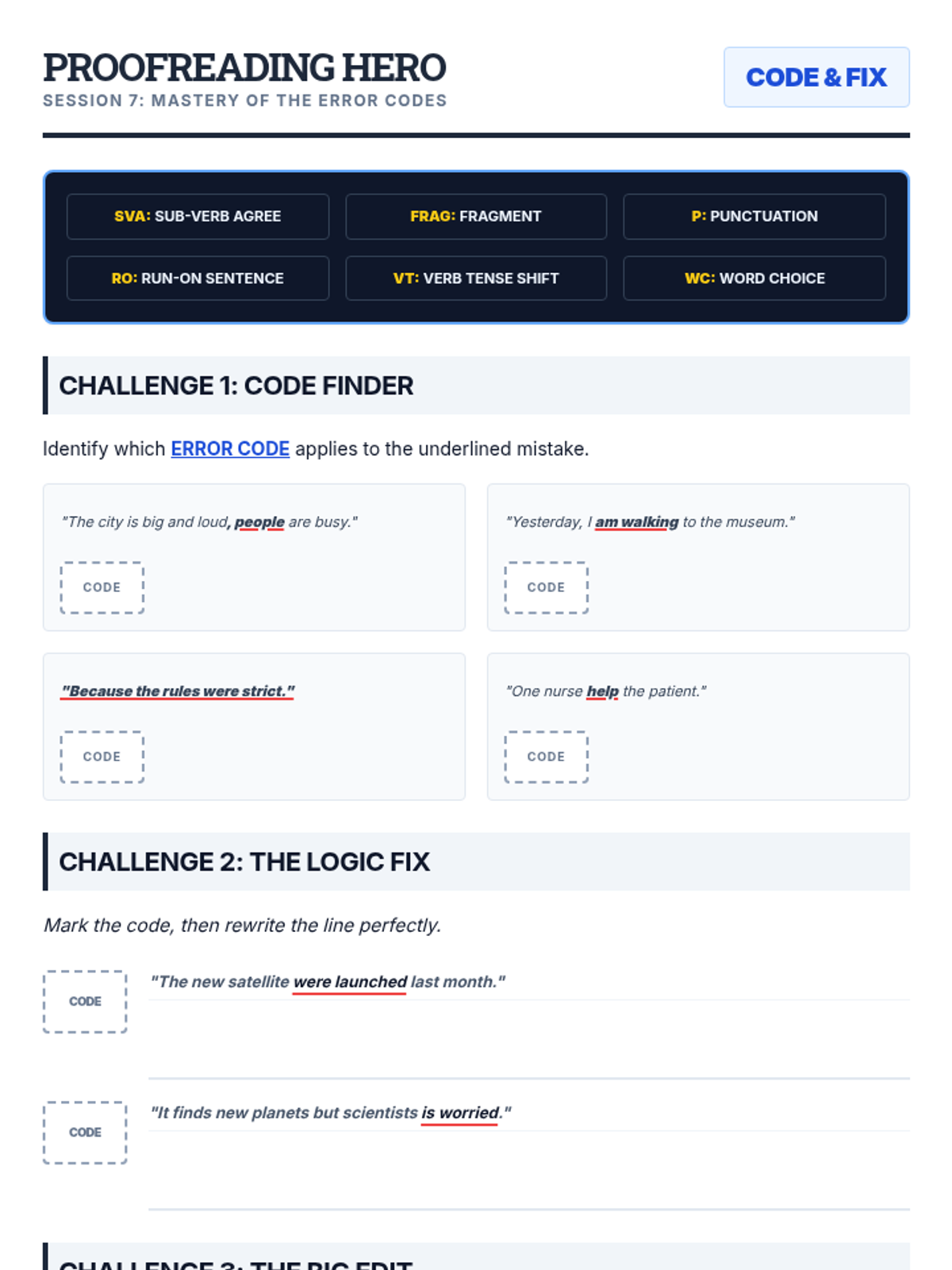
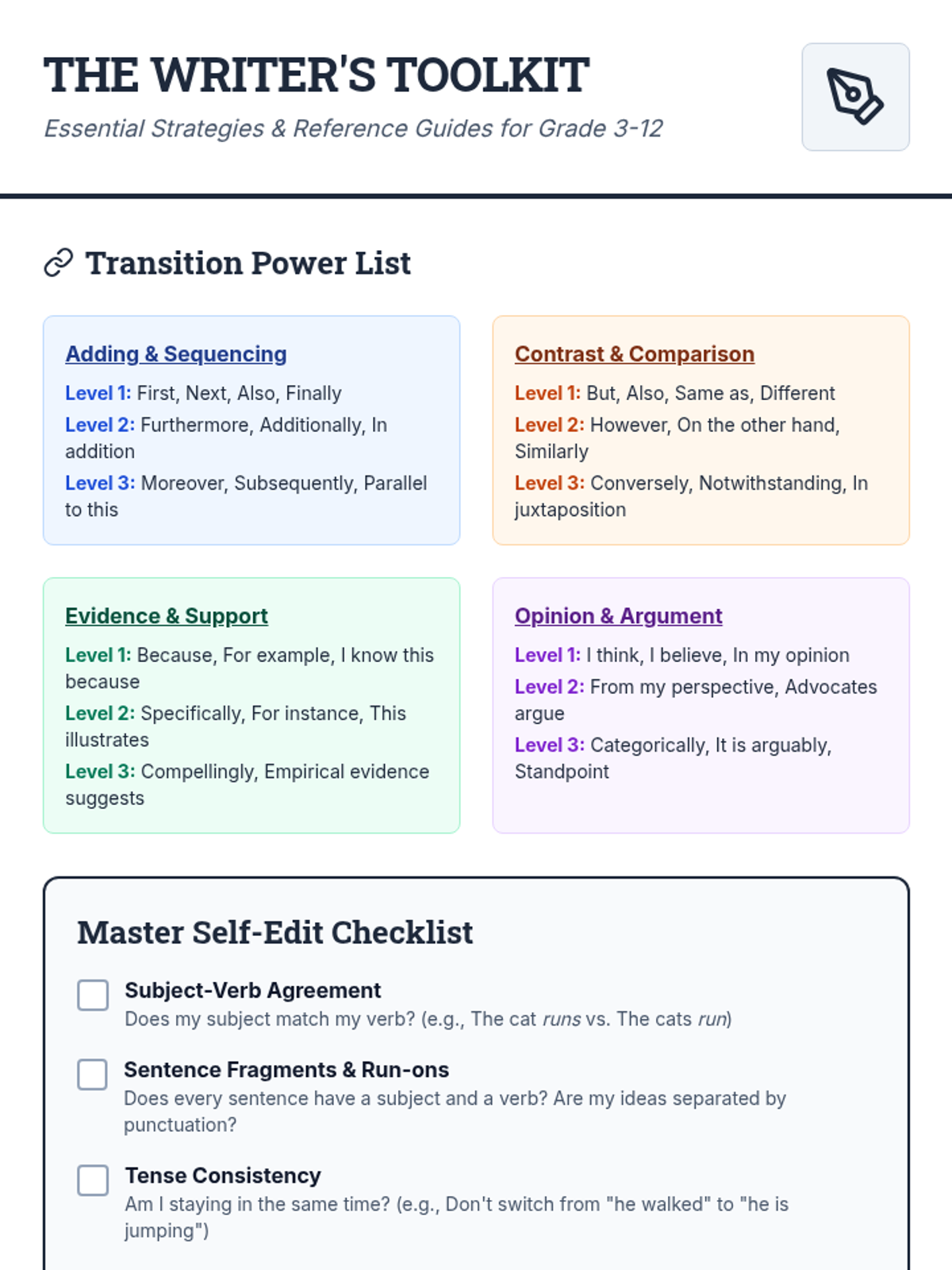
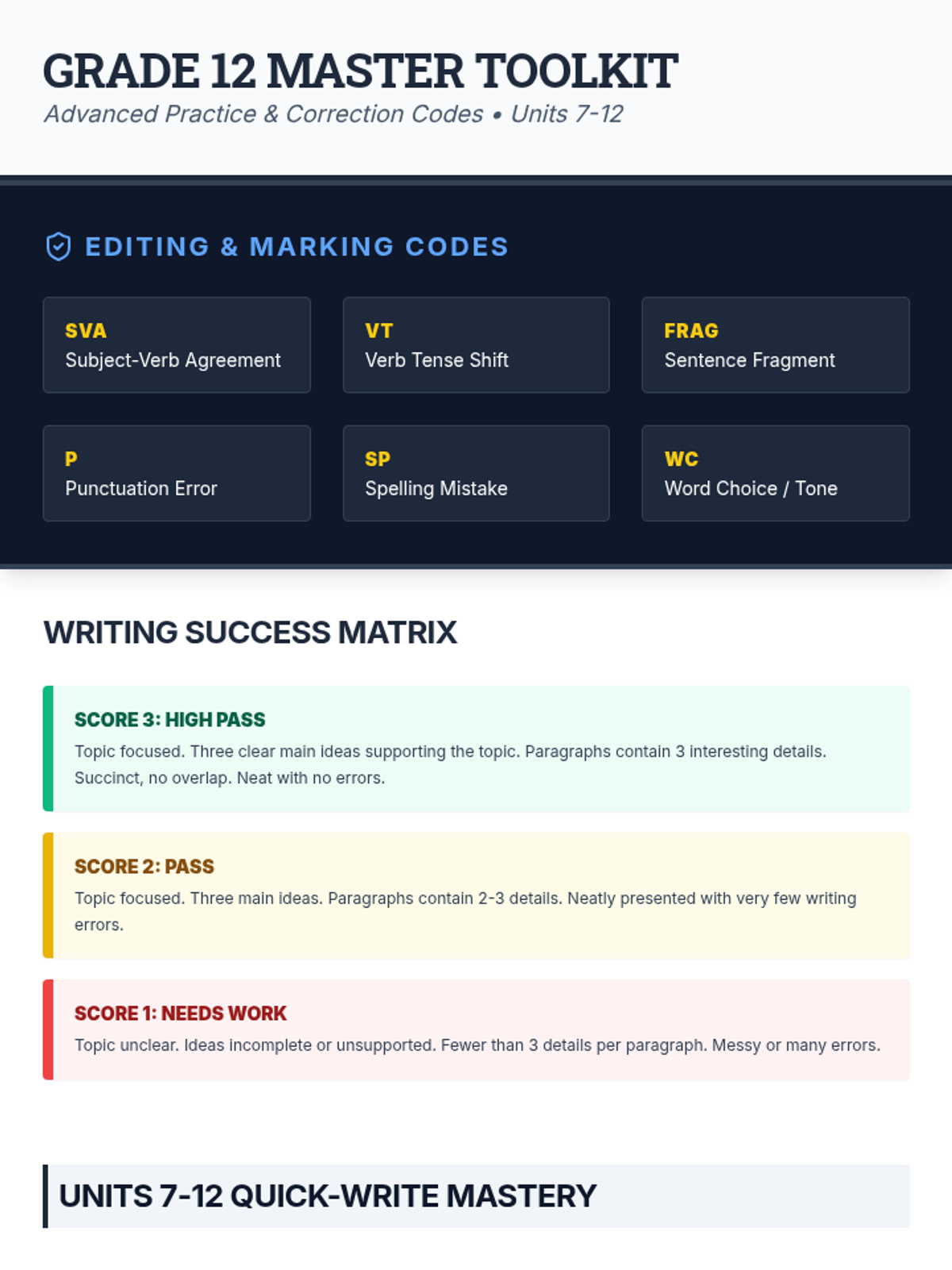
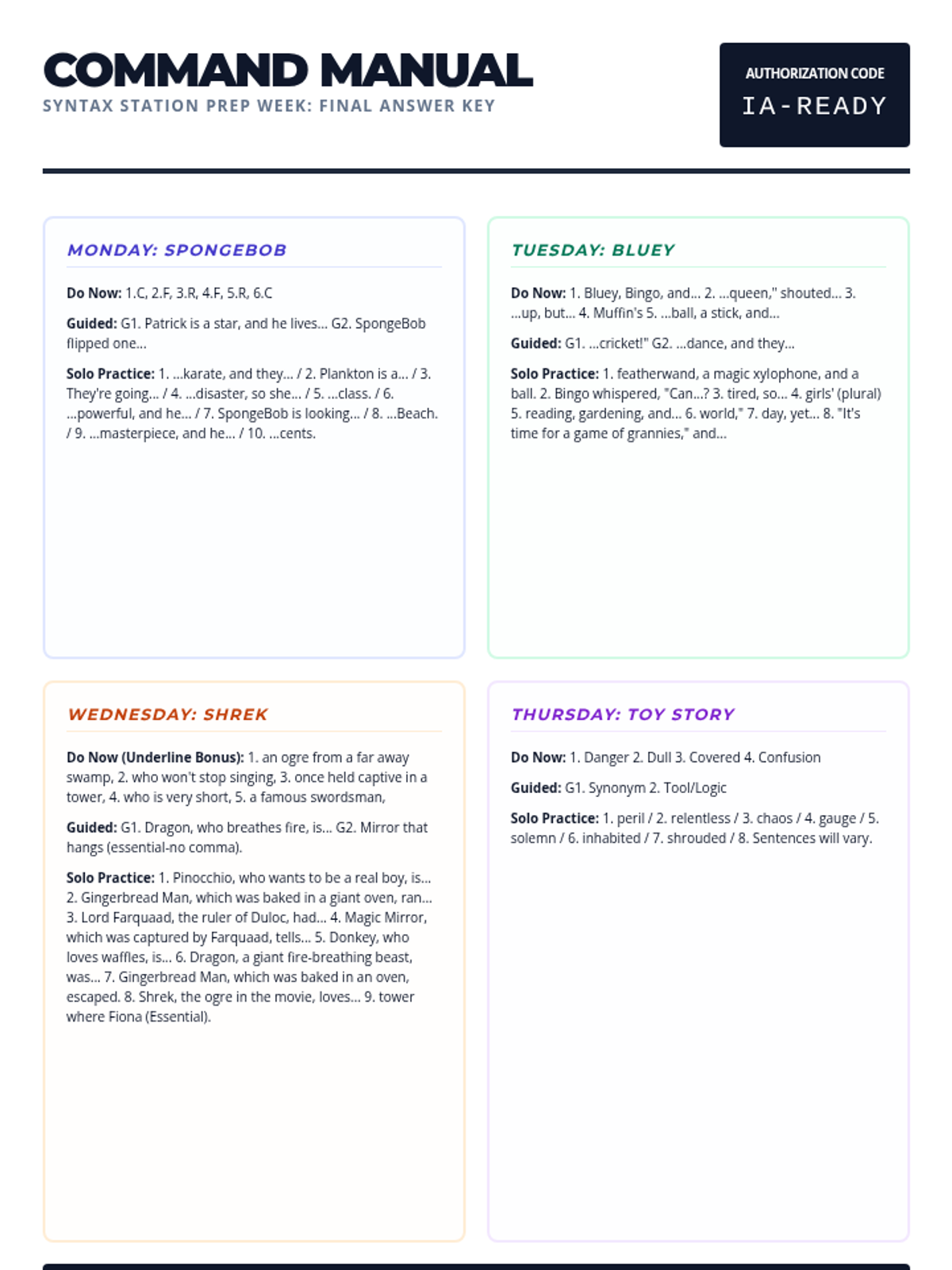
Sentence structure fundamentals, subject-verb agreement, and precise usage of parts of speech including pronouns, conjunctions, and adjectives. Targets technical accuracy through mastery of capitalization, punctuation, spelling, and verb mood.
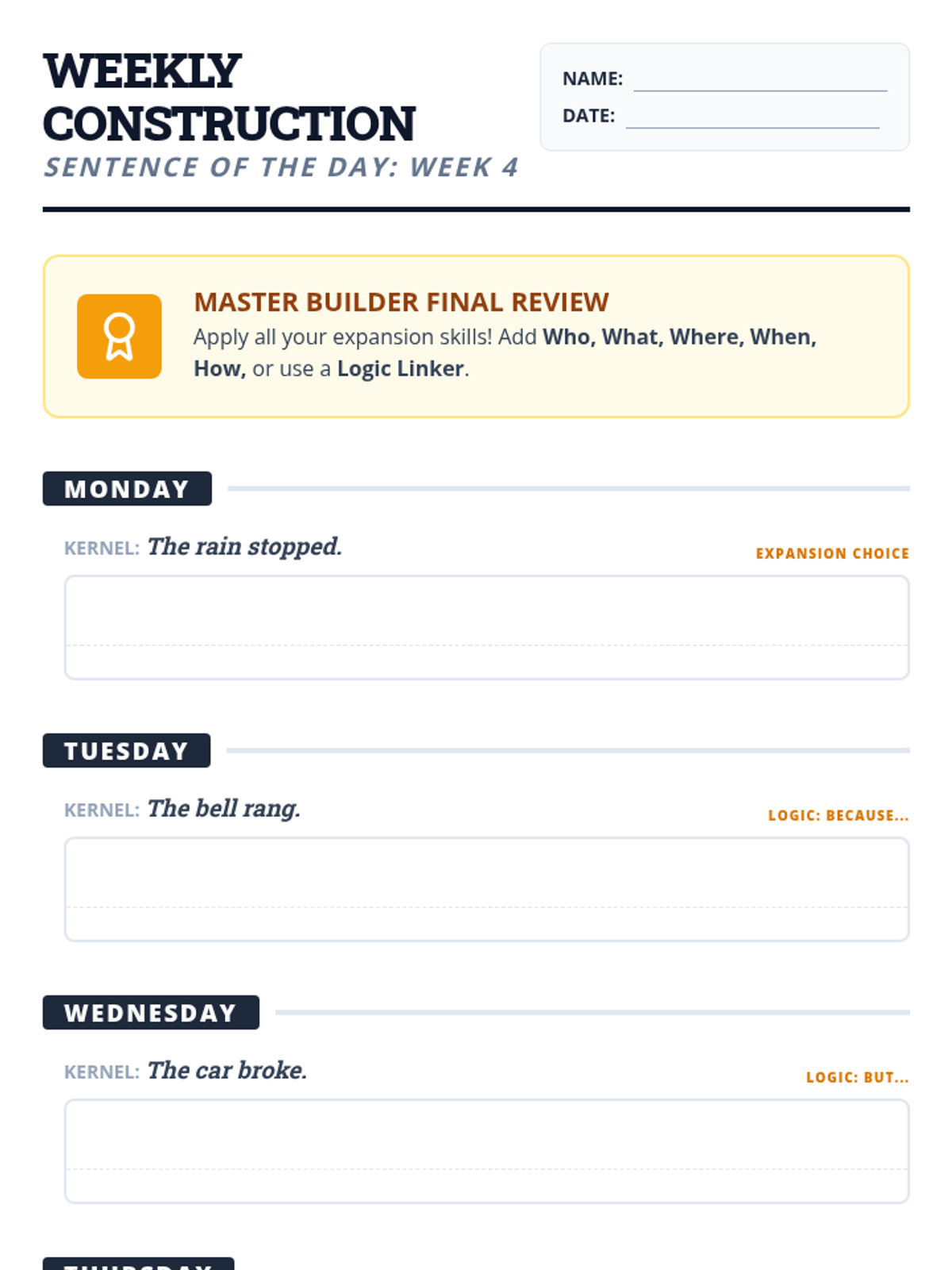
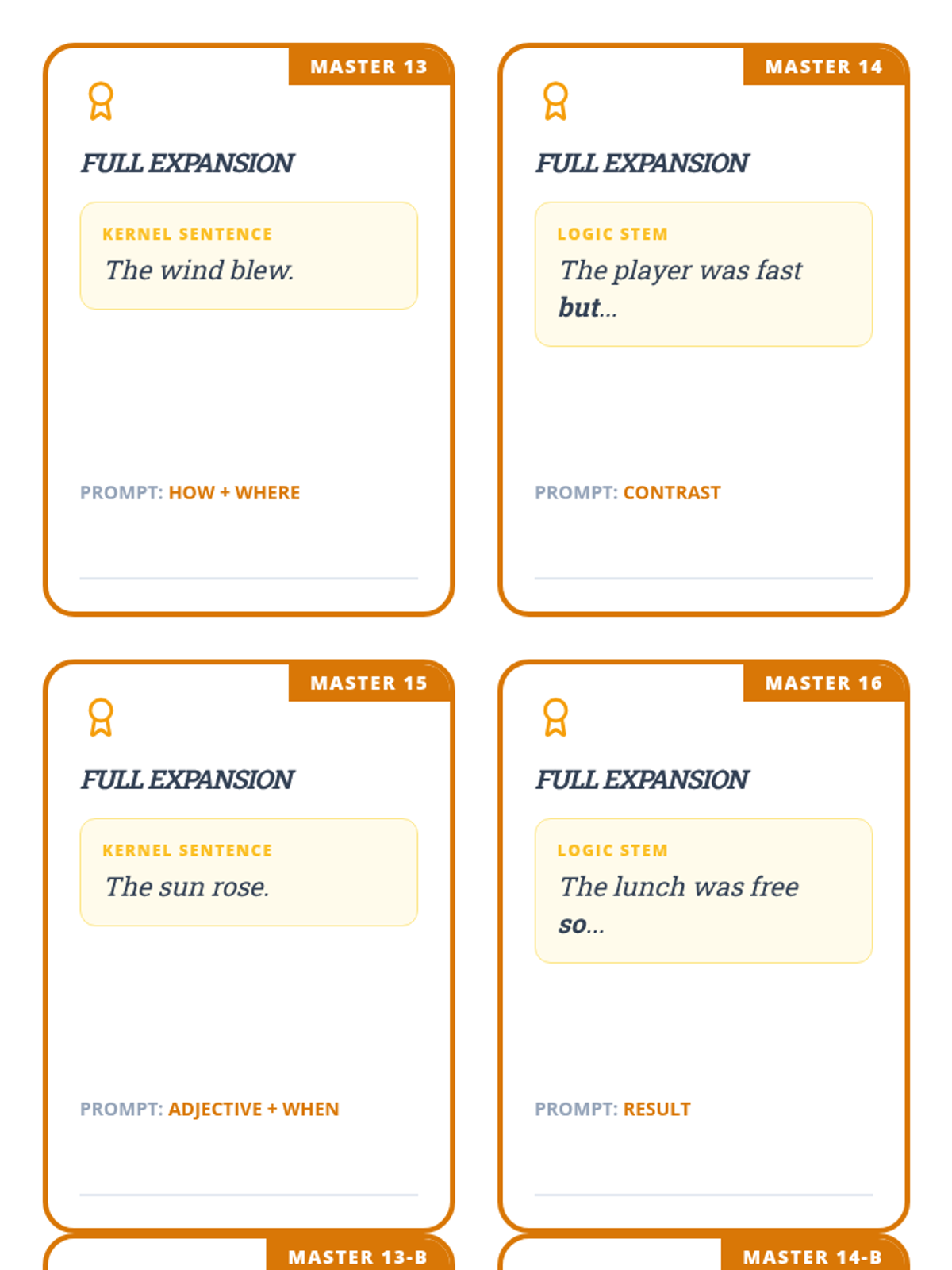
The final review lesson where students apply all previous strategies (adjectives, situational details, and logical conjunctions) to create complex and polished sentences.
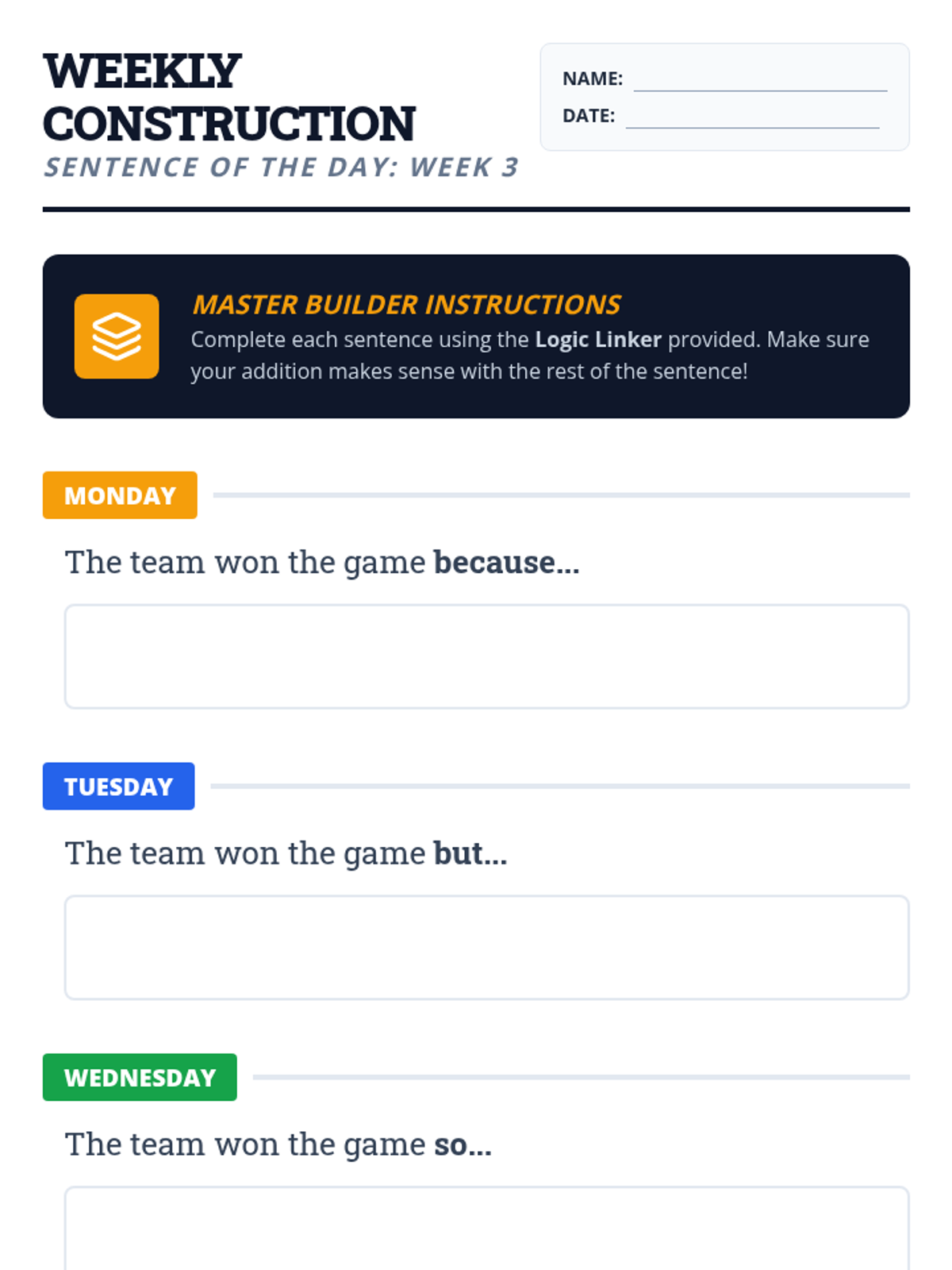
The final lesson focuses on using 'Because, But, So' to expand sentences logically and demonstrate deeper reasoning and detail.
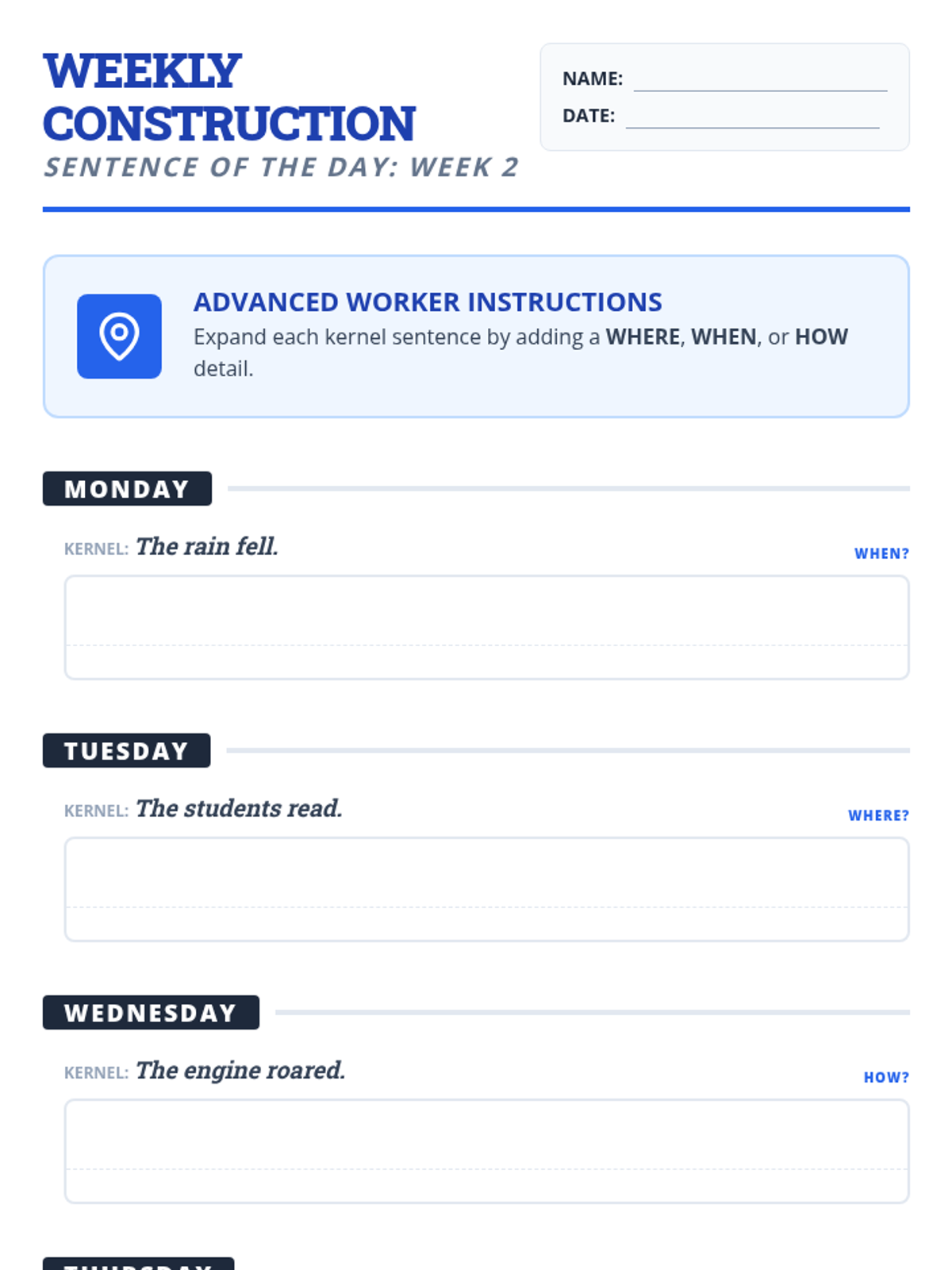
In this lesson, students learn to add situational details to their sentences using 'Where', 'When', and 'How' question words.
This lesson introduces the concept of a complete sentence versus a fragment and begins basic sentence expansion using 'Who' and 'What' details.
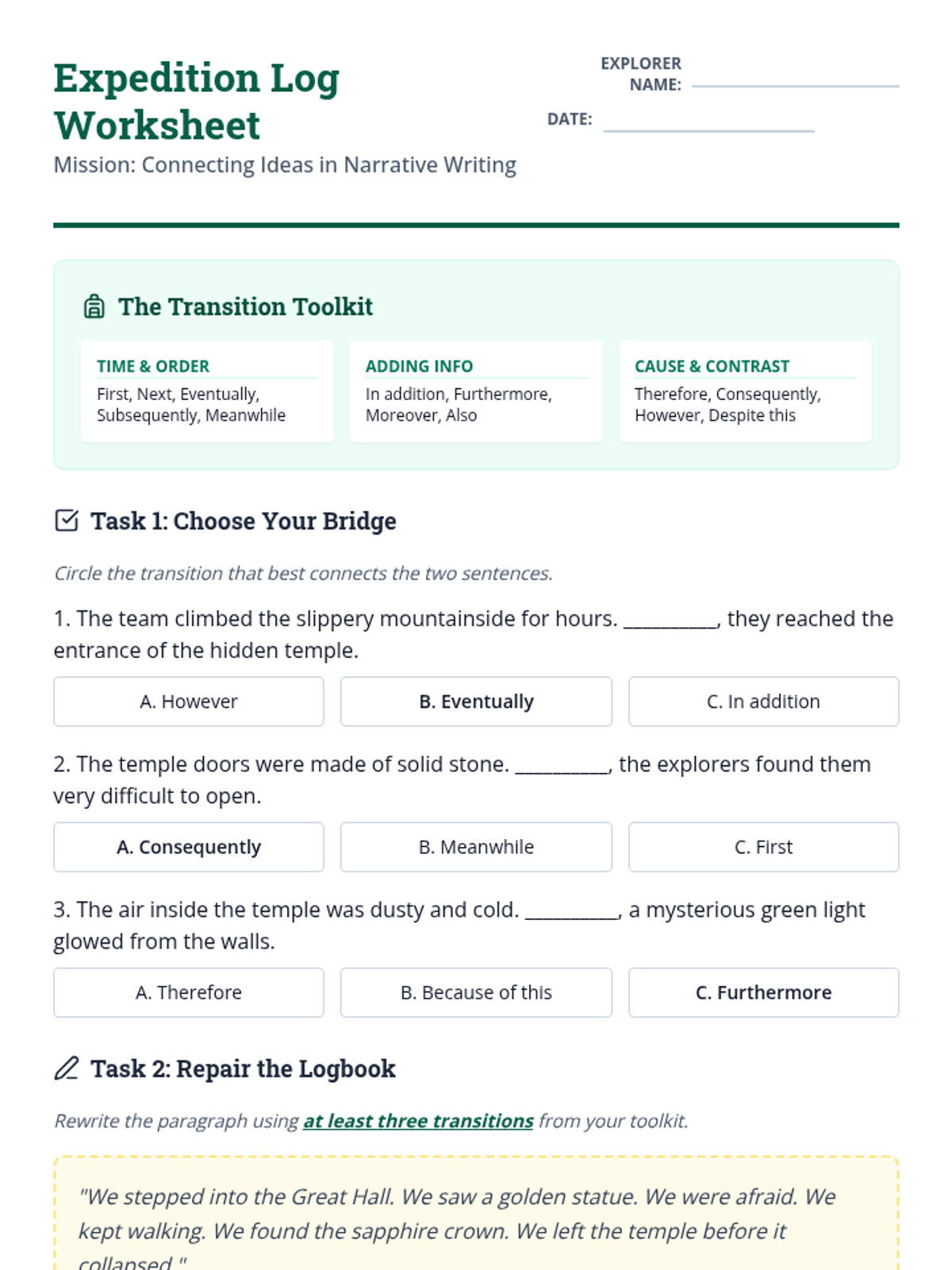
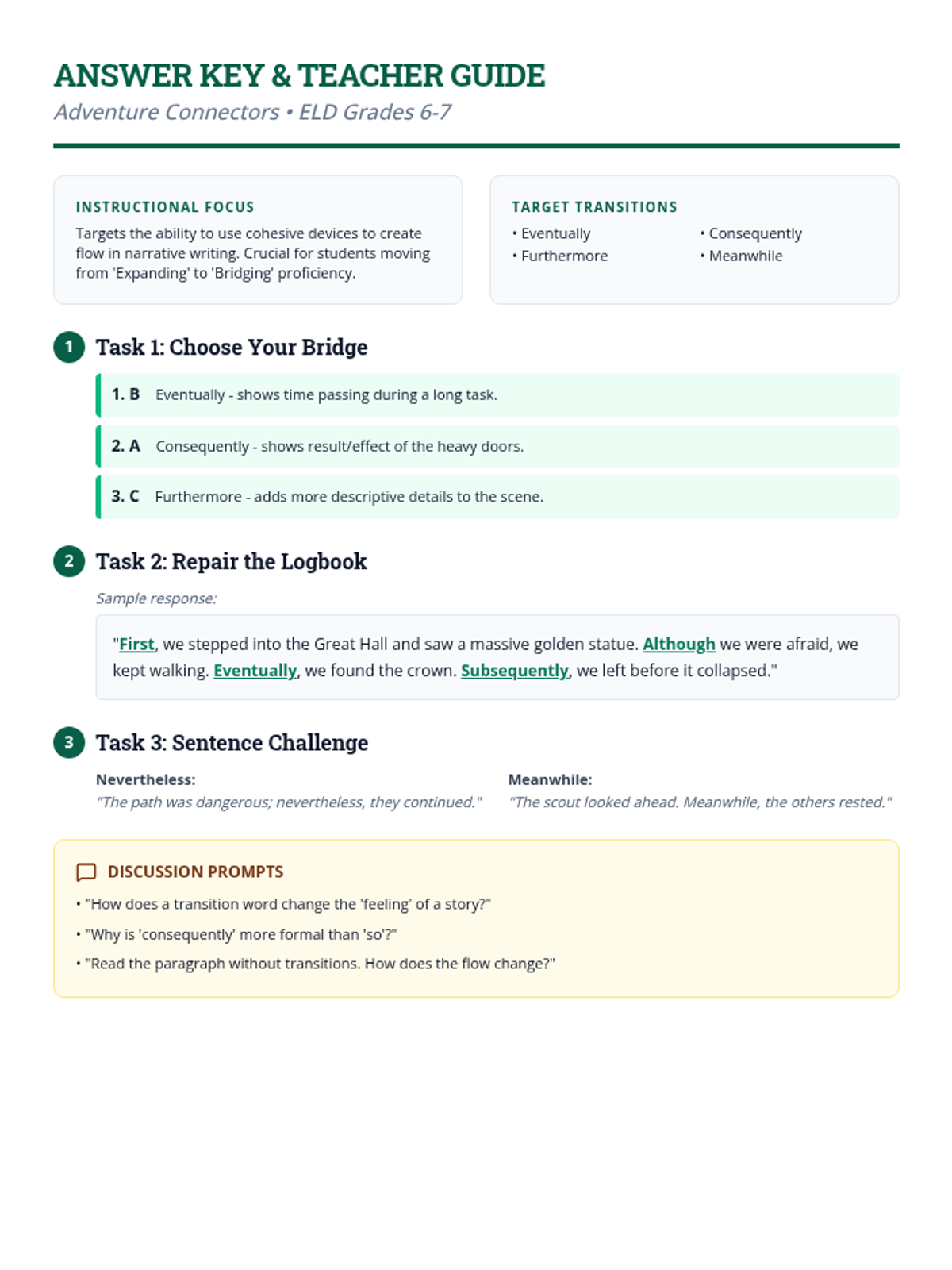
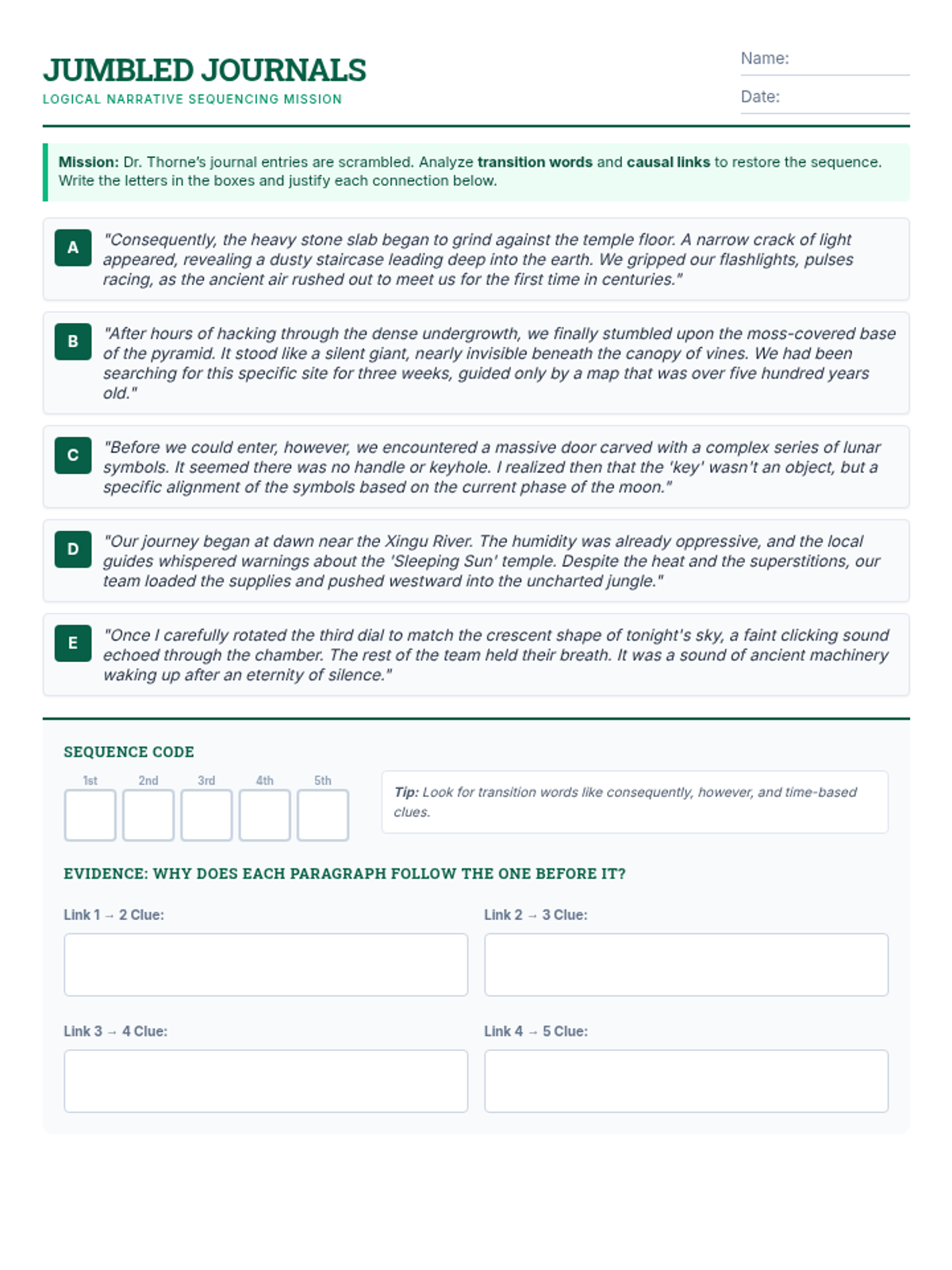
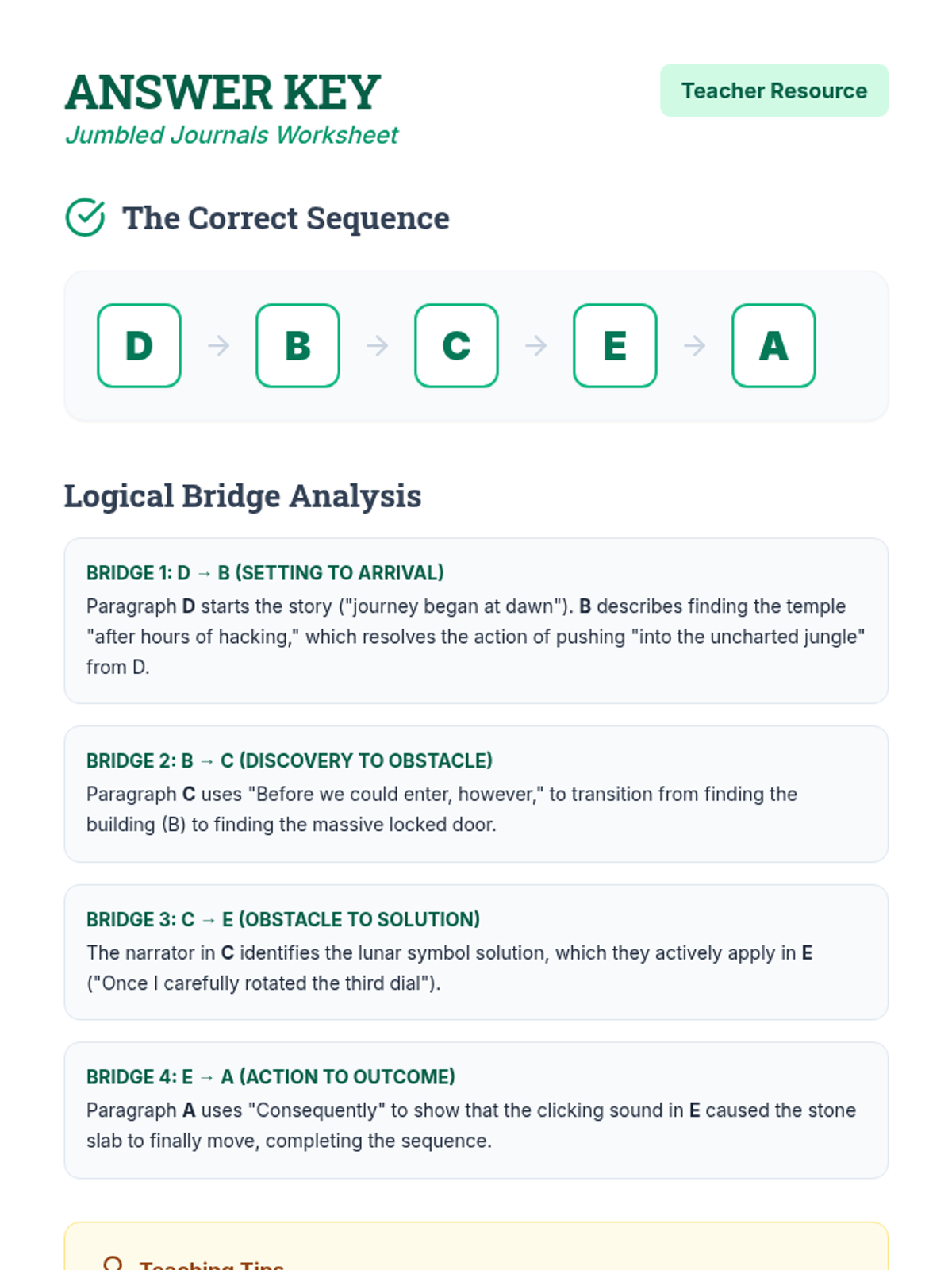
In this lesson, students learn to use transitional phrases (e.g., 'subsequently', 'nevertheless', 'consequently') to connect ideas in a narrative about exploring a hidden temple.
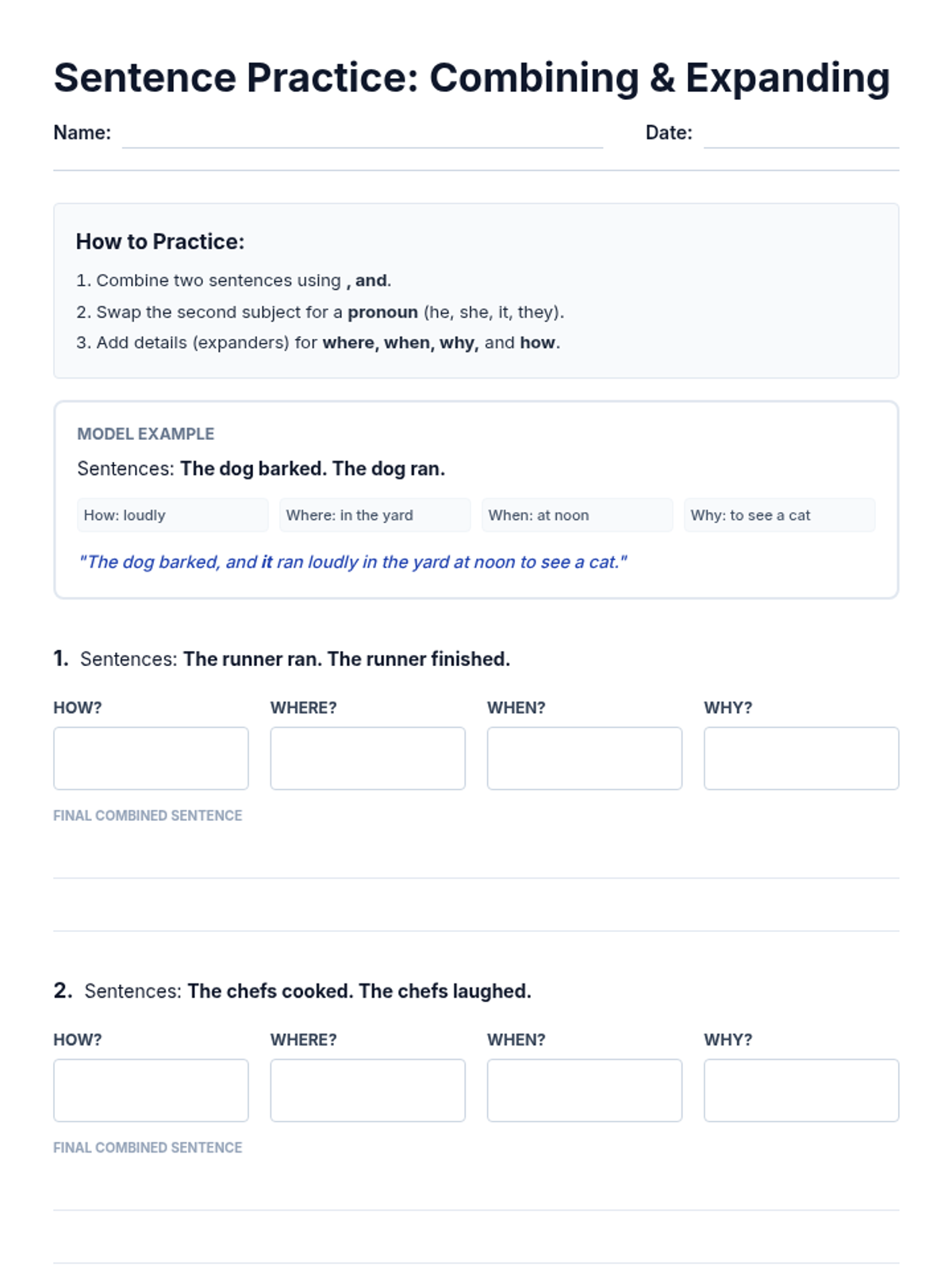
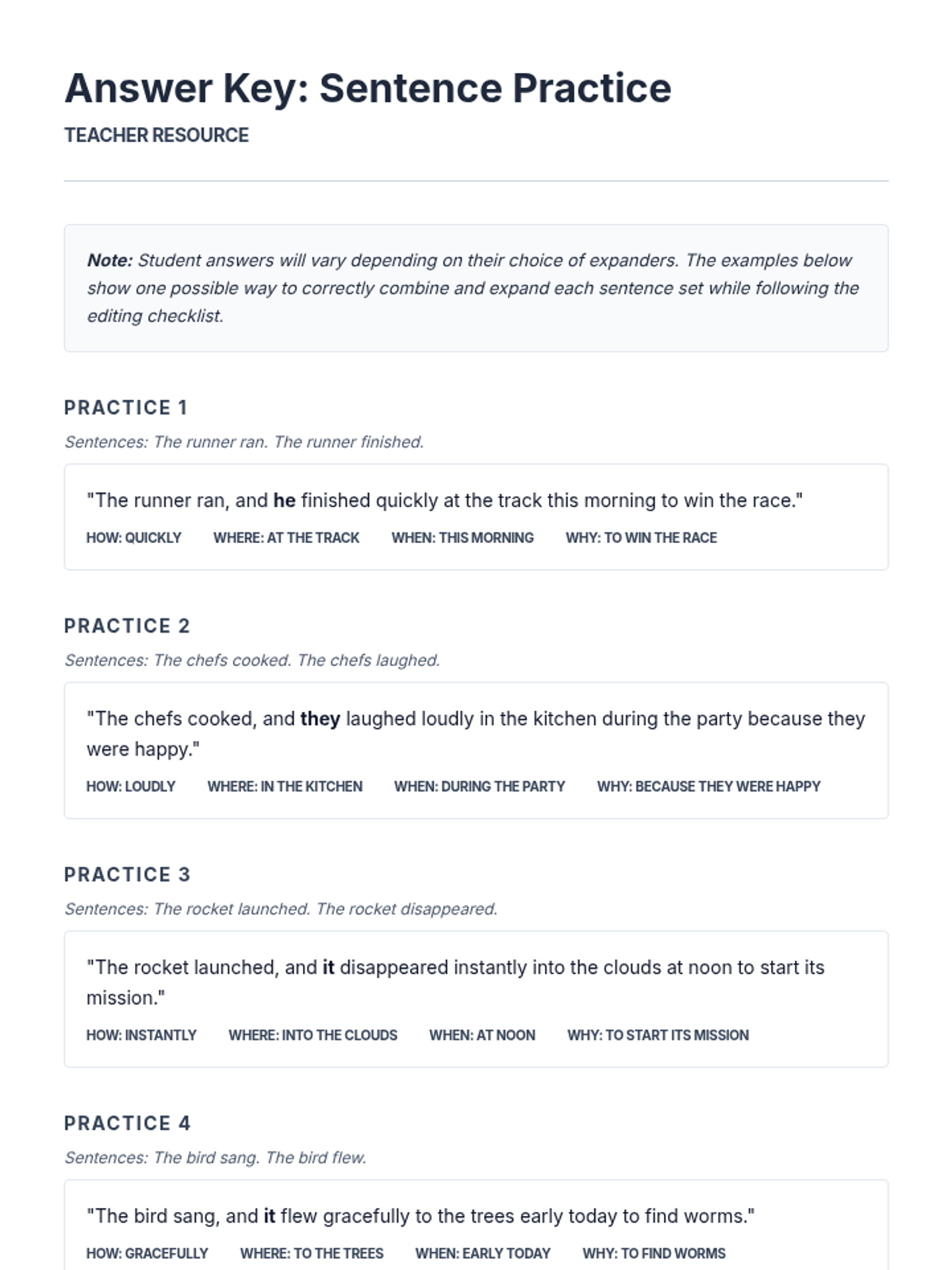
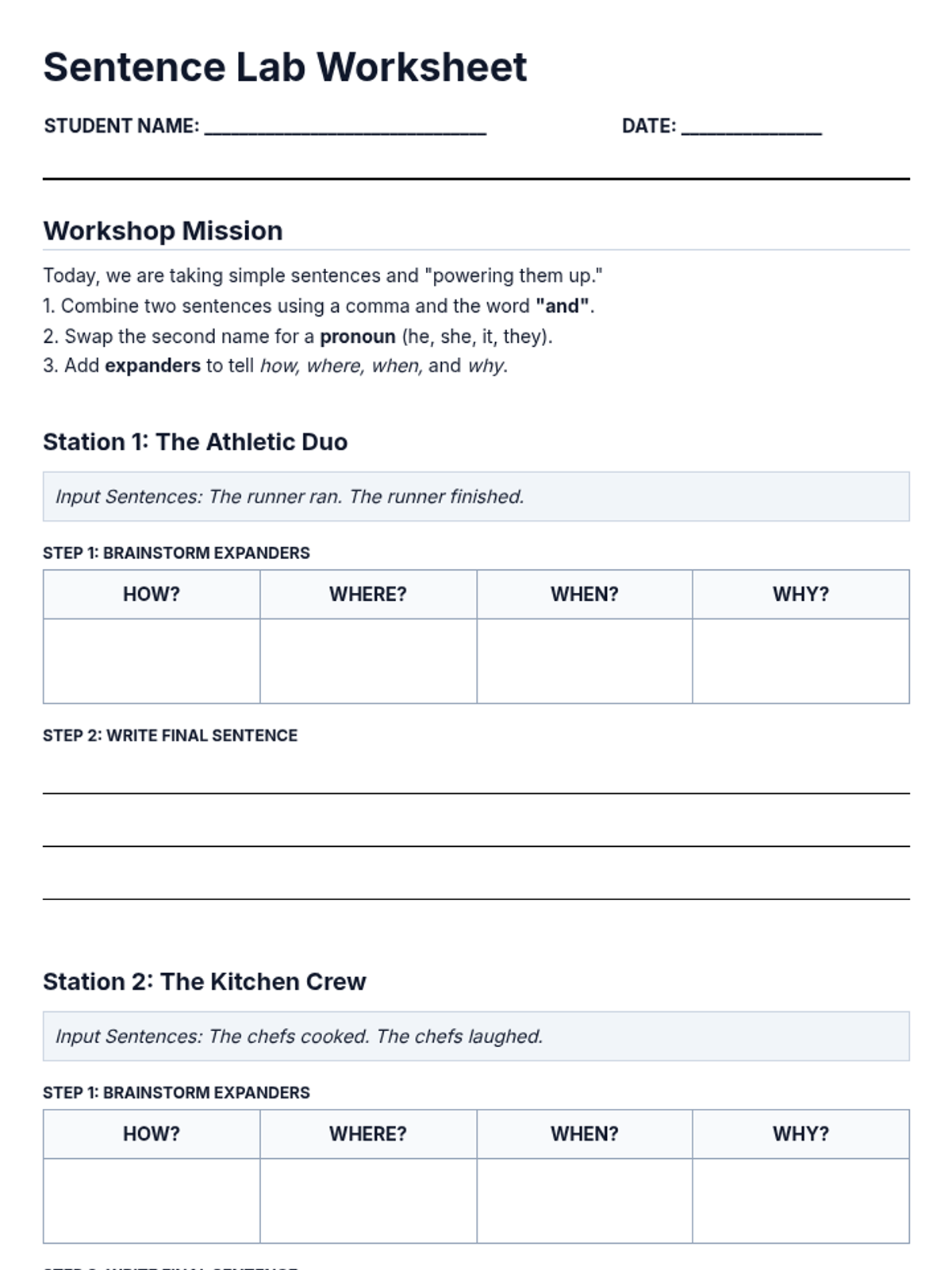
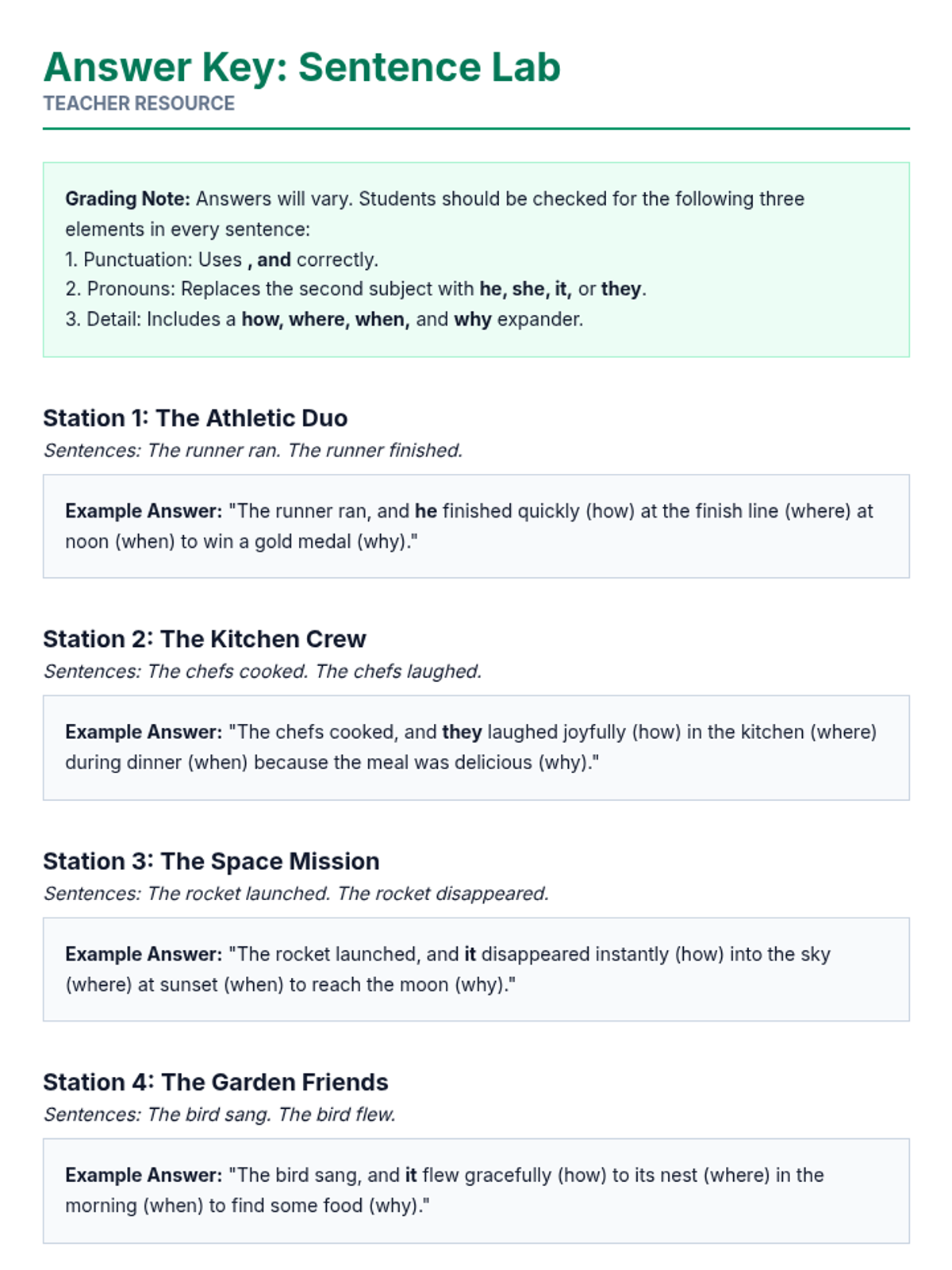
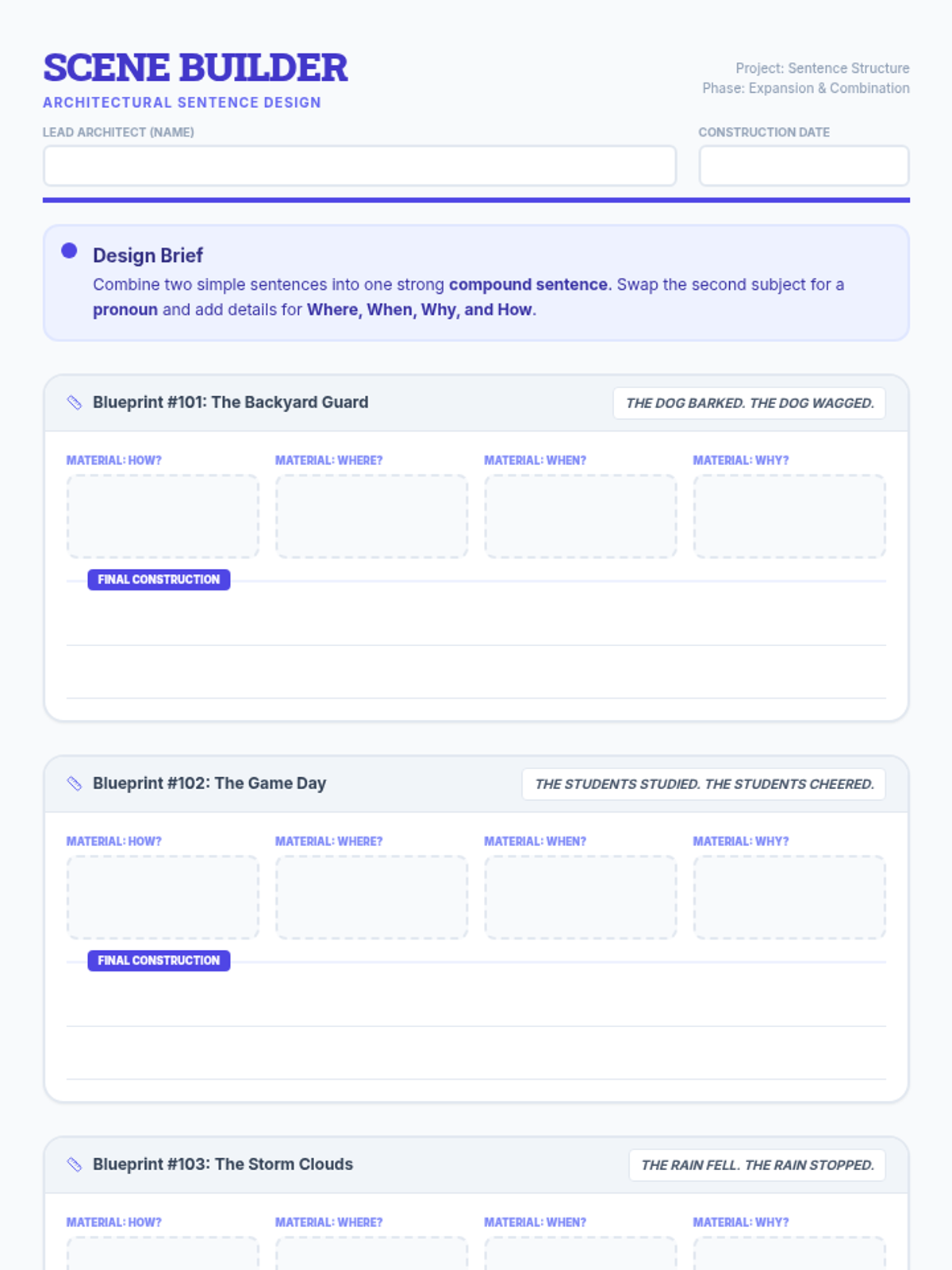
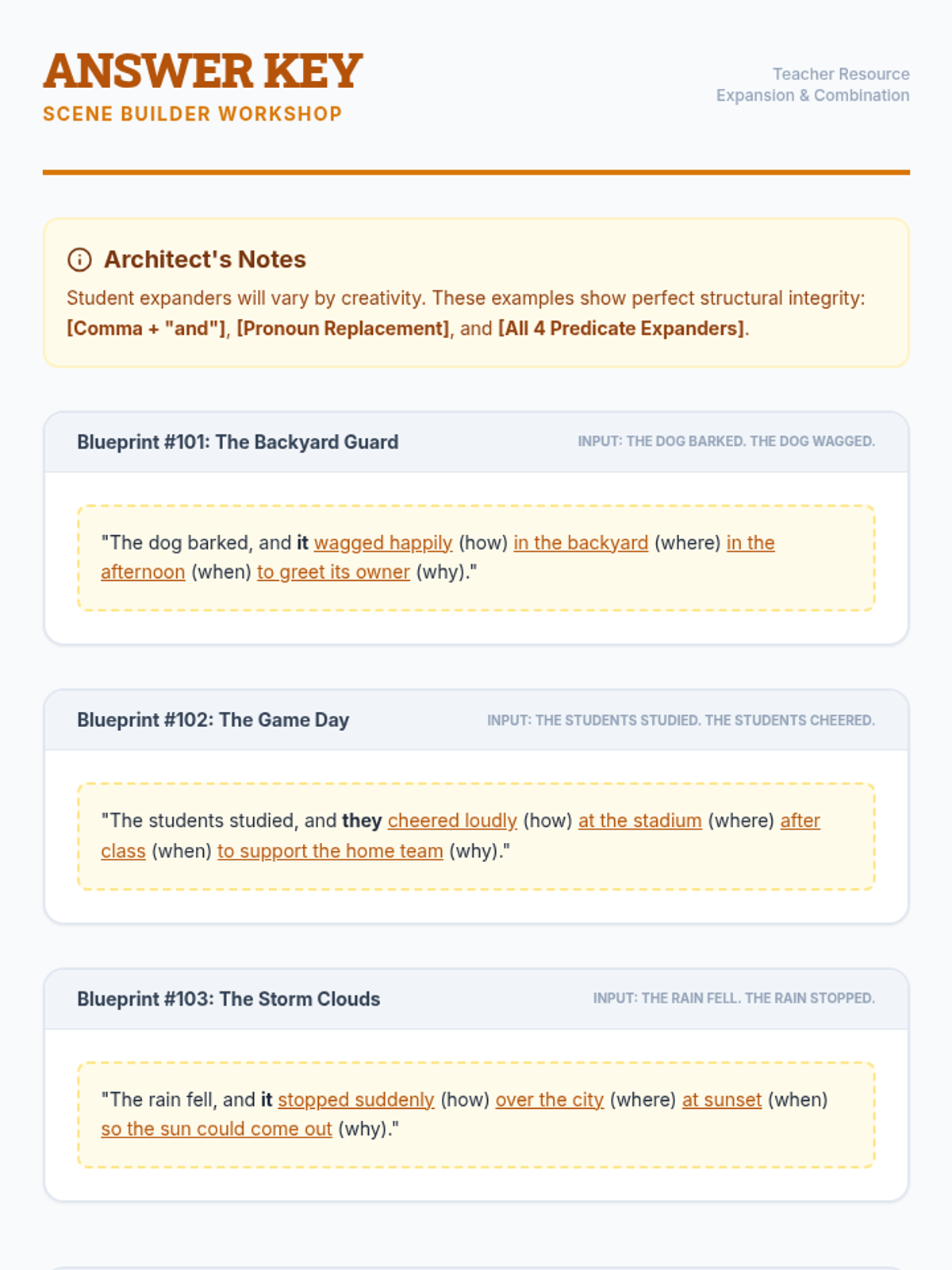
Students practice combining simple sentences with the same subjects into compound sentences using pronouns and adding descriptive predicate expanders (where, when, why, and how).
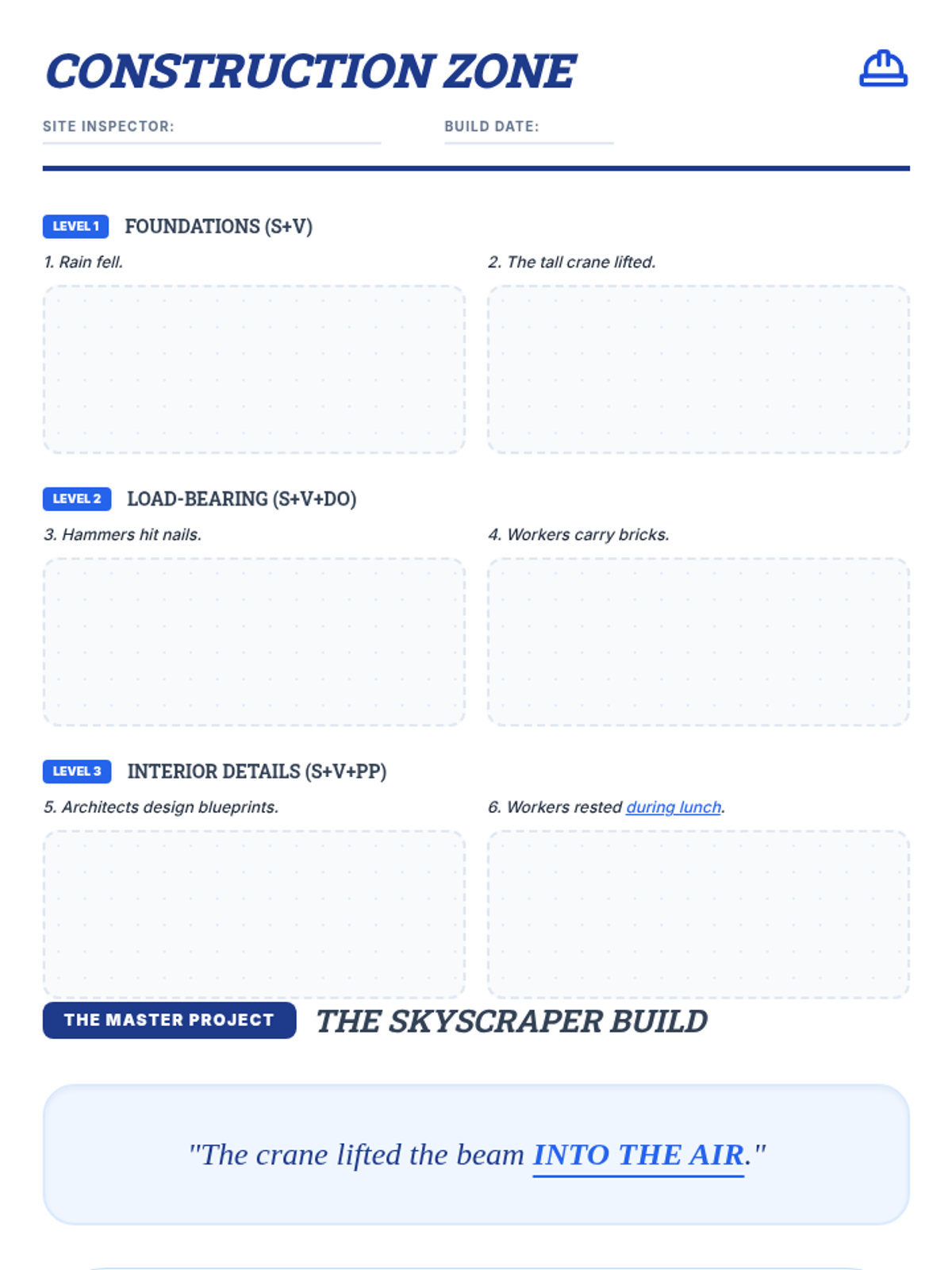
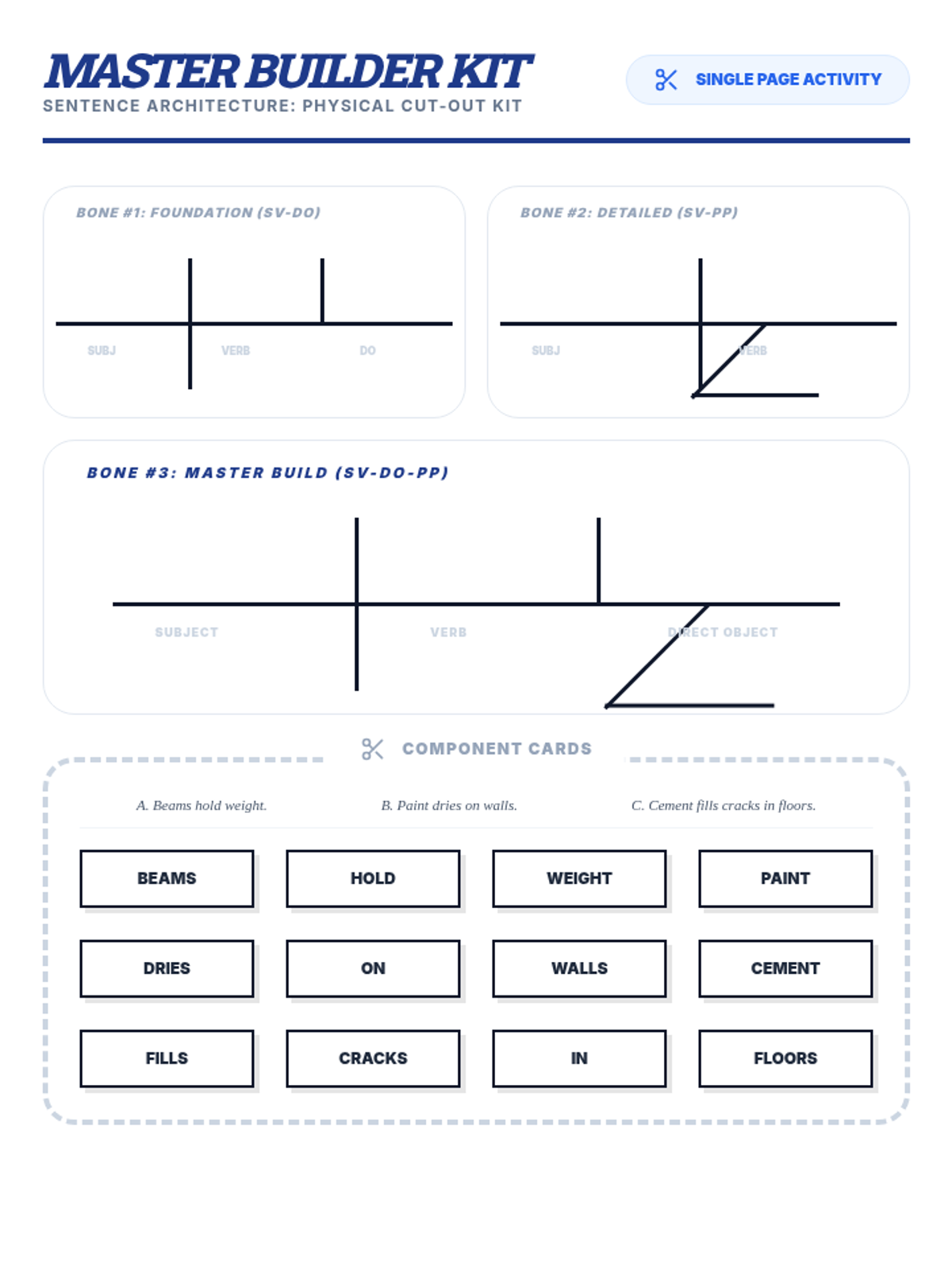
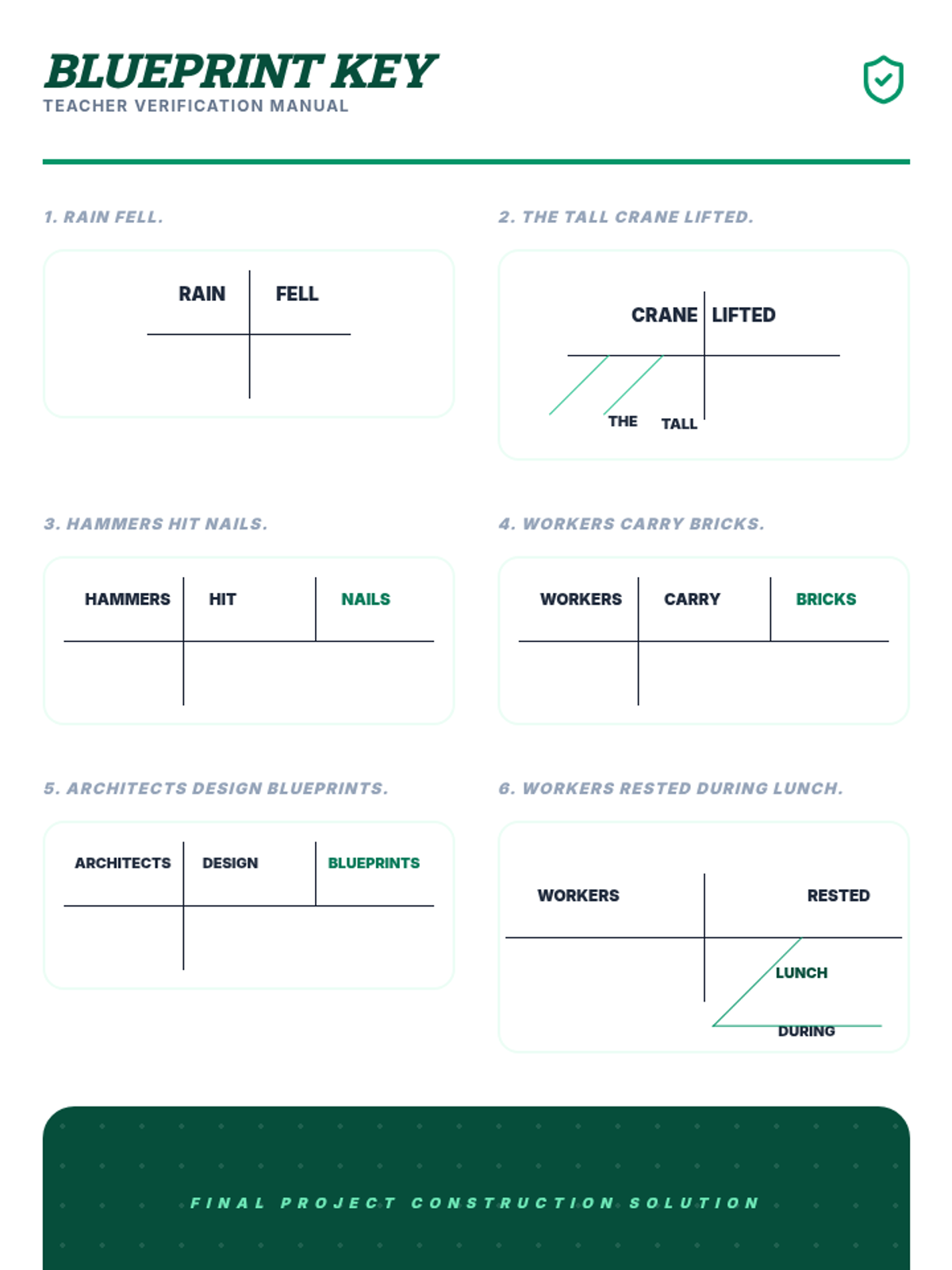
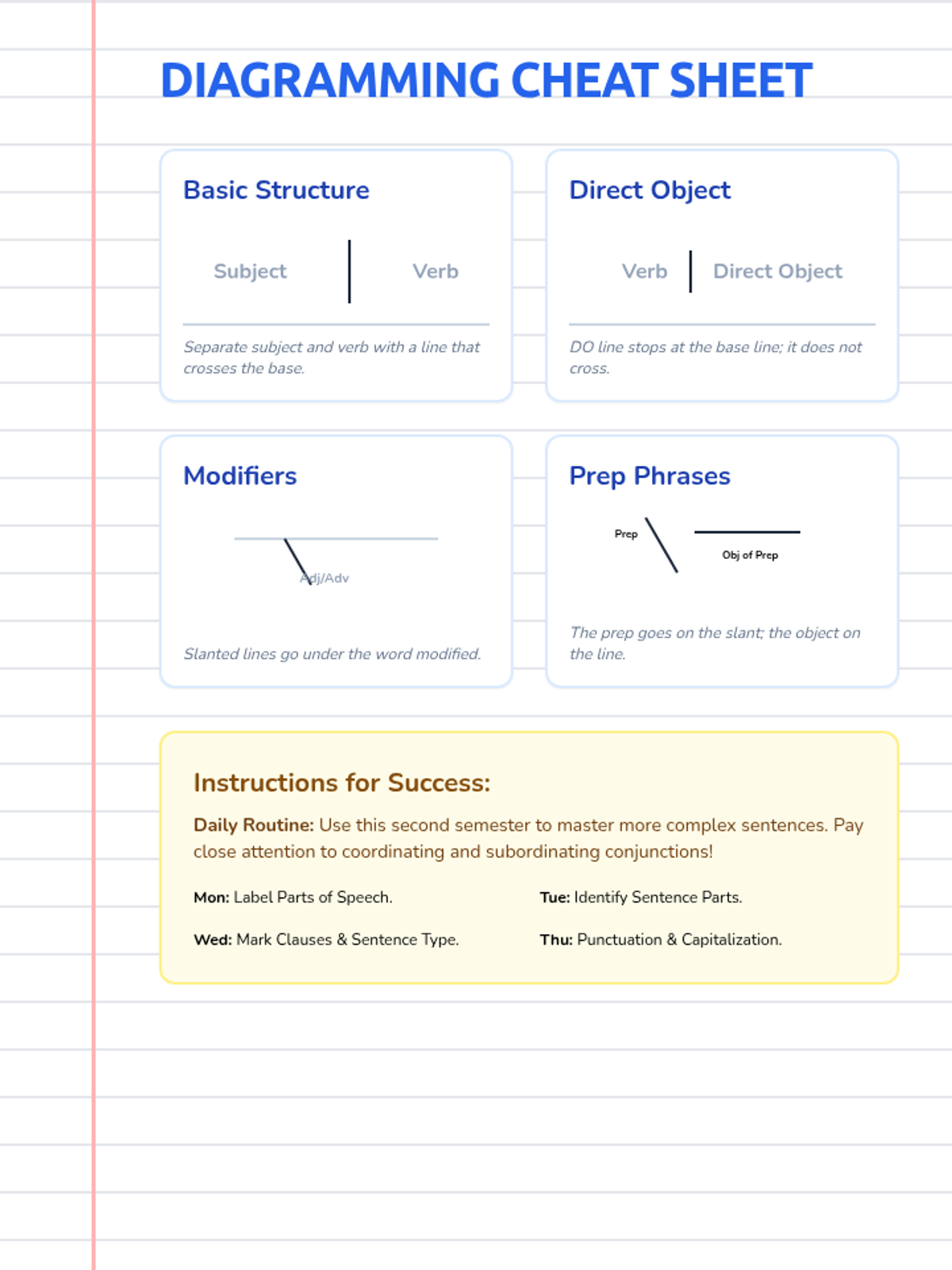
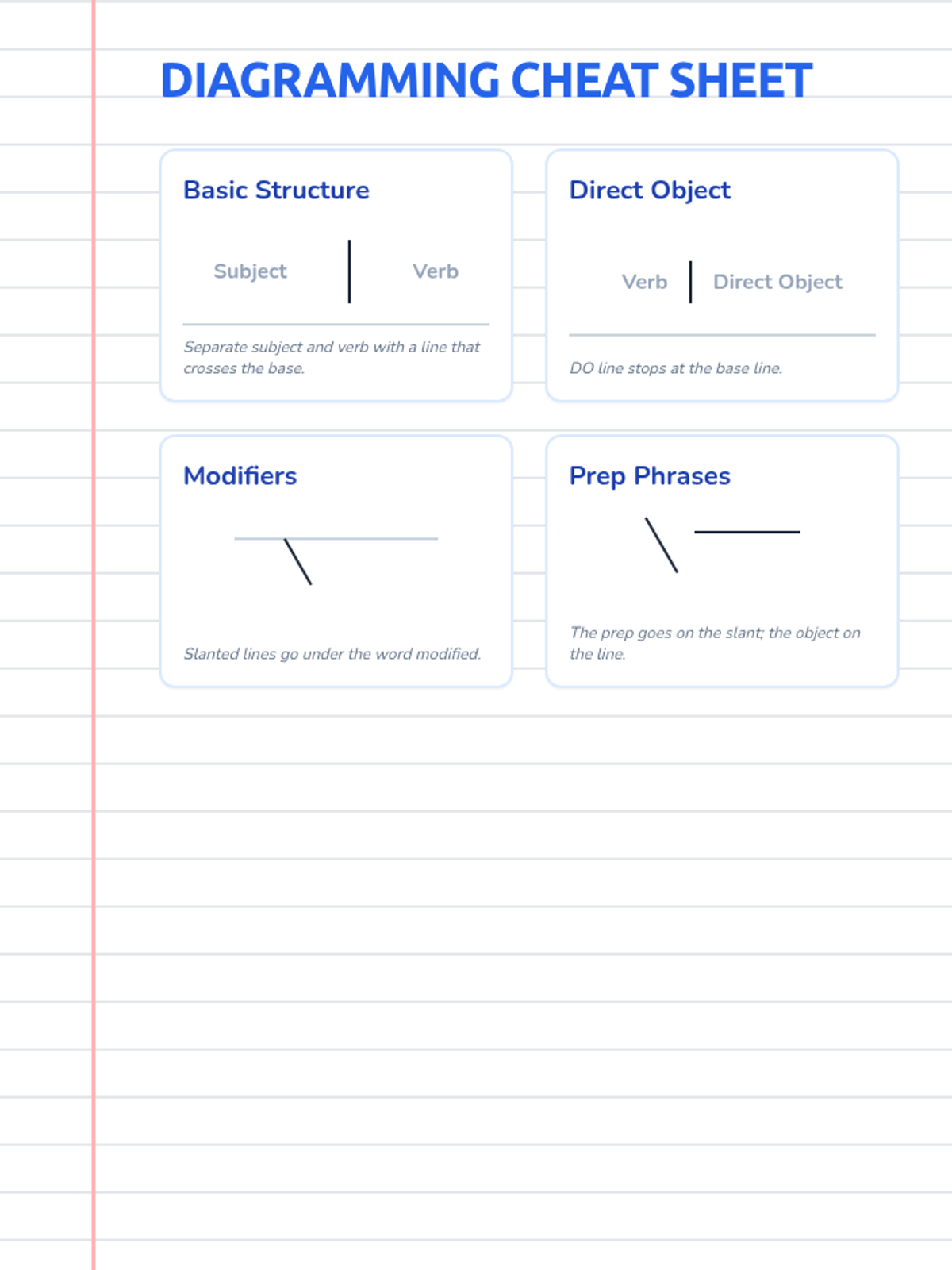
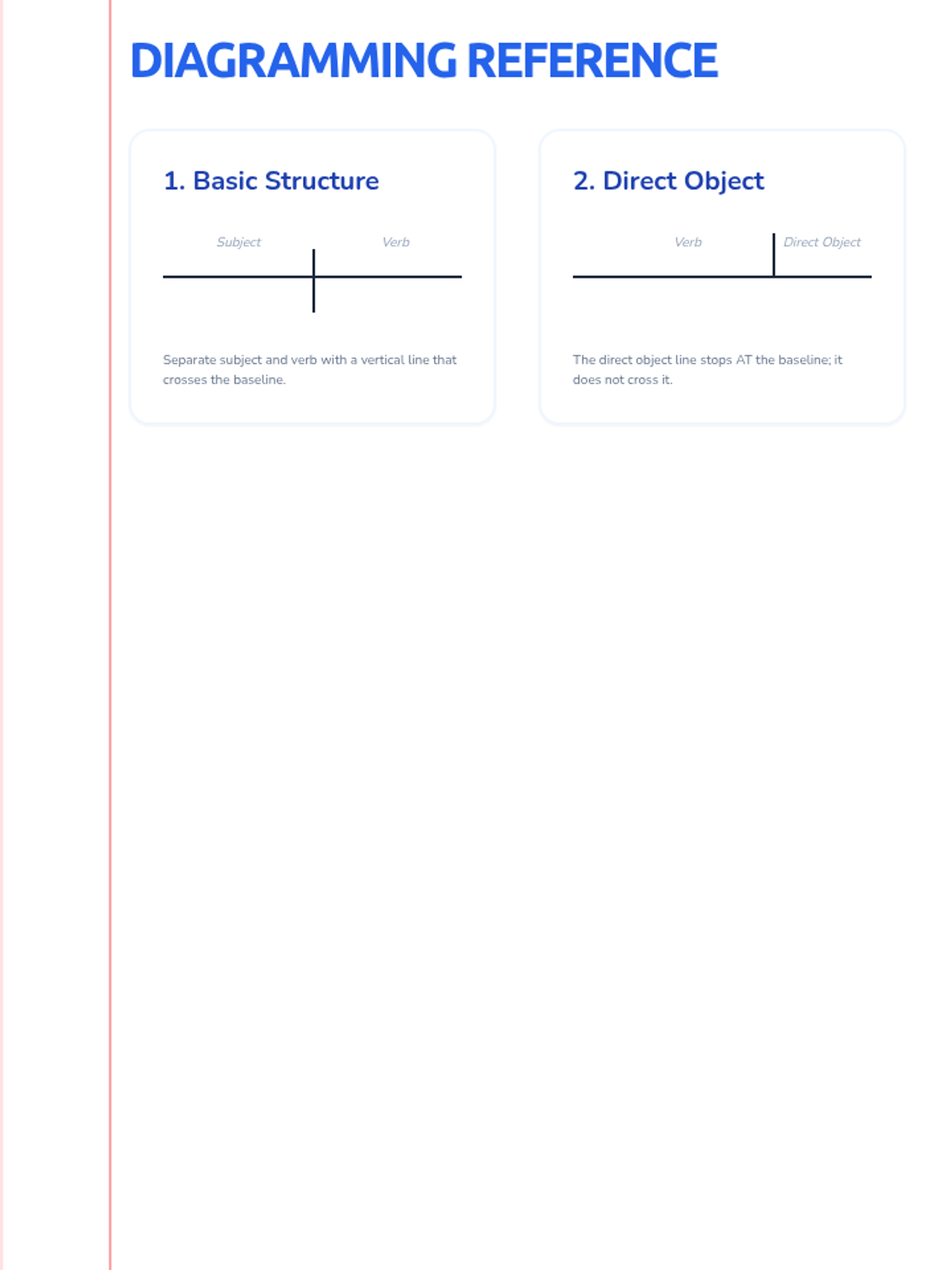
A comprehensive introduction to Reed-Kellogg sentence diagramming, covering subjects, verbs, direct objects, and prepositional phrases through a structural engineering lens.
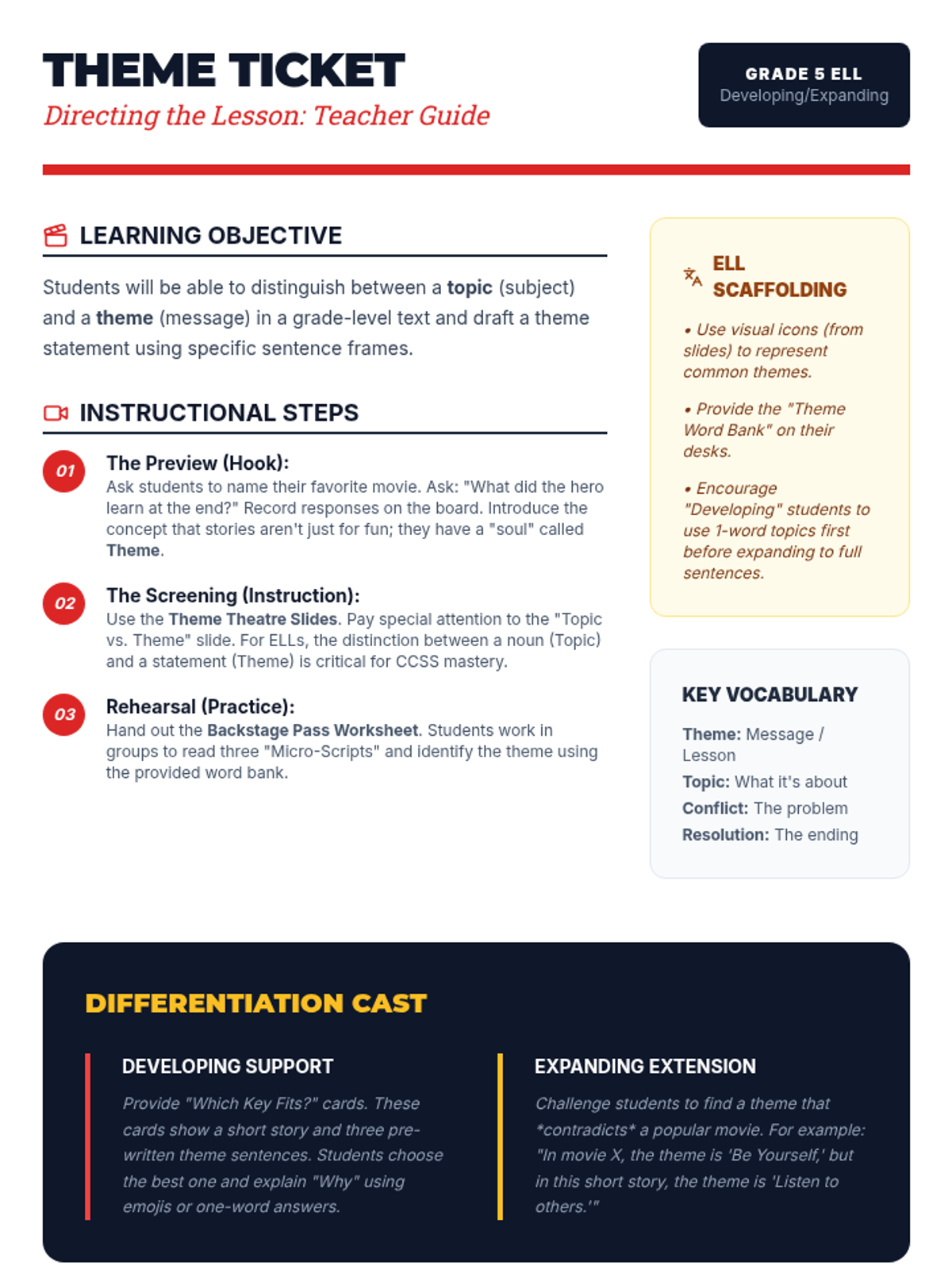
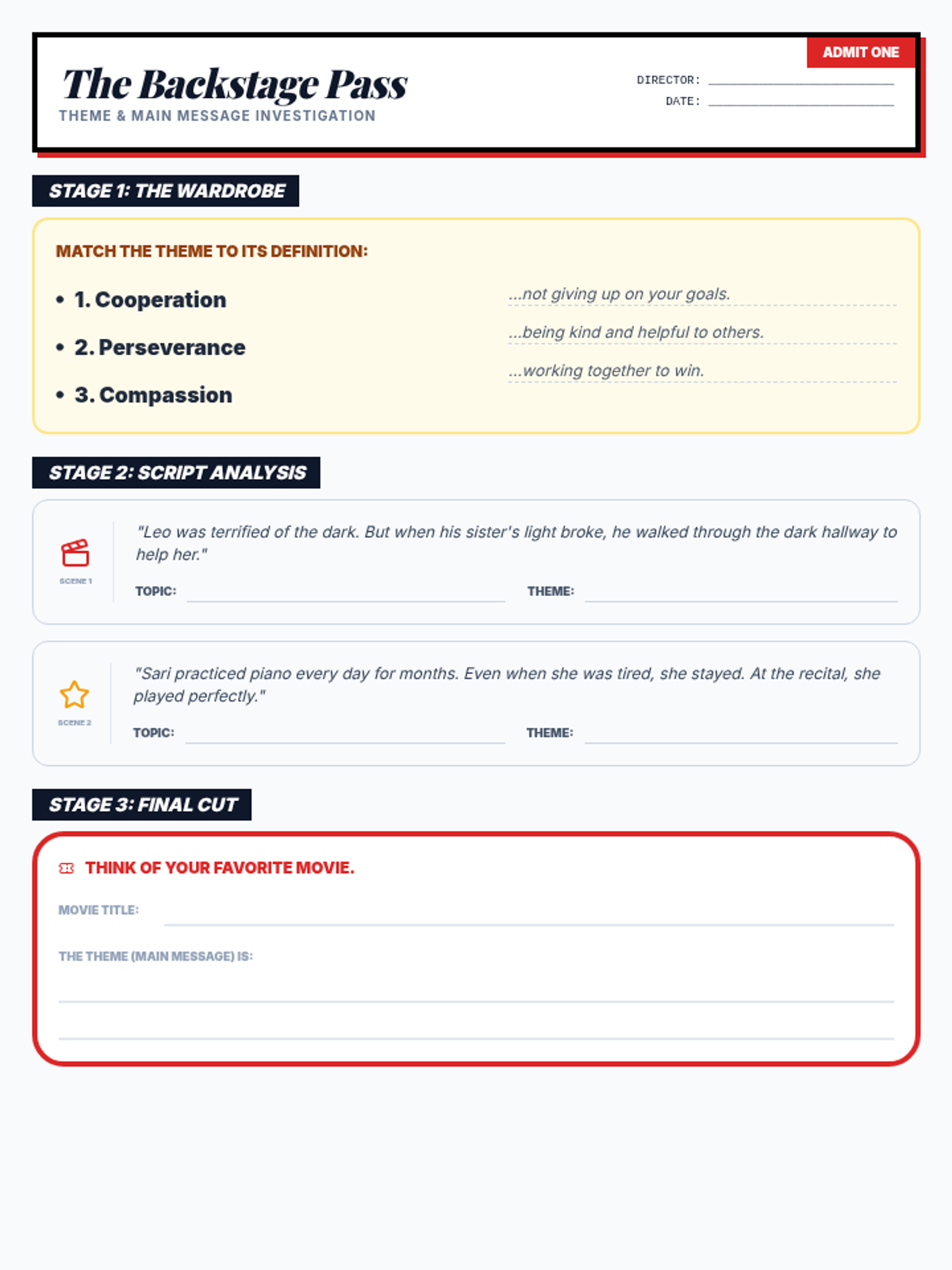
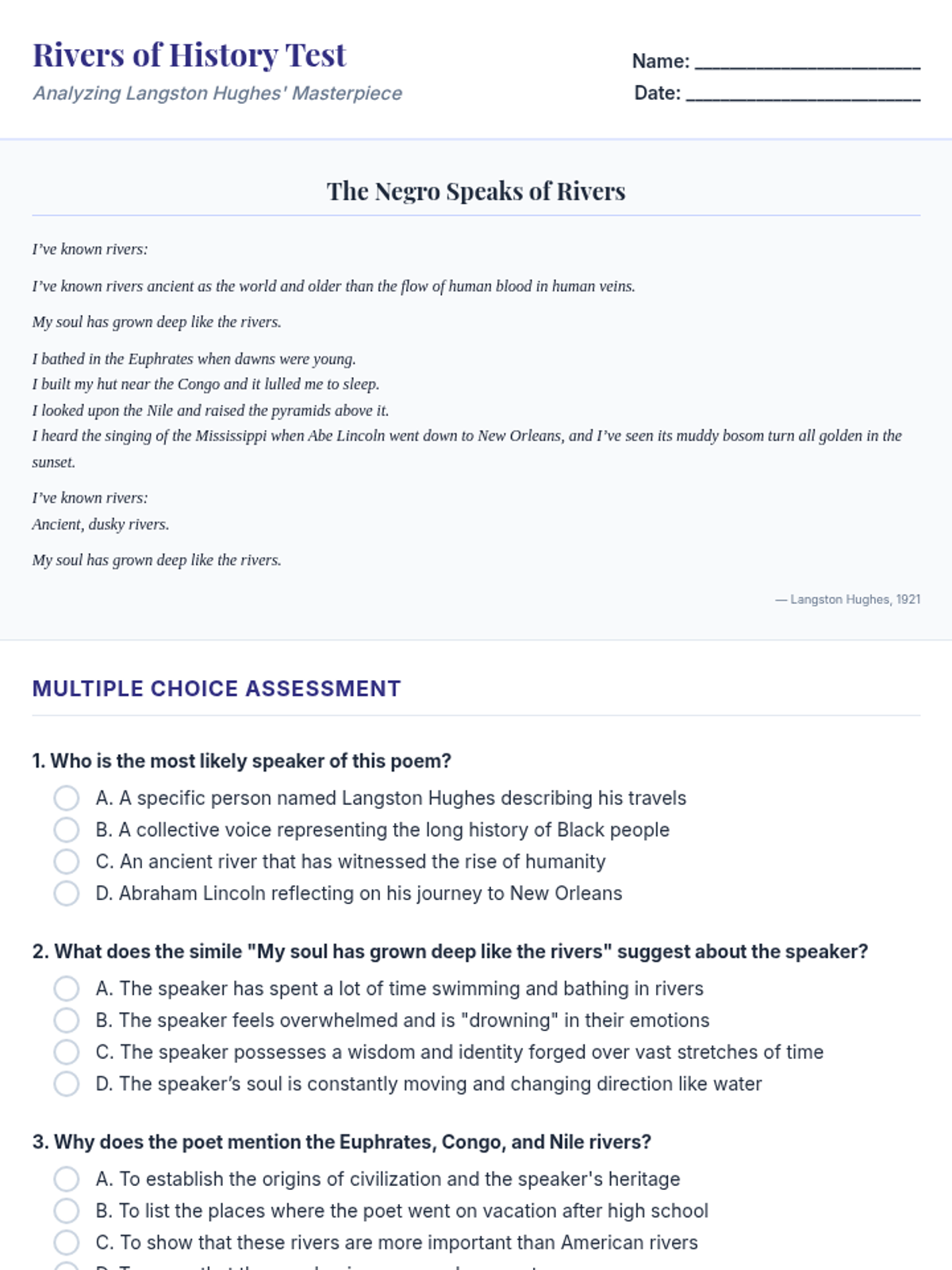
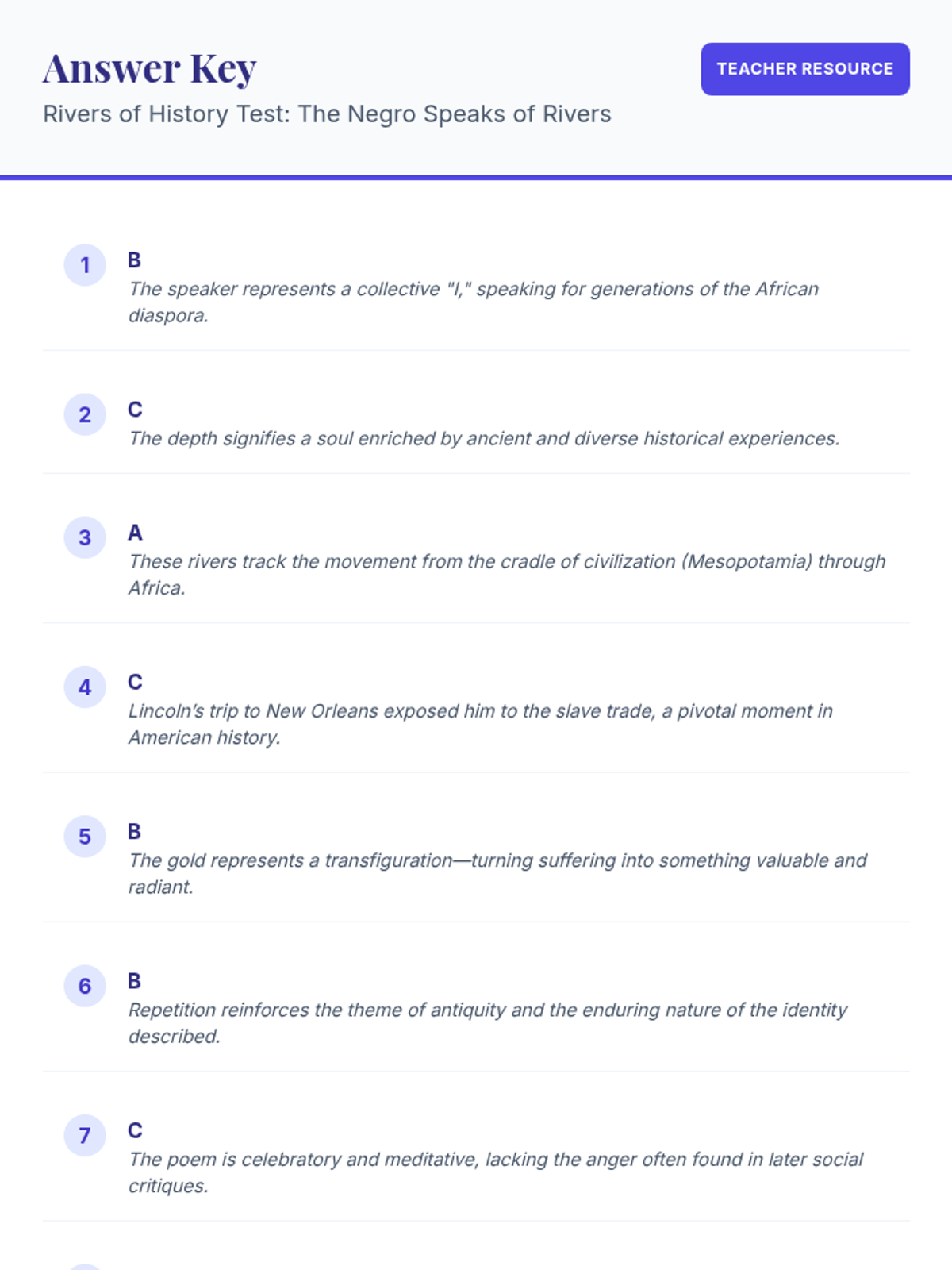
Students learn to identify the theme or main message of a story by analyzing character choices and outcomes, framed through a "Cinema" or "Movie Theatre" lens to help ELL students distinguish between topic and theme.
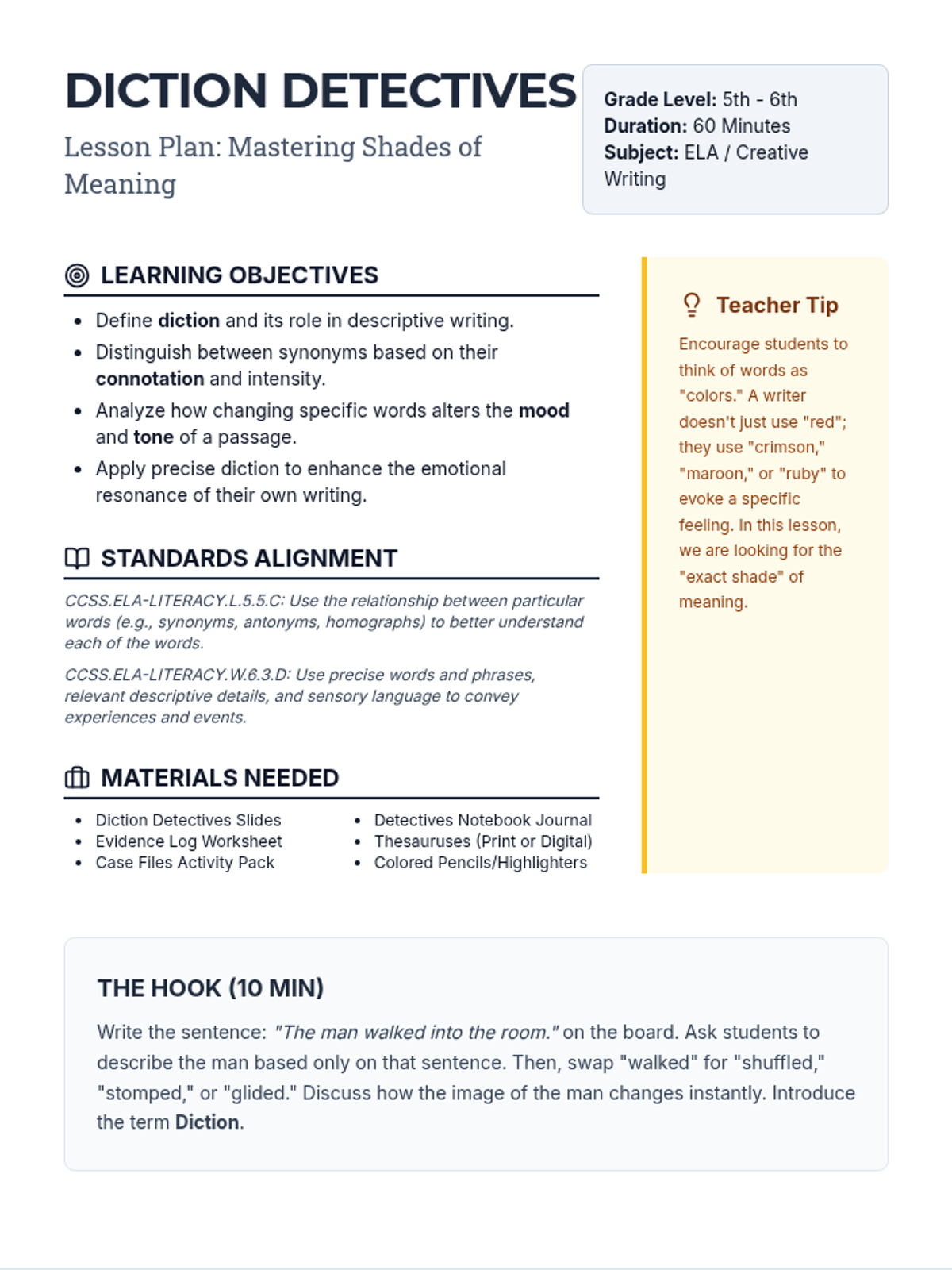
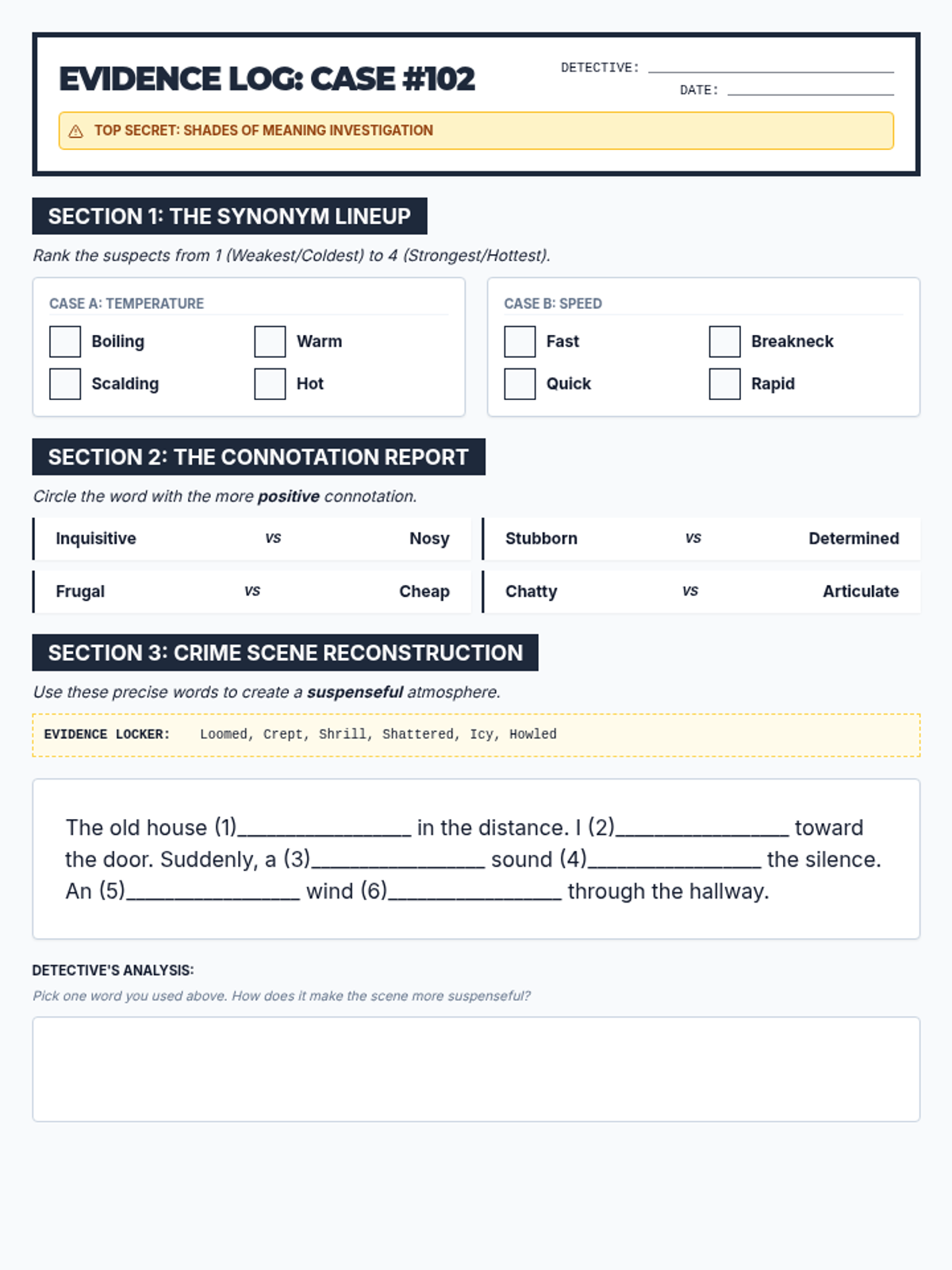
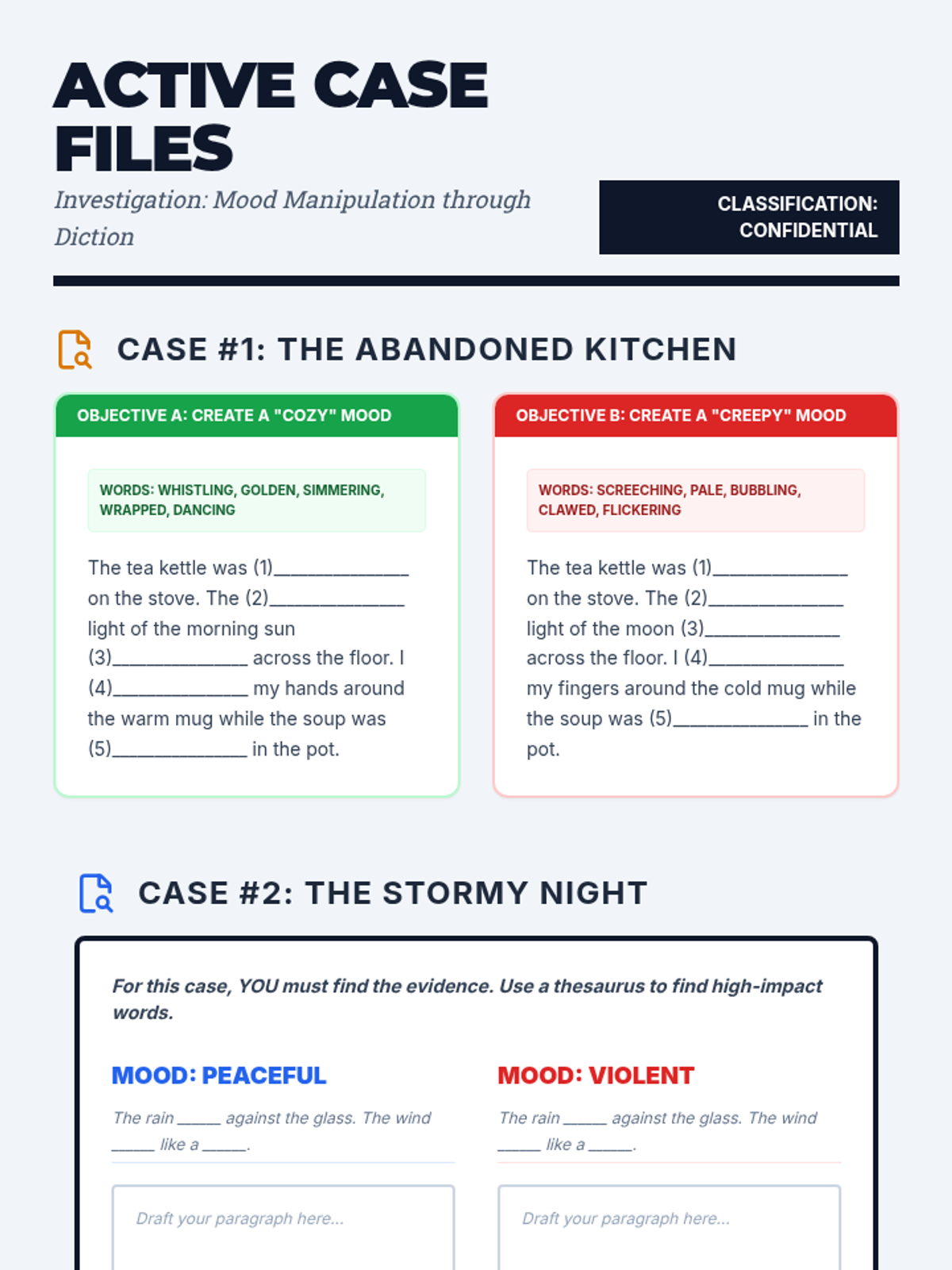
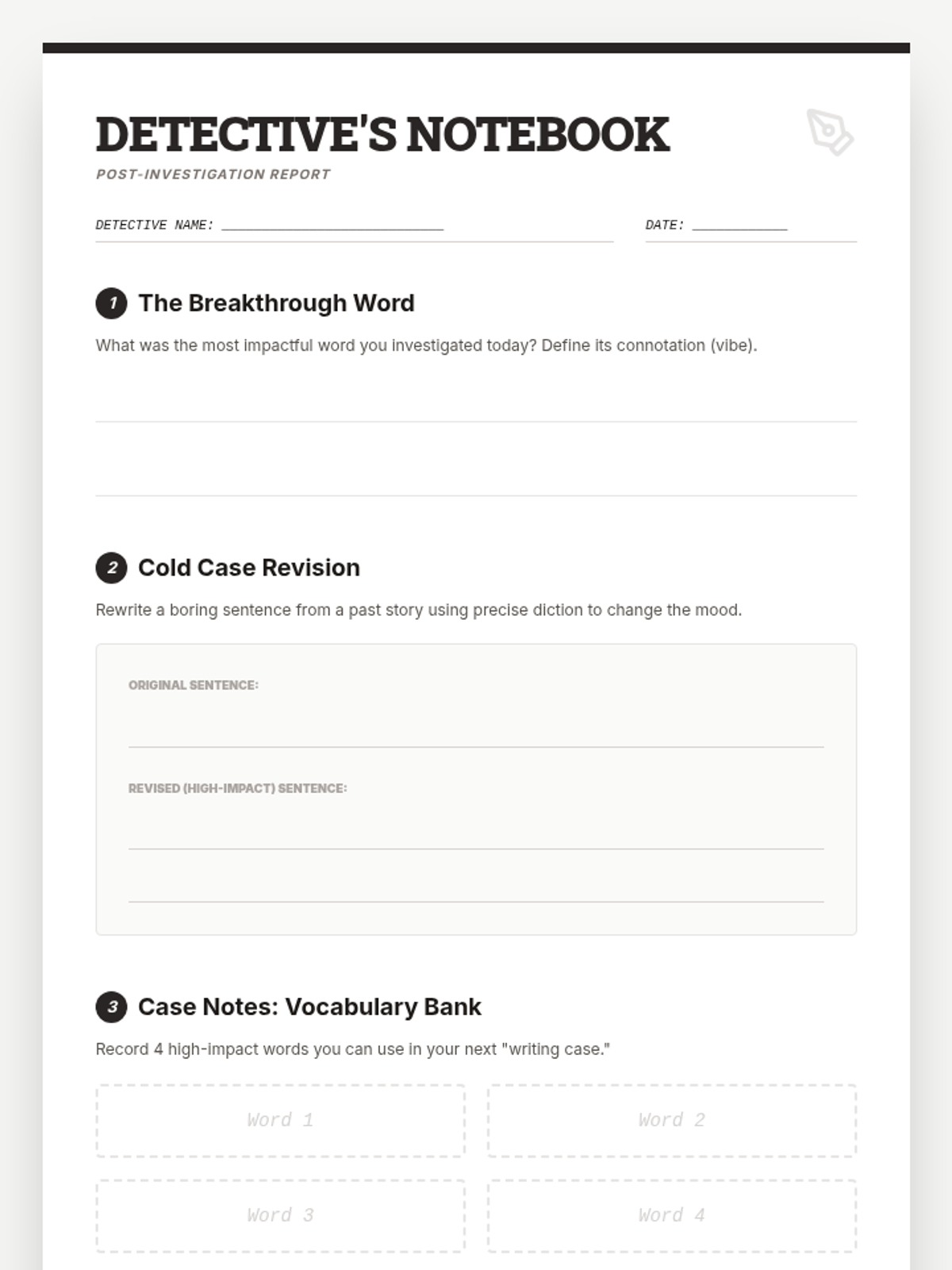
Students investigate how precise word choices (diction) influence the mood and tone of a story through a detective-themed exploration of synonyms and shades of meaning.
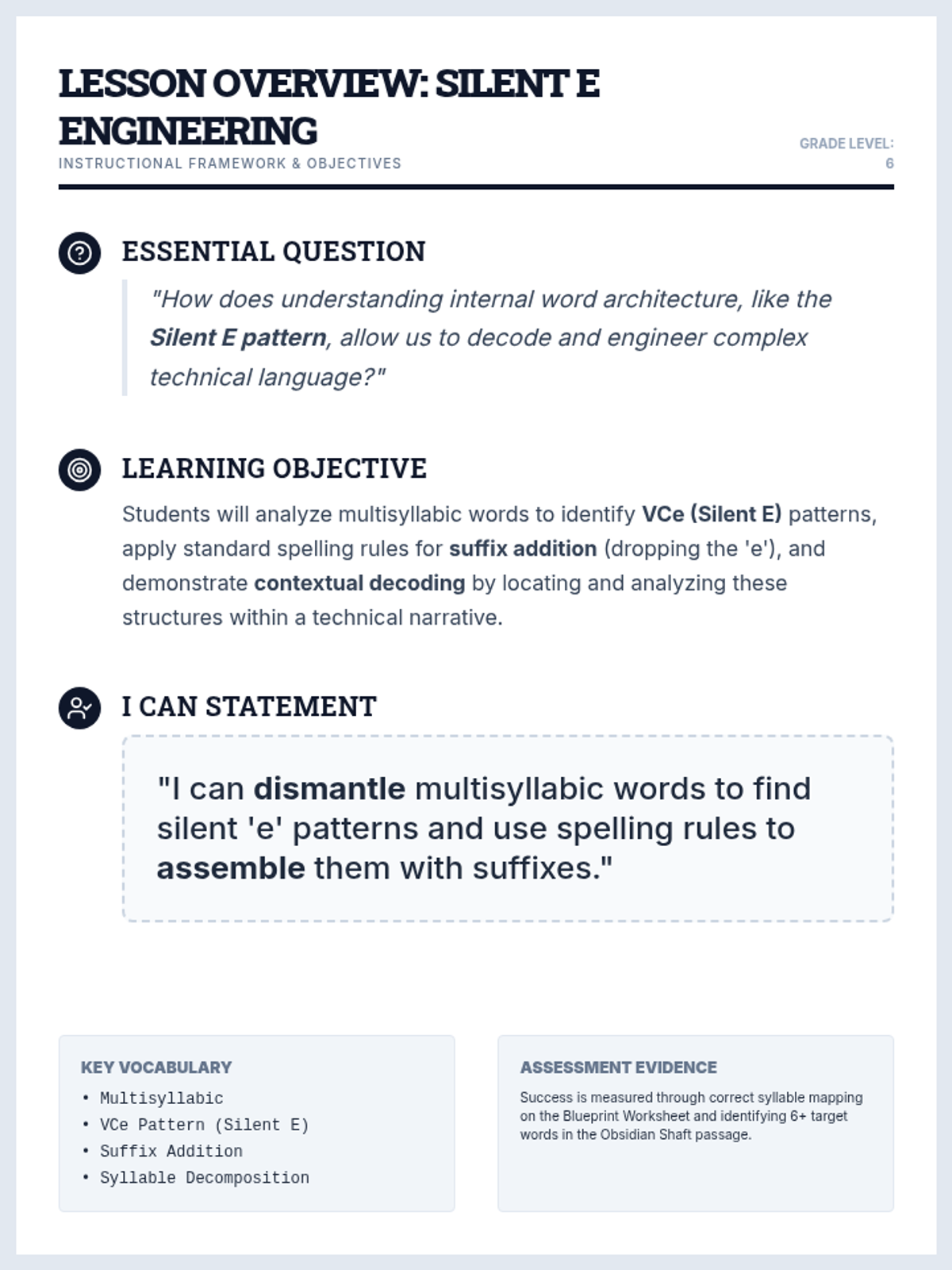
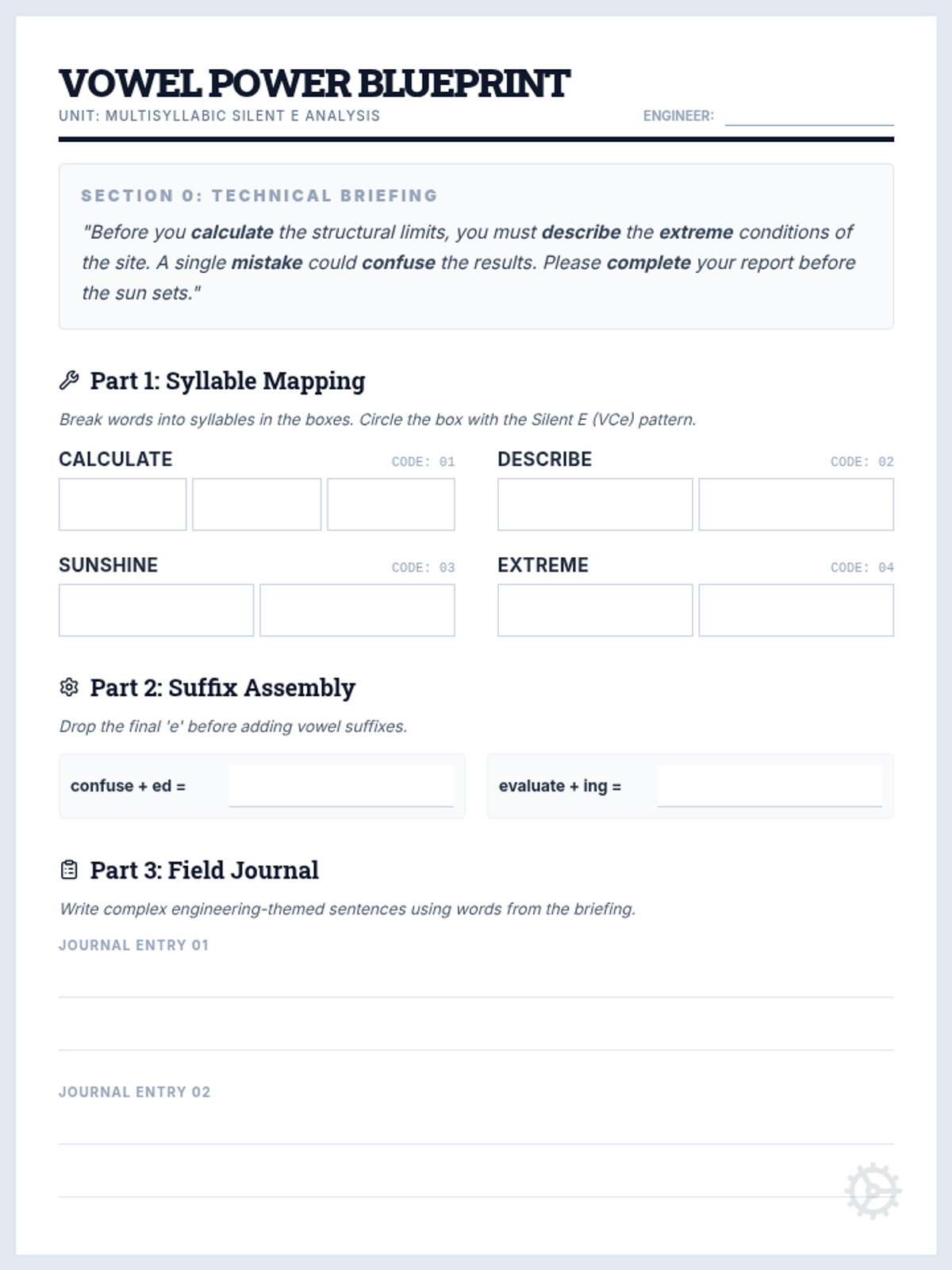
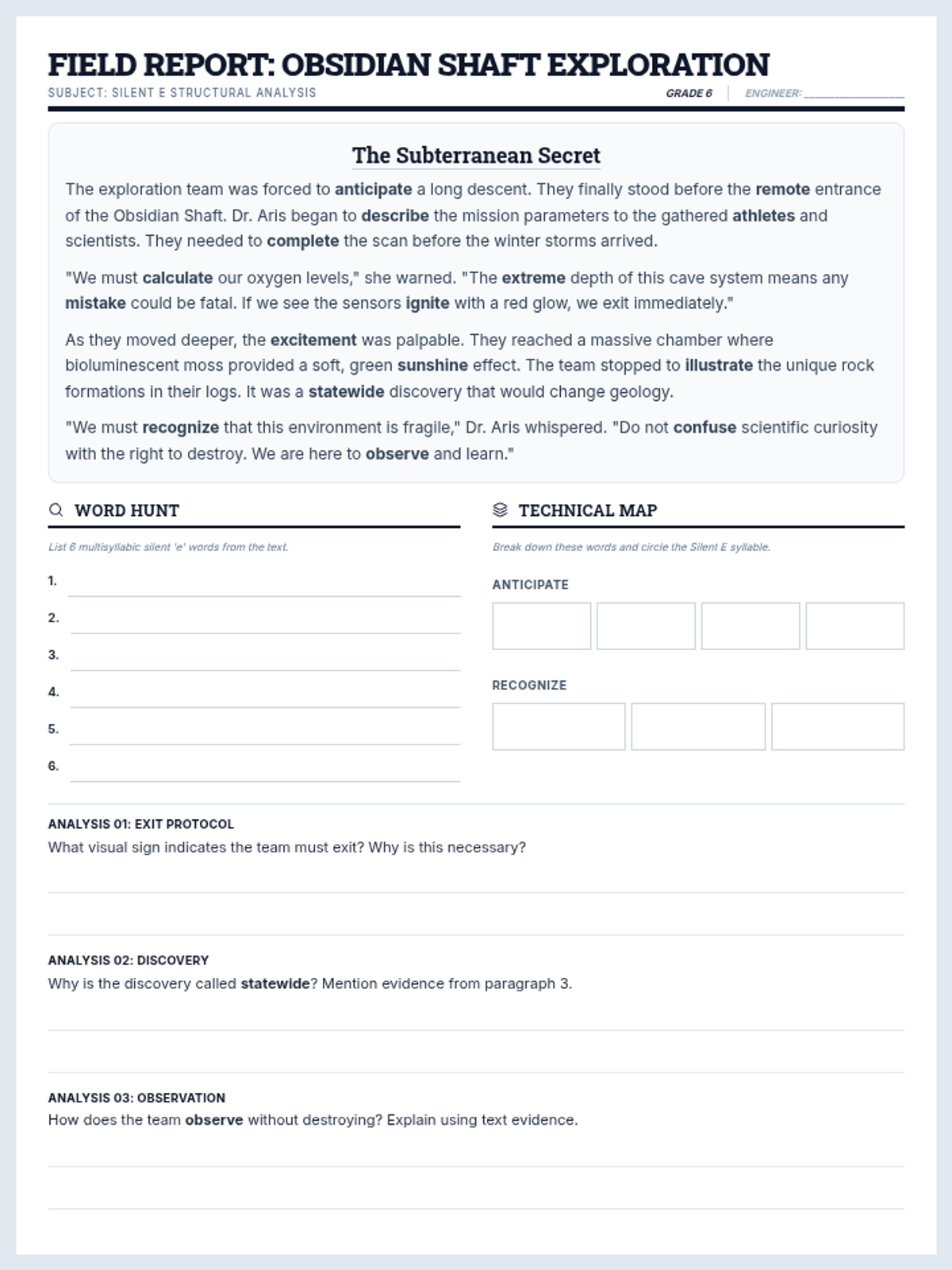
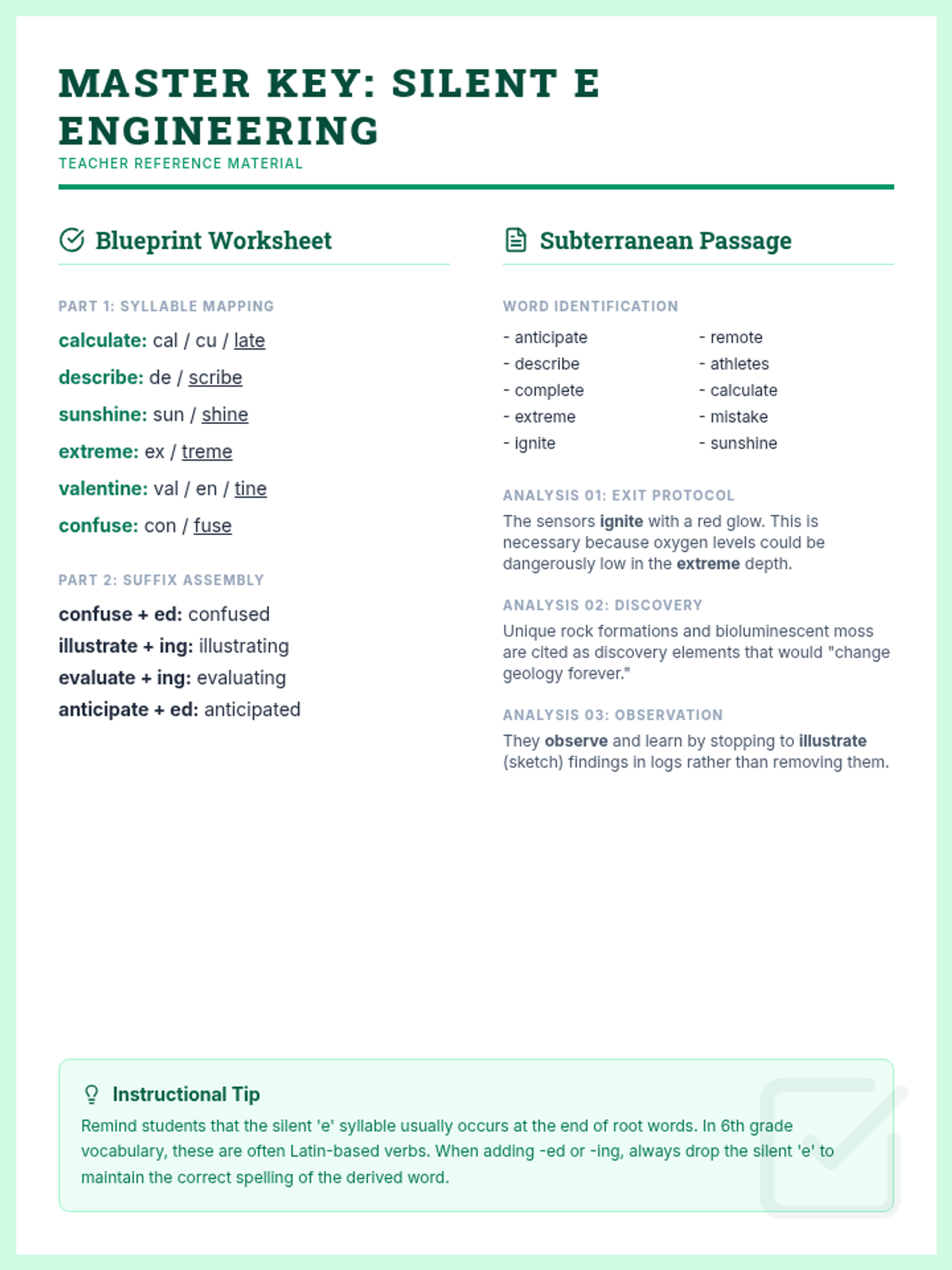
A lesson focused on identifying, decoding, and understanding multisyllabic words that feature the silent 'e' (VCe) pattern in at least one syllable. Designed for 6th-grade students using an 'Engineering' theme to analyze word structures.
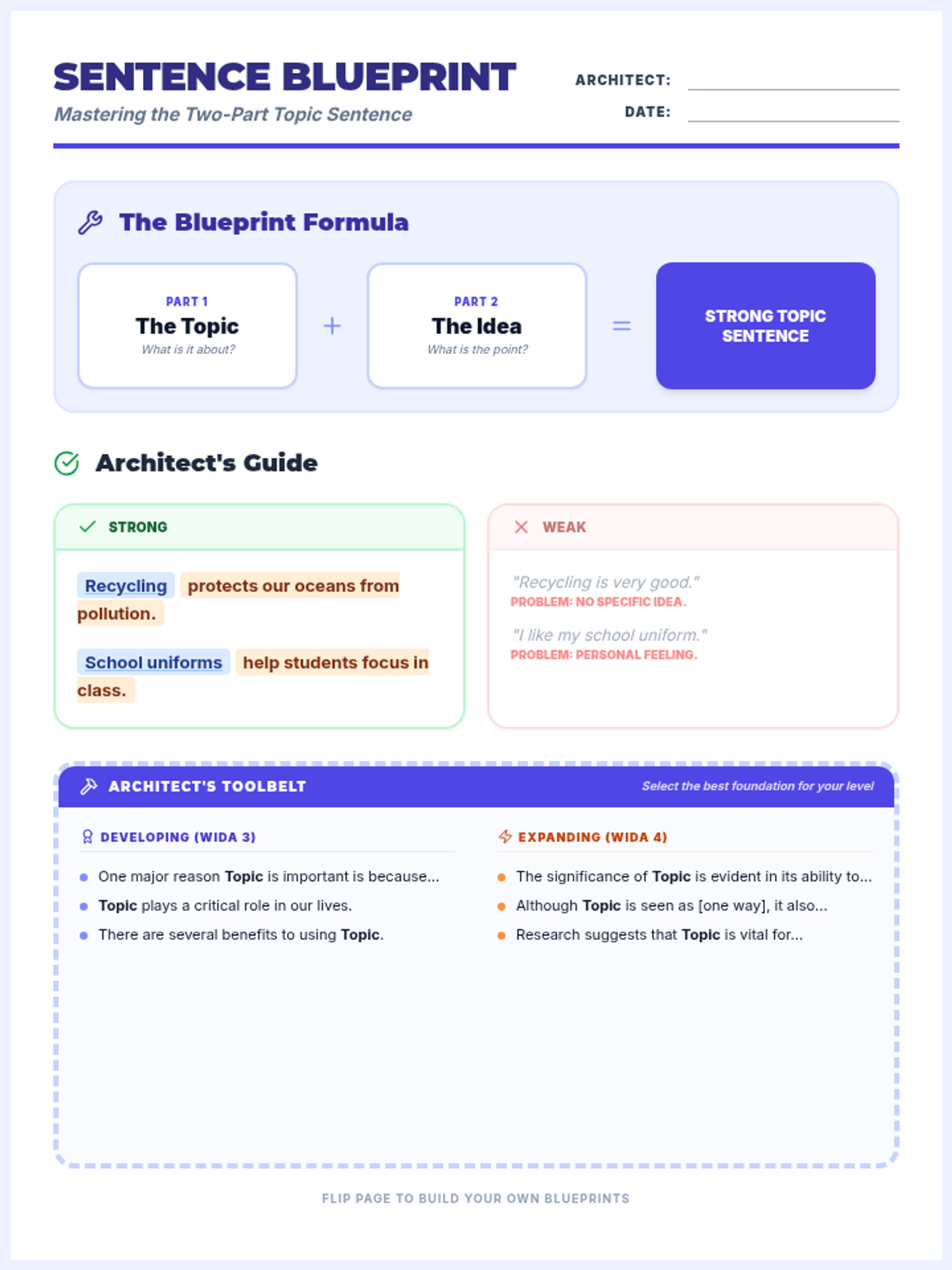
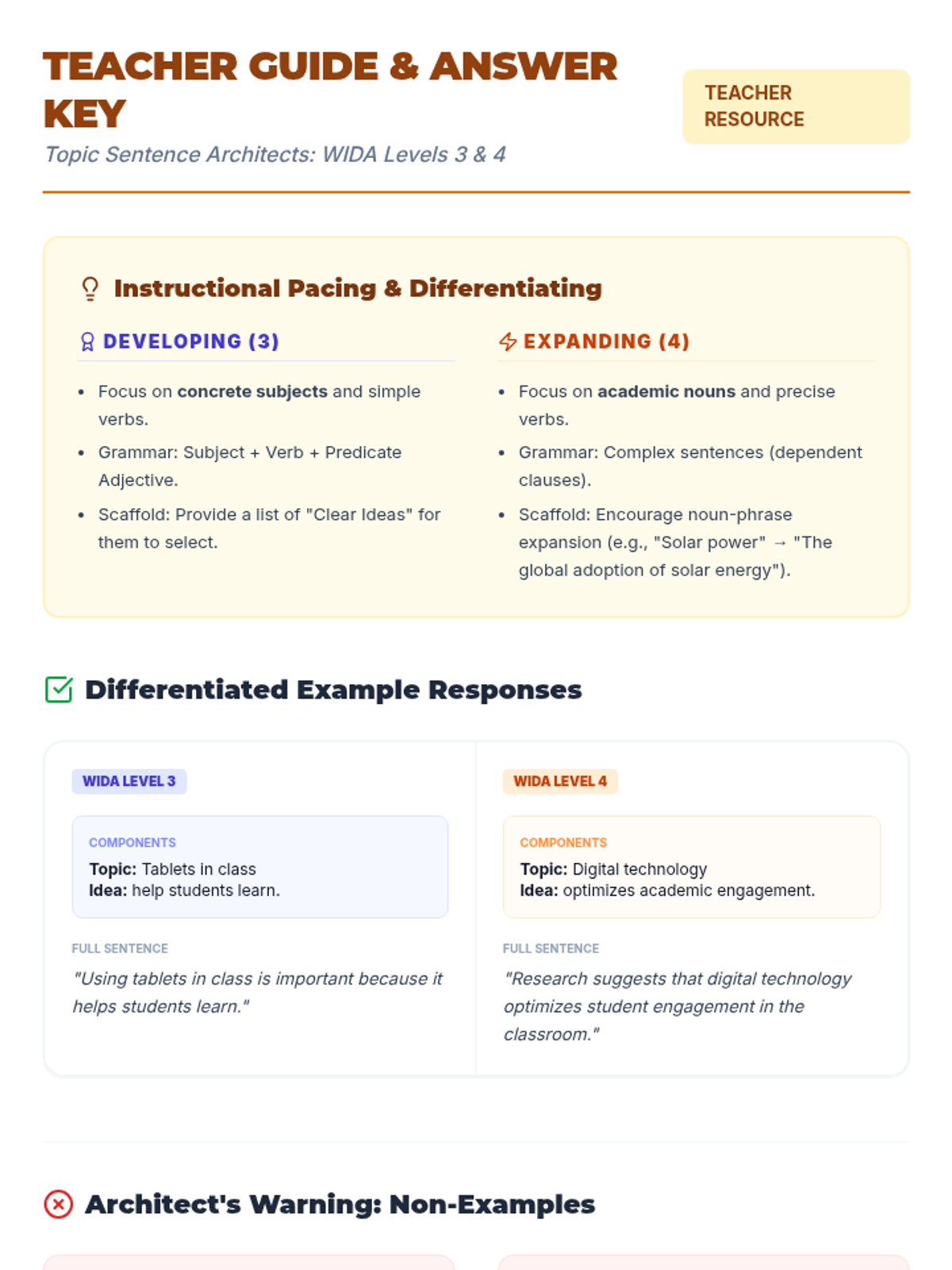
A lesson focused on teaching WIDA level 3 students how to construct strong topic sentences using a two-part formula: the topic and the clear idea. Students will use graphic organizers and sentence starters to build academic paragraph foundations.
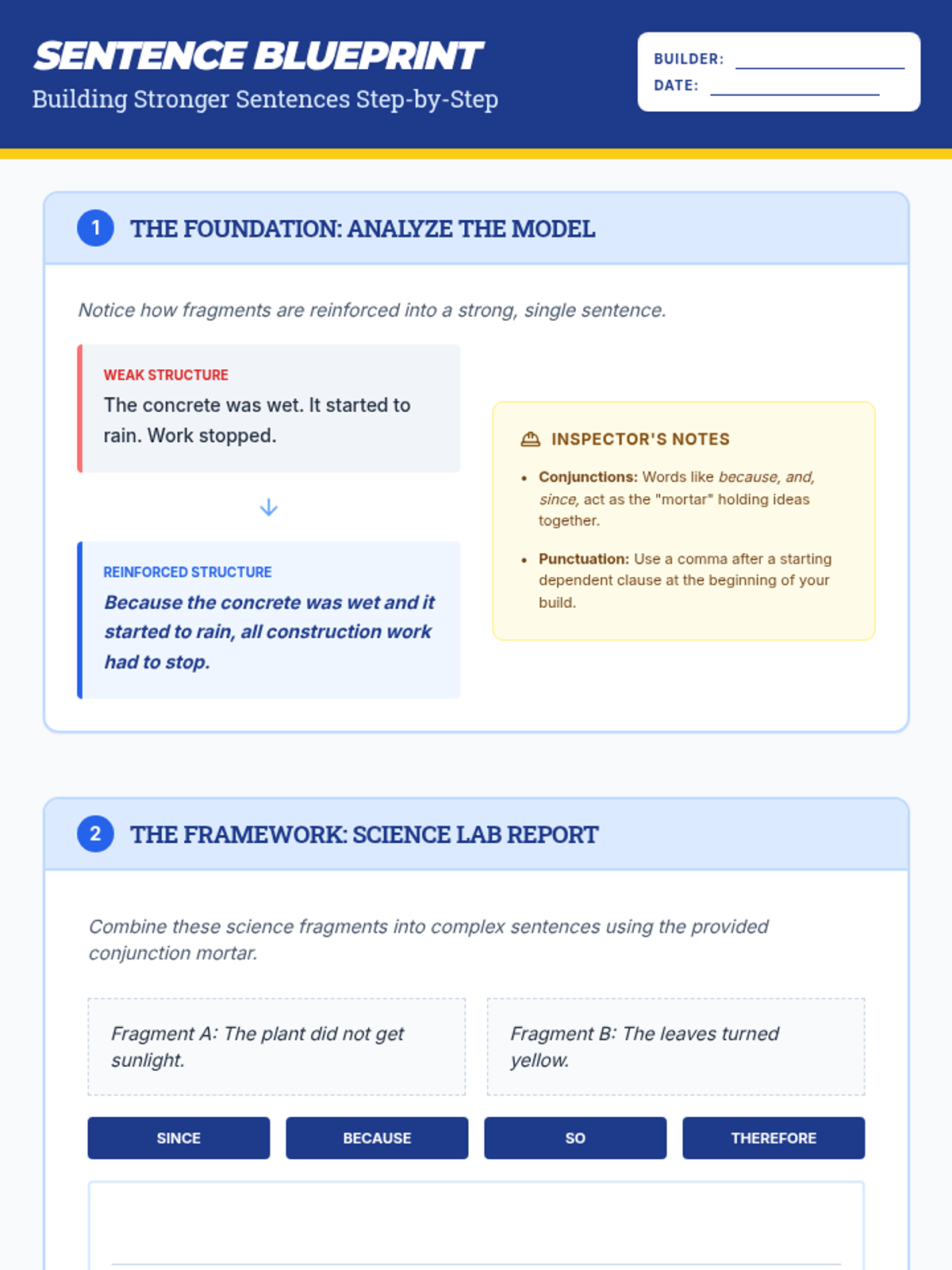
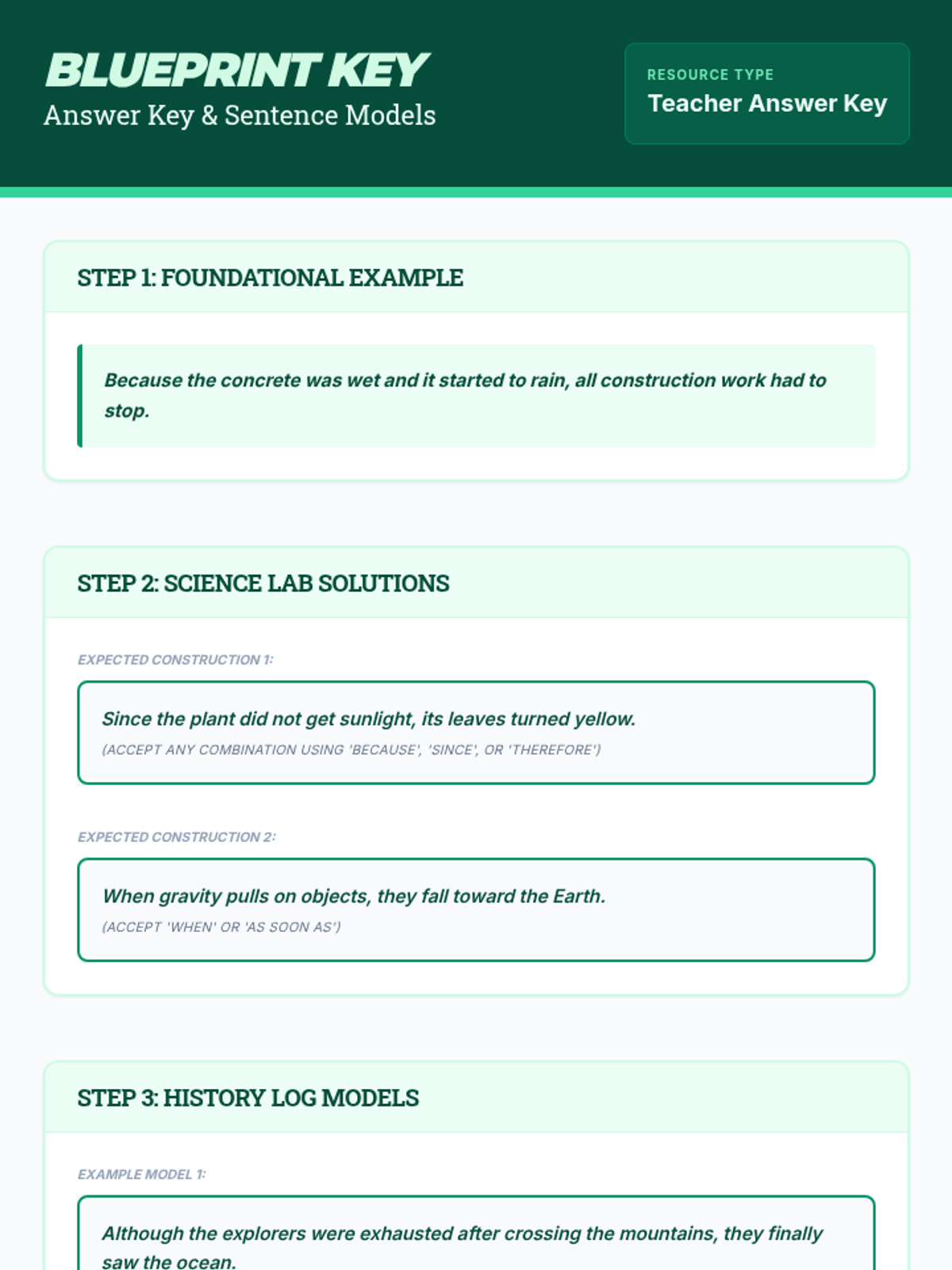
A lesson focused on sentence construction, teaching students to transform fragments and simple sentences into sophisticated compound and complex sentences using a construction-themed framework.
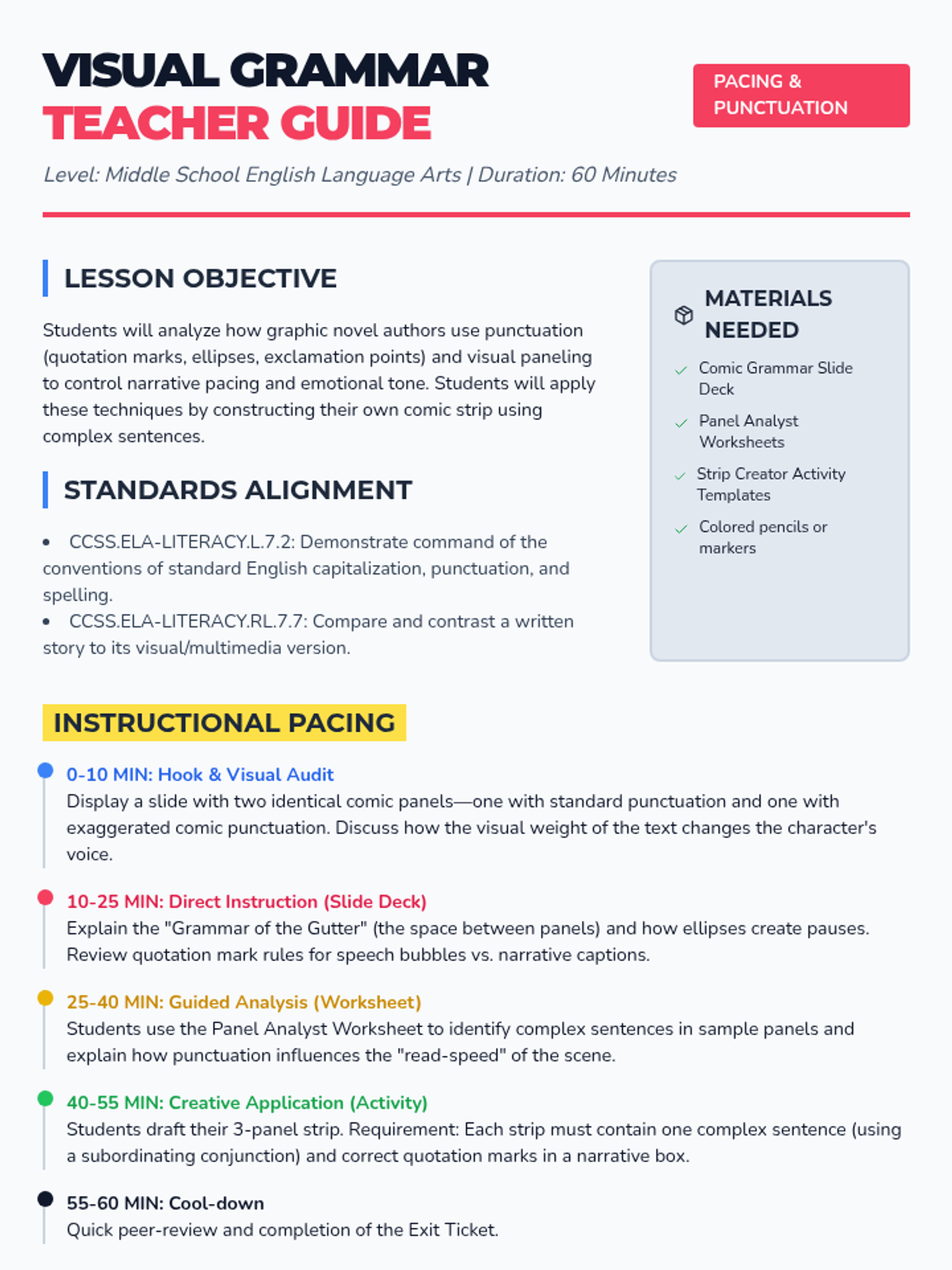
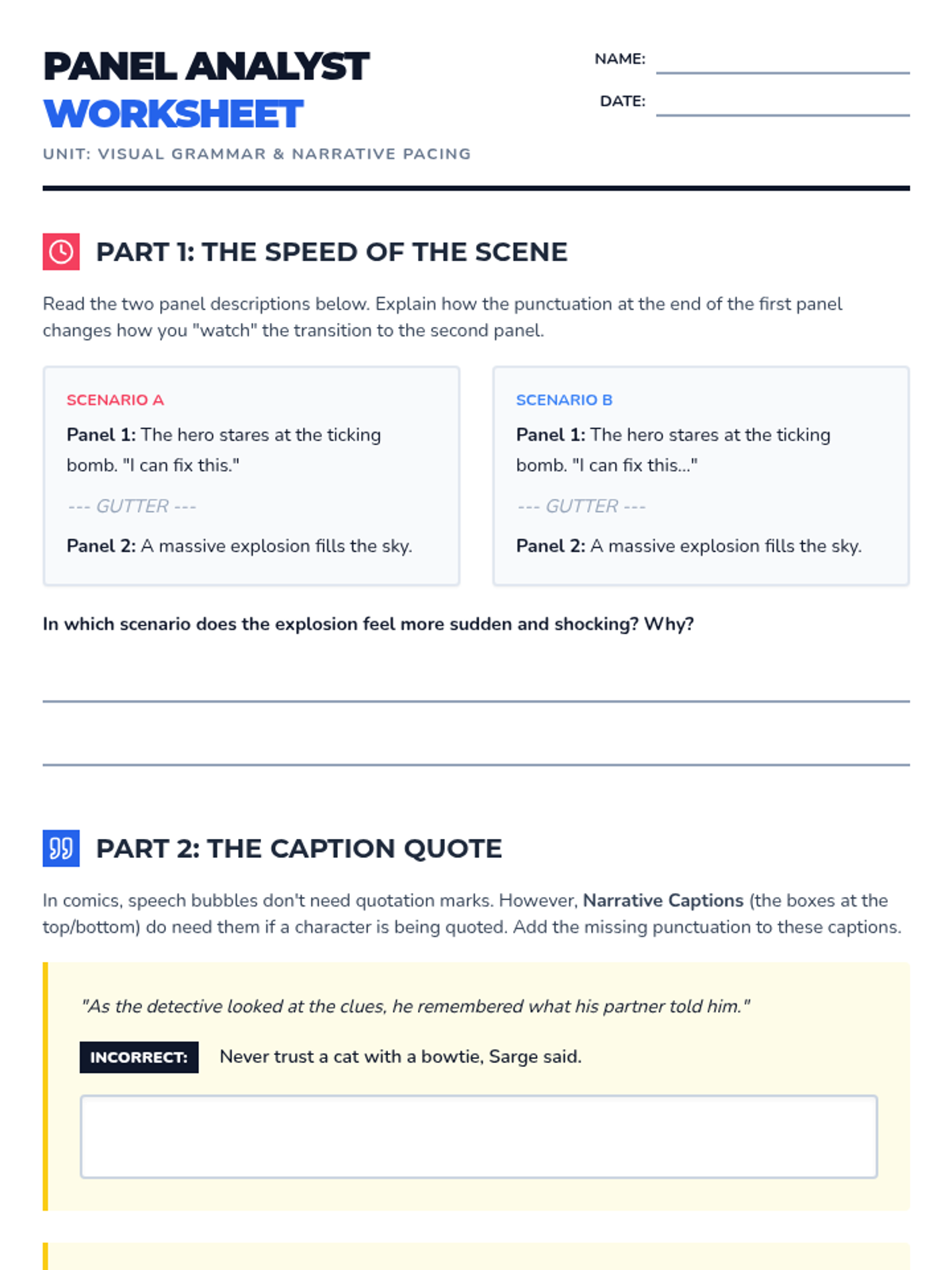
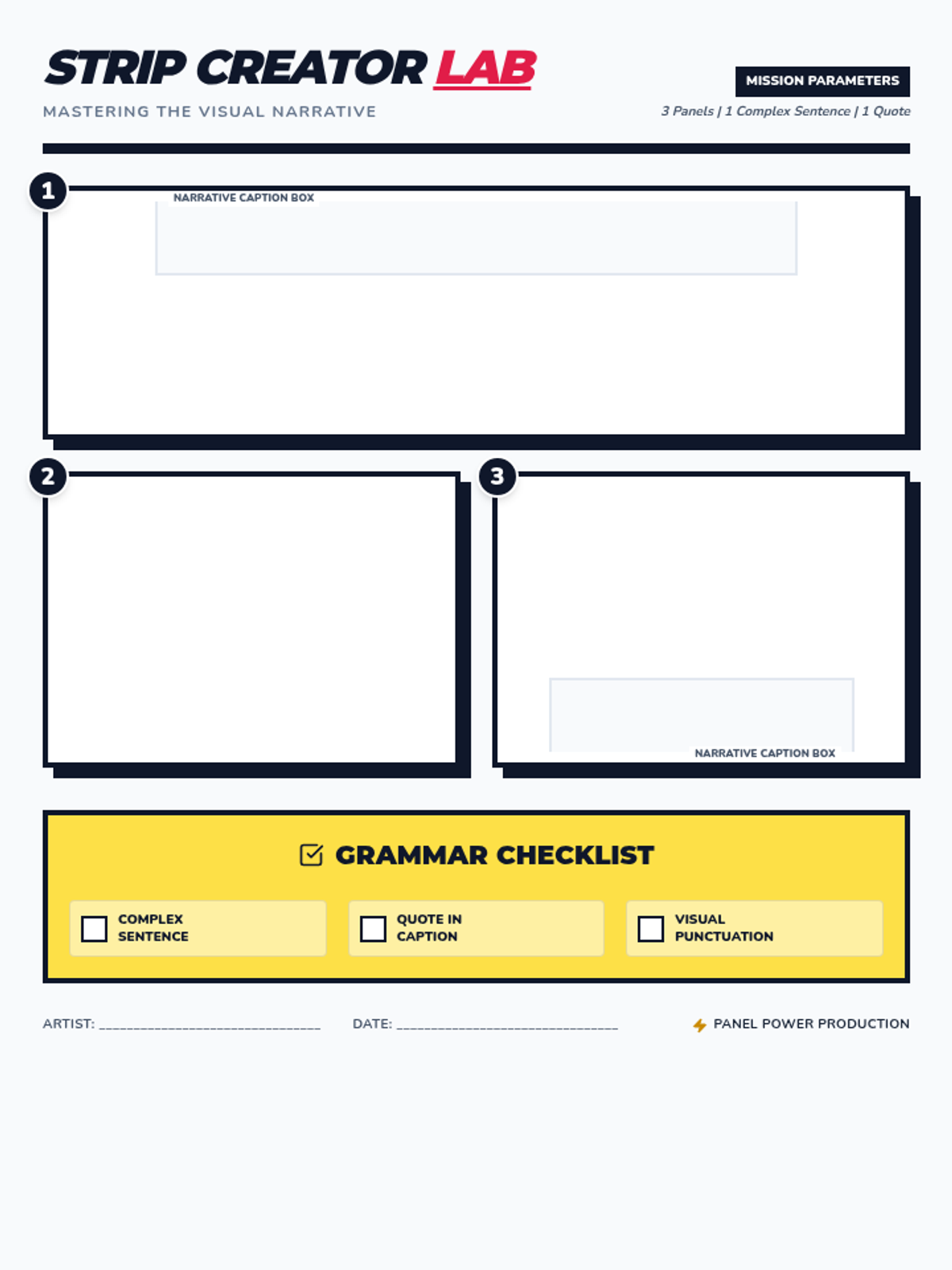
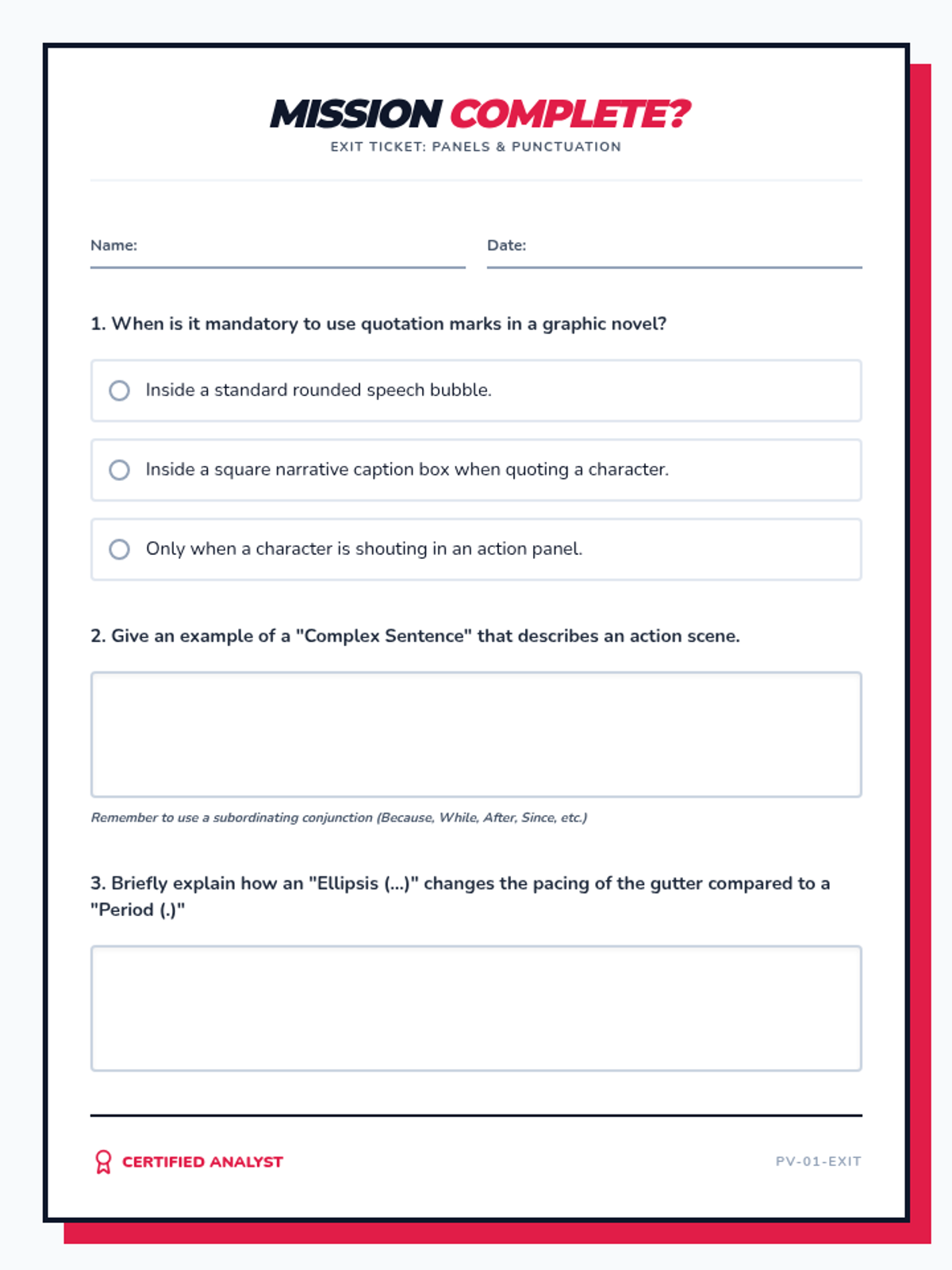
In this lesson, students explore the intersection of visual art and grammar by analyzing graphic novels. They learn how punctuation and panel layout influence tone and pacing, eventually creating their own comic strips that demonstrate mastery of quotation marks and complex sentences.
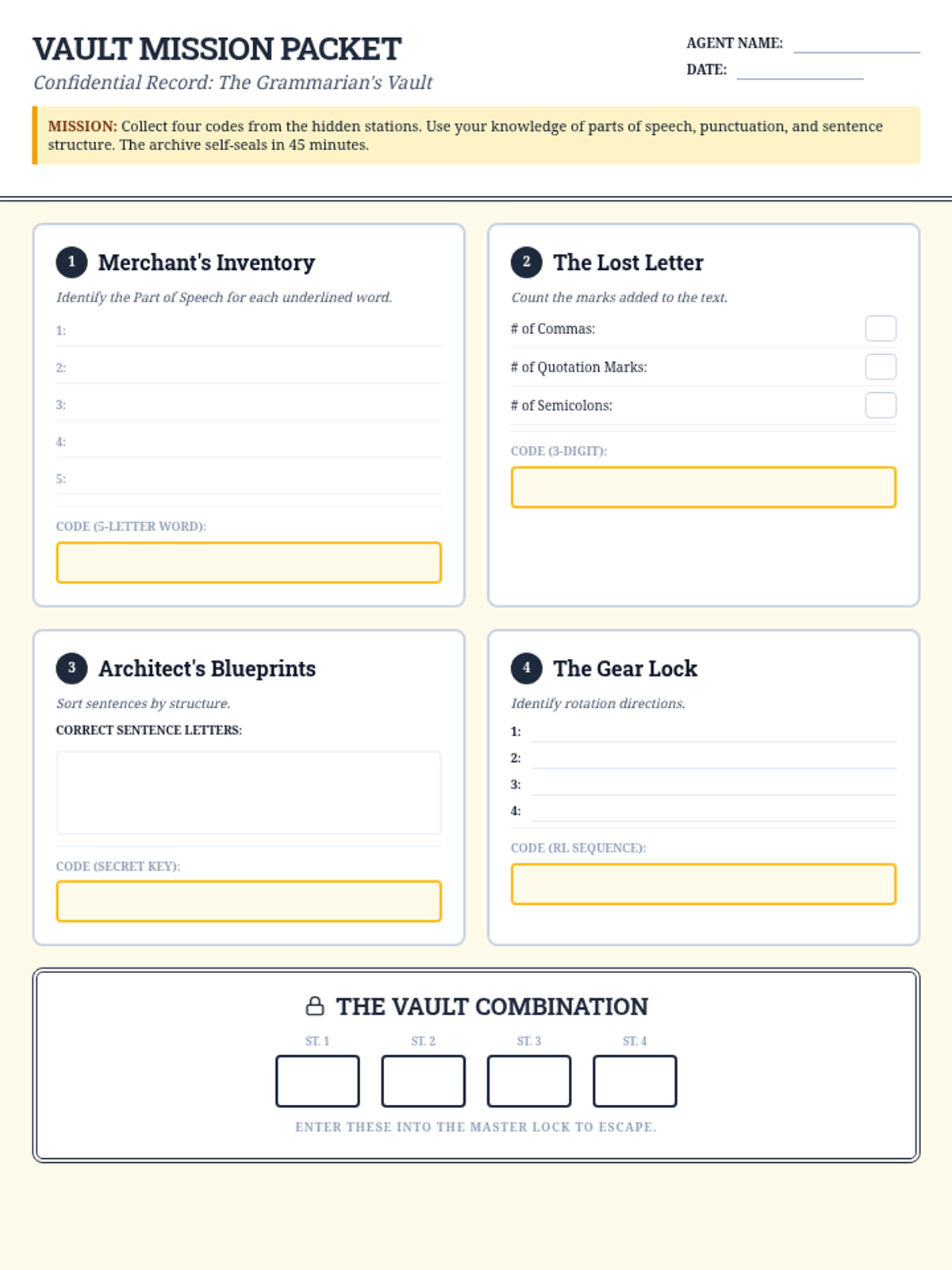
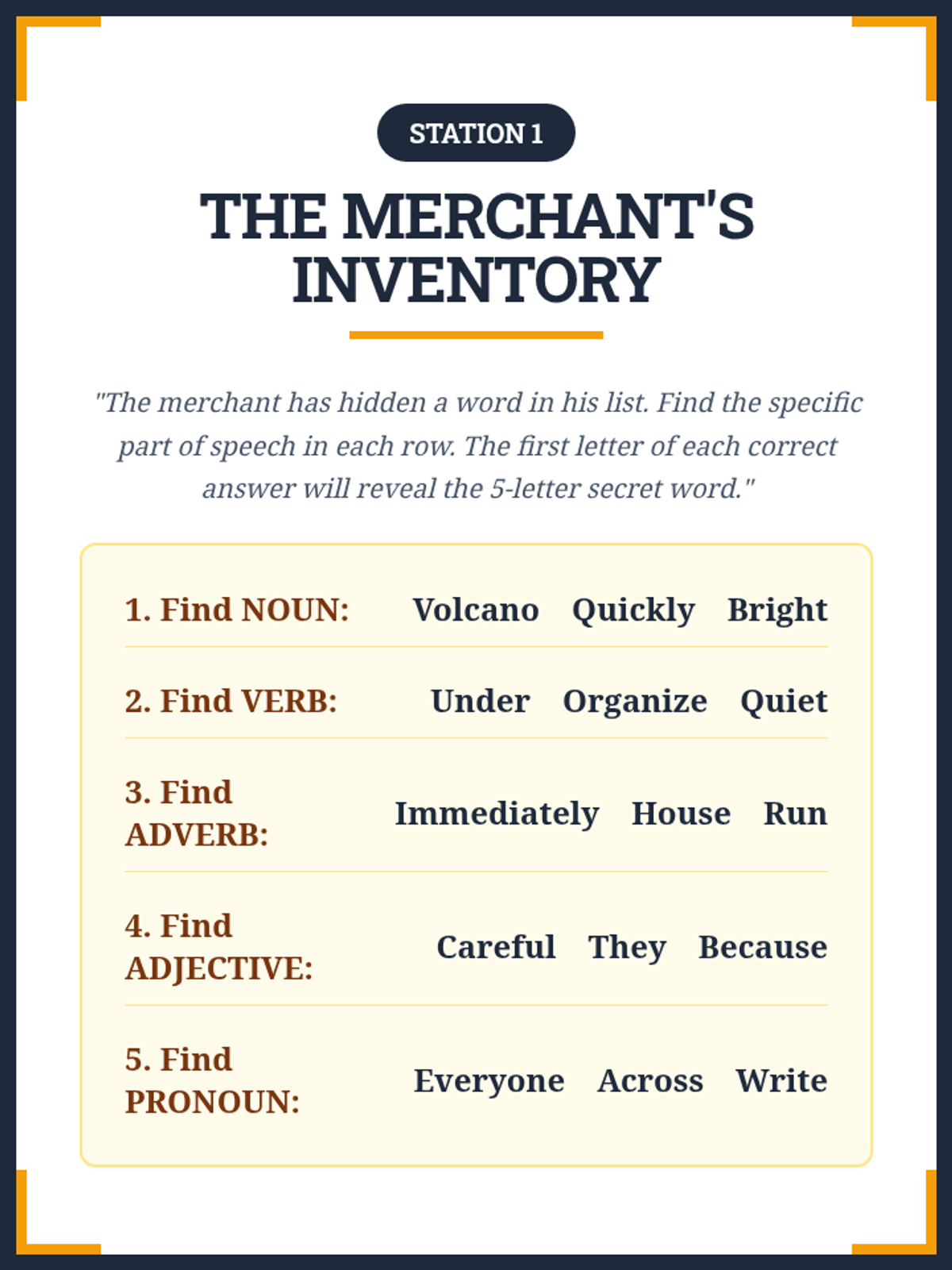
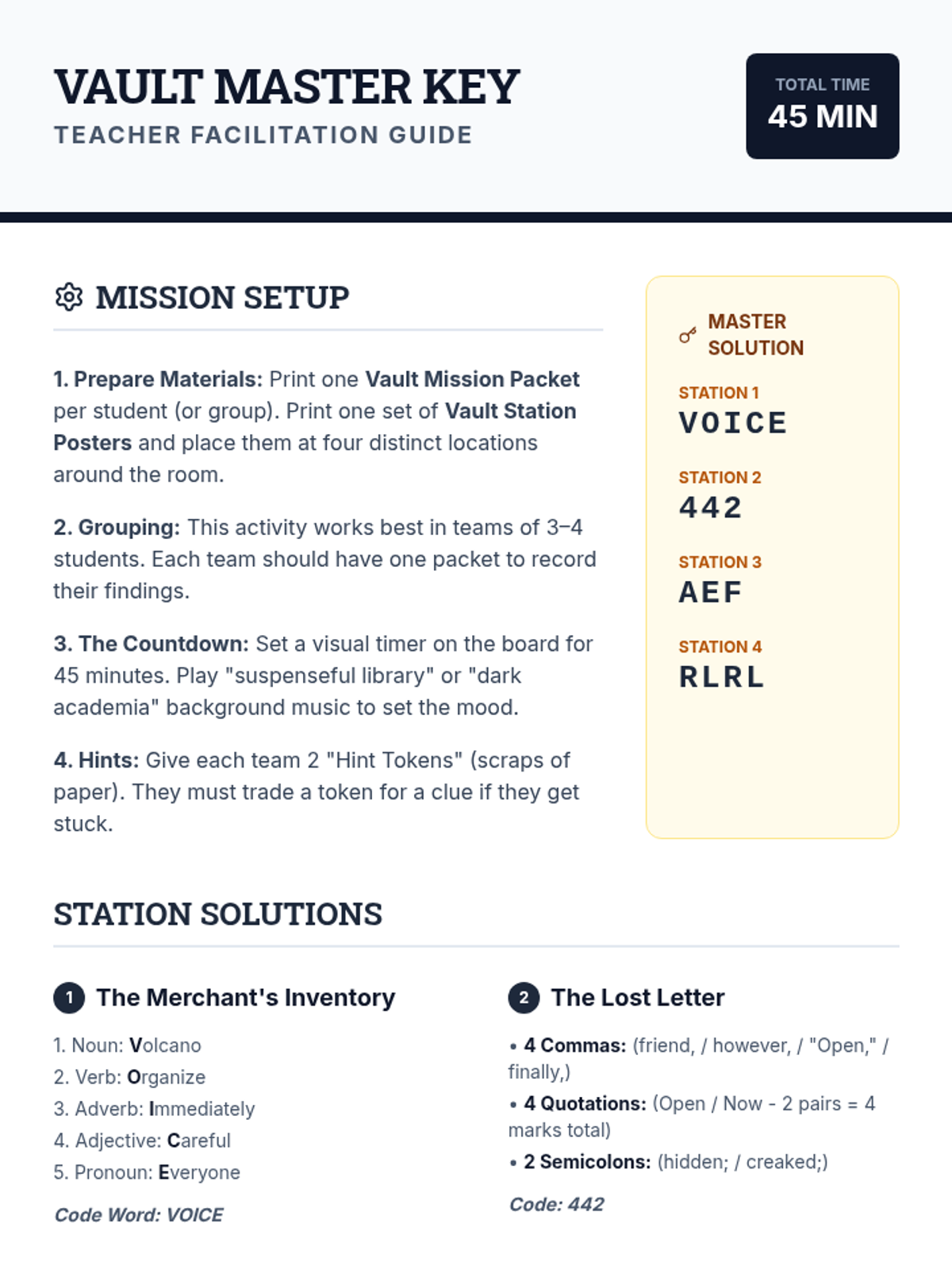
An immersive 45-minute grammar escape room where 6th-grade students solve puzzles involving parts of speech, punctuation, and sentence structure to unlock 'The Grammarian's Vault'.
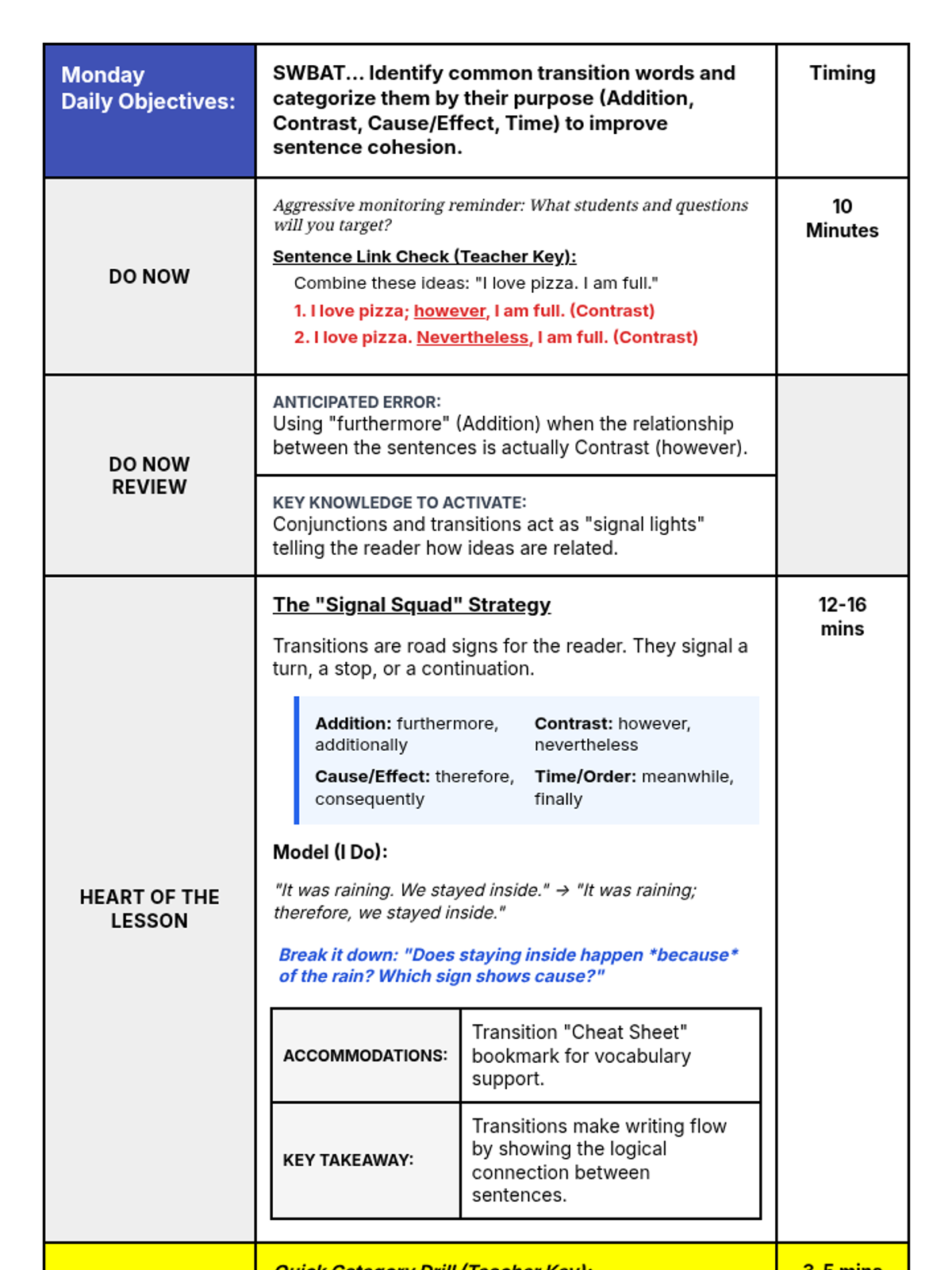
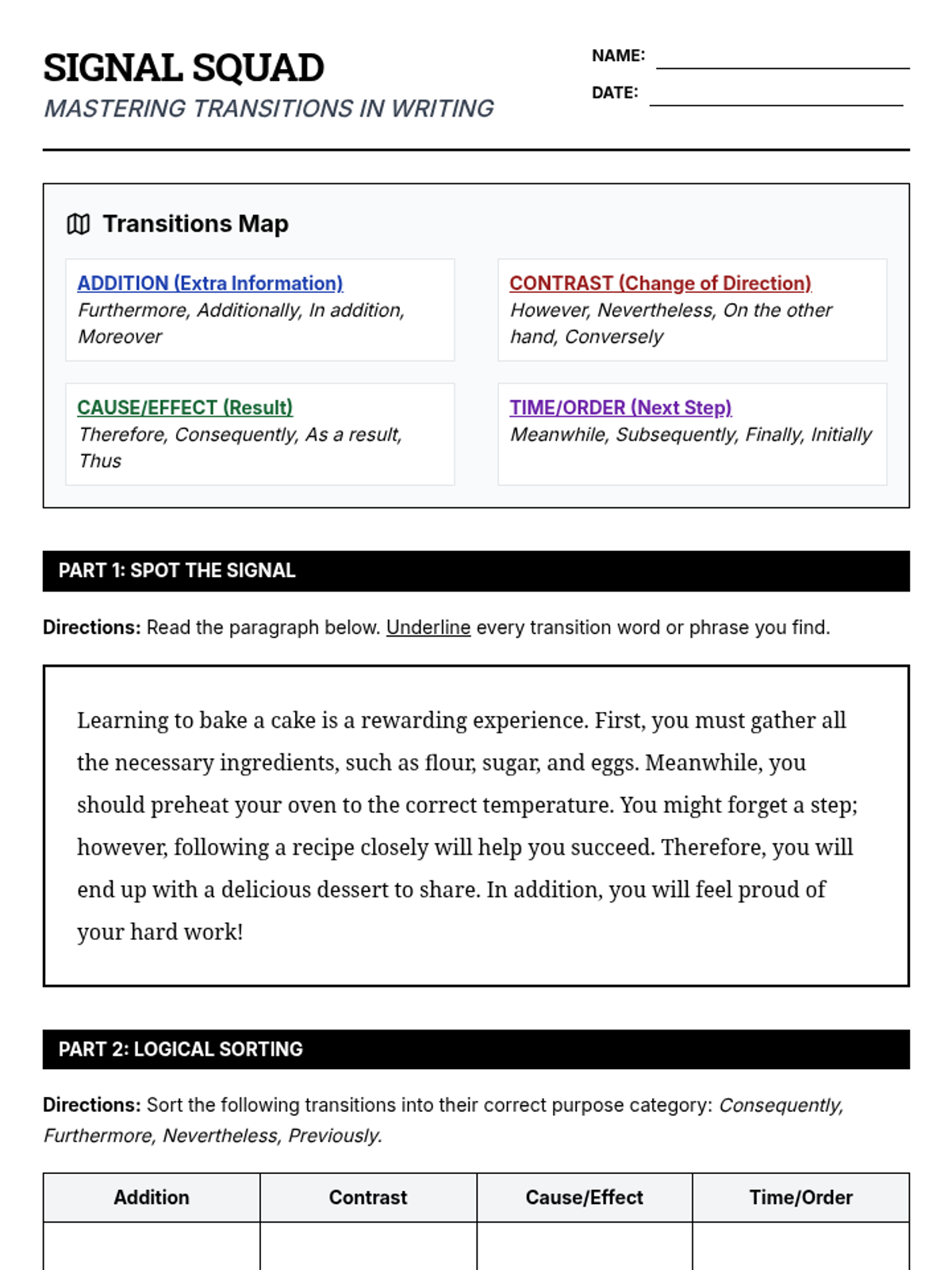
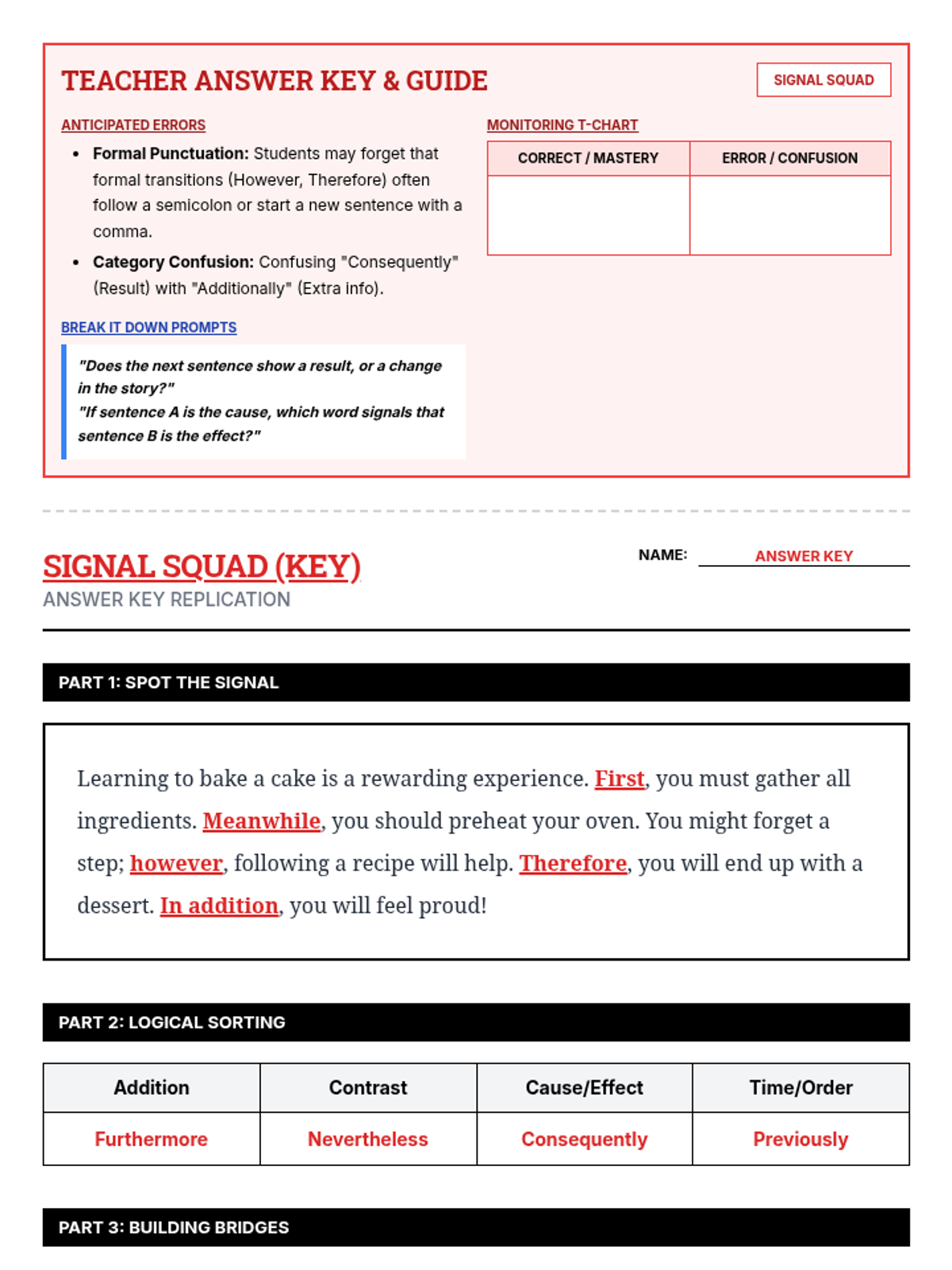
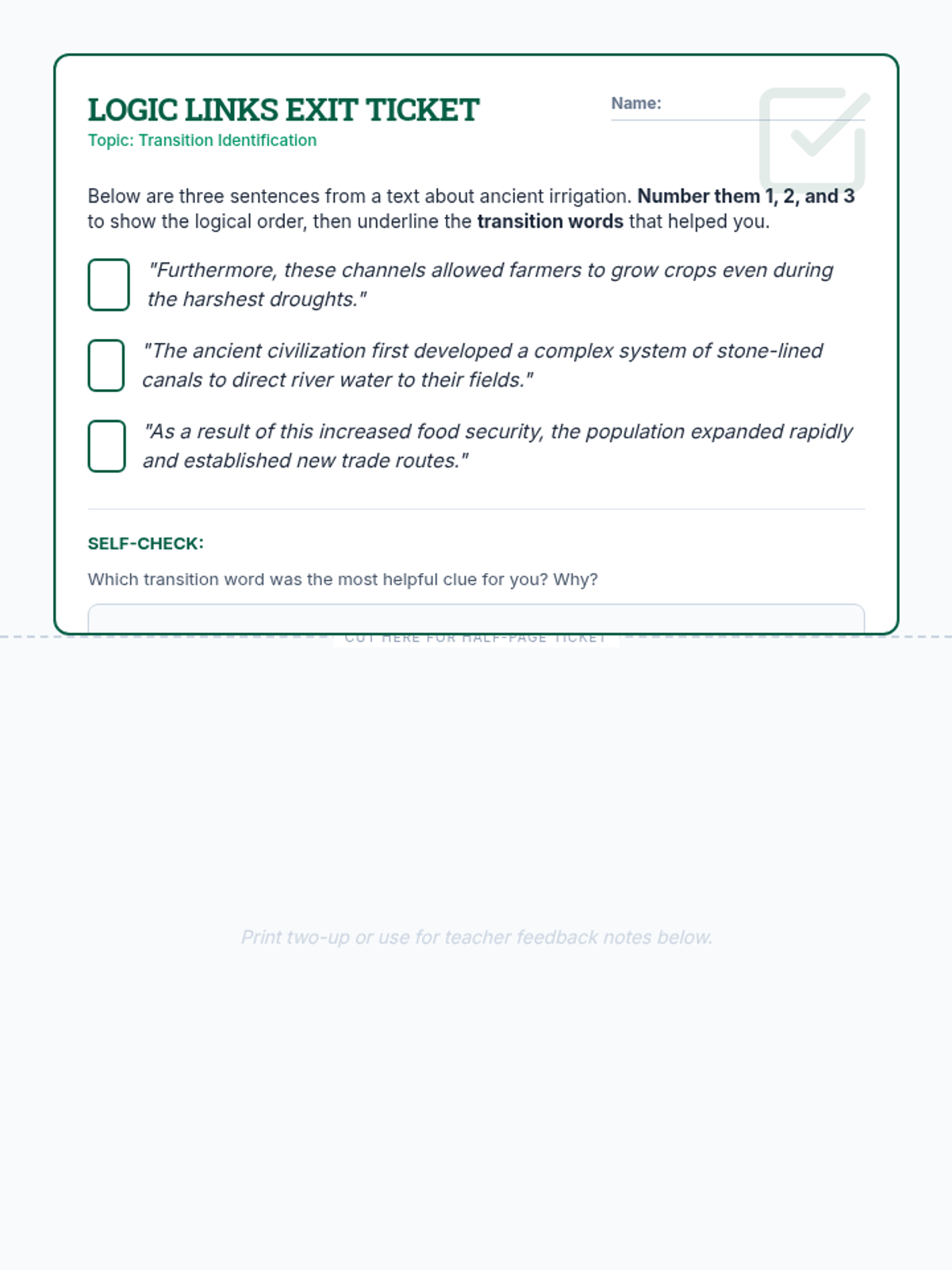
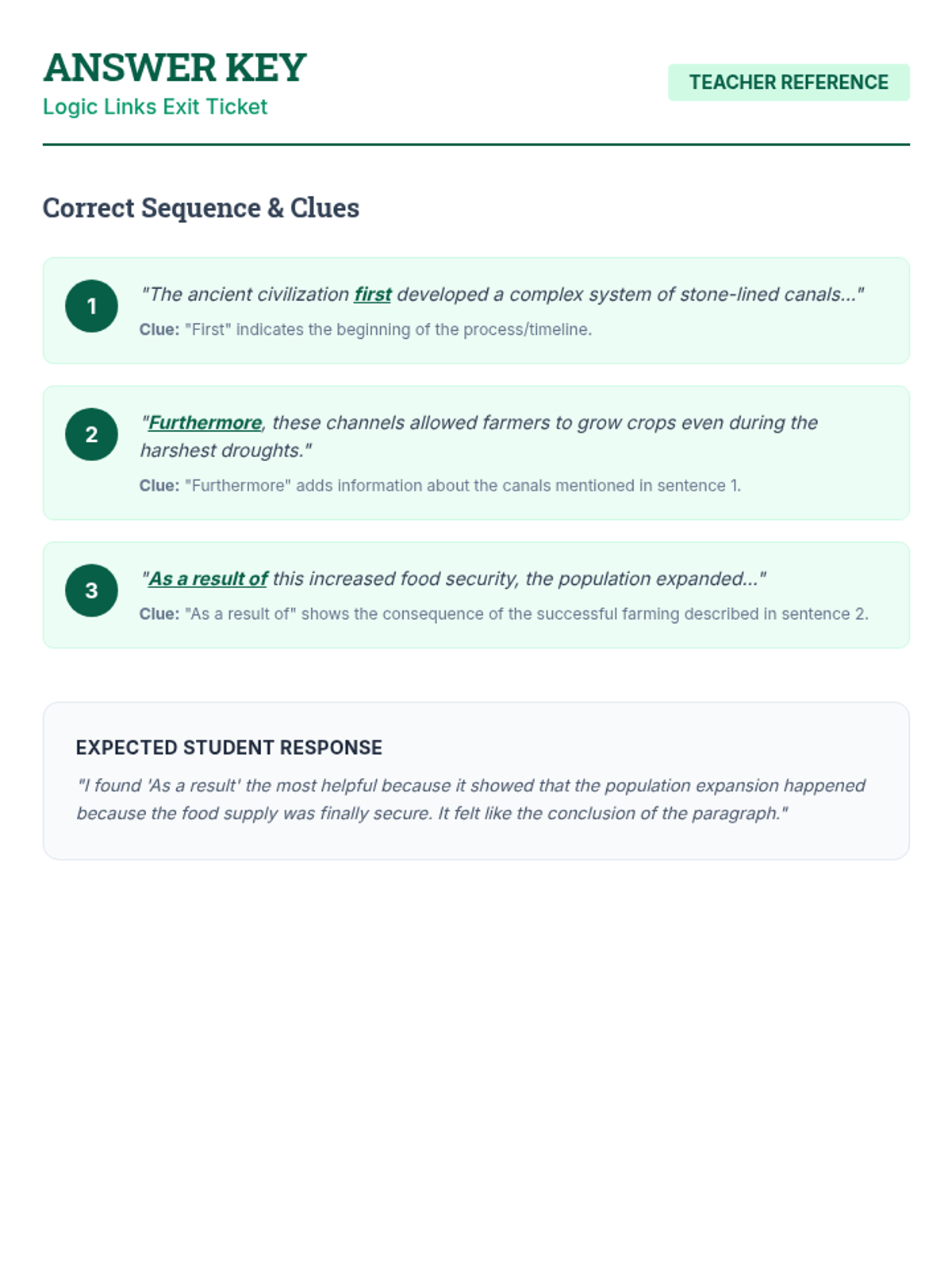
A lesson on identifying and using common transition words to create cohesion in writing. Students will categorize transitions by purpose (Addition, Contrast, Cause/Effect, Time) and use them to link ideas.
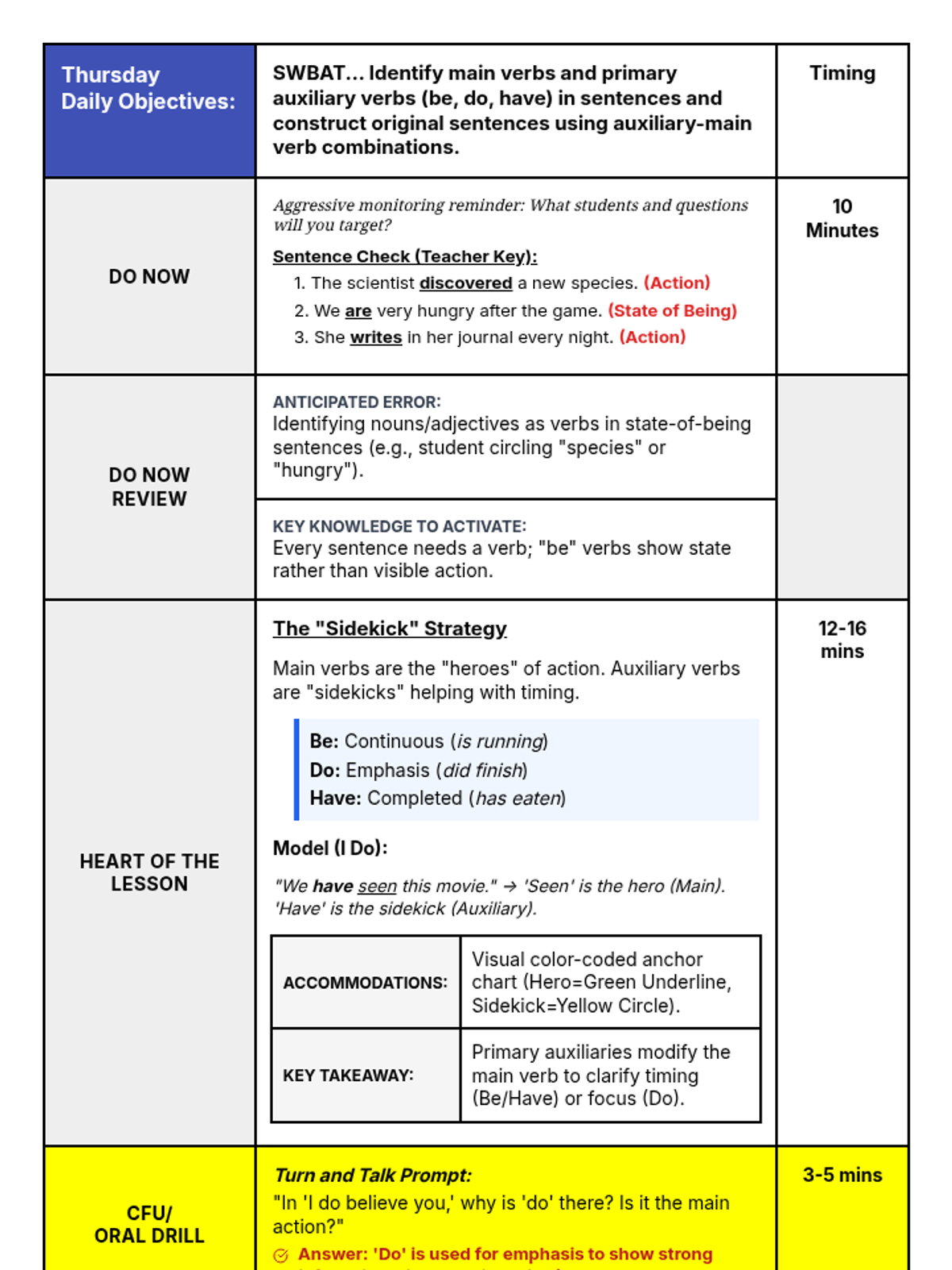
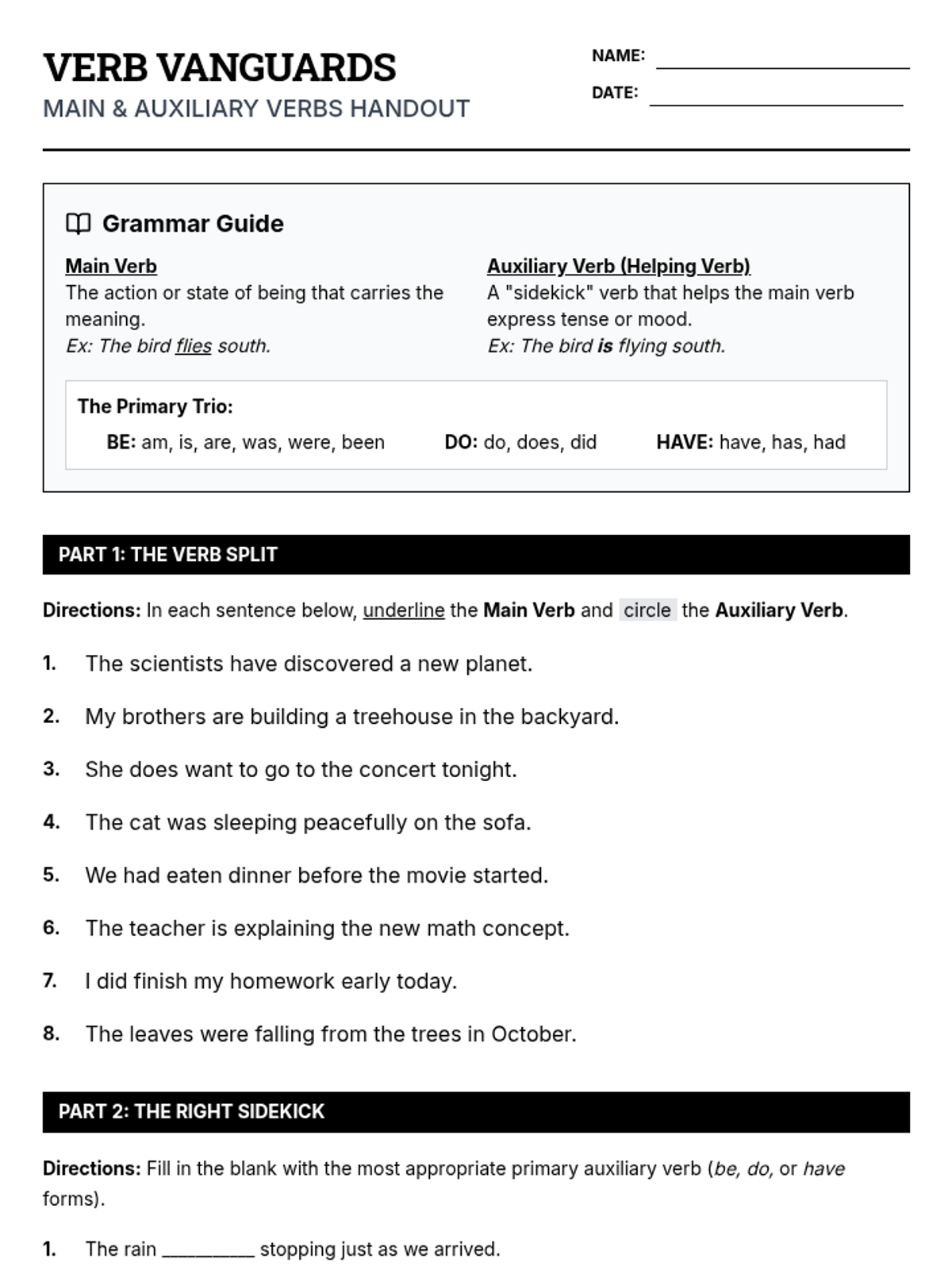
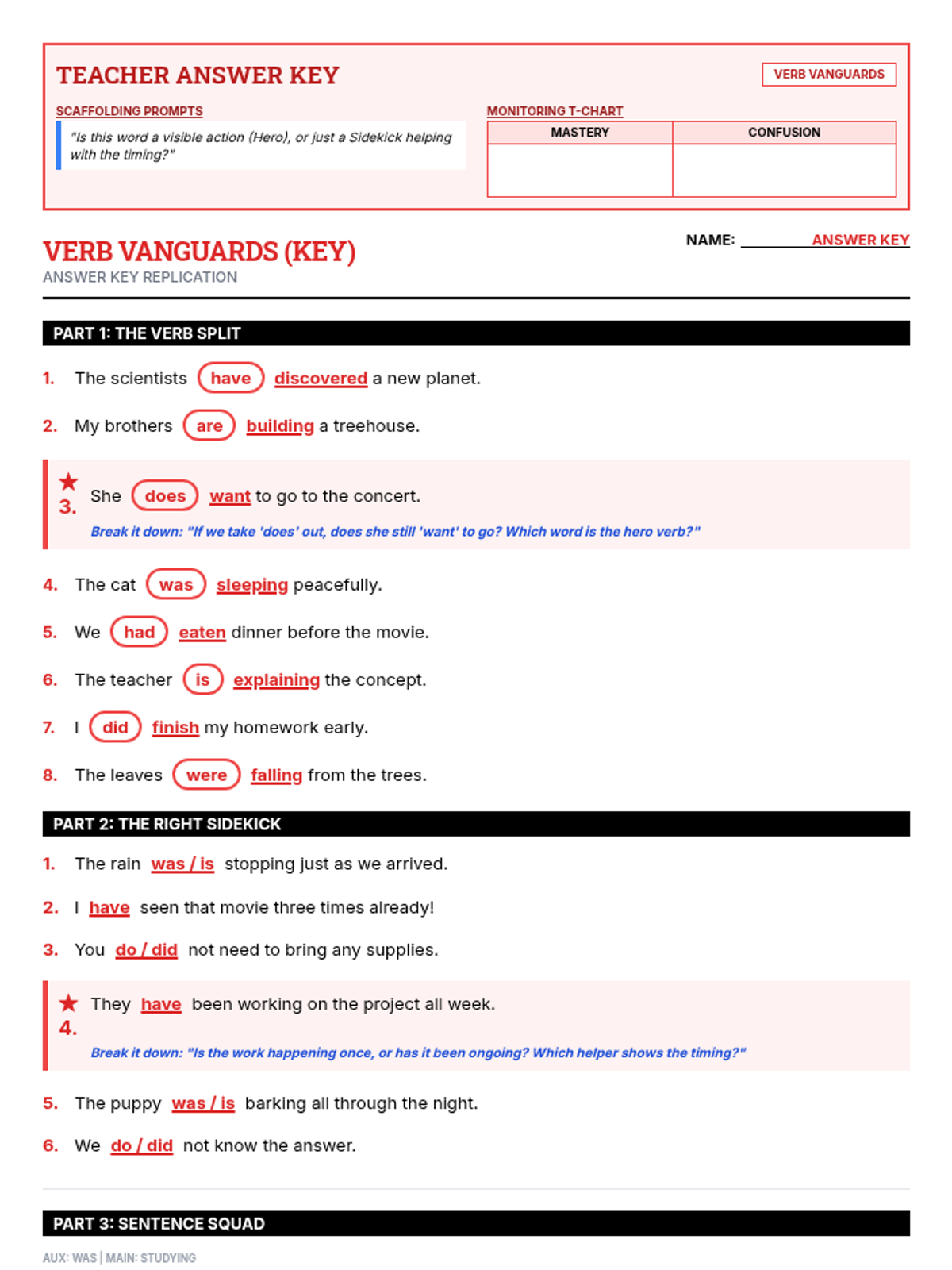
A comprehensive lesson on identifying and using main verbs and primary auxiliary verbs (be, do, have) in sentences. Includes a structured lesson plan, a practice handout, and a detailed answer key with monitoring tools.
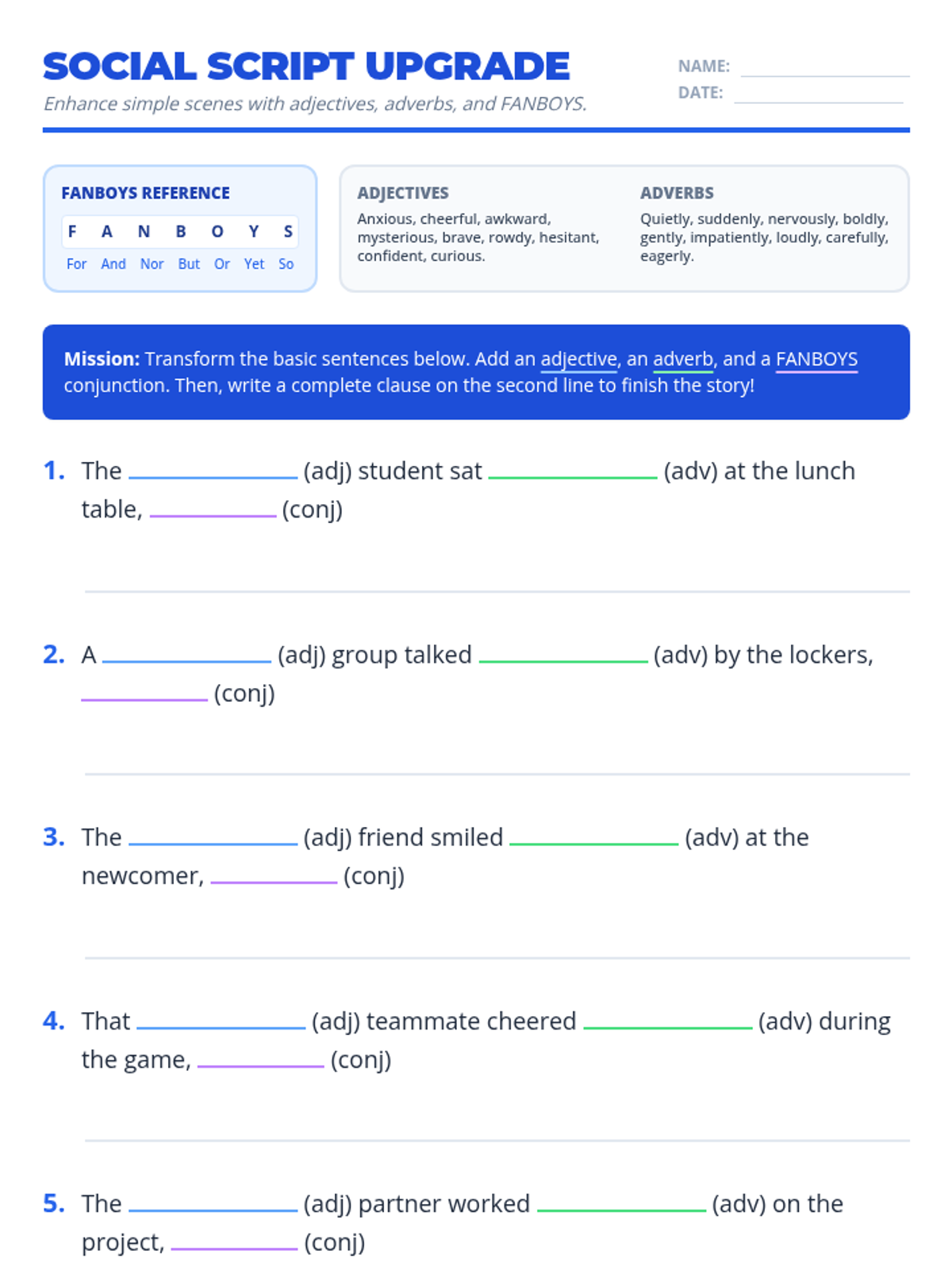
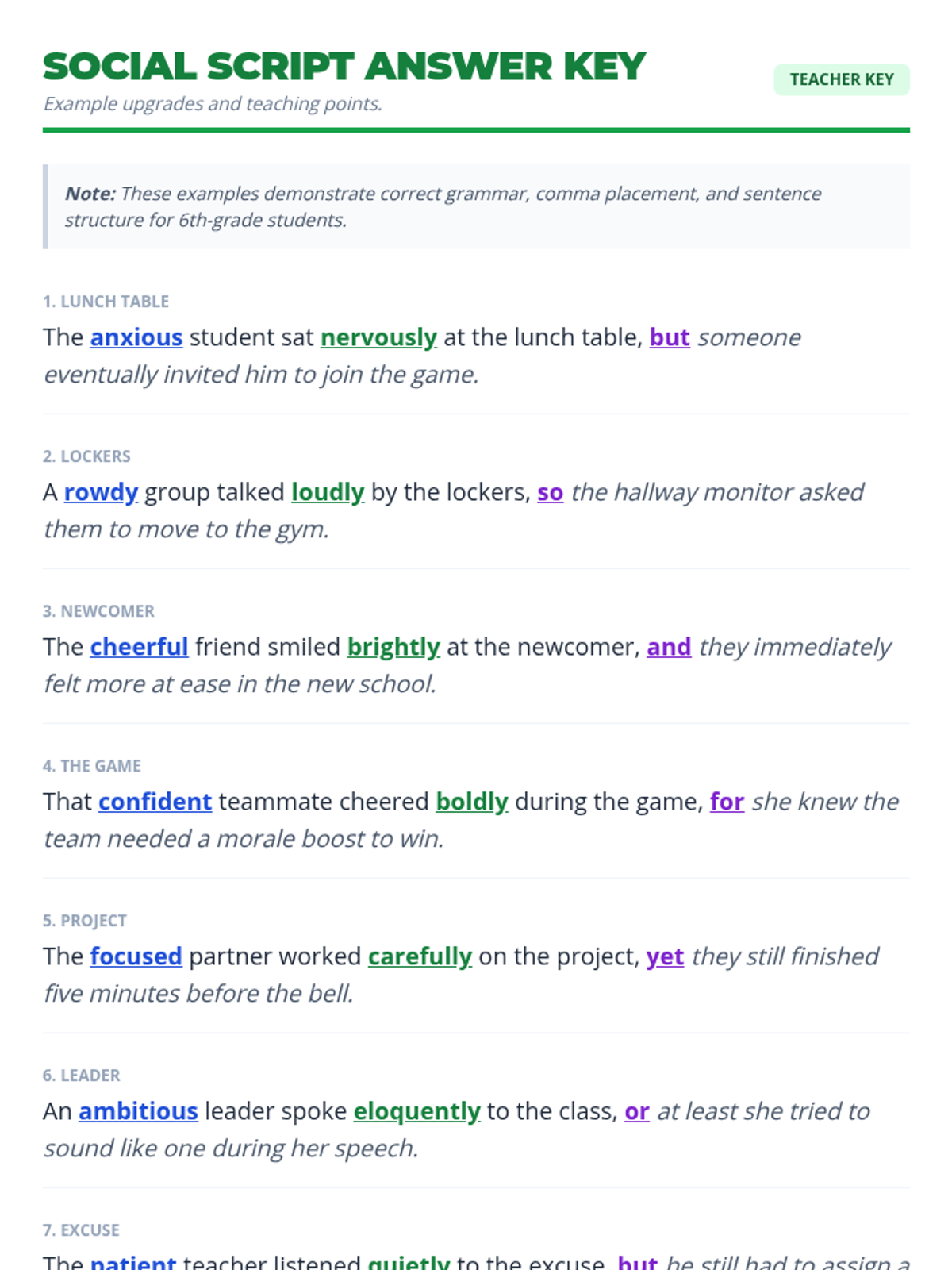
In this lesson, students will enhance simple social scenario sentences by applying descriptive adjectives, expressive adverbs, and coordinating conjunctions (FANBOYS) to create more engaging and complex narrative structures.
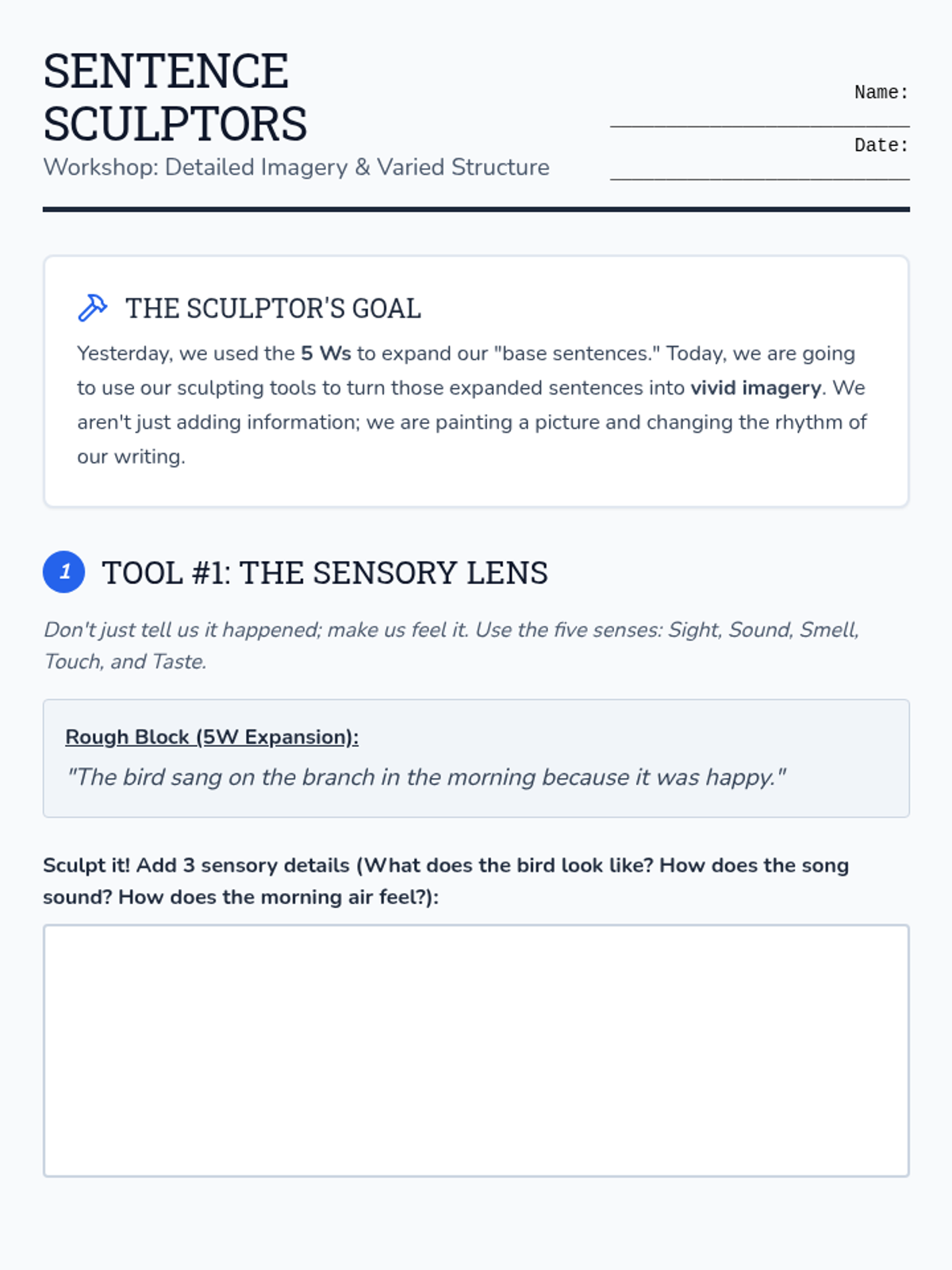
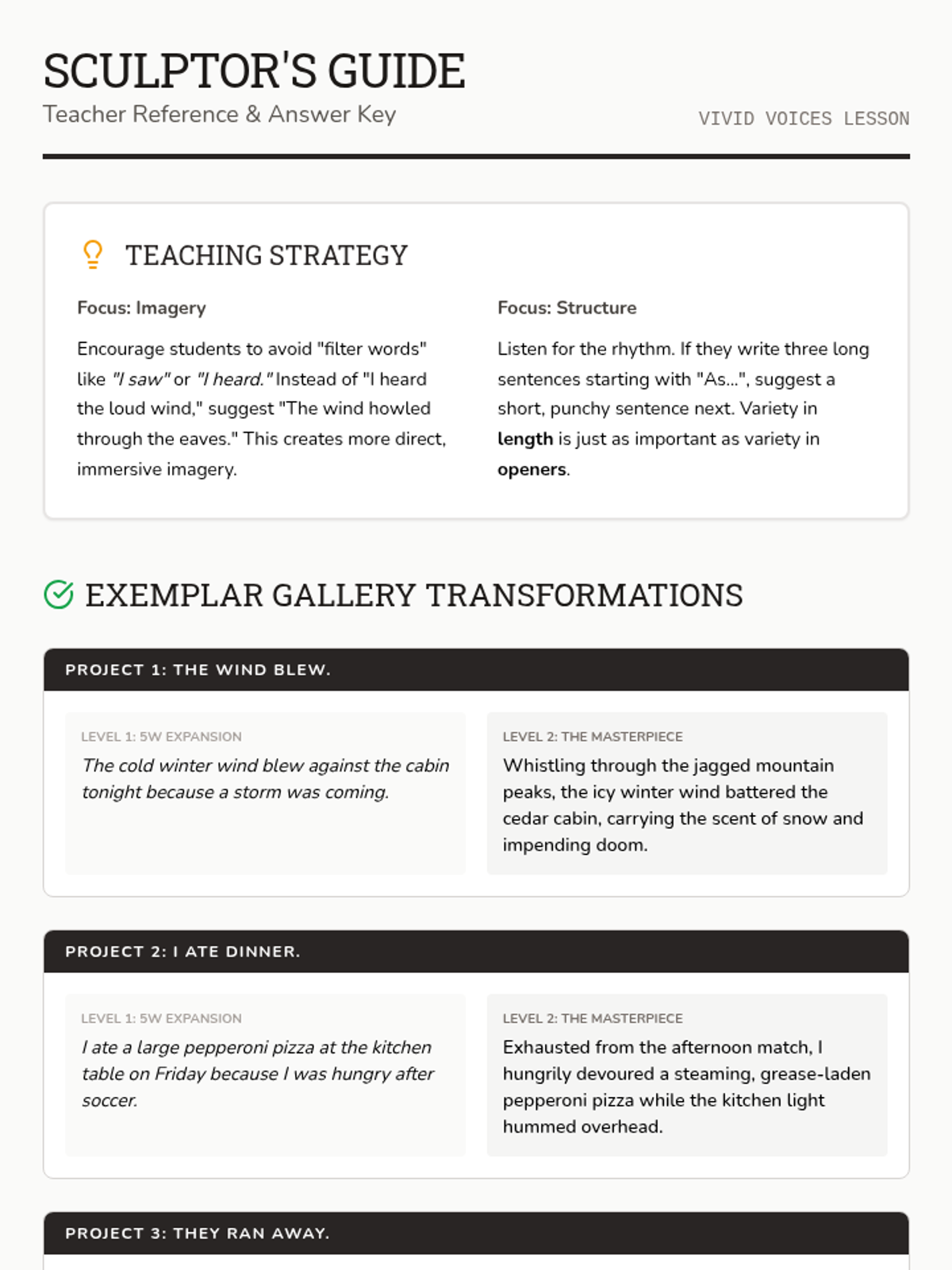
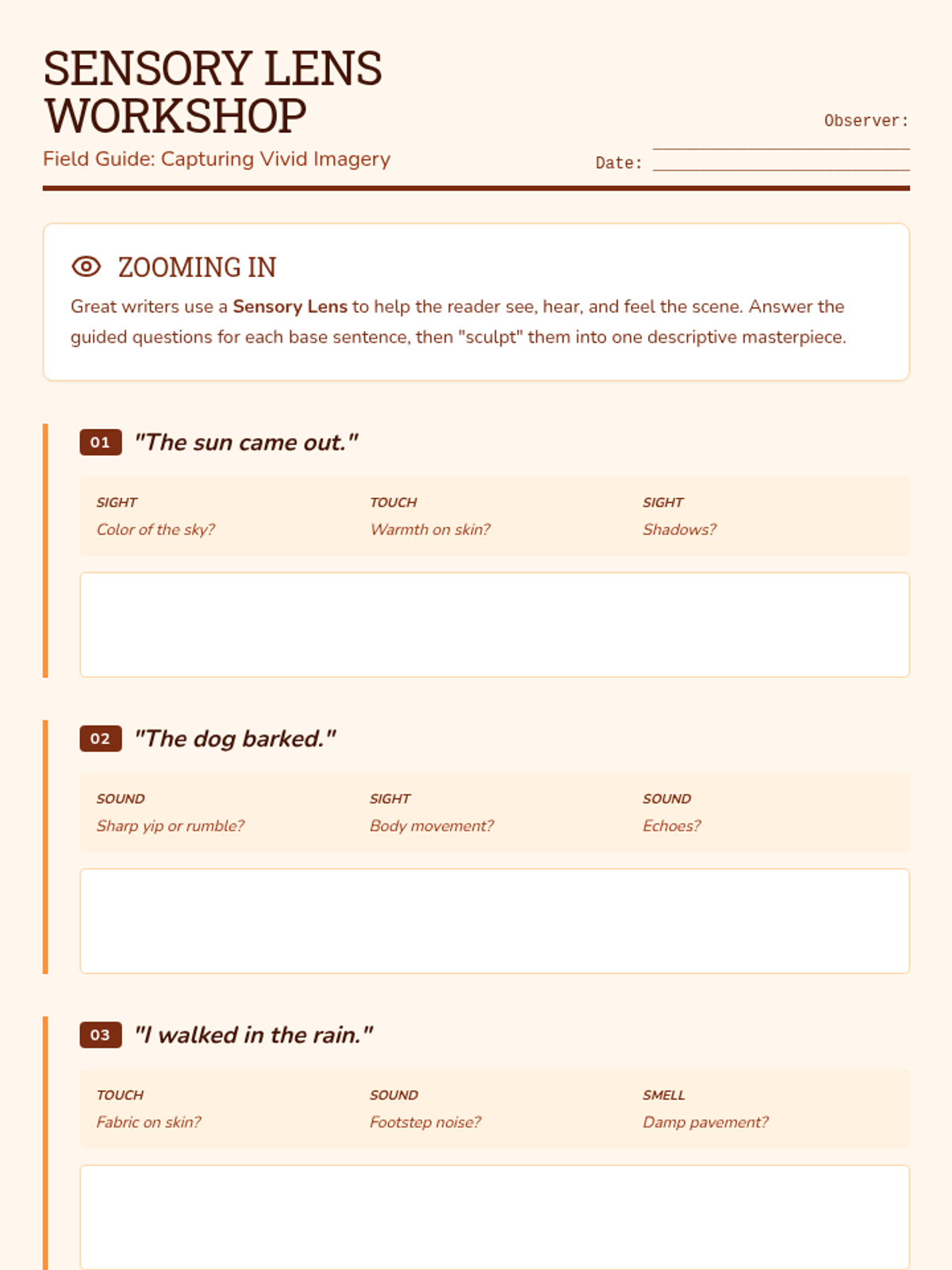
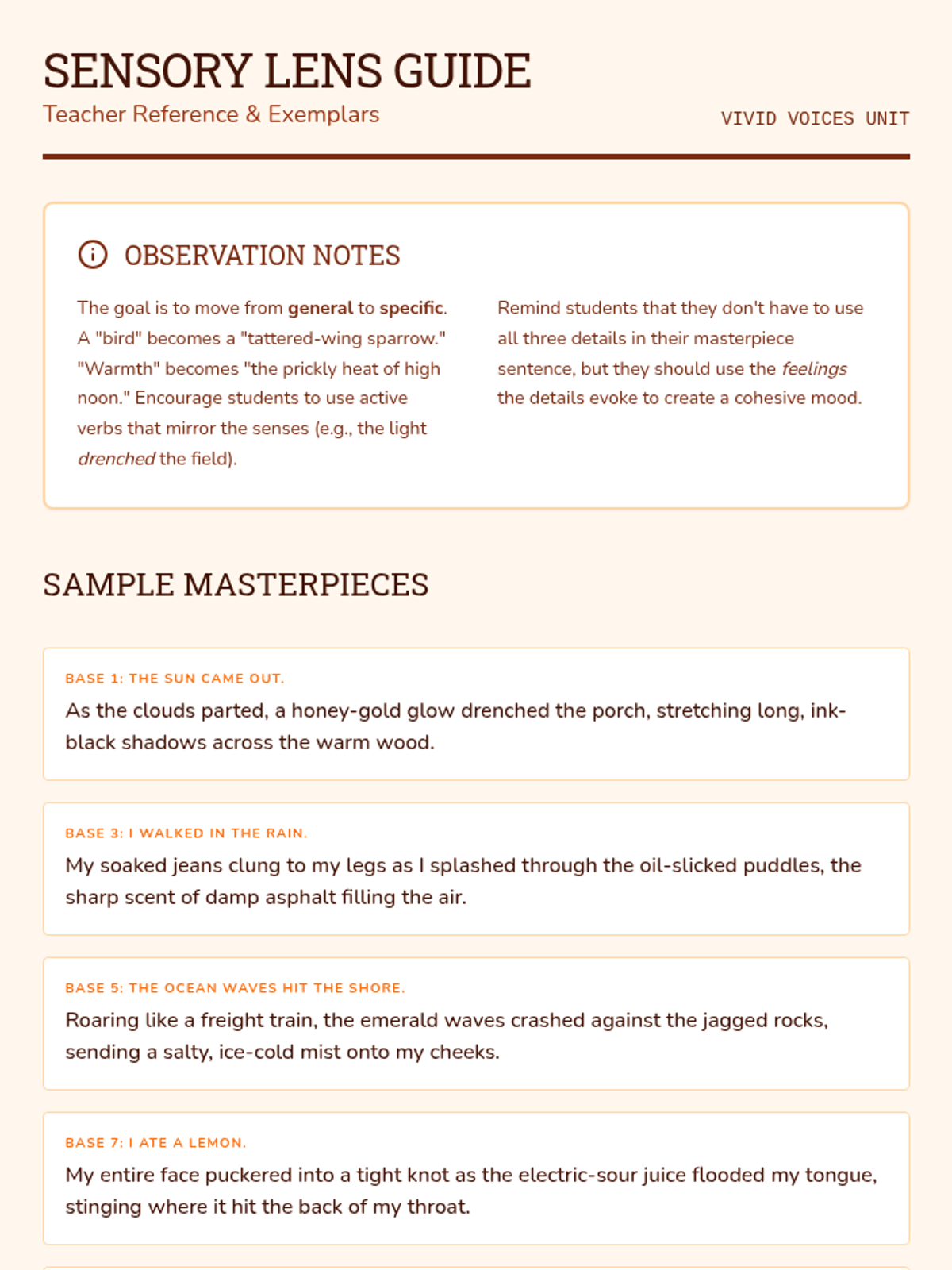
A lesson focused on transforming basic sentences into vivid, descriptive narratives using sensory imagery and varied sentence structures. Students build on their 5W foundation to 'sculpt' their writing into professional-quality prose.
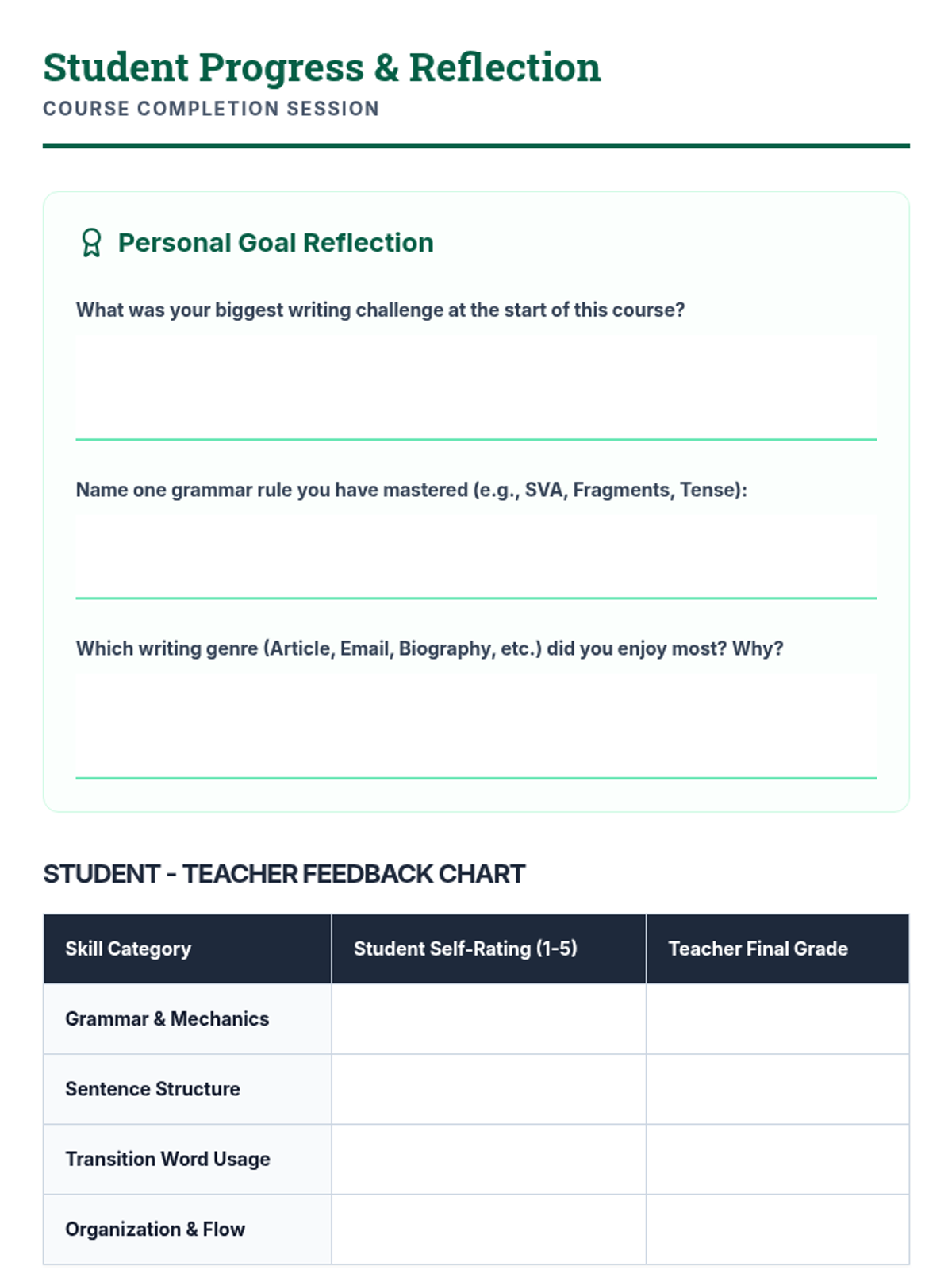
A final evaluation and reflection session including the final assessment, feedback charts, and student-teacher goal reviews.
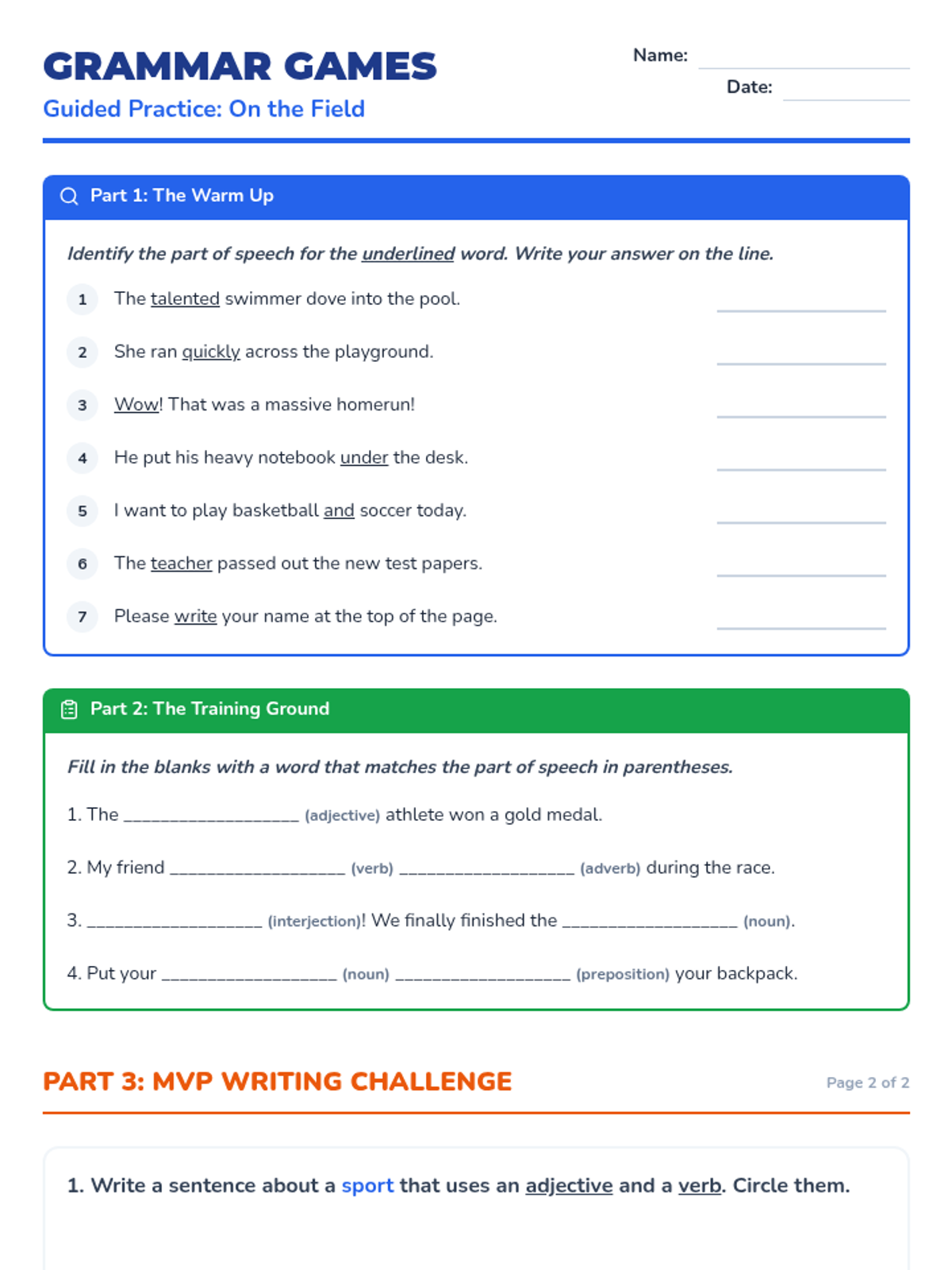
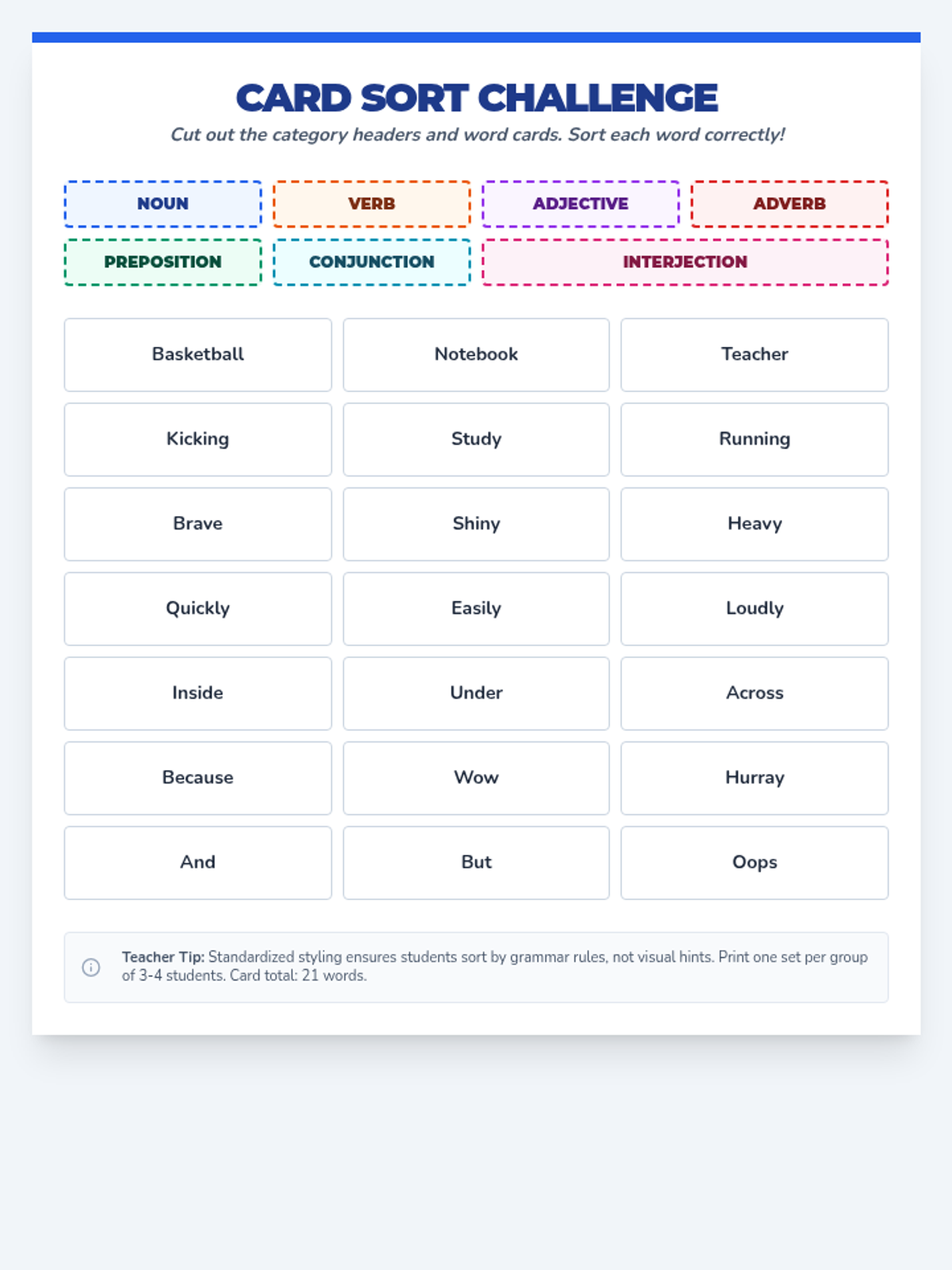
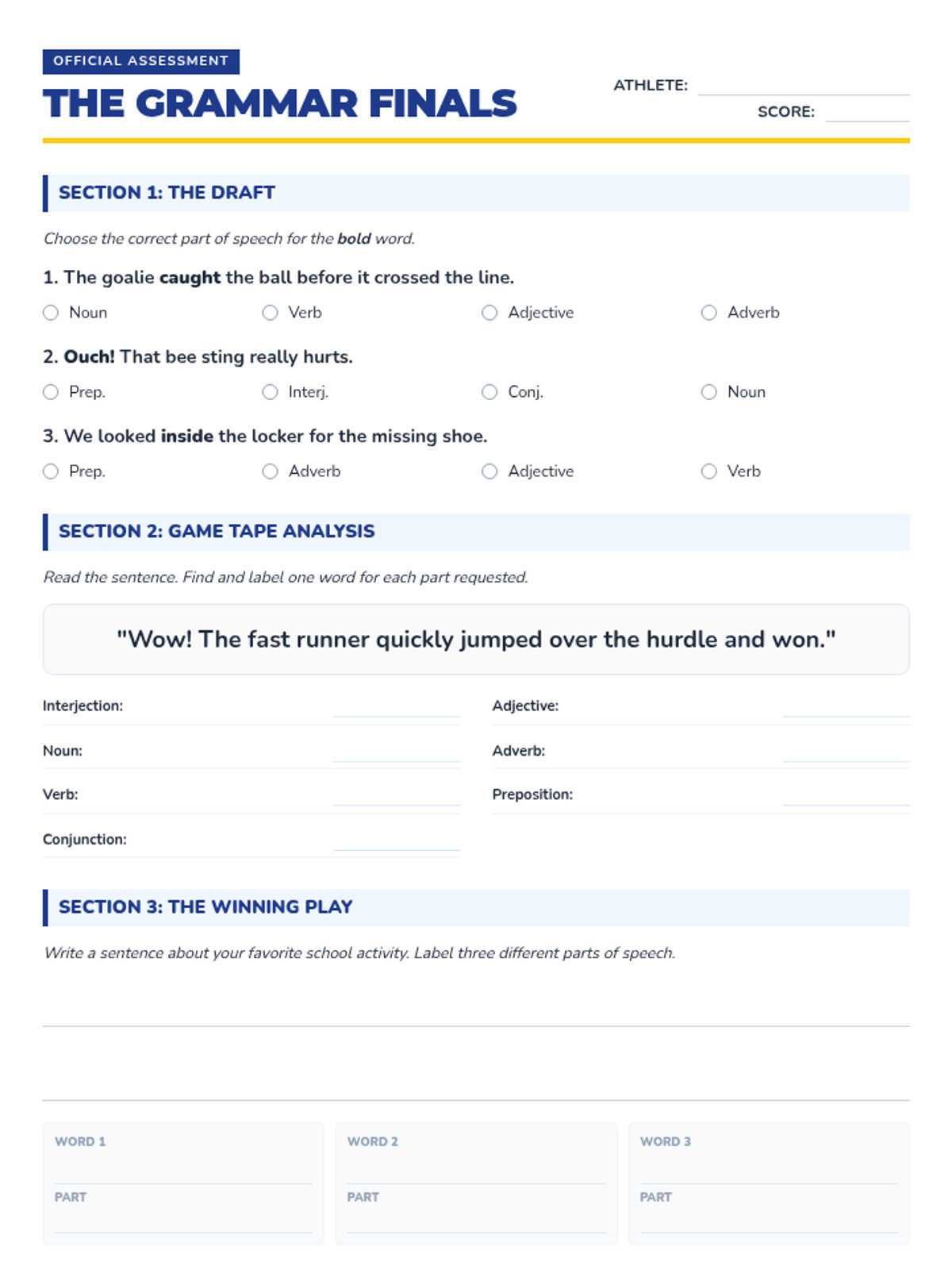
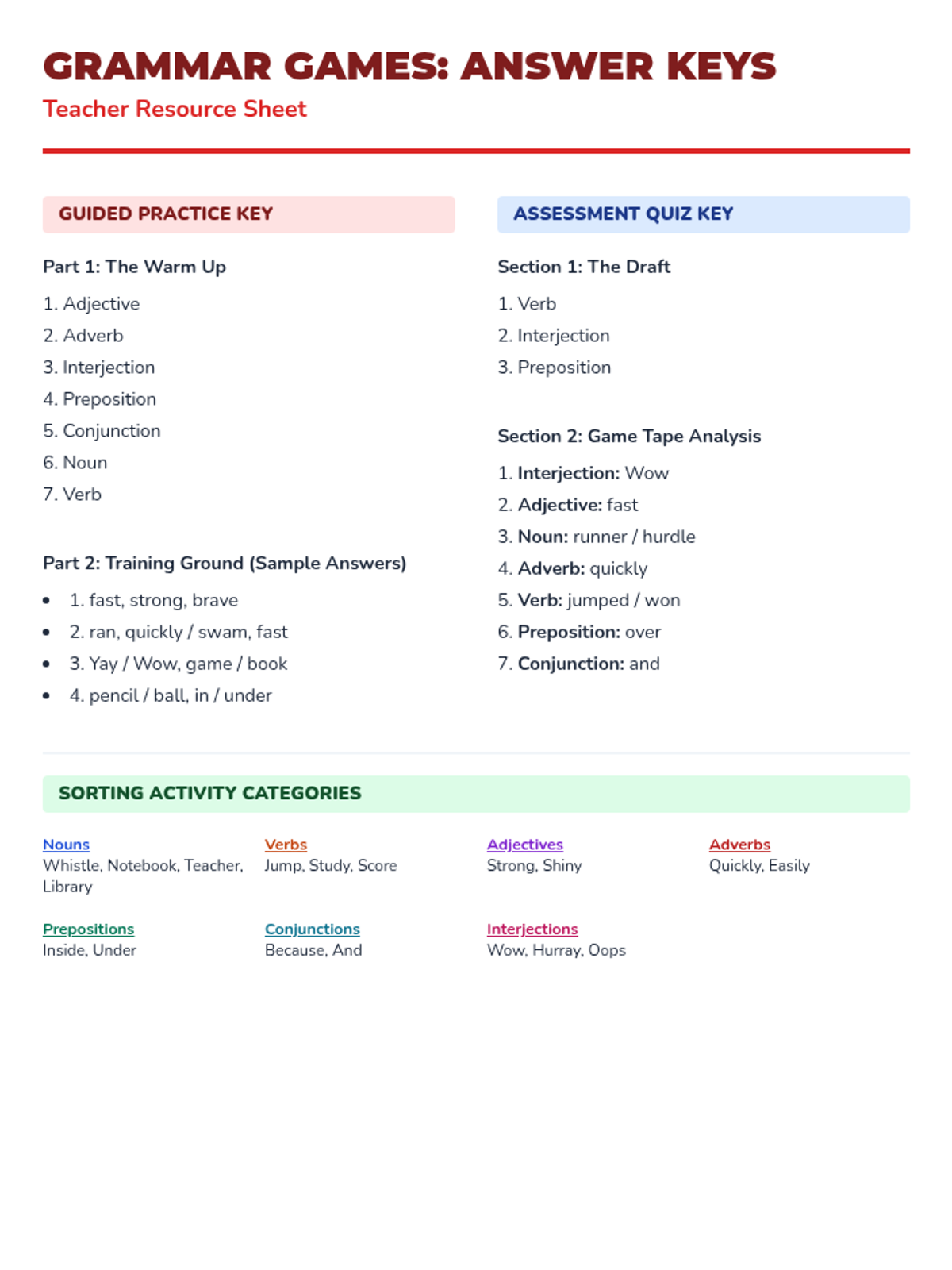
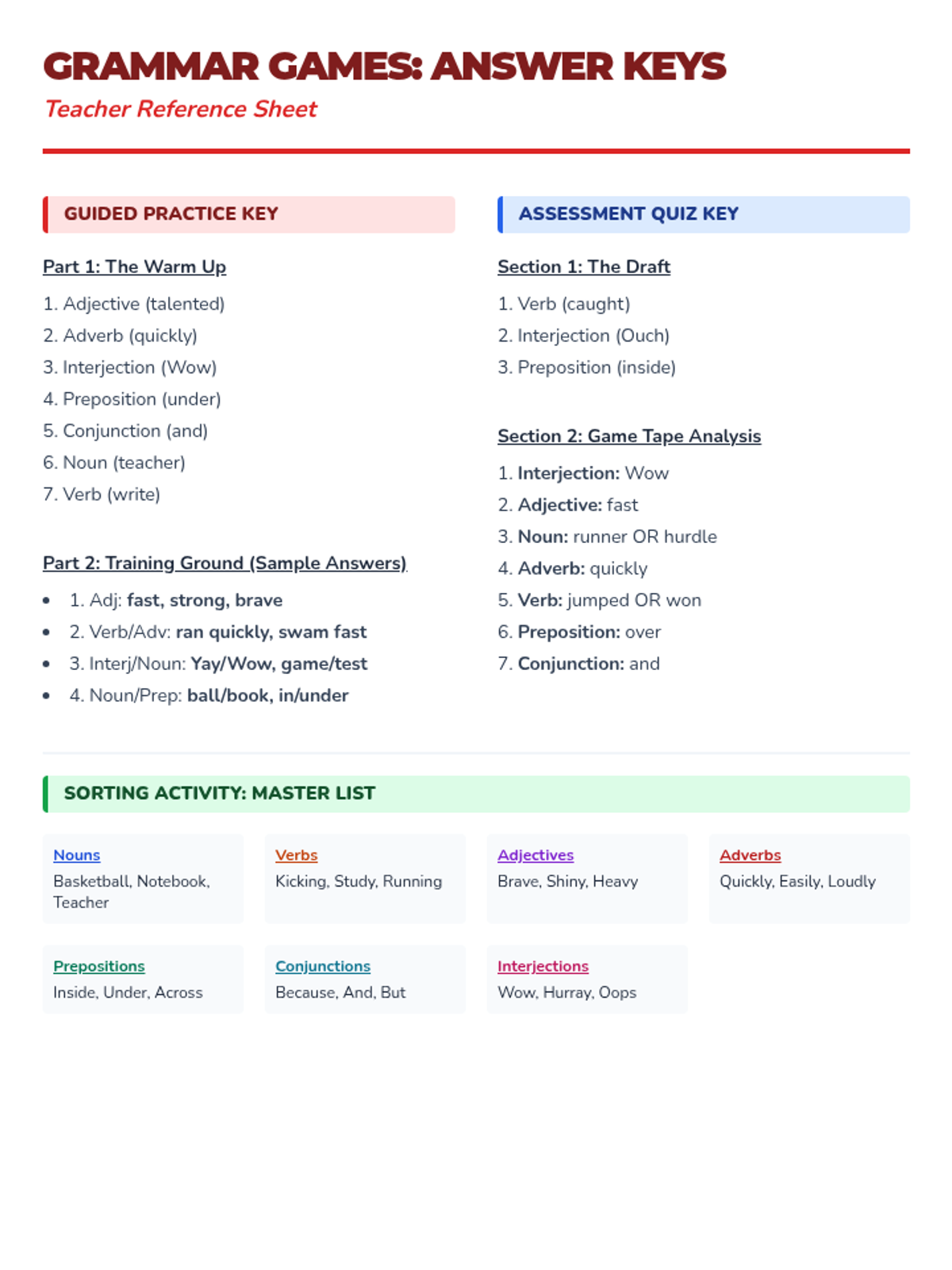
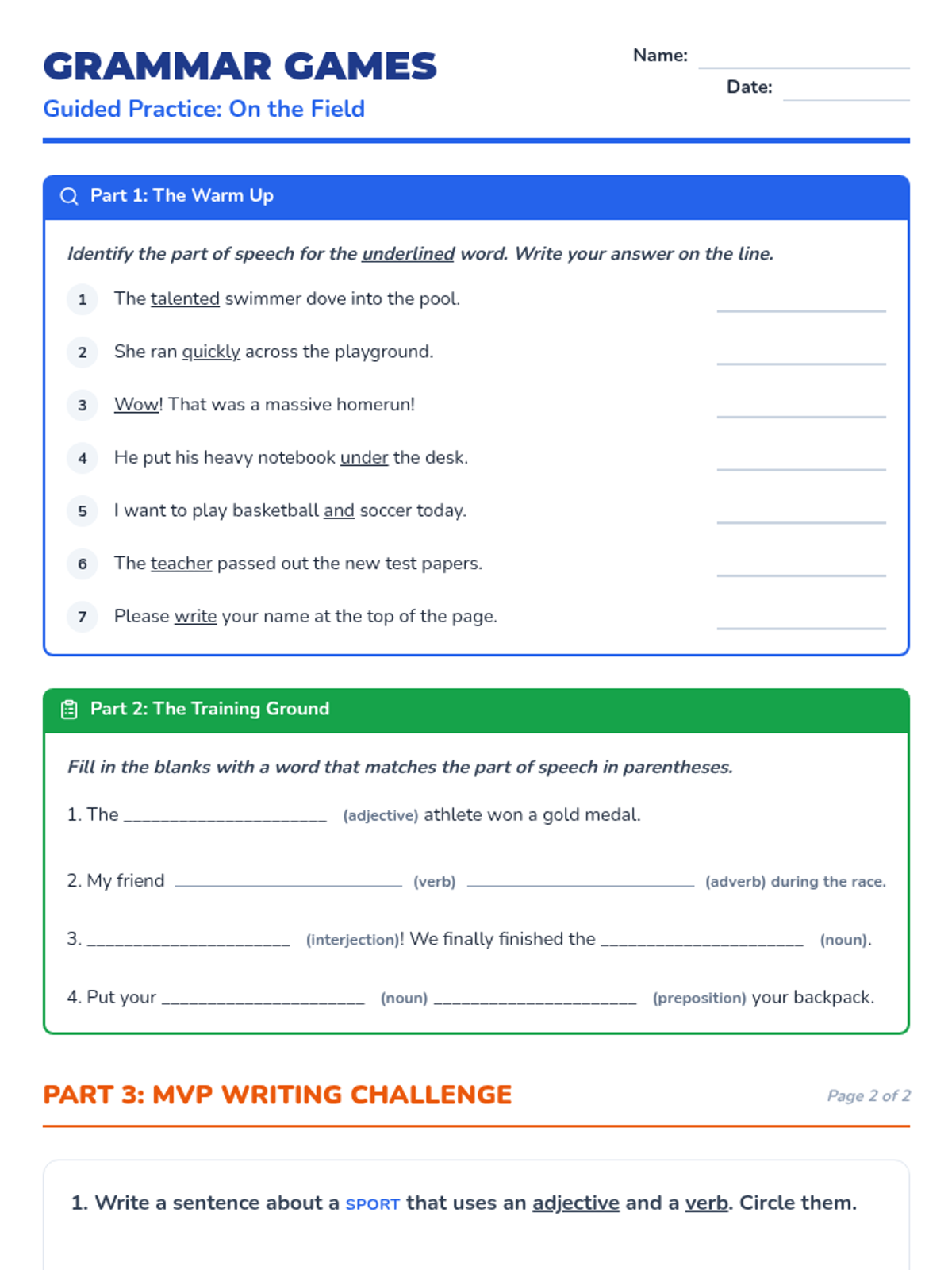
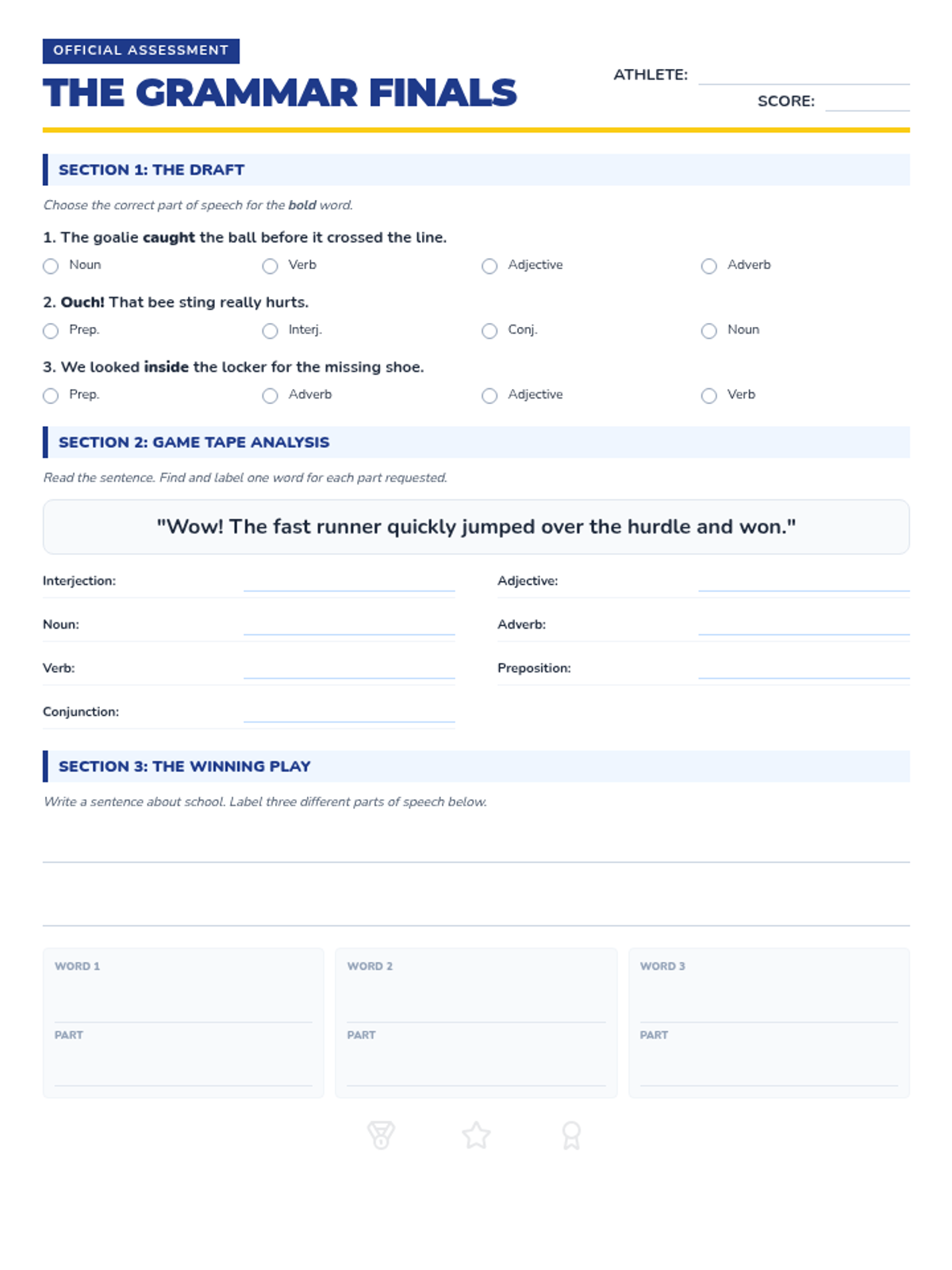
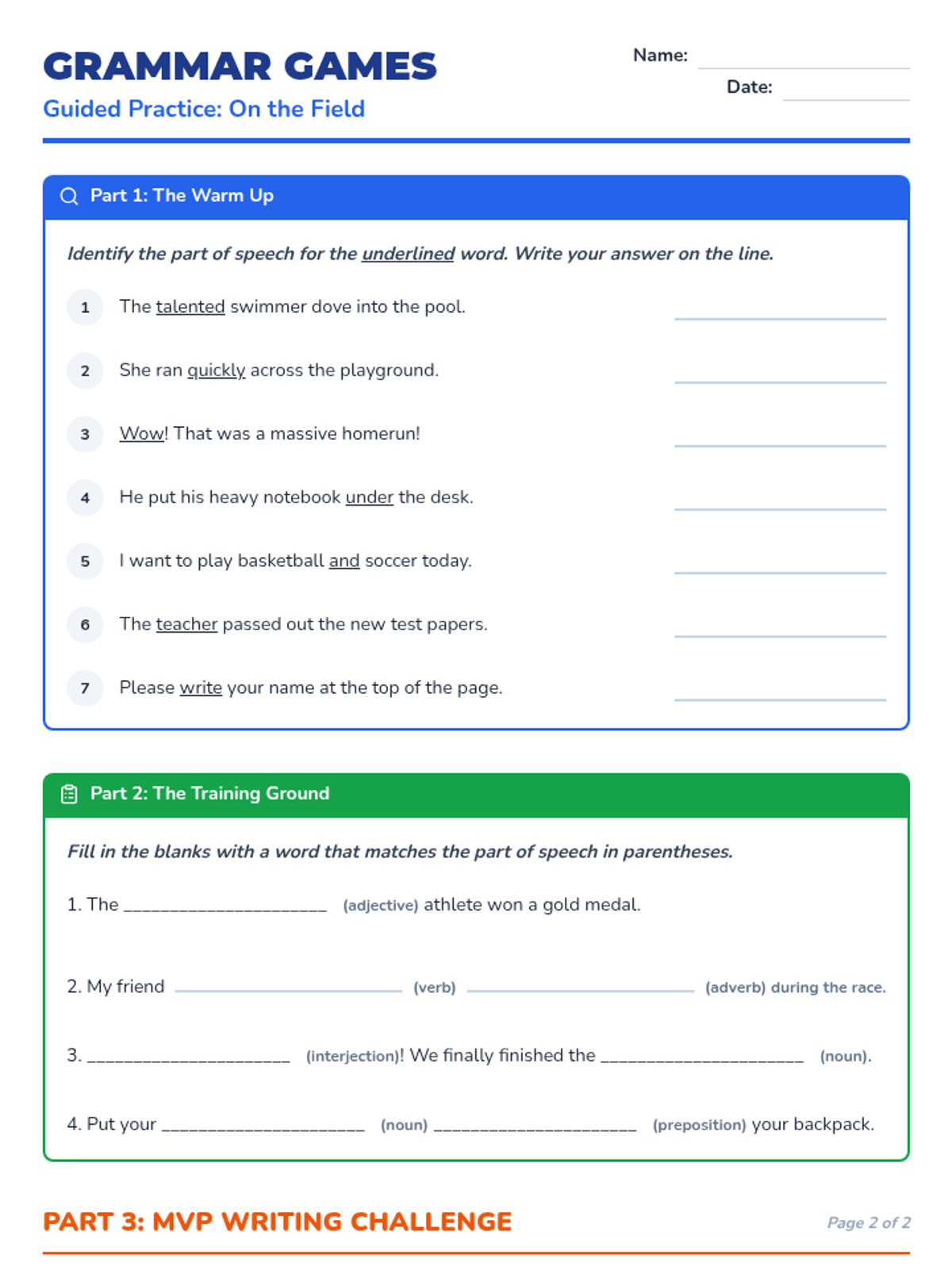
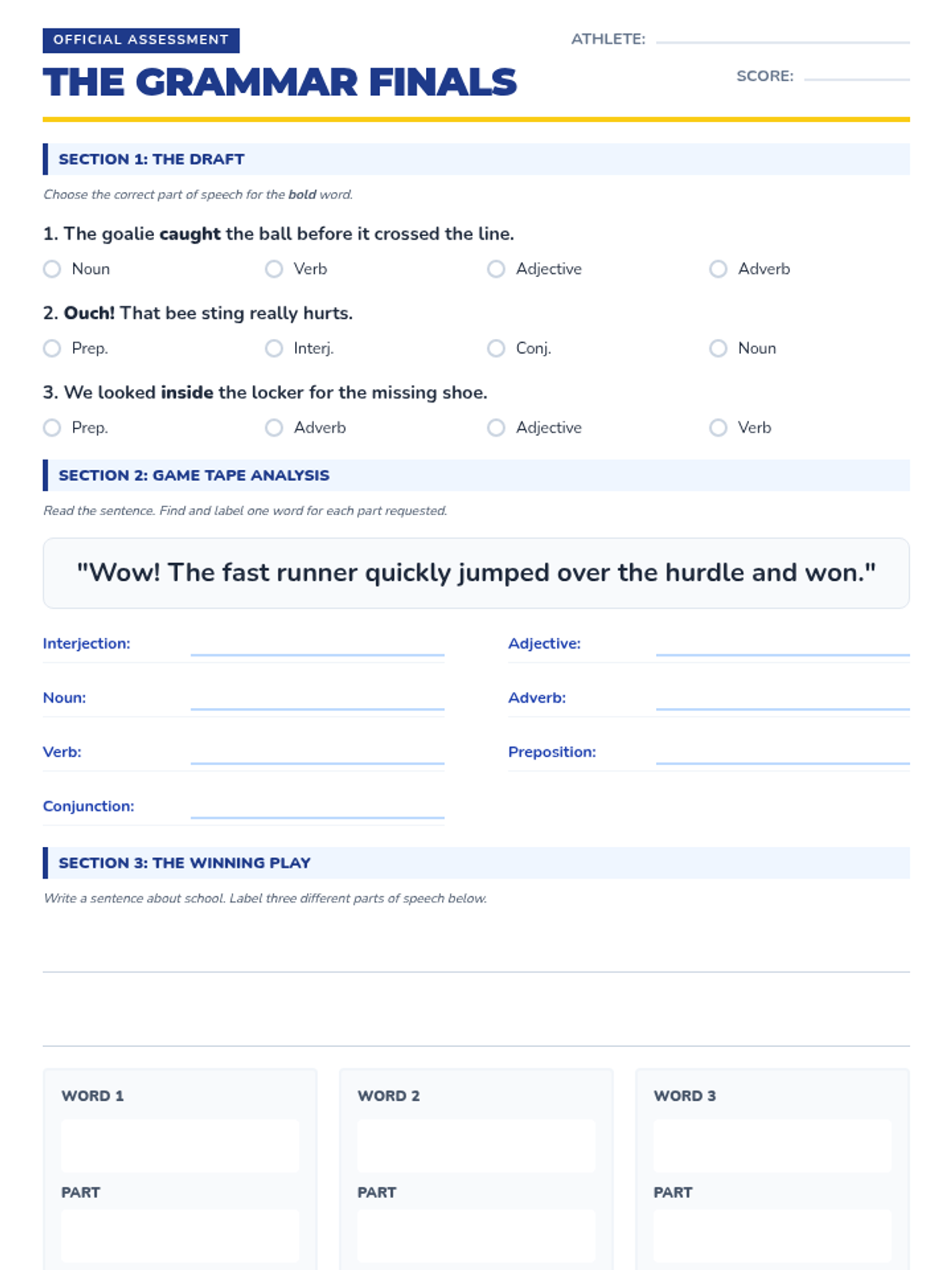
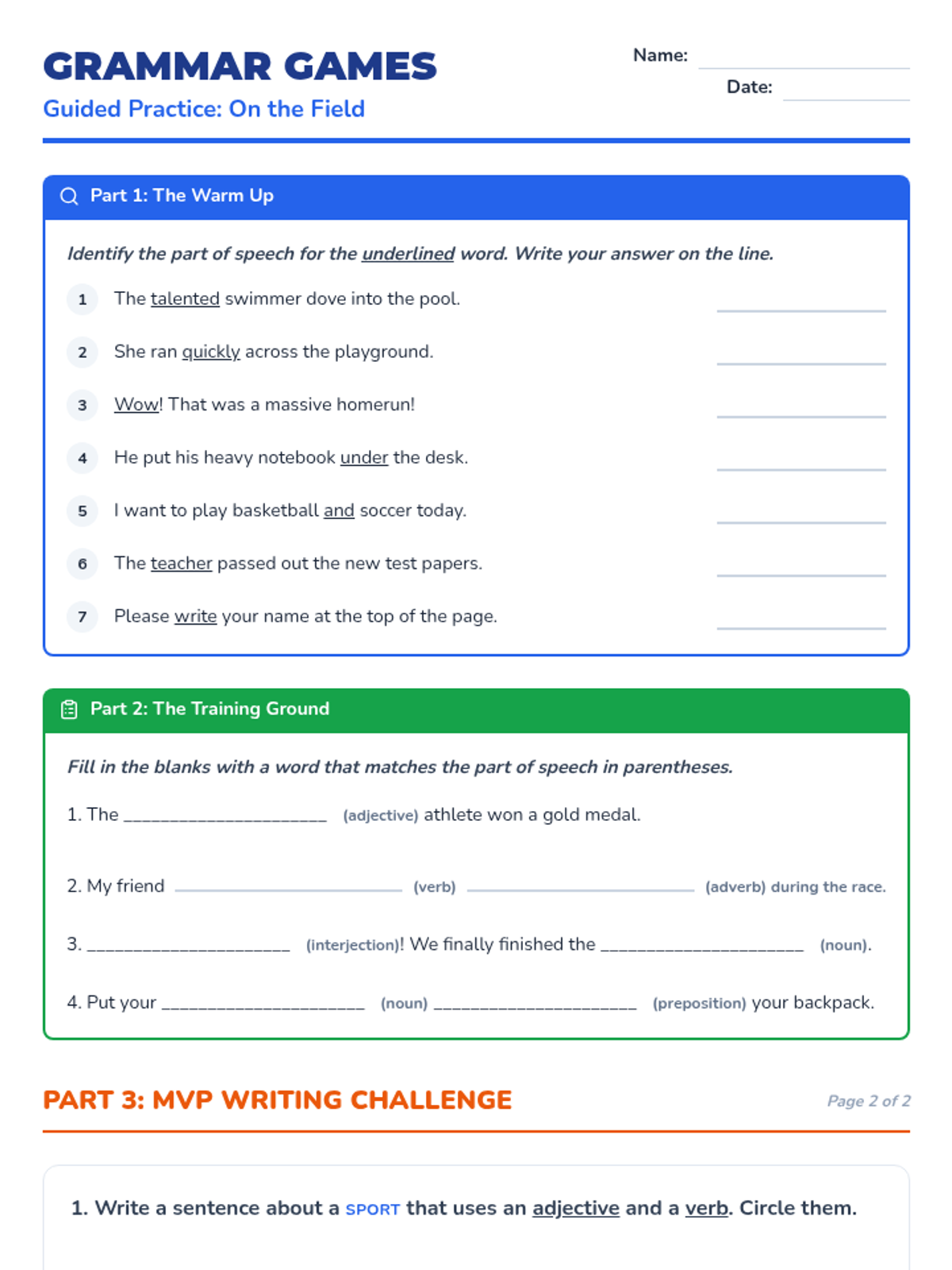
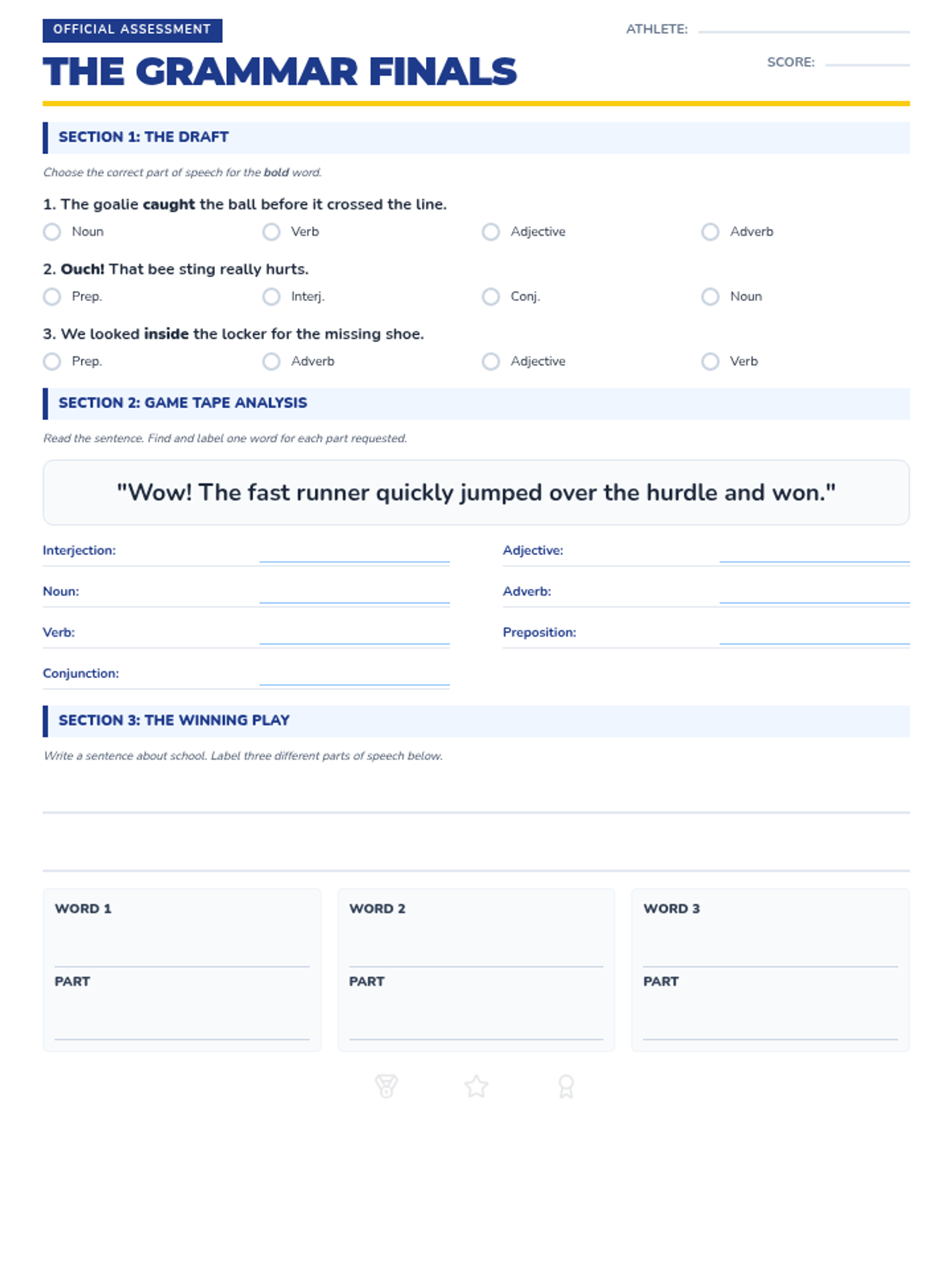
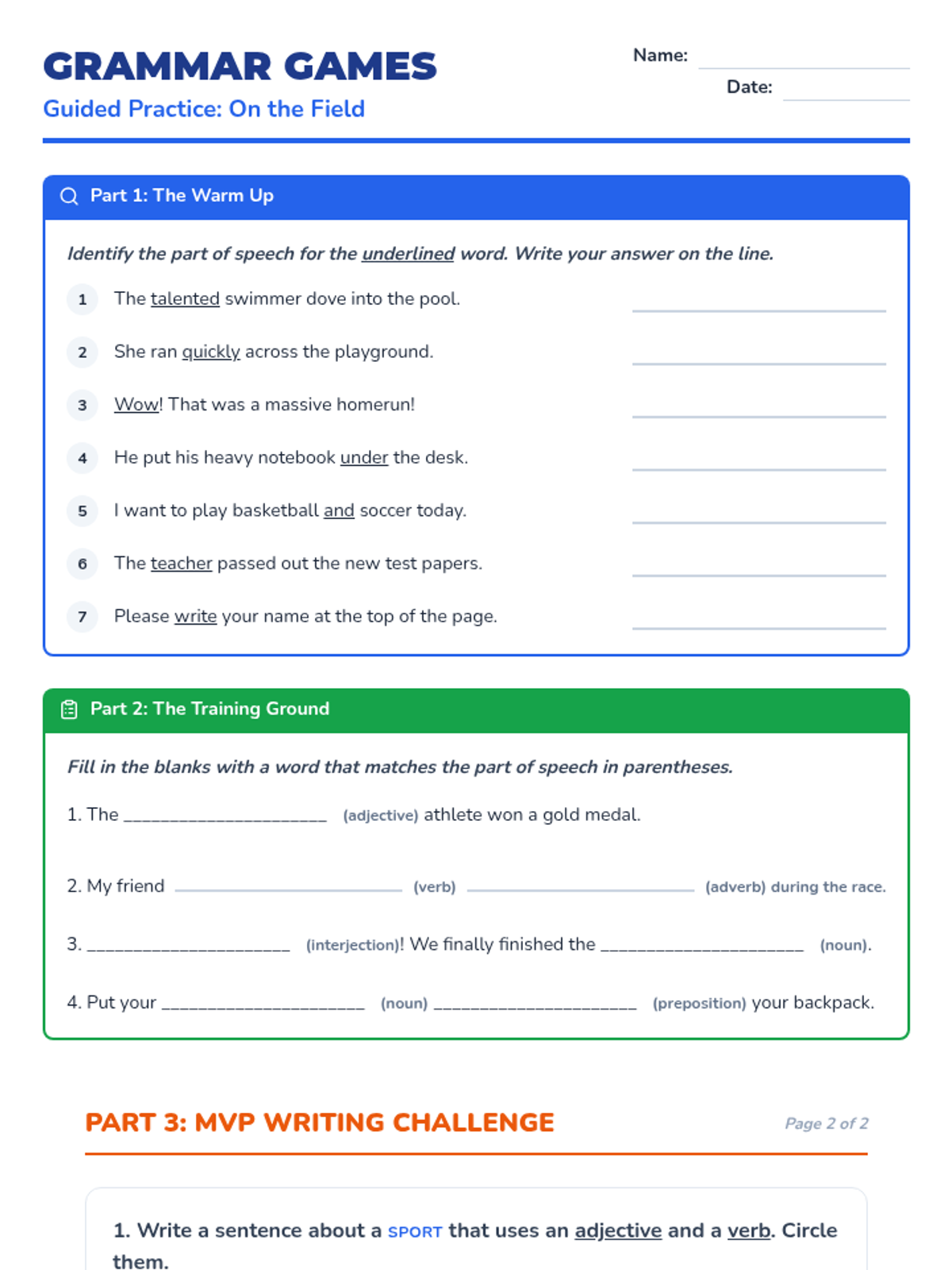
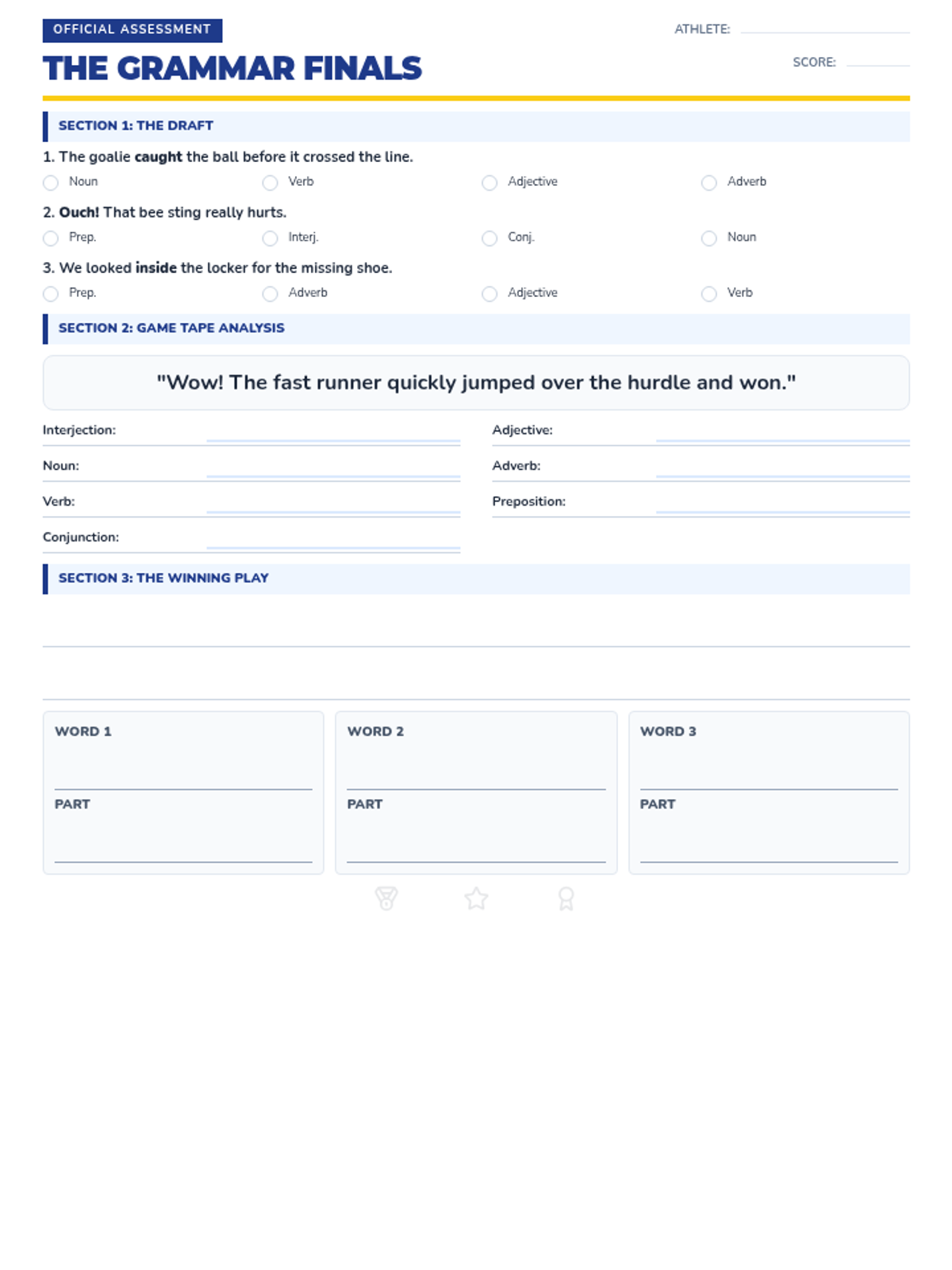
A lesson focusing on identifying nouns, verbs, adjectives, adverbs, prepositions, conjunctions, and interjections using athletic and academic contexts.
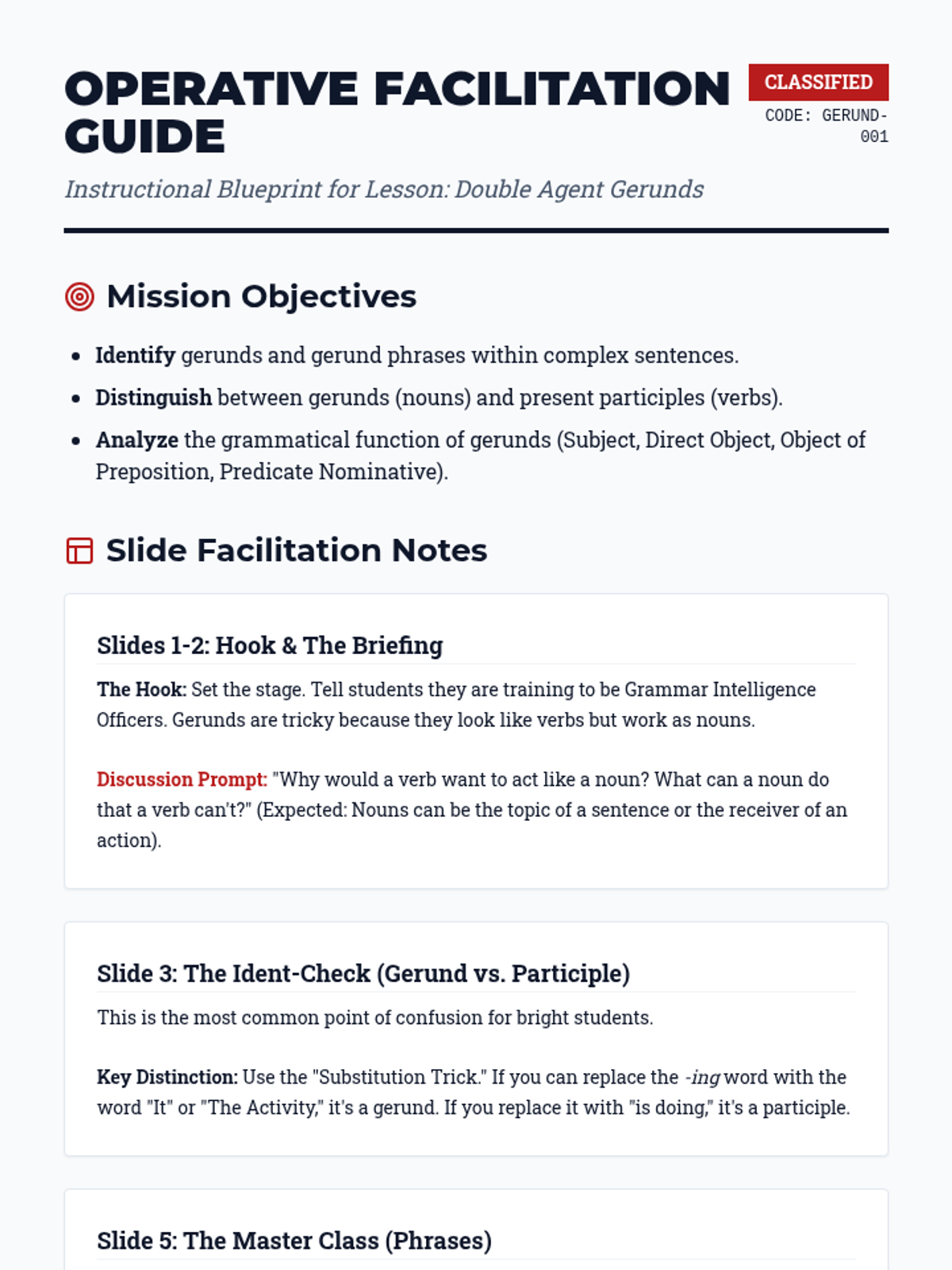
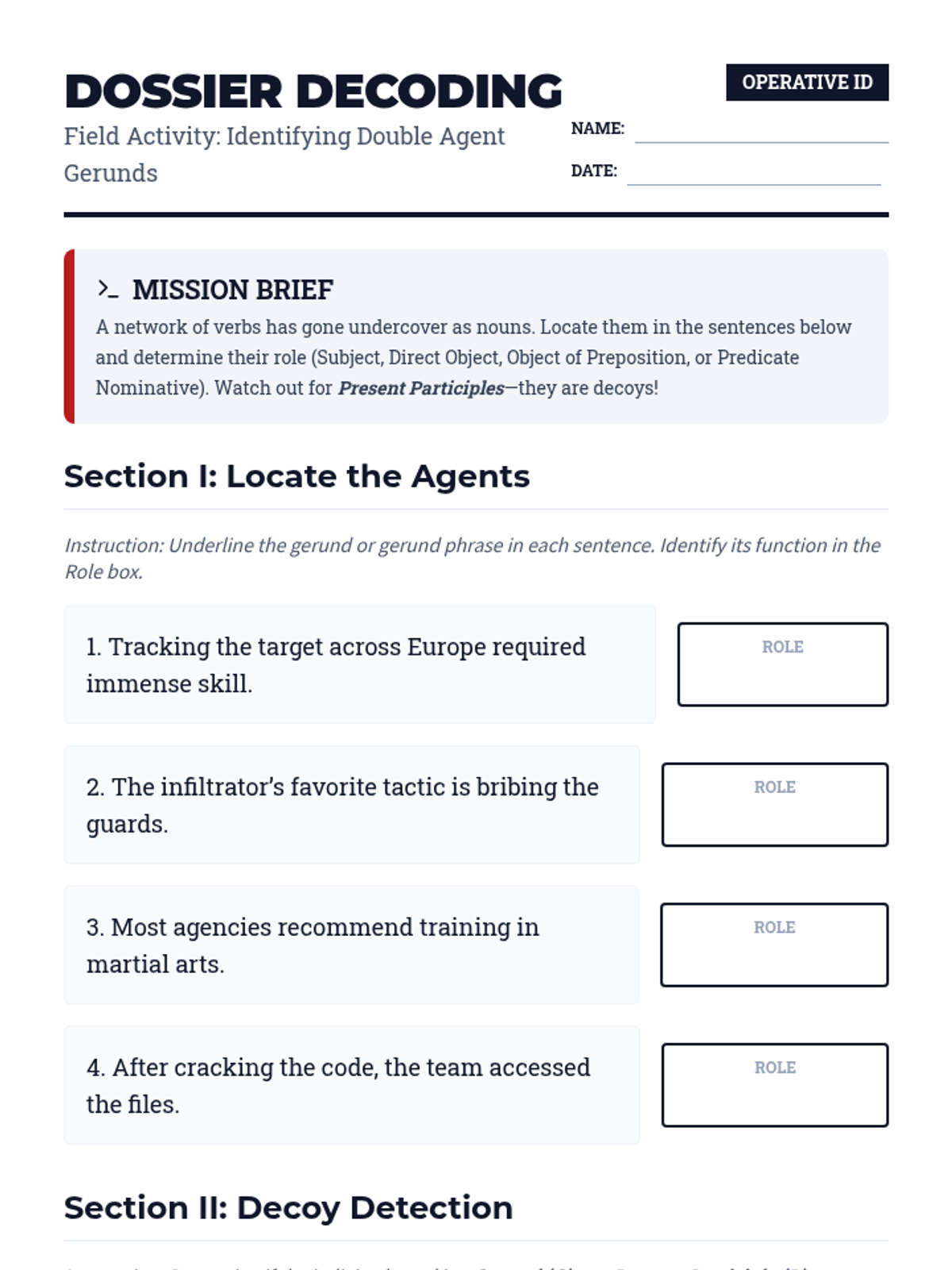
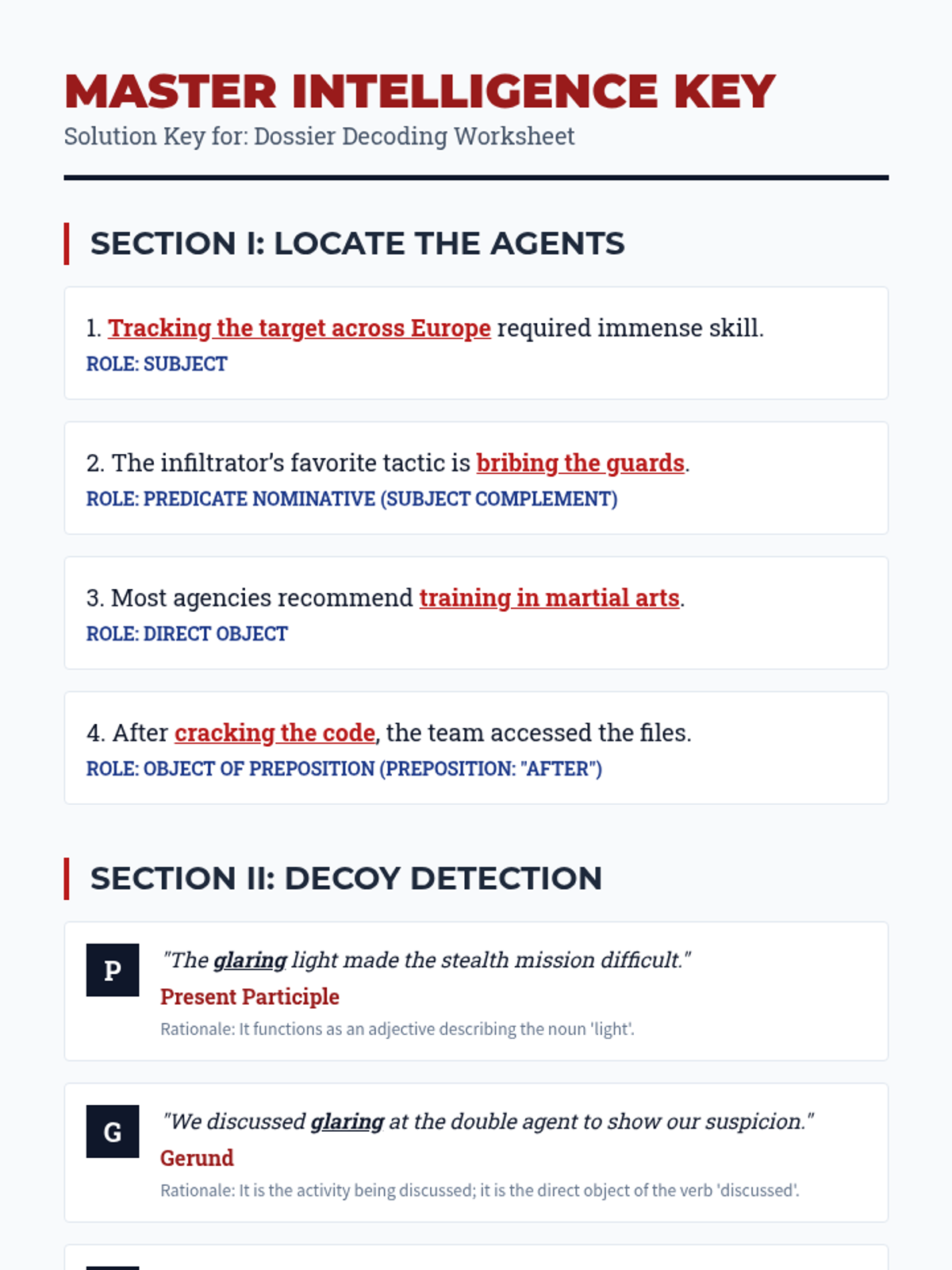
A high-energy, detective-themed lesson exploring how gerunds function as nouns while maintaining their verb-like properties. Designed for advanced students to master identification and usage in various sentence roles.
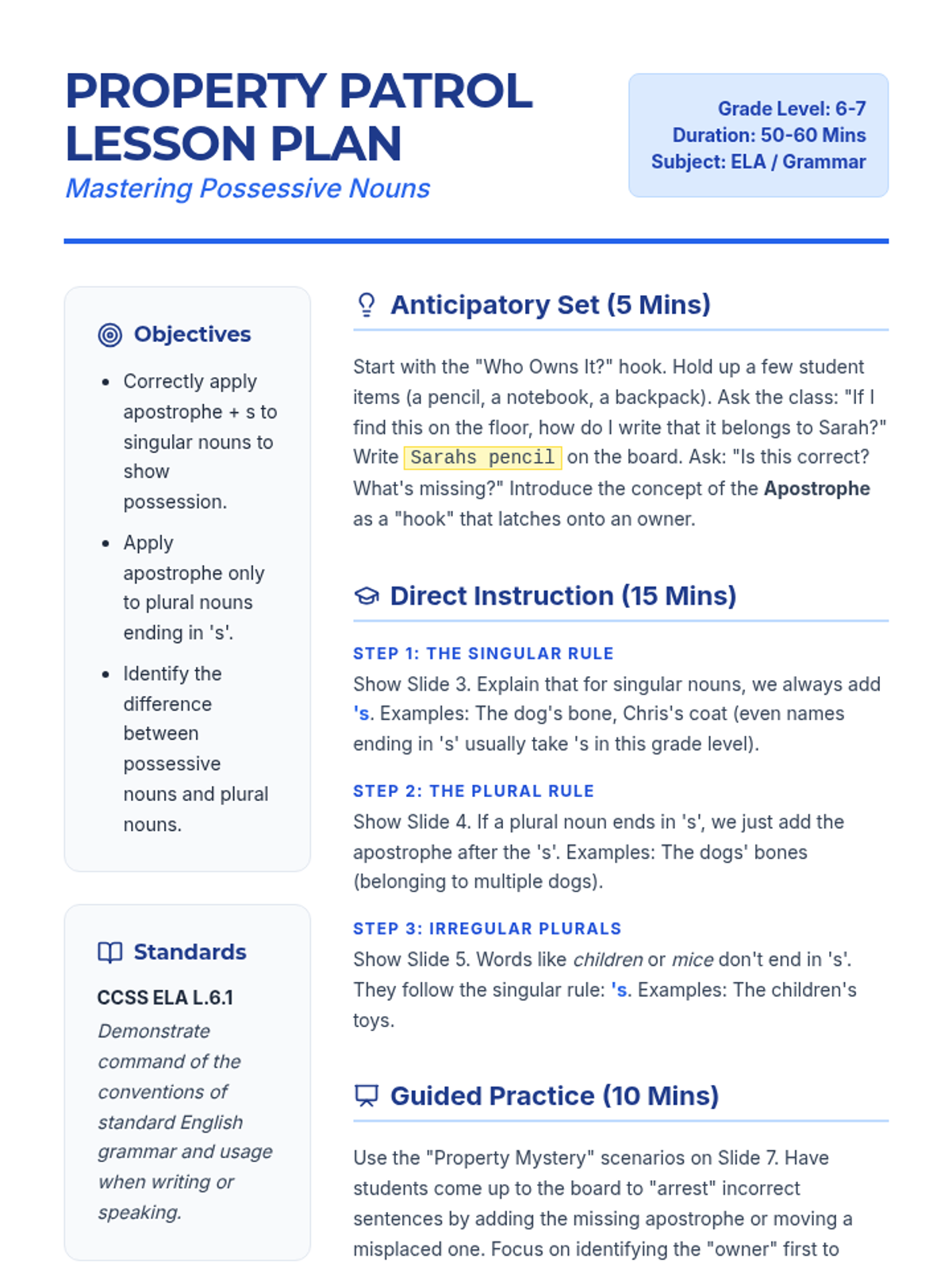
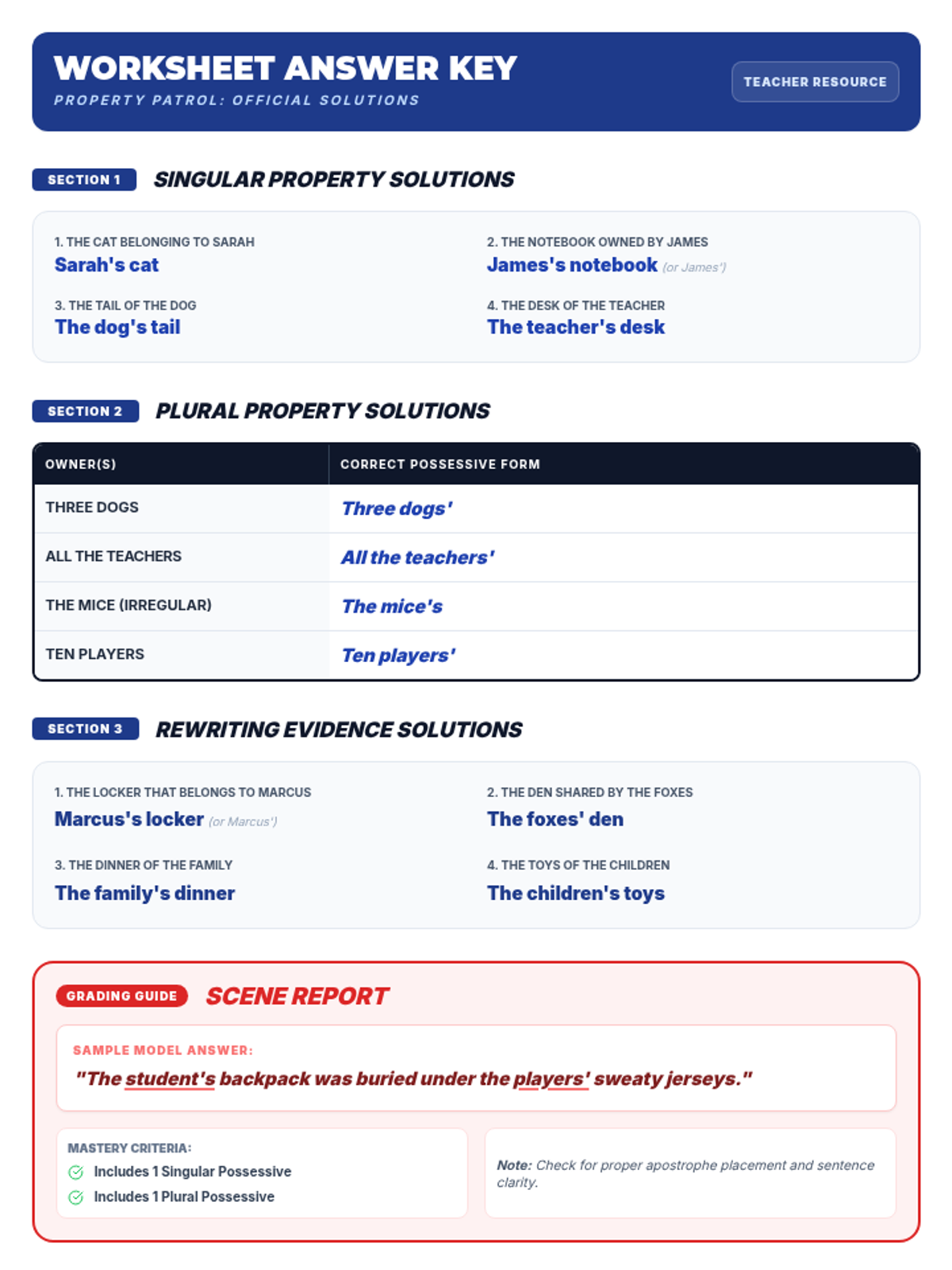
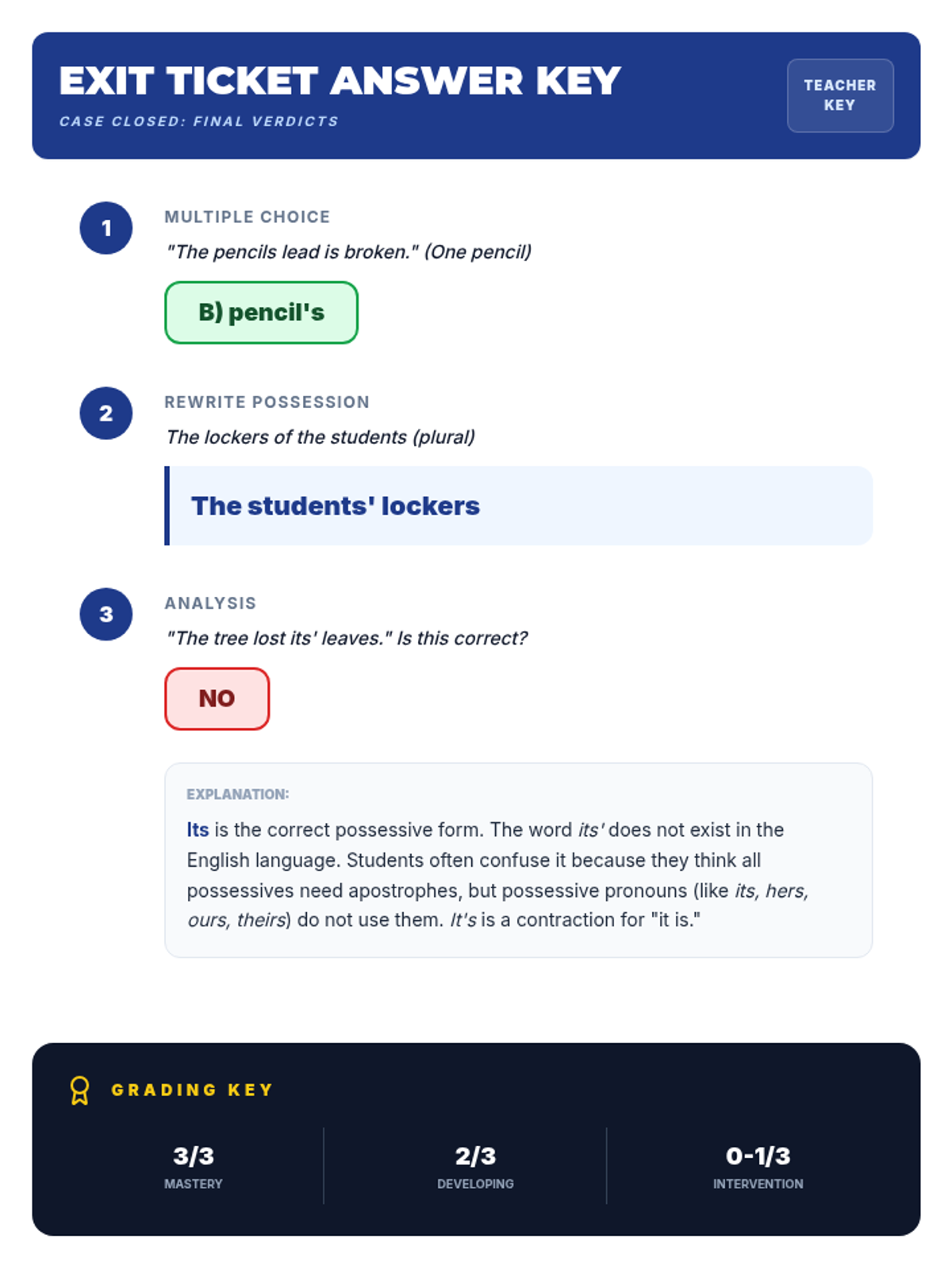
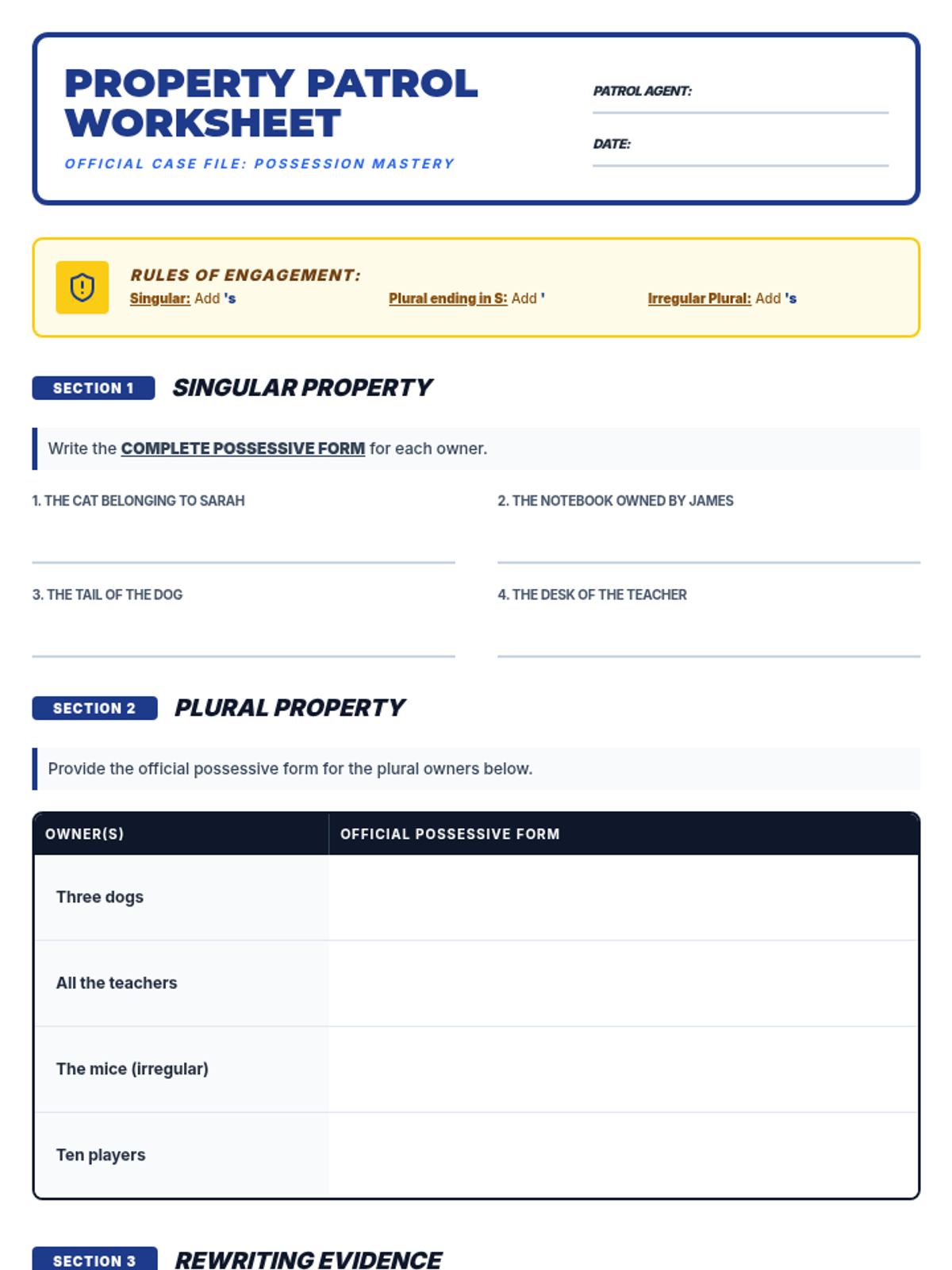
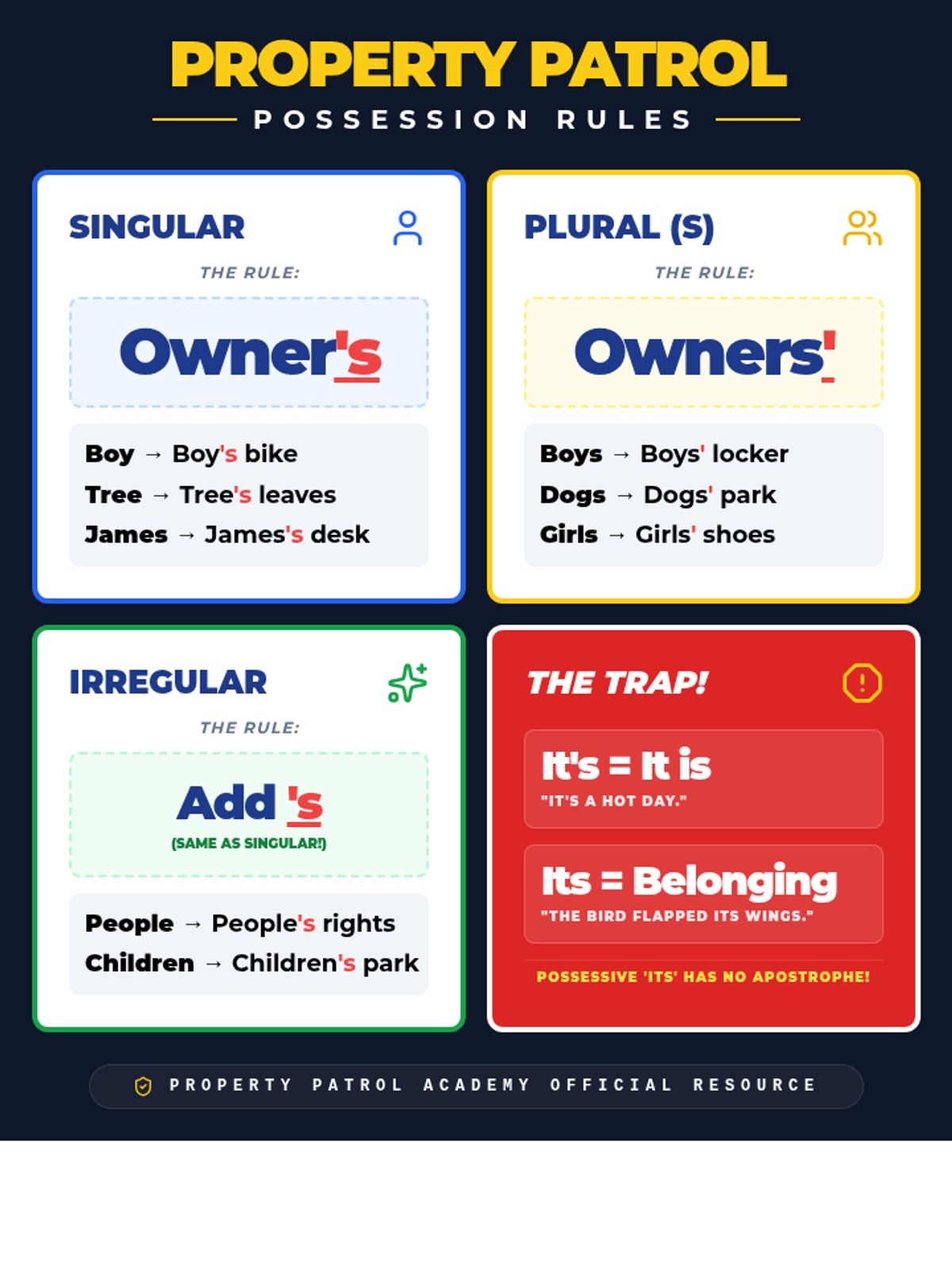
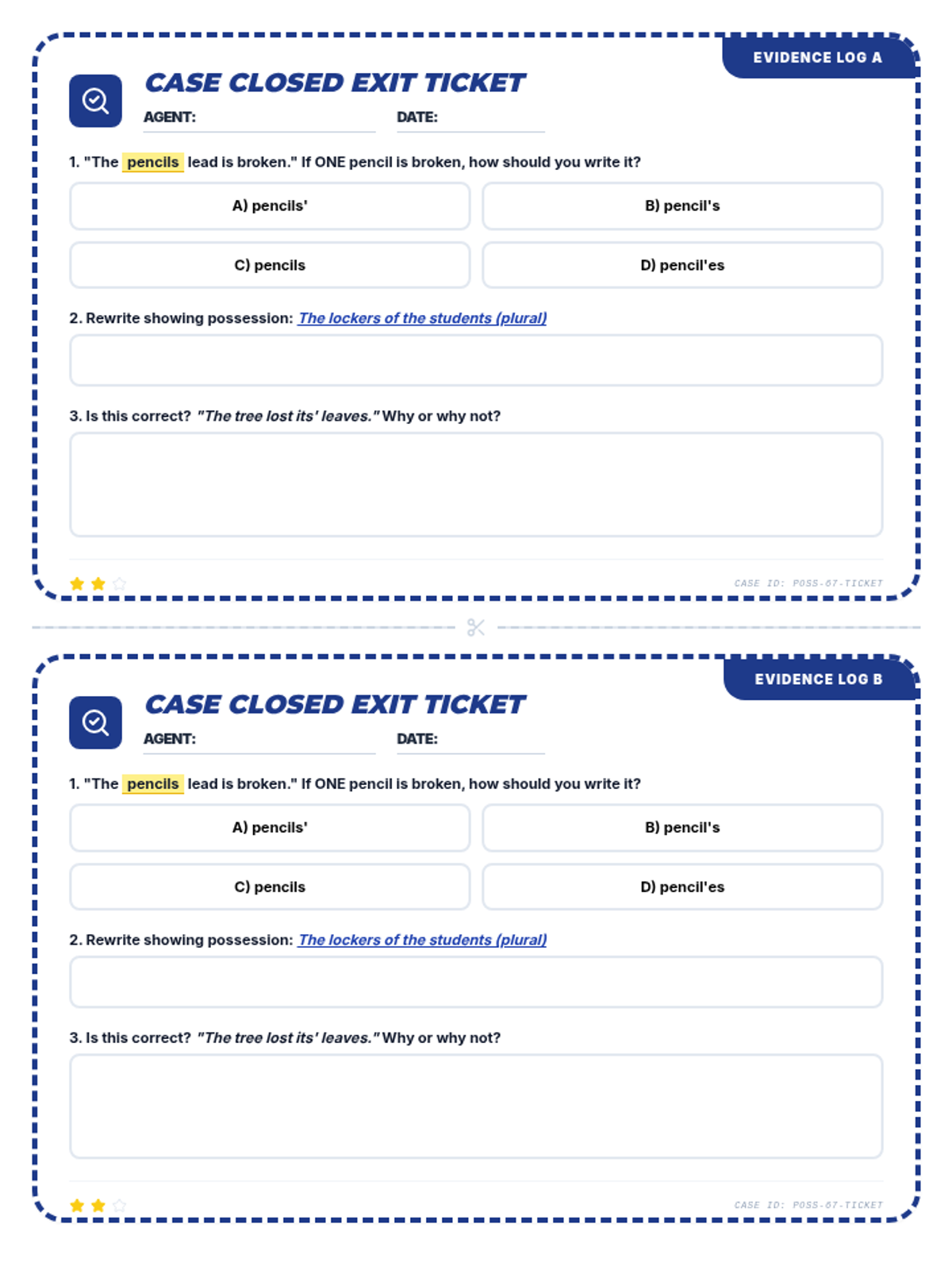
A comprehensive lesson on mastering possessive nouns using apostrophes, focusing on singular and plural rules for 6th and 7th-grade students. This lesson uses a 'Property Patrol' detective theme to make grammar engaging and memorable.
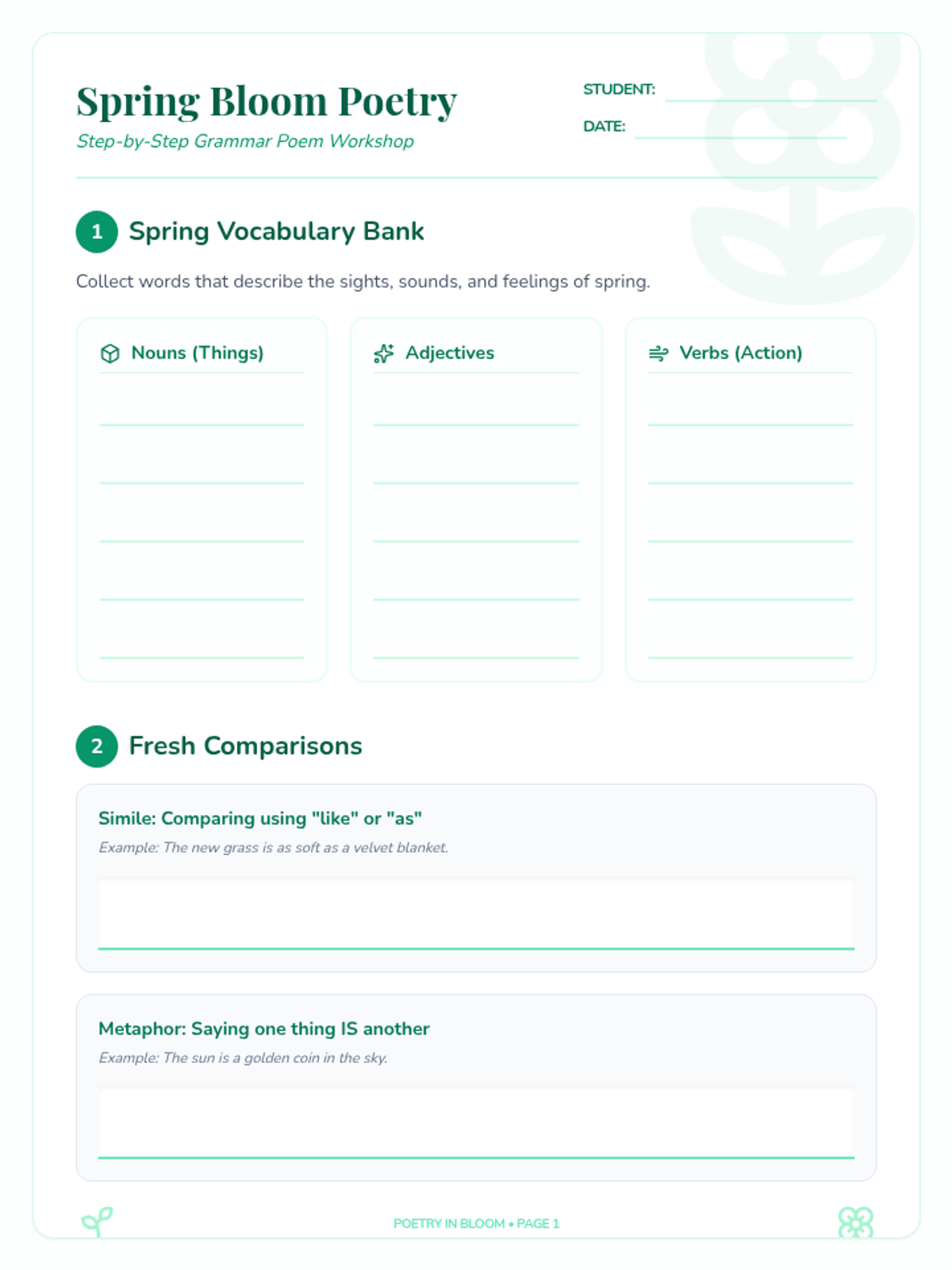
A guided poetry workshop where students use grammar concepts and figurative language to celebrate the arrival of spring.
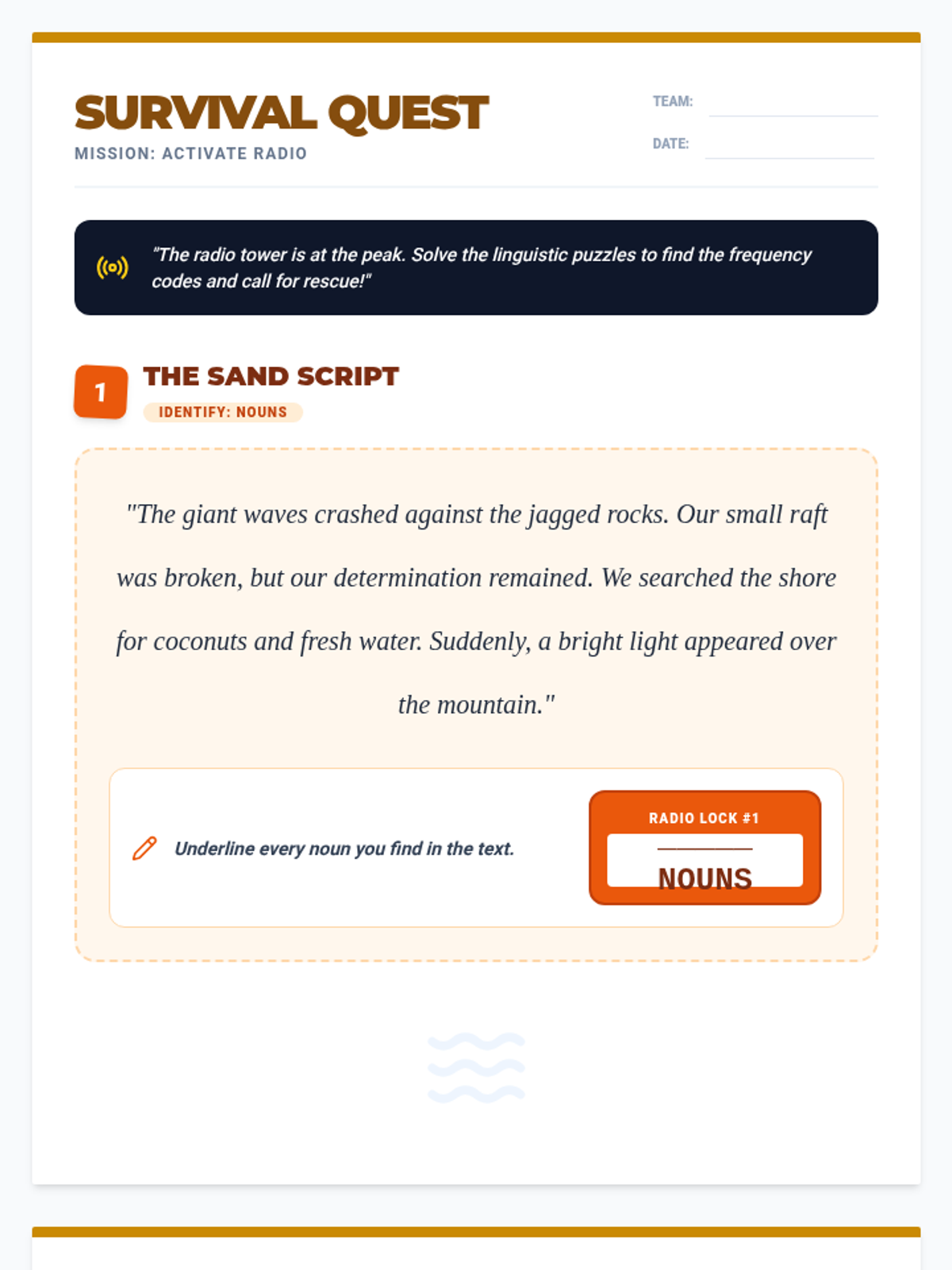
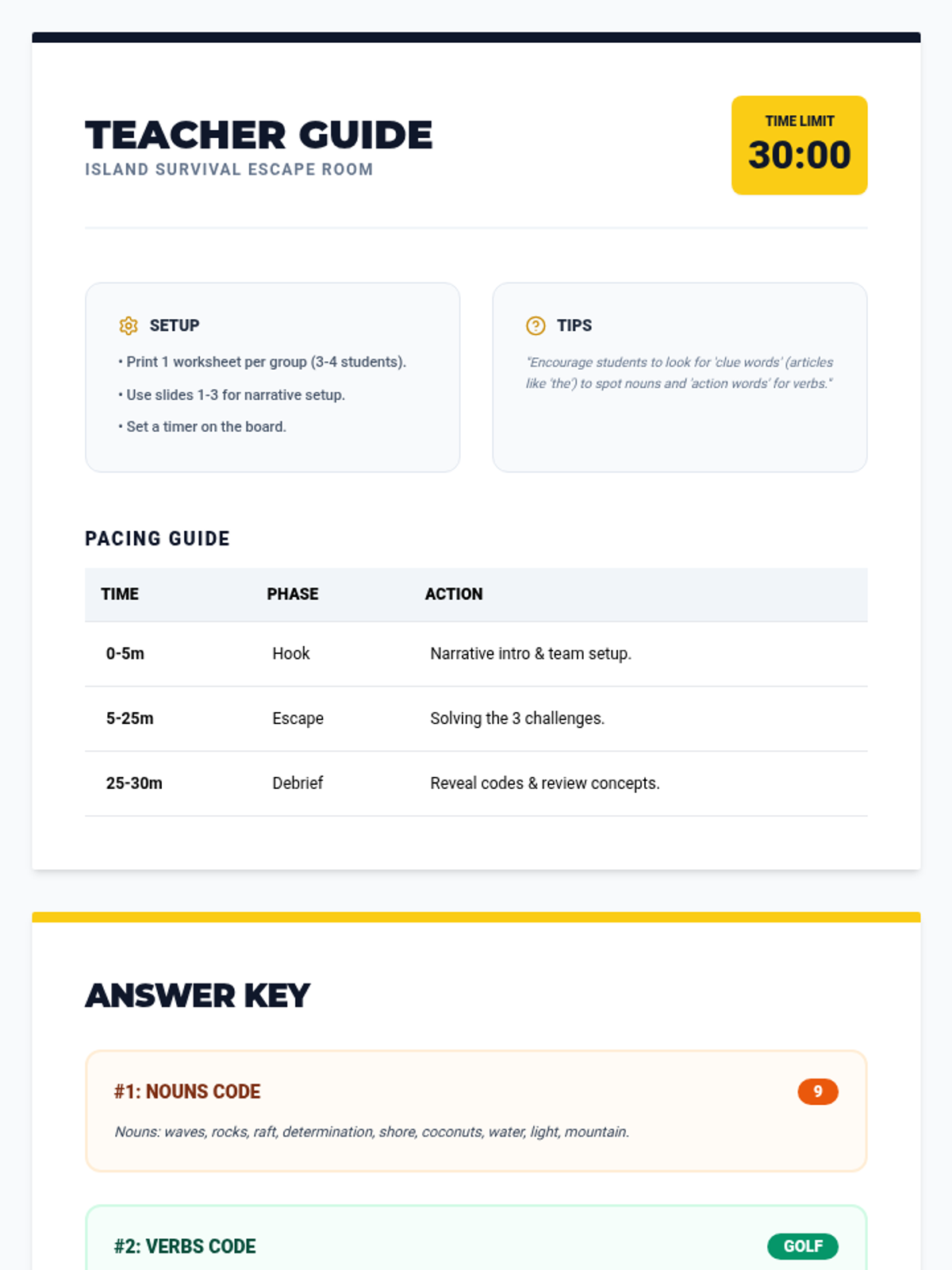
An immersive 30-minute ELA escape room where 6th-grade students solve noun, verb, and adjective puzzles to escape a deserted island.
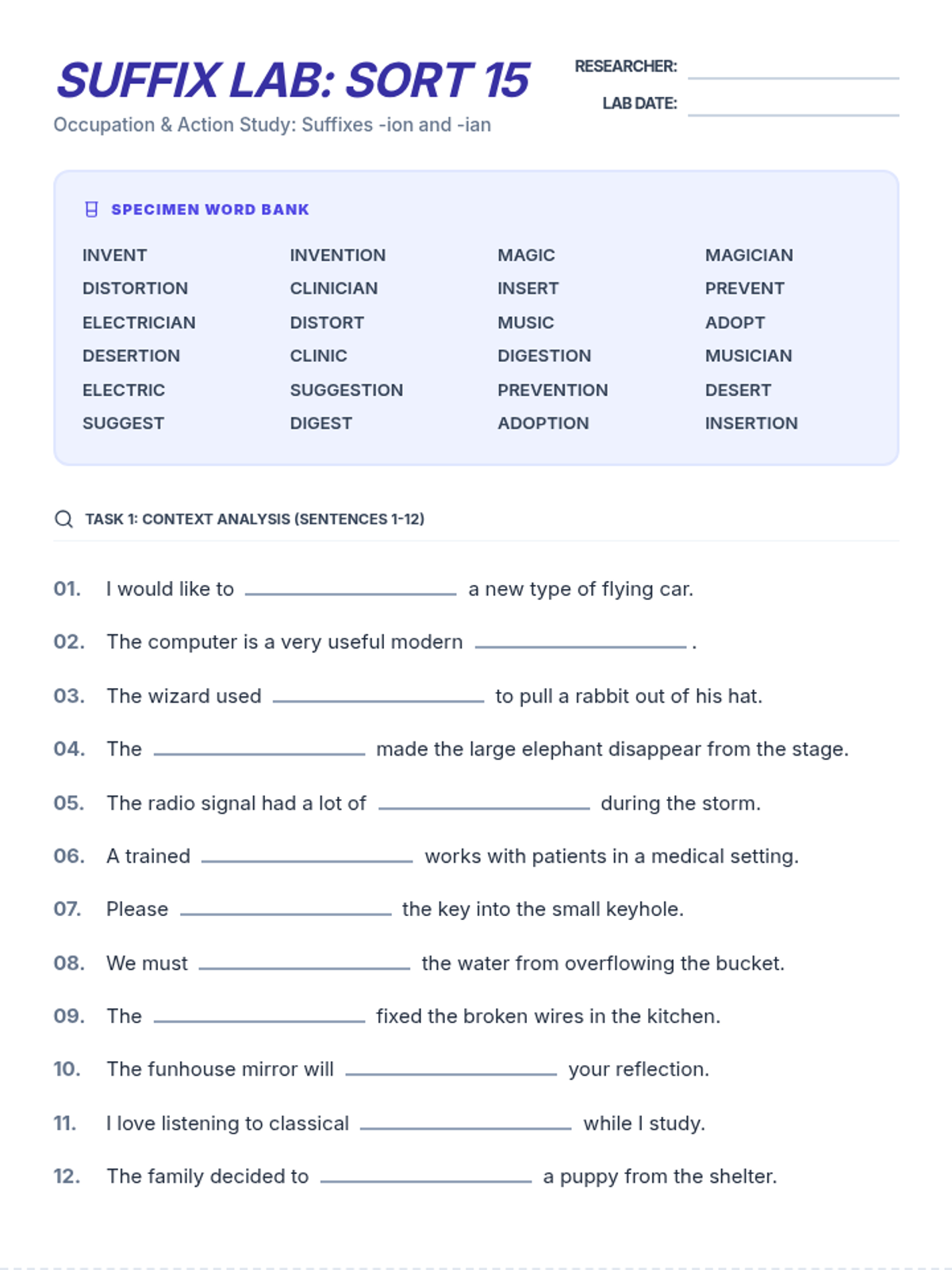
A lesson focused on the suffixes -ion and -ian with no spelling change to the base word. Students analyze nouns like 'invention', 'magician', and 'musician'.
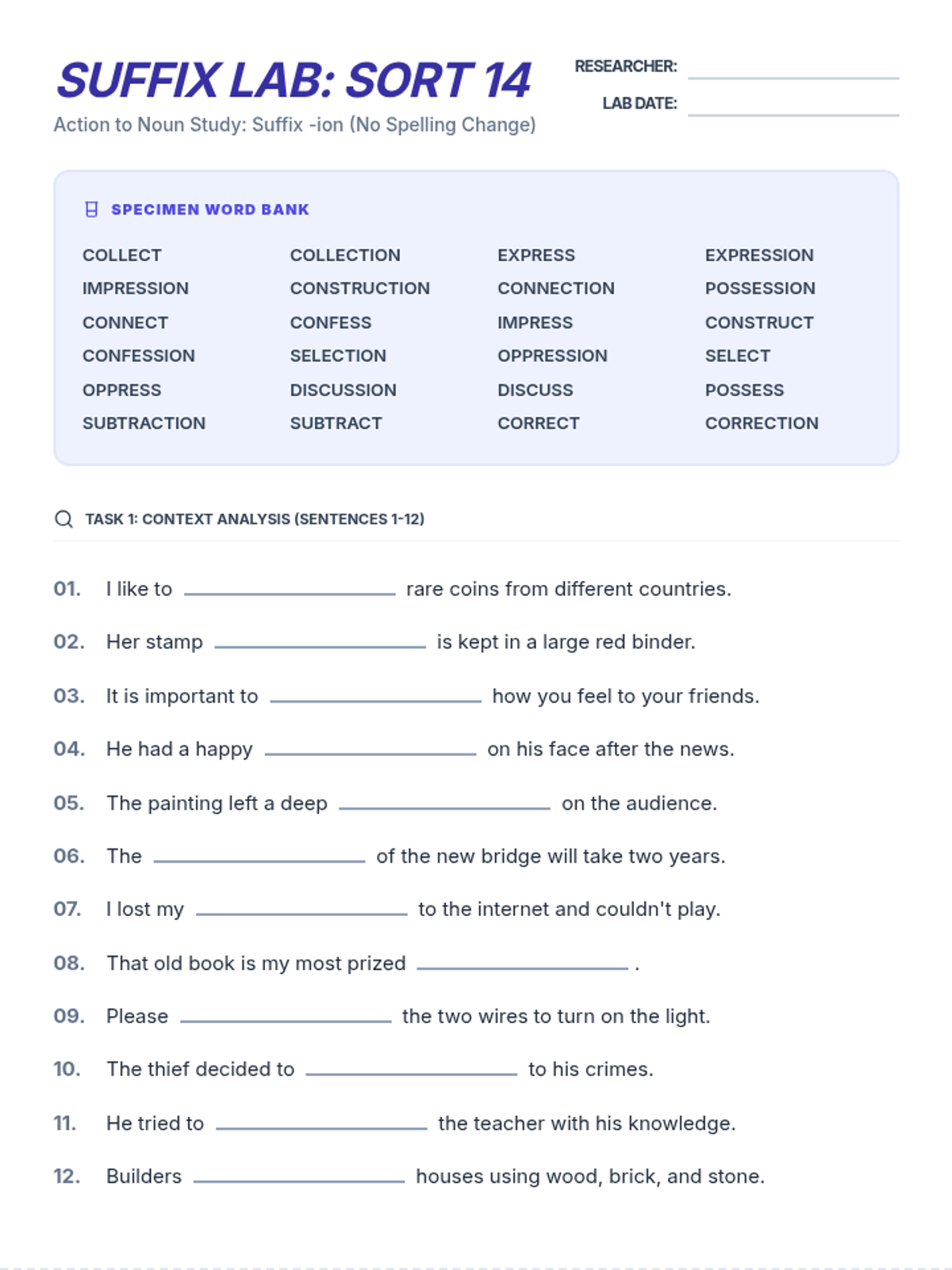
A lesson focused on the suffix -ion and how it changes verbs into nouns with no spelling change to the base word. Students analyze word pairs like 'collect' and 'collection'.
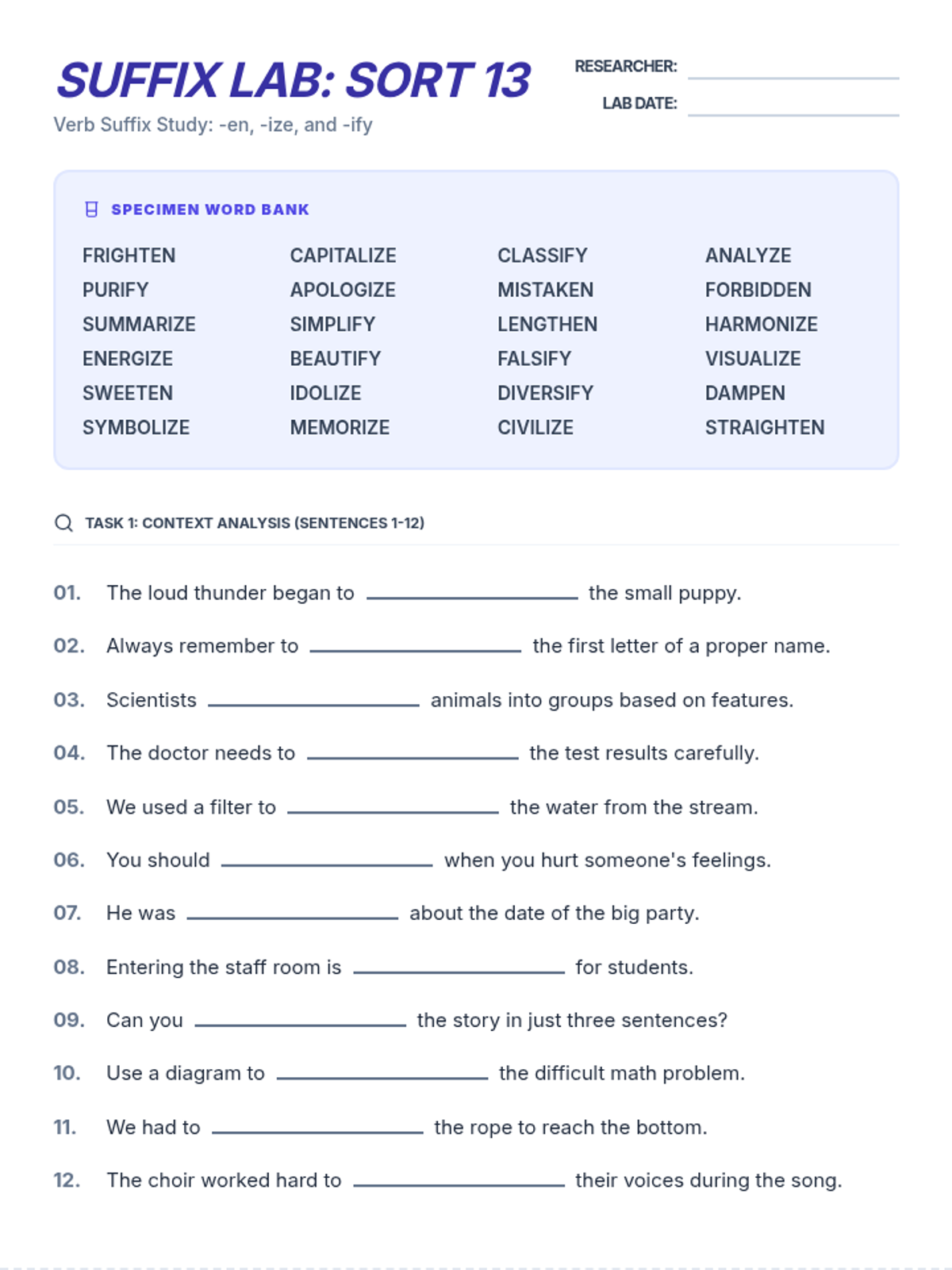
A lesson focused on the suffixes -en, -ize, and -ify. Students investigate how these suffixes transform base words into verbs representing actions or states.
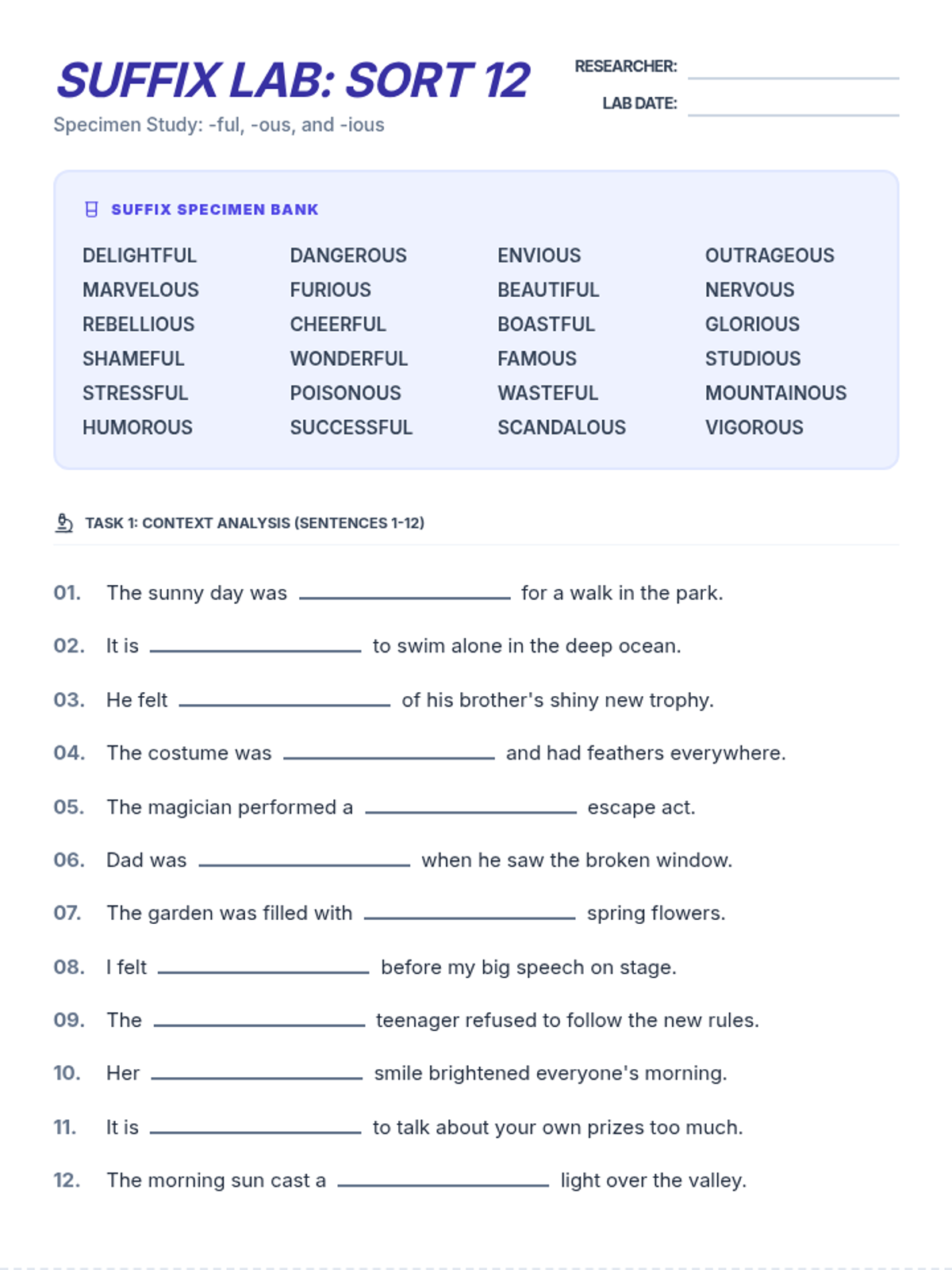
A lesson focused on the suffixes -ful, -ous, and -ious. Students analyze how these suffixes form adjectives from nouns, representing full of or having qualities of.
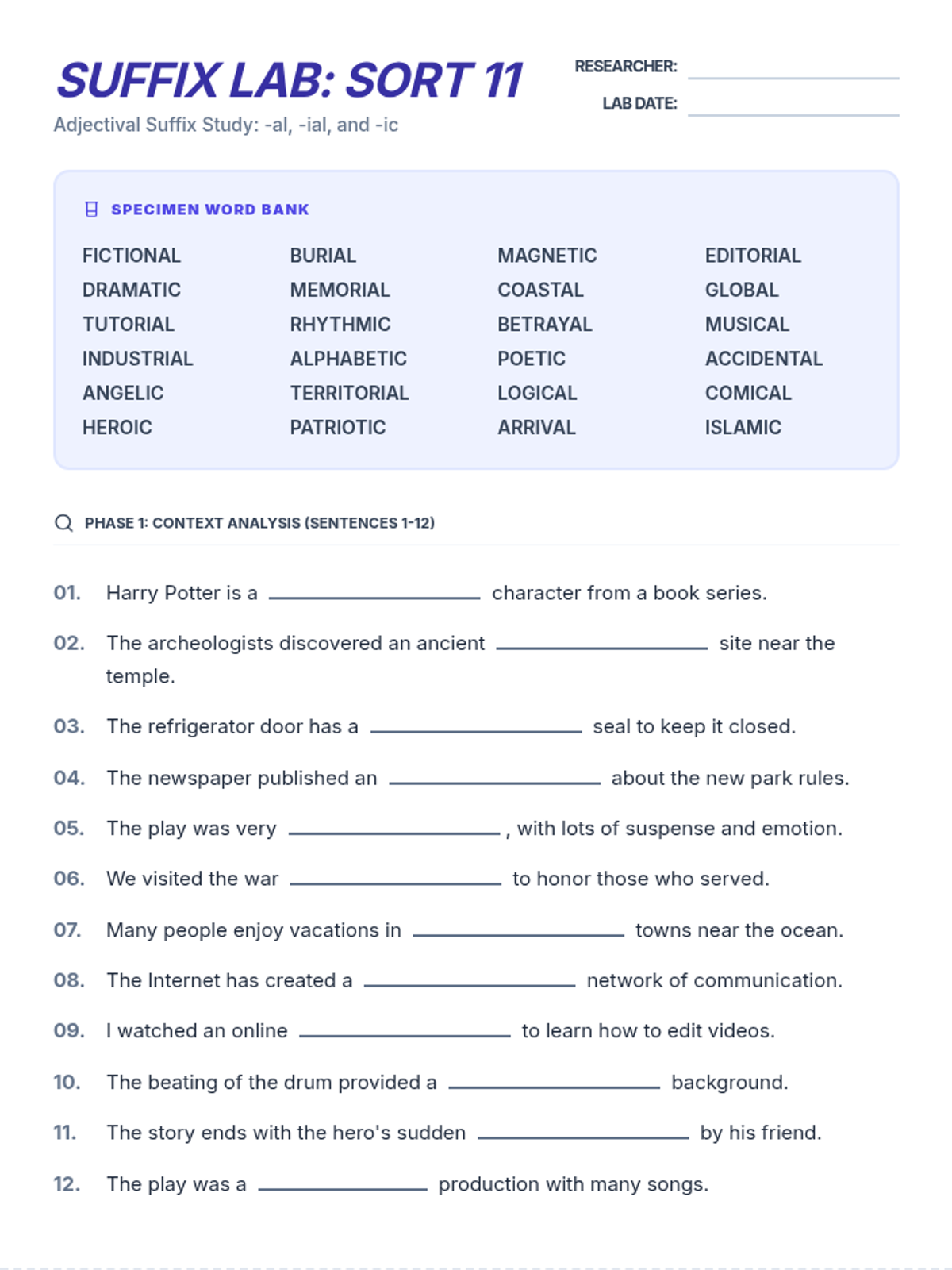
A lesson focused on the suffixes -al, -ial, and -ic. Students analyze how these suffixes form adjectives from nouns, representing relating to or having qualities of.
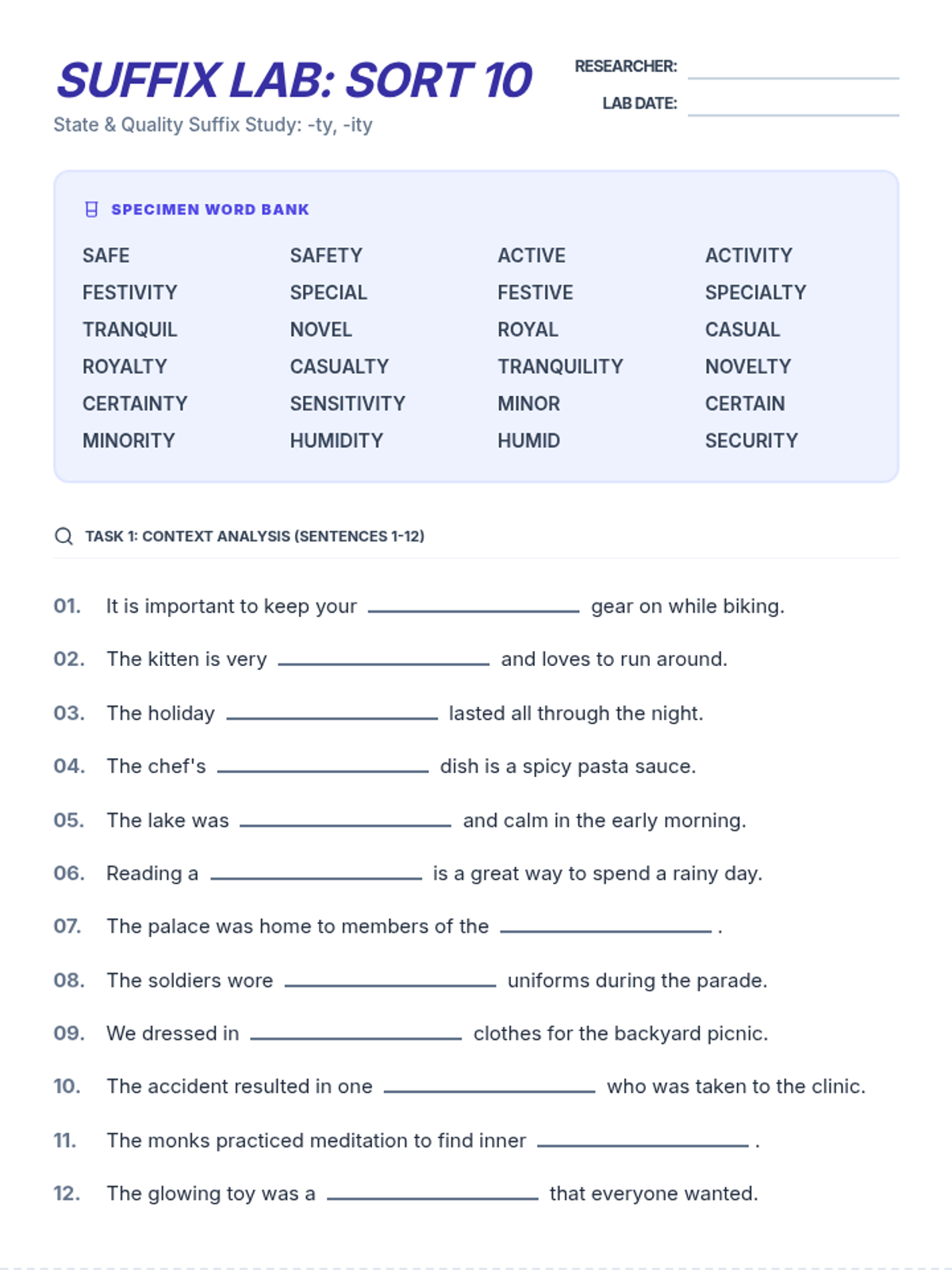
A lesson focused on the suffixes -ty and -ity. Students analyze how these suffixes form nouns from adjectives, representing states or qualities.
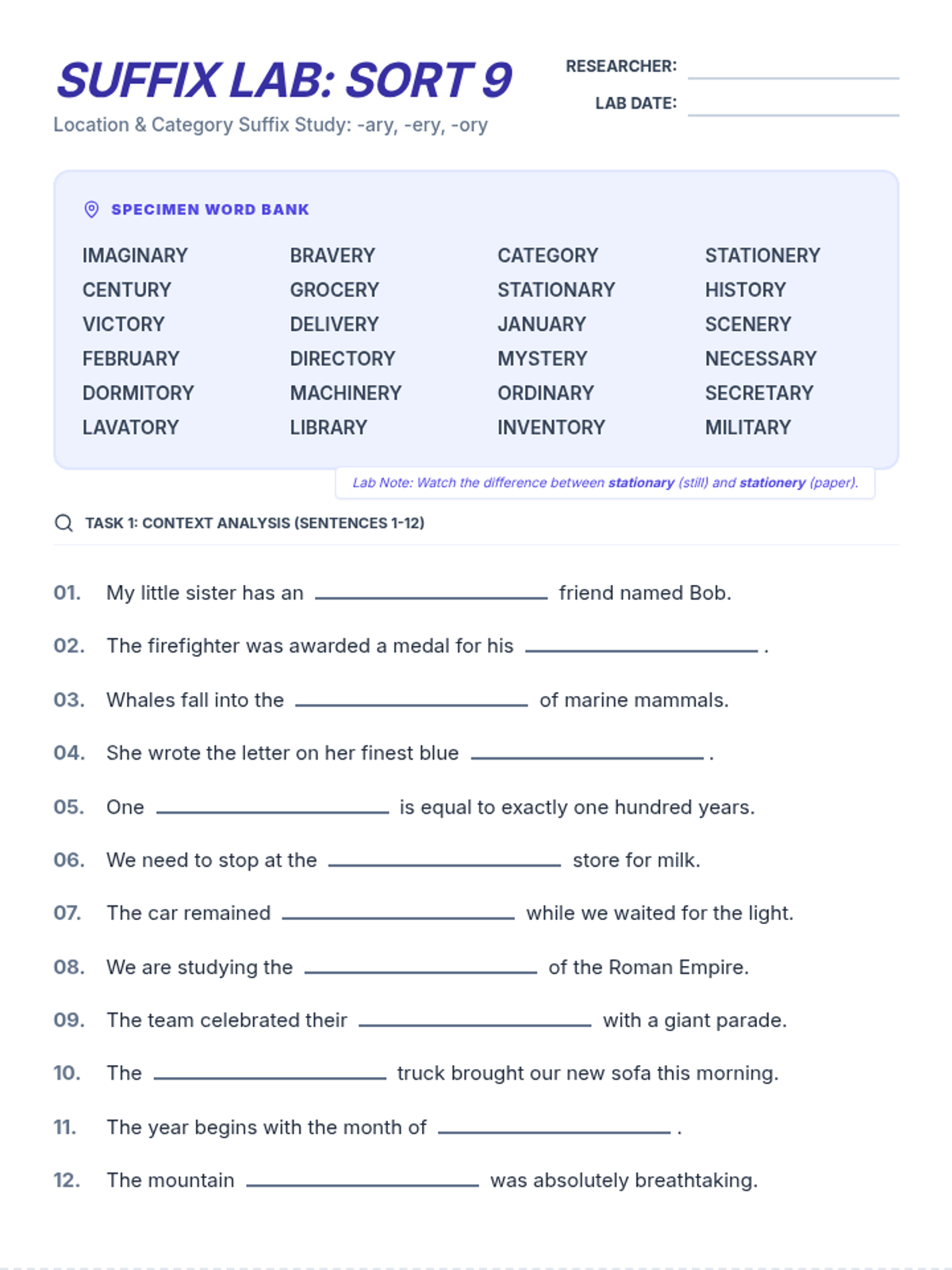
A lesson focused on location and category suffixes (-ary, -ery, -ory). Students analyze how these suffixes form nouns and adjectives related to places, groups, and qualities.
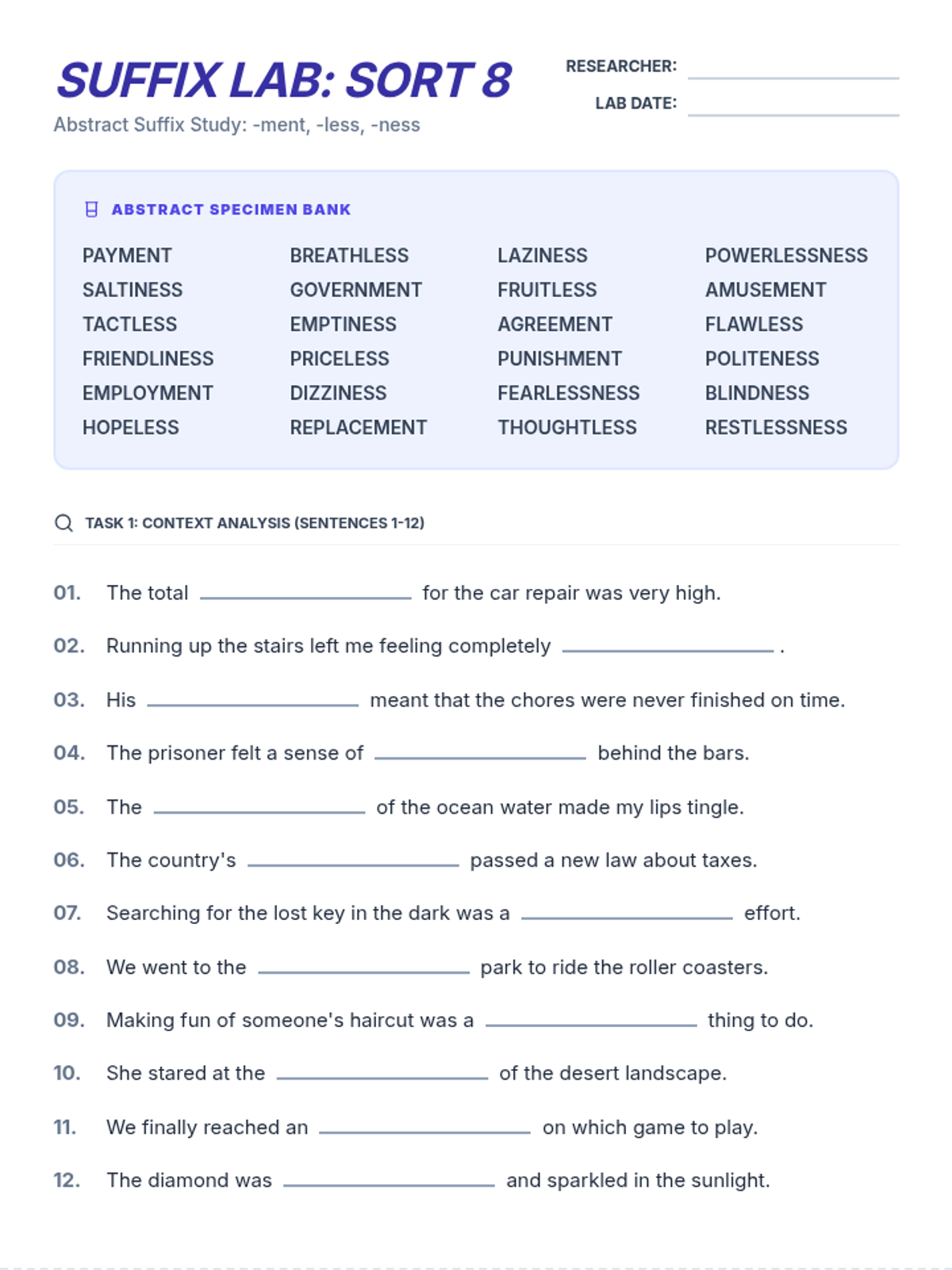
A lesson focused on abstract suffixes (-ment, -less, -ness). Students explore how these suffixes form nouns and adjectives related to states, qualities, and actions.
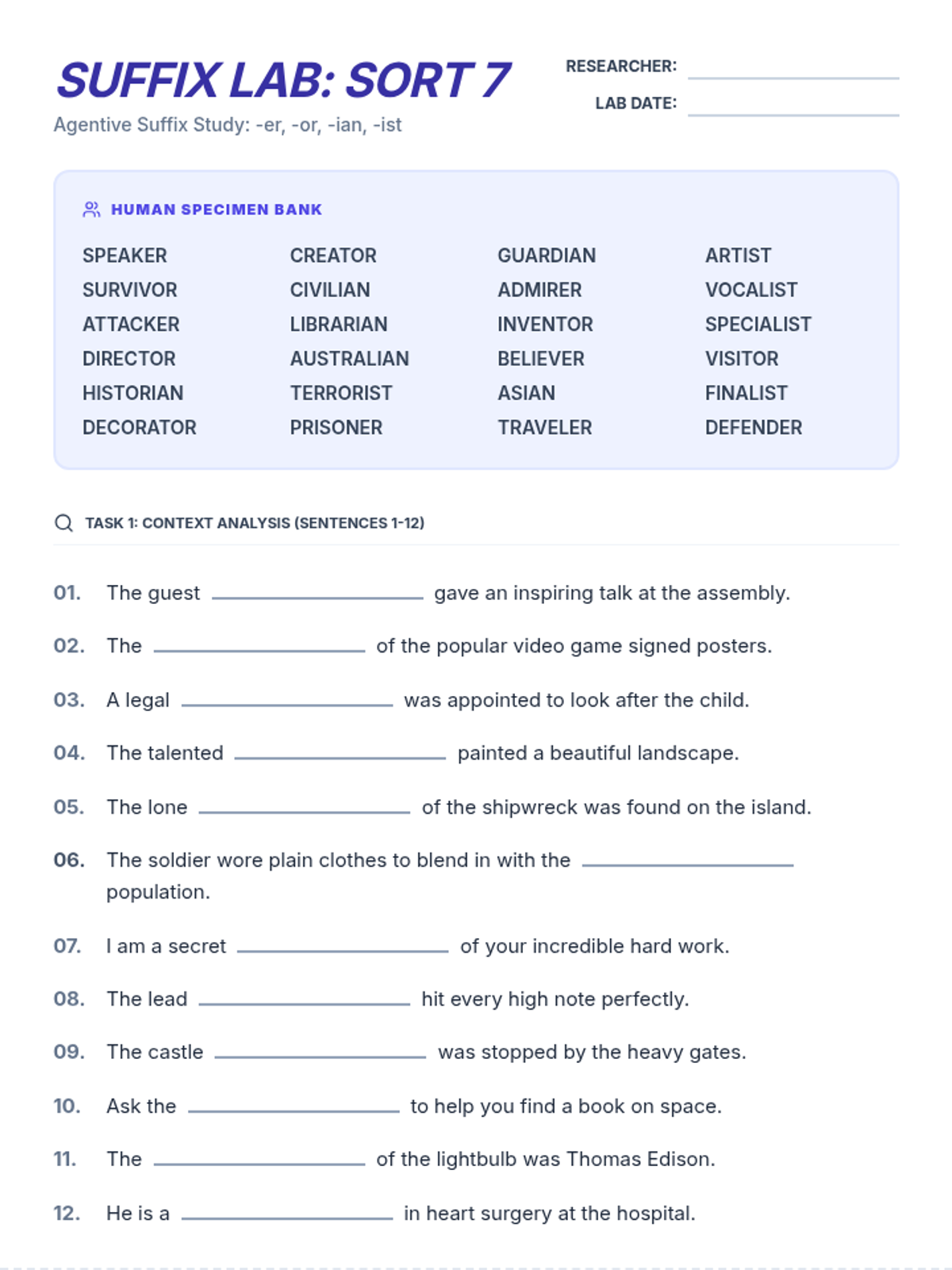
A lesson focused on agentive suffixes (-er, -or, -ian, -ist). Students analyze how these suffixes identify people who perform specific actions or hold certain roles.
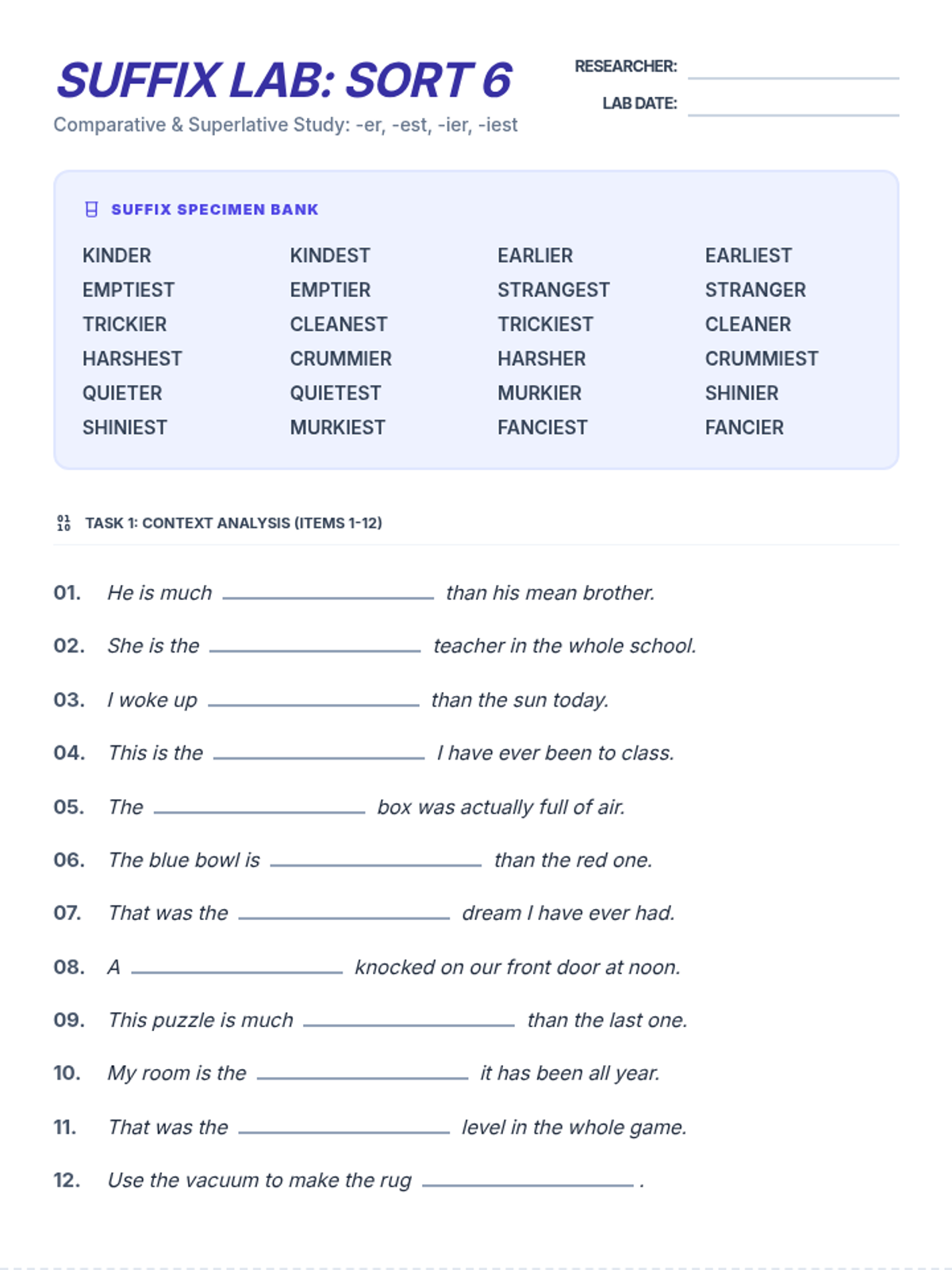
A lesson focused on comparative and superlative suffixes (-er, -est, -ier, -iest). Students explore how these suffixes change adjectives to compare two or more things.
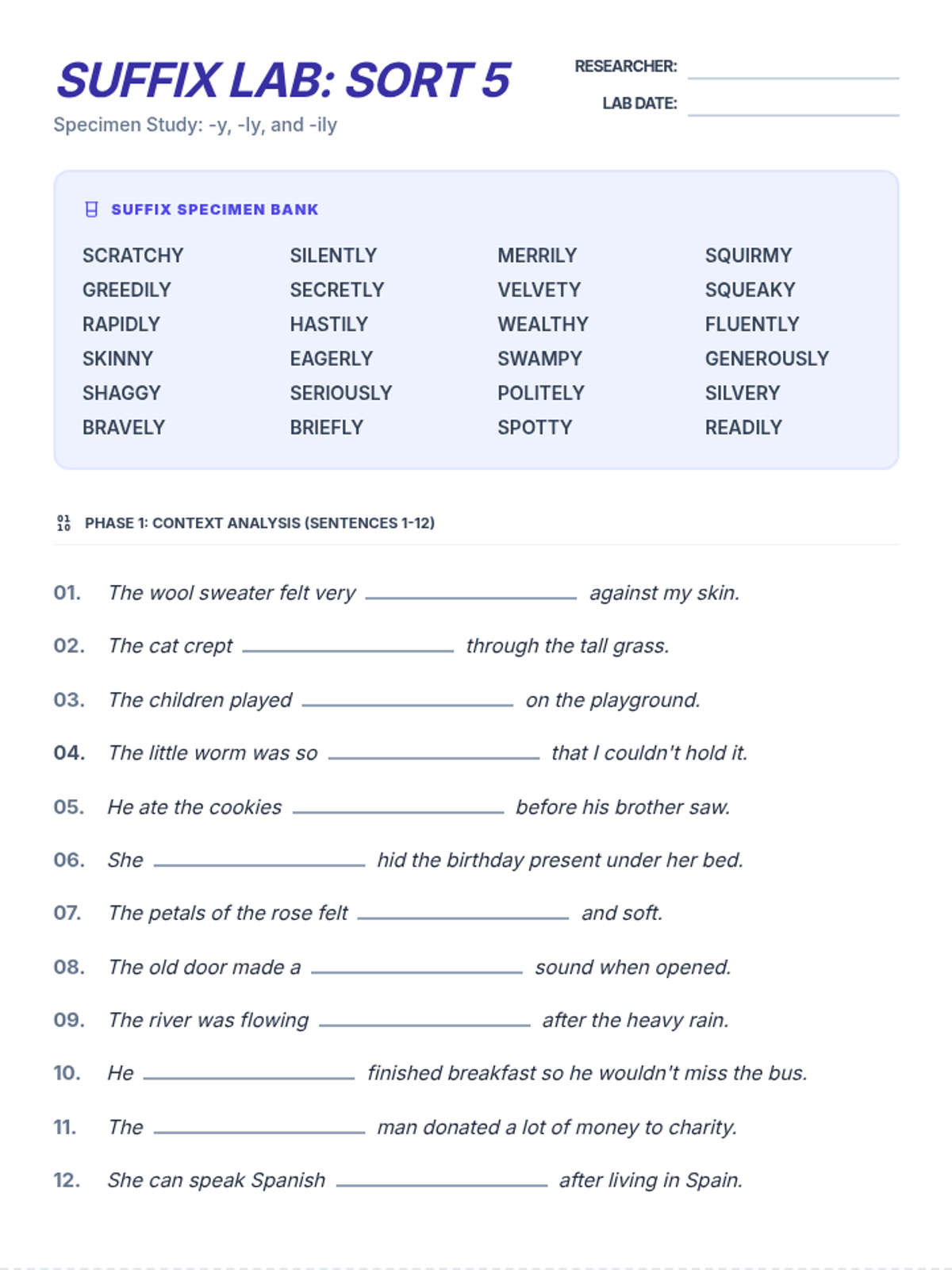
A lesson focused on the suffixes -y, -ly, and -ily. Students analyze how these suffixes change word meanings and usage through contextual application.
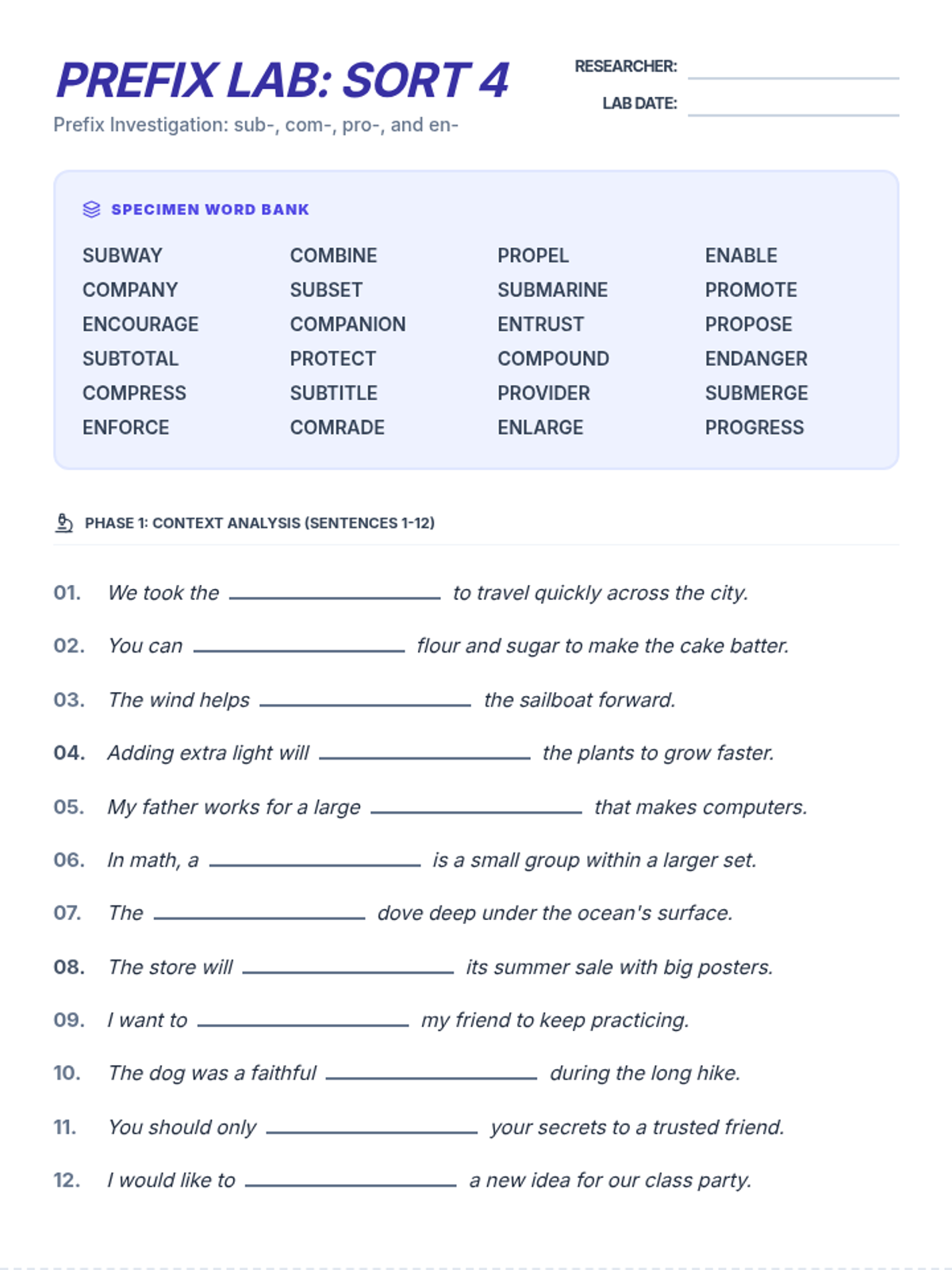
A lesson focused on the prefixes sub-, com-, pro-, and en-. Students apply their knowledge of these prefixes to identify and use words in various contexts.
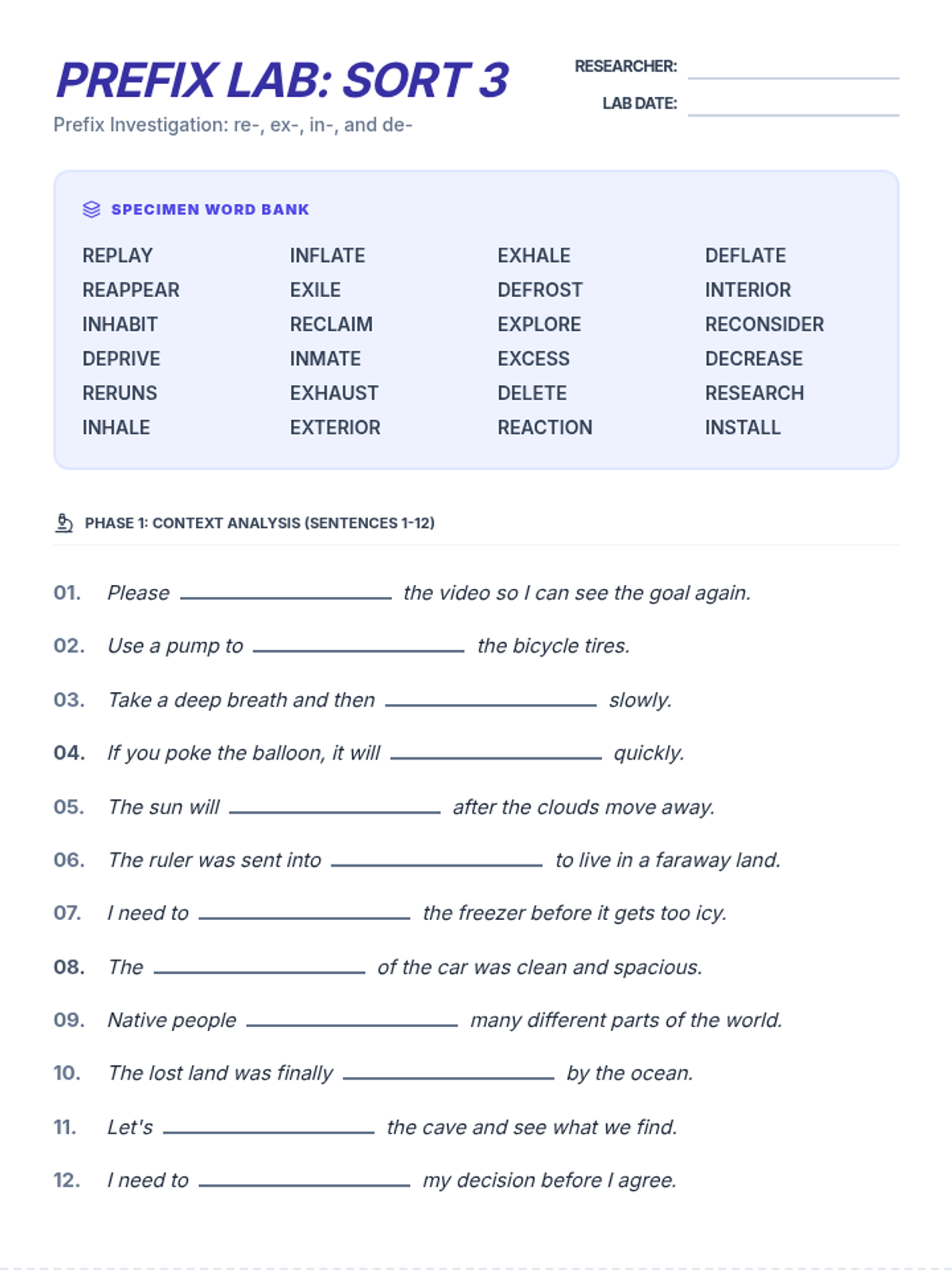
A lesson focused on the prefixes re-, ex-, in-, and de-. Students explore meanings like "again," "out," "in," and "down" through application.
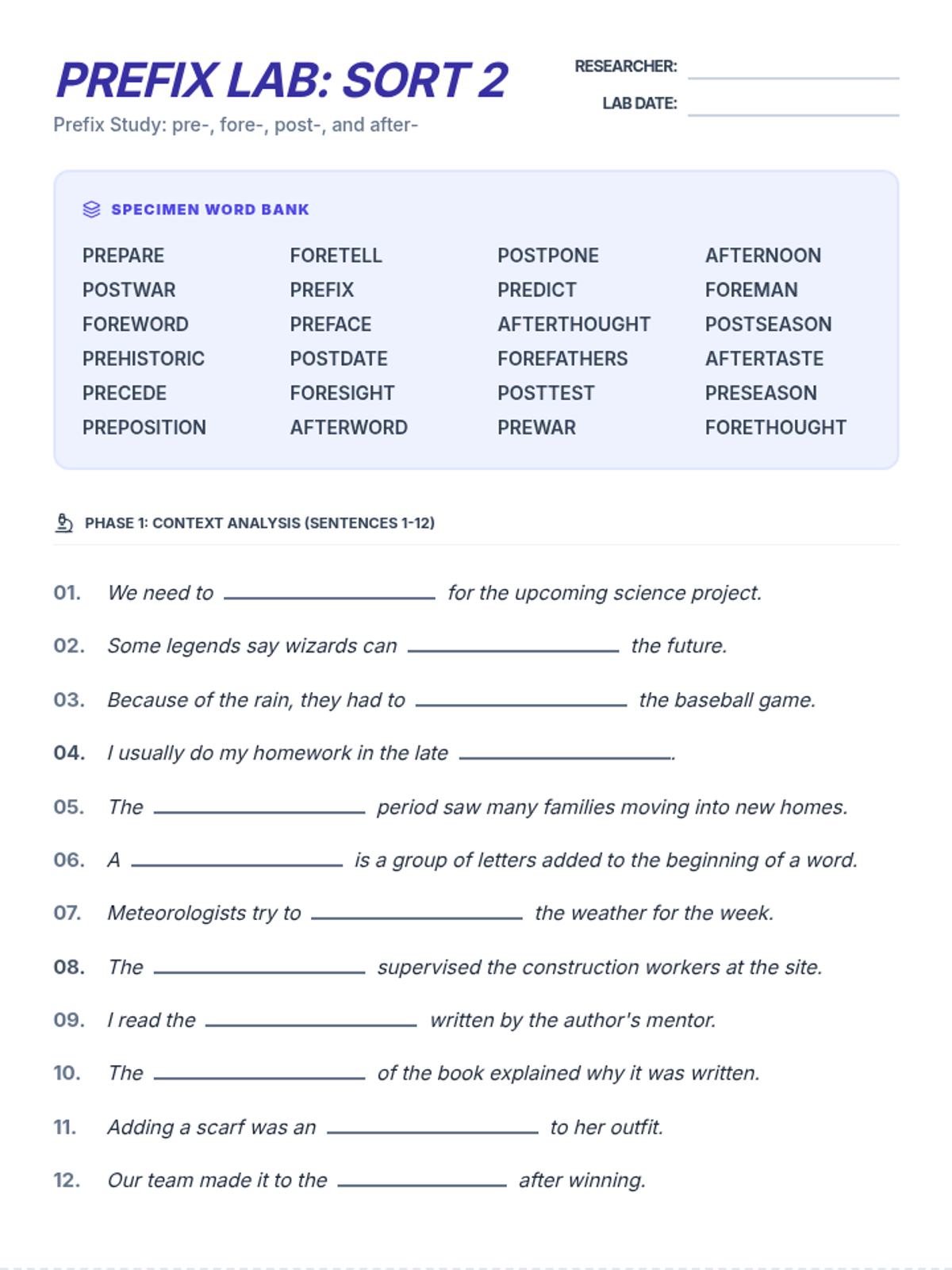
A lesson focused on the prefixes pre-, fore-, post-, and after-. Students practice using these temporal and directional prefixes in context.
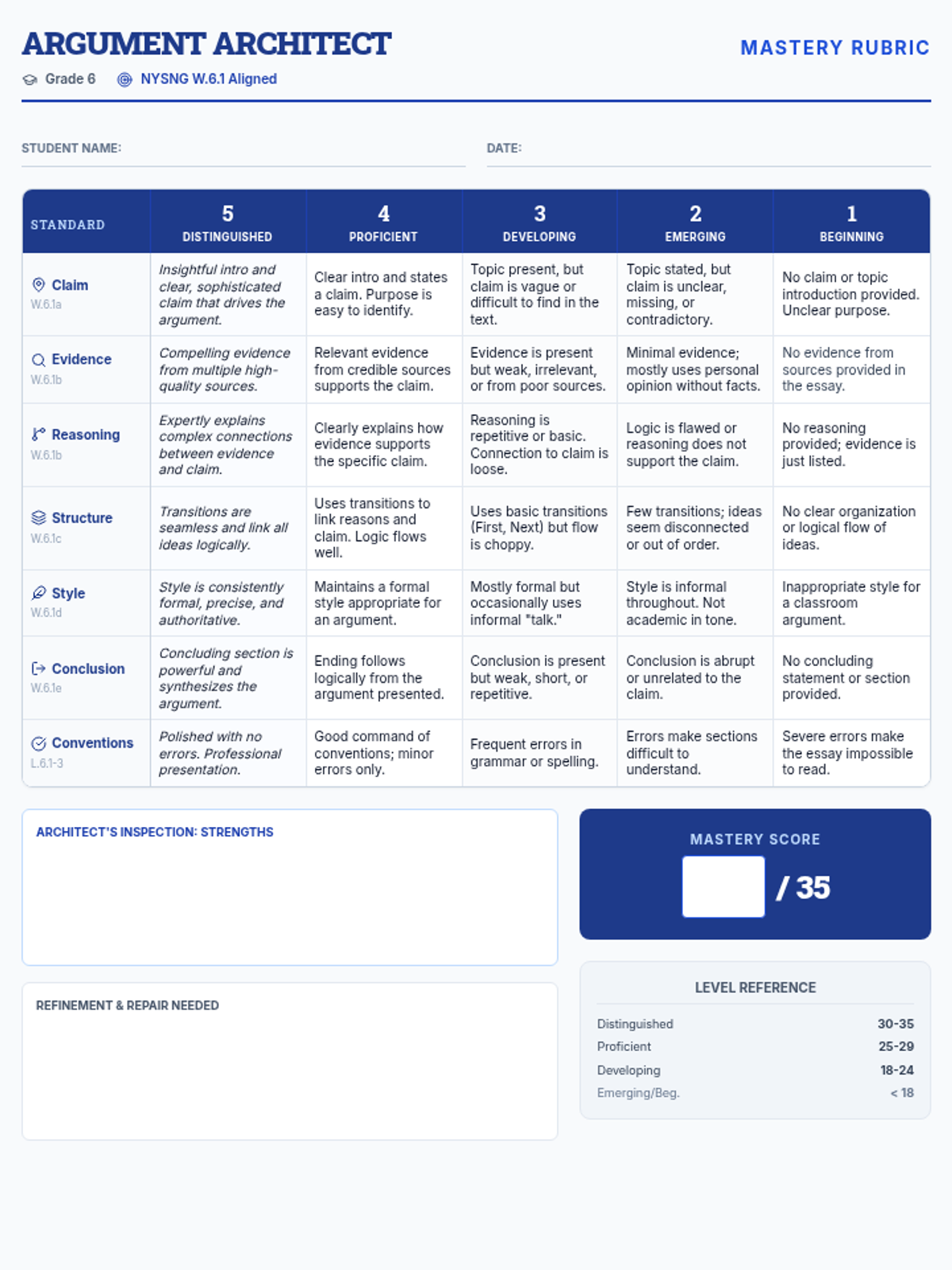
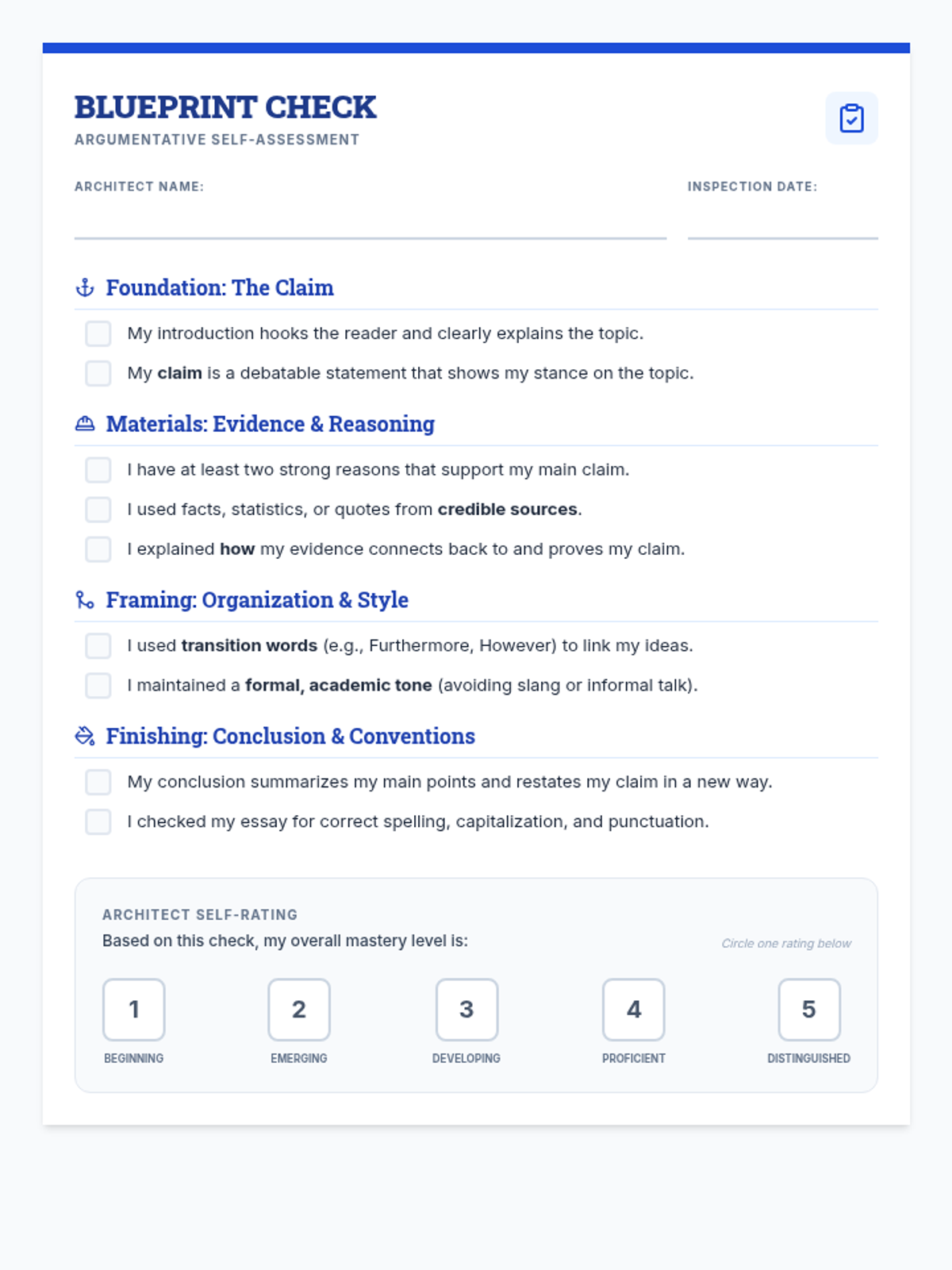
This lesson provides a comprehensive 5-point mastery rubric and student self-assessment guide for 6th-grade argumentative writing, aligned to NYSNG standards. It focuses on the structural elements of a strong argument: claim, evidence, reasoning, organization, and style.
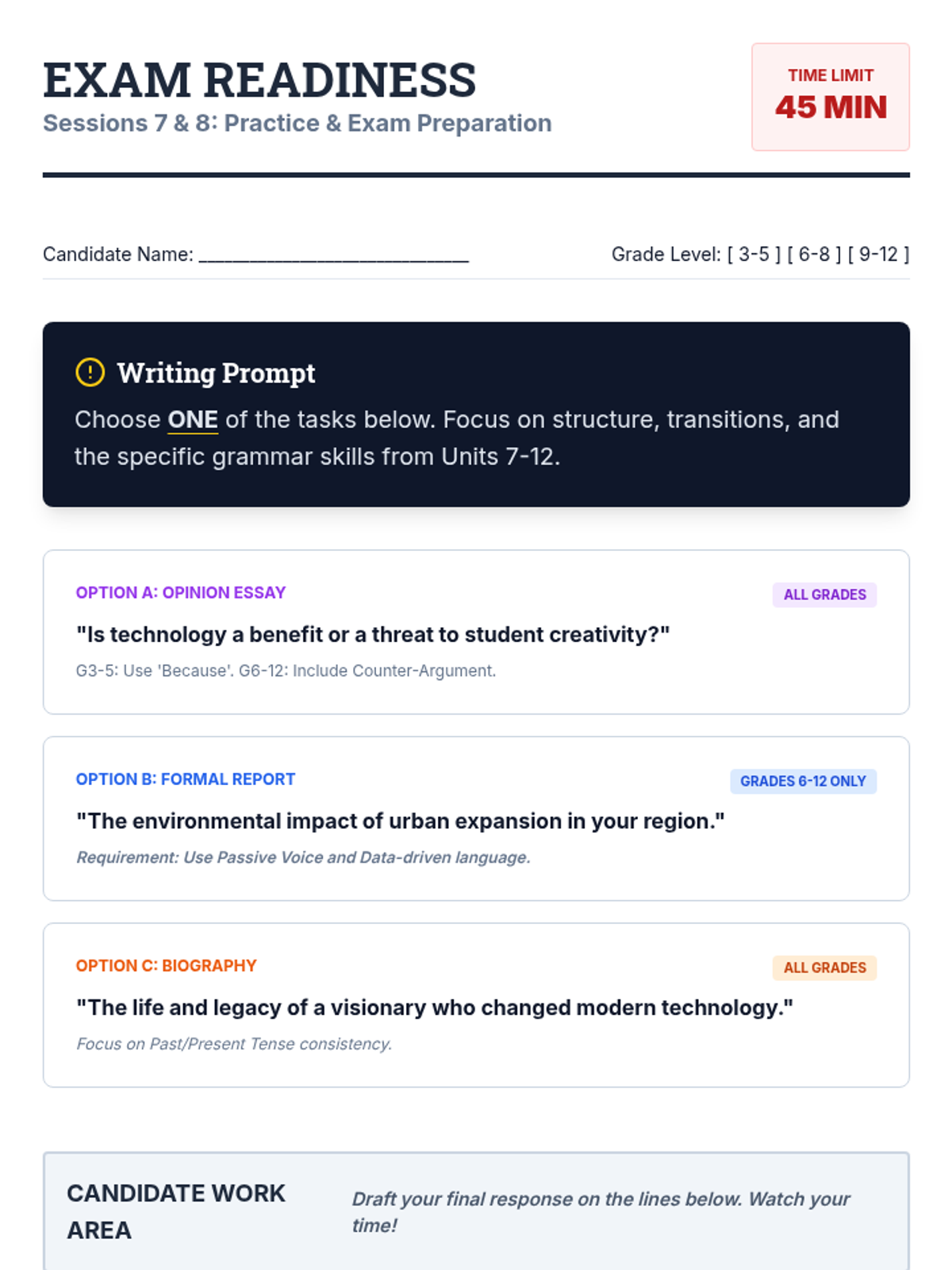
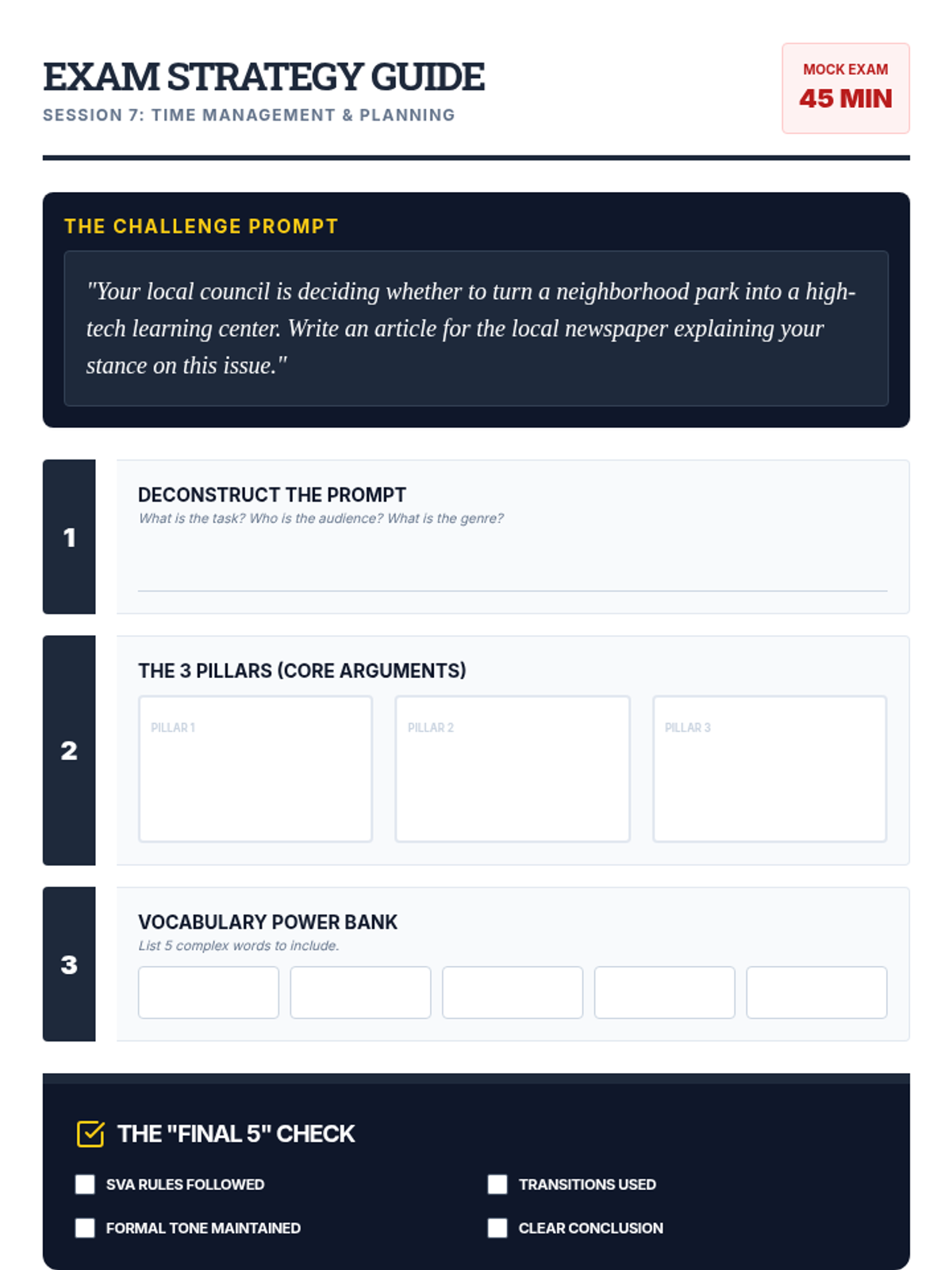
Provides timed writing practice and mock exam conditions to build stamina and review structural clarity.
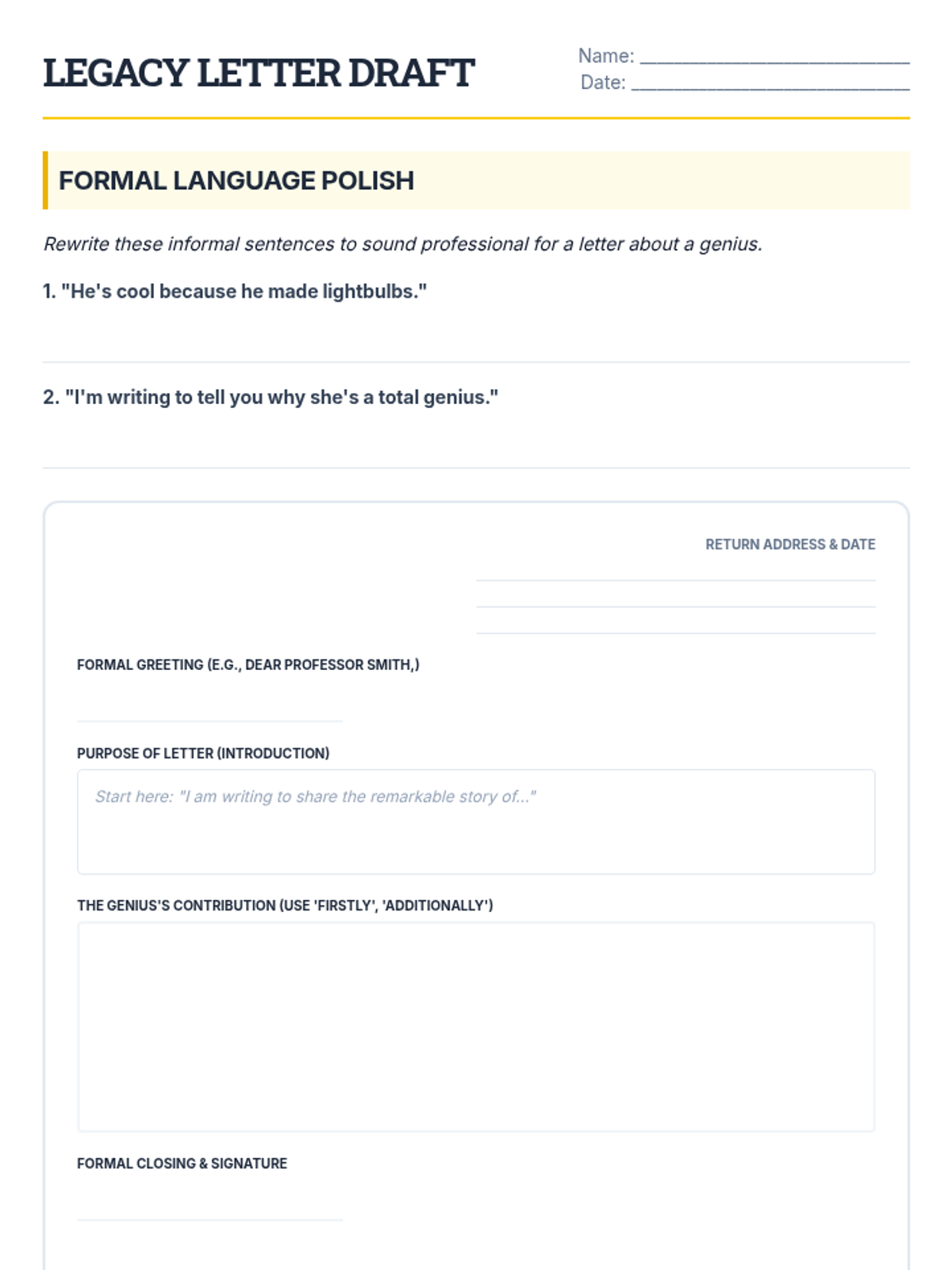
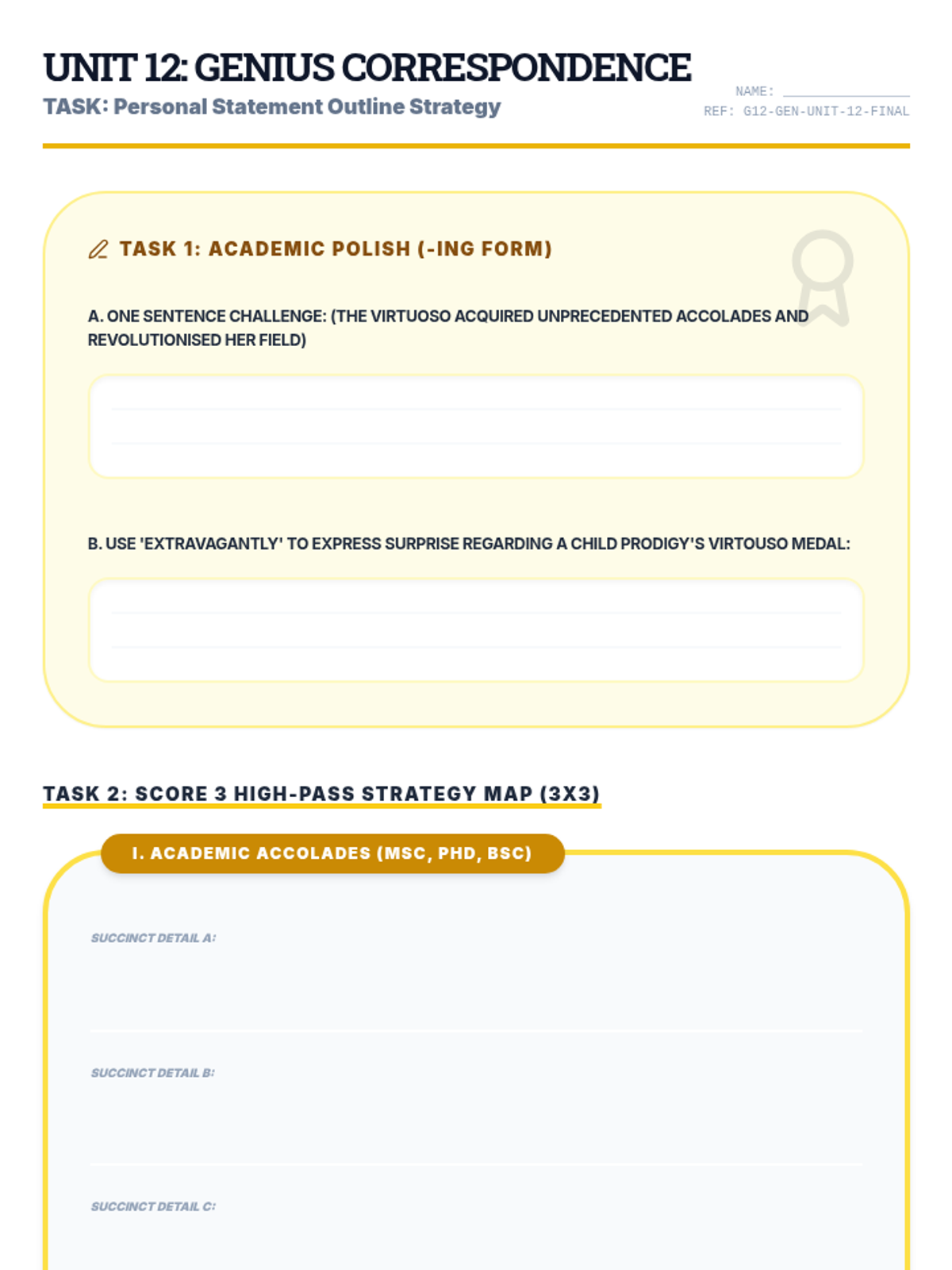
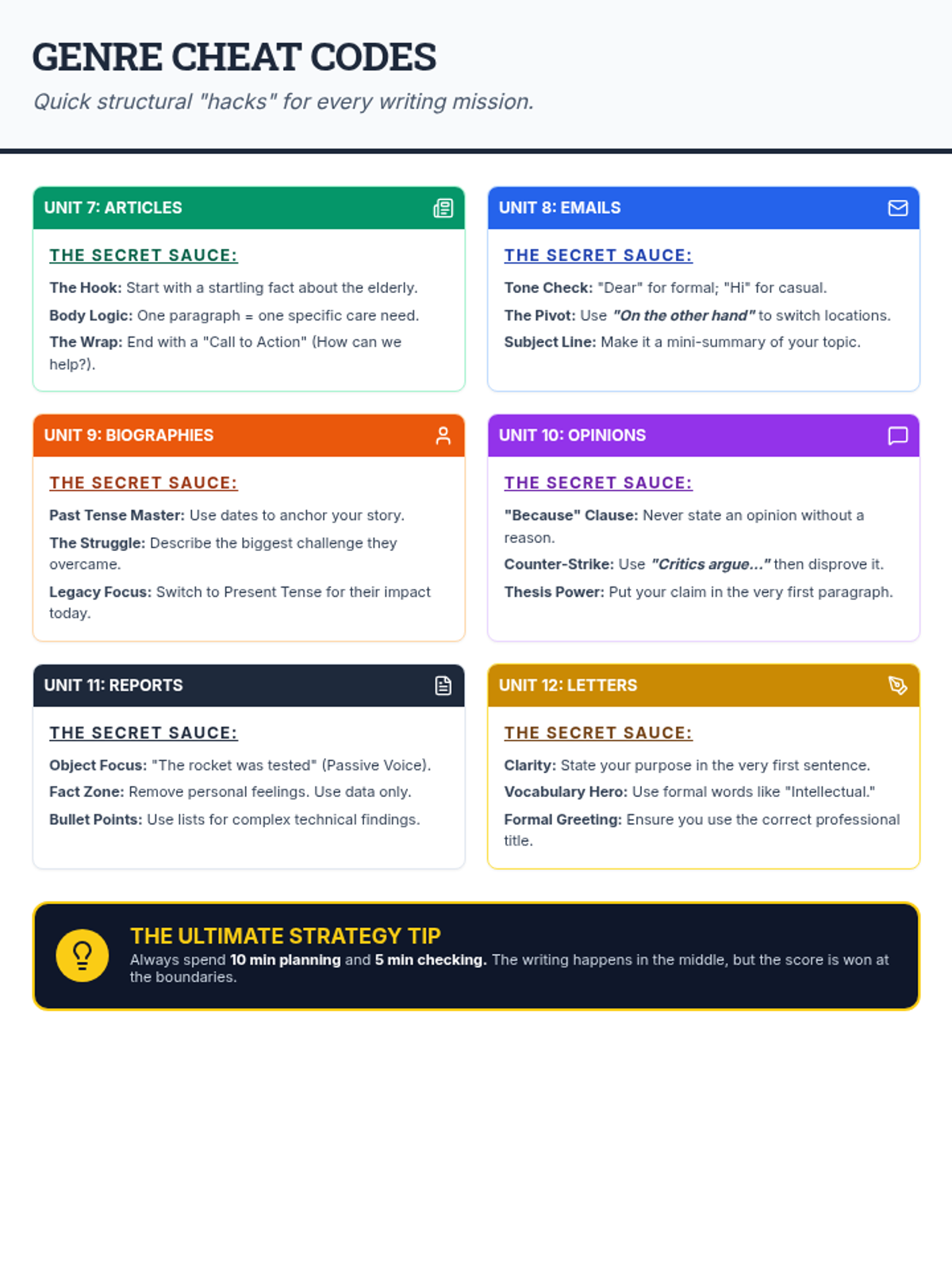
Practices formal letter writing focused on the achievements of geniuses, reinforcing formal tone and structural transitions.
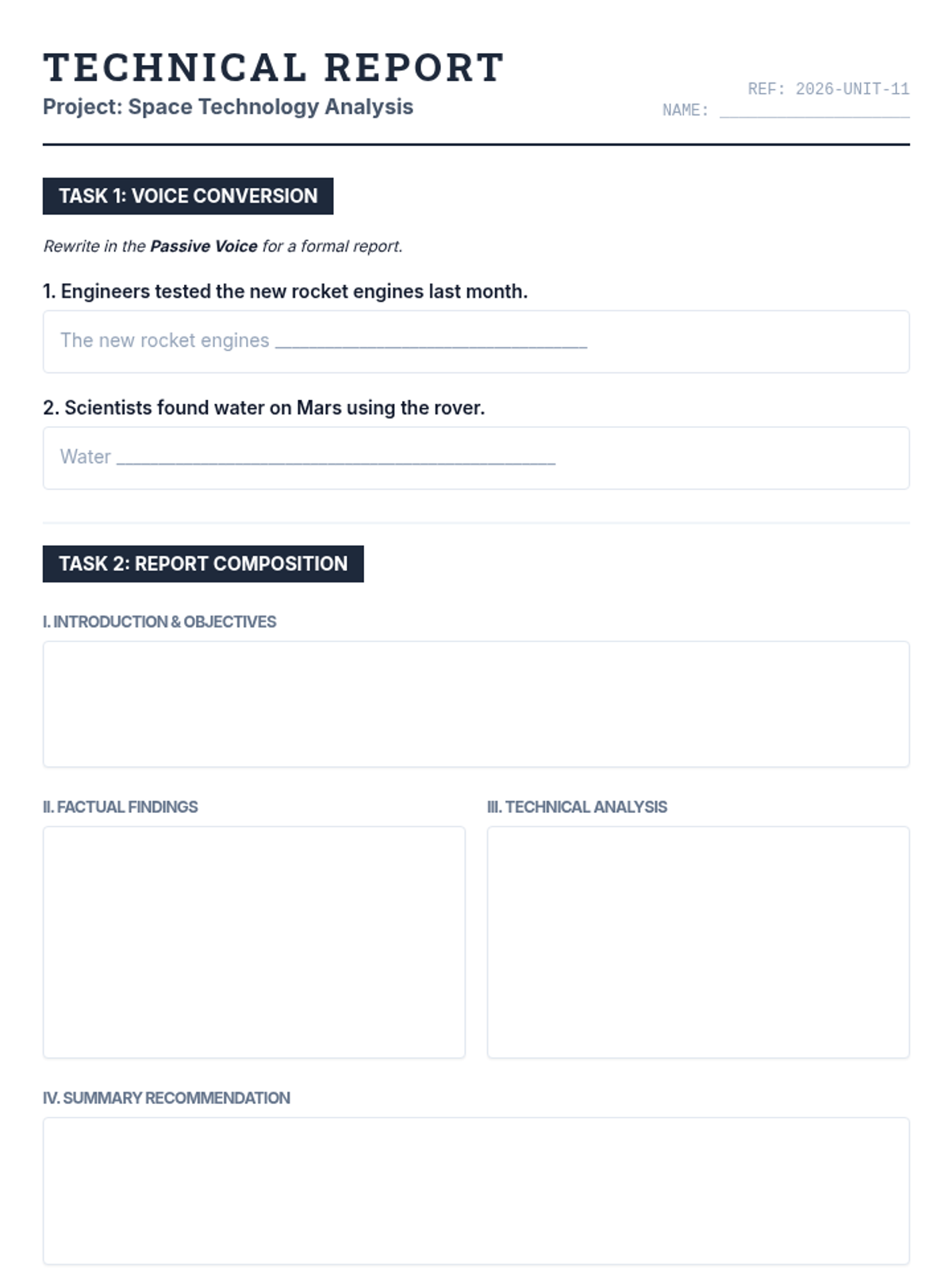
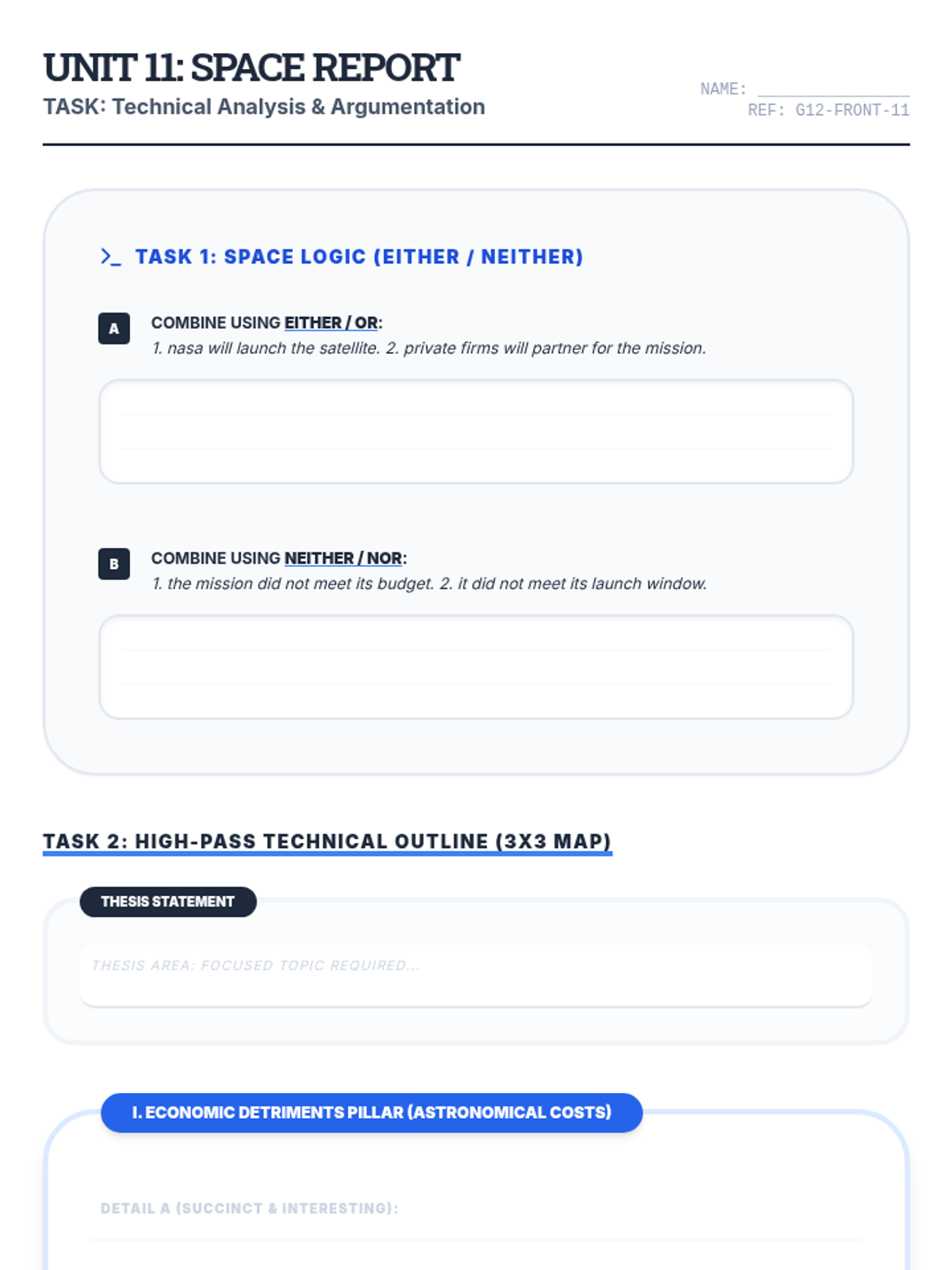
Introduces formal report writing on space technology, emphasizing passive vs. active voice and data-driven analysis.
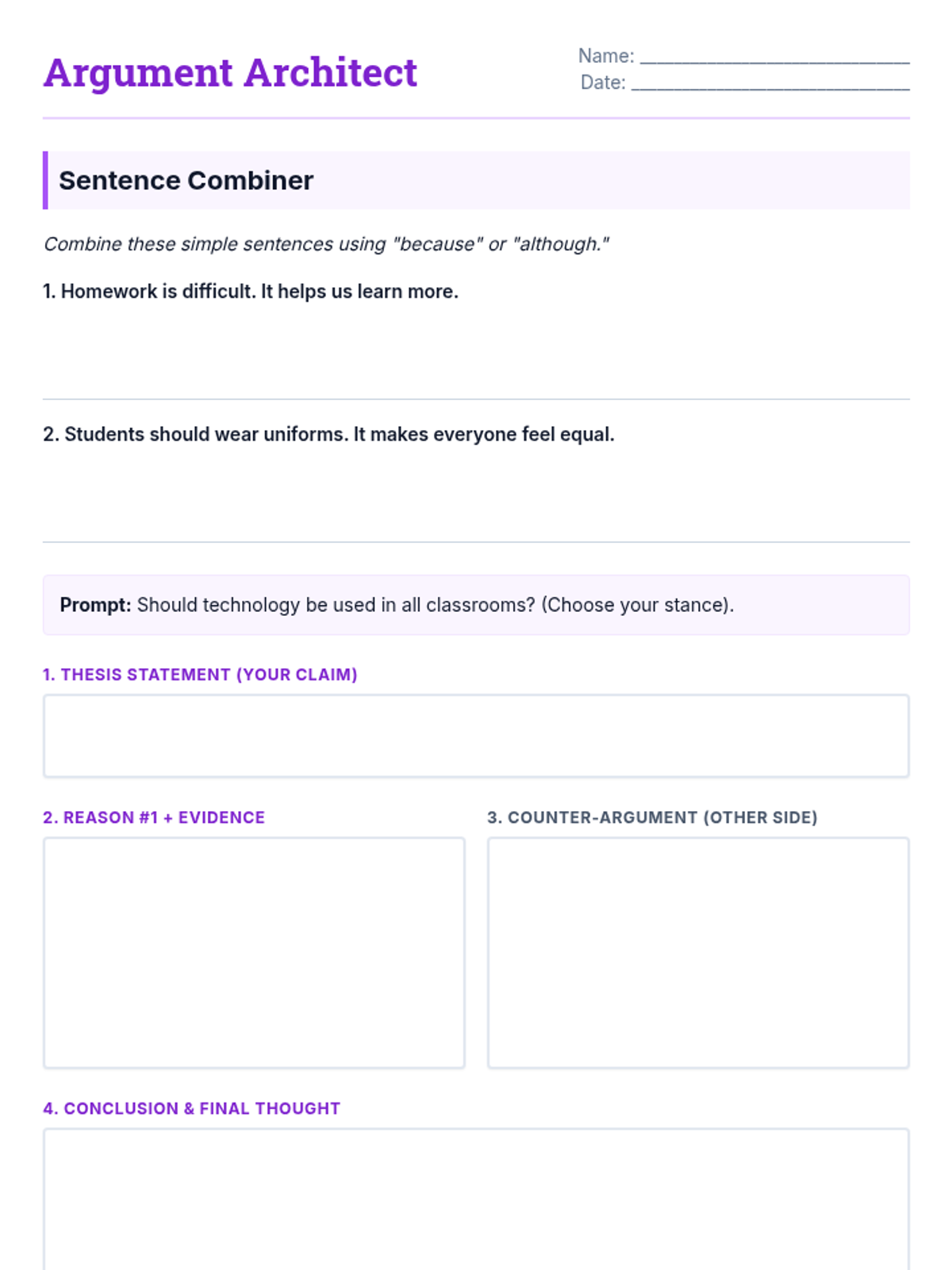
Develops argumentative skills through opinion essays on debatable topics, focusing on conjunctions, counter-arguments, and persuasive transitions.
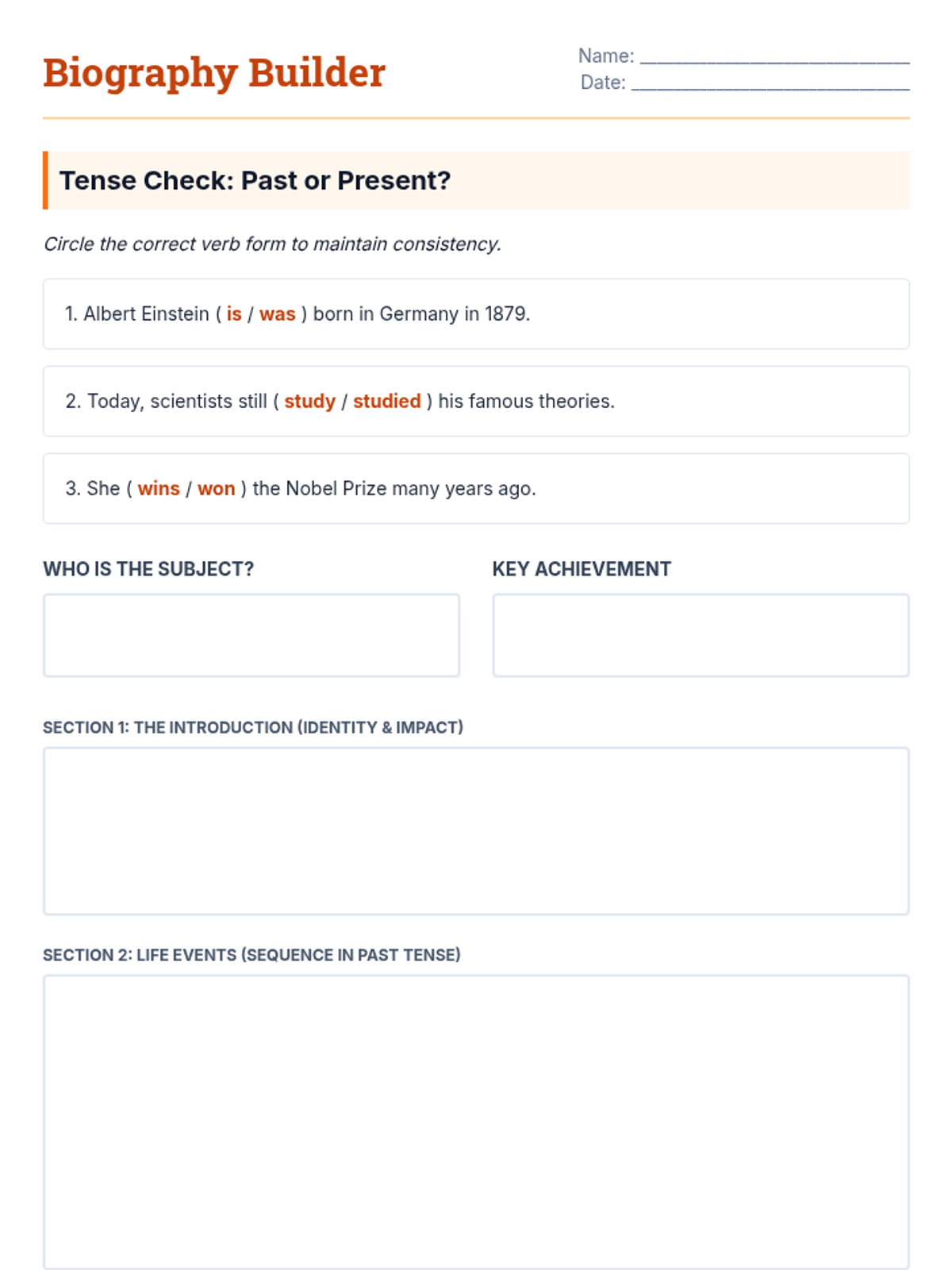
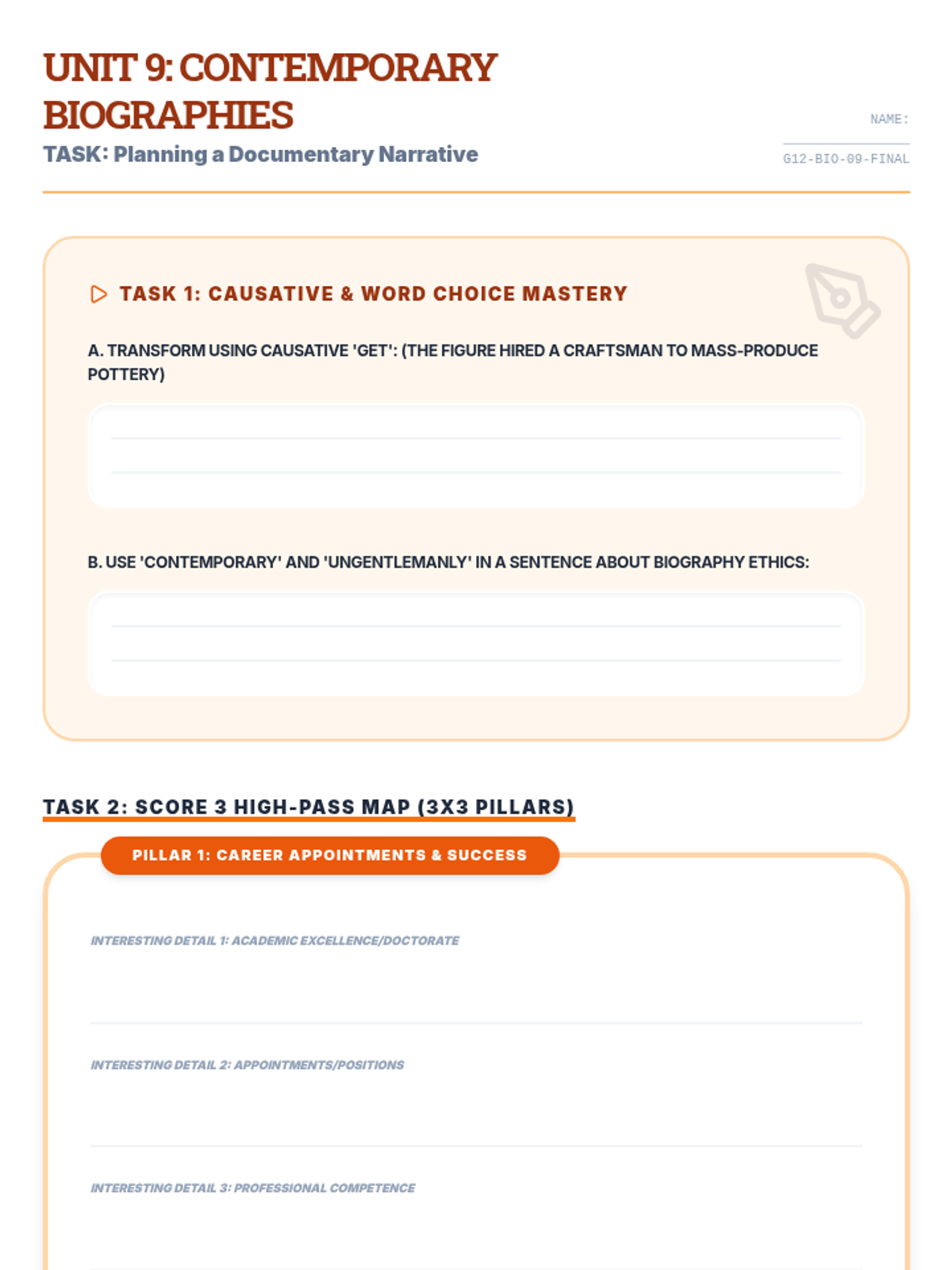
Explores the lives of historical figures through biography writing, emphasizing tense consistency and logical life-event sequencing.
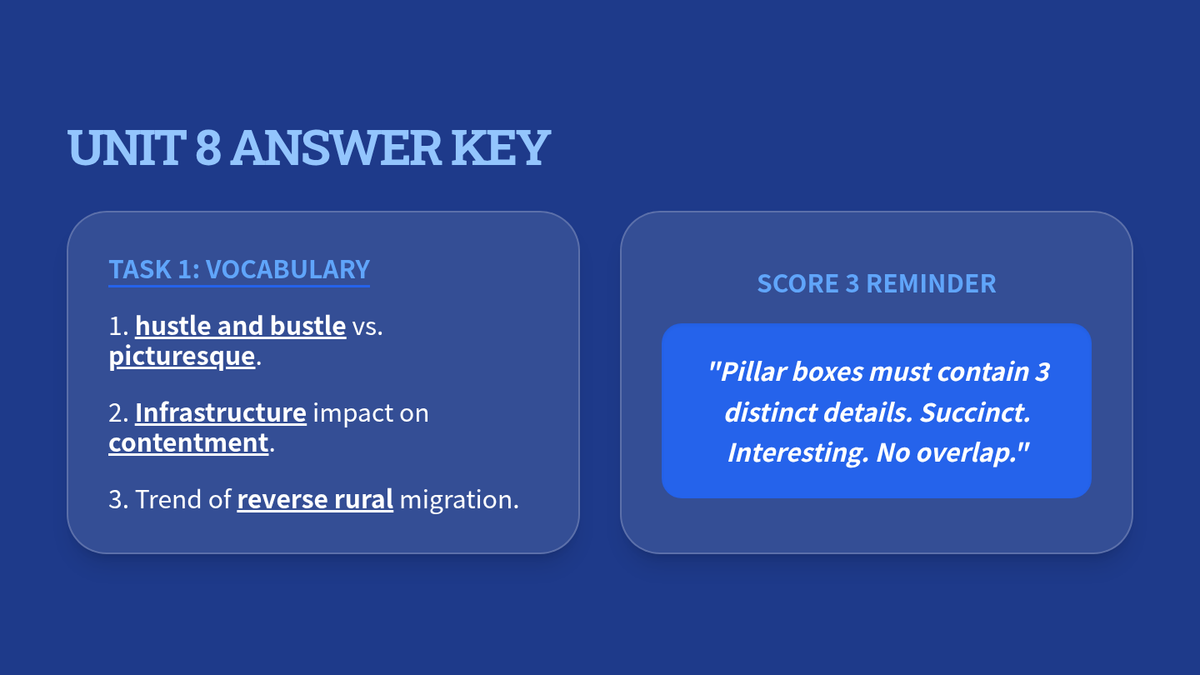
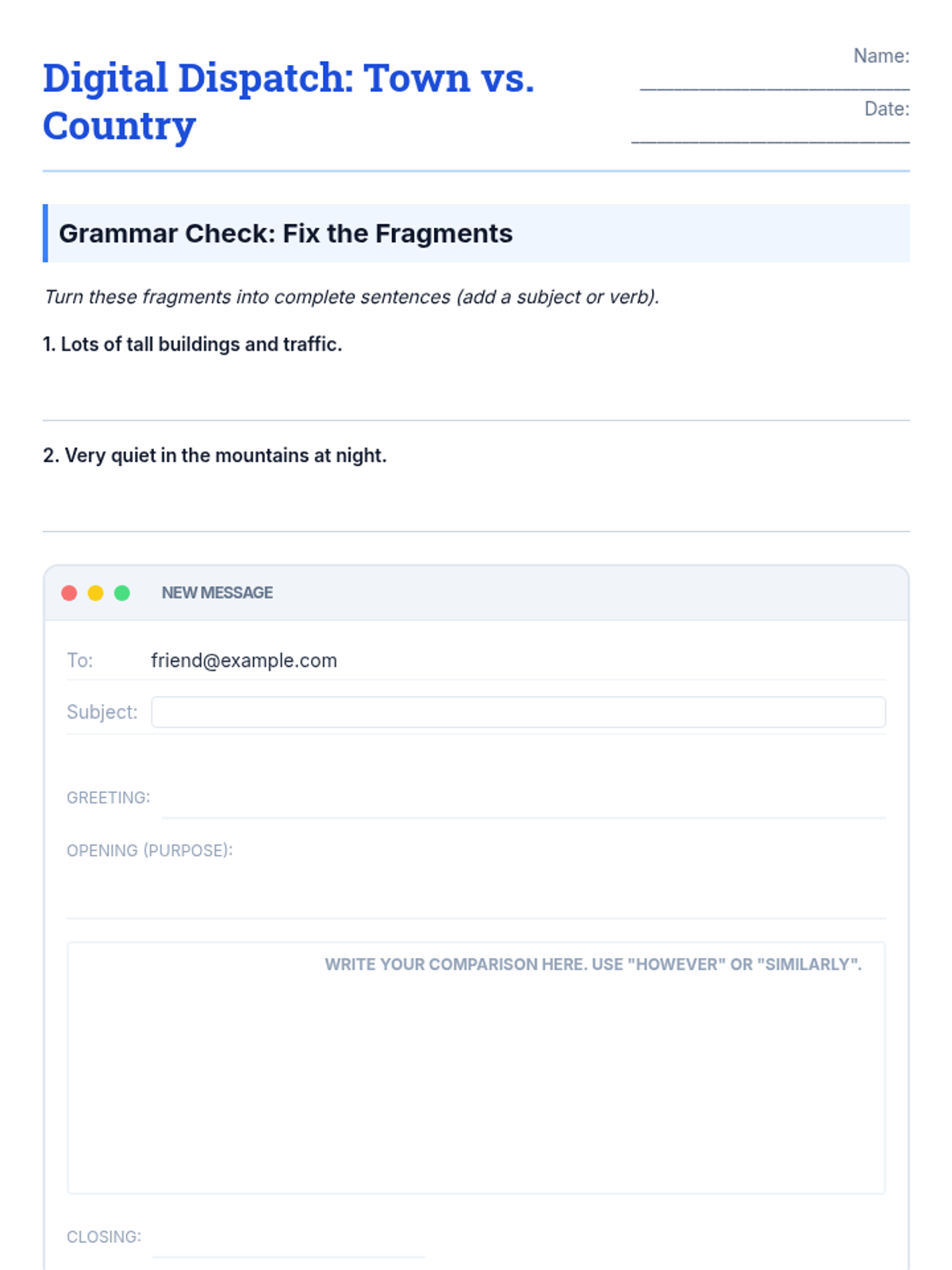
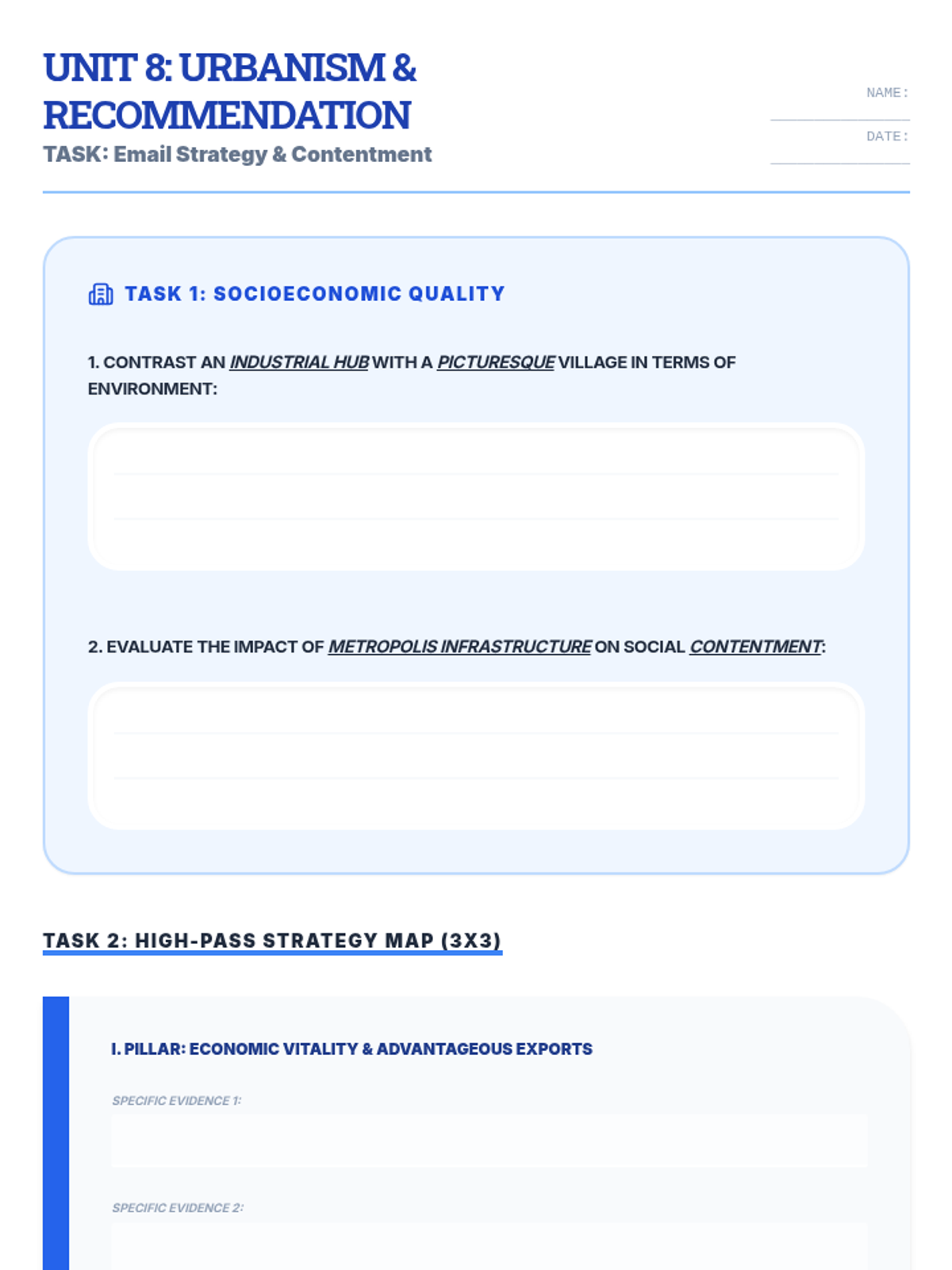
Teaches email etiquette and structure through a comparison of urban and rural life, focusing on sentence fragments and transitional words for comparison.
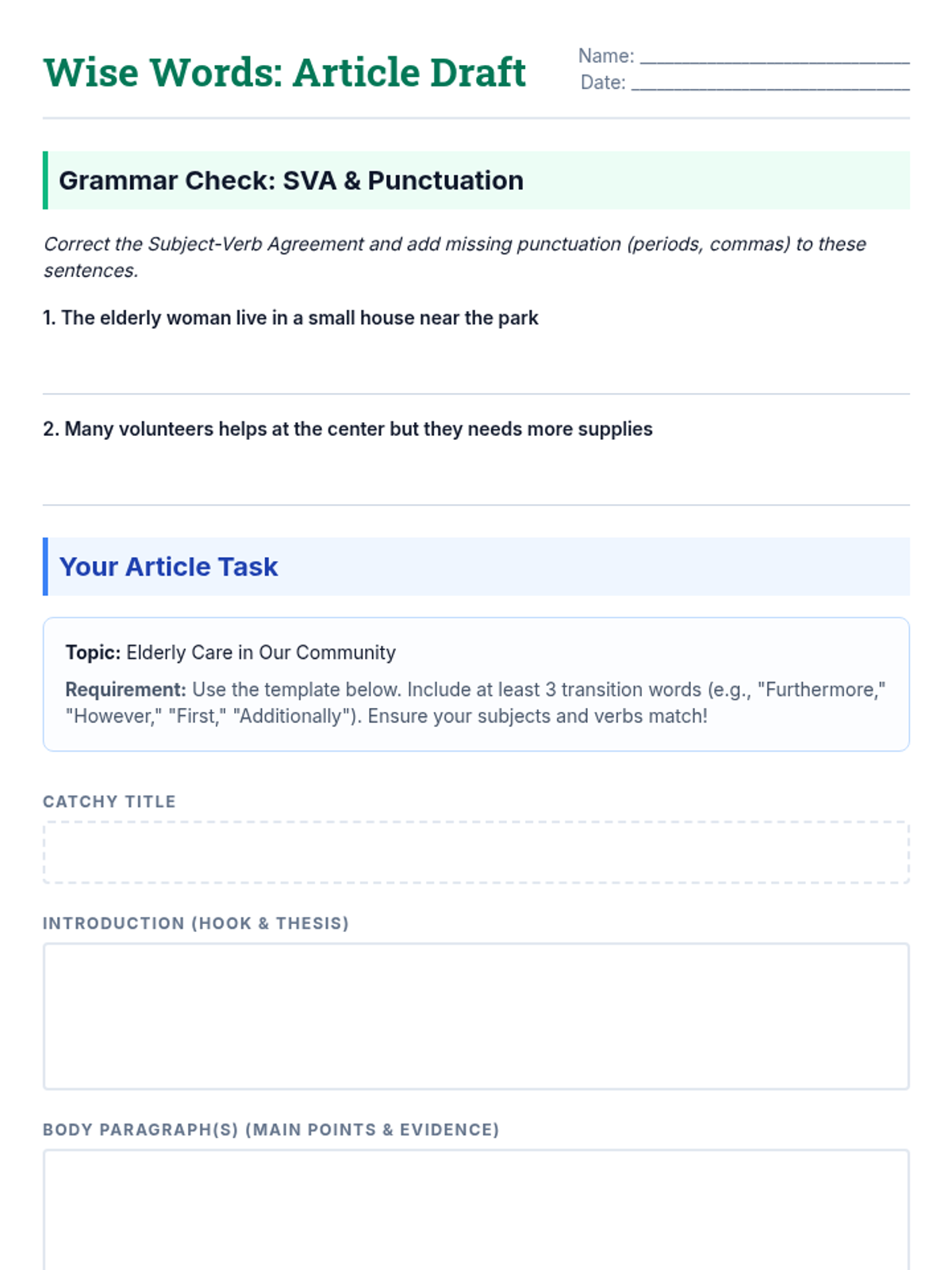
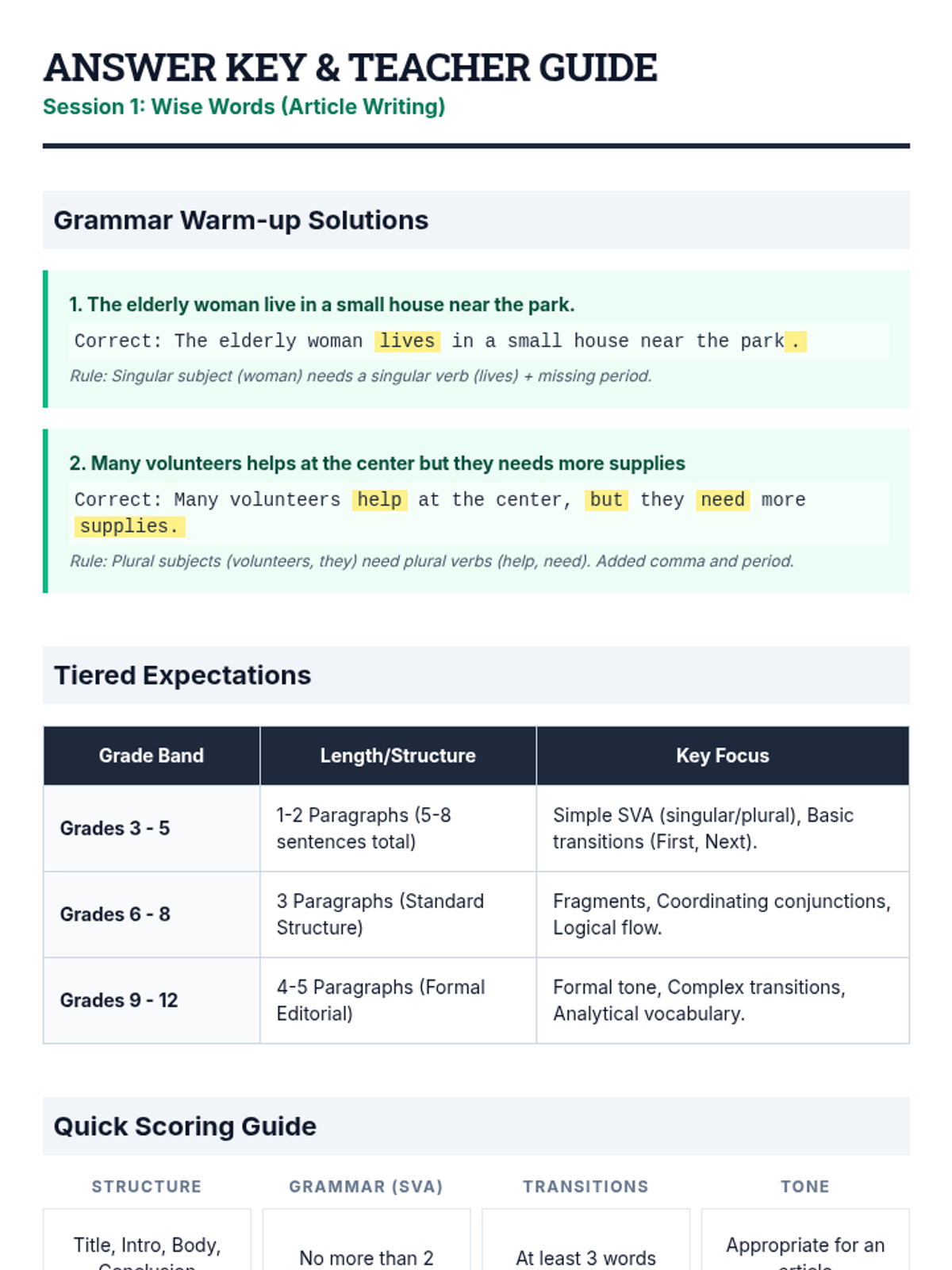
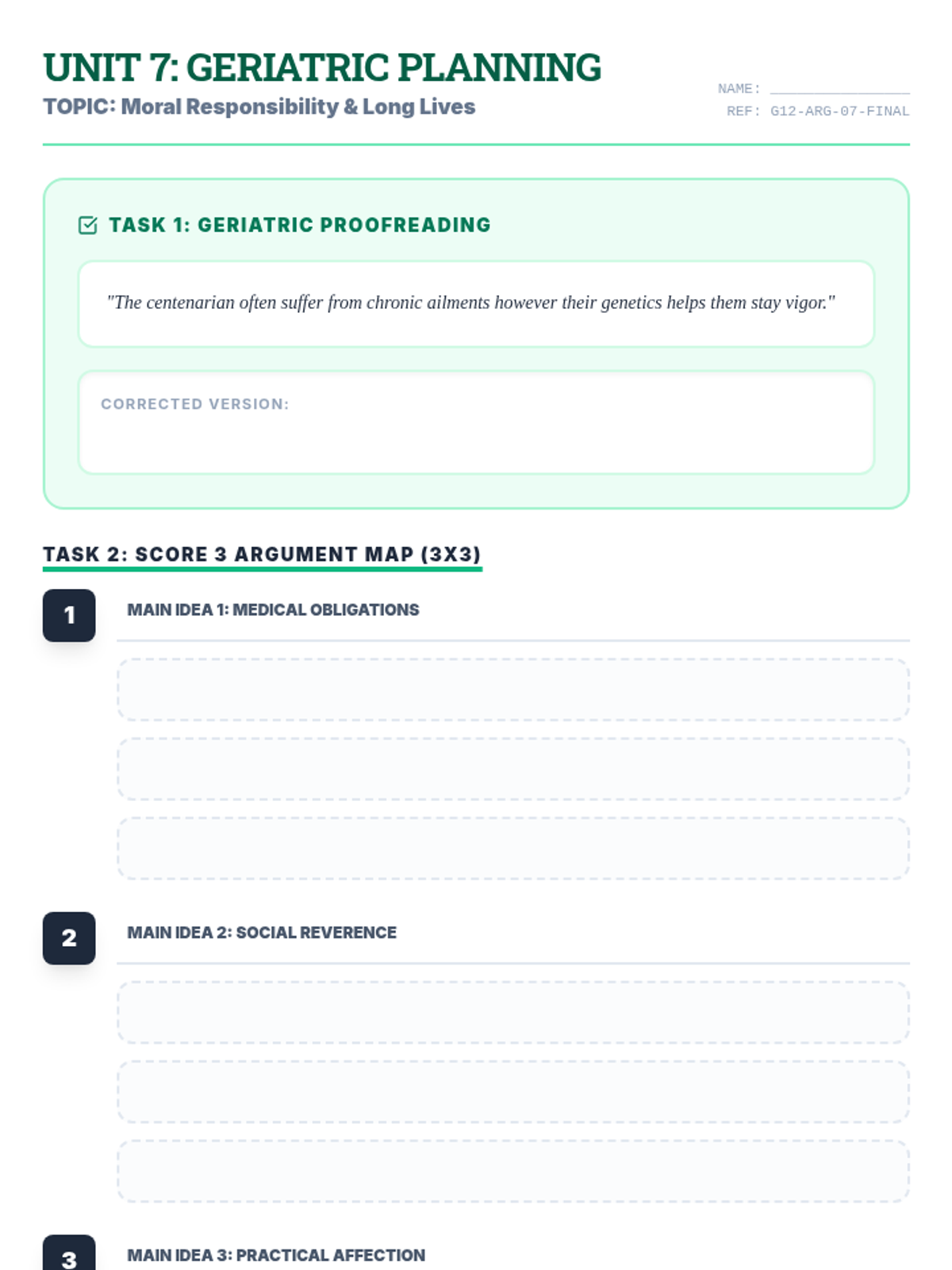
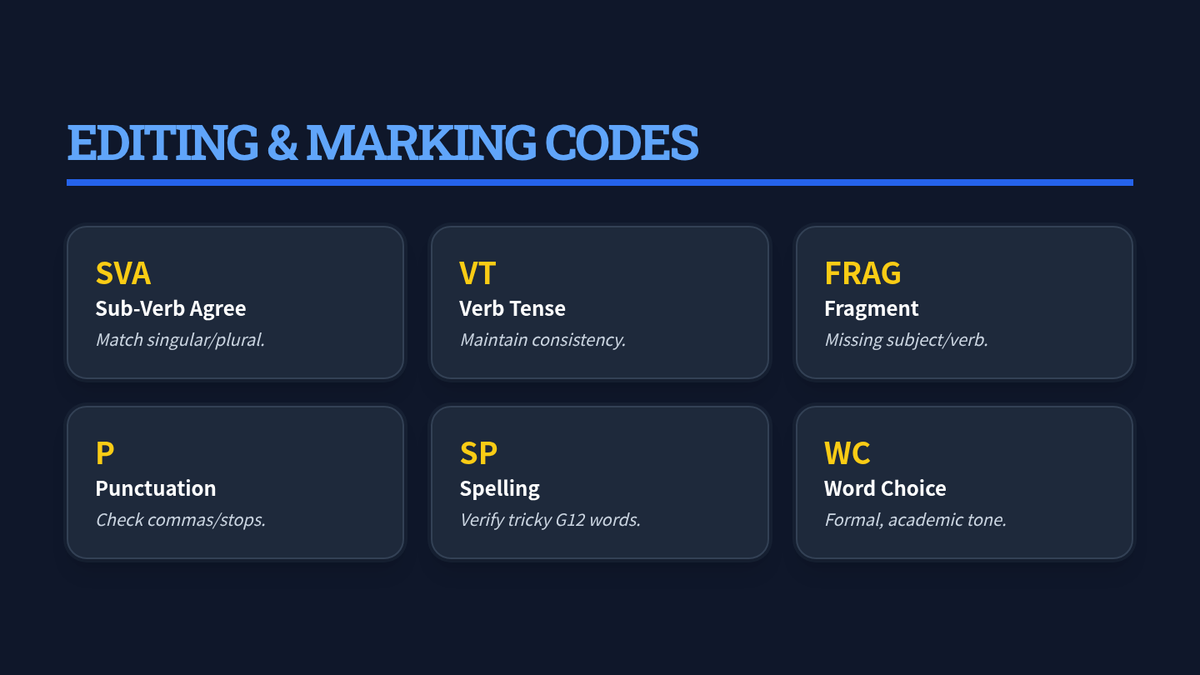
Focuses on writing articles about elderly care, teaching subject-verb agreement, punctuation, and article structure with tiered difficulty for elementary to high school levels.
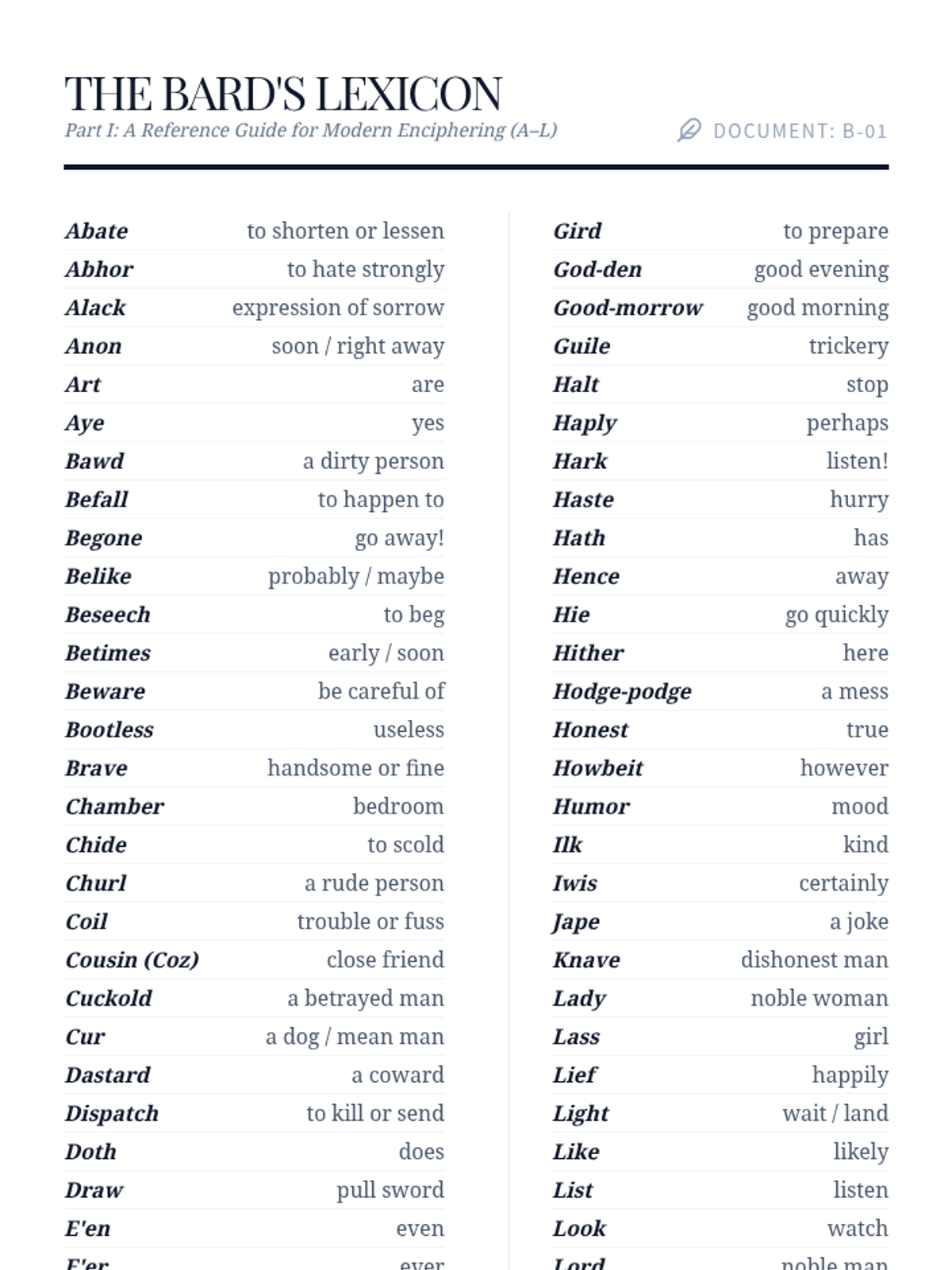
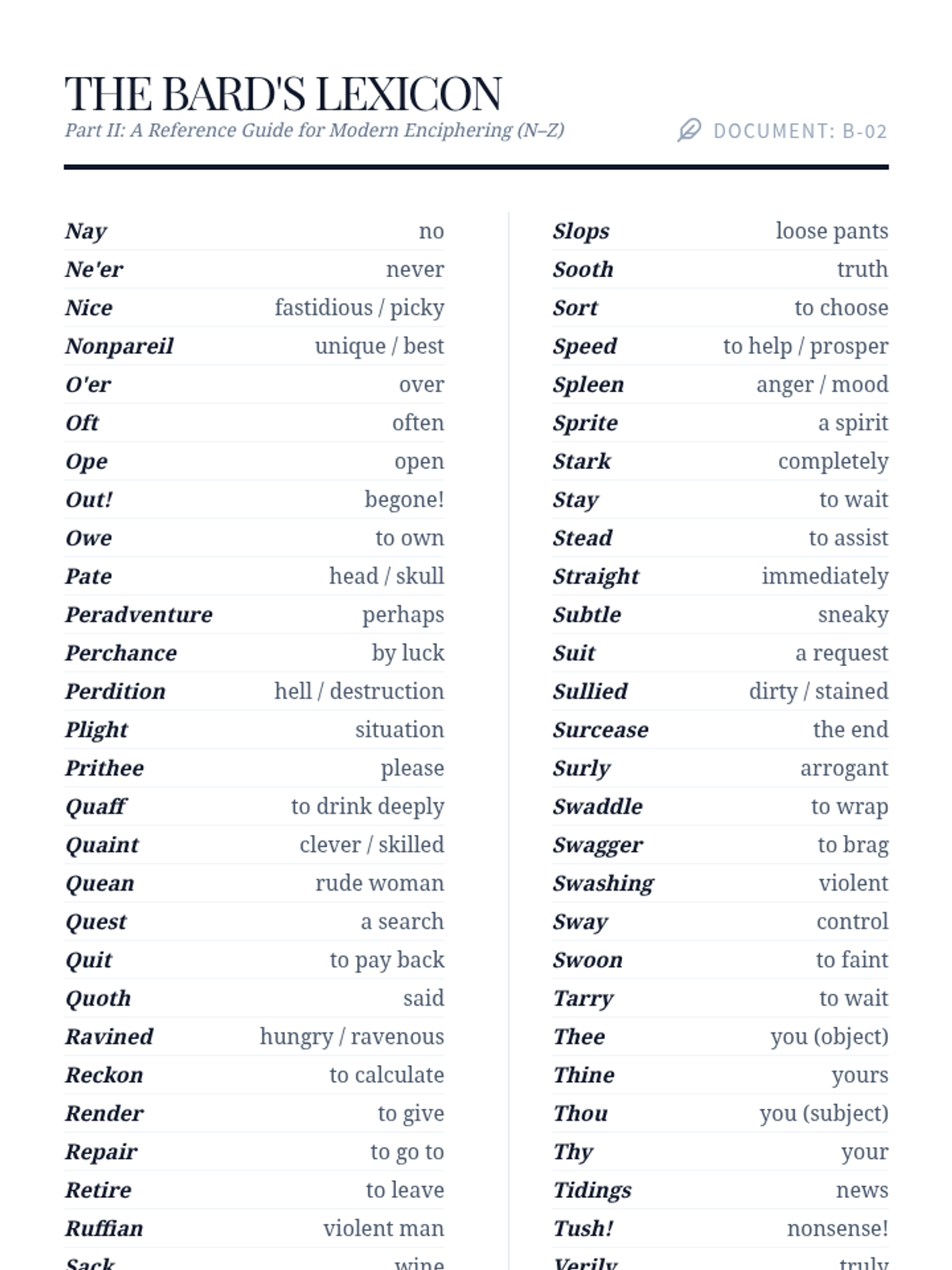
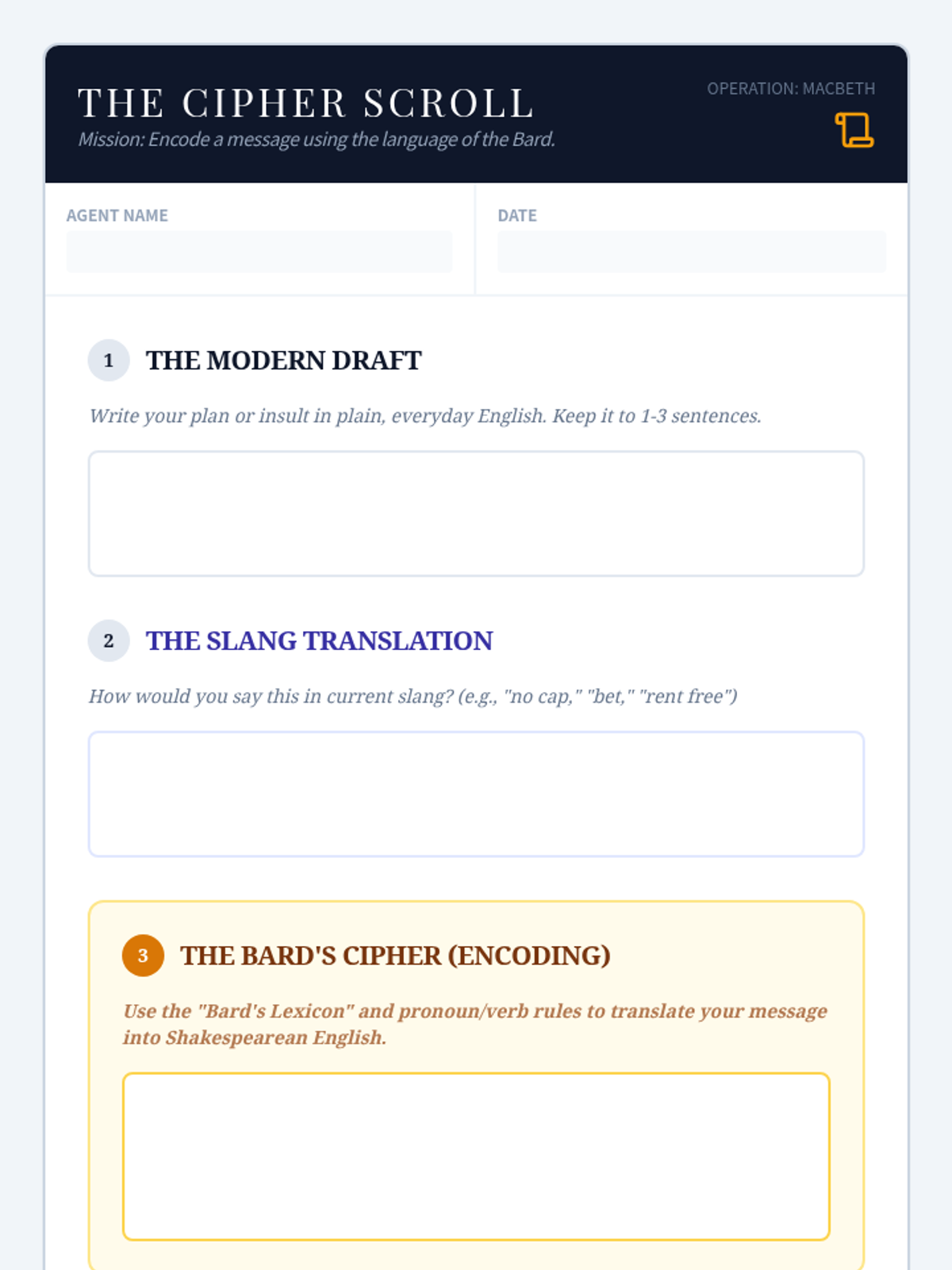
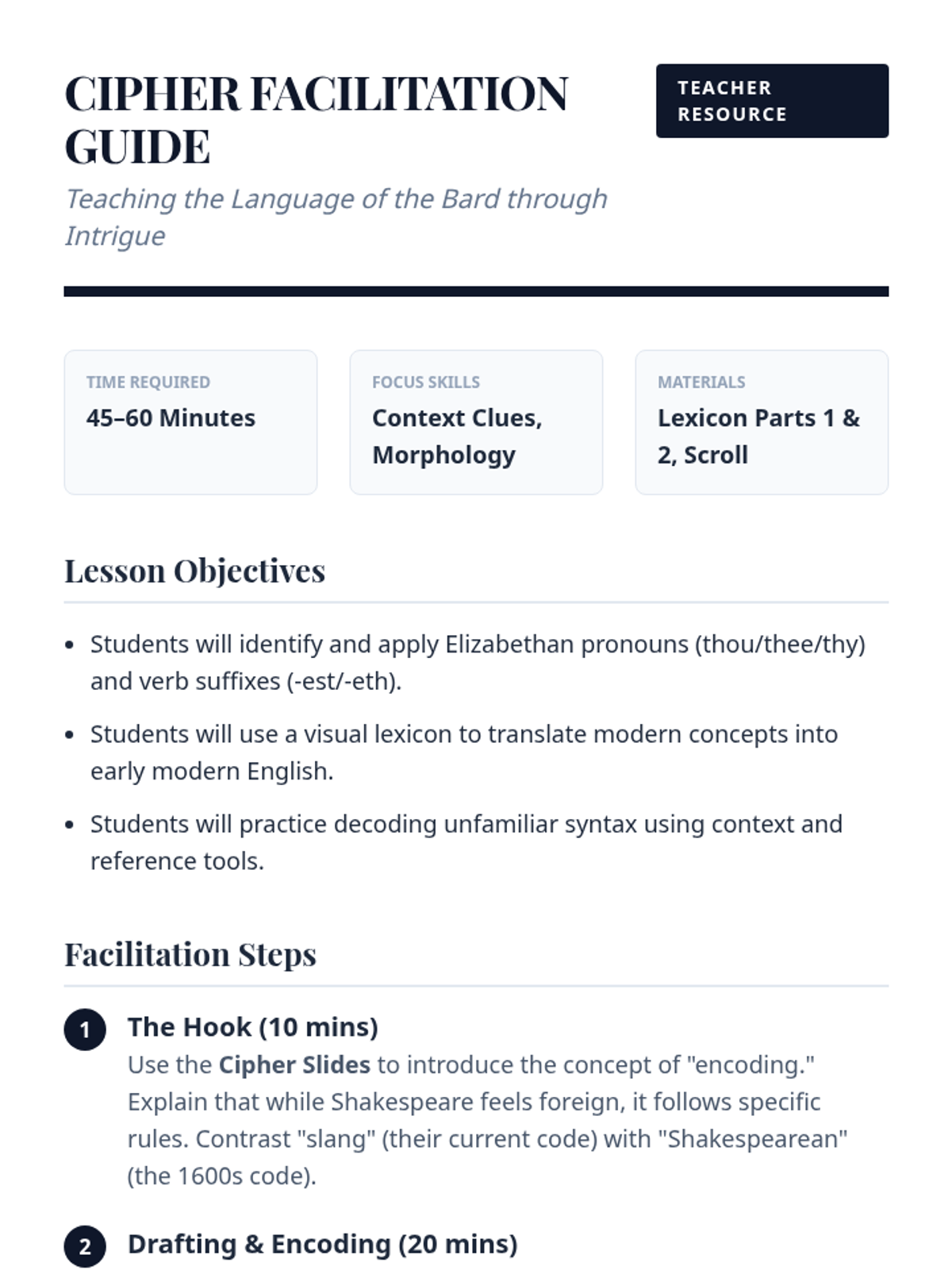
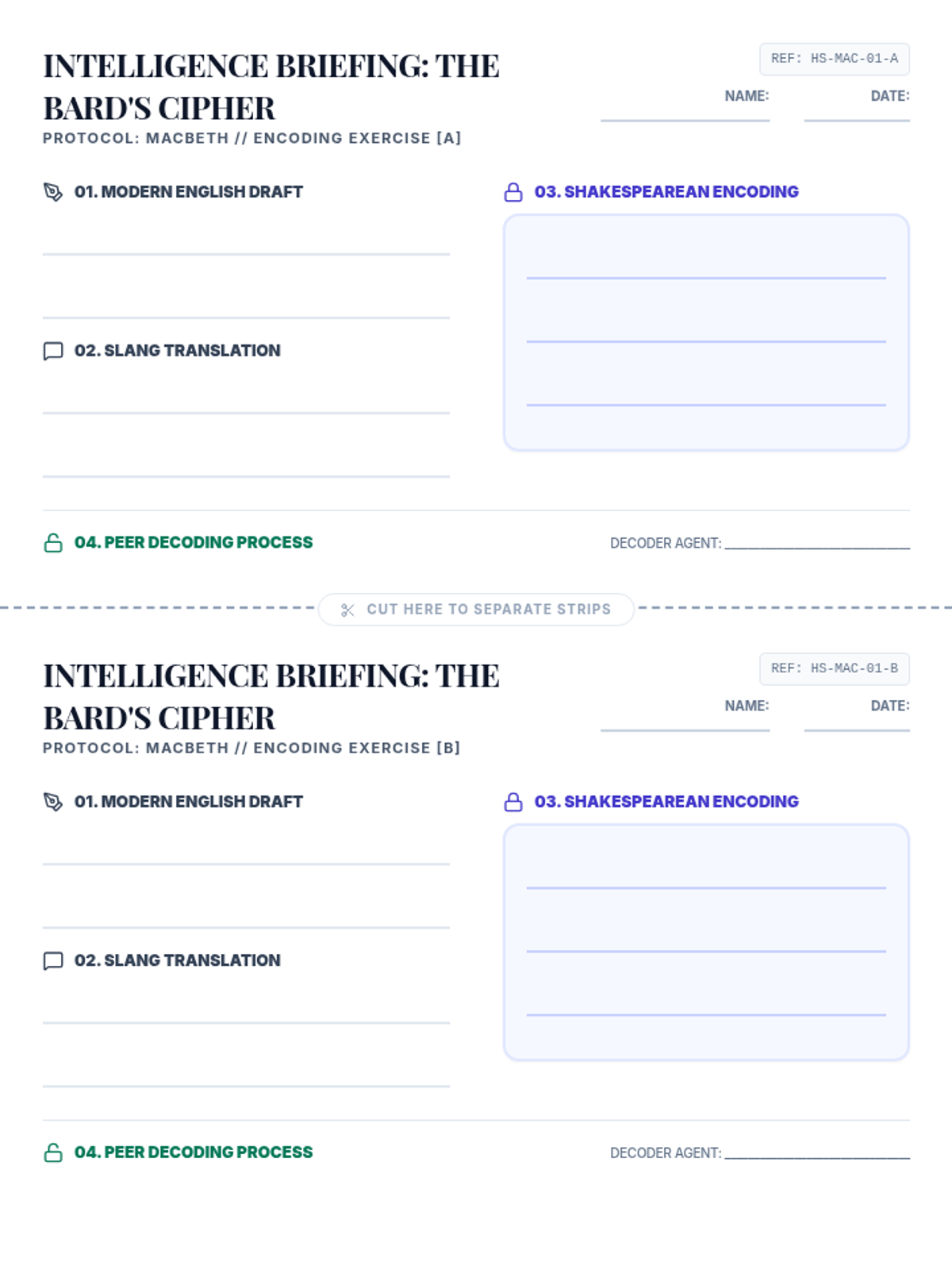
A hands-on activity where students learn to decode and encode Shakespearean language by writing secret messages or insults, then swapping them with peers to translate.
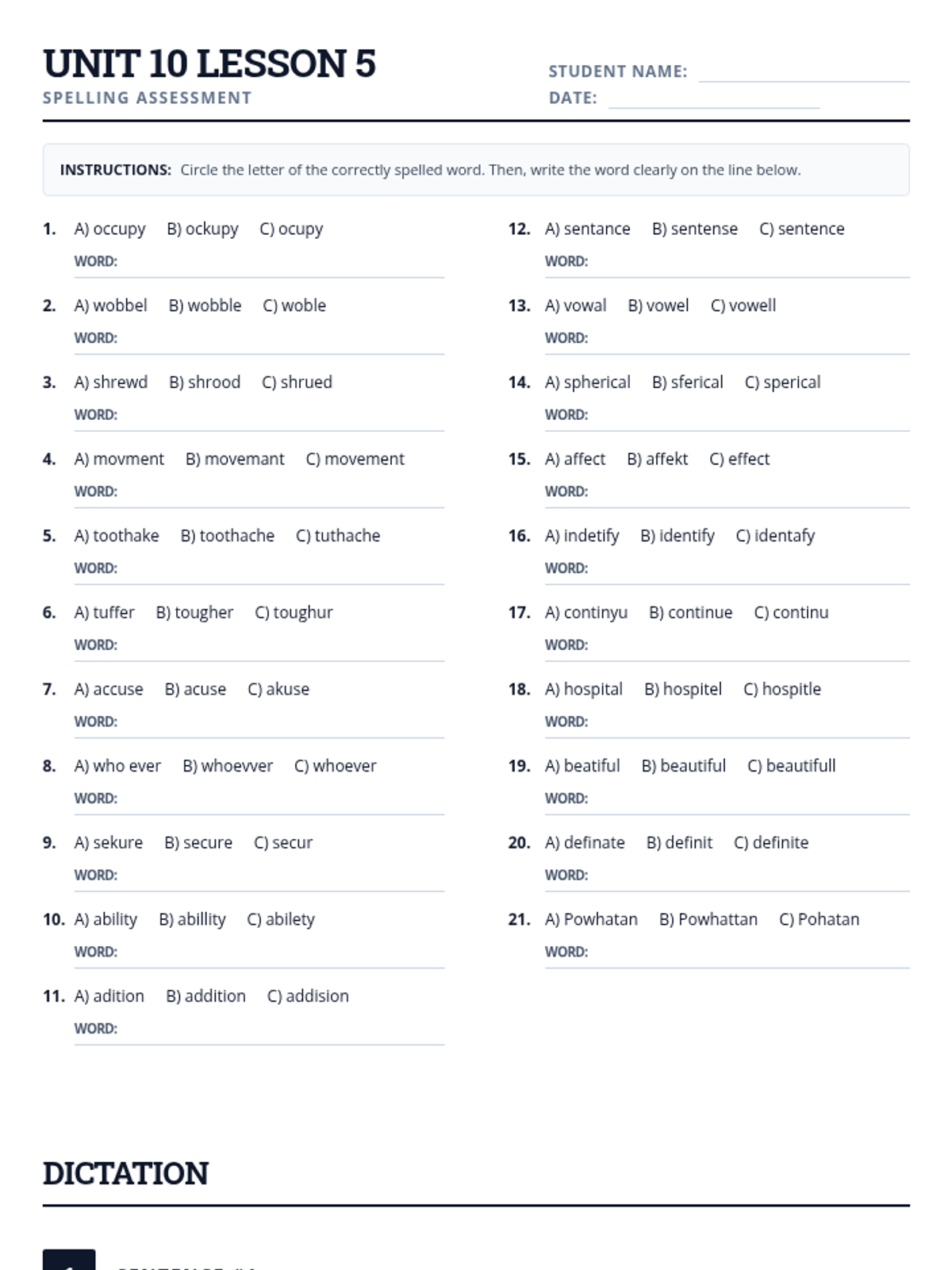
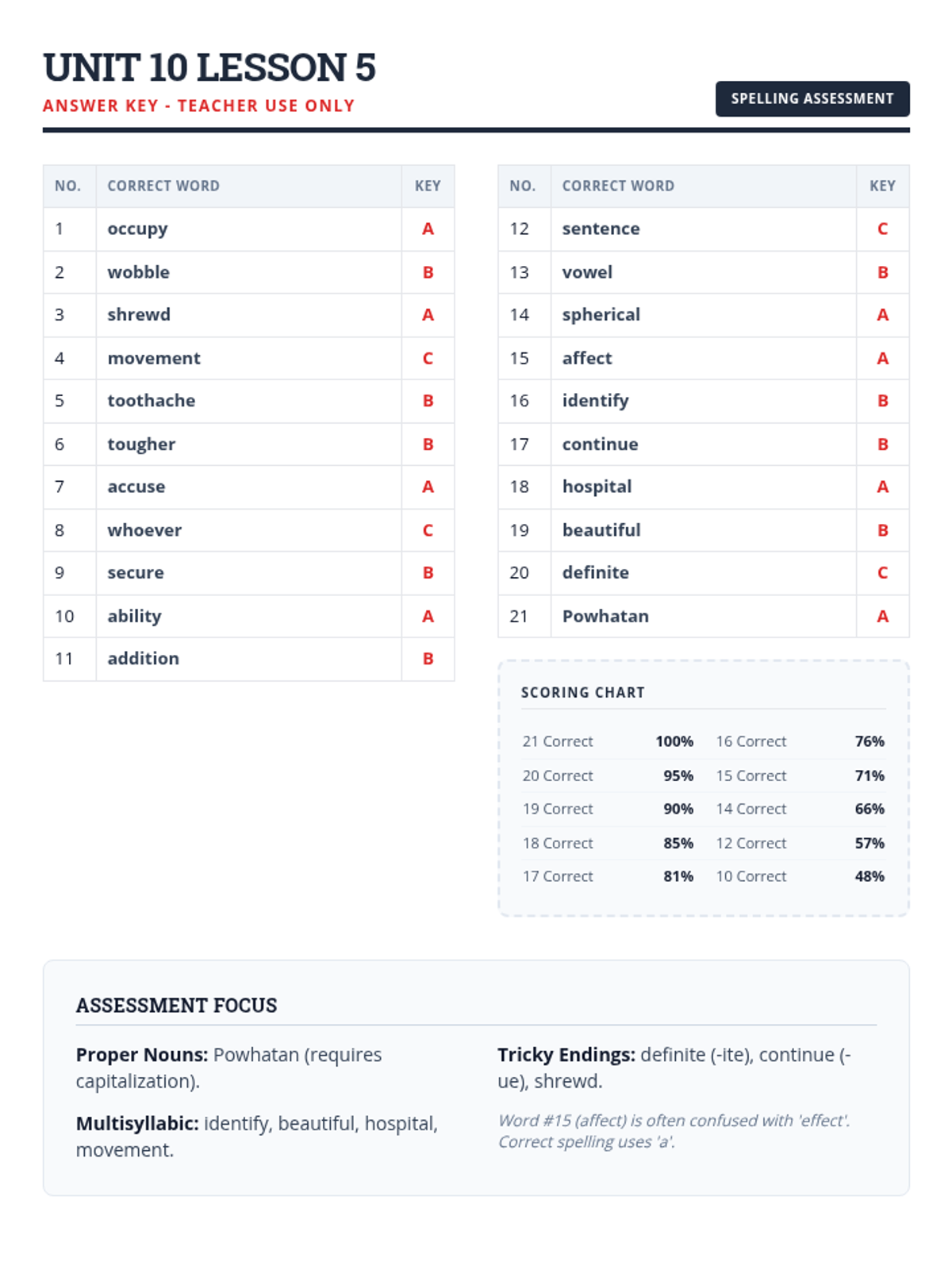
A spelling assessment for Unit 10 Lesson 5 featuring 21 words including 'occupy', 'identify', and 'Powhatan'. Covers double consonants, multisyllabic words, proper nouns, and common vowel teams.
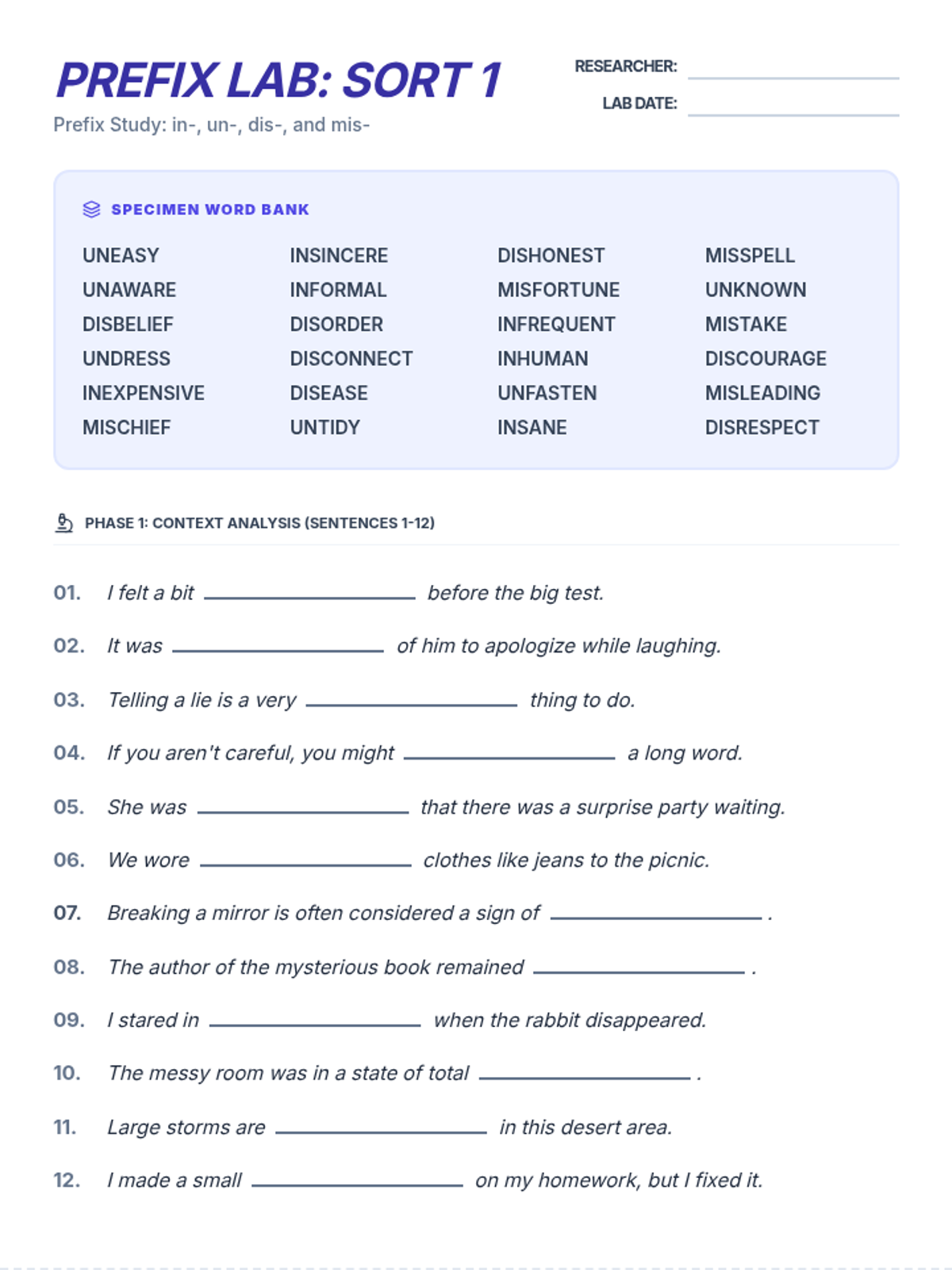
A lesson focused on the prefixes in-, un-, dis-, and mis-. Students analyze meanings and usage through contextual sentences and word puzzles.
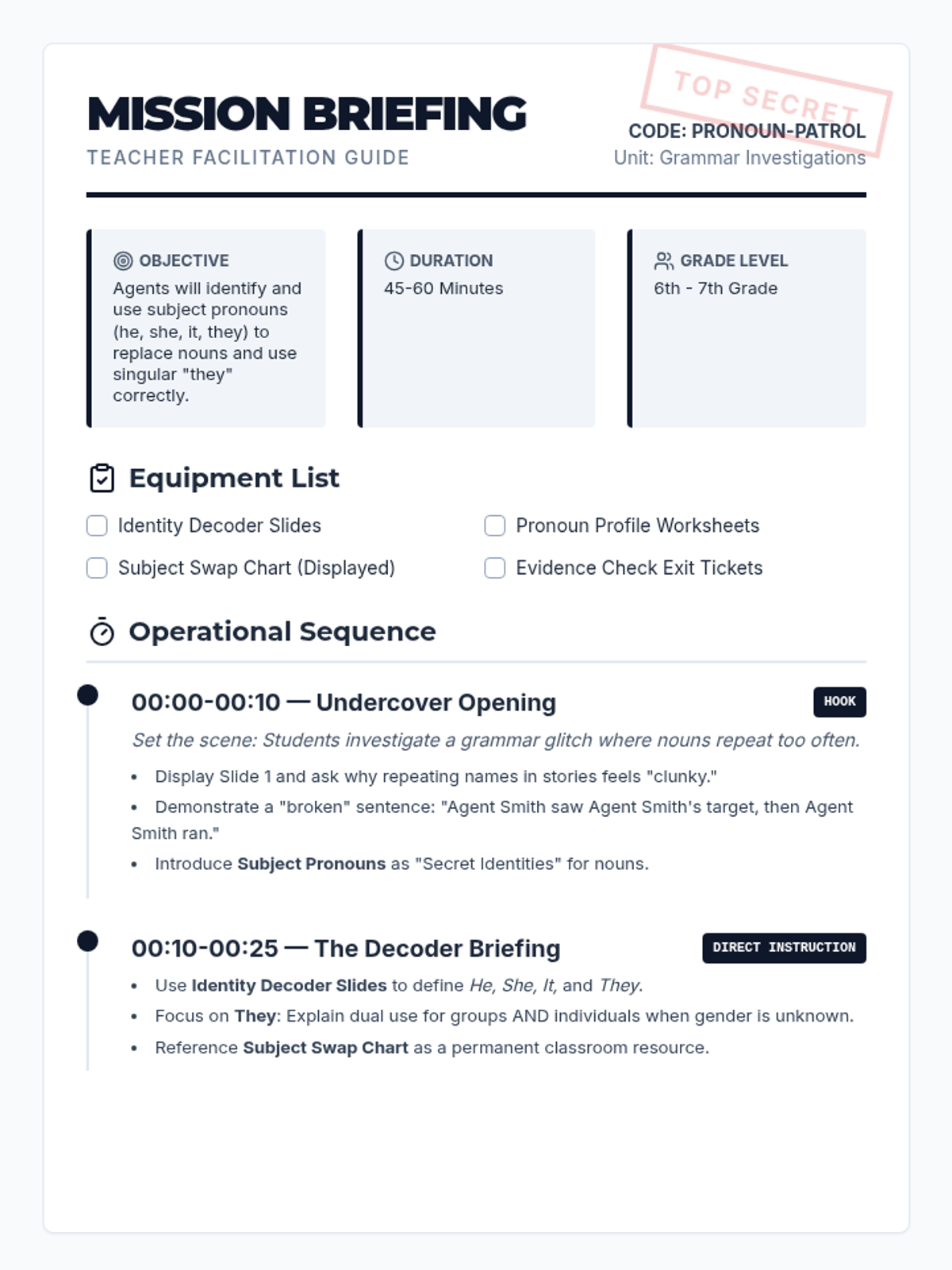
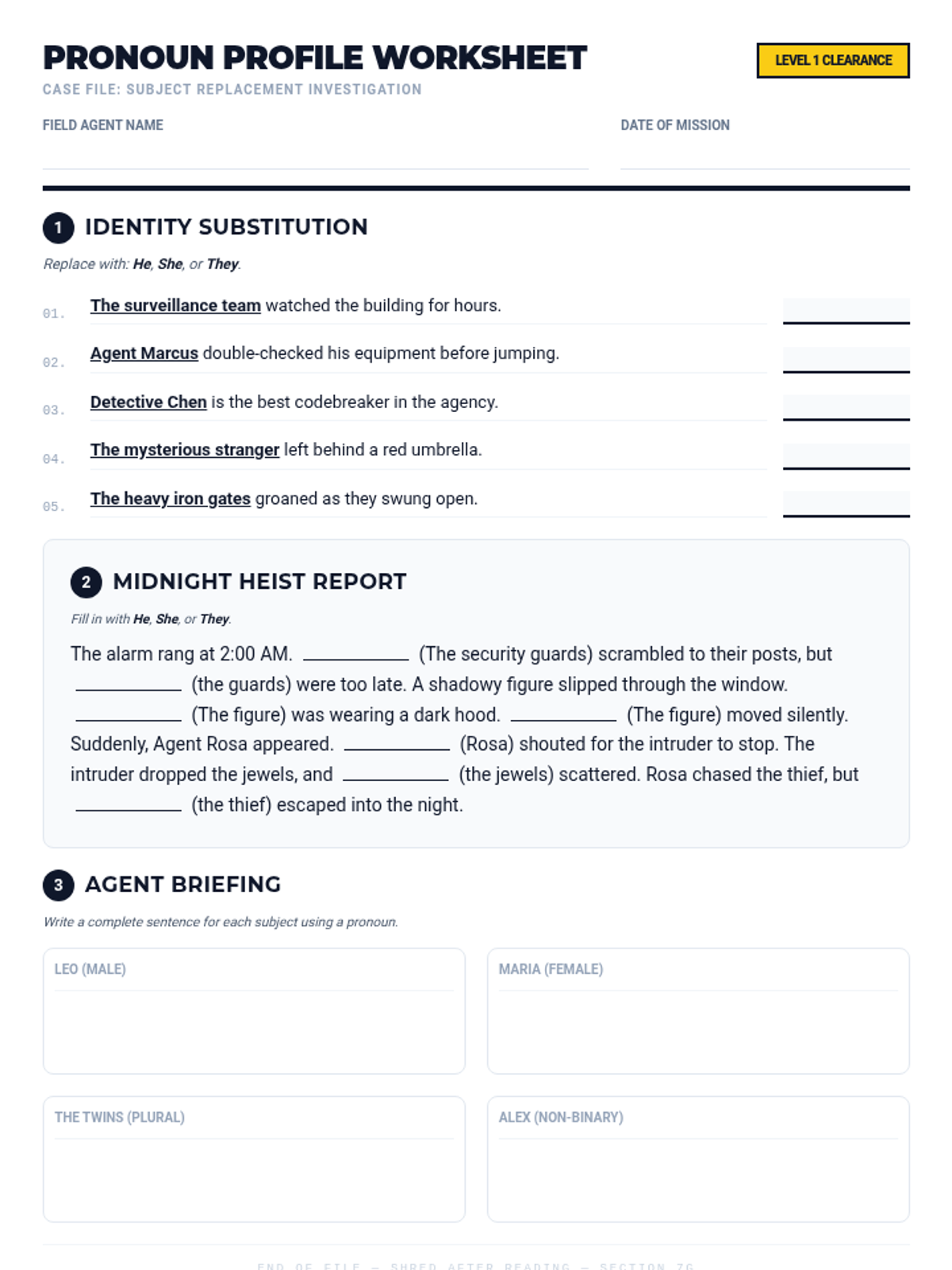
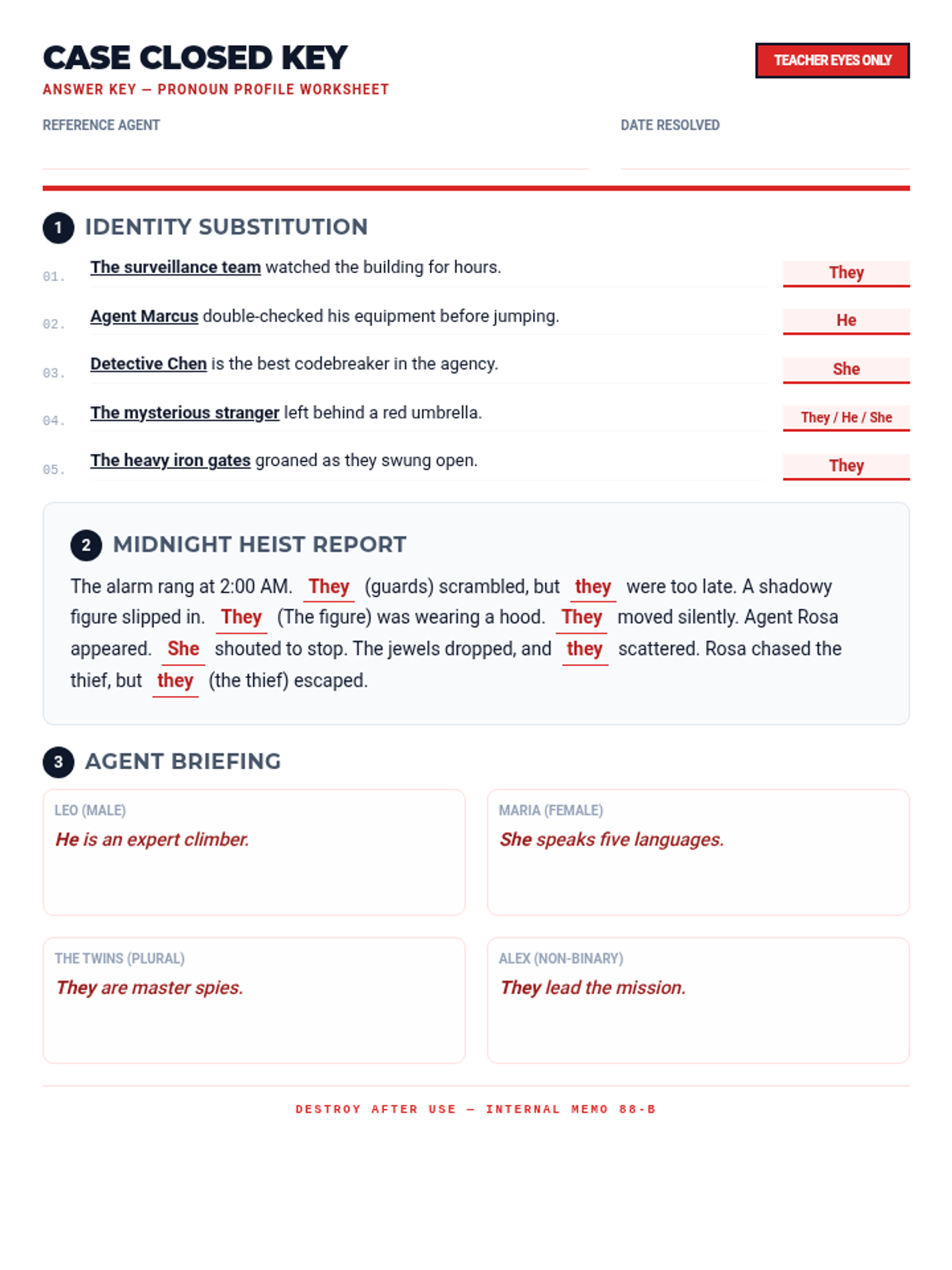
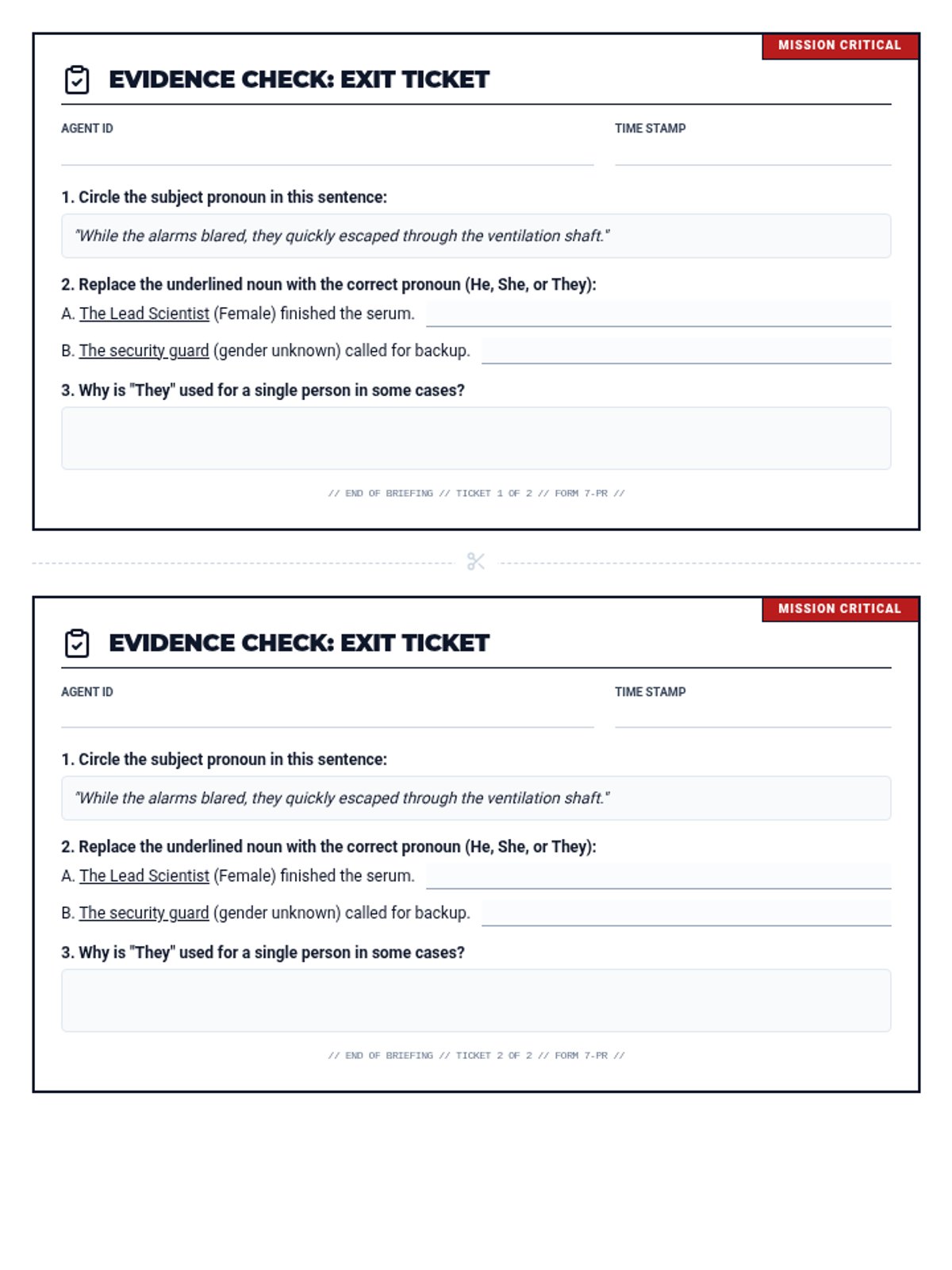
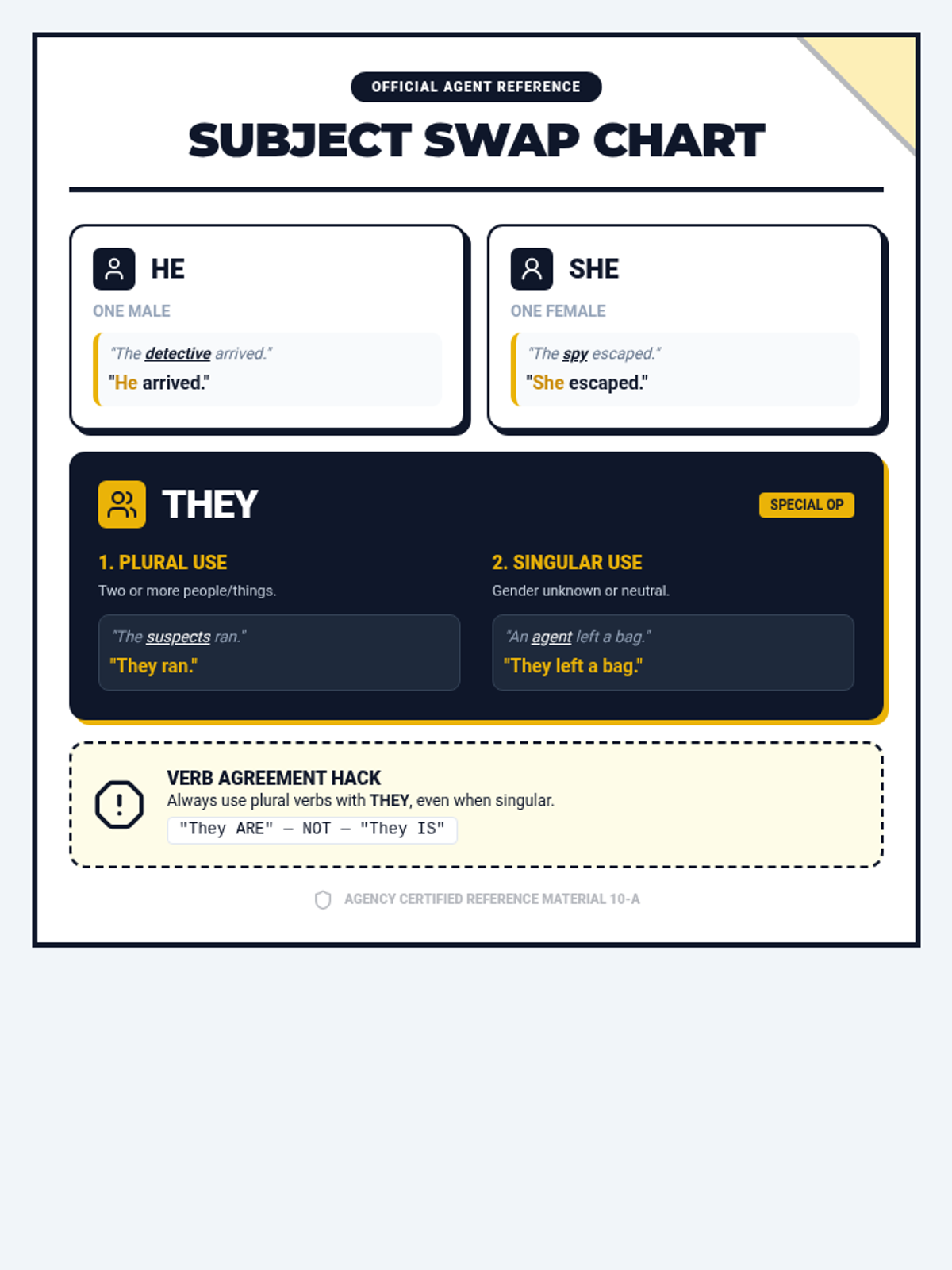
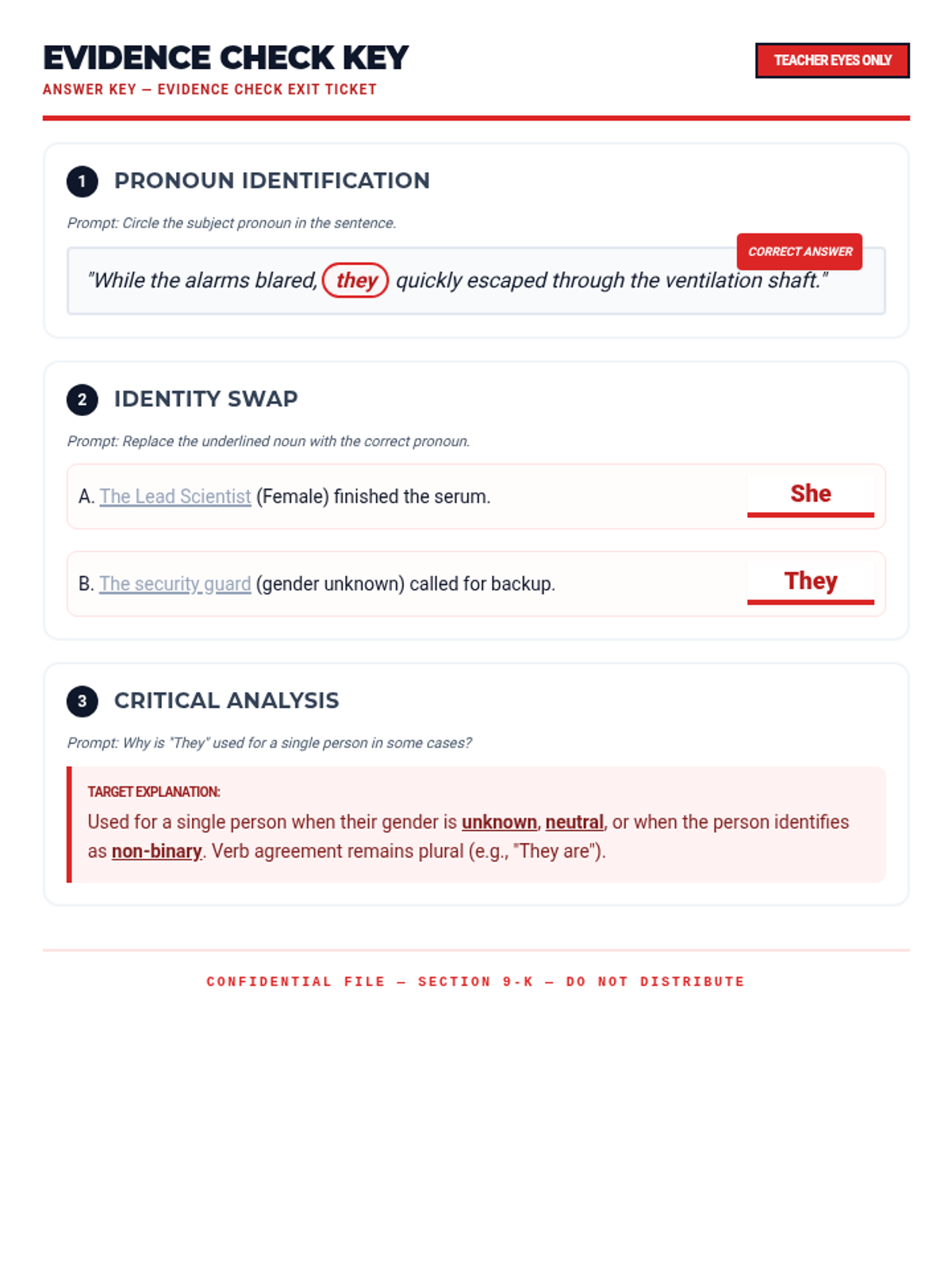
A comprehensive lesson on mastering subject pronouns (he, she, they) through the lens of a 'Secret Agent' investigation, focusing on replacing nouns and understanding singular/plural usage.
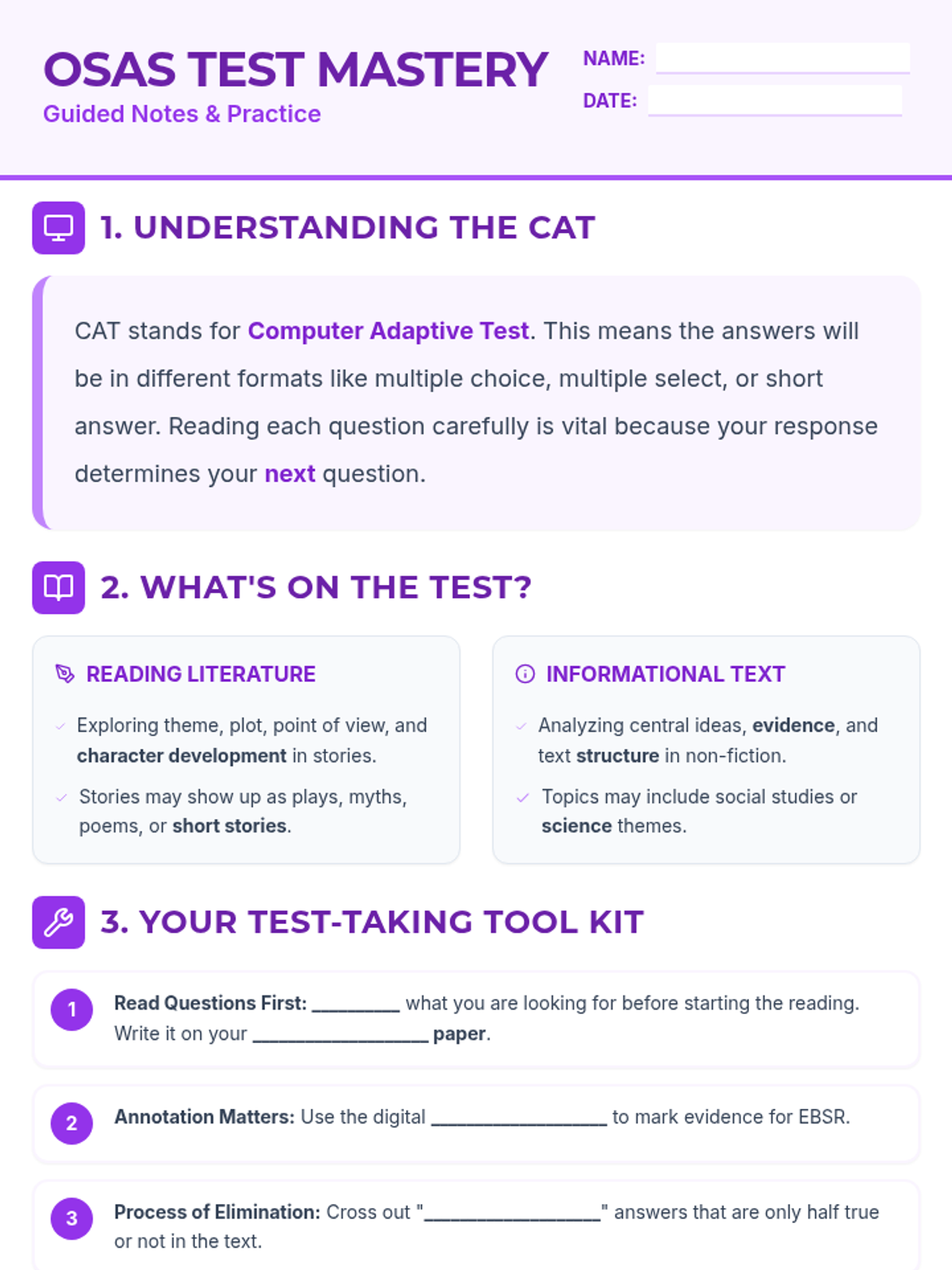
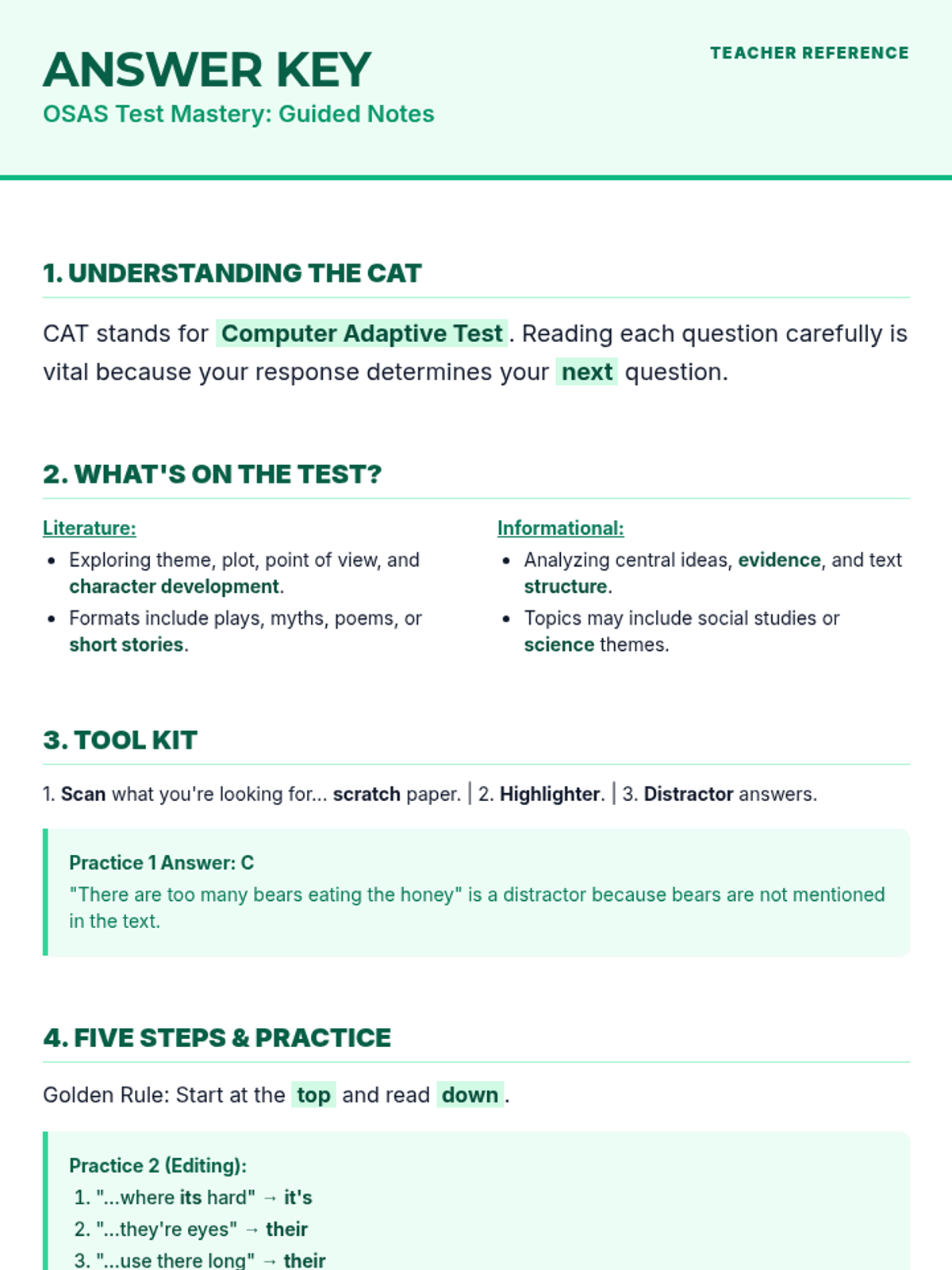
A comprehensive 6th grade ELA test preparation lesson covering OSAS strategies, question types, and performance tasks.
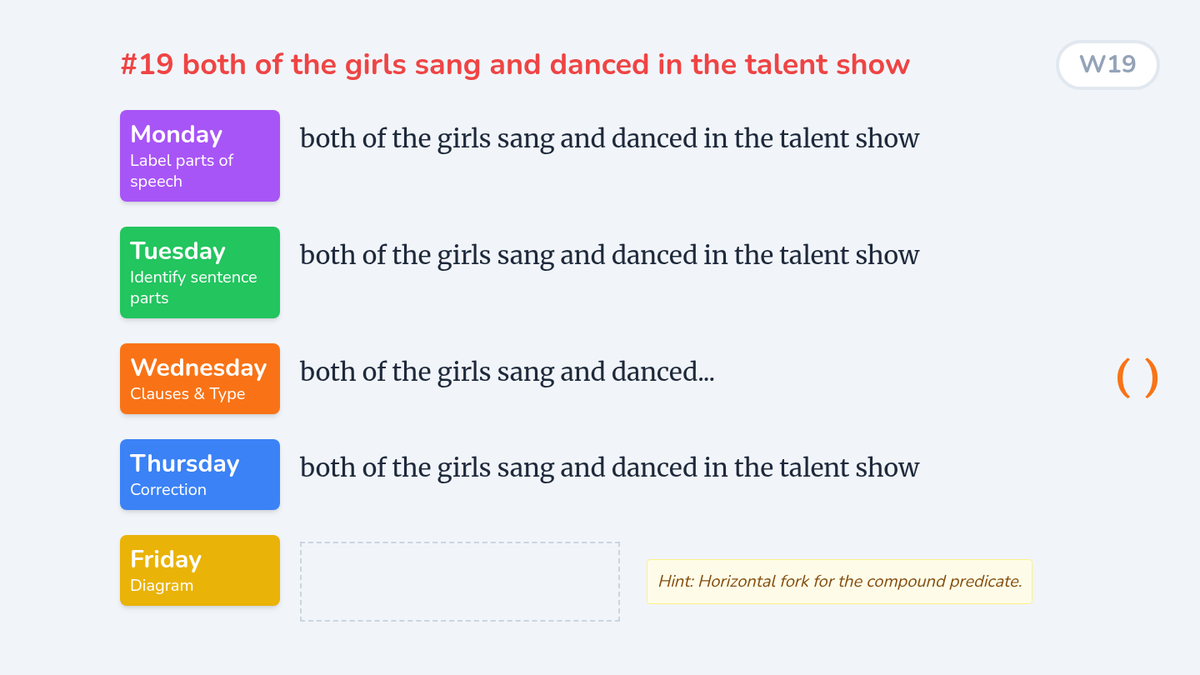
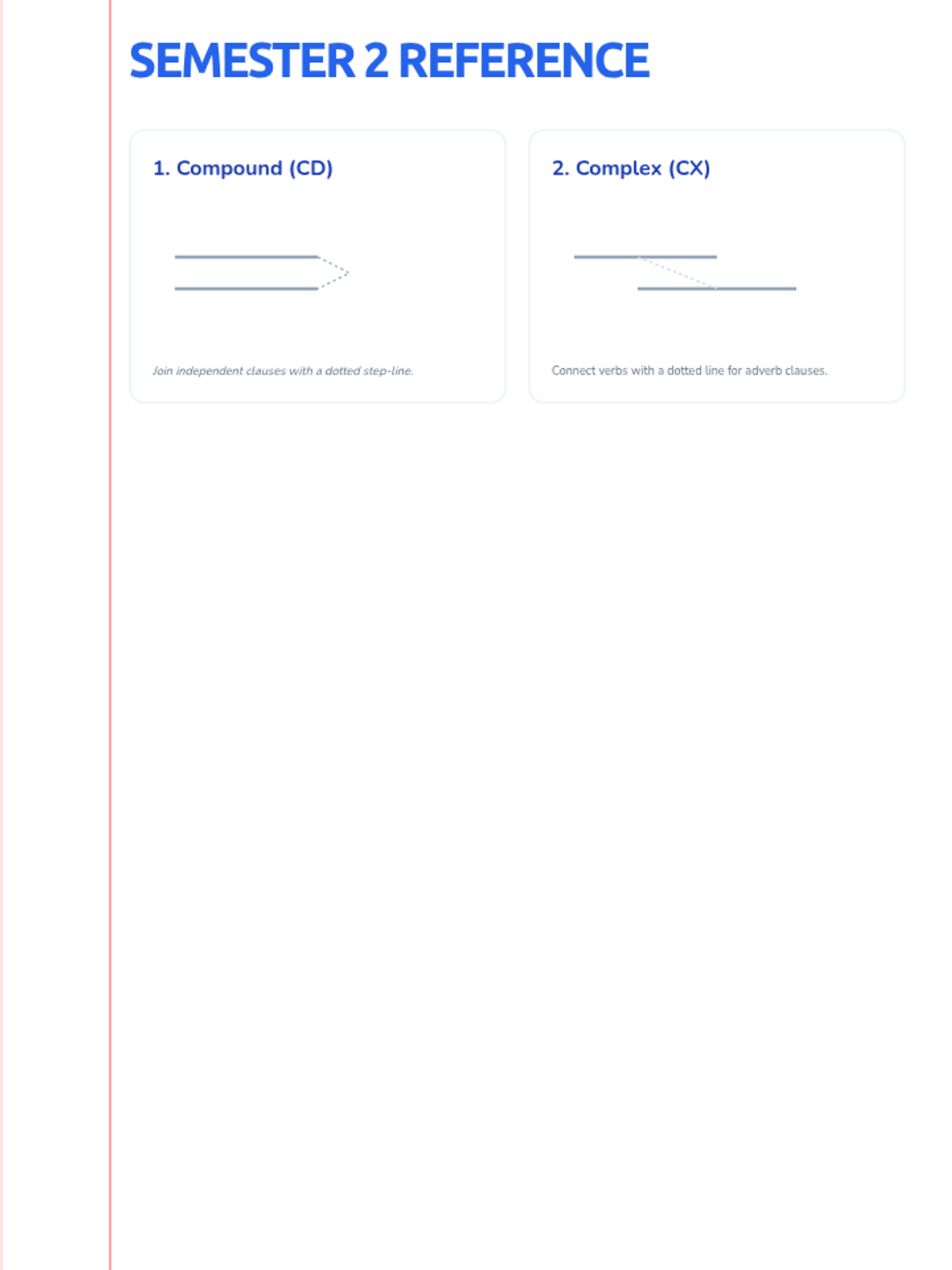
Weeks 19 through 36 of the Daily Grammar Practice program, progressing to compound-complex sentences and advanced punctuation.
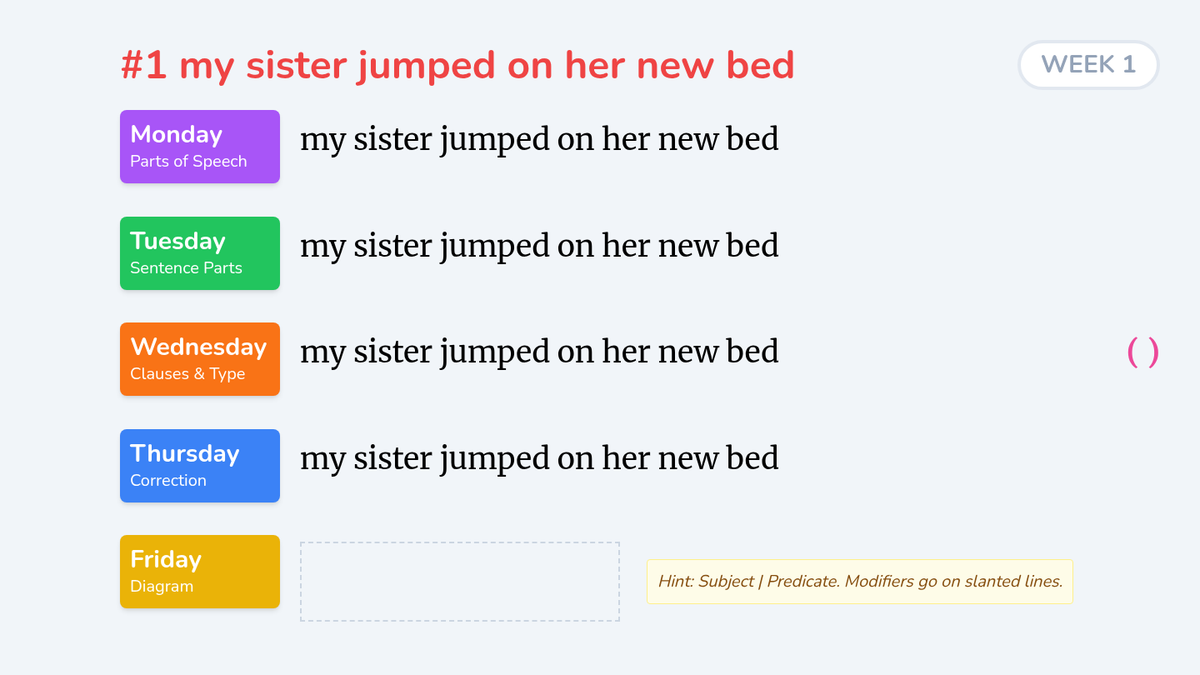
Weeks 1 through 18 of the Daily Grammar Practice program, covering basic to intermediate sentence structures.
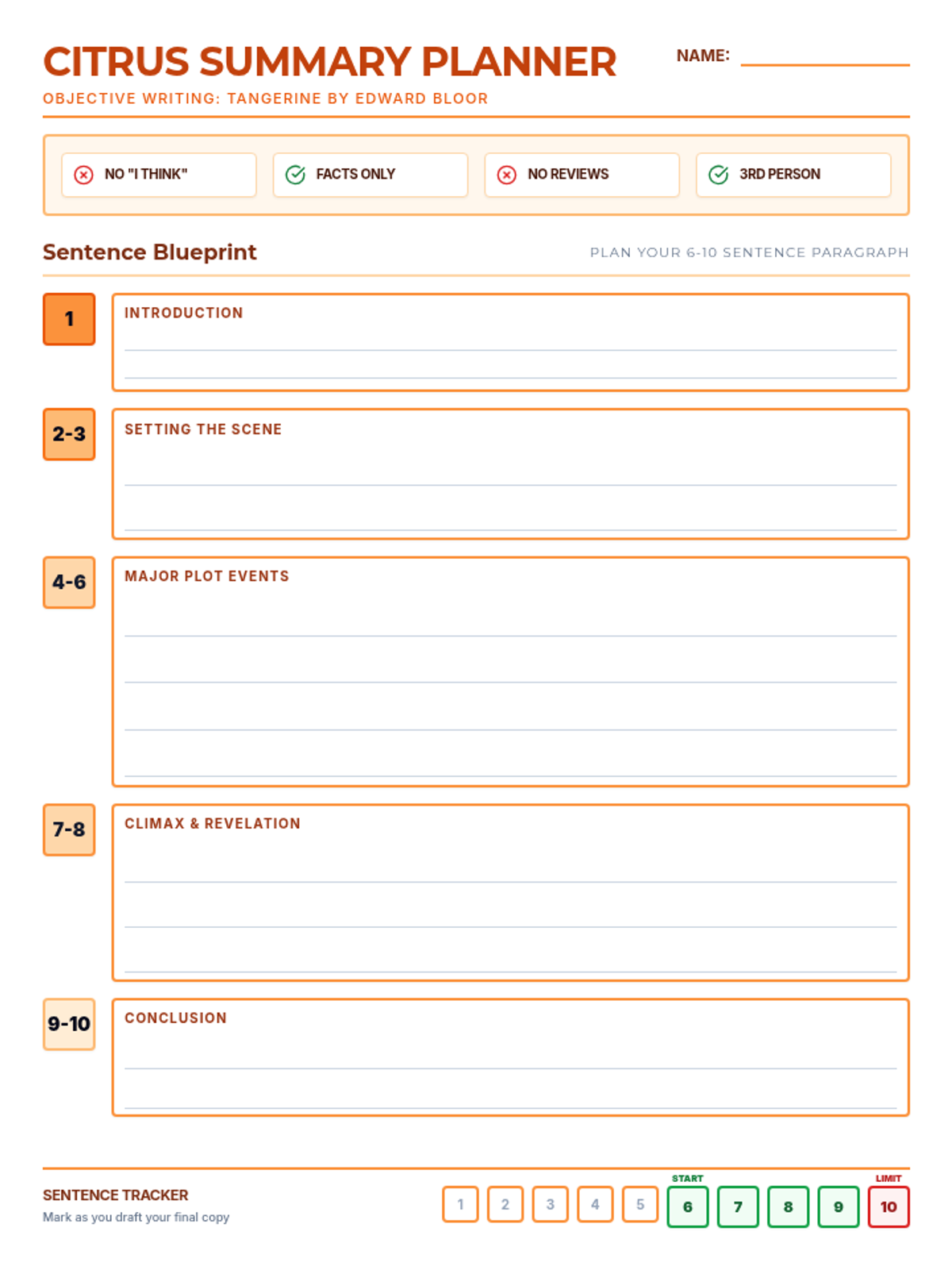
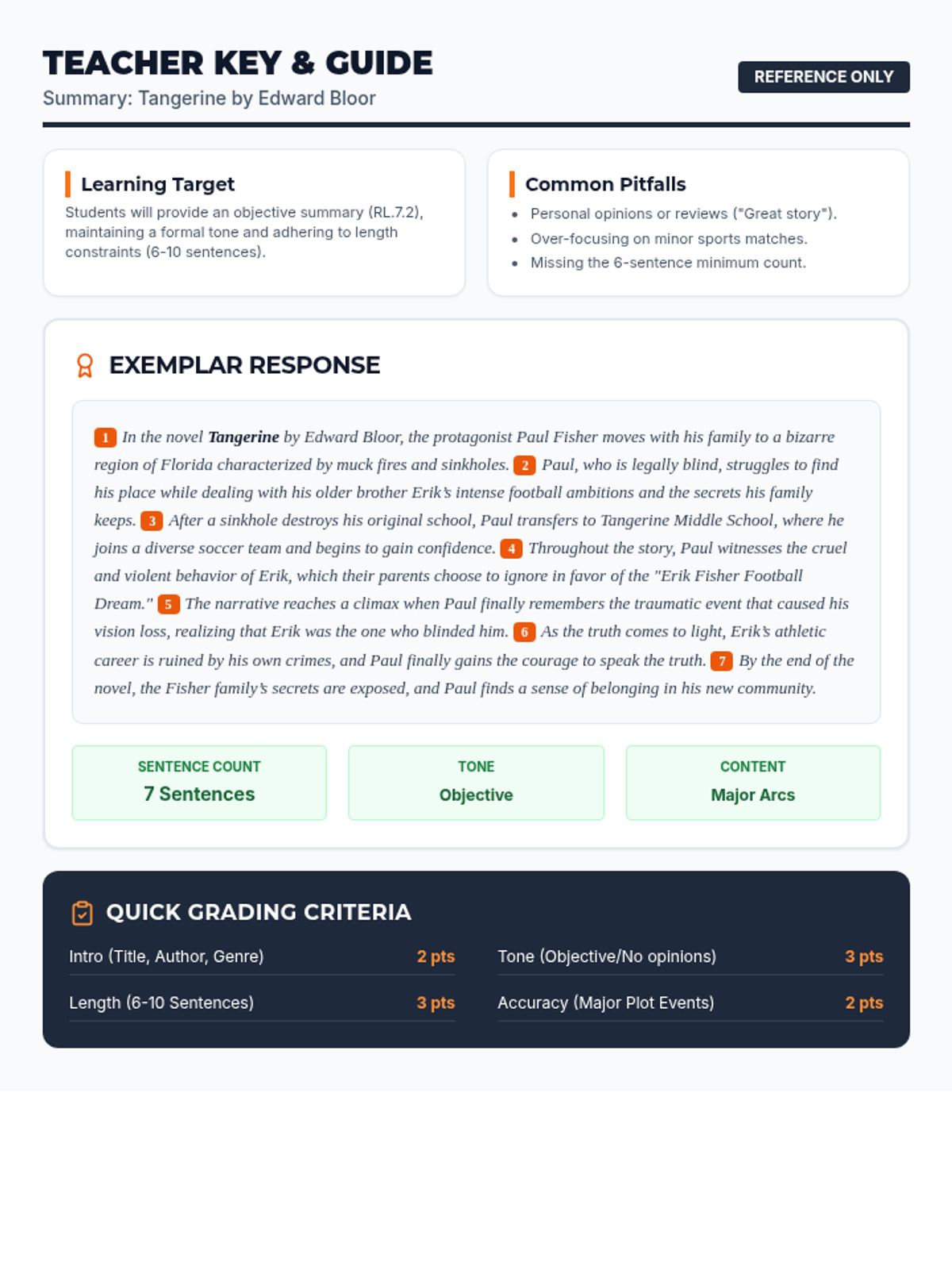
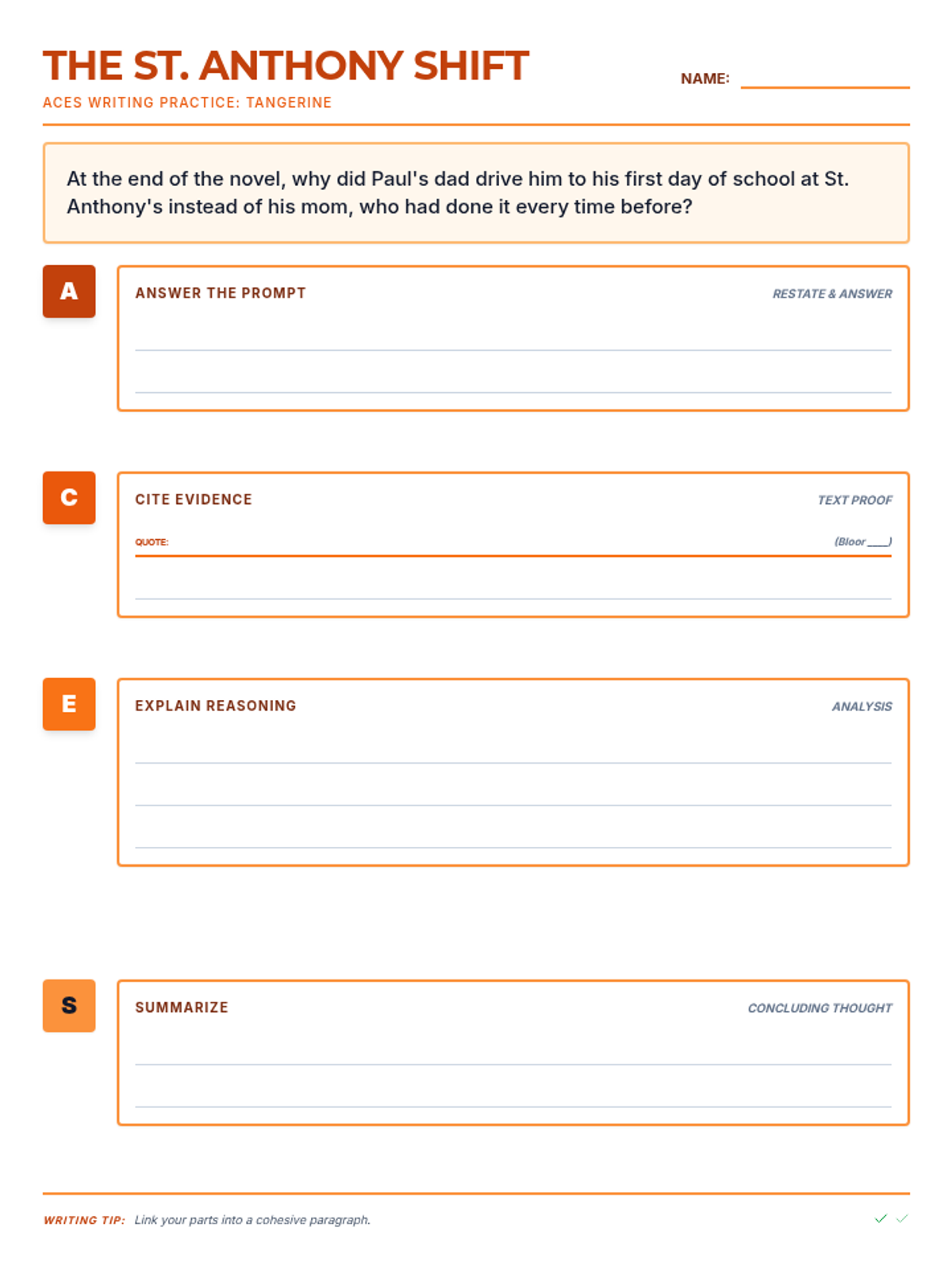
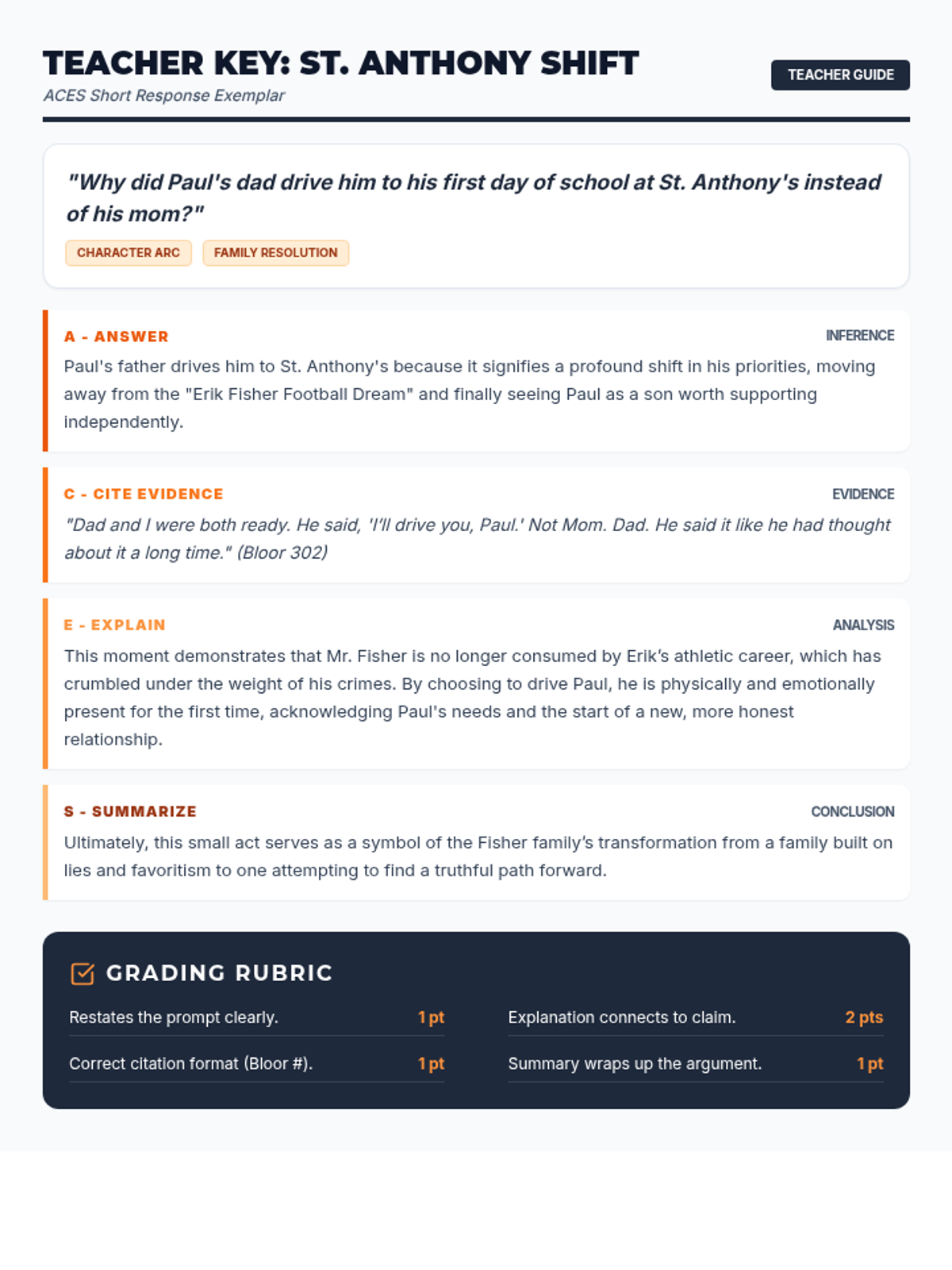
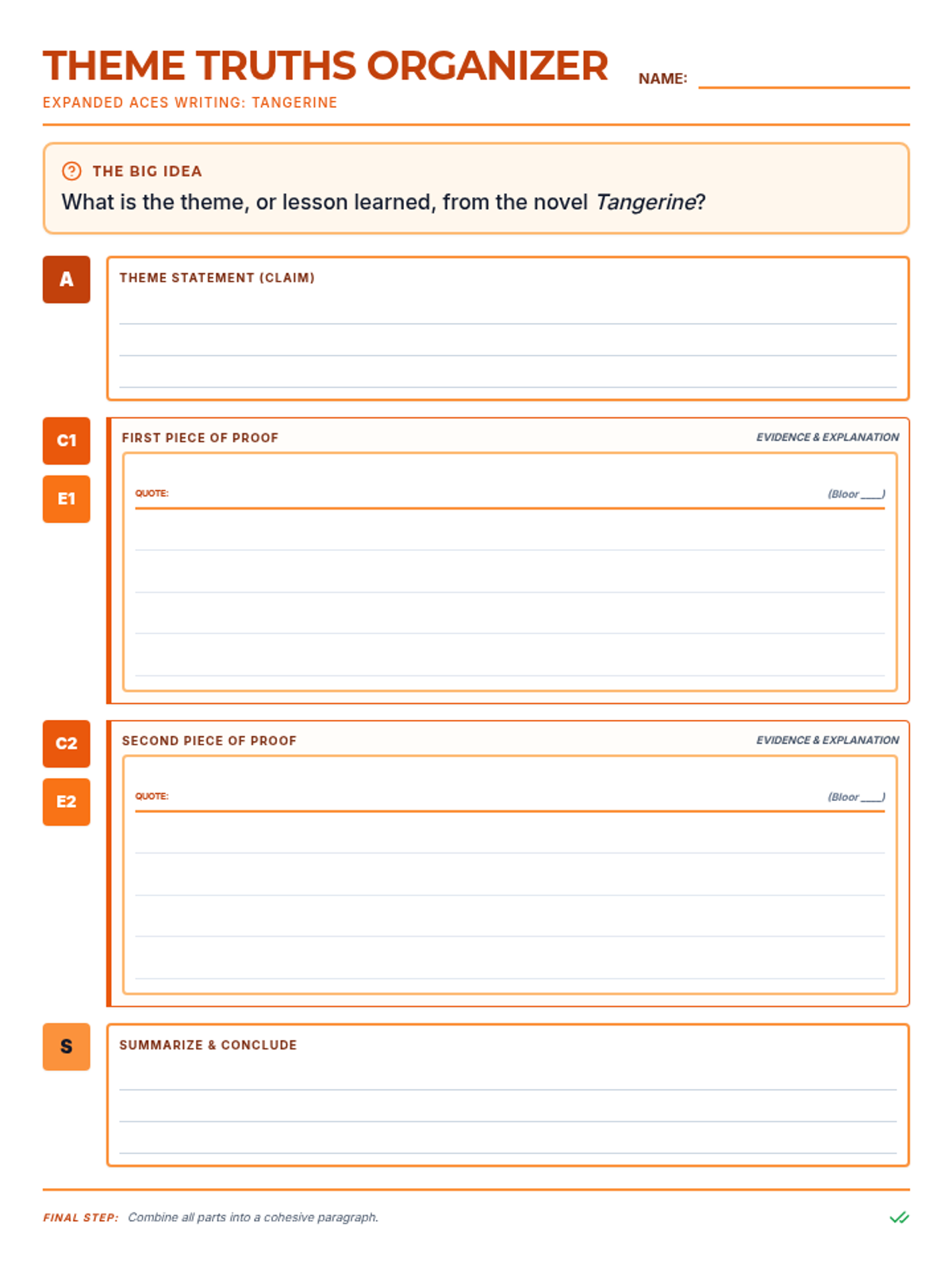
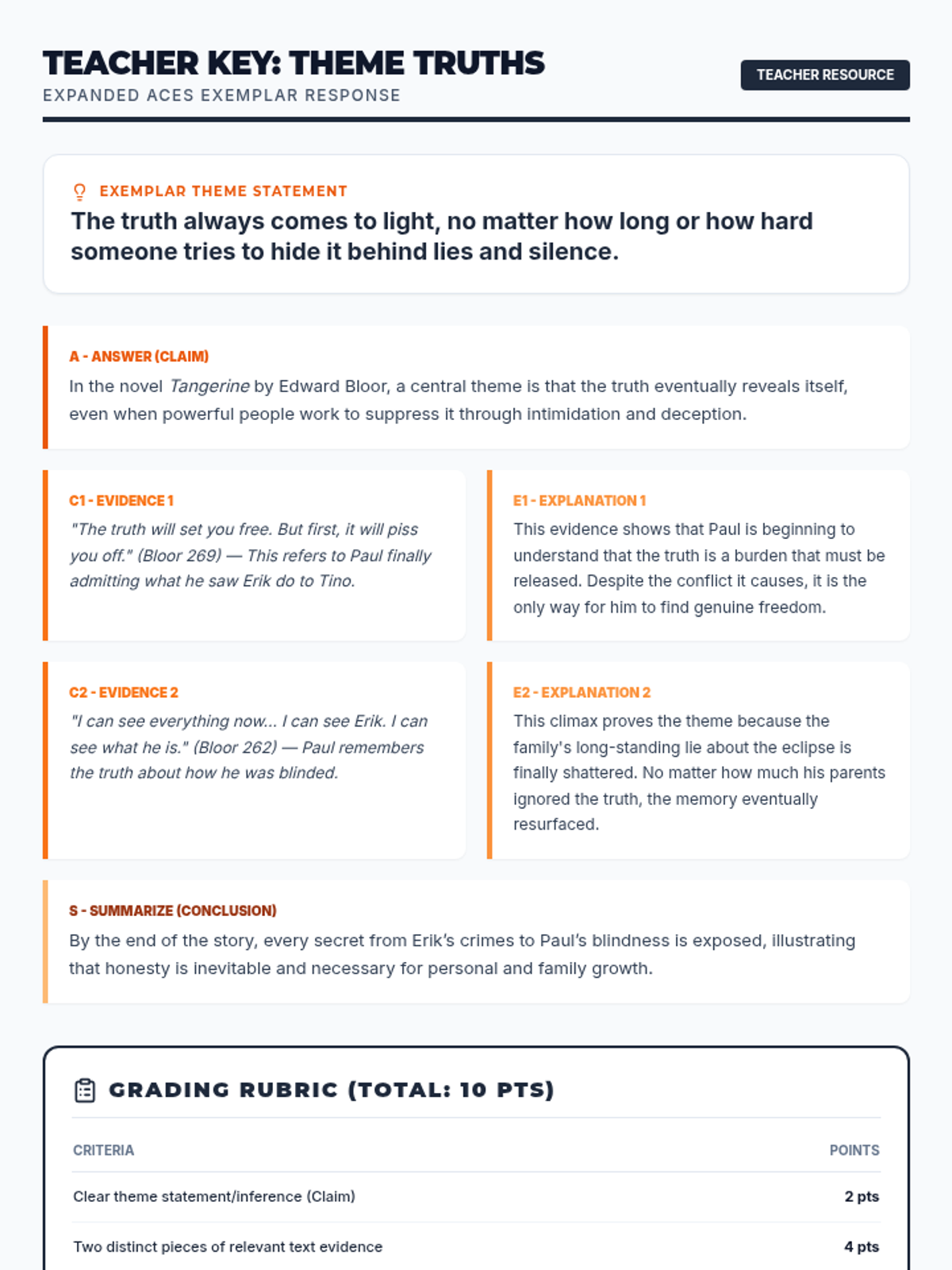
A focused lesson on crafting an objective summary for the novel Tangerine, emphasizing sentence structure and objective tone.
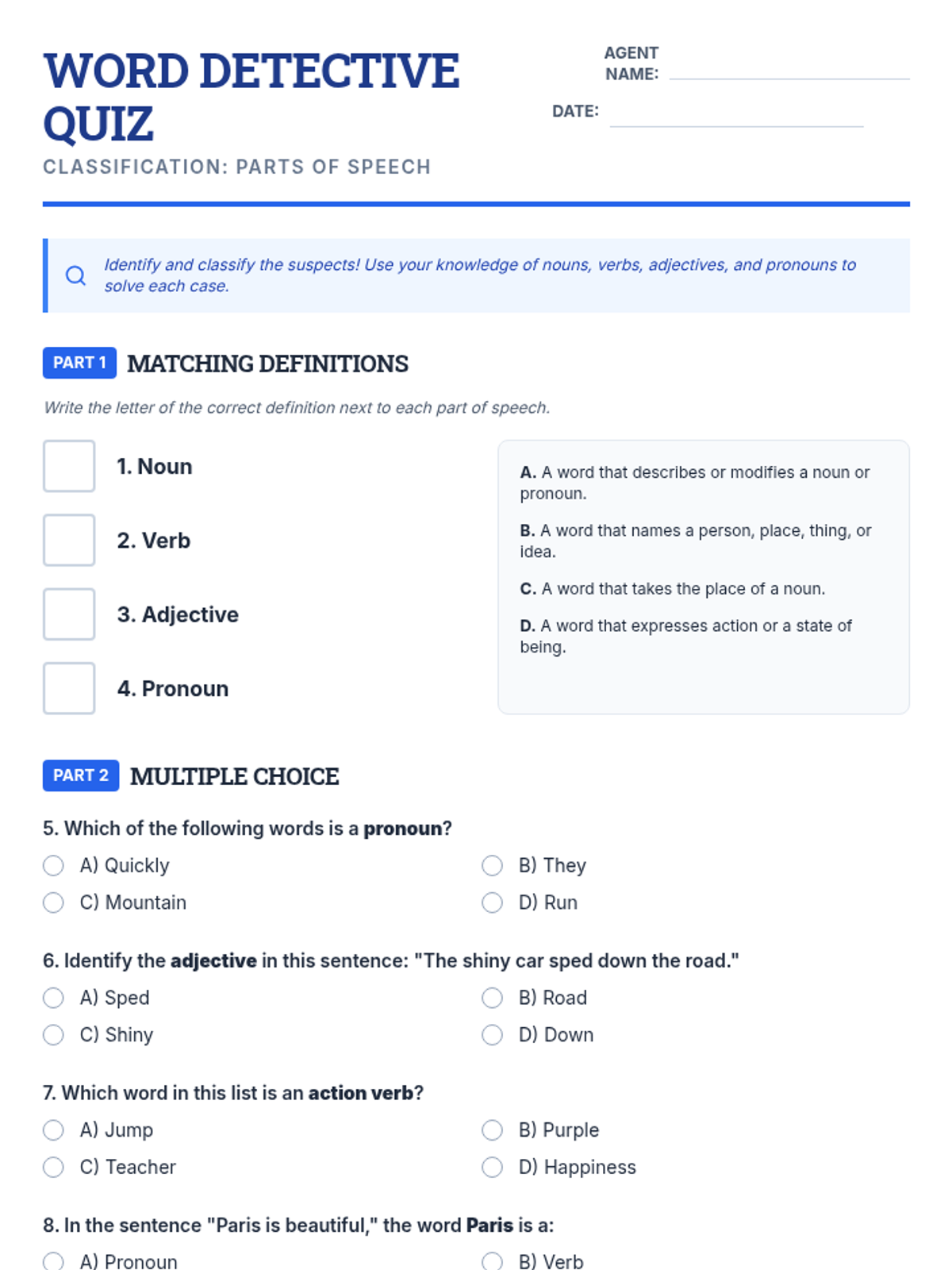
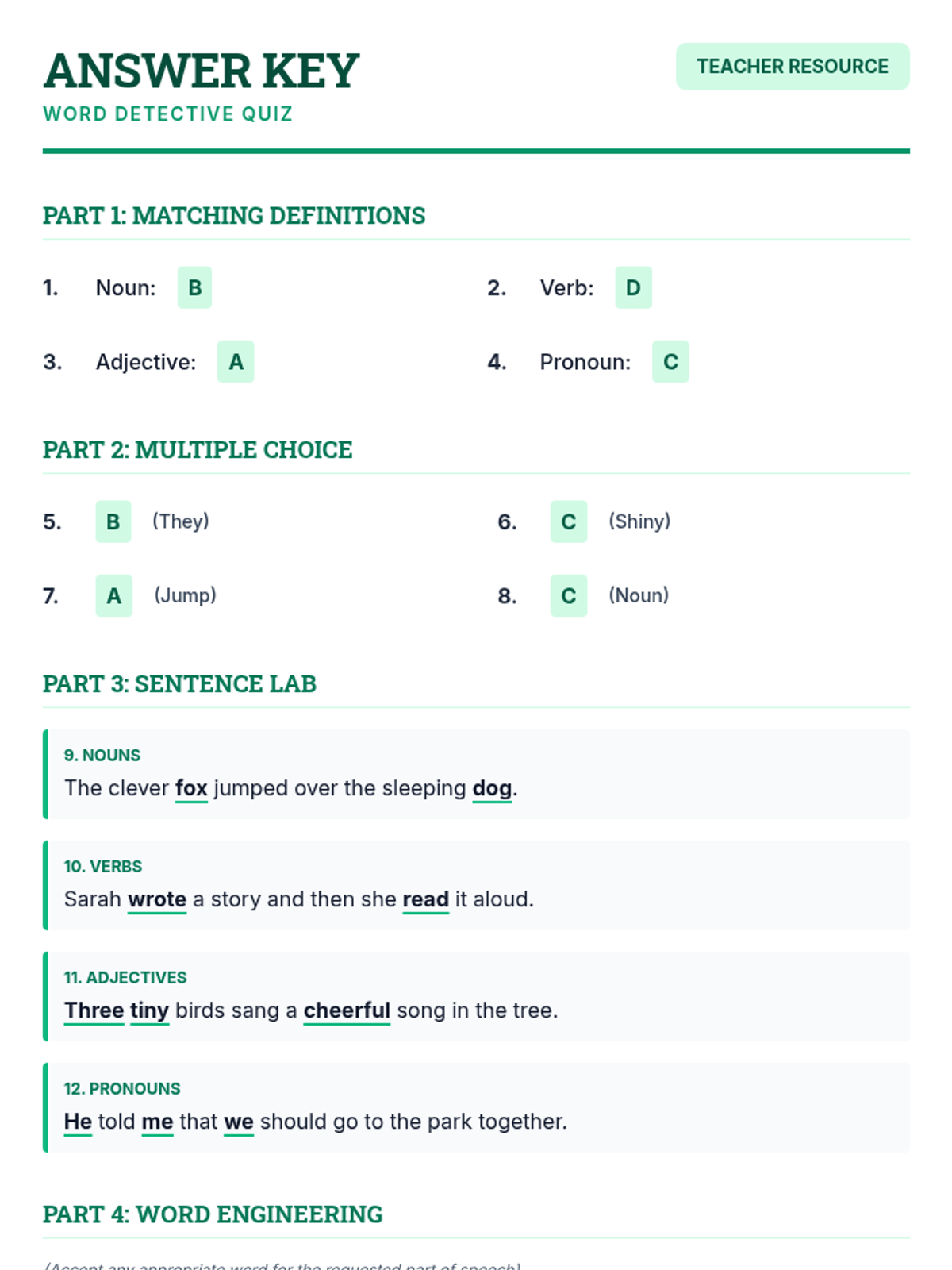
A comprehensive quiz covering the four foundational parts of speech: nouns, verbs, adjectives, and pronouns. Includes matching, multiple choice, identification, and creative fill-in-the-blank questions.
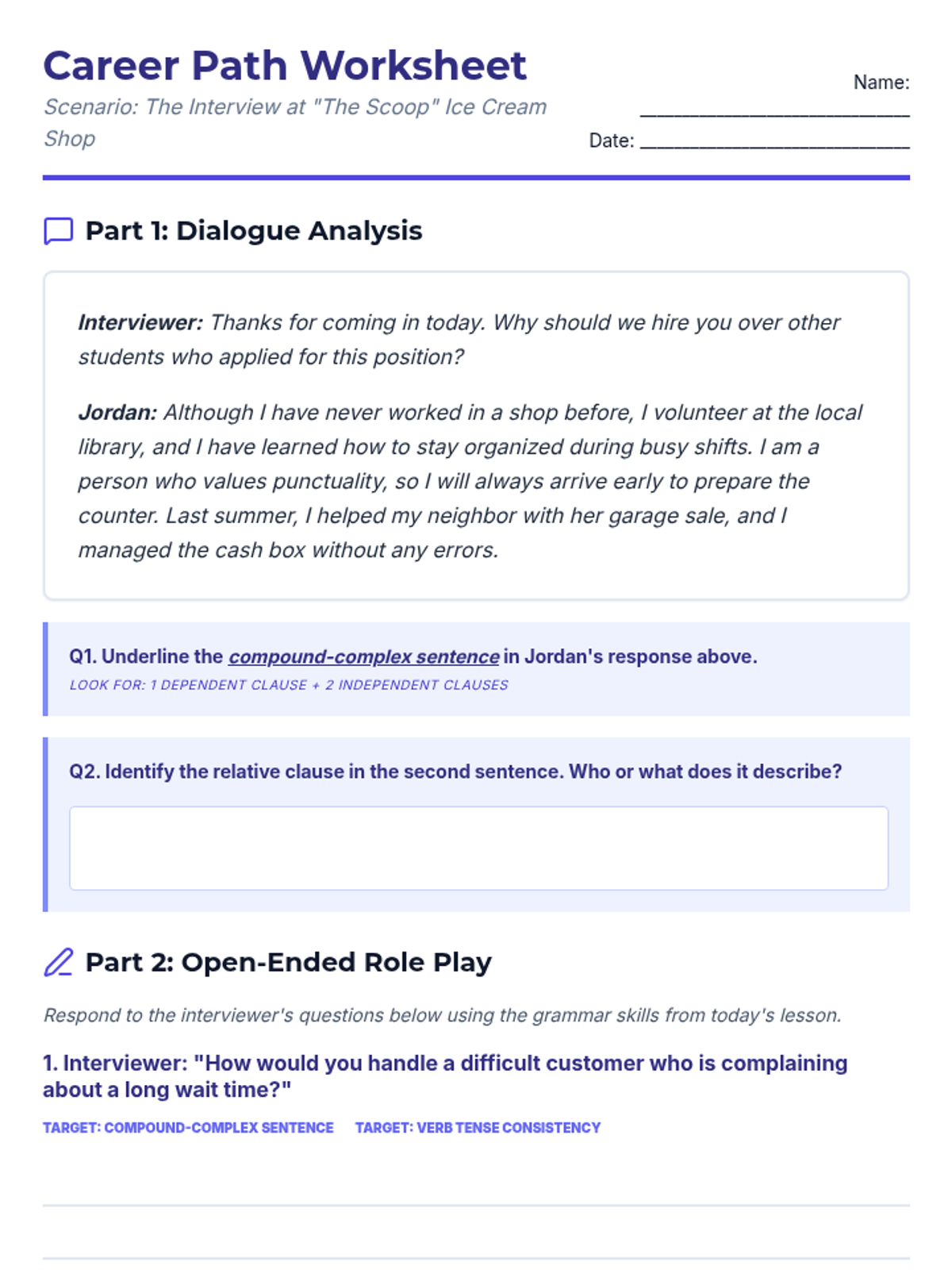
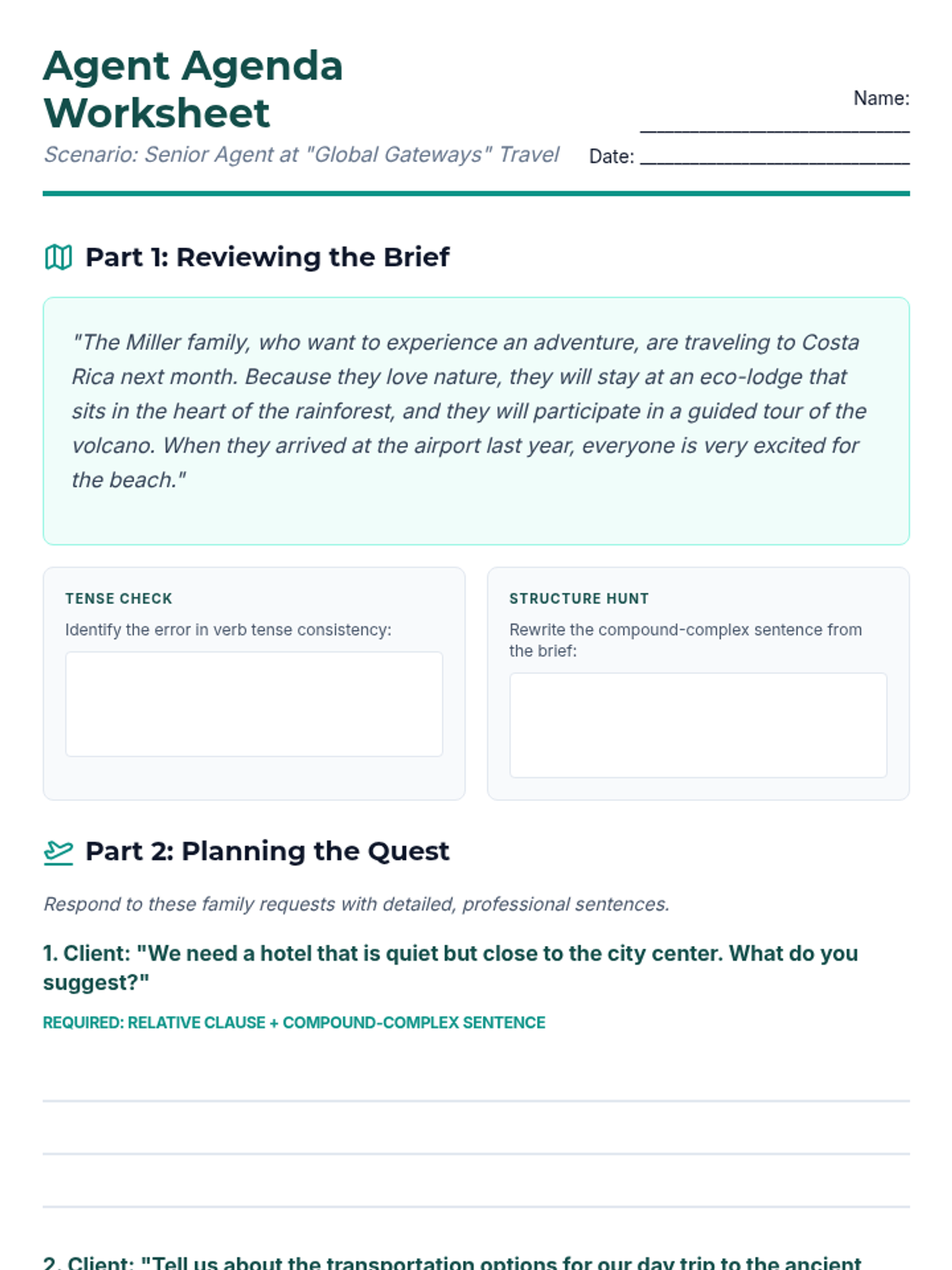
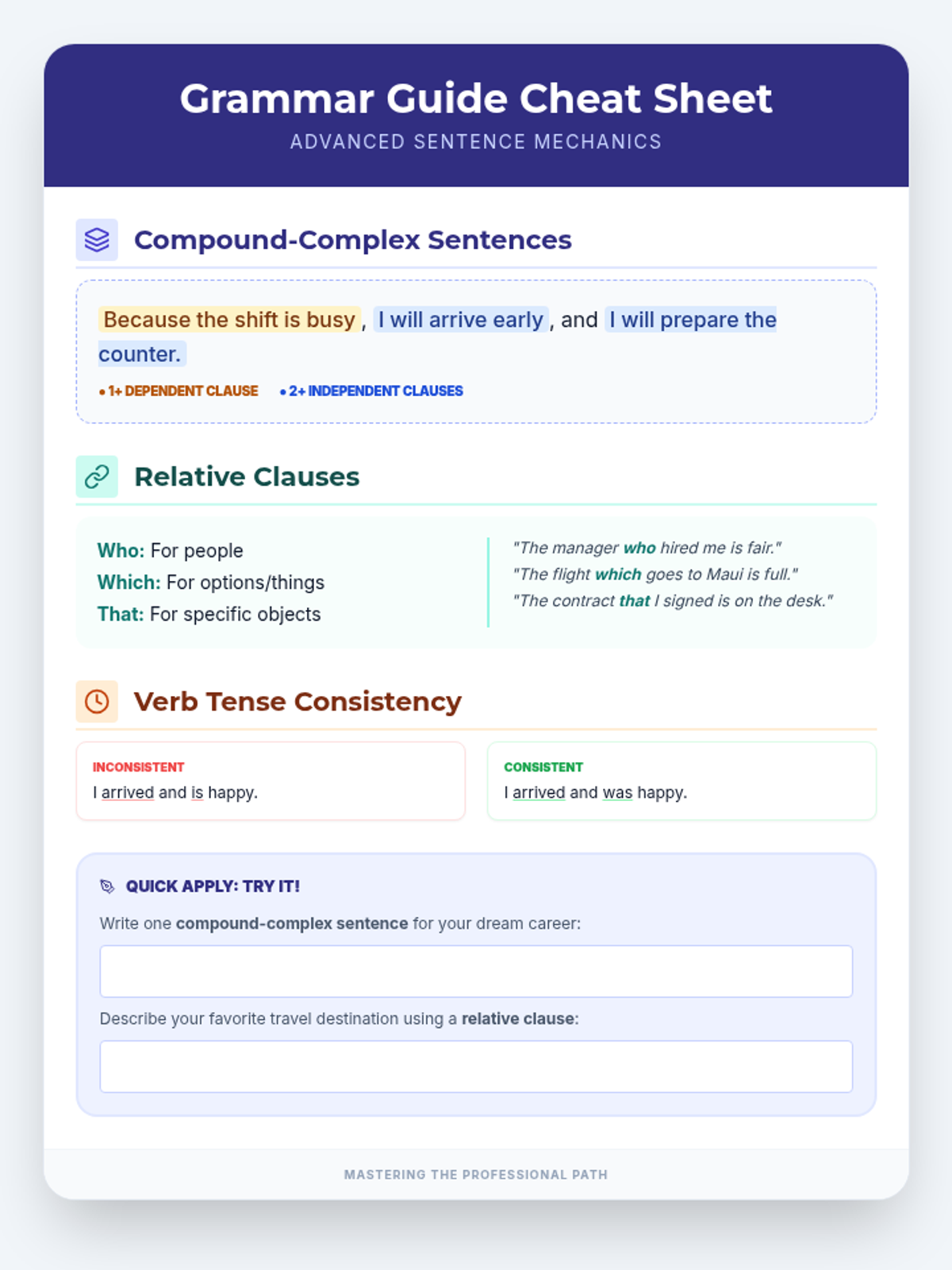
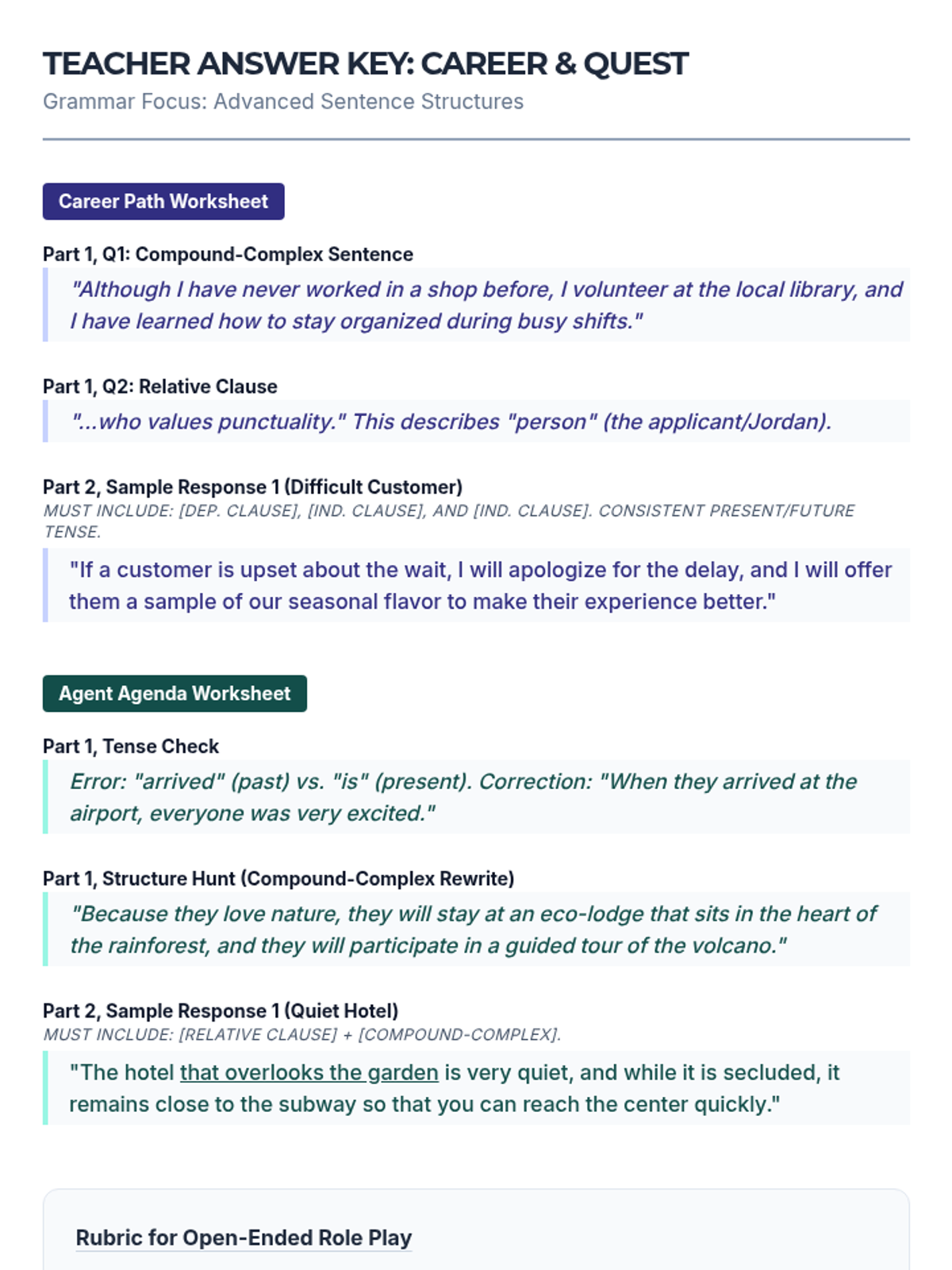
A grammar-focused lesson set in professional and travel contexts, teaching middle schoolers to use compound-complex sentences, relative clauses, and consistent verb tenses through role-play scenarios.
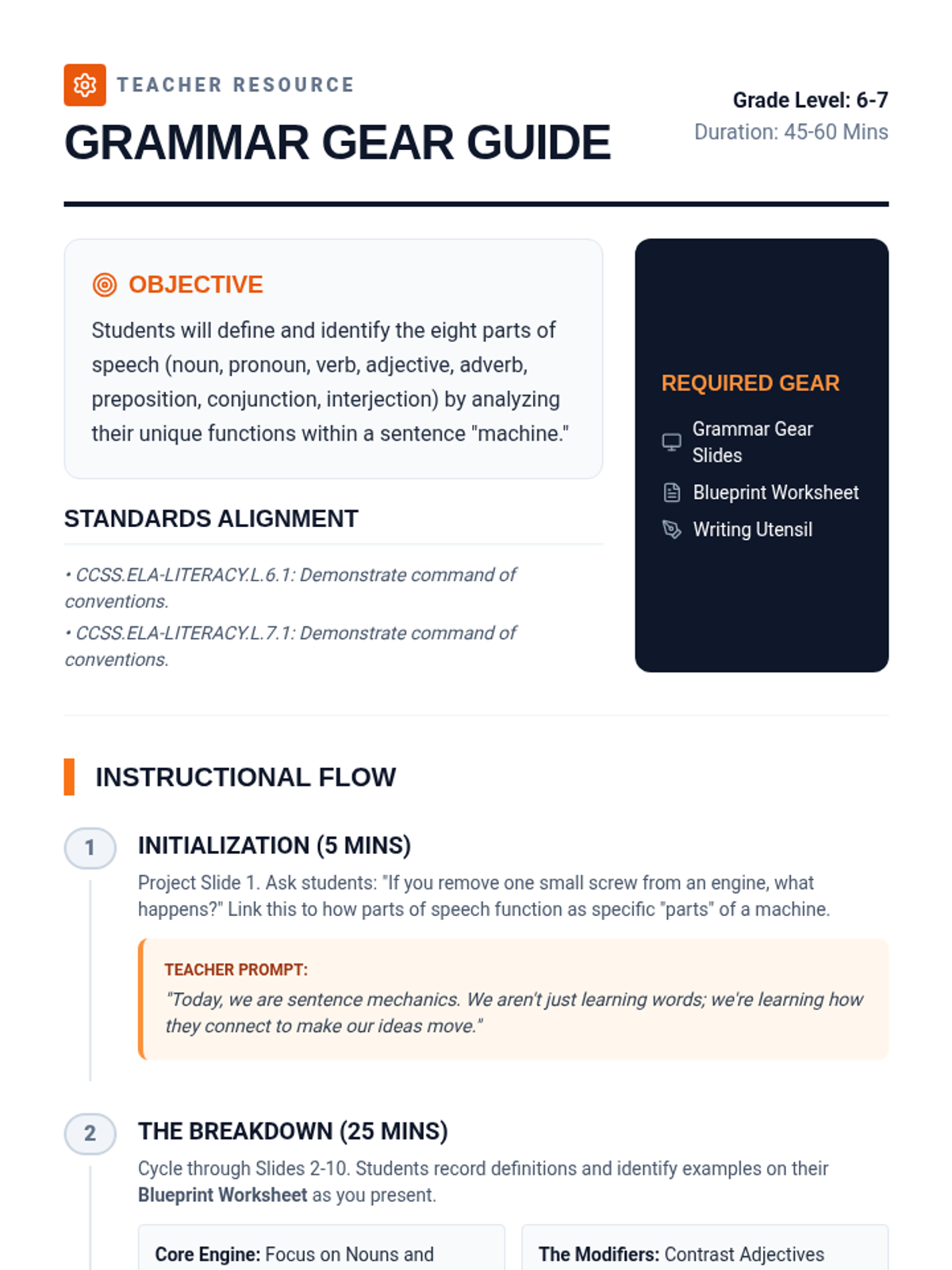
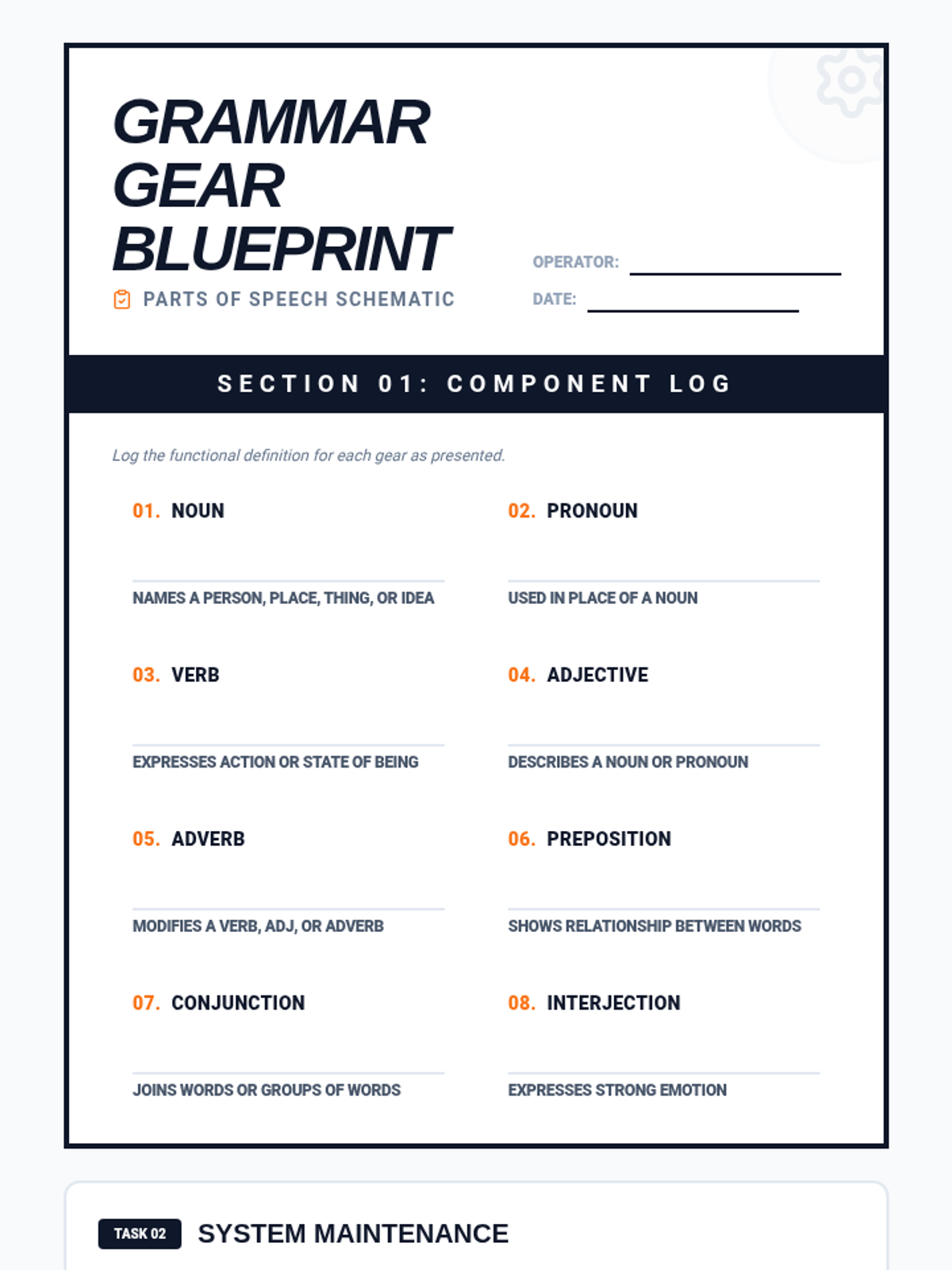
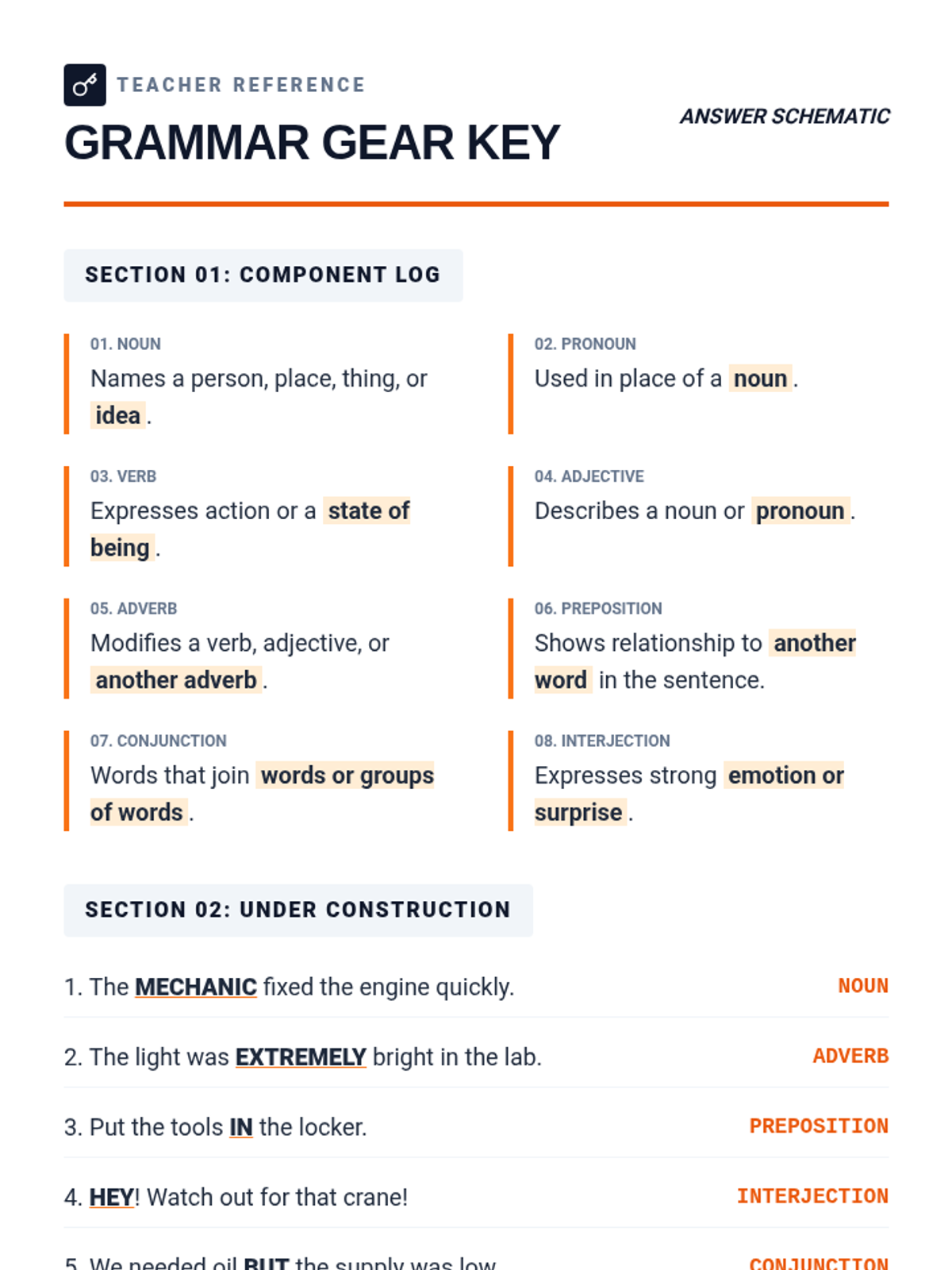
A comprehensive lesson on the eight parts of speech, using a mechanical 'Grammar Gear' theme to help 6th and 7th grade students understand how language is constructed.
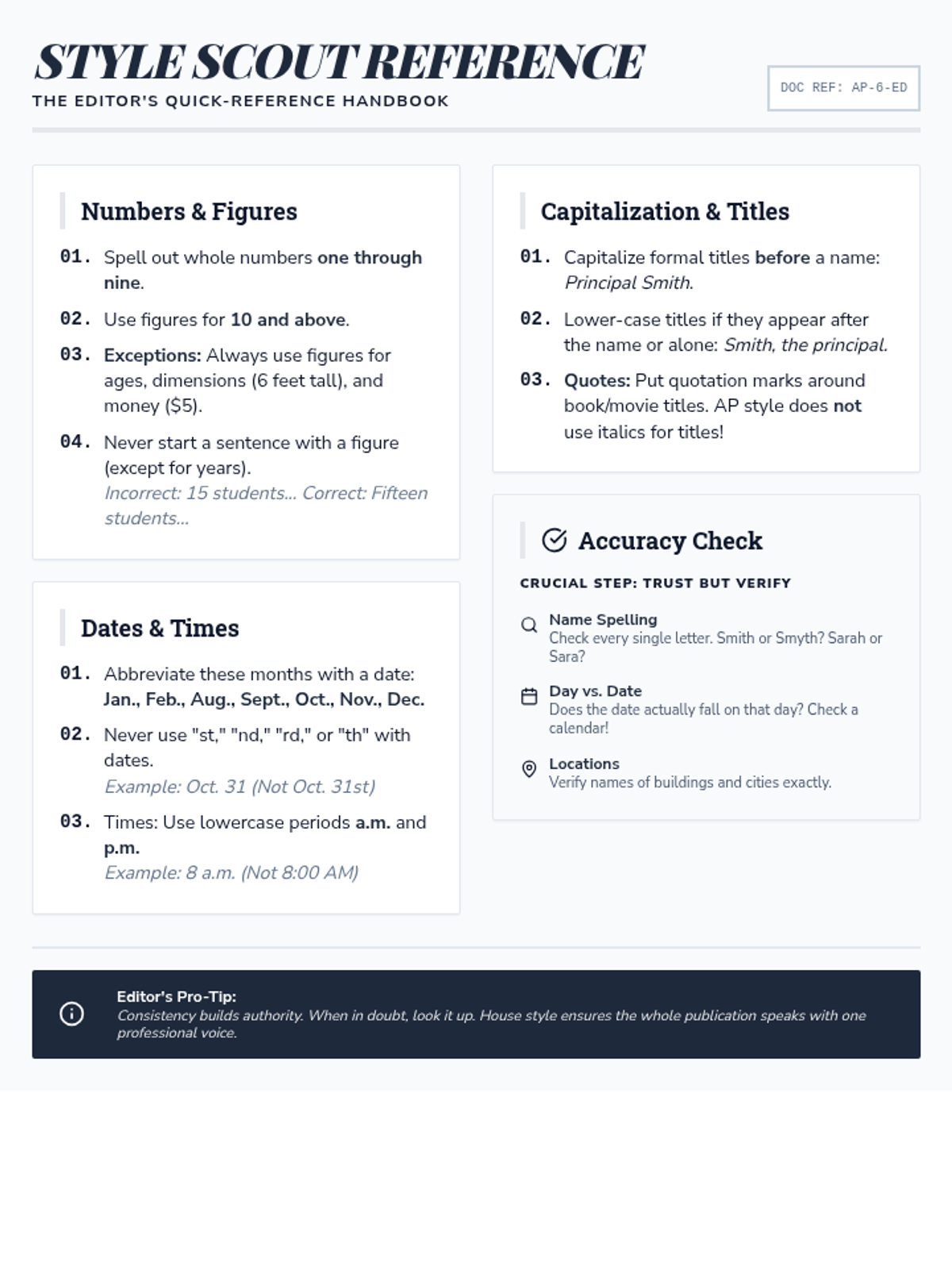
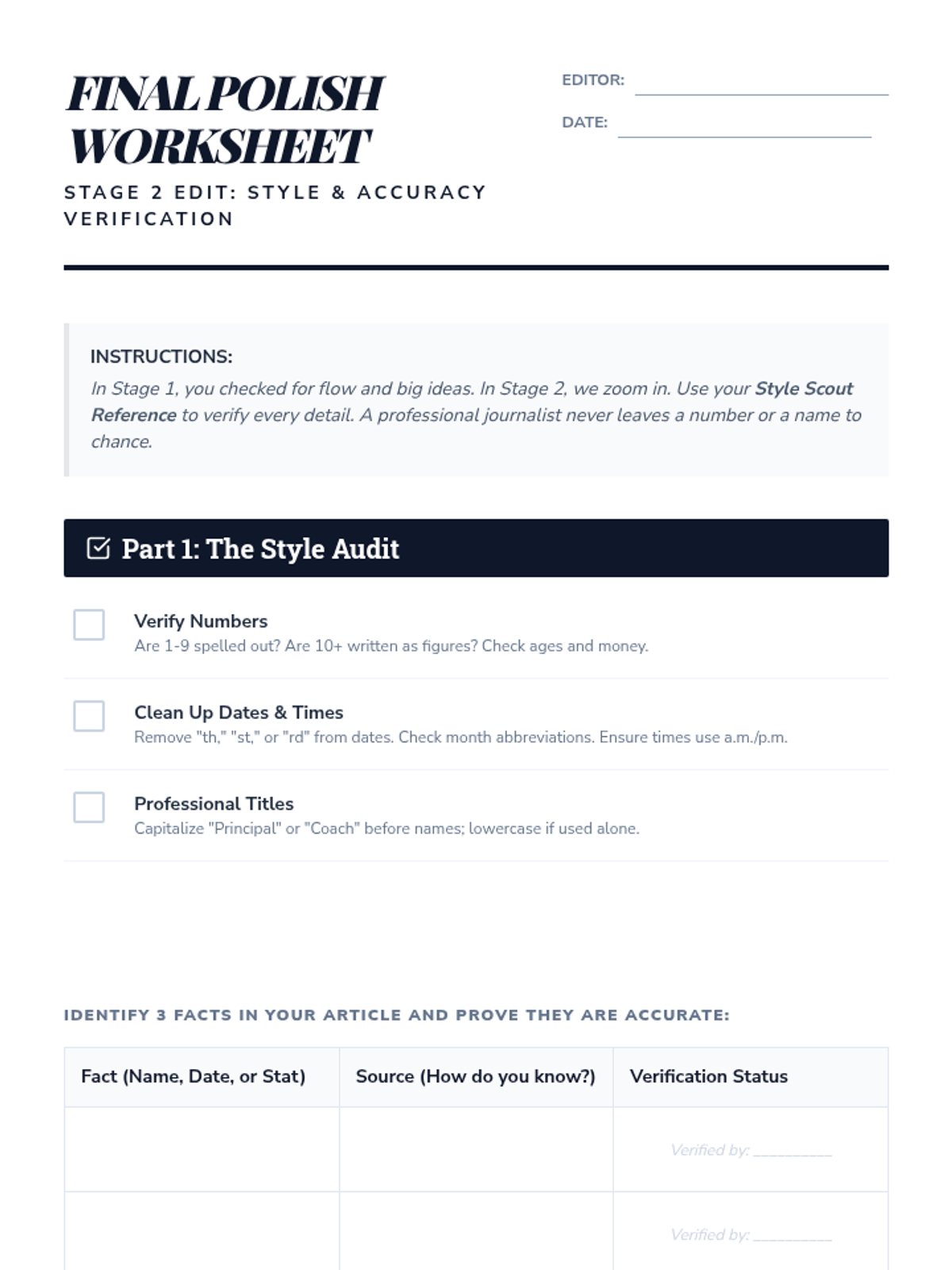
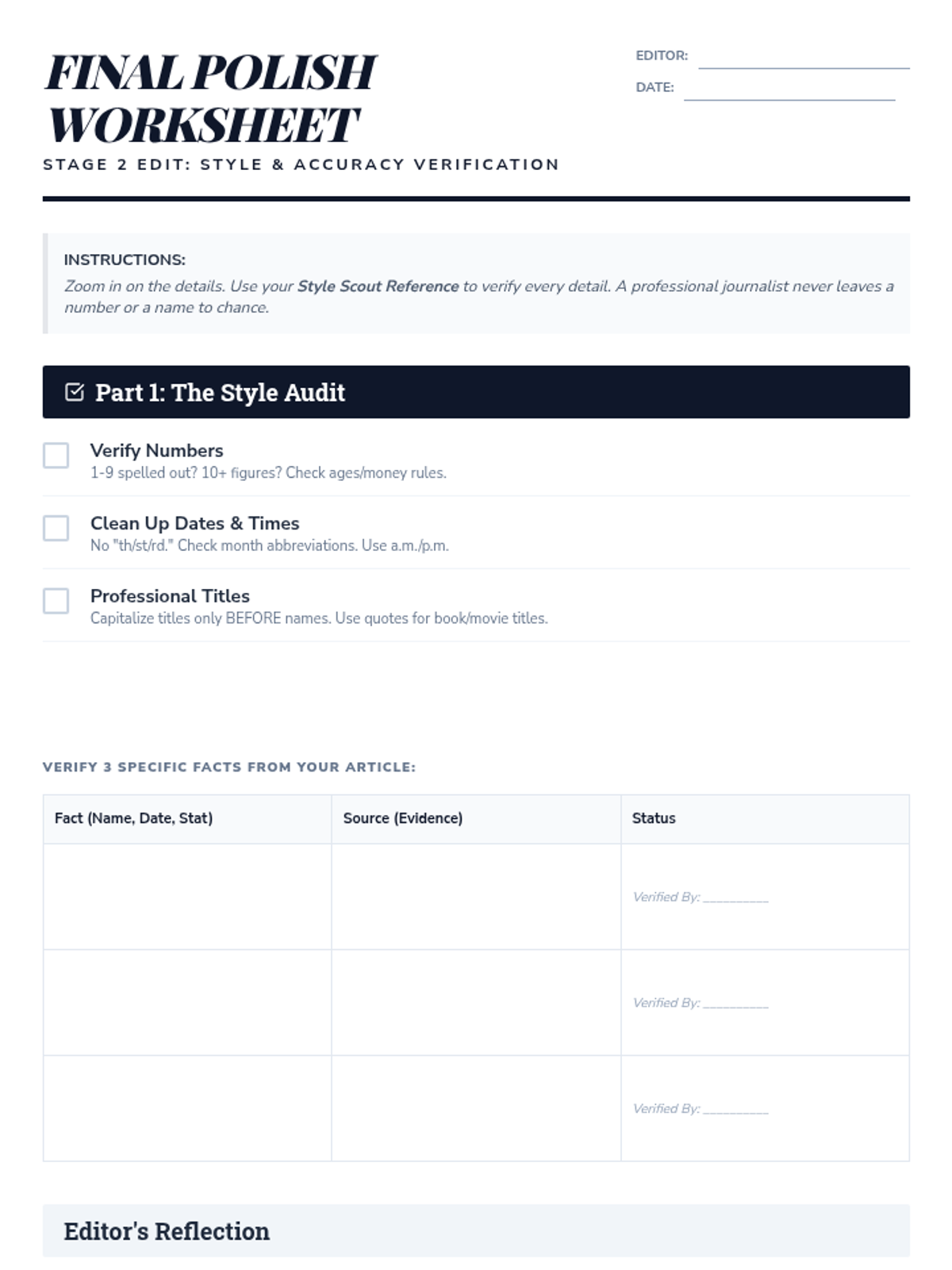
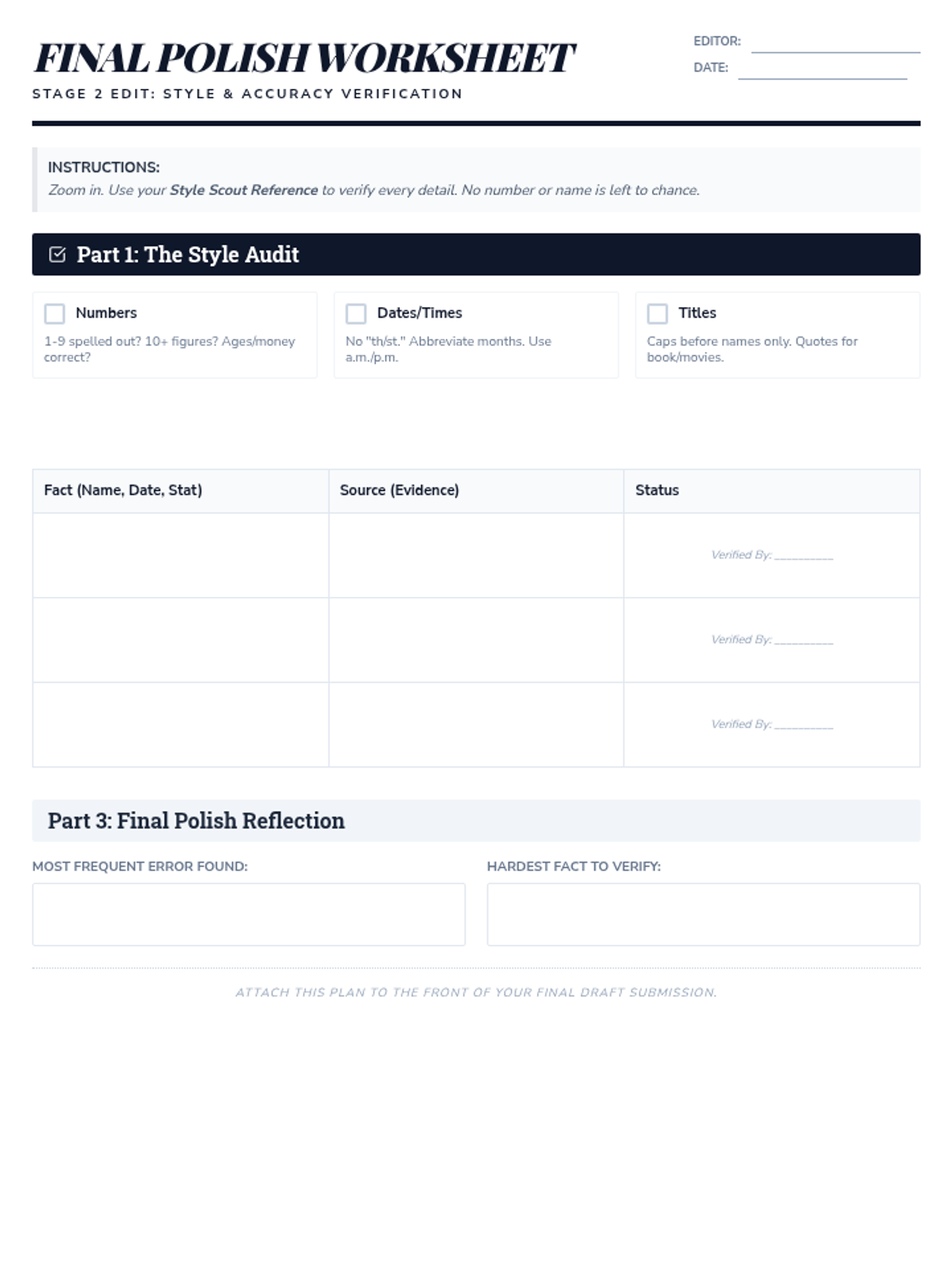
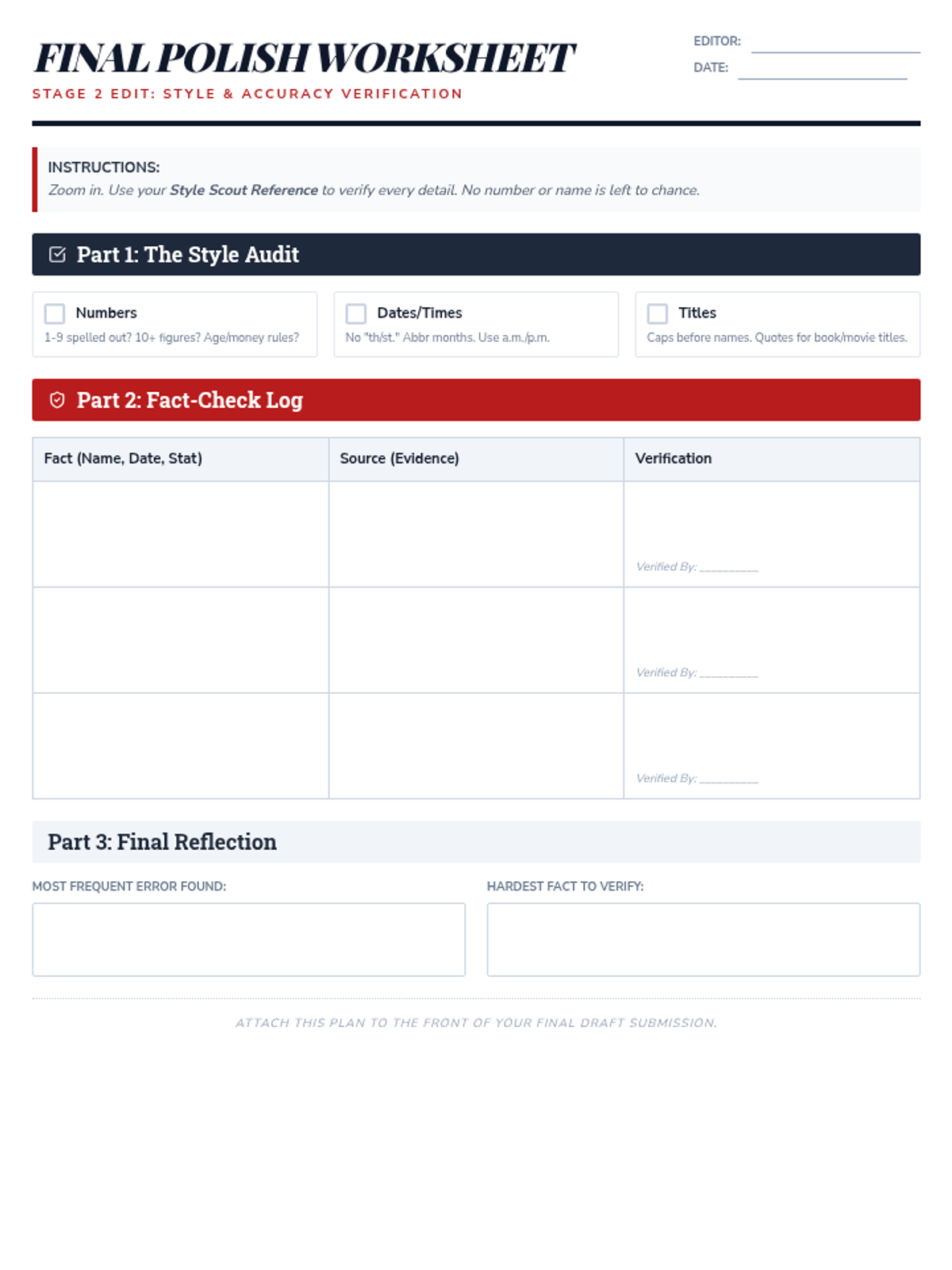
In this 45-minute lesson, 6th-grade students step into the role of professional editors to master house style and factual accuracy. They will learn foundational AP style rules and apply fact-checking strategies to polish their articles to a professional standard.
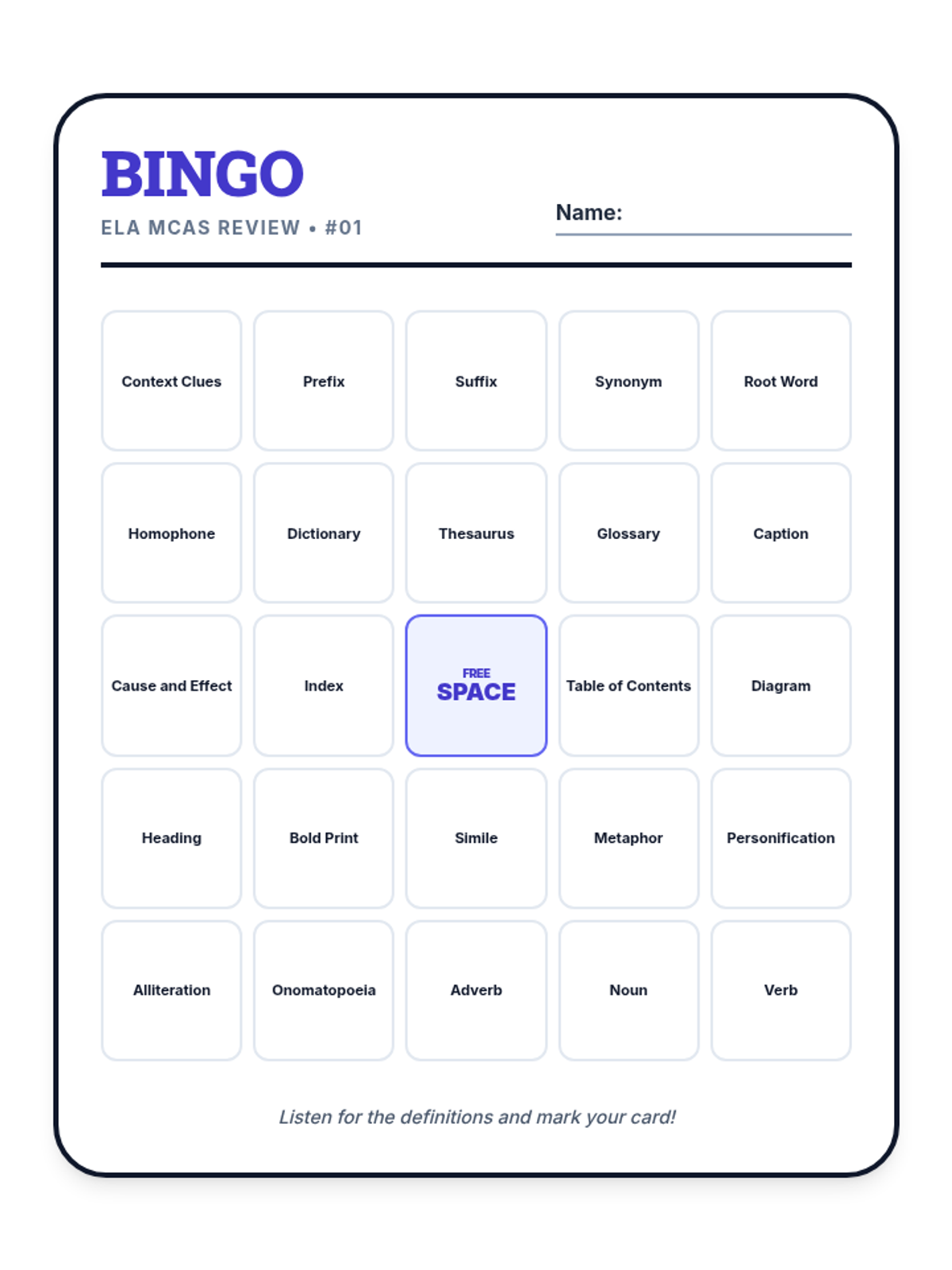
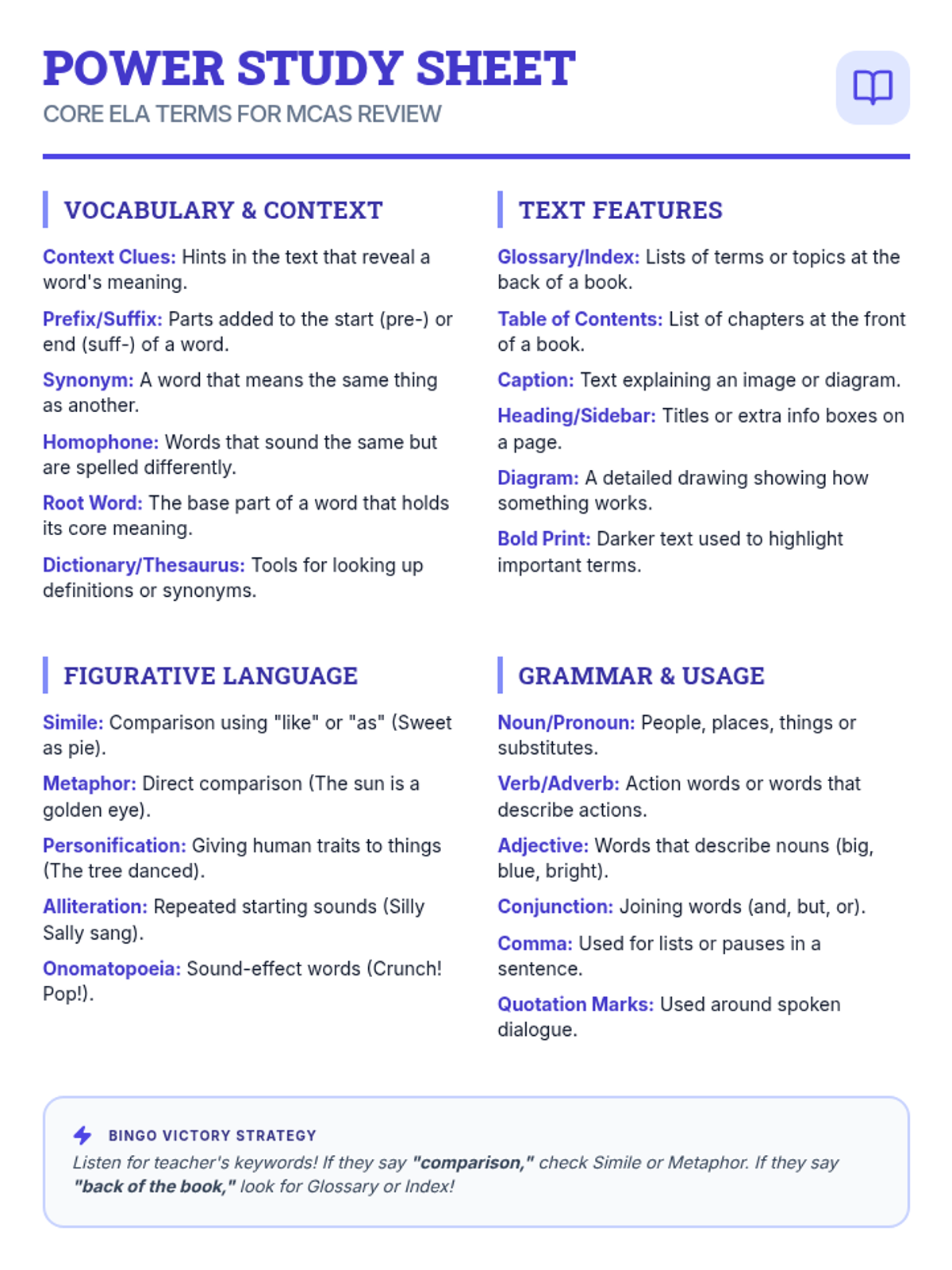
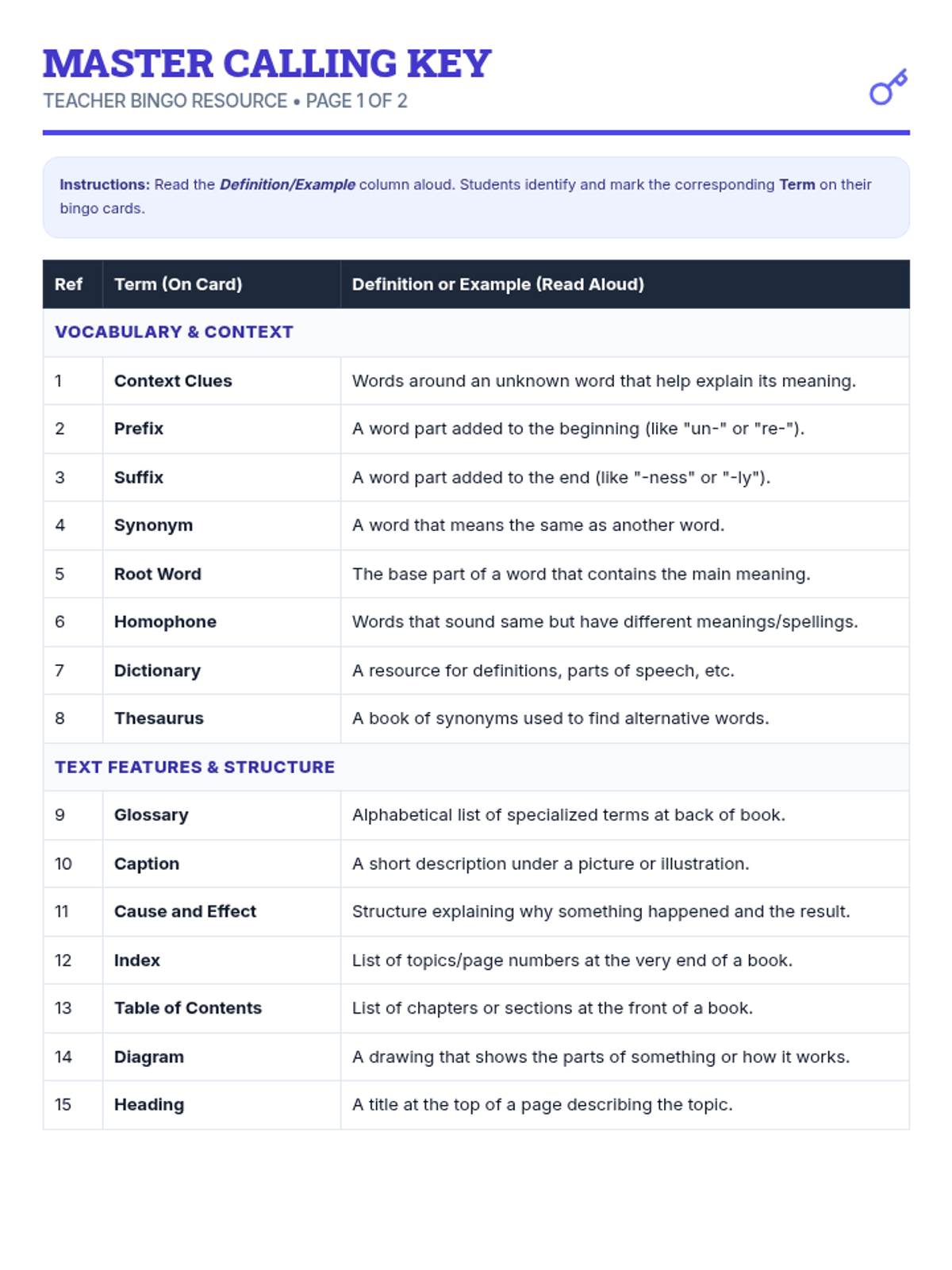
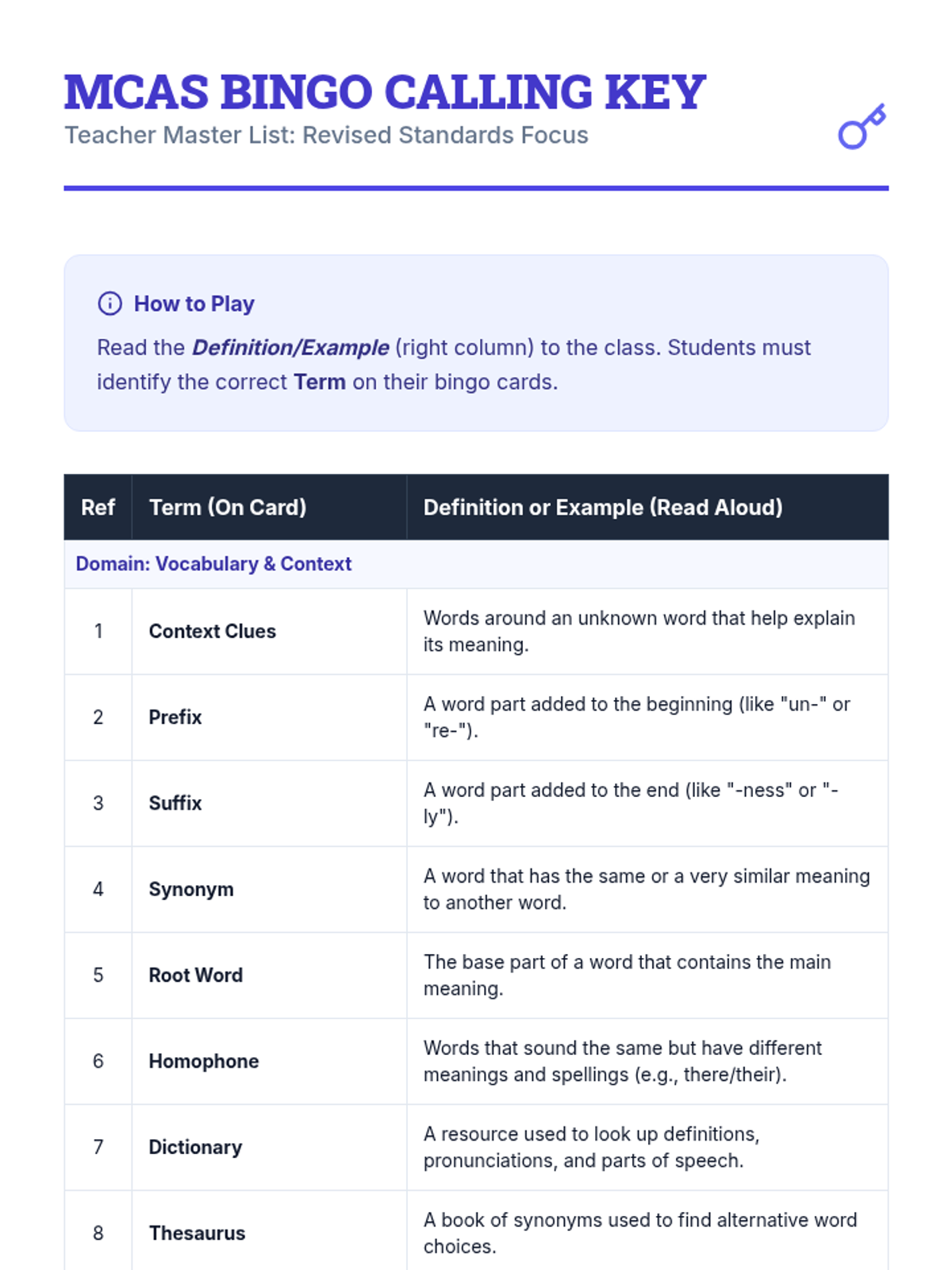
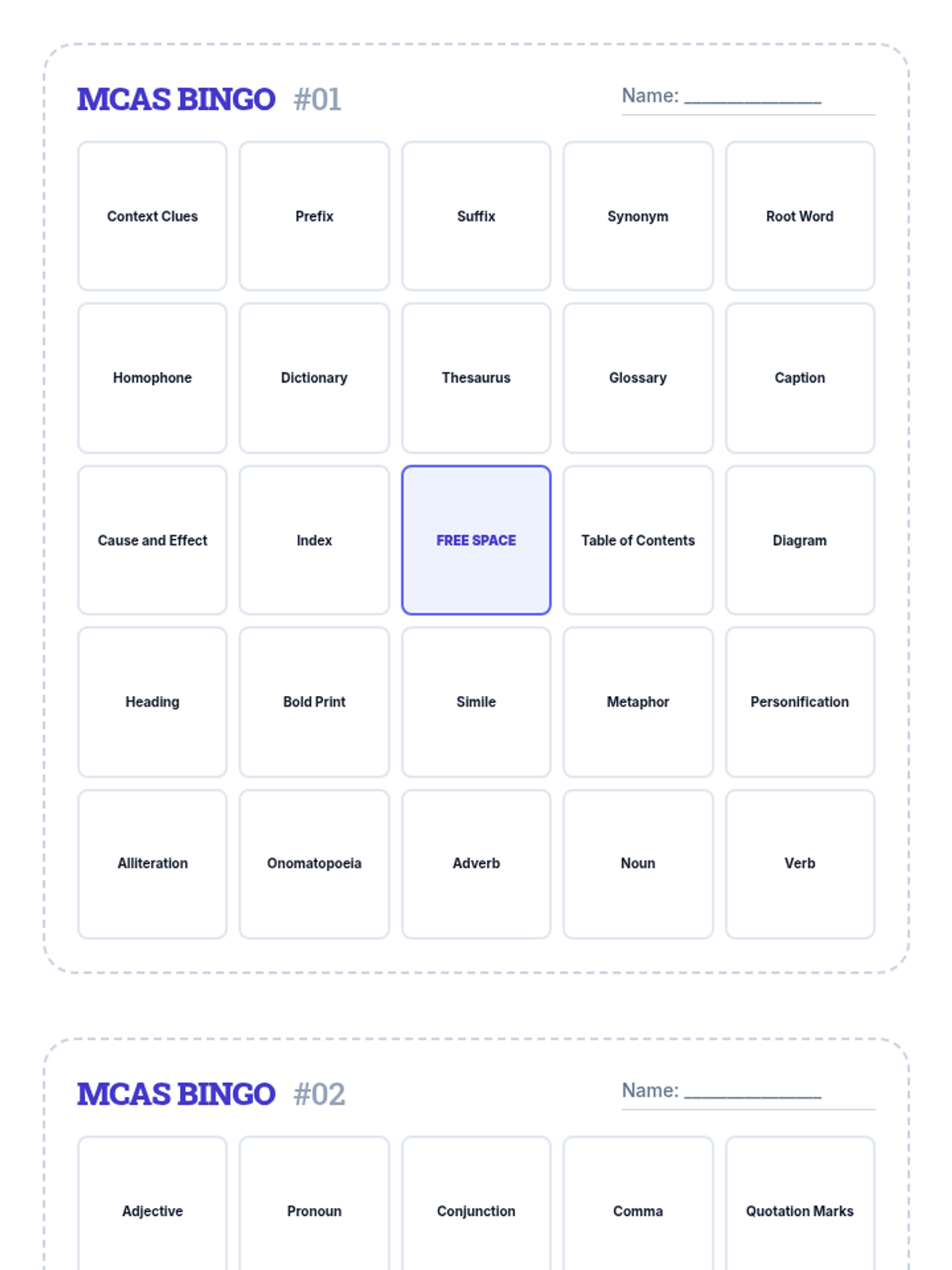
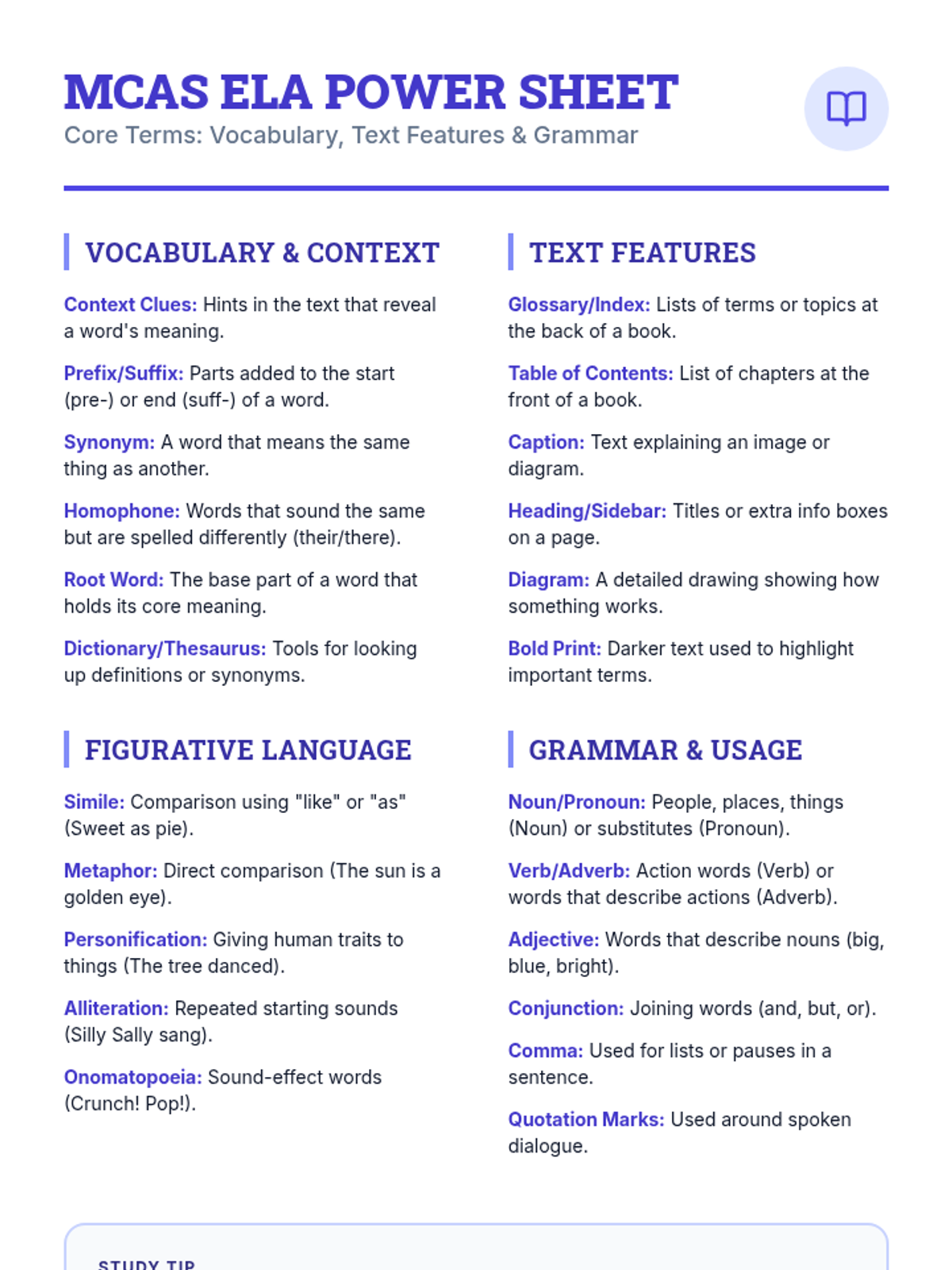
A comprehensive ELA review game designed to help students master MCAS standards through a competitive and engaging bingo format. The lesson covers vocabulary, literary elements, text structures, and grammar.
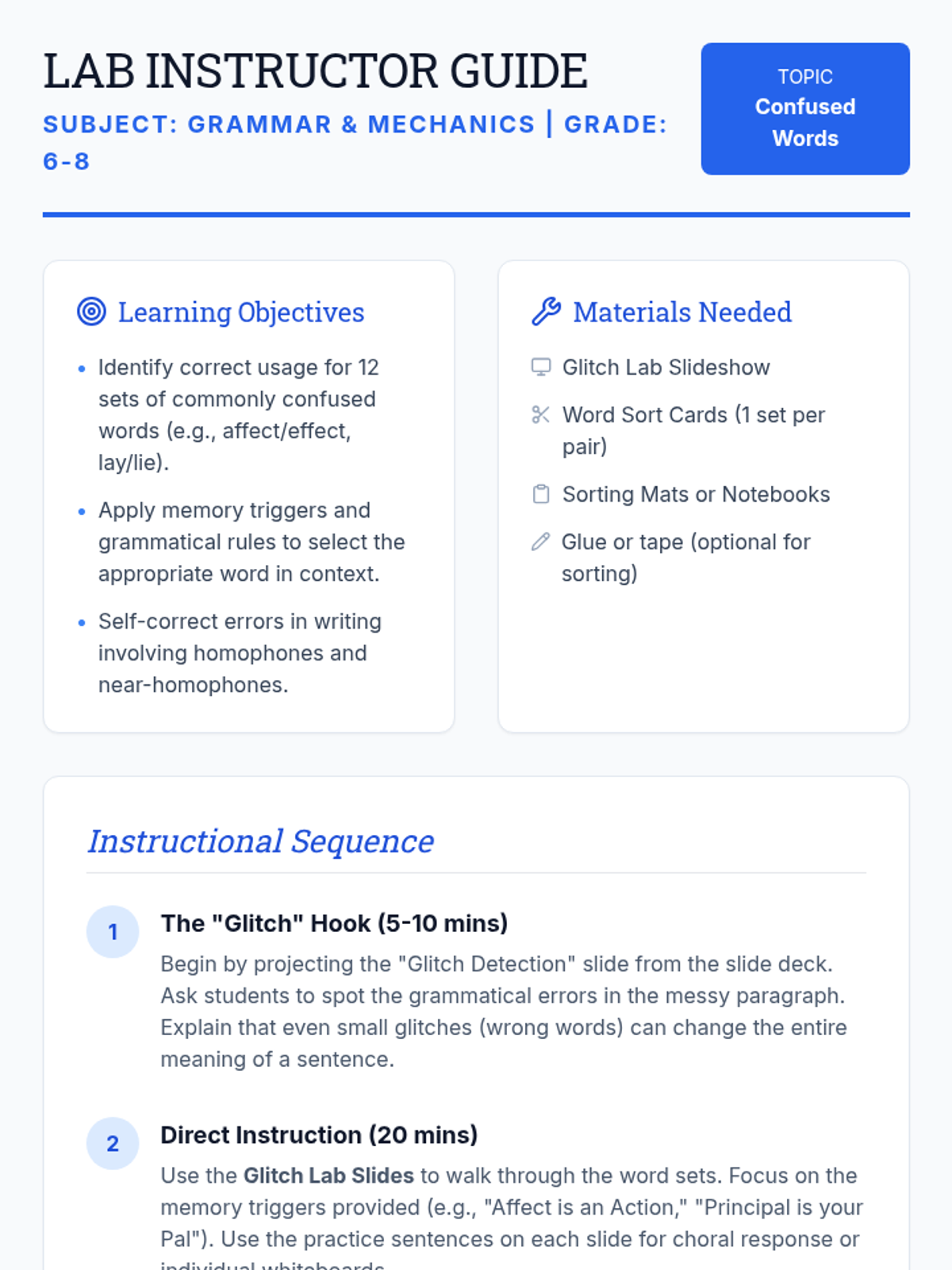
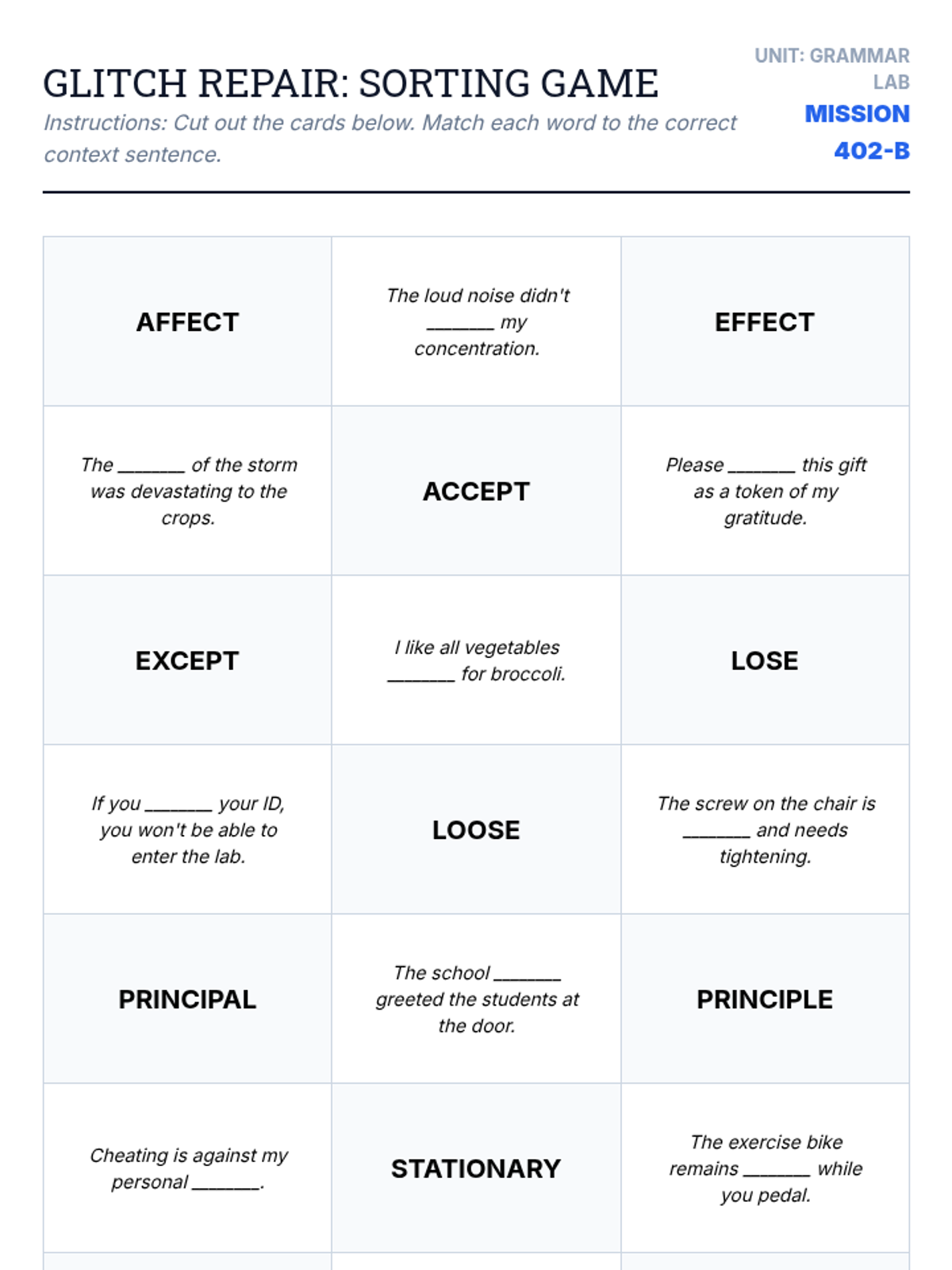
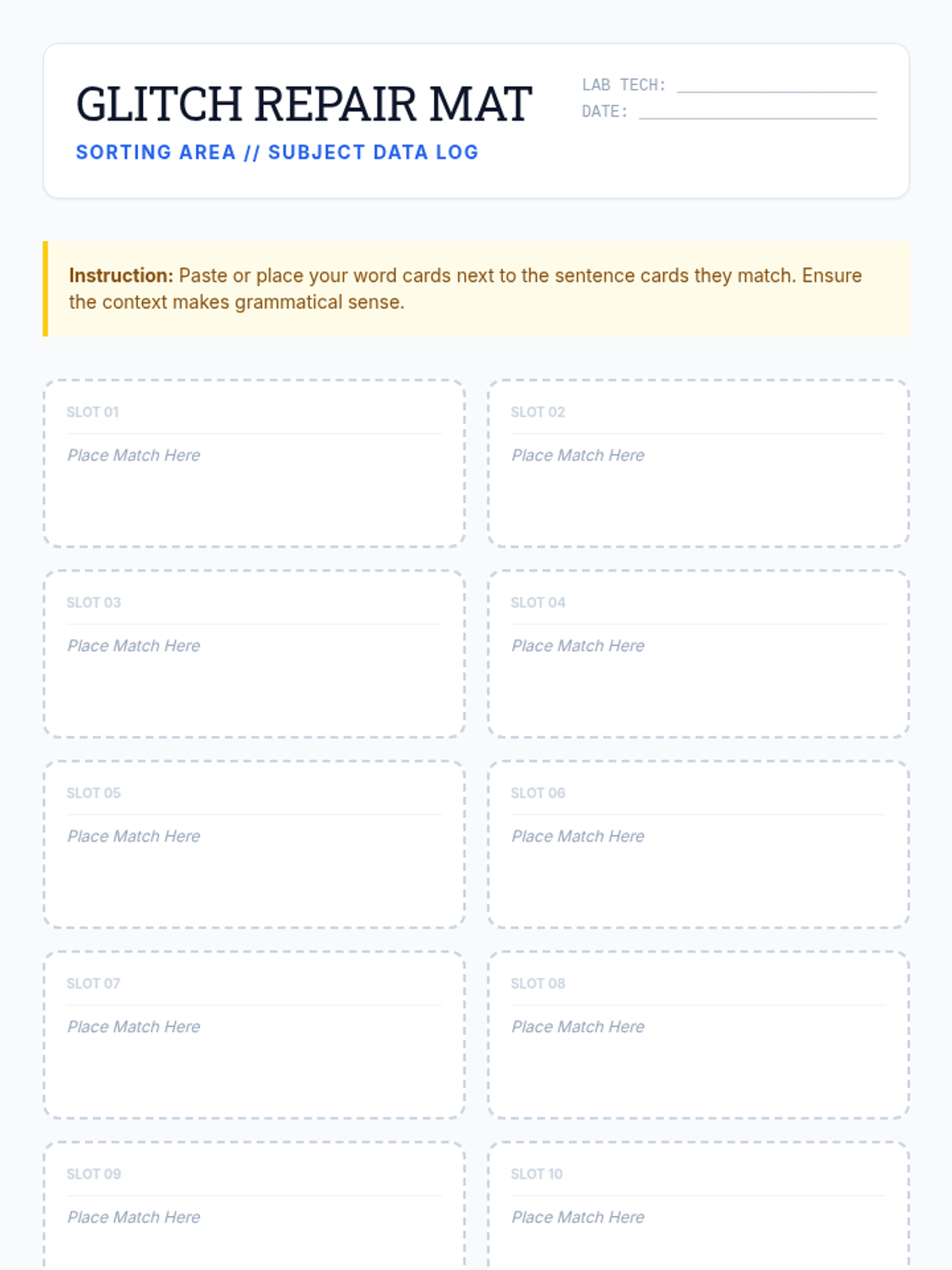
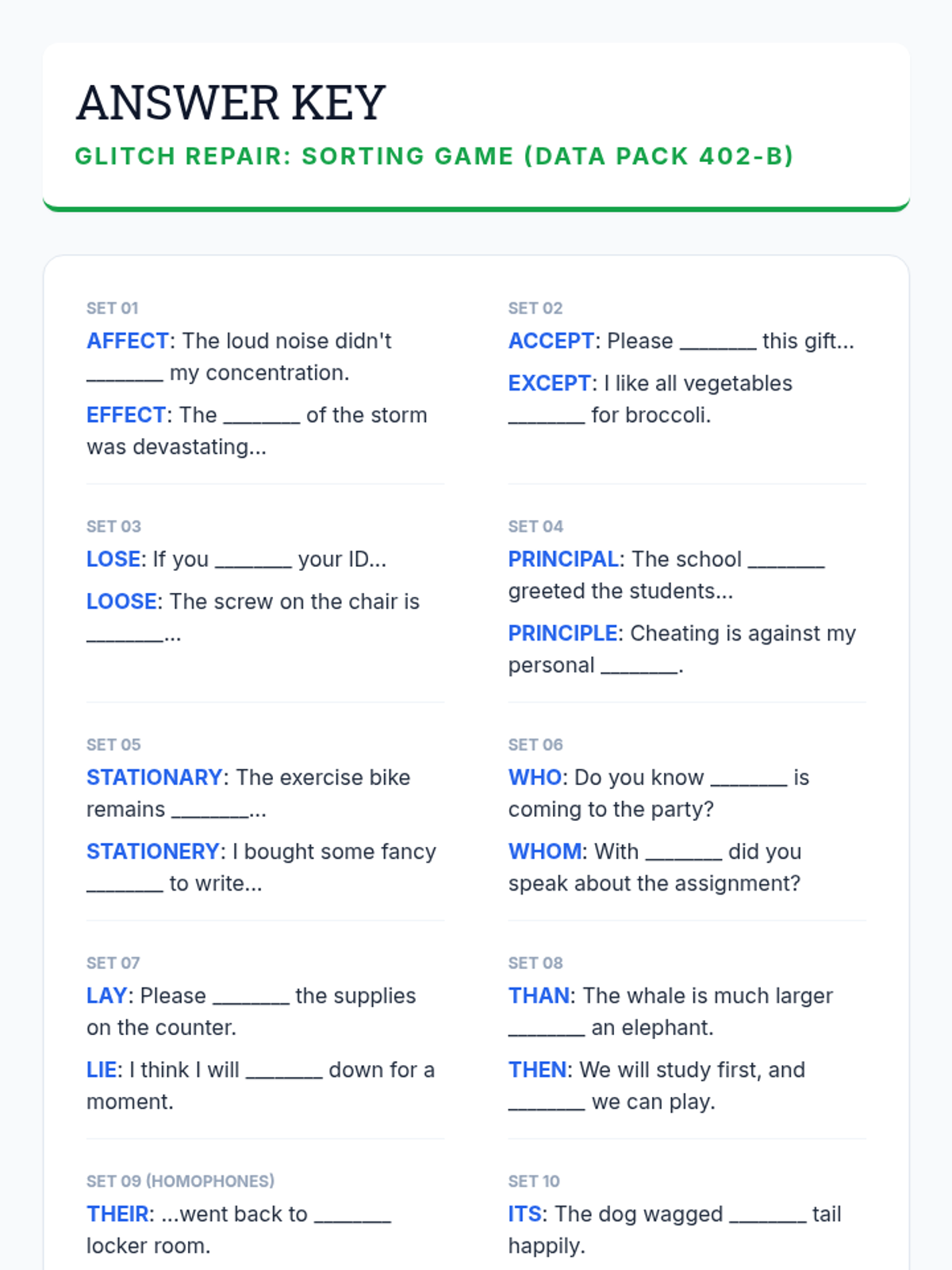
A comprehensive lesson targeting 12 pairs/trios of commonly confused words through a "Grammar Lab" theme. Students will identify, define, and correctly apply homophones and tricky word pairs through direct instruction and a hands-on sorting game.
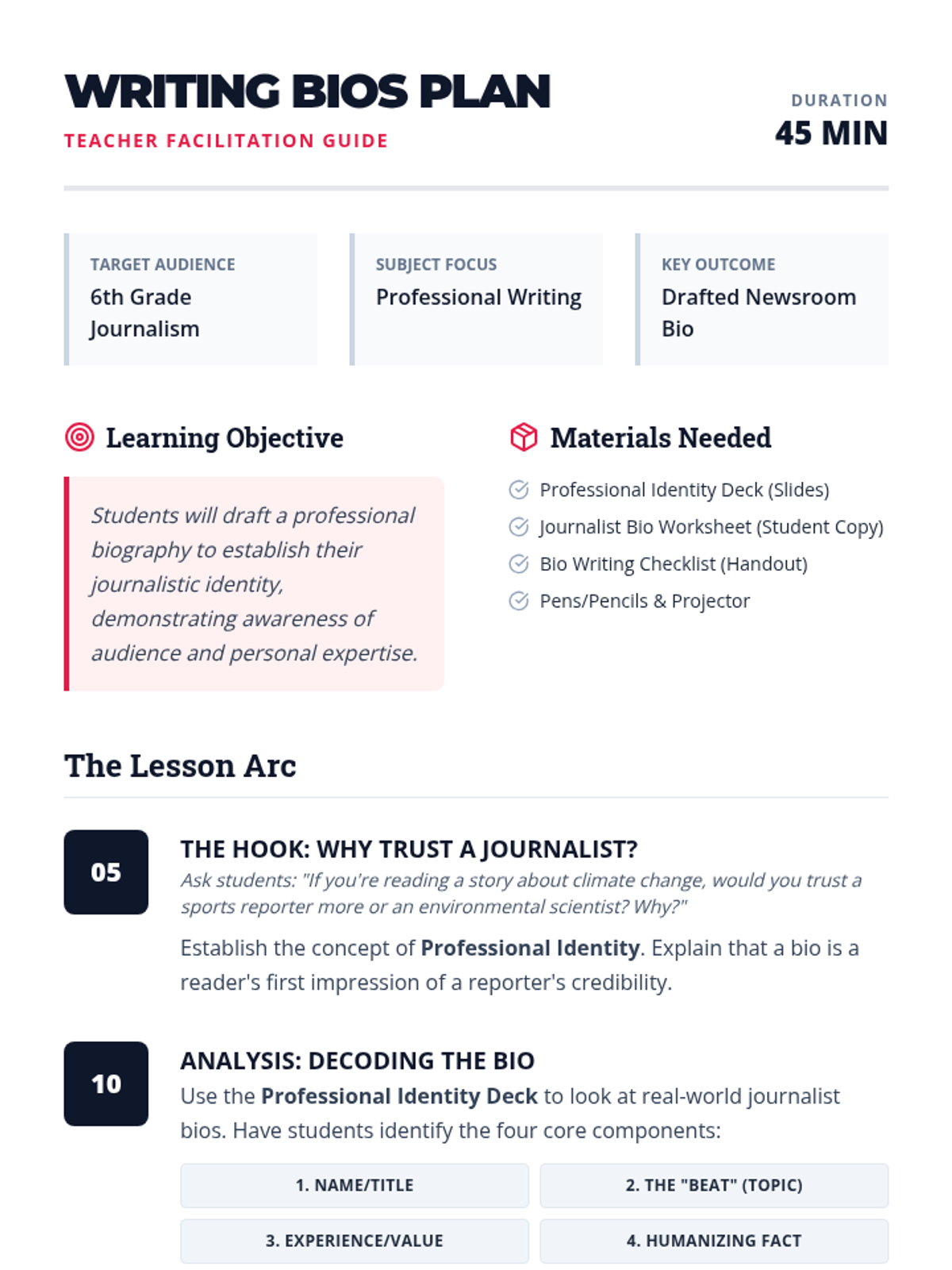
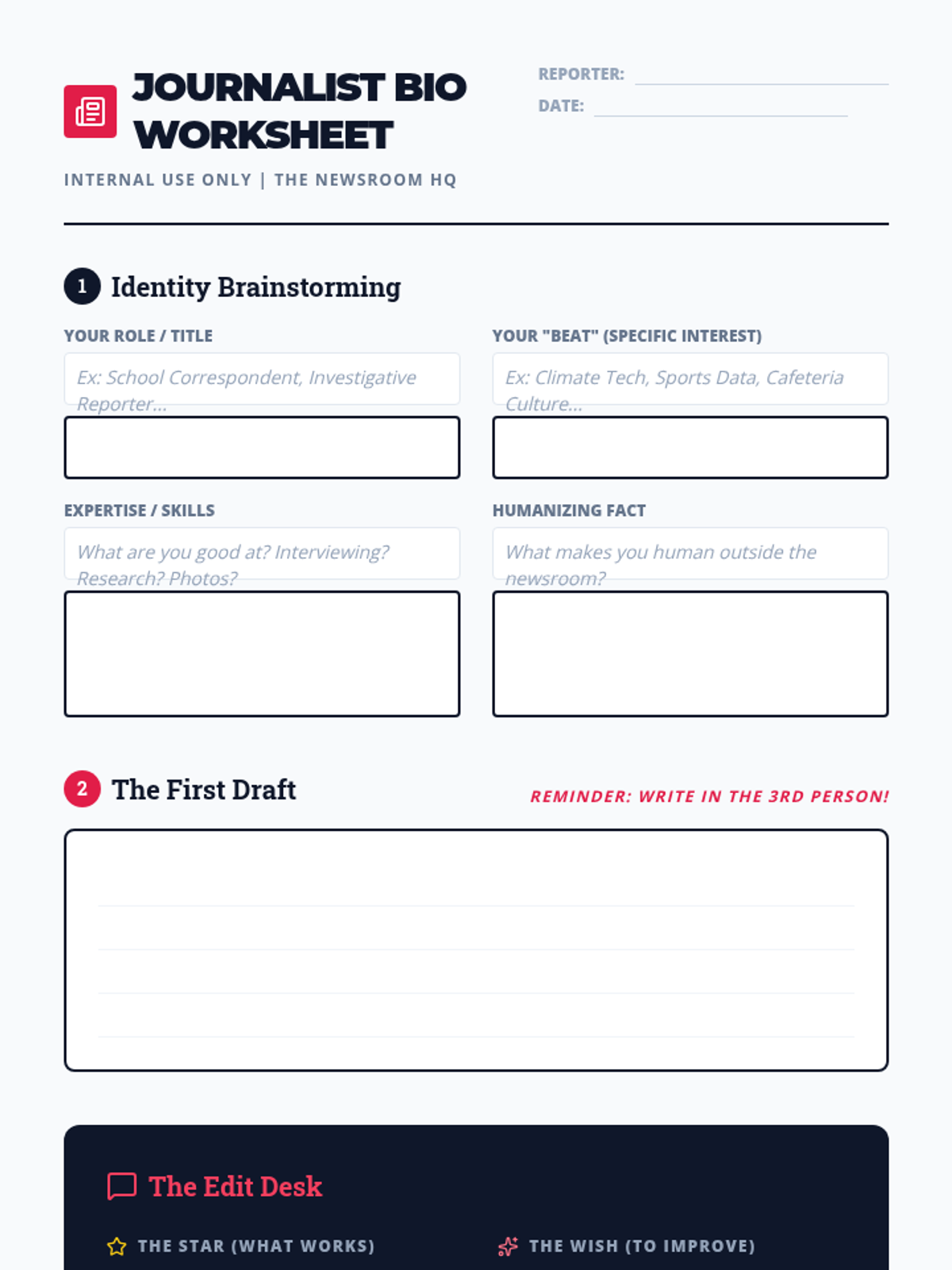
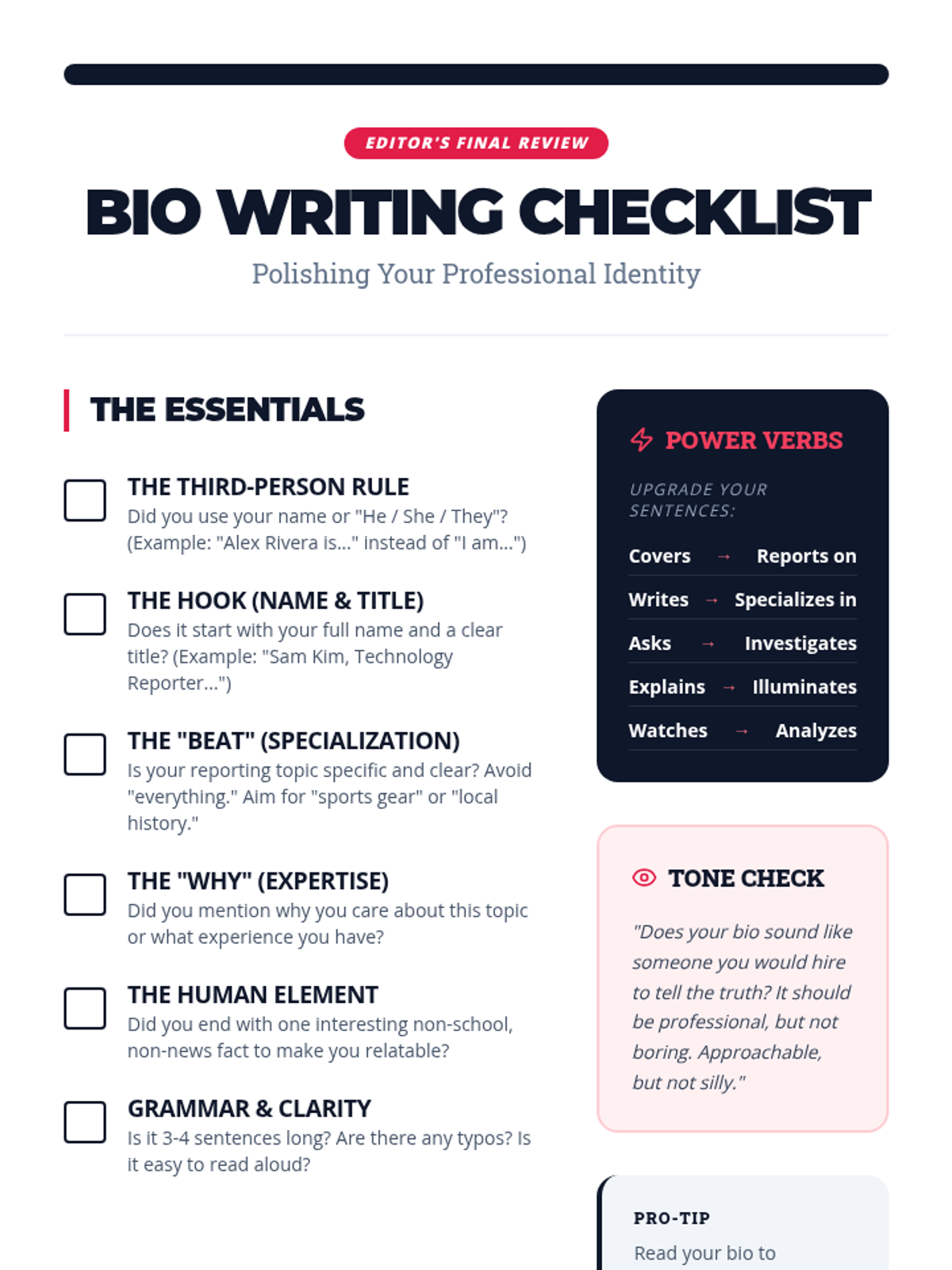
A 45-minute lesson for 6th-grade students to develop their professional journalistic identity by drafting and refining their own newsroom bios. Students analyze professional examples, identify core components, and engage in a peer feedback loop.
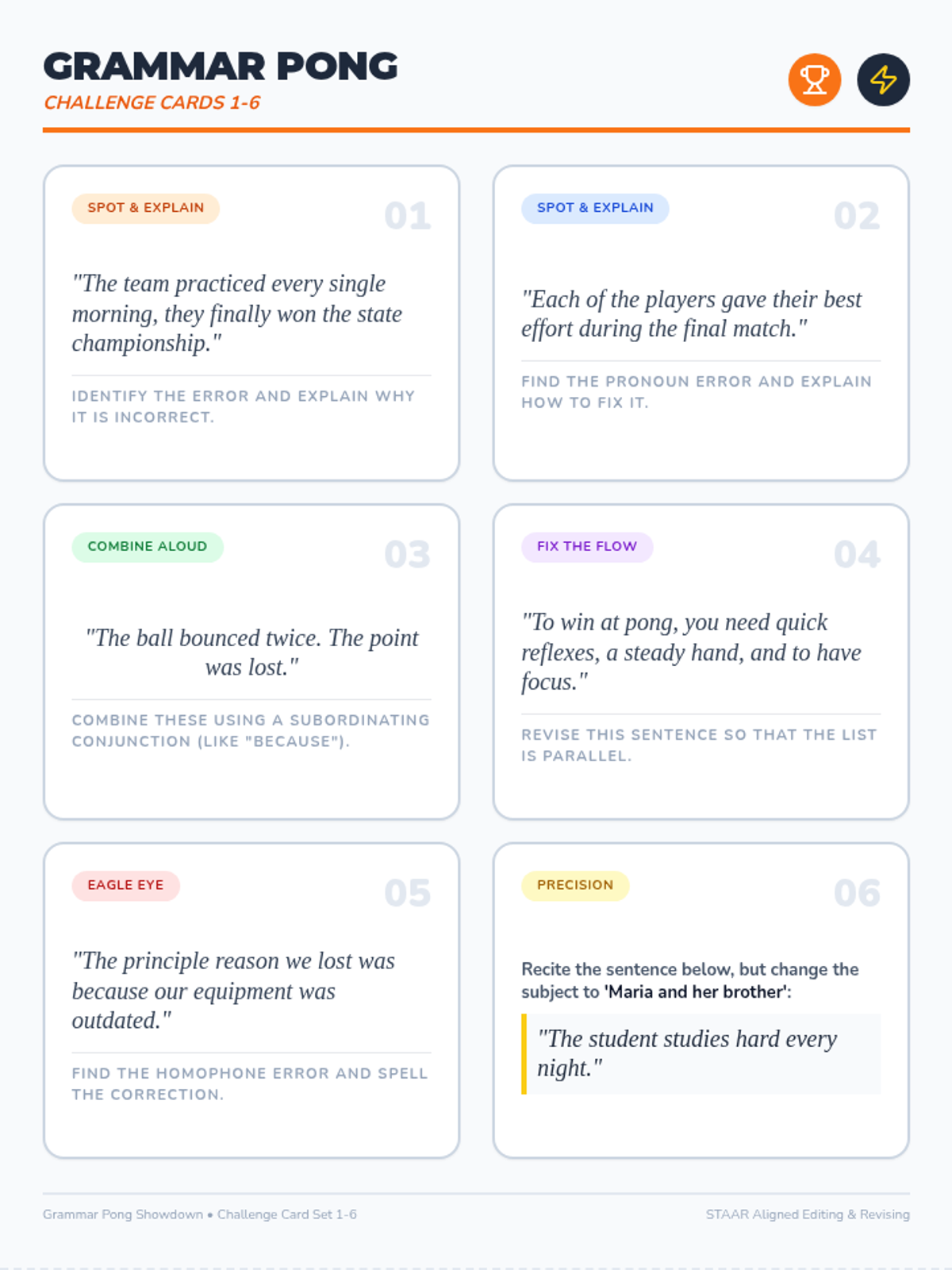
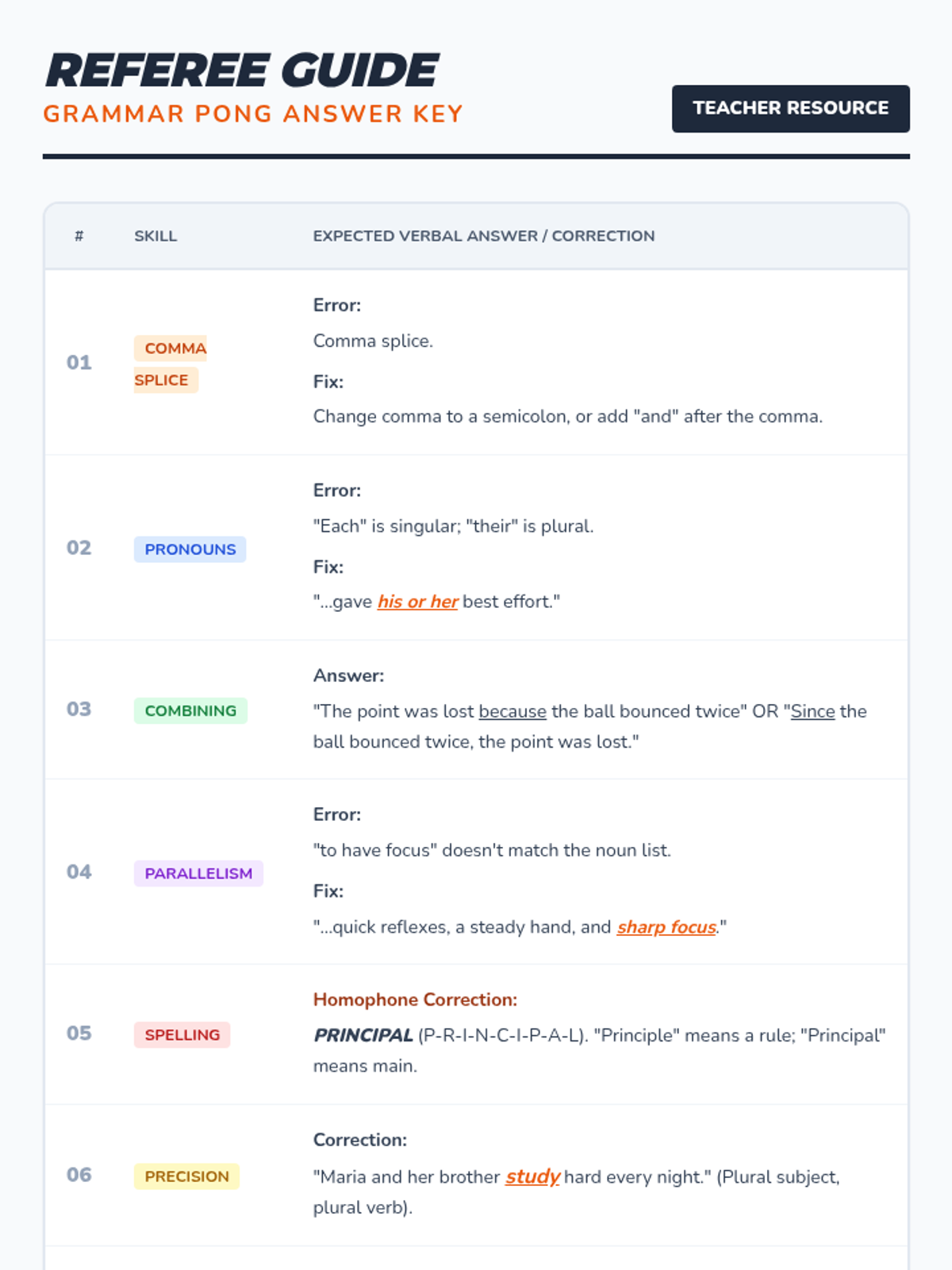
A high-energy editing and revising game where students master comma splices, pronoun-antecedent agreement, and sentence structure through verbal challenges.
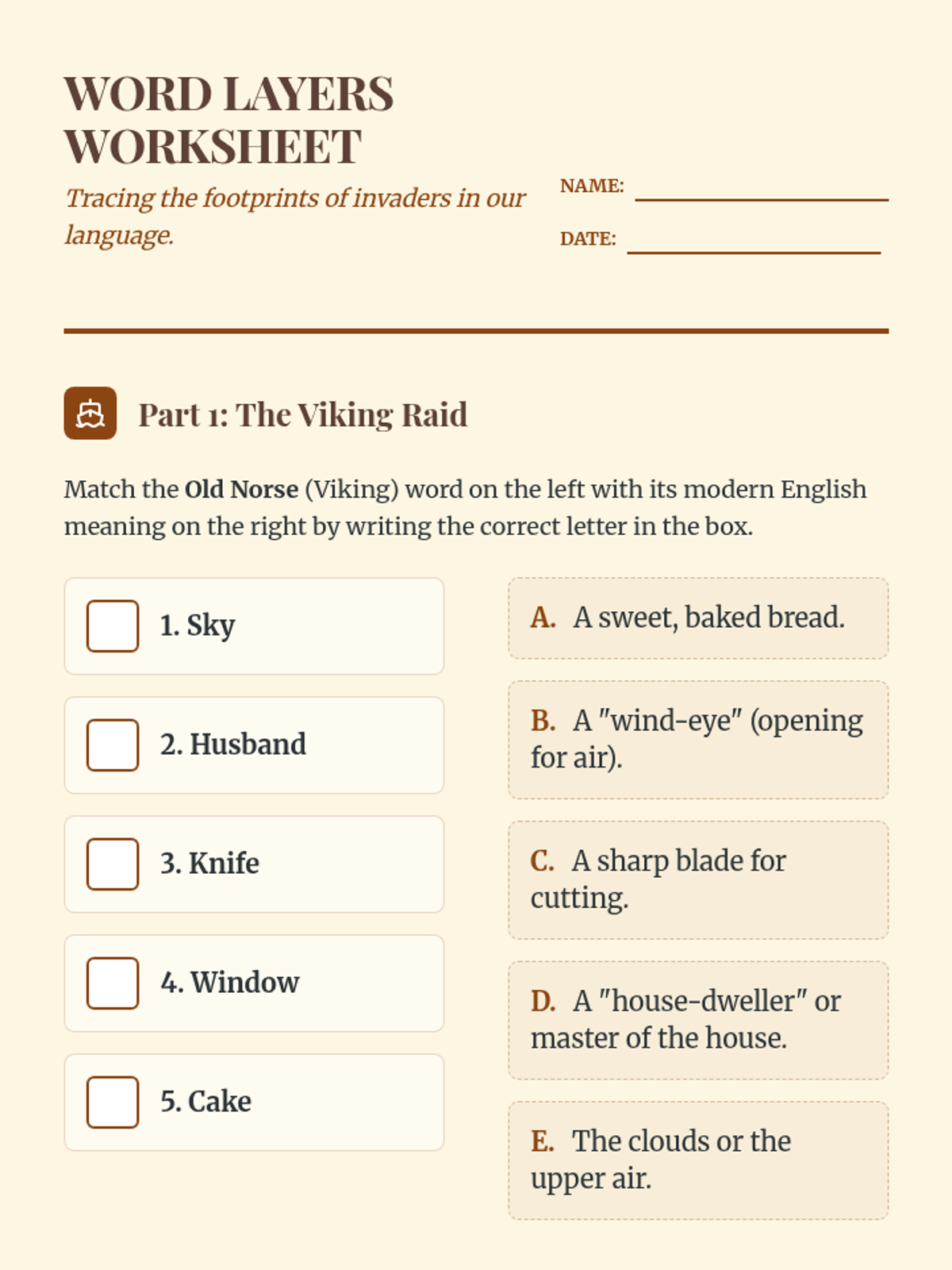
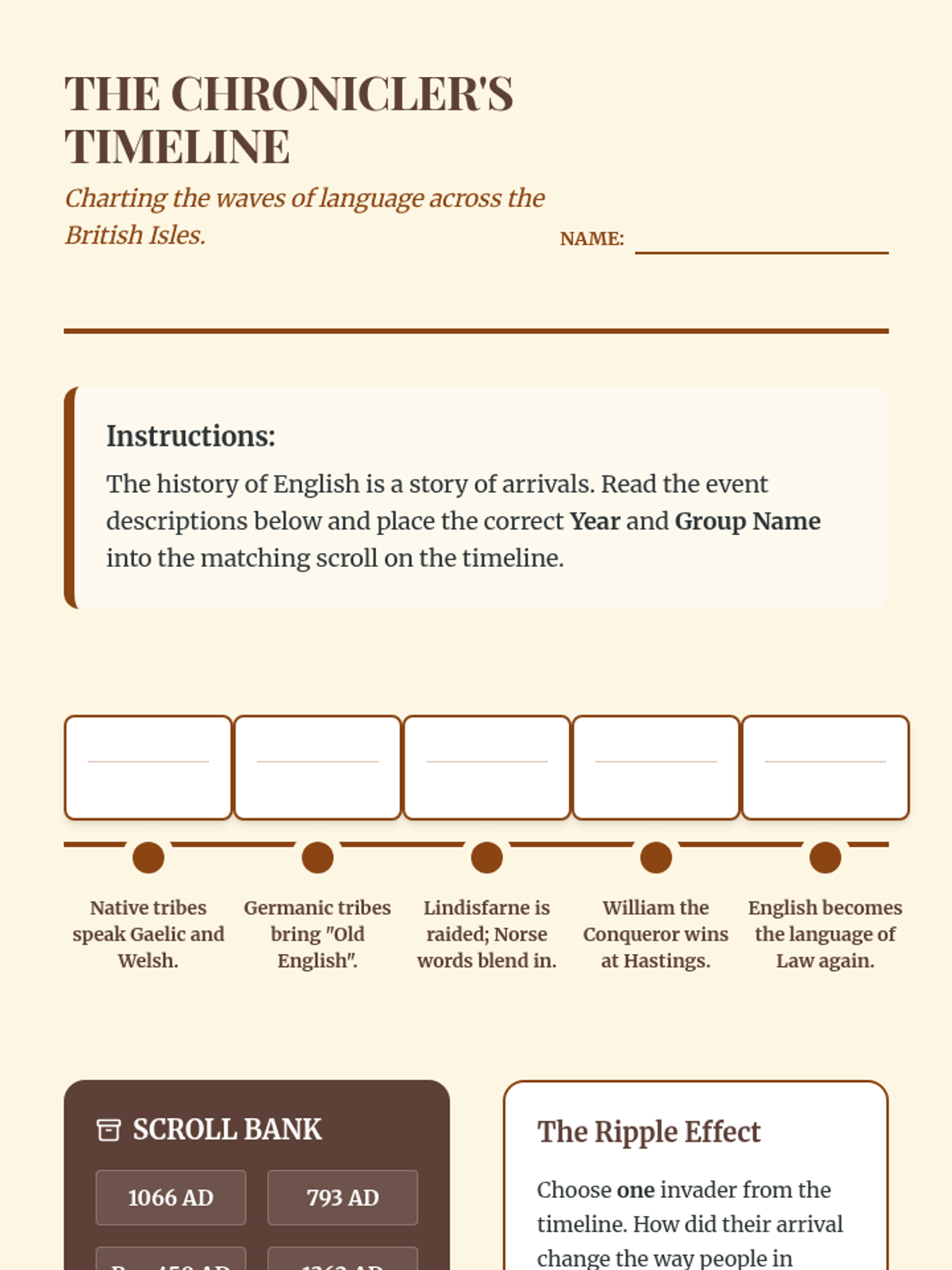
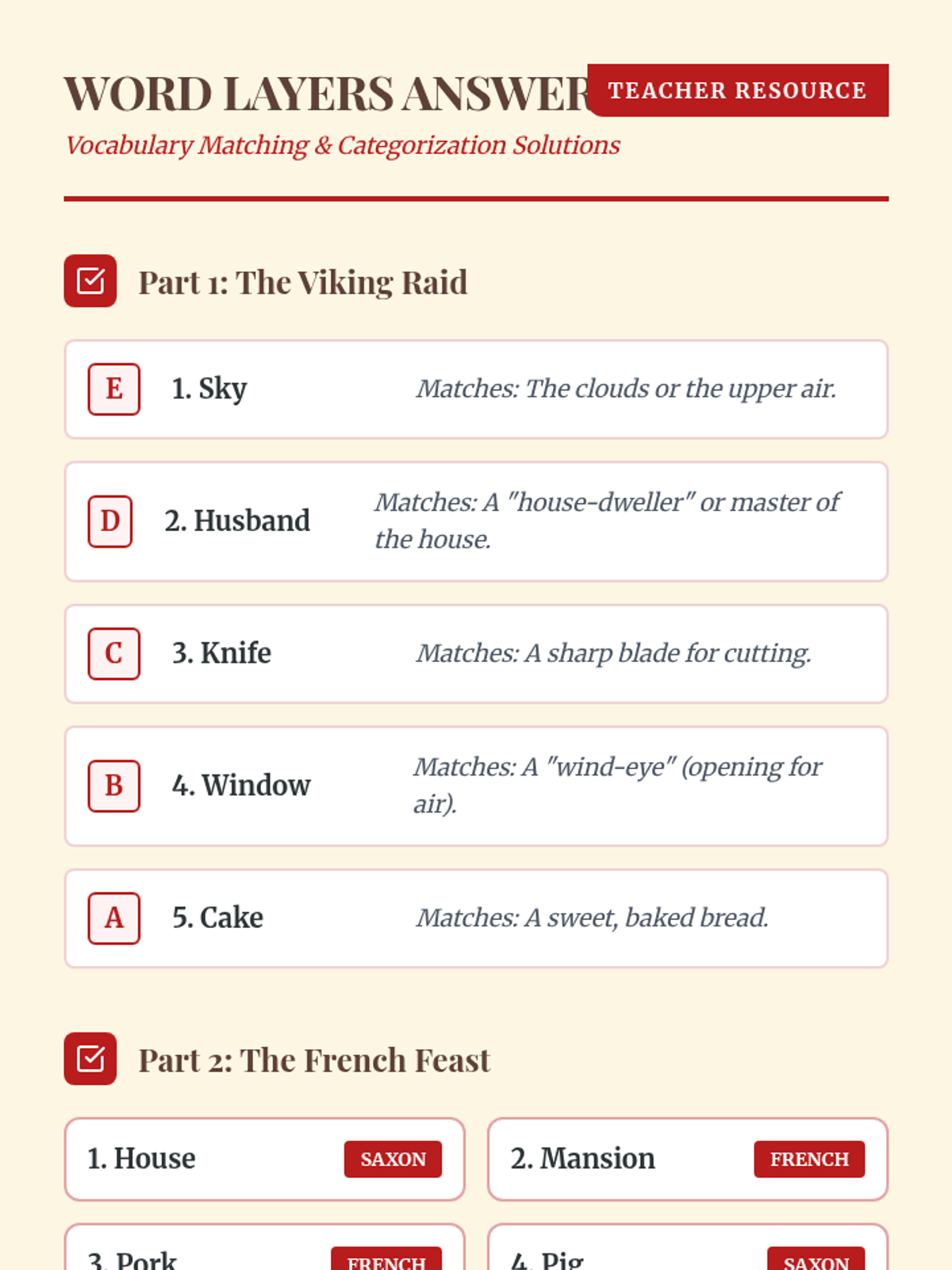
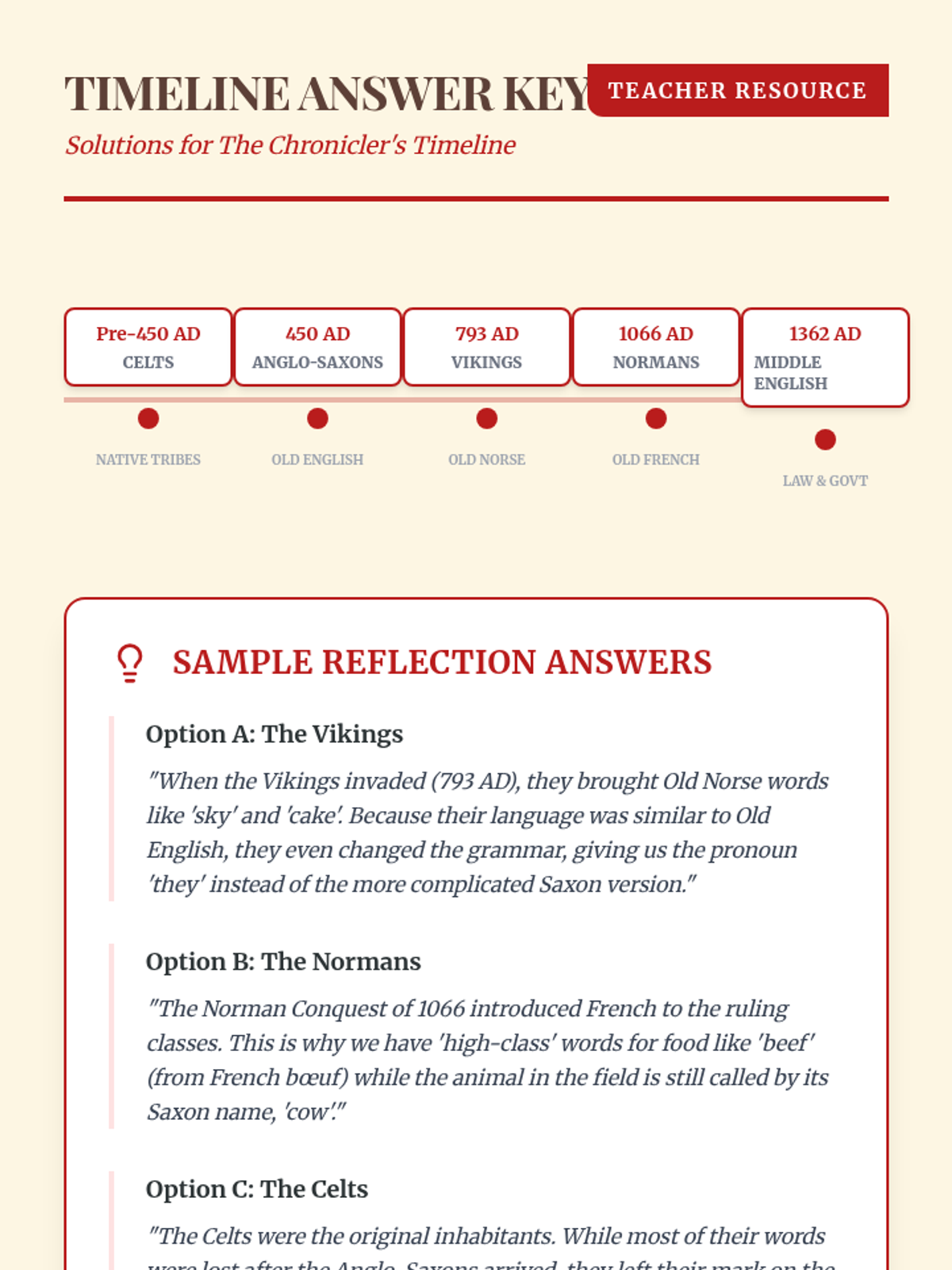
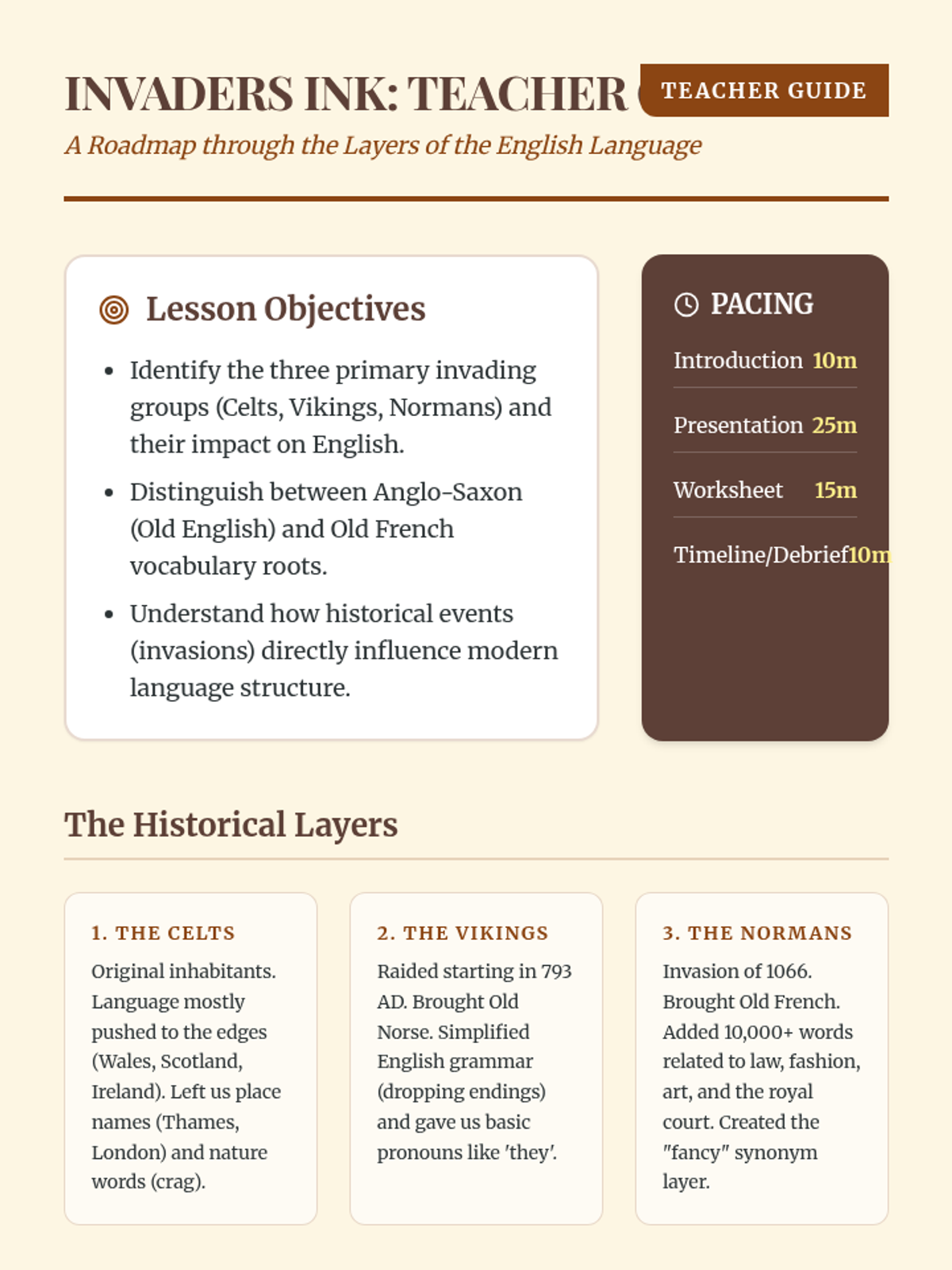
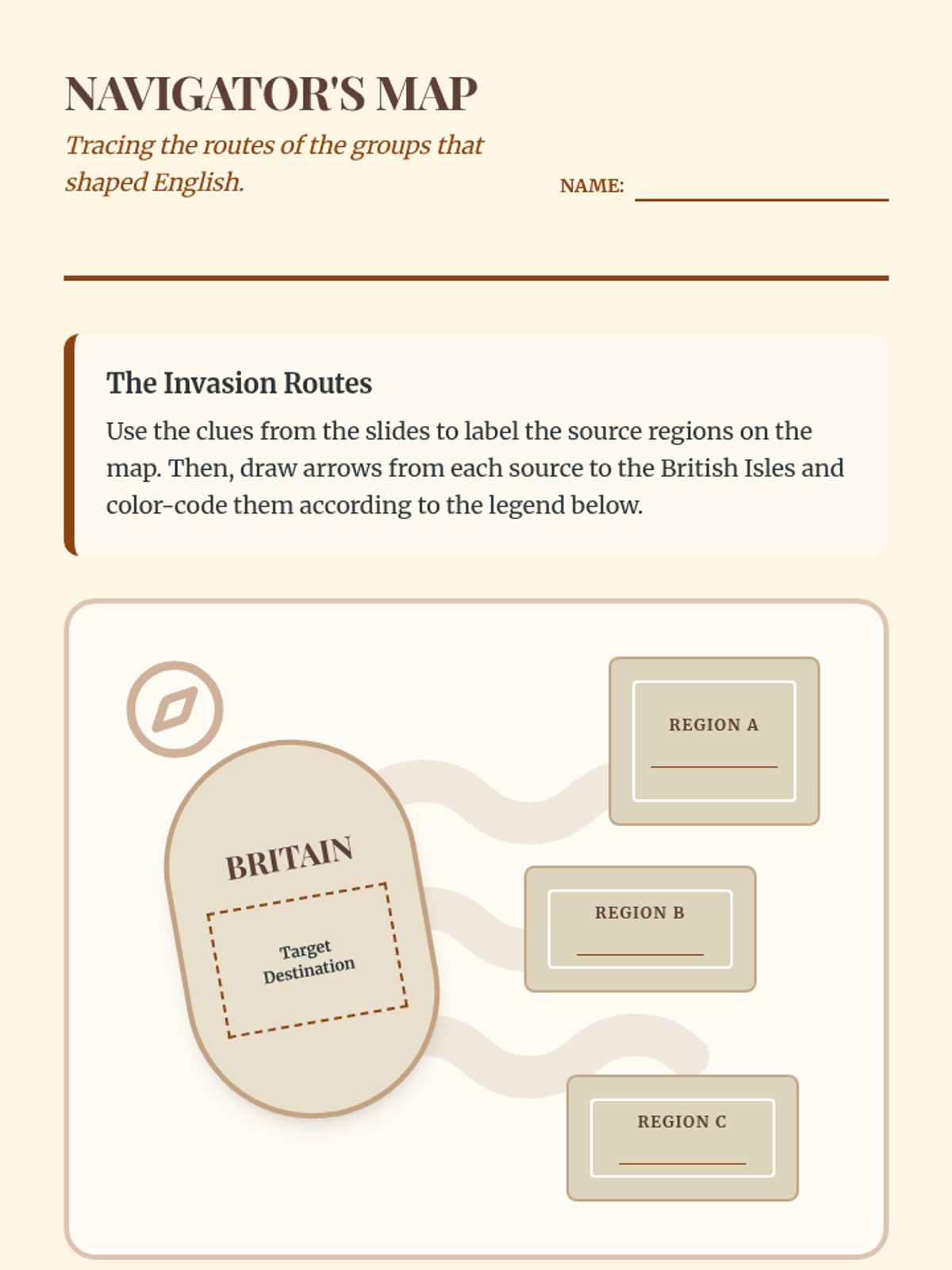
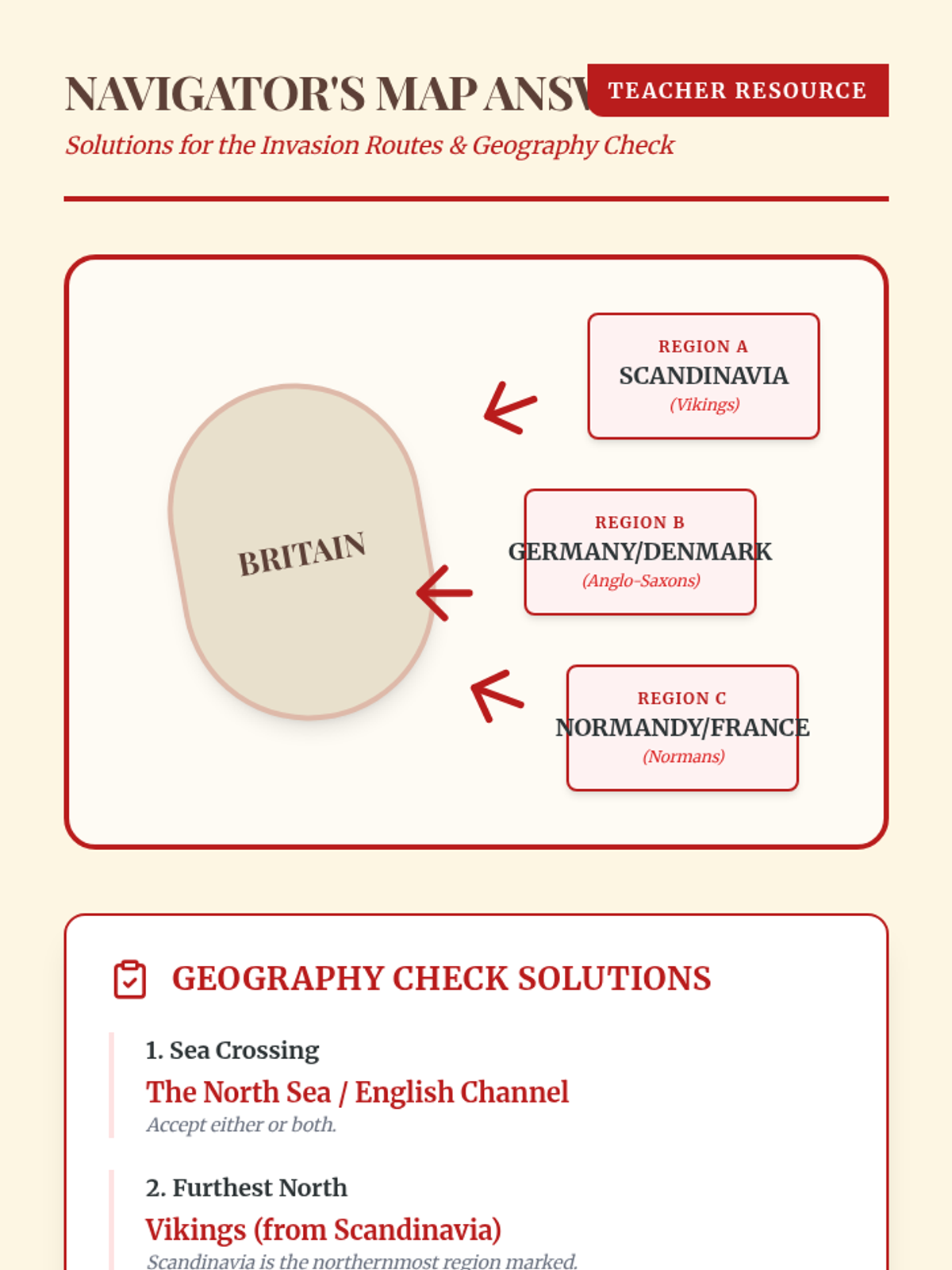
This lesson explores the historical layers of the English language, focusing on how invasions by the Celts, Vikings, and French shaped the vocabulary and grammar we use today. Students will trace the timeline from Old English to the Norman Conquest.
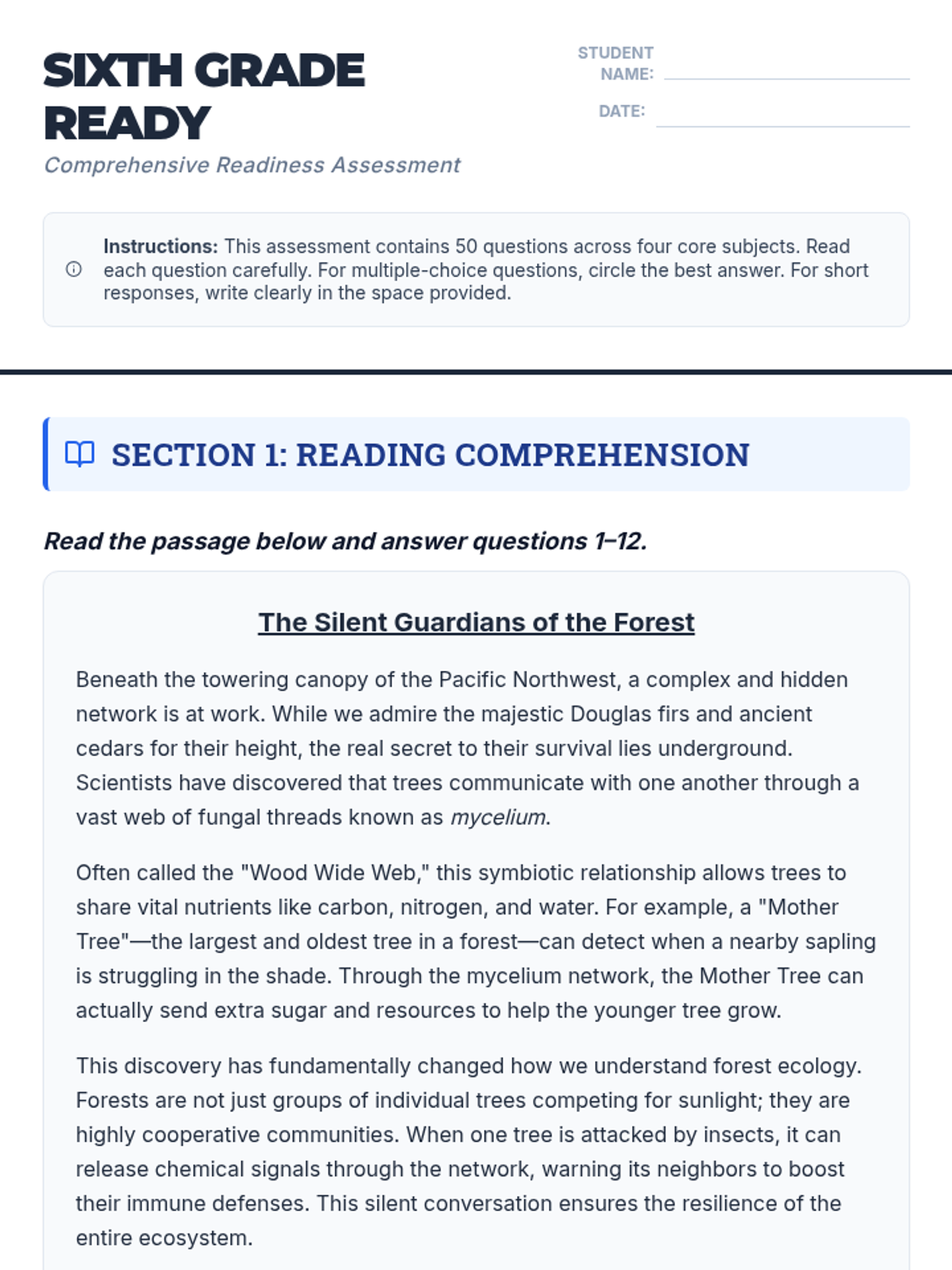
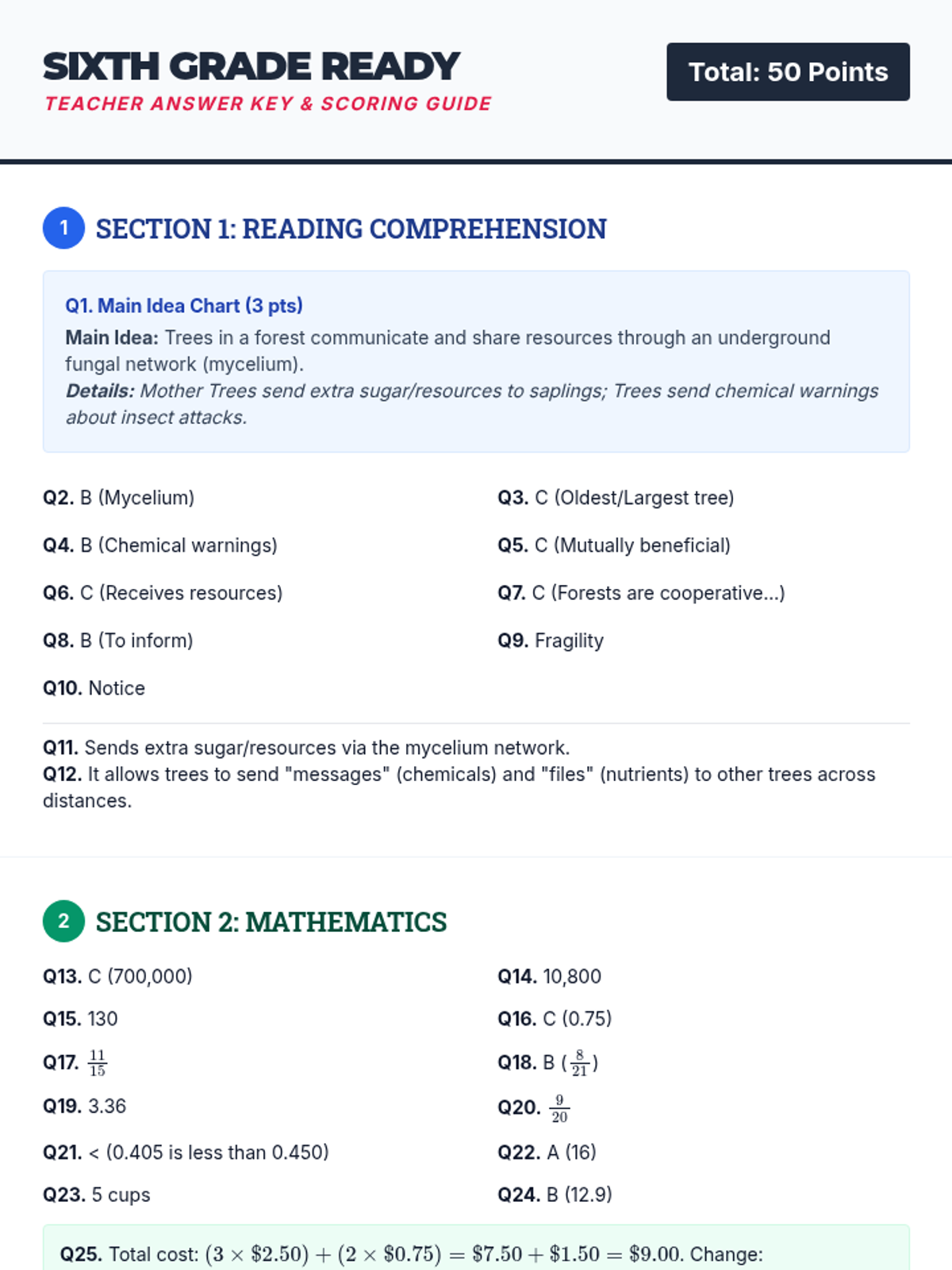
A comprehensive 50-question assessment designed to evaluate student readiness for 6th grade across Reading, Math, Science, and Writing. includes multiple question formats and a detailed answer key.
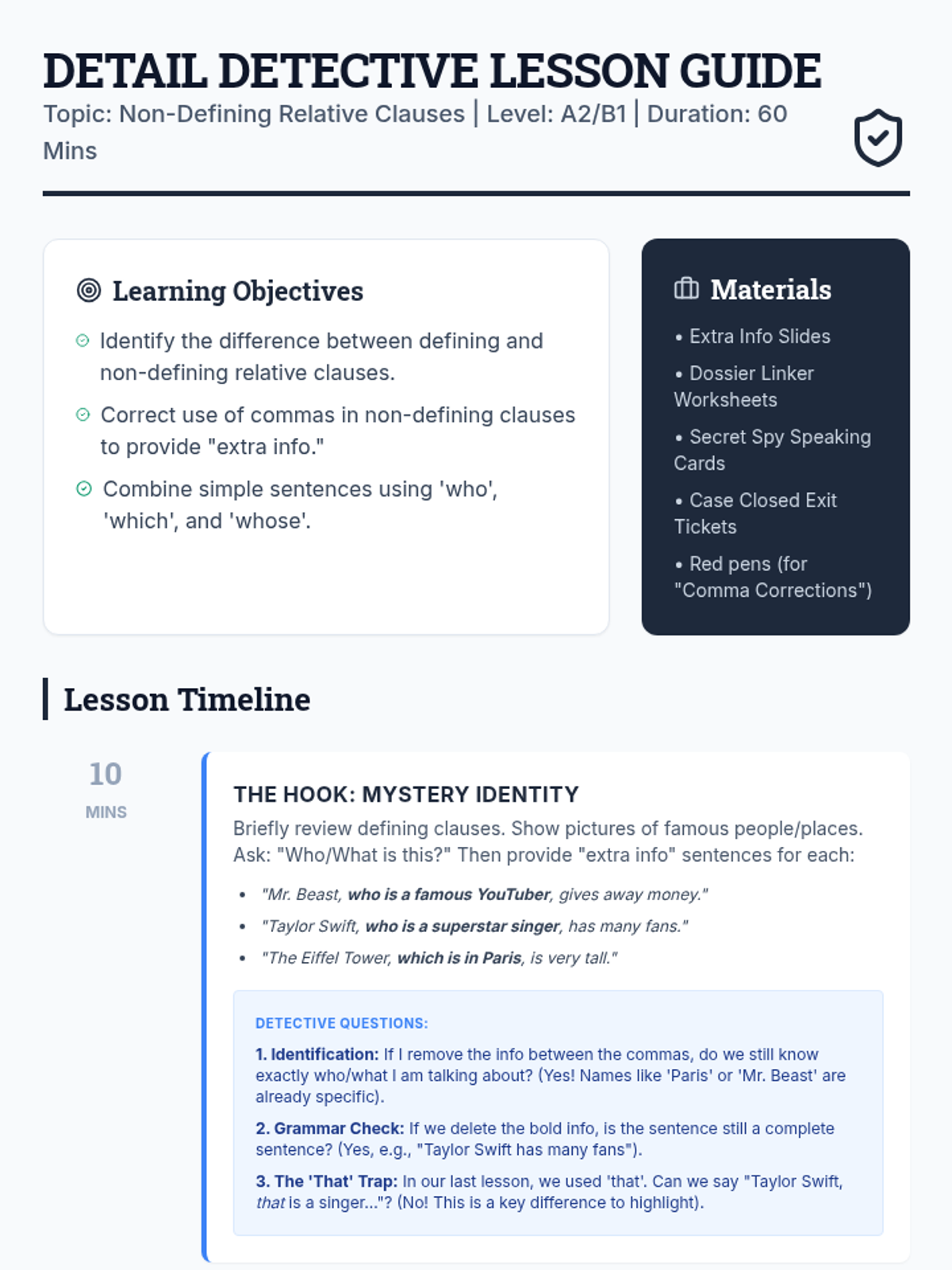
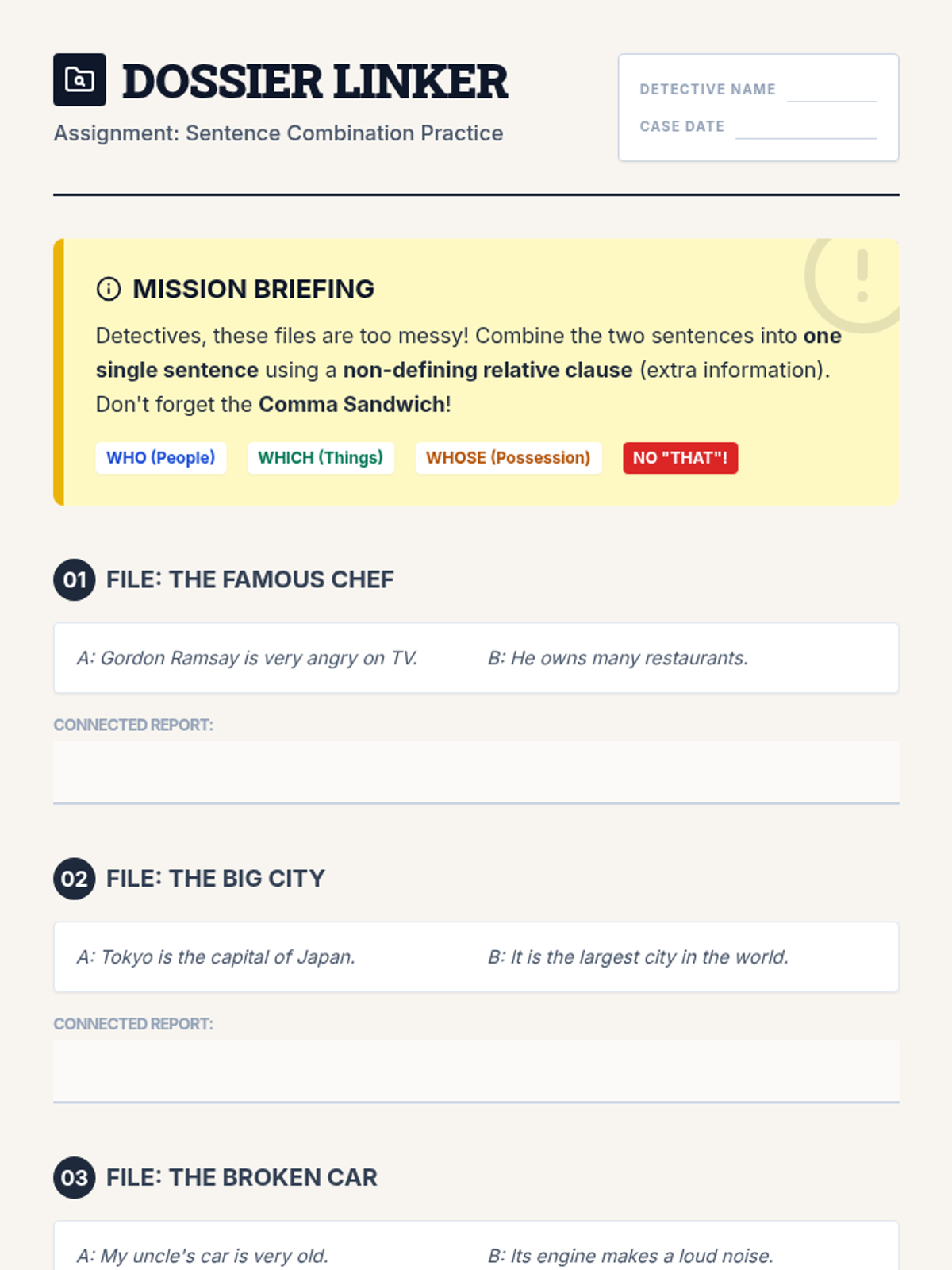
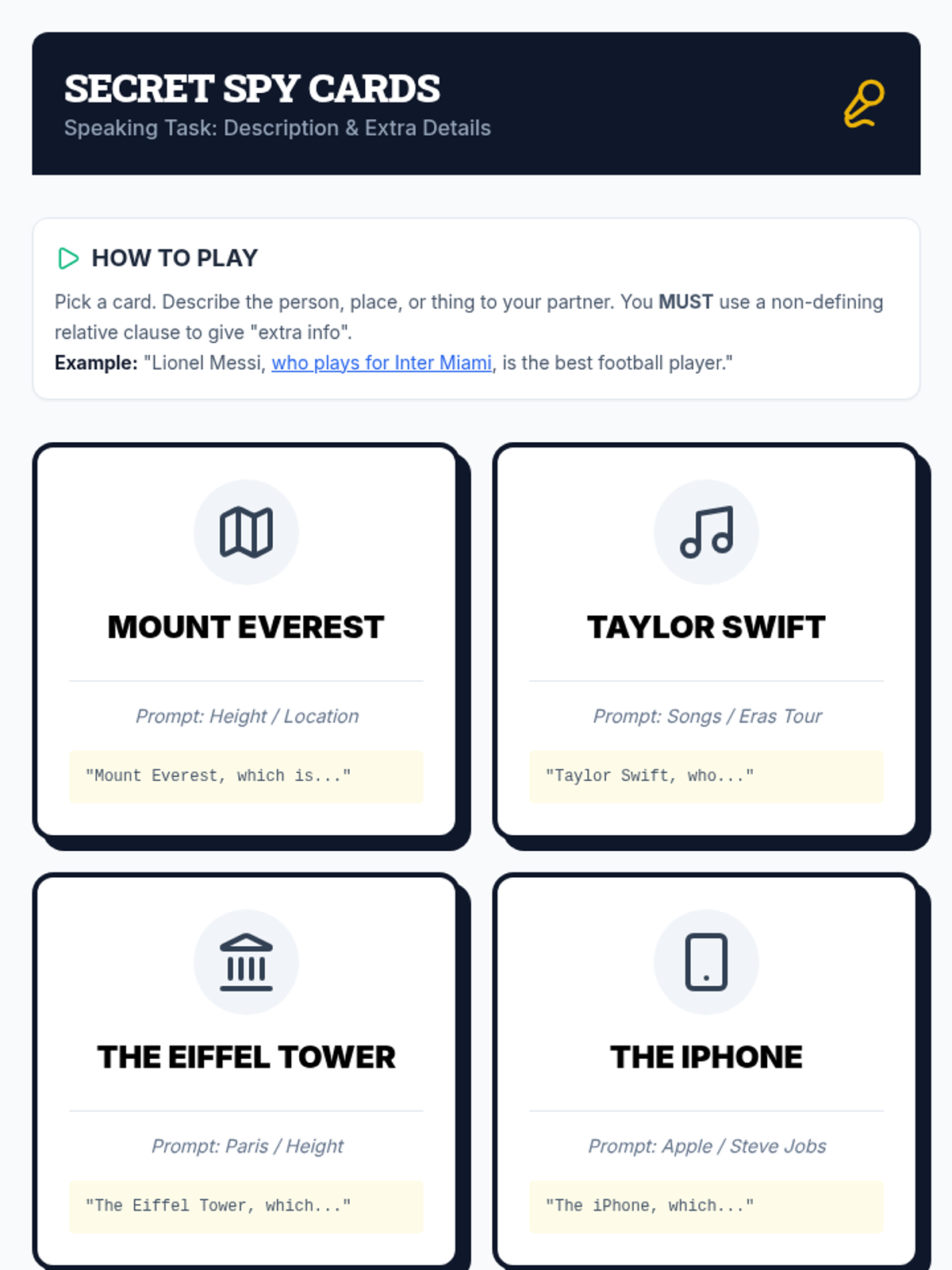
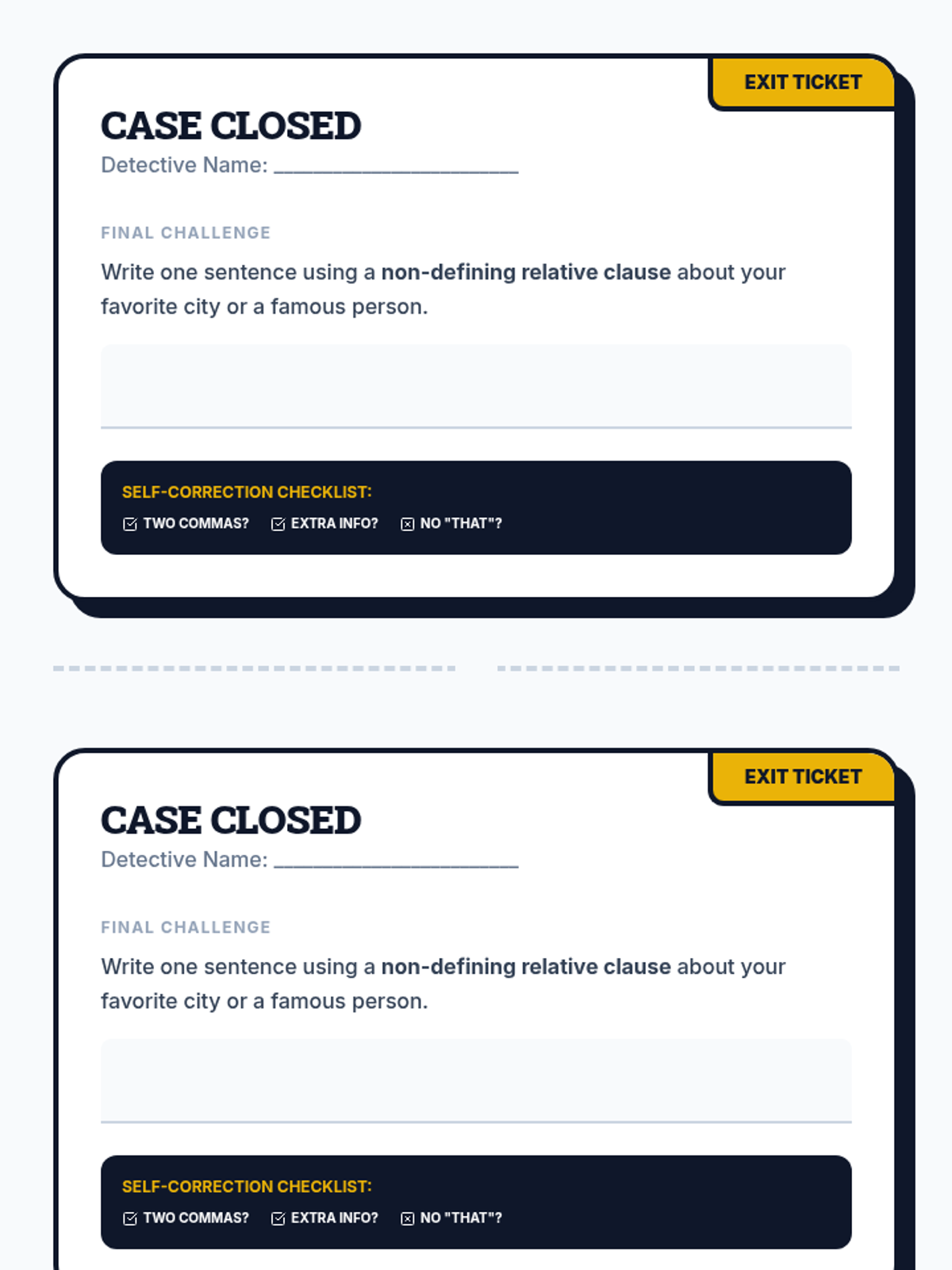
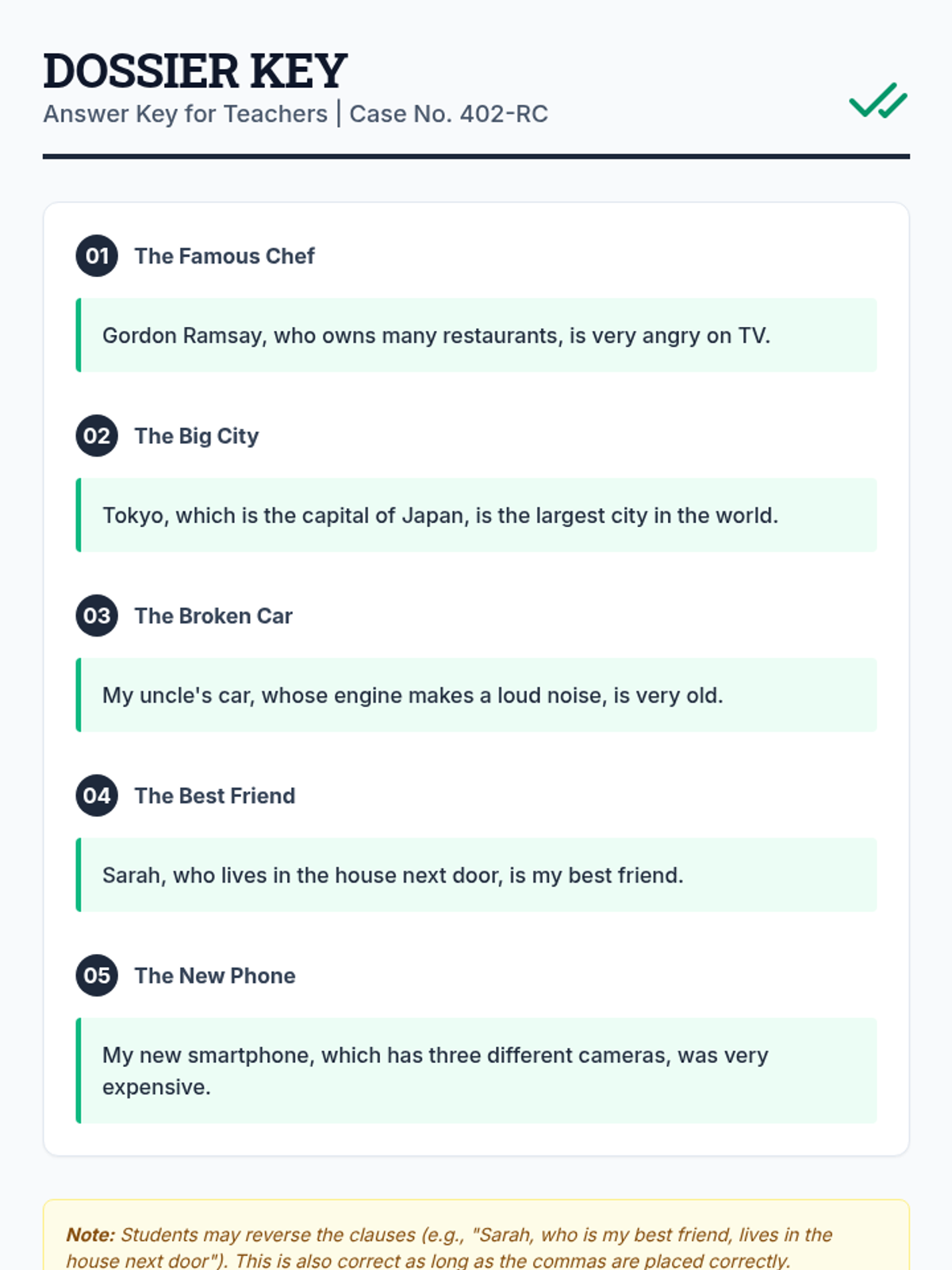
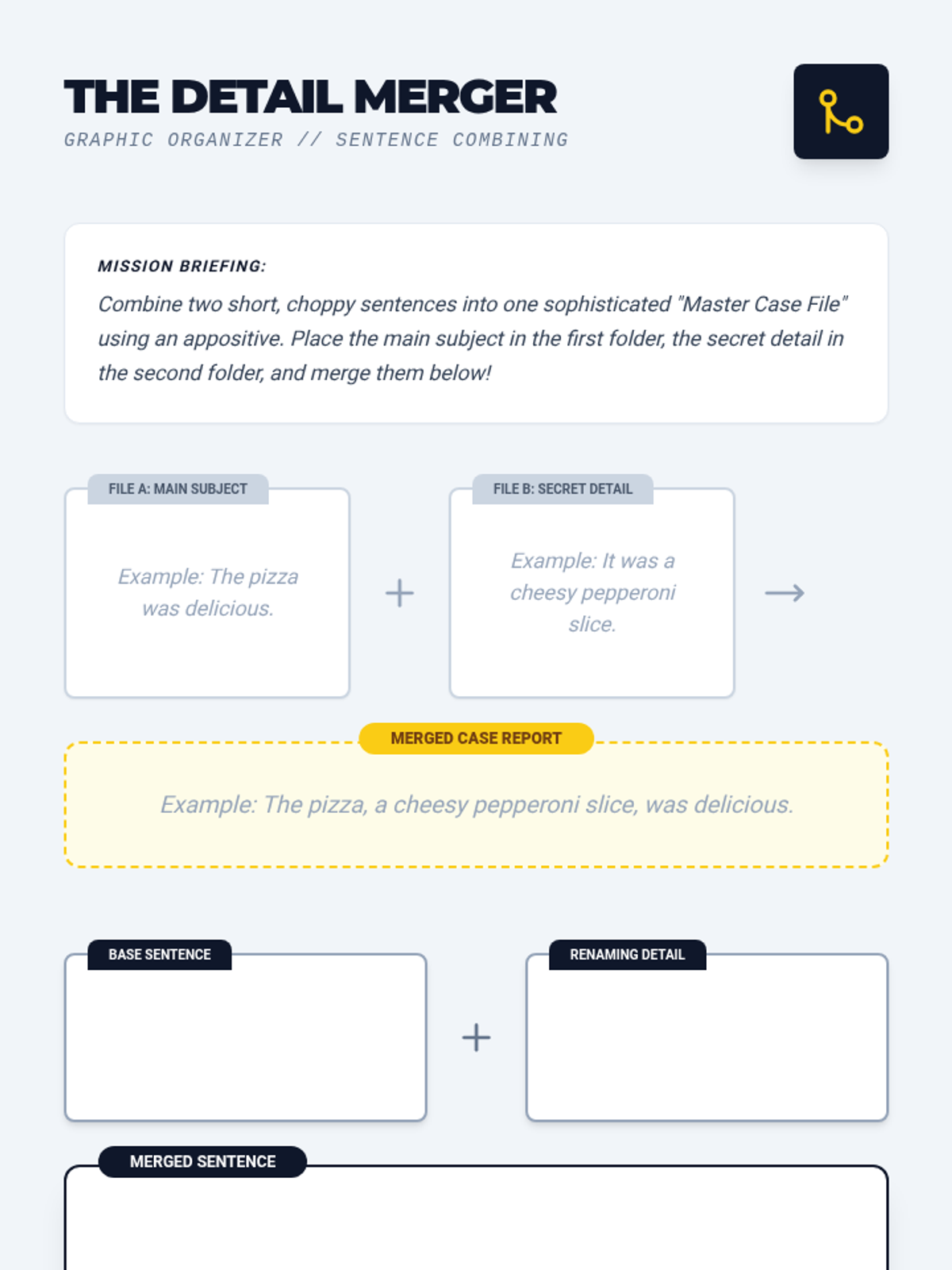
A 60-minute ESL lesson for A2 students focused on non-defining relative clauses through a 'Detail Detective' theme, featuring sentence combining, speaking cards, and comma mastery.
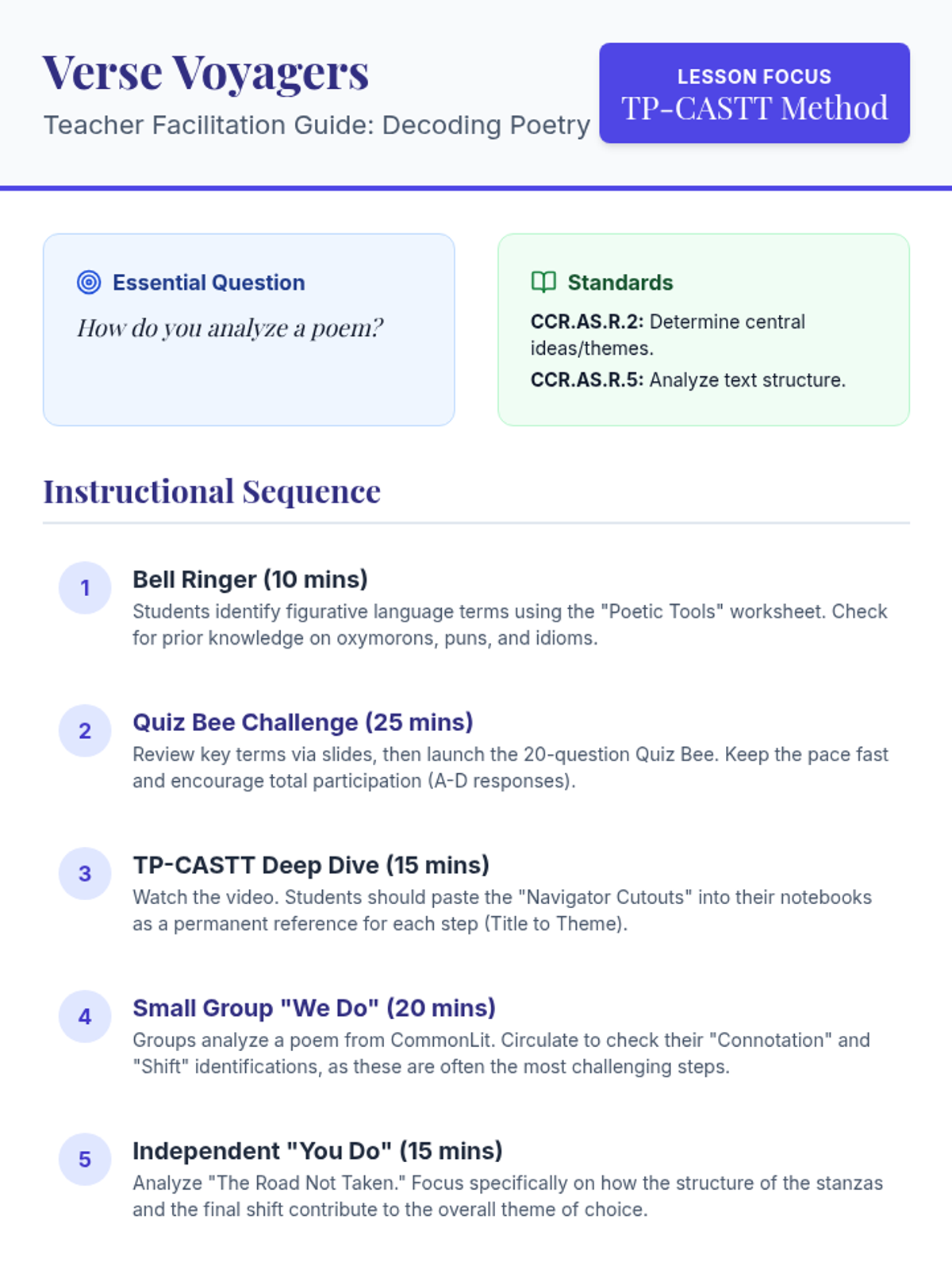
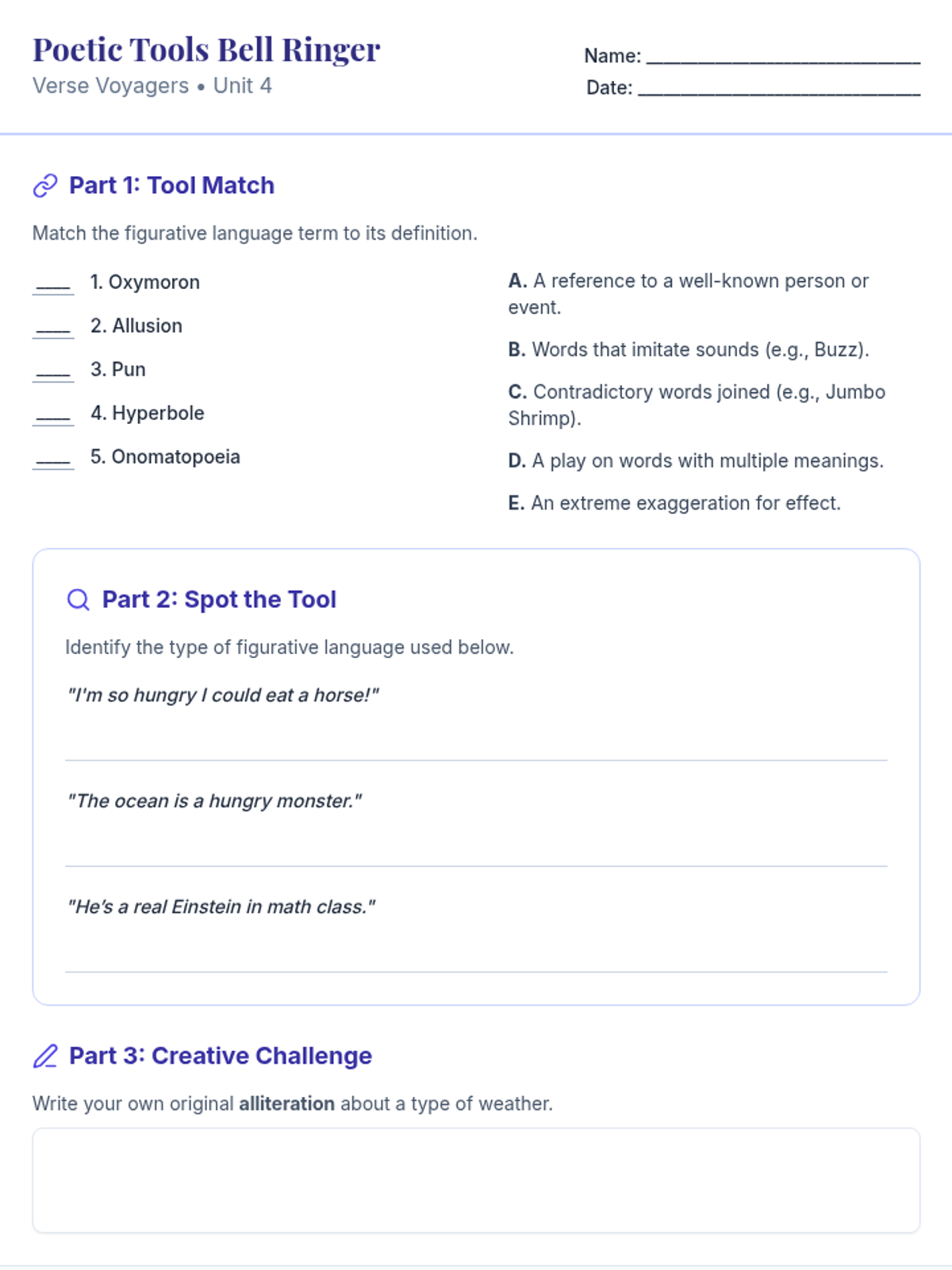
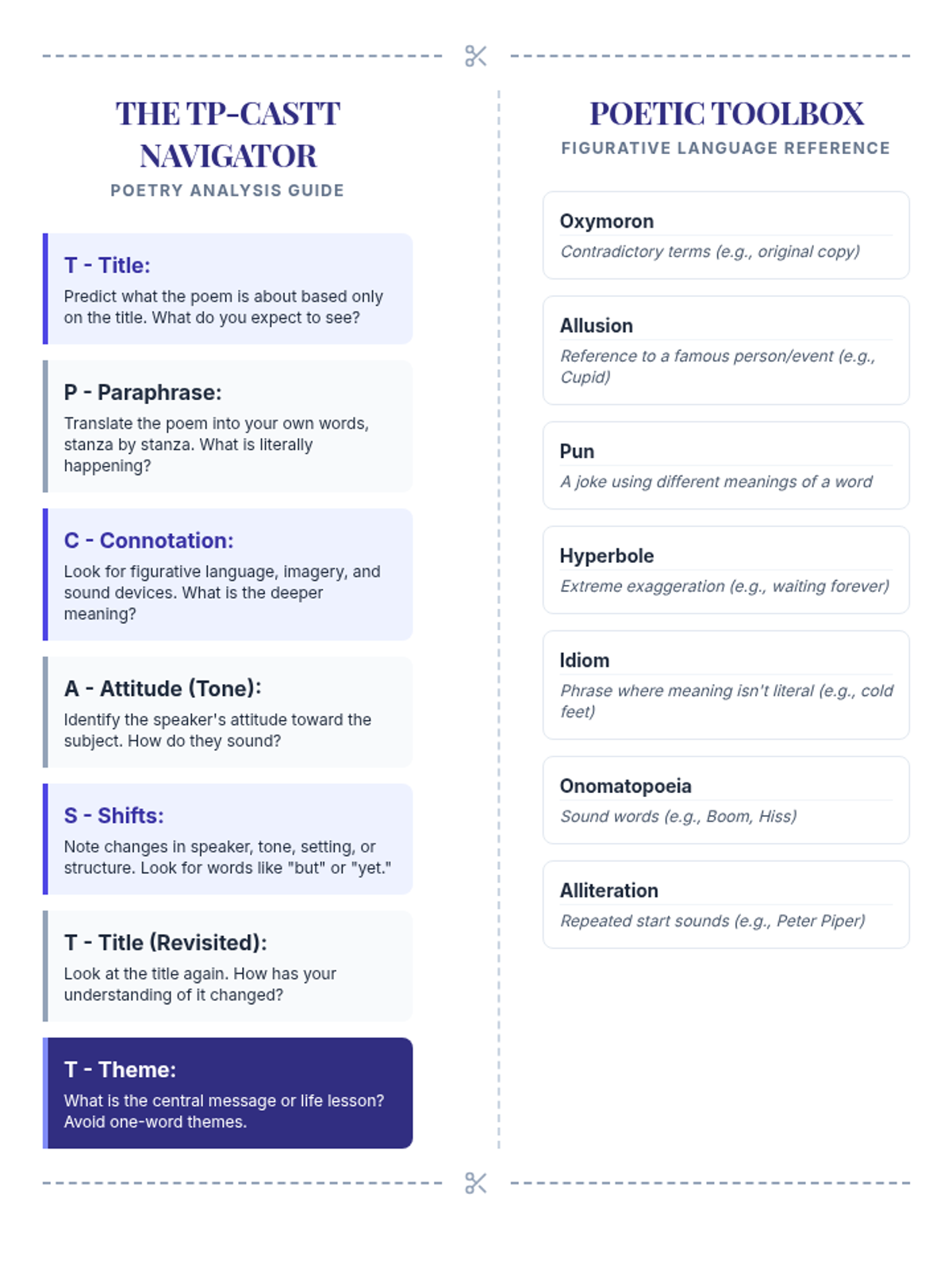
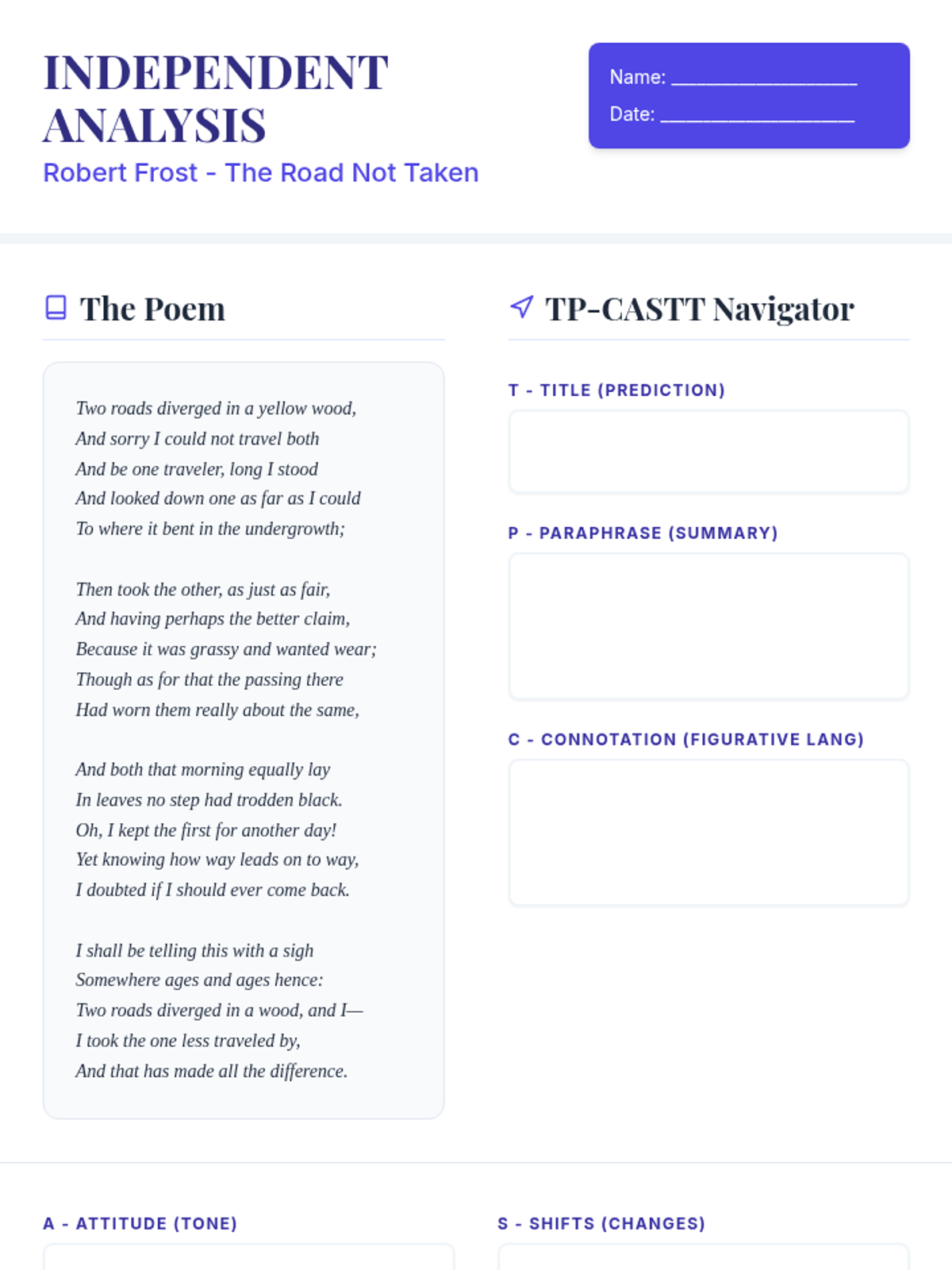
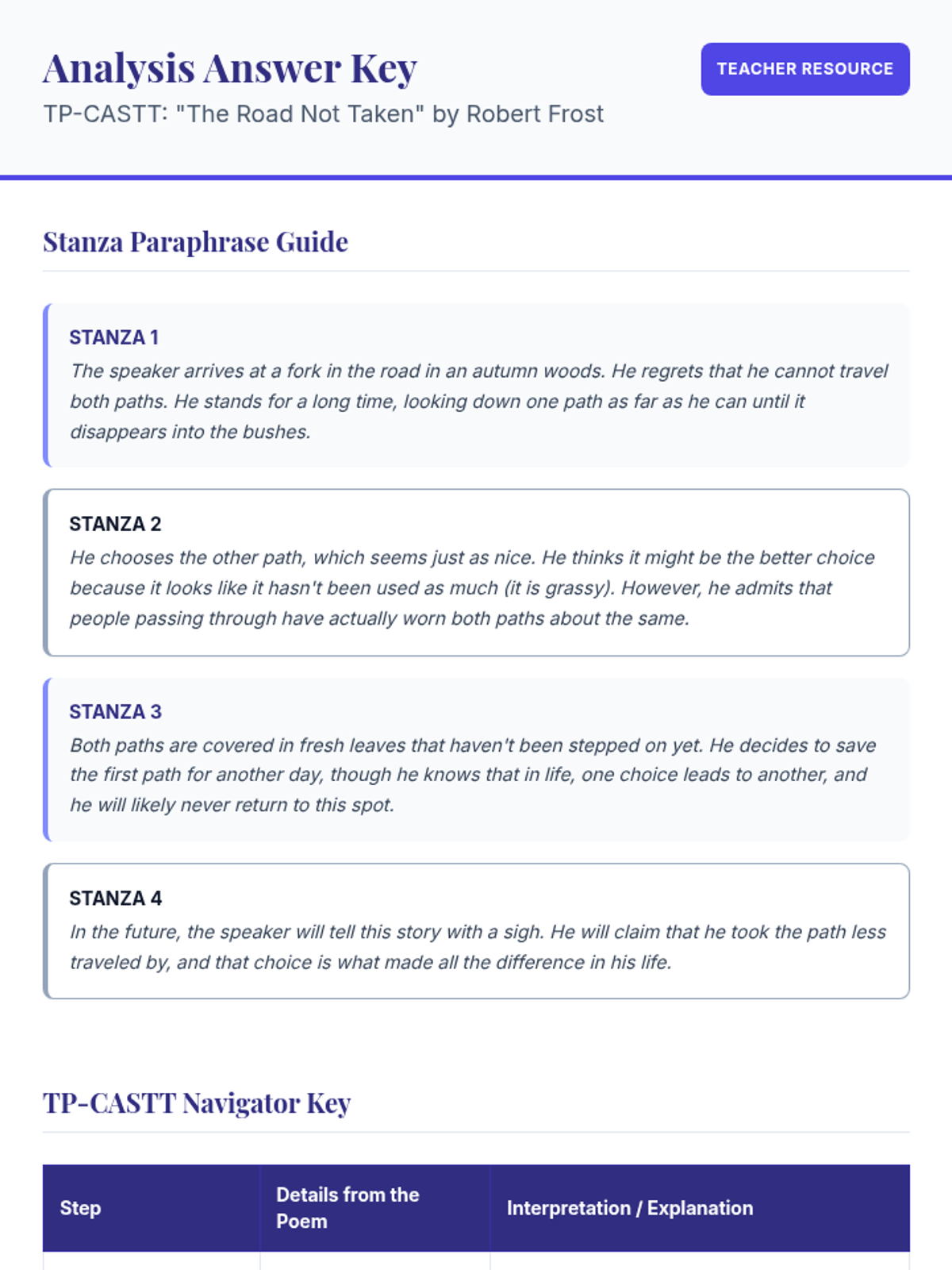
A comprehensive poetry analysis lesson focusing on the TP-CASTT method and figurative language, featuring a gamified 'Quiz Bee' and deep analysis of 'The Road Not Taken'.
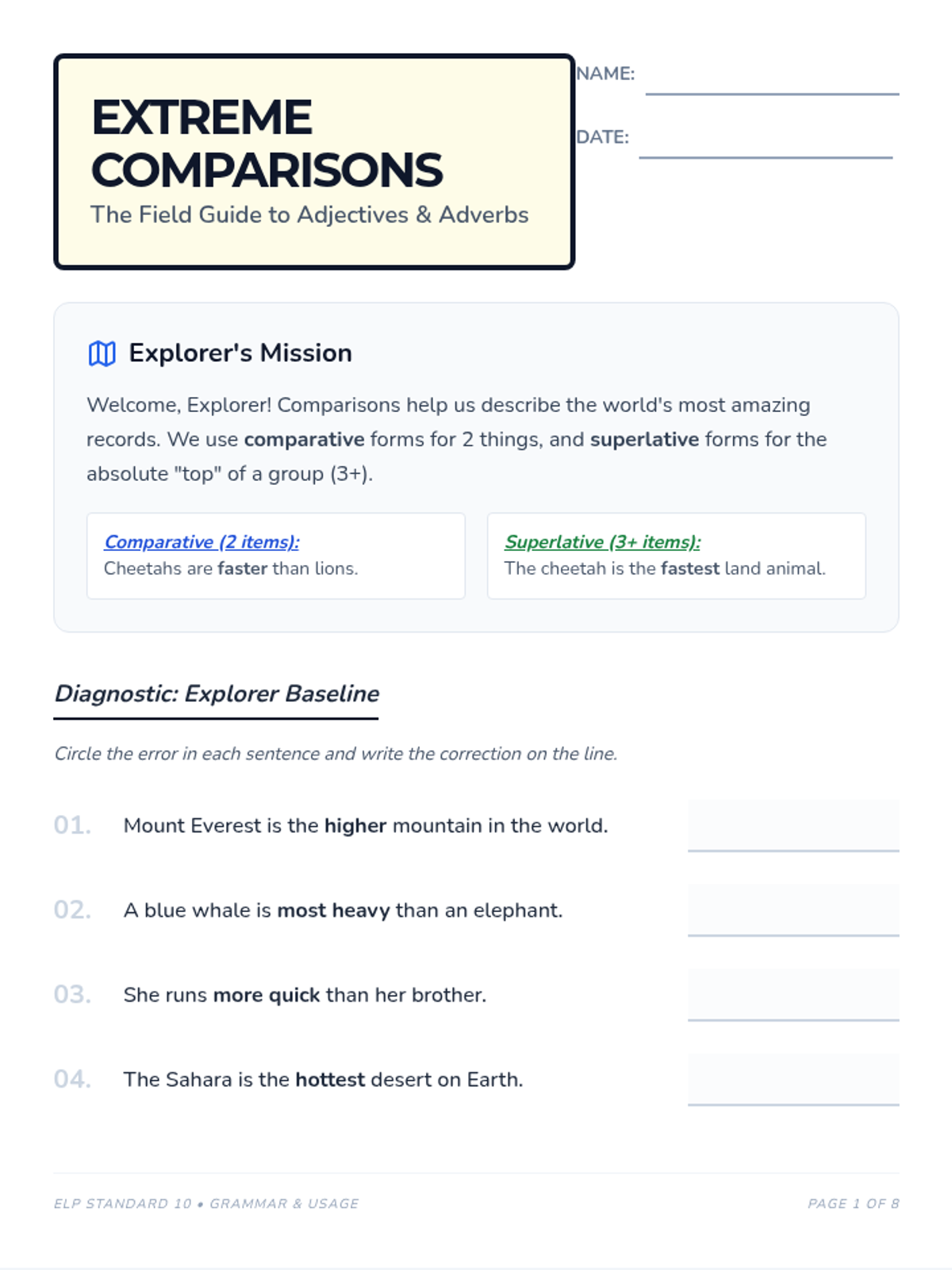
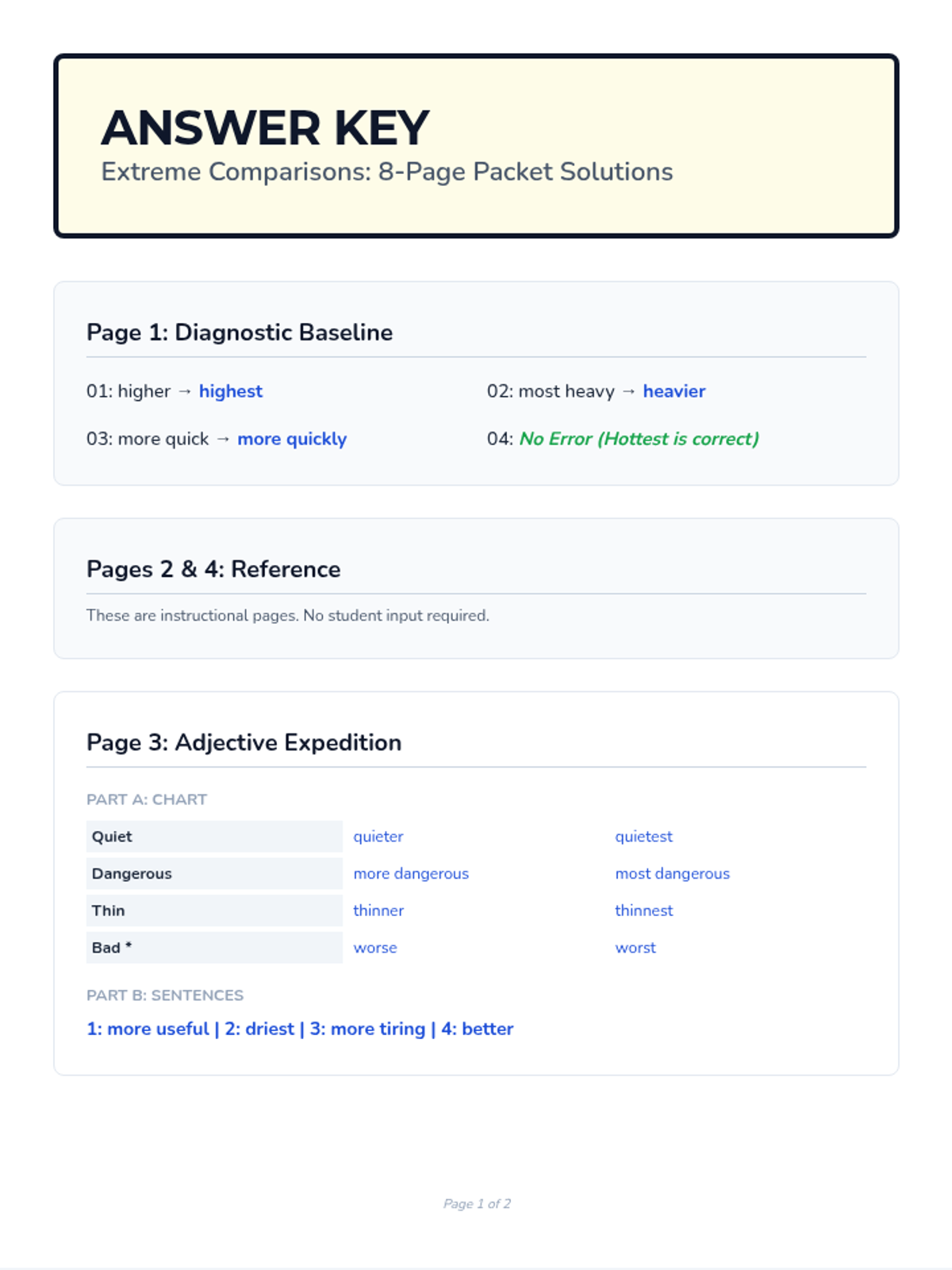
A comprehensive practice packet for Middle School ELLs (ELP Level 4) focusing on the formation and use of comparative and superlative adjectives and adverbs. Students explore the concept through the lens of world records and extreme nature.
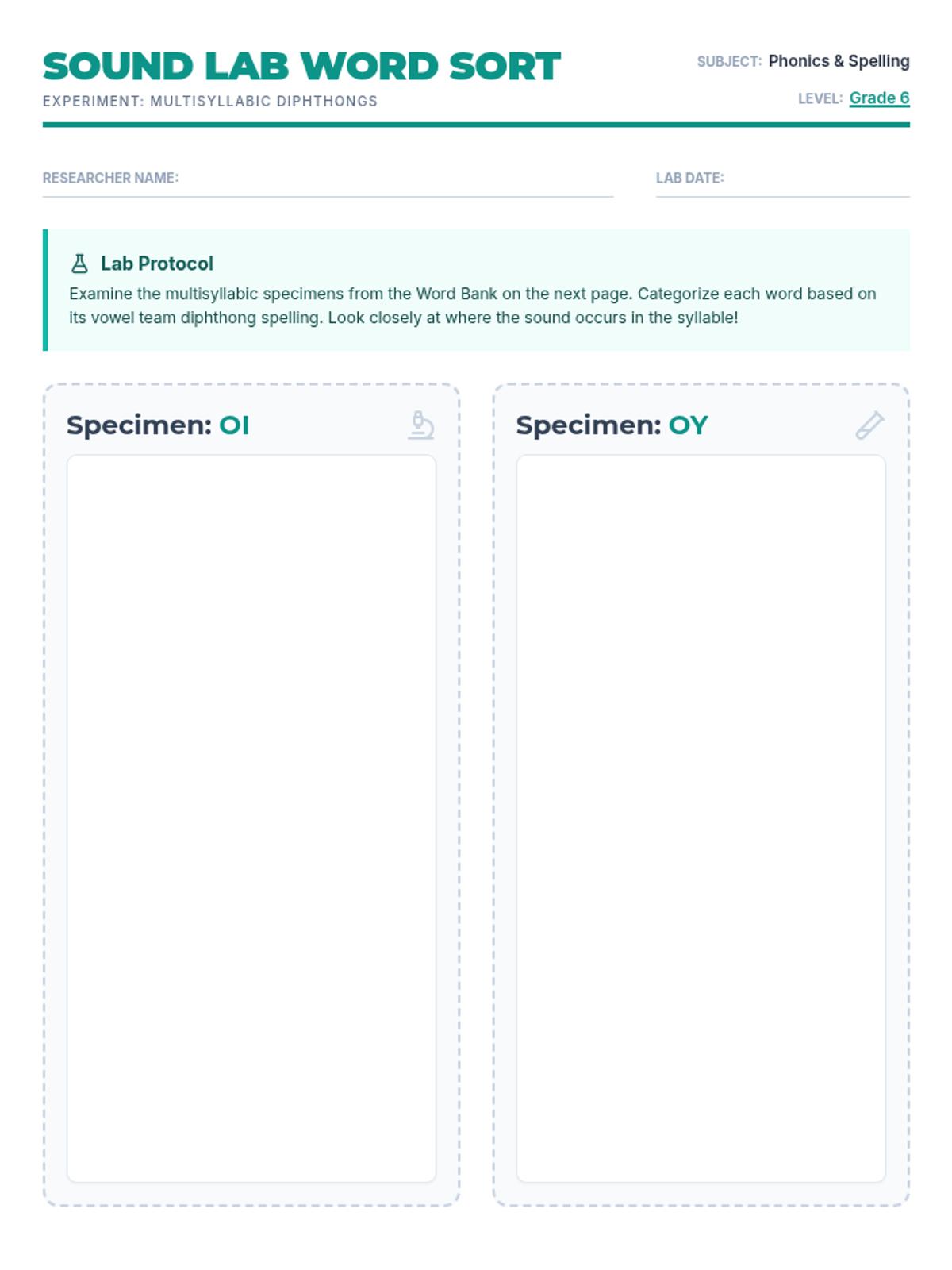
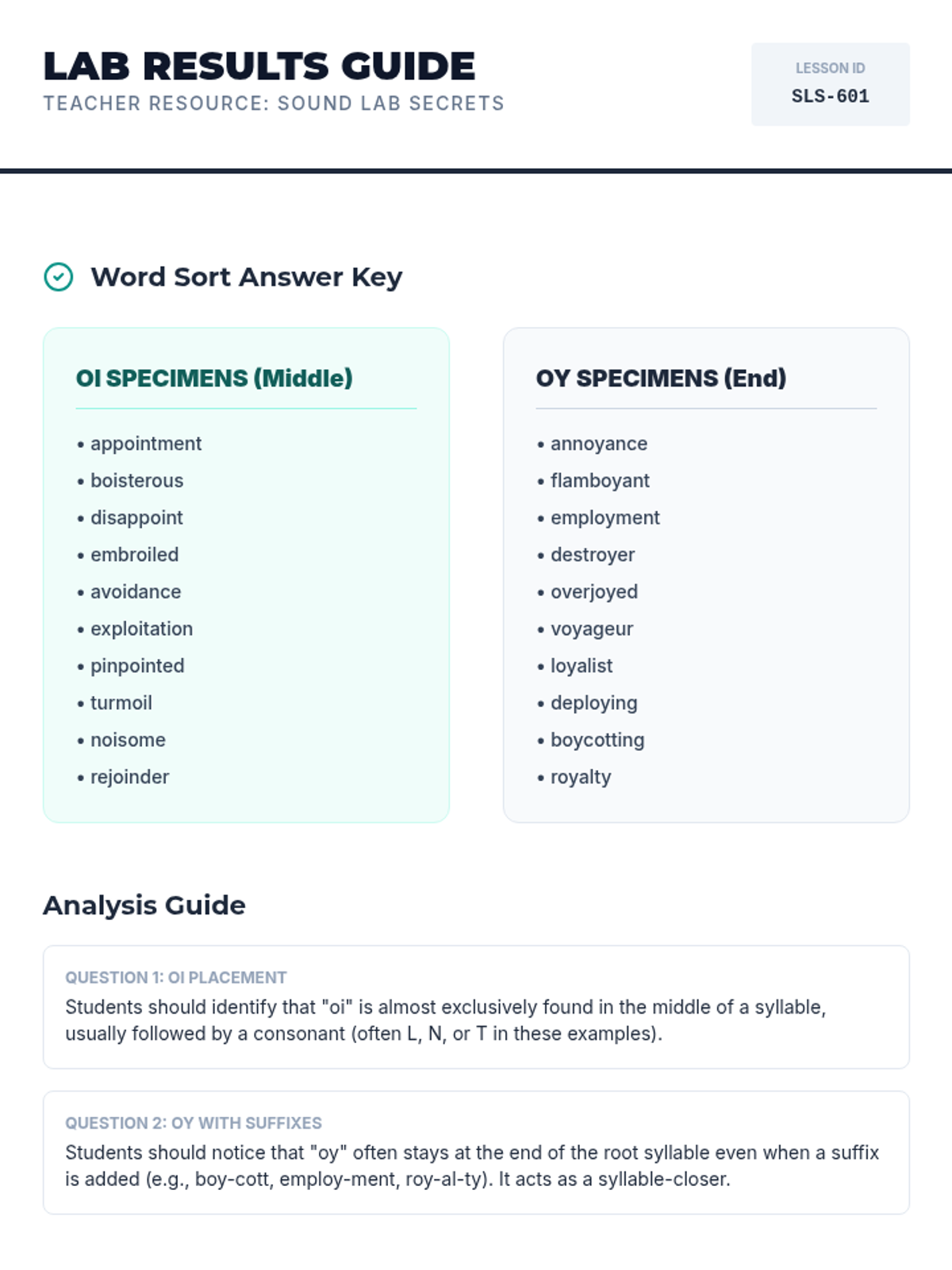
A lesson focused on mastering the 'oi' and 'oy' diphthongs in complex, multisyllabic words, featuring a systematic word sort and visual instruction.
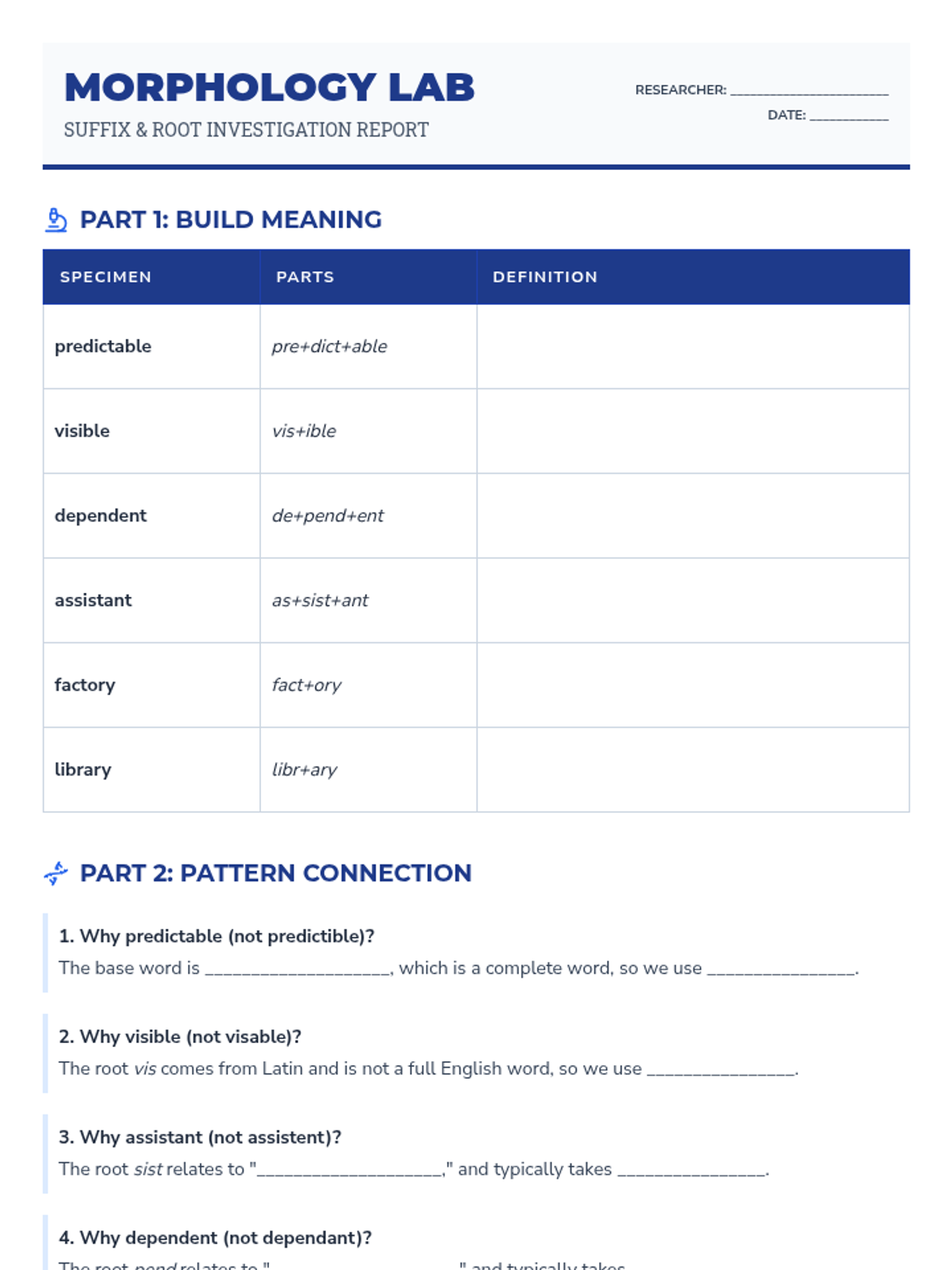
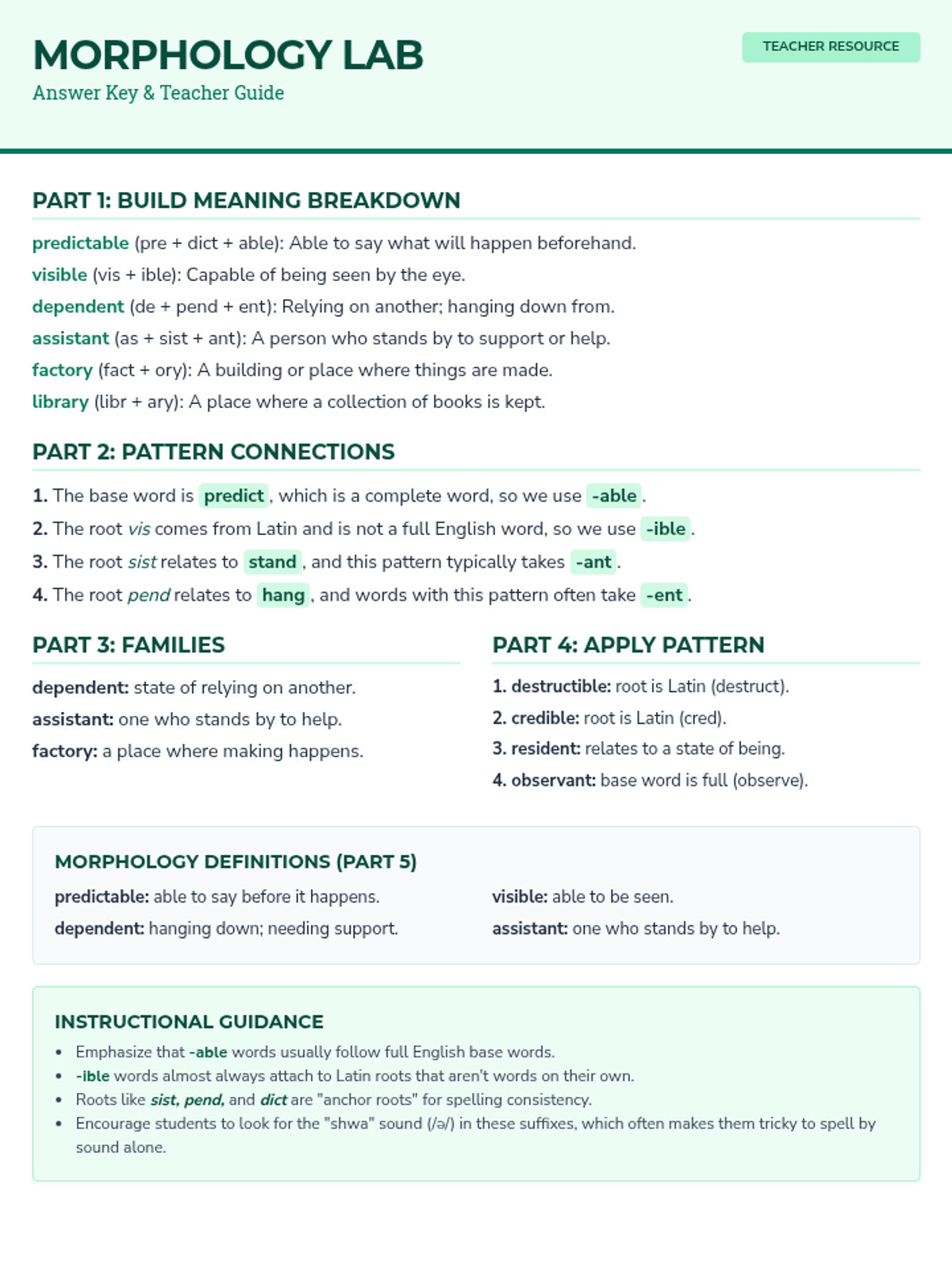
A deep dive into morphology and common word endings (-able, -ible, -ary, -ery, -ory, -ant, -ent), focusing on how Latin roots and base words determine spelling patterns.
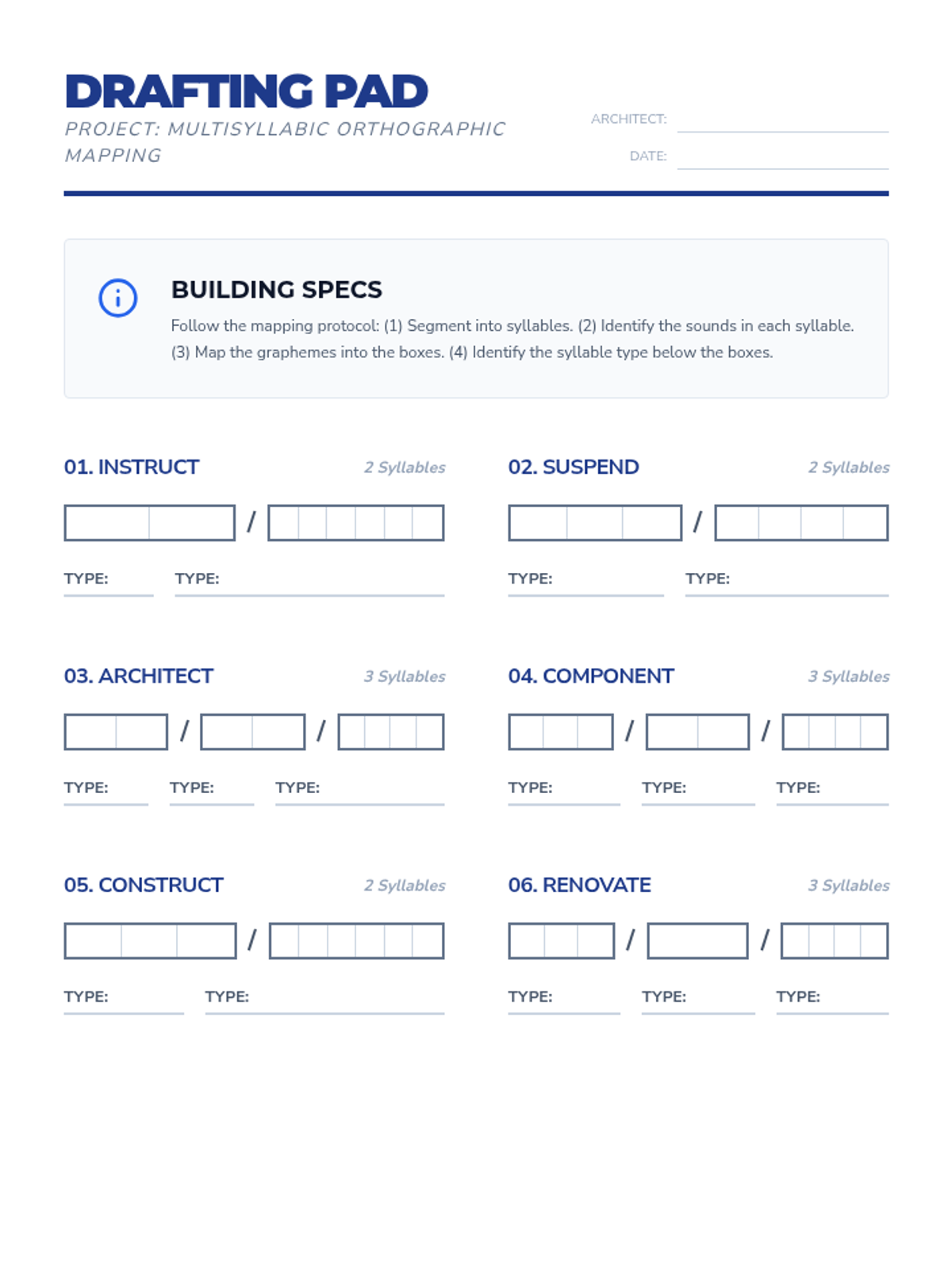
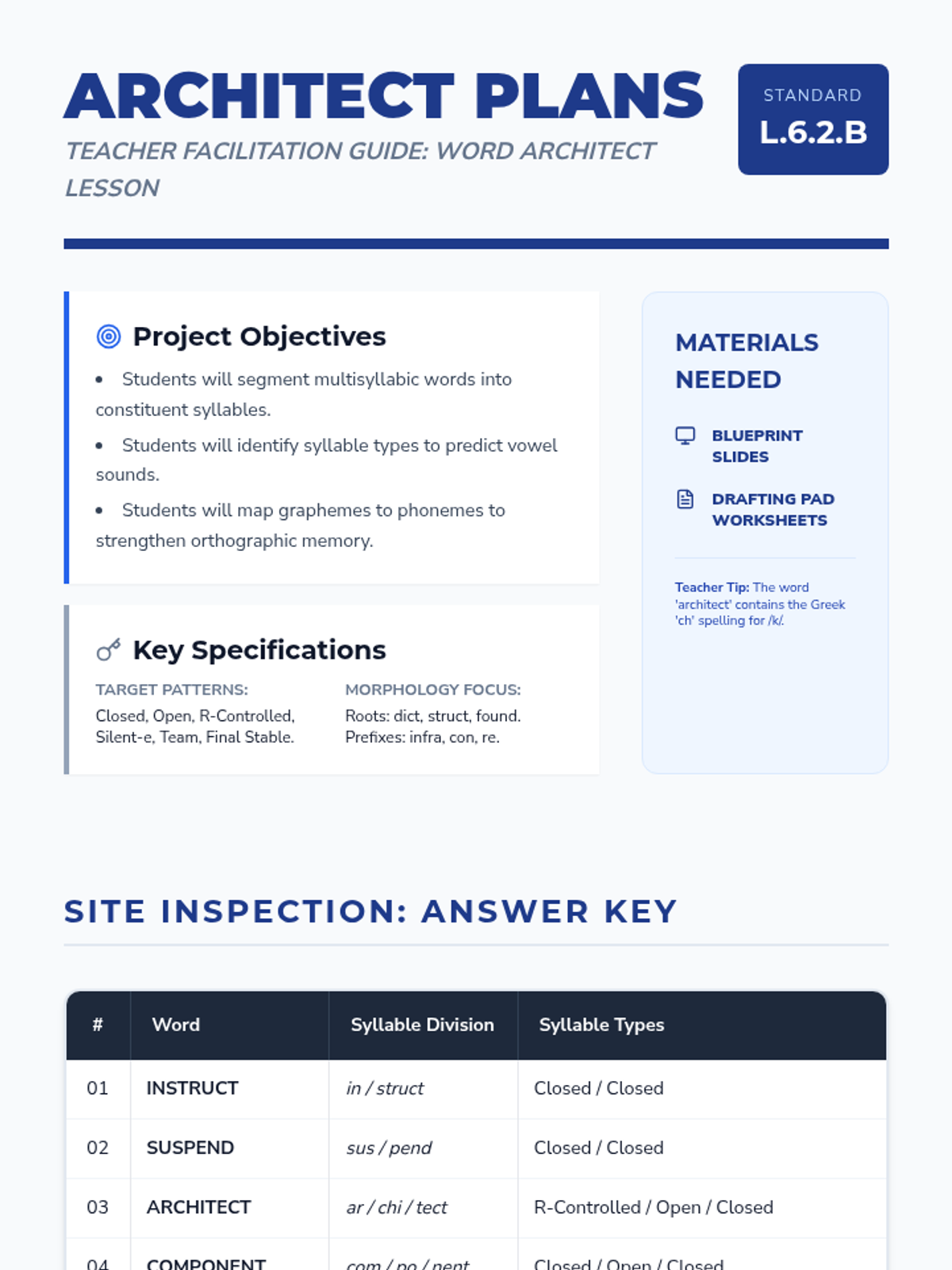
A middle school spelling lesson focusing on orthographic mapping for multisyllabic words using an architectural blueprint theme. Students learn to break down complex words into syllables and map sounds to graphemes for permanent storage.
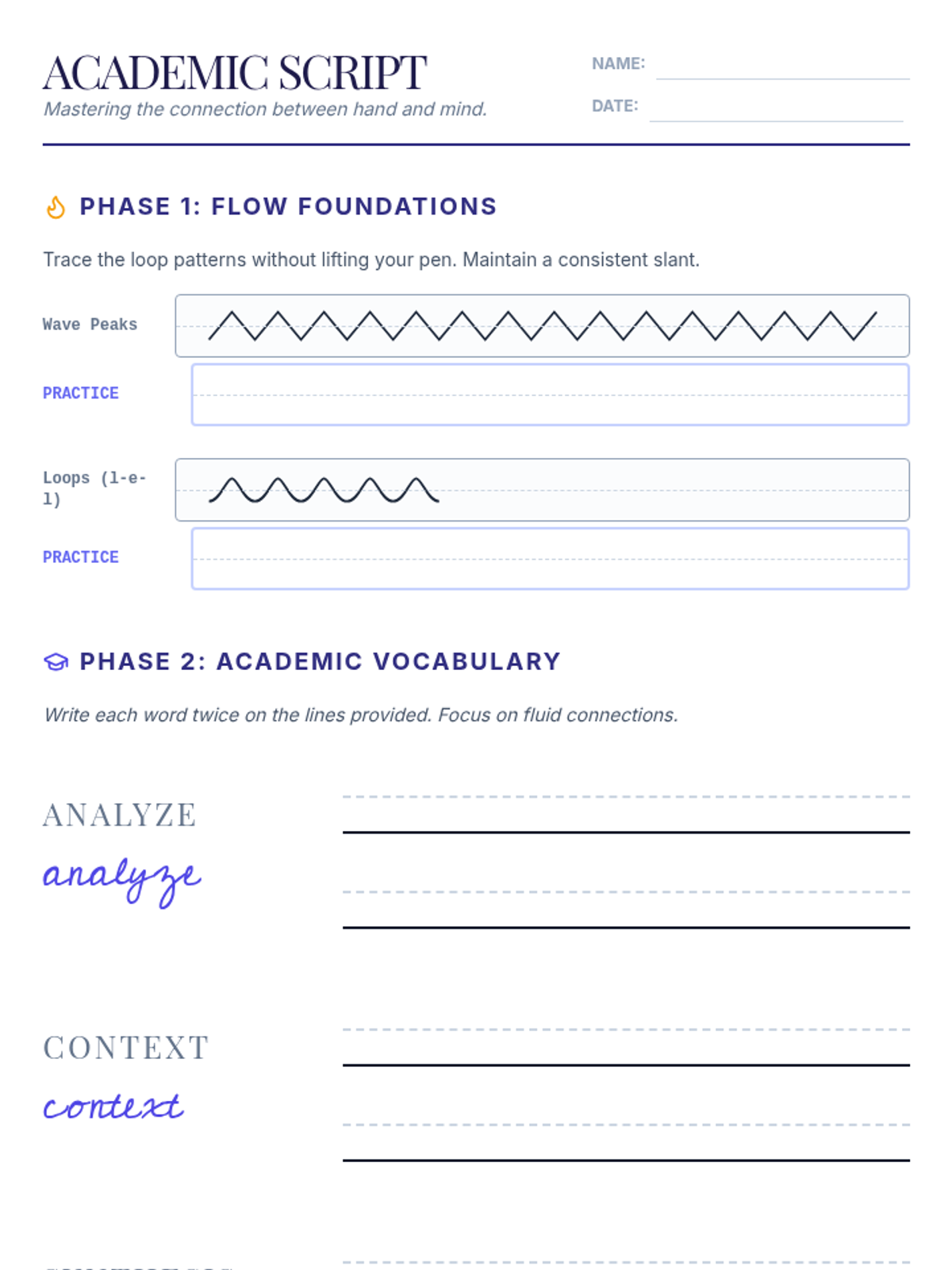
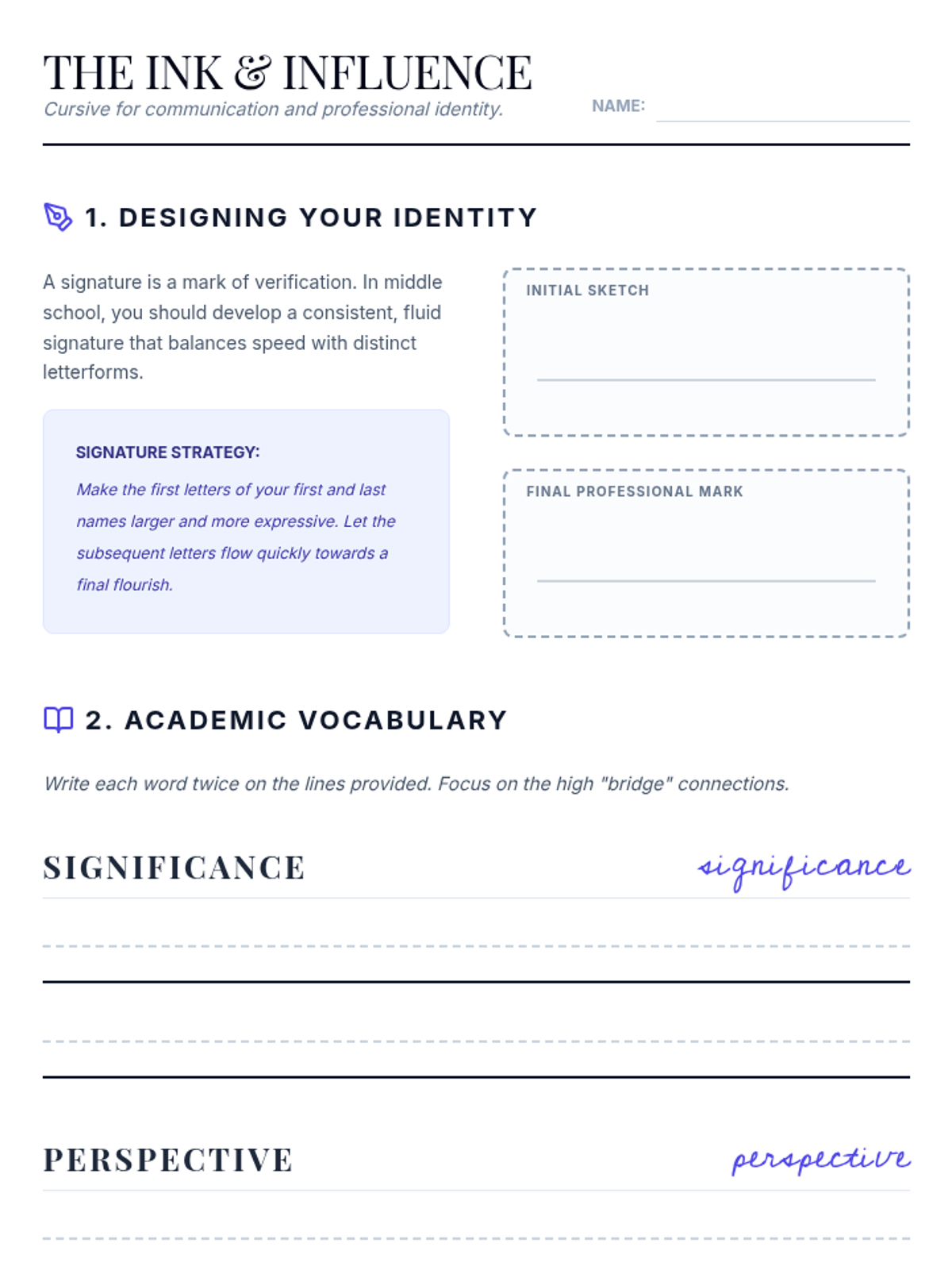
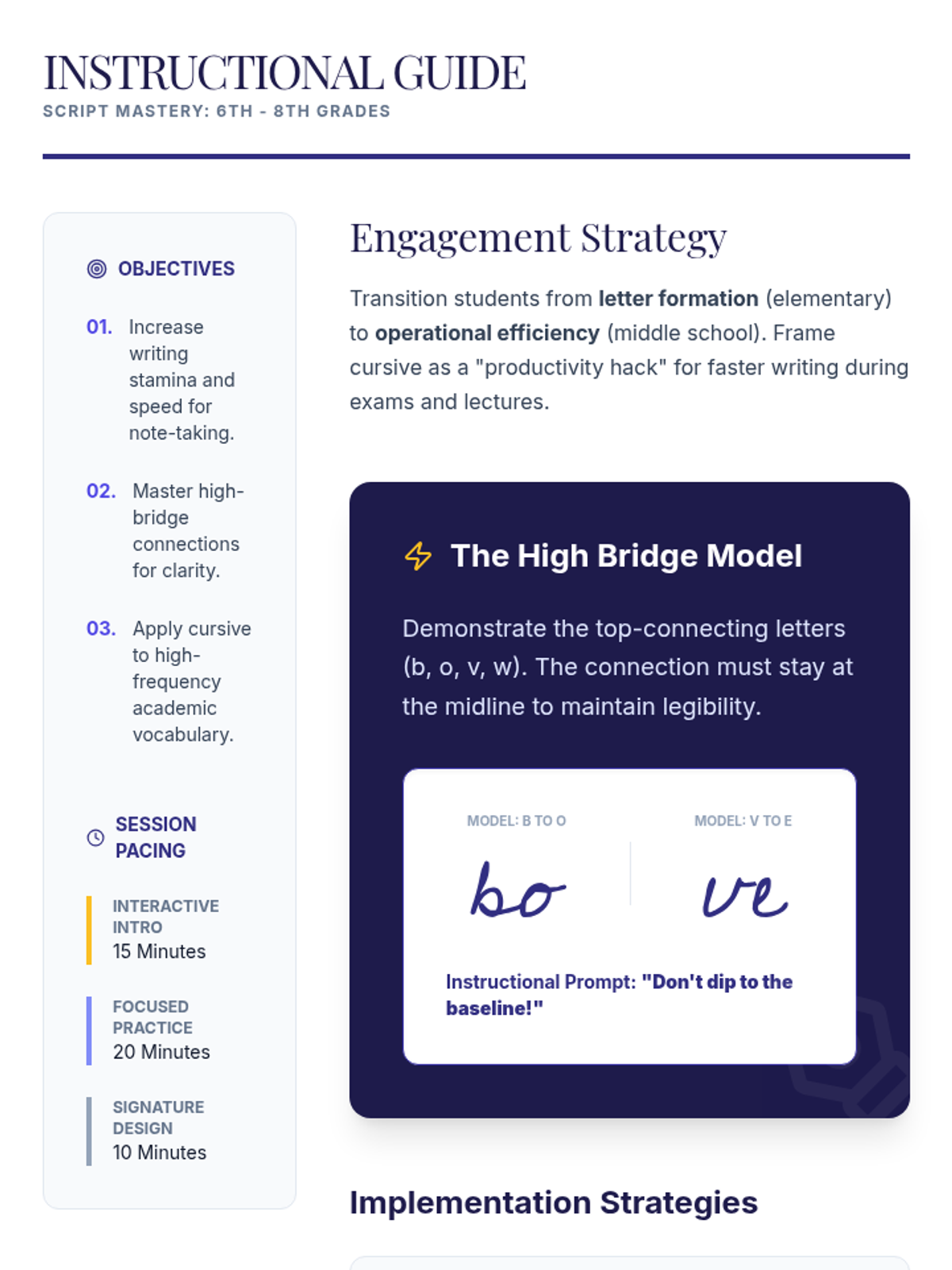
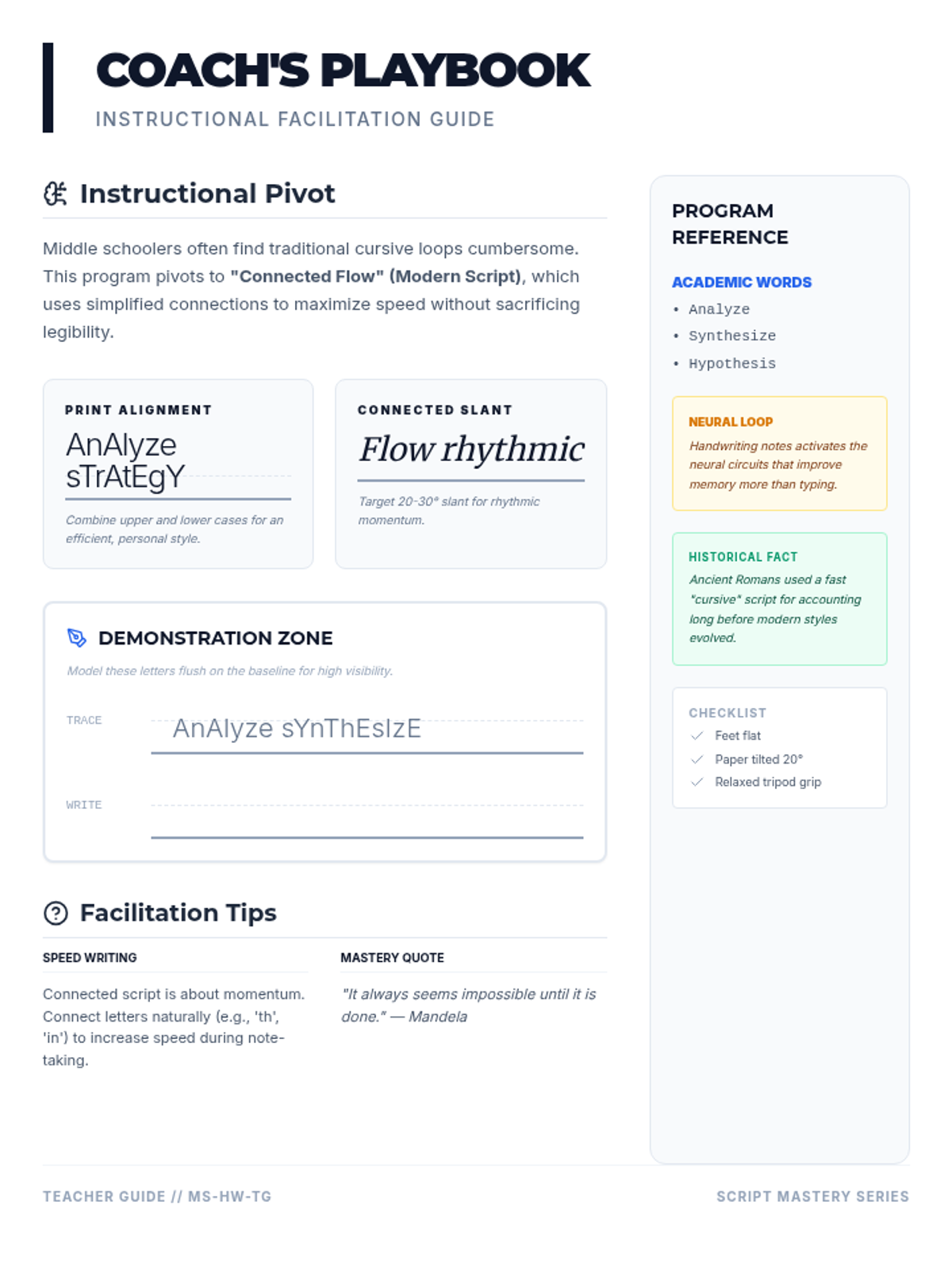
A modern take on cursive handwriting for middle school students, focusing on academic vocabulary, signature development, and the efficiency of script for note-taking. This lesson moves beyond elementary tracing to focus on fluid connections and professional presentation.
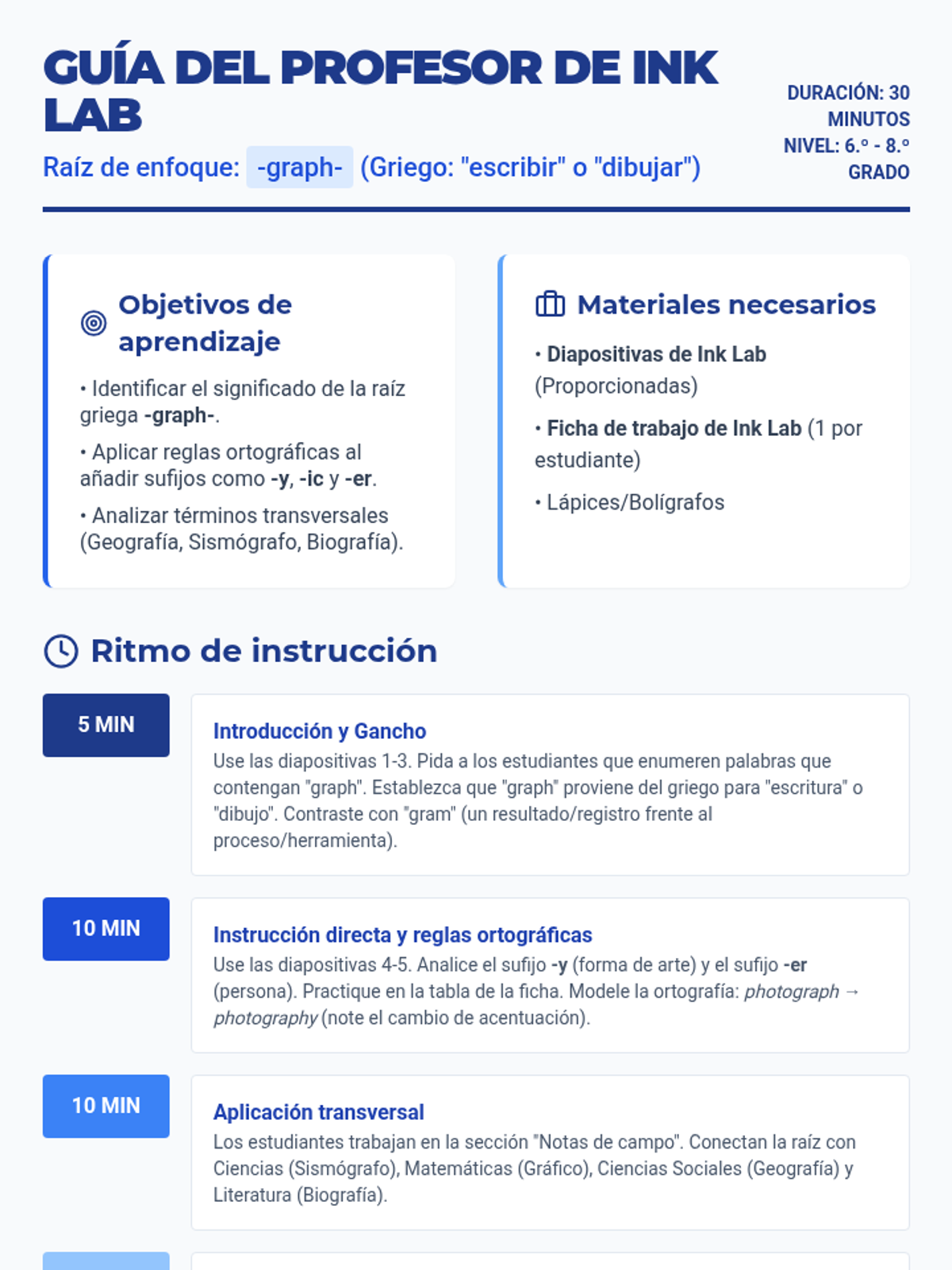
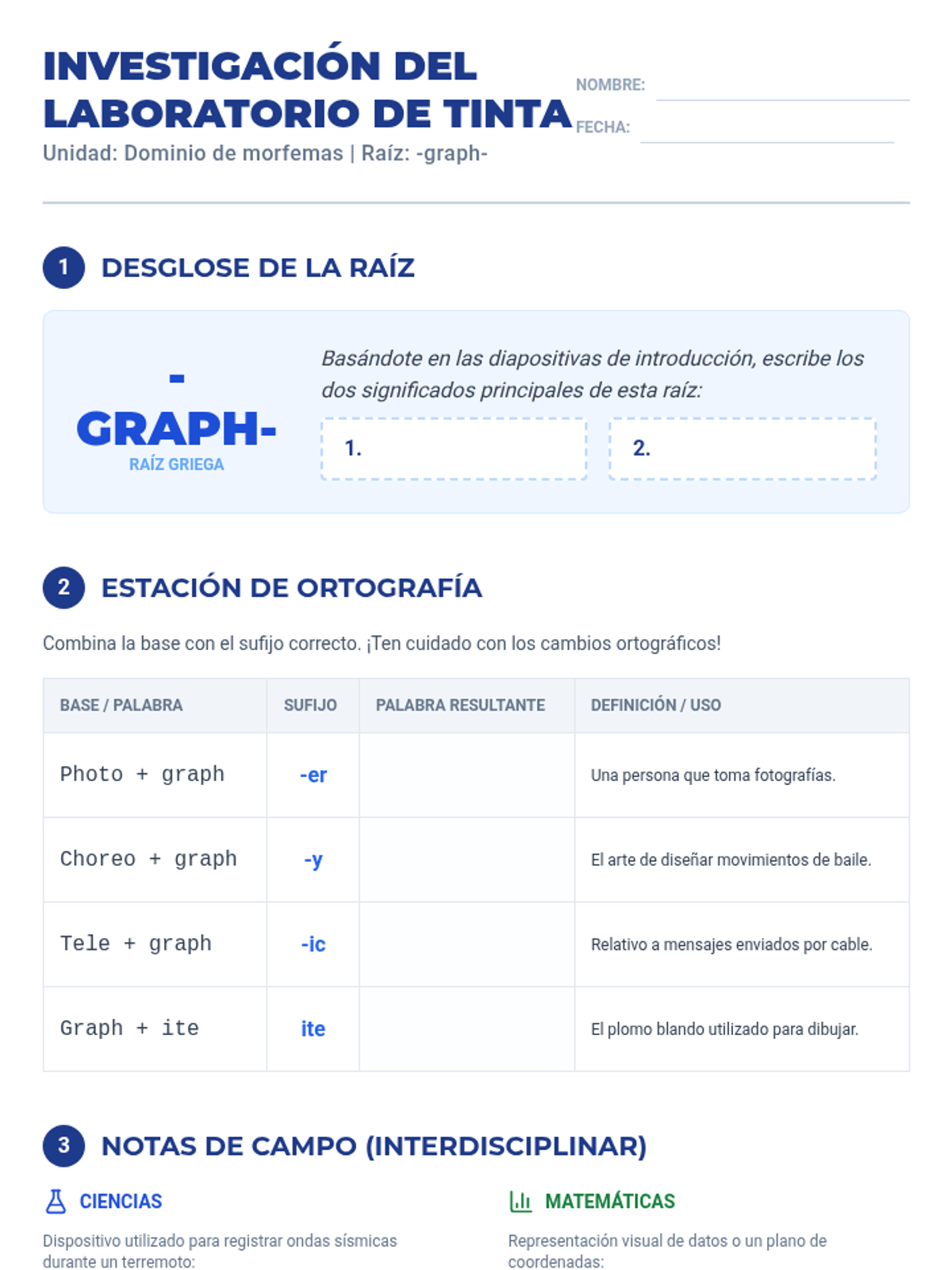
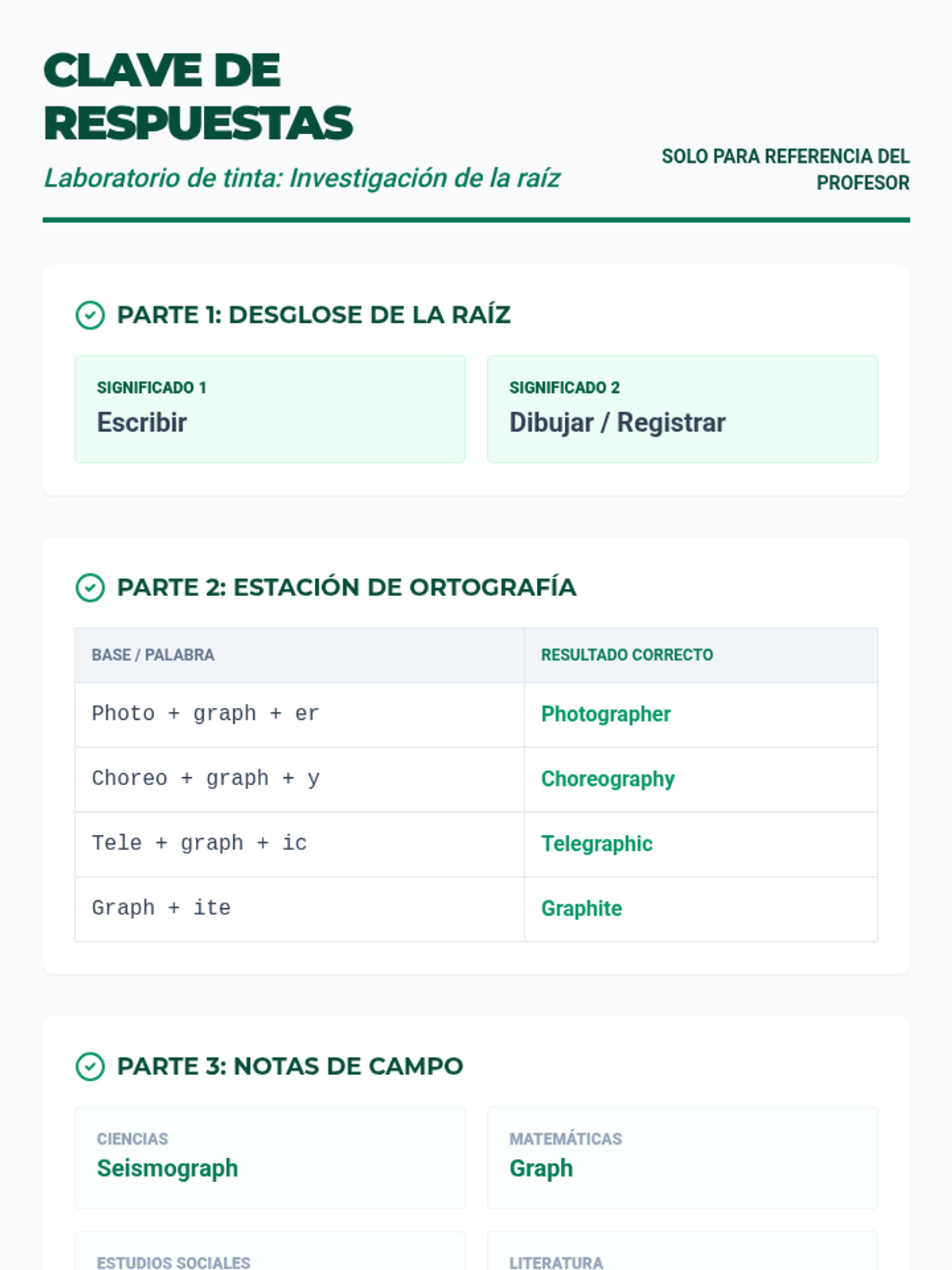
A fast-paced 30-minute lesson focusing on the Greek root 'graph' (to write/draw), covering spelling rules for suffixes and cross-curricular application in science, math, and history.
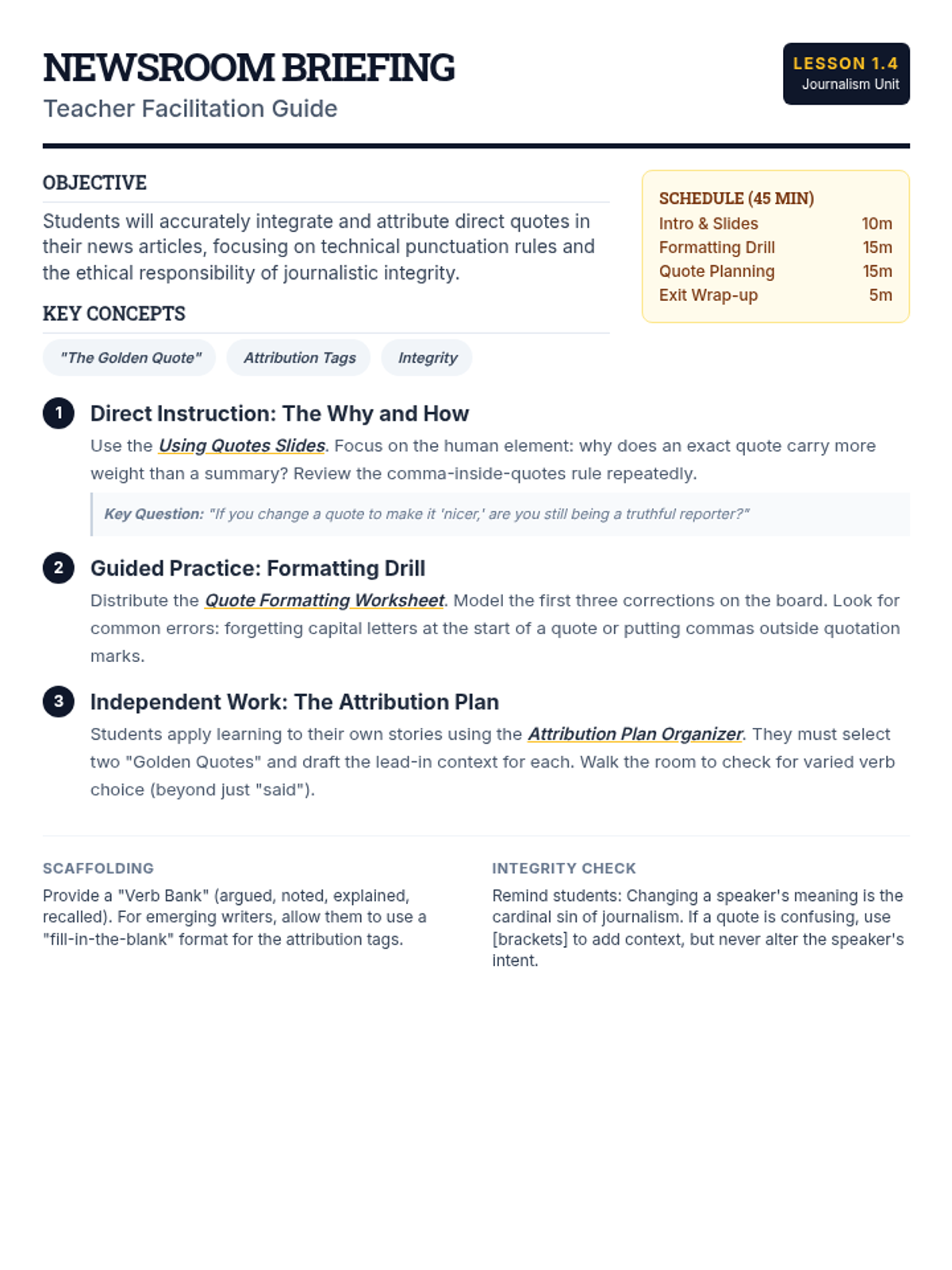
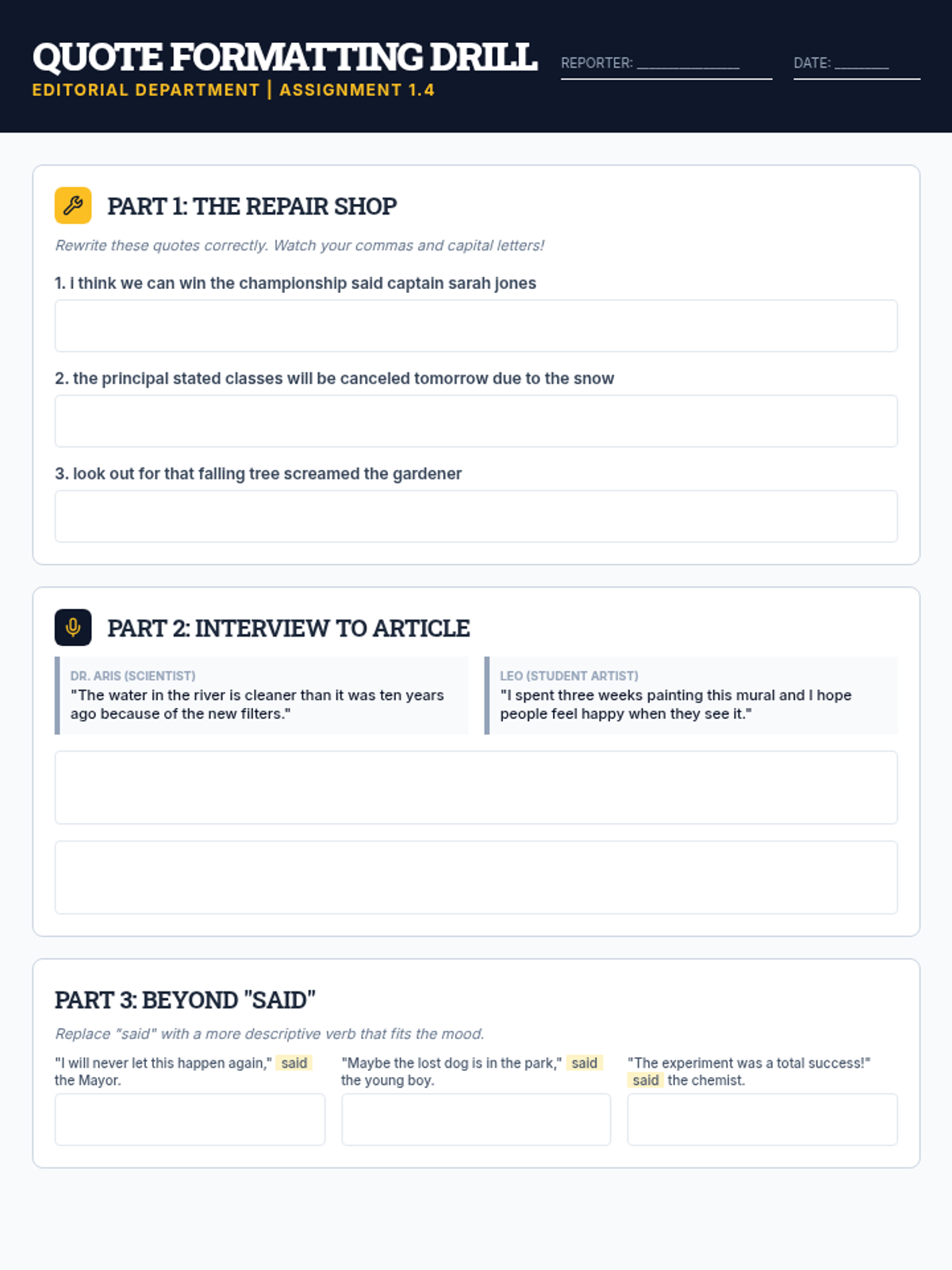
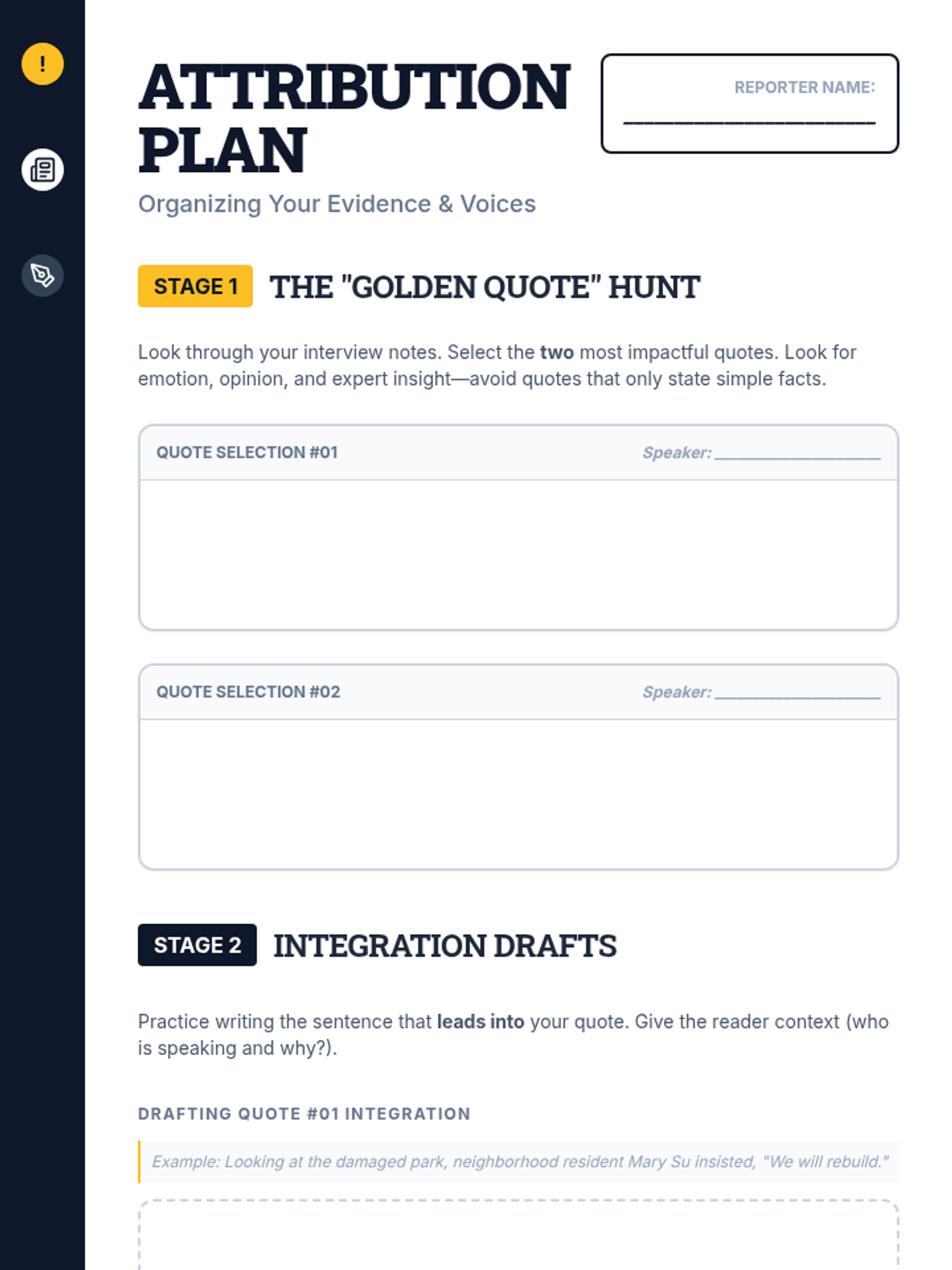
A 45-minute lesson for 6th grade students on the ethical and technical aspects of using direct quotes in journalism. Students learn formatting rules, the importance of journalistic integrity, and how to select impactful quotes for their news articles.
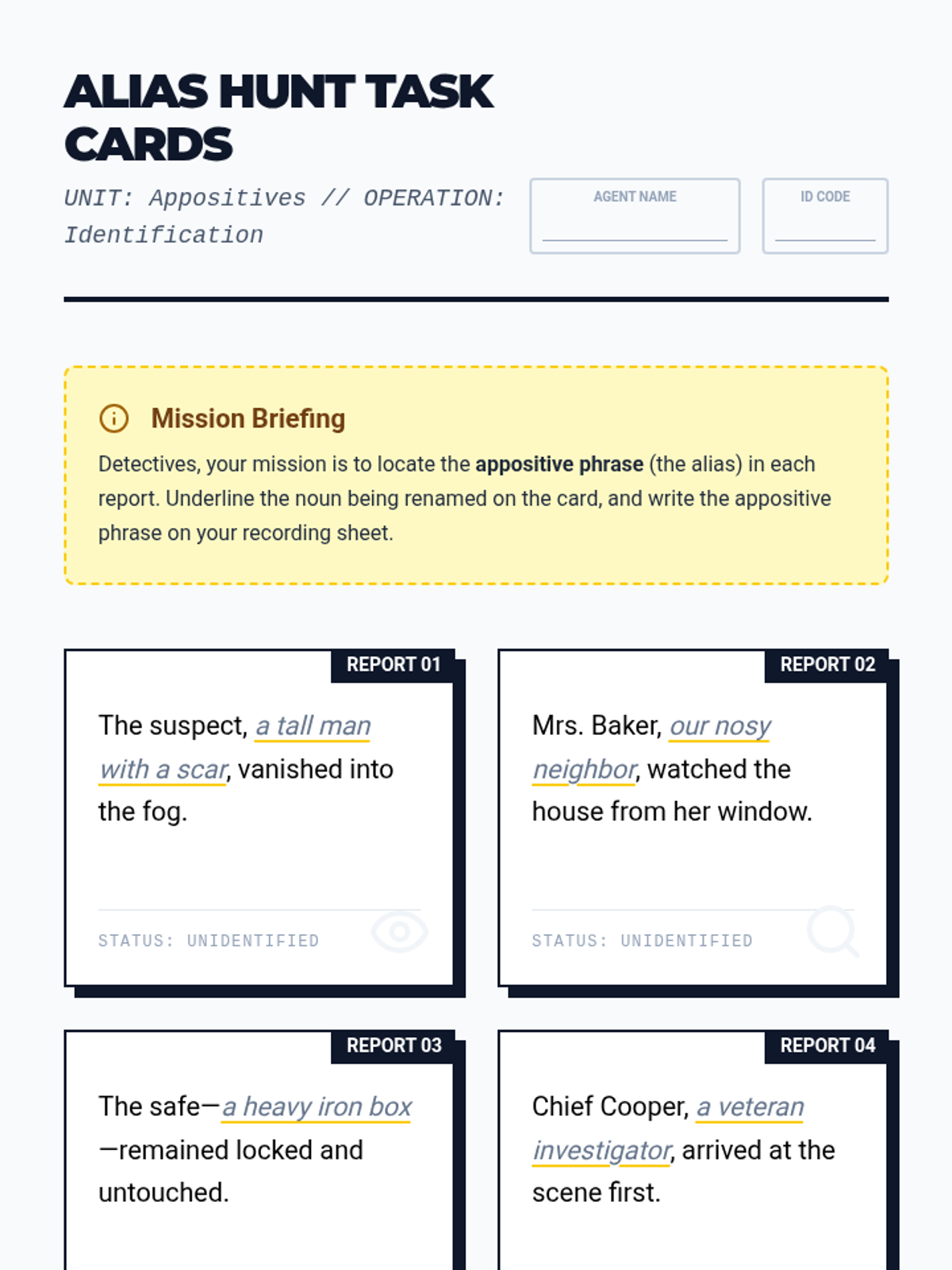
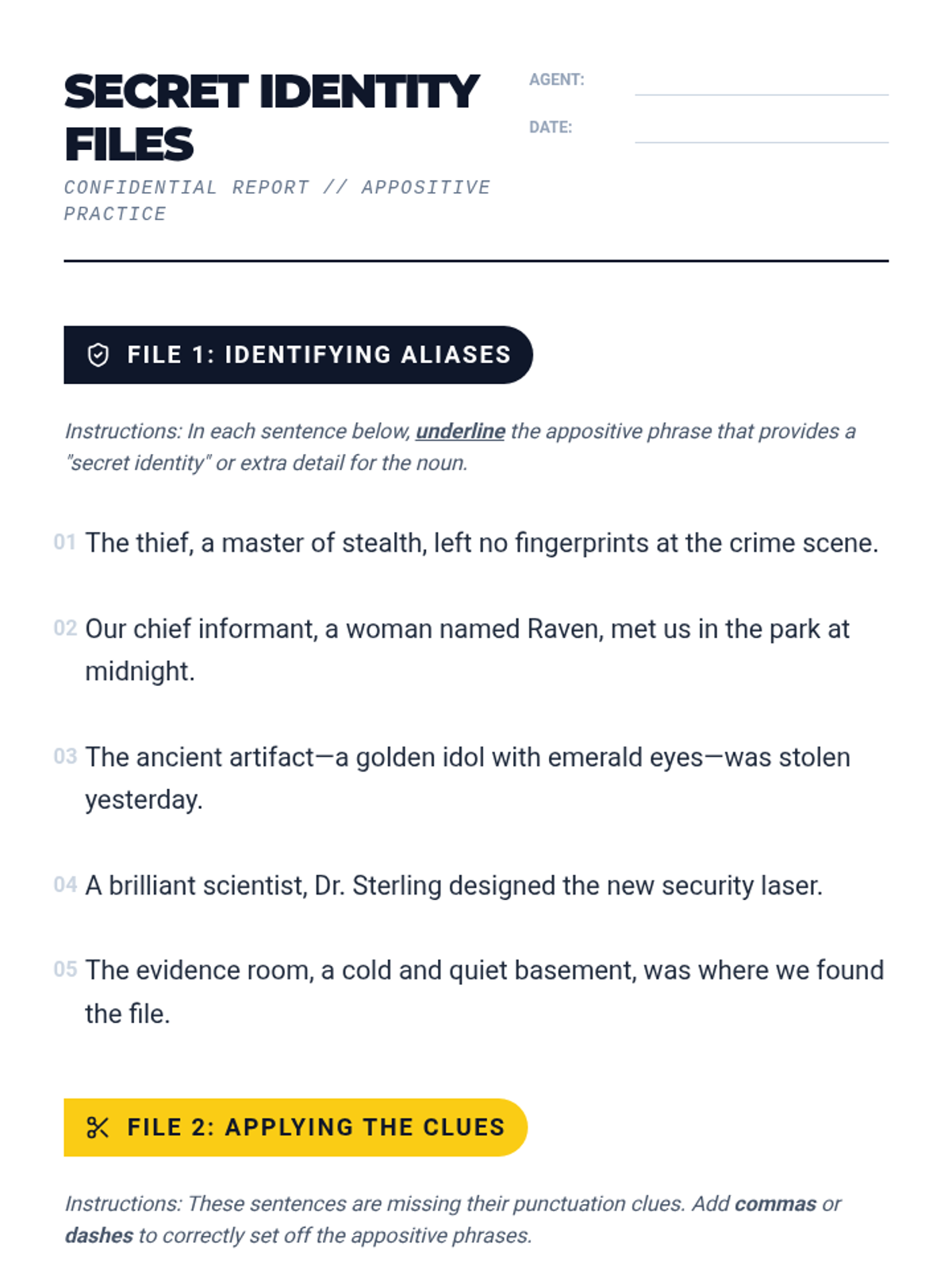
A lesson focused on identifying and using appositives to add detail and variety to sentences, using a detective-themed 'Identity Files' approach.
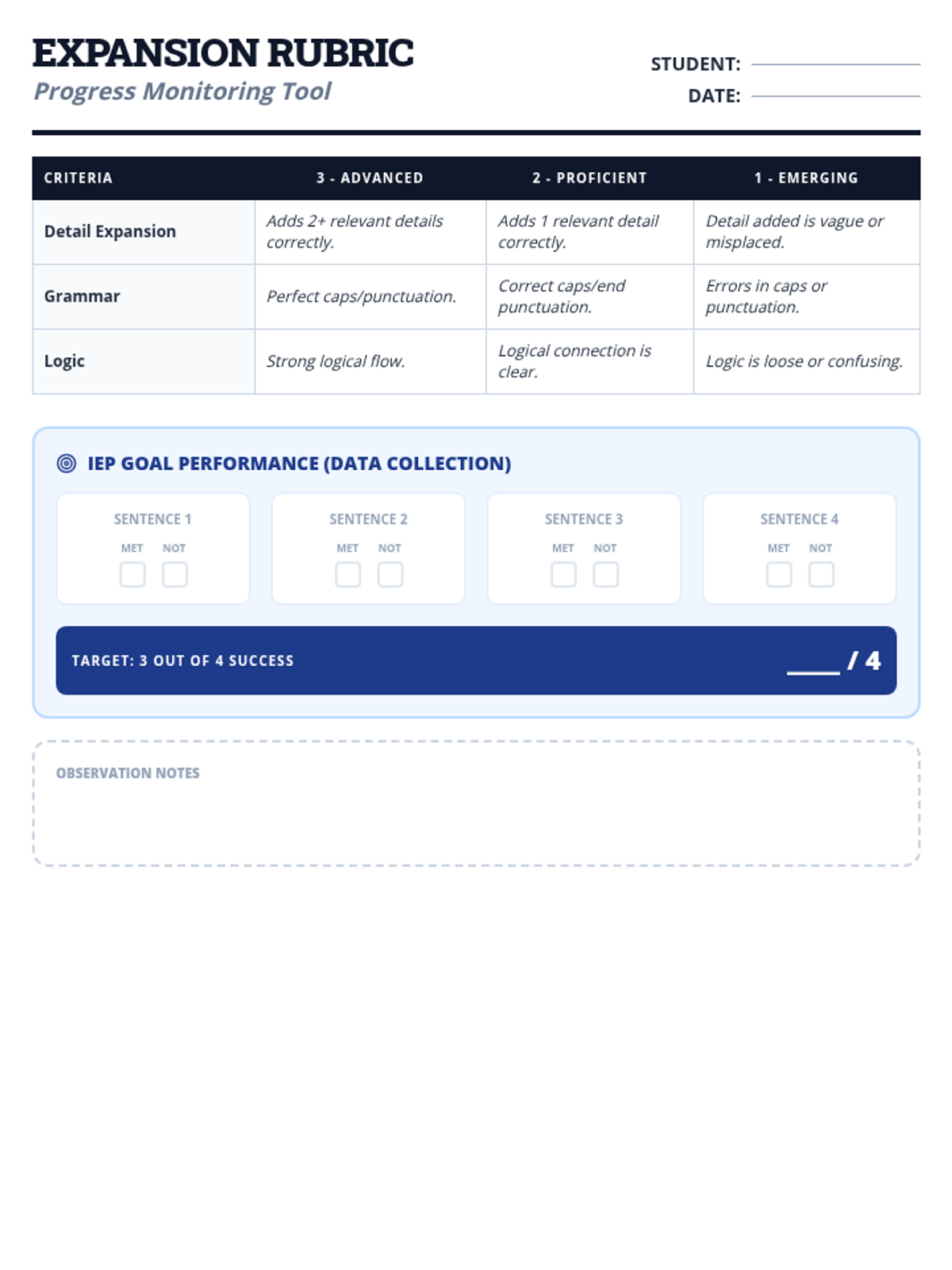
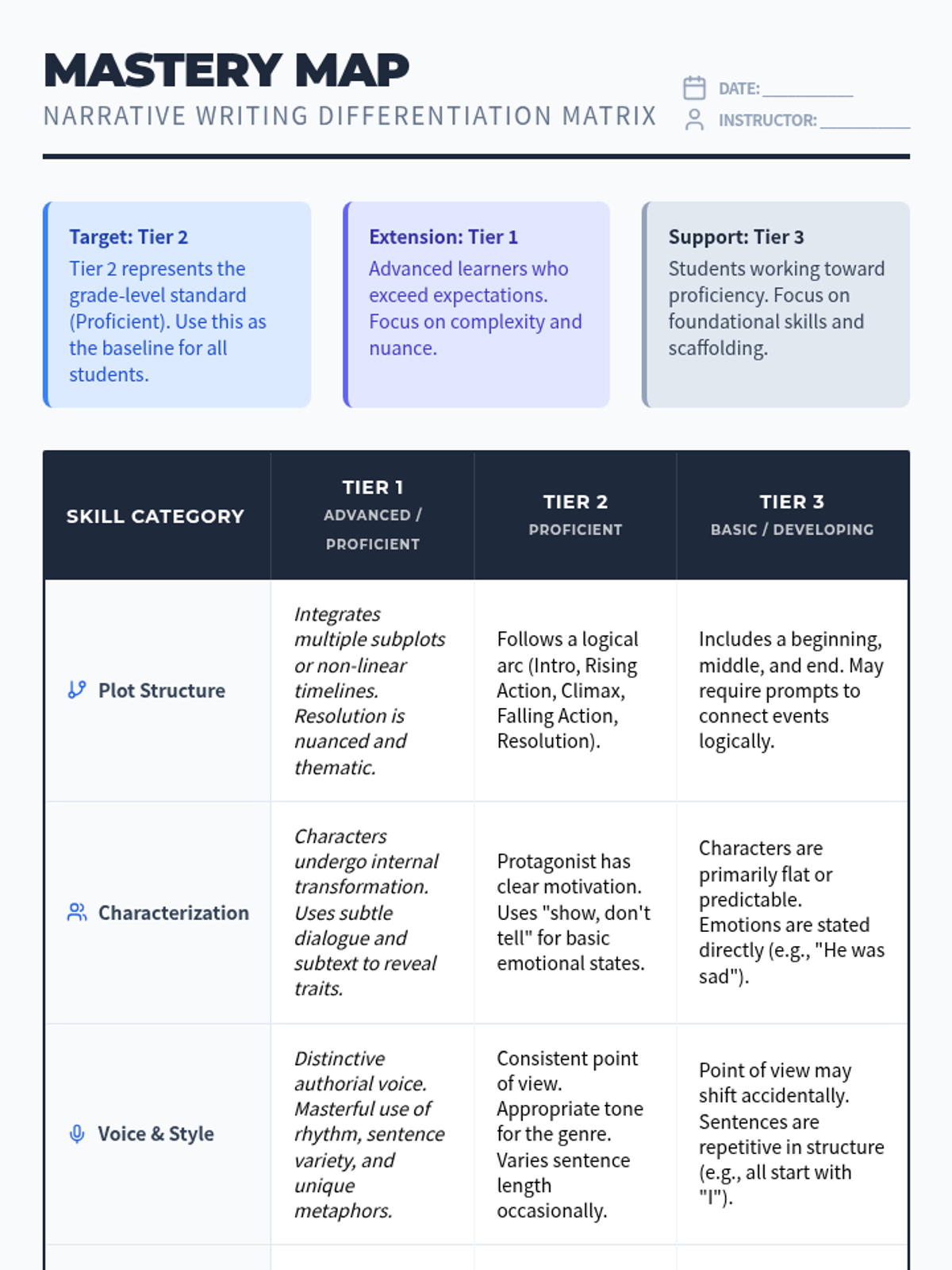
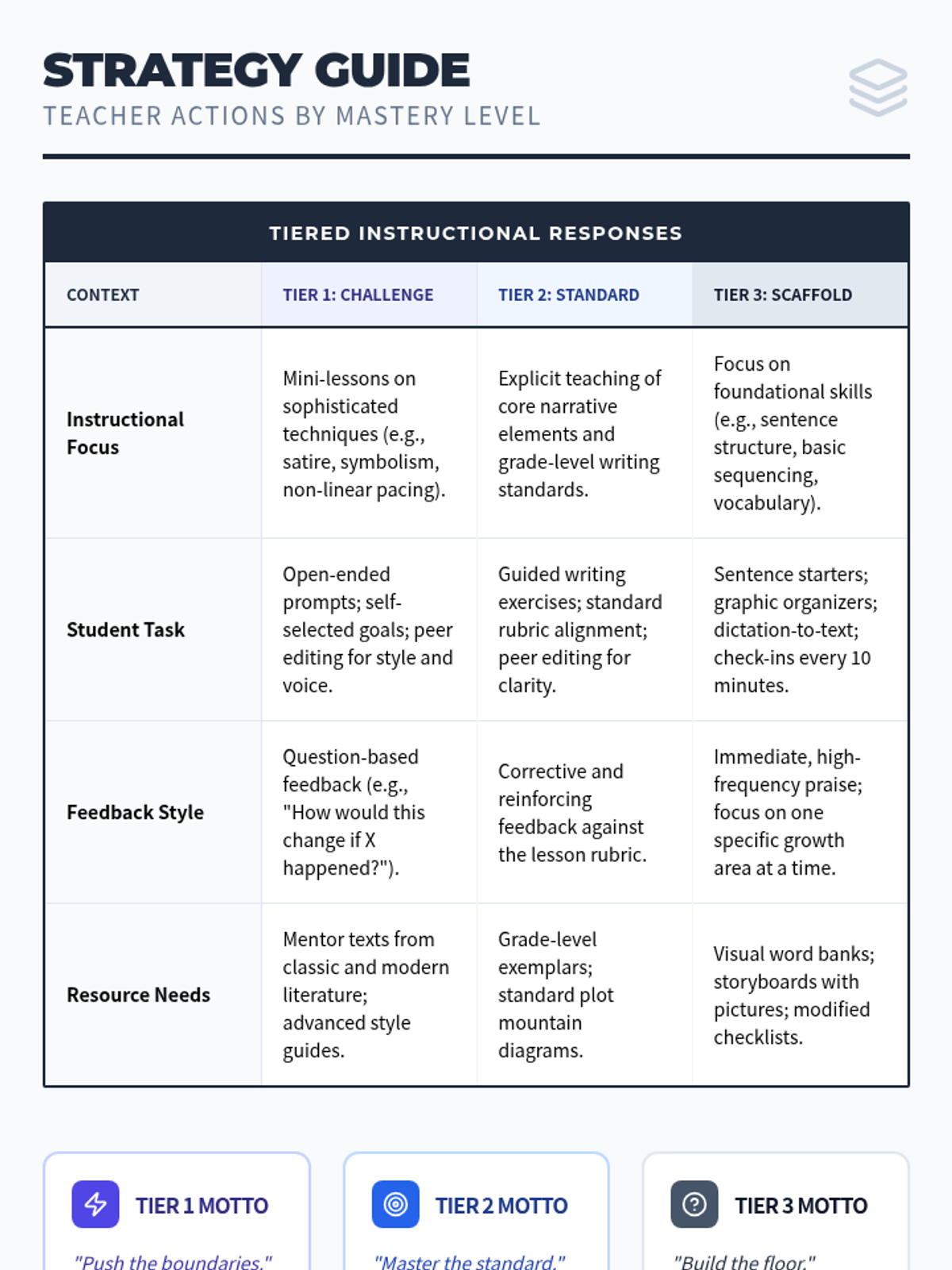
A resource kit for teachers to track and support student progress across three distinct tiers of mastery, specifically tailored for Narrative Writing skills.
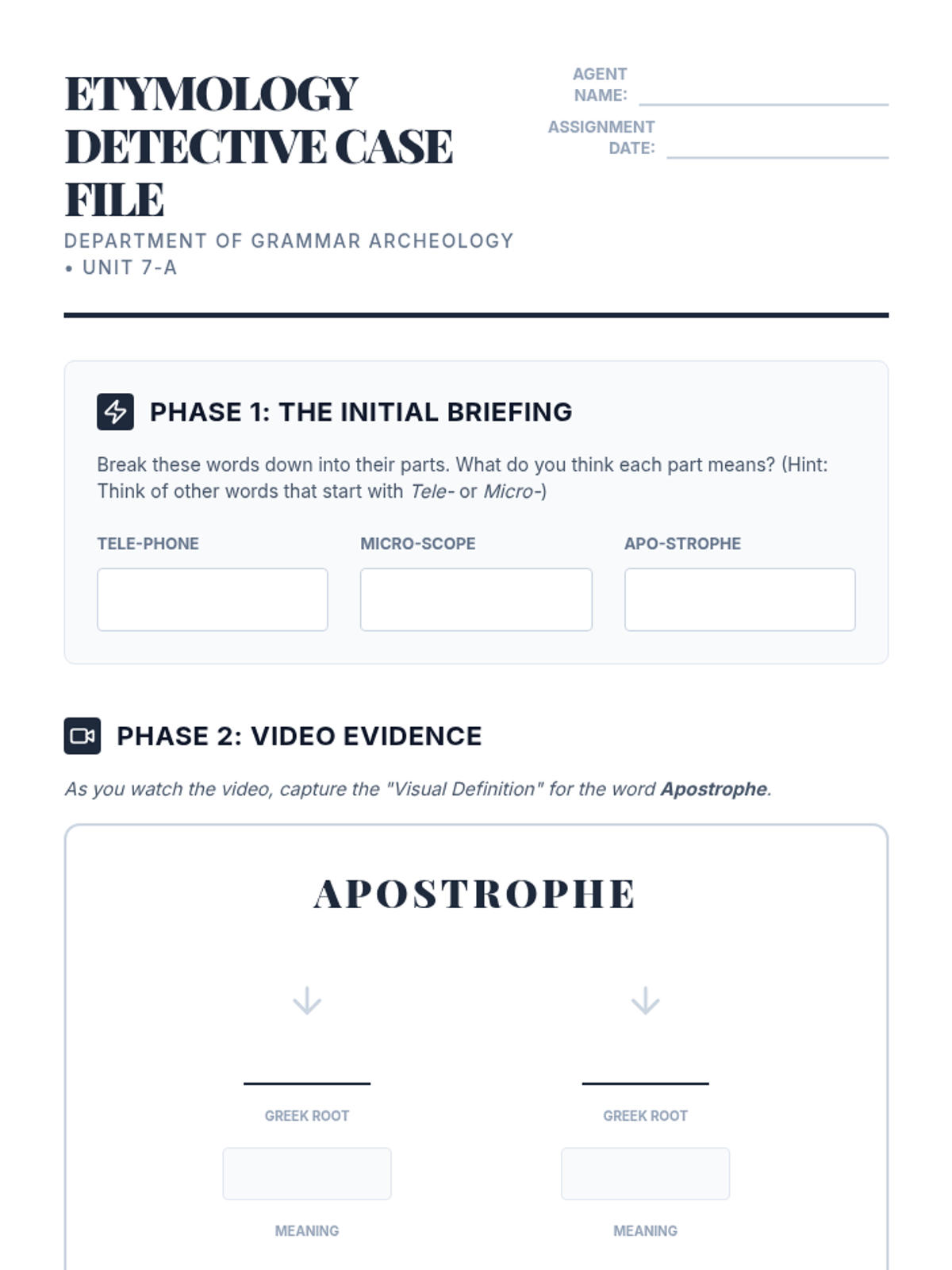
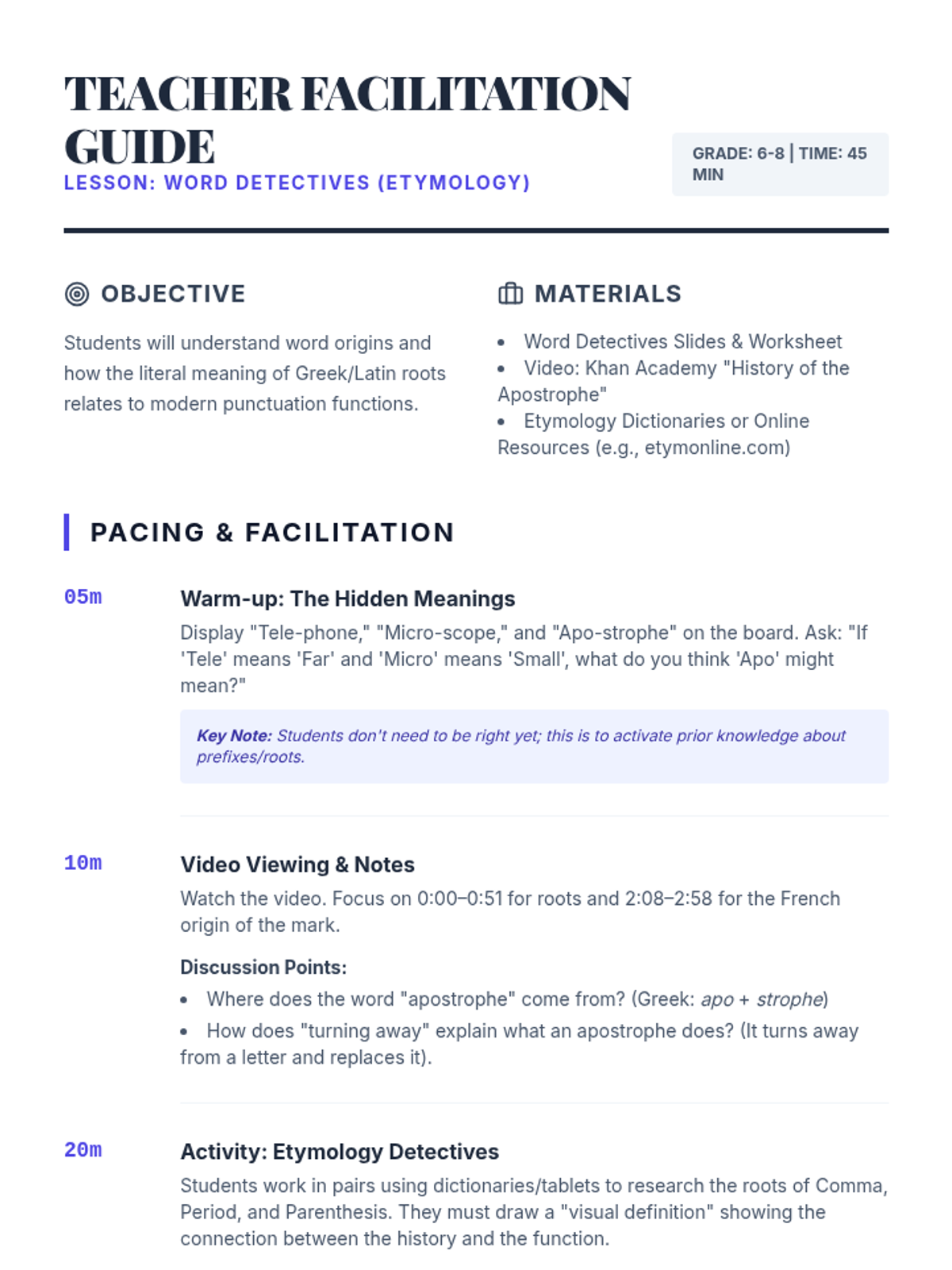
A lesson for grades 6-8 exploring the Greek and Latin origins of grammar terms, specifically focusing on the history of the apostrophe and other punctuation marks. Students act as etymology detectives to connect ancient roots to modern definitions.
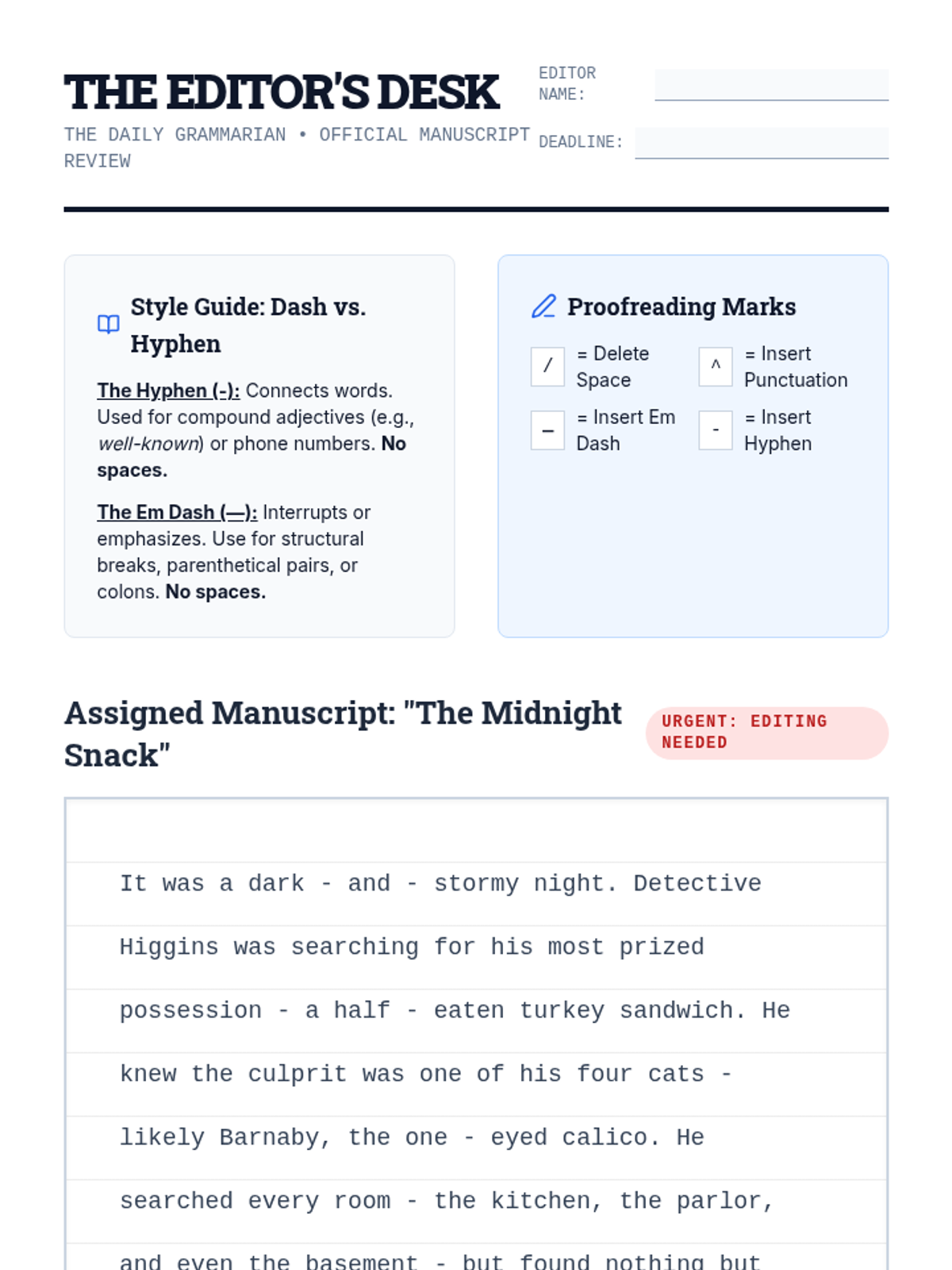
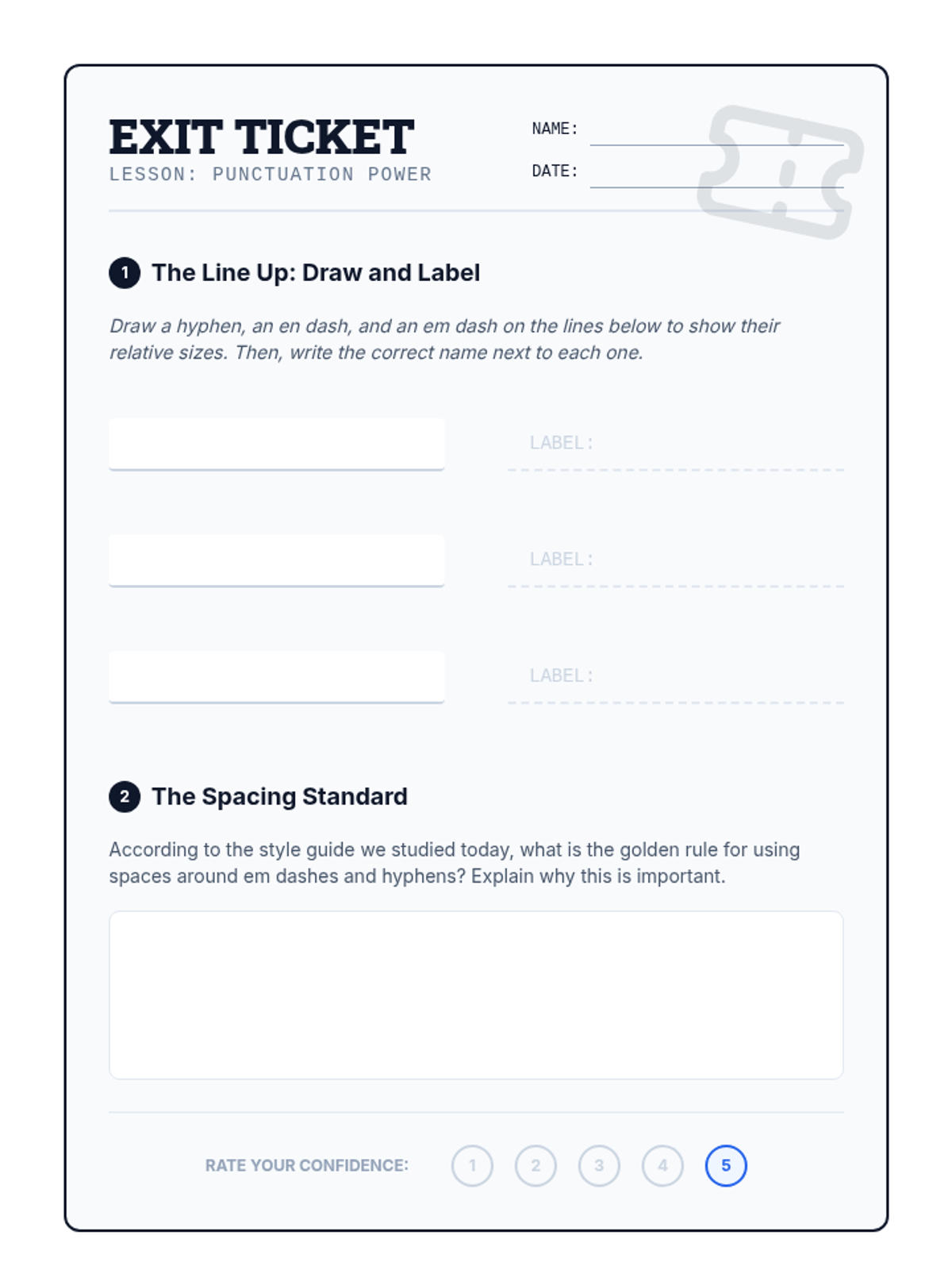
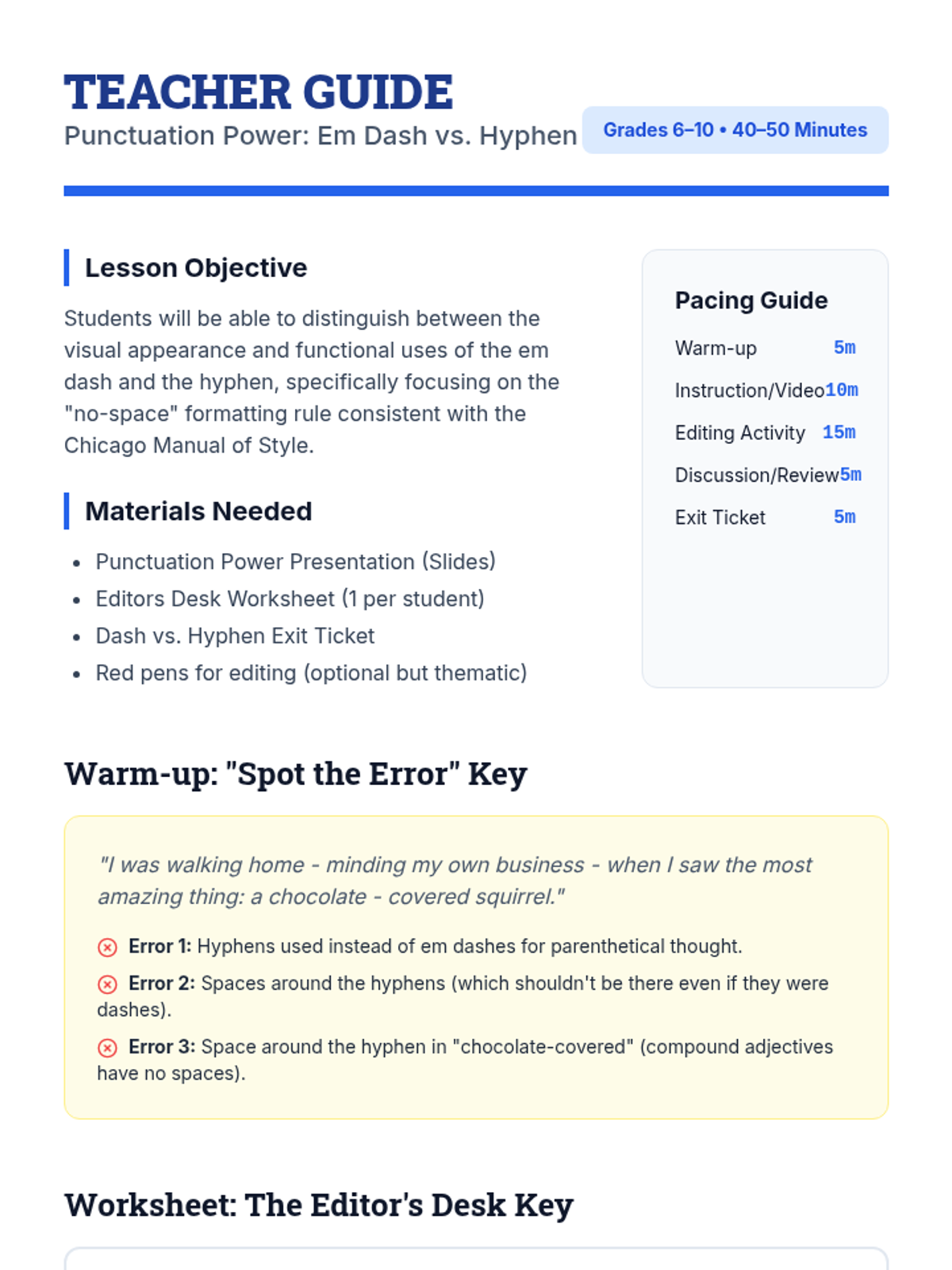
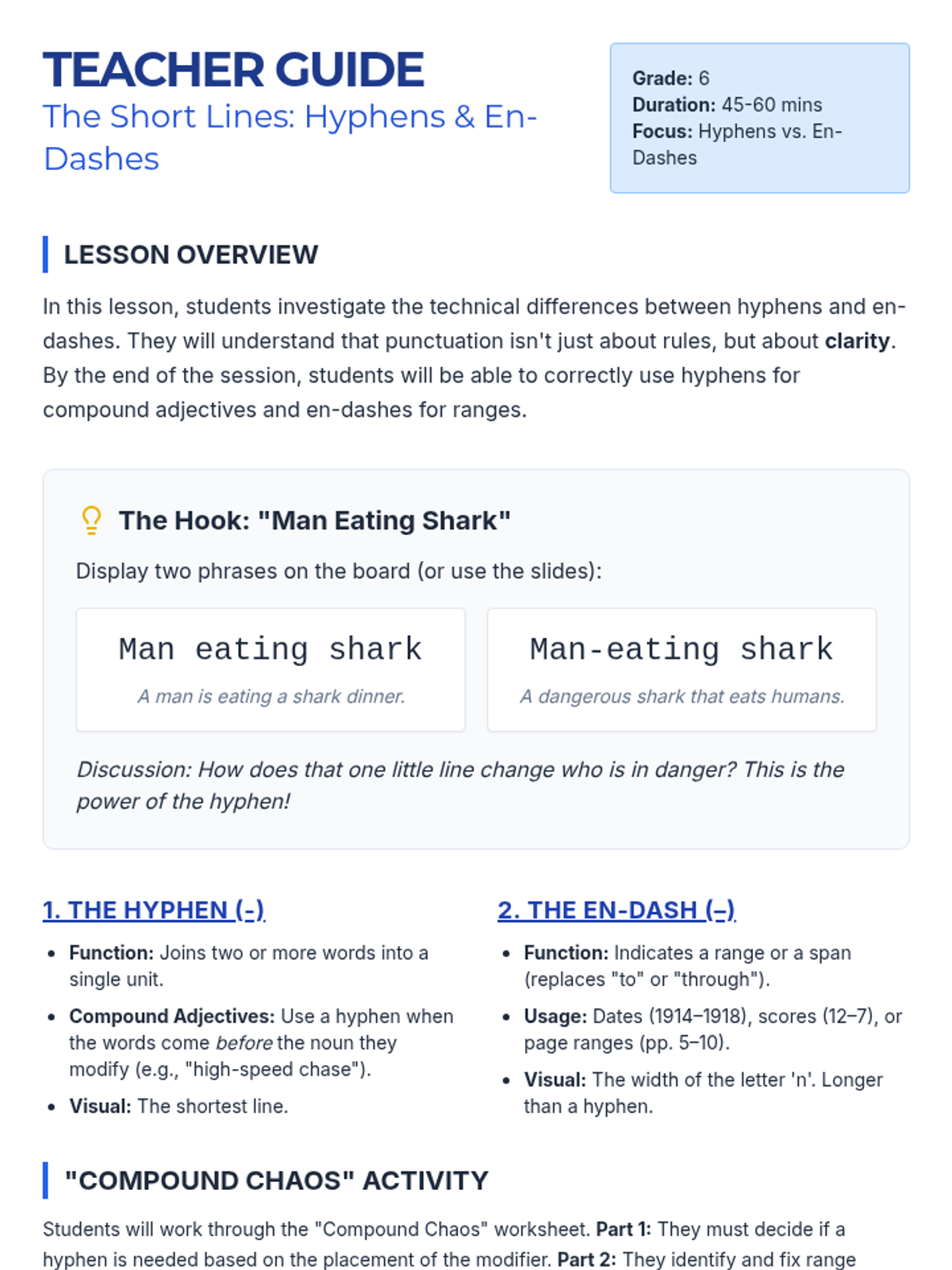
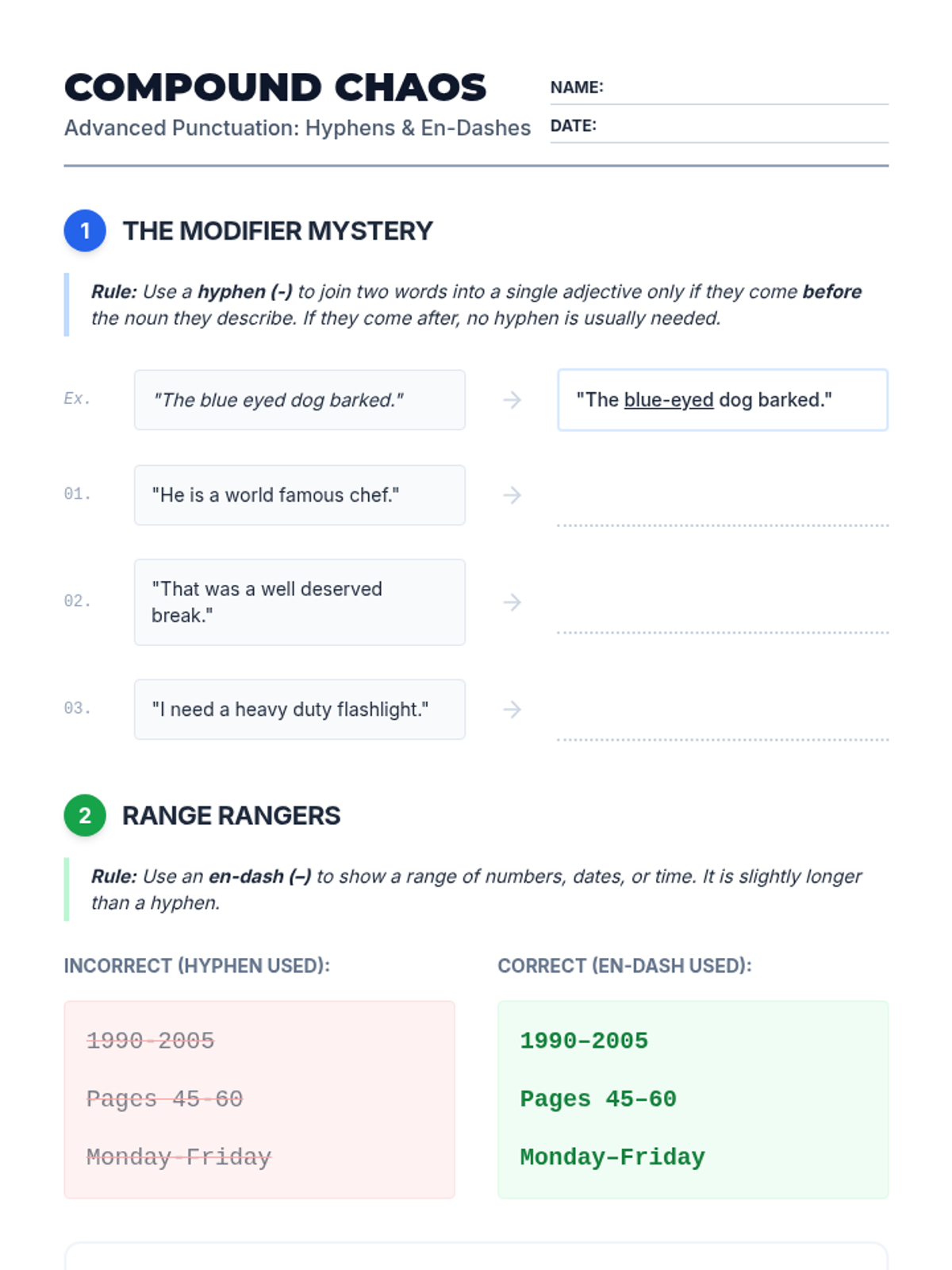
A comprehensive lesson for 6th-10th grade students focusing on the functional and formatting differences between em dashes and hyphens, featuring a newsroom-themed editing activity.
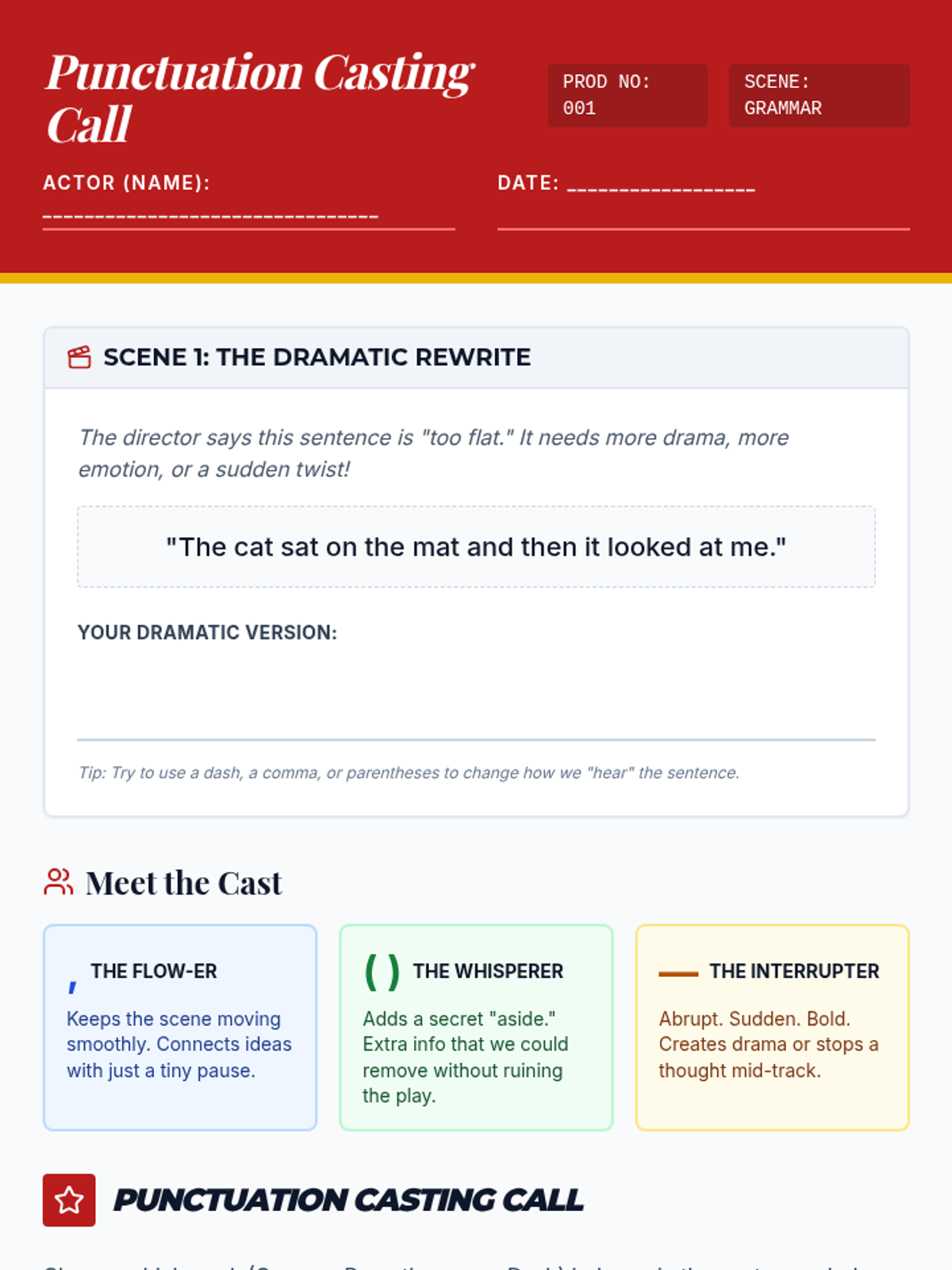
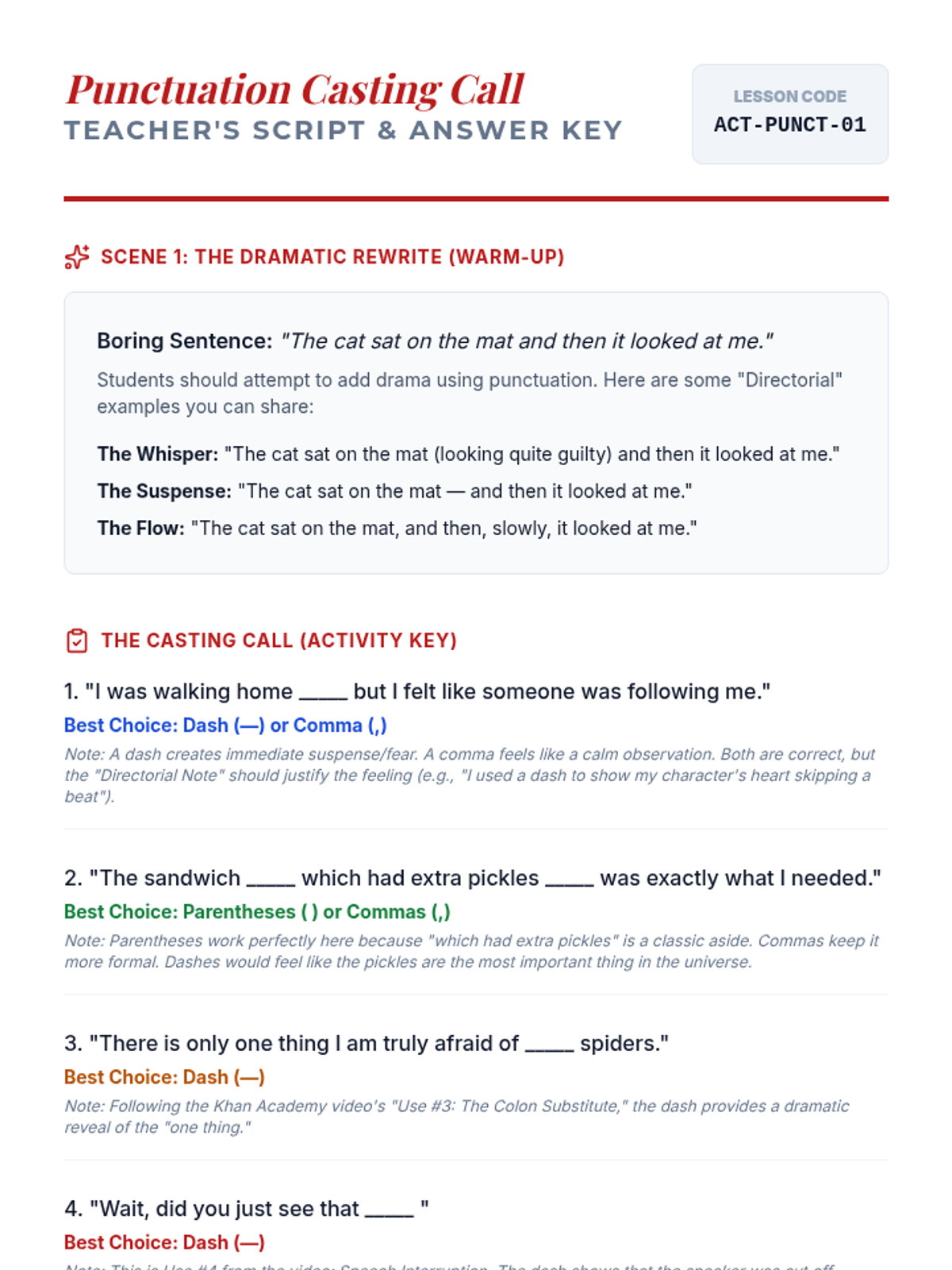
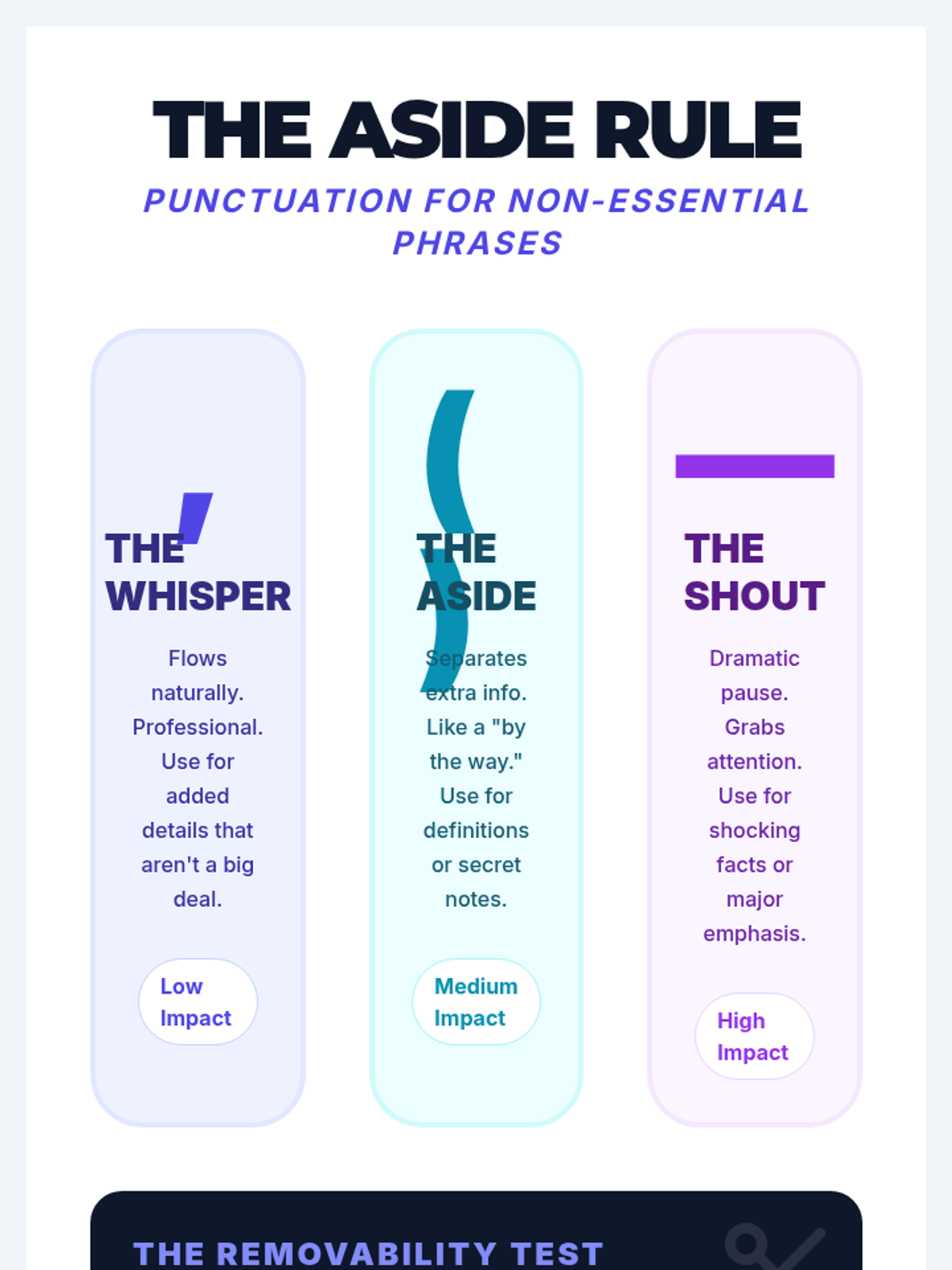
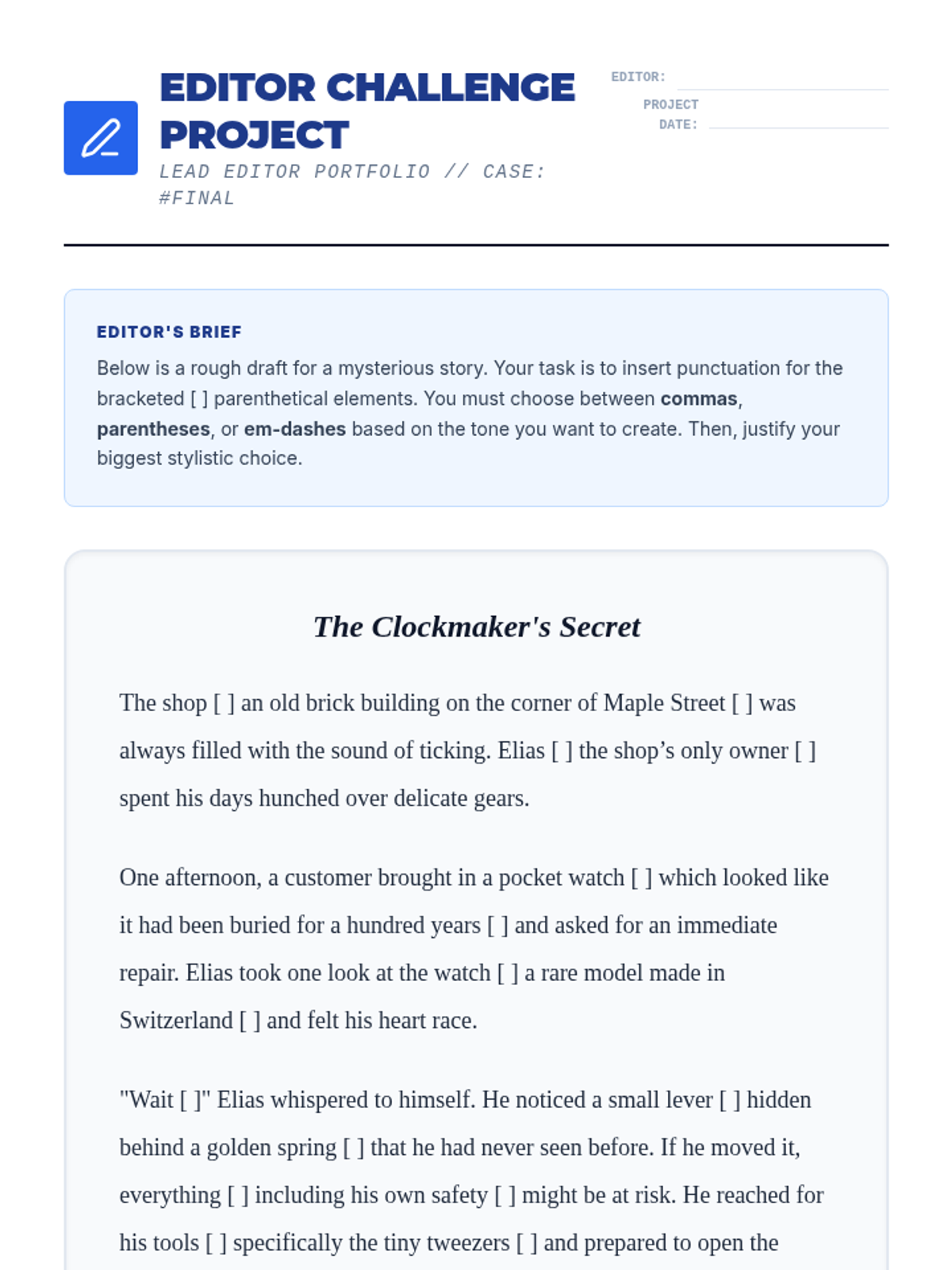
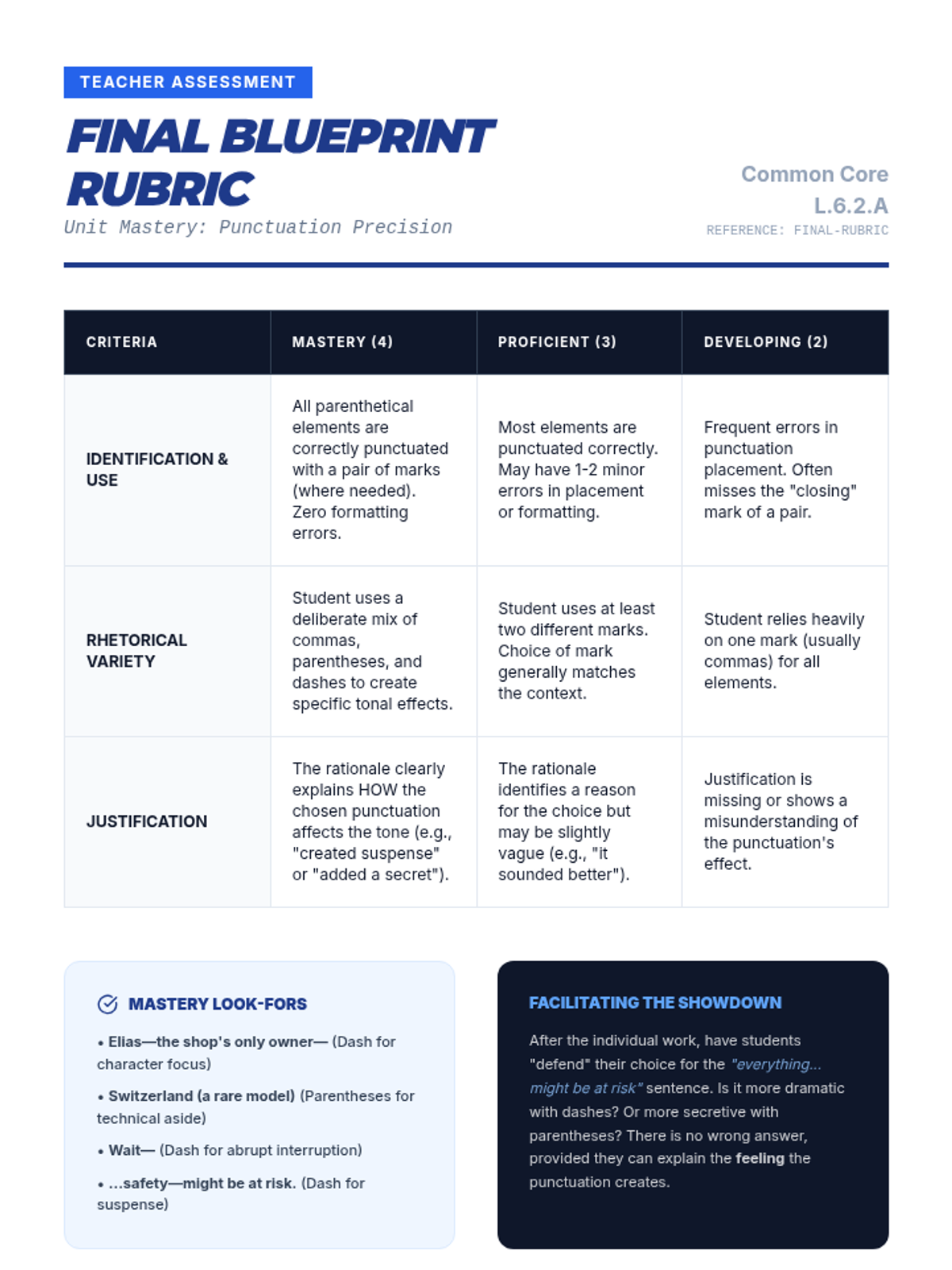
A middle school lesson exploring the stylistic and functional differences between commas, parentheses, and dashes using a theatrical 'Casting Call' metaphor. Students analyze how punctuation choices act like actors on a stage to change the tone and flow of sentences.
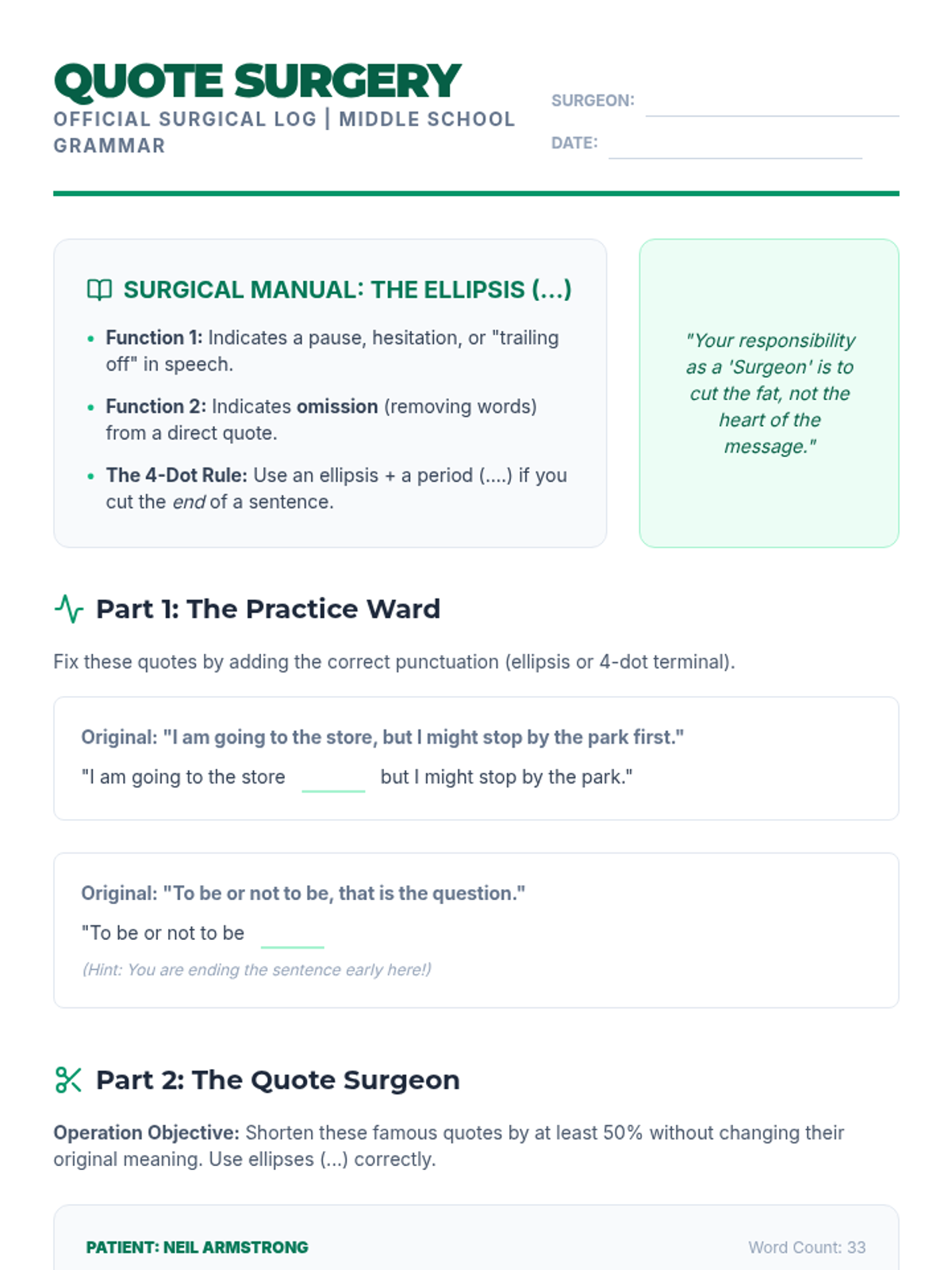
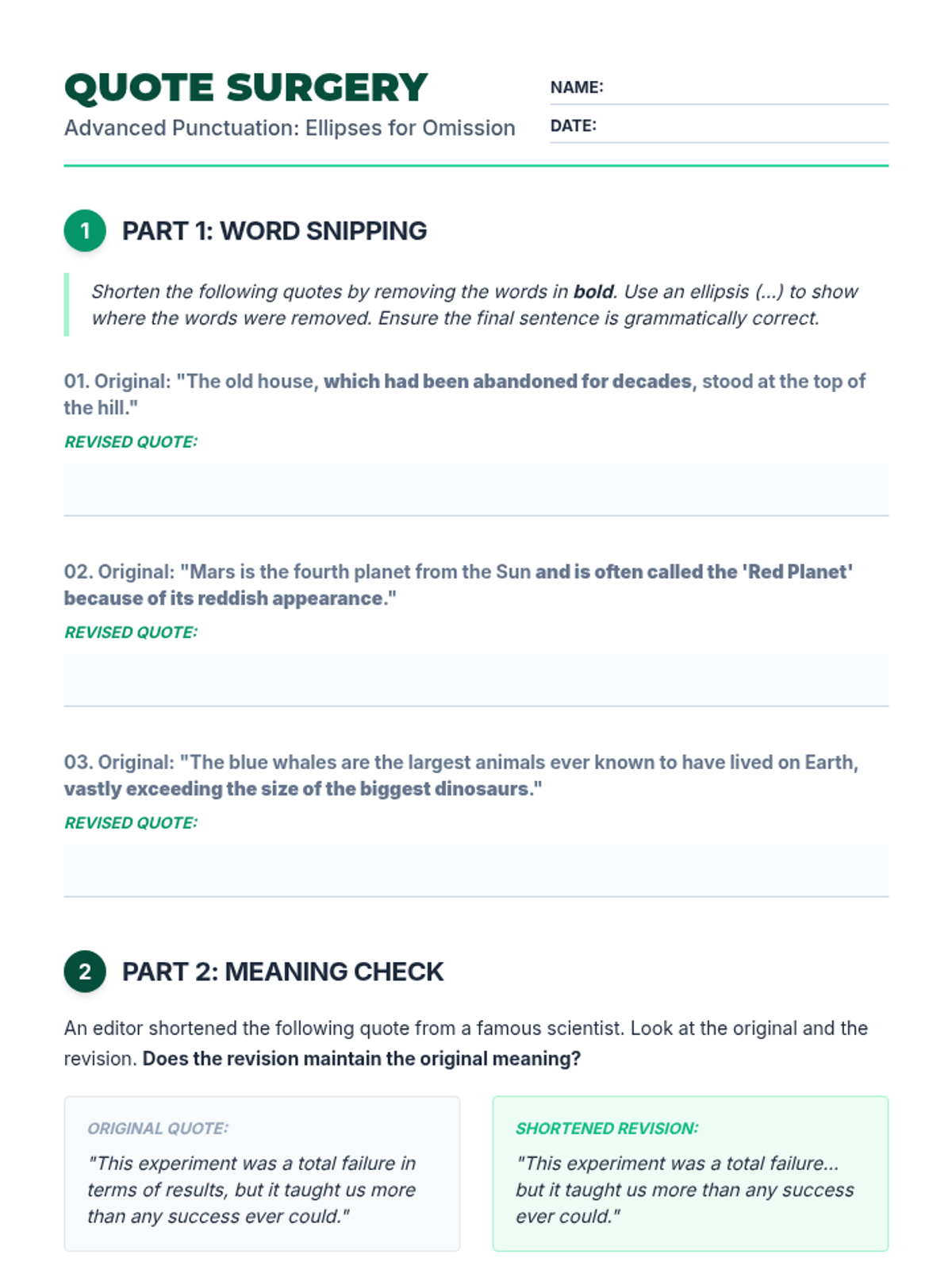
This lesson teaches students the mechanics and ethics of using ellipses. Students will learn to use the 'surgical' tool of the ellipsis to shorten quotes for brevity while maintaining the speaker's original intent, and explore the dangers of 'misrepresentation' through a creative unethical editing activity.
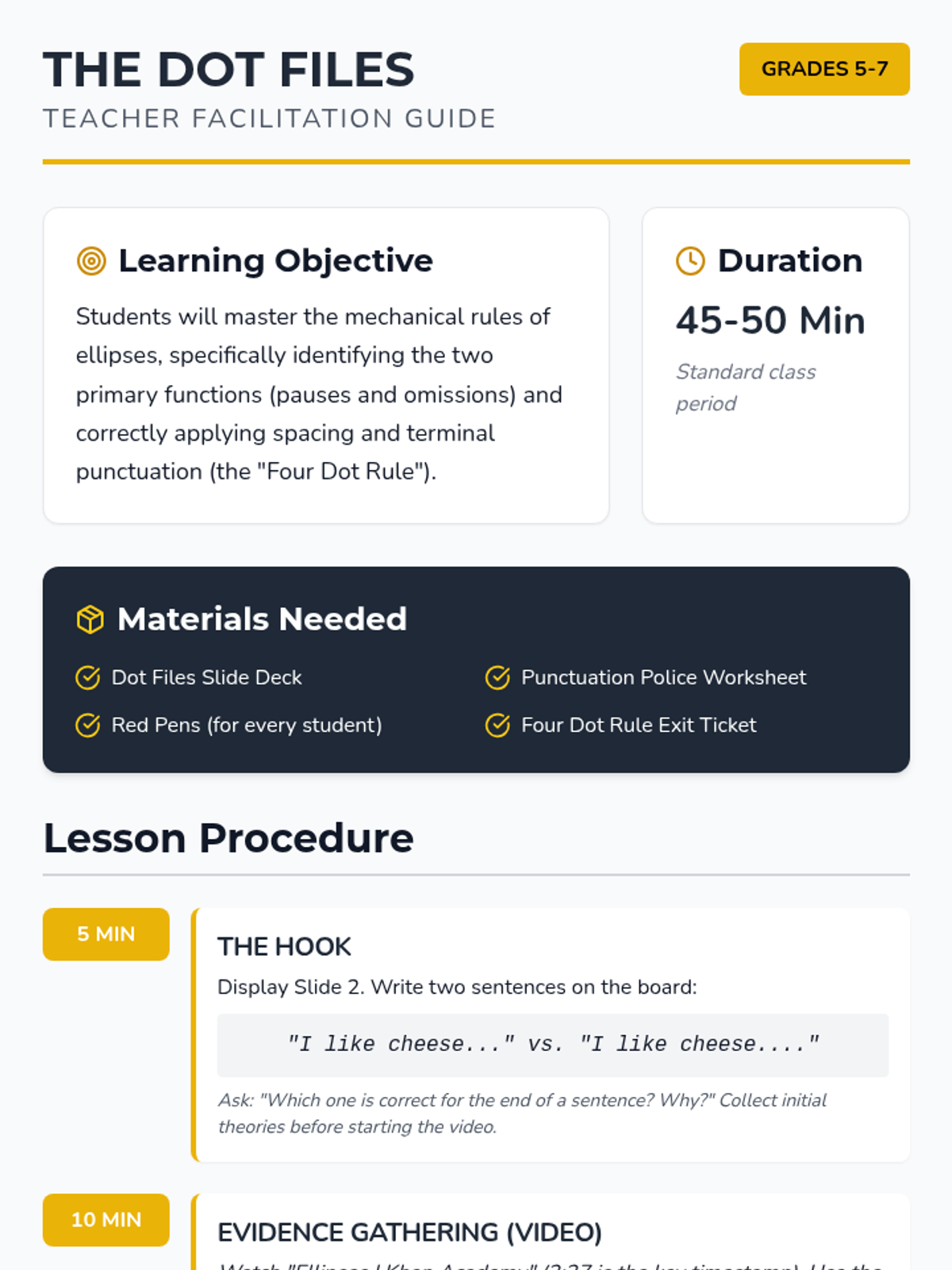
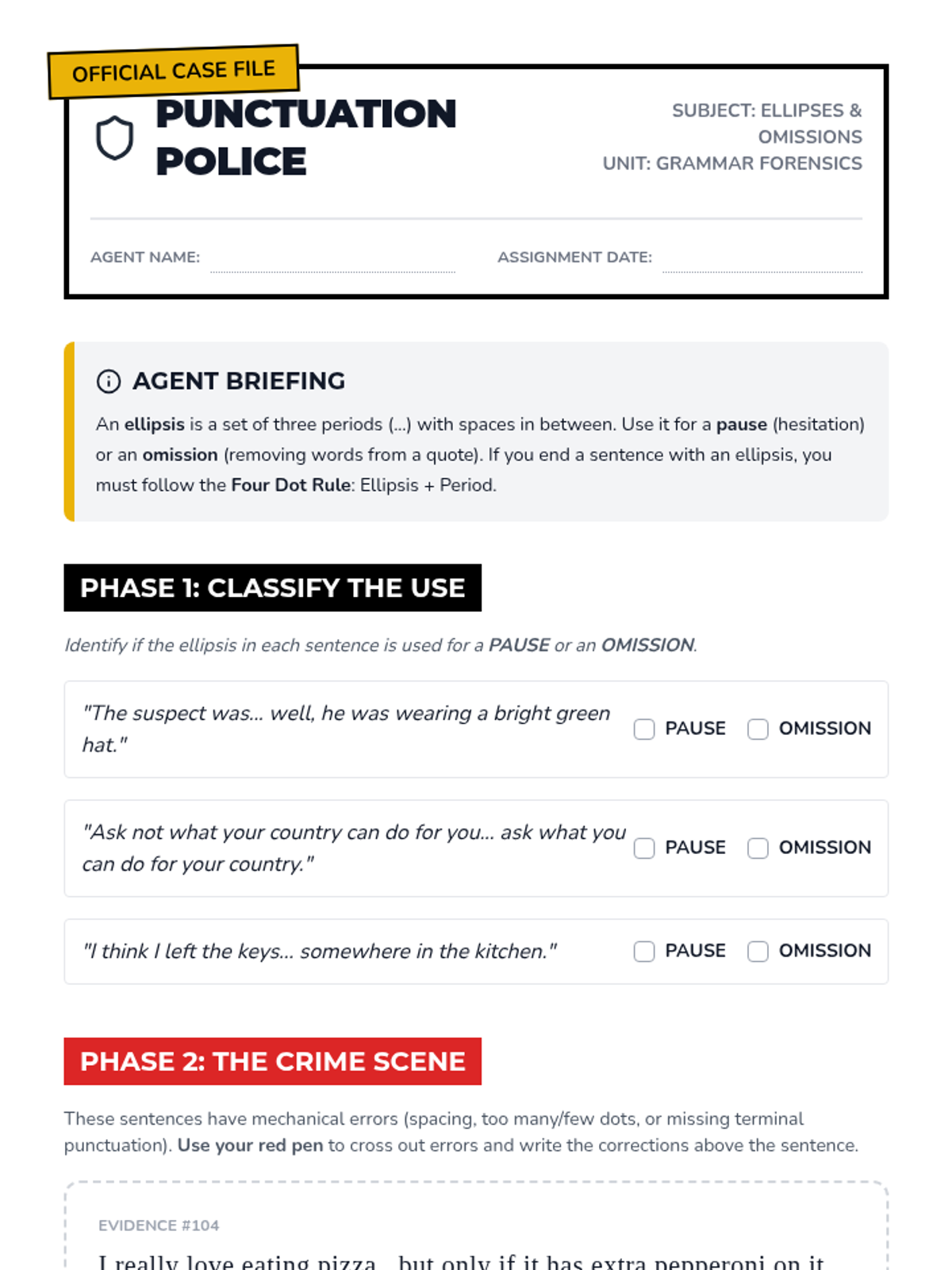
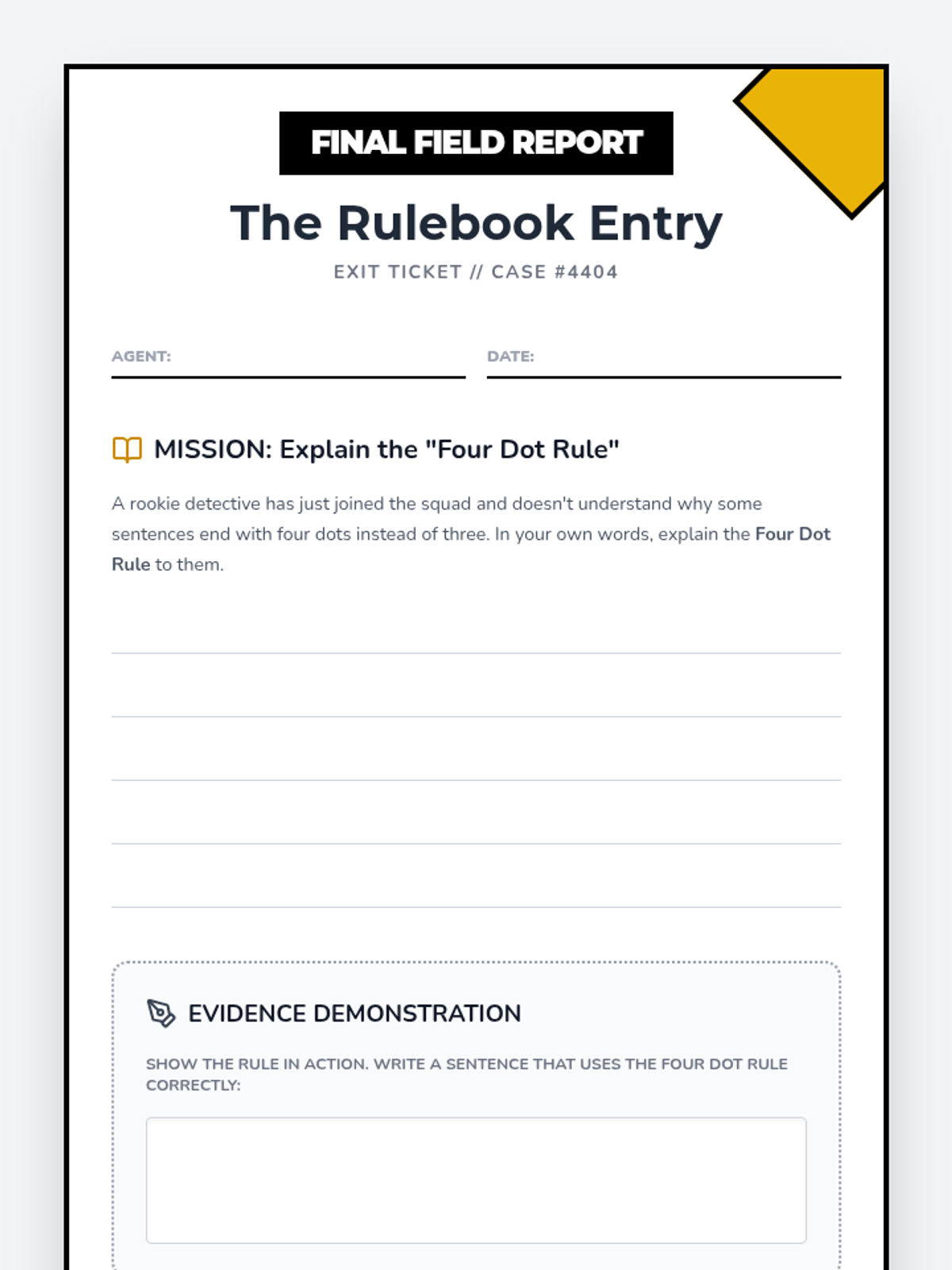
A comprehensive lesson for Grade 5-7 students to master the use of ellipses in pauses and omissions, with a specific focus on the 'Four Dot Rule' for terminal punctuation.
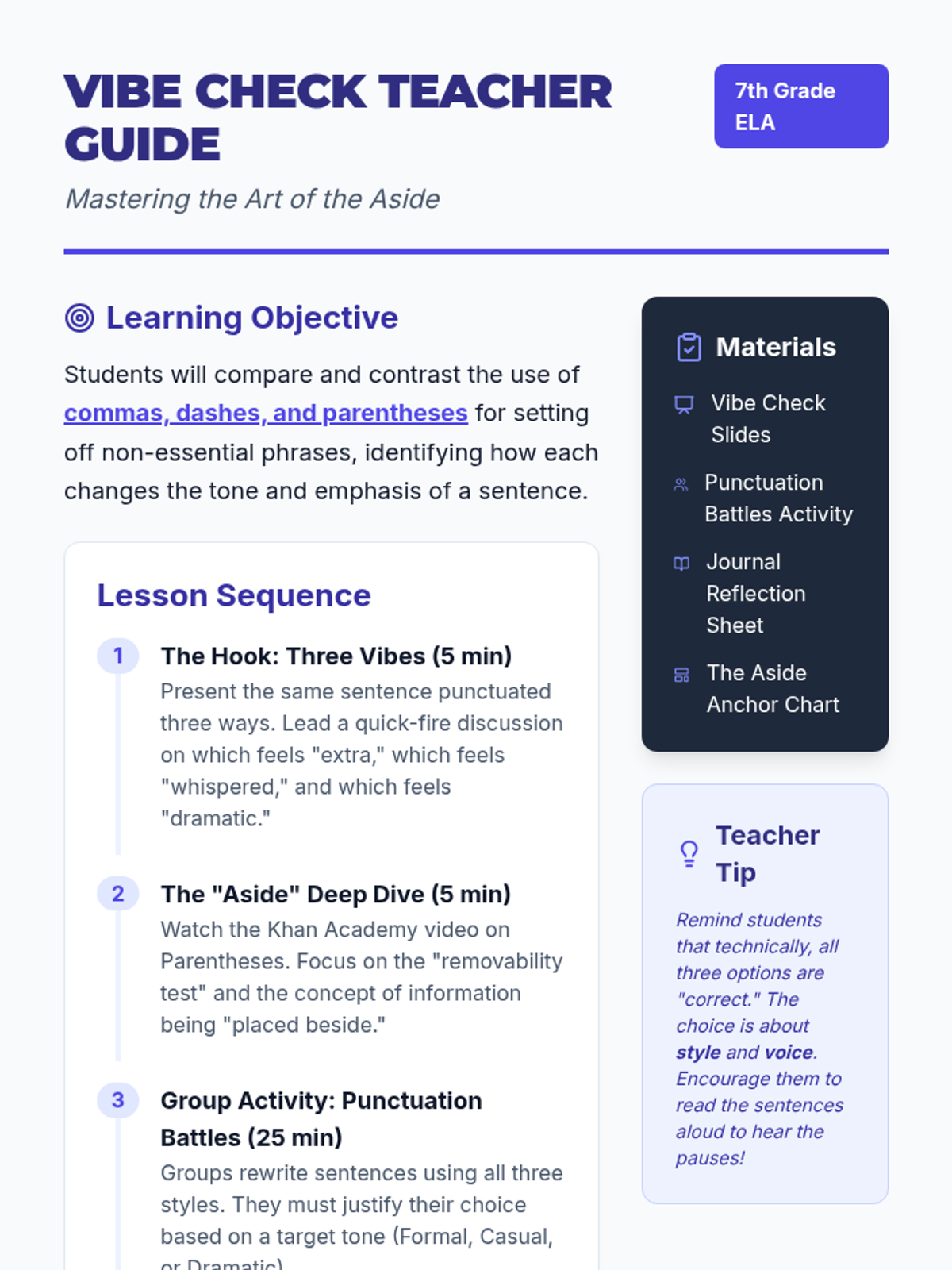
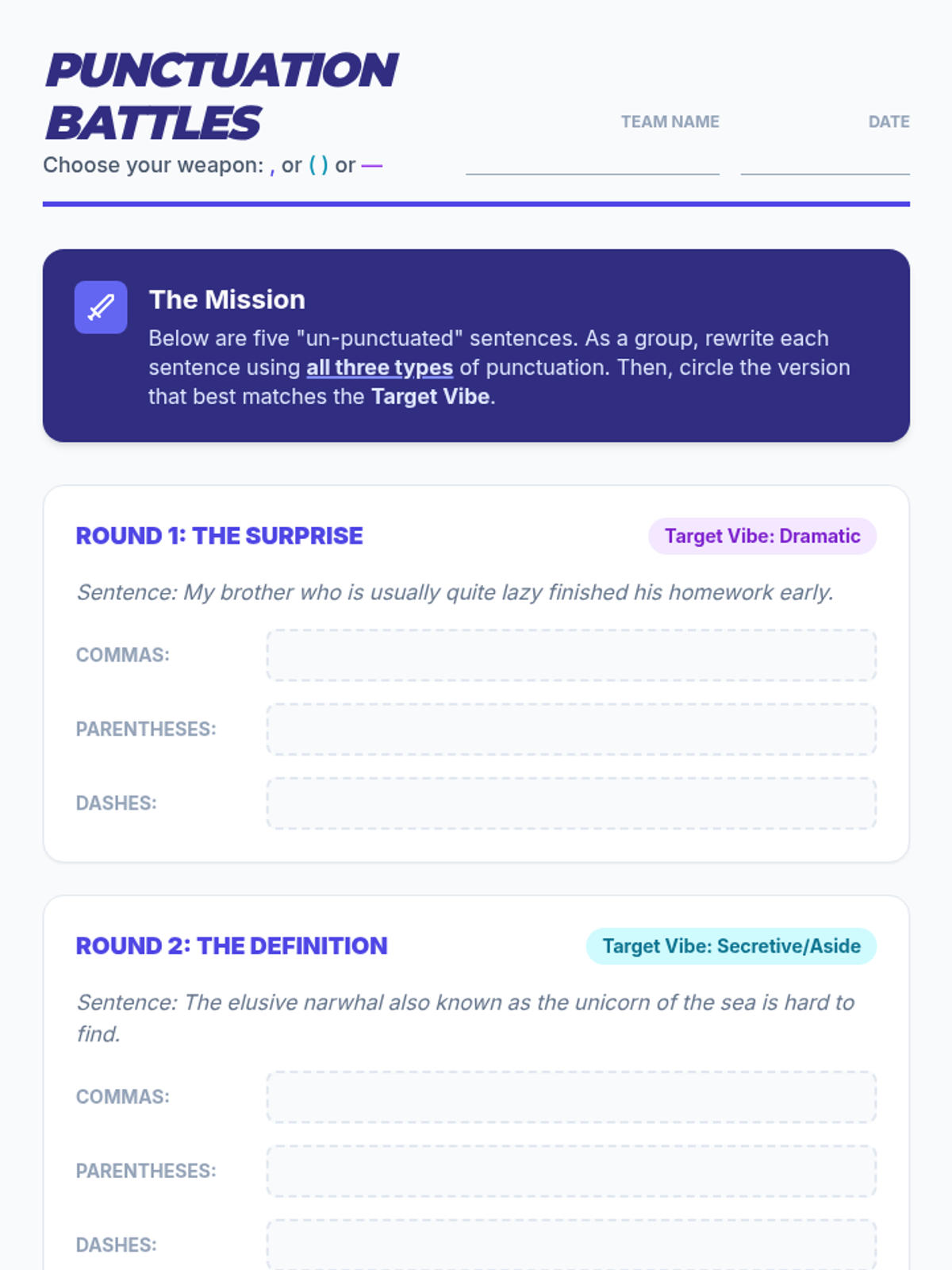
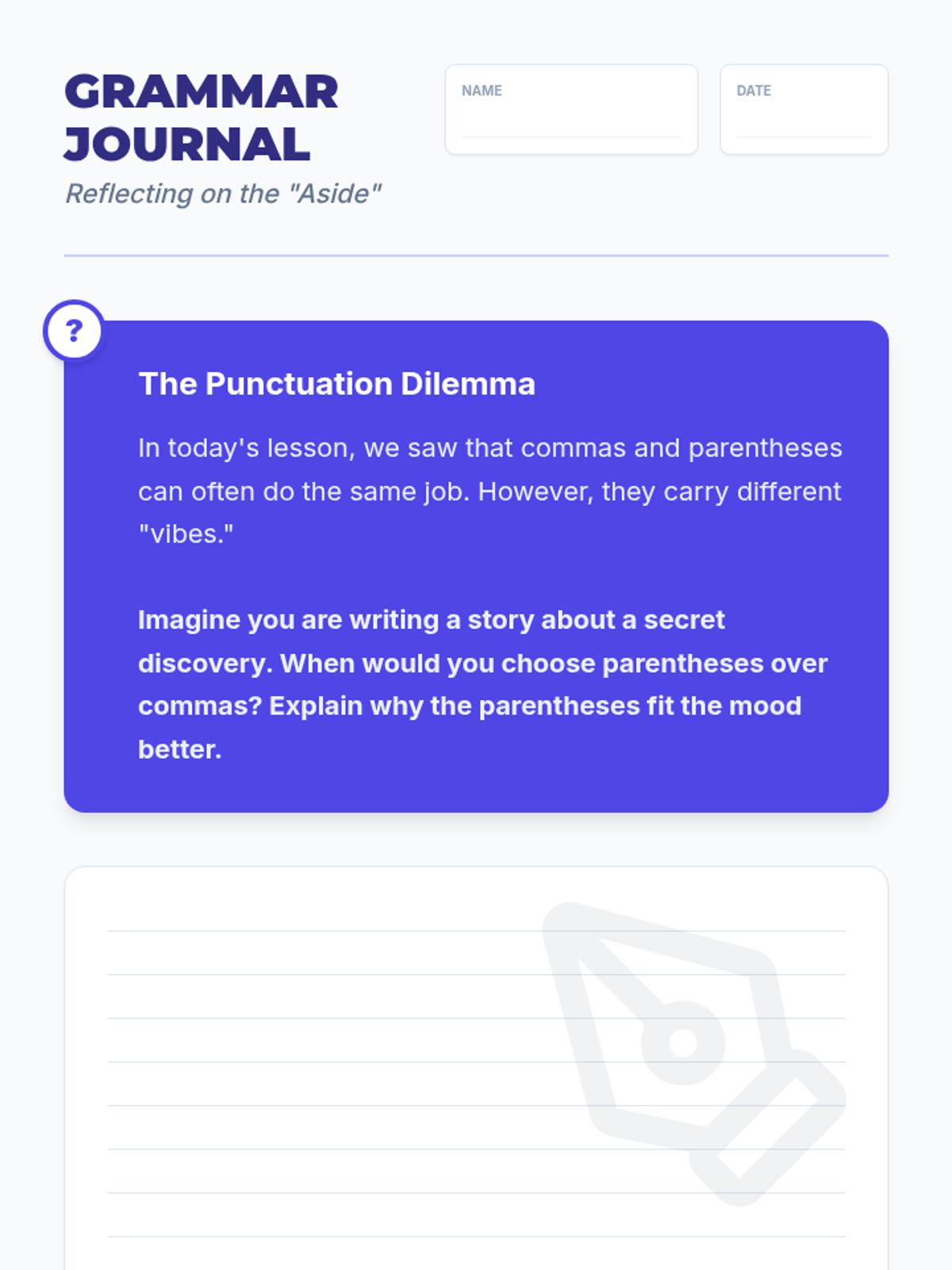
A lesson focusing on the subtle differences in tone and emphasis when using commas, dashes, and parentheses to set off non-essential information. Students explore the 'vibe' of each punctuation mark through a hook activity, a instructional video, and a collaborative 'Punctuation Battles' challenge.
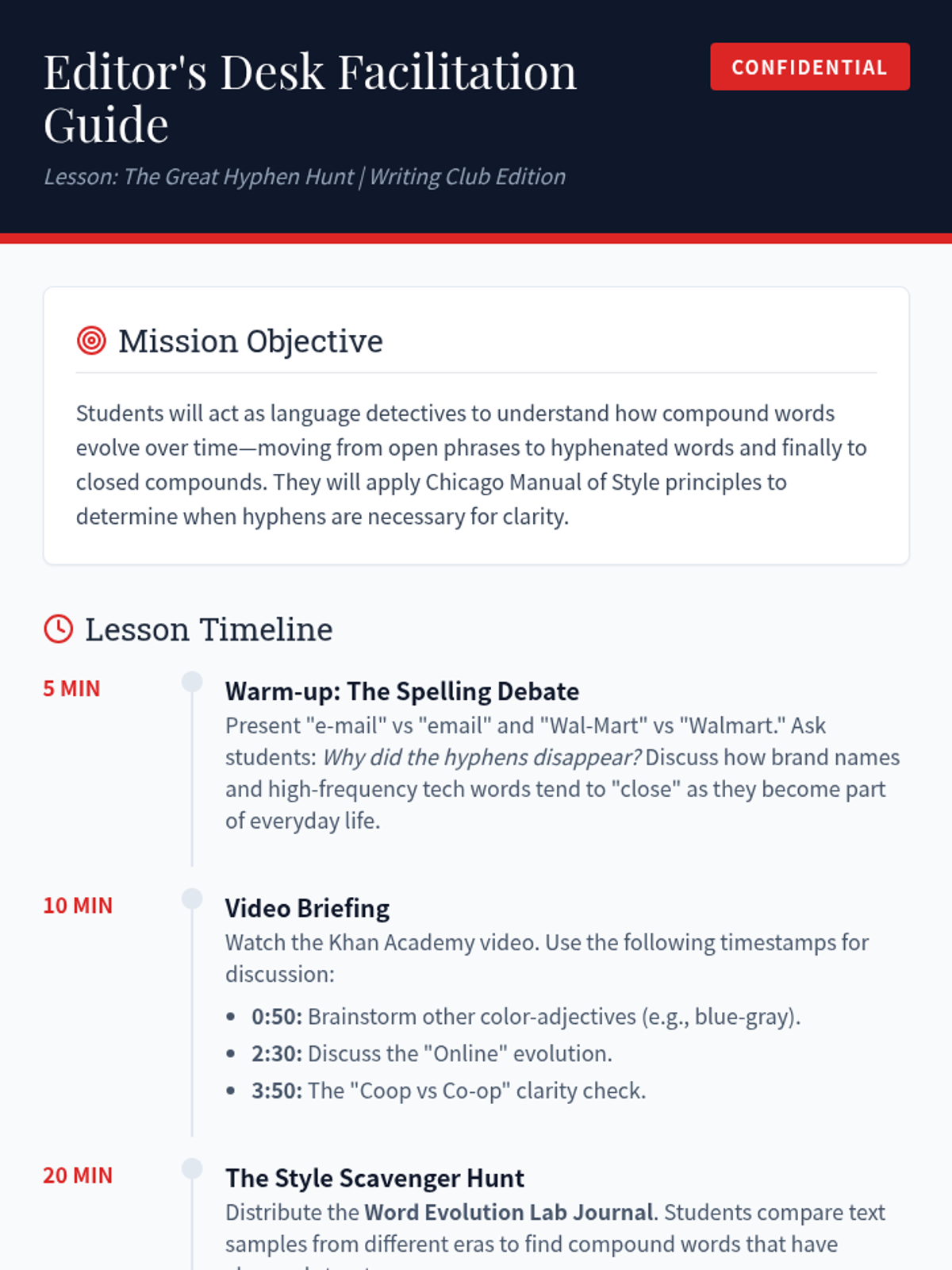
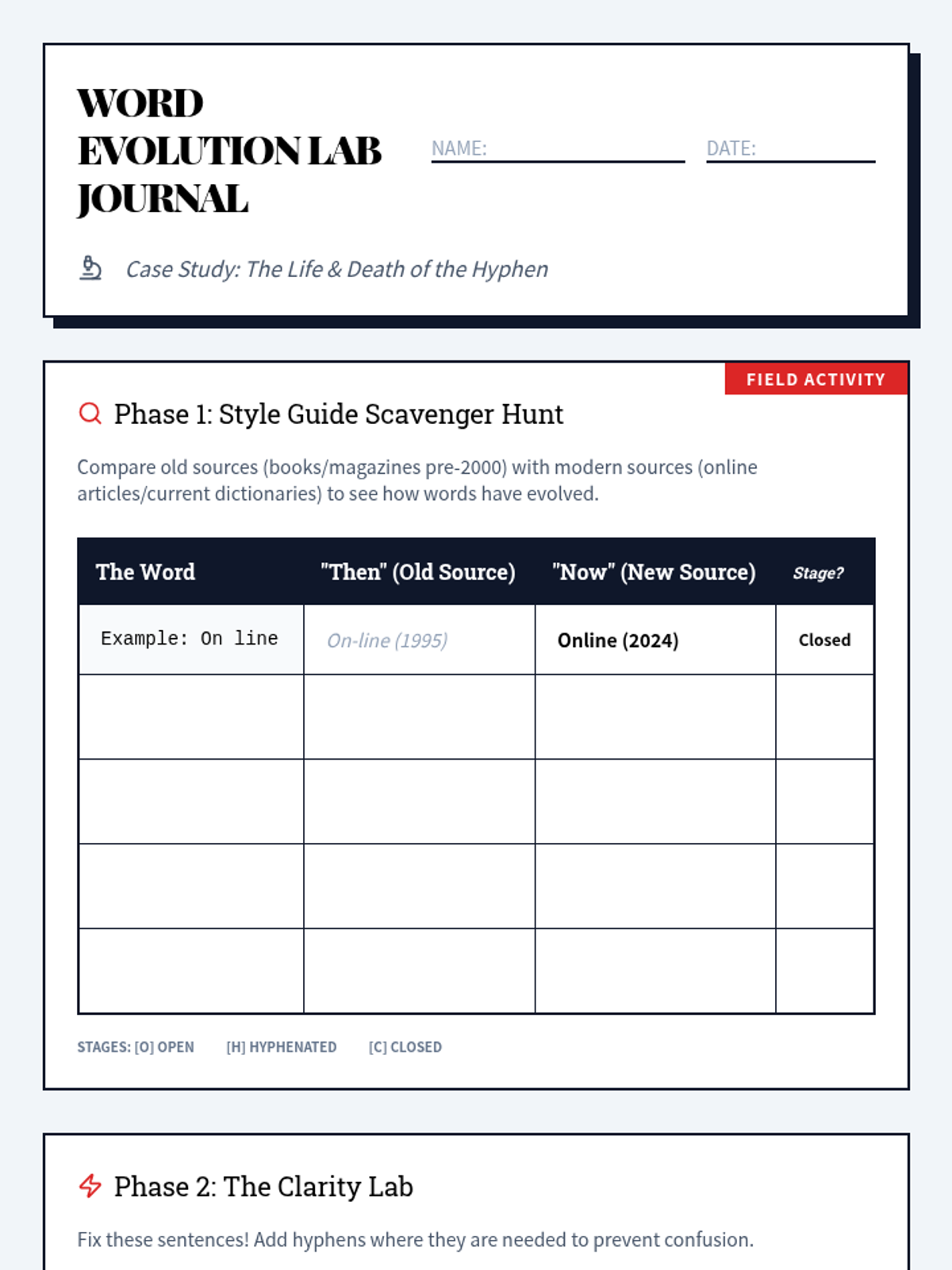
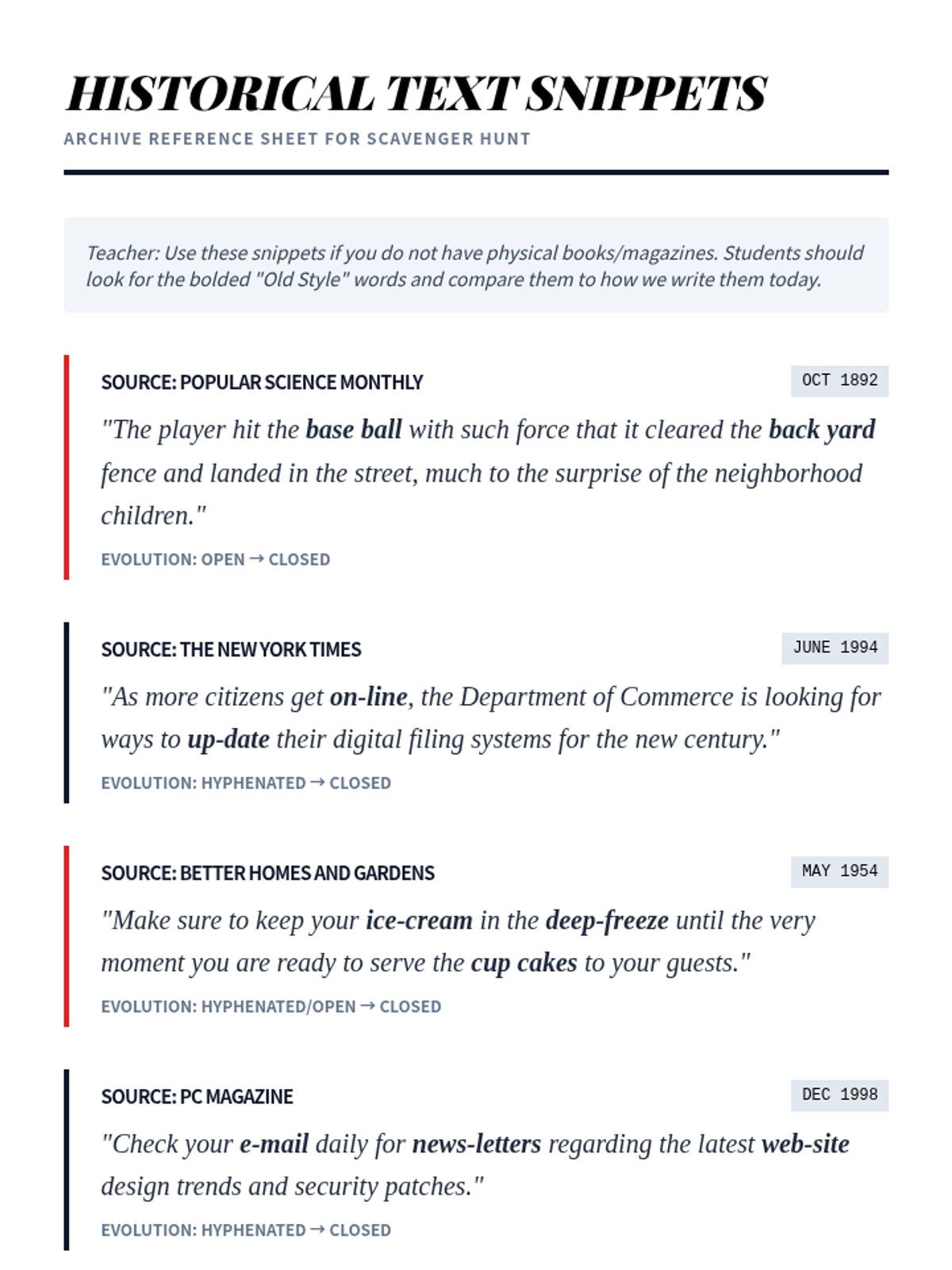
A creative lesson for Writing Club focused on the evolution of compound words and the stylistic rules of hyphenation, featuring a 'Then vs. Now' scavenger hunt.
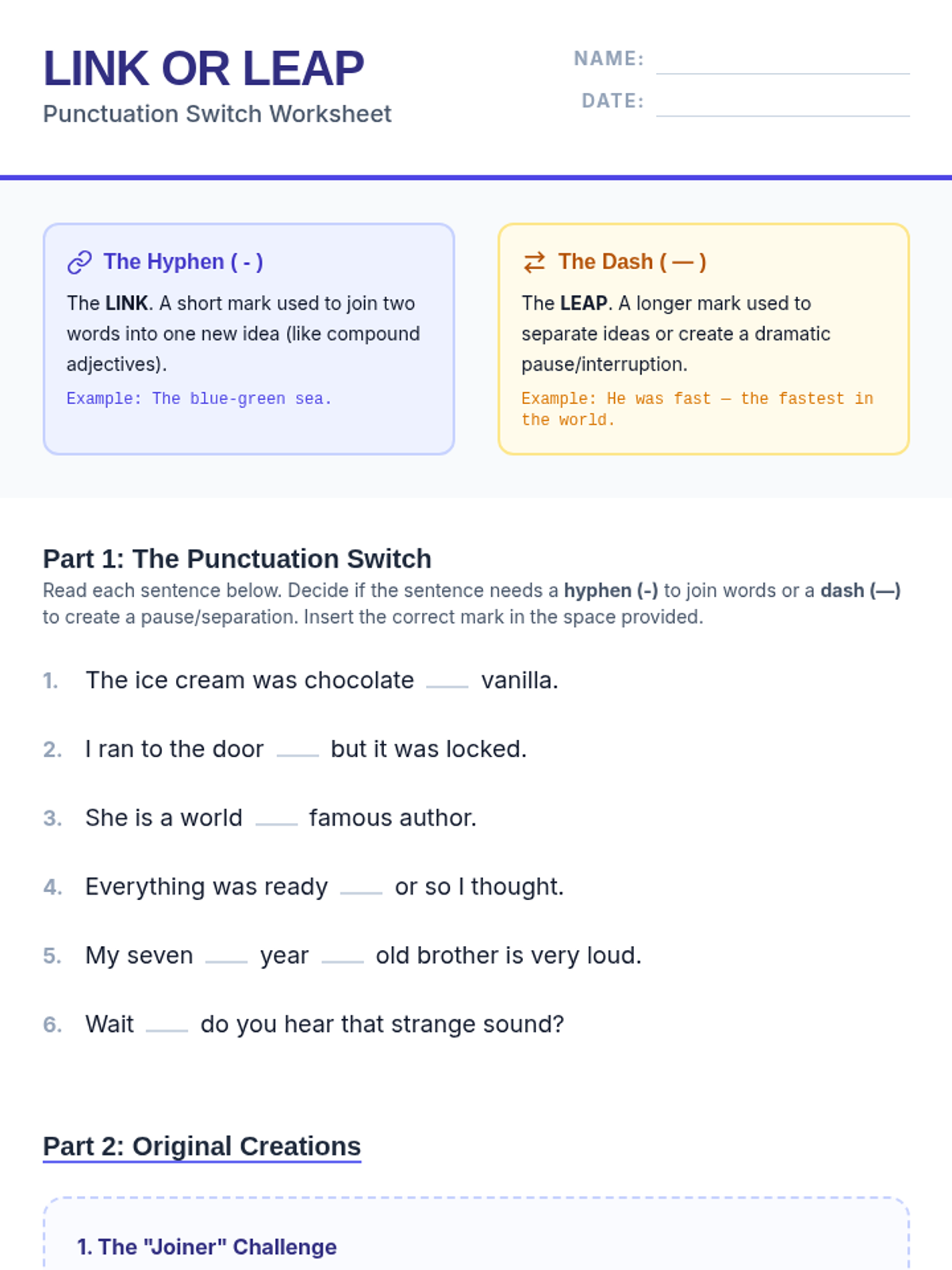
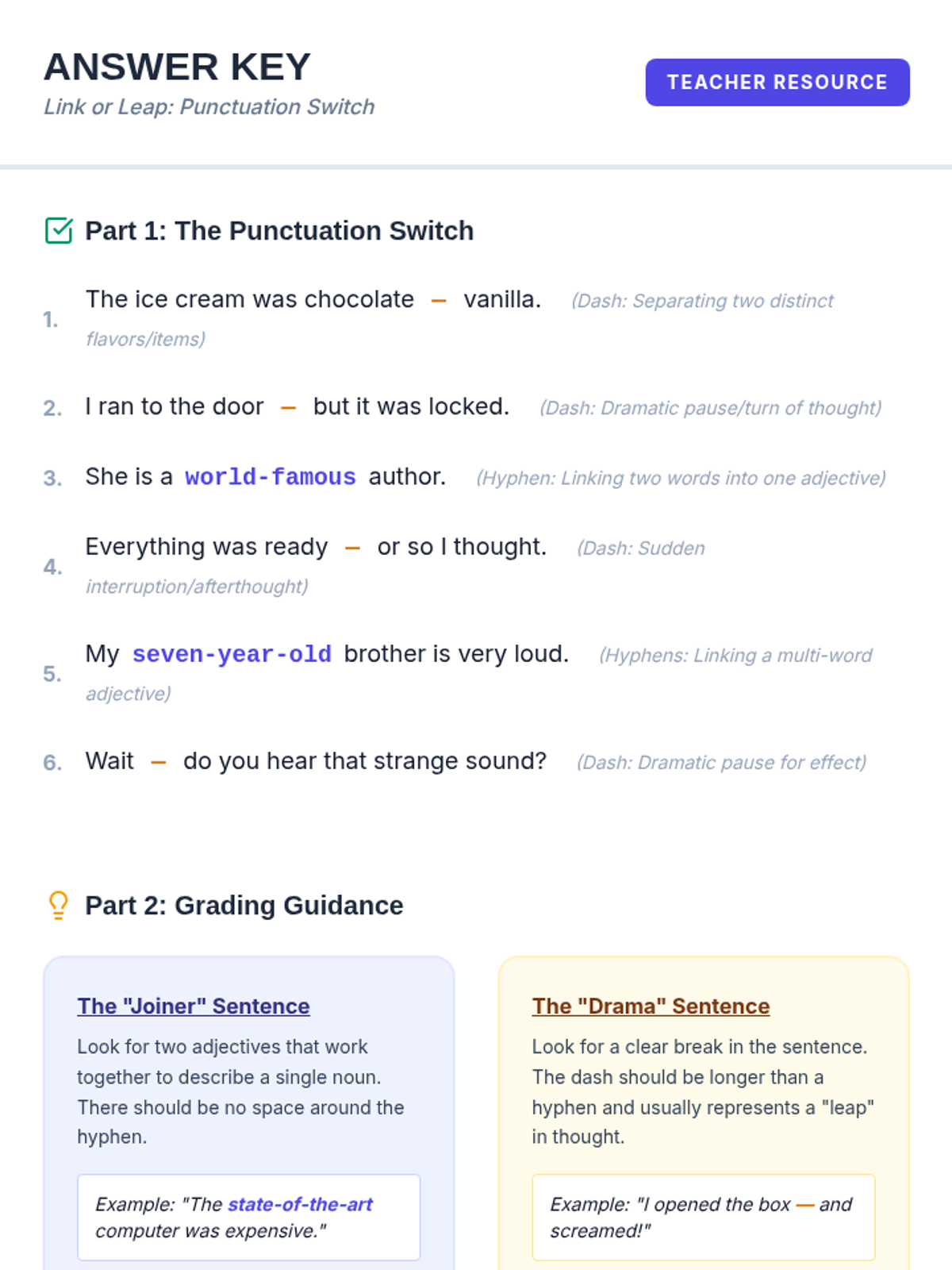
A 6th-grade grammar lesson focusing on the functional difference between hyphens (joining) and dashes (separating). Students use a Khan Academy video to visualize the 'little stick' vs. 'big stick' and practice through the 'Punctuation Switch' activity.
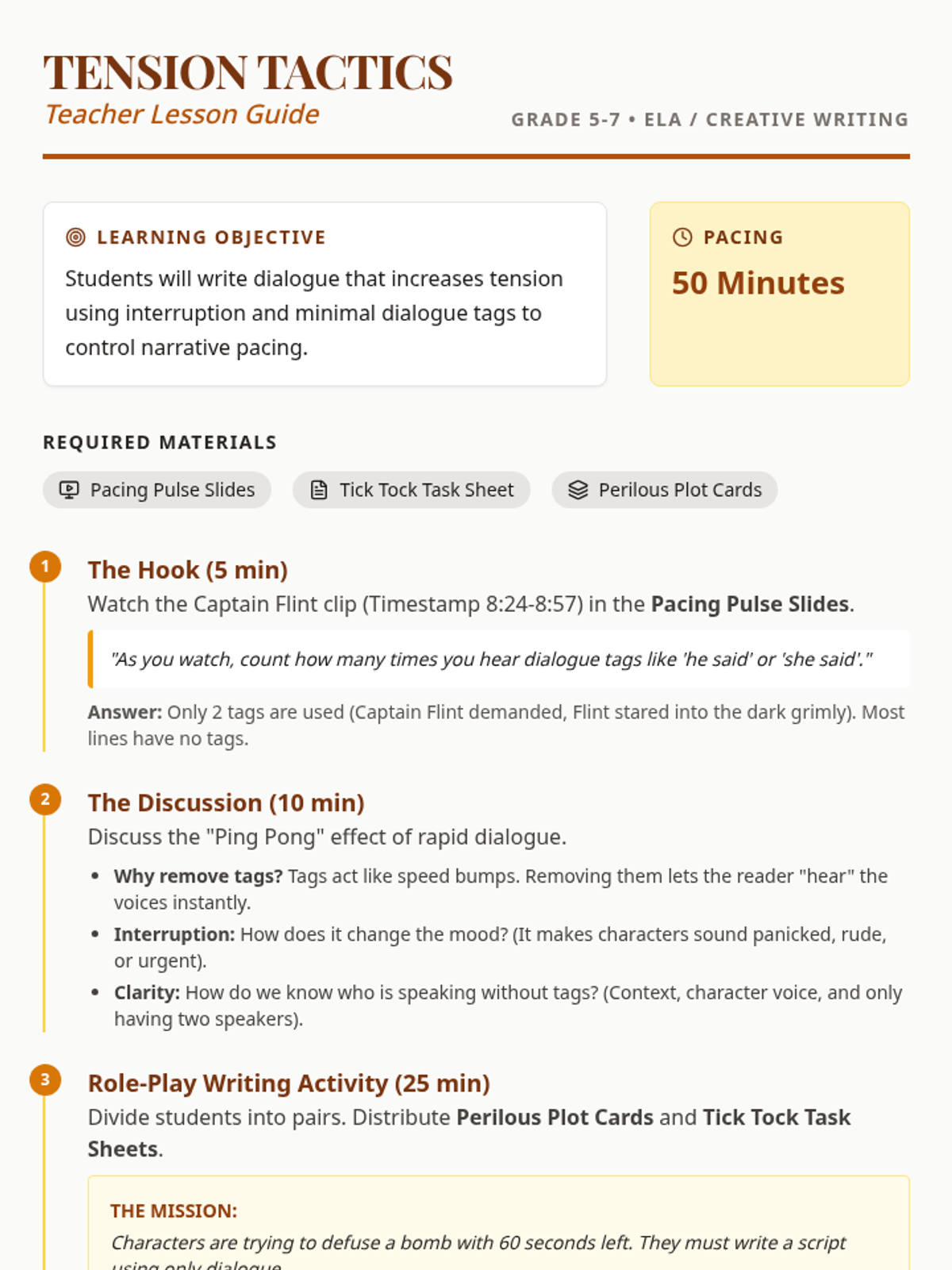
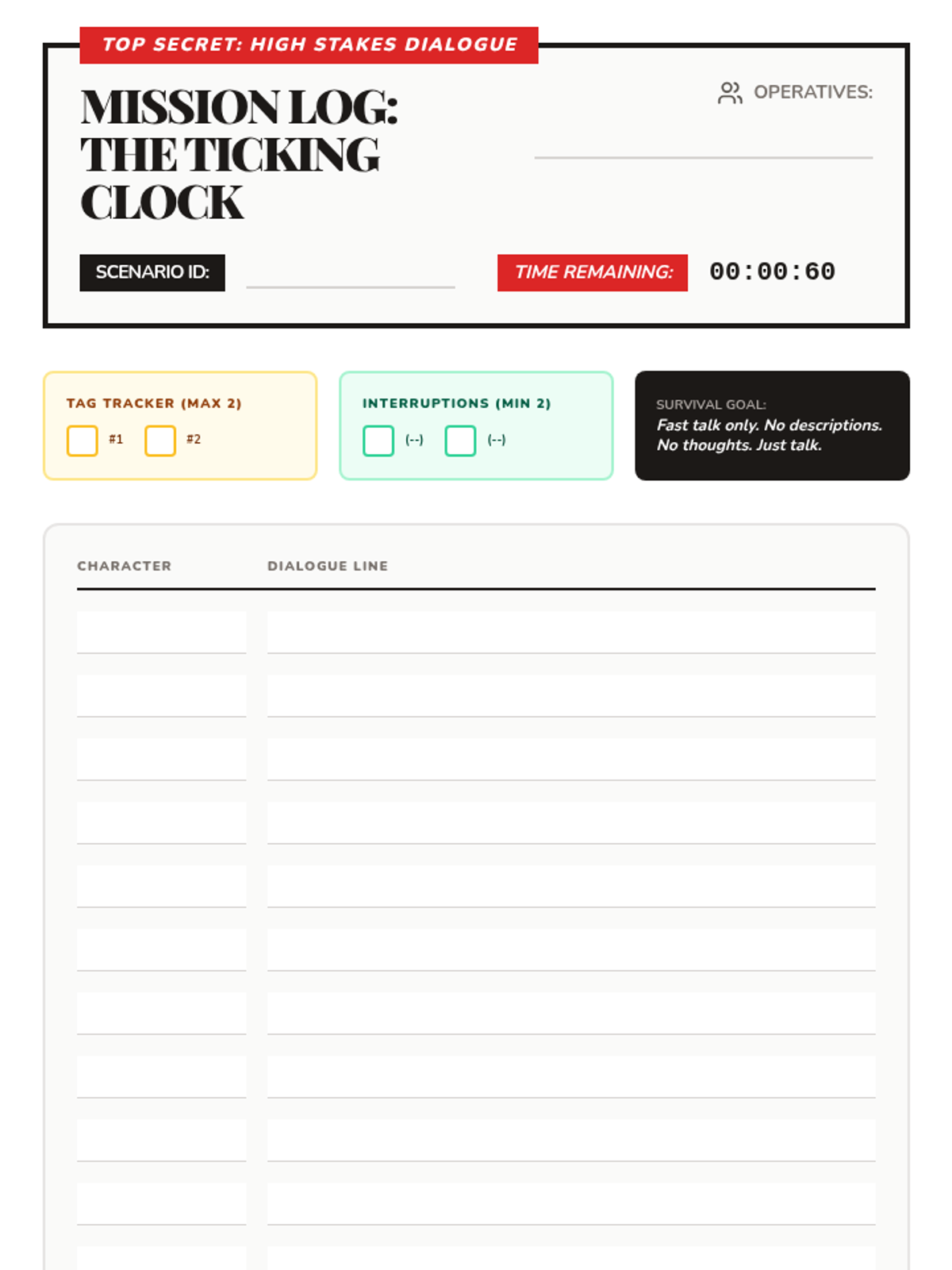
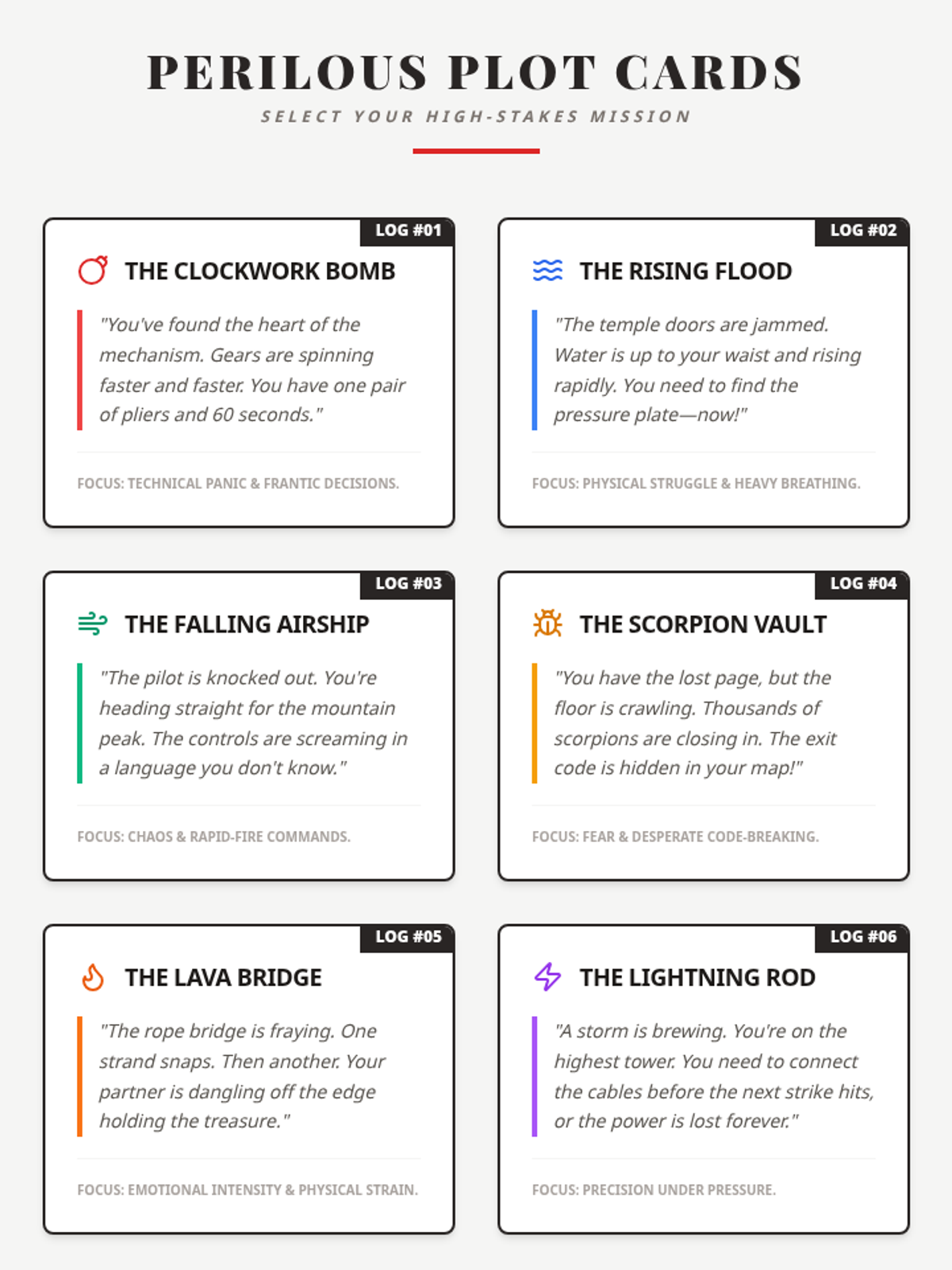
Students explore how to use rapid-fire dialogue, interruptions, and the removal of dialogue tags to create a sense of urgency and tension in adventure writing. The lesson culminates in a high-stakes role-play writing activity focused on a bomb-defusal scenario.
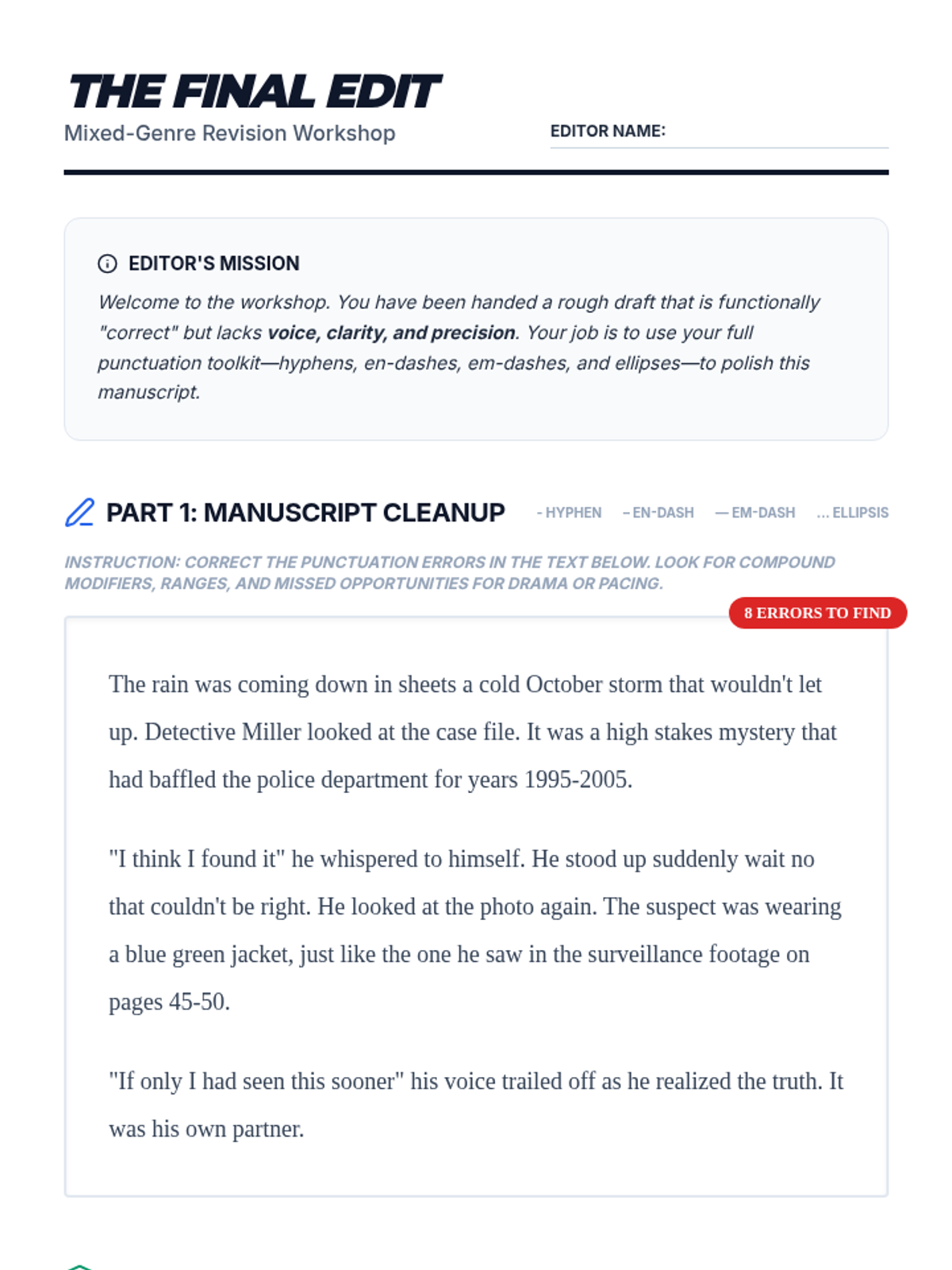
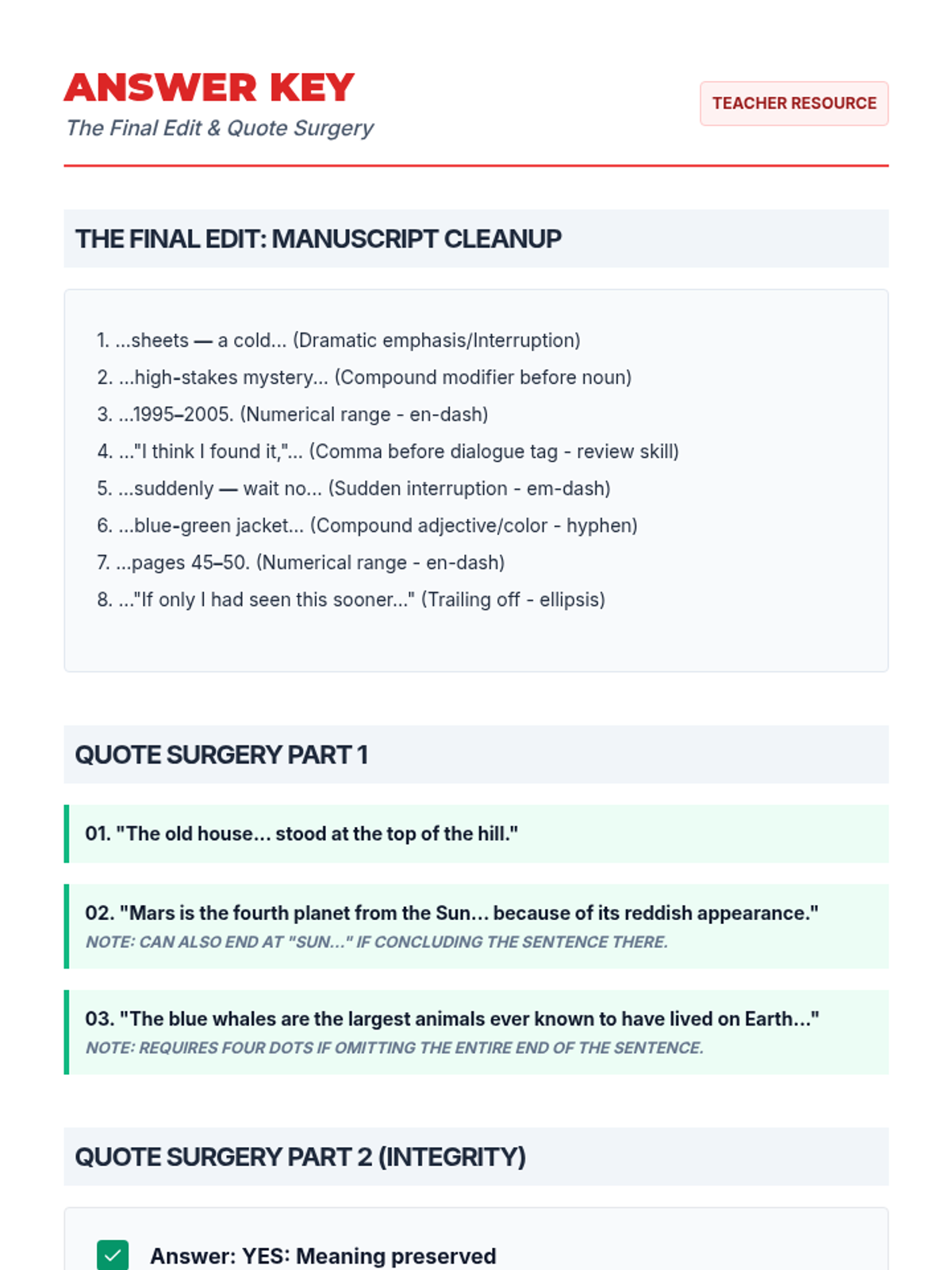
A culminating workshop where students edit a mixed-genre text and peer-review their own drafts for advanced punctuation.
Teaches the formal academic use of ellipses to omit words from direct quotations while maintaining meaning and grammar.
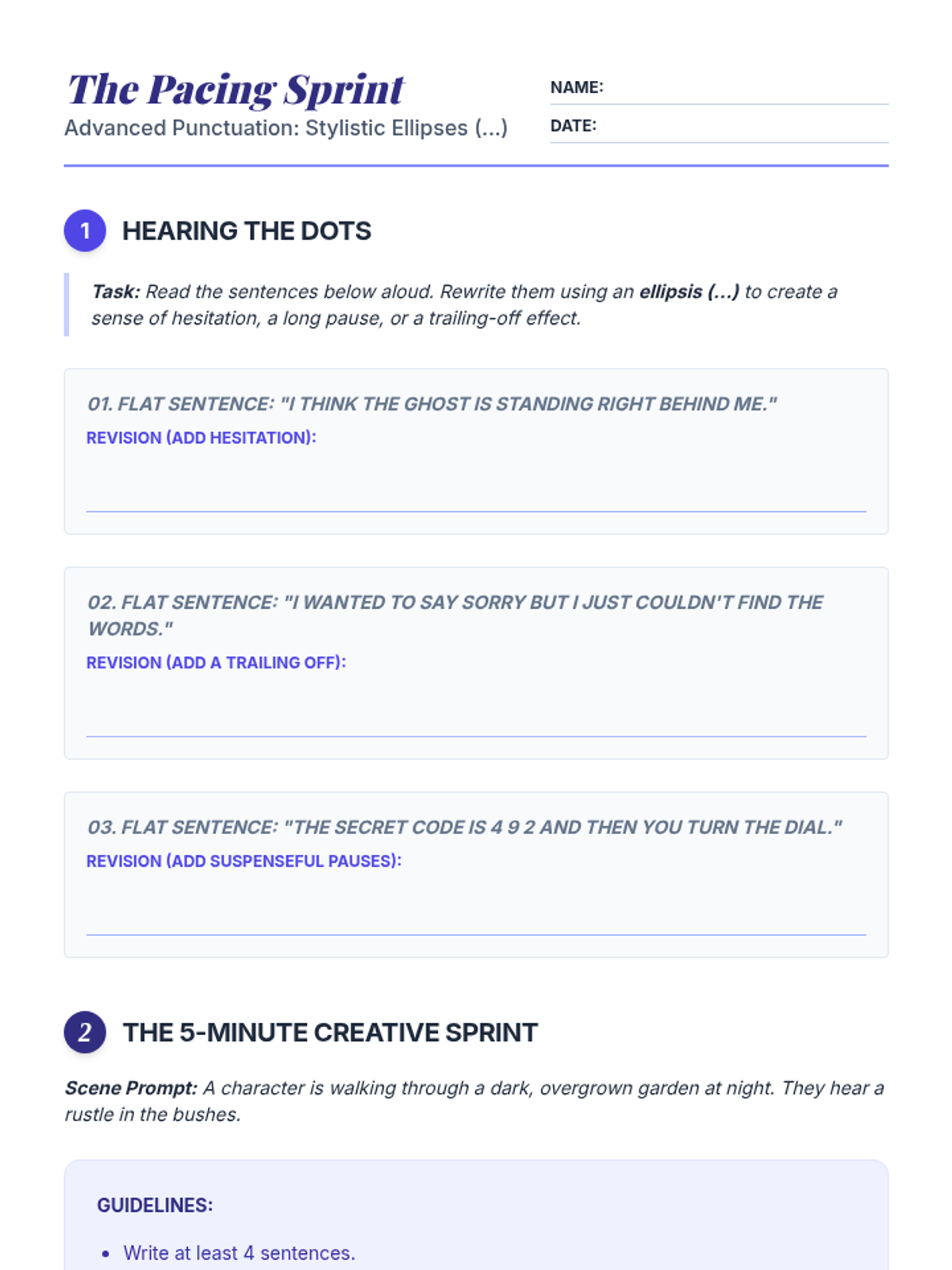
Focuses on the stylistic use of ellipses in narrative writing to create suspense, hesitation, and specific pacing.
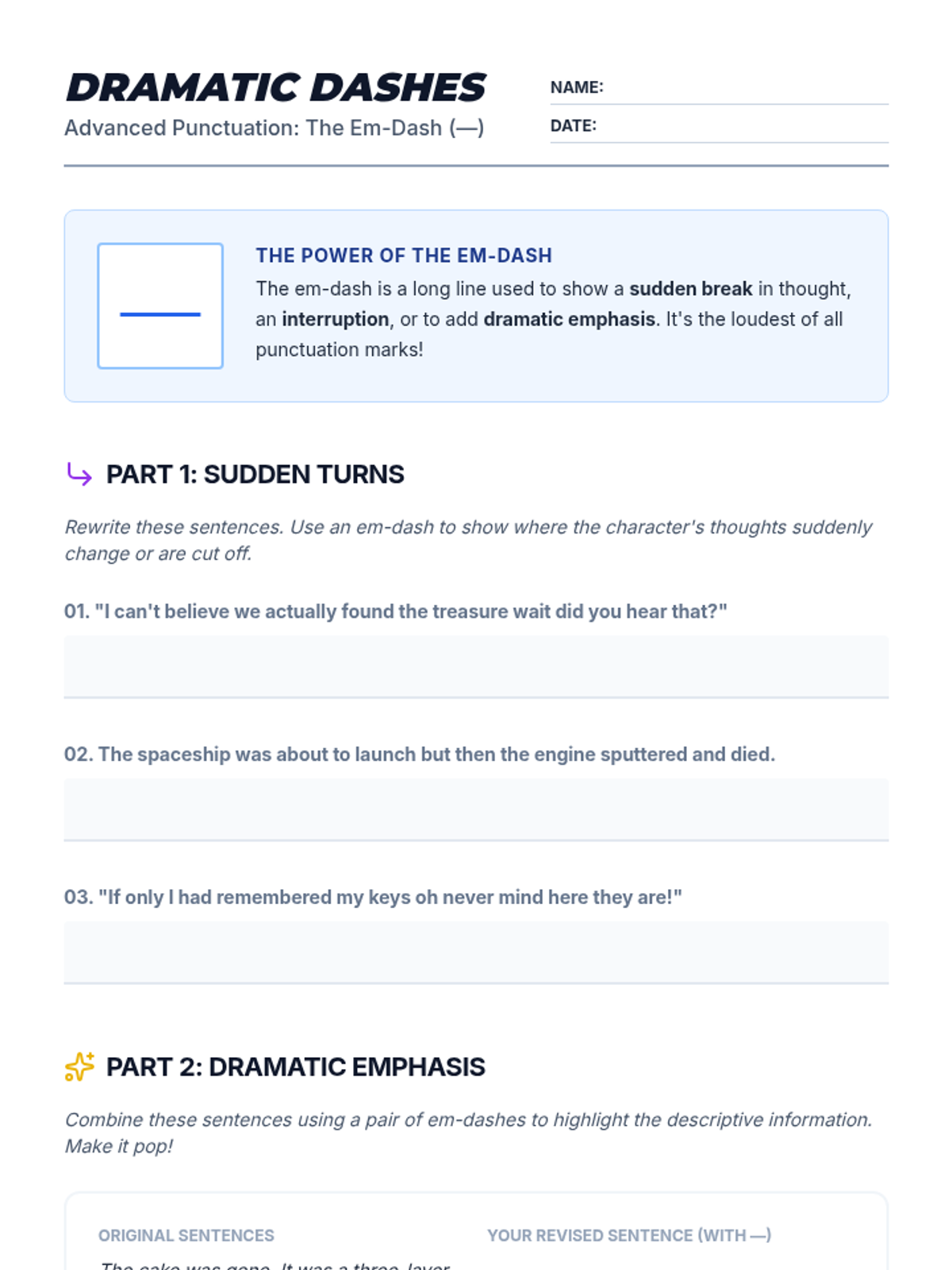
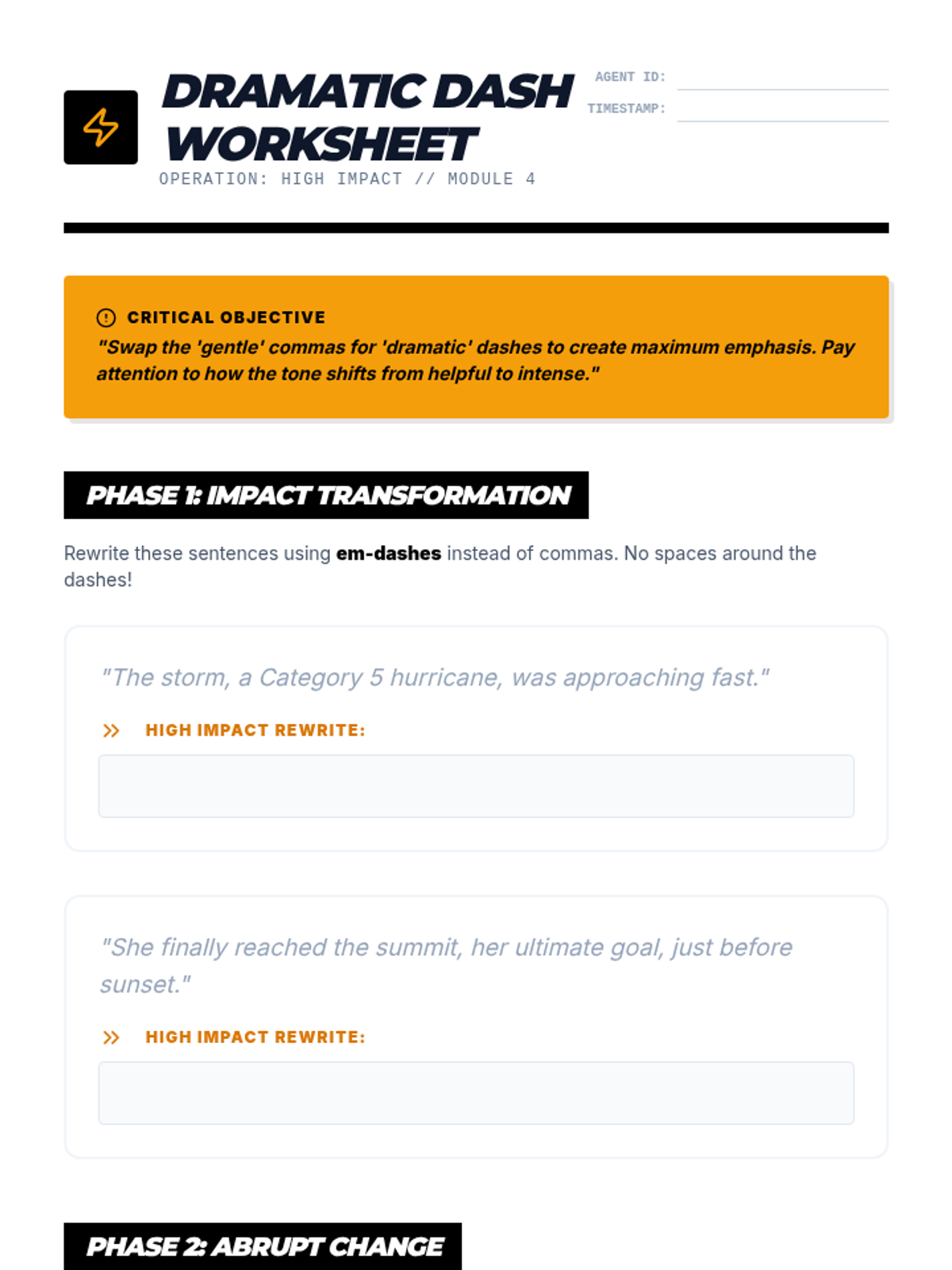
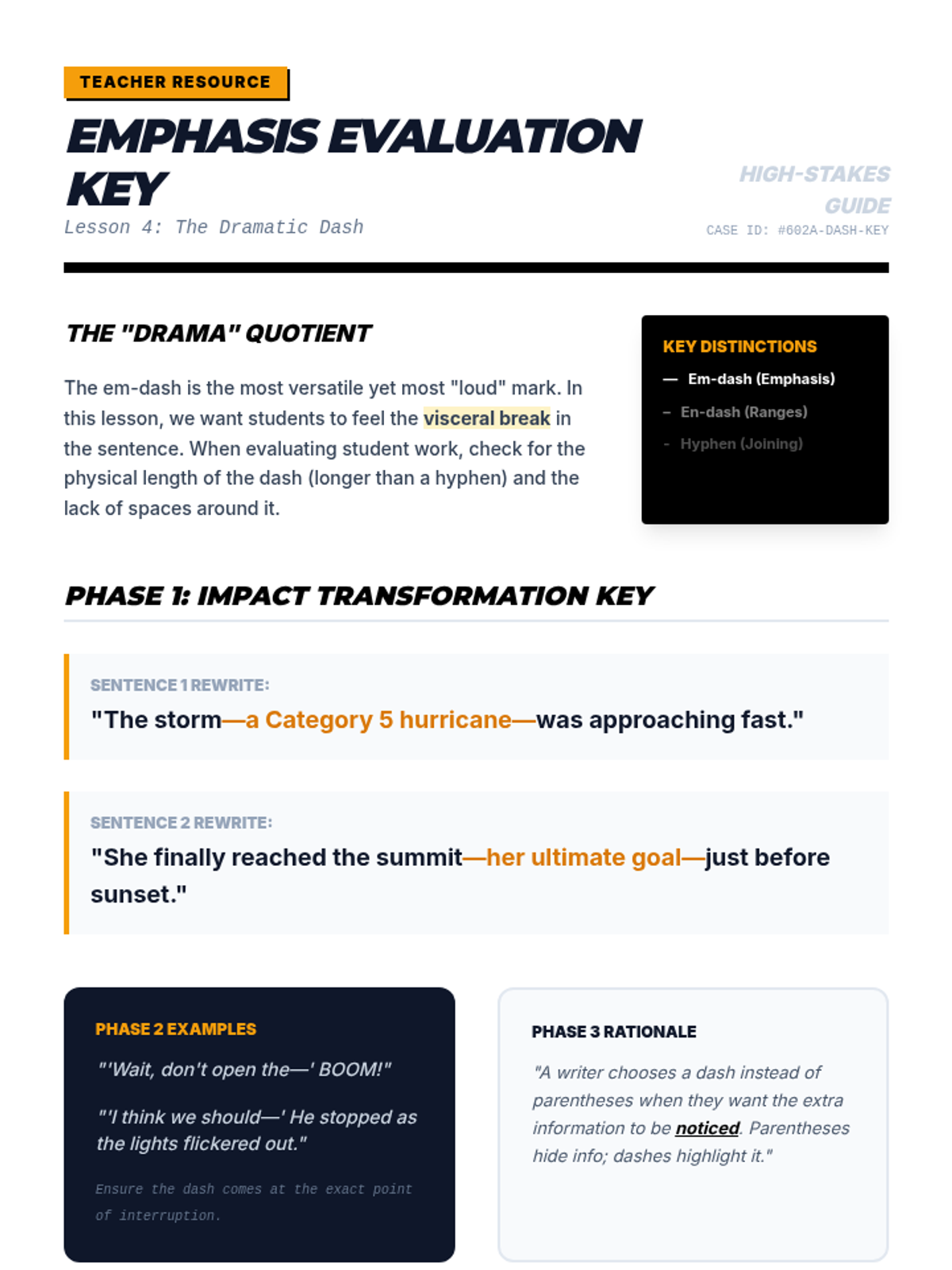
An exploration of the em-dash as a dramatic tool for emphasis, interruption, and parenthetical thoughts.
Students learn to distinguish between hyphens and en-dashes, focusing on compound modifiers and numerical ranges.
Students synthesize their learning by choosing the best punctuation mark for various rhetorical effects in a final editing challenge.
Students learn to use the em-dash for dramatic interruptions and emphasis in their writing.
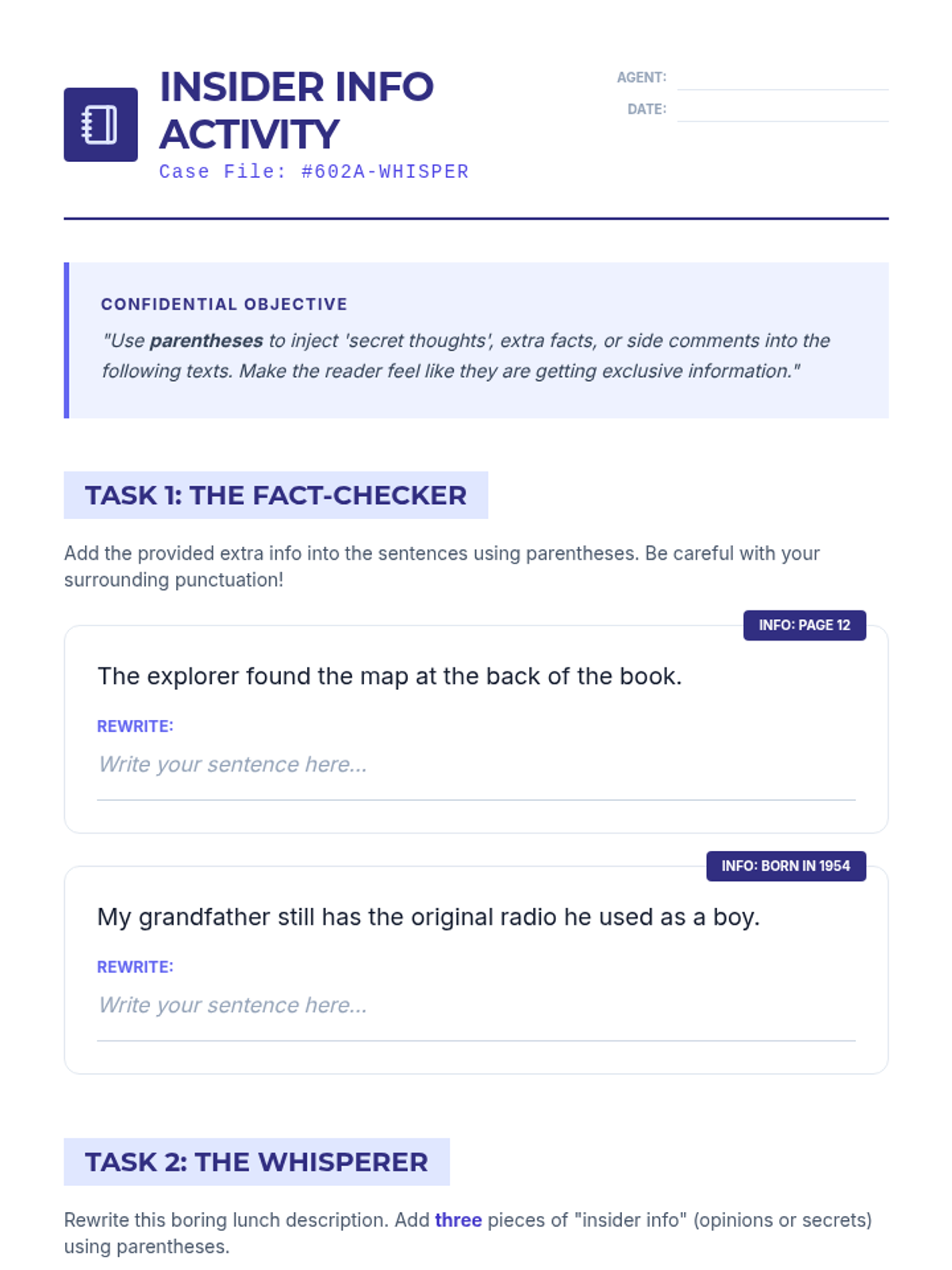
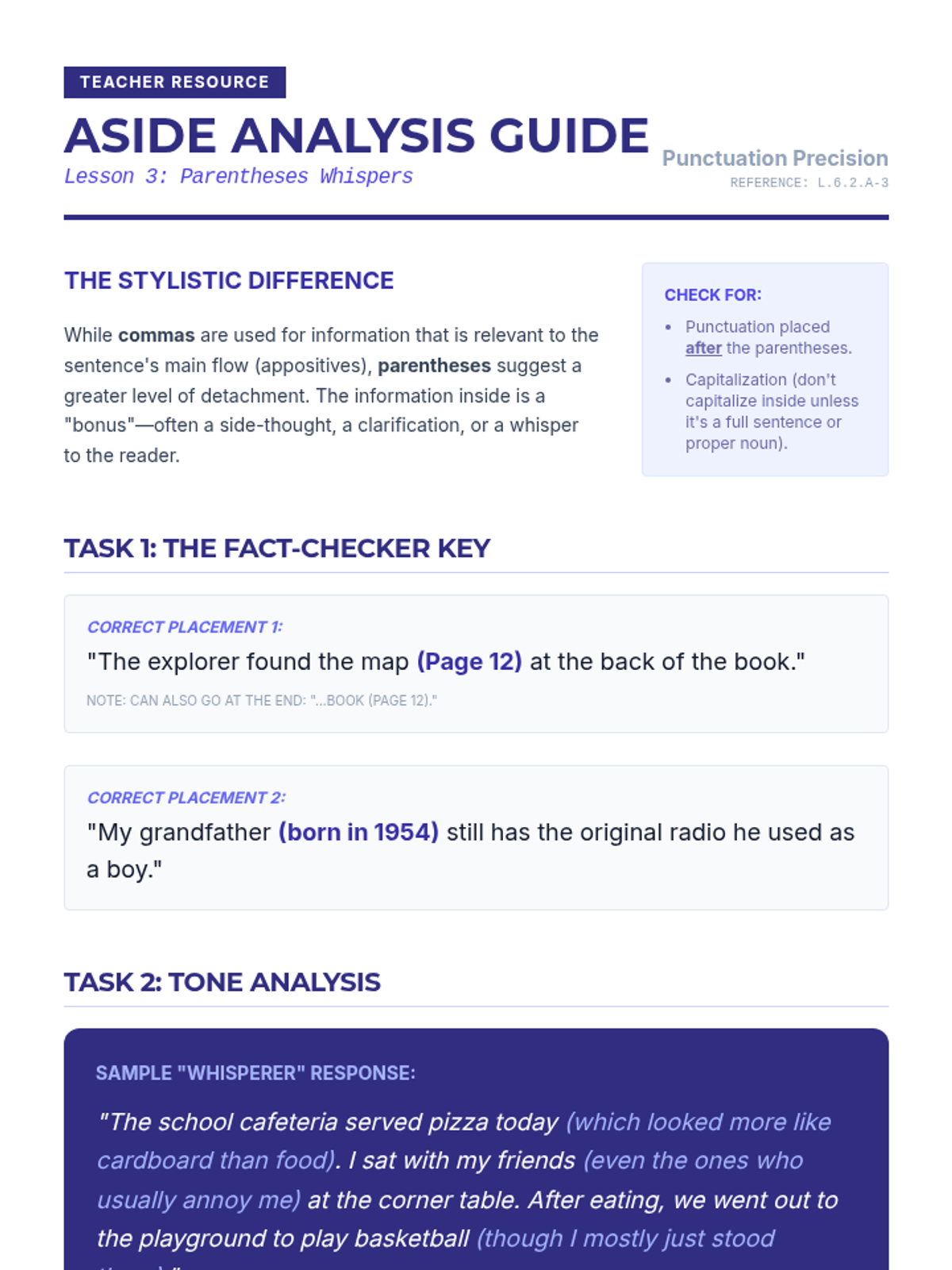
Students explore how parentheses are used for whispers, side notes, and clarifications that stay separate from the main sentence flow.
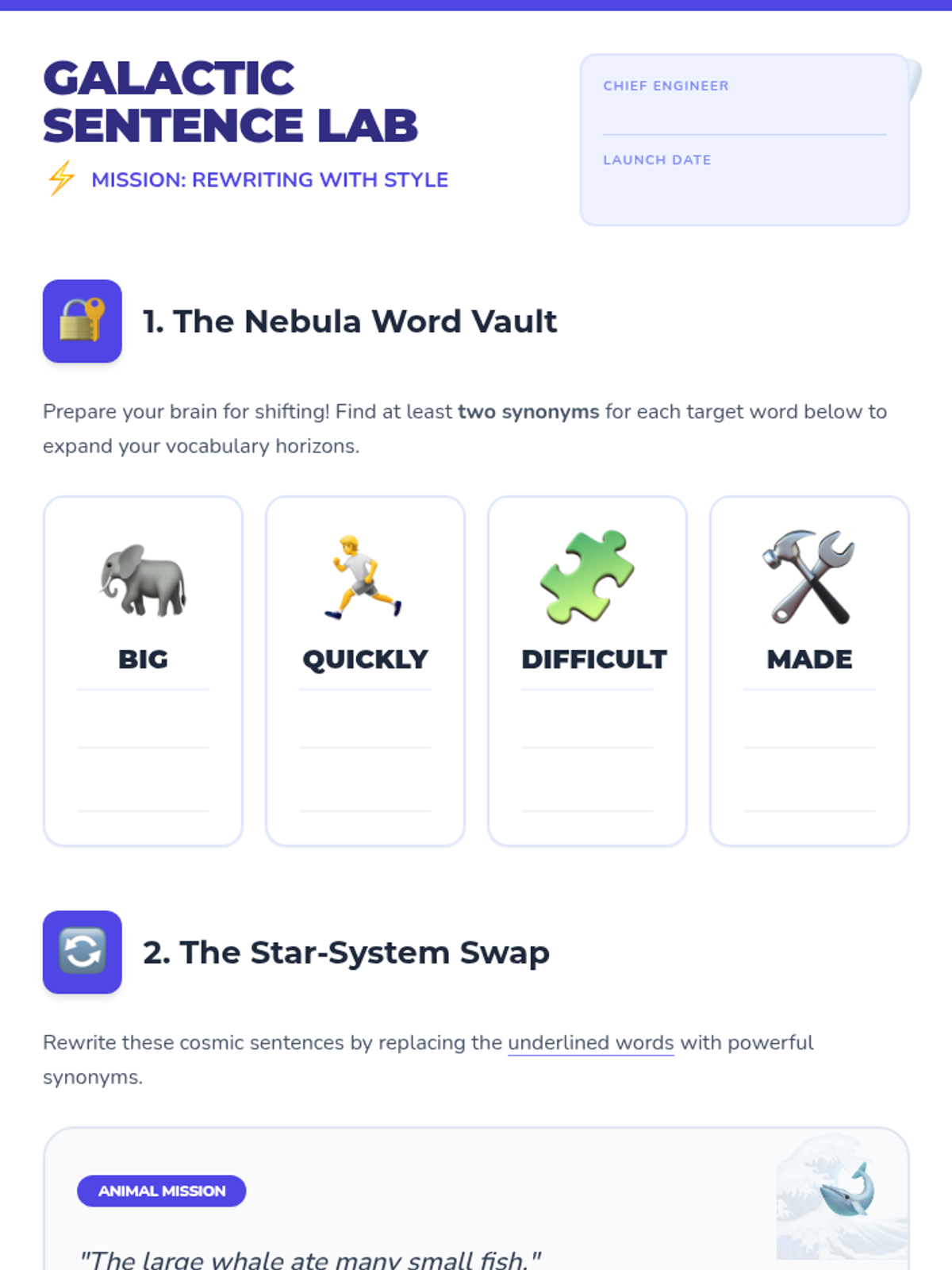
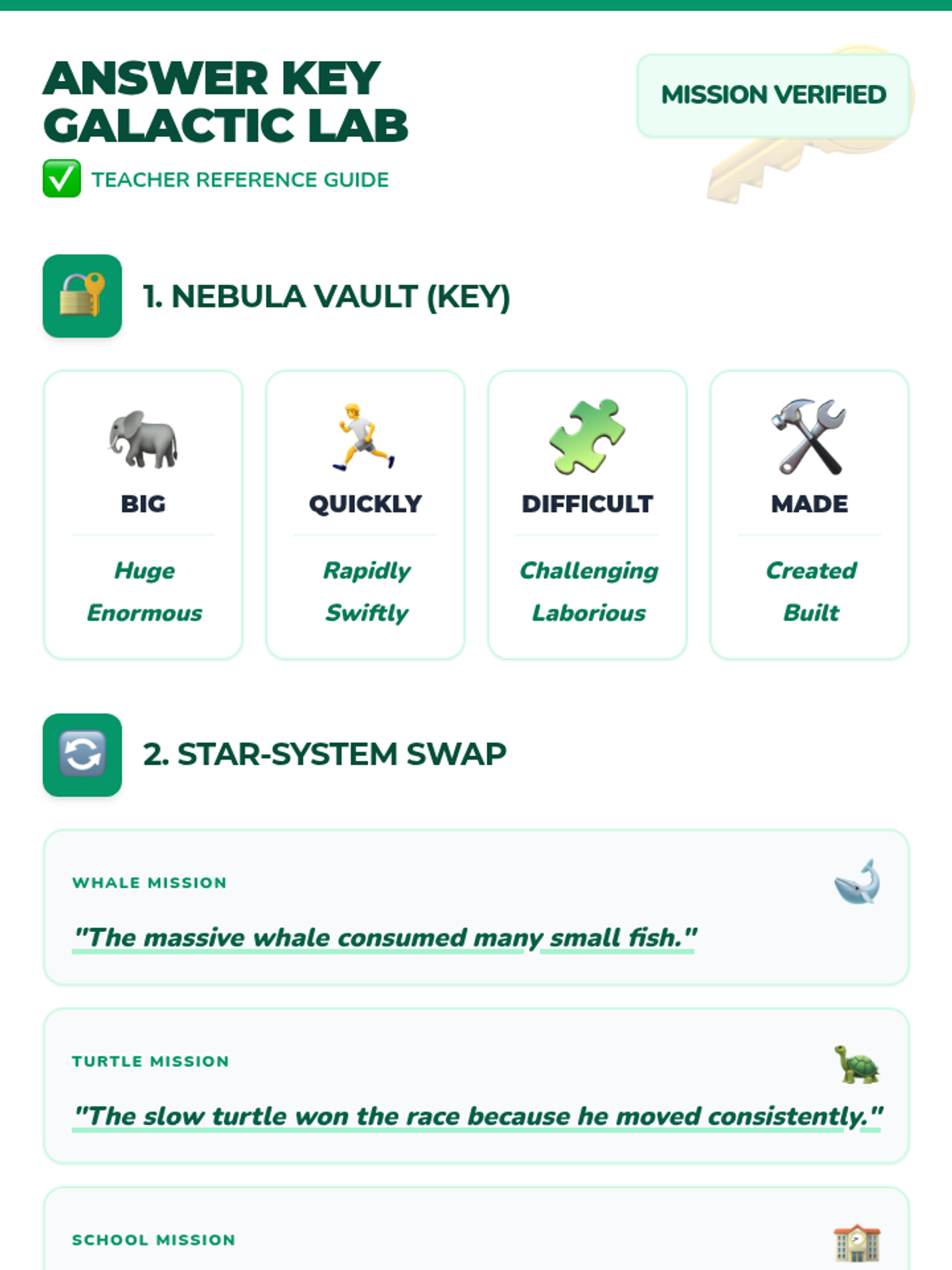
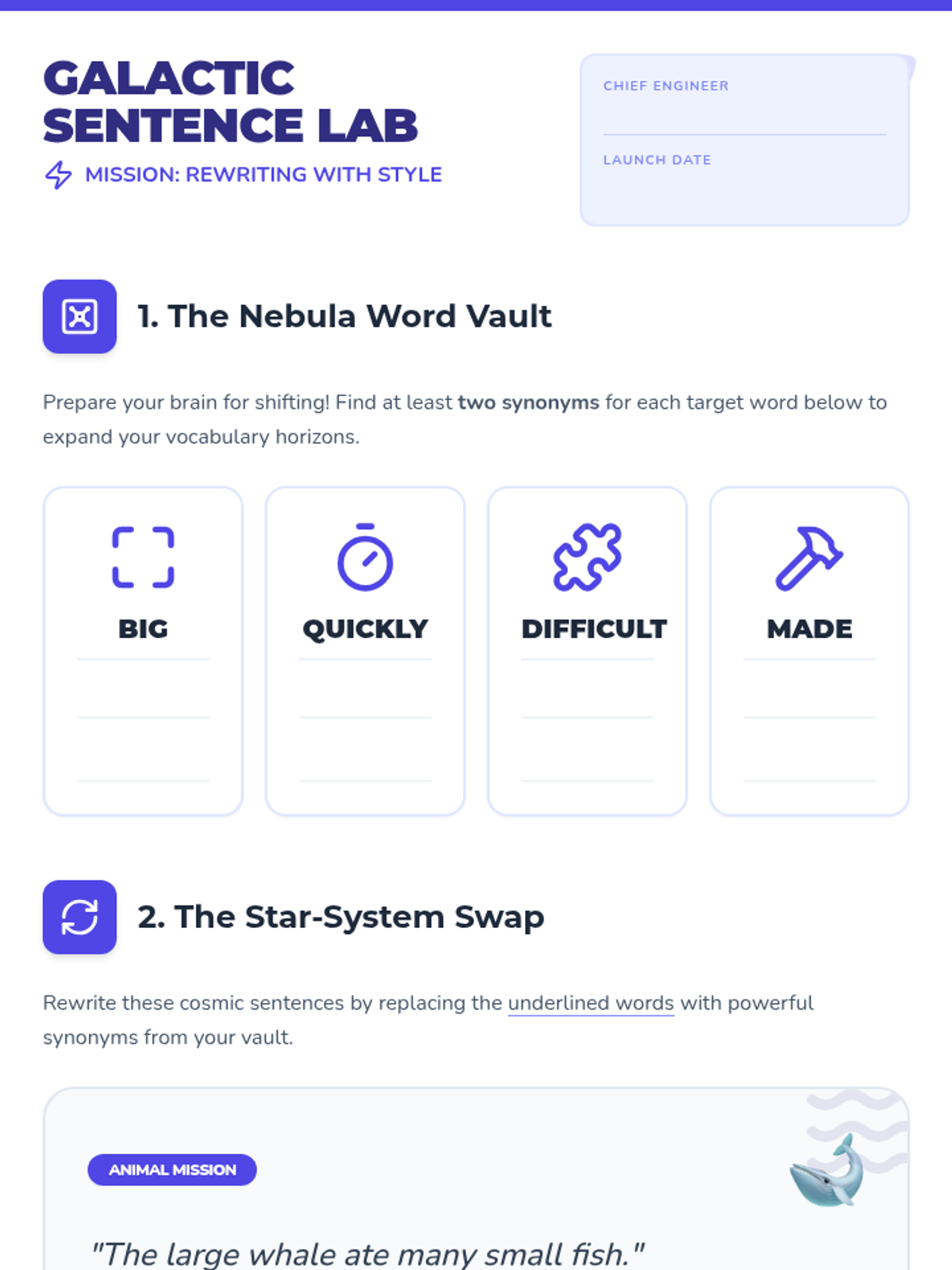
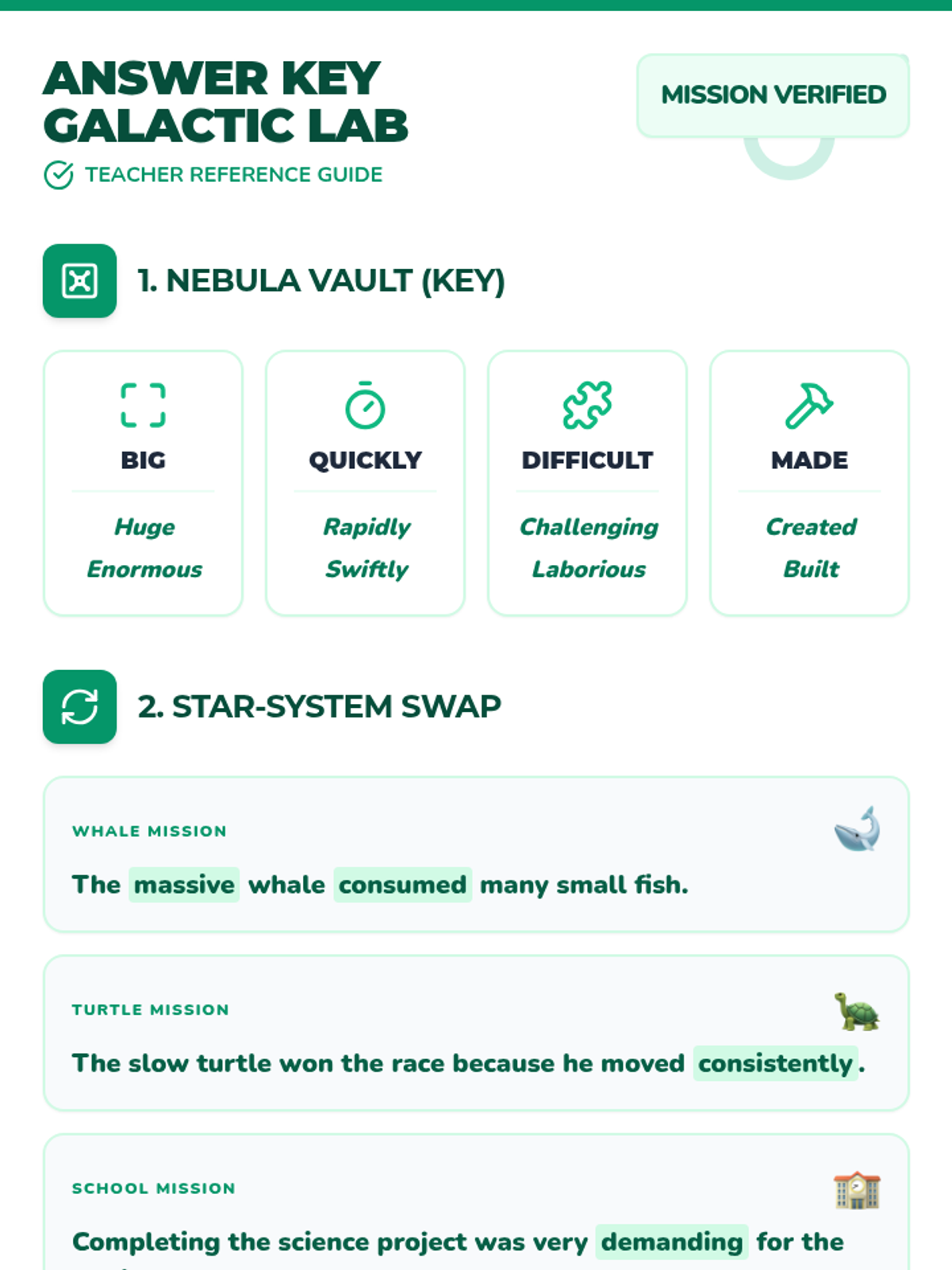
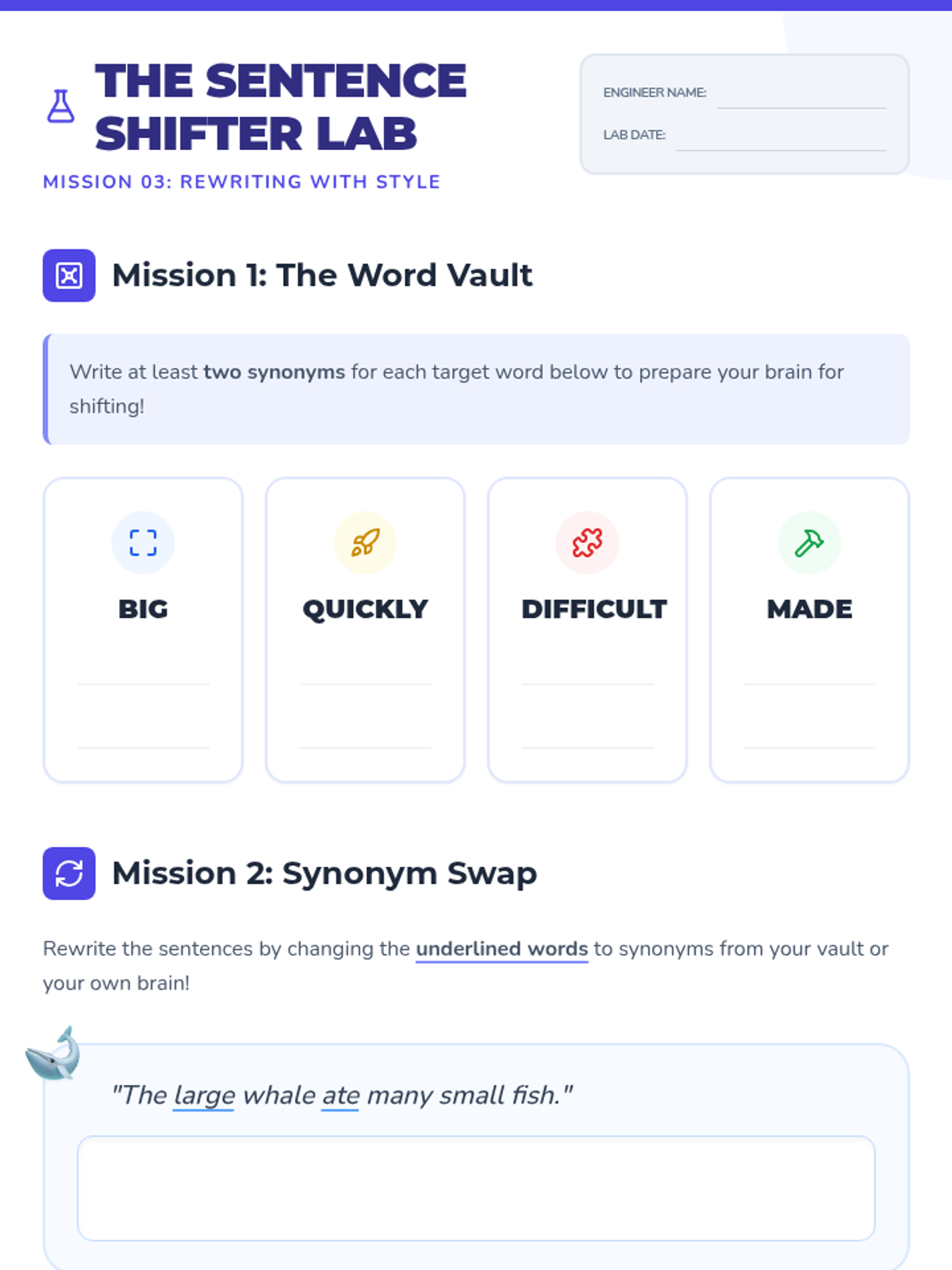
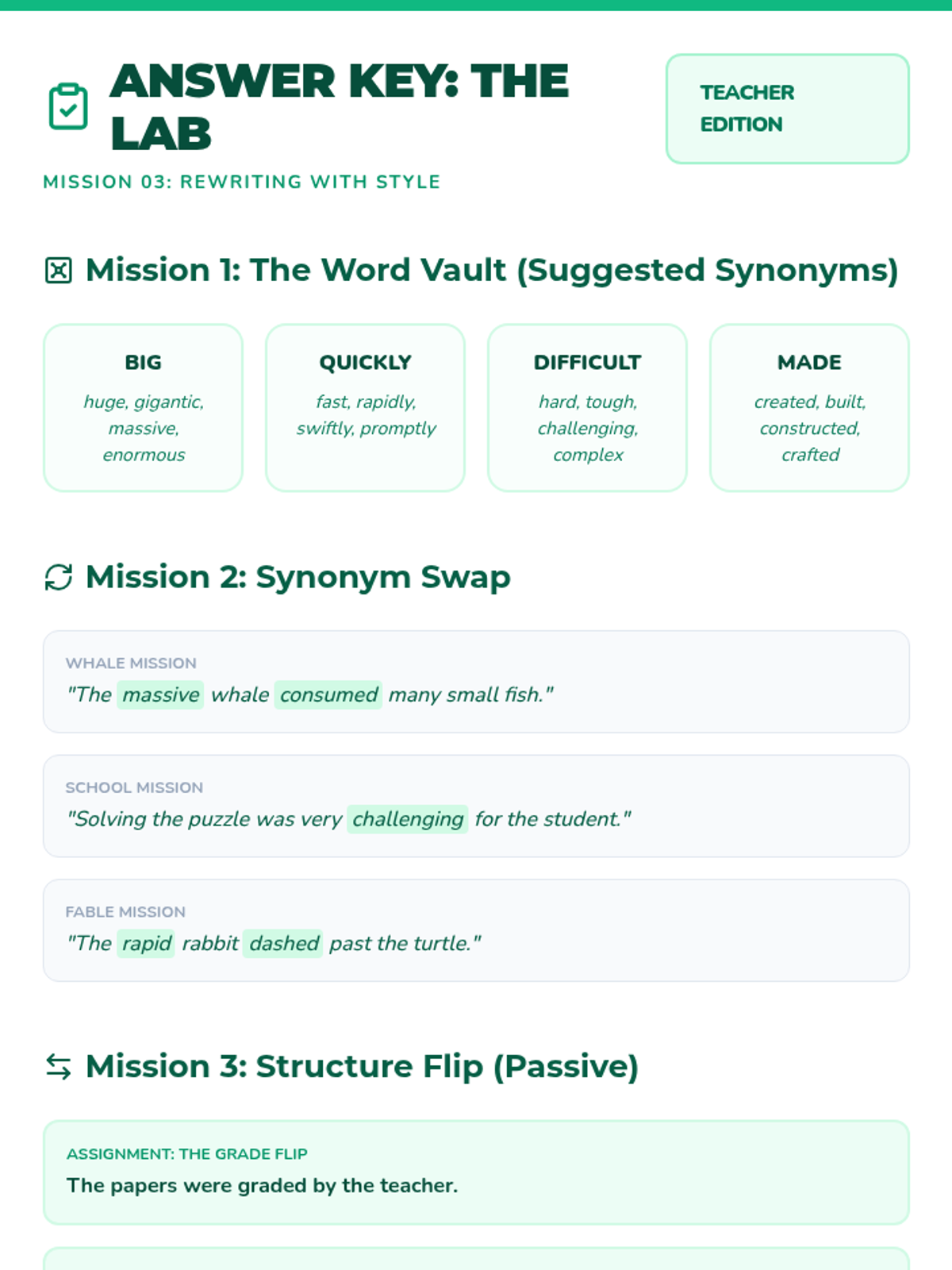
A visual, space-themed workshop focused on enhancing writing through synonyms and sentence structure transformations. Students explore the 'Galactic Sentence Lab' to practice vocabulary variety and active/passive voice flips.
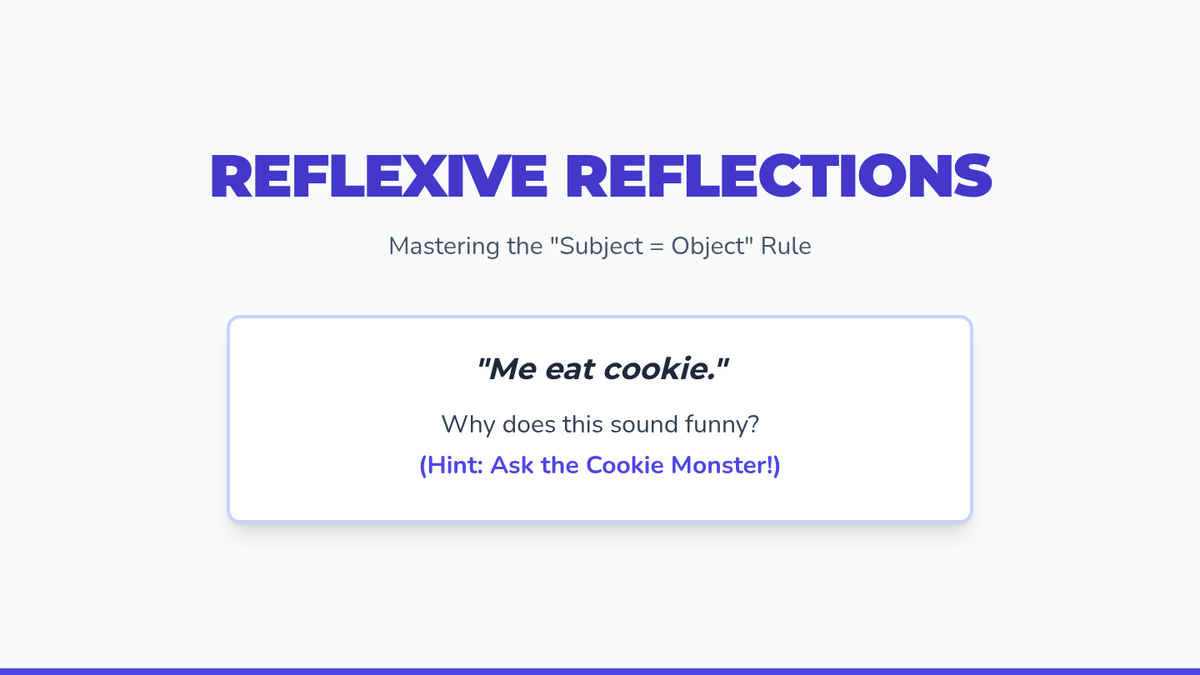
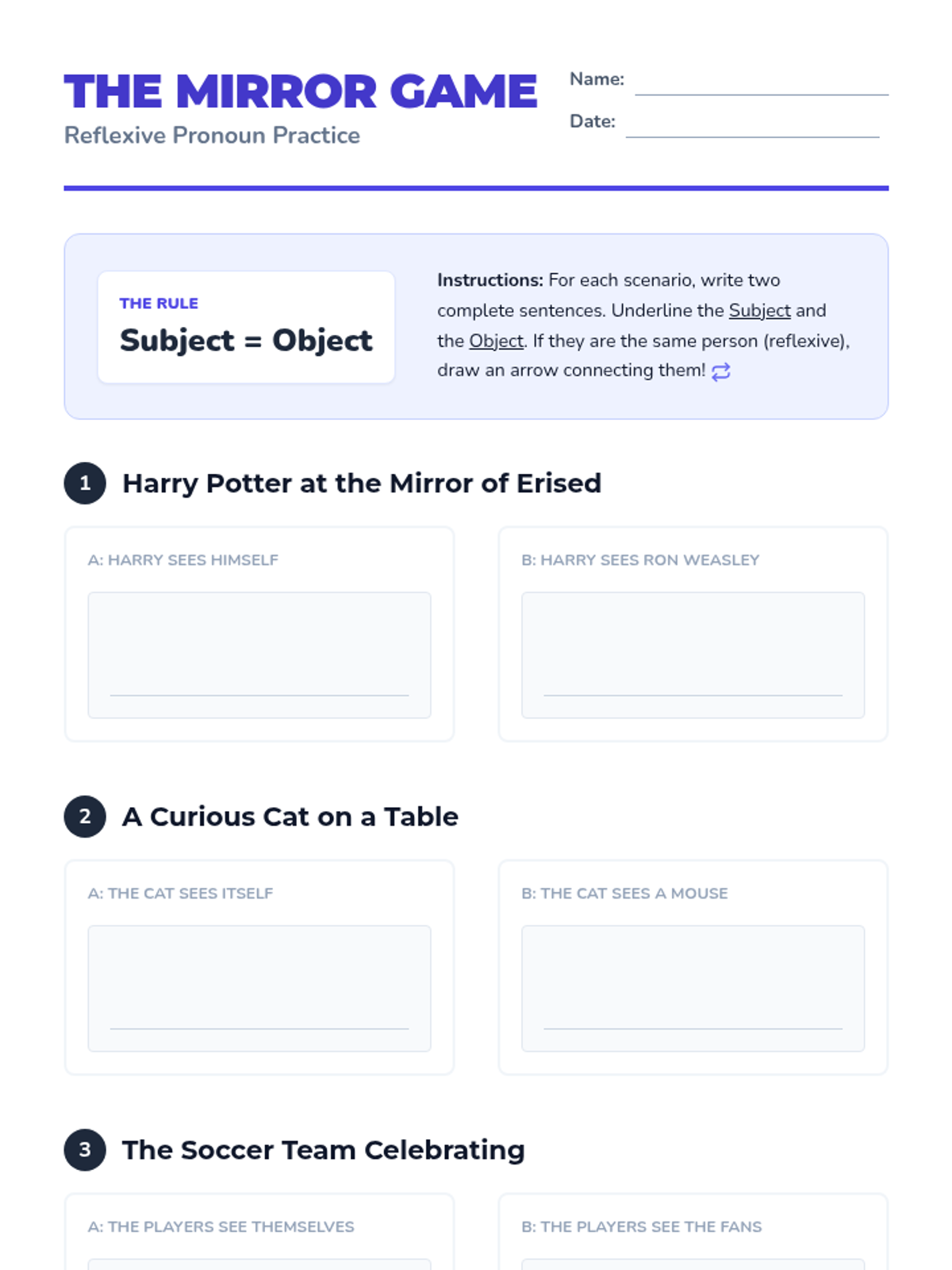
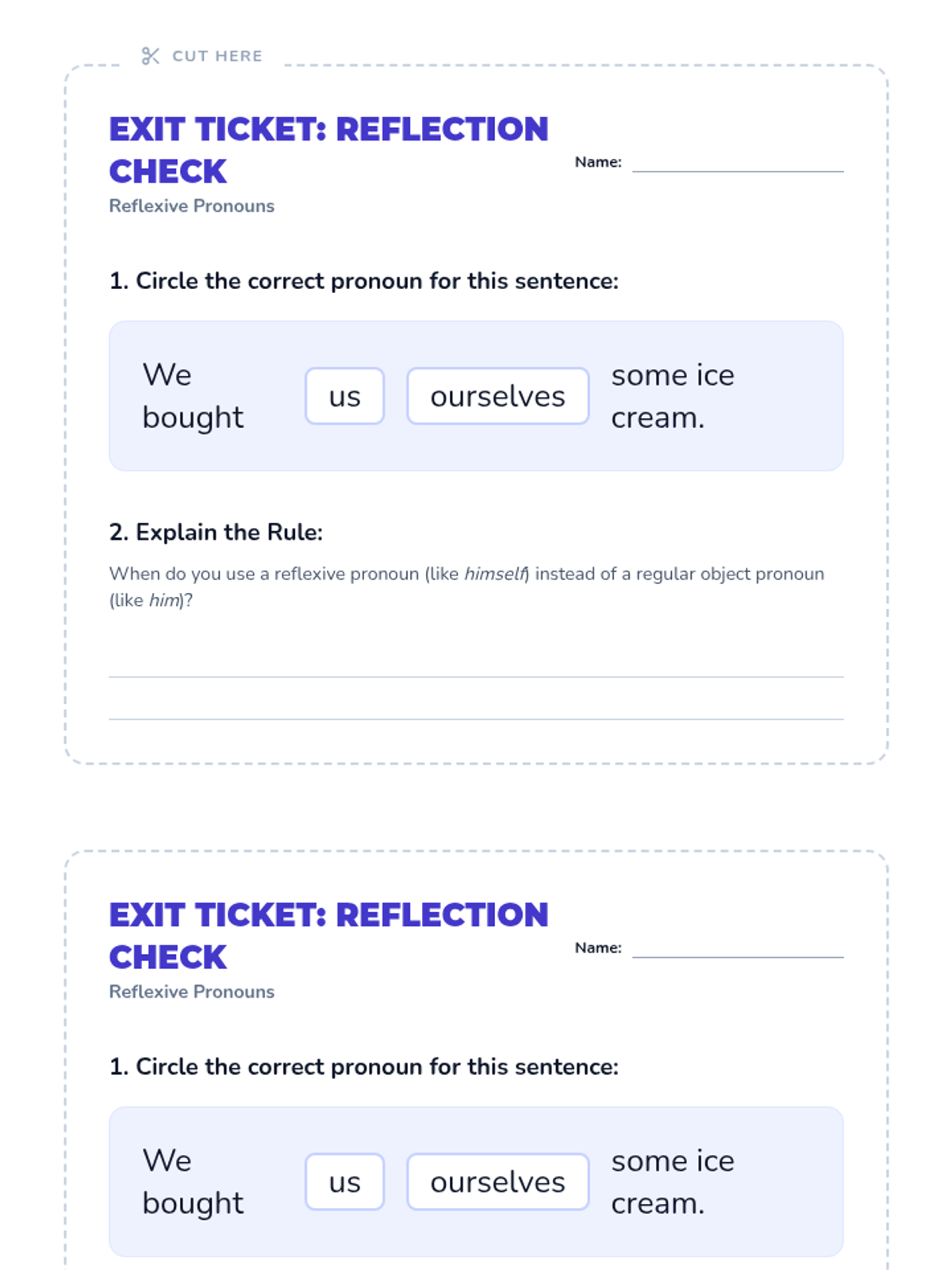
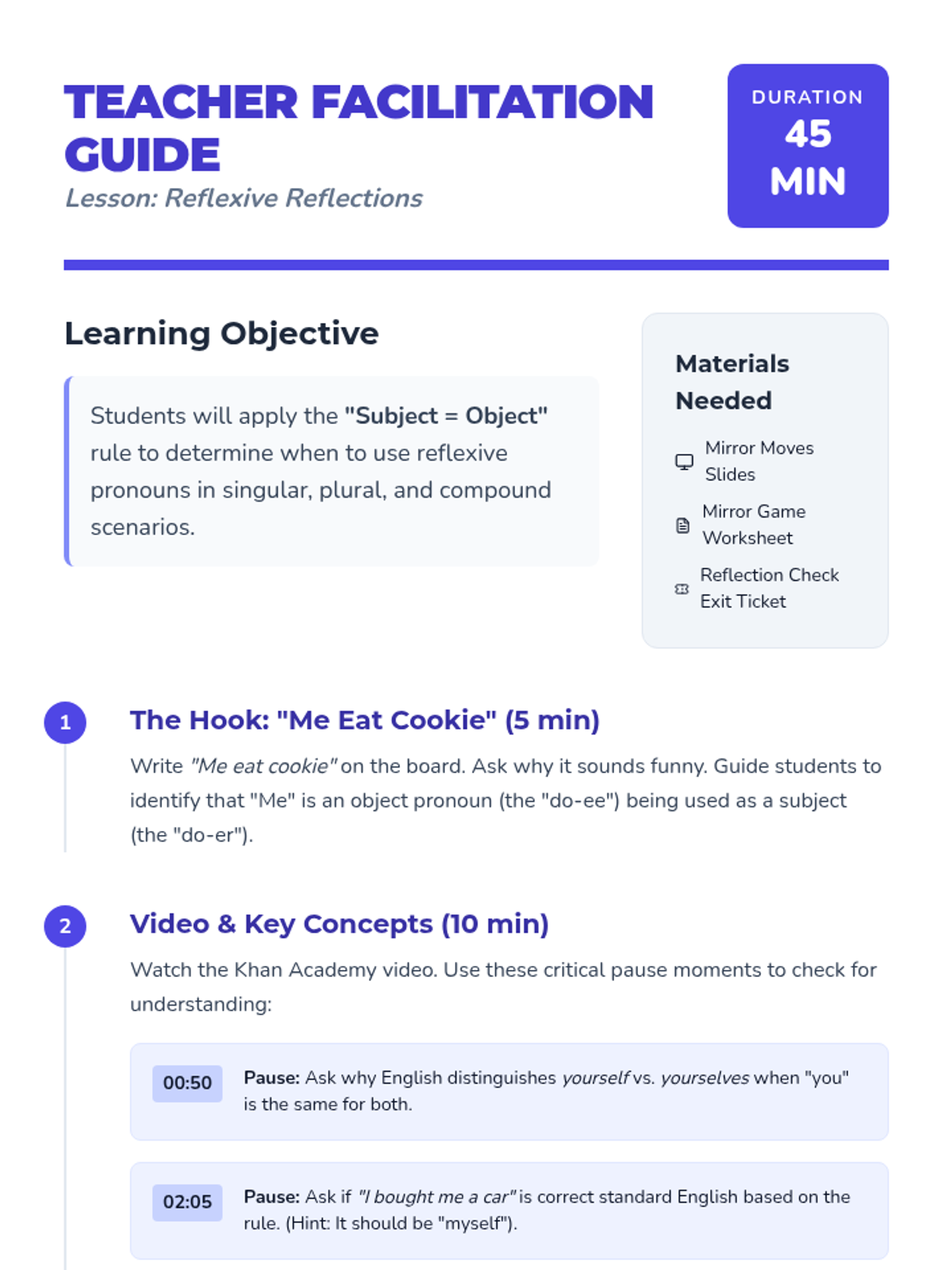
A 6th-grade grammar lesson focused on reflexive pronouns, using the 'Subject = Object' rule and the 'Sub it out' test to ensure correct pronoun usage. Students engage with a 'Mirror Game' activity to visualize when do-ers and do-ees are the same person.
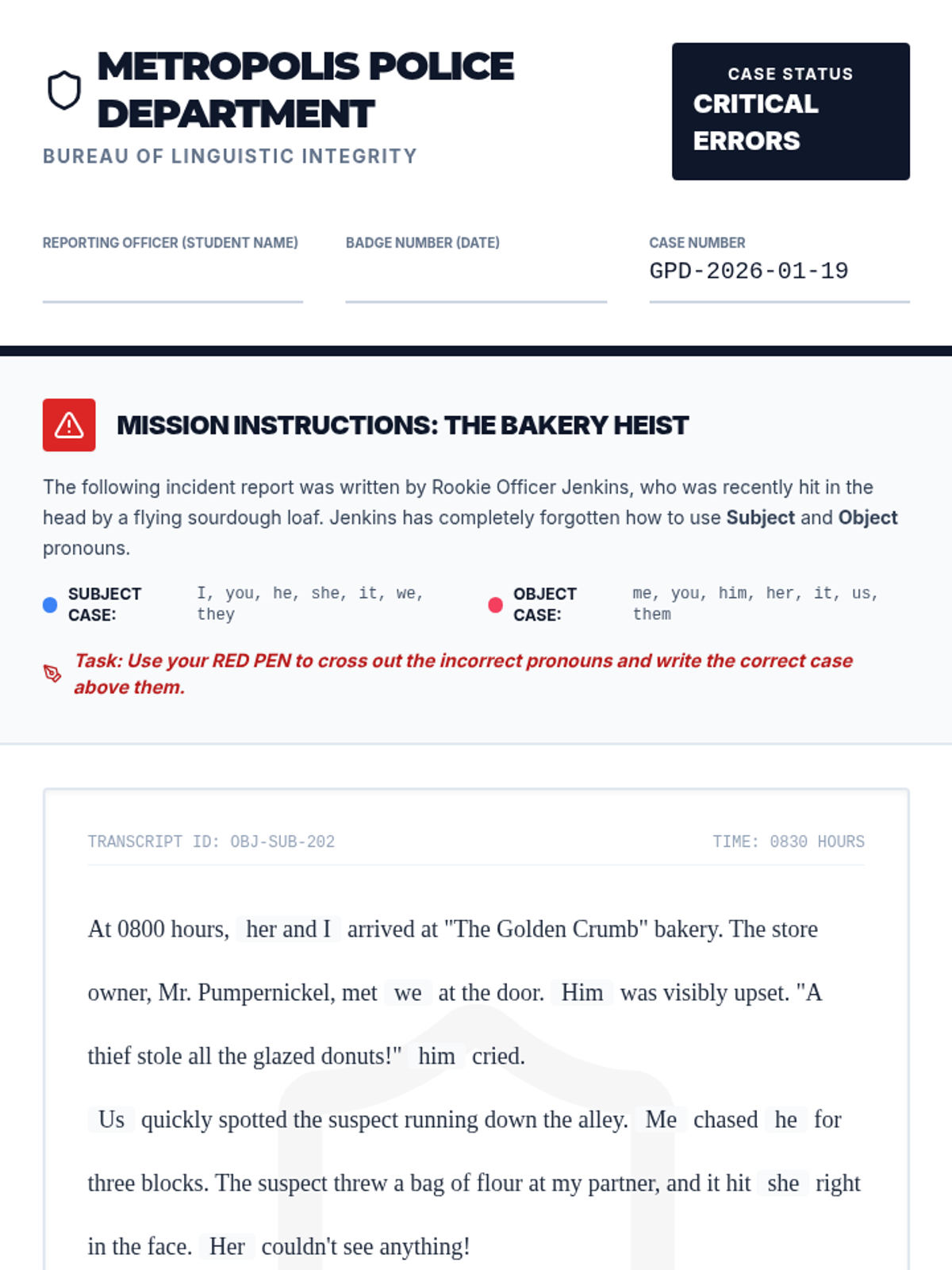
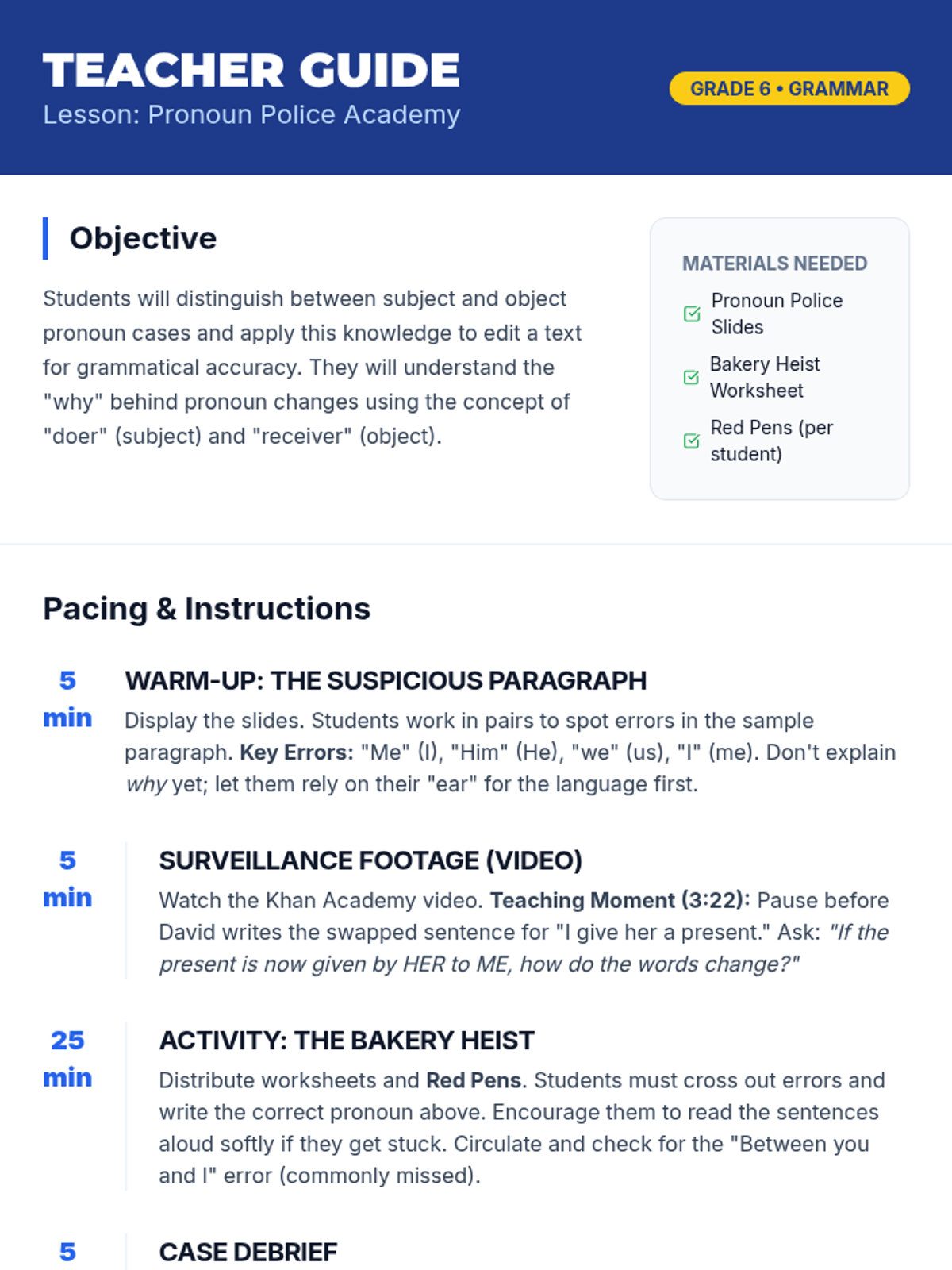
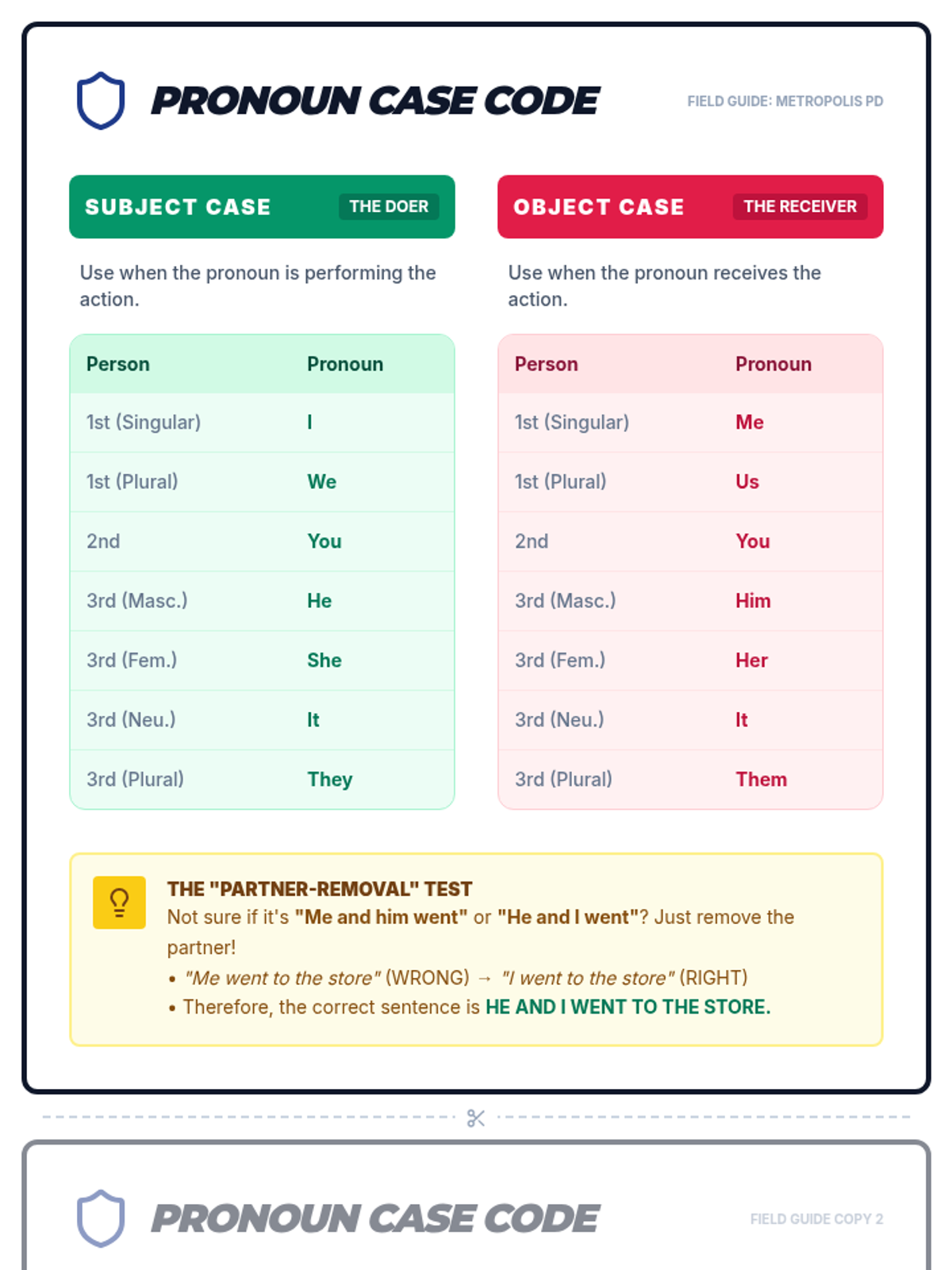
A high-energy 6th-grade grammar lesson where students become 'Grammar Police' to identify and correct subject and object pronoun errors in a chaotic police report. The lesson uses a Khan Academy video to explain the 'why' behind pronoun cases and concludes with a targeted discussion on common errors.
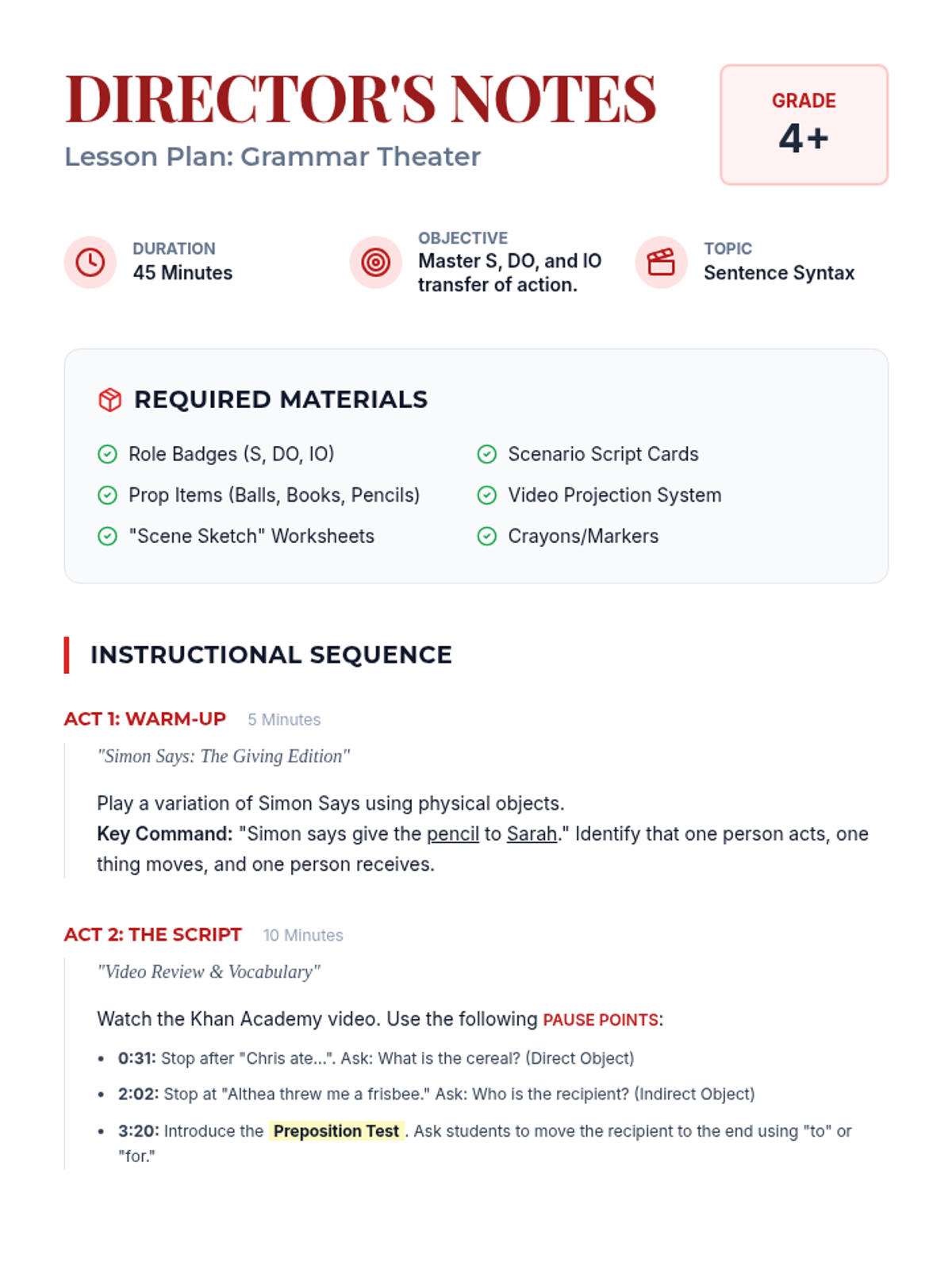
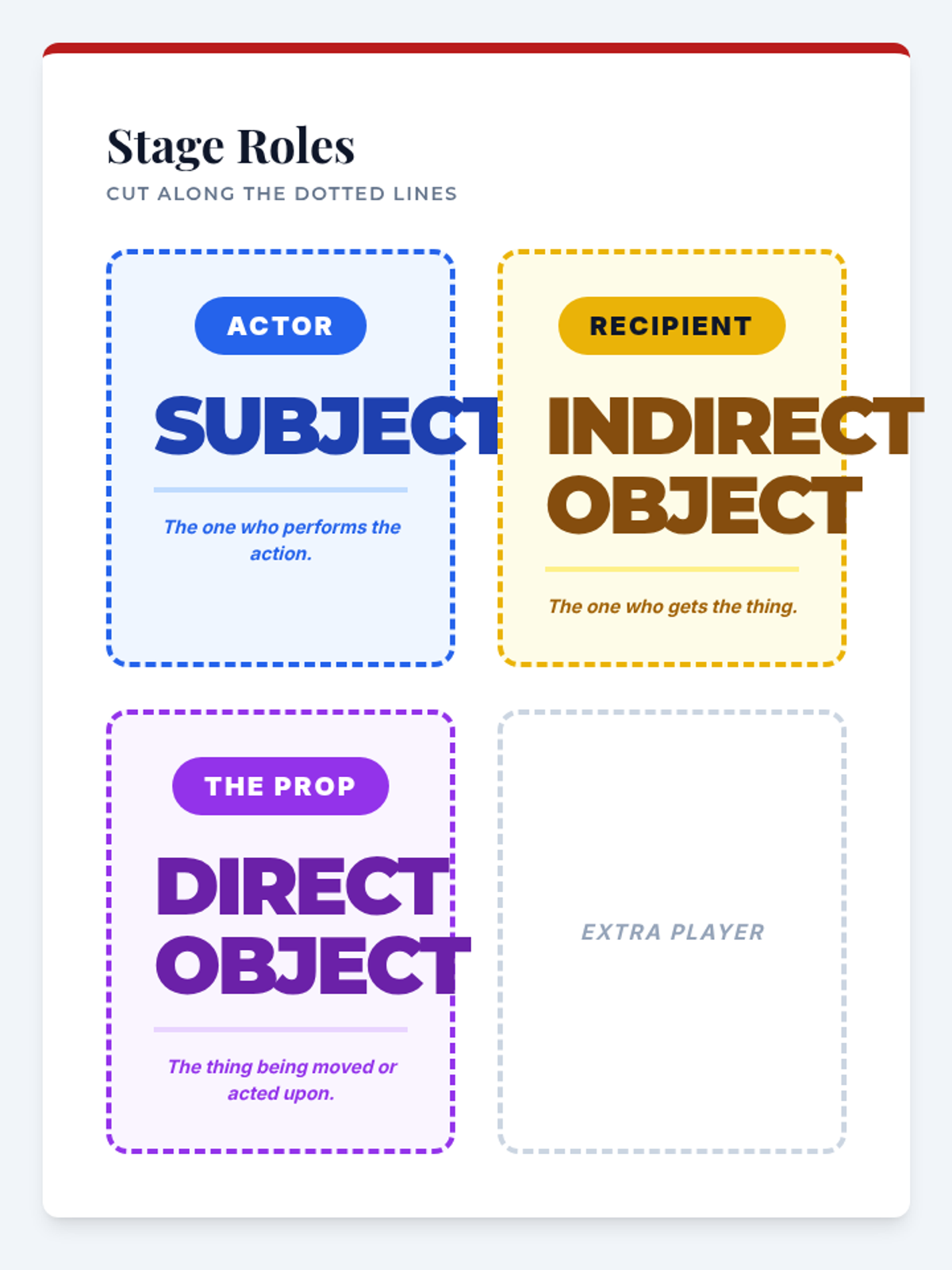
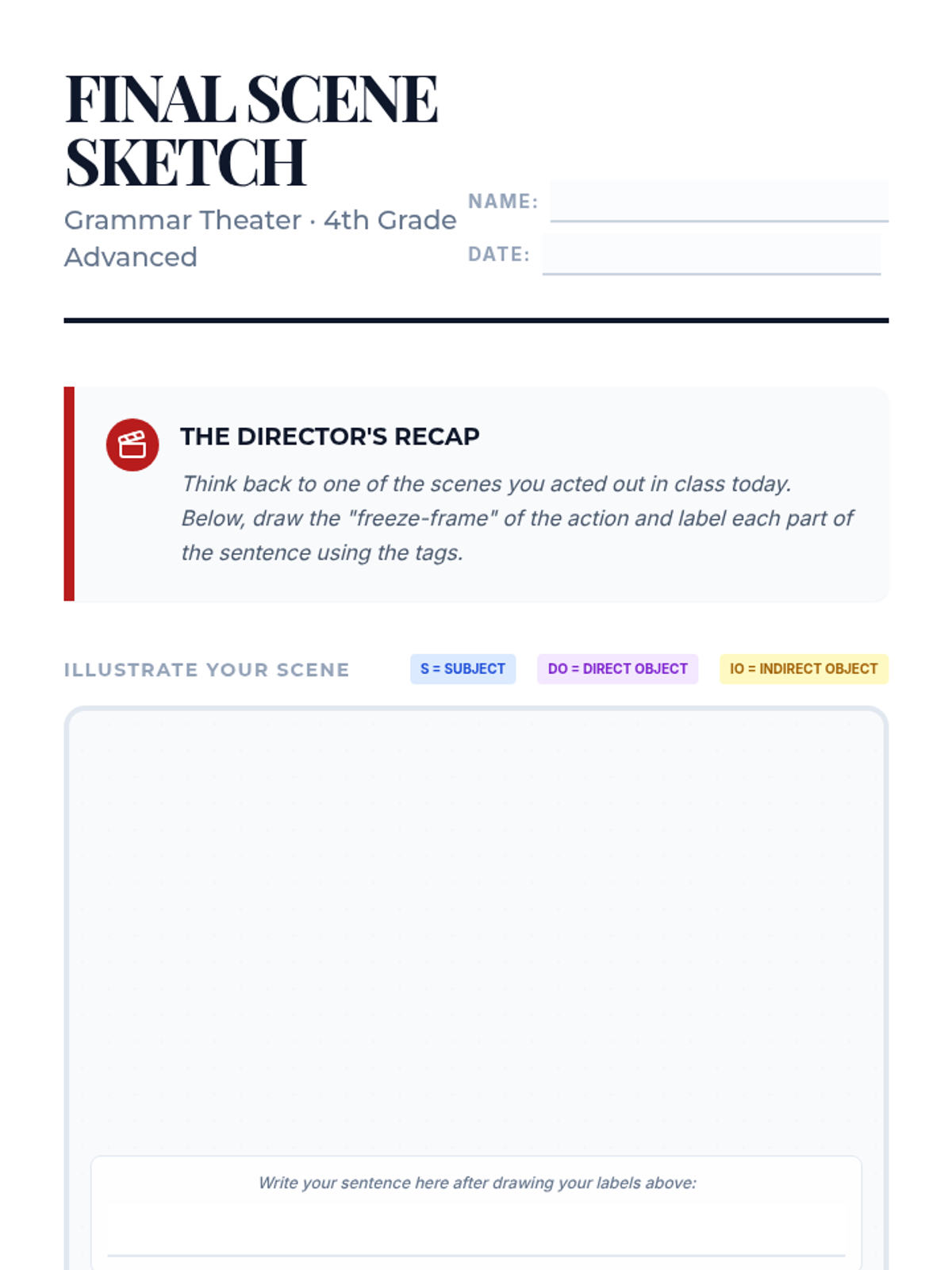
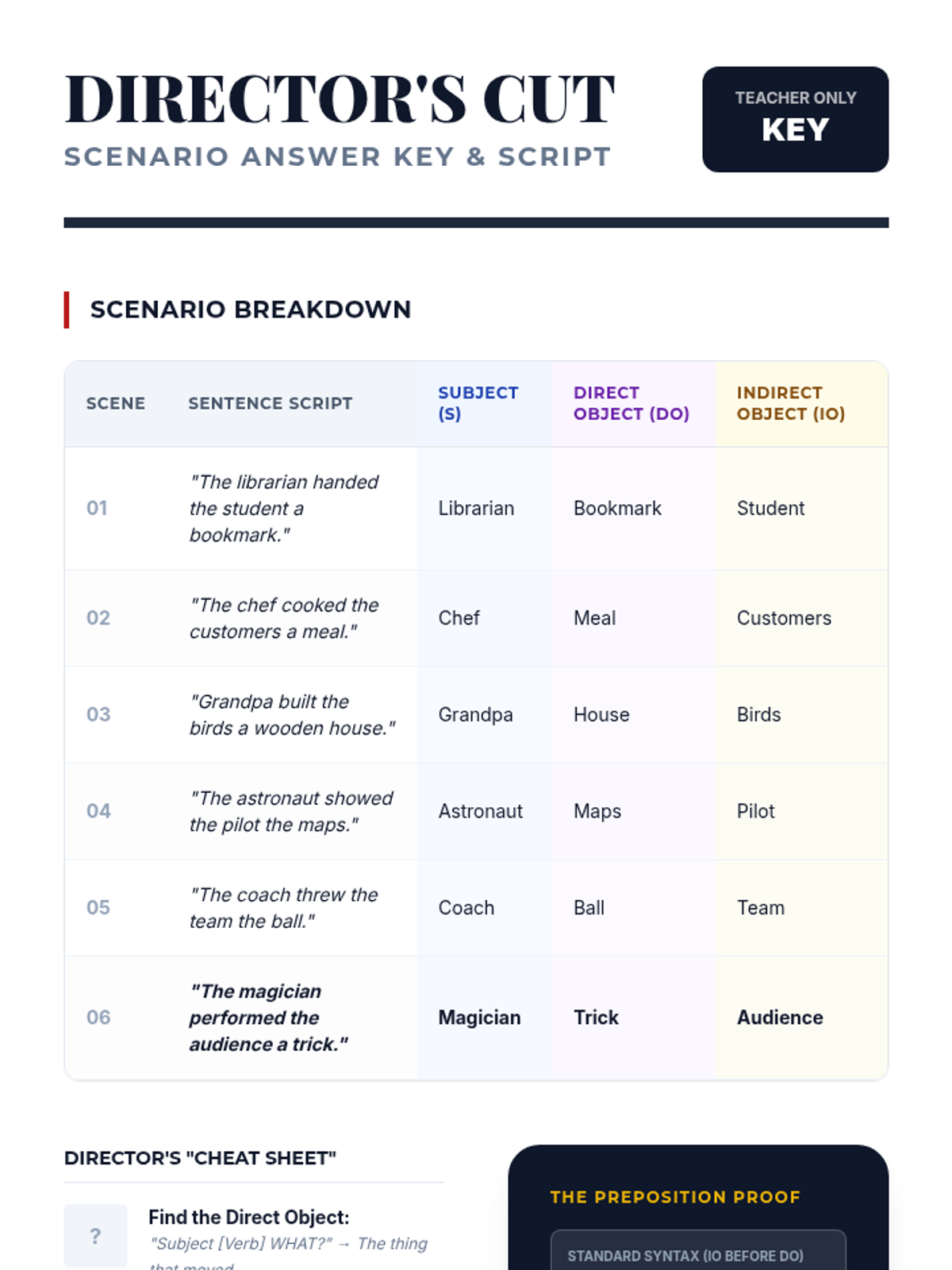
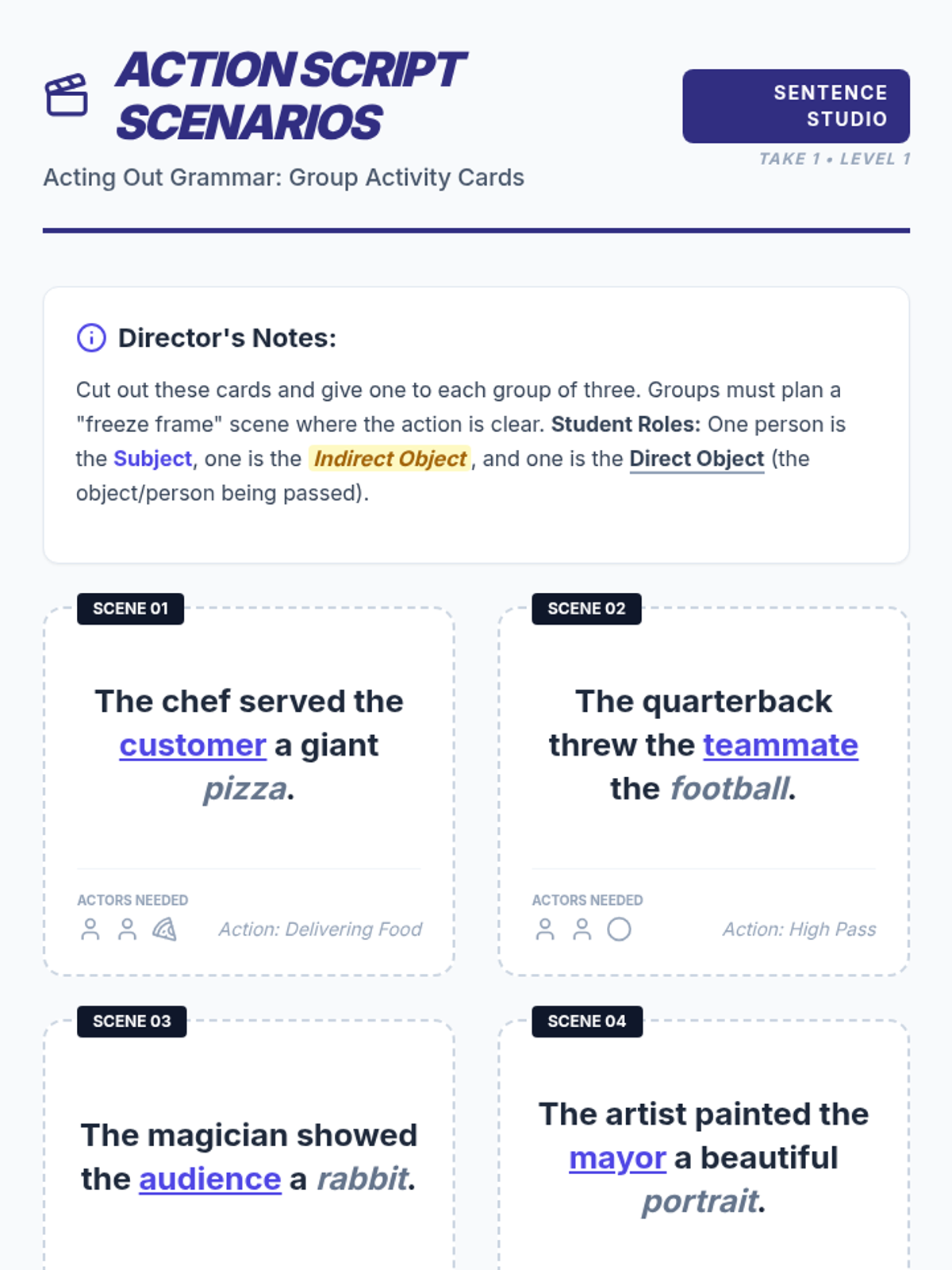
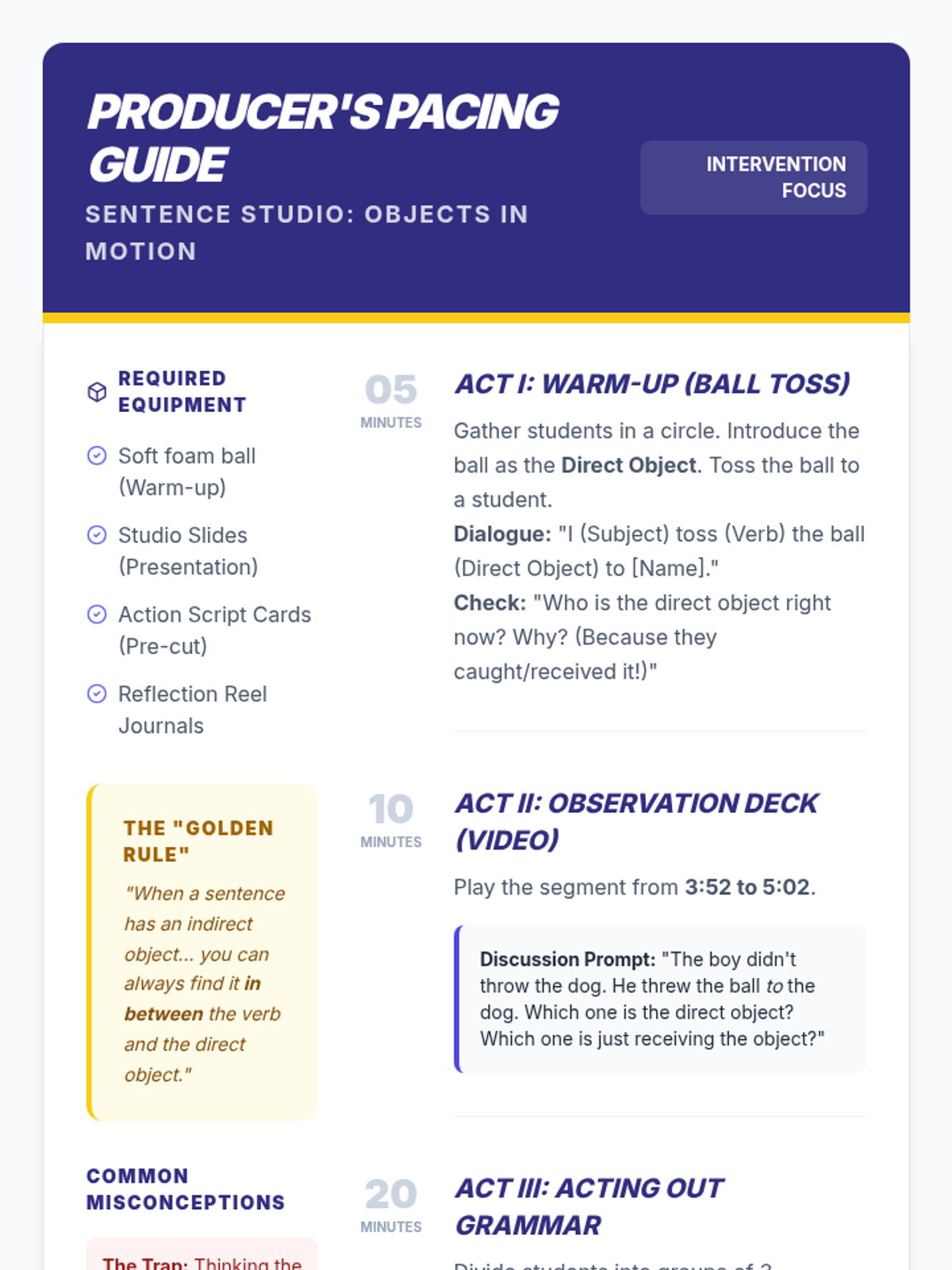
An advanced 4th-grade grammar lesson where students physically act out the relationships between subjects, direct objects, and indirect objects through a 'Grammar Theater' production. The lesson includes a video review, kinesthetic role-play, and visual diagramming.
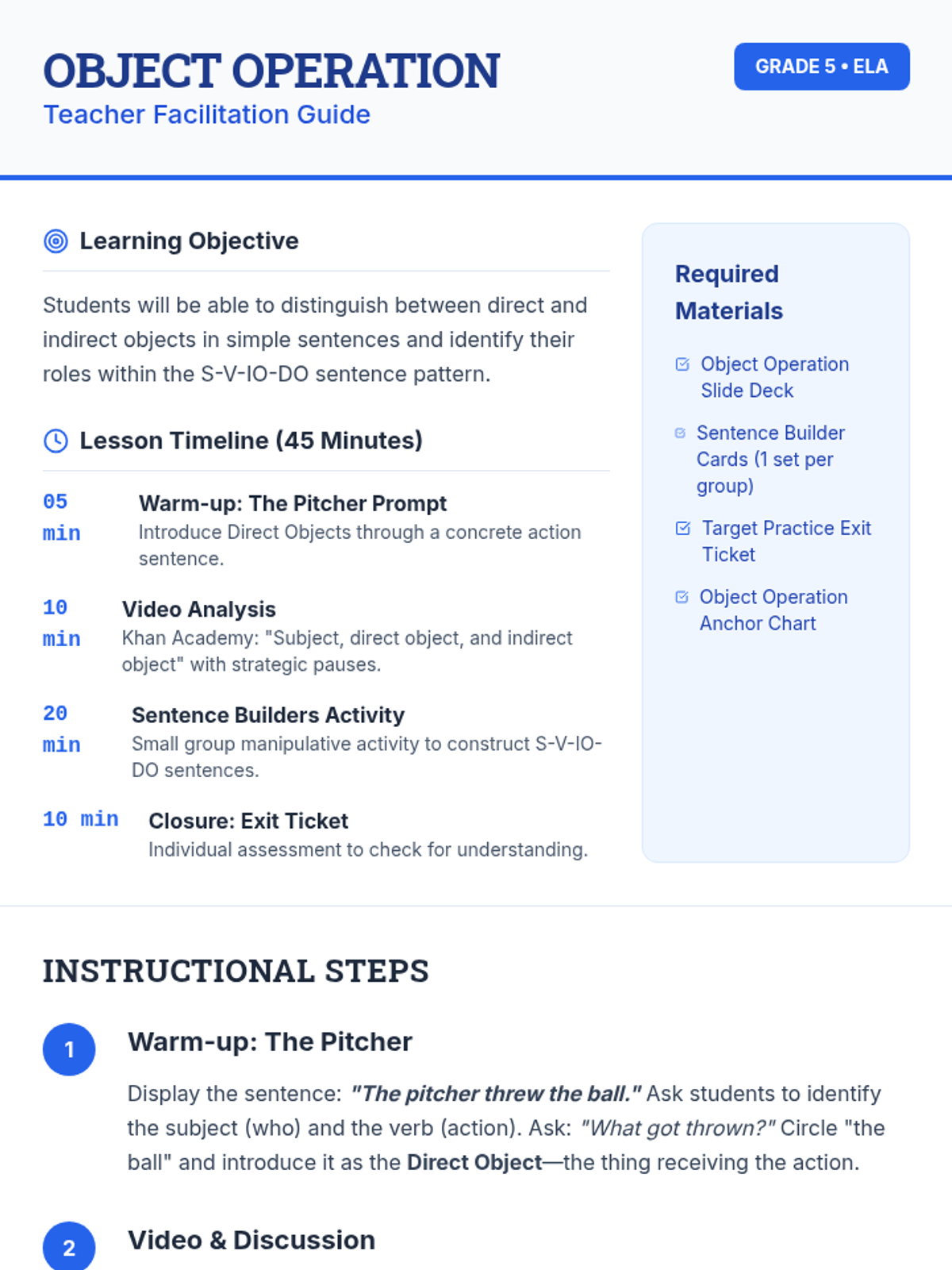
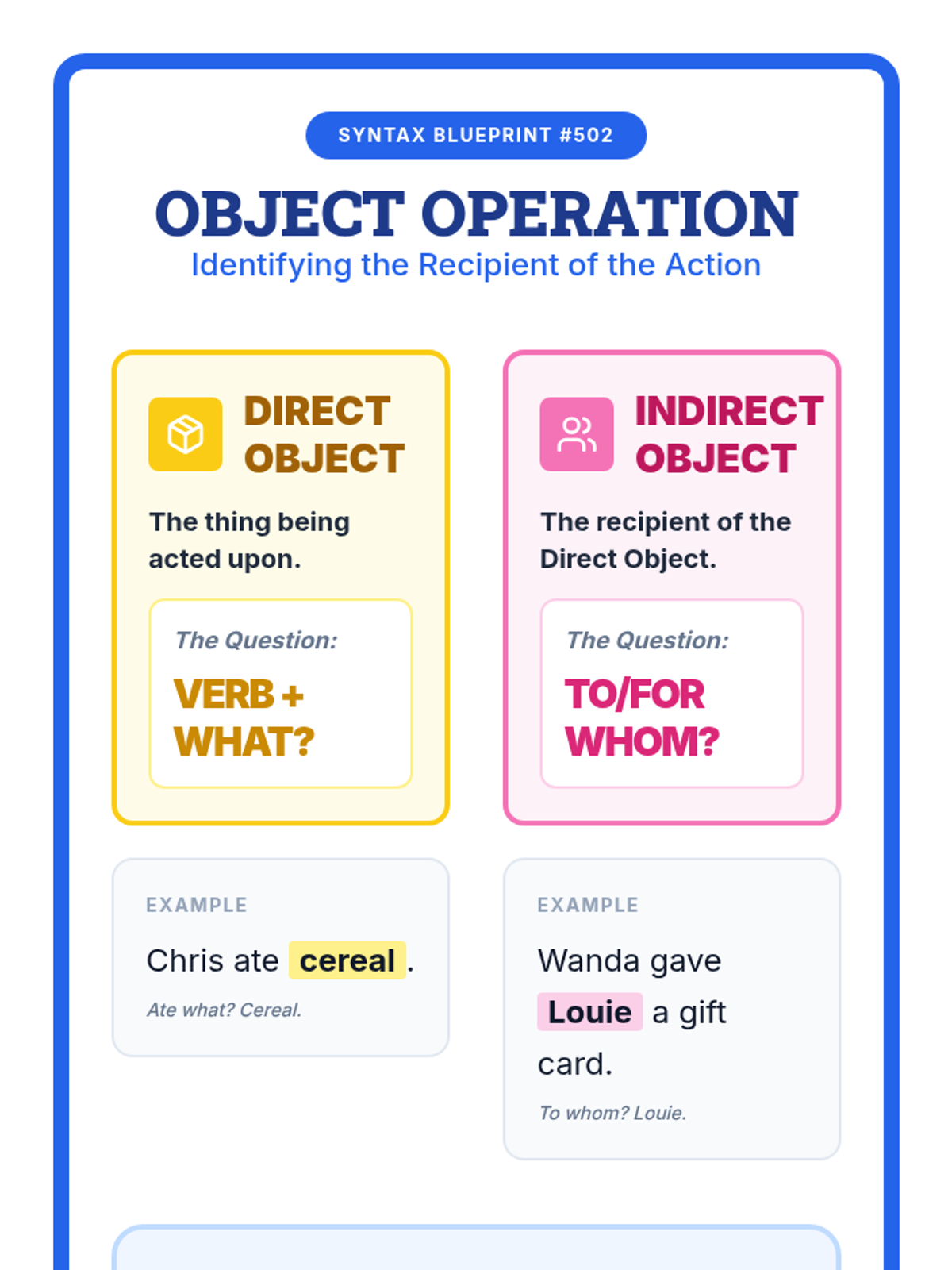
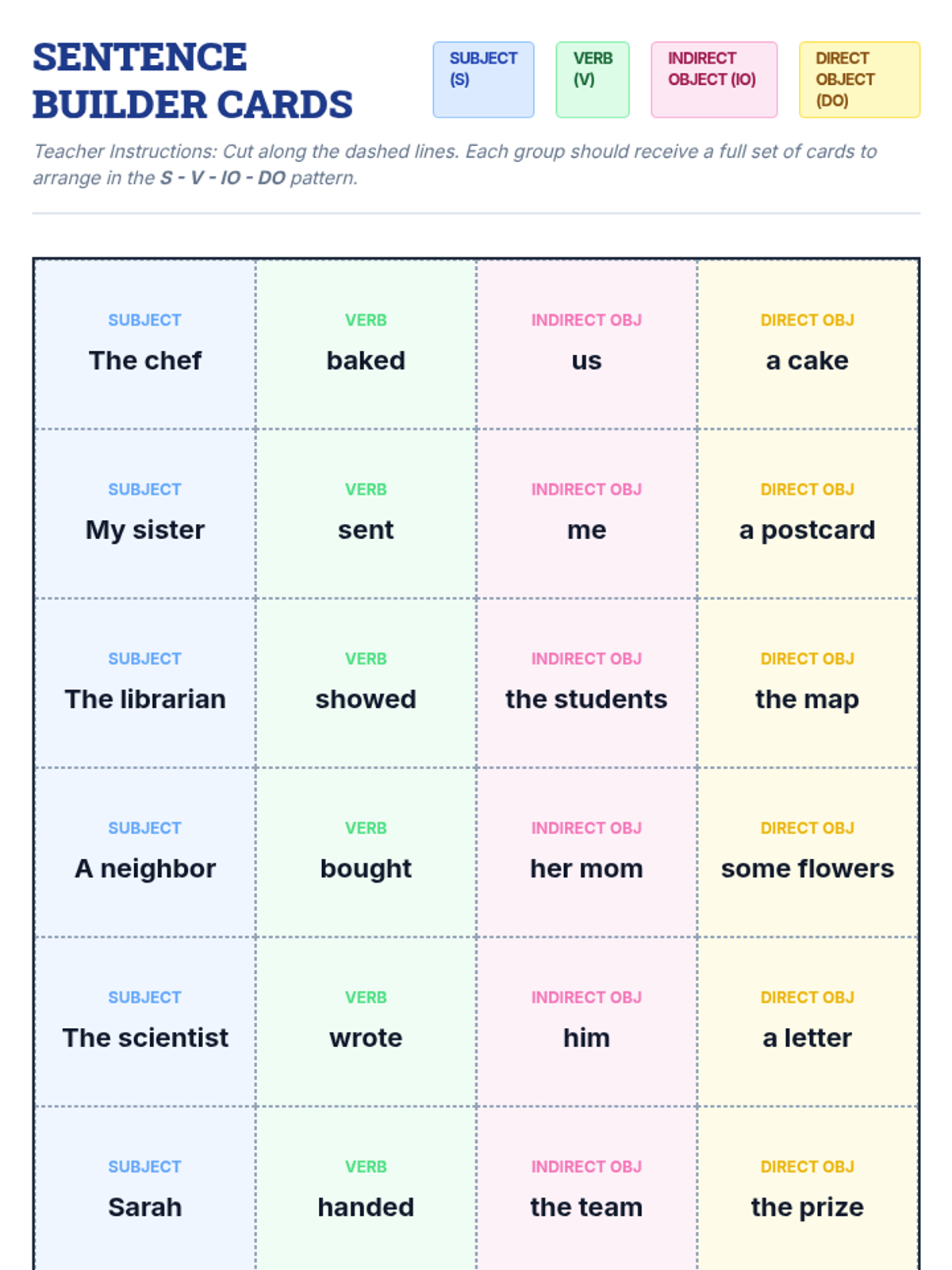
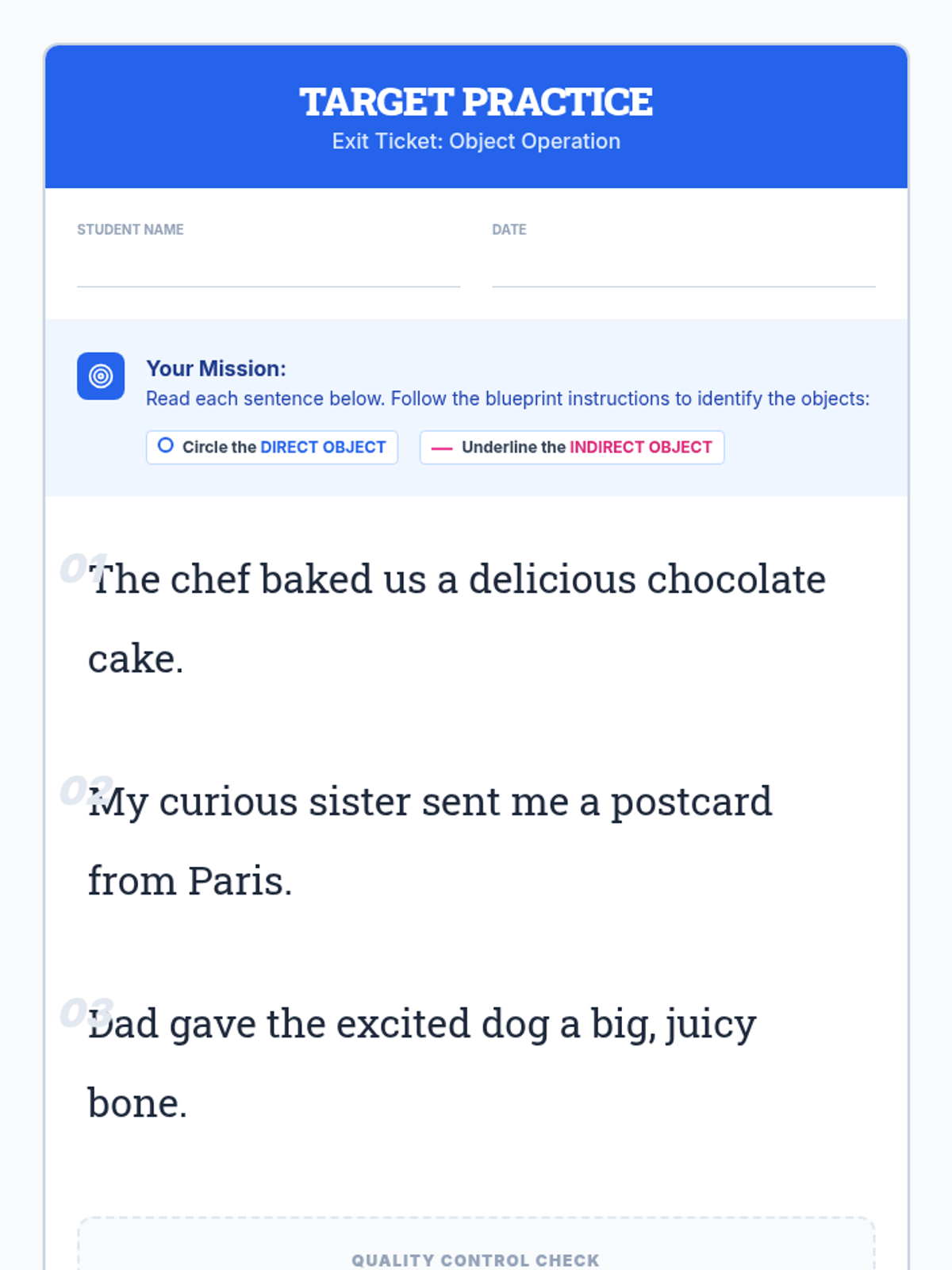
A 5th-grade grammar lesson focusing on identifying and distinguishing between direct and indirect objects using a construction-themed approach. Students explore sentence structure through video analysis, hands-on building, and guided practice.
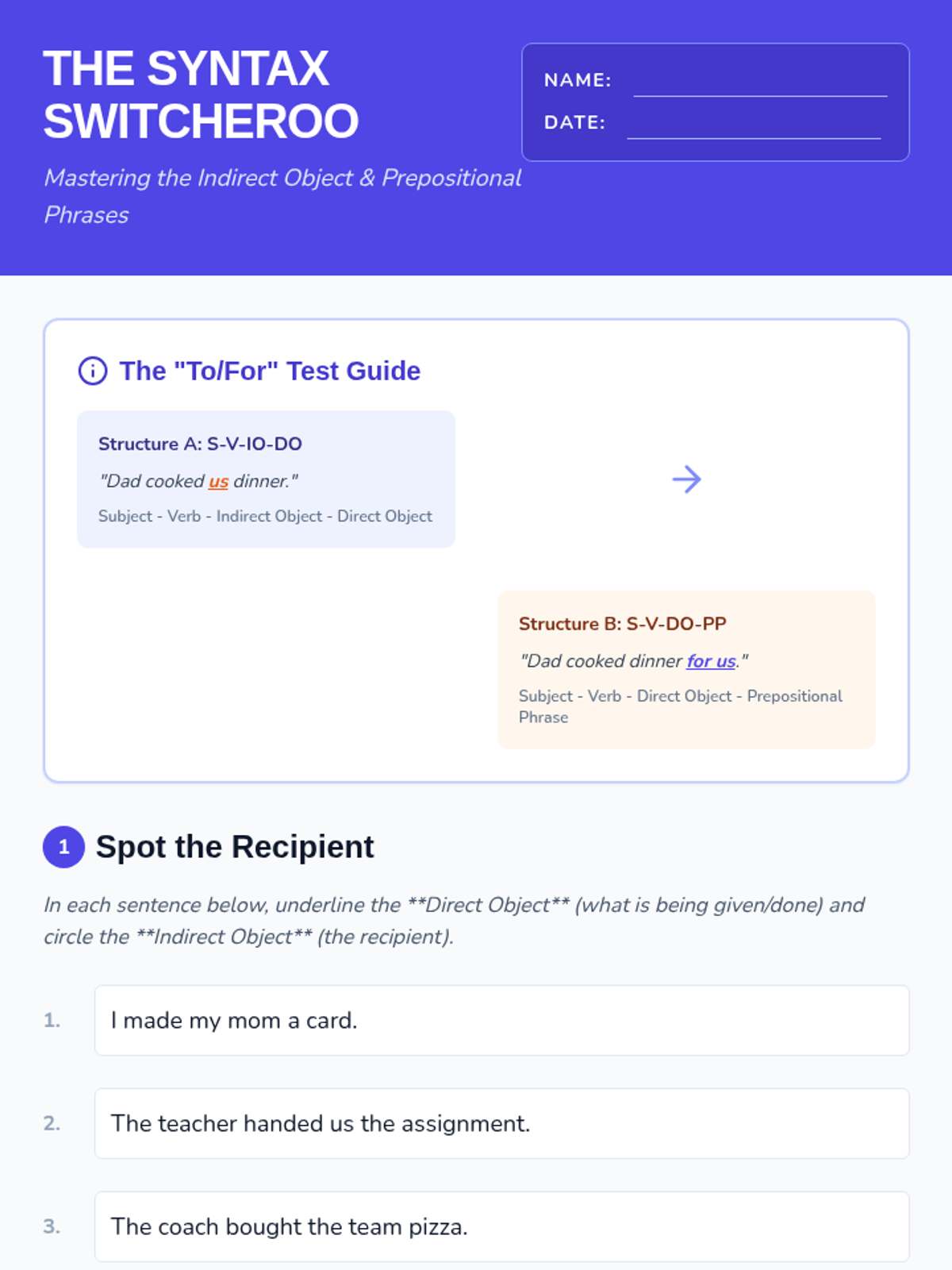
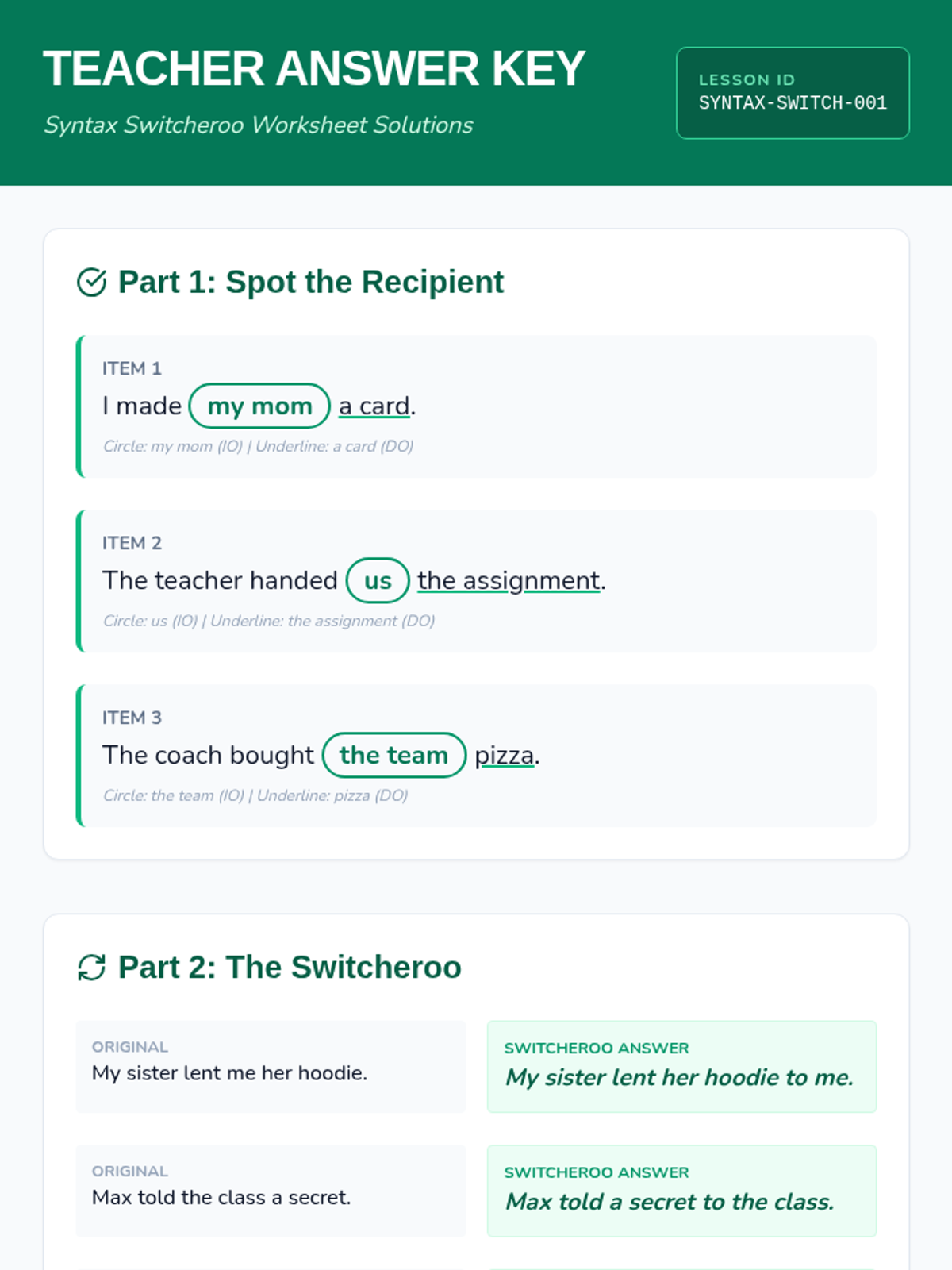
A 6th-grade English lesson focused on identifying indirect objects using the 'To/For' test and converting them into prepositional phrases to understand sentence structure and emphasis.
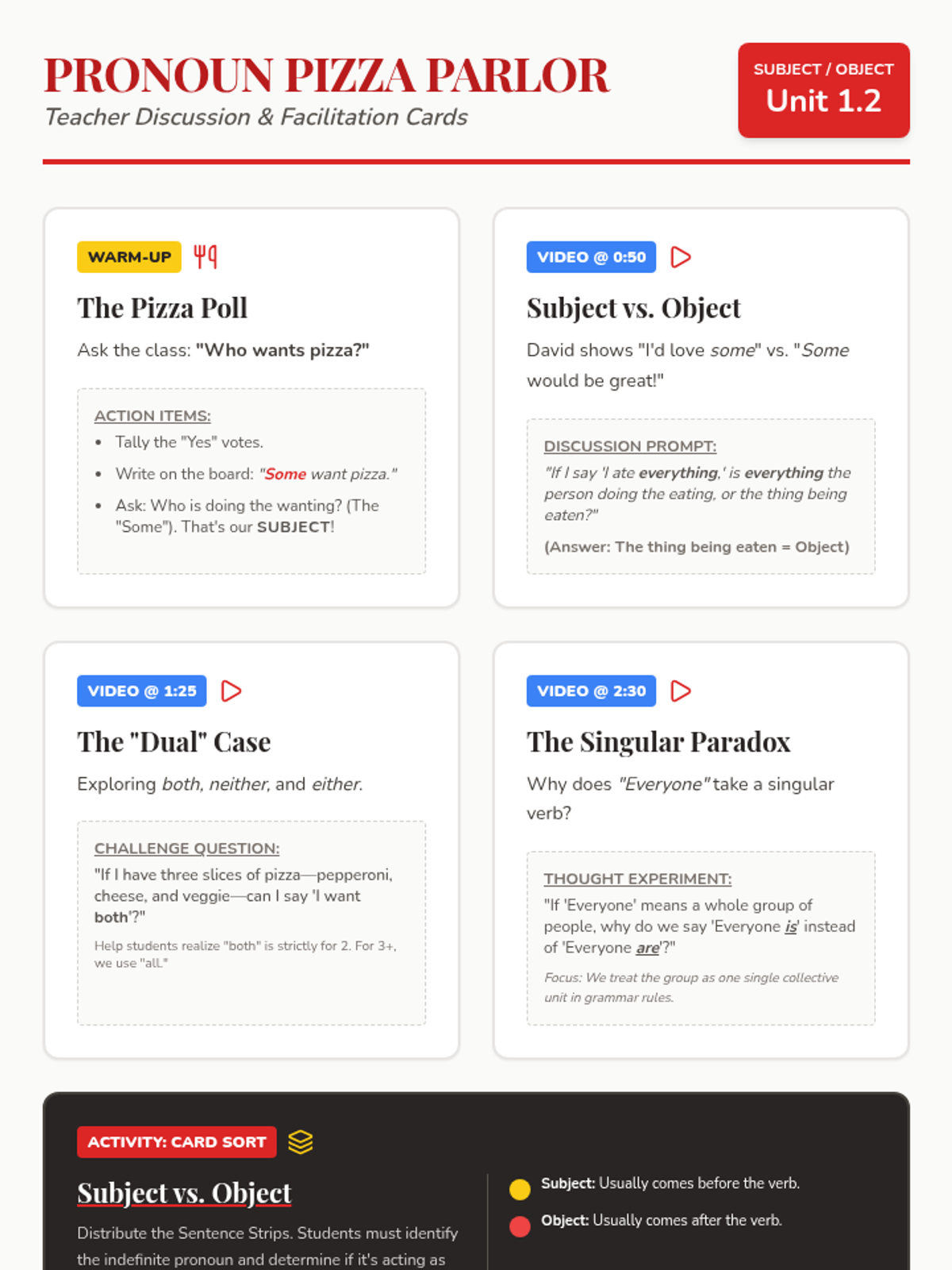
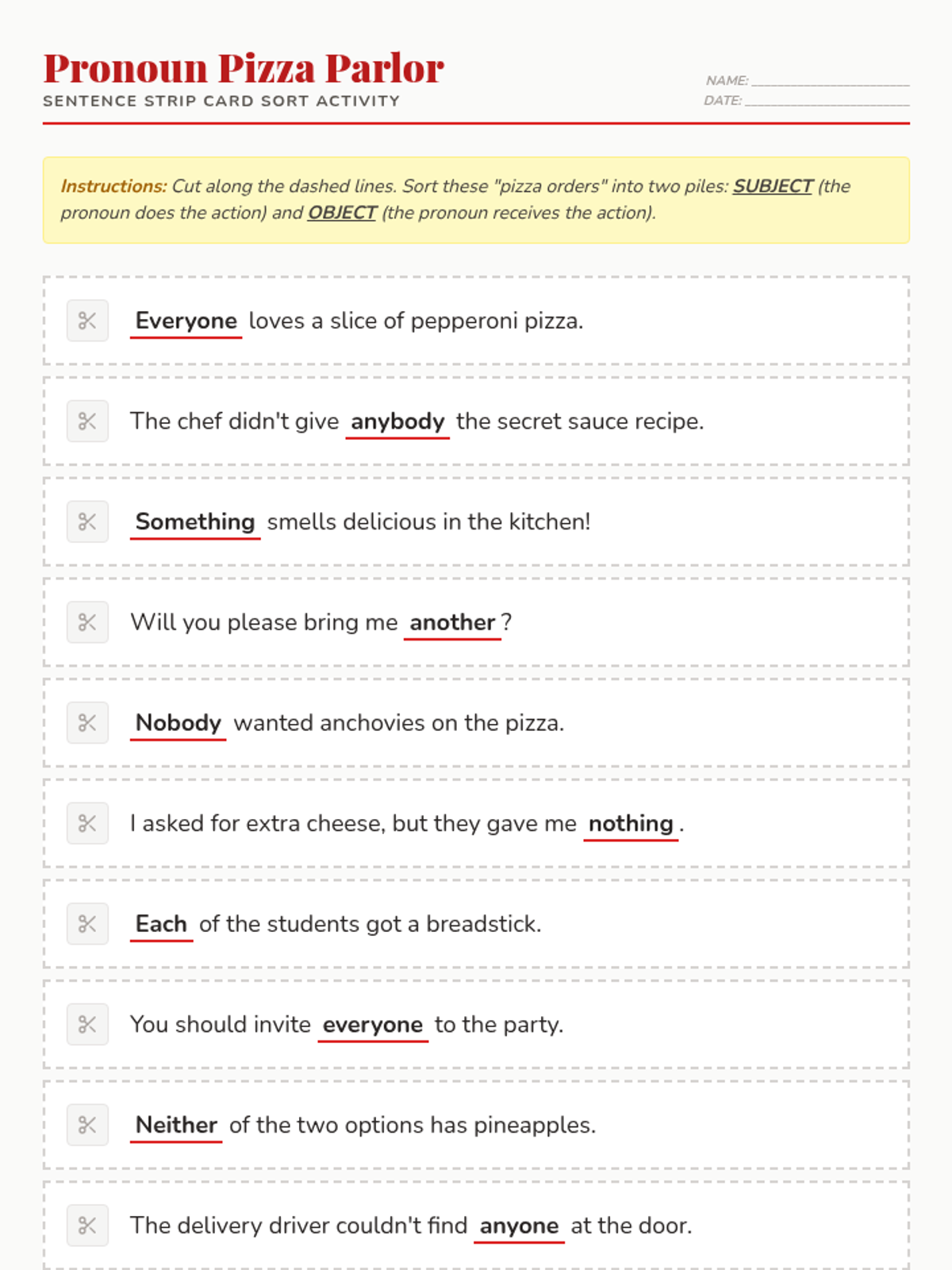
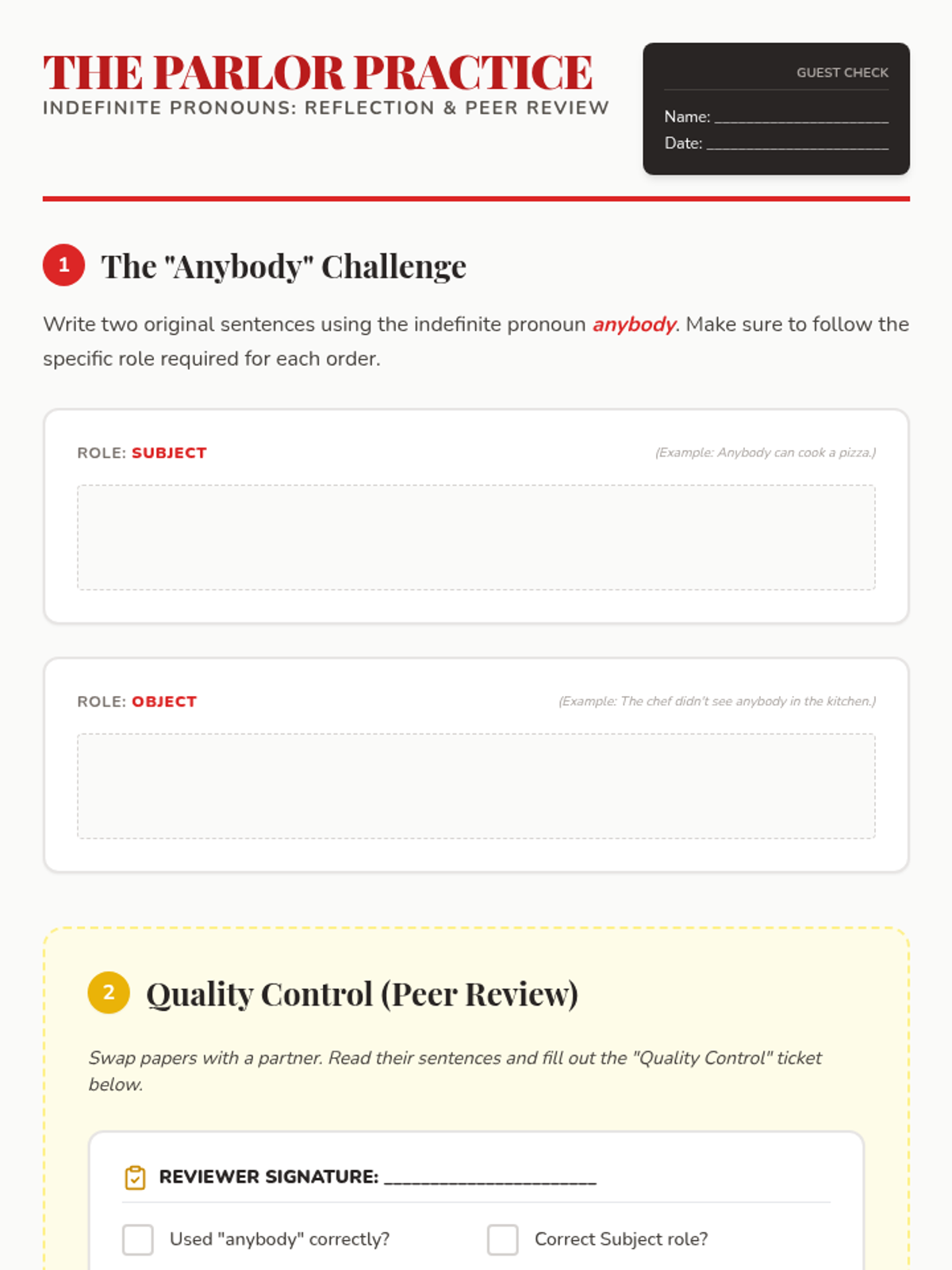
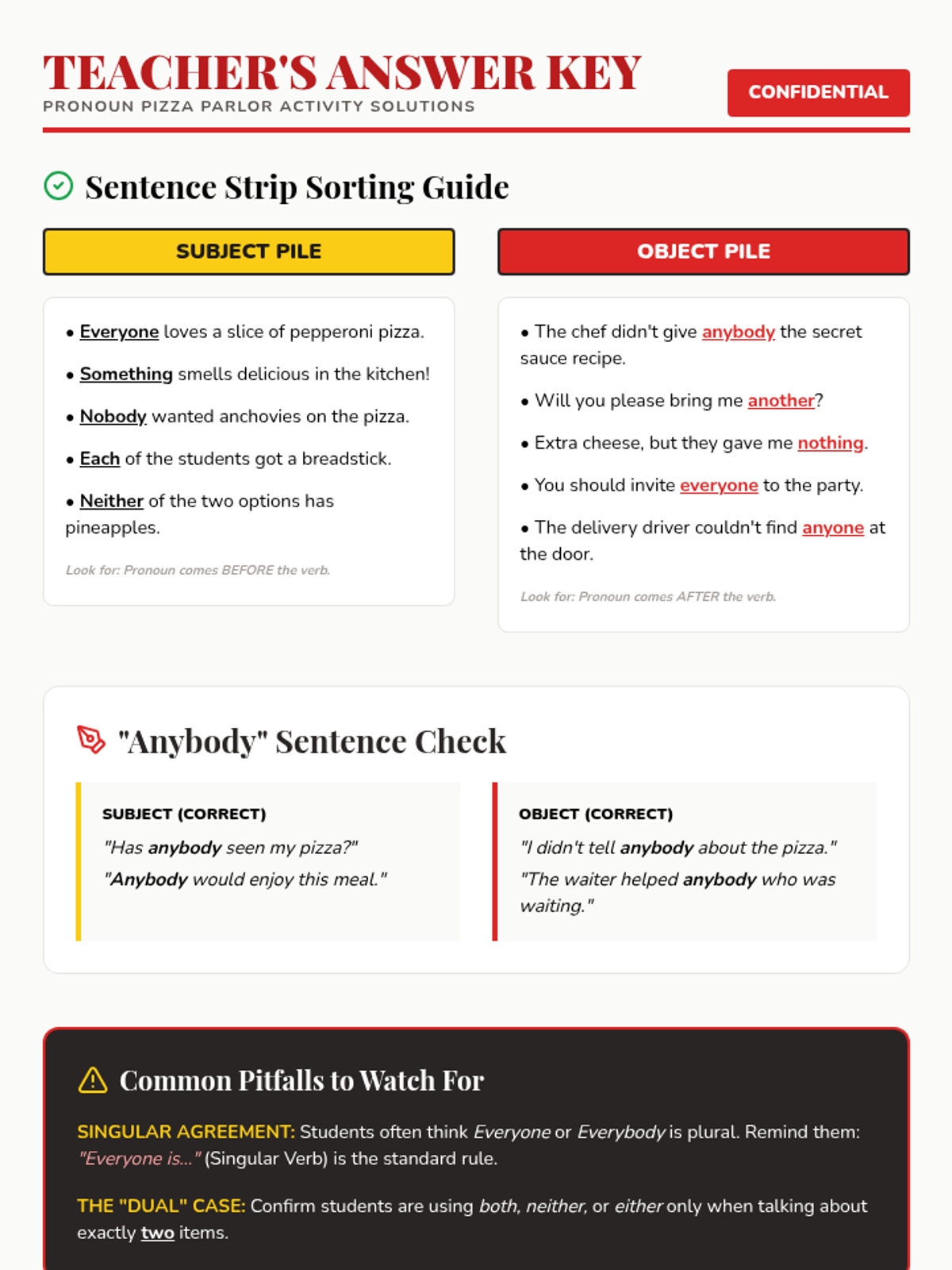
A pizza-themed grammar lesson for 6th graders to distinguish between indefinite pronouns used as subjects and objects. Includes a video analysis, a hands-on card sort activity, and writing reflection.
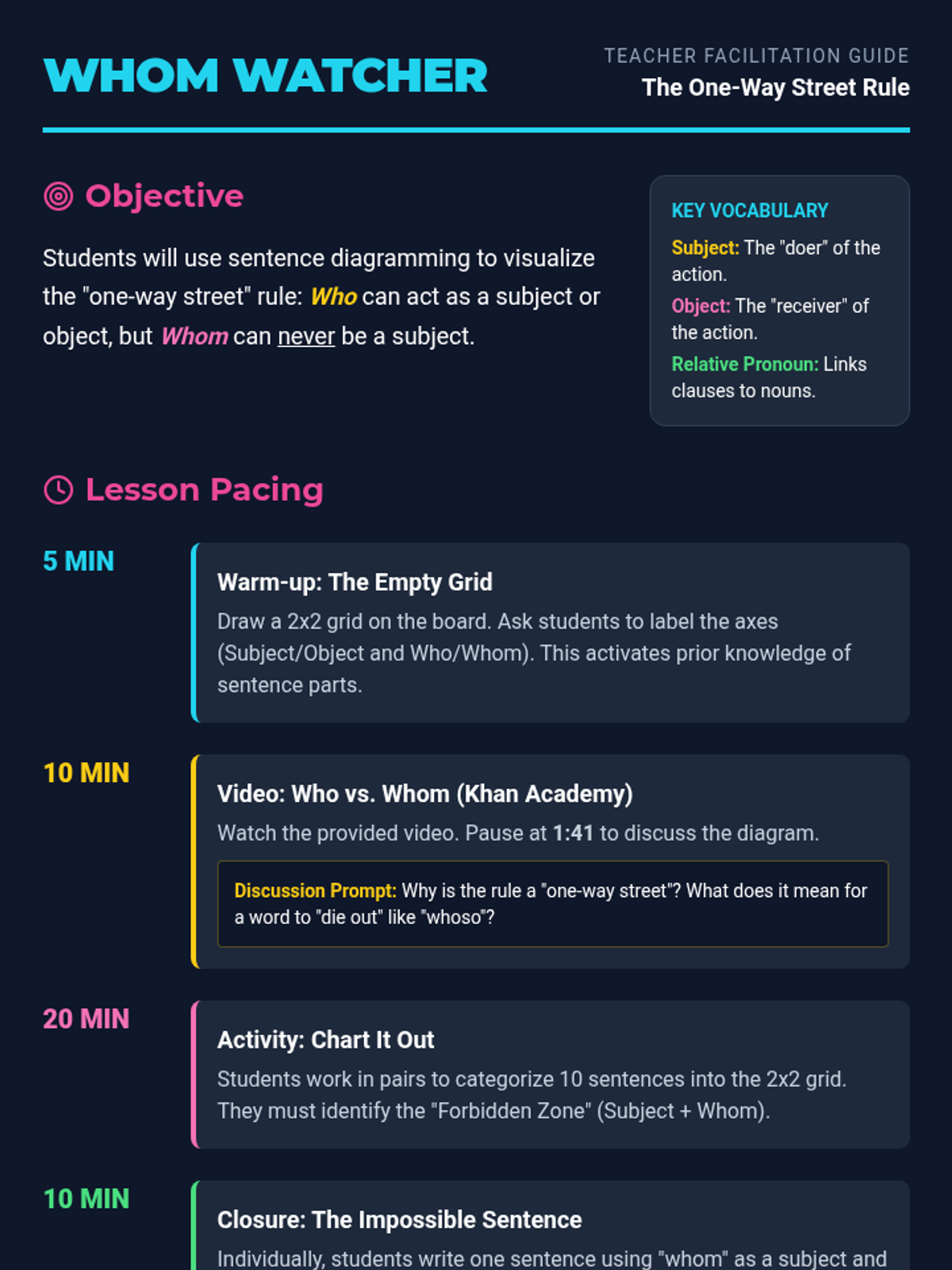
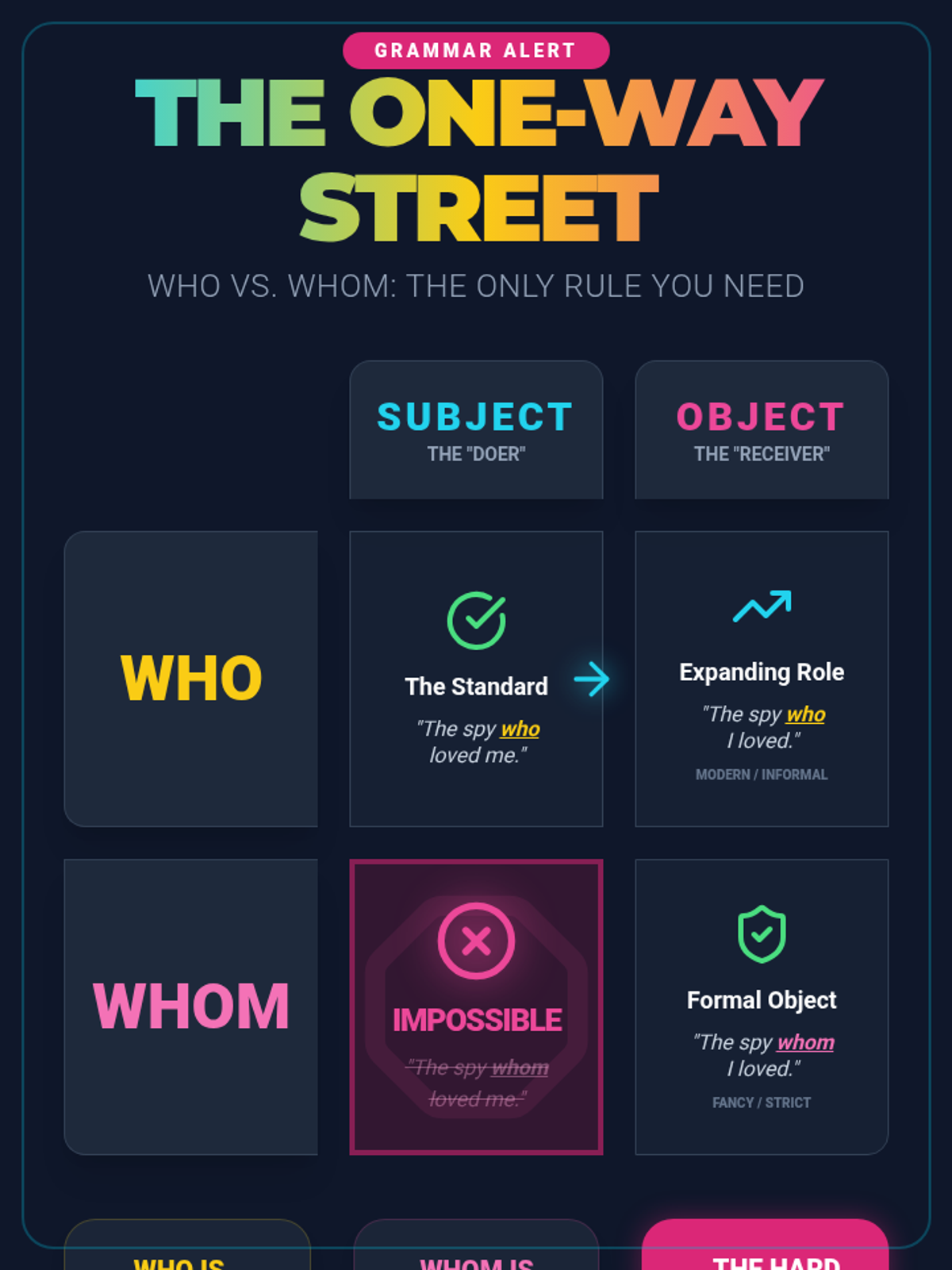
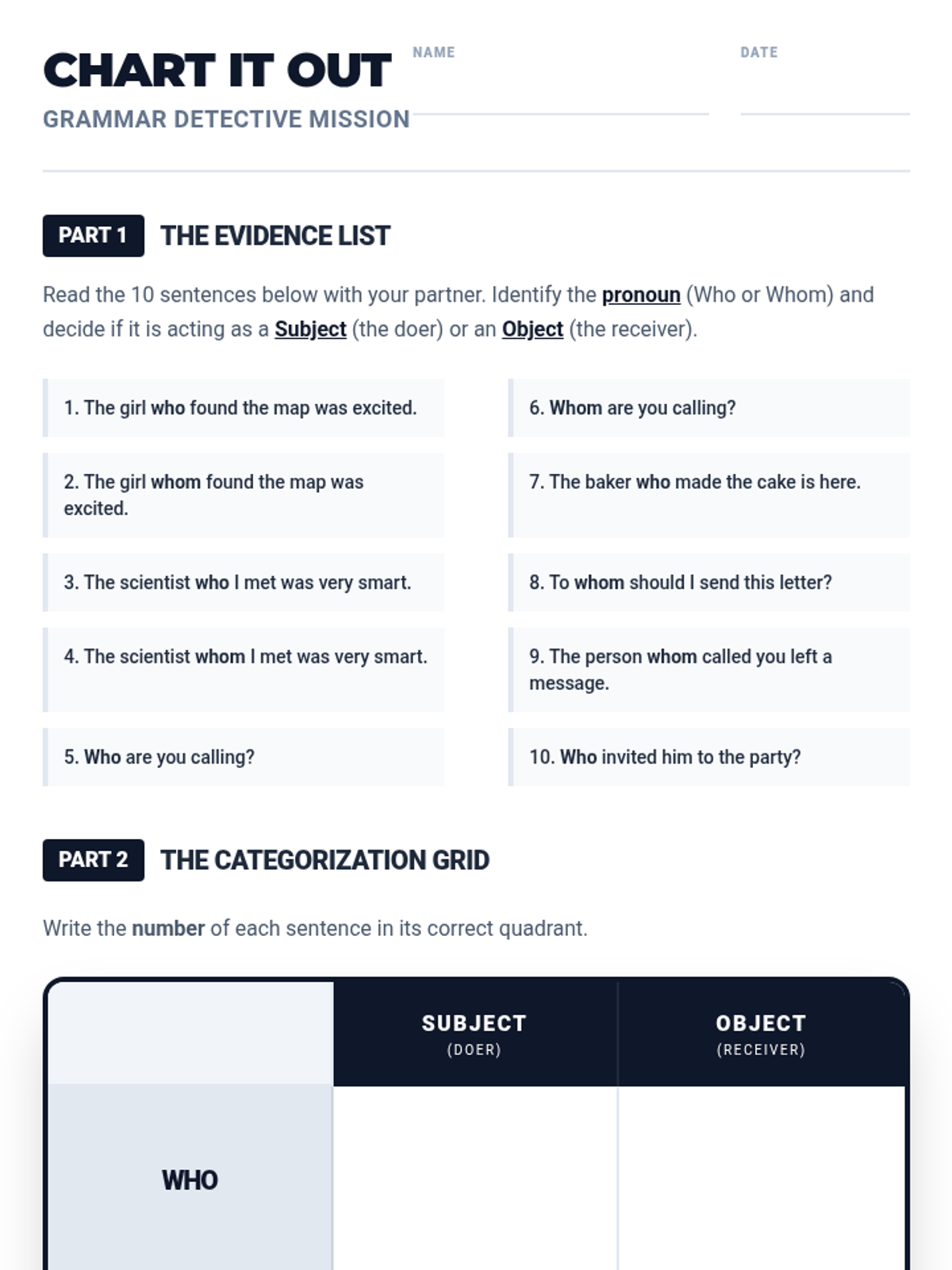
Students explore the 'One-Way Street' rule of grammar, learning that while 'who' is expanding its role, 'whom' can never be a subject. The lesson features a Khan Academy video, a 2x2 diagramming activity, and the creation of 'impossible' sentences.
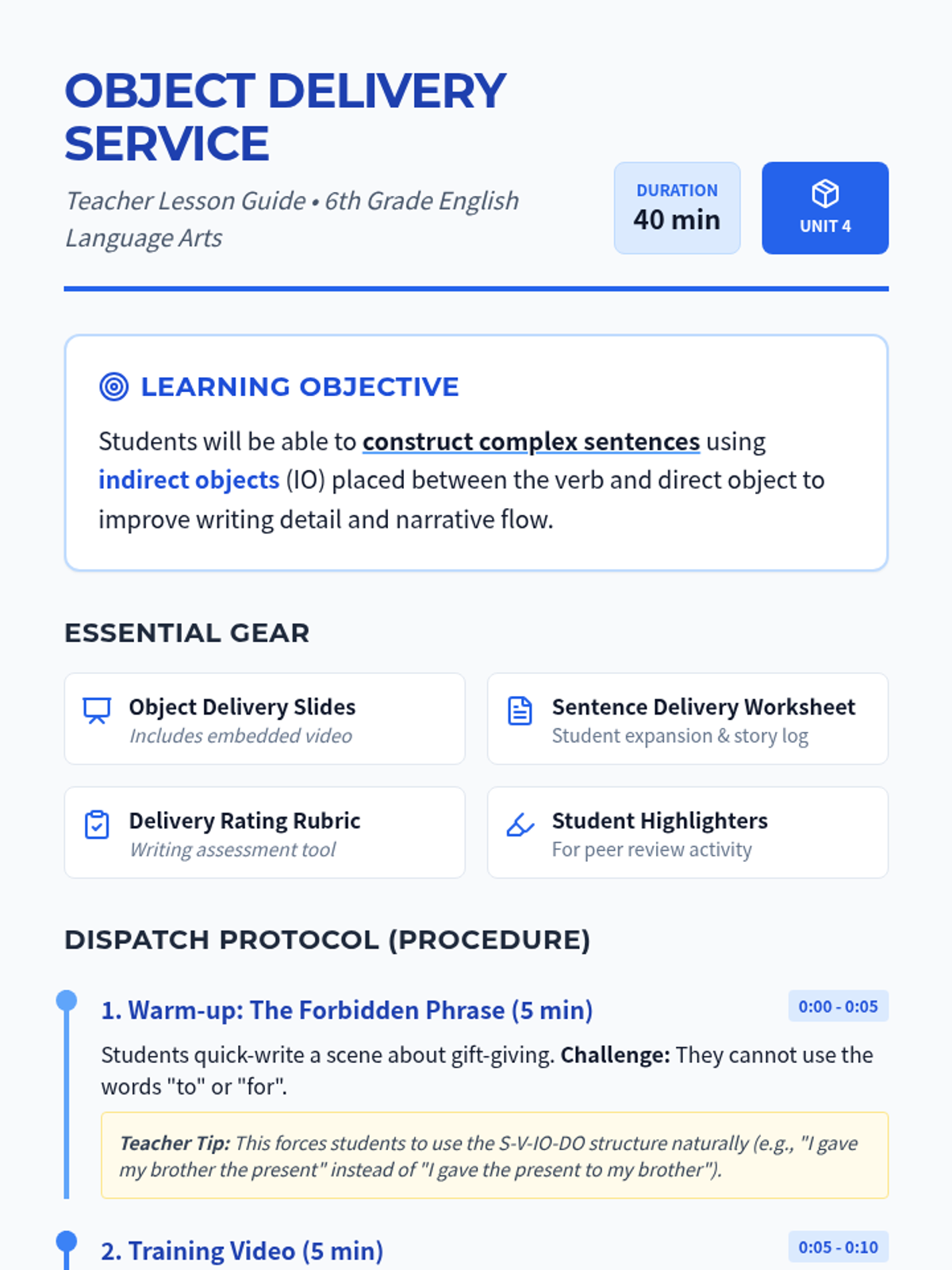
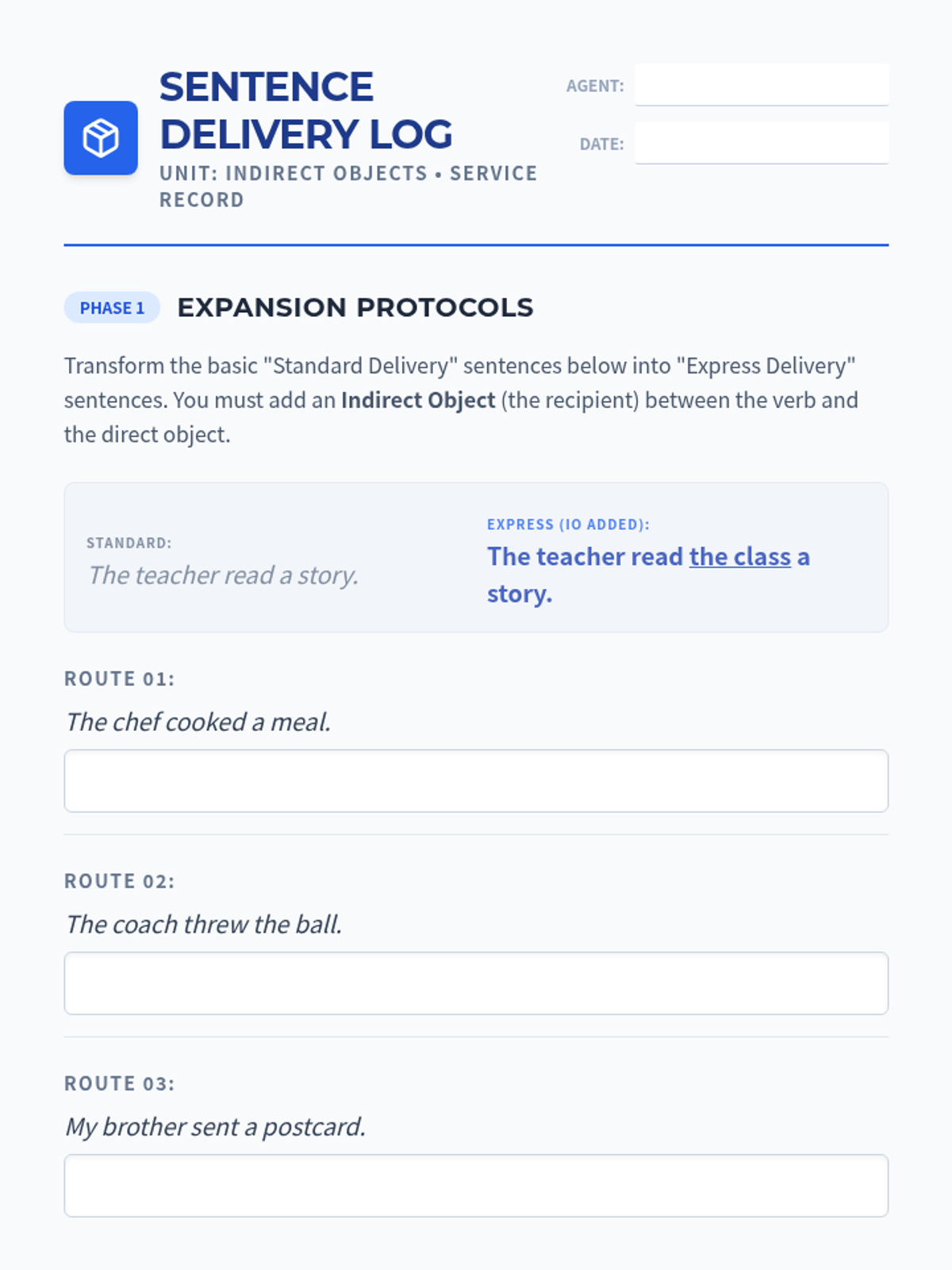
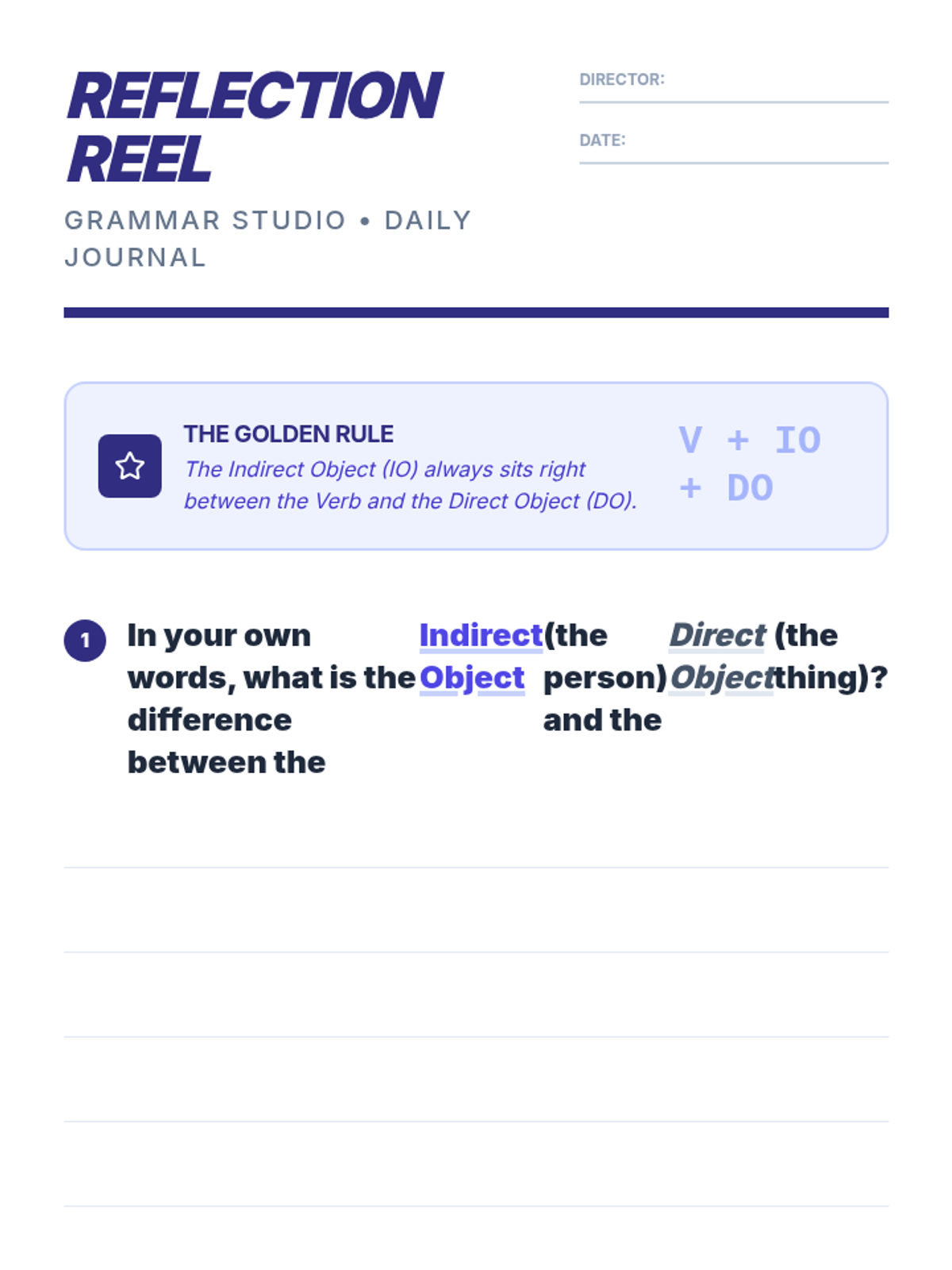
A comprehensive grammar lesson focusing on indirect objects using a 'Postal Delivery' theme. Students learn to identify and construct sentences where the indirect object sits between the verb and the direct object to enhance writing detail.
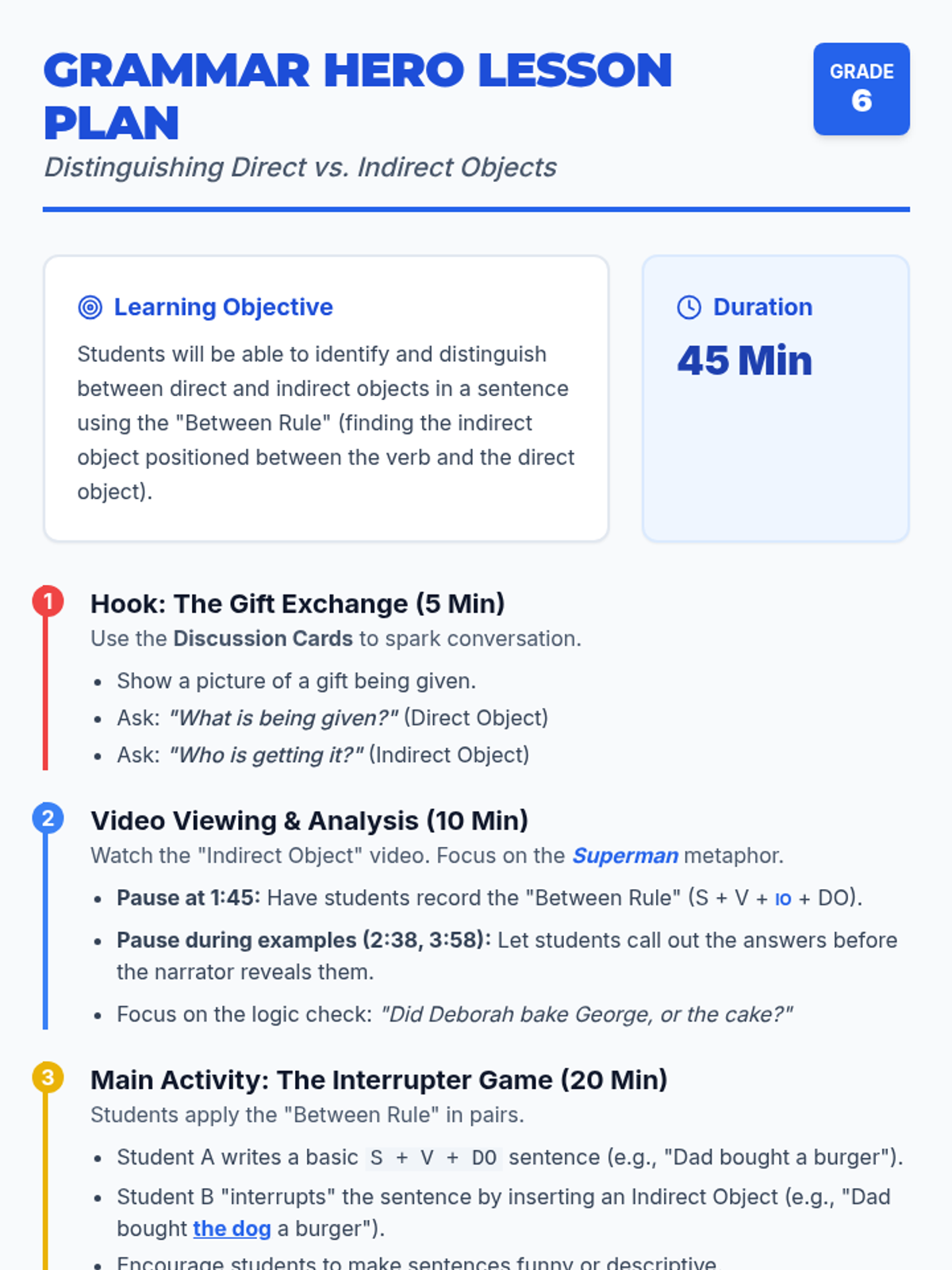
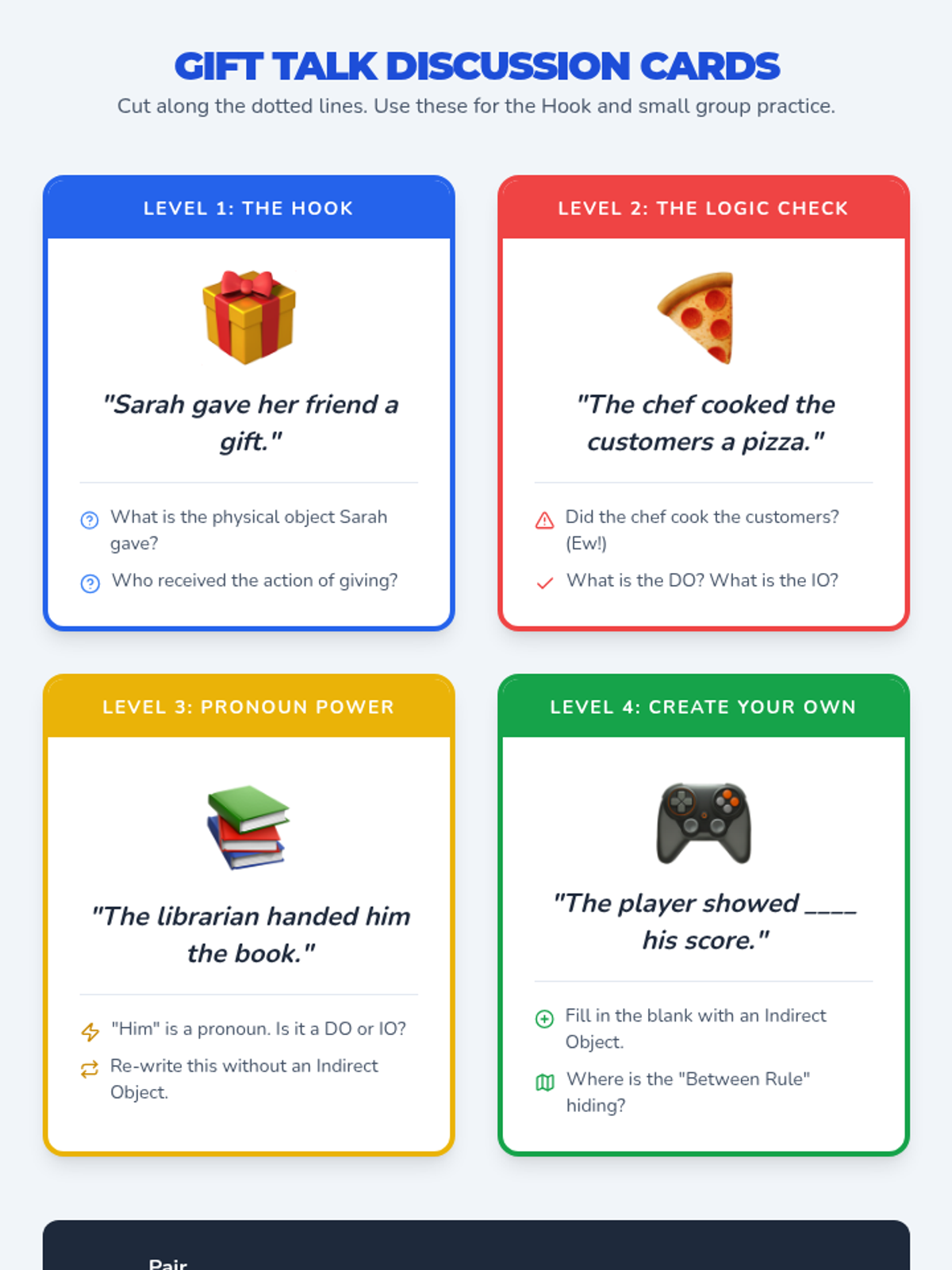
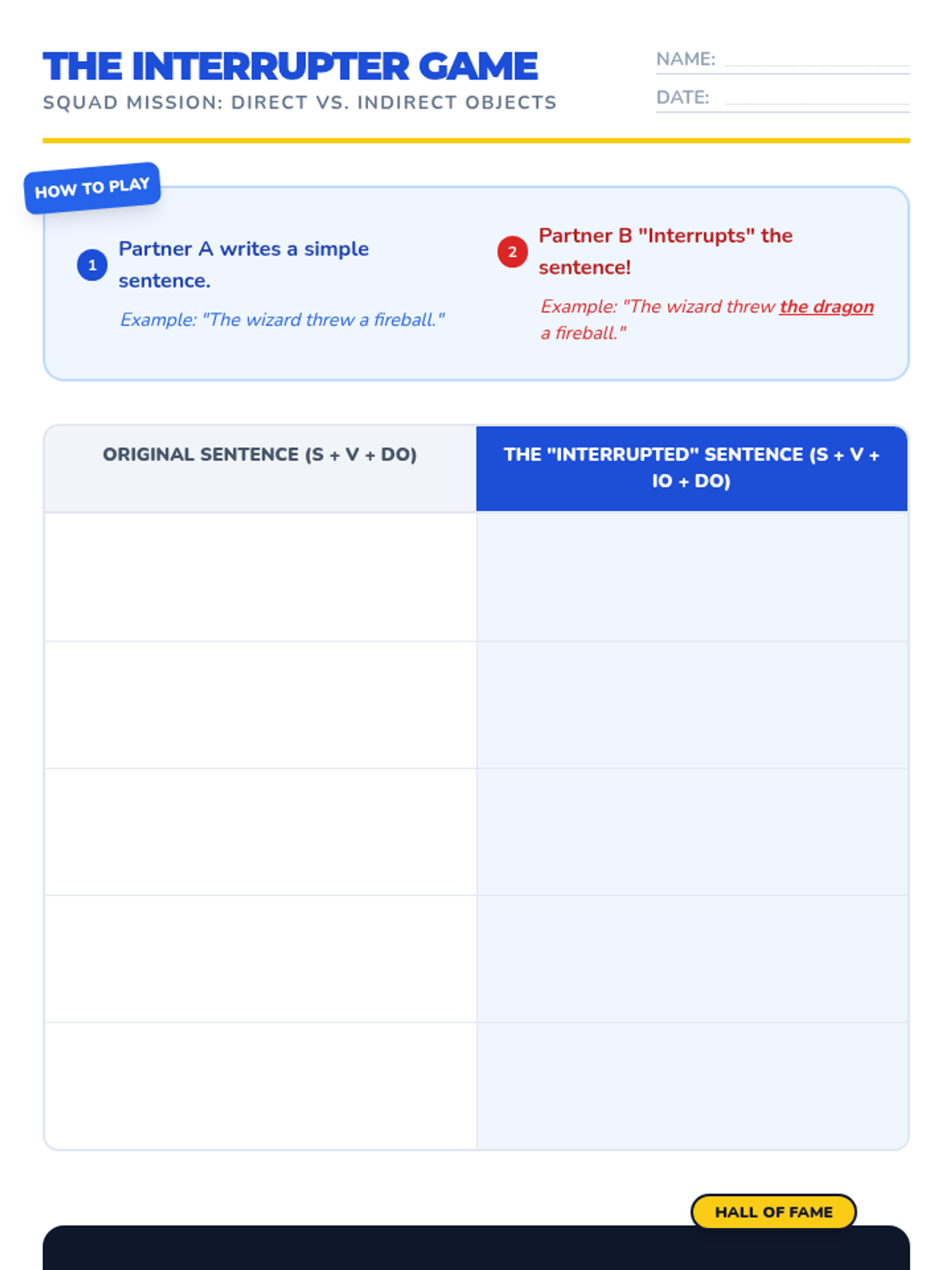
A high-energy 6th-grade lesson that uses the 'between' rule and a superhero metaphor to help students distinguish between direct and indirect objects. Includes a video analysis and a creative 'interrupter' game for hands-on practice.
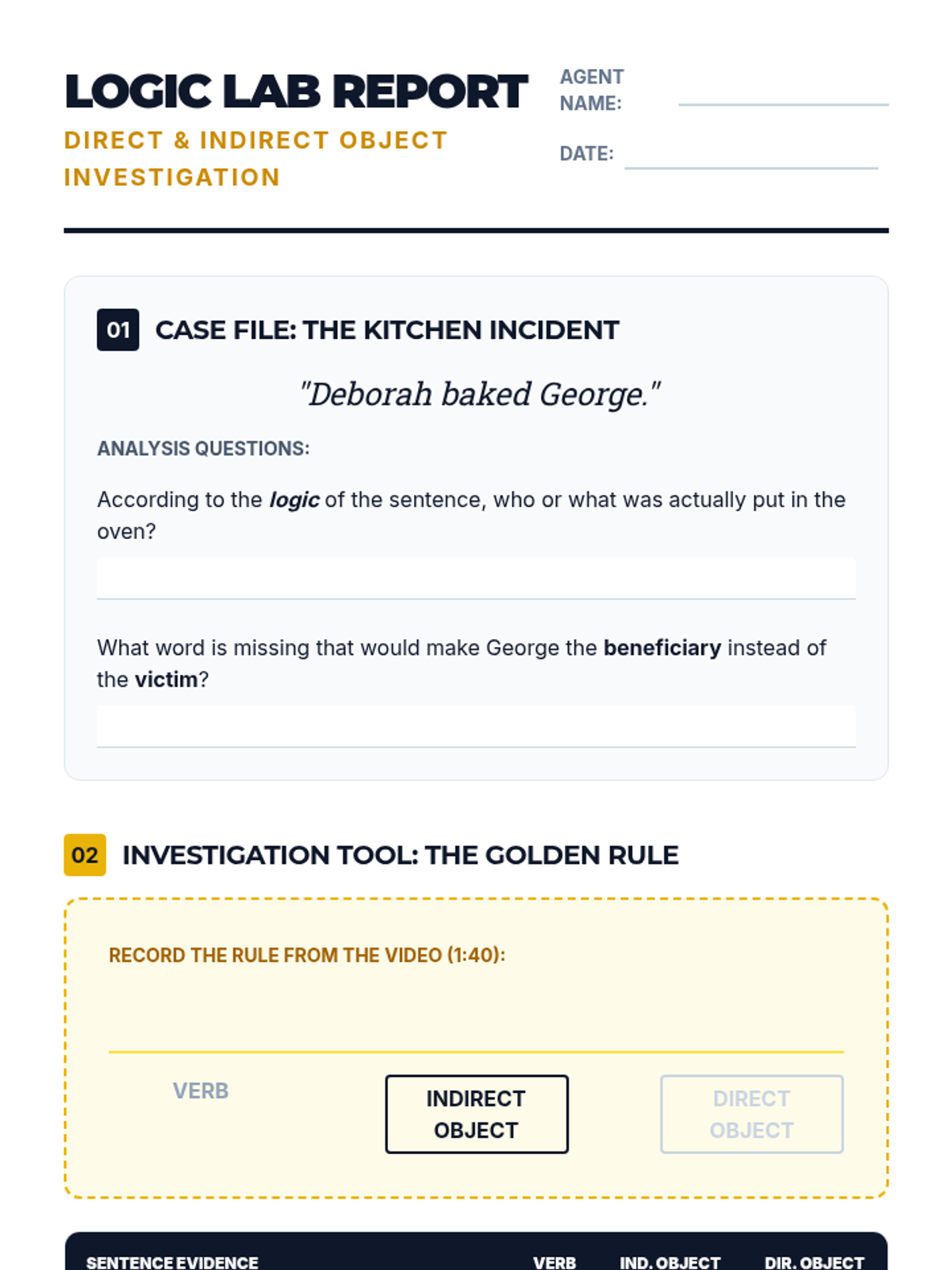
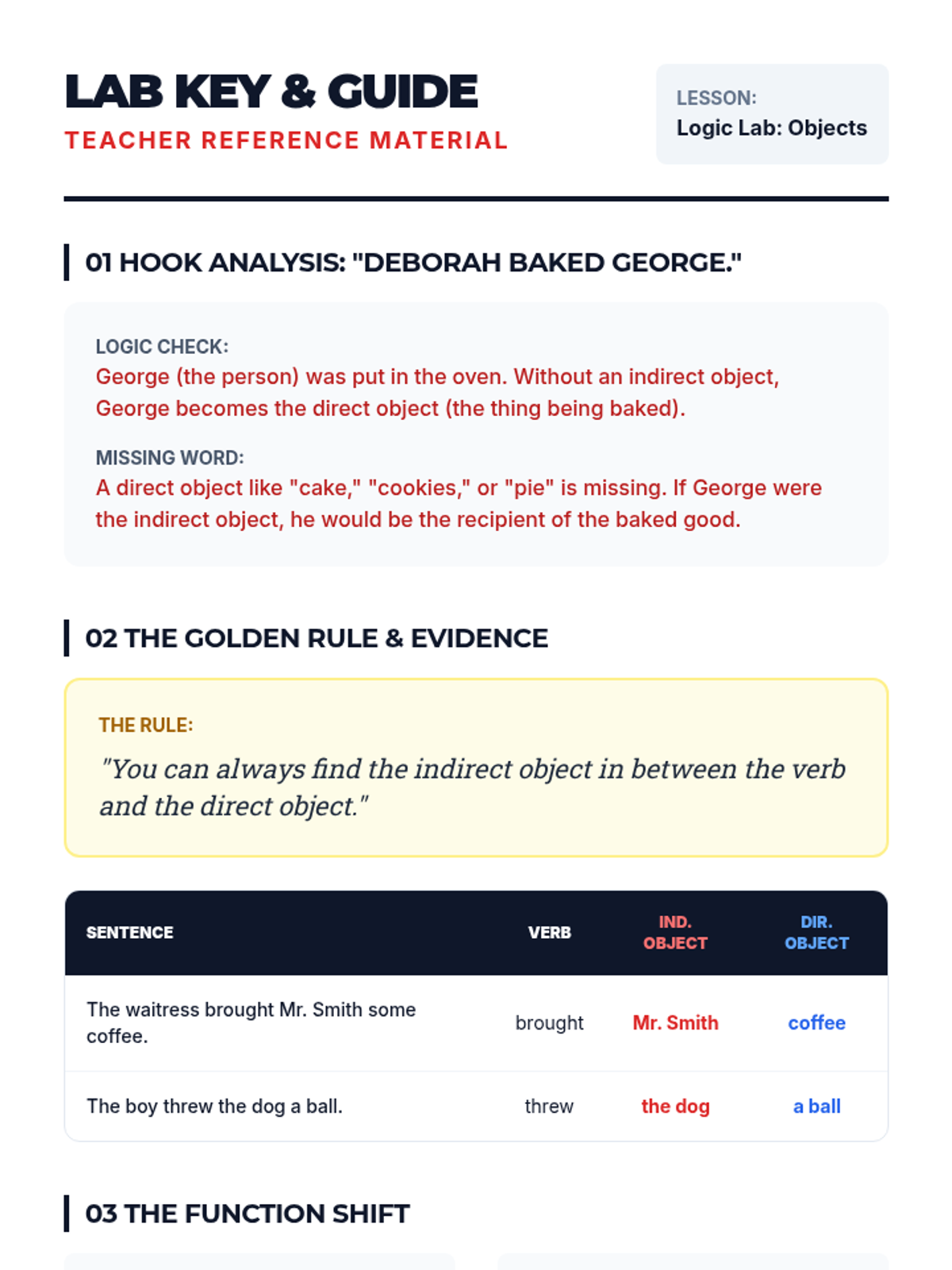
Students will use logic and the 'Golden Rule' of placement to distinguish between direct and indirect objects, investigating sentences where a lack of an indirect object leads to humorous or impossible scenarios.
A kinesthetic grammar lesson for 6th-8th grade intervention students to master direct and indirect objects through movement and role-play.
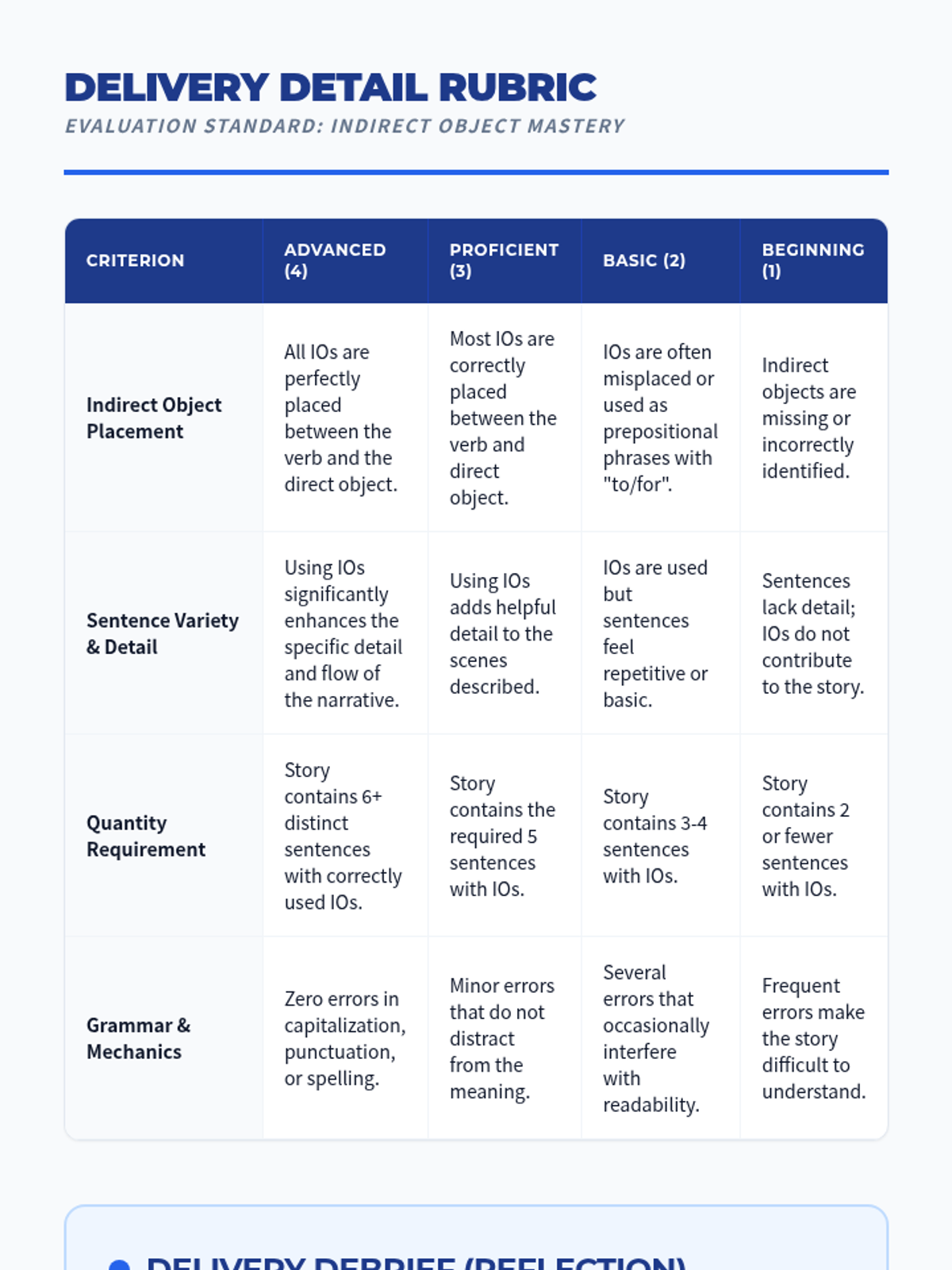
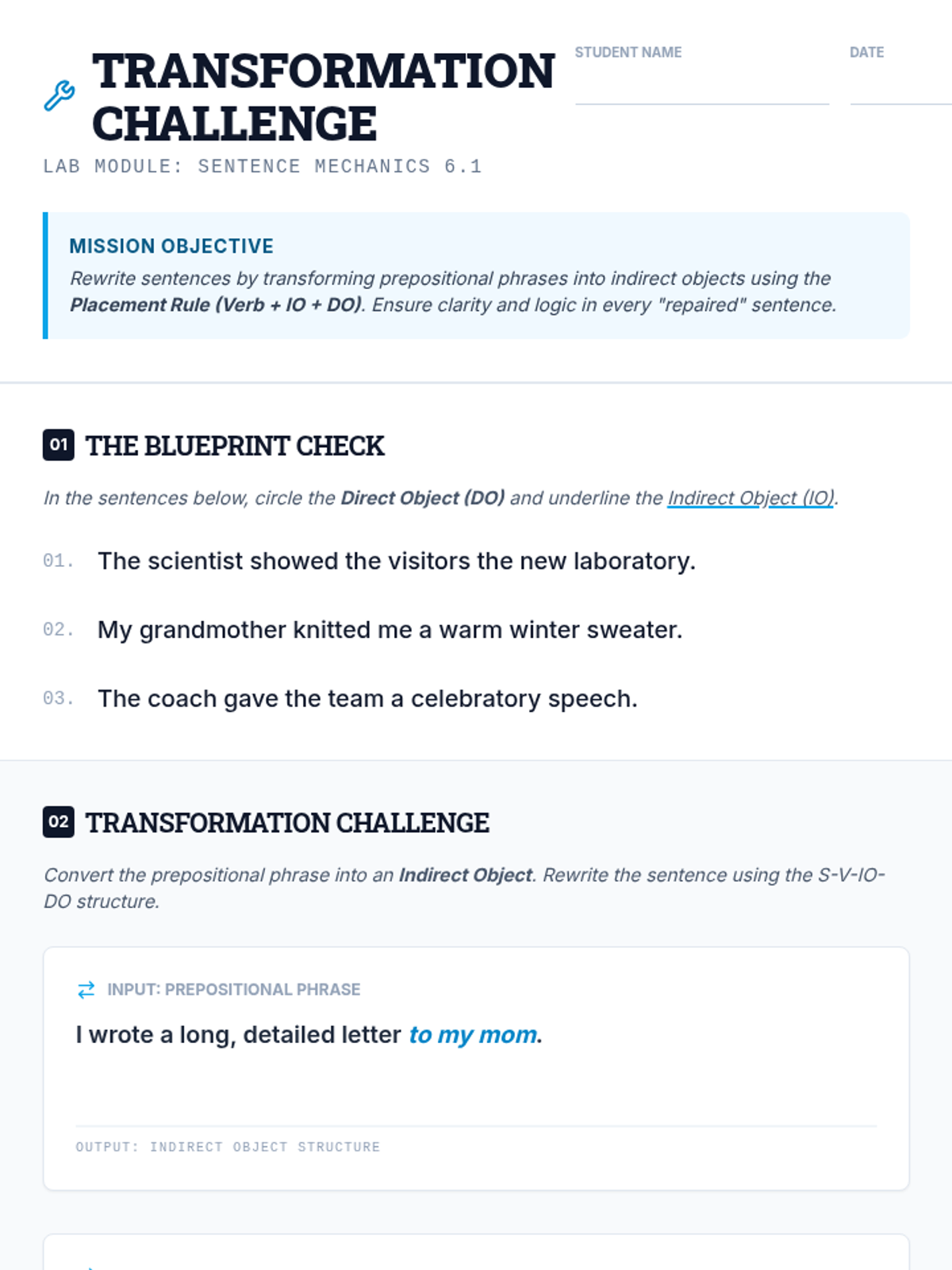
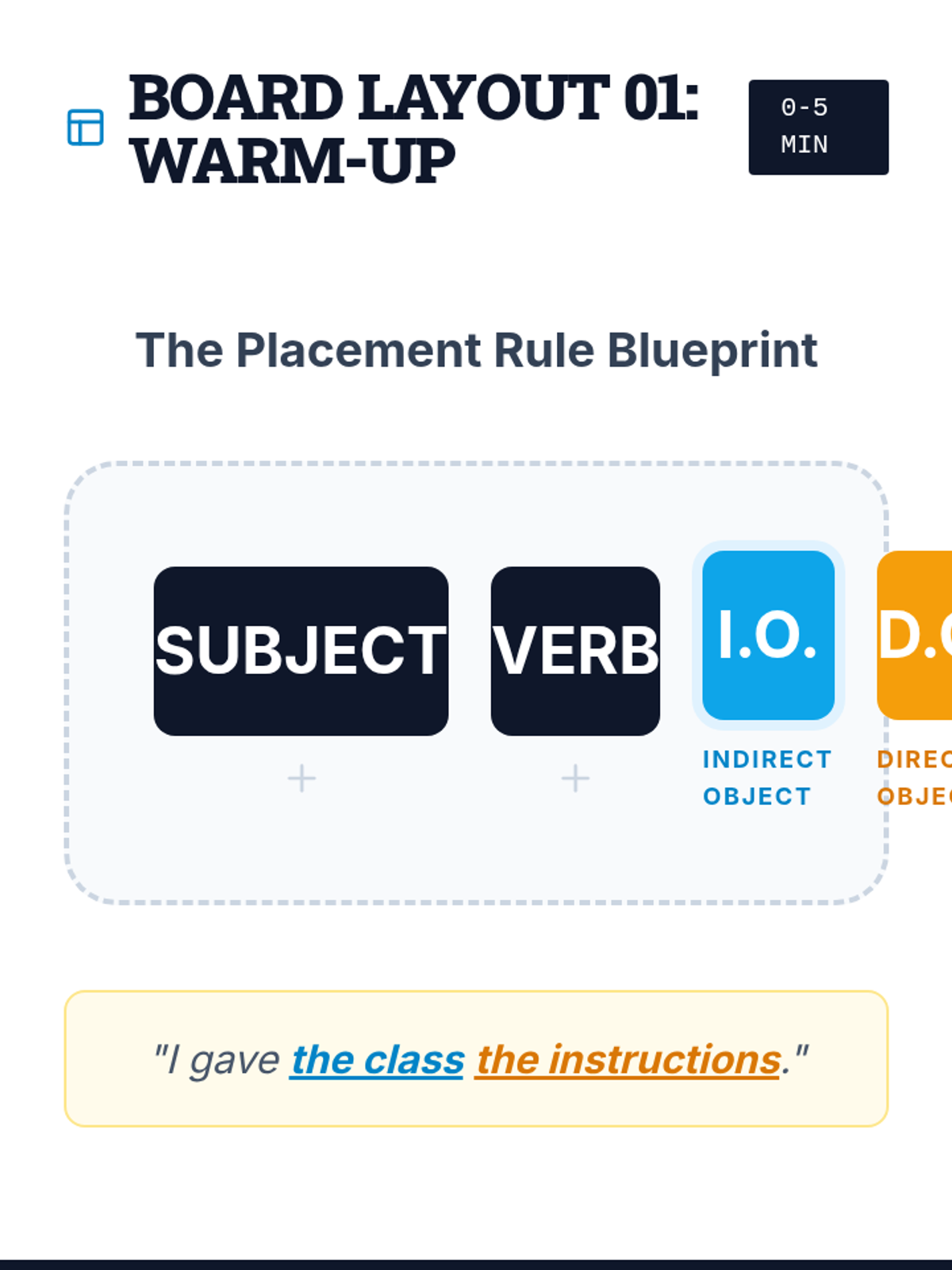
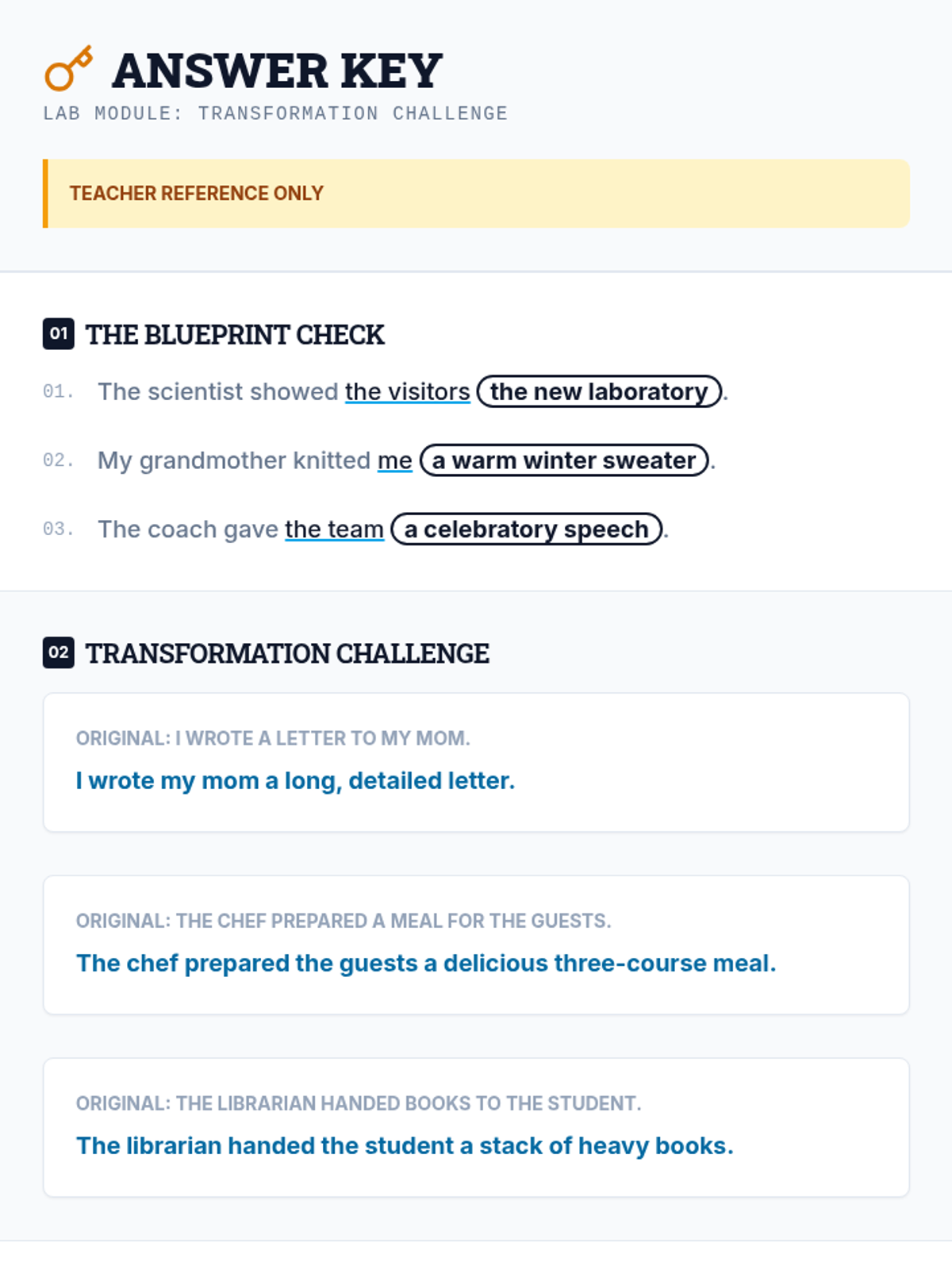
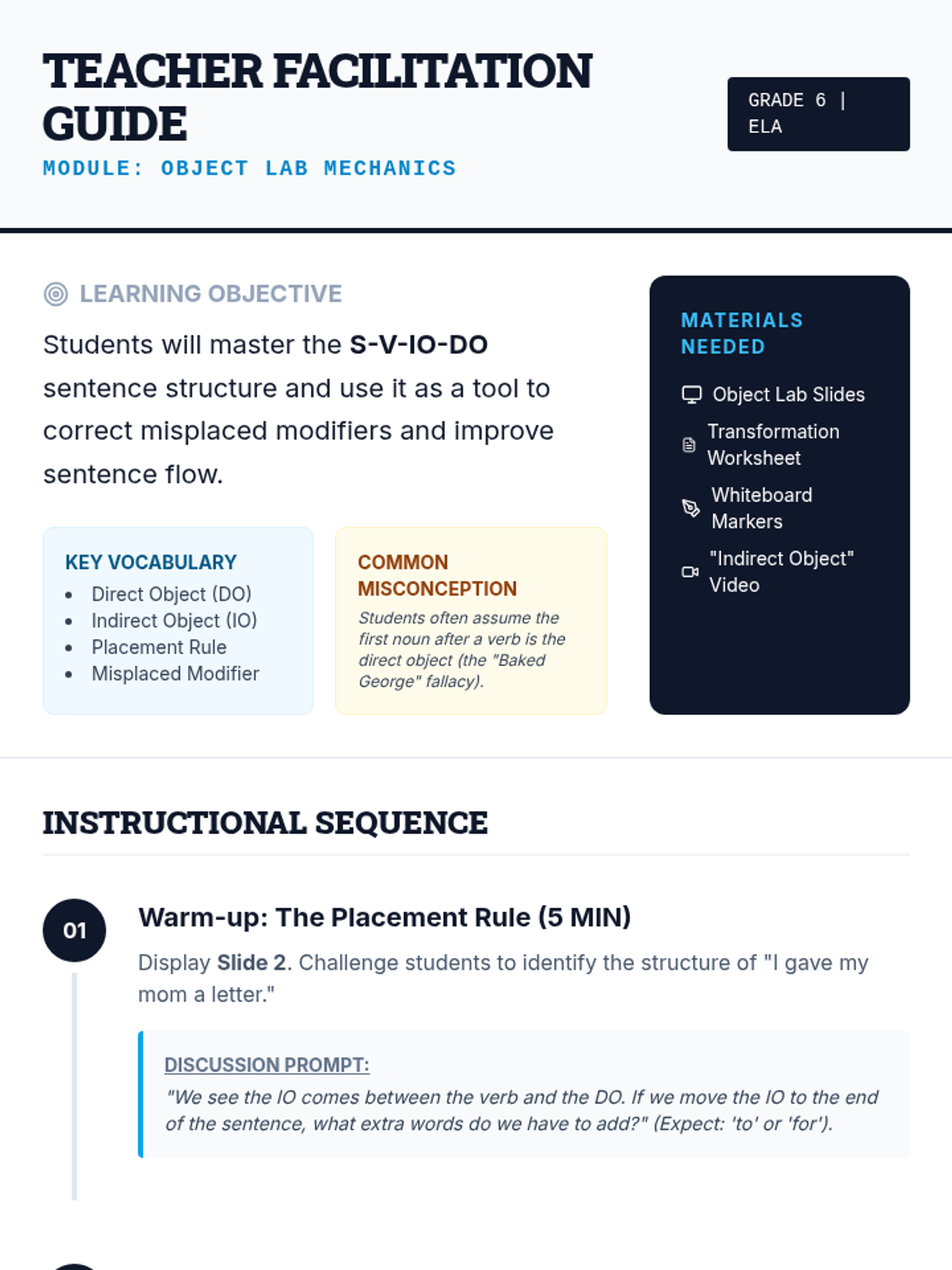
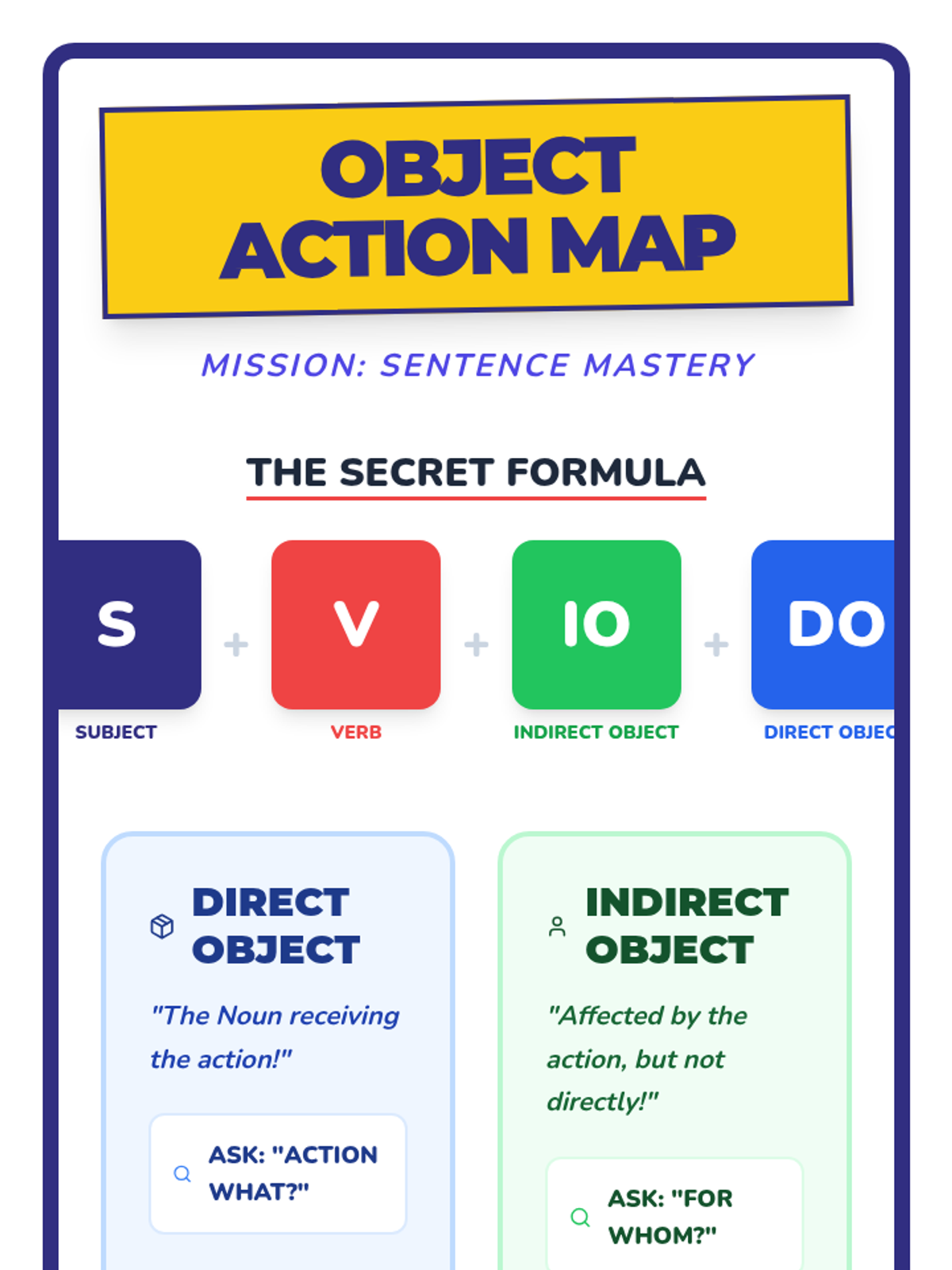
A lesson focused on the mechanics of indirect objects and sentence structure. Students will master the placement rule (S-V-IO-DO) and learn to transform prepositional phrases into indirect objects while avoiding misplaced modifiers.
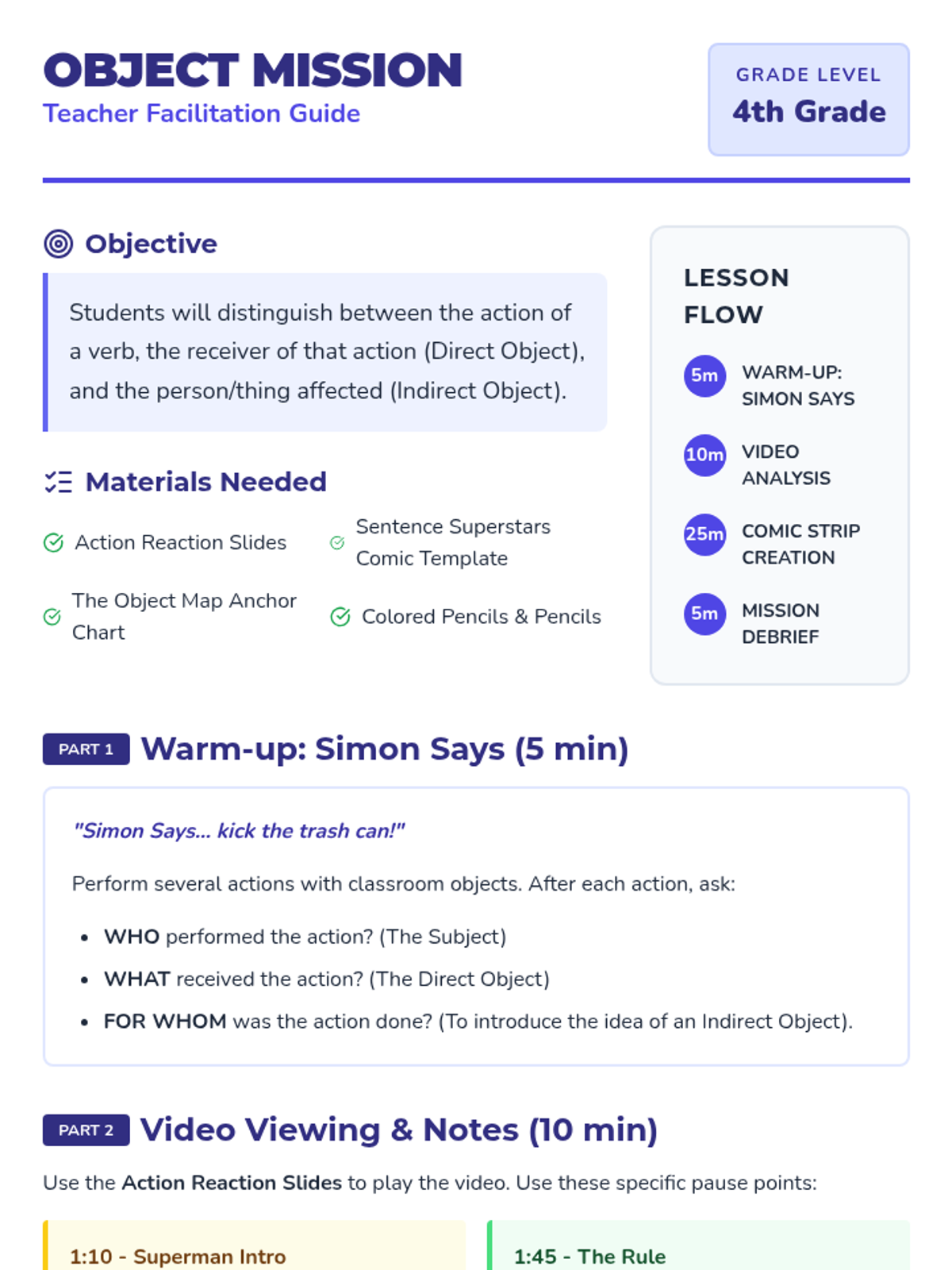
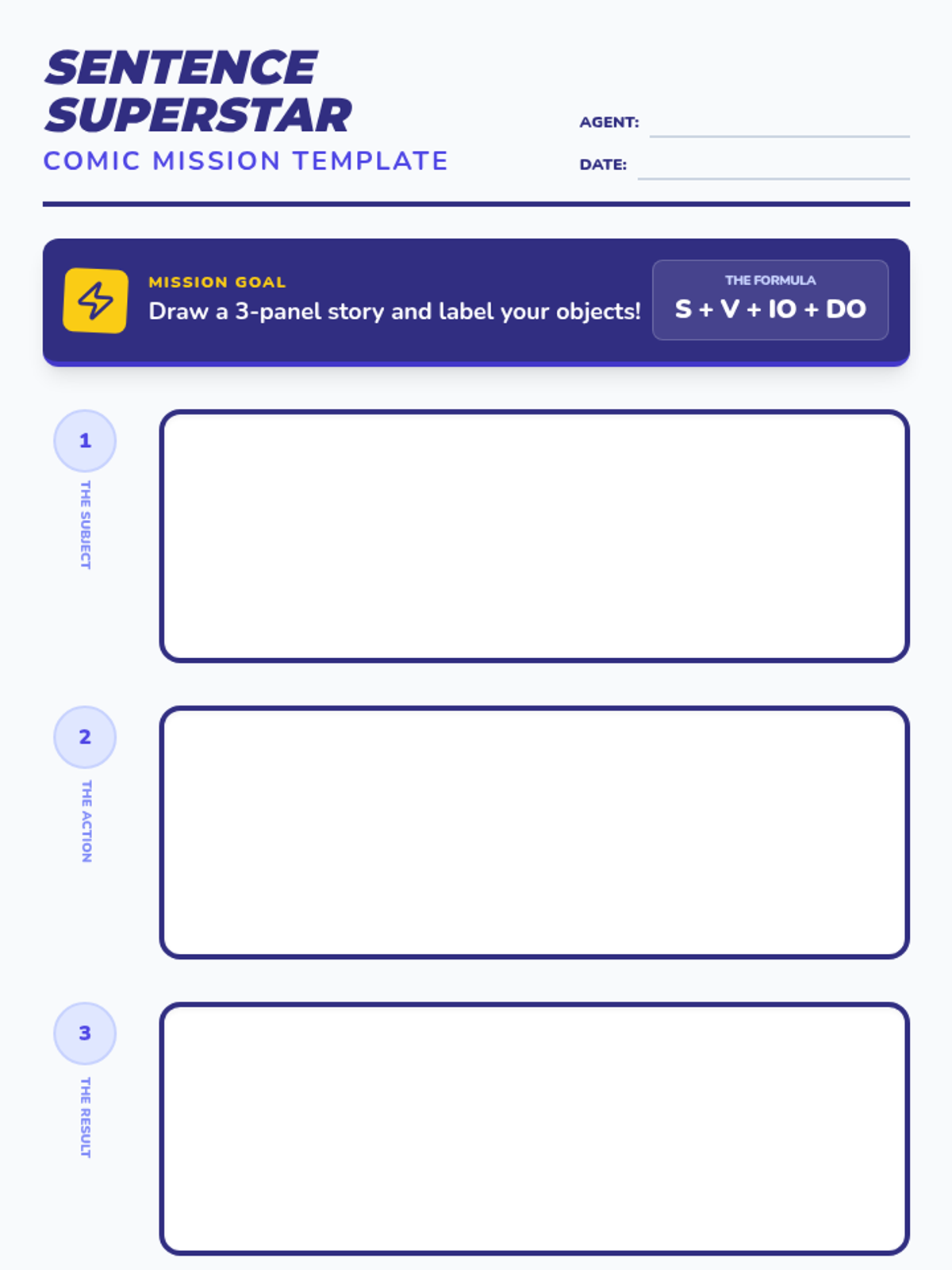
Students will learn to identify and distinguish between subjects, verbs, direct objects, and indirect objects through a high-energy 'Simon Says' warm-up, an interactive video analysis, and a creative comic strip project.
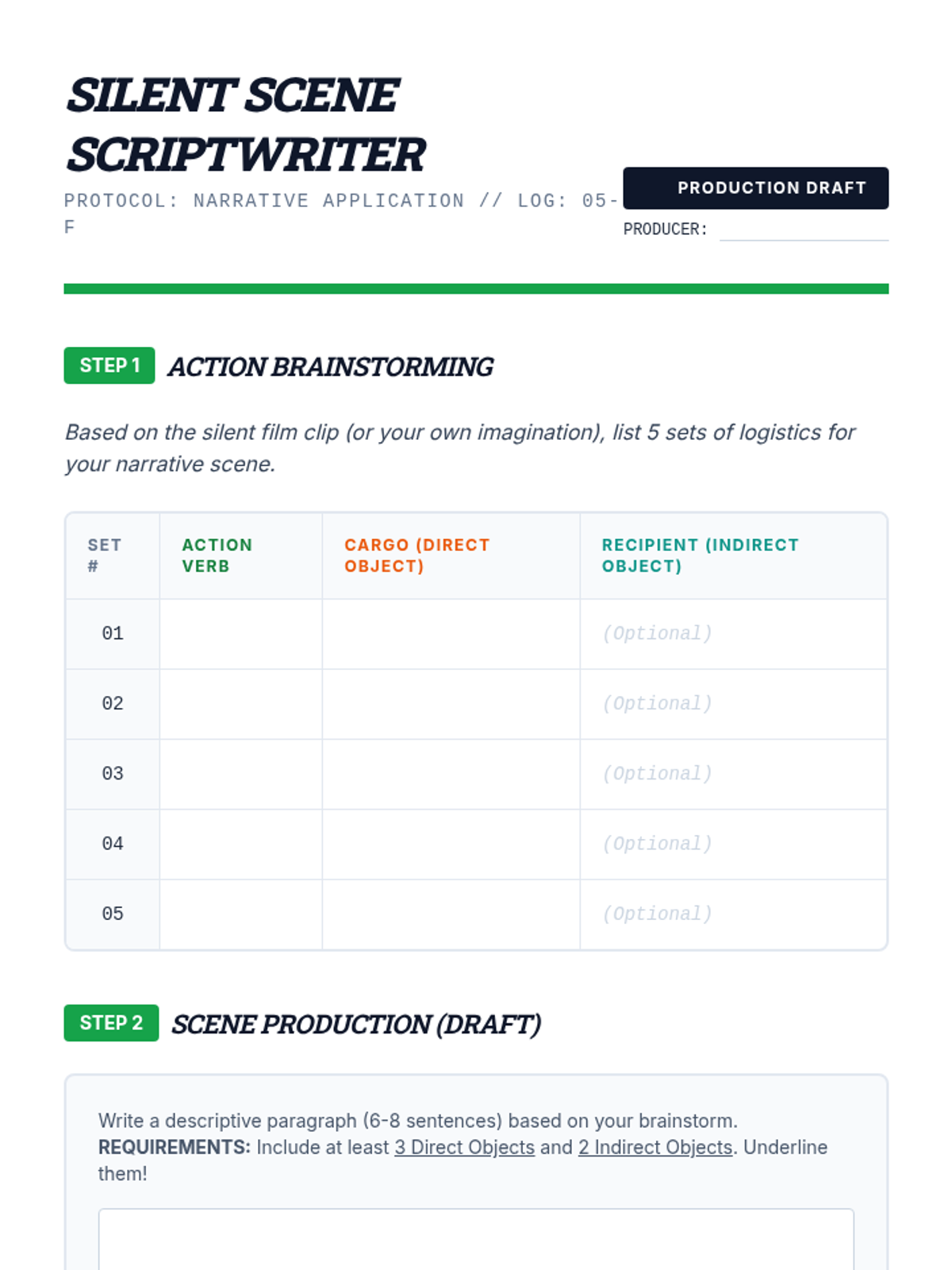
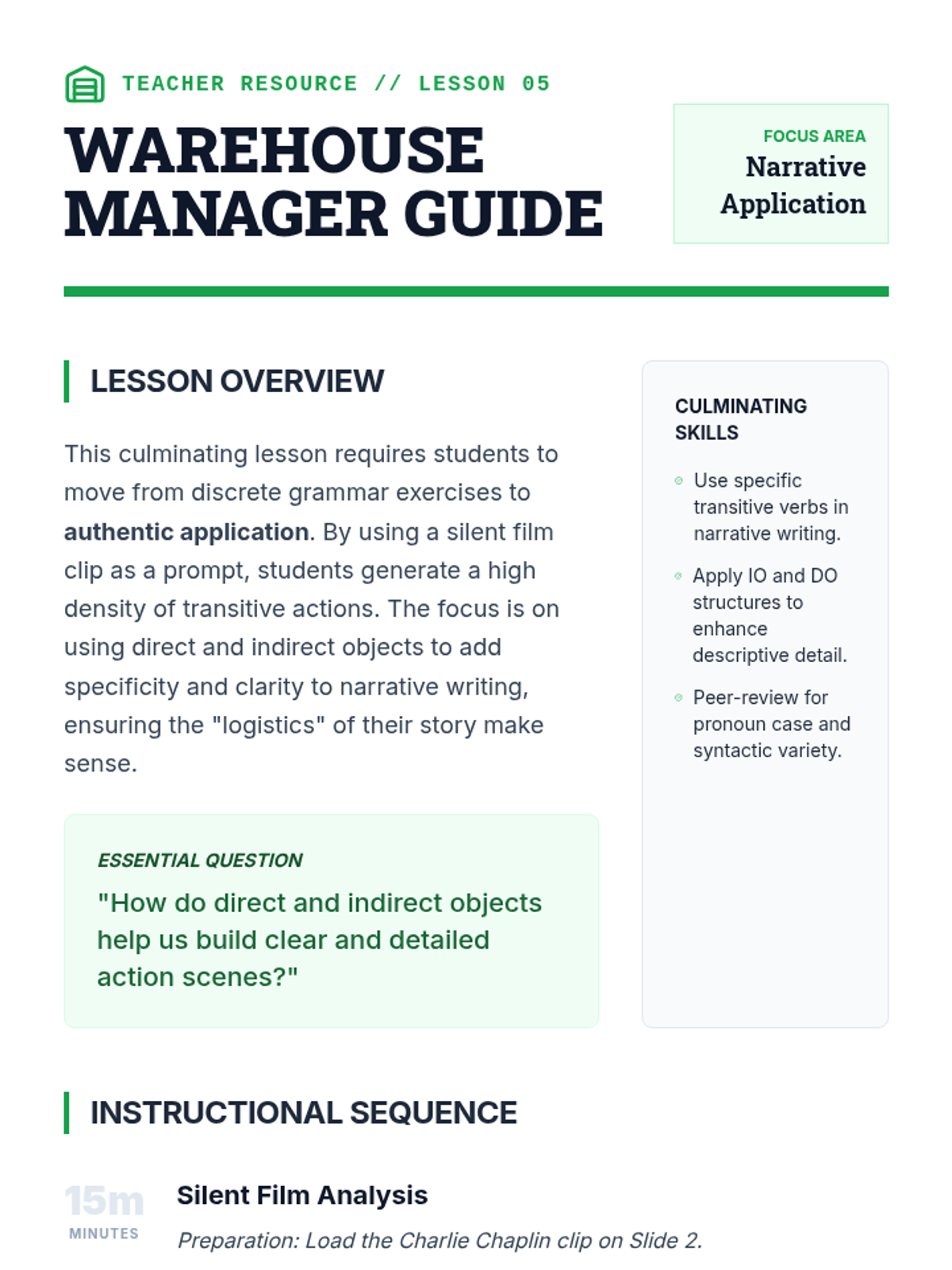
Culminating writing workshop where students apply object structures to craft descriptive action scenes inspired by silent film clips.
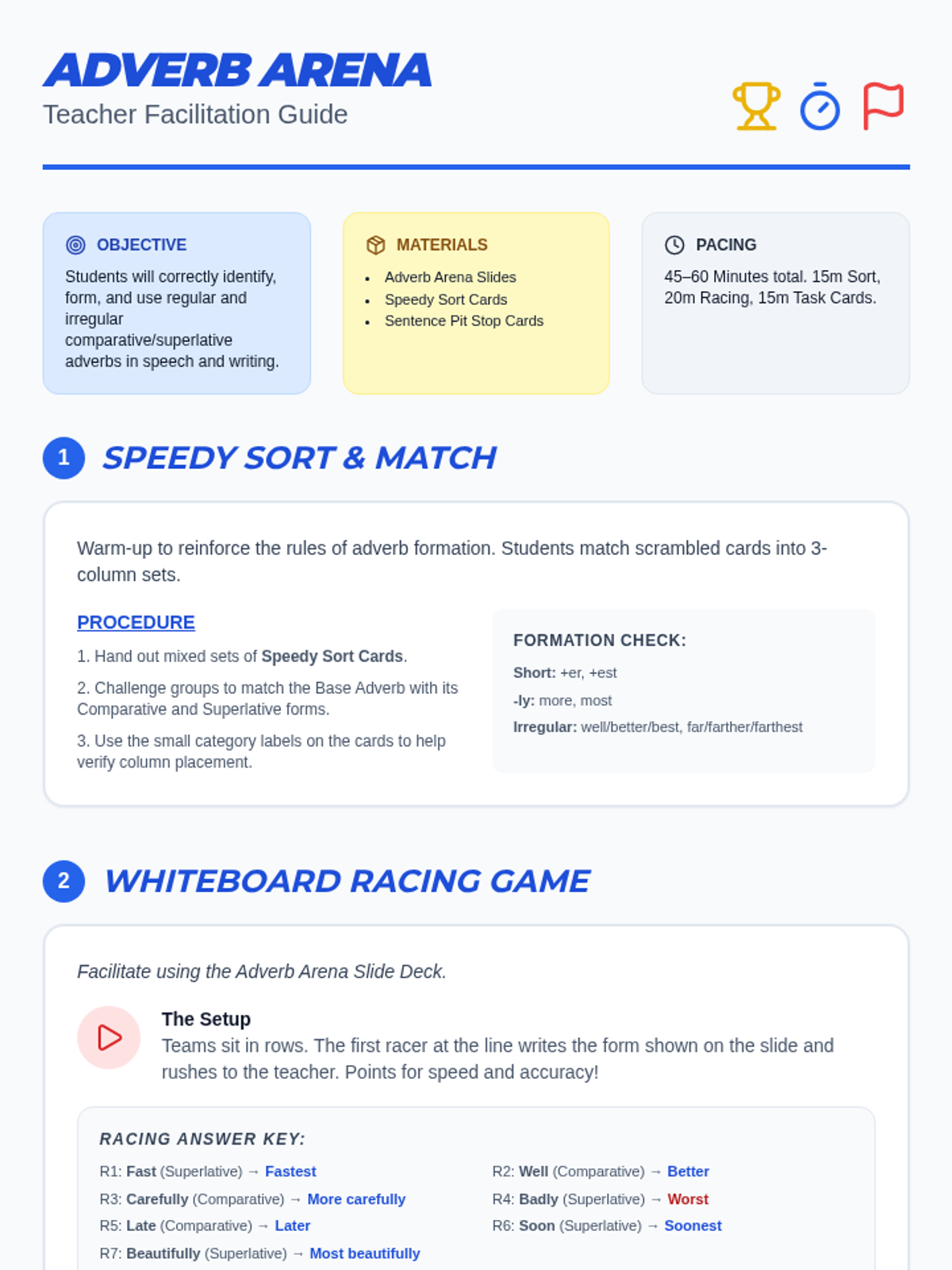
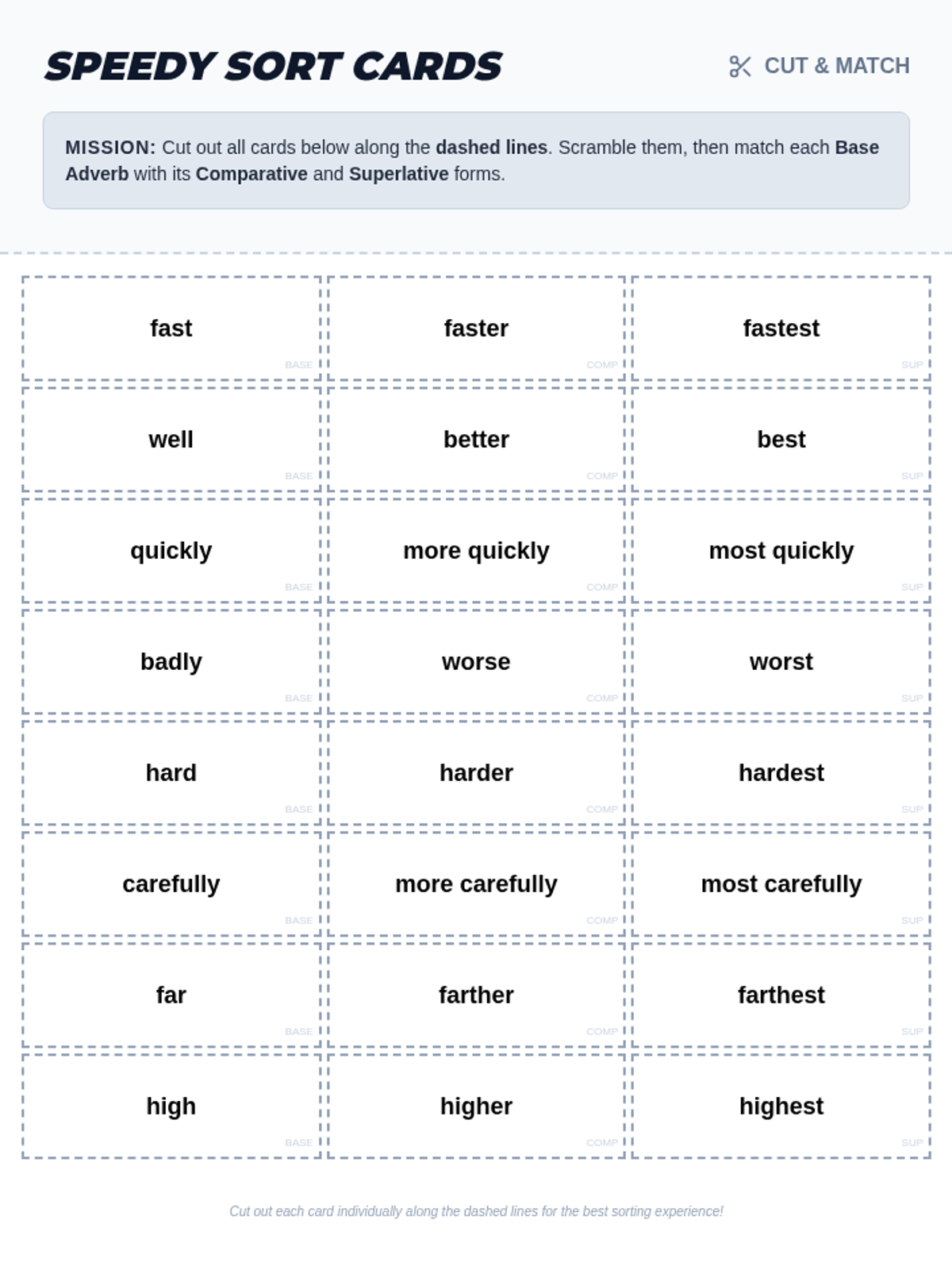
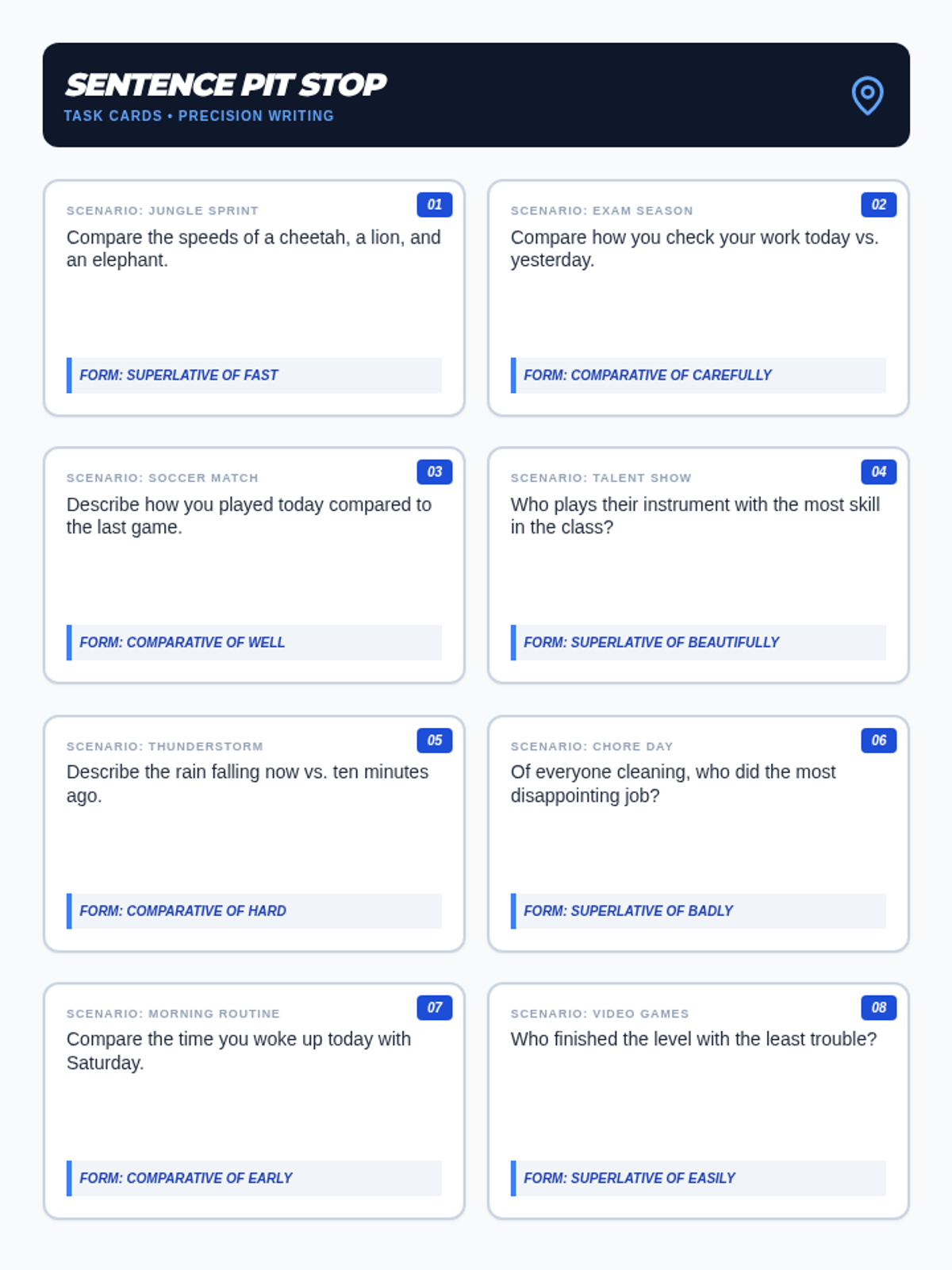
A high-energy set of activities designed to master comparative and superlative adverbs through movement, sorting, and creative sentence construction.
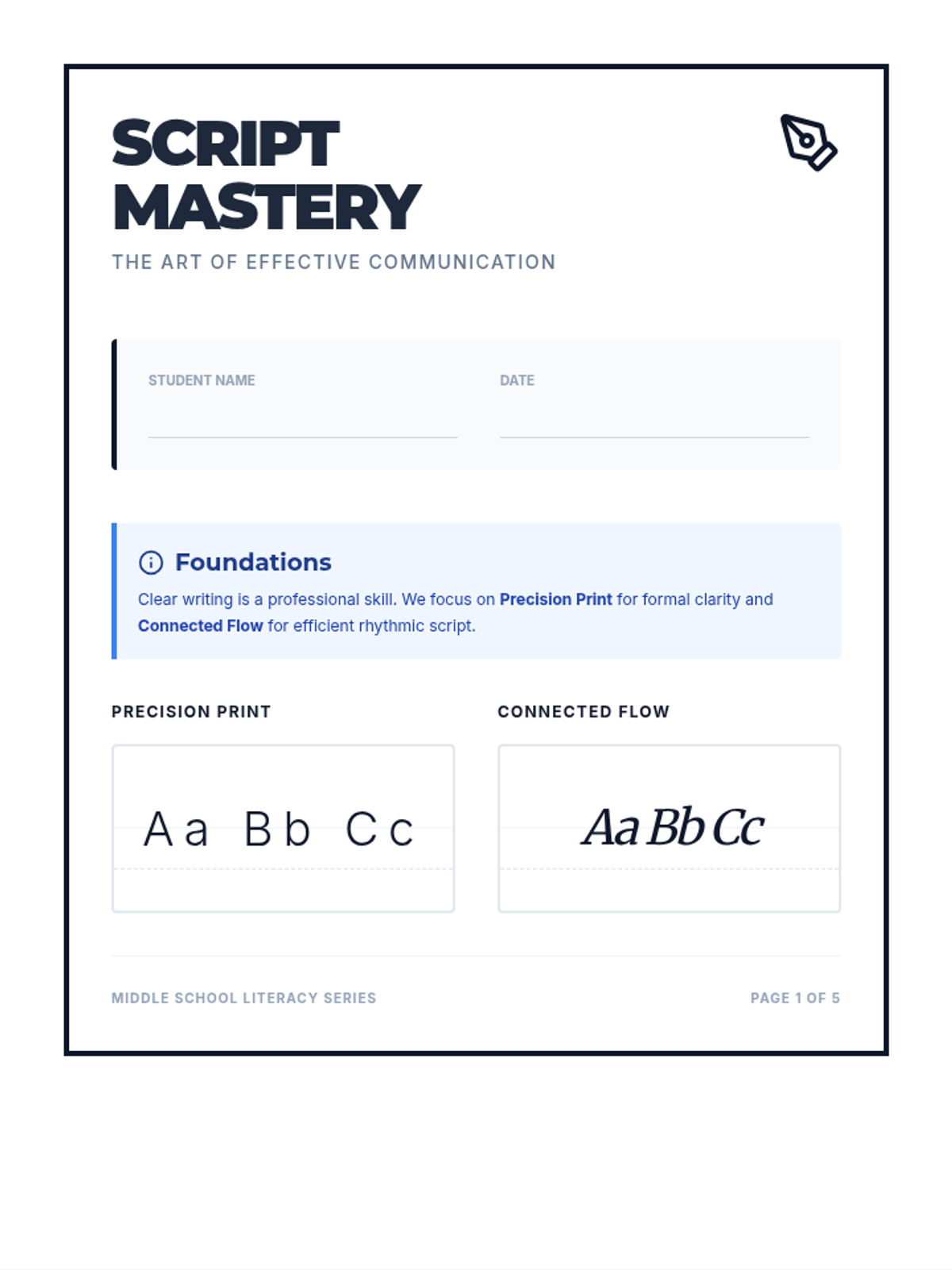
A comprehensive handwriting improvement program for middle school students, blending print and cursive techniques using engaging academic and motivational content.
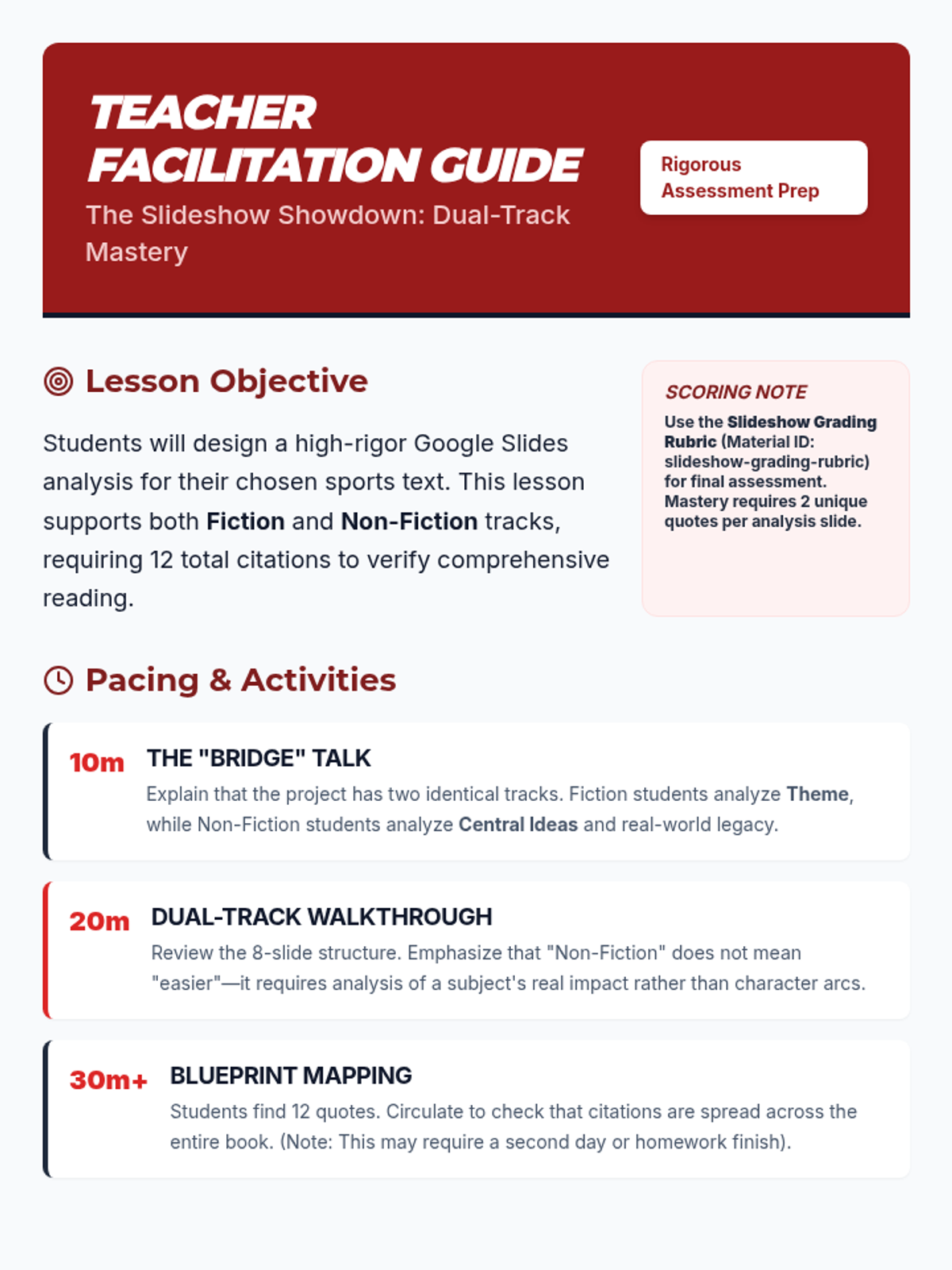
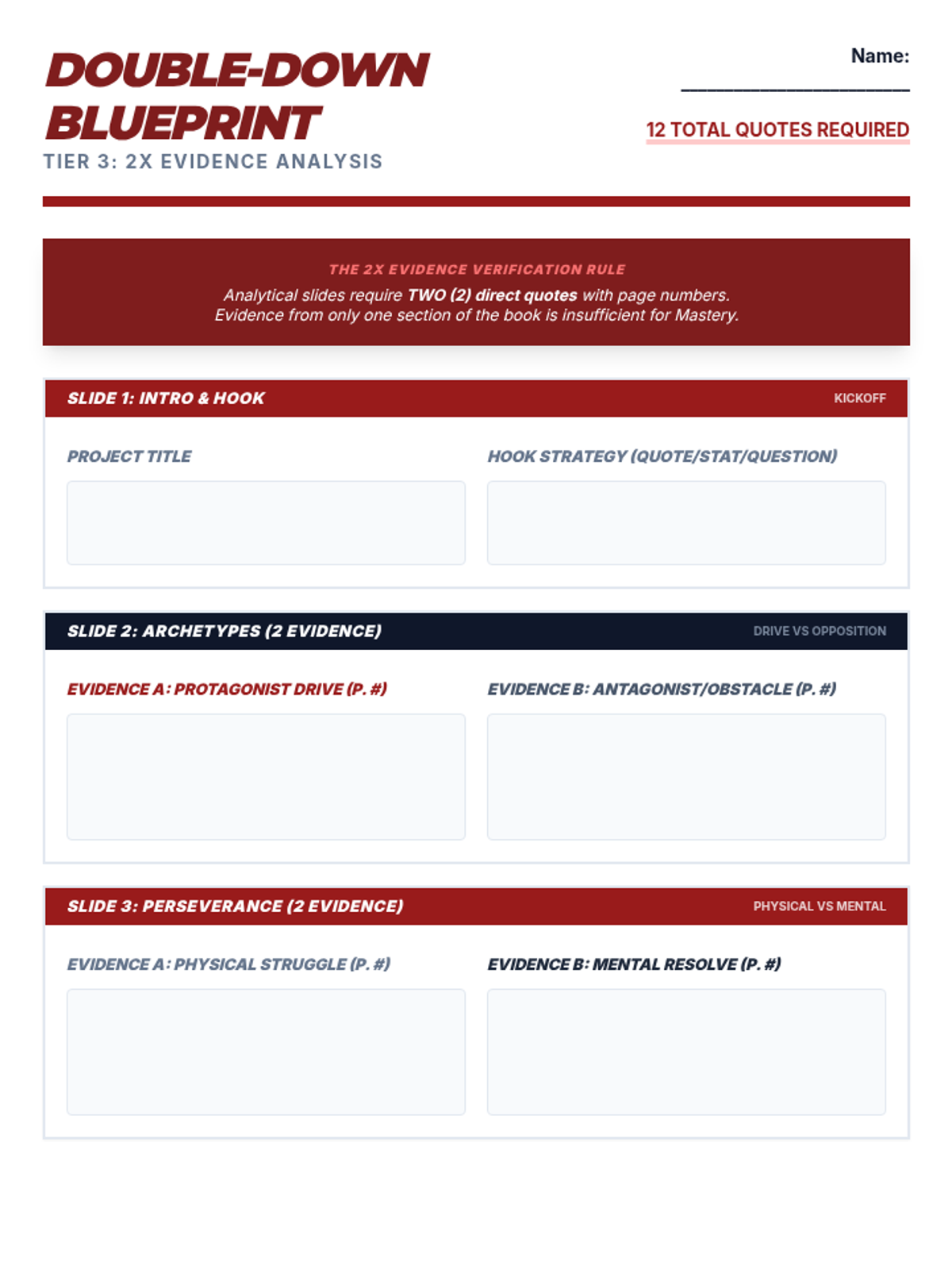
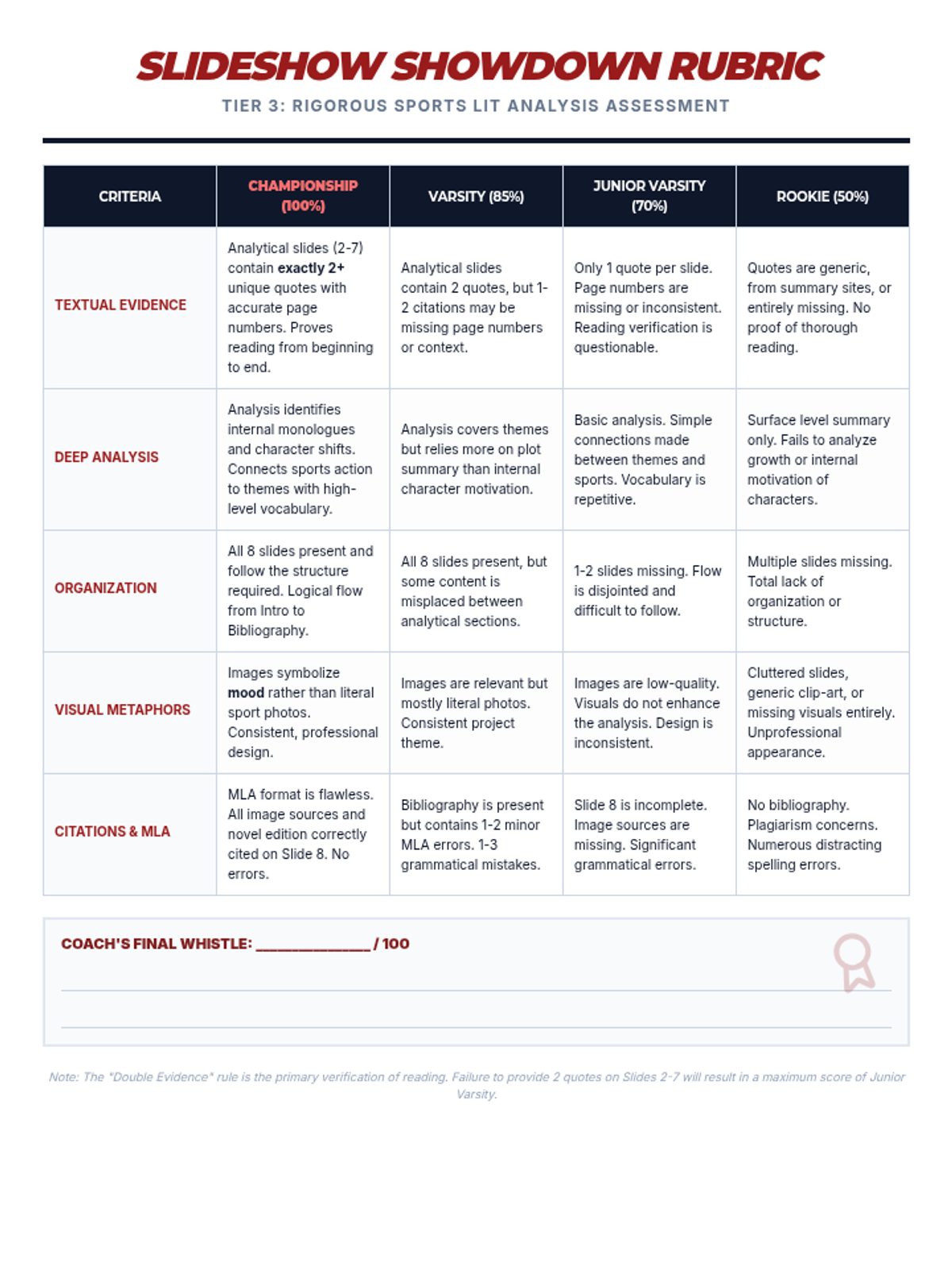
A rigorous introductory lesson to help students create a deep-dive Google Slides analysis of their sports fiction novel. This lesson replaces multimedia with high-level literary analysis, requiring specific textual evidence across multiple themed slides to verify comprehensive reading.
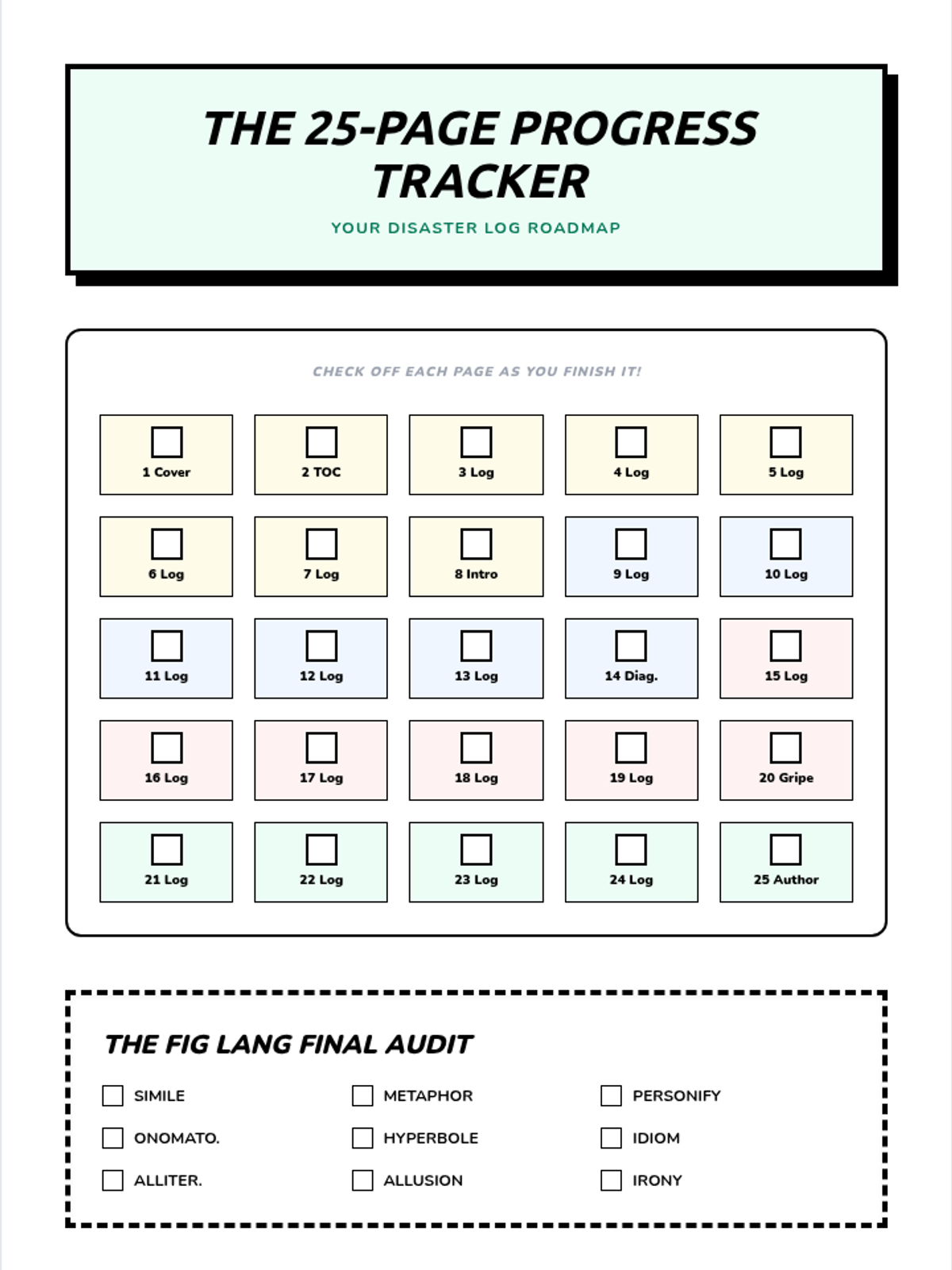
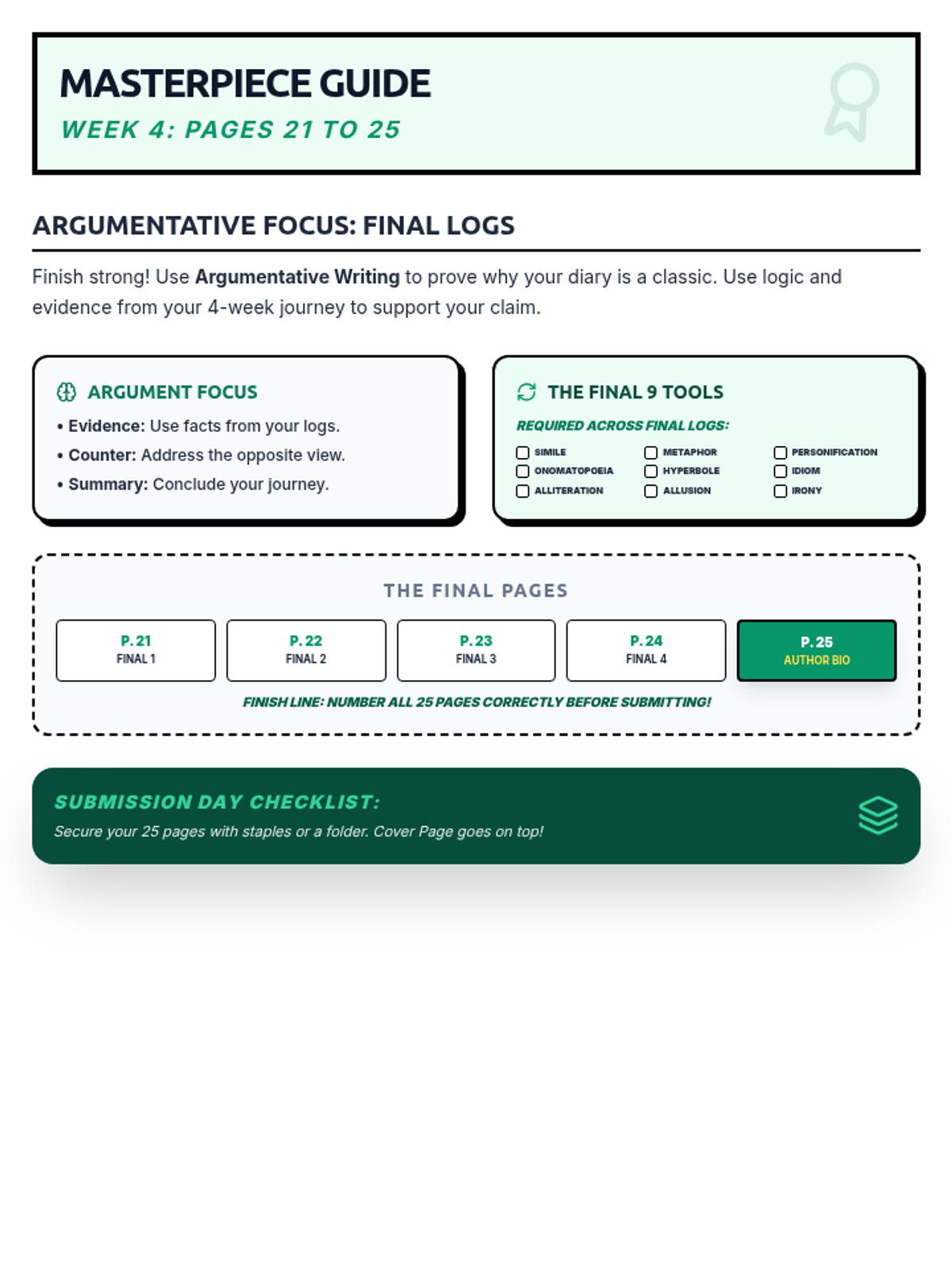
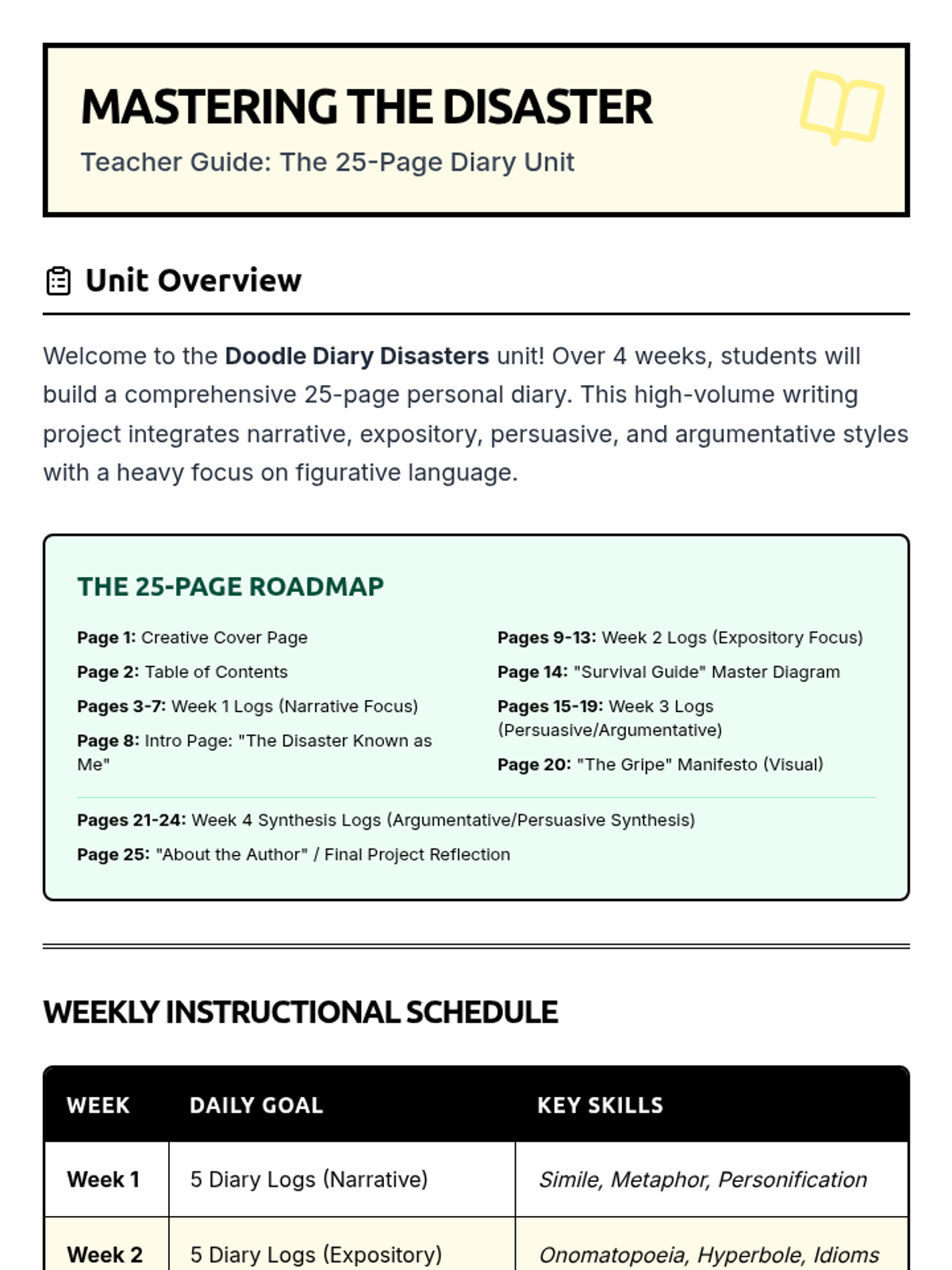
A final project-focused week where students compile their entries and use a comprehensive mix of all figurative language to complete their diary masterpiece.
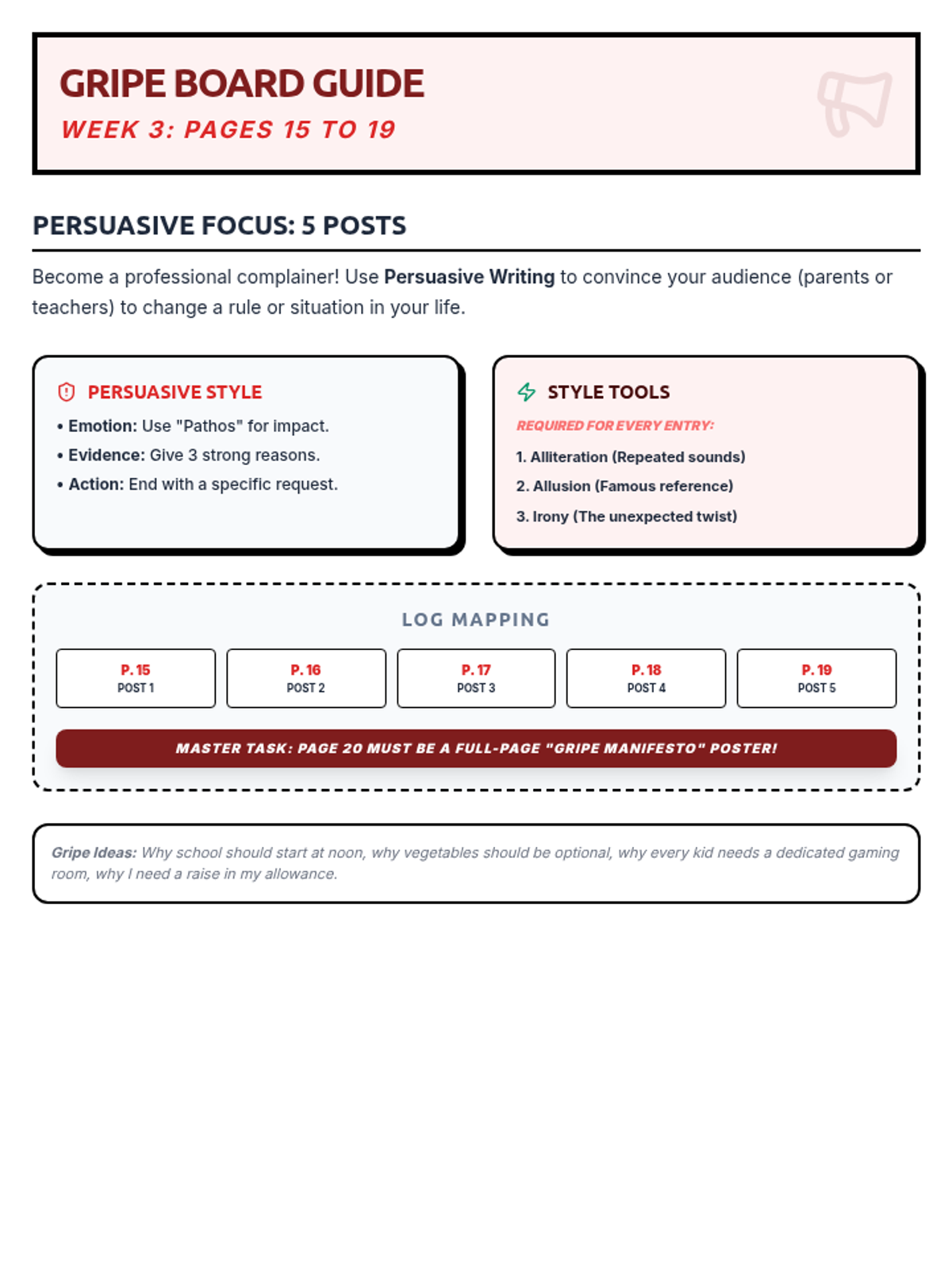
Introduces persuasive and argumentative writing within a diary context, using alliteration, allusion, and irony to strengthen student voices.
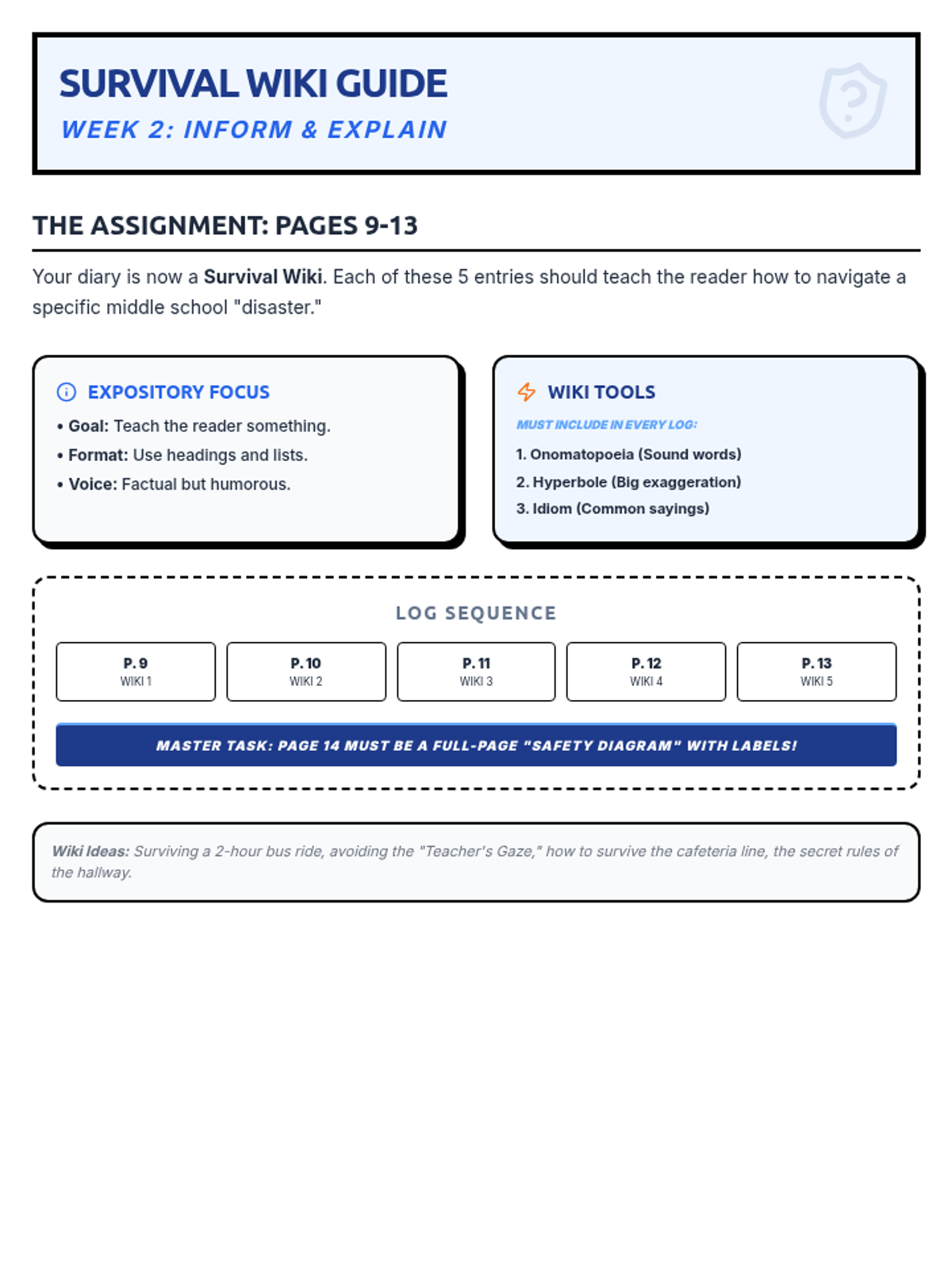
Explores expository writing to explain school or home life while integrating onomatopoeia, hyperbole, and idioms for comedic effect.
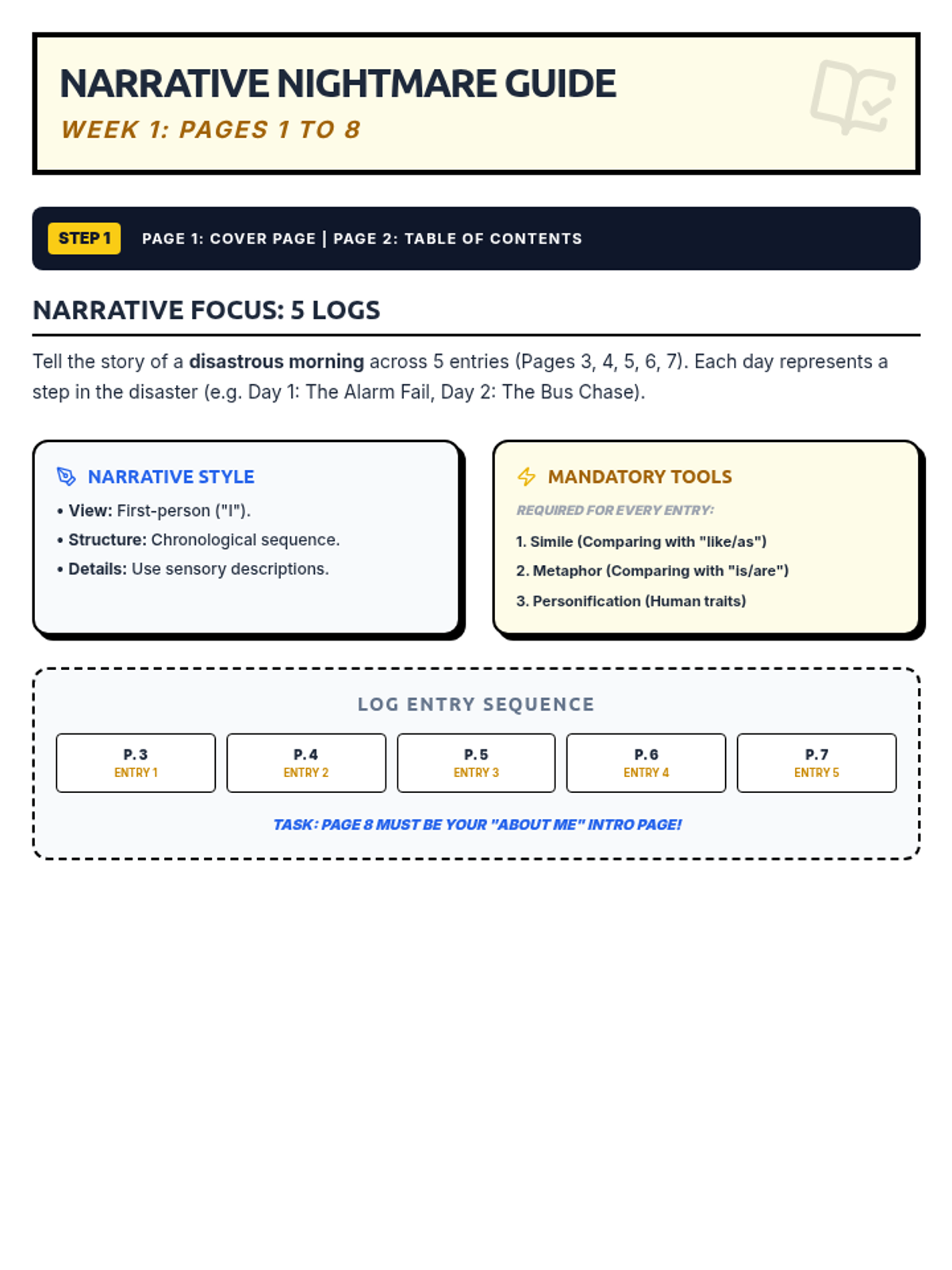
Focuses on narrative writing techniques and using similes, metaphors, and personification to bring a personal story to life in a diary format.
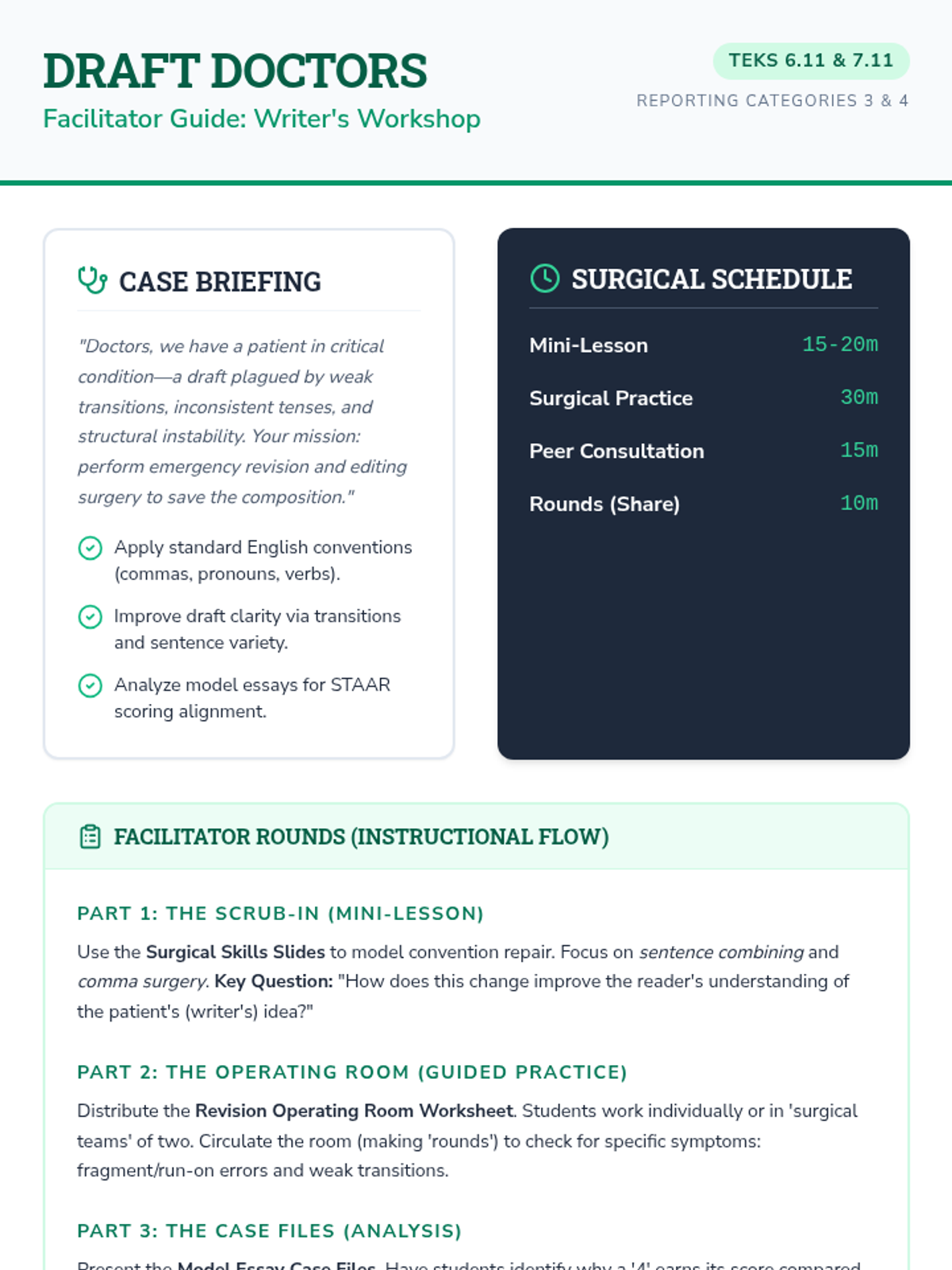
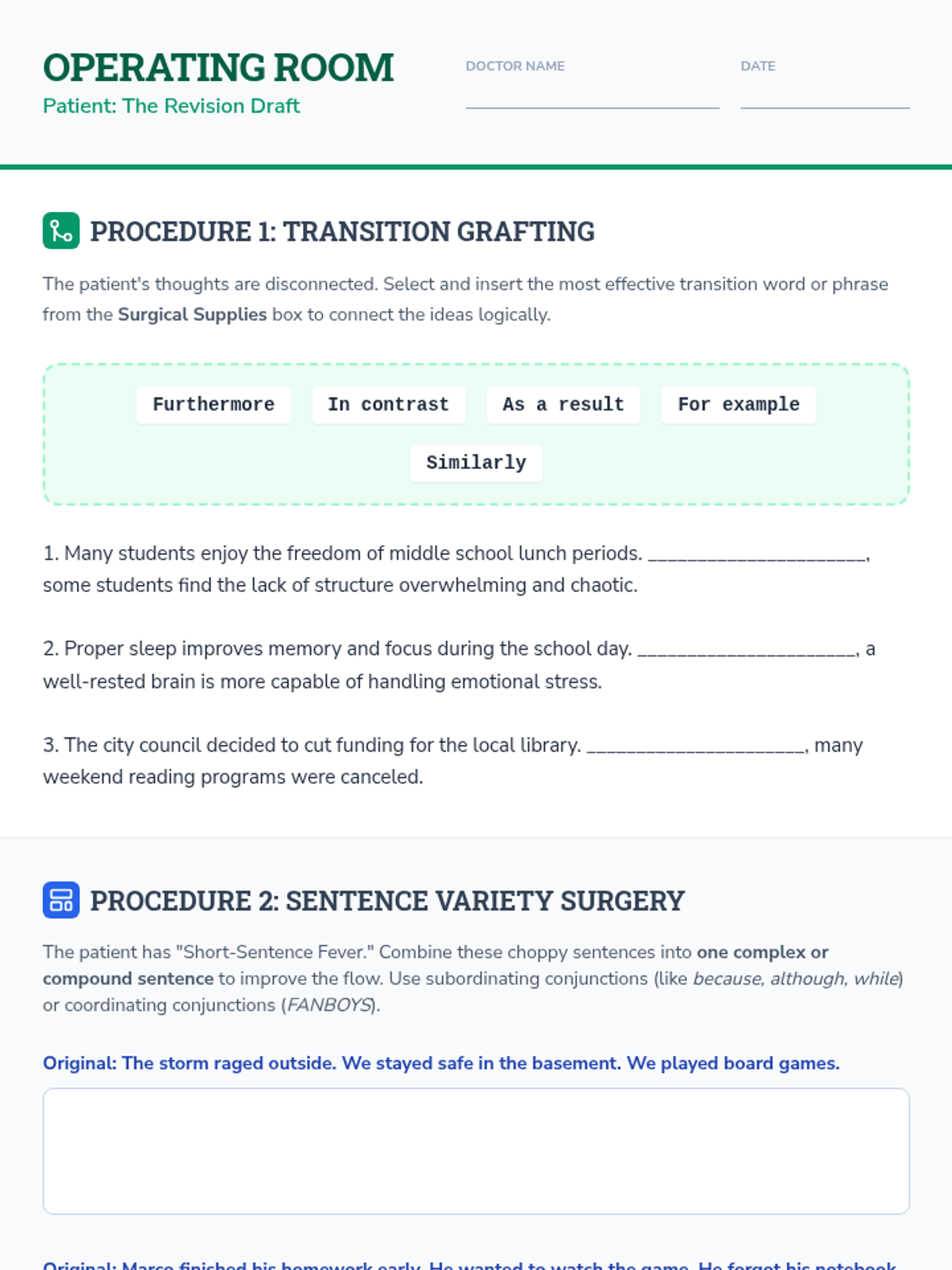
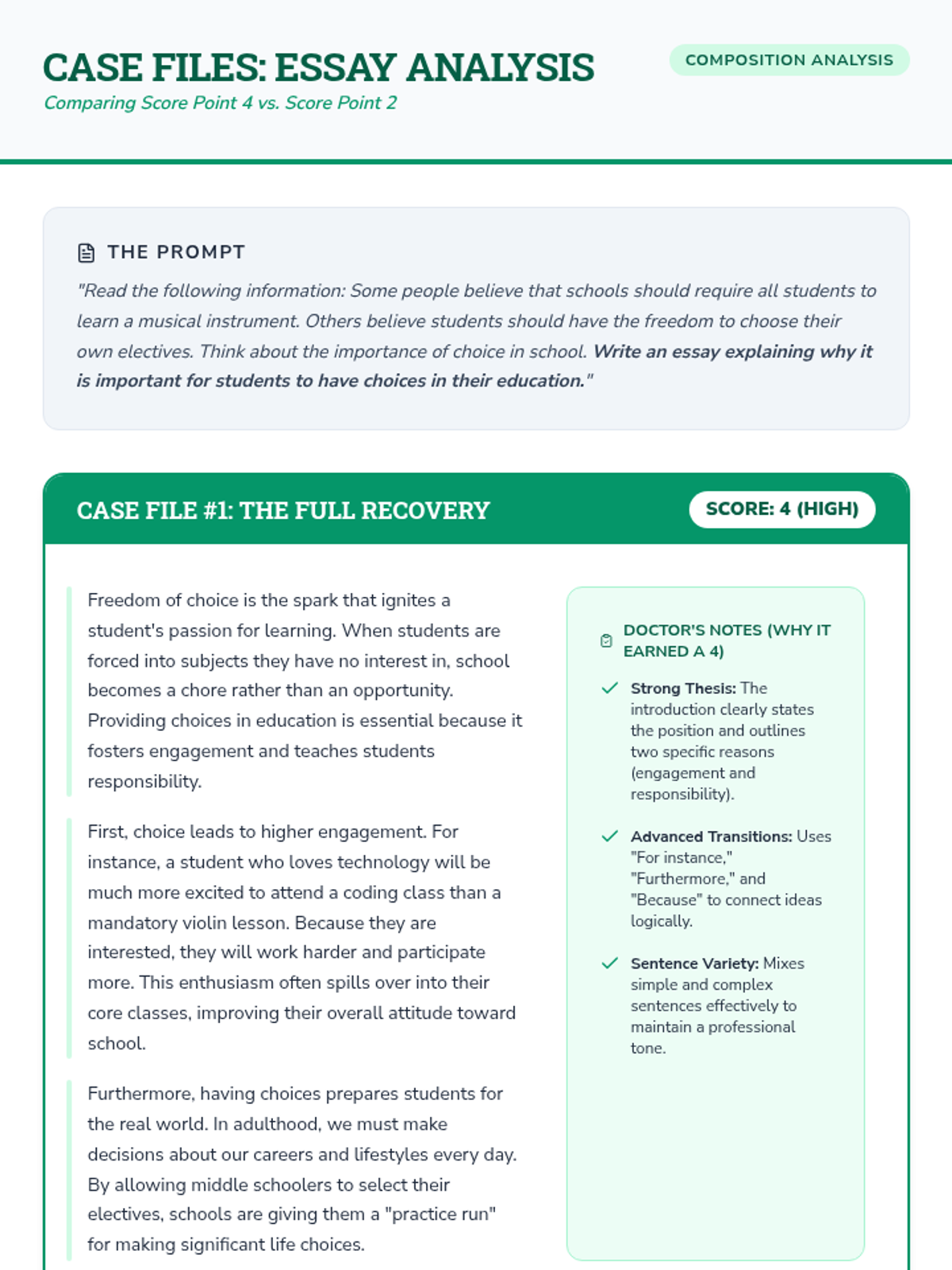
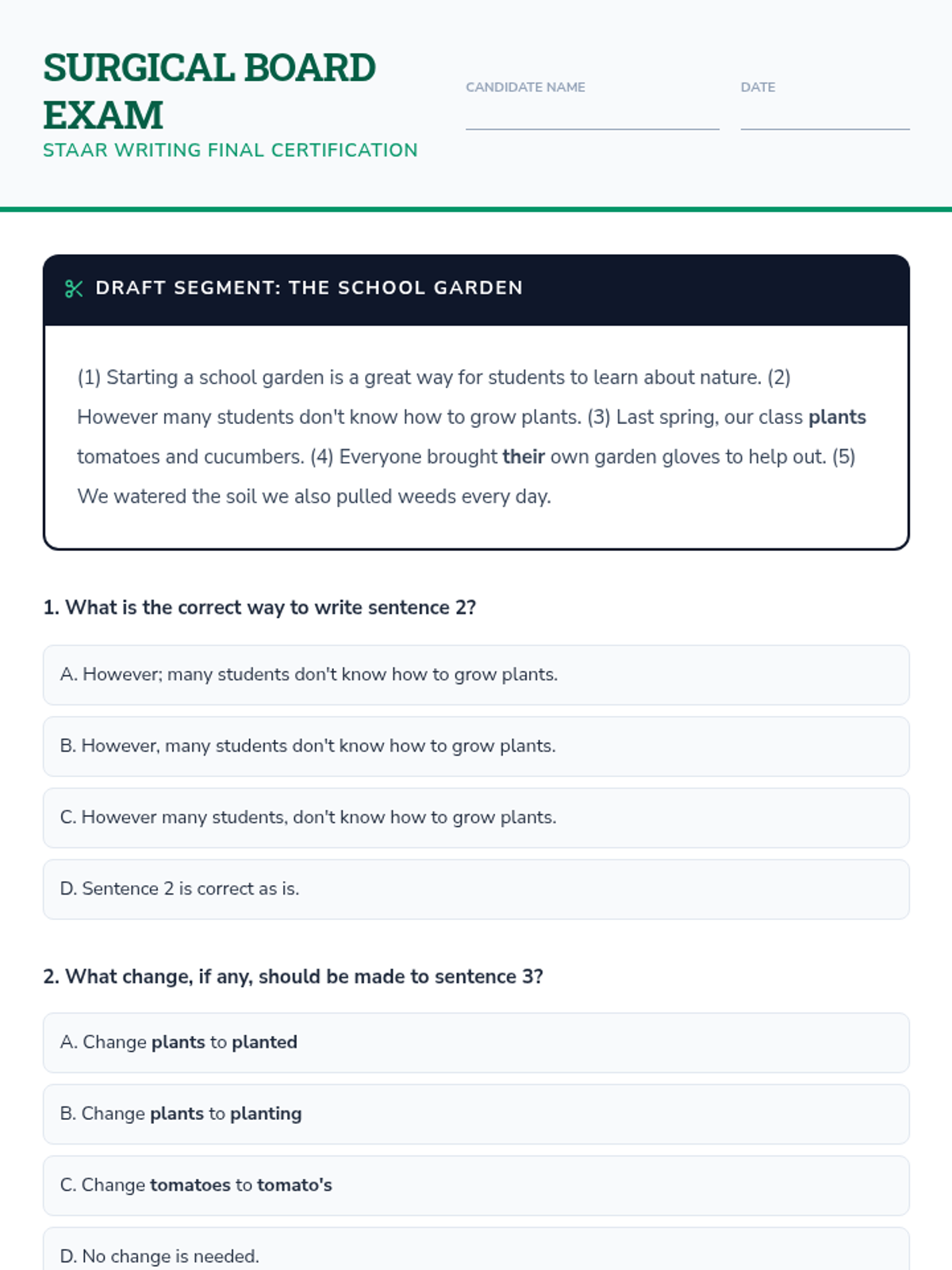
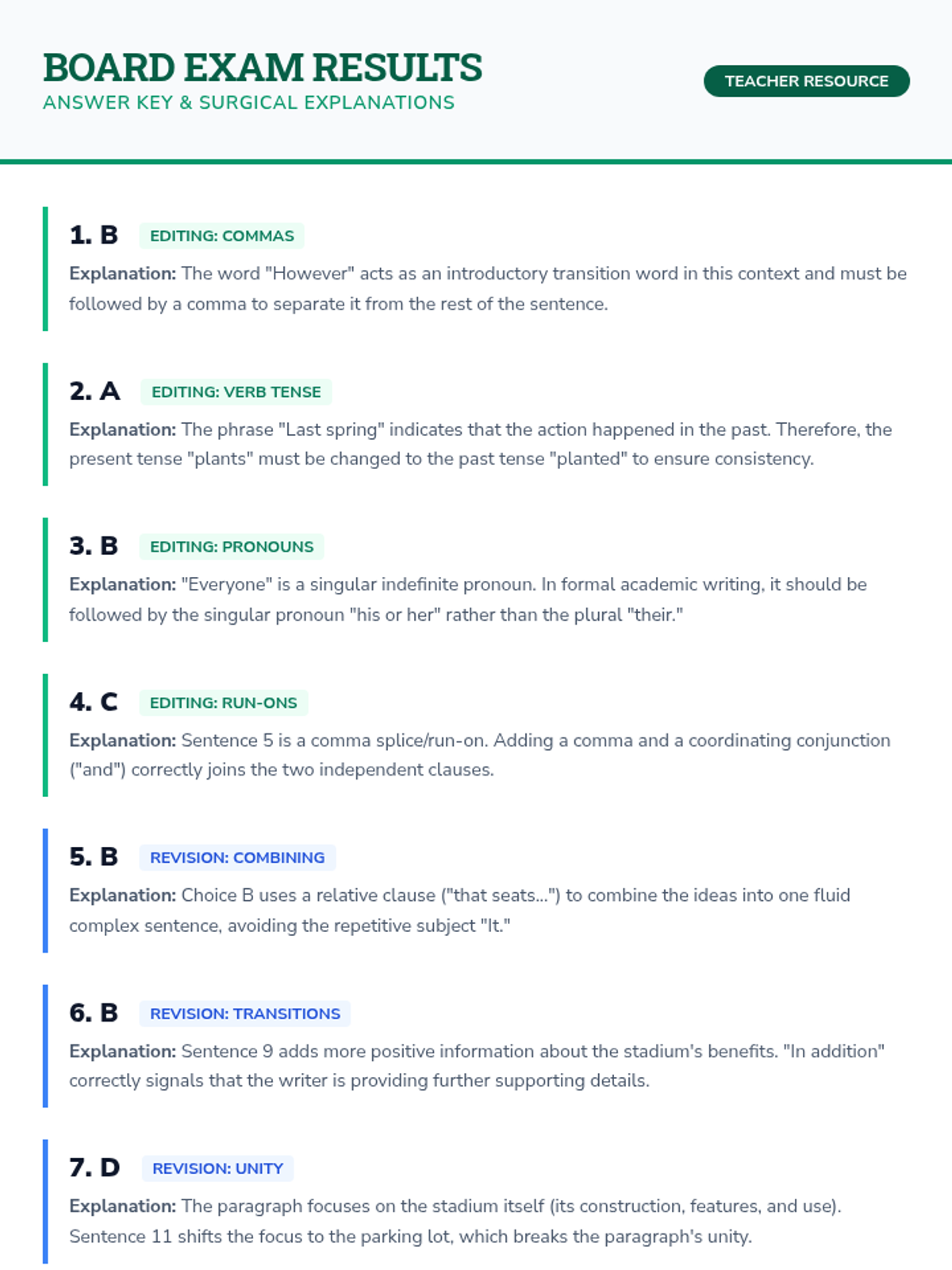
An intensive writing workshop where students act as 'Draft Doctors' to diagnose and repair sentence-level errors and structural weaknesses in preparation for STAAR assessments.
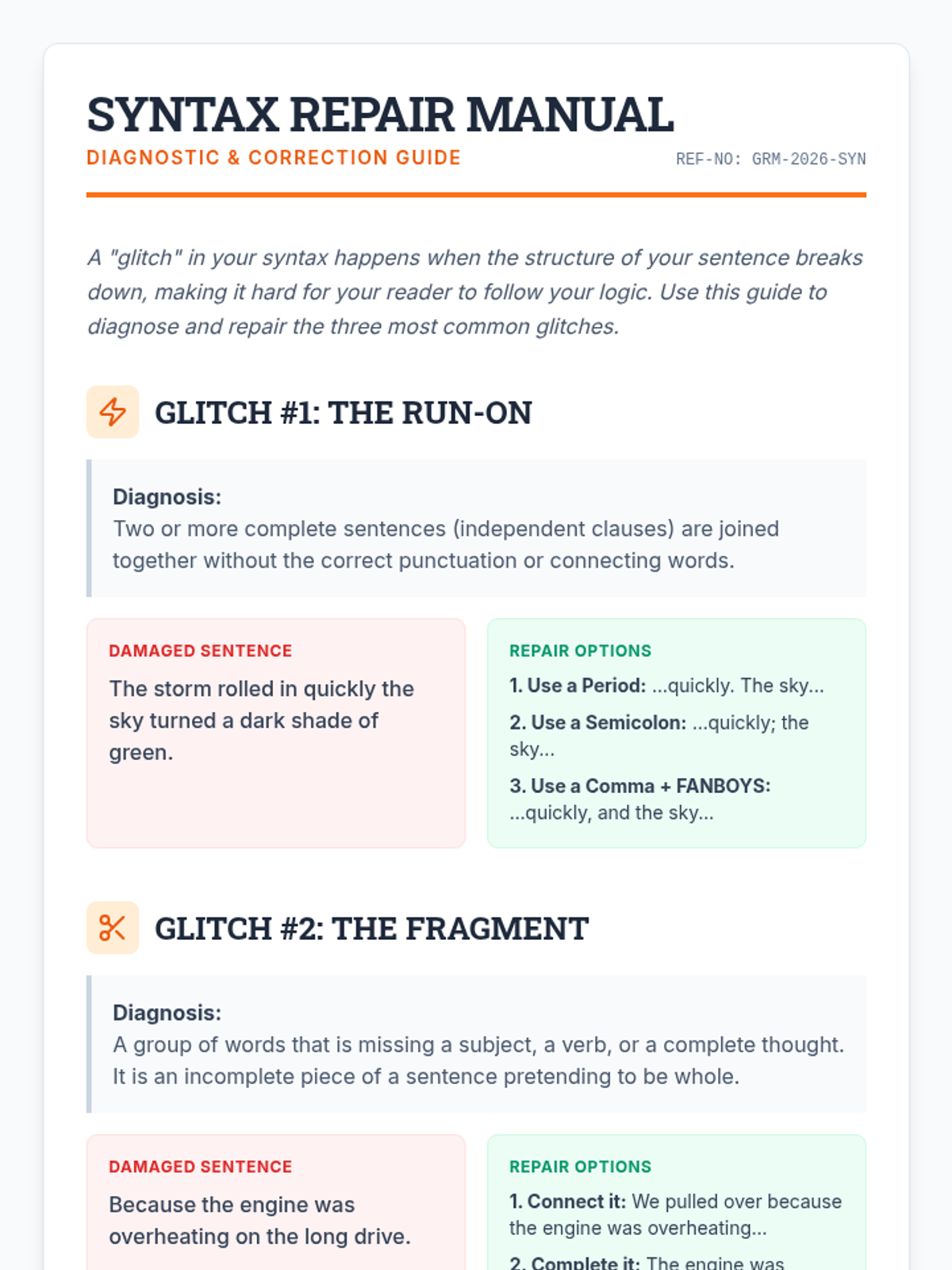
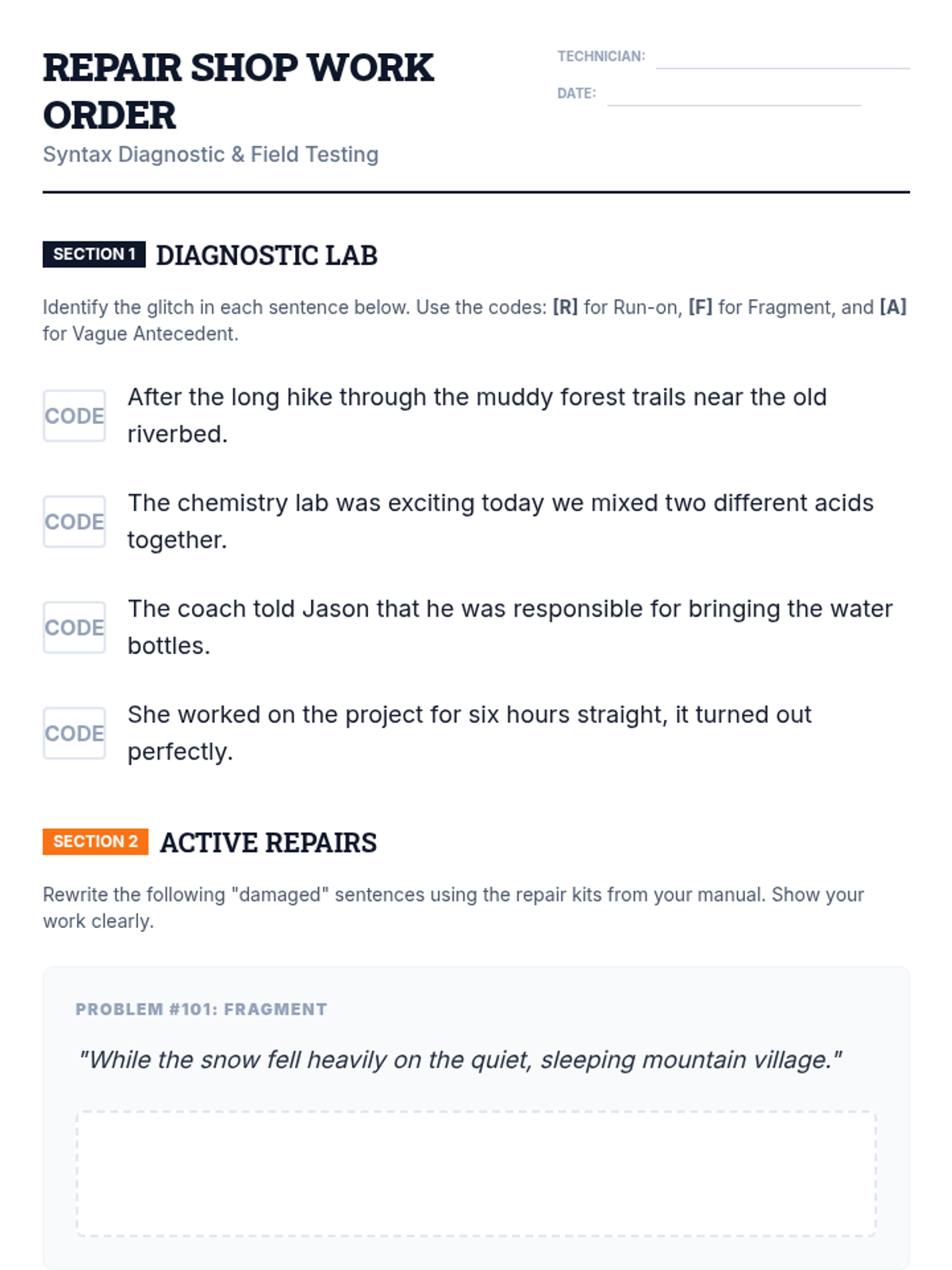
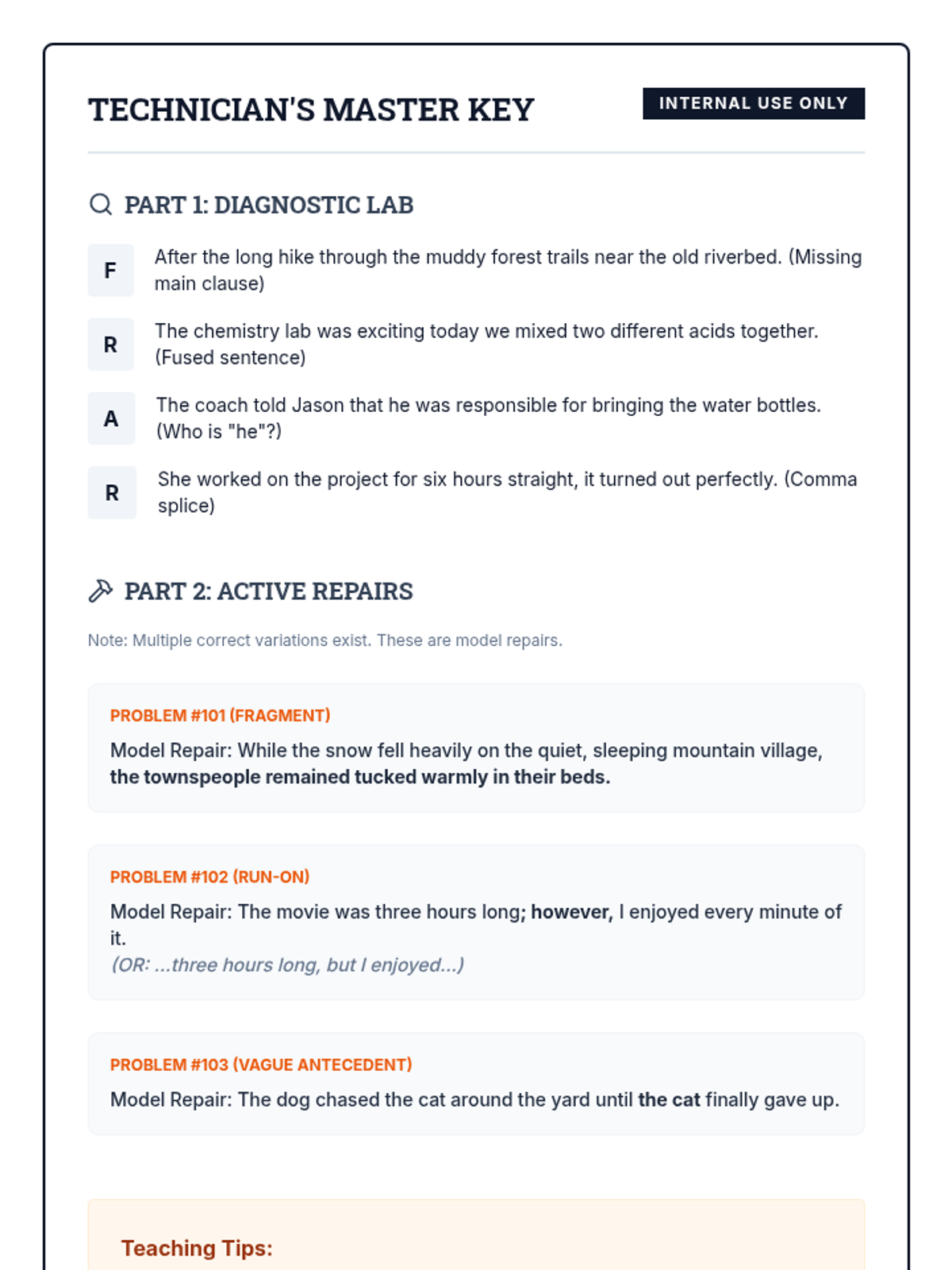
A 15-minute high-impact session focusing on identifying and repairing run-on sentences, sentence fragments, and vague pronoun-antecedent relationships. This lesson provides students with a 'repair manual' for common syntax glitches.
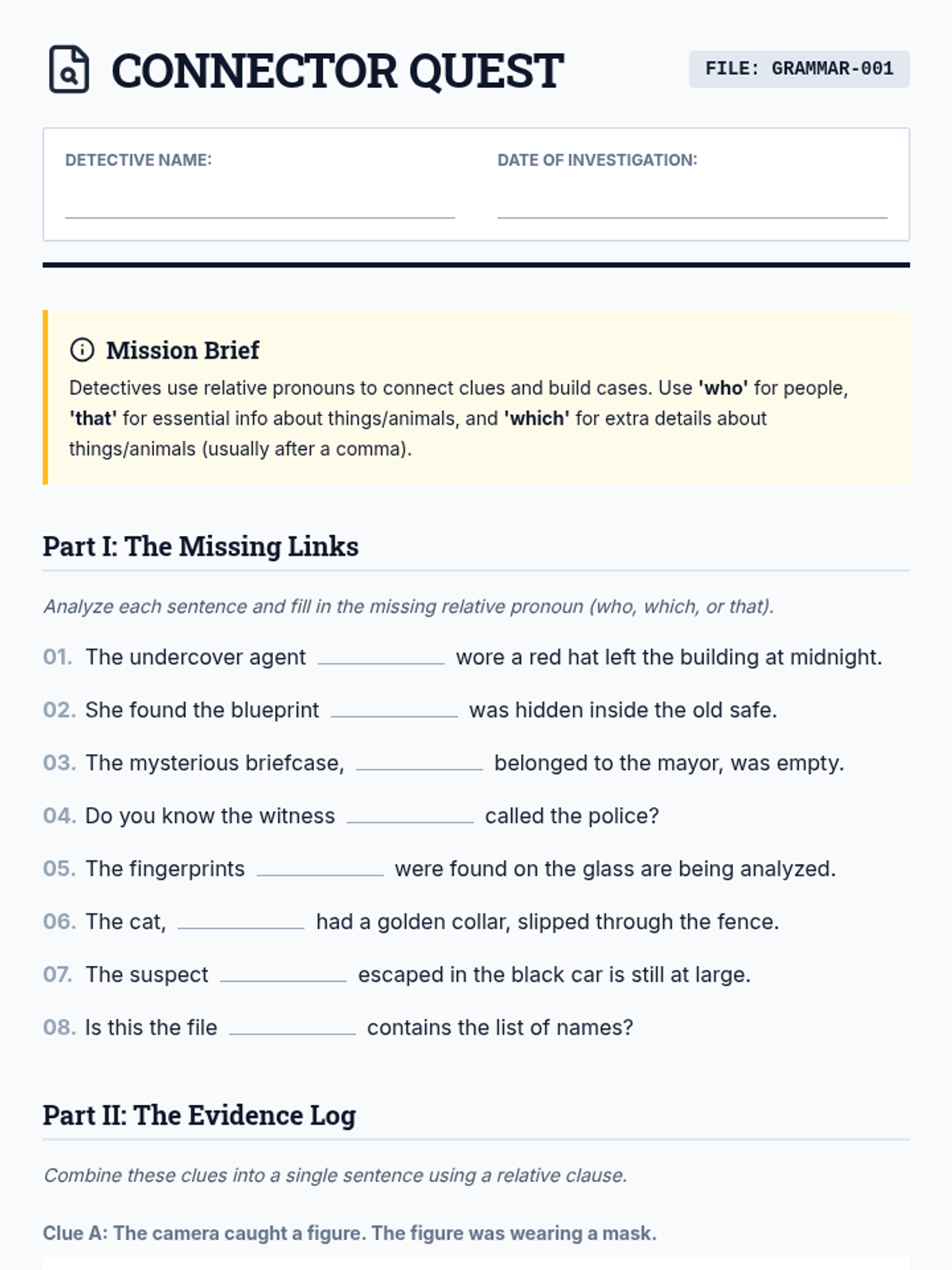
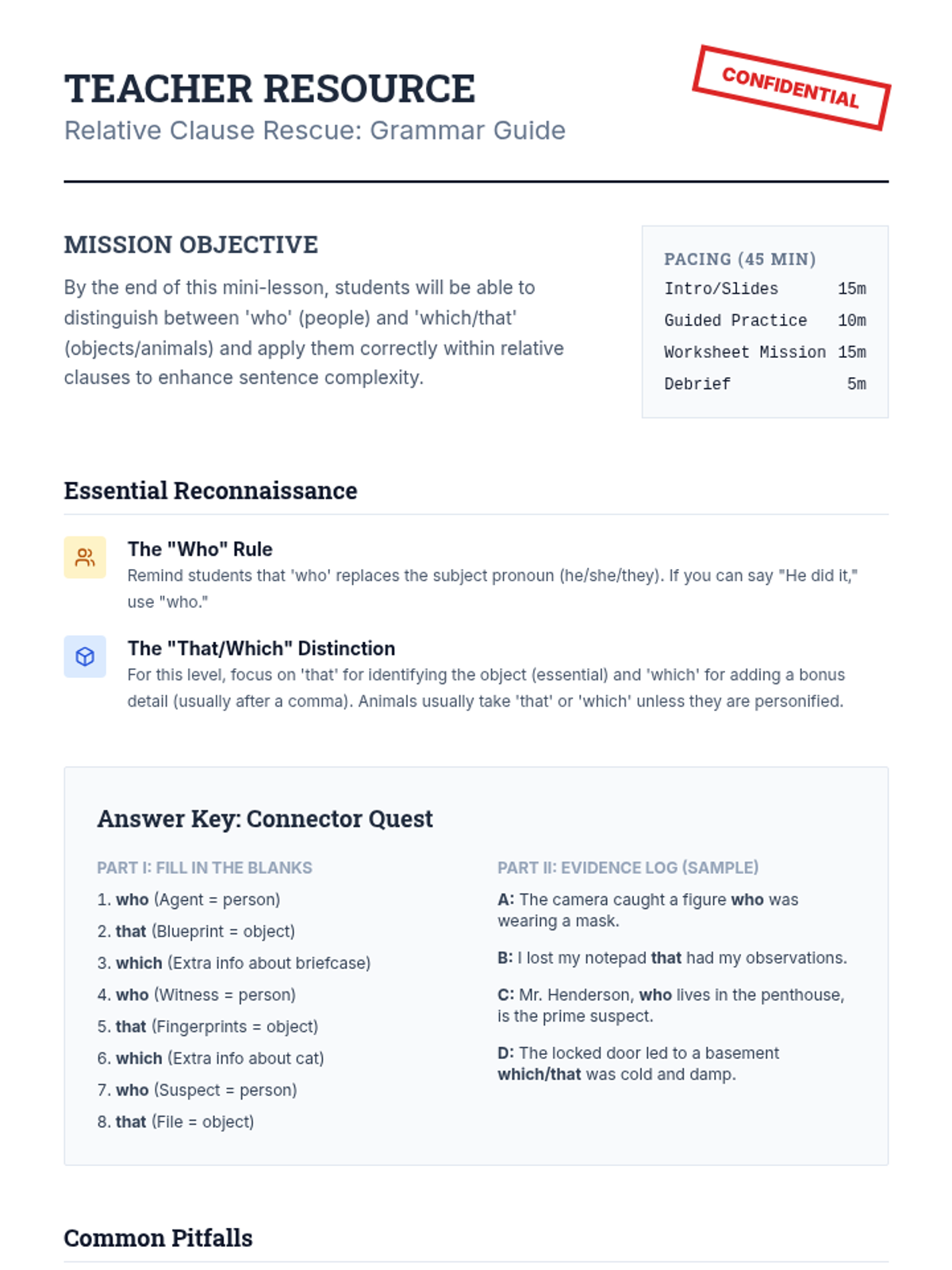
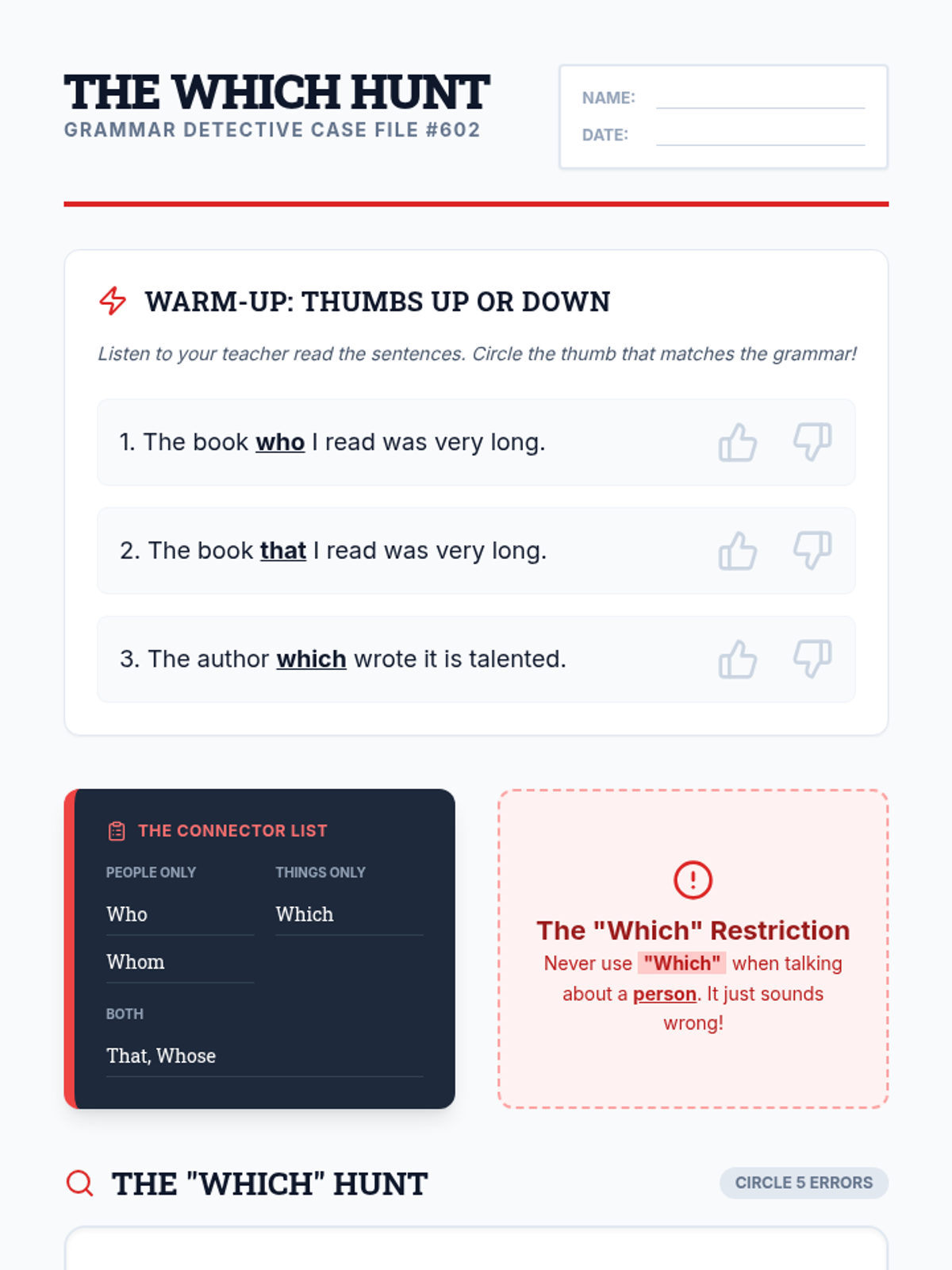
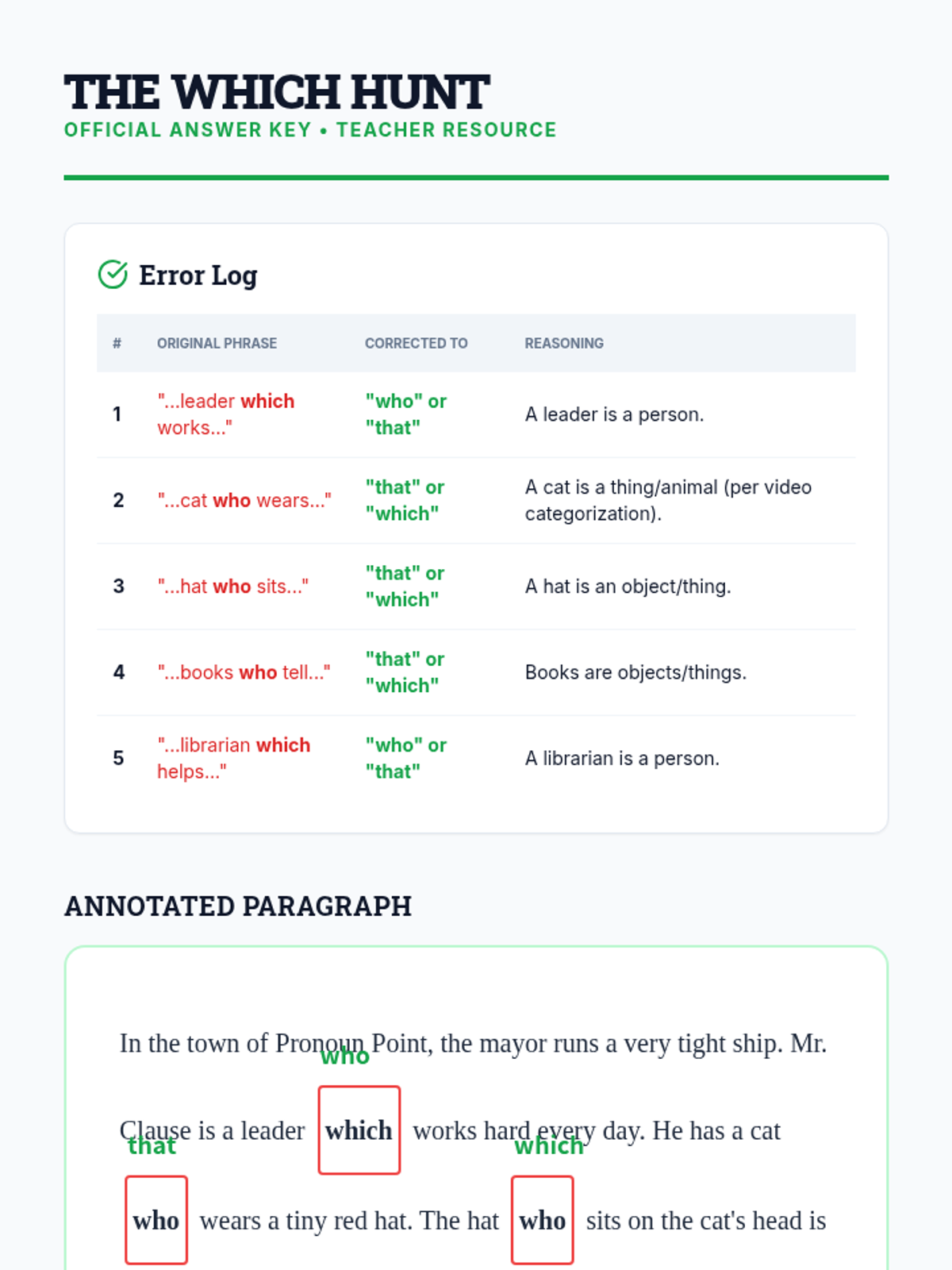
A detective-themed grammar lesson focused on correctly using relative pronouns 'who', 'which', and 'that'. Students will identify the correct pronouns for people versus objects through interactive instruction and a practice mission.
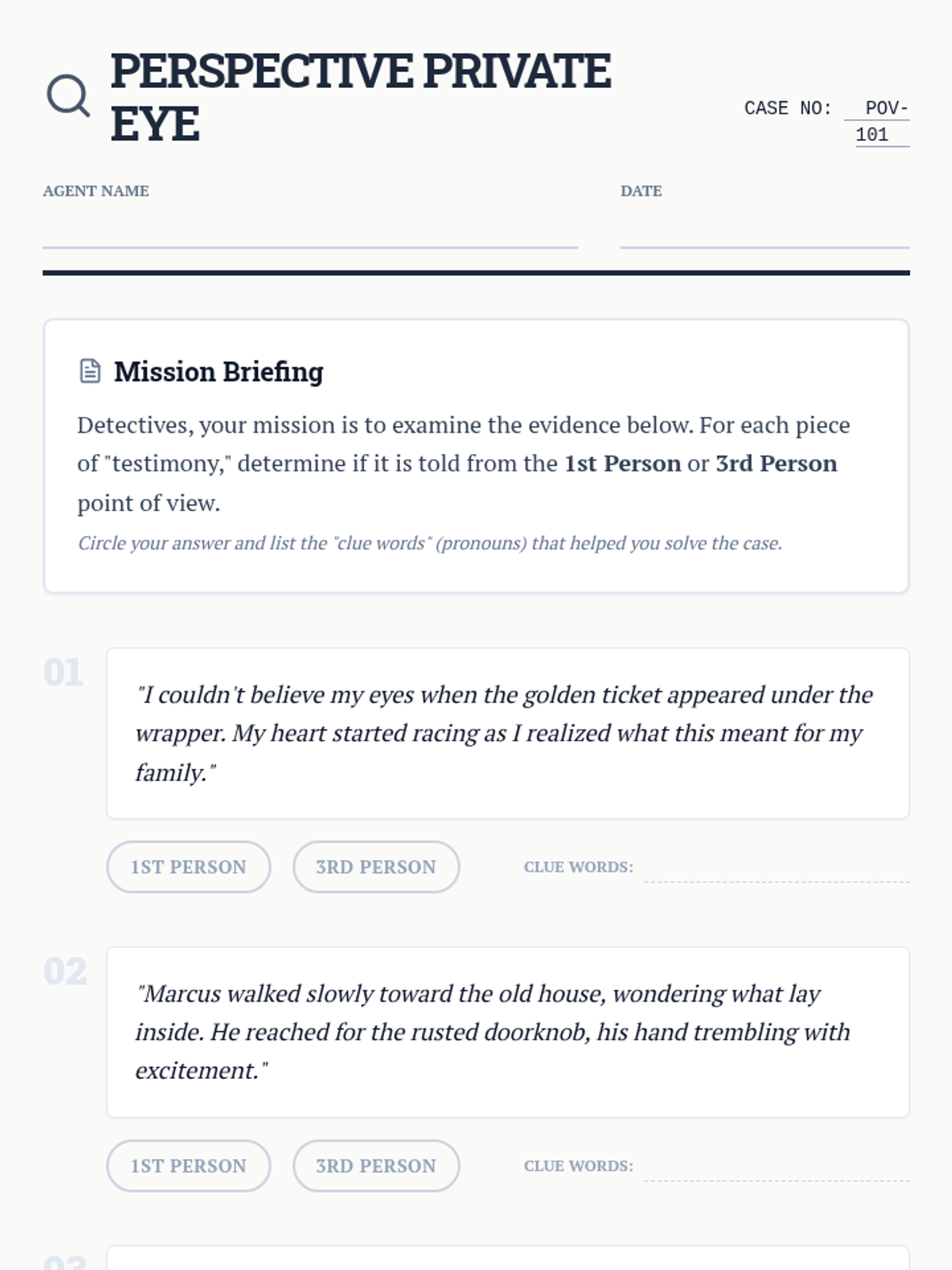
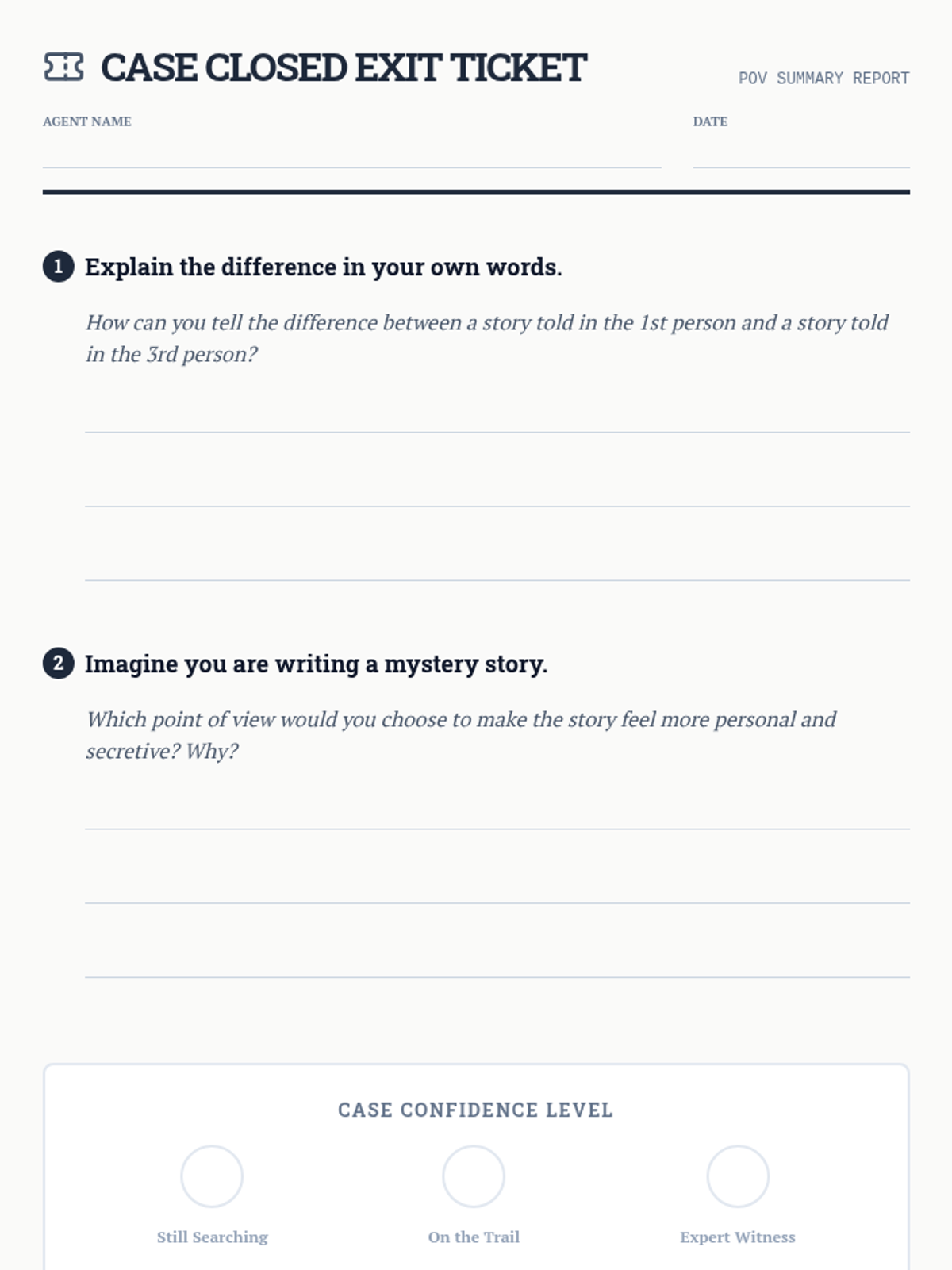
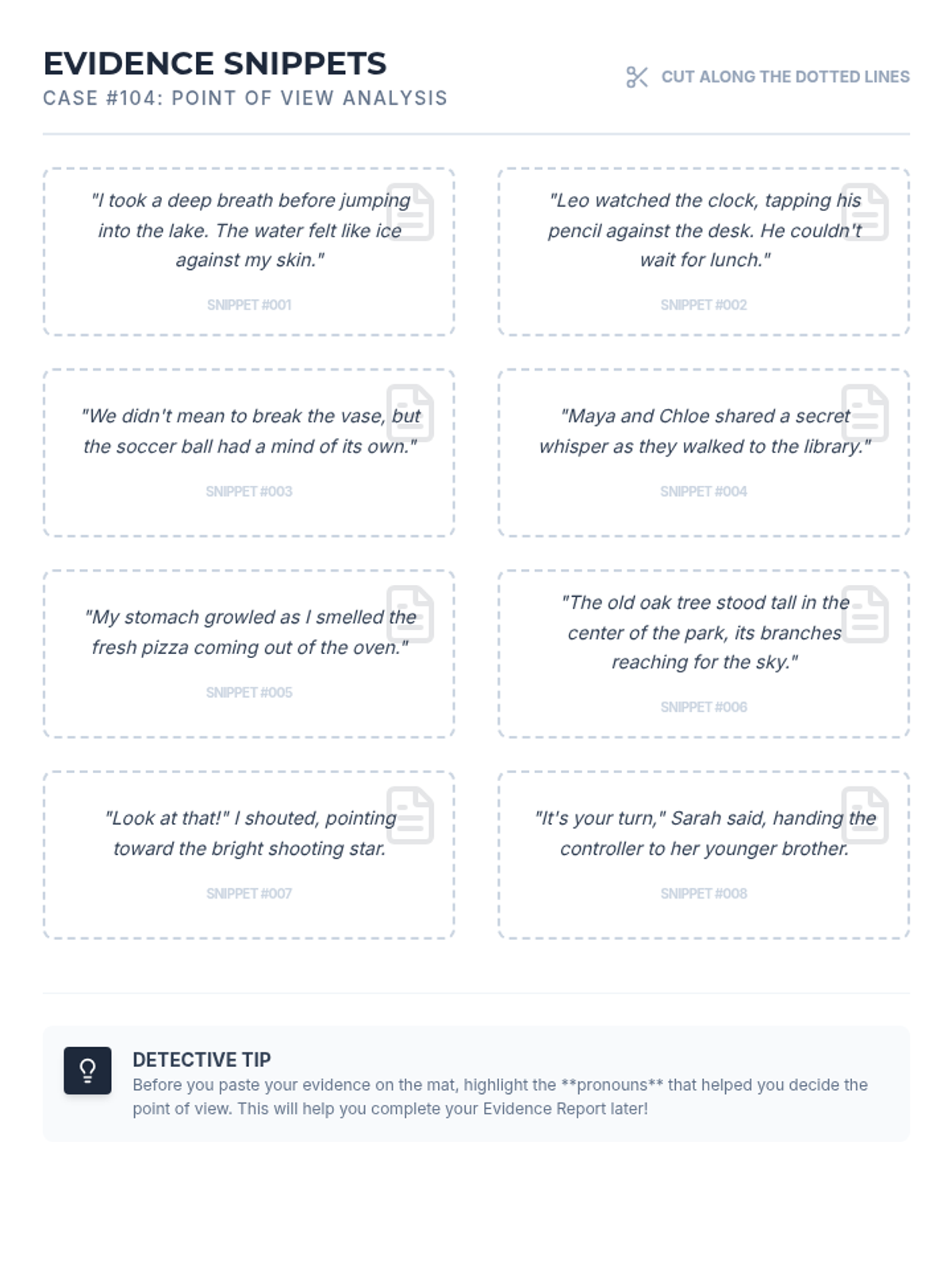
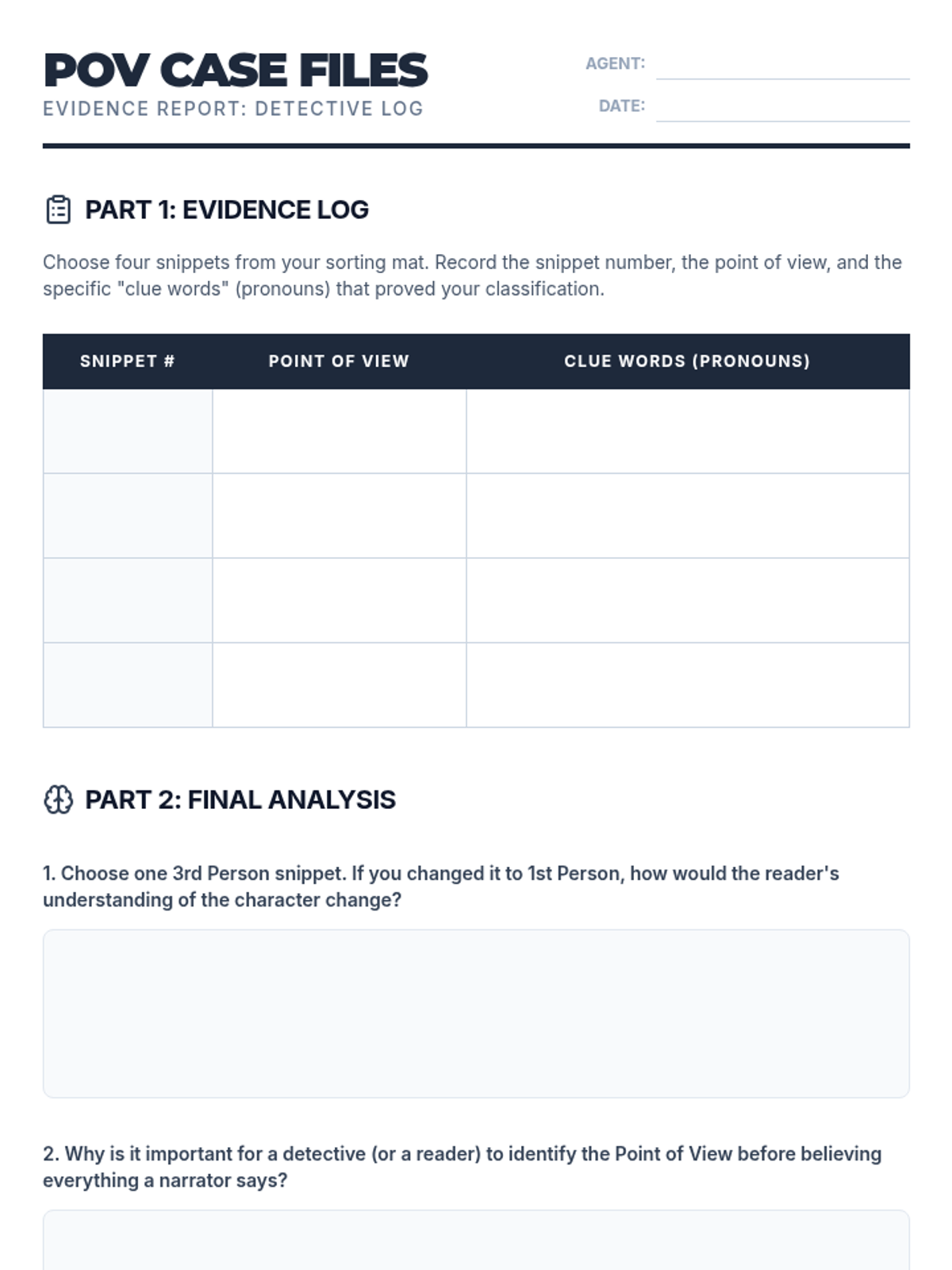
A mini-assessment focused on identifying first and third-person points of view through sentence analysis and open-ended reflection.
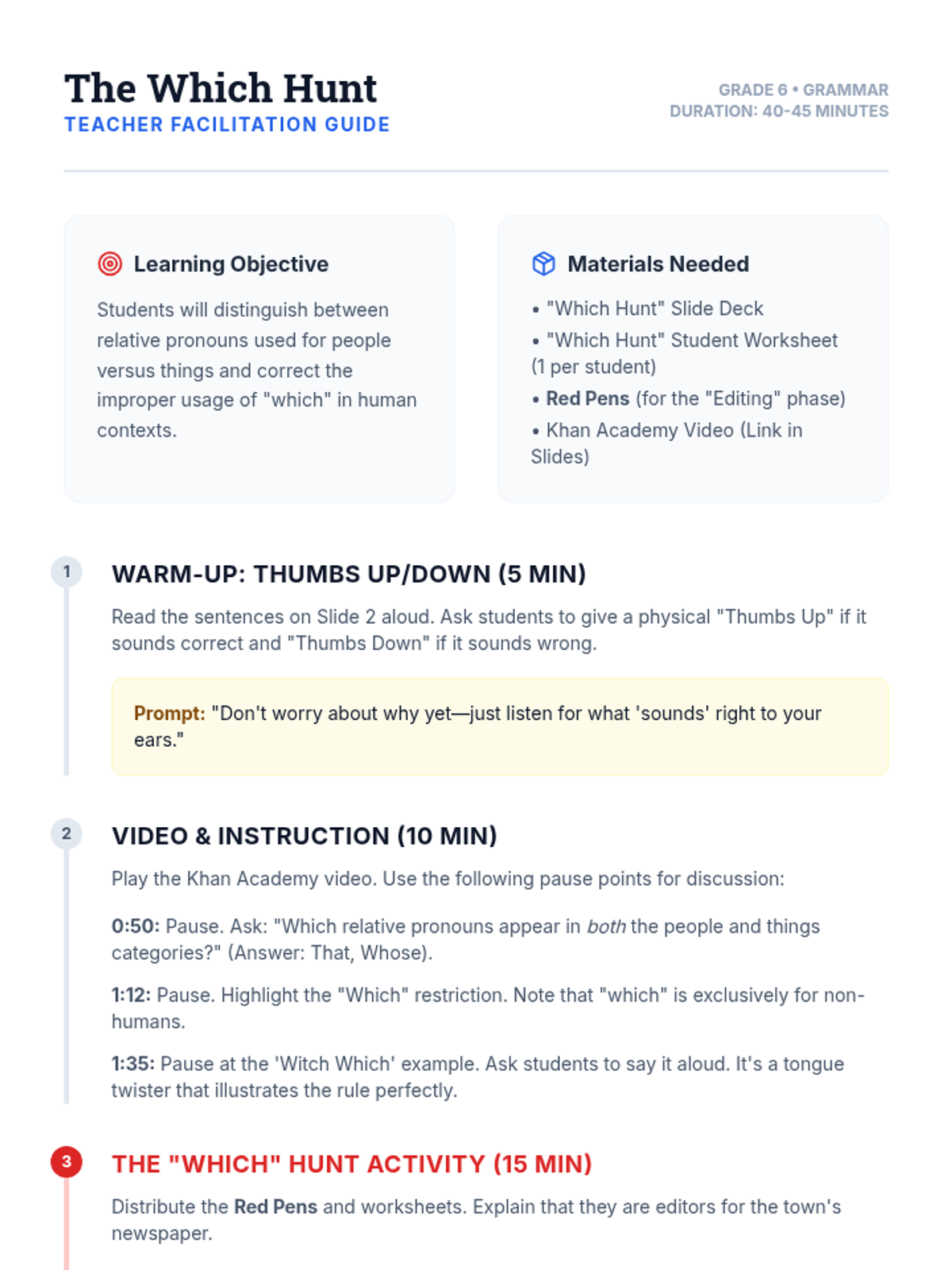
A grammar lesson for 6th graders focusing on relative pronouns (who, whom, whose, that, which) and the specific restriction of 'which' to non-human subjects.
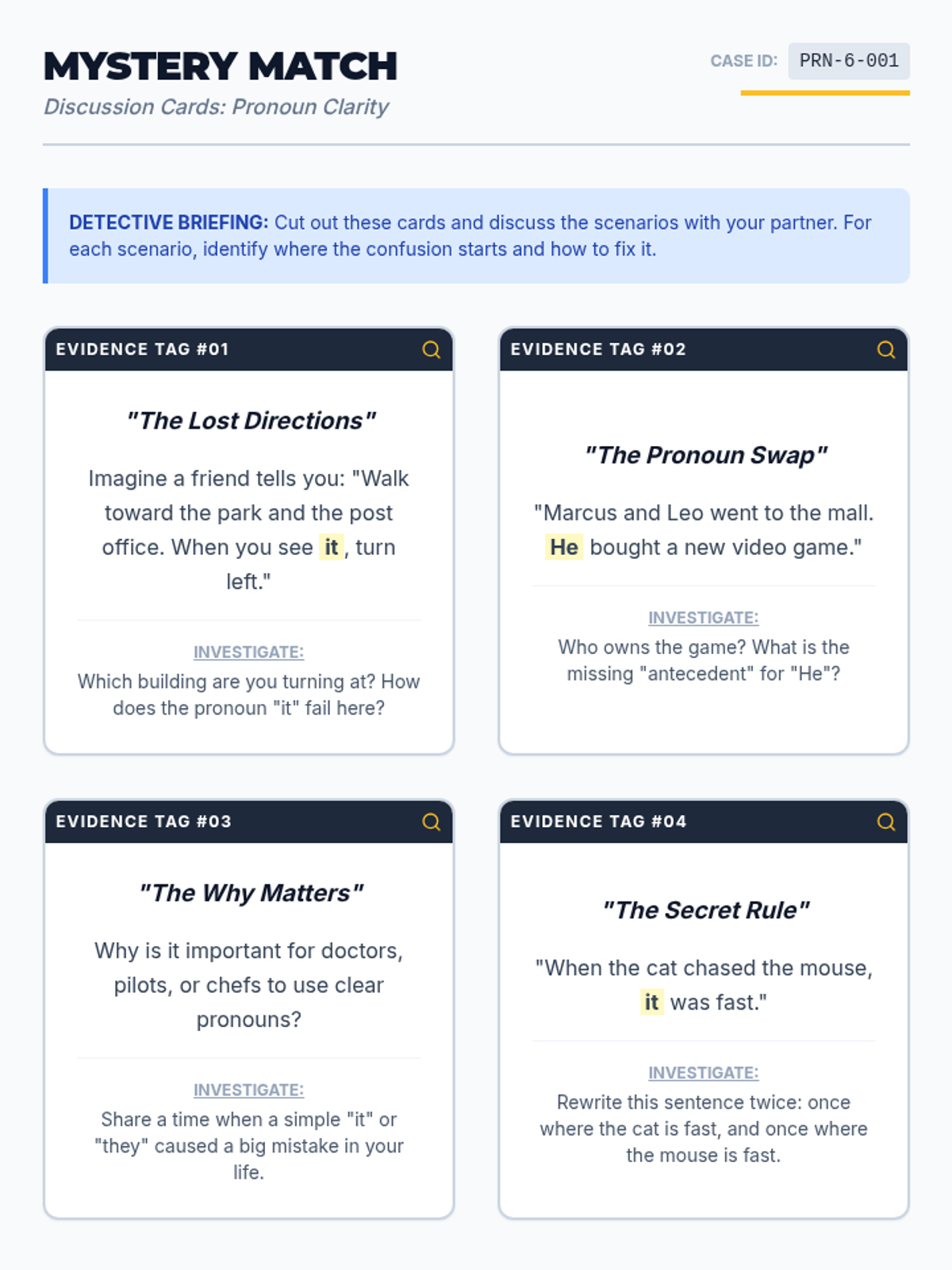
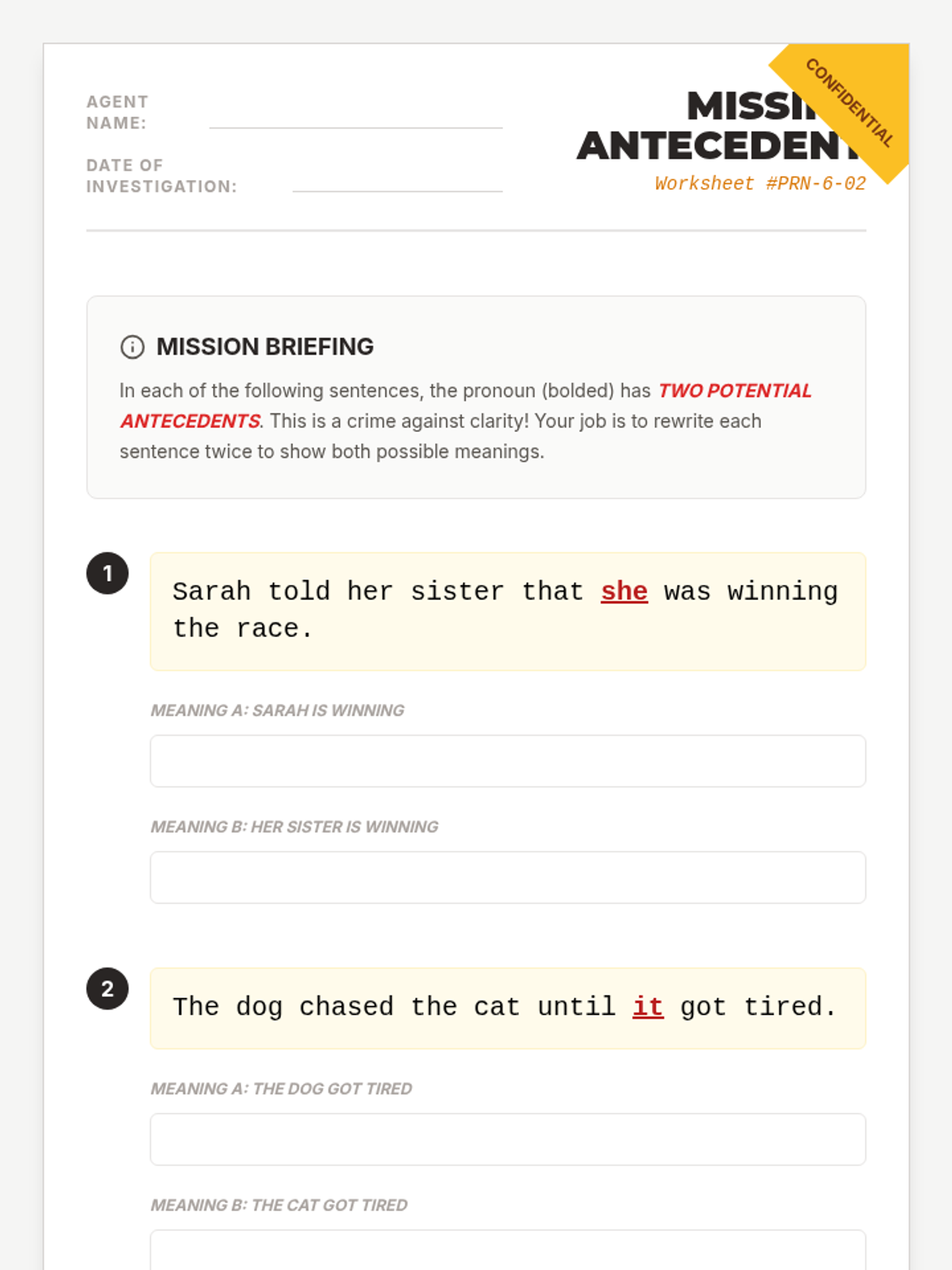
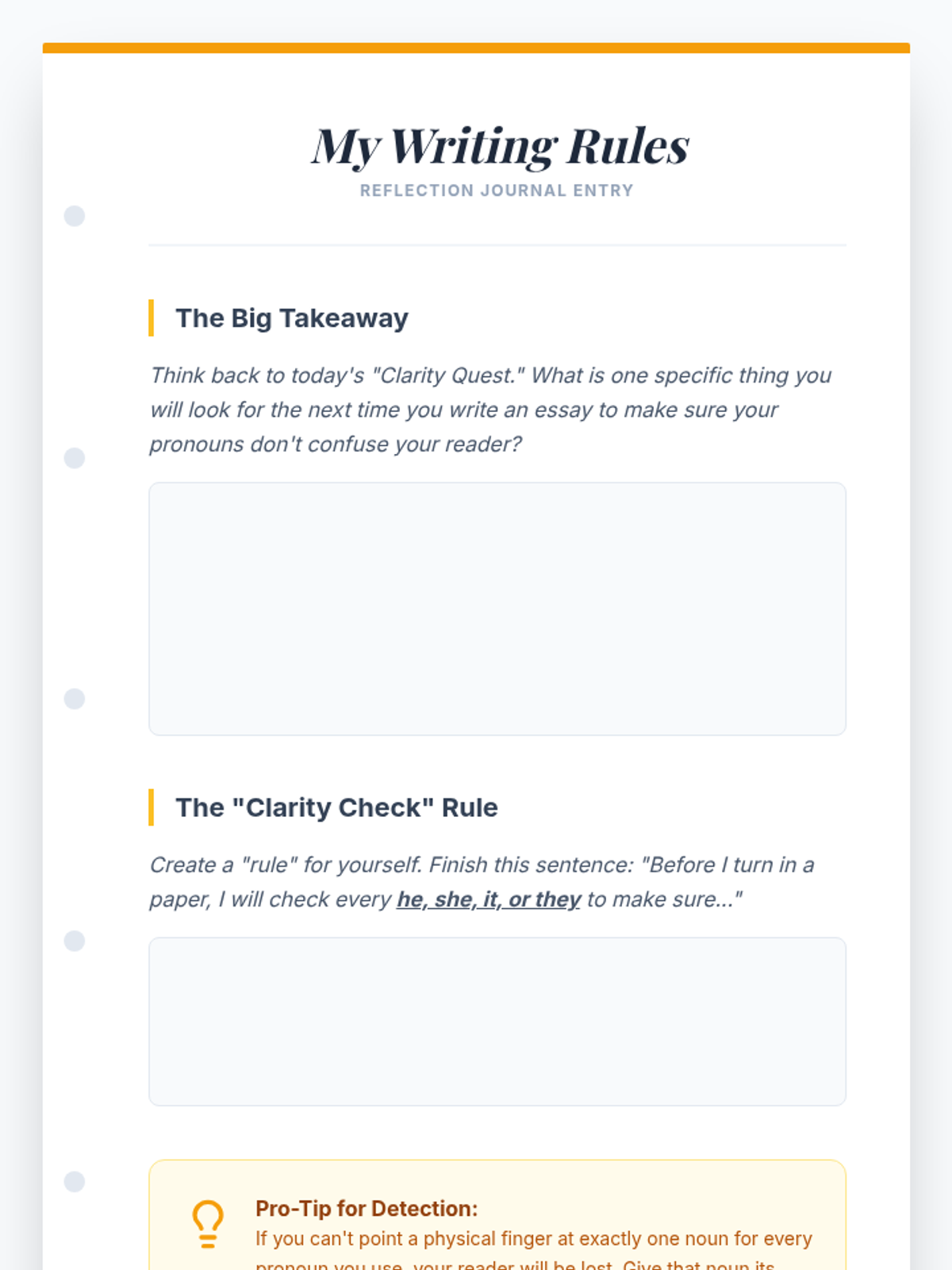
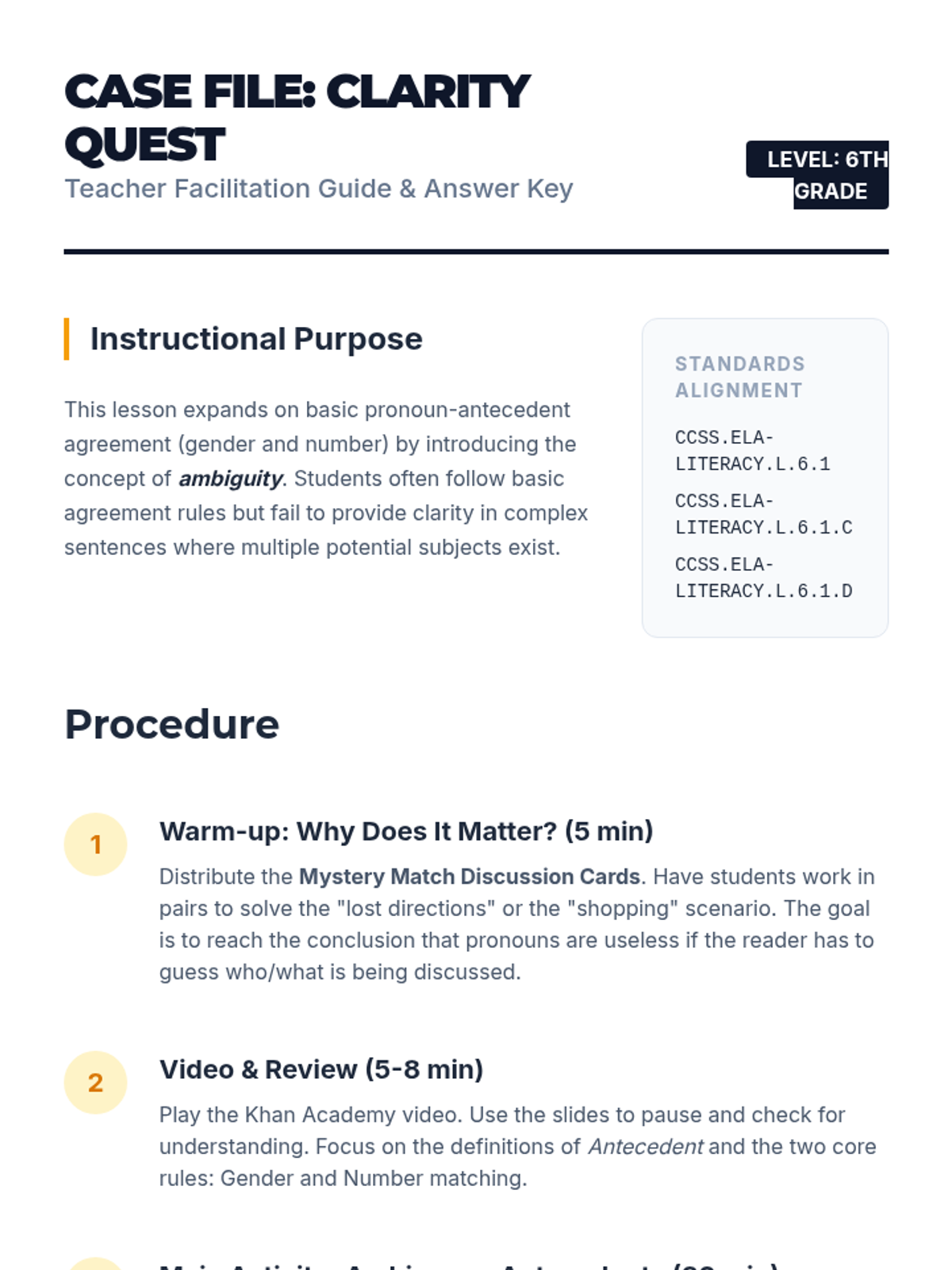
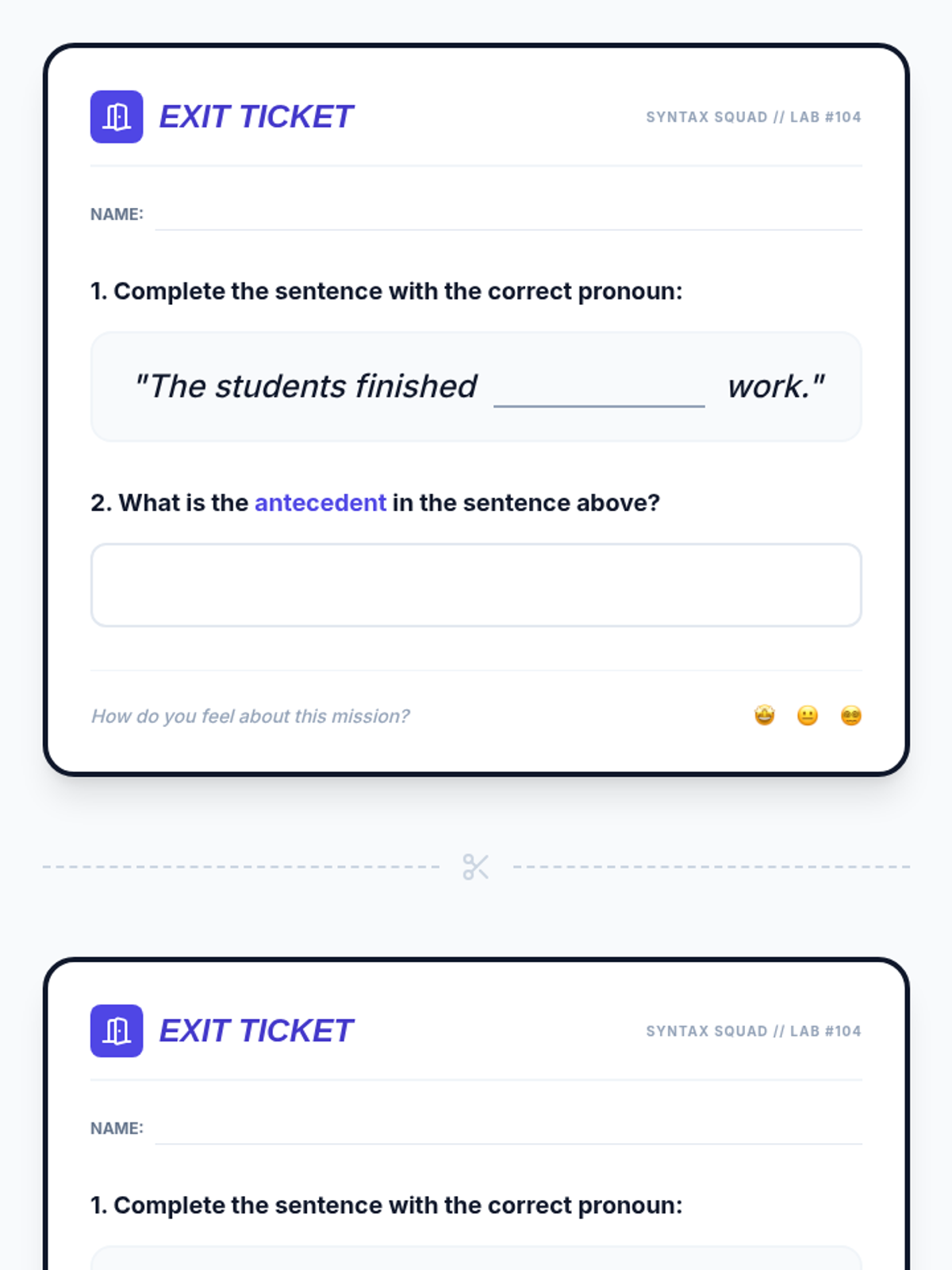
Students will investigate pronoun-antecedent agreement and solve the mystery of ambiguous antecedents to ensure clarity in their writing.
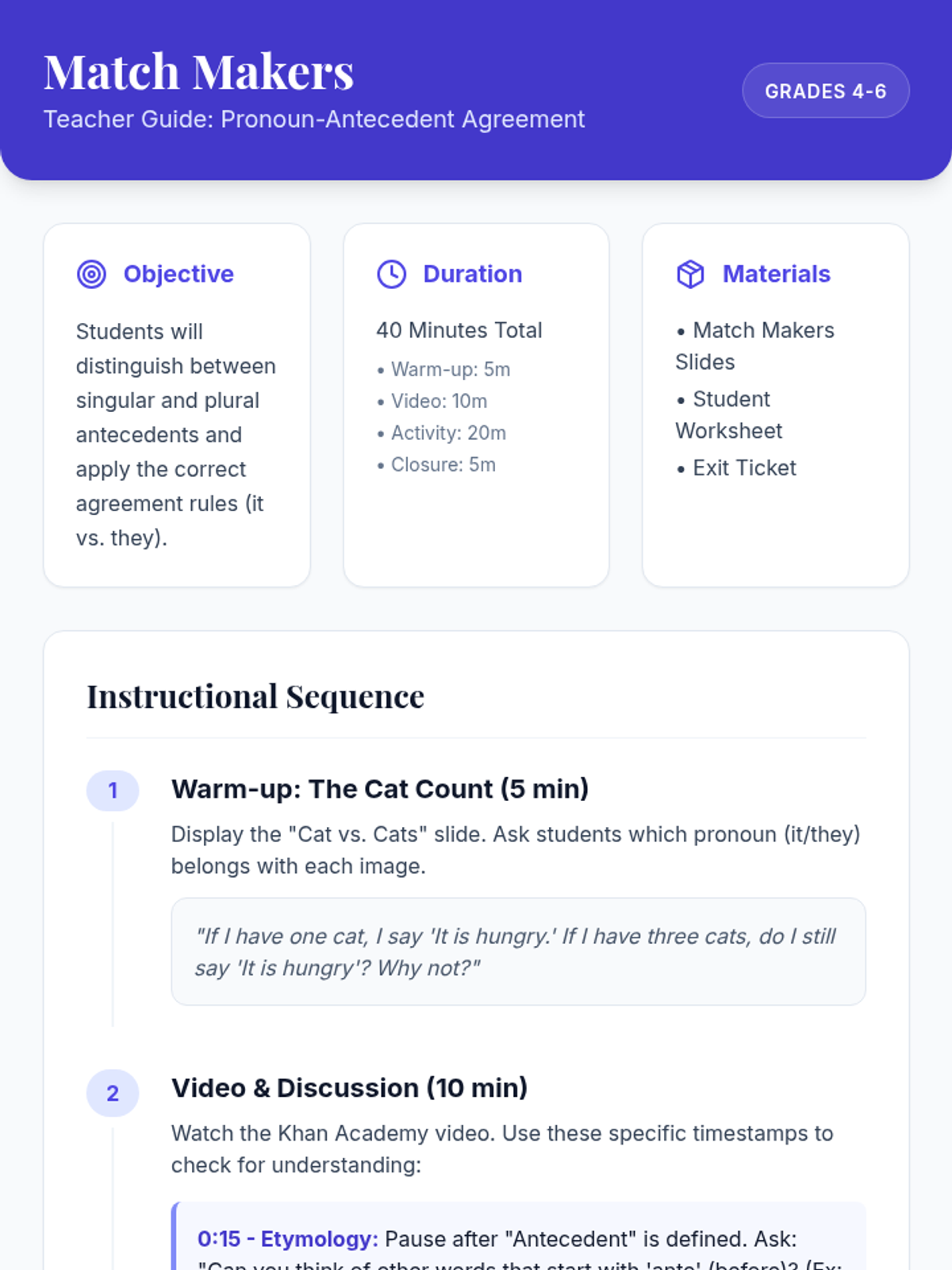
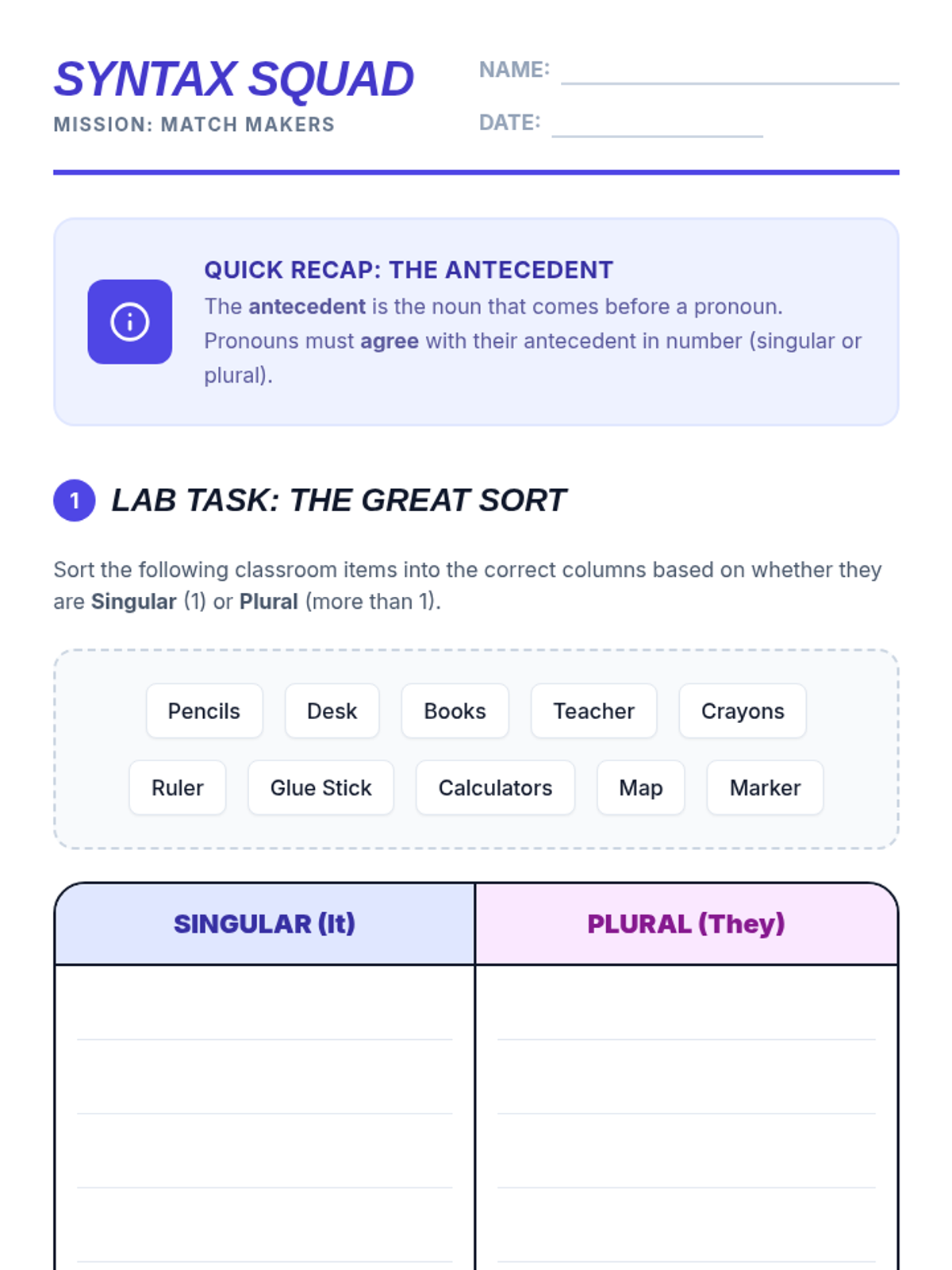
Students learn to match singular and plural nouns with their corresponding pronouns through visual aids, a Khan Academy video, and a sorting and writing activity.
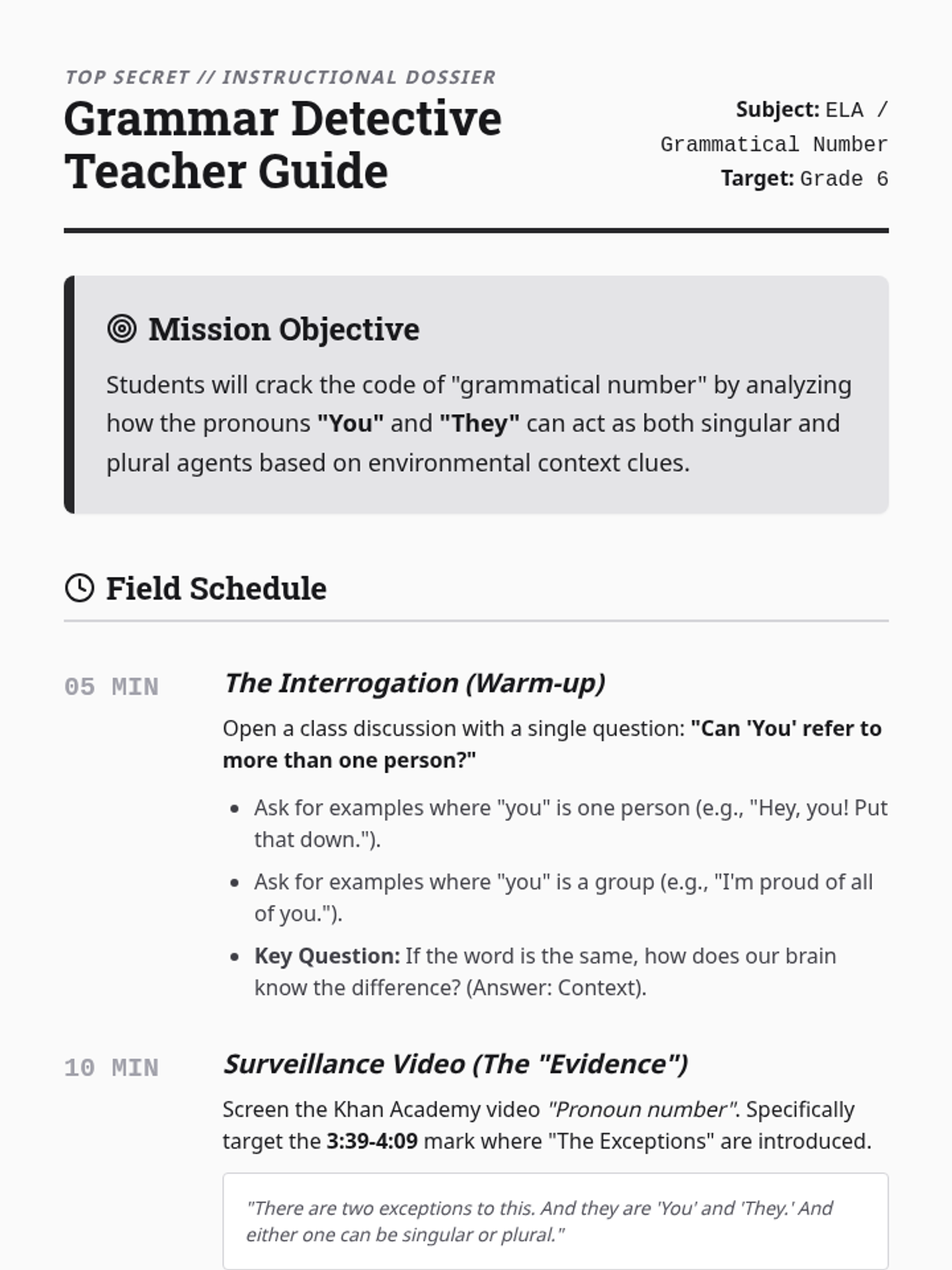
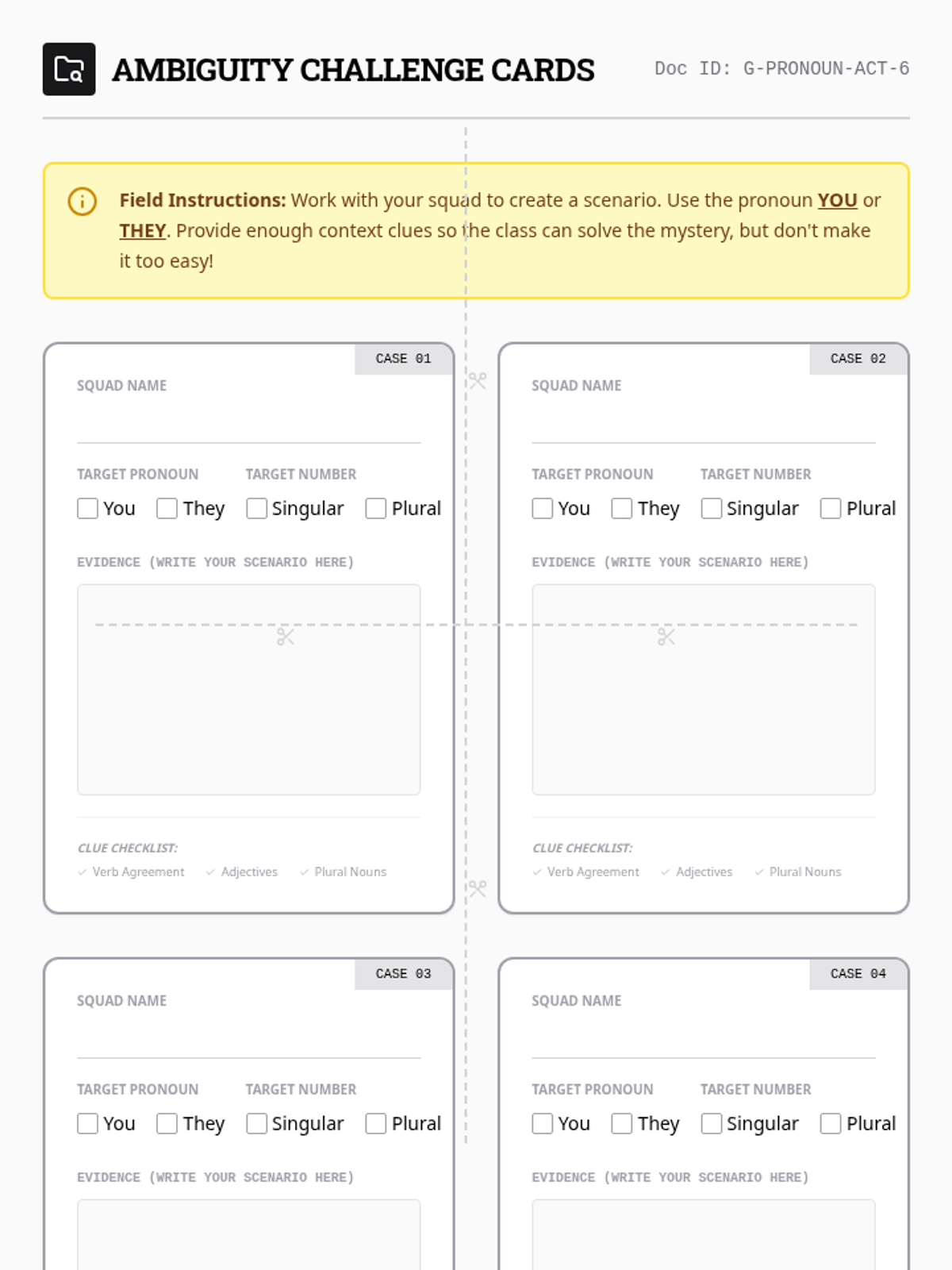
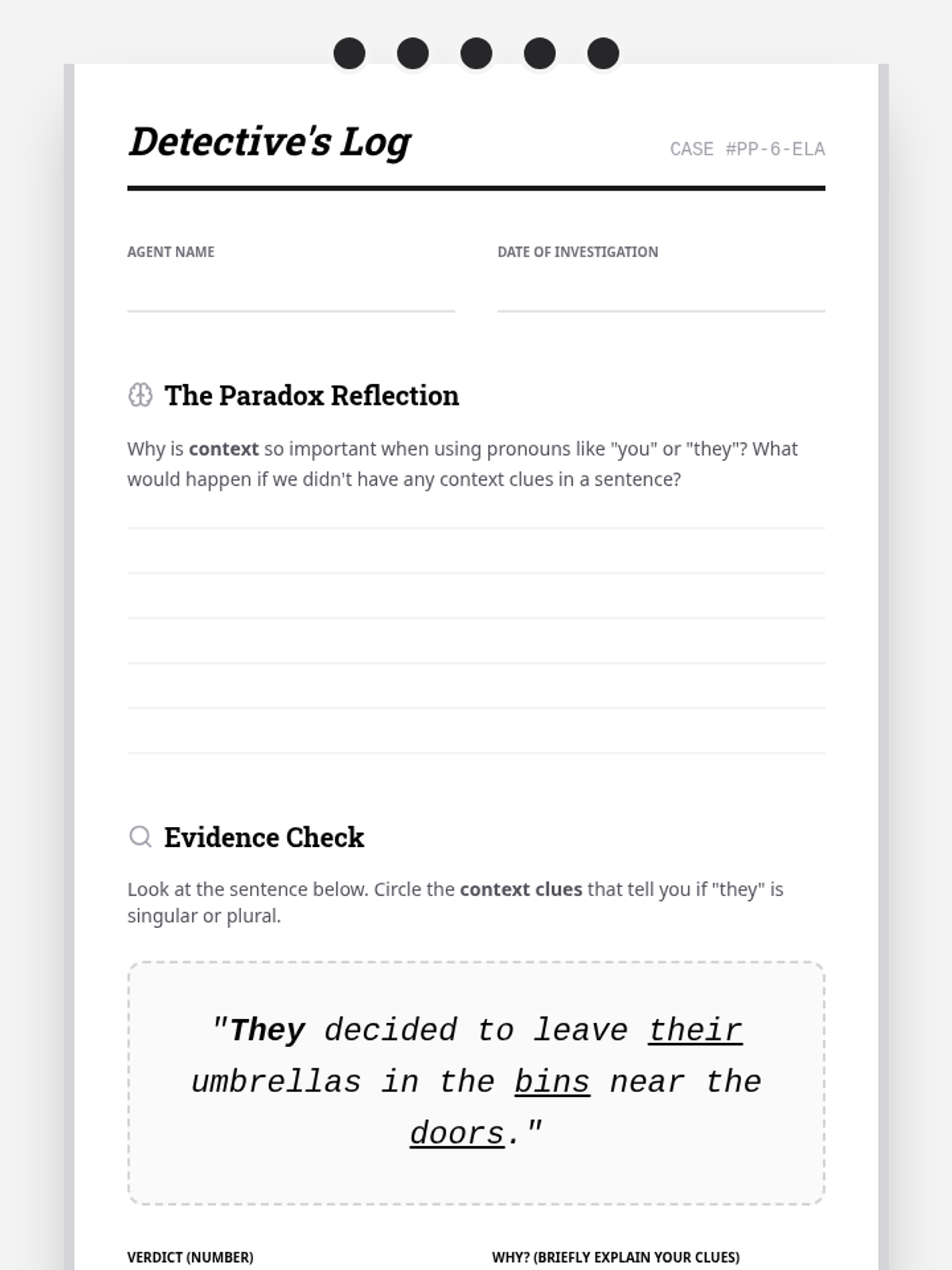
A detective-themed lesson for 6th graders exploring the tricky 'grammatical number' exceptions of the pronouns 'You' and 'They', focusing on context clues and modern usage.
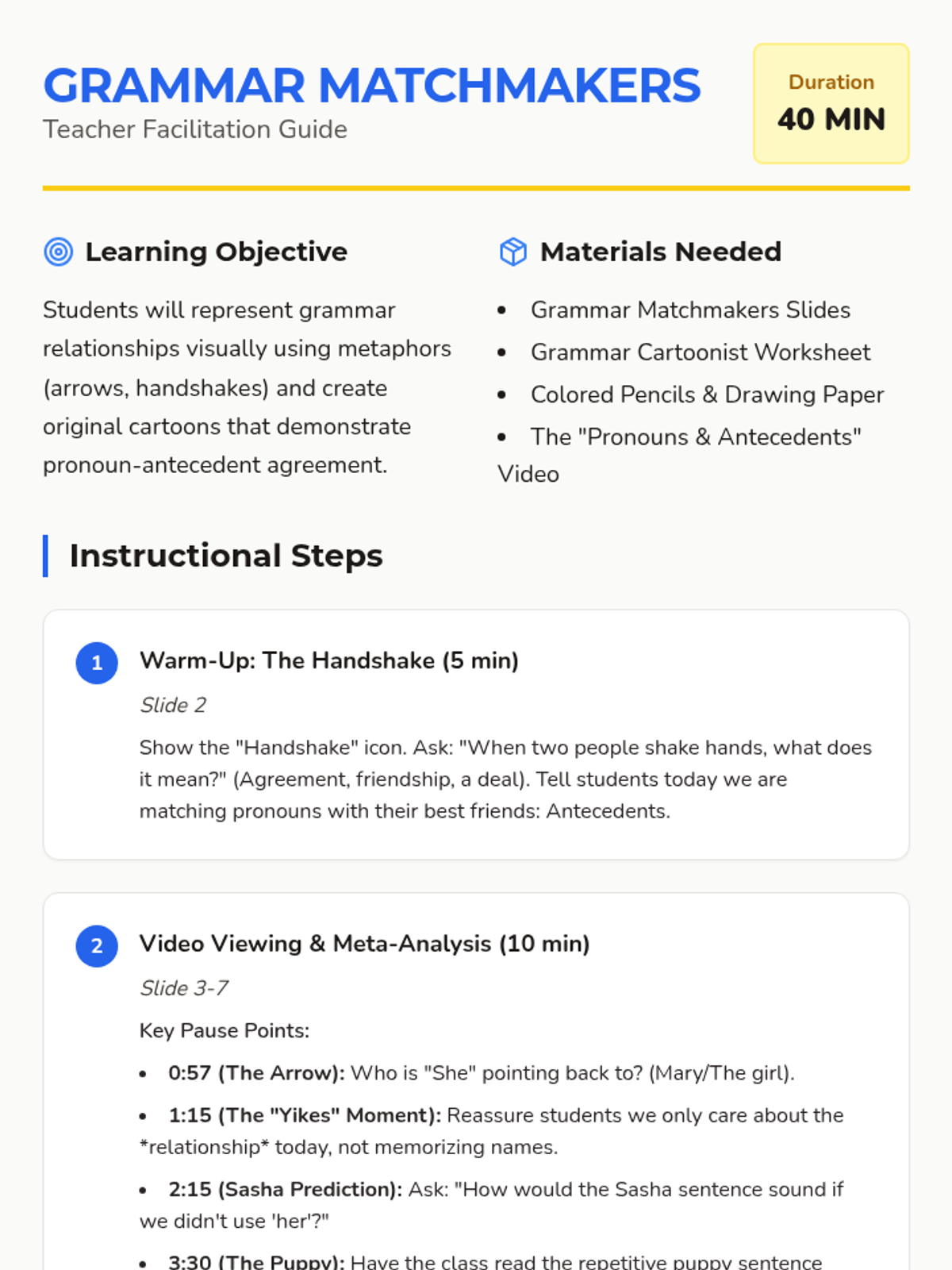
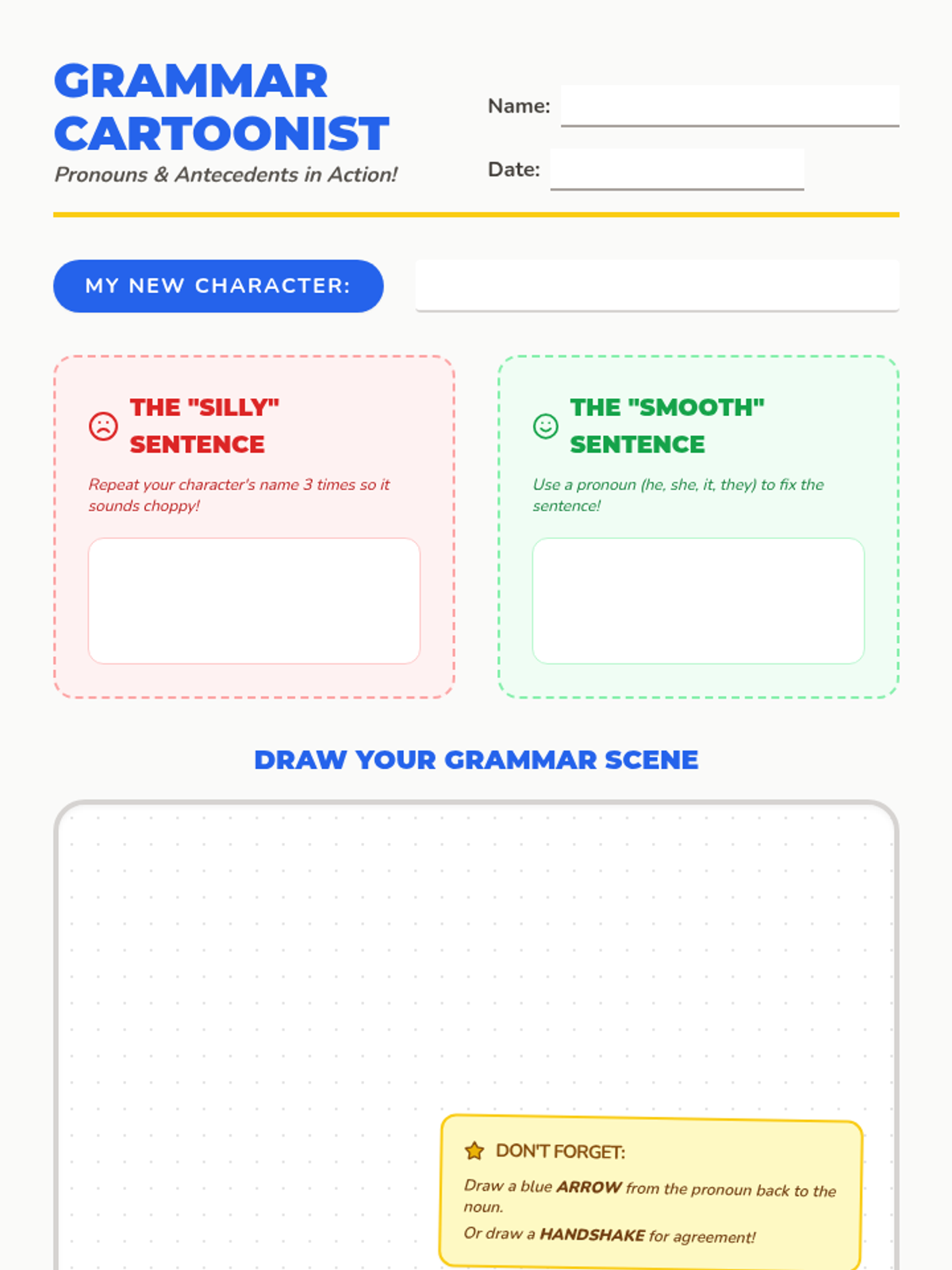
A visual-heavy grammar lesson focused on pronouns and antecedents, using metaphors like handshakes and arrows to teach agreement and clarity. Students create their own 'Grammar Cartoons' to demonstrate how pronouns replace repetitive nouns.
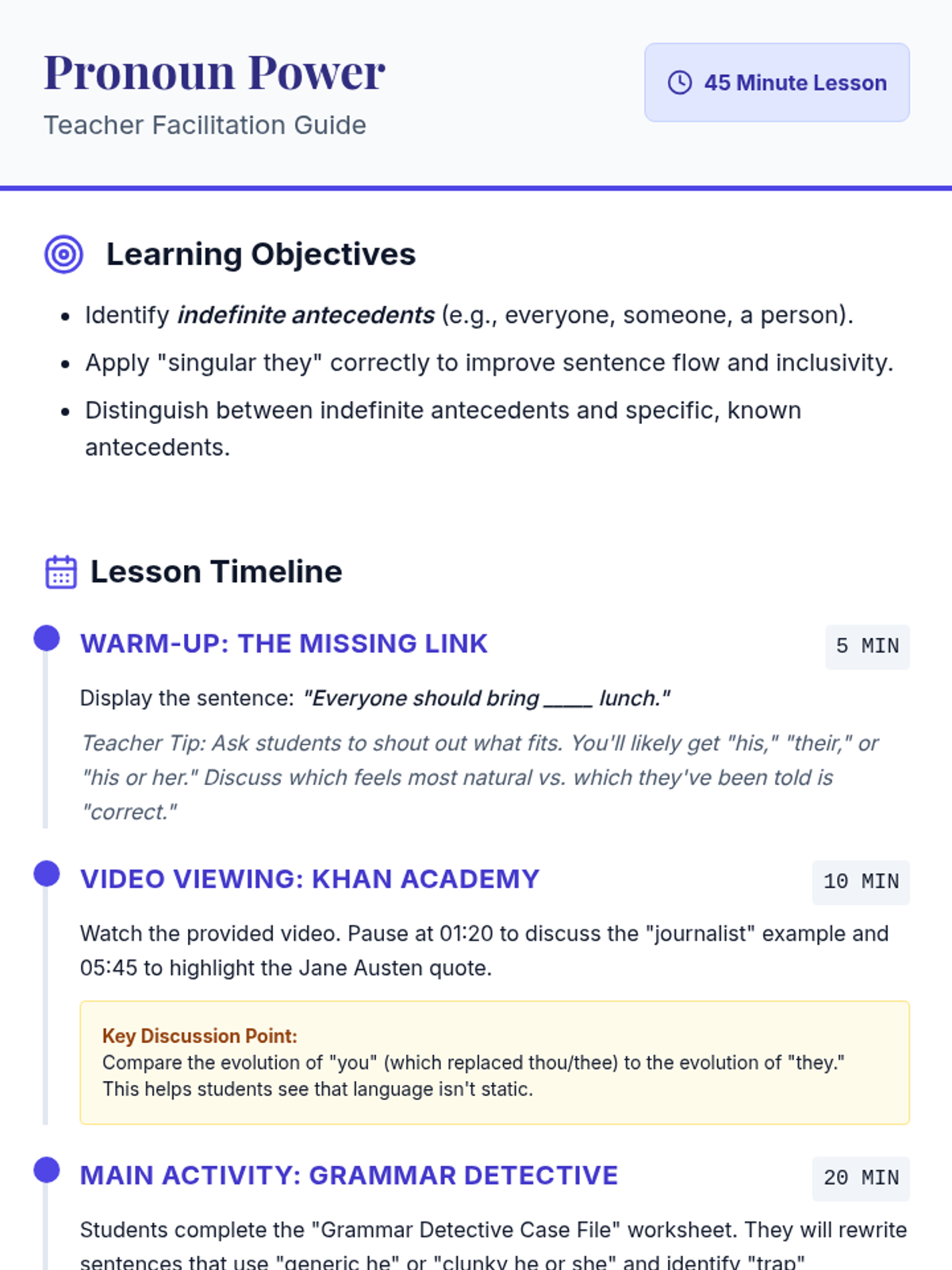
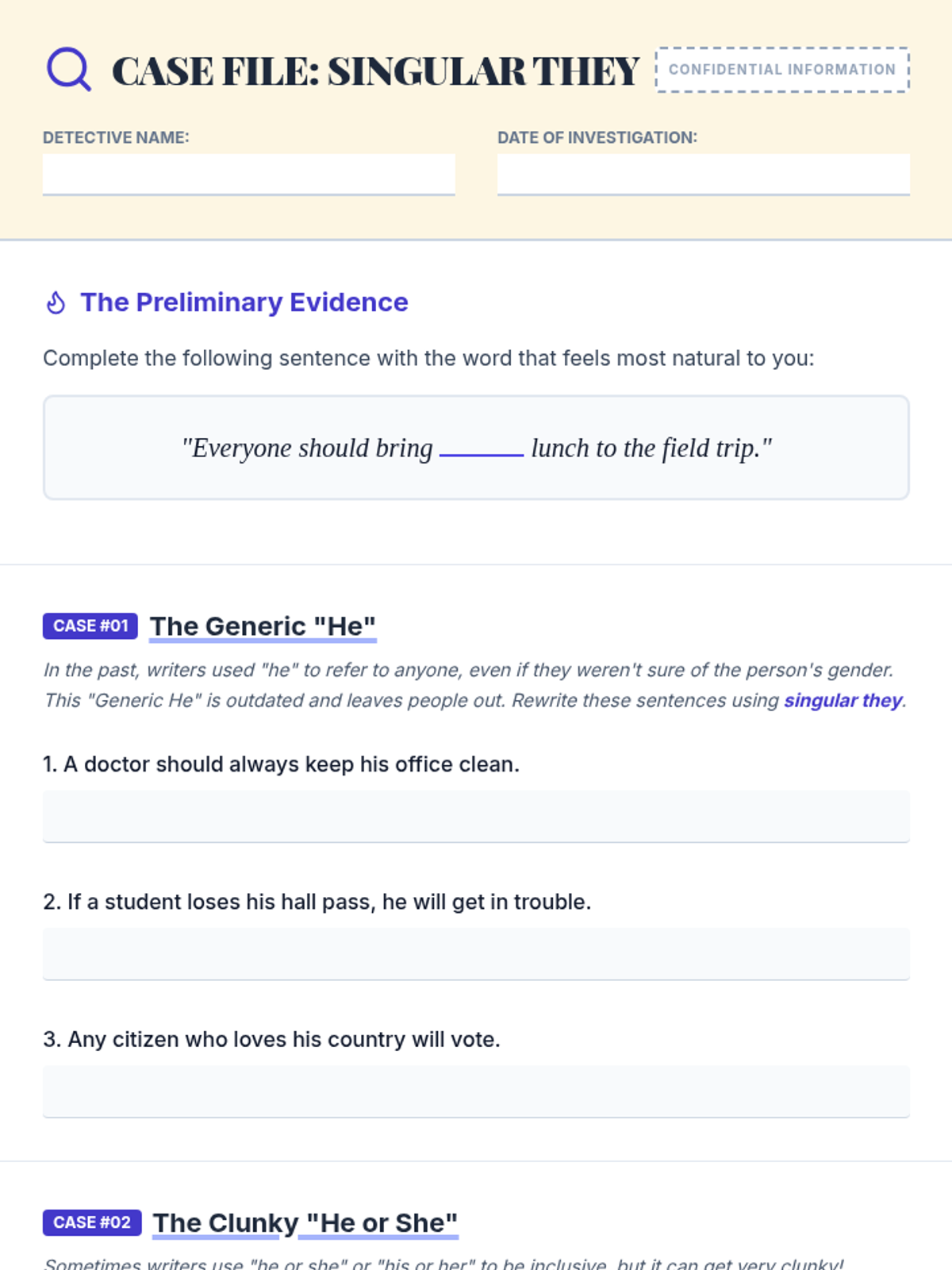
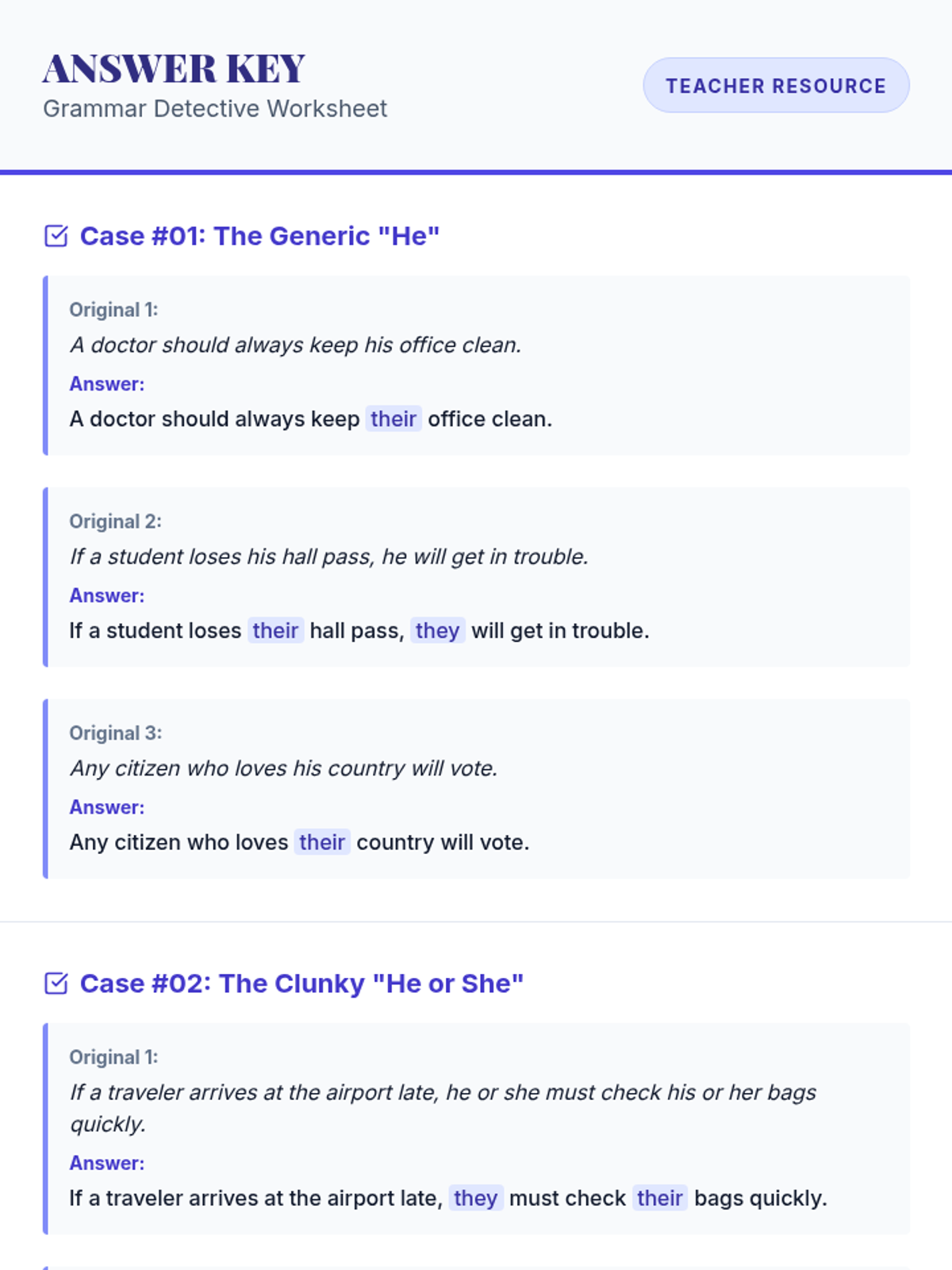
A Middle School Language Arts lesson focusing on the use of 'singular they' for indefinite antecedents. Students explore the historical evolution of pronouns, analyze literary examples, and practice rewriting sentences for clarity and inclusivity.
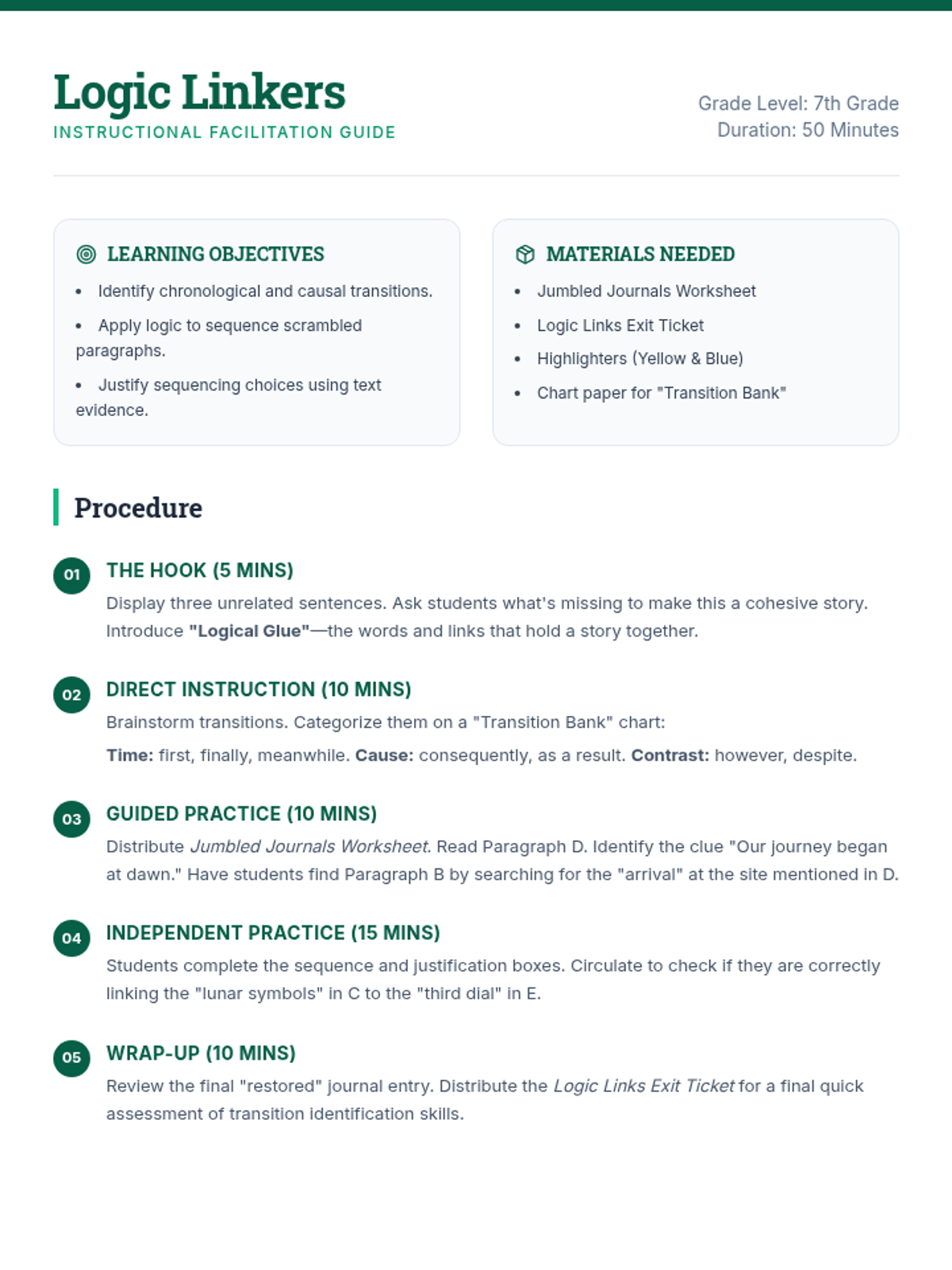
A lesson focused on identifying logical flow and transition markers to reorder scrambled paragraphs into a cohesive narrative or informational text.
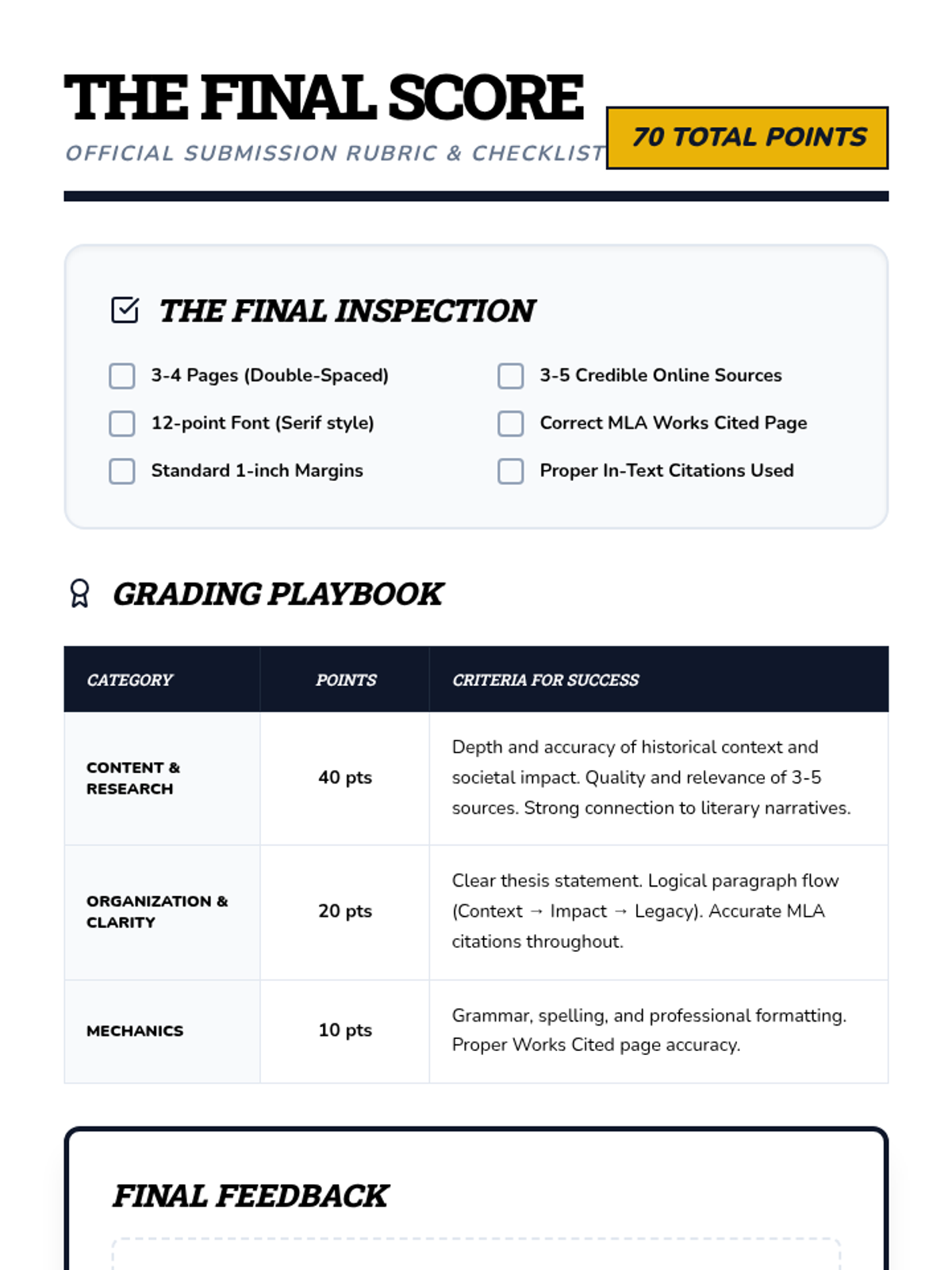
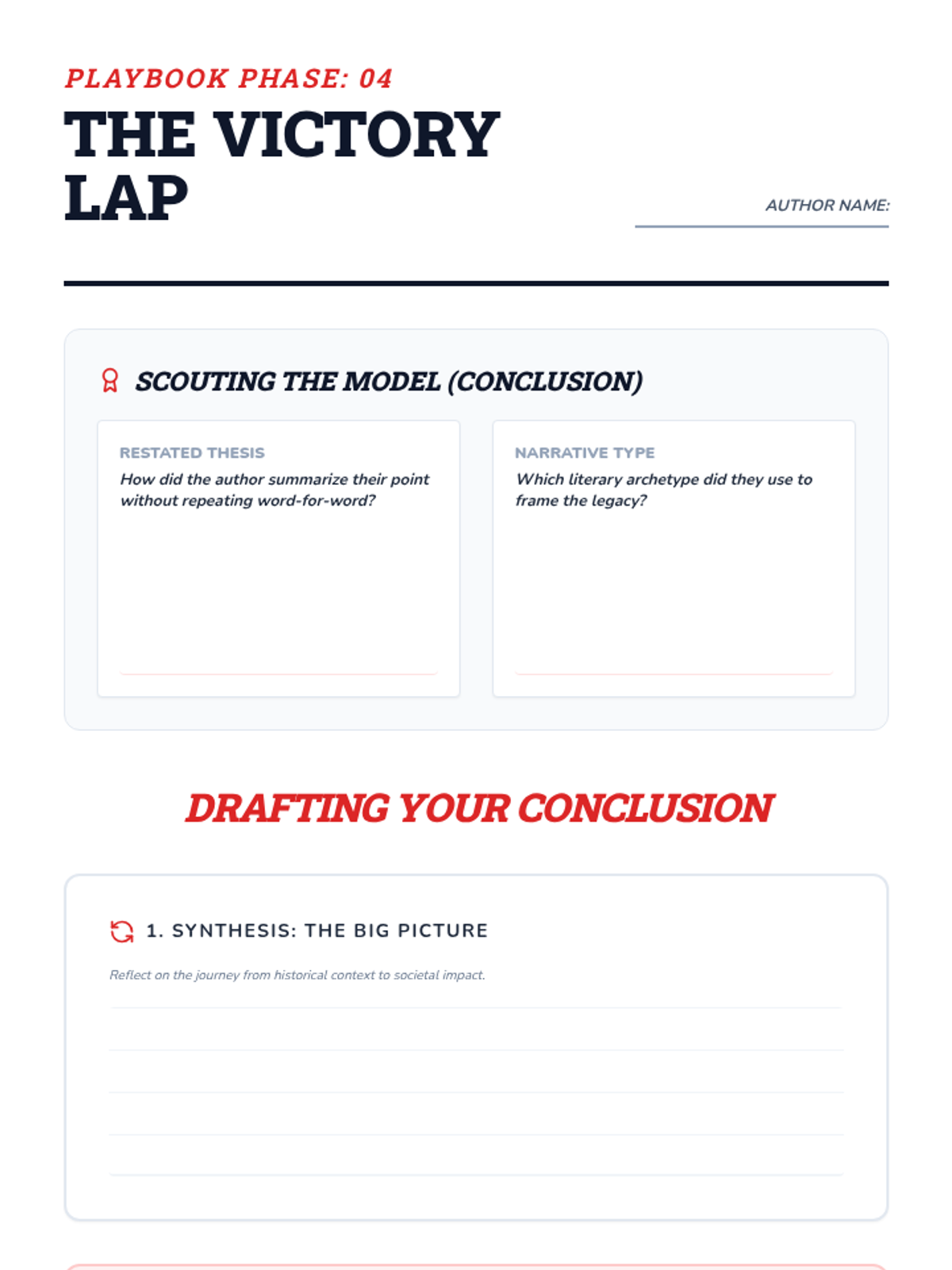
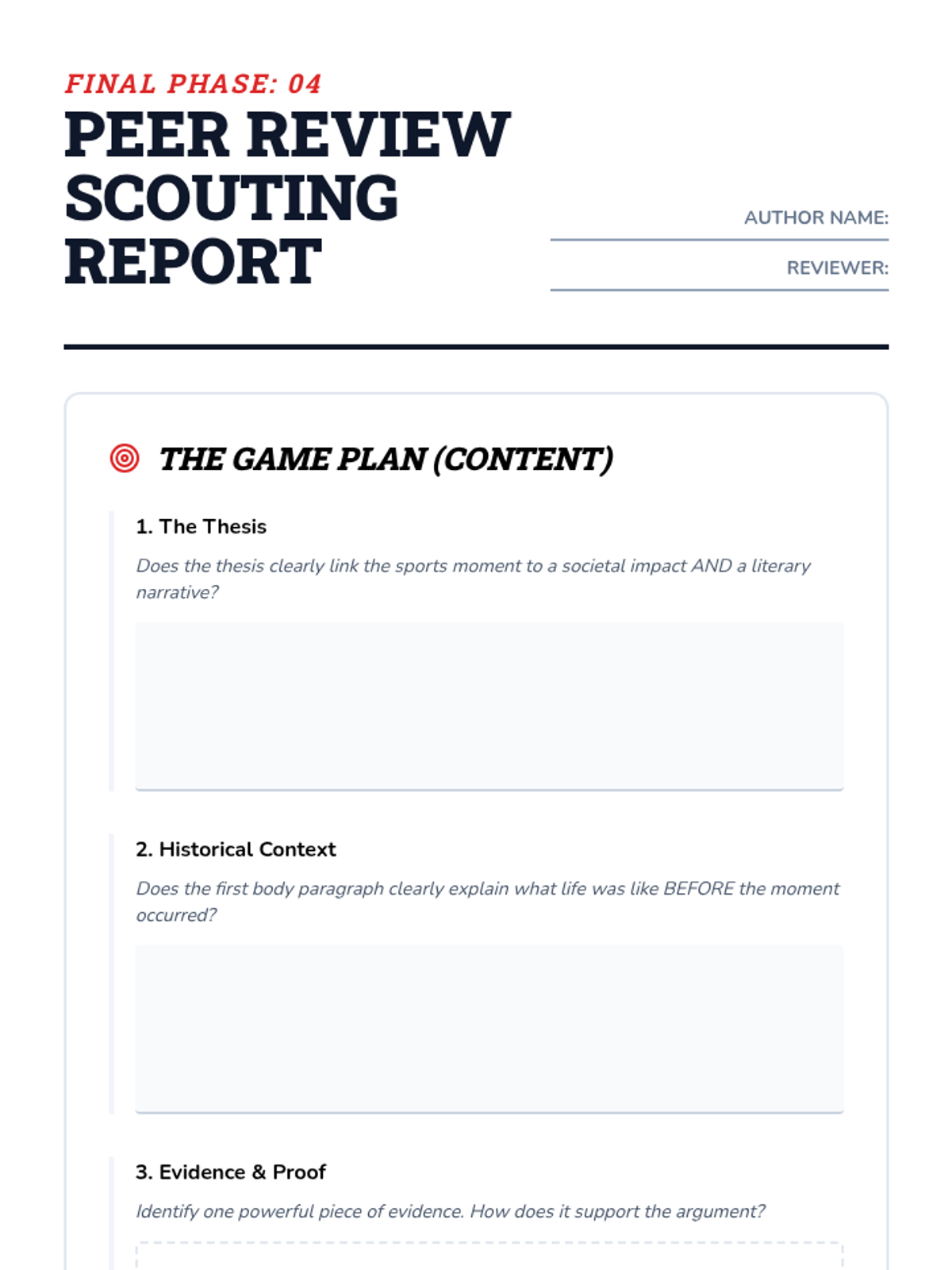
Drafting the final introduction and conclusion (bookending the paper), peer reviewing the full paper, and final polishing using the rubric.
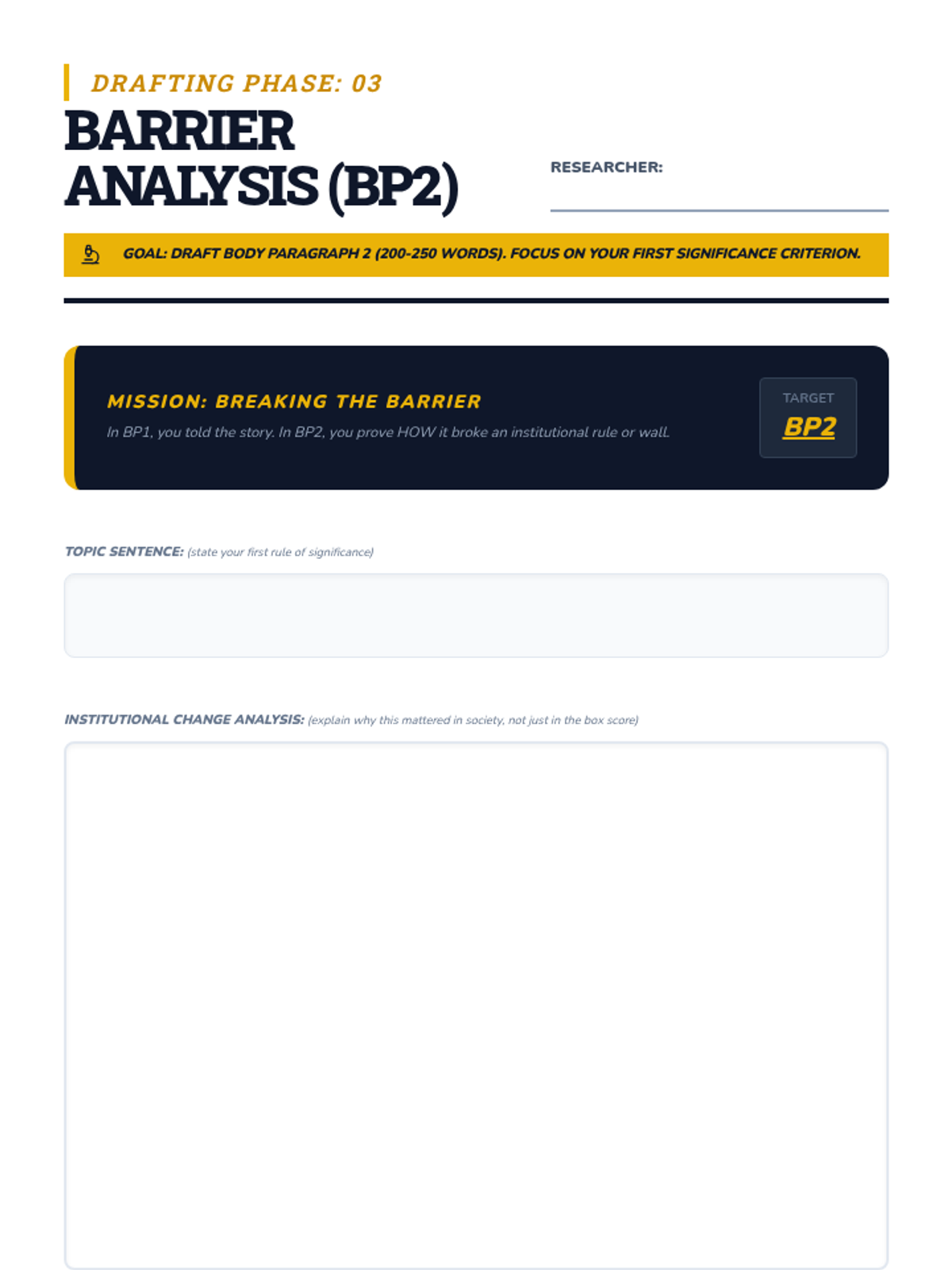
Drafting the second body paragraph, focusing on institutional changes and the breaking of systemic barriers.
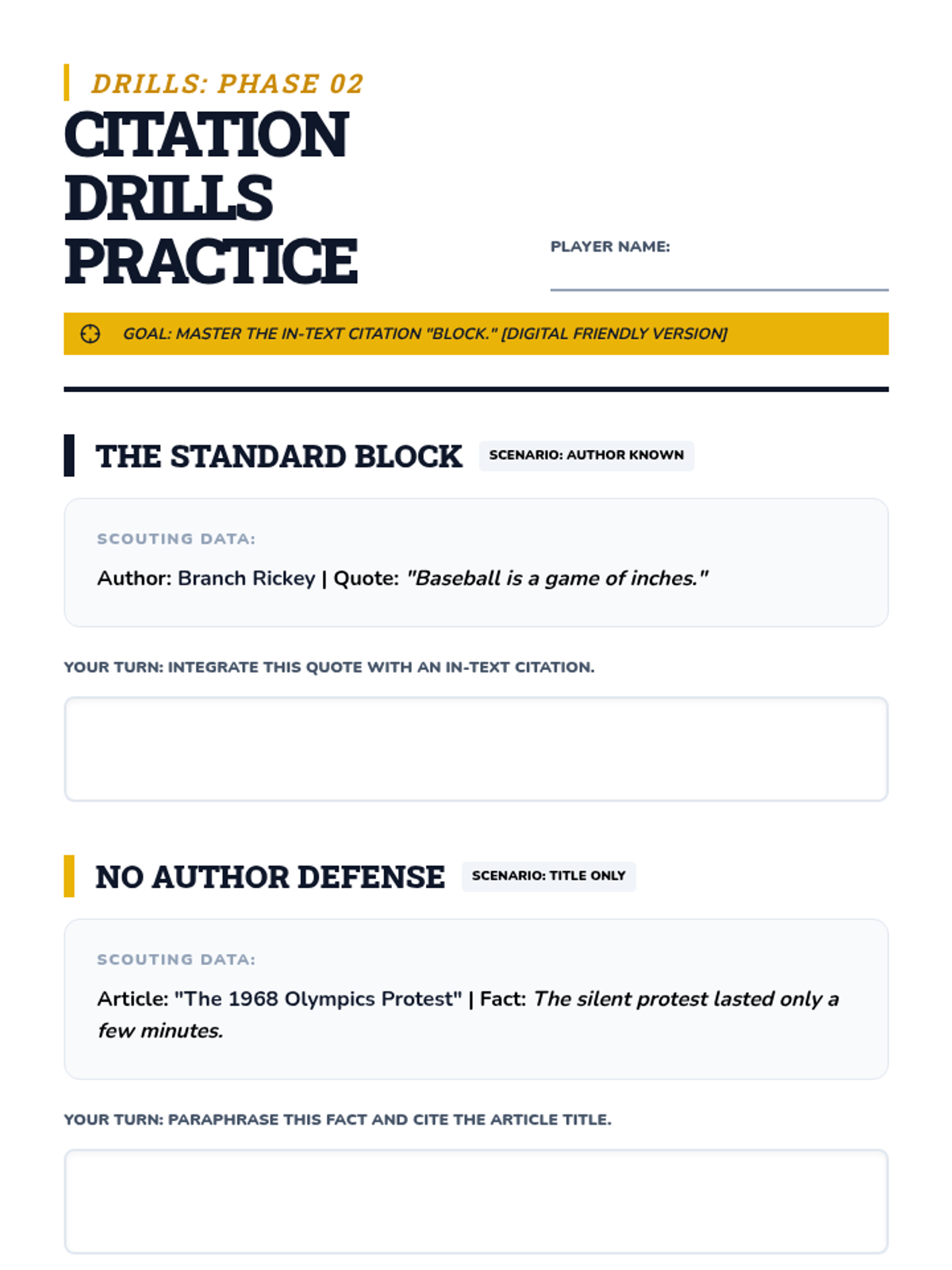
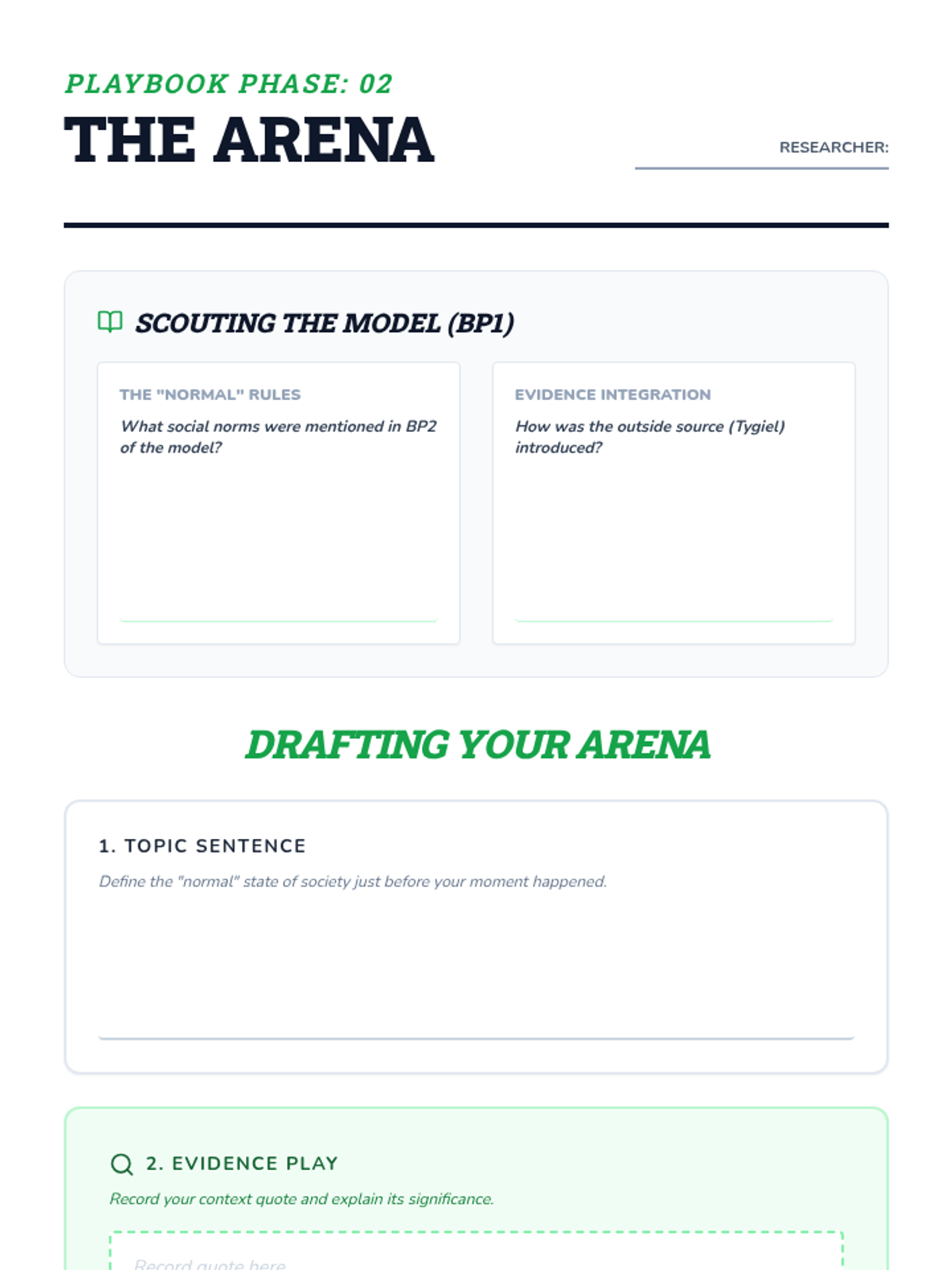
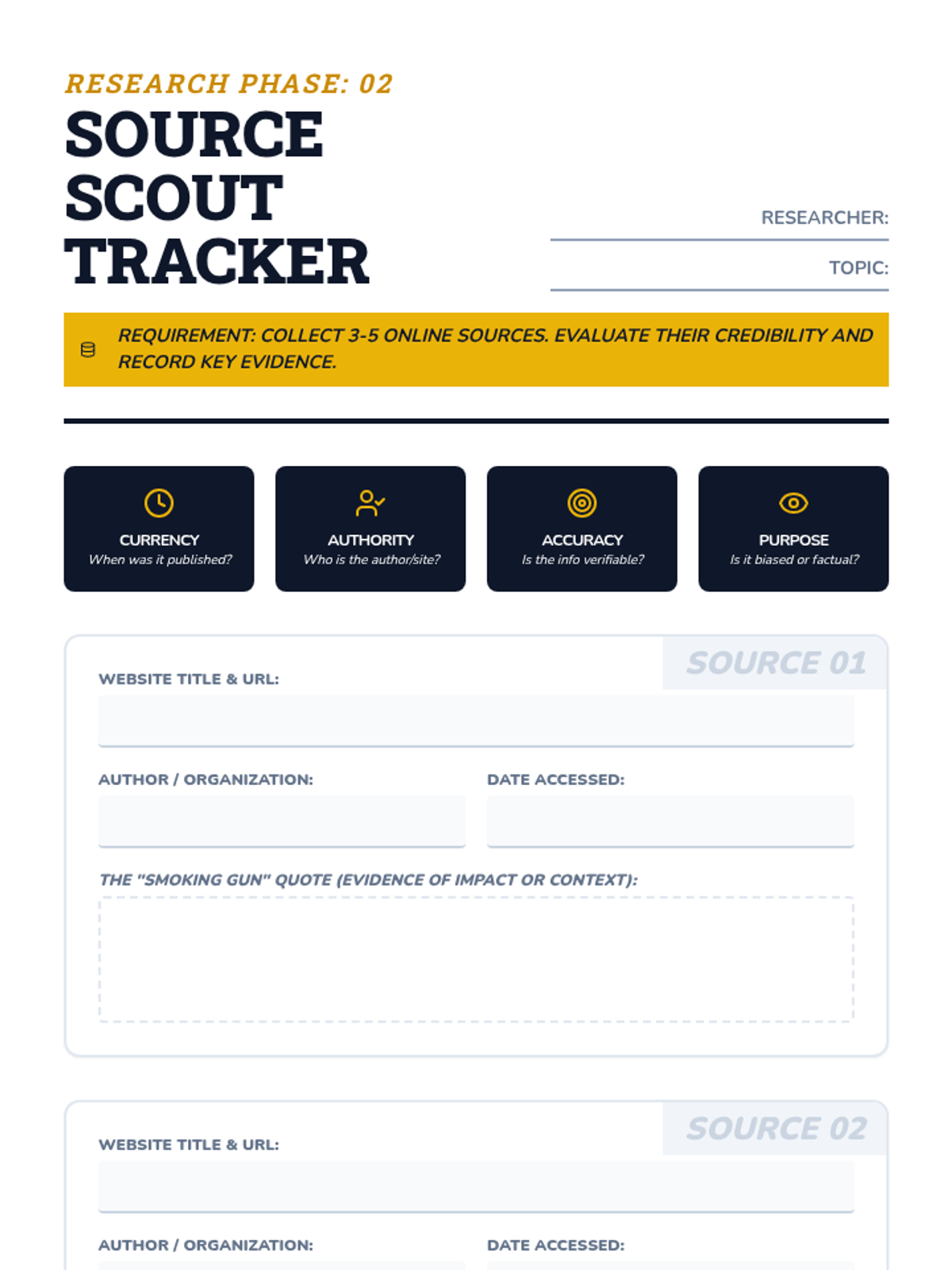
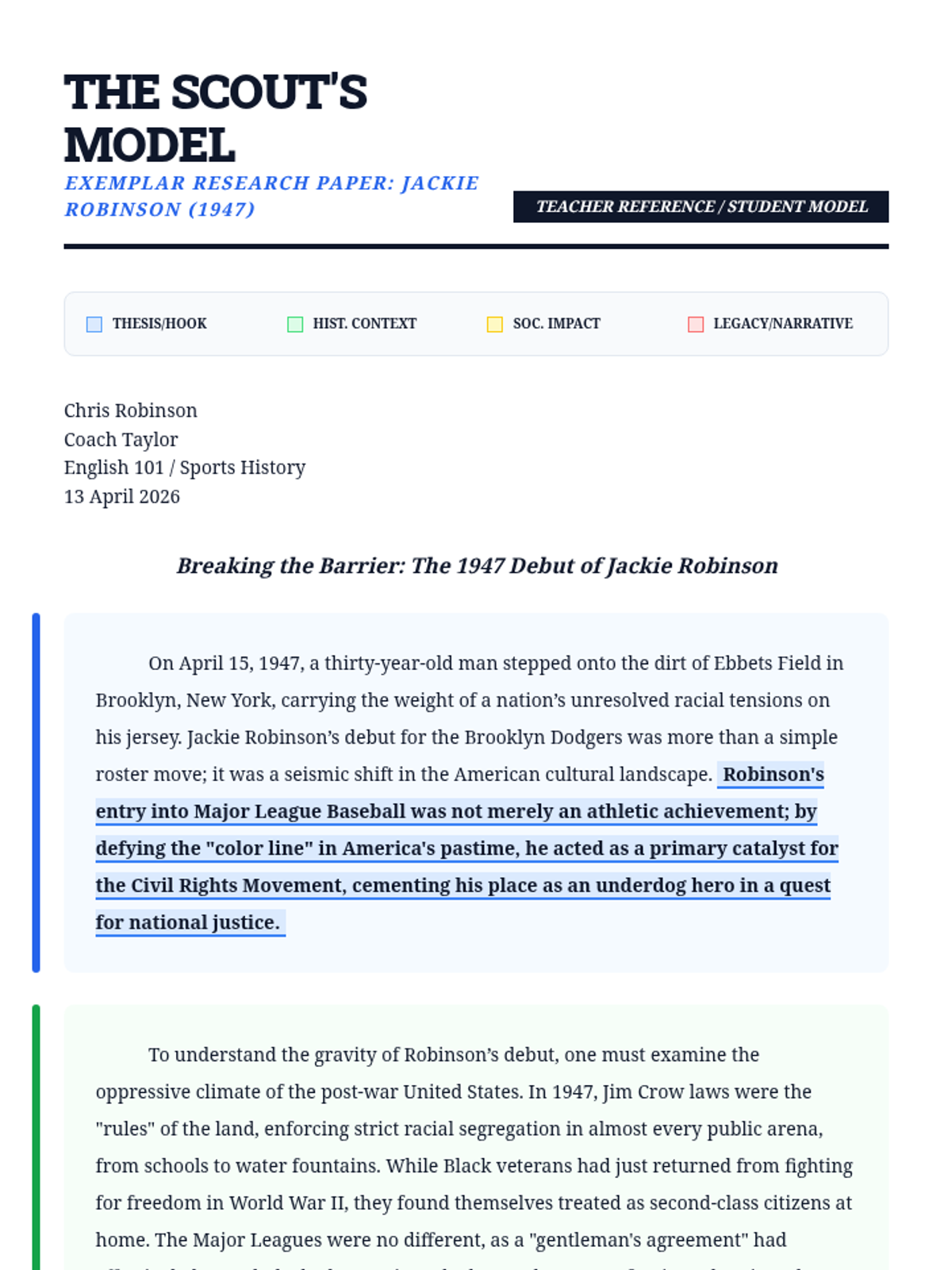
Students research and draft their first body paragraph, focusing on the historical context of their sports moment.
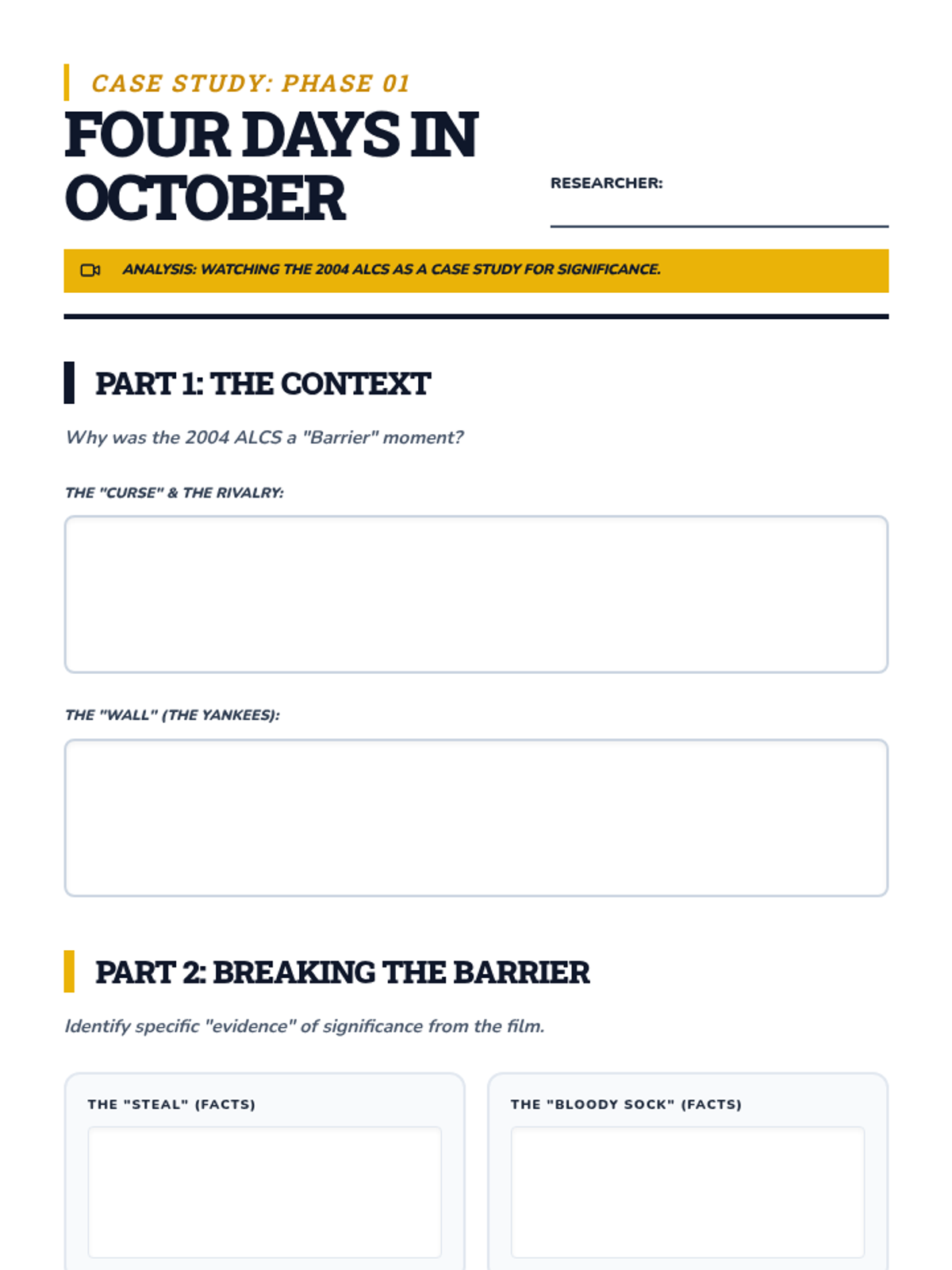
Brainstorming significant moments, defining specific criteria for "significance," and analyzing the 'Four Days in October' 30 for 30 documentary as a case study.
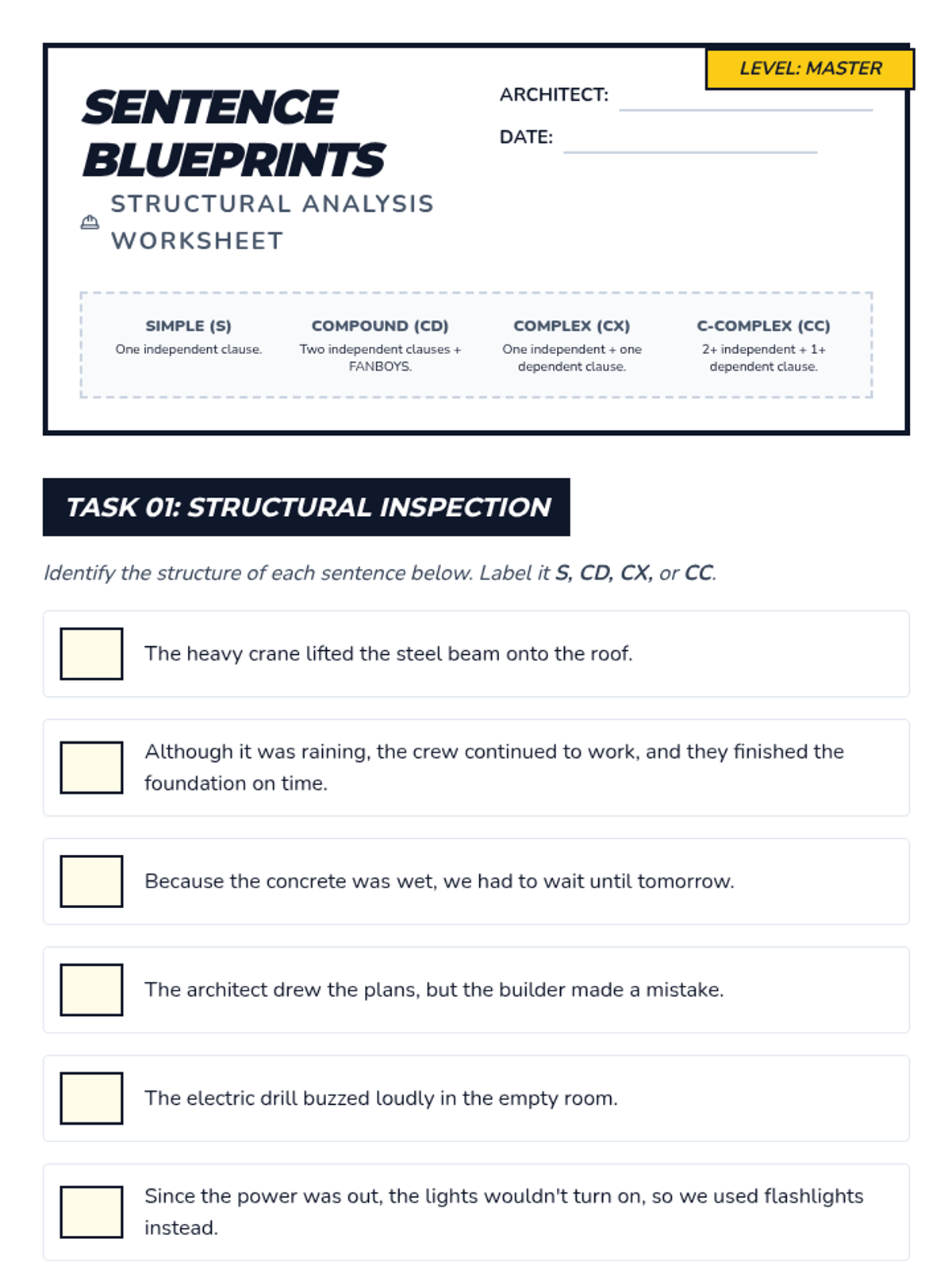
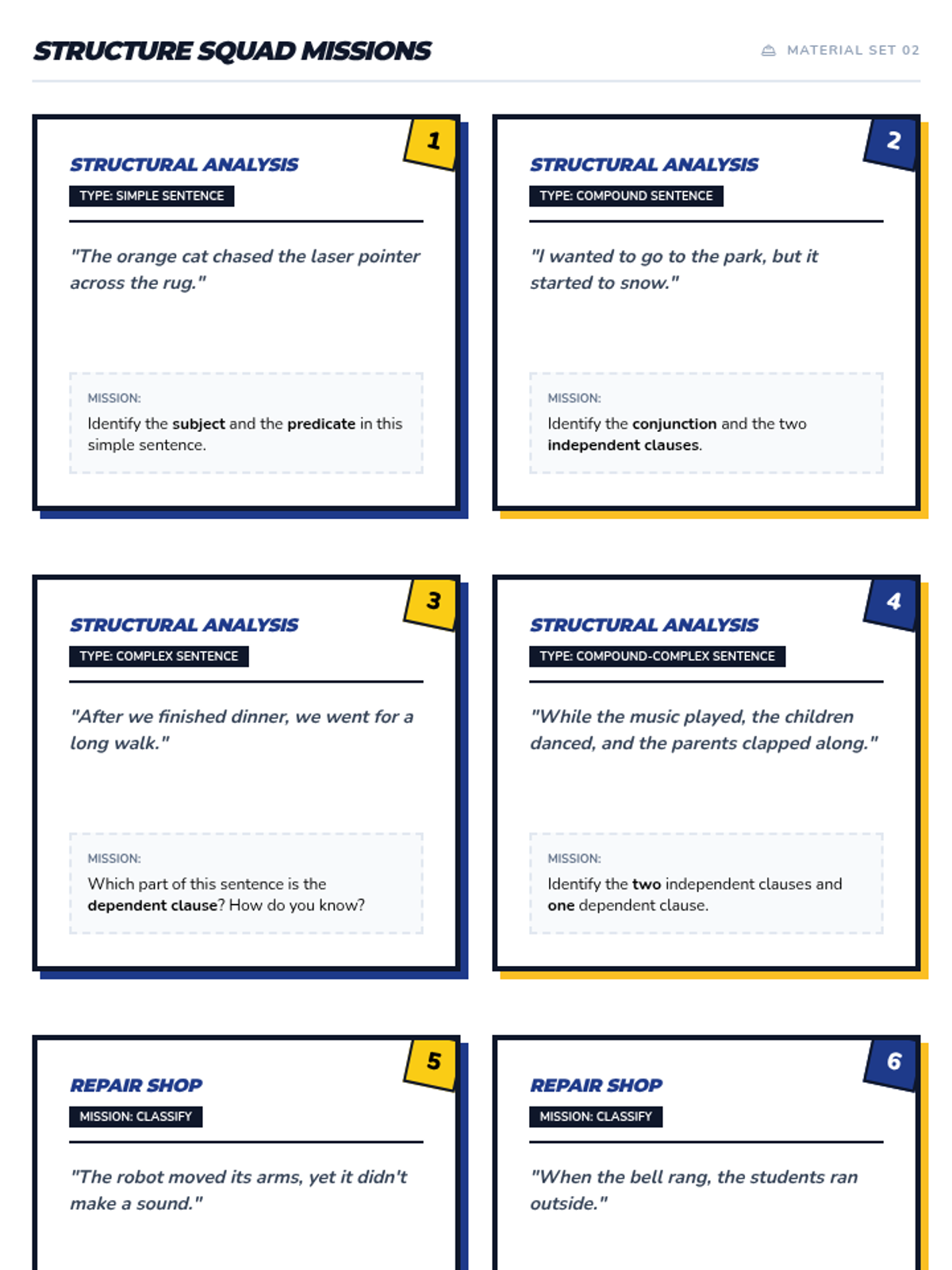
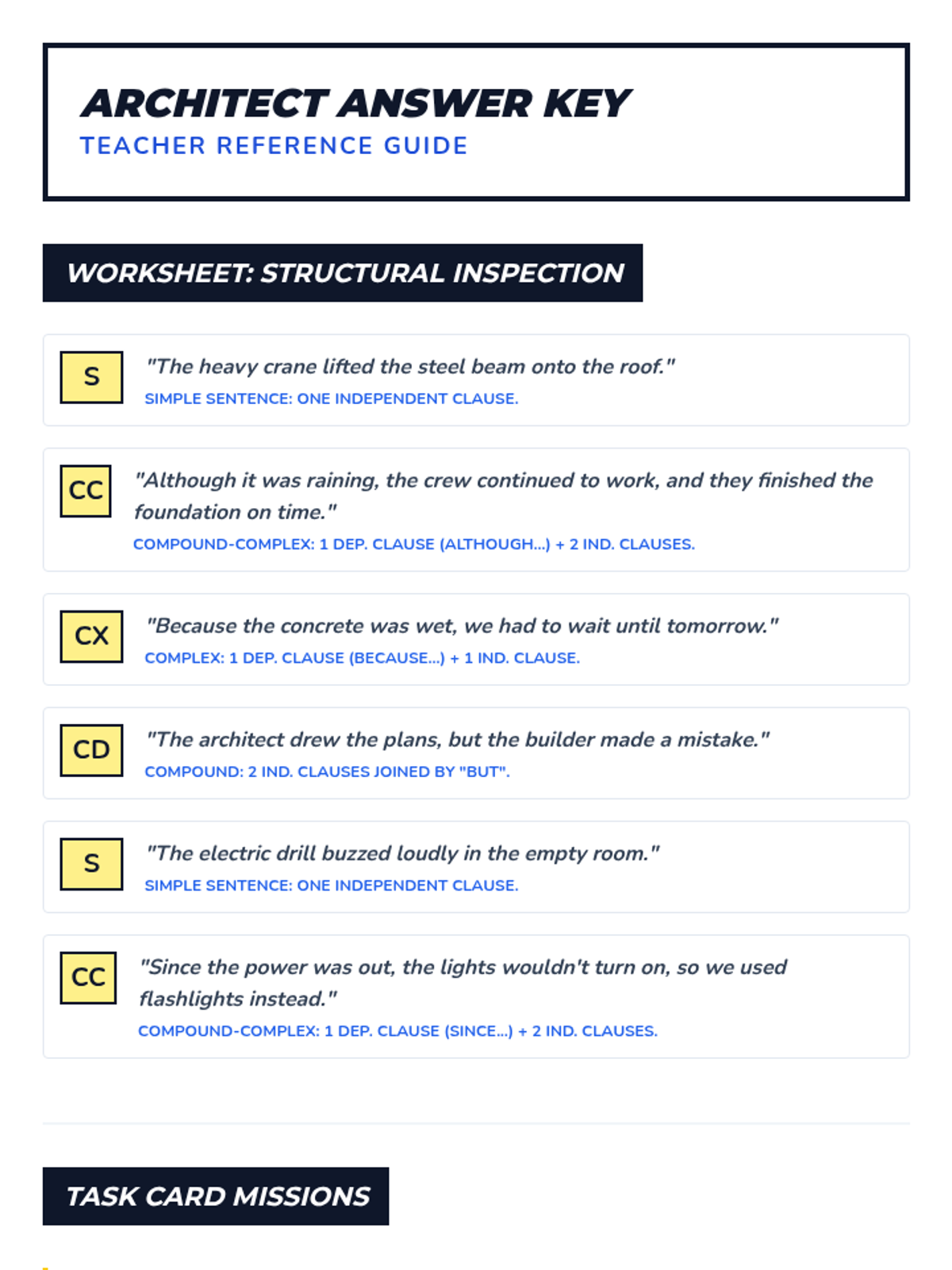
A comprehensive review of sentence structures including simple, compound, complex, and compound-complex sentences using a construction-themed approach. Students will analyze blueprints of sentences and build their own using specific grammatical tools.
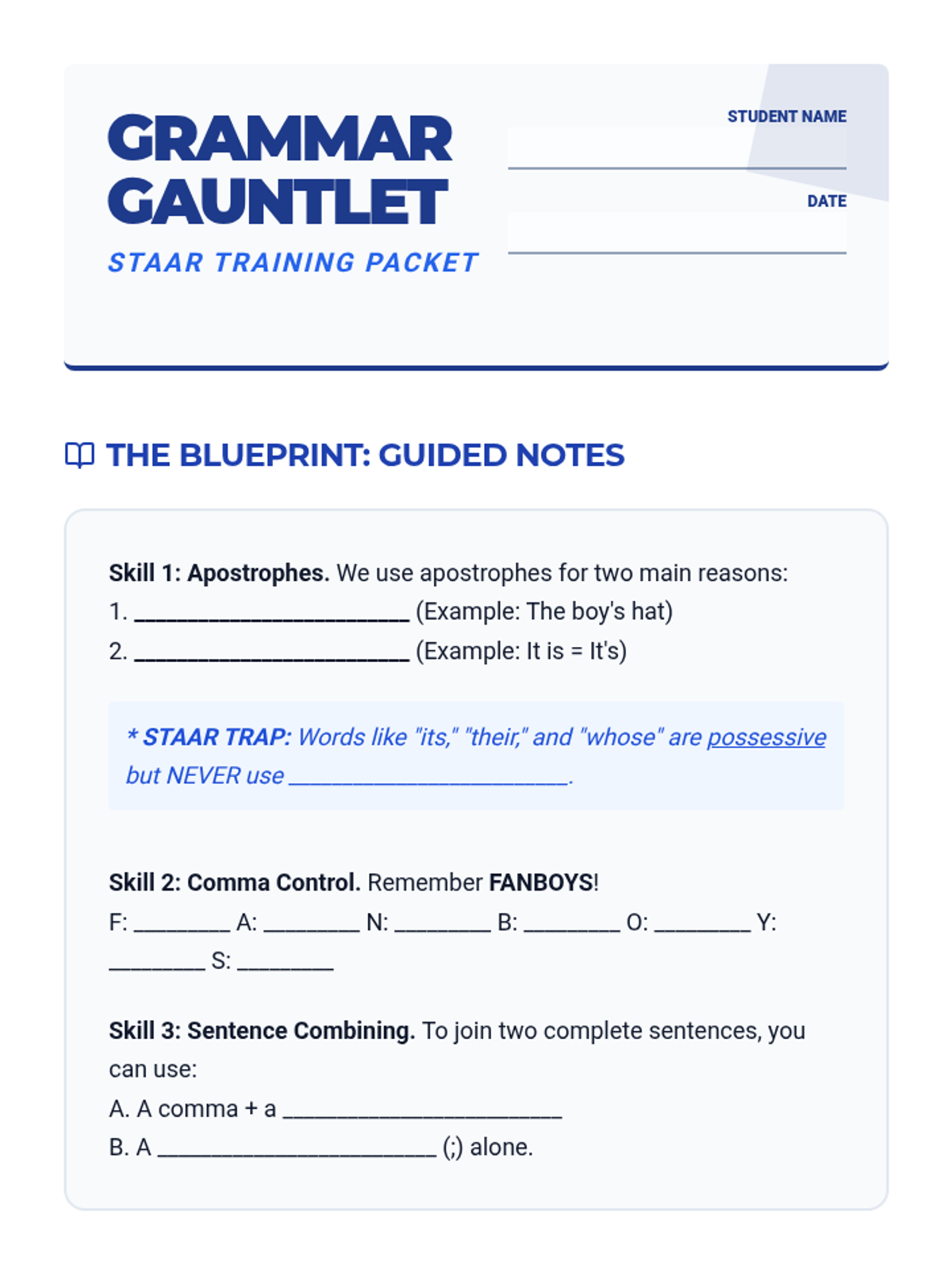
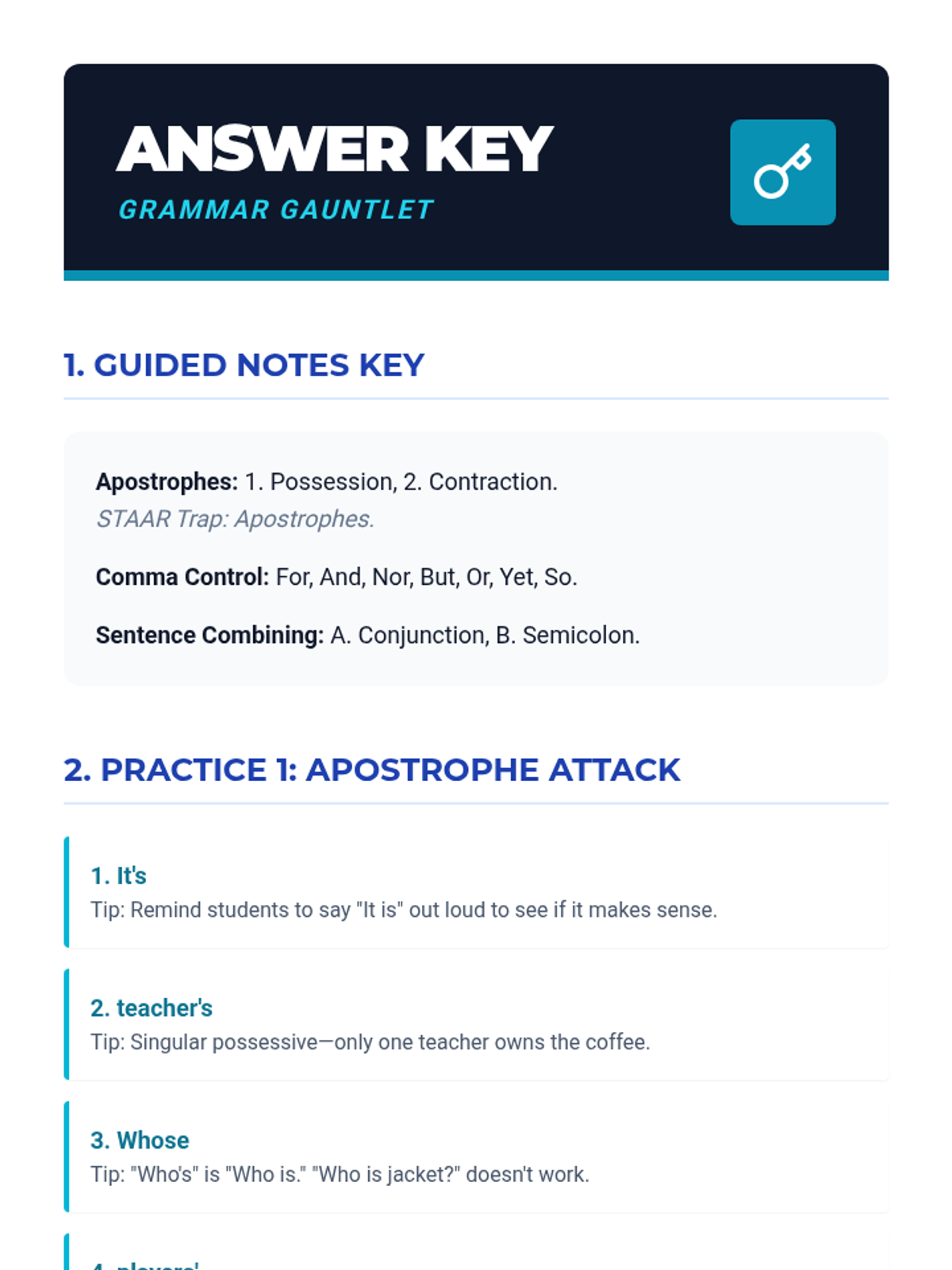
A high-impact tutoring session focused on STAAR writing skills, specifically targeting apostrophes, comma rules, and sentence combining through direct instruction and intensive practice.
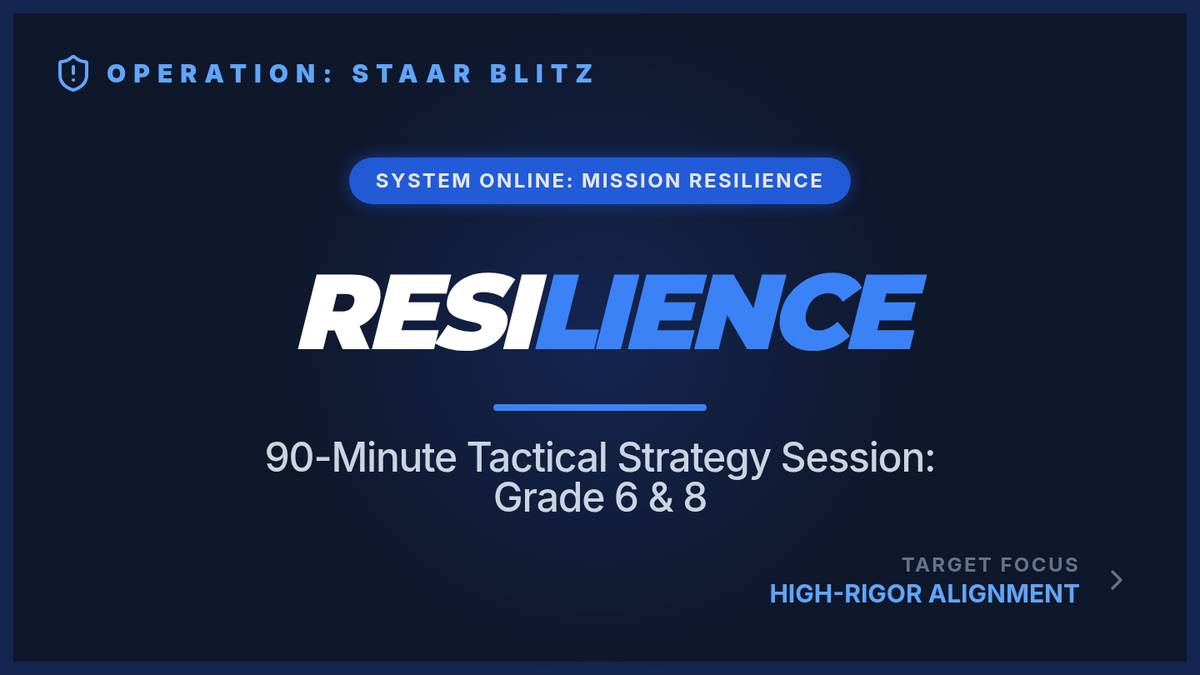
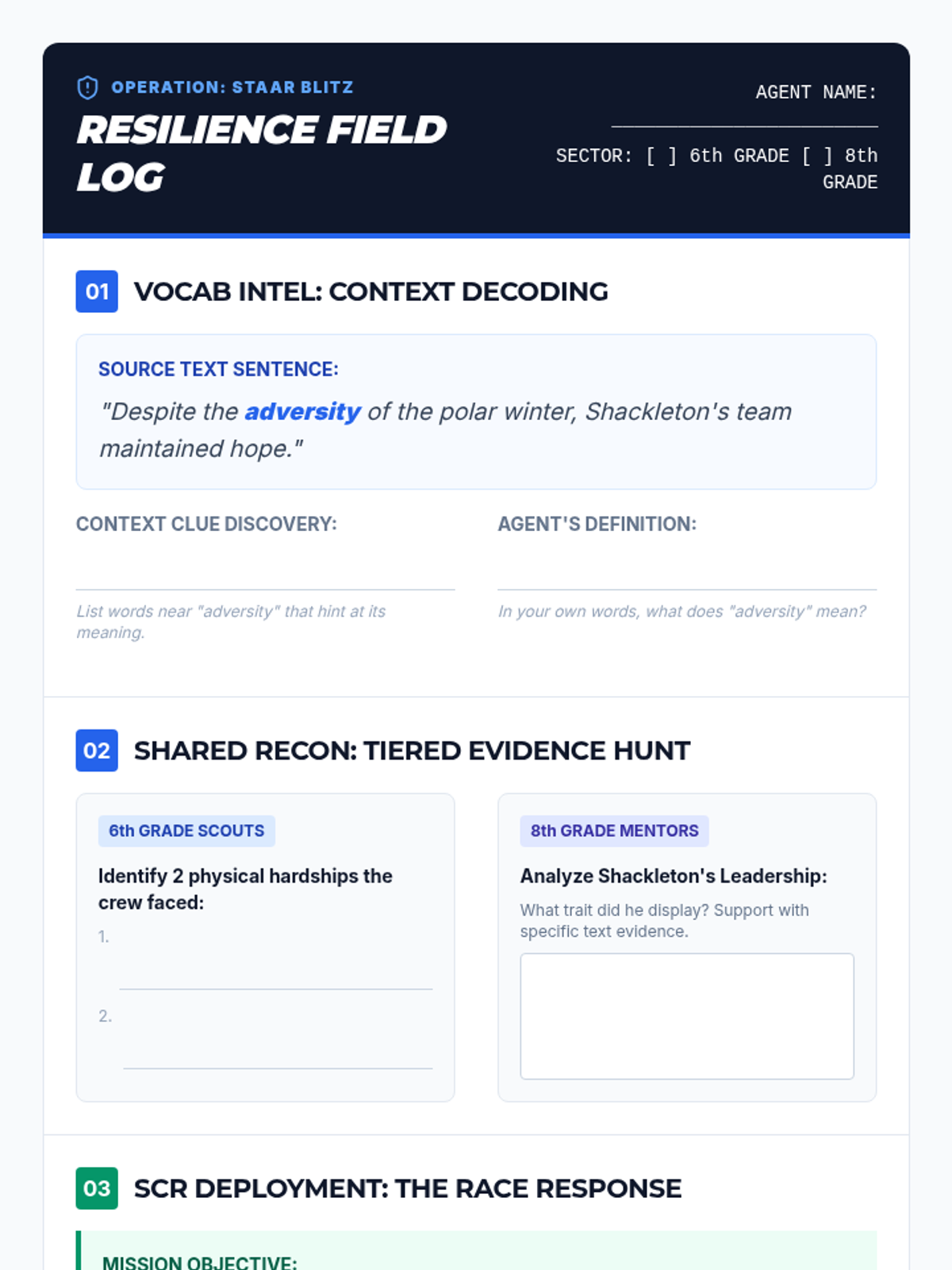
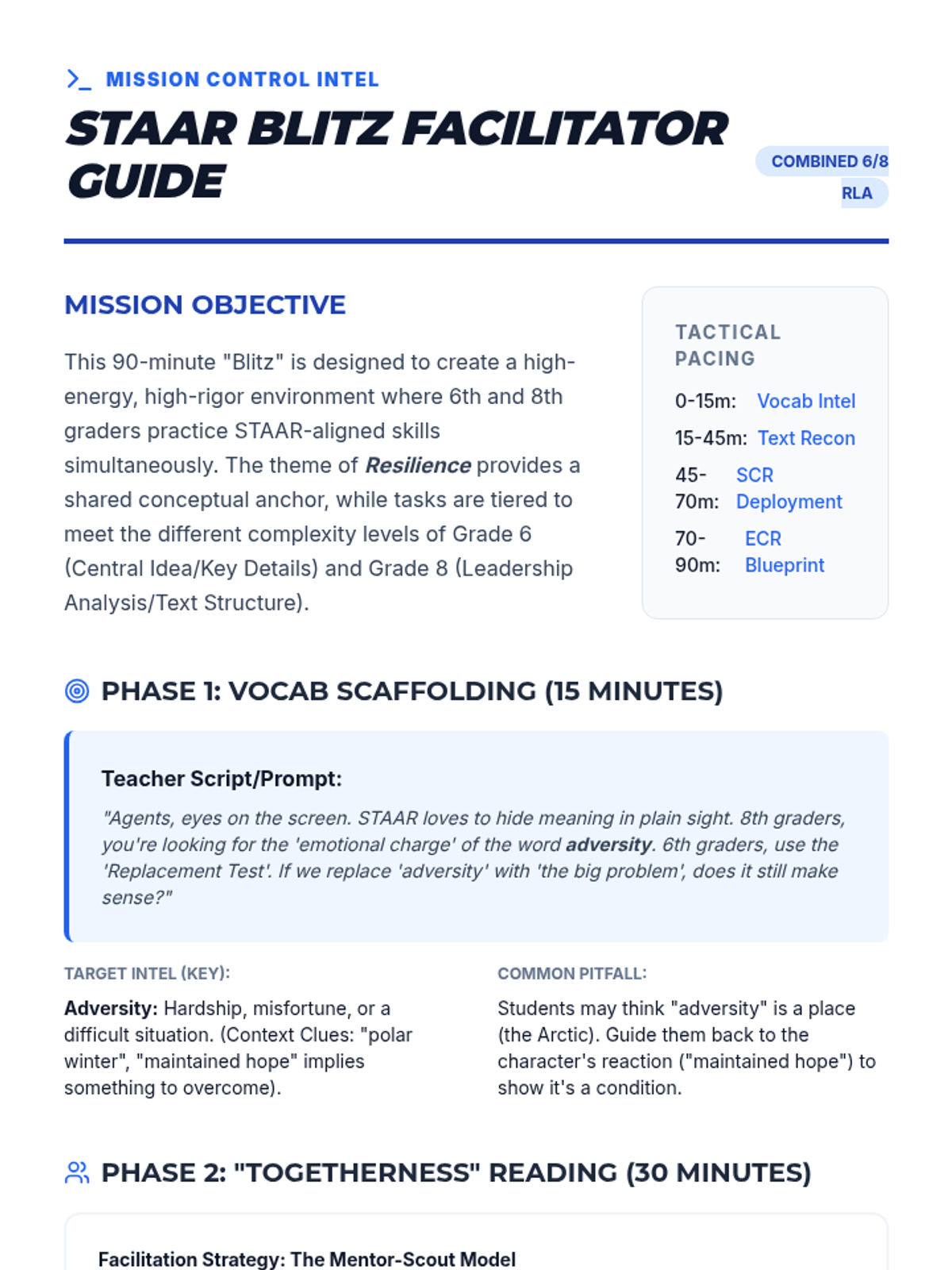
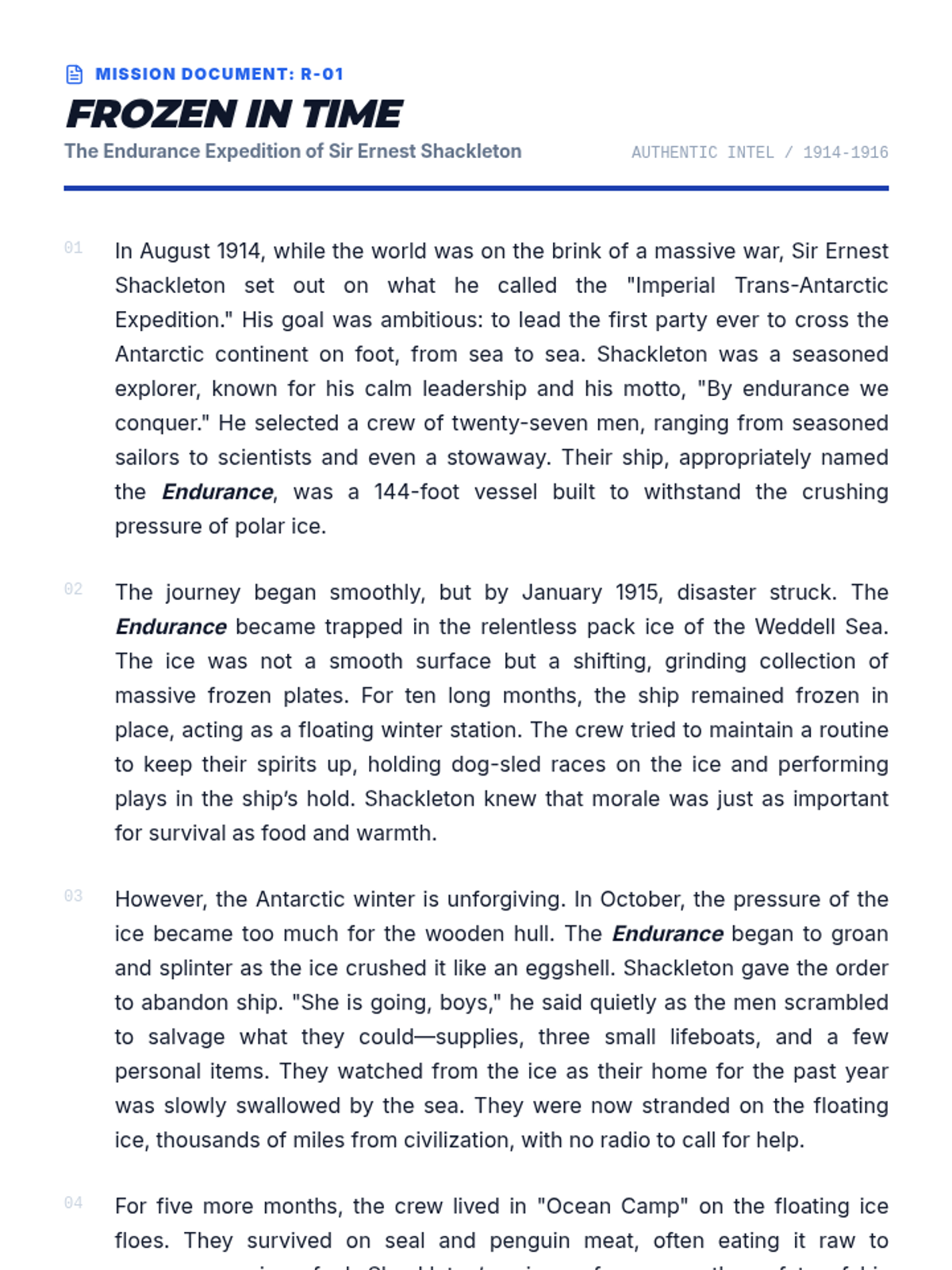
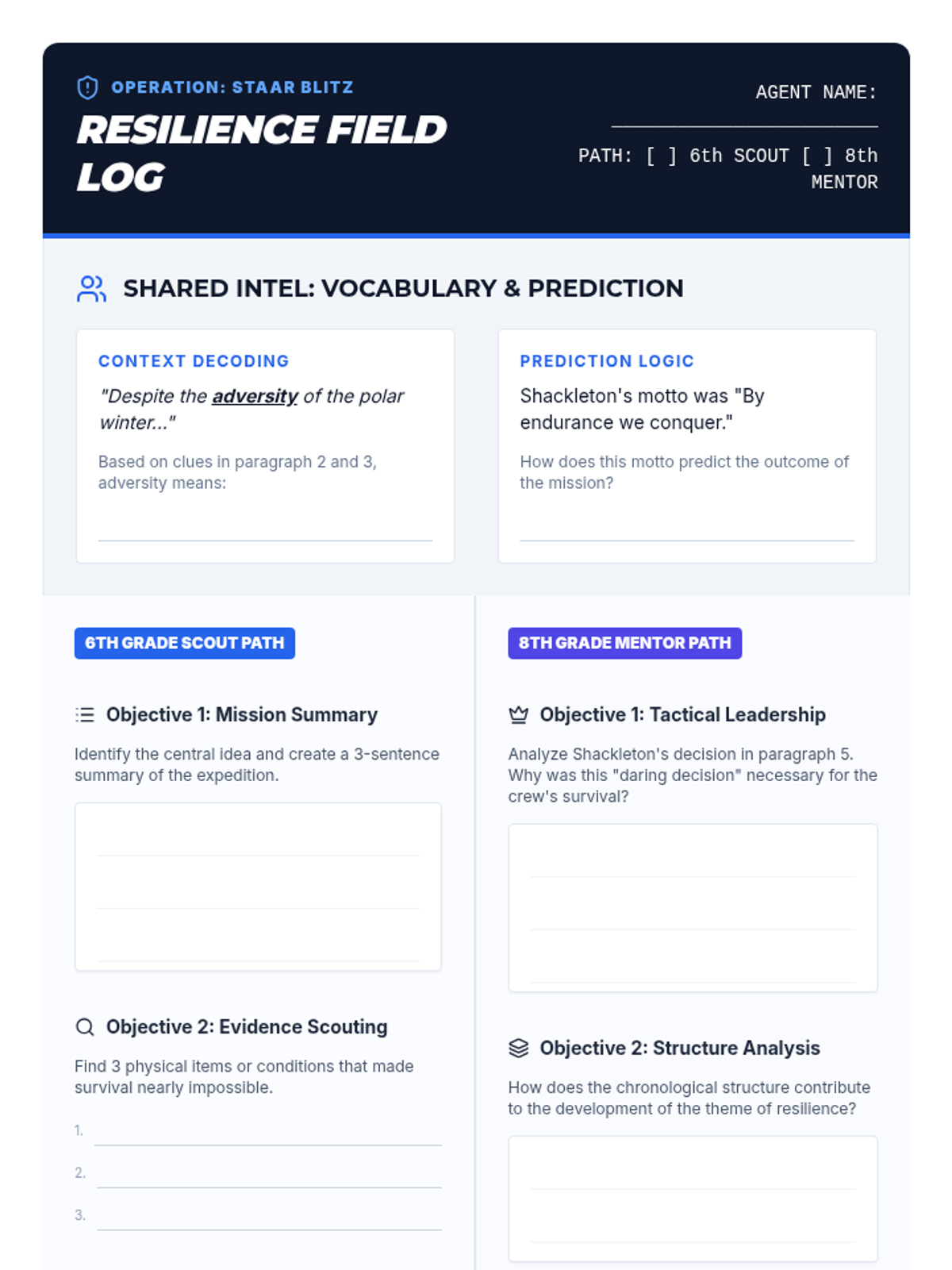
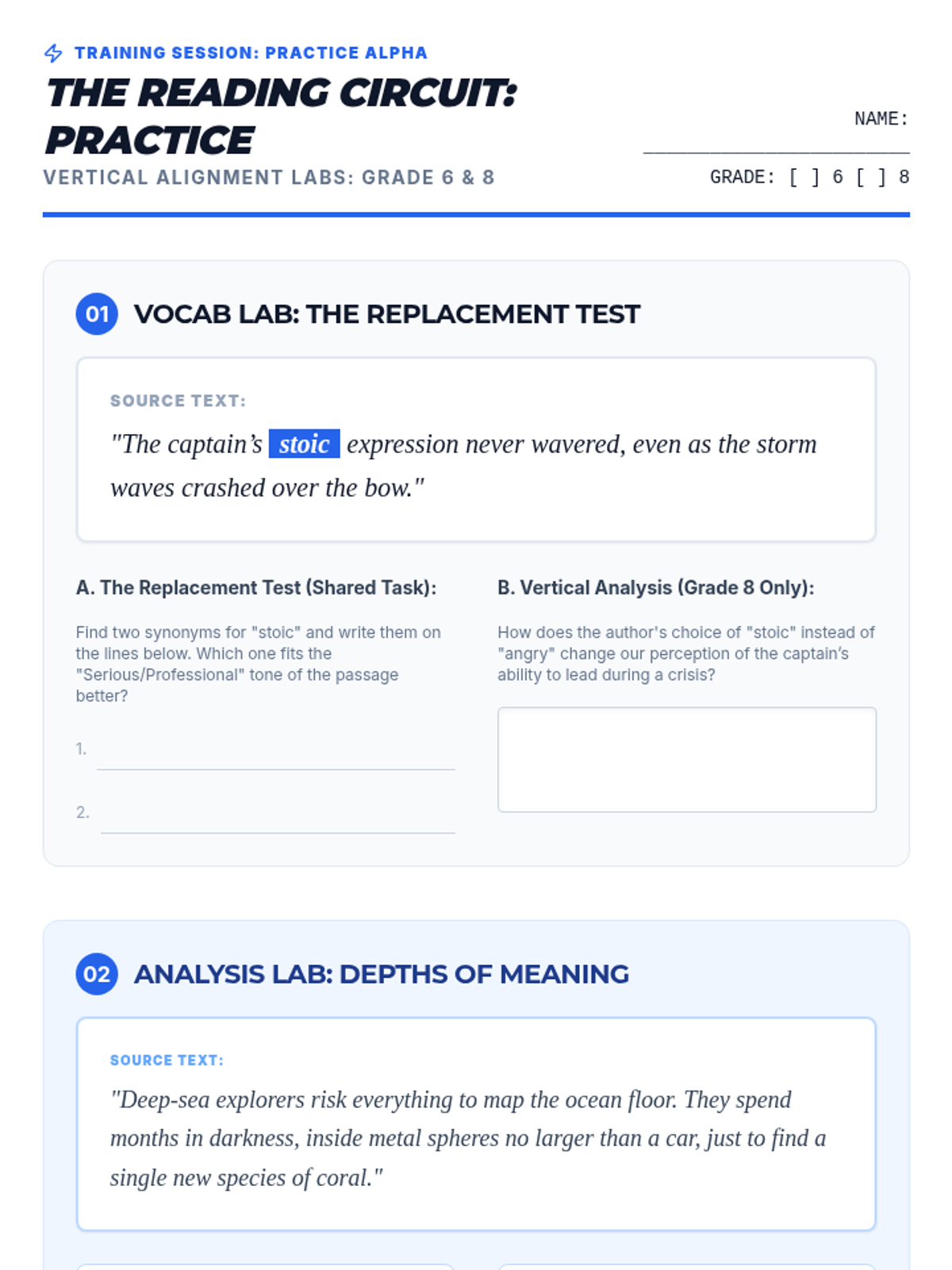
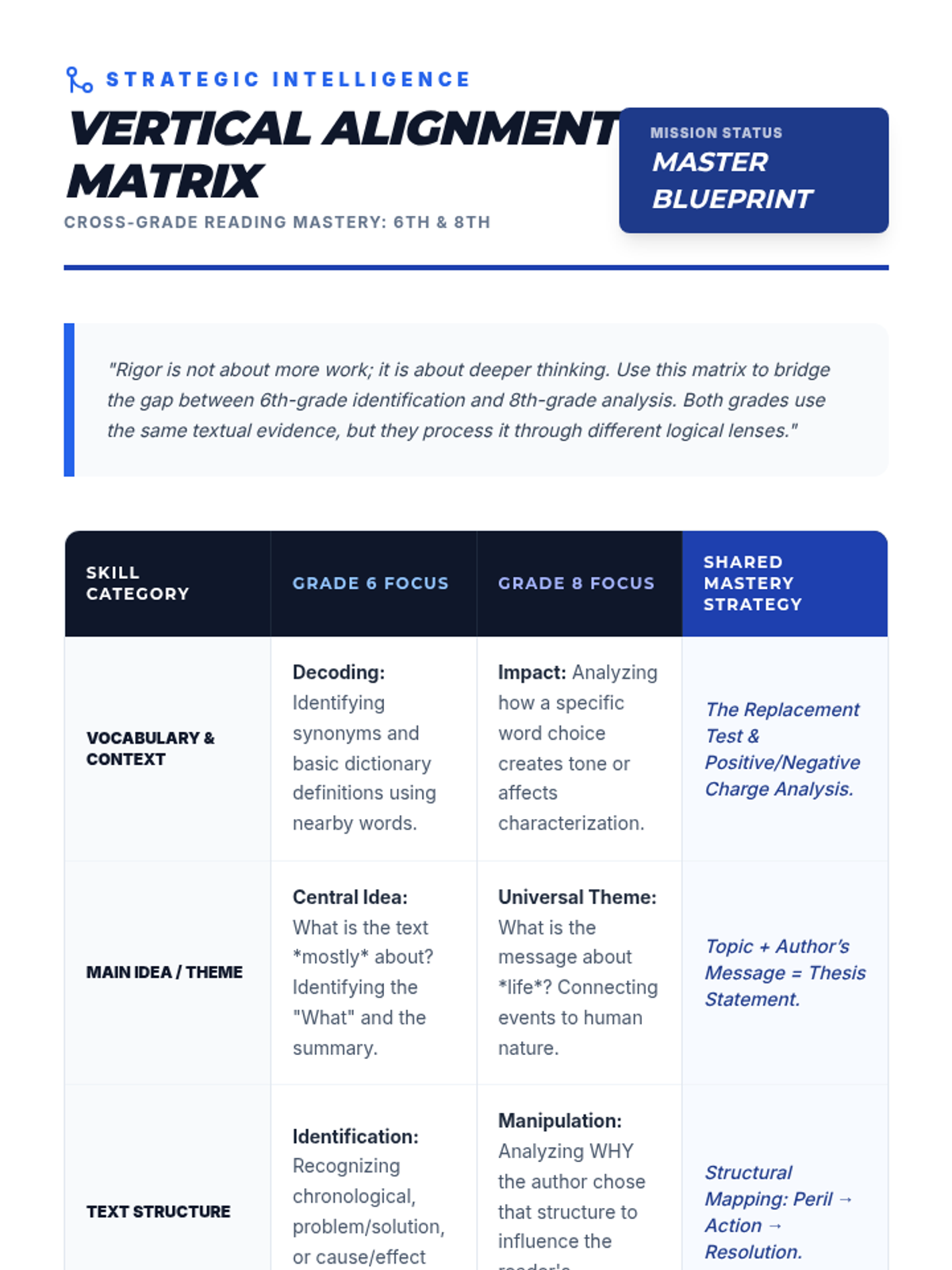
A high-intensity 90-minute STAAR Blitz lesson designed for a combined 6th and 8th-grade reading class, focusing on evidence-based analysis, vocabulary "intel," and SCR/ECR mastery through a "Mission Control" survival theme.
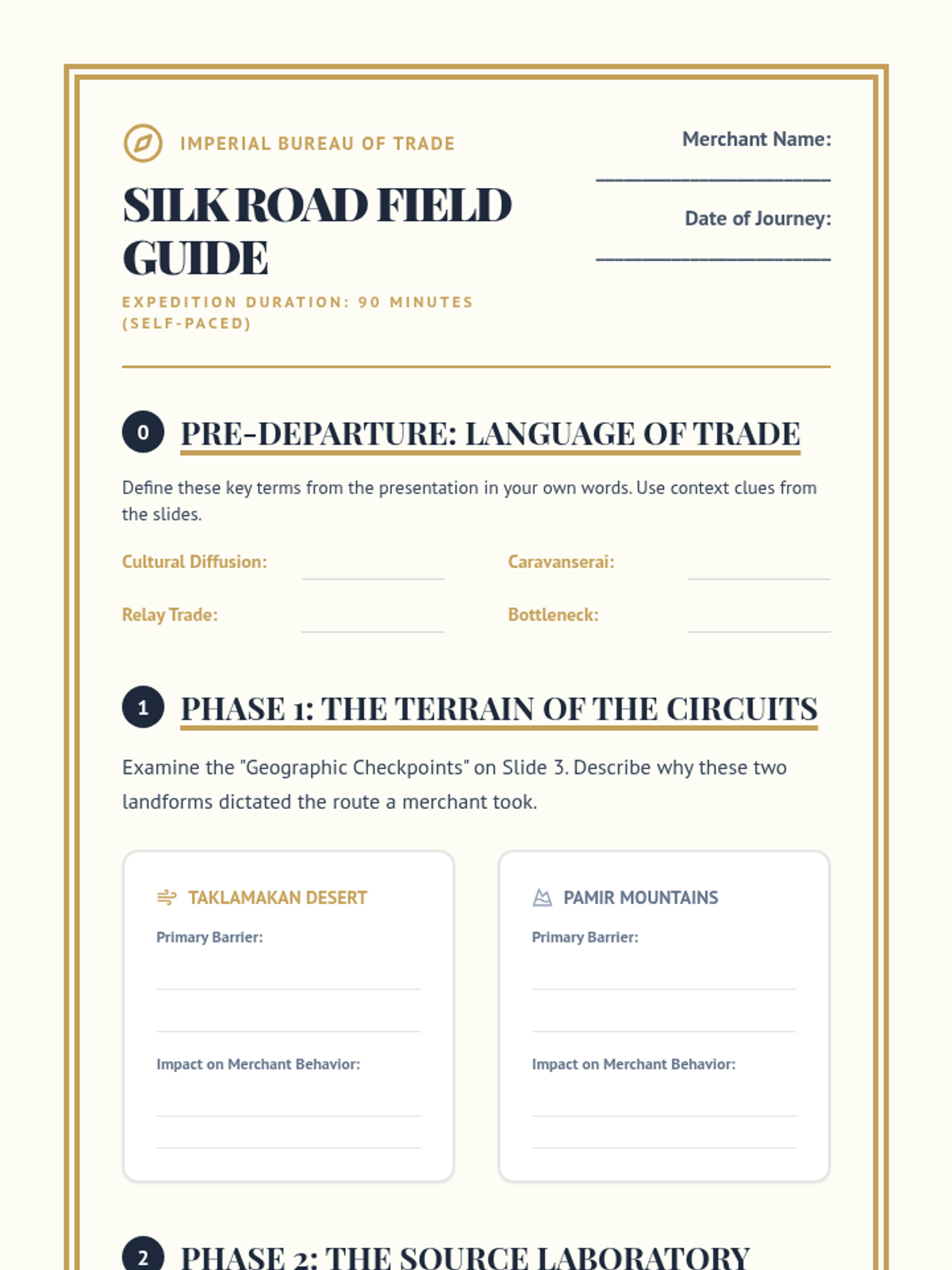
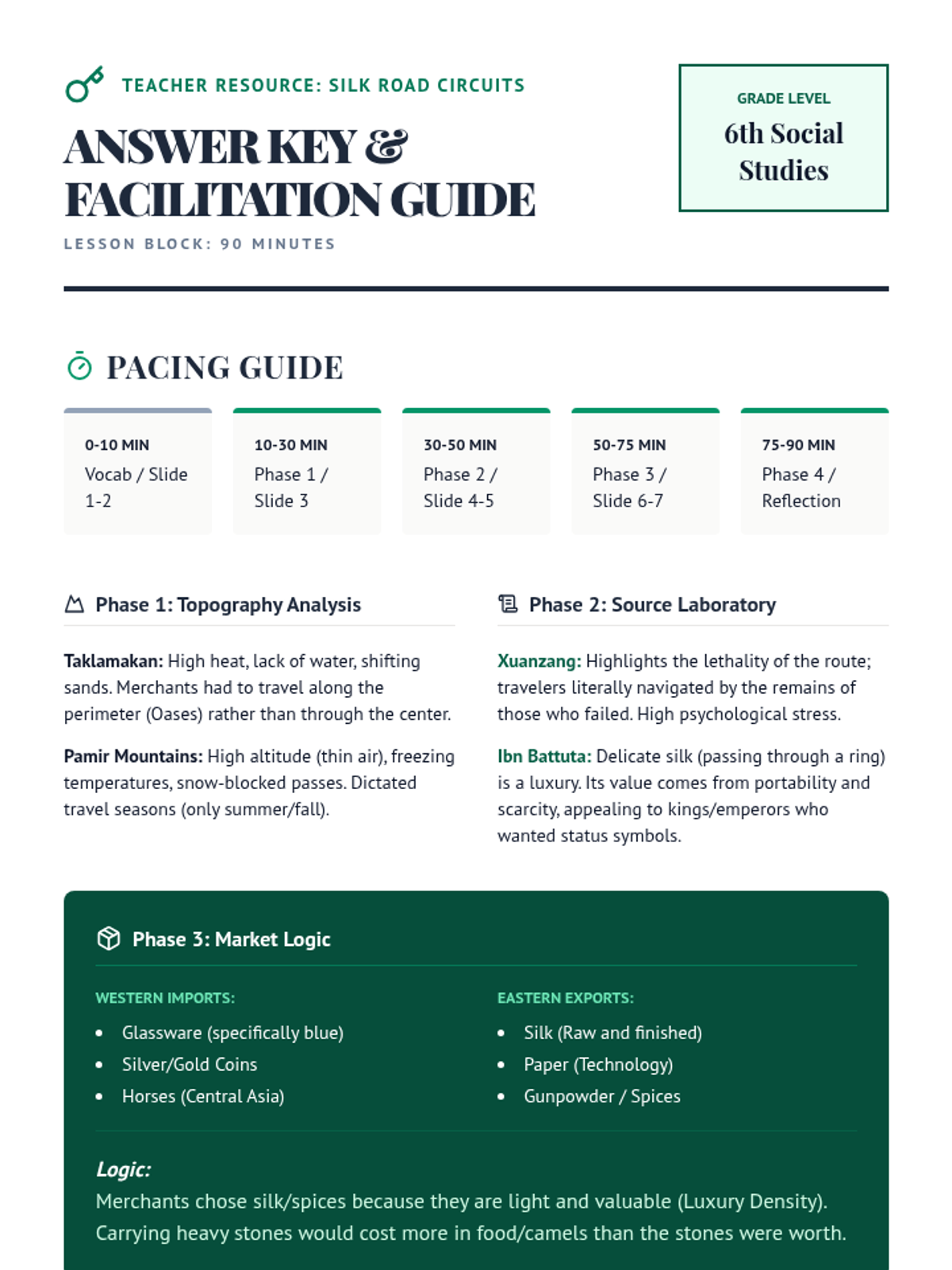
A self-paced Social Studies lesson for 6th grade focused on the Silk Road as an ancient global network, integrating rigorous primary source analysis and geography skills.
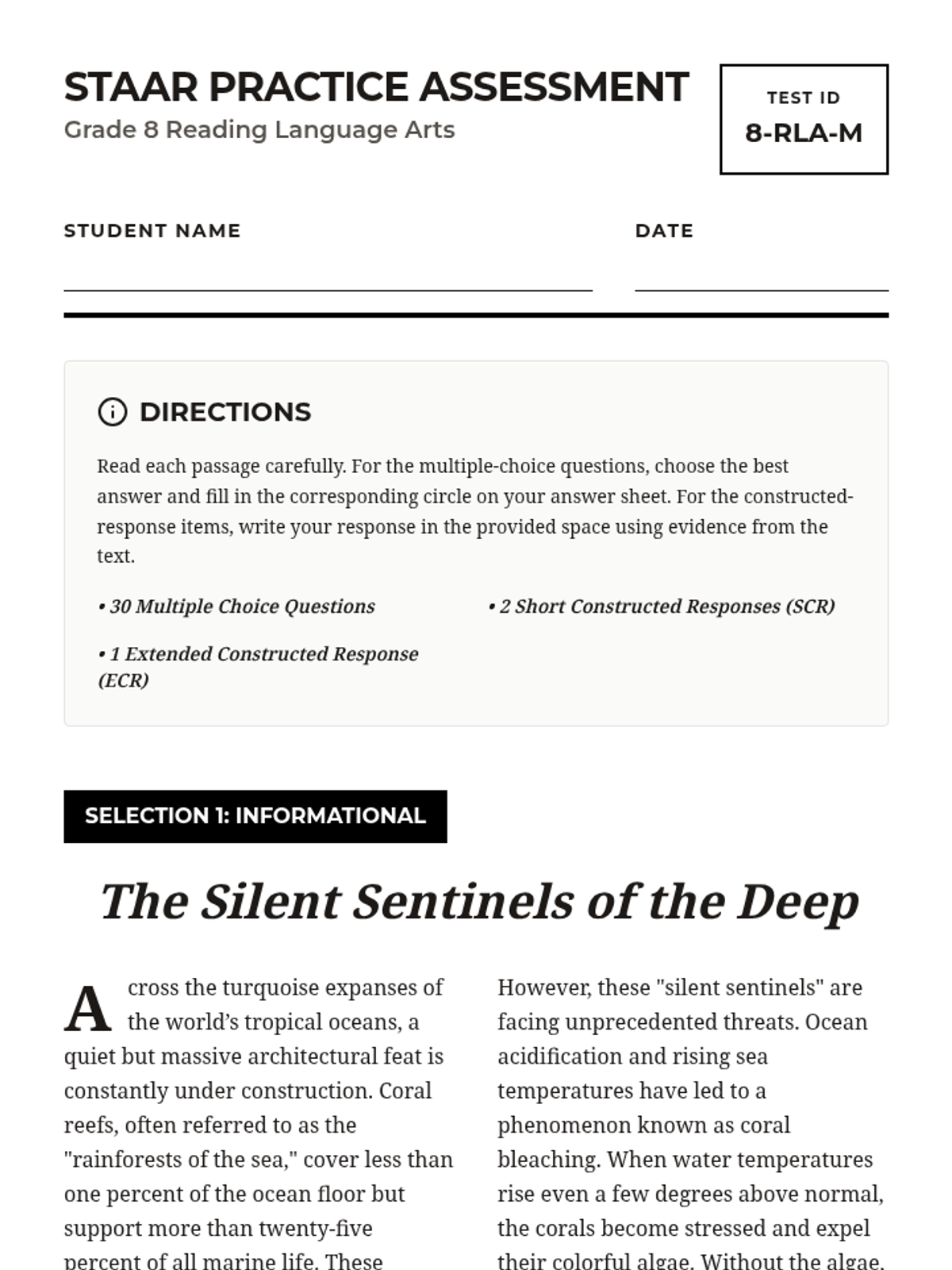
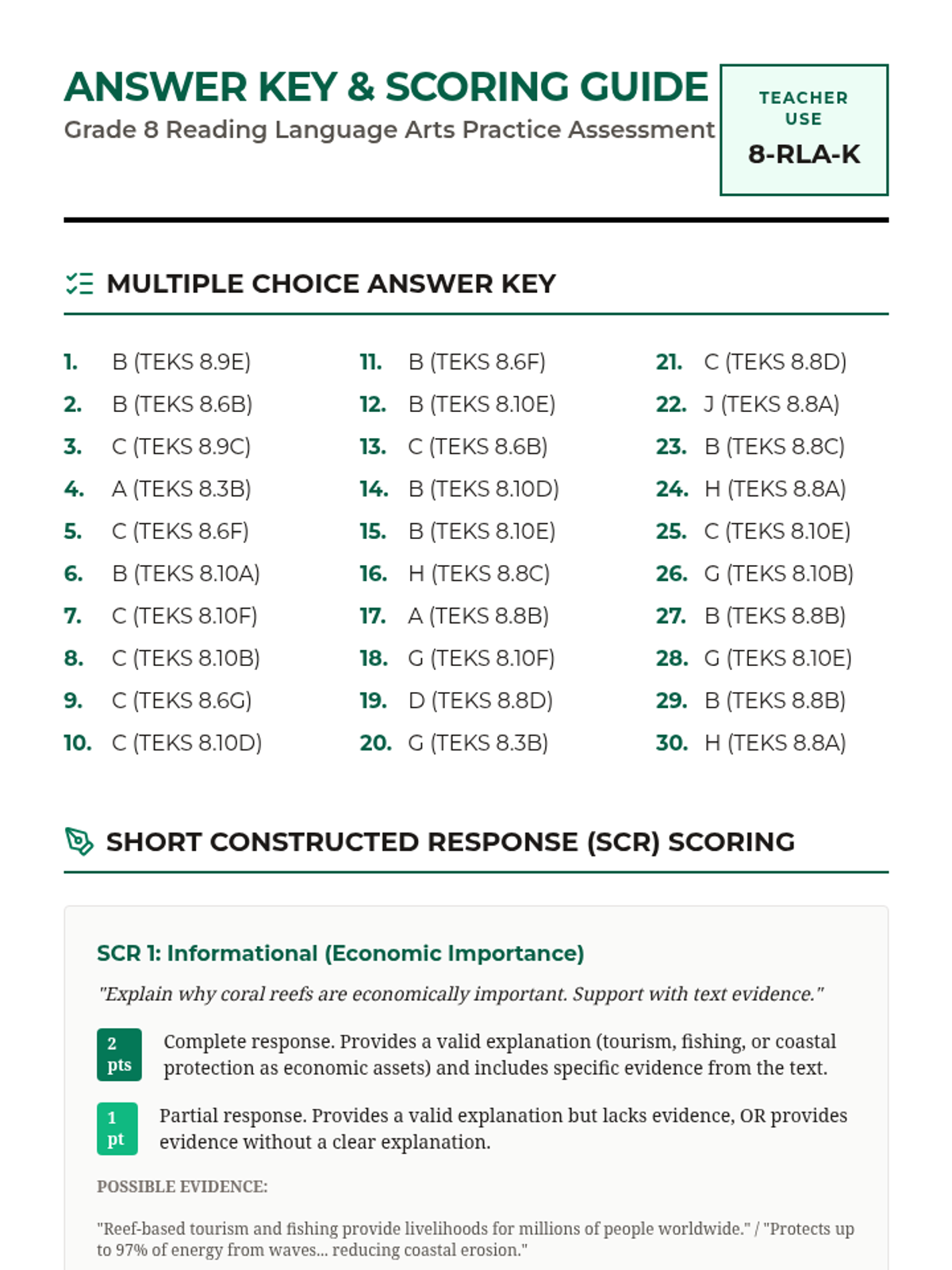
A full-length 8th-grade STAAR reading practice assessment, including 30 multiple-choice questions, two SCRs, and one ECR based on informational and fiction passages.
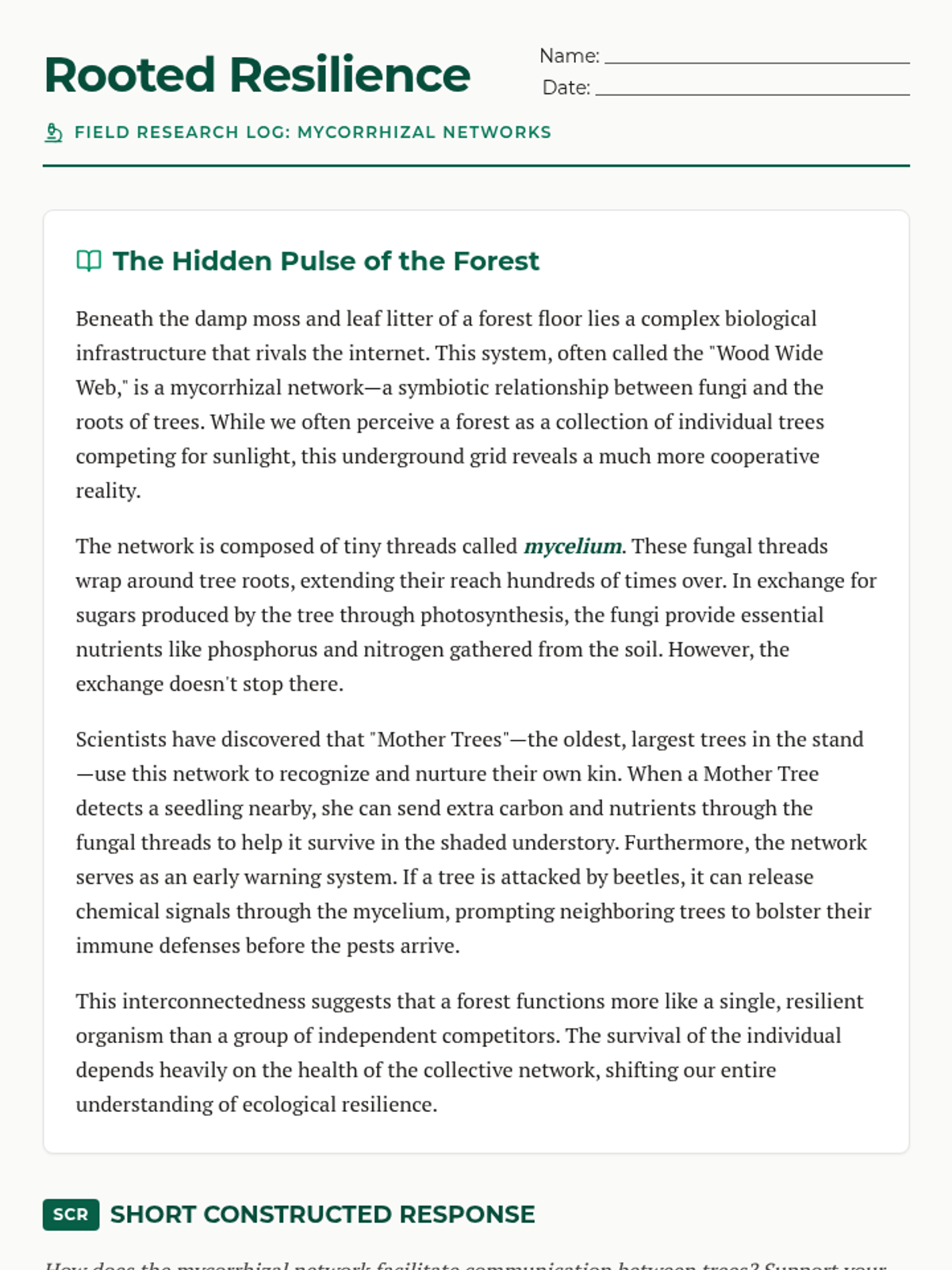
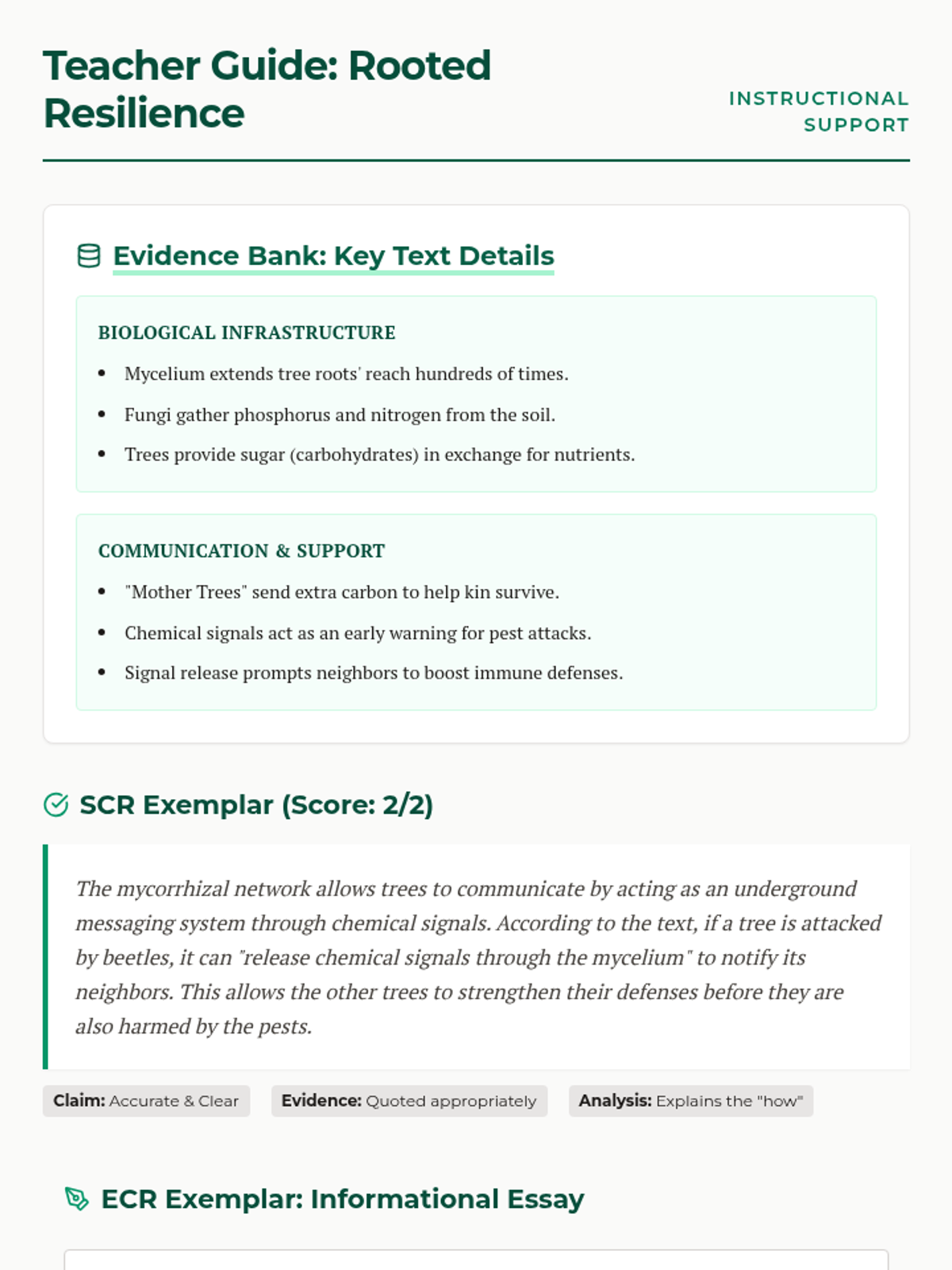
A rigorous informational reading and writing assignment focused on the mycorrhizal network, designed to practice SCR and ECR skills with an emphasis on organization, evidence, and sentence variety.
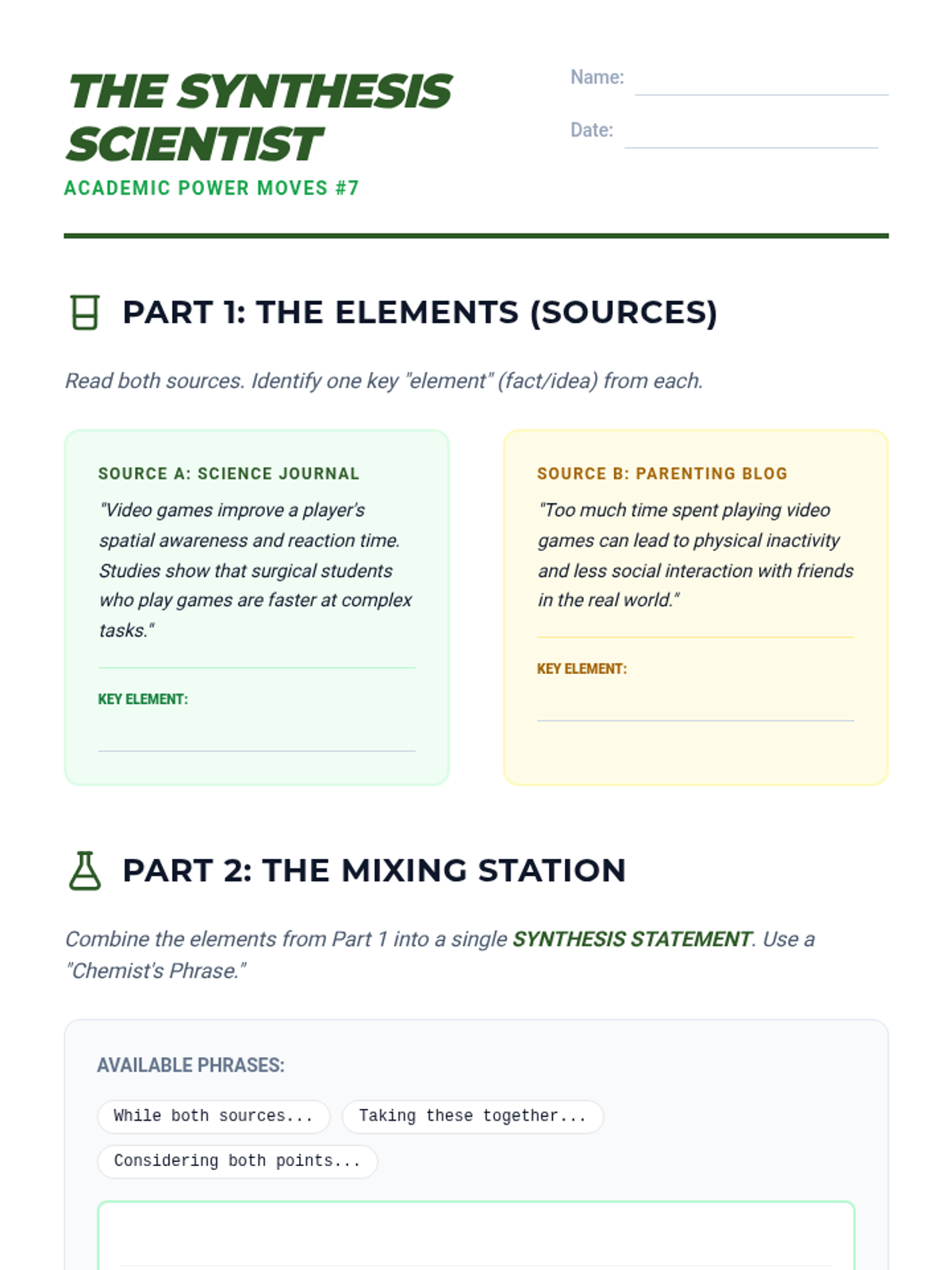
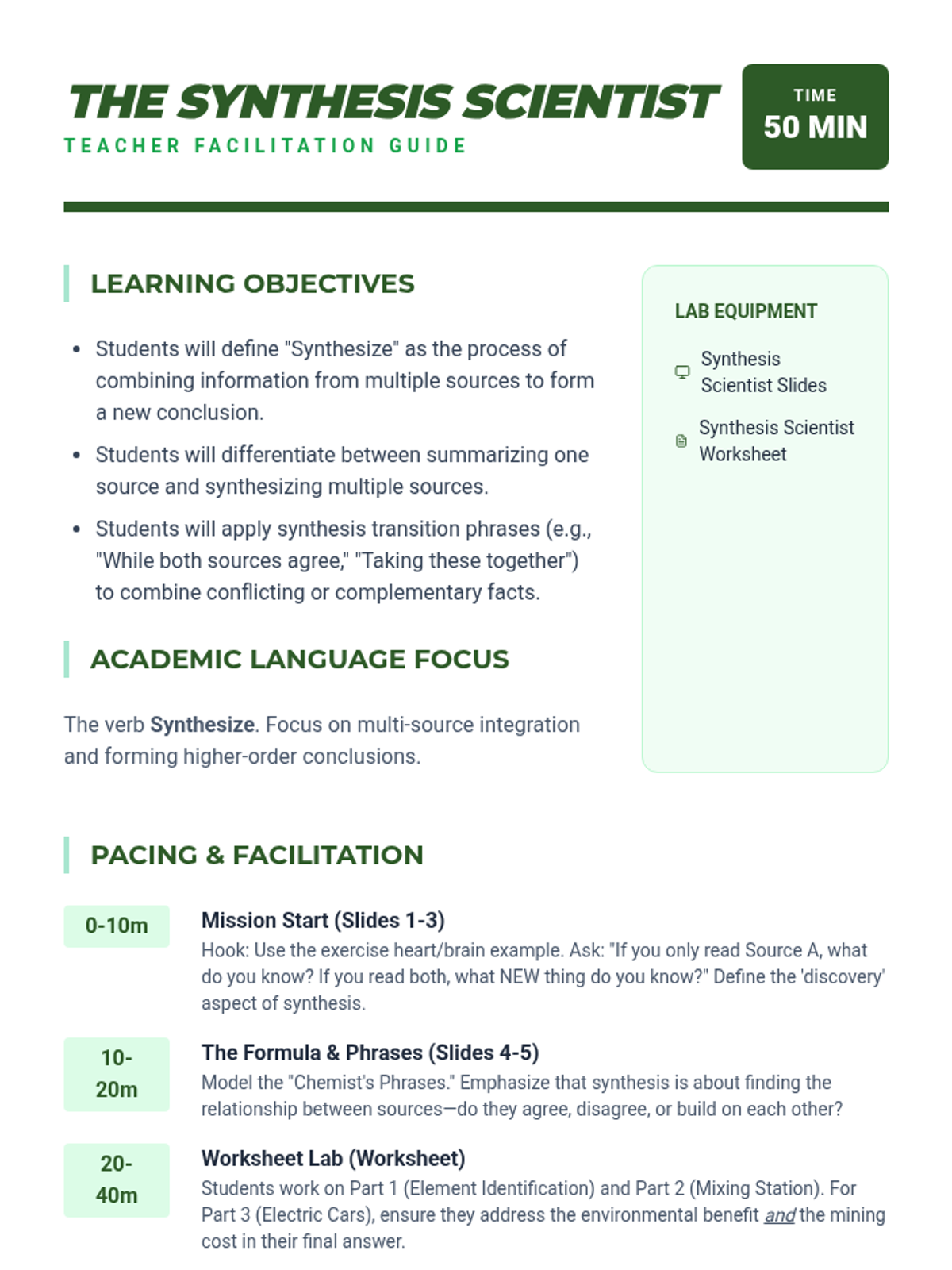
A 50-minute lesson on the academic action verb 'Synthesize.' Students learn to combine information from multiple sources to create a new, original conclusion using the 'Laboratory Mix' method.
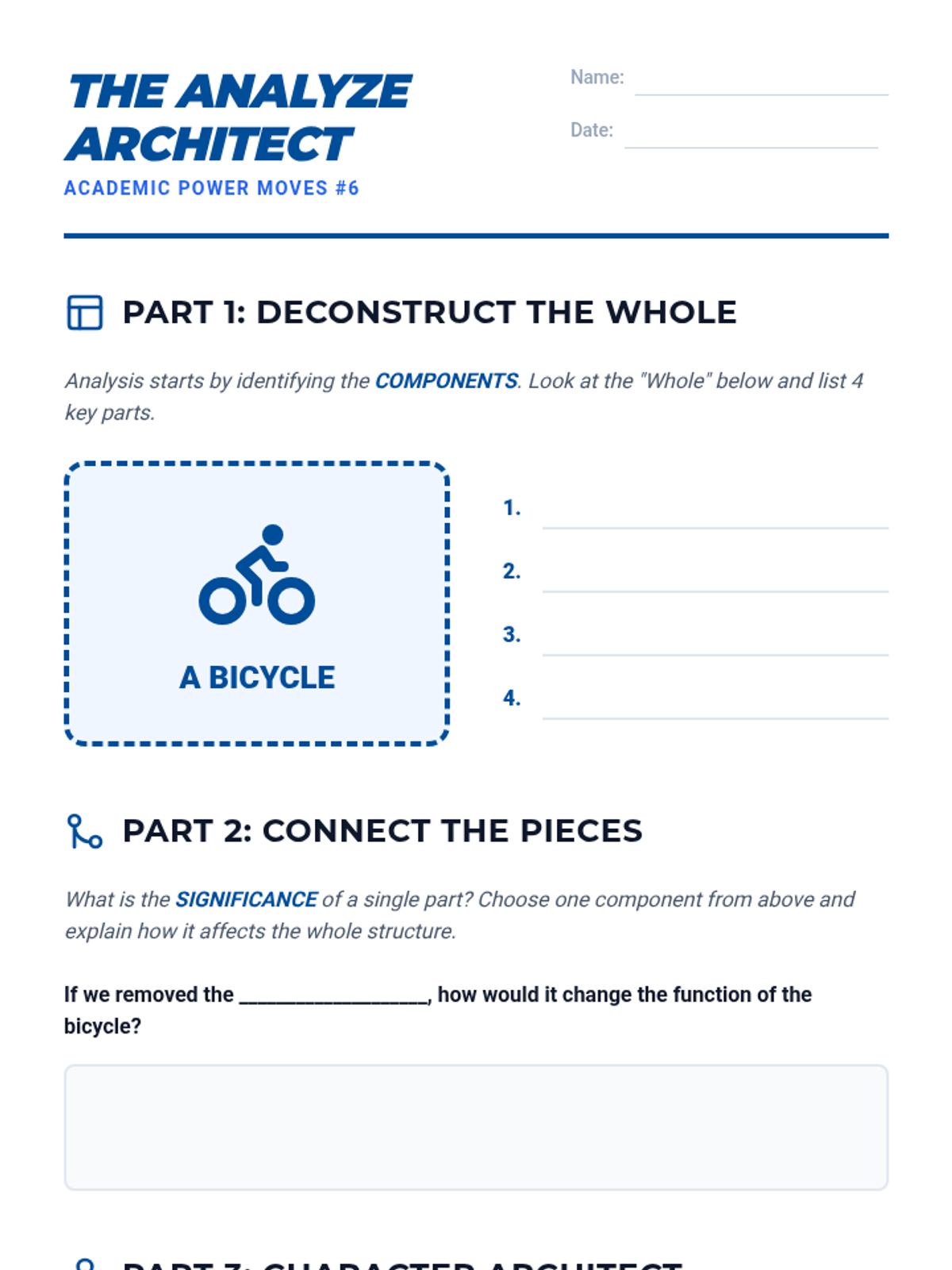
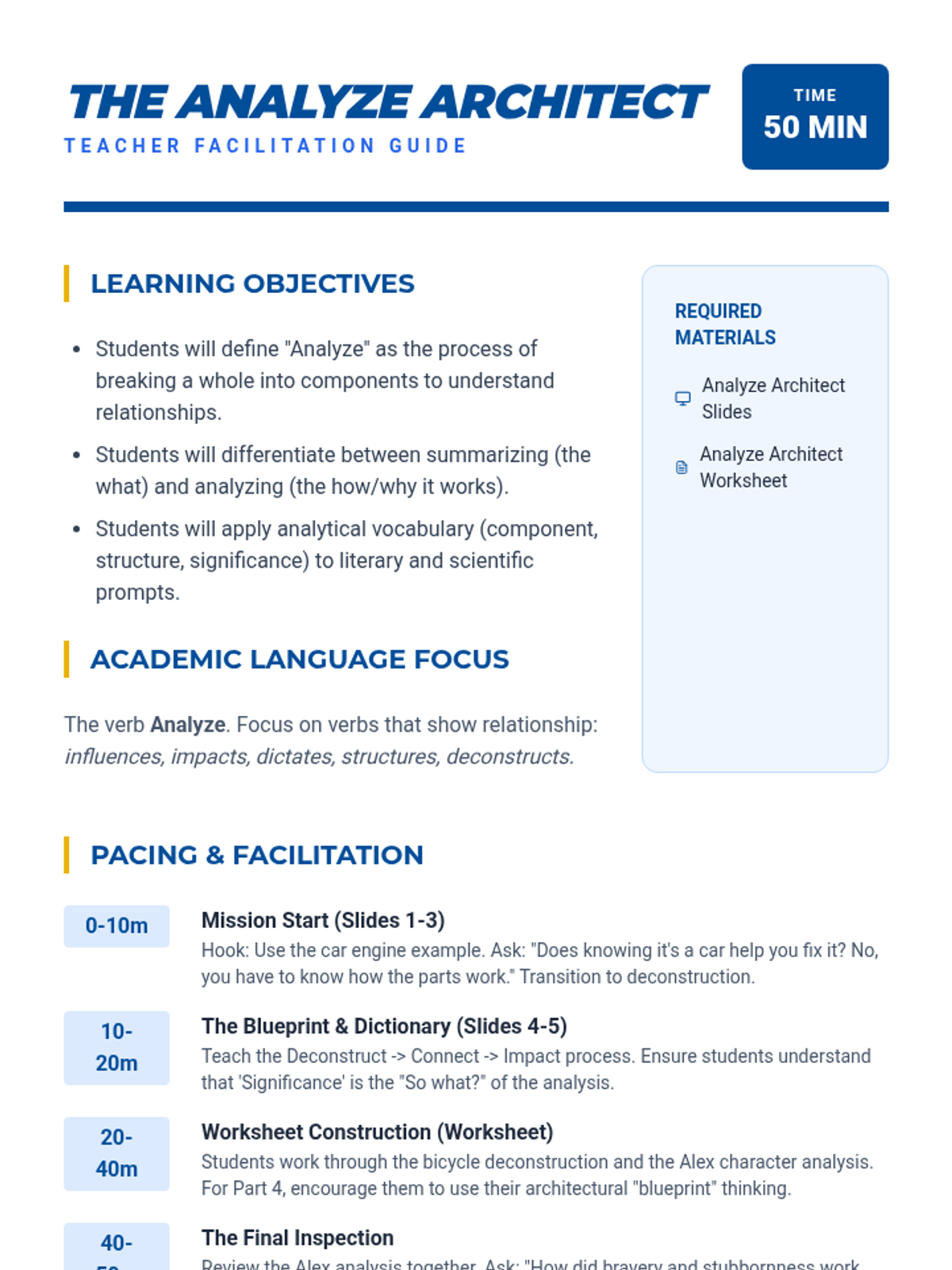
A 50-minute lesson on the academic action verb 'Analyze.' Students learn to break complex topics into smaller parts to understand how they work together using the 'Architect's Blueprint' method.
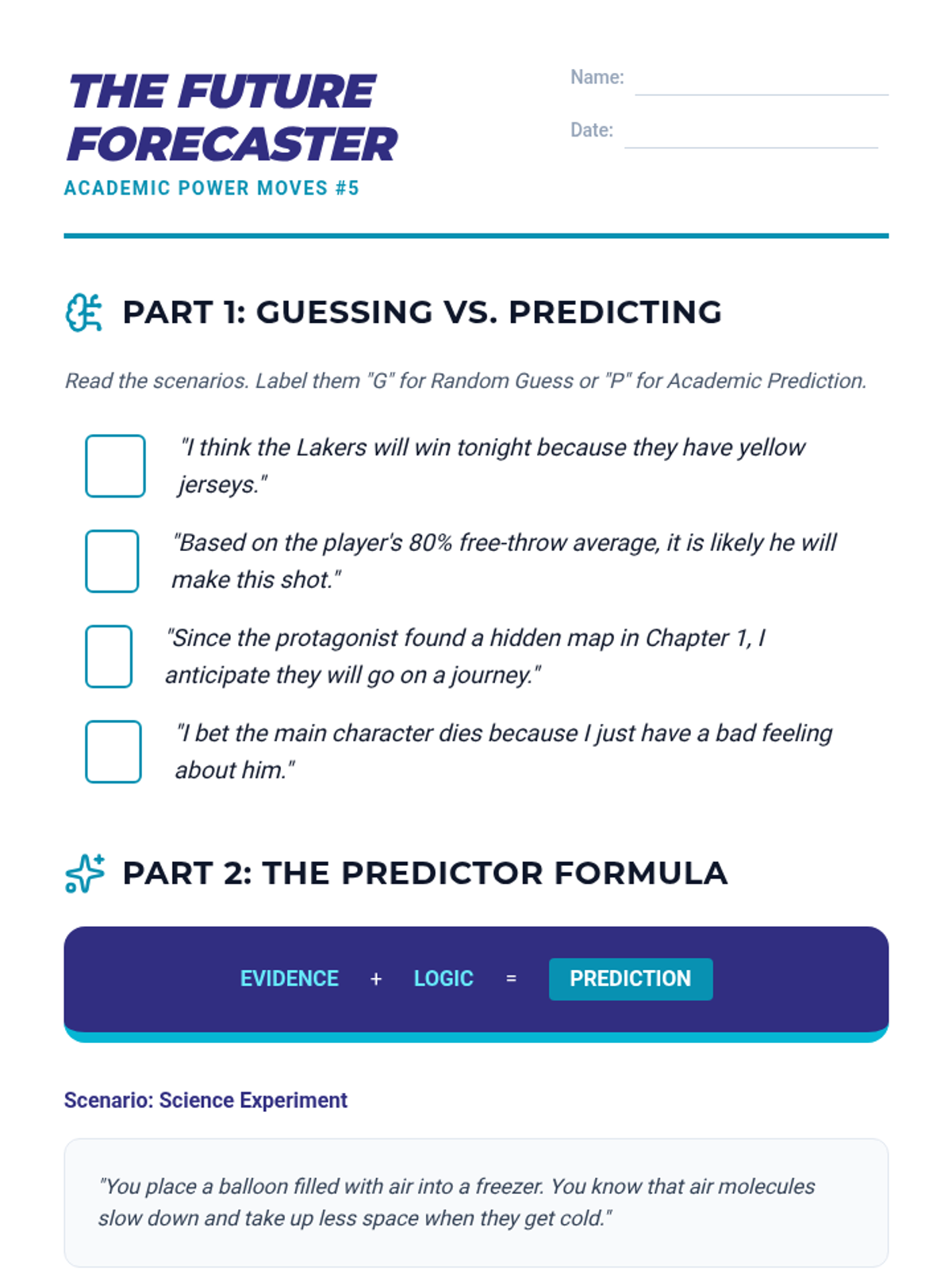
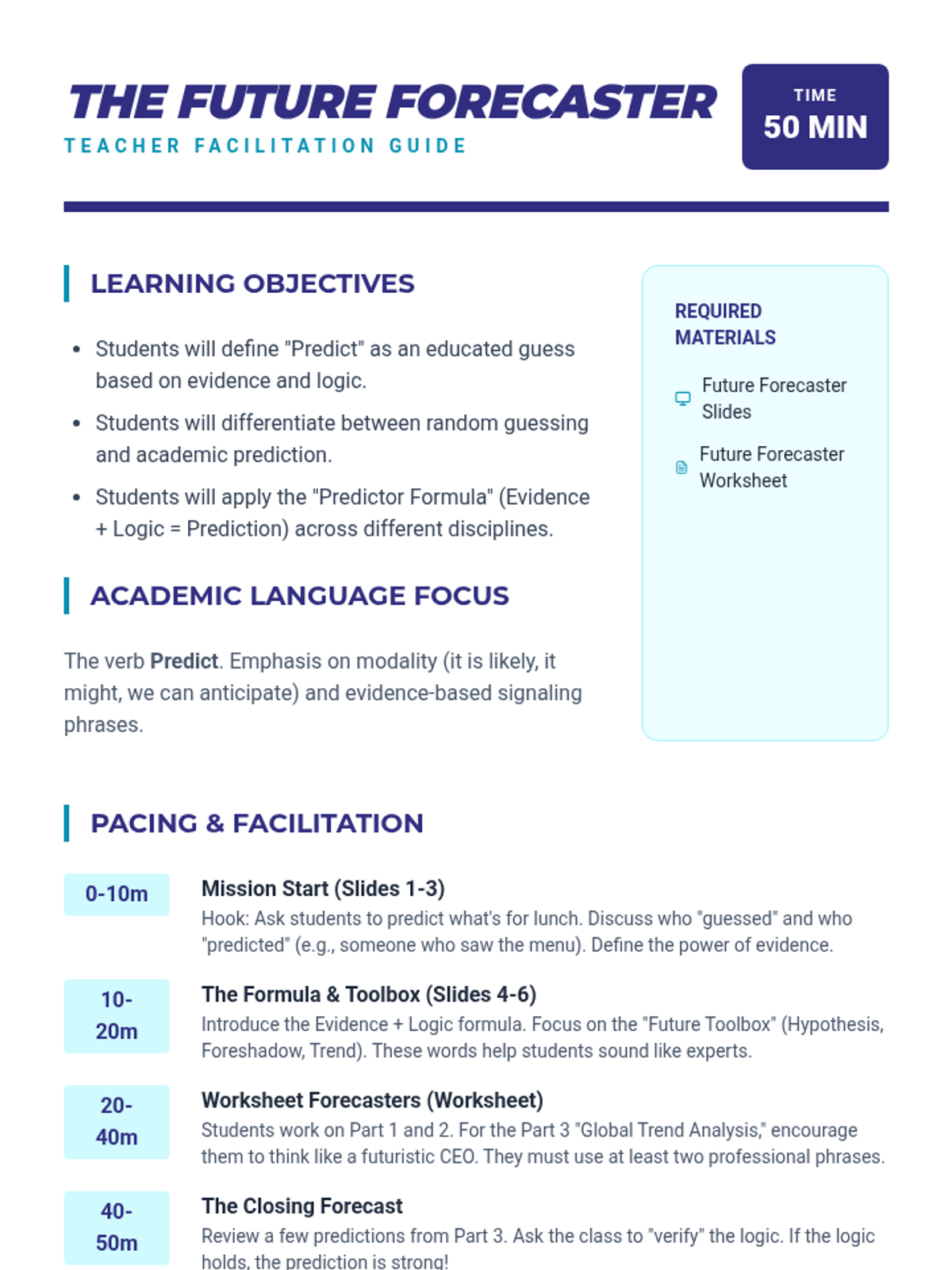
A 50-minute lesson on the academic action verb 'Predict.' Students learn to use evidence and logic to make educated guesses about future outcomes in various subjects.
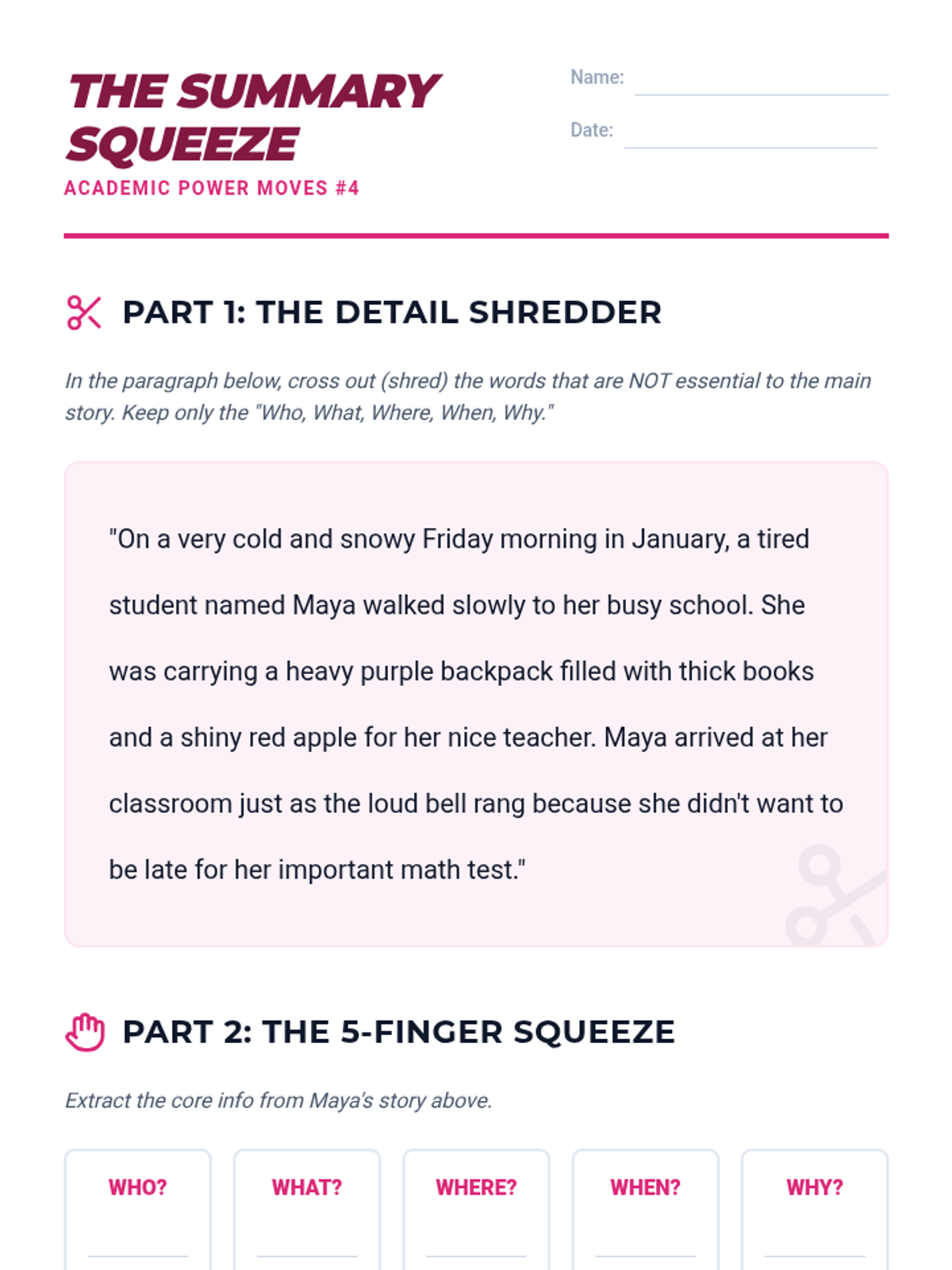
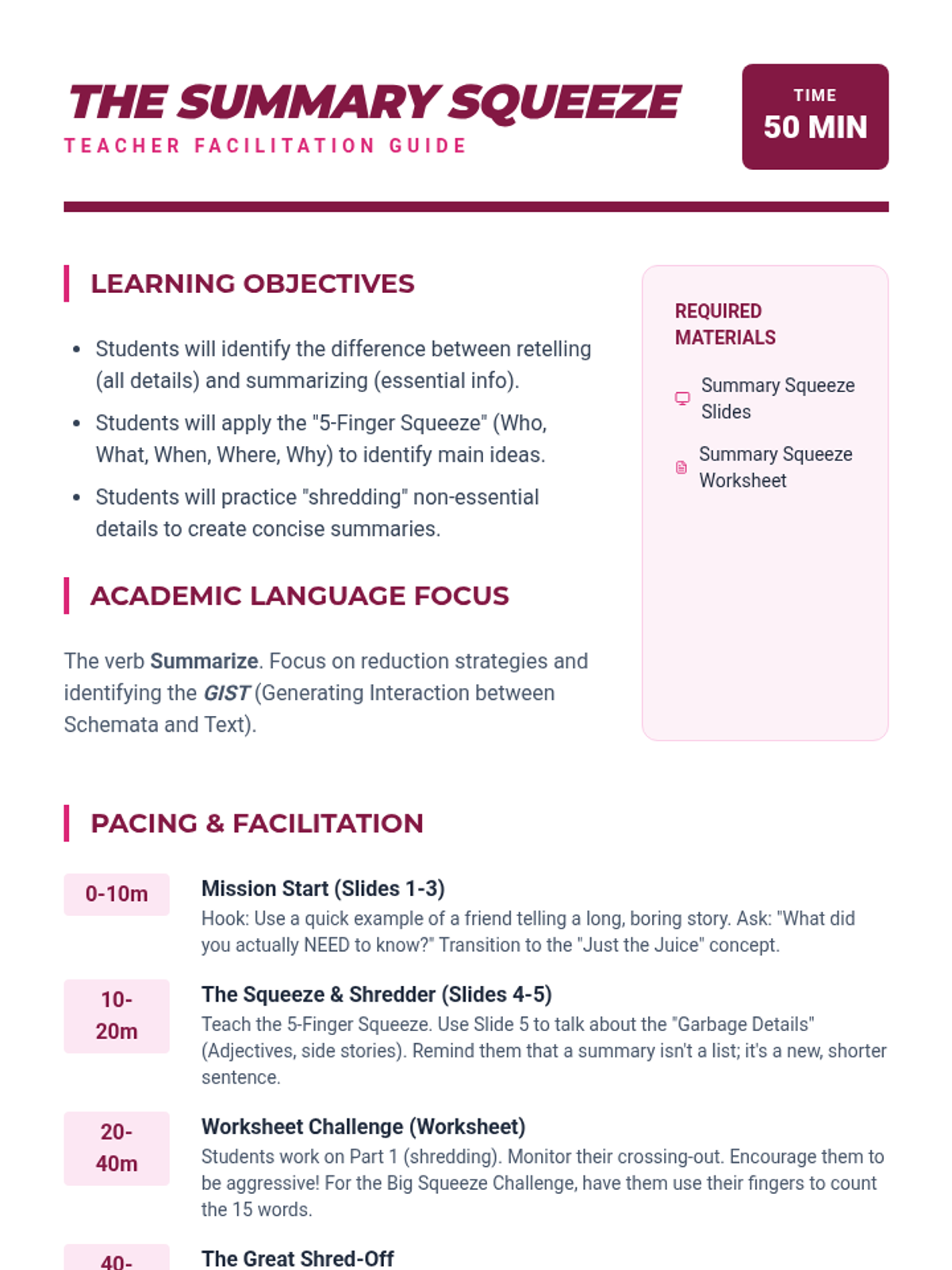
A 50-minute lesson on the academic action verb 'Summarize.' Students learn to identify main ideas and key details while removing unnecessary information using 'The Squeeze' method.
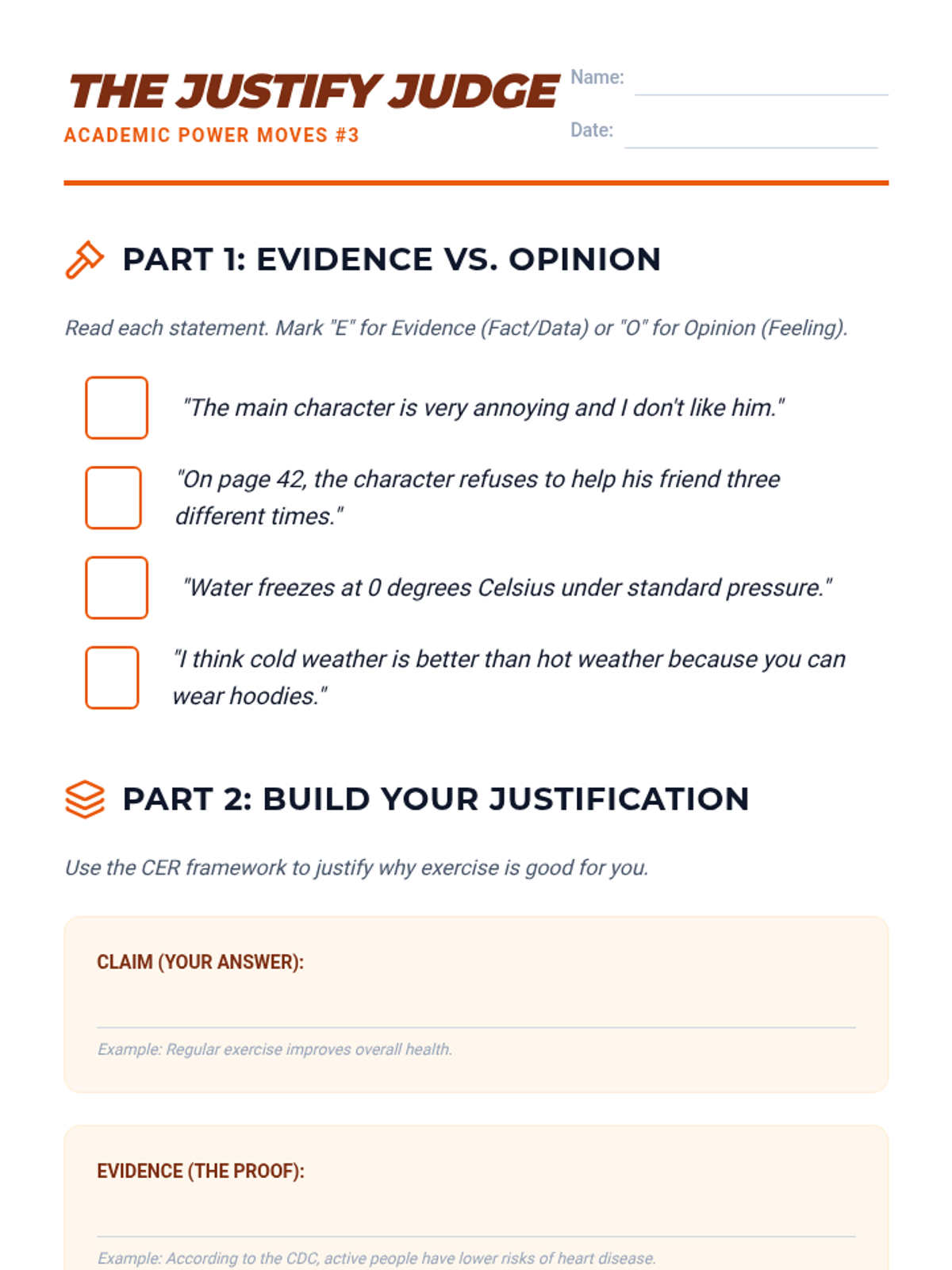
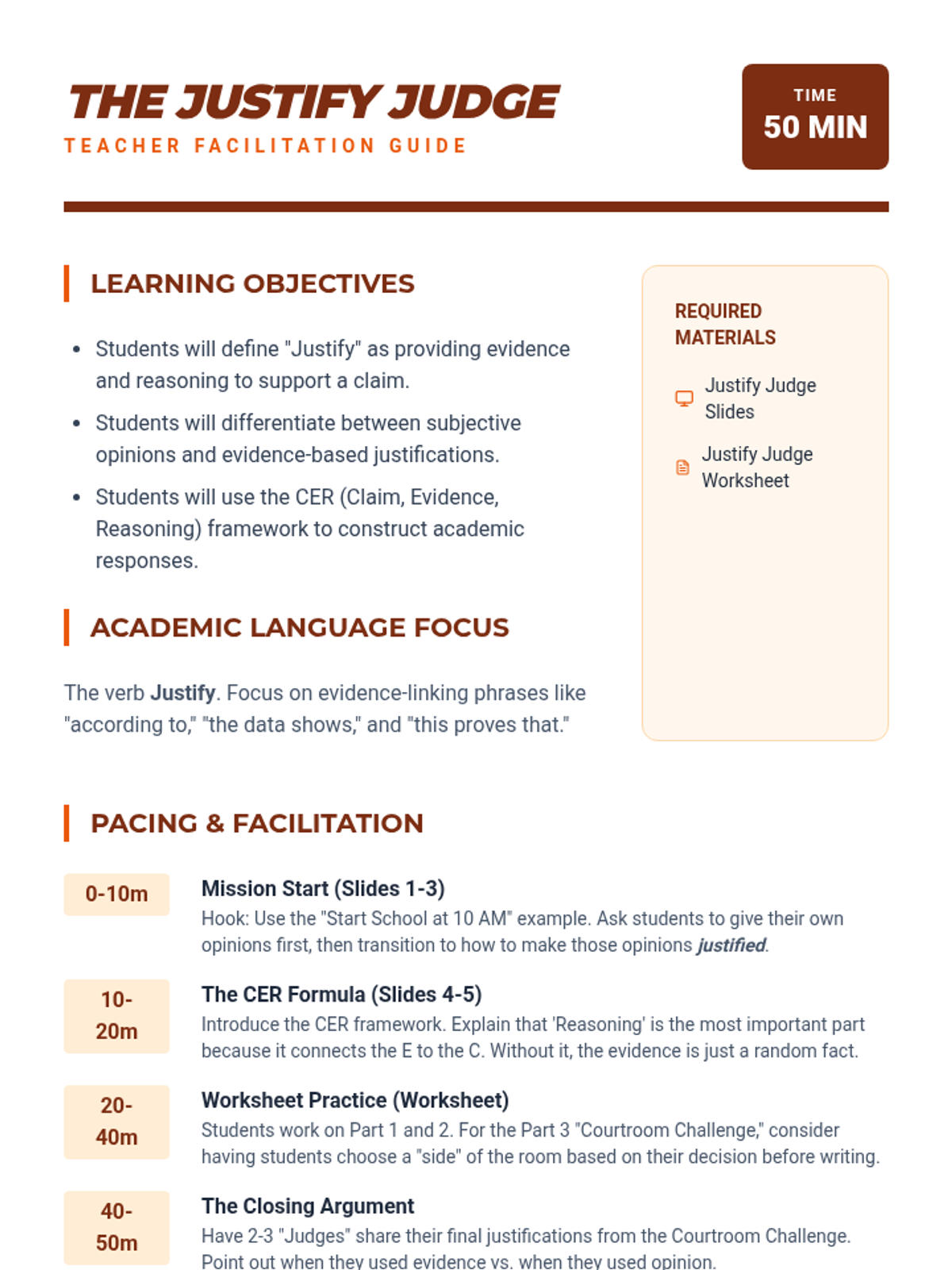
A 50-minute lesson on the academic action verb 'Justify.' Students learn to support their claims with evidence and reasoning using the 'Claim-Evidence-Reasoning' (CER) framework.
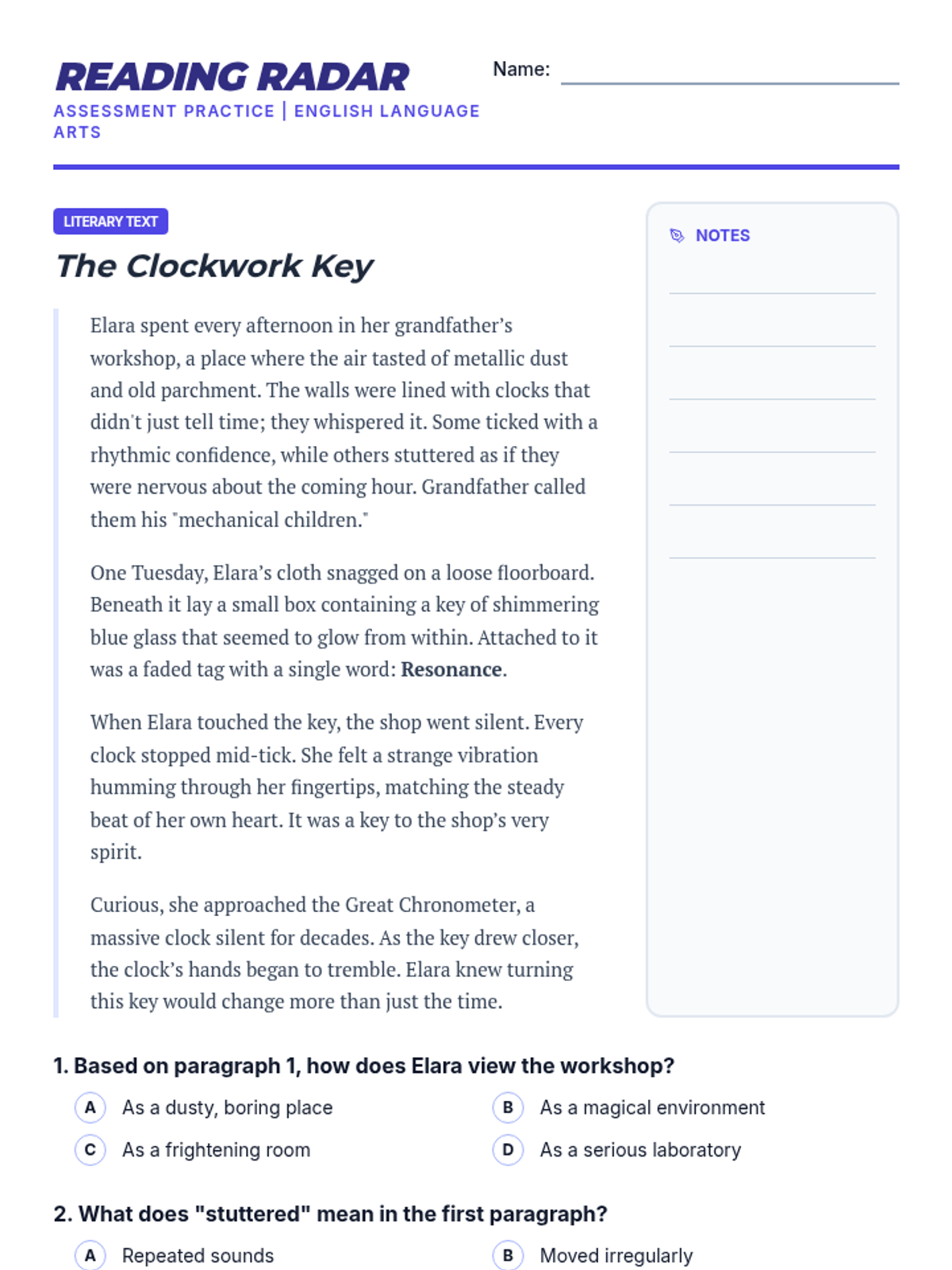
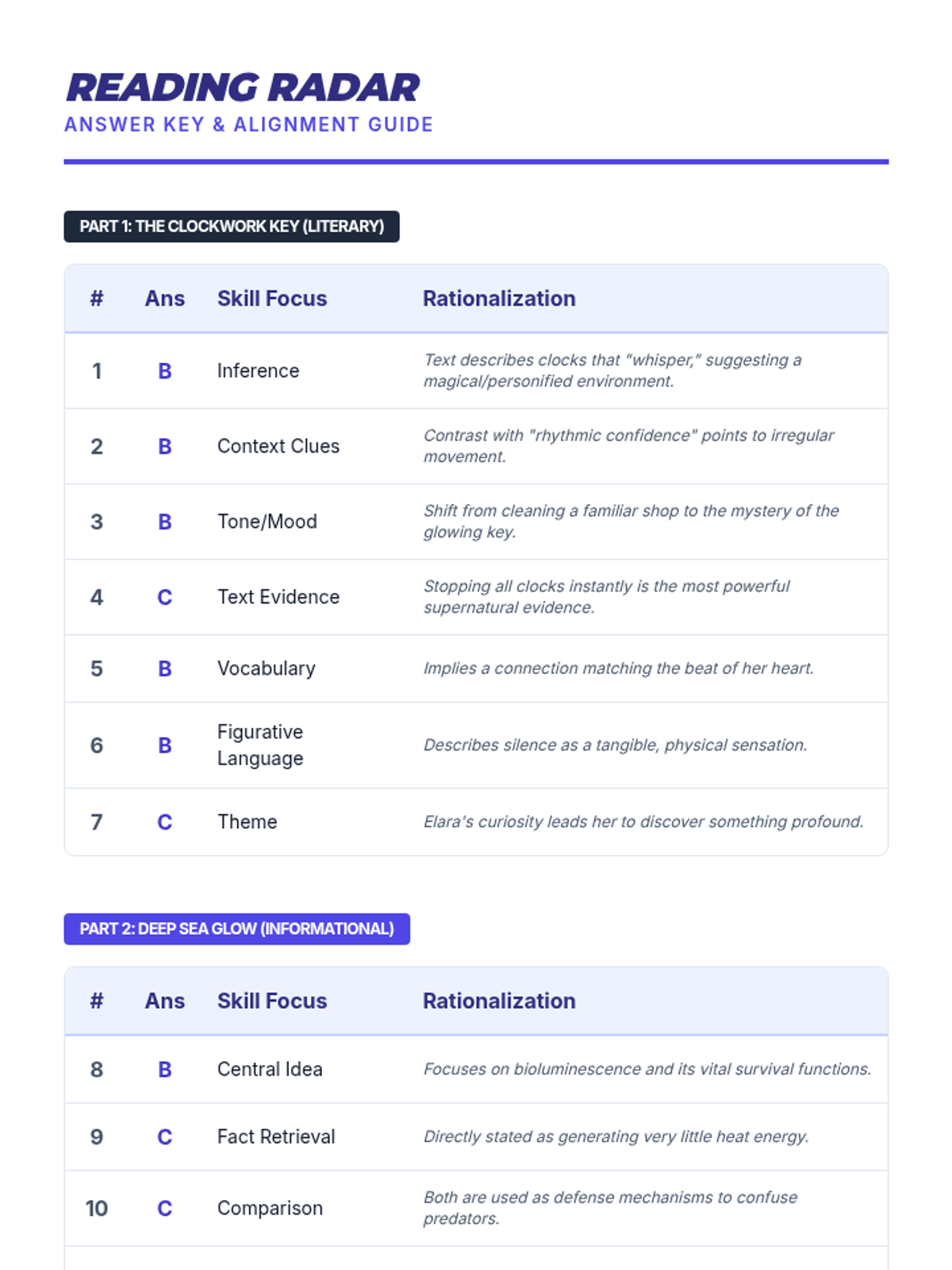
A comprehensive practice packet designed to simulate the English/Reading MAP test, featuring fiction and nonfiction passages with 20 standards-aligned questions.
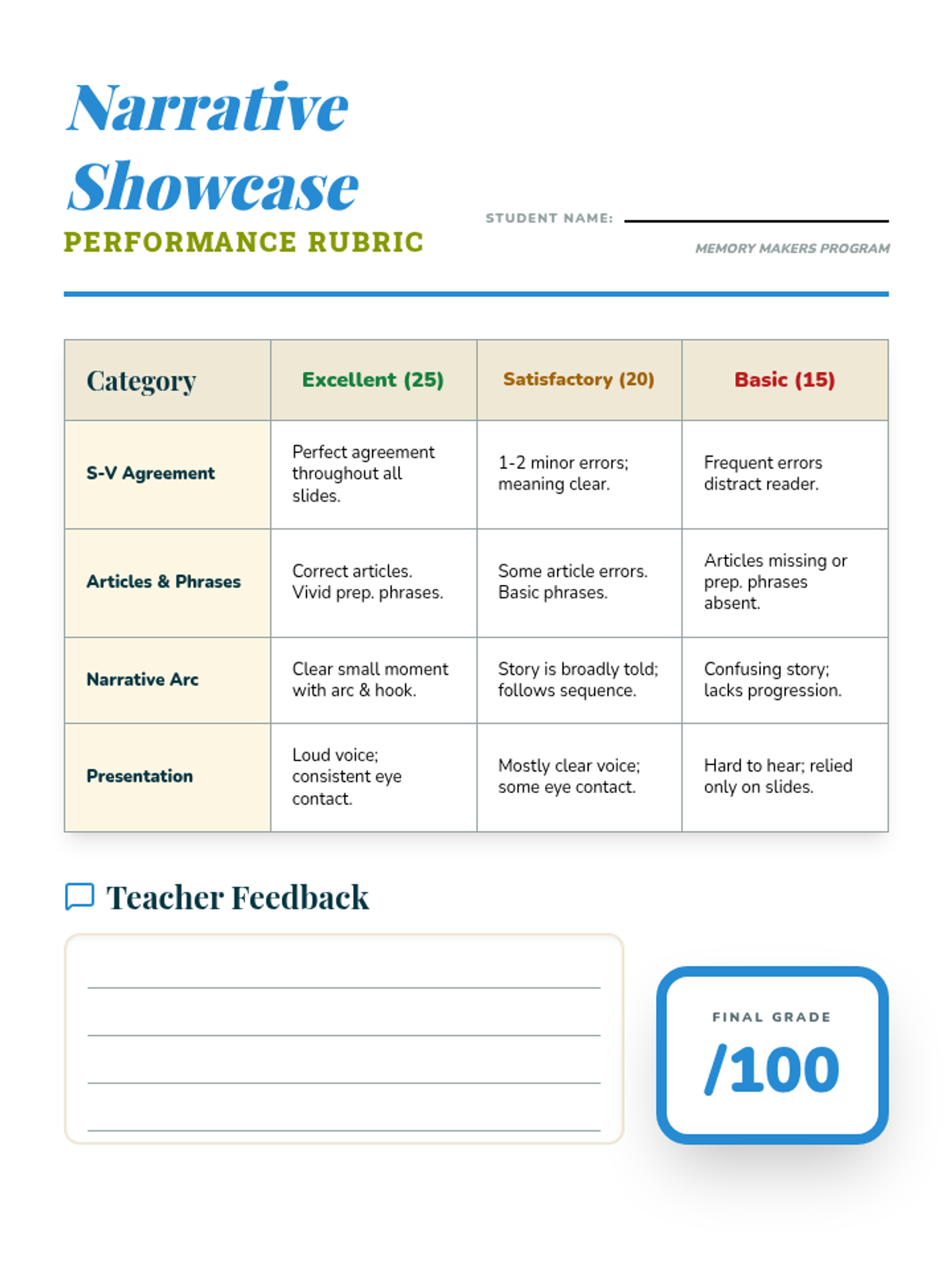
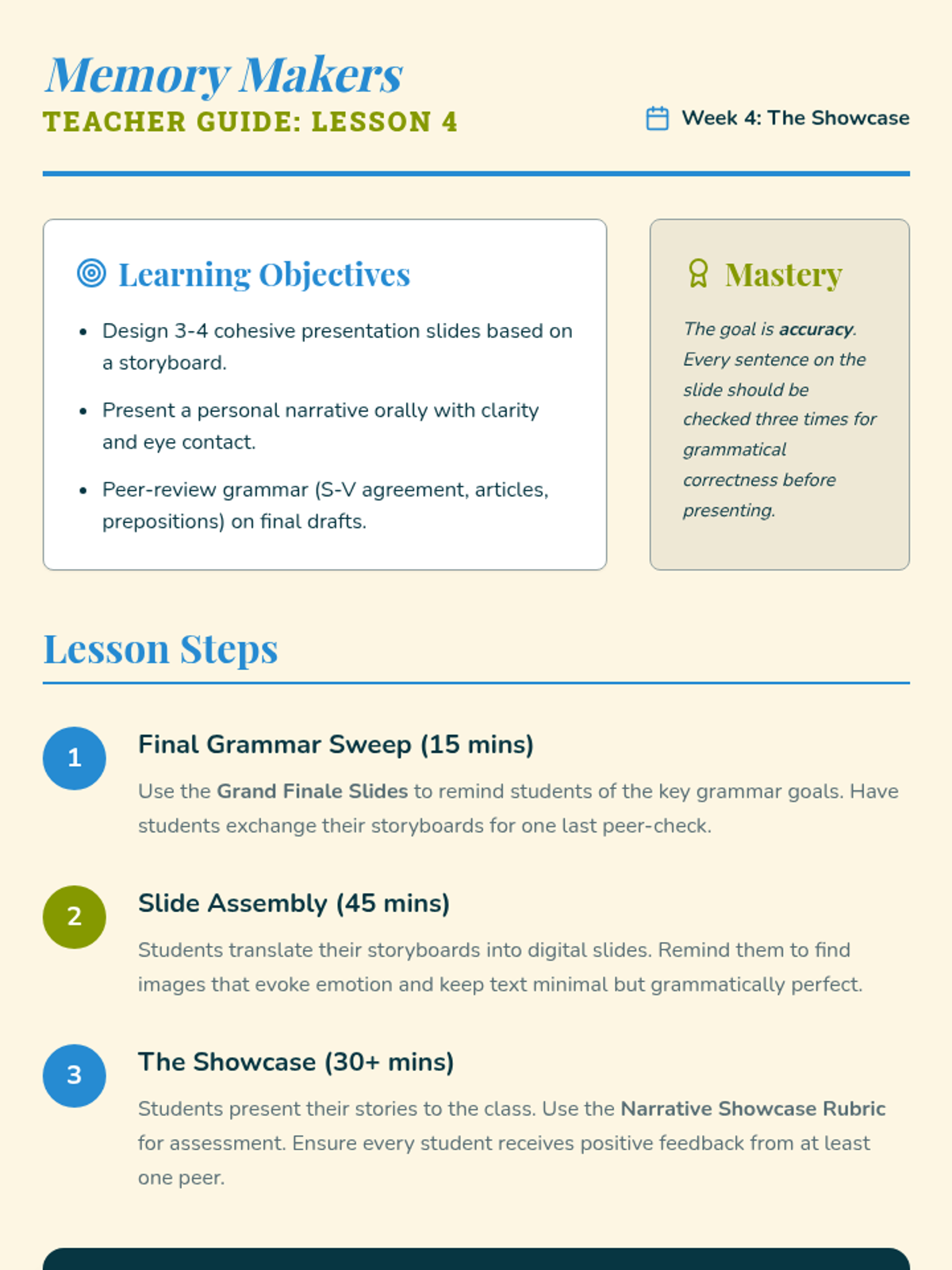
Prepares students for their final oral presentation, focusing on slide design, public speaking, and final grammar checks.
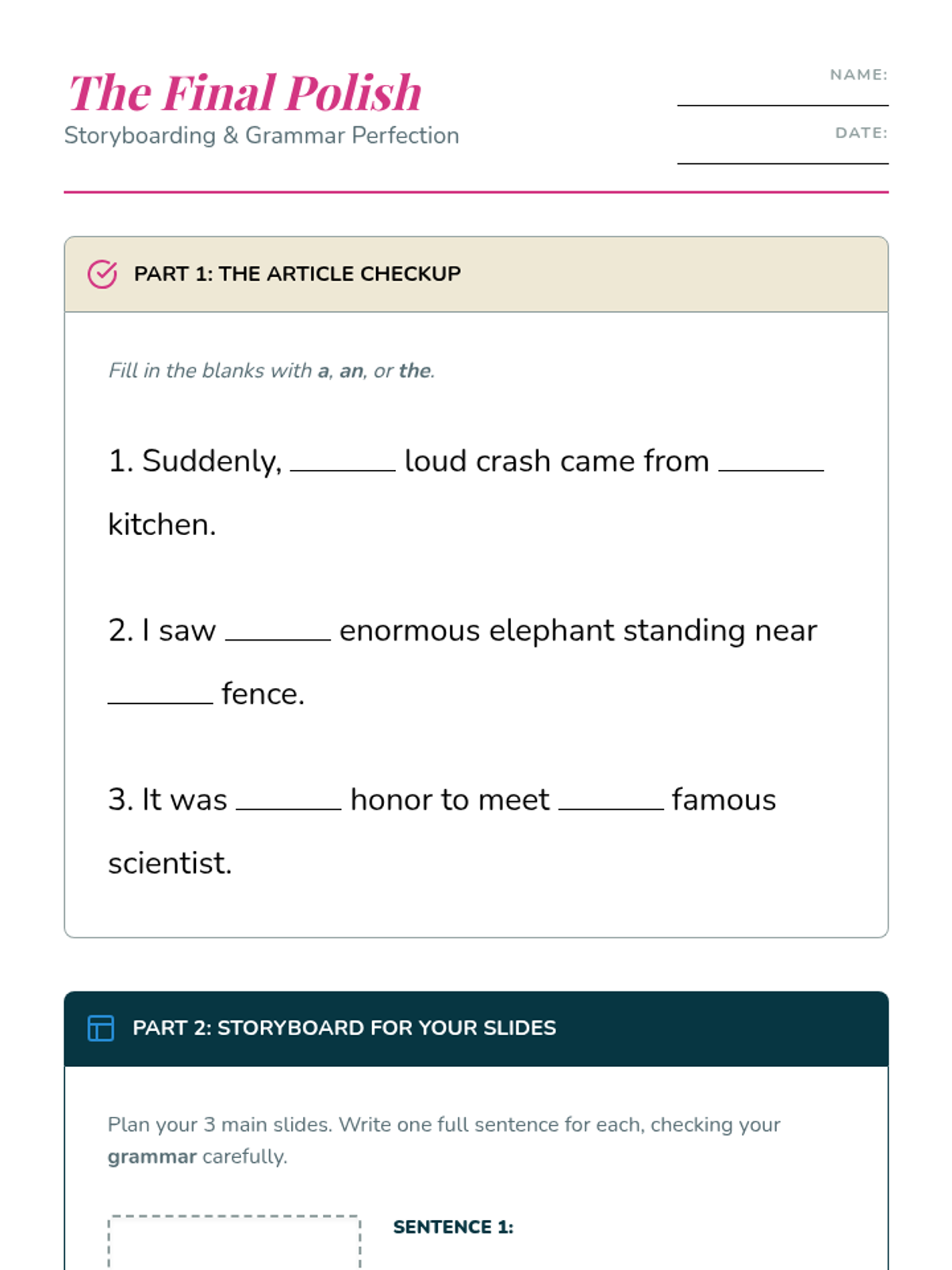
Refines the narrative structure and focuses on the precise use of articles (a, an, the) for clarity and flow.
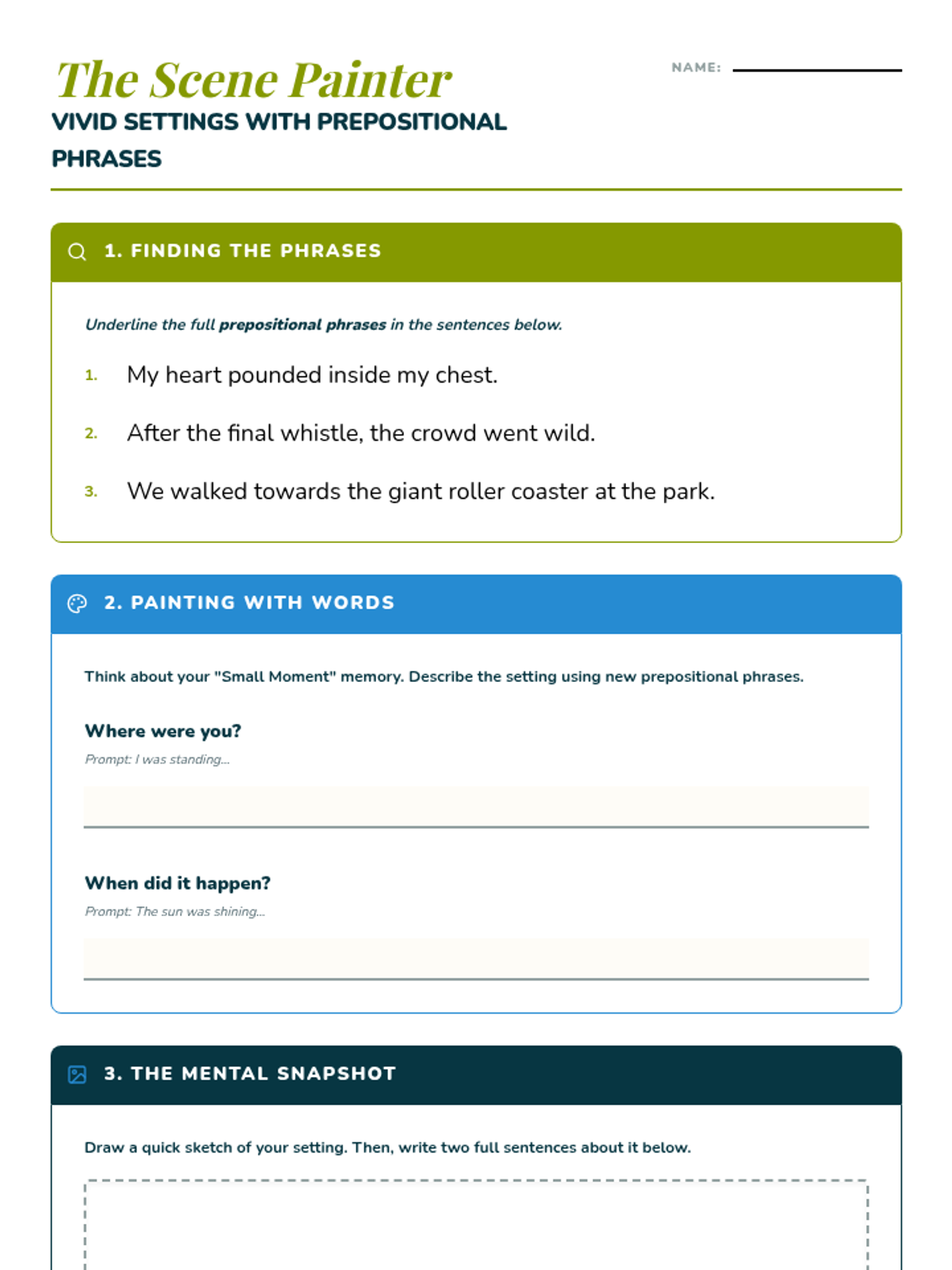
Explores setting and descriptive detail using prepositional phrases to ground narratives in a specific time and place.
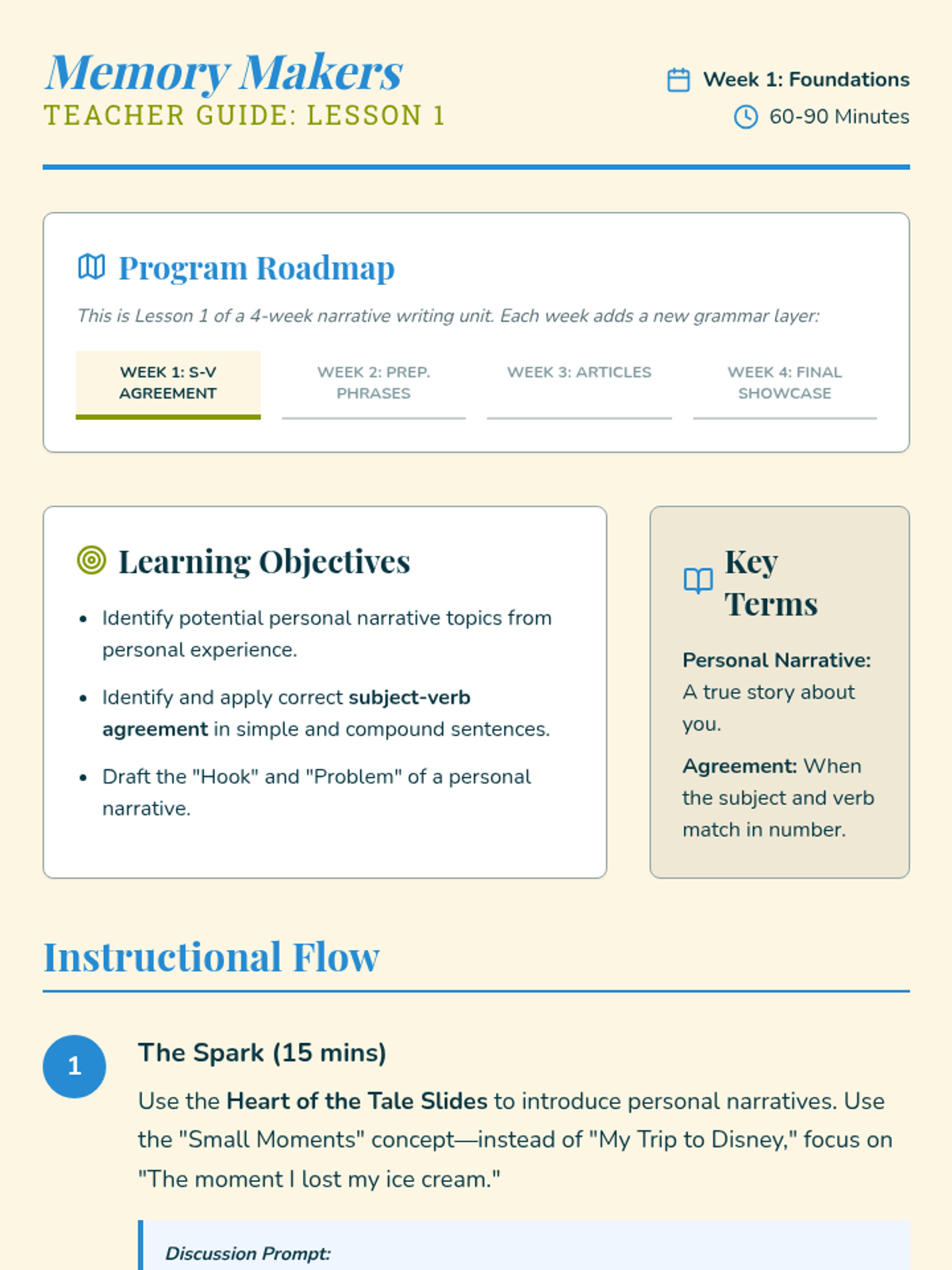
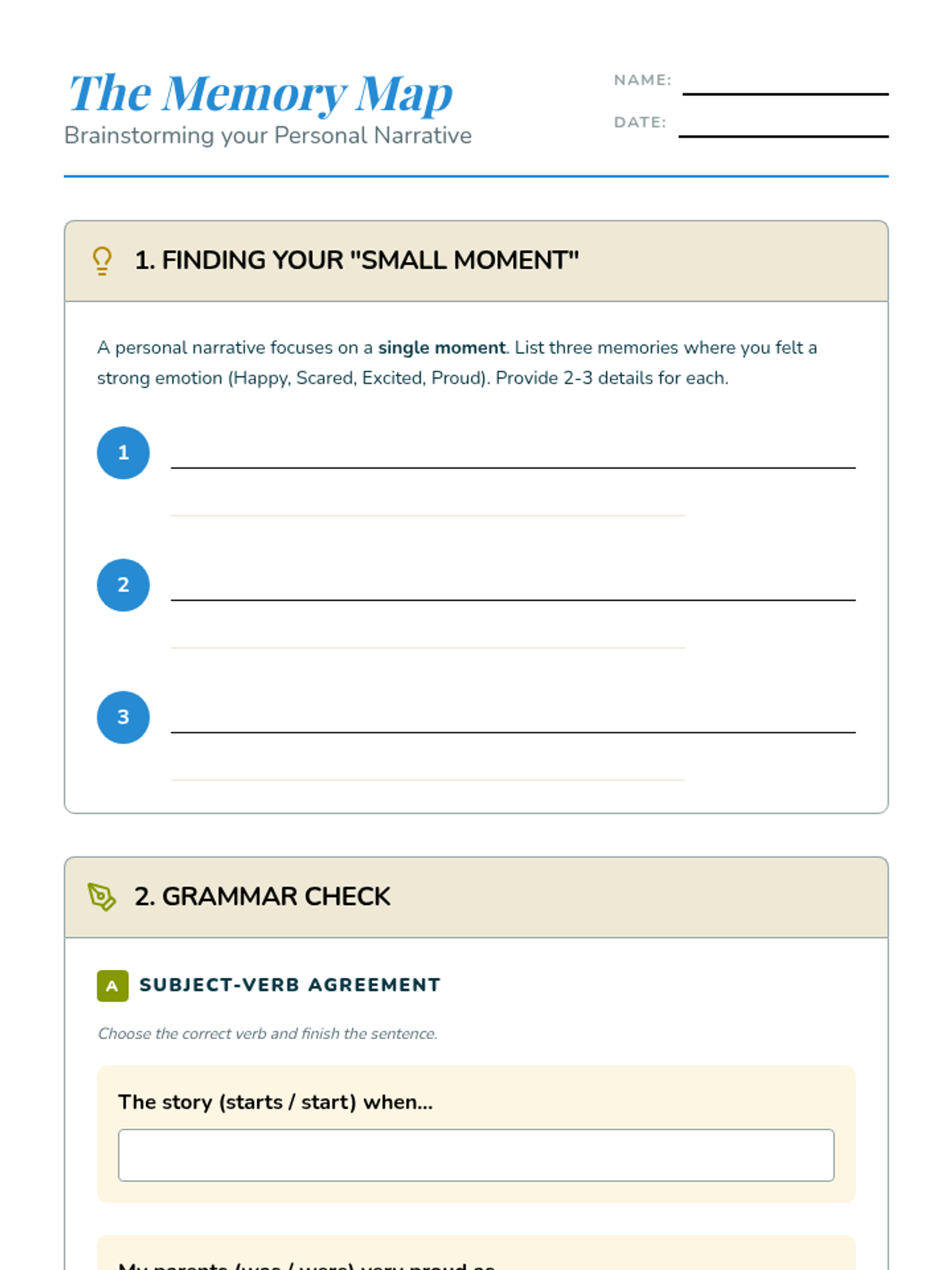
Focuses on identifying personal narrative topics and mastering subject-verb agreement to ensure clear story foundations.
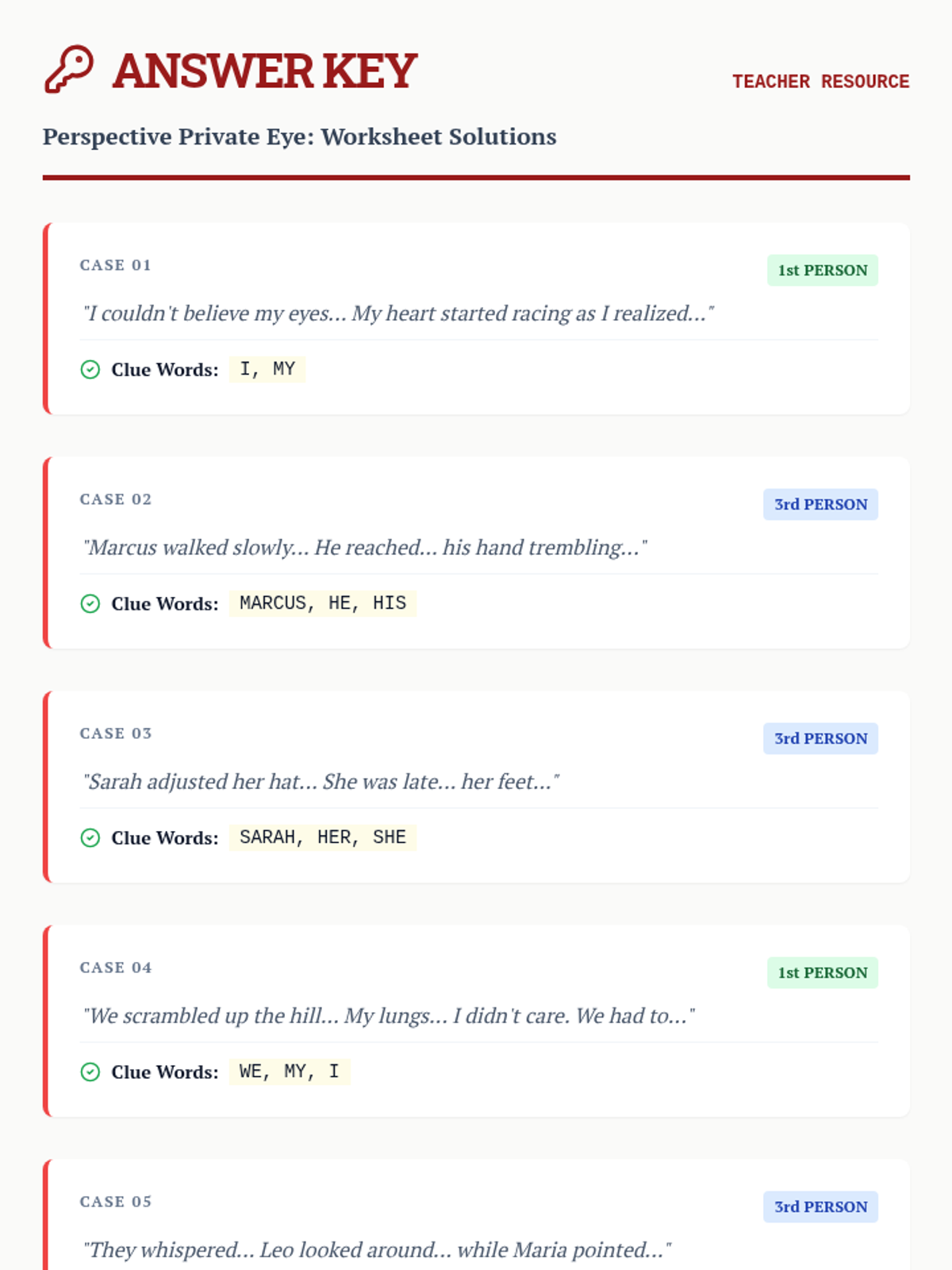
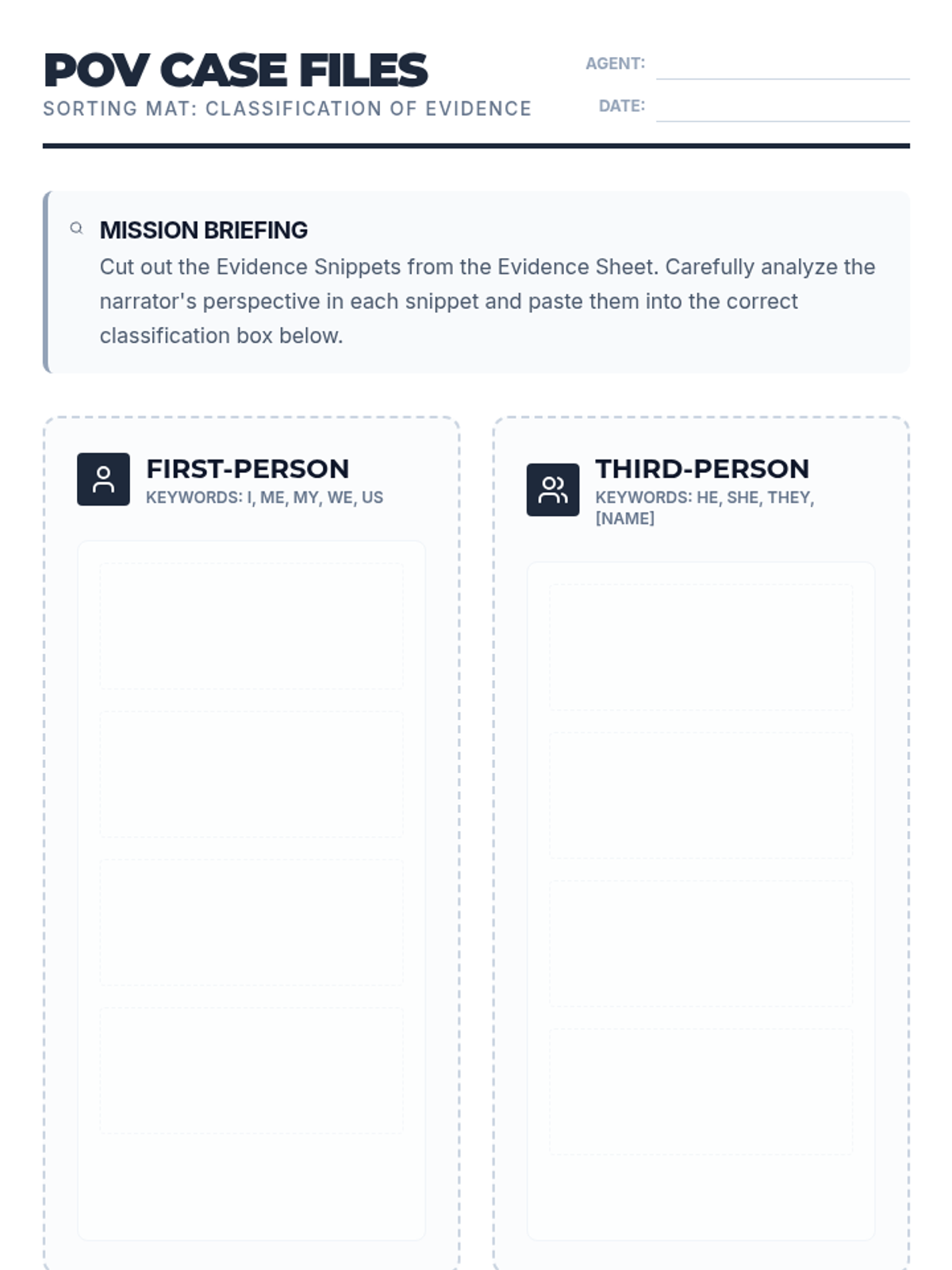
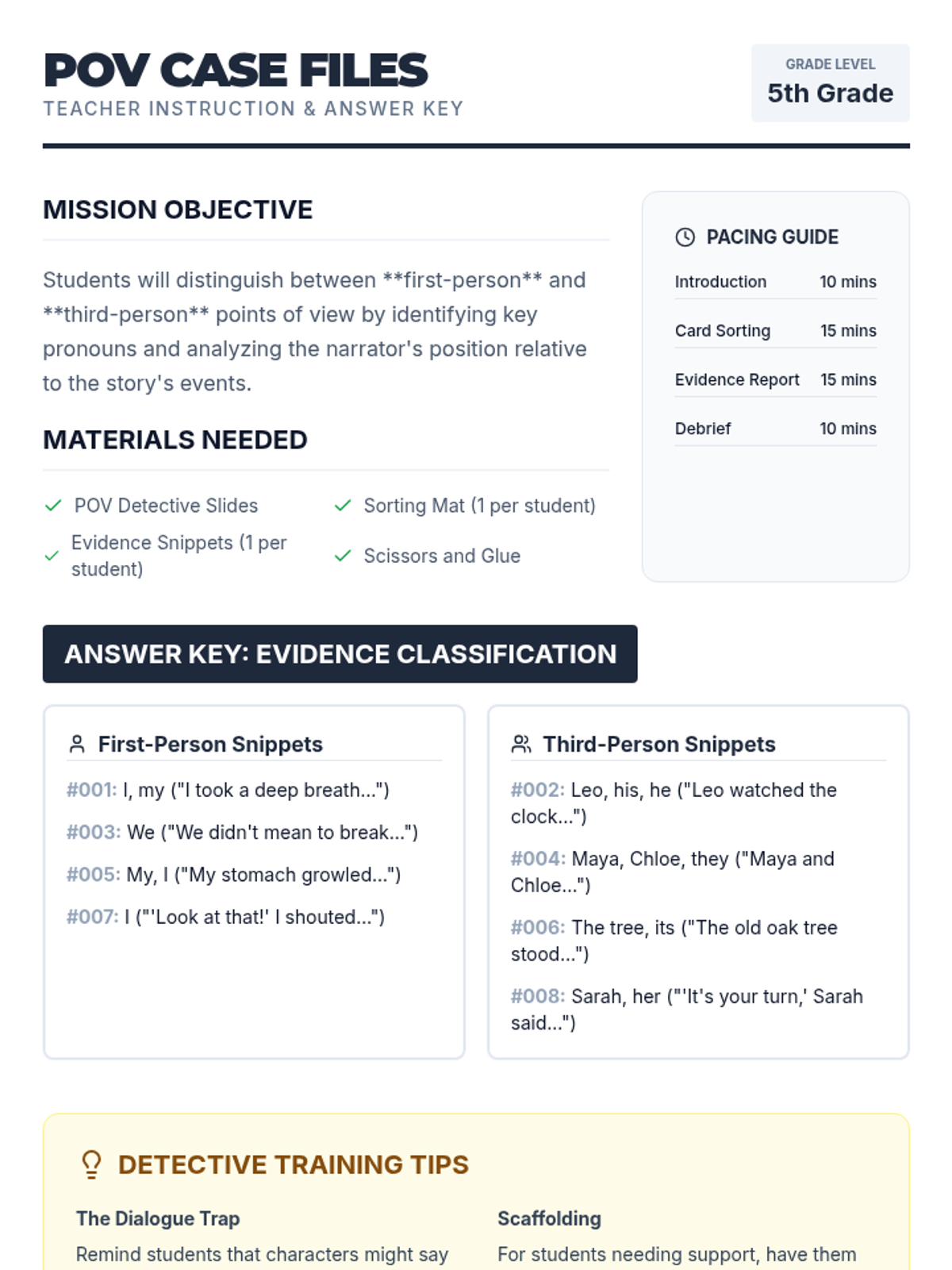
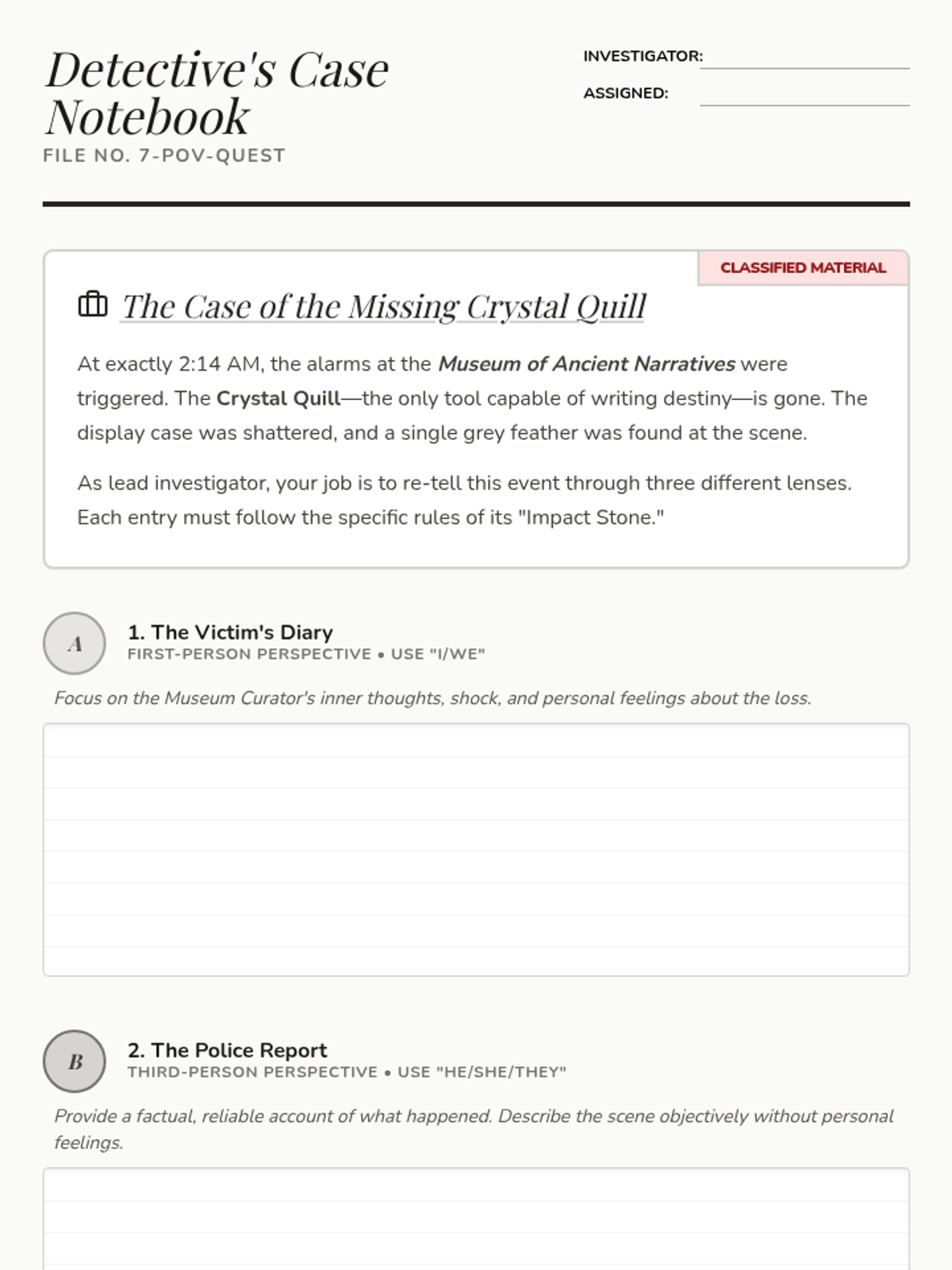
Students become POV Detectives to identify first-person and third-person points of view using evidence-based sorting and analysis.
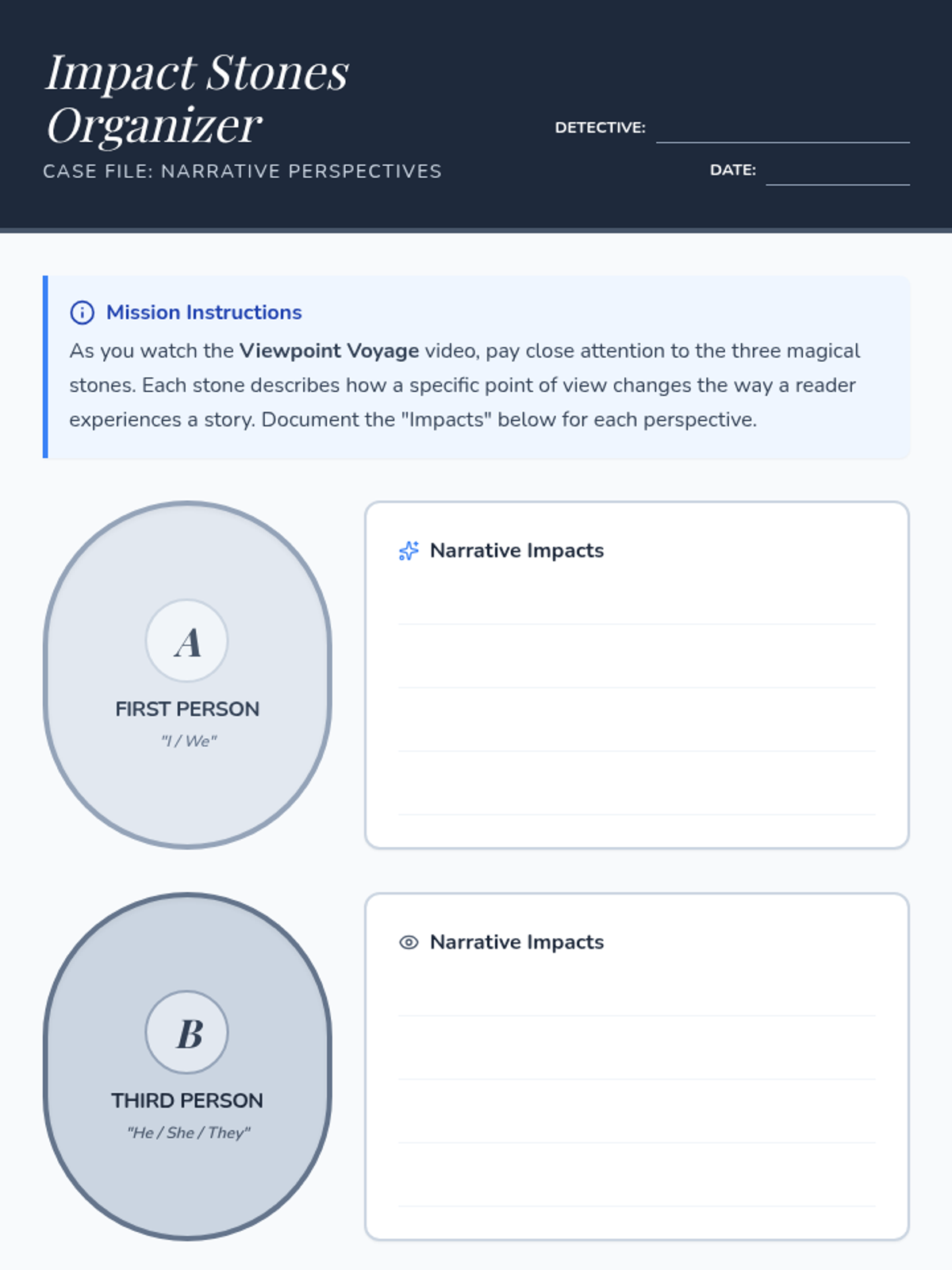
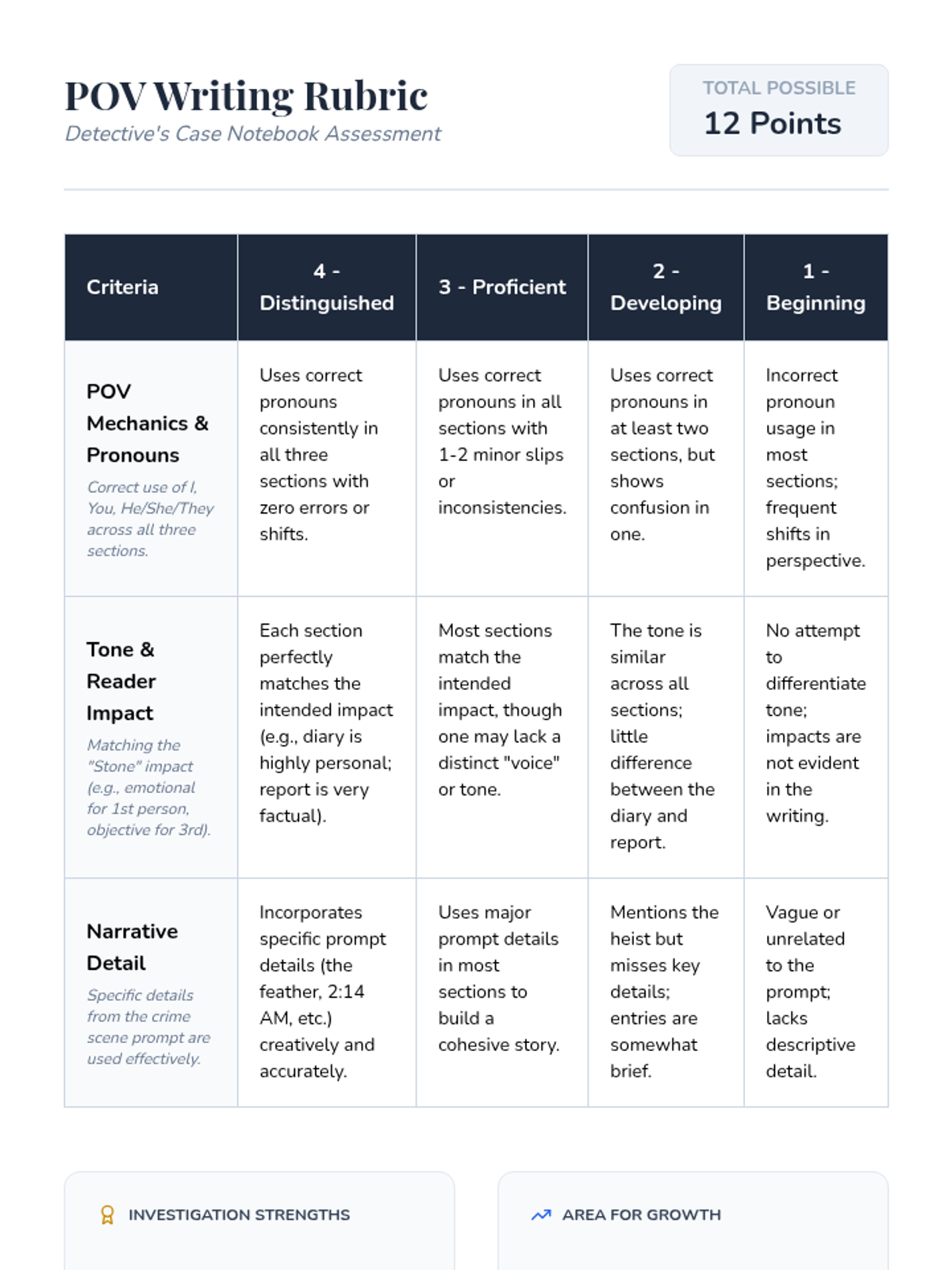
Students analyze the impact of first, second, and third-person points of view using the 'Impact Stones' framework from the Viewpoint Voyage video, culminating in a creative writing detective activity.
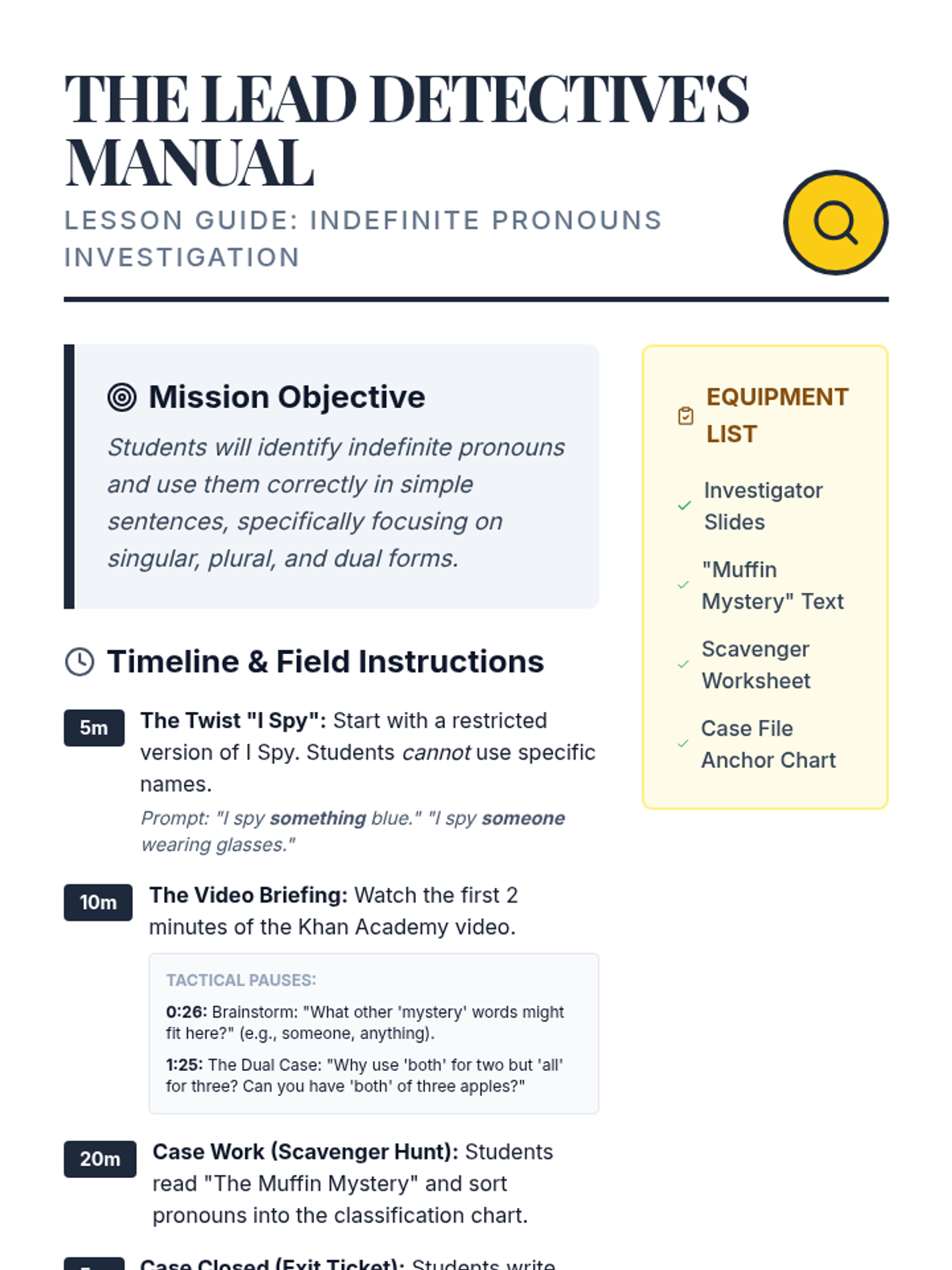
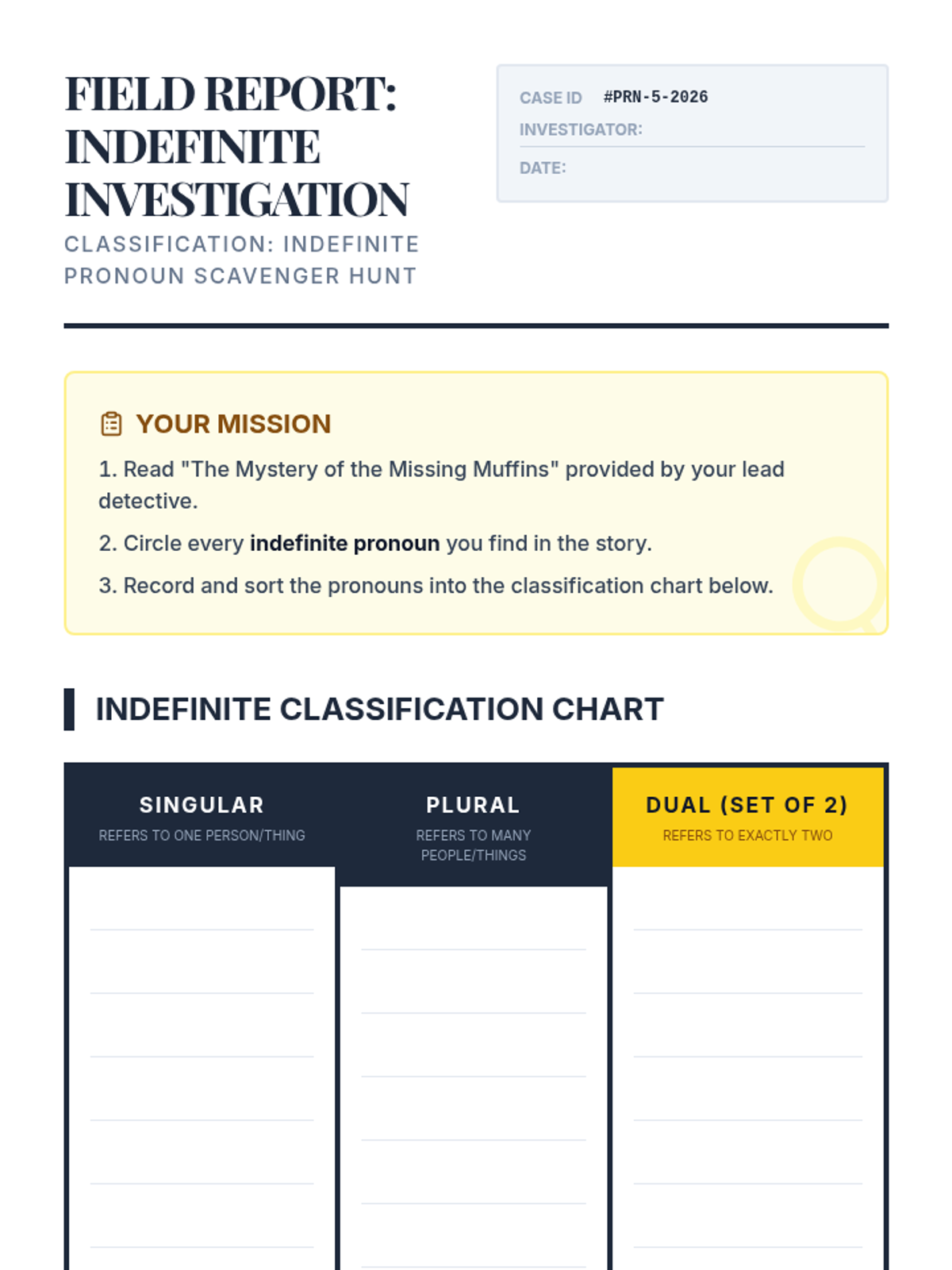
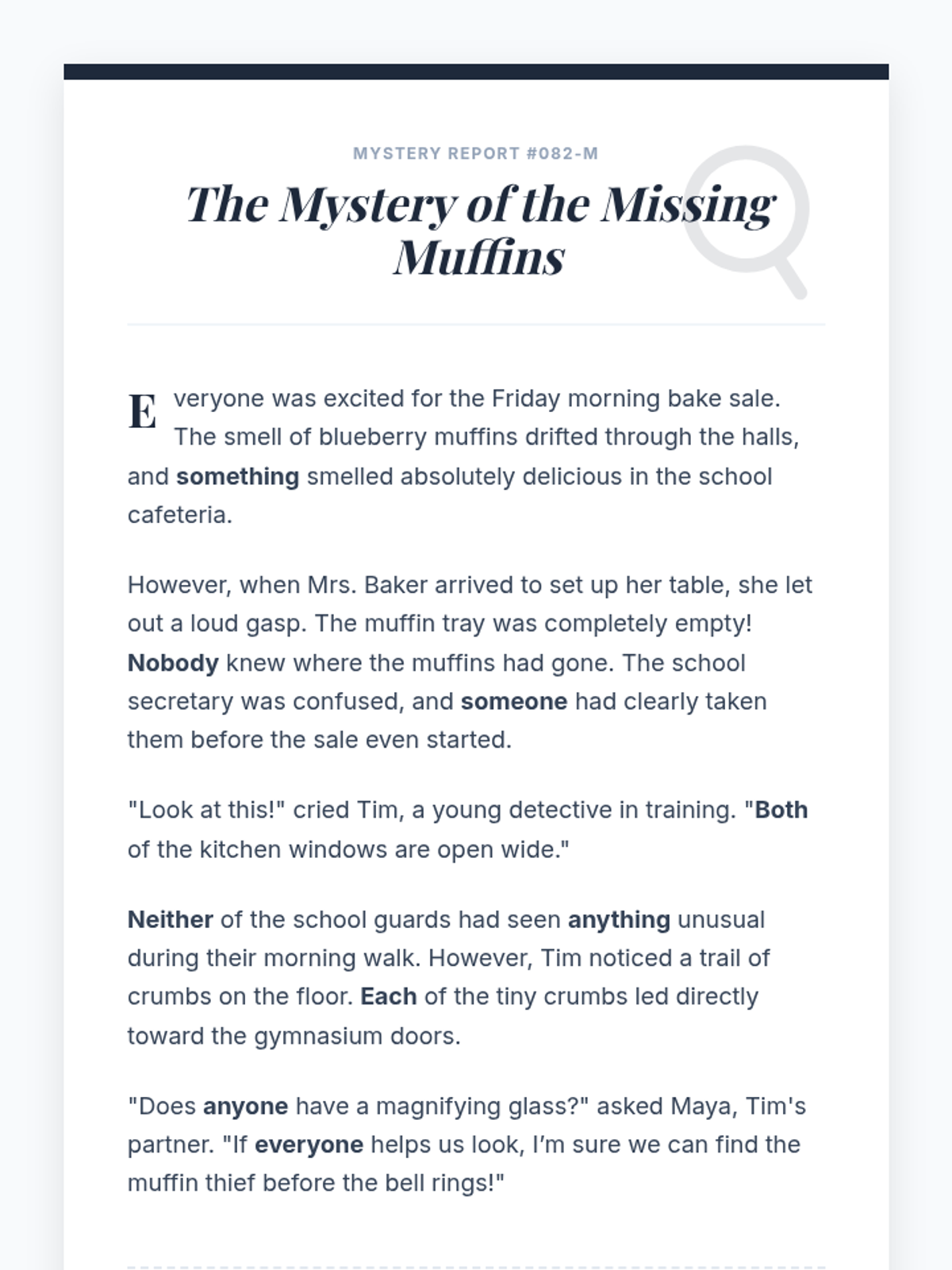
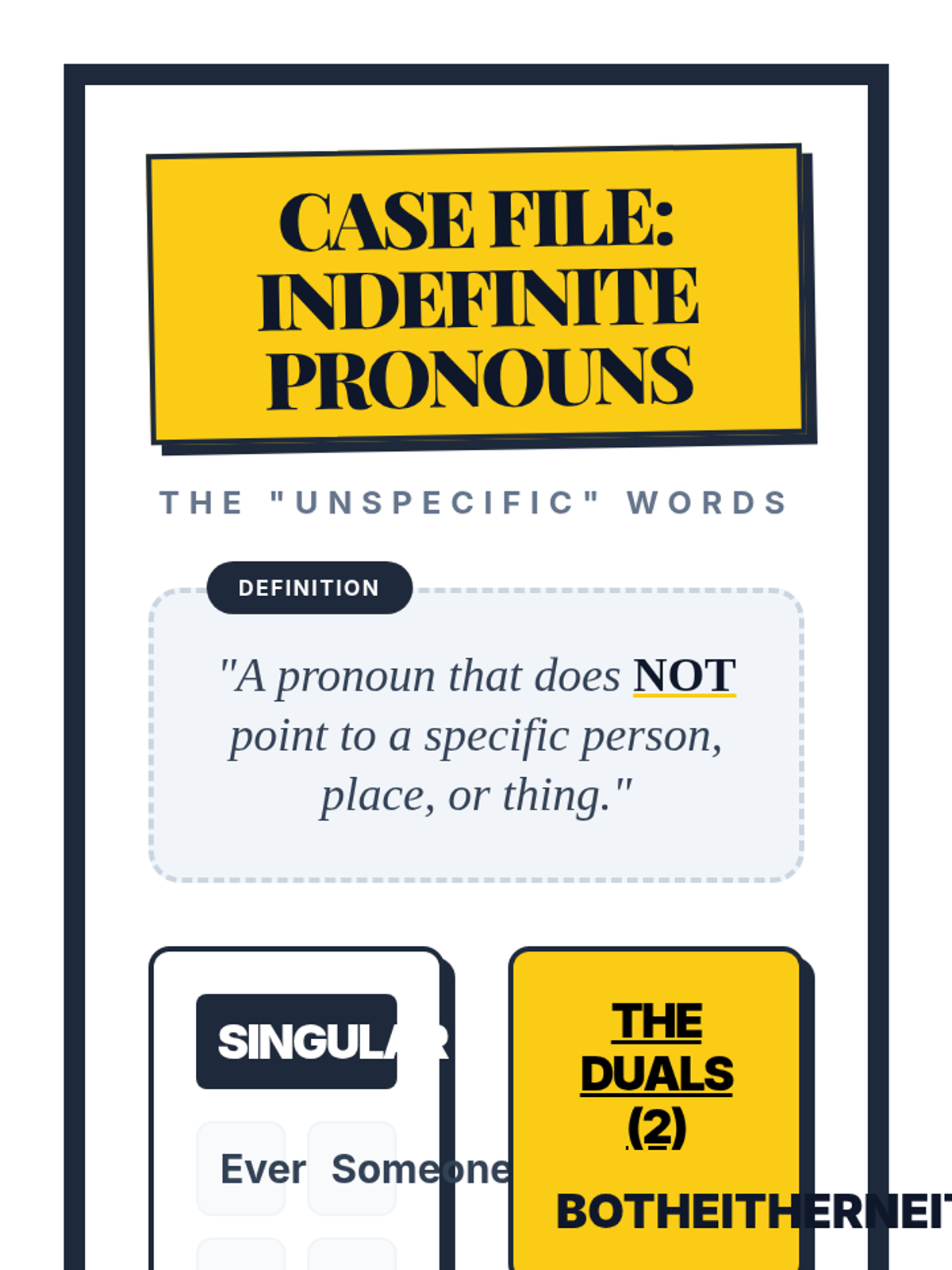
A detective-themed lesson where students investigate indefinite pronouns using video analysis, a scavenger hunt, and creative writing. Students will learn to identify and use pronouns like 'everyone,' 'something,' and 'both' correctly.
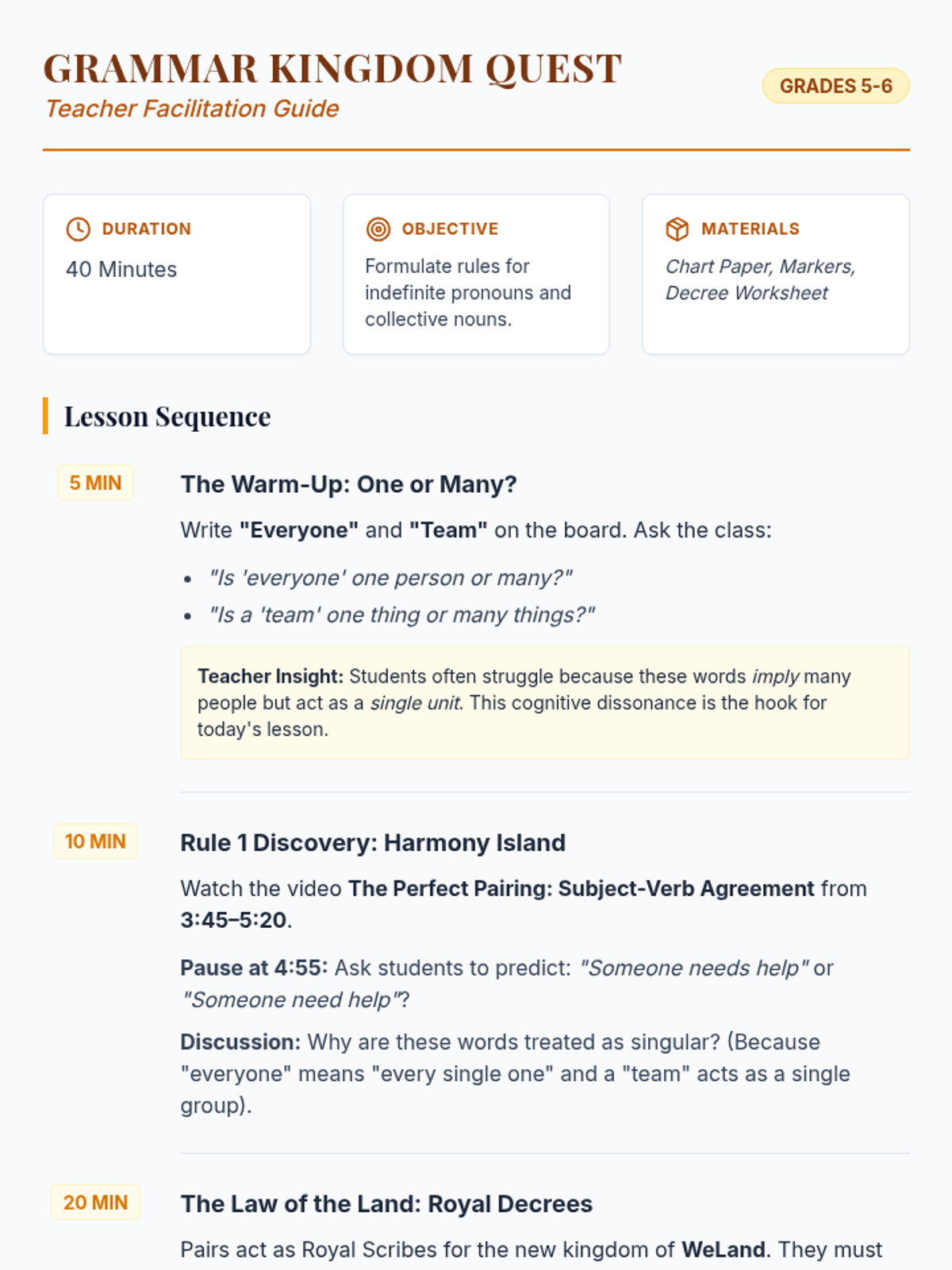
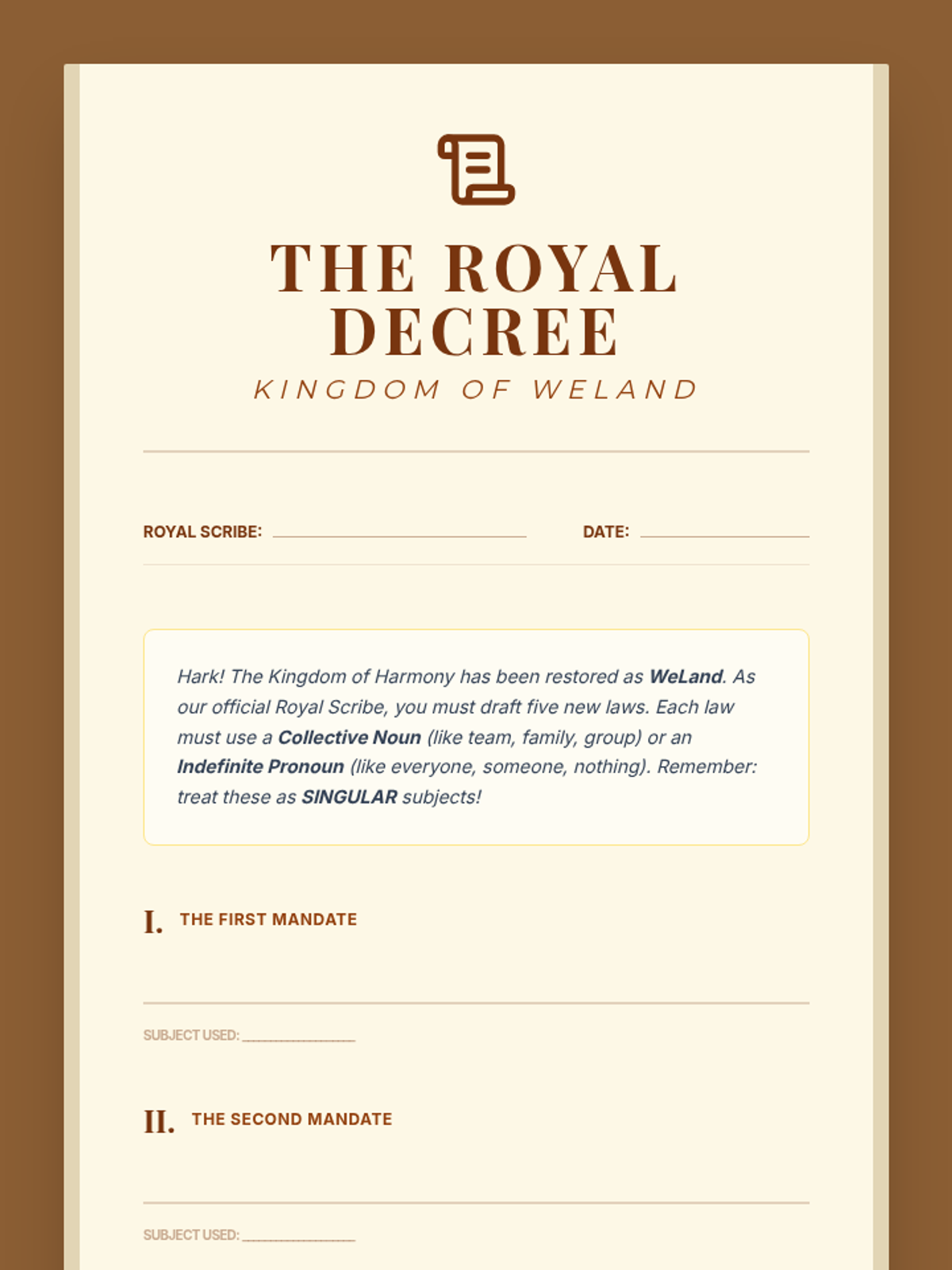
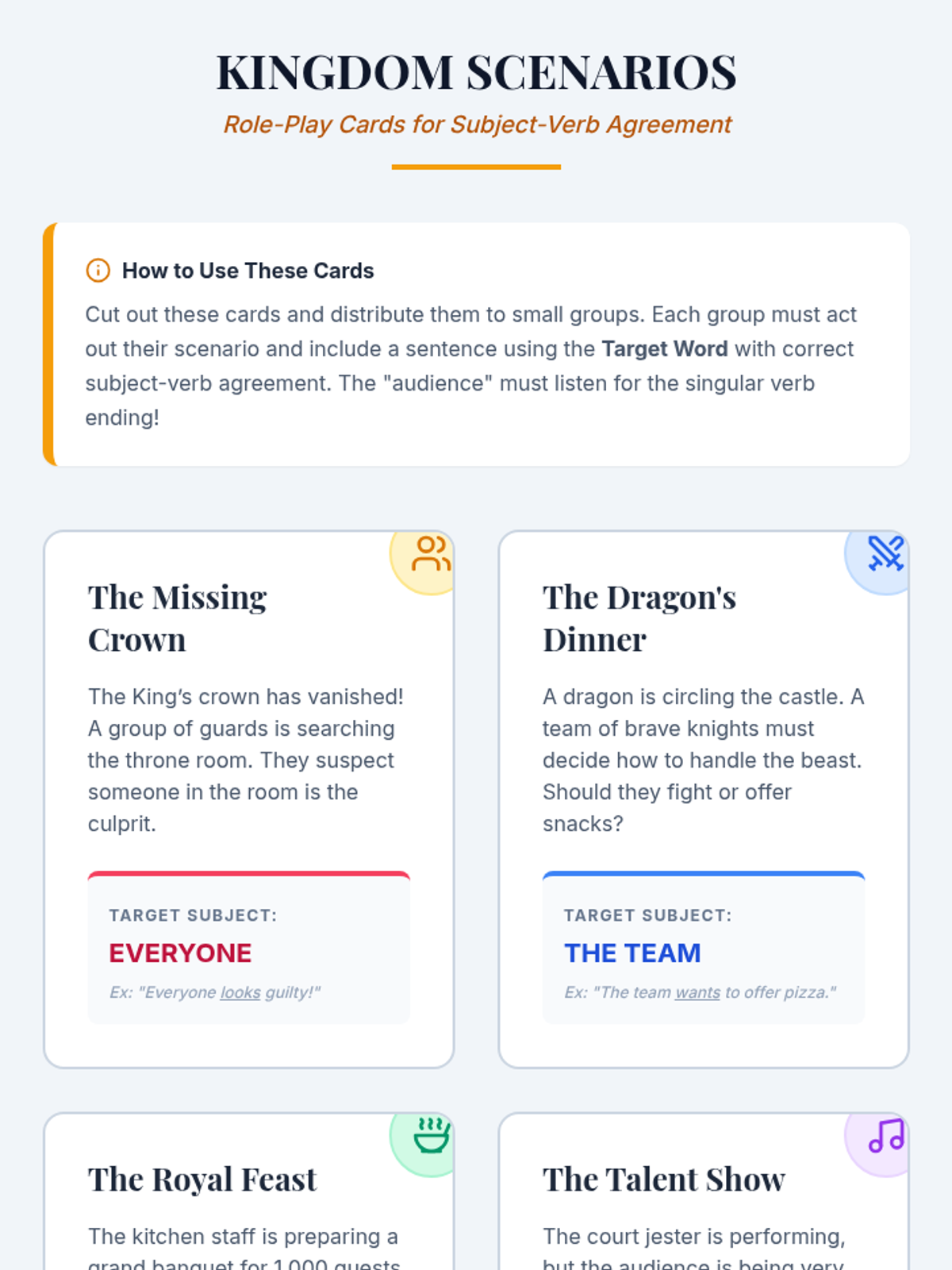
A fantasy-themed grammar lesson where students help restore peace to the kingdom of WeLand by mastering subject-verb agreement with indefinite pronouns and collective nouns.
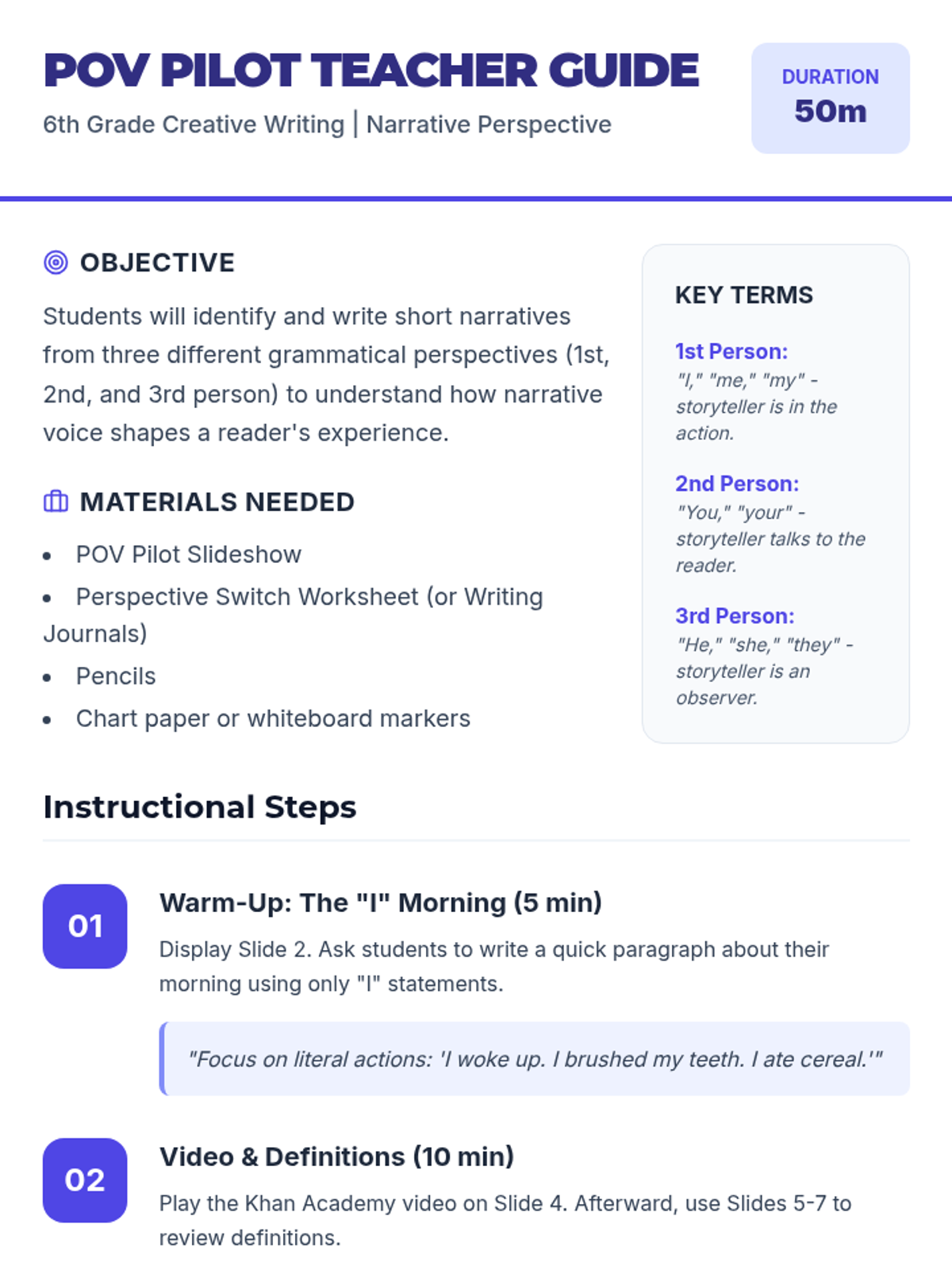
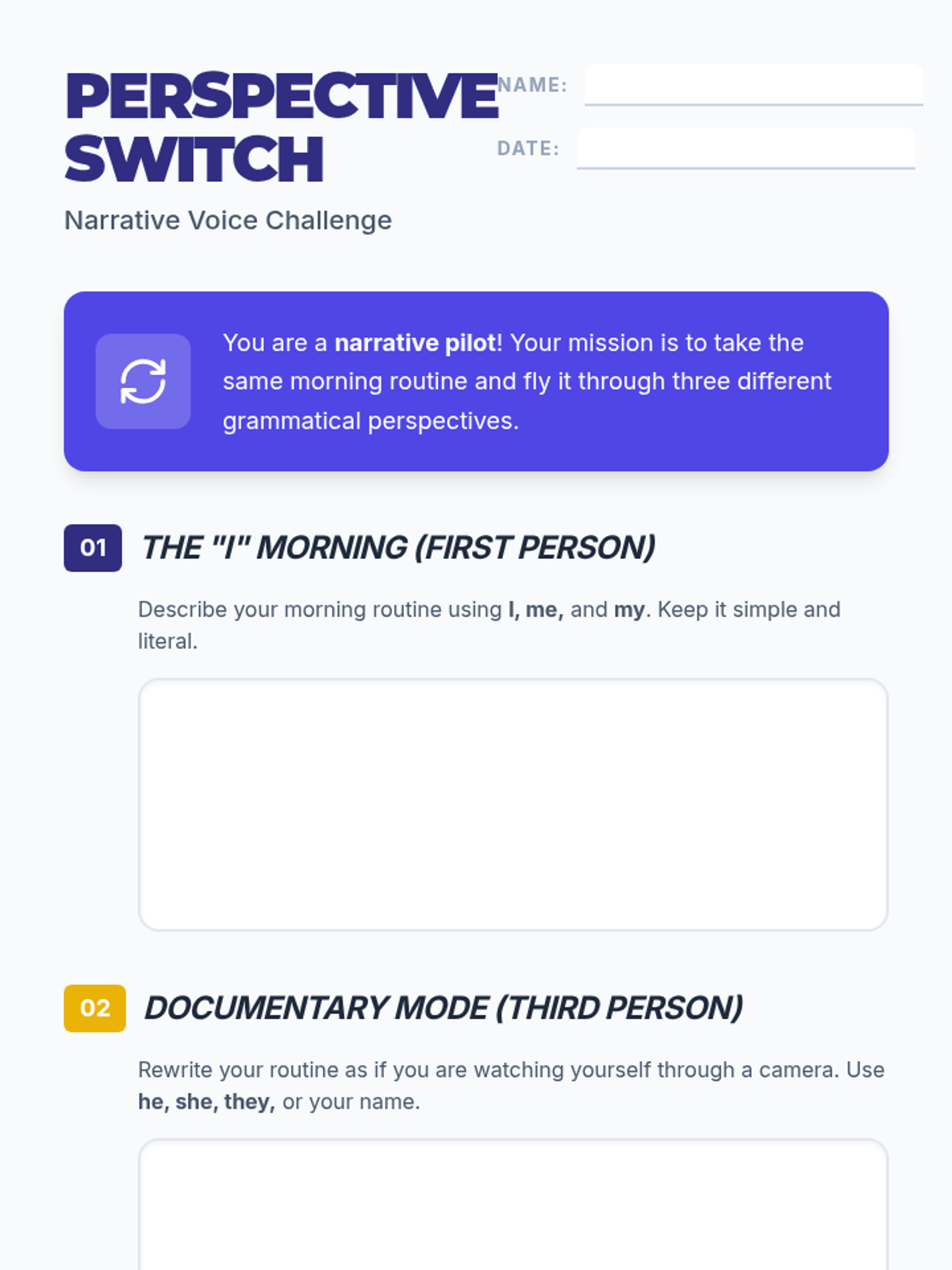
A creative writing lesson for 6th graders exploring 1st, 2nd, and 3rd person narratives through the lens of their own daily routines. Students will transform a simple morning description across three different grammatical perspectives to understand how narrative voice shapes a story.
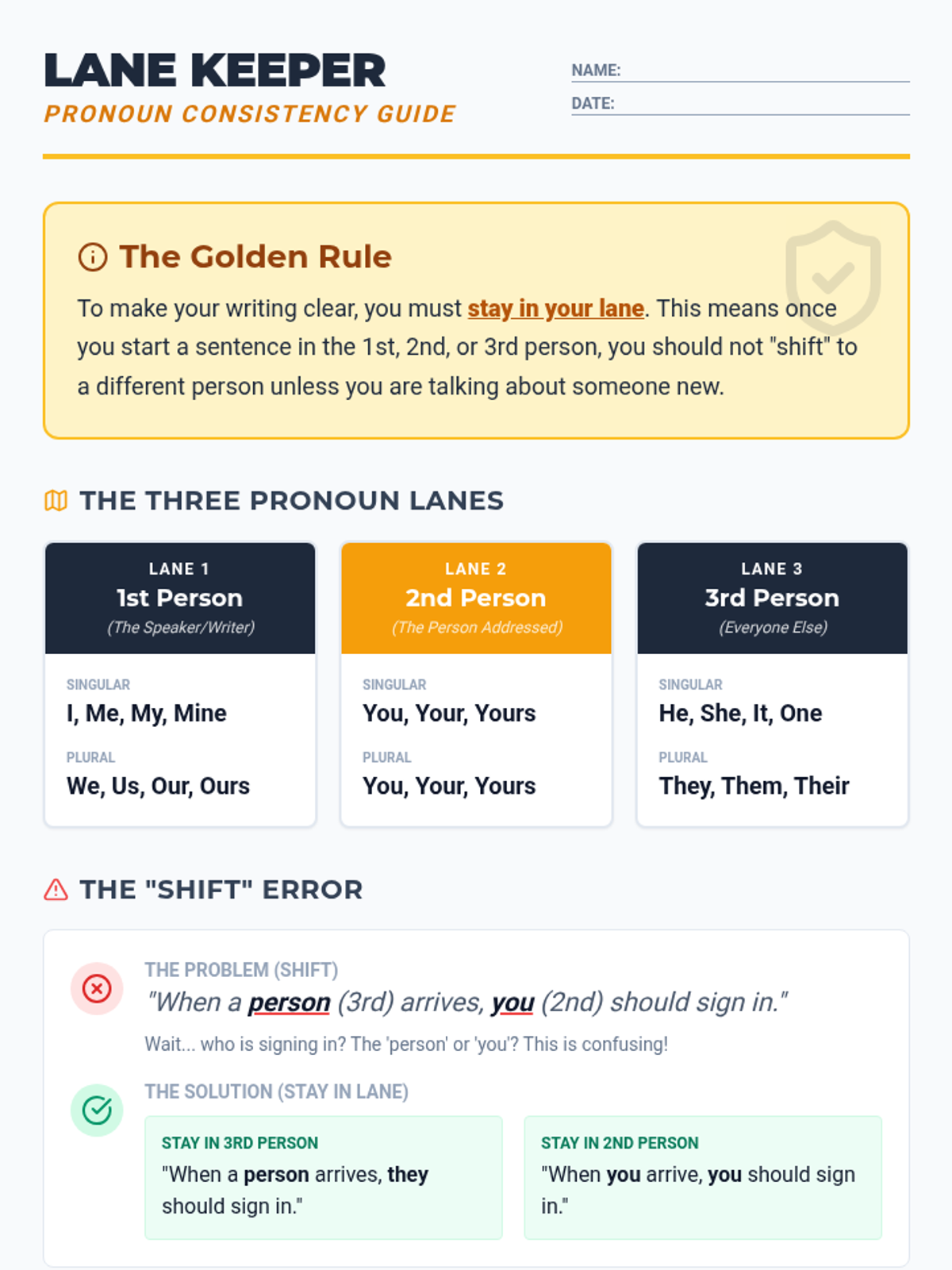
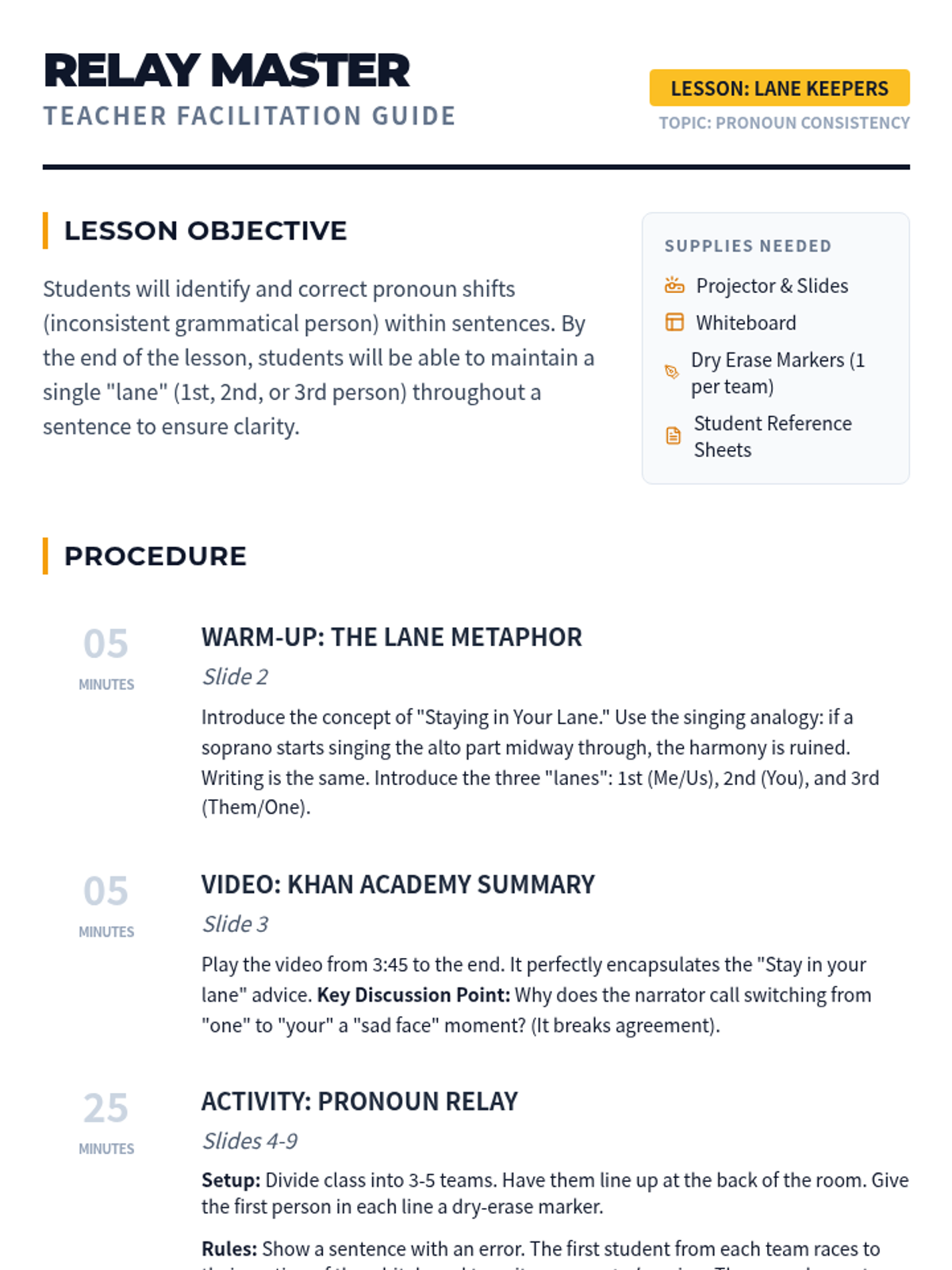
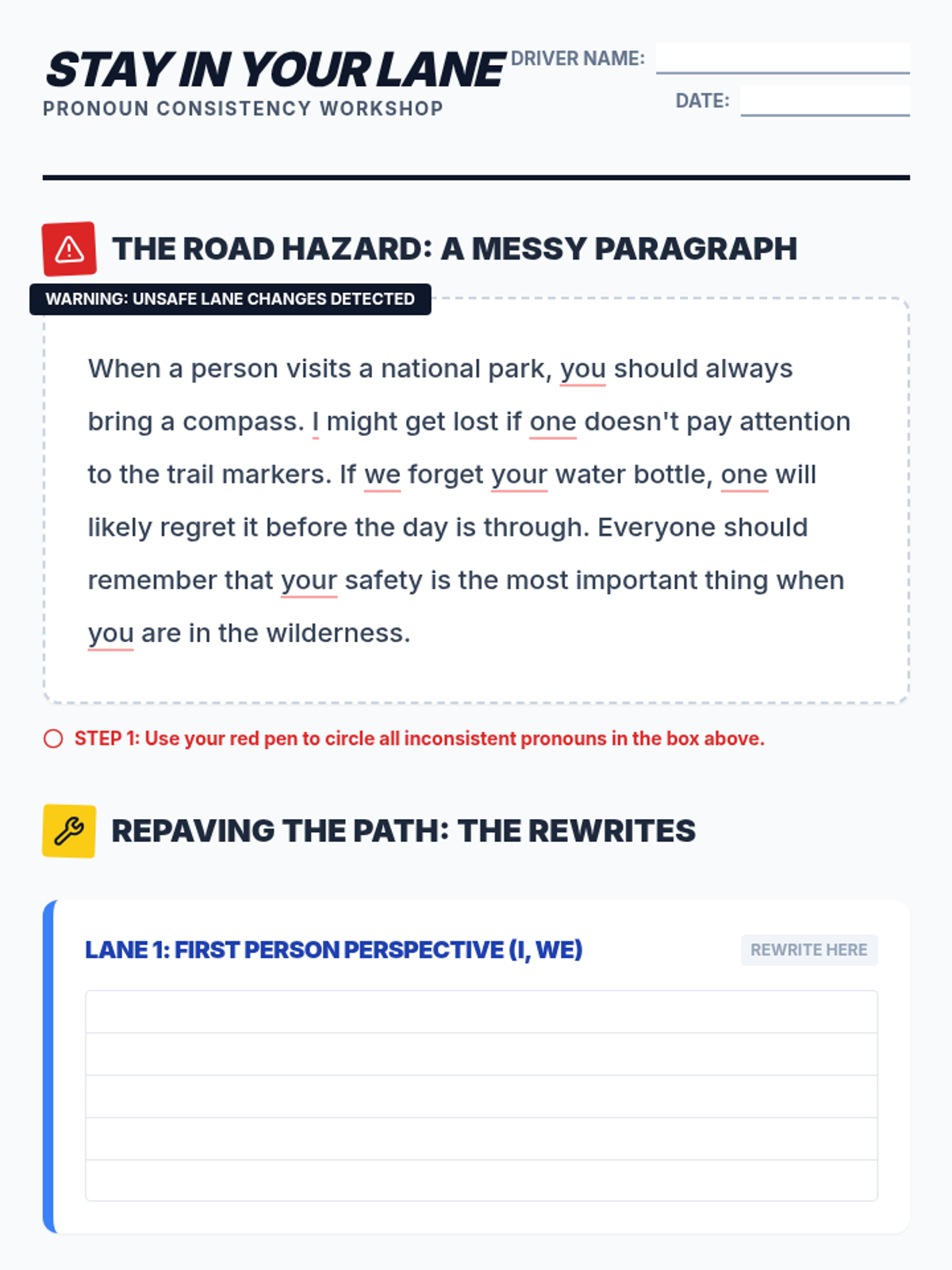
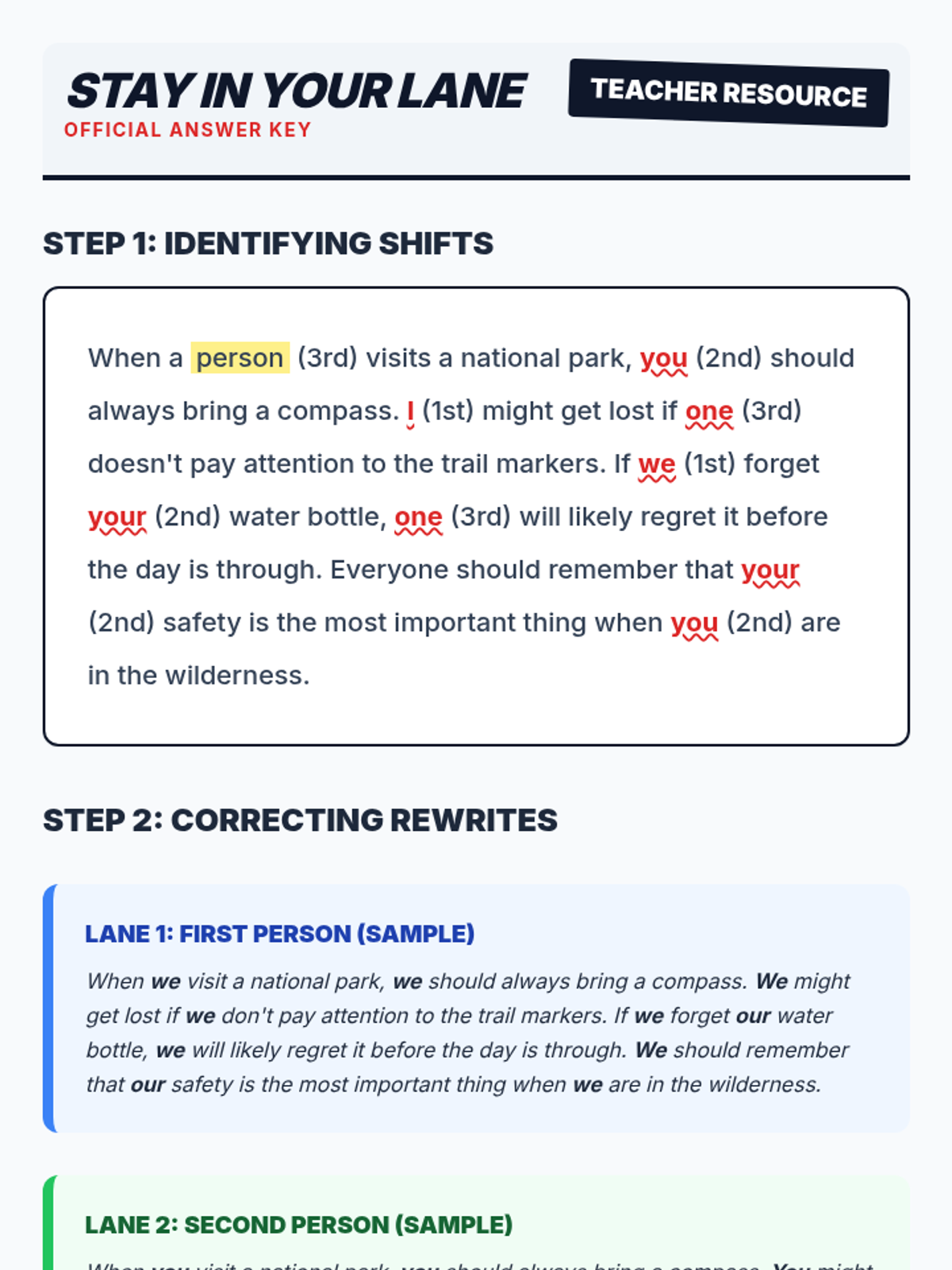
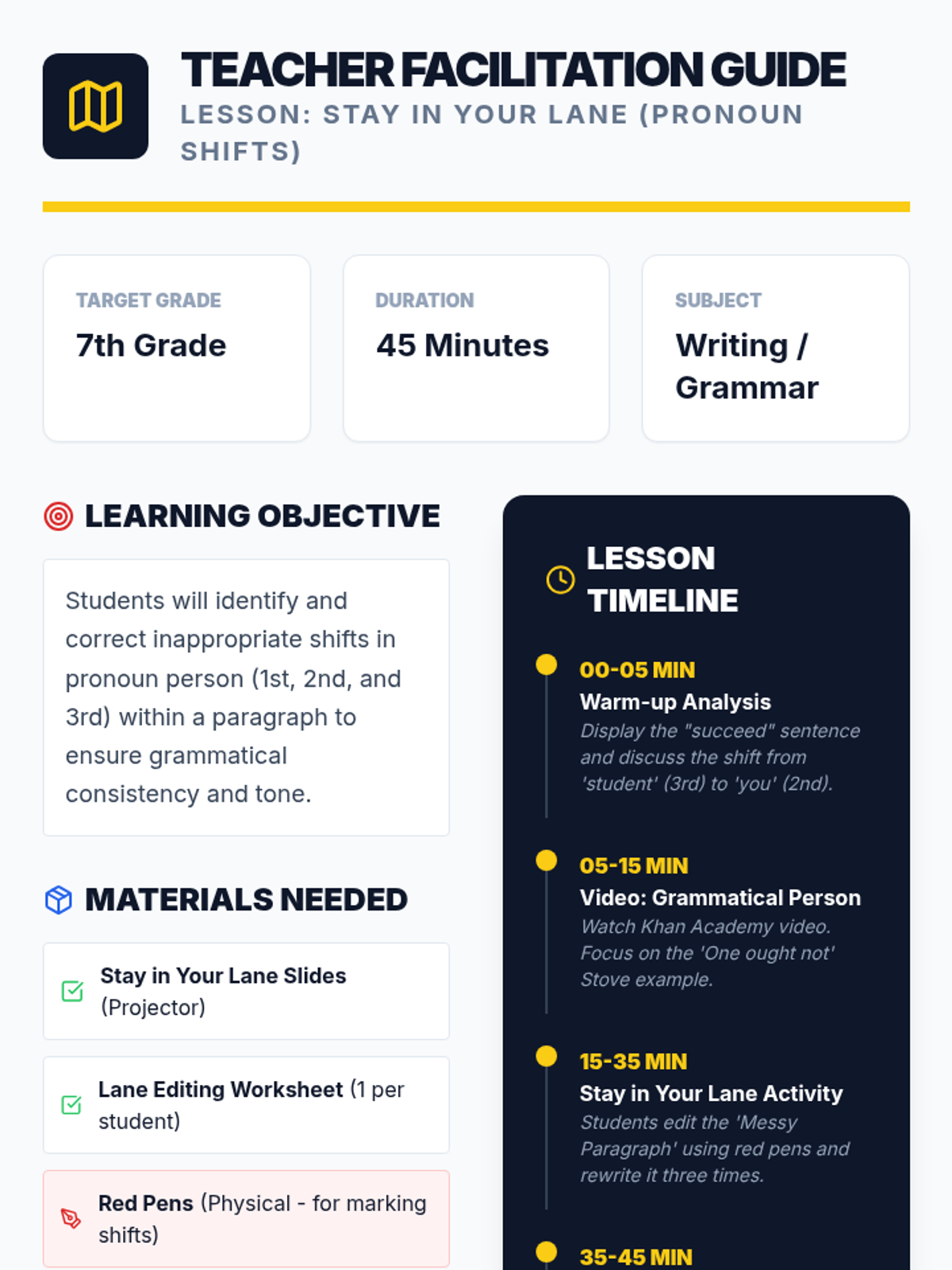
A high-energy lesson focused on maintaining consistent grammatical person (pronoun agreement). Students learn the 'Stay in Your Lane' concept through a video and a collaborative board-race game.
A writing workshop focused on identifying and correcting inappropriate shifts in pronoun person, using the 'stay in your lane' analogy.
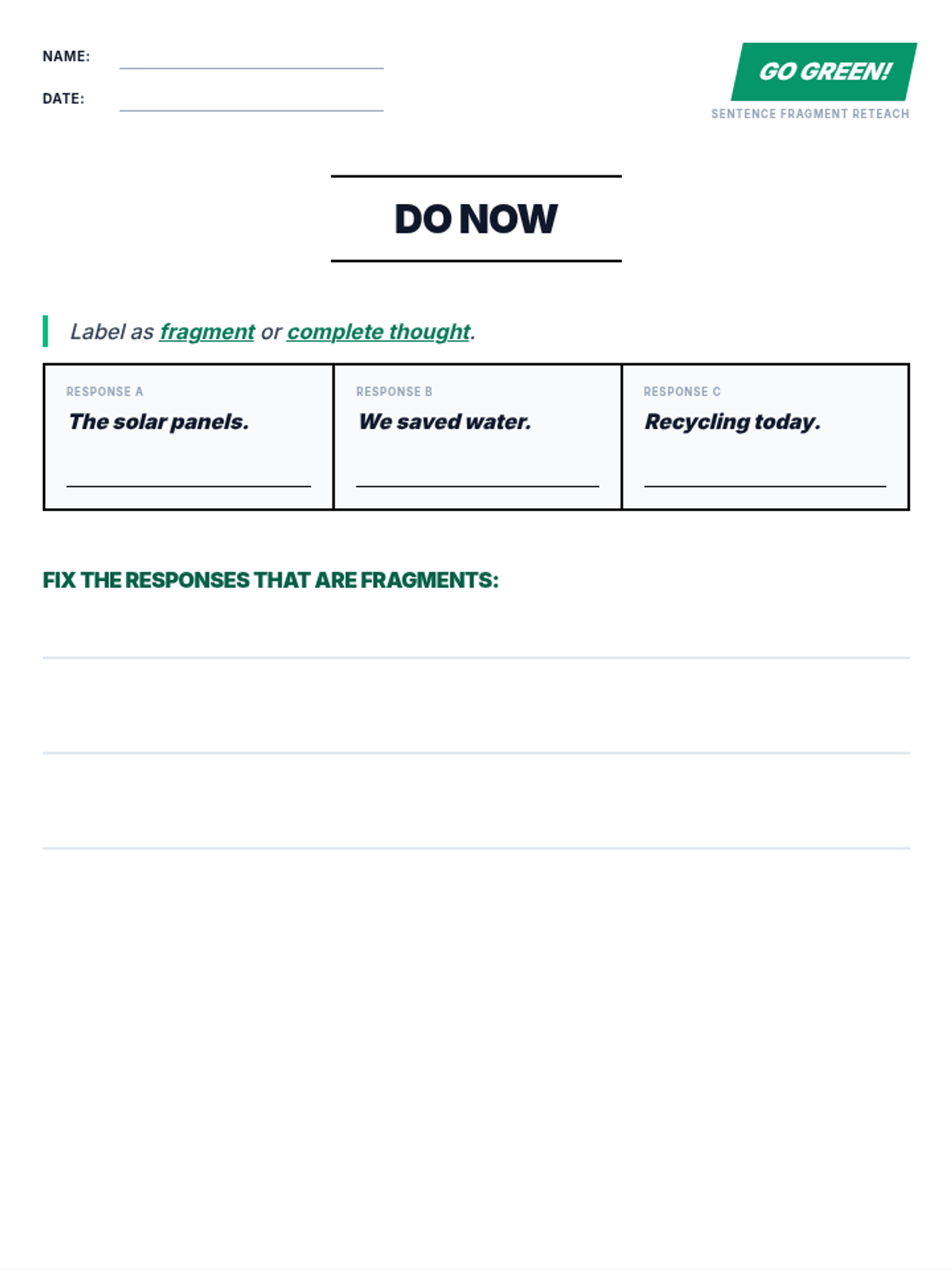
A comprehensive reteach lesson on identifying and correcting sentence fragments, themed around environmental conservation and 'going green'. Includes a student worksheet and a detailed teacher facilitation guide with an answer key.
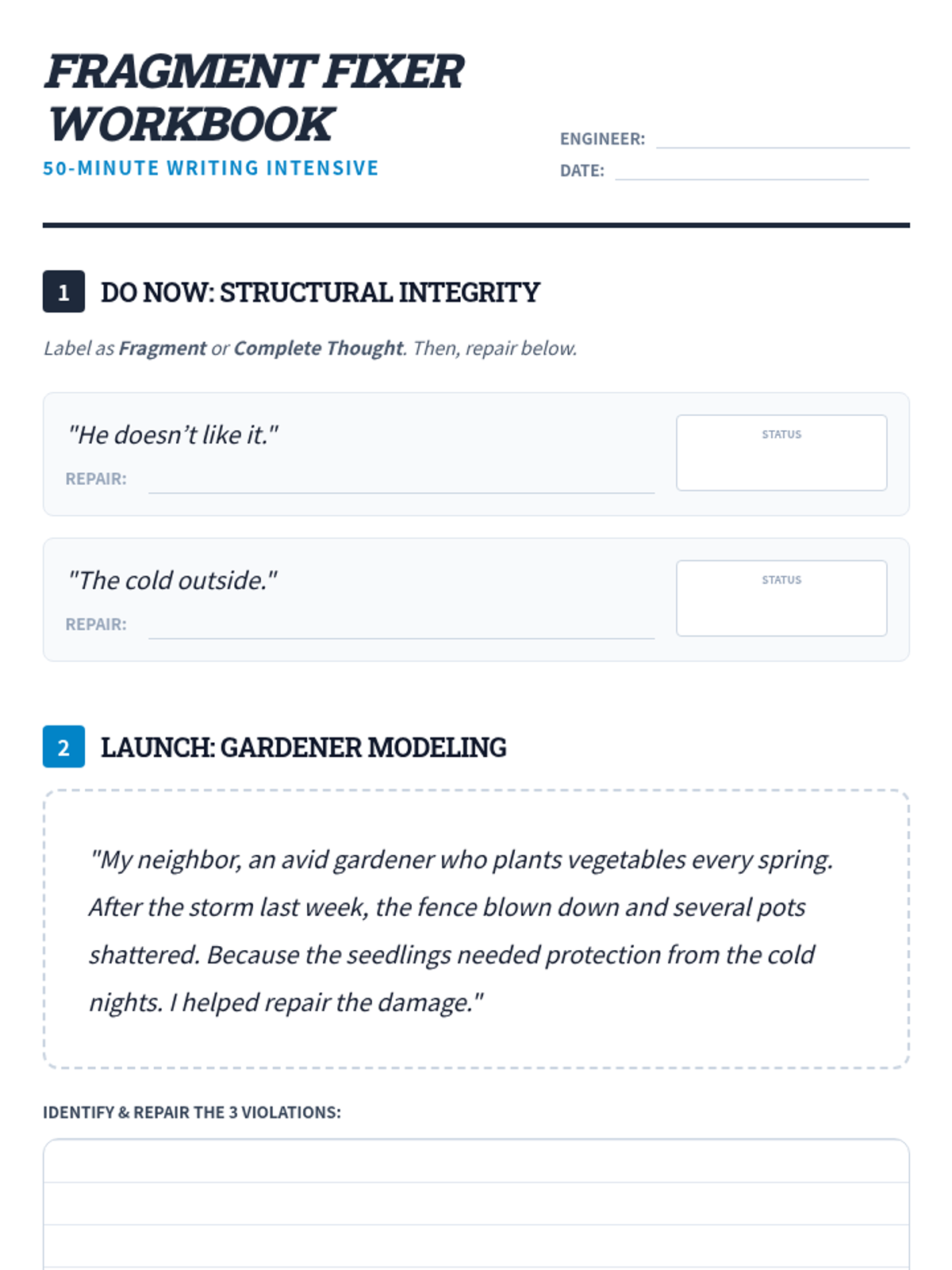
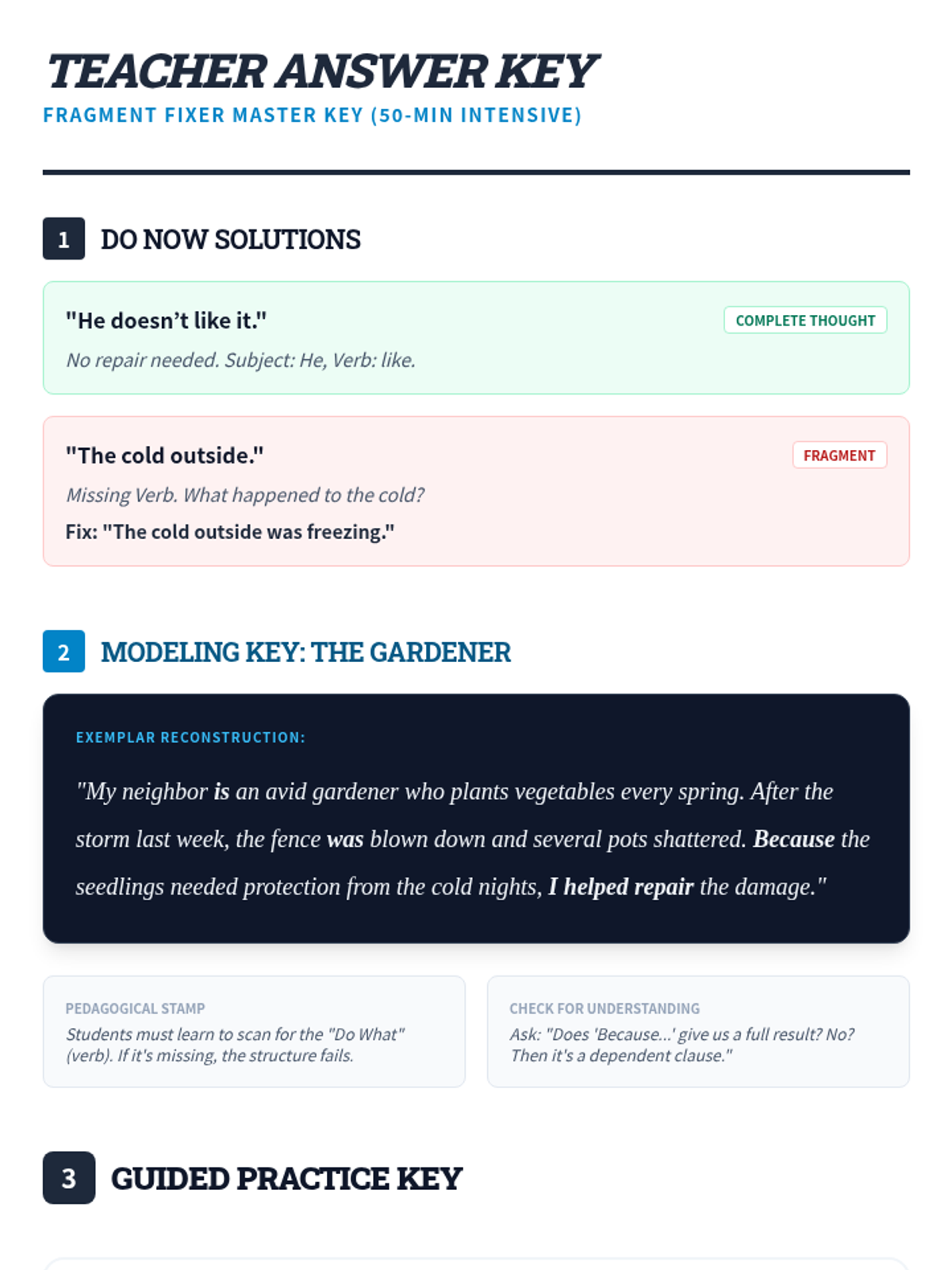
A targeted 50-minute reteach lesson designed to help students master the distinction between sentence fragments and complete thoughts. The lesson uses themes of community and history (Civil Rights, Harlem Renaissance) to provide high-engagement practice. It follows a structural approach: Diagnostic Do Now, Gardener Modeling, Historical Guided Discourse, and Independent Application.
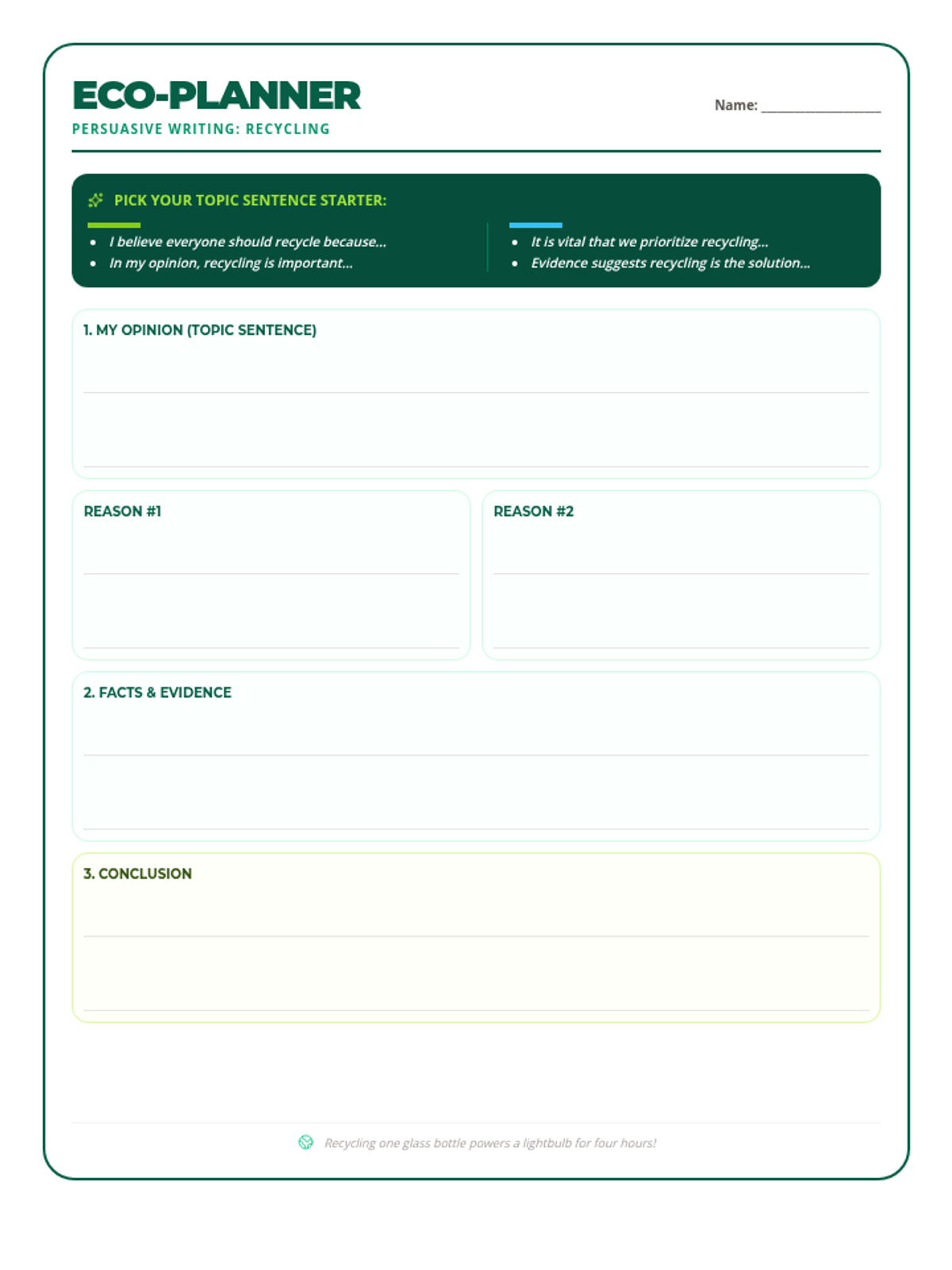
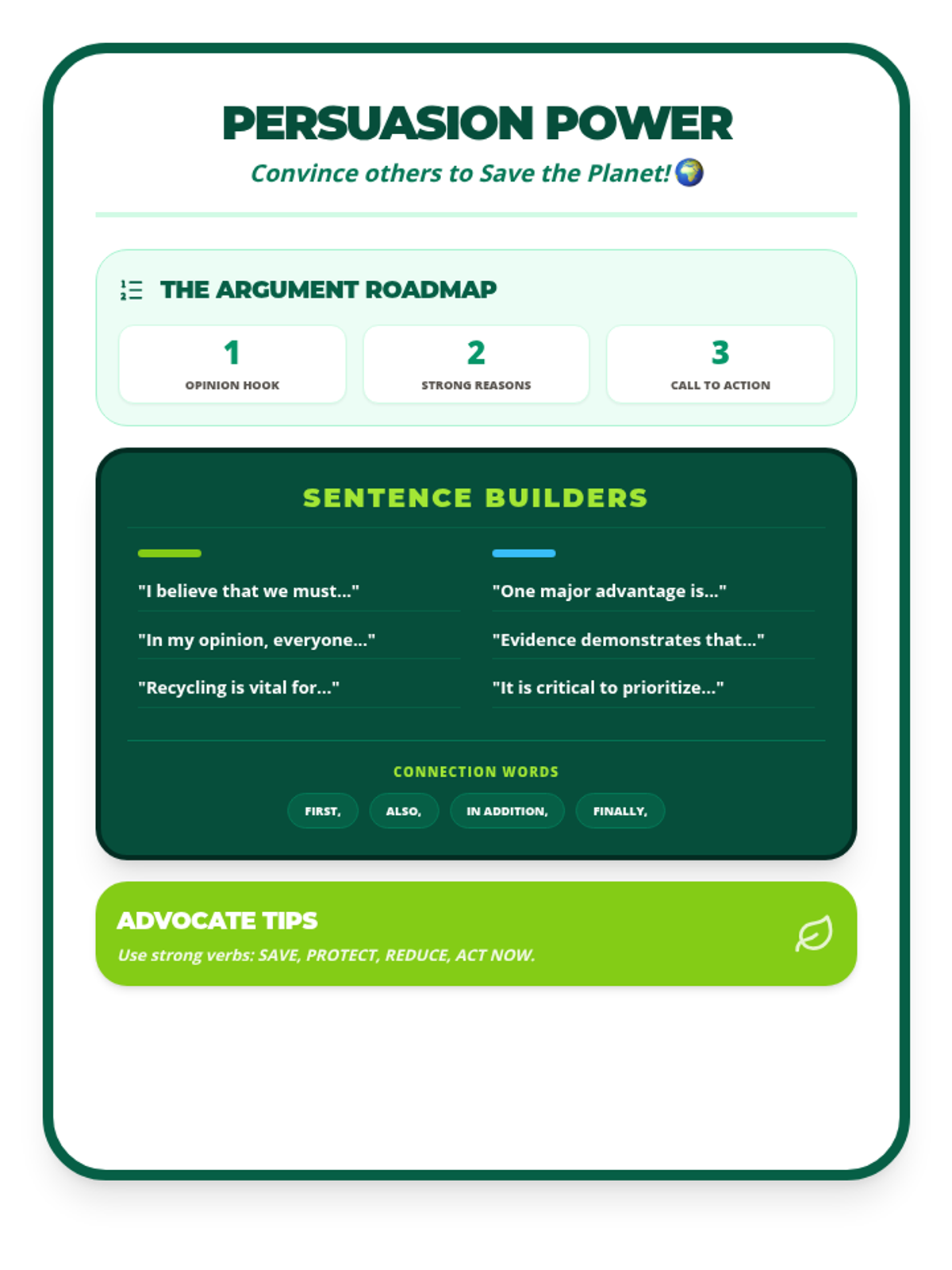
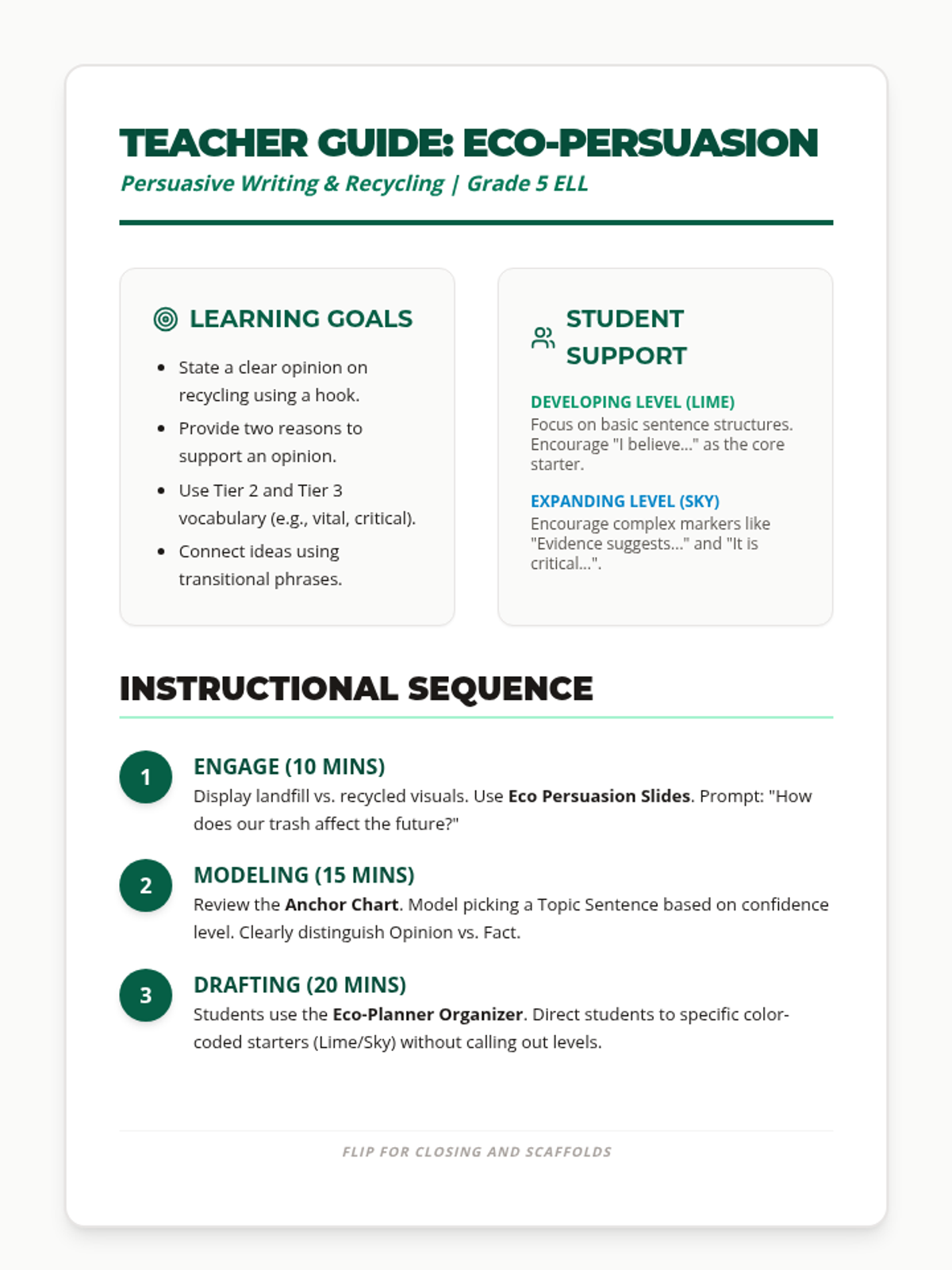
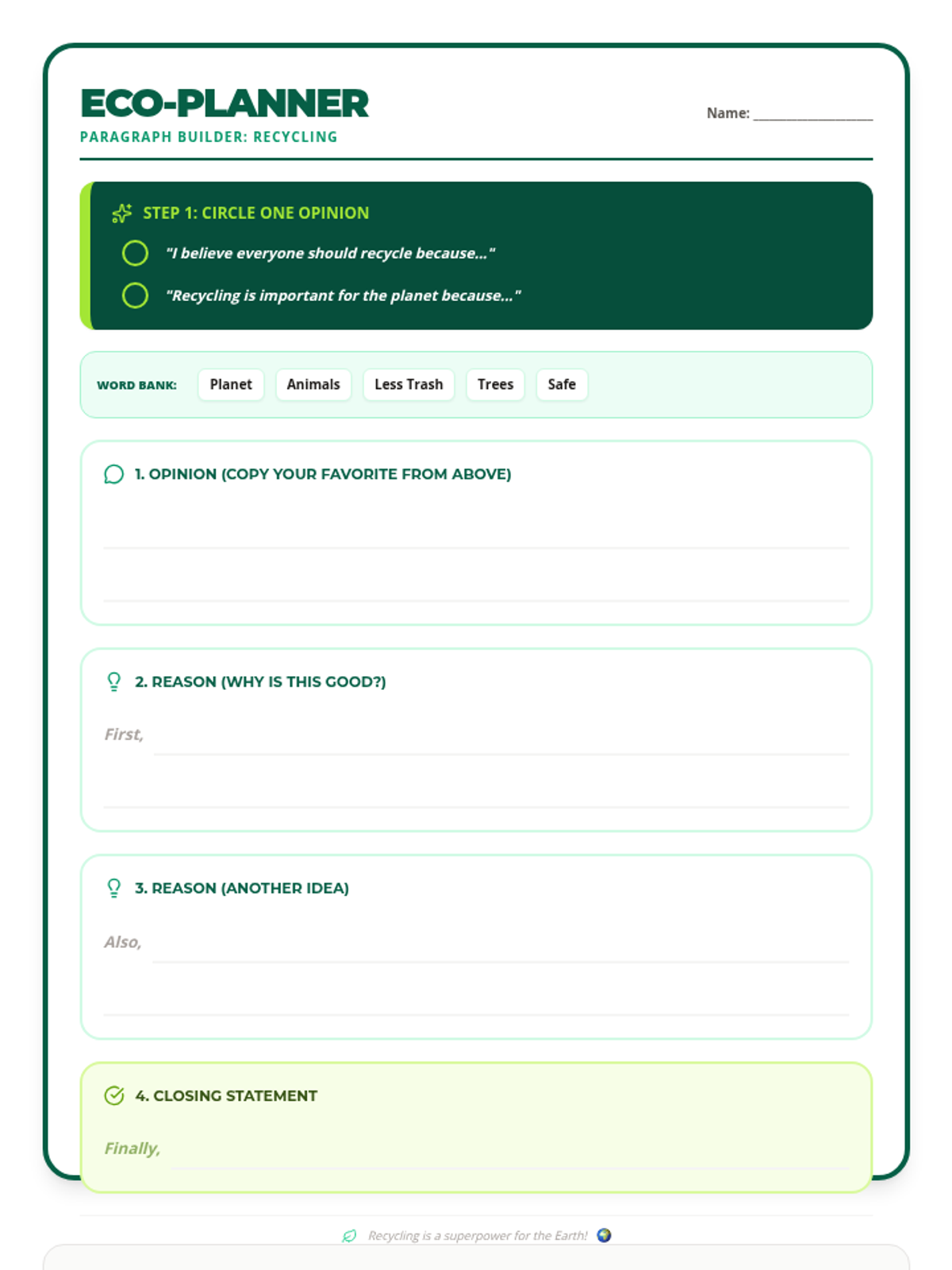
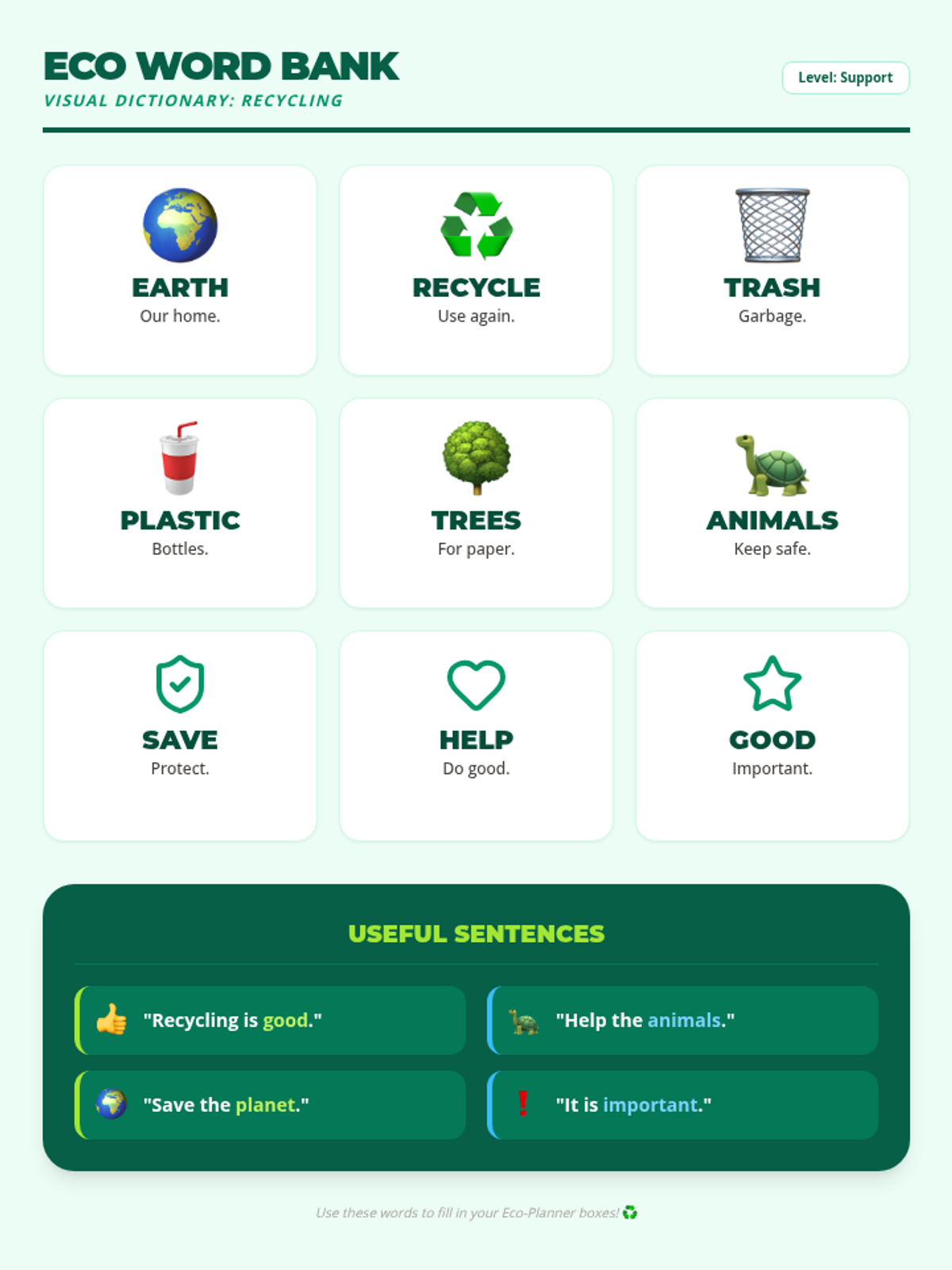
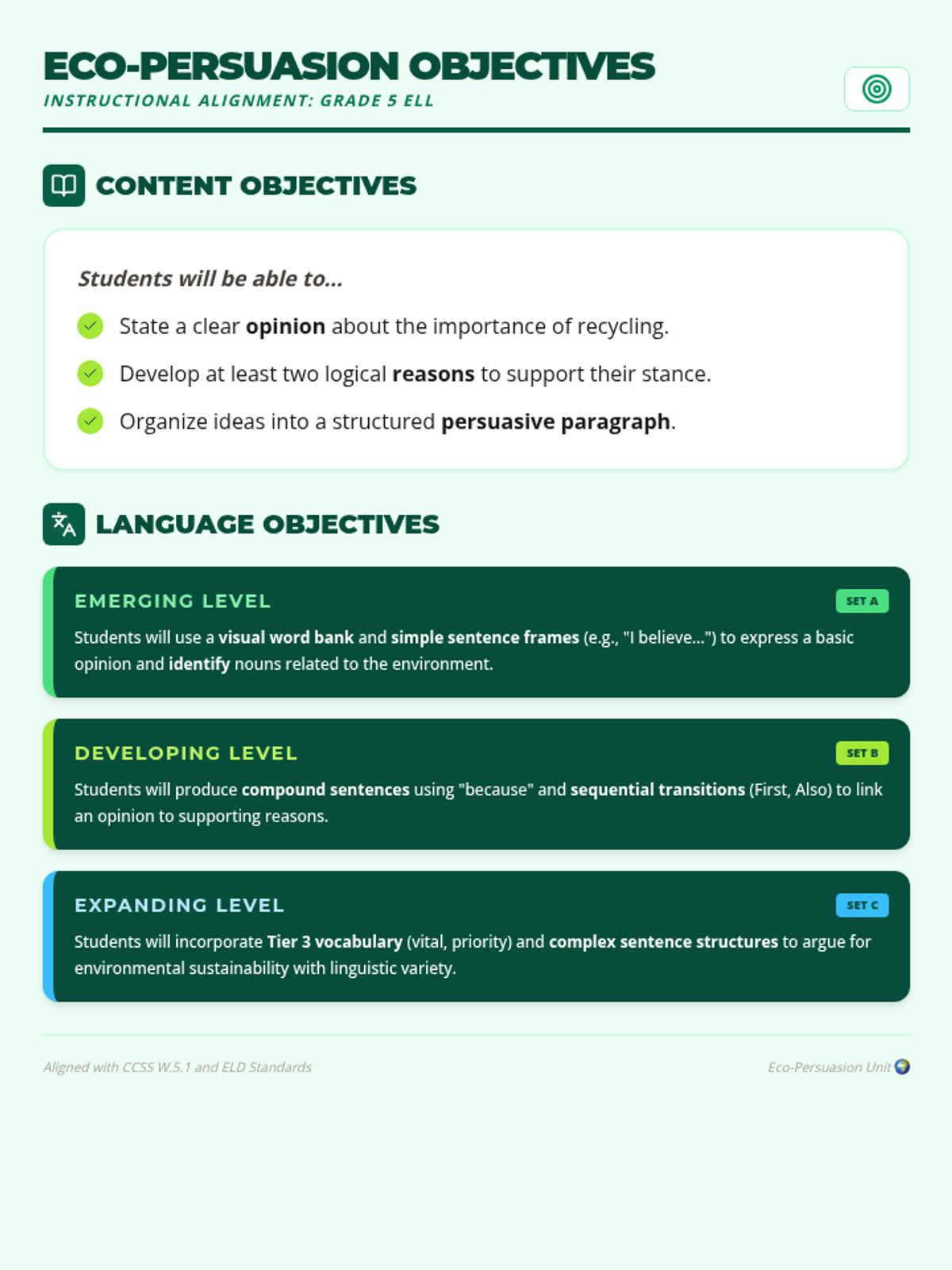
A lesson focused on crafting strong persuasive arguments about recycling, specifically helping ELL students develop topic sentences and clear supporting reasons.
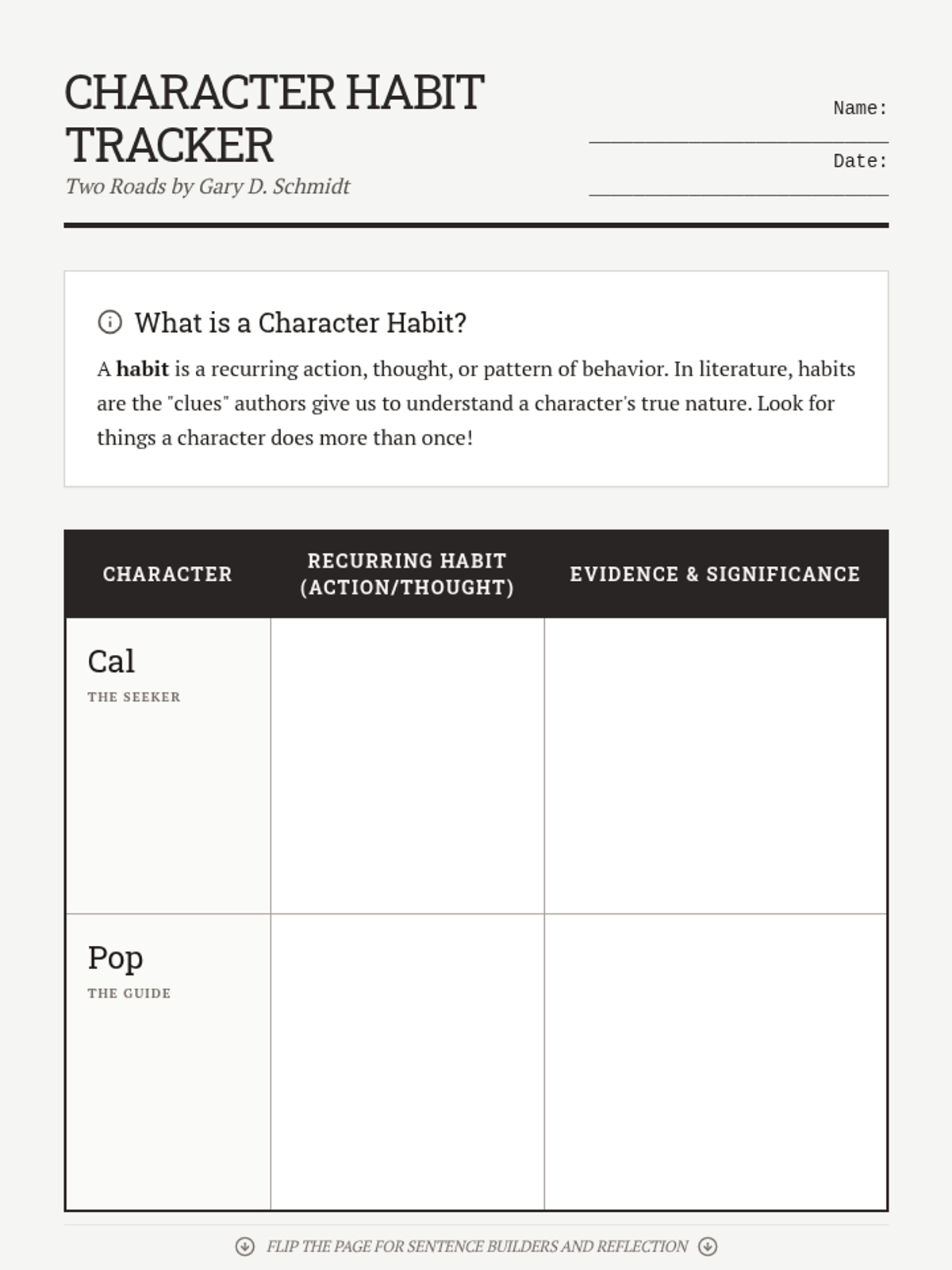
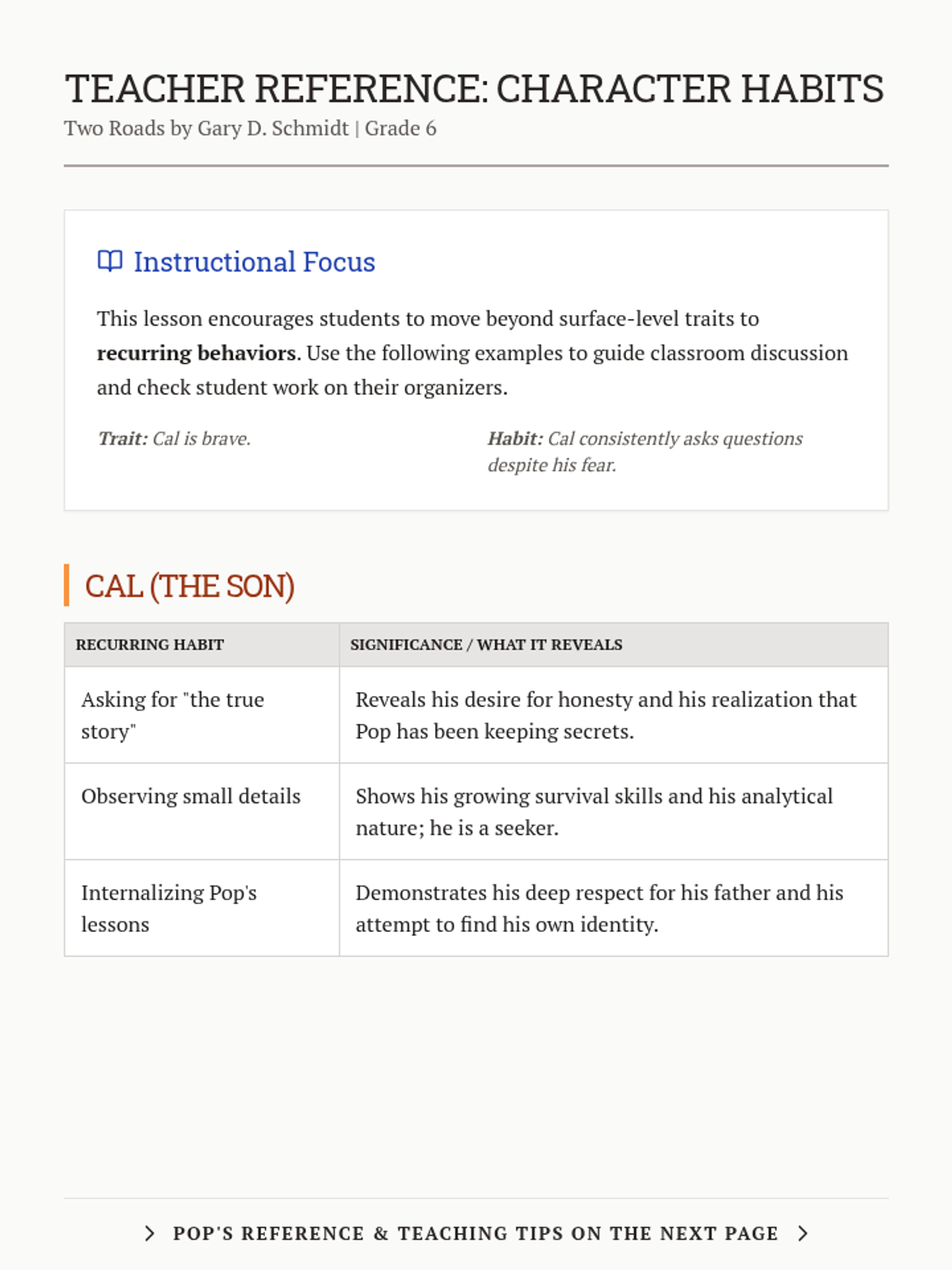
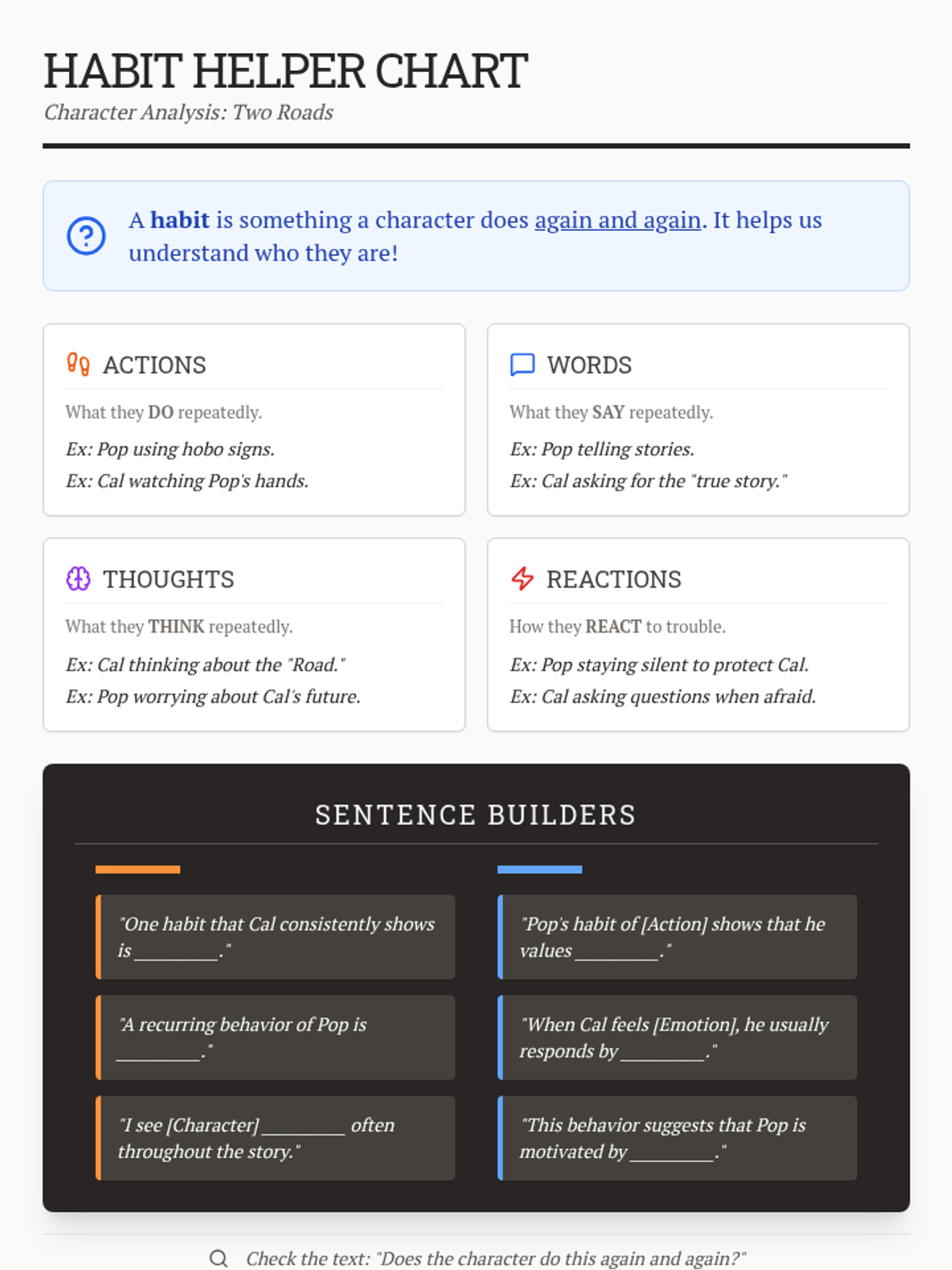
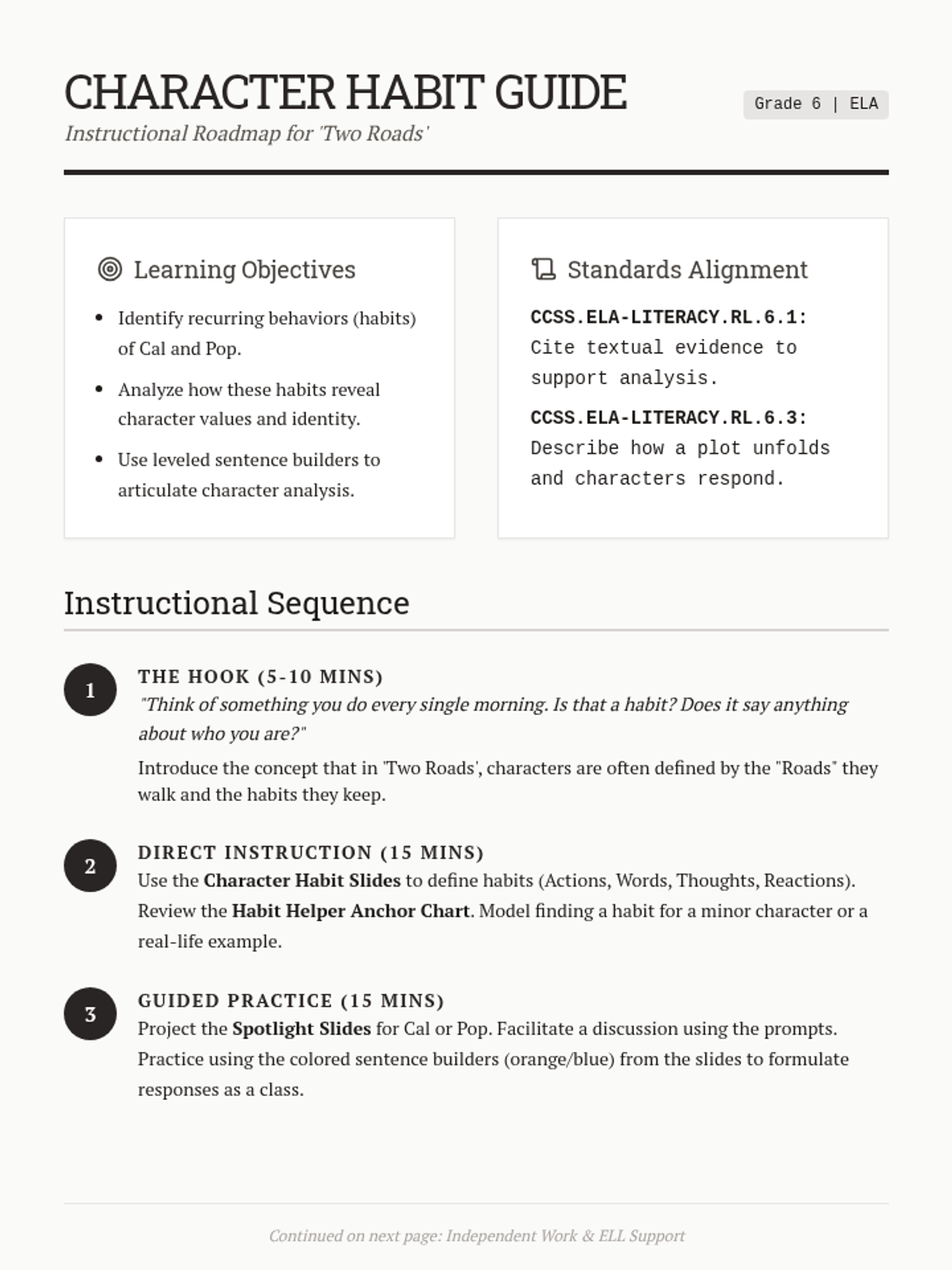
A lesson focused on identifying and tracking character habits in the novel 'Two Roads', helping students understand how recurring actions reveal personality and values.
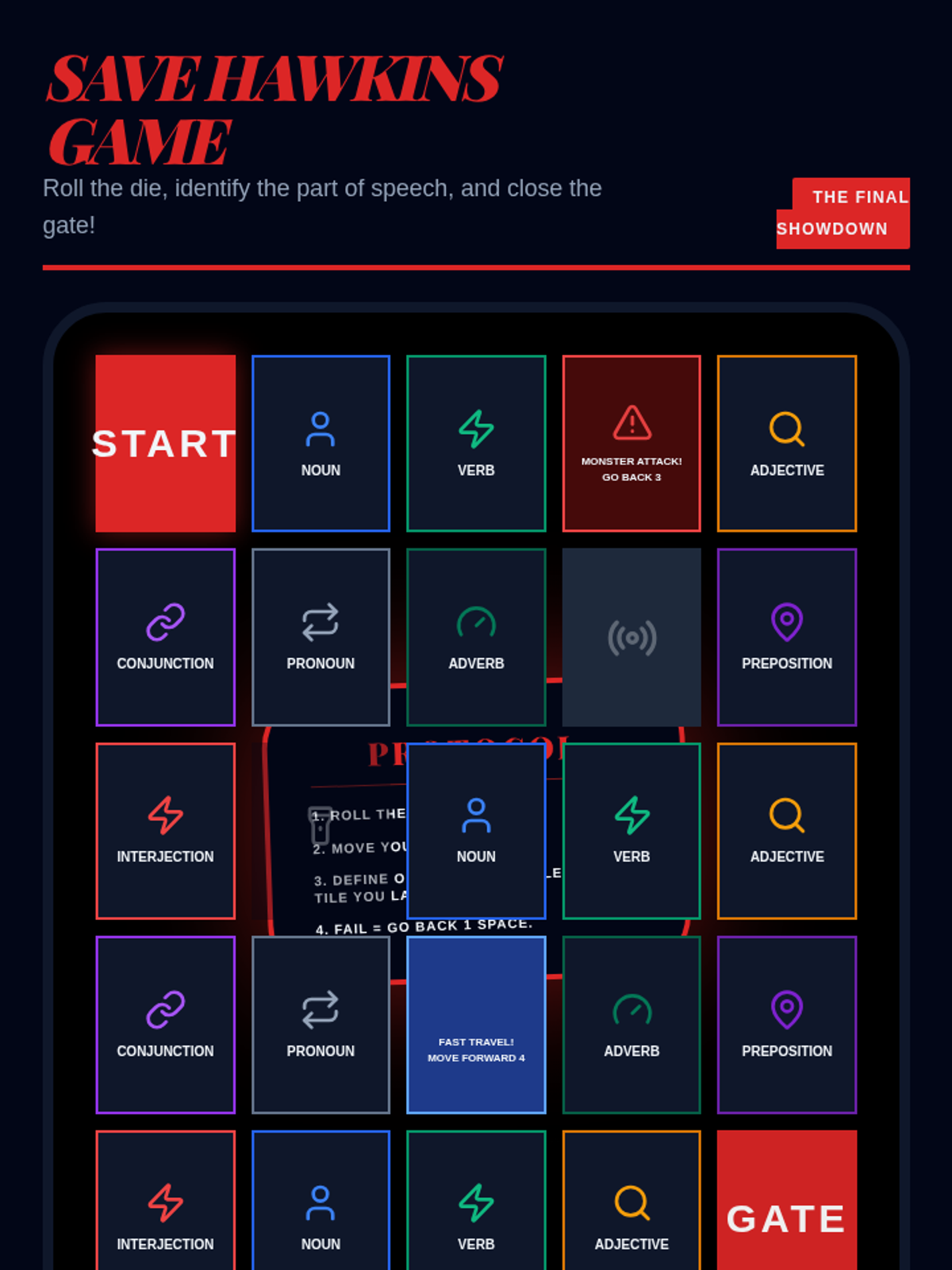
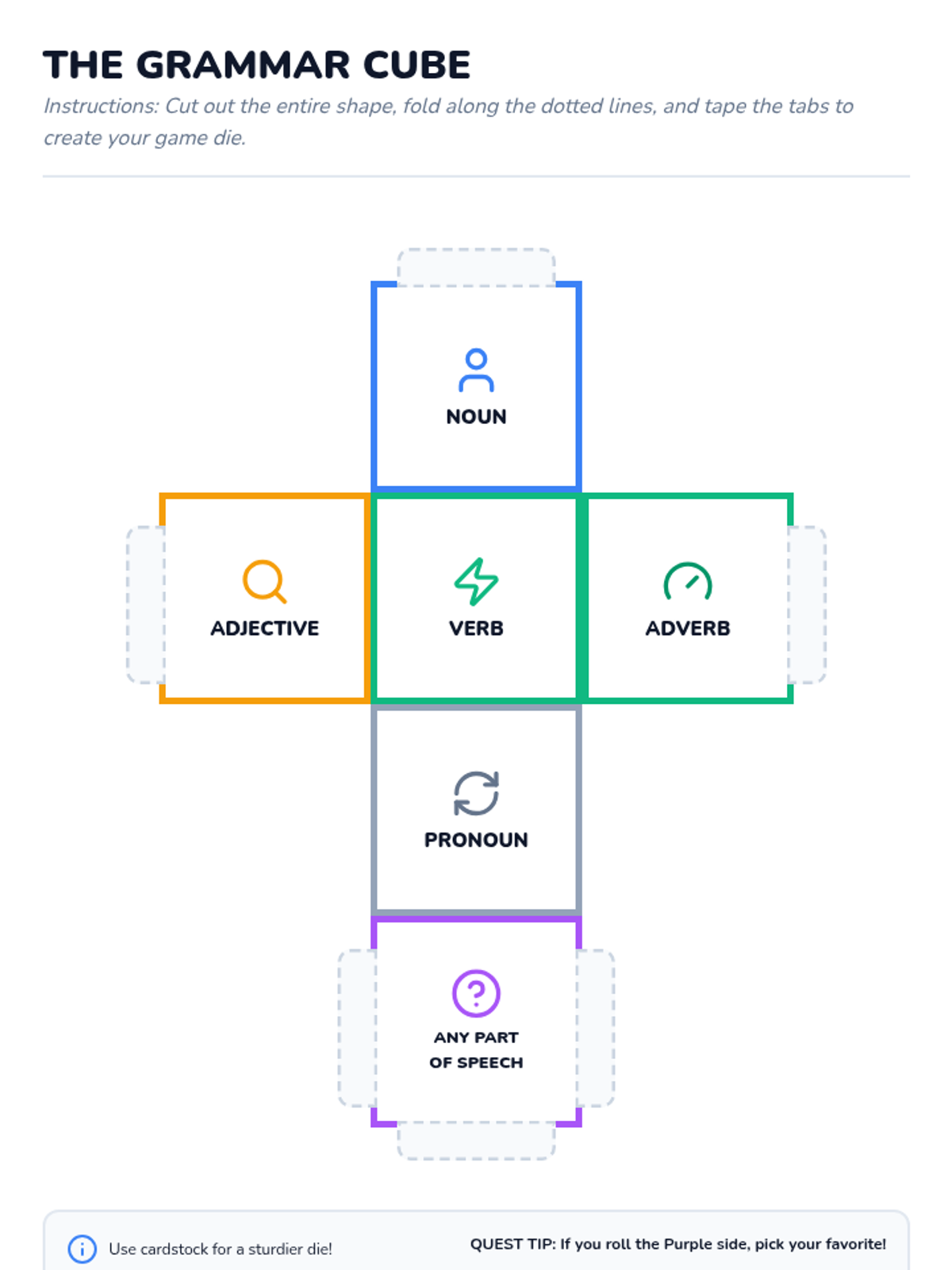
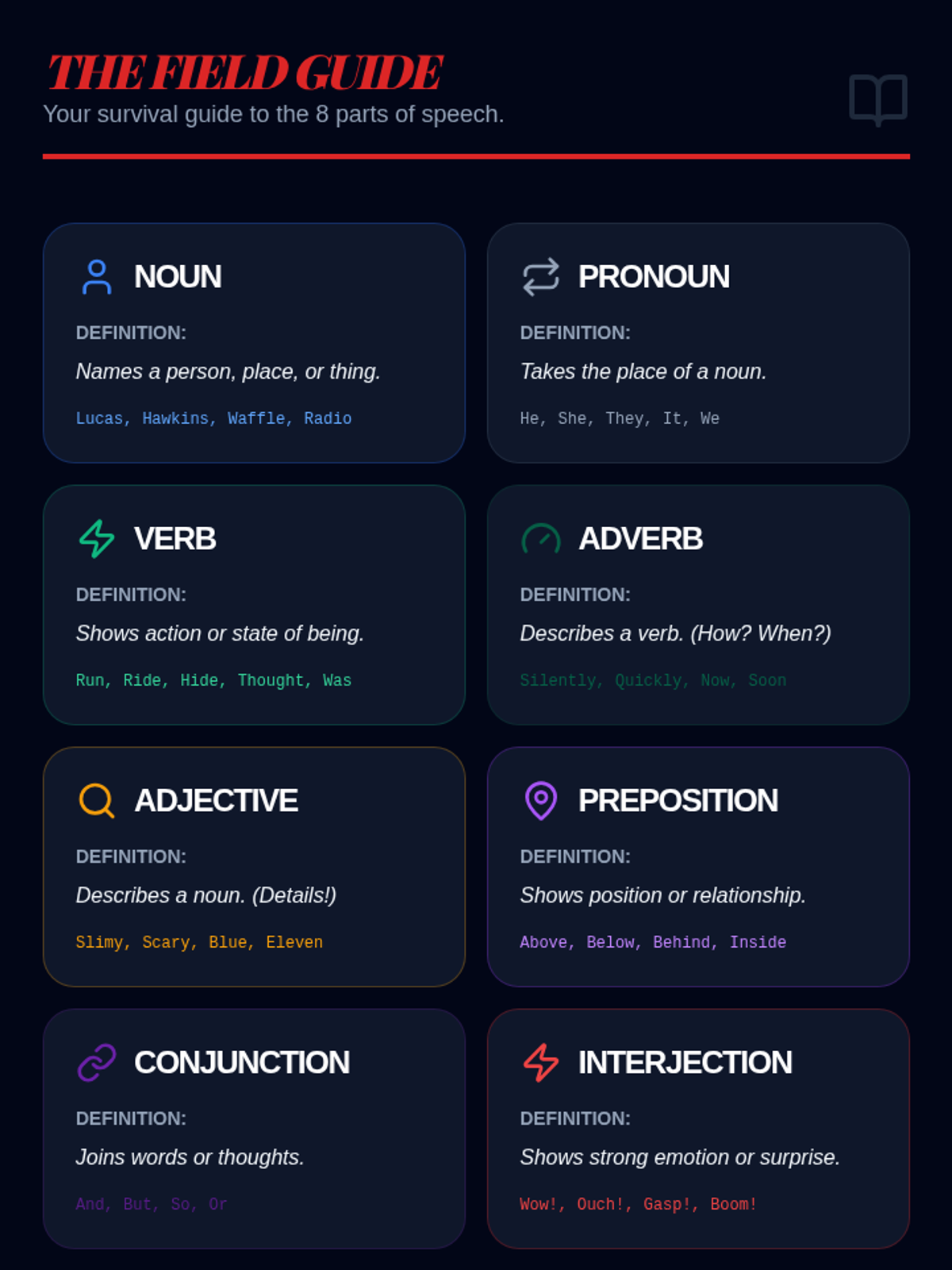
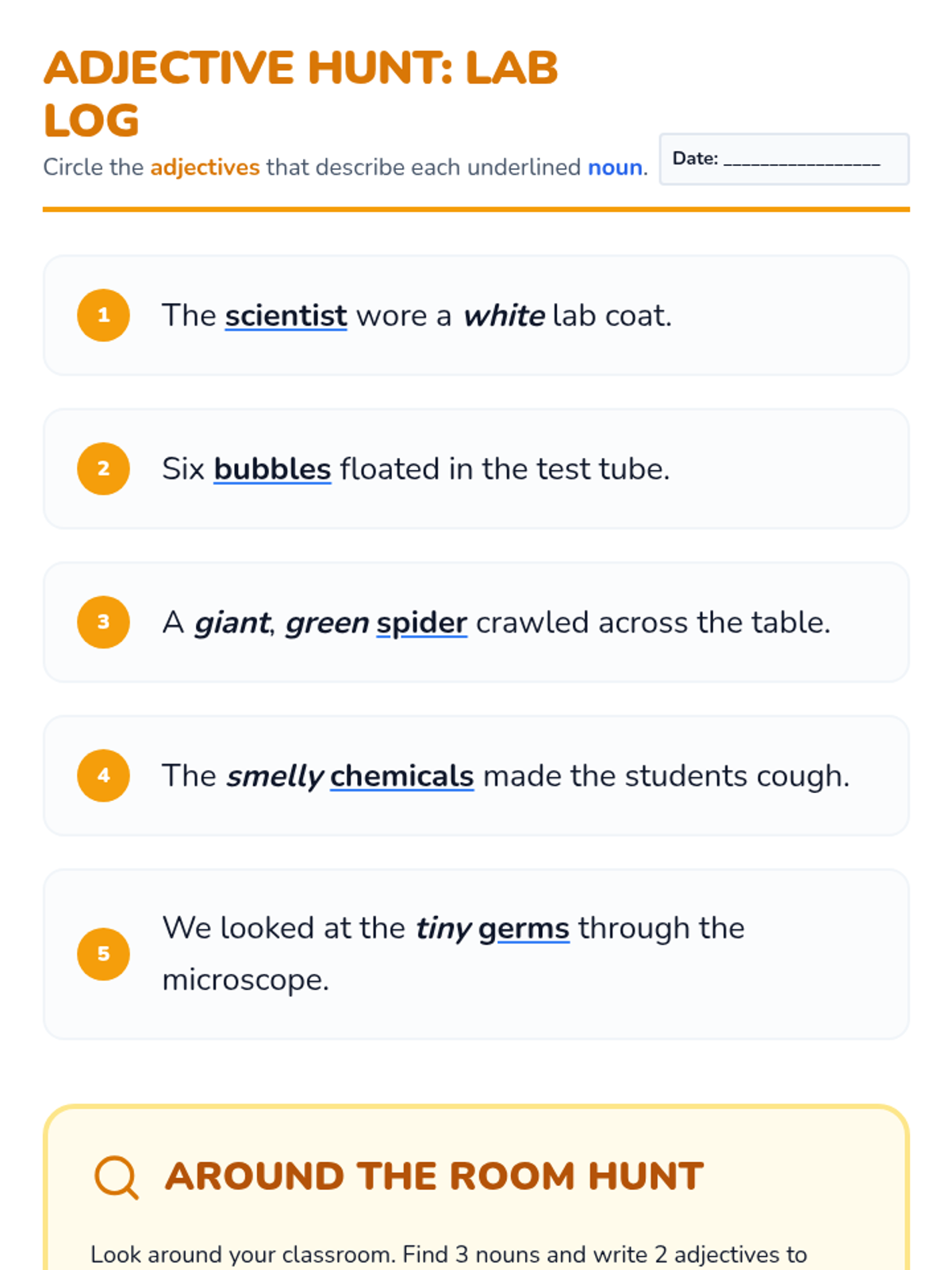
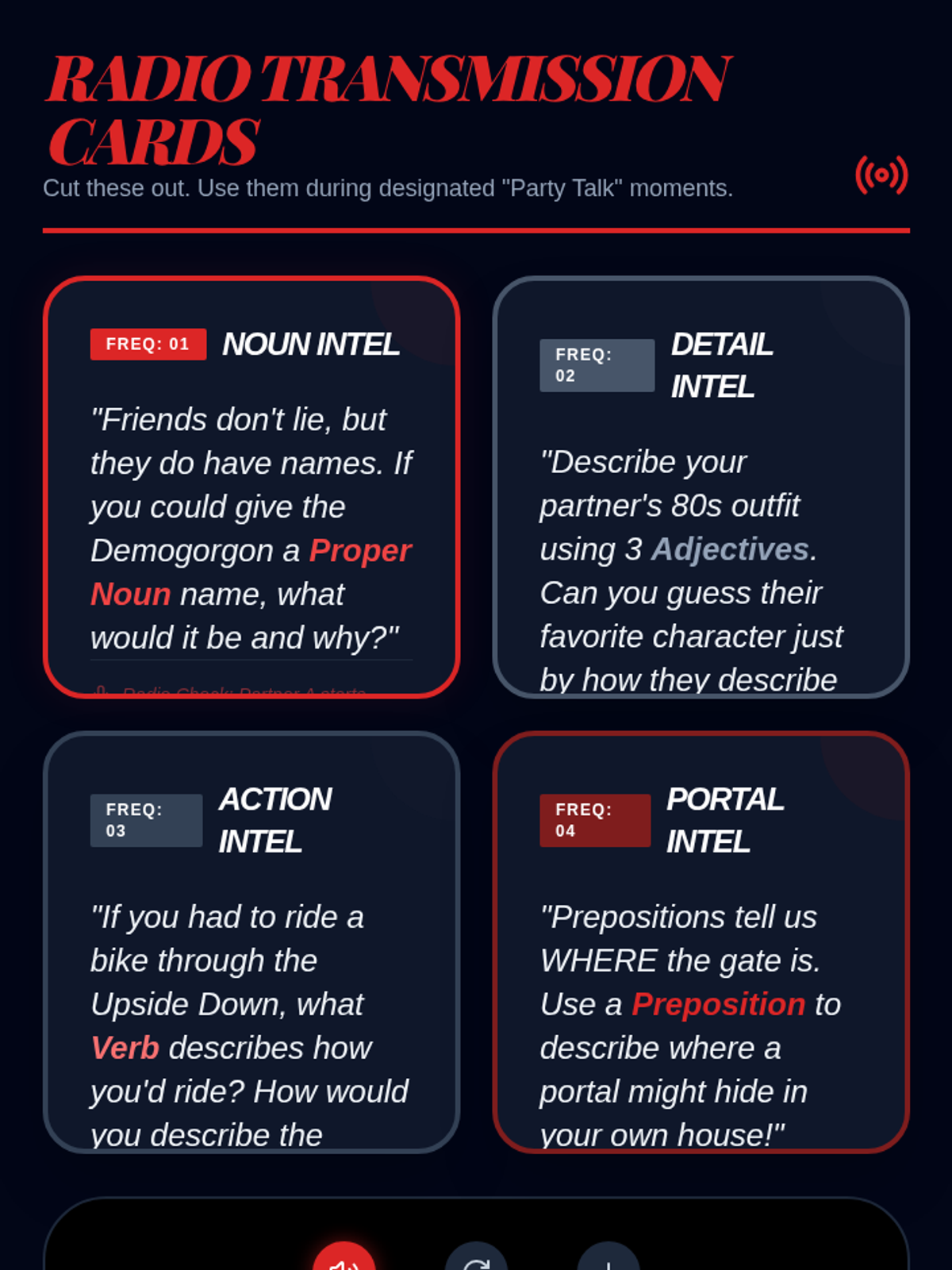
A final review featuring a 'Save Hawkins' board game and a comprehensive 'Field Guide' to all 8 parts of speech.
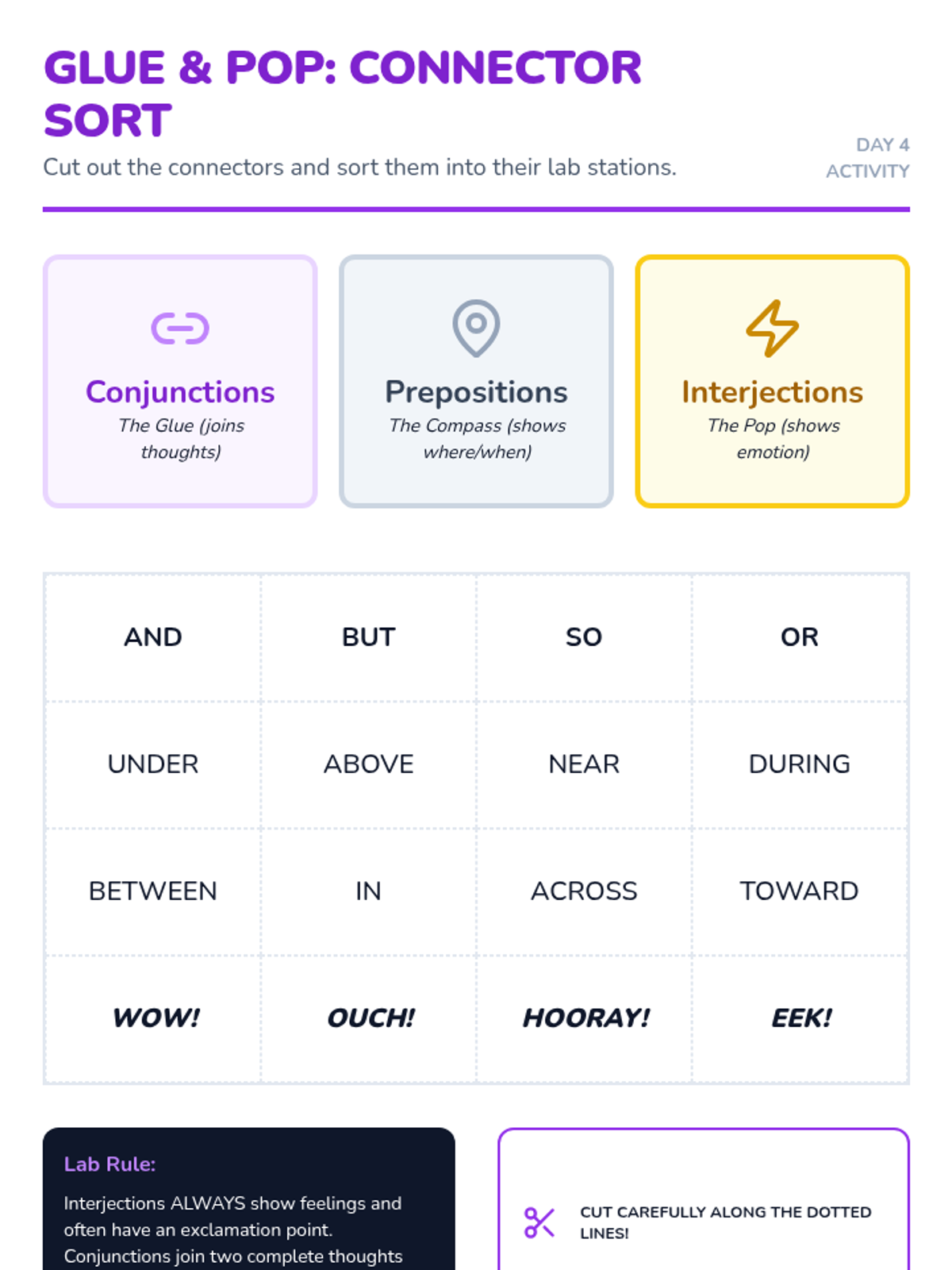
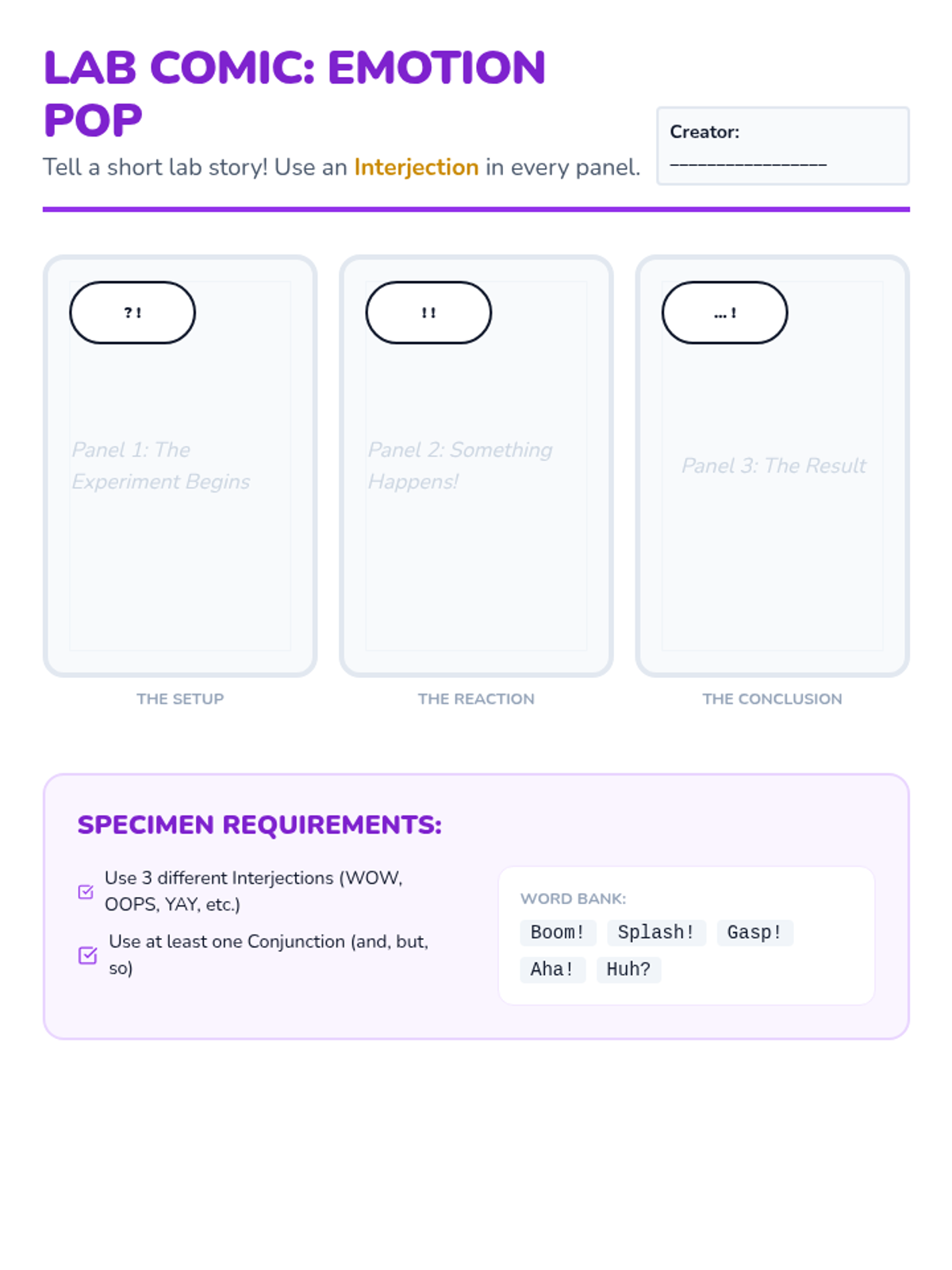
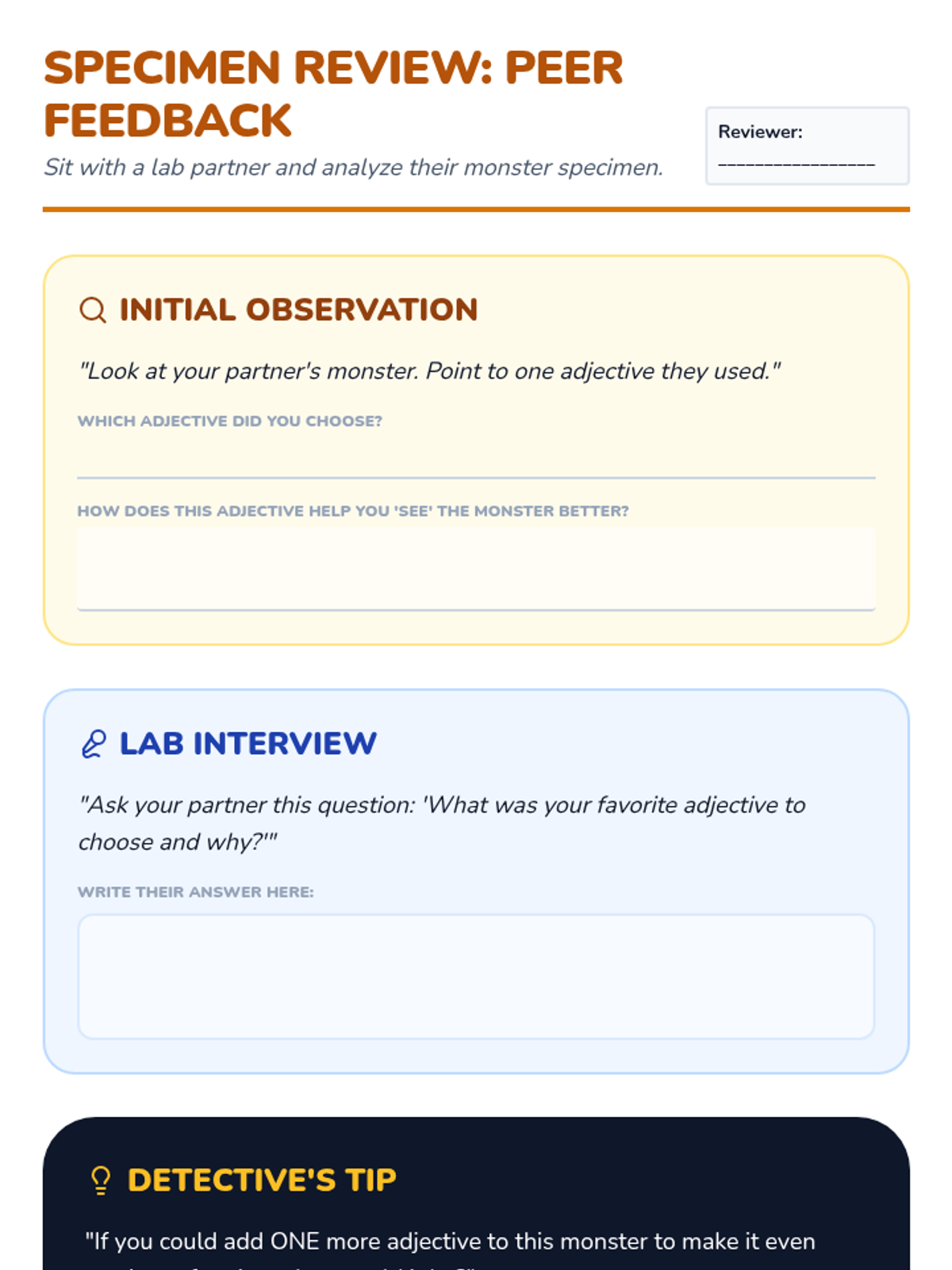
Connect ideas and express terror (or excitement) using Prepositions, Conjunctions, and Interjections to bridge the gap between worlds.
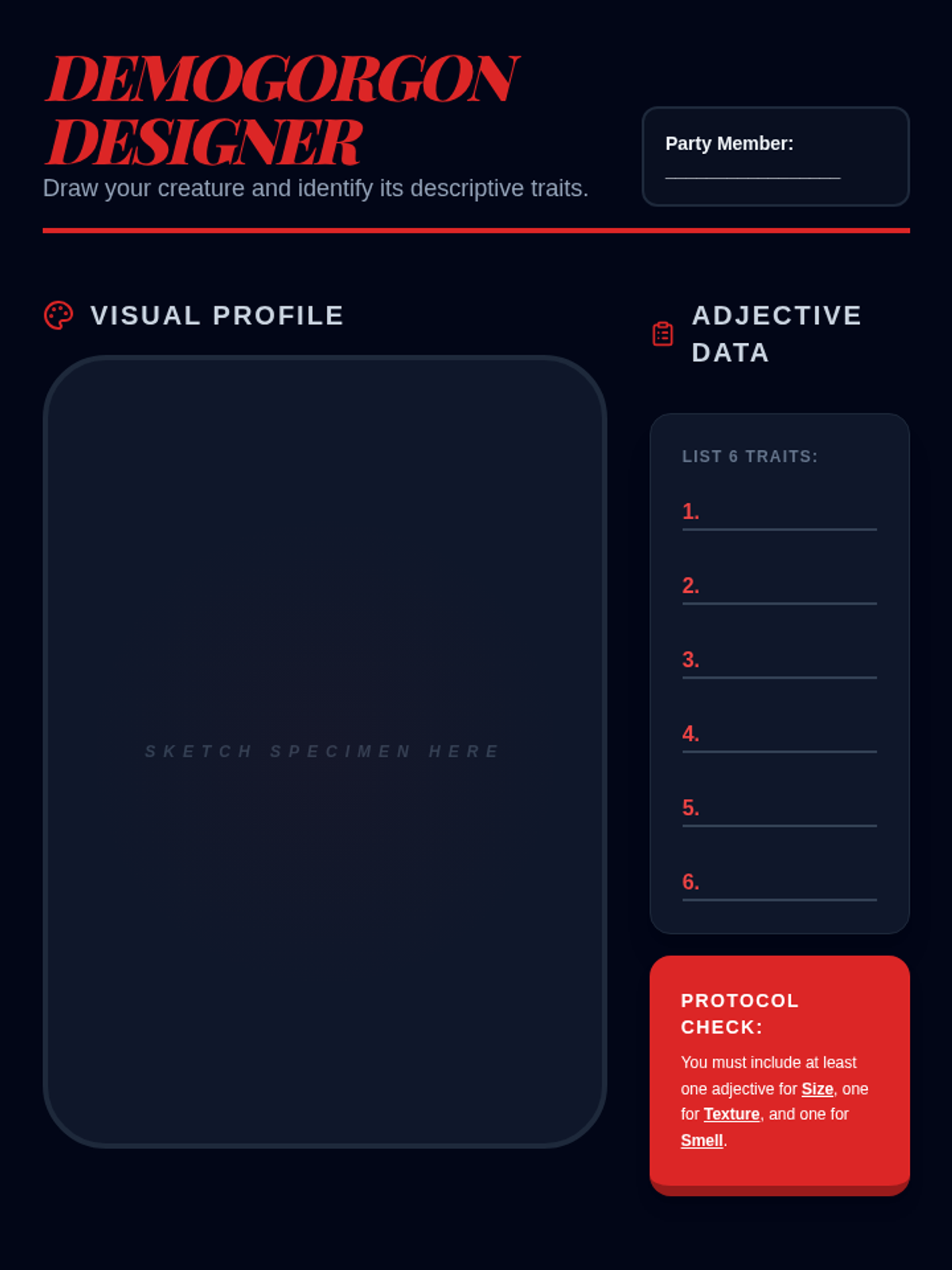
Use Adjectives to describe the mysterious creatures of the Upside Down in a 'Demogorgon Designer' craftivity.
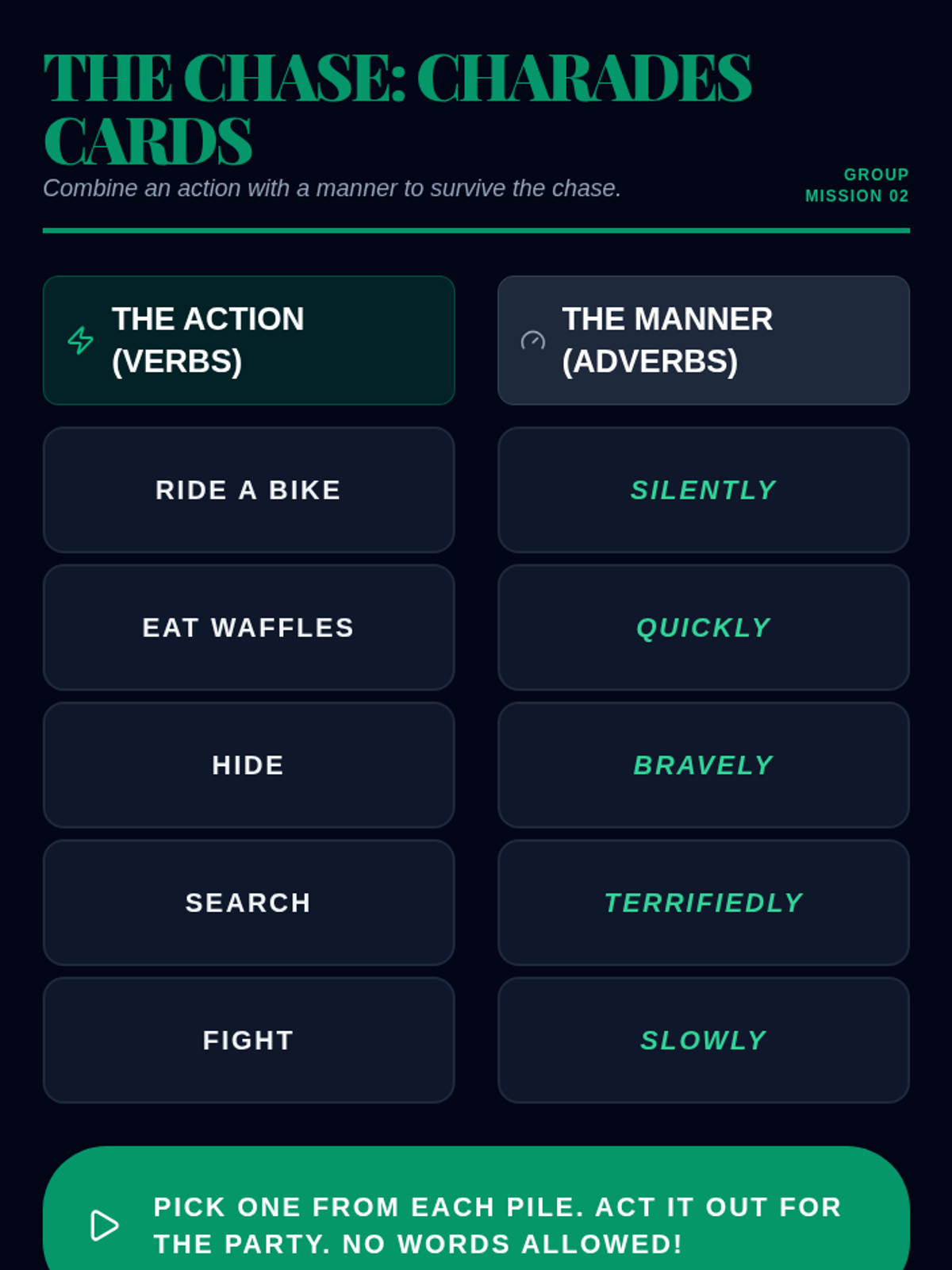
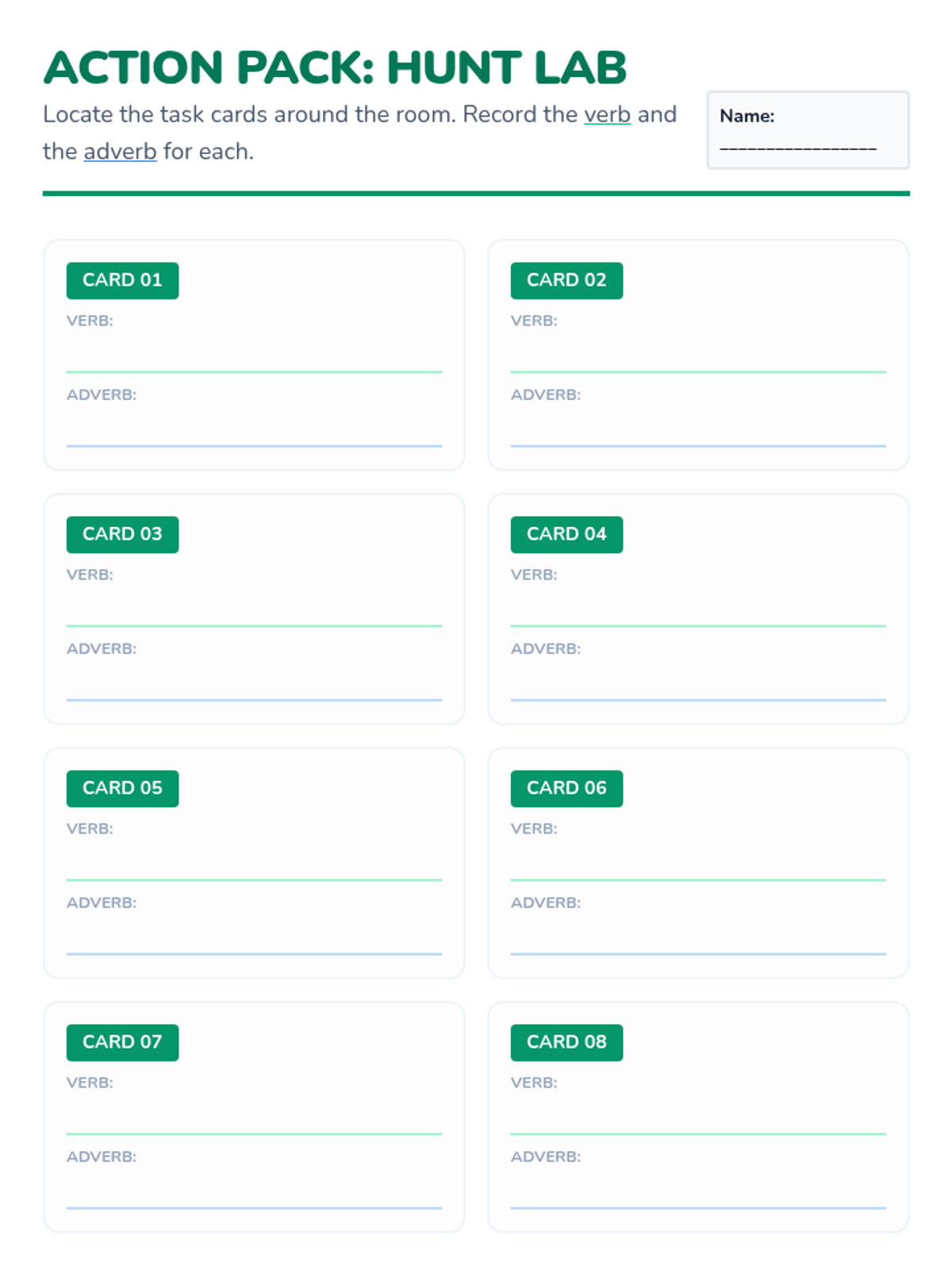
Charge through the streets of Hawkins using Verbs and Adverbs to describe high-stakes actions and intense moments.
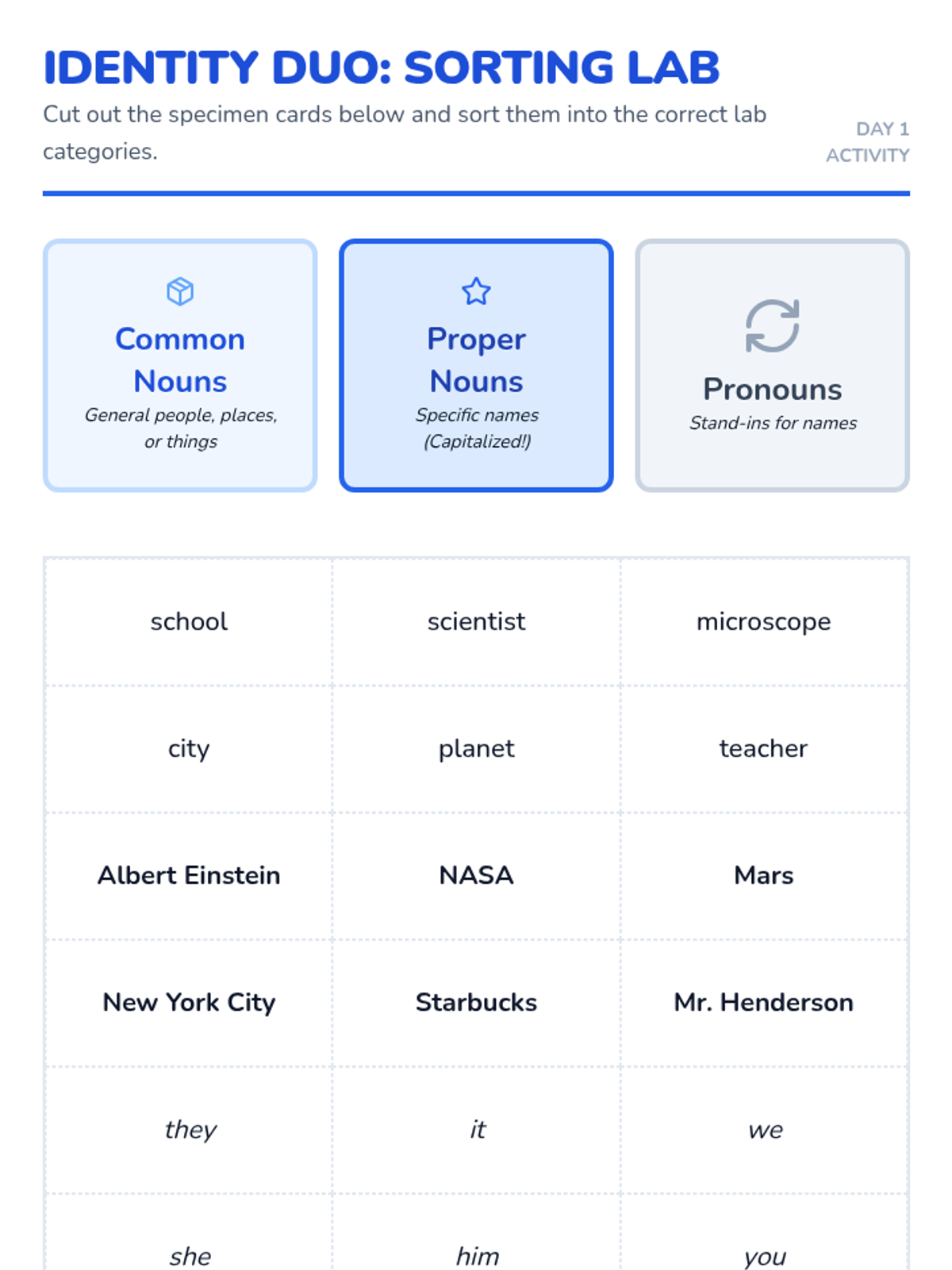
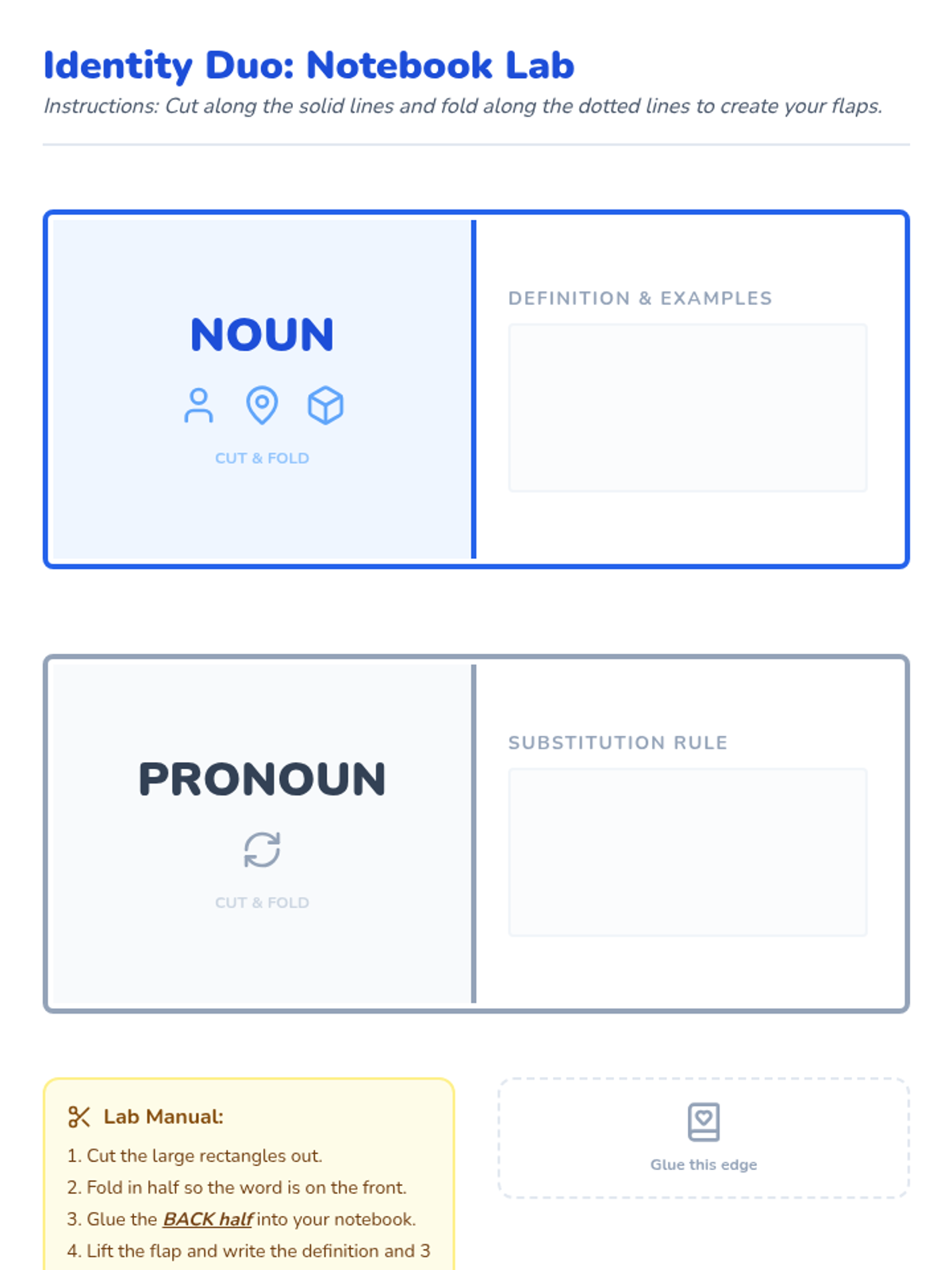
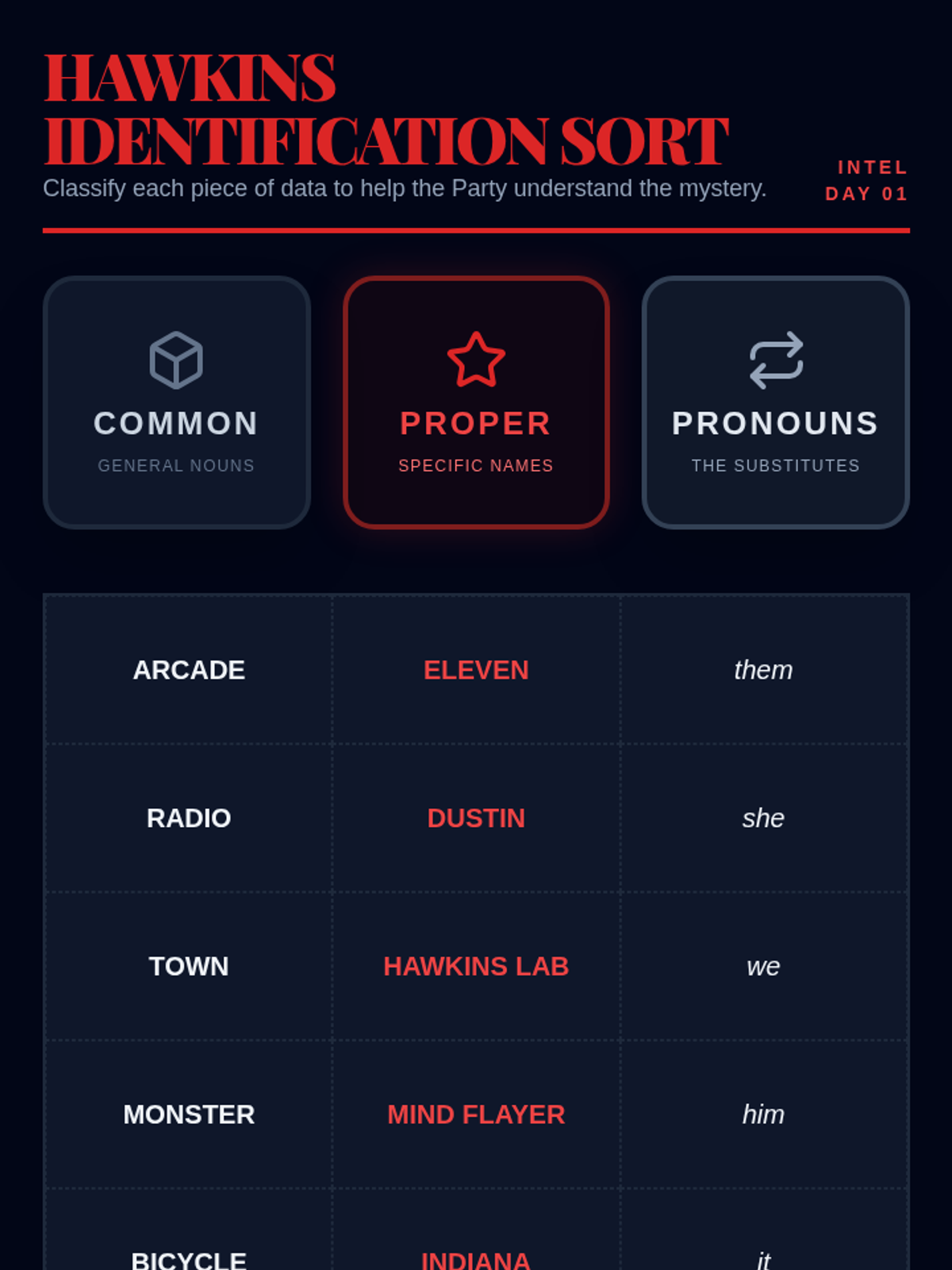
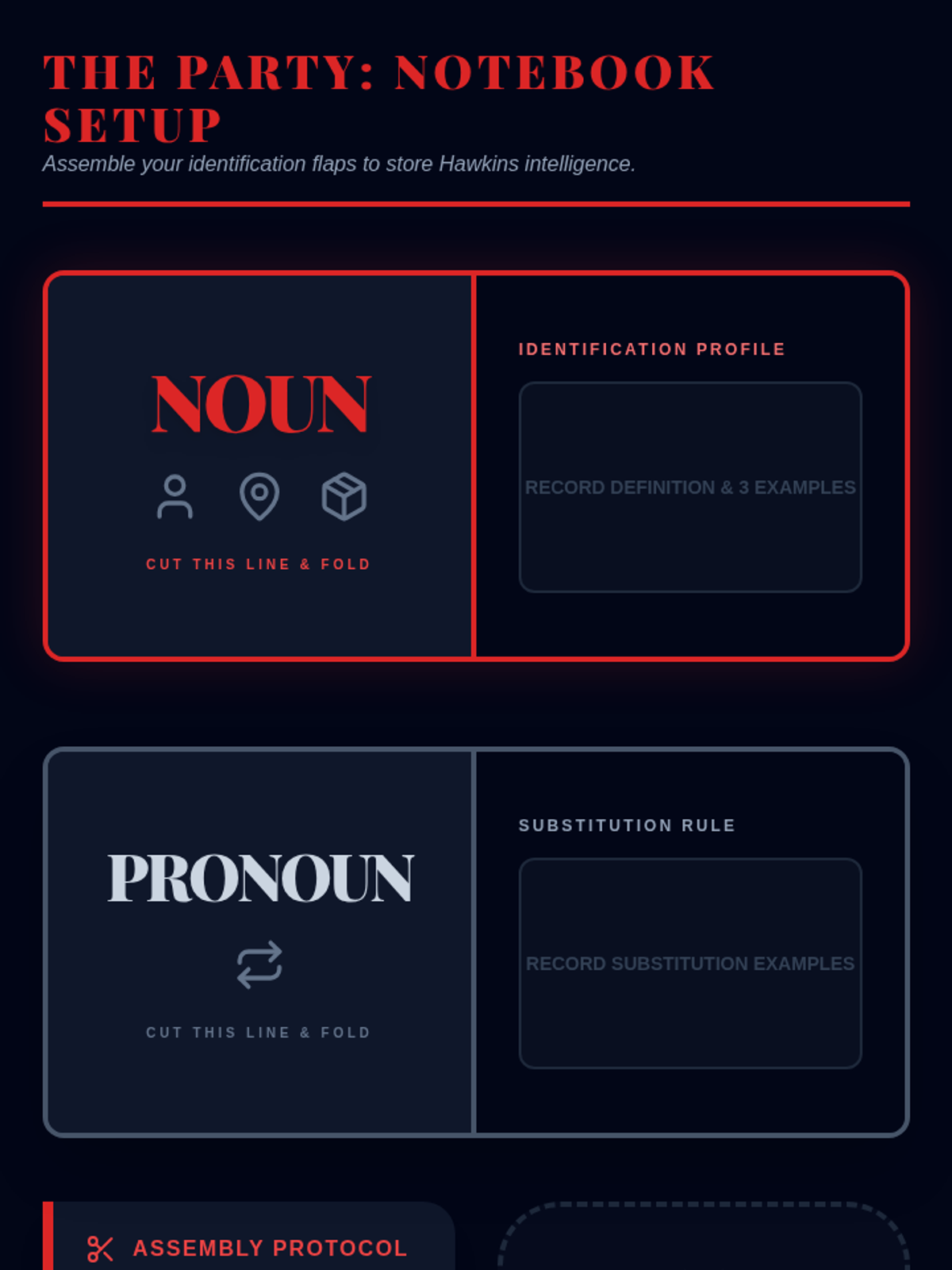
Meet the characters (Nouns) and their stand-ins (Pronouns) in this Hawkins-themed introduction to the building blocks of language.
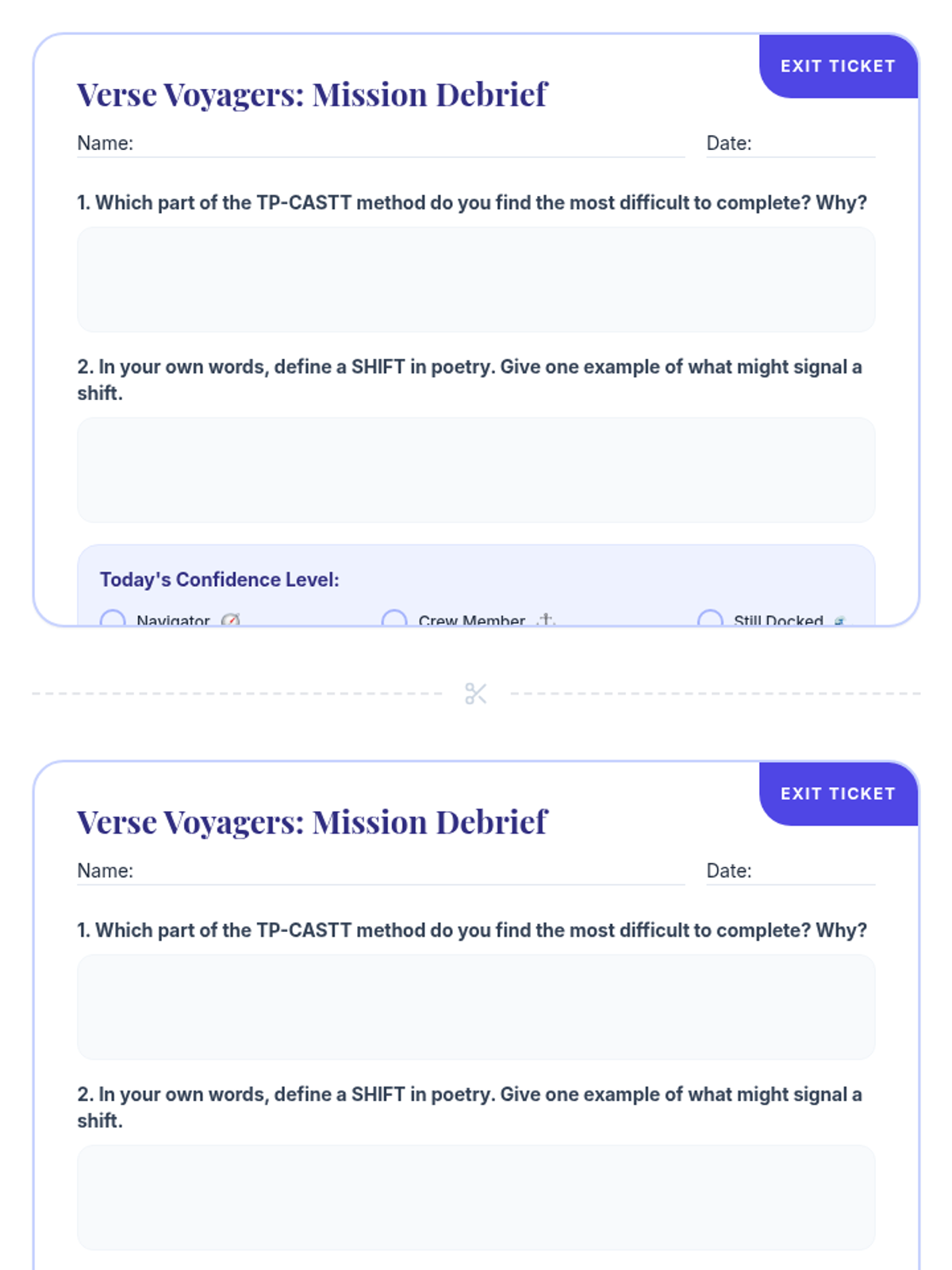
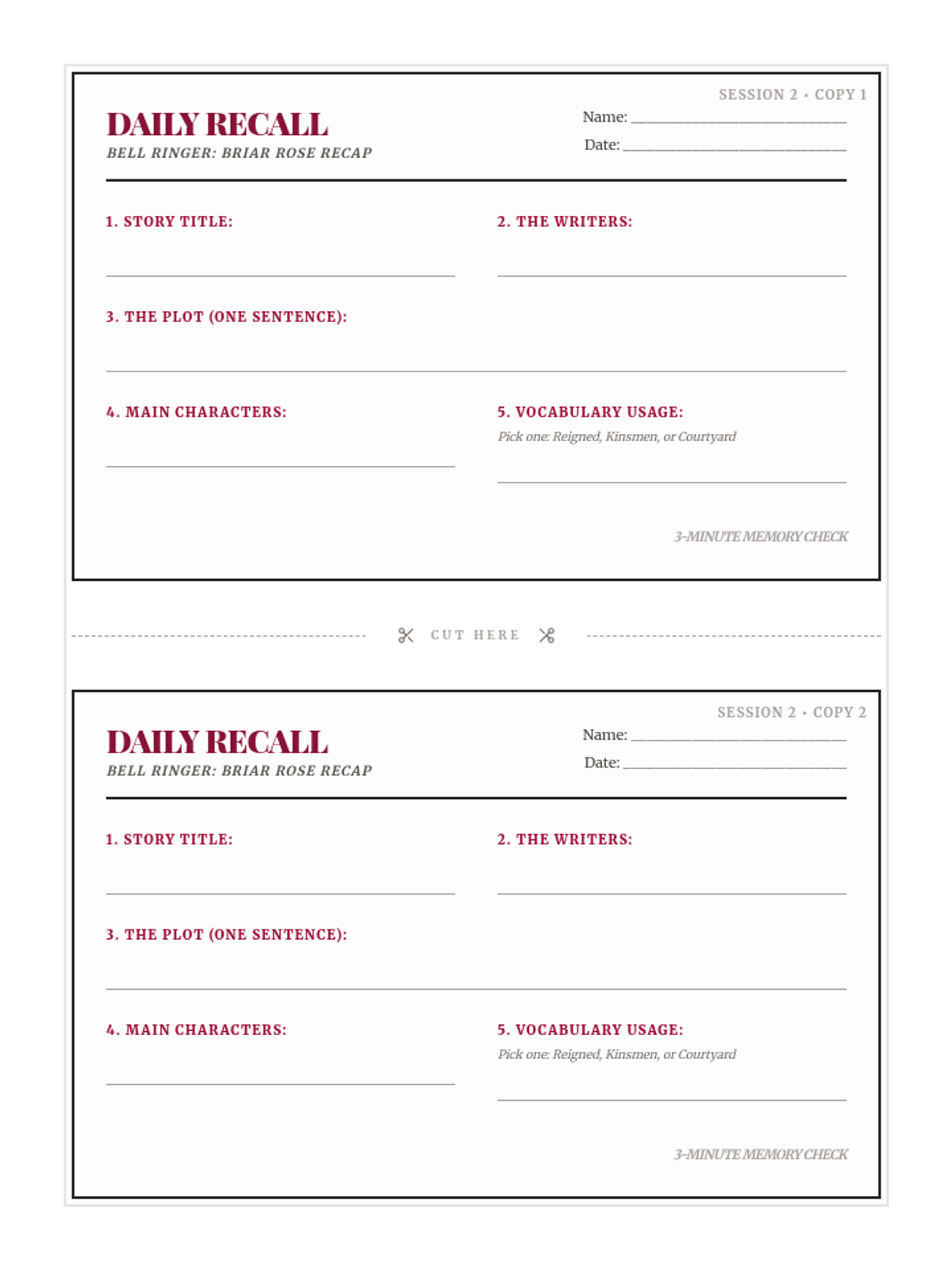
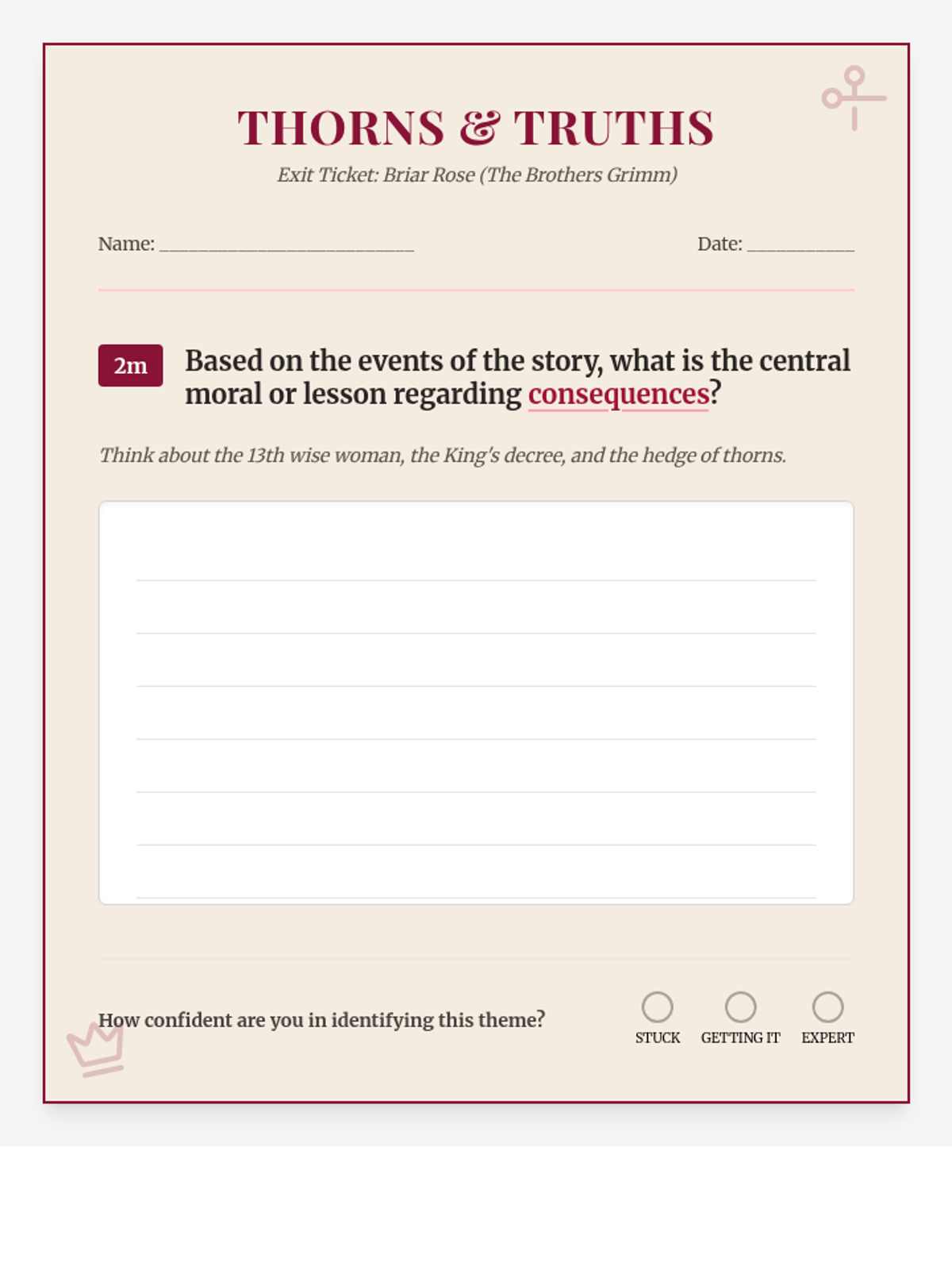
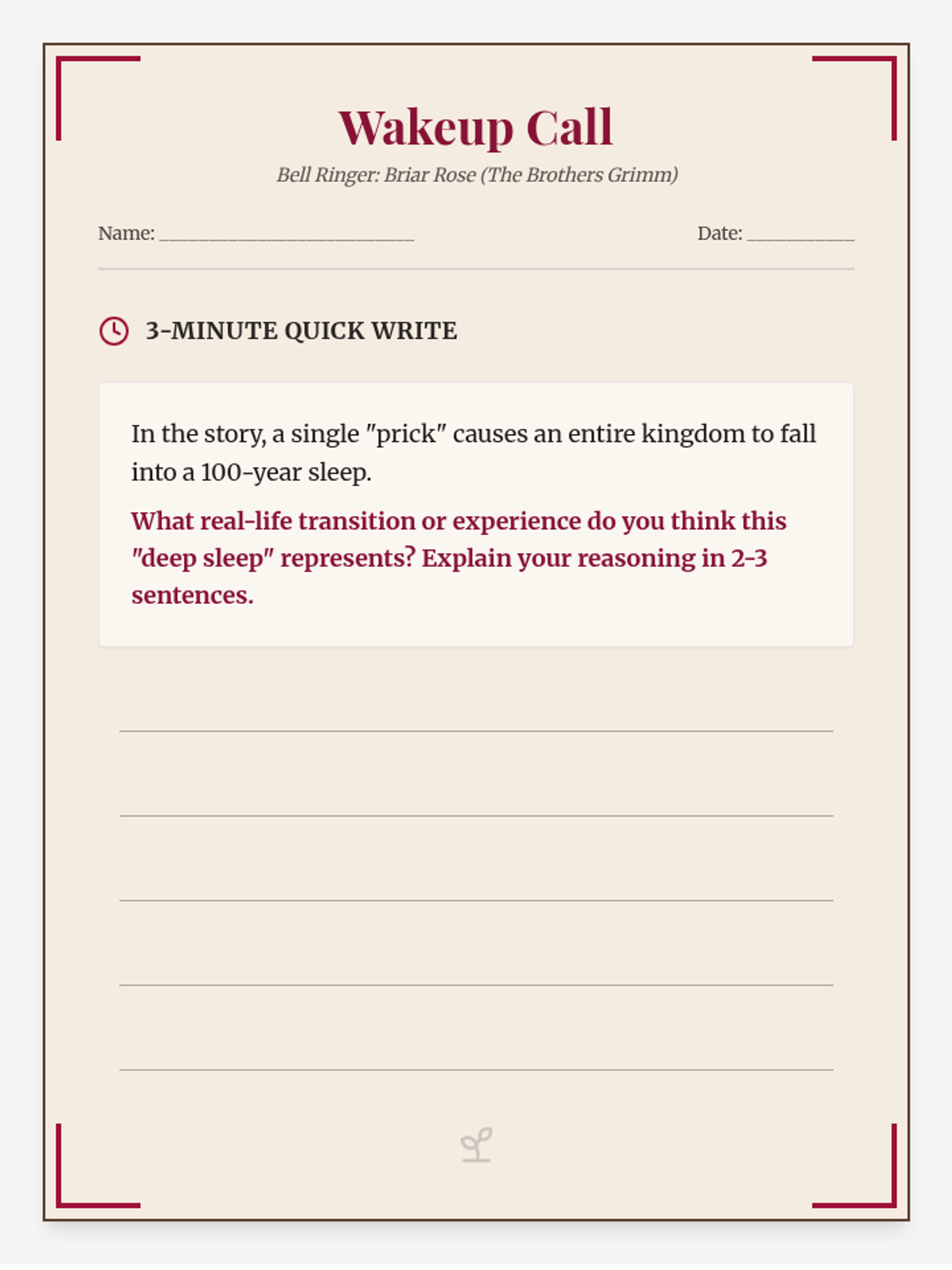
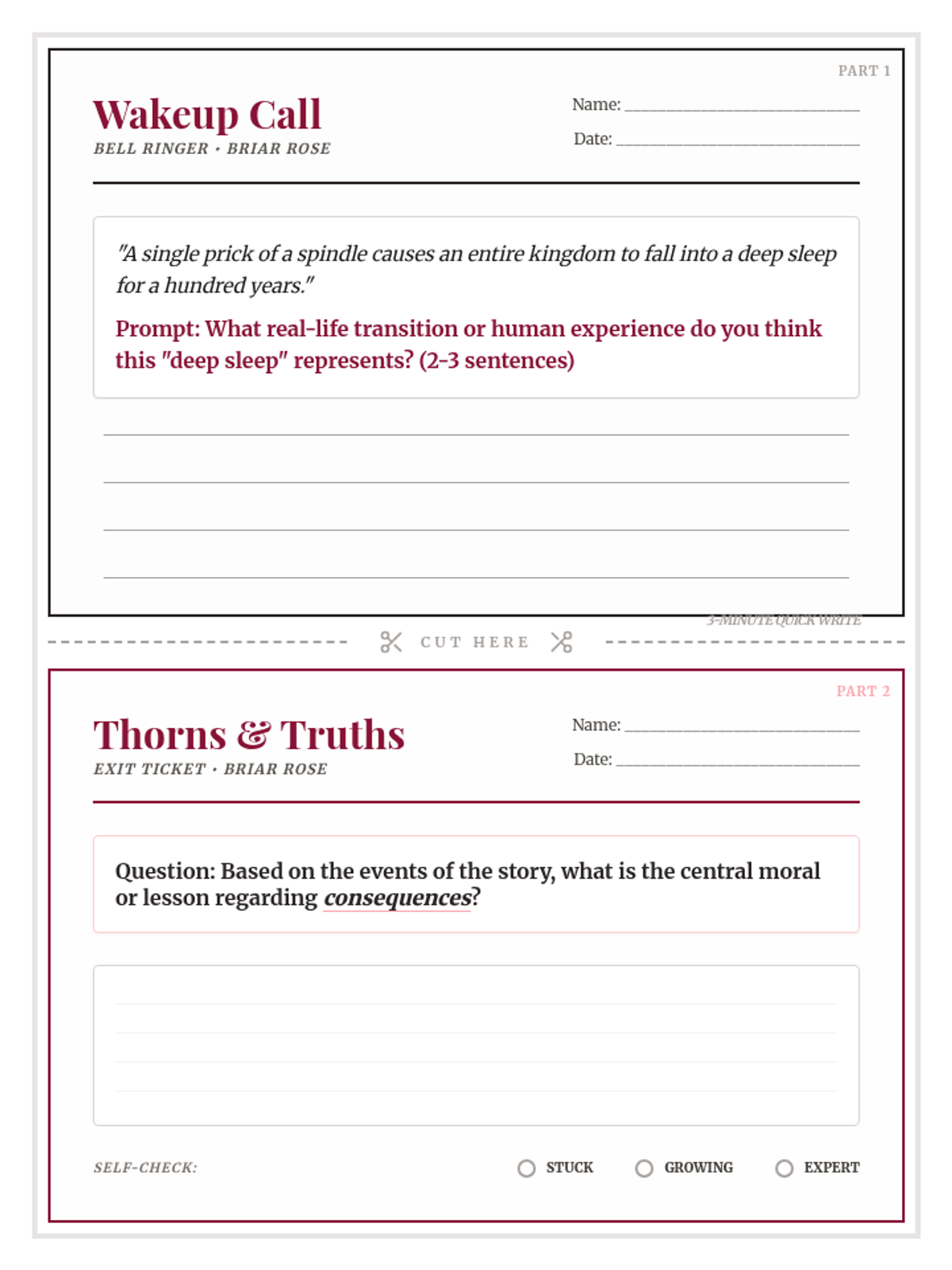
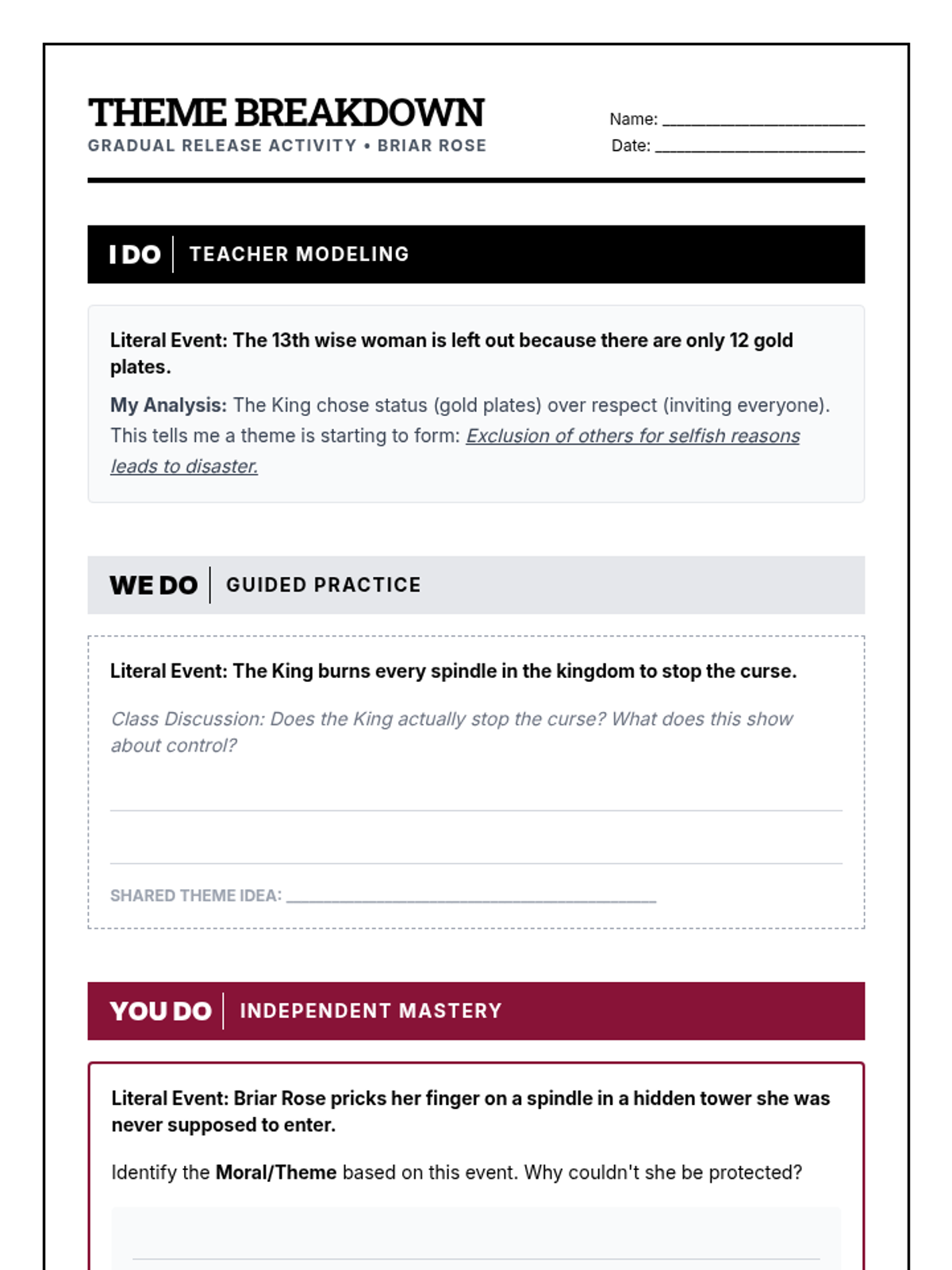
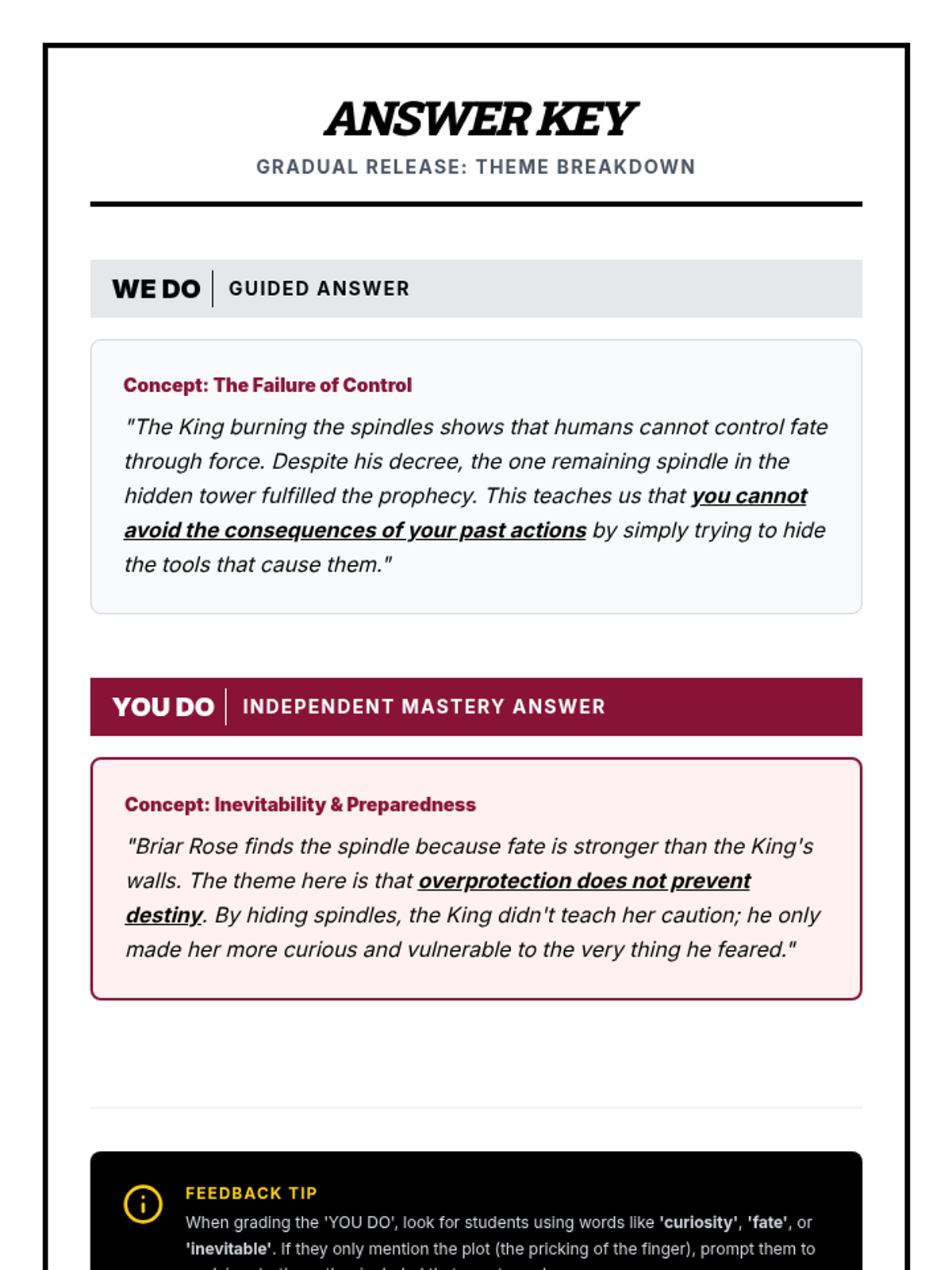
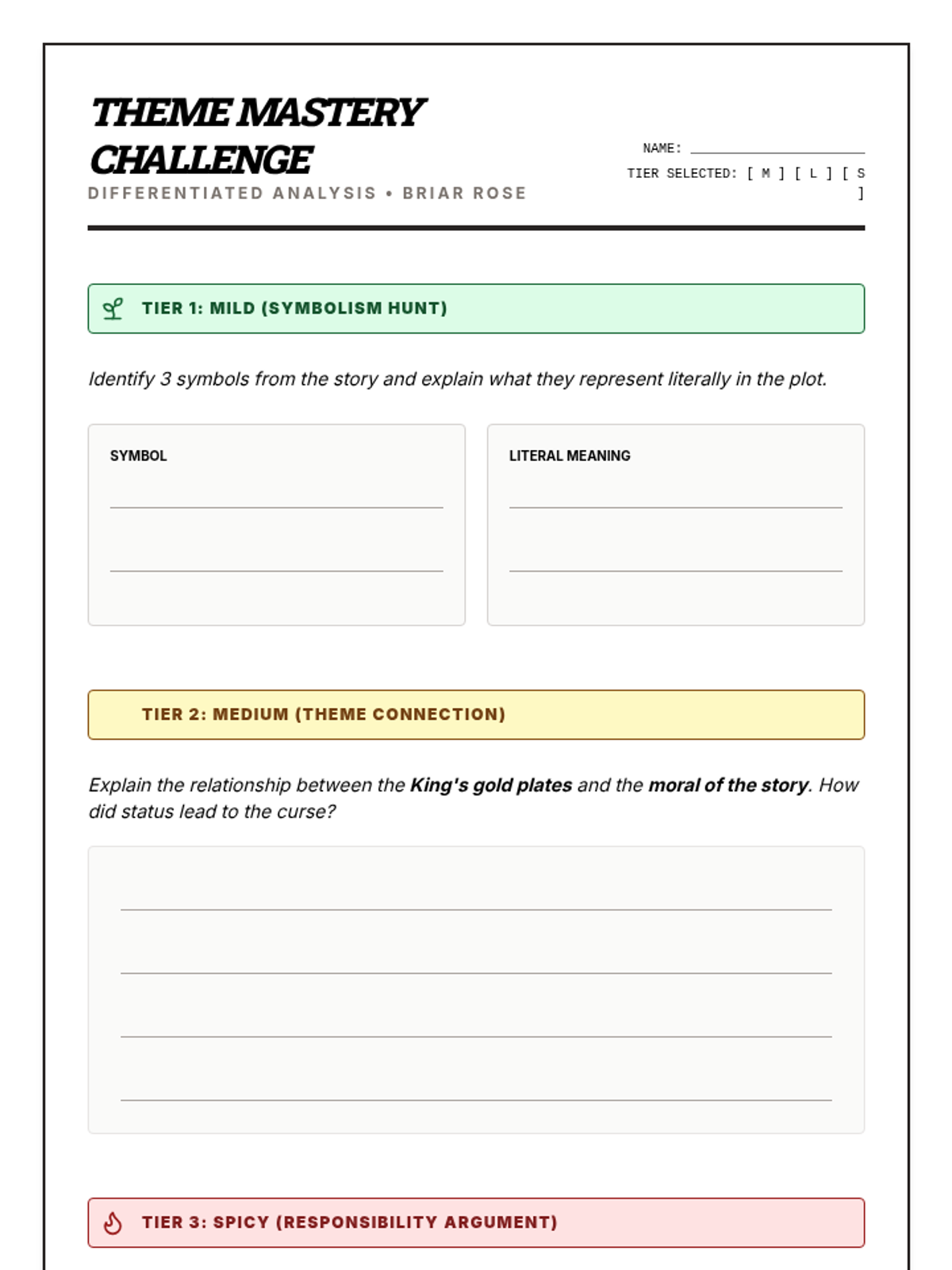
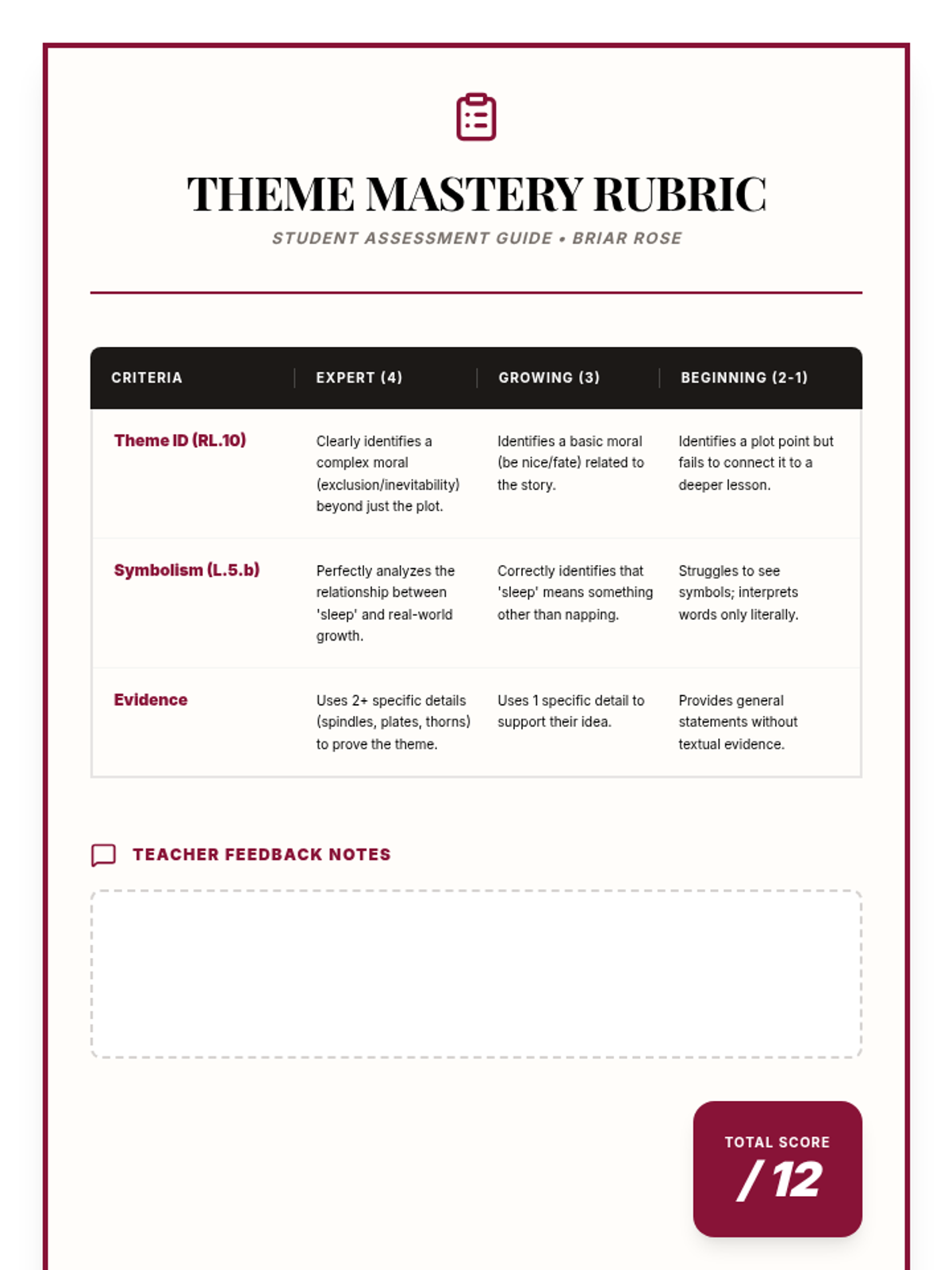
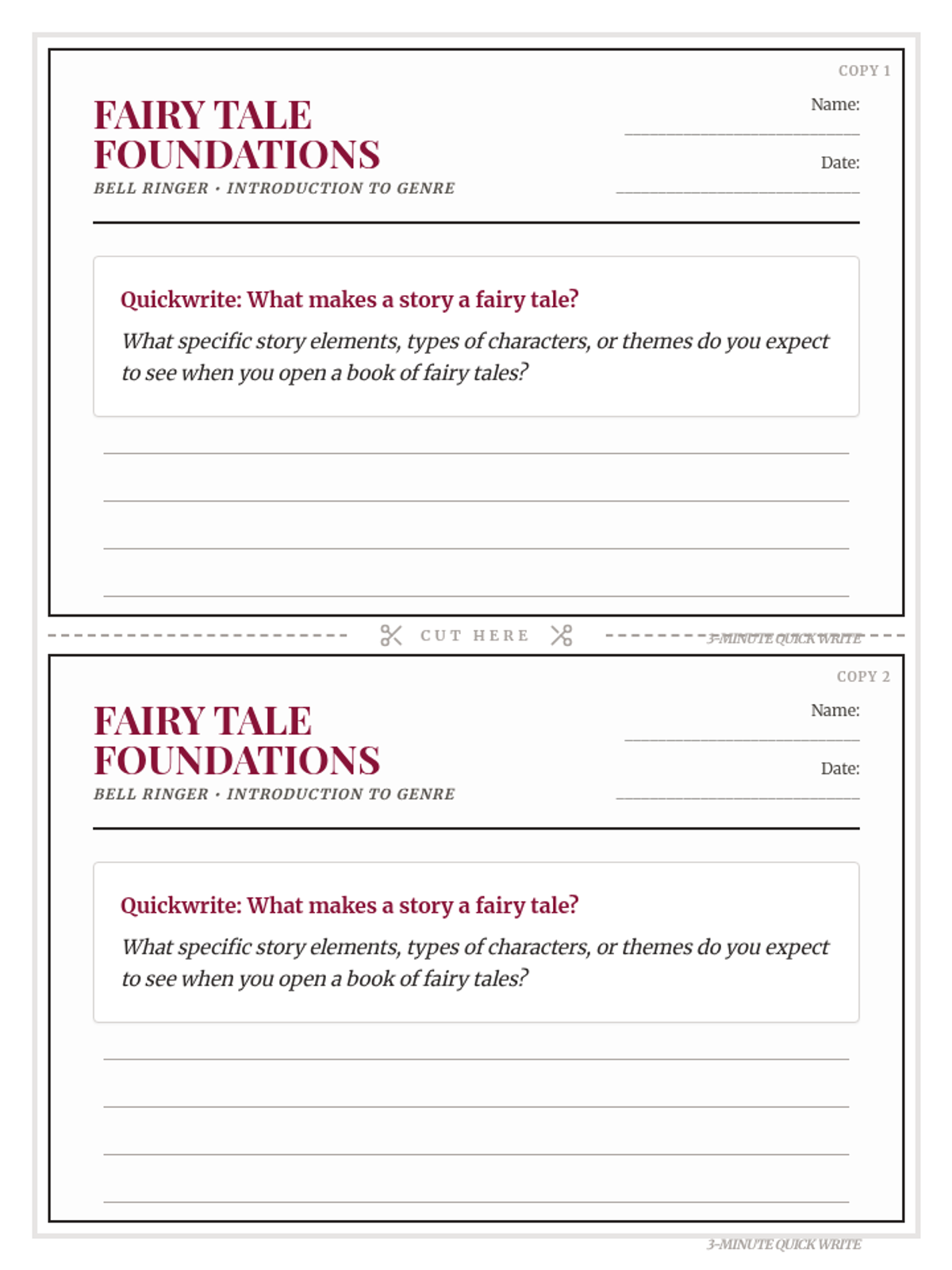
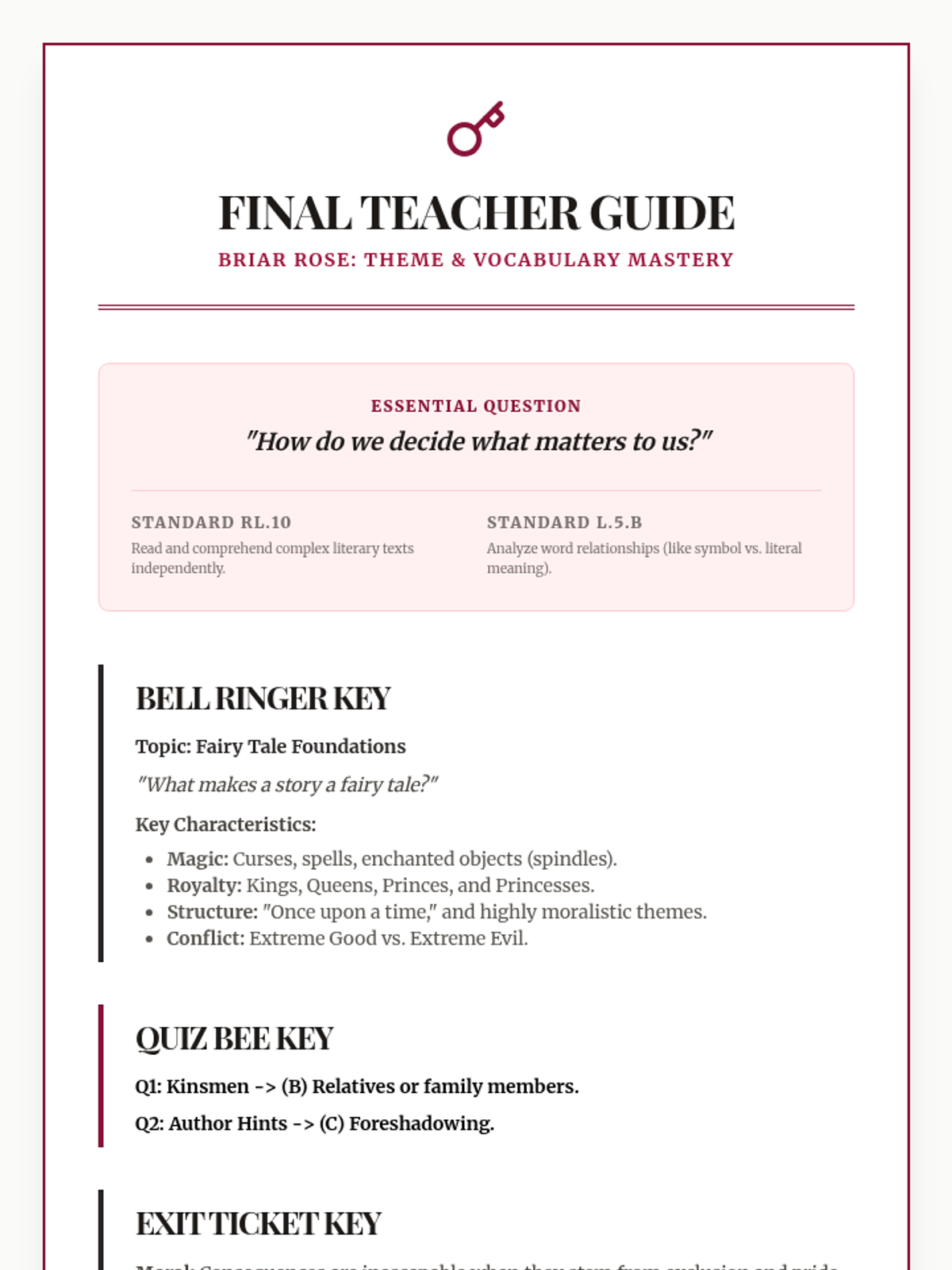
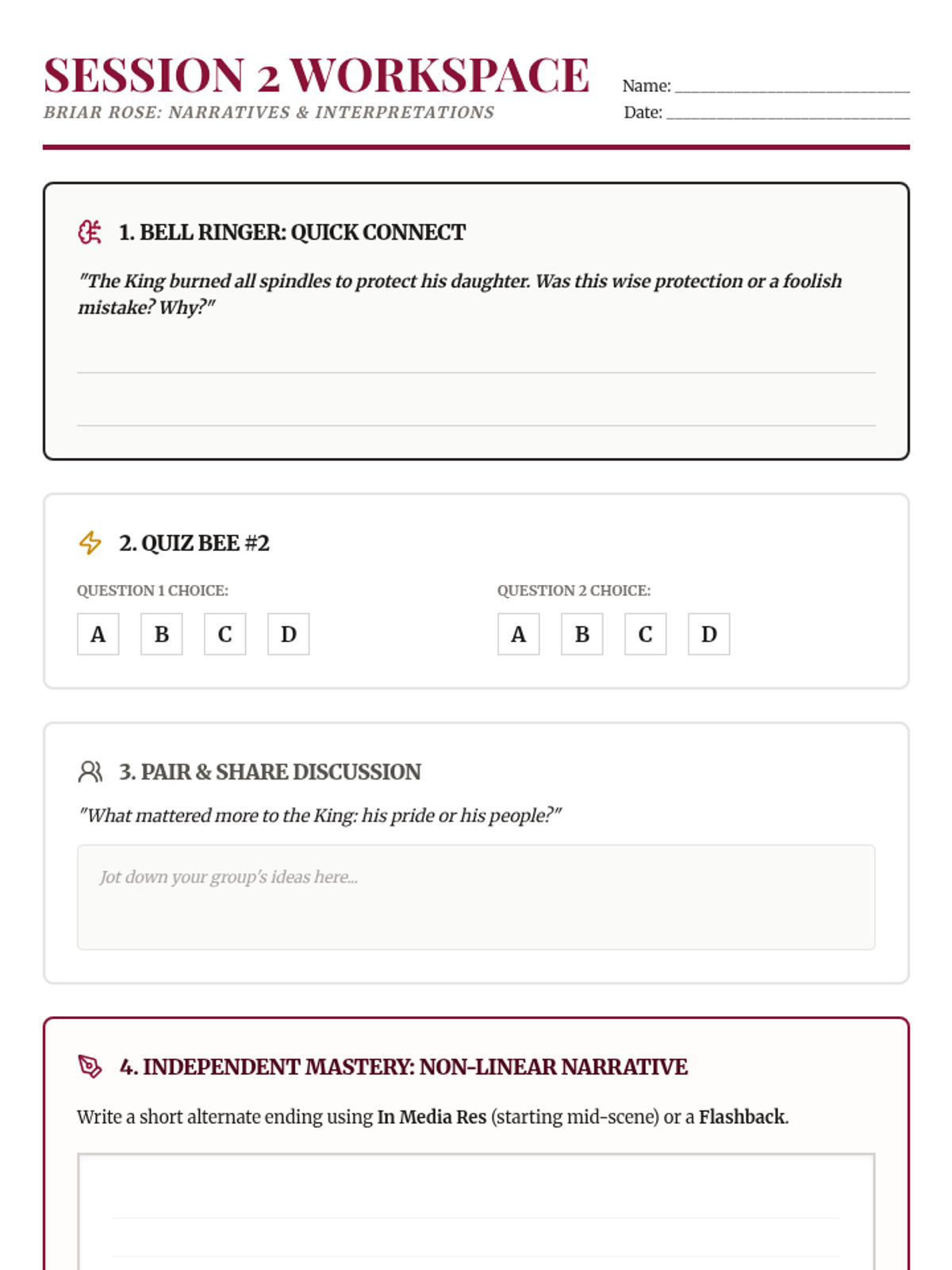
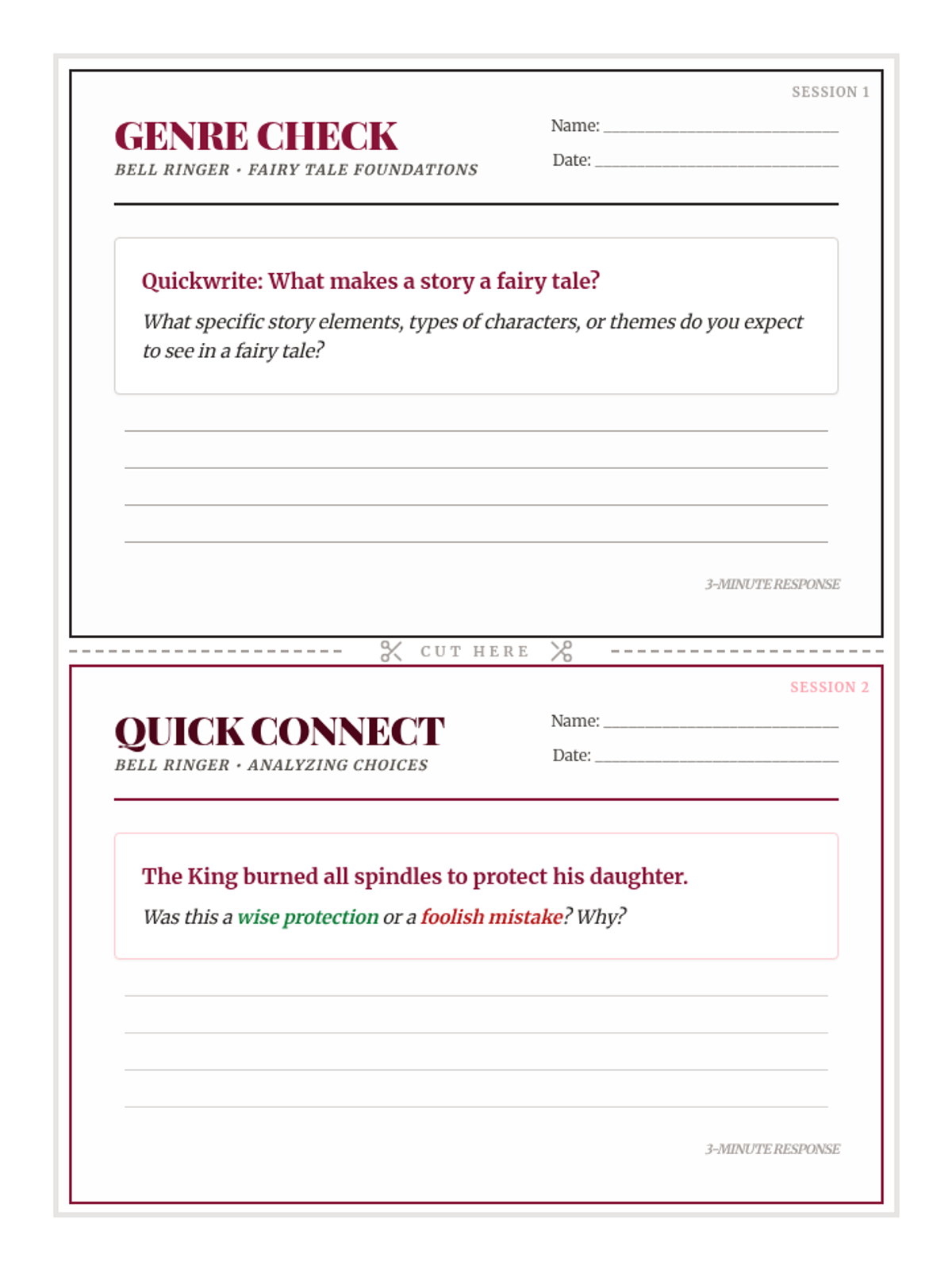
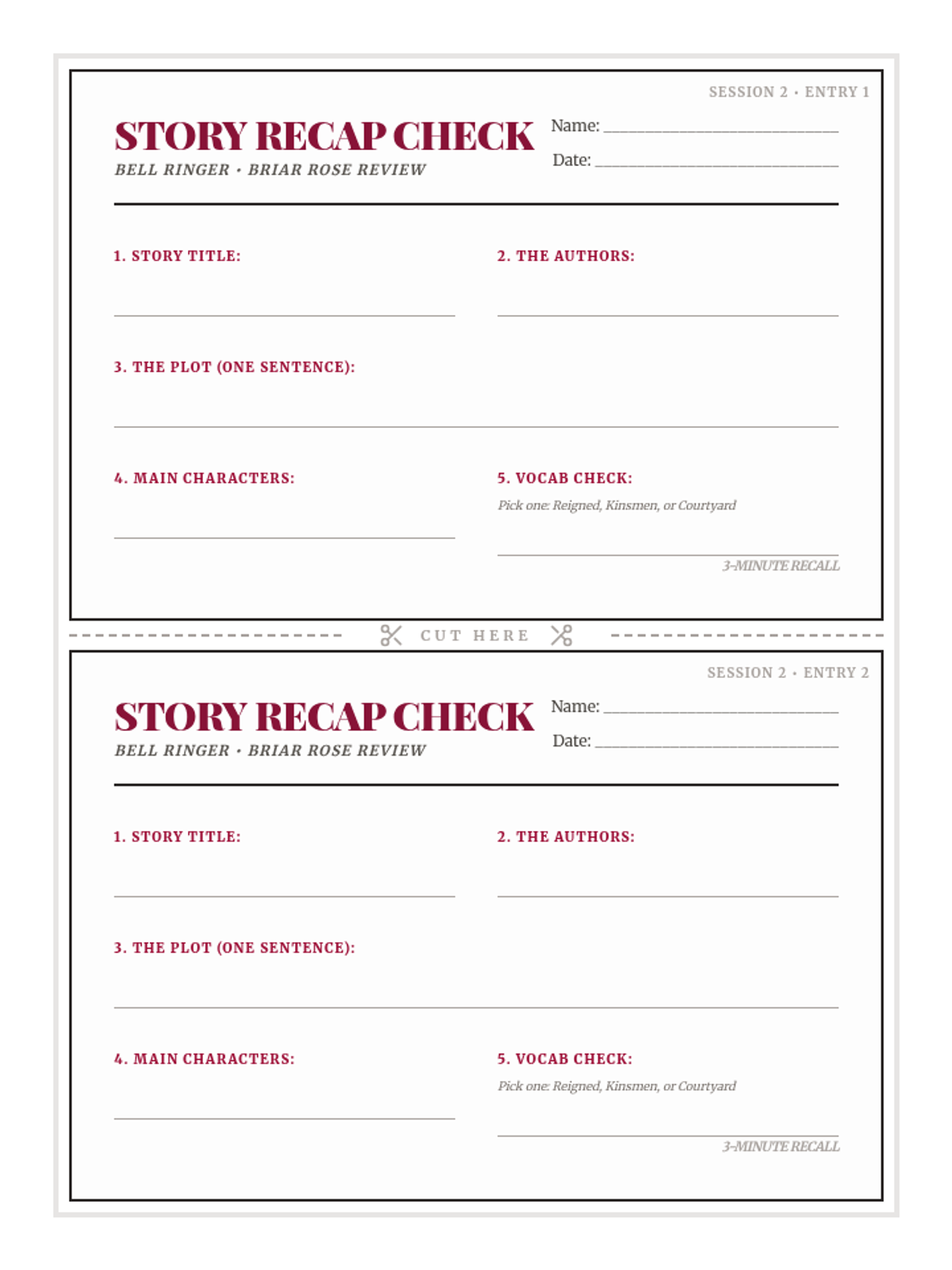
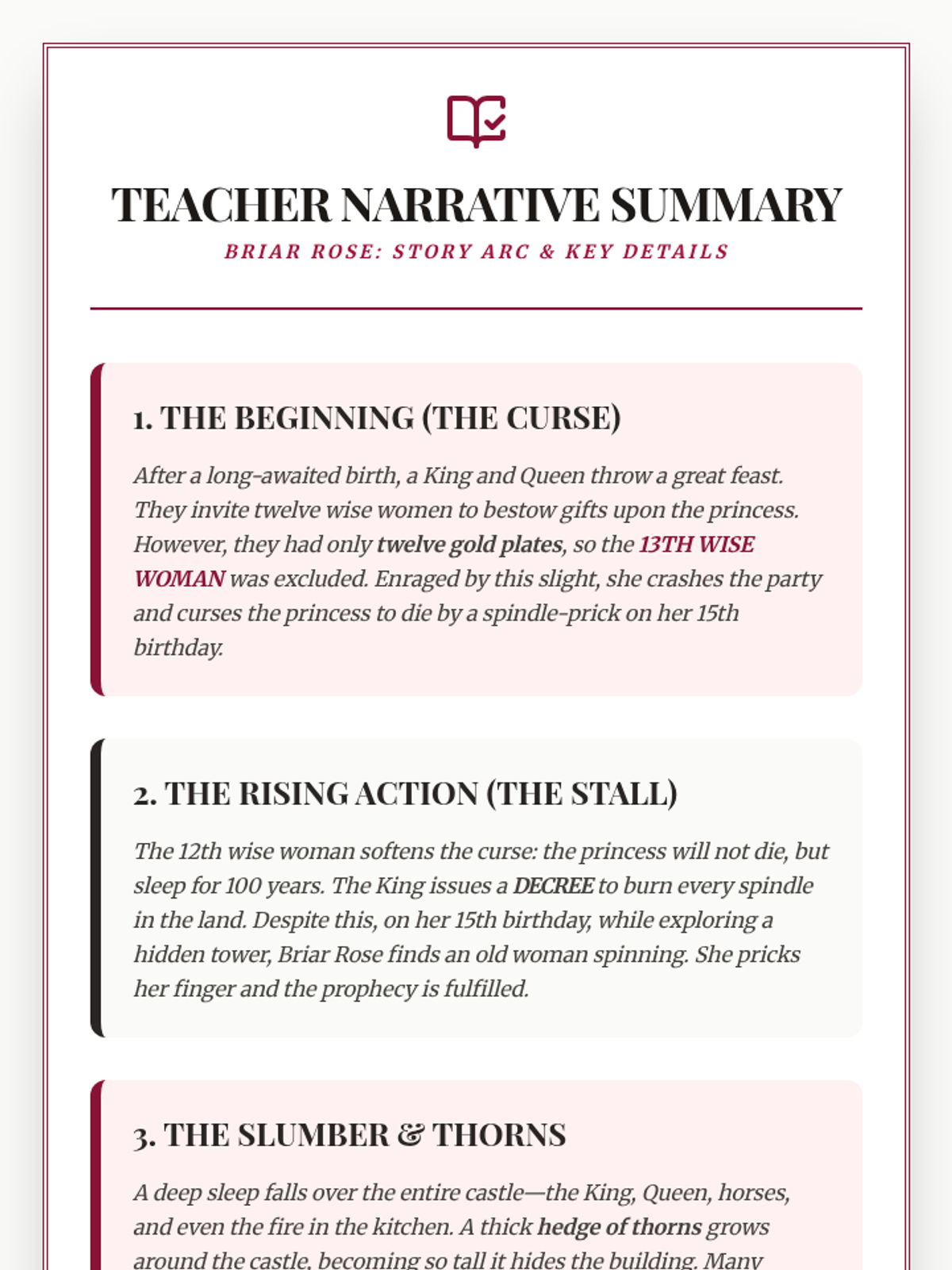
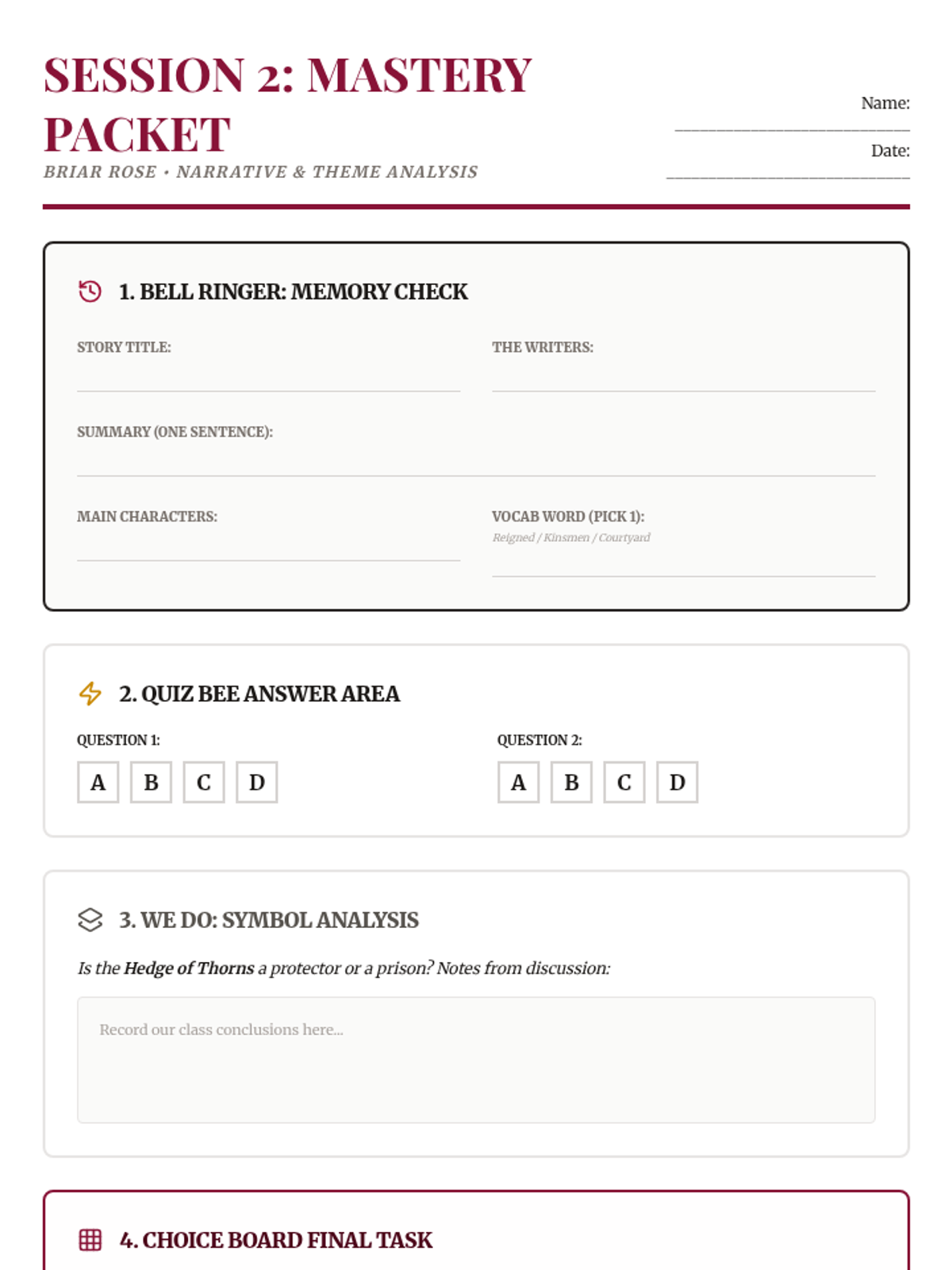
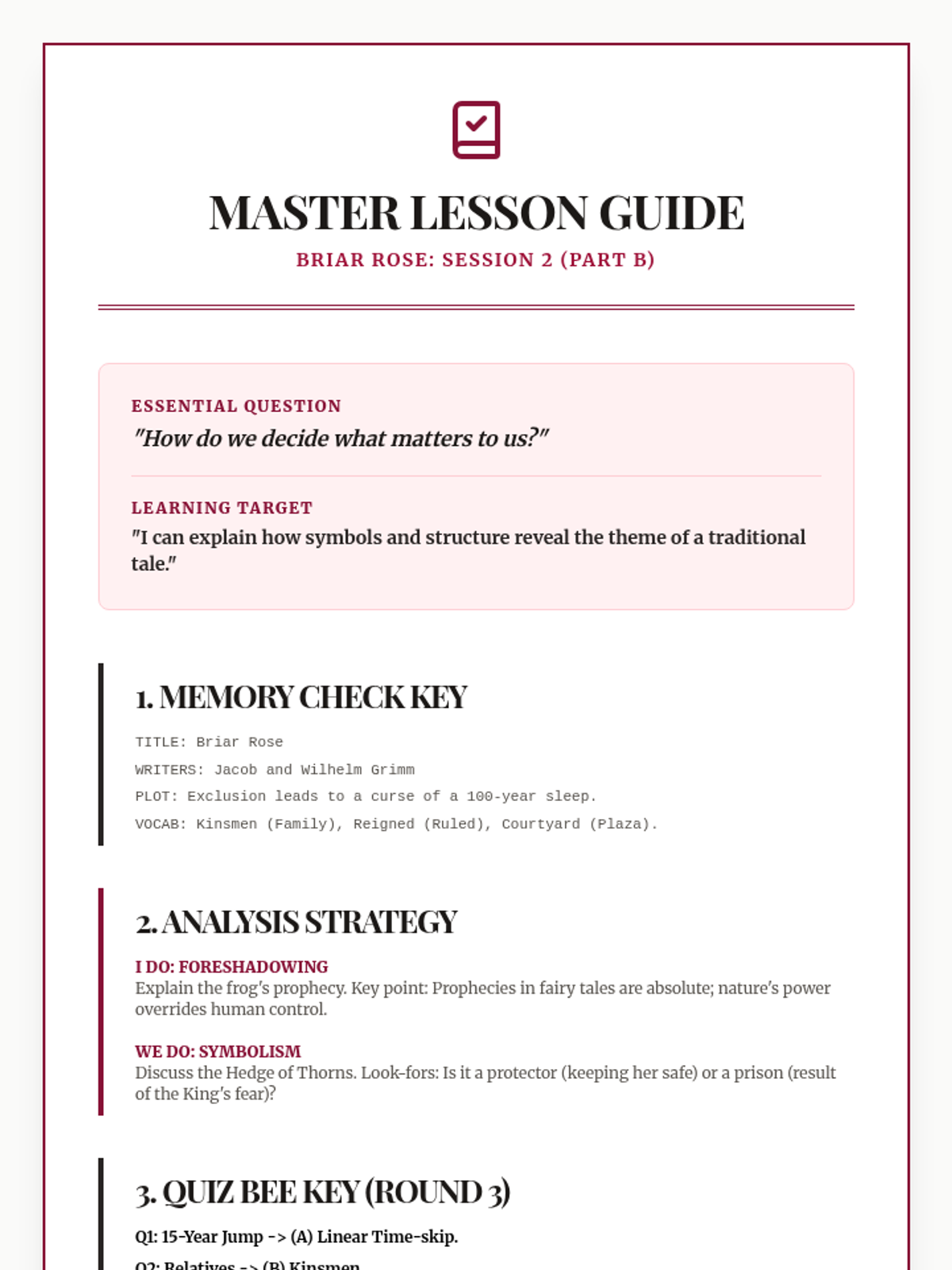
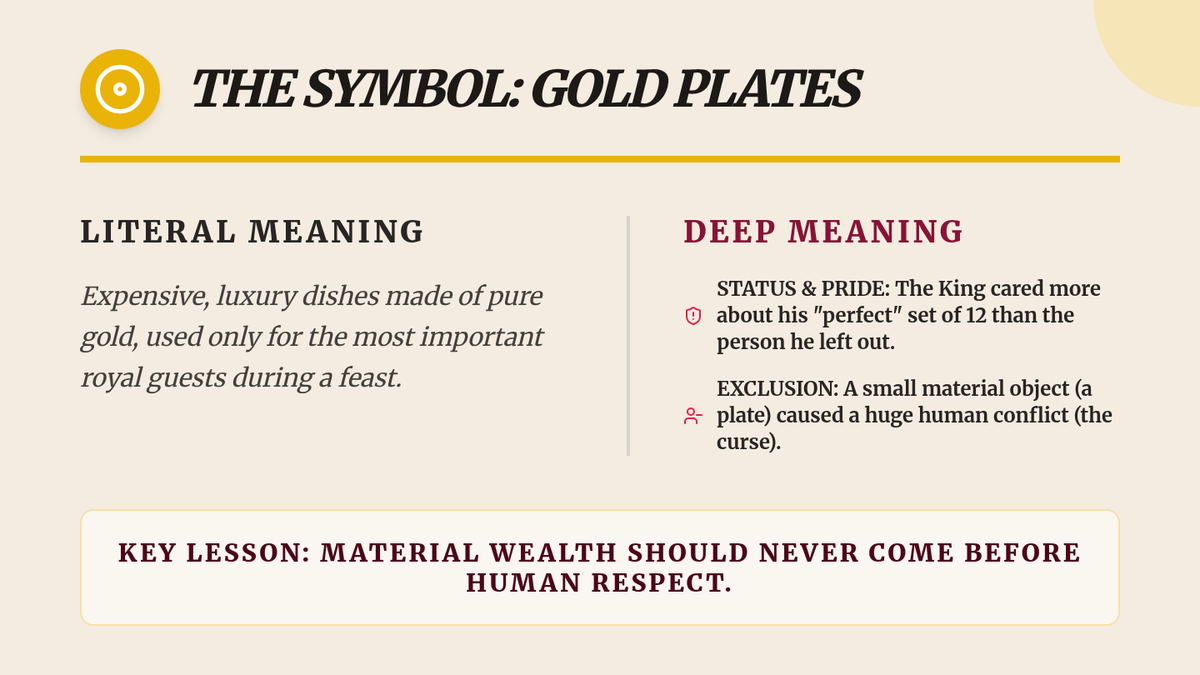
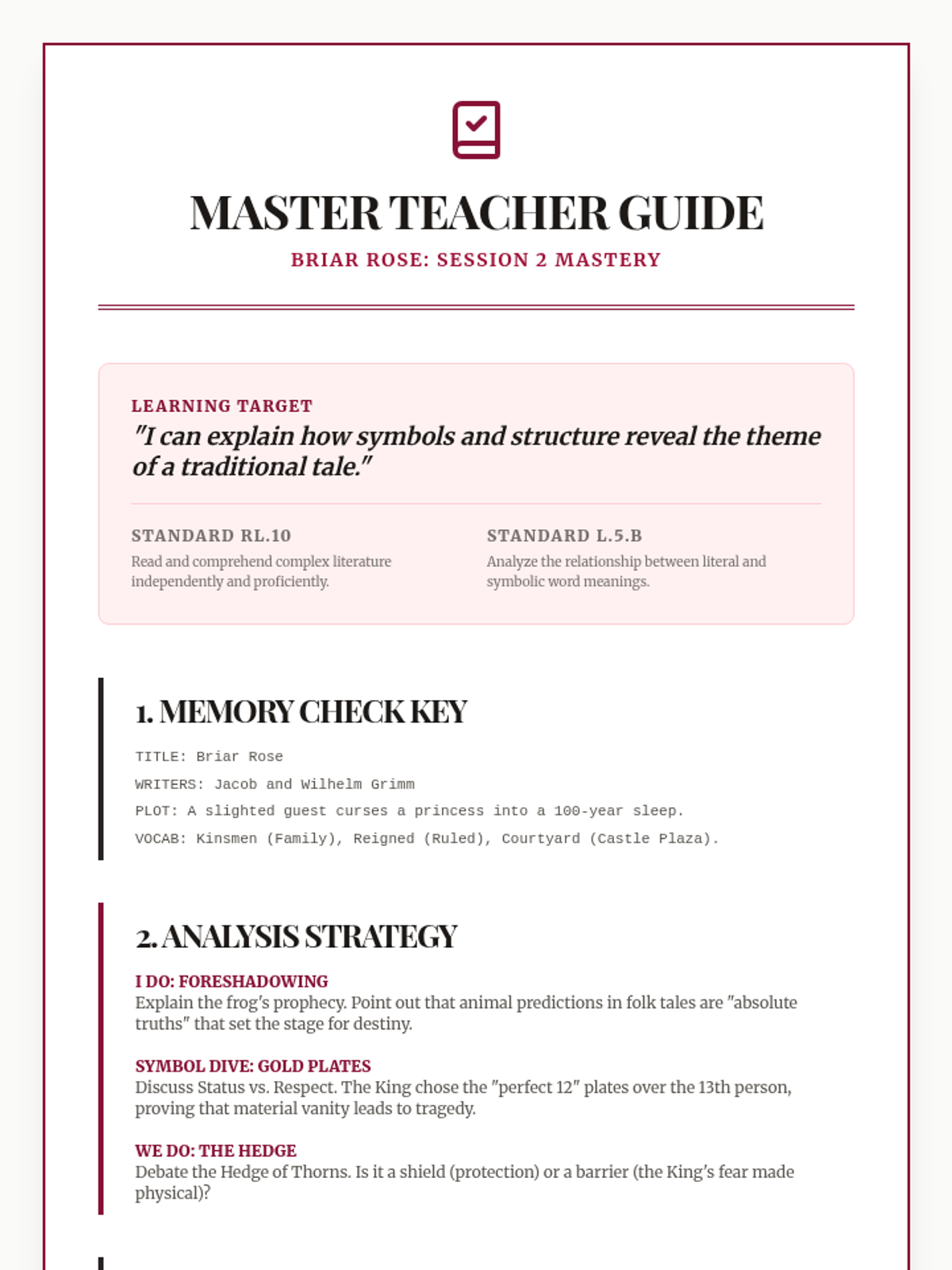
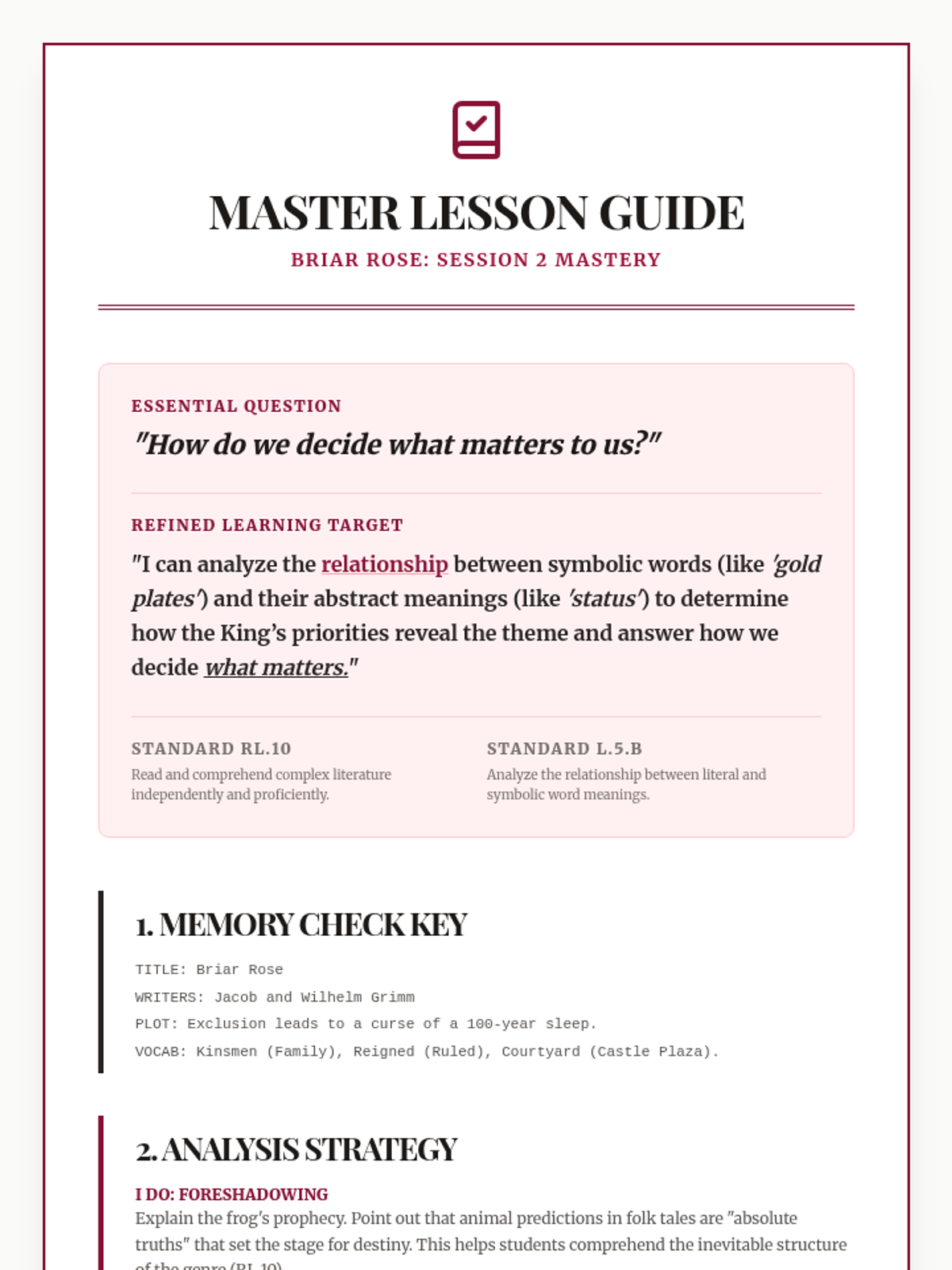
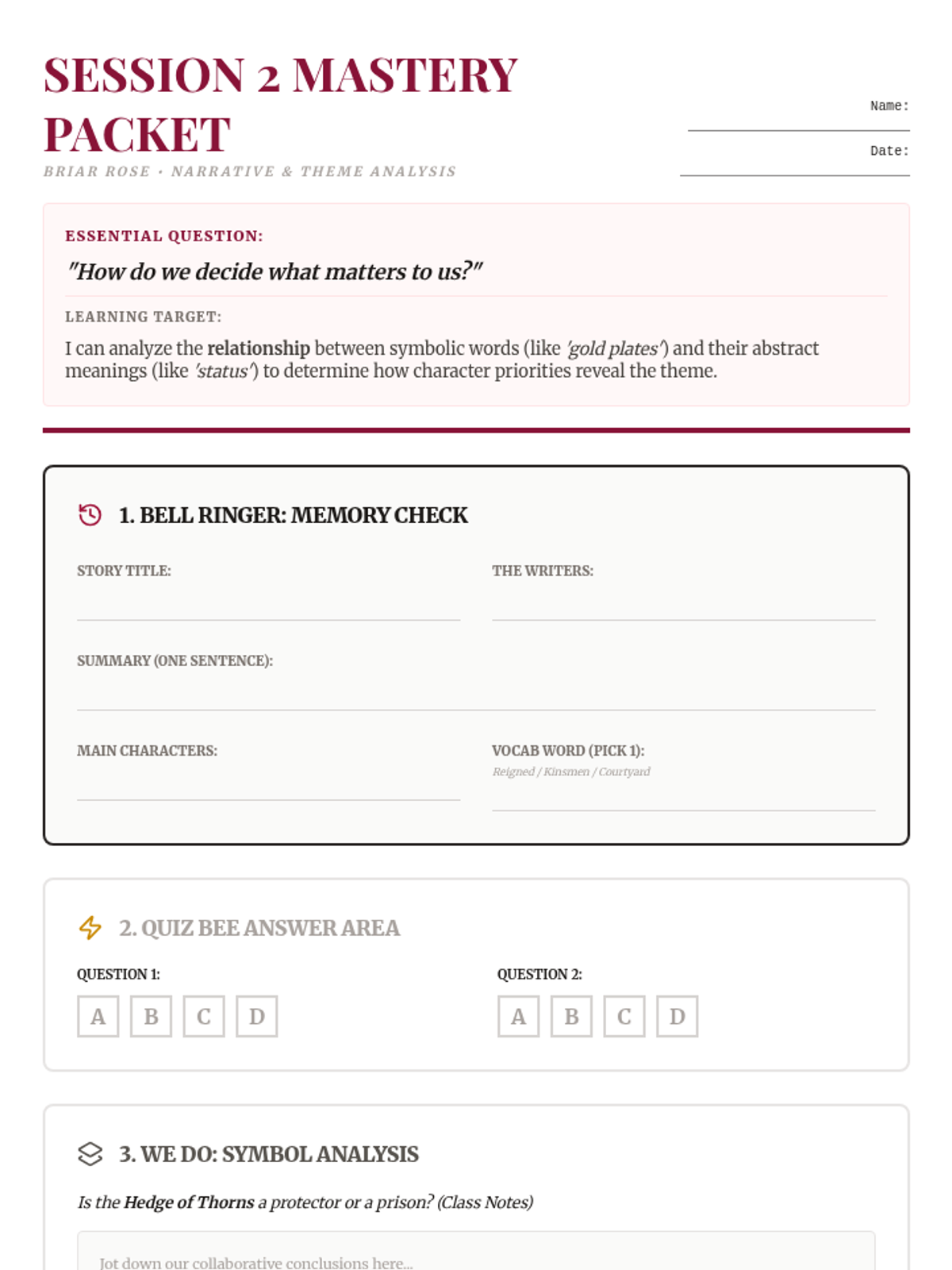
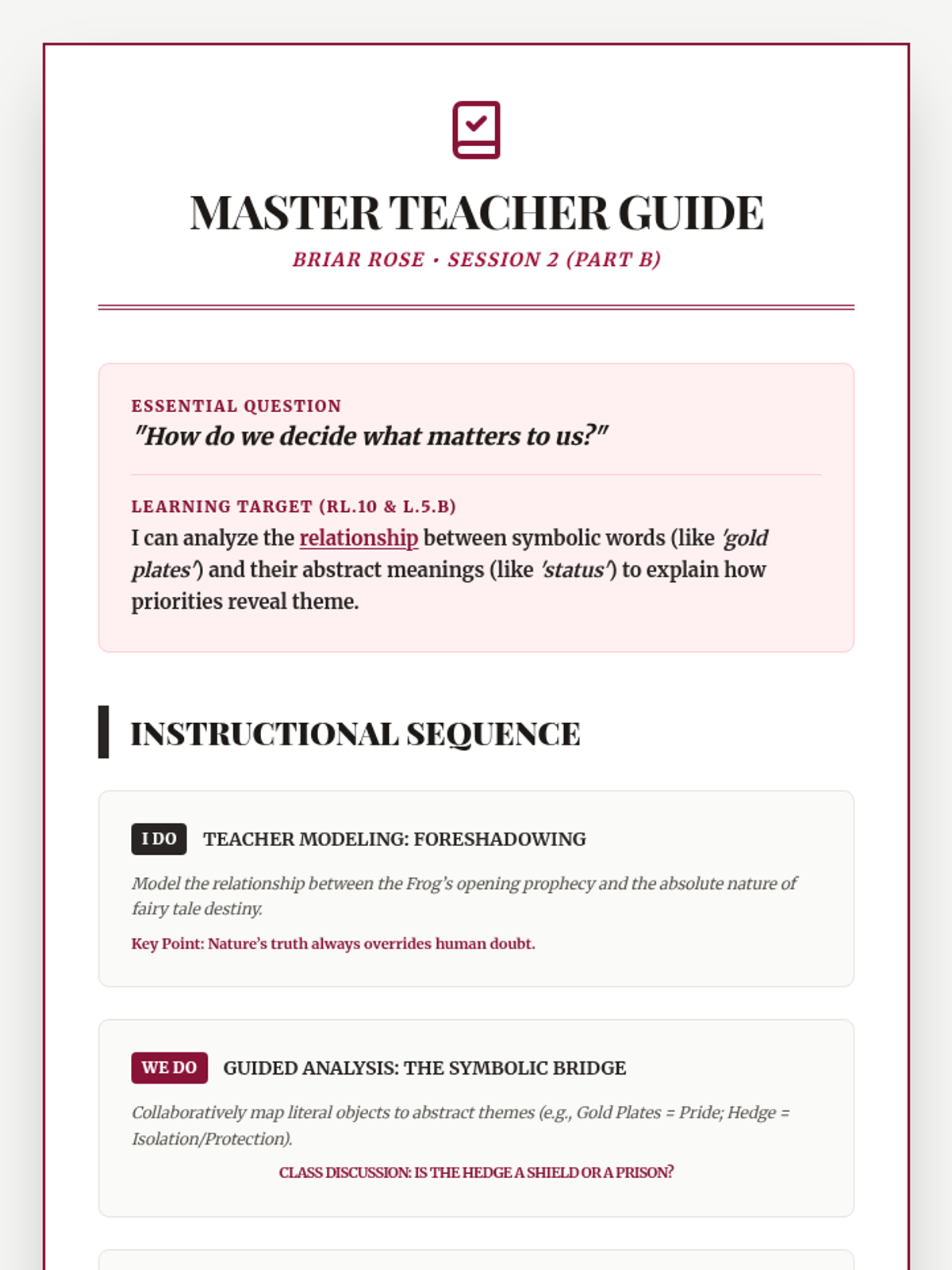
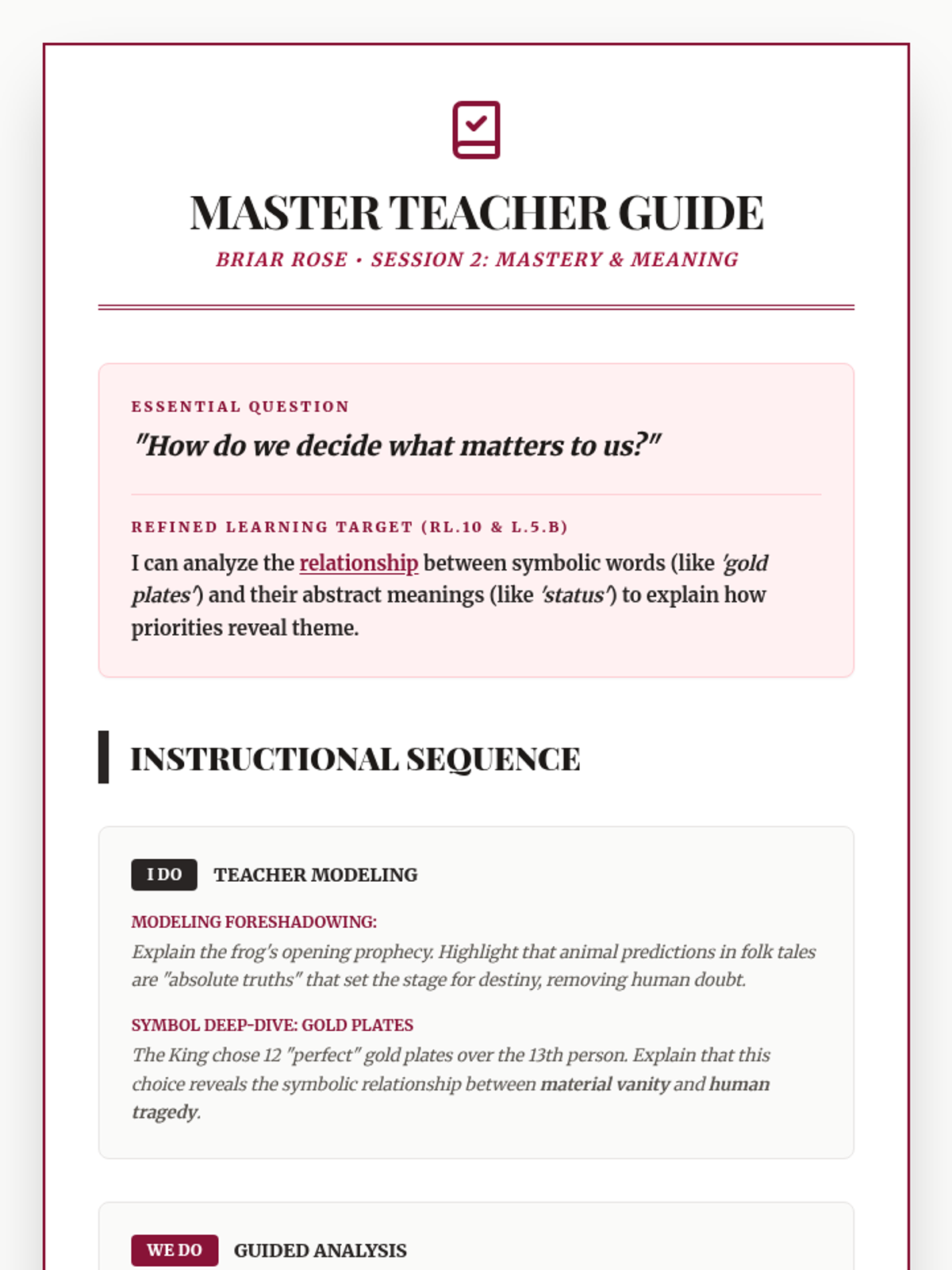
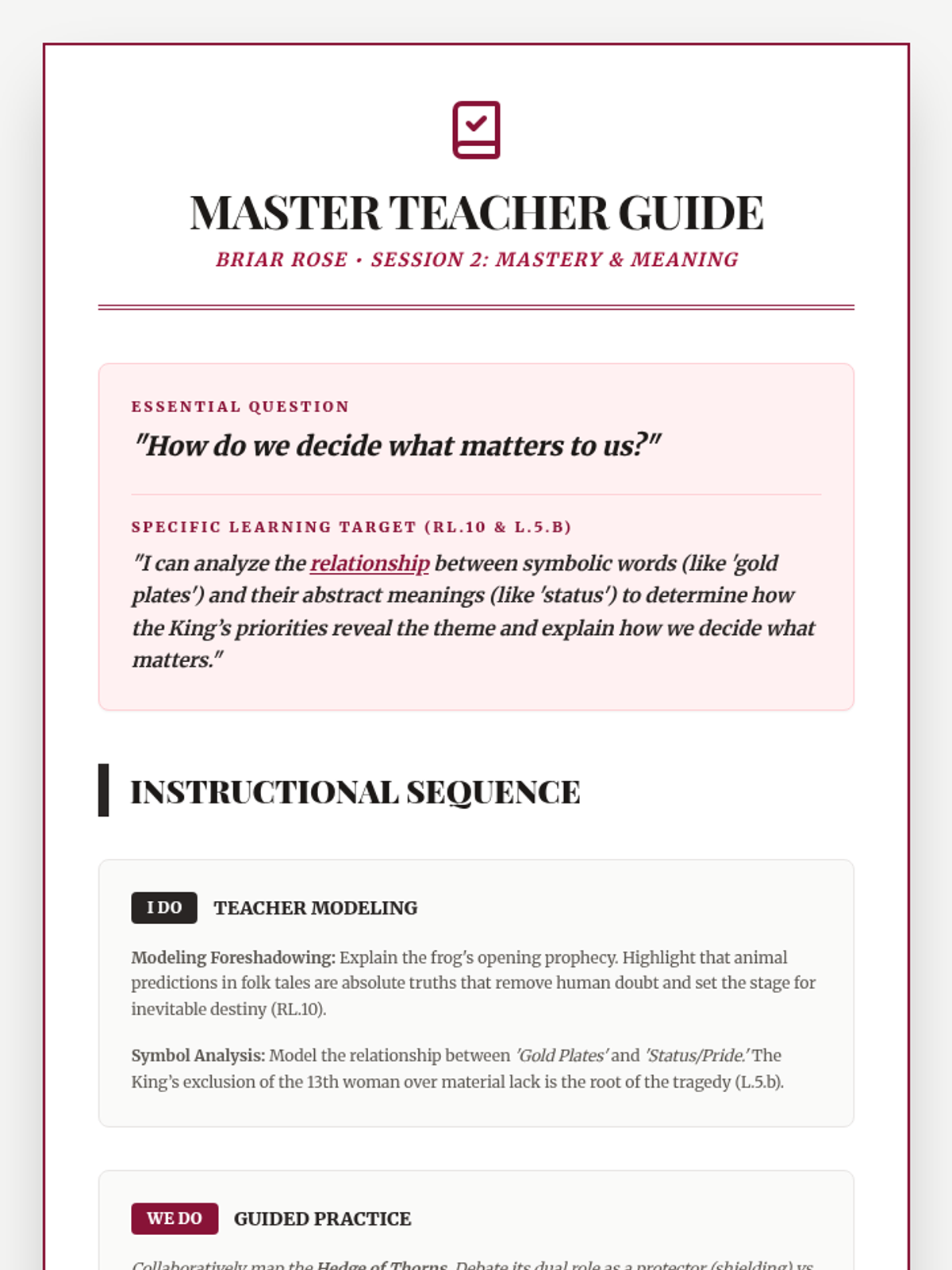
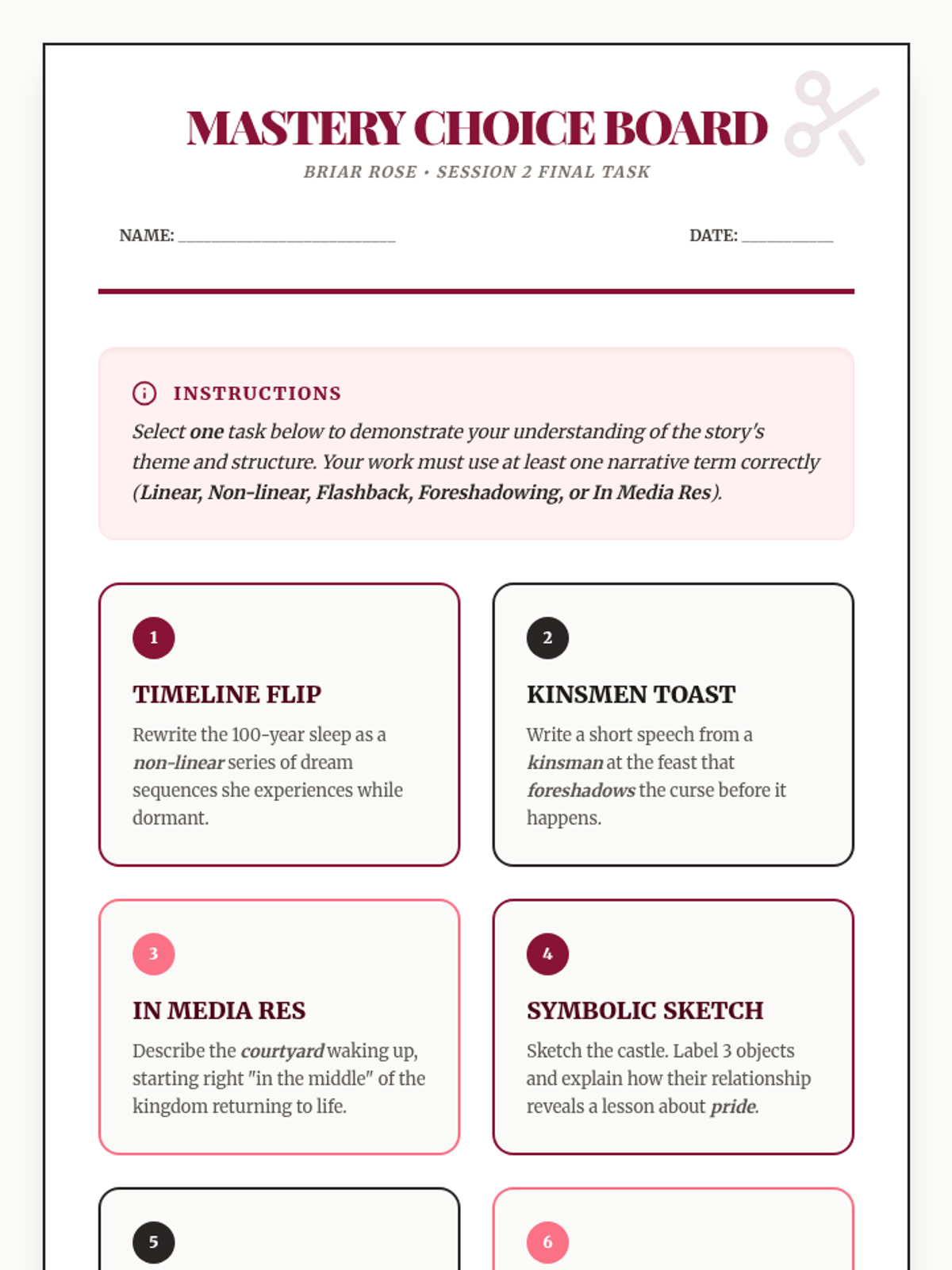
A quick exploration of theme and moral within the classic Brothers Grimm tale 'Briar Rose', featuring a focused bell ringer and exit ticket.
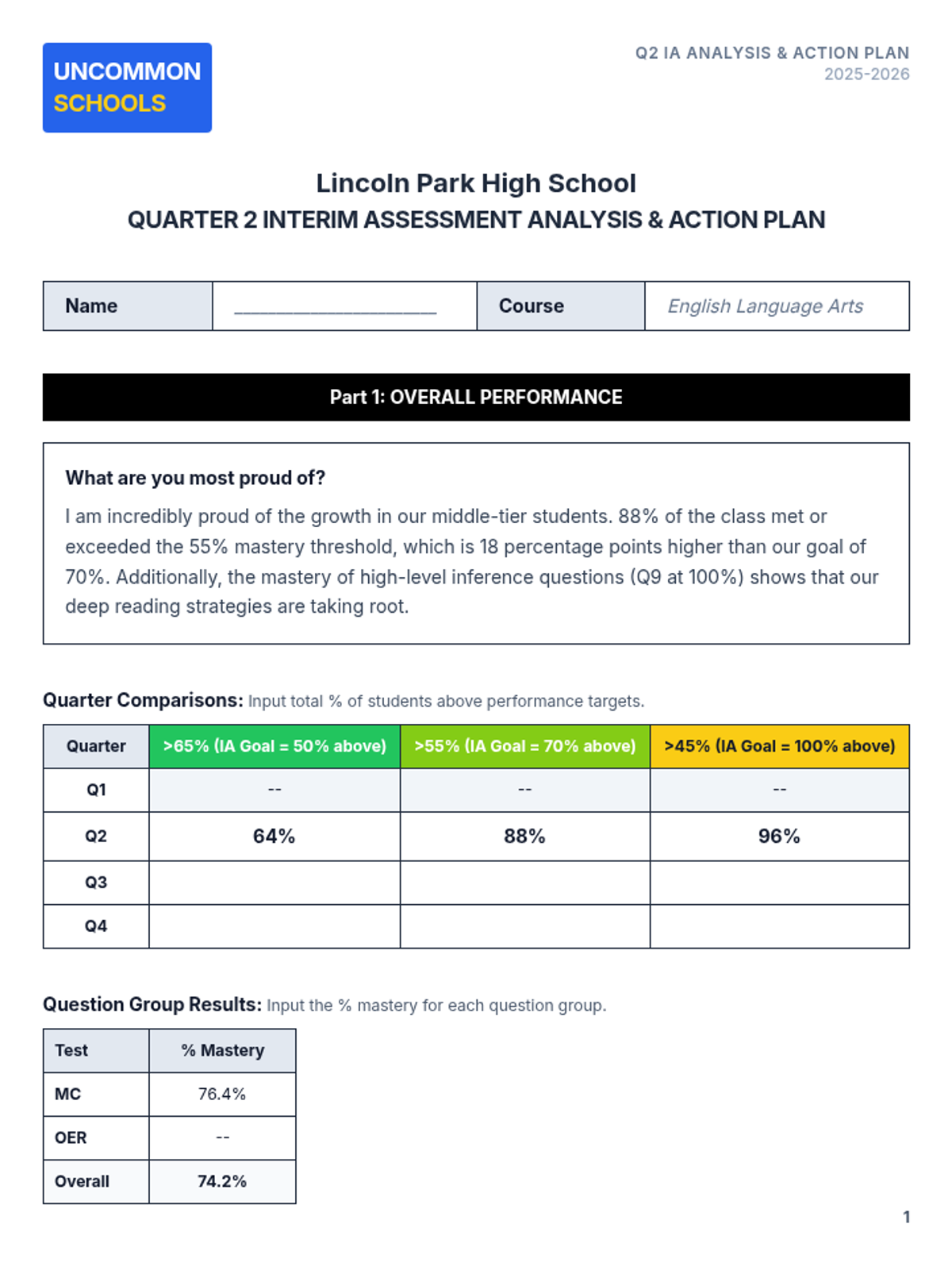
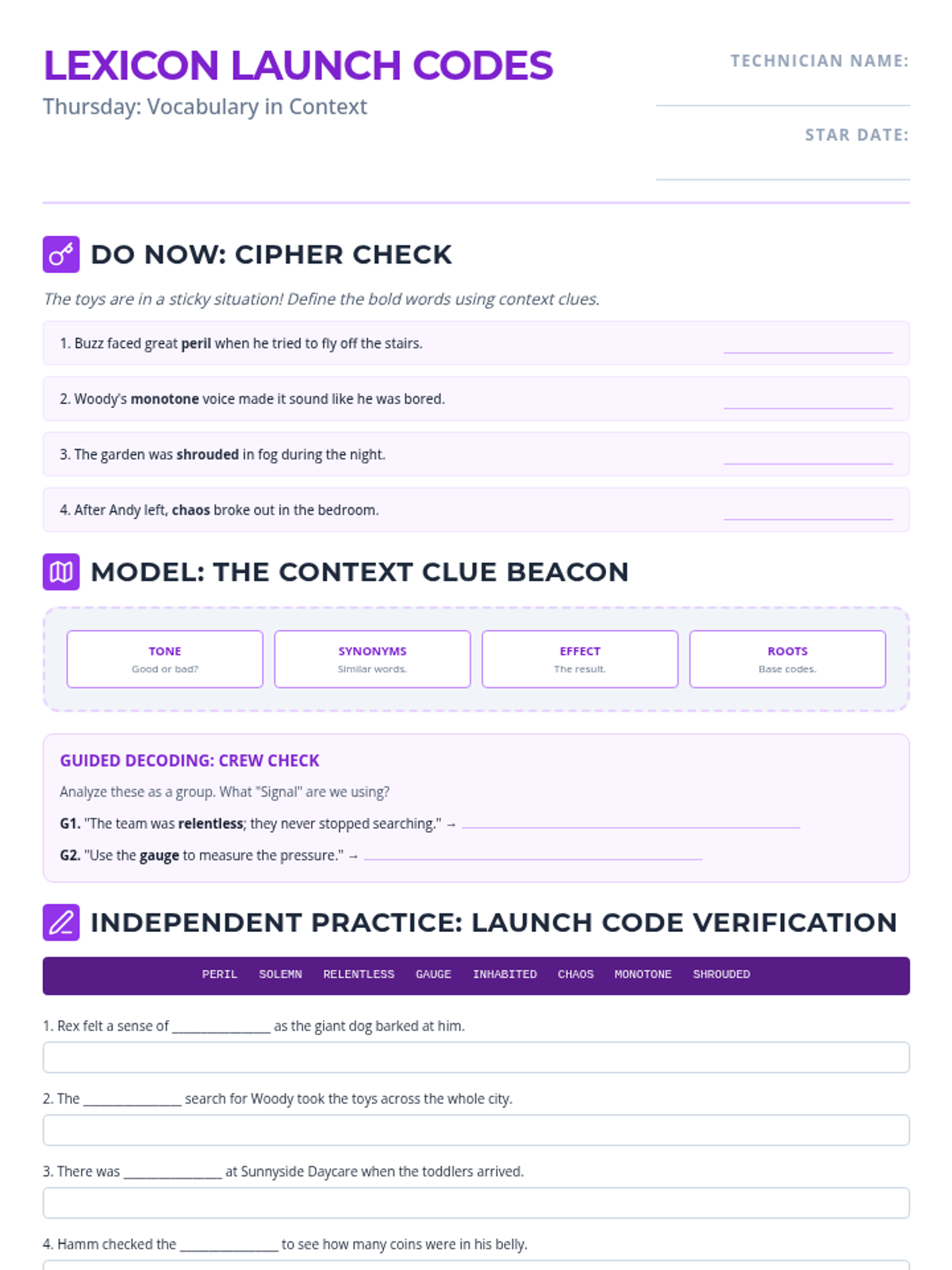
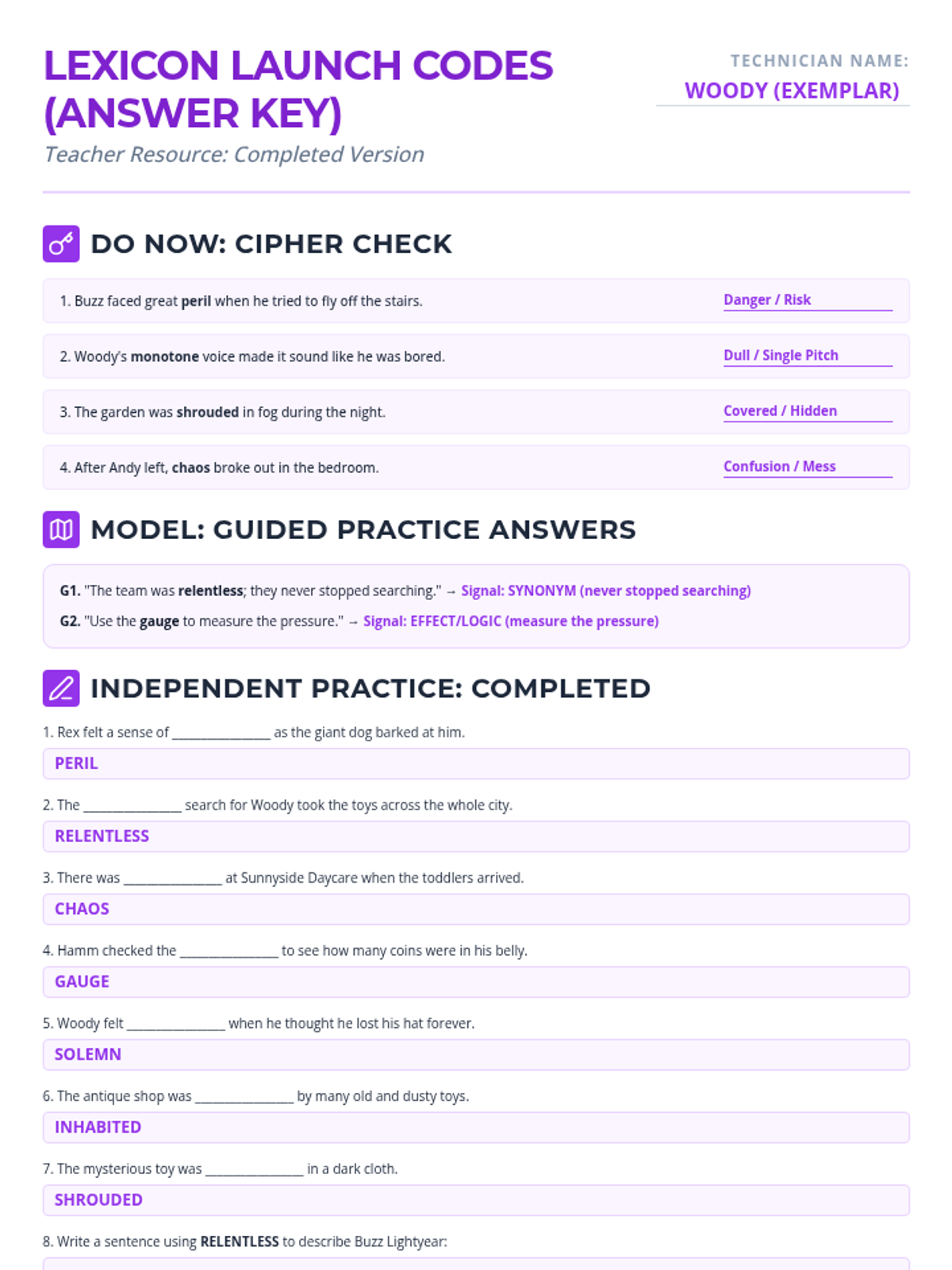
Focuses on using context clues to determine the meaning of complex vocabulary words from the IA exam word bank and applying them correctly in sentences.
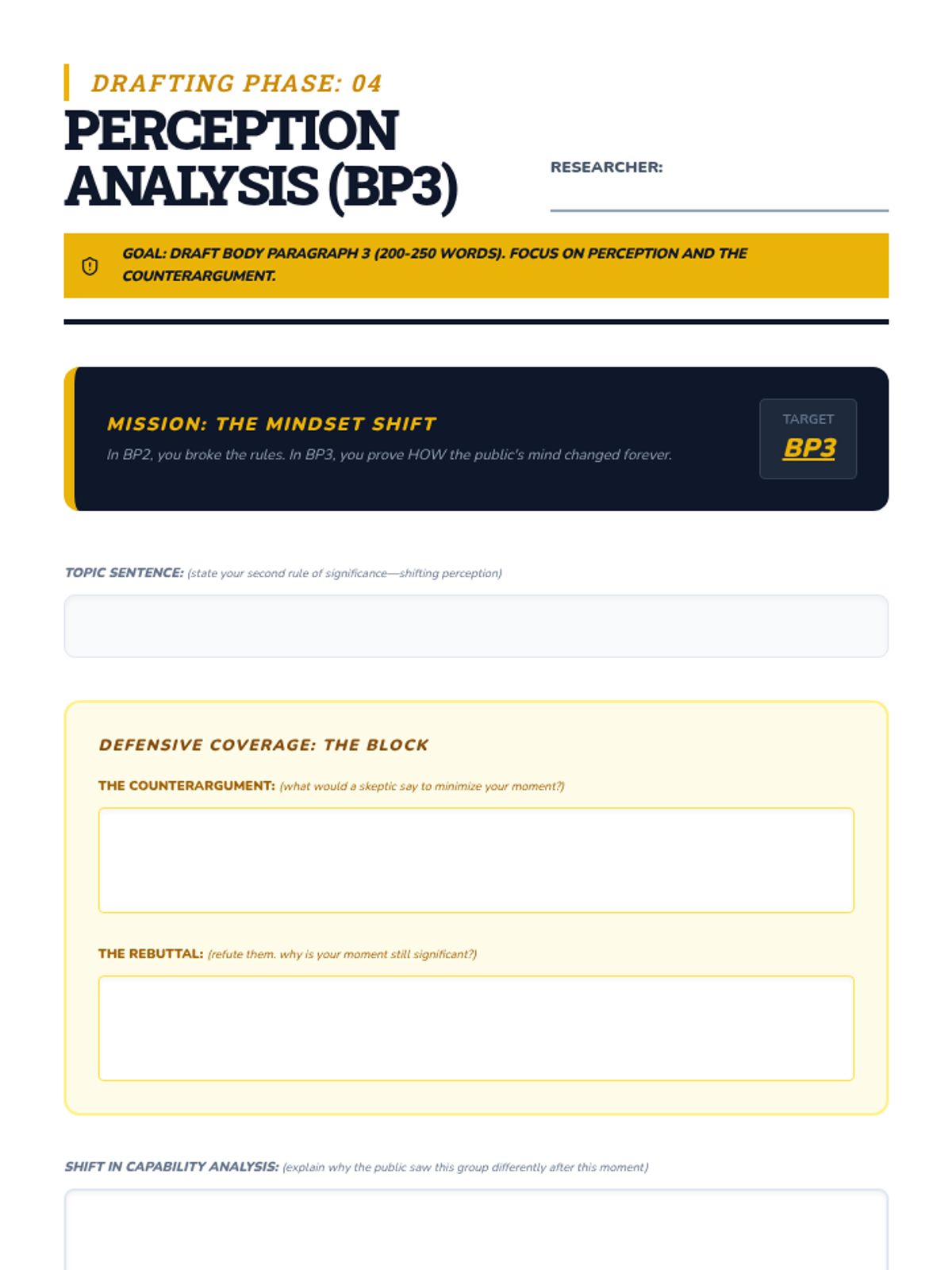
Drafting the third body paragraph, focusing on shifts in public perception and mastering the counterargument/rebuttal.
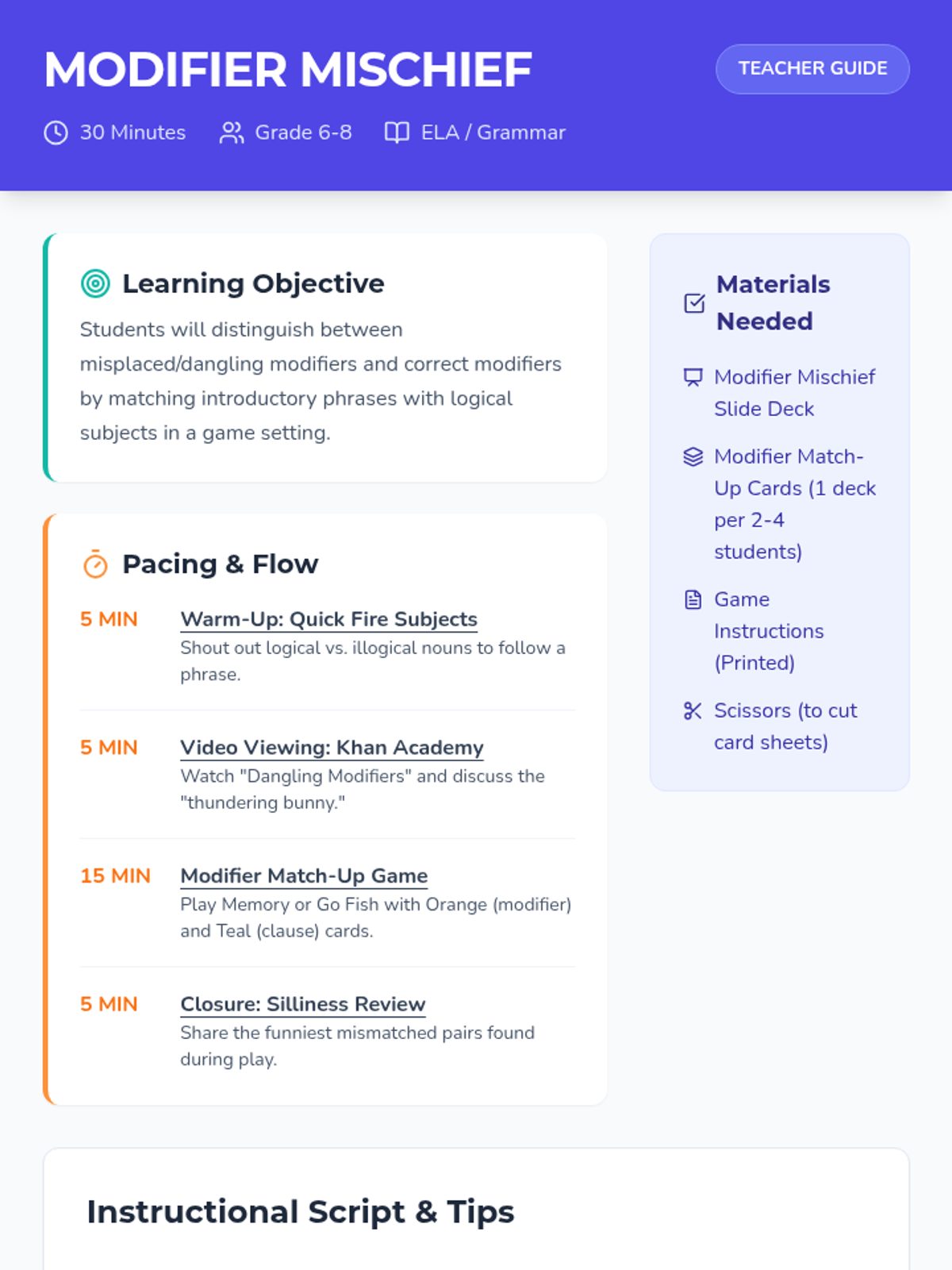
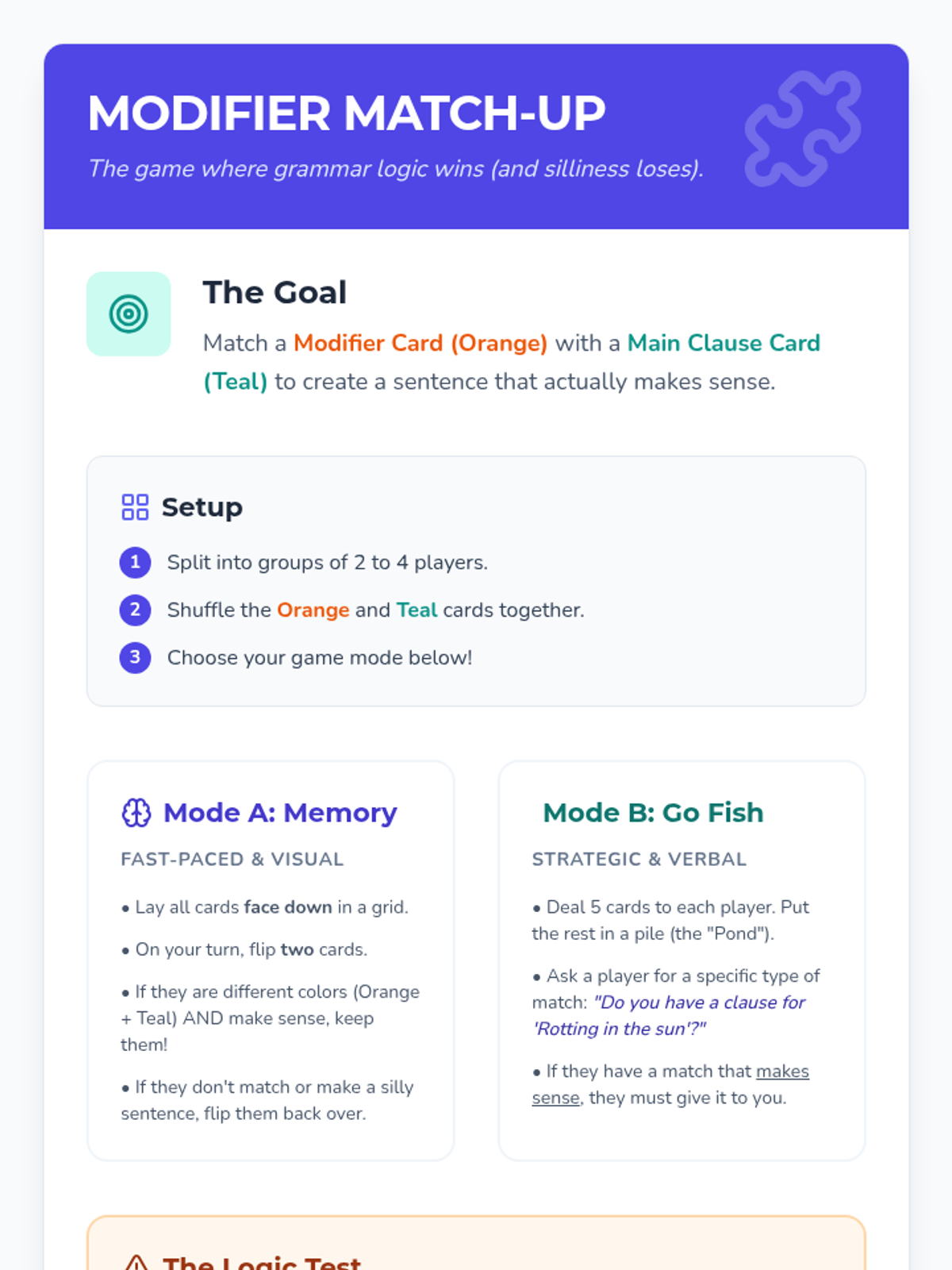
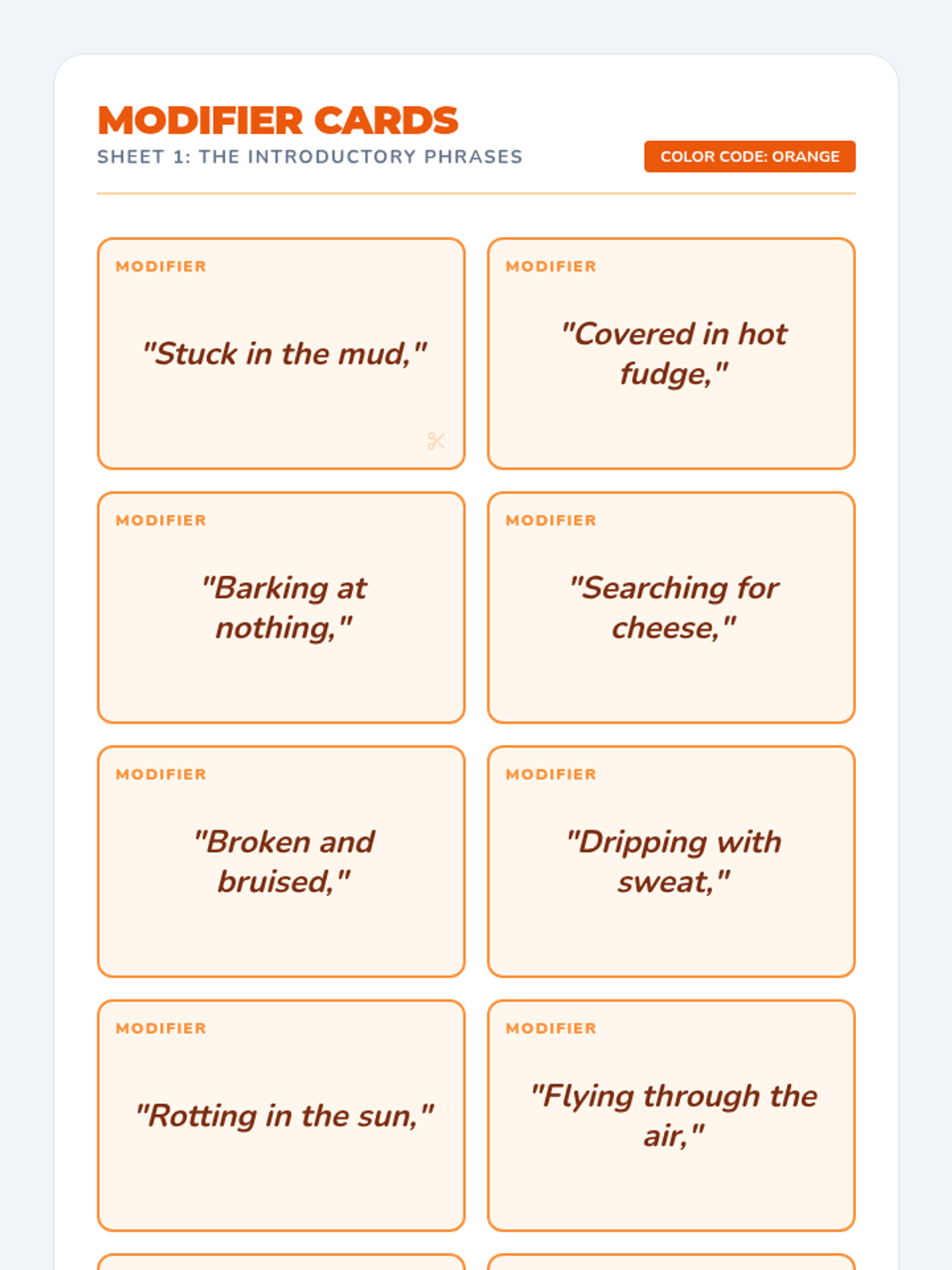
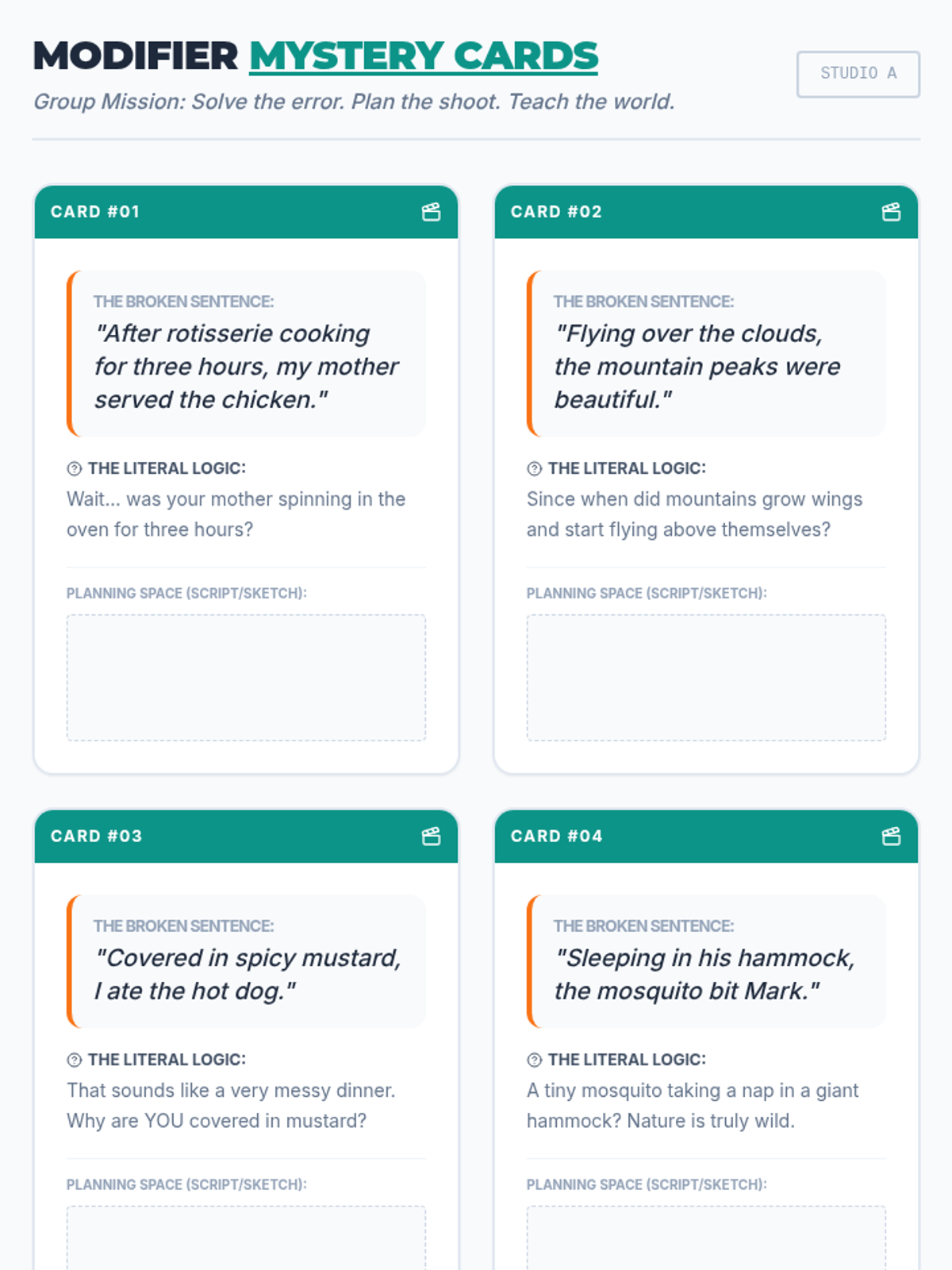
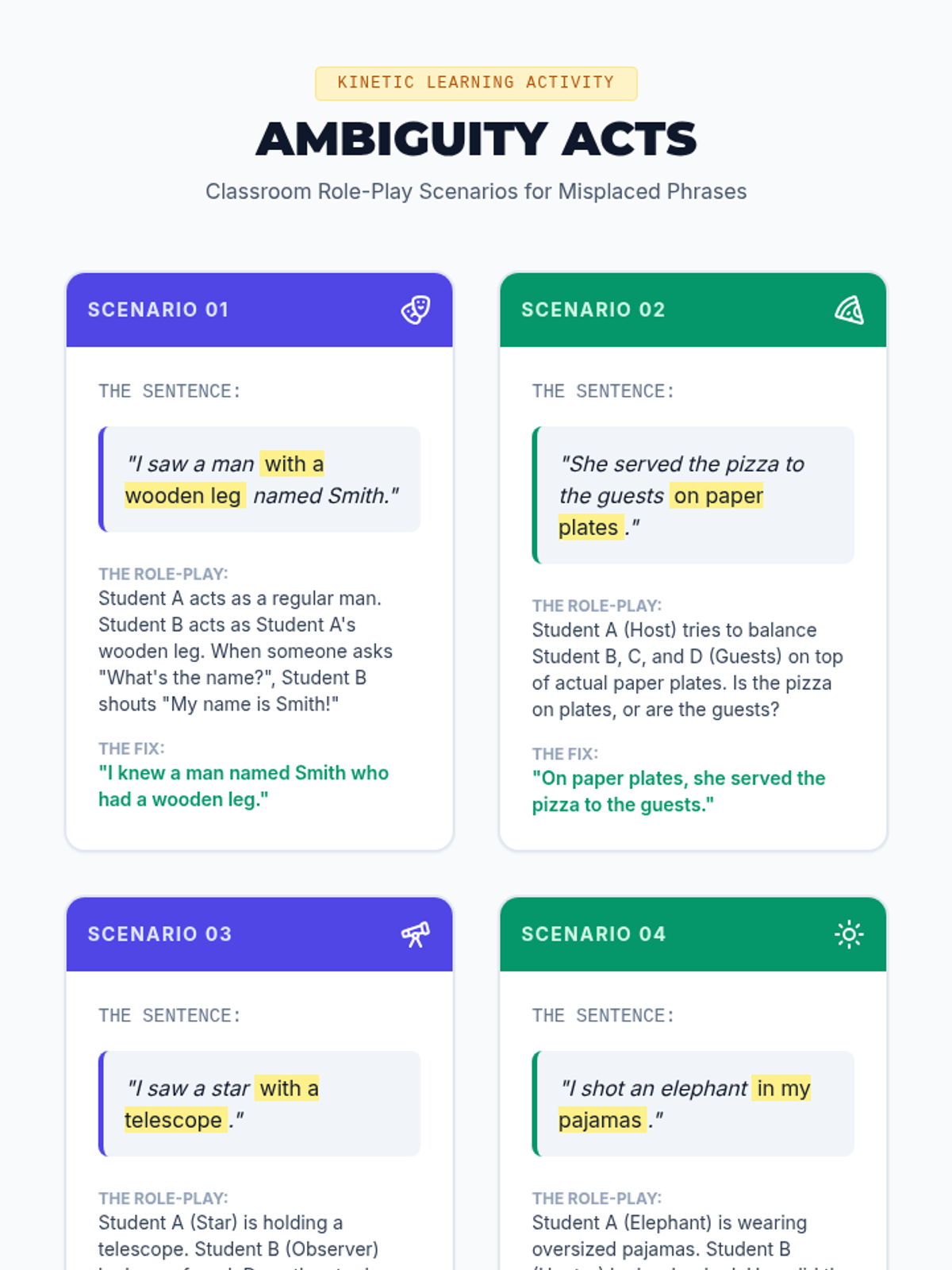
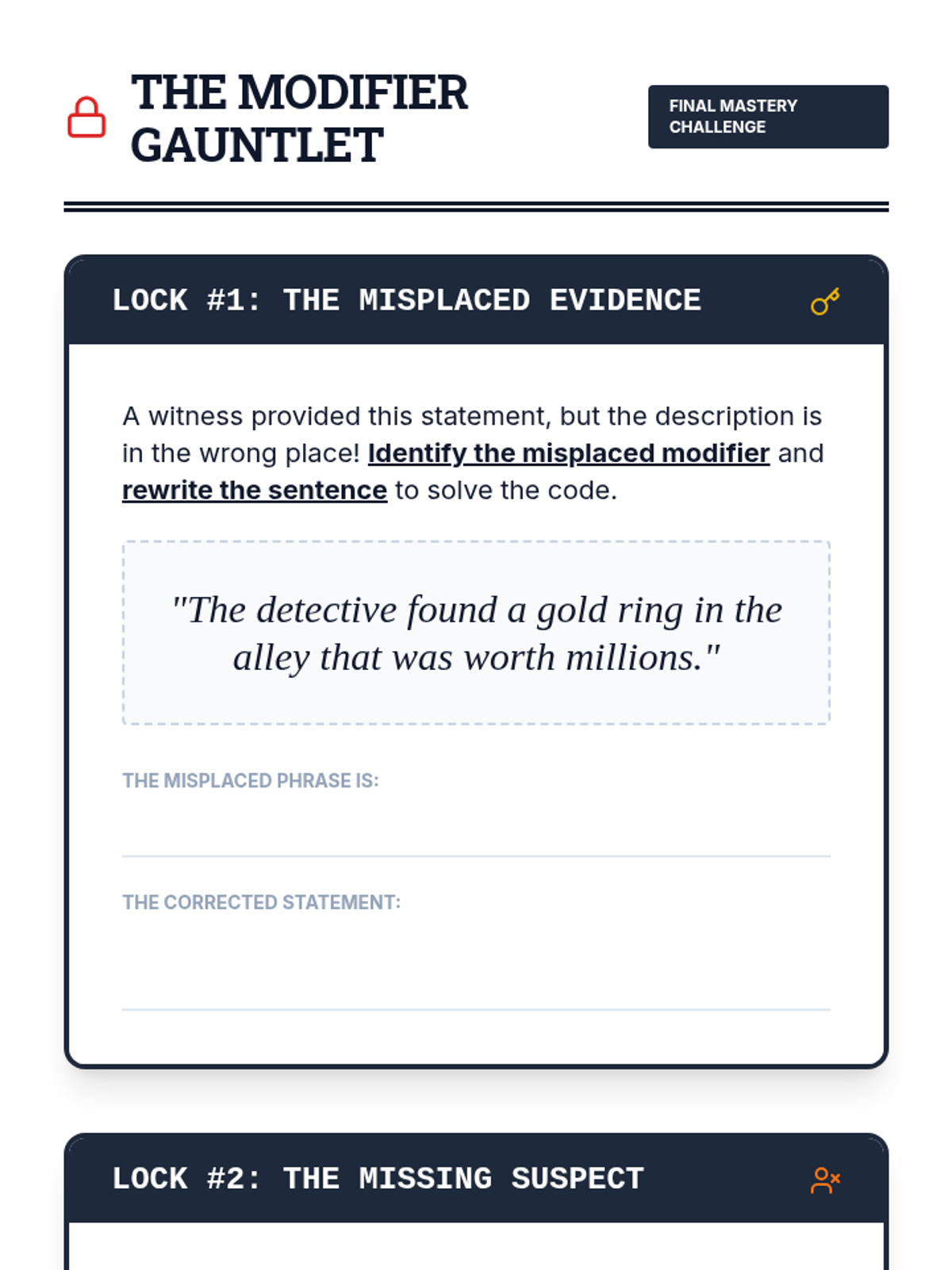
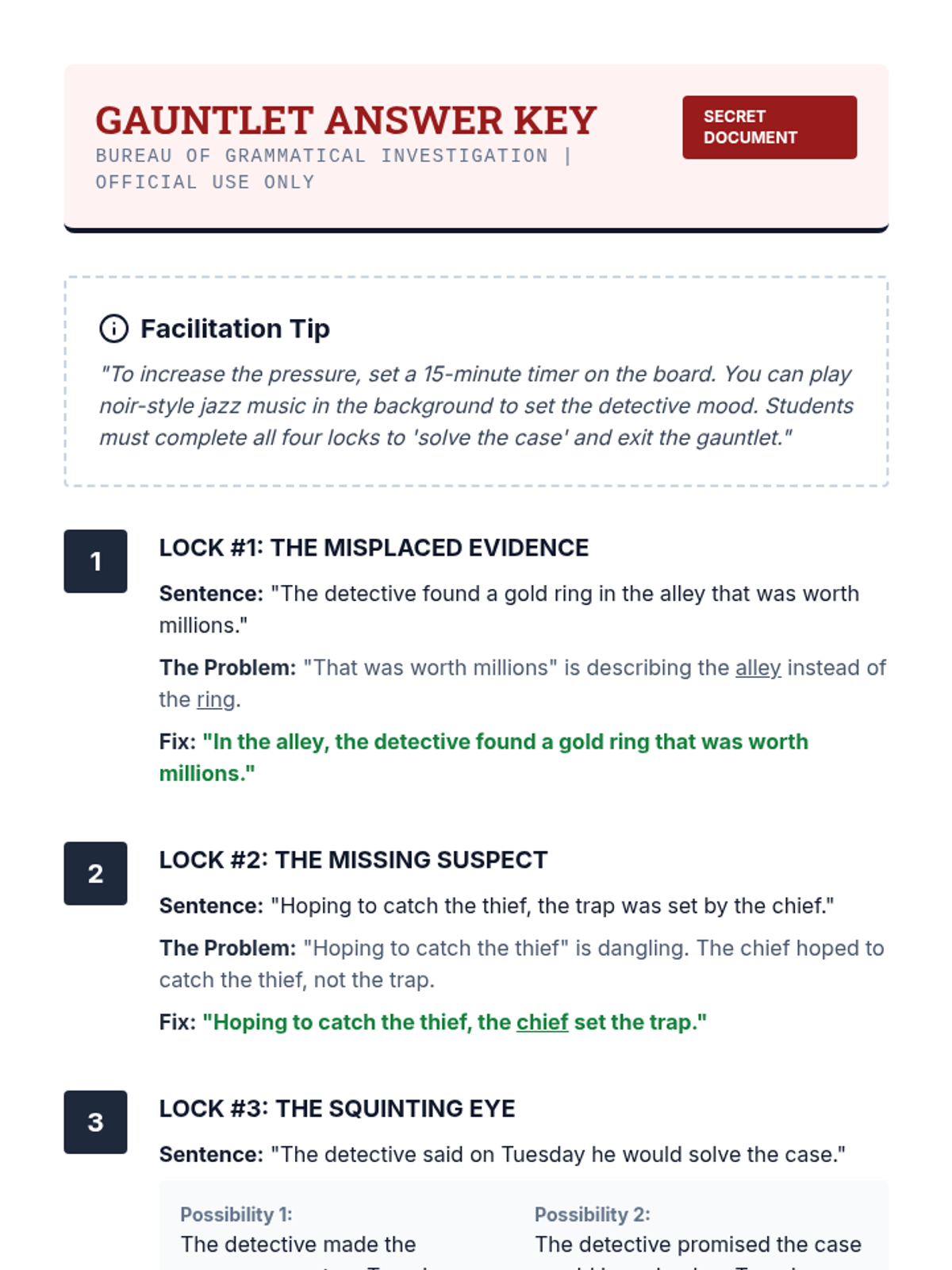
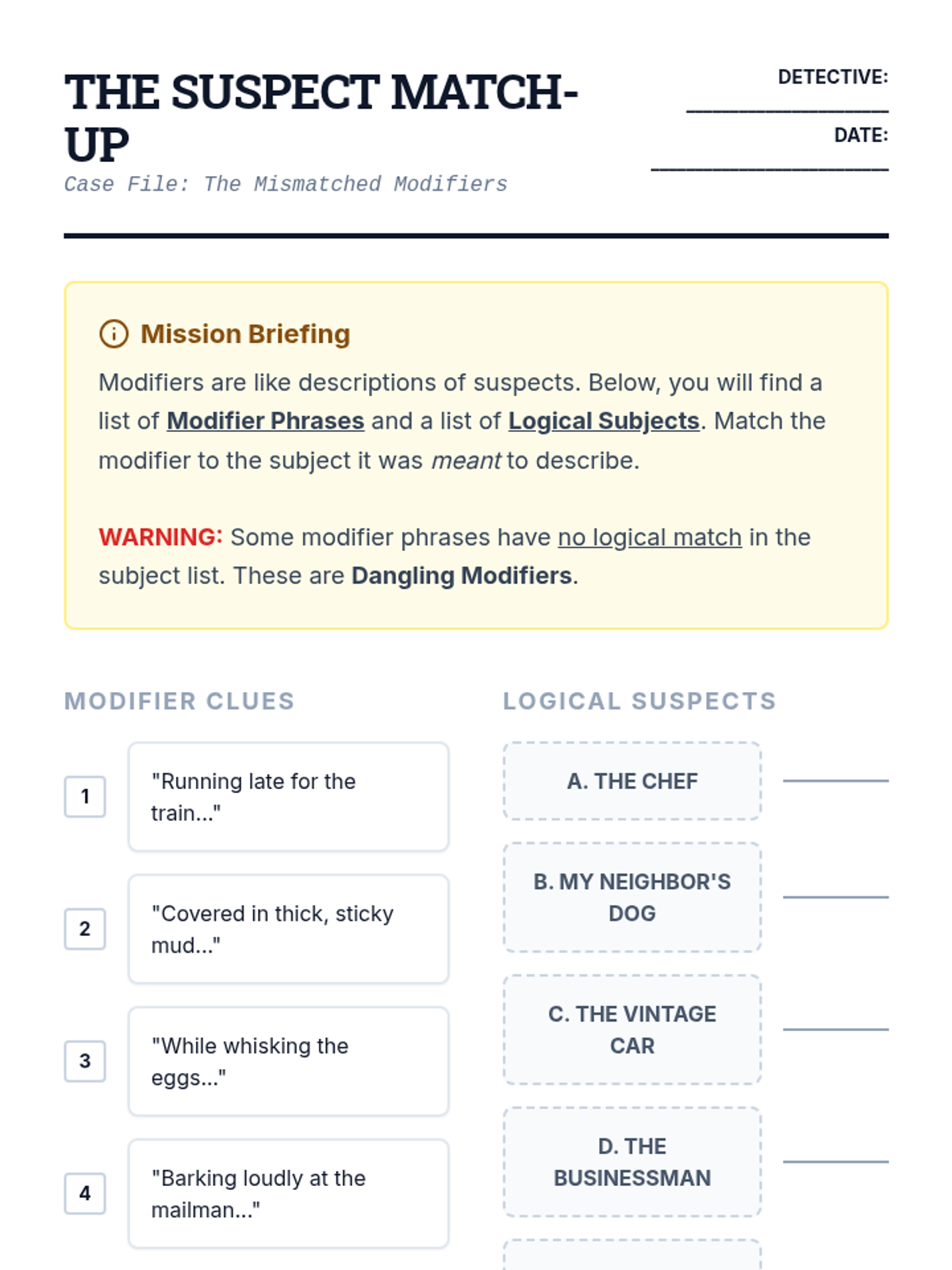
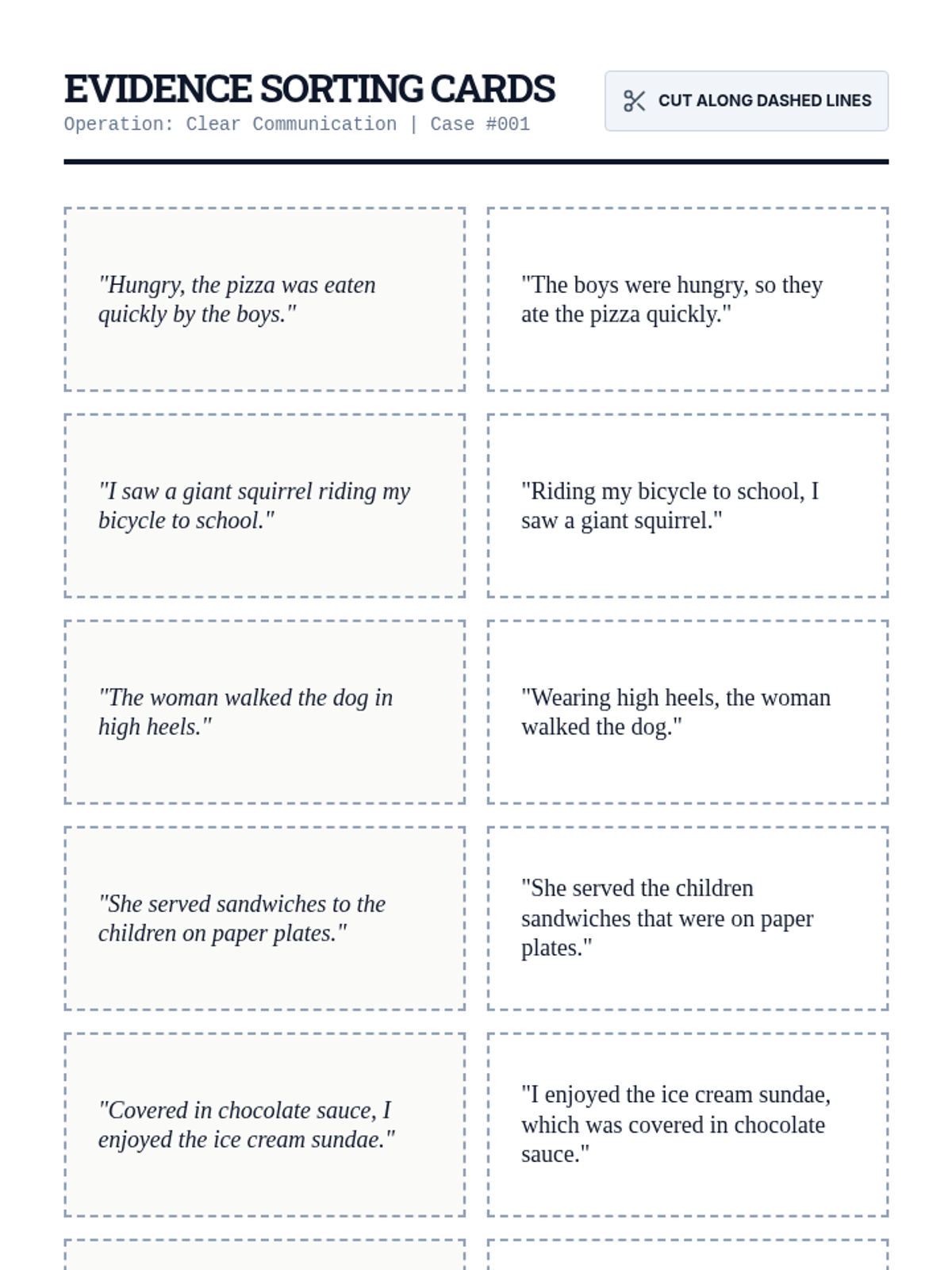
A high-energy grammar lesson where students identify and fix dangling and misplaced modifiers through a video-based discussion and a "Modifier Match-Up" card game. Students learn to ensure modifiers are placed next to the nouns they actually describe to avoid "silly" sentence meanings.
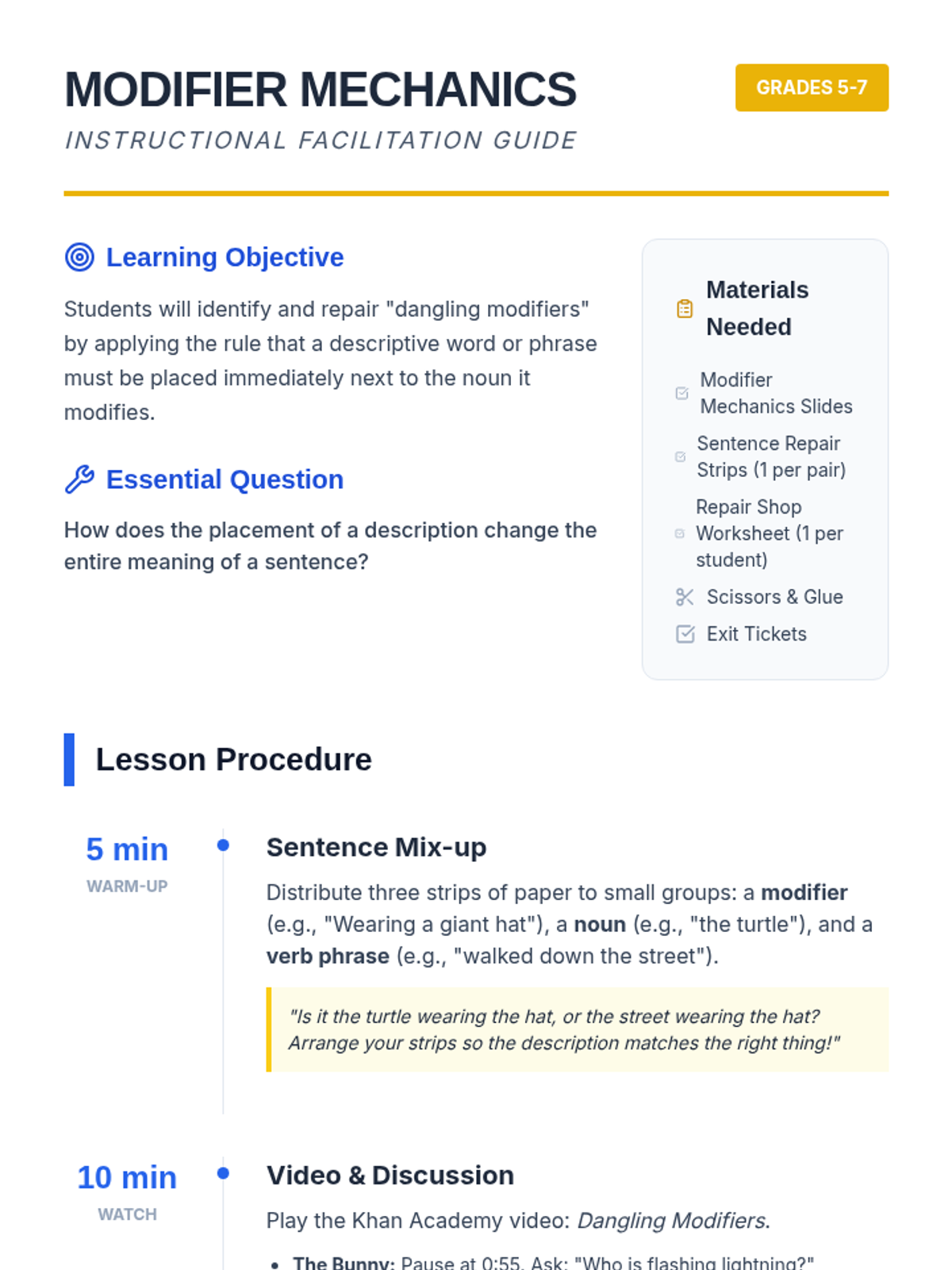
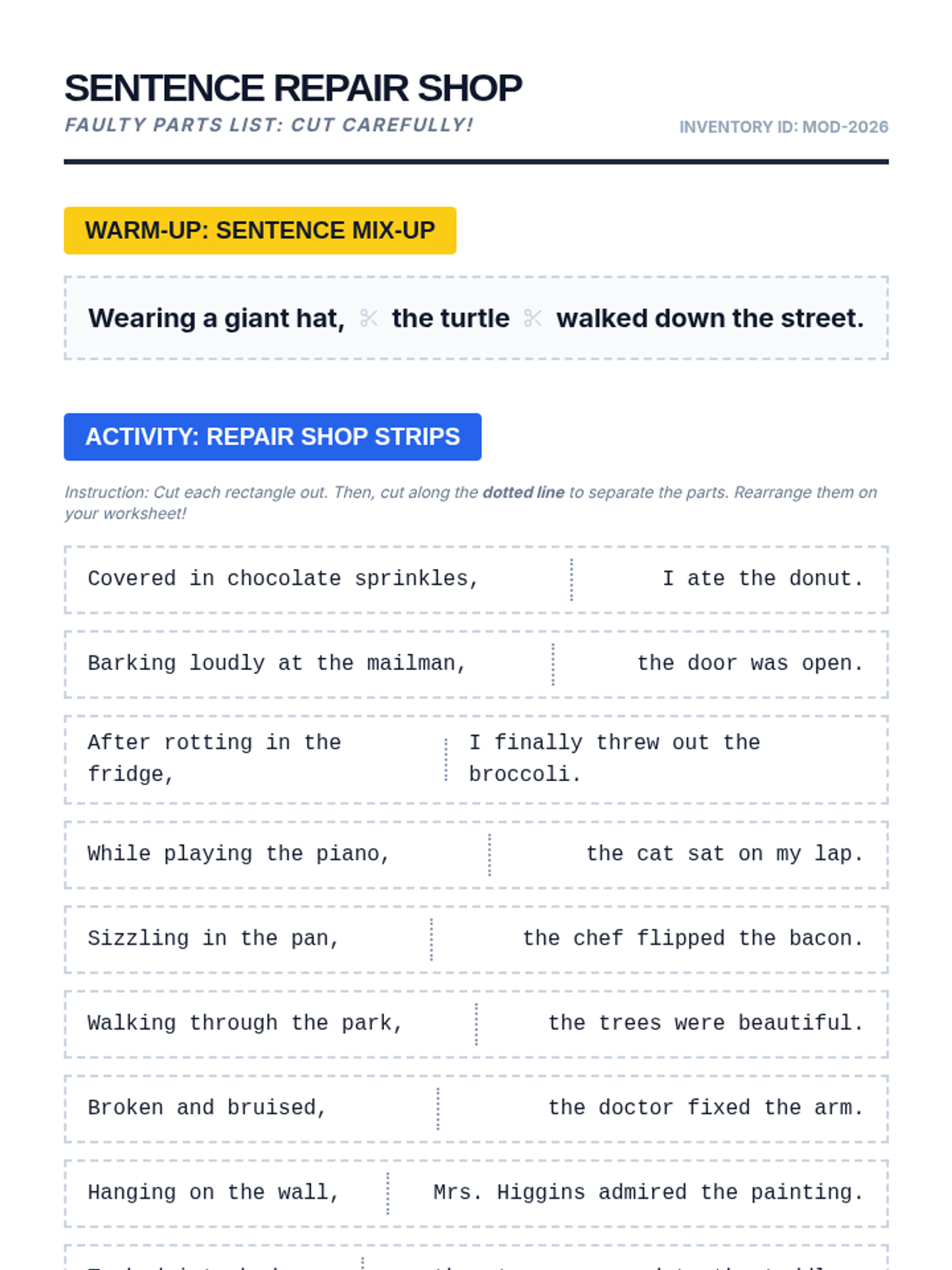
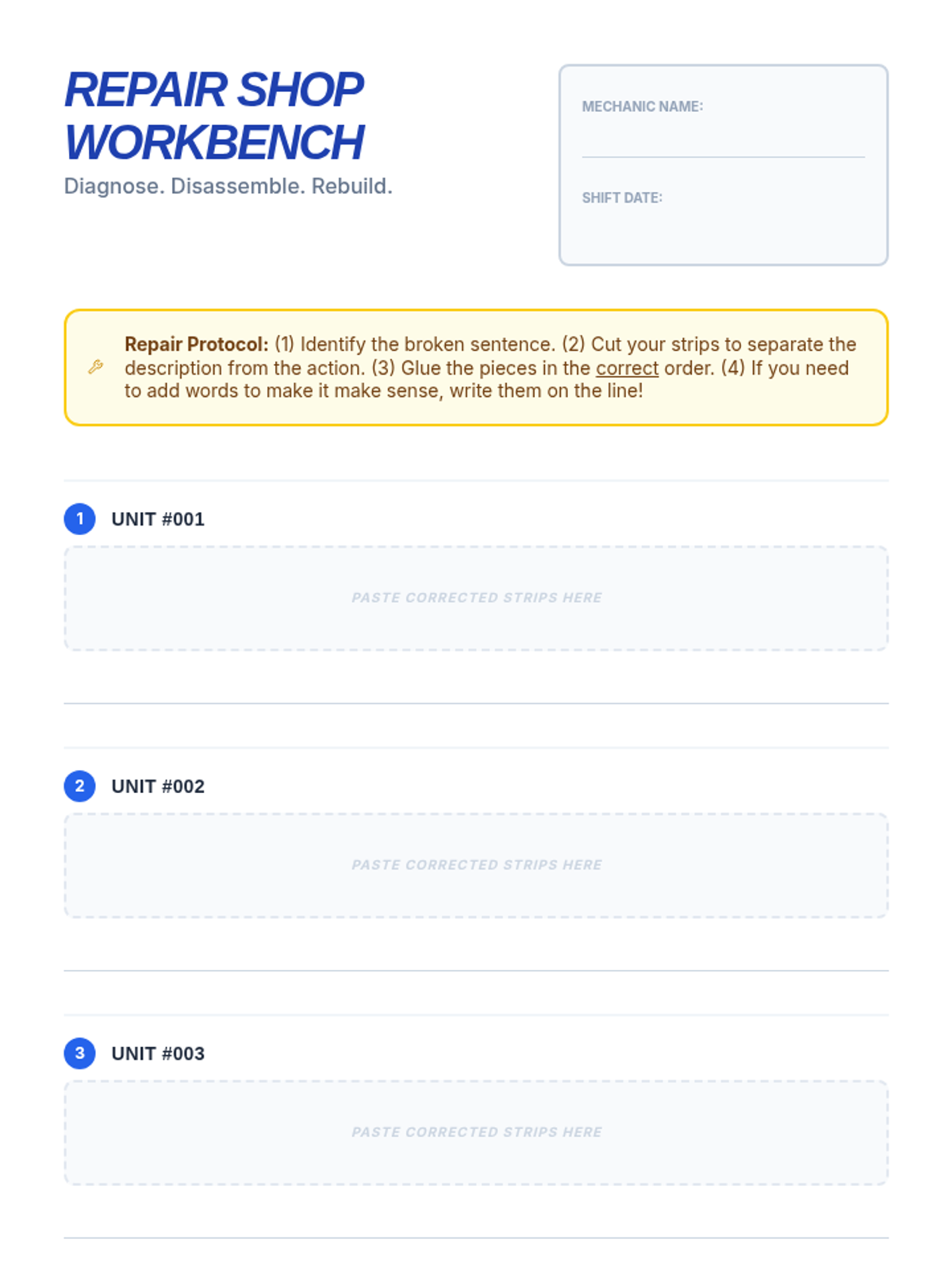
A hands-on grammar lesson where students diagnose and fix dangling modifiers using a 'repair shop' theme. Includes a warm-up, video analysis, and a tactile cut-and-paste activity.
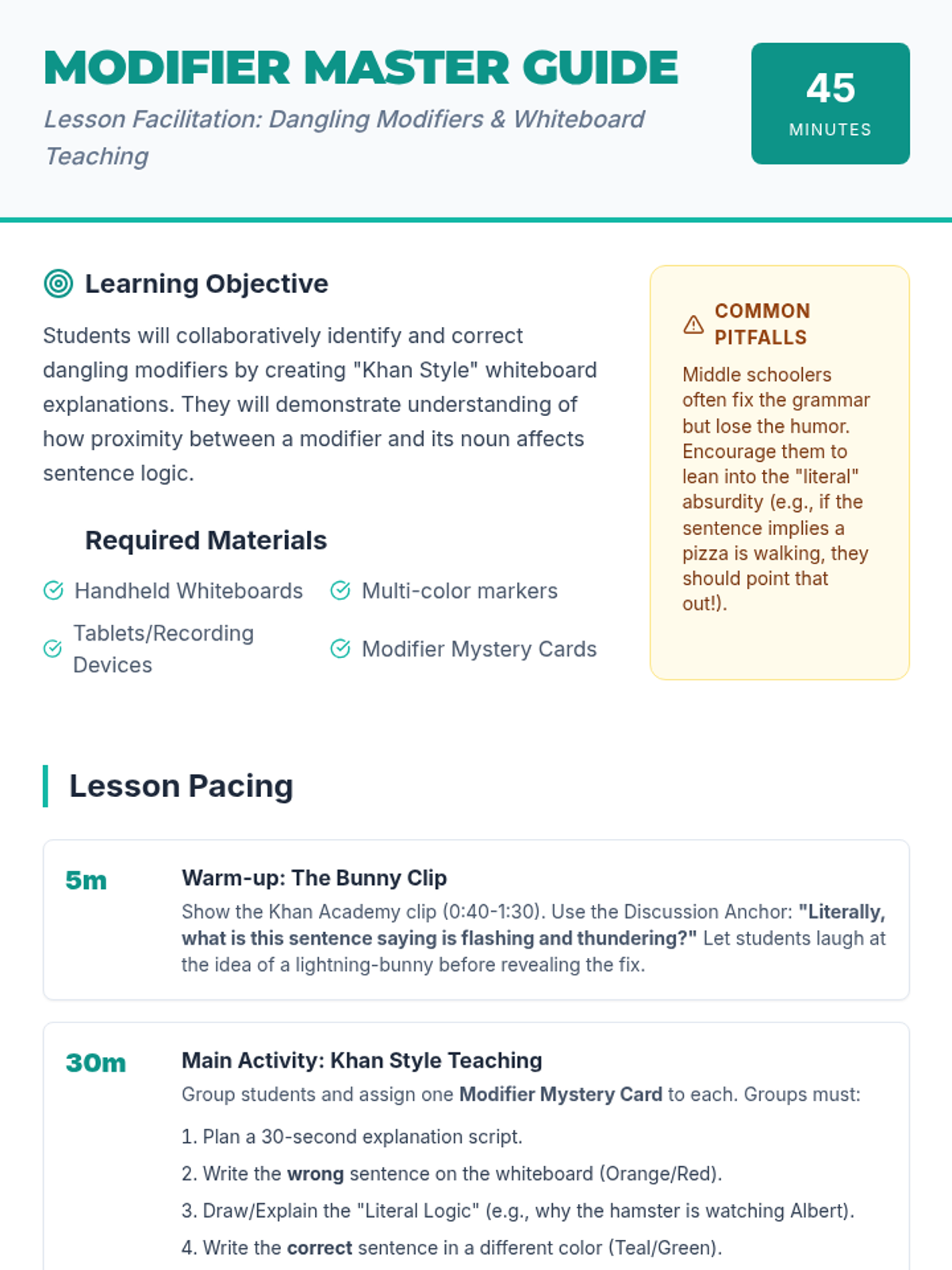
A collaborative grammar lesson where students use whiteboards and tablets to explain and correct dangling modifiers in a 'Khan Academy' style. Students analyze humorous errors, record short teaching clips, and present their work to the class.
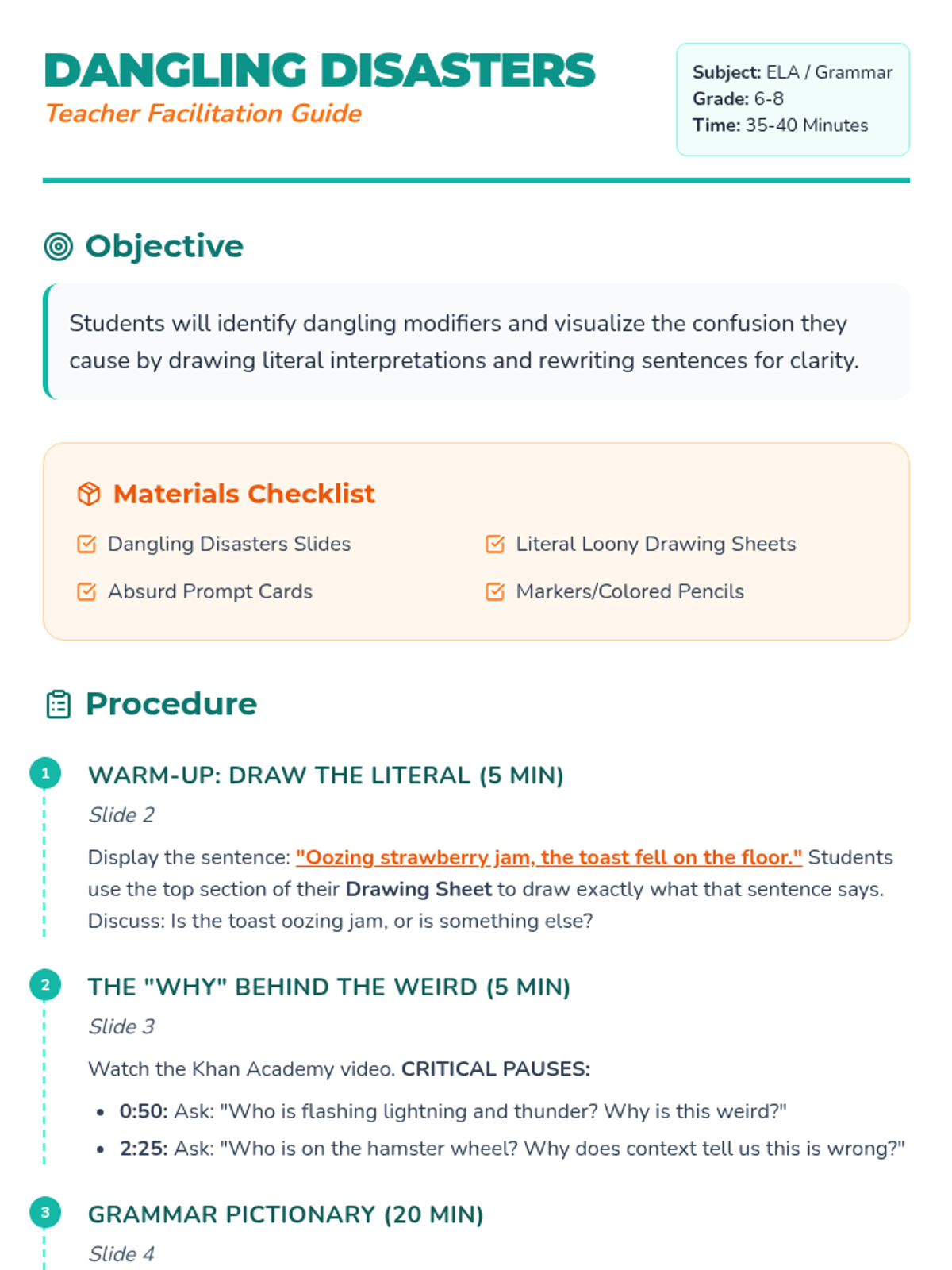
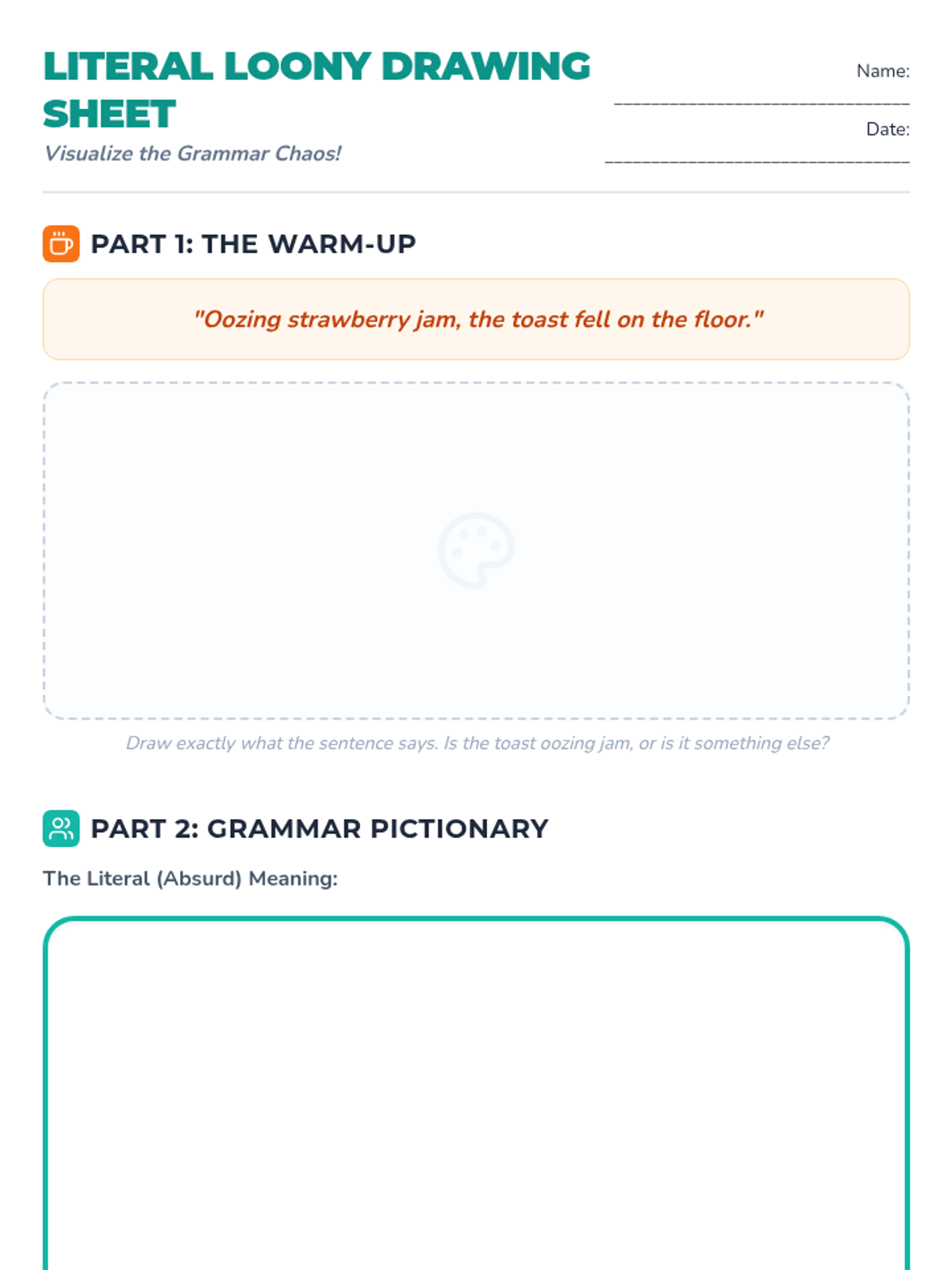
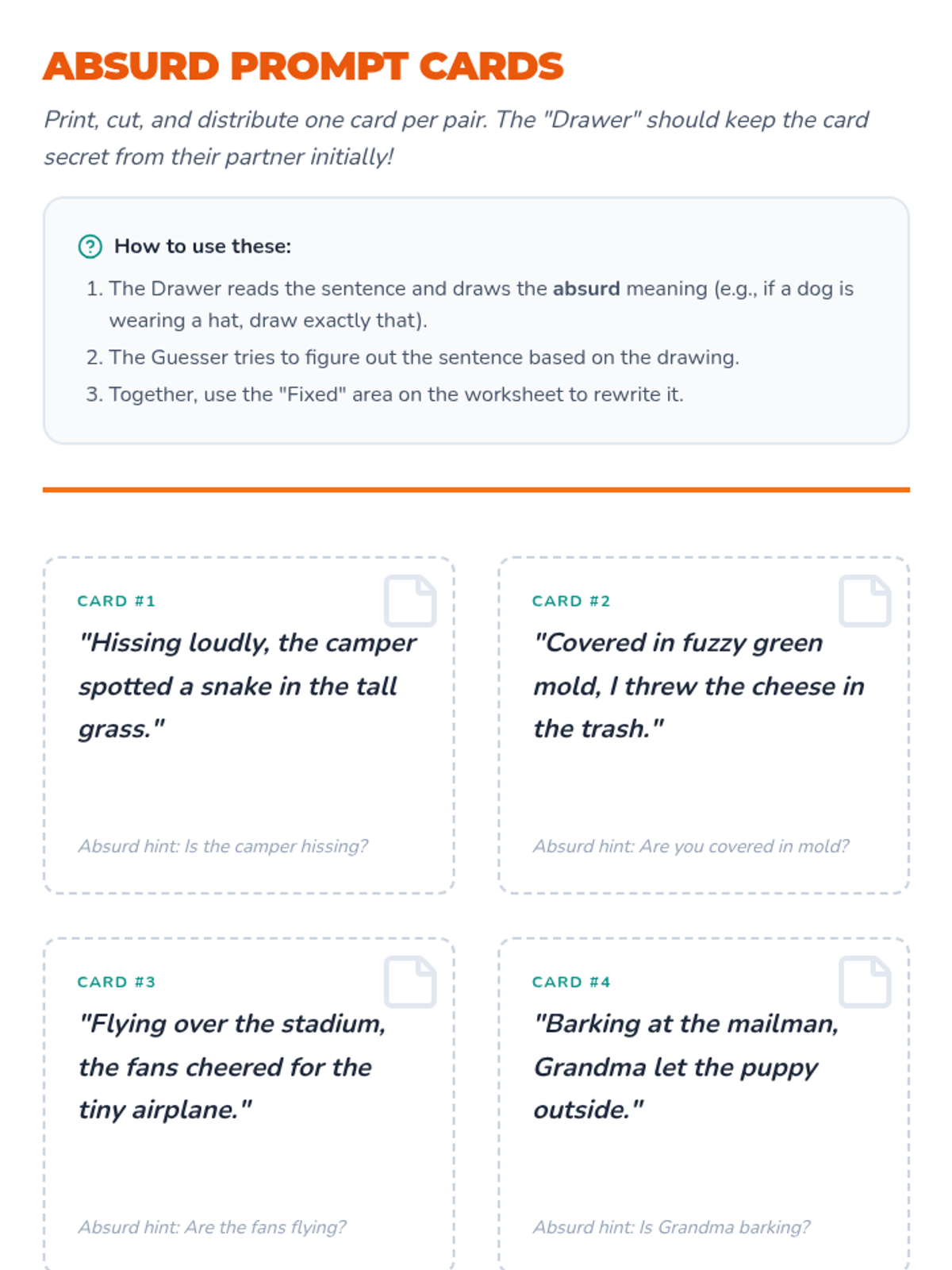
A visualization-heavy lesson where students draw the 'absurd' literal meanings of dangling modifiers to understand syntax errors. Includes a slide deck, teacher guide, activity cards, and drawing worksheets.
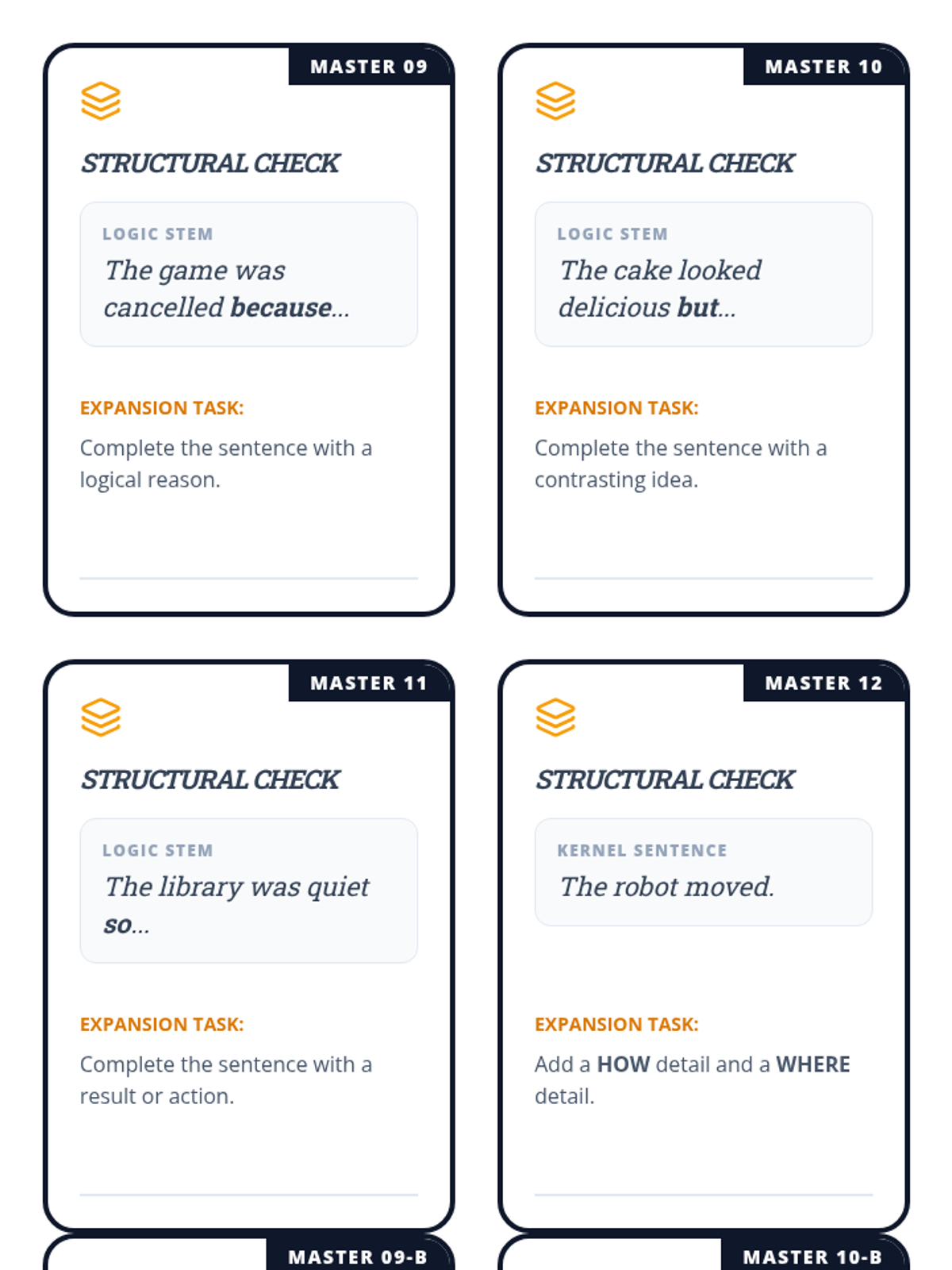
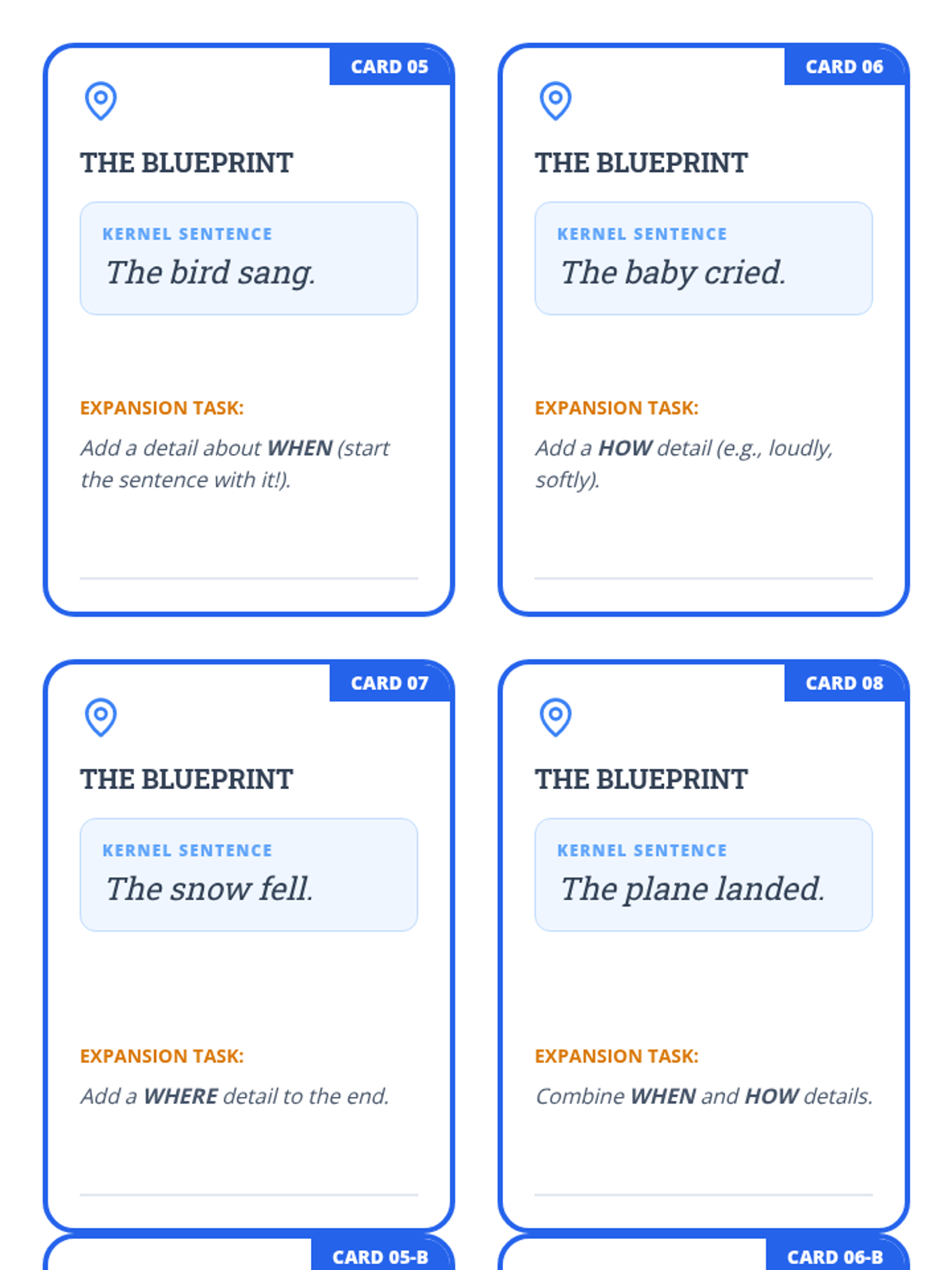
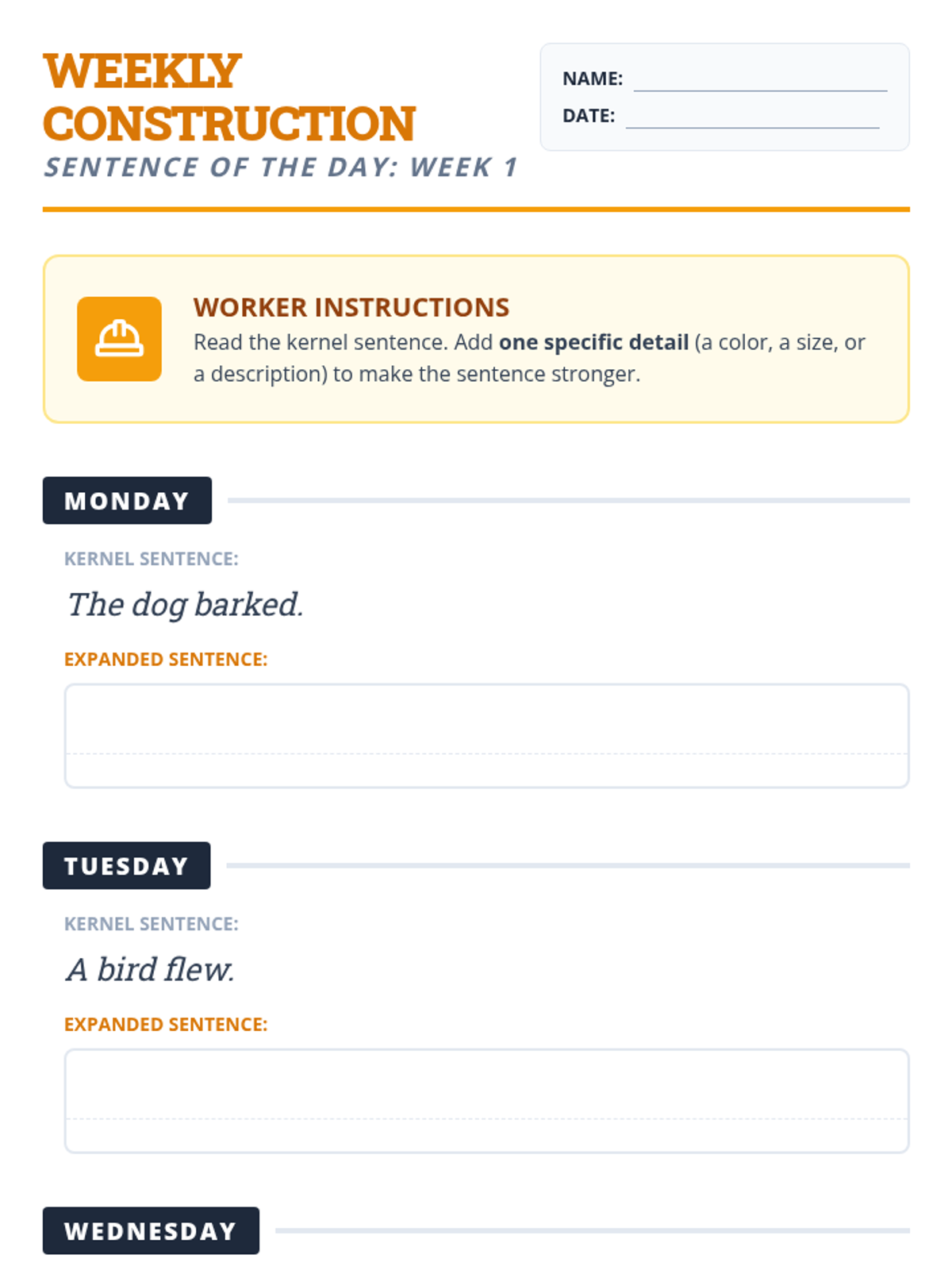
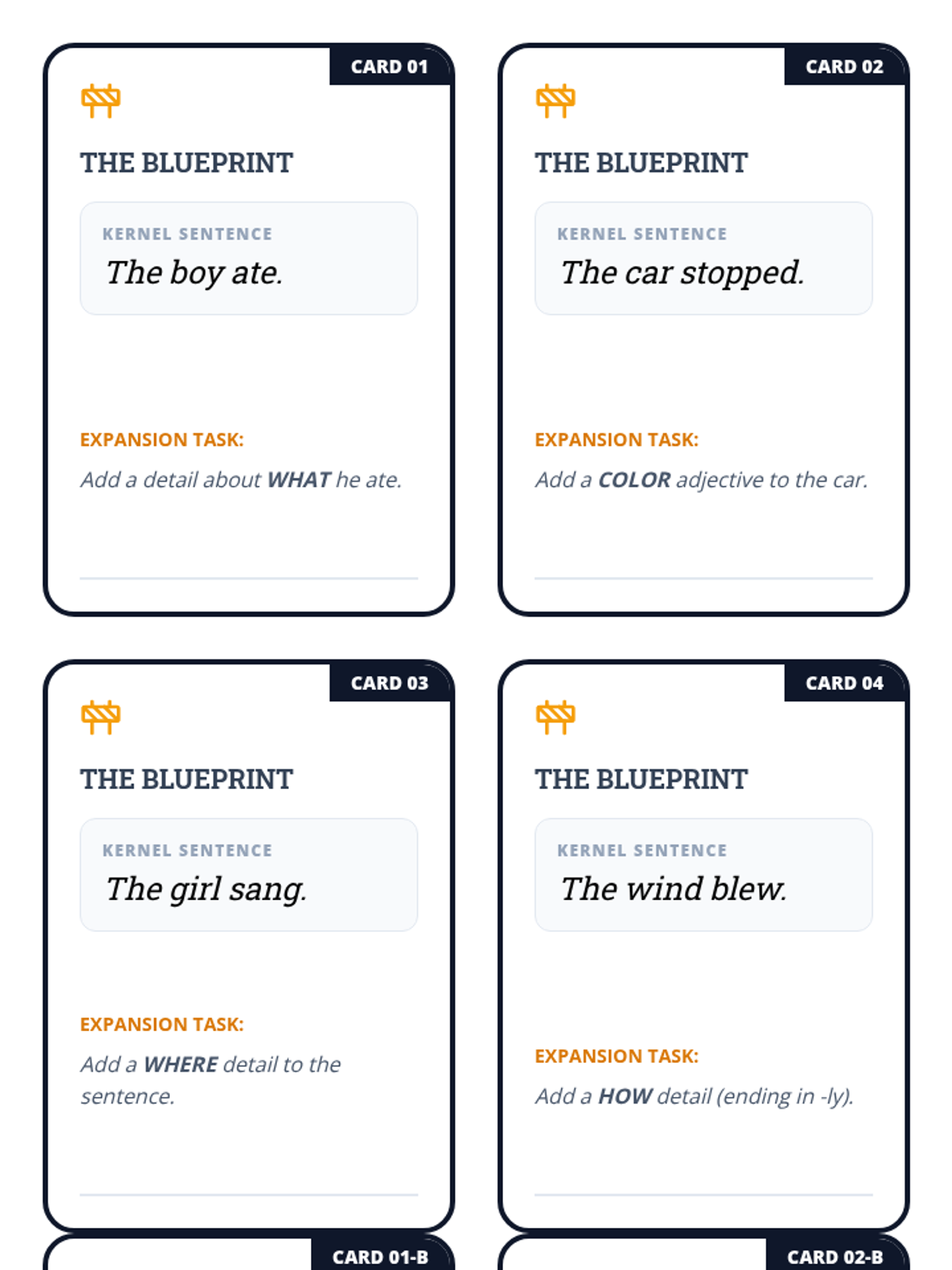
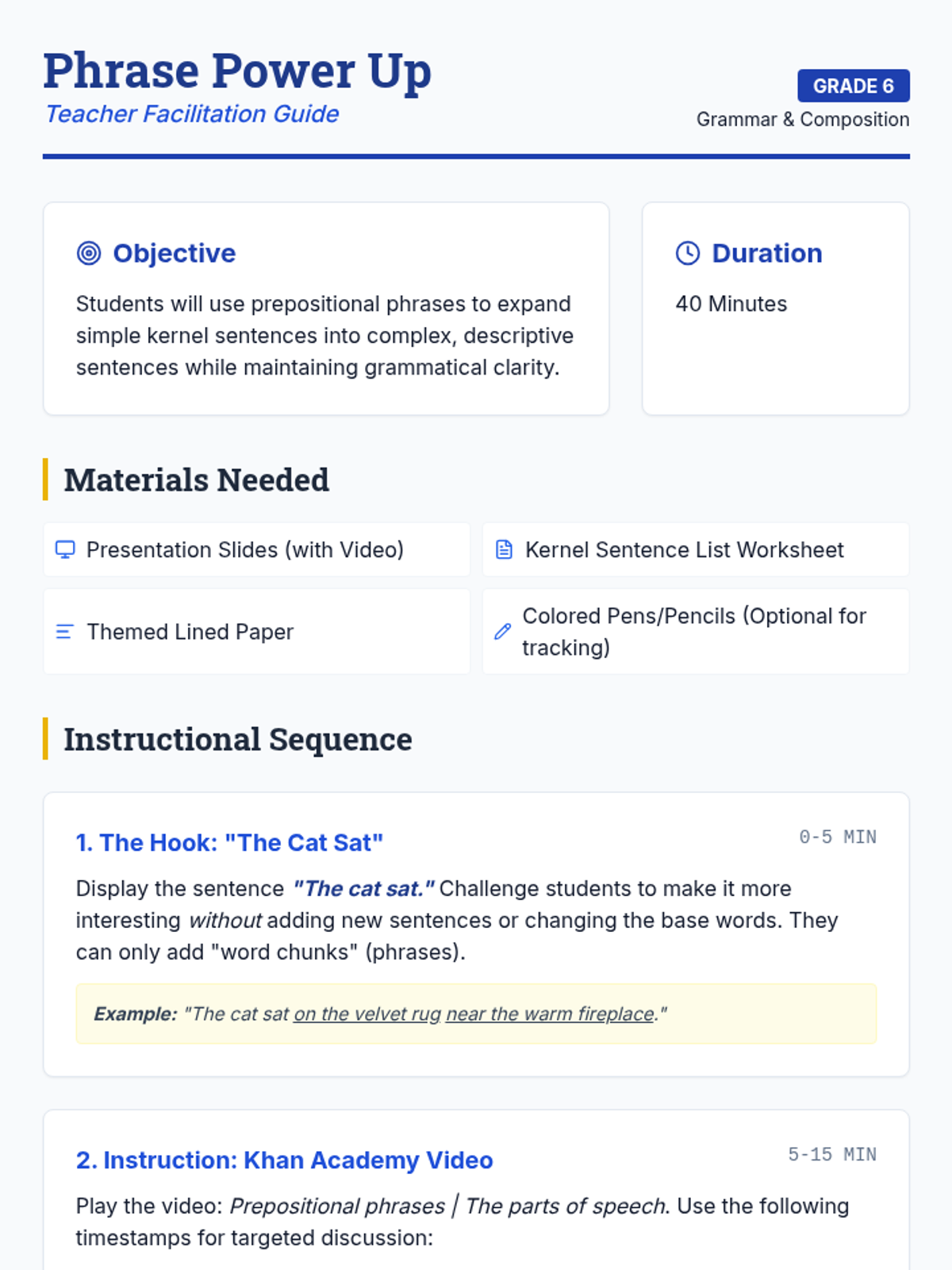
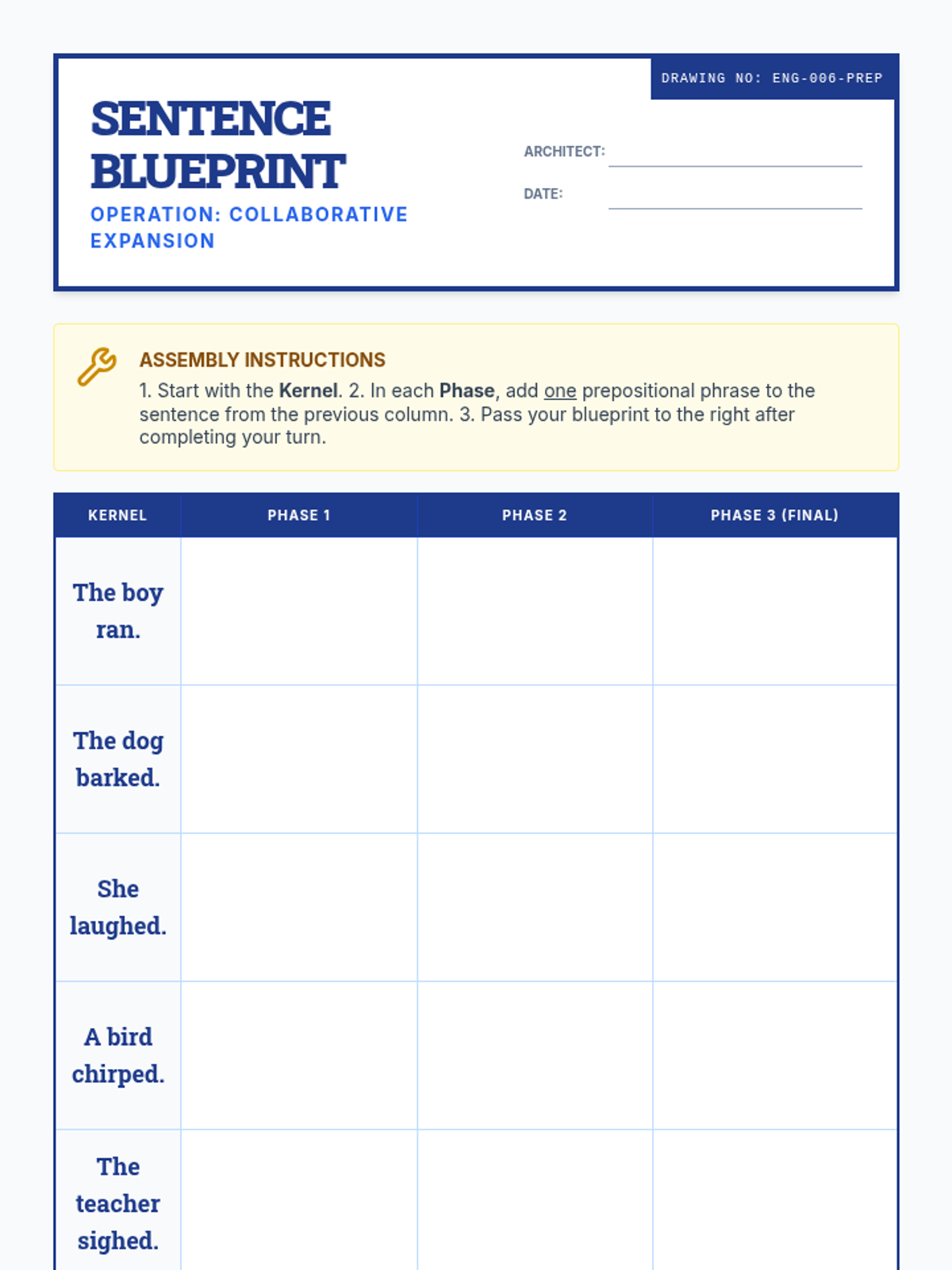
Students will learn how to use prepositional phrases to transform simple 'kernel' sentences into descriptive, complex thoughts. The lesson includes a presentation with an embedded Khan Academy video and a collaborative 'sentence passing' activity.
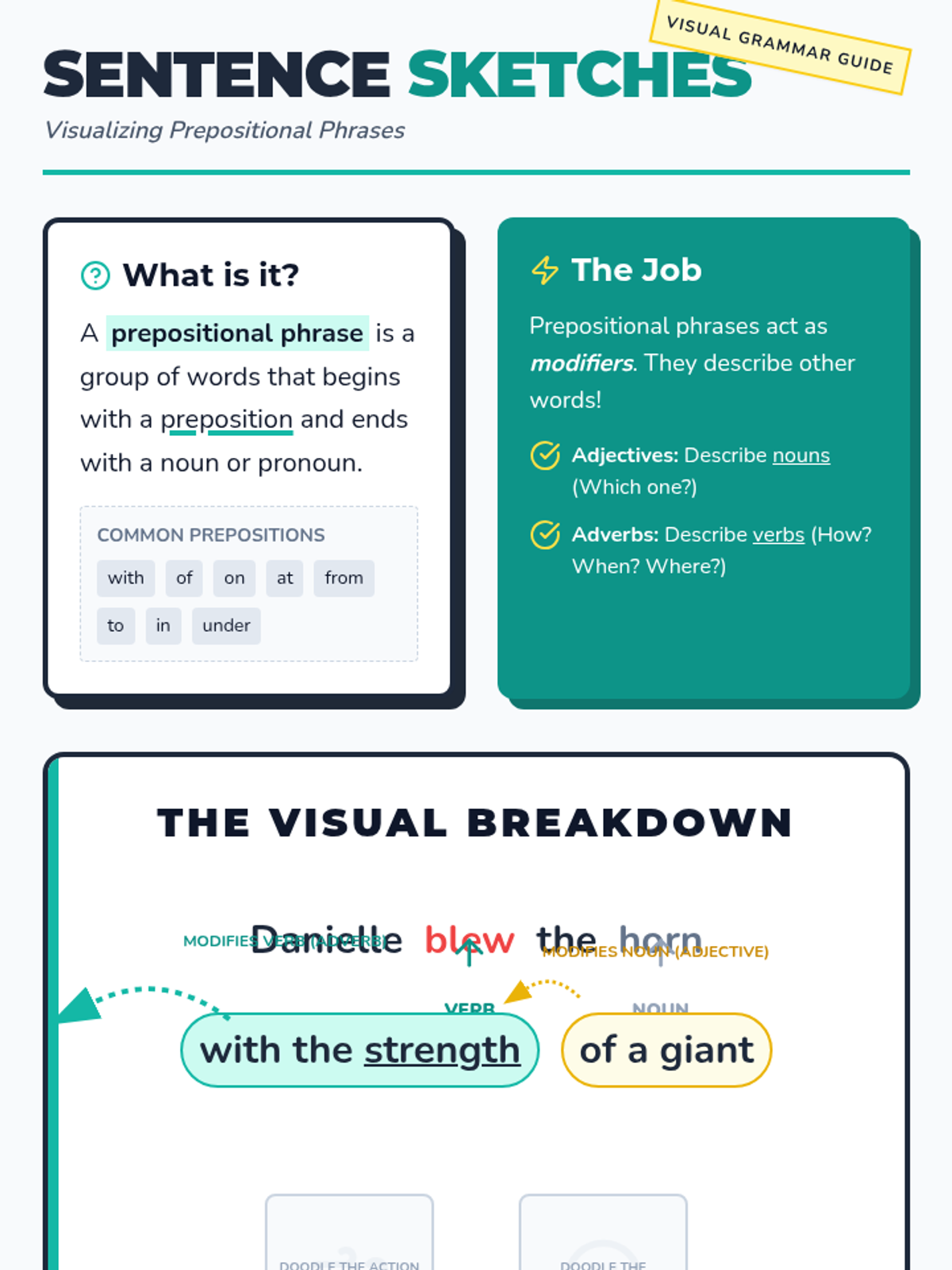
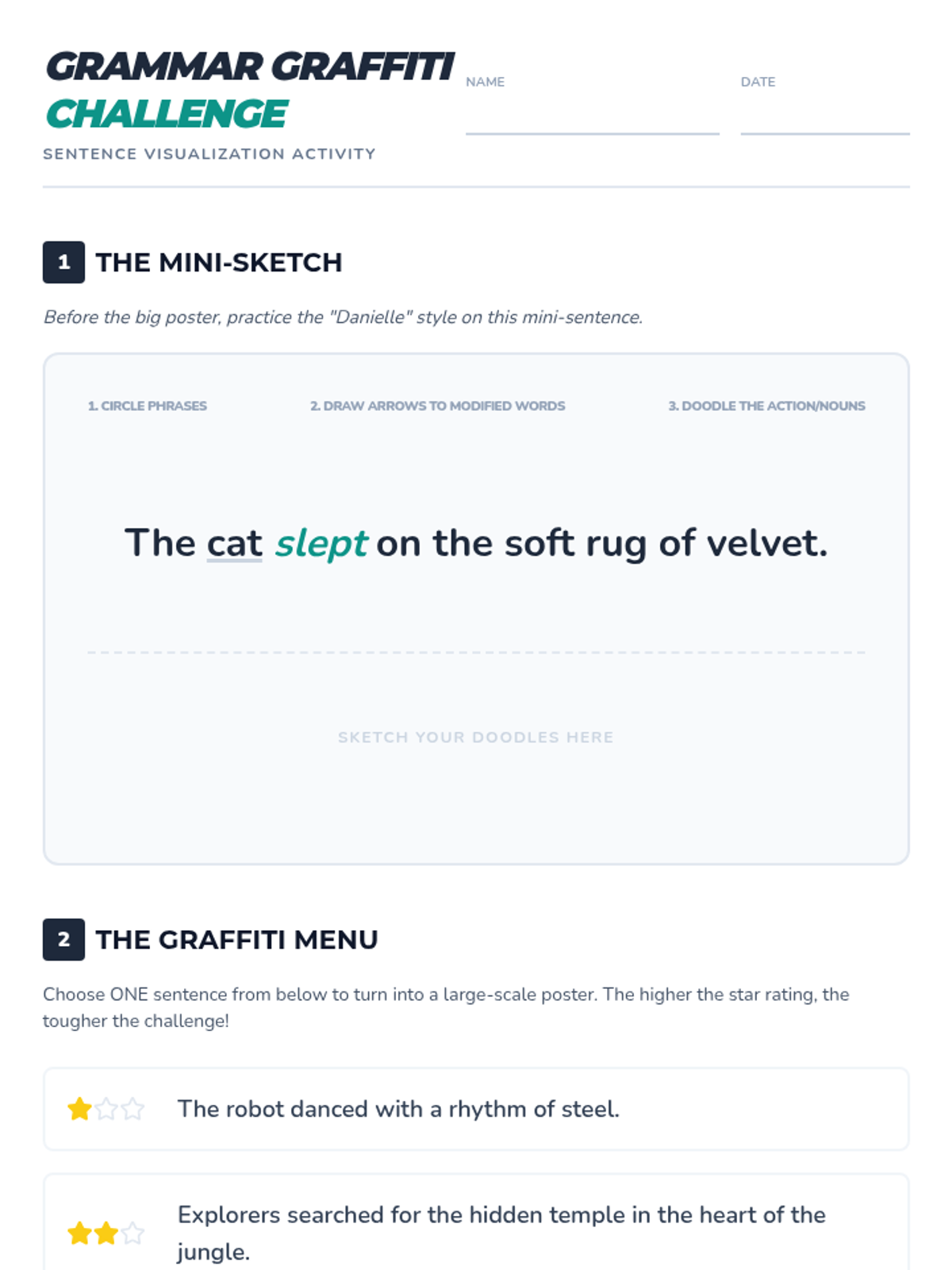
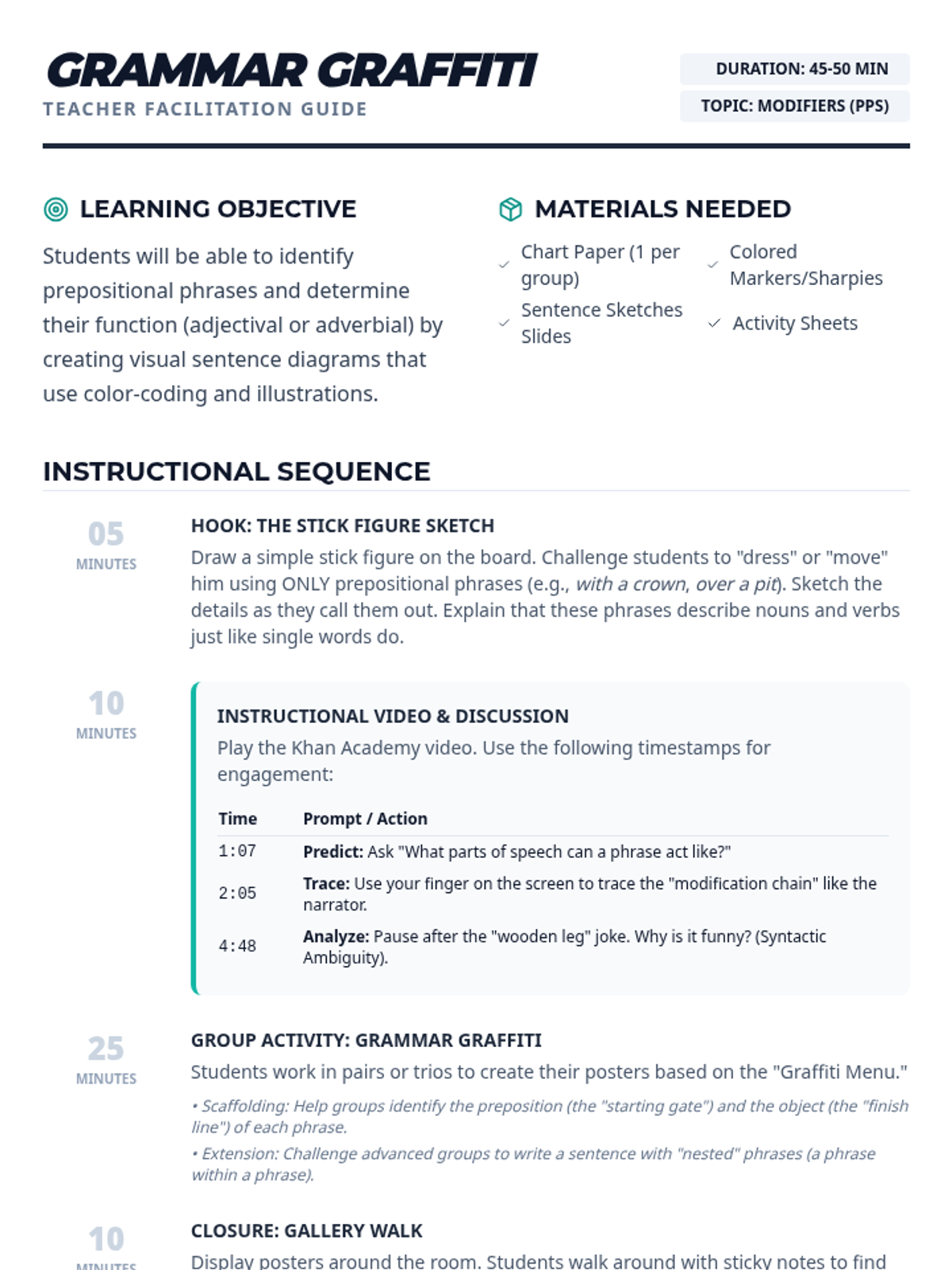
A visual-first lesson on sentence structure focusing on prepositional phrases. Students use 'Grammar Graffiti'—a combination of diagramming and doodling—to visualize how phrases modify nouns and verbs, inspired by Khan Academy's instructional style.
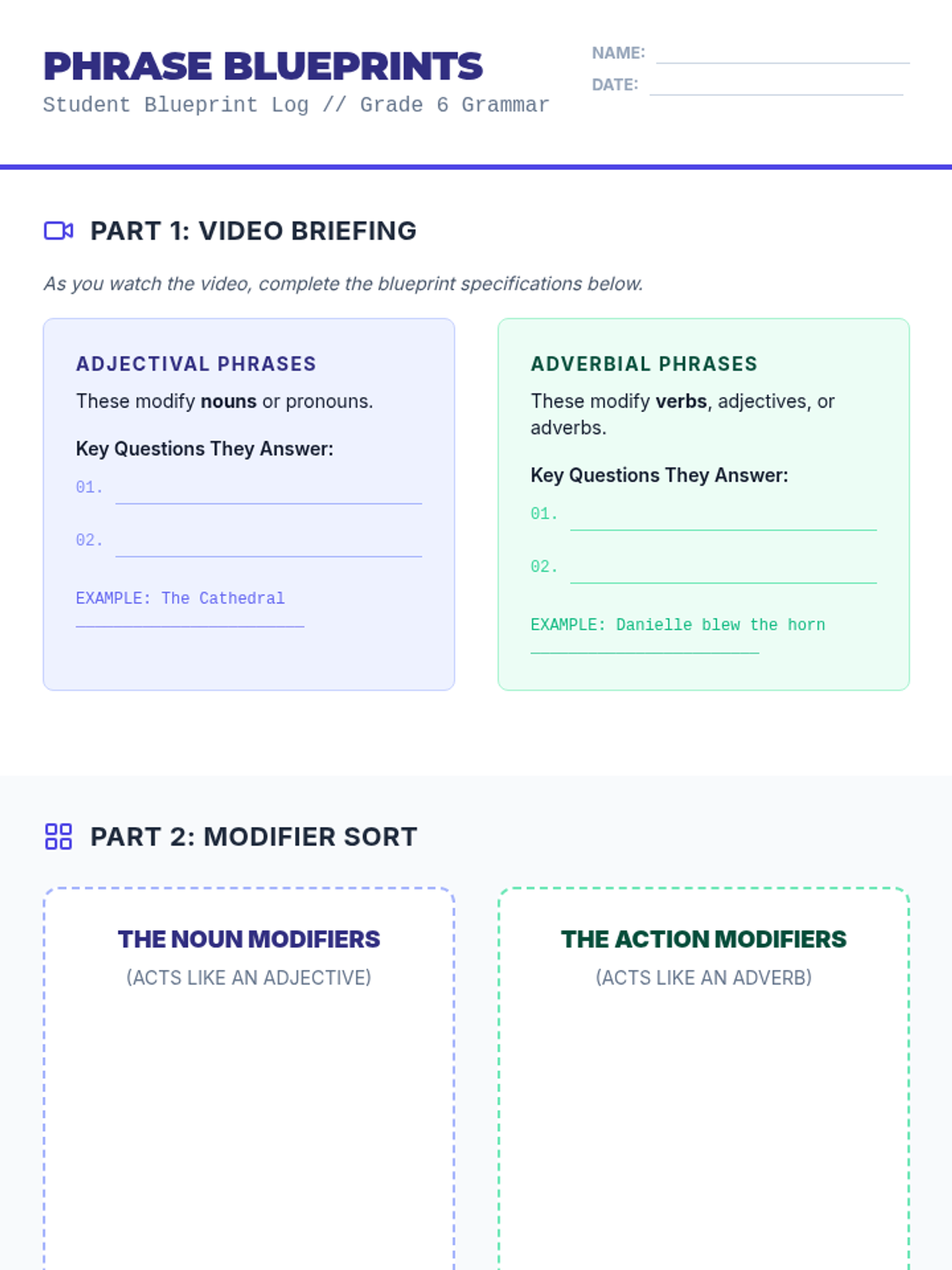
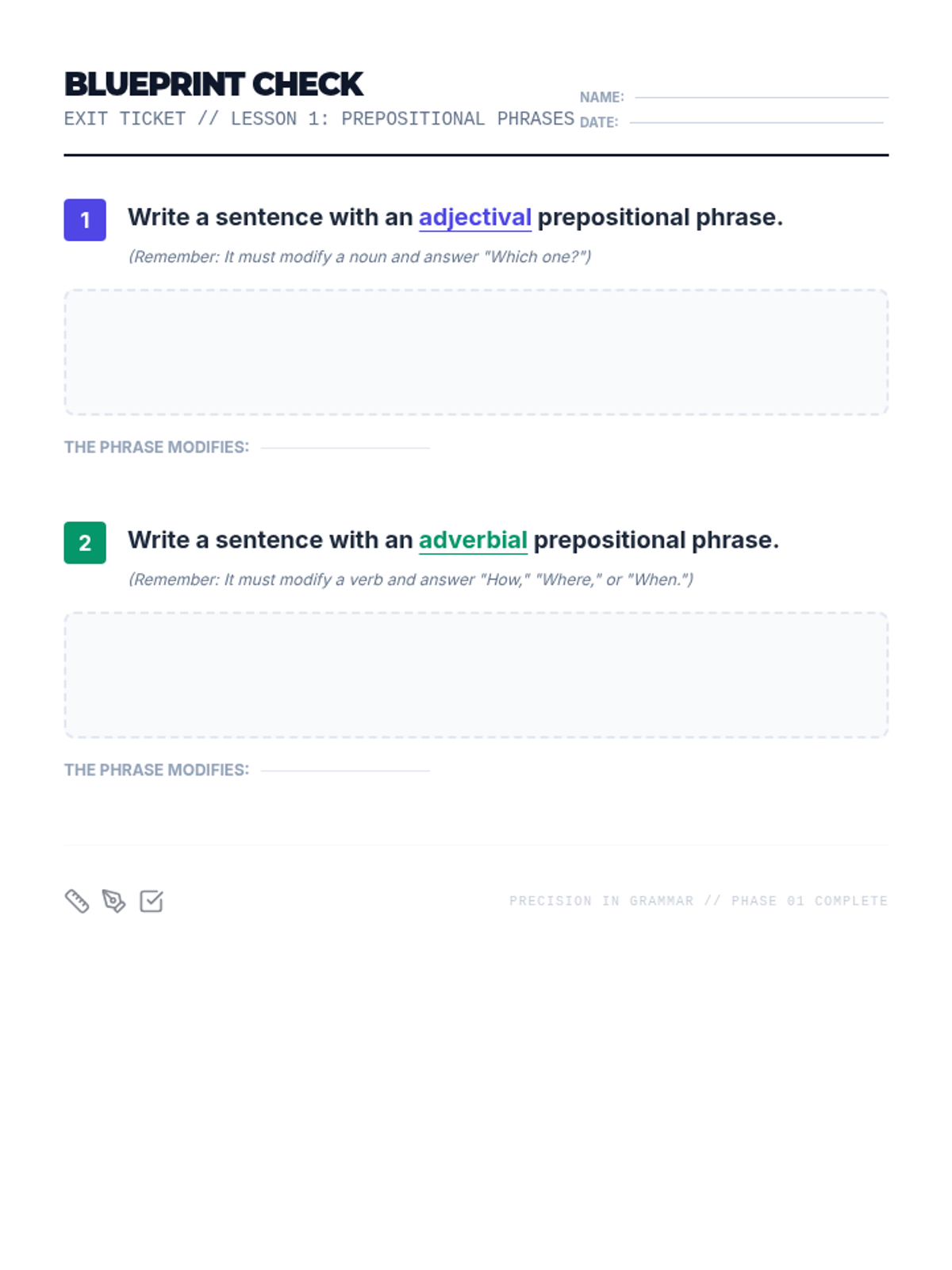
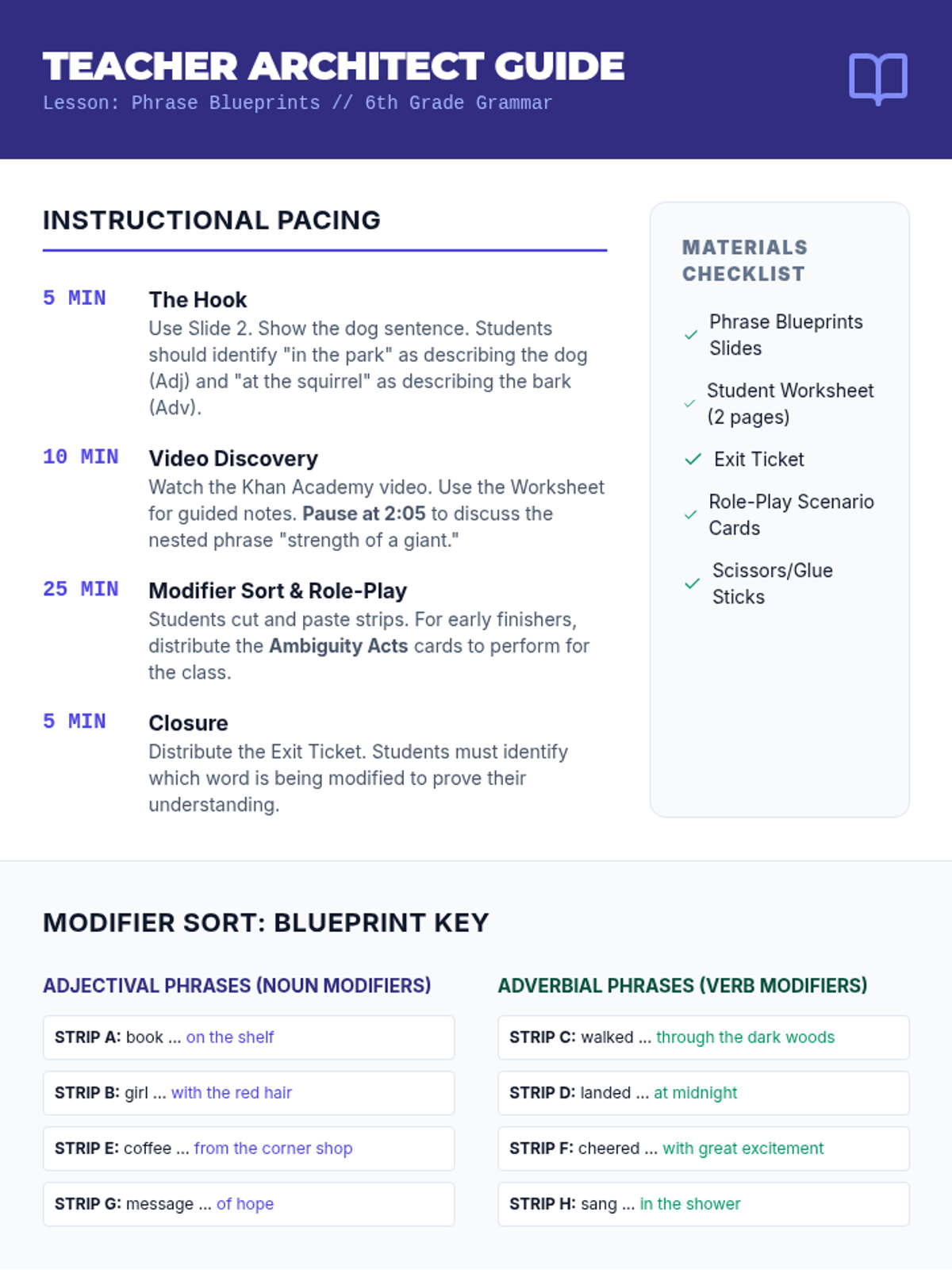
A 6th-grade grammar lesson where students distinguish between adjectival and adverbial prepositional phrases through architectural sentence analysis, video observation, and a kinetic sorting activity.
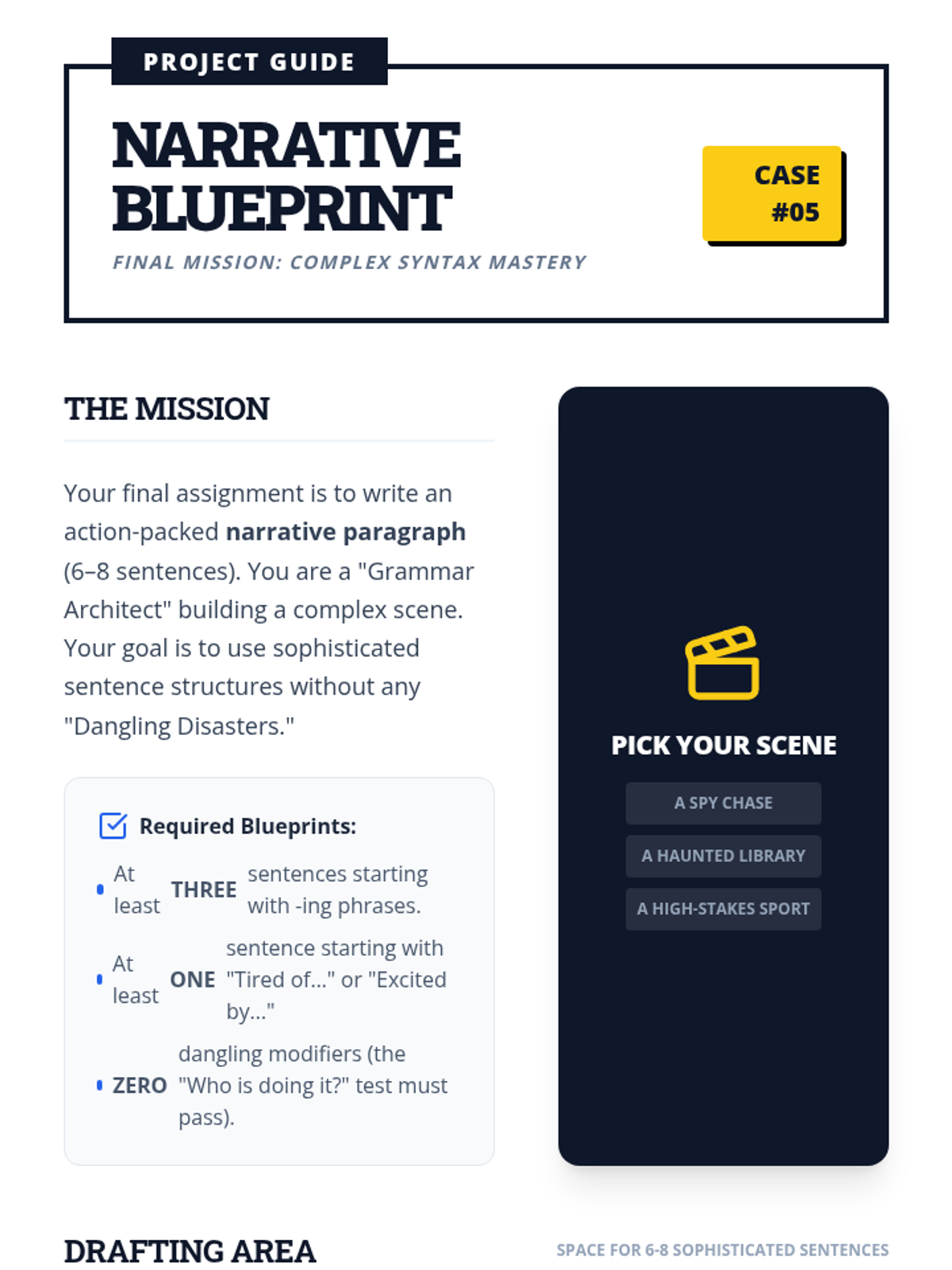
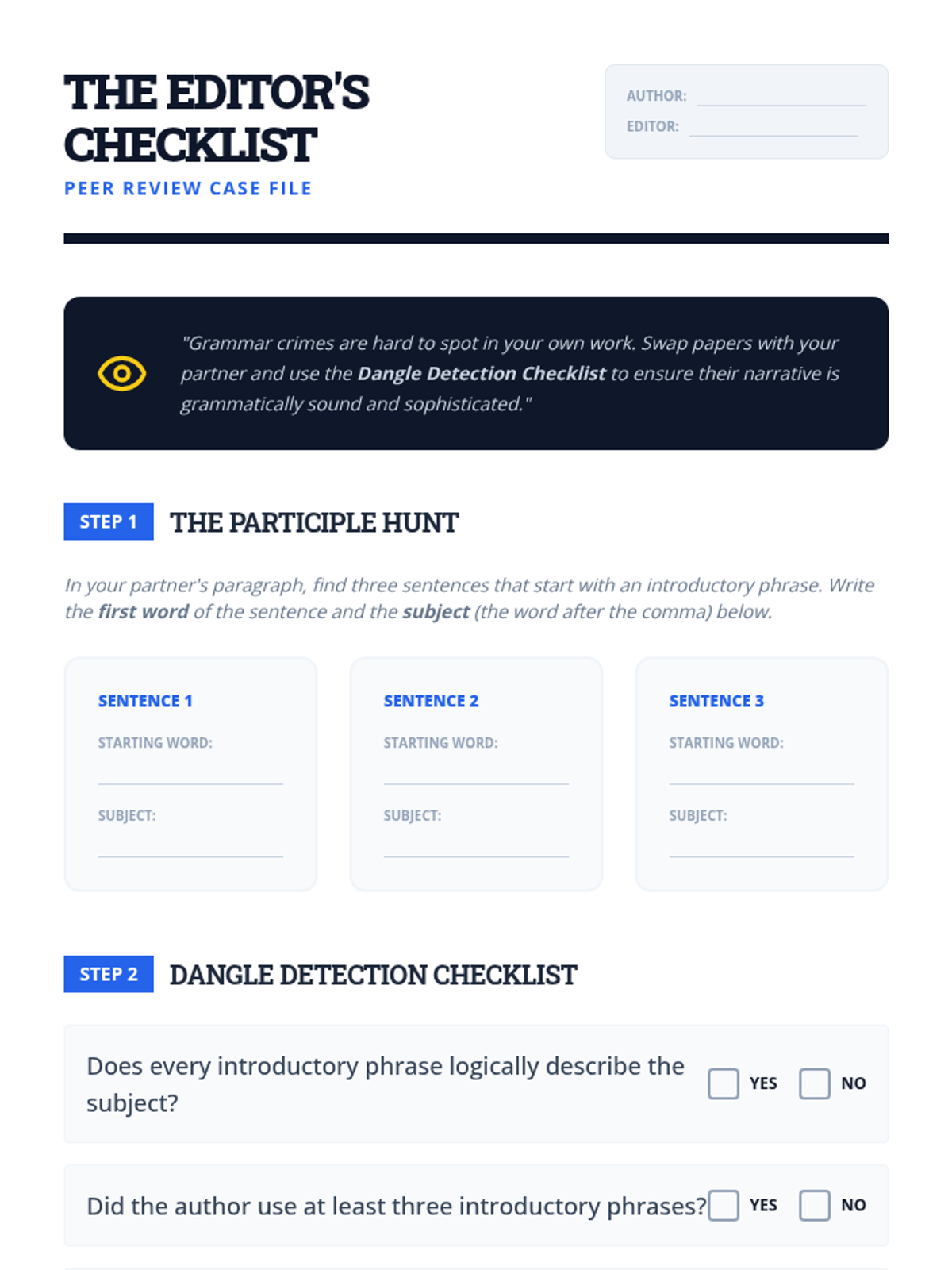
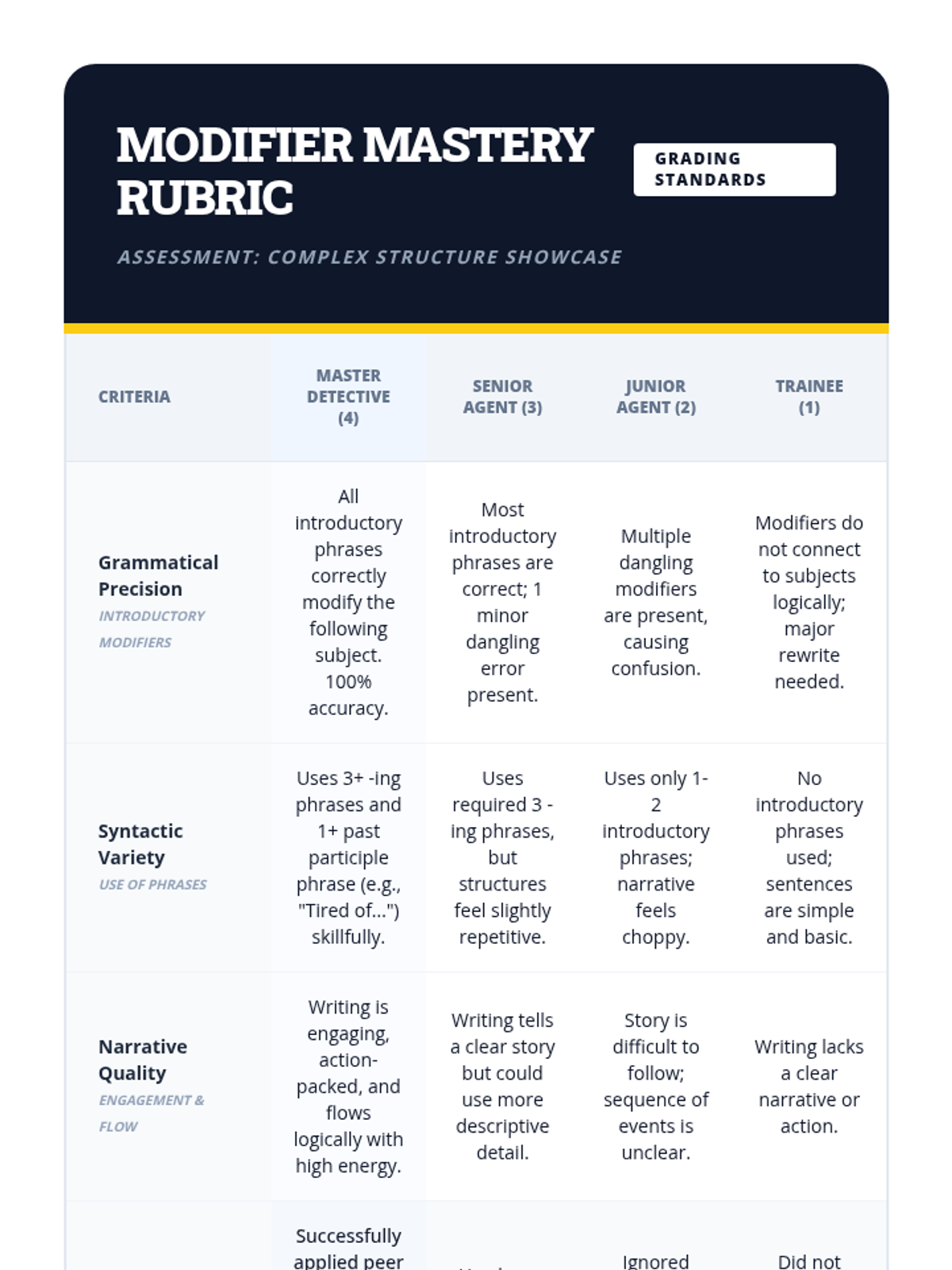
Students write a short narrative paragraph requiring the use of at least three introductory modifying phrases. They peer-review specifically to check that no modifiers are dangling.
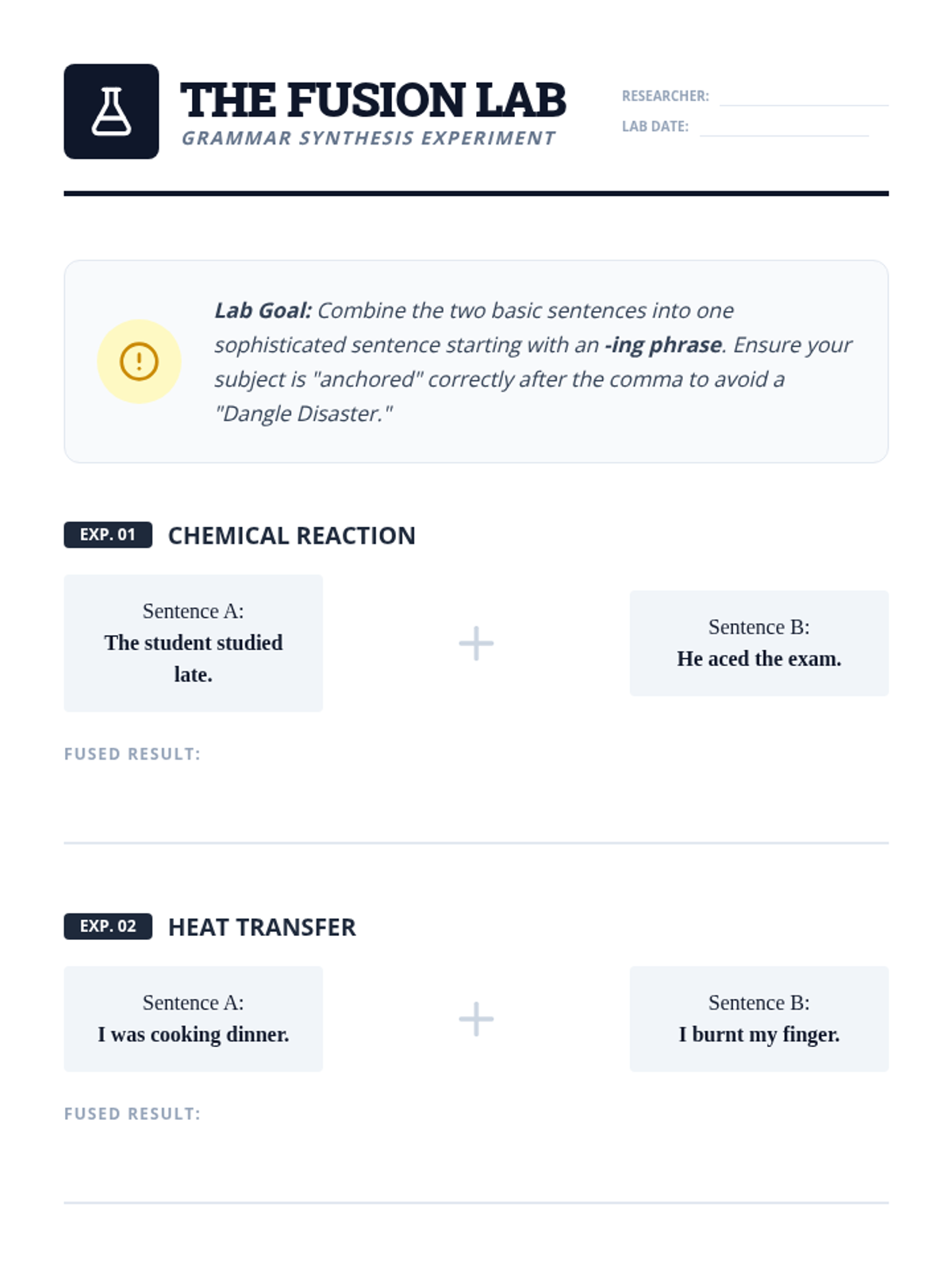
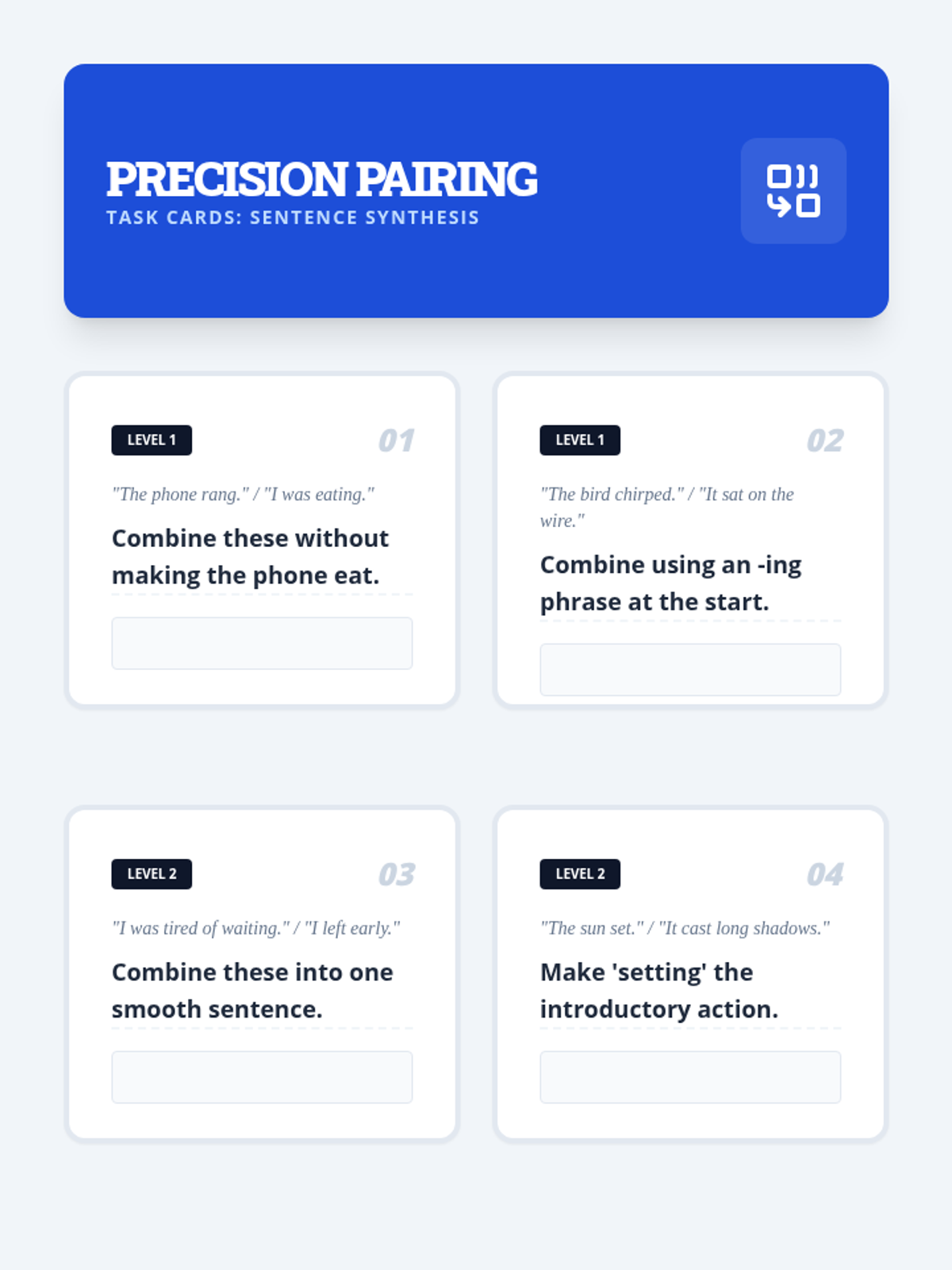
Students practice combining two choppy sentences into one sophisticated sentence using introductory phrases. They must ensure the modifier is not left dangling during the combination process.
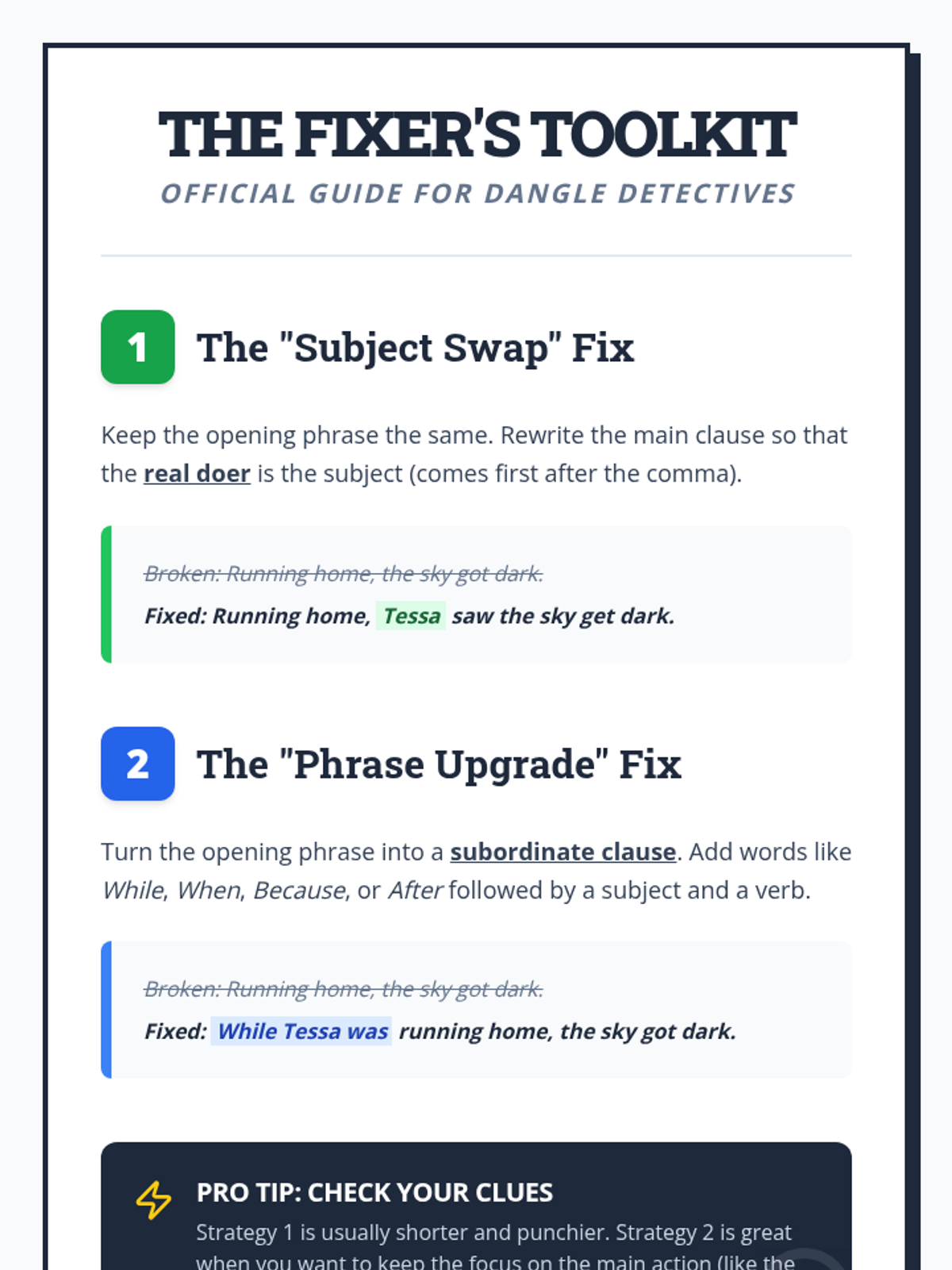
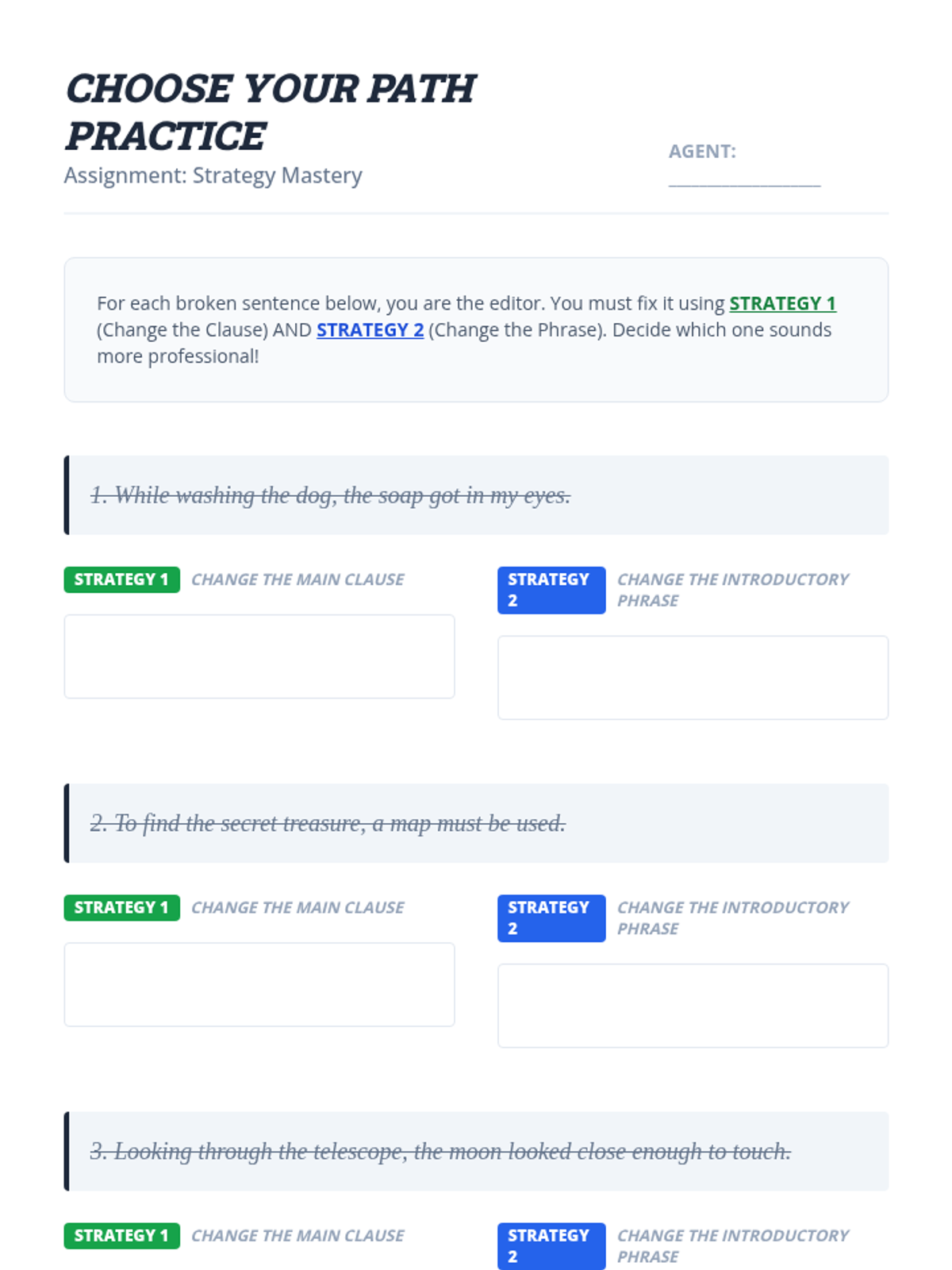
Students learn two specific methods to fix dangling modifiers: 1) Change the main clause to include the subject, or 2) Change the introductory phrase into a subordinate clause.
A mixed review challenge where students diagnose and fix misplaced, dangling, and squinting modifiers in a timed 'escape room' environment.
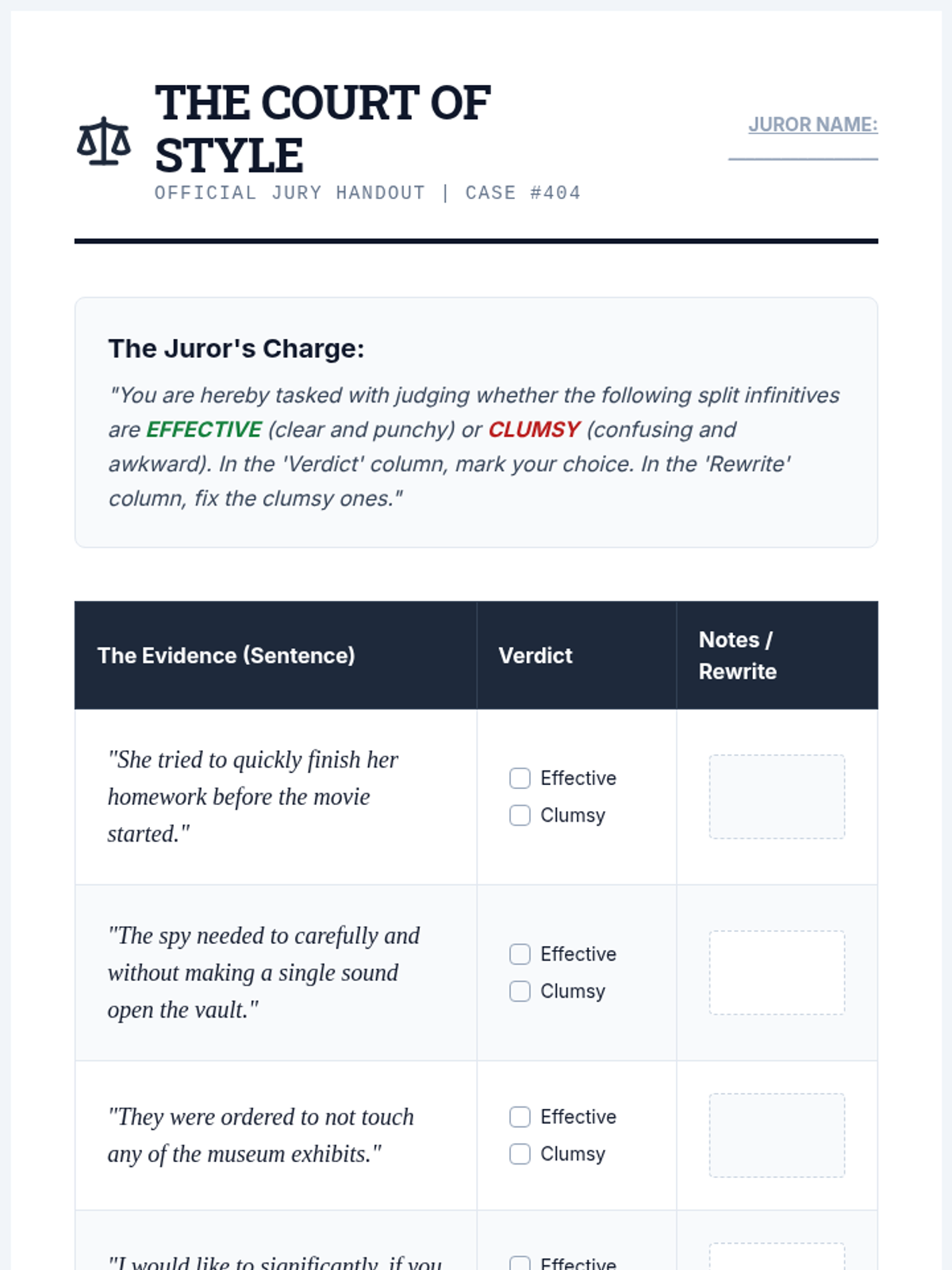
An exploration of split infinitives as a specific case of modifier usage, focusing on the balance between prescriptive grammar and stylistic power.
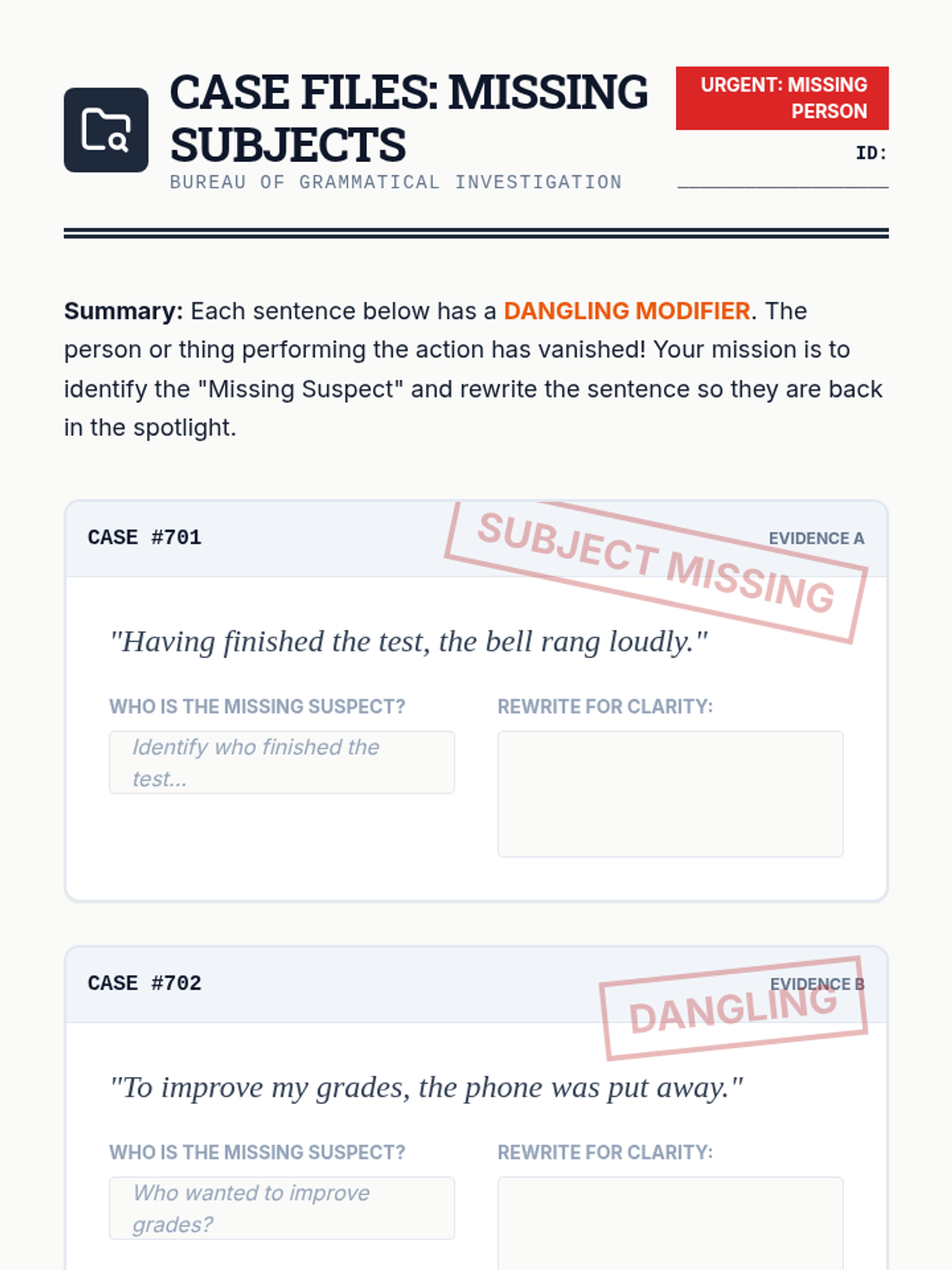
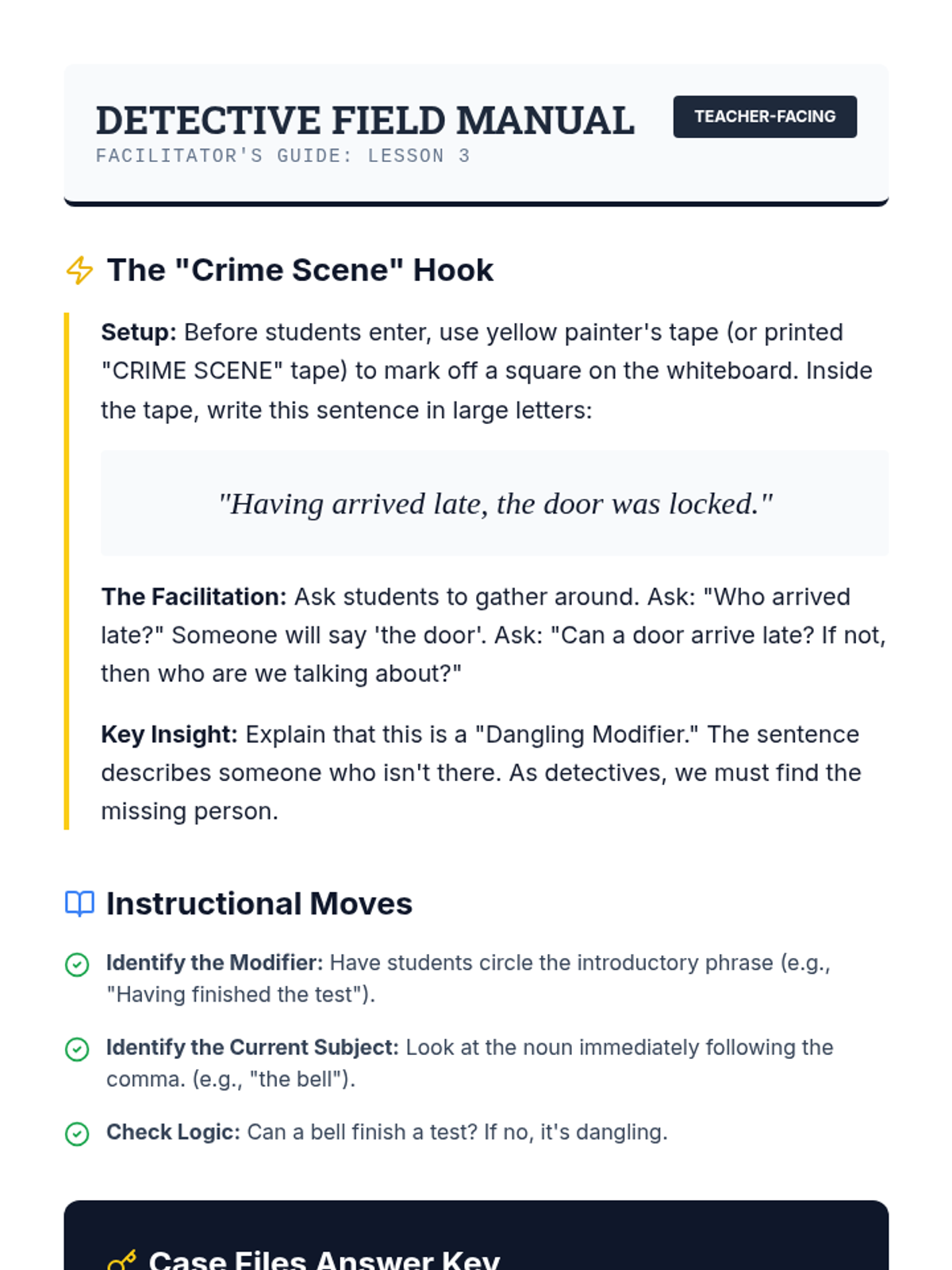
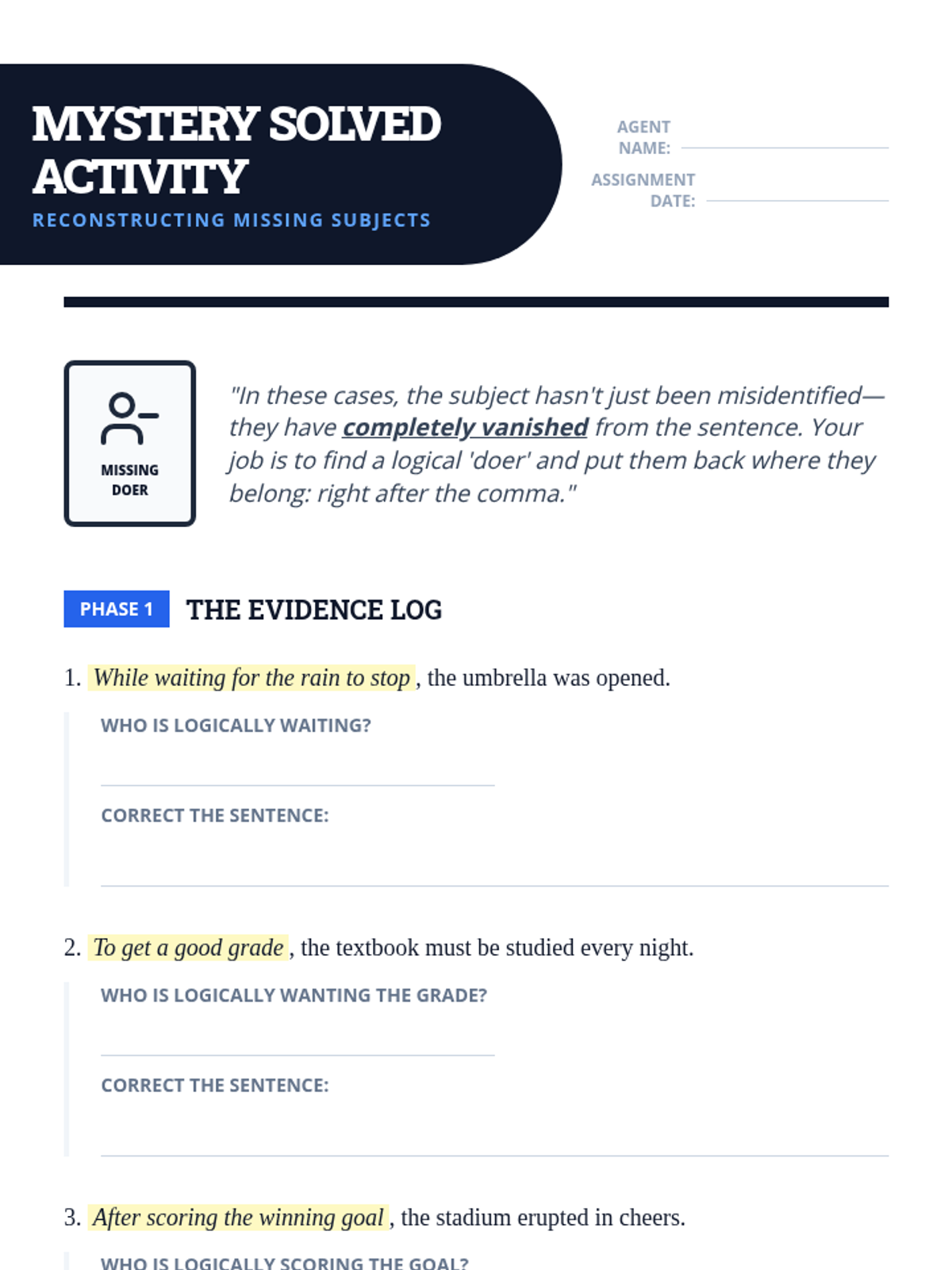
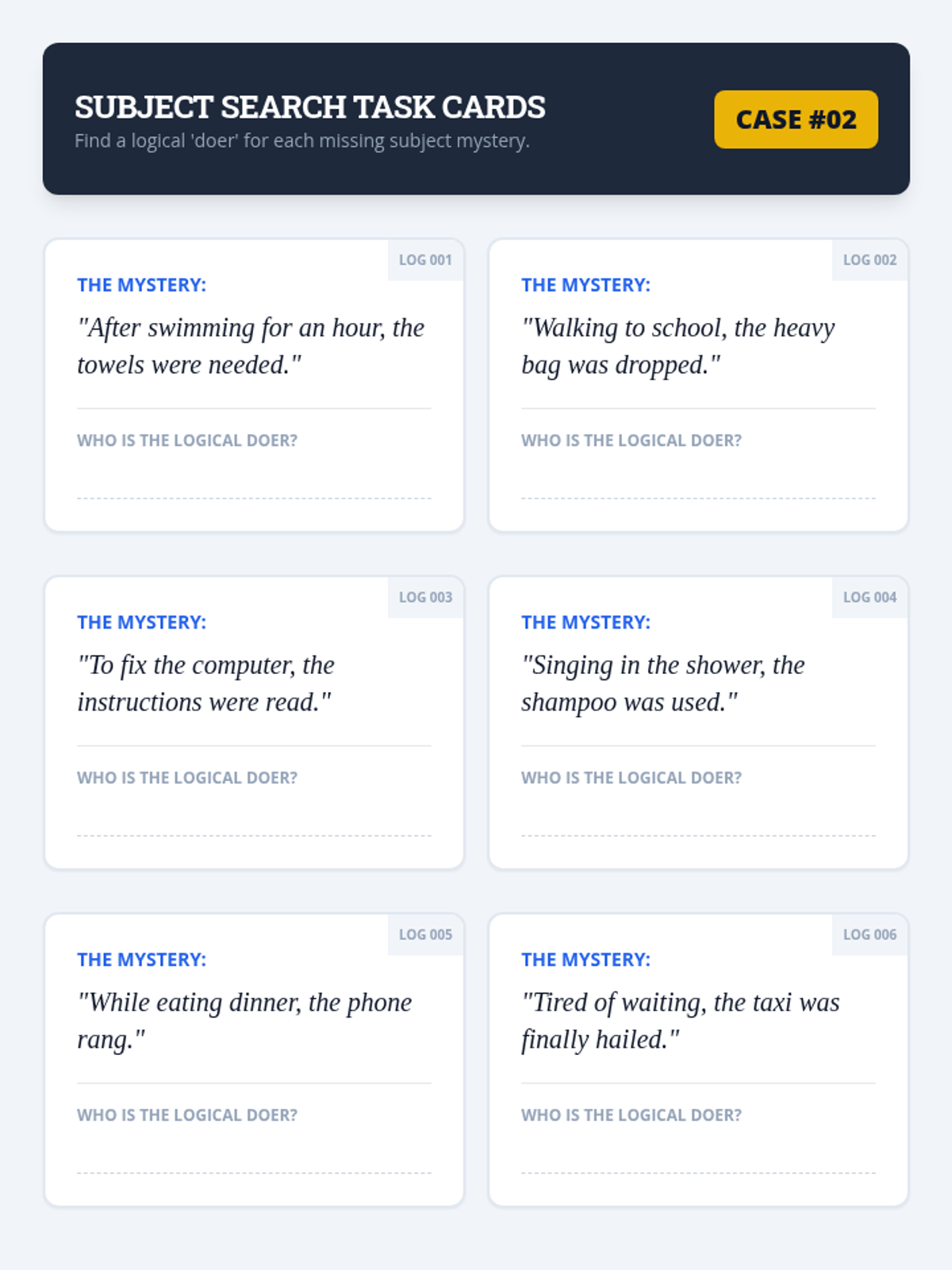
A deep dive into dangling modifiers where students act as detectives to find the missing subjects in sentences and rewrite them for clarity.
Students define and distinguish between misplaced modifiers (syntax errors) and dangling modifiers (logical errors) through a matching game and instructional slides.
Students use their 'grammatical ear' to identify awkward sentences before learning technical terms. They sort clear and confusing sentences to discover patterns of misplacement.
Students identify 'dangling' modifiers where the doer of the action is missing entirely from the sentence. They practice inserting a logical subject to resolve the grammatical error.
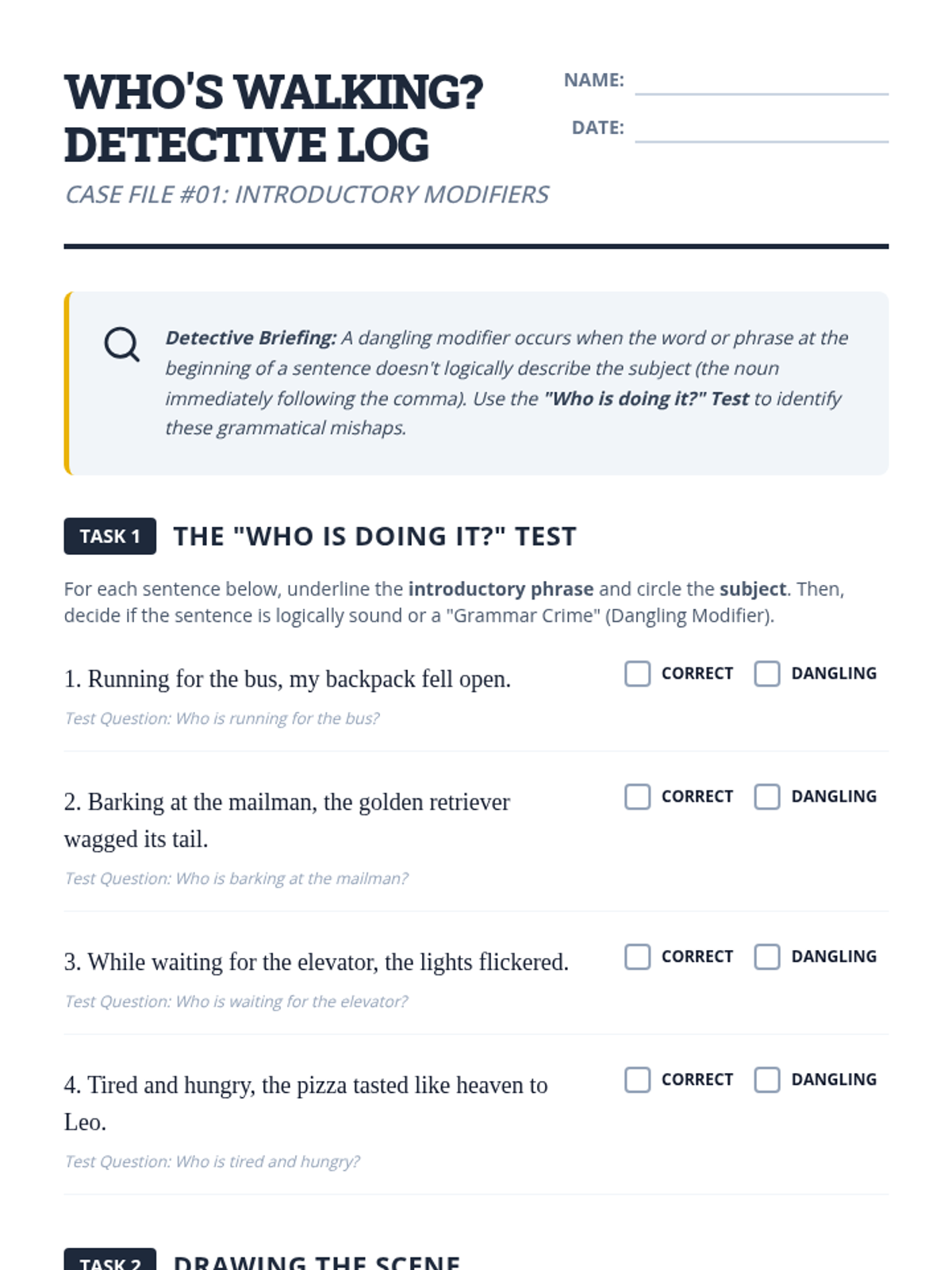
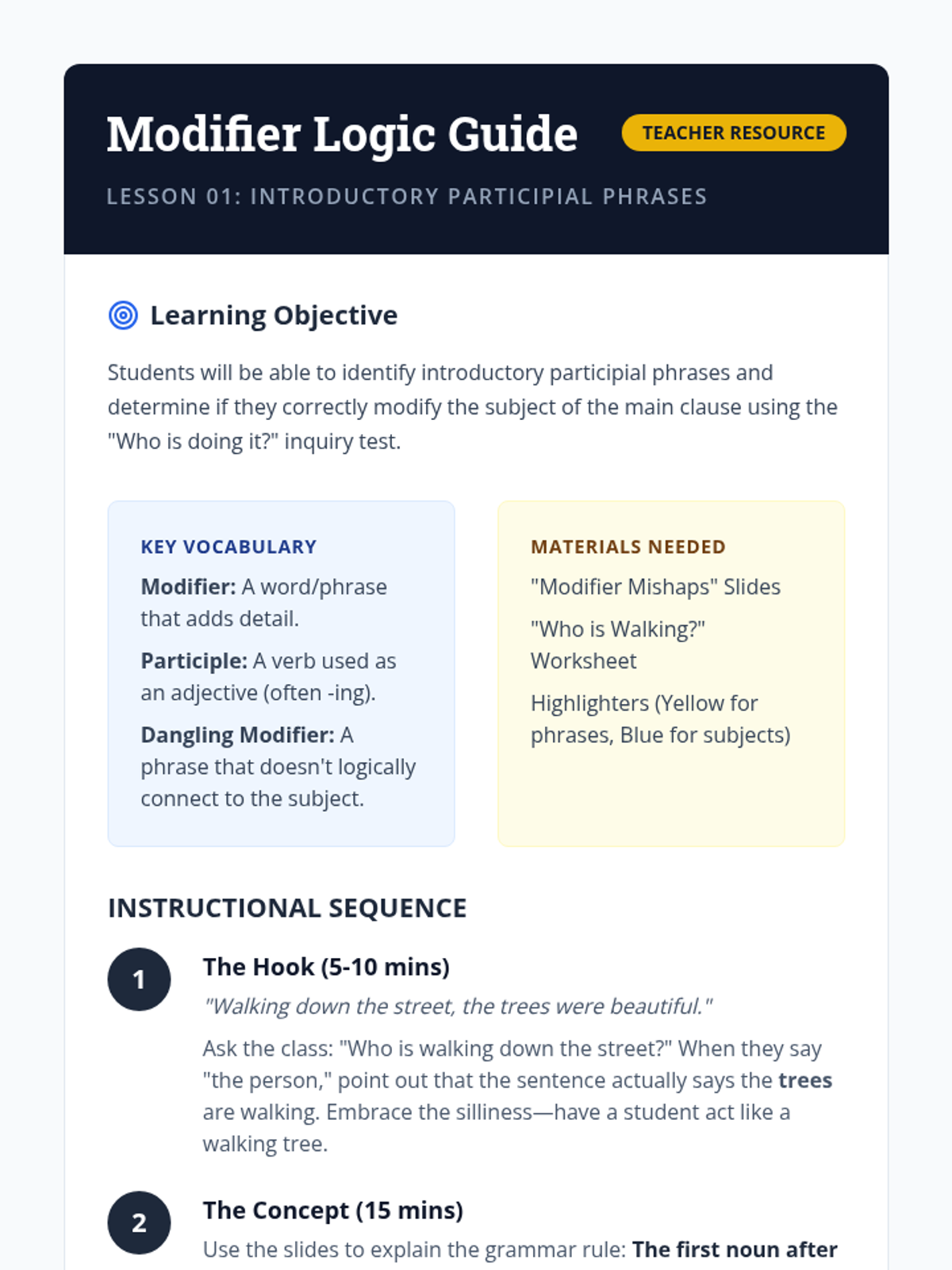
Students explore sentences starting with -ing phrases (participles) and conduct a 'Who is doing it?' test to see if the subject of the sentence is actually the one performing the opening action.
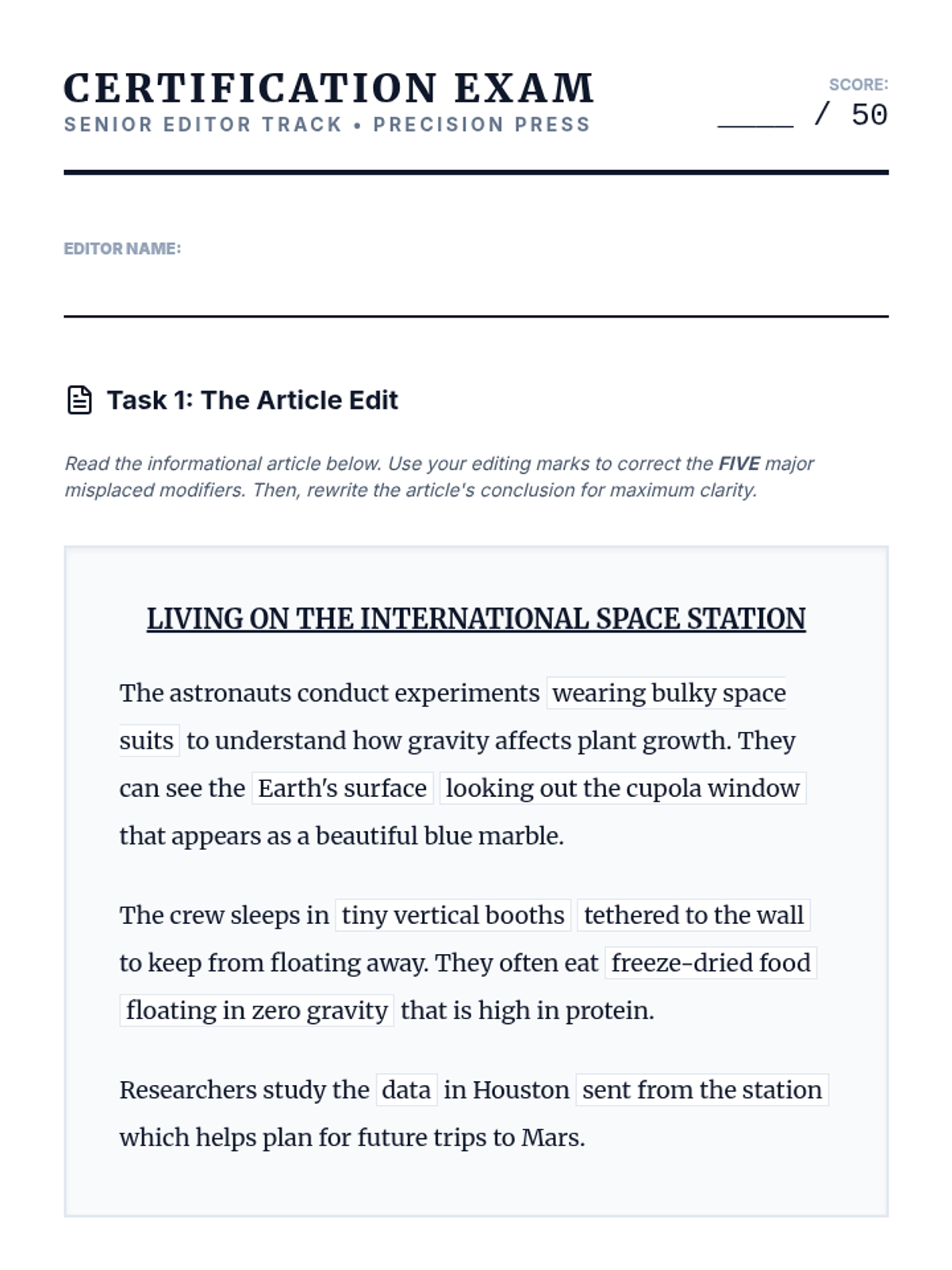
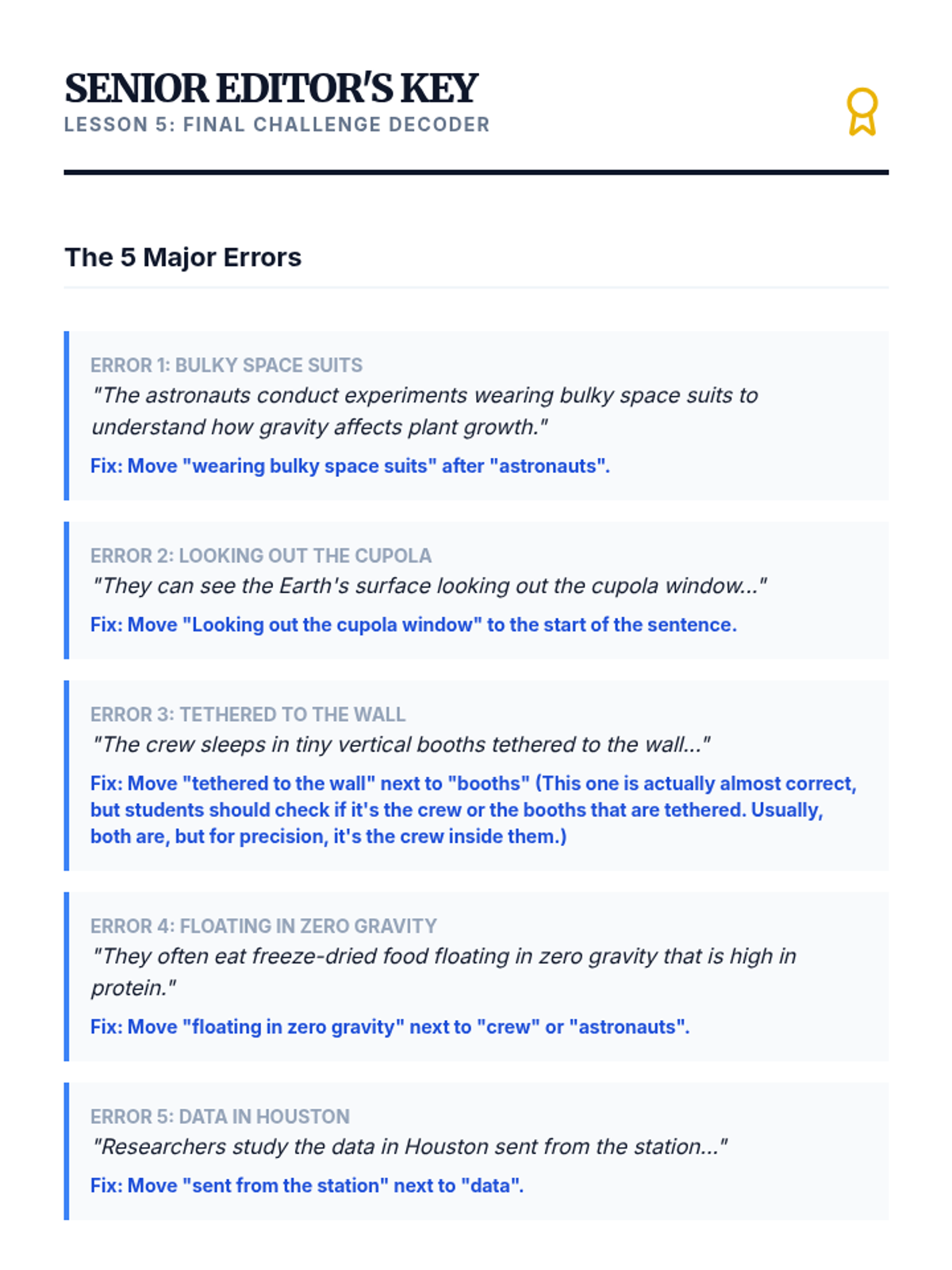
Students independently edit a final article and write an Editor's Note justifying their changes for professional clarity.
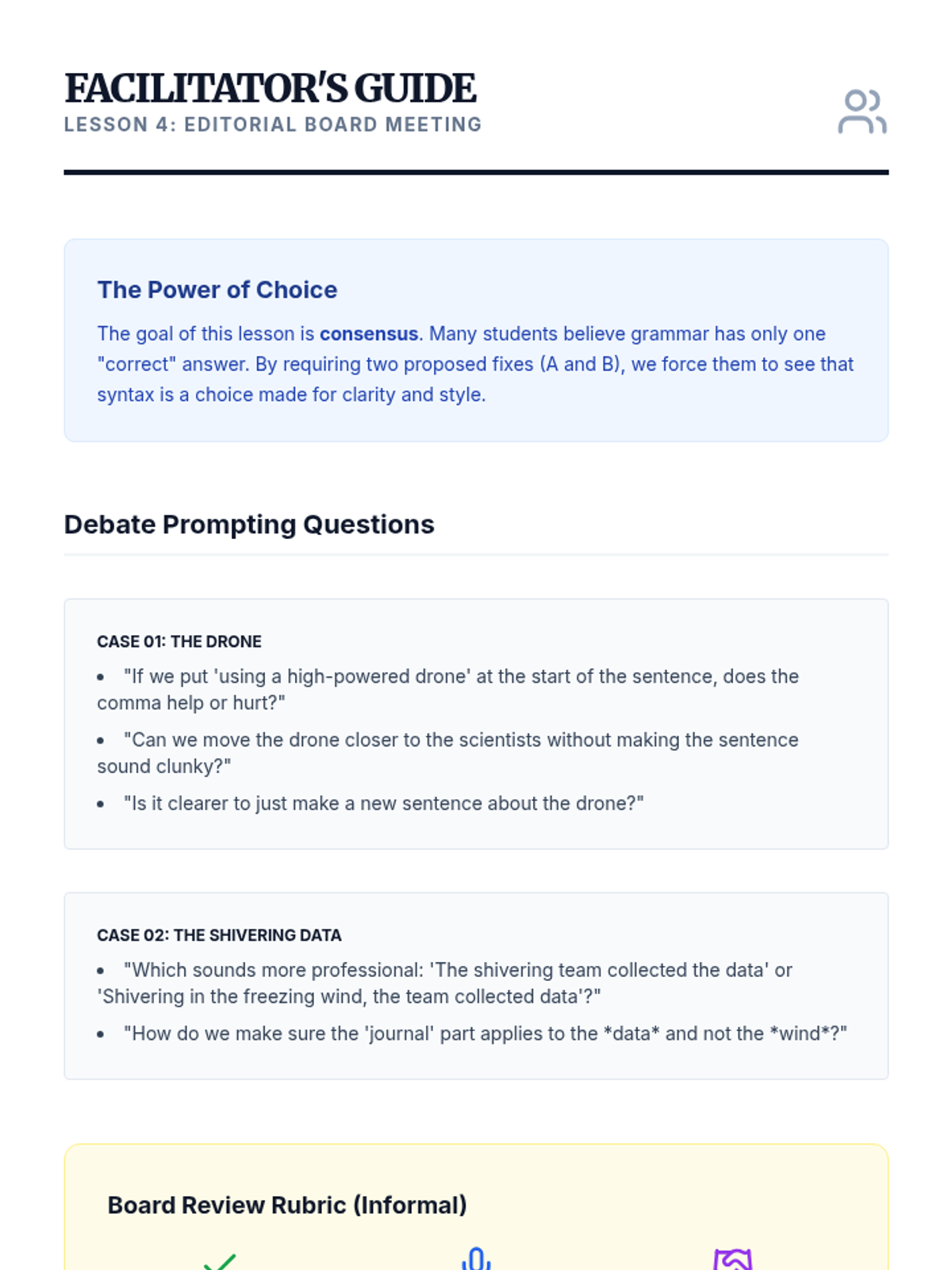
Small groups act as editorial boards to debate and agree on the best corrections for complex modifier errors.
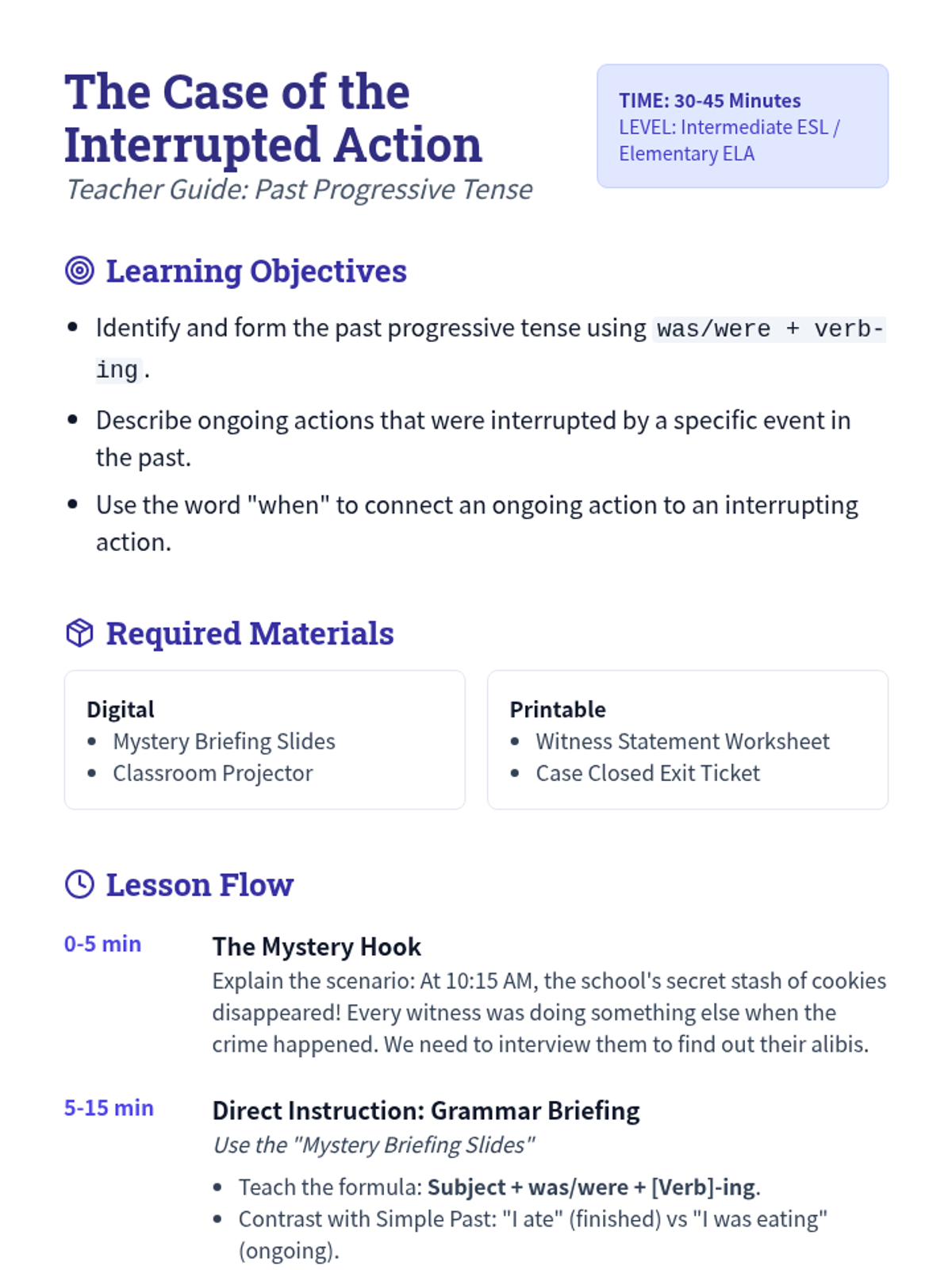
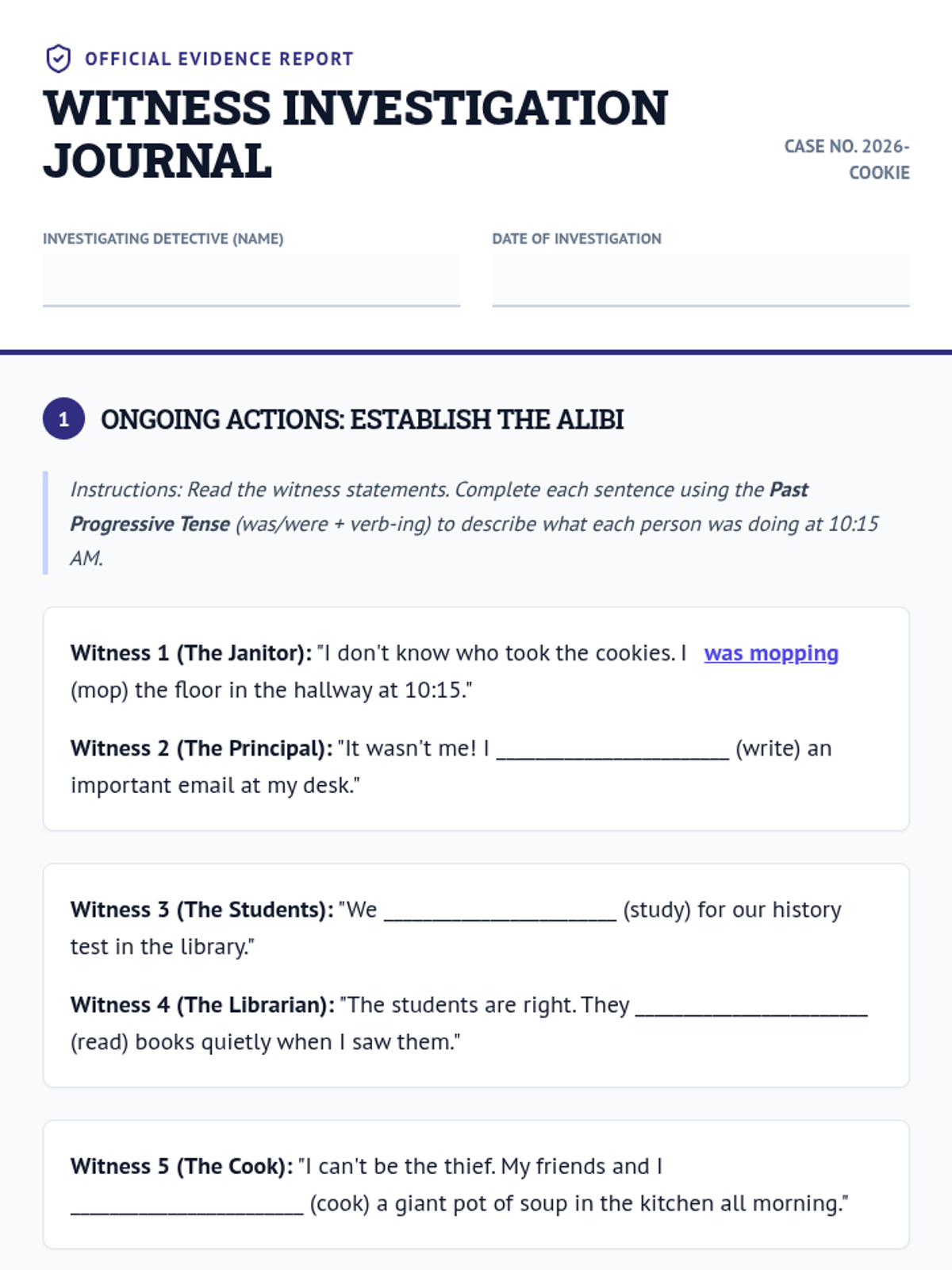
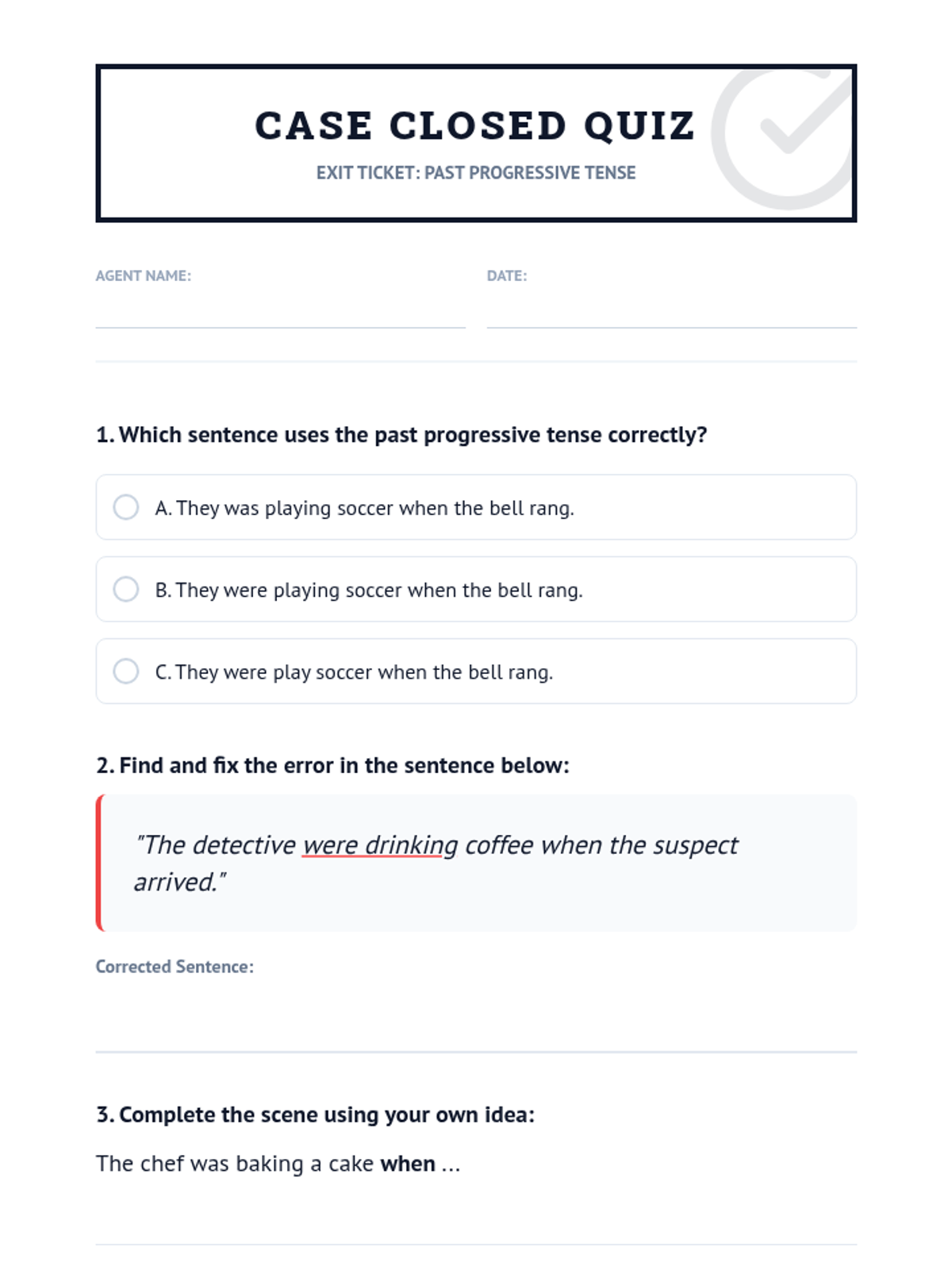
A lesson on the past progressive tense (was/were + verb-ing) focused on describing ongoing and interrupted actions in the past through a detective mystery theme.
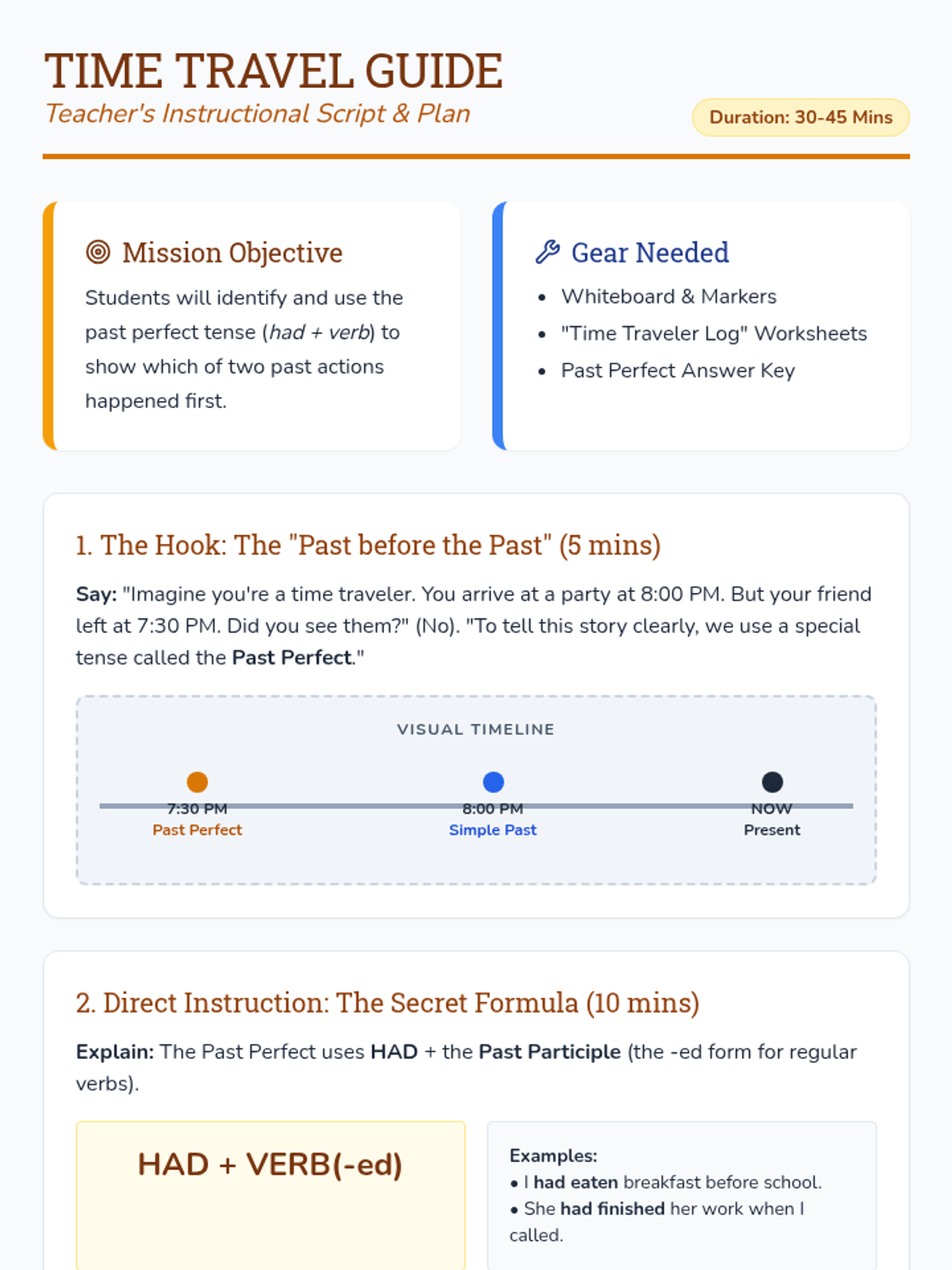
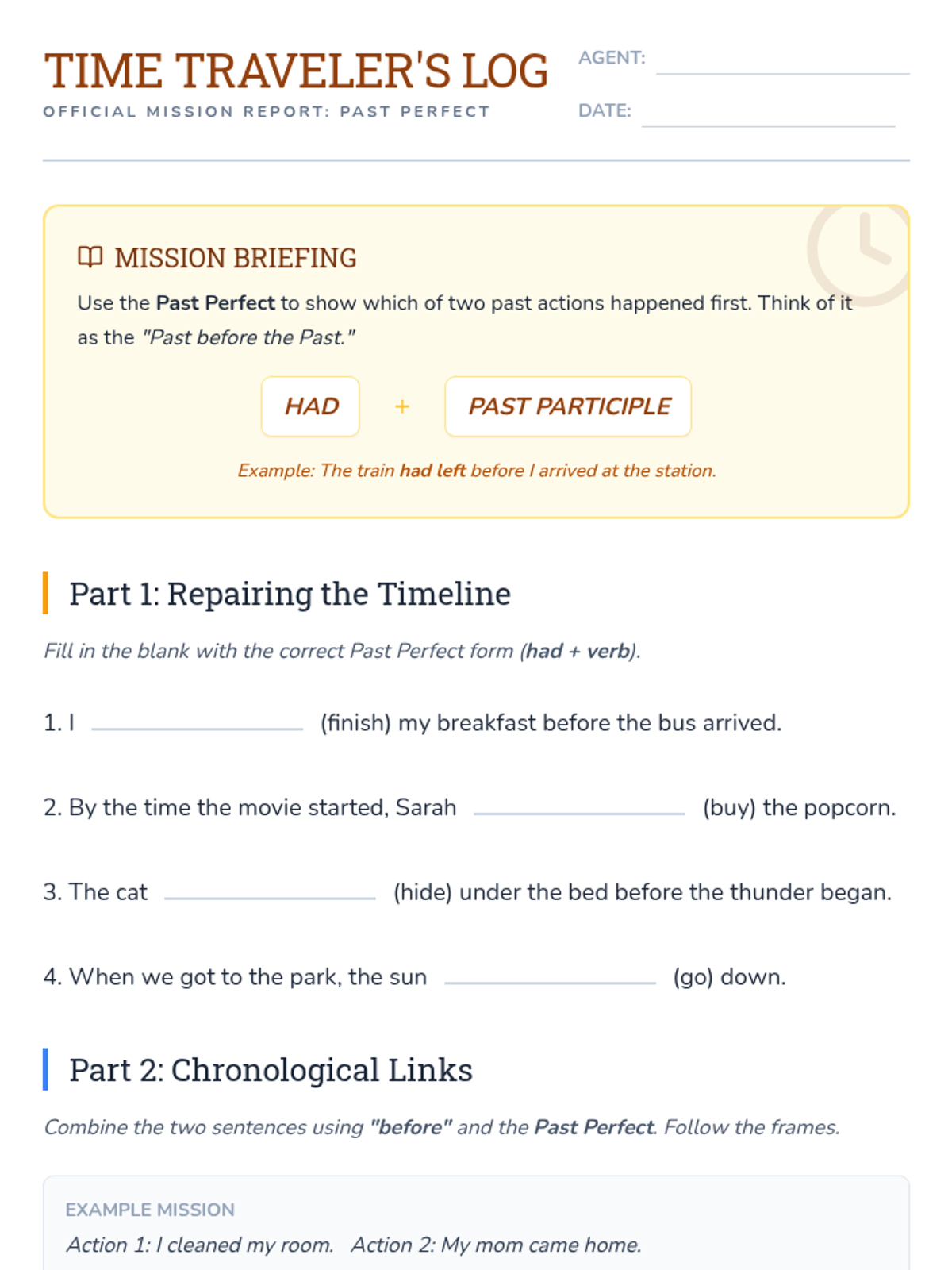
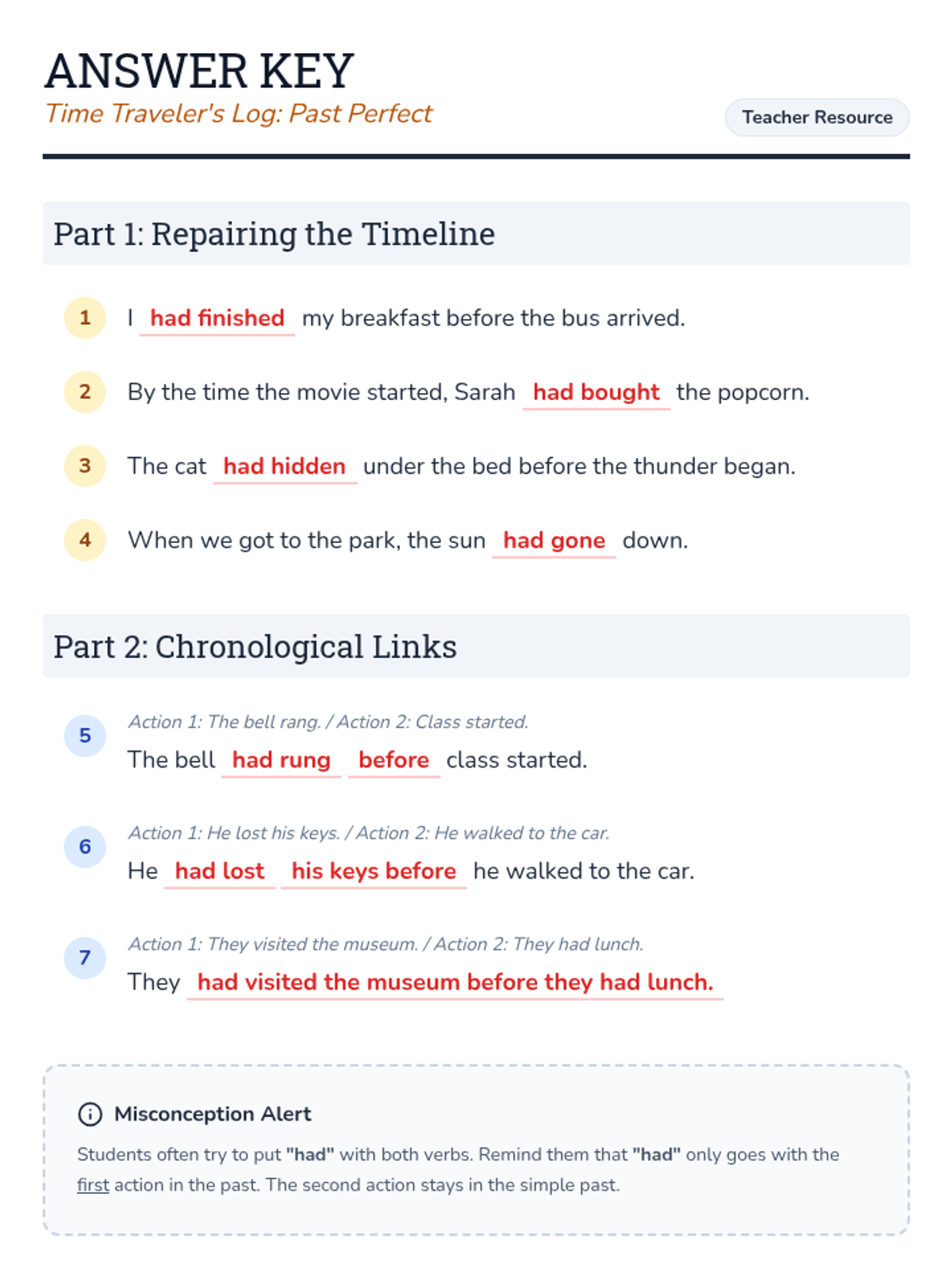
A comprehensive 30-45 minute lesson on the past perfect tense, featuring explicit instructions, a time-travel themed worksheet, and a detailed teacher guide. This lesson helps students understand how to sequence two past events using the 'past before the past' structure.
A visual, high-engagement workshop for students to practice sentence manipulation. Students explore synonyms to enhance vocabulary and master the 'Active to Passive' voice flip through space, school, and fable-themed missions.
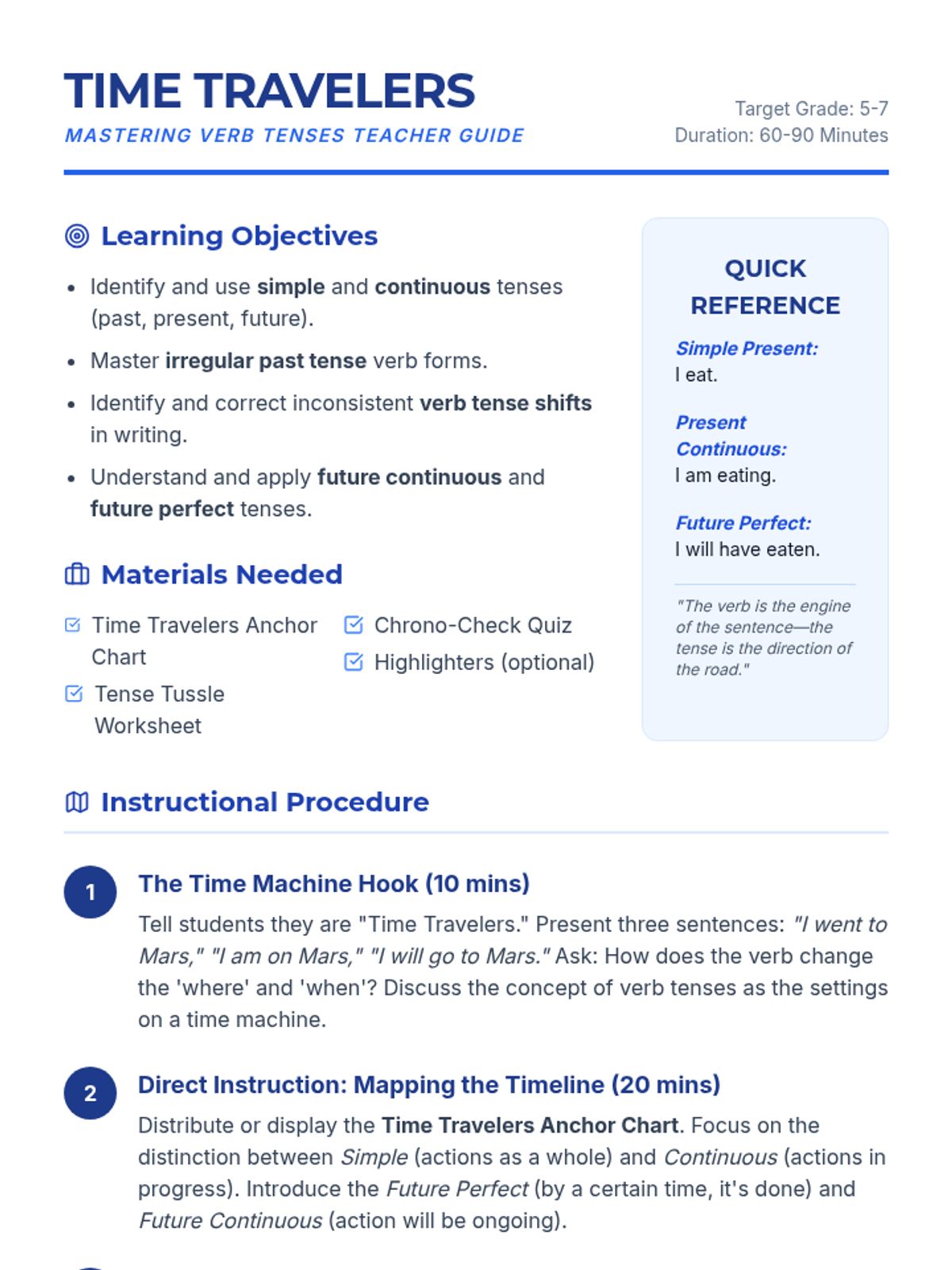
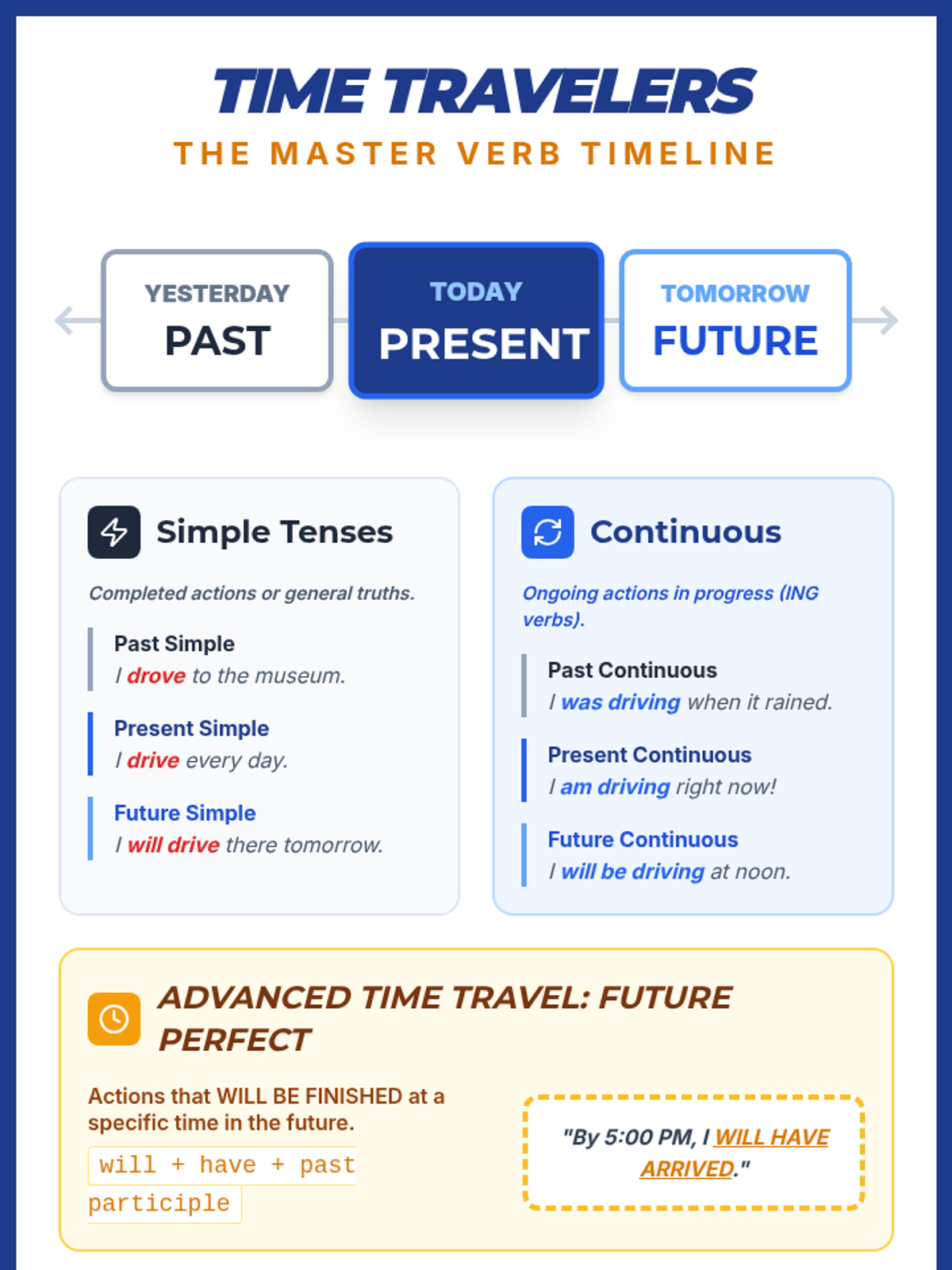
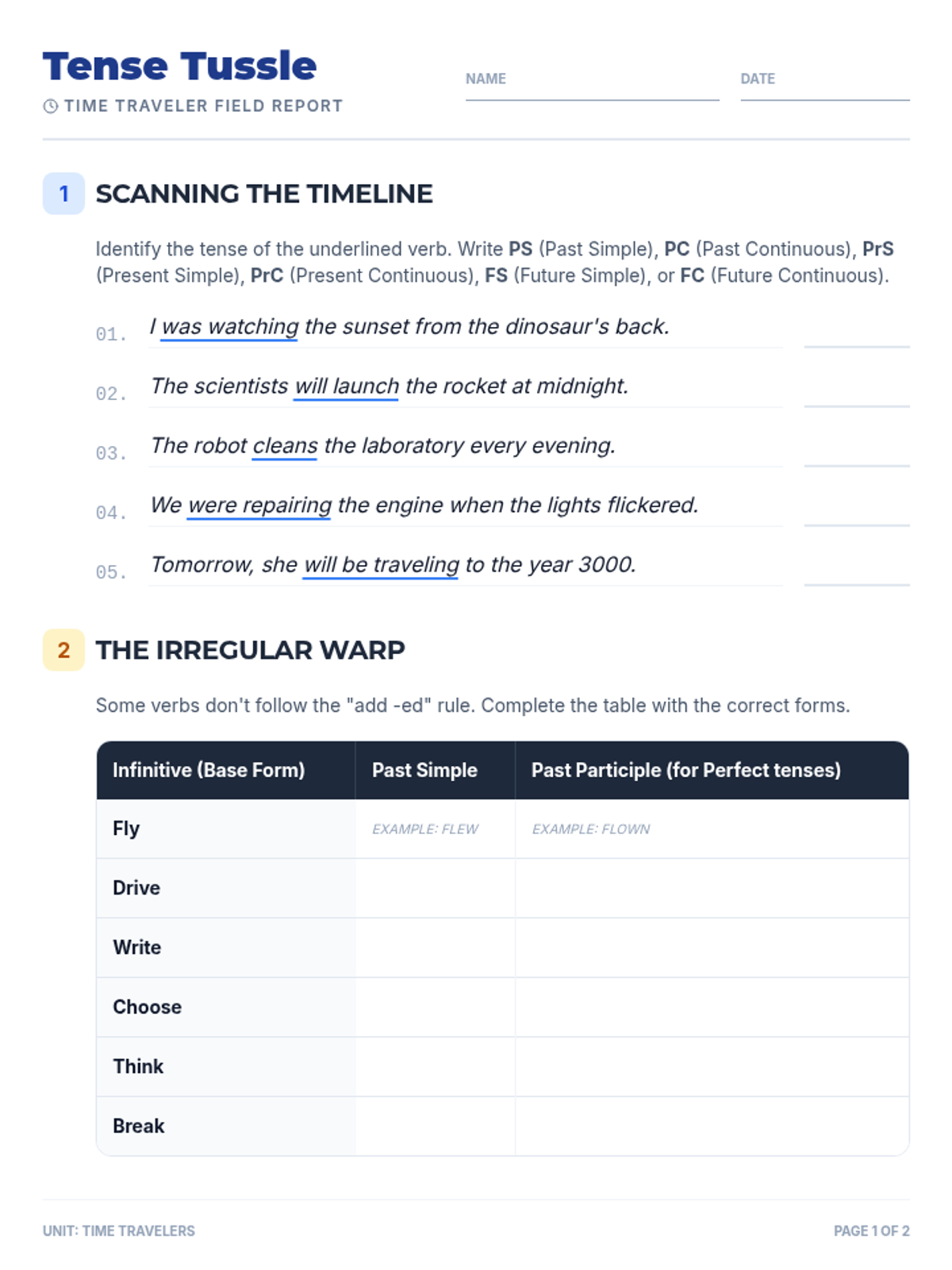
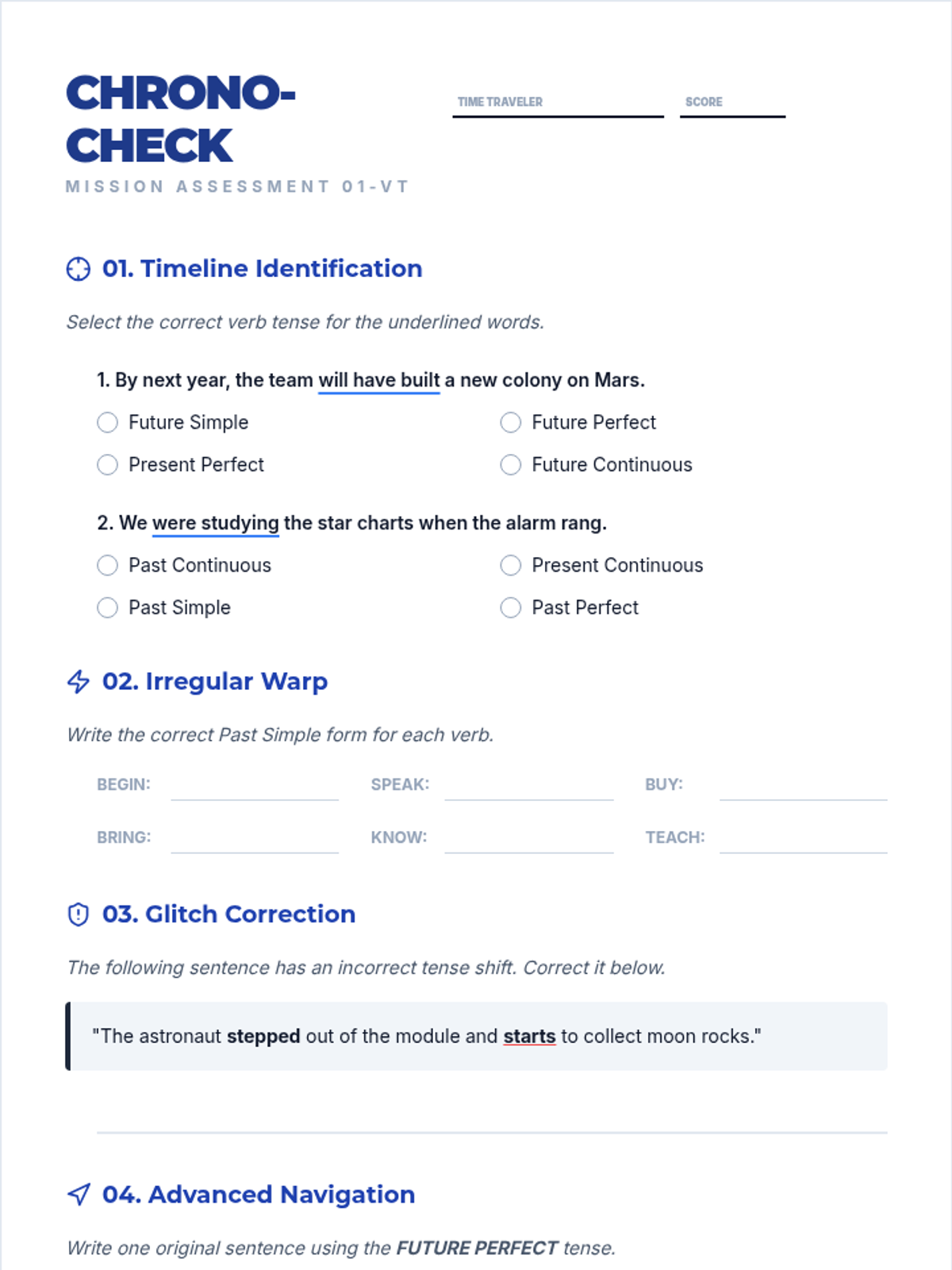
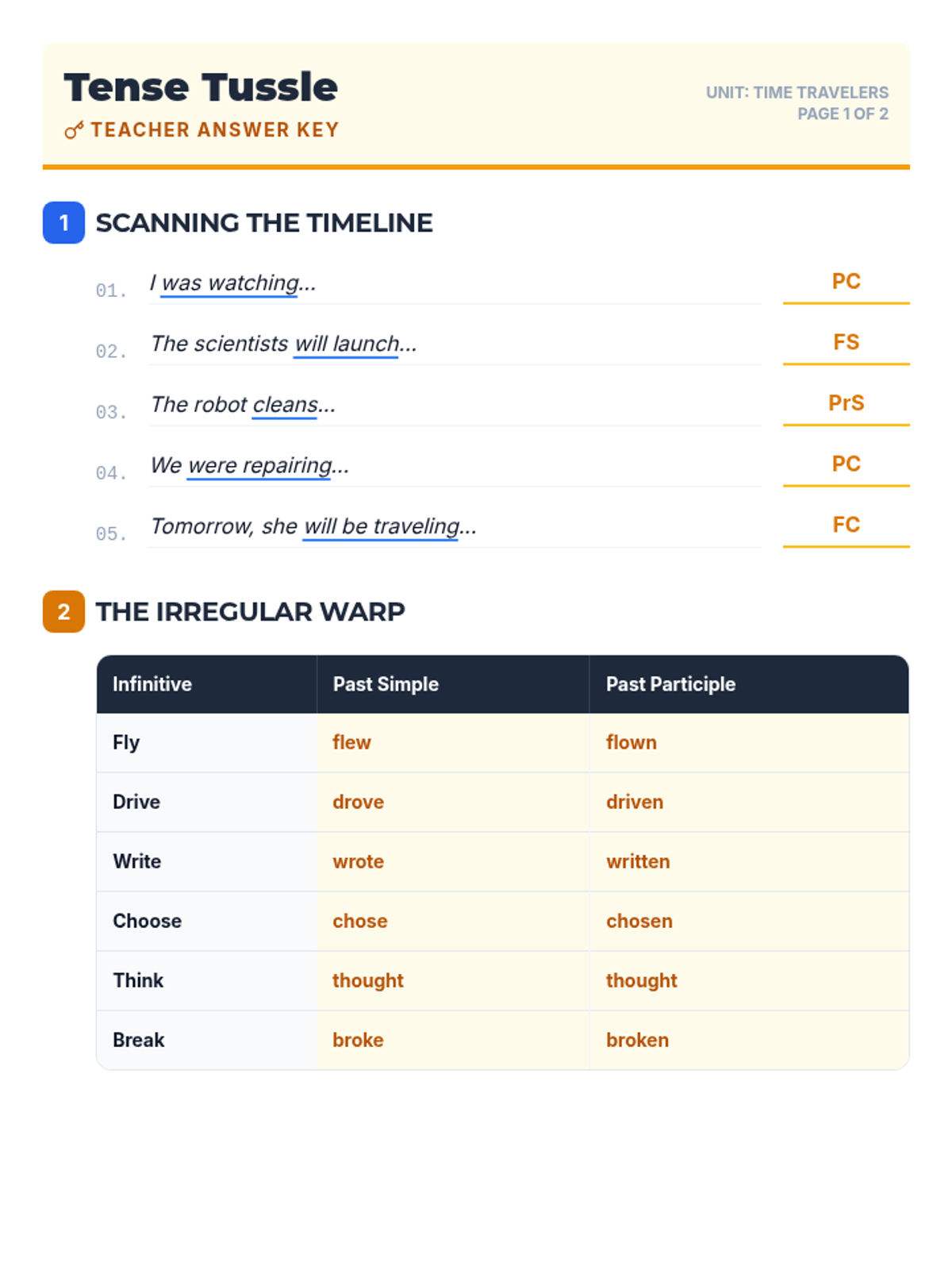
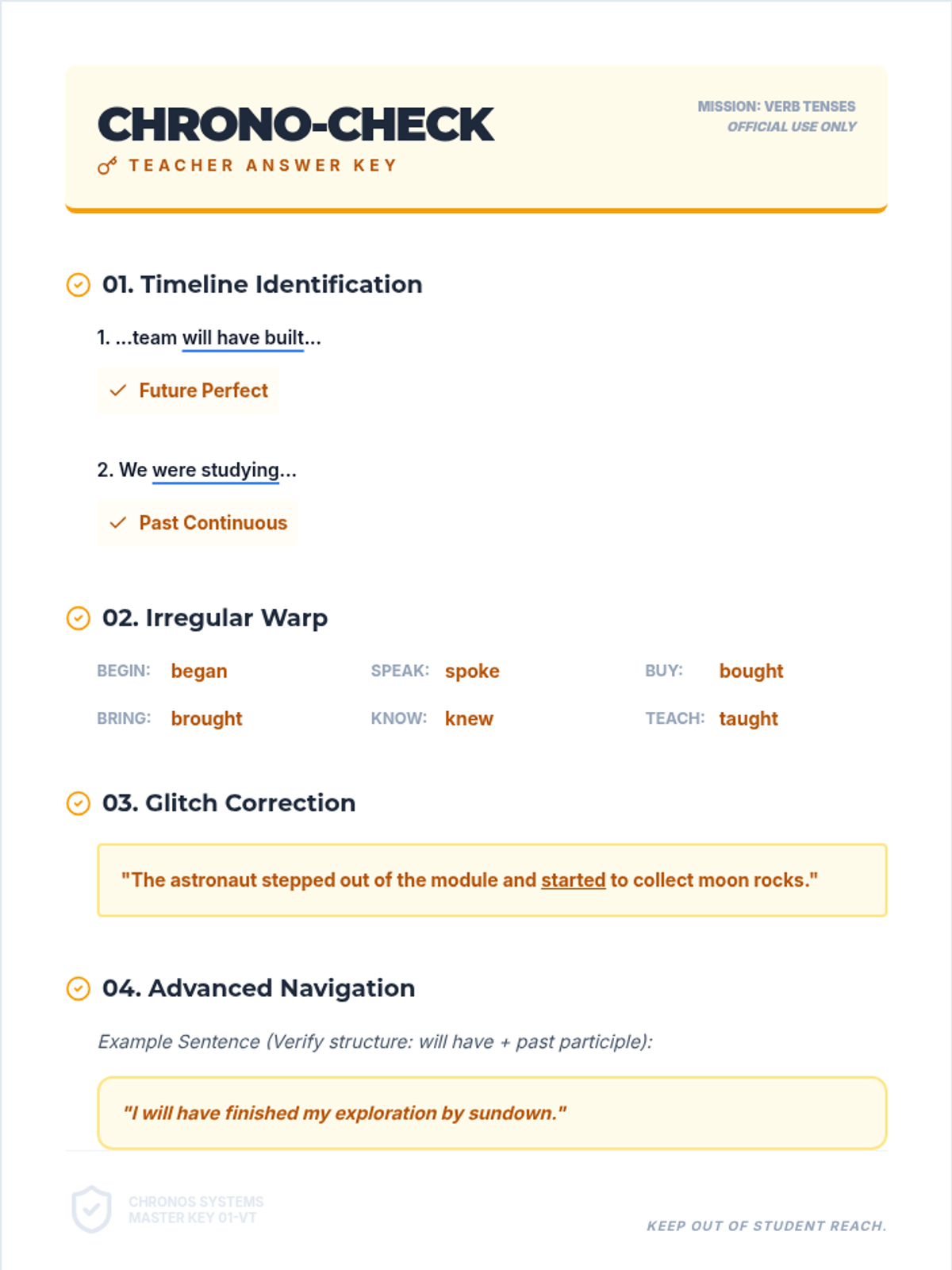
A comprehensive lesson on verb tenses including simple, continuous, and future perfect forms, with a focus on irregular verbs and correcting tense shifts. Students explore 'time travel' through language.
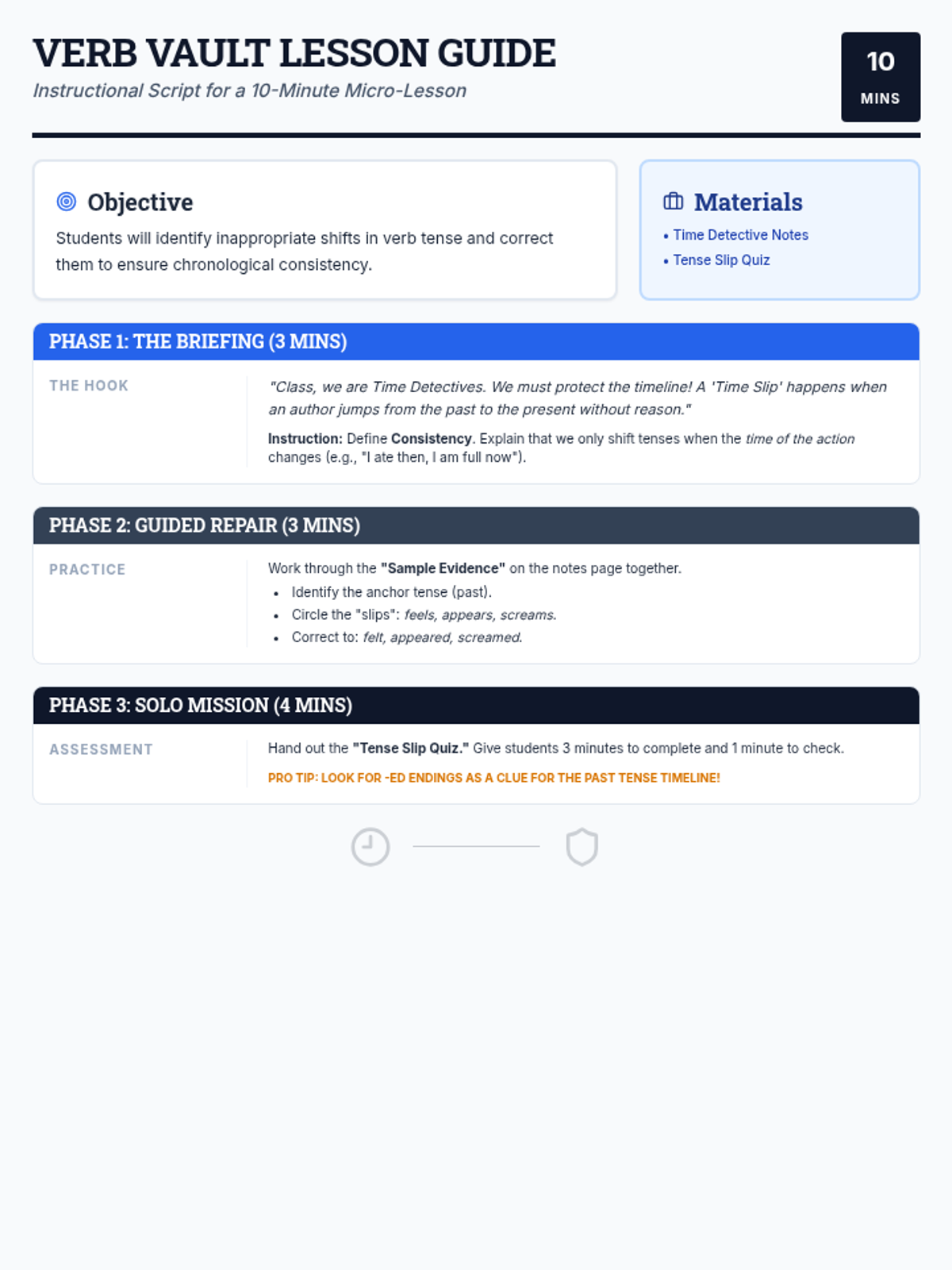
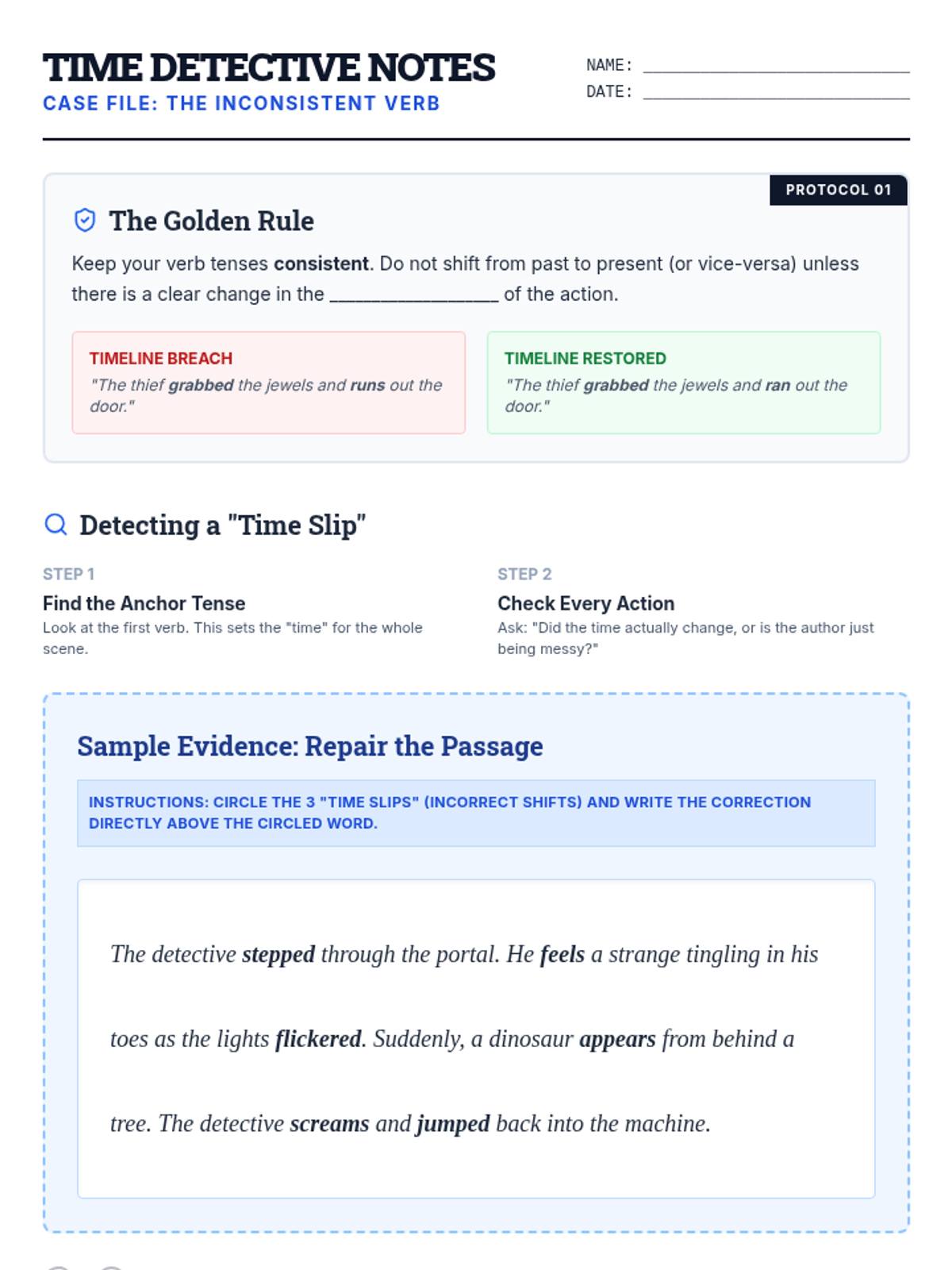
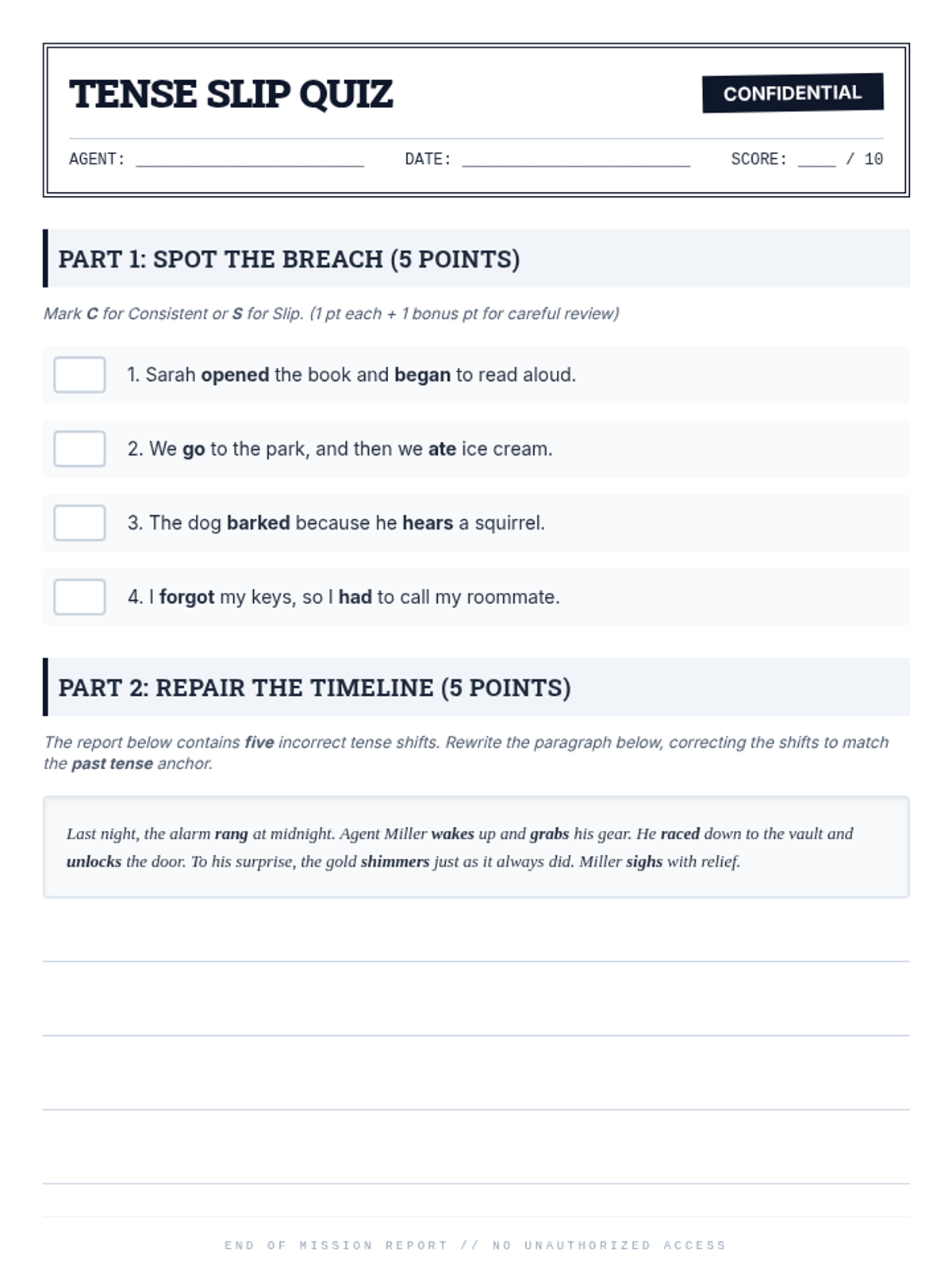
A high-intensity, 10-minute micro-lesson on identifying and correcting inconsistent verb tense shifts within a narrative passage.