An intermediate ESL lesson focusing on the pronunciation and rhythm of the perfect progressive aspect, using a humorous 'Cookie Chronicles' theme and a Khan Academy video.
A culminating week where students compile their work into a portfolio and perform a 'Final Verse' for their peers.

Teaching students that poems can tell stories. Students will read and write short narrative verses about everyday events.
Exploring the emotional side of poetry. Students will identify how a poem makes them feel and what 'vibes' the author is sending.
Helping students find the 'big idea' or lesson in a poem. Students will identify simple themes like bravery, friendship, and change.
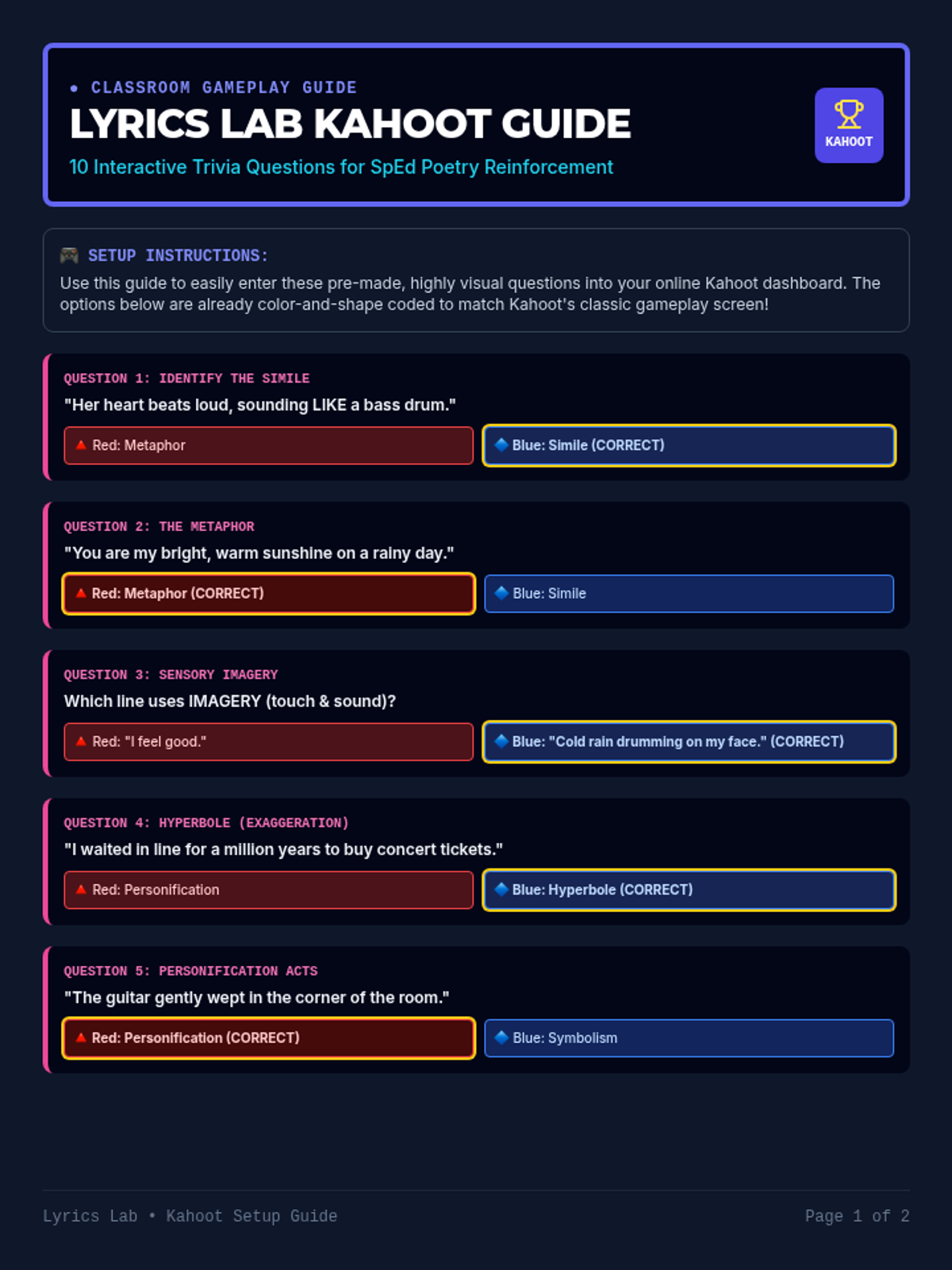
Exploring how poems can make objects act like people (personification) and how words can sound like their meanings (onomatopoeia).
Introducing similes and metaphors as "secret comparisons." Students will use simple 'like' and 'as' structures to describe themselves and their world.
Focuses on building mental pictures using the five senses. Students will explore how simple words can describe smells, sights, and sounds in an urban or relatable environment.
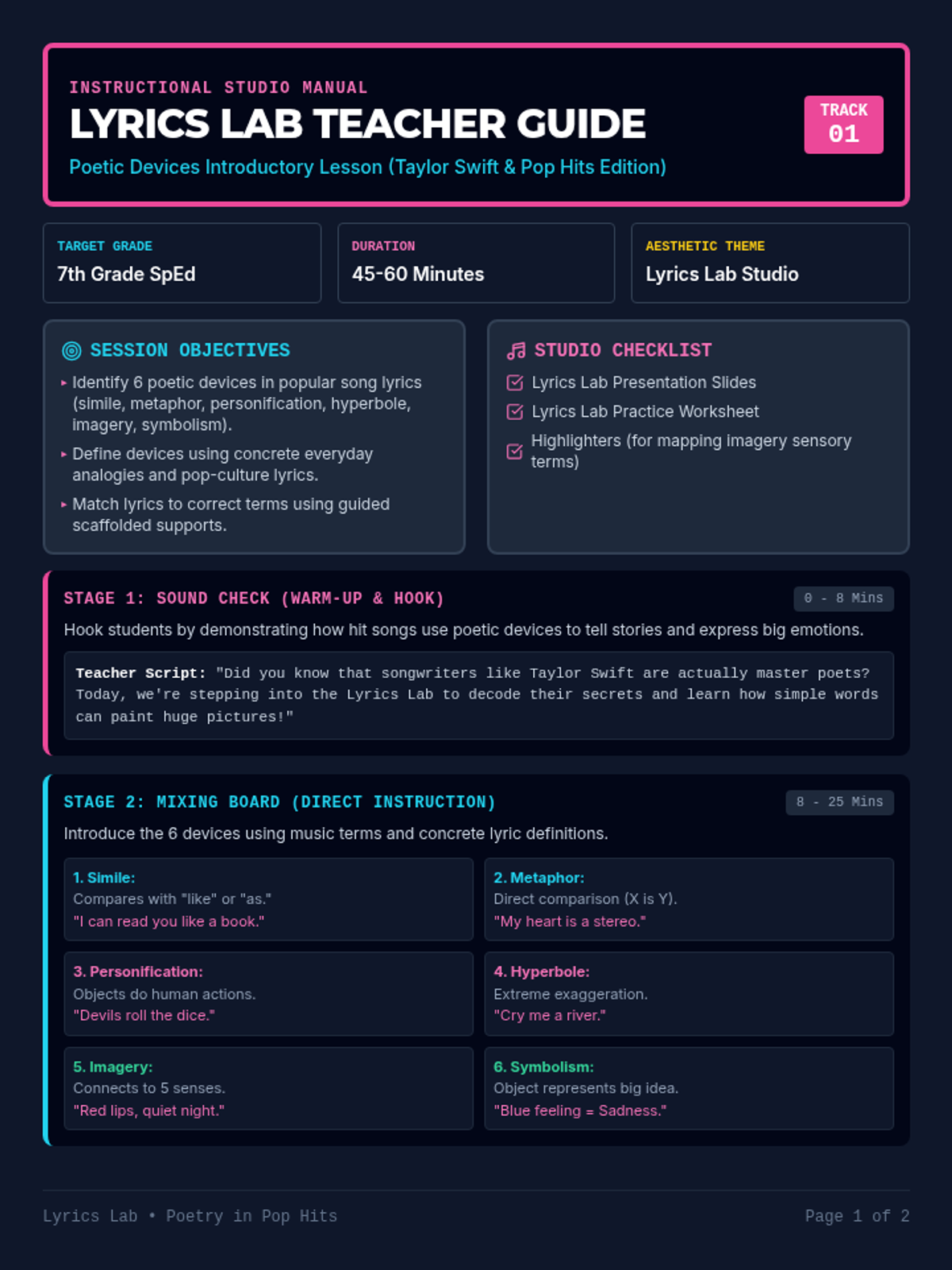
An introduction to the rhythm and 'beat' of poetry. Students will learn to identify the steady pulse in verse and practice simple rhyme schemes using accessible vocabulary.
Combining prefixes, roots, and suffixes to decode complex multi-syllabic academic words.
Mastering Latin roots commonly found in academic literature and formal writing.
Identifying and defining core Greek roots that form the foundation of scientific and technical vocabulary.
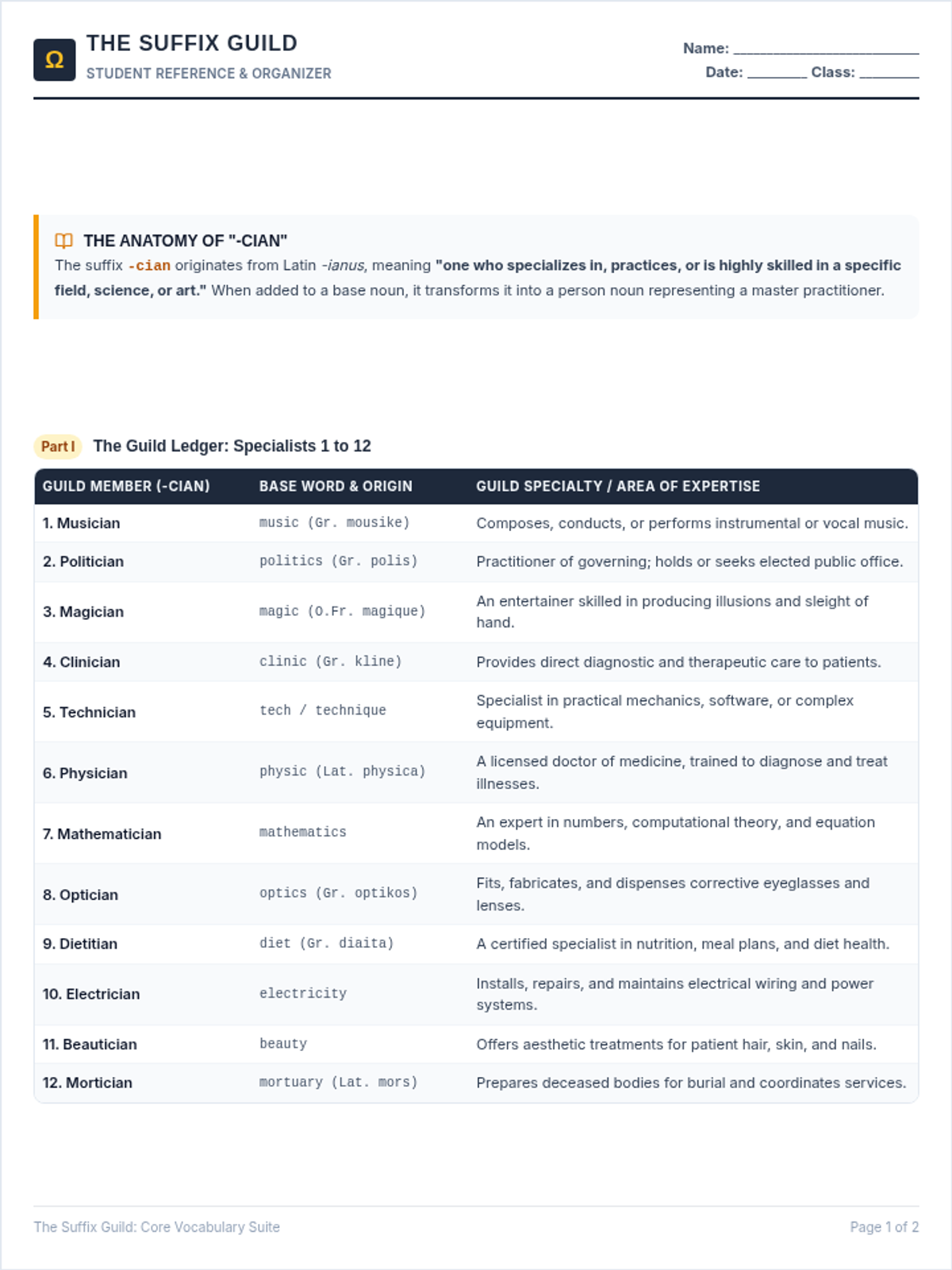
Exploring high-frequency academic suffixes and their role in determining a word's part of speech.
Introduction to common academic prefixes and how they modify the meaning of base words.
Focus on the root 'TRACT' (to pull) and a final review of the Word Alchemist principles.
Focus on the root 'AUD' (to hear) and words related to sound and listening.
Focus on the roots 'VIS' and 'VID' (to see) and their distinction from 'SPECT'.
Focus on the roots 'SCRIBE' and 'SCRIPT' (to write) and their presence in modern documentation.
Focus on the root 'PORT' (to carry) and its role in movement and trade vocabulary.
Focus on the root 'JECT' (to throw) and how it creates dynamic action words.
Focus on the root 'STRUCT' (to build) and prefixes that change the direction or nature of building.
Focus on the root 'DICT' (to speak) and common suffixes used for speech and action.
Focus on the root 'SPECT' (to look/see) with prefixes like in-, pro-, and re-.
An introduction to the three main components of words: prefixes, roots, and suffixes, setting the stage for the 'Linguistic Laboratory' theme.
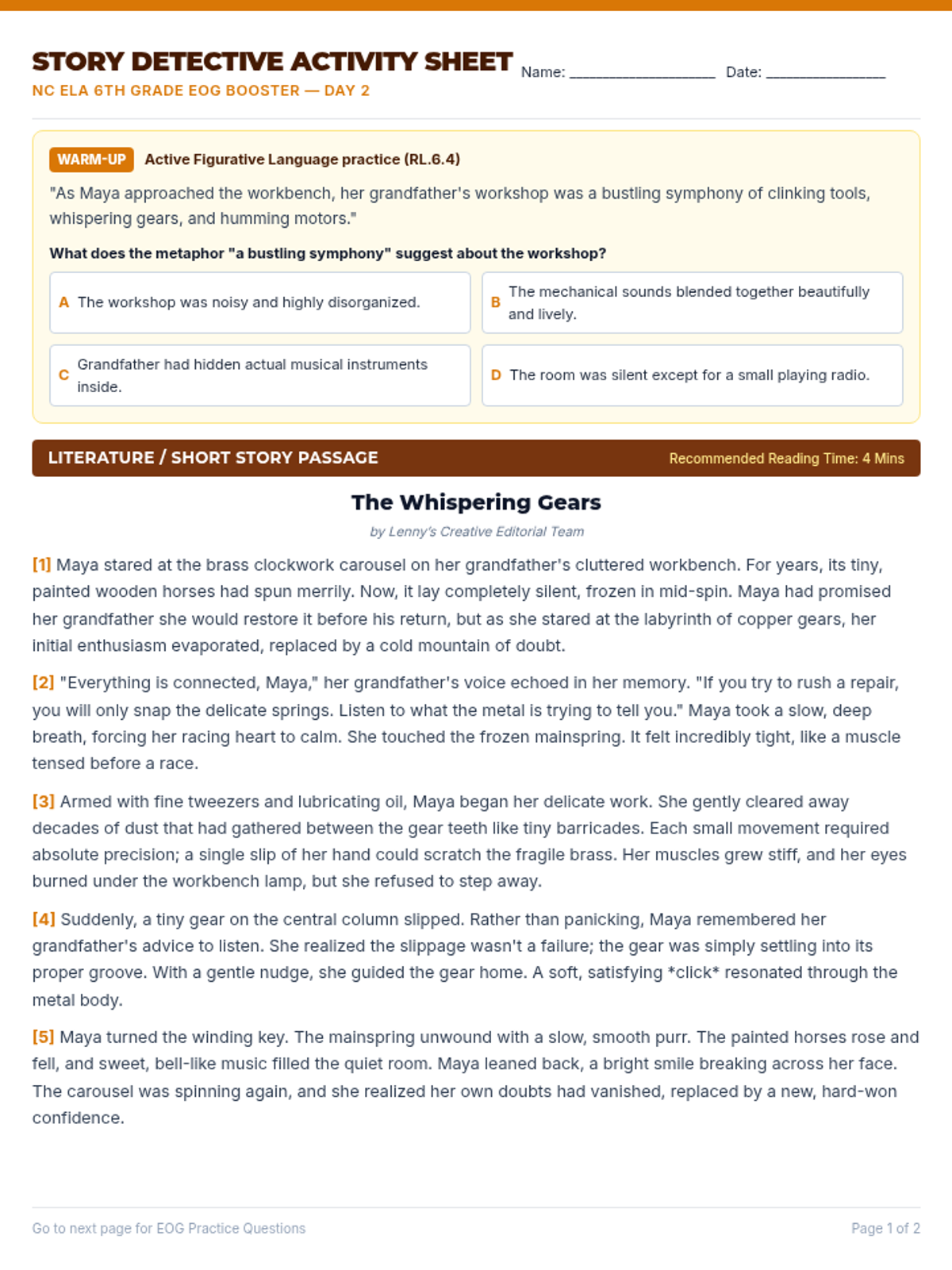
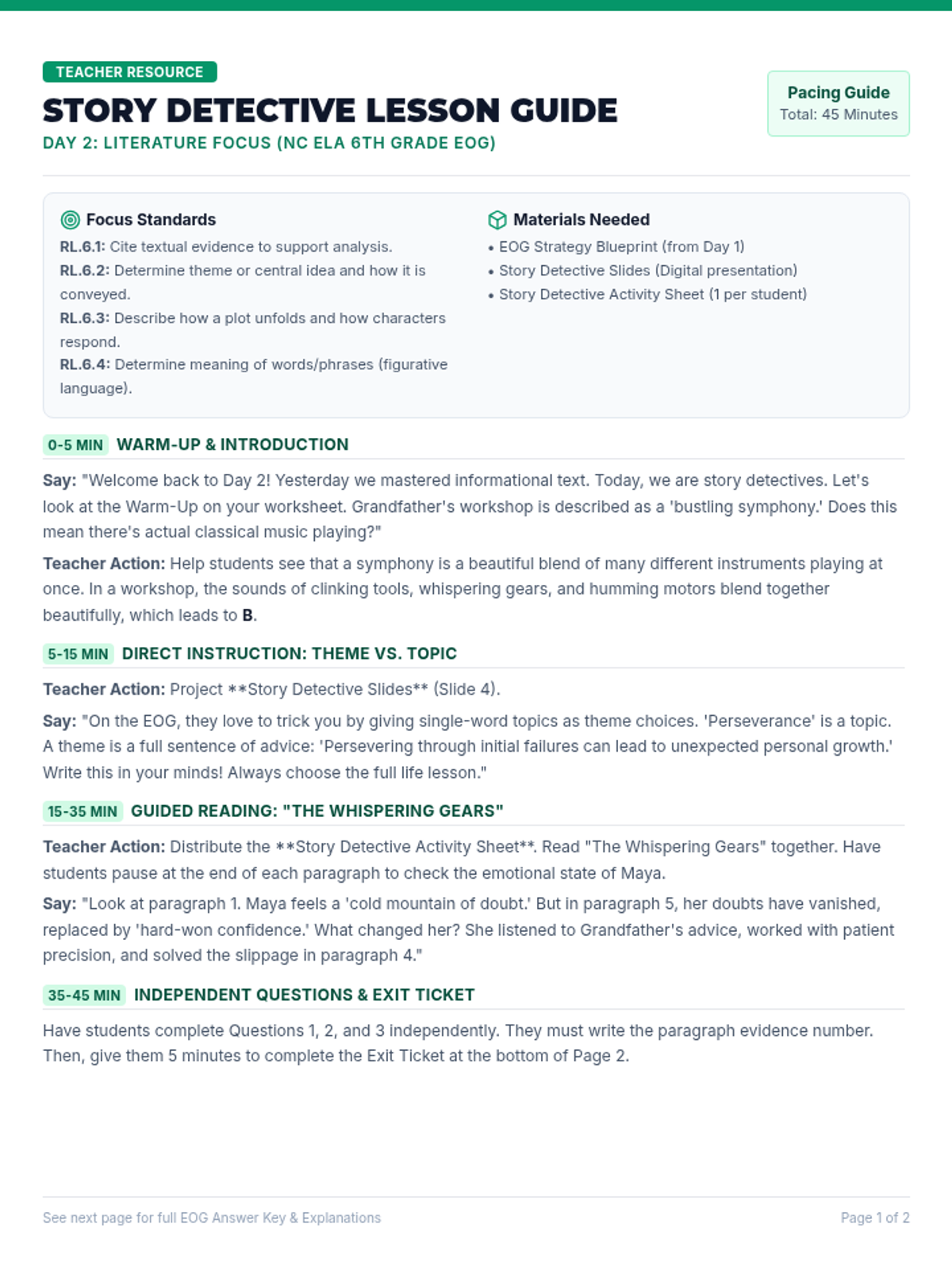
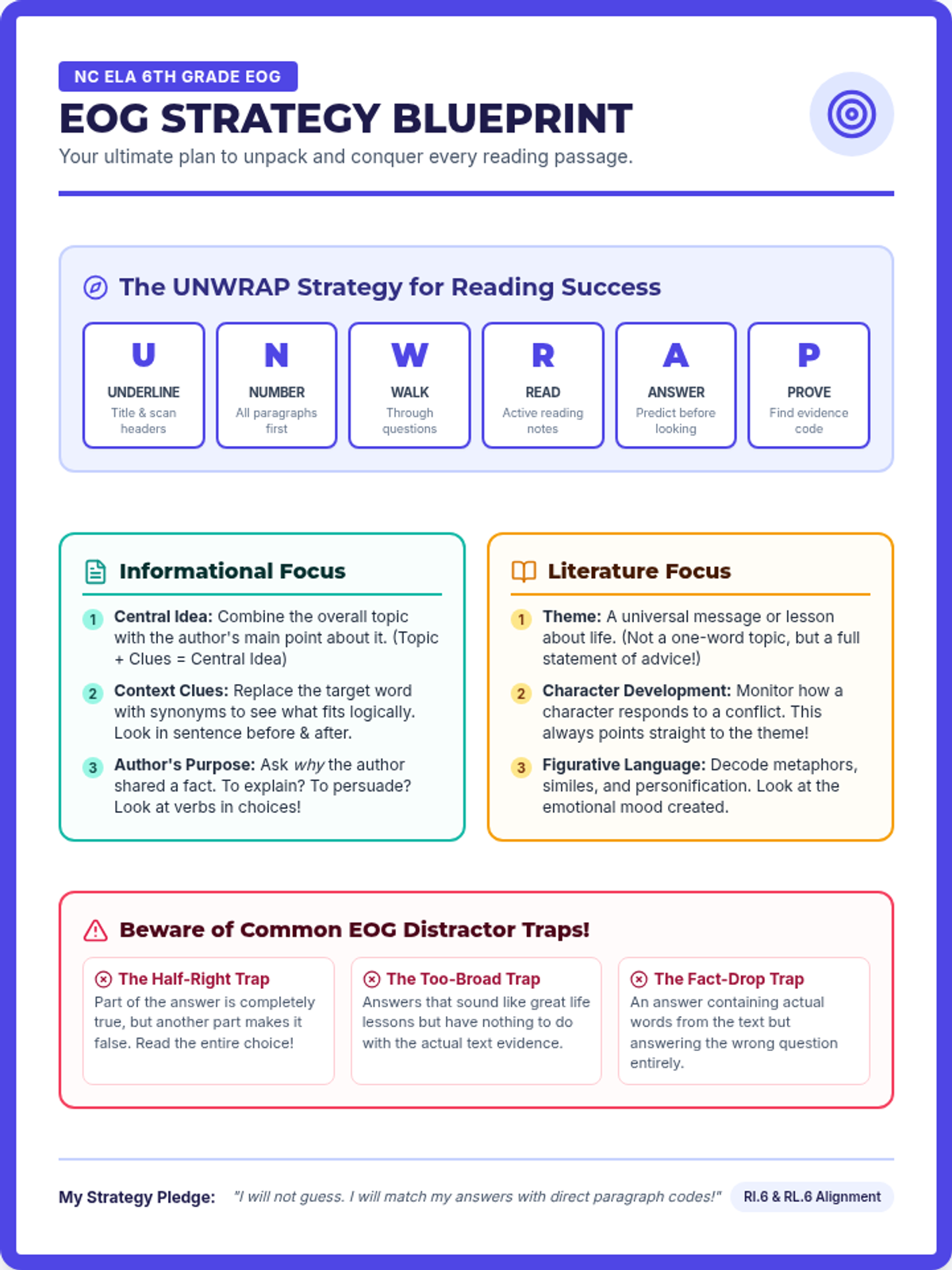
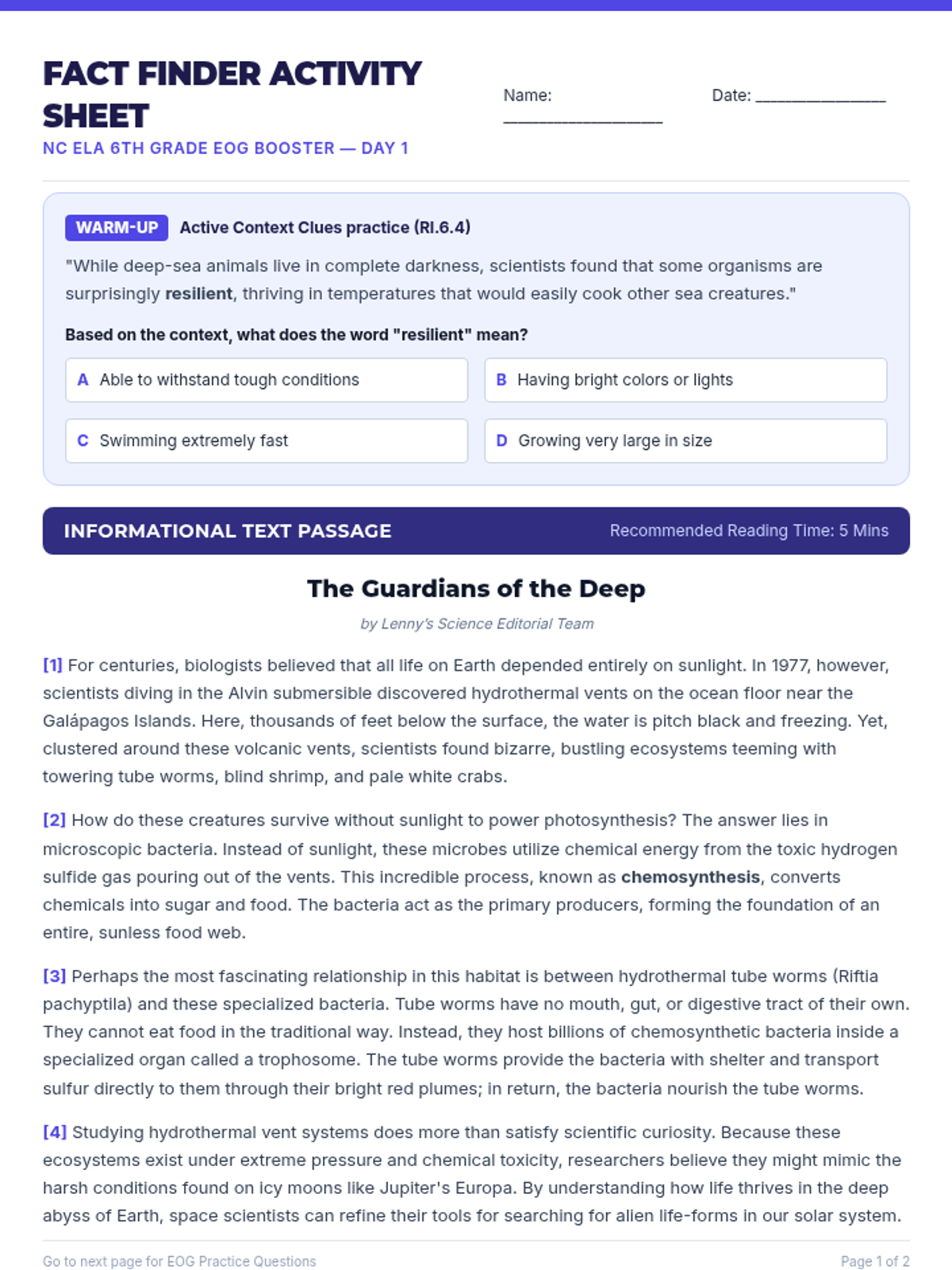
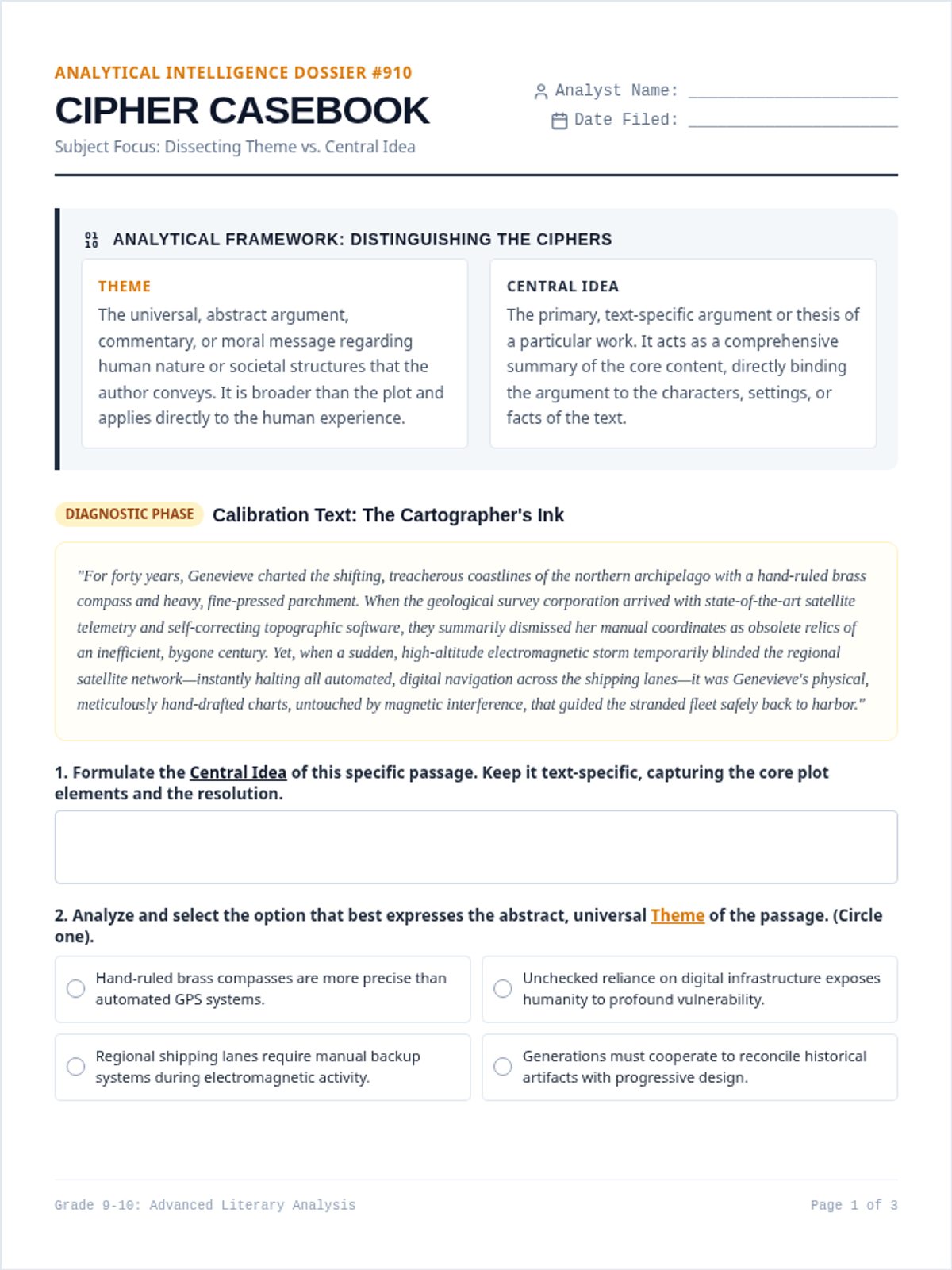
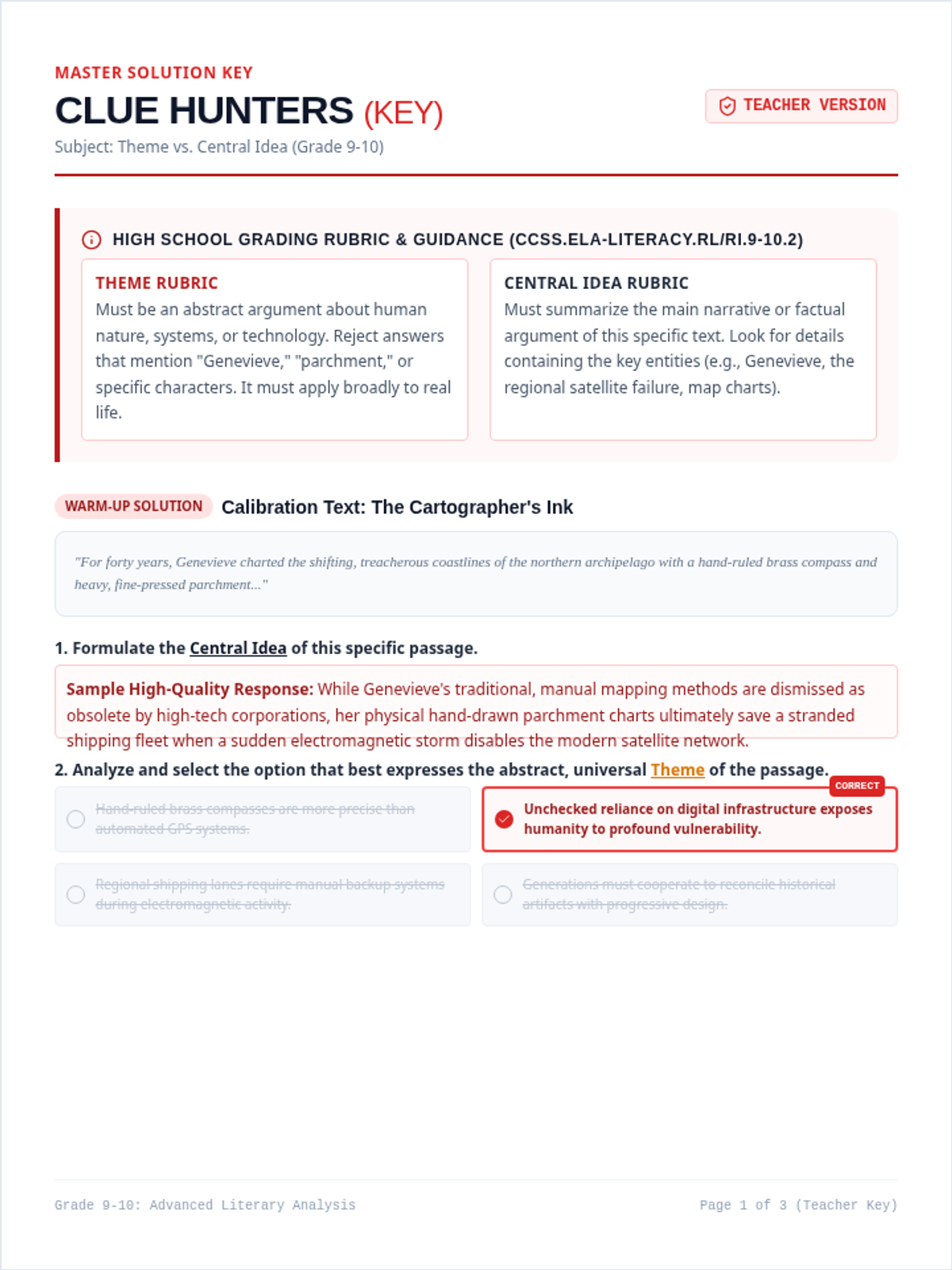
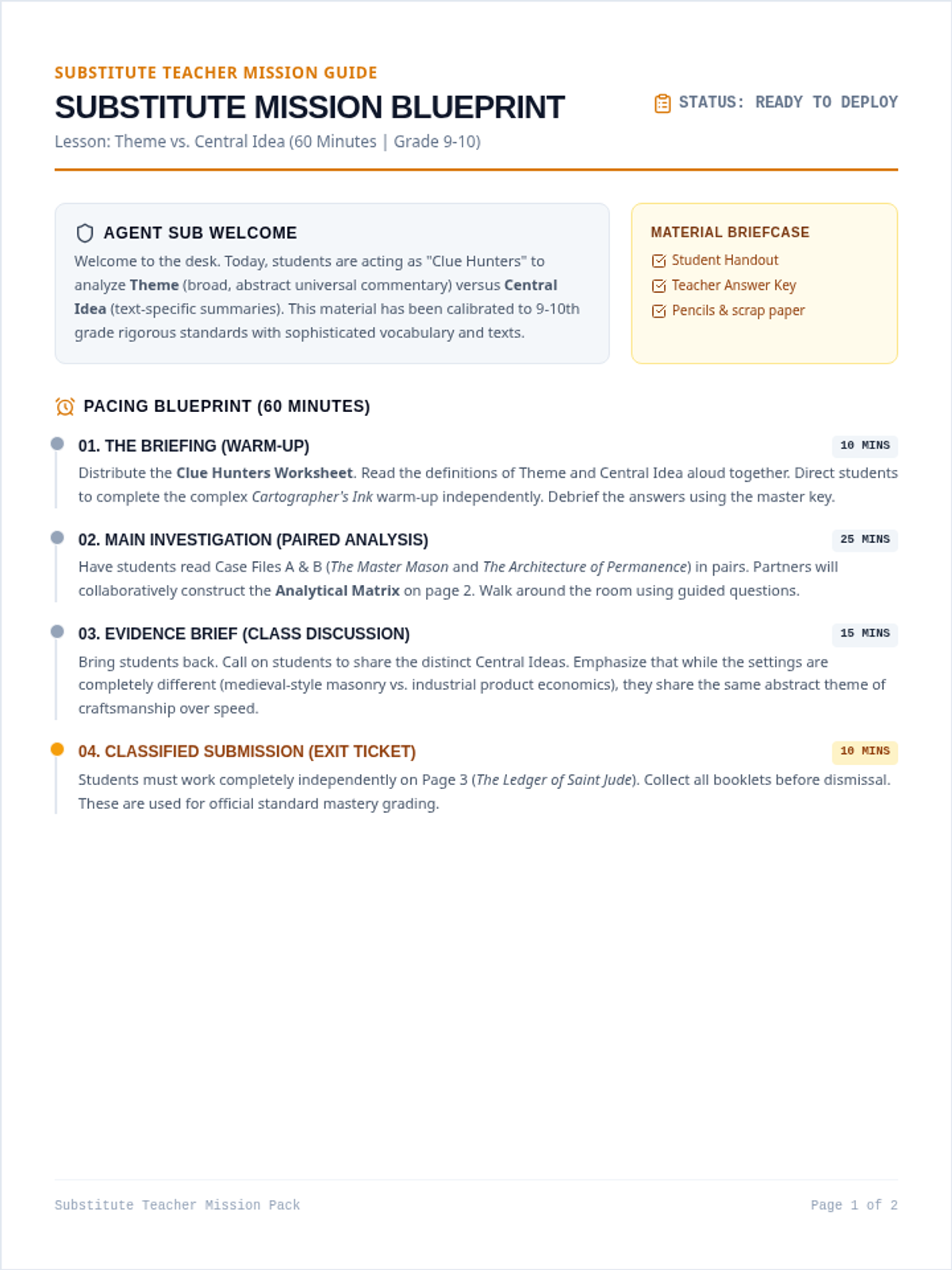
A lesson focused on identifying theme by collecting evidence, identifying topics, and synthesizing life lessons.
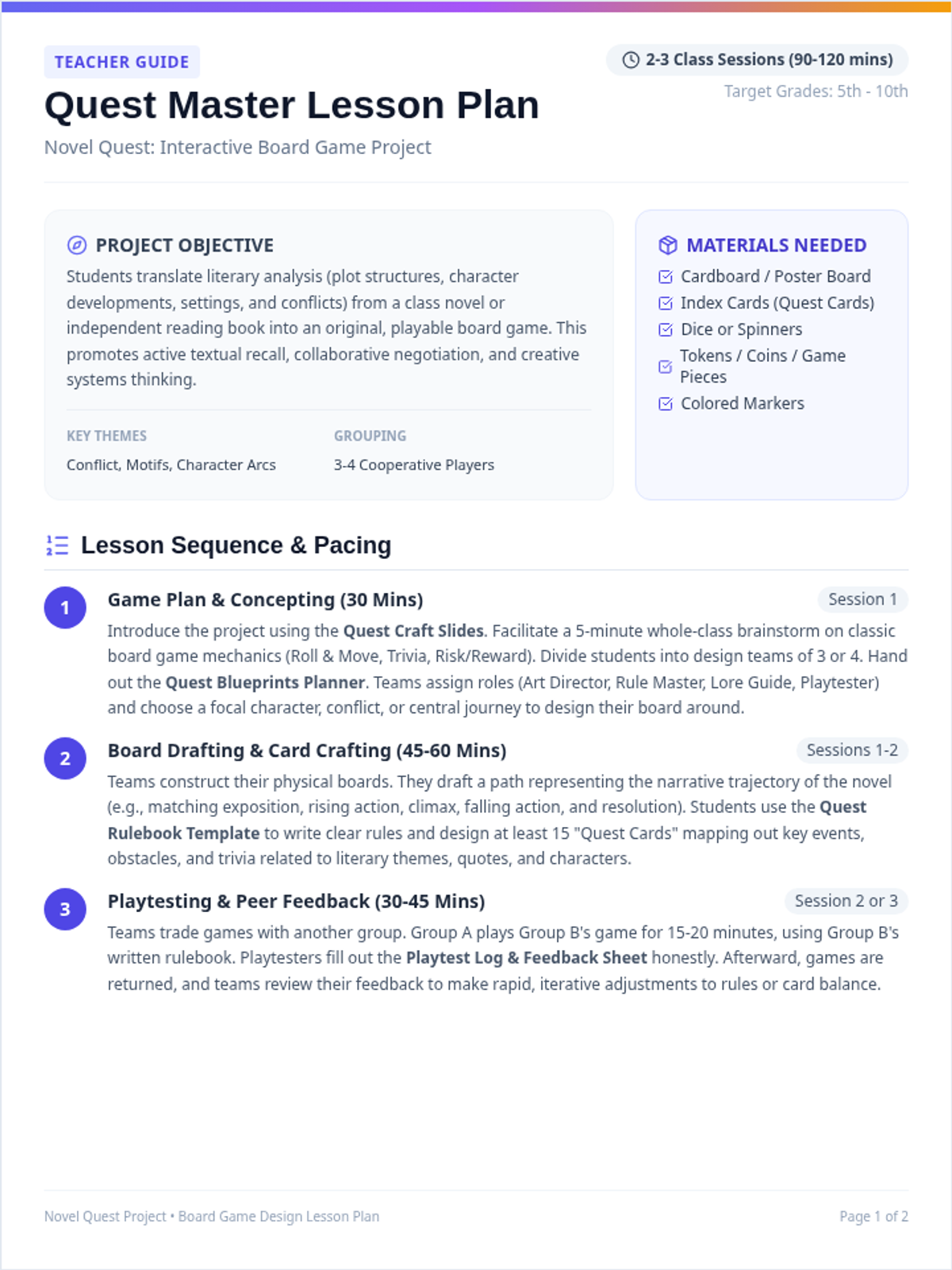
Focuses on how authors build themes through character growth and plot development. Students act as detectives to find textual evidence supporting a theme.
Introduces the concept of theme as the 'heartbeat' of a story and distinguishes it from the main idea/topic. Students practice identifying universal themes in short narratives.
A lesson focused on identifying and mapping non-fiction text structures to improve reading comprehension and writing organization. Students will learn to see the 'skeleton' of informational texts through architectural-themed visual mapping.
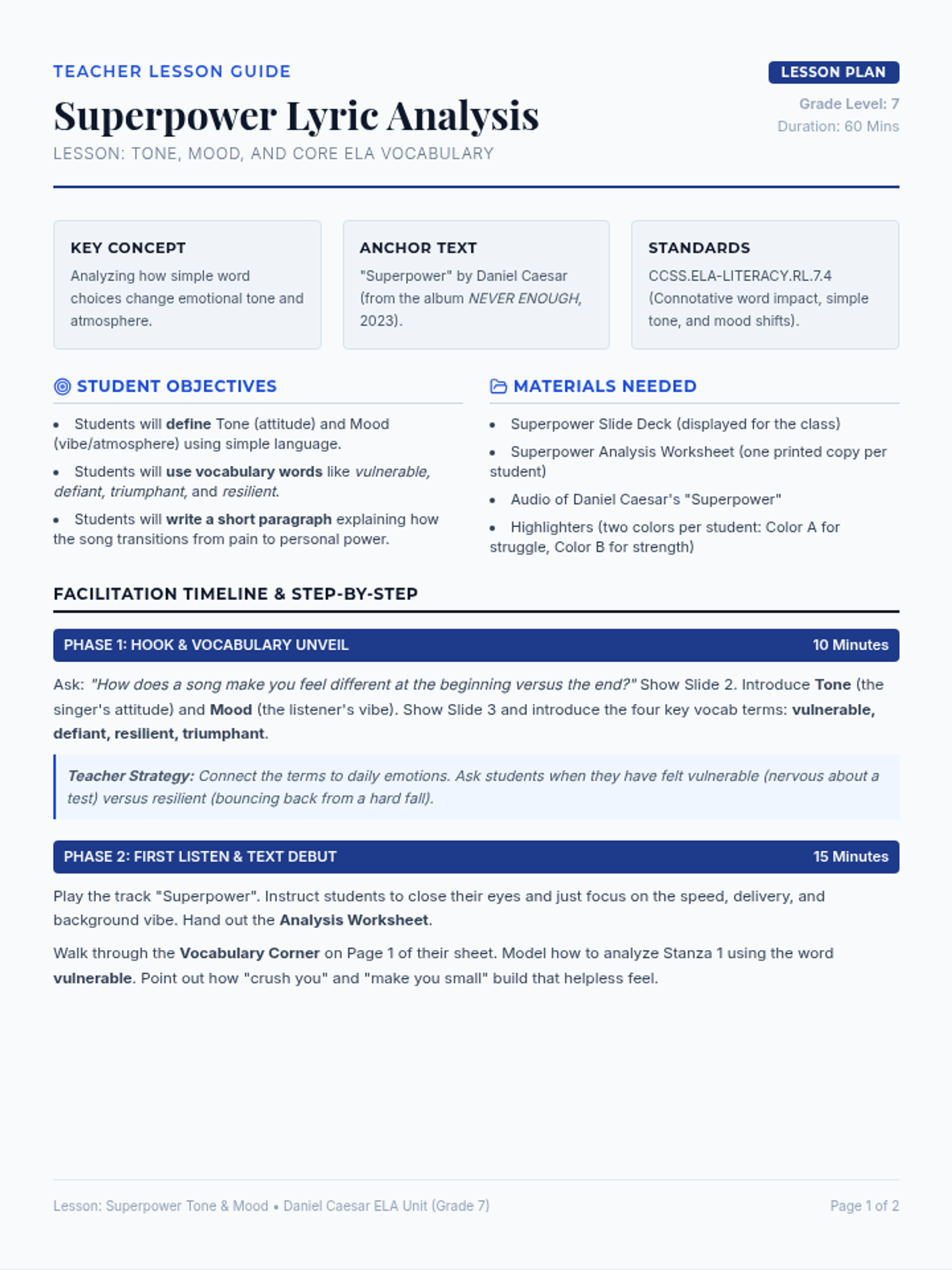
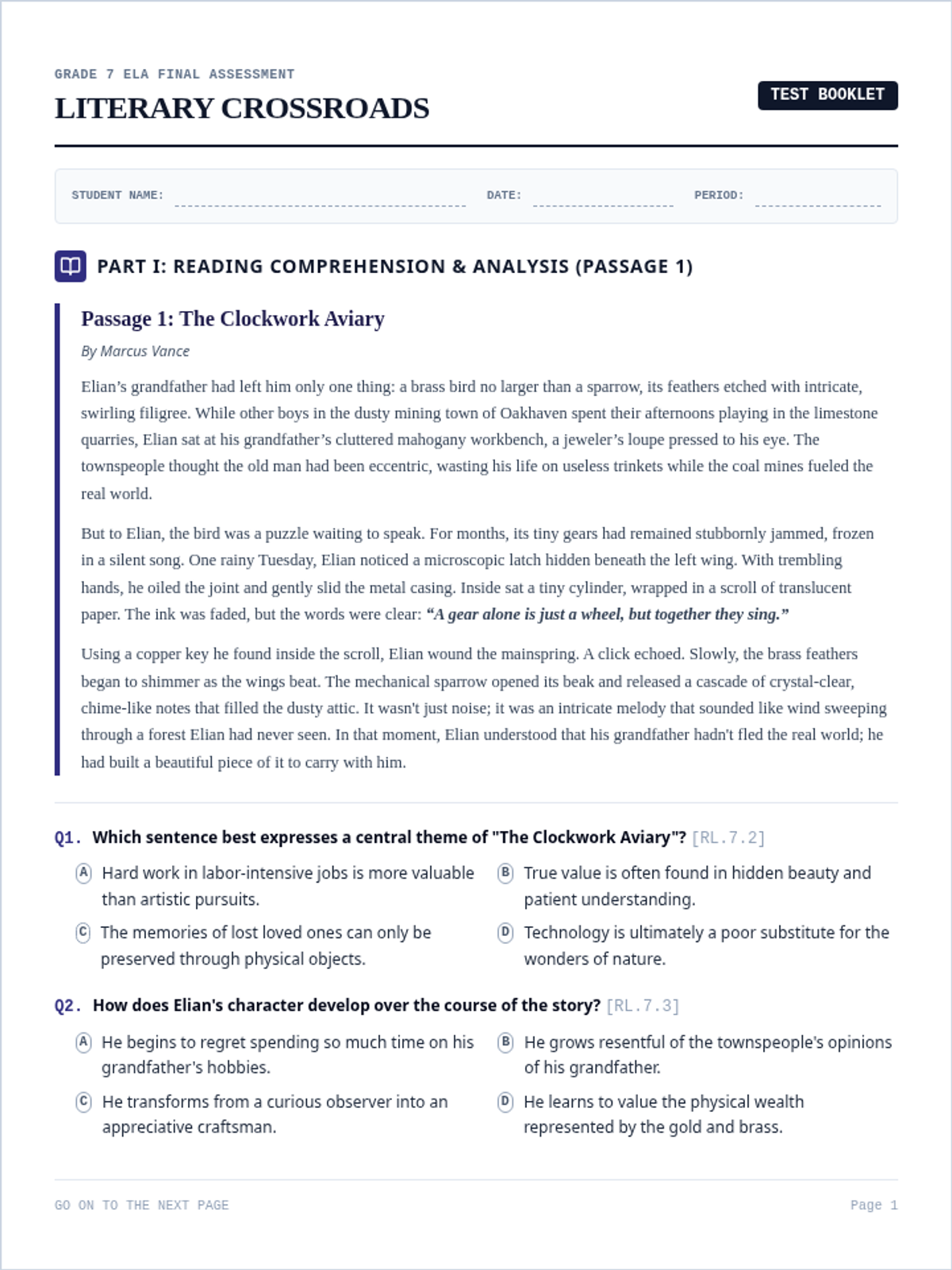
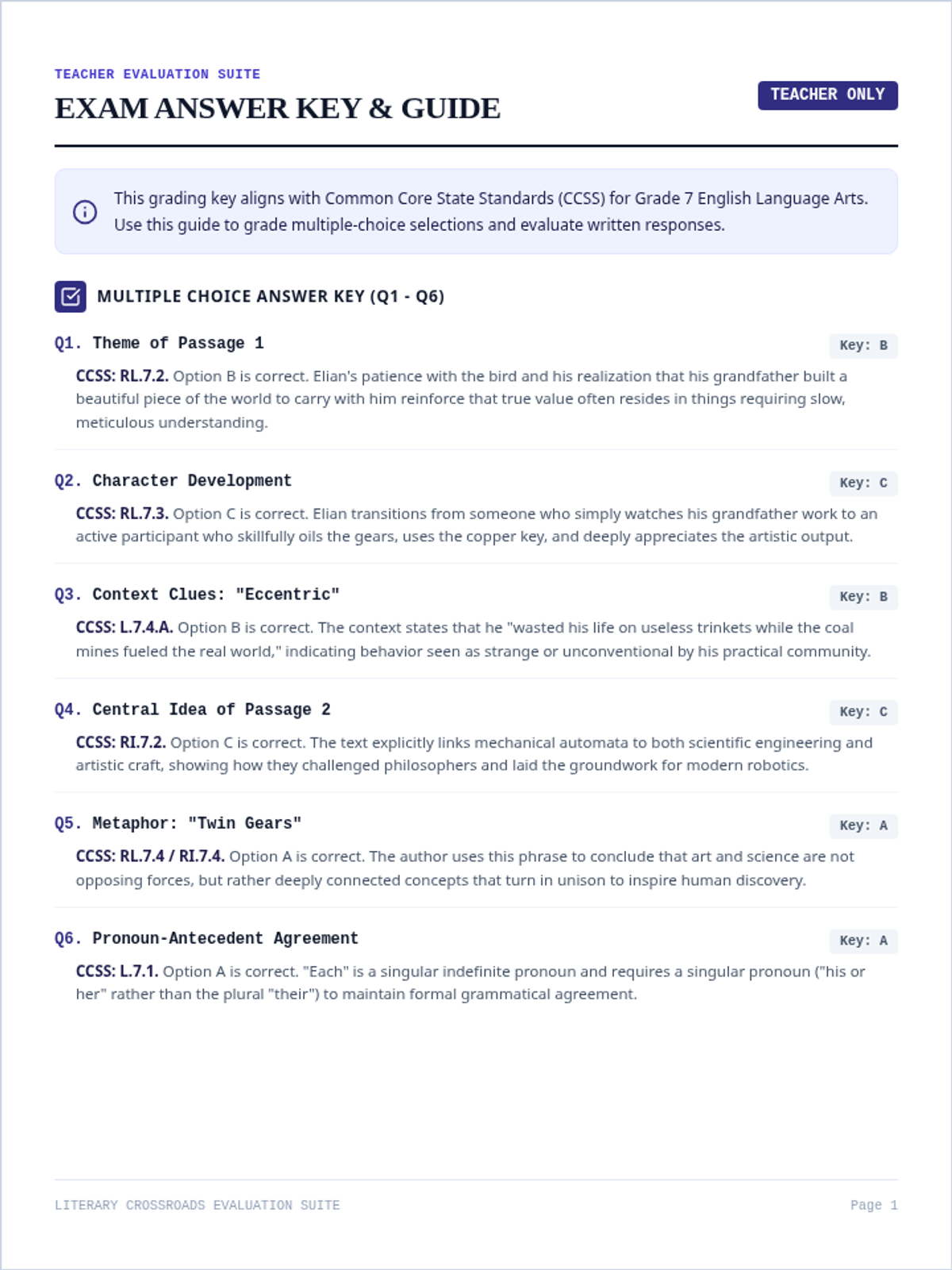
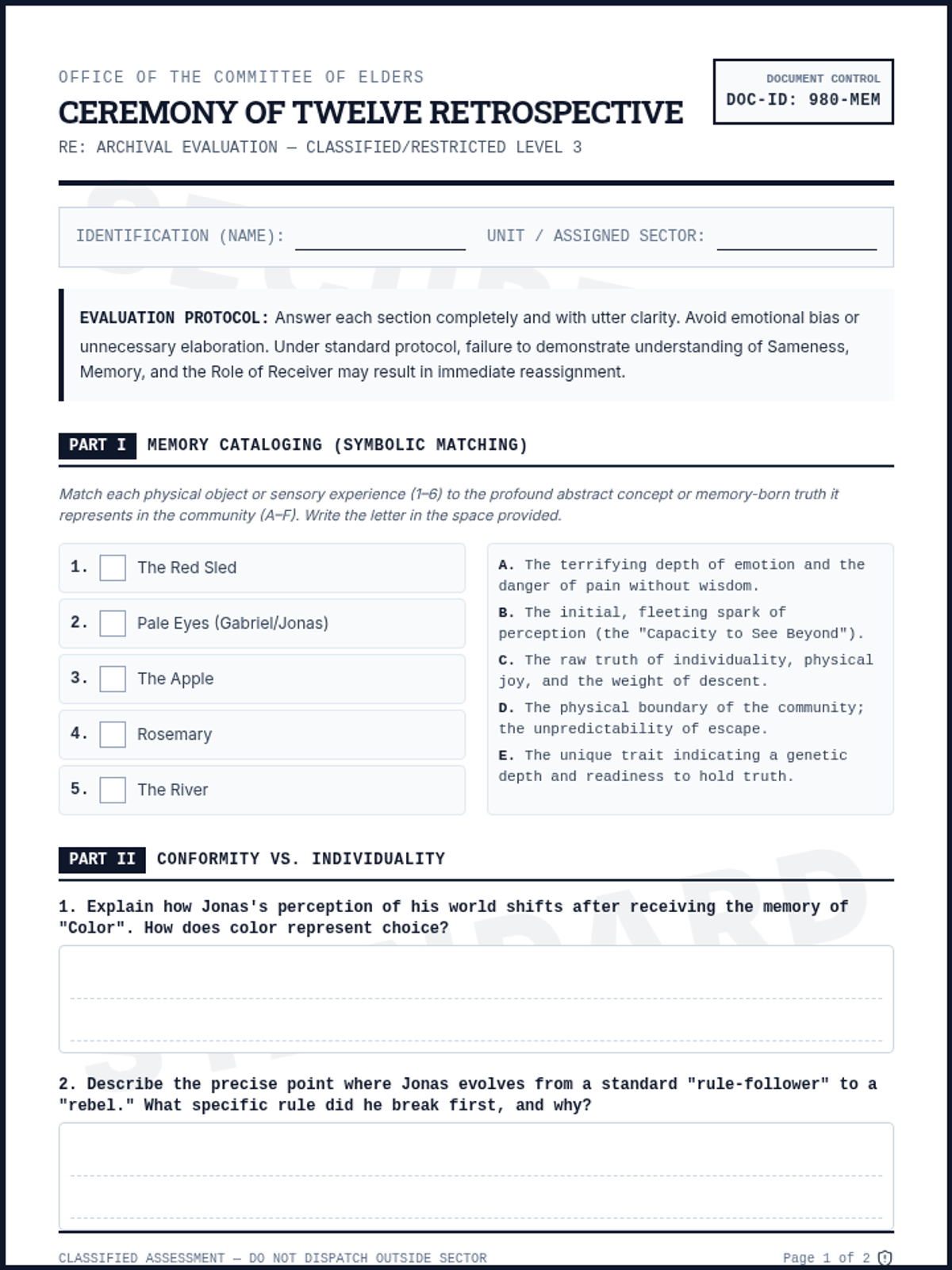
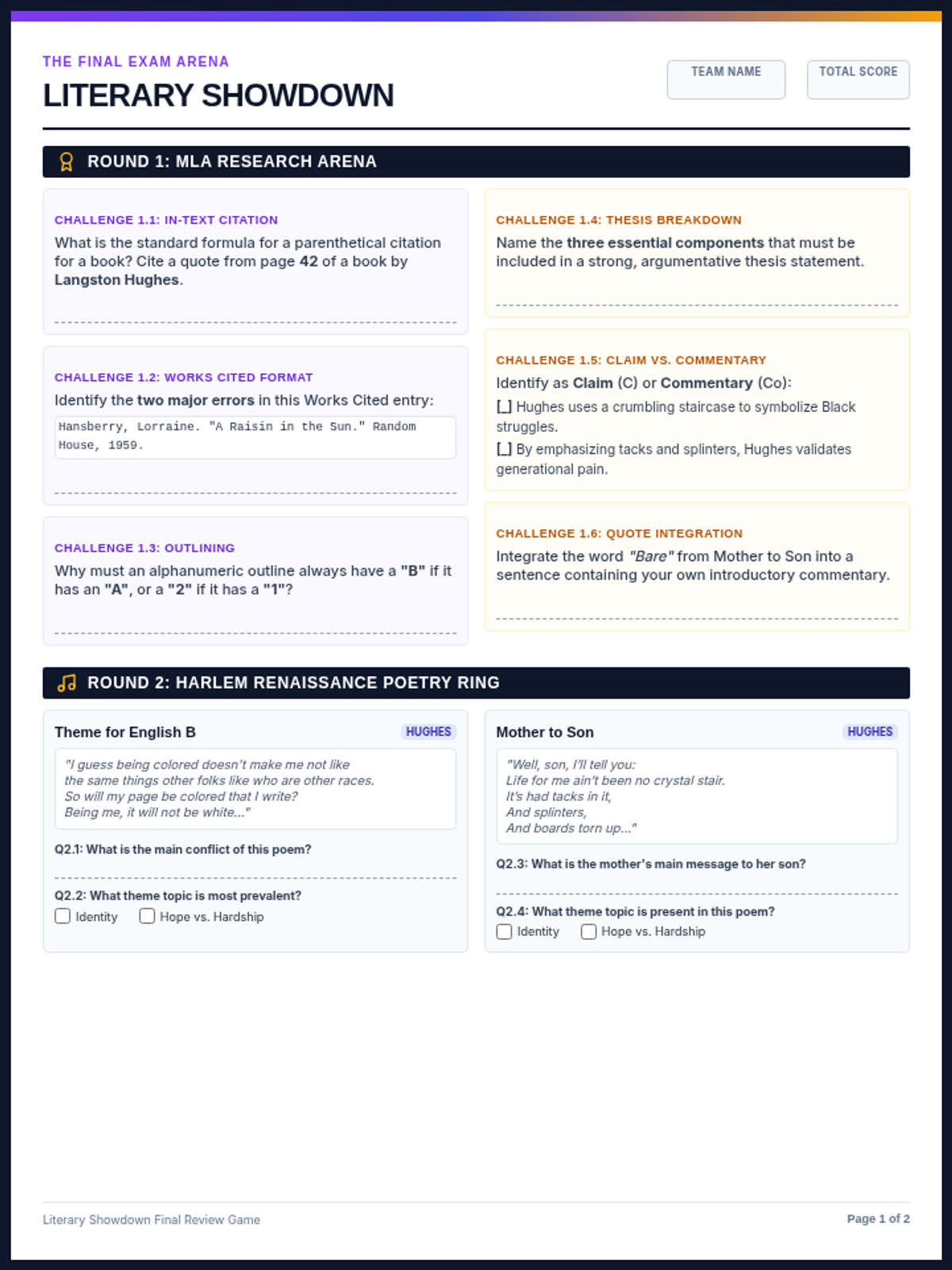
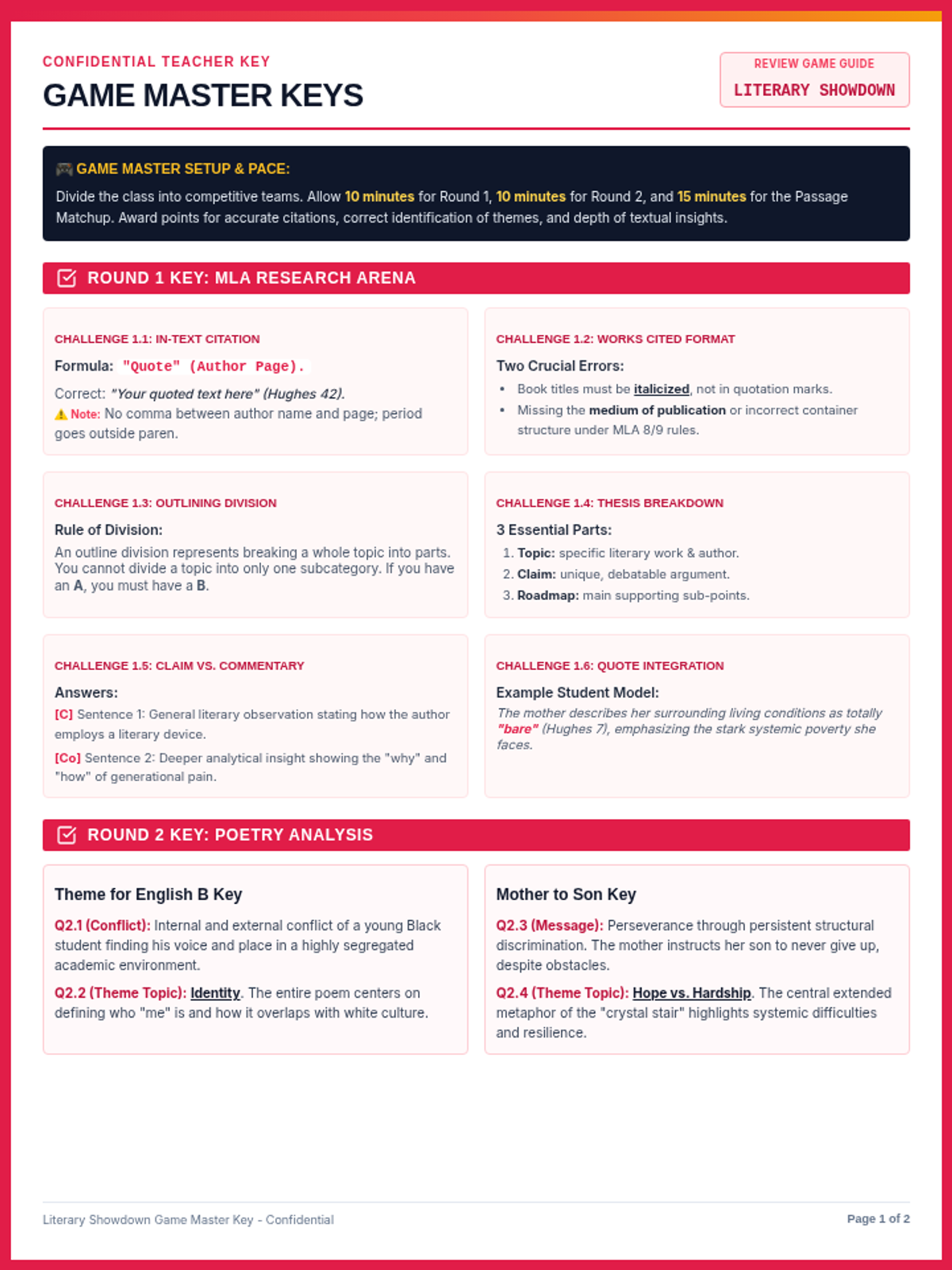
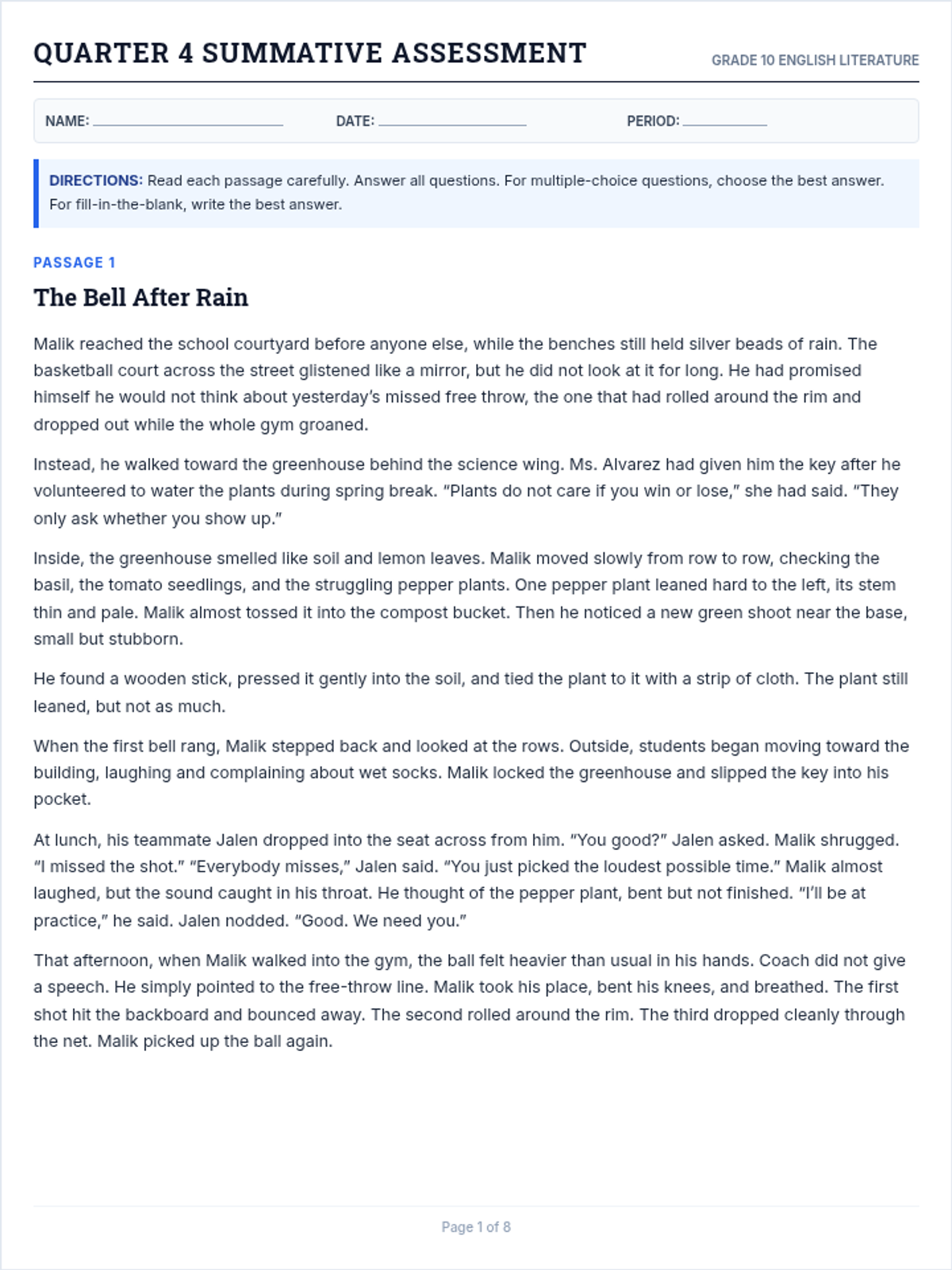
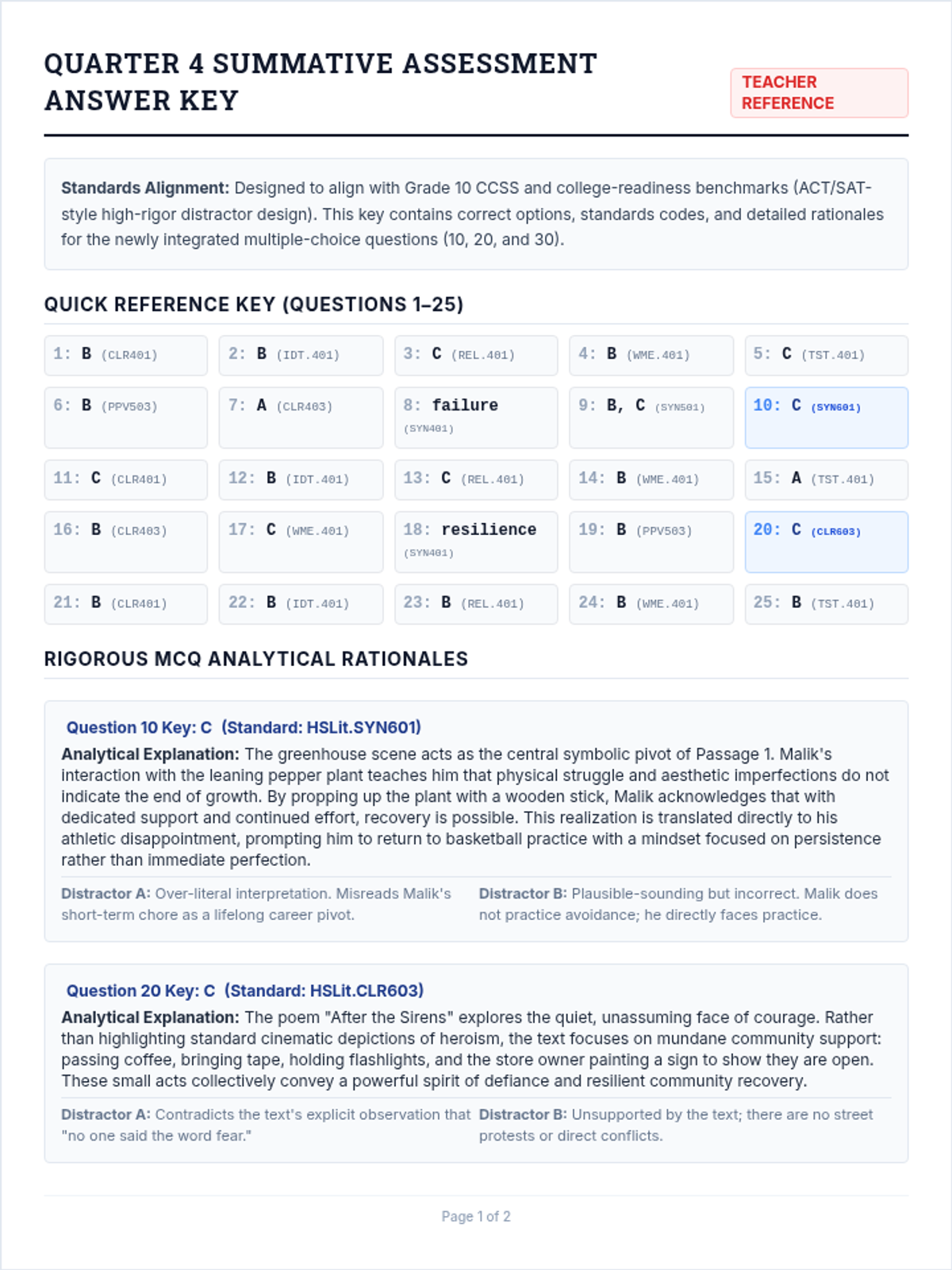
A rigorous assessment focusing on modern literary analysis and thematic synthesis. Students explore grit, struggle, and empathy through contemporary prose and poetry from diverse perspectives.
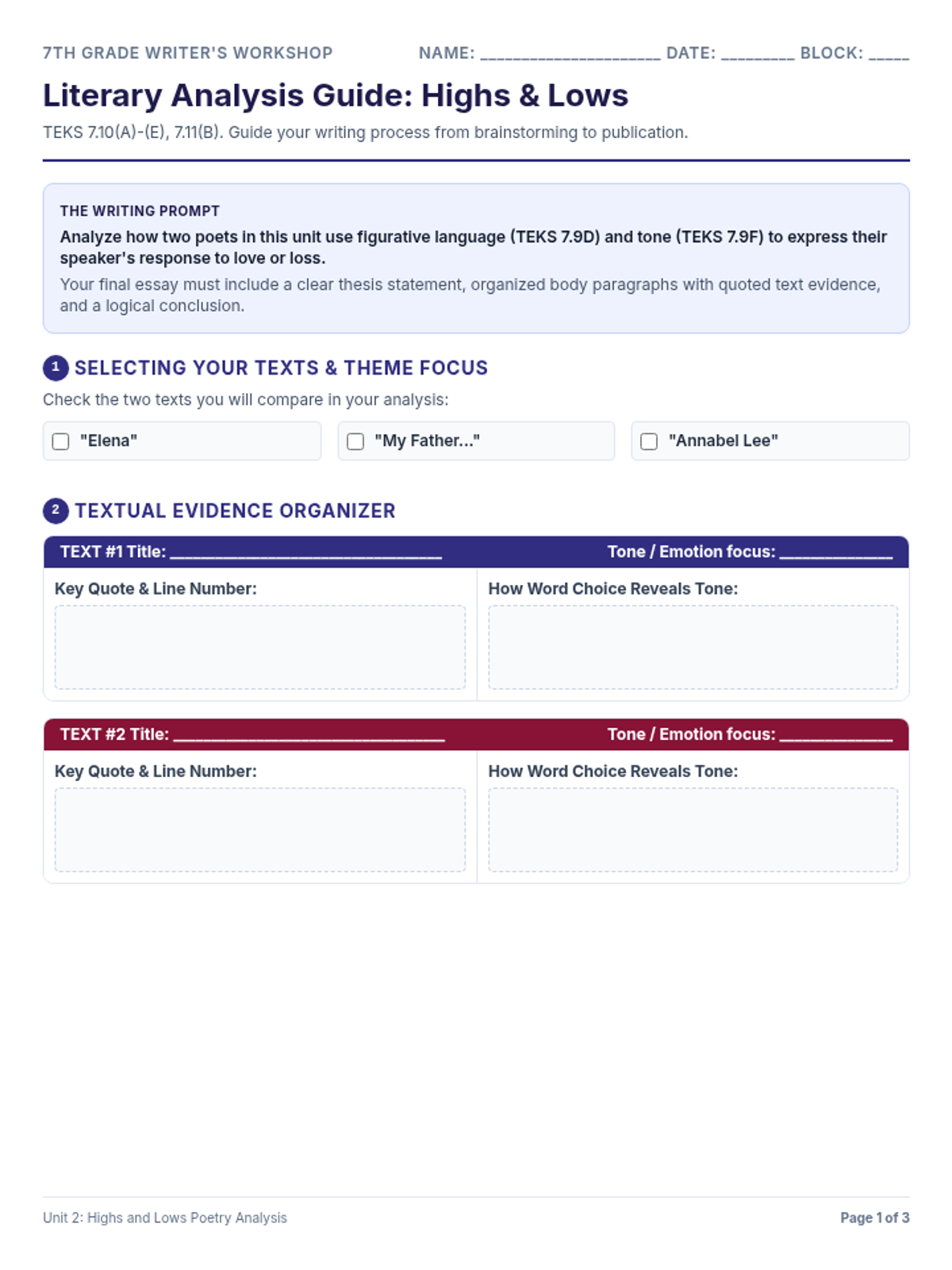
A comparative literary analysis assessment for 10th-grade students focusing on grit and perseverance in the works of Maya Angelou and Tara Westover. Students will analyze how literary techniques convey themes of resilience and overcoming systemic or personal limitations.
A literary analysis assessment where students connect the themes of social injustice and moral courage in Maya Angelou's 'Caged Bird' to Harper Lee's 'To Kill a Mockingbird'.
A comprehensive final assessment focused on synthesizing themes of the American Dream and the American Experience through a comparative analysis of unseen texts and core curriculum works.
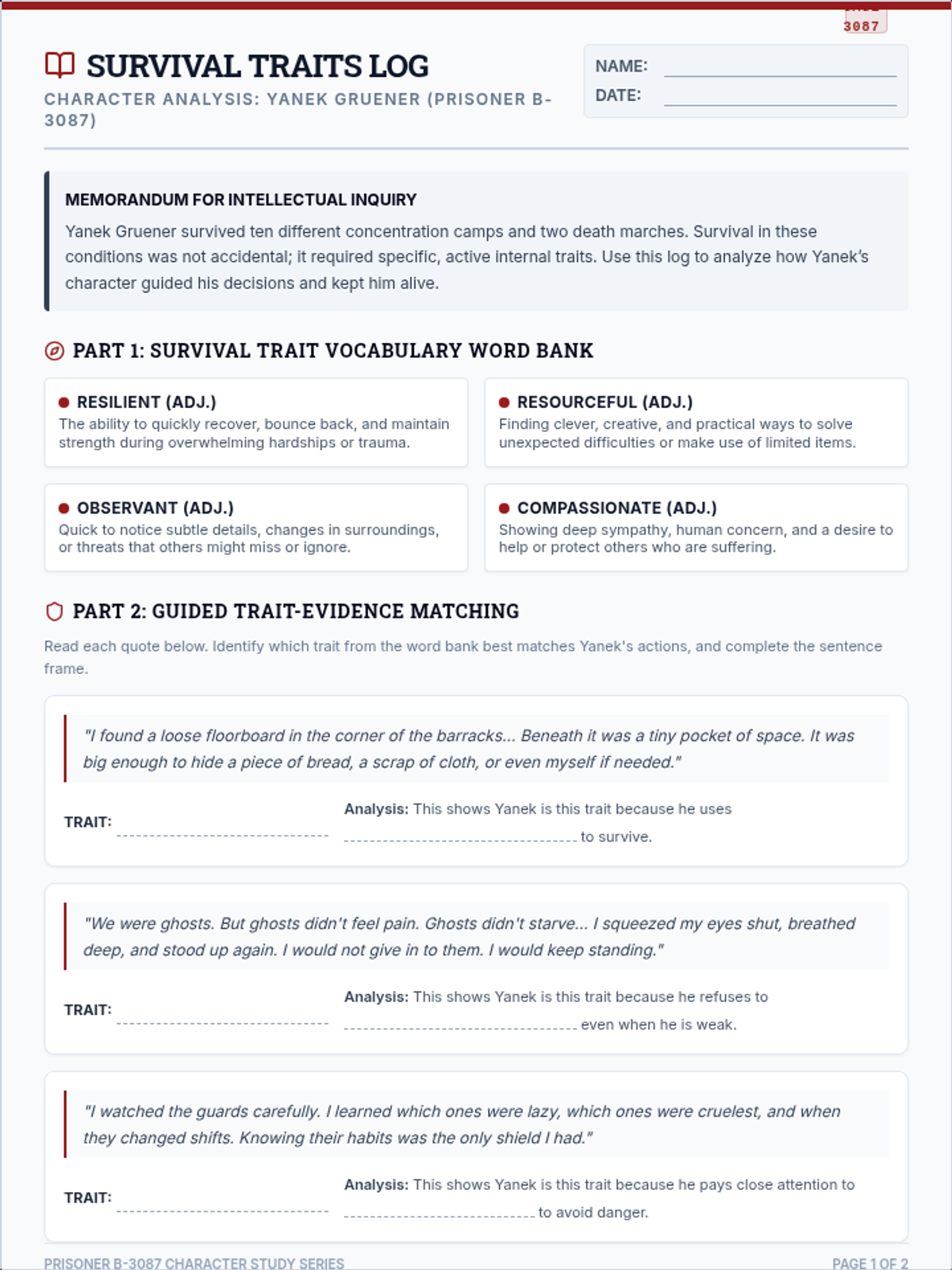
A comparative analysis writing assessment exploring themes of resilience, strength, and human empathy through William Ernest Henley's 'Invictus' and Elie Wiesel's 'Night'. Students will analyze how different literary forms depict the survival of the human spirit during extreme suffering.
A comprehensive final exam focusing on the synthesis of literary themes including struggle, grit, and empathy. Students analyze a narrative passage and a poem before composing a multi-paragraph synthesis essay.
A comprehensive final exam centered on Guy de Maupassant's 'The Necklace,' focusing on theme, moral message, and the CER+C writing framework.
Visual and structured supports for WIDA Level 1 and 2 students exploring character motivation and thematic contrasts in Krakauer's Into the Wild. Includes vocabulary scaffolding, graphic organizers, and sentence frames.
A comprehensive final assessment for Tuck Everlasting focusing on the themes of growth, maturity, and the circle of life through multiple choice and essay questions.
This lesson covers Chapters 19 and 20 of Carl Hiaasen's Hoot, focusing on the climax of the story and the resolution of the conflict between the students and Mother Paula's Pancake House. students will explore key vocabulary and analyze character motivations through comprehension questions.
A modern mystery story about two students who uncover a hidden community project through a series of digital clues in their city. The lesson includes the story, comprehension checks, vocabulary support, and a presentation guide.
This lesson provides Specially Designed Instruction (SDI) for crafting introductory paragraphs. It utilizes graphic organizers and sentence starters to help students build a strong foundation for informative writing.
A deep-dive analysis of the internal conflict faced by the princess in Frank R. Stockton's classic short story. Students will explore themes of jealousy, love, and barbaric nature through guided discussion and analytical writing.
A comprehensive quiz covering the four foundational parts of speech: nouns, verbs, adjectives, and pronouns. Includes matching, multiple choice, identification, and creative fill-in-the-blank questions.
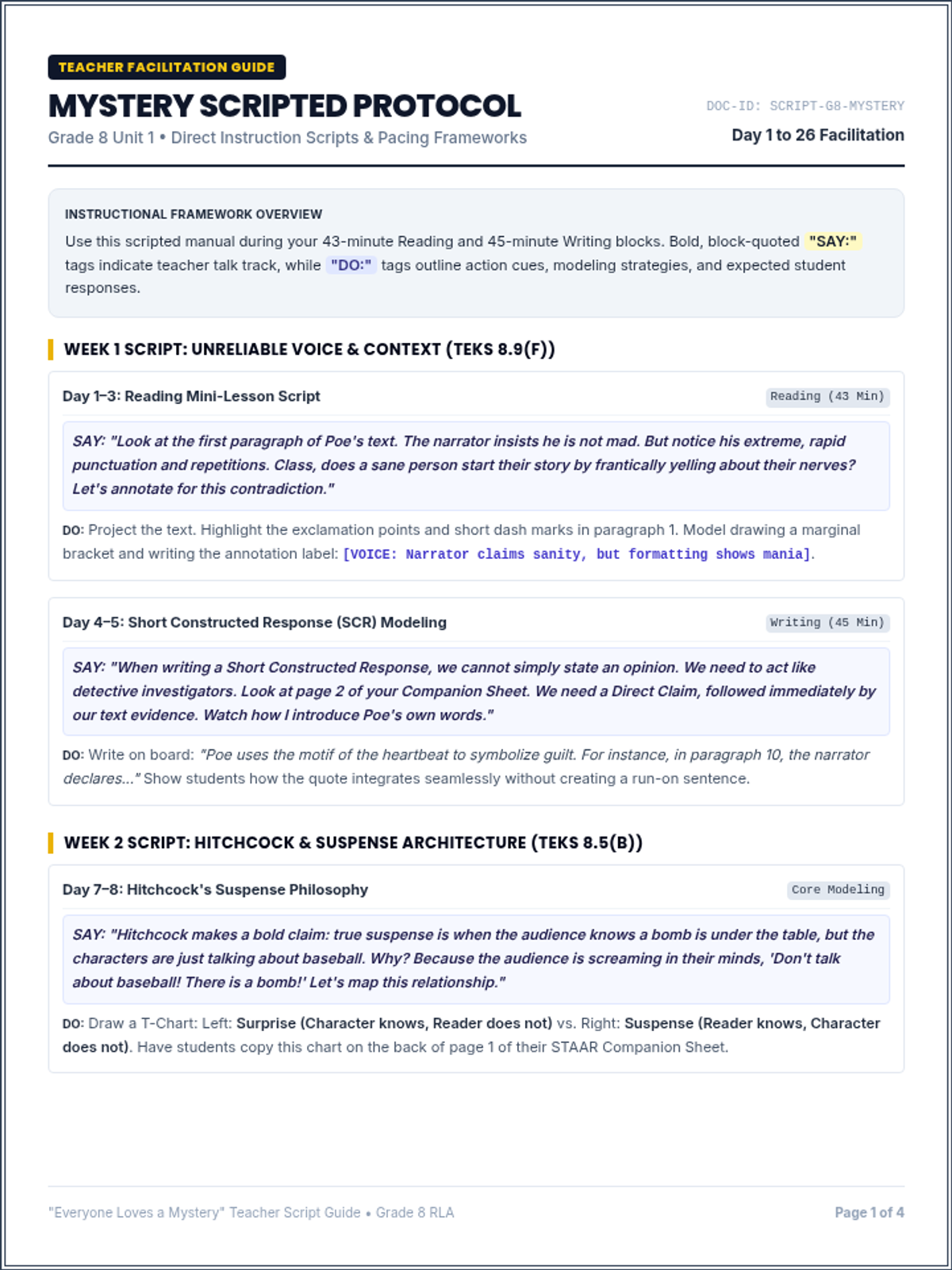
A scaffolded investigation comparing the classic text of 'The Tell-Tale Heart' with a film adaptation, utilizing executive functioning tools and the RACECES writing strategy.
Students step into the roles of news editors to master the art of consistency and precision. They will learn foundational AP style rules and practice rigorous fact-checking to ensure their articles are ready for the front page.
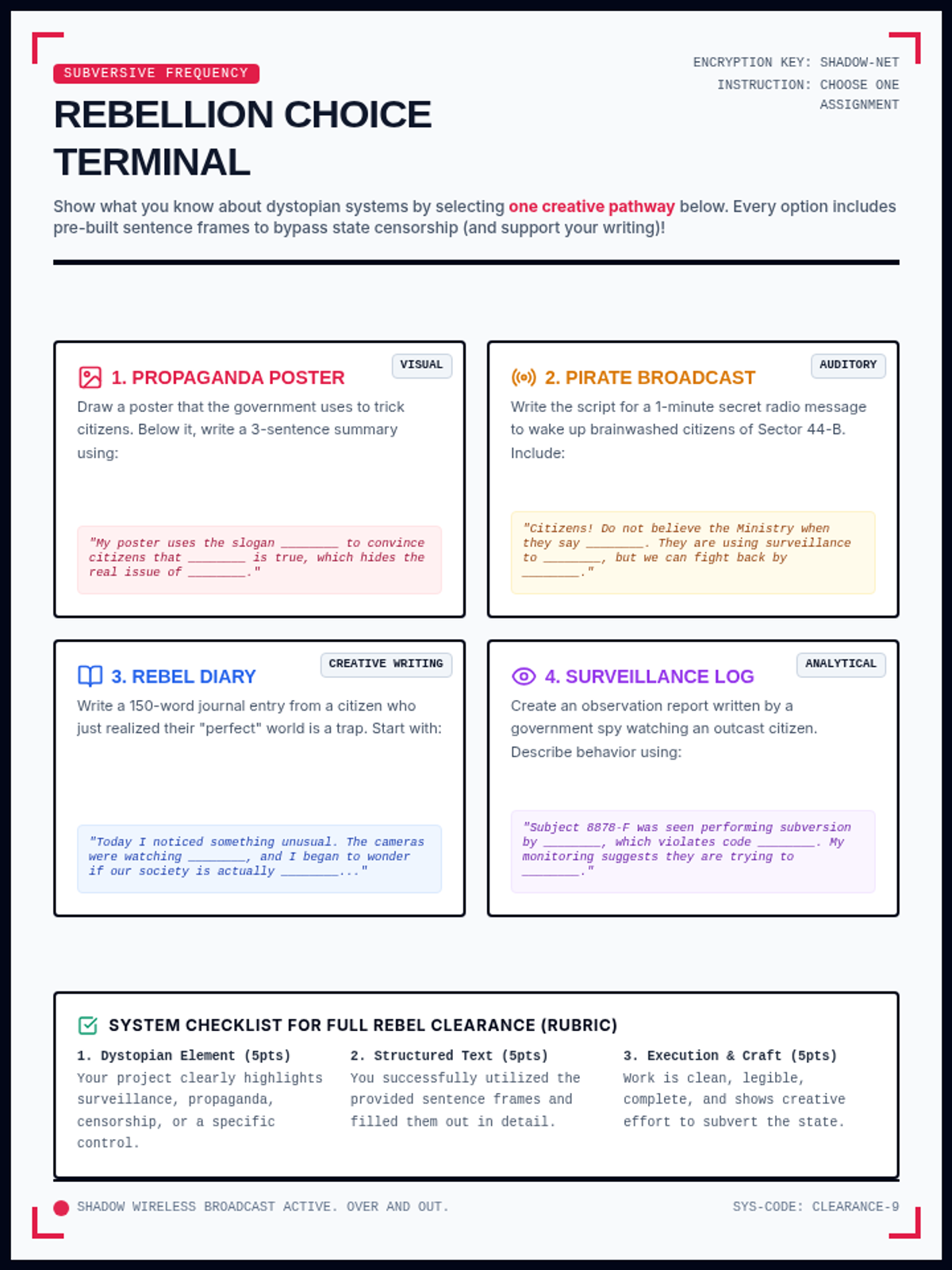
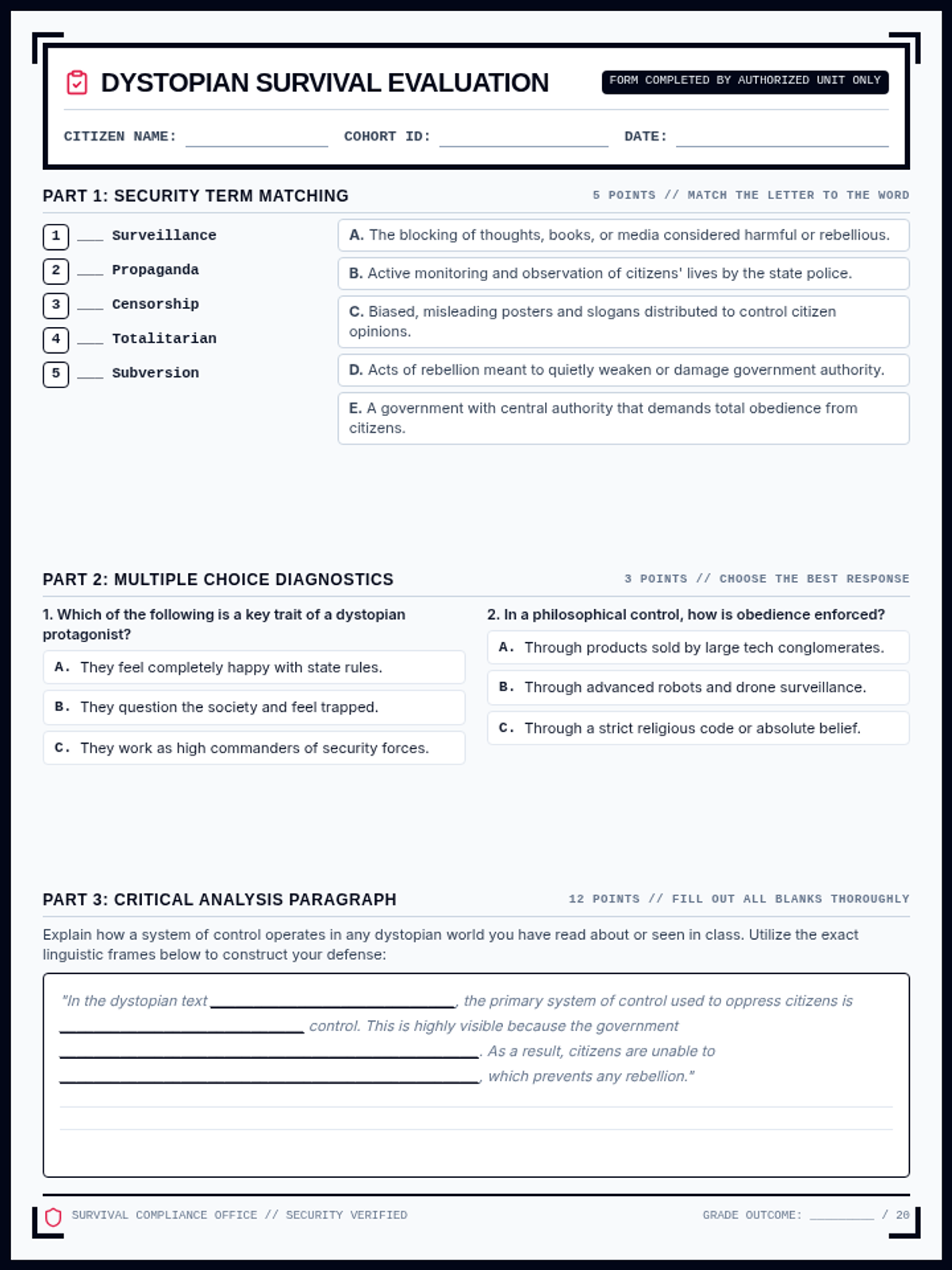
An English 11 lesson exploring Kurt Vonnegut's 'Harrison Bergeron', focusing on the themes of equality, government control, and the cost of sameness through satire.
A comprehensive lesson on identifying and constructing simple, compound, and complex sentences using a construction site theme.