A masterclass in decoding, spelling, and analyzing 3- and 4-syllable words containing ti, ci, tious, cious, tial, and cial. Students explore phonics, spelling rules, and morphology through structured word breakdown.
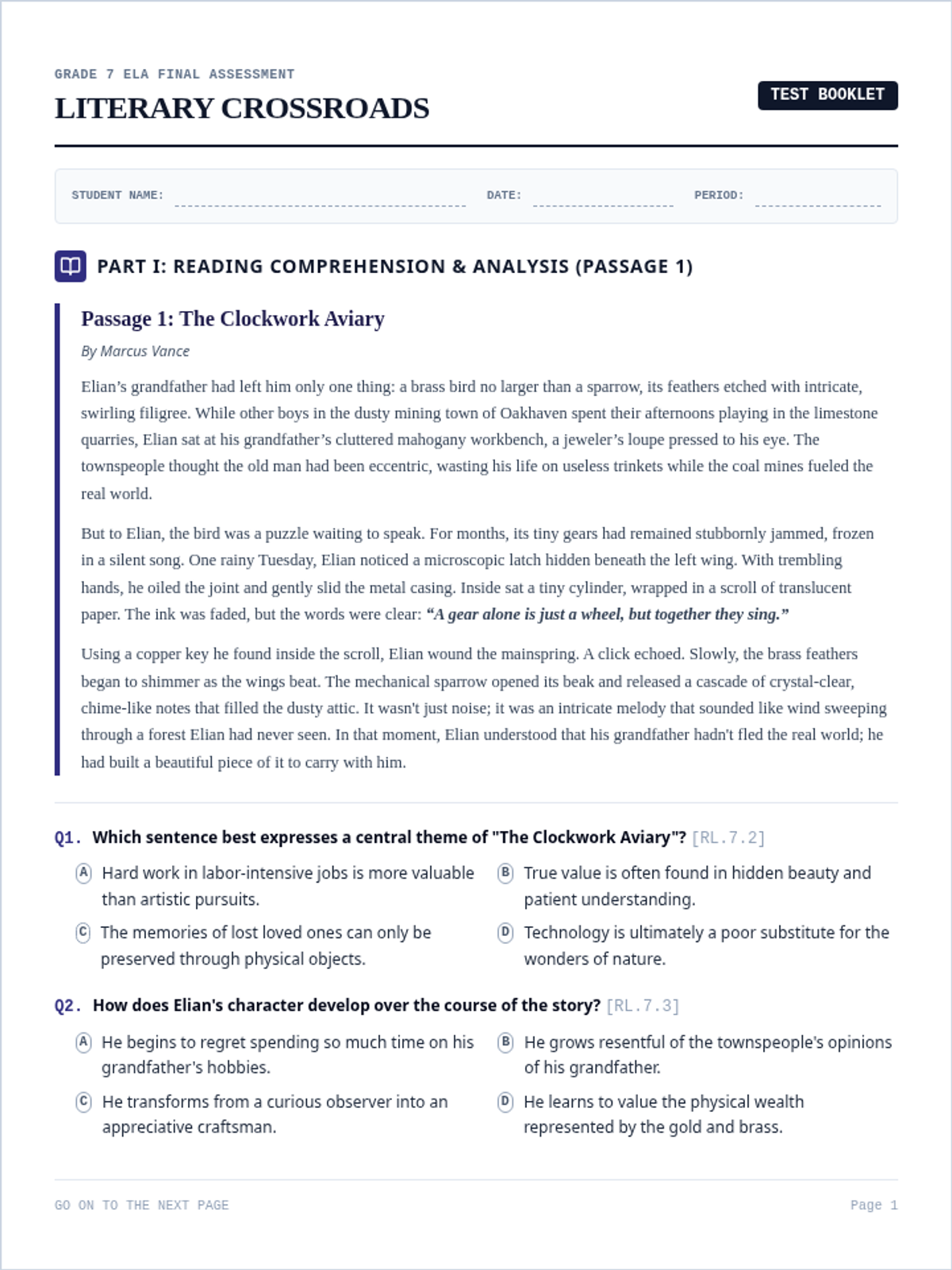
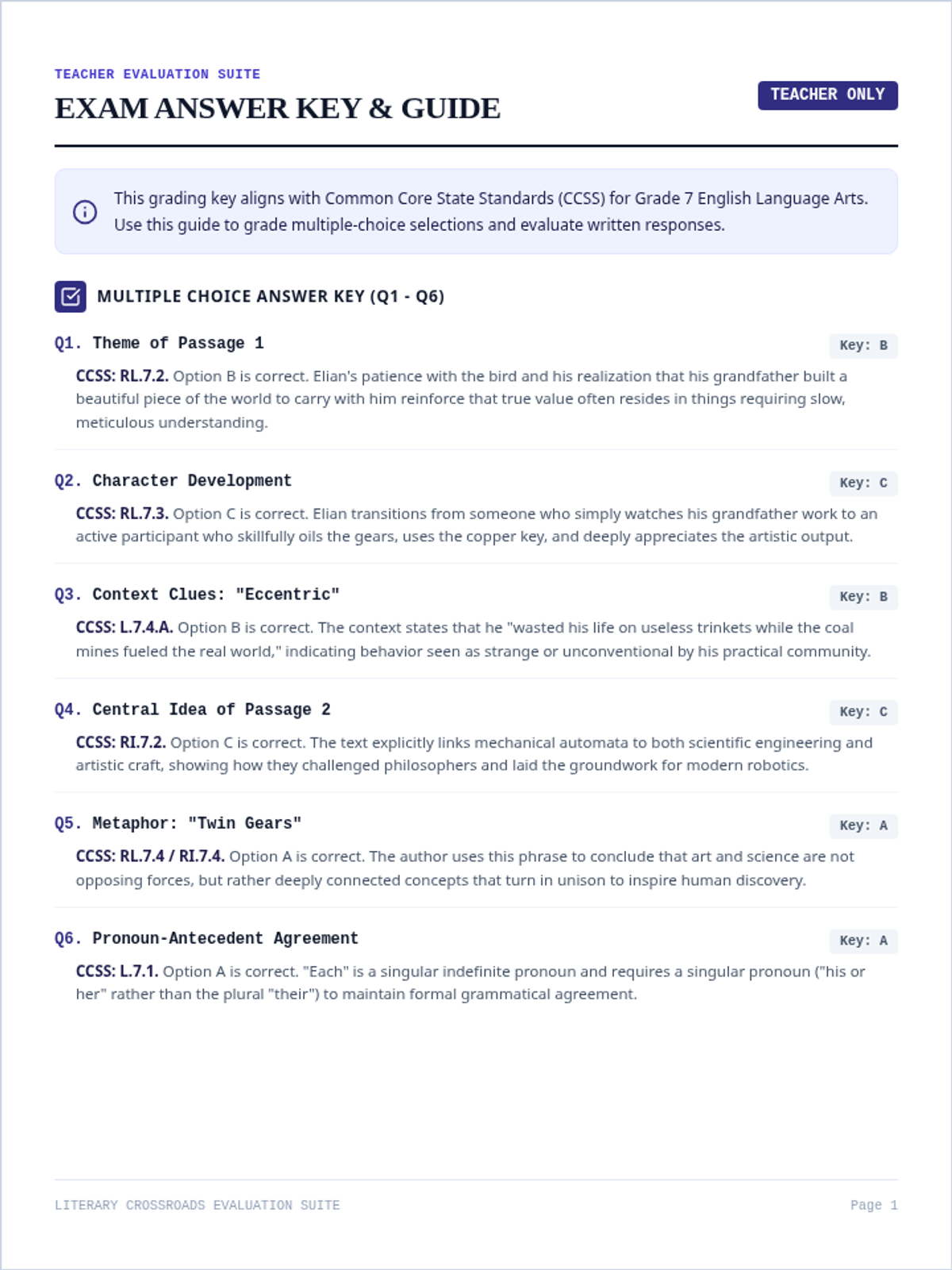
A comprehensive final assessment and evaluation suite for 7th grade ELA, covering theme, character development, central ideas, context clues, and analytical writing.
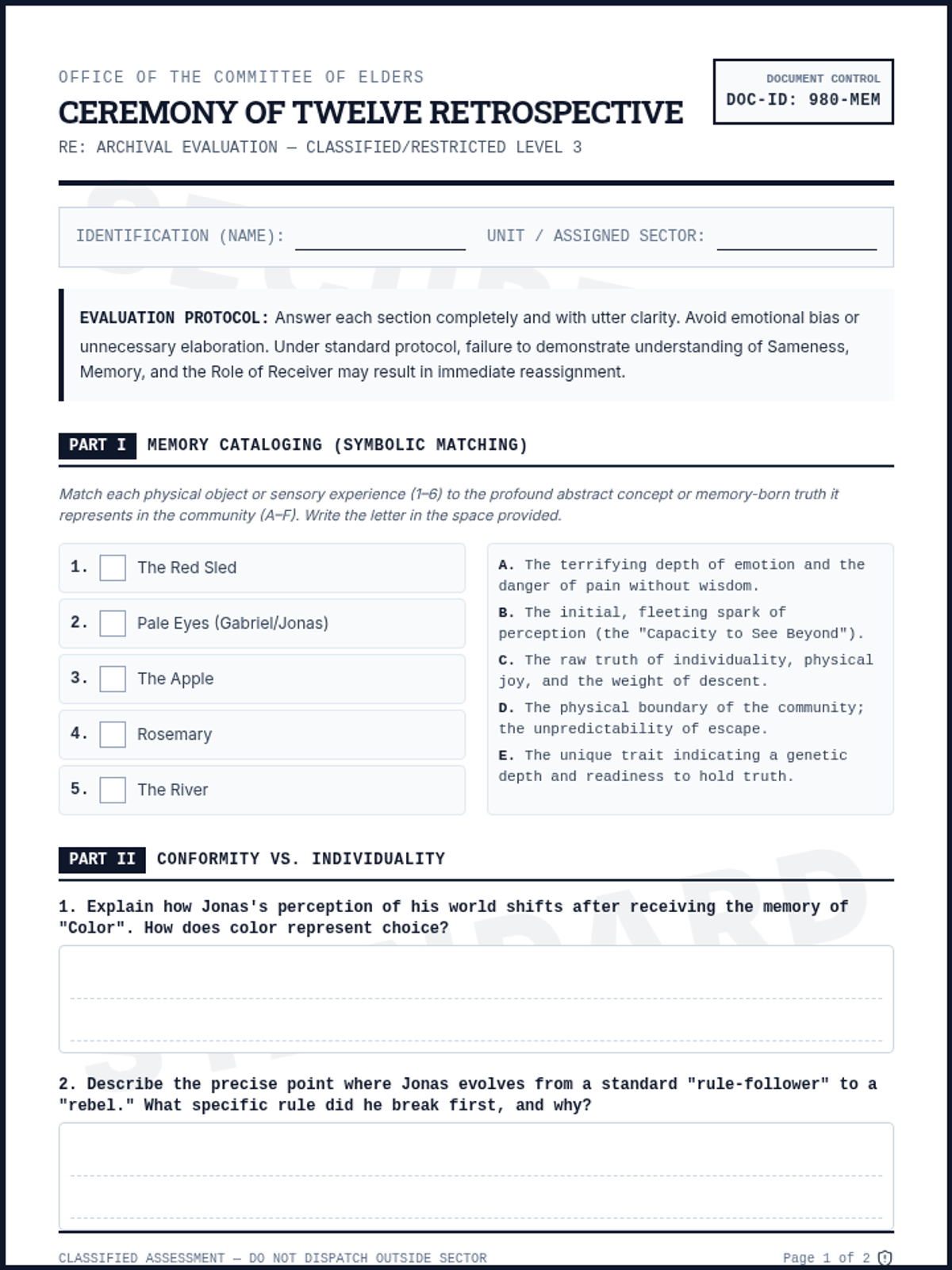
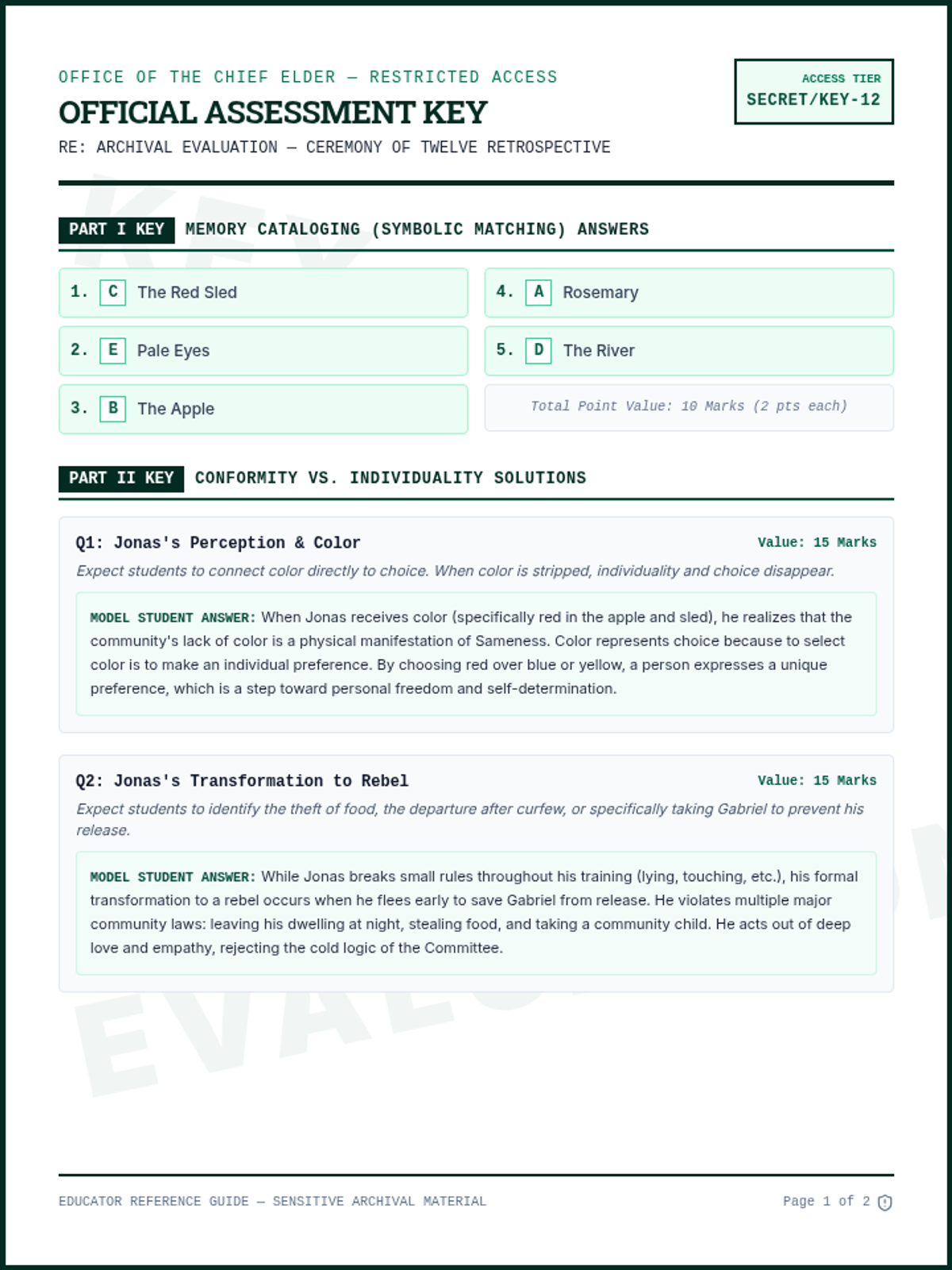
A comprehensive final exam lesson on Lois Lowry's 'The Giver', featuring a high-stakes, dystopian-themed student assessment and an educator's answer key and rubric focusing on memory, conformity, and character choice.
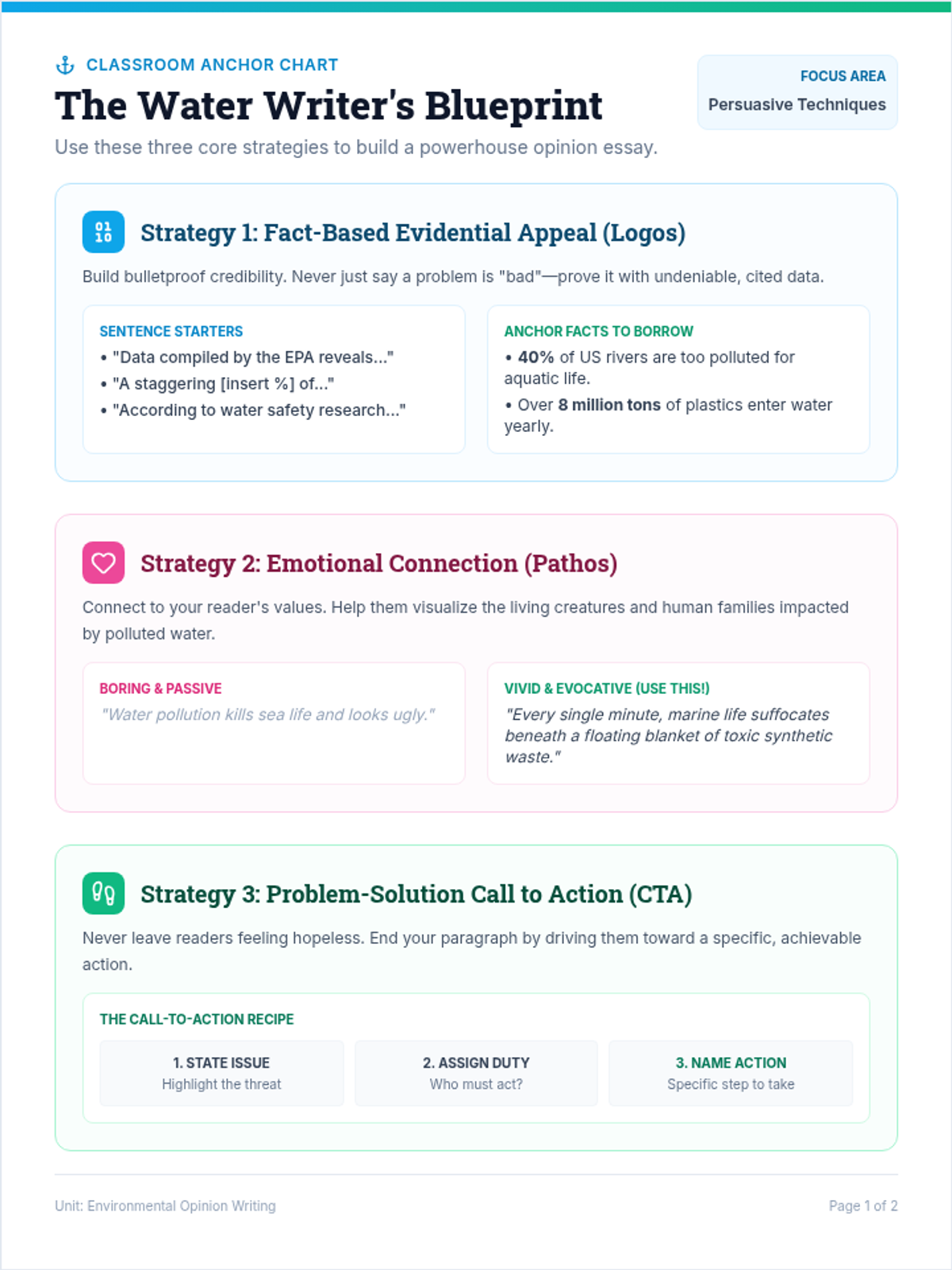
A targeted writing lesson that guides students through crafting high-impact opinion essays on water pollution and water demand. Students learn to combine fact-based evidential appeals, emotional connections, and structured problem-solution calls to action.
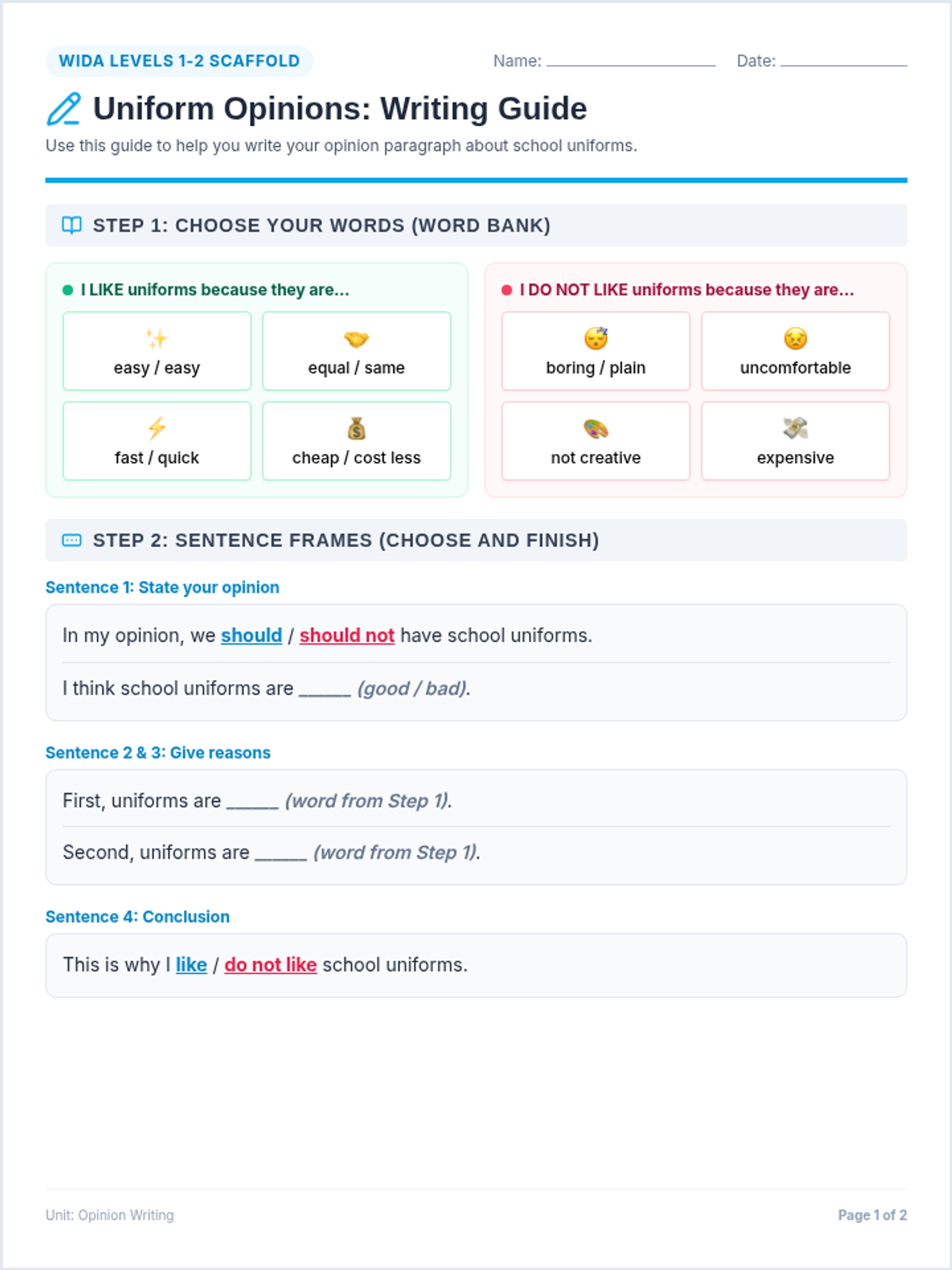
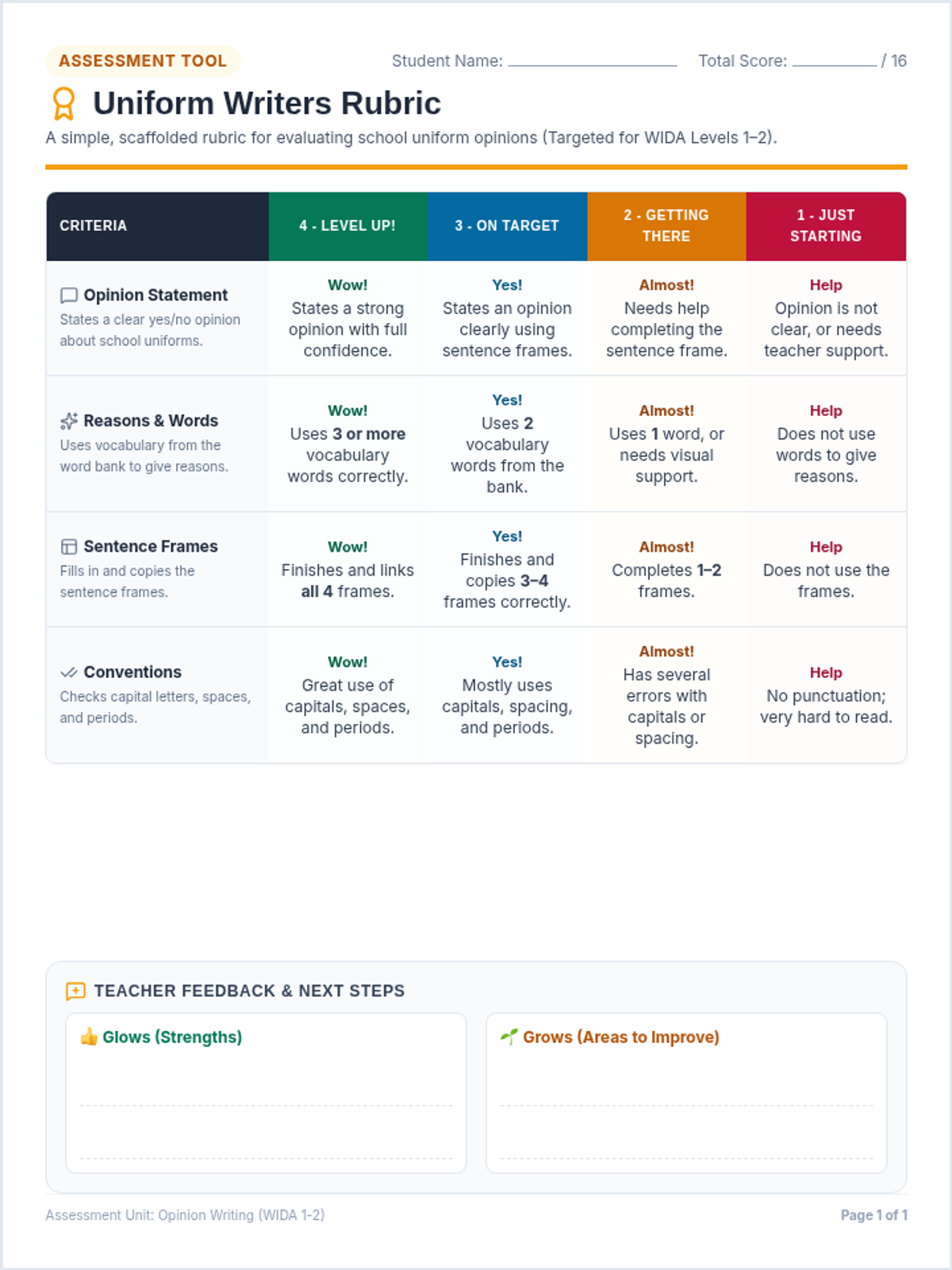
A structured writing lesson for 4th-grade English learners (WIDA Levels 1-2) to express their opinions about school uniforms. It provides scaffolded vocabulary, sentence frames, and a simplified rubric to guide and assess their progress.
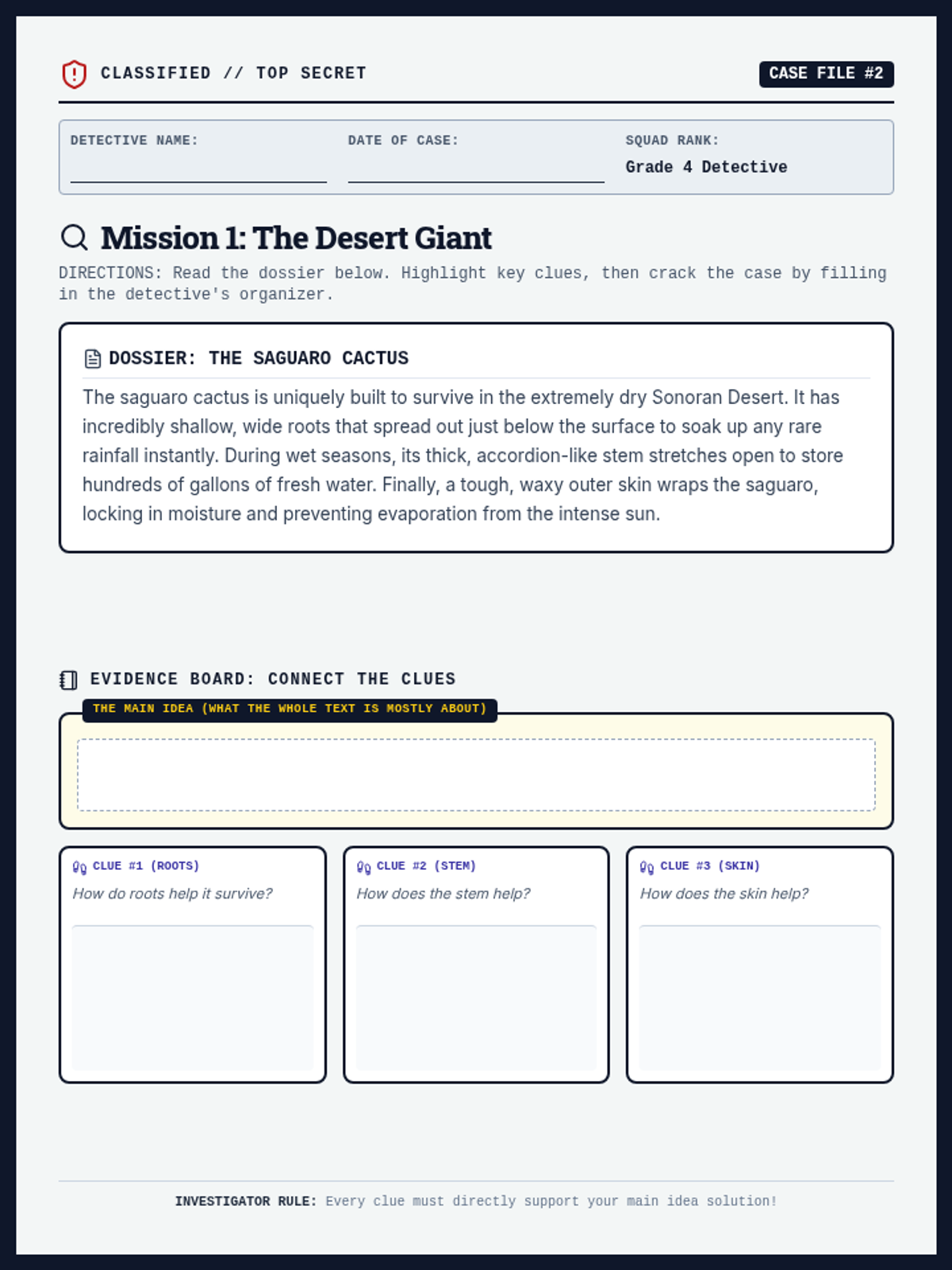
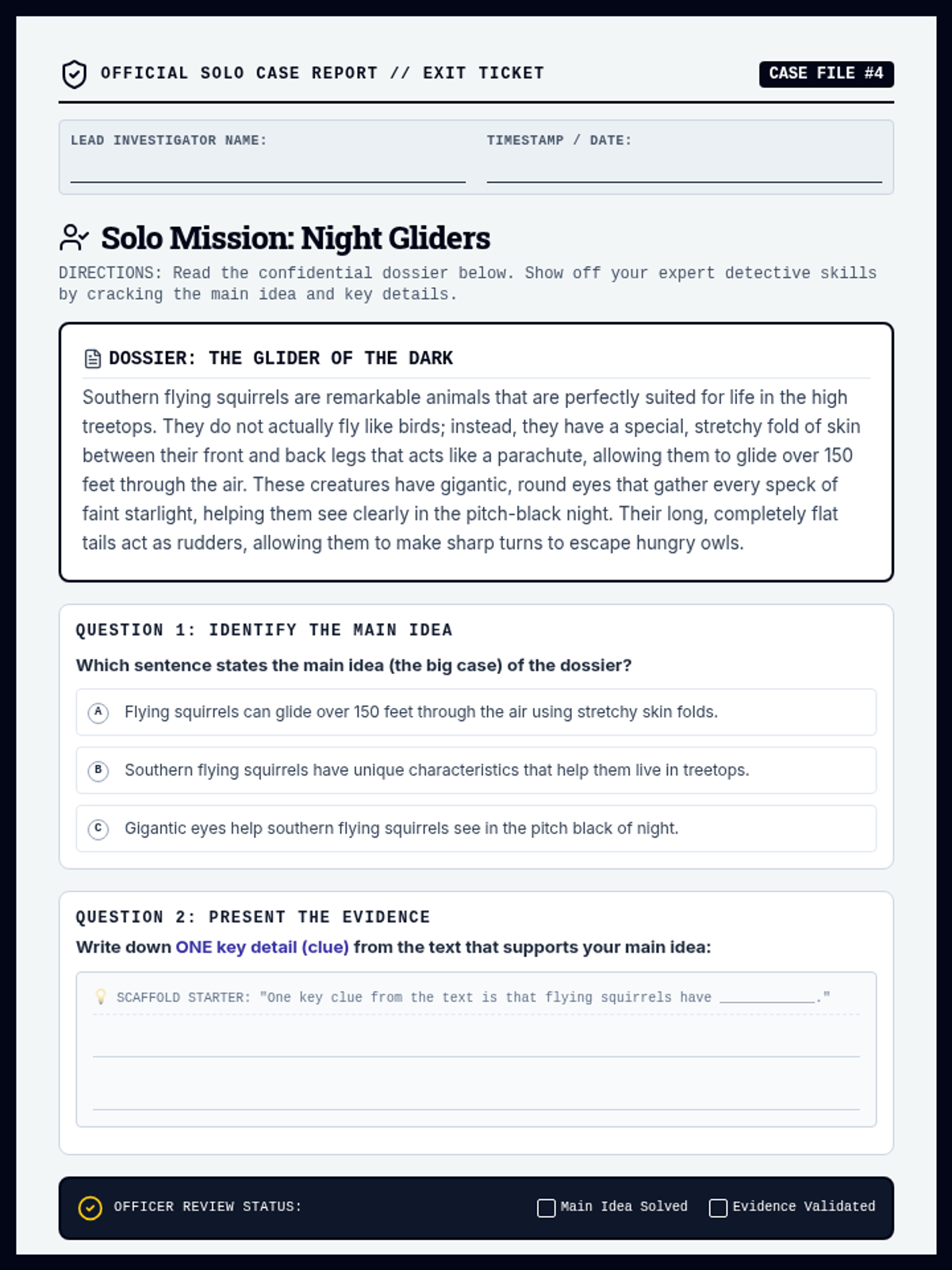
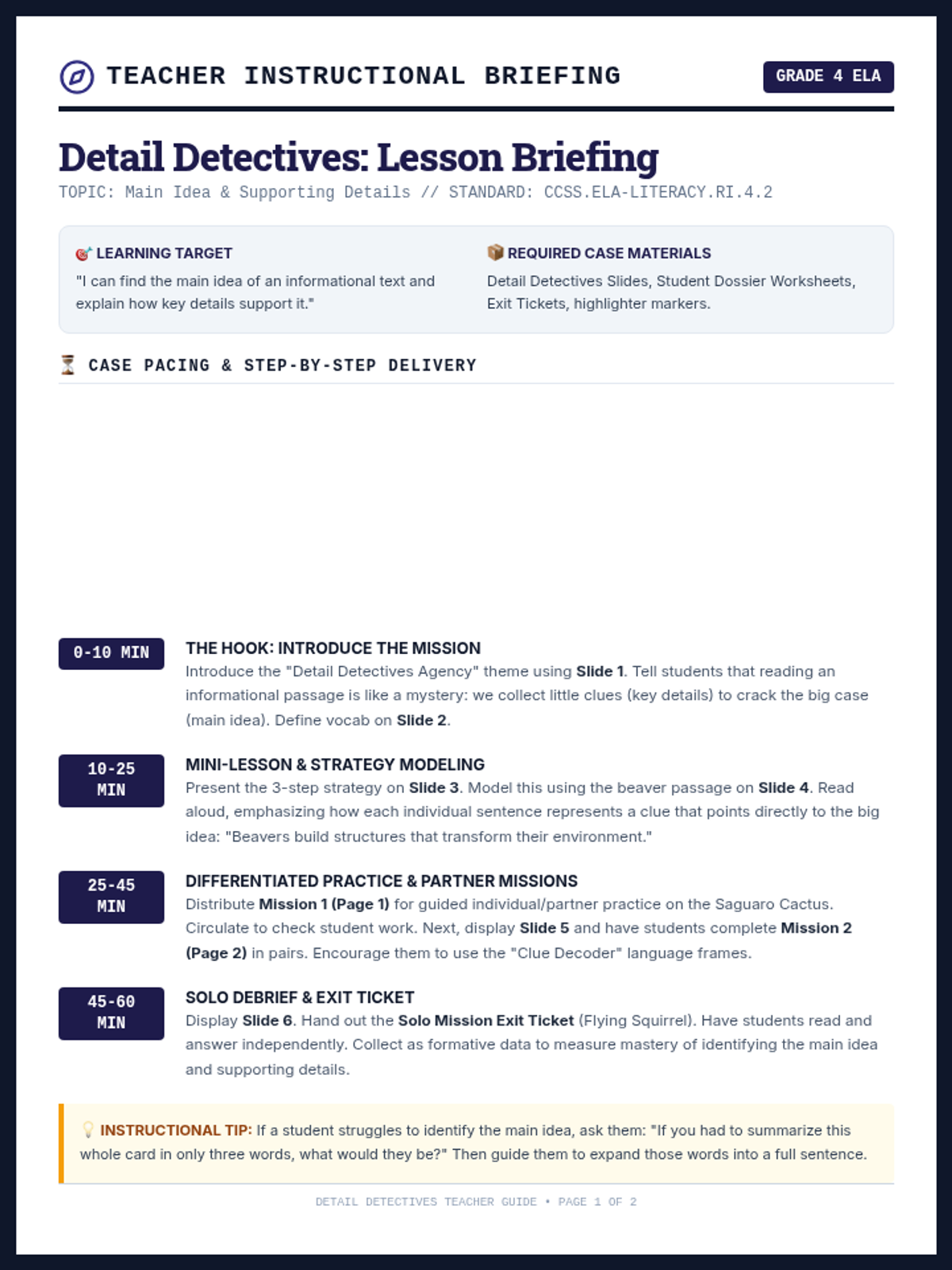
A mystery-themed 4th-grade ELA lesson on identifying the main idea and supporting details. Students act as detectives, gathering key clues (details) to uncover the big case (main idea), complete with robust visual slides, differentiated worksheets, an exit ticket, and a comprehensive teacher guide with WIDA scaffolding.
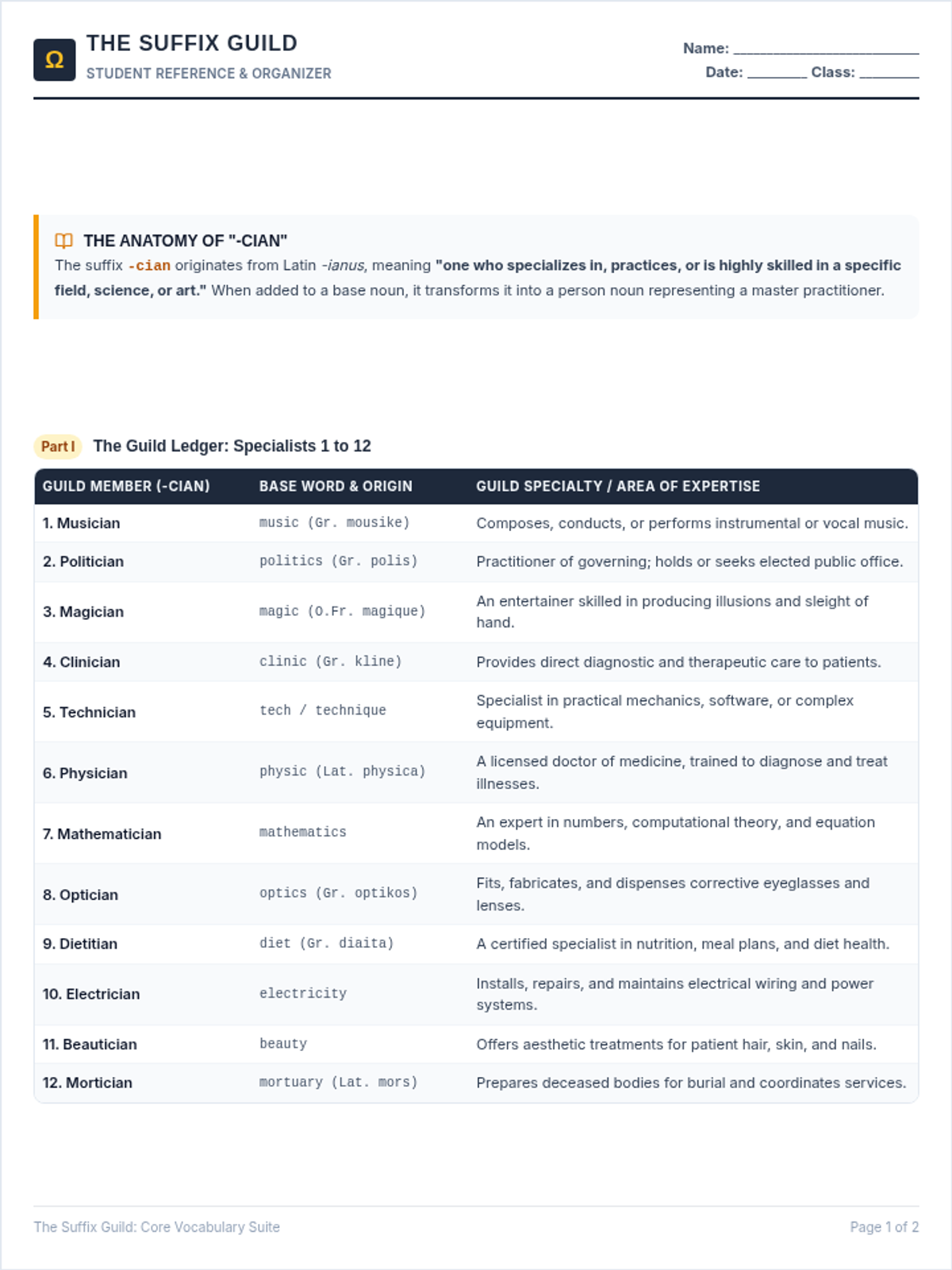
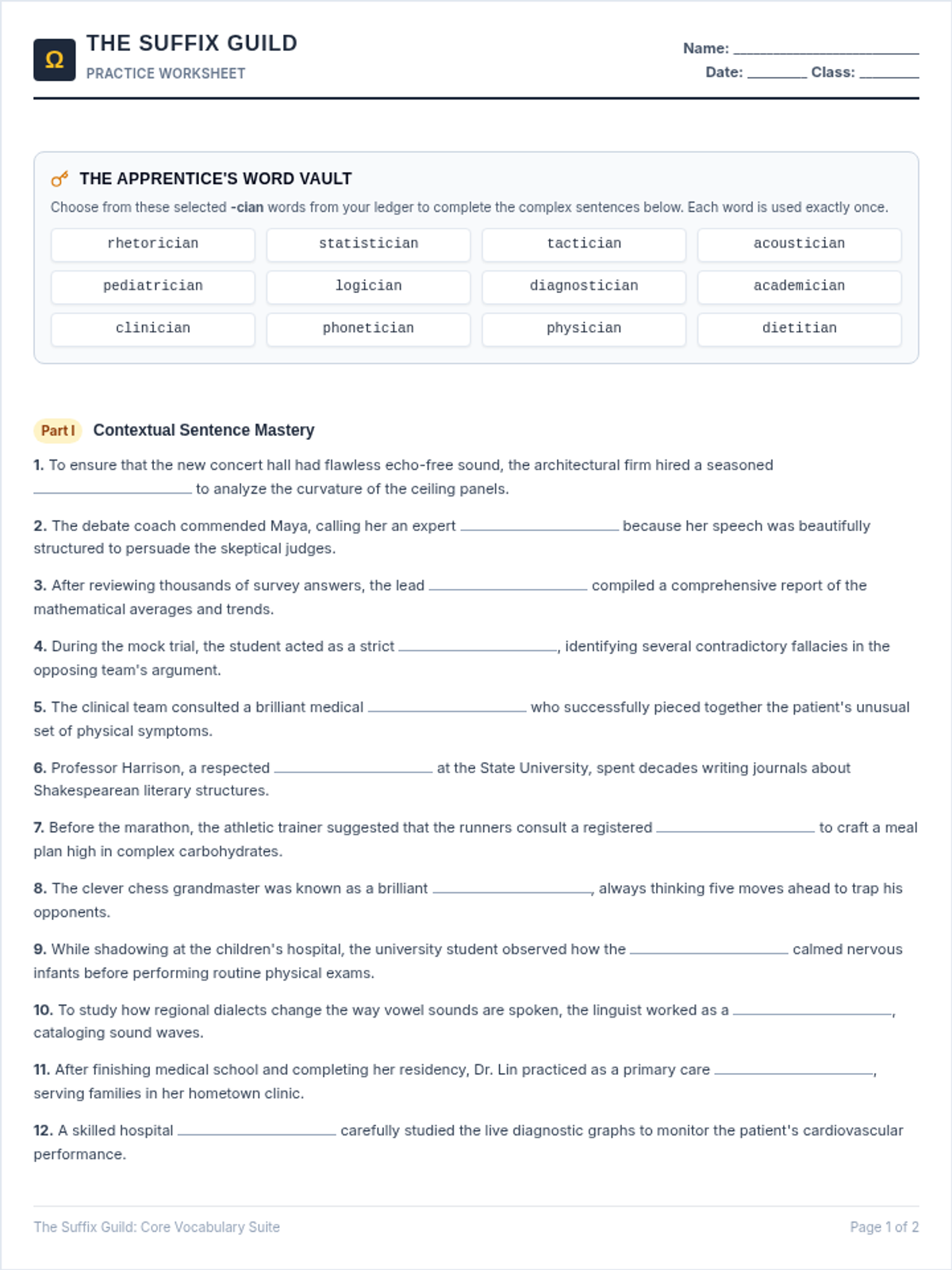
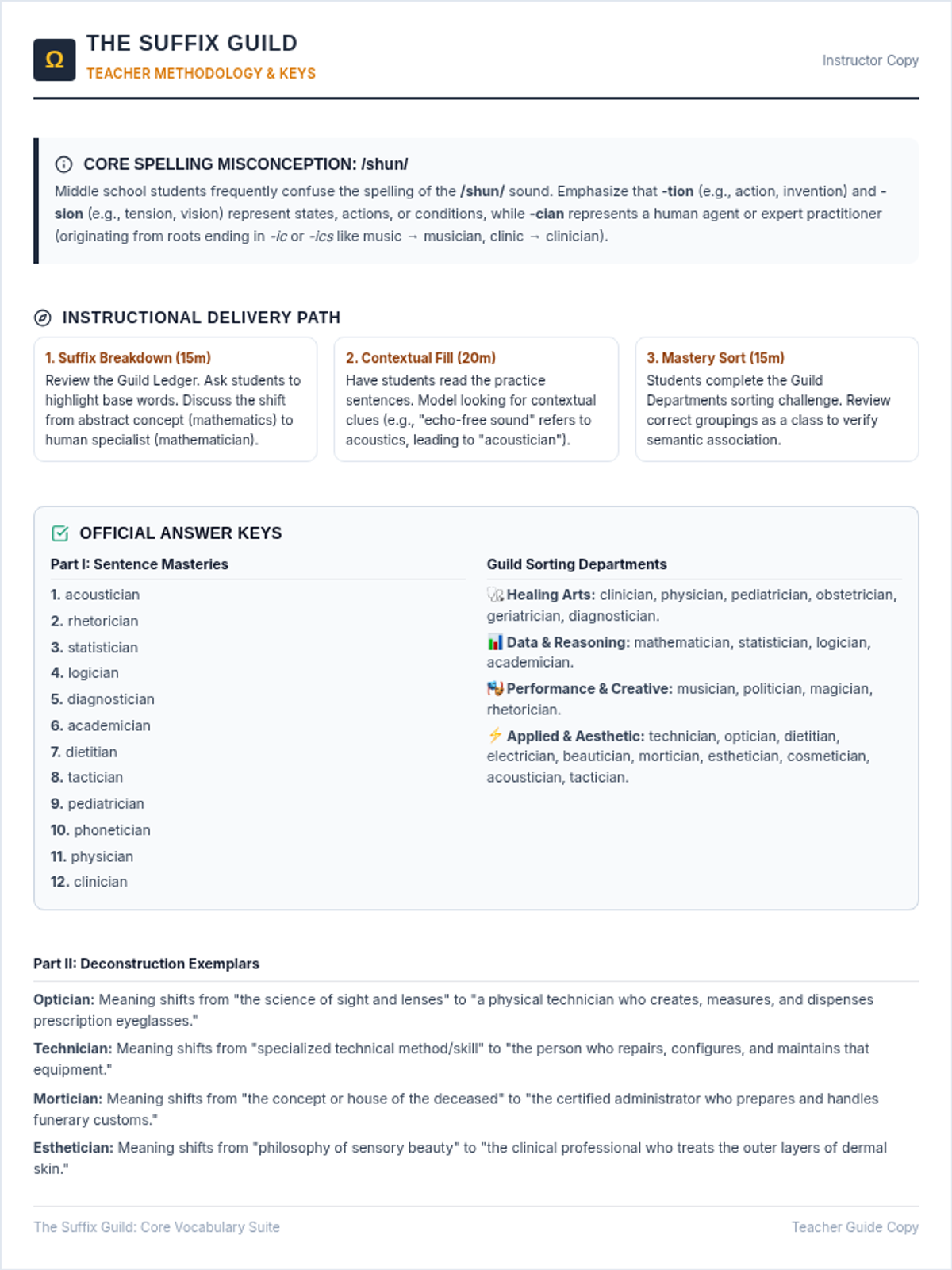
A middle school ELA lesson focusing on the suffix '-cian' (denoting a specialist or practitioner). Students learn 25 distinct terms, analyze their roots, and apply them in high-context graphic organizers, fill-in-the-blank challenges, and analytical writing exercises.
A vocabulary and morphology lesson focusing on the academic and STEM suffix -cian, representing highly skilled occupational roles. Students explore word roots, spelling transformations, and professional definitions.
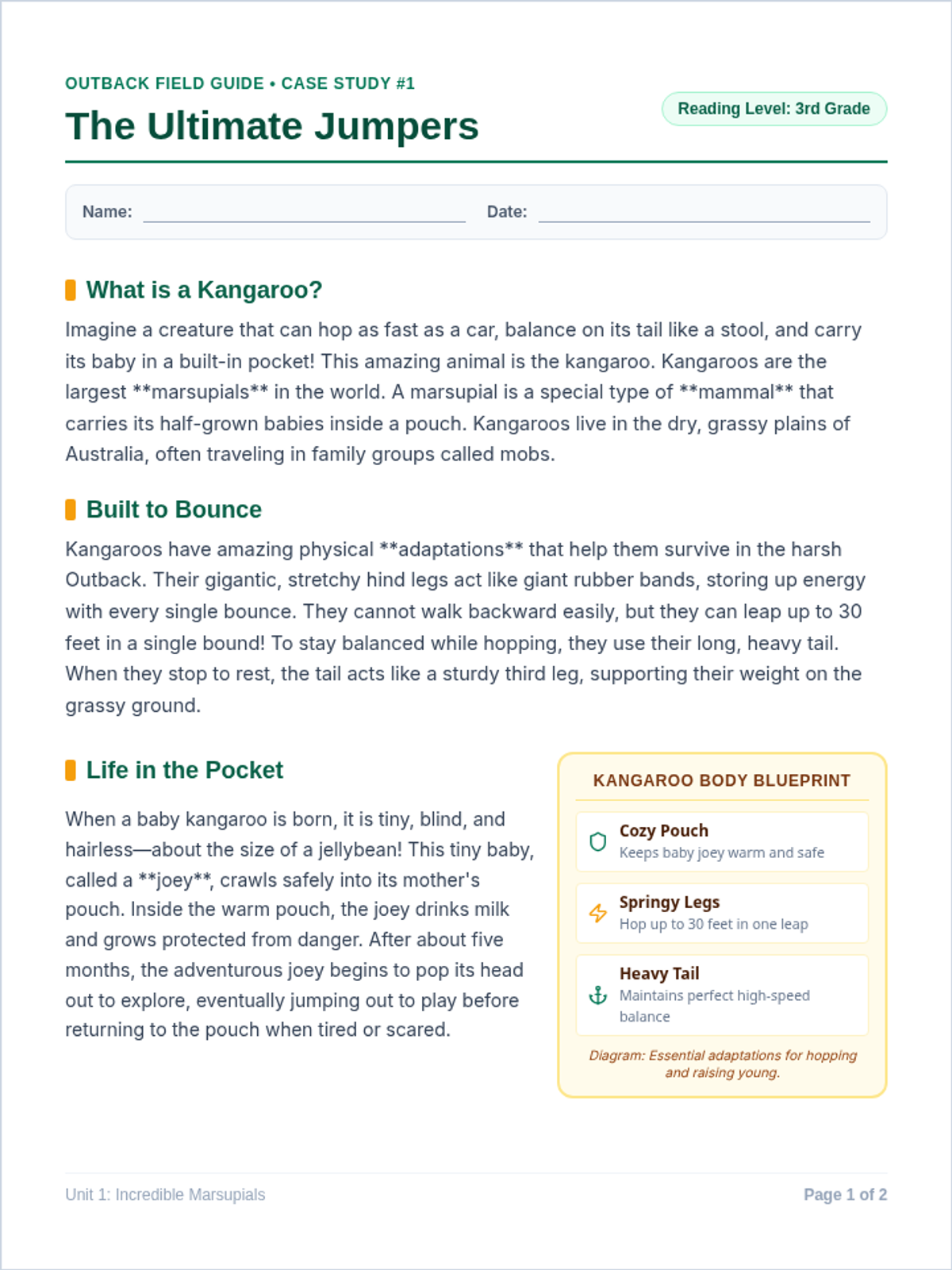
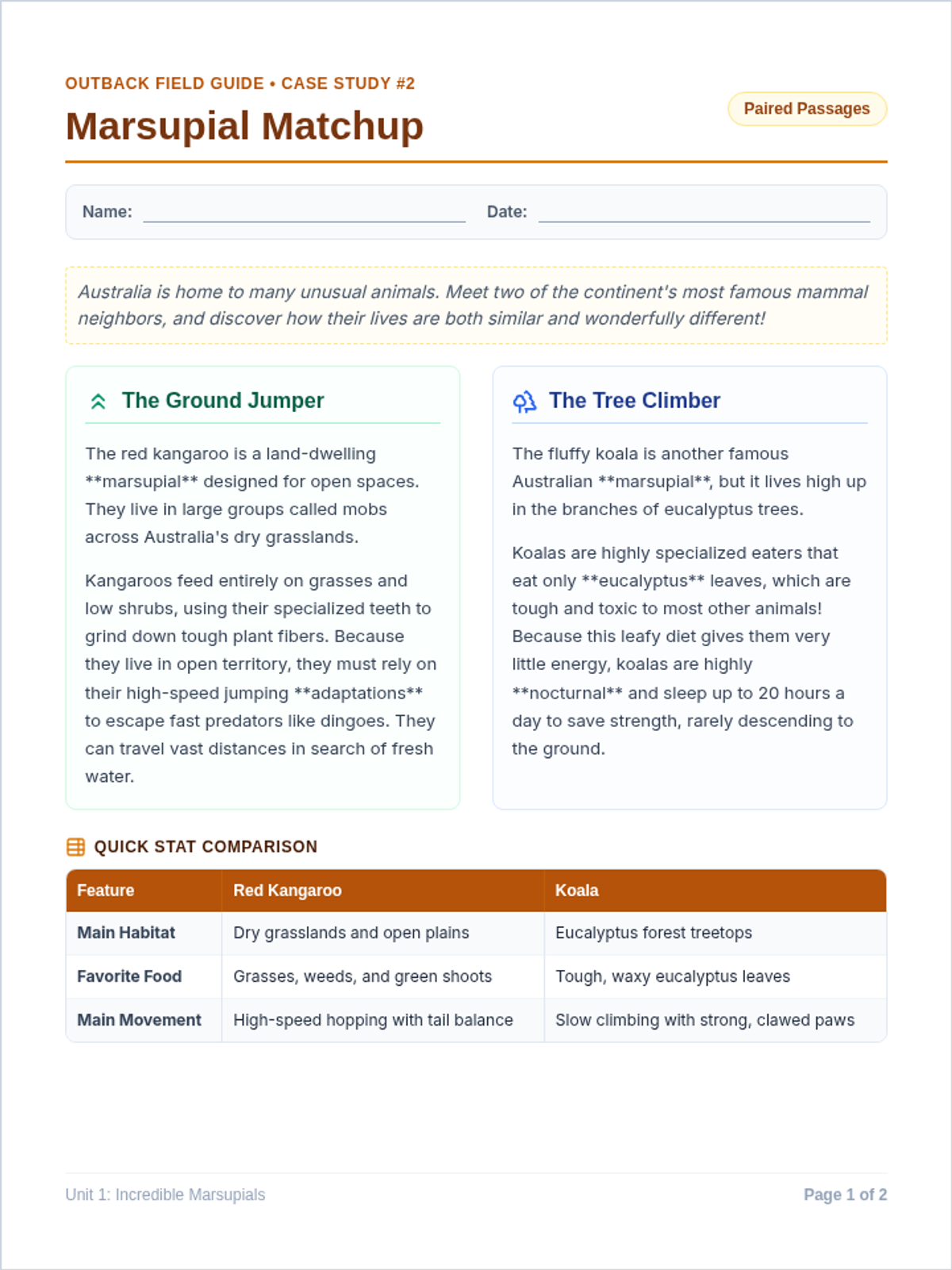
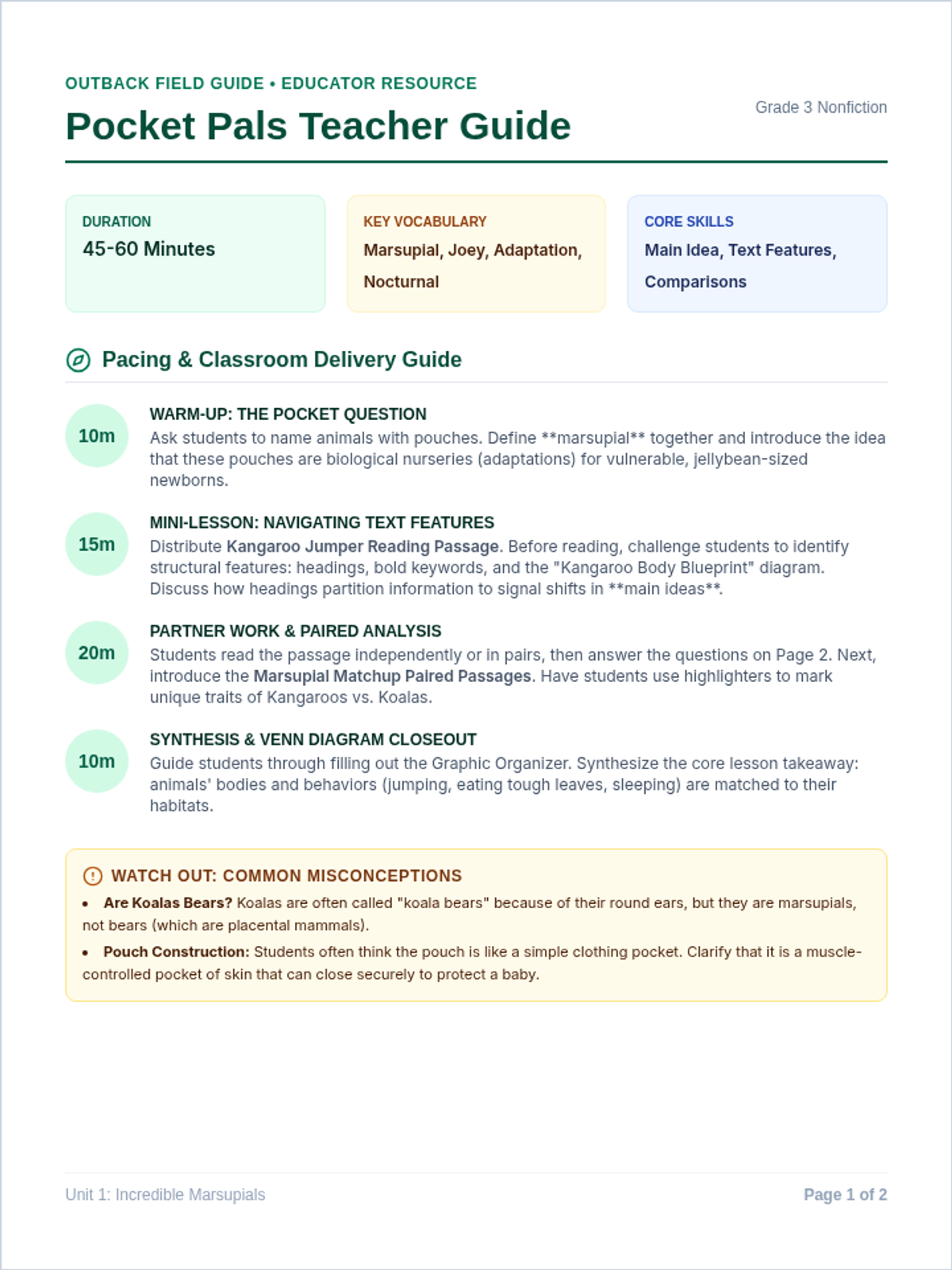
An interactive 3rd-grade reading lesson exploring the lives of kangaroos and koalas. Students build comprehension skills including main idea, analyzing nonfiction text features, and decoding domain-specific vocabulary.
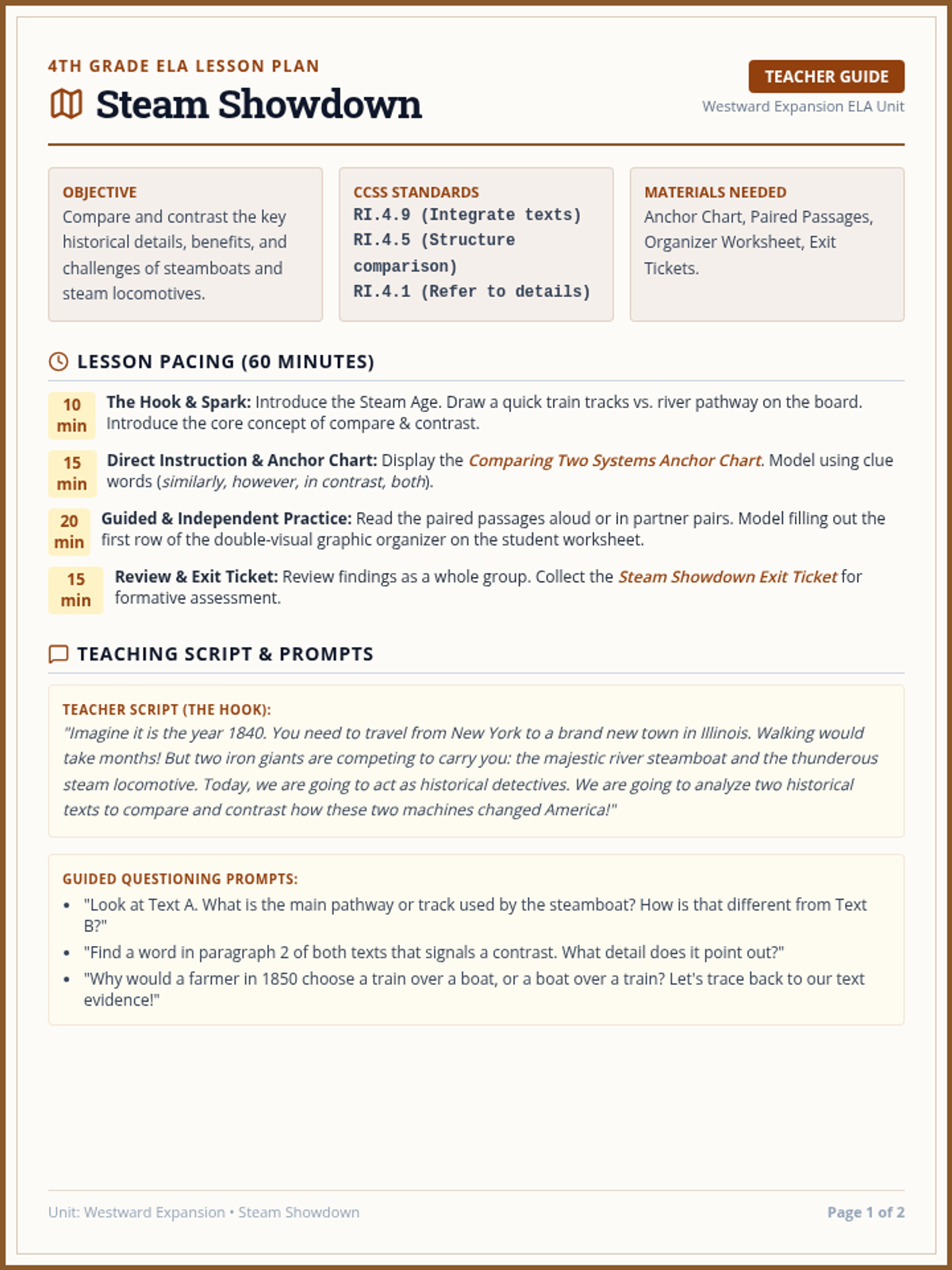
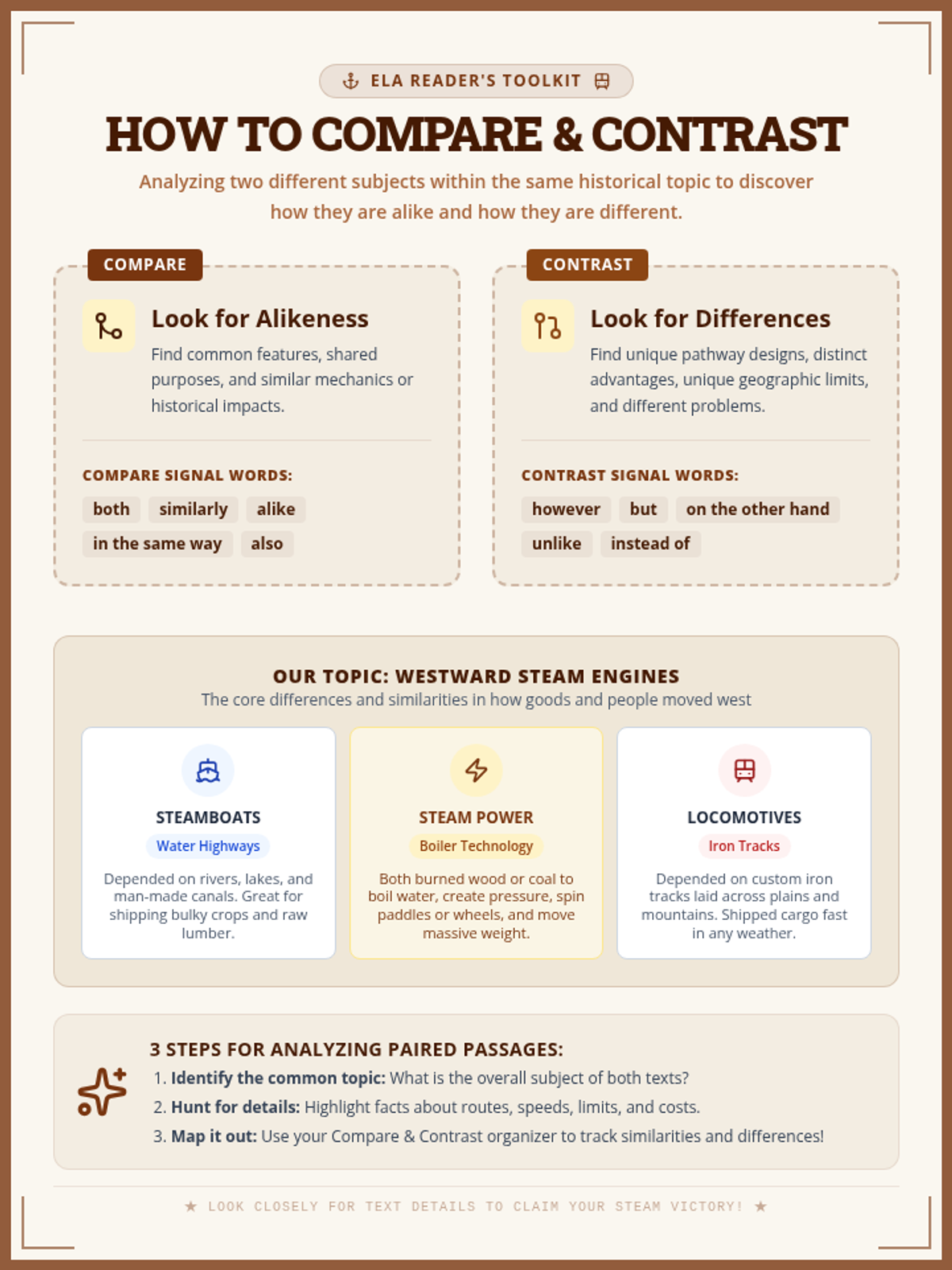
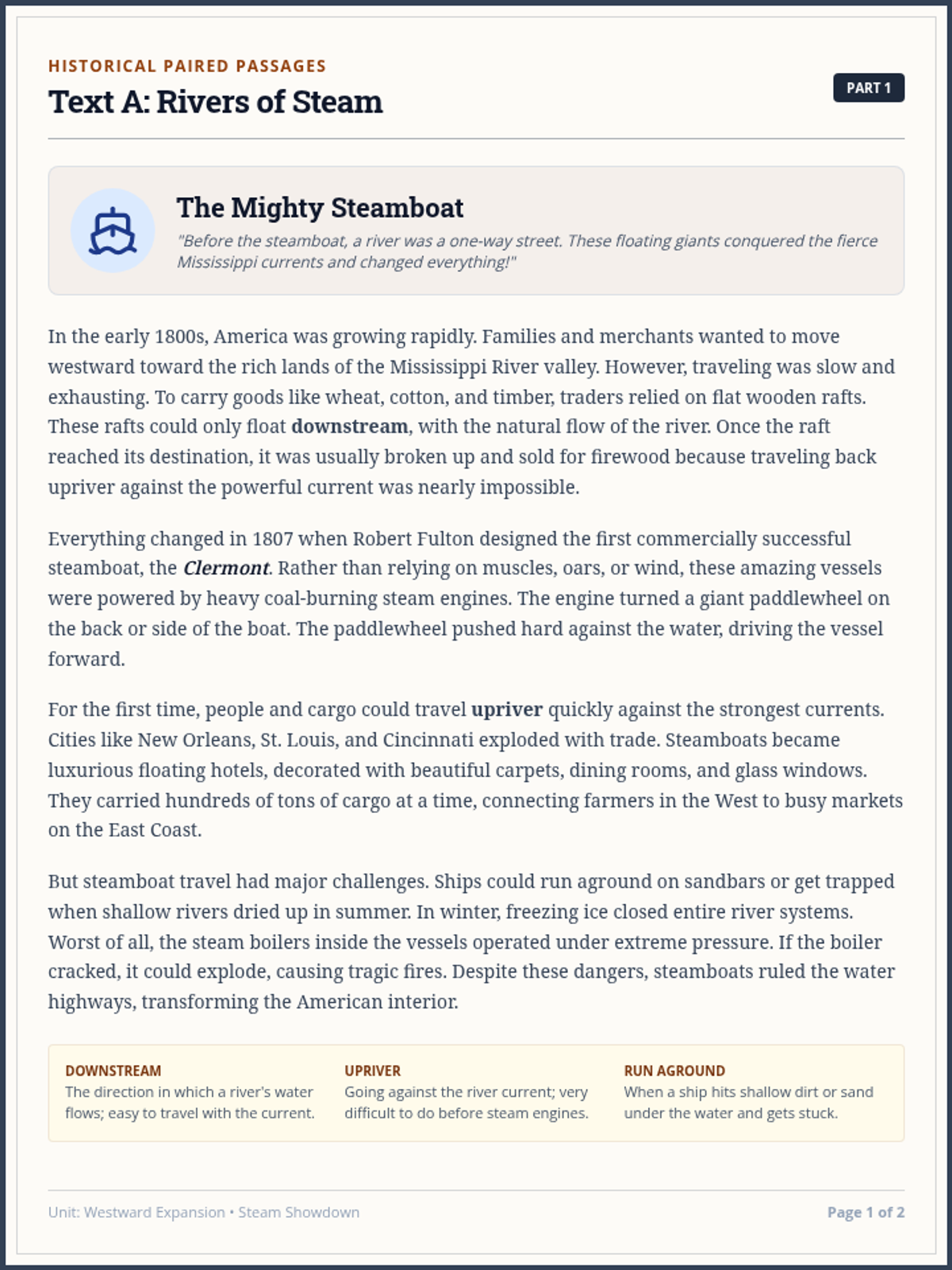
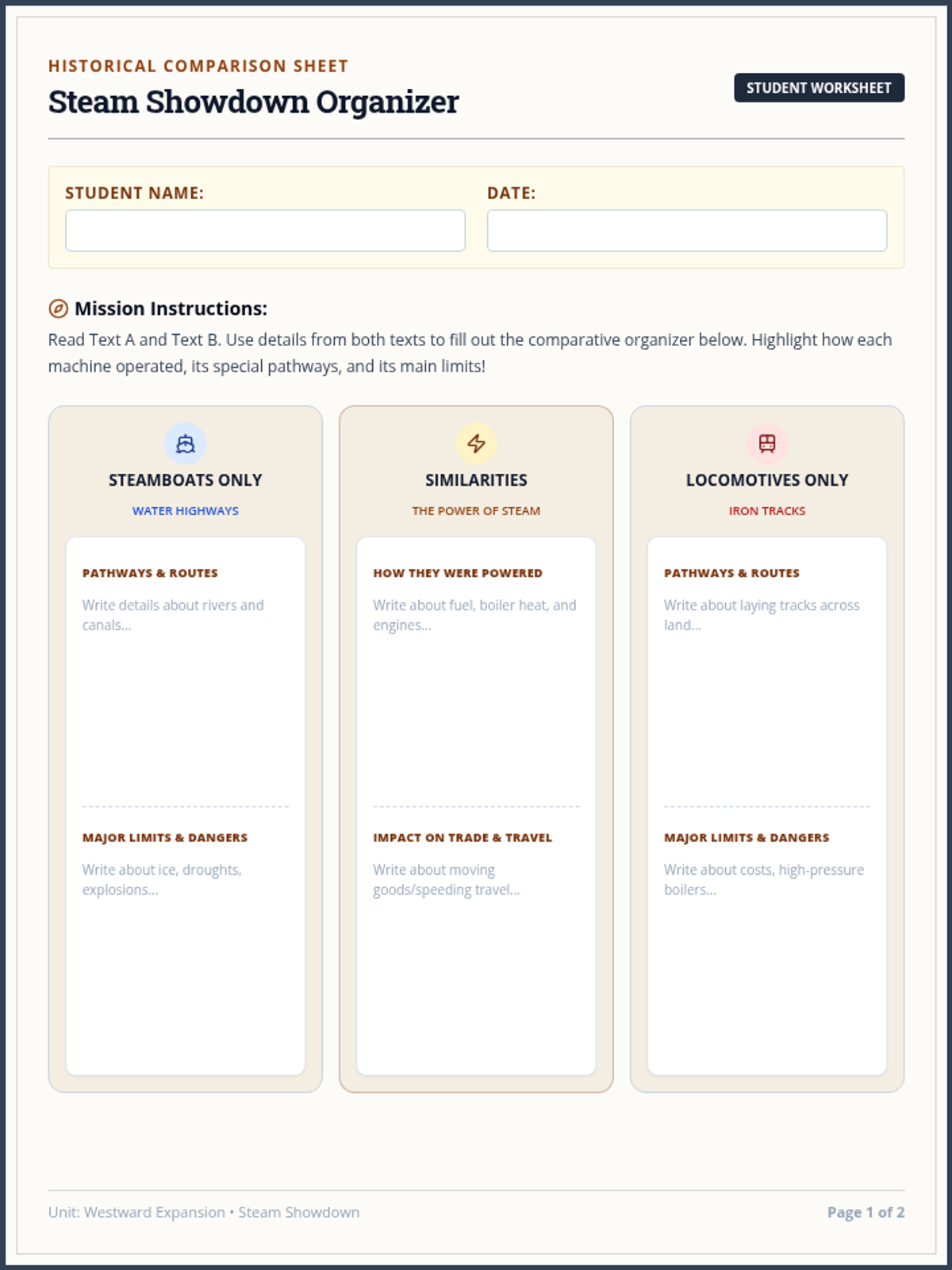
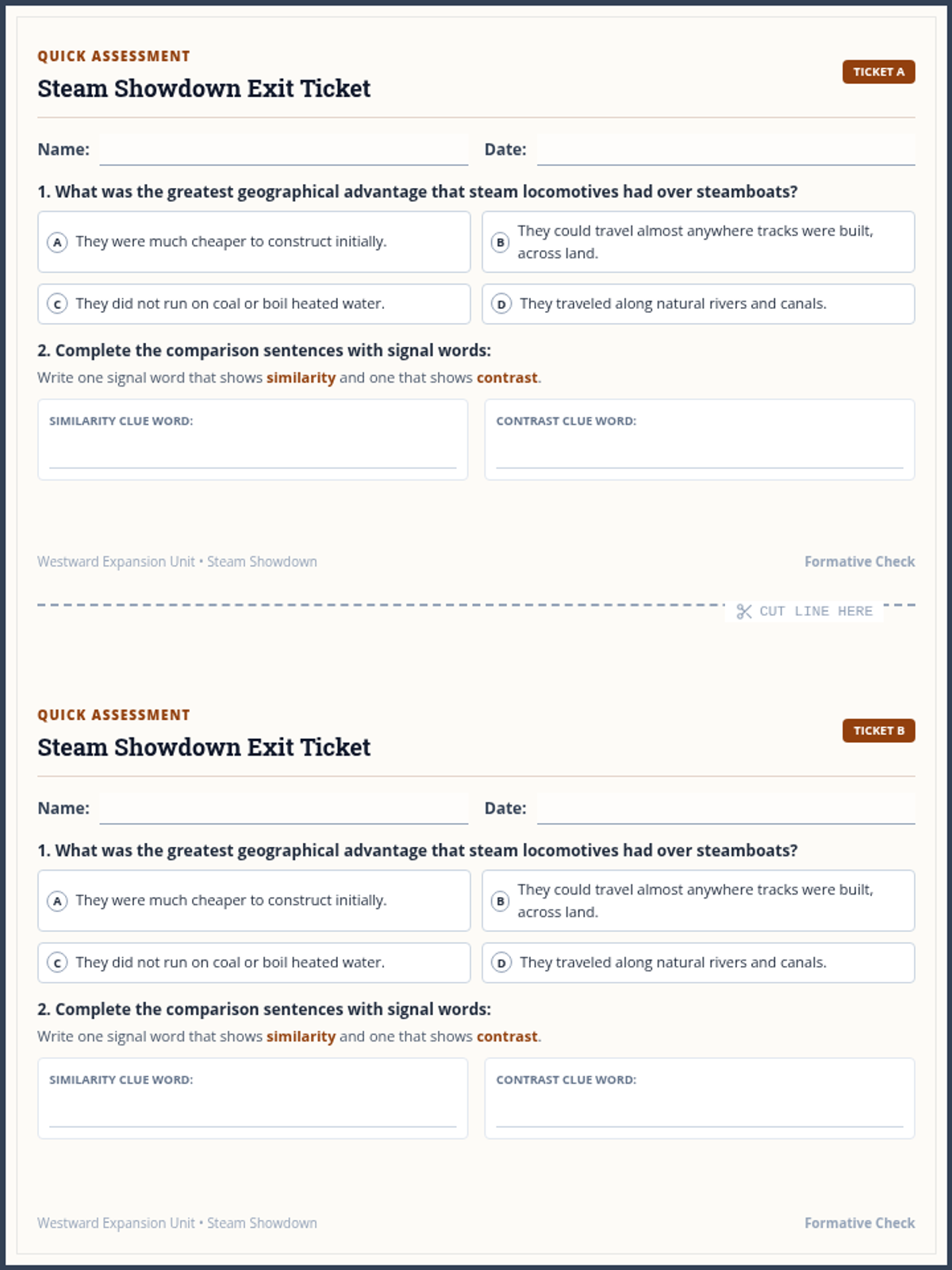
A comprehensive 4th-grade ELA lesson comparing and contrasting steam locomotives and steamboats during American westward expansion. Students analyze two paired historical texts using a custom graphic organizer, text evidence, and structured comparison.
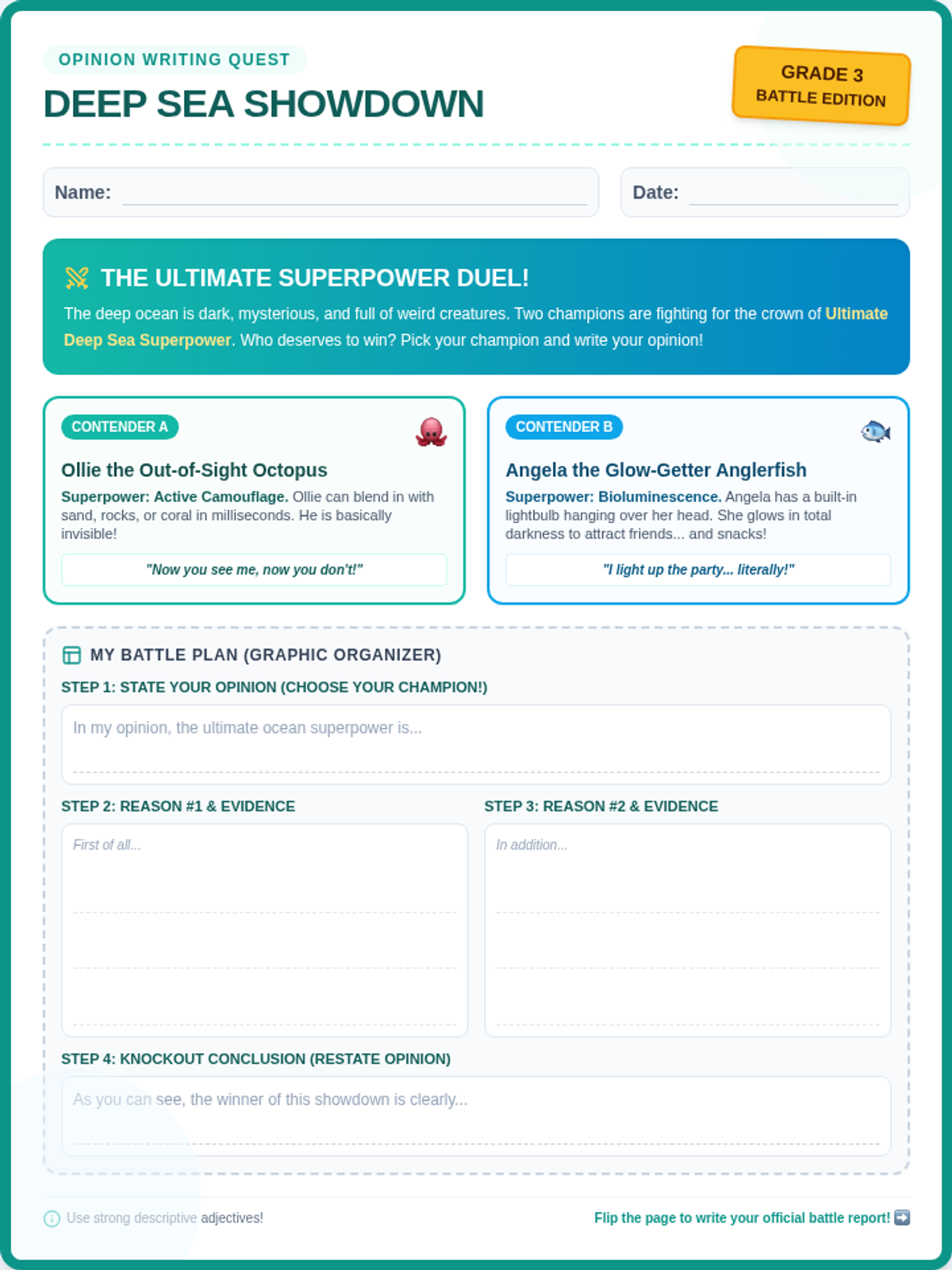
A third-grade opinion writing lesson focused on comparing the superpowers of marine animals (camo vs. bioluminescence) through a fun, comic-themed battle prompt and graphic organizer.
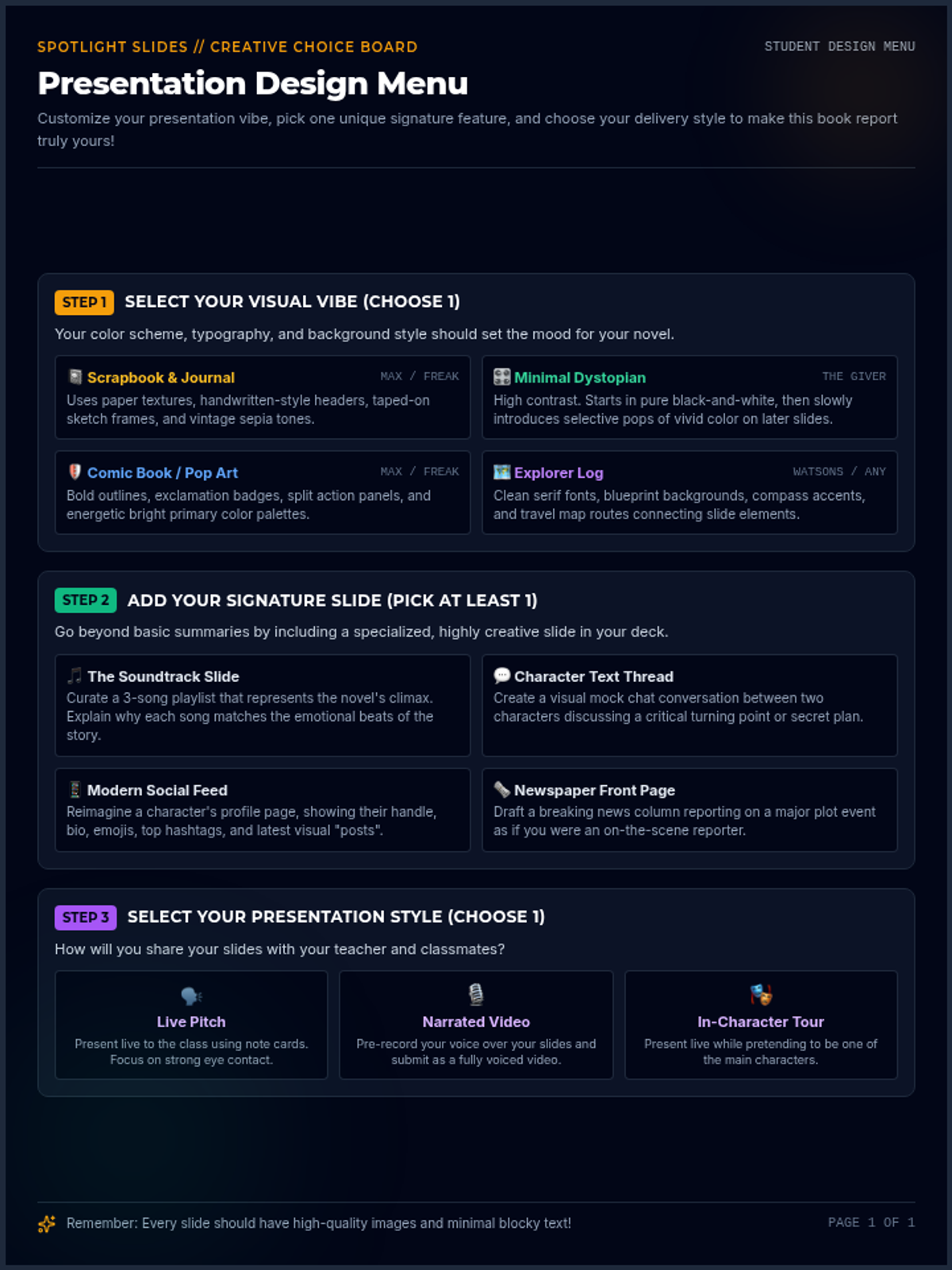
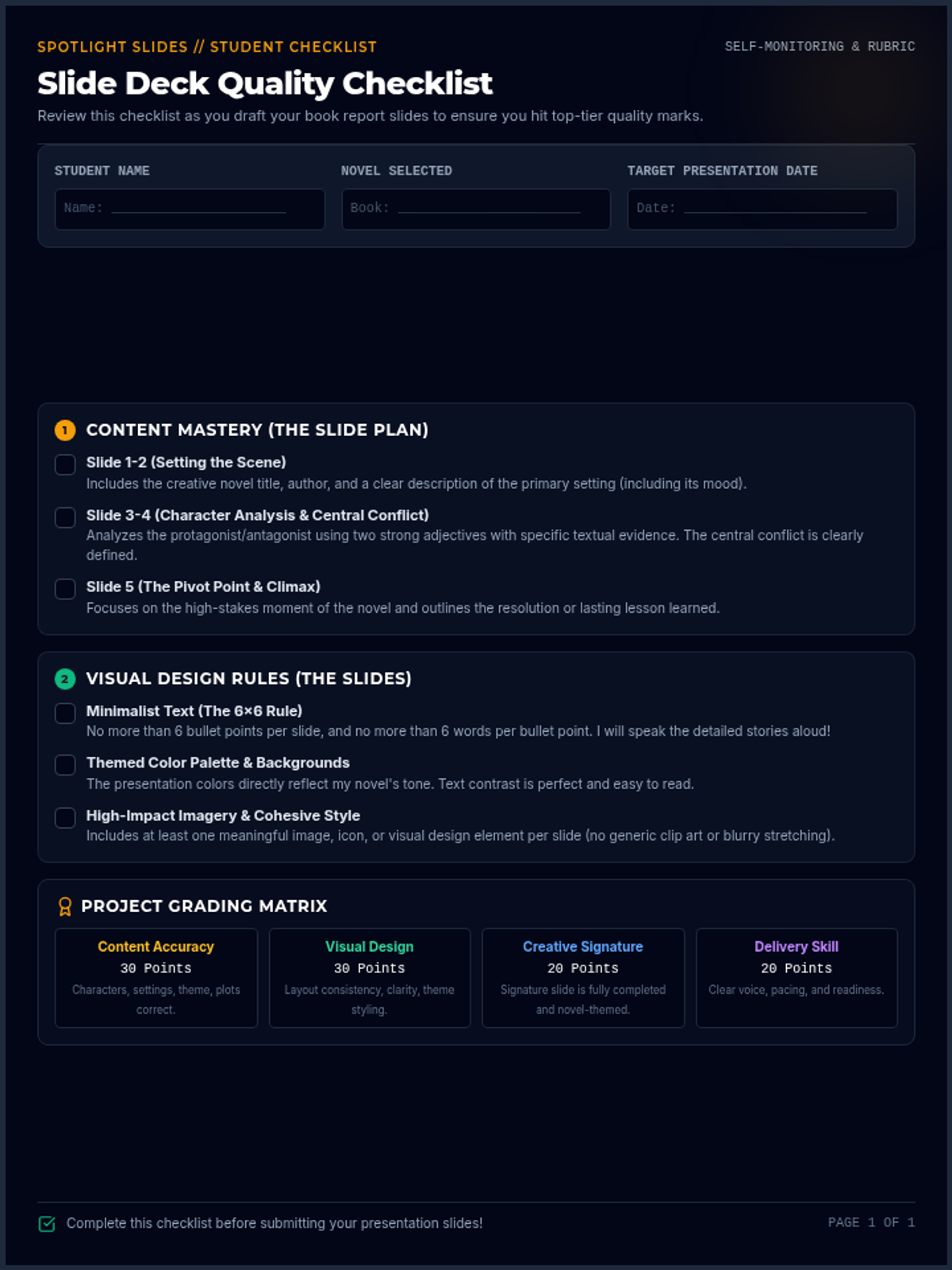
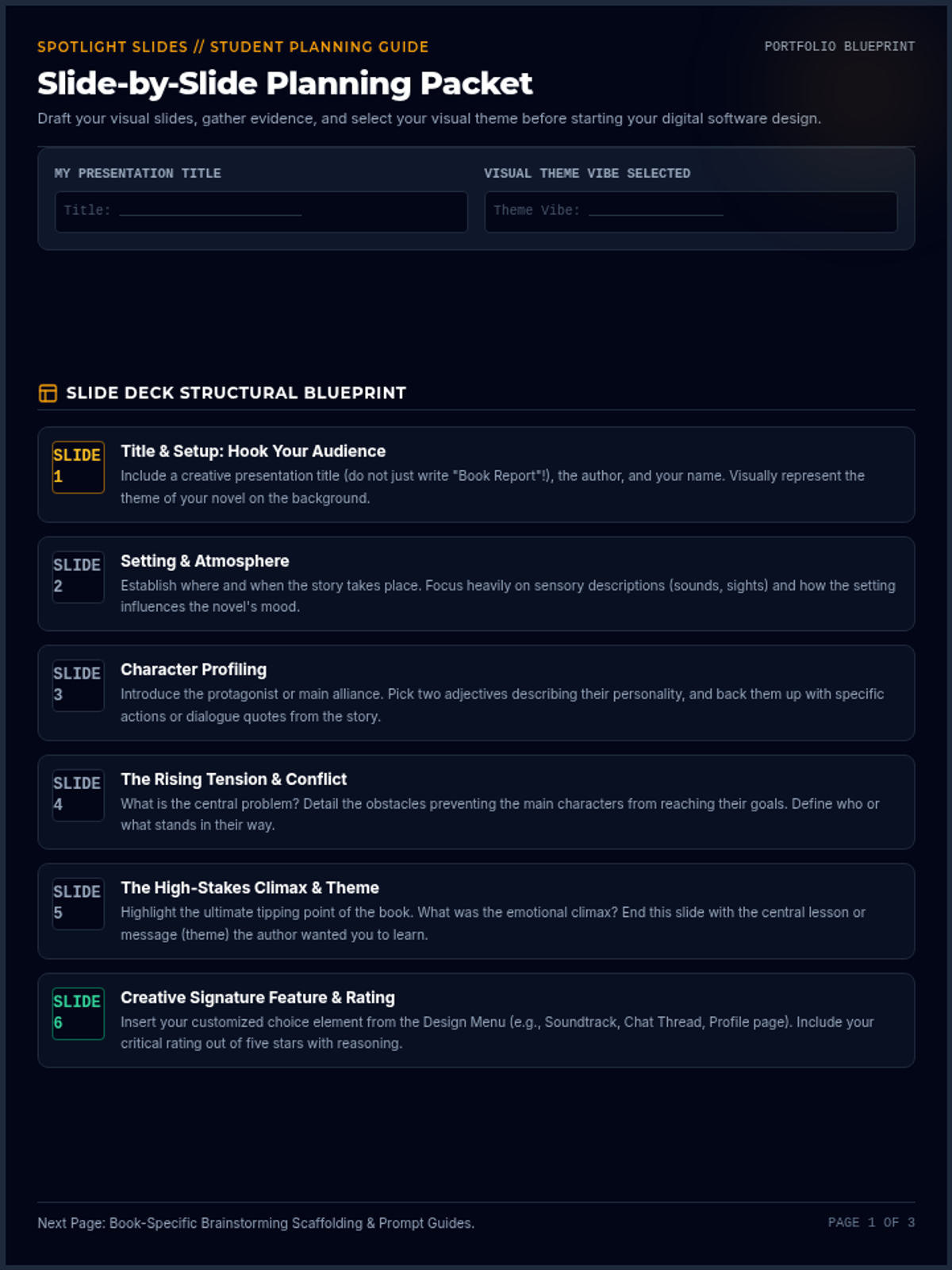
A comprehensive toolkit for guiding students through designing, planning, and executing a highly creative digital book report presentation on one of four shared class novels.
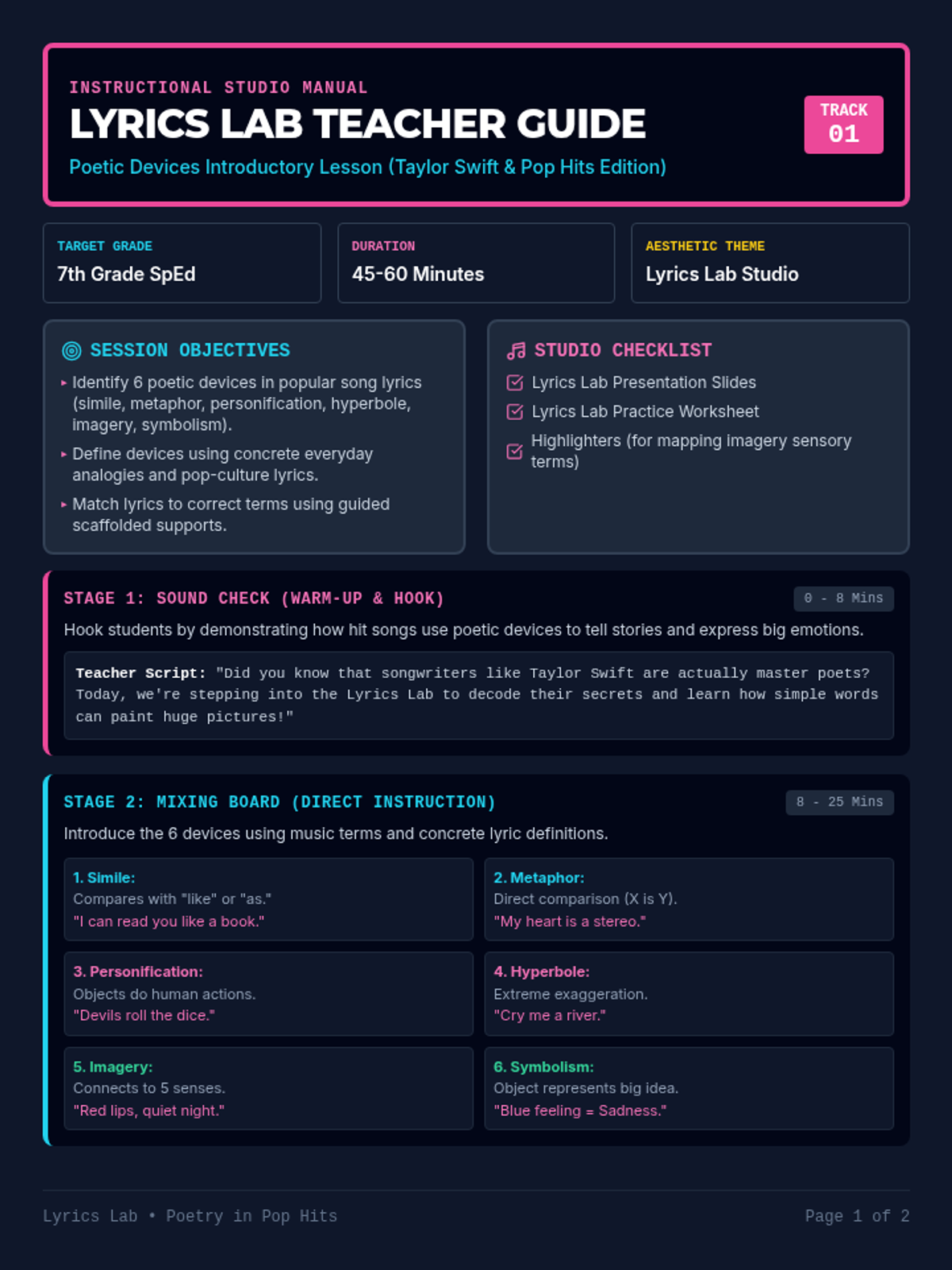
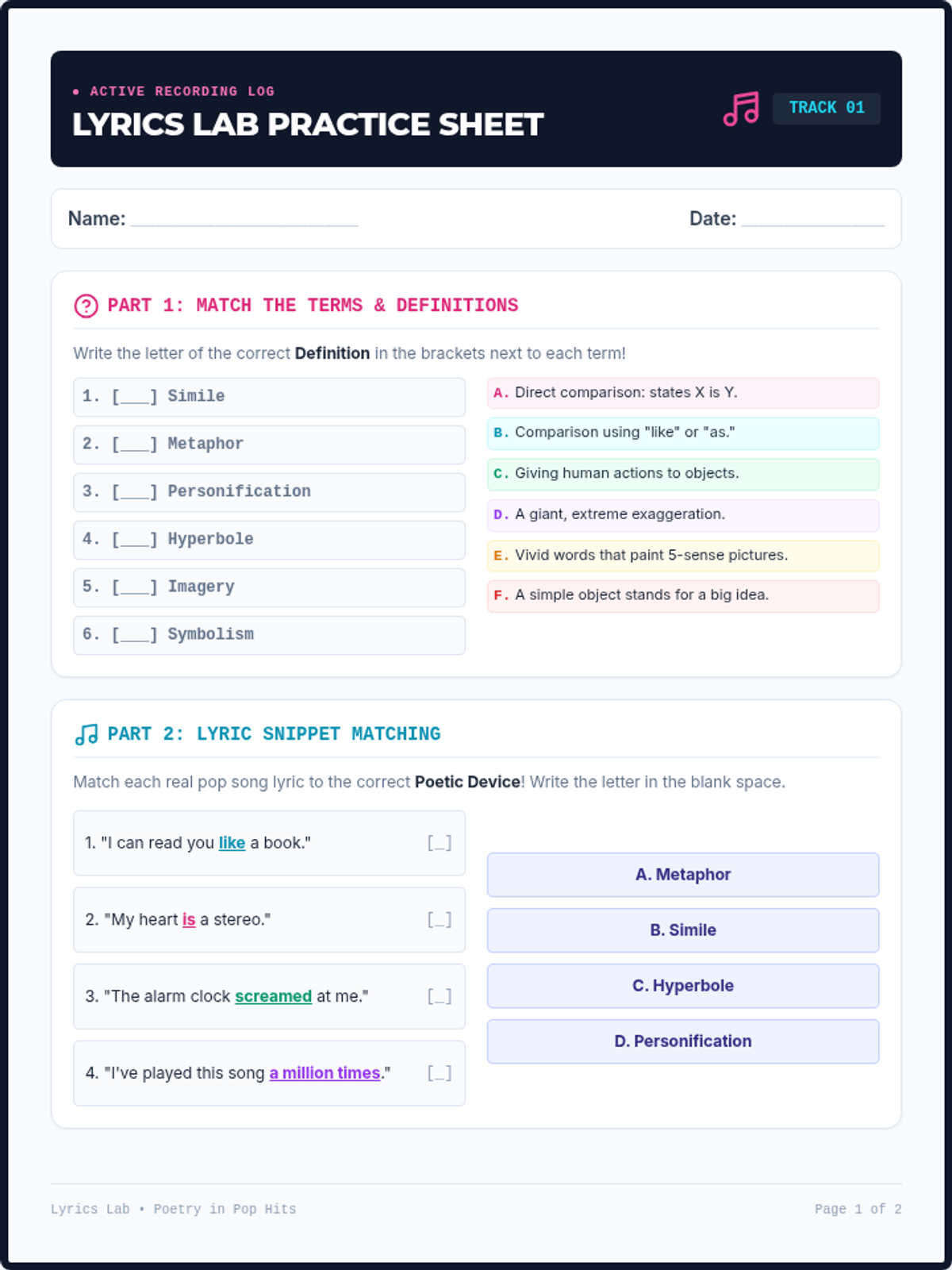
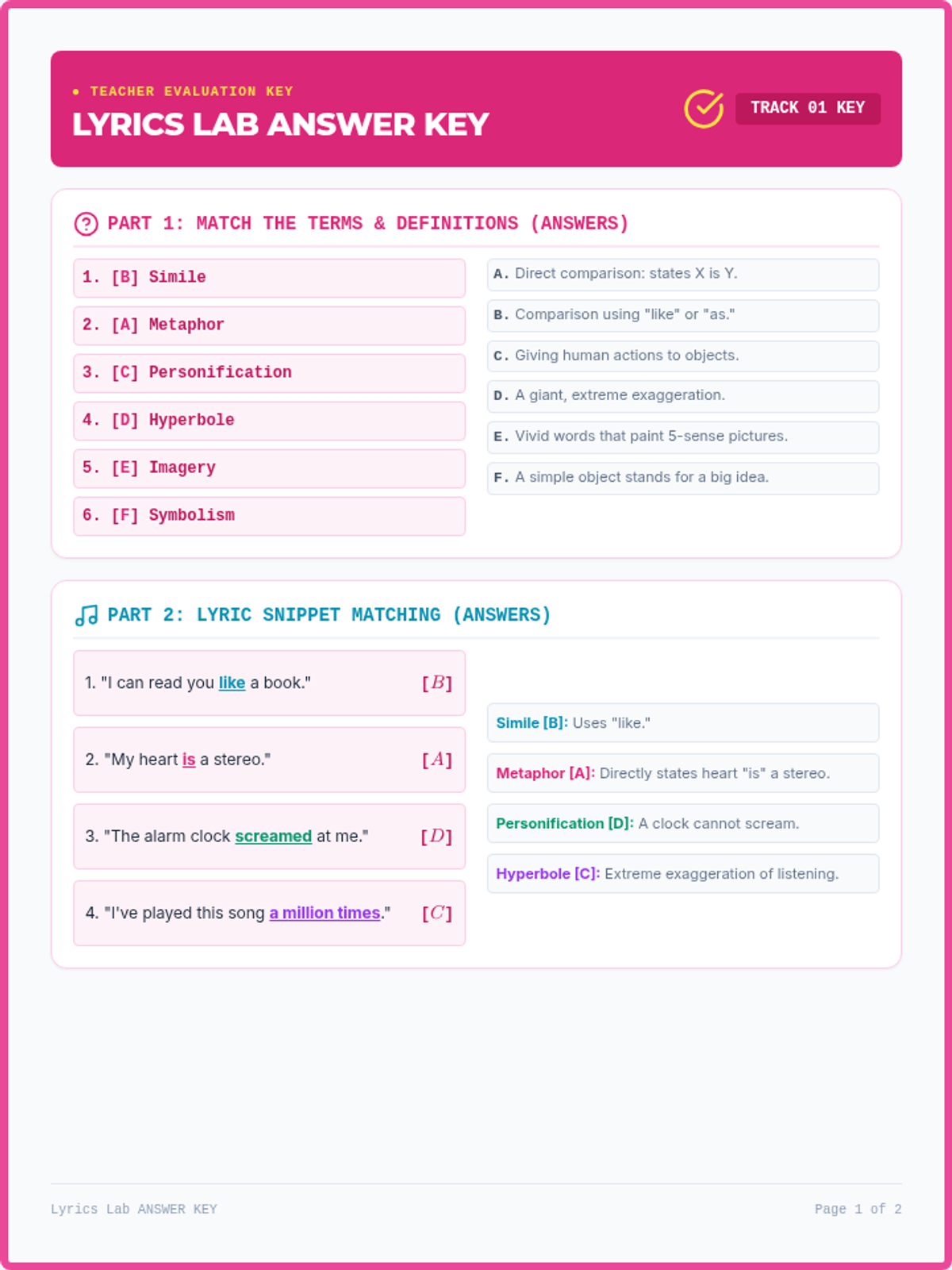
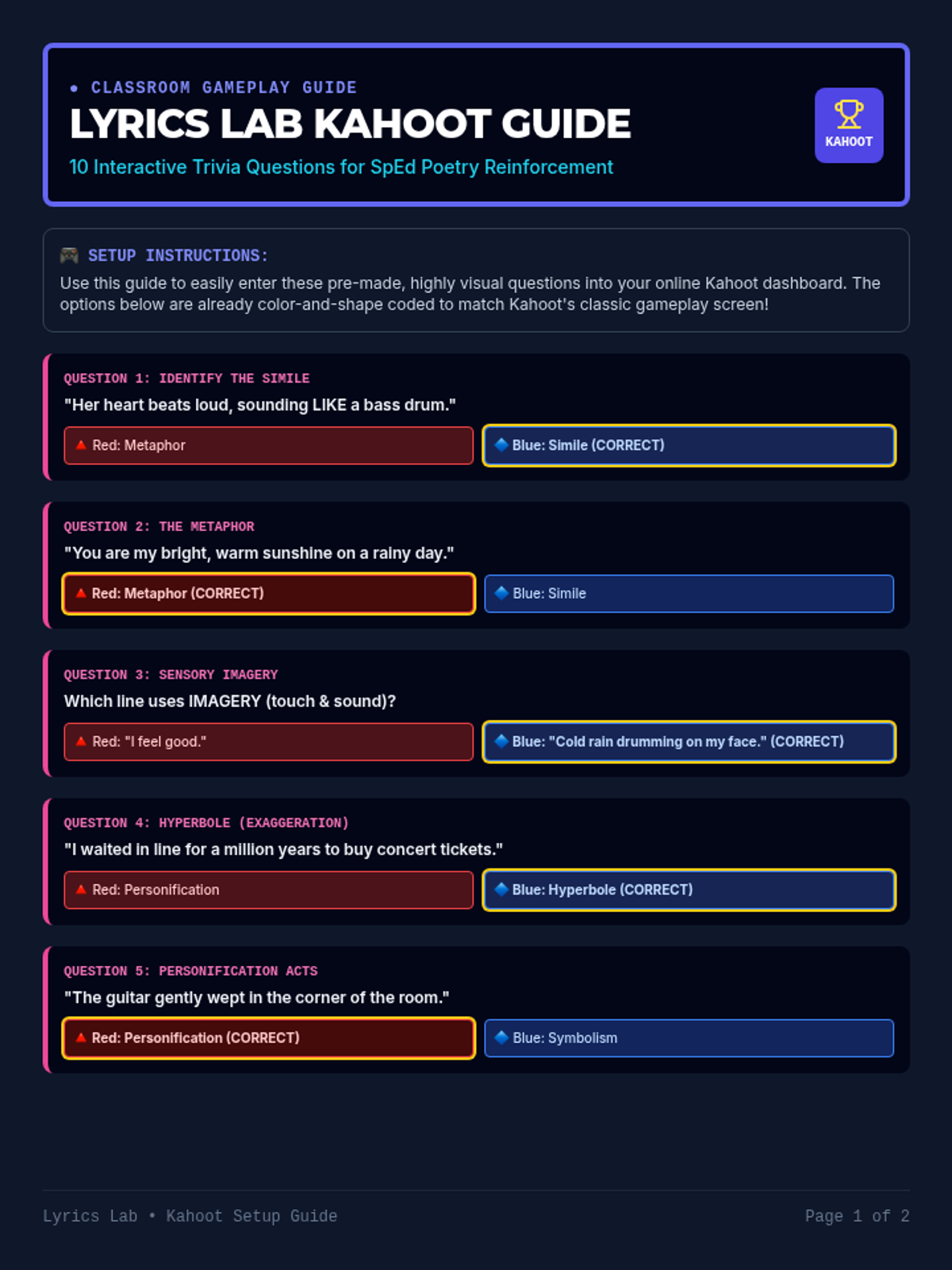
An engaging introductory poetry lesson for 7th-grade special education students focusing on six key poetic devices (simile, metaphor, personification, hyperbole, imagery, symbolism) using popular music lyrics (with a focus on Taylor Swift hits) to scaffold understanding with familiar texts.
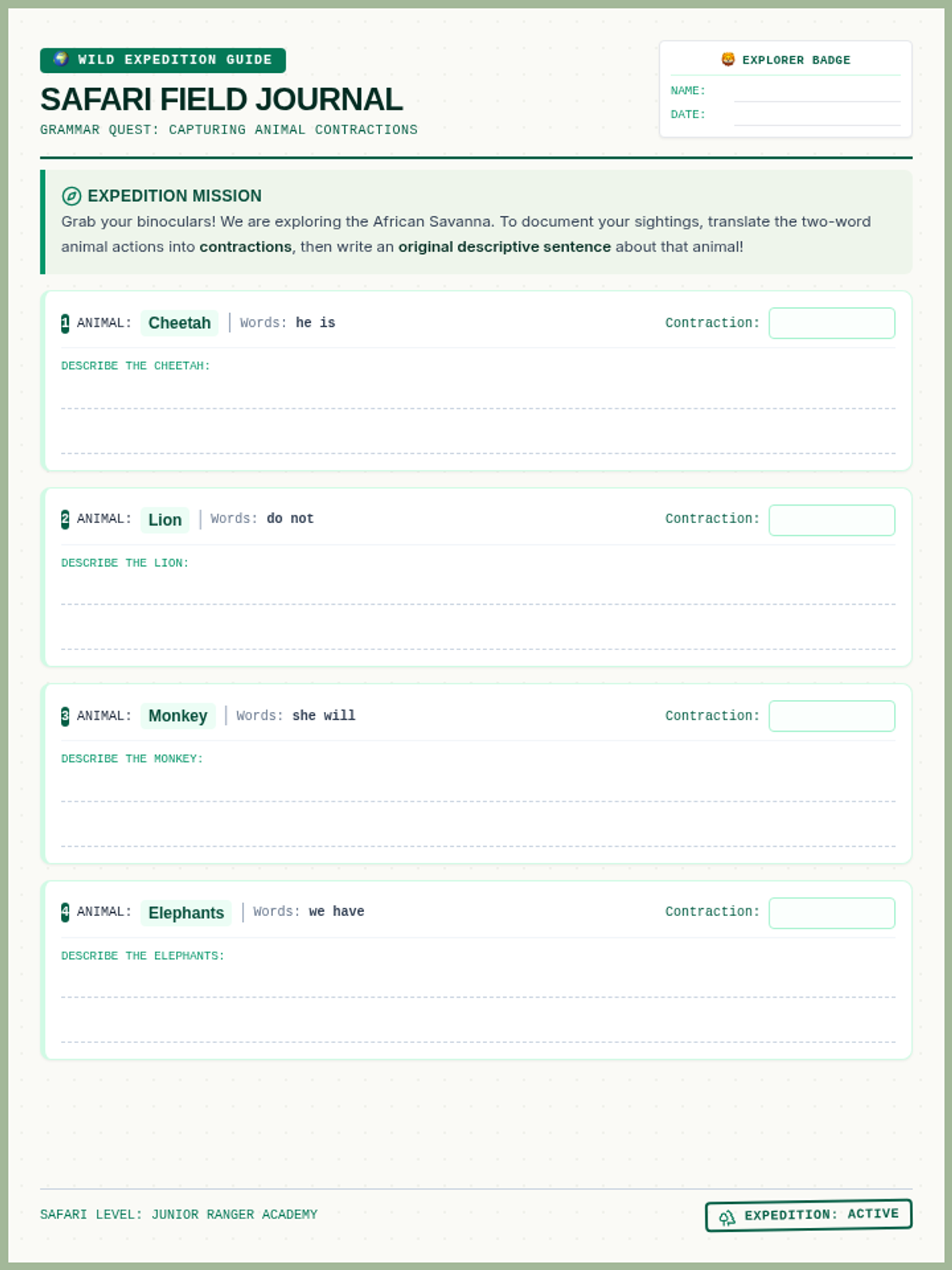
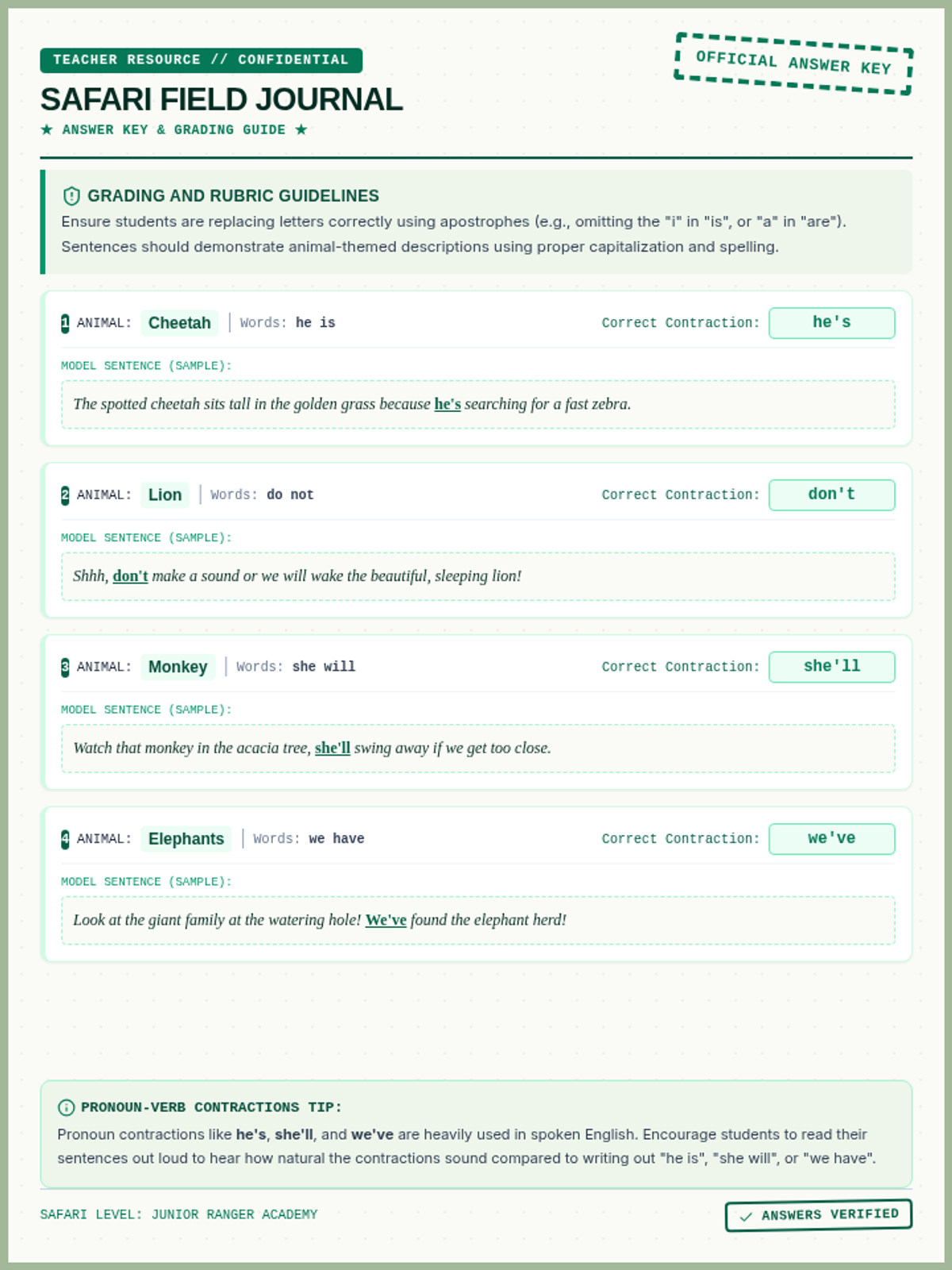
An safari-themed lesson where third-grade students explore the wild savanna by converting two-word verbs into contractions and writing original descriptive sentences about wild animals.
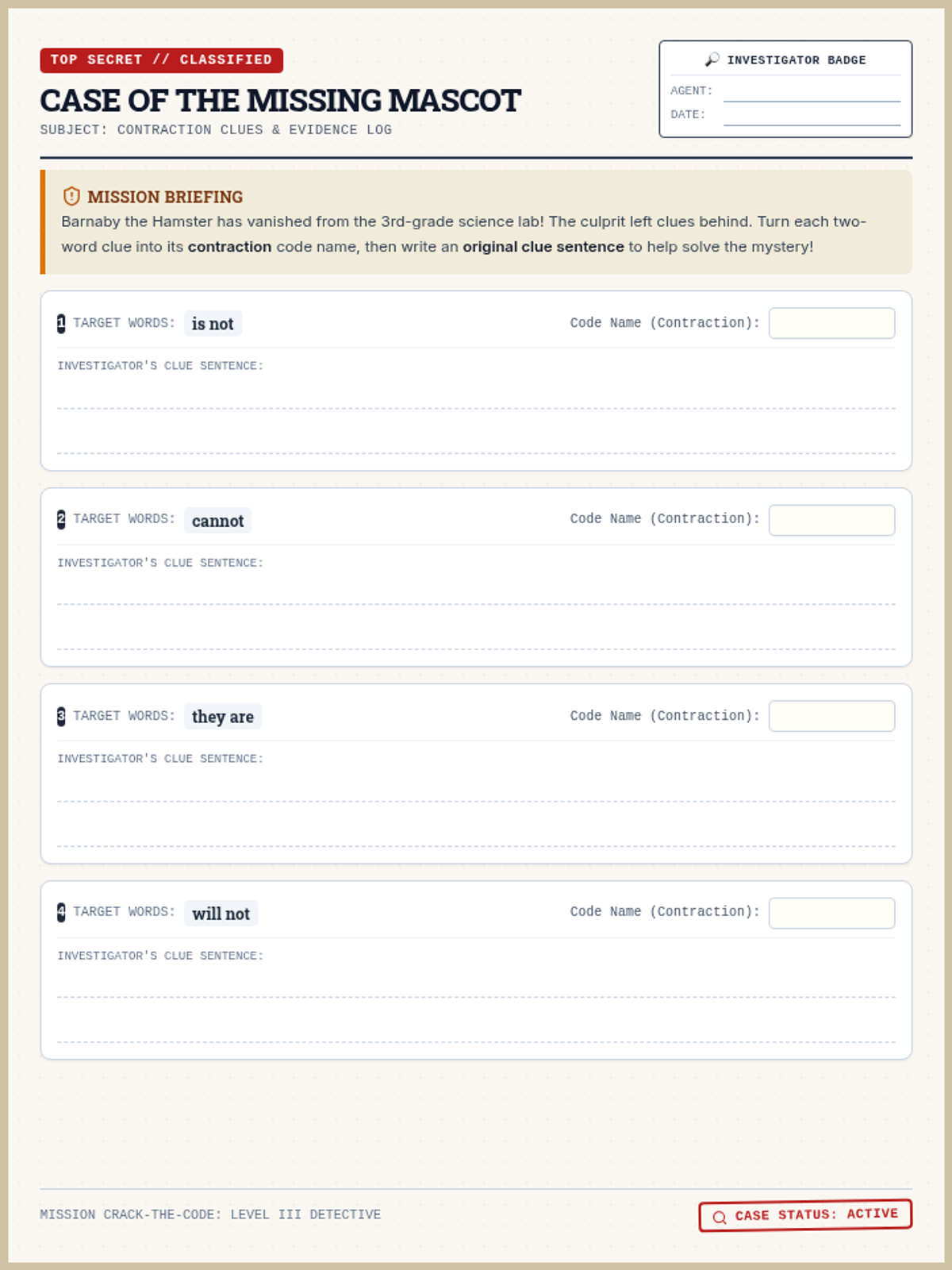
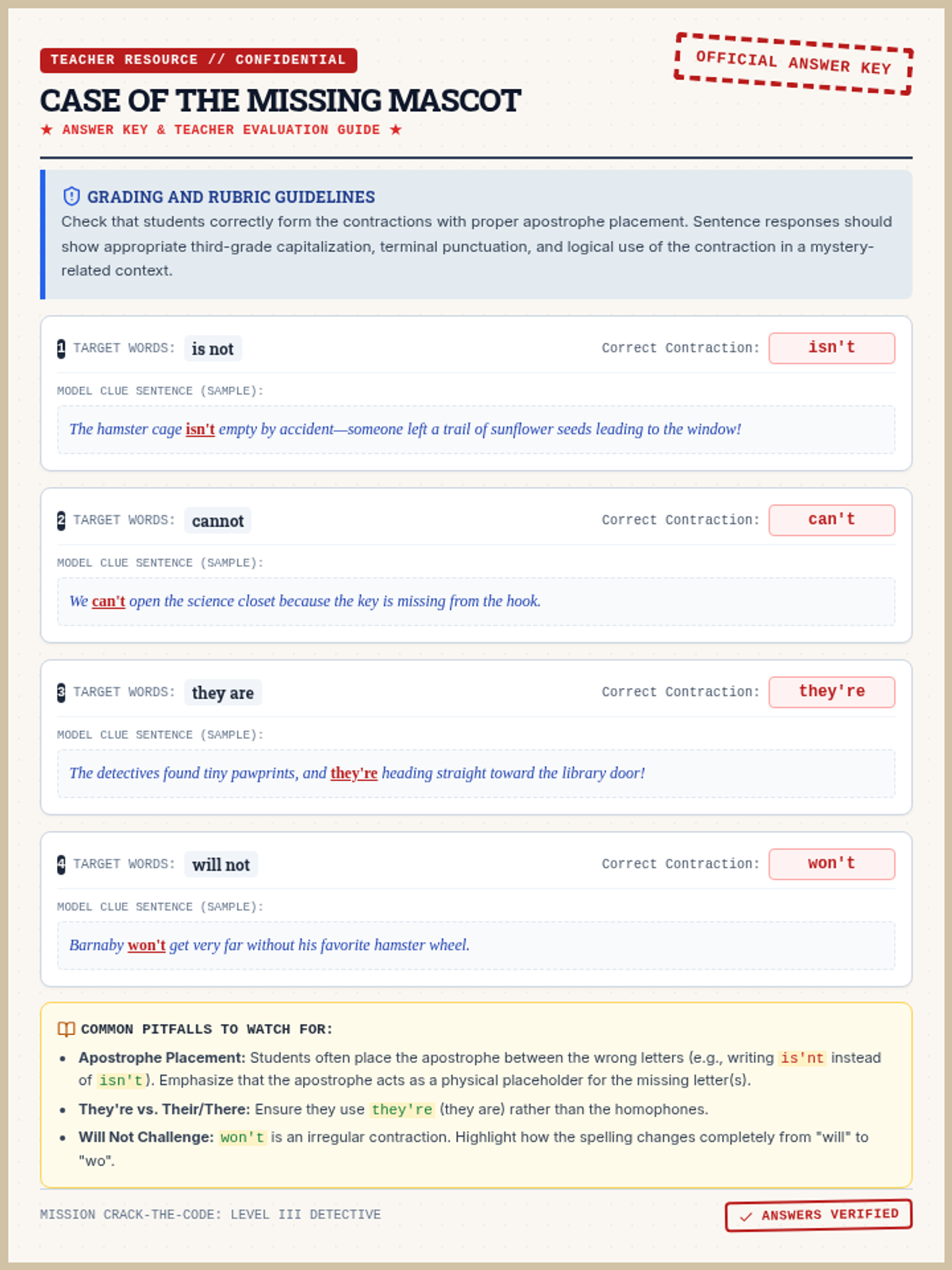
A mystery-themed lesson where third-grade students act as detectives to solve the case of a missing classroom mascot by turning two-word prompts into contractions and using them in original clue sentences.
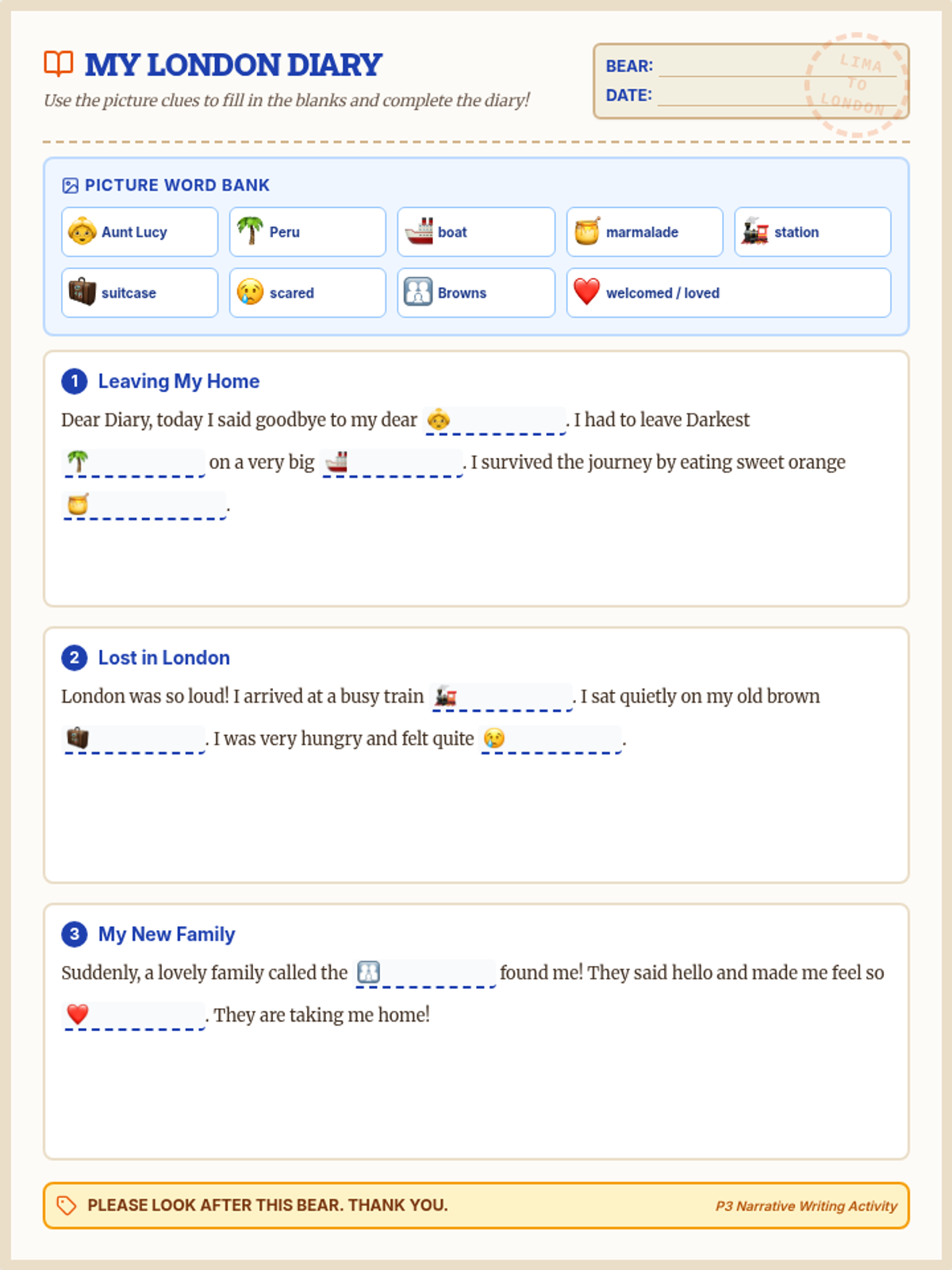
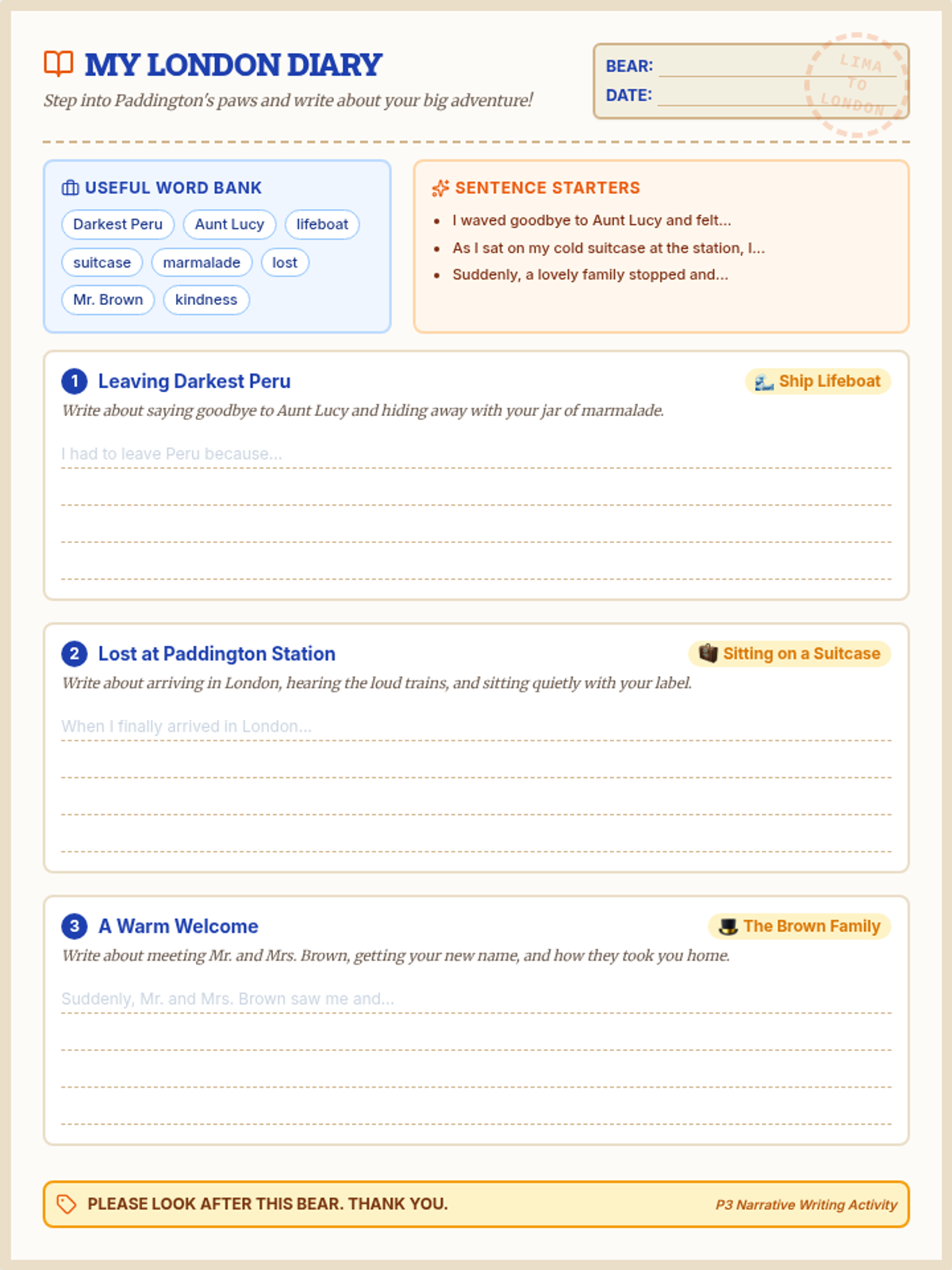
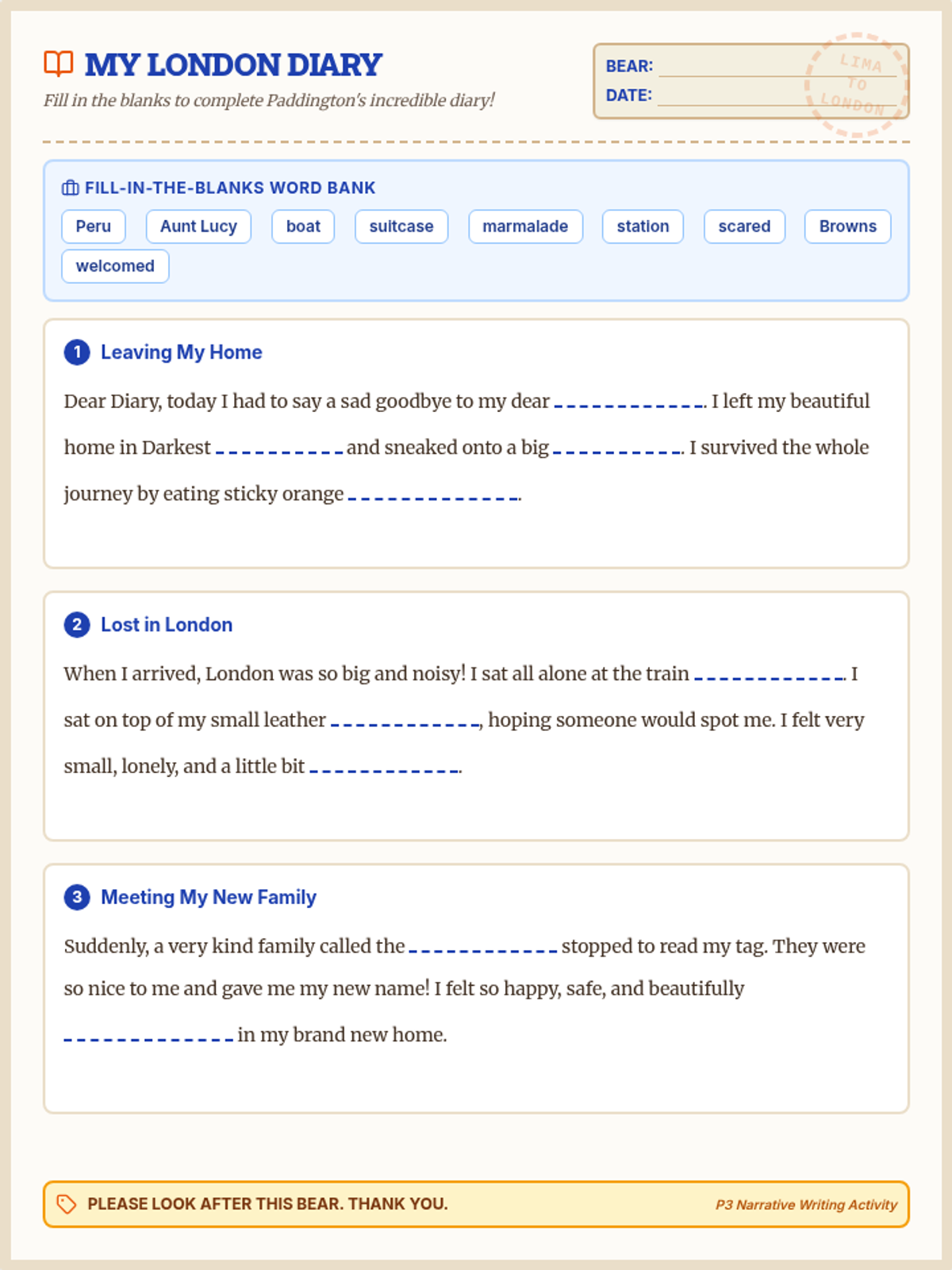
A P3 writing lesson exploring Paddington Bear's emotional journey from Darkest Peru to London's Paddington Station. Students write from Paddington's perspective using differentiated worksheets including sentence starters, fill-in-the-blank templates, and visual prompts.
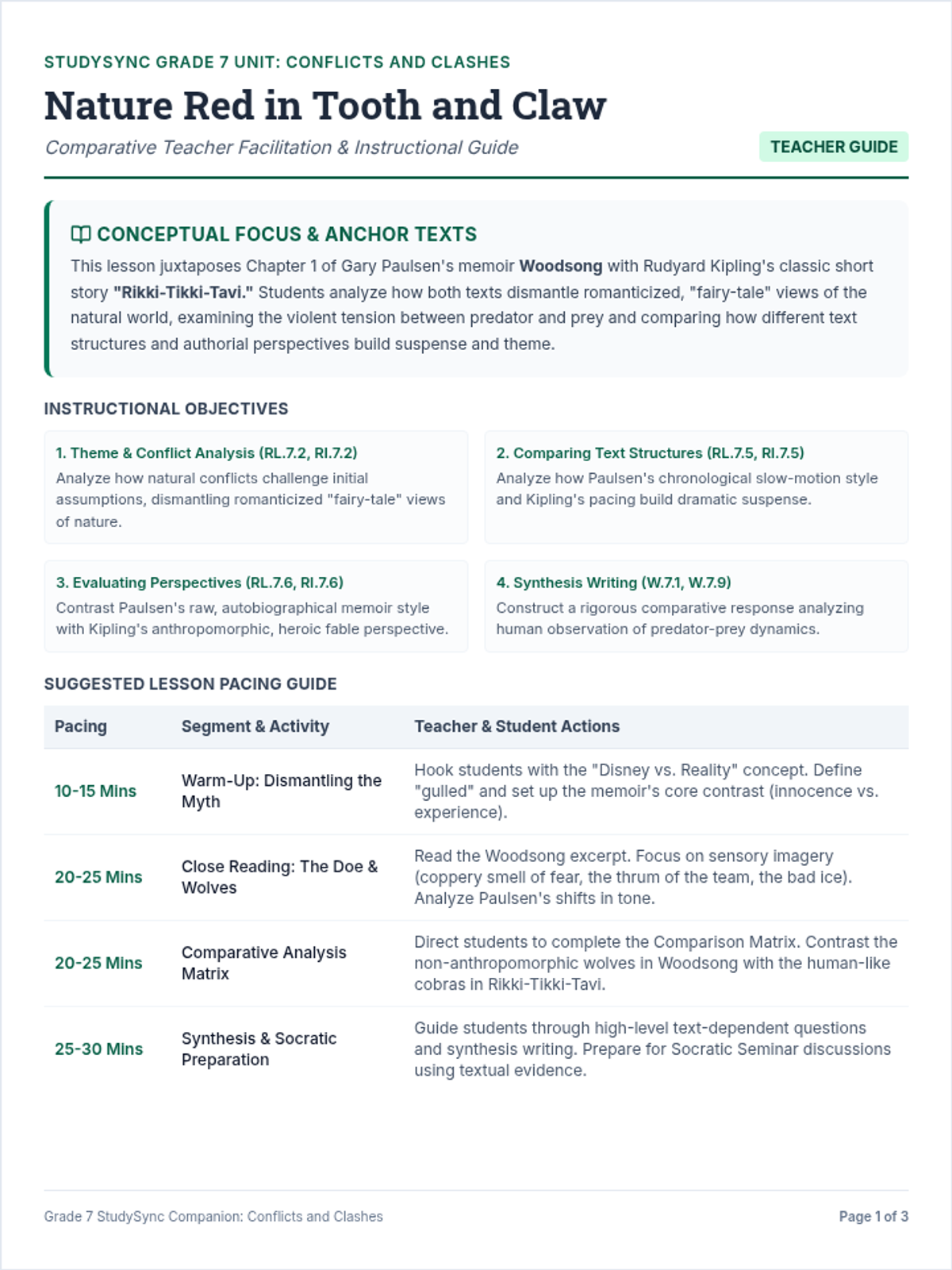
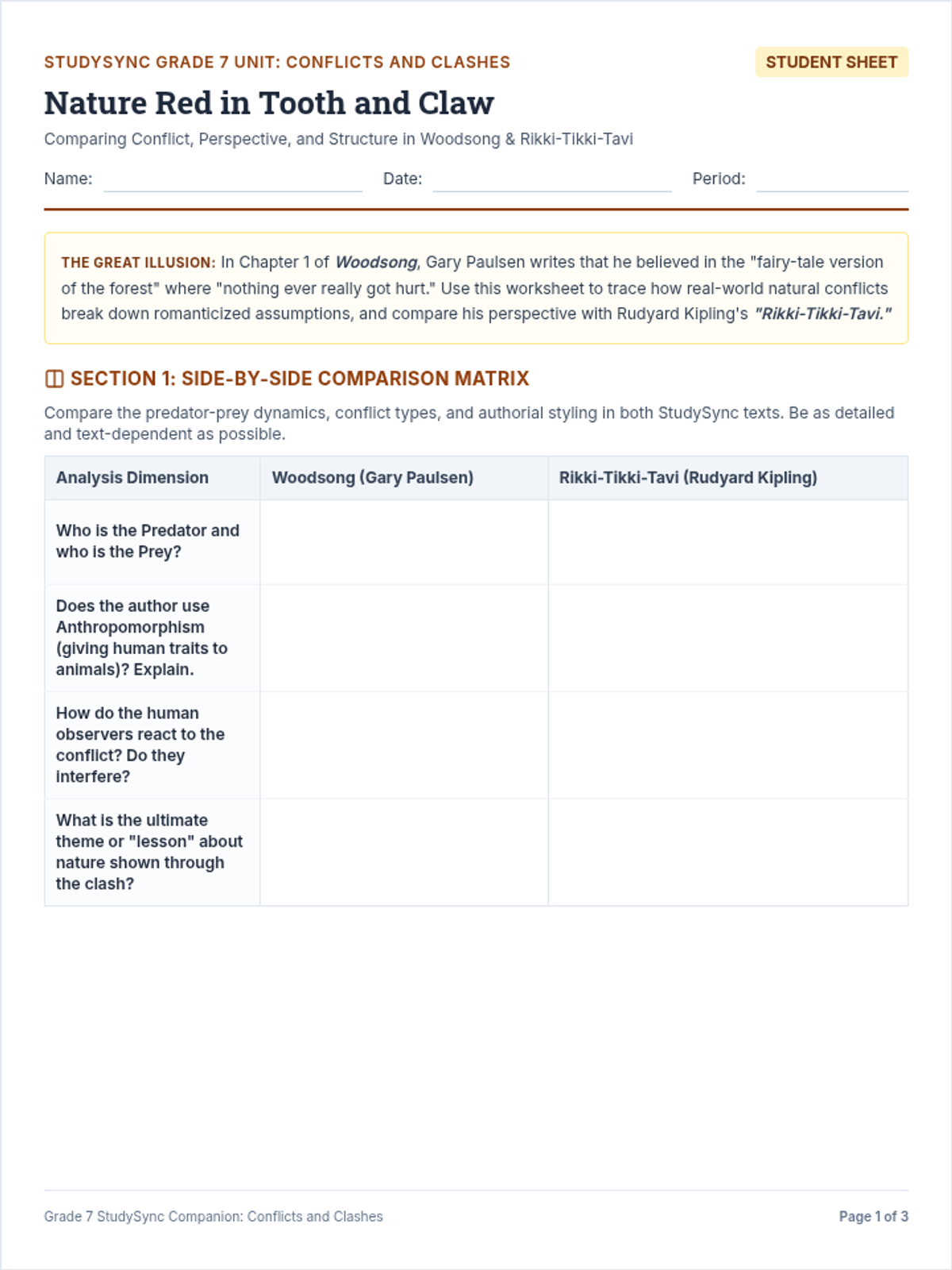
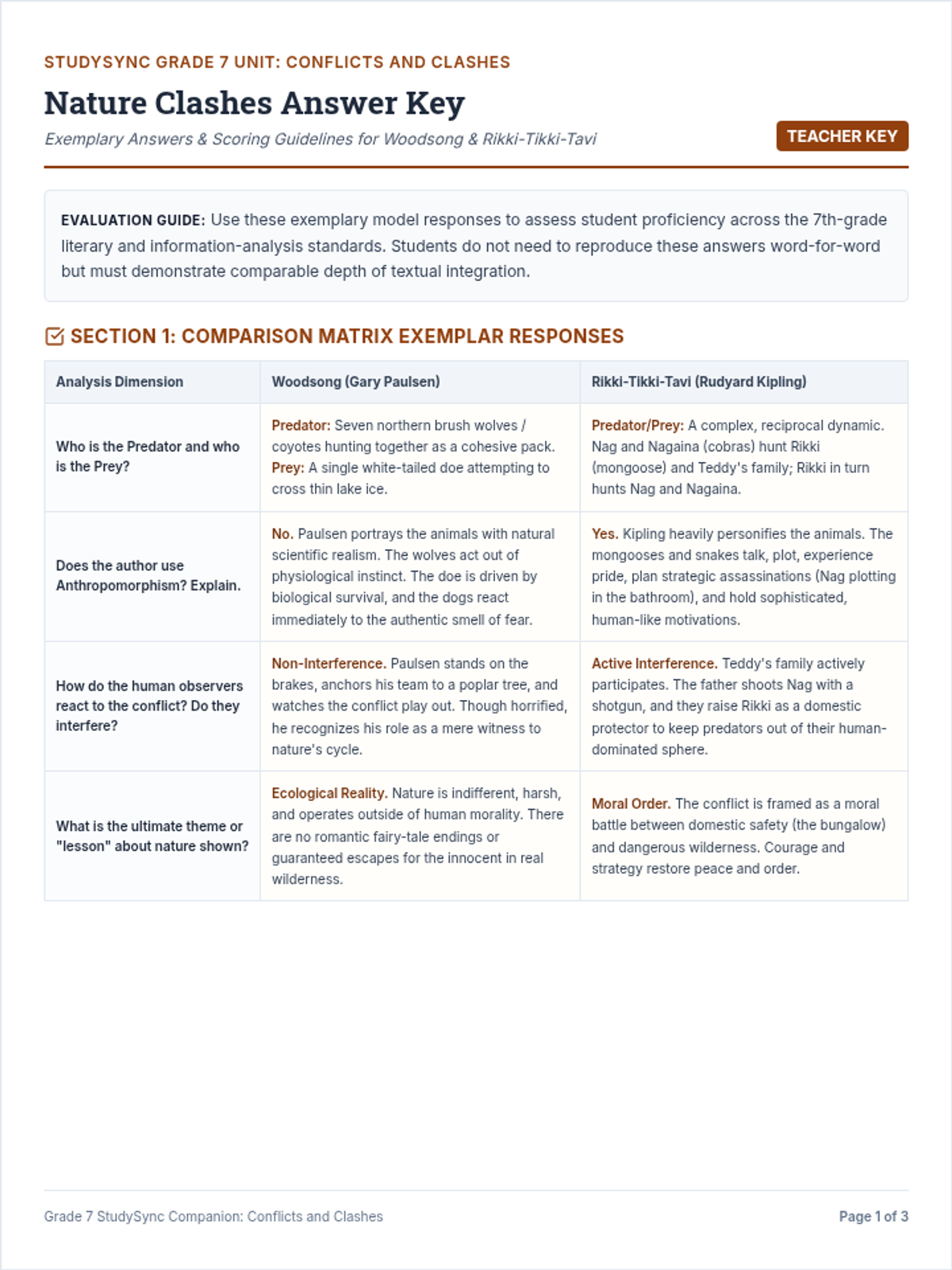
A comprehensive, deeply rigorous lesson centered on the theme of 'Conflicts and Clashes' in Gary Paulsen's memoir 'Woodsong' and Rudyard Kipling's 'Rikki-Tikki-Tavi'. The lesson explores how natural conflicts dismantle romanticized views of nature and how different authorial styles and narrative structures build suspense and theme.
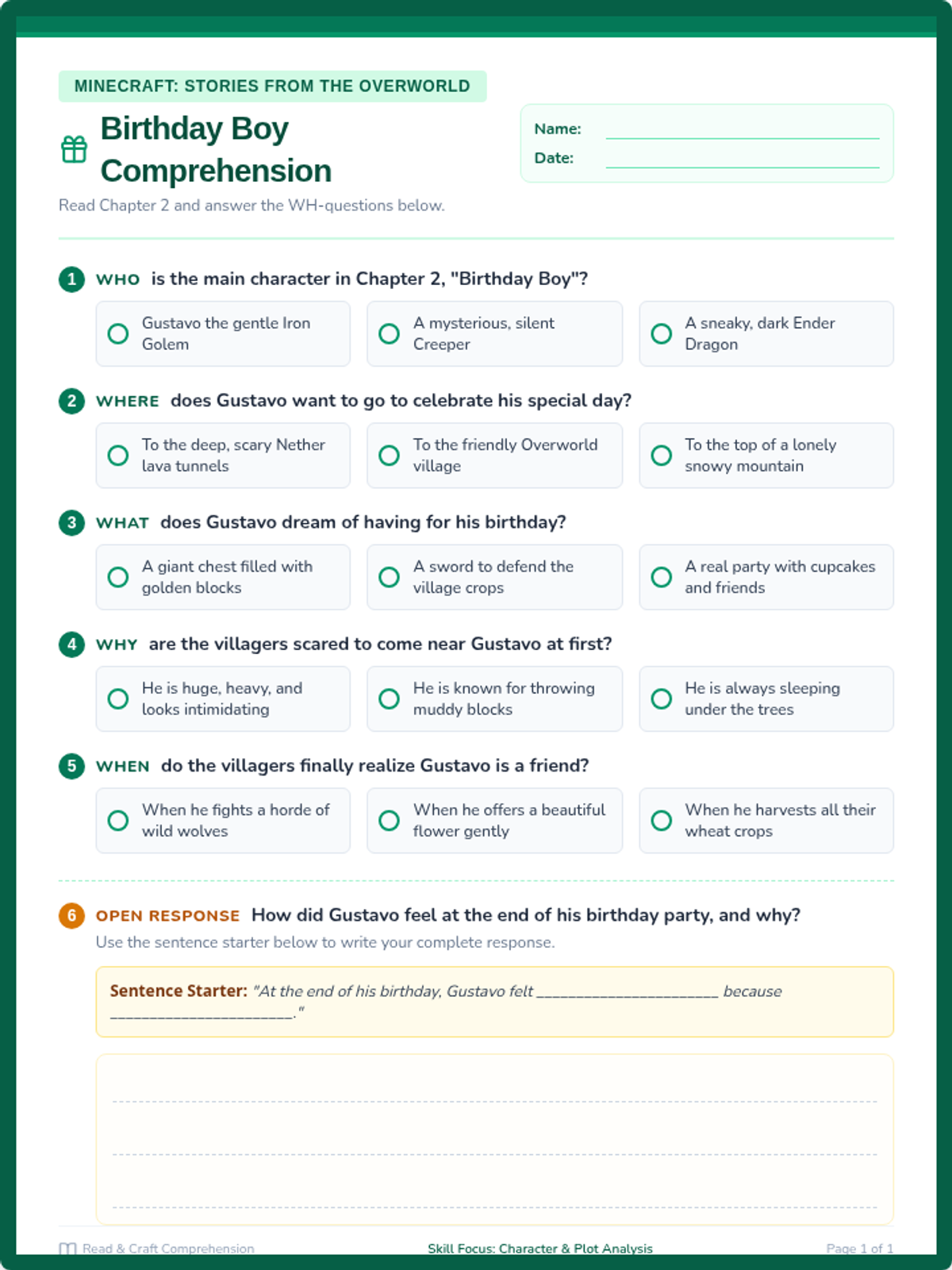
A reading comprehension lesson focusing on Chapter 2, 'Birthday Boy,' from the graphic novel Minecraft: Stories from the Overworld. Students analyze characters, settings, and key events using WH-questions.
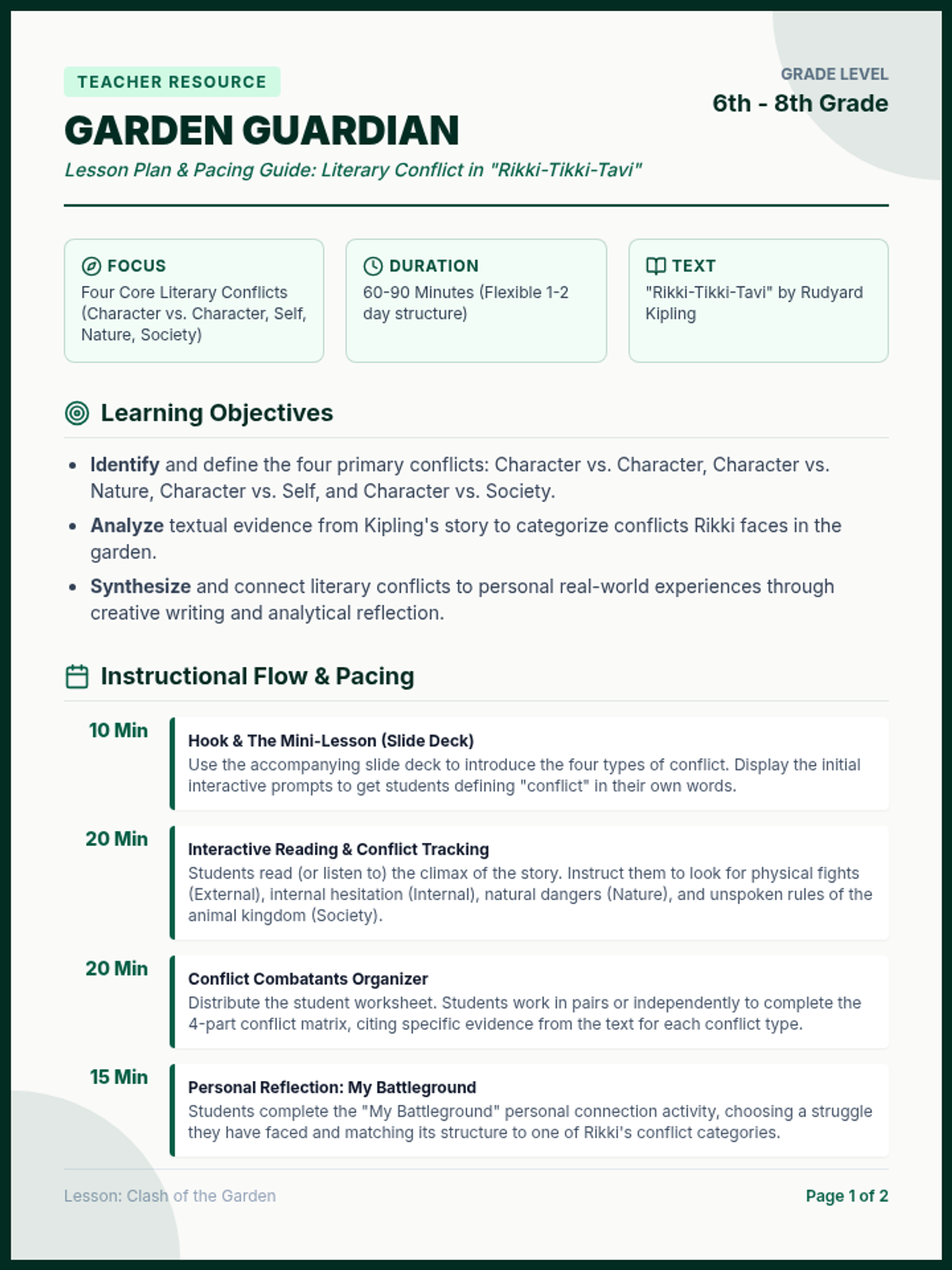
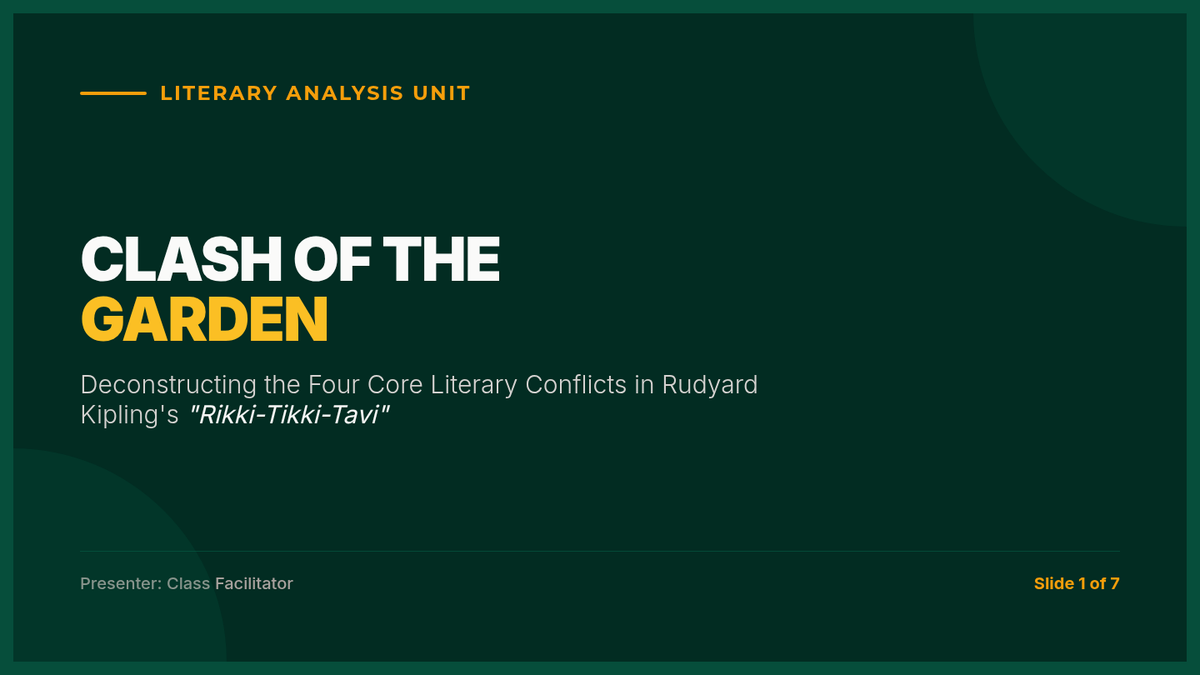
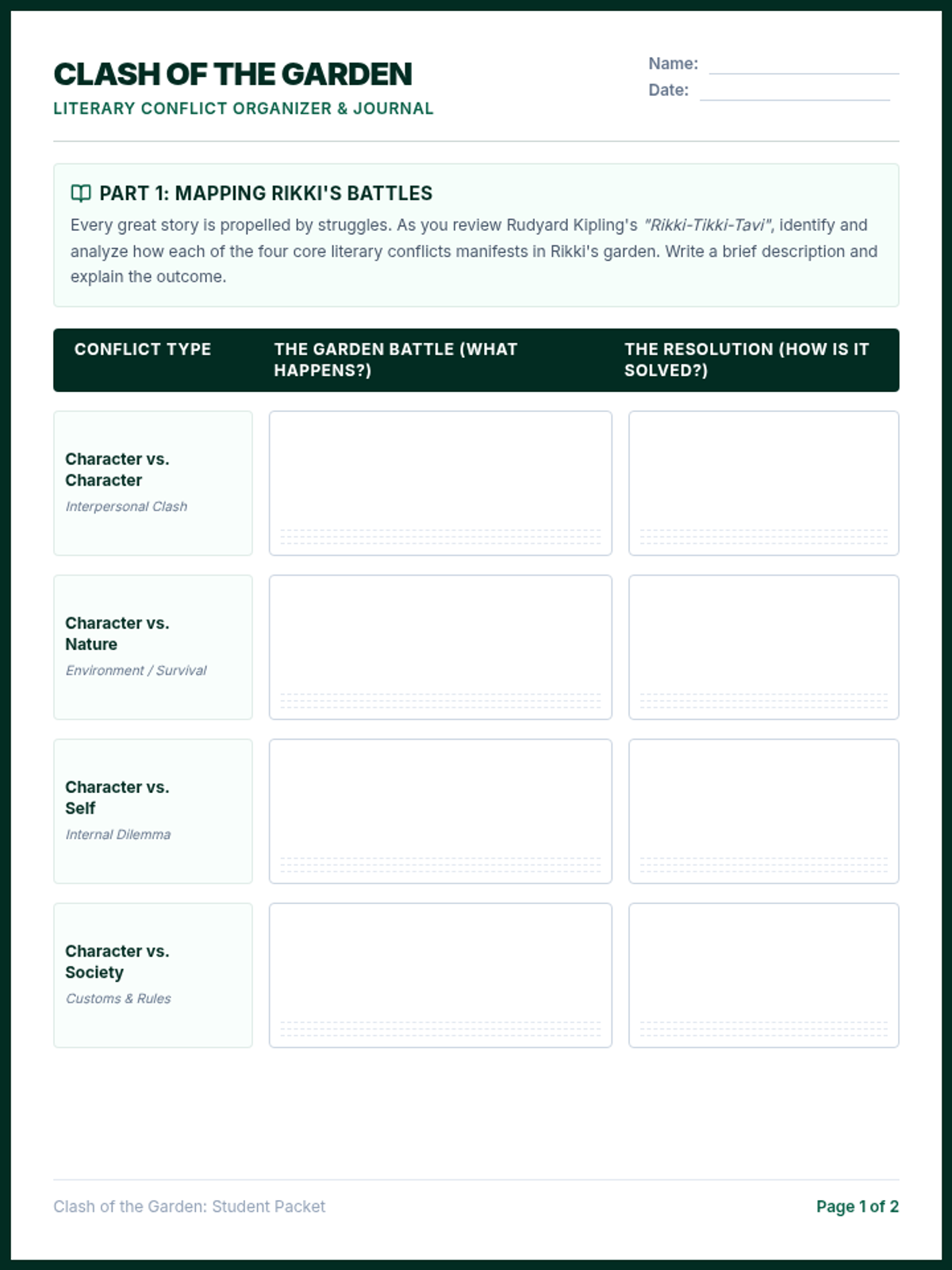
A comprehensive lesson exploring the four core literary conflicts (Character vs. Character, Self, Nature, and Society) using Rudyard Kipling's classic tale, 'Rikki-Tikki-Tavi'. Students map story conflicts and reflect on their own personal battles through structured graphic organizers and personal connection prompts.
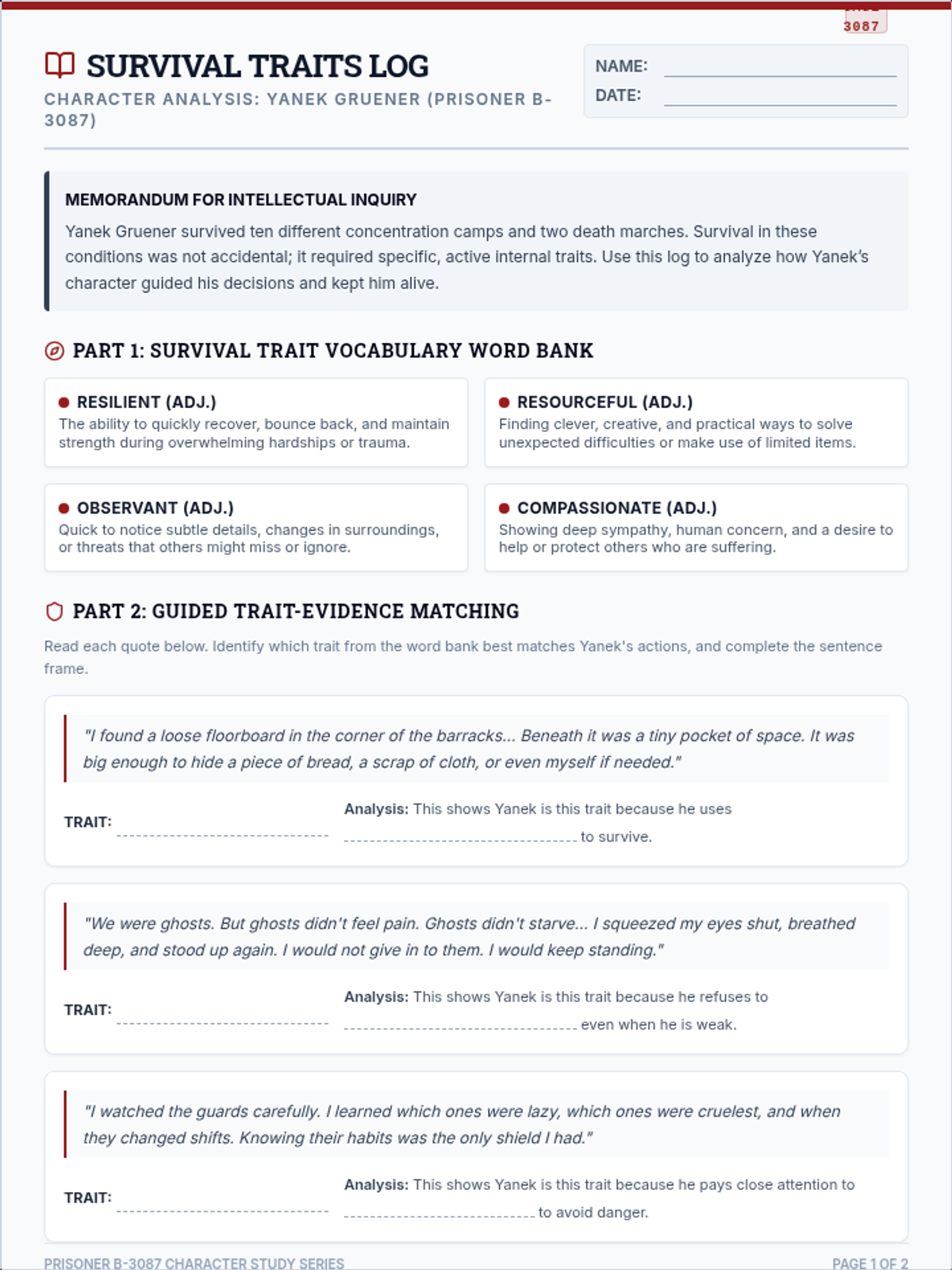
A character analysis lesson for the novel Prisoner B-3087. Students analyze Yanek Gruener's character traits using direct text evidence, graphic organizers, and structured reflection templates.
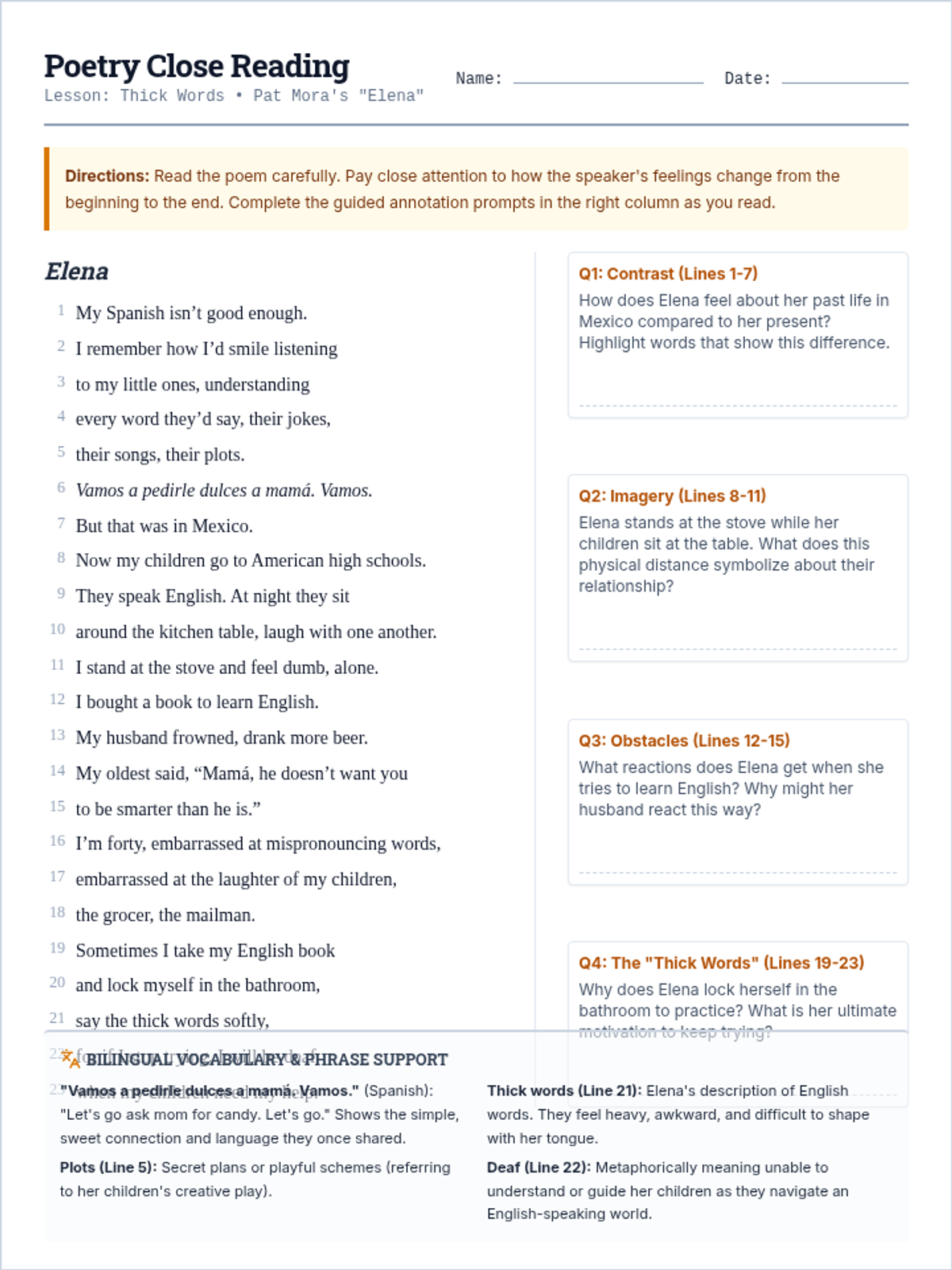
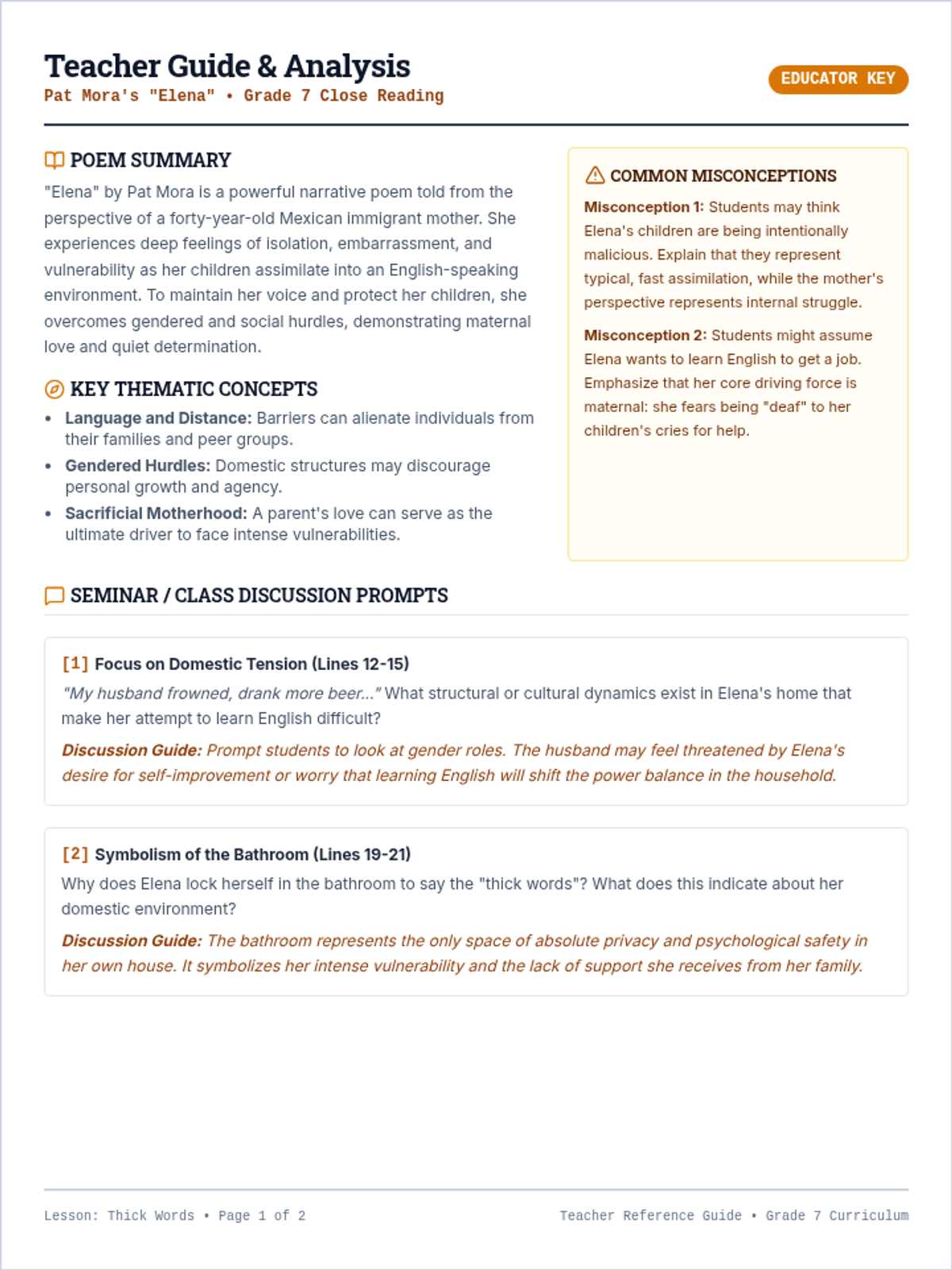
An analytical poetry lesson for 7th grade students analyzing Pat Mora's poem 'Elena'. The lesson focuses on tone shifts, isolation, bilingual identity, and thematic development through close reading and guided annotation.
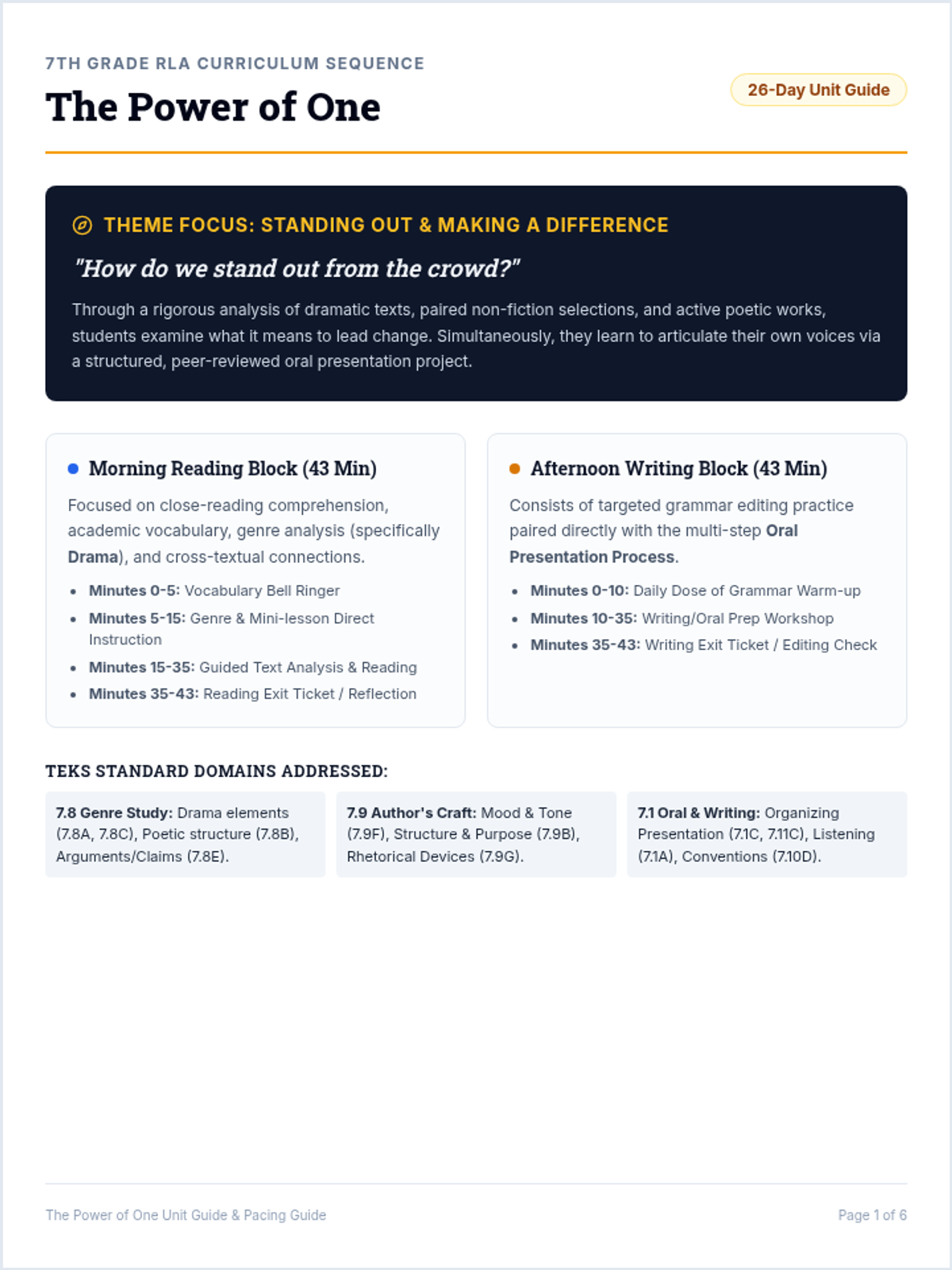
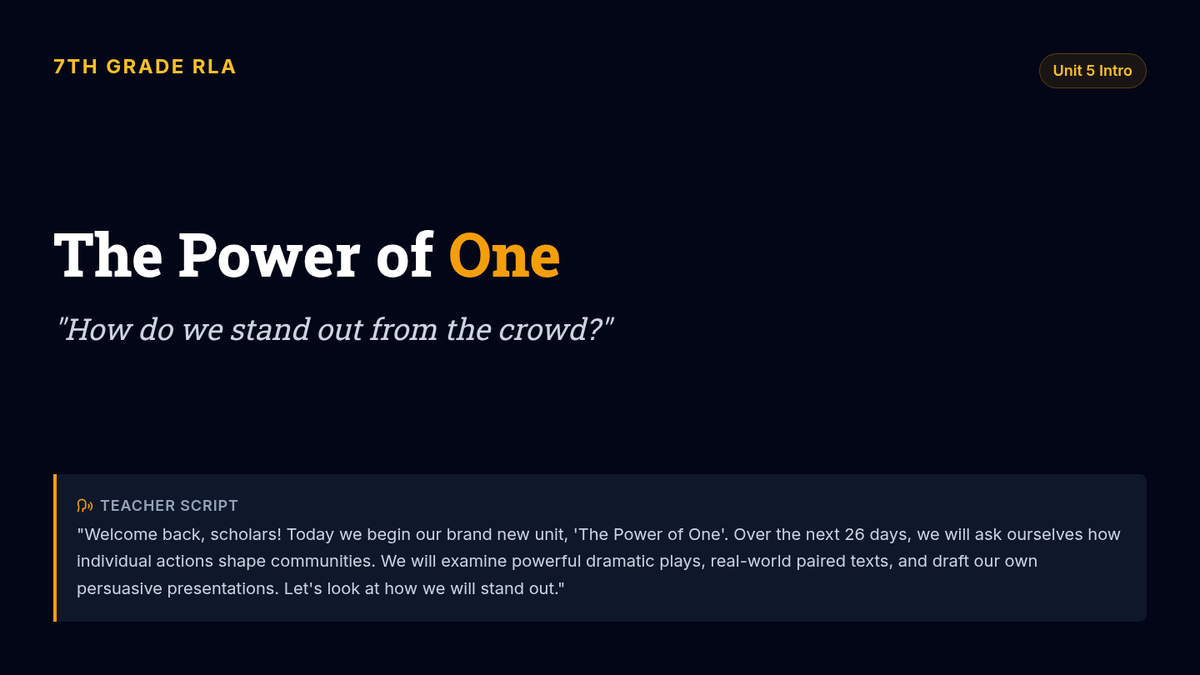
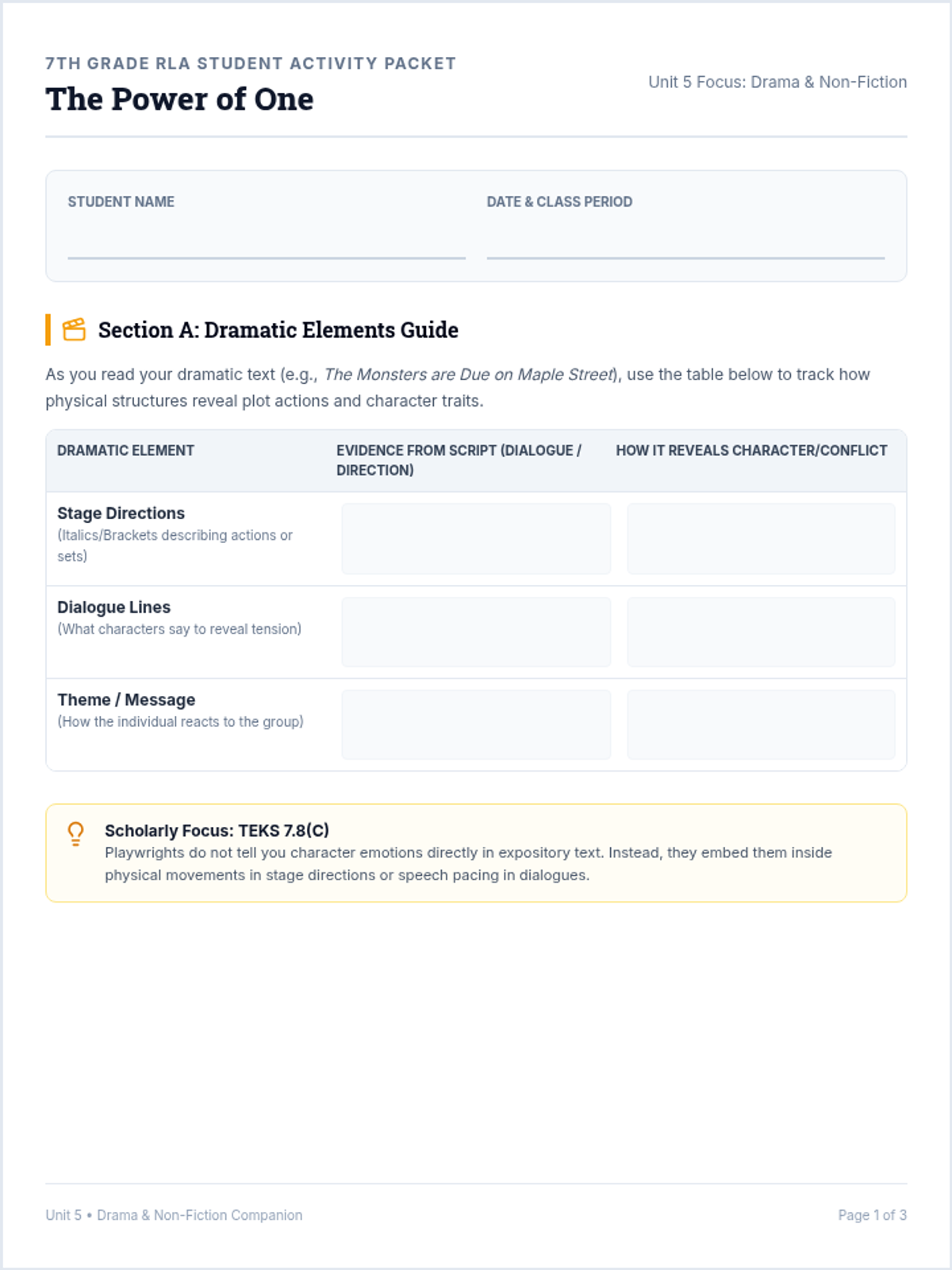
A complete classroom implementation lesson for 'The Power of One' unit, housing the 26-day pacing guide, slides, student packets, and assessments.
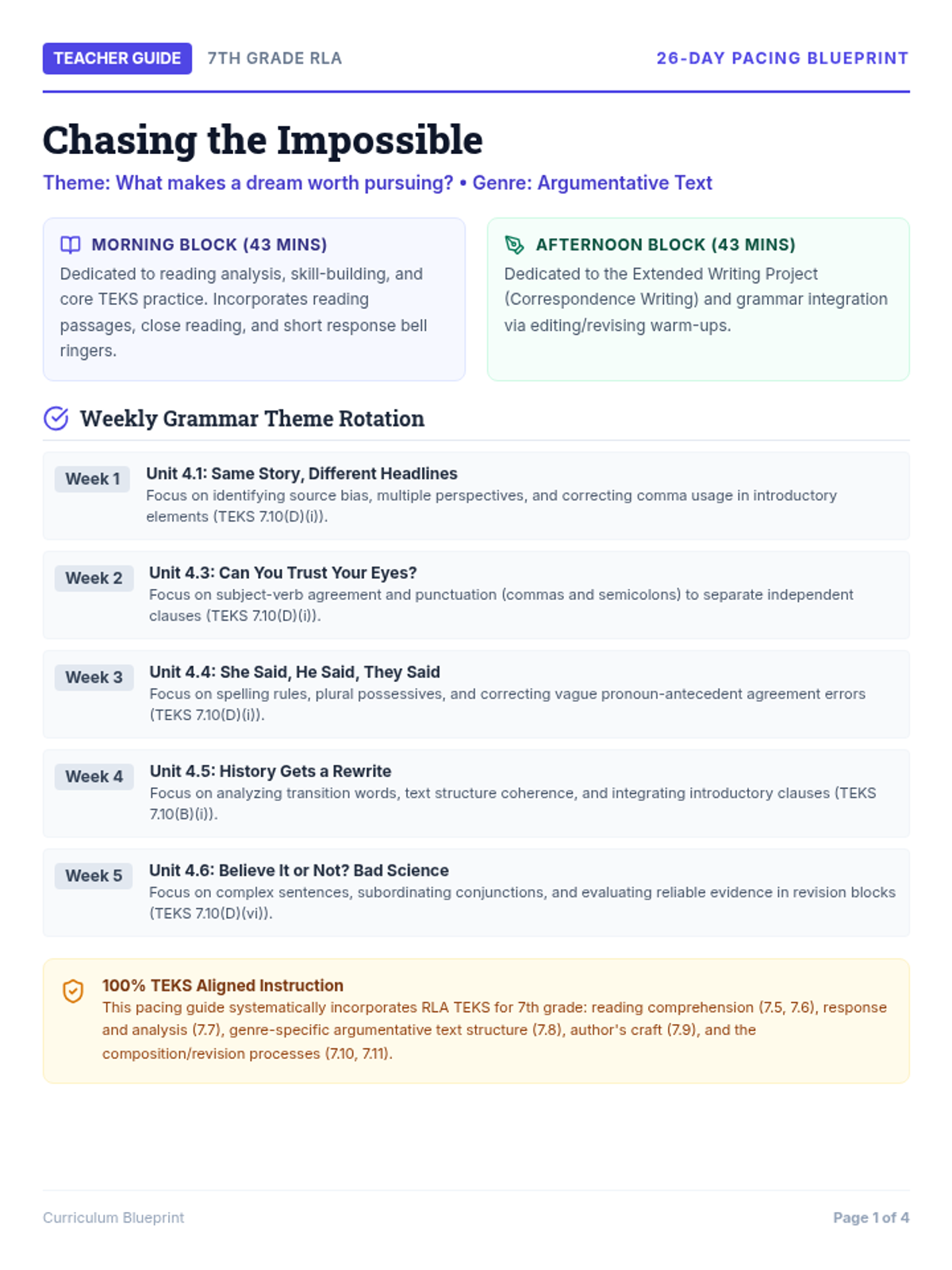
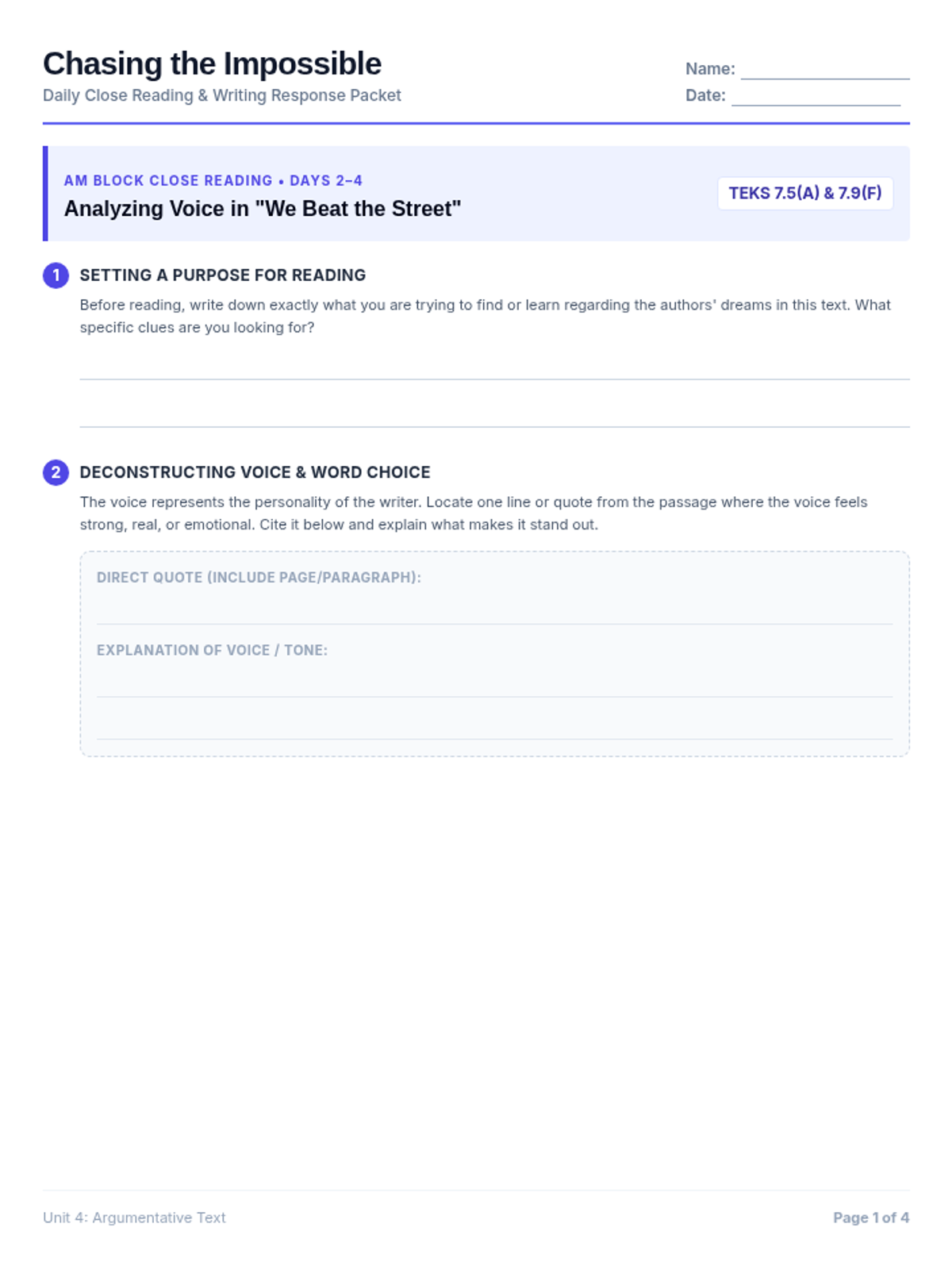
The master 26-day RLA unit planning and resource curriculum, containing the comprehensive pacing guide, student activities, slide decks, and assessments.
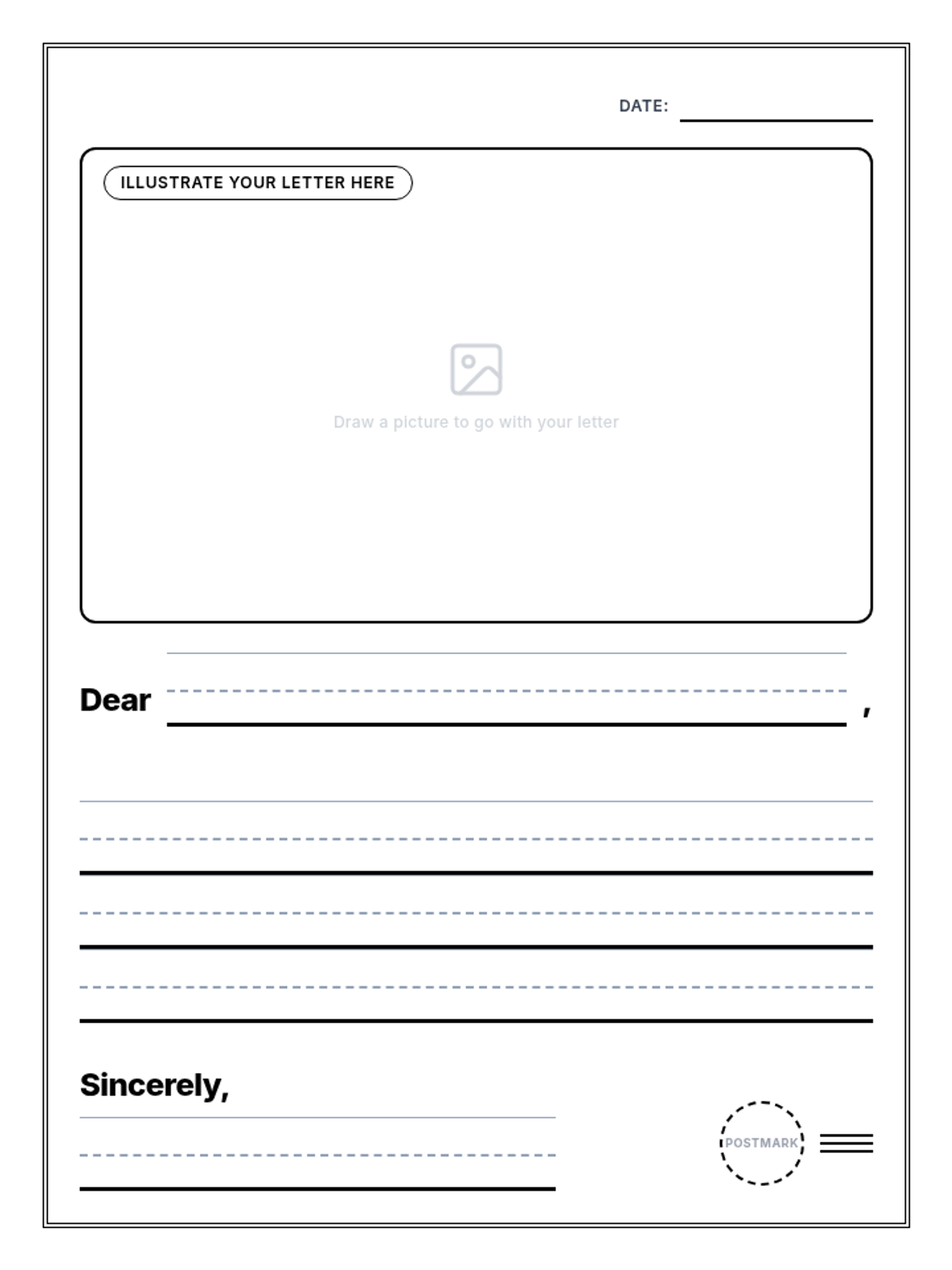
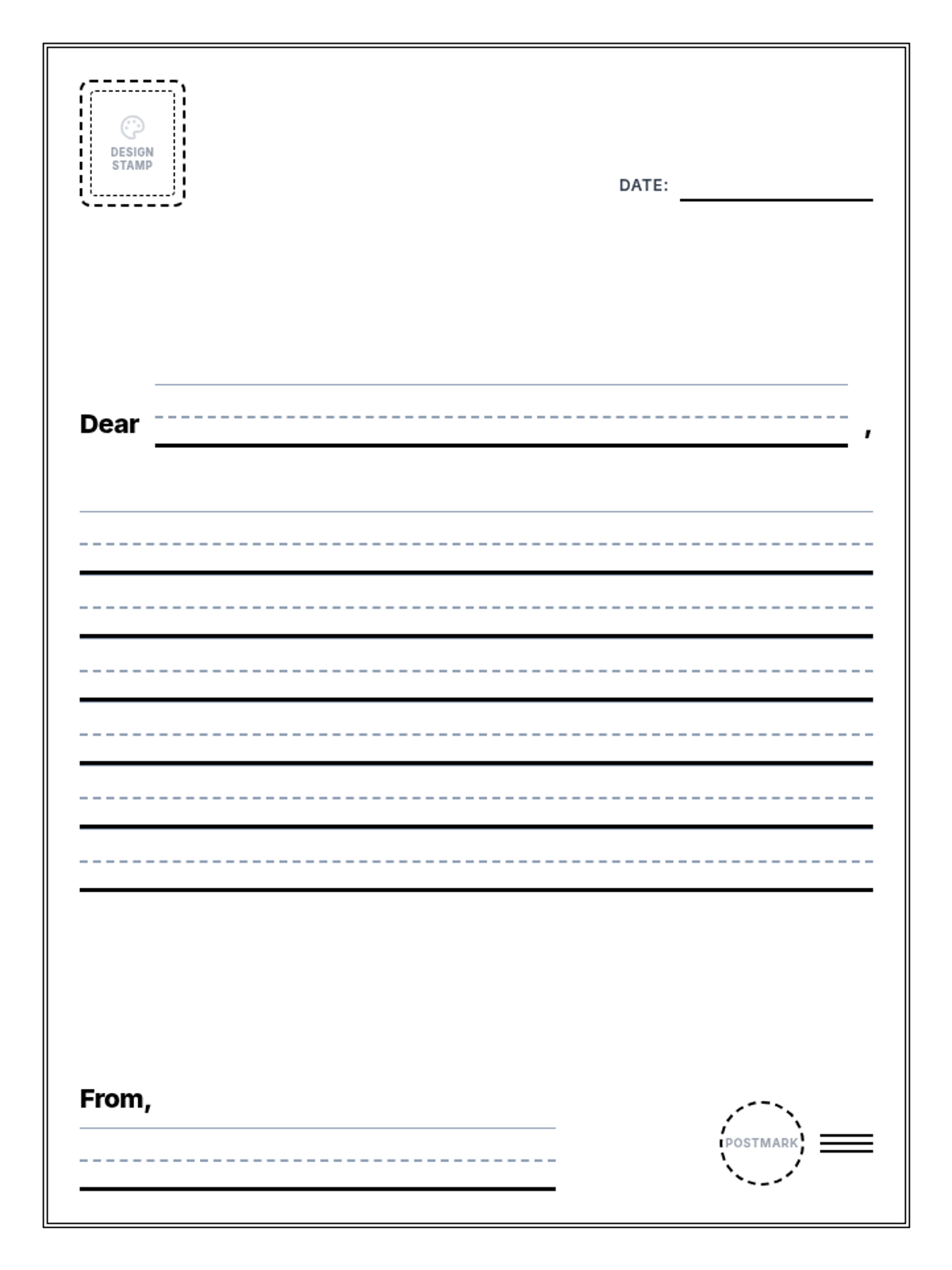
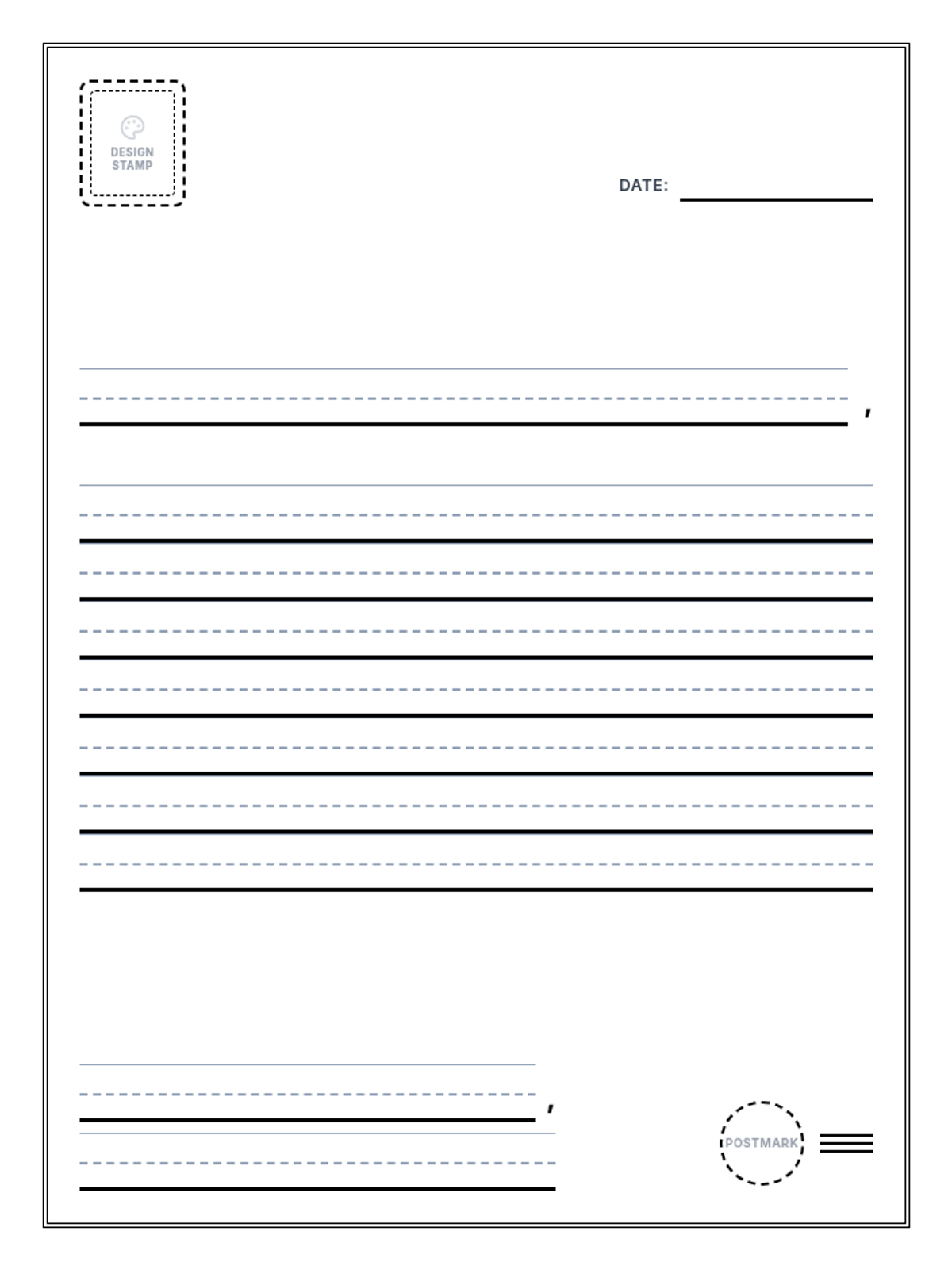
A collection of modern, black-and-white letter writing templates with Fundations-style writing lines, designed to differentiate for primary and elementary classrooms.
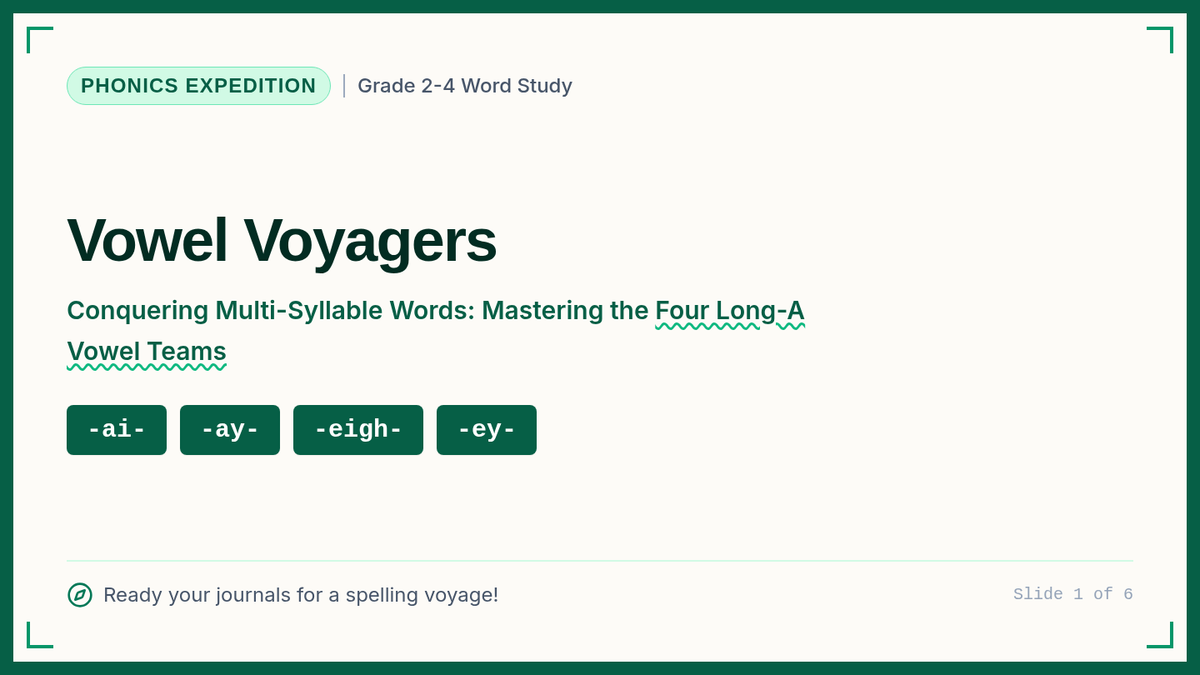
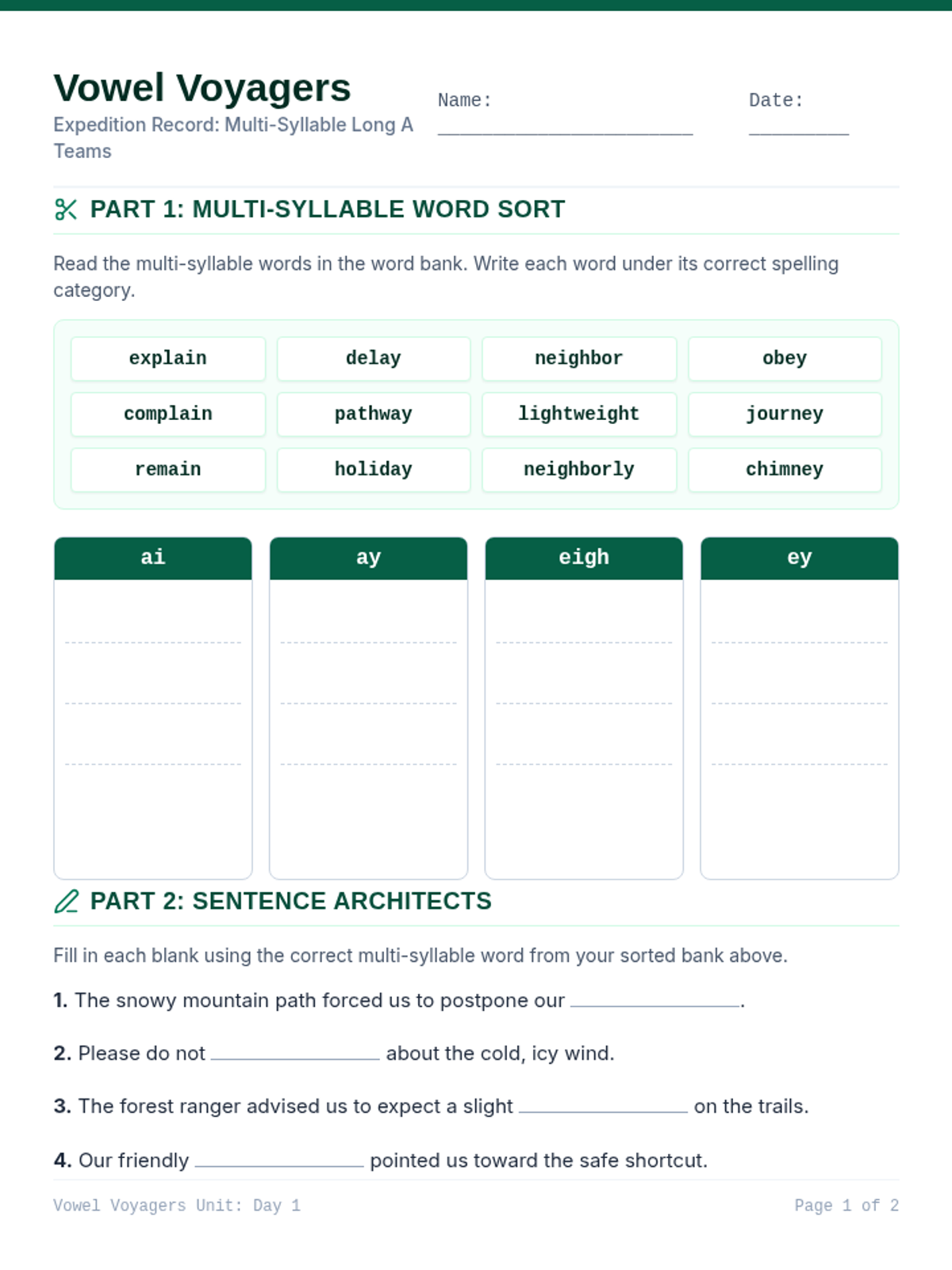
An interactive slide presentation exploring Long A vowel teams (ai, ay, eigh, and ey). Students learn spelling patterns, sort target words, read a loaded passage, and write their own creative responses to apply their new spelling knowledge.
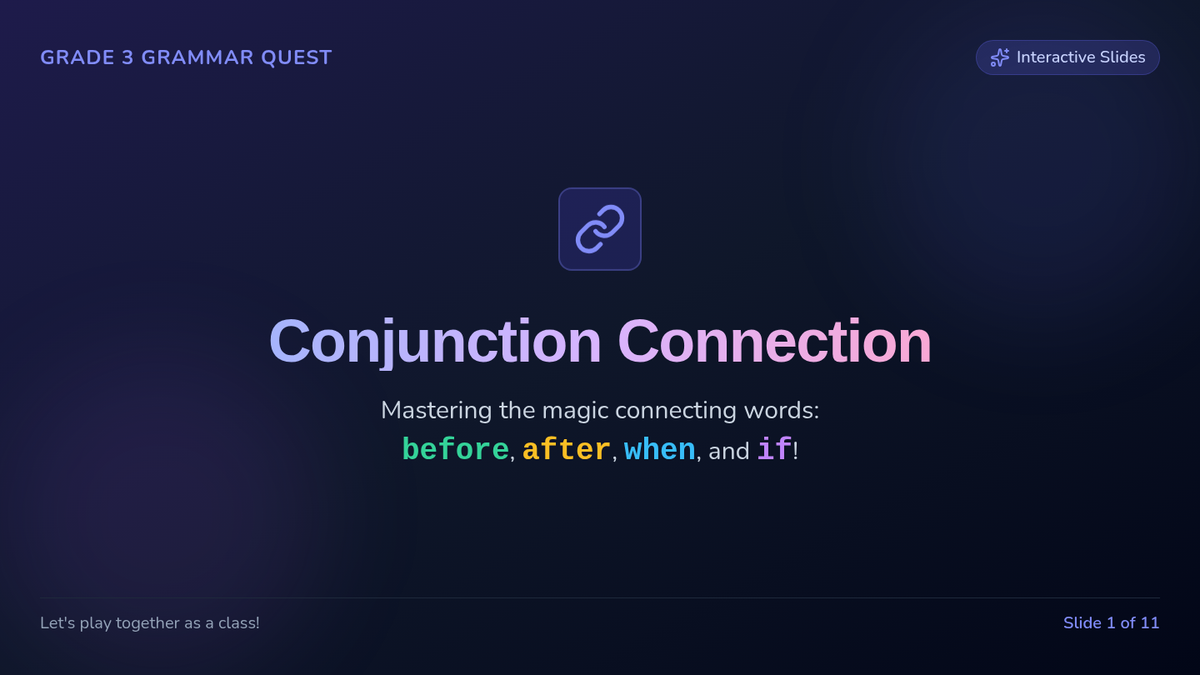
An interactive slide deck and guided lesson focused on subordinating conjunctions (before, after, when, if) for third graders, themed around school, nature, fantasy, and everyday scenarios.
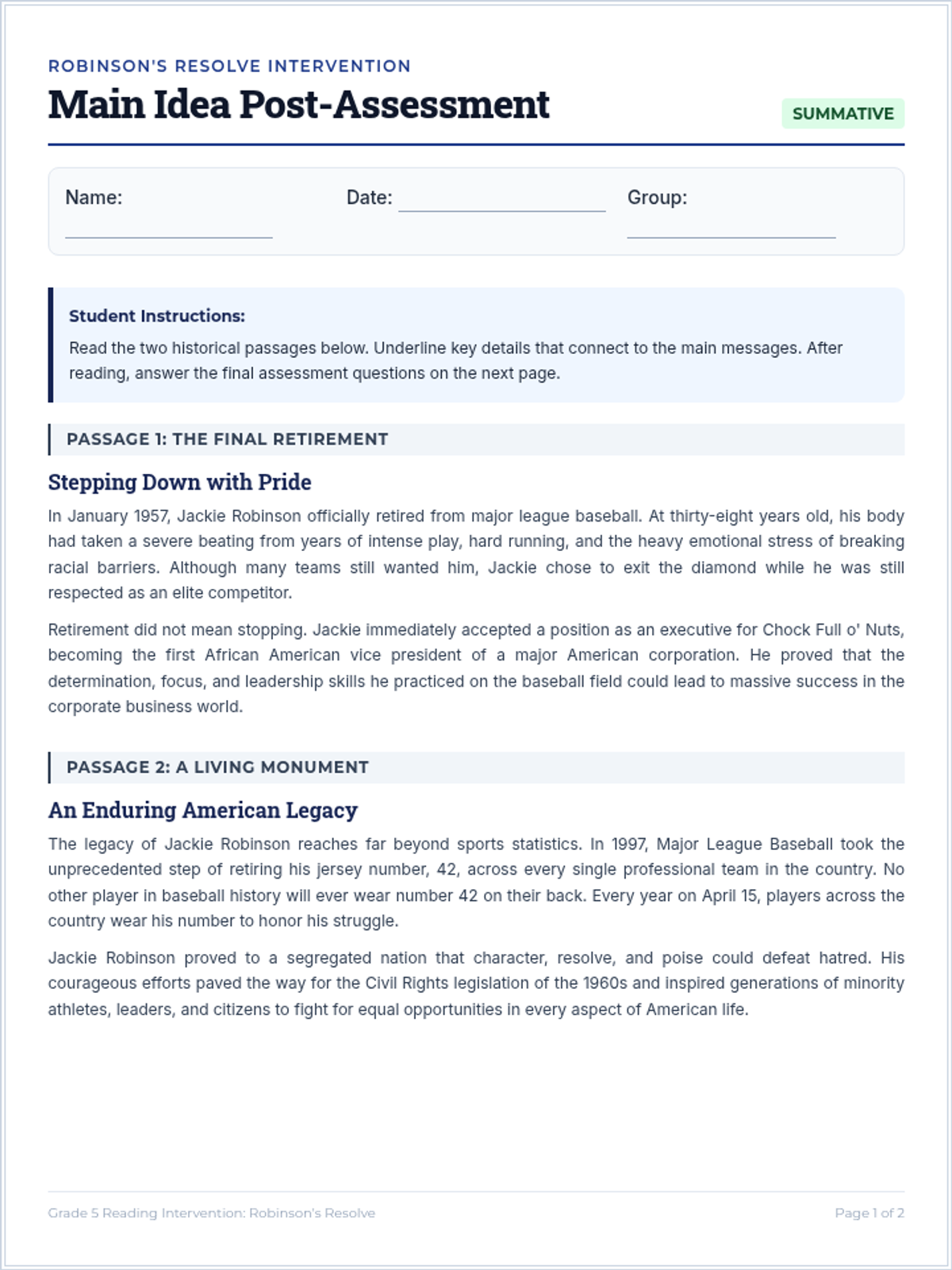
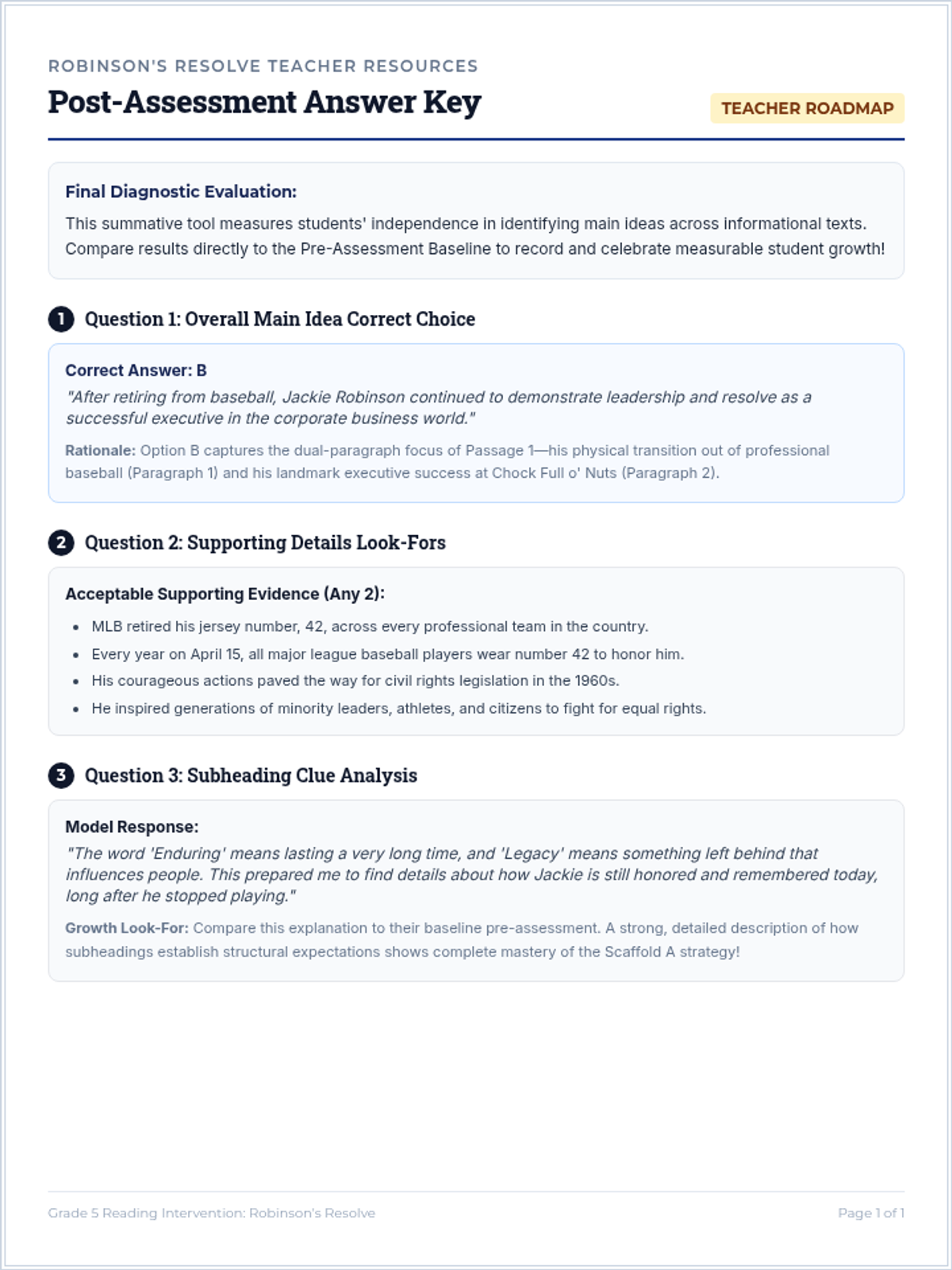
Administer the post-assessment to evaluate final progress in identifying main ideas. Students celebrate their growth and reflect on Jackie Robinson's life as a model of resolve.
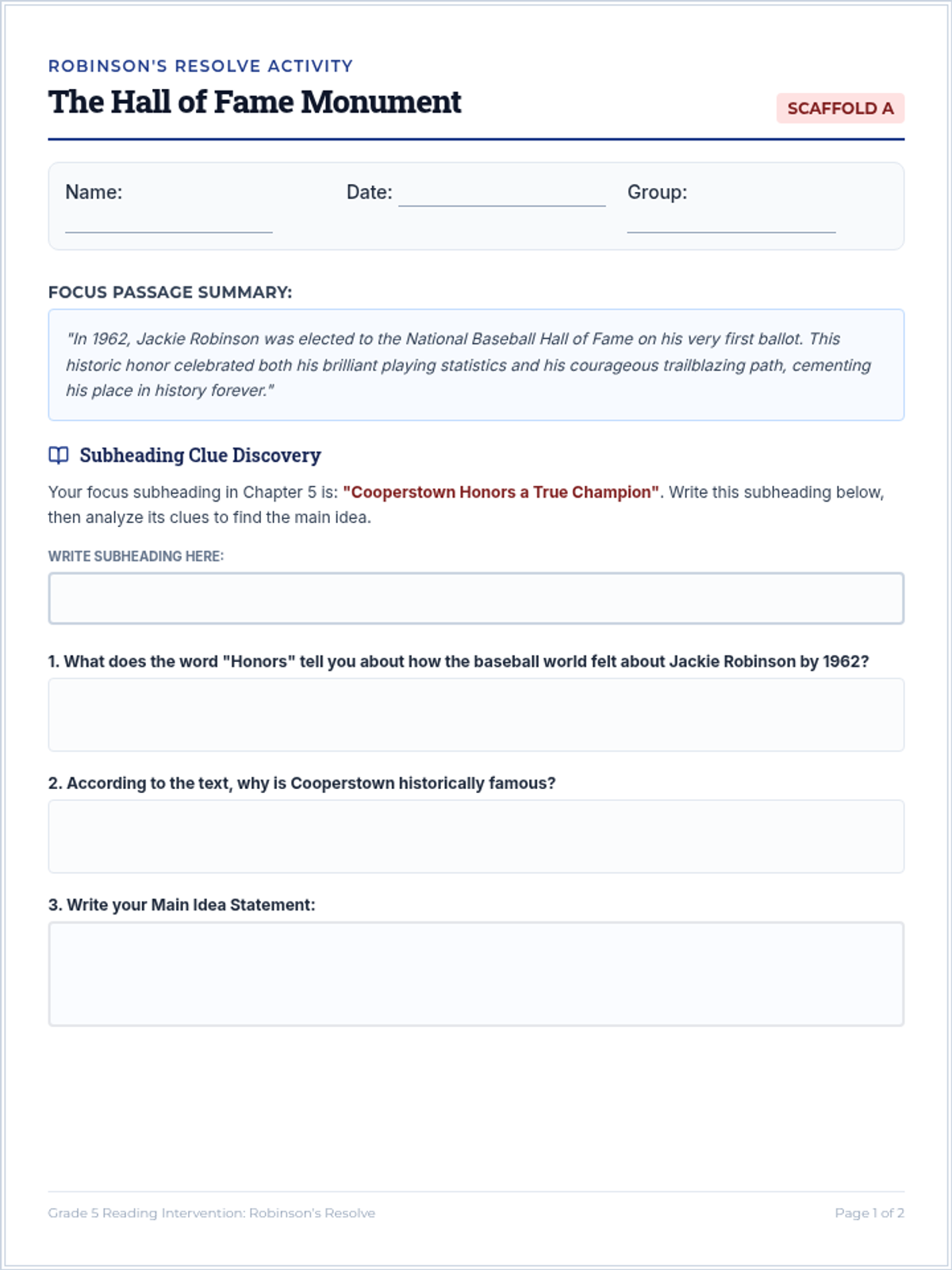
Examine Jackie Robinson's Hall of Fame induction and his lasting legacy. Students synthesize multiple main ideas across the biography to explain how his resolve changed sports and society.
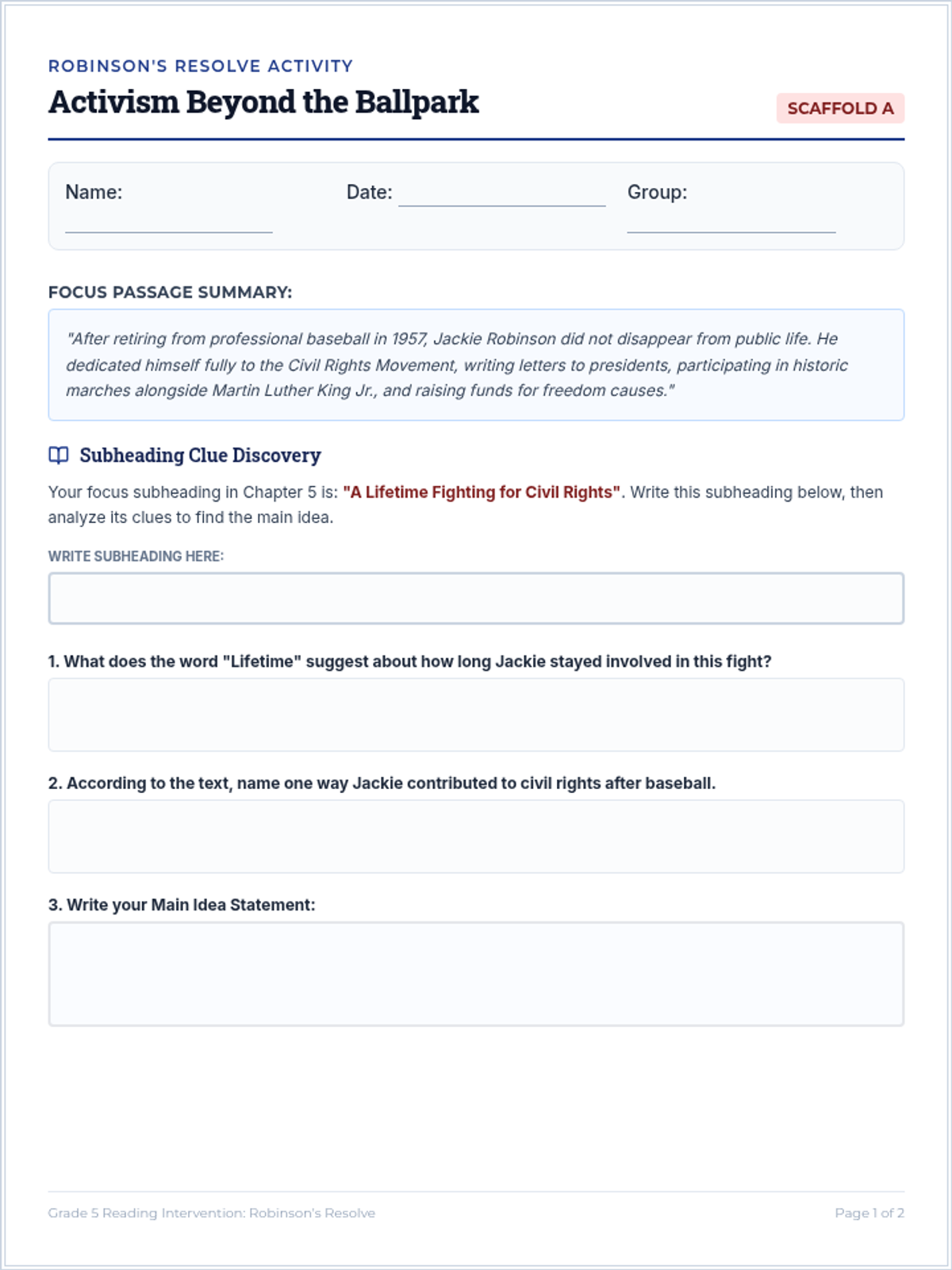
Explore Jackie Robinson's life after retirement from baseball, including his leadership in the Civil Rights Movement and business ventures. Students identify main ideas in speeches and articles.
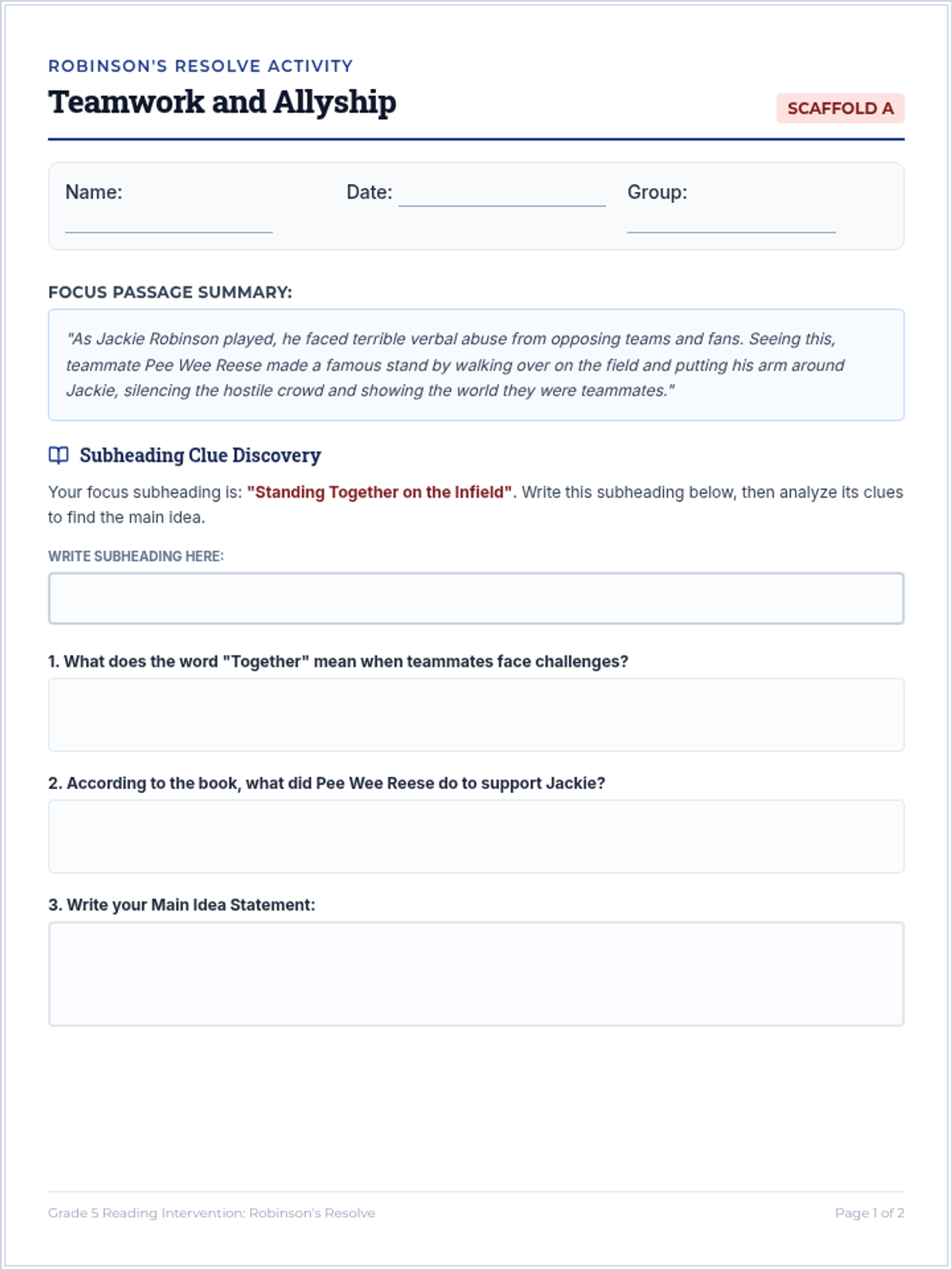
Examine the support Jackie Robinson received from teammates like Pee Wee Reese and the public. Students identify how key details show team solidarity and support the main idea.
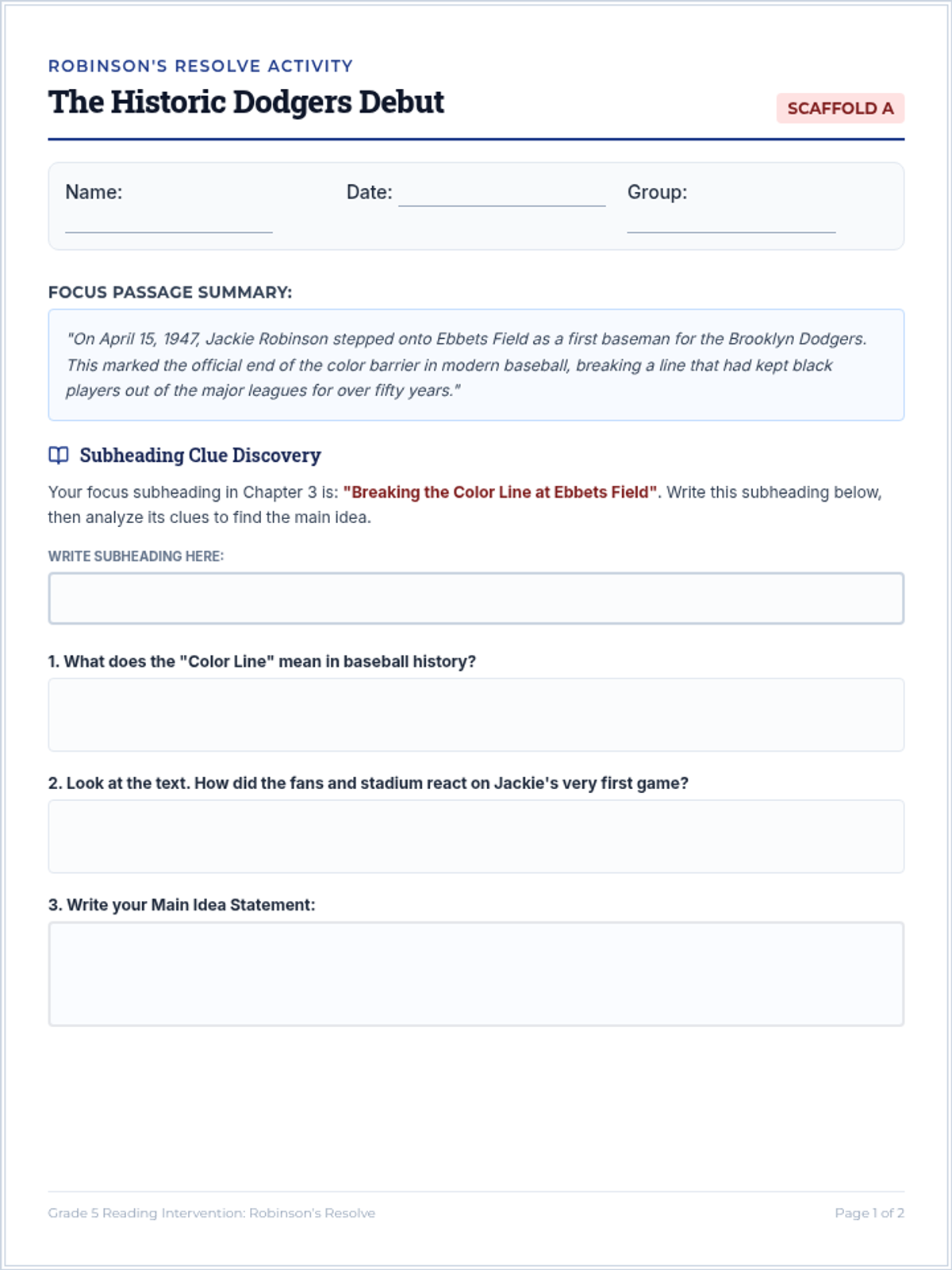
Focus on Jackie Robinson's major league debut on April 15, 1947, with the Brooklyn Dodgers. Students practice identifying main ideas and key details of historical descriptions of this barrier-breaking day.
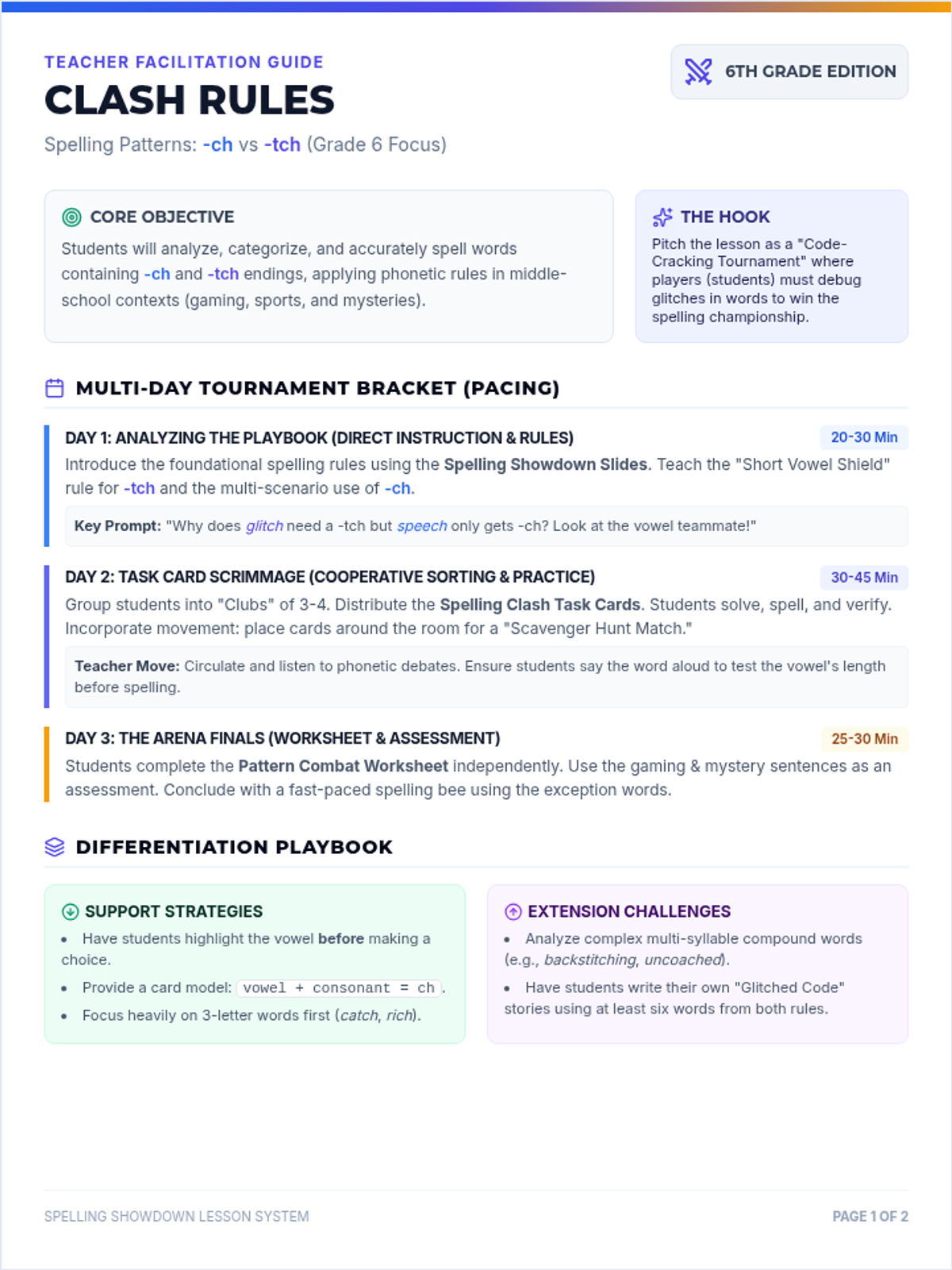
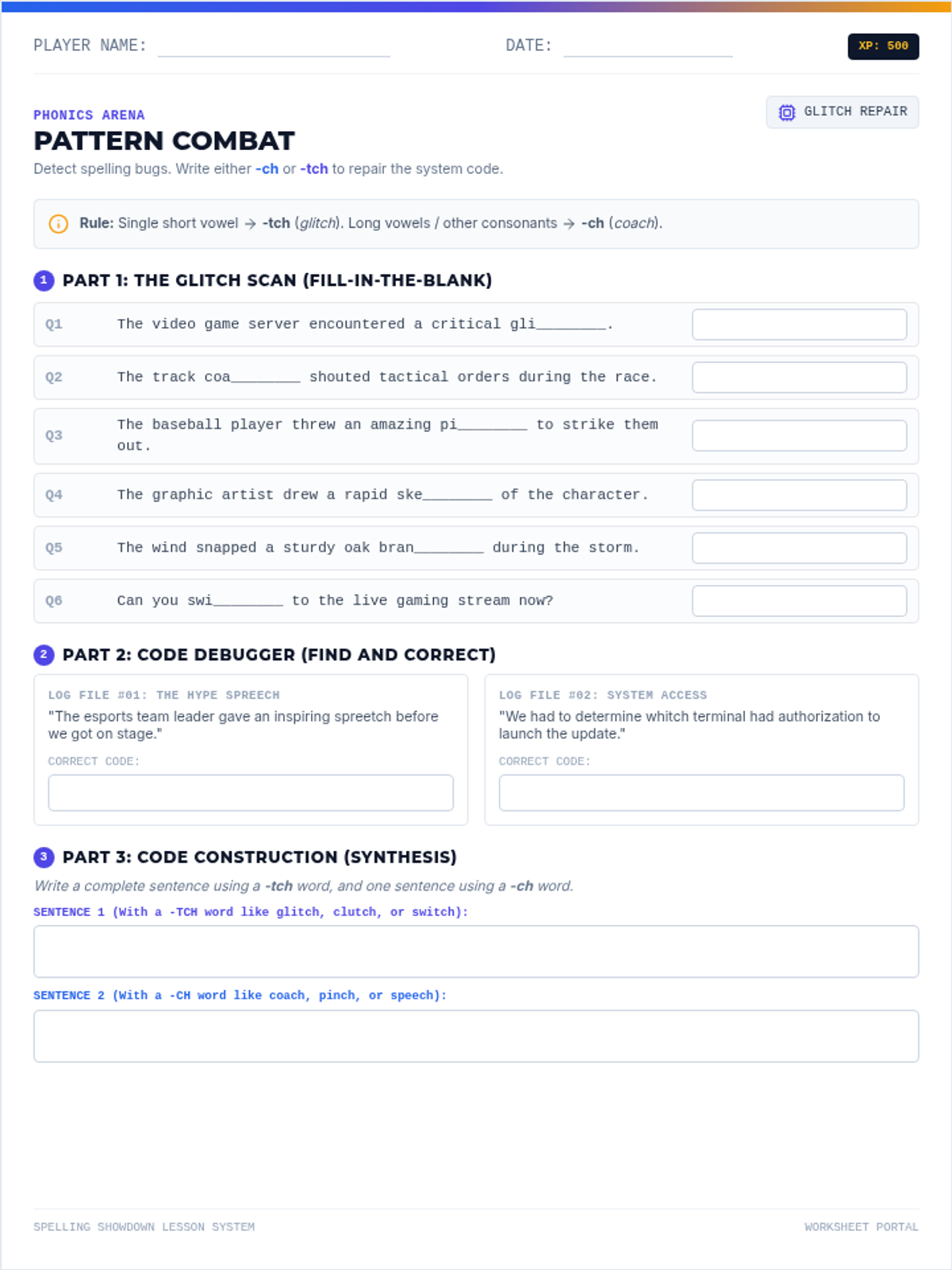
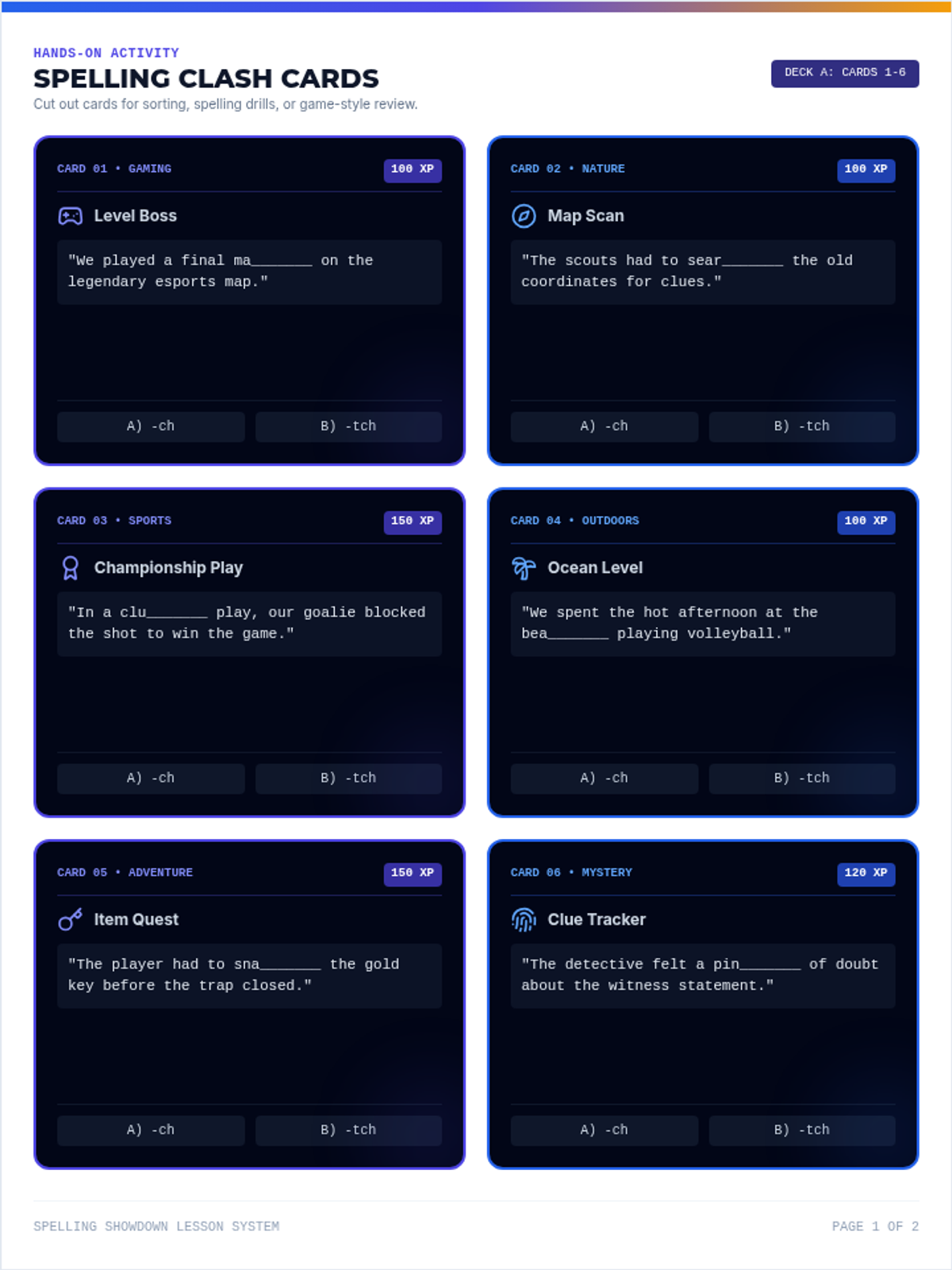
A phonics and spelling lesson tailored for 6th graders to master the -ch and -tch spelling patterns. It uses high-interest, middle-school appropriate themes (gaming, sports, mystery) to keep older students engaged while building foundational spelling skills.