A punctuation lesson focused on the rare case of using apostrophes for plural lowercase letters, distinguishing them from standard plurals and addressing common misconceptions like the 'Grocer's Apostrophe'.
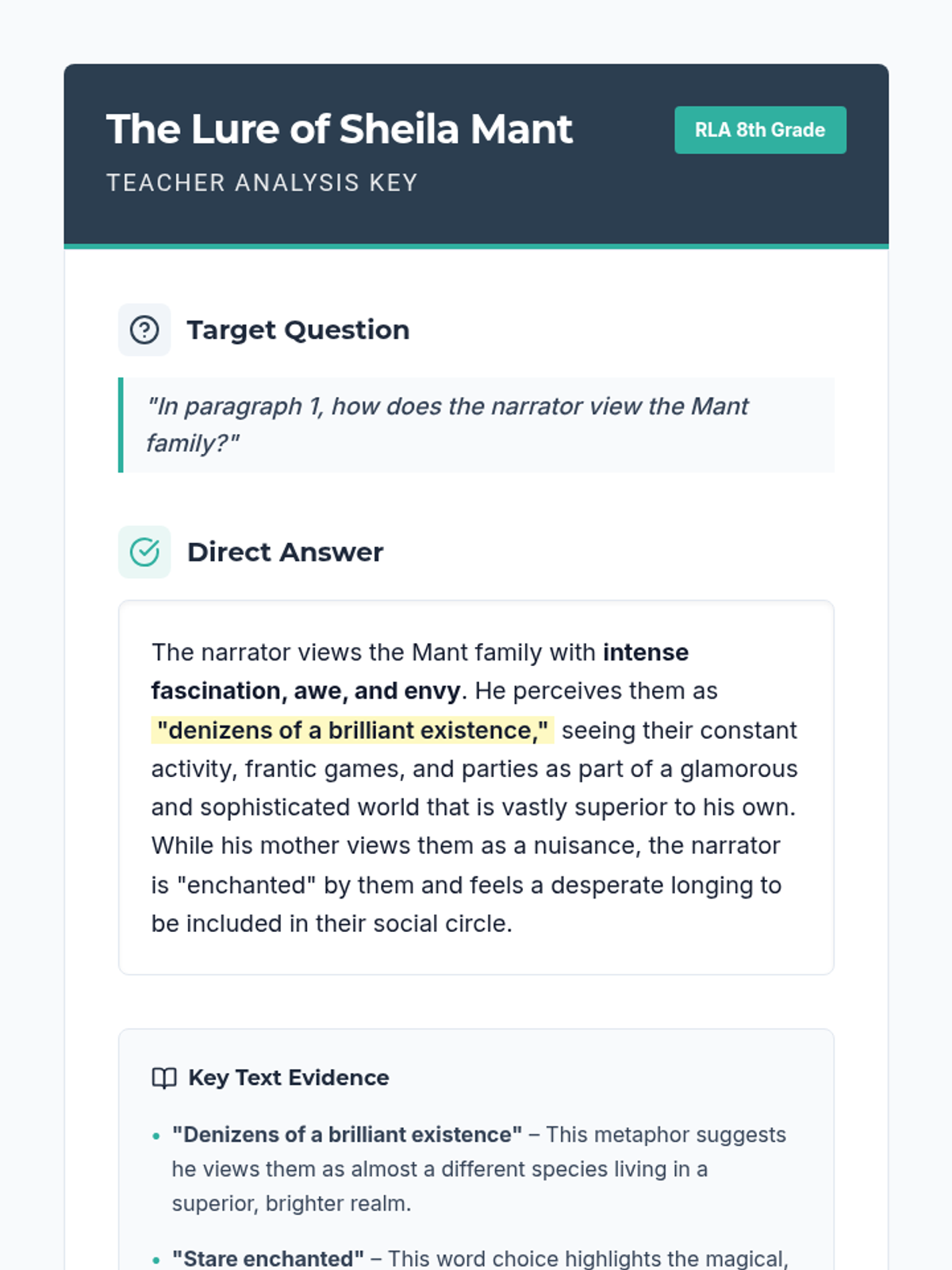
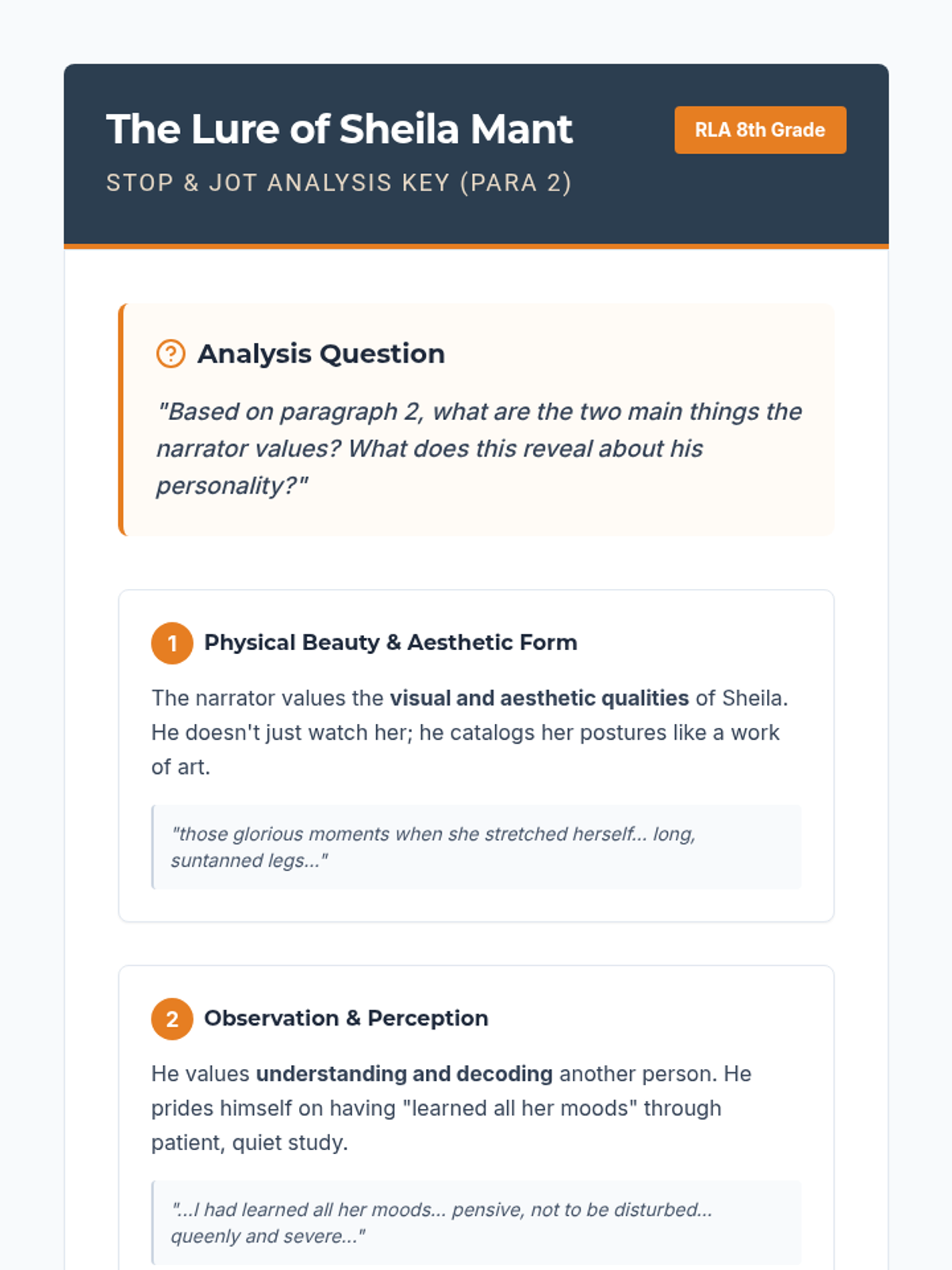
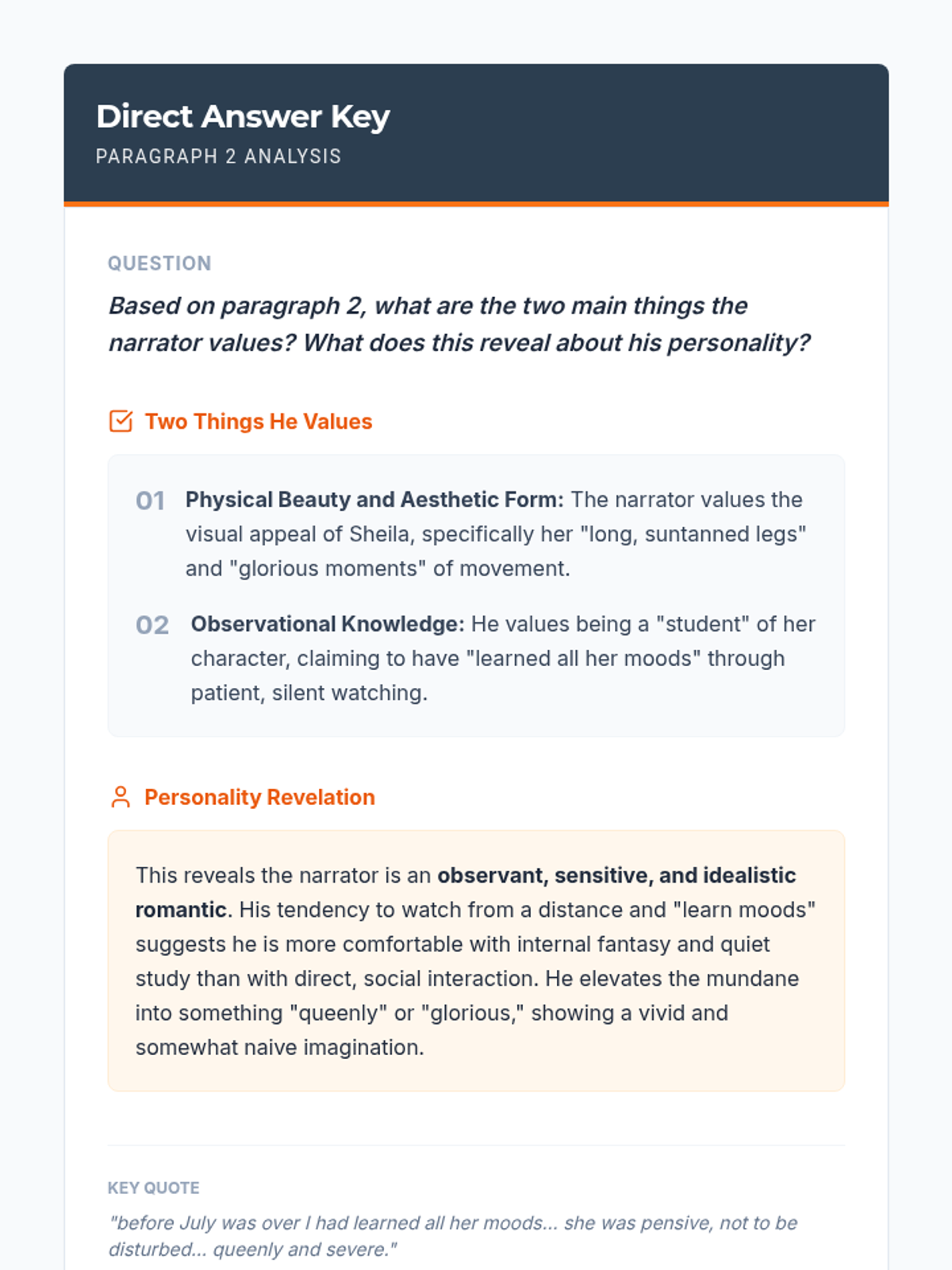
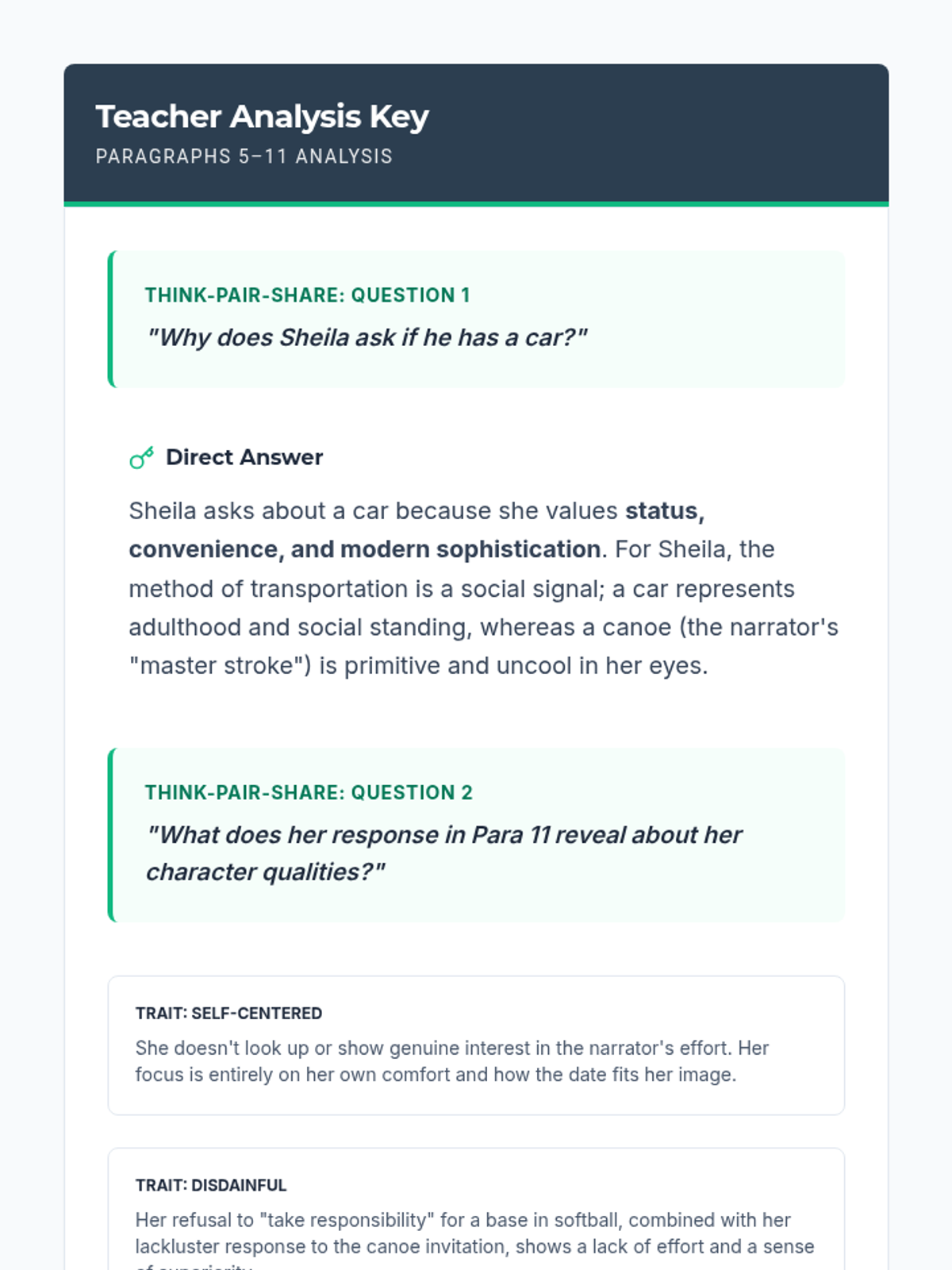
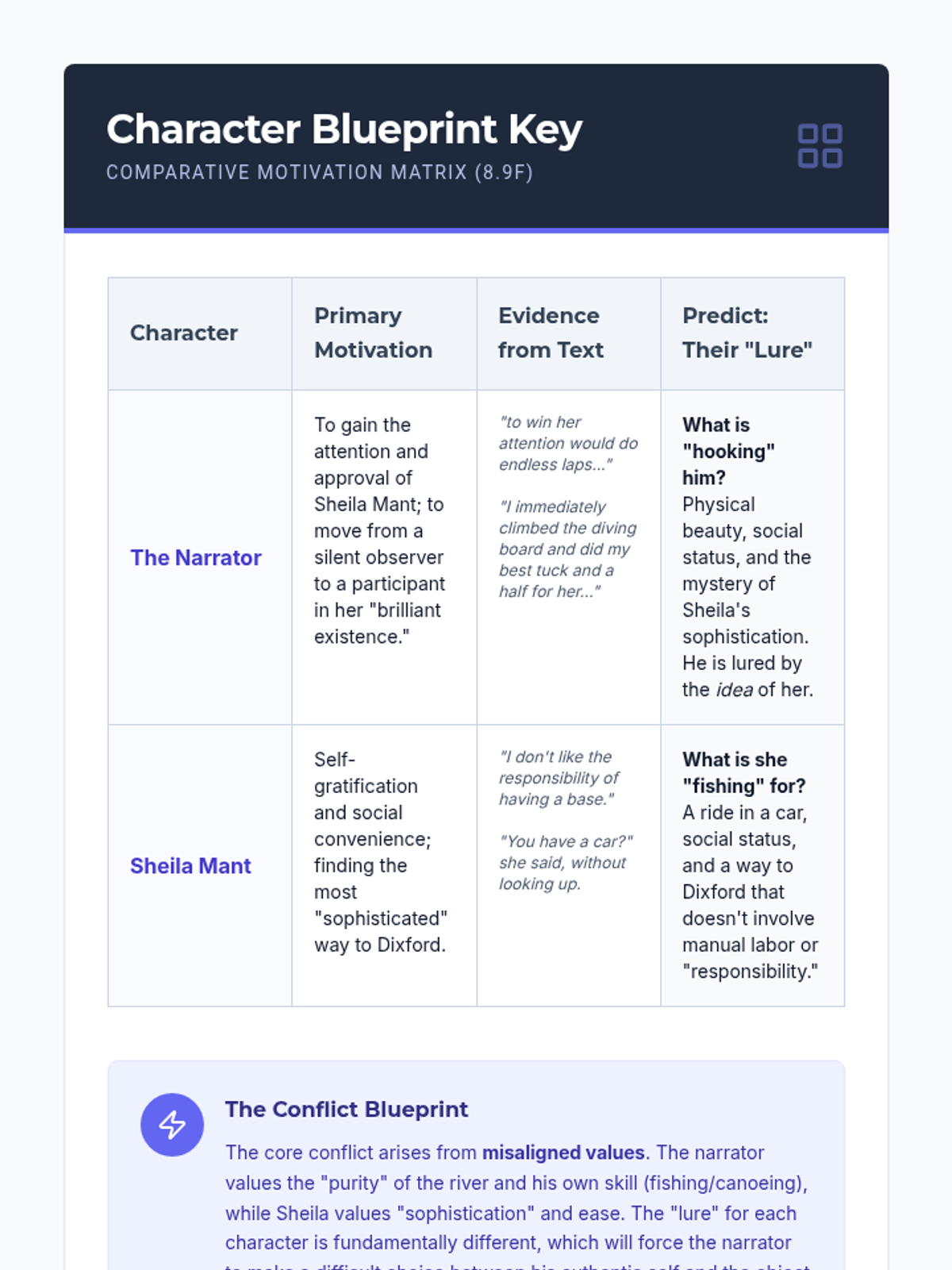
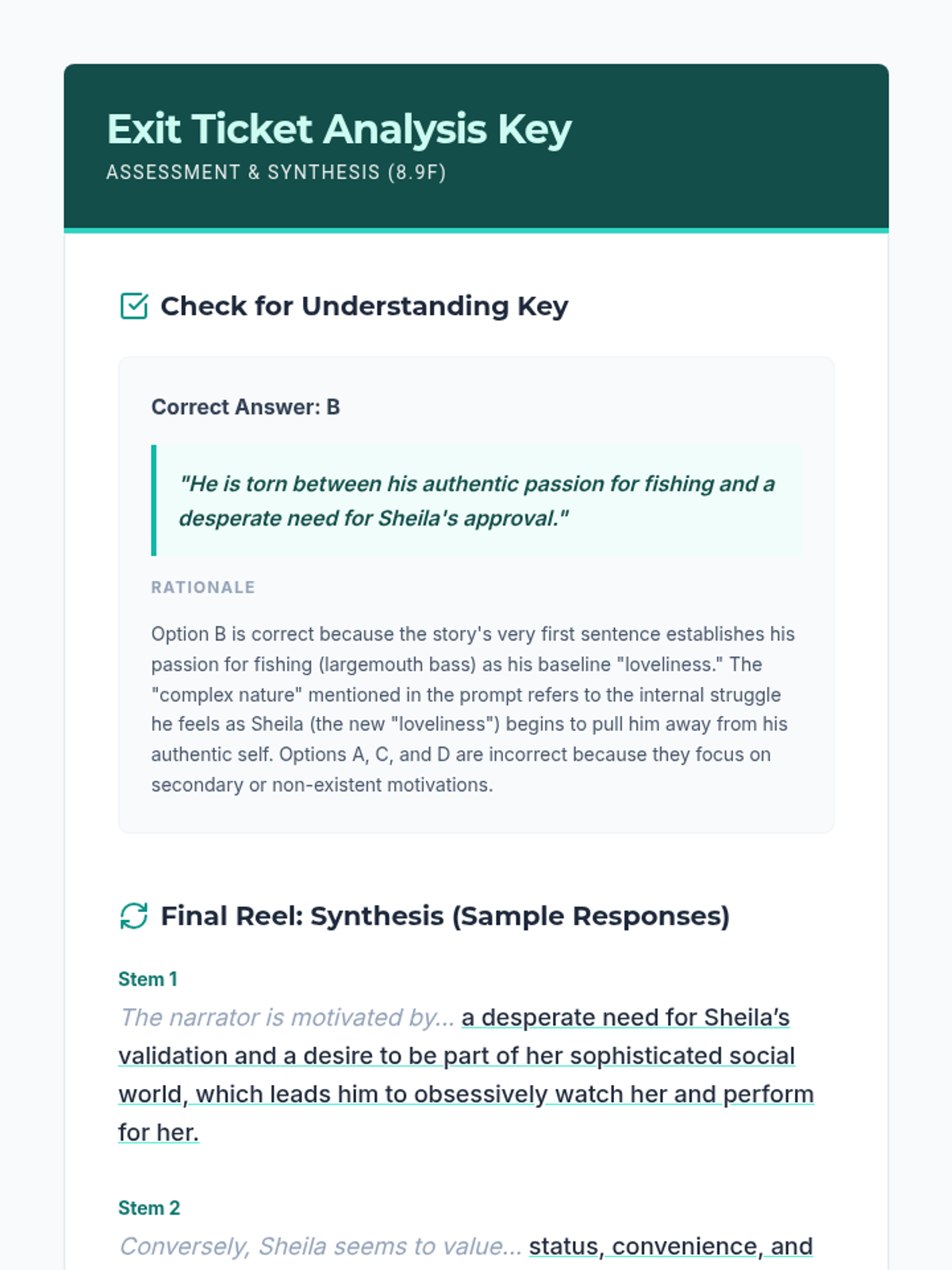
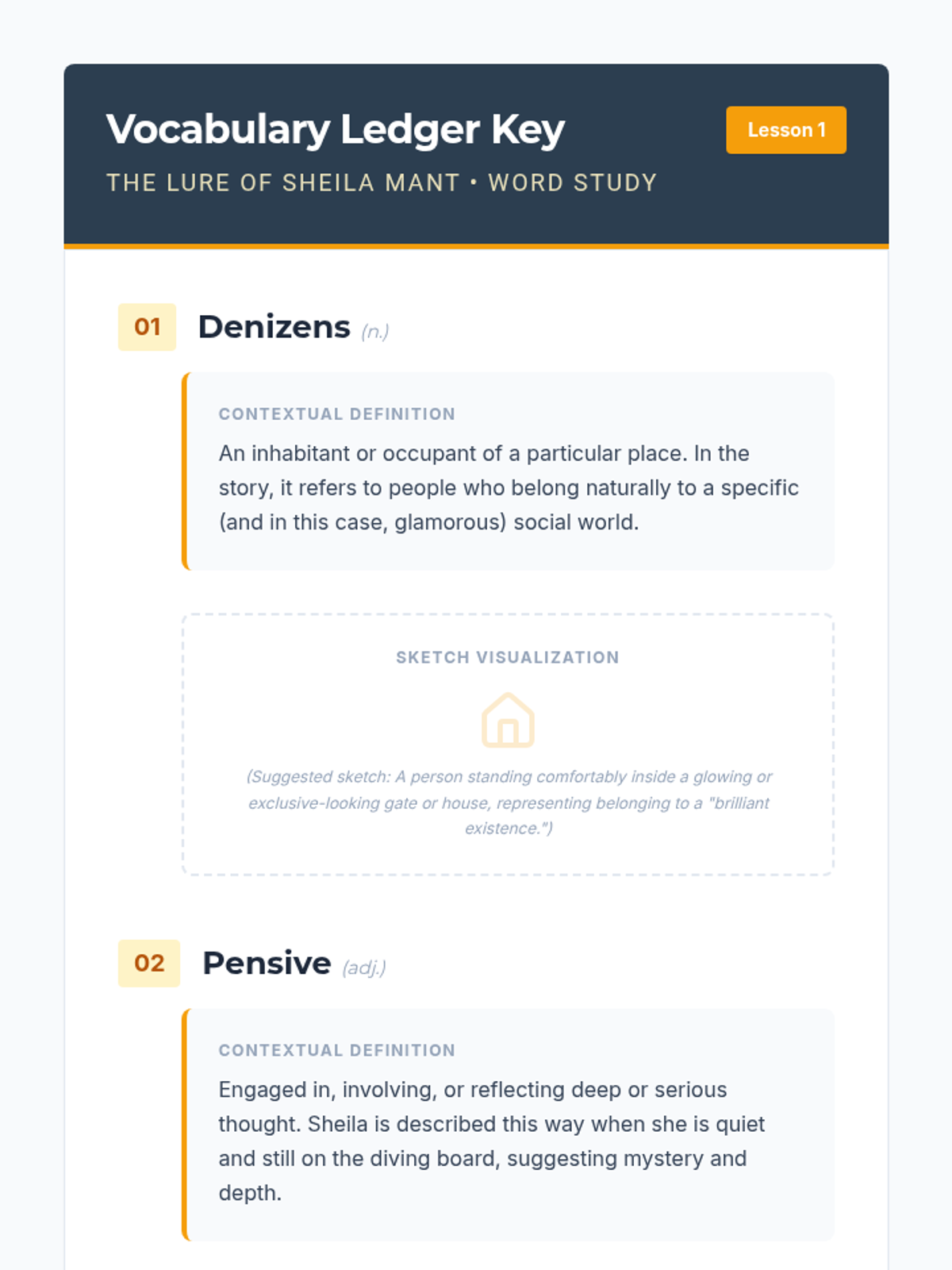
A lesson focused on analyzing character motivations and perceptions in the short story 'The Lure of Sheila Mant' by W.D. Wetherell. Students will explore how the narrator views the Mant family and Sheila herself through close reading and textual evidence.
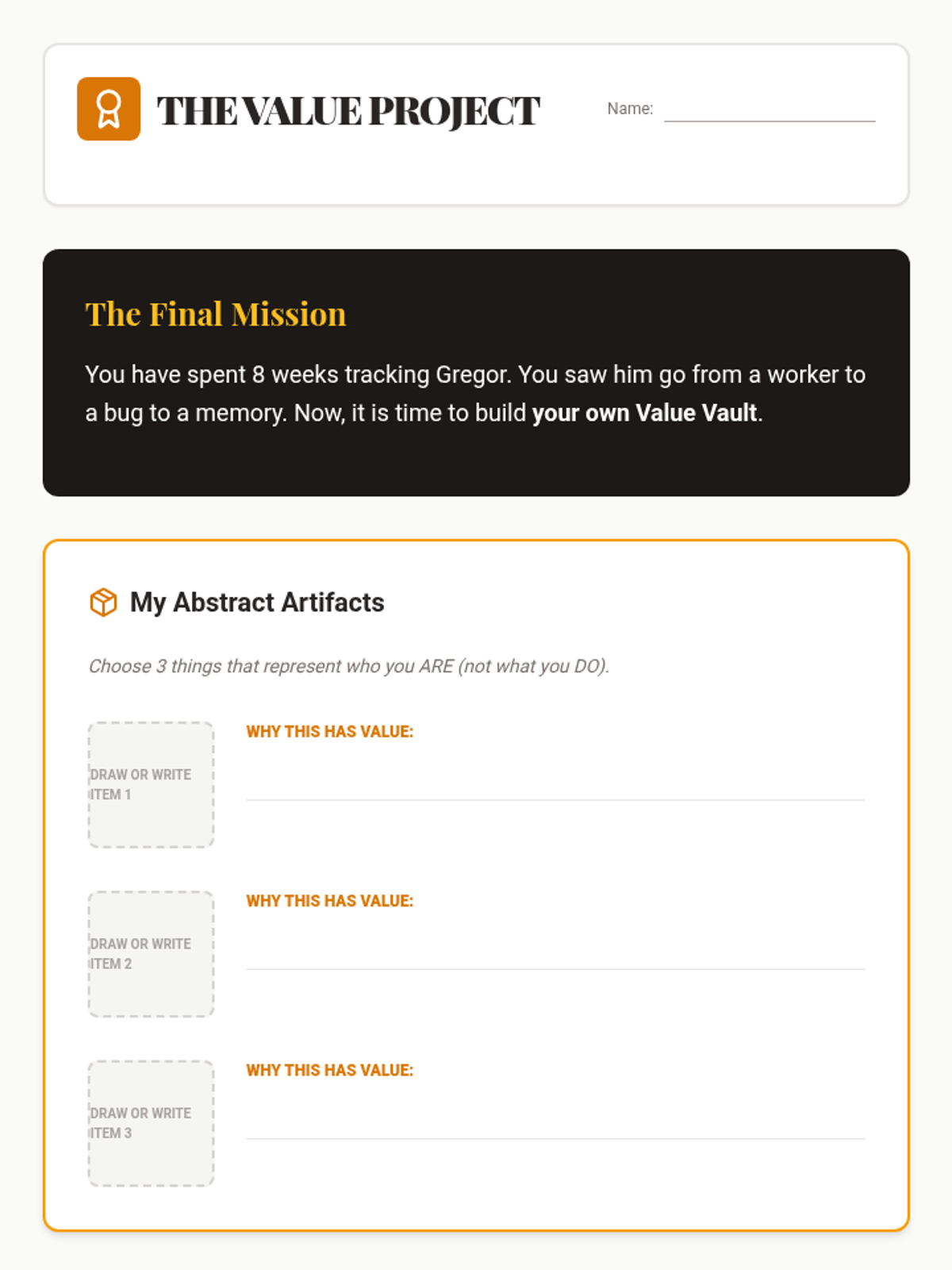
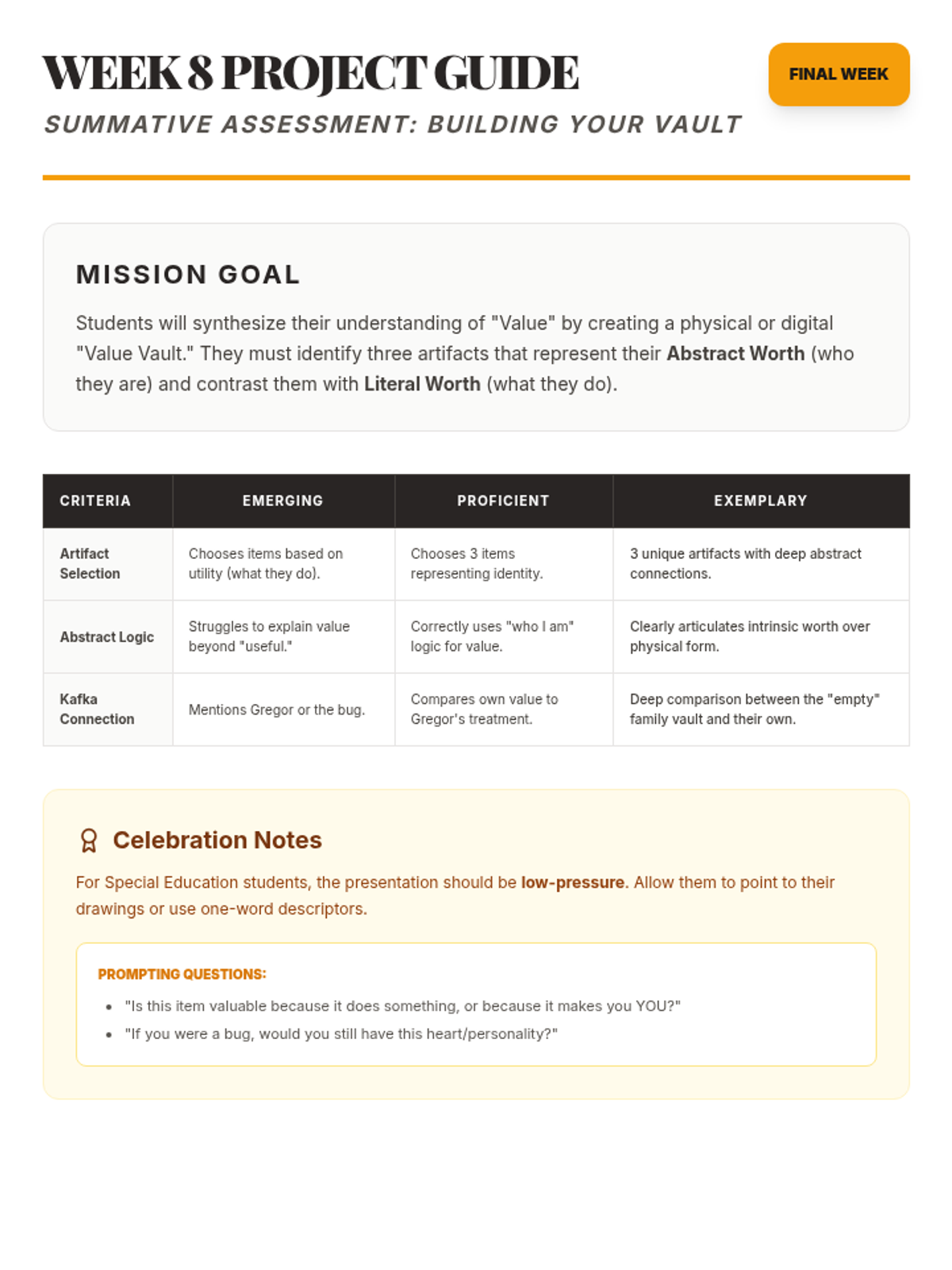
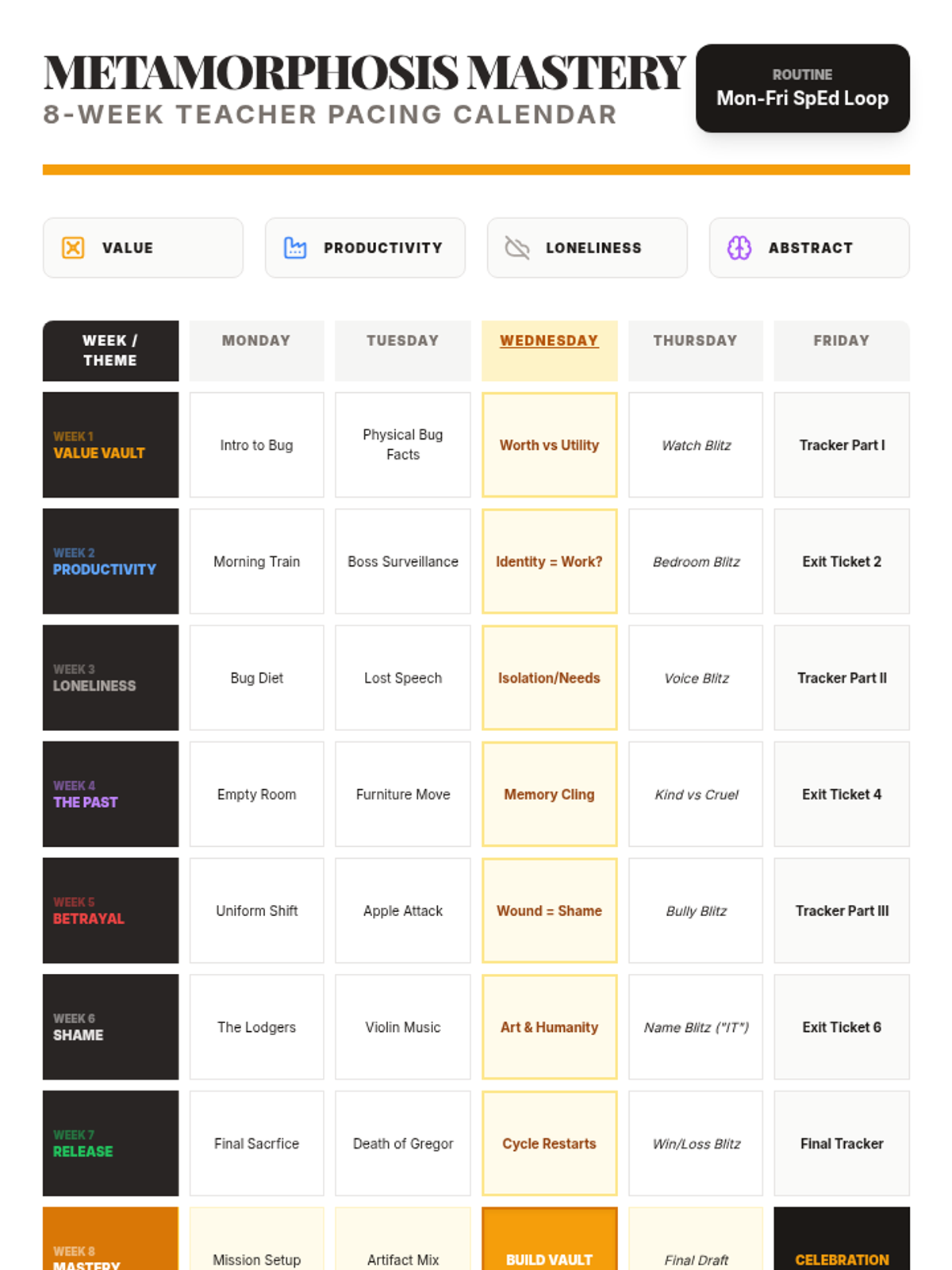
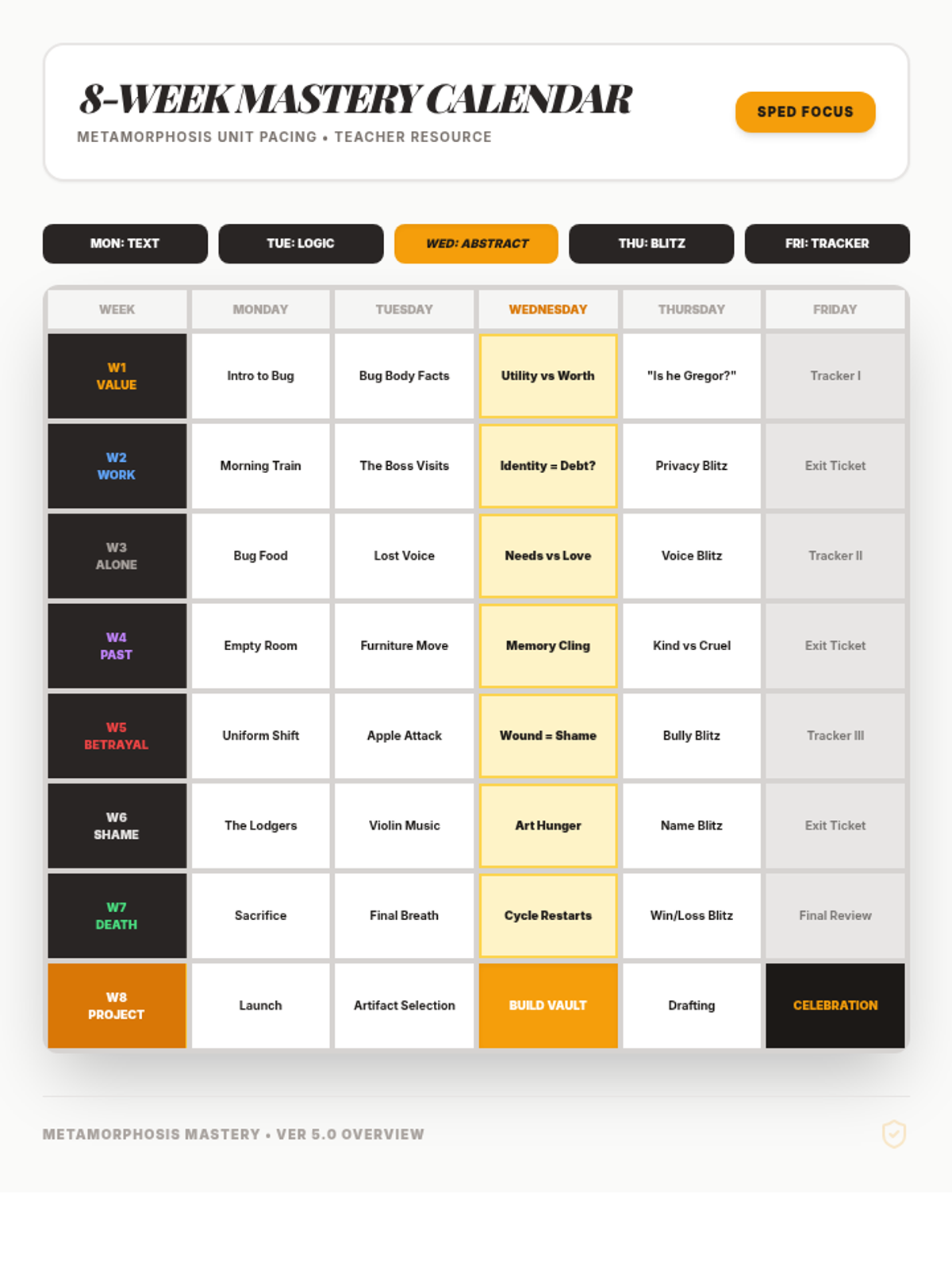
A culminating project where students reflect on the 8-week journey and create a 'Value Vault' for themselves or Gregor.
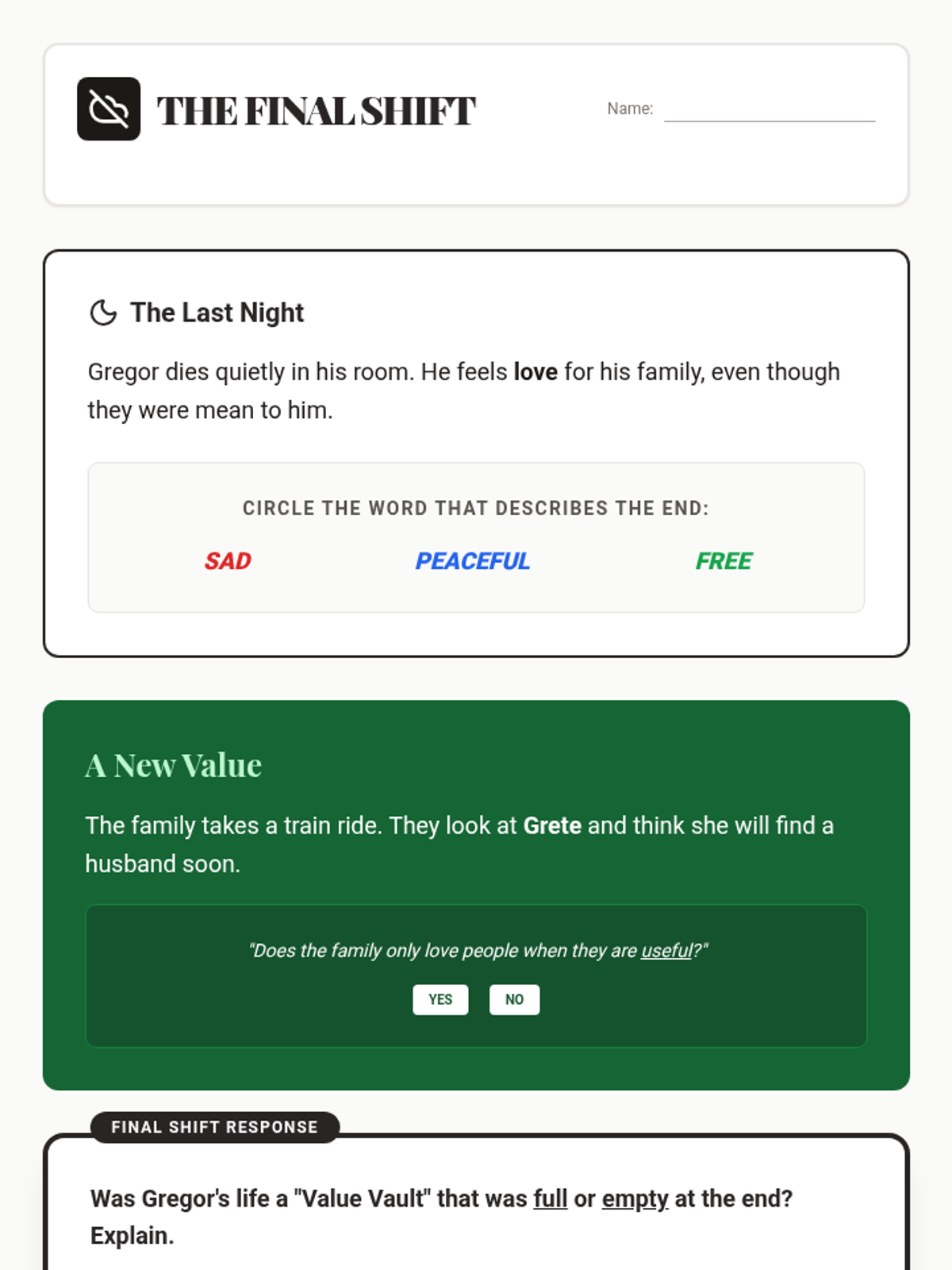
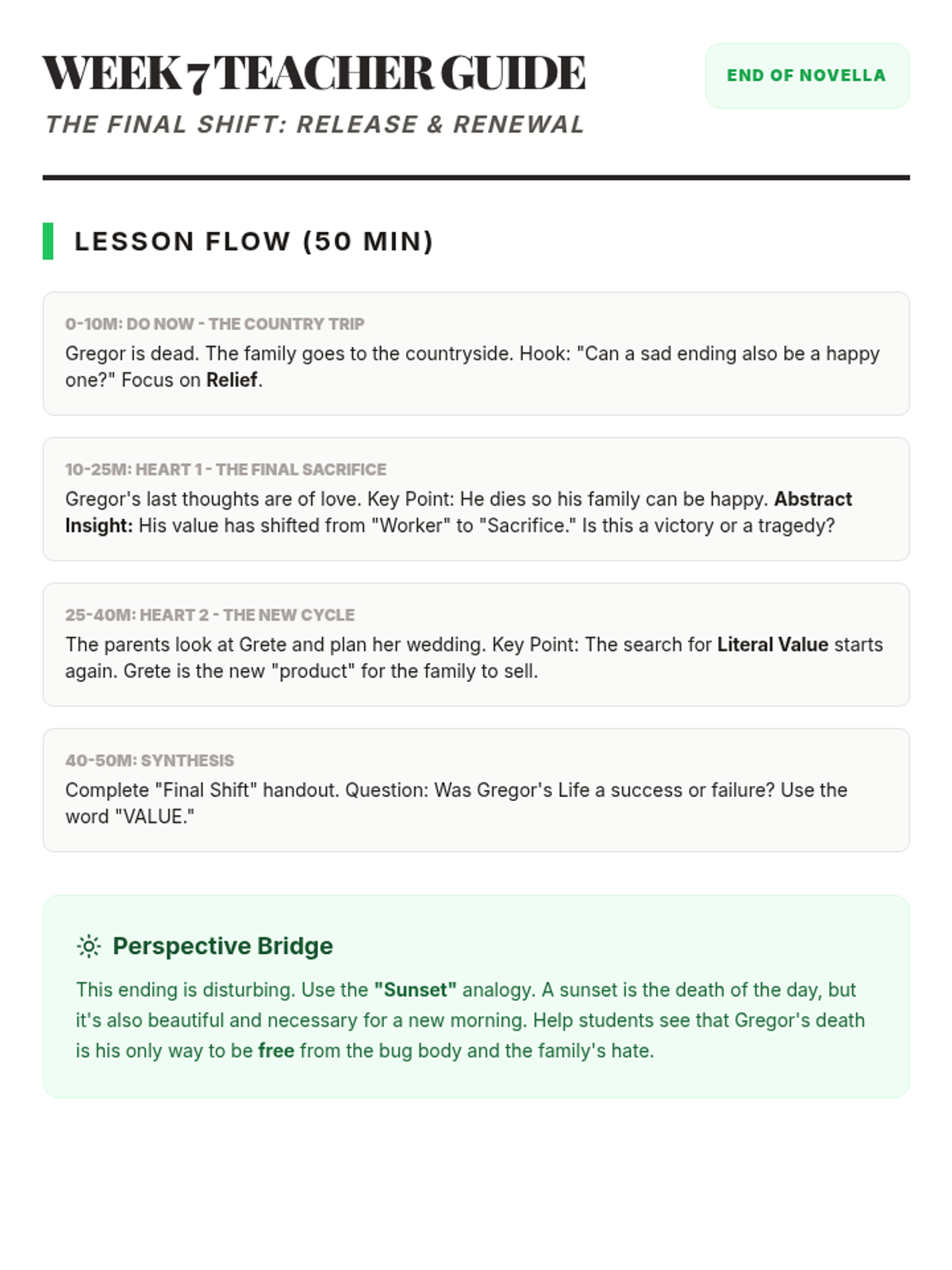
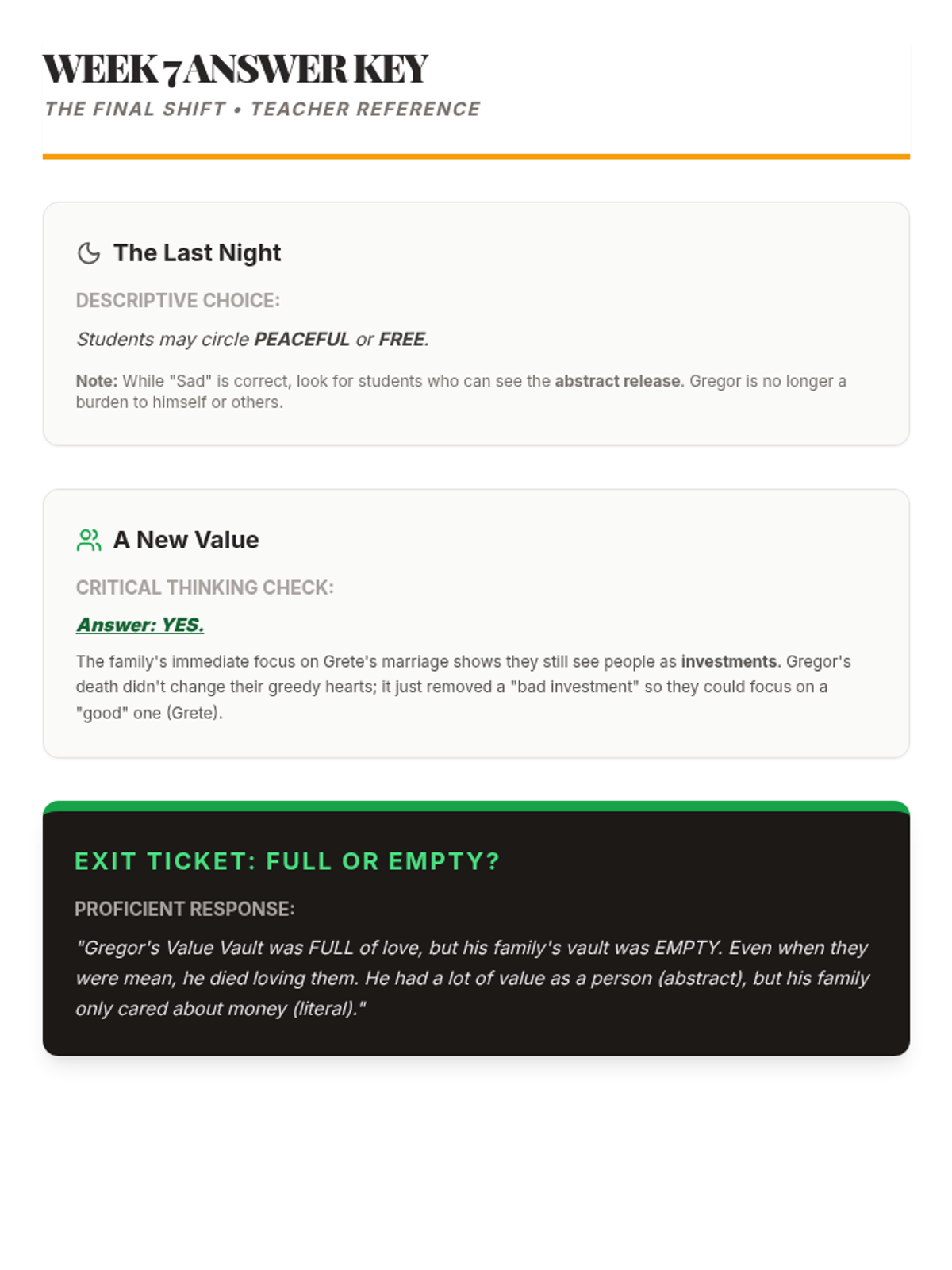
Analyzes the end of the novella, Gregor's death, and the family's disturbing relief and new-found 'value'.
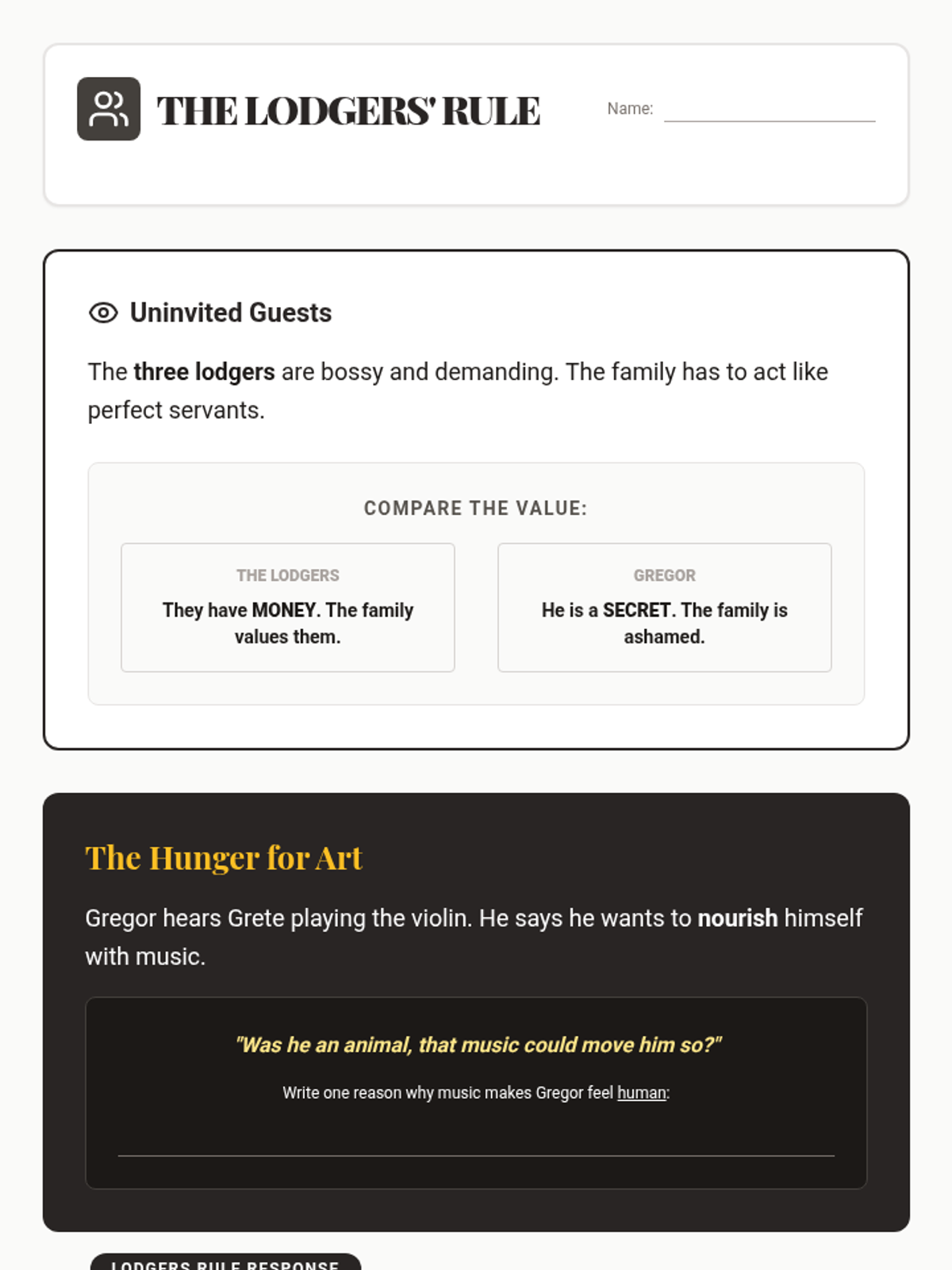
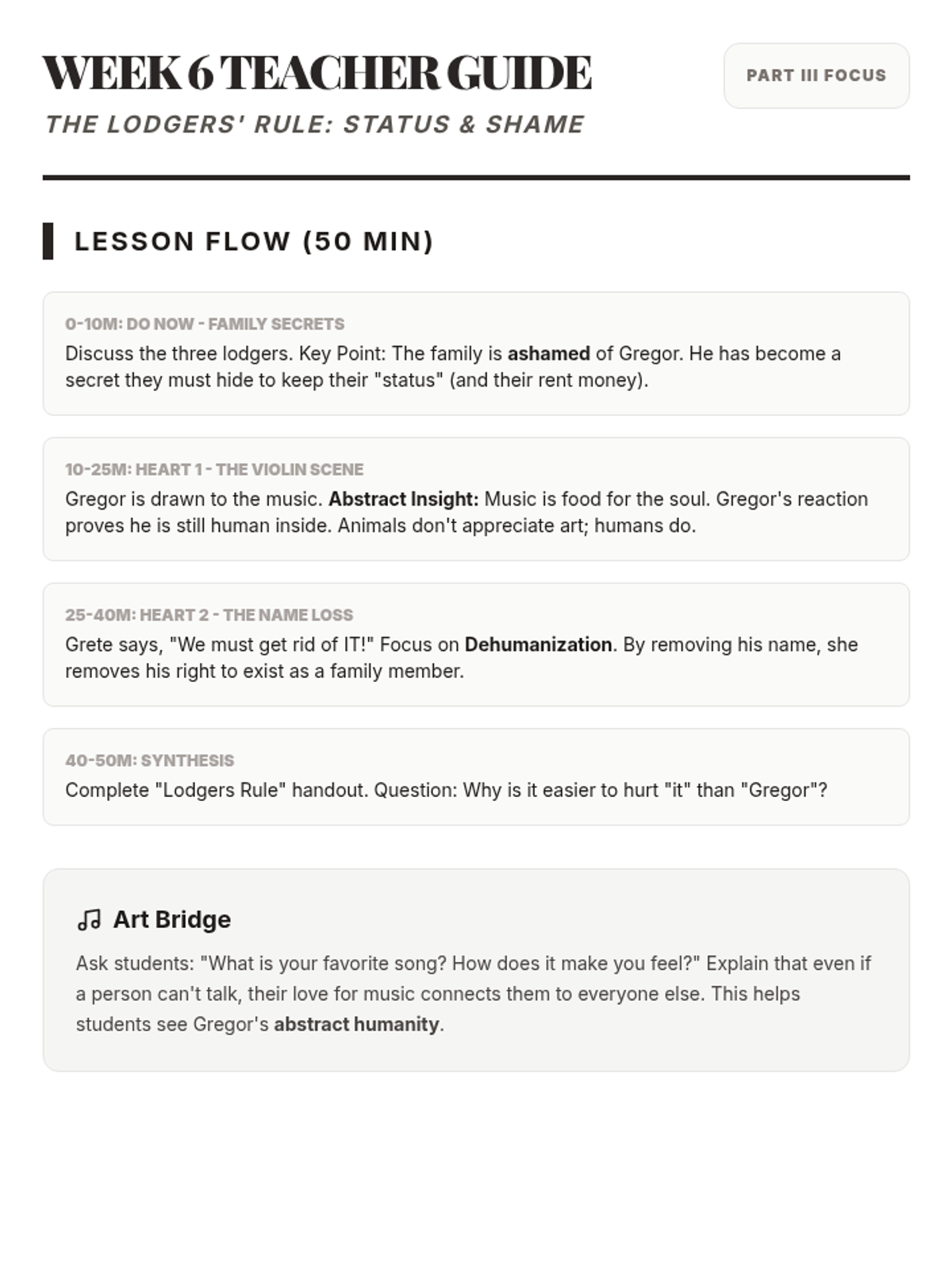
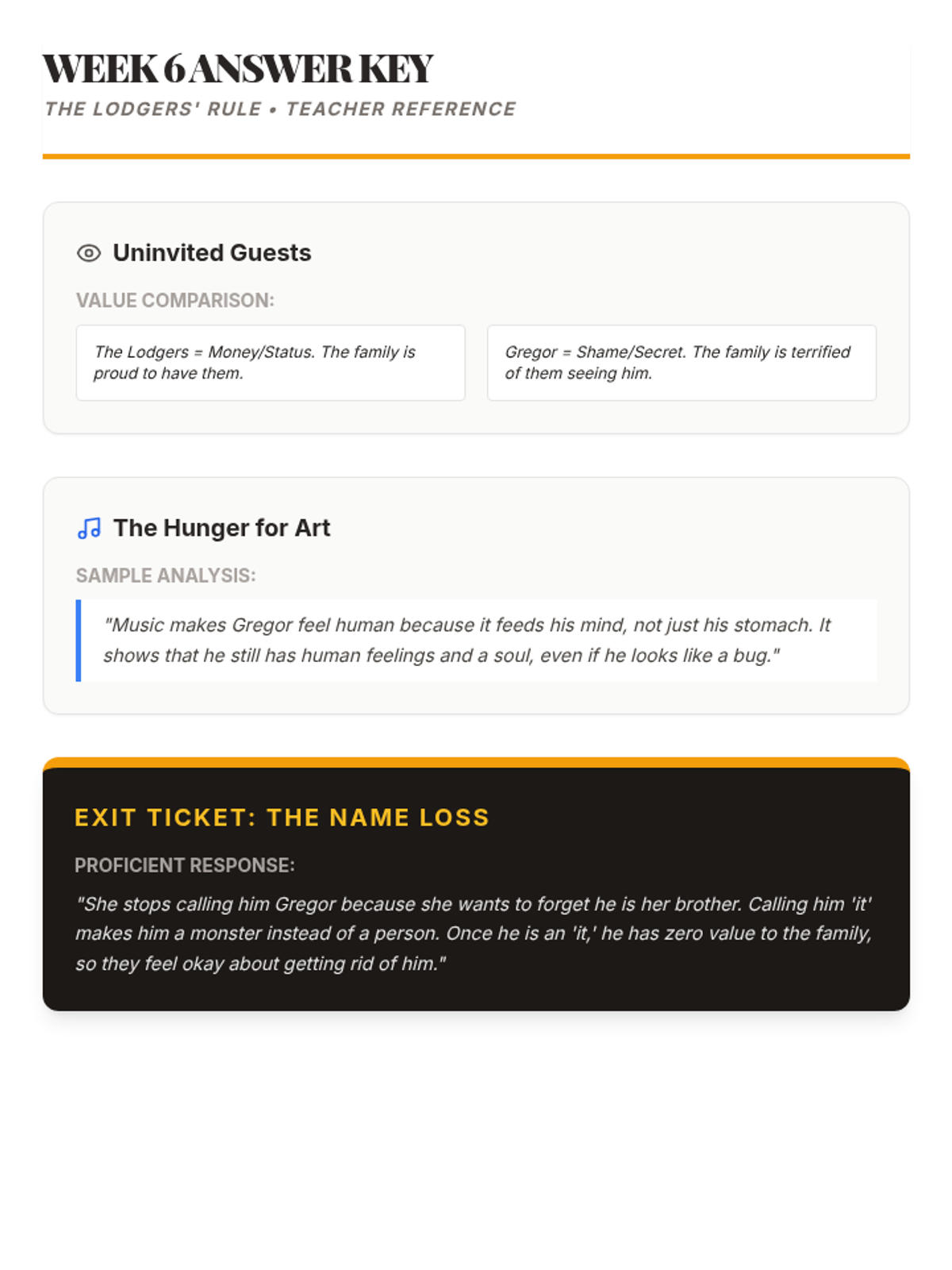
Focuses on Part III, the arrival of the boarders, and Gregor becoming a 'nuisance' in his own home.
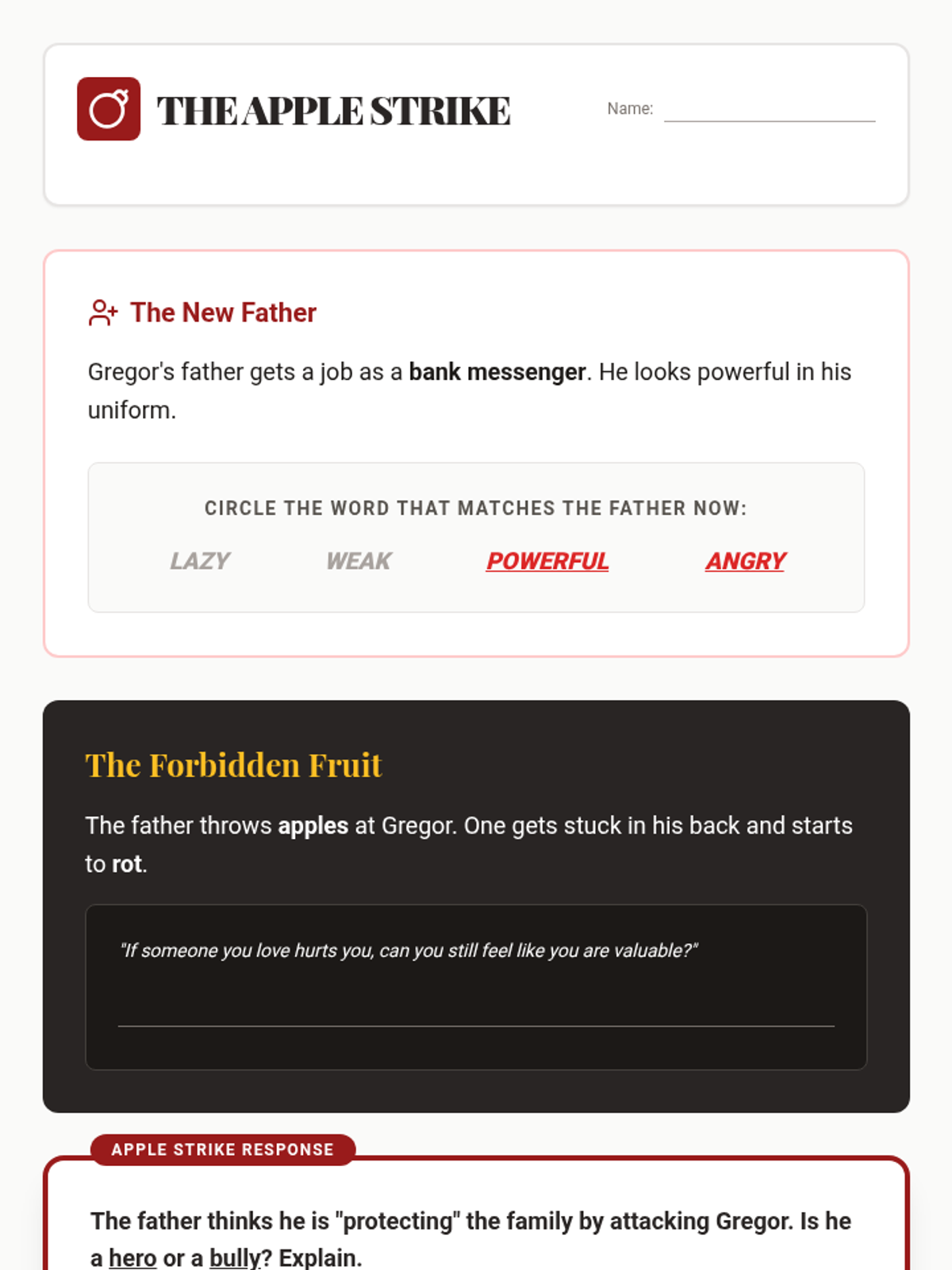
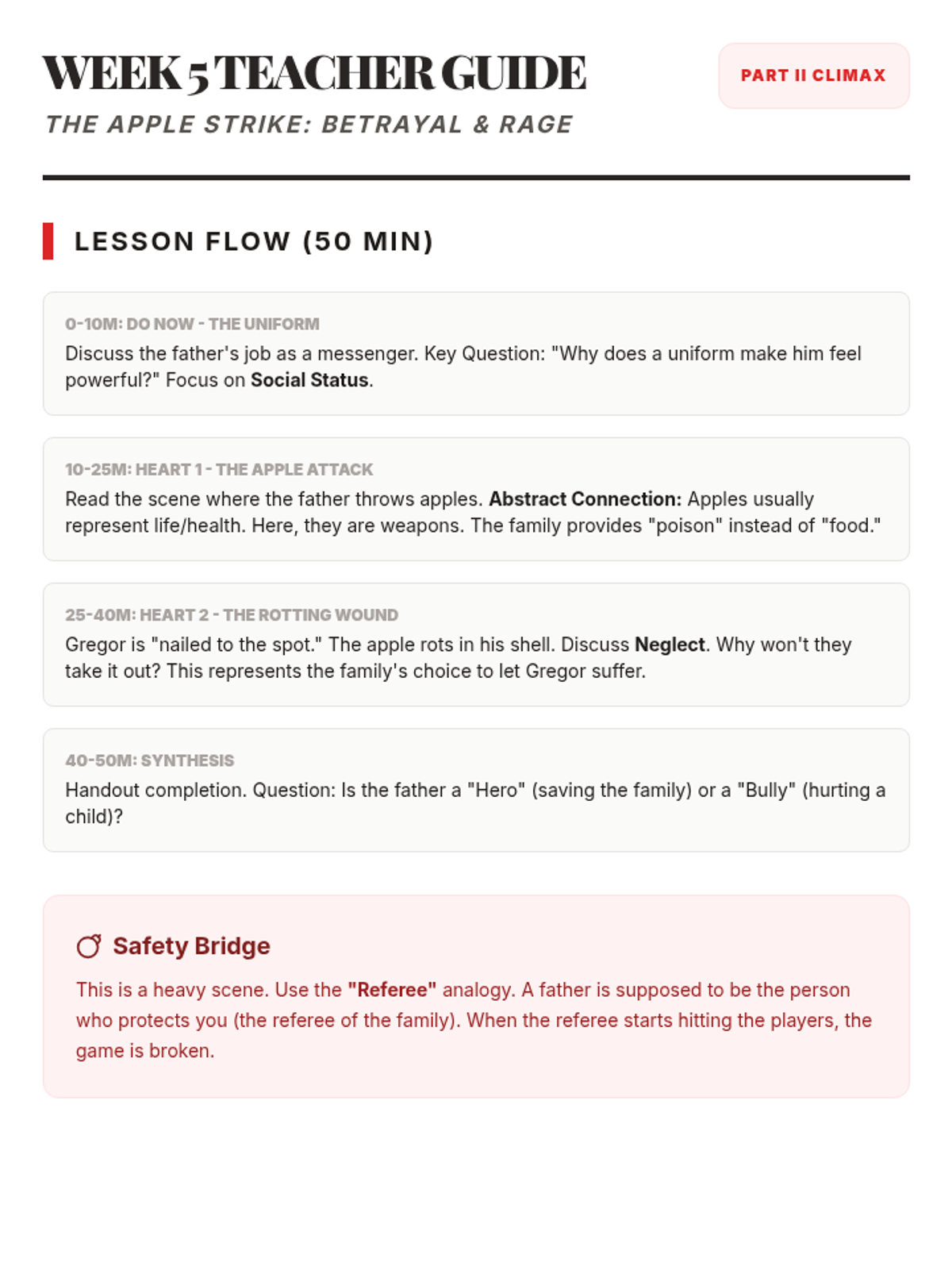
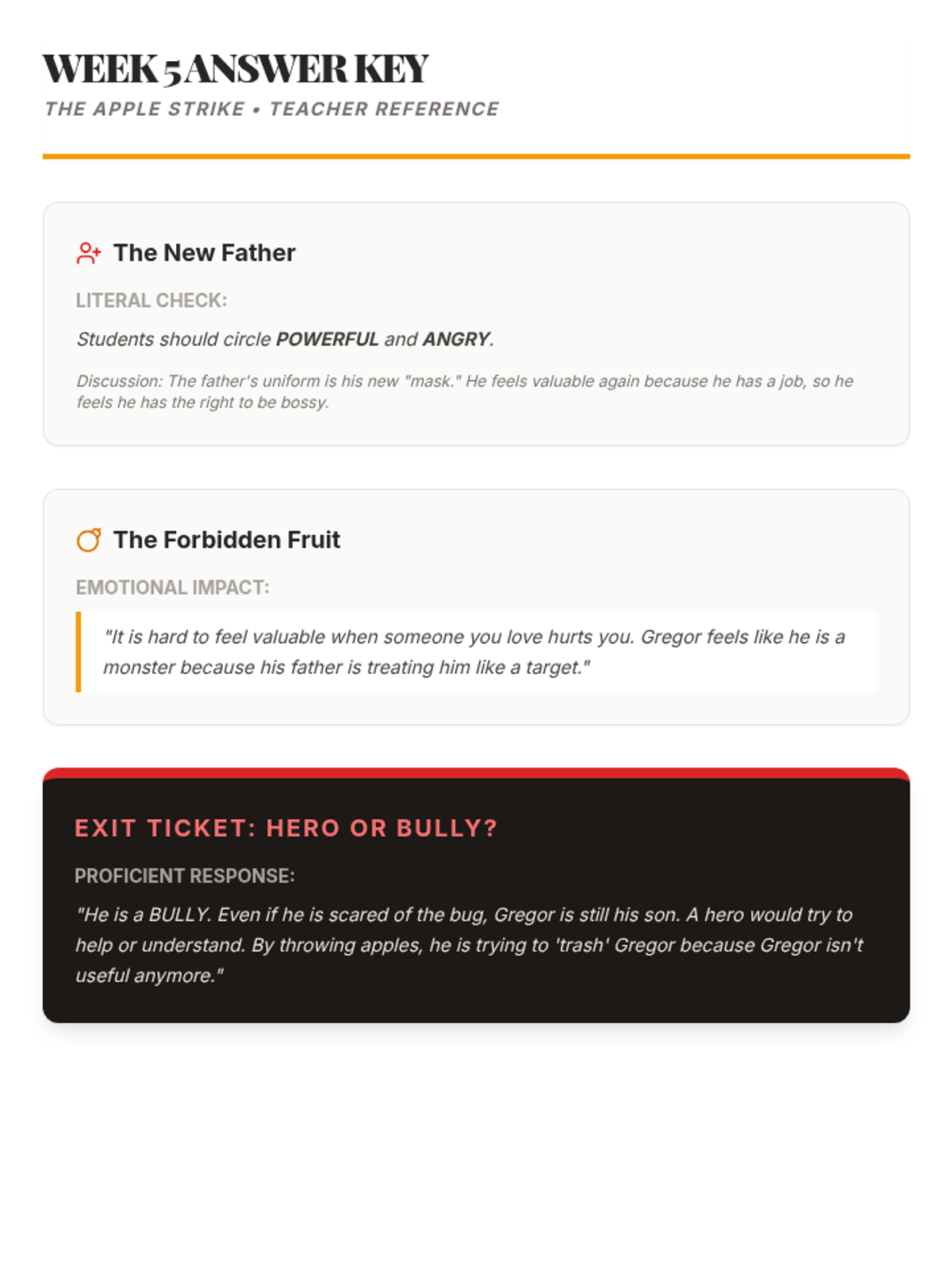
Analyzes the climax of Part II, the father's return to work, and the symbolic 'apple' attack on Gregor.
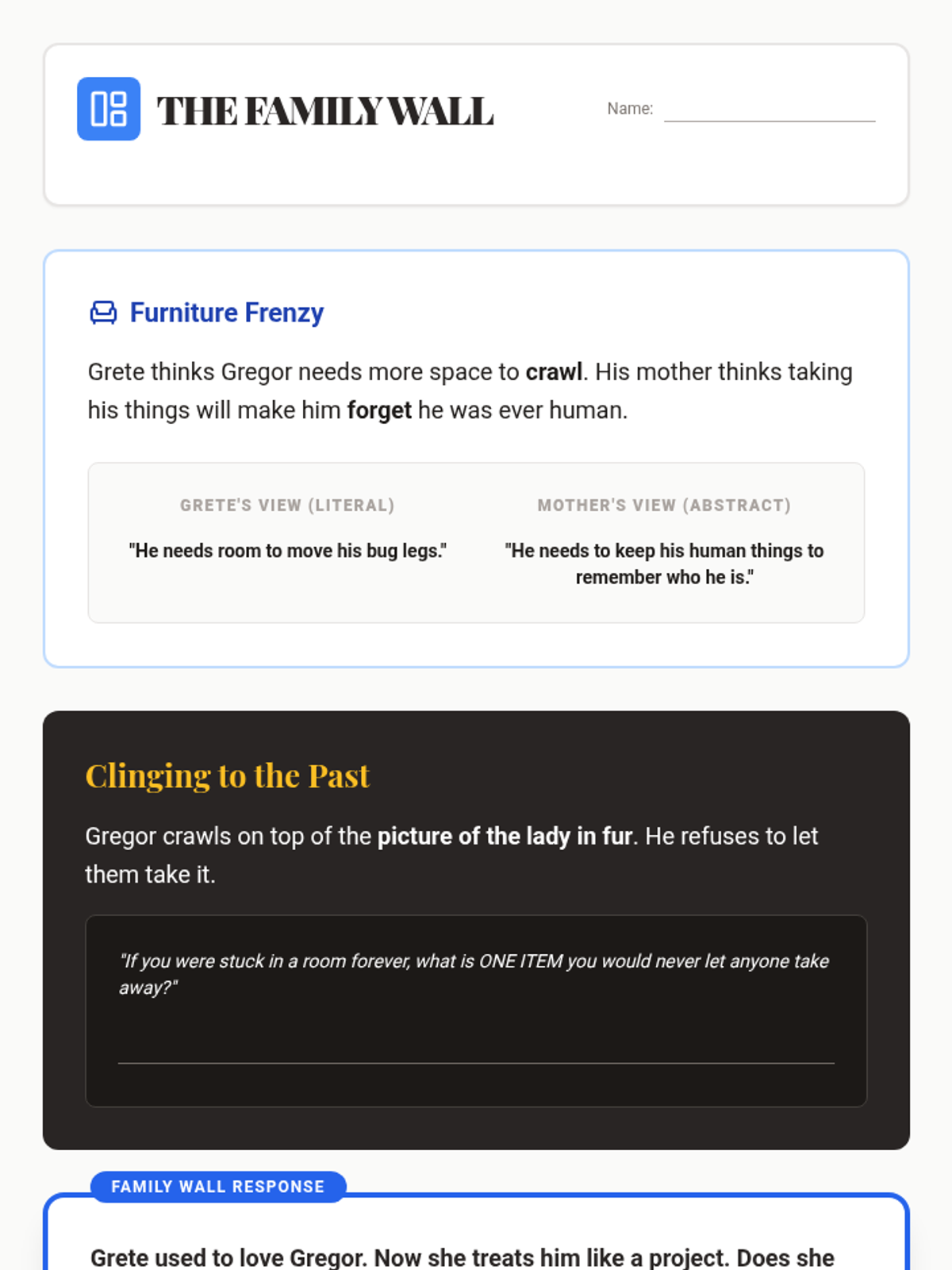
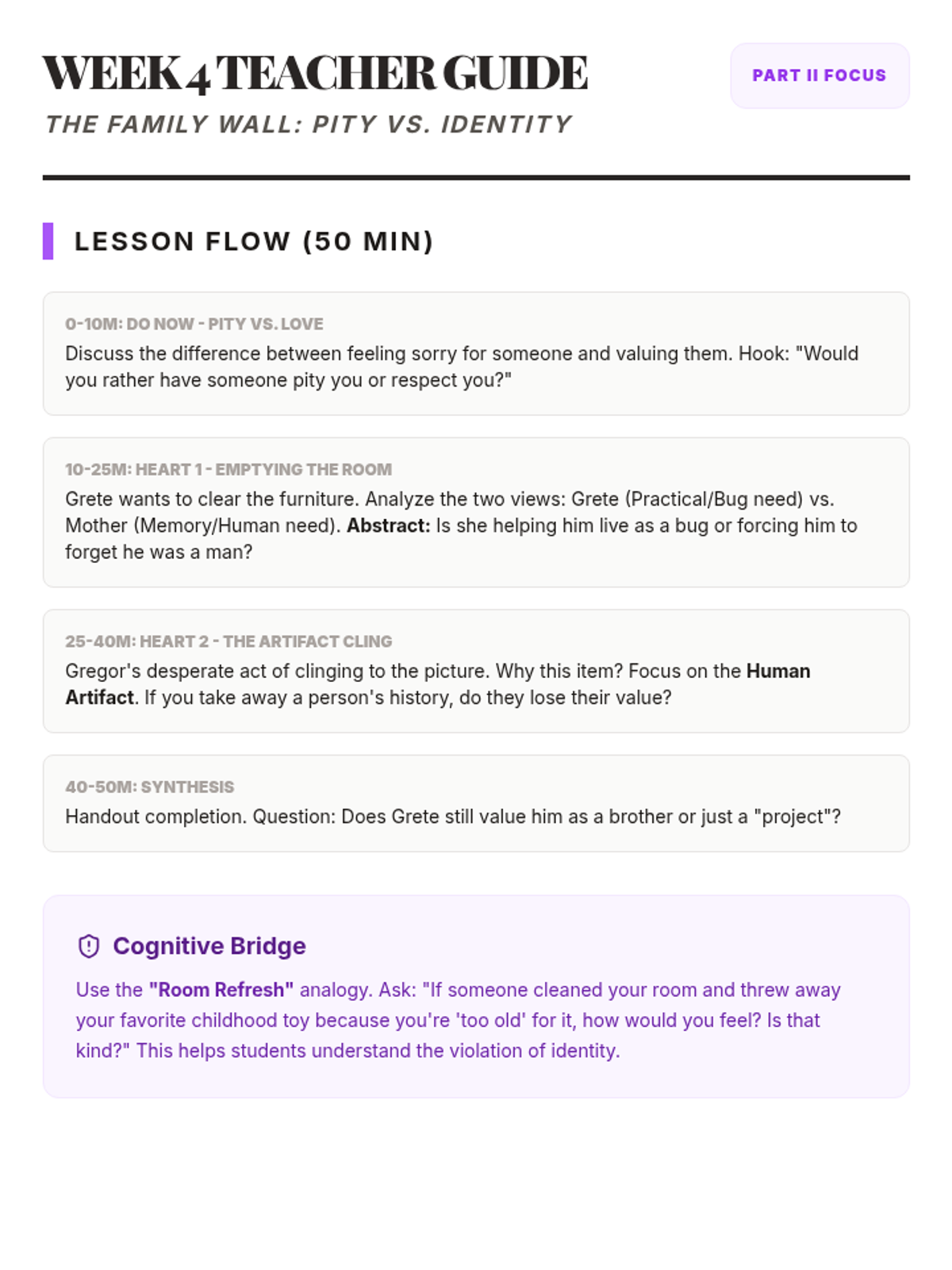
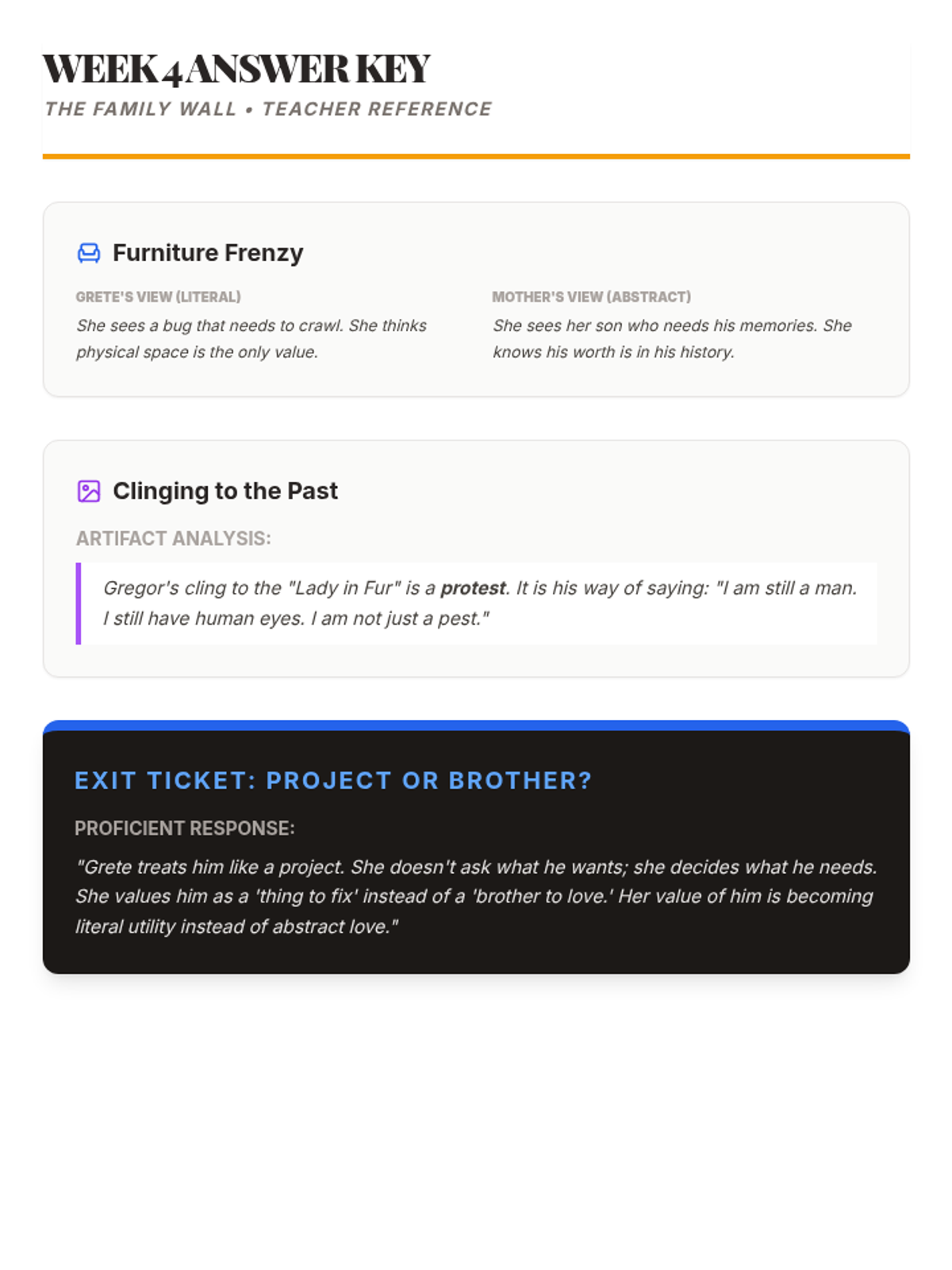
Explores the changing relationship between Gregor and Grete, the moving of the furniture, and the concept of 'pity' vs 'value'.
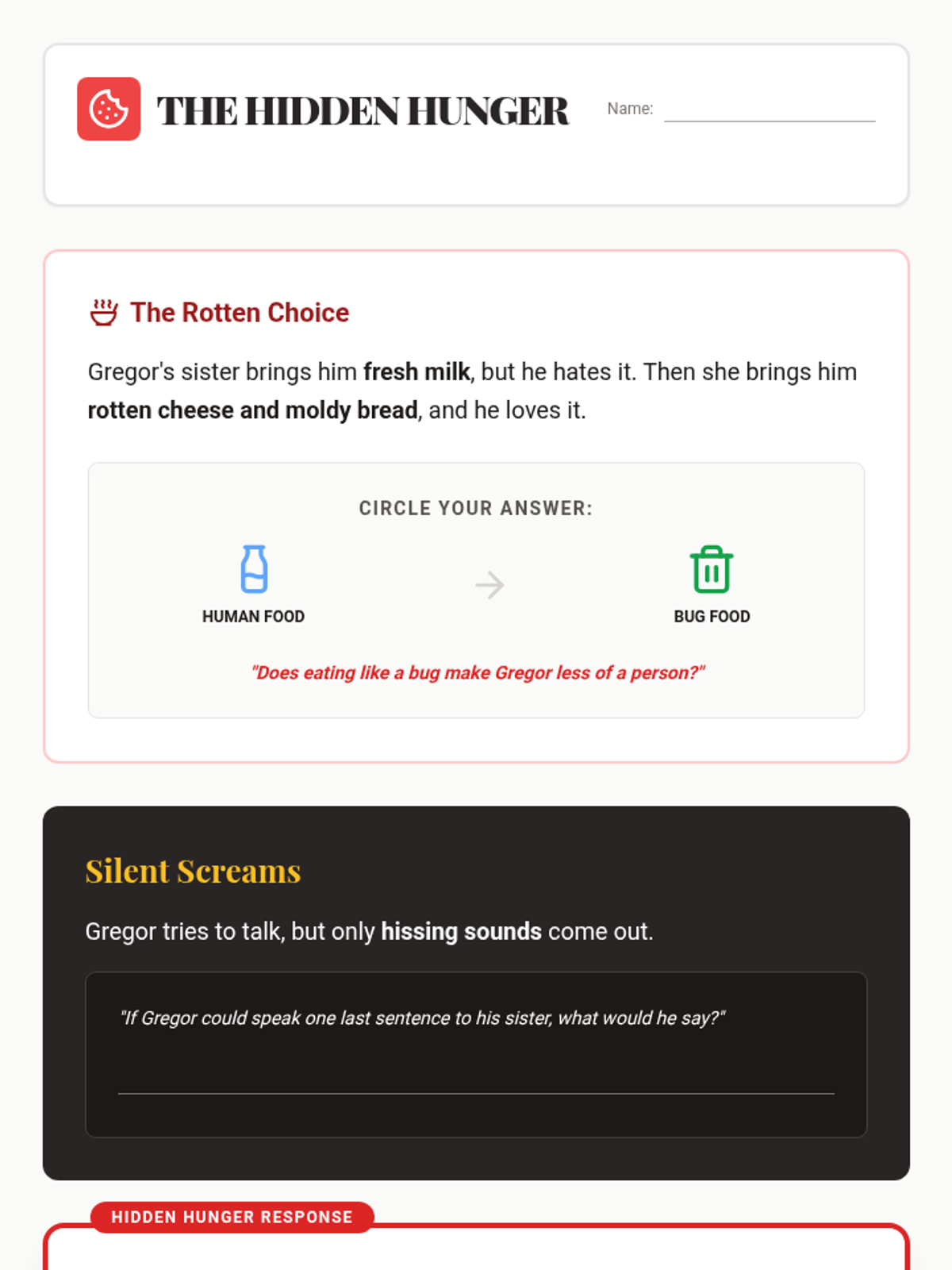
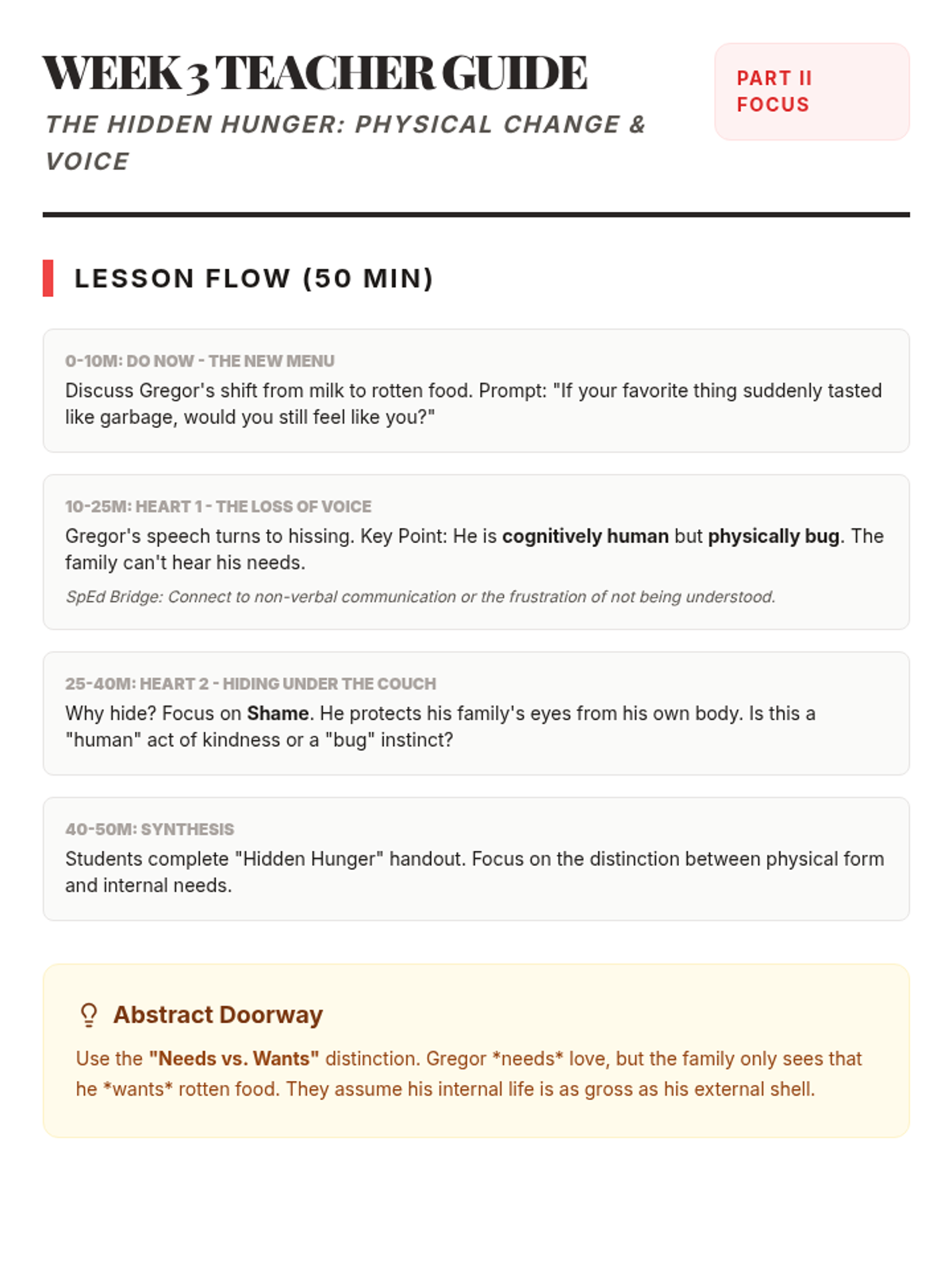
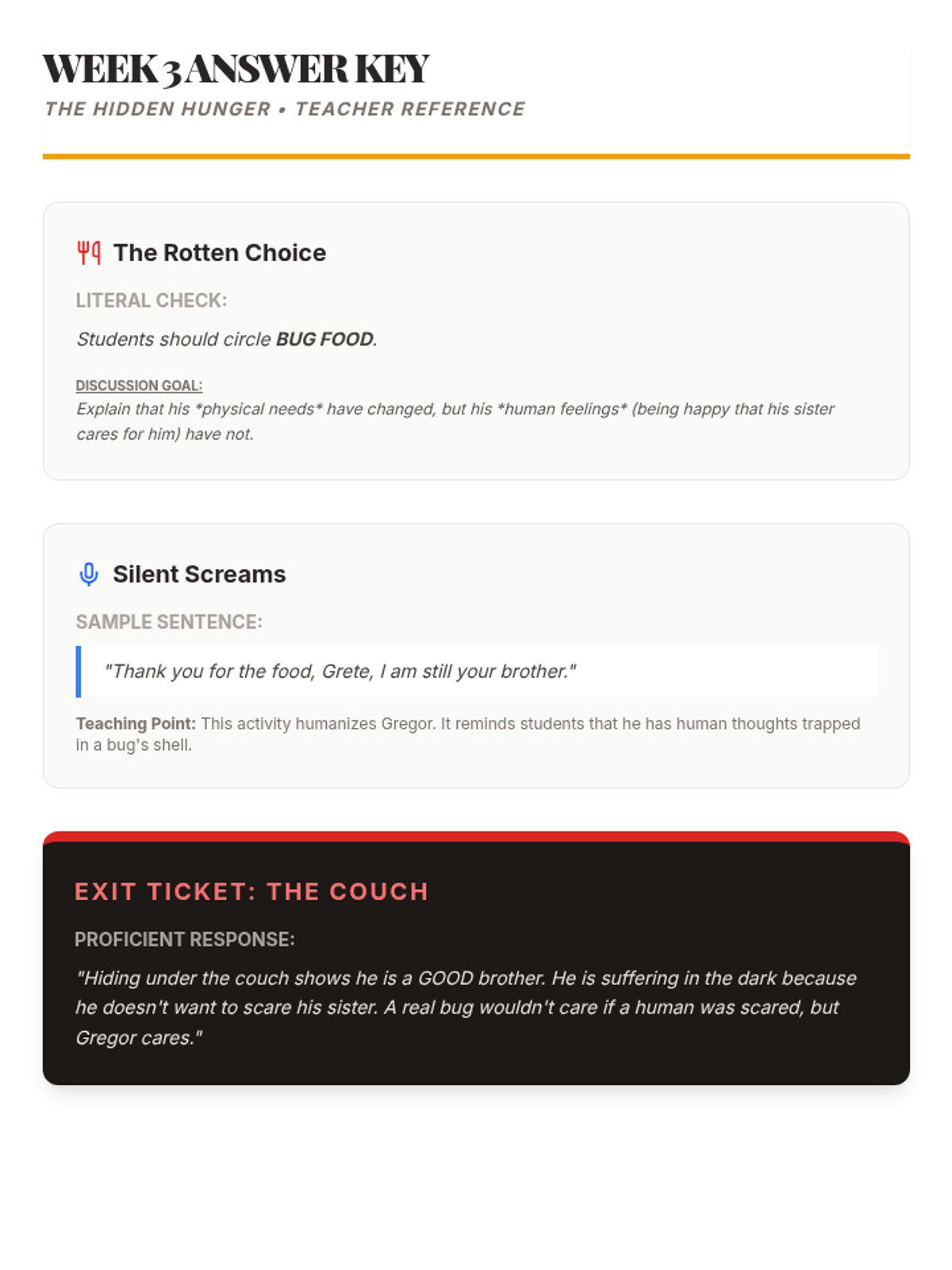
Covers the transition to Part II, focusing on Gregor's physical changes, his new diet, and the loss of his human voice.
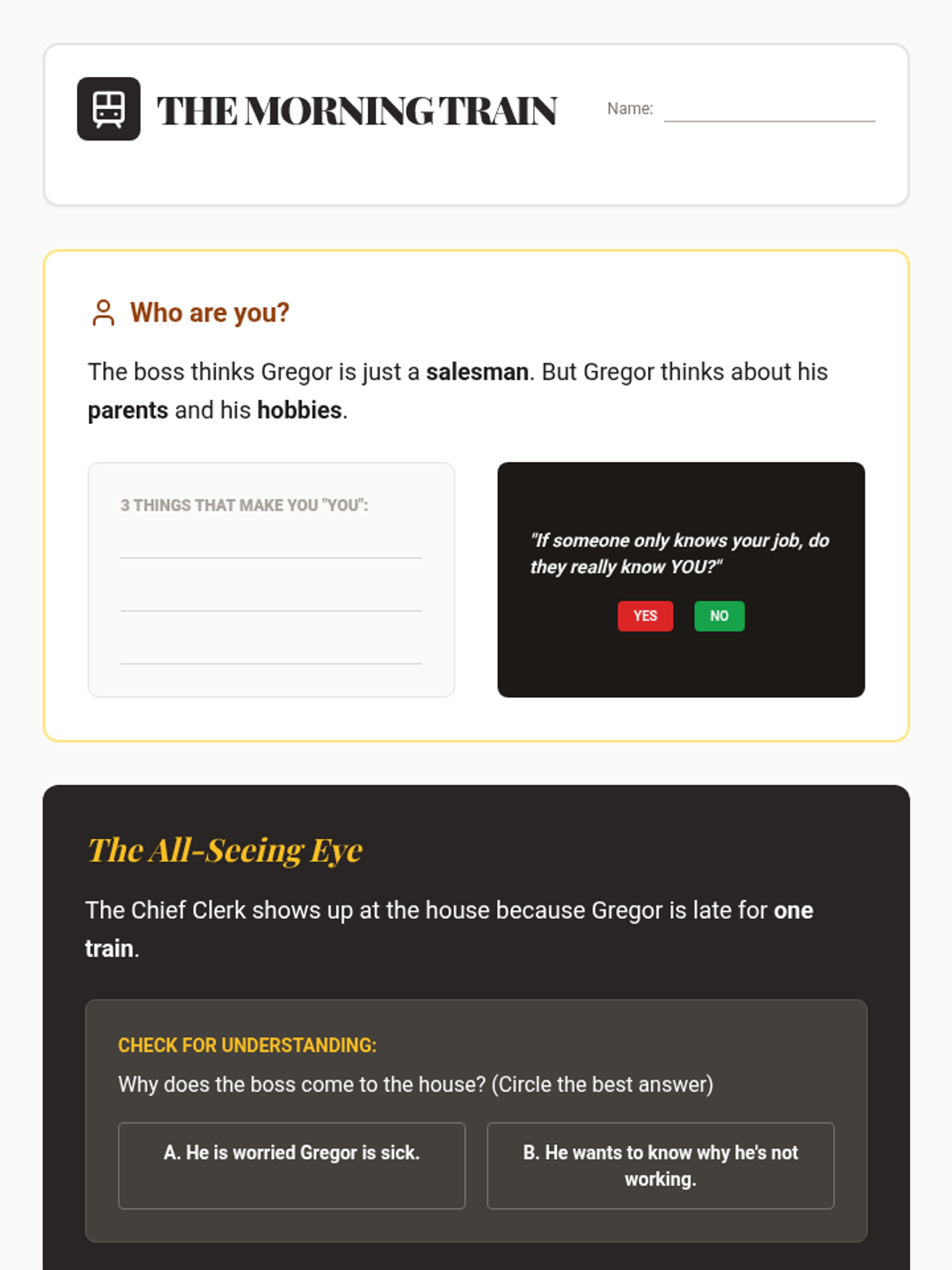
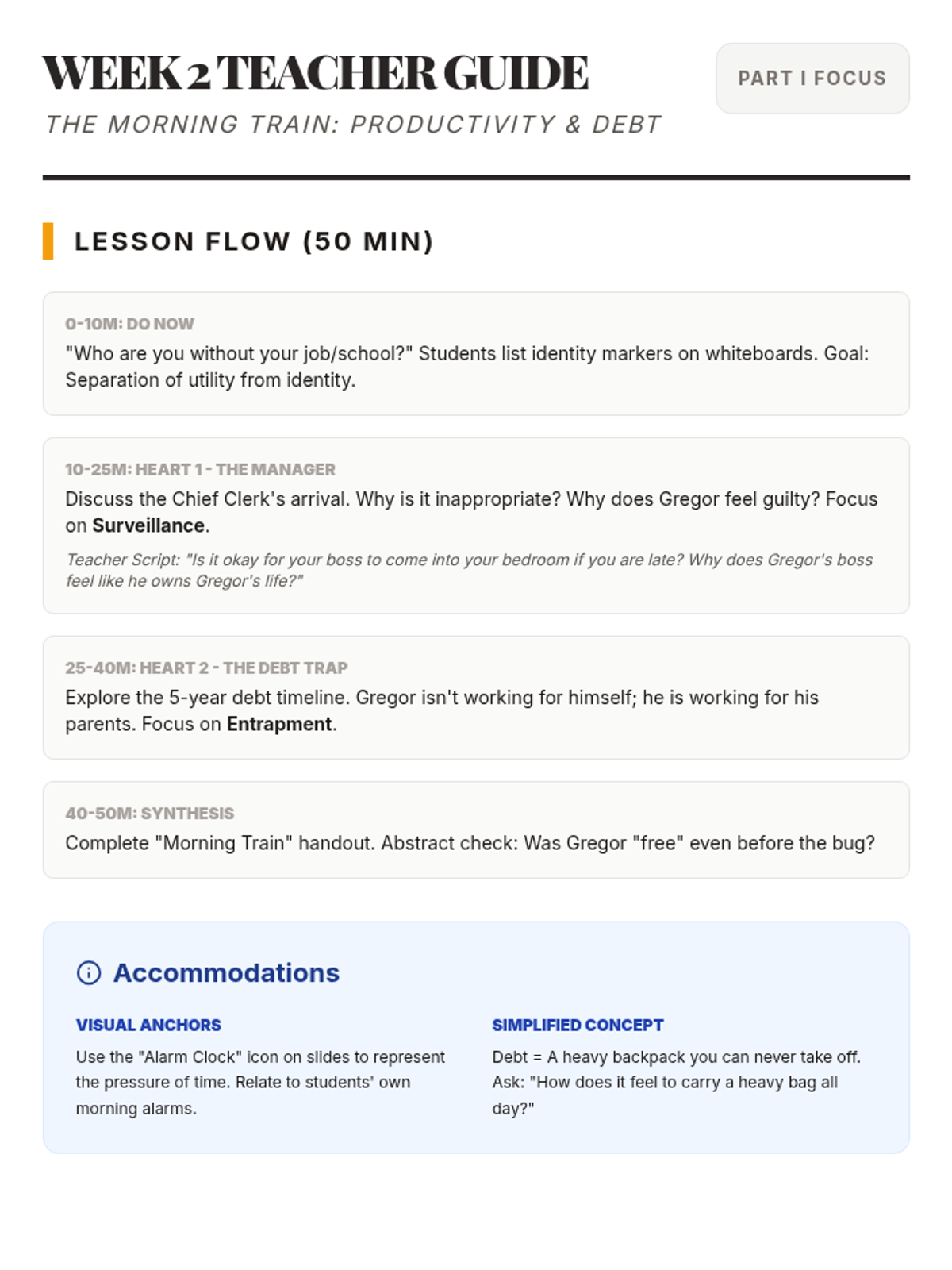
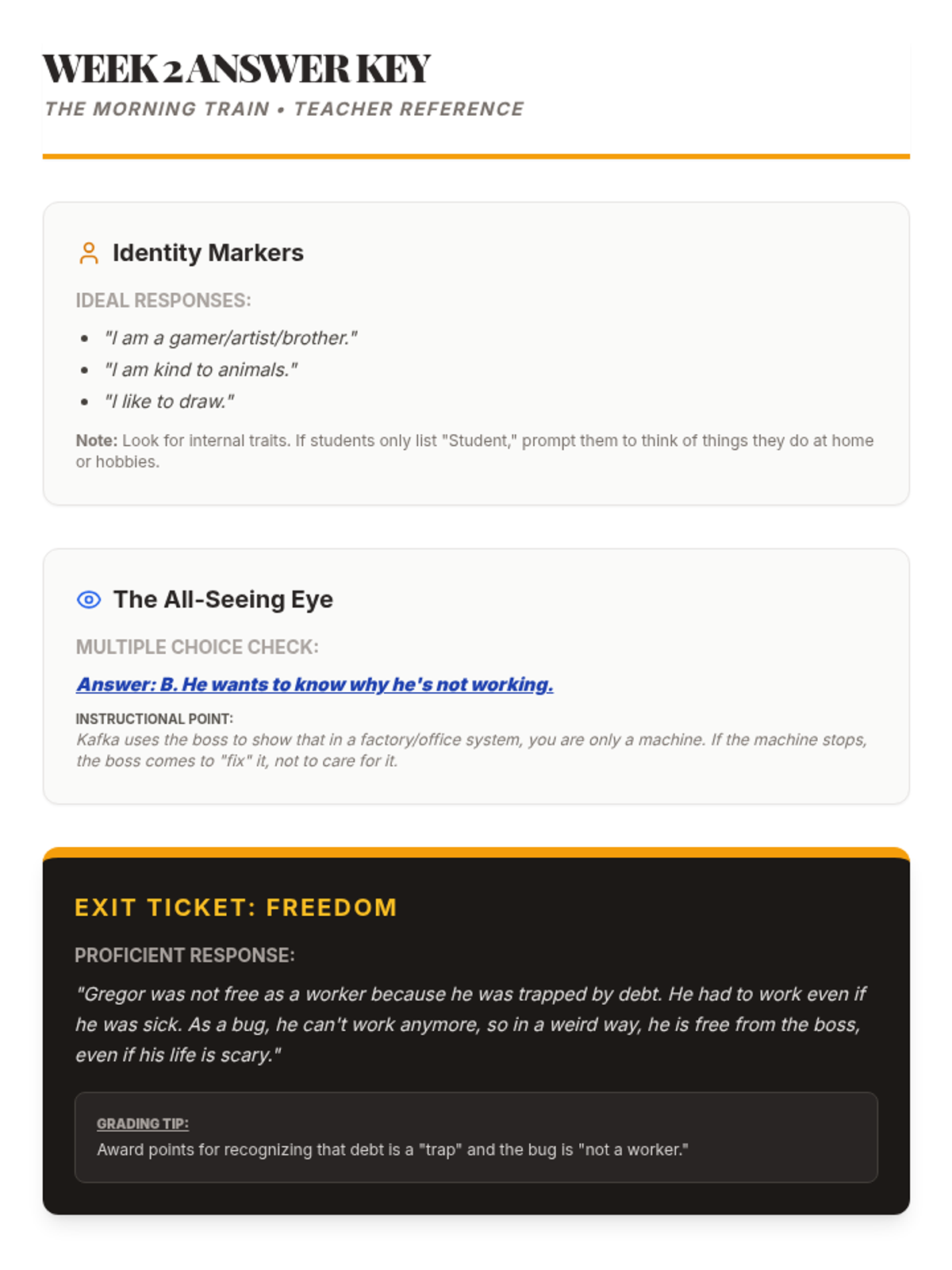
A focus on Part I of the novella, exploring the theme of work as identity and the manager's visit as a symbol of surveillance.
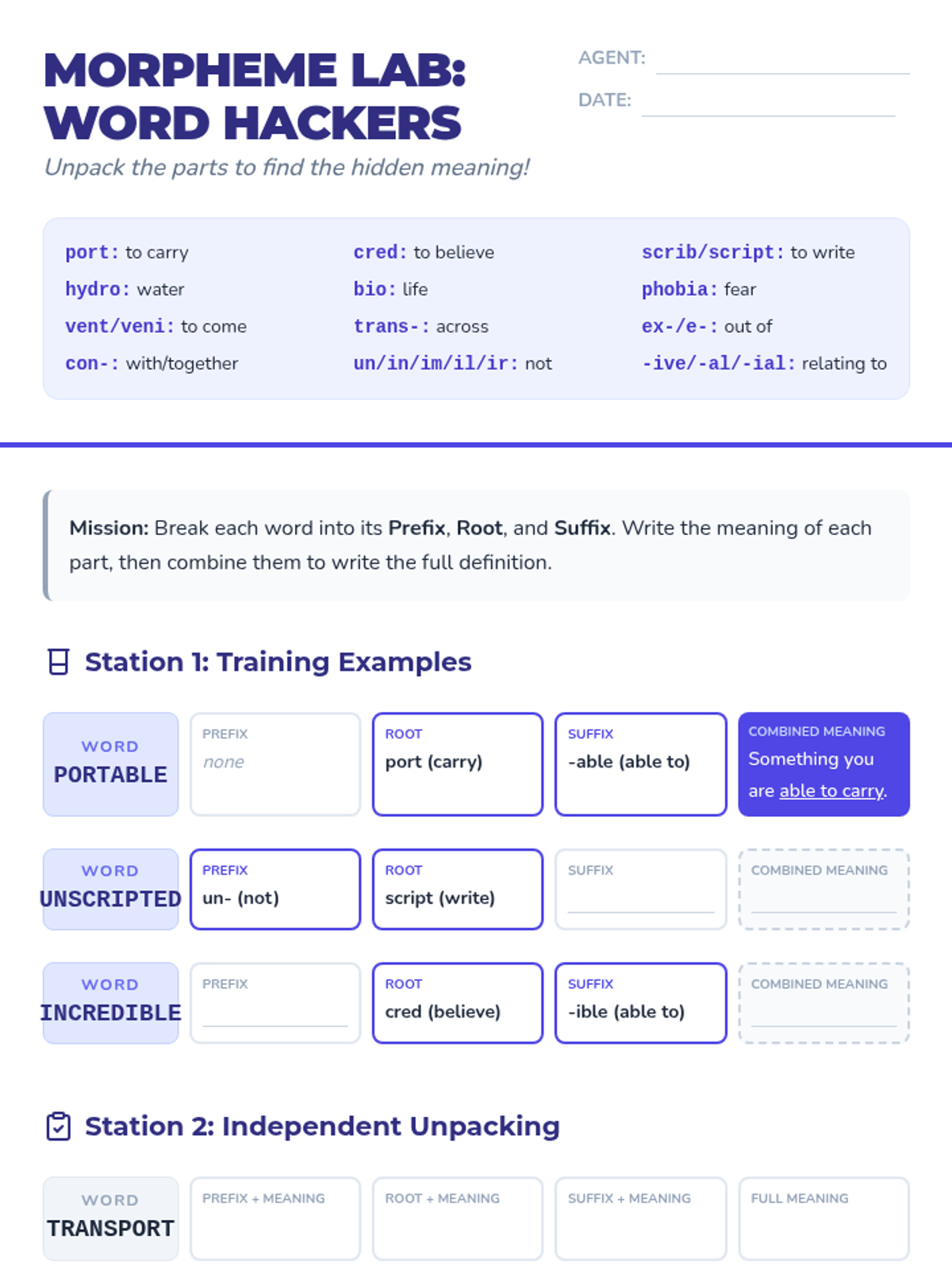
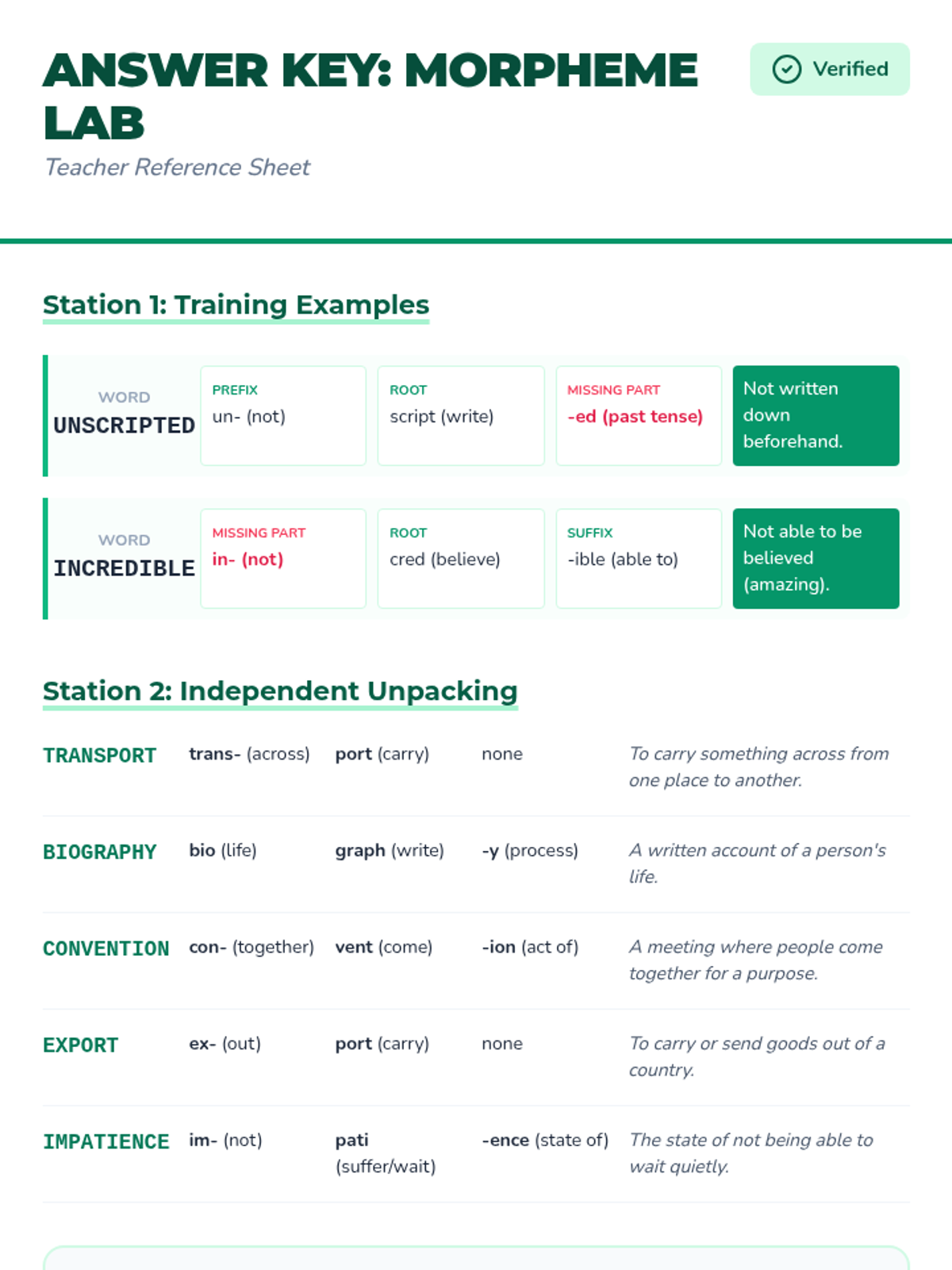
A 30-minute introductory lesson where students learn to decode complex words using a list of 24 common morphemes.
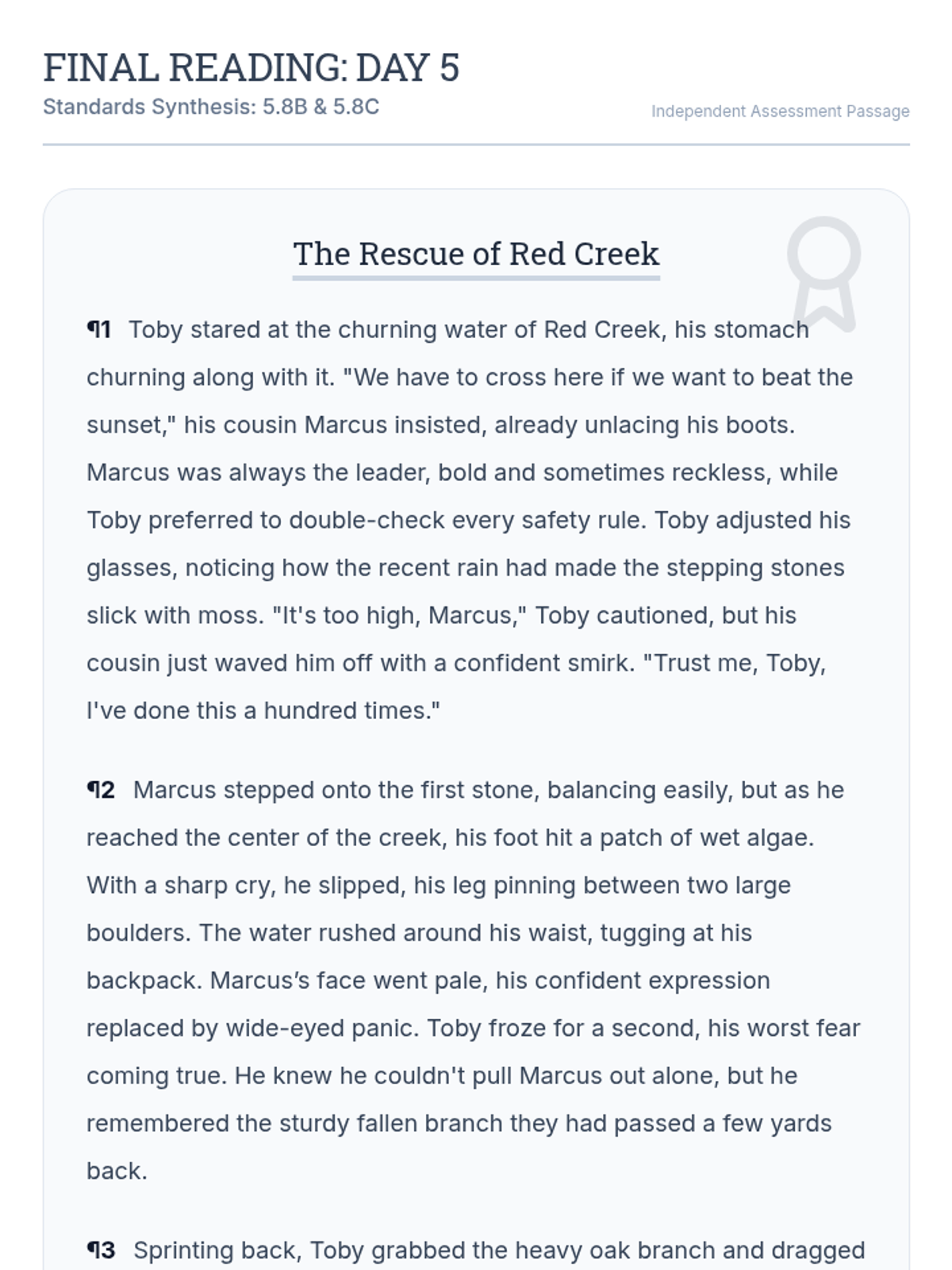
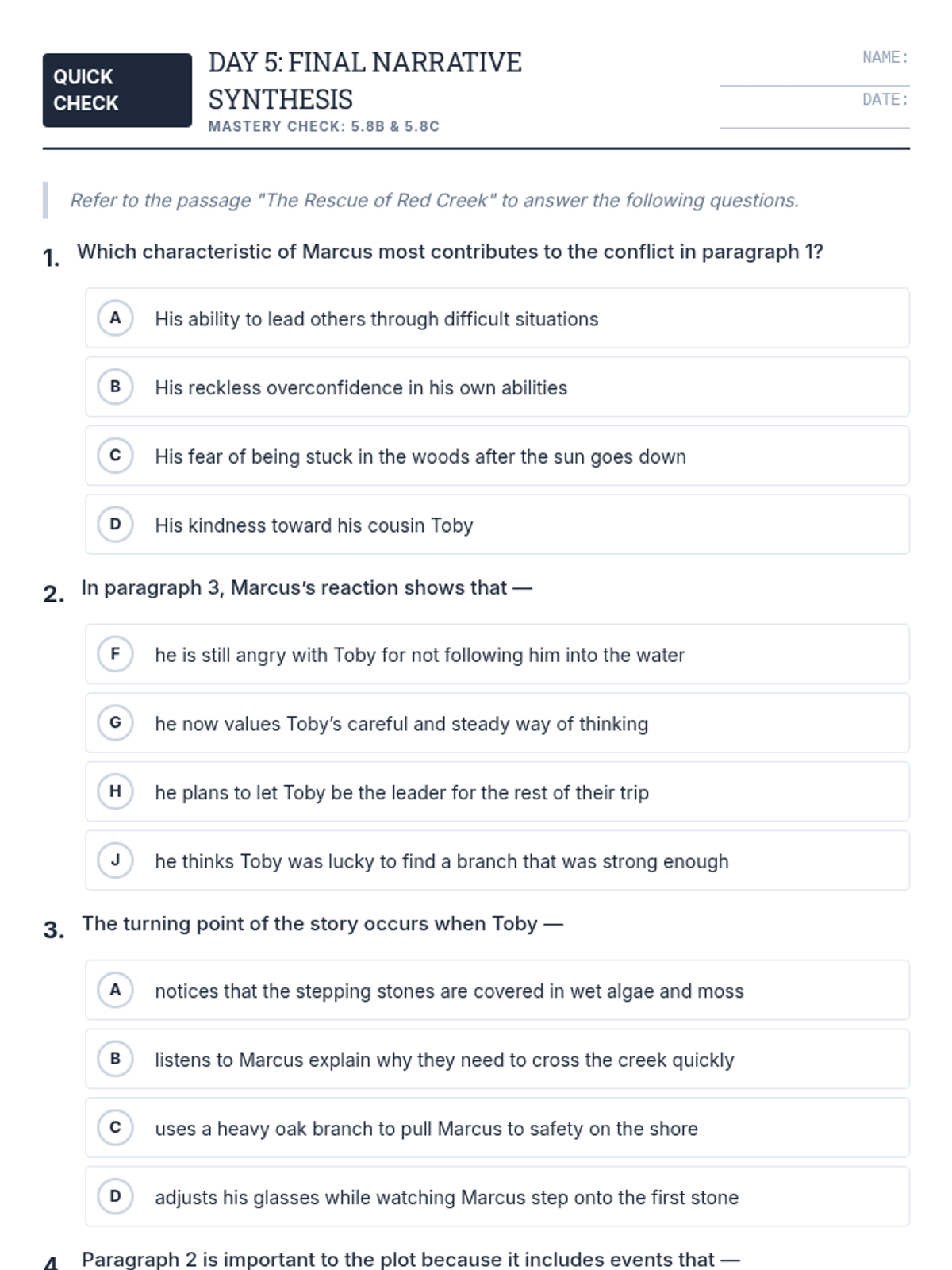
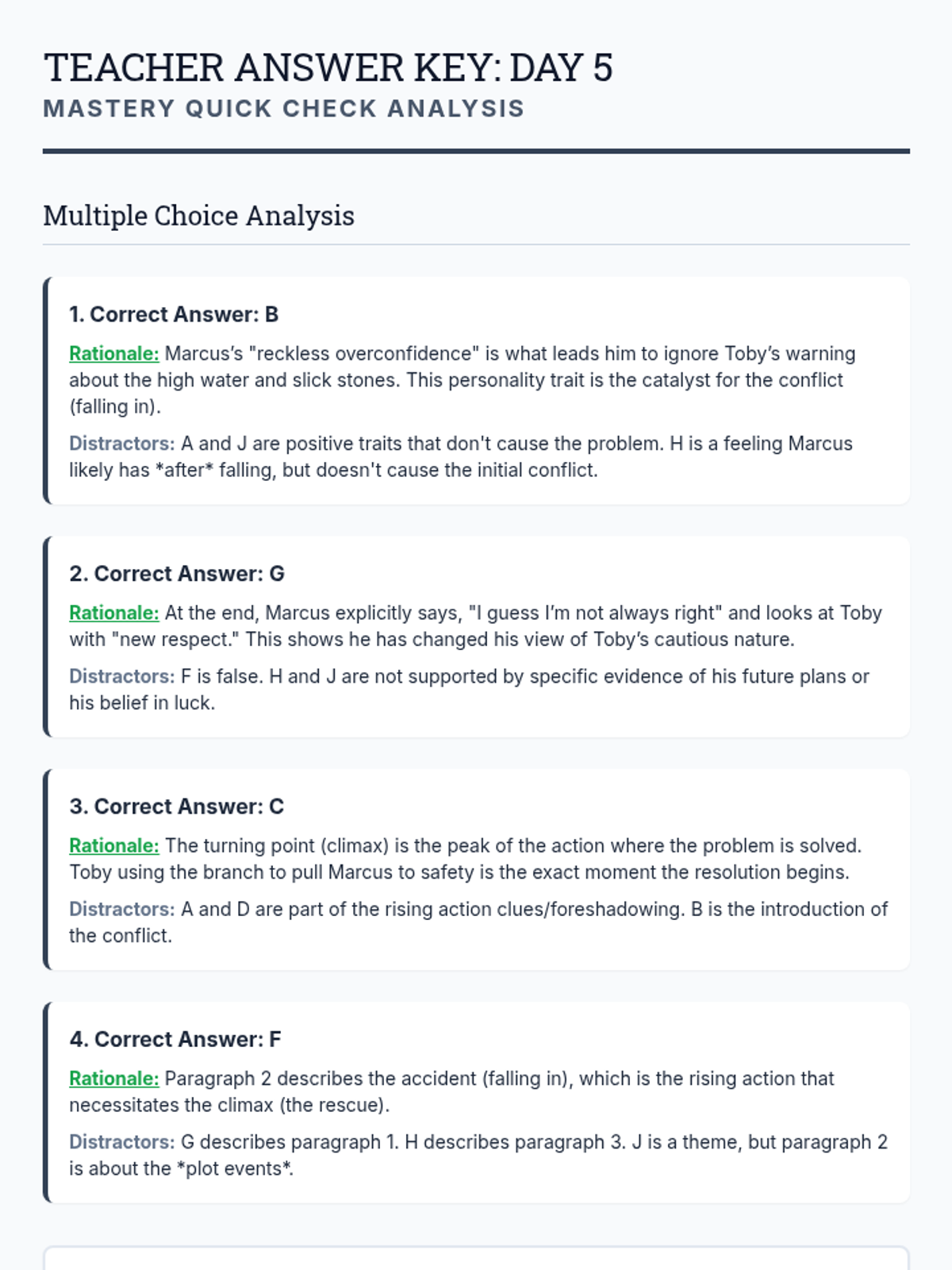
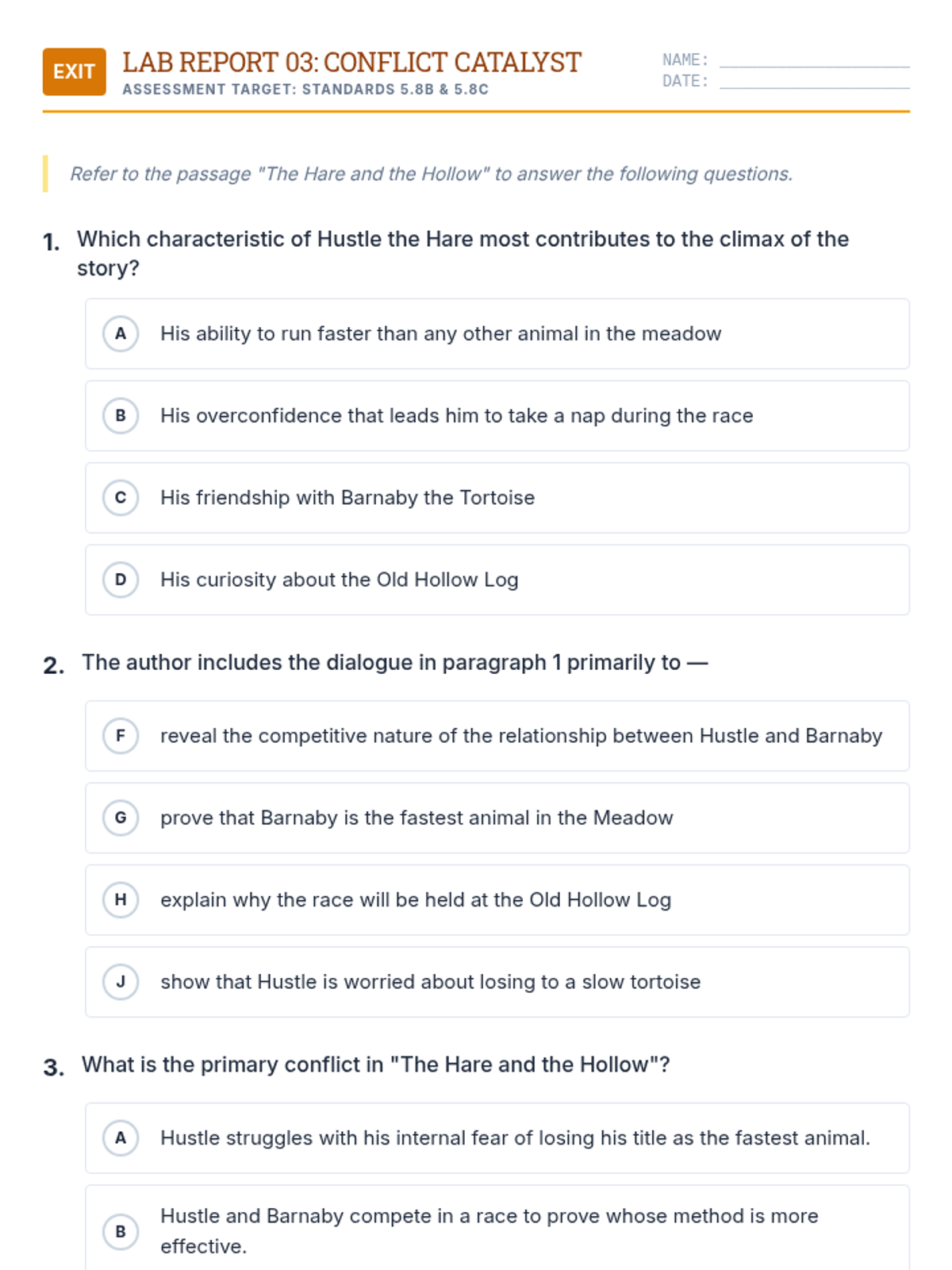
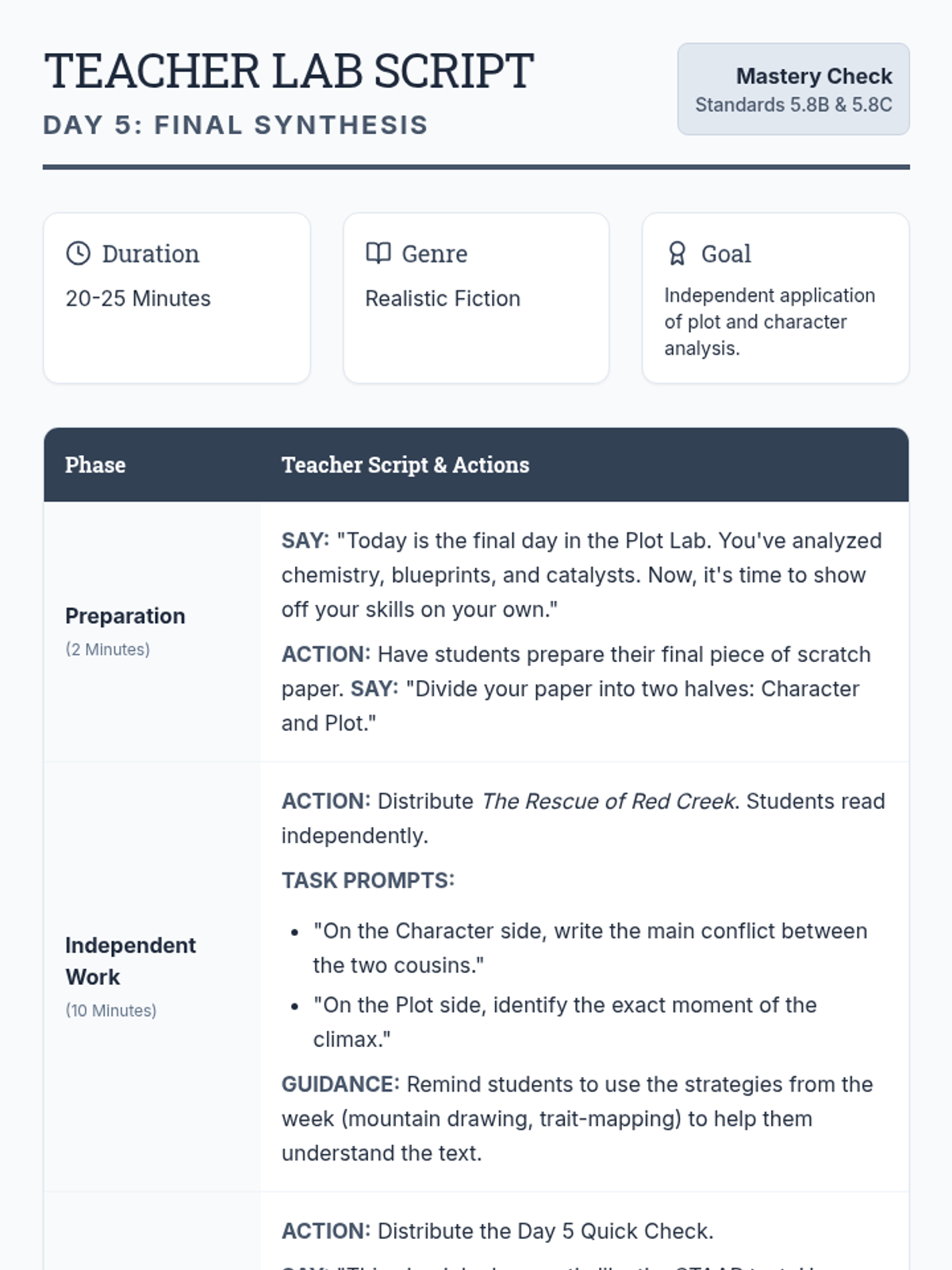
Day 5 serves as a final comprehensive quick check. Students read a new passage independently and apply their analysis of character relationships and plot structure to demonstrate mastery of standards 5.8B and 5.8C.
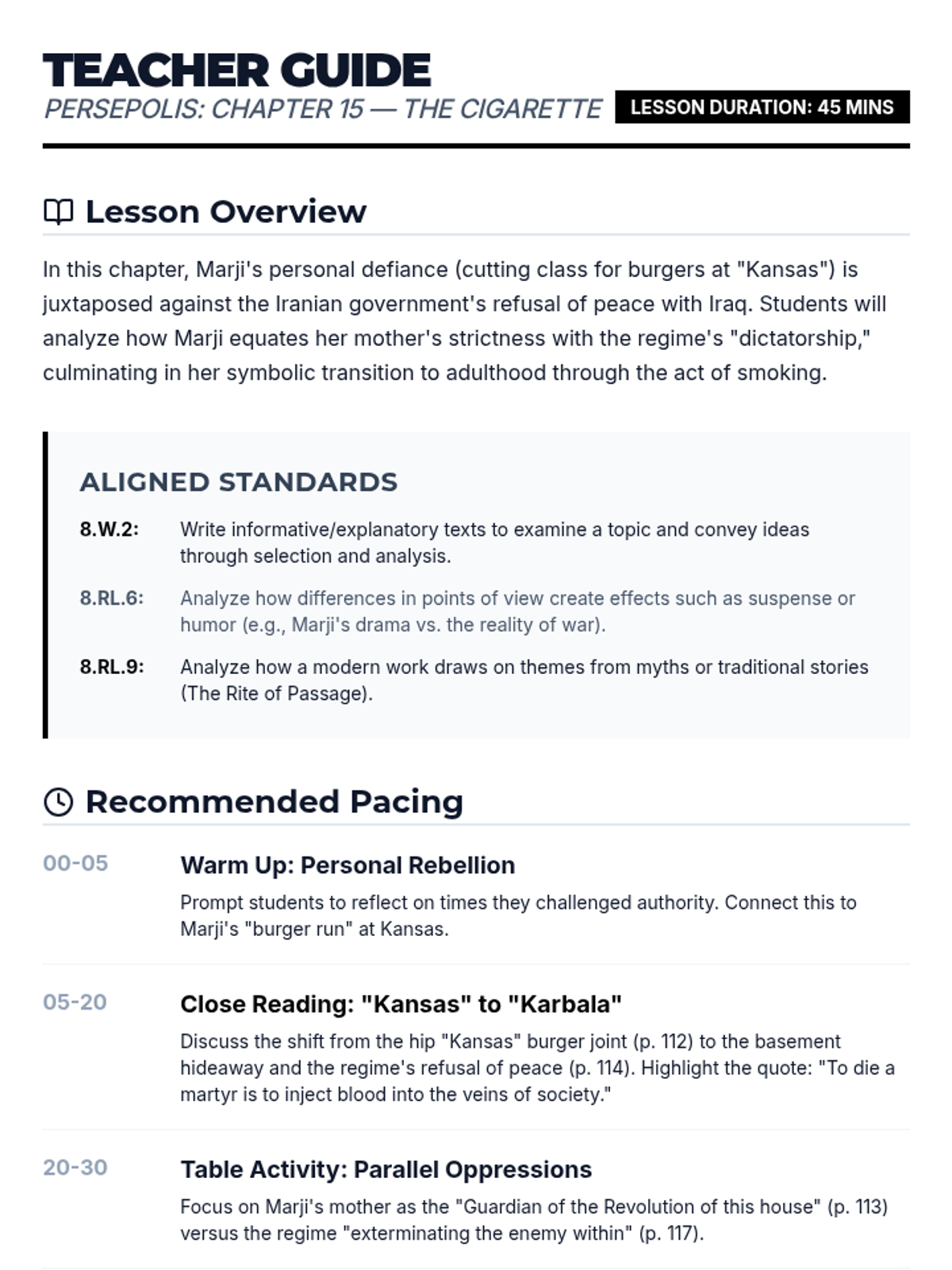
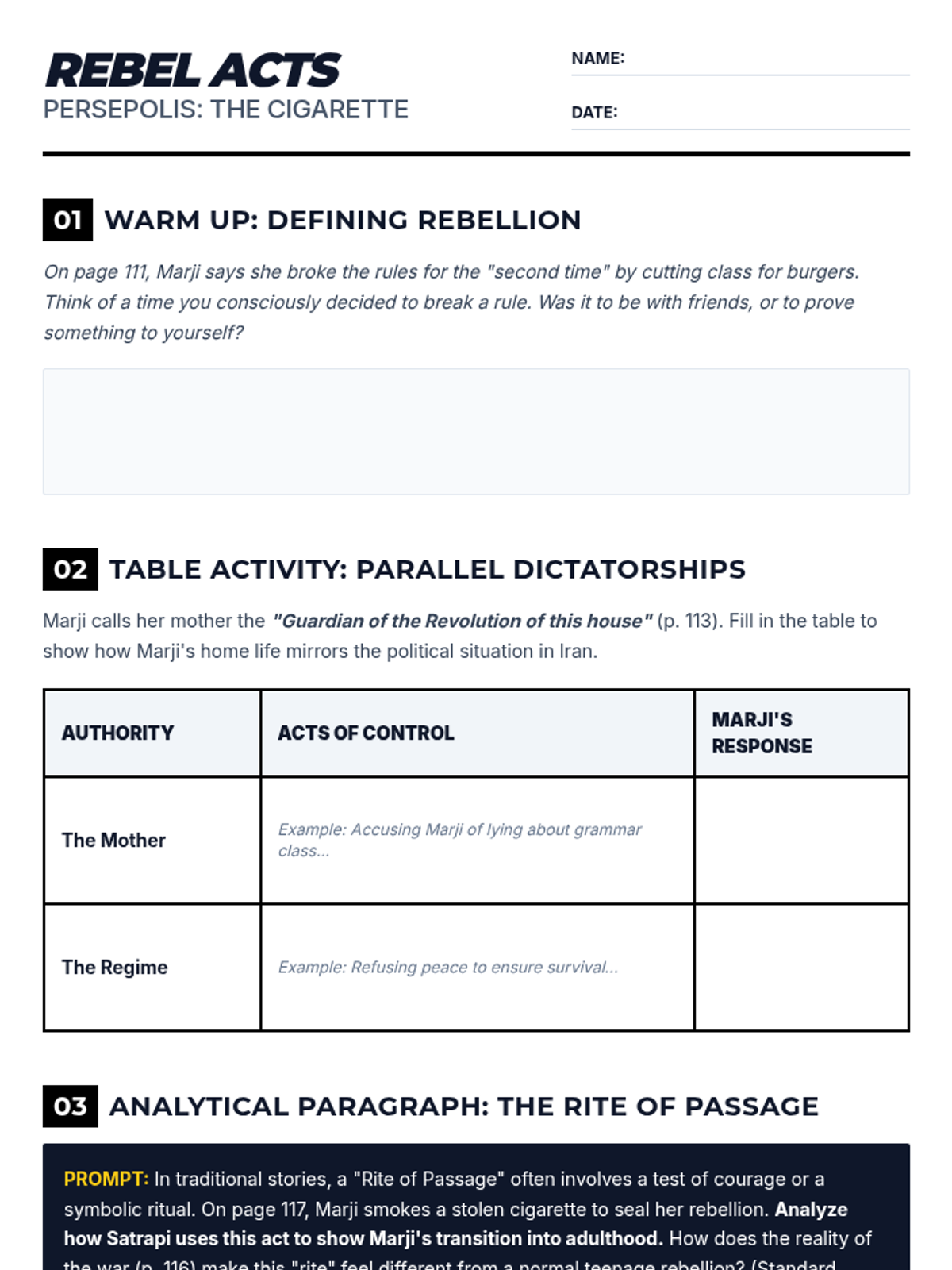
An 8th-grade ELA lesson focused on Chapter 15 ('The Cigarette') of Persepolis, exploring themes of coming-of-age, rebellion, and oppression through analytical writing and collaborative discussion.
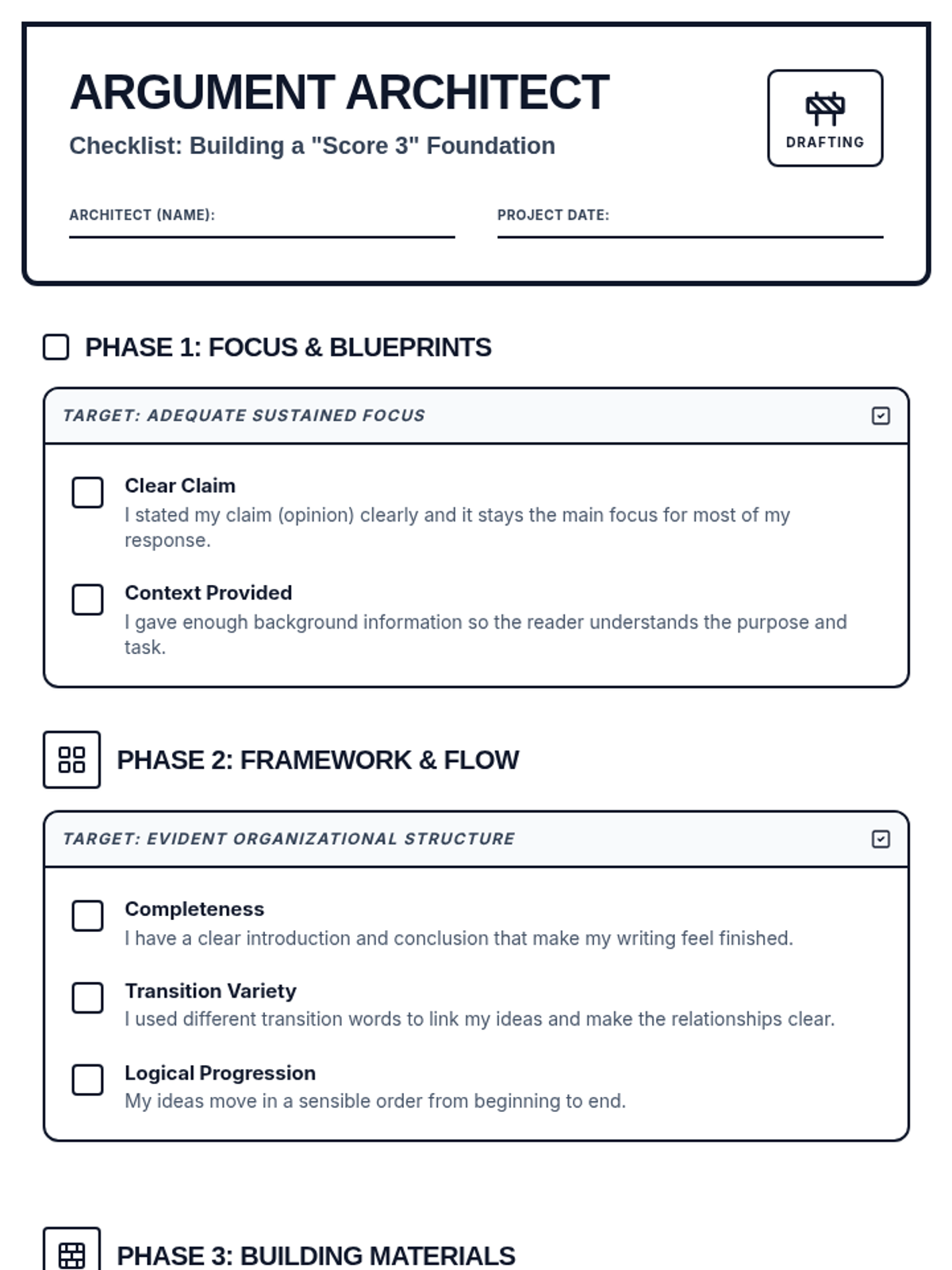
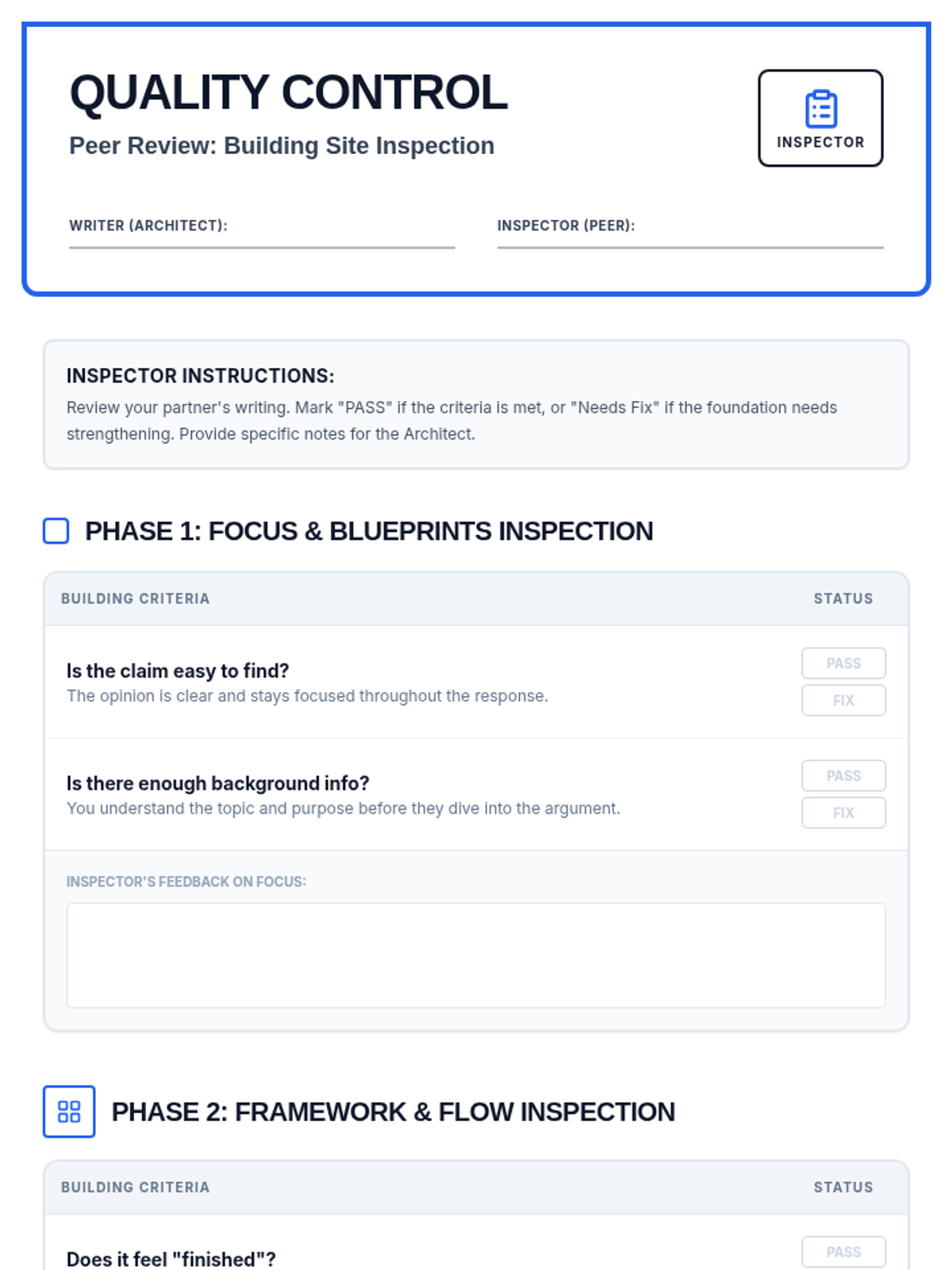
A lesson focused on helping students master the criteria for successful argumentative writing using a student-friendly checklist based on state-aligned rubrics.
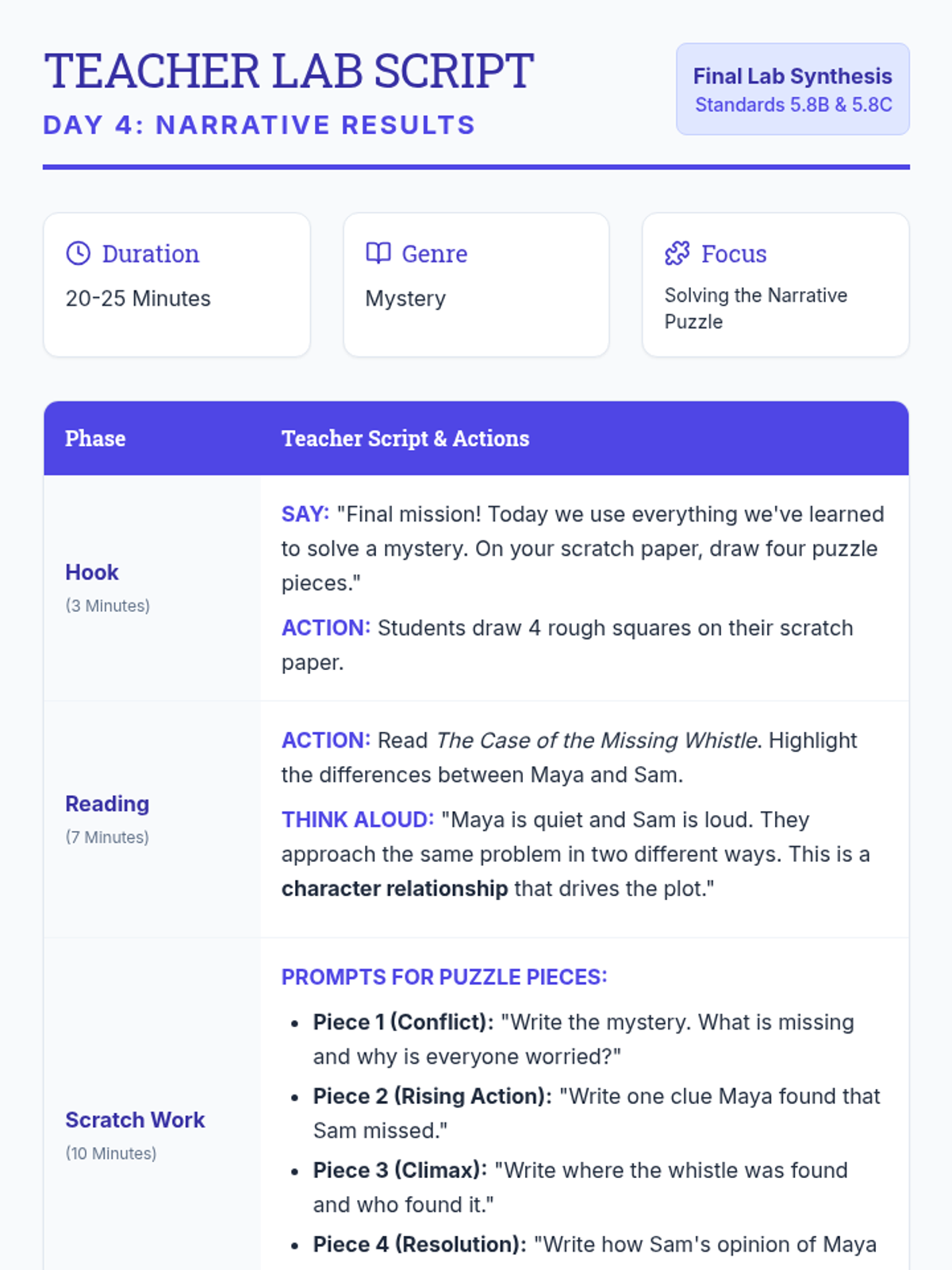
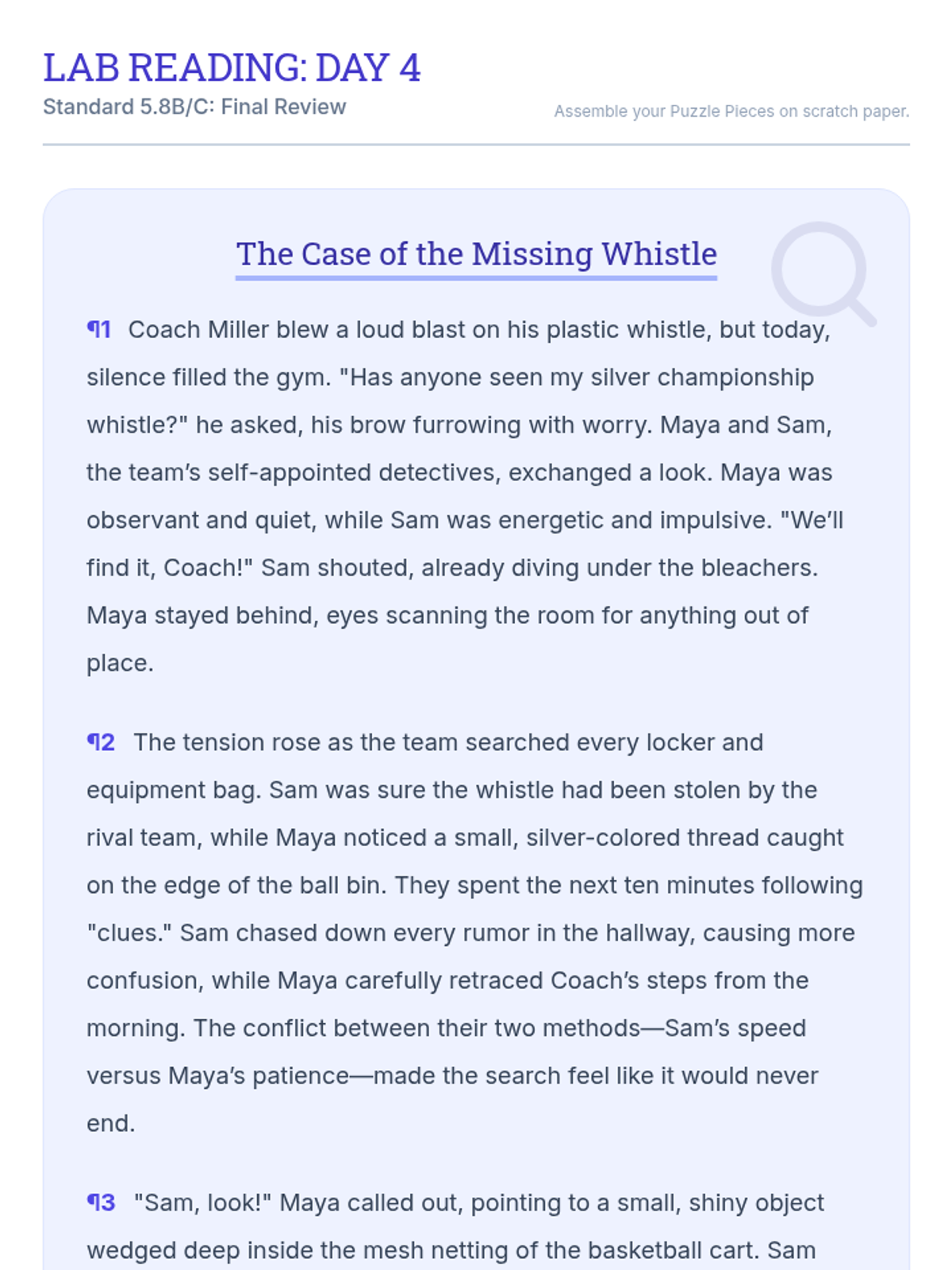
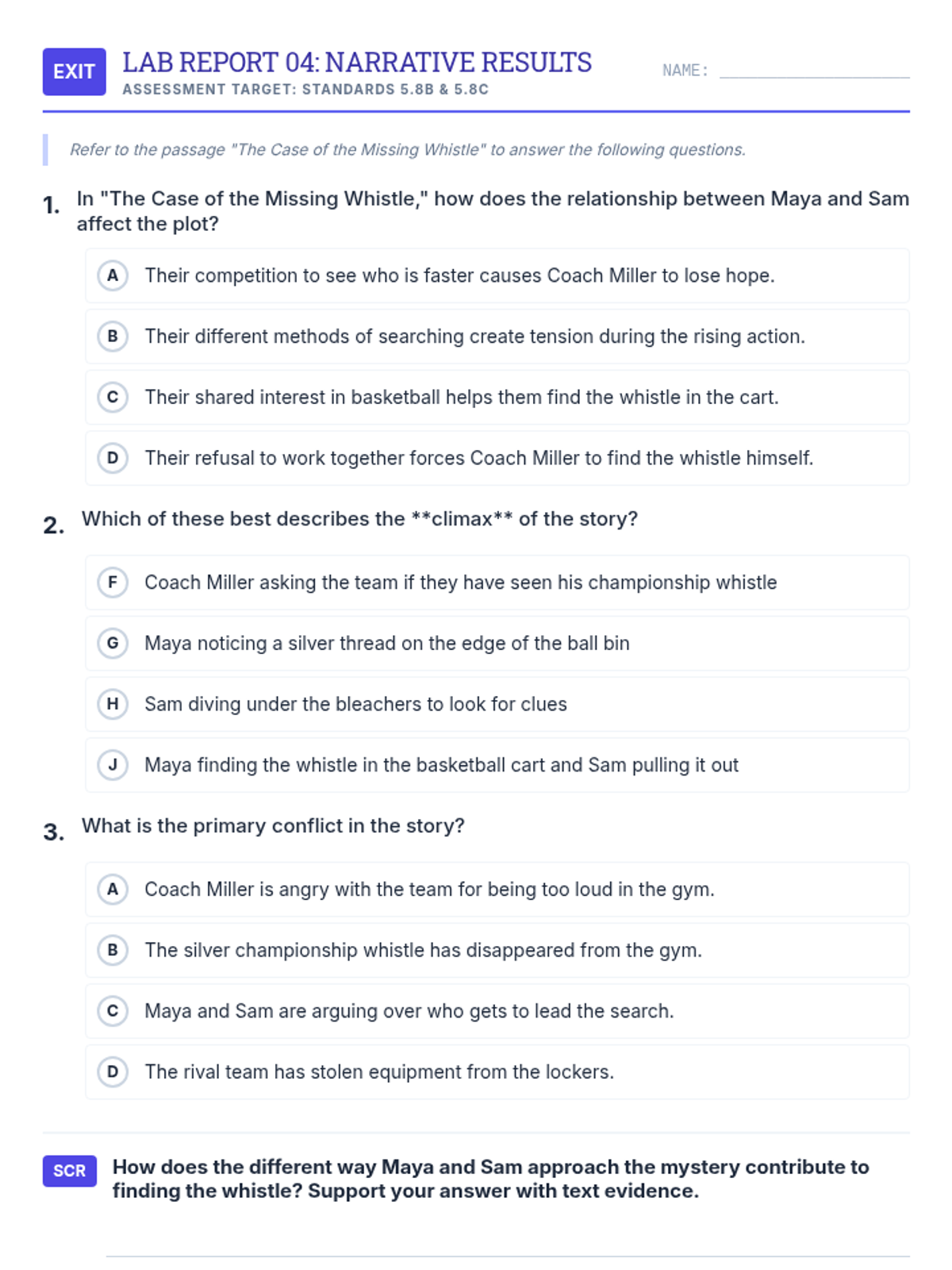
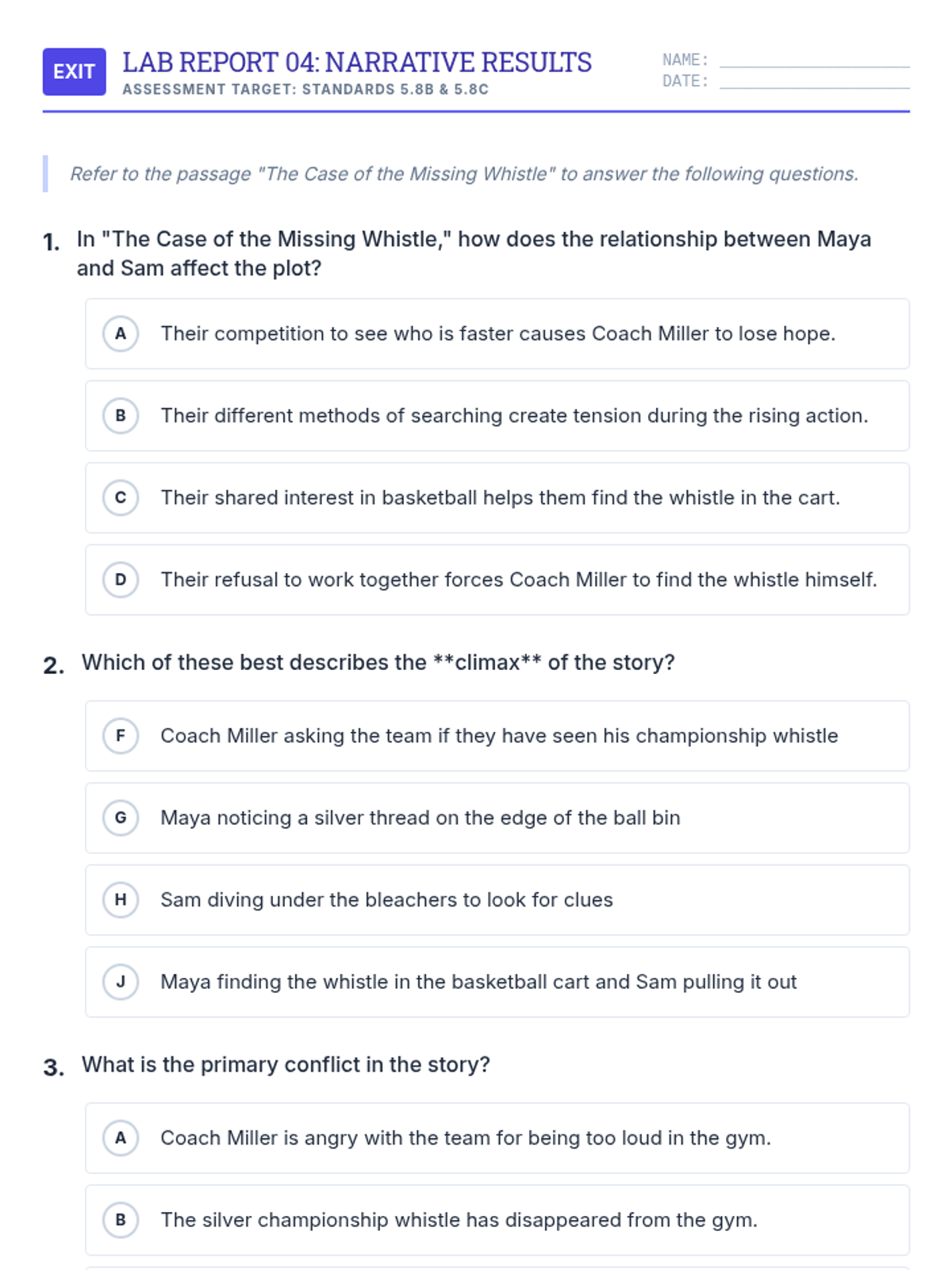
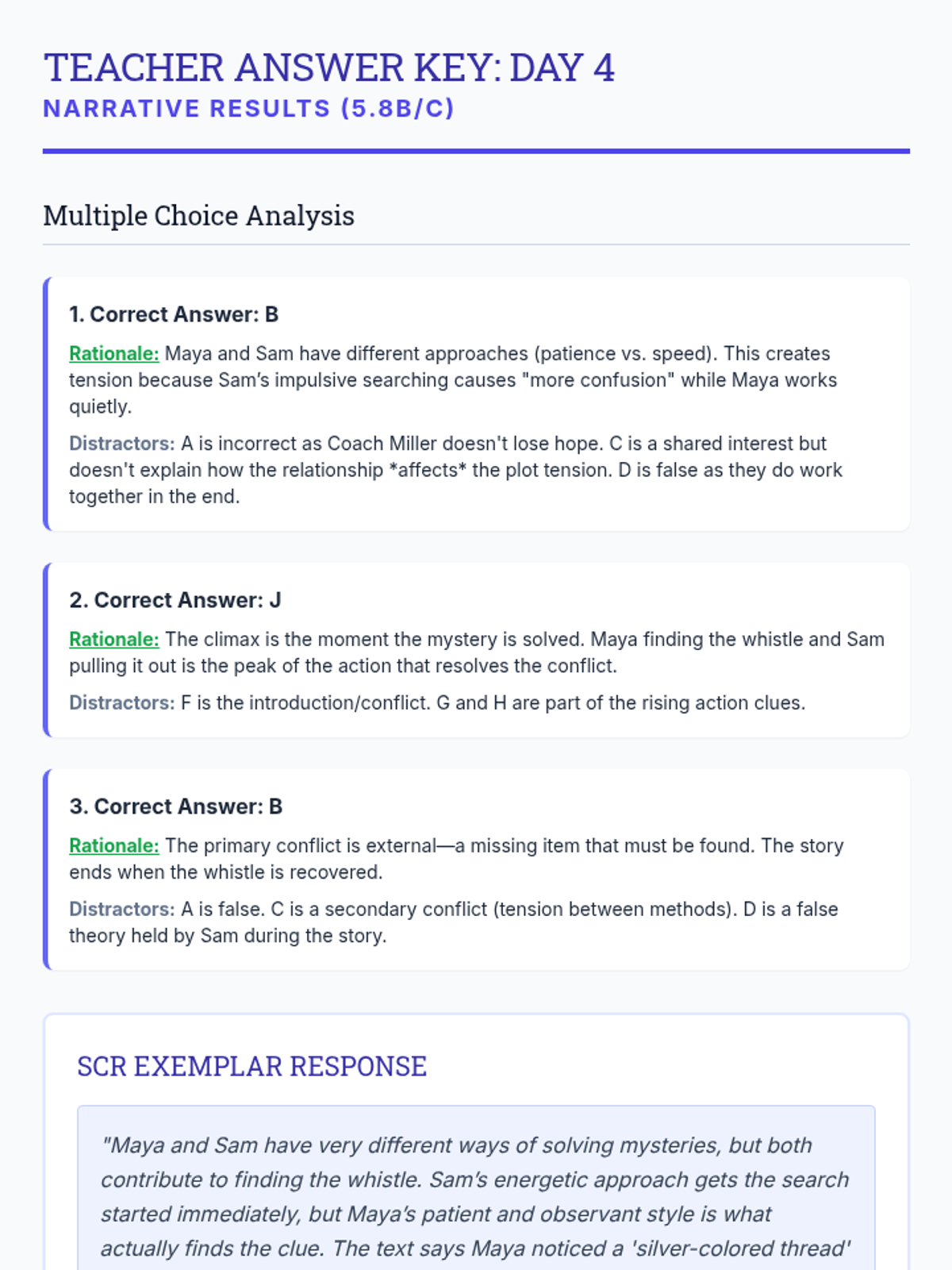
Day 4 serves as a synthesis day using a mystery genre. Students apply their knowledge of character conflict and plot resolution to solve a 'narrative puzzle' and complete a comprehensive assessment.
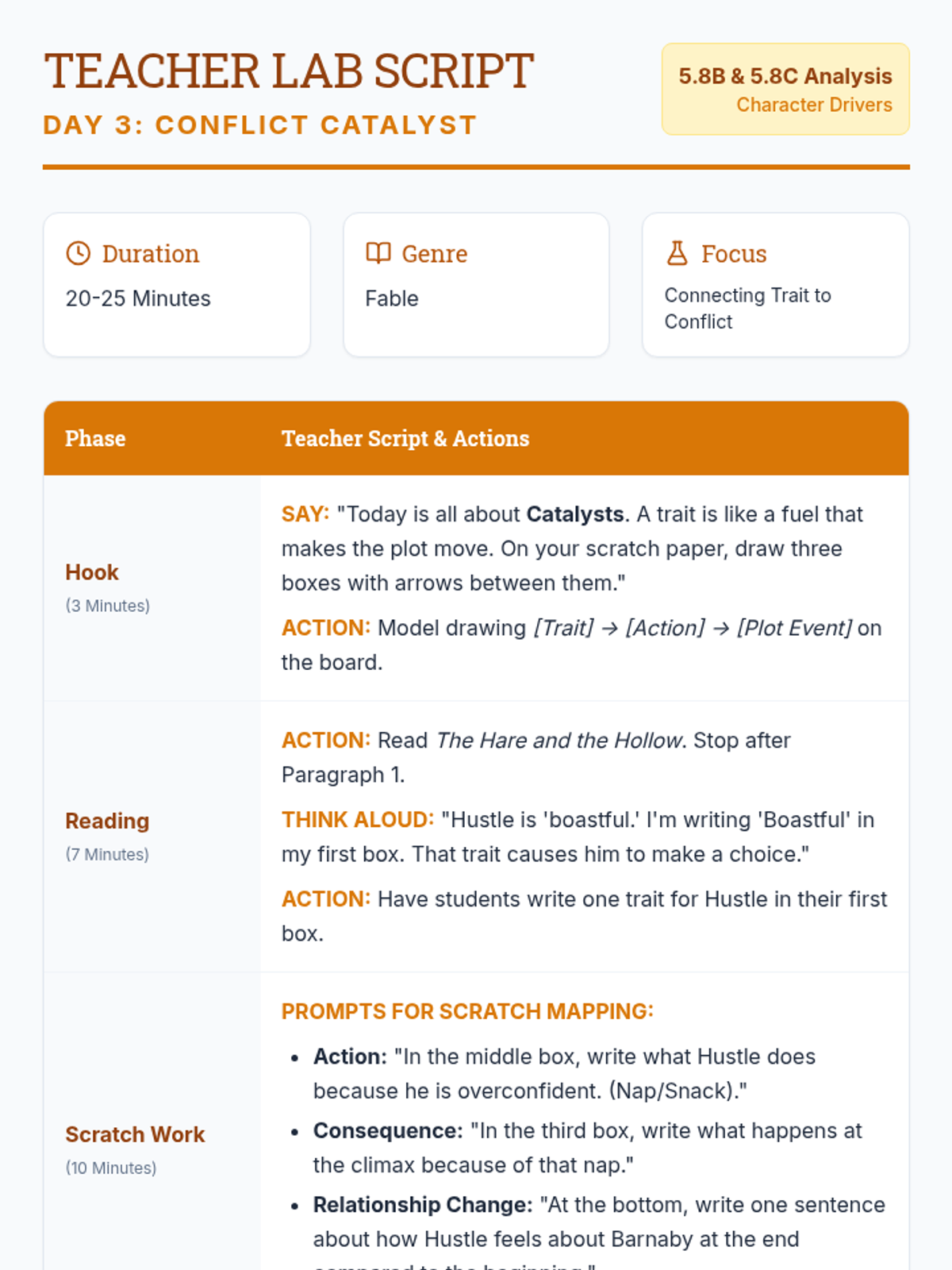
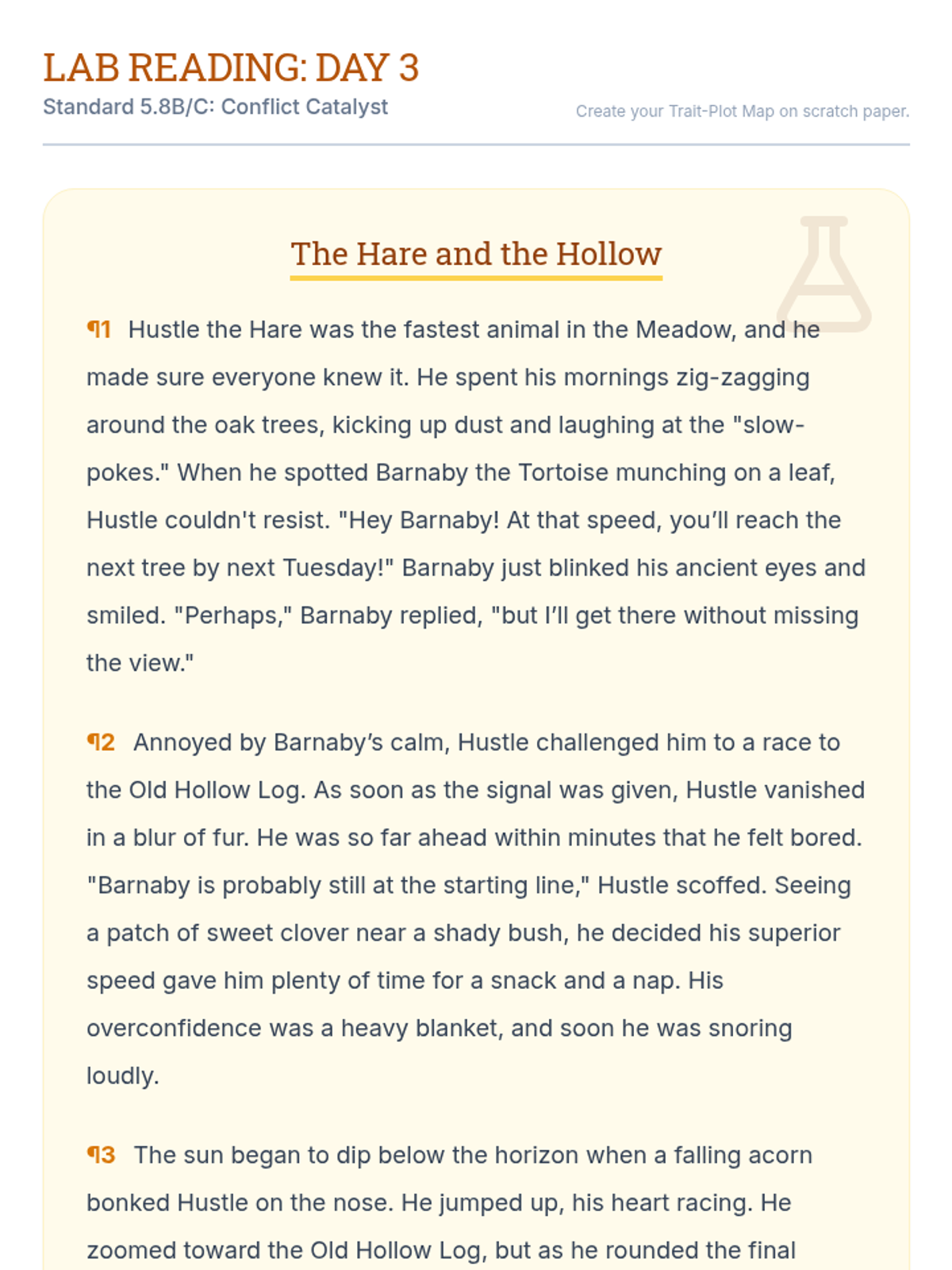
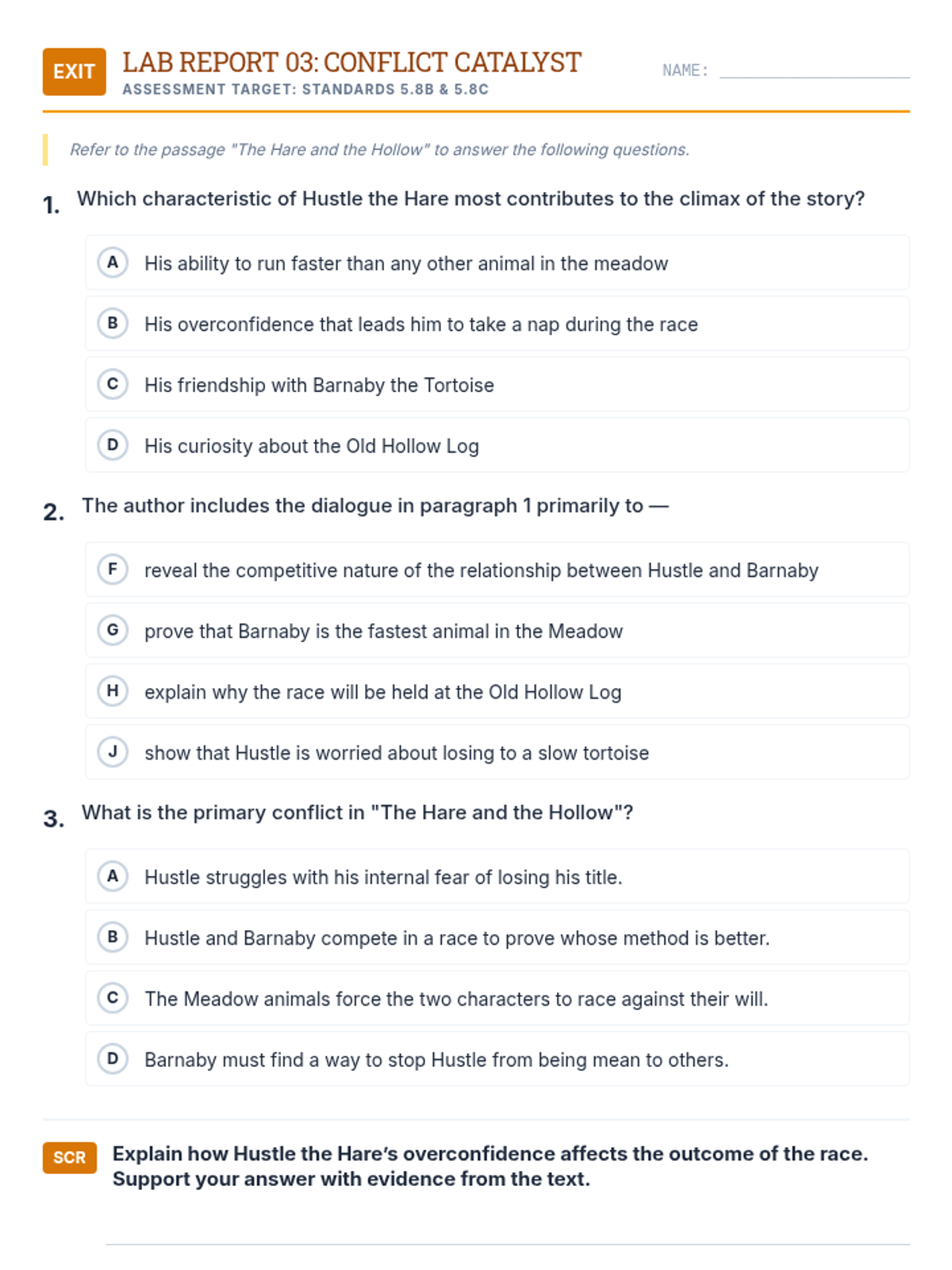
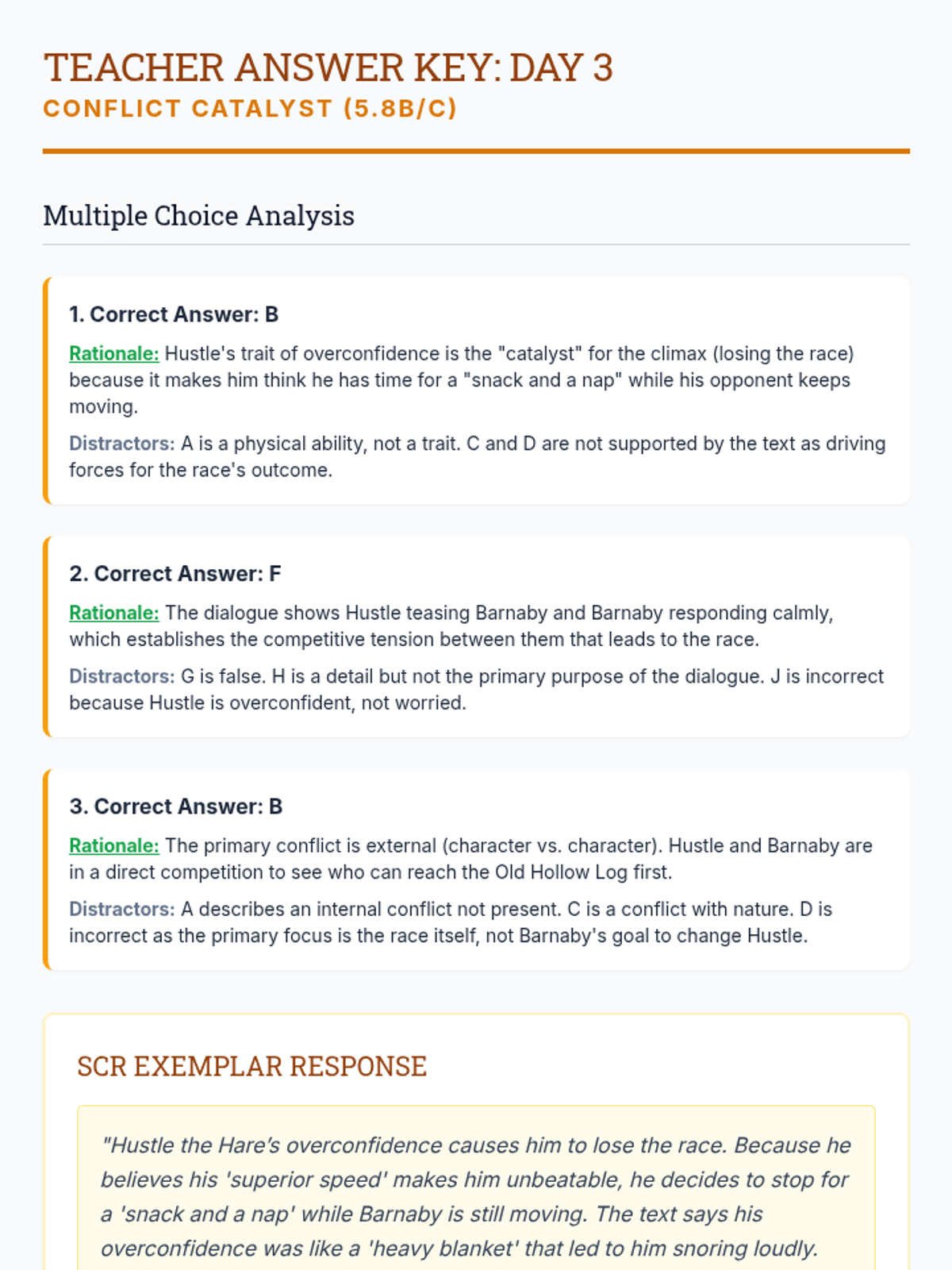
Day 3 integrates both character and plot (5.8B/C) using traditional literature (a fable). Students examine how a character's traits and choices create the conflict and lead to the climax.
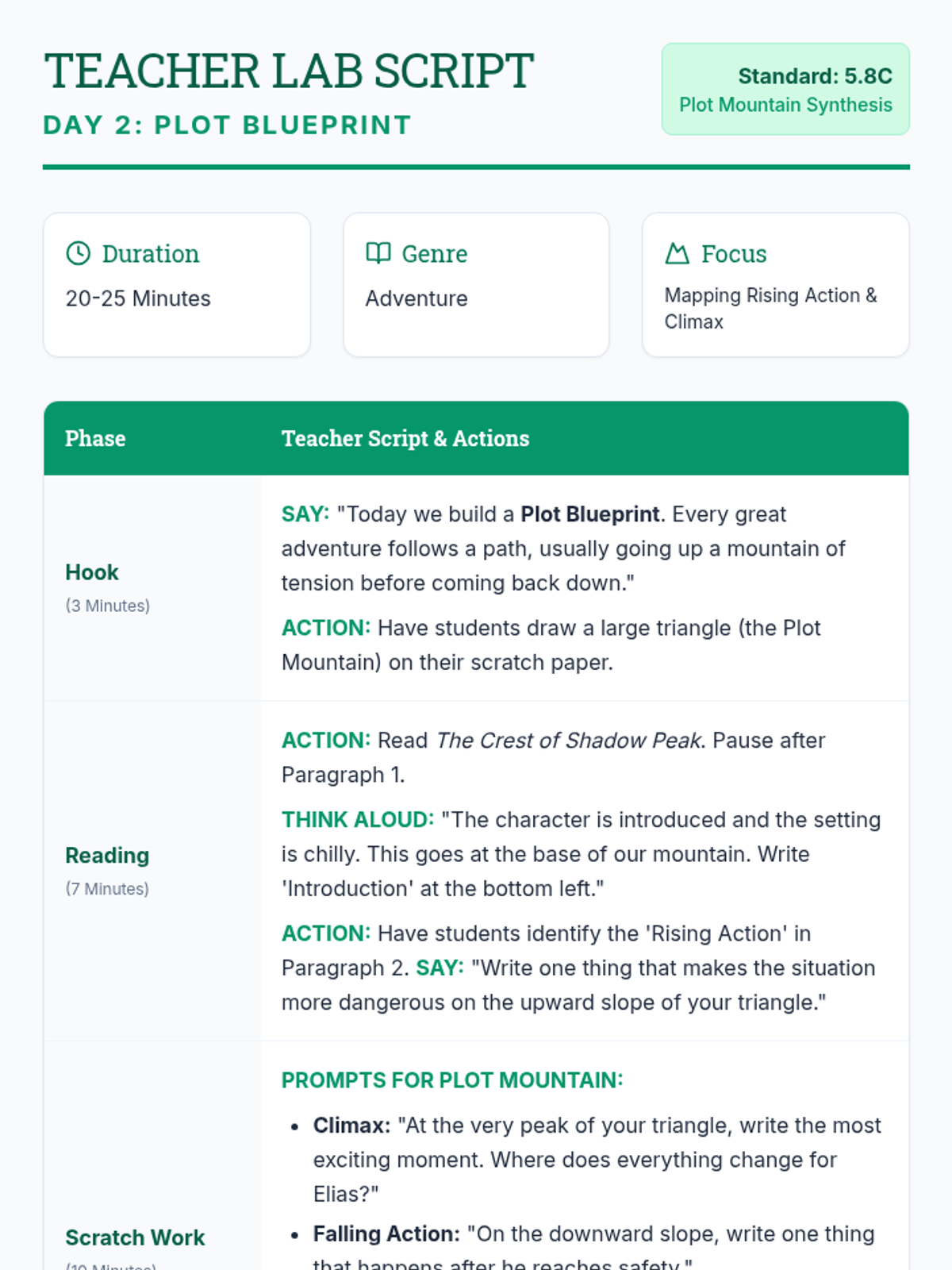
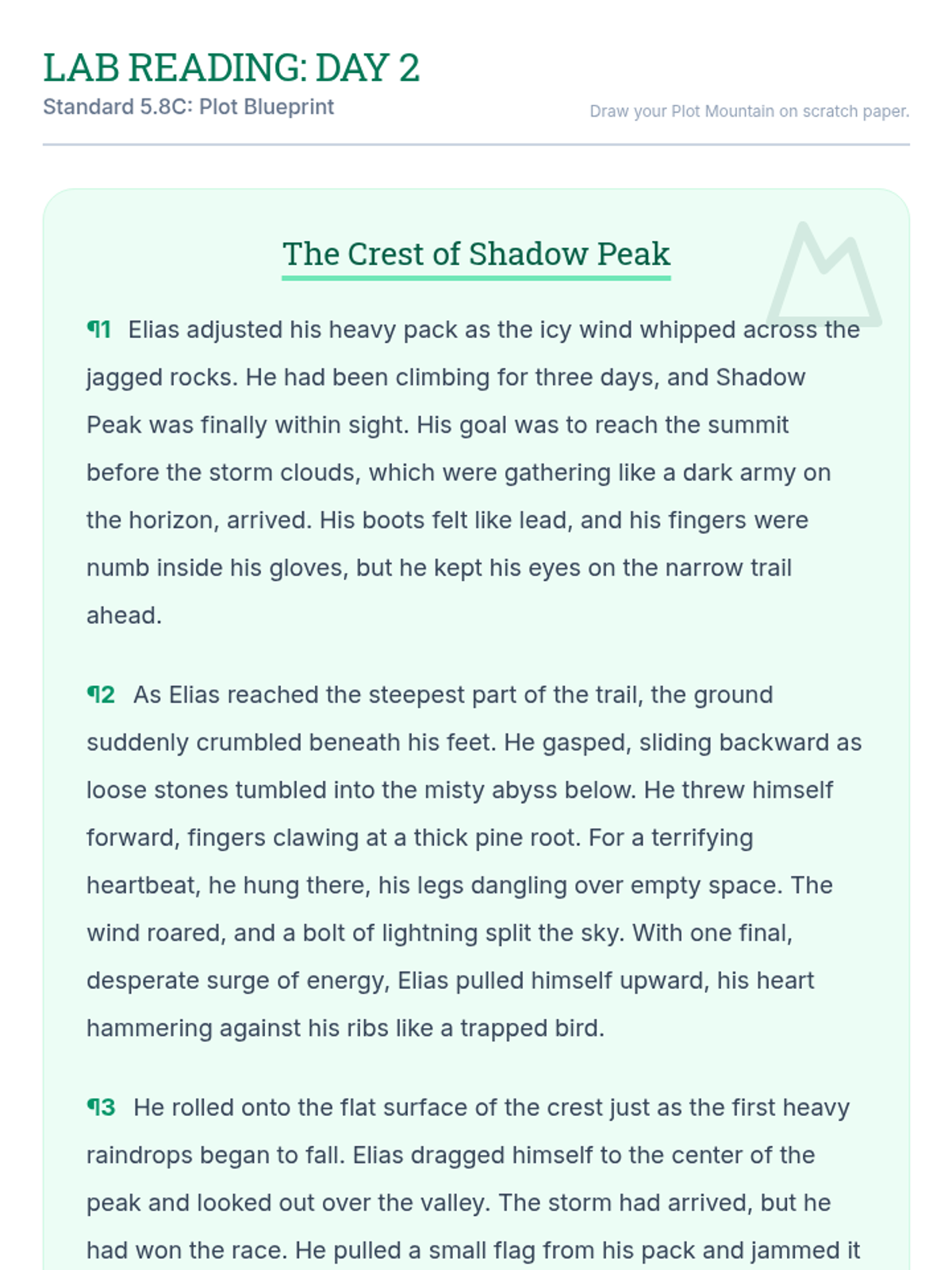
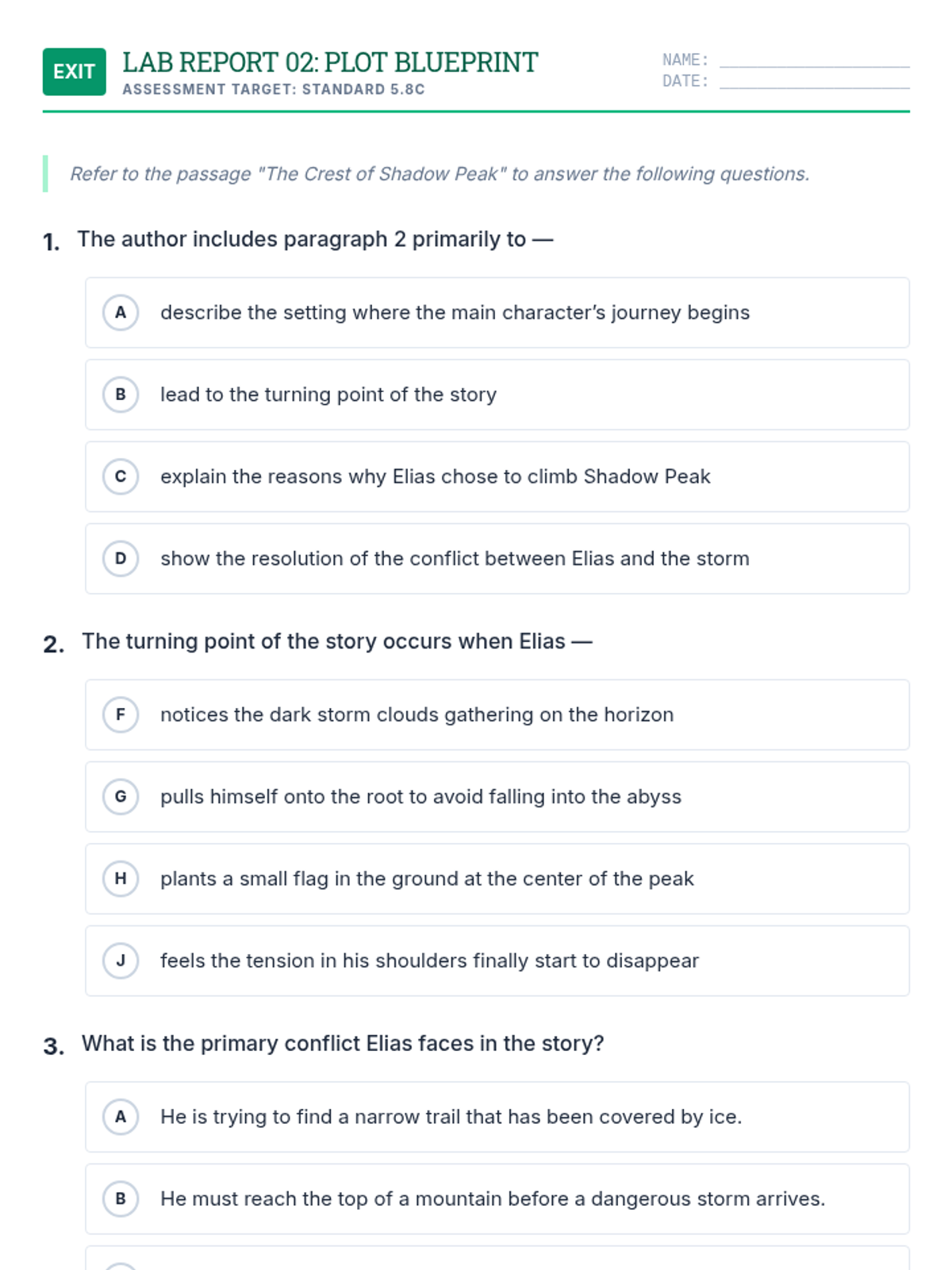
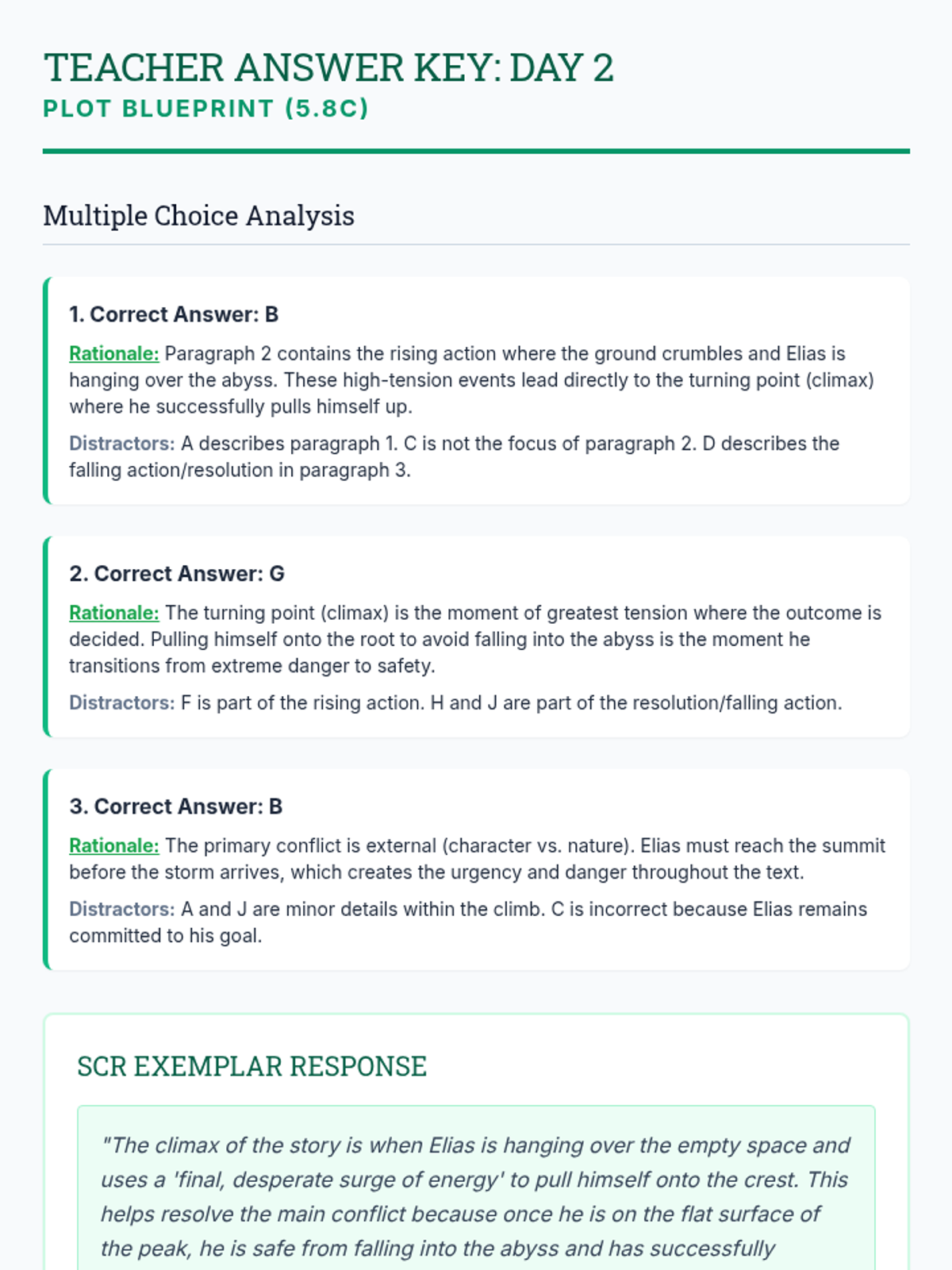
Day 2 focuses on plot elements (5.8C), specifically identifying the rising action, climax, and resolution in an adventure-themed text. Students map the 'Plot Peak' to understand story structure.
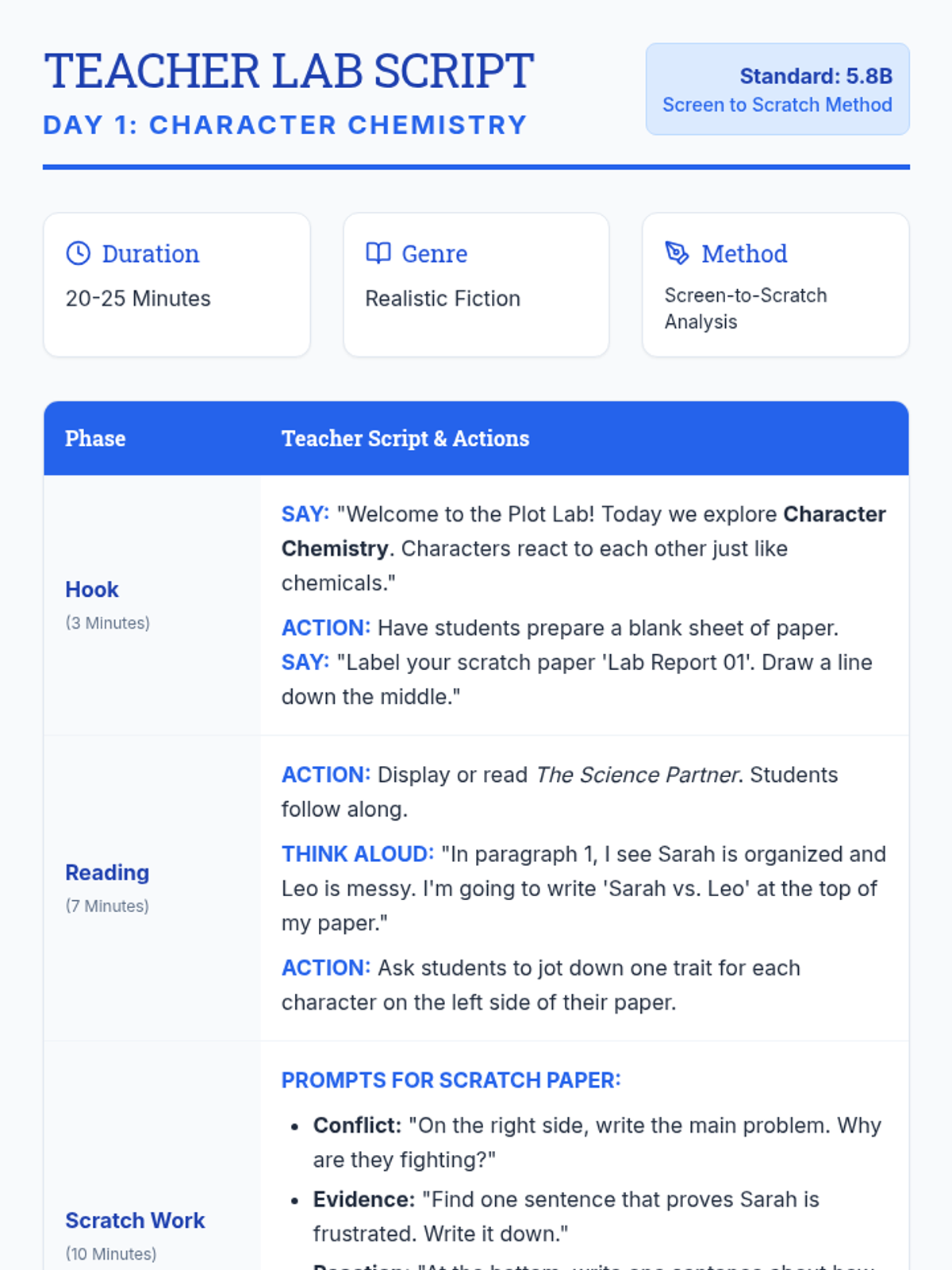
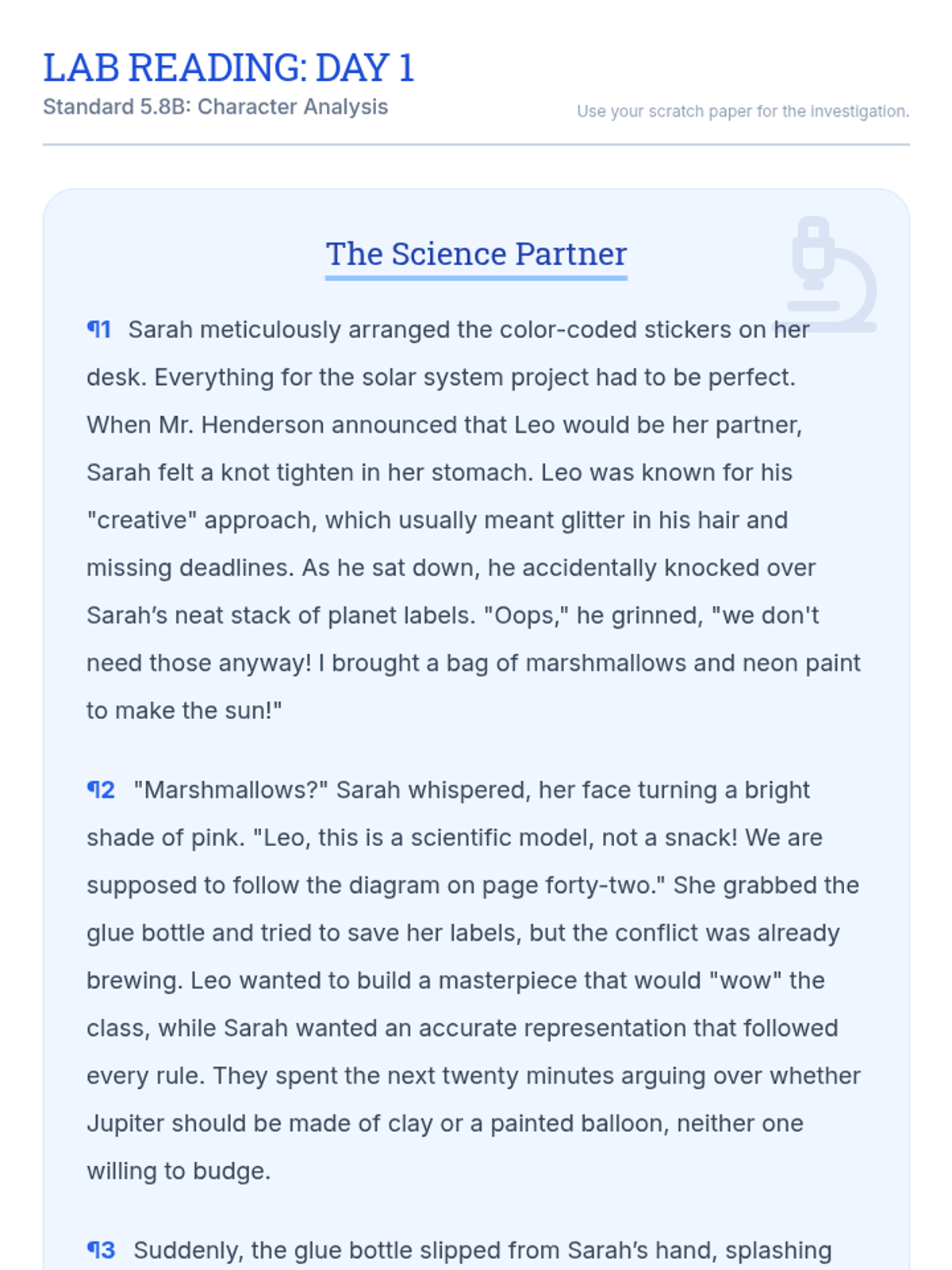
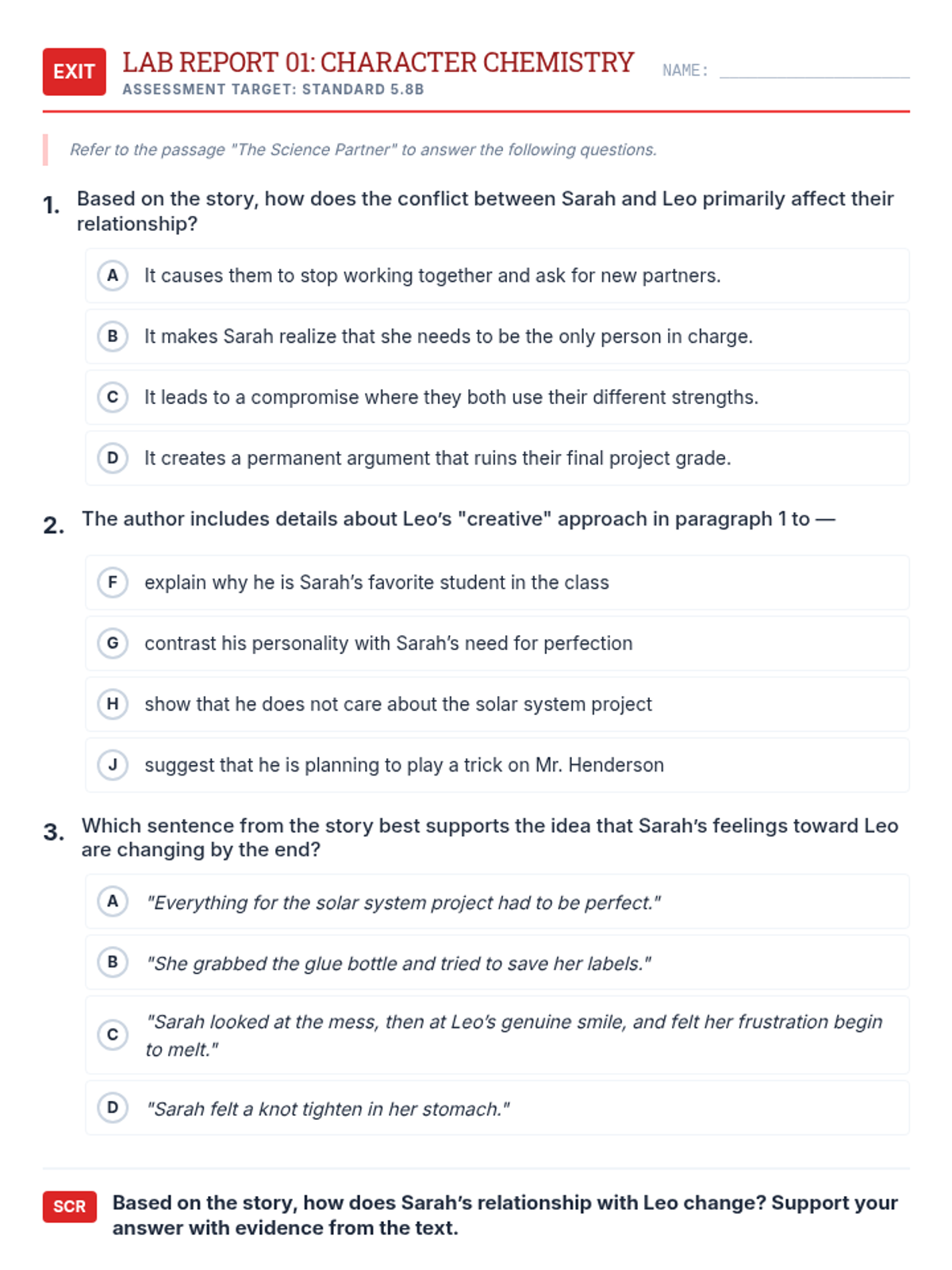
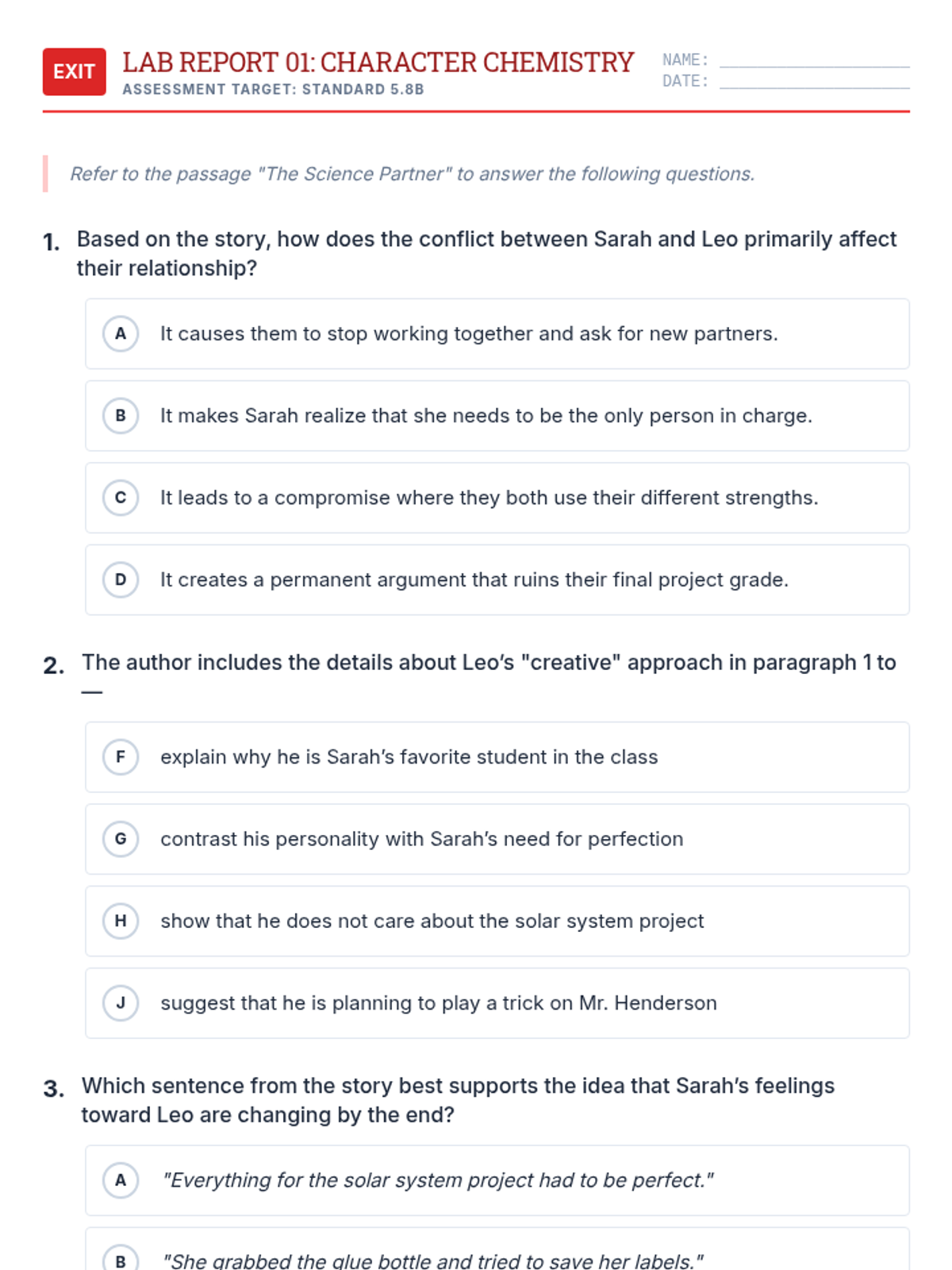
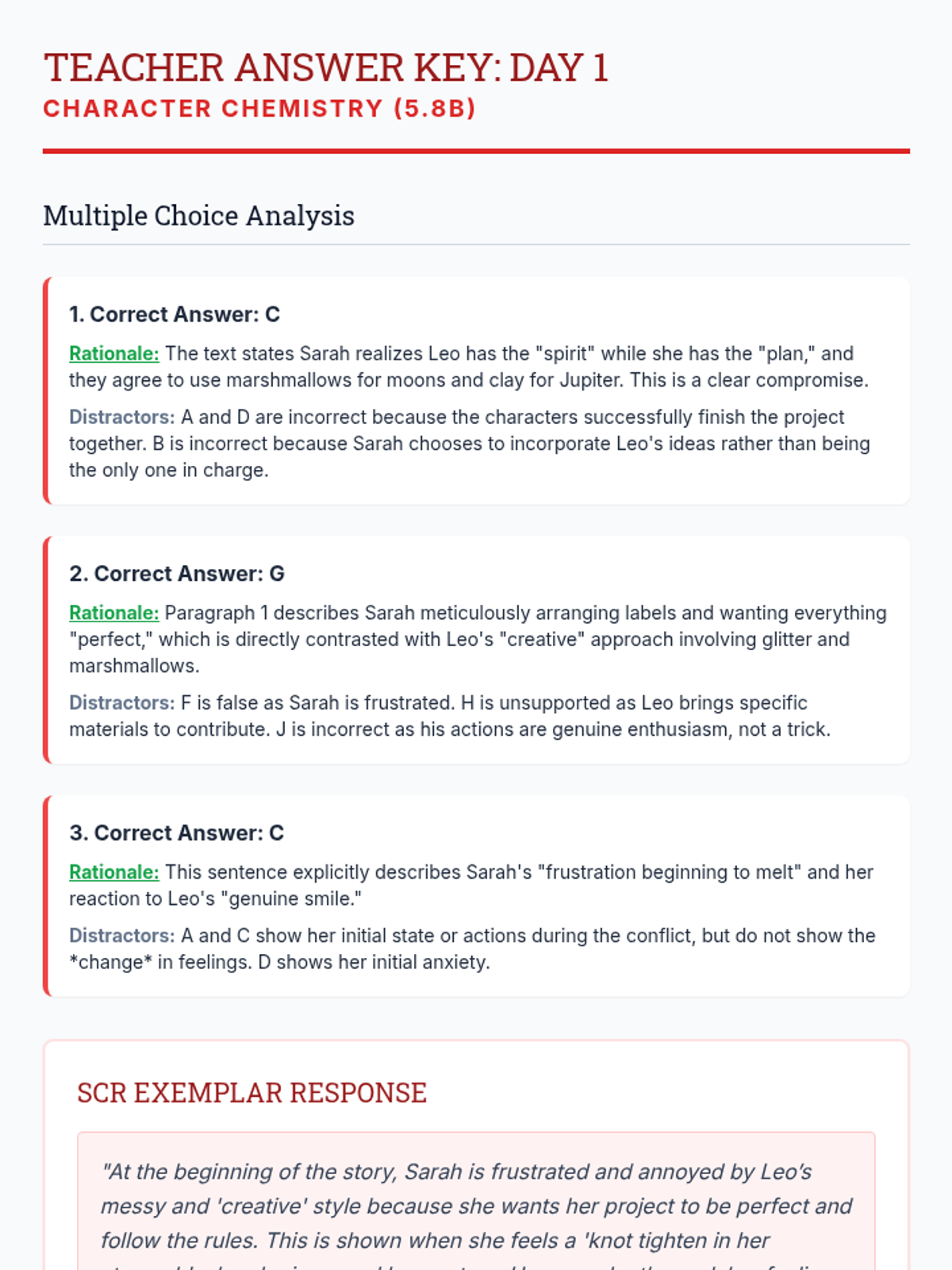
Day 1 focuses on analyzing character relationships and conflicts (5.8B) within a realistic fiction text. Students investigate how characters interact and the specific conflicts that drive their actions.
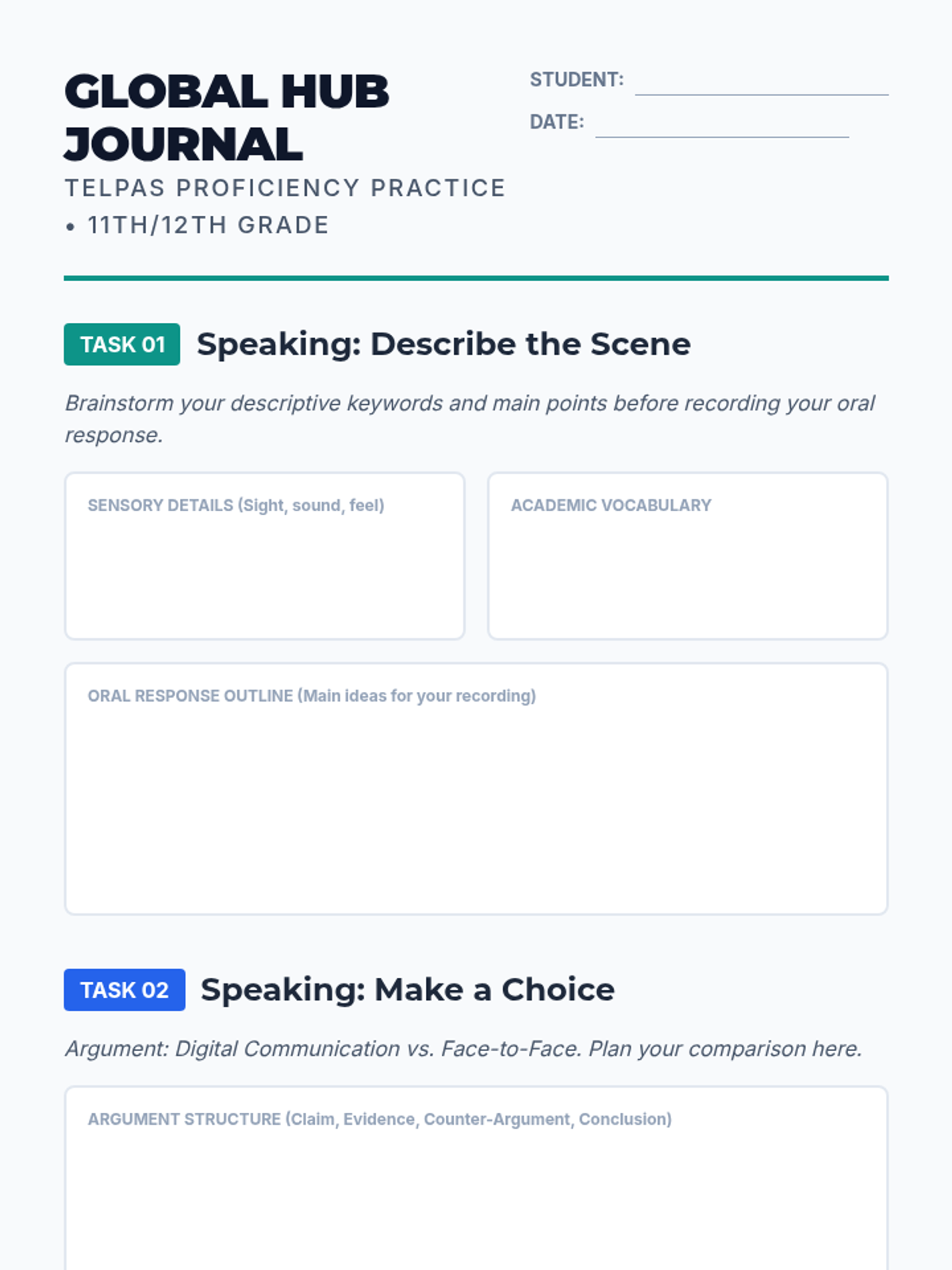
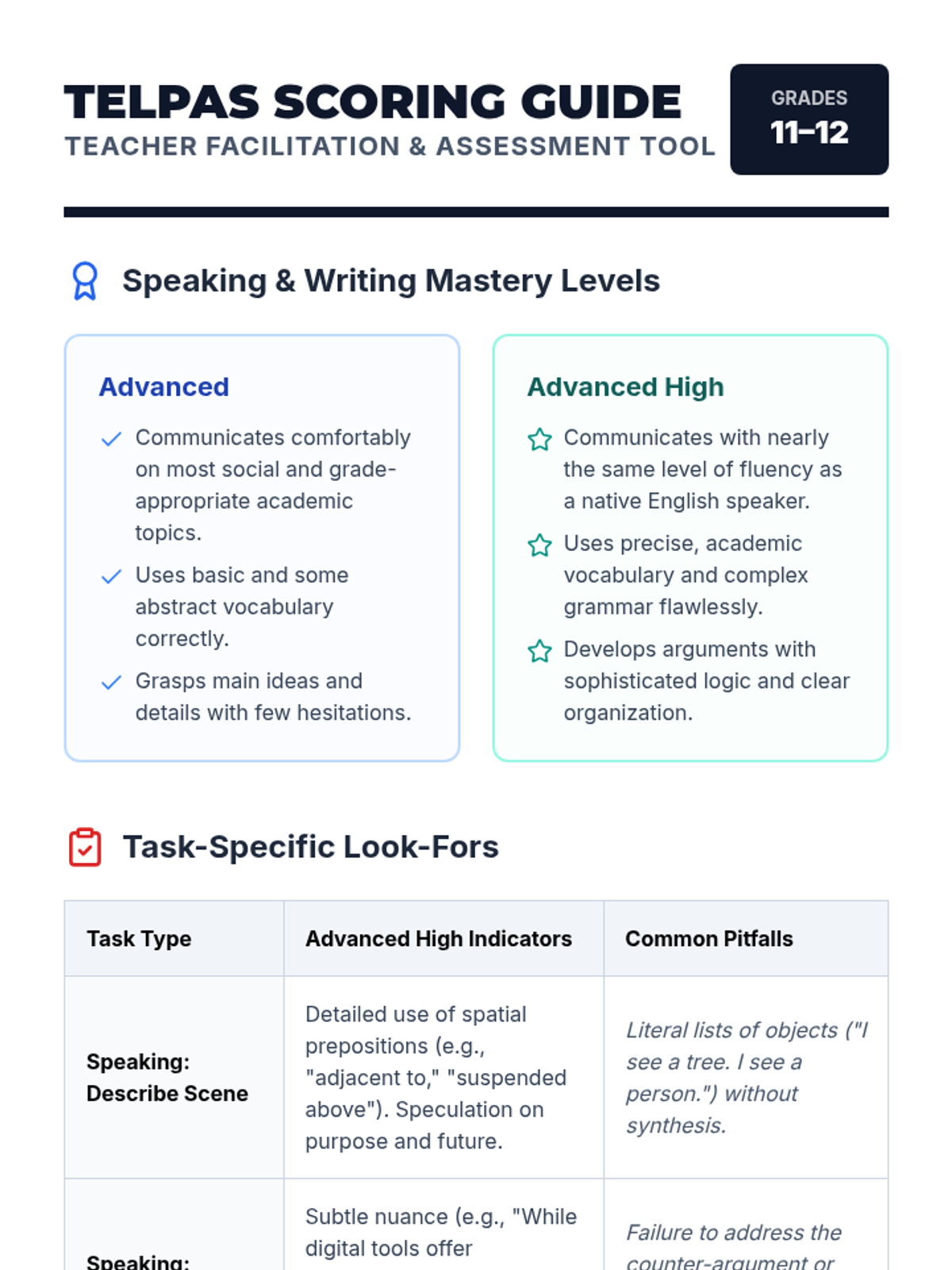
A self-paced TELPAS practice session for 11th and 12th grade students, focusing on Advanced and Advanced High speaking and writing tasks through modern, relevant prompts.
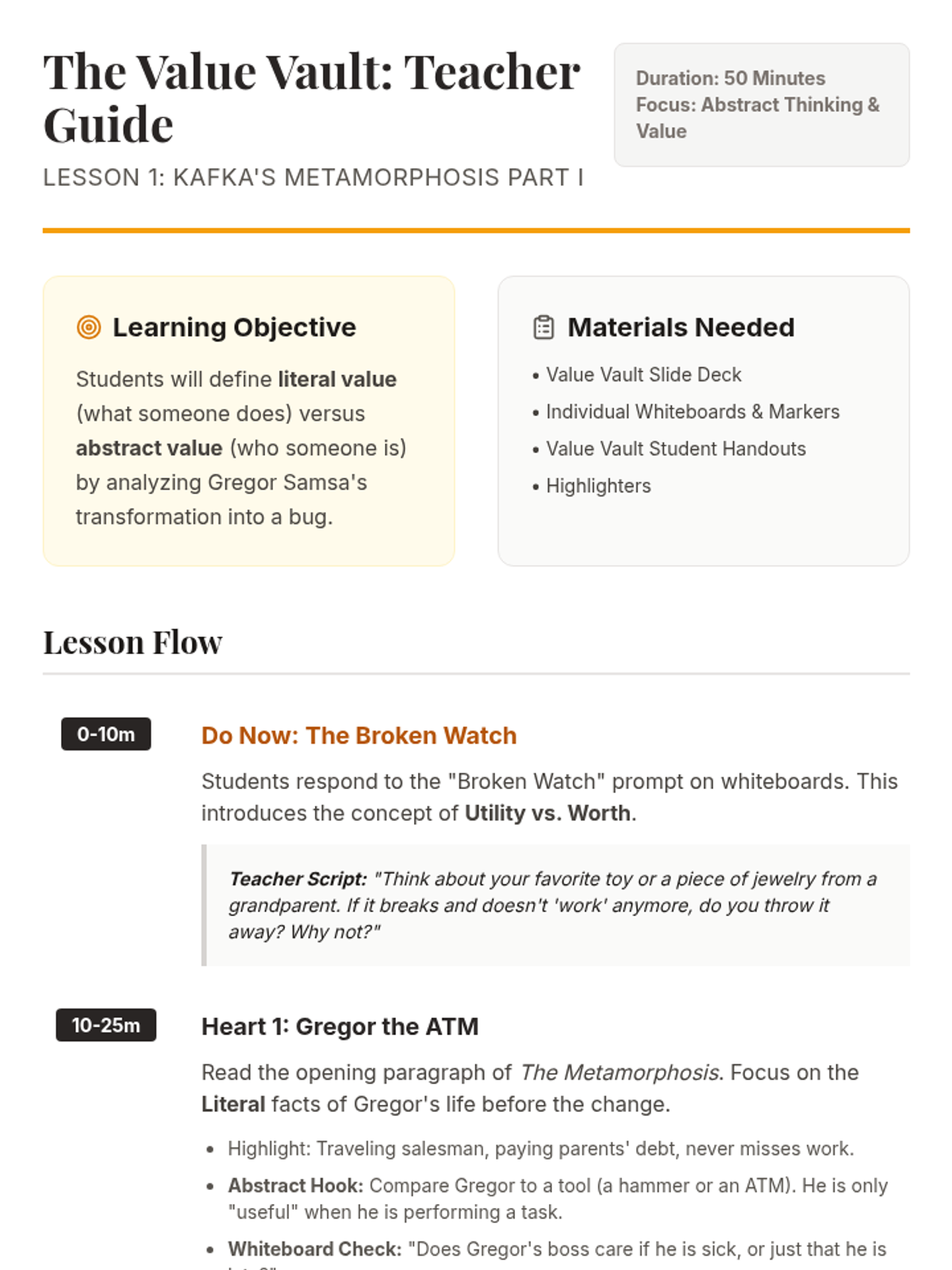
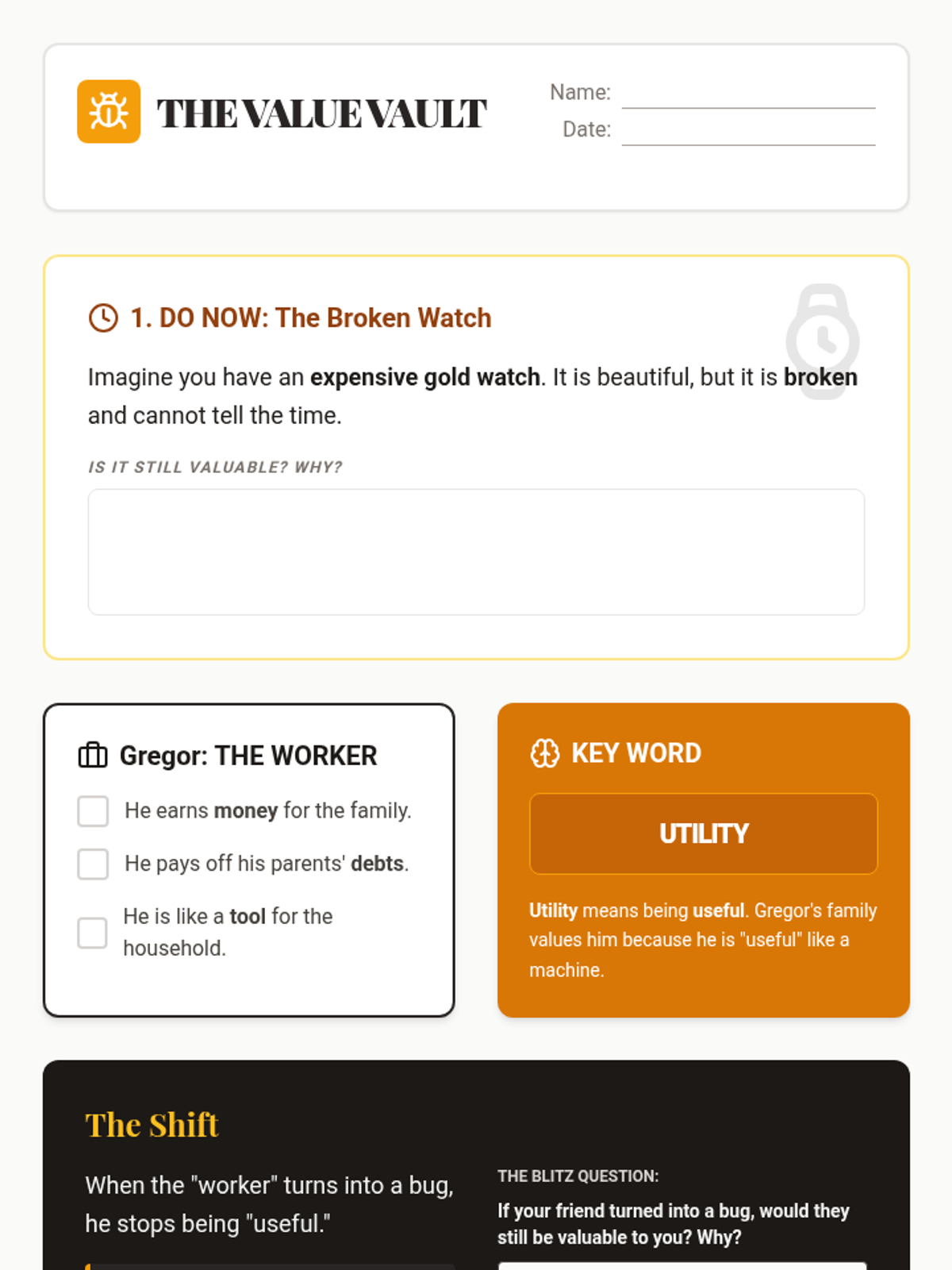
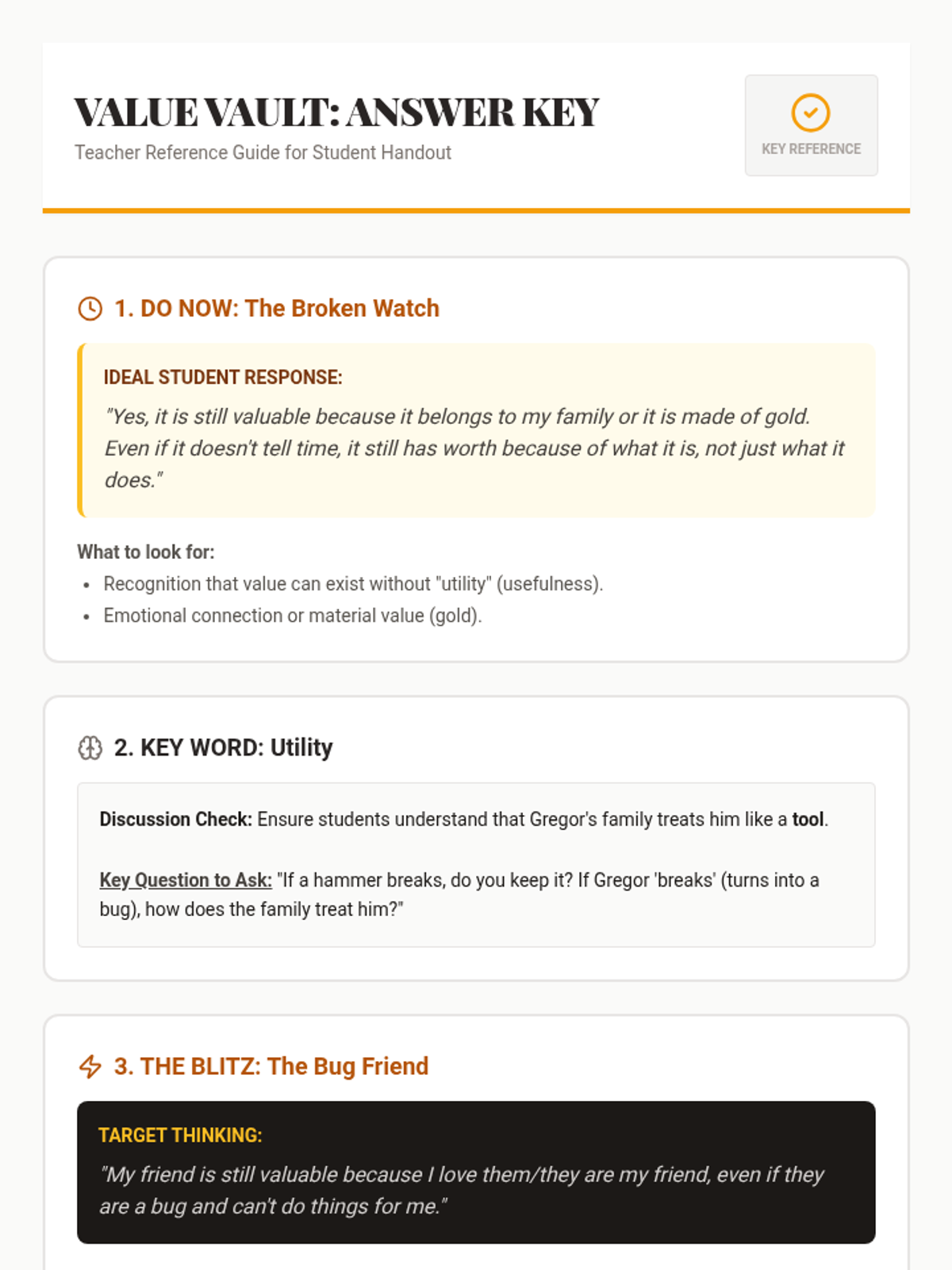
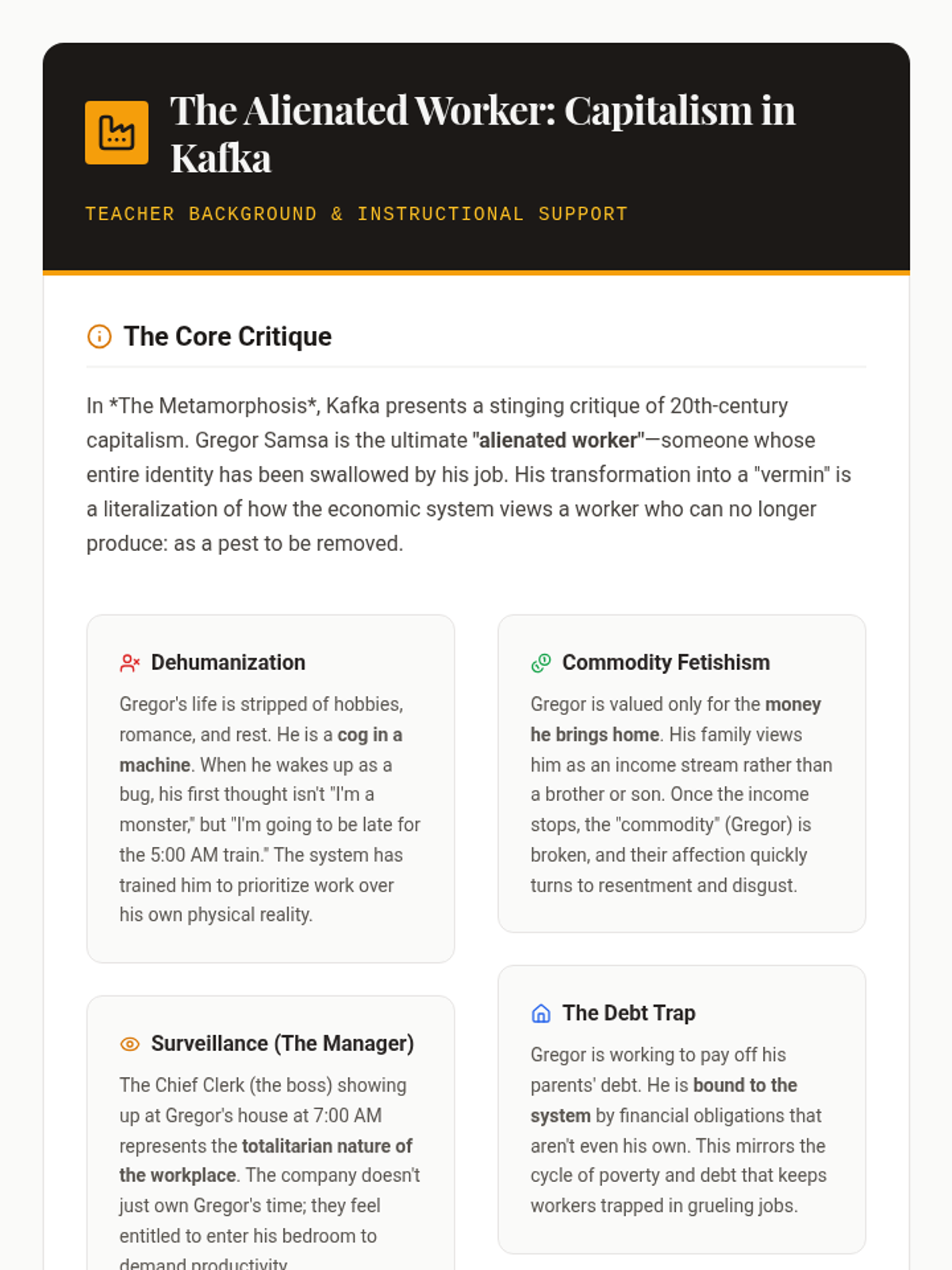
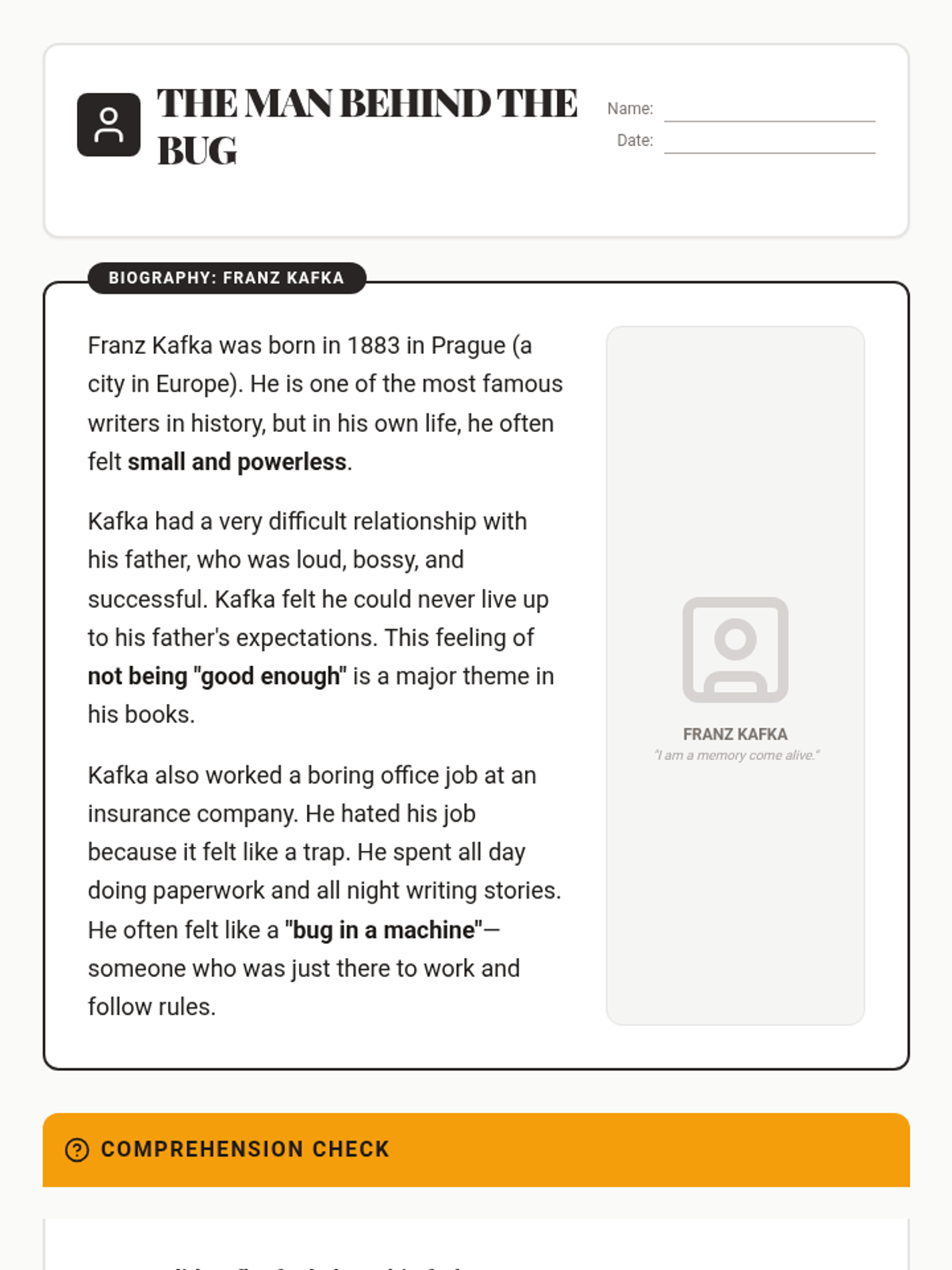
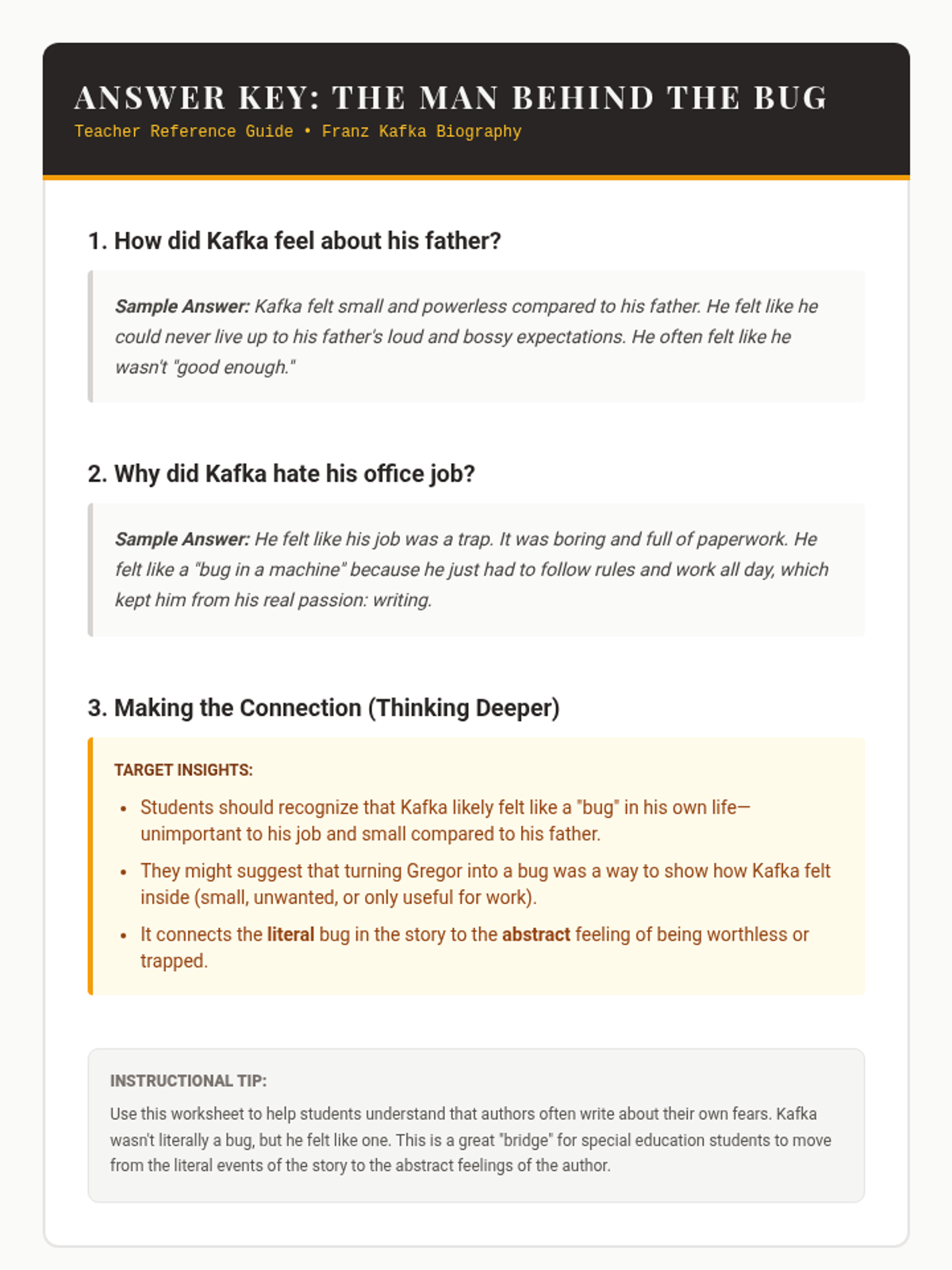
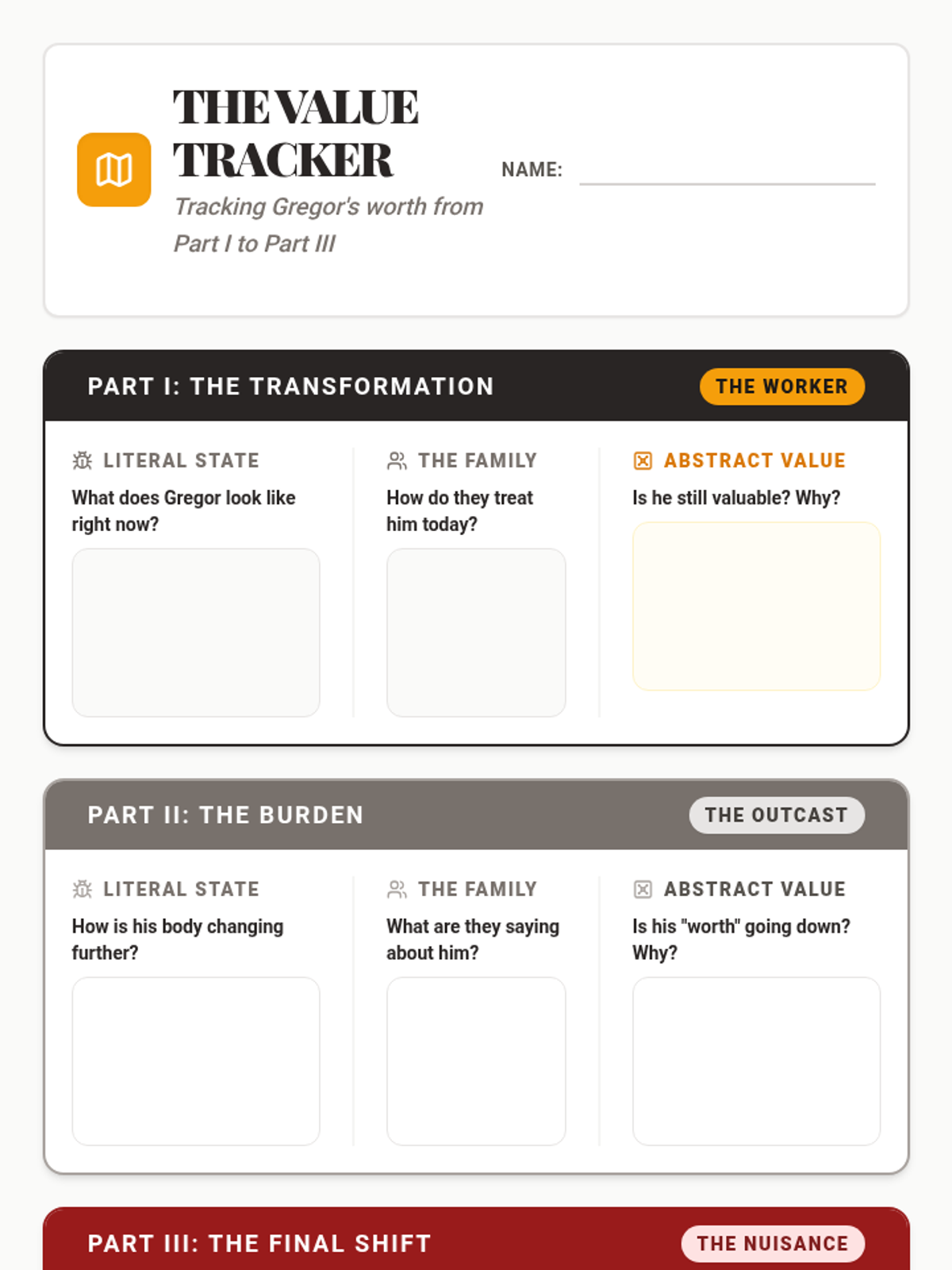
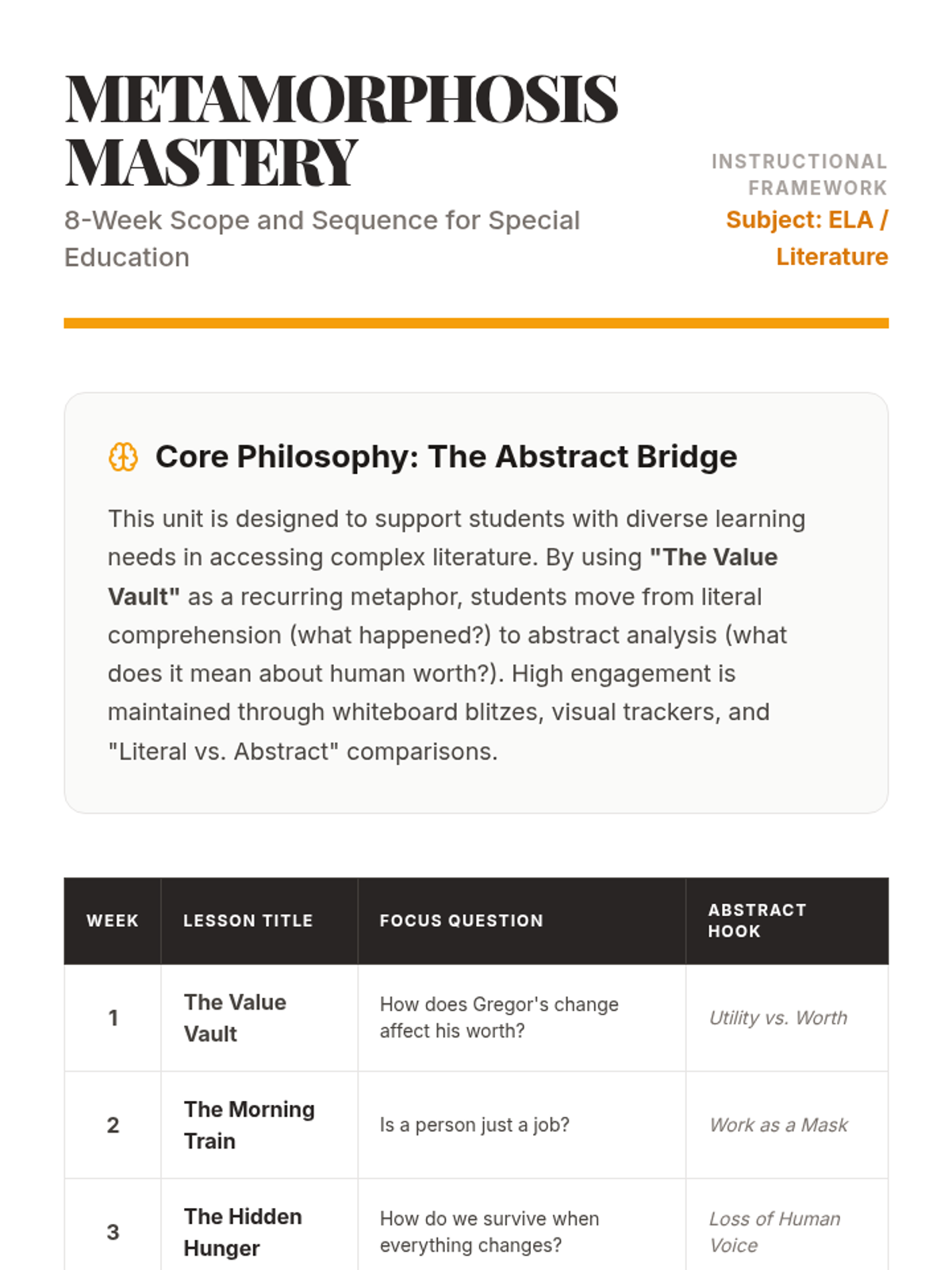
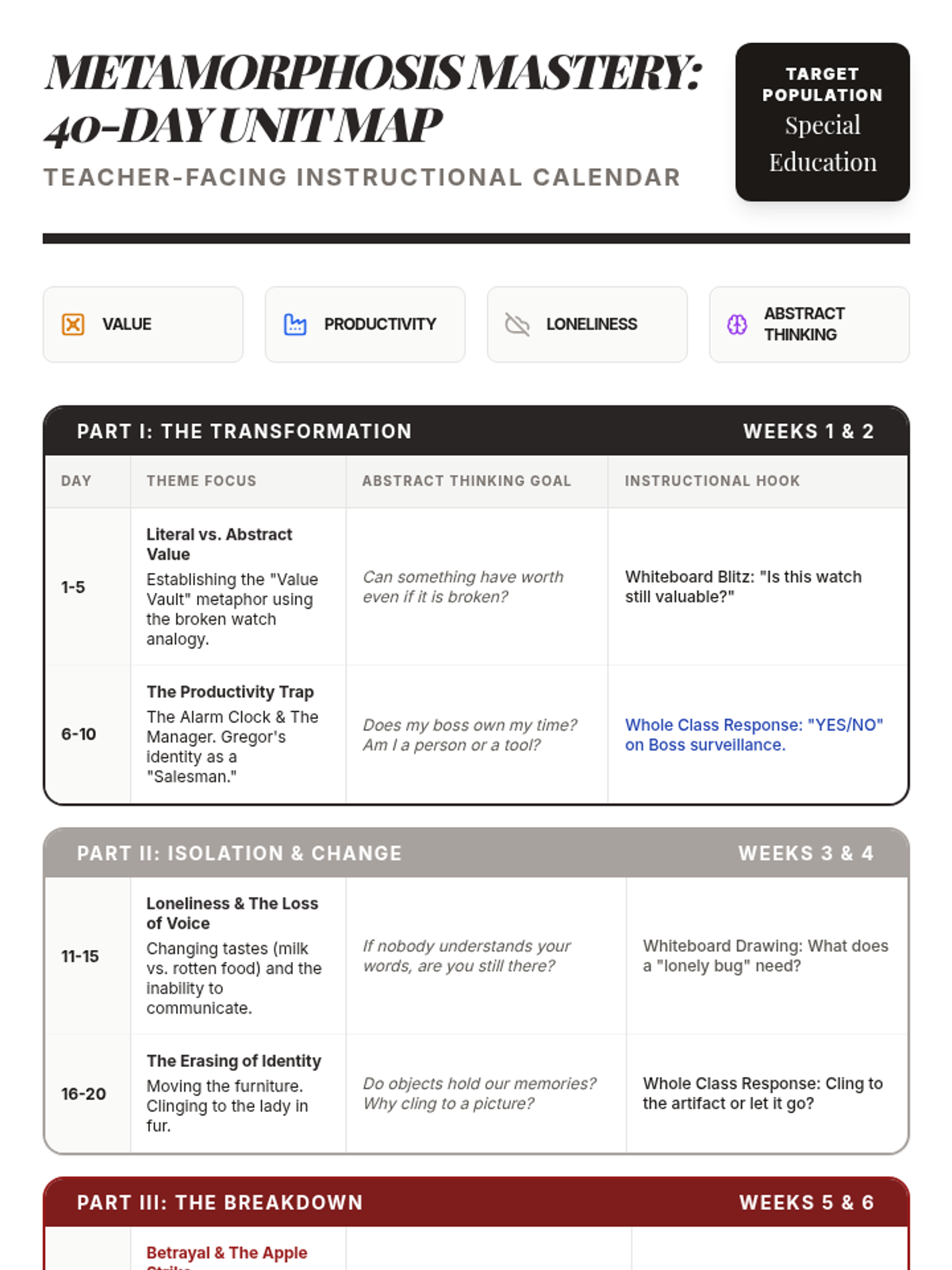
A 50-minute introductory lesson on Kafka's Metamorphosis, focusing on the shift from literal to abstract value through the lens of Gregor's transformation. Designed for special education students with high-engagement whiteboard activities.
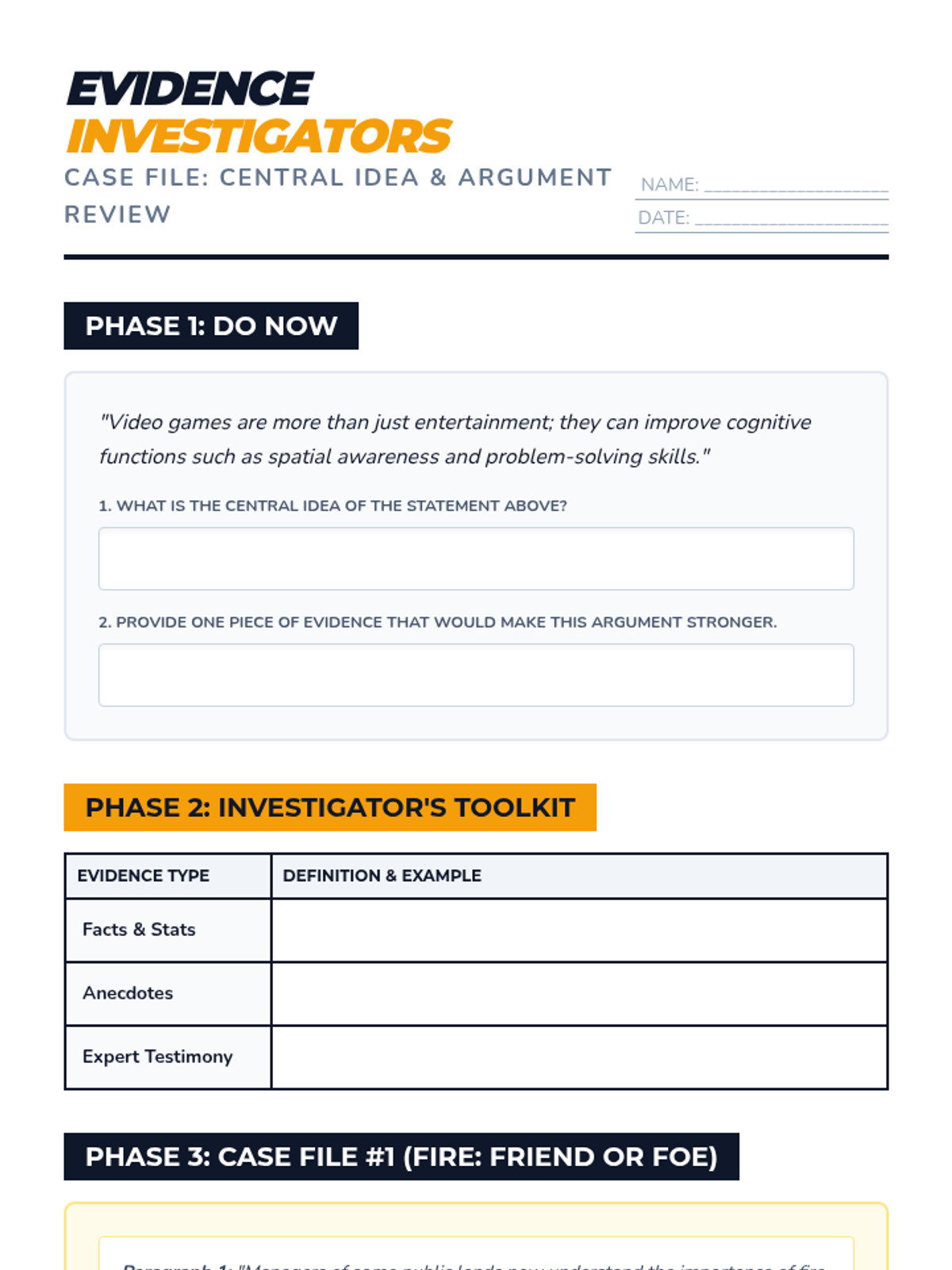
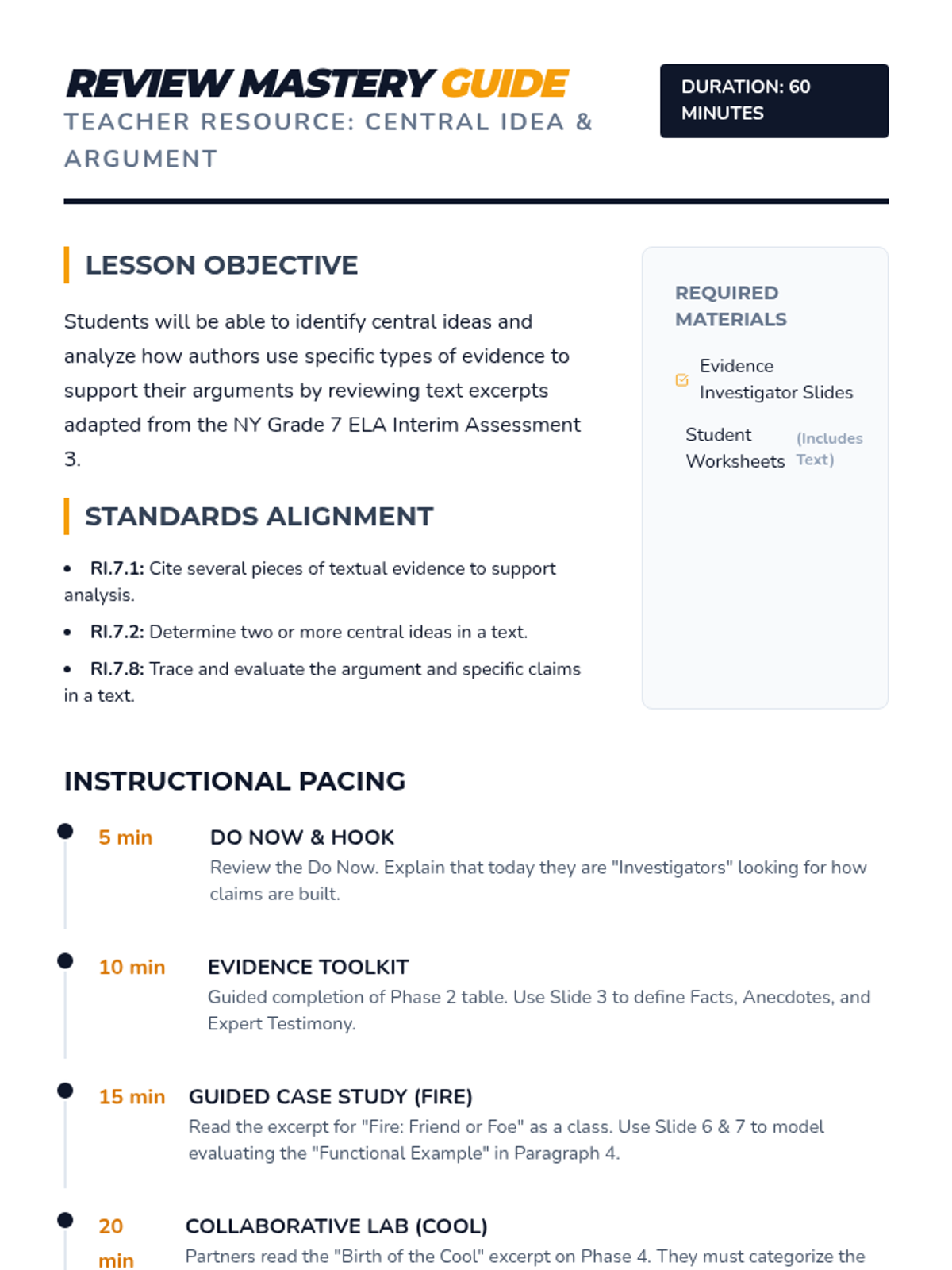
A 1-hour intensive review session focused on identifying central ideas and evaluating the evidence authors use to build strong arguments, utilizing passages from the NY Grade 7 ELA Interim Assessment.
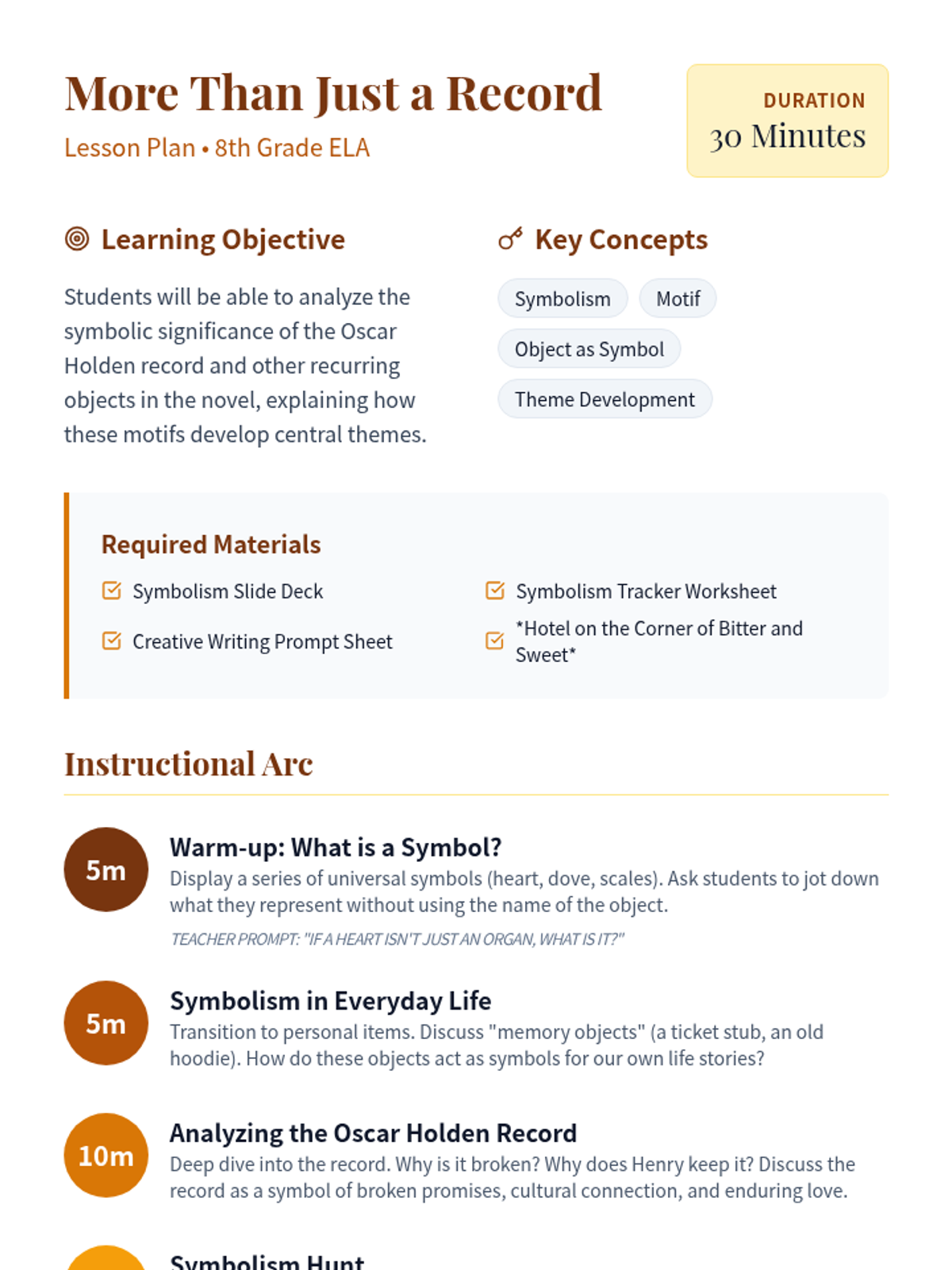
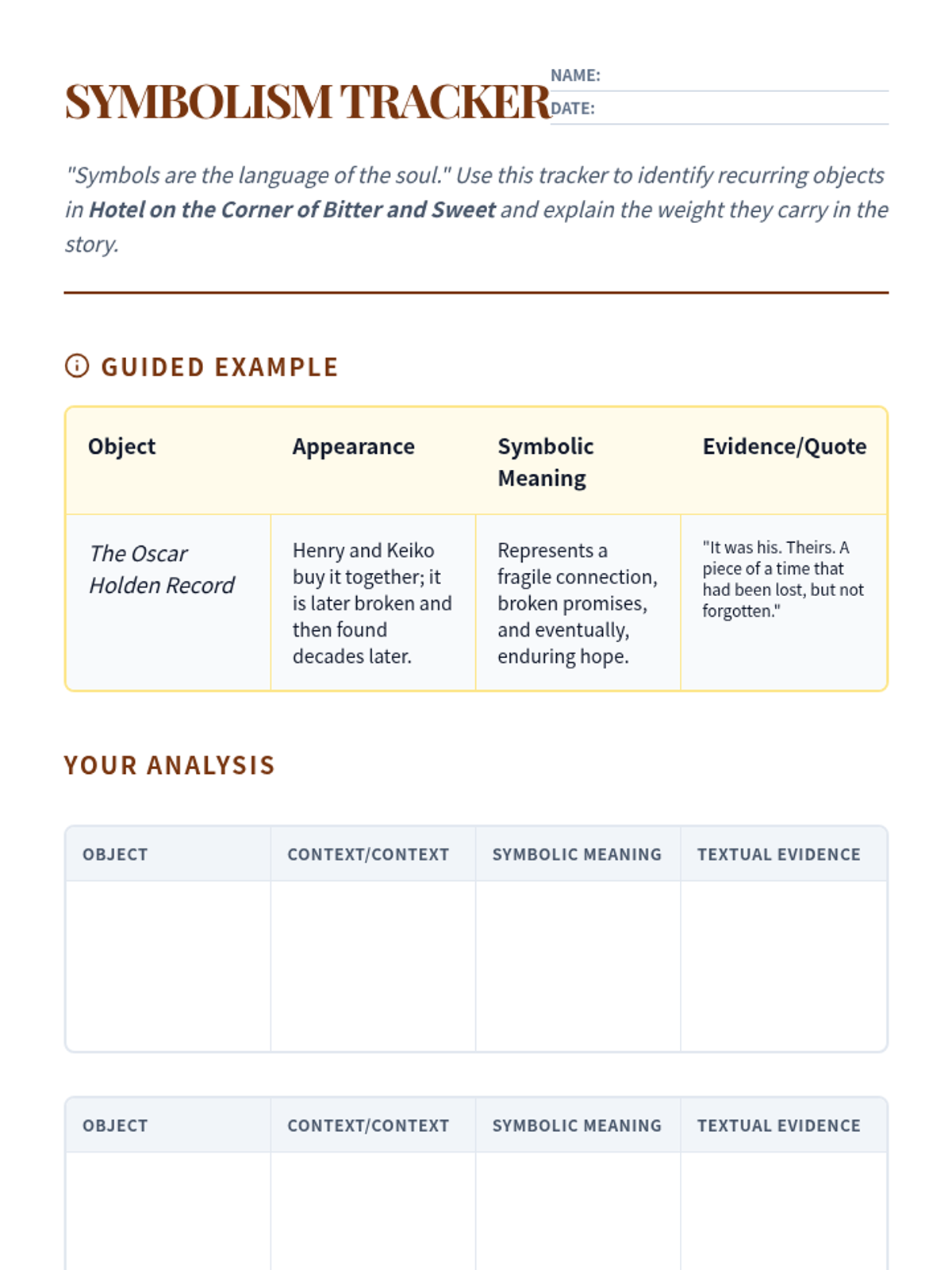
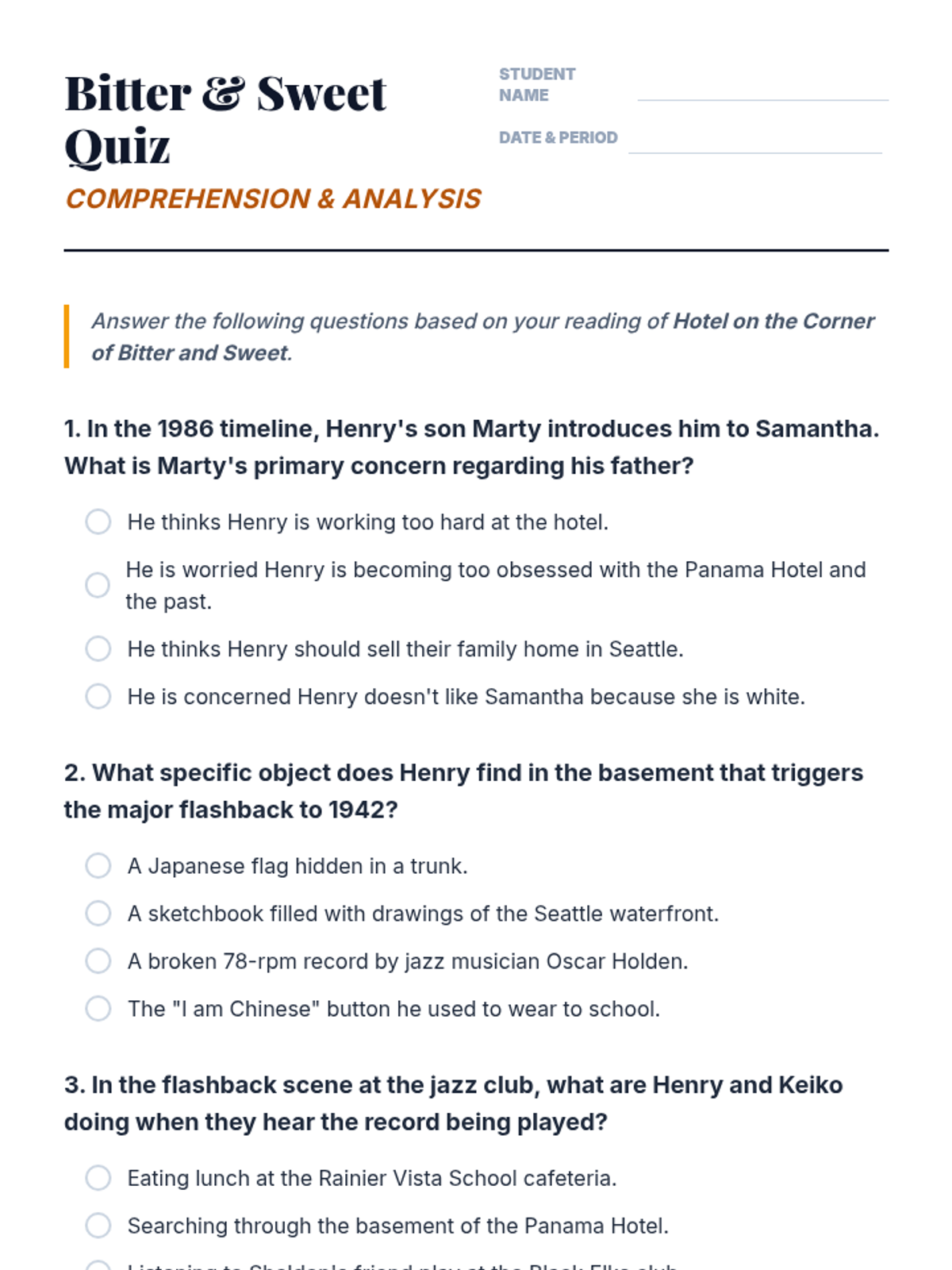
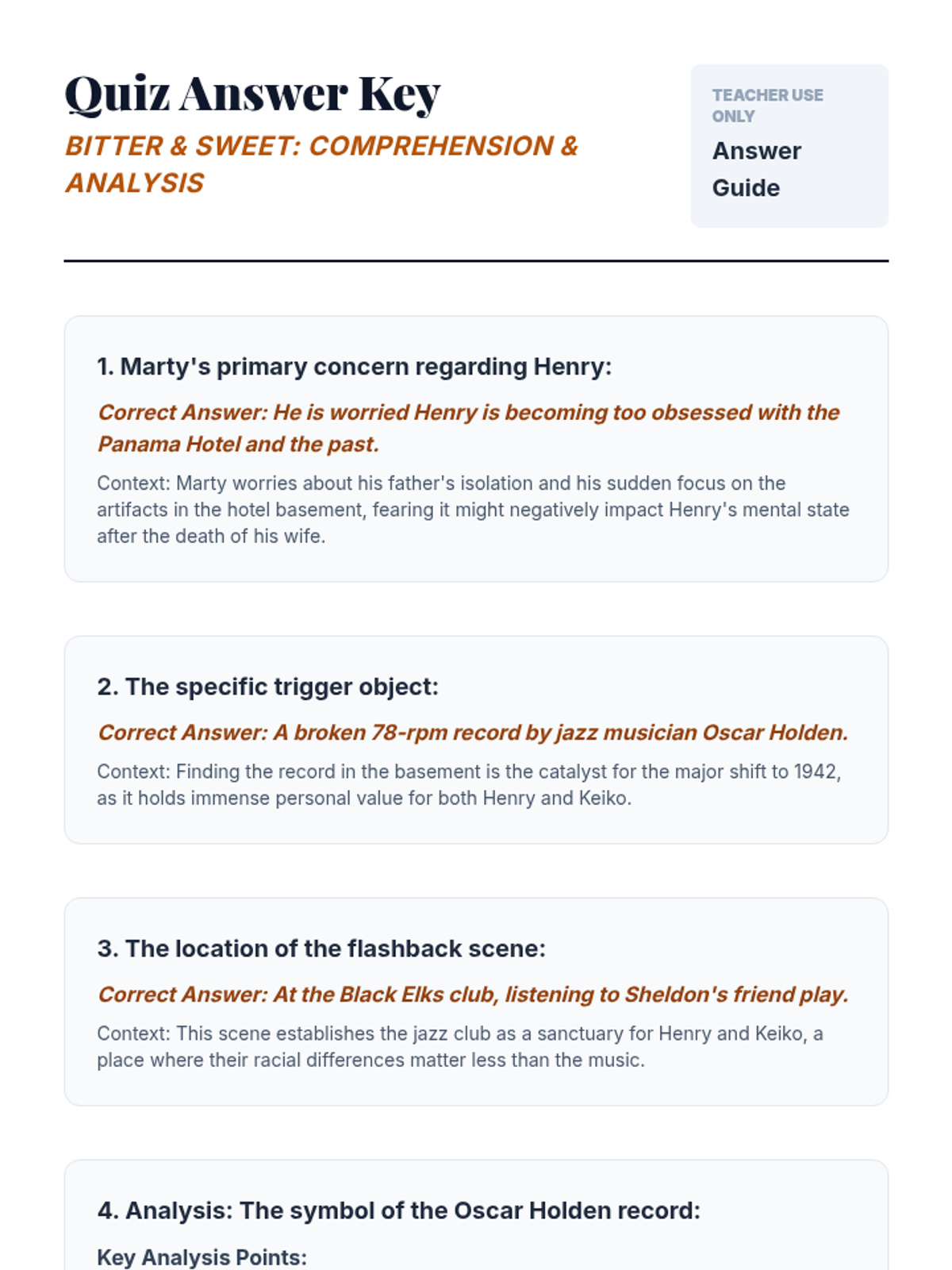
An 8th-grade ELA lesson focusing on the symbolic power of the Oscar Holden record and other recurring objects in Jamie Ford's *Hotel on the Corner of Bitter and Sweet*. Students explore how physical items carry emotional weight and develop deeper themes within a narrative.
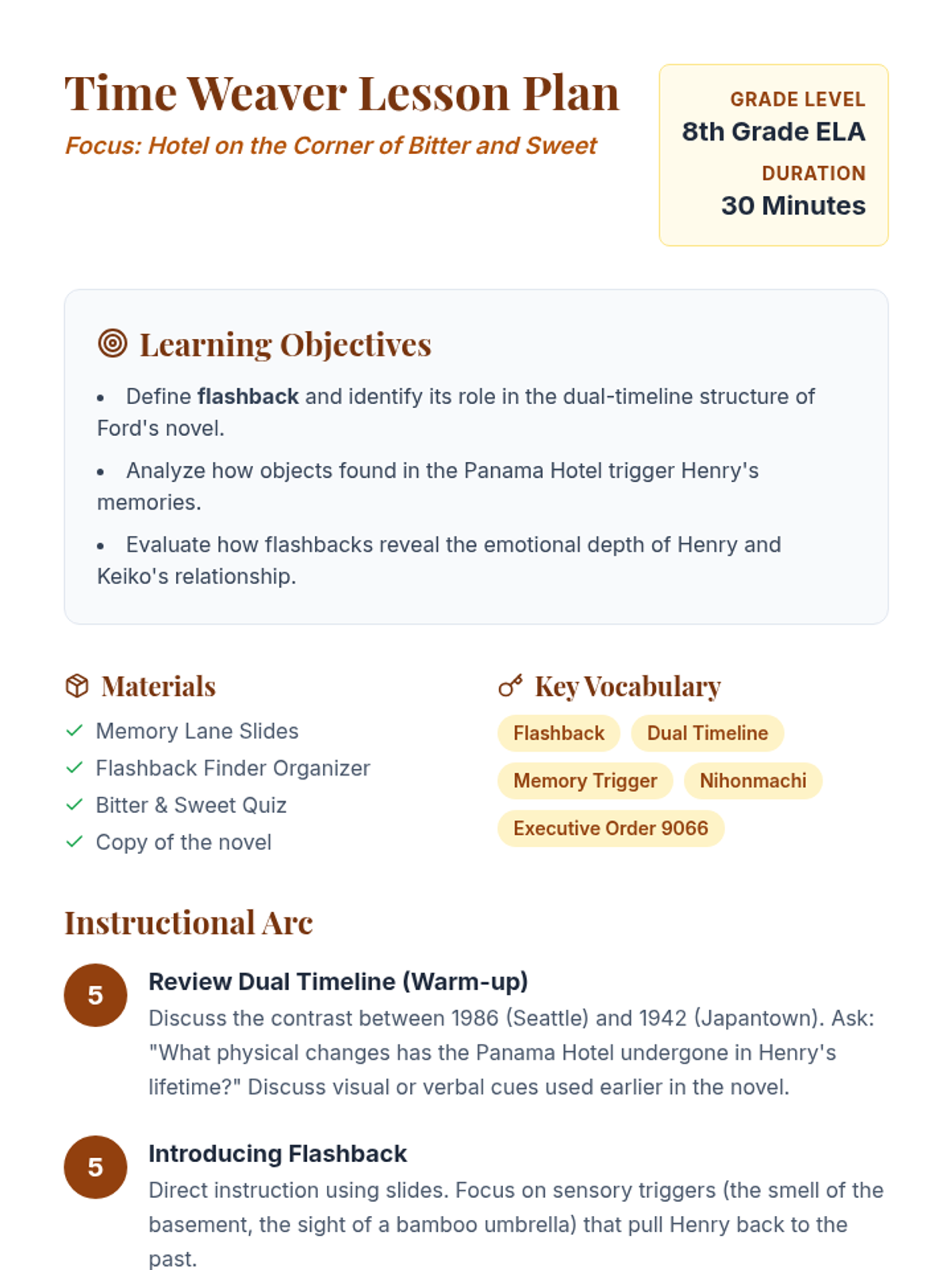
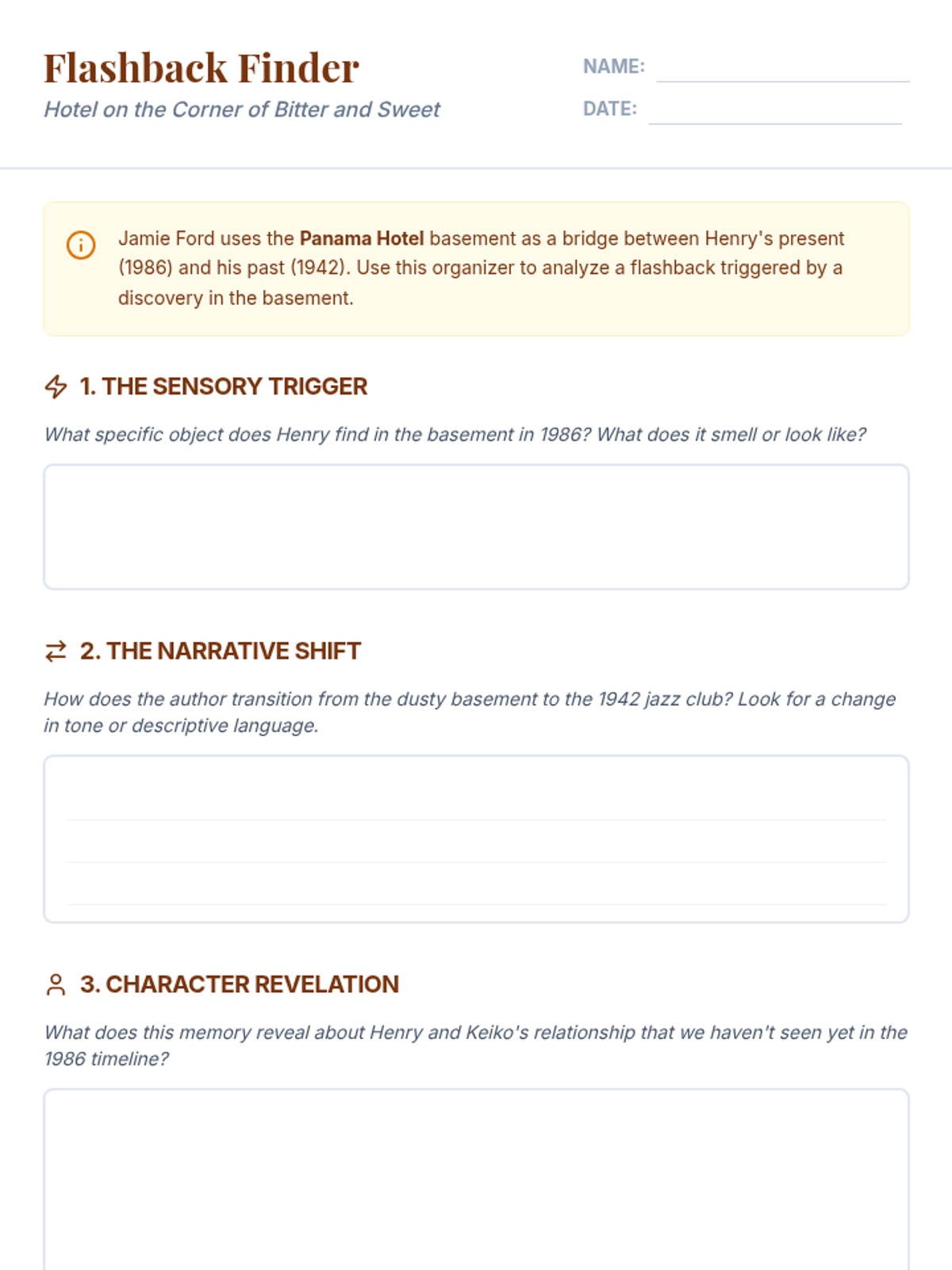
An 8th-grade ELA lesson focused on identifying and analyzing the purpose of flashbacks within a narrative structure, specifically examining how they reveal character history and advance the plot.
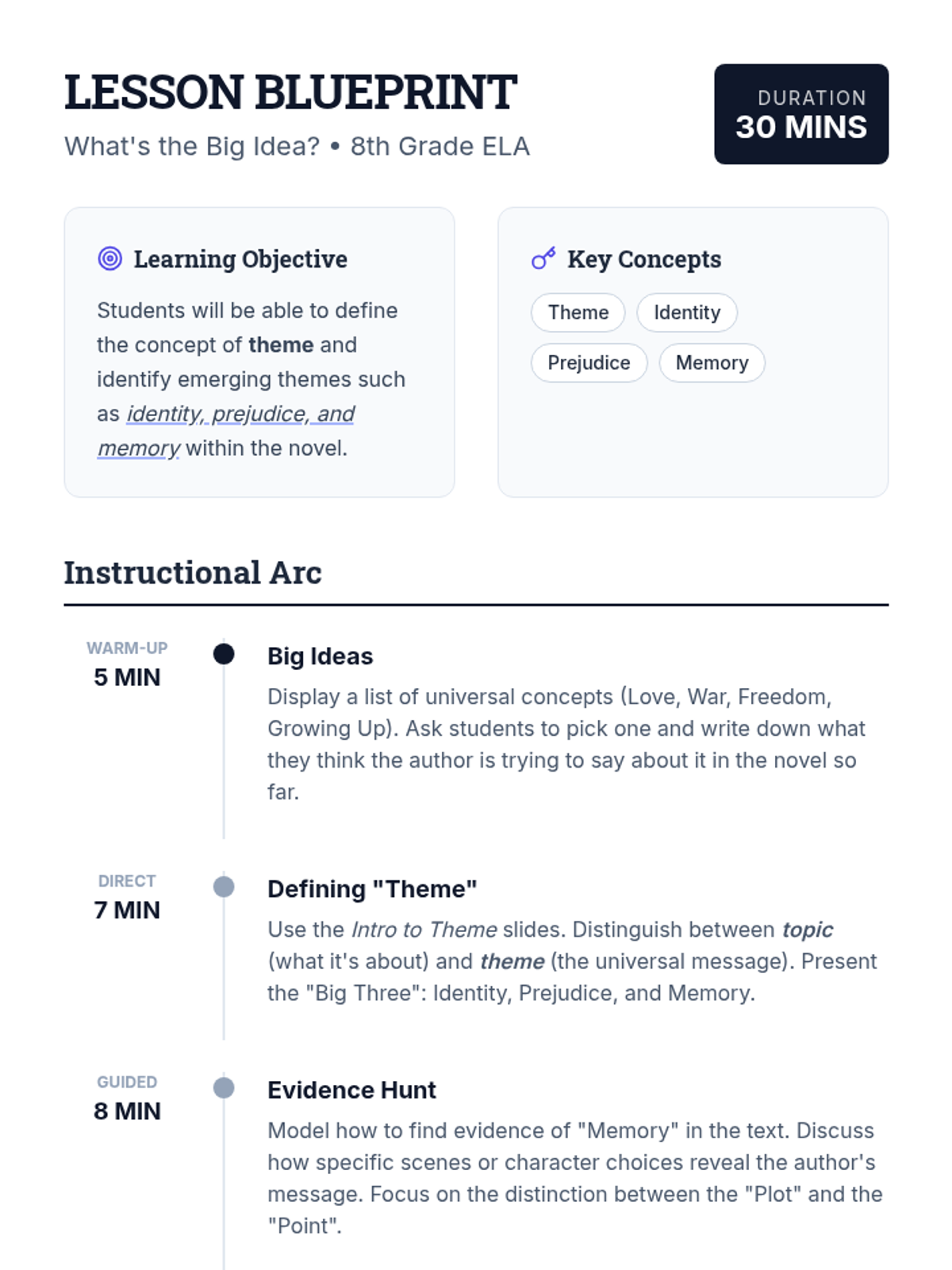
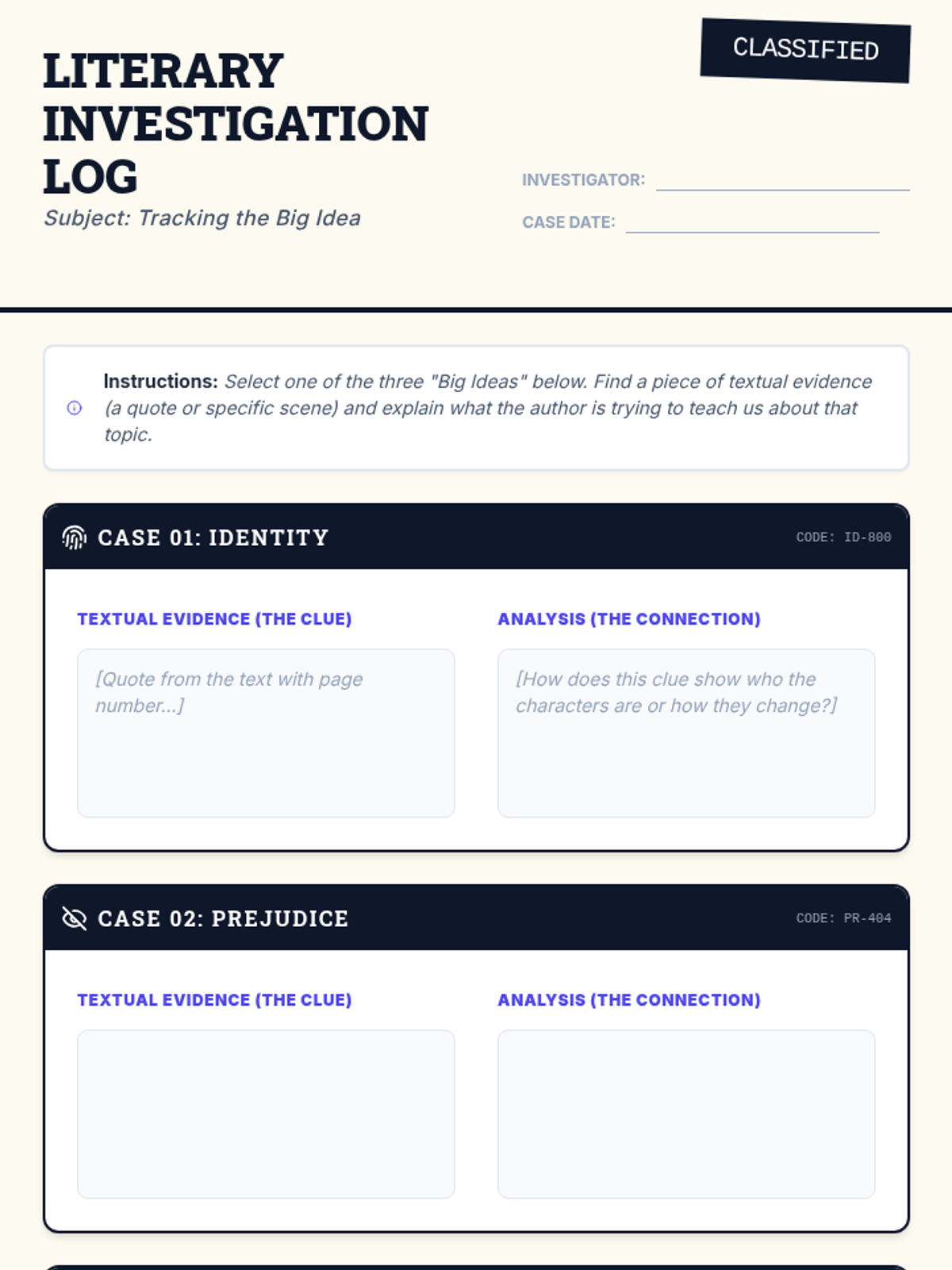
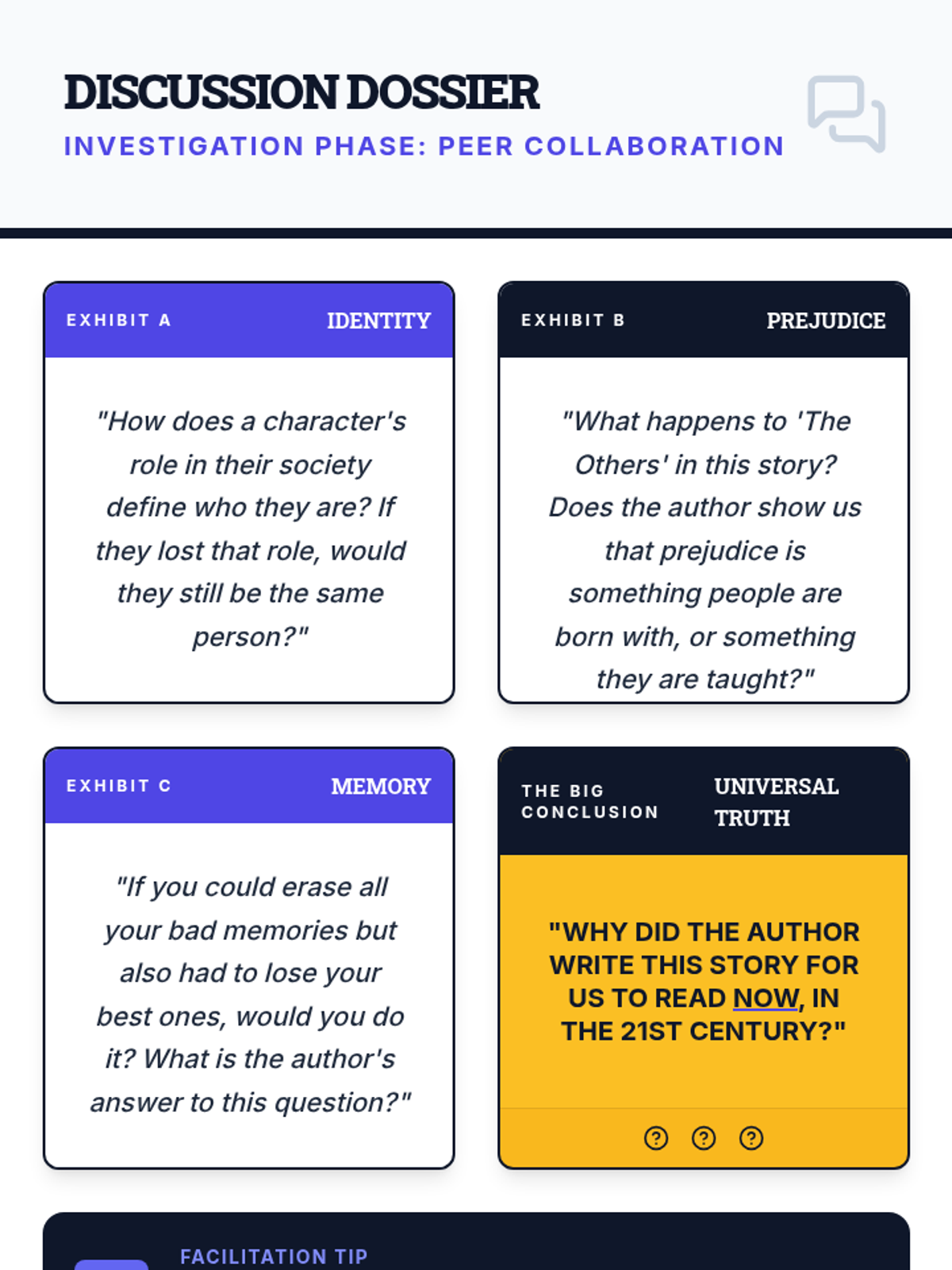
An introductory lesson on identifying and tracking literary themes like identity, prejudice, and memory, using a detective-style 'investigation' framework.
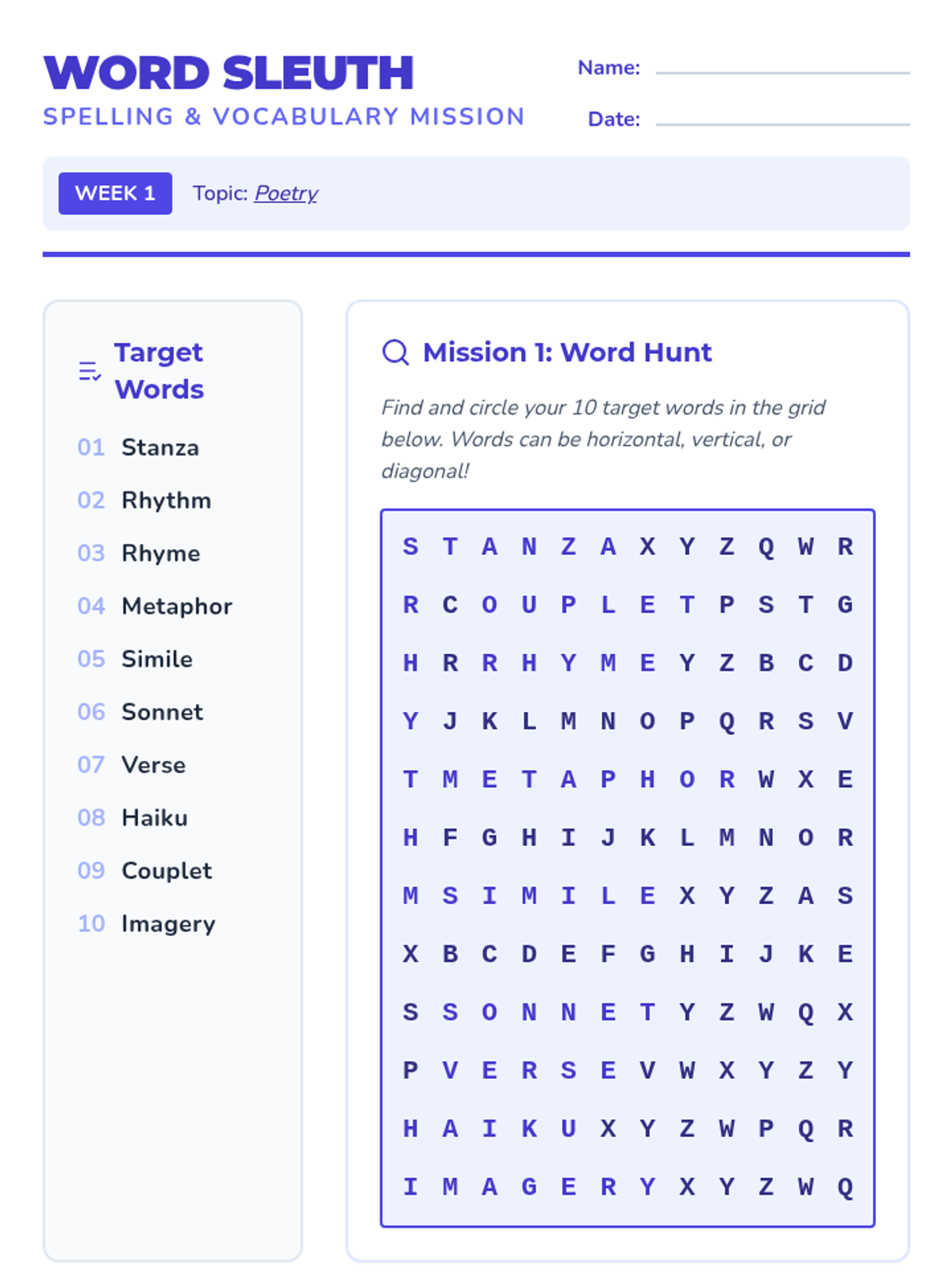
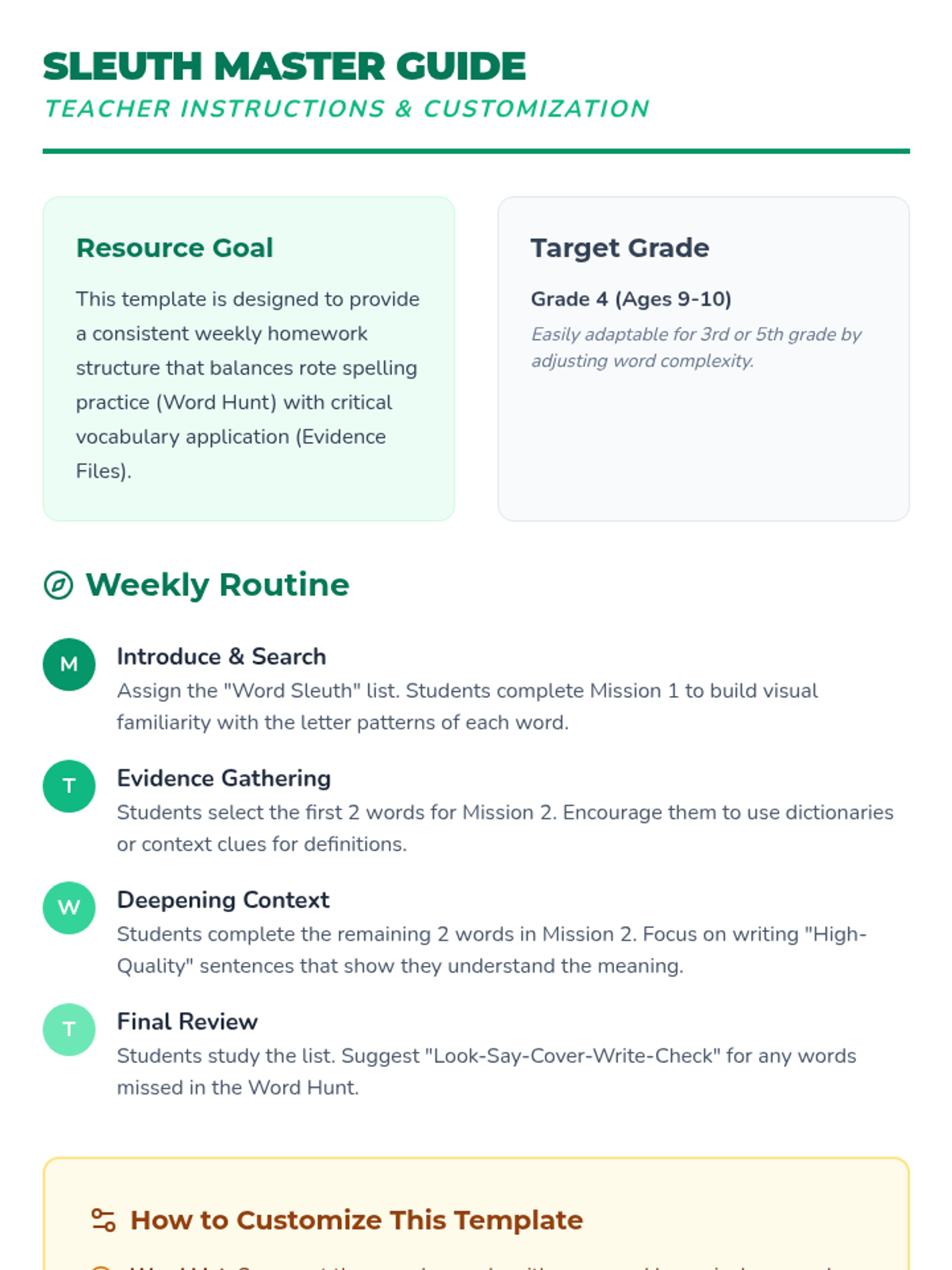
A weekly homework routine featuring a word search challenge and deep-dive vocabulary exercises for 10 target spelling words.
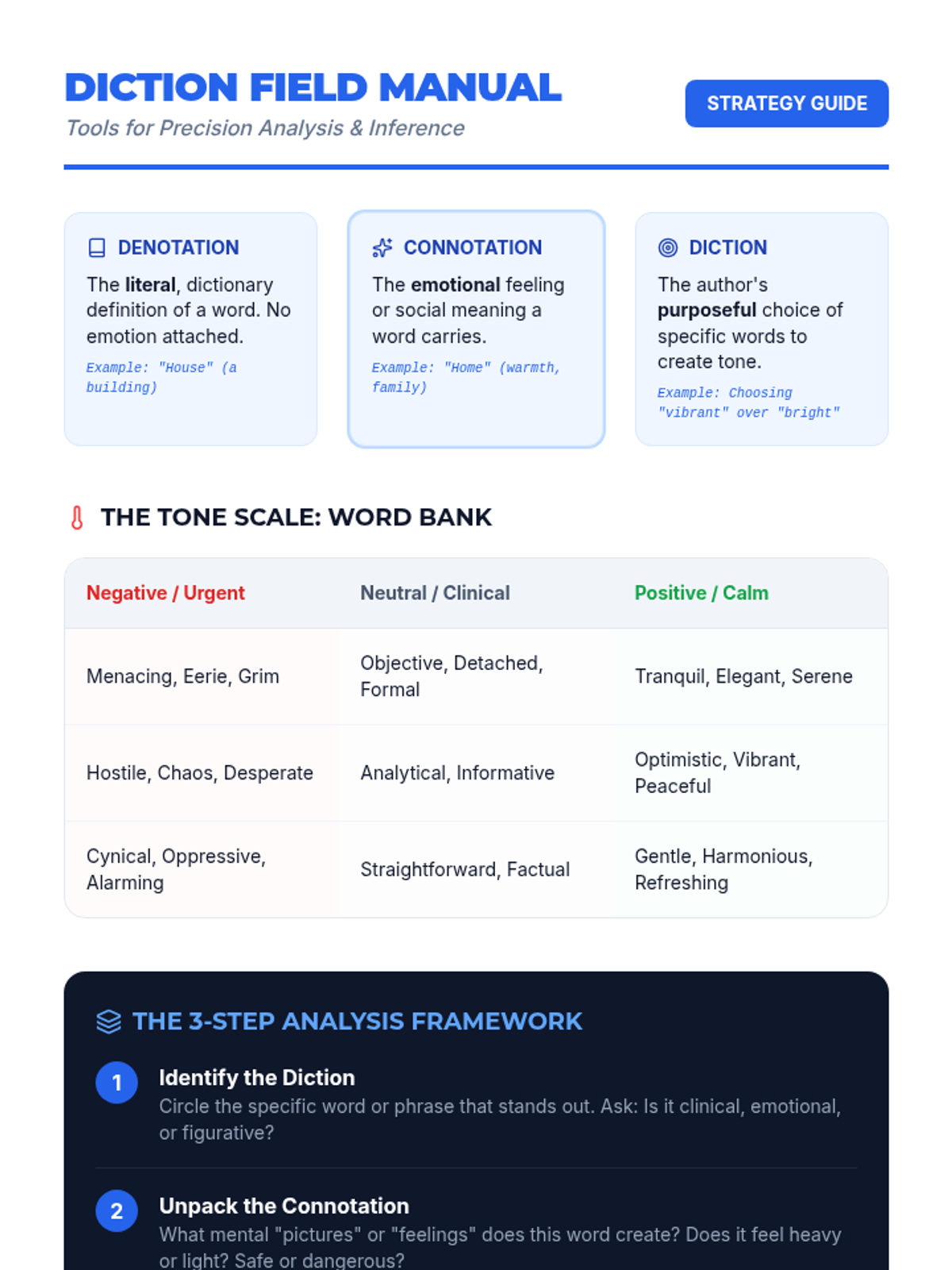
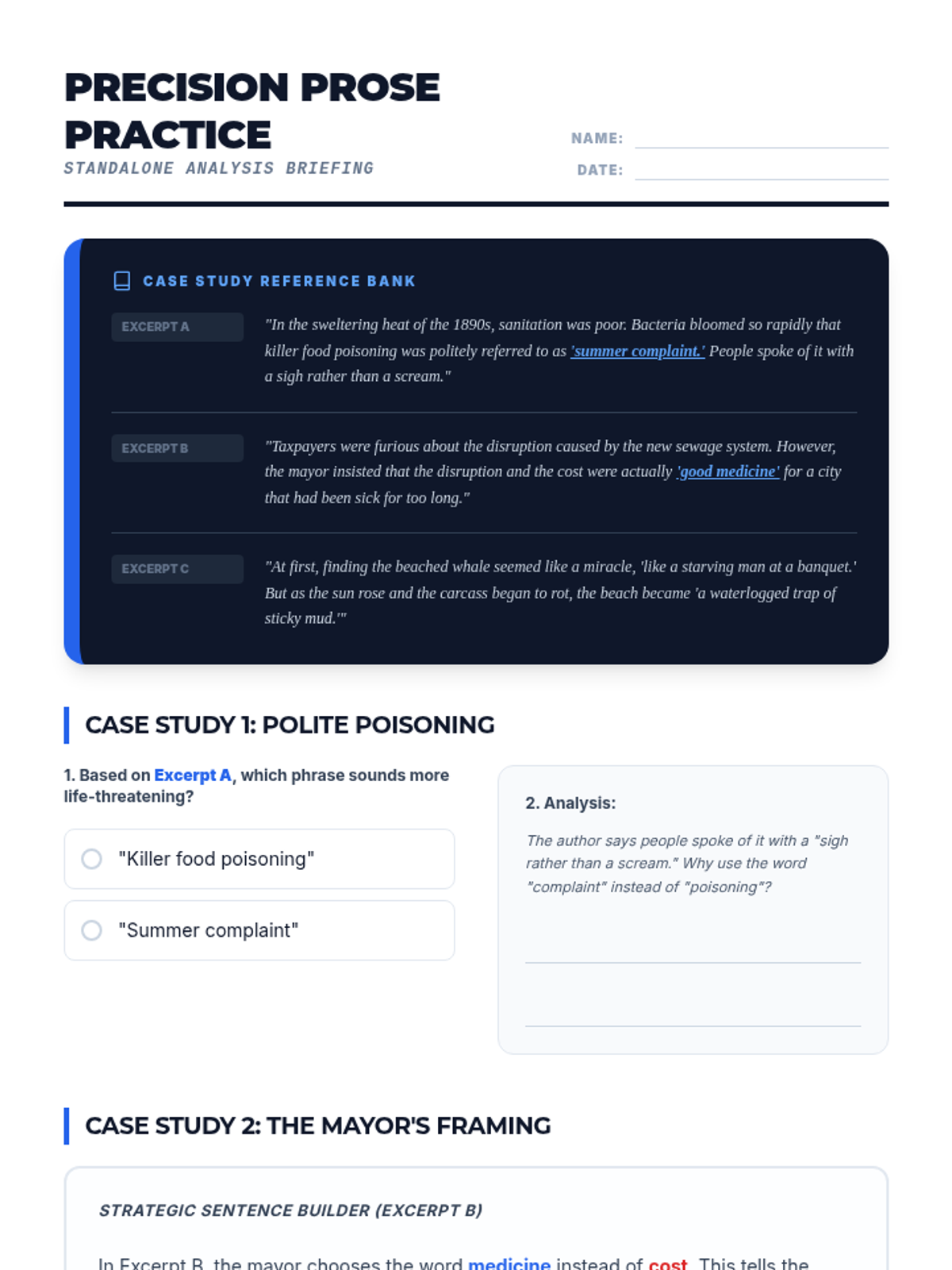
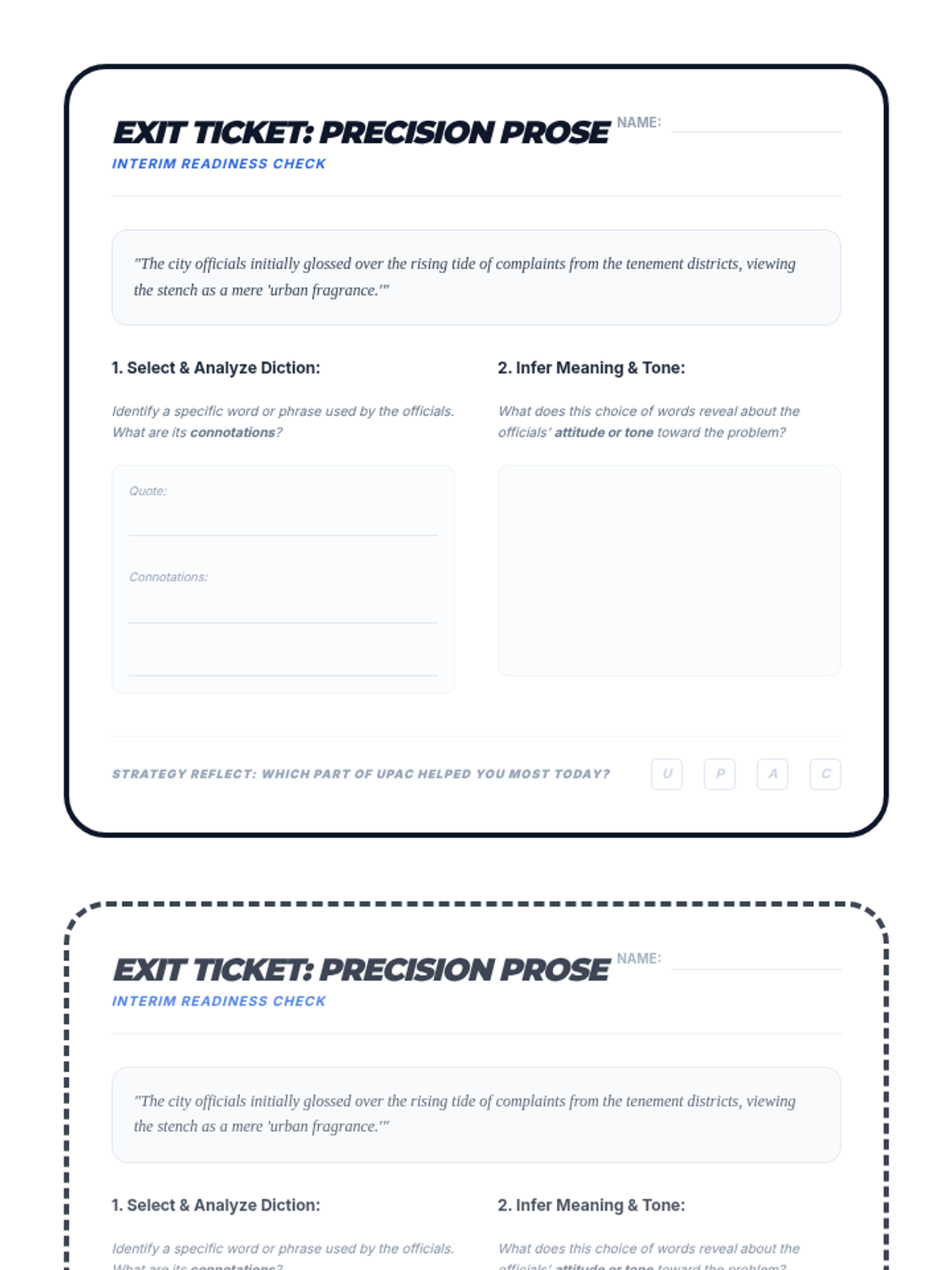
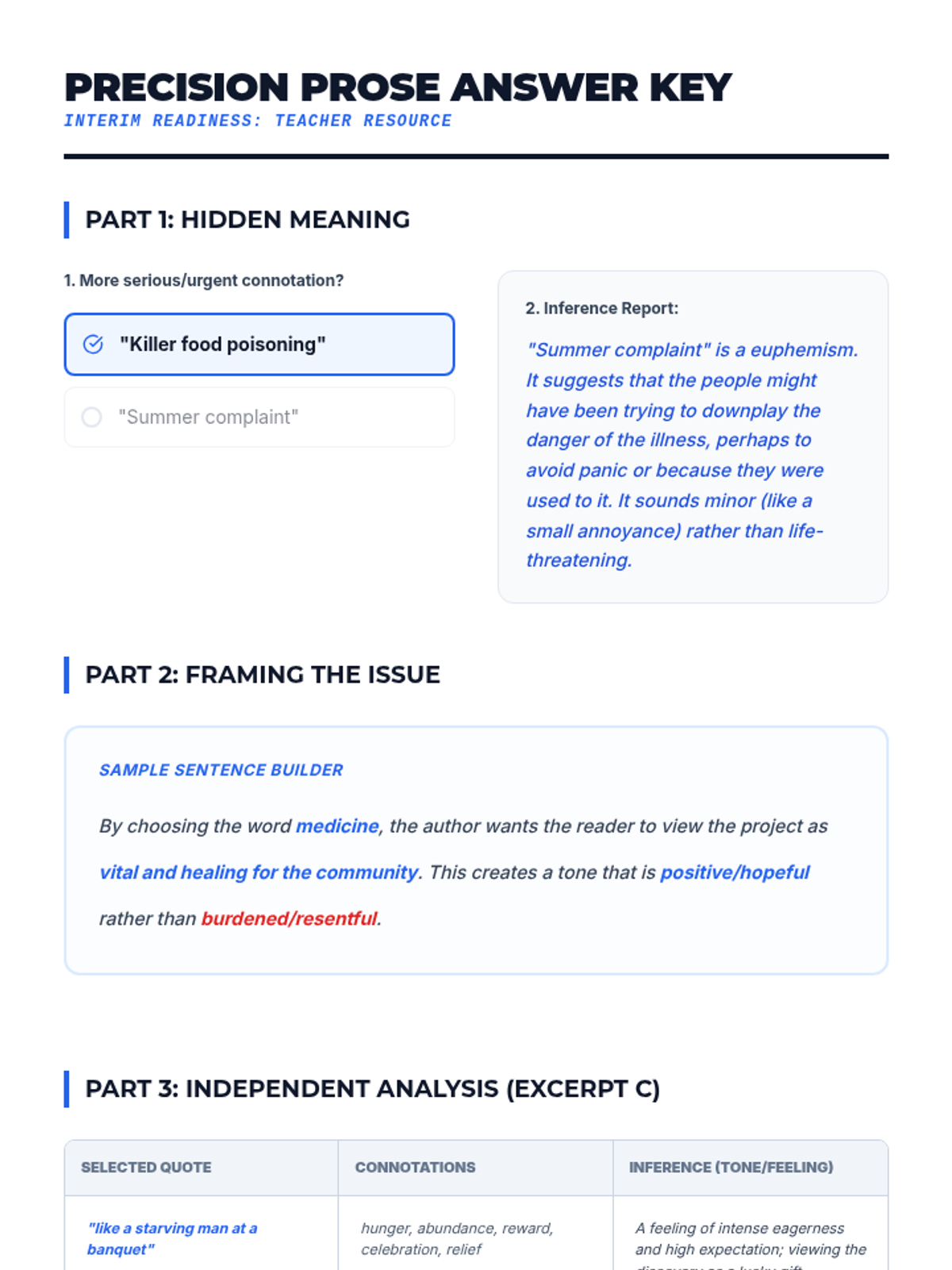
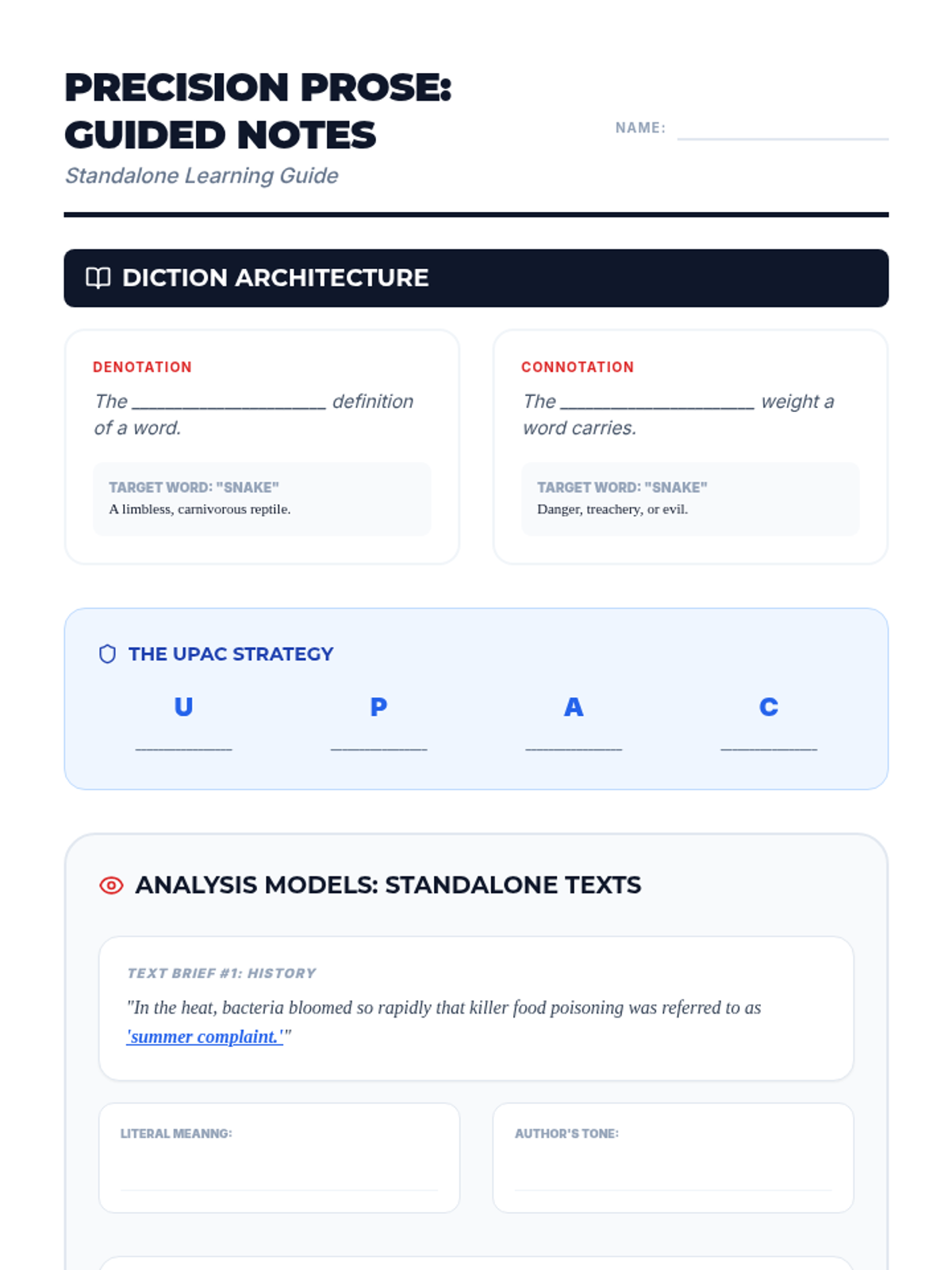
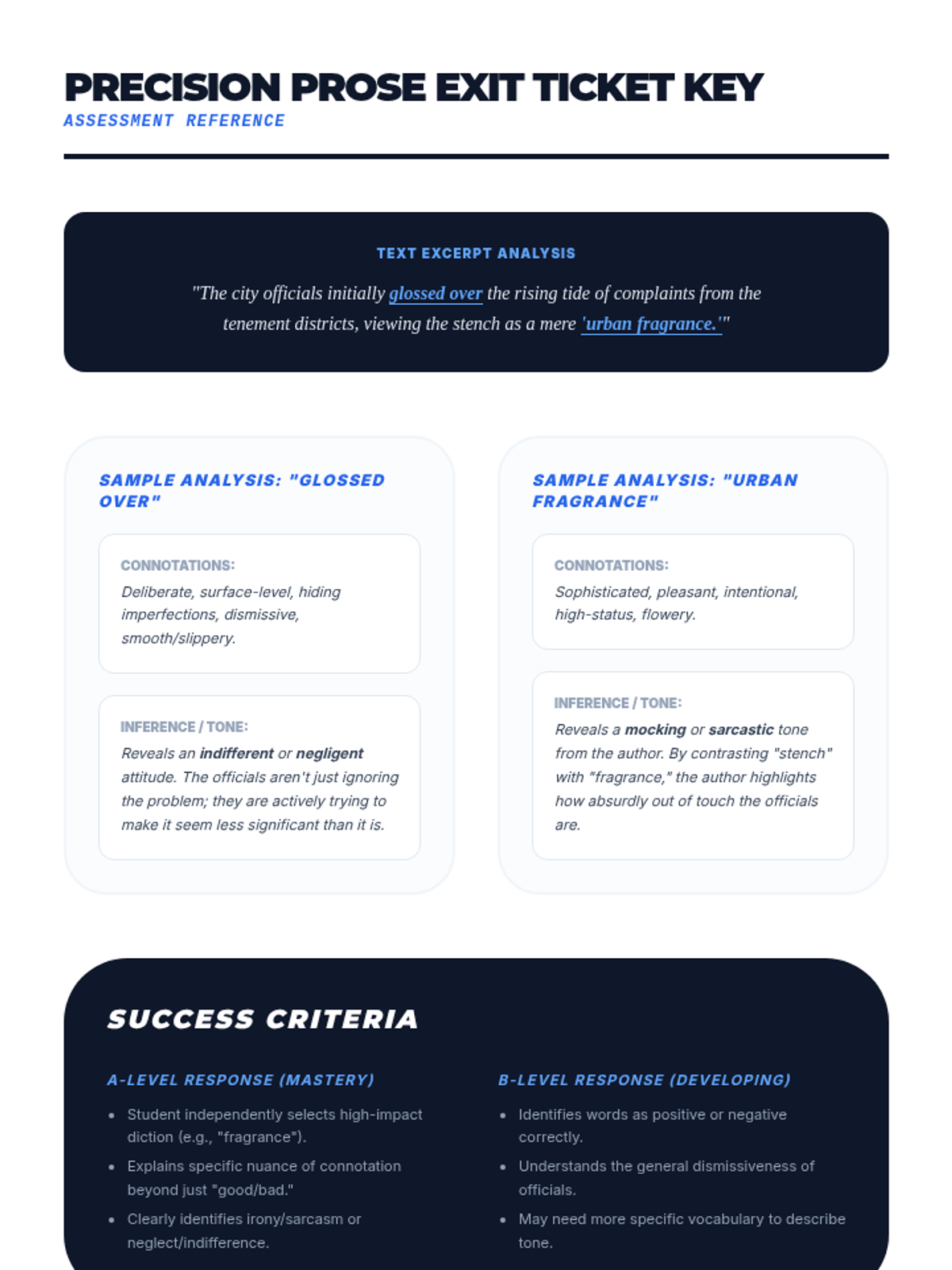
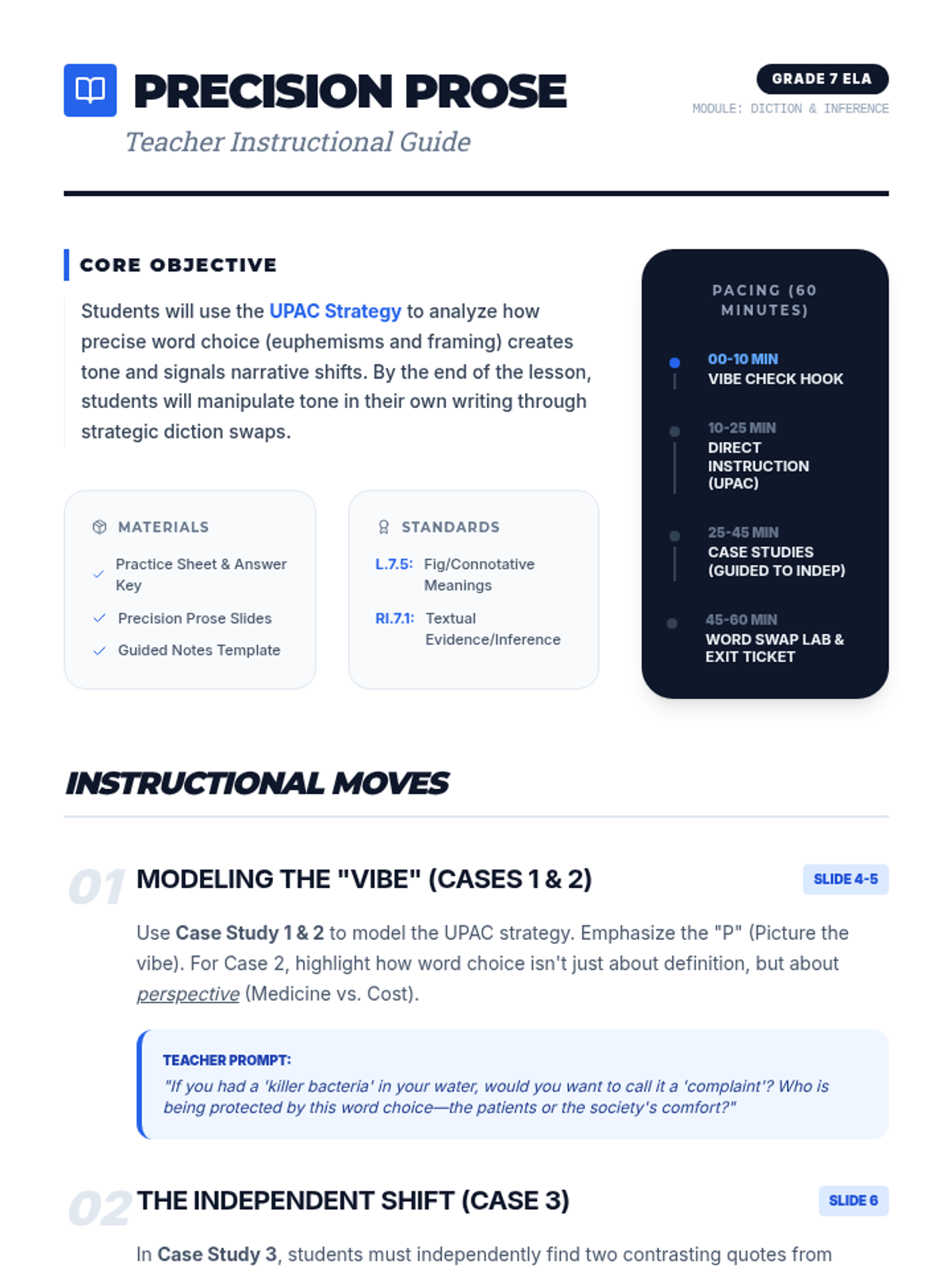
A 60-minute ELA lesson focused on analyzing author's diction and drawing logical inferences using excerpts from the Grade 7 Interim Assessment. Students will explore how specific word choices shape meaning and tone through guided and independent practice.
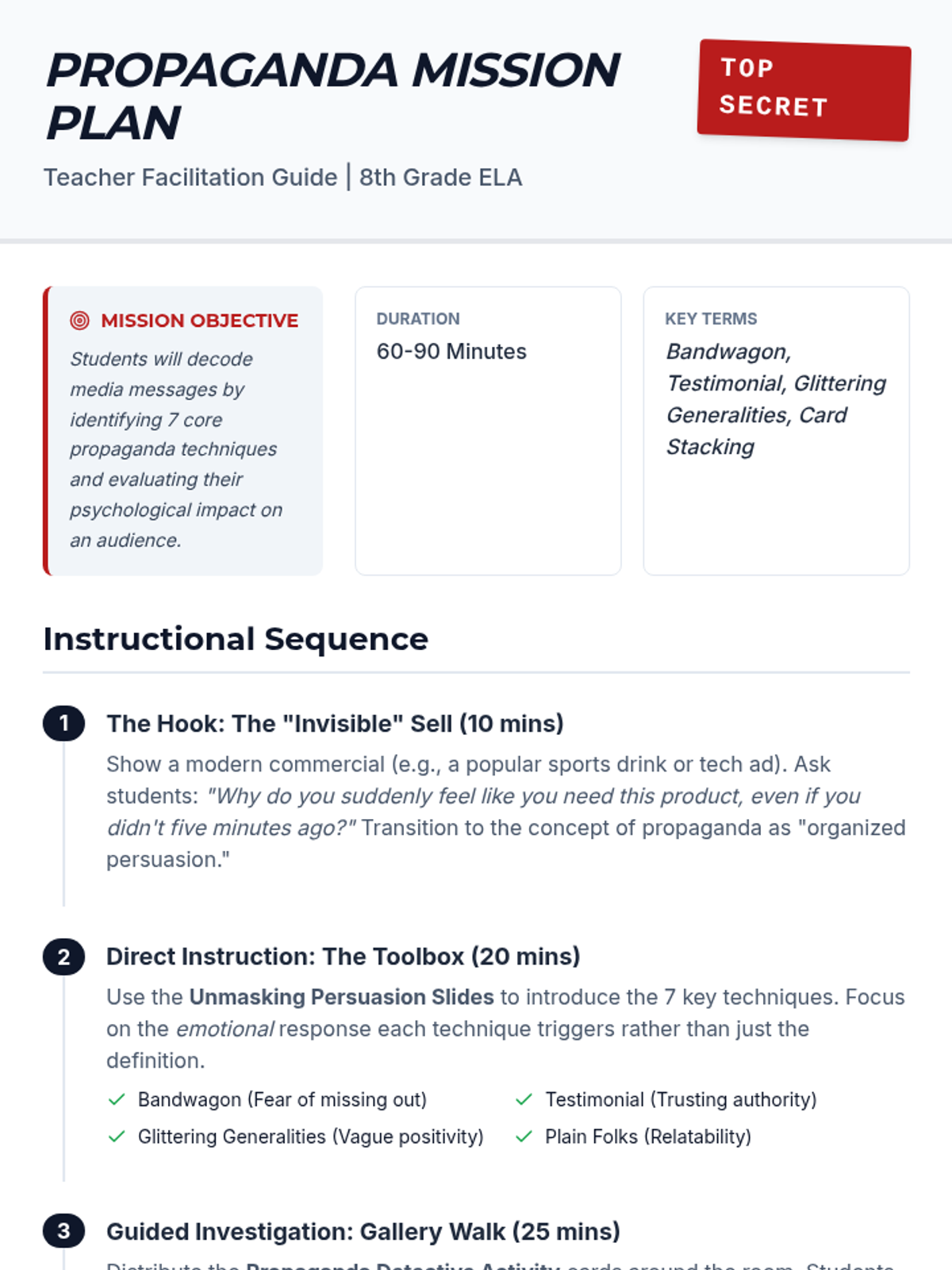
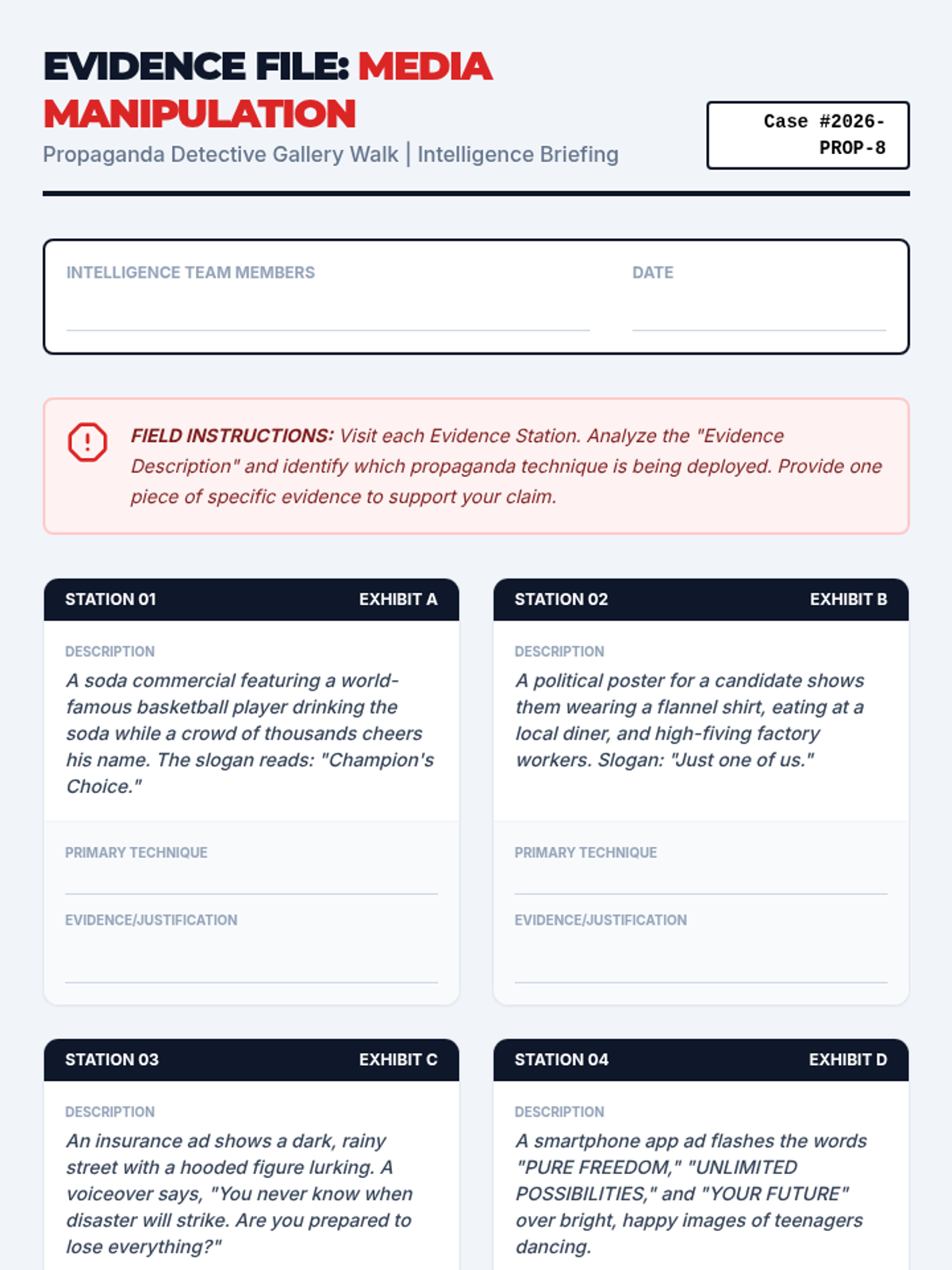
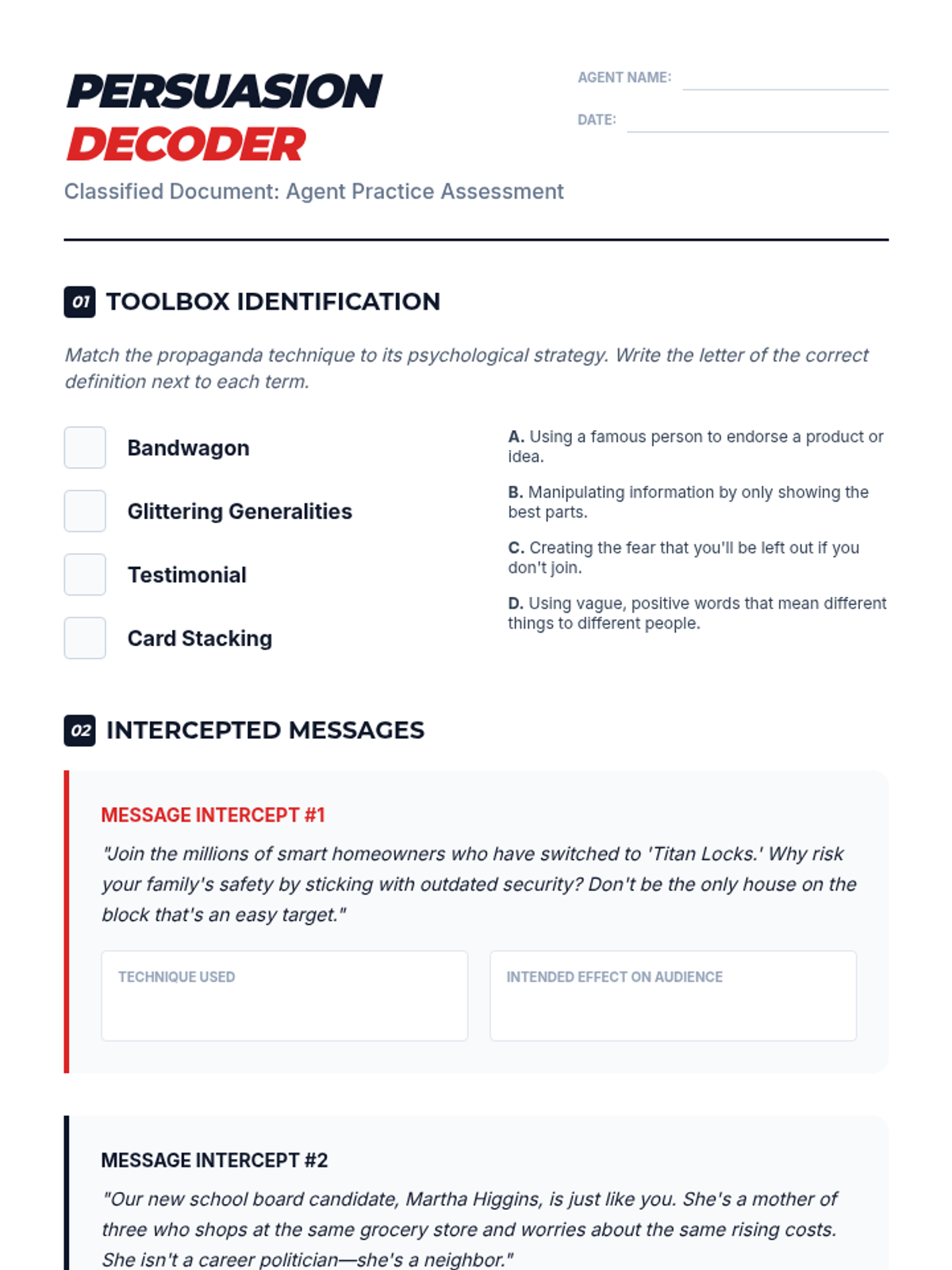
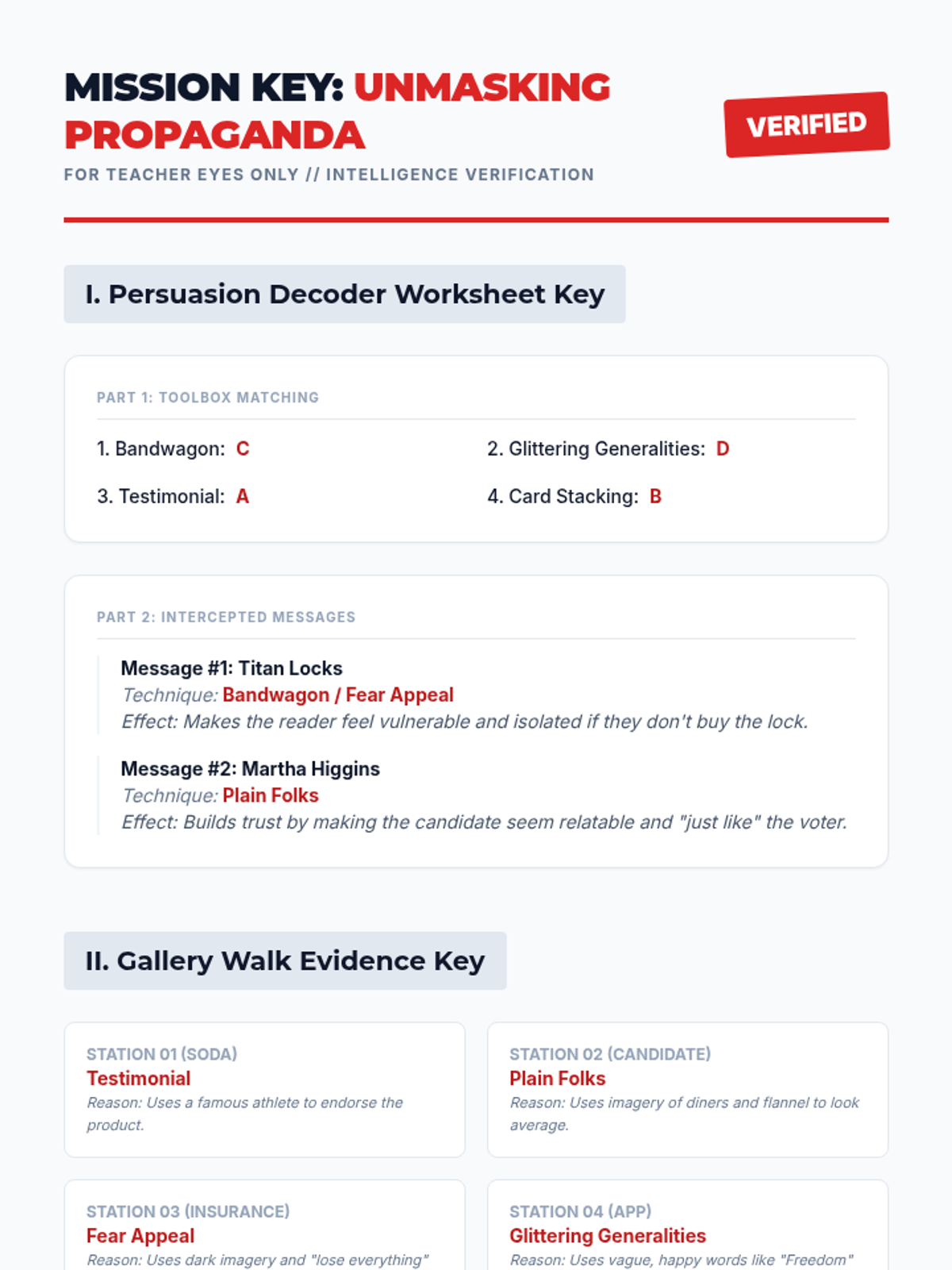
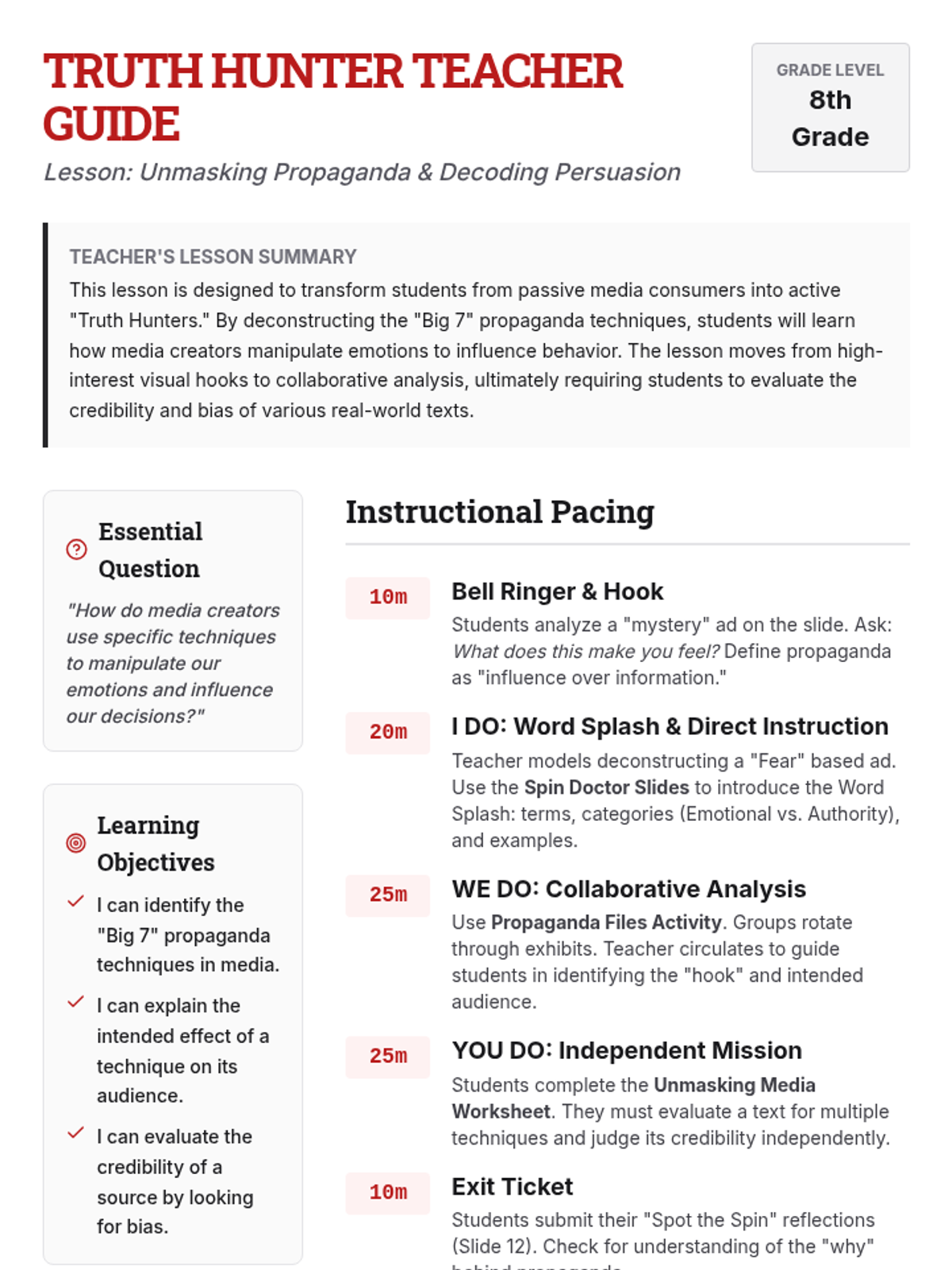
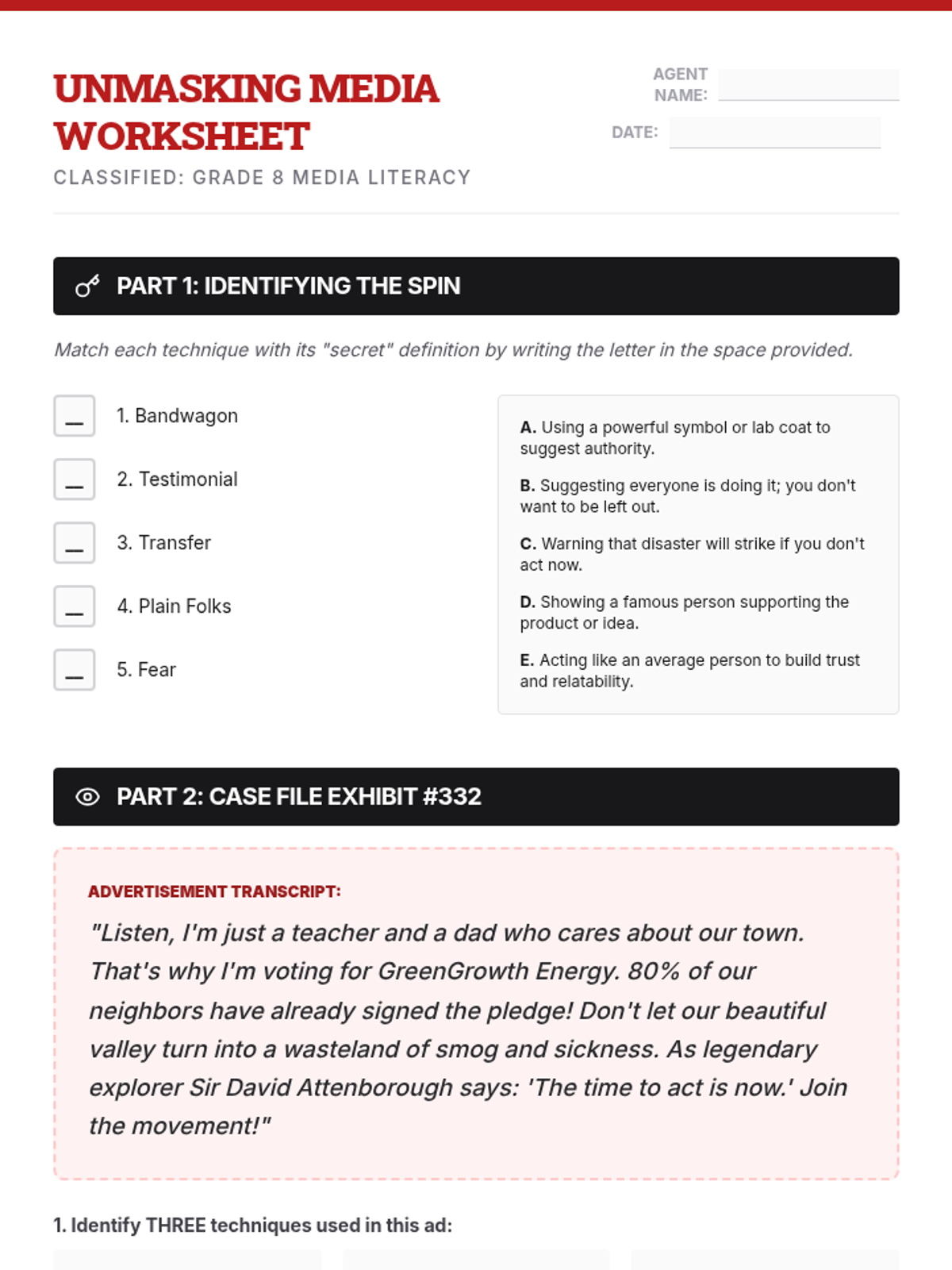
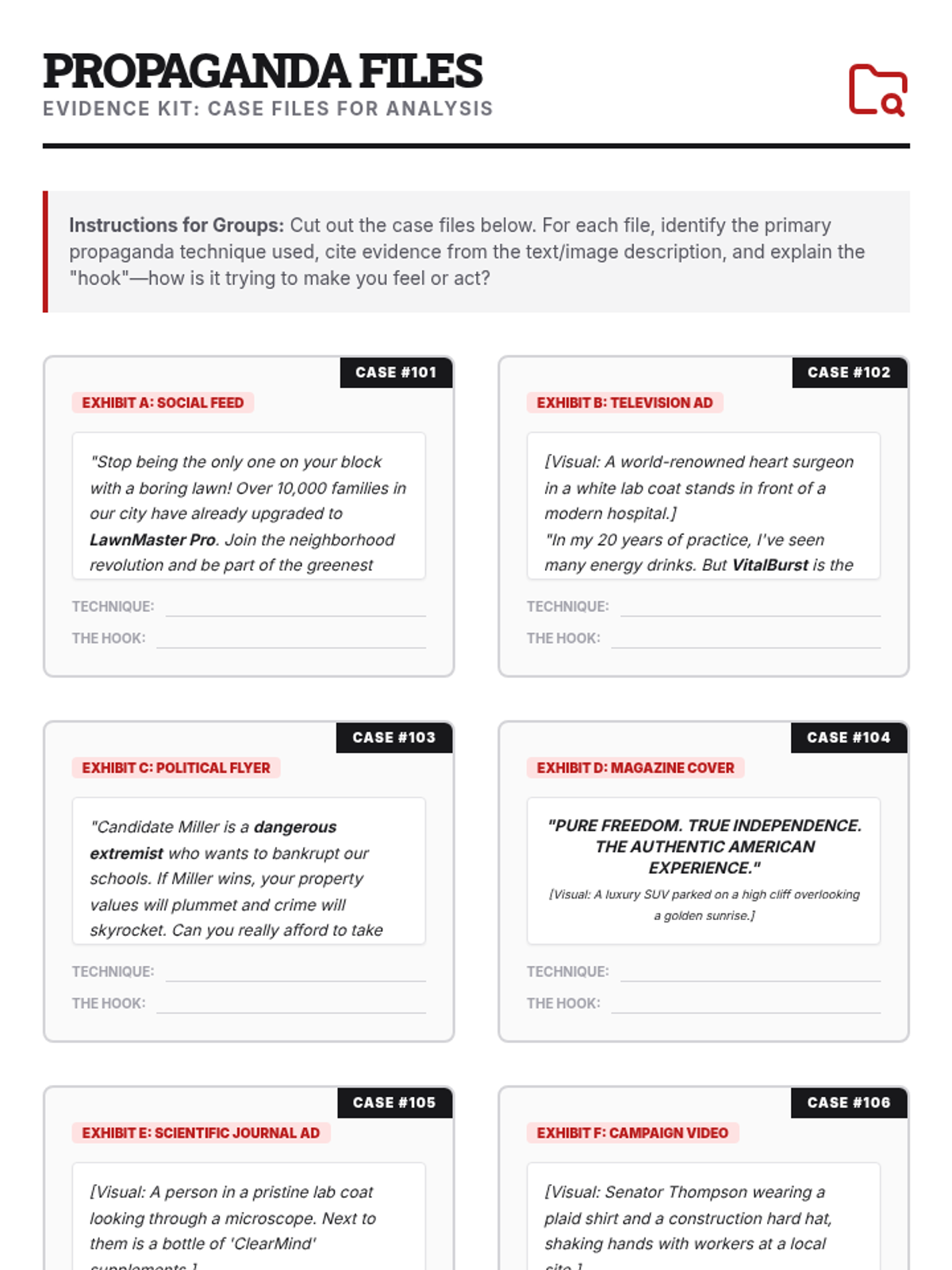
This lesson equips 8th-grade students with the tools to identify and analyze propaganda techniques in media, fostering critical thinking and media literacy. Students will explore common devices like bandwagon, testimonials, and glittering generalities through real-world examples.
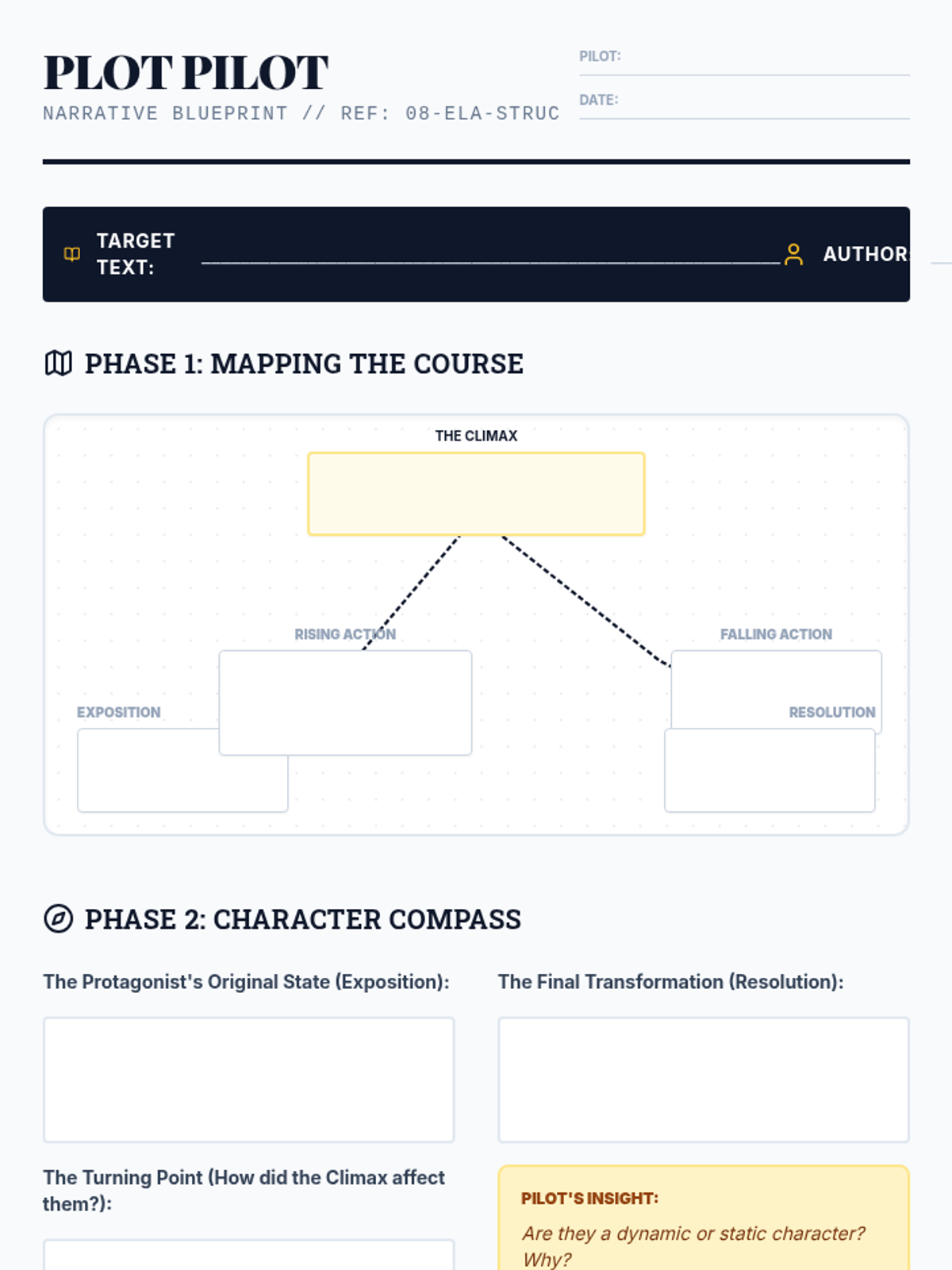
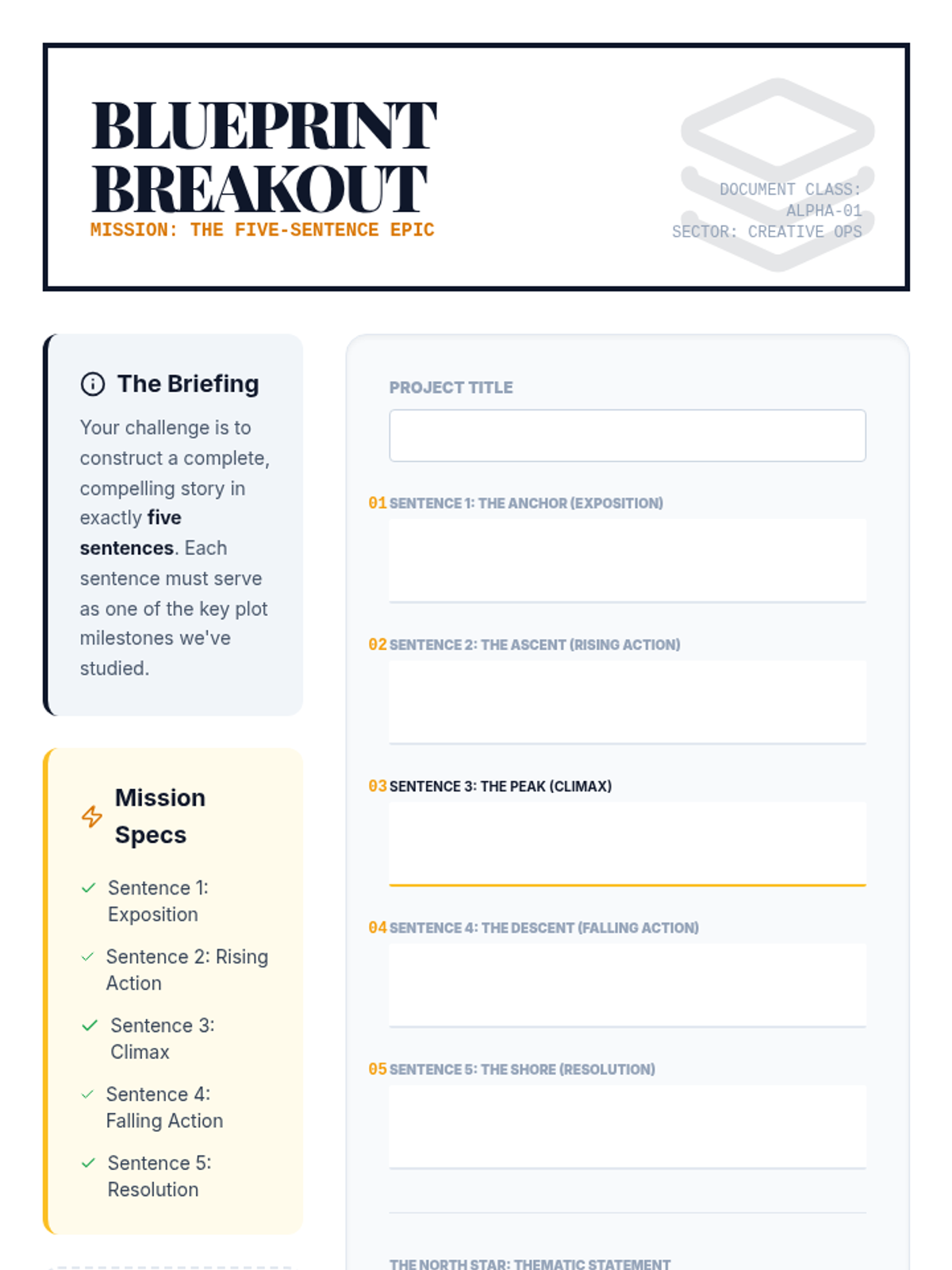
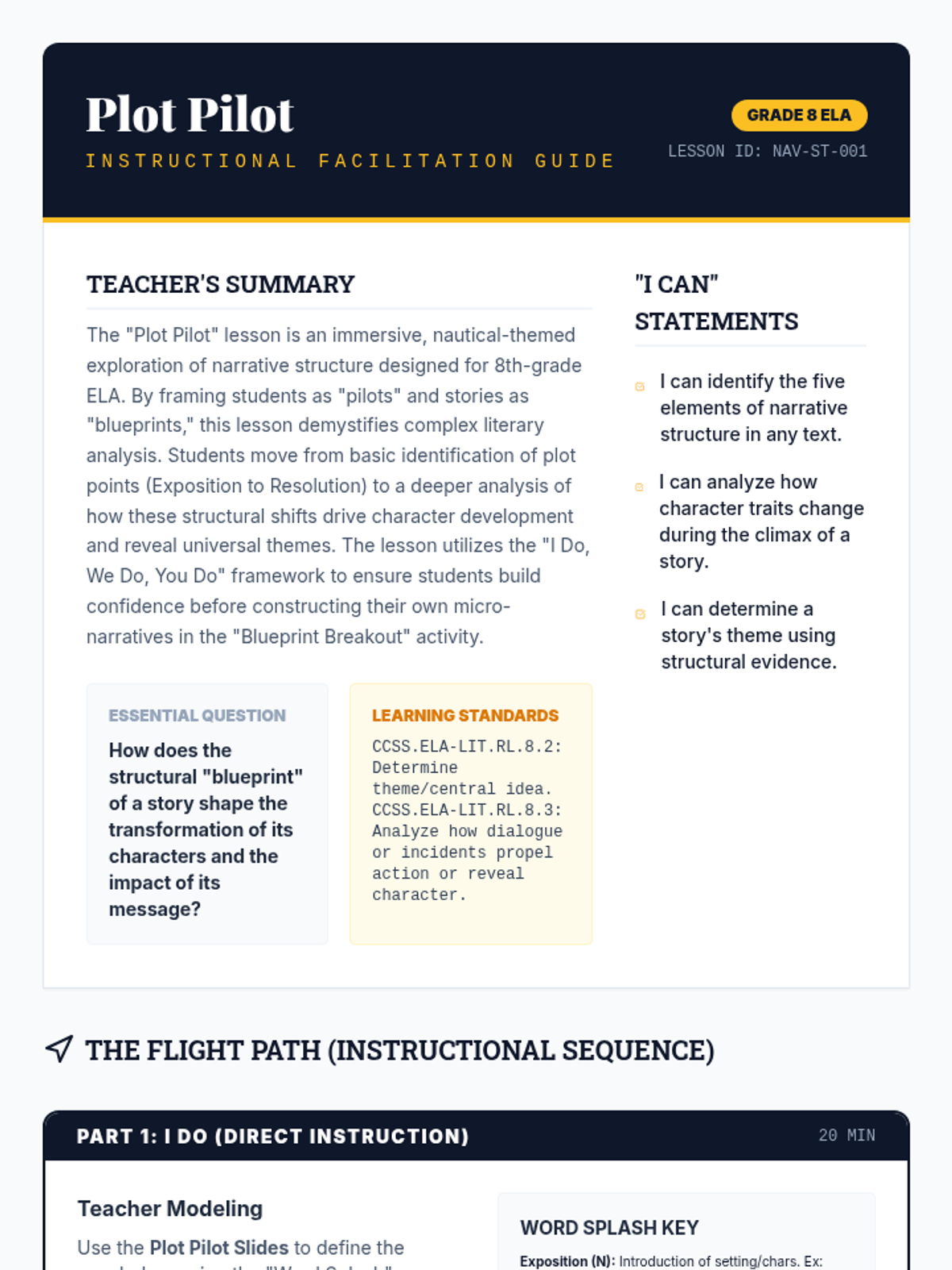
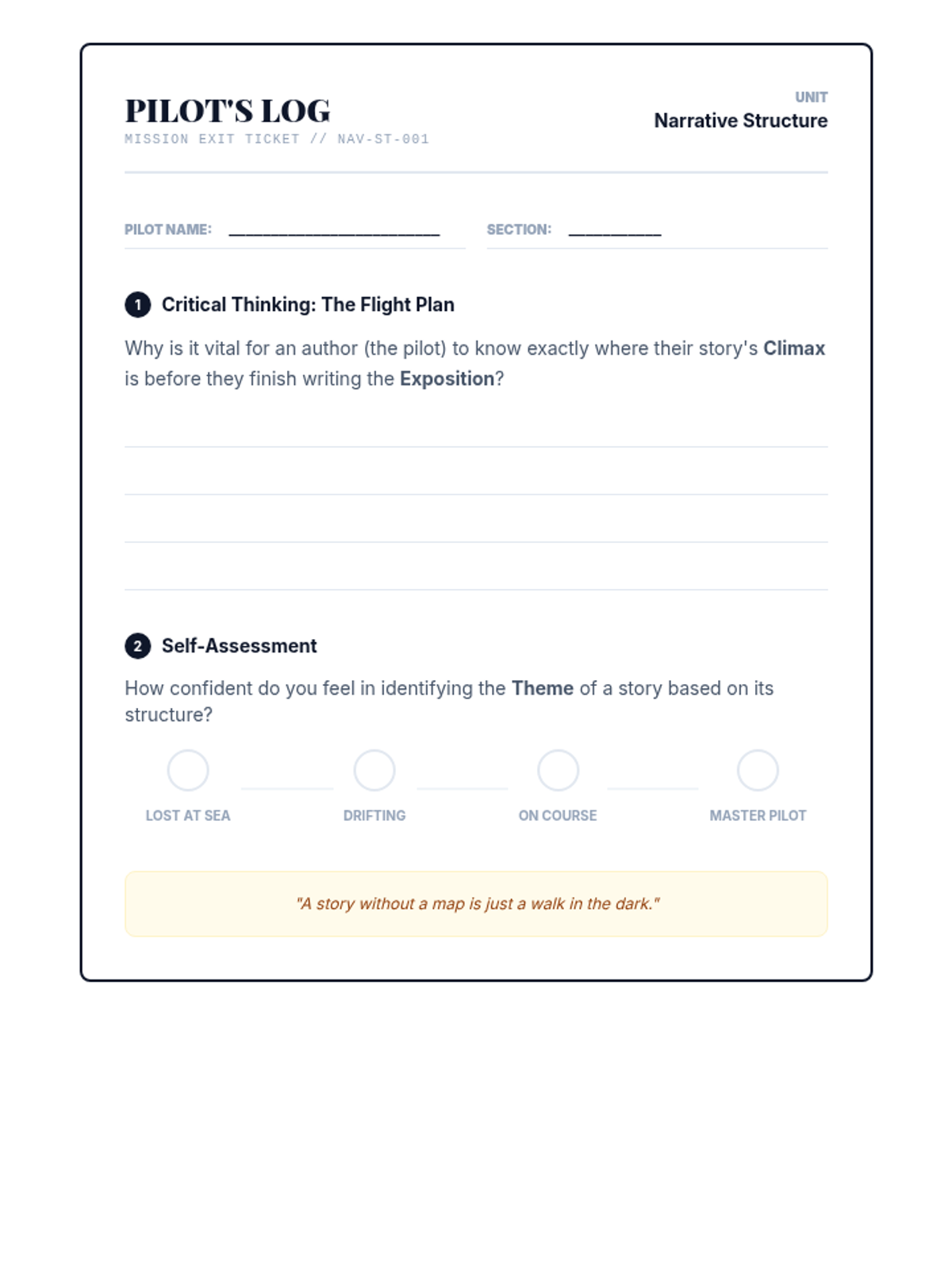
An immersive exploration of narrative structure where 8th graders master the art of plot mapping, character development, and thematic analysis using nautical-themed blueprints and charts. Students transform into 'Plot Pilots' to navigate complex texts and construct their own compelling stories.
This lesson equips 8th-grade students with the tools to identify and analyze propaganda techniques across various media formats. Students will investigate the 'Big 7' propaganda devices, evaluate source credibility, and practice 'unmasking' persuasive rhetoric in real-world examples.
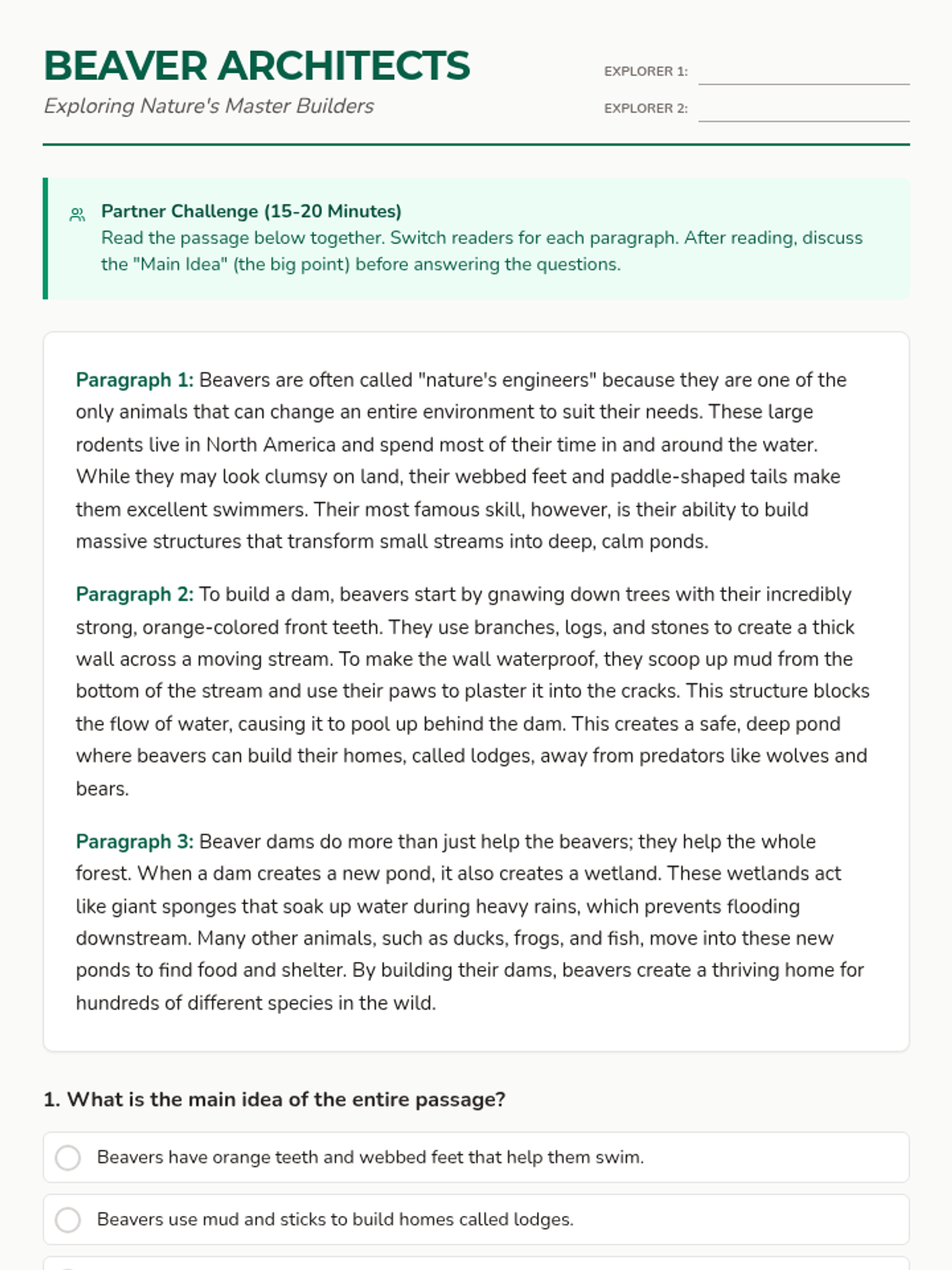
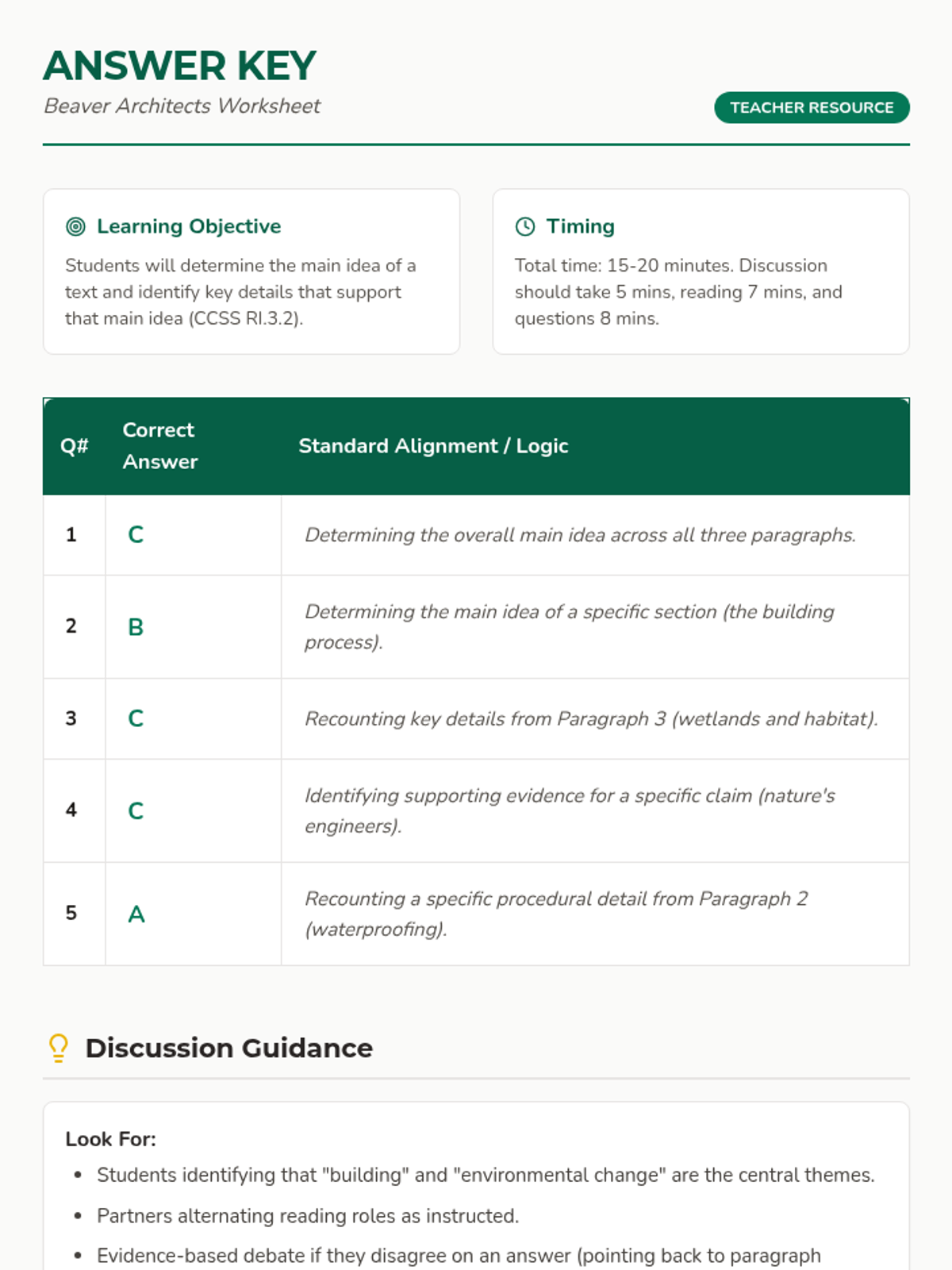
A lesson focused on determining the main idea and supporting details using a text about beavers as nature's engineers. Includes a reading passage and multiple-choice comprehension questions.
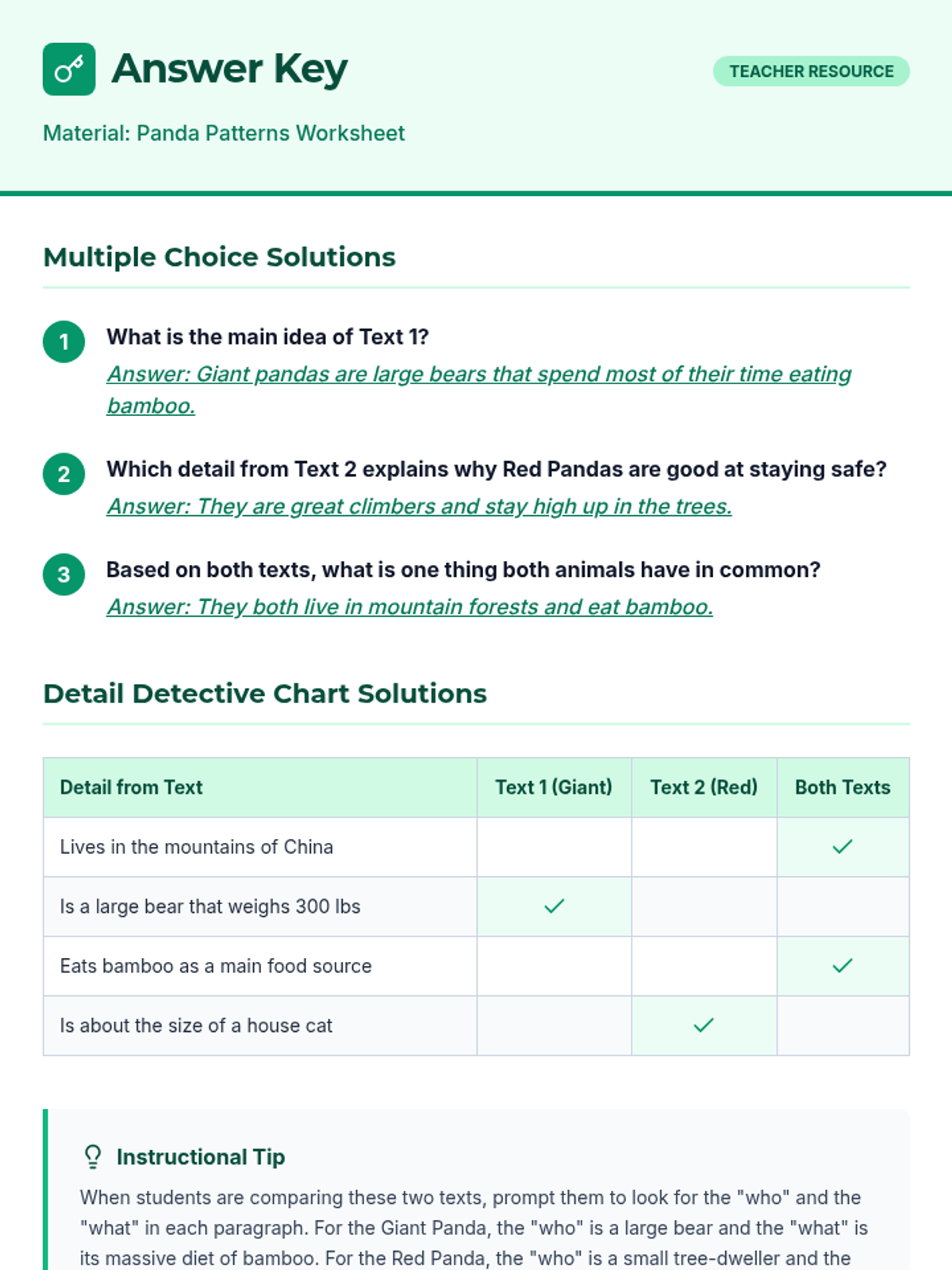
A lesson focused on identifying the main idea and supporting details in nonfiction texts using a comparison of Giant Pandas and Red Pandas.
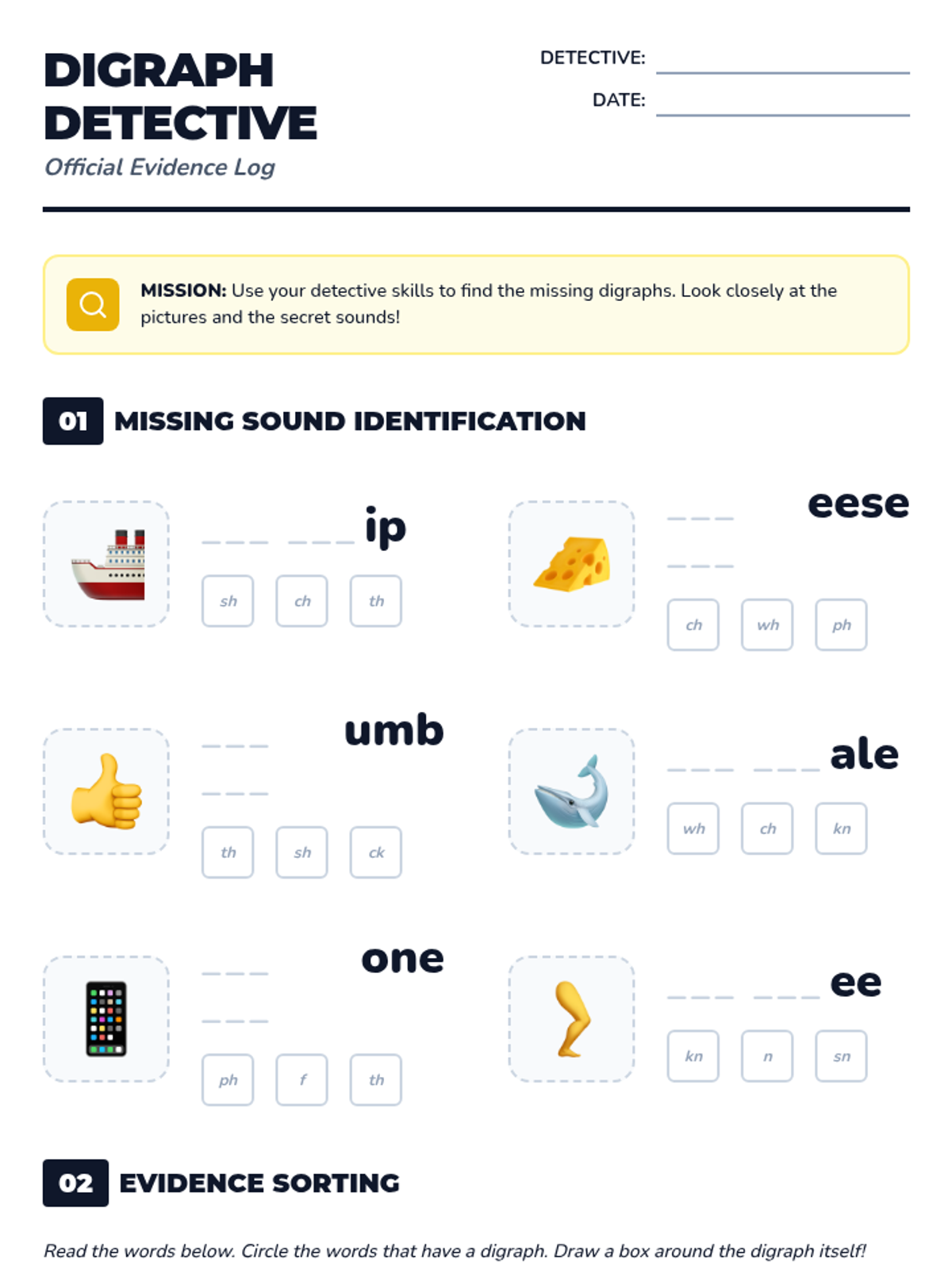
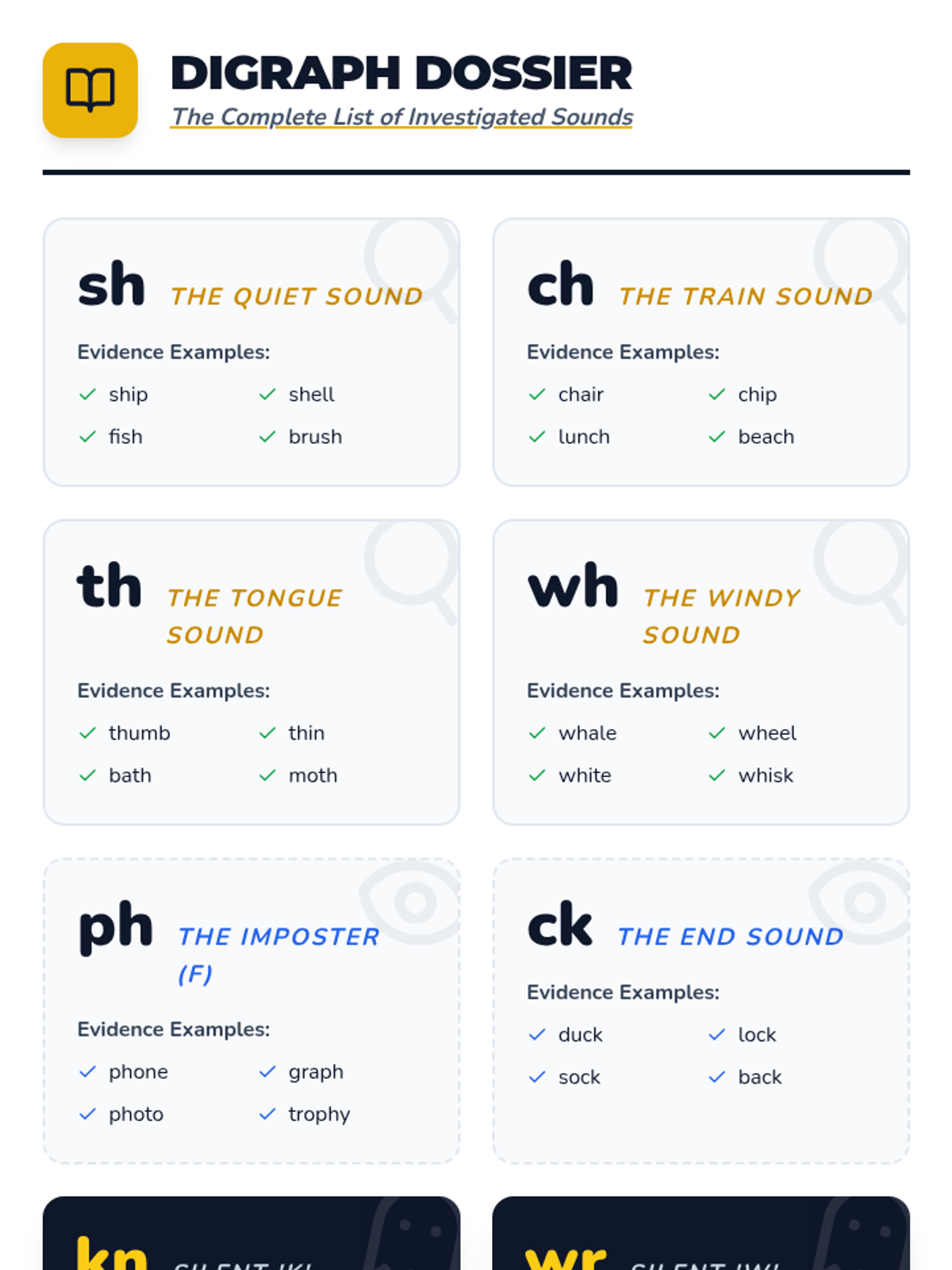
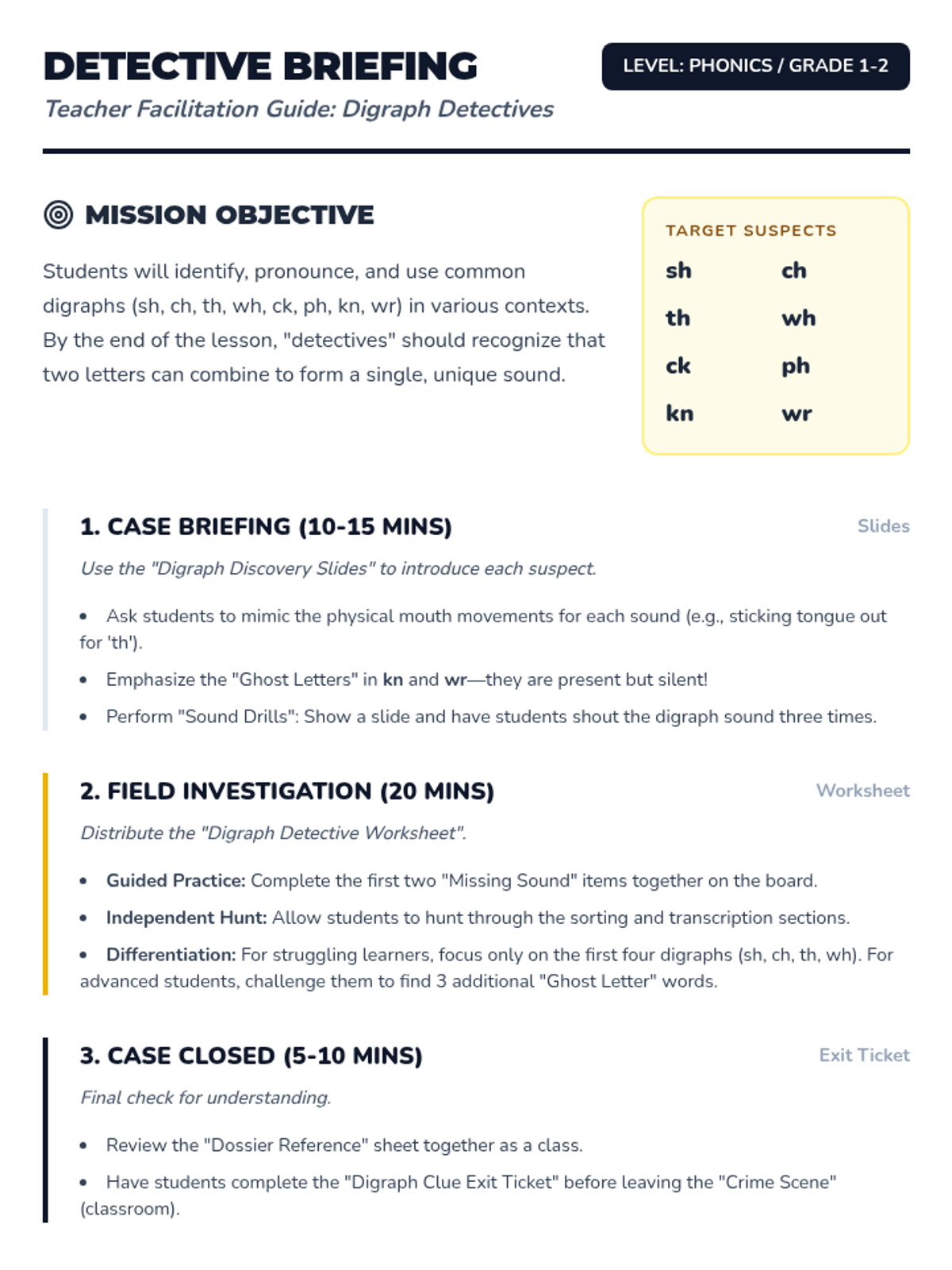
A foundational phonics lesson focused on identifying and using common digraphs (sh, ch, th, wh, ck, ph, kn, wr) through a fun detective-themed exploration.
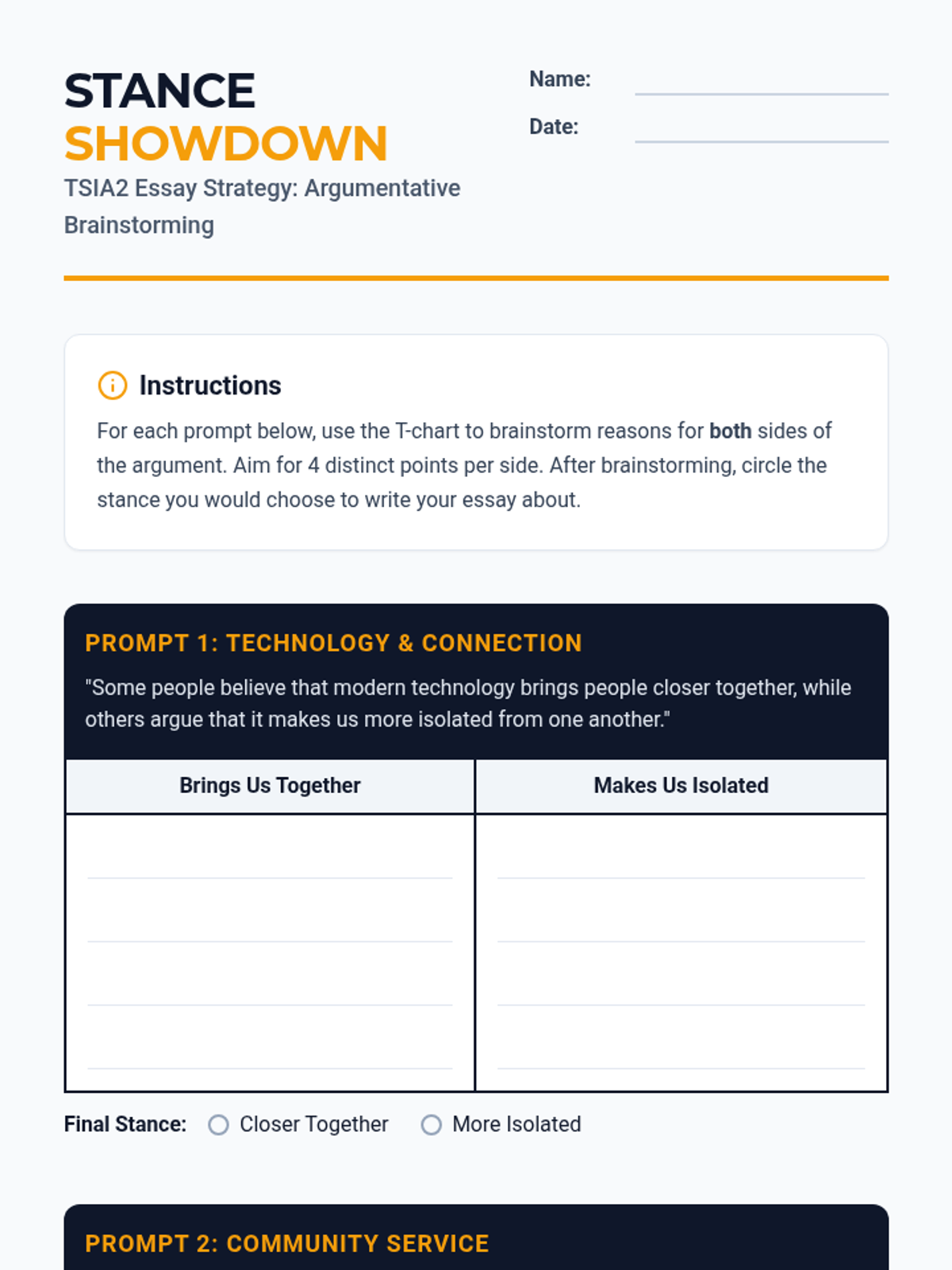
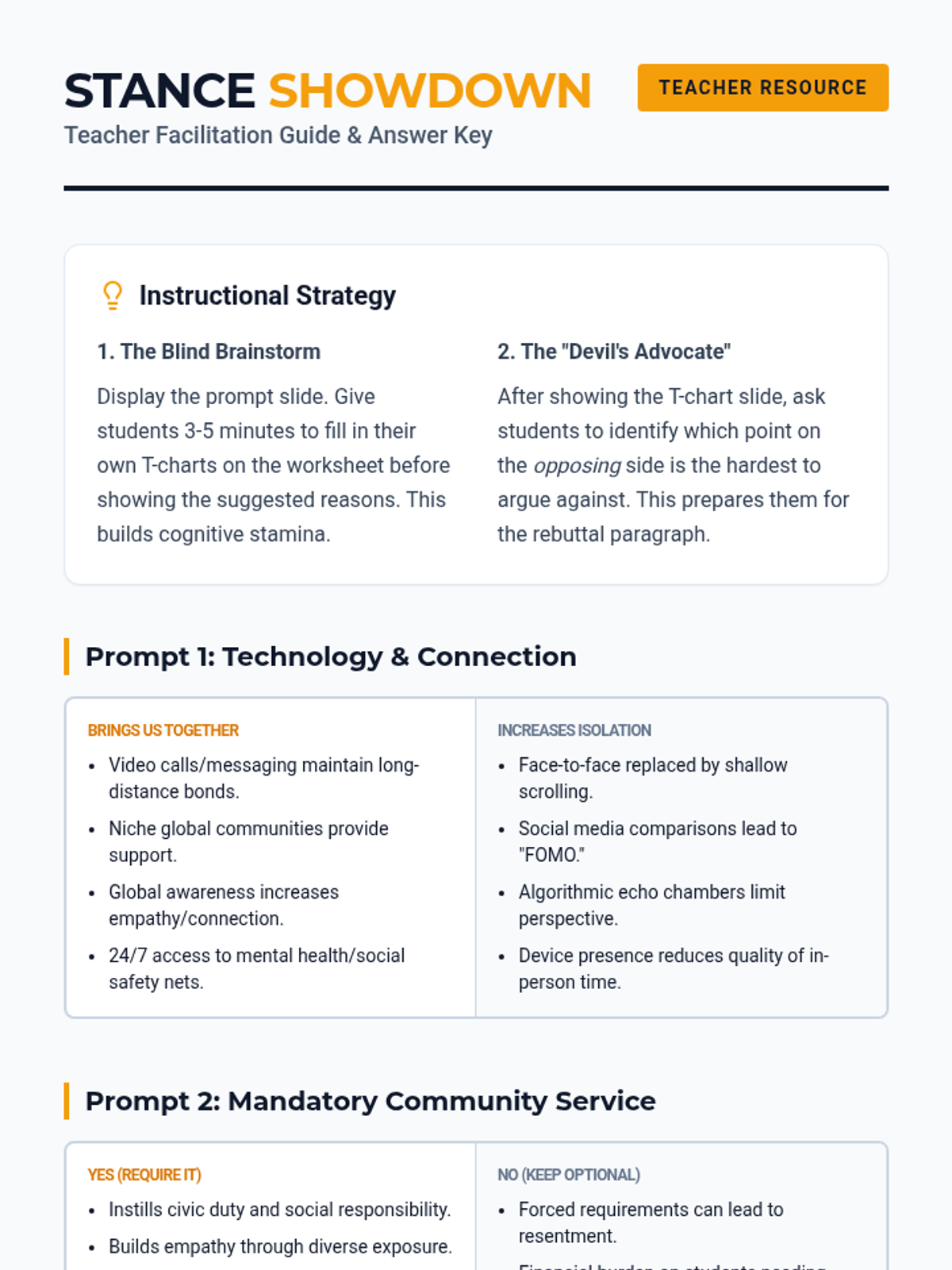
A focused practice session for the TSIA2 English essay, teaching students how to brainstorm and organize opposing viewpoints using T-charts for high-scoring argumentative writing.
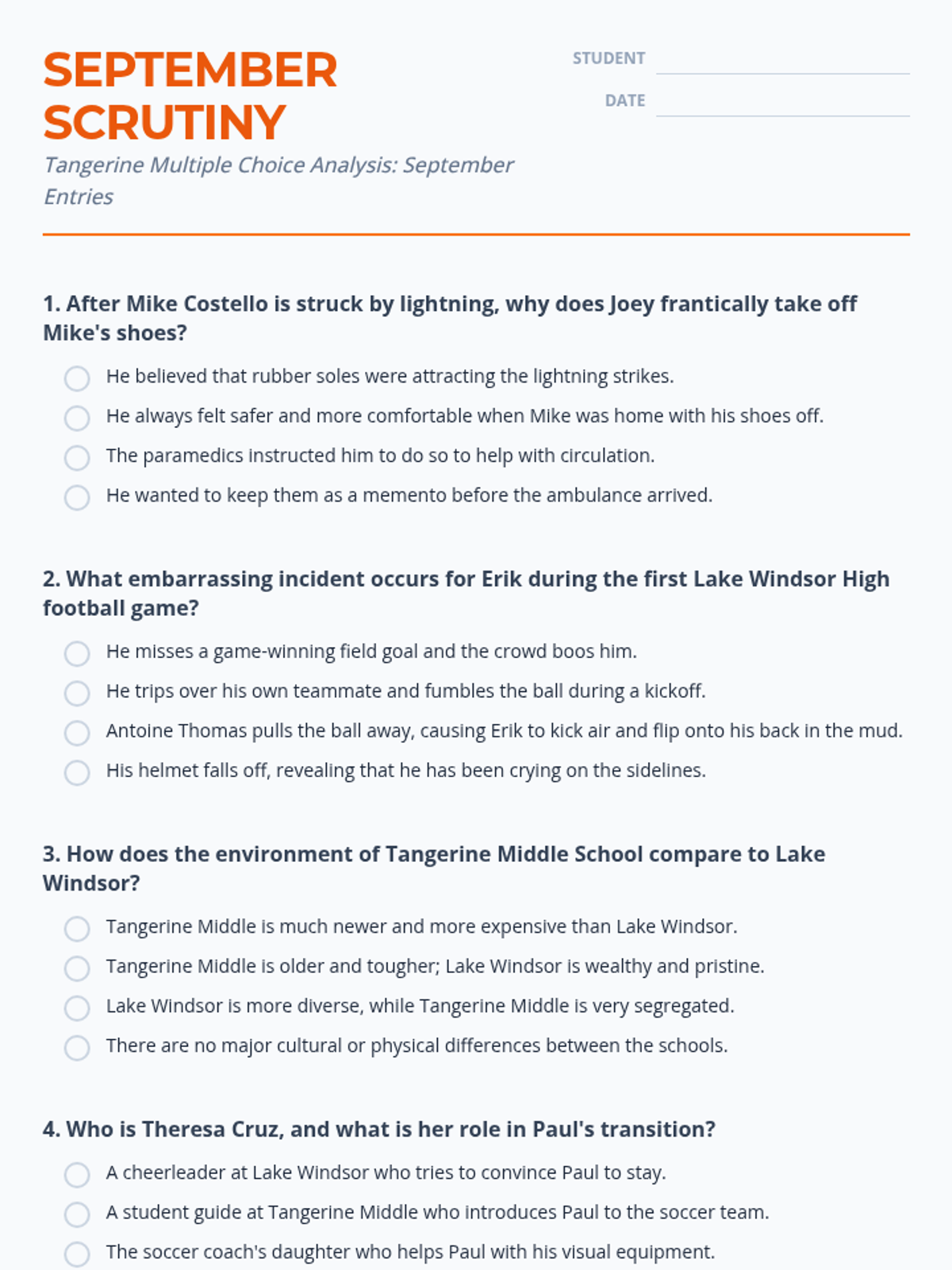
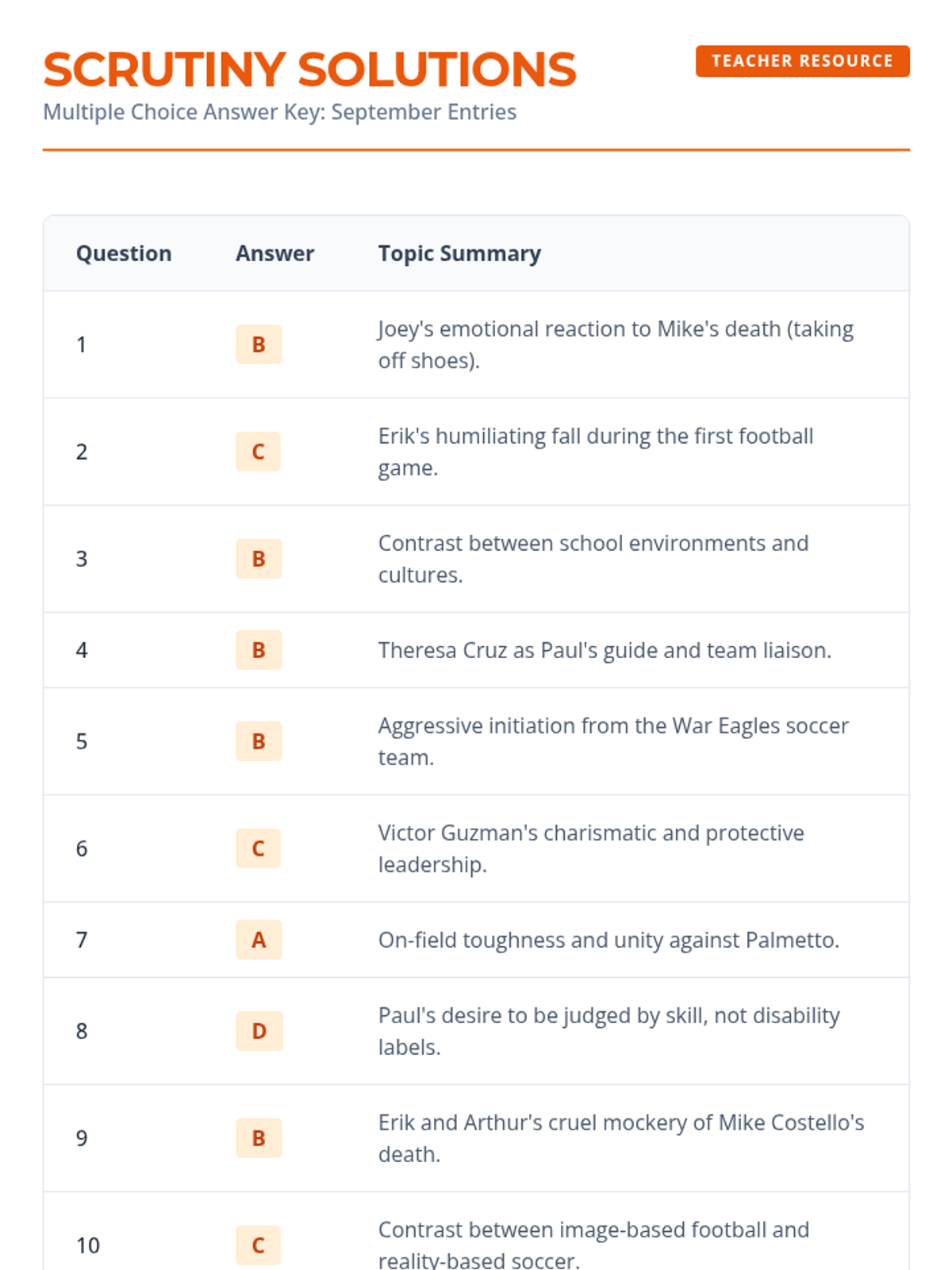
This lesson explores the pivotal transitions in the novel *Tangerine* during the month of September, focusing on Paul Fisher's move to Tangerine Middle School and the cultural shift he experiences.
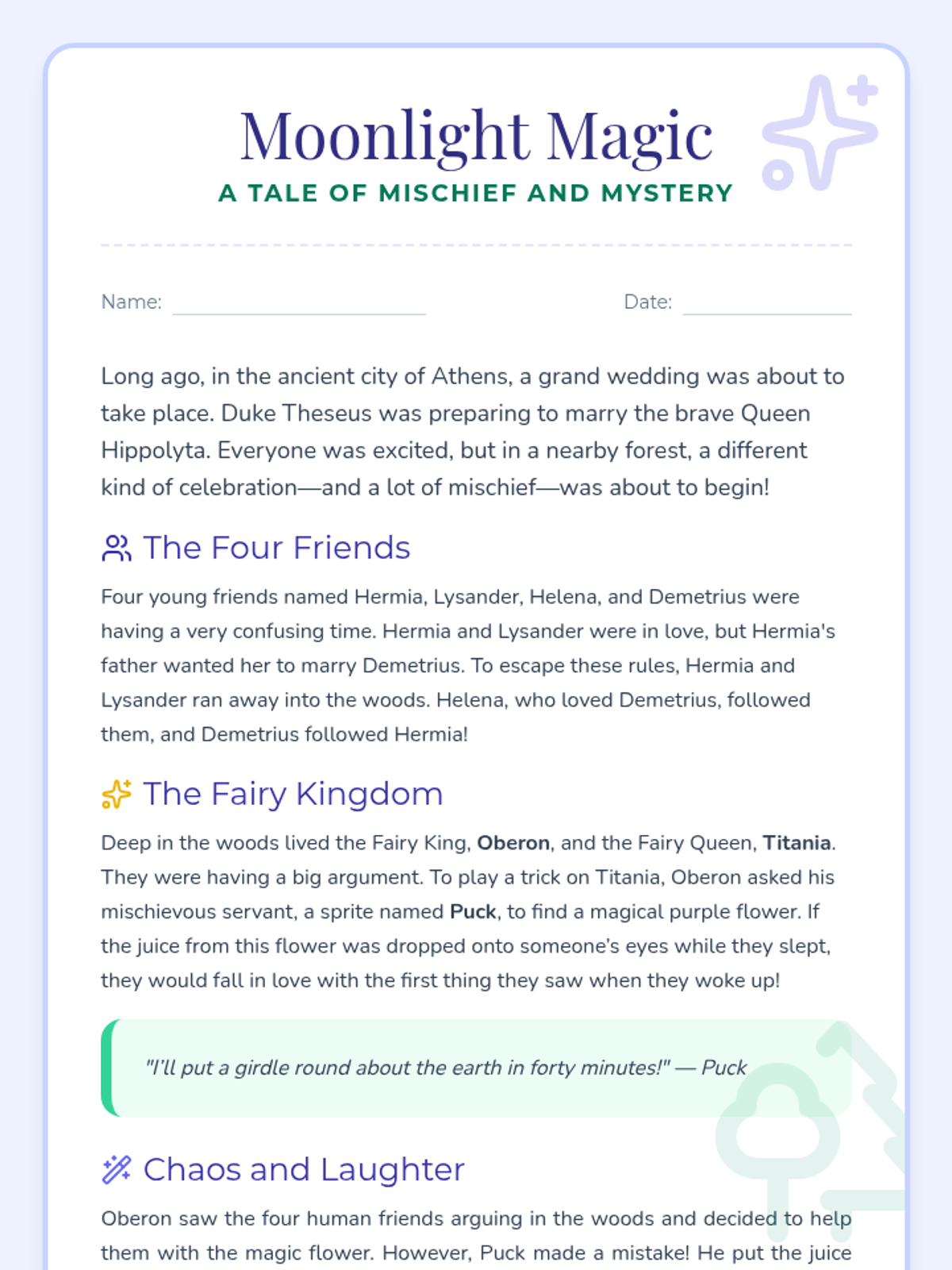
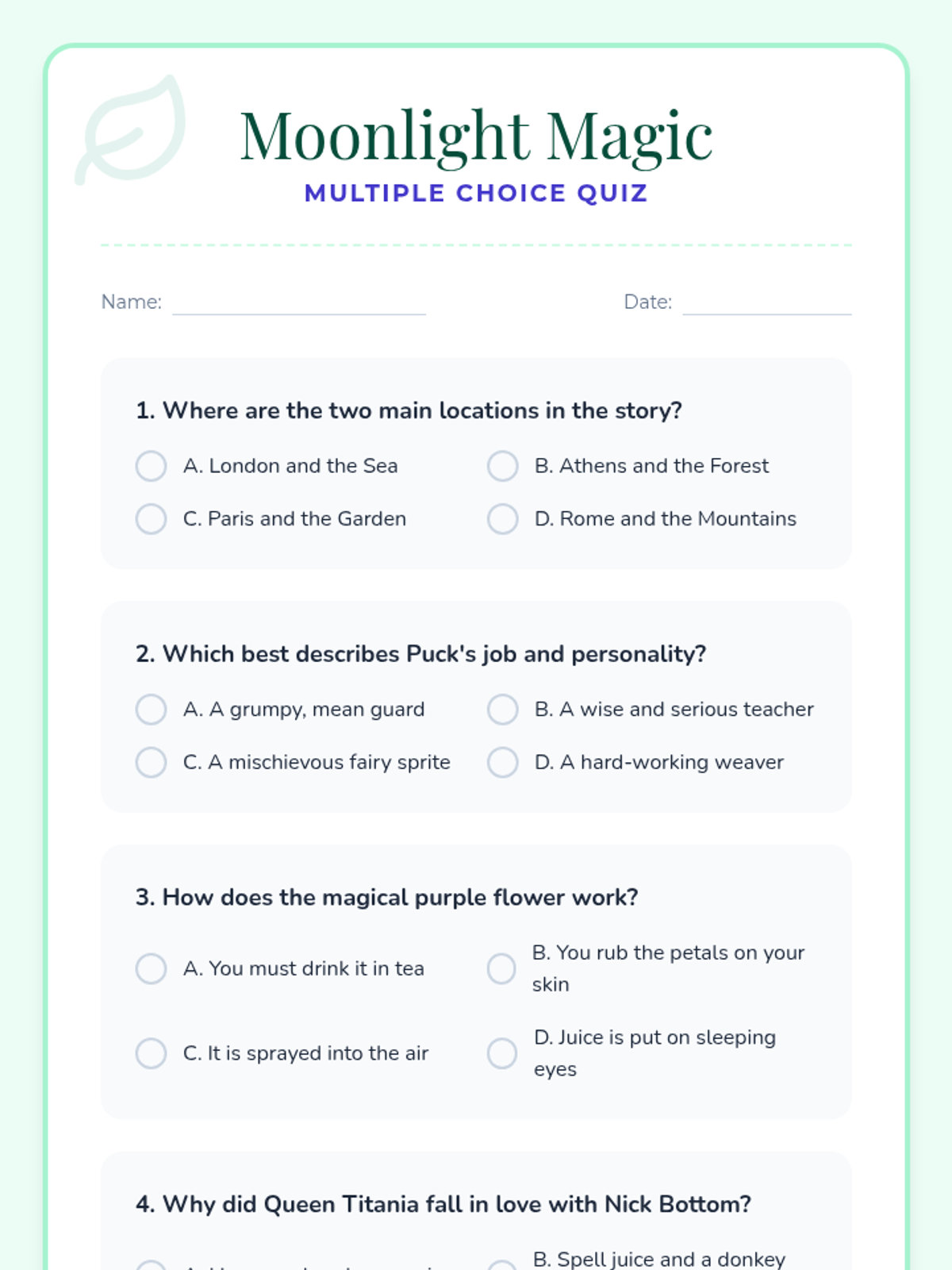
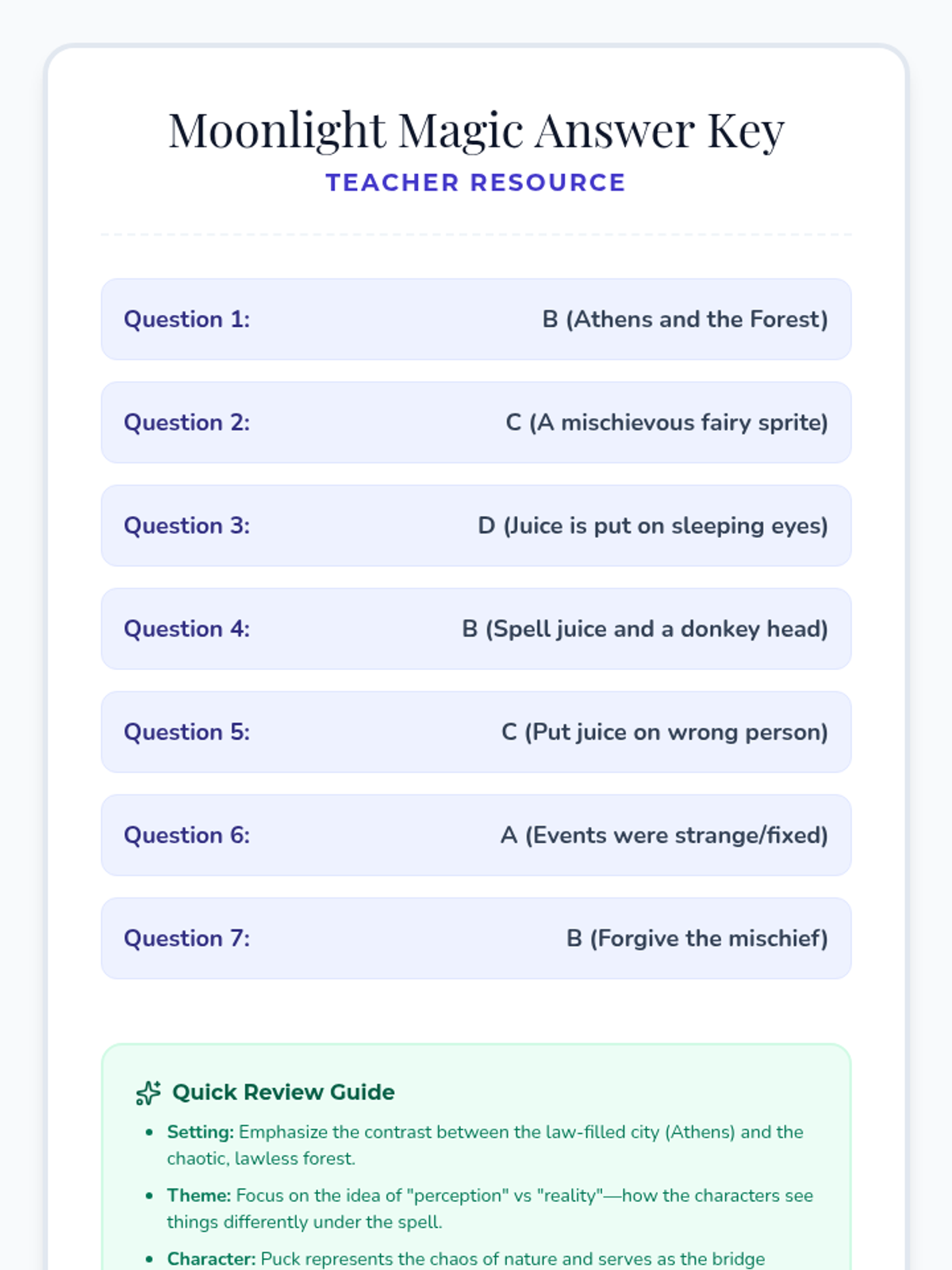
An introduction to Shakespeare's whimsical comedy for young readers, focusing on plot, characters, and the magical setting of the enchanted forest.
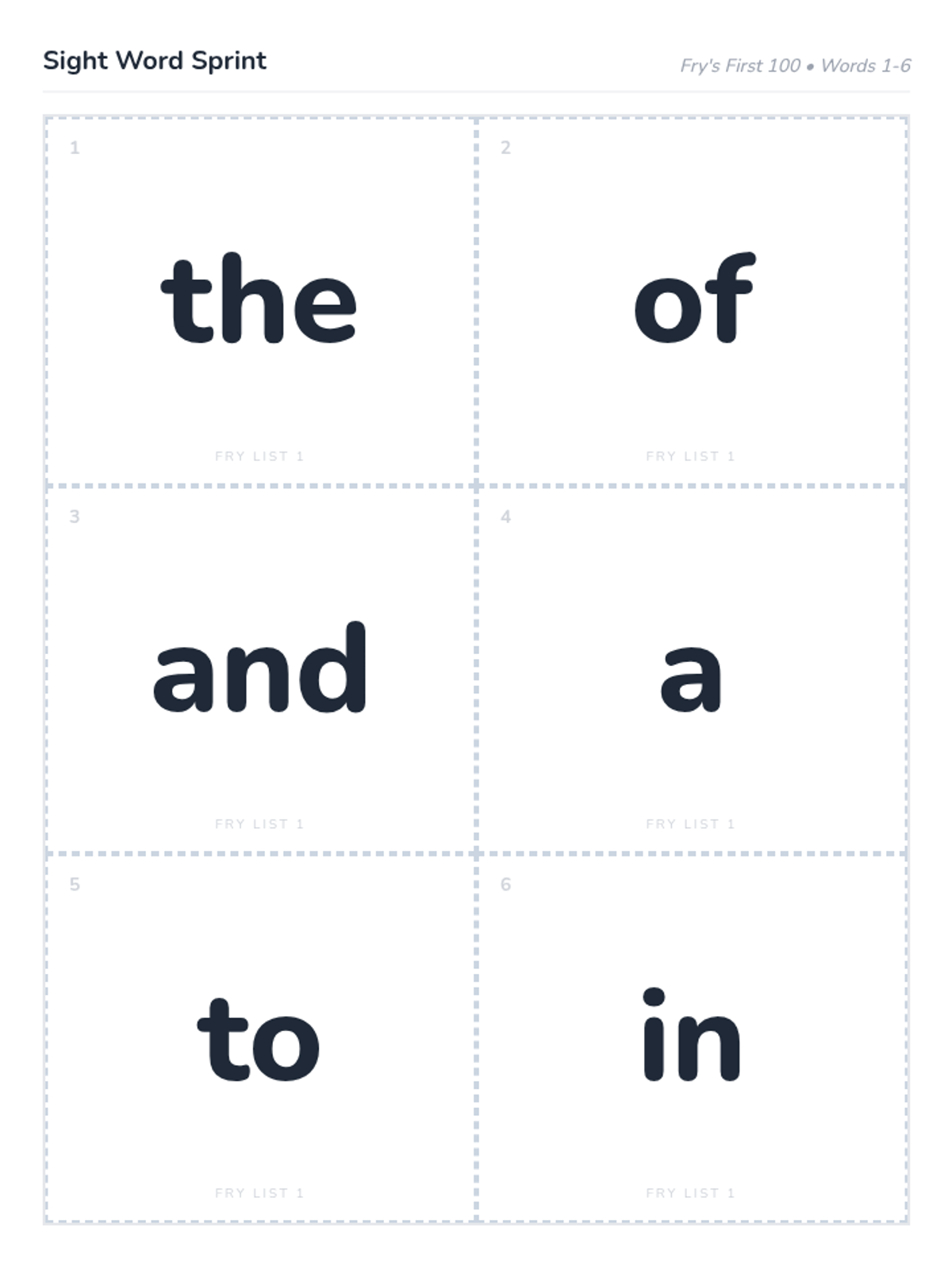
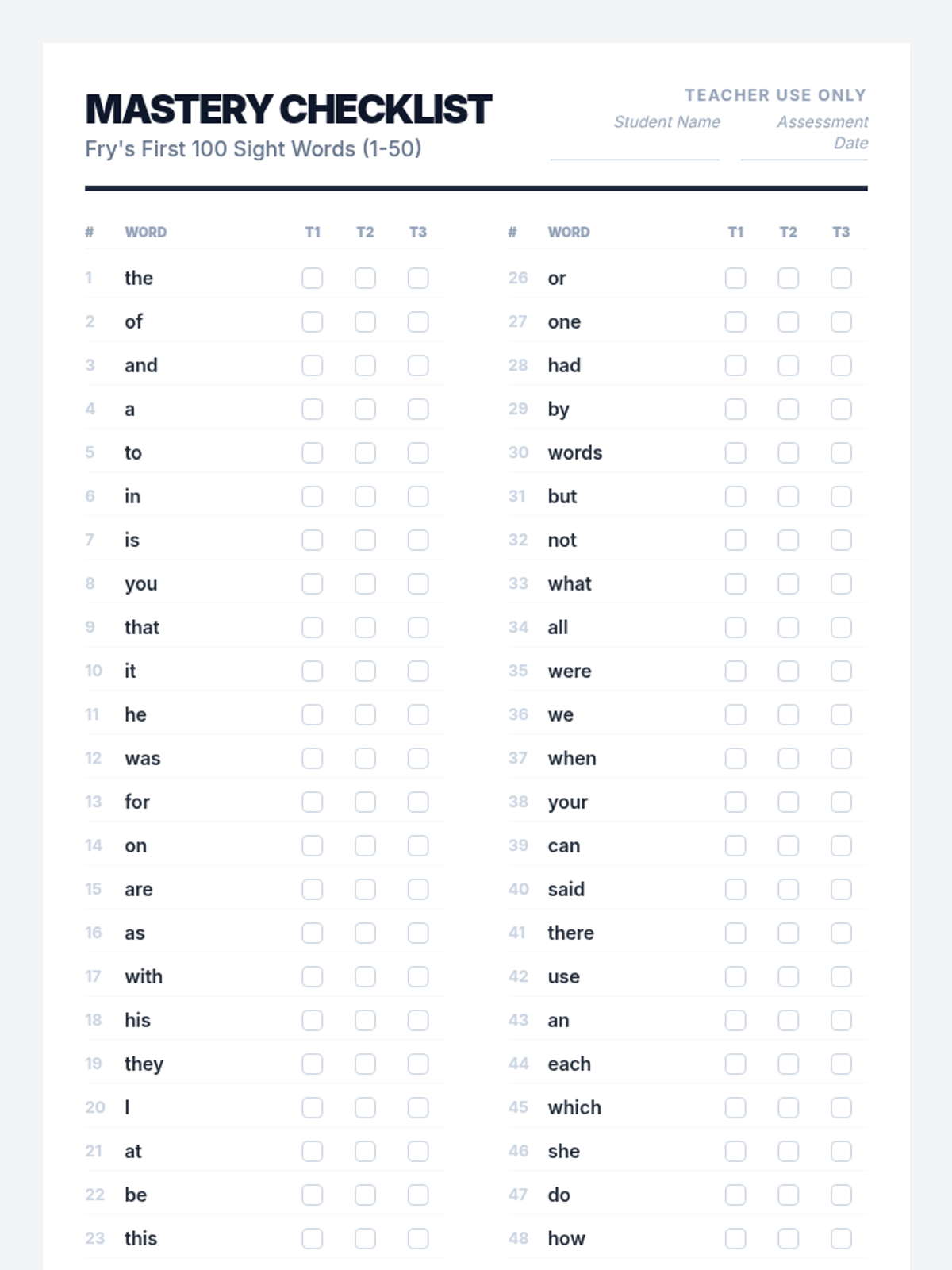
A comprehensive collection of flashcards and tracking tools for mastering Fry's First 100 sight words, designed specifically for Kindergarten learners with high-contrast, easy-to-read typography.
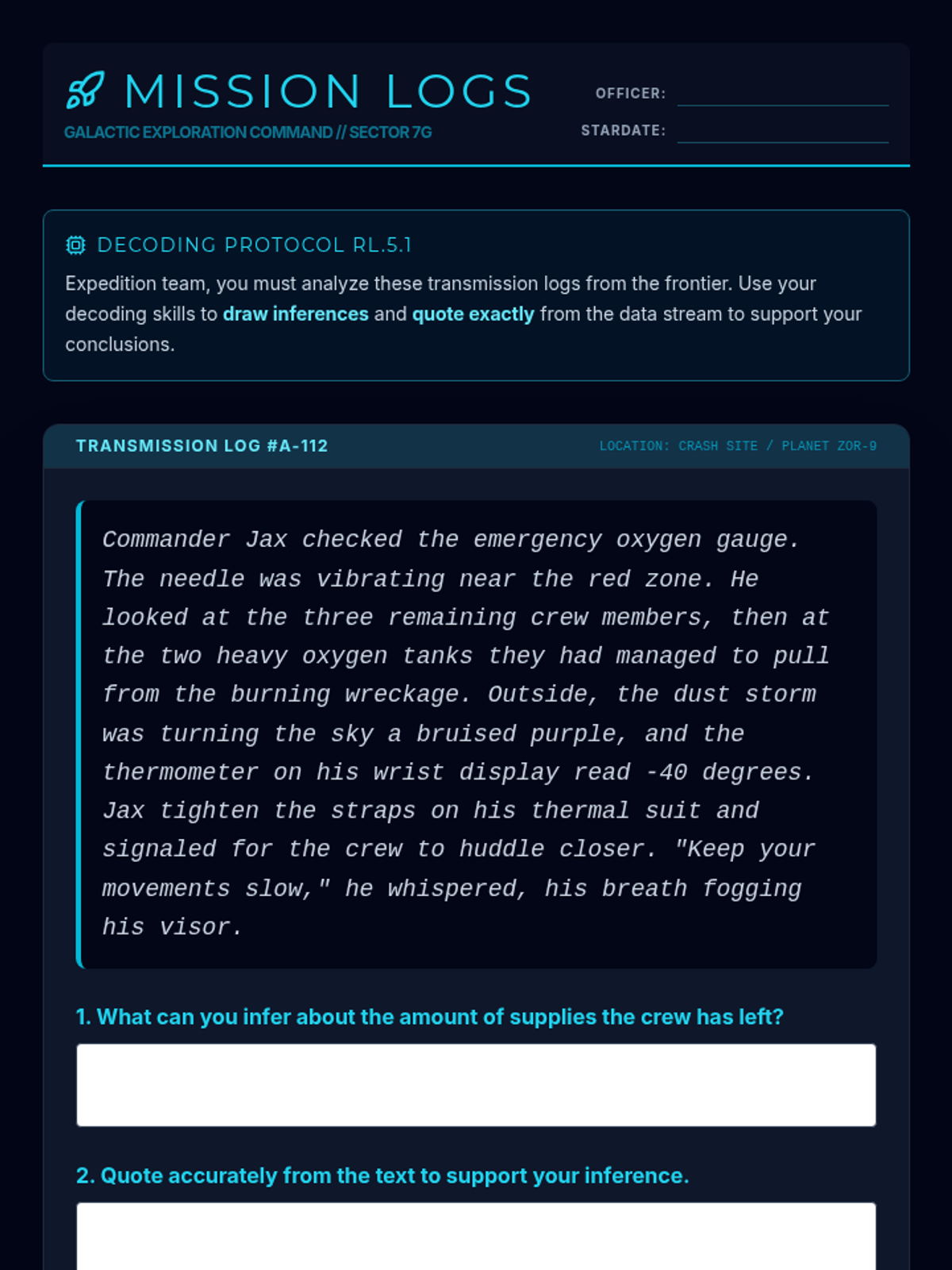
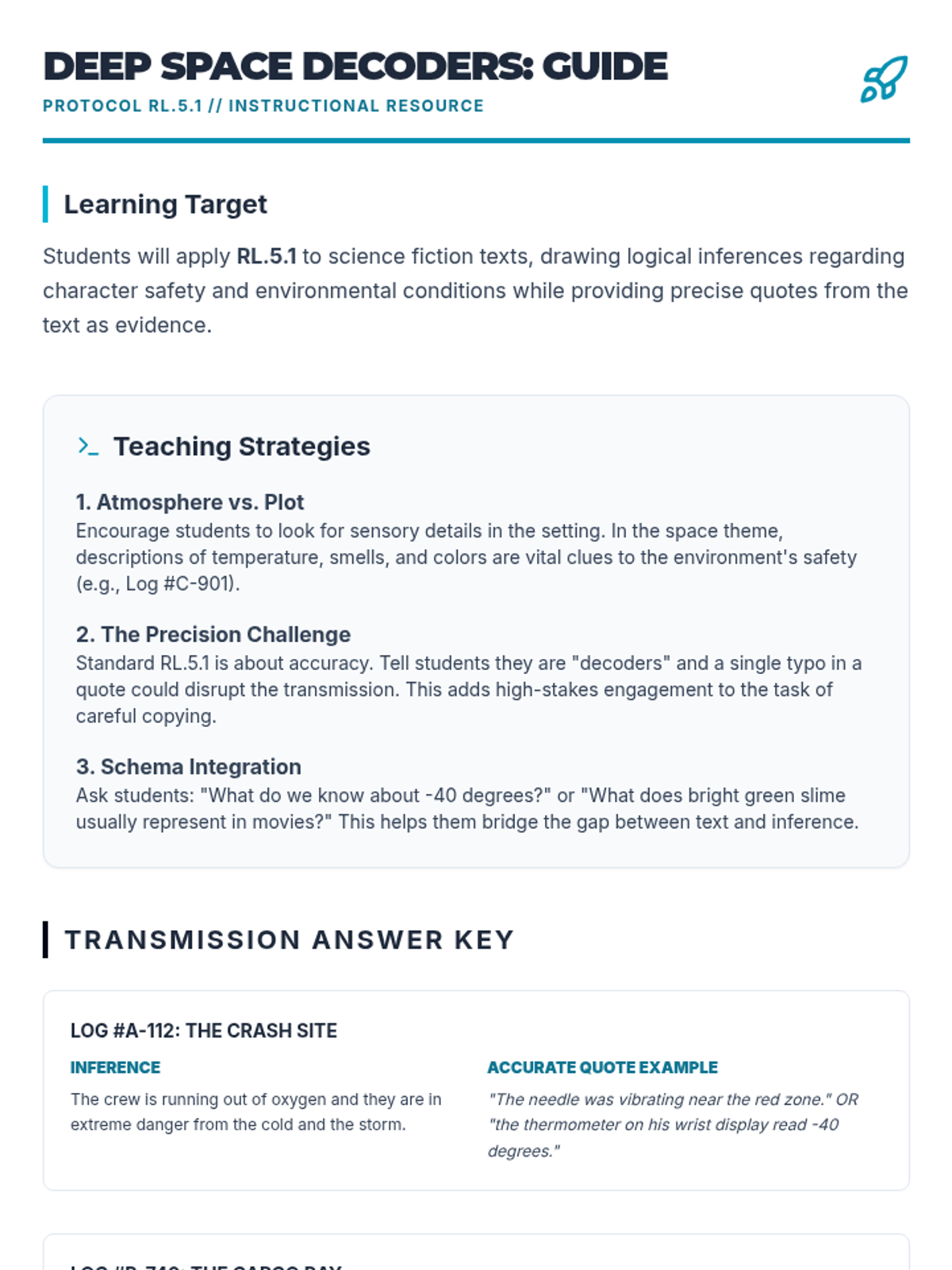
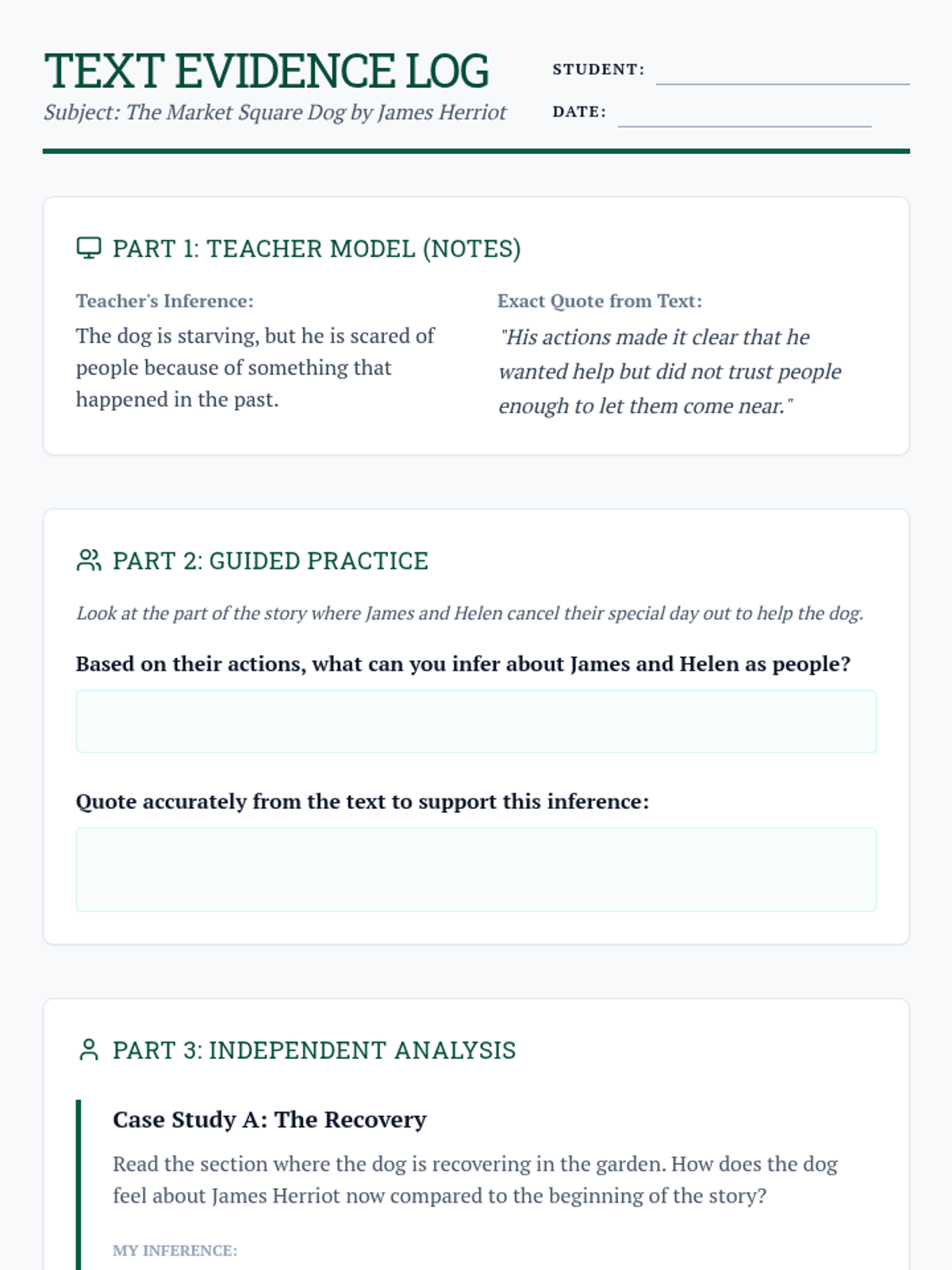
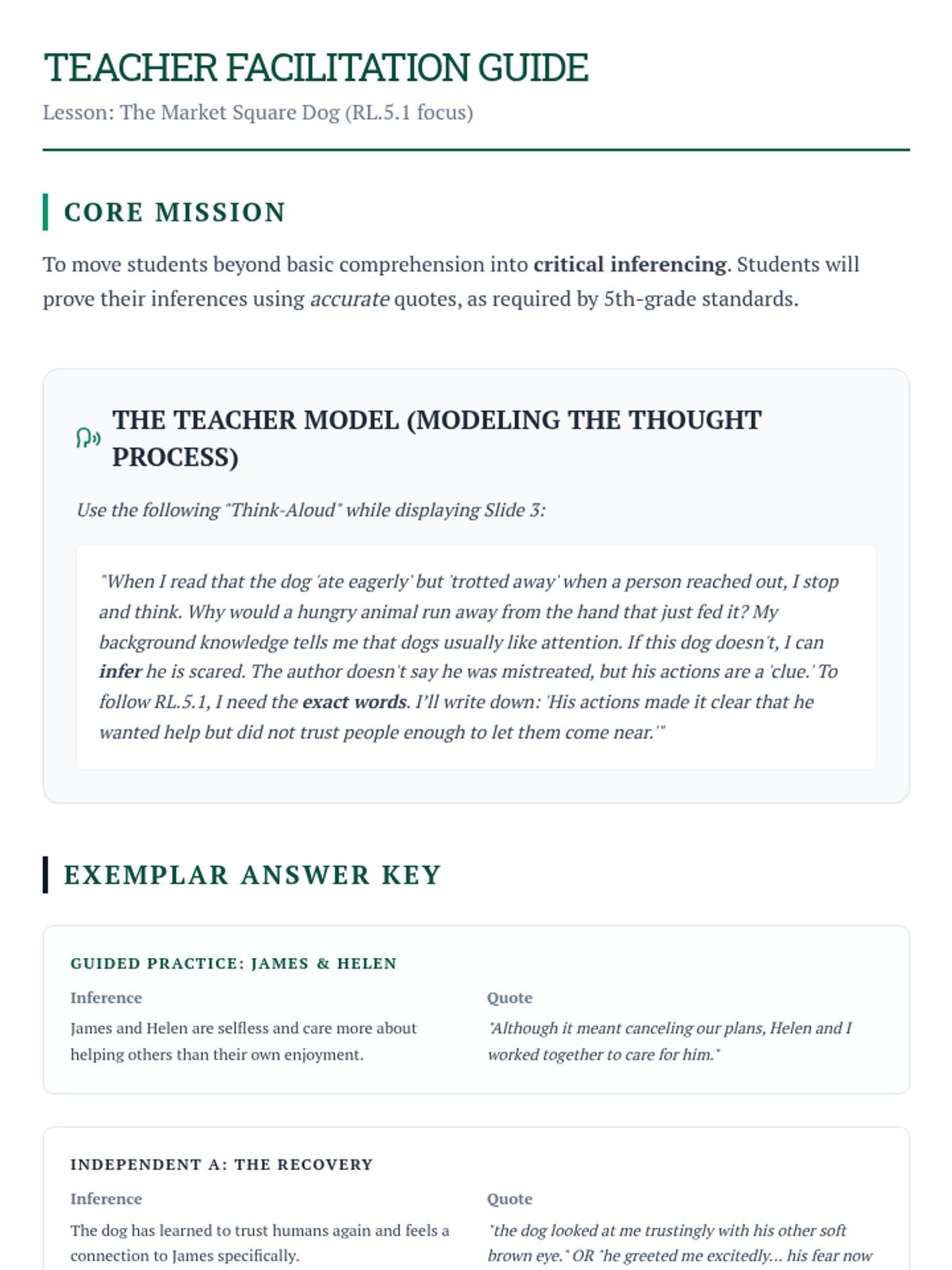
A lesson focused on RL.5.1, teaching students how to quote accurately from a text to support inferences. Students act as 'text detectives' to uncover hidden meanings in short narrative passages.
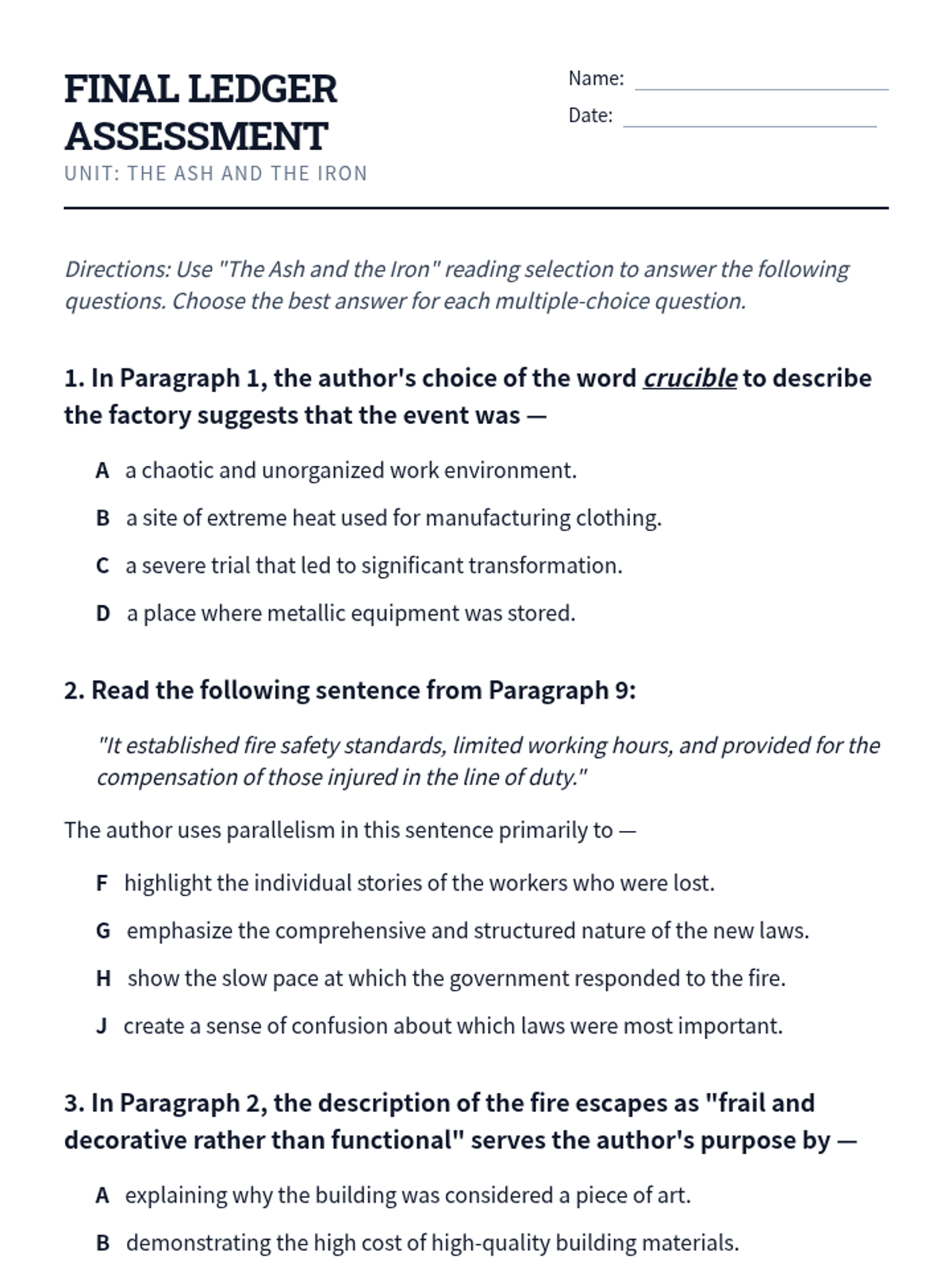
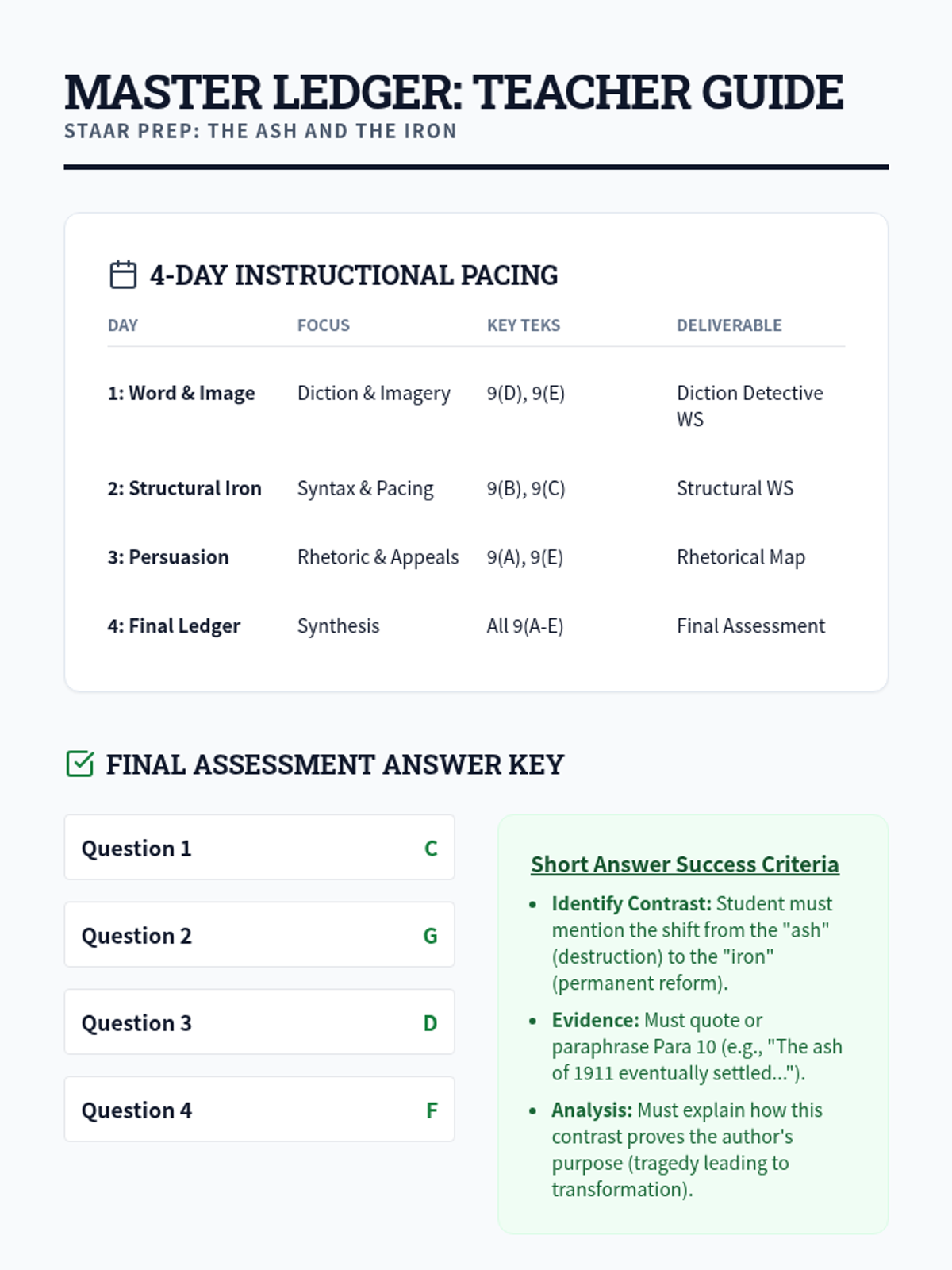
A cumulative assessment and synthesis lesson where students apply all previous skills to STAAR-aligned multiple-choice questions.
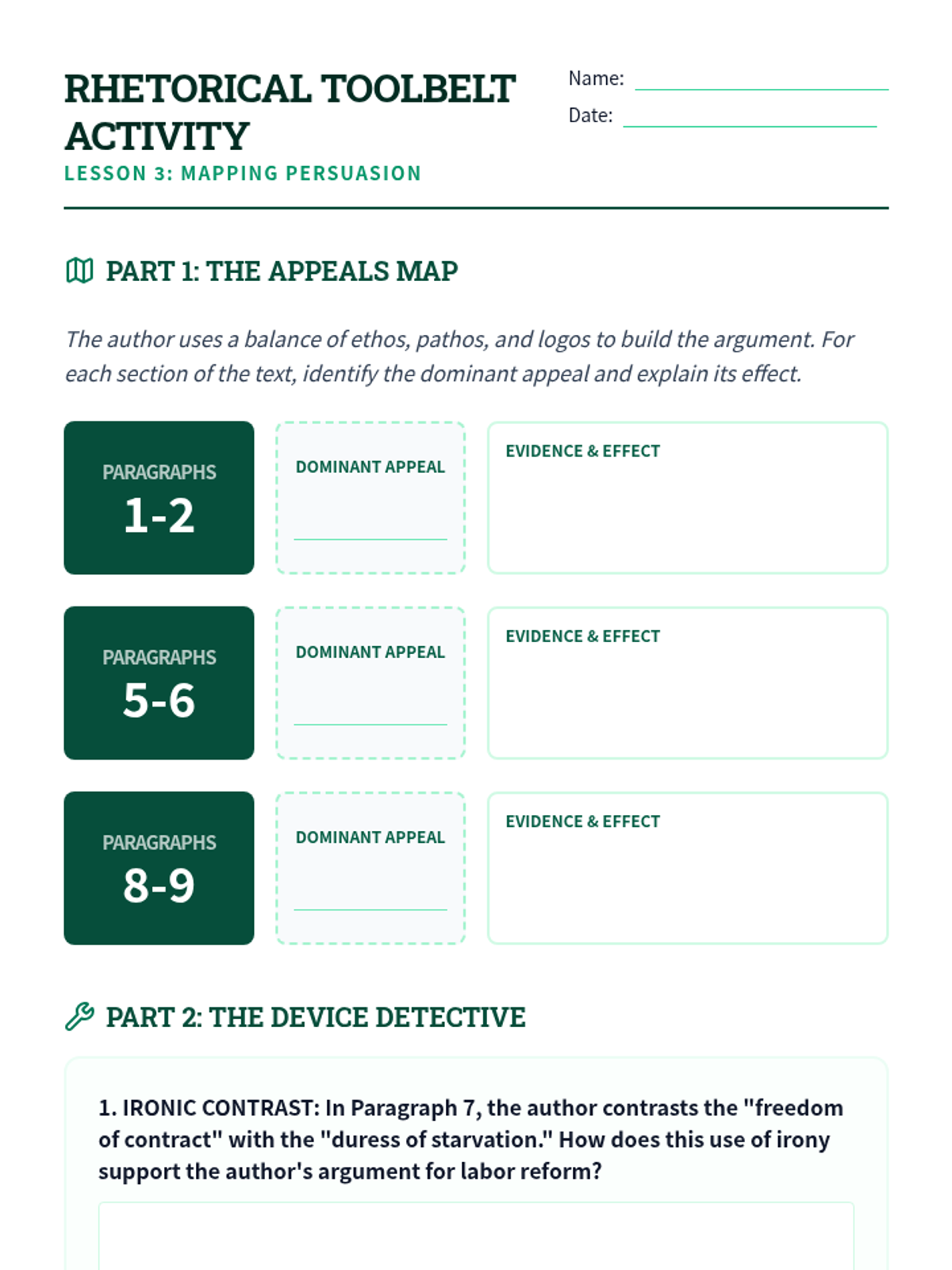
Students identify and evaluate the effectiveness of rhetorical devices and appeals used to advocate for social change.
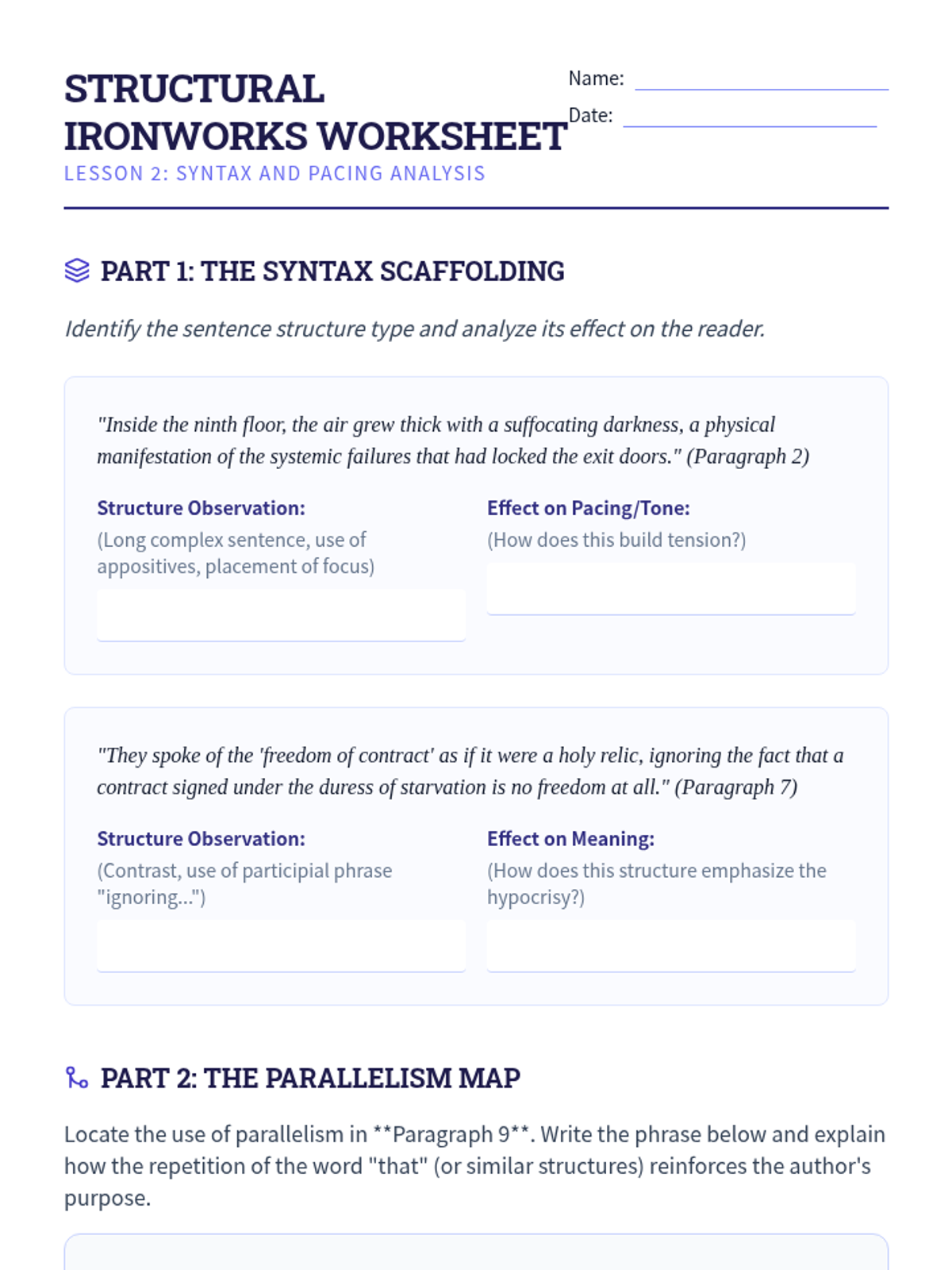
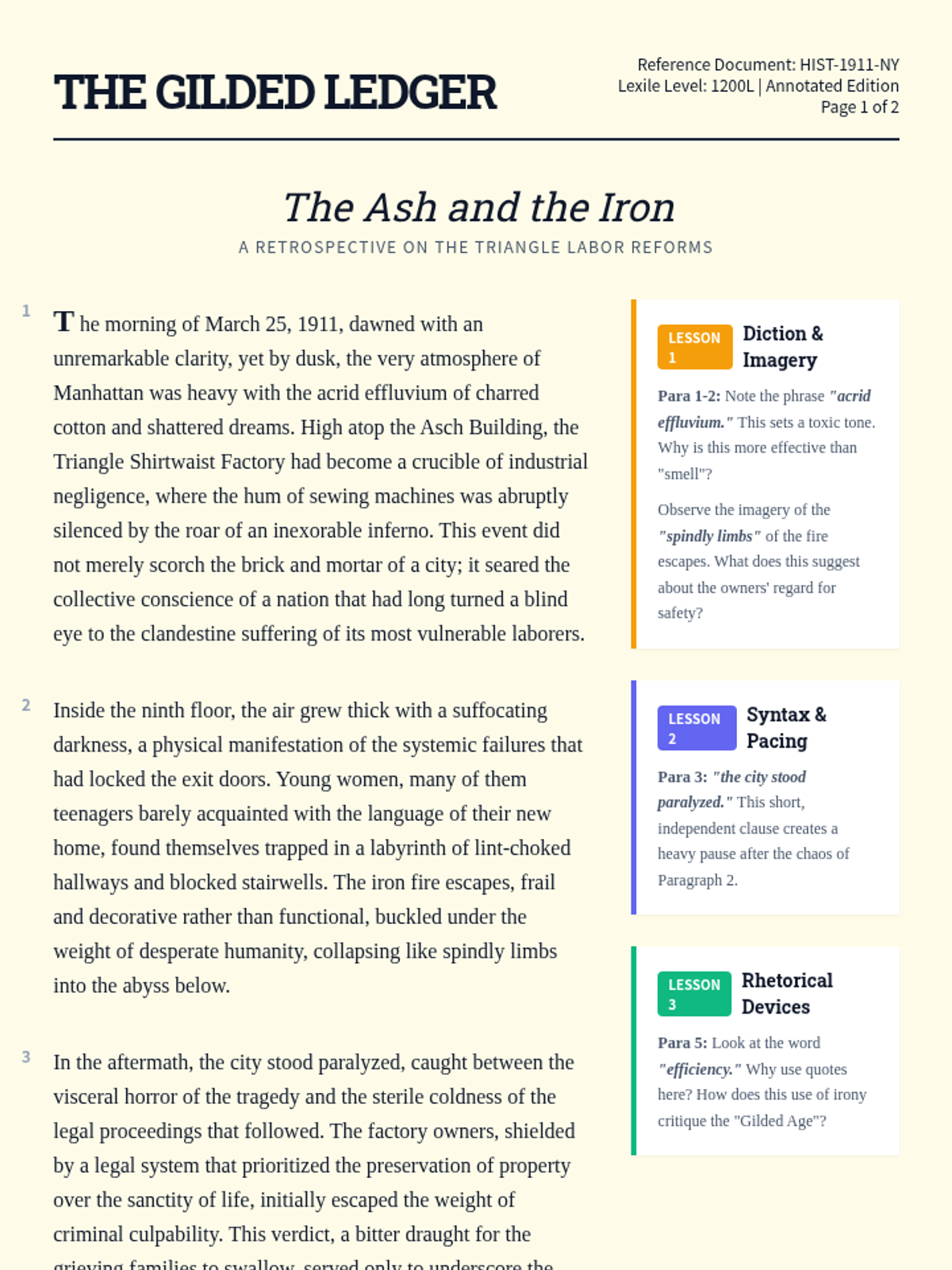
An examination of how sentence structure, variety, and pacing contribute to the emotional weight and persuasive power of a historical text.
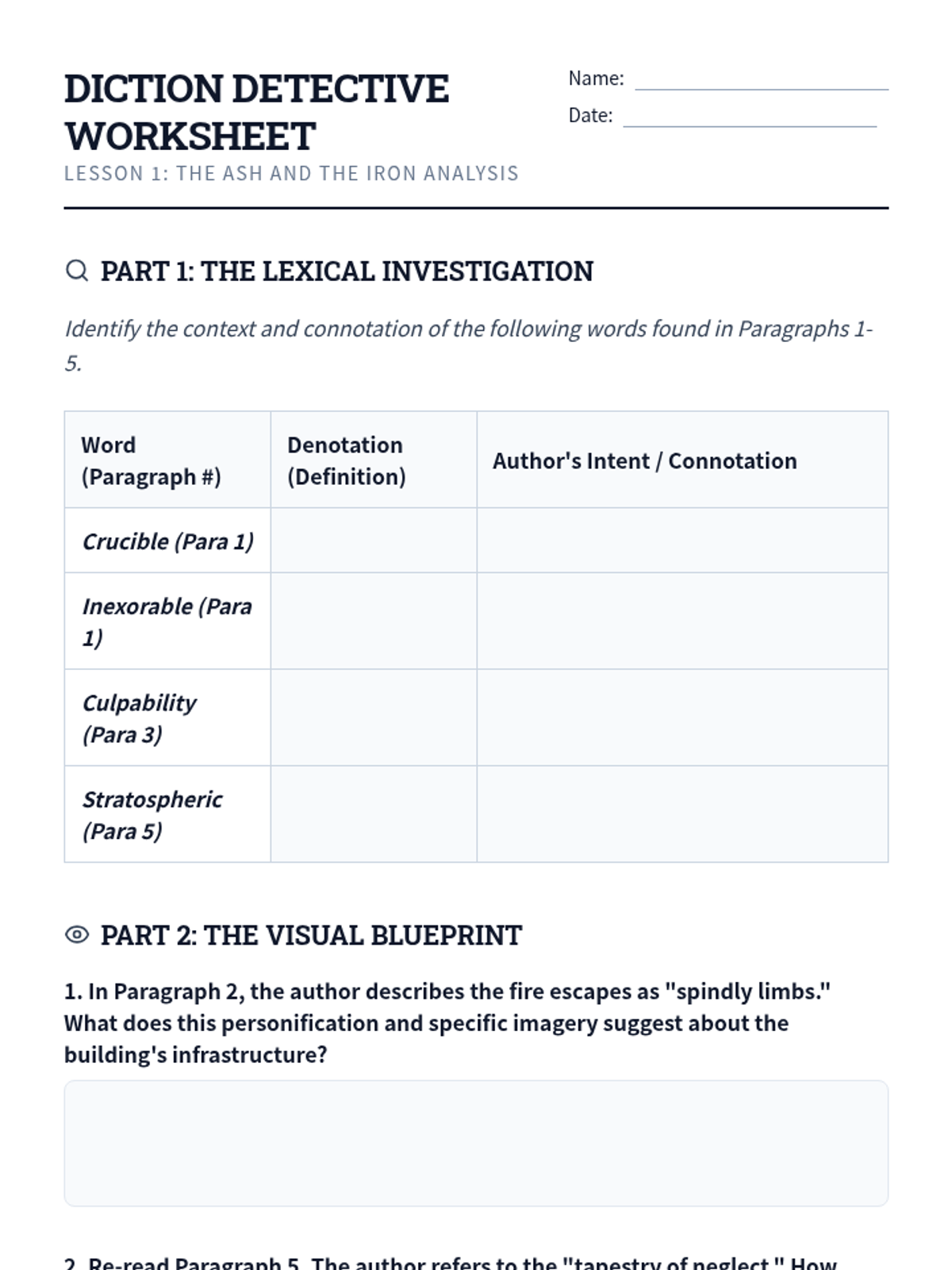
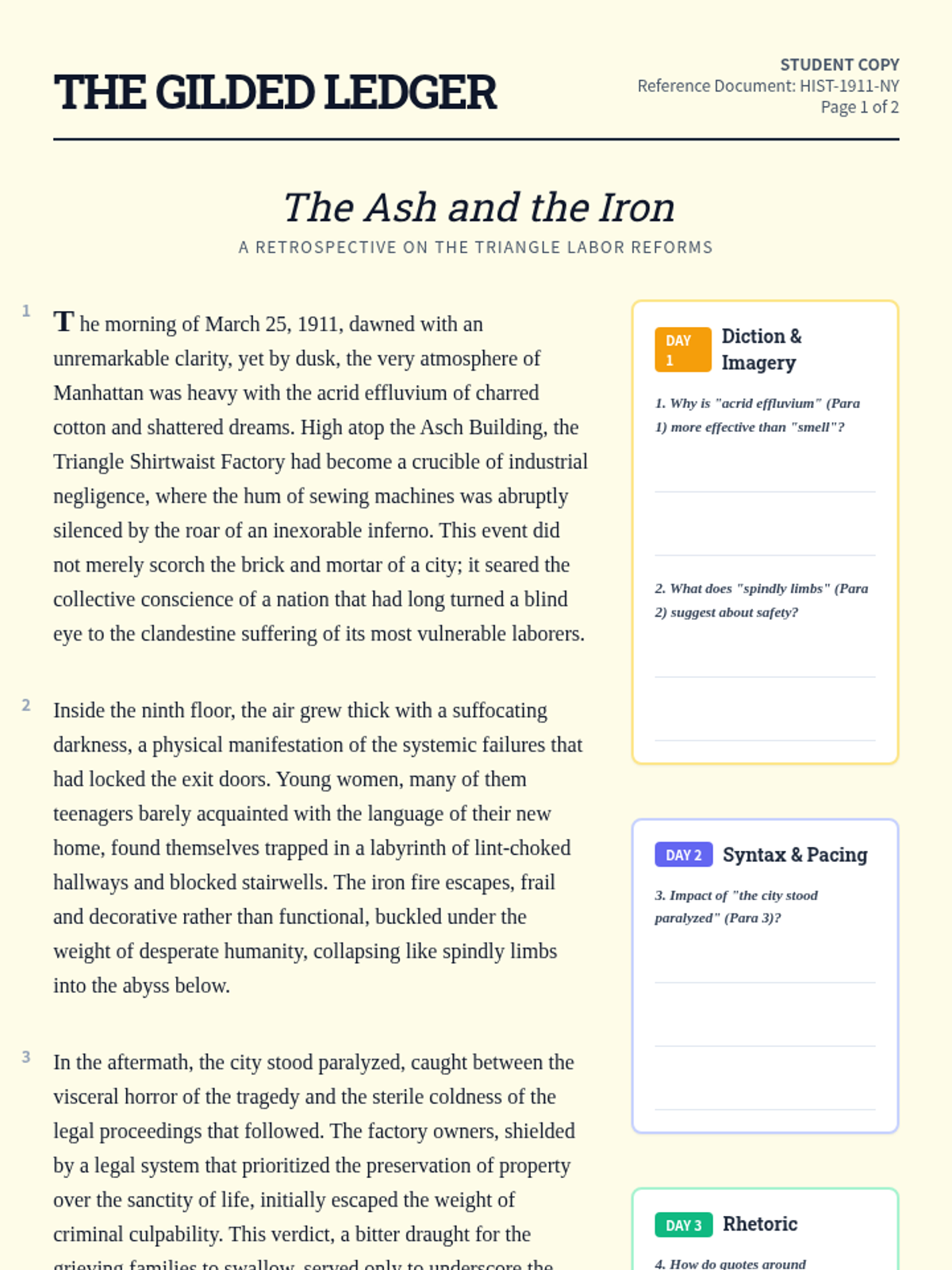
Students explore how precise diction and vivid imagery establish the tone and reveal the author's purpose in 'The Ash and the Iron.'