A quick-hit 15-minute lesson focused on identifying and repairing run-on sentences using three primary correction methods. Students act as 'sentence mechanics' to tune up clunky writing.
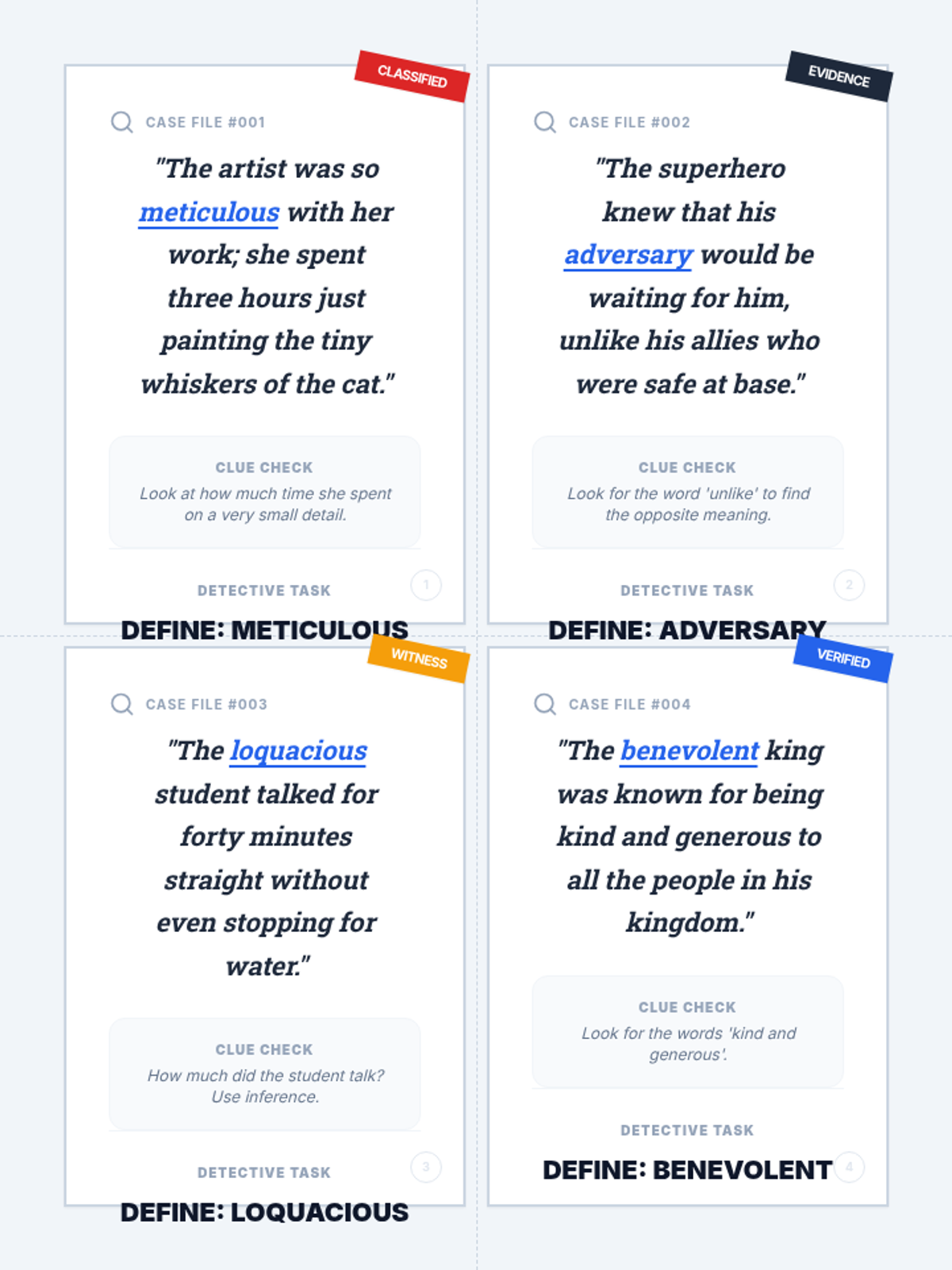
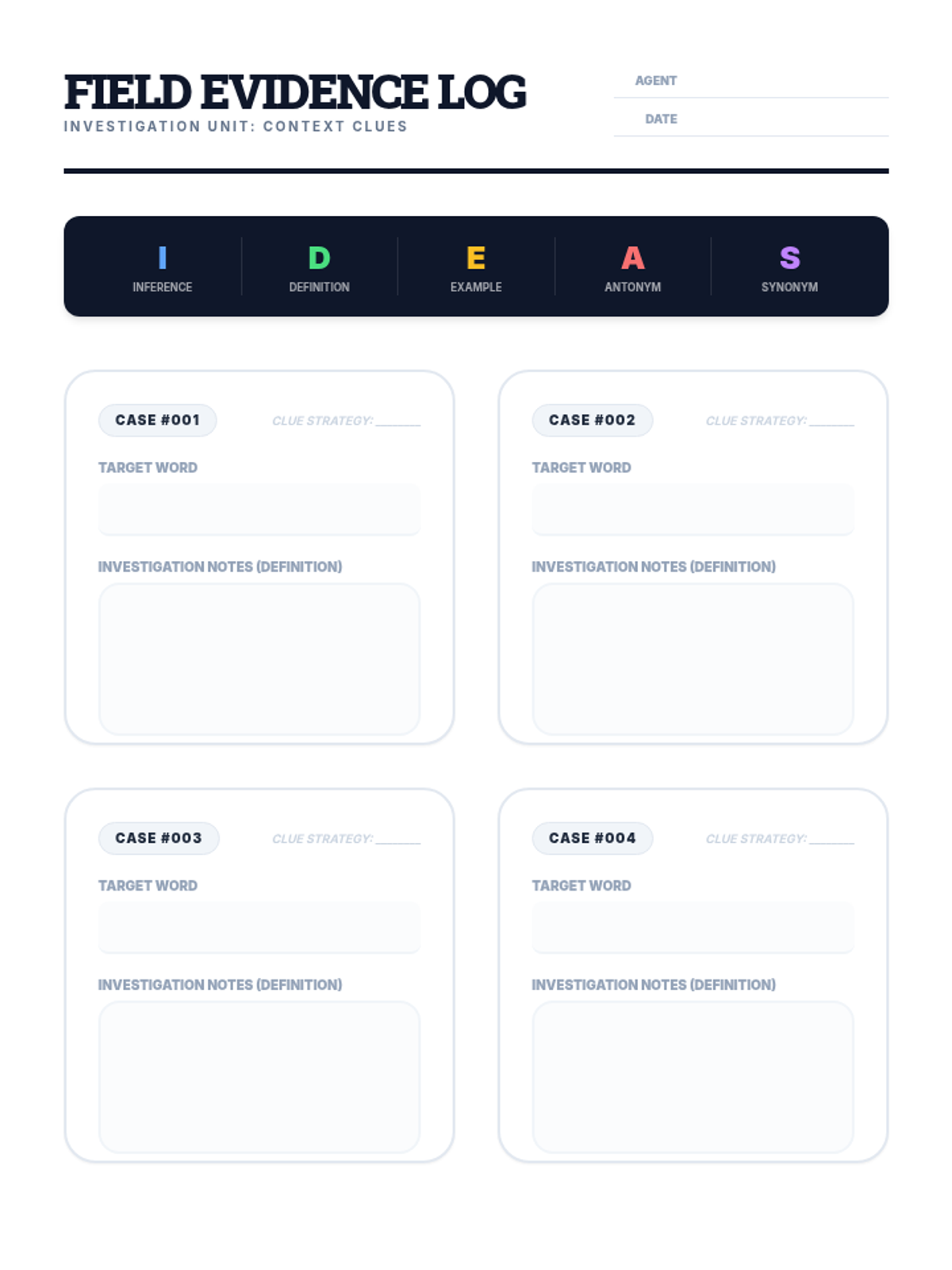
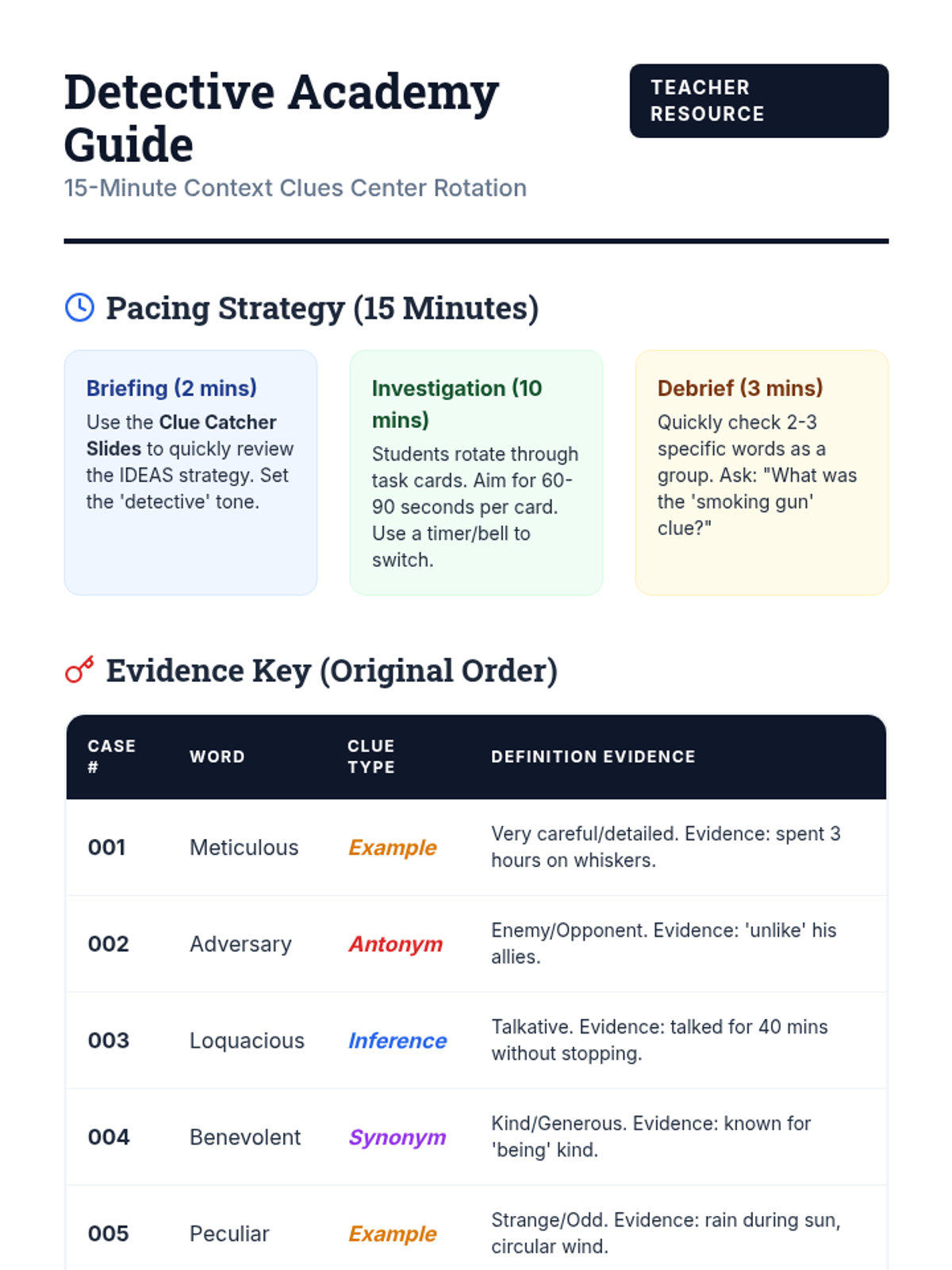
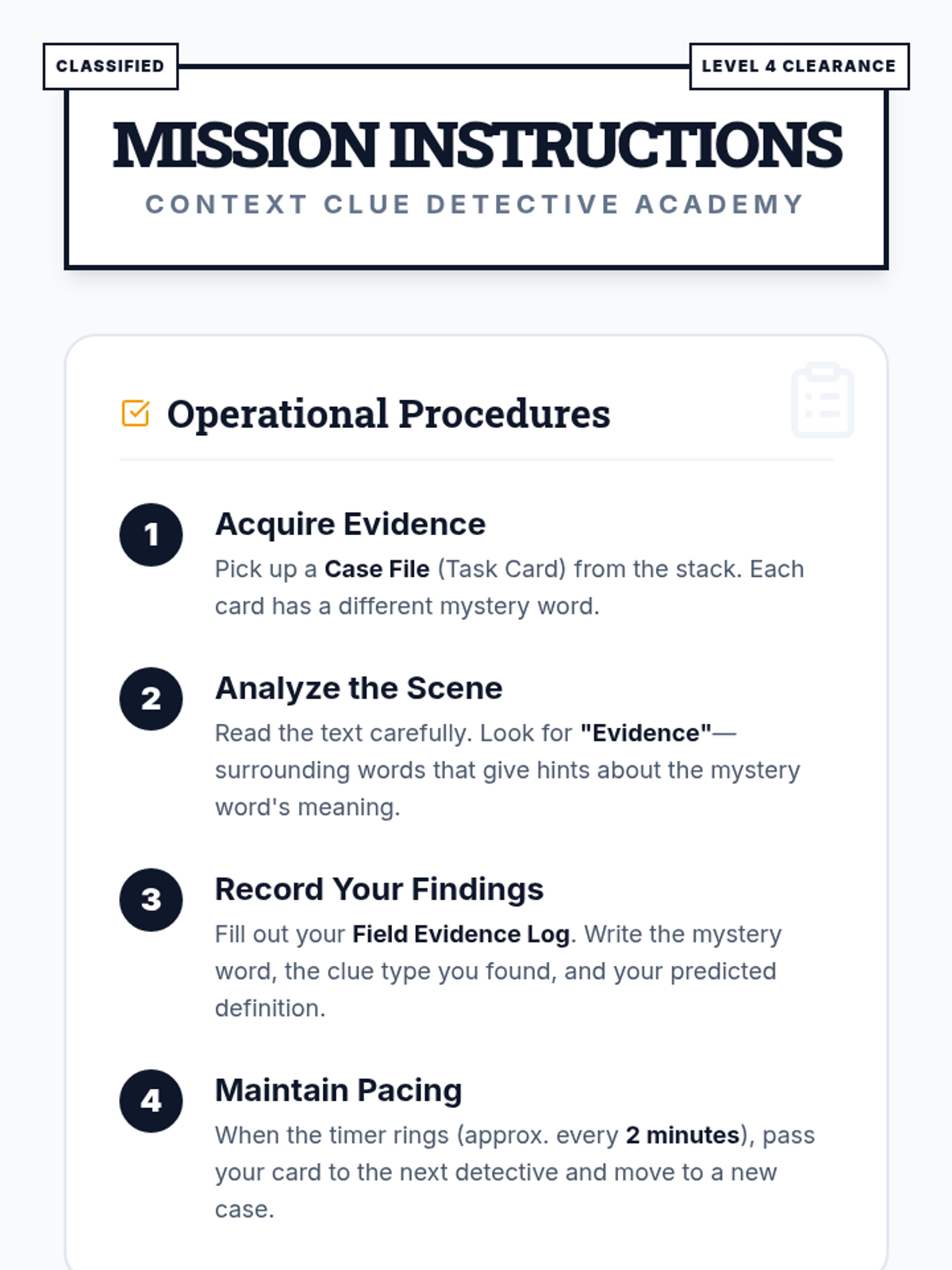
A 15-minute center rotation focused on using context clues (synonyms, antonyms, examples, and definitions) to infer the meaning of unfamiliar words through a 'Word Detective' theme.
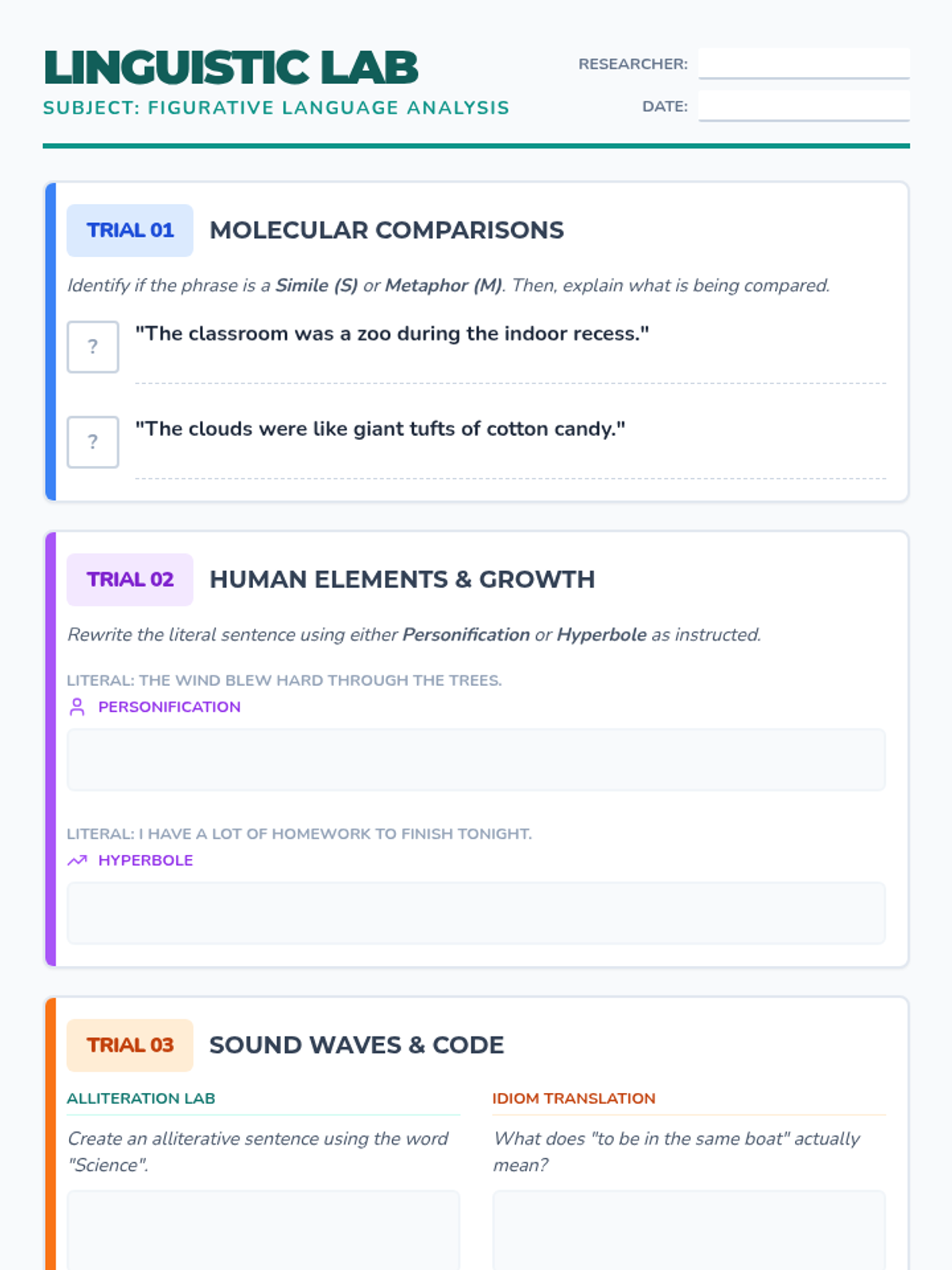
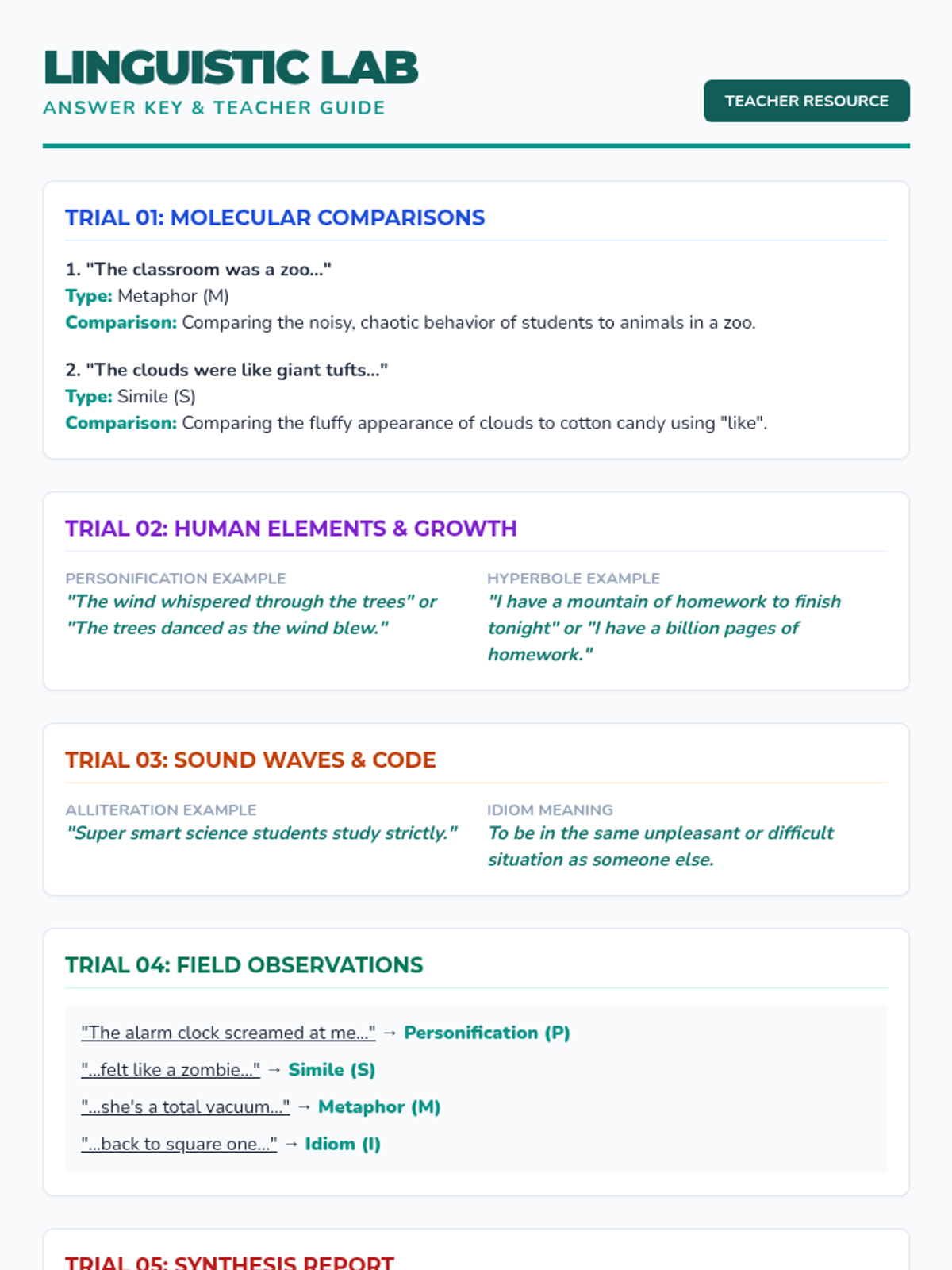
A week of daily bell ringers designed to reinforce core figurative language concepts (similes, metaphors, personification, hyperbole, alliteration, and idioms) through a scientific lab-themed analysis and application.
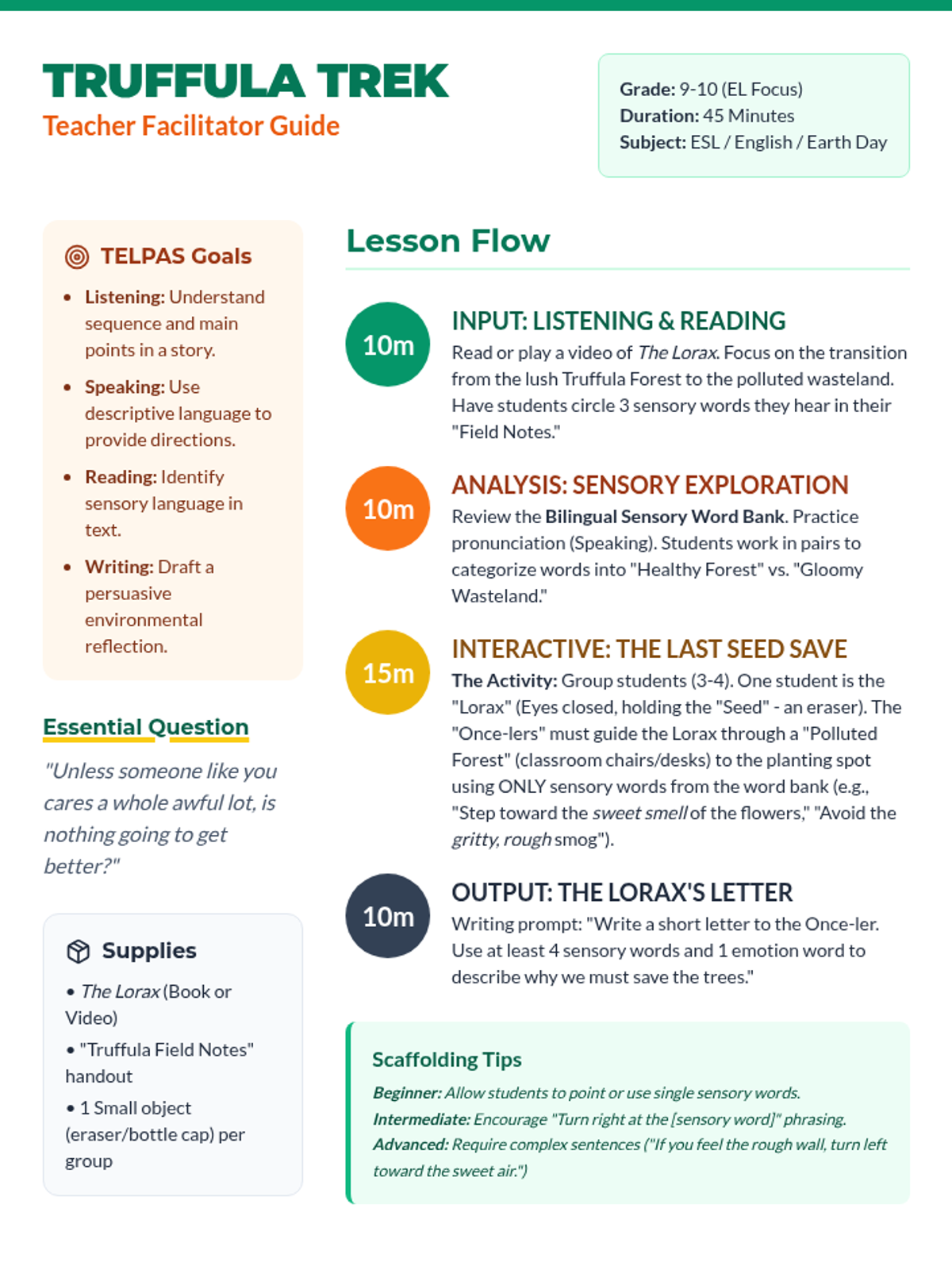
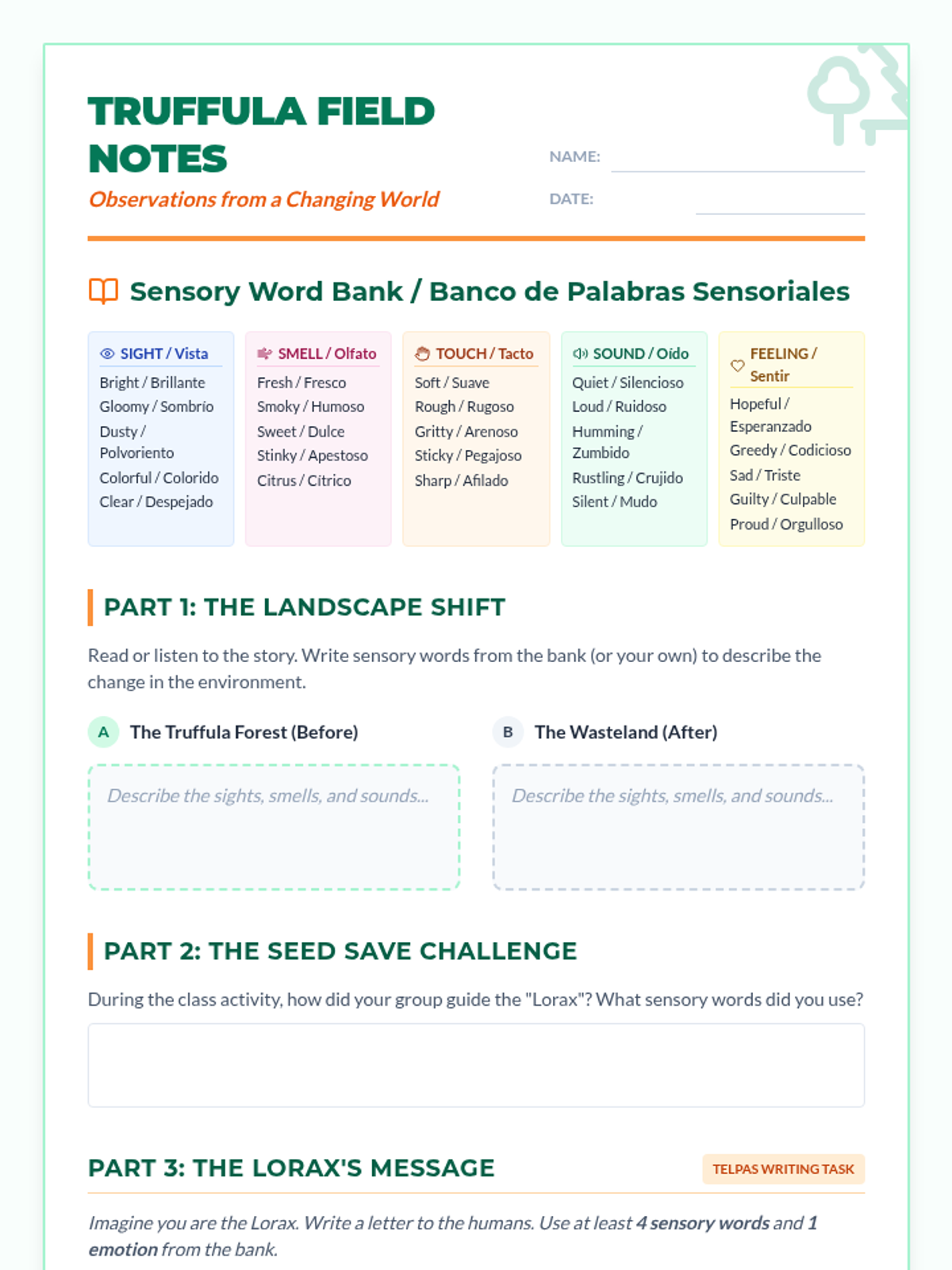
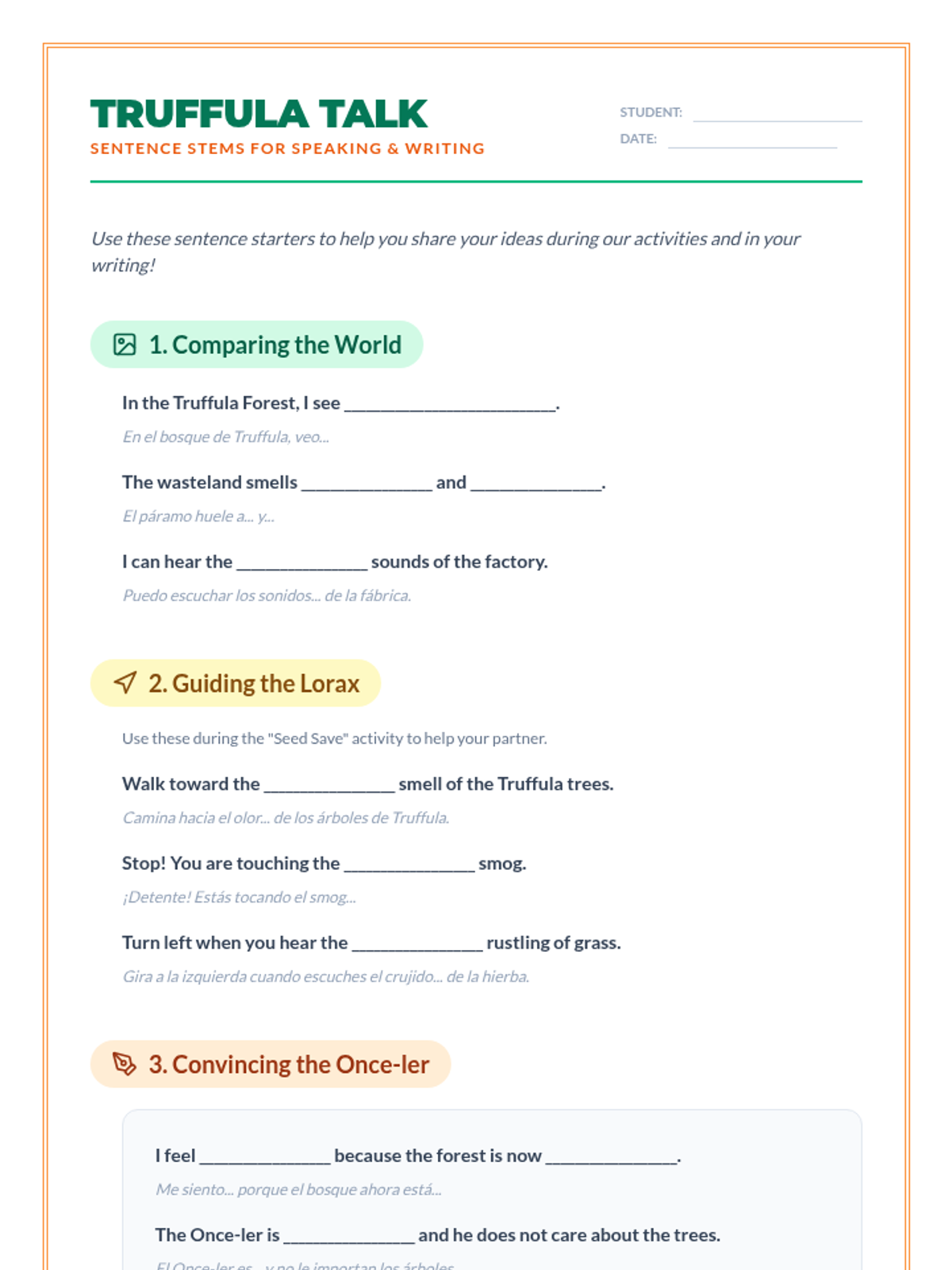
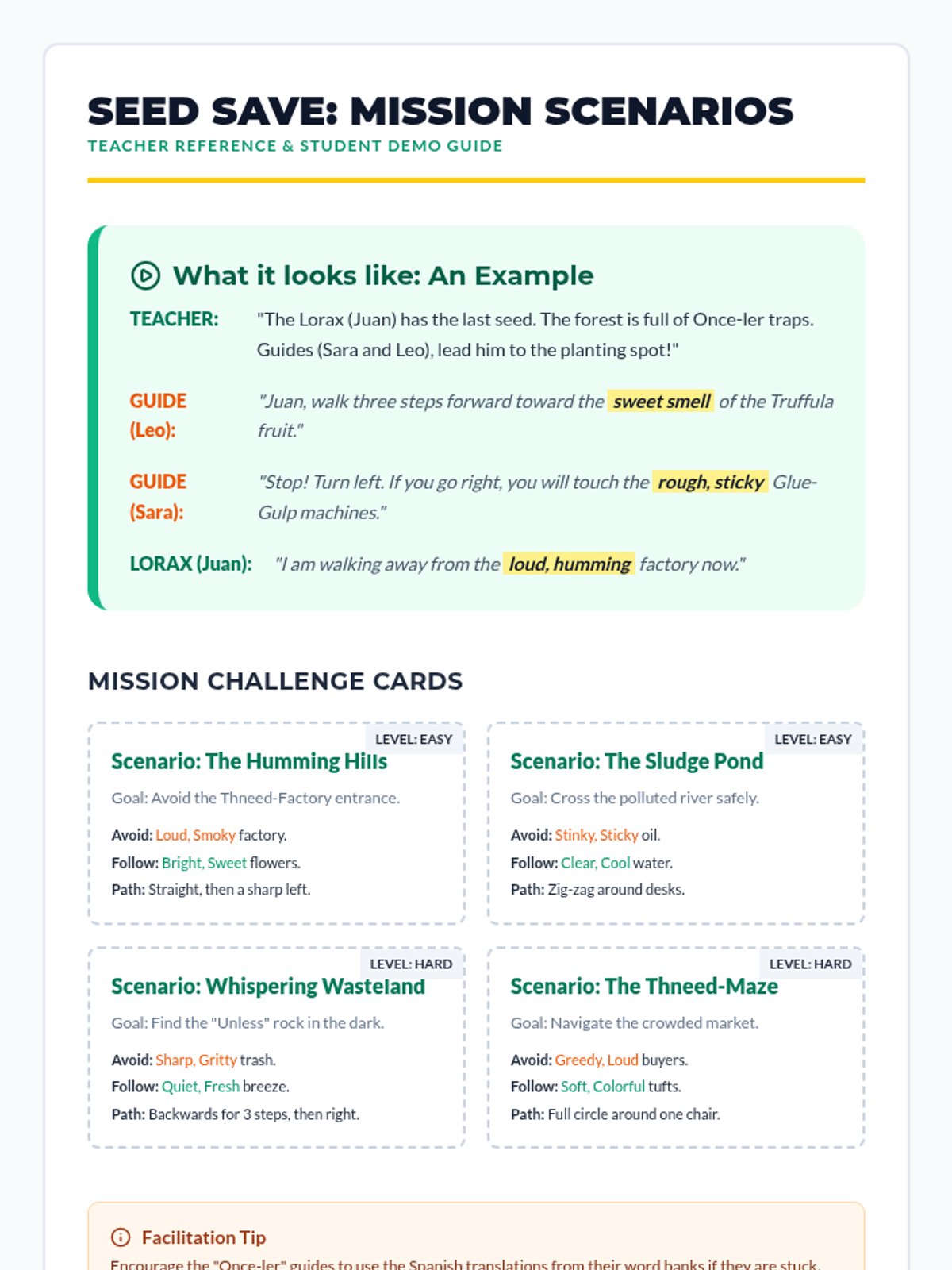
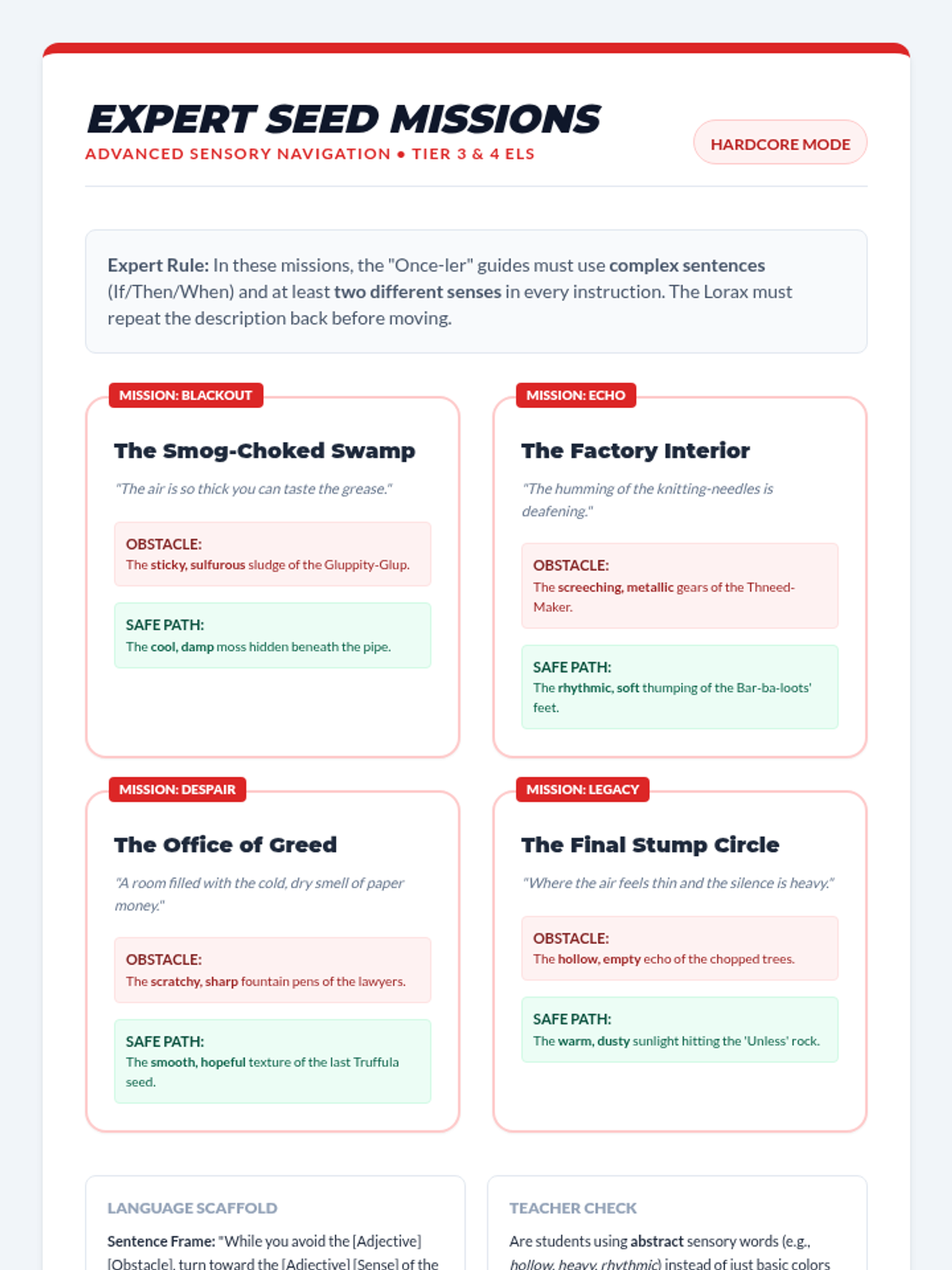
A 45-minute immersive lesson where students use sensory language to analyze environmental impact and collaborate on protecting 'the last seed.'
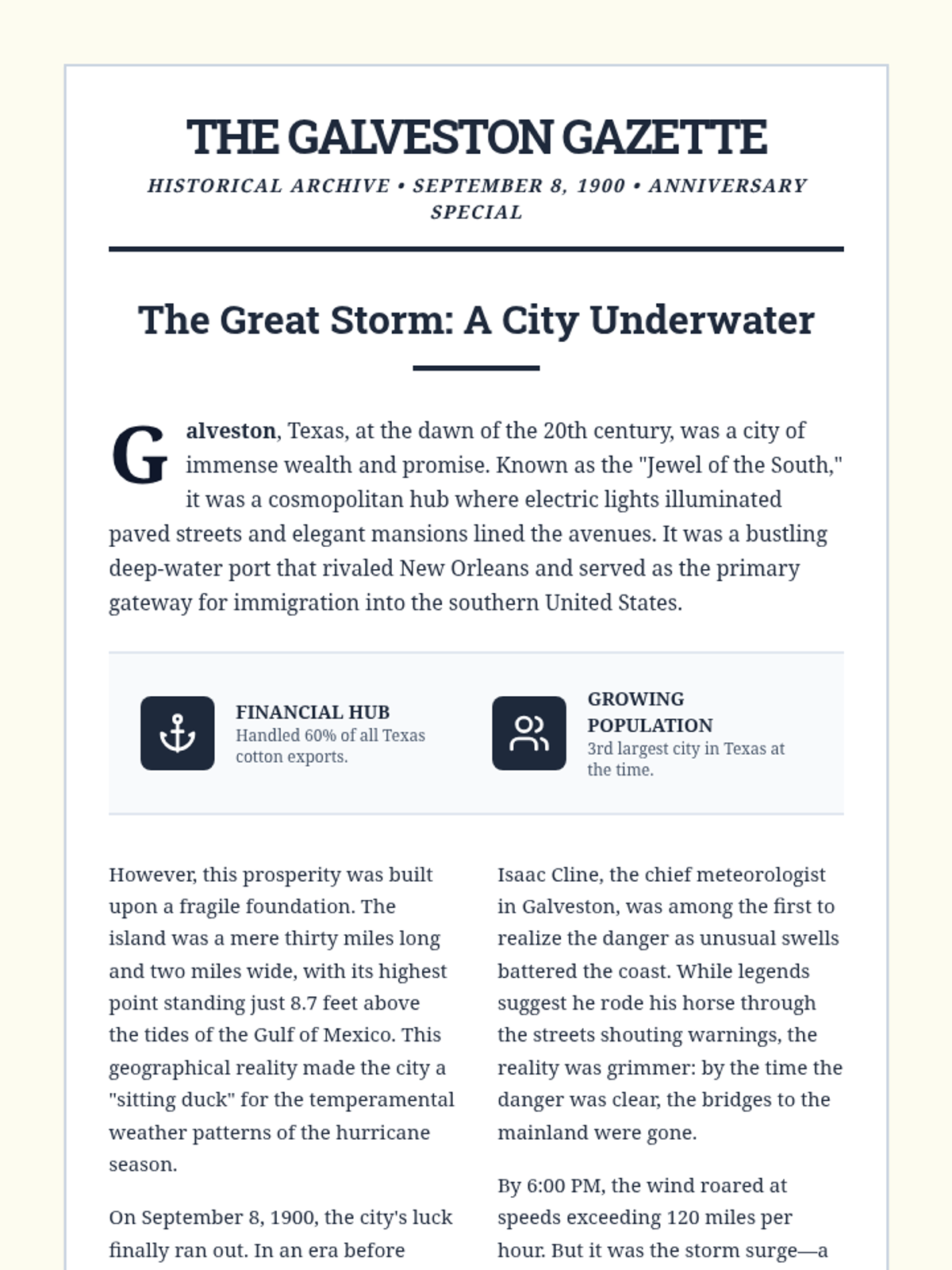
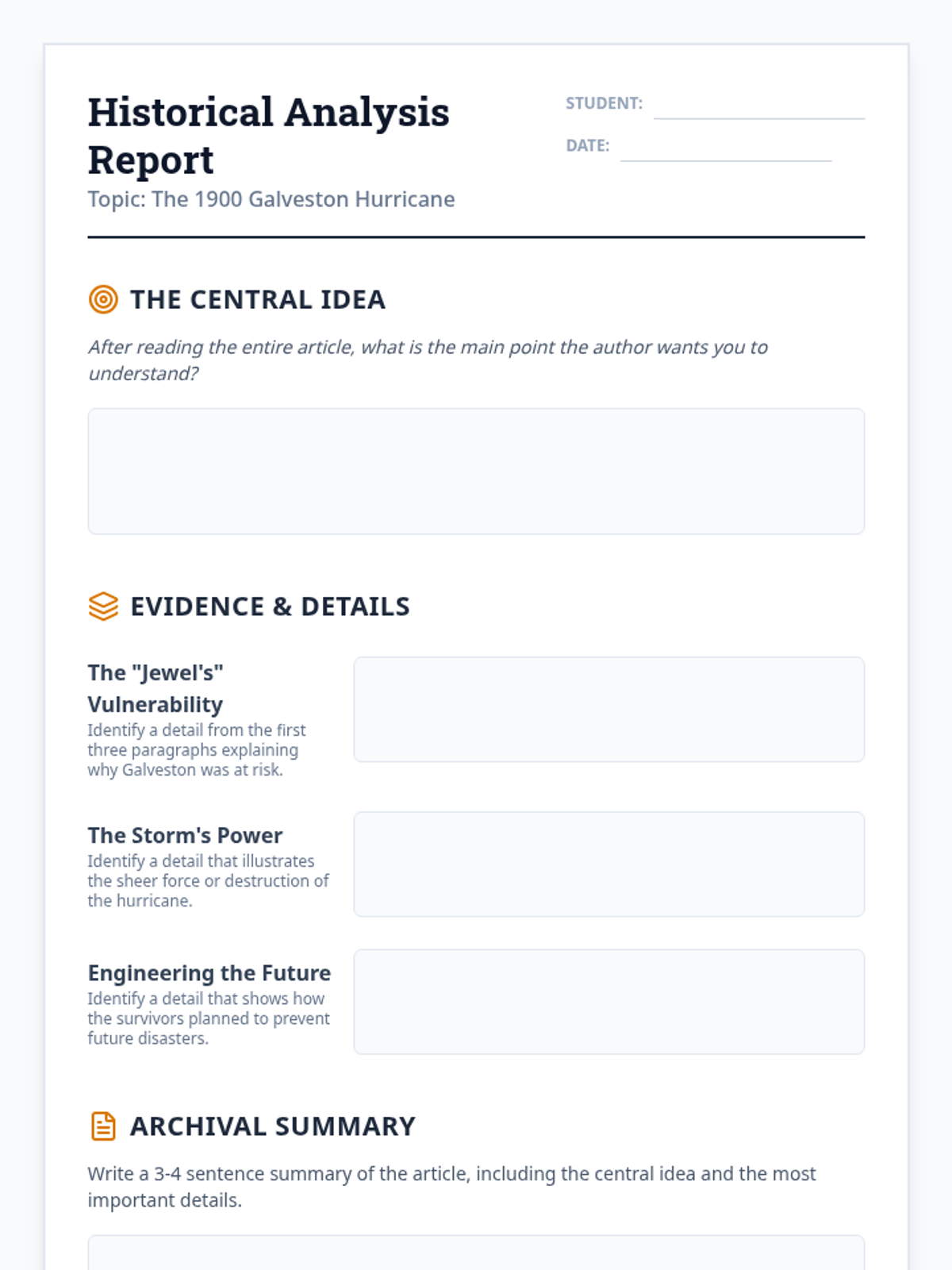
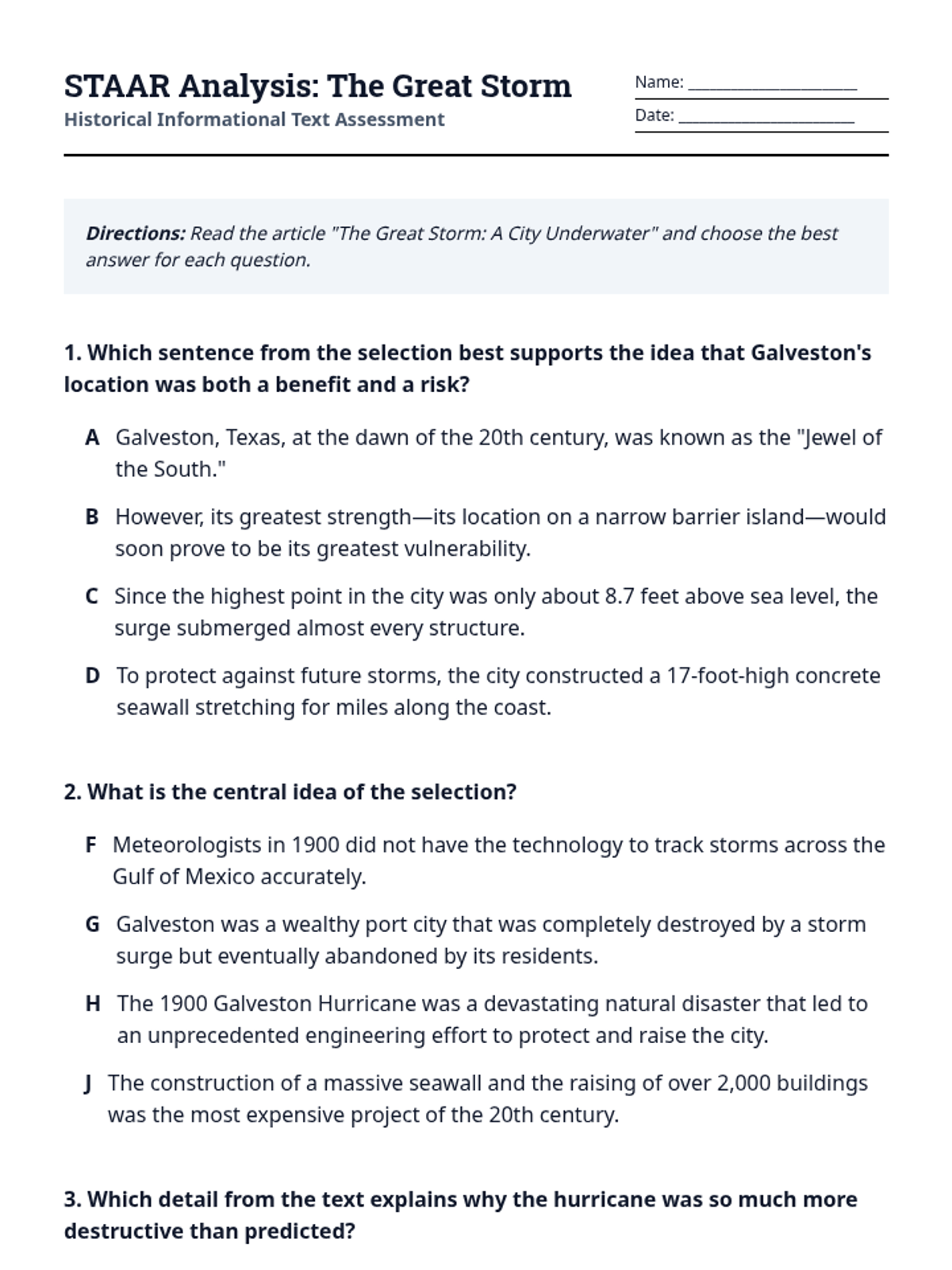
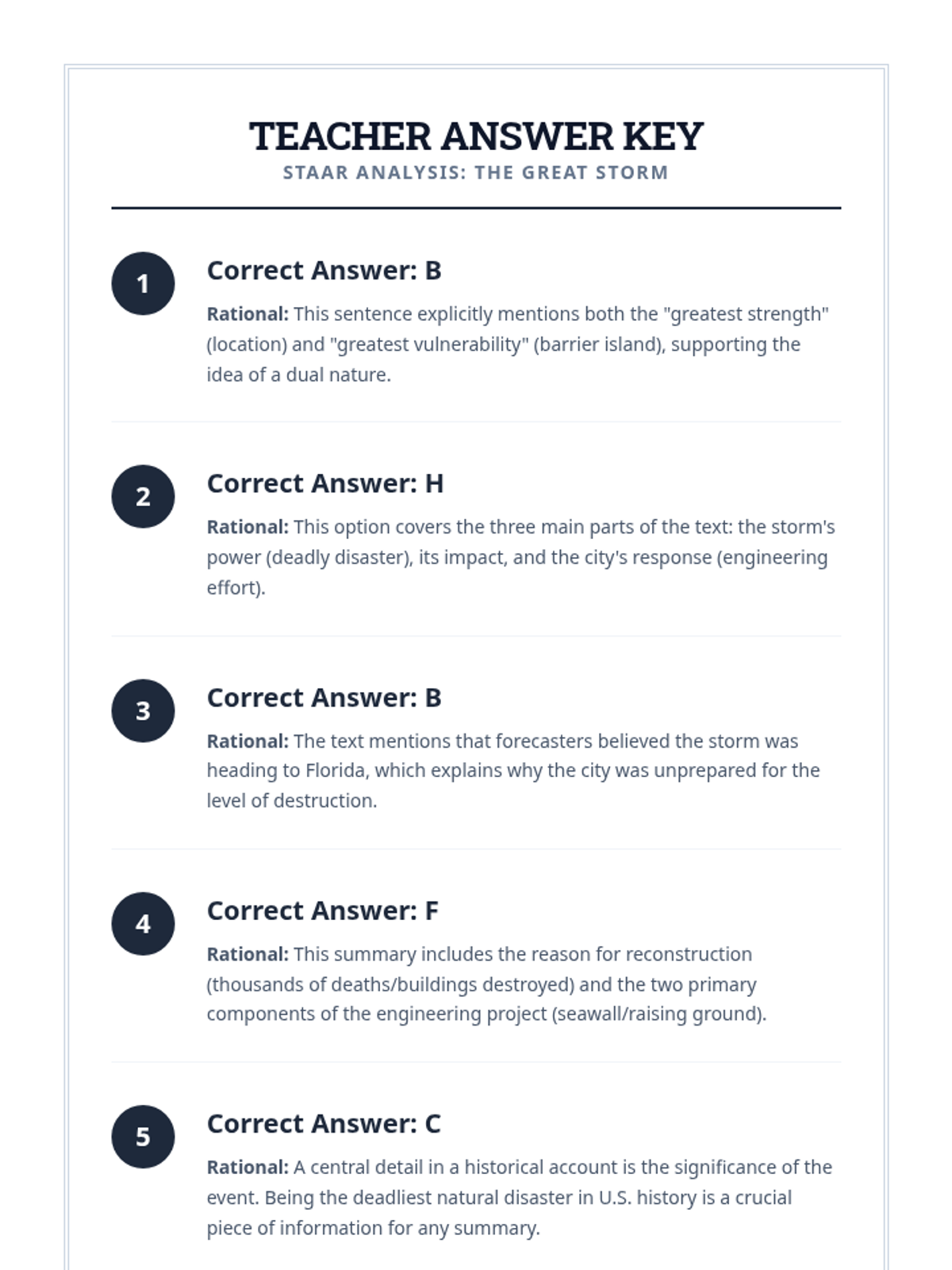
Students will explore the historical context of the 1900 Galveston Hurricane, practice identifying central ideas and supporting details, and complete a STAAR-formatted assessment.
Consolidates skills through independent practice and a formal assessment to gauge student mastery.
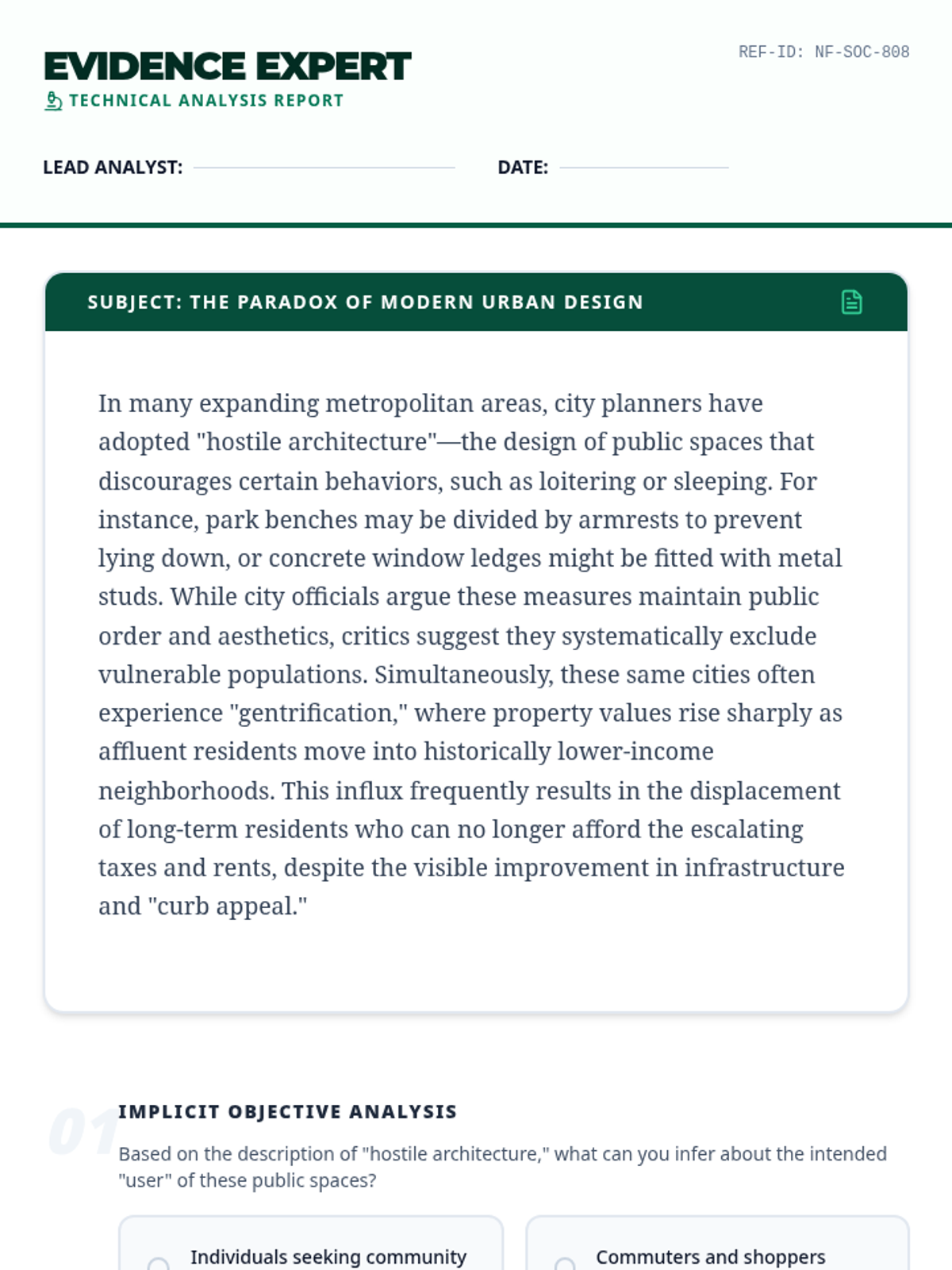
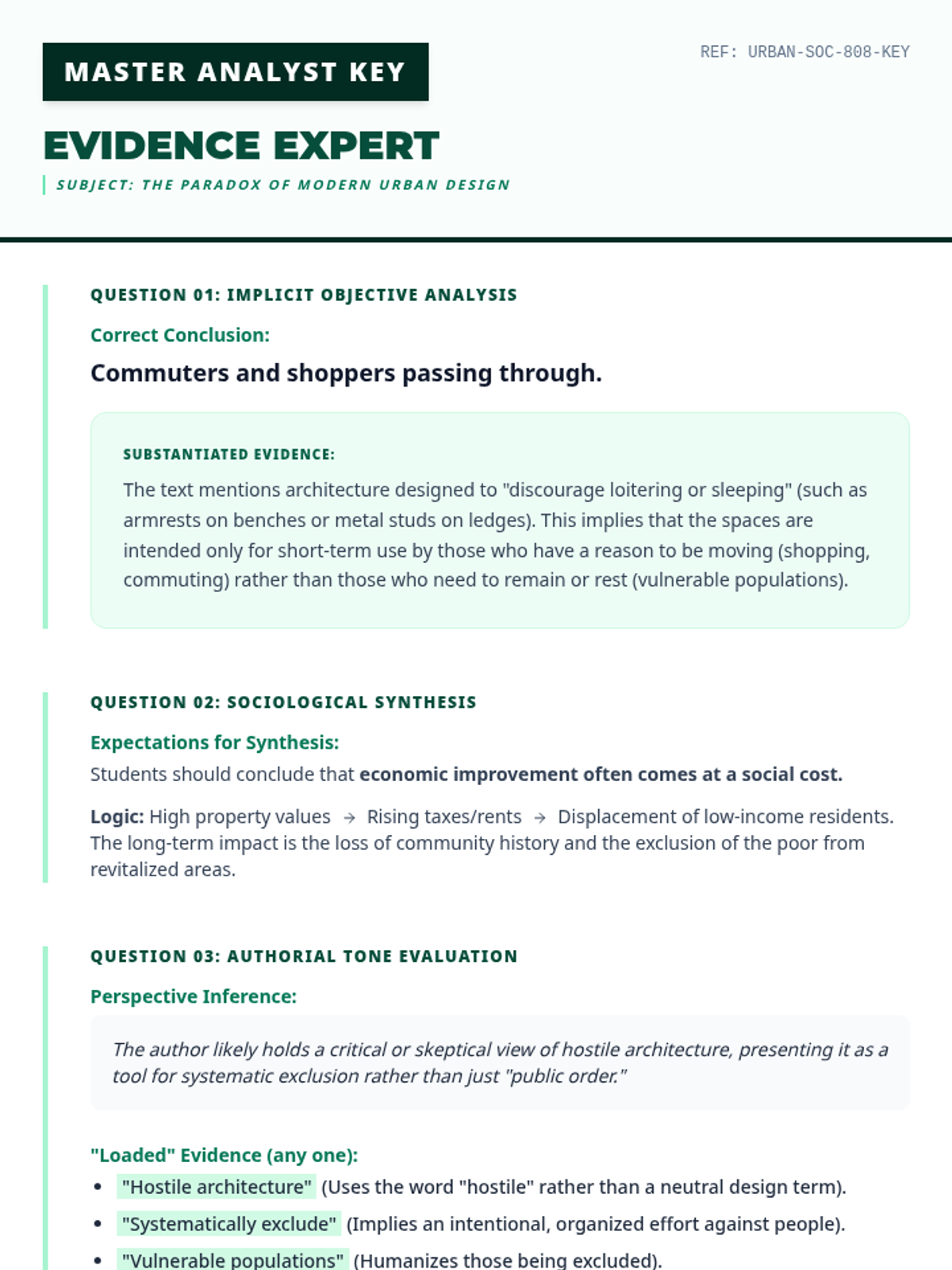
Focuses on drawing conclusions from informational texts by synthesizing facts and background knowledge.
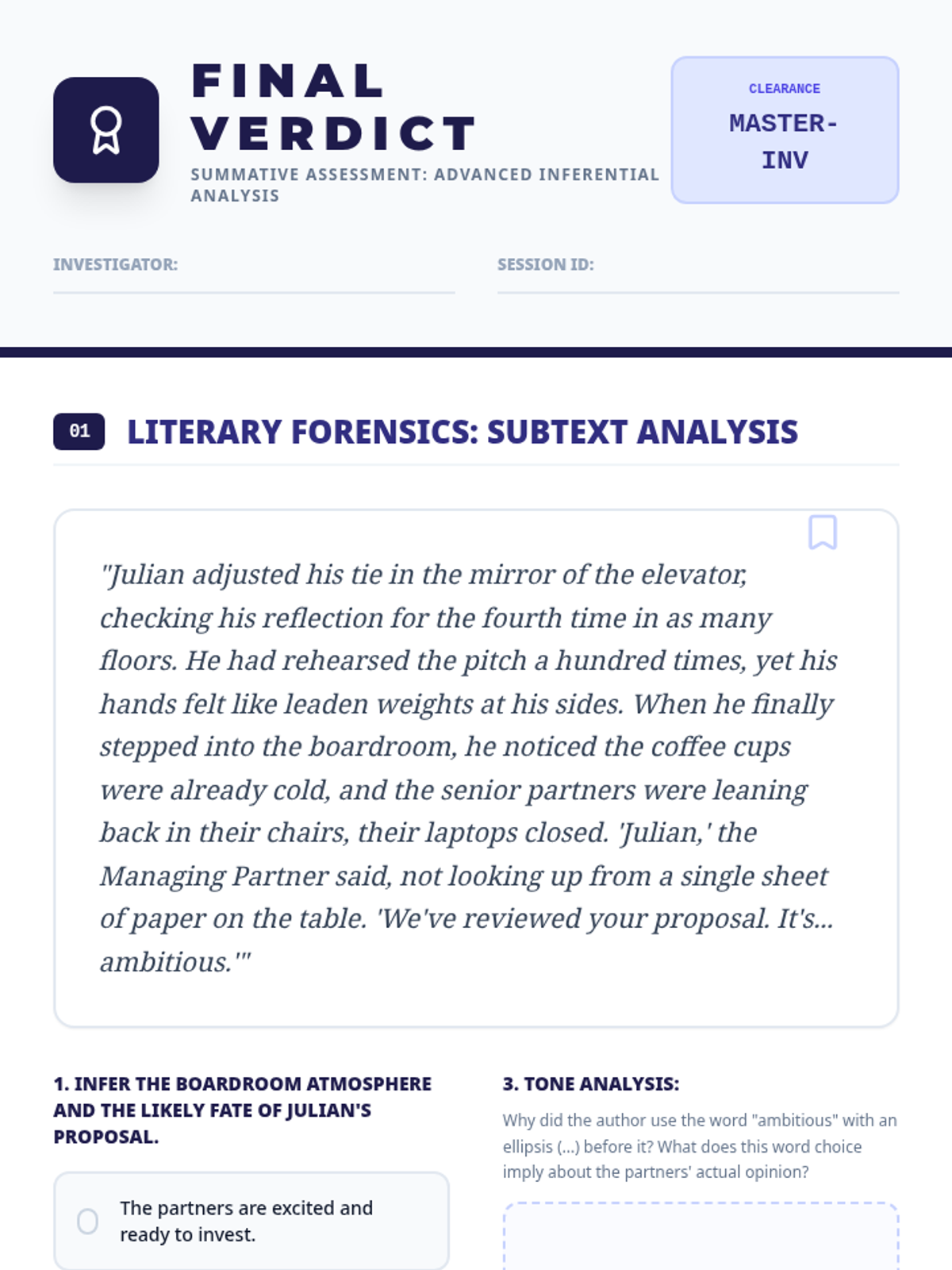
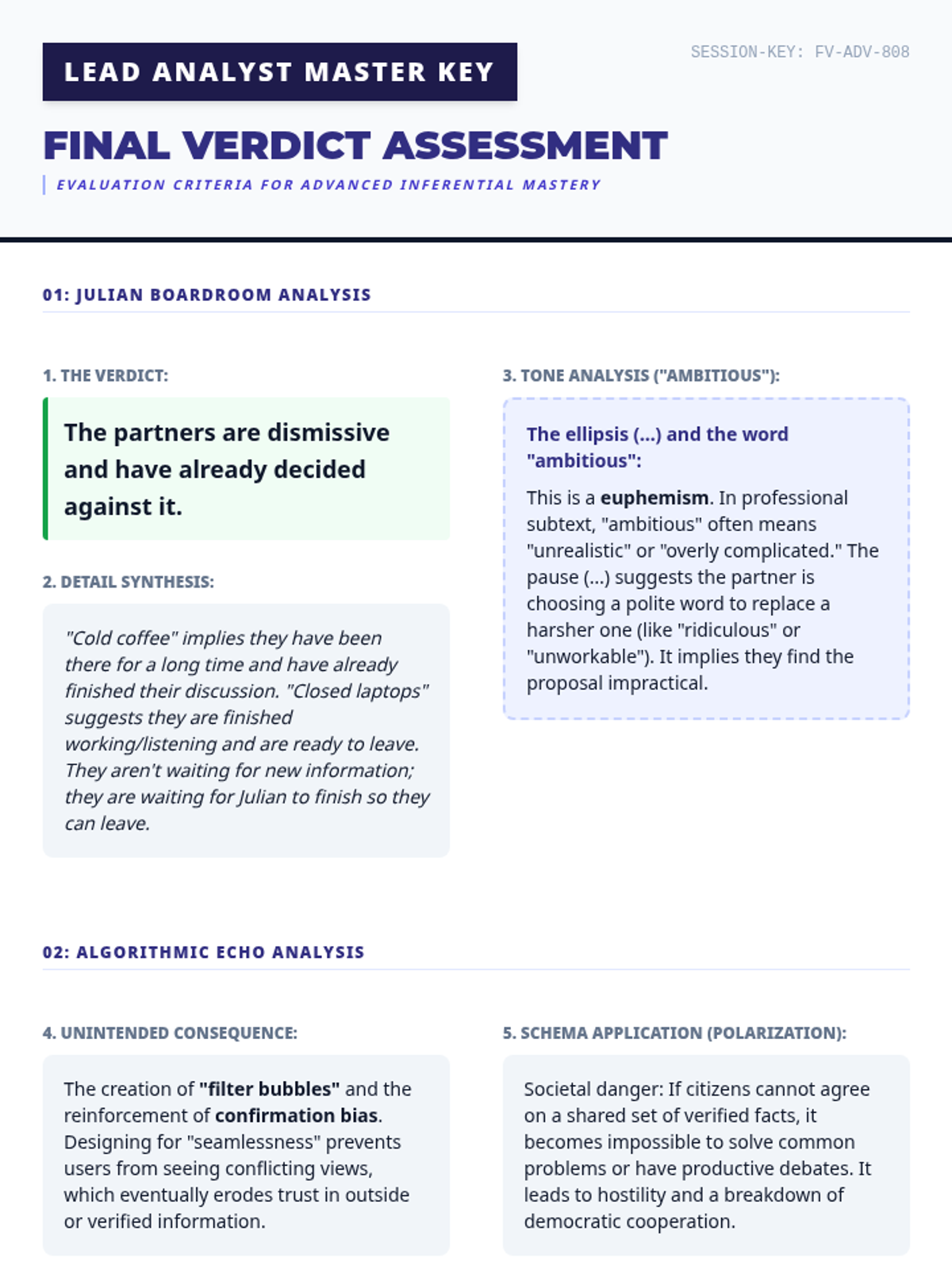
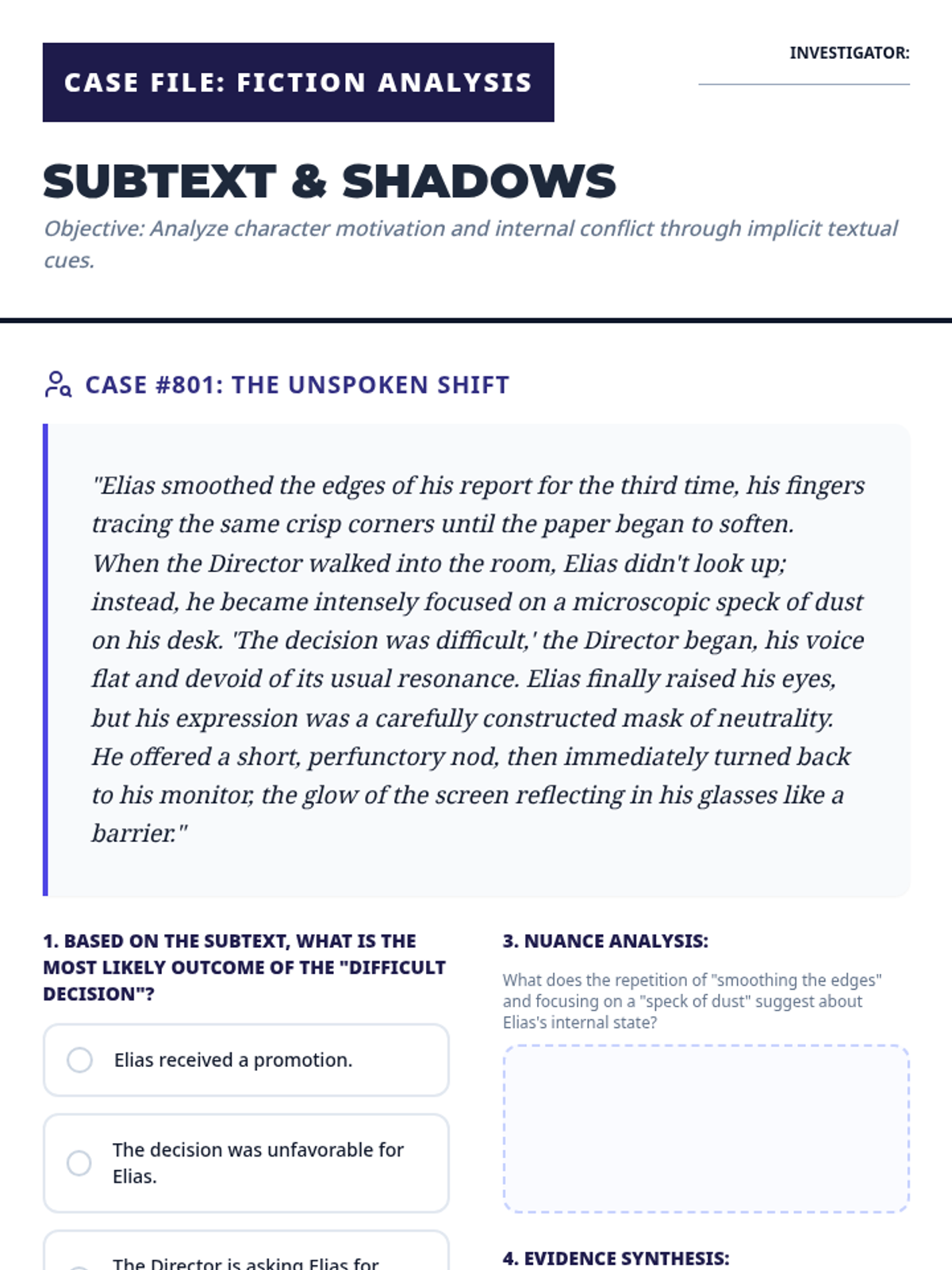
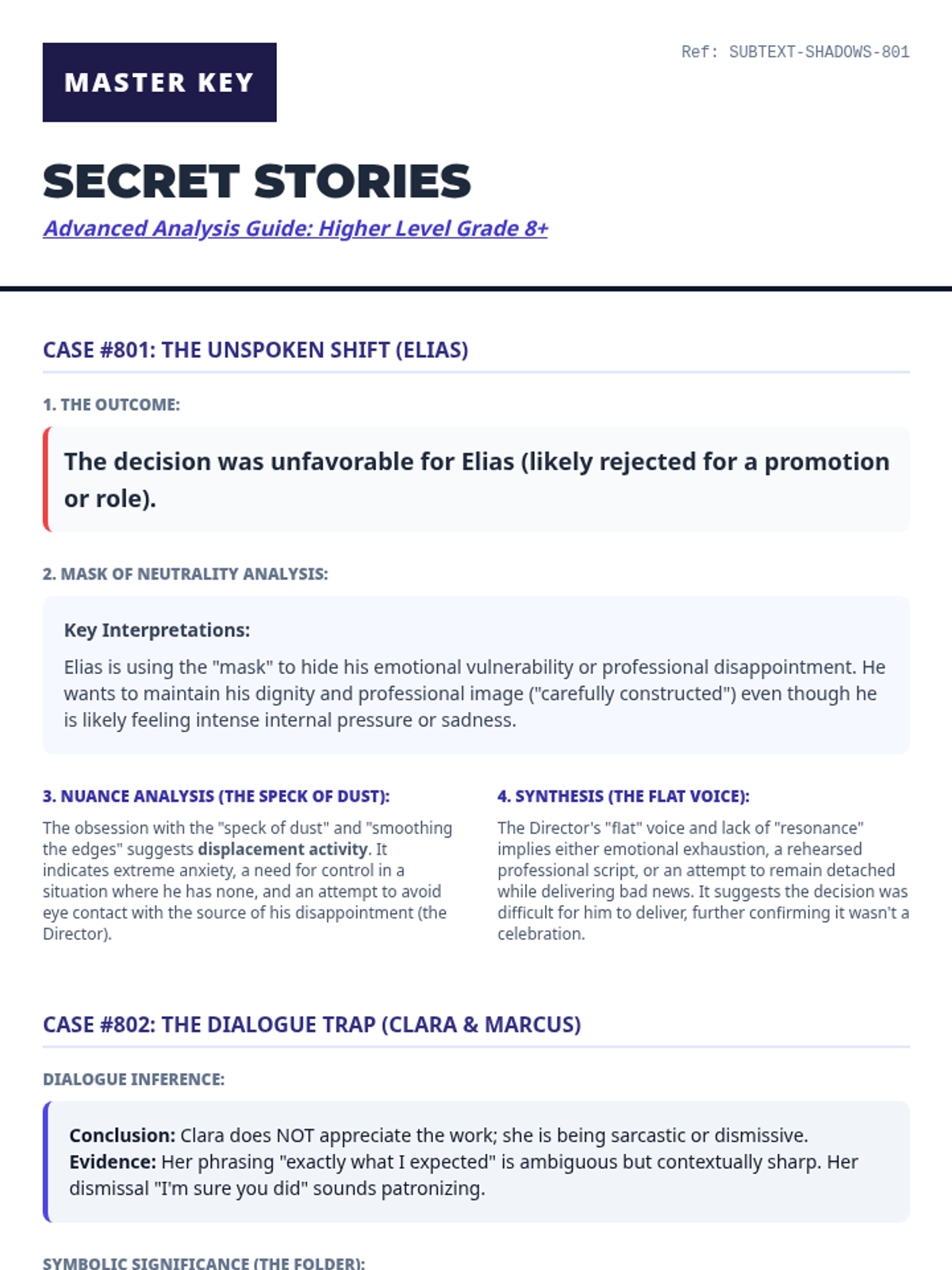
Focuses on applying inference skills to literary texts, identifying character traits, emotions, and setting clues.
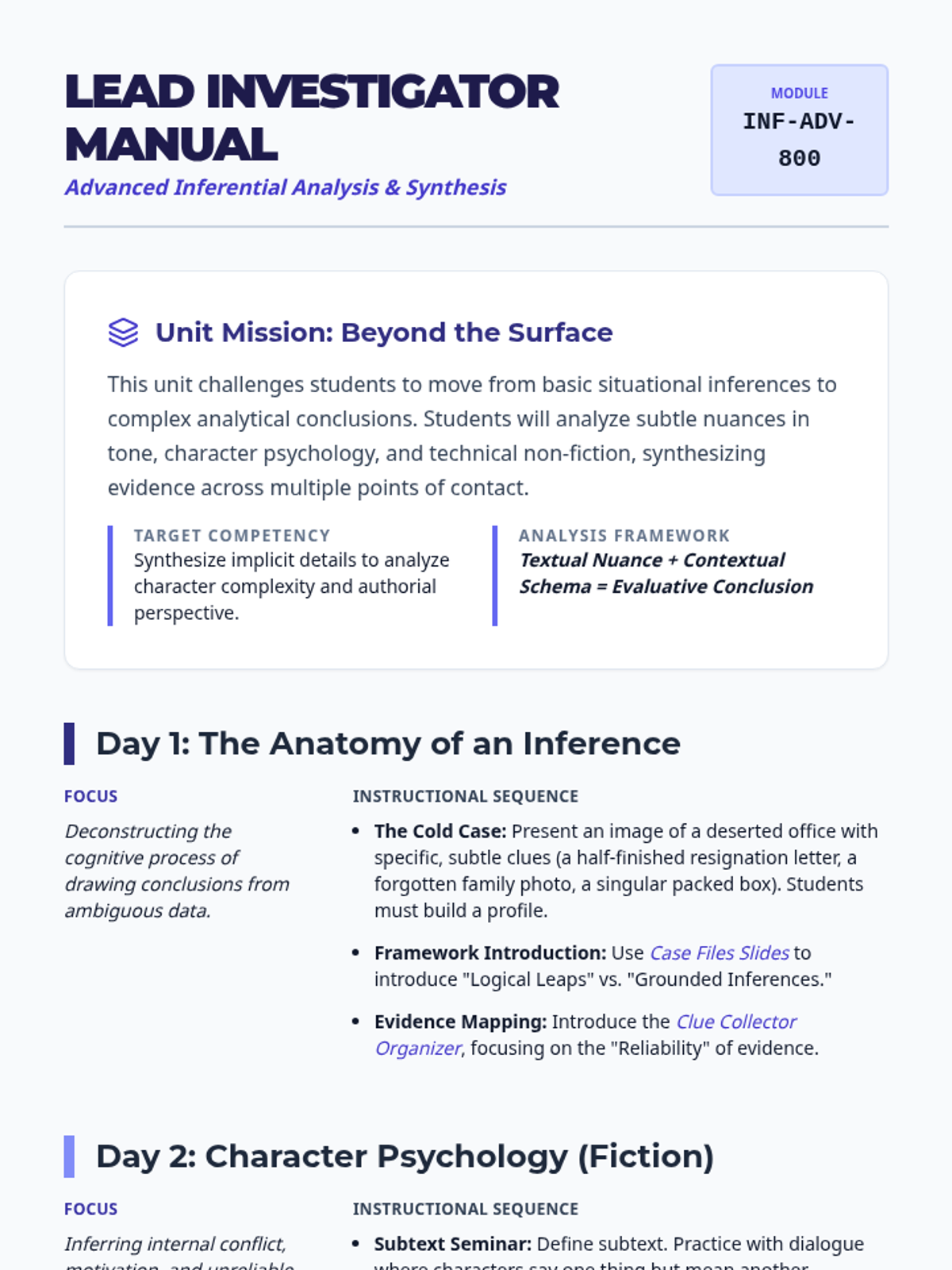
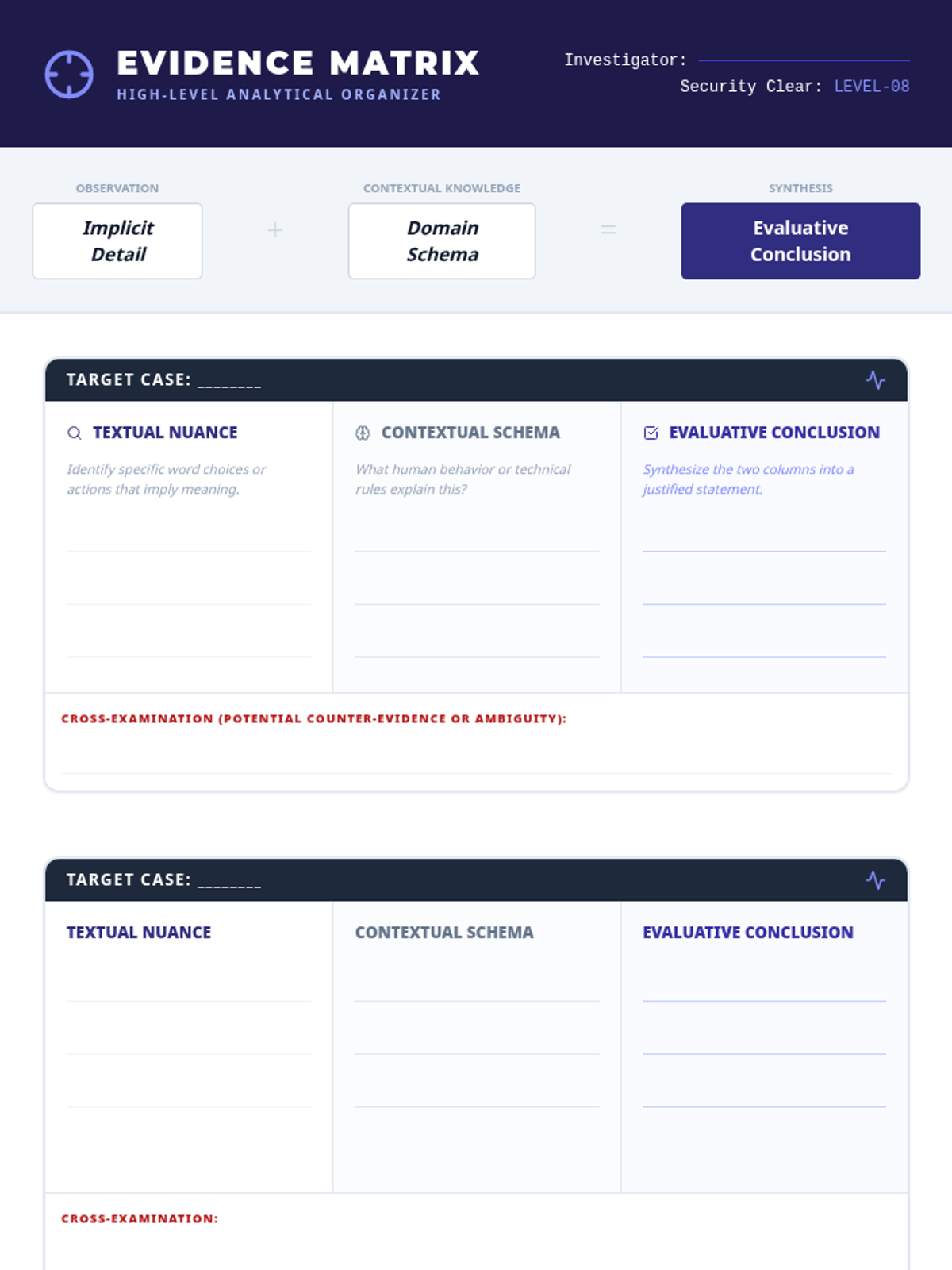
Introduces the core concept of inferencing as an equation: Text Evidence + Schema = Inference. Includes a teacher manual and instructional slides.
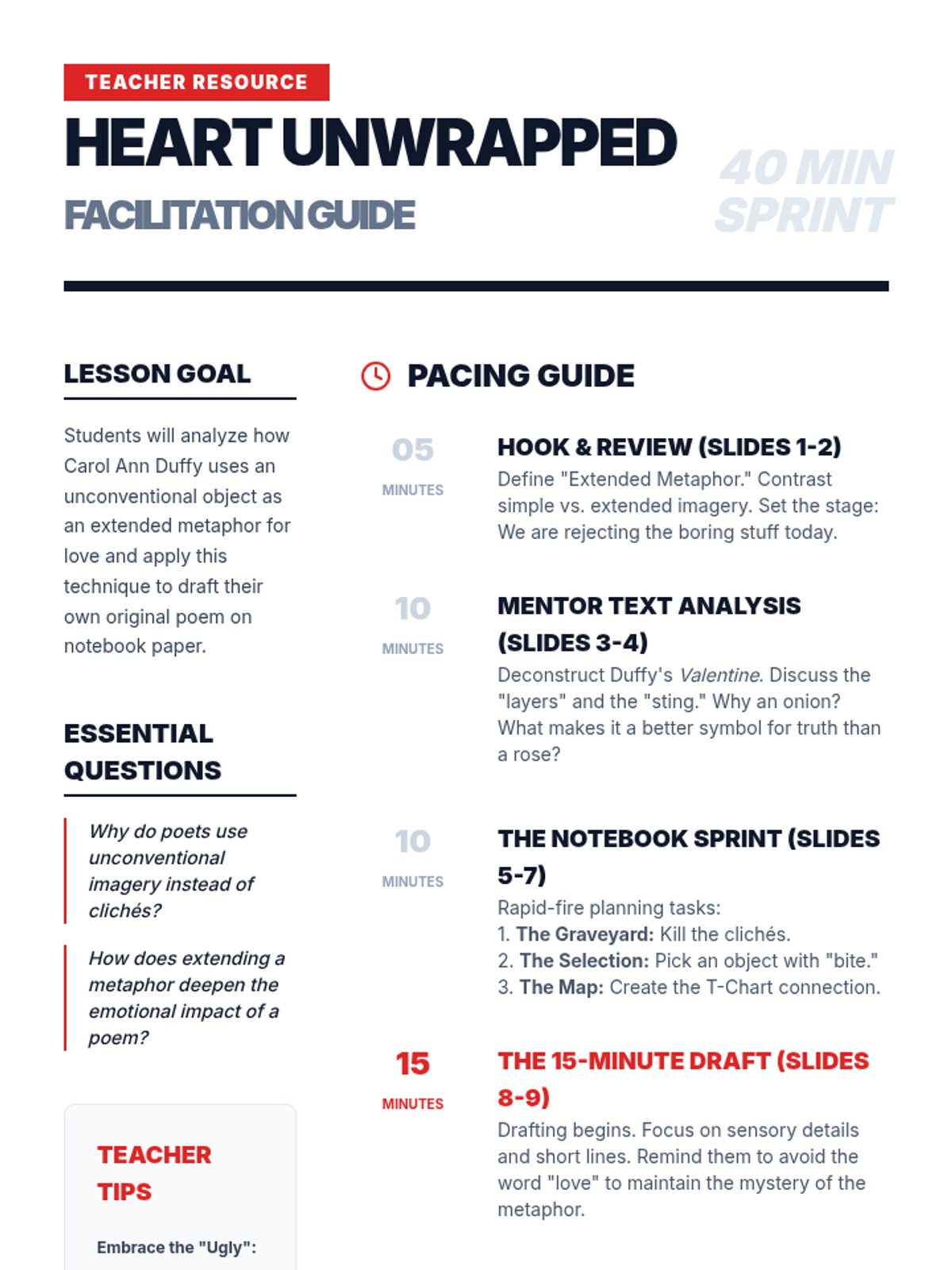
A fast-paced creative writing lesson exploring extended metaphors through Carol Ann Duffy's 'Valentine'. Students deconstruct unconventional imagery and draft their own anti-cliché love poems.
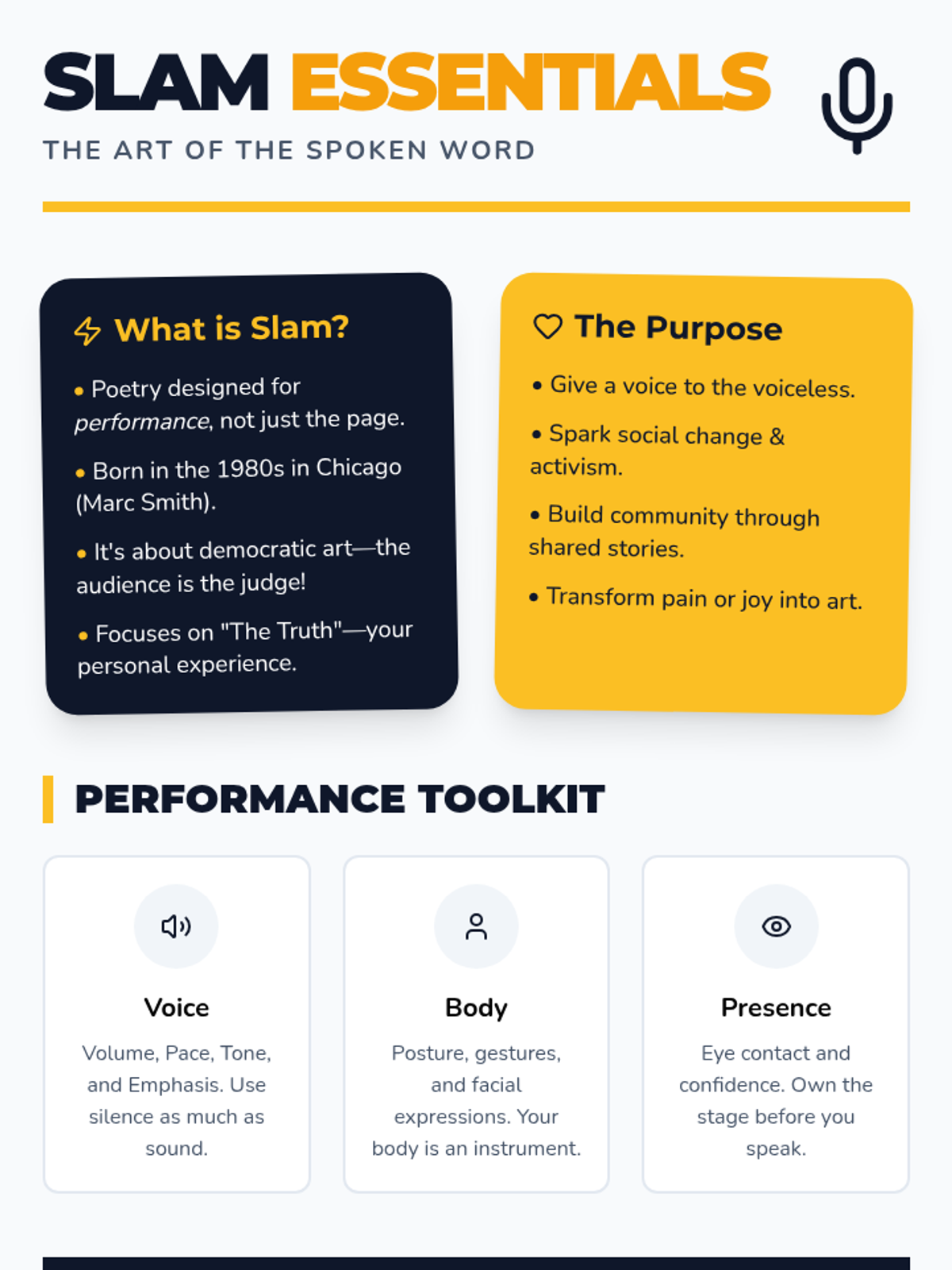
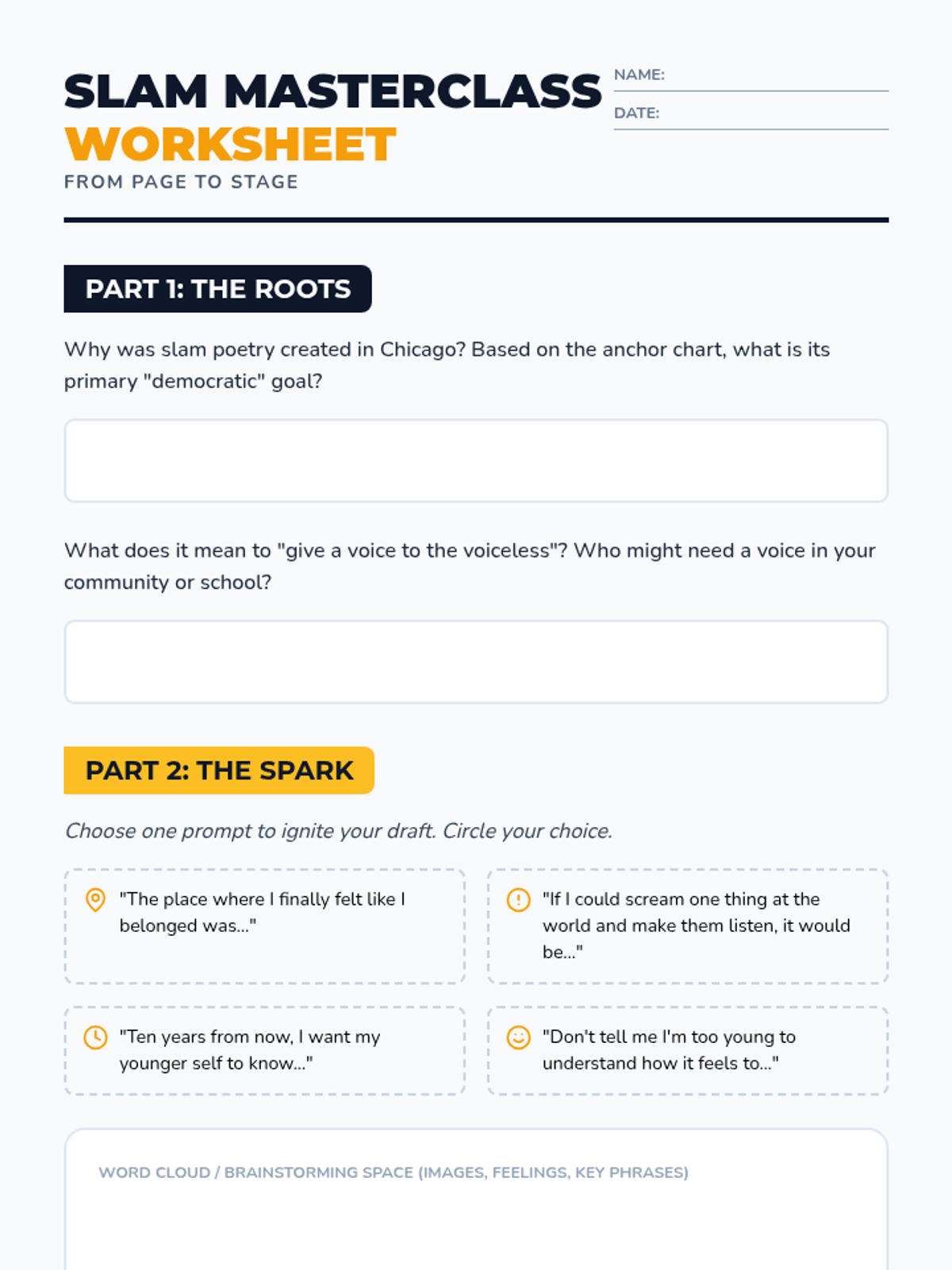
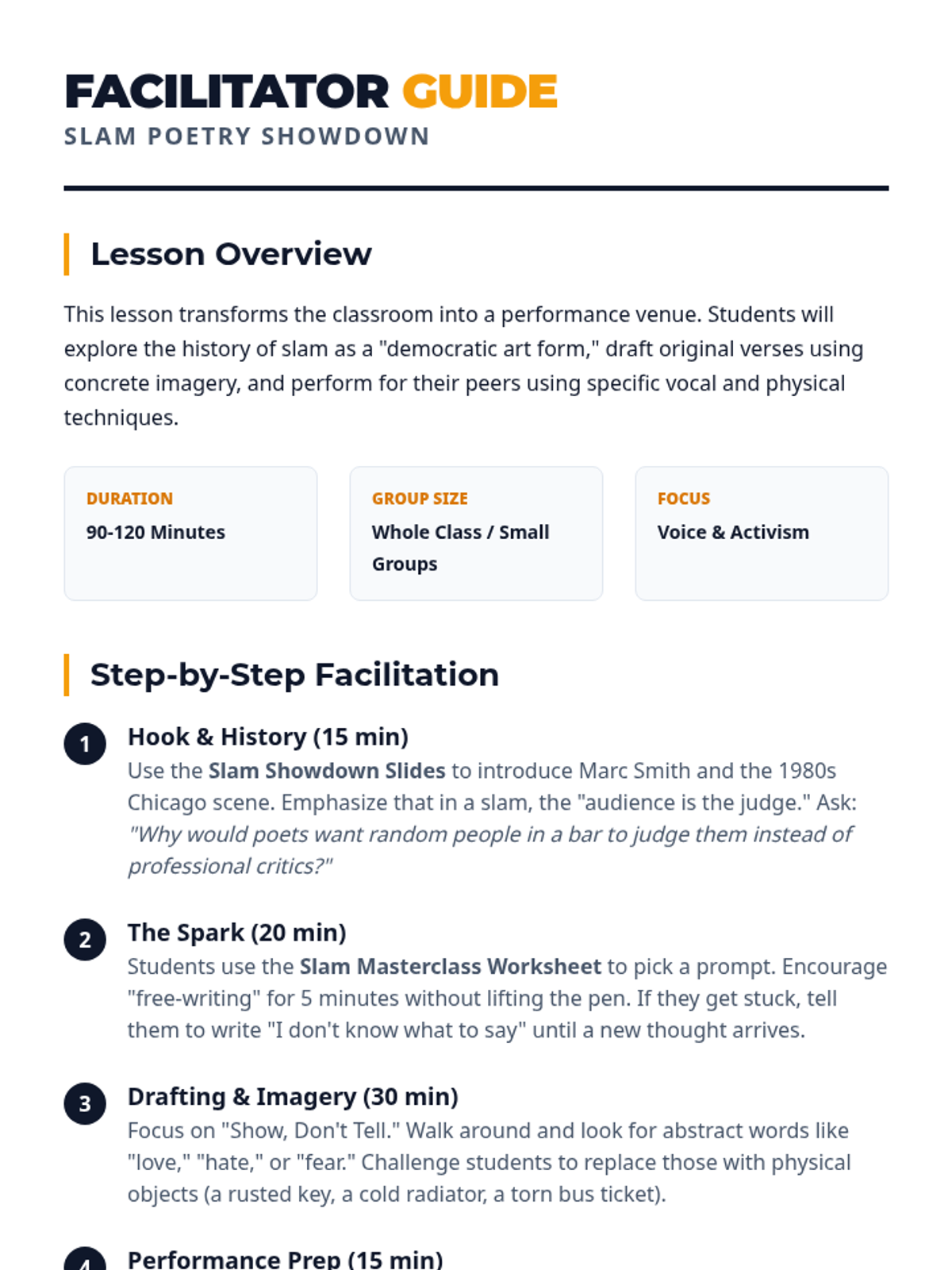
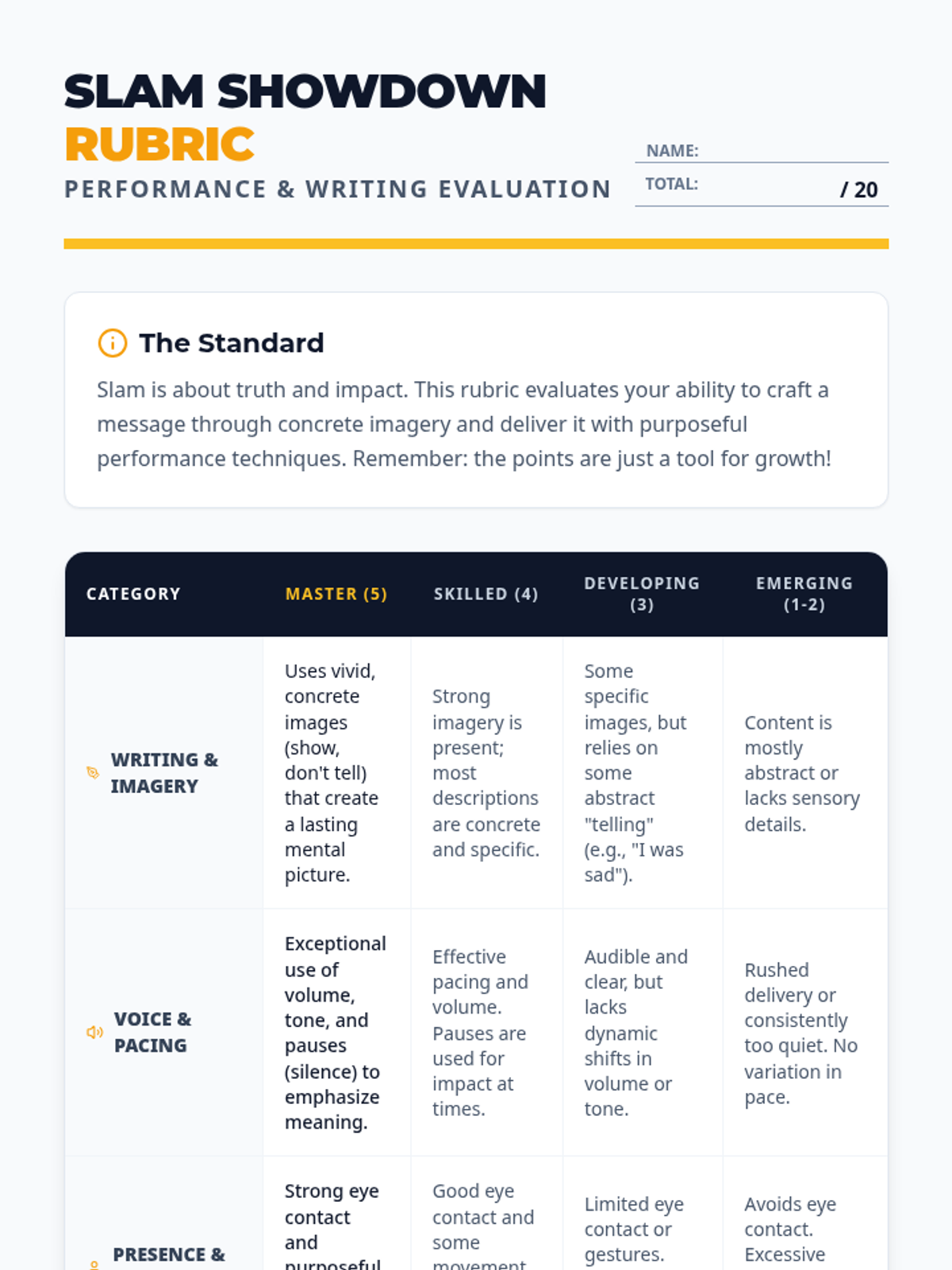
A comprehensive lesson guiding students from the history and purpose of slam poetry through writing original verses to performing with impact and giving constructive peer feedback.
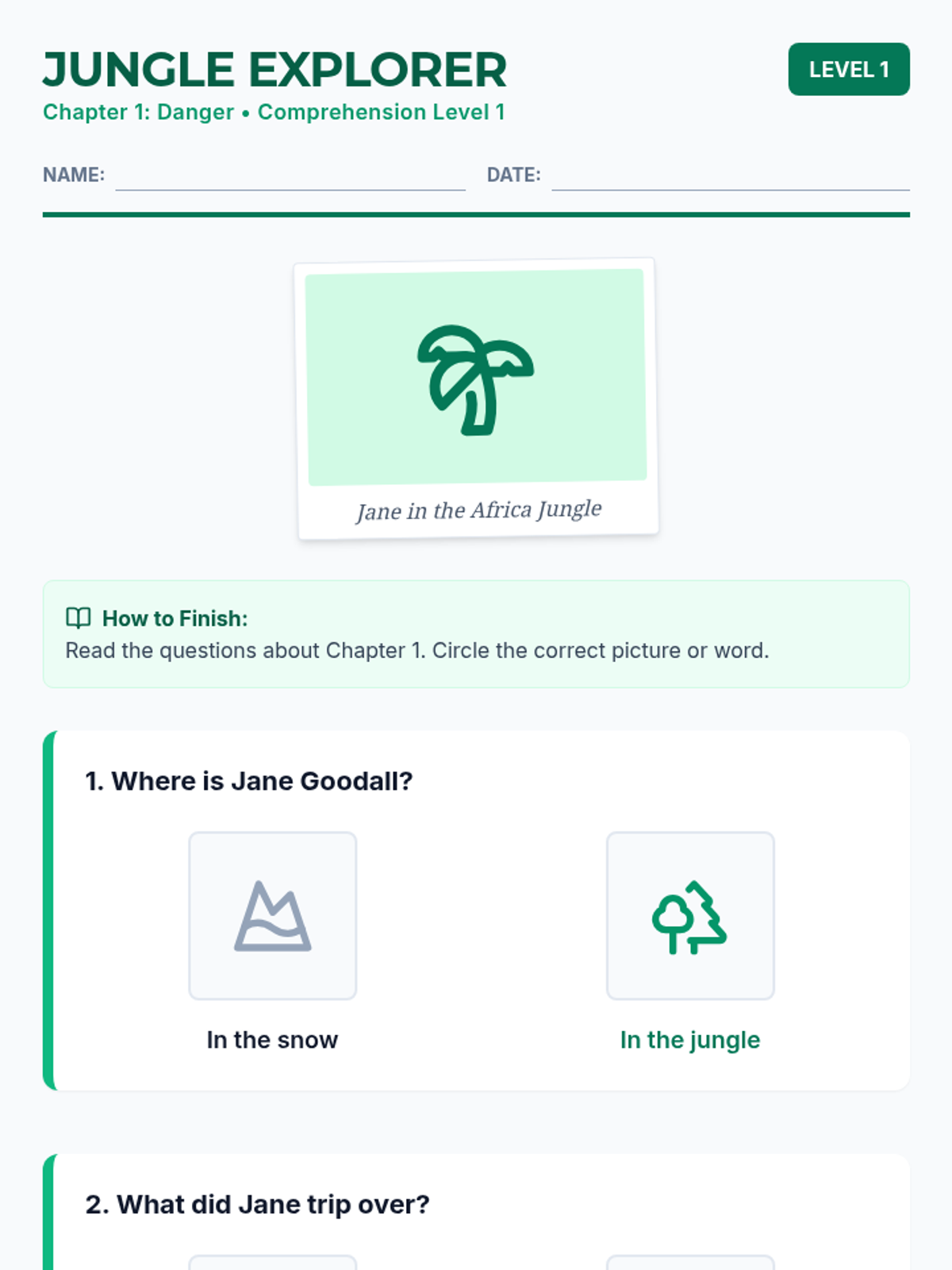
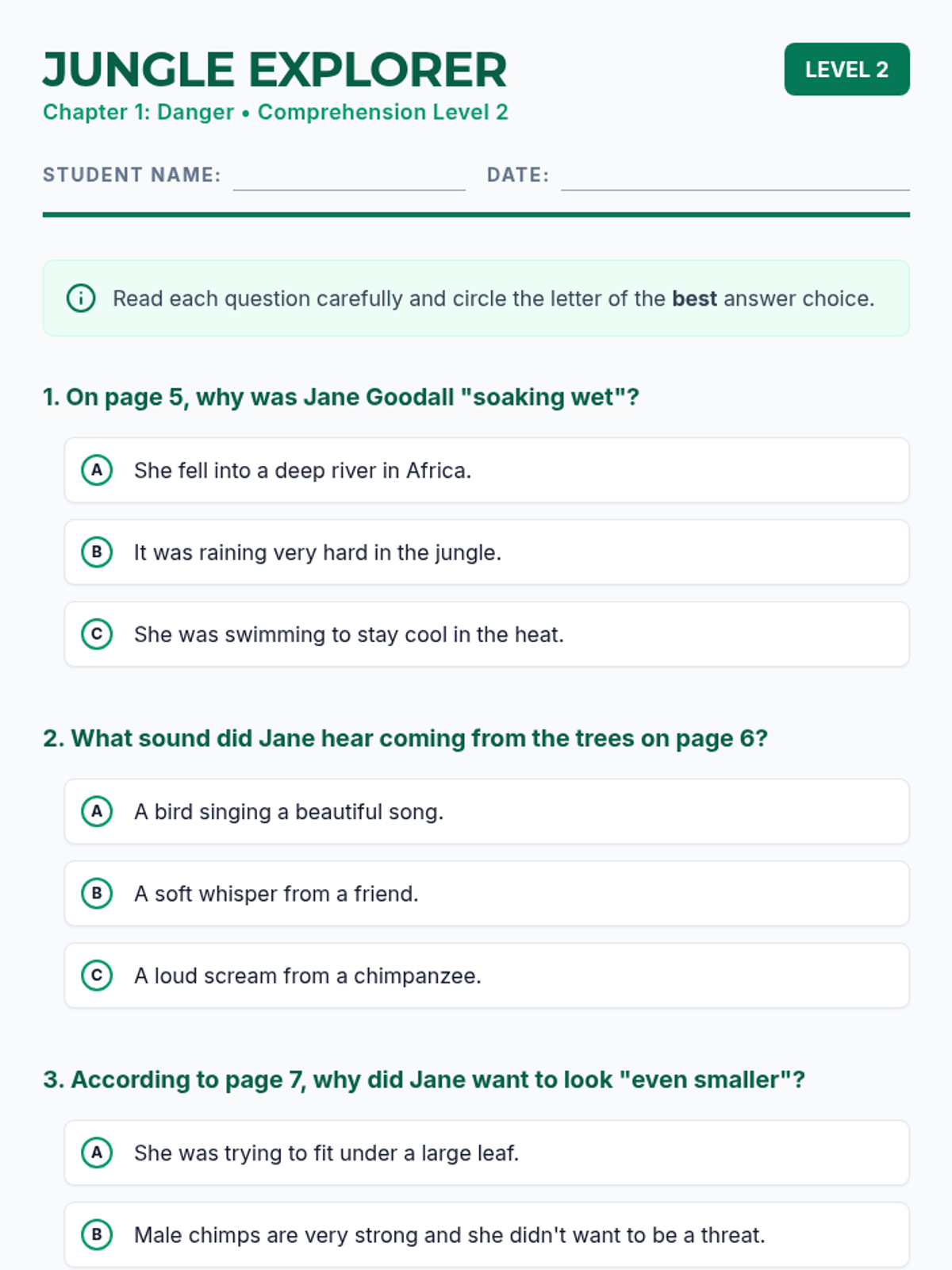
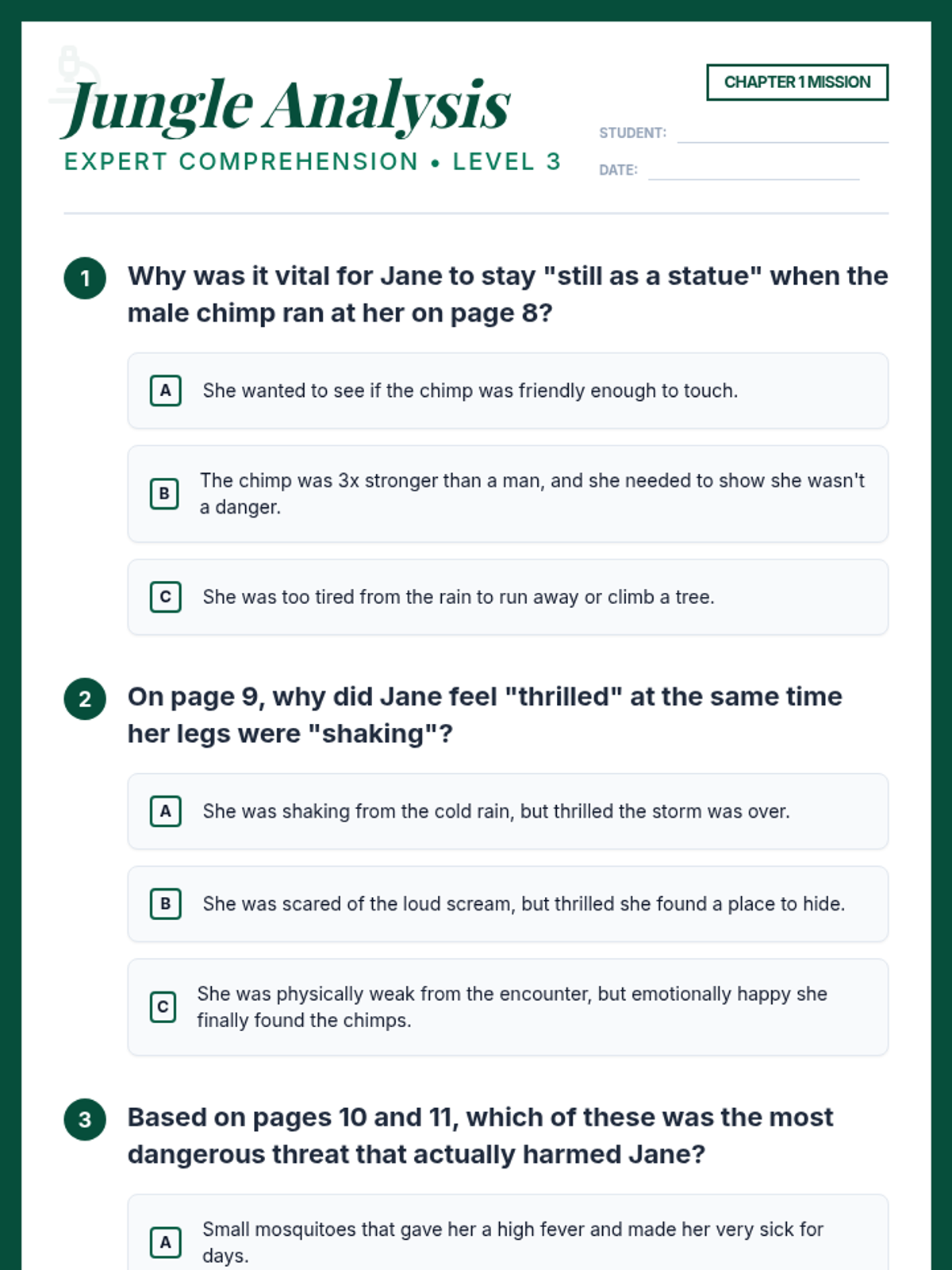
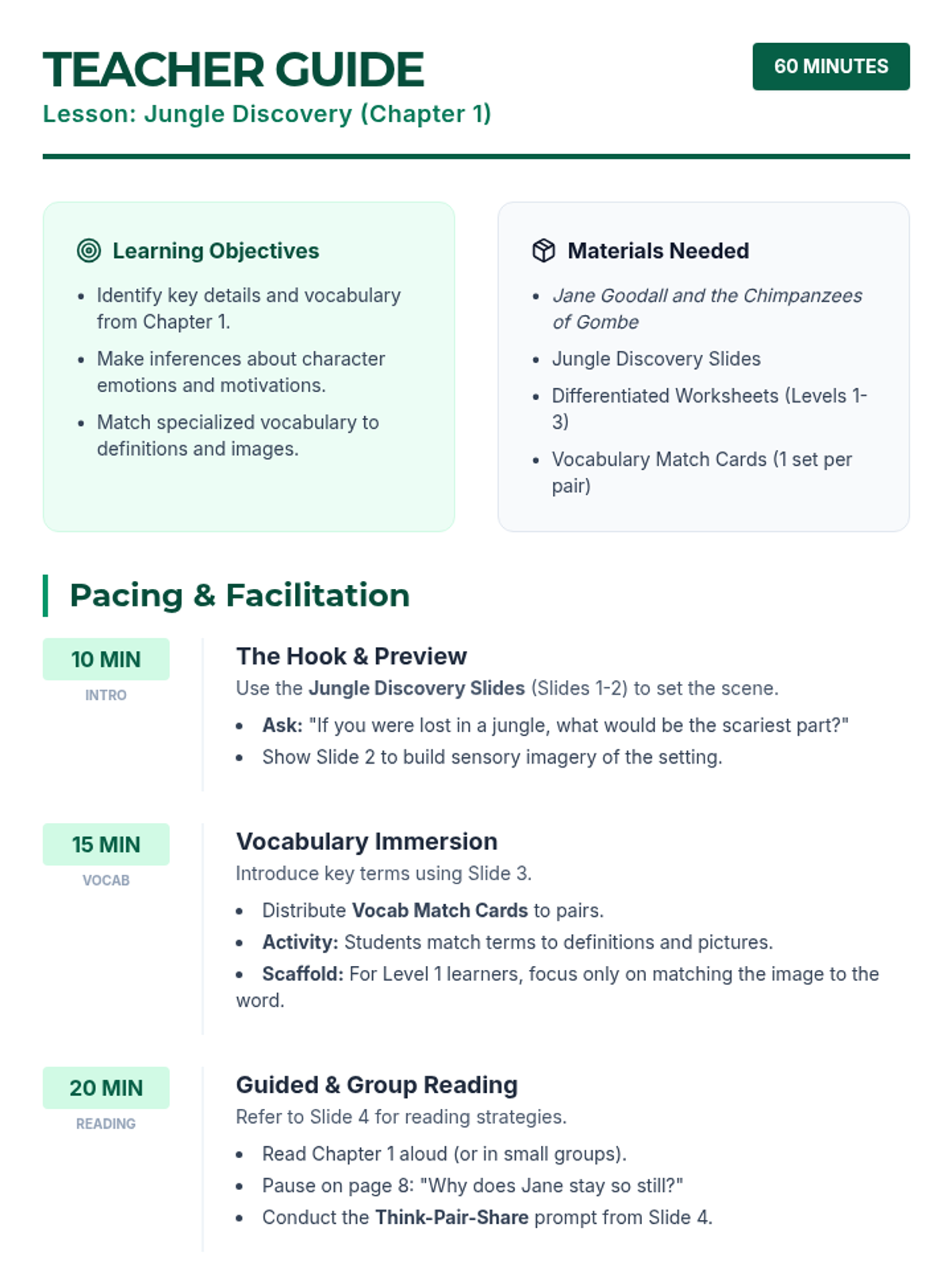
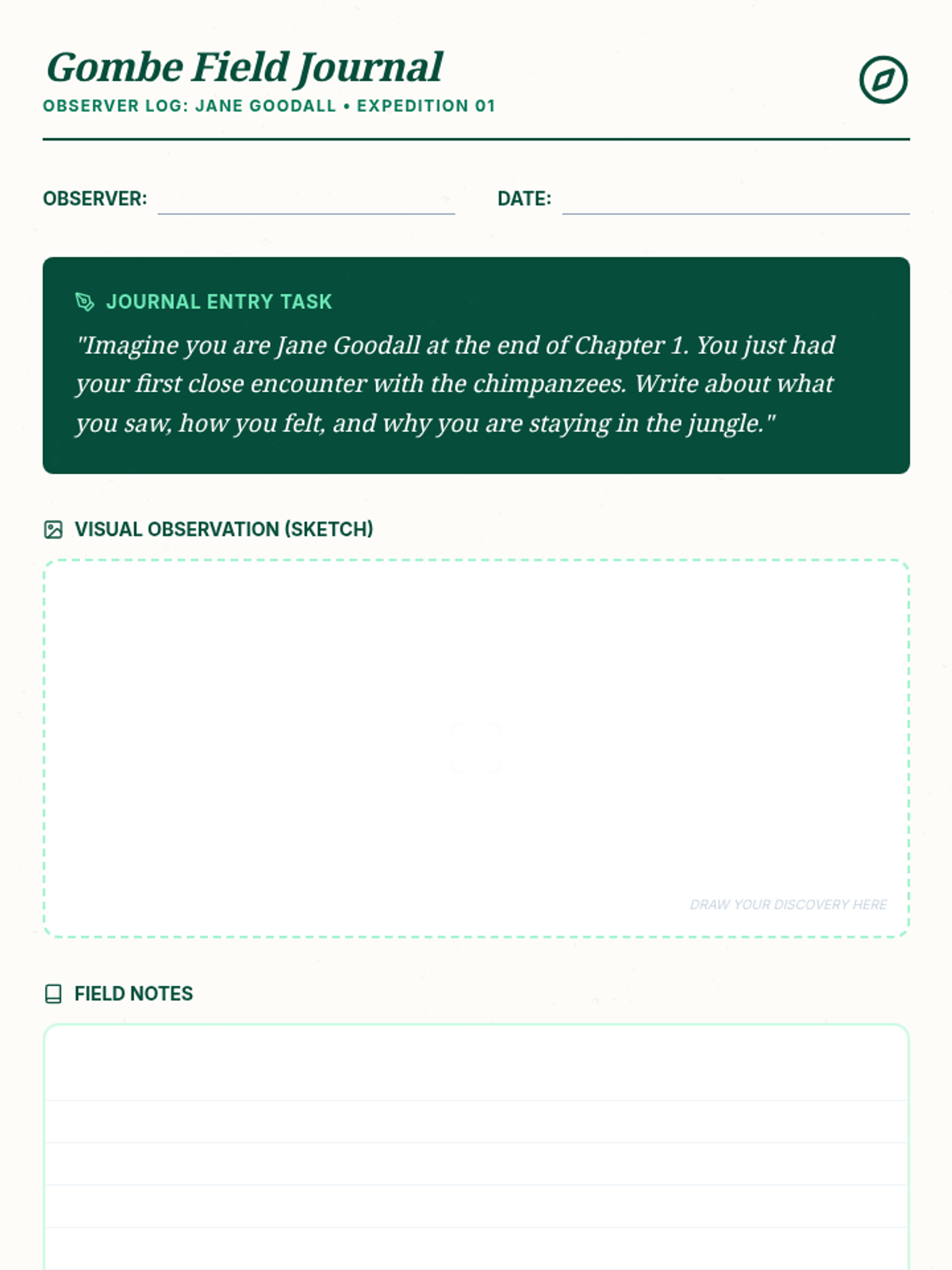
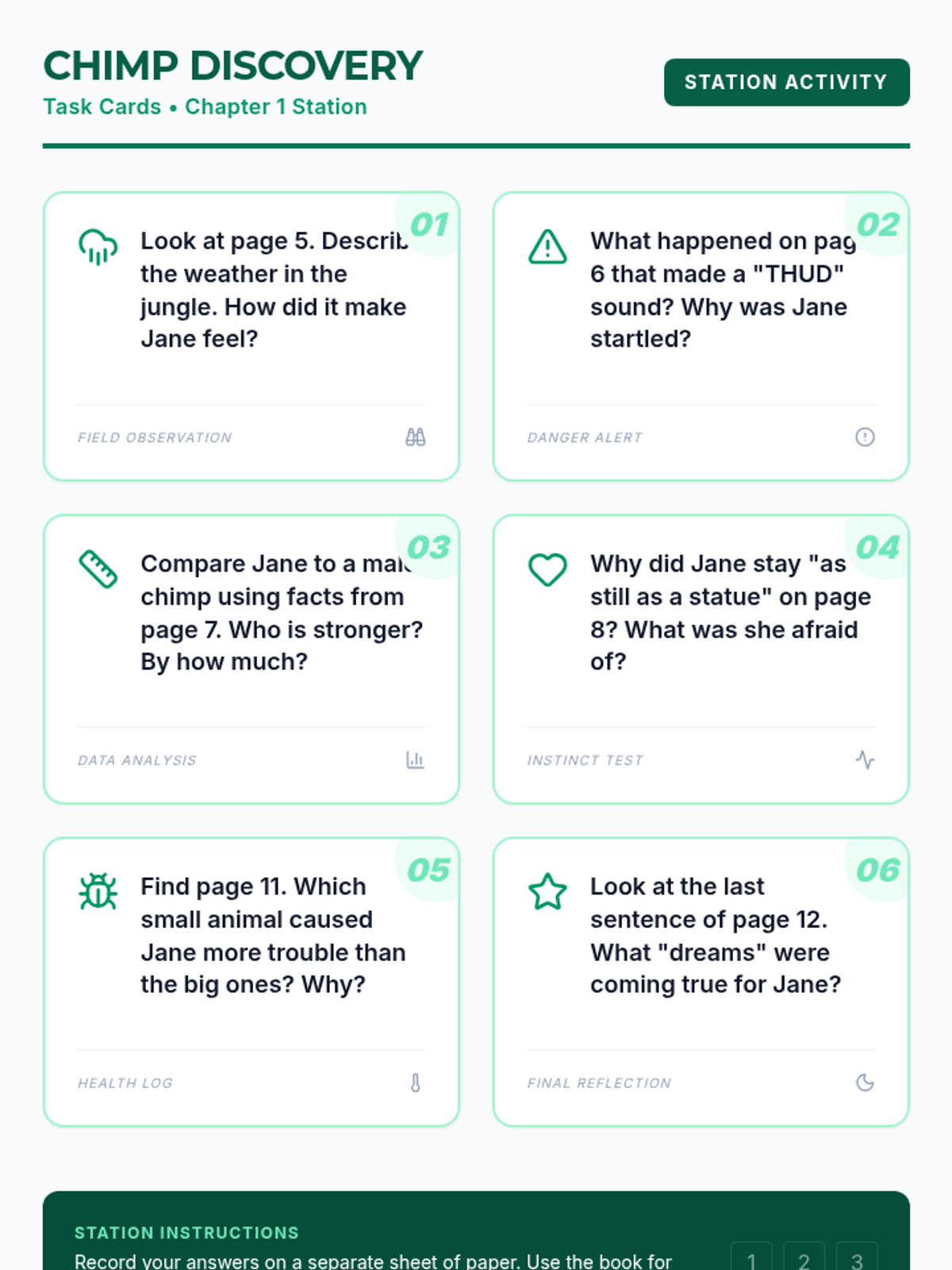
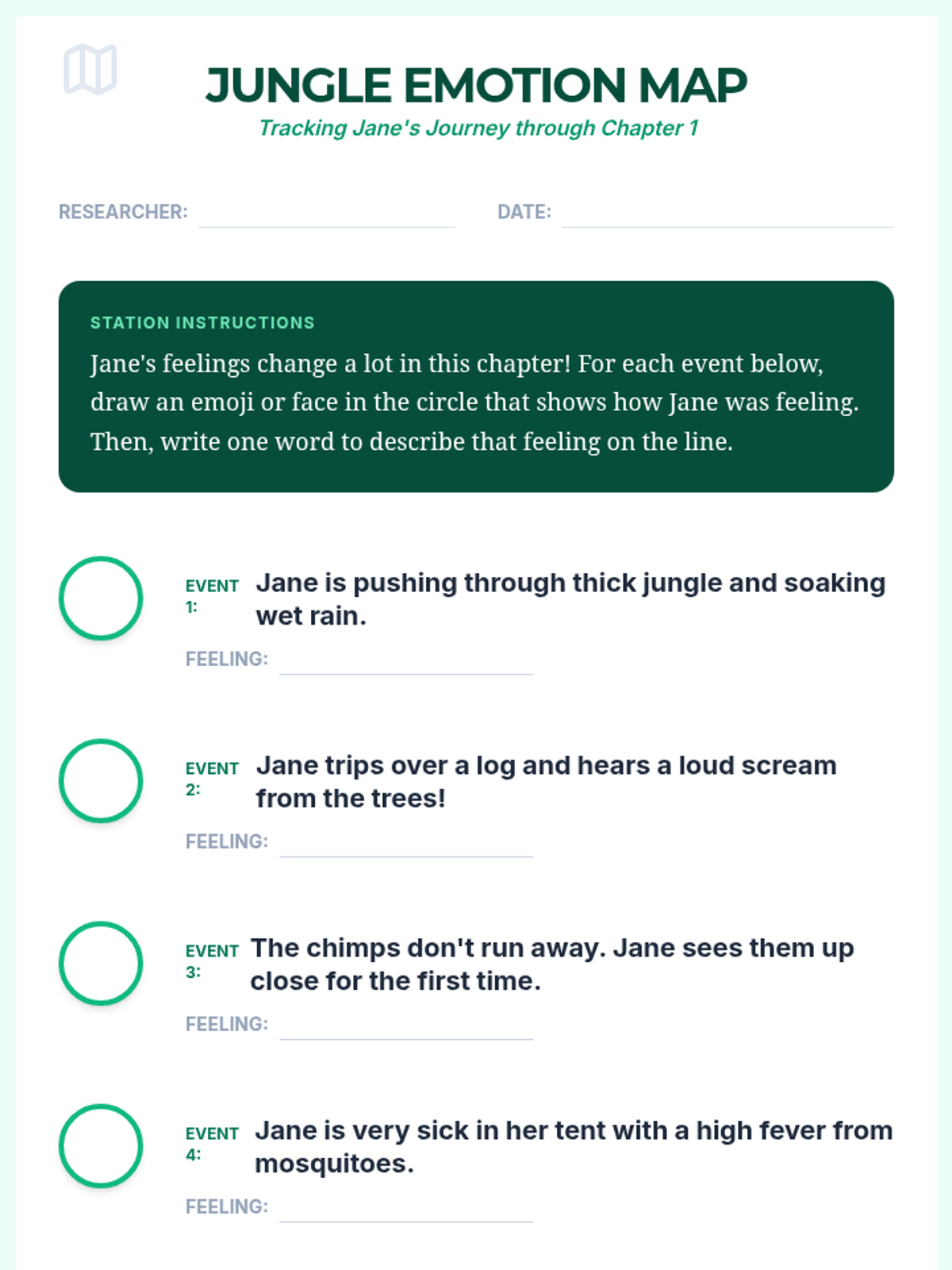
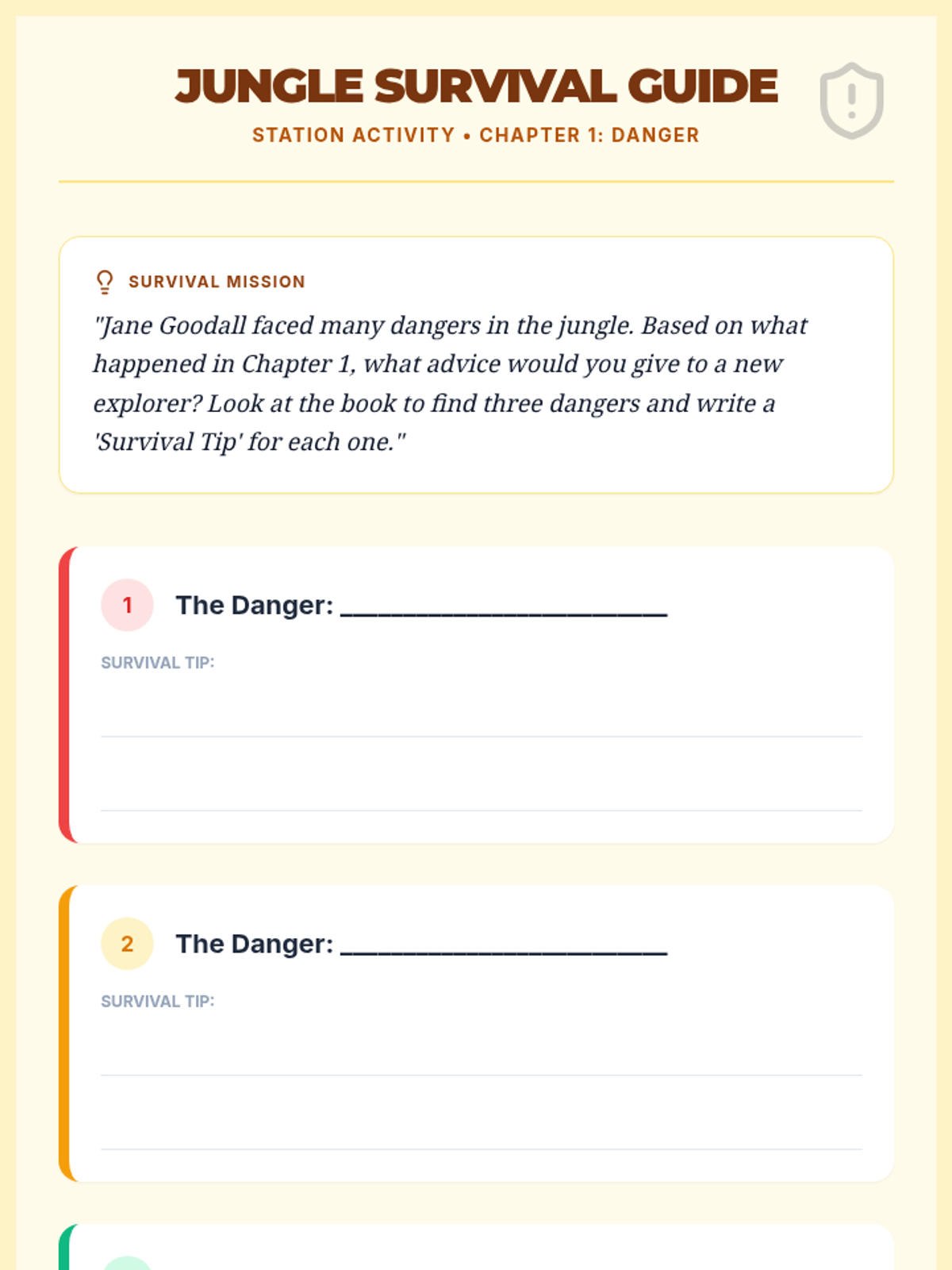
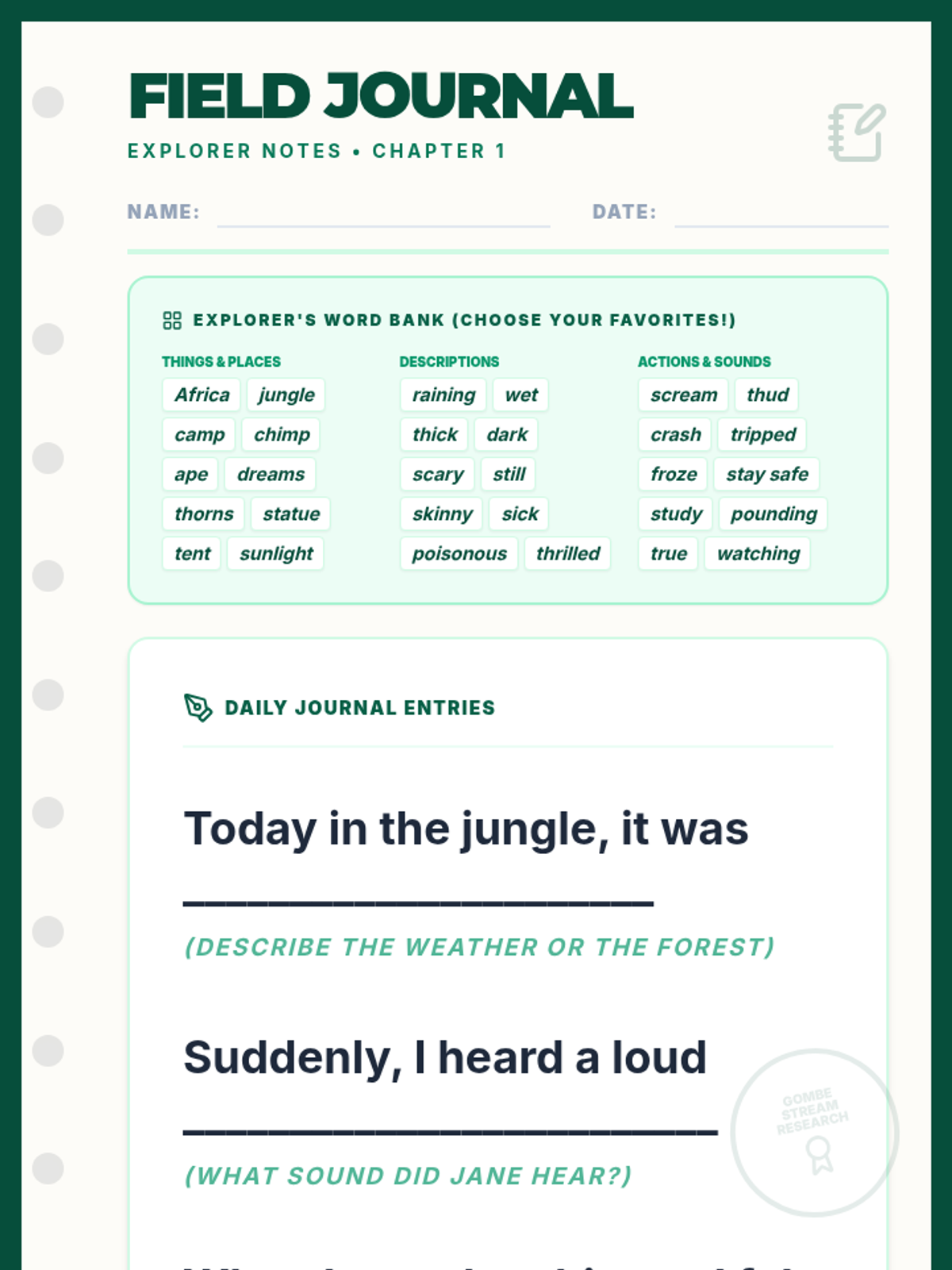
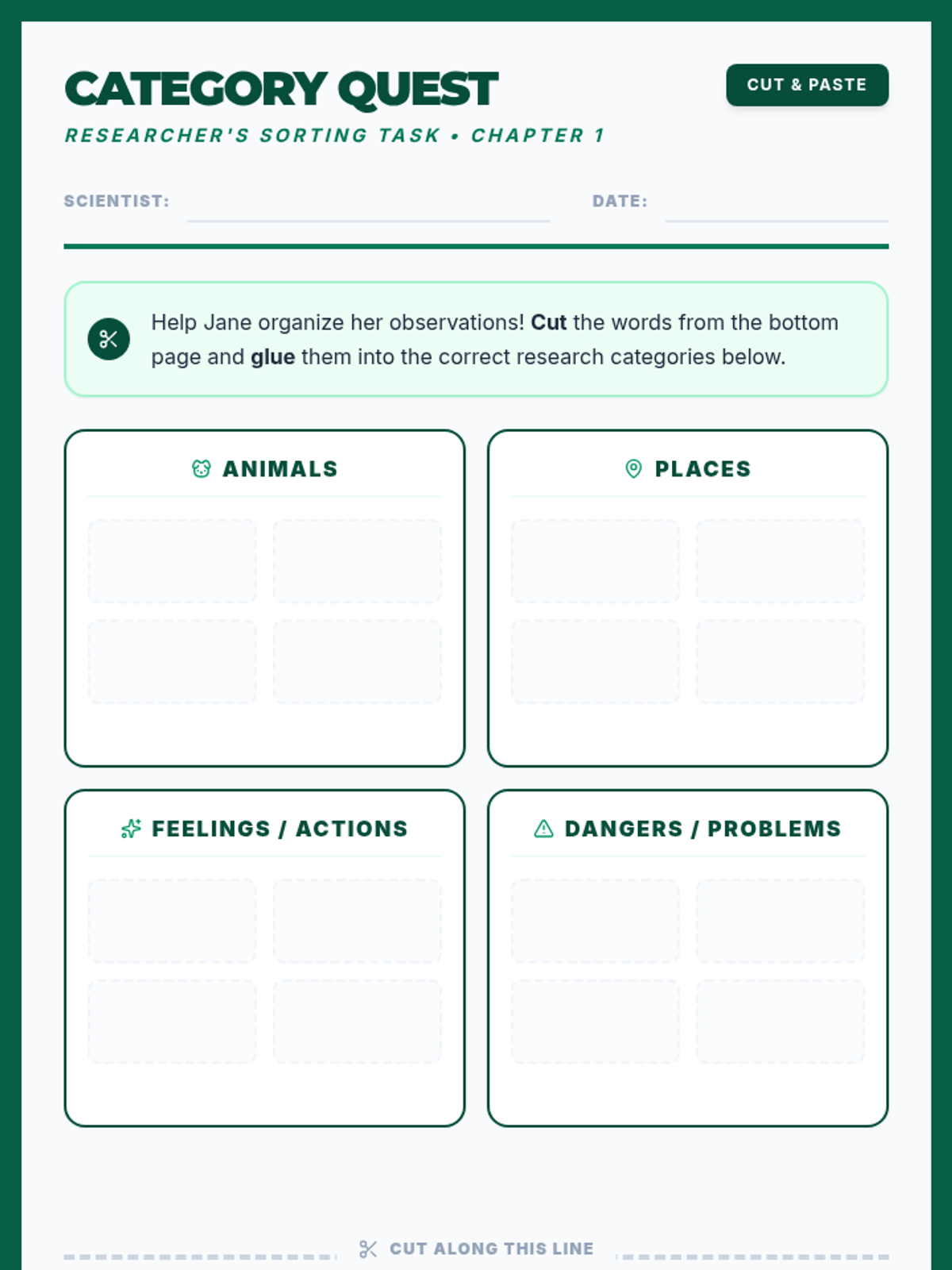
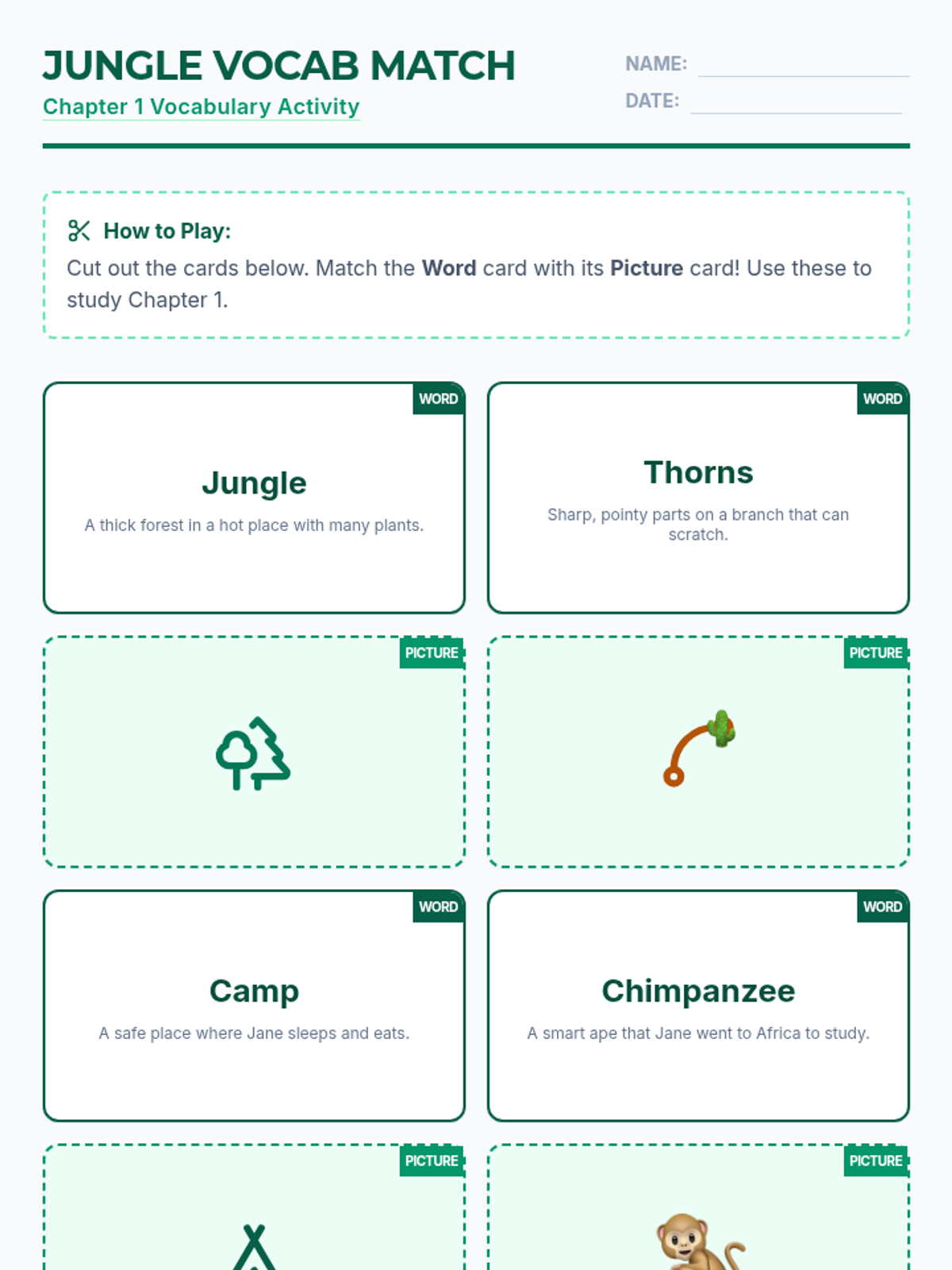
A comprehensive lesson covering Chapter 1 of 'Jane Goodall and the Chimpanzees of Gombe,' focusing on reading comprehension across three distinct ability levels and specialized vocabulary development using picture-matching activities.
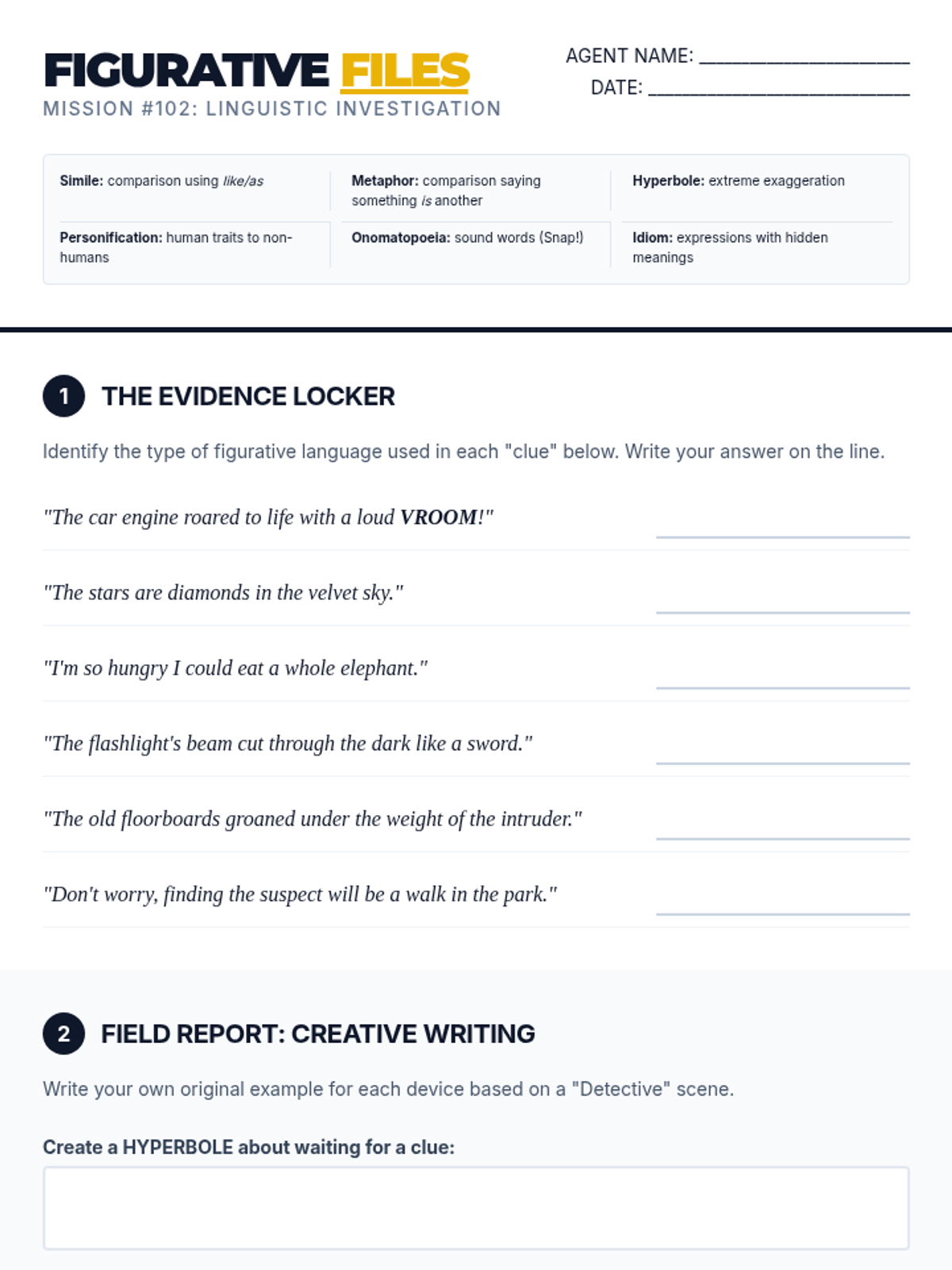
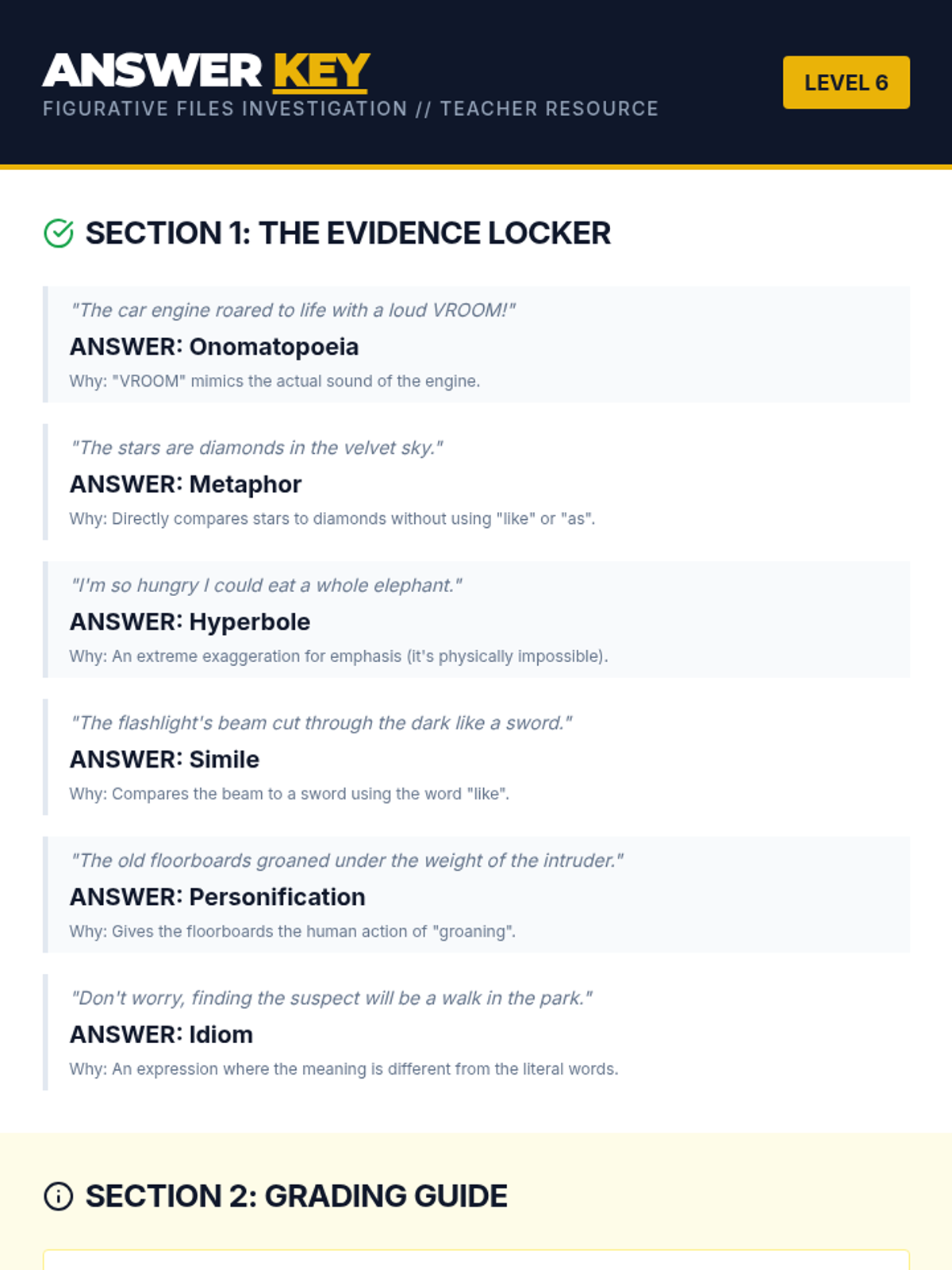
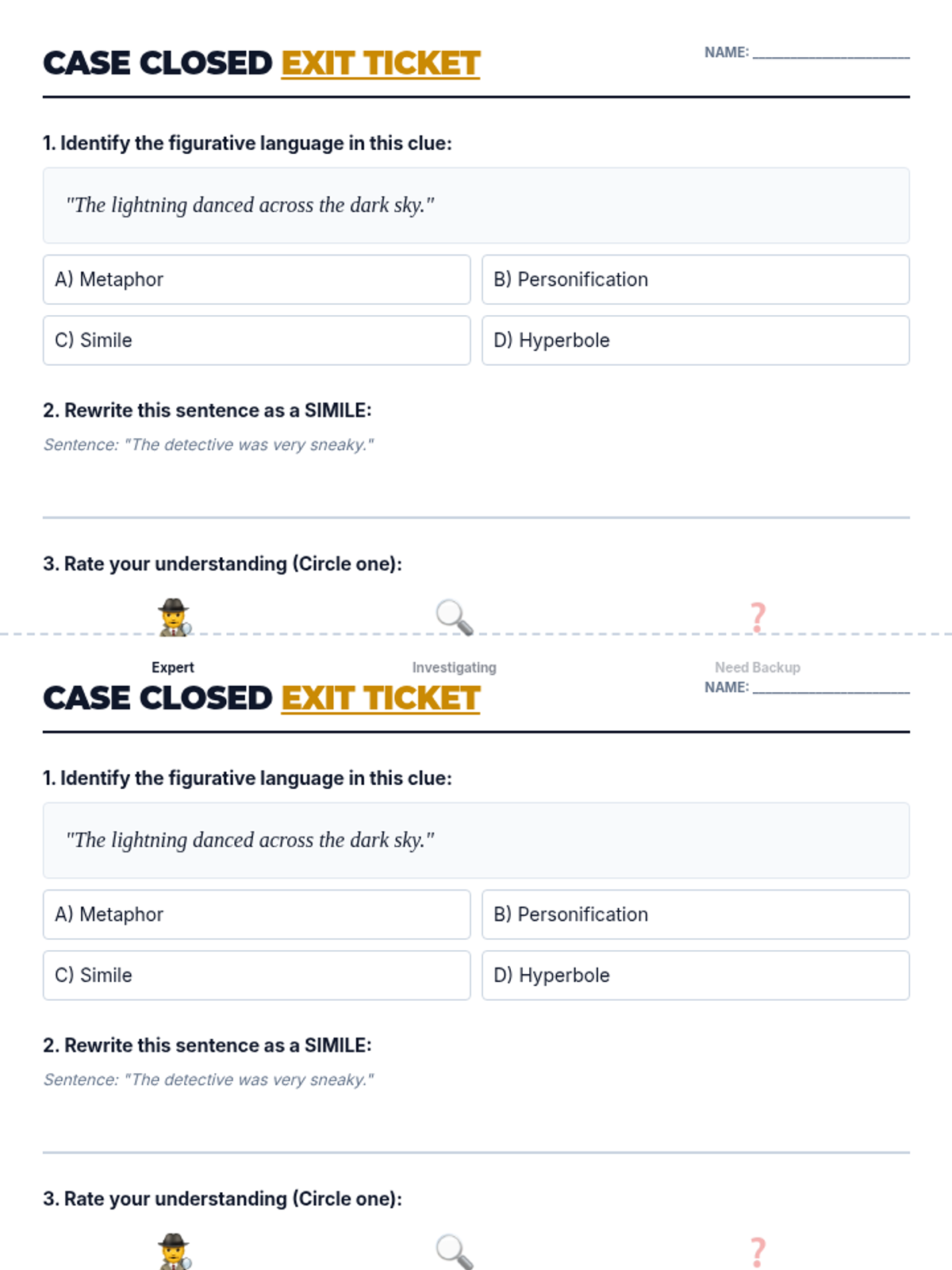
A 30-minute introductory lesson on figurative language where students become 'language detectives' to identify and create similes, metaphors, and more.
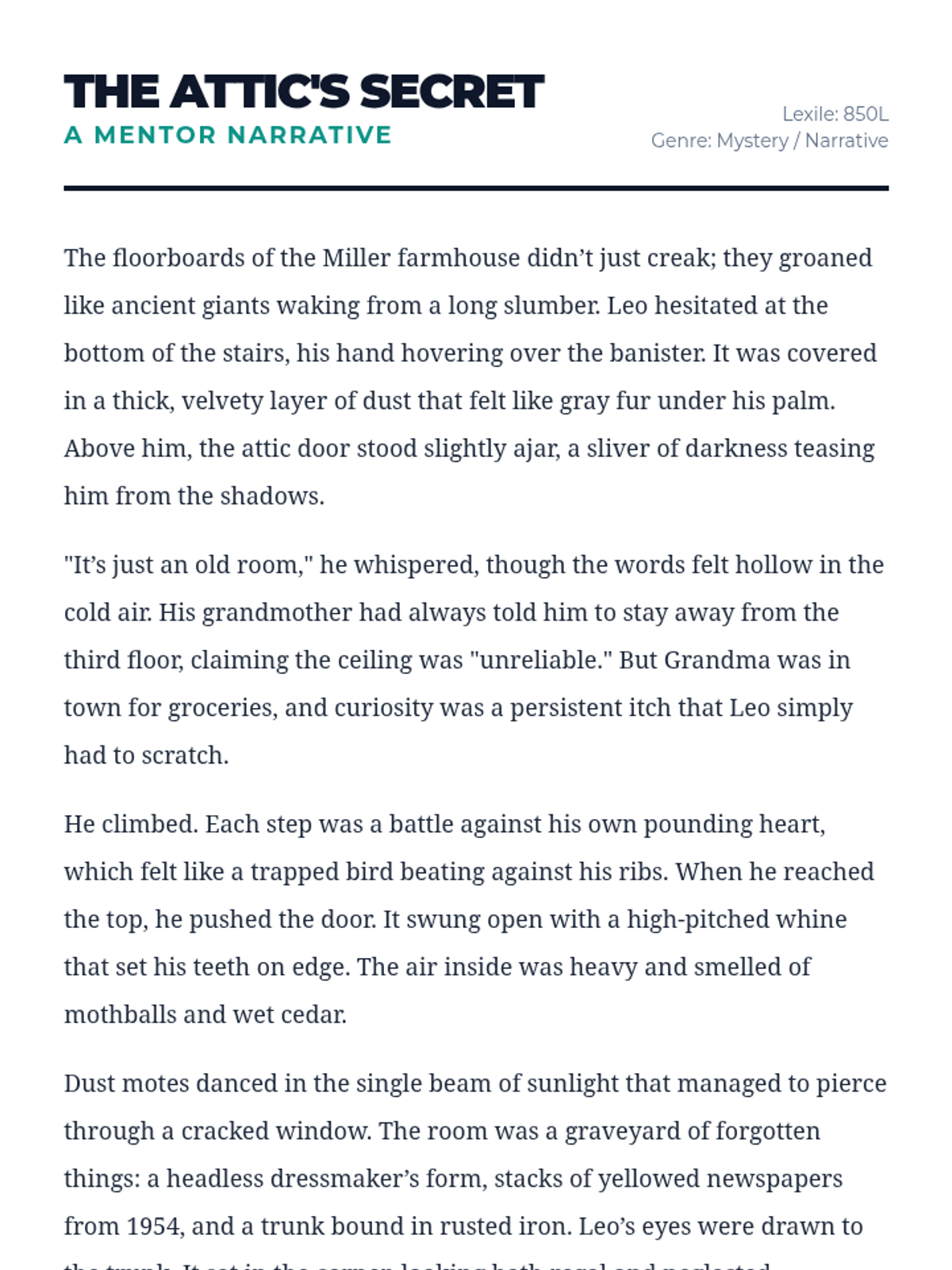
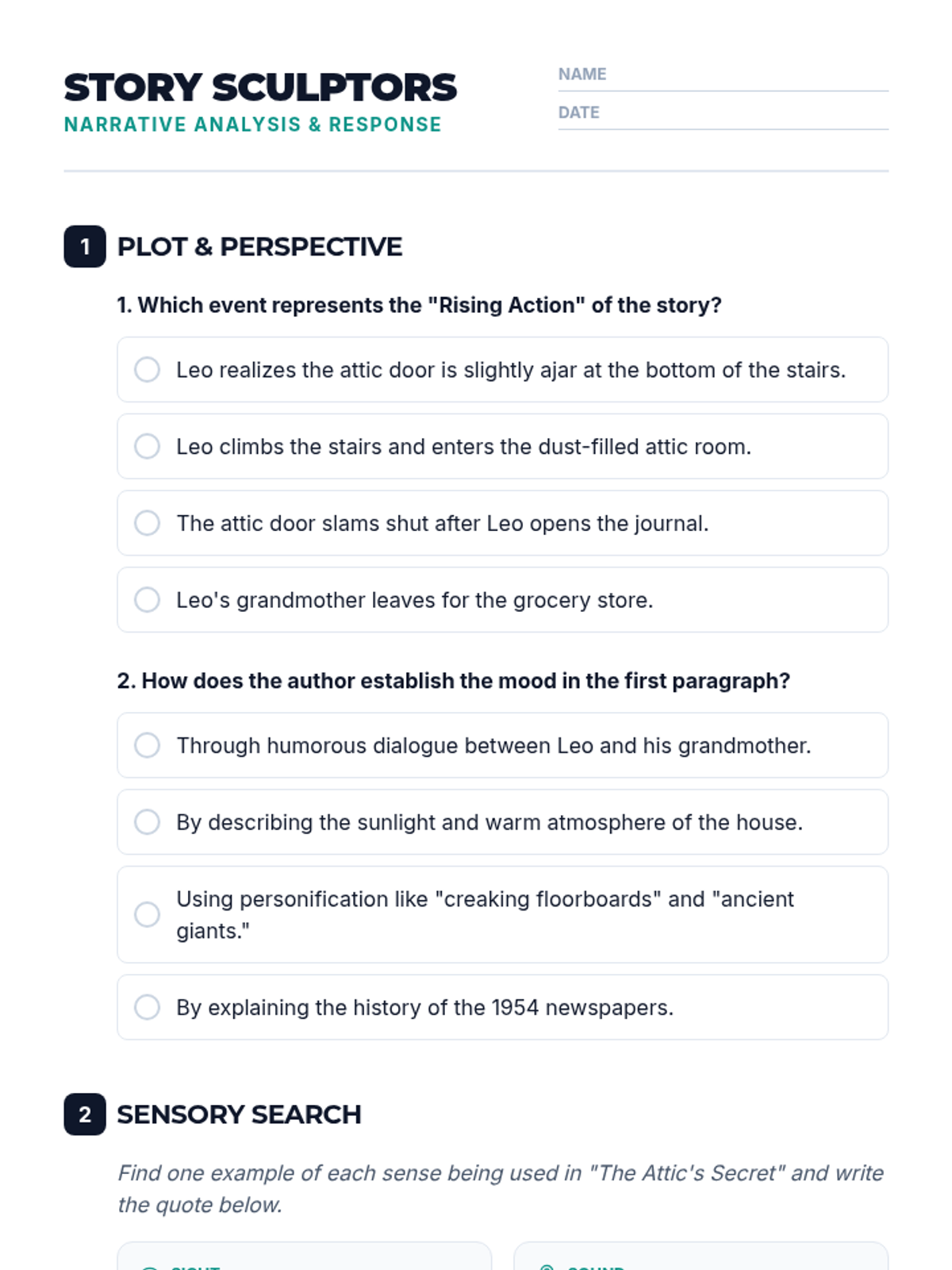
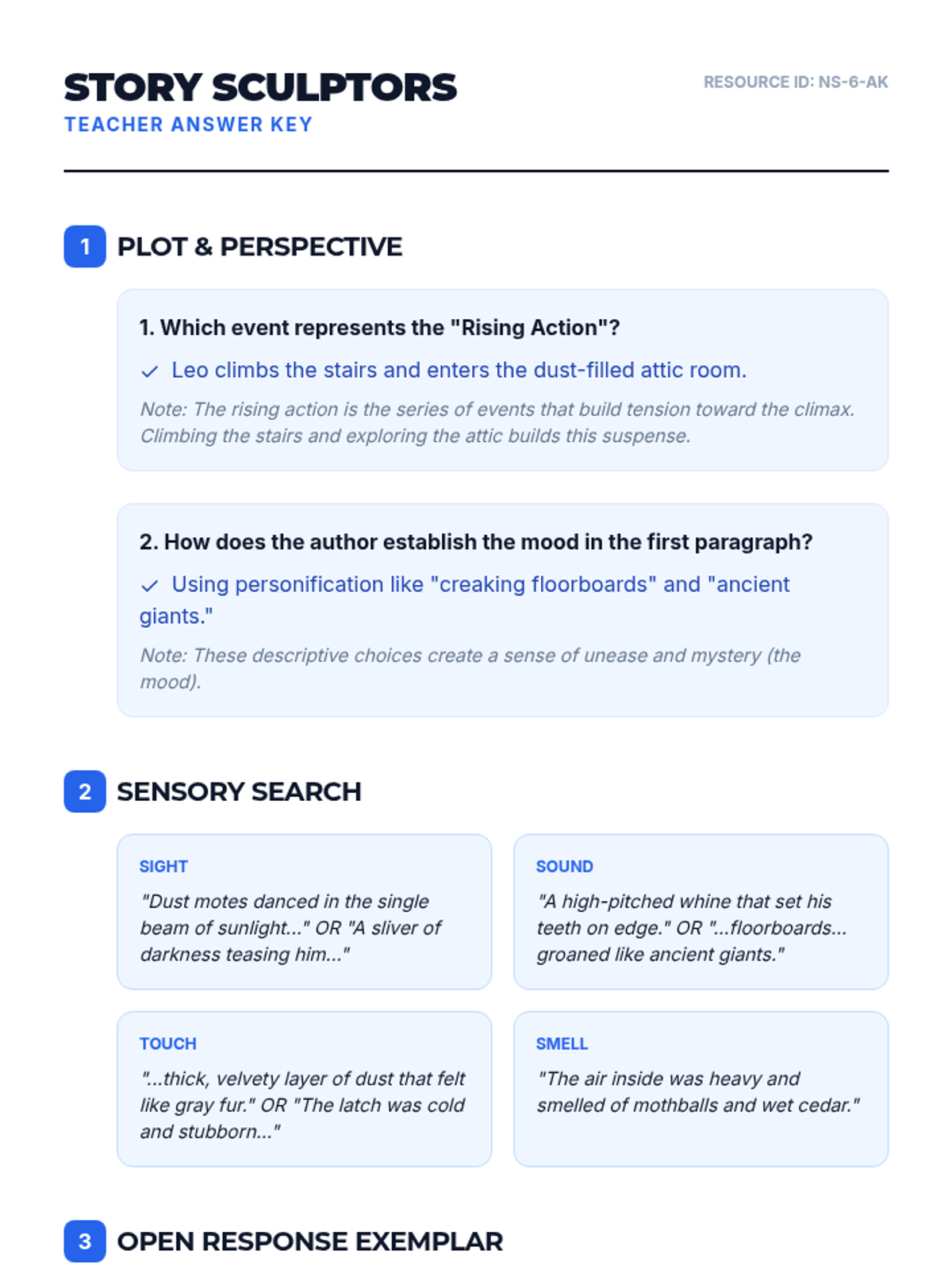
Students explore the foundational elements of narrative writing through close reading and analysis of a mentor text, focusing on character motivation and sensory descriptions.
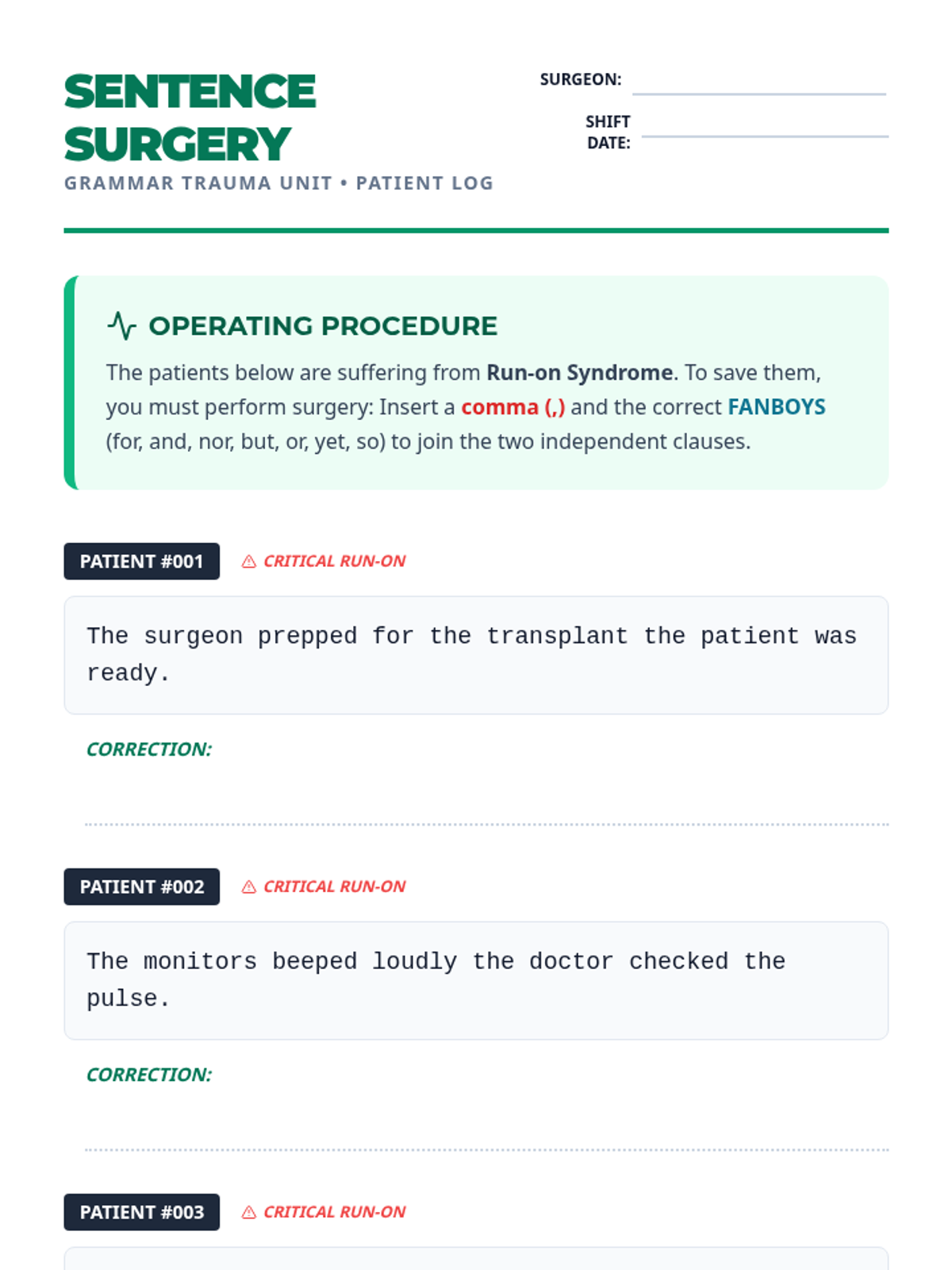
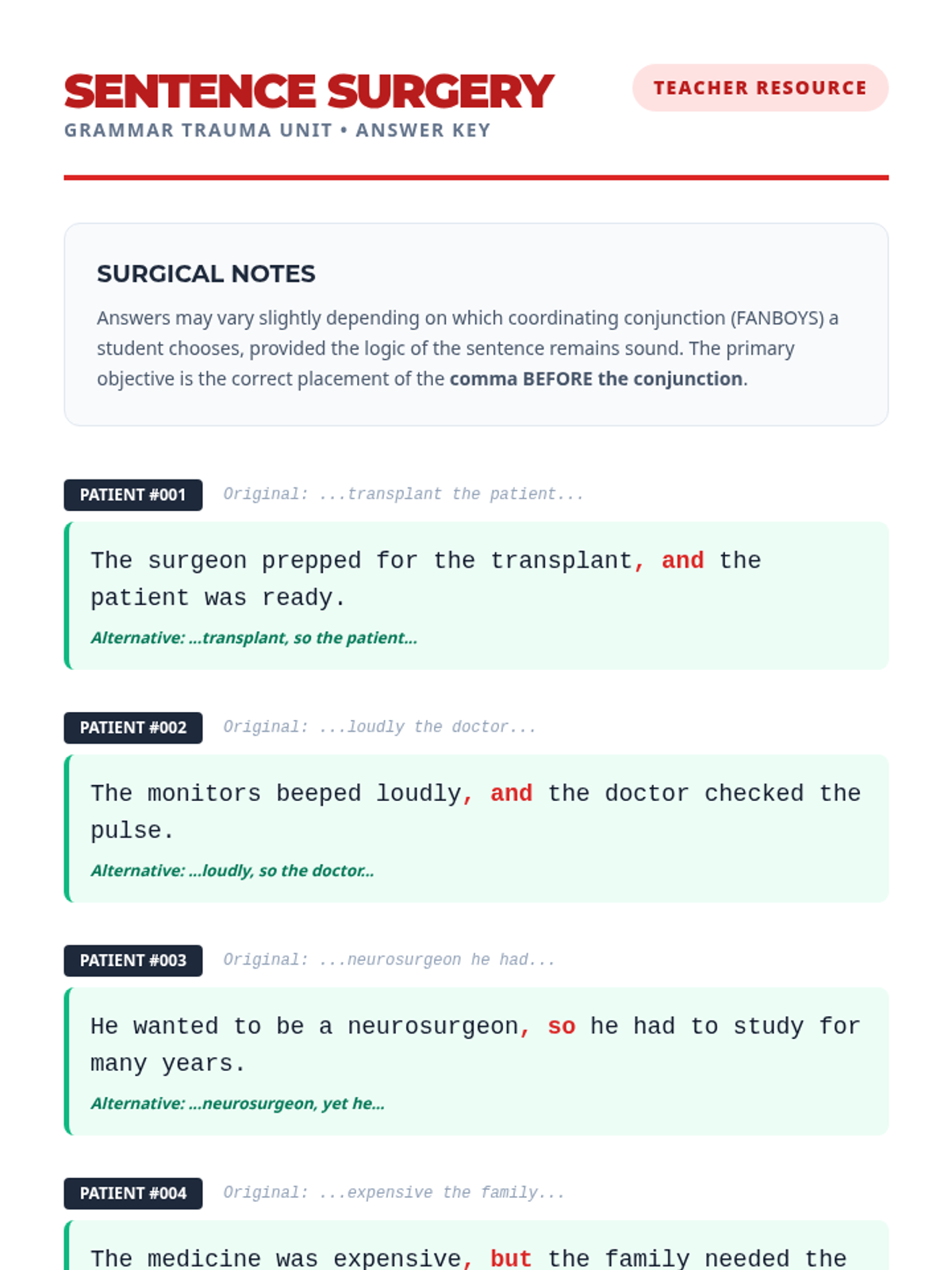
A quick, high-impact grammar warm-up focused on using commas and coordinating conjunctions (FANBOYS) to join independent clauses correctly. Students act as 'Sentence Surgeons' to repair broken compound sentences.
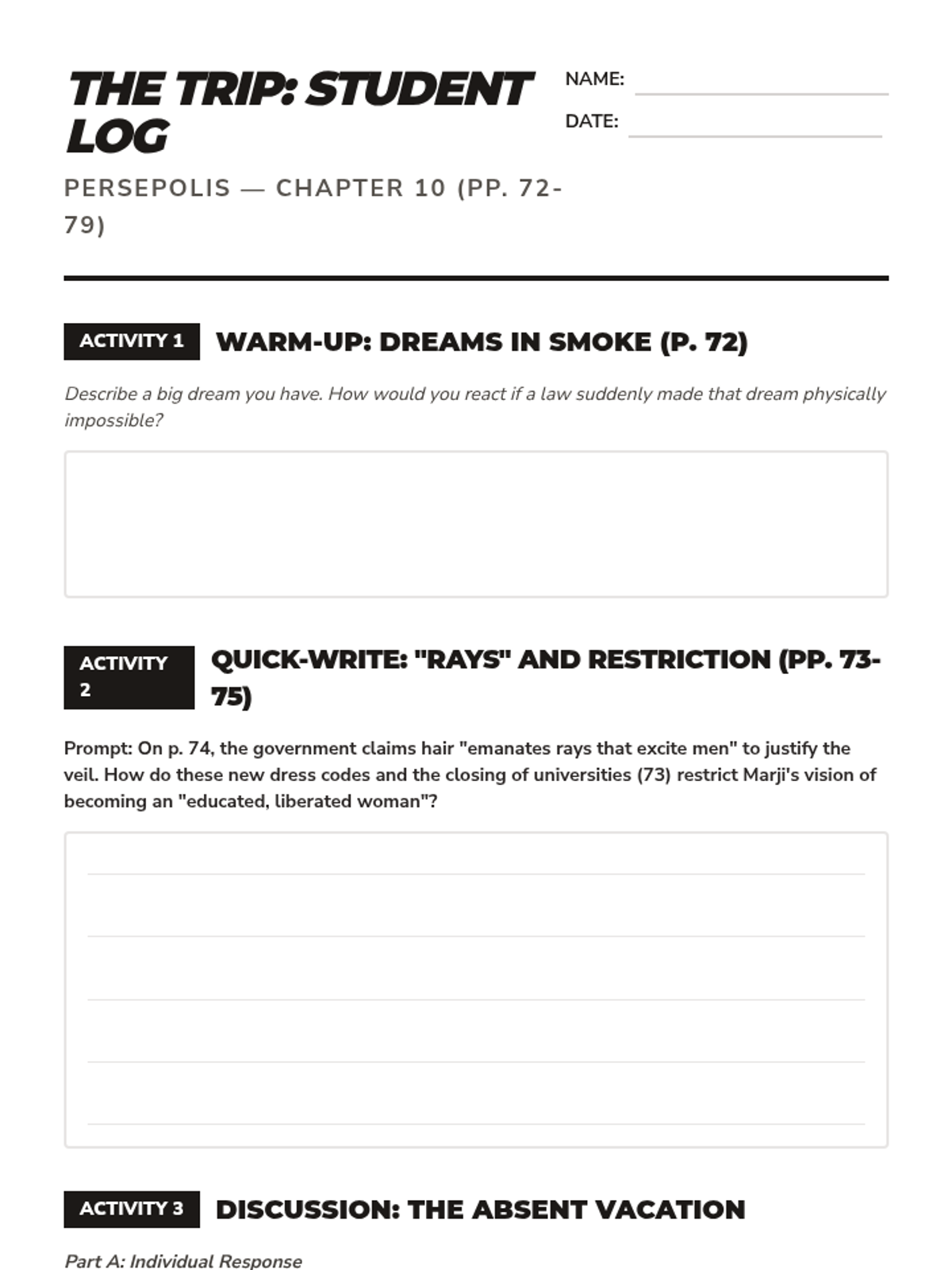
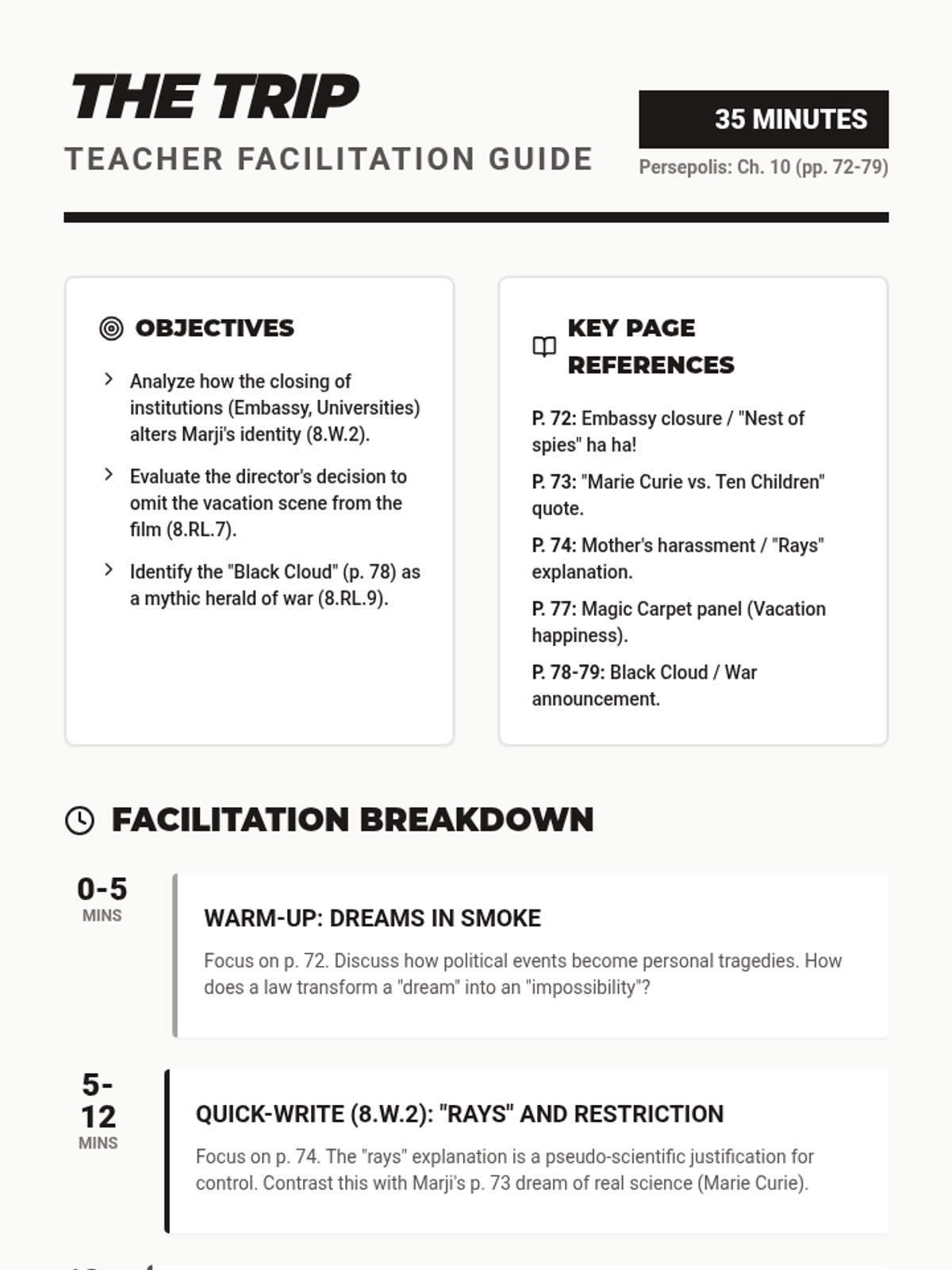
A lesson focusing on Chapter 10 of Persepolis ('The Trip'), examining themes of freedom and restriction through comparative analysis of text and film, informative writing, and mythological patterns.
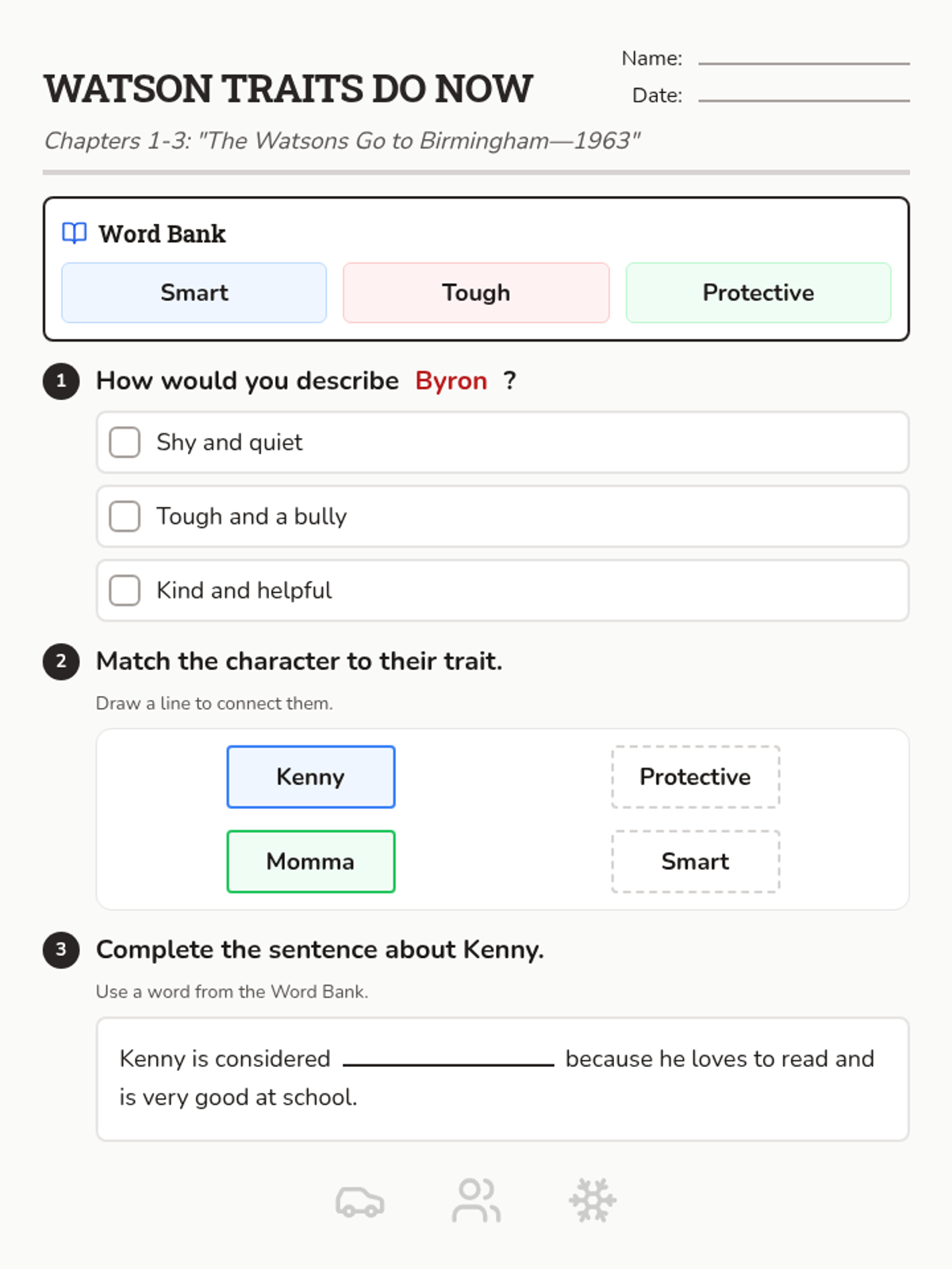
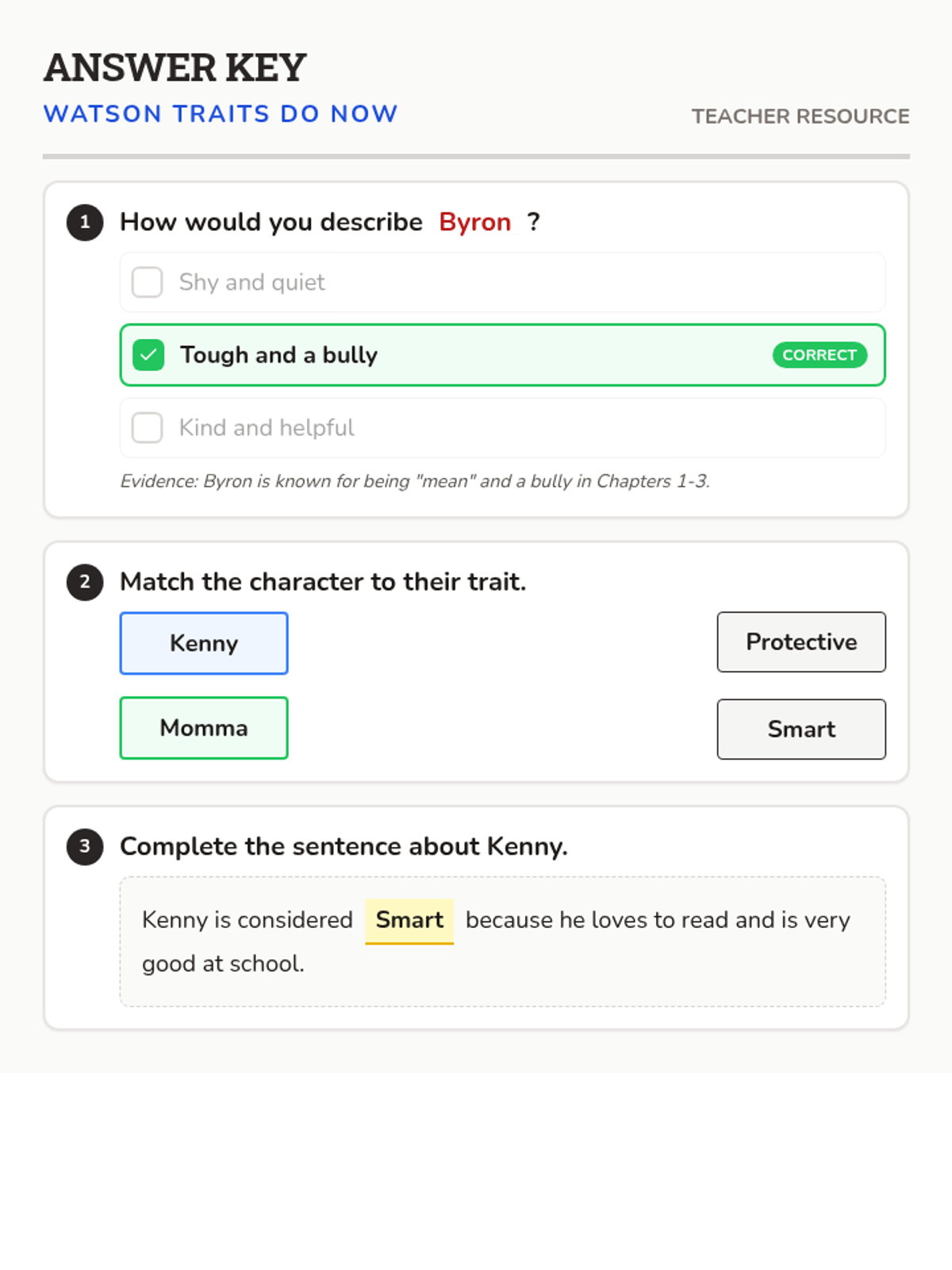
This lesson focuses on identifying and analyzing the character traits of the Watson family members in the early chapters of 'The Watsons Go to Birmingham—1963'. Students will use evidence from the text to describe Kenny, Byron, and Momma.
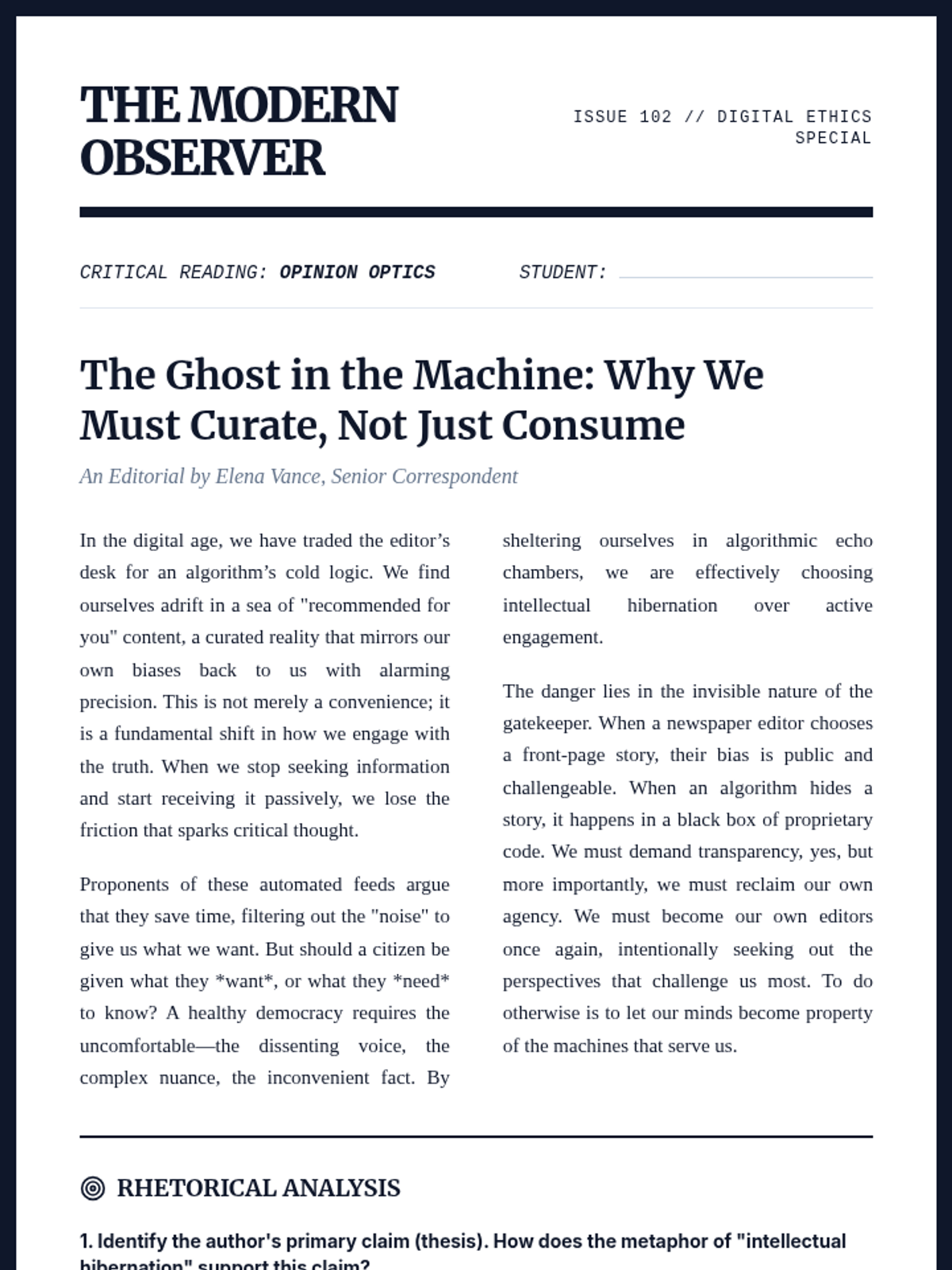
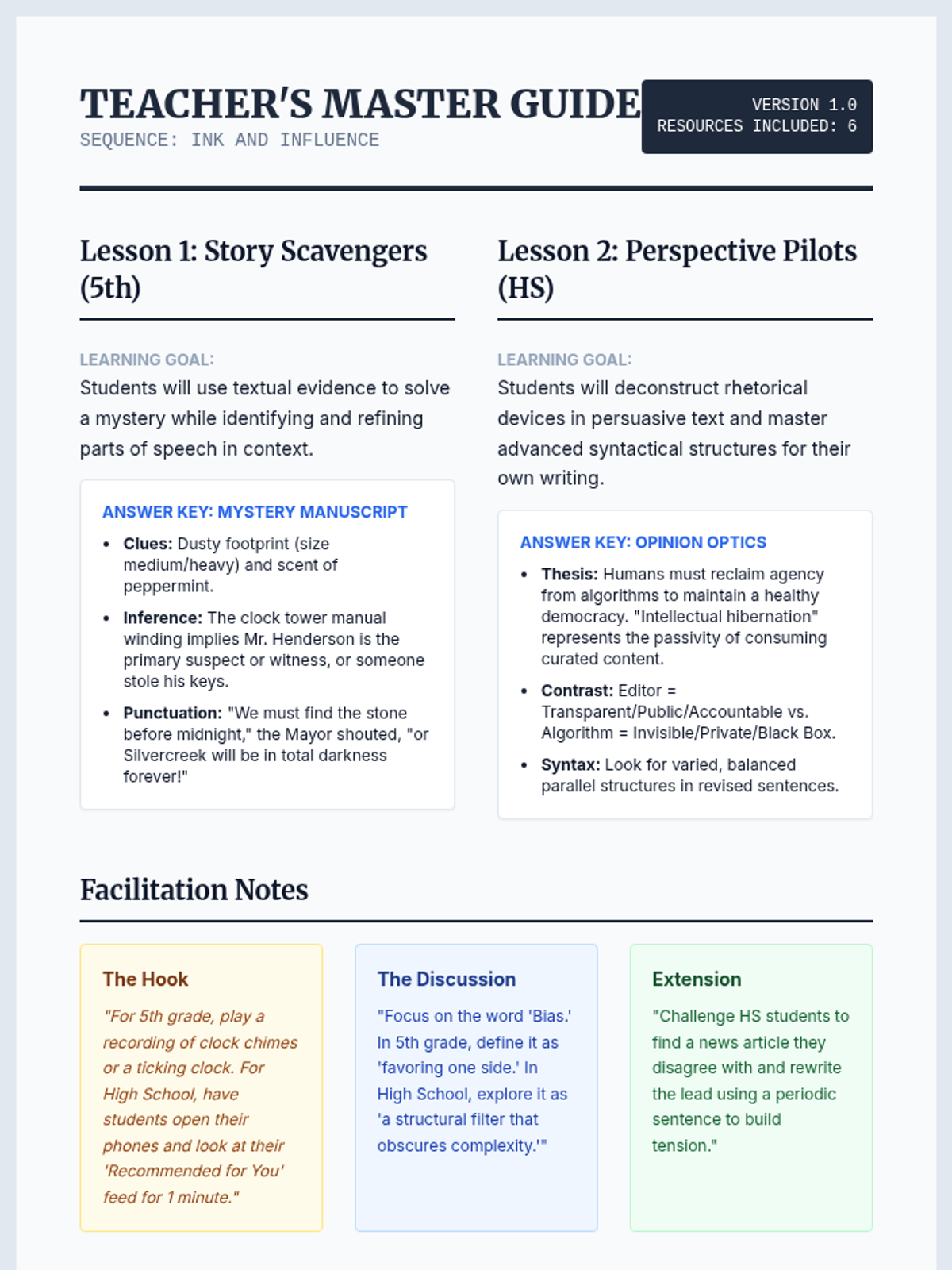
Dives into rhetorical analysis, advanced syntax, and persuasive writing through the lens of modern digital ethics. High school students analyze complex arguments and craft their own editorial pieces using sophisticated language structures.
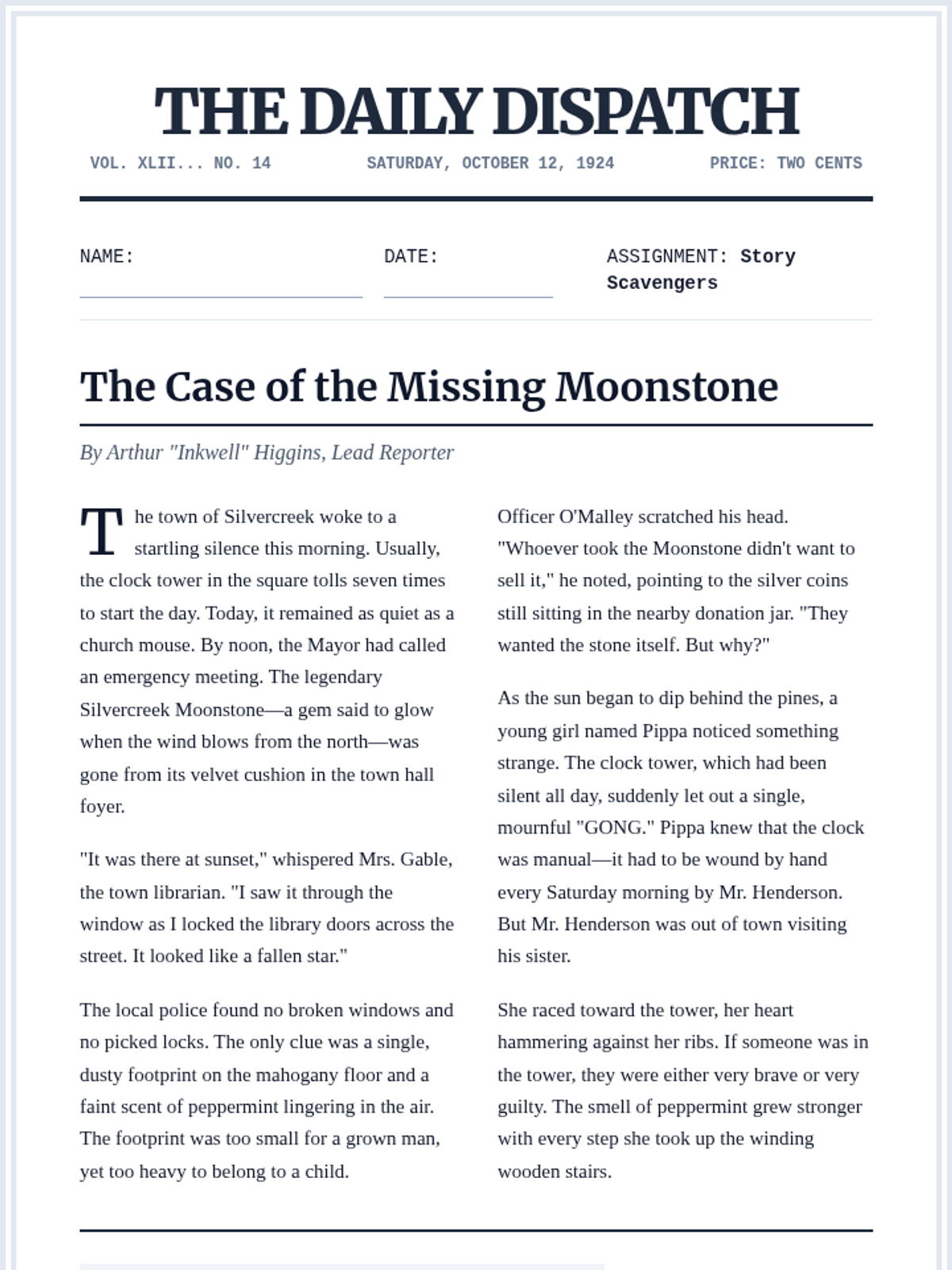
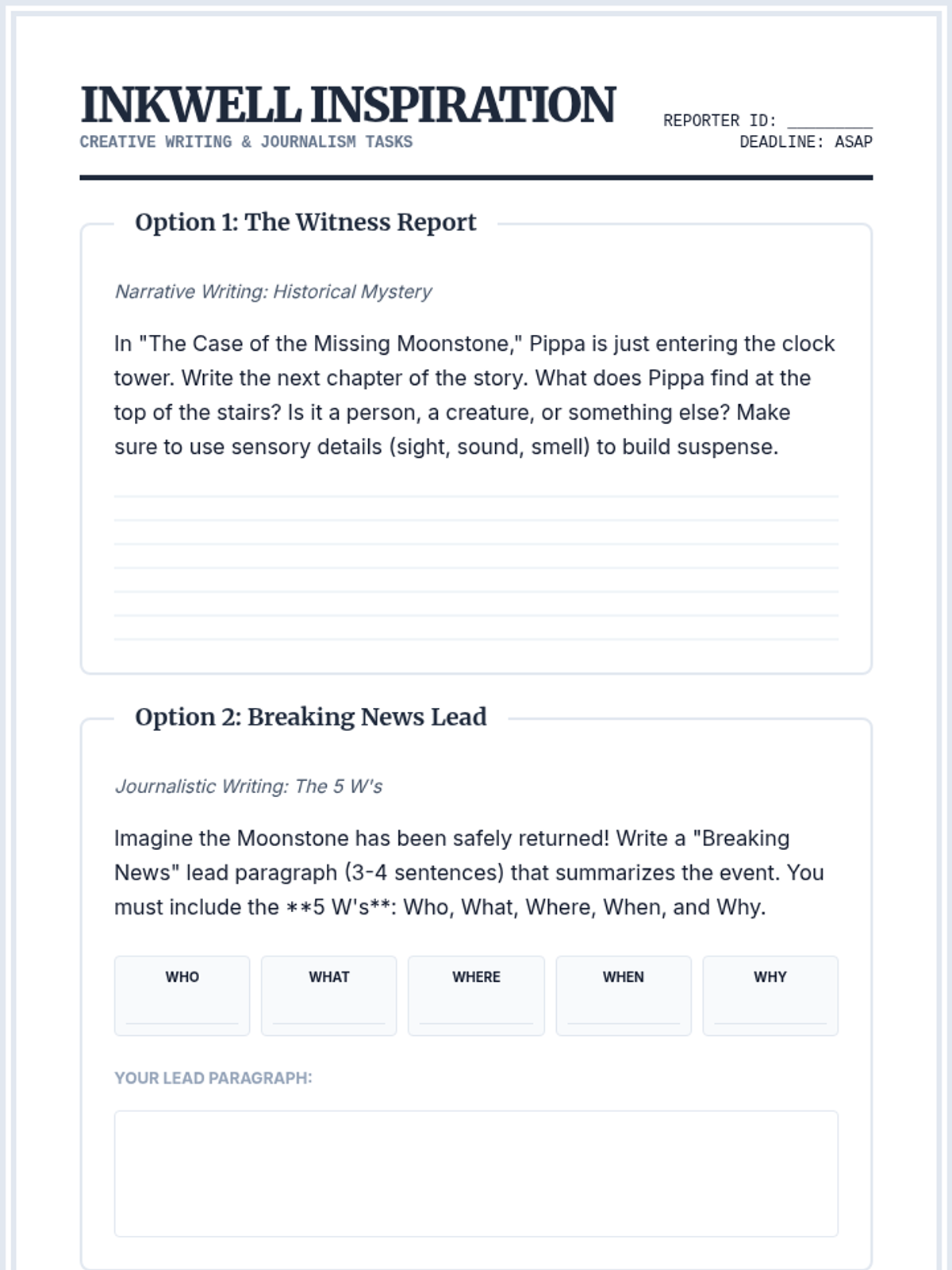
Focuses on identifying key details, parts of speech, and narrative structure through a 1920s mystery news story. Students act as cub reporters to decode a manuscript and practice foundational grammar within a storytelling context.