Students will learn to identify choppy writing and use coordinating conjunctions (FANBOYS) to create fluent compound sentences. The lesson culminates in a paragraph rewriting activity where students 'operate' on a text to improve its flow.
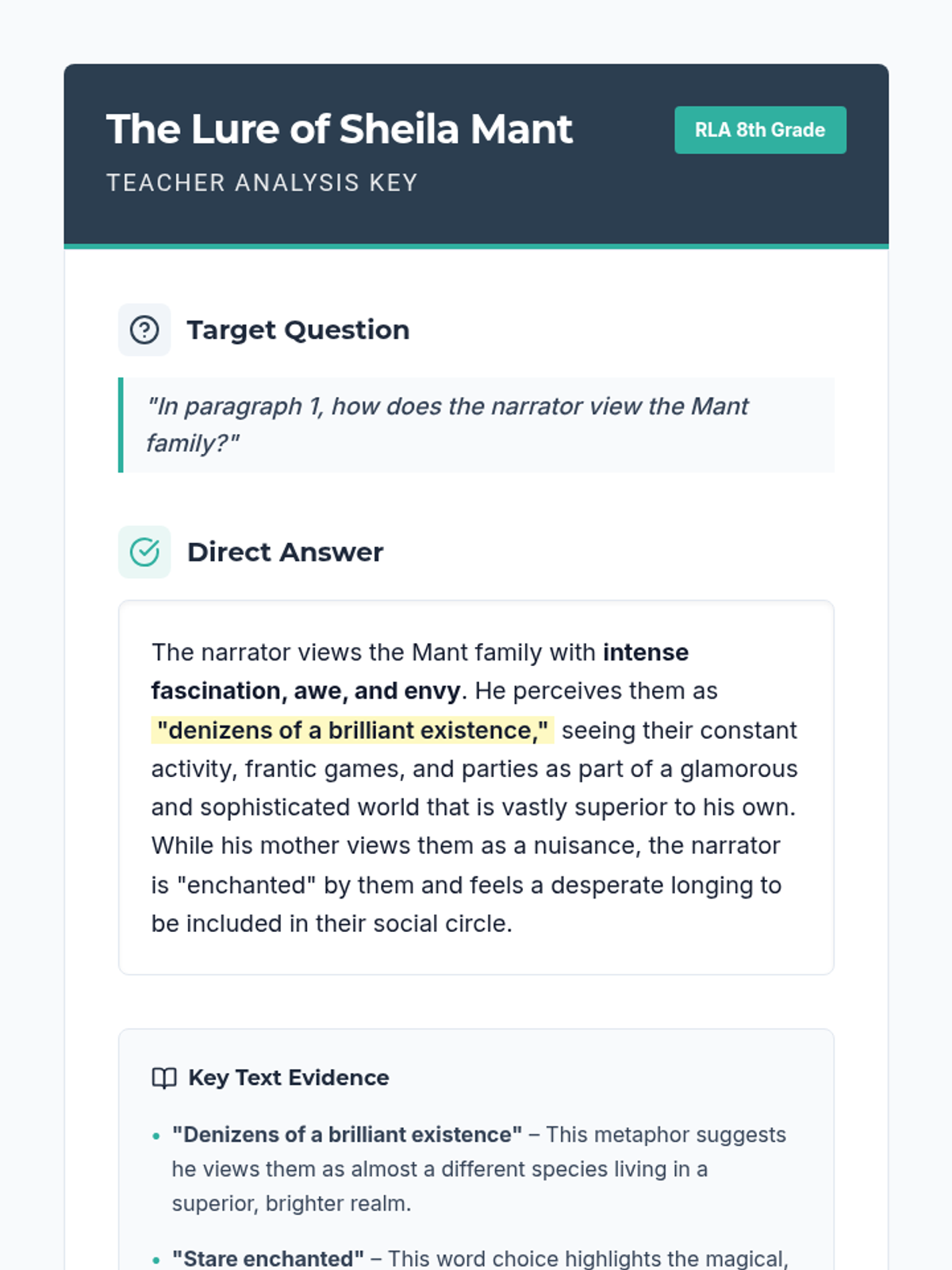
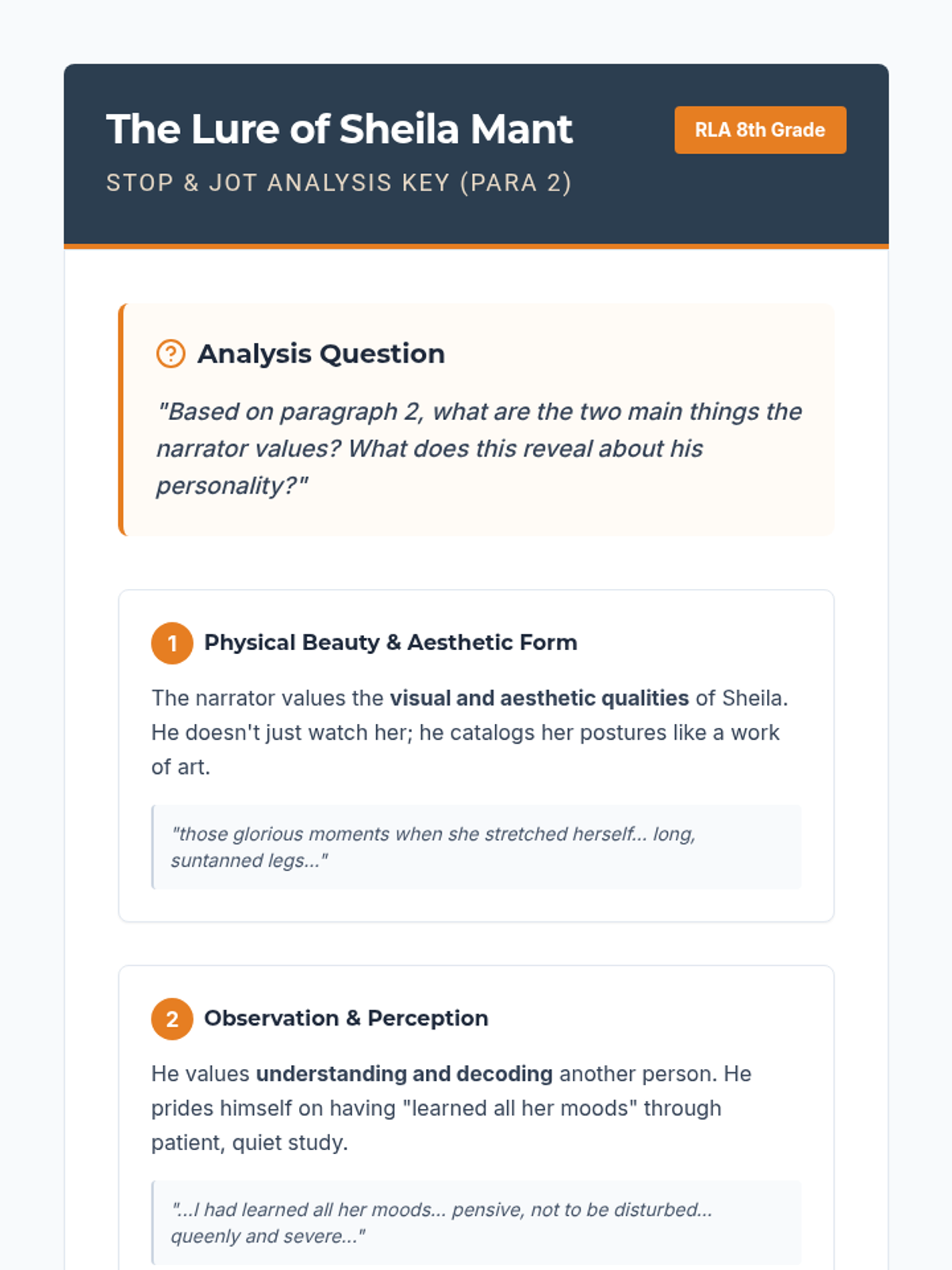
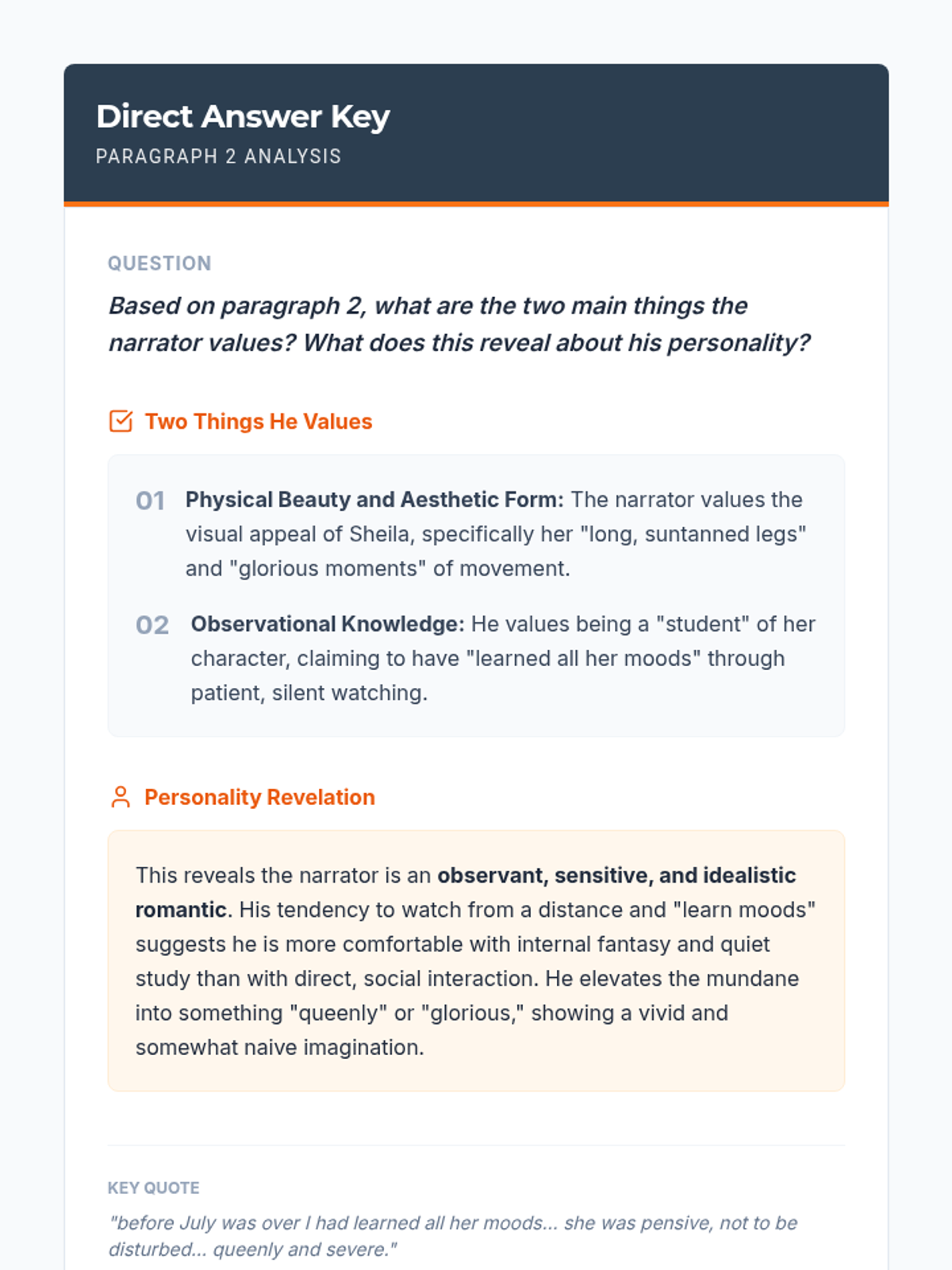
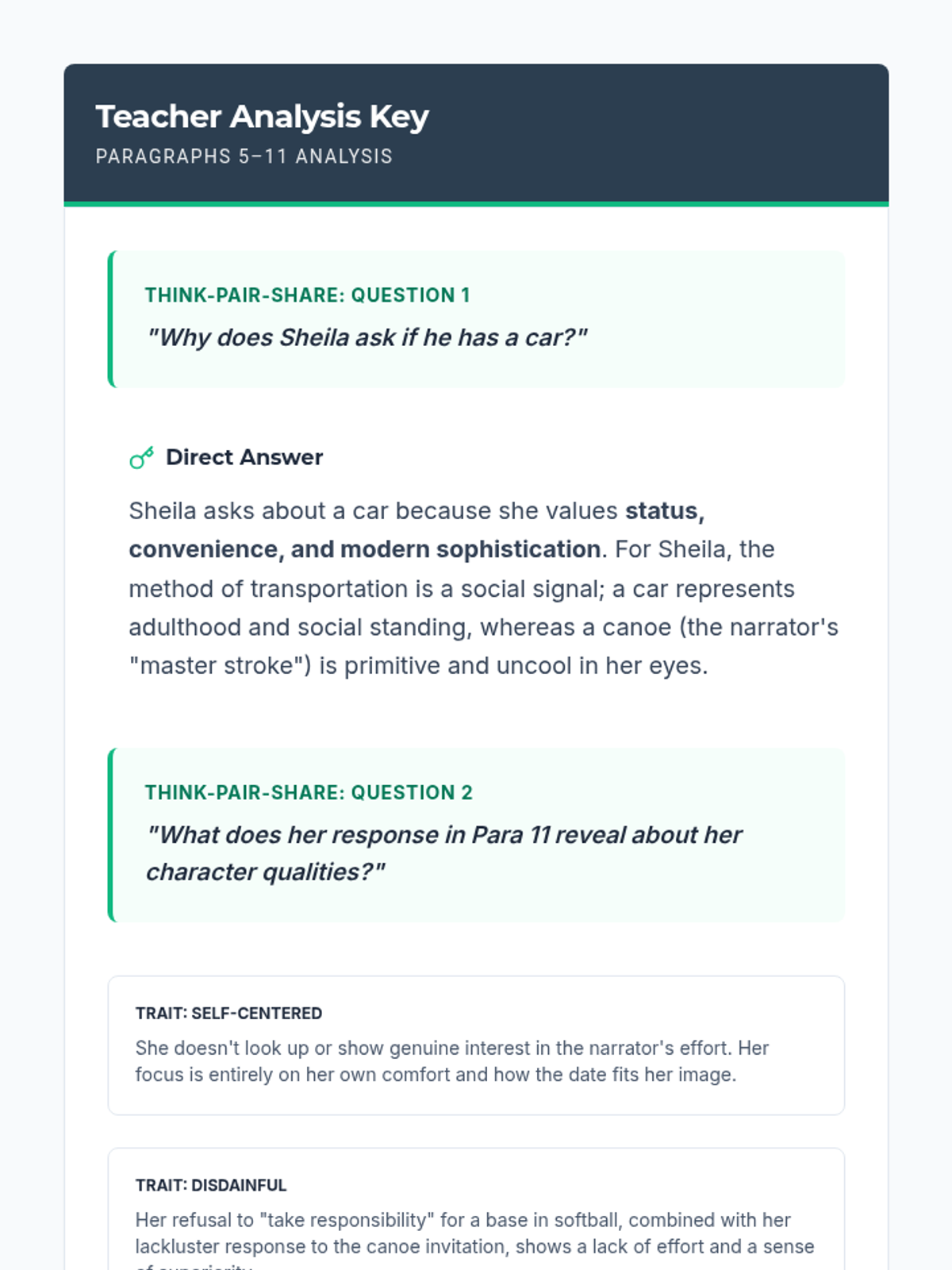
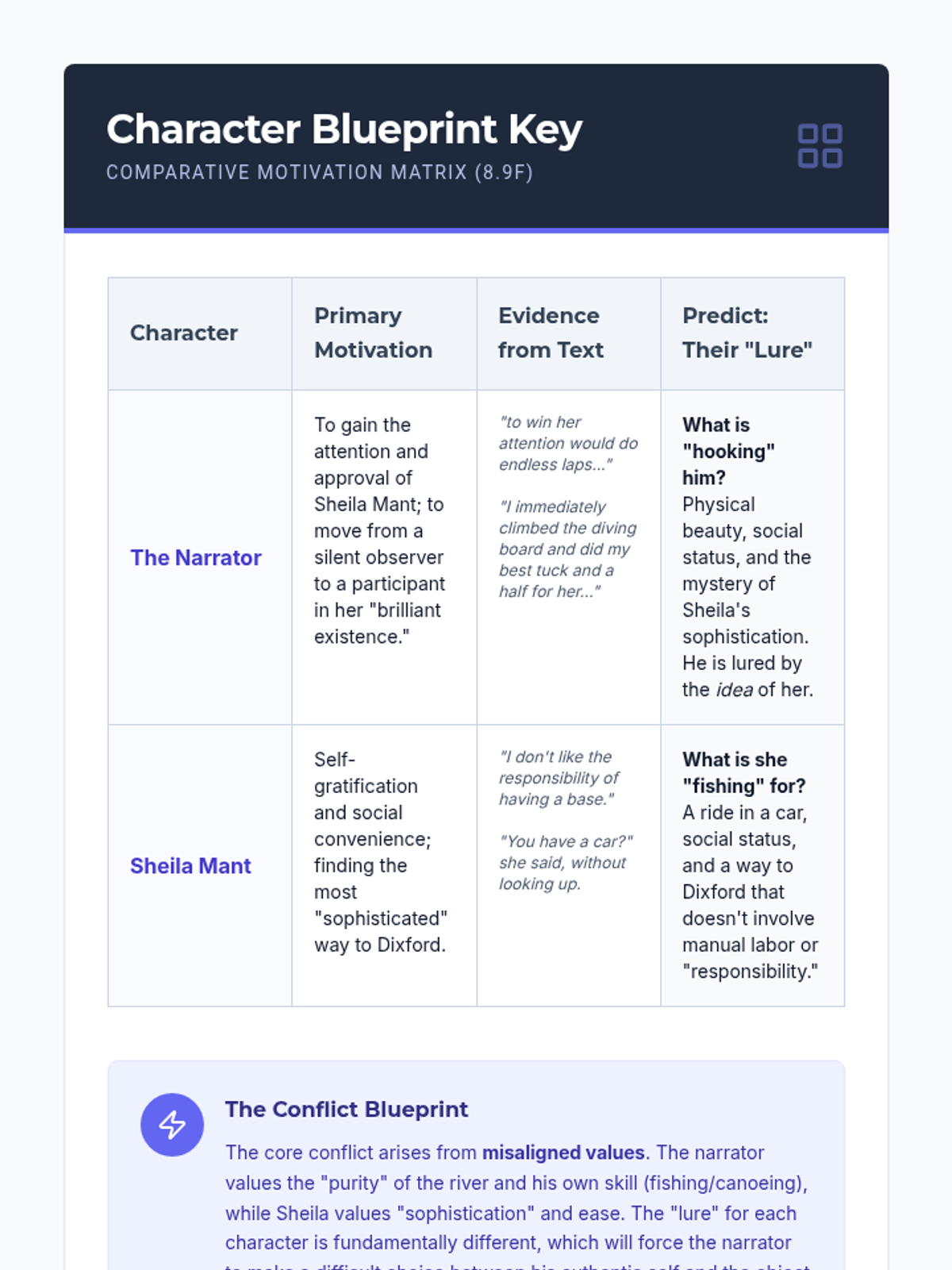
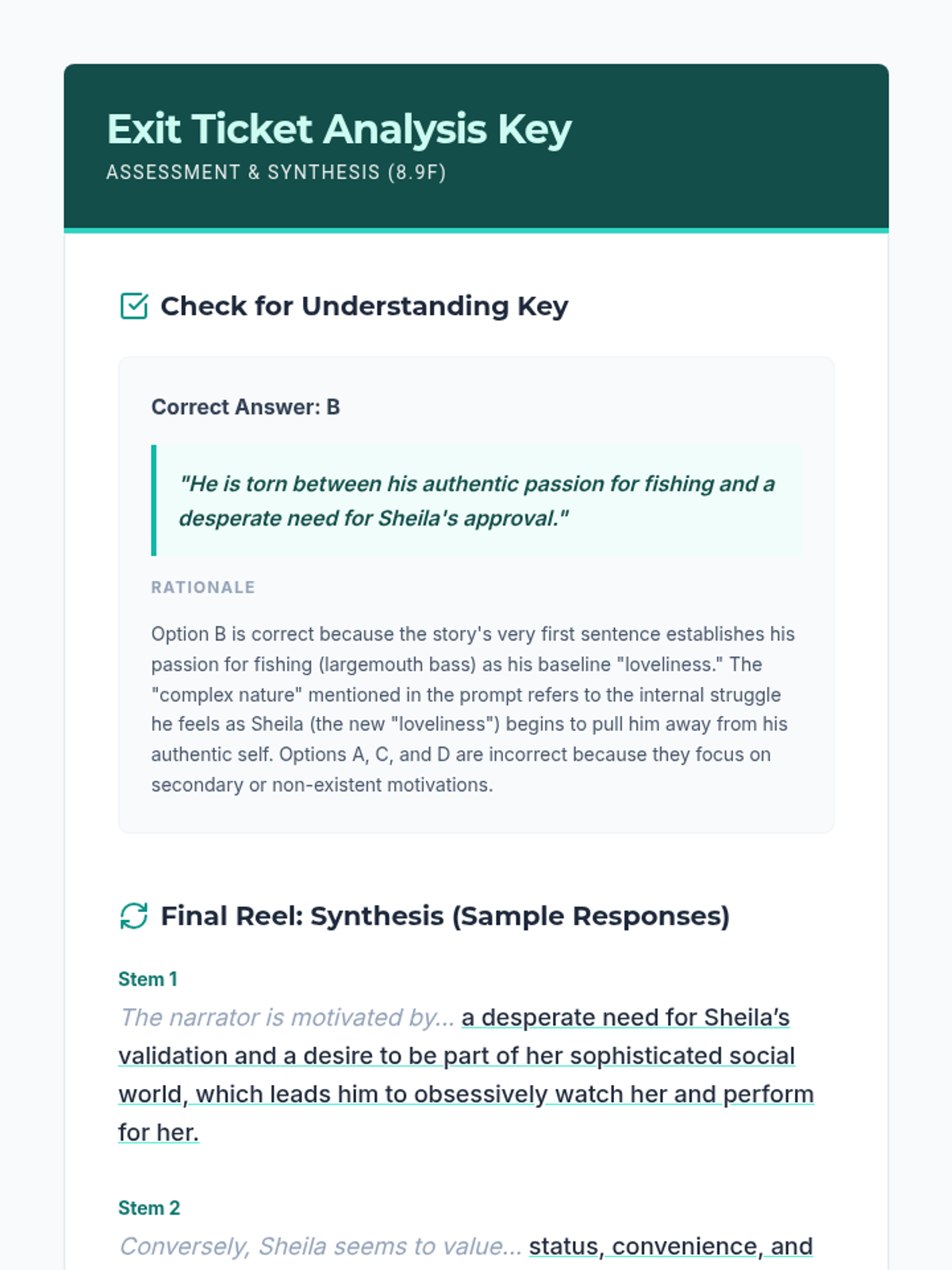
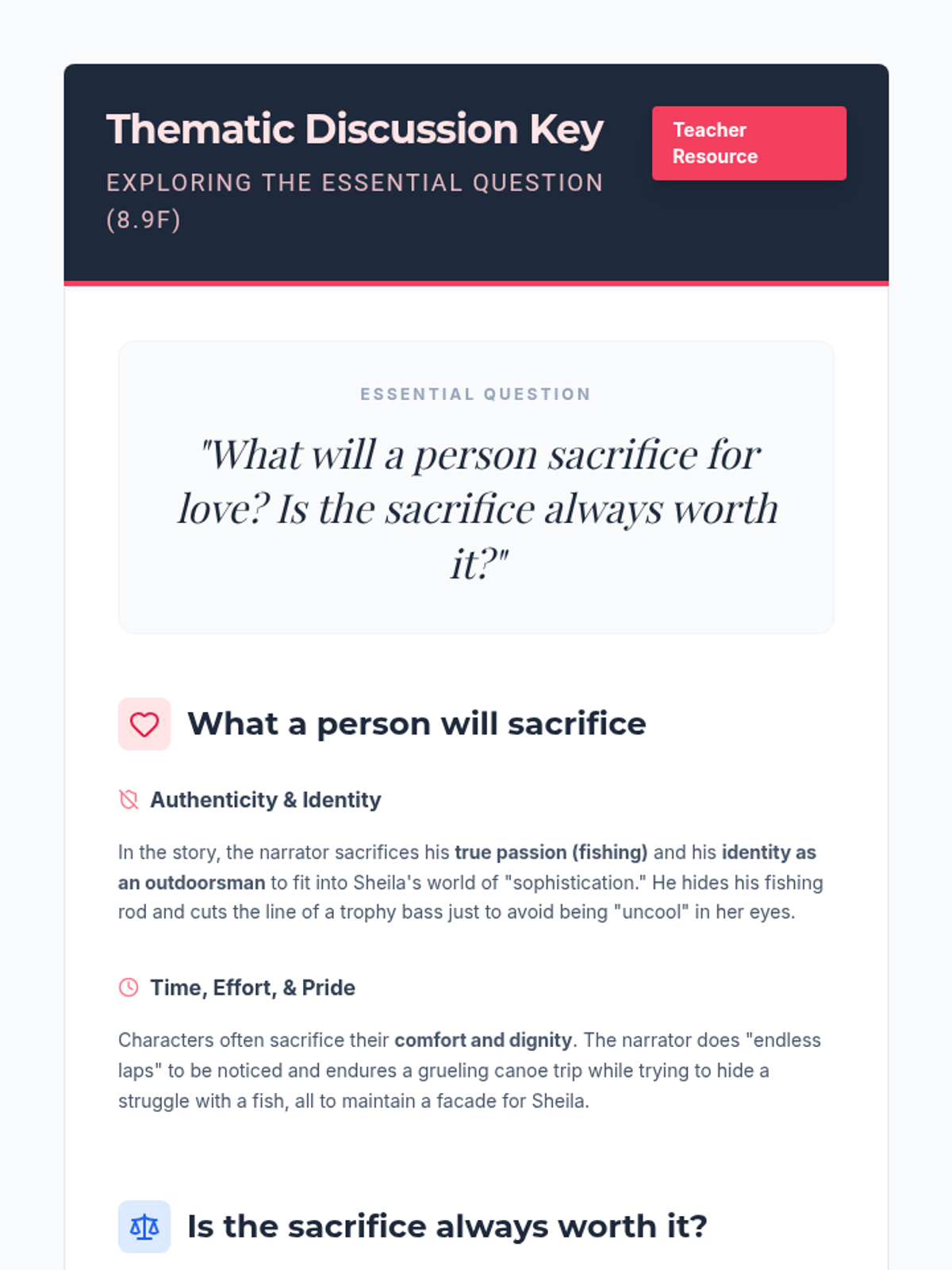
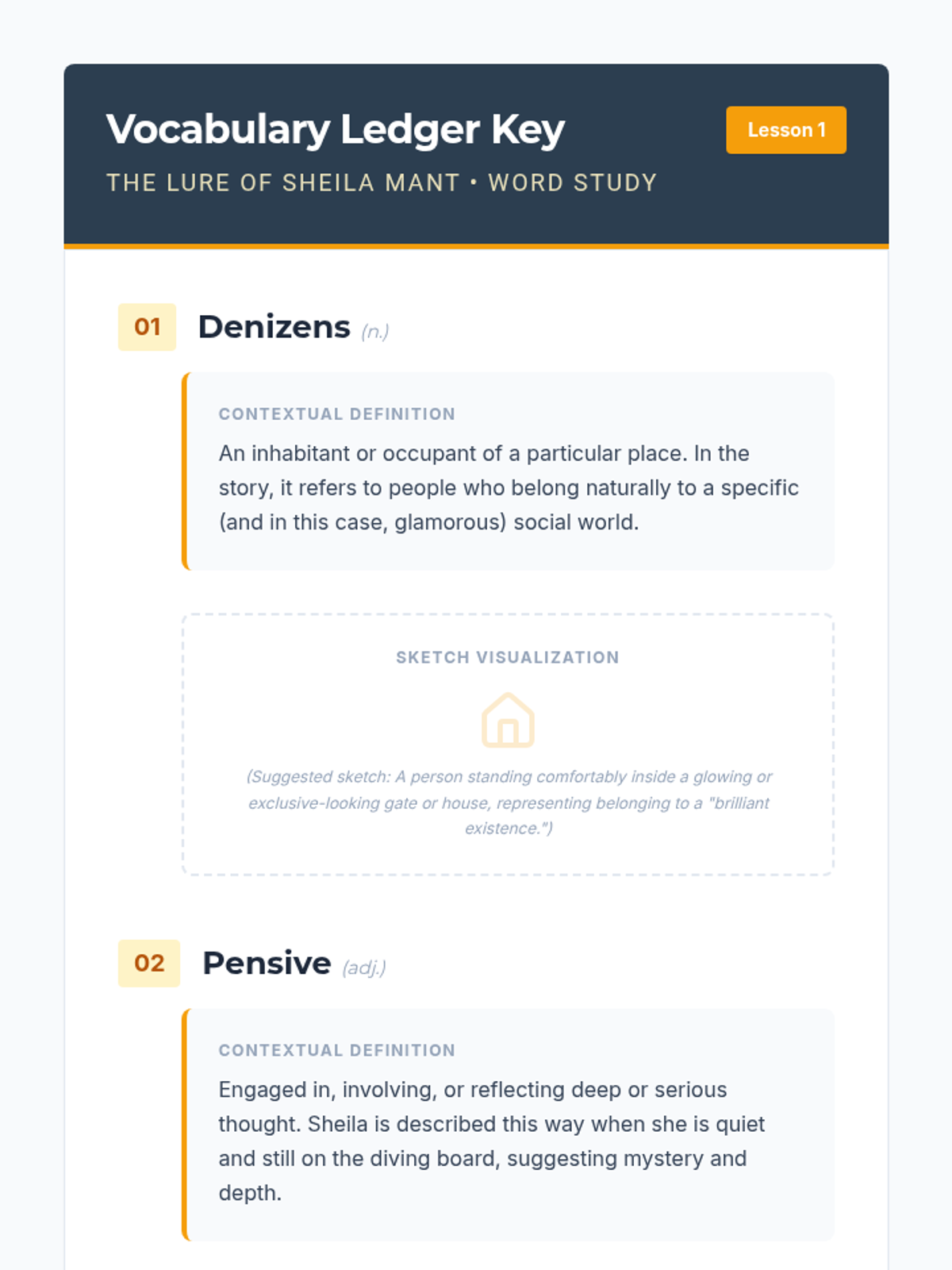
A lesson focused on analyzing character motivations and perceptions in the short story 'The Lure of Sheila Mant' by W.D. Wetherell. Students will explore how the narrator views the Mant family and Sheila herself through close reading and textual evidence.
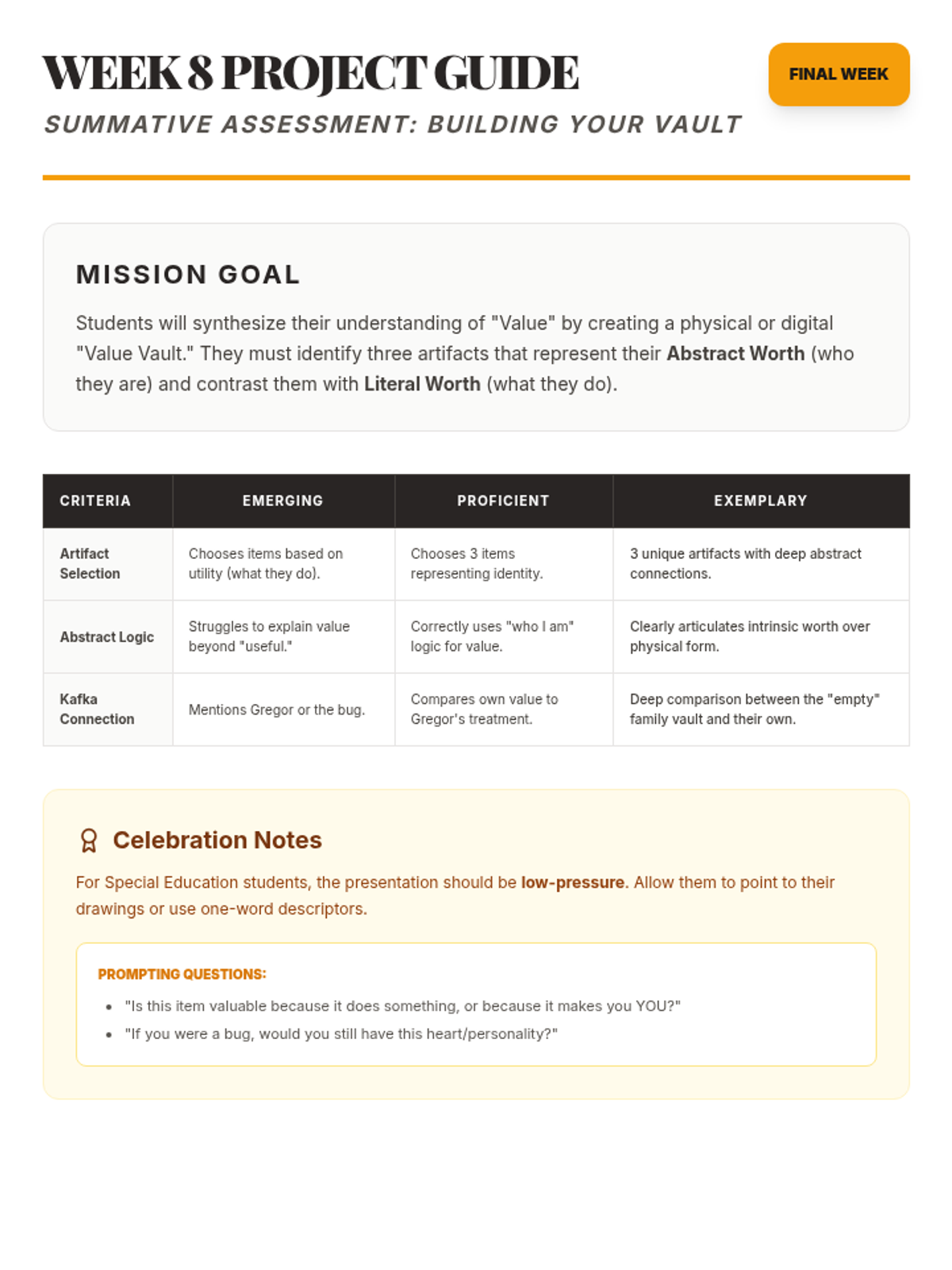
A culminating project where students reflect on the 8-week journey and create a 'Value Vault' for themselves or Gregor.
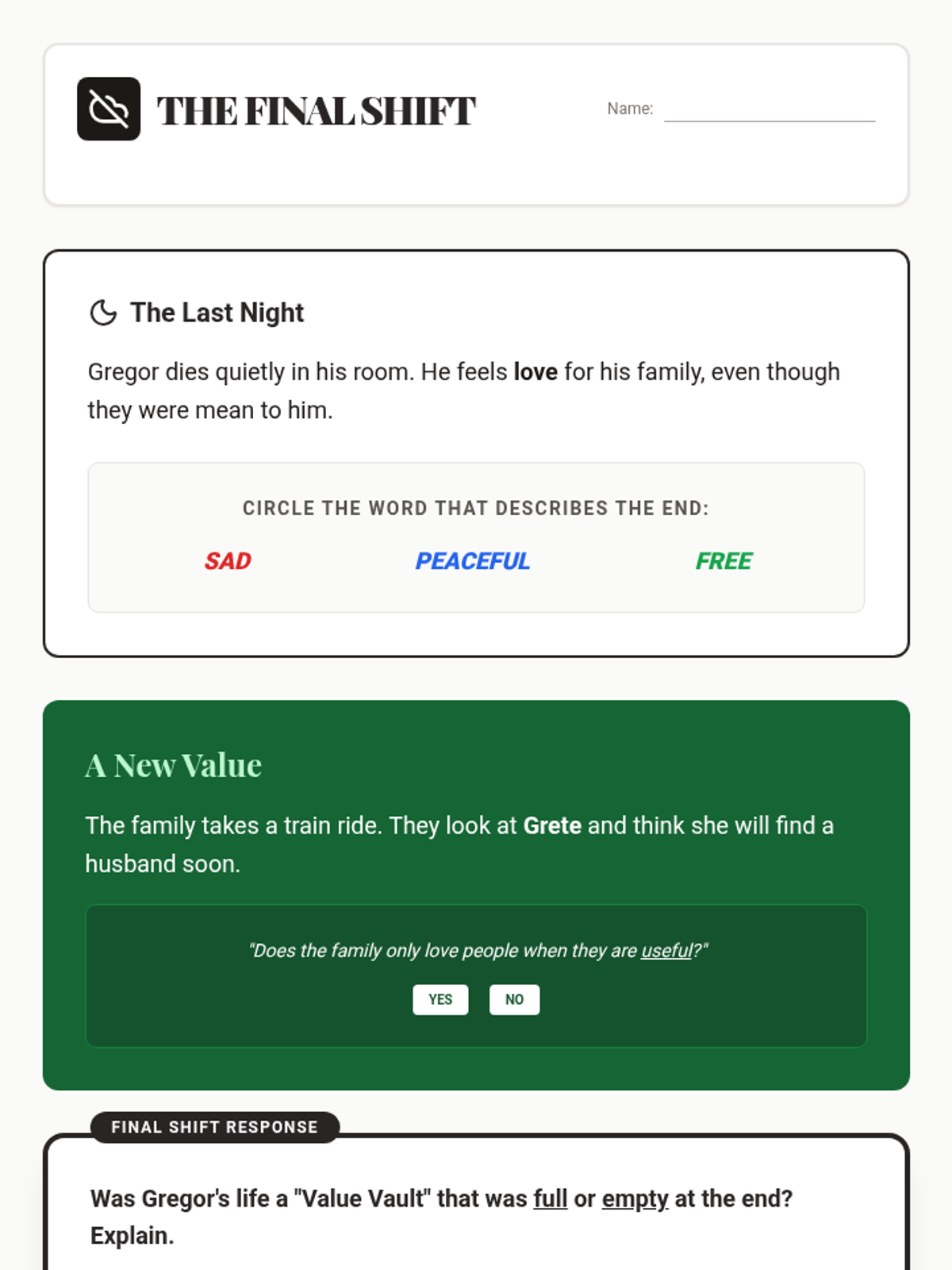
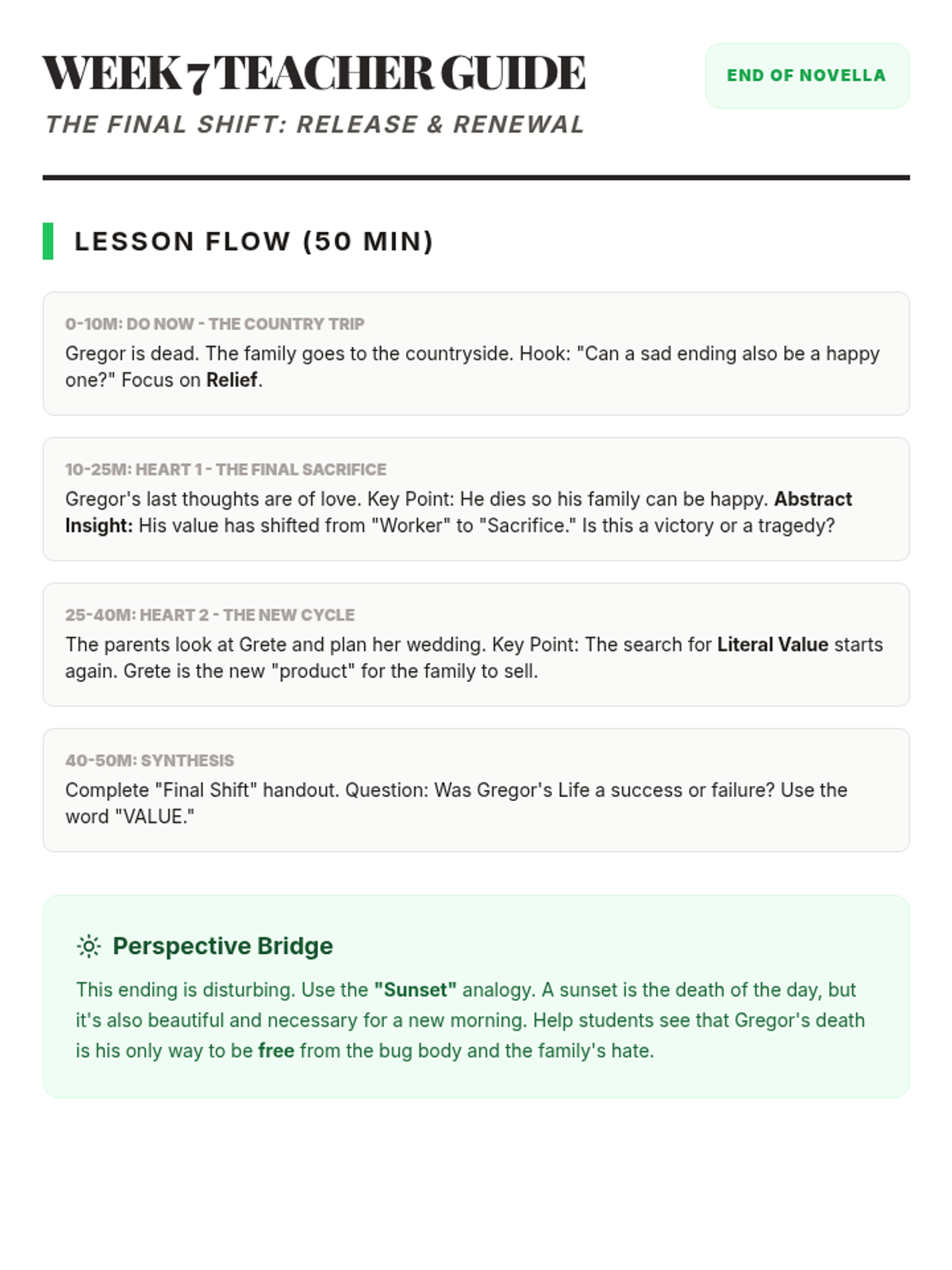
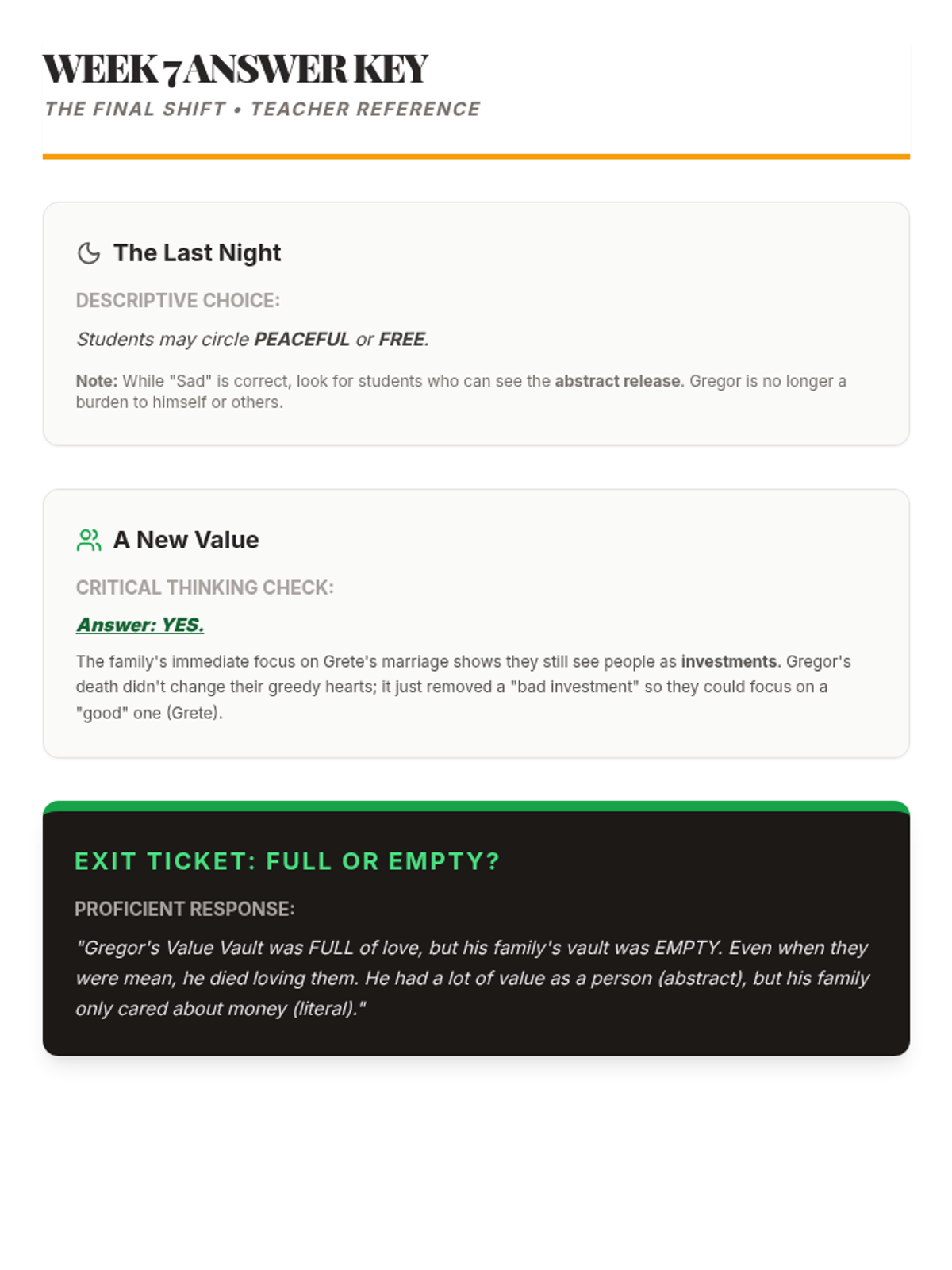
Analyzes the end of the novella, Gregor's death, and the family's disturbing relief and new-found 'value'.
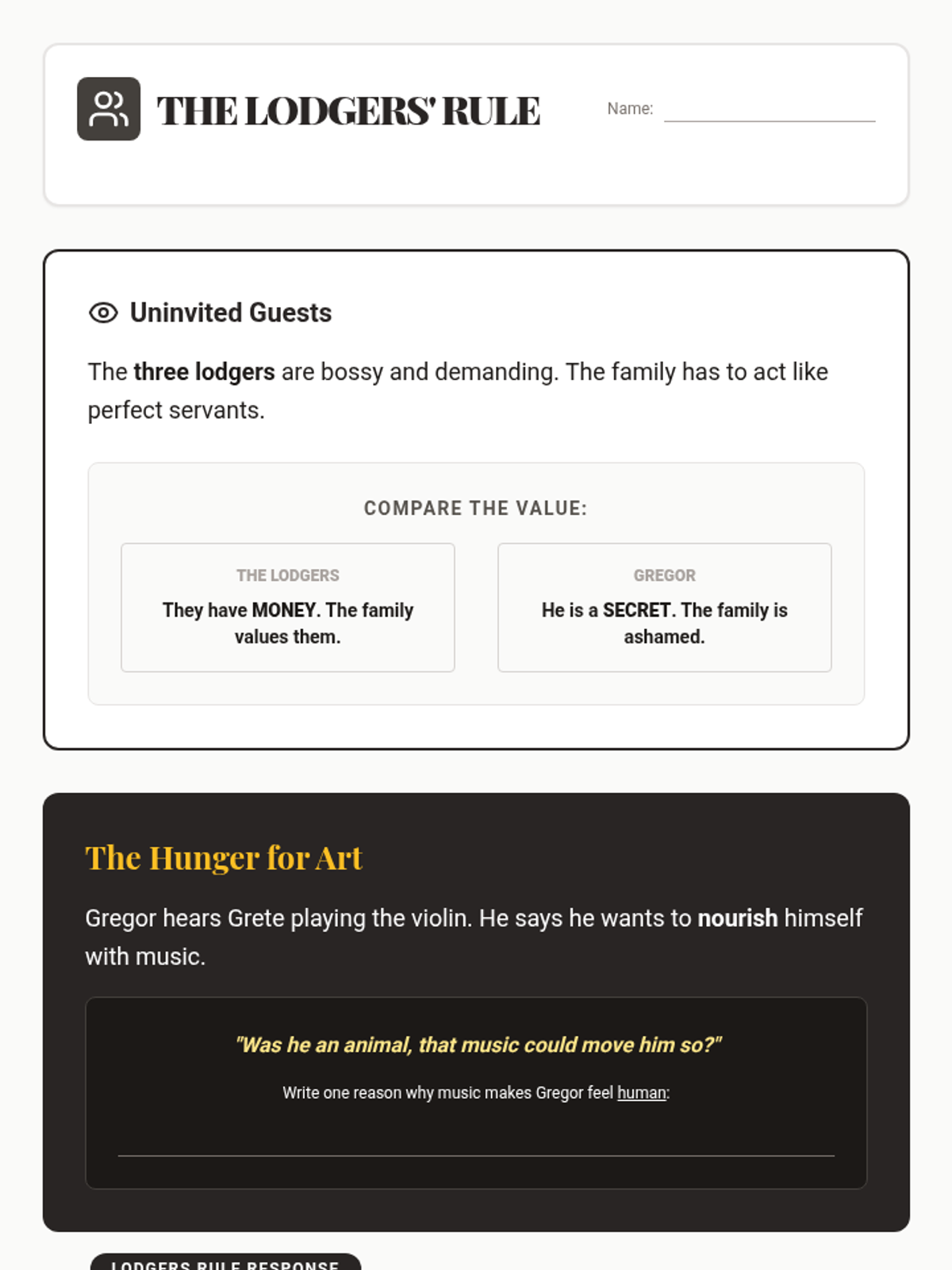
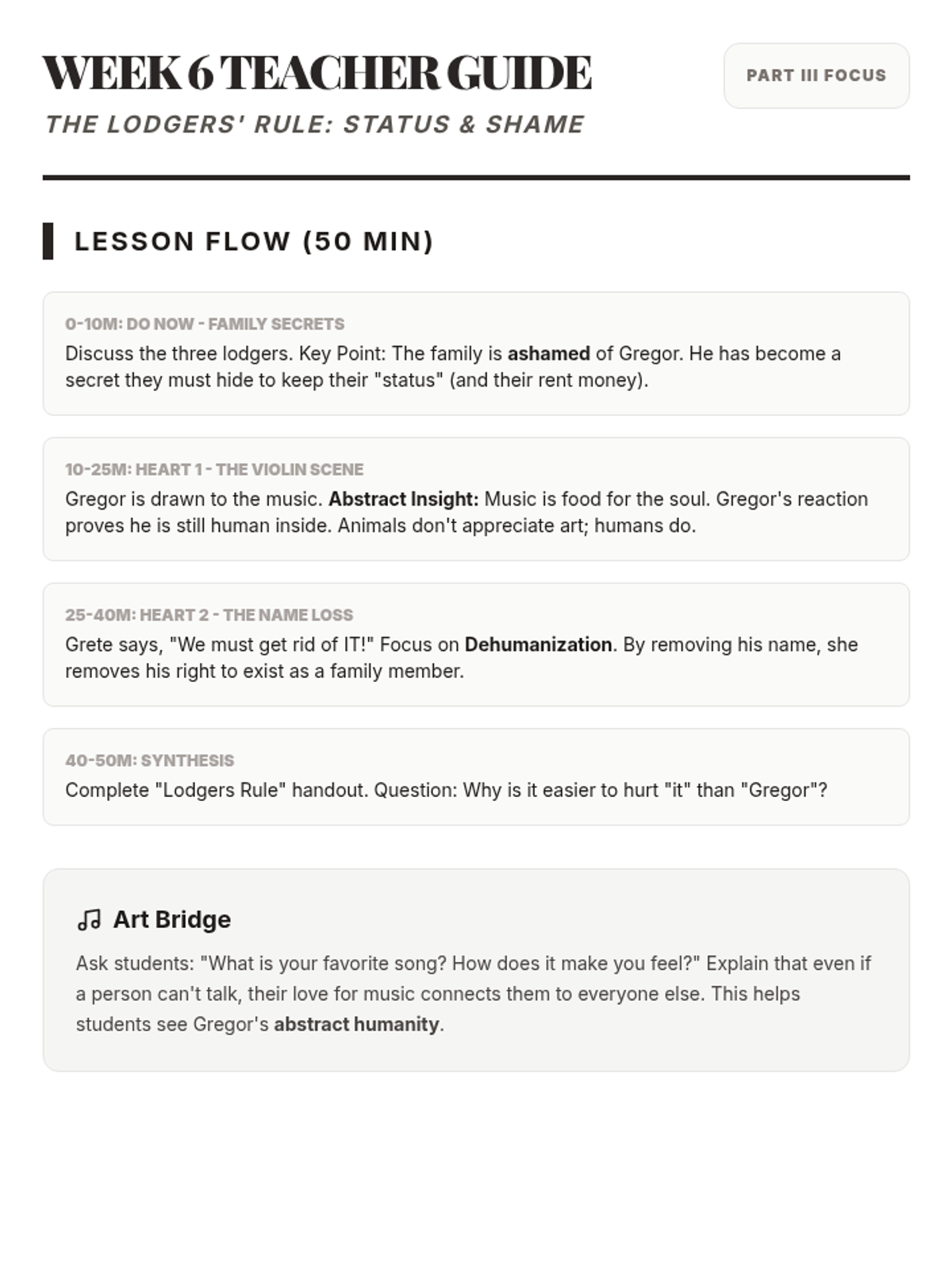
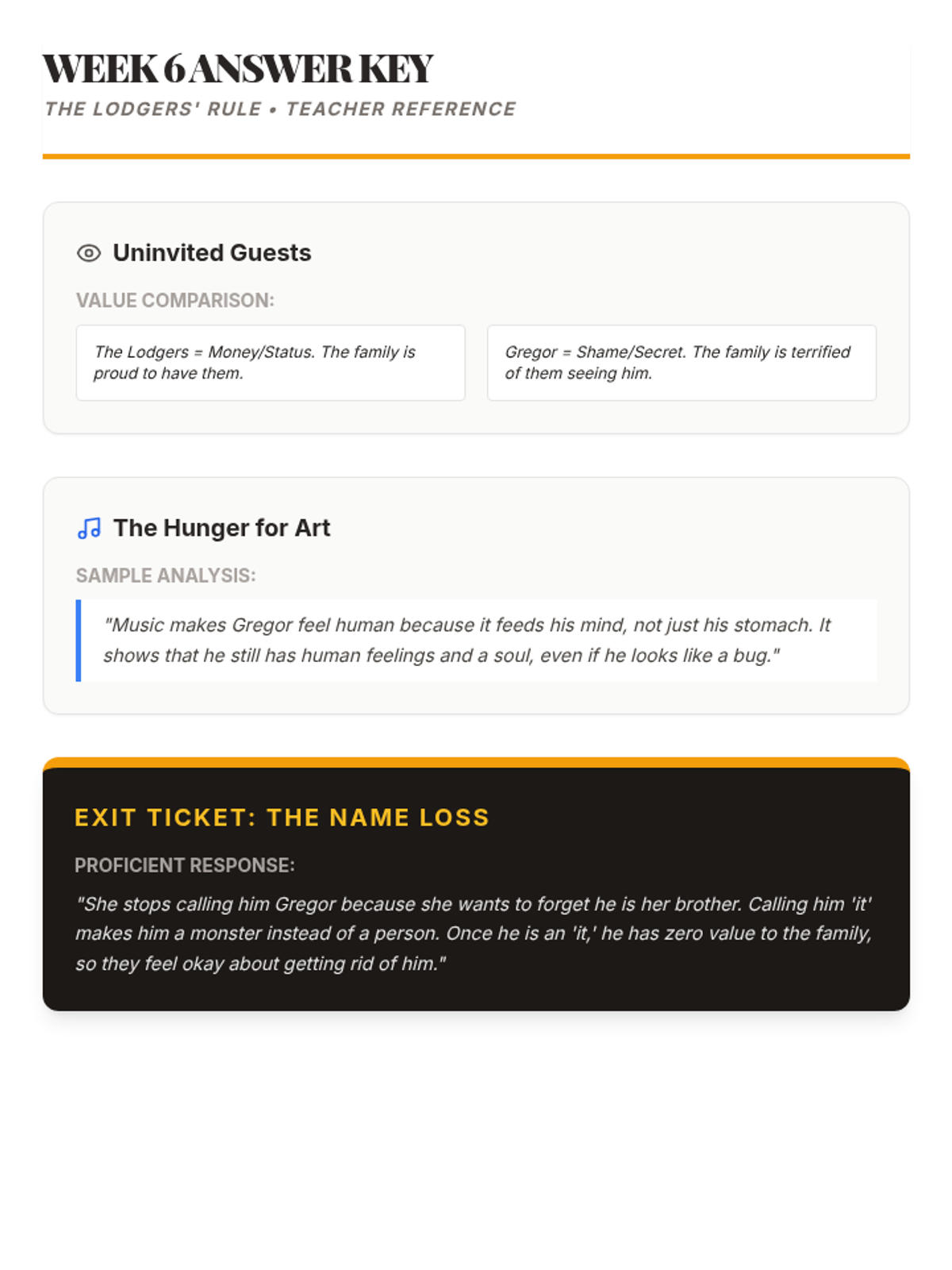
Focuses on Part III, the arrival of the boarders, and Gregor becoming a 'nuisance' in his own home.
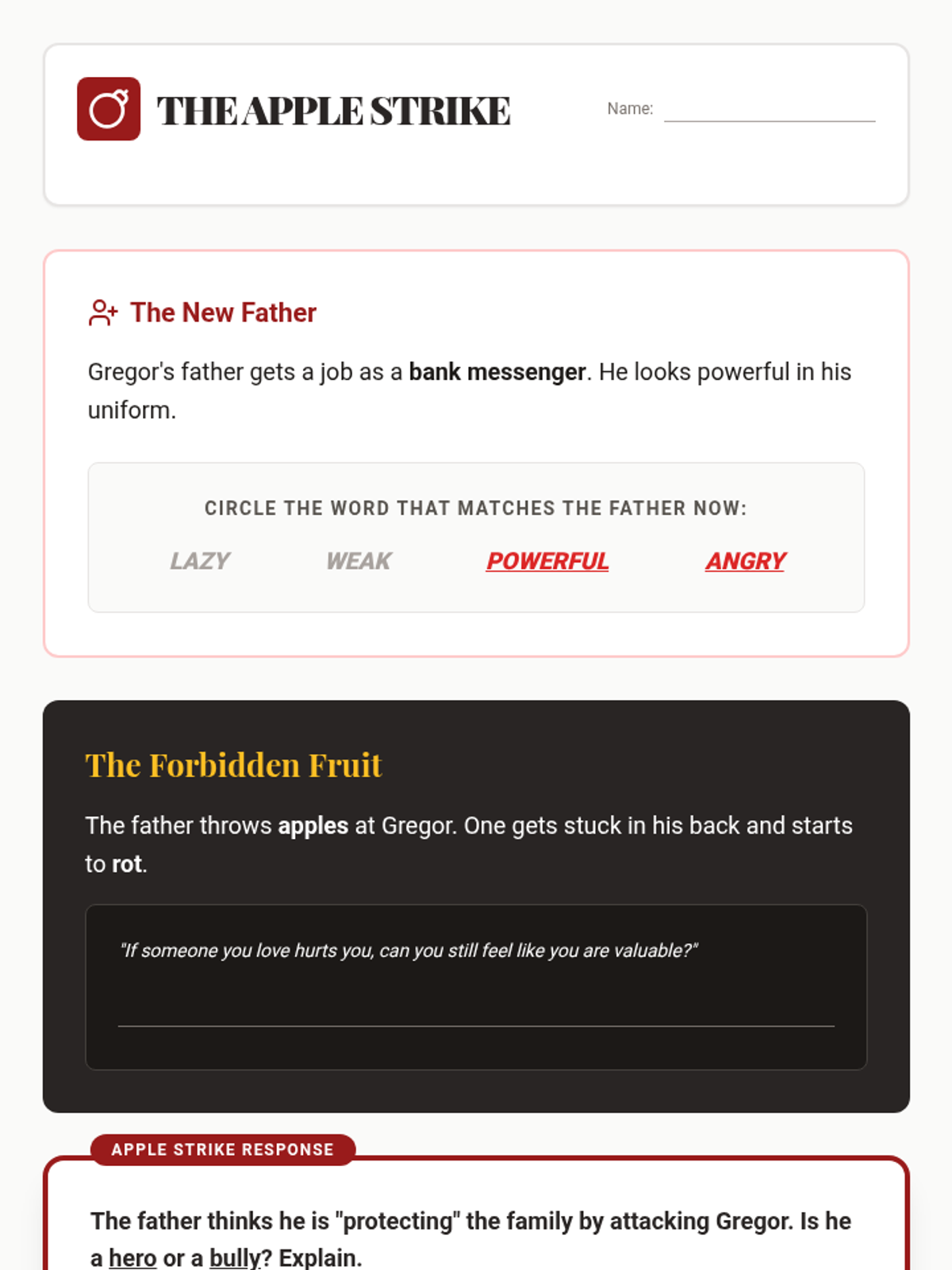
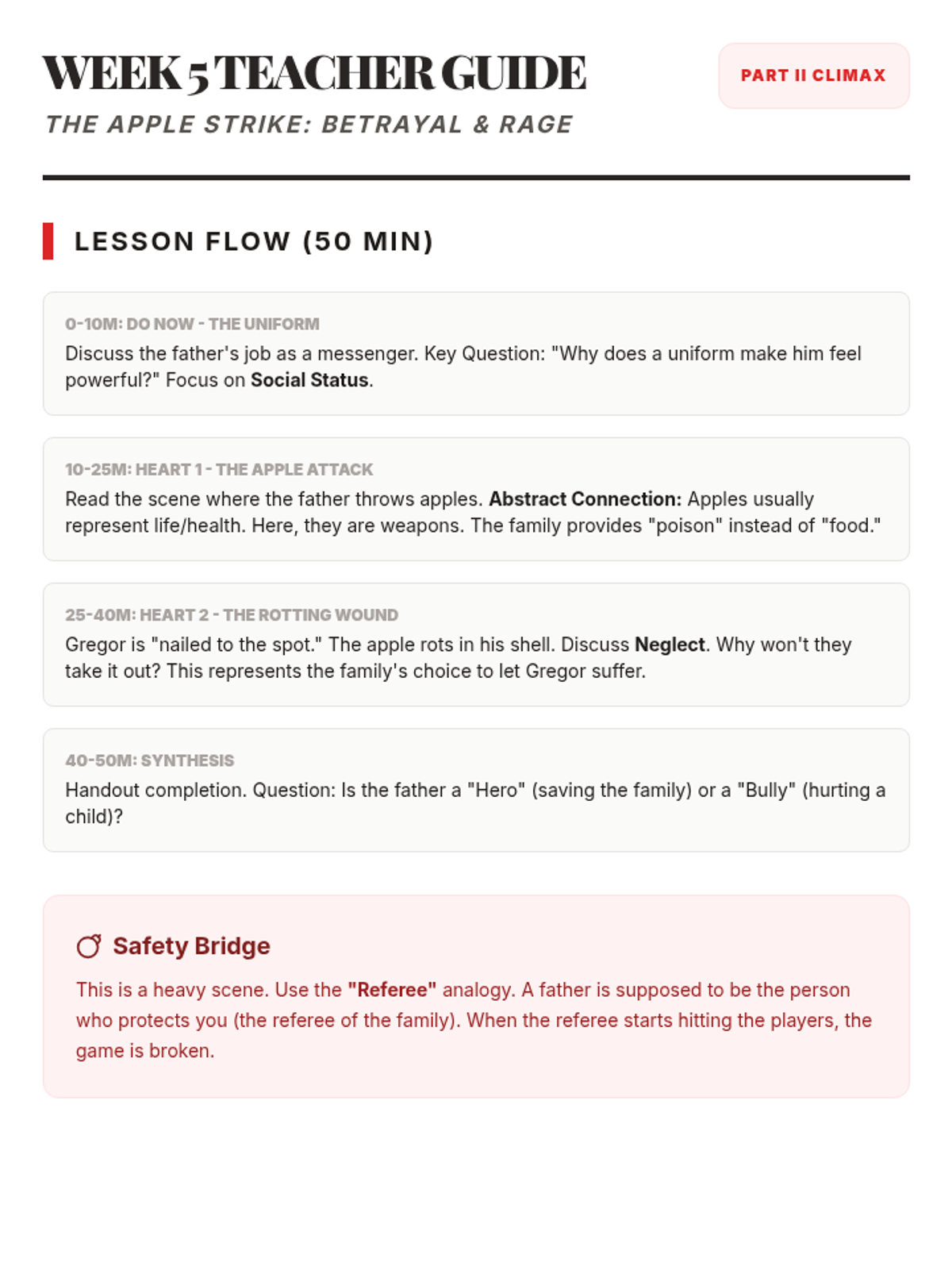
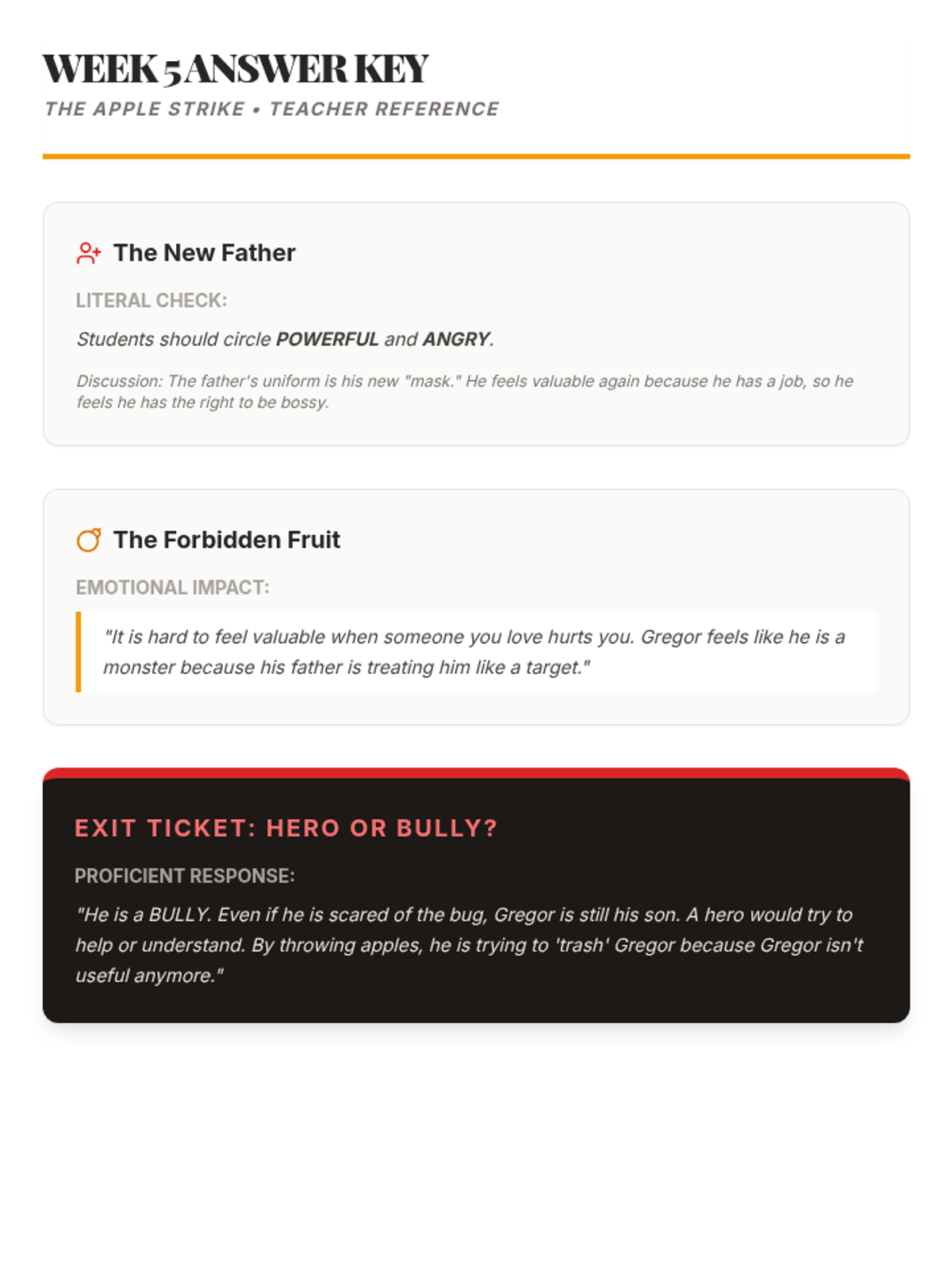
Analyzes the climax of Part II, the father's return to work, and the symbolic 'apple' attack on Gregor.
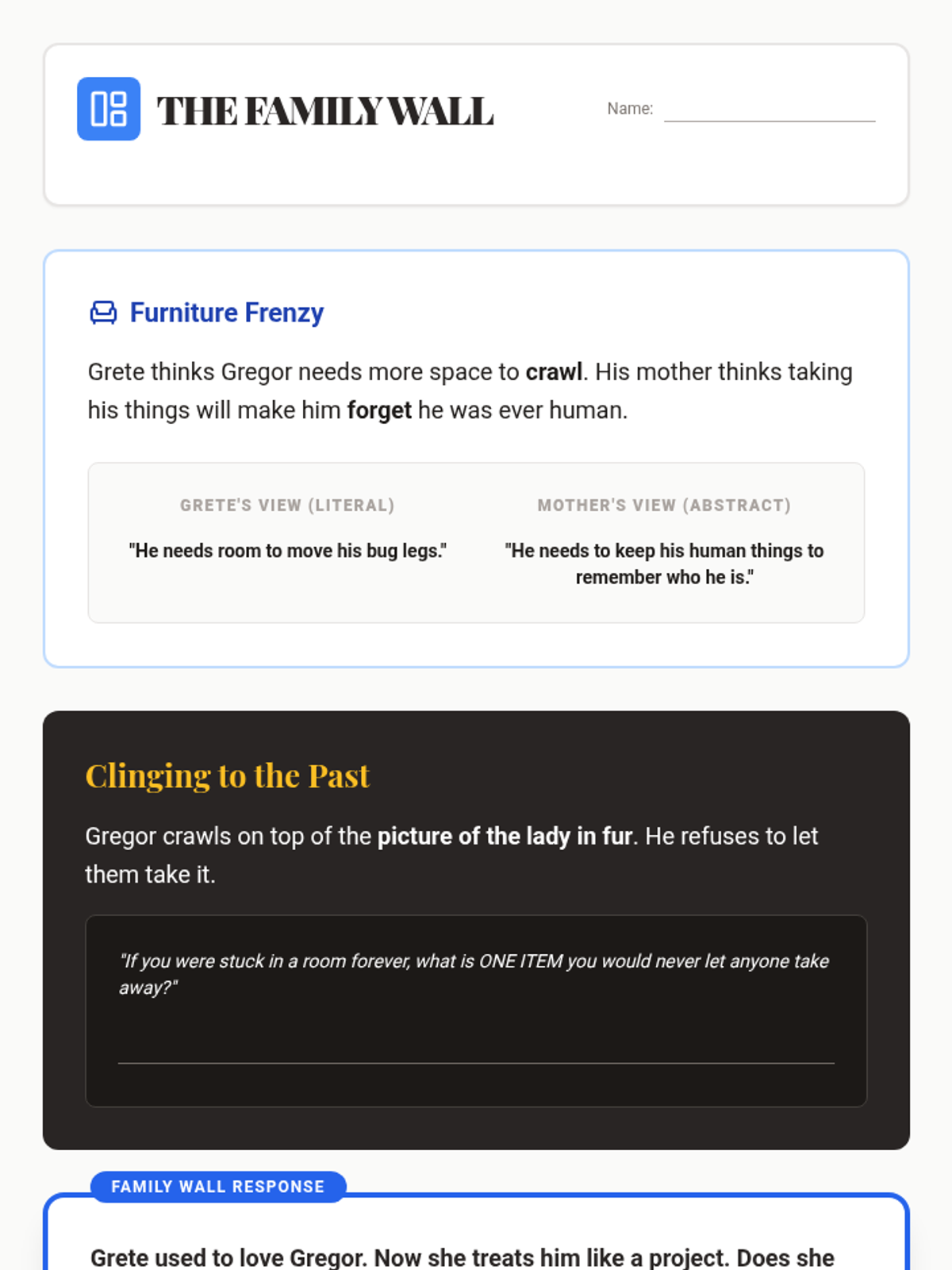
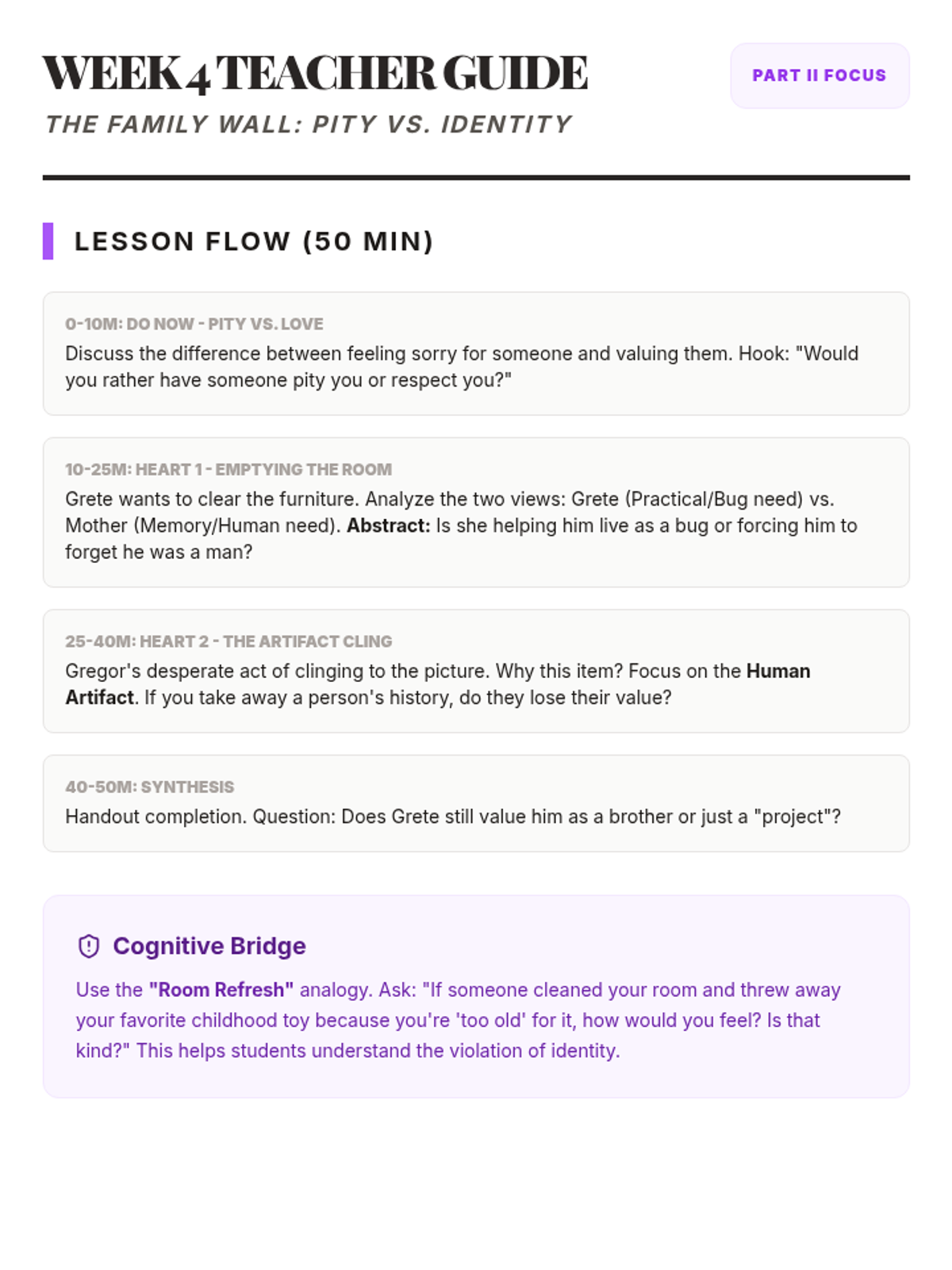
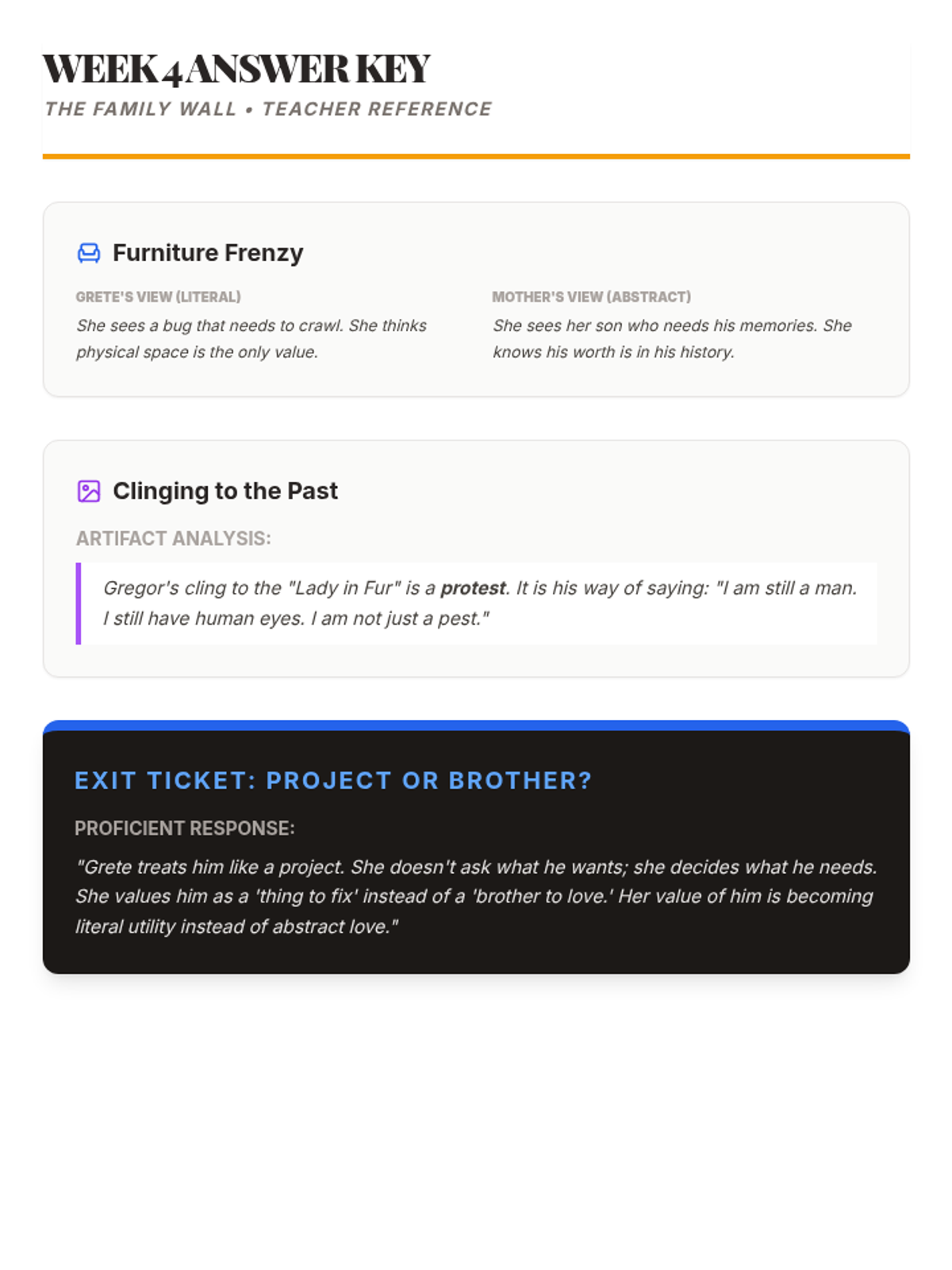
Explores the changing relationship between Gregor and Grete, the moving of the furniture, and the concept of 'pity' vs 'value'.
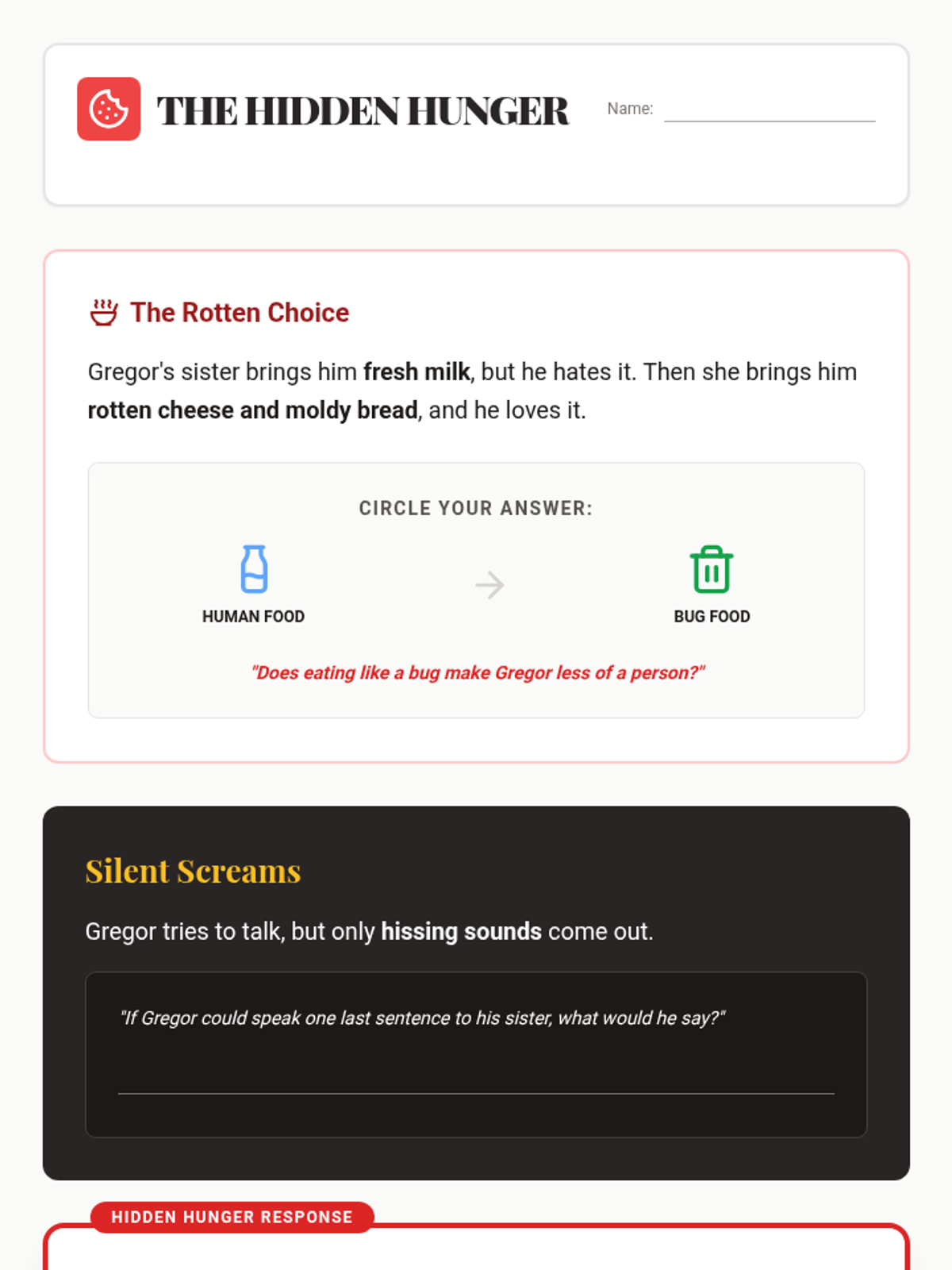
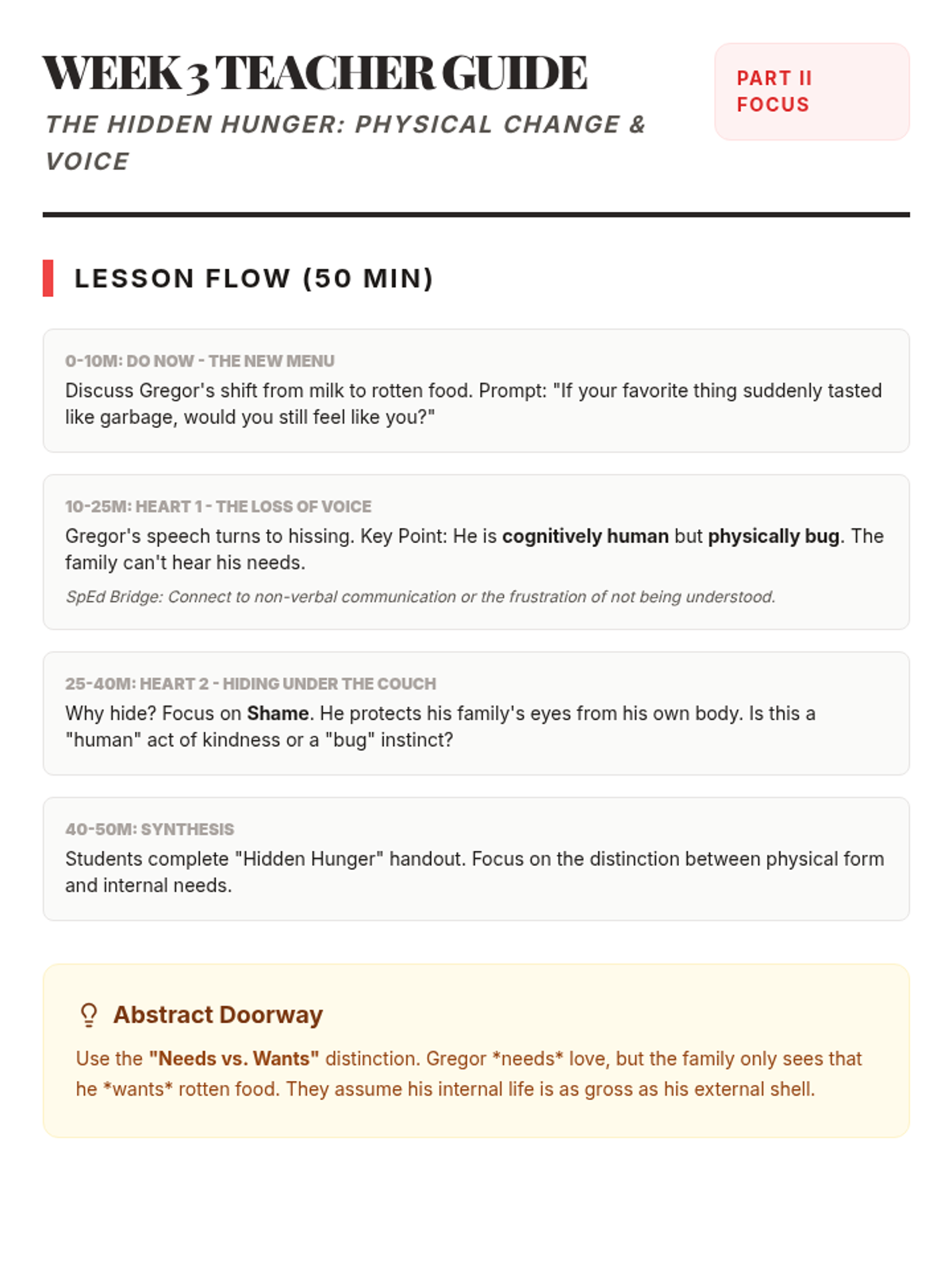
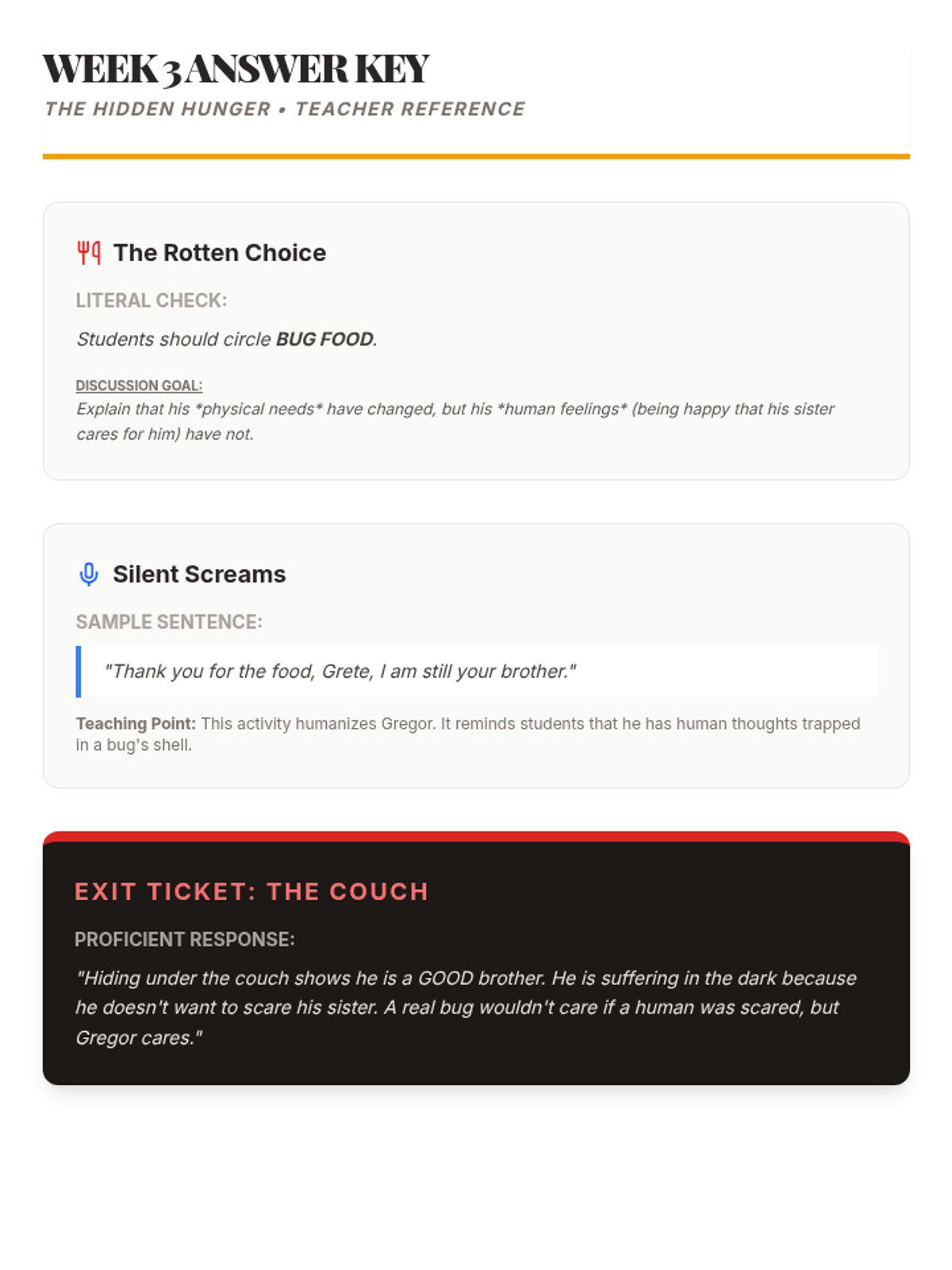
Covers the transition to Part II, focusing on Gregor's physical changes, his new diet, and the loss of his human voice.
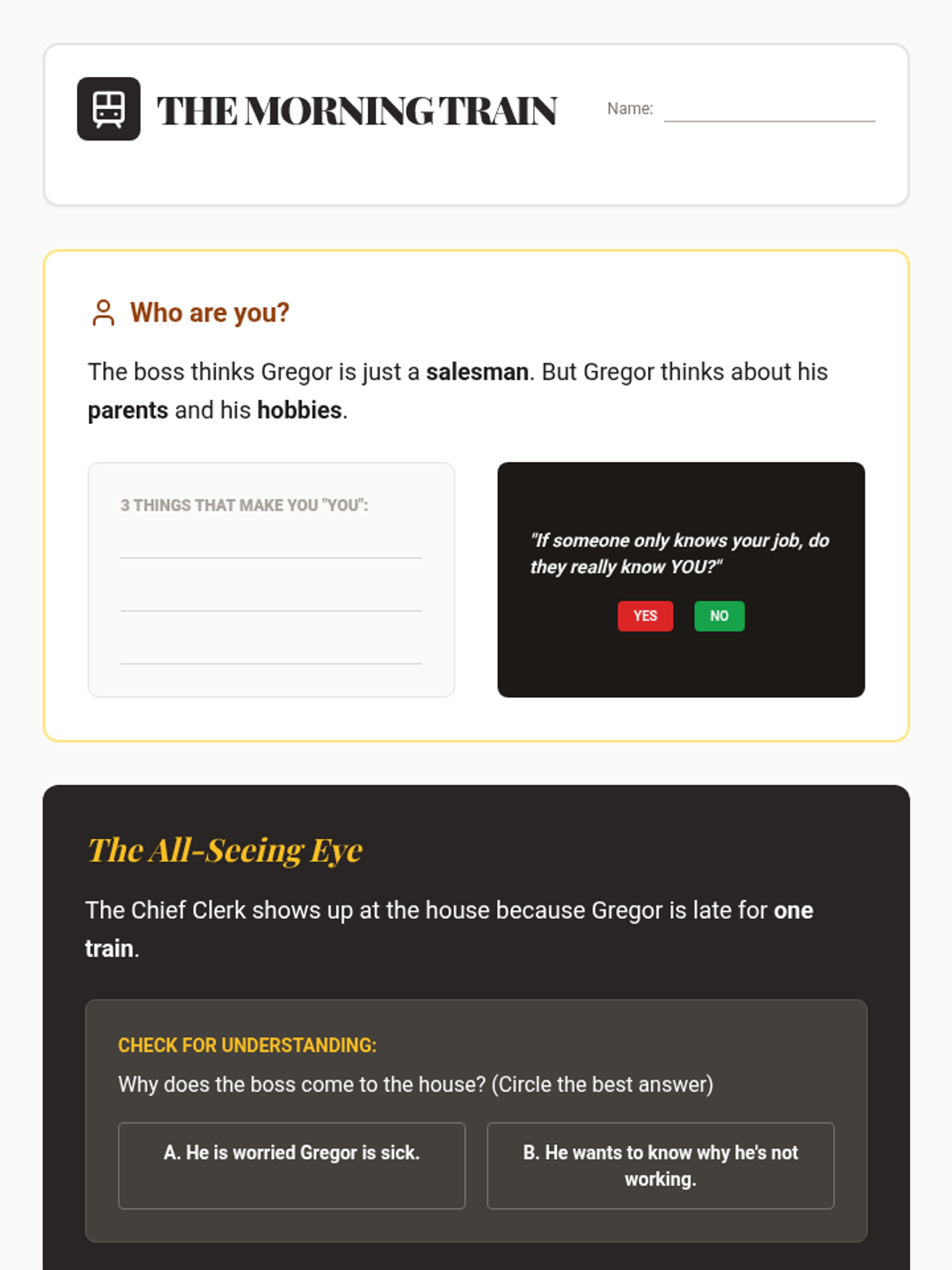
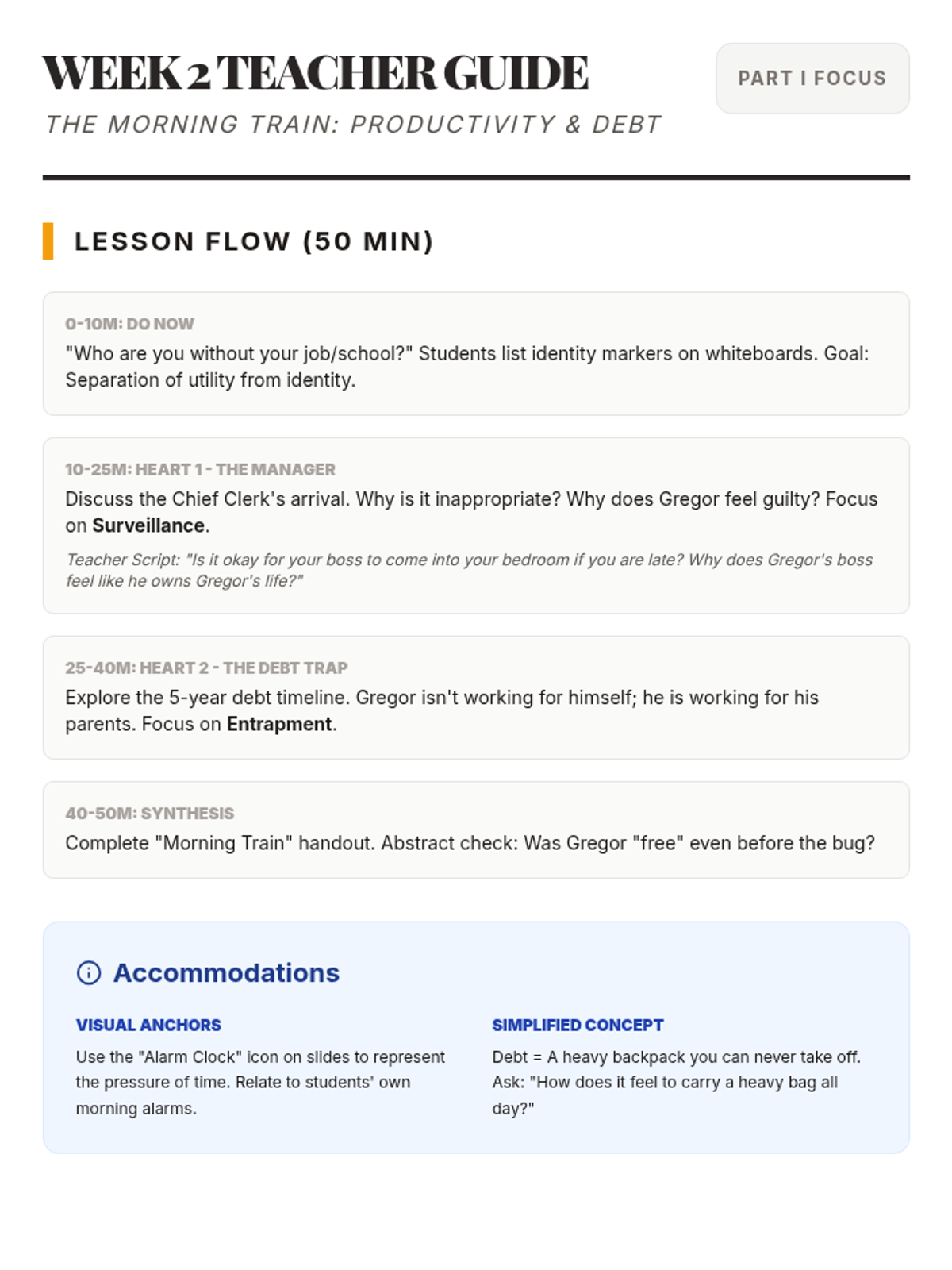
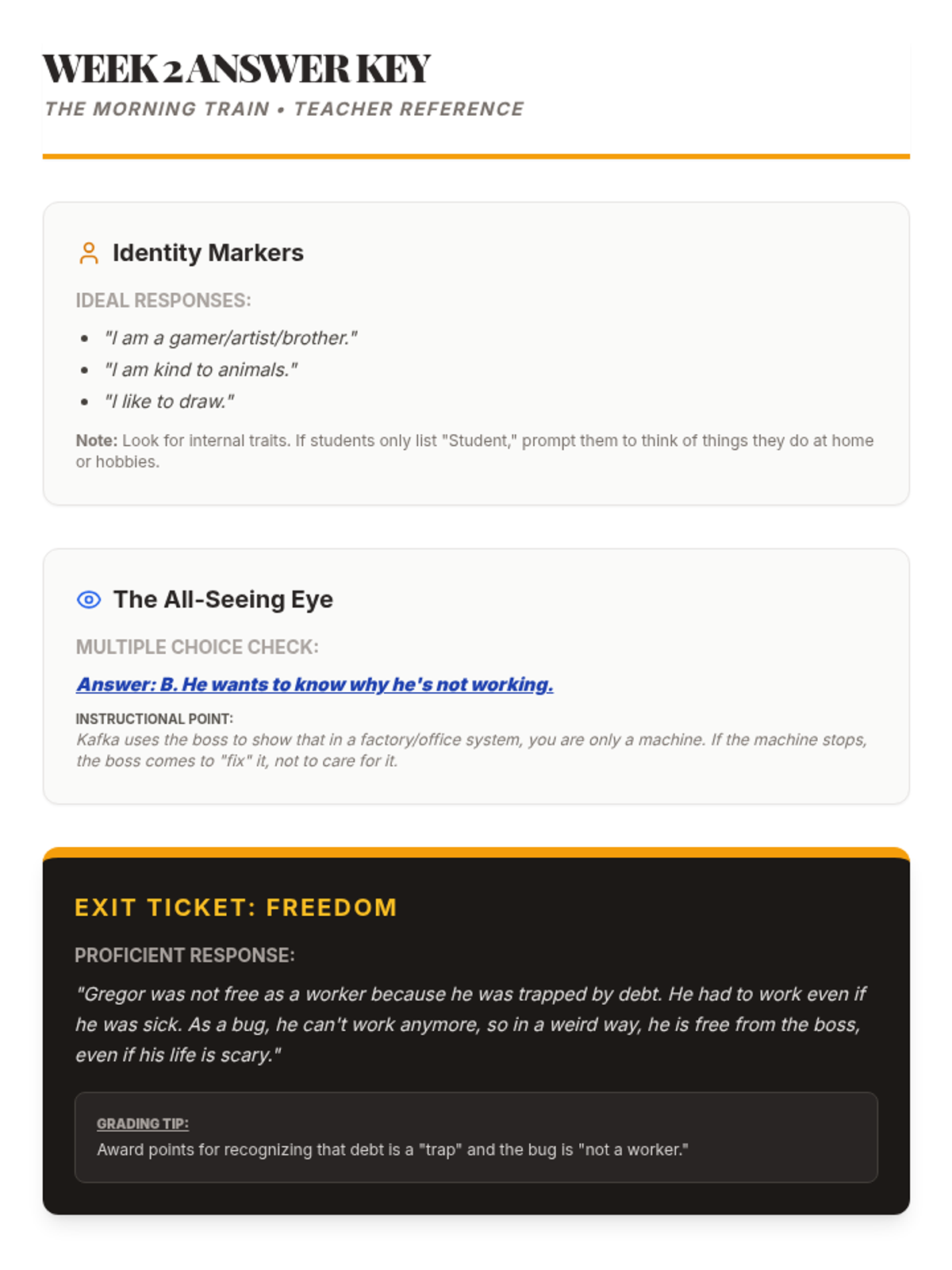
A focus on Part I of the novella, exploring the theme of work as identity and the manager's visit as a symbol of surveillance.
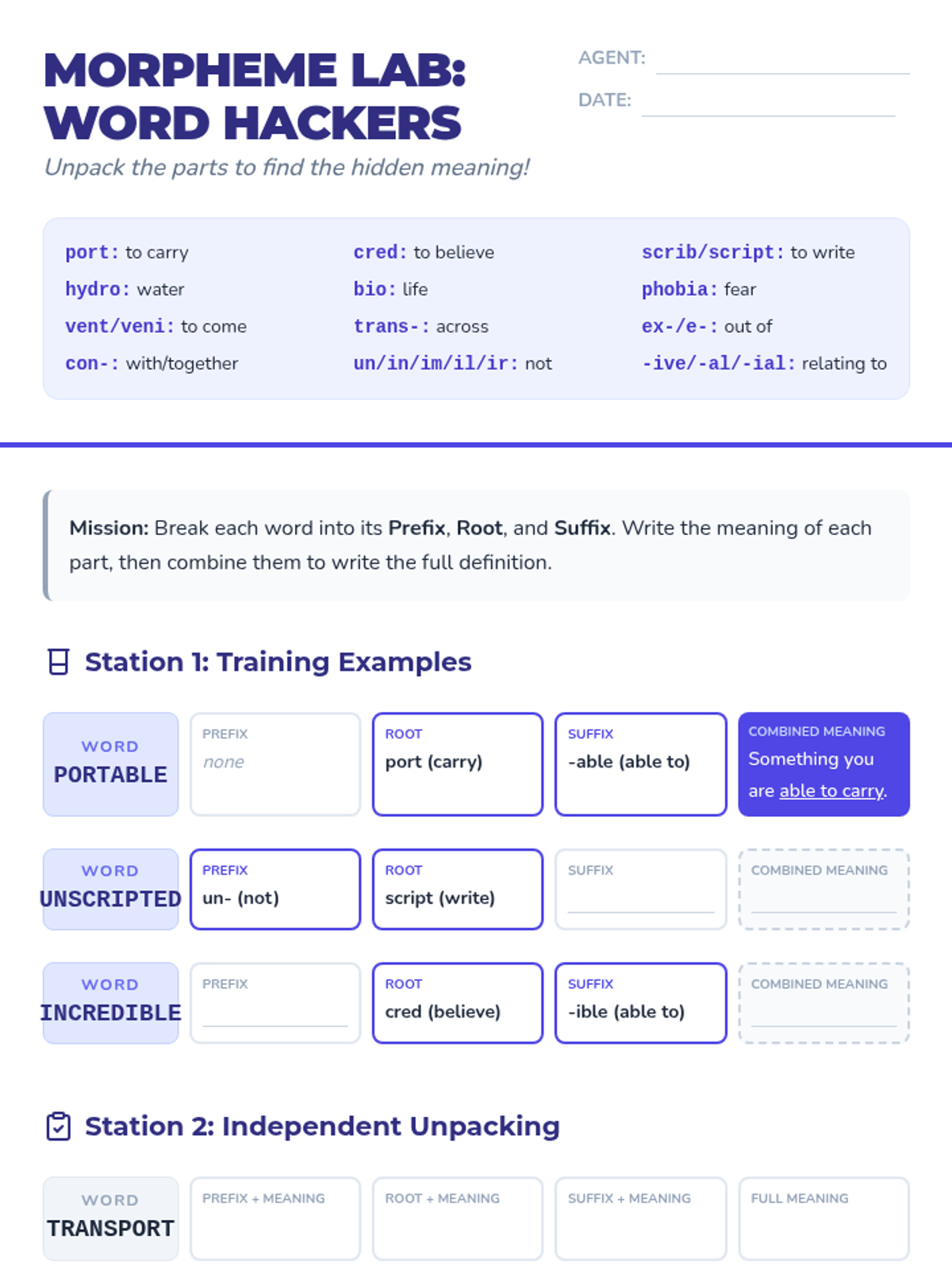
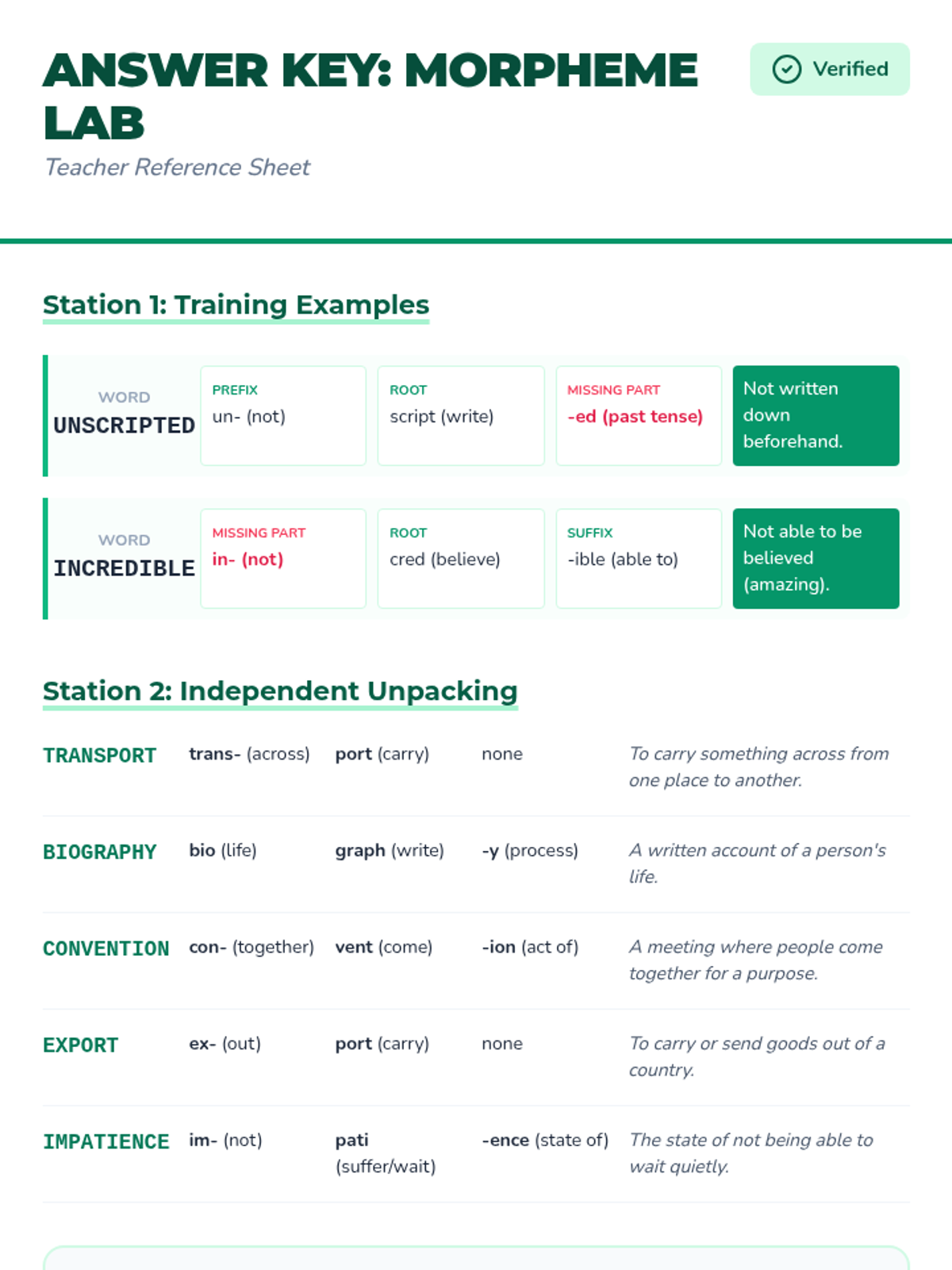
A 30-minute introductory lesson where students learn to decode complex words using a list of 24 common morphemes.
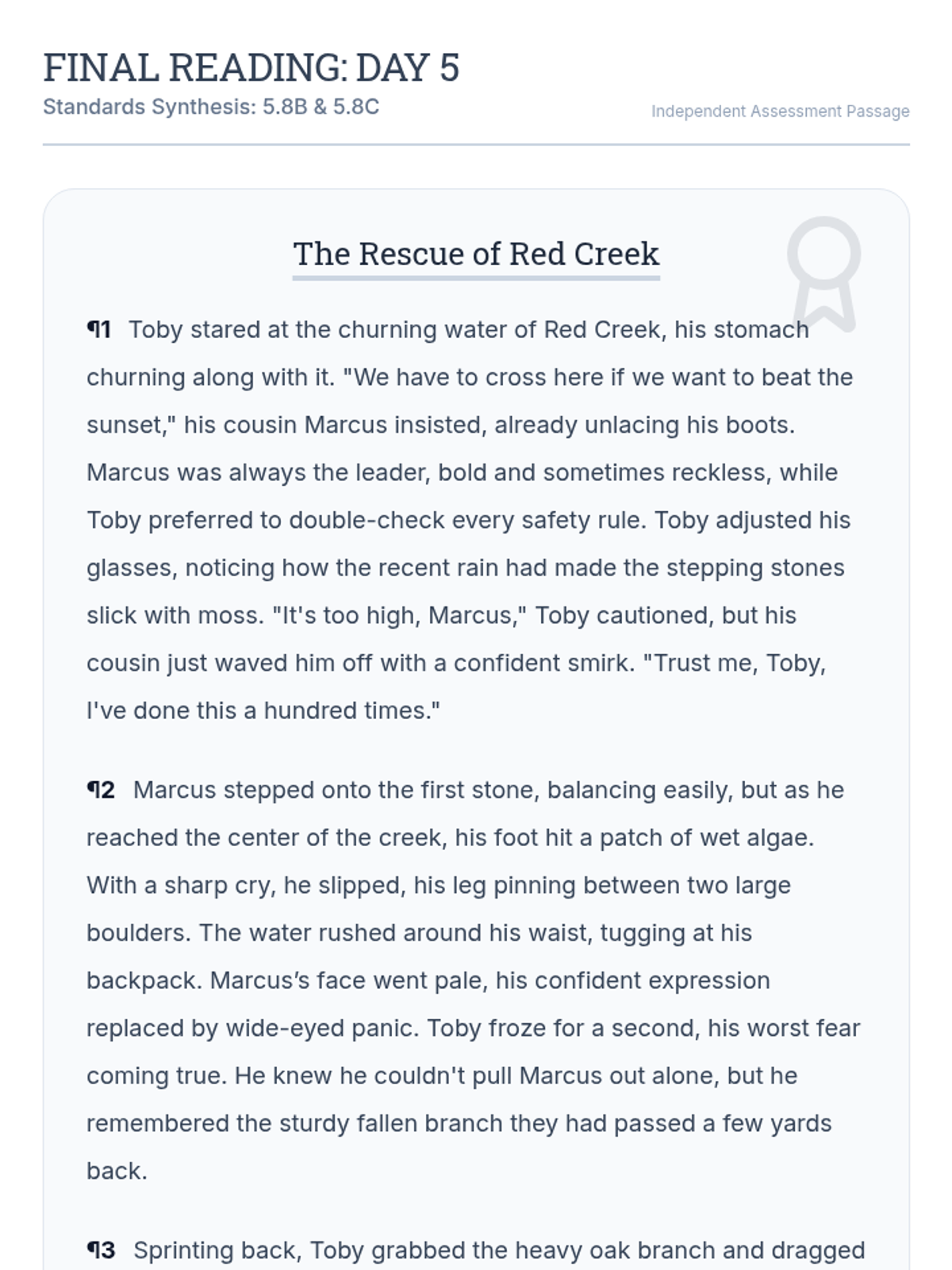
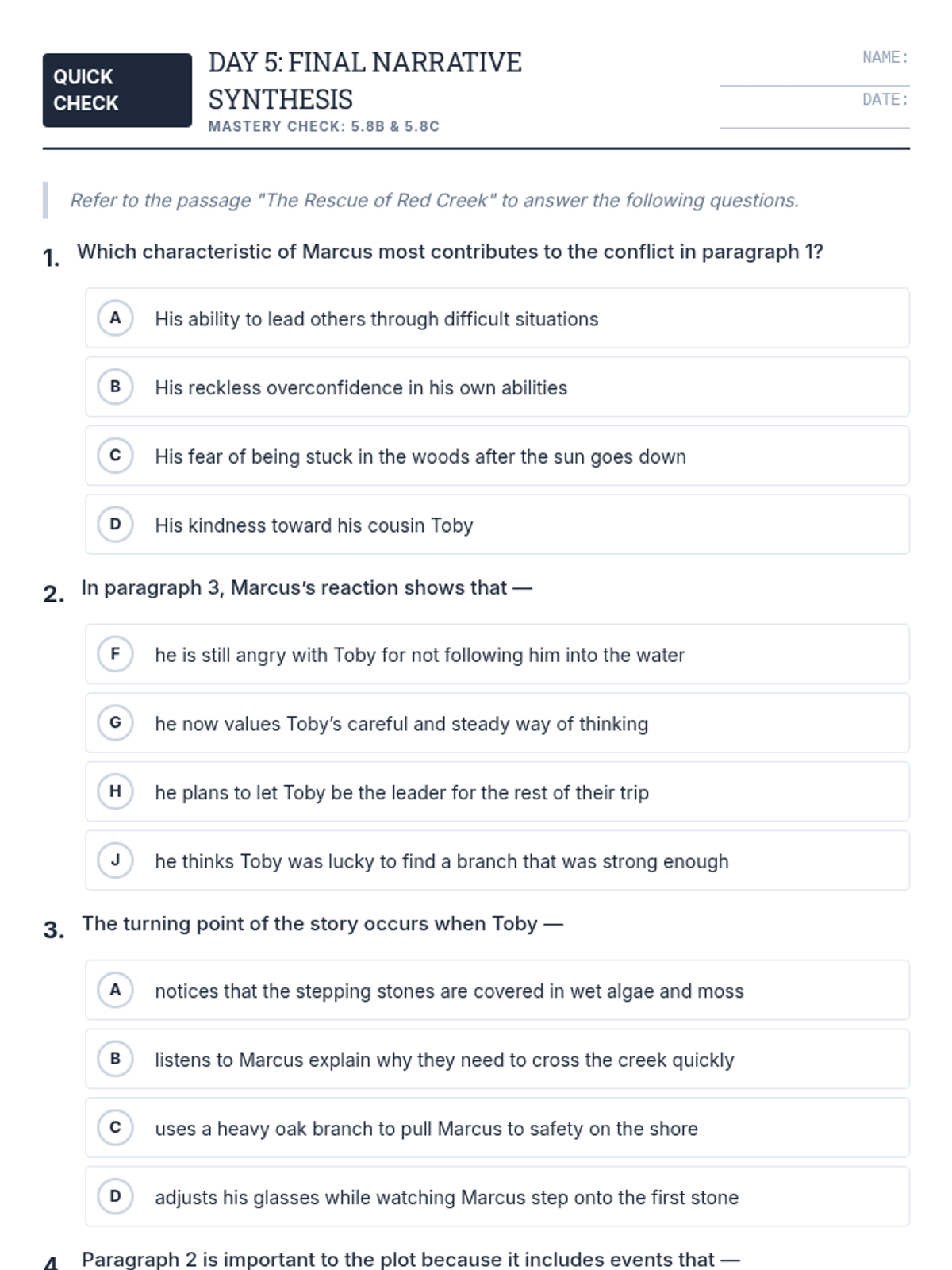
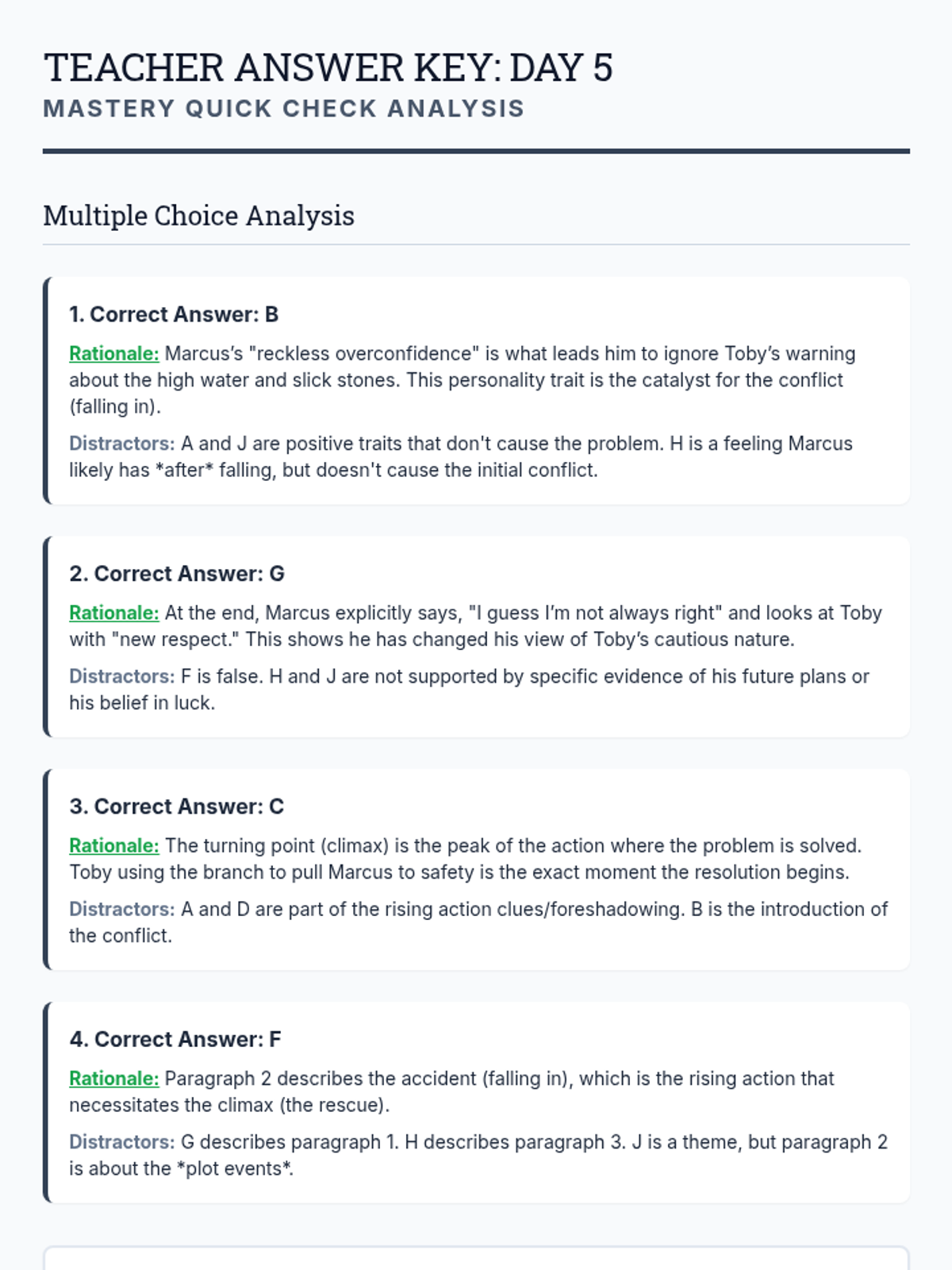
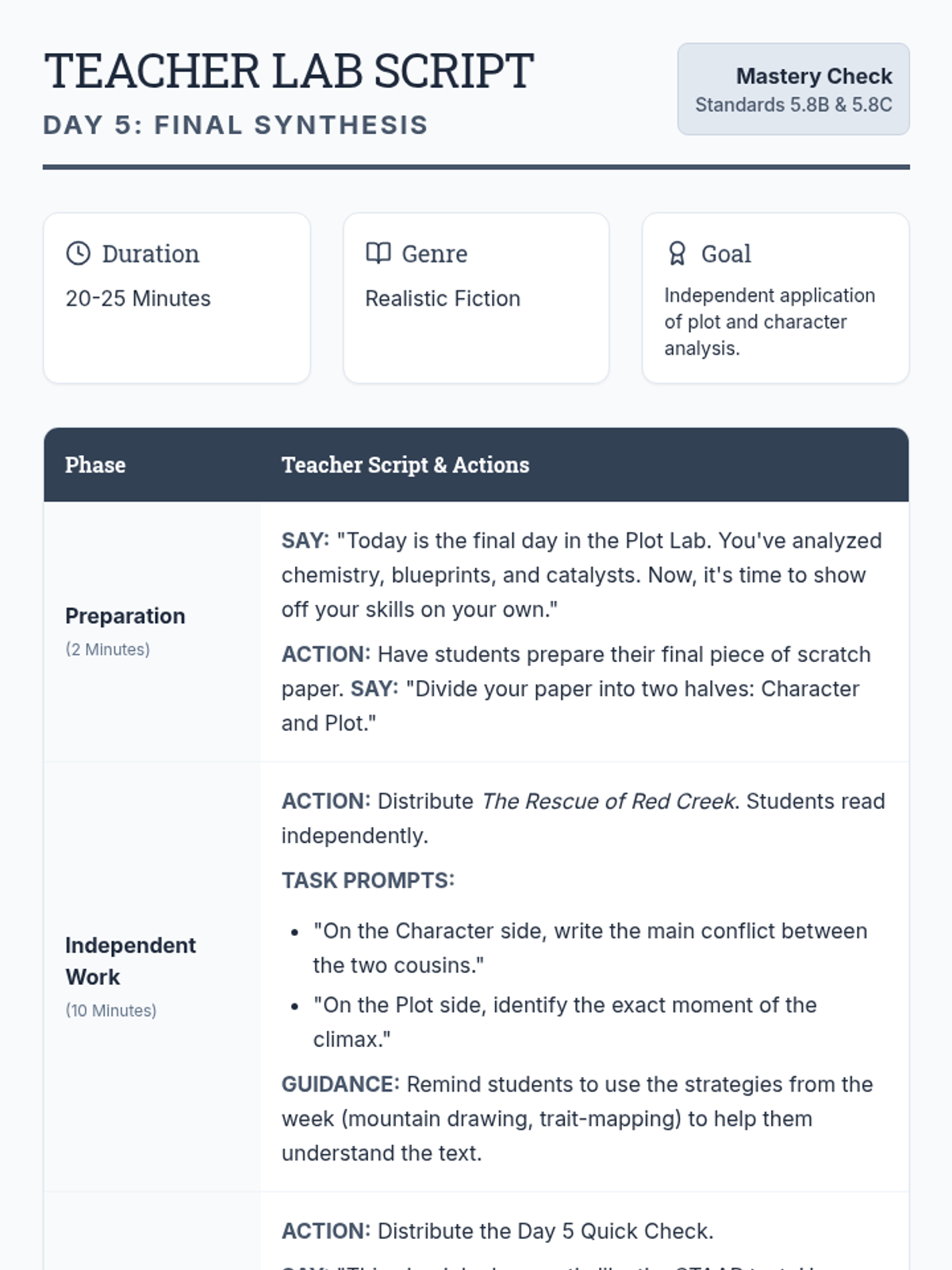
Day 5 serves as a final comprehensive quick check. Students read a new passage independently and apply their analysis of character relationships and plot structure to demonstrate mastery of standards 5.8B and 5.8C.
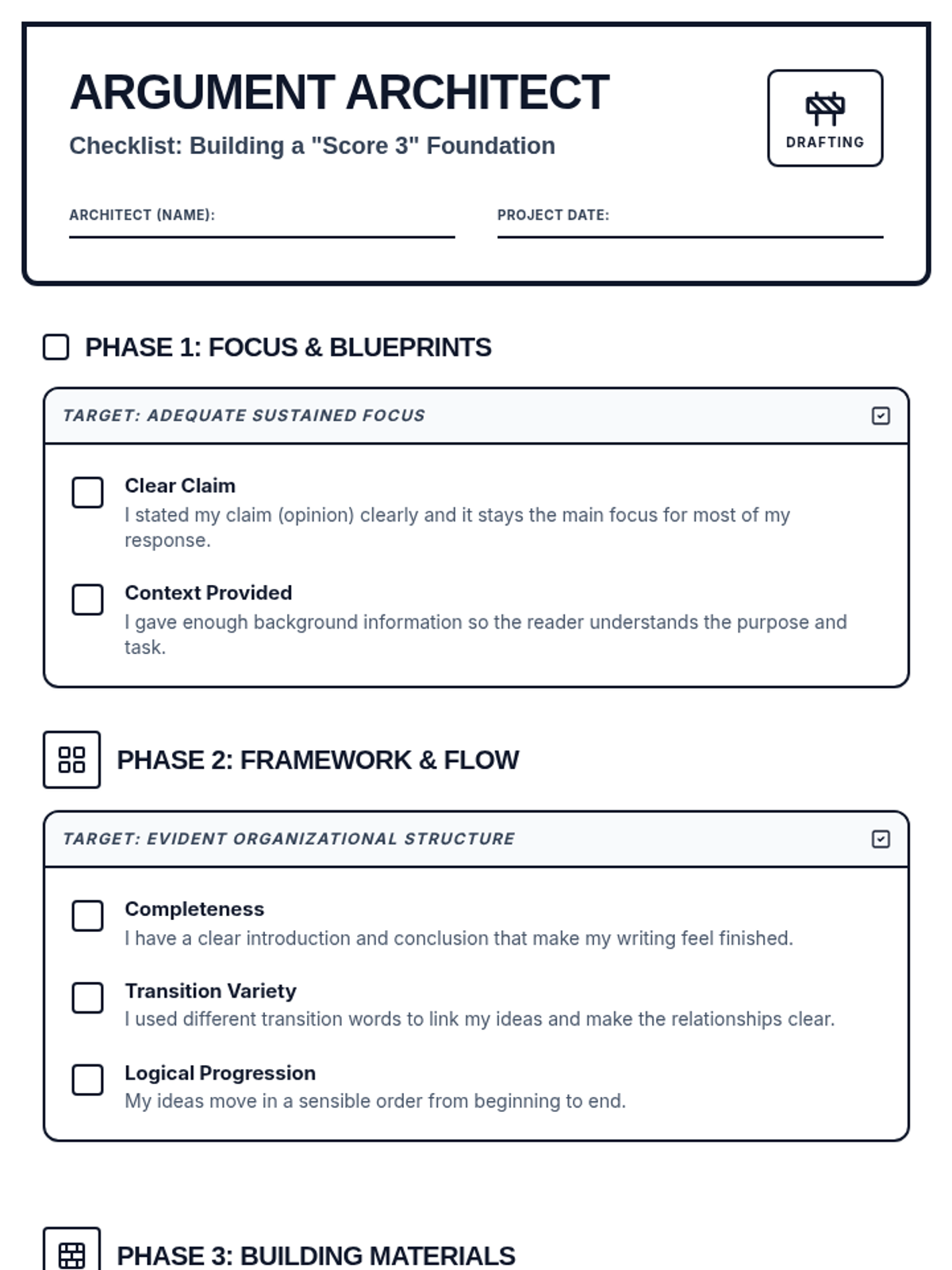
A lesson focused on helping students master the criteria for successful argumentative writing using a student-friendly checklist based on state-aligned rubrics.
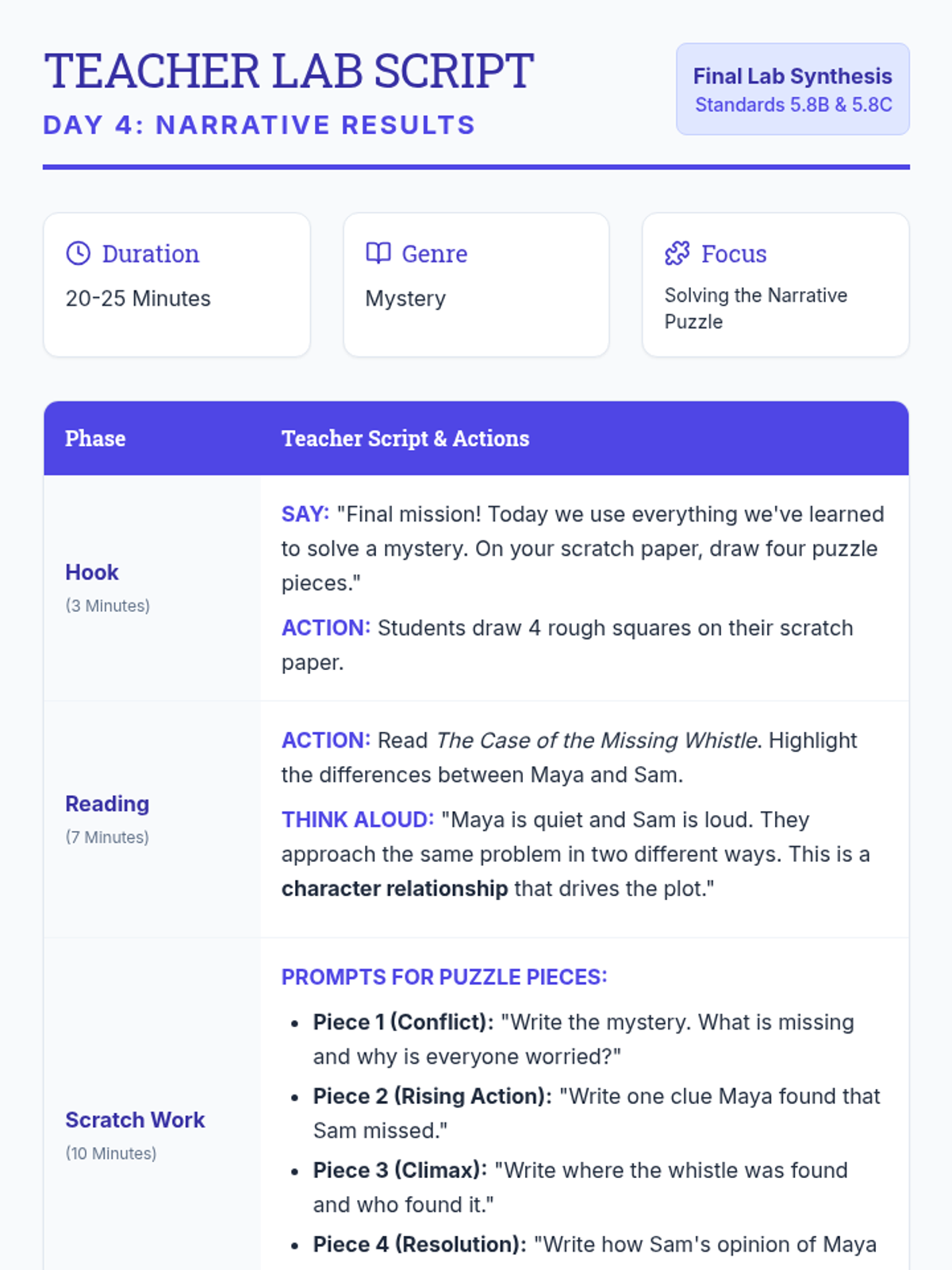
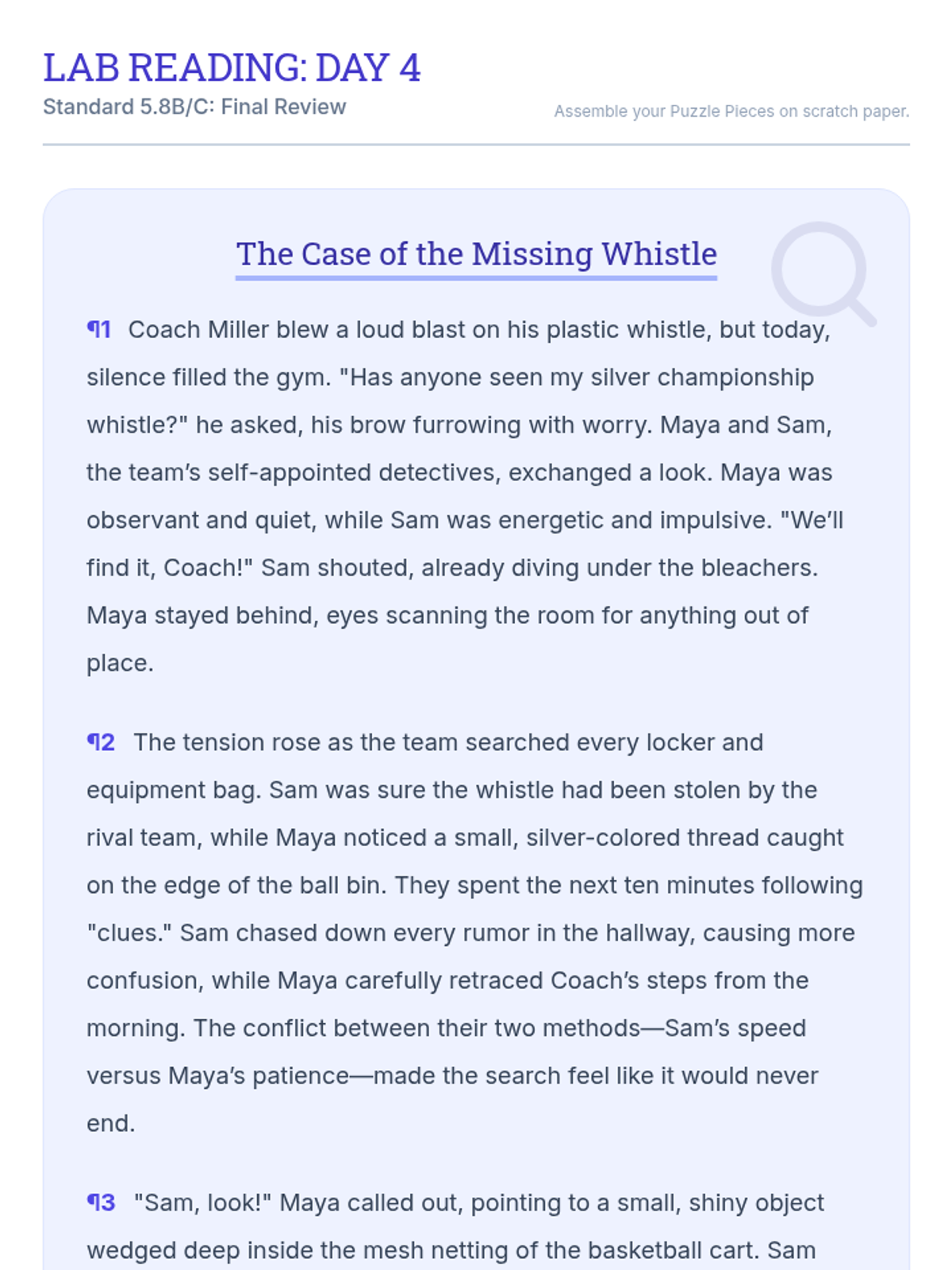
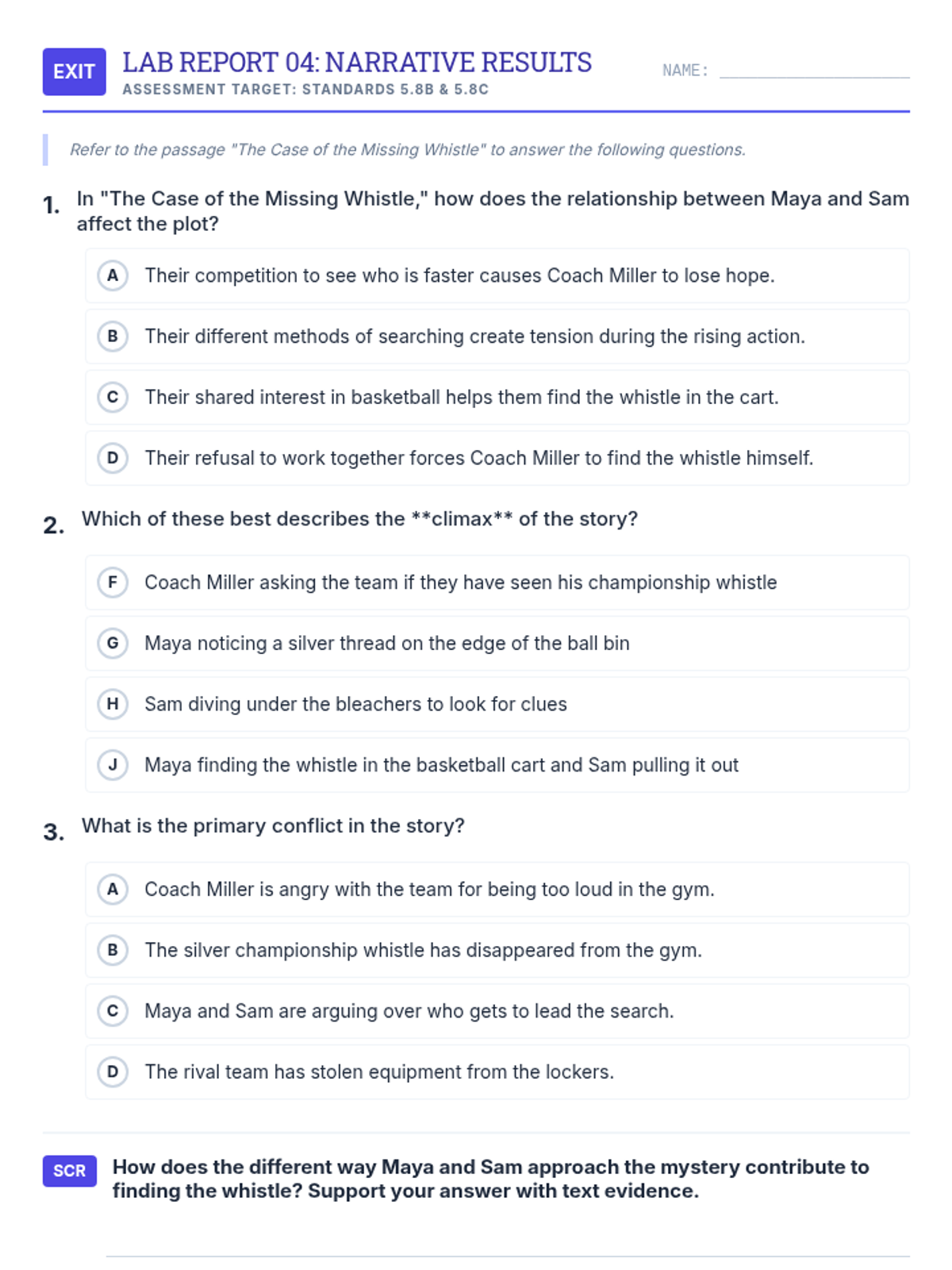
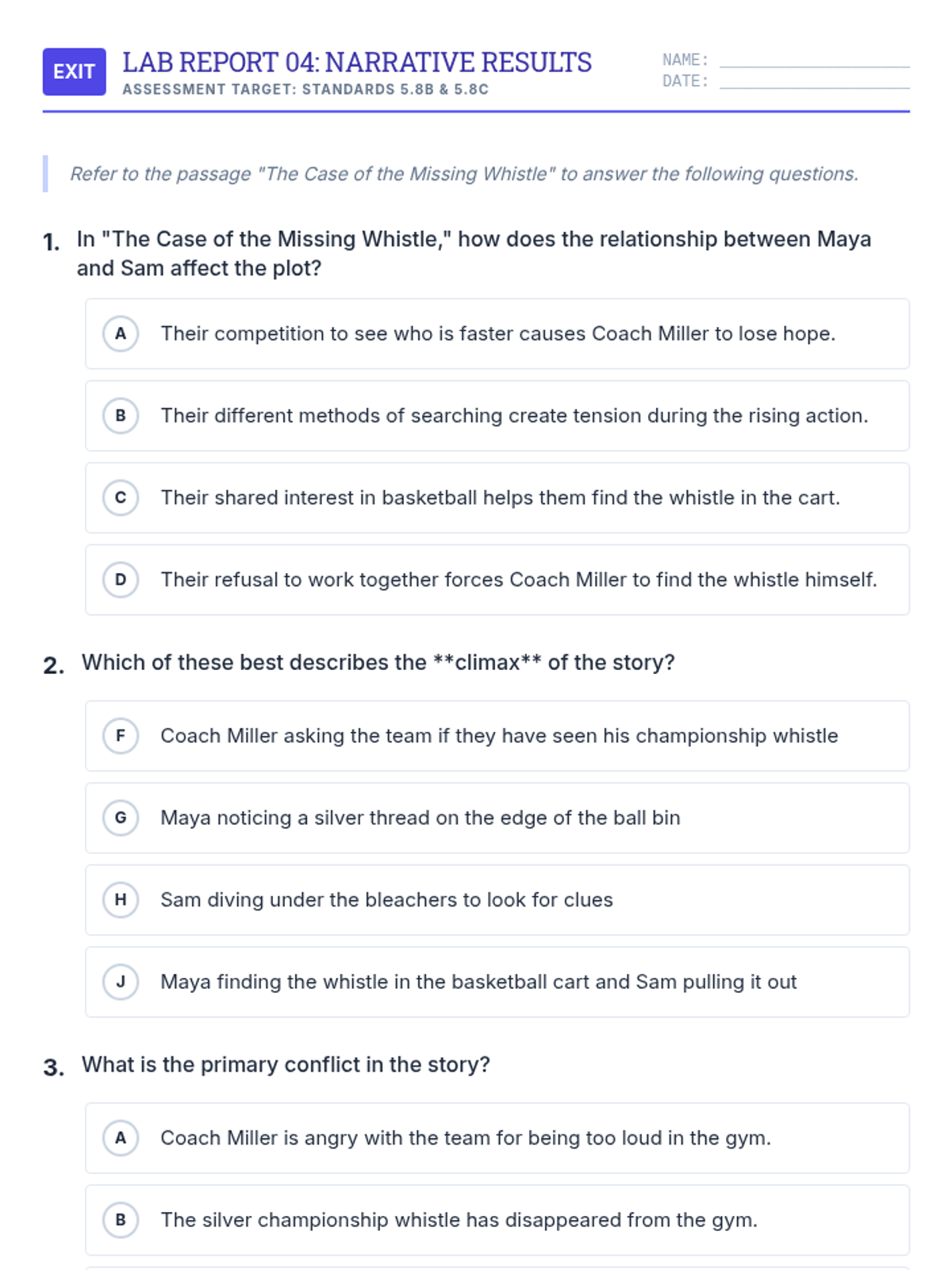
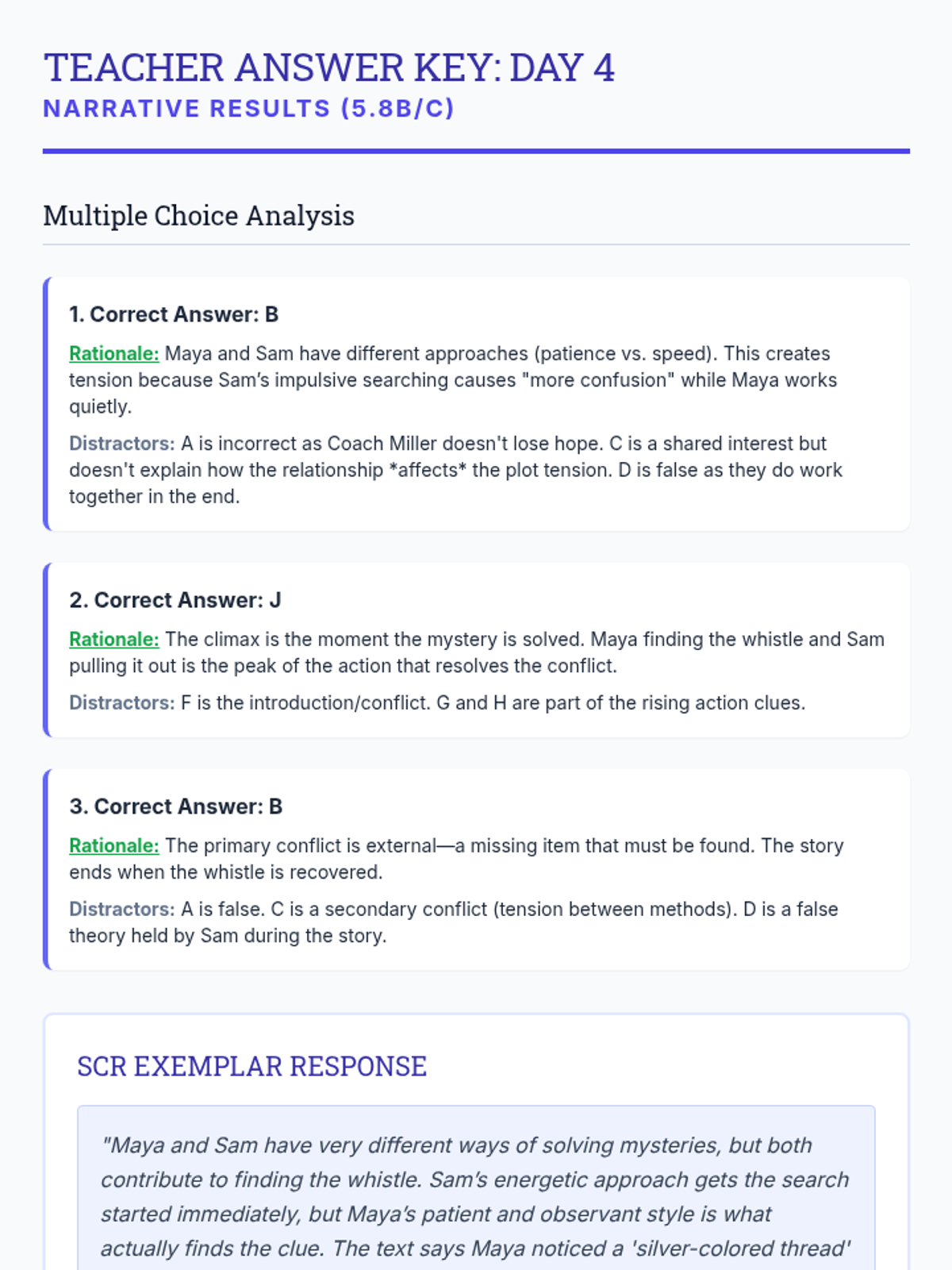
Day 4 serves as a synthesis day using a mystery genre. Students apply their knowledge of character conflict and plot resolution to solve a 'narrative puzzle' and complete a comprehensive assessment.
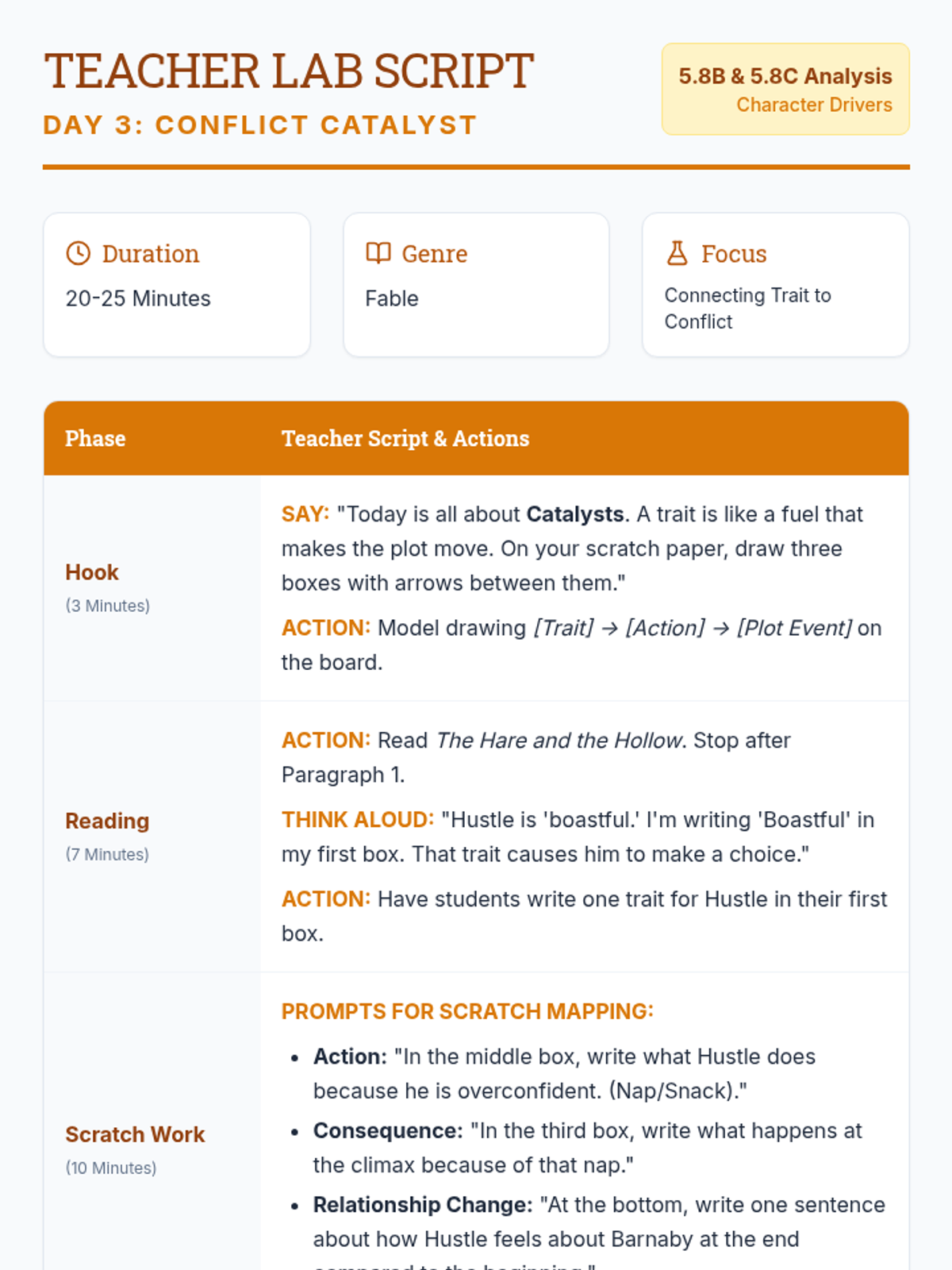
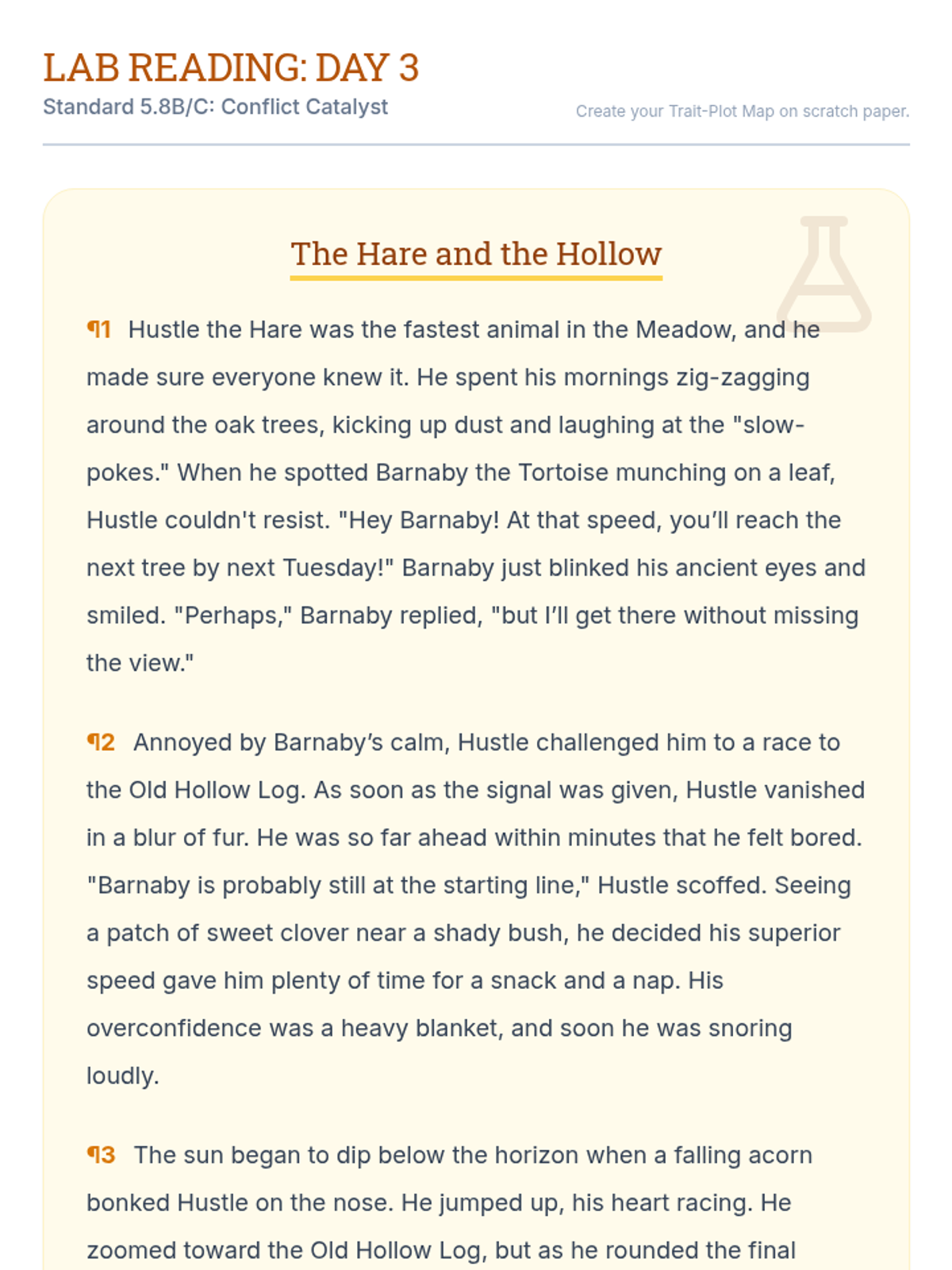
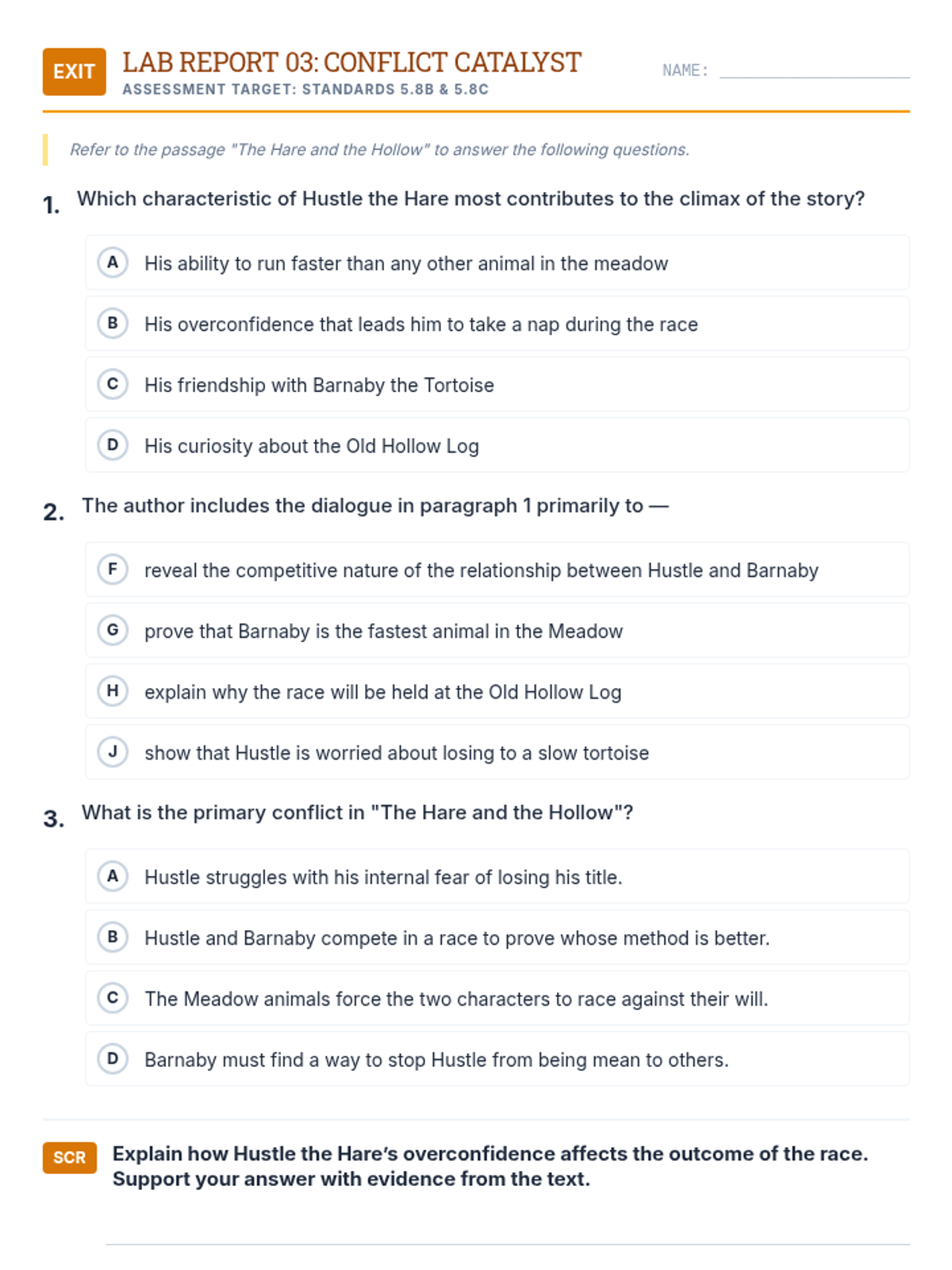
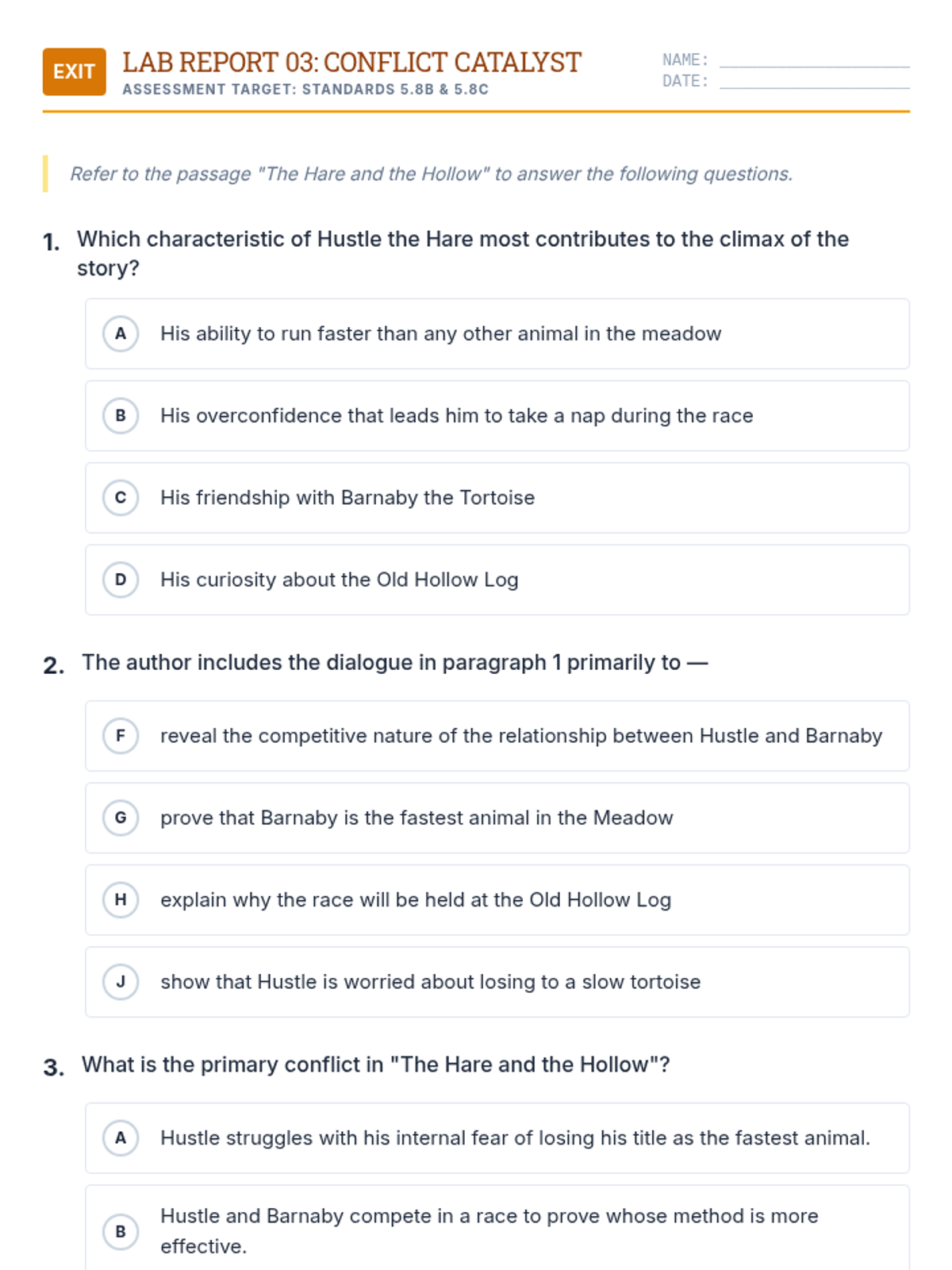
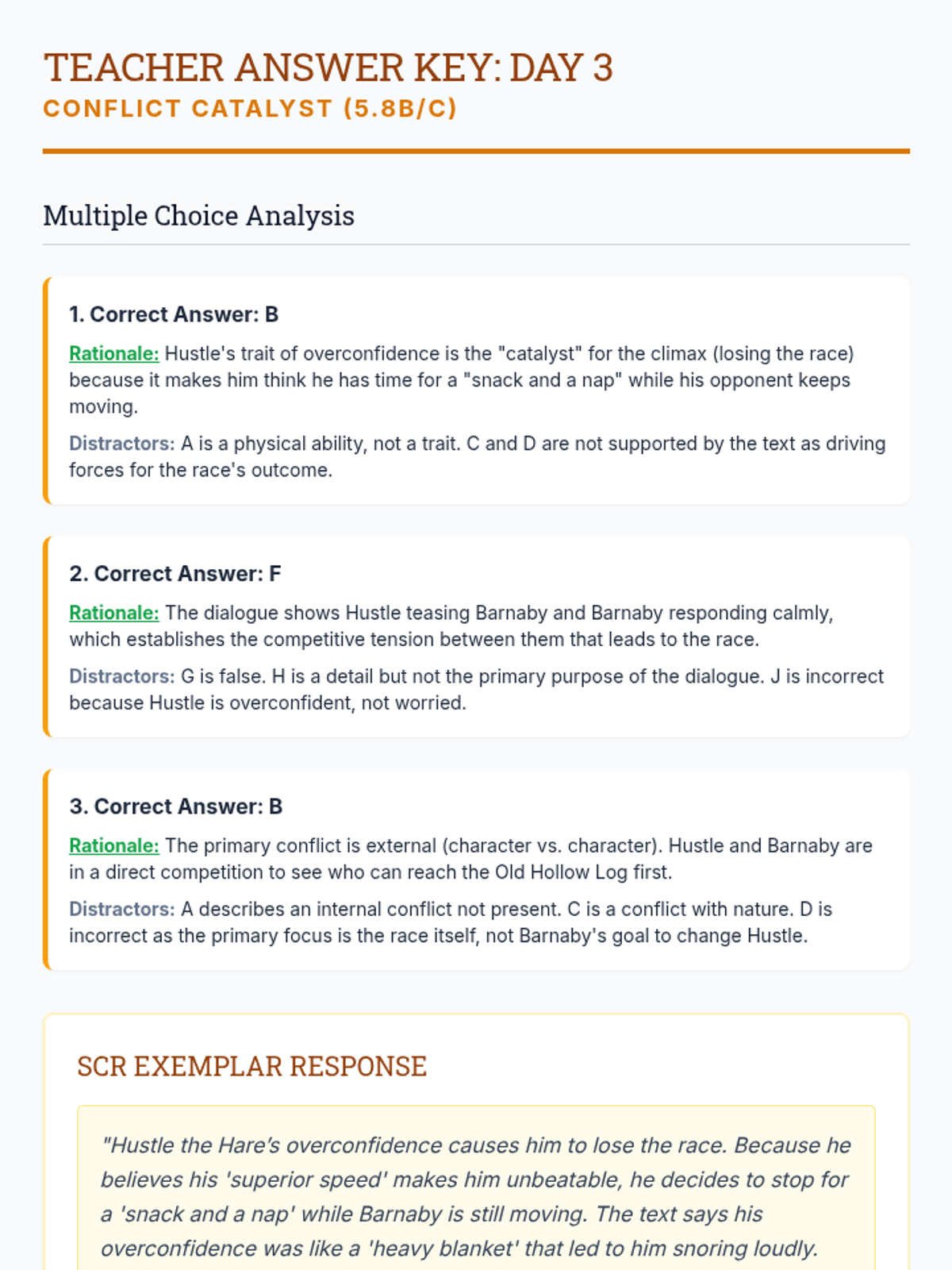
Day 3 integrates both character and plot (5.8B/C) using traditional literature (a fable). Students examine how a character's traits and choices create the conflict and lead to the climax.
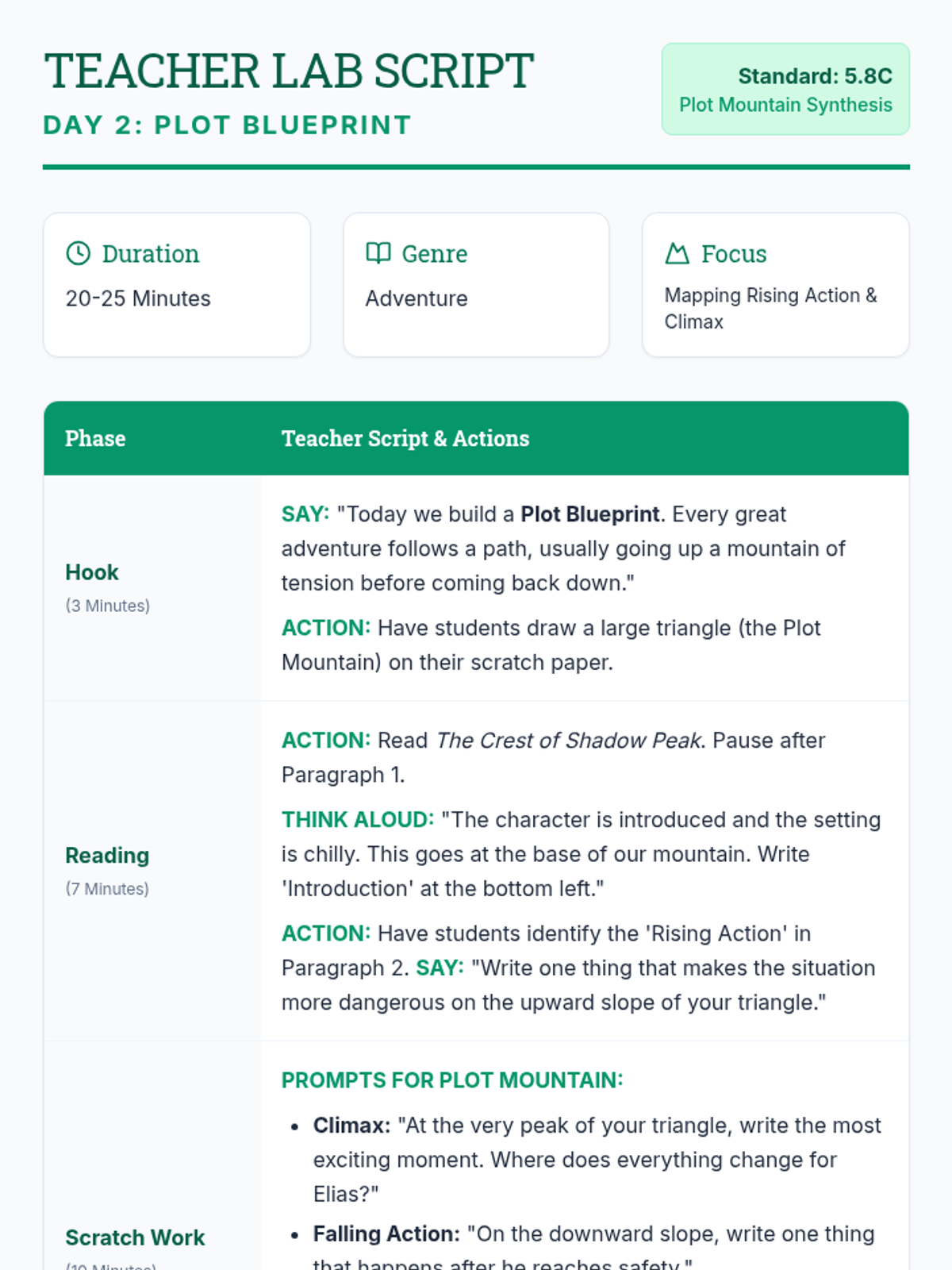
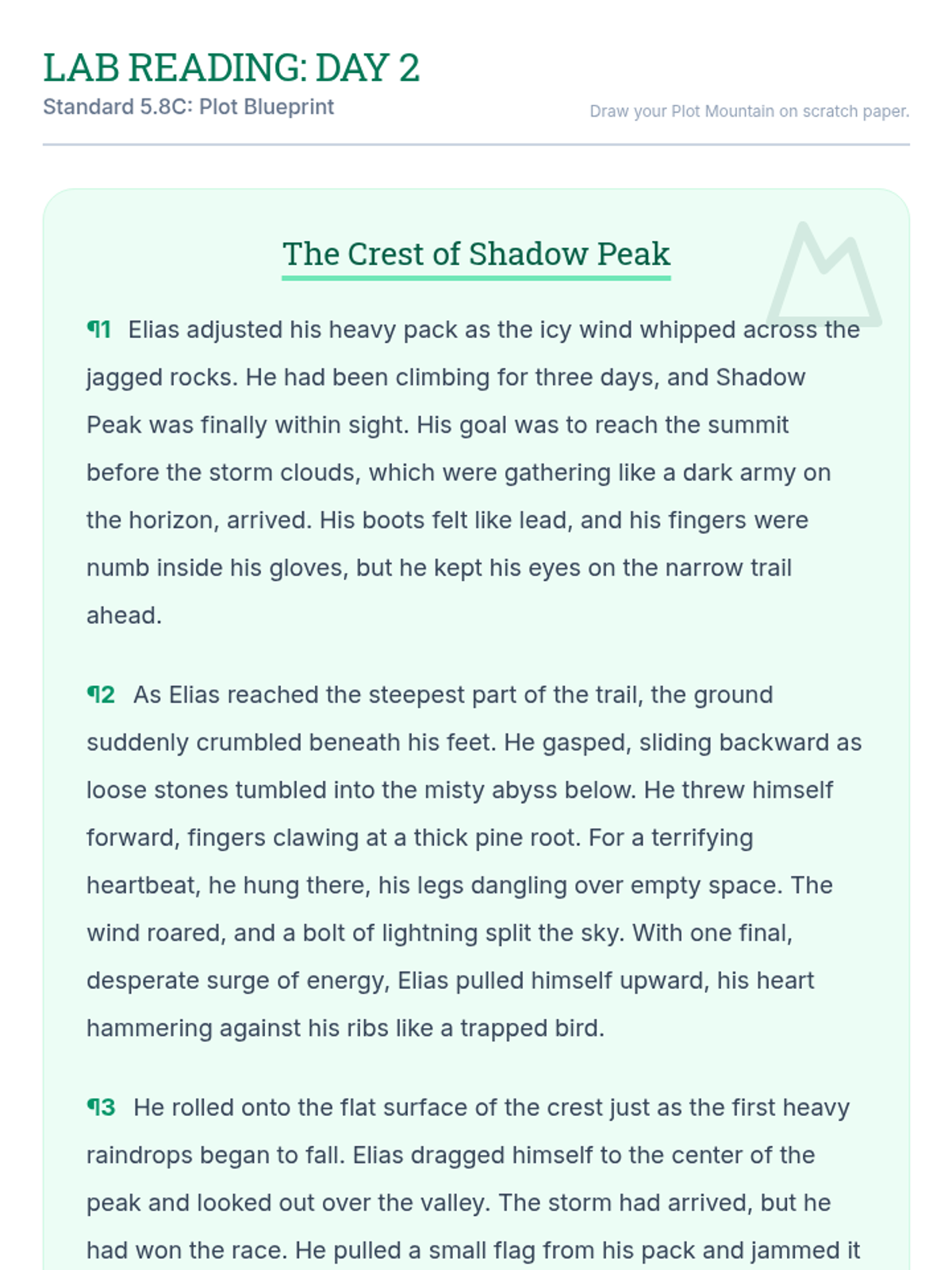
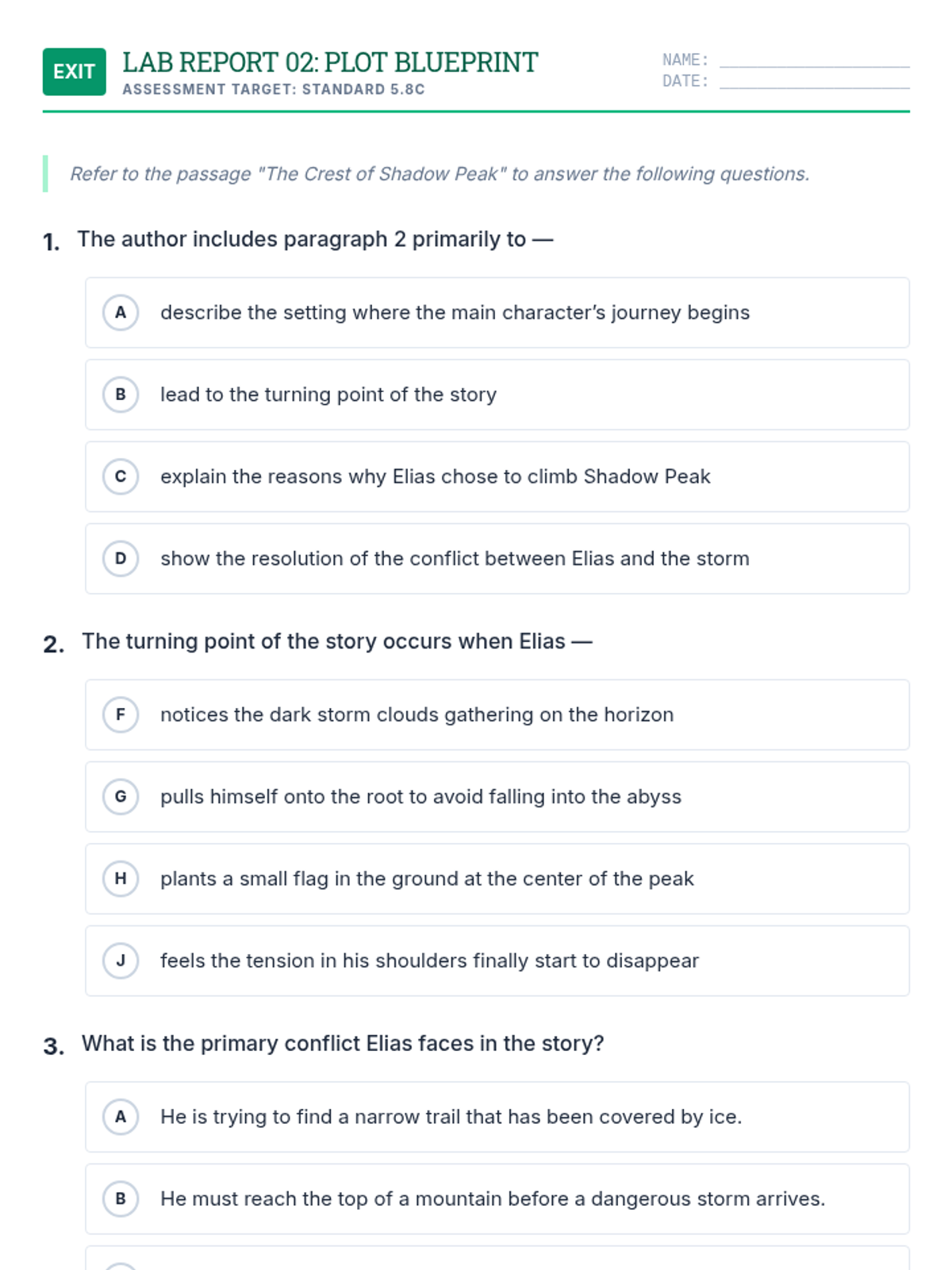
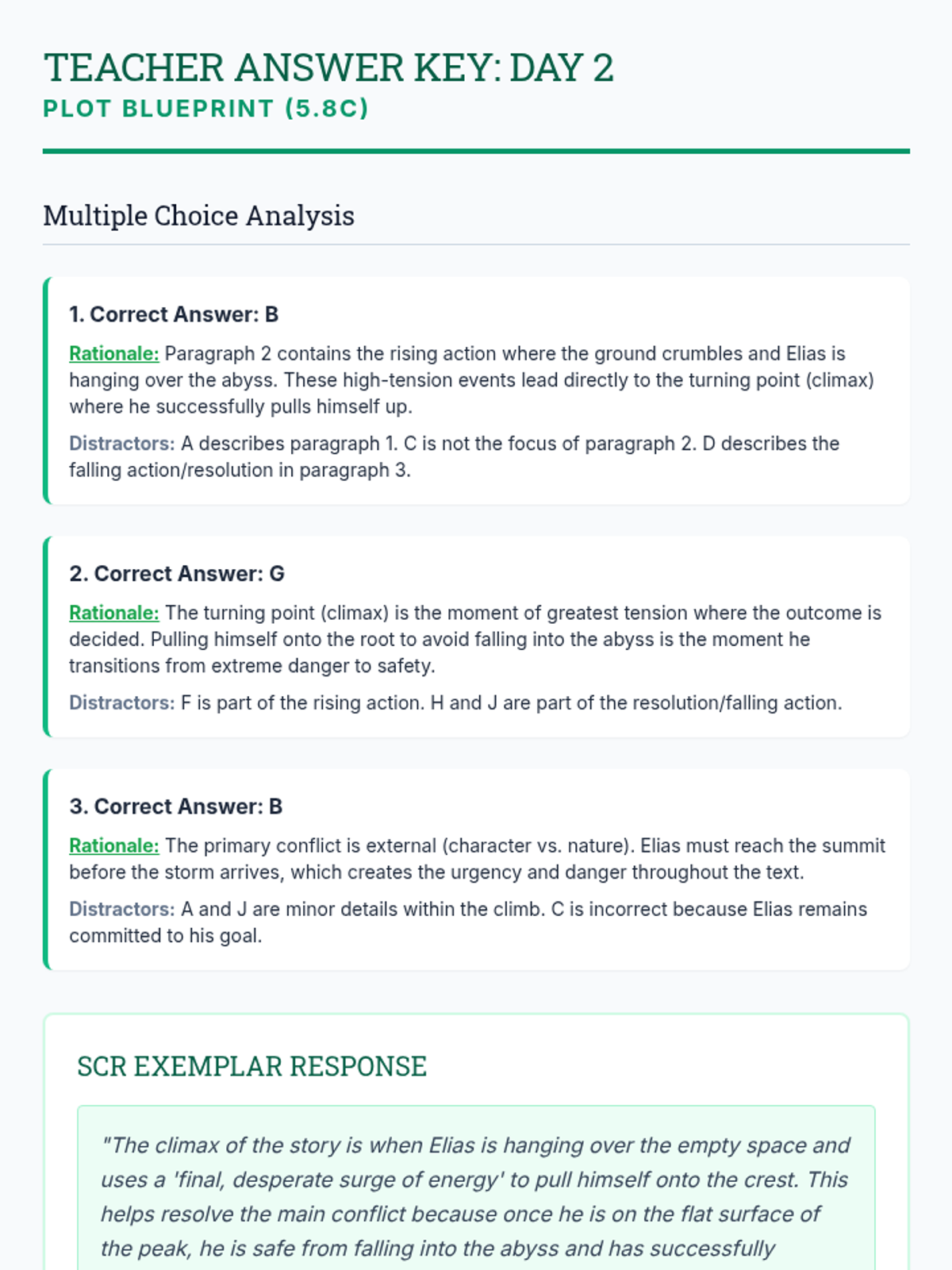
Day 2 focuses on plot elements (5.8C), specifically identifying the rising action, climax, and resolution in an adventure-themed text. Students map the 'Plot Peak' to understand story structure.
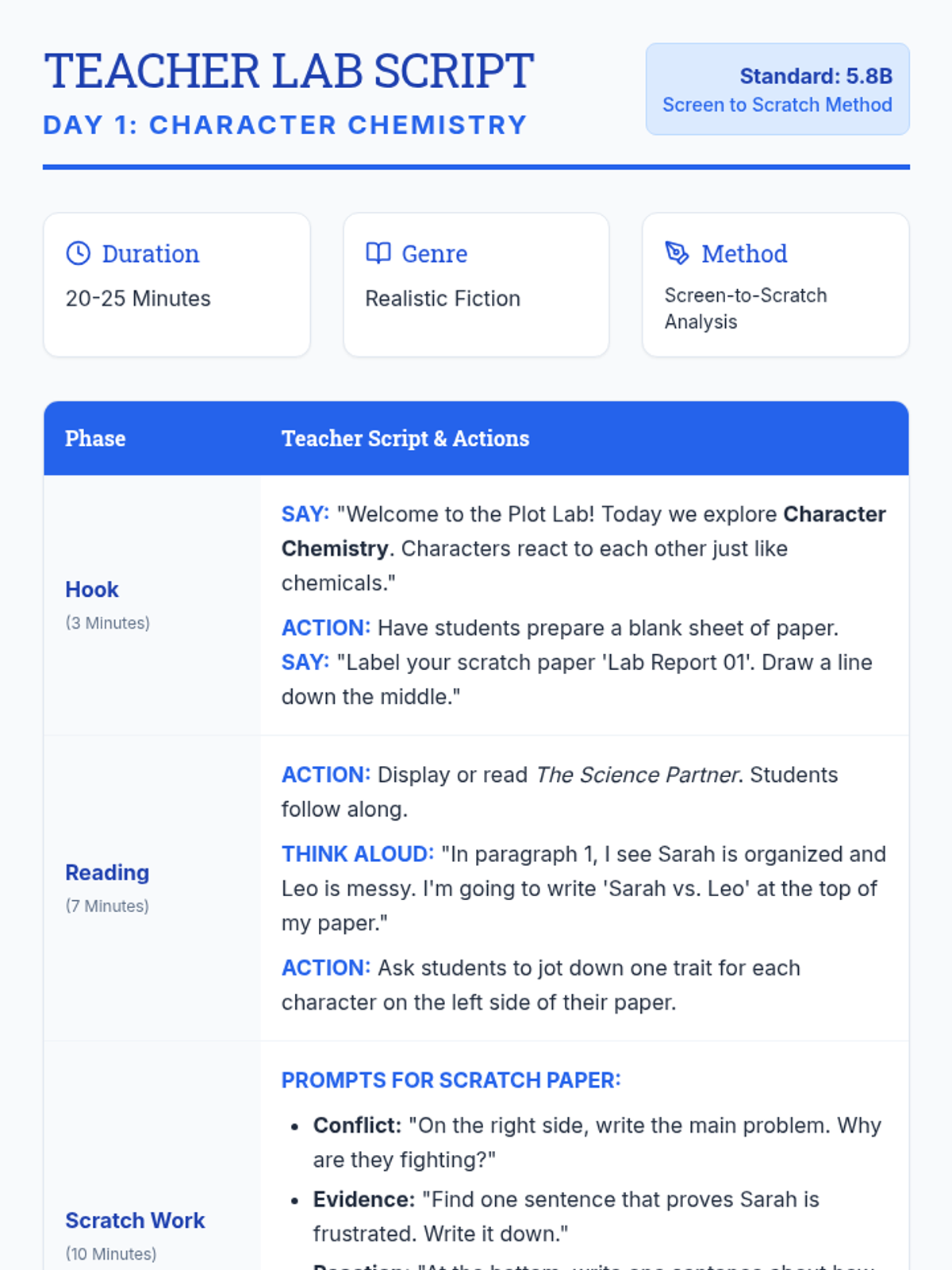
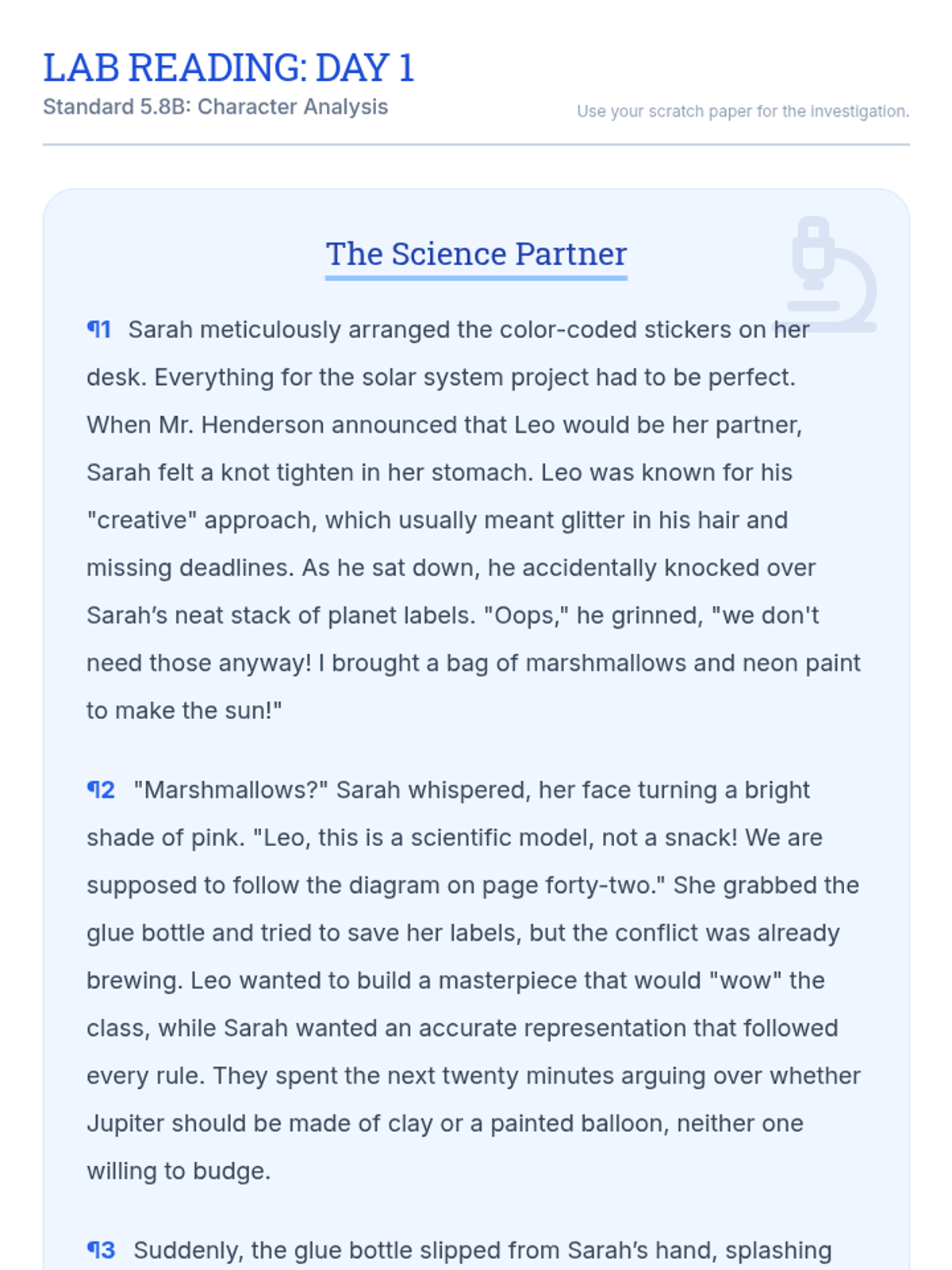
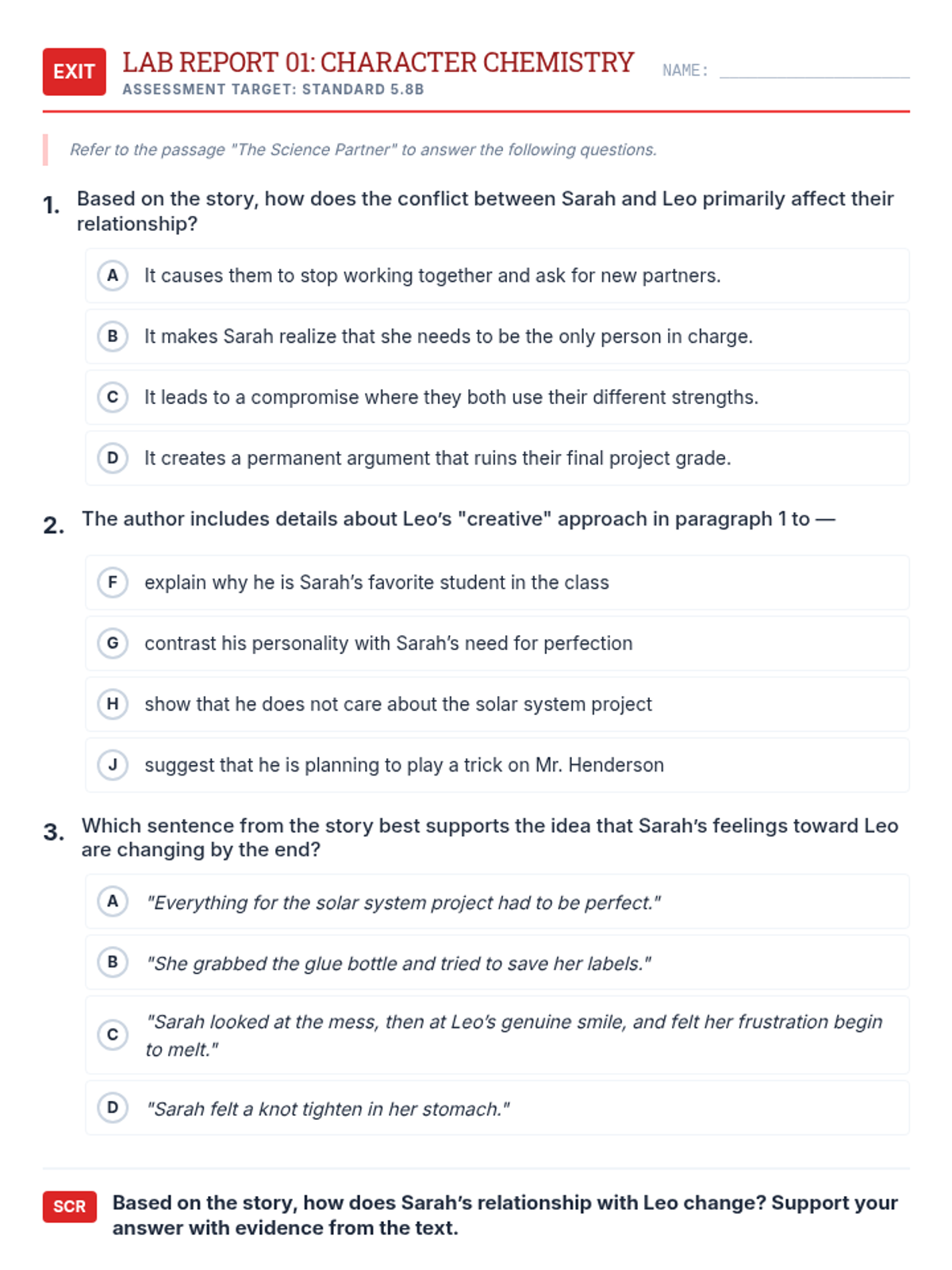
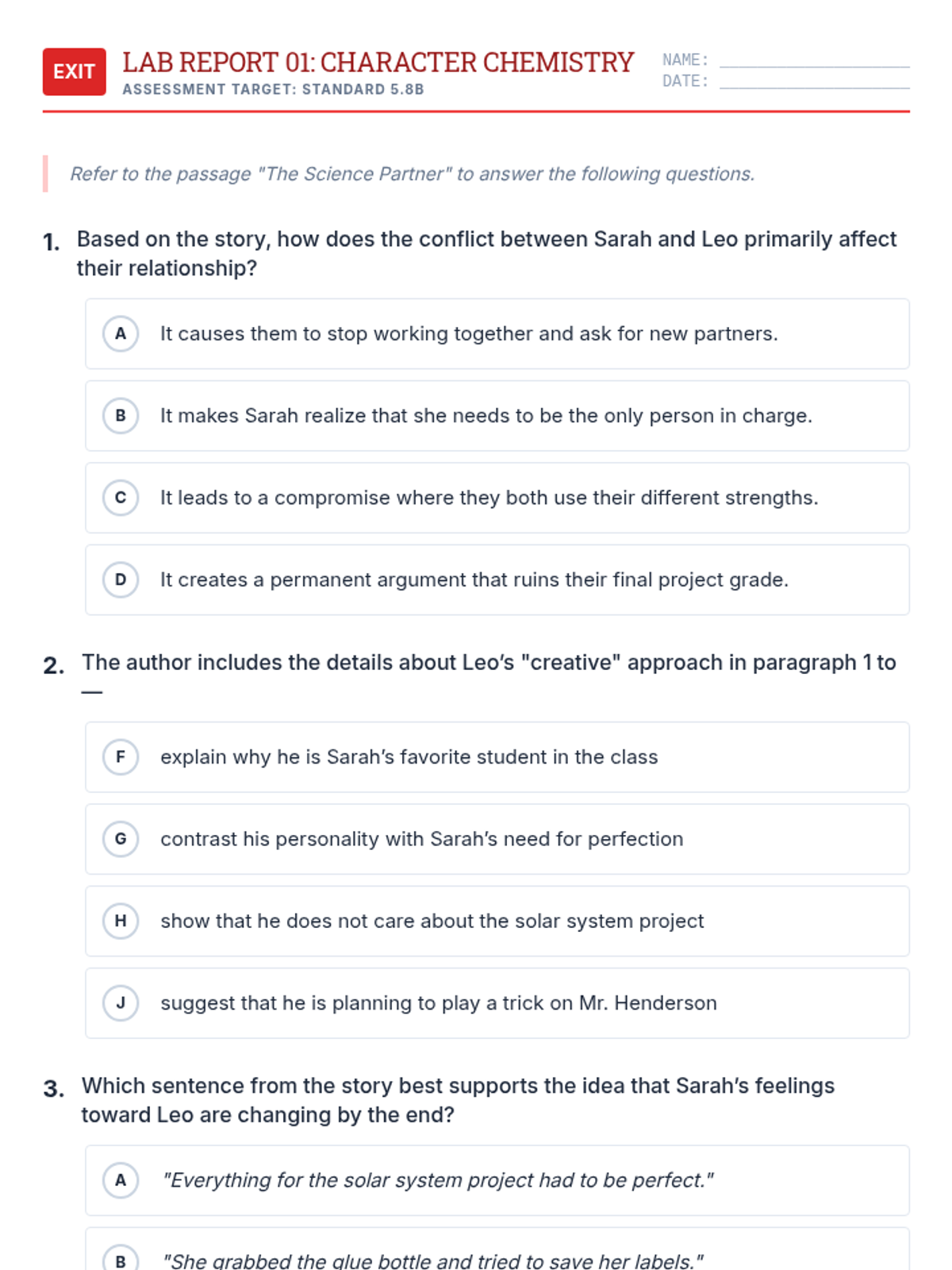
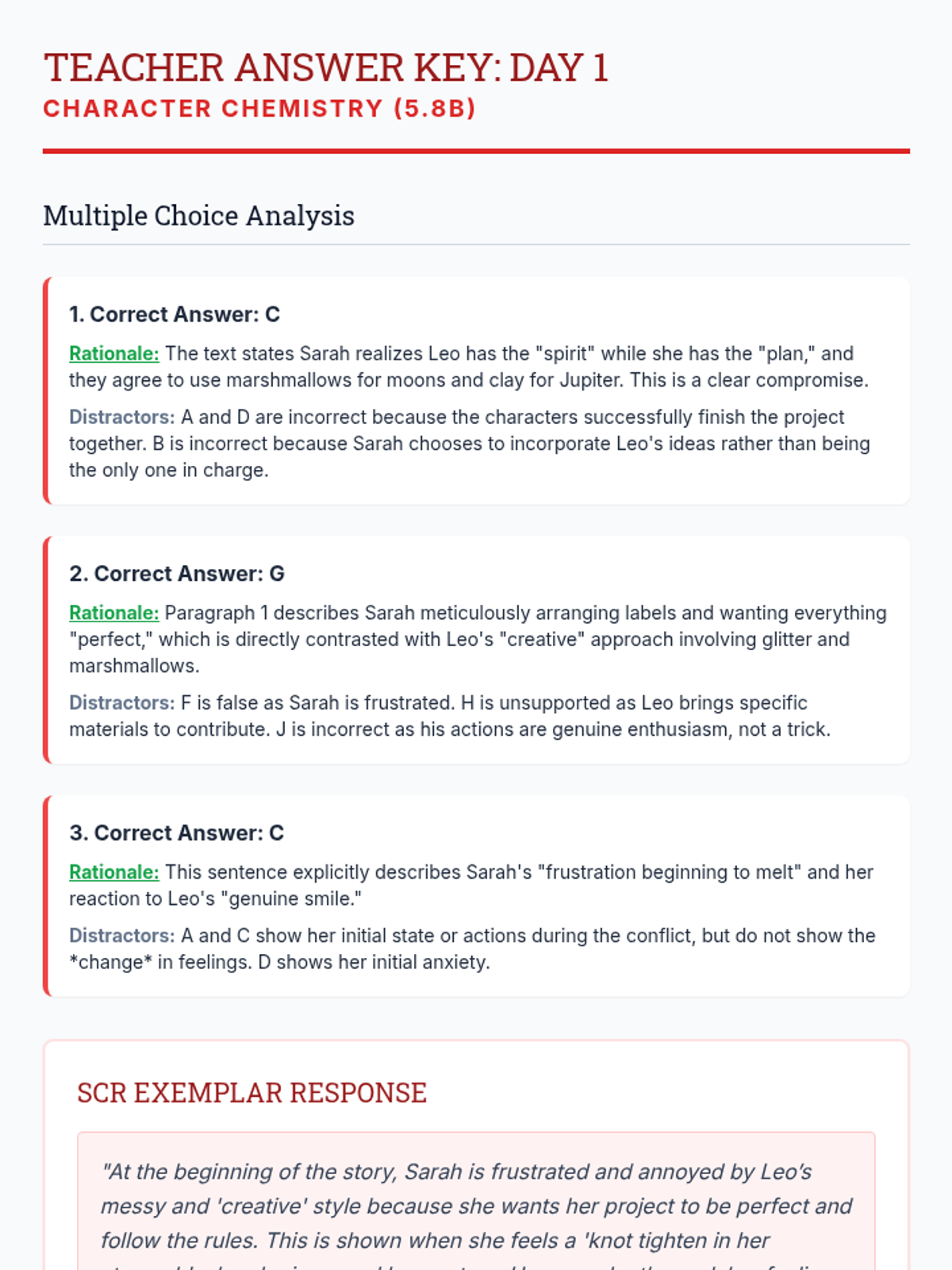
Day 1 focuses on analyzing character relationships and conflicts (5.8B) within a realistic fiction text. Students investigate how characters interact and the specific conflicts that drive their actions.