A lesson for grades 4-6 where students act as 'word detectives' to explore how suffixes change nouns into adjectives, featuring a Khan Academy video on culture and influence.

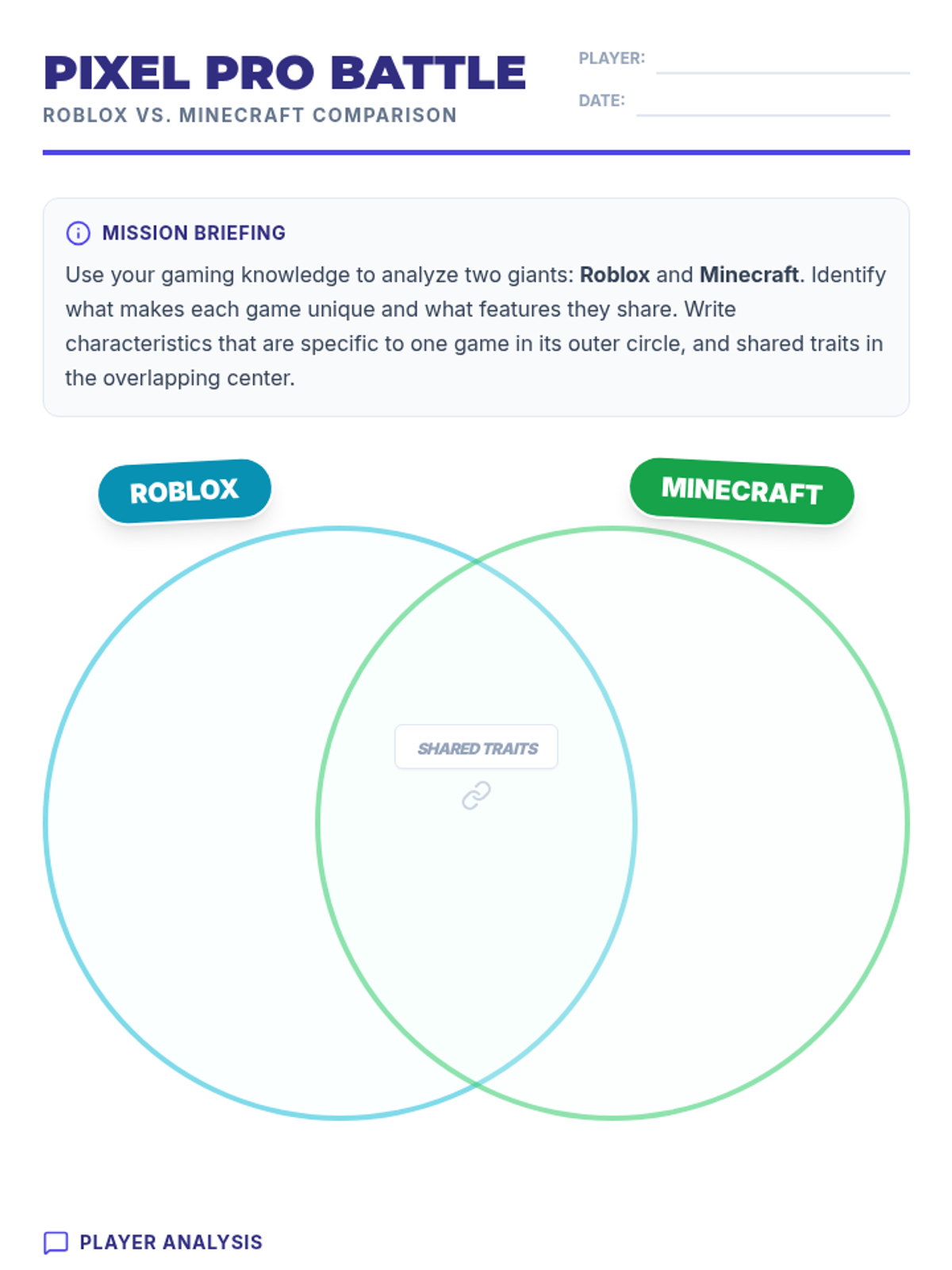
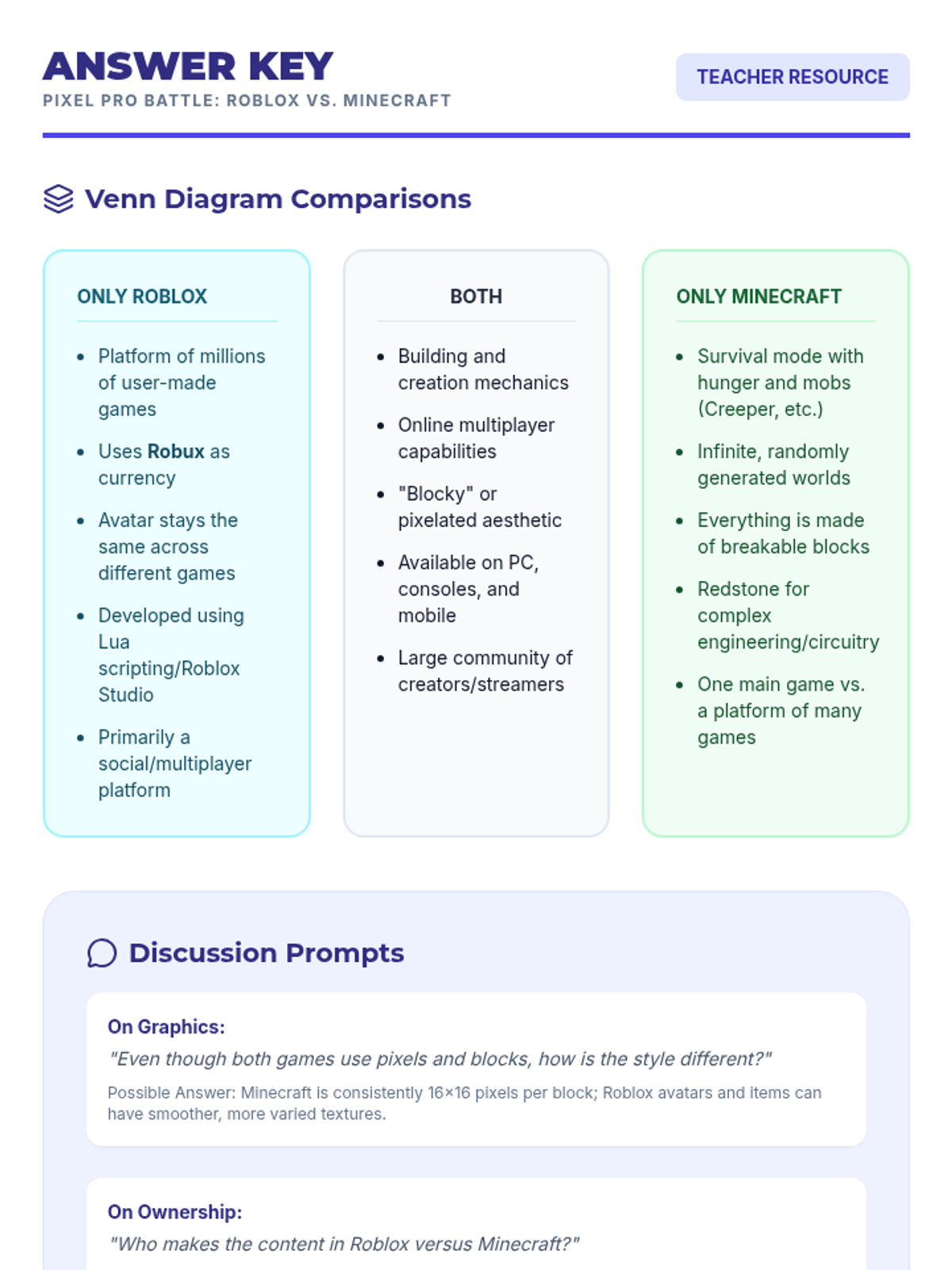
A lesson focused on building comparison and contrast skills by analyzing two popular video games, Roblox and Minecraft, using a Venn diagram.
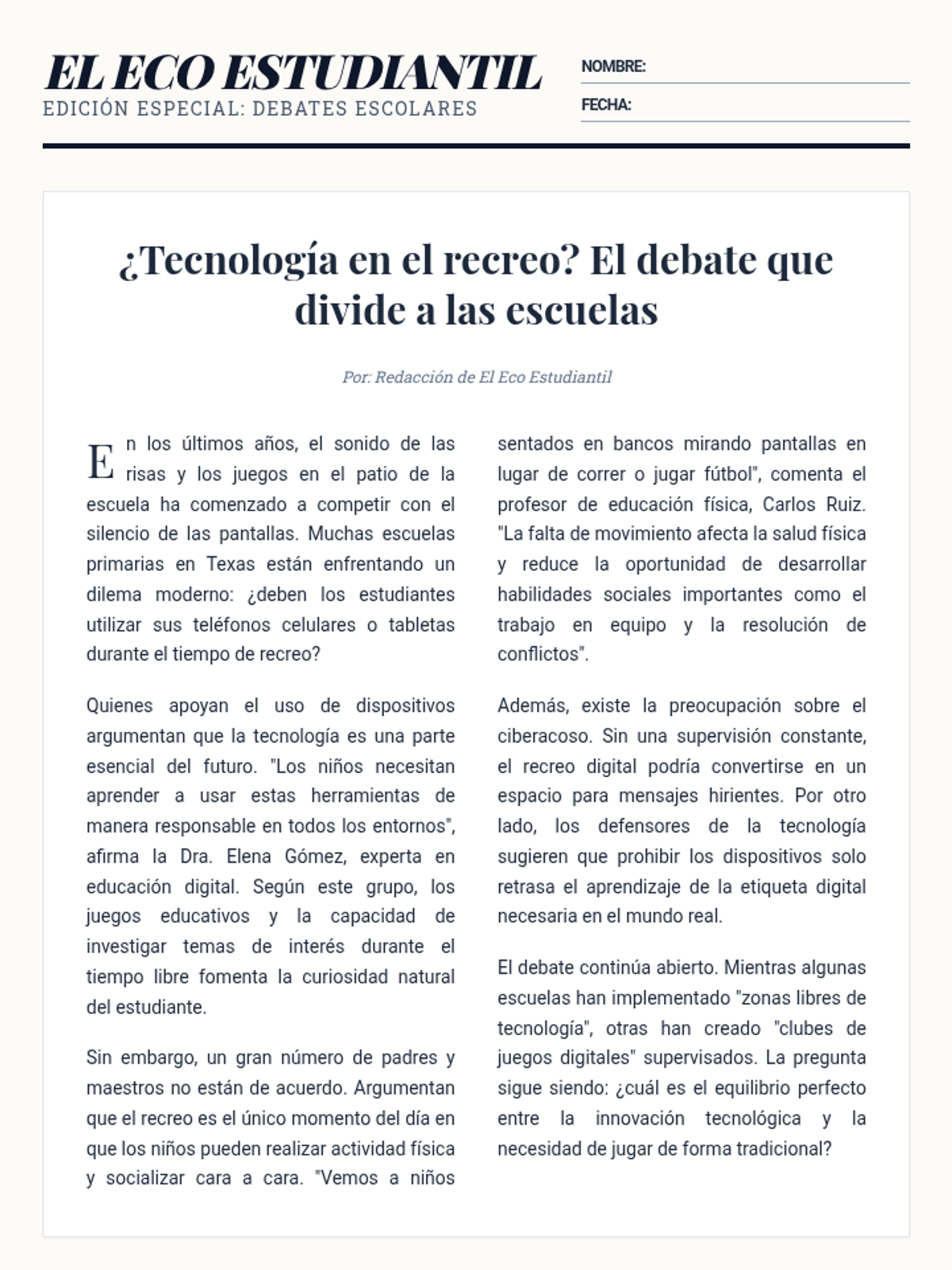
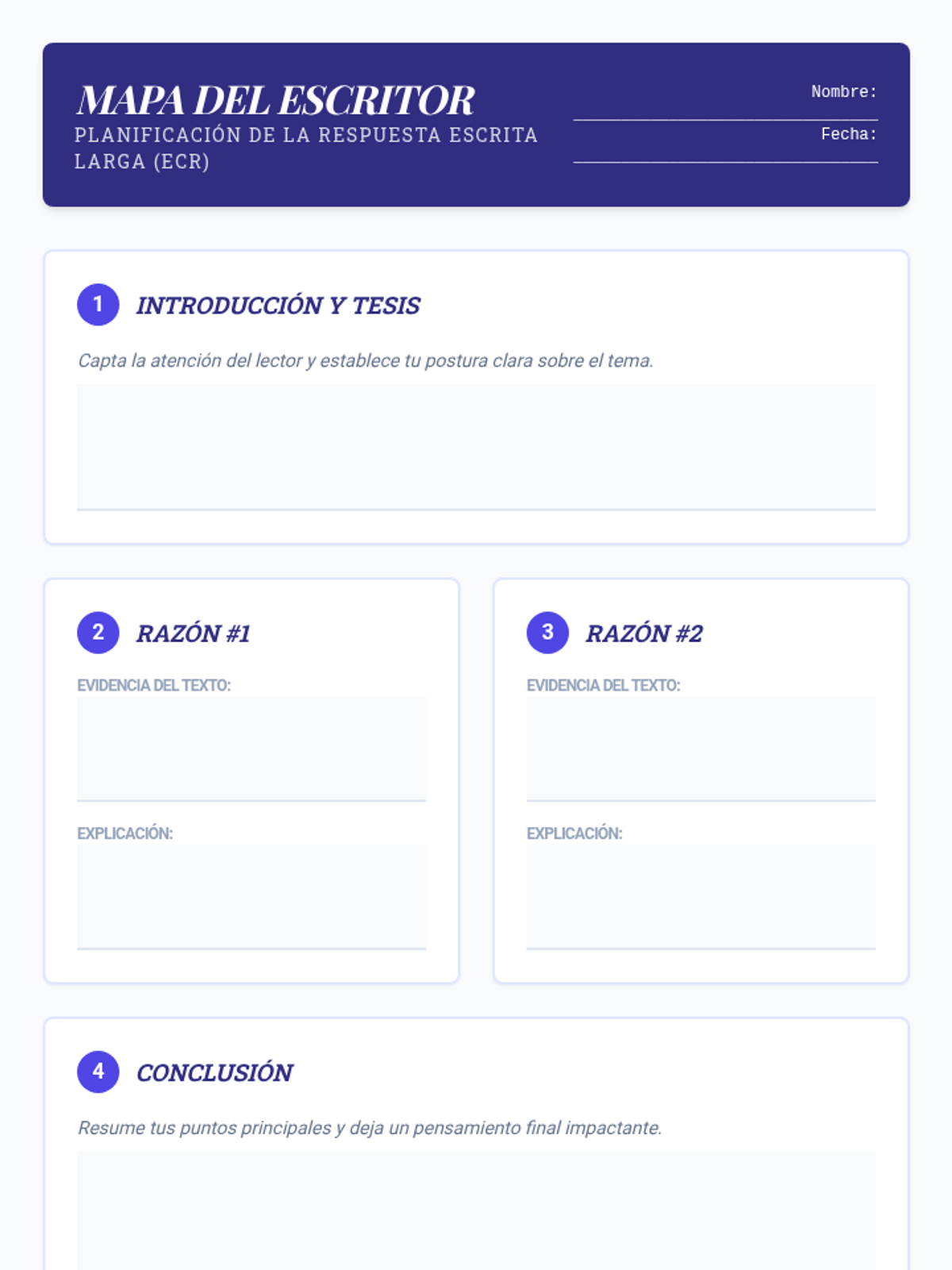
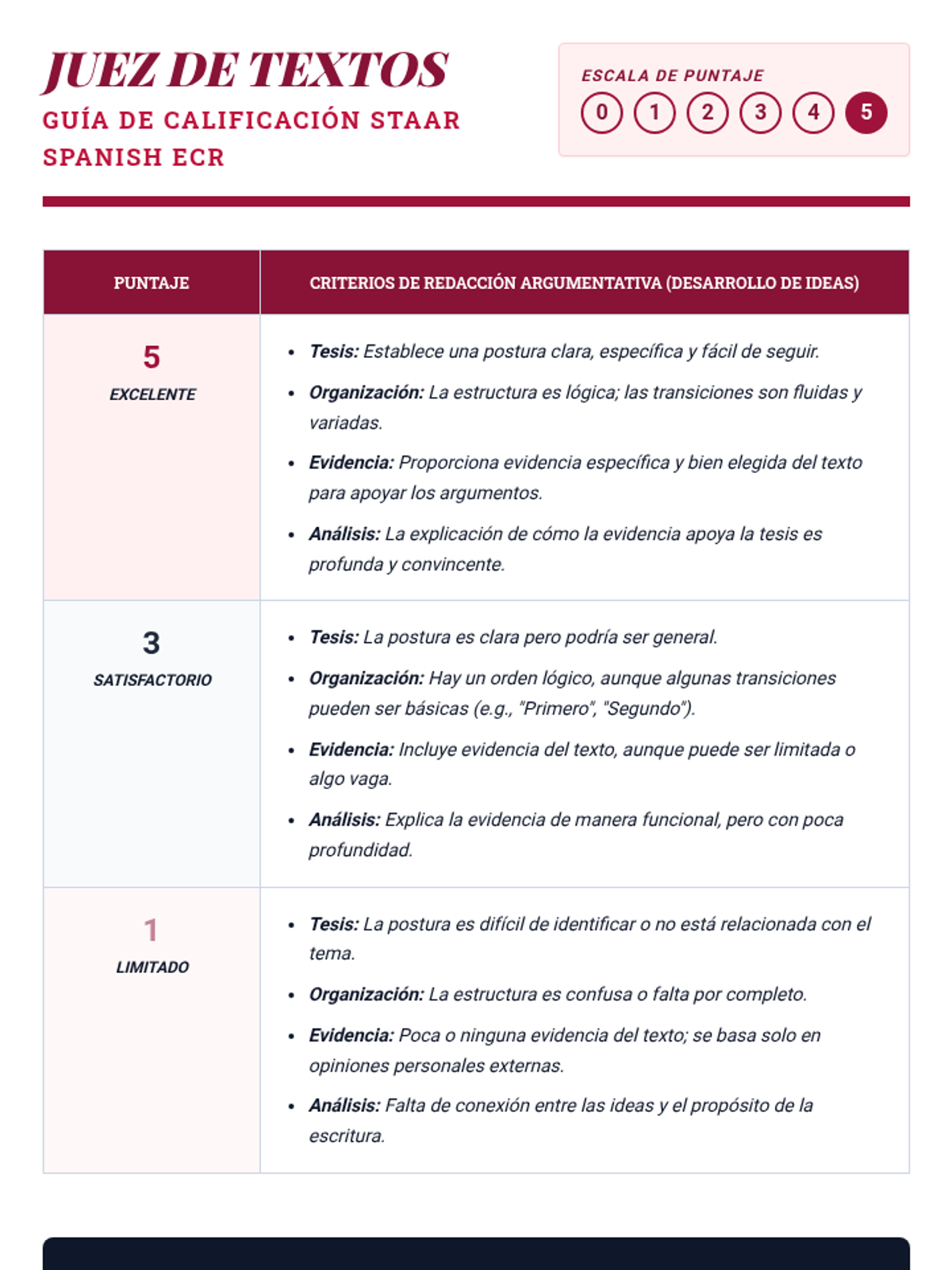
Una lección enfocada en desarrollar habilidades para la Respuesta Escrita Larga (ECR) en español, centrada en el género argumentativo para la prueba STAAR. Incluye un pasaje de lectura, un organizador gráfico de planificación y una guía de calificación detallada.
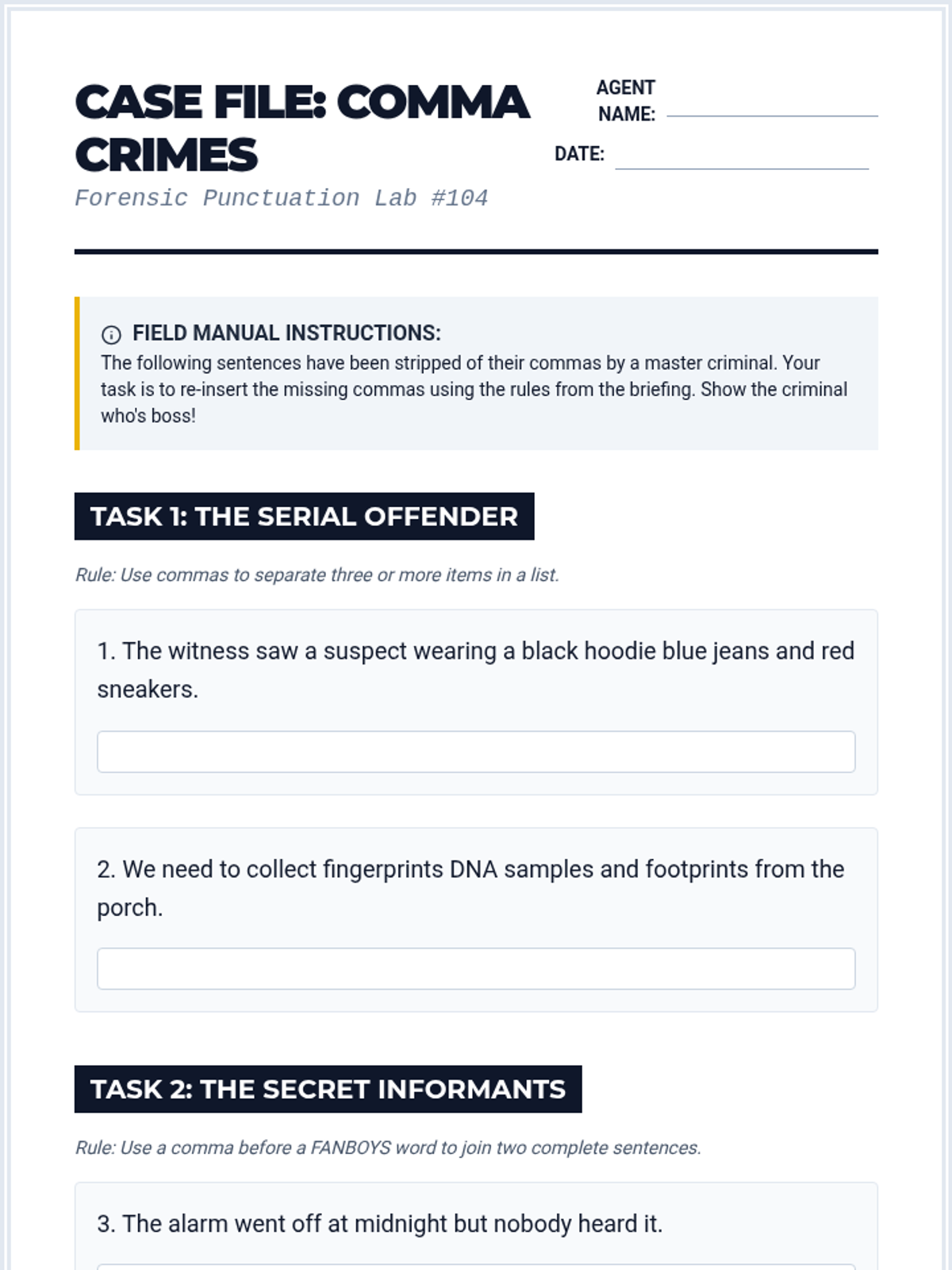
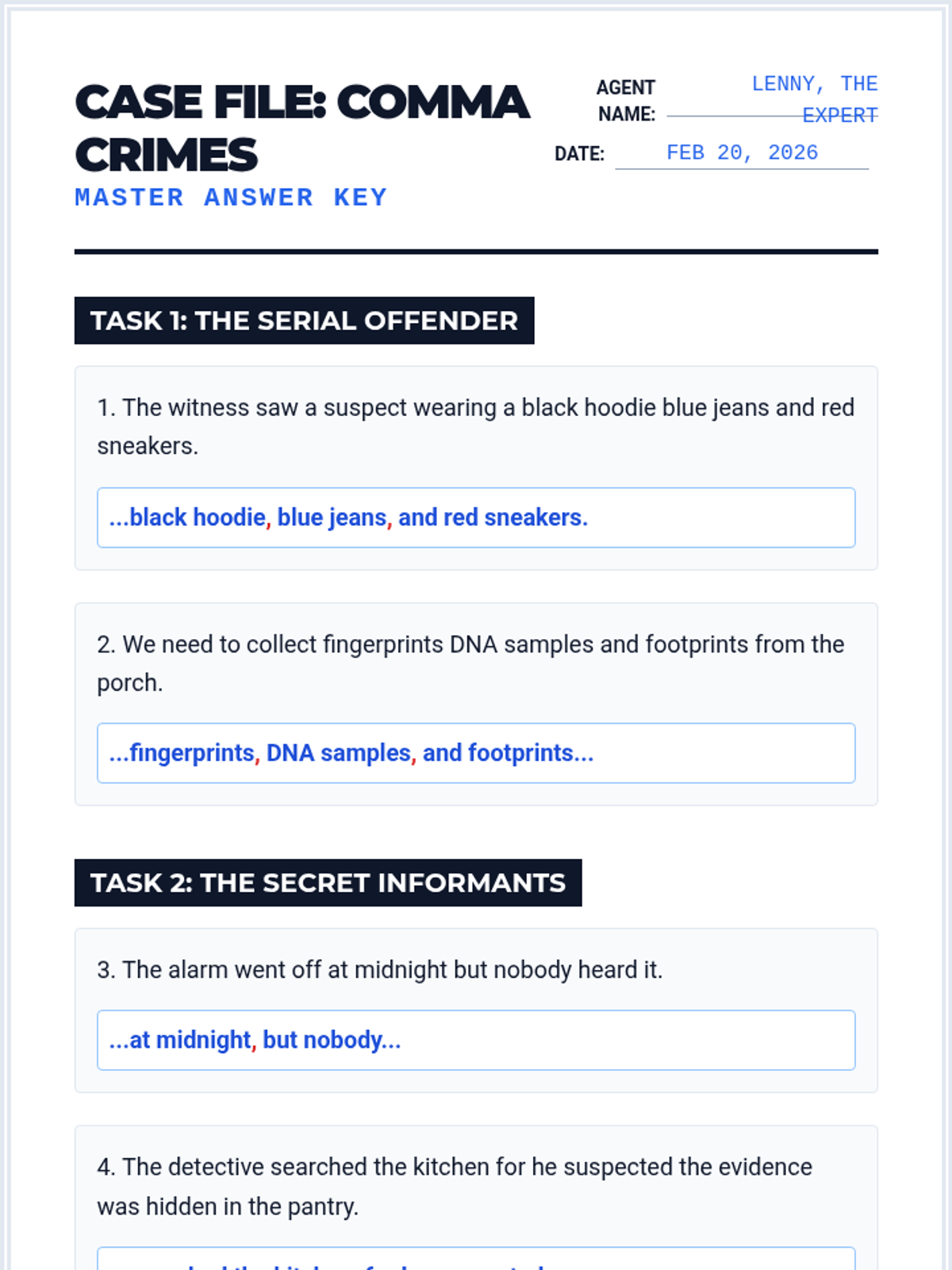
A comprehensive lesson on comma usage, themed as a forensic investigation to help students identify and correct common punctuation errors.
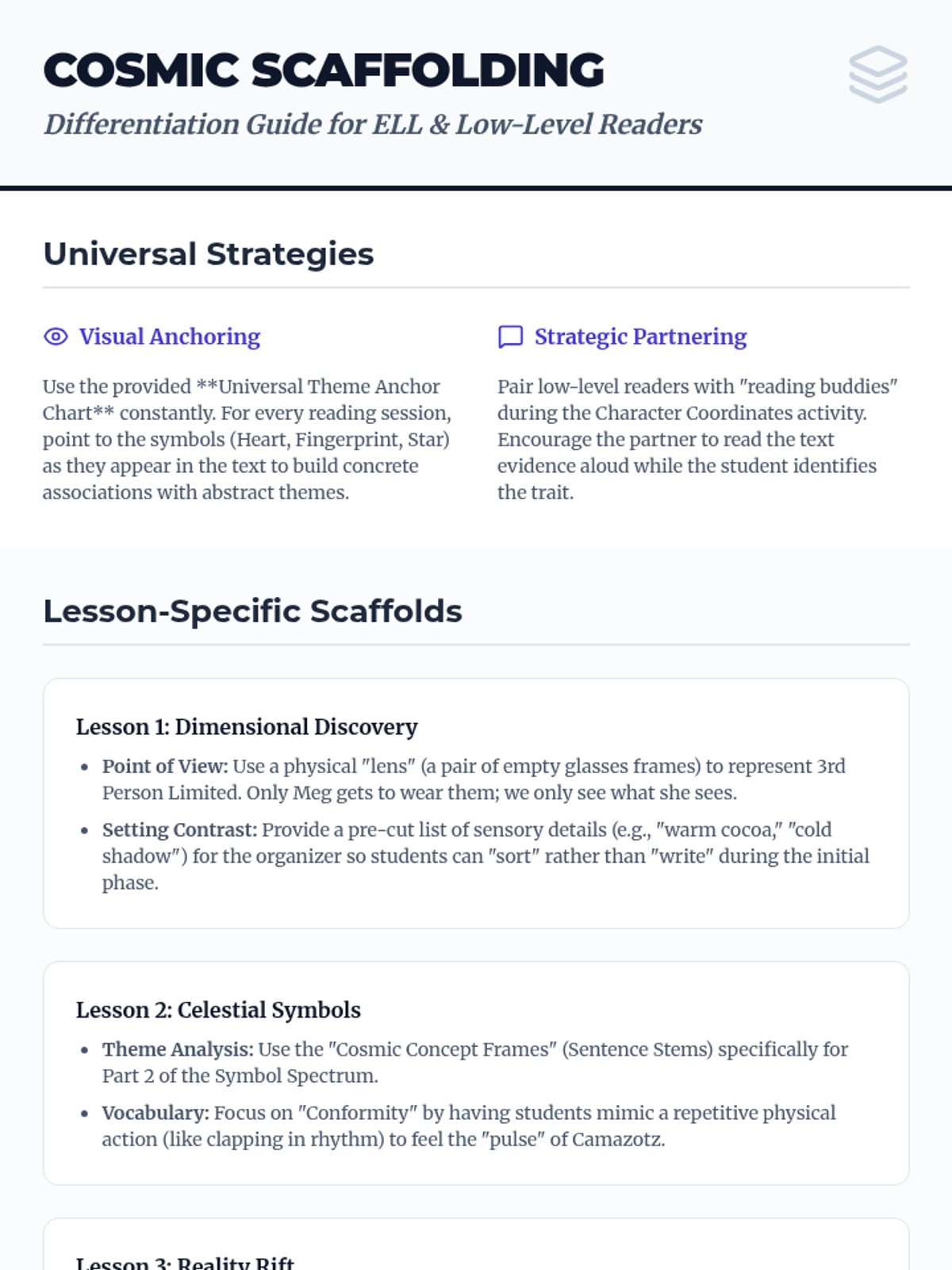
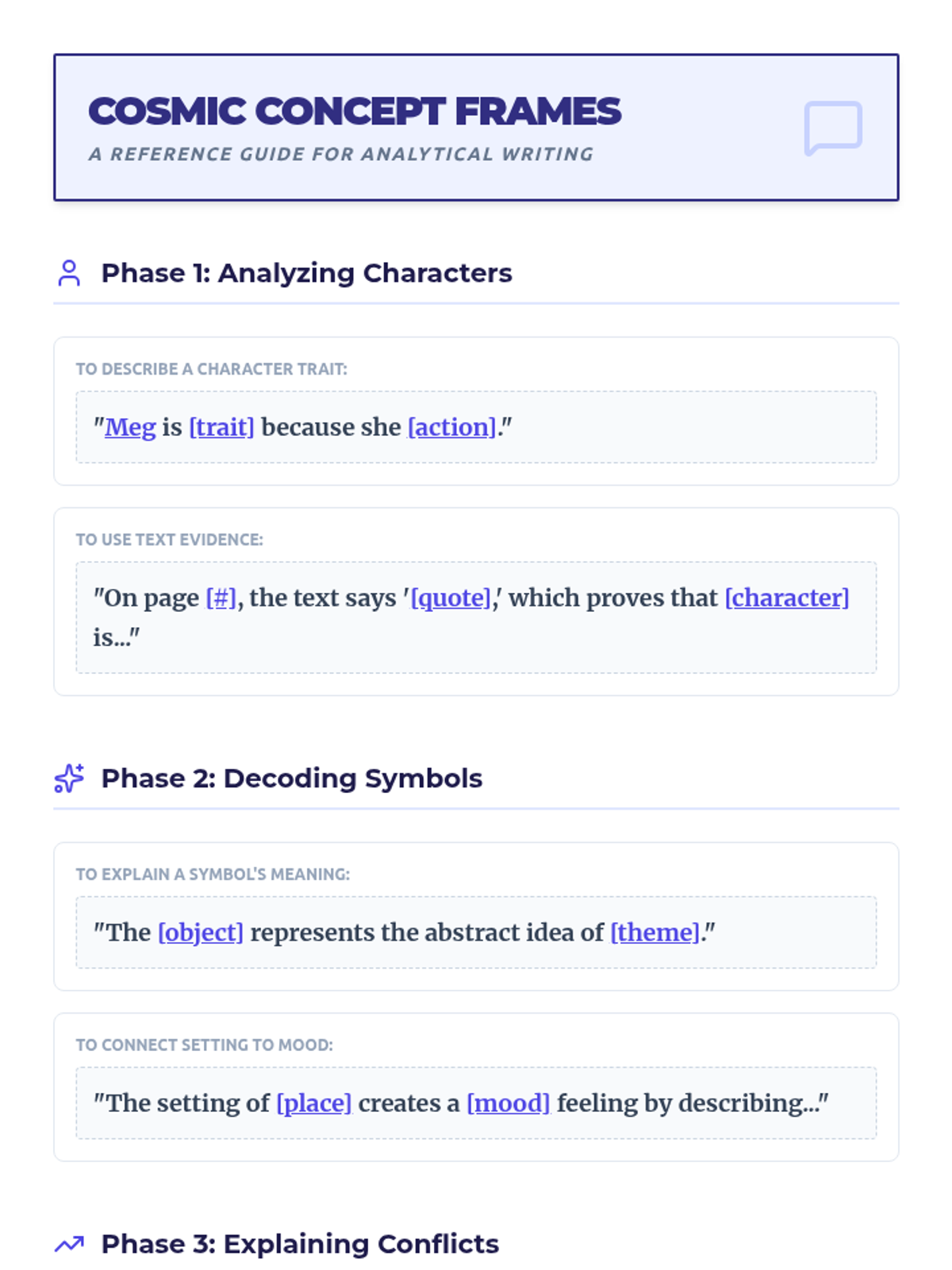
A collection of universal supports and teaching tools designed to aid differentiation and provide scaffolding for all students throughout the 'Cosmic Chronicles' unit.
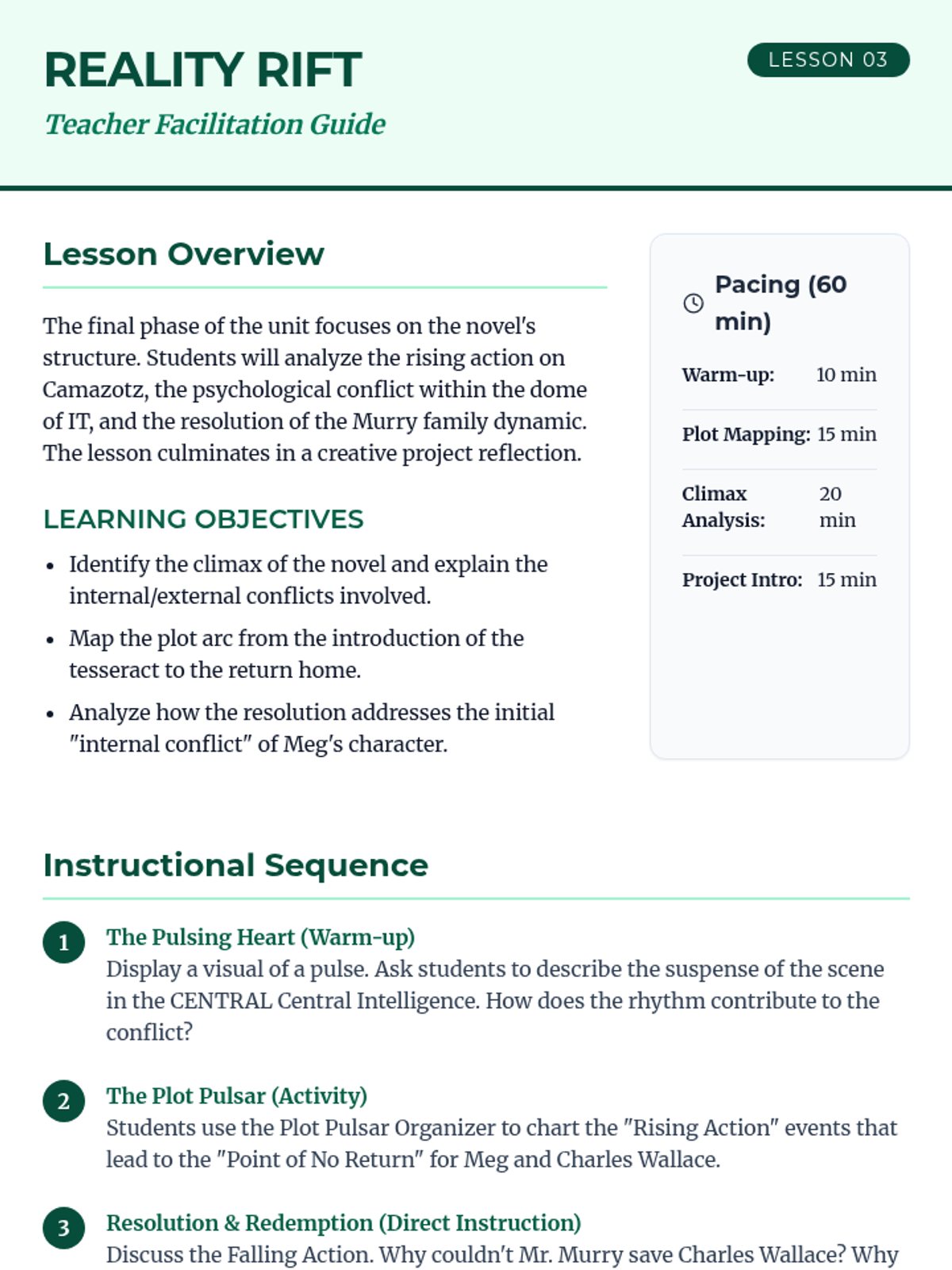
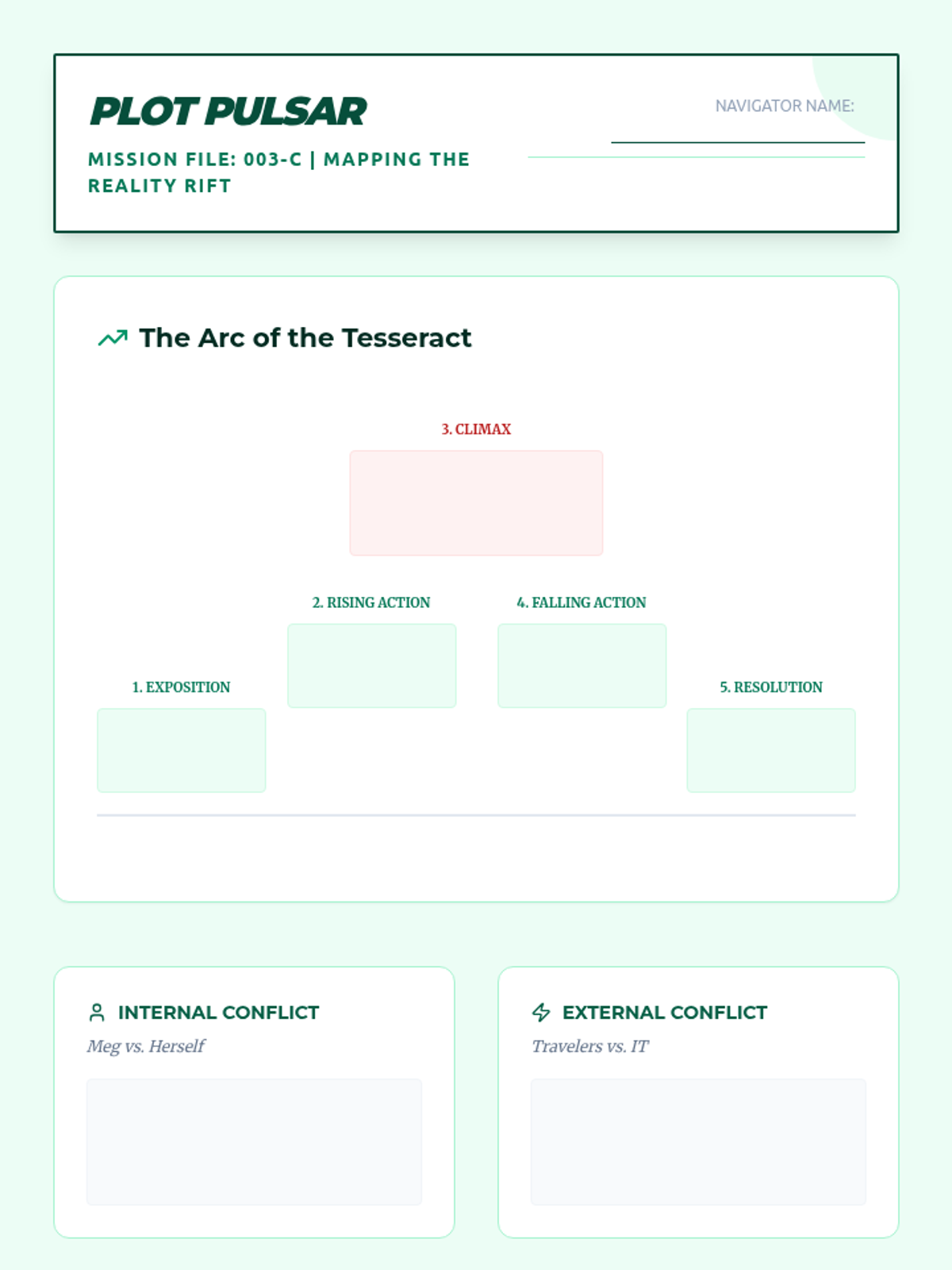
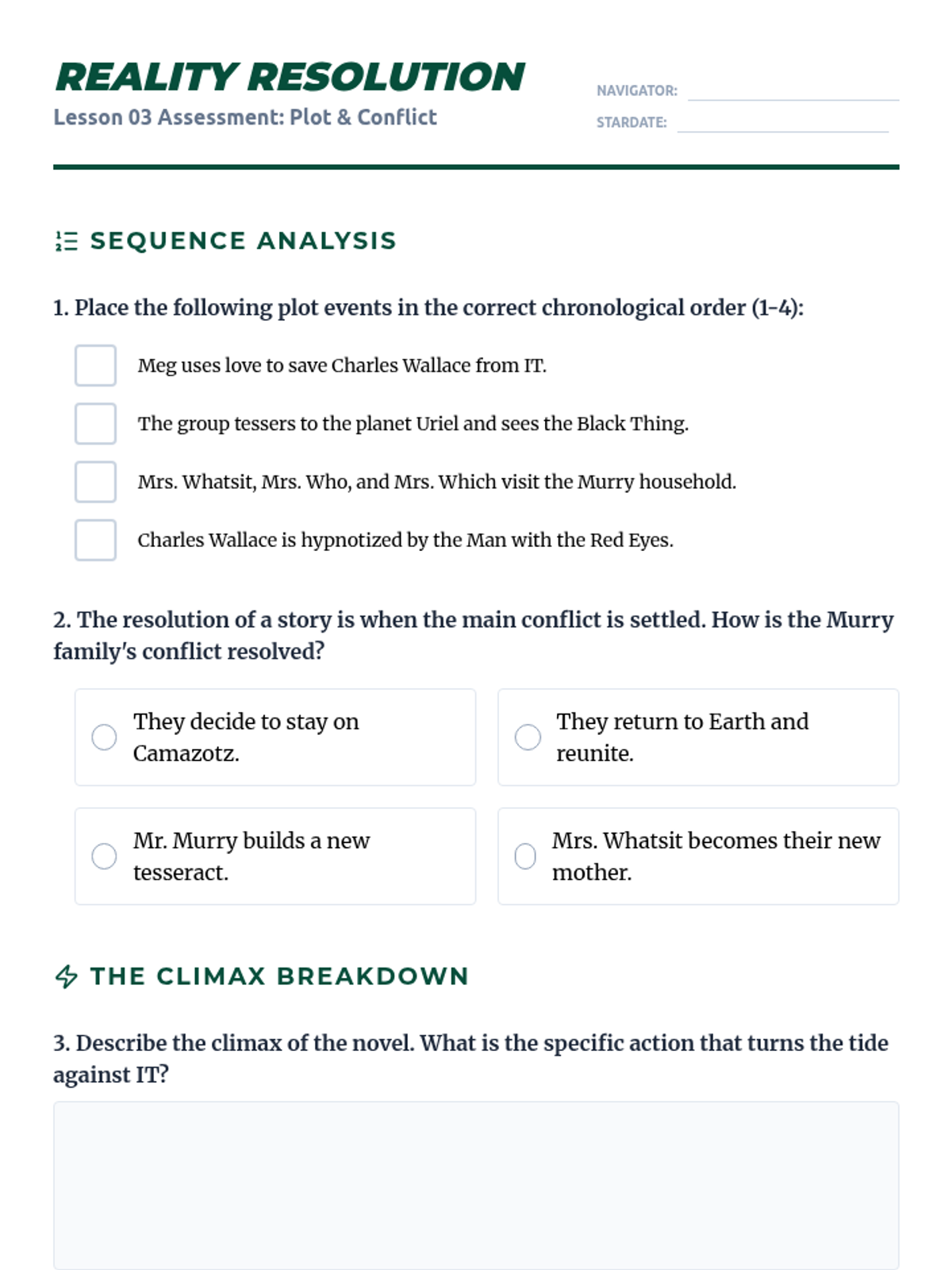
An analysis of the novel's rising action, the climactic confrontation with IT, and the resolution of the Murry family's struggle.
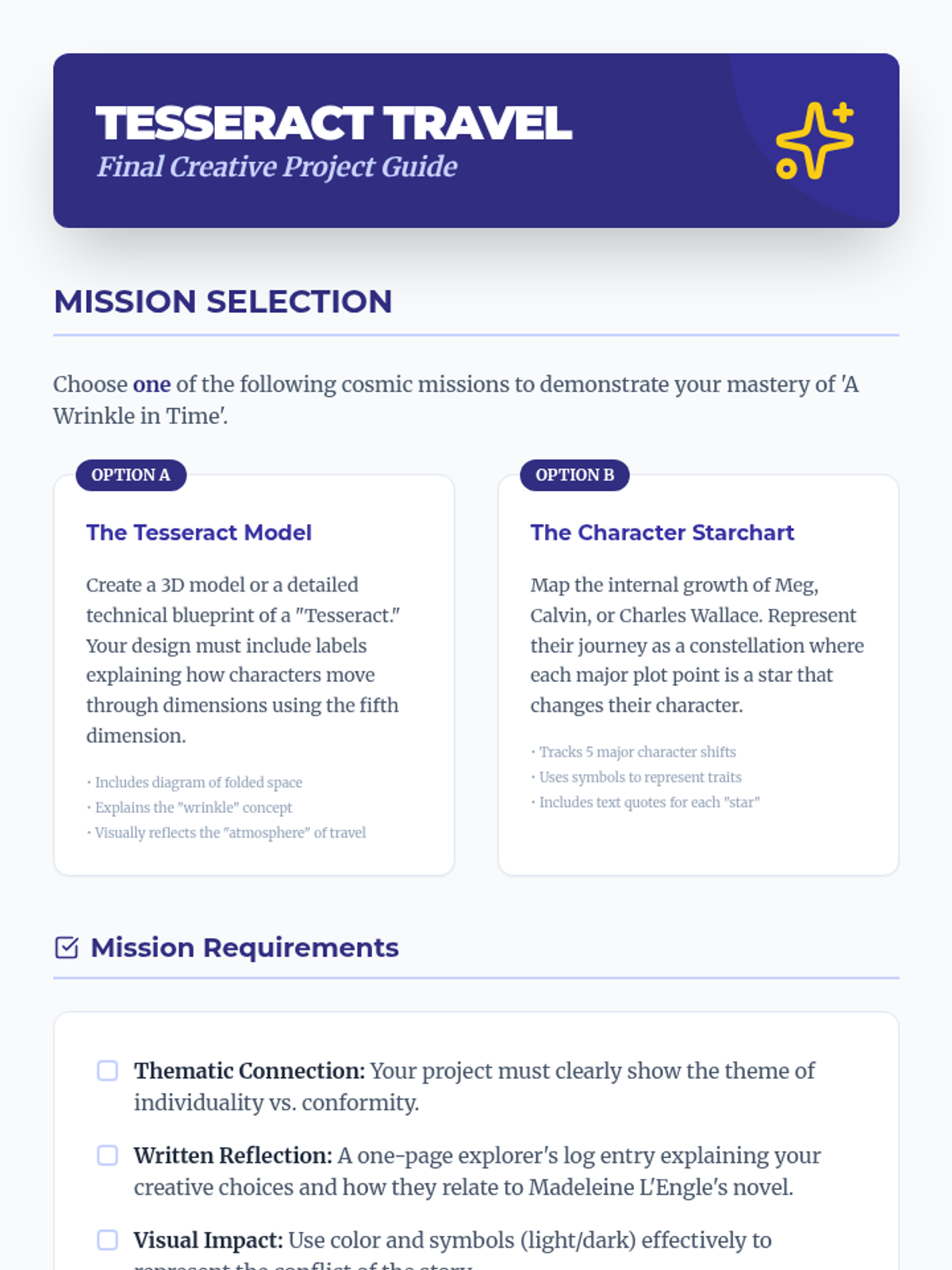
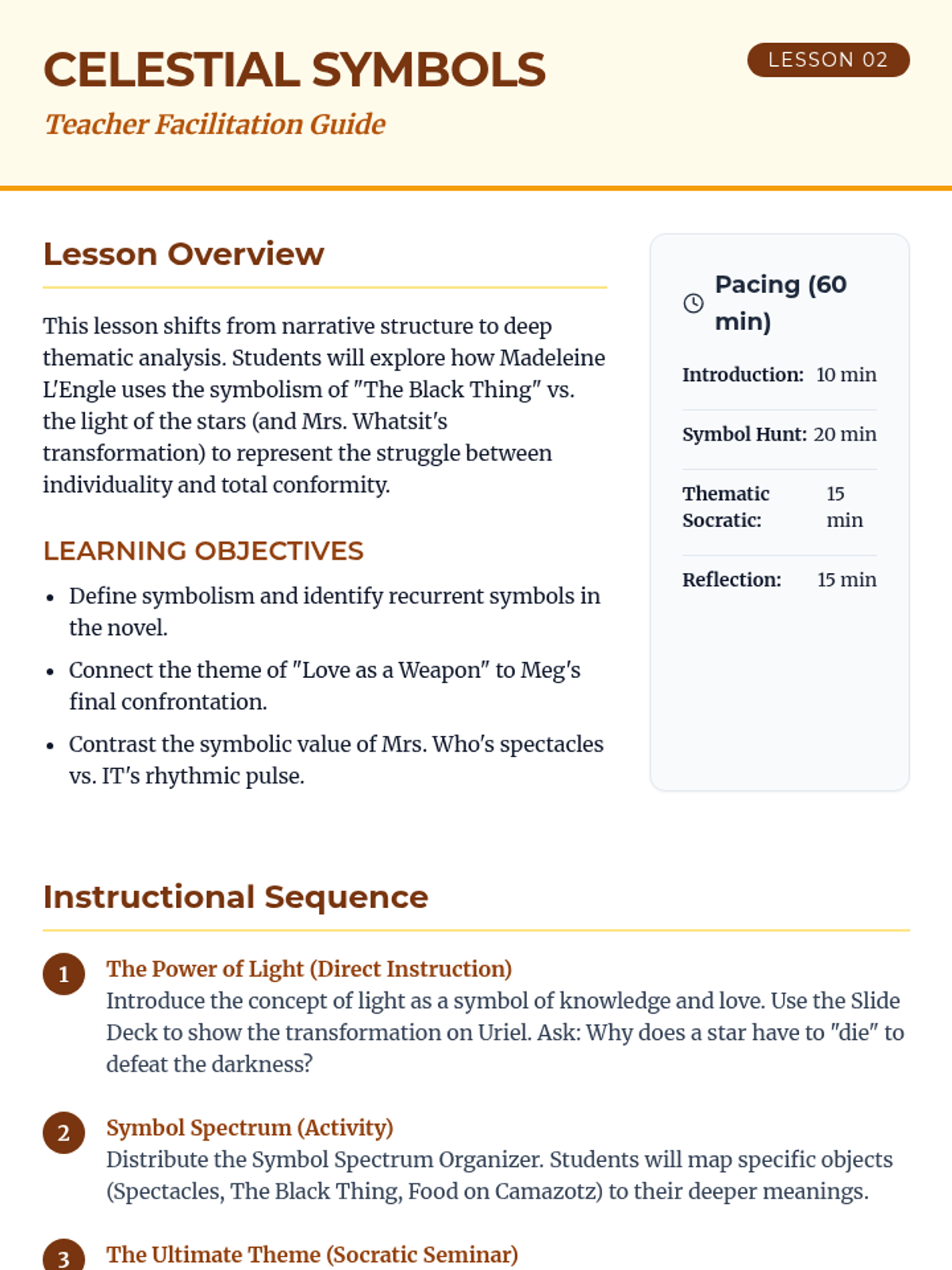
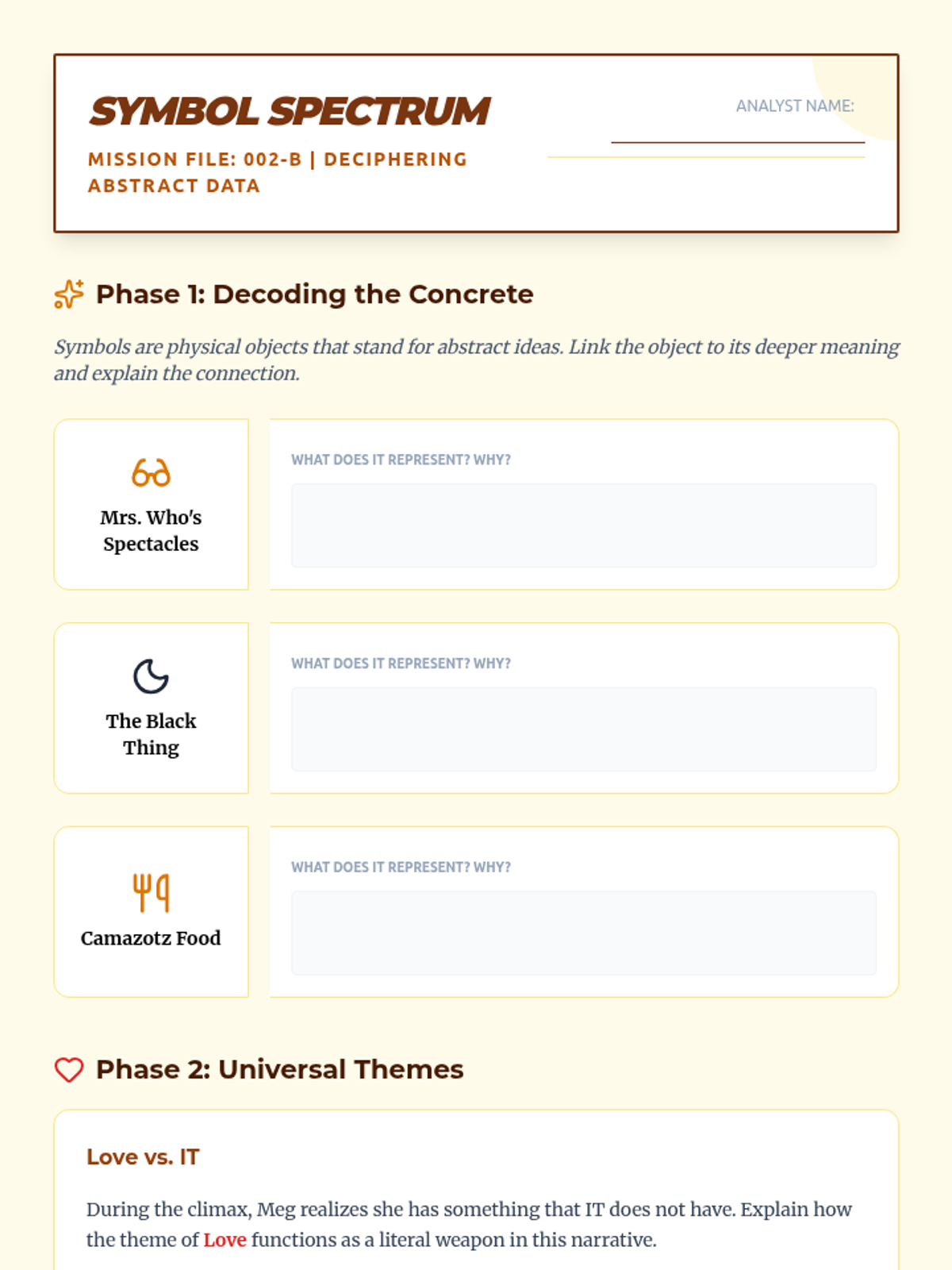
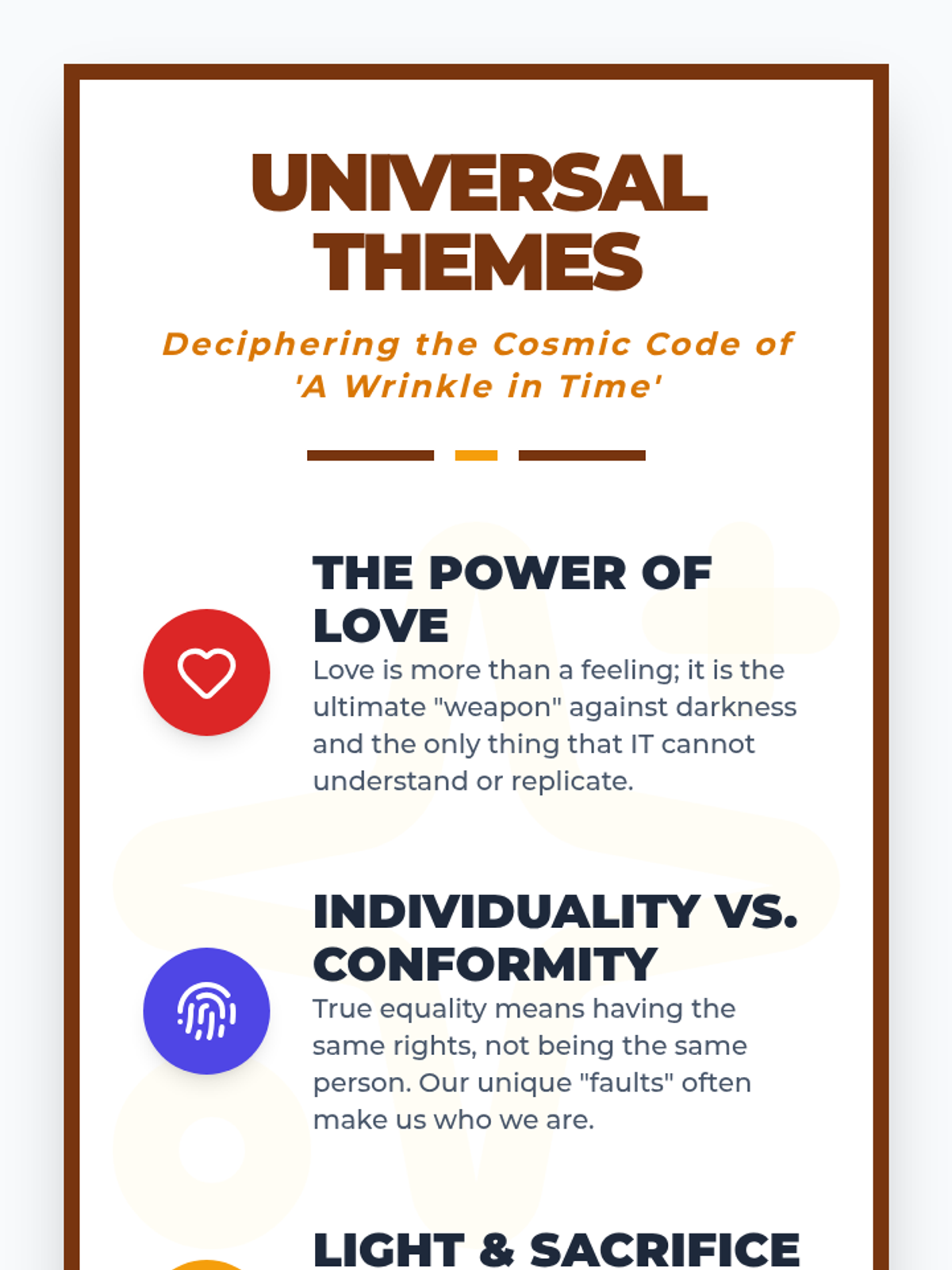
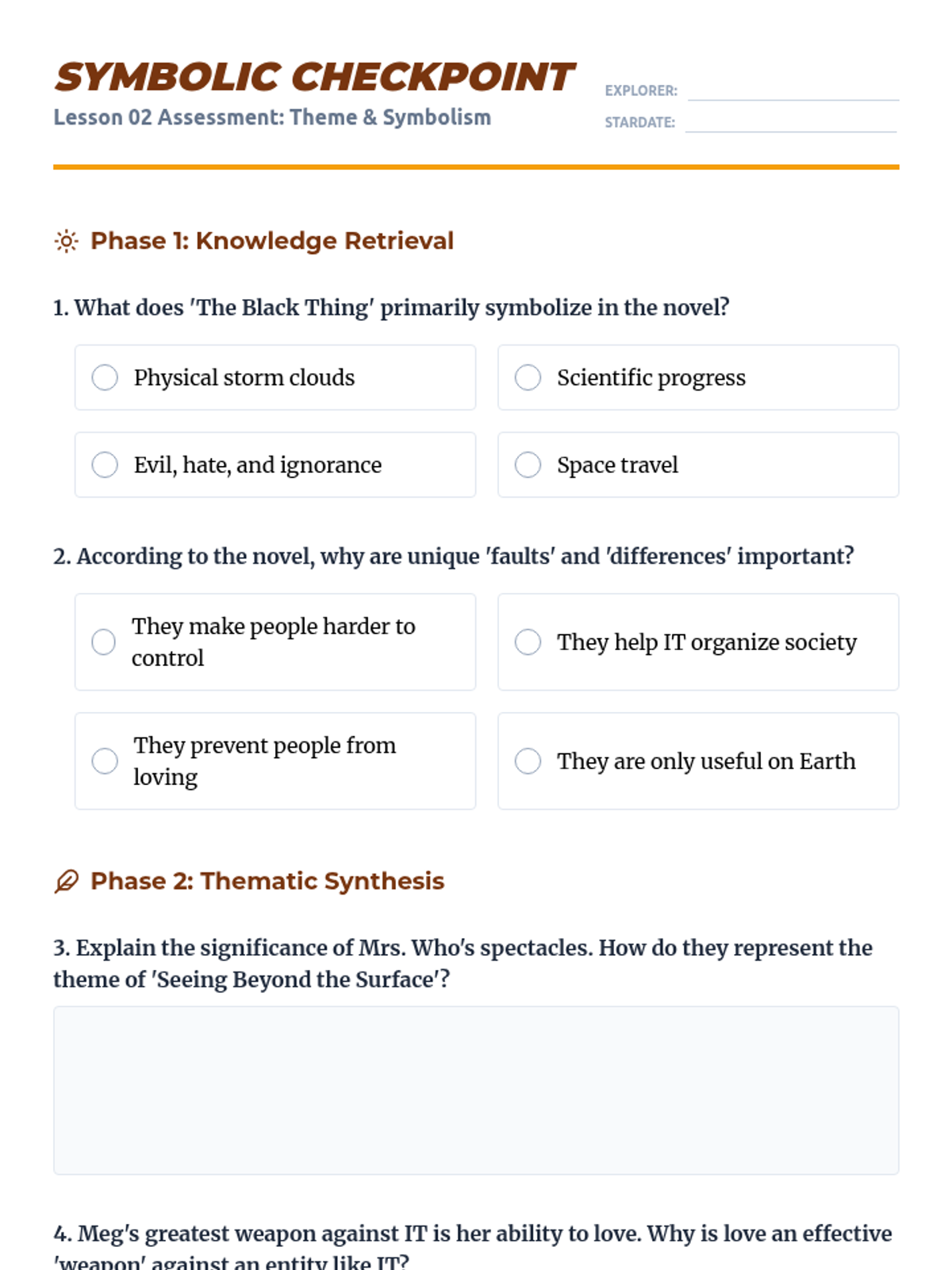
A deep dive into the underlying themes of love vs. conformity and the potent symbolism of light and shadow throughout the journey.
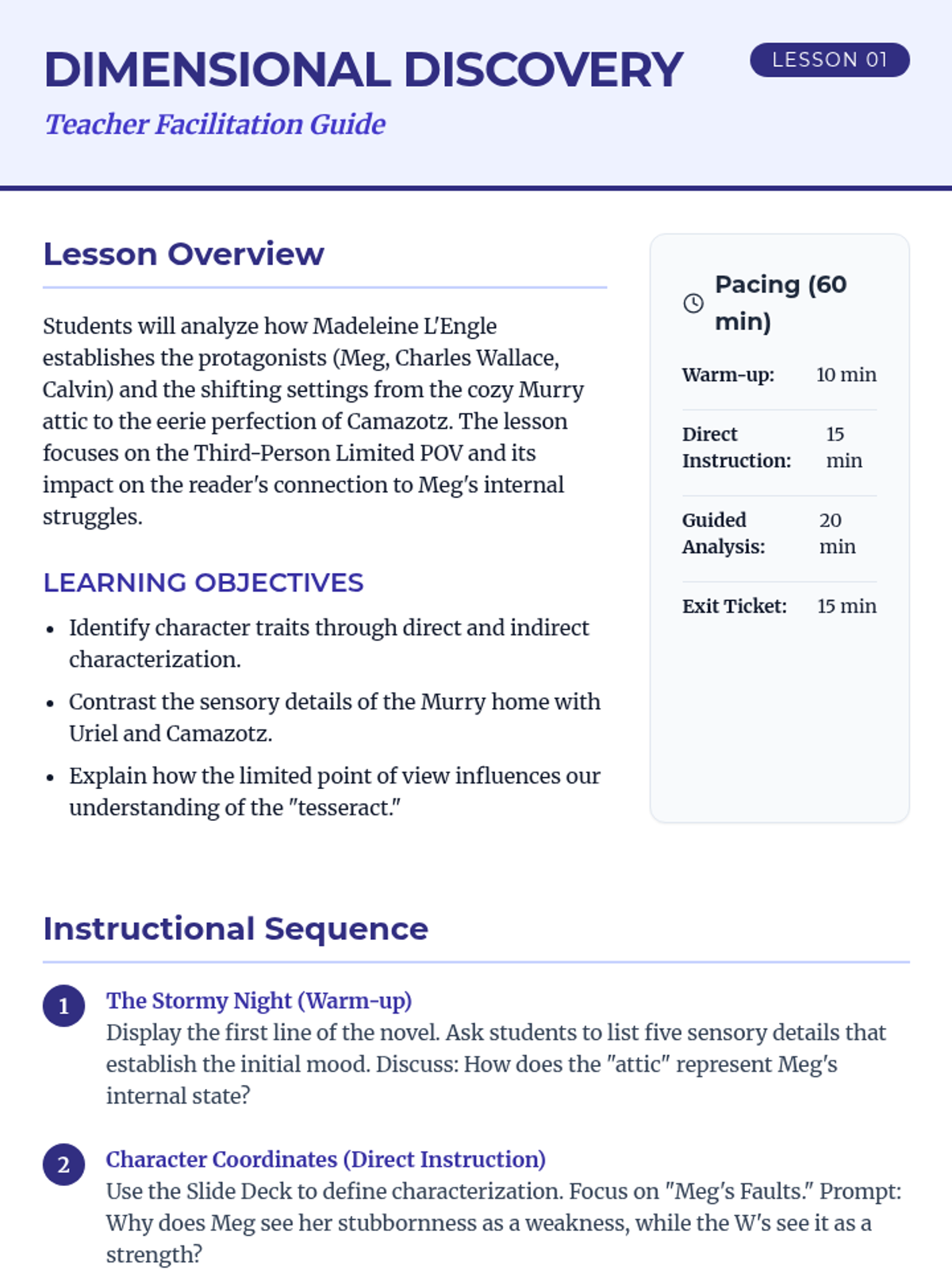
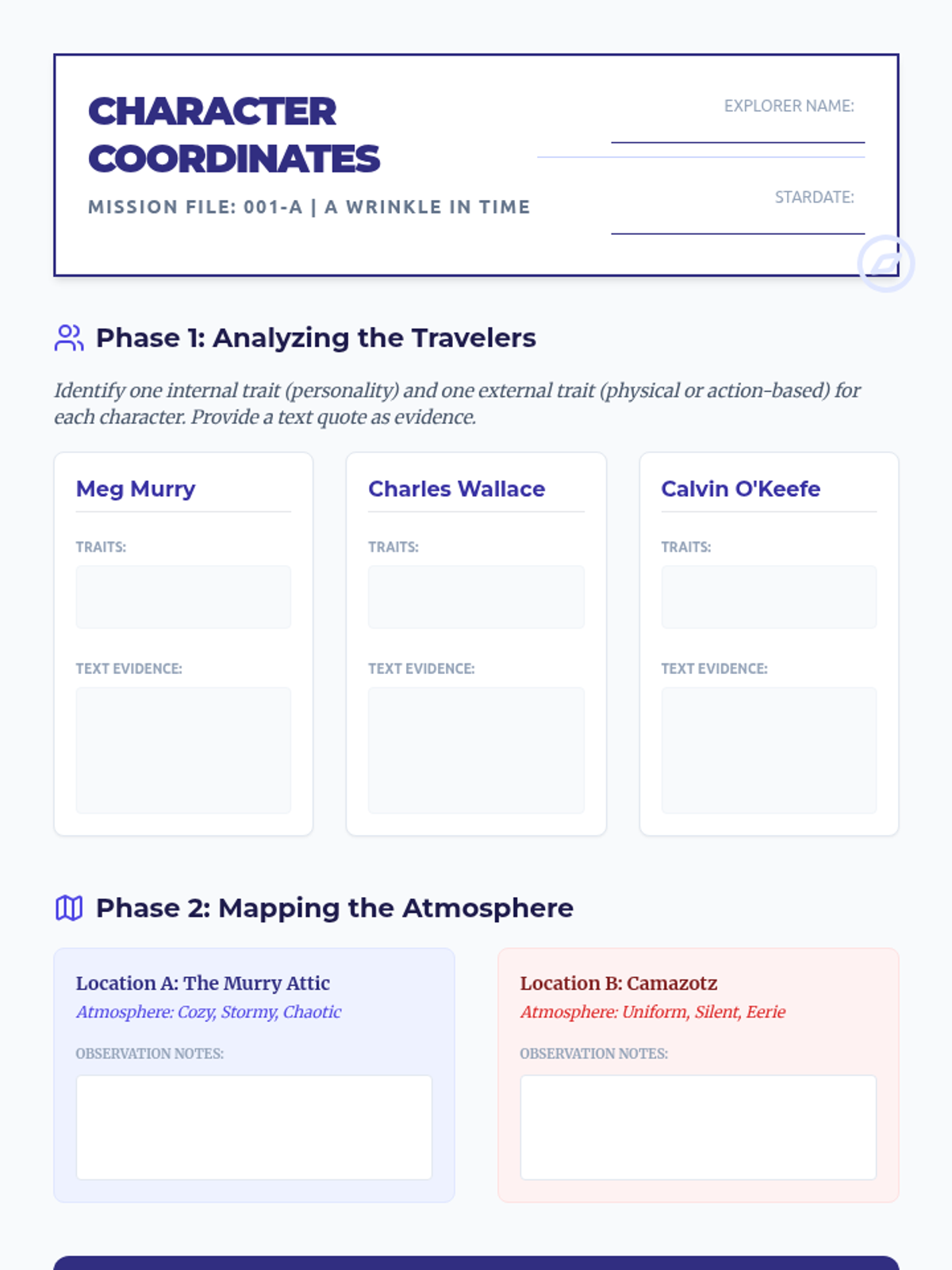
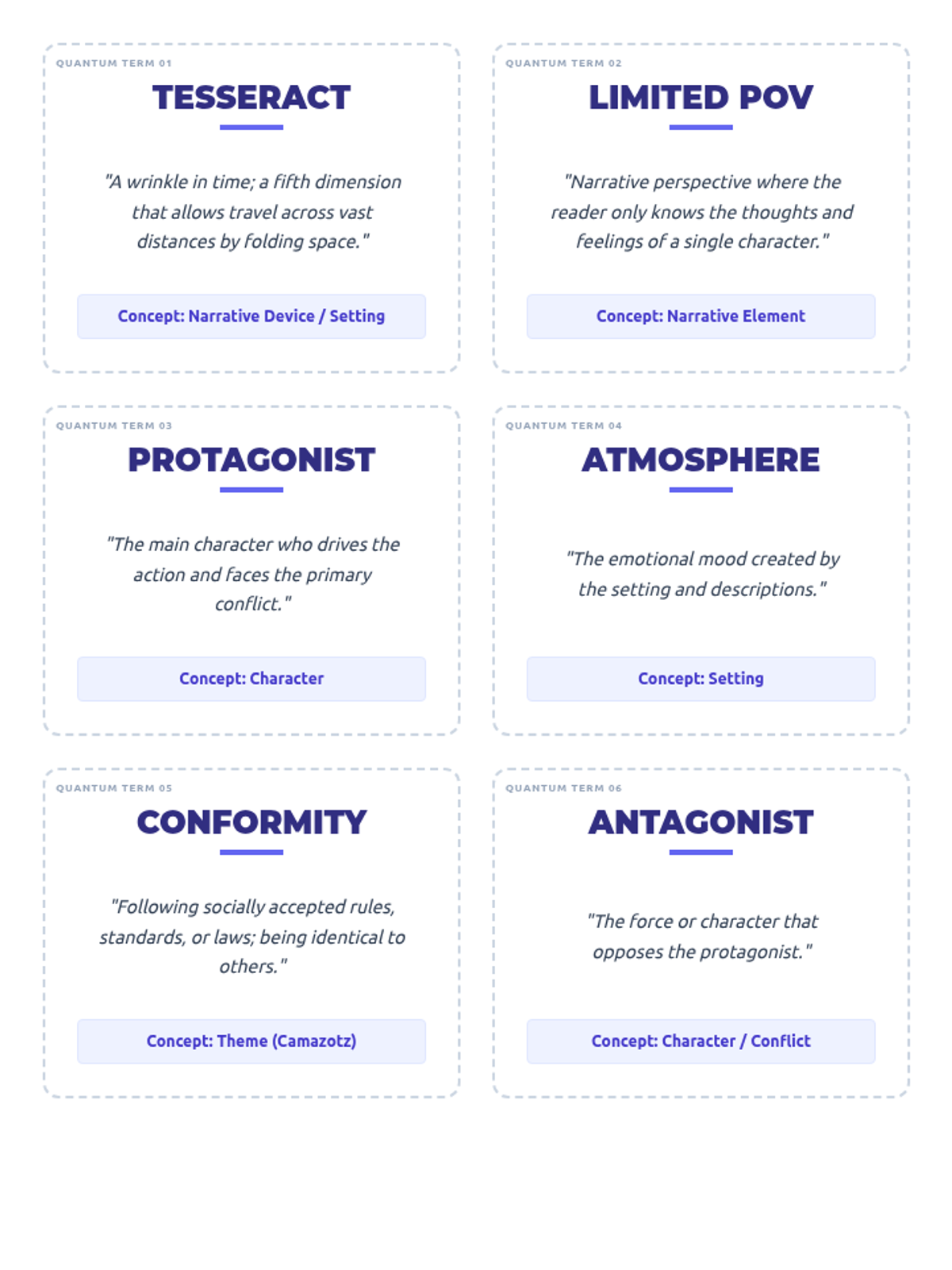
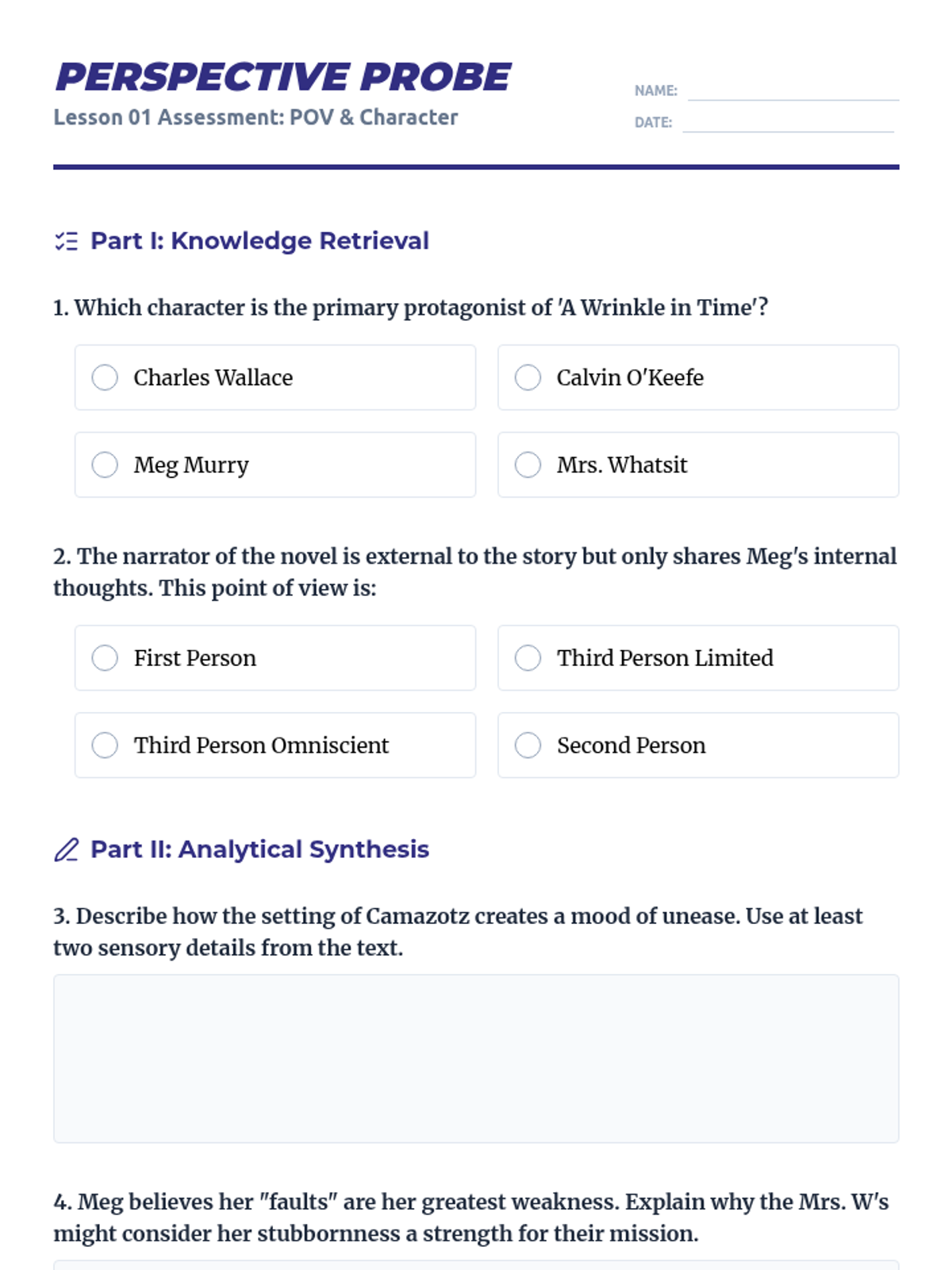
An exploration of the Murry household and the initial tesseract travel, focusing on character traits, the atmospheric setting of Camazotz, and the third-person limited point of view.
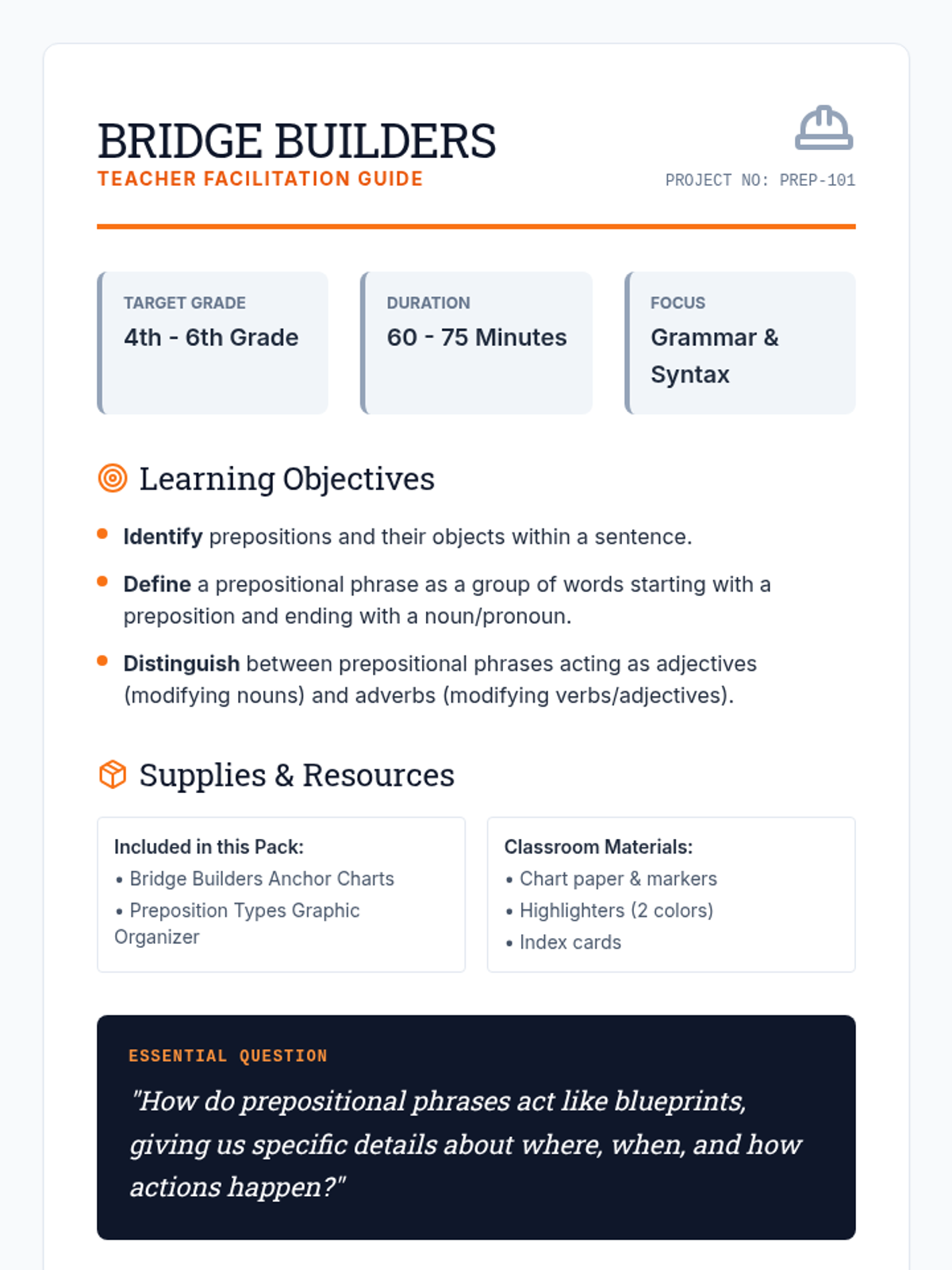
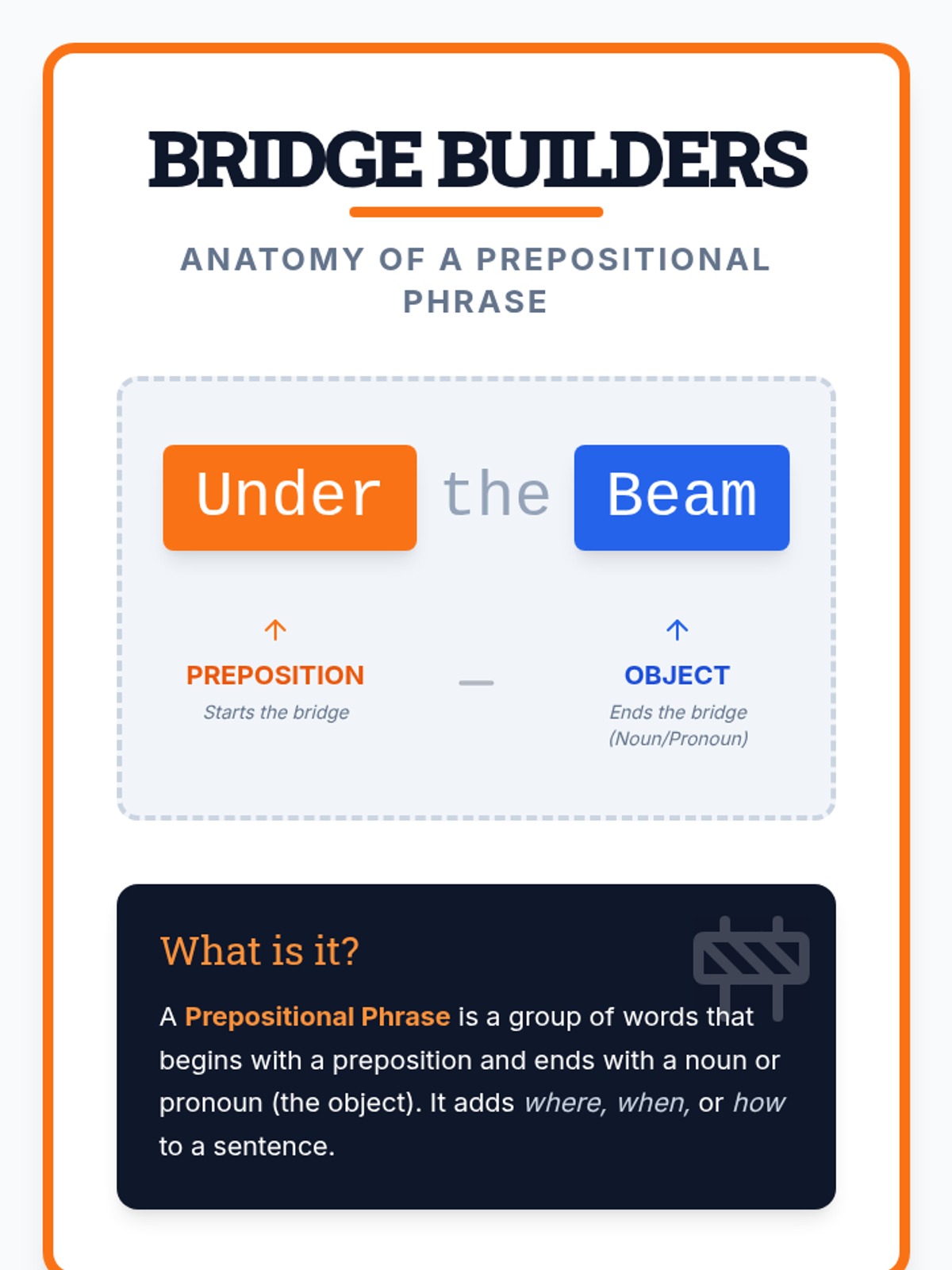
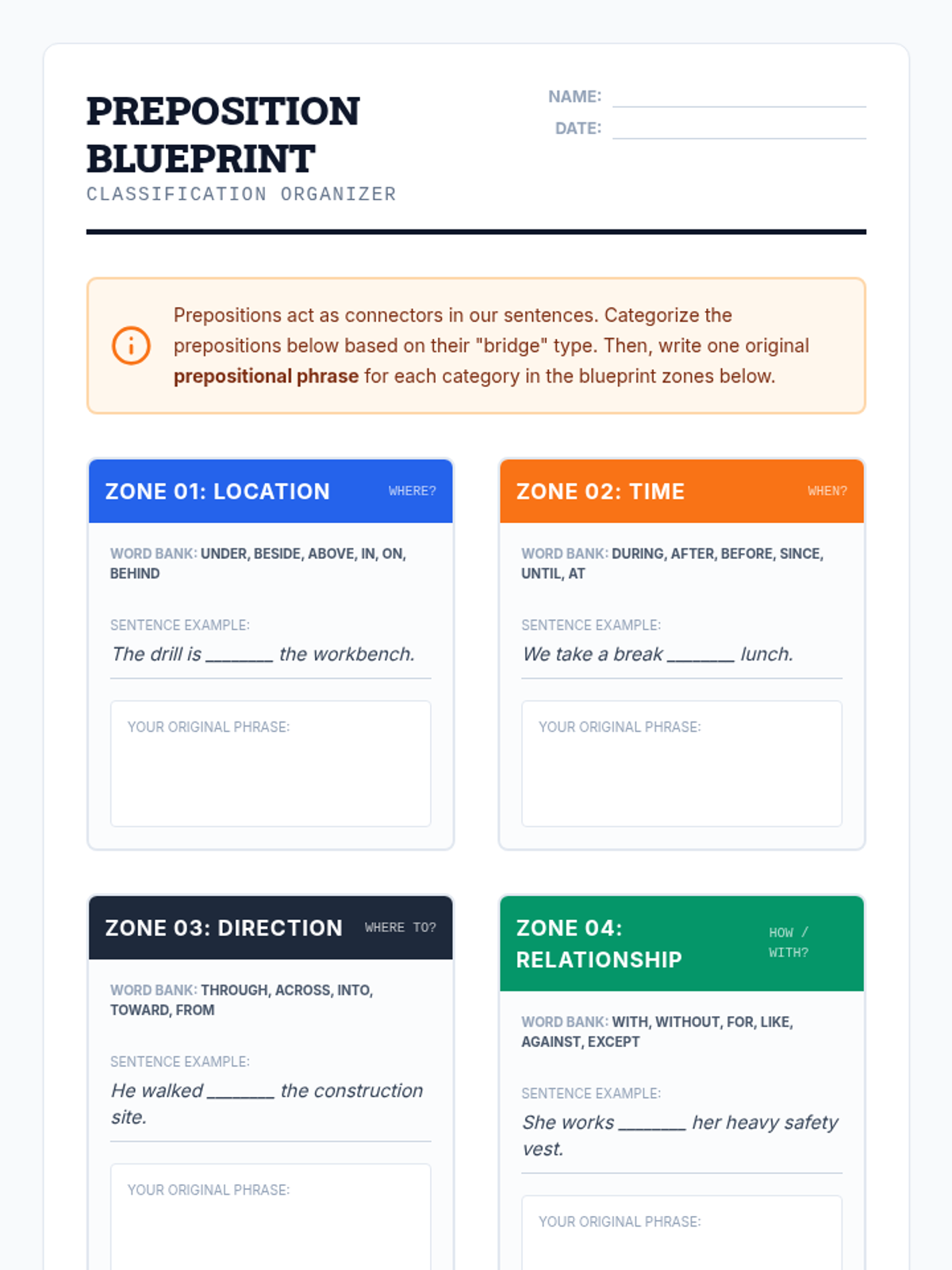
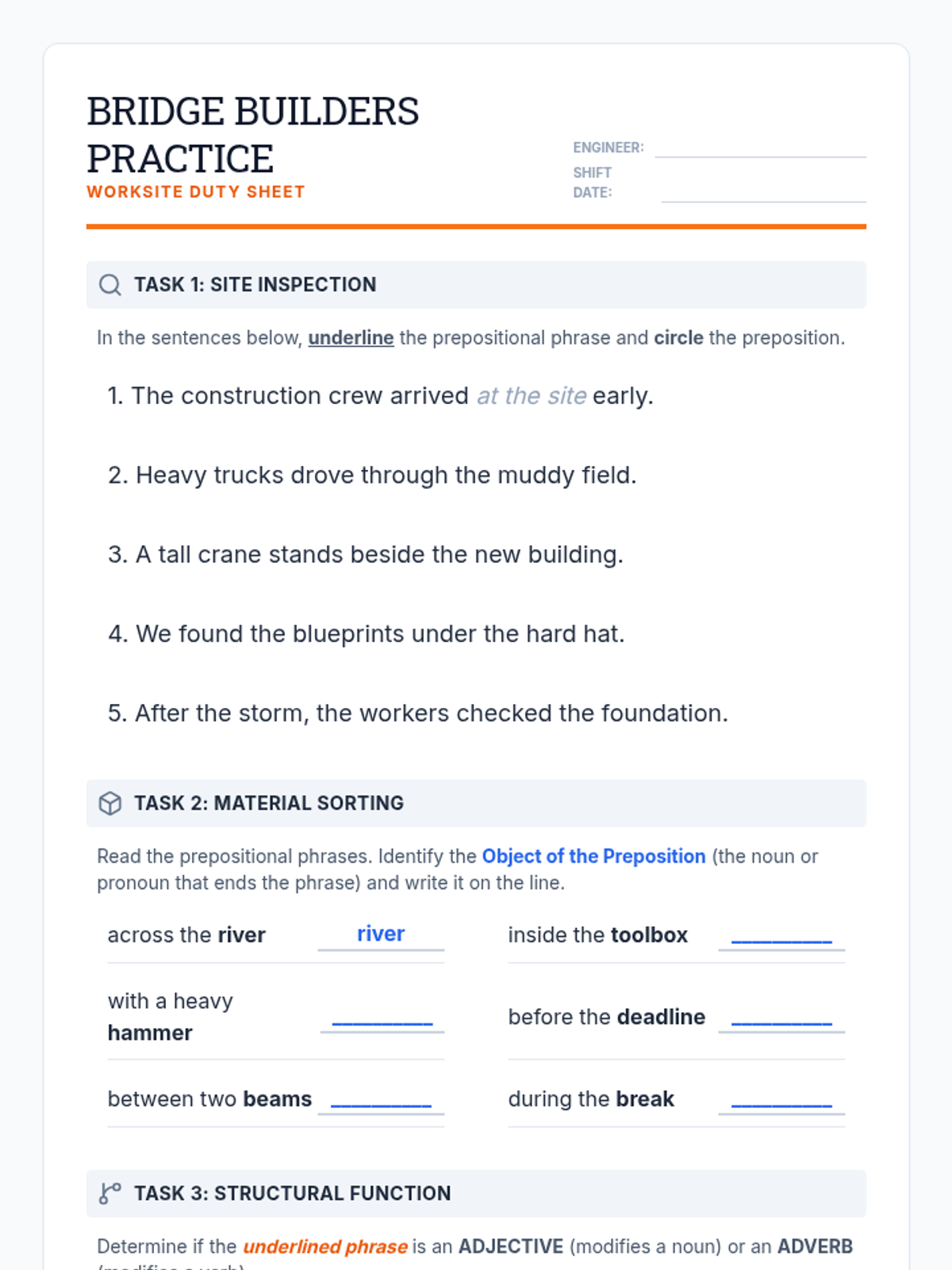
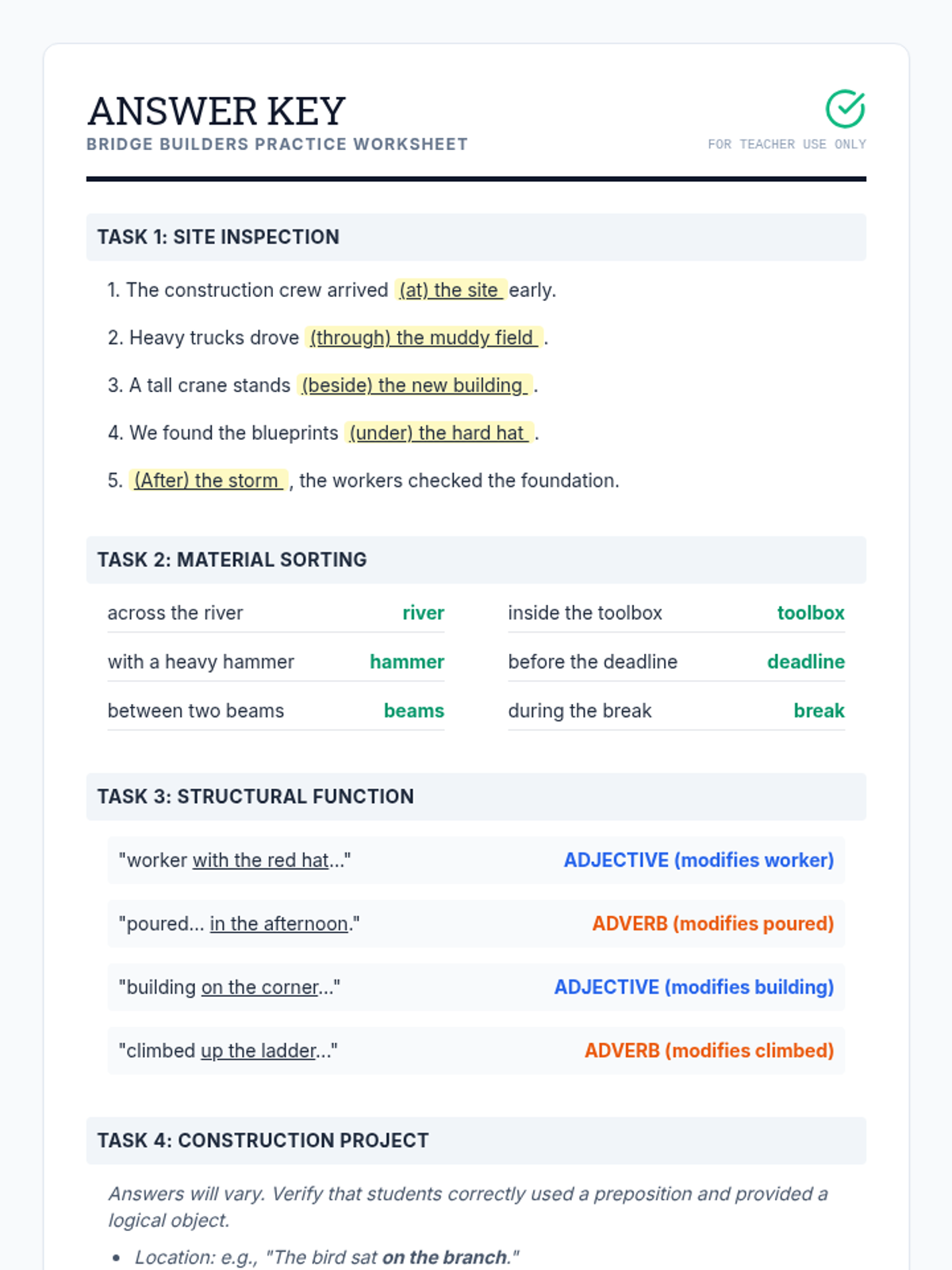
A comprehensive lesson on identifying prepositions and prepositional phrases, exploring their roles as adjective or adverbial modifiers within sentences using a construction-themed approach.
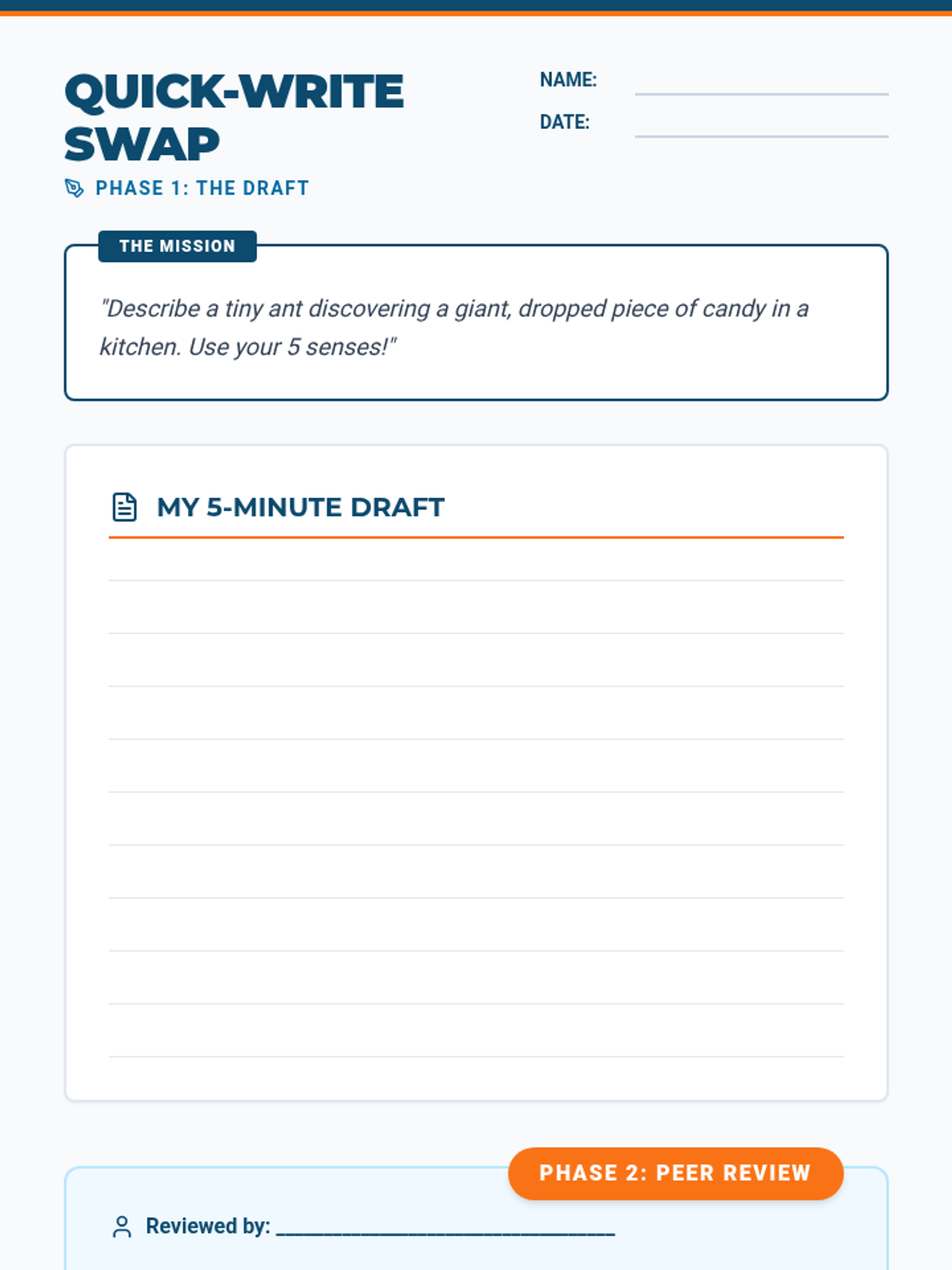
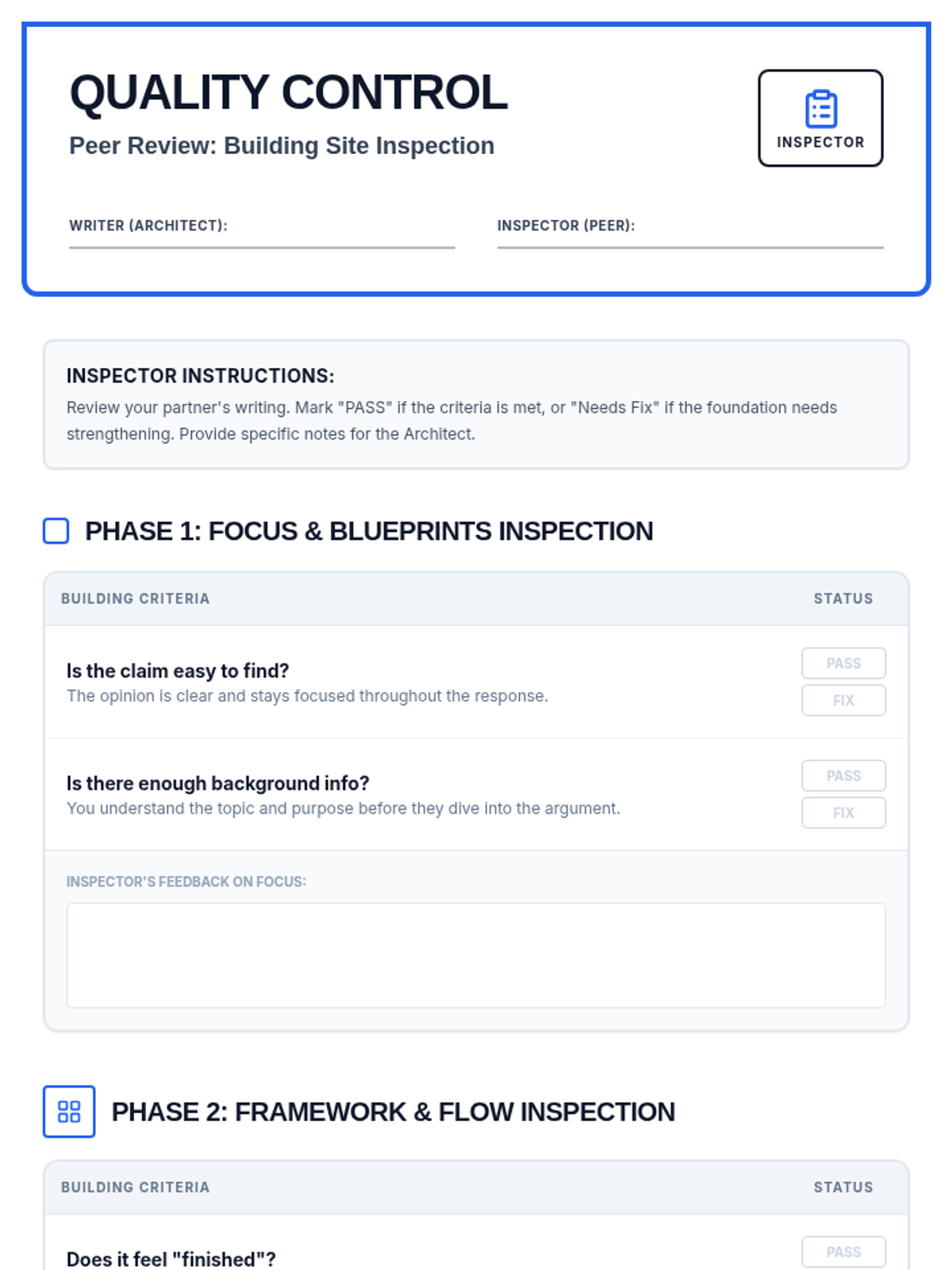
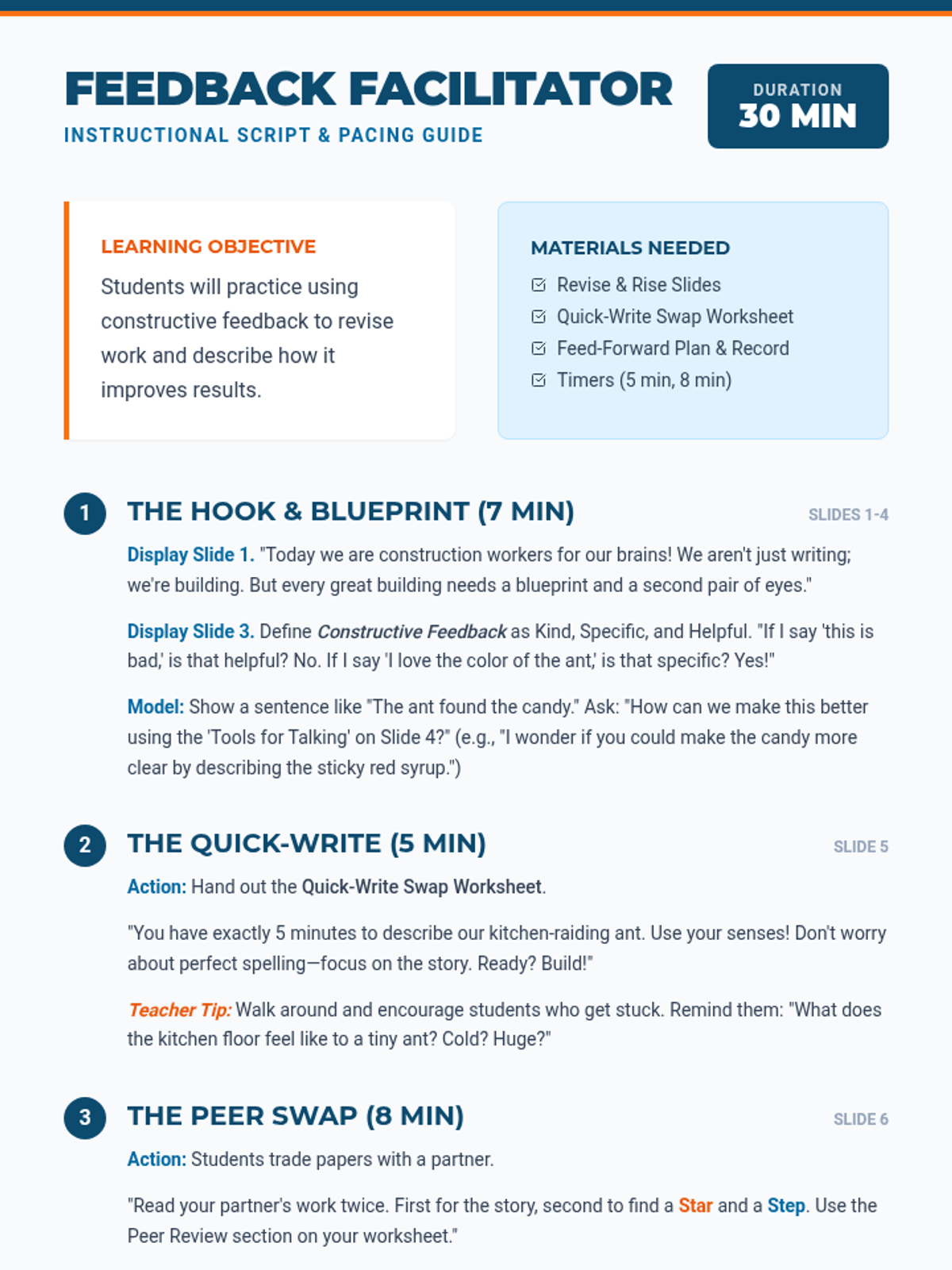
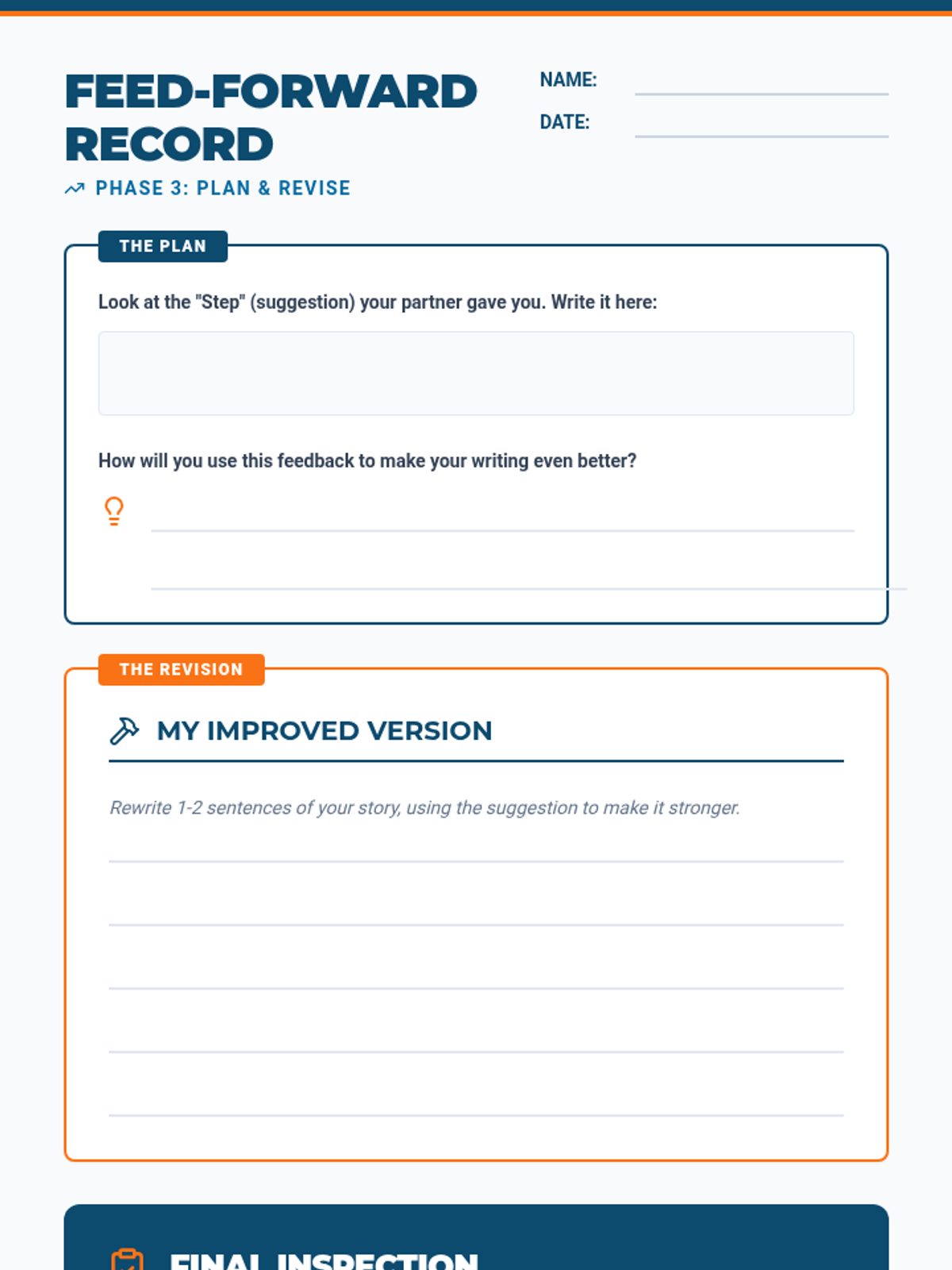
A 30-minute lesson where 4th-grade students learn to transform feedback into 'feed-forward' action. Through a quick-write activity and peer exchange, students practice giving specific, kind, and helpful suggestions to improve their writing.
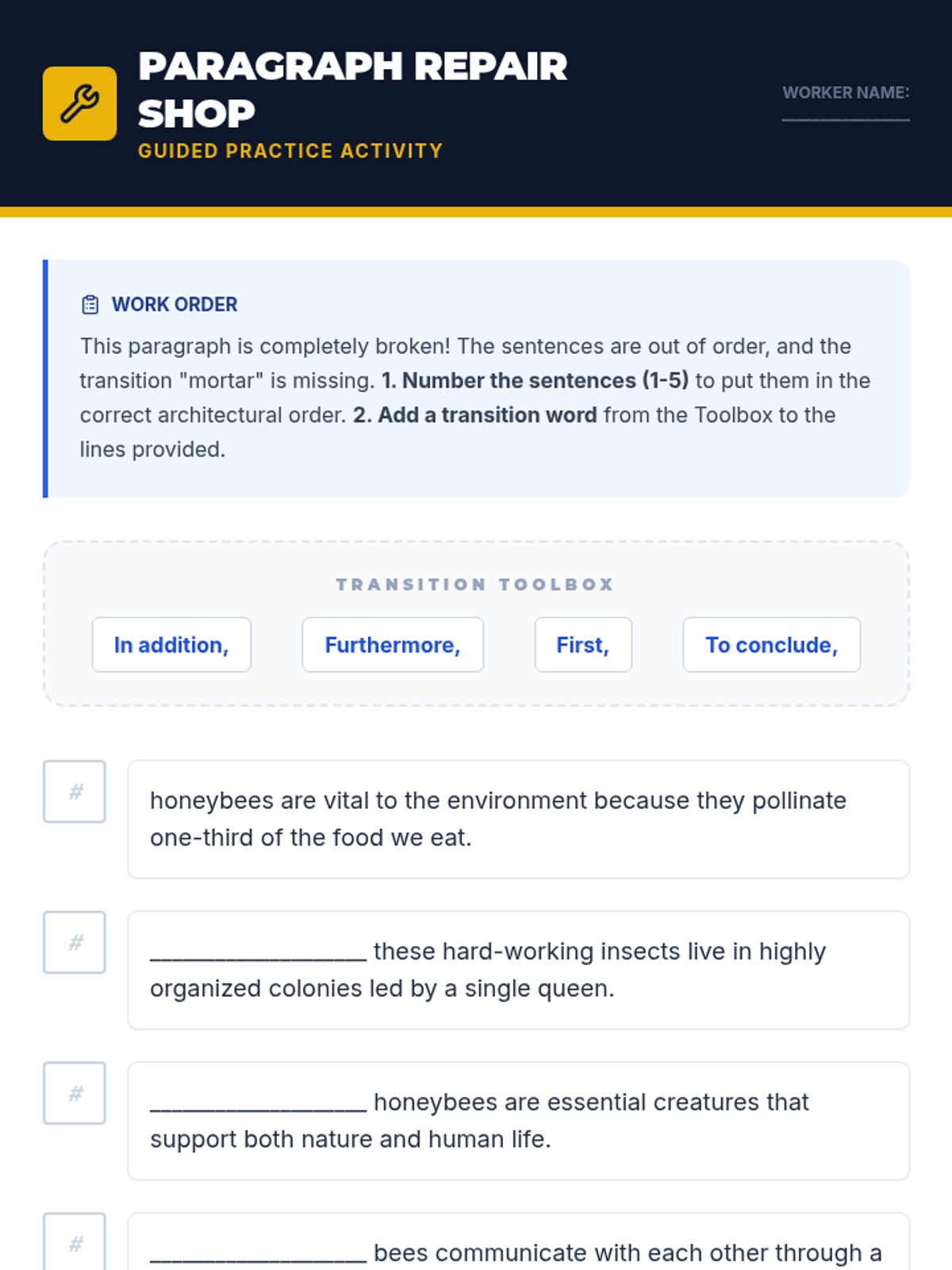
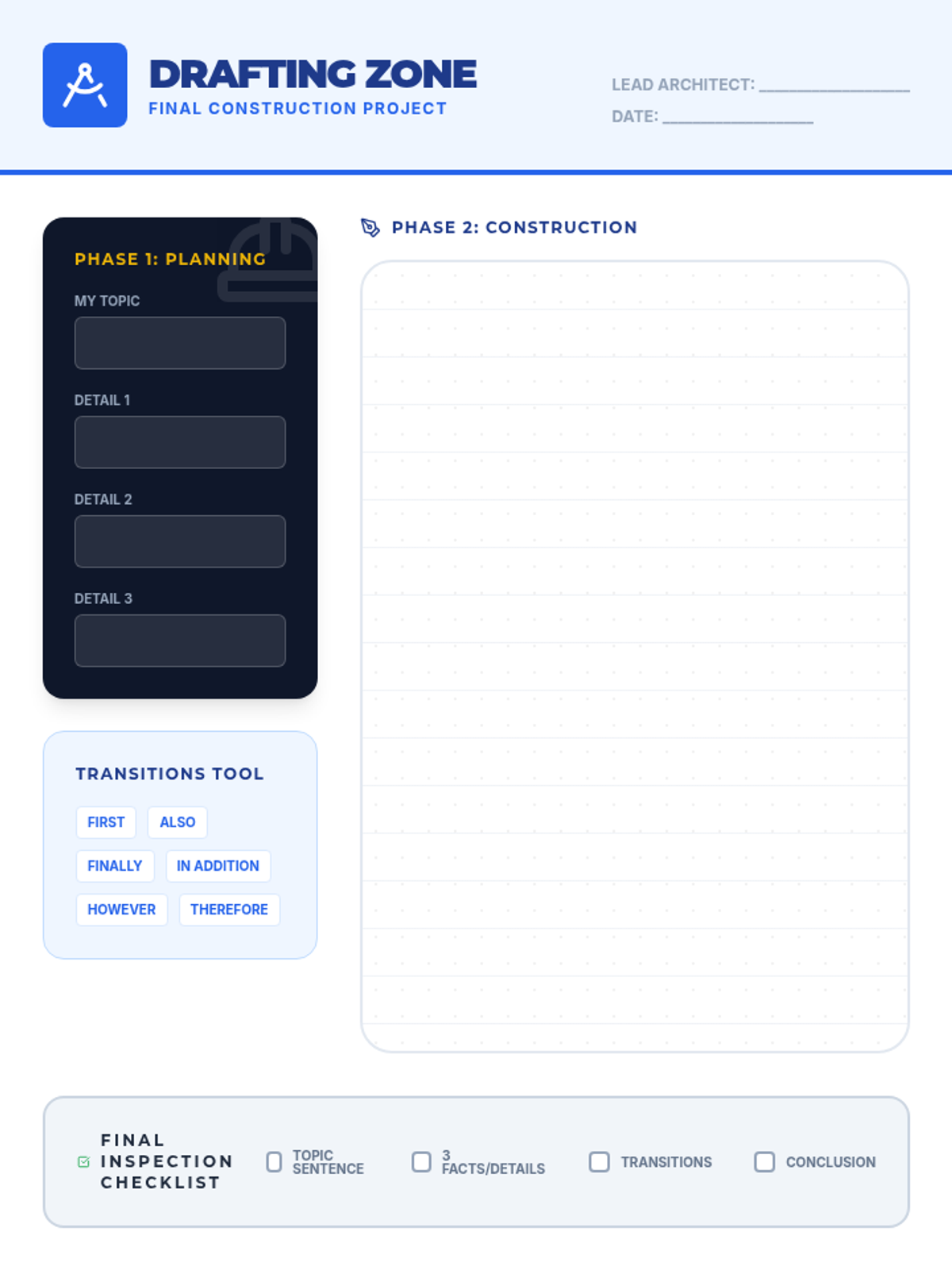
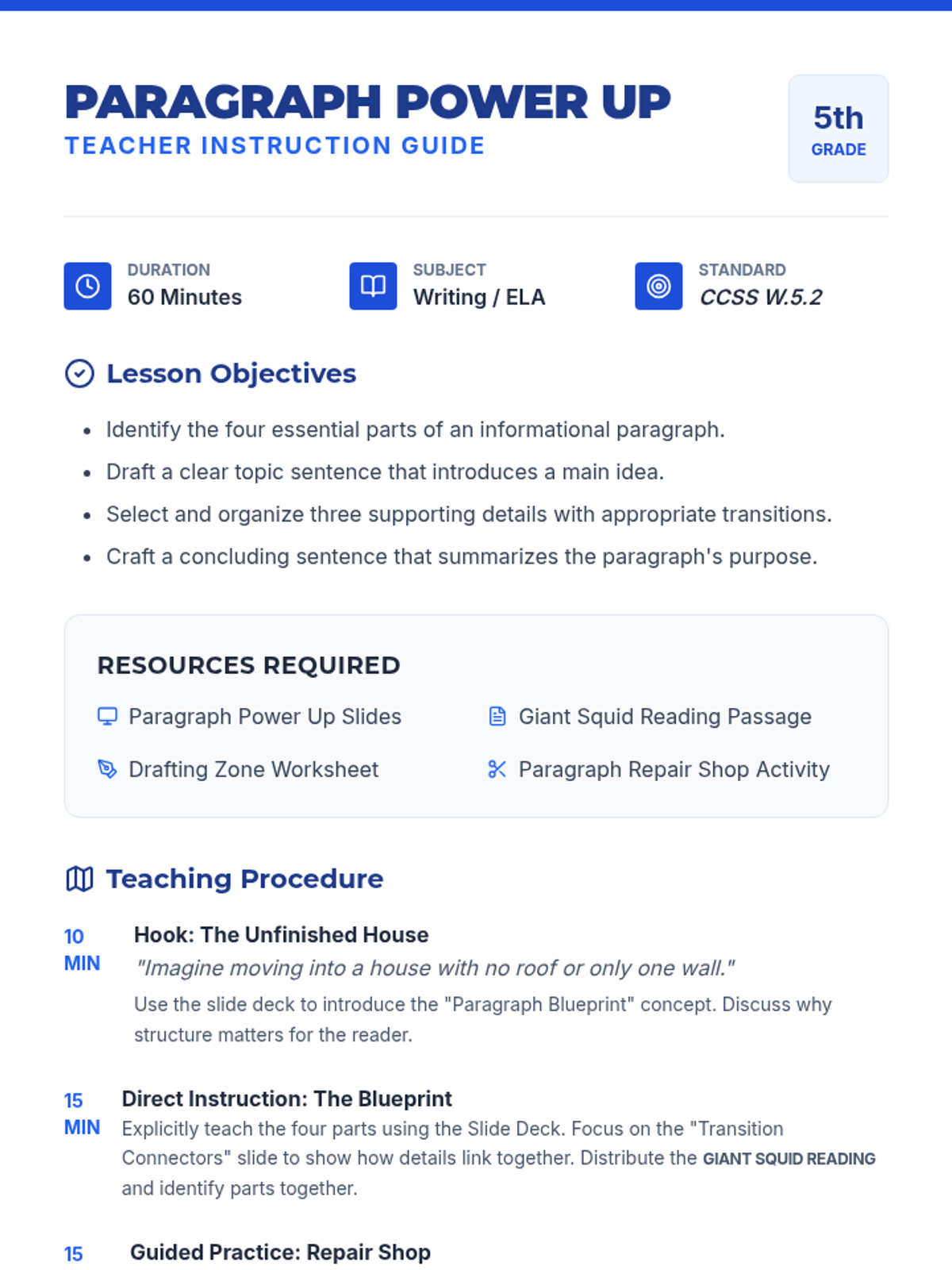
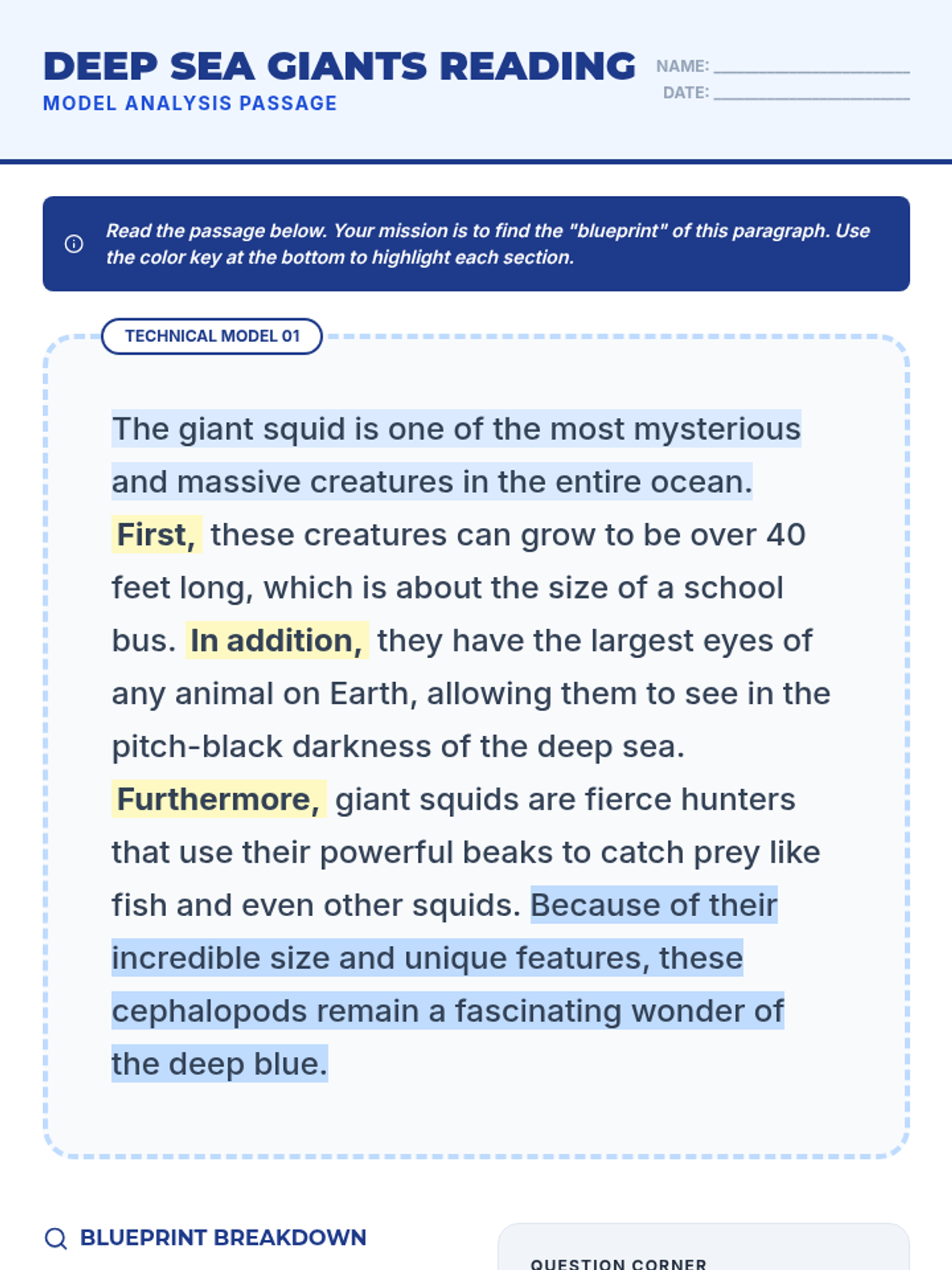
A comprehensive lesson teaching 5th graders the 'architecture' of a strong informational paragraph, focusing on topic sentences, supporting details, transitions, and conclusions.
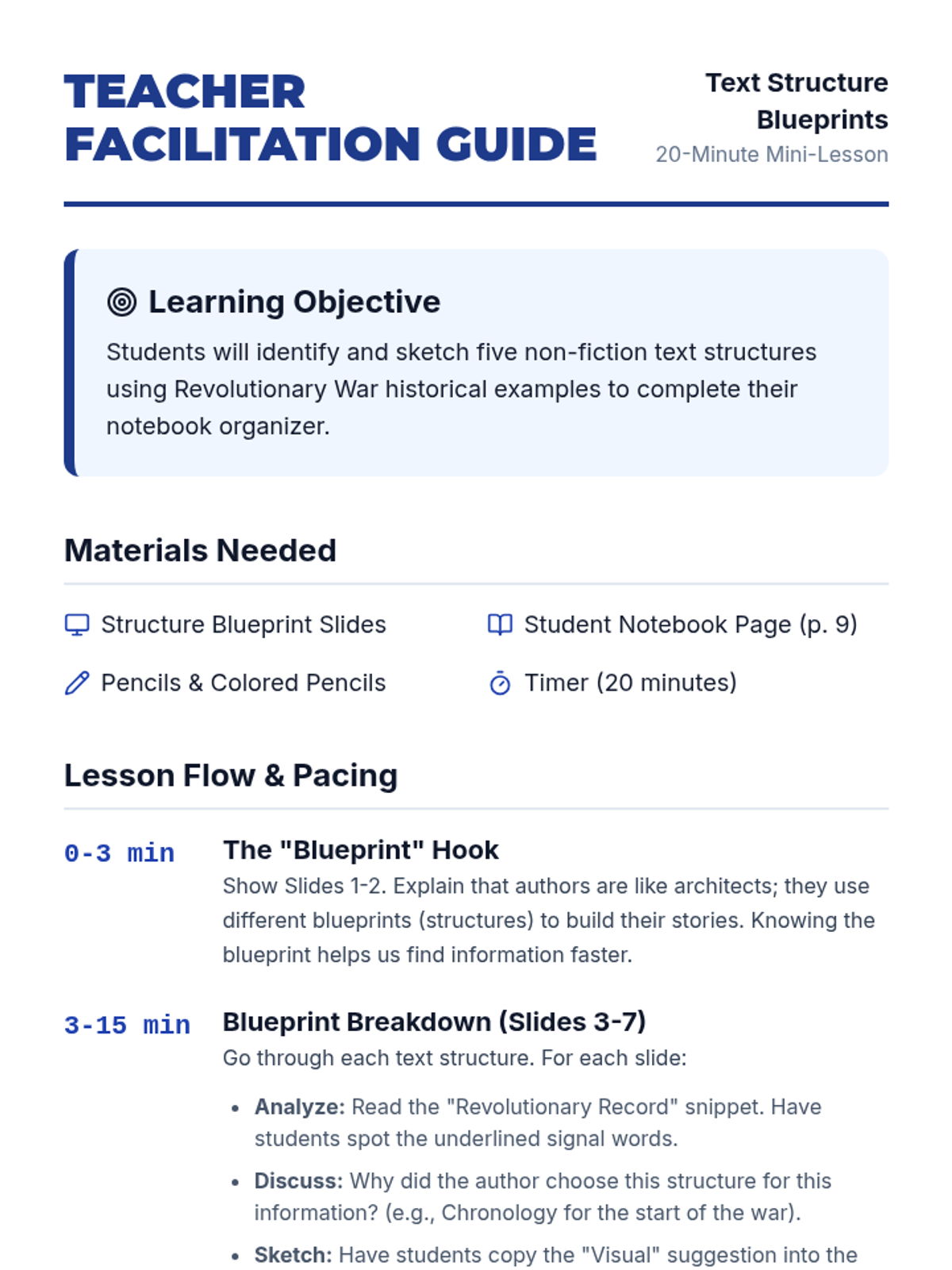
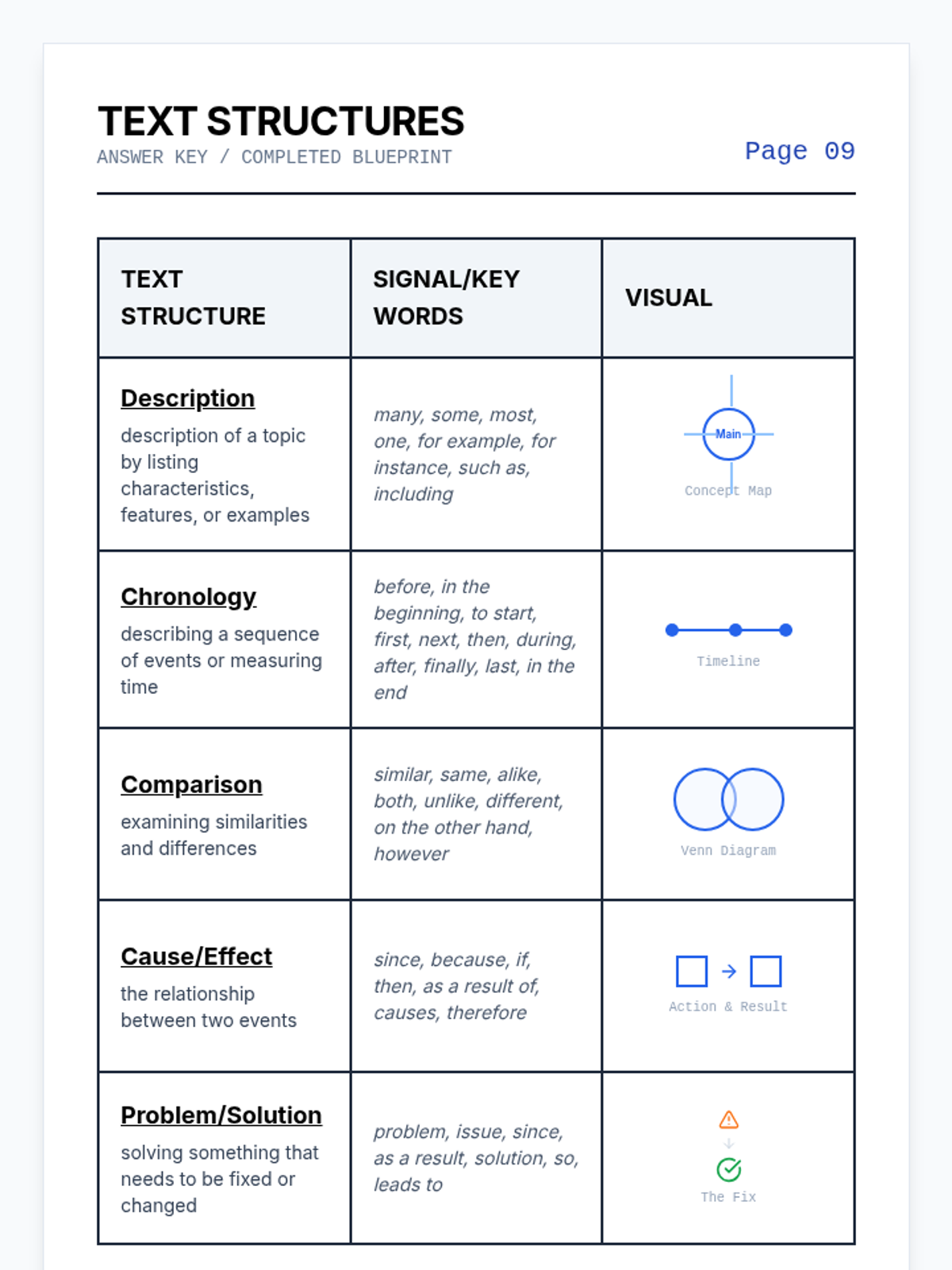
A 20-minute mini-lesson introducing five key non-fiction text structures: description, chronology, comparison, cause/effect, and problem/solution. This lesson uses Revolutionary War examples to help students identify how authors organize information.
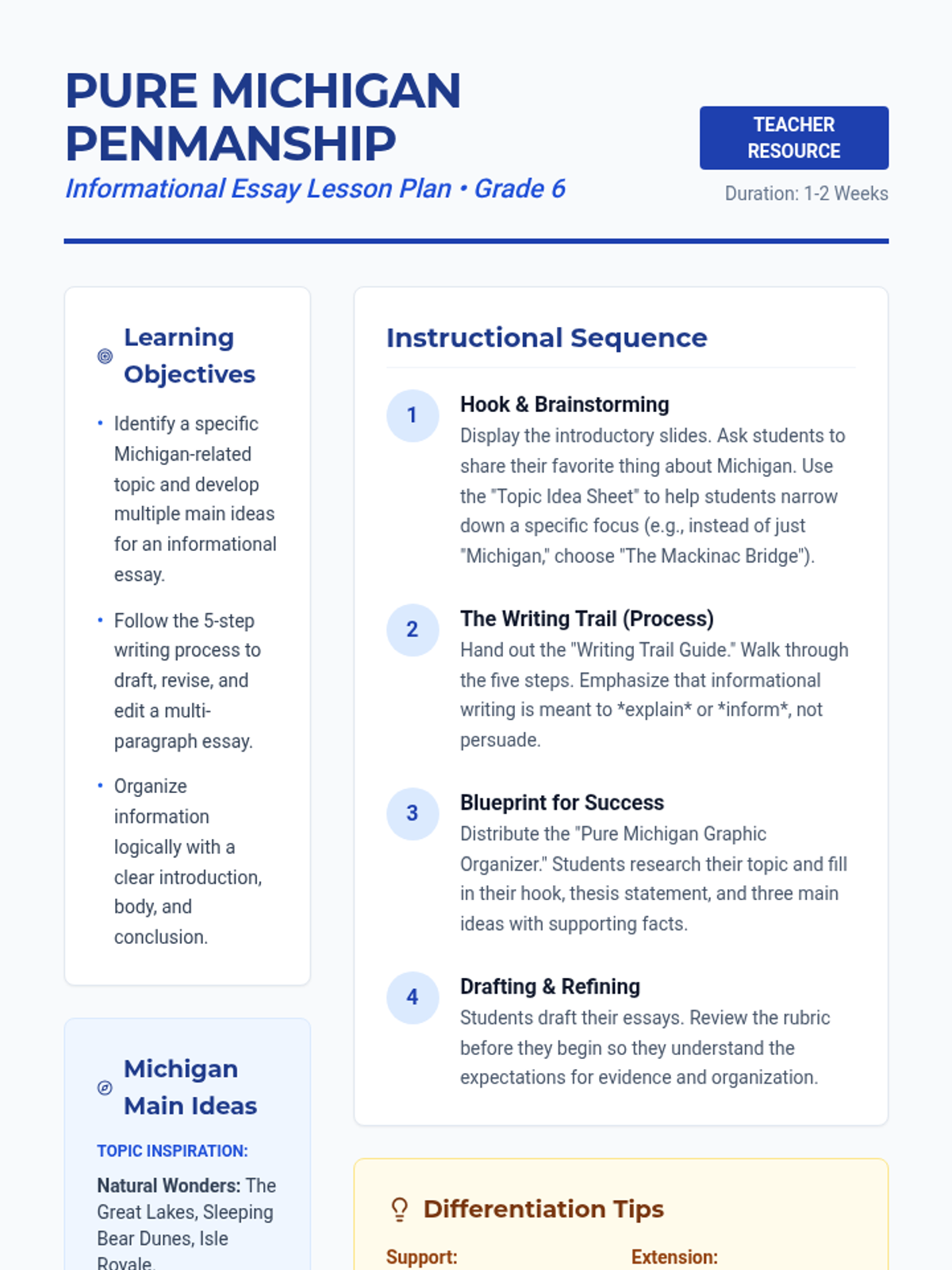
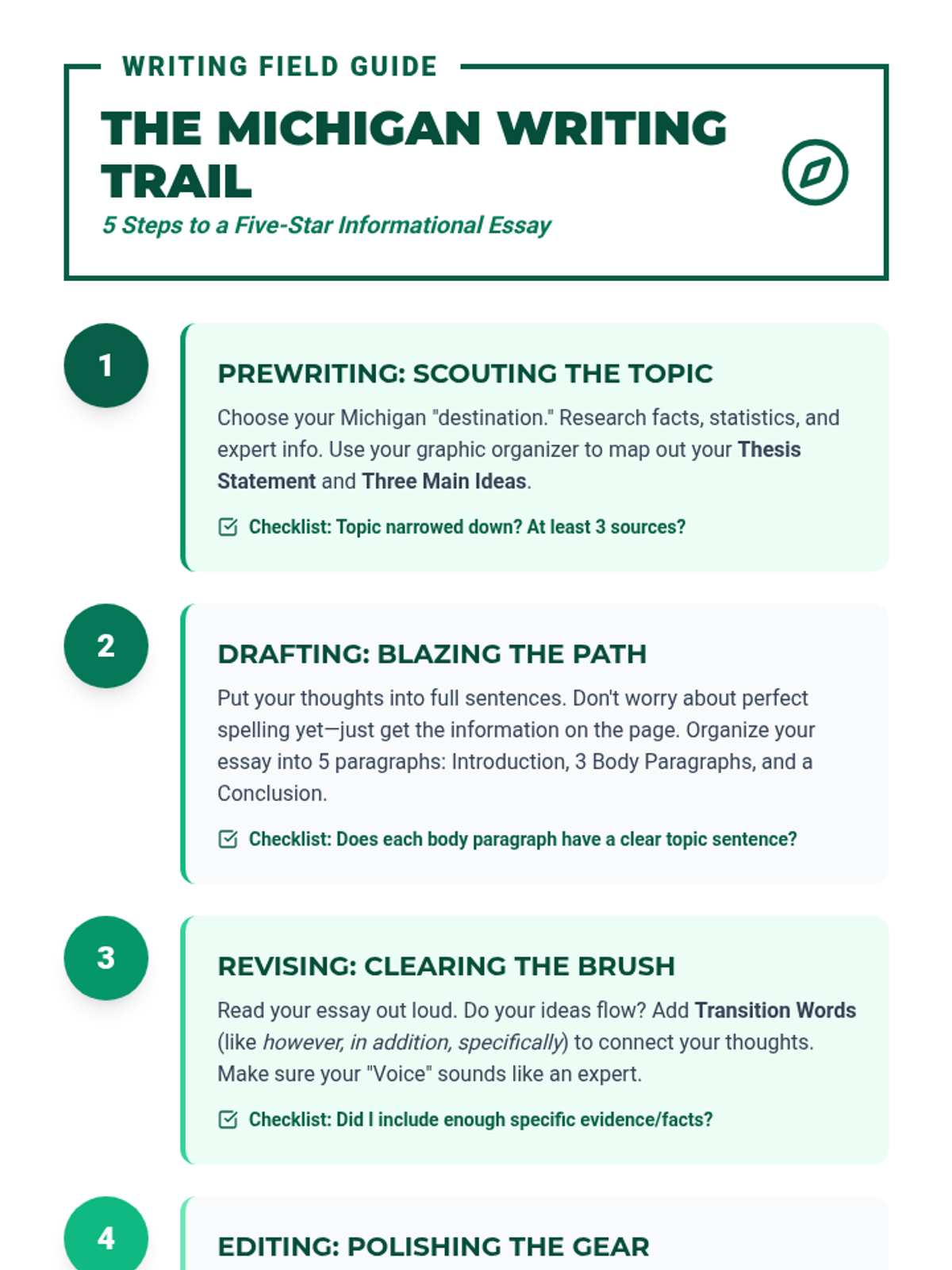
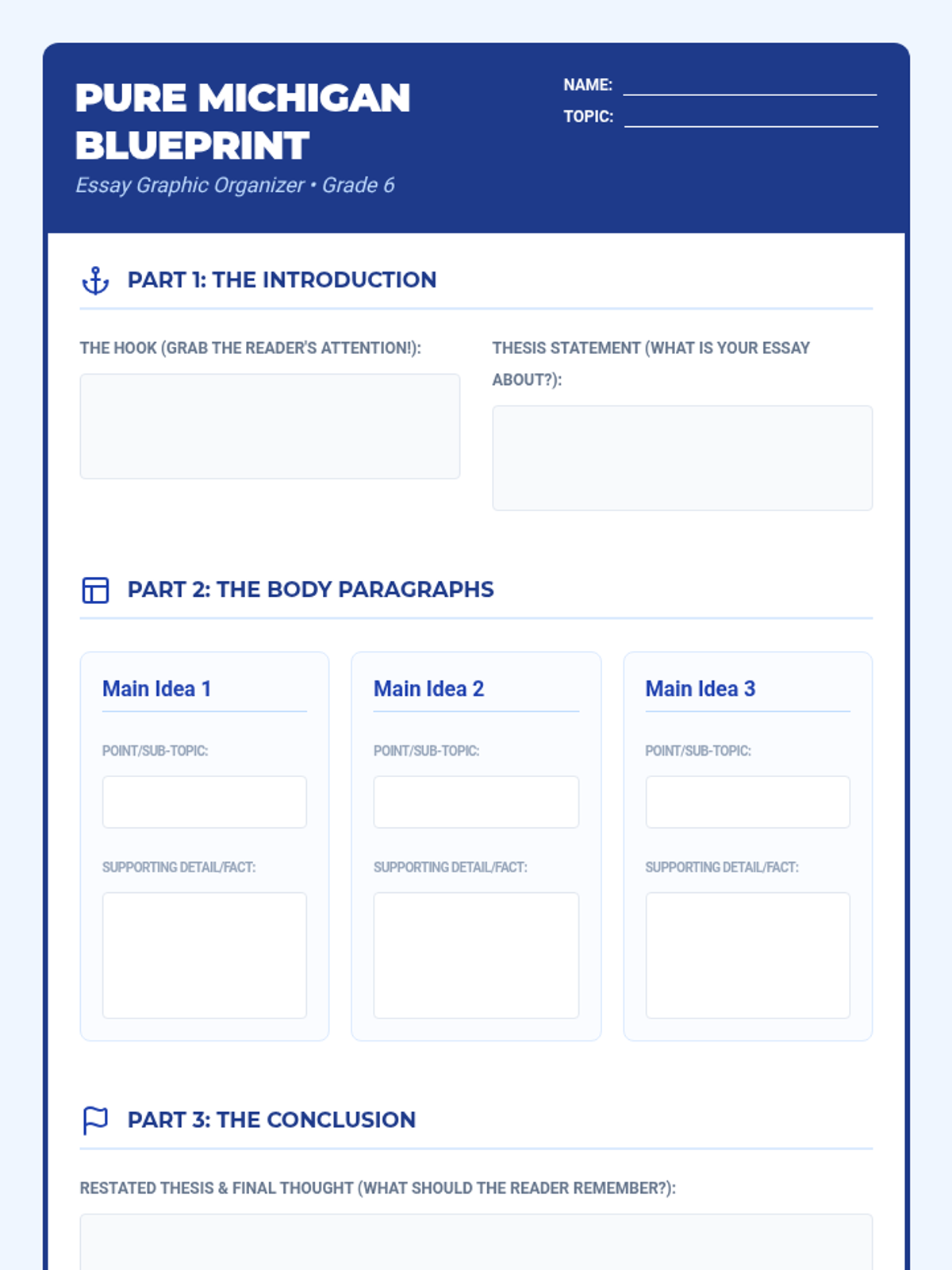
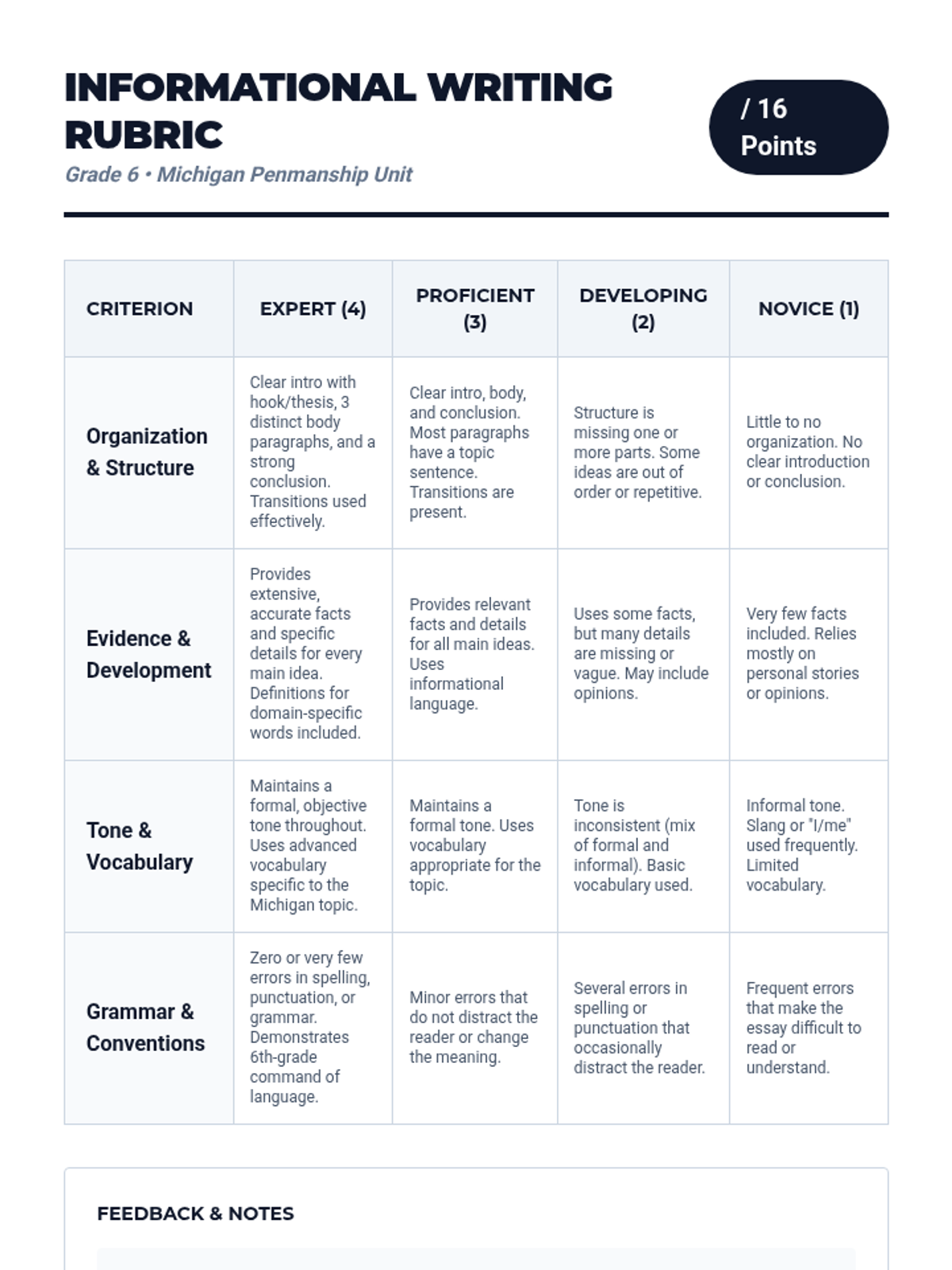
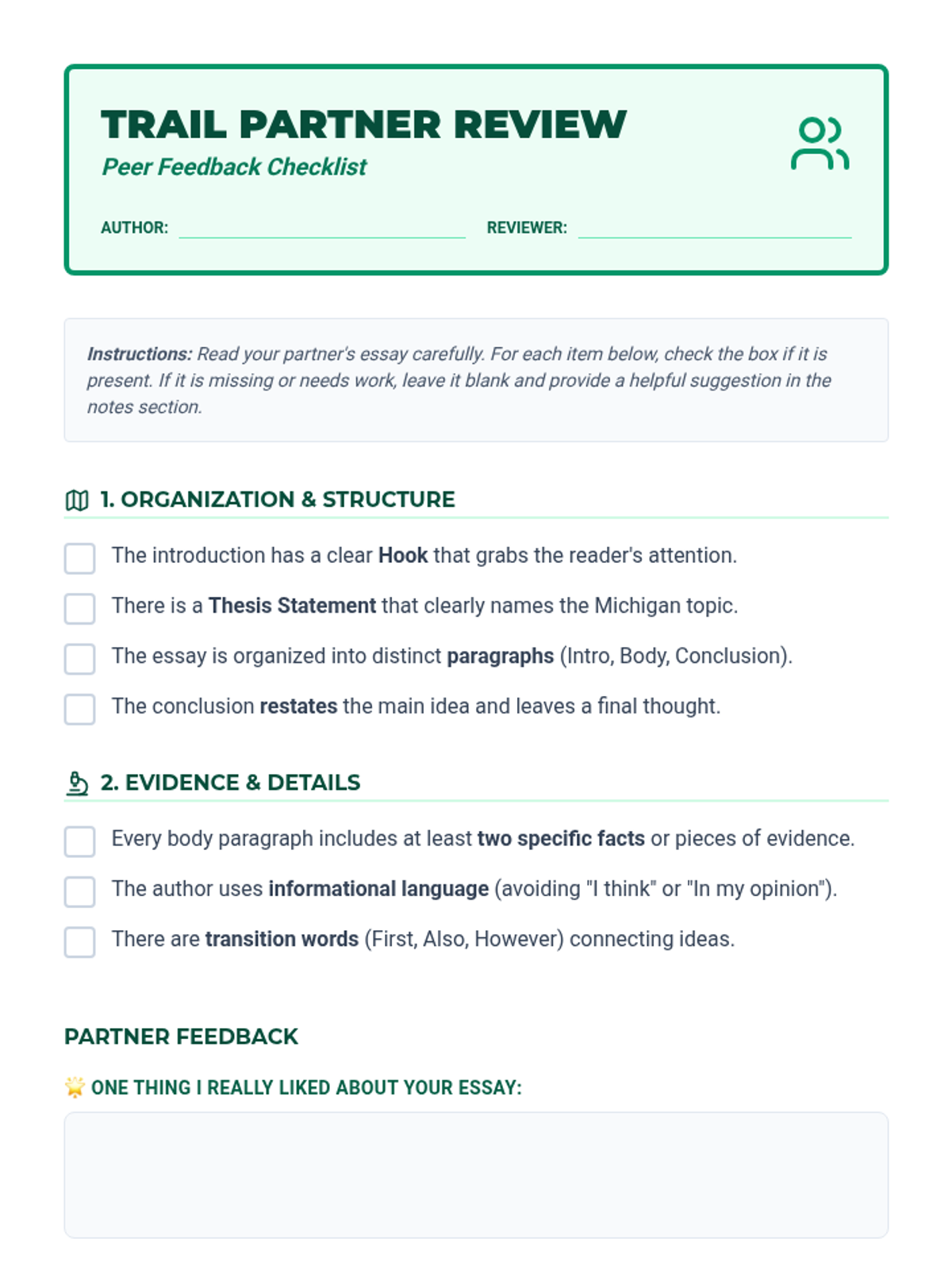
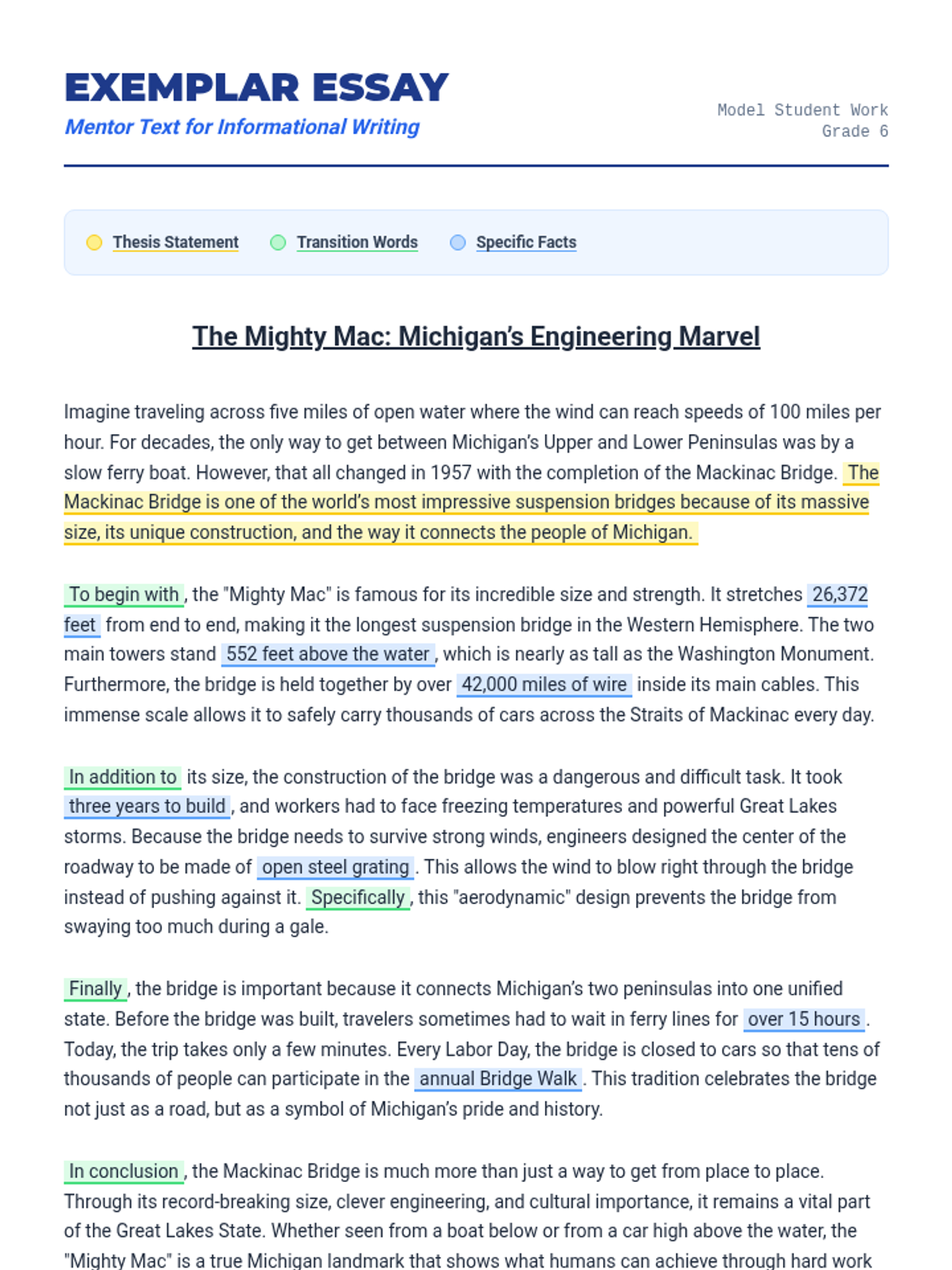
A comprehensive 6th-grade writing unit where students research and write an informational essay about any aspect of Michigan, covering the full writing process from brainstorming to final rubric.
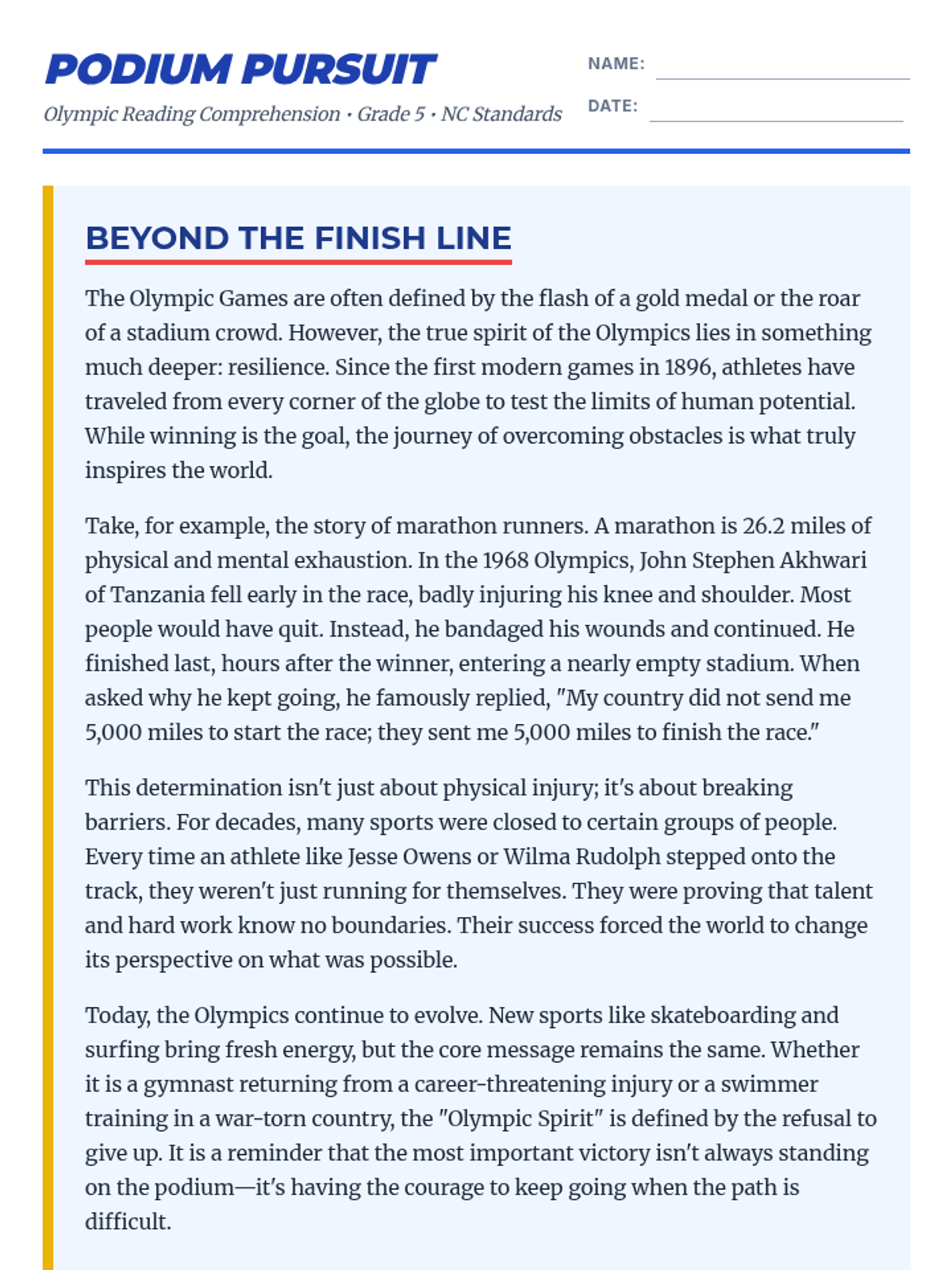
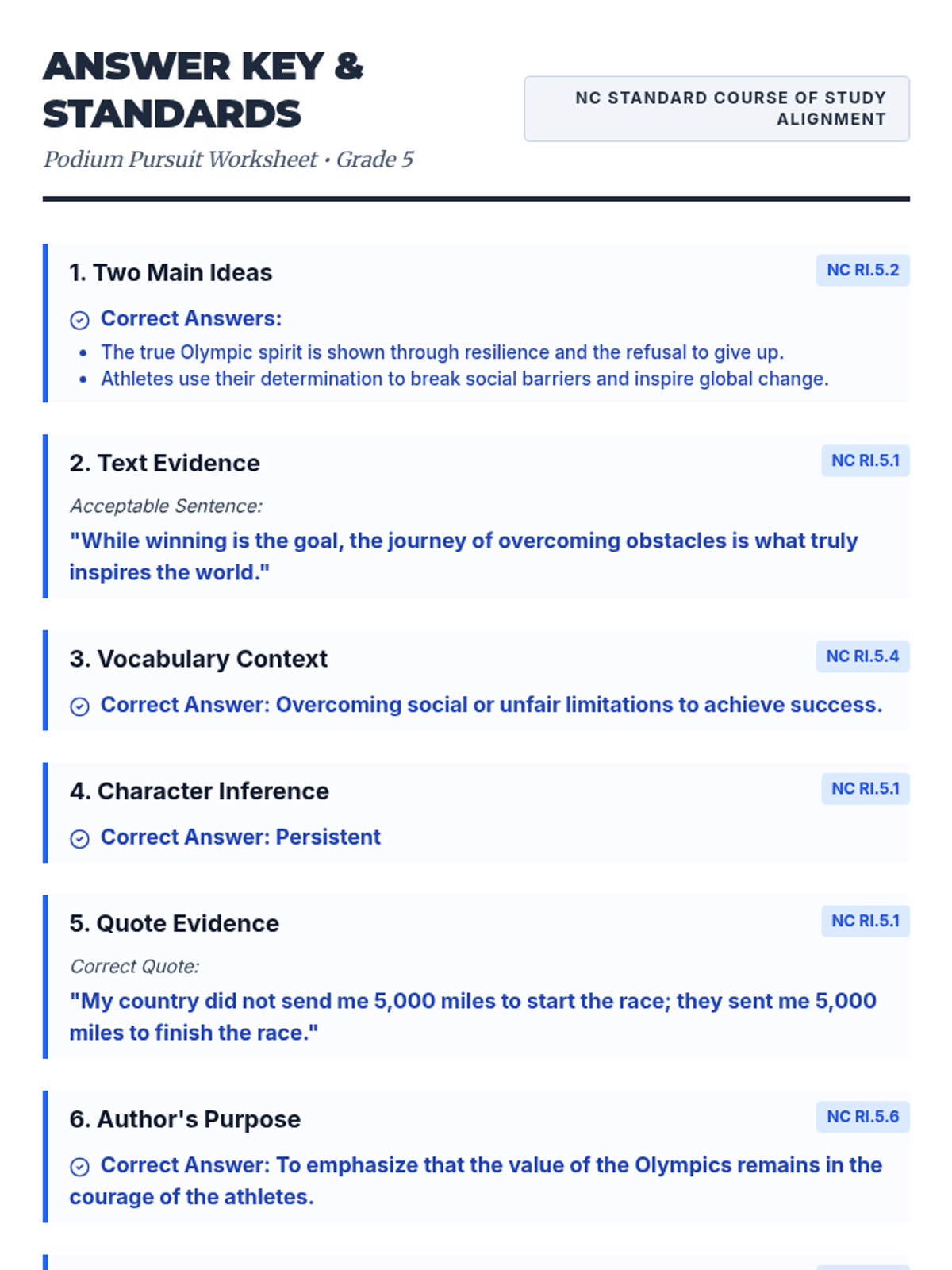
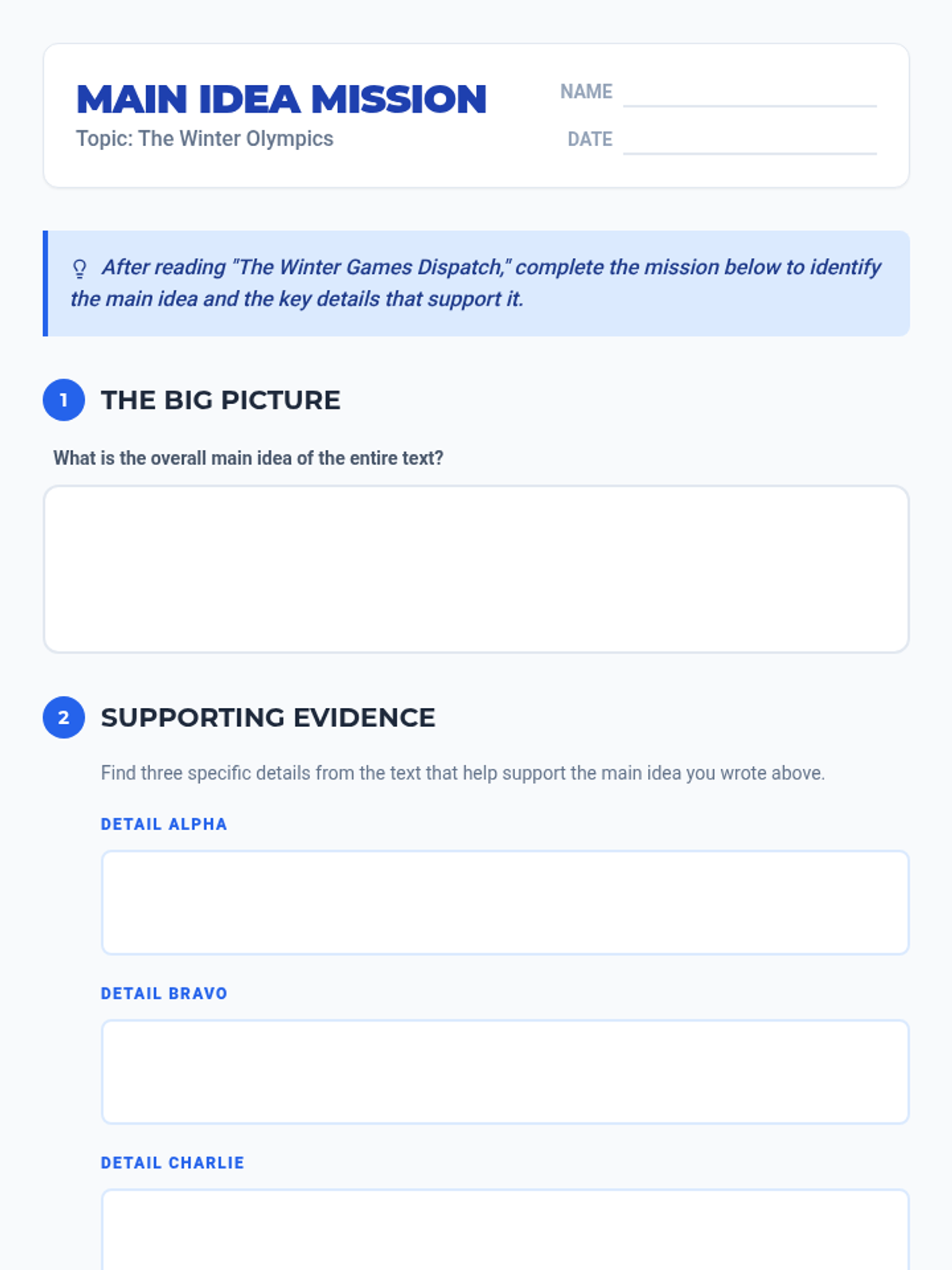
A reading comprehension lesson focused on identifying main ideas and citing text evidence through the lens of Olympic history and athlete resilience.
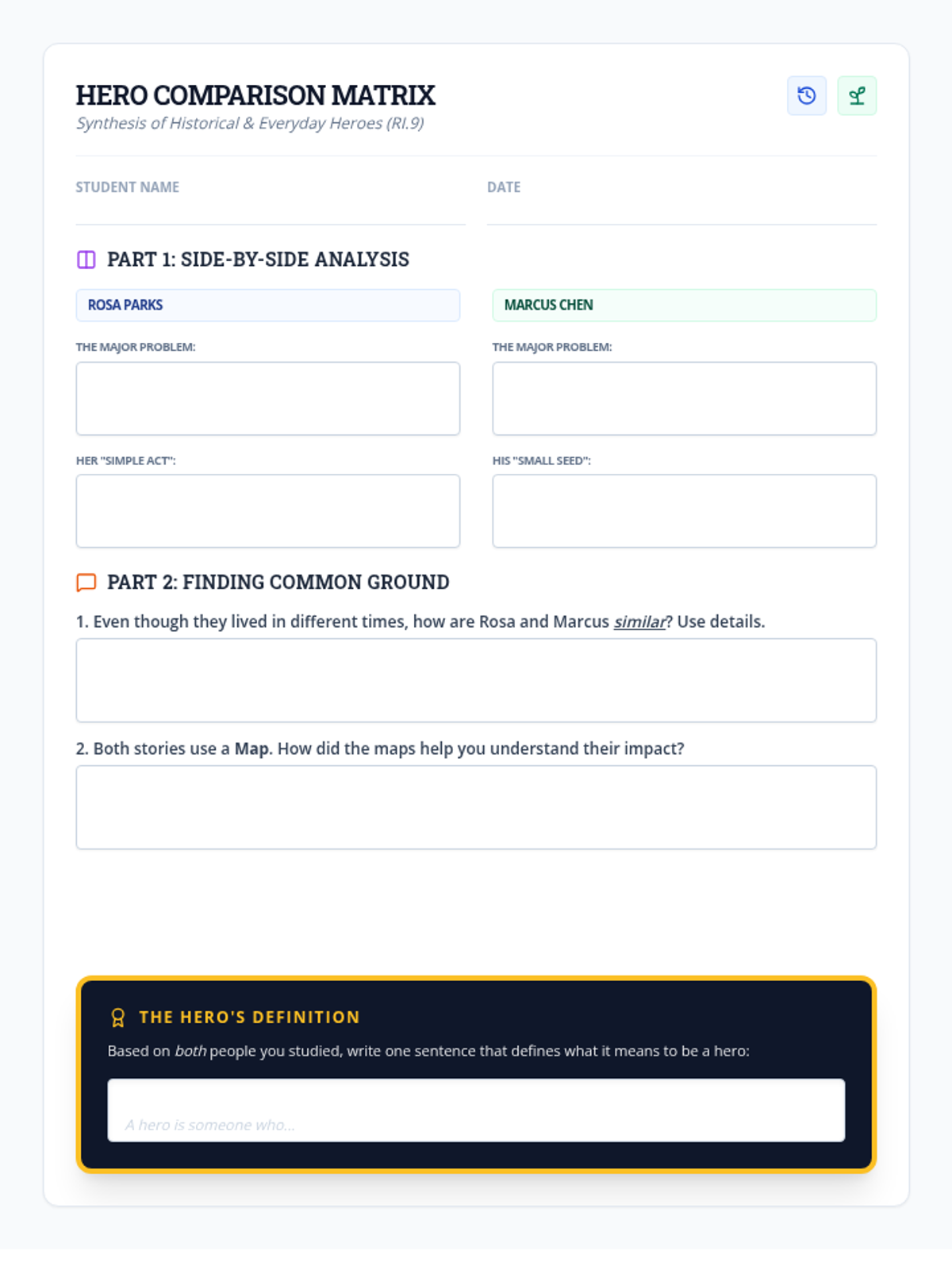
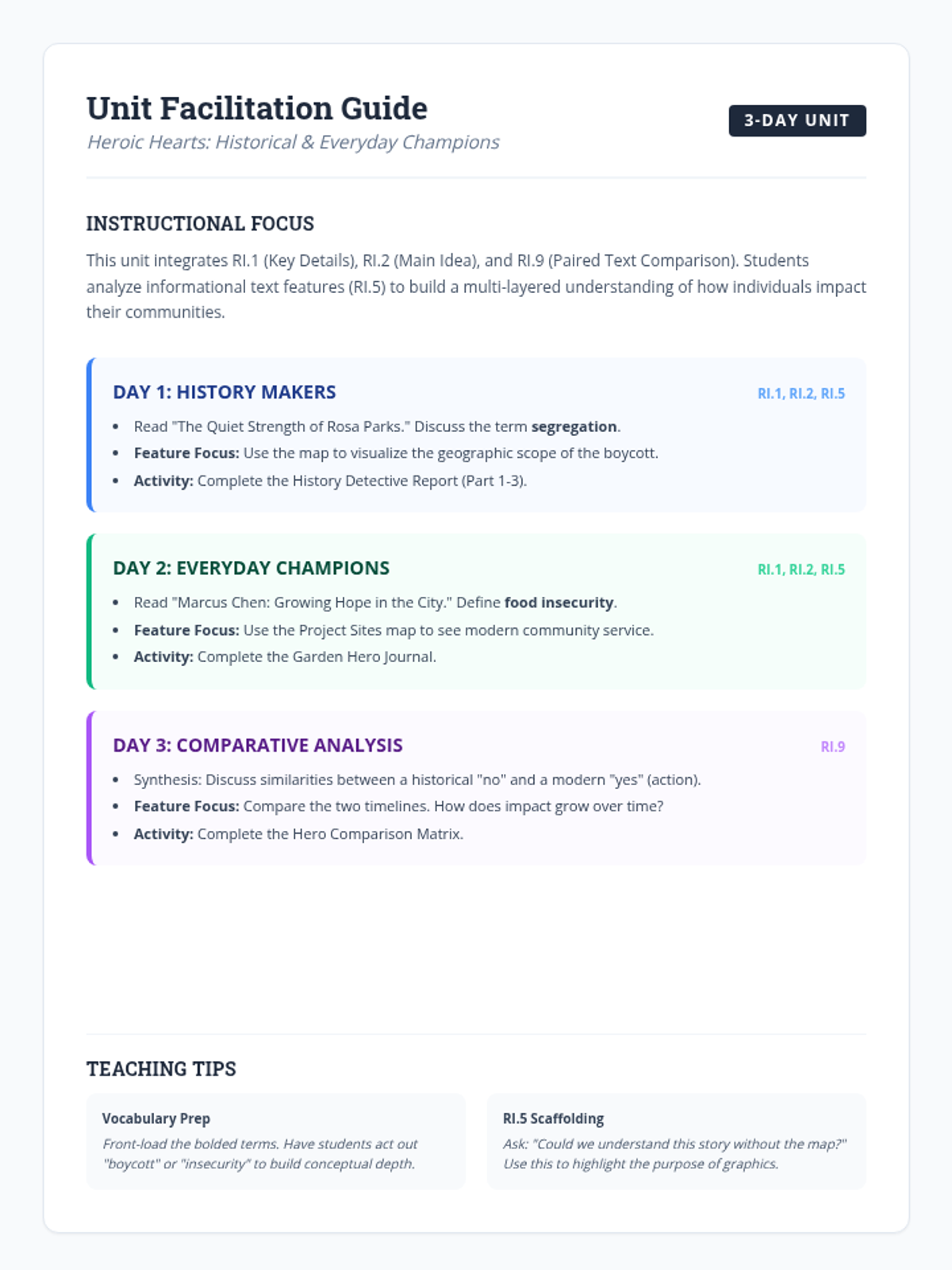
Students use evidence from both texts to compare and contrast the impact of historical and everyday heroes, meeting RI.9 standards.
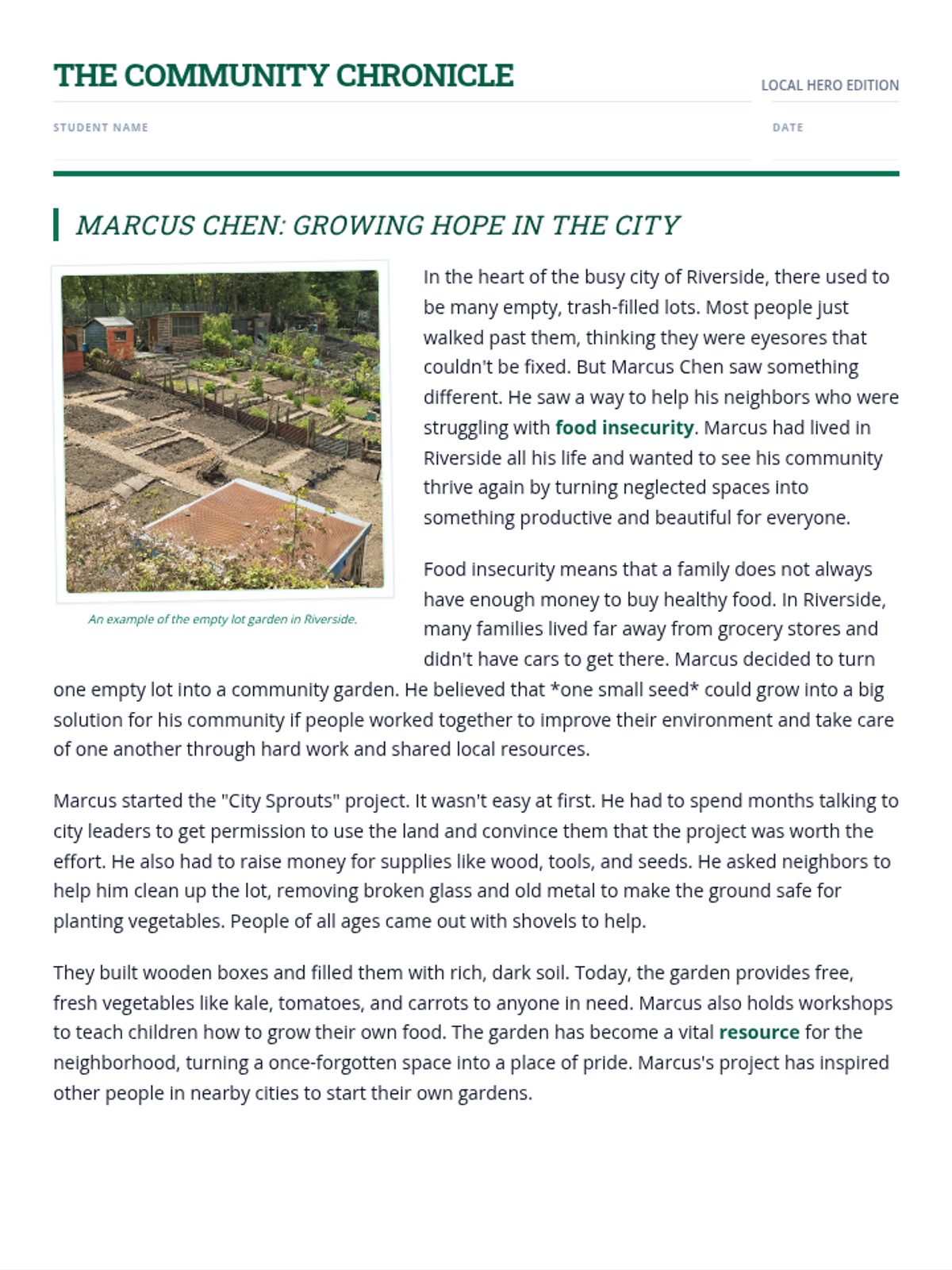
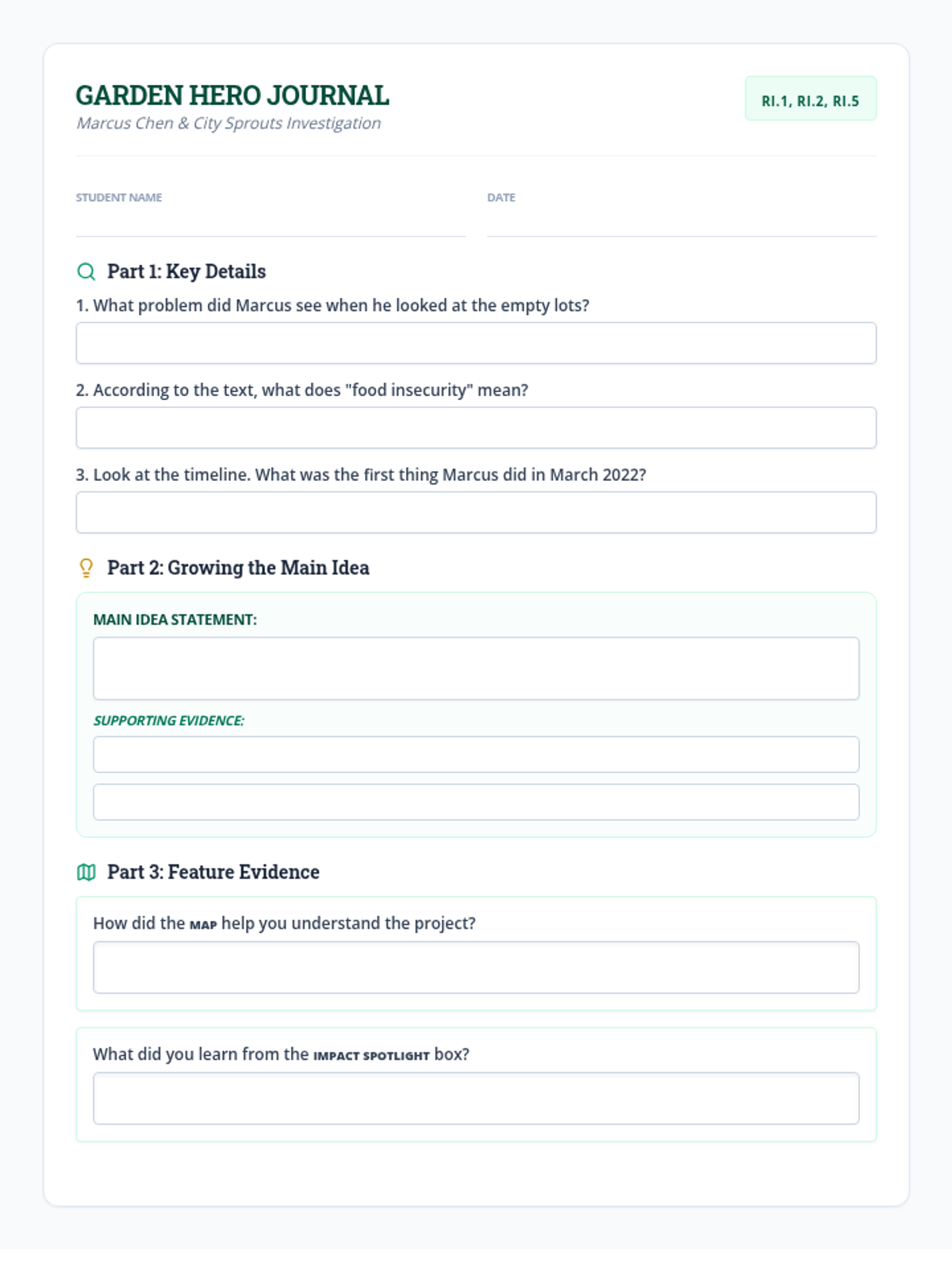
Students read about a modern-day local hero, identifying main ideas and using diagrams and labels to understand how everyday people make a difference.
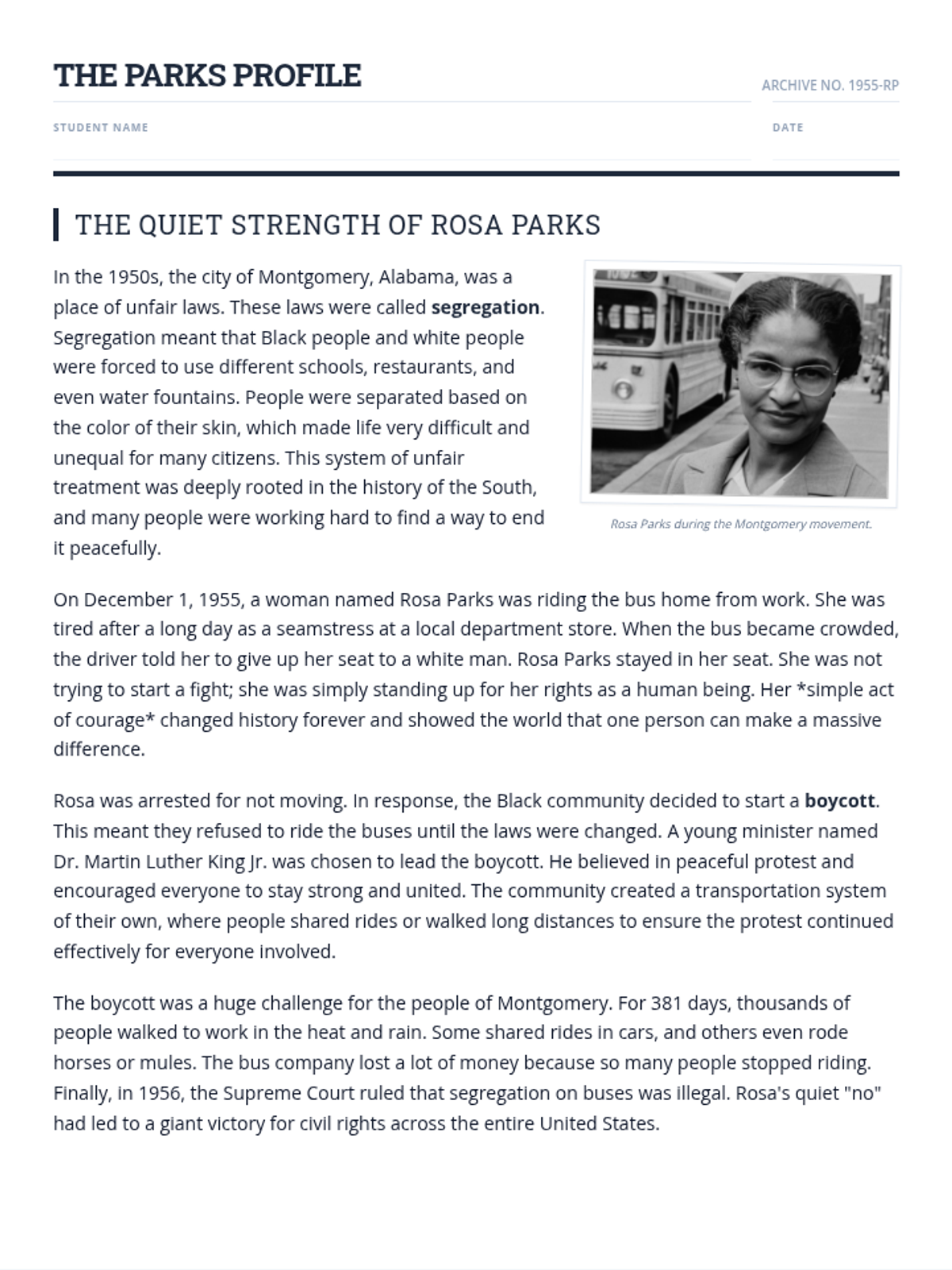
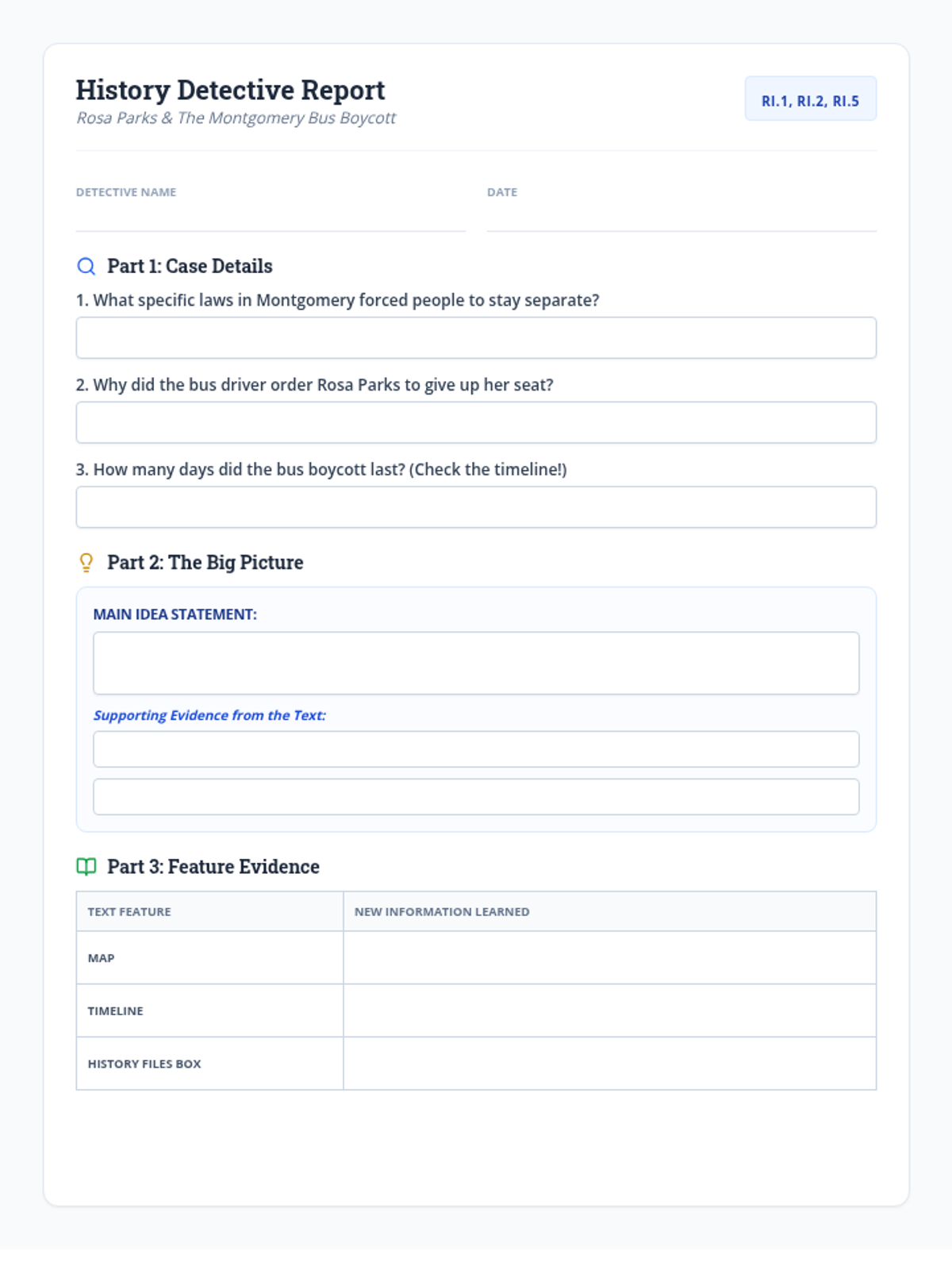
Students explore the life of Rosa Parks, focusing on identifying key details and navigating complex text features like maps and timelines.
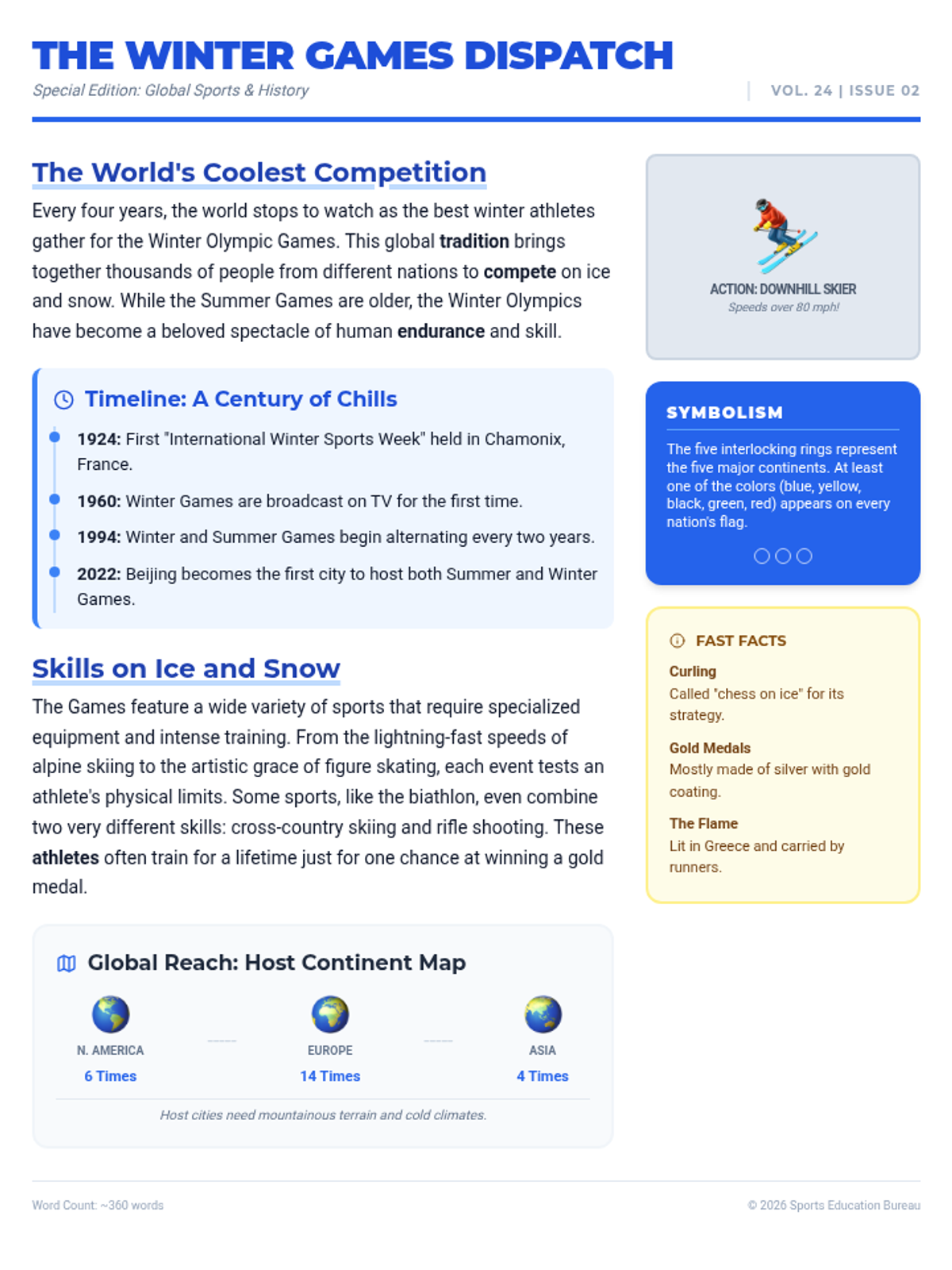
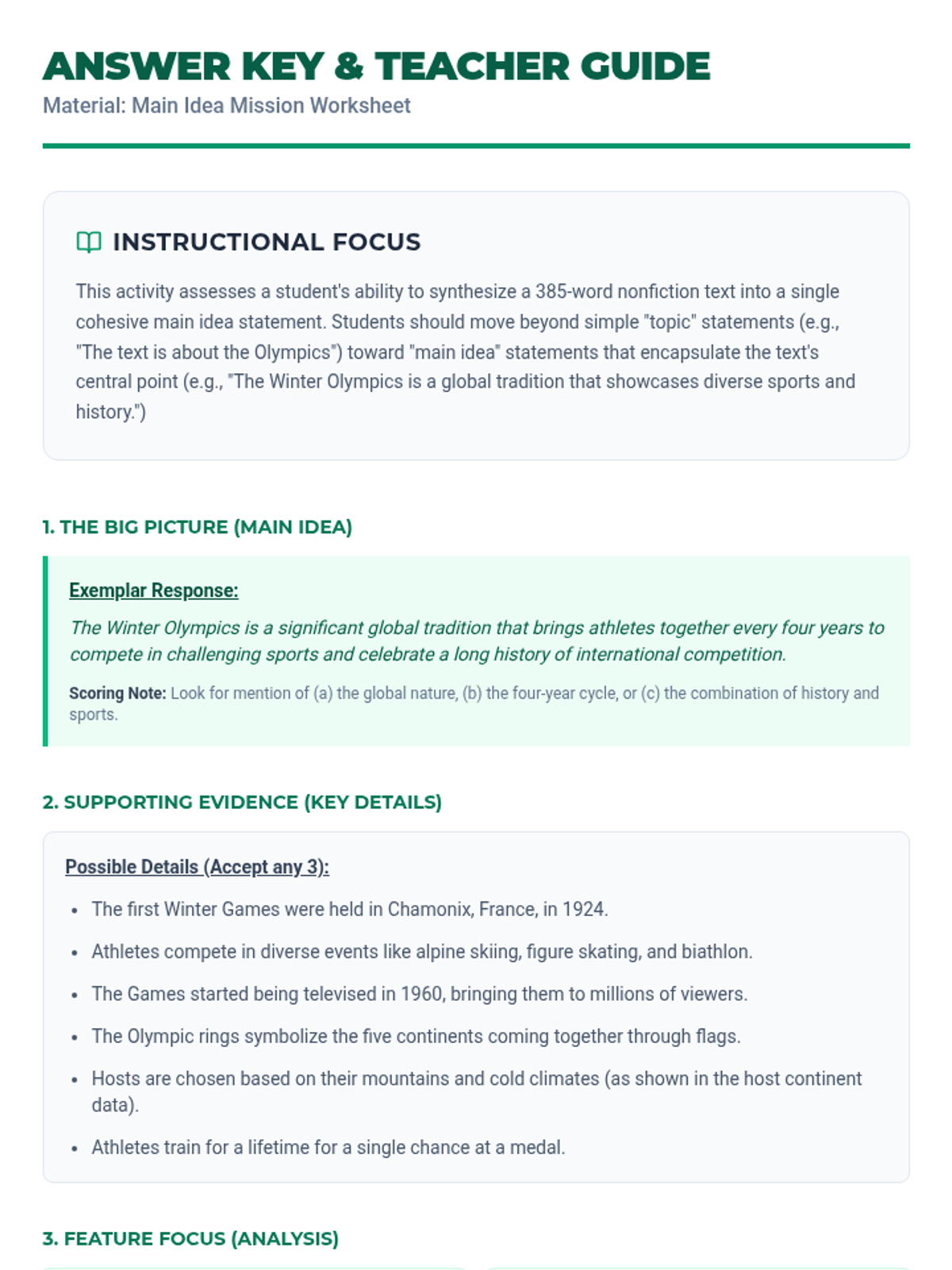
A comprehensive nonfiction reading experience about the history, sports, and traditions of the Winter Olympics, designed to help students identify main ideas and supporting details.
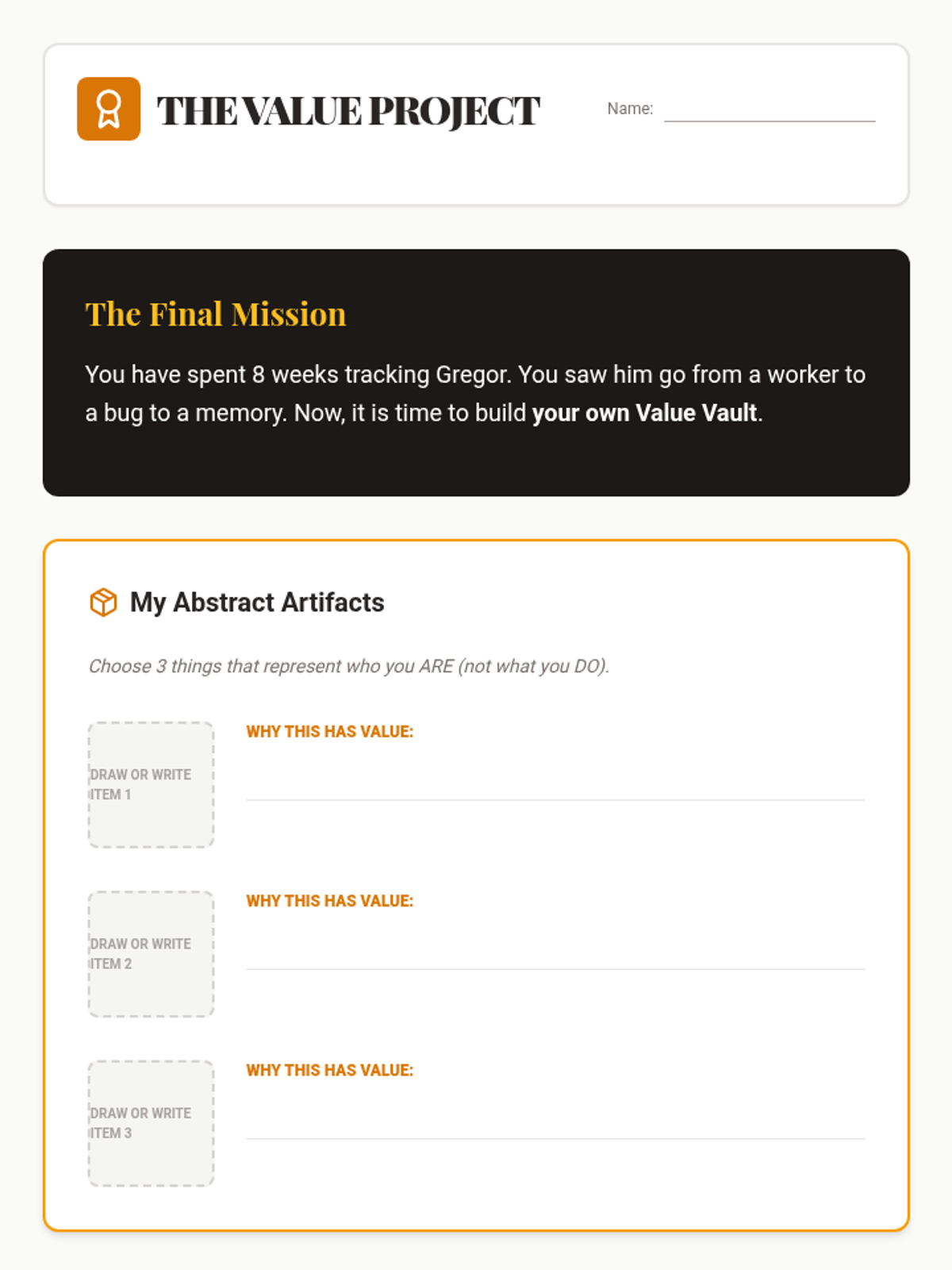
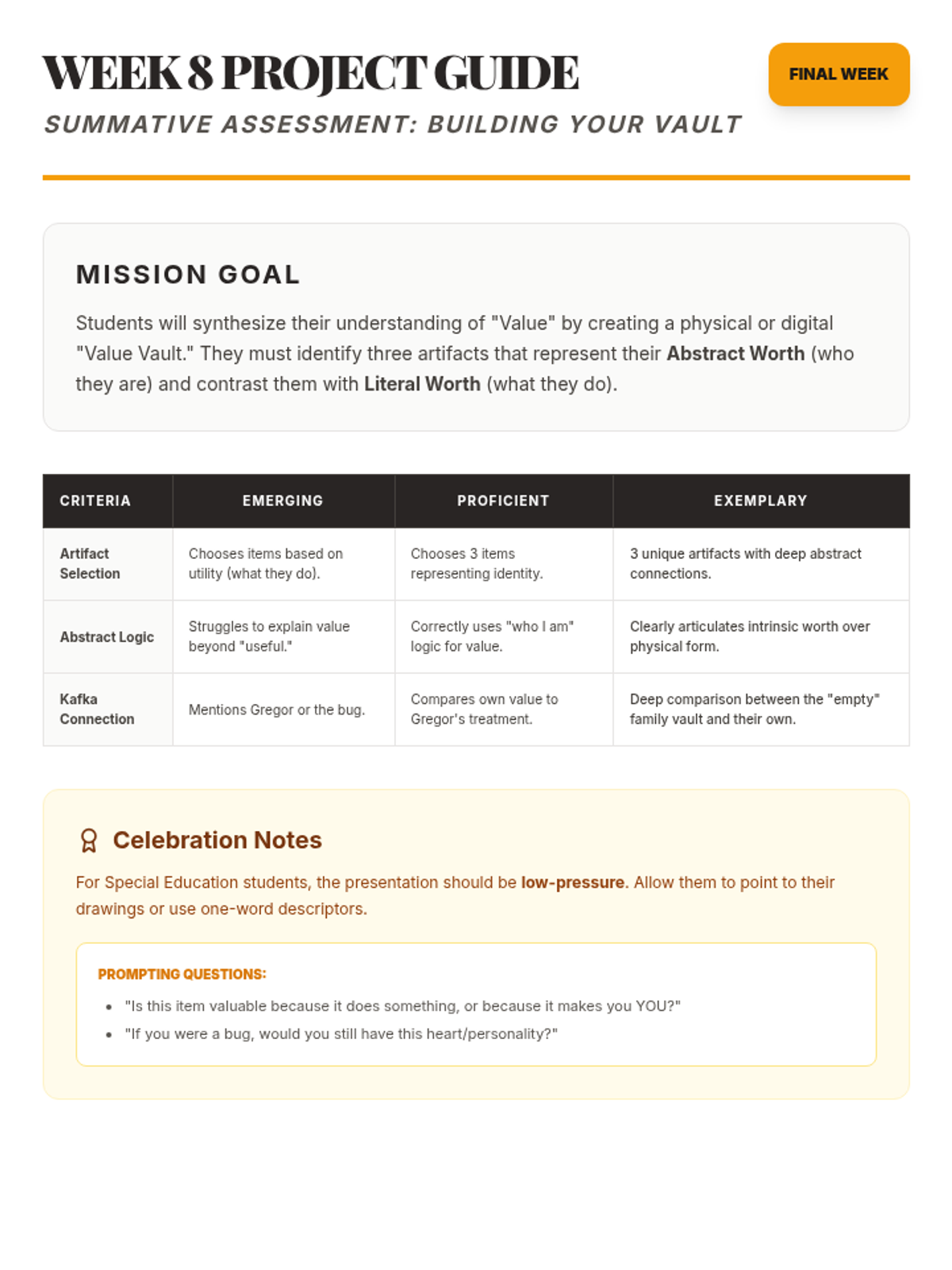
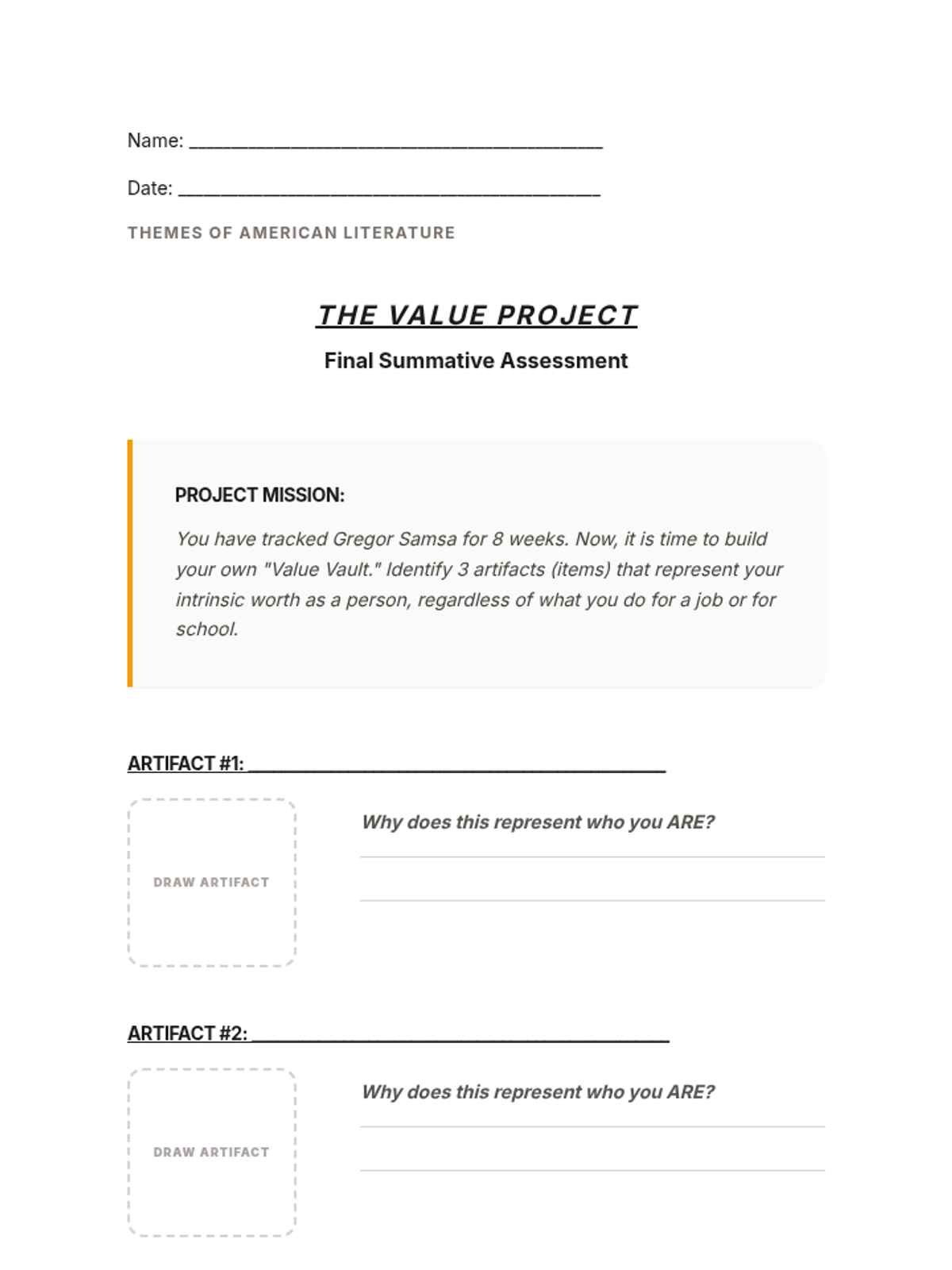
A culminating project where students reflect on the 8-week journey and create a 'Value Vault' for themselves or Gregor.
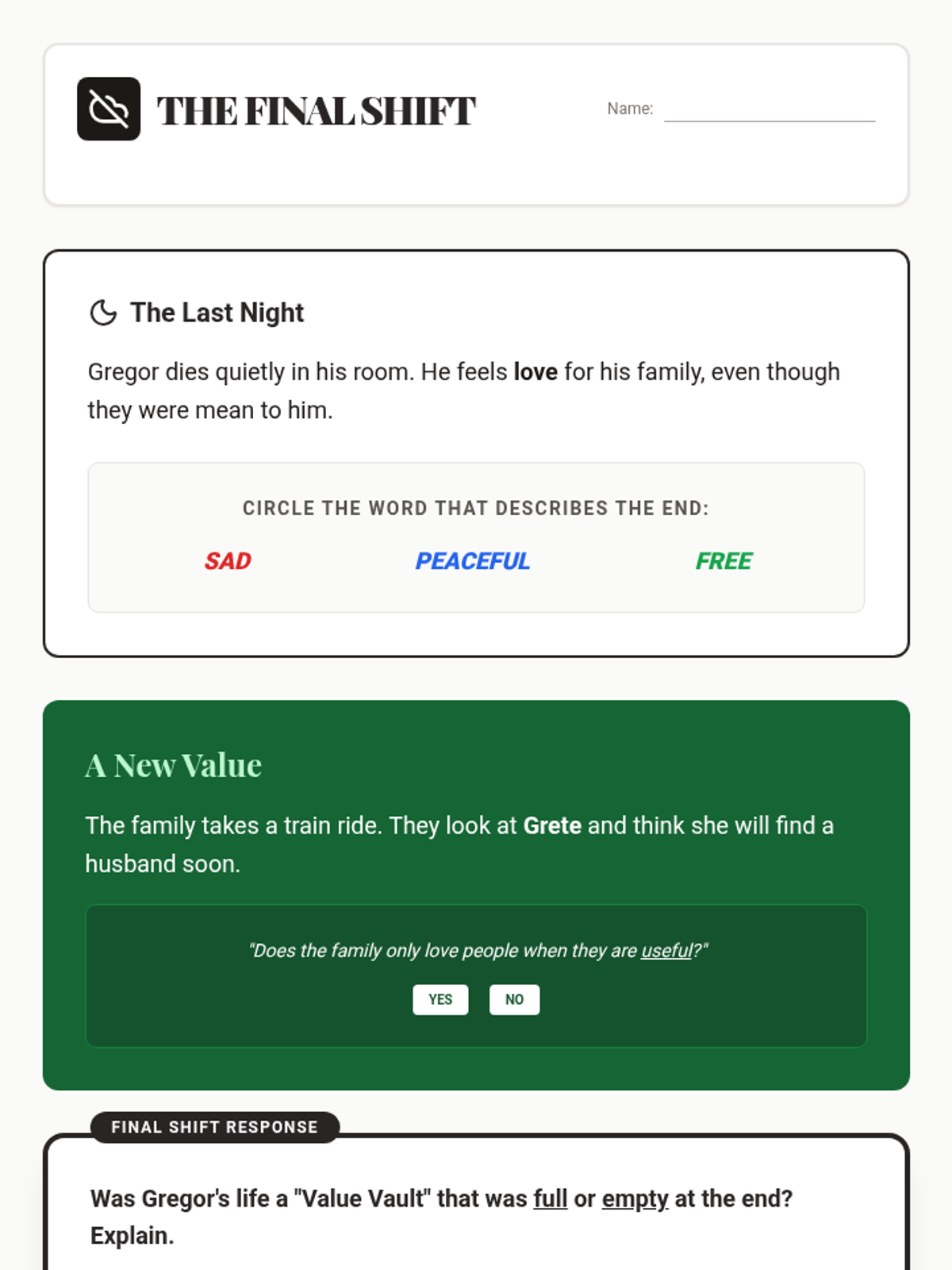
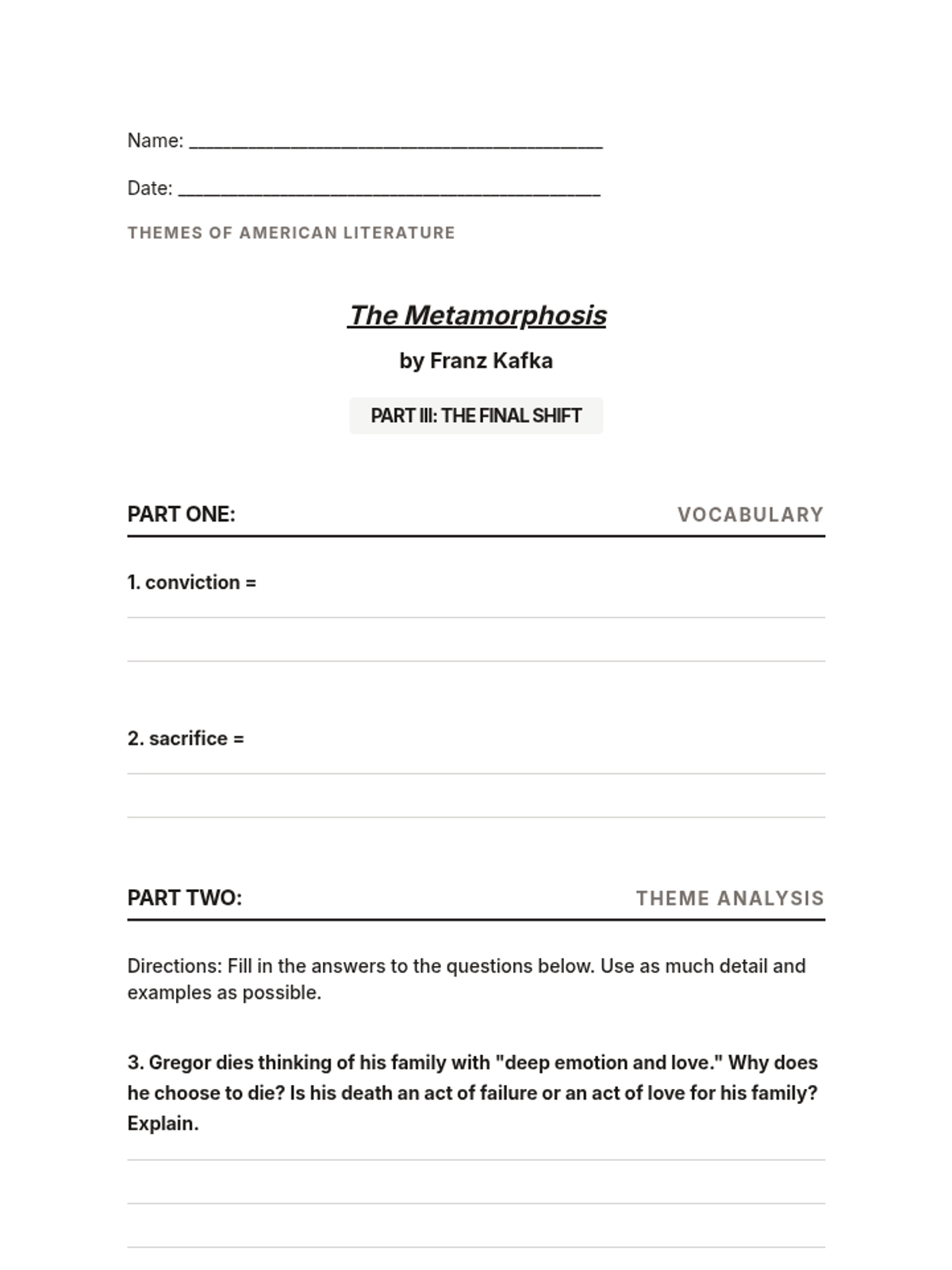
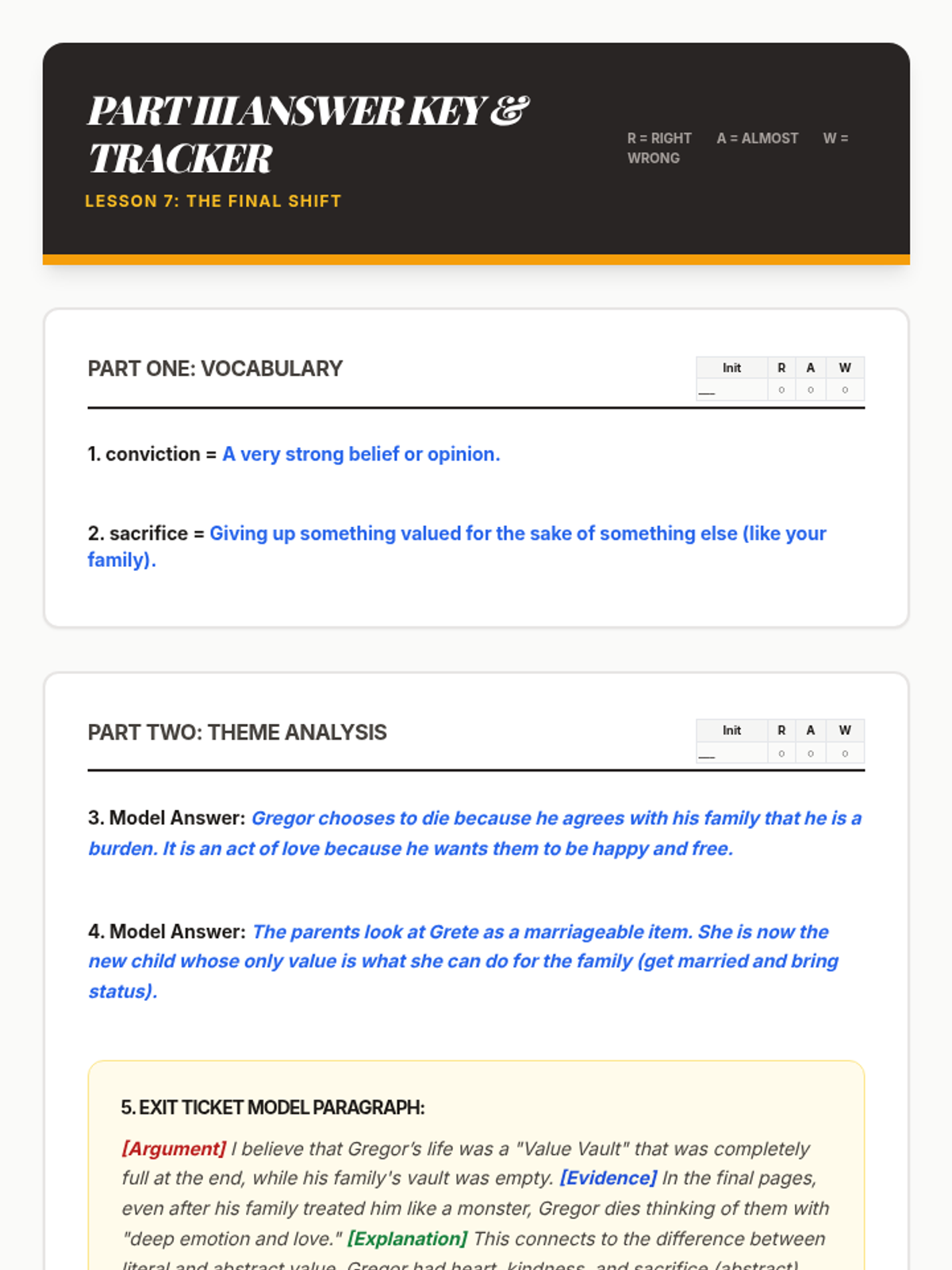
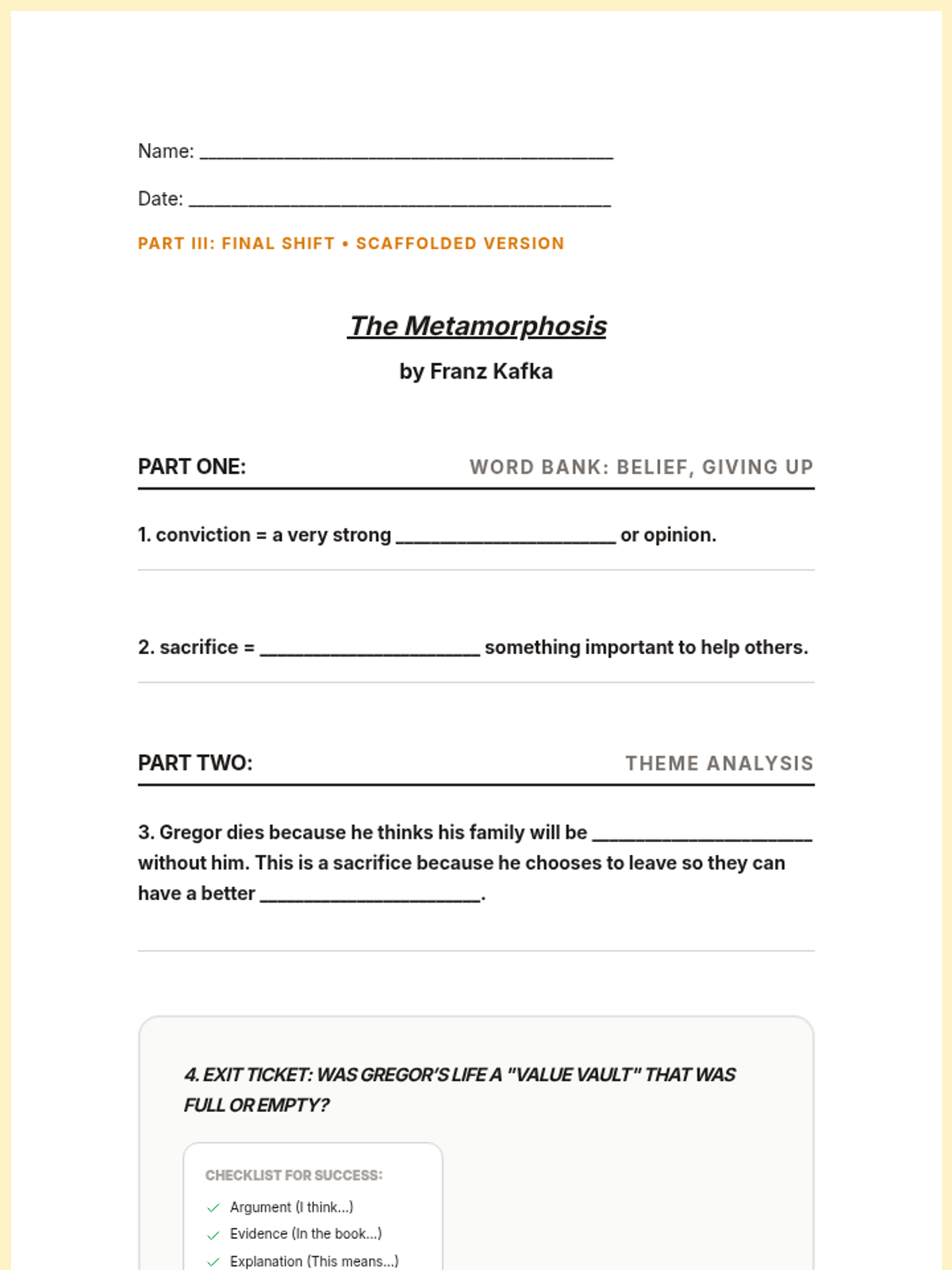
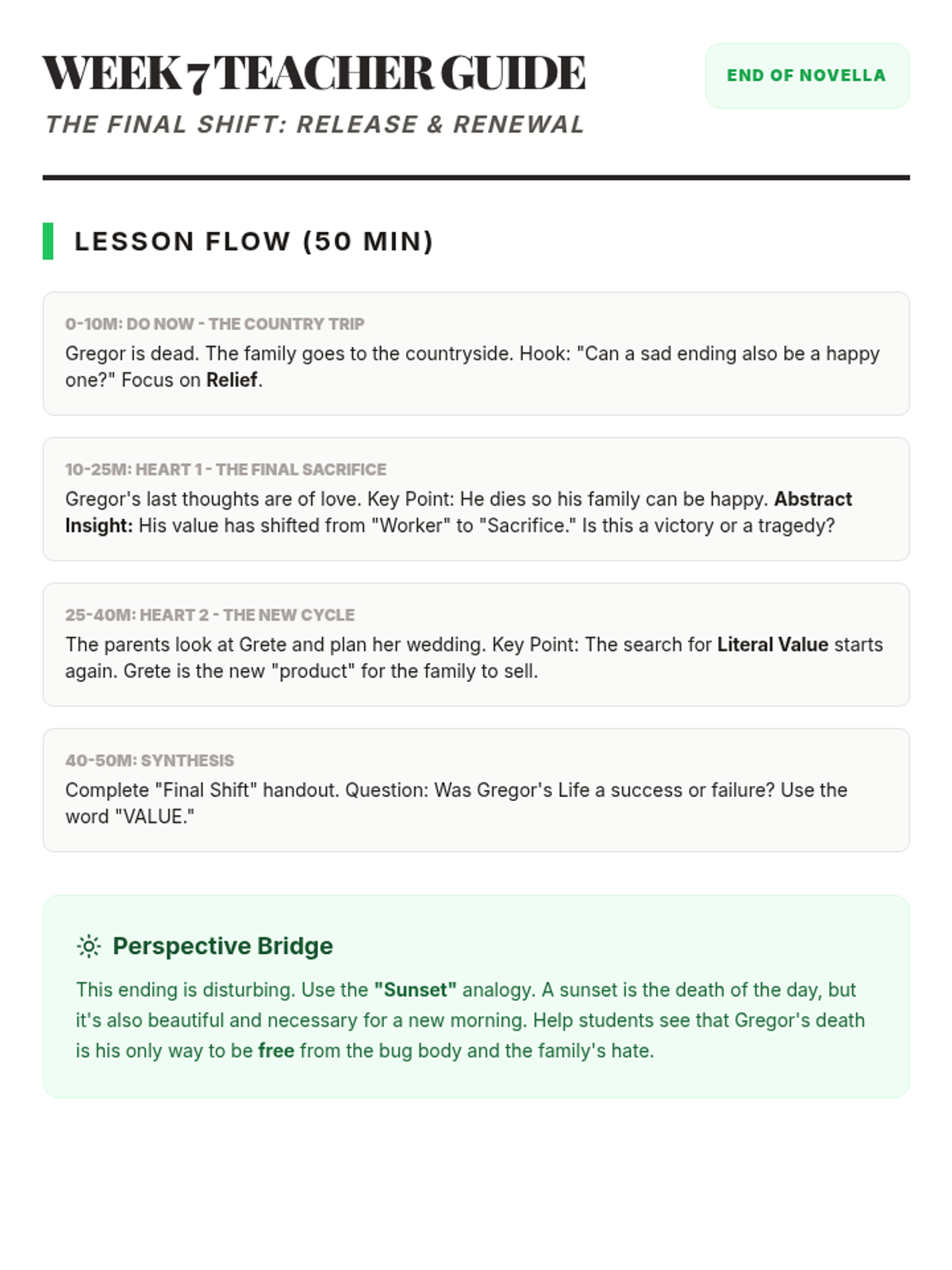
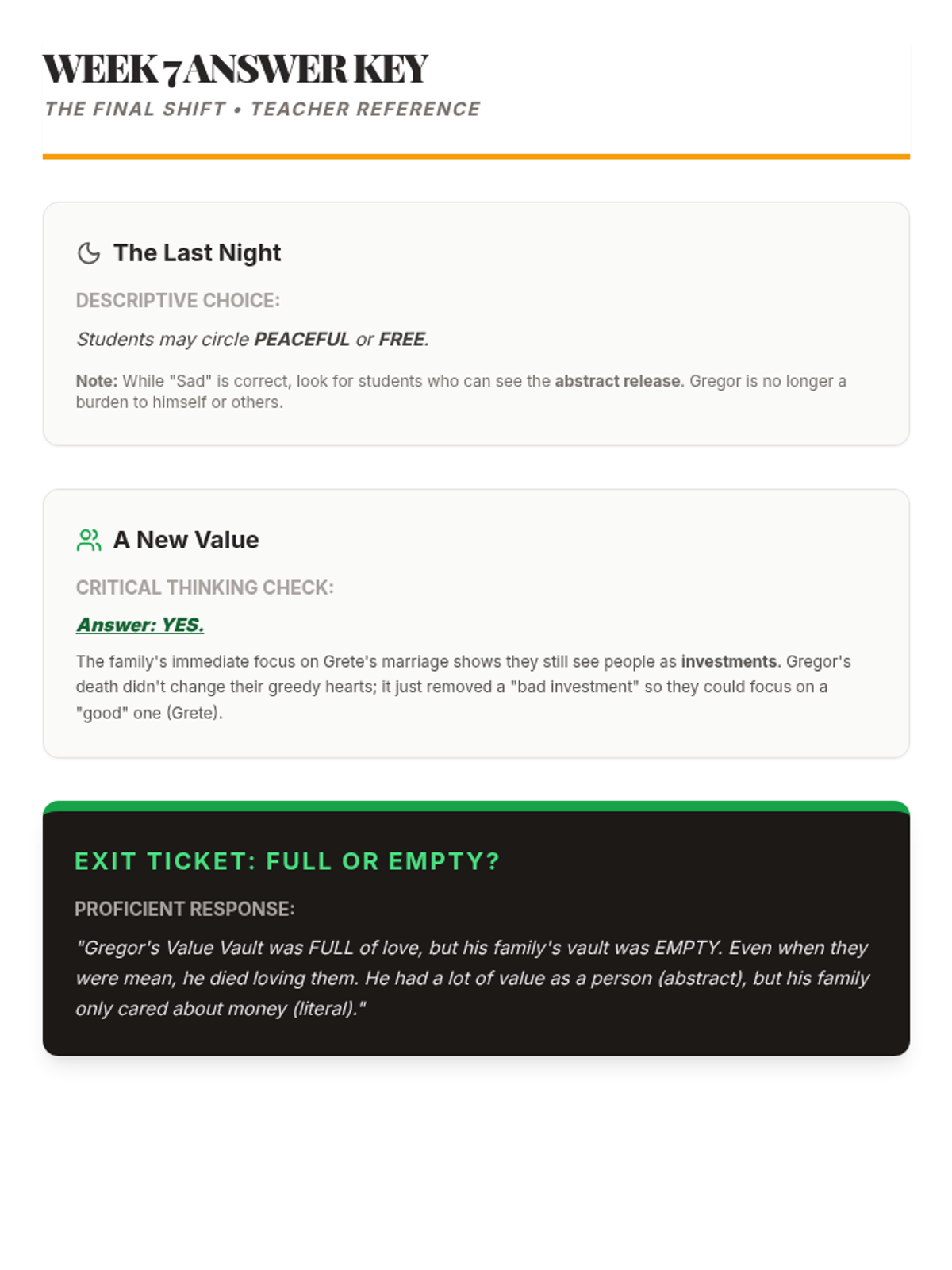
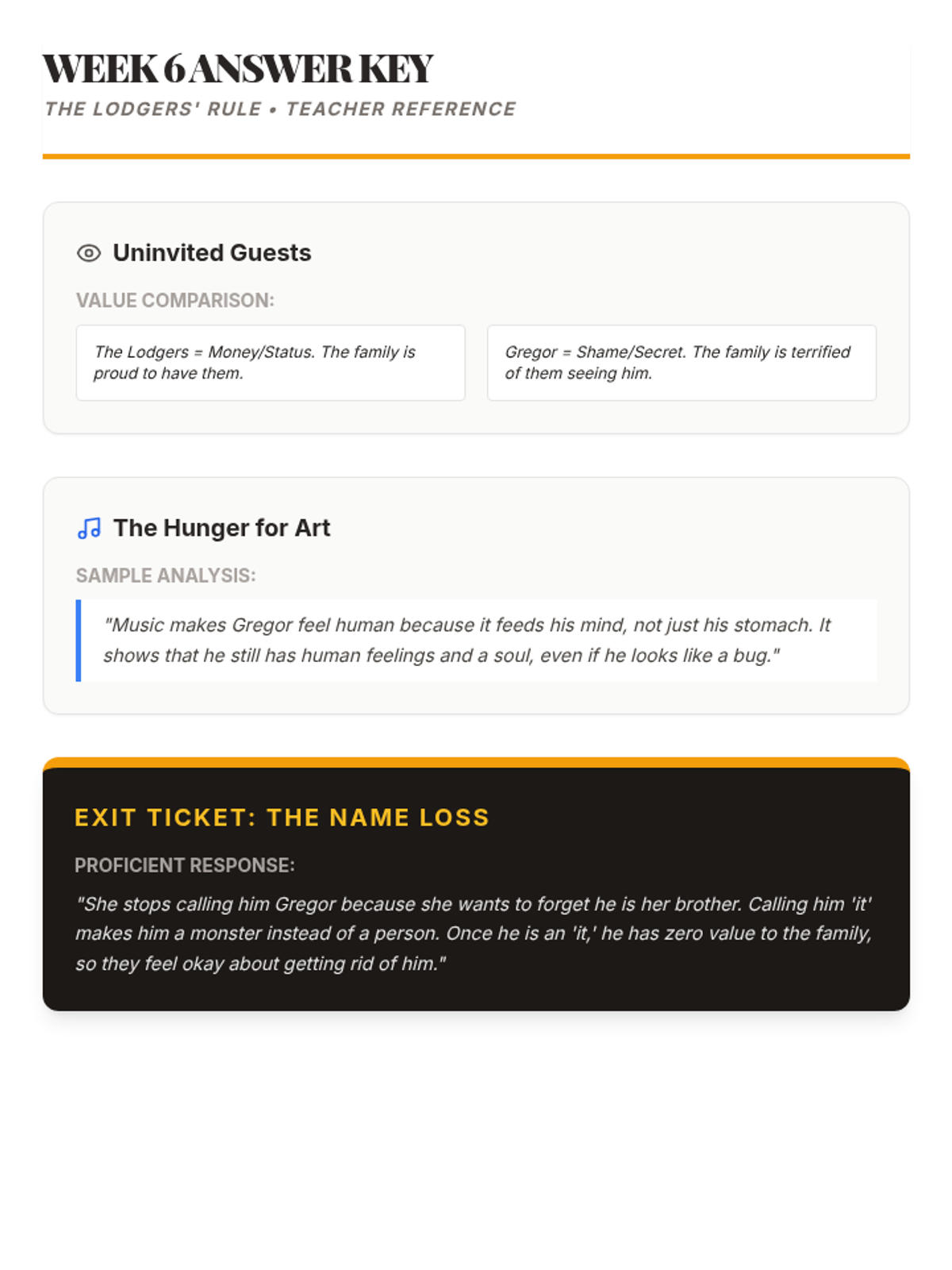
Analyzes the end of the novella, Gregor's death, and the family's disturbing relief and new-found 'value'.
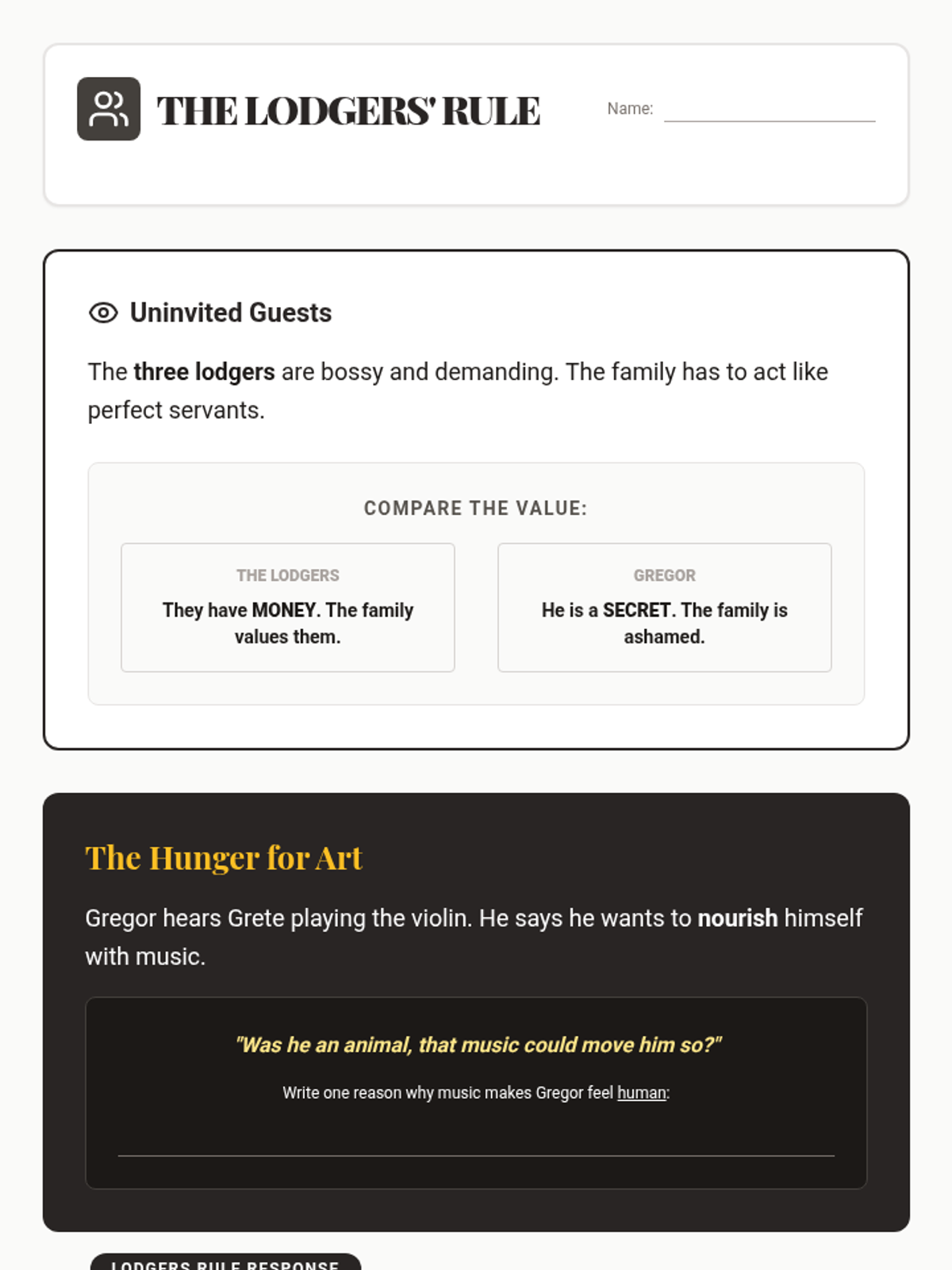
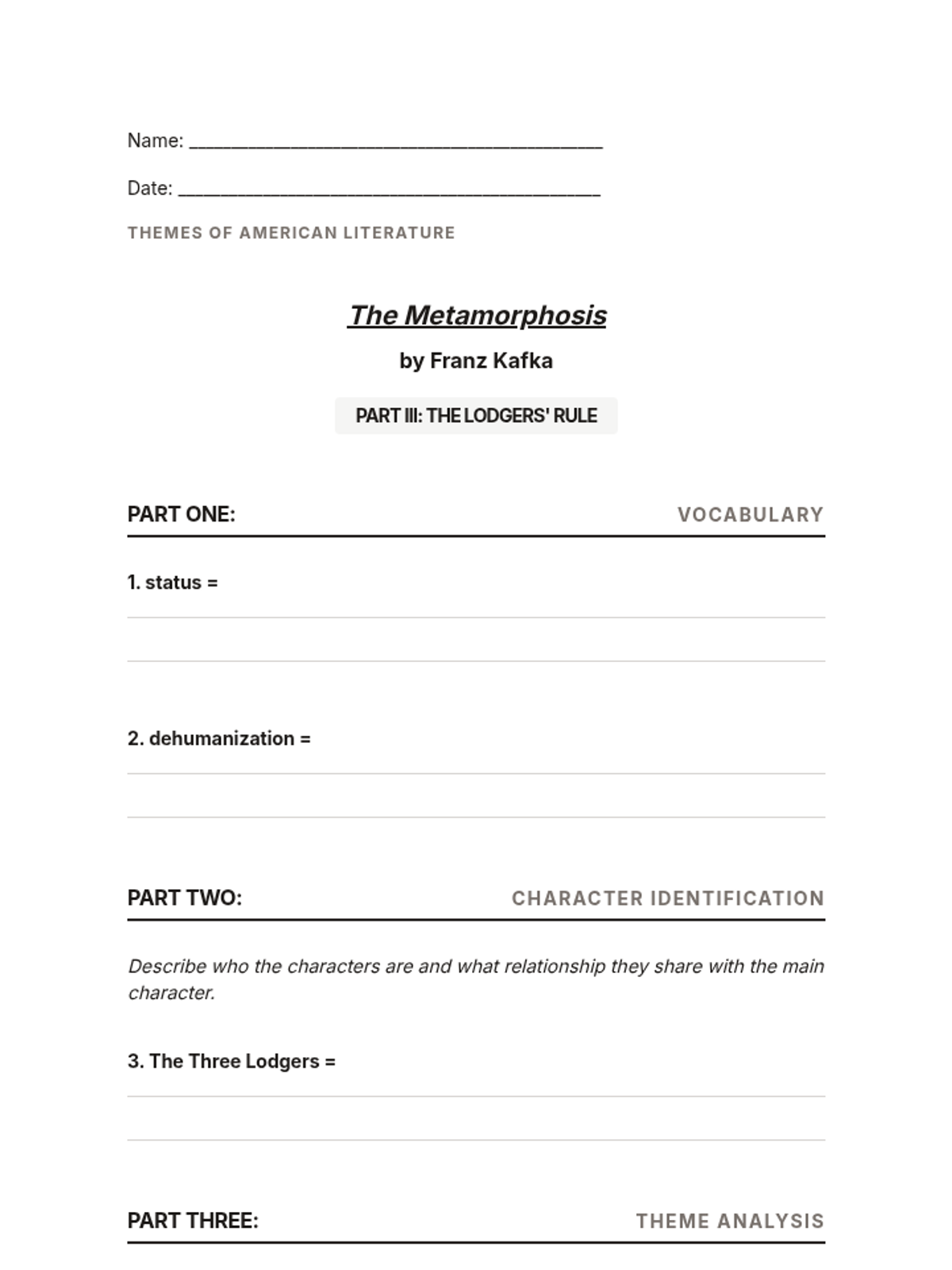
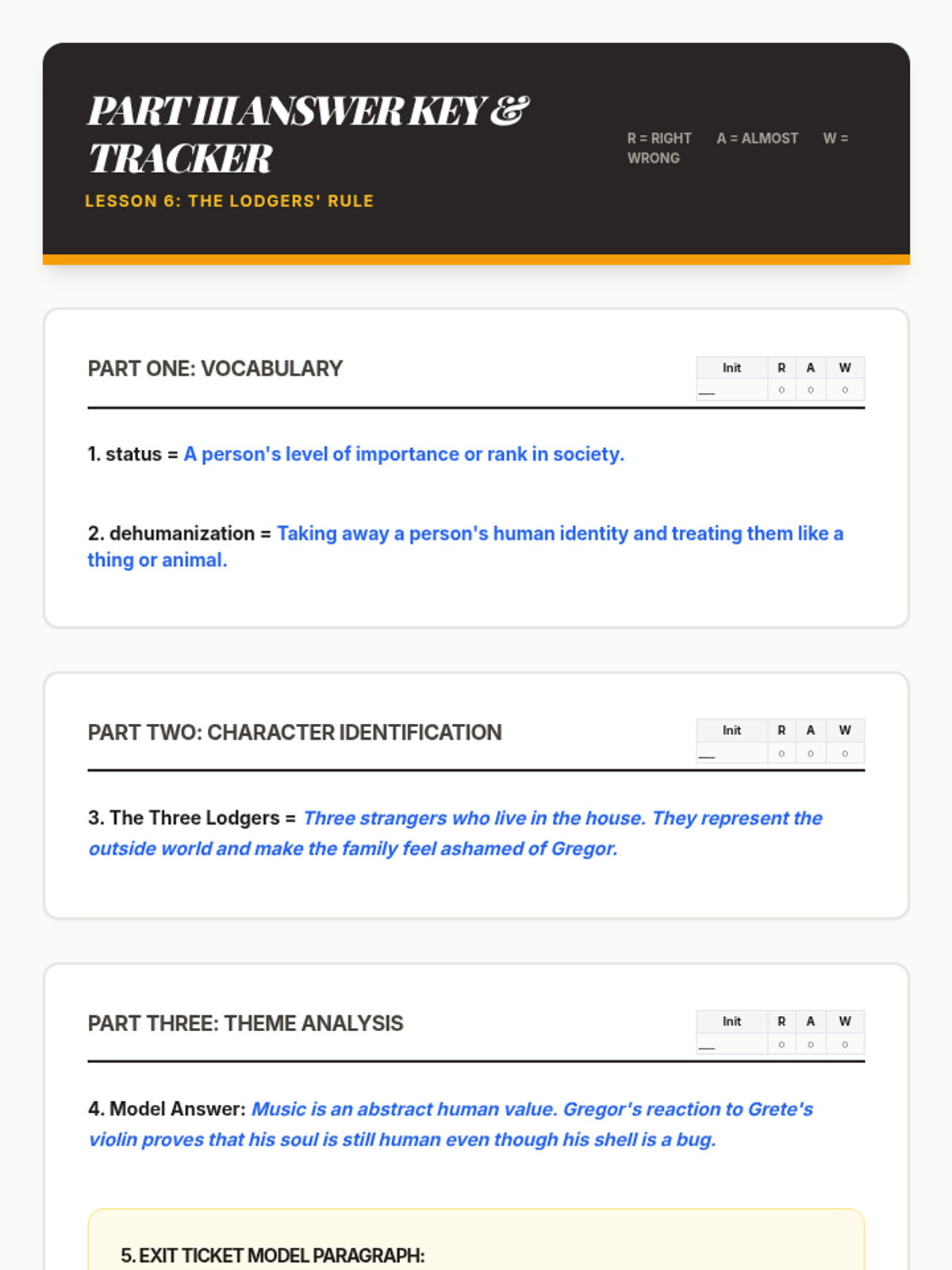
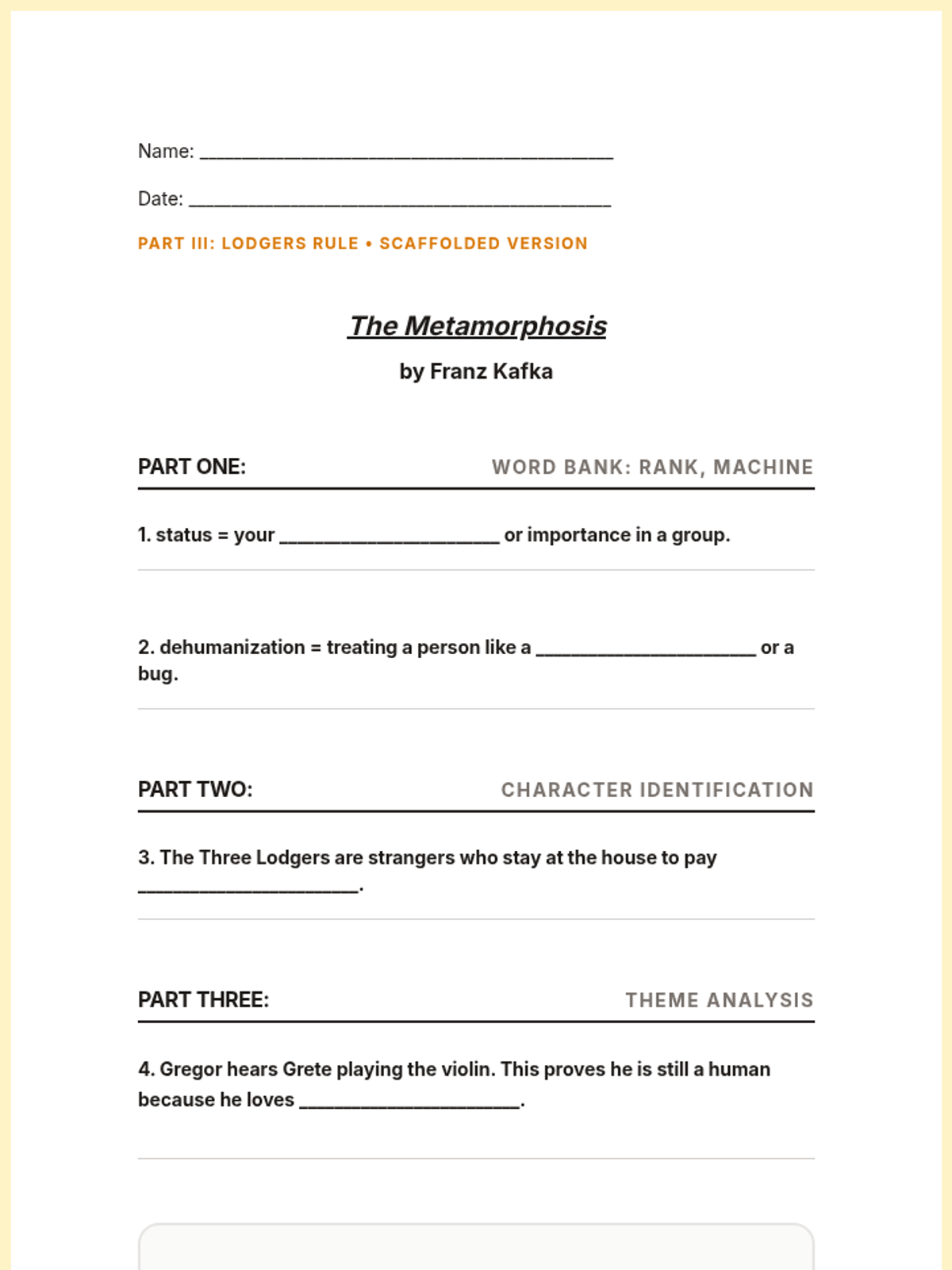
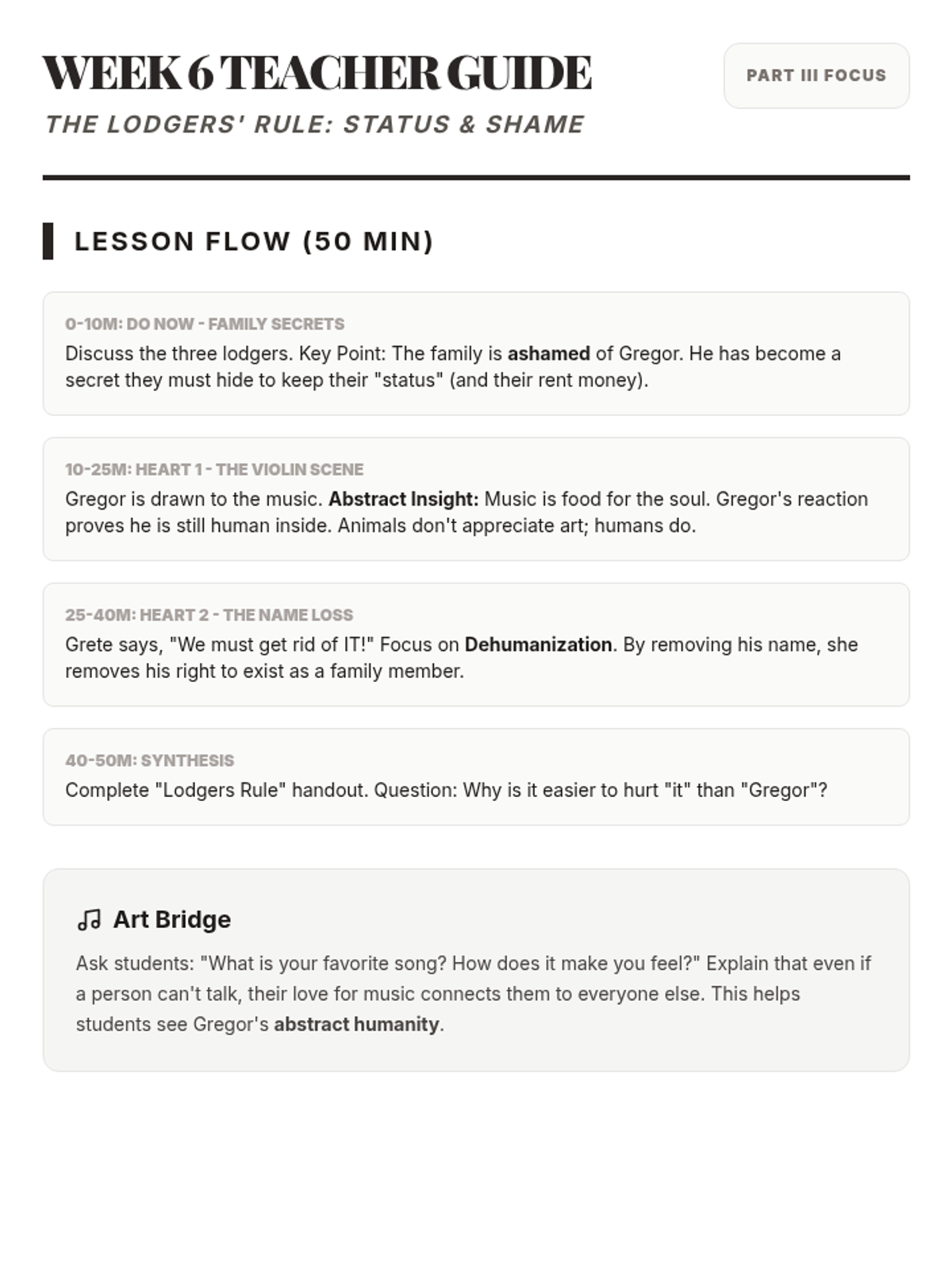
Focuses on Part III, the arrival of the boarders, and Gregor becoming a 'nuisance' in his own home.
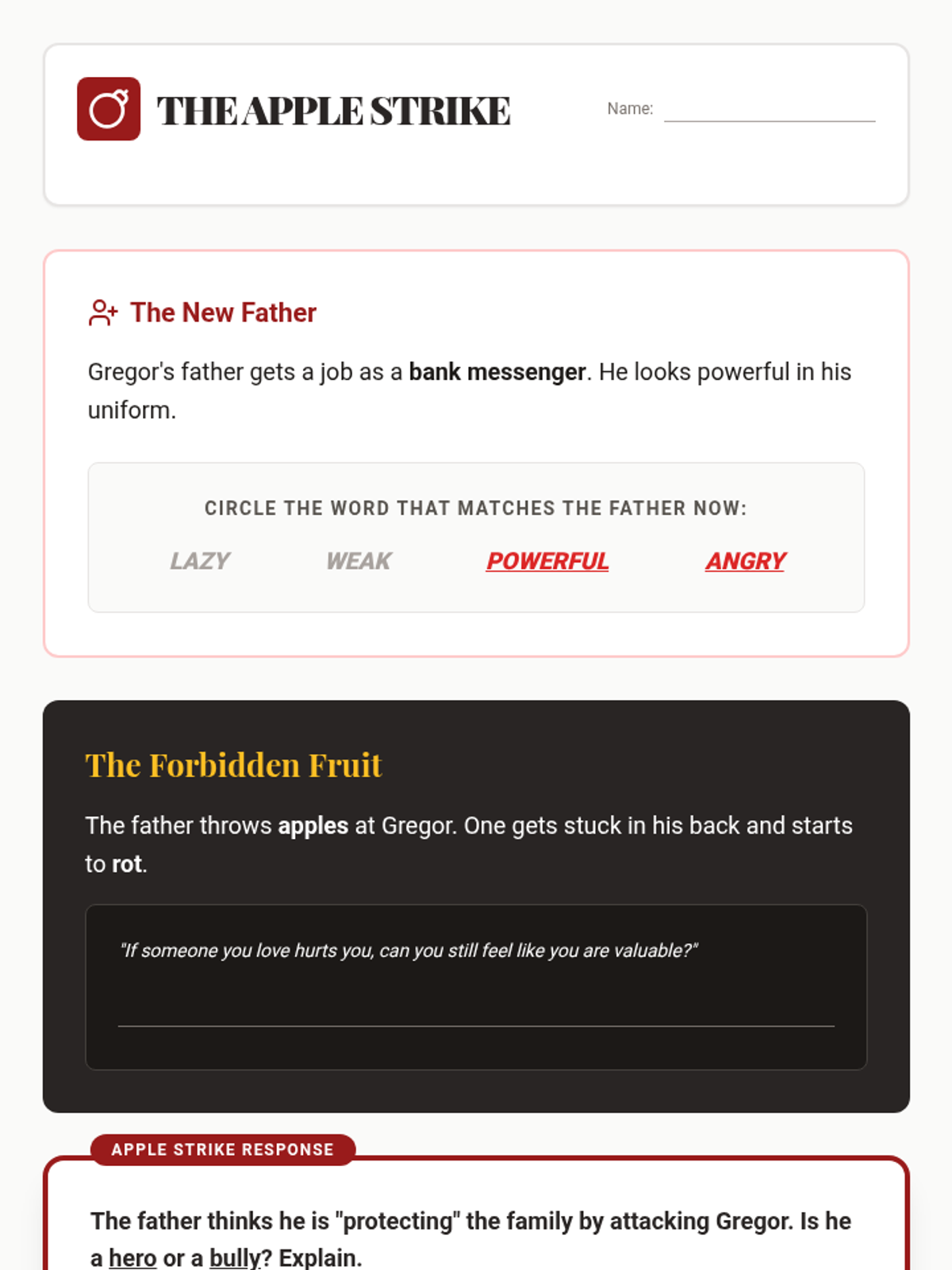
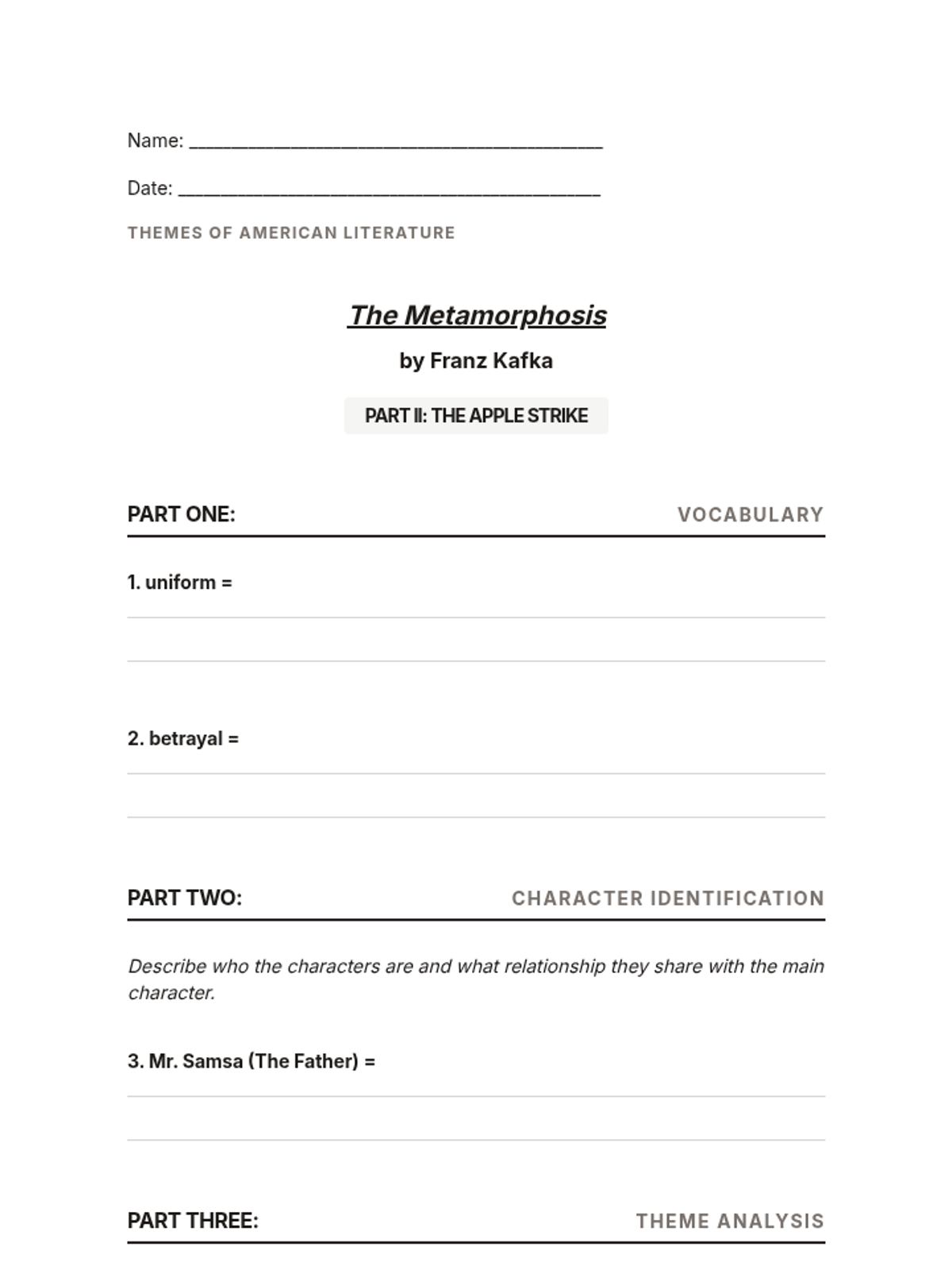
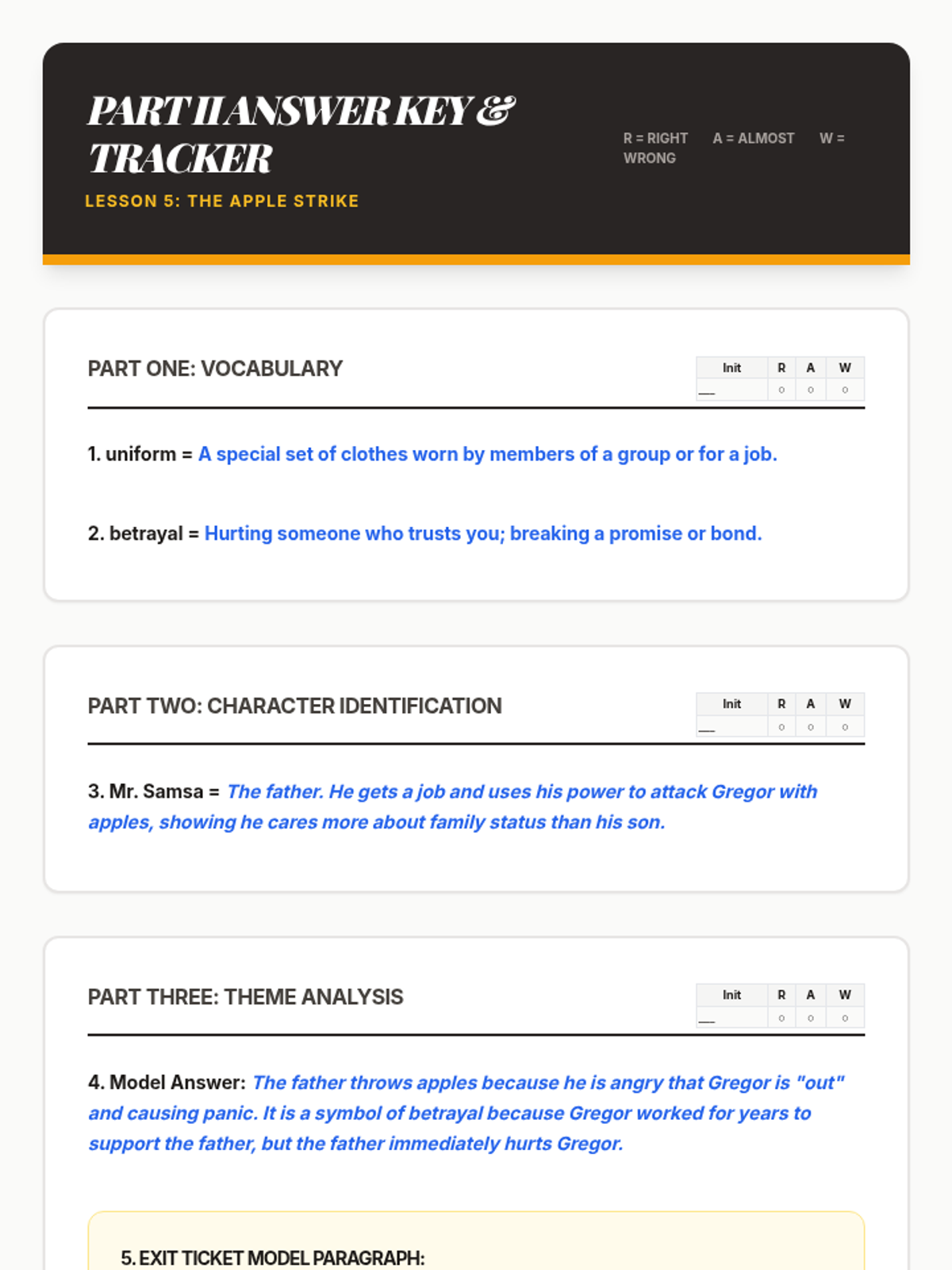
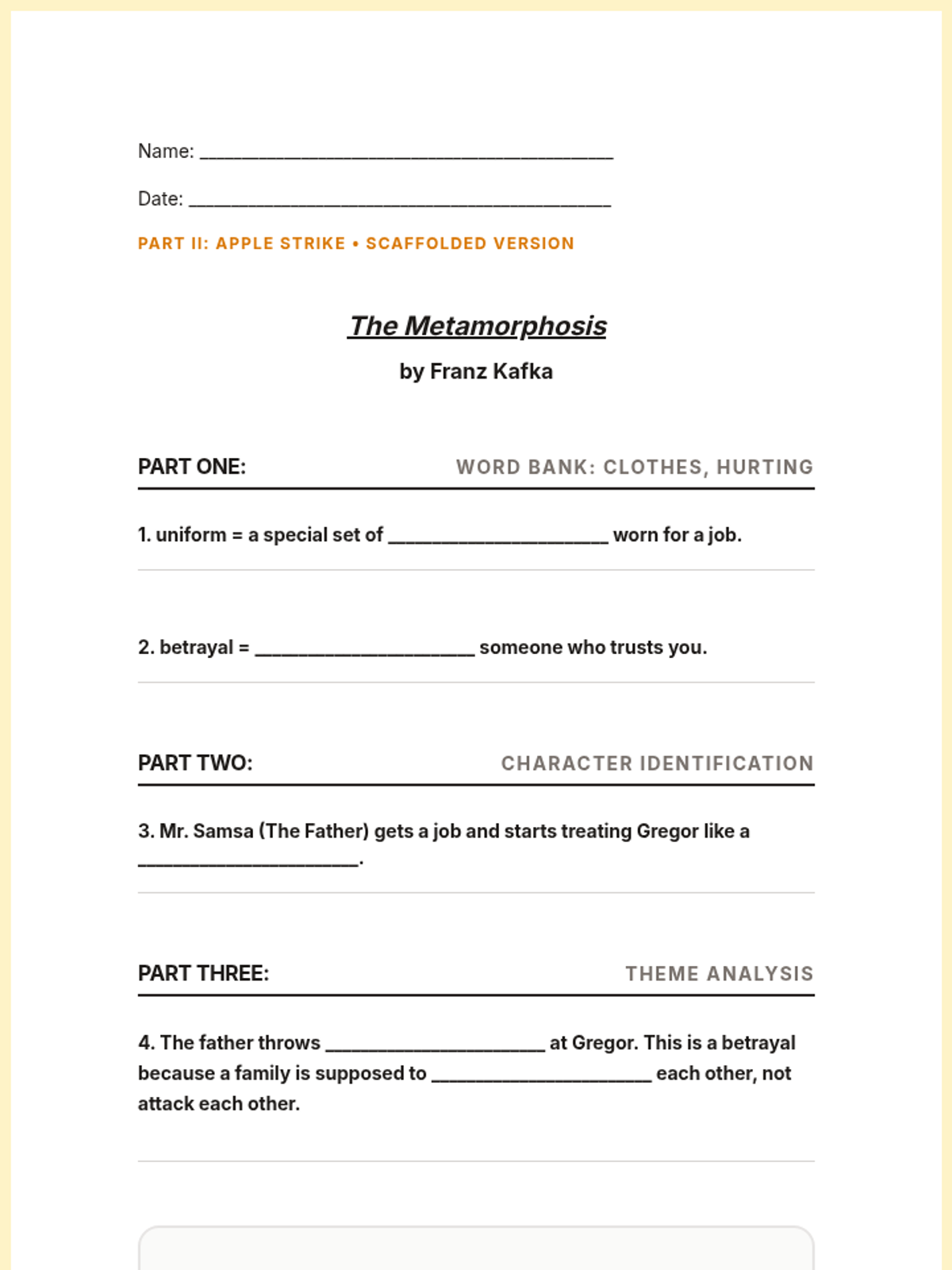
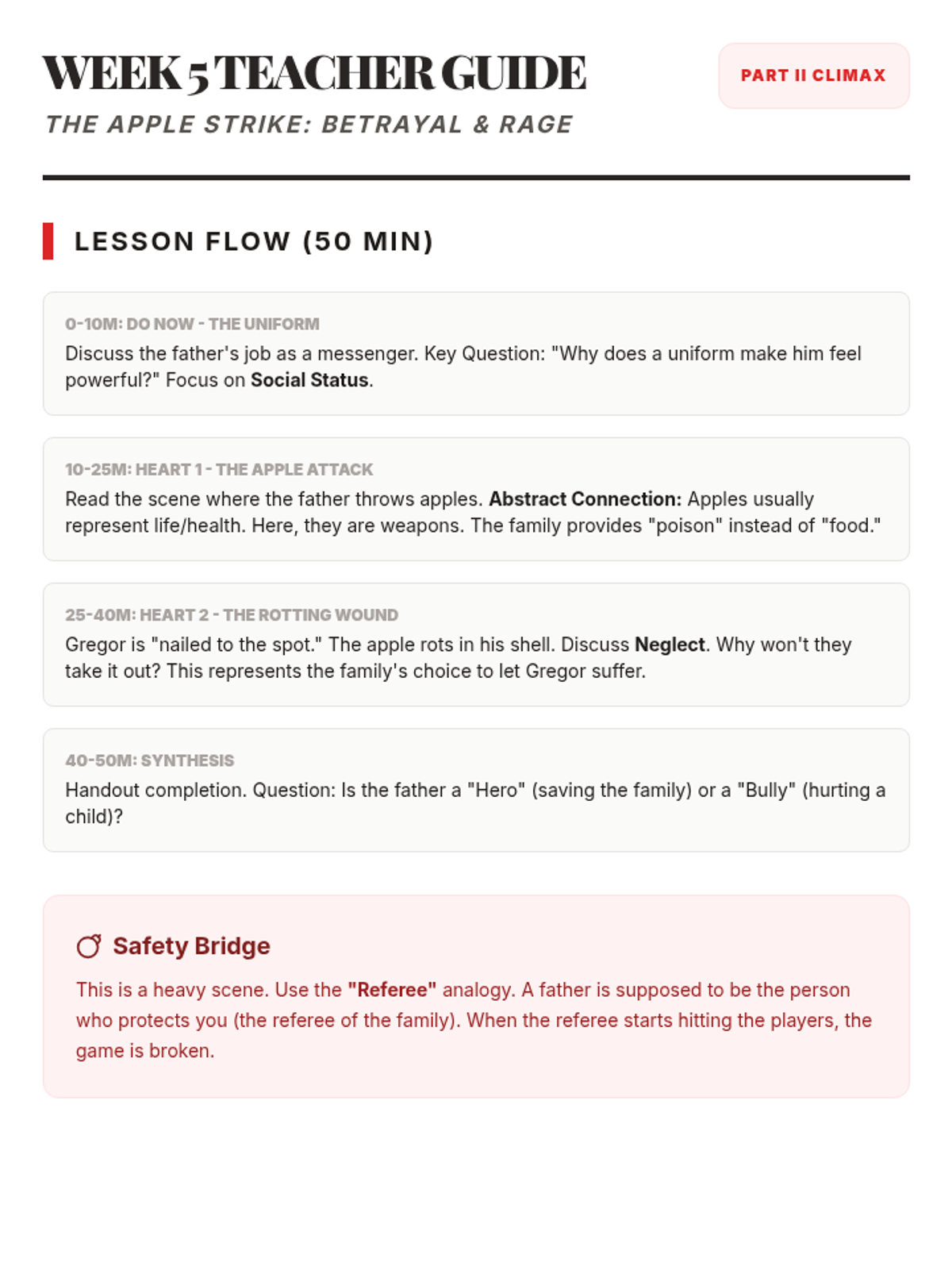
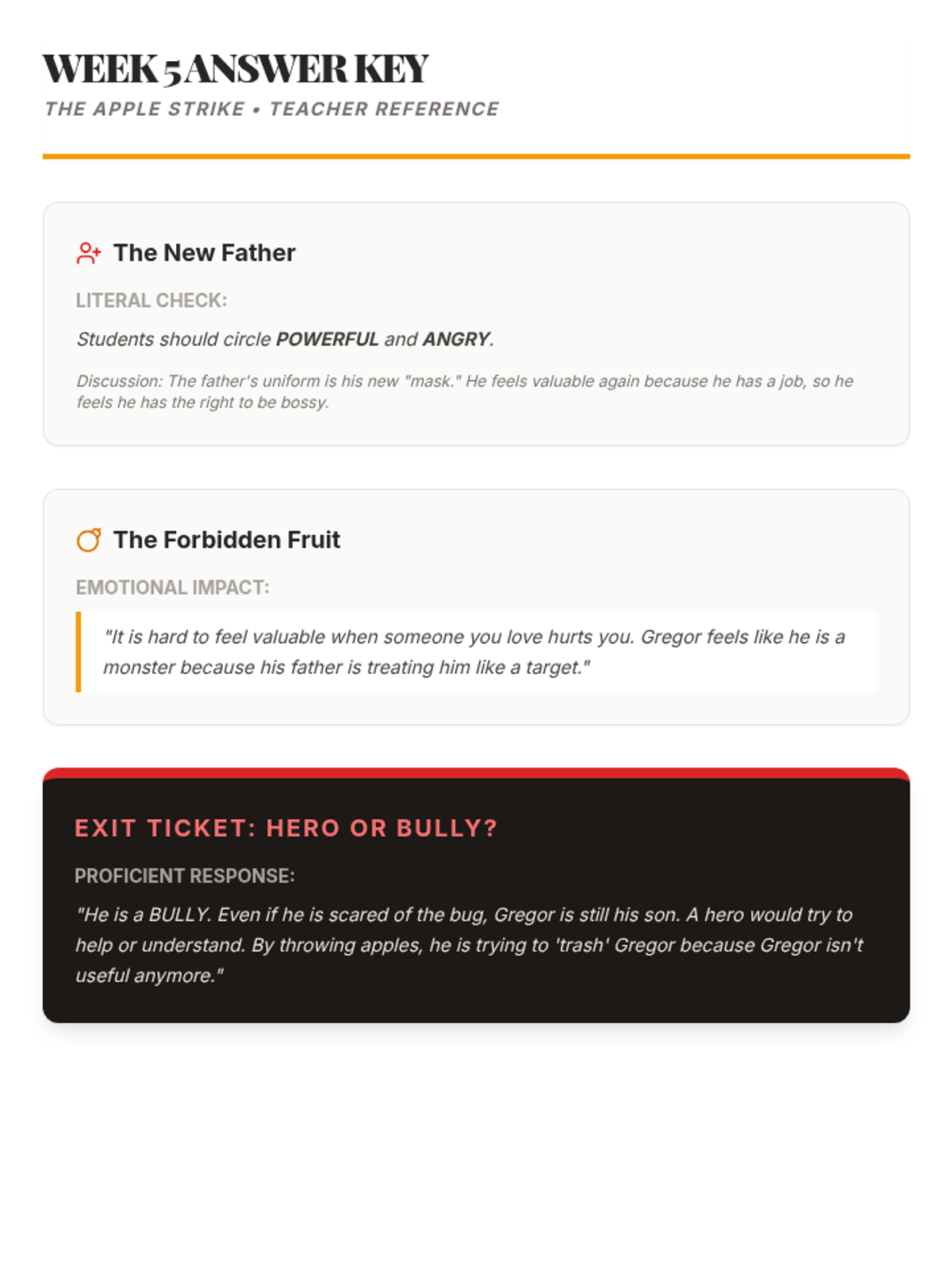
Analyzes the climax of Part II, the father's return to work, and the symbolic 'apple' attack on Gregor.
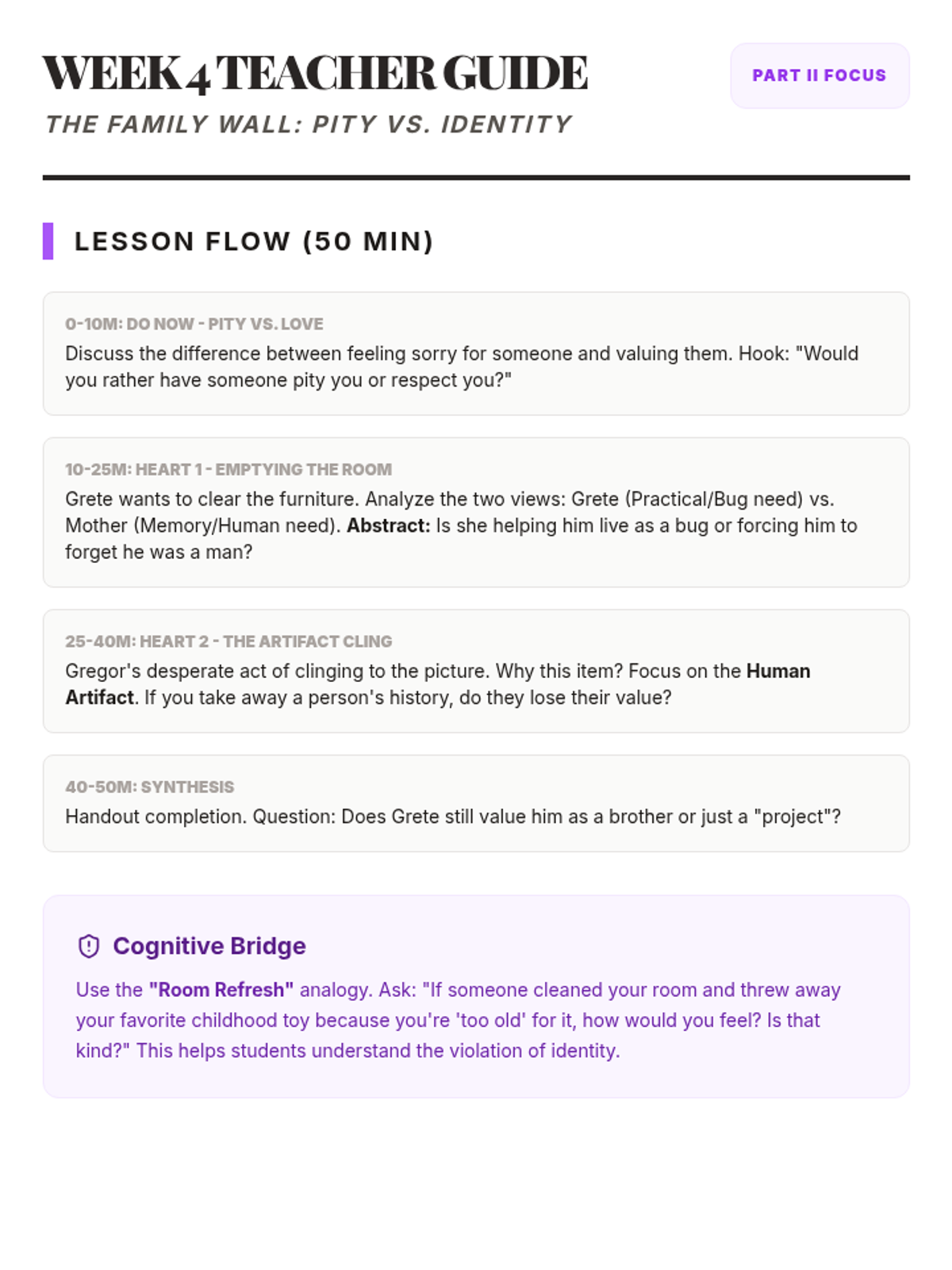
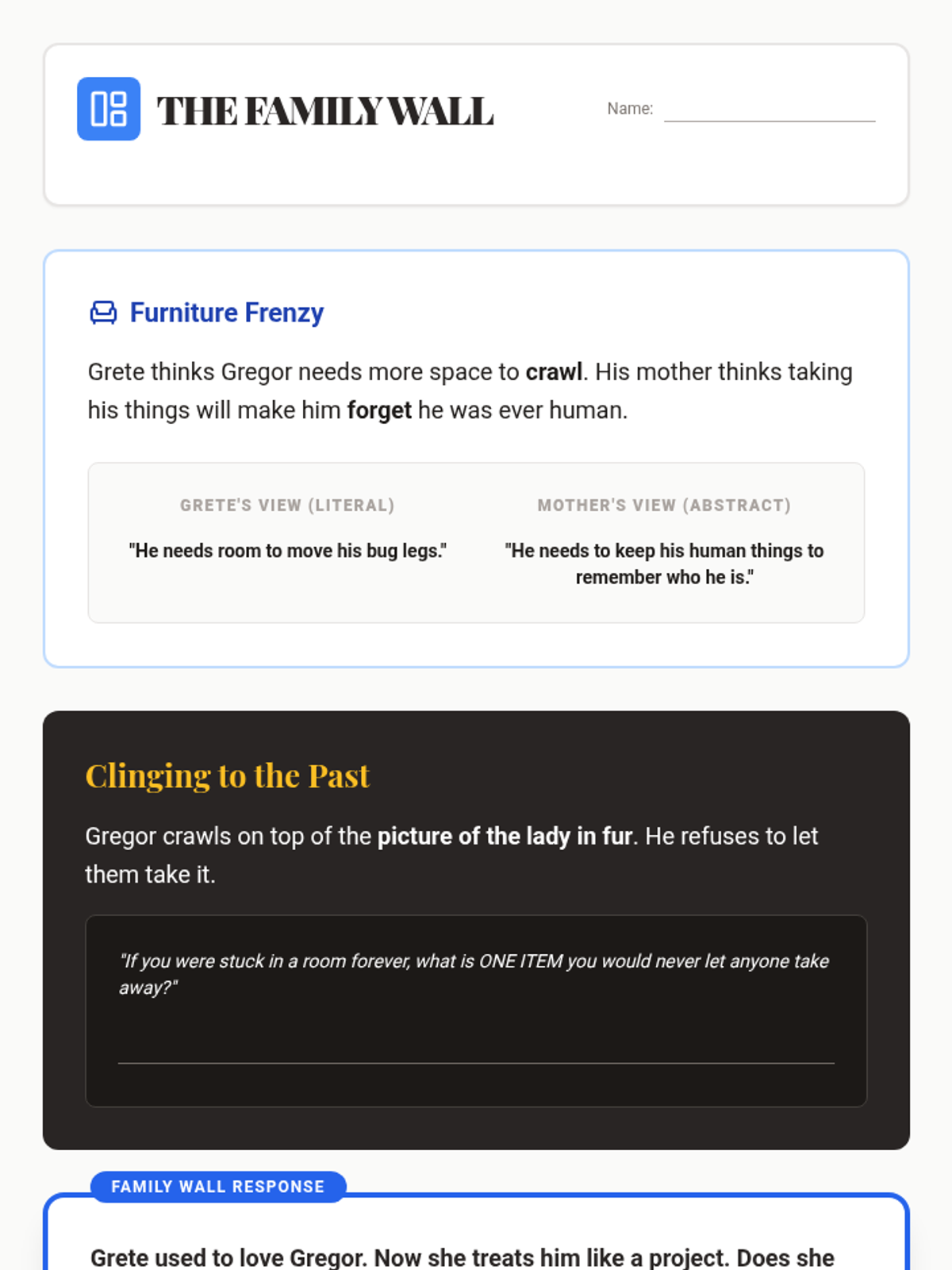
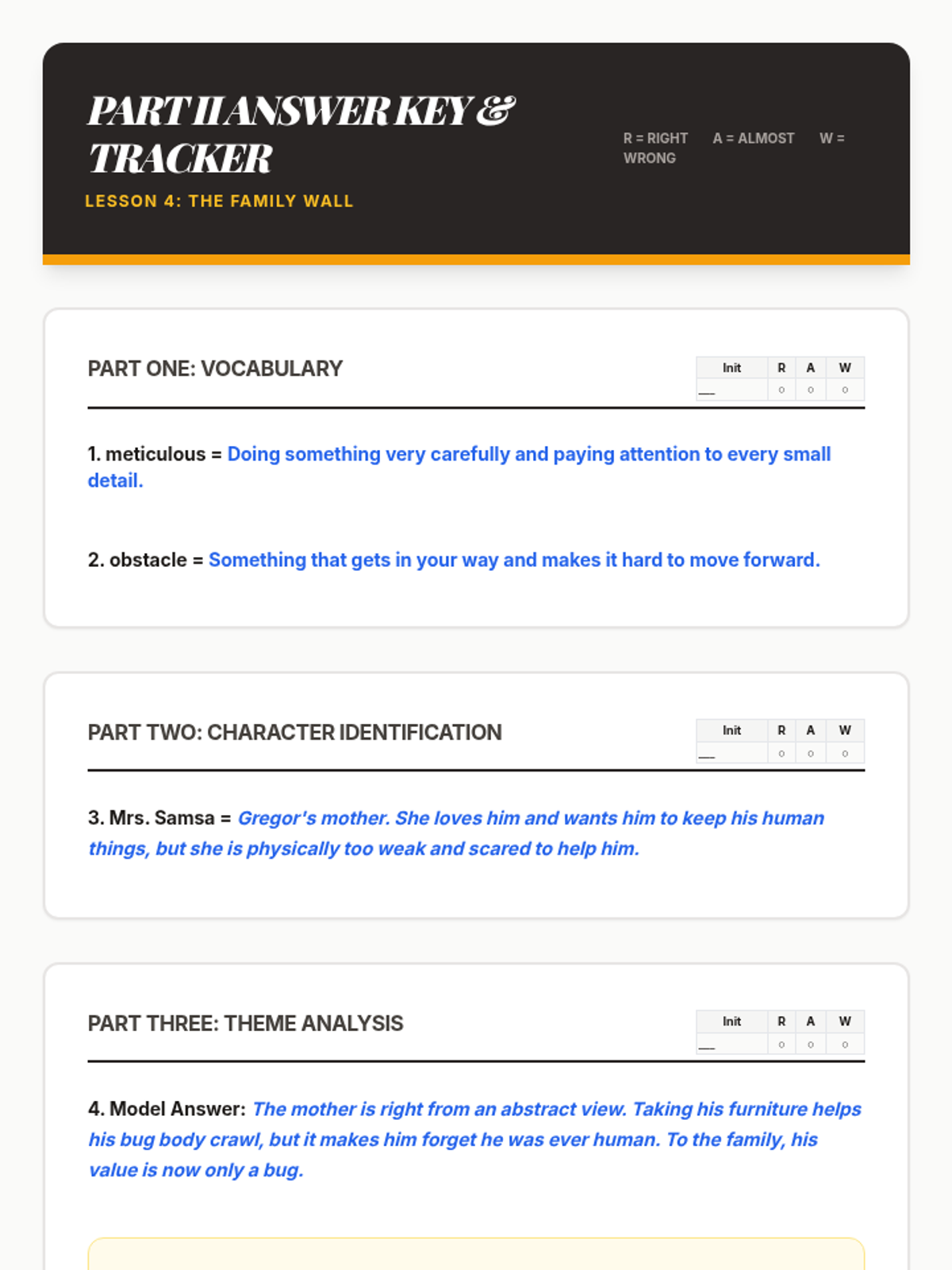
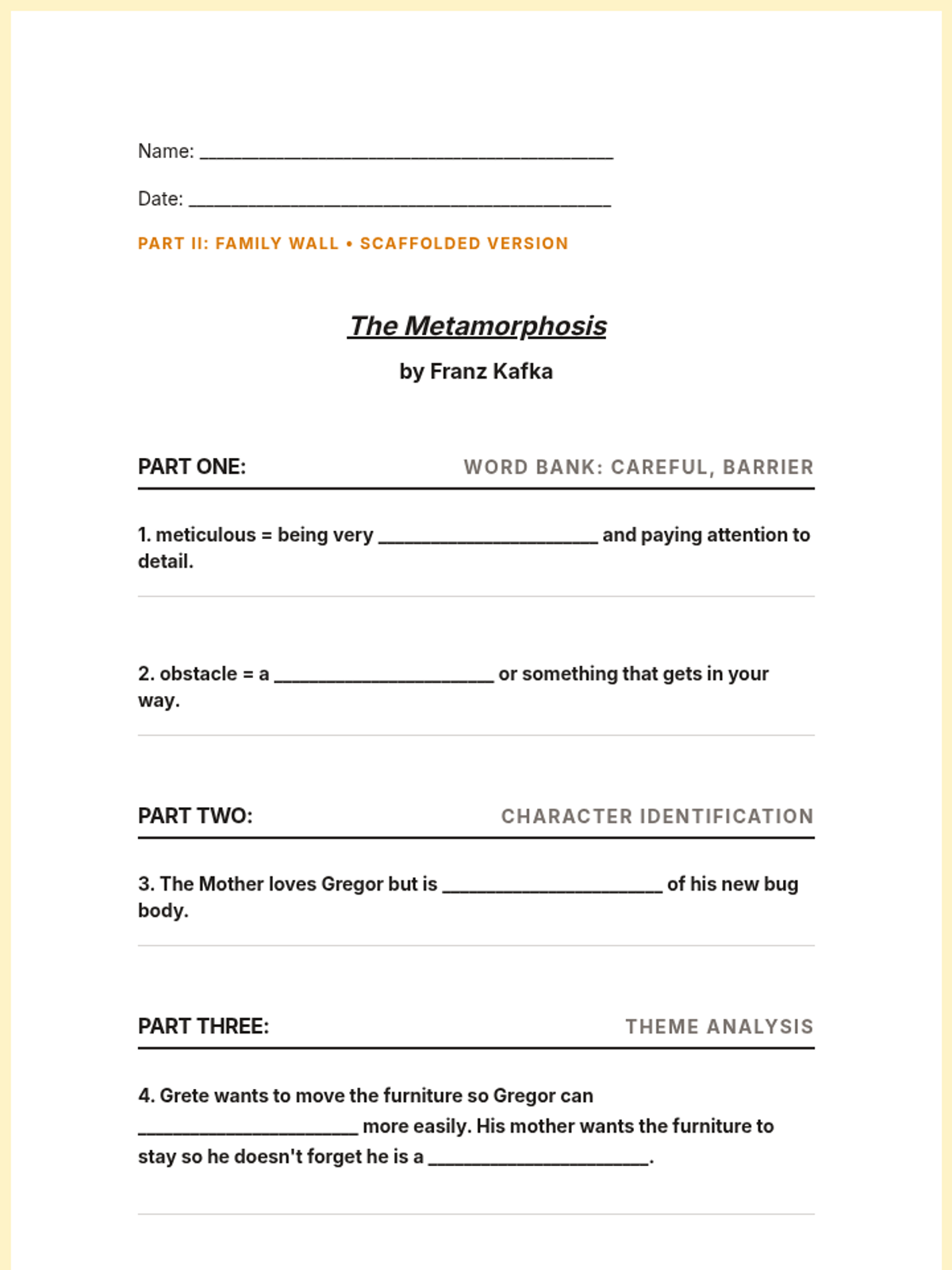
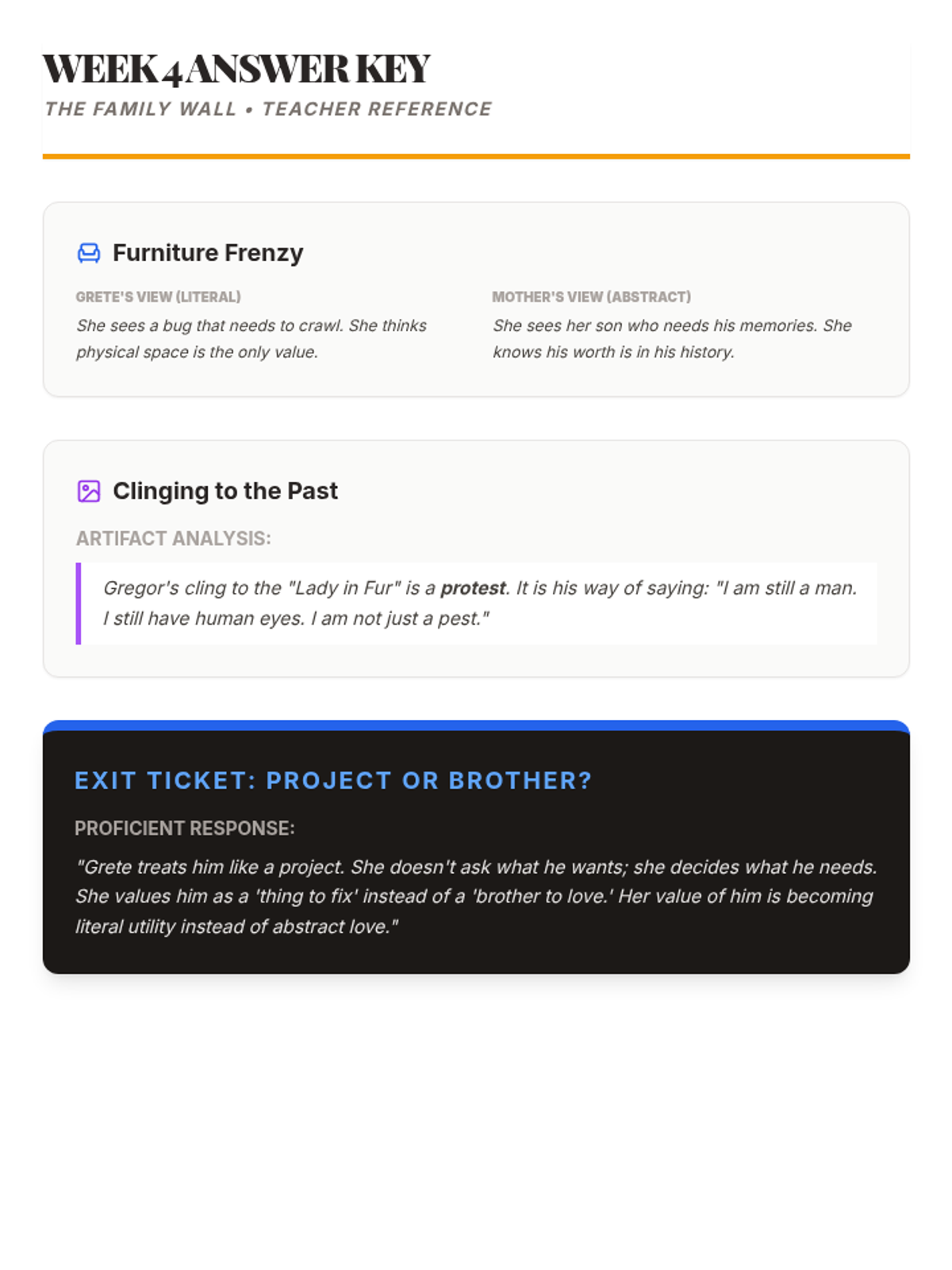
Explores the changing relationship between Gregor and Grete, the moving of the furniture, and the concept of 'pity' vs 'value'.
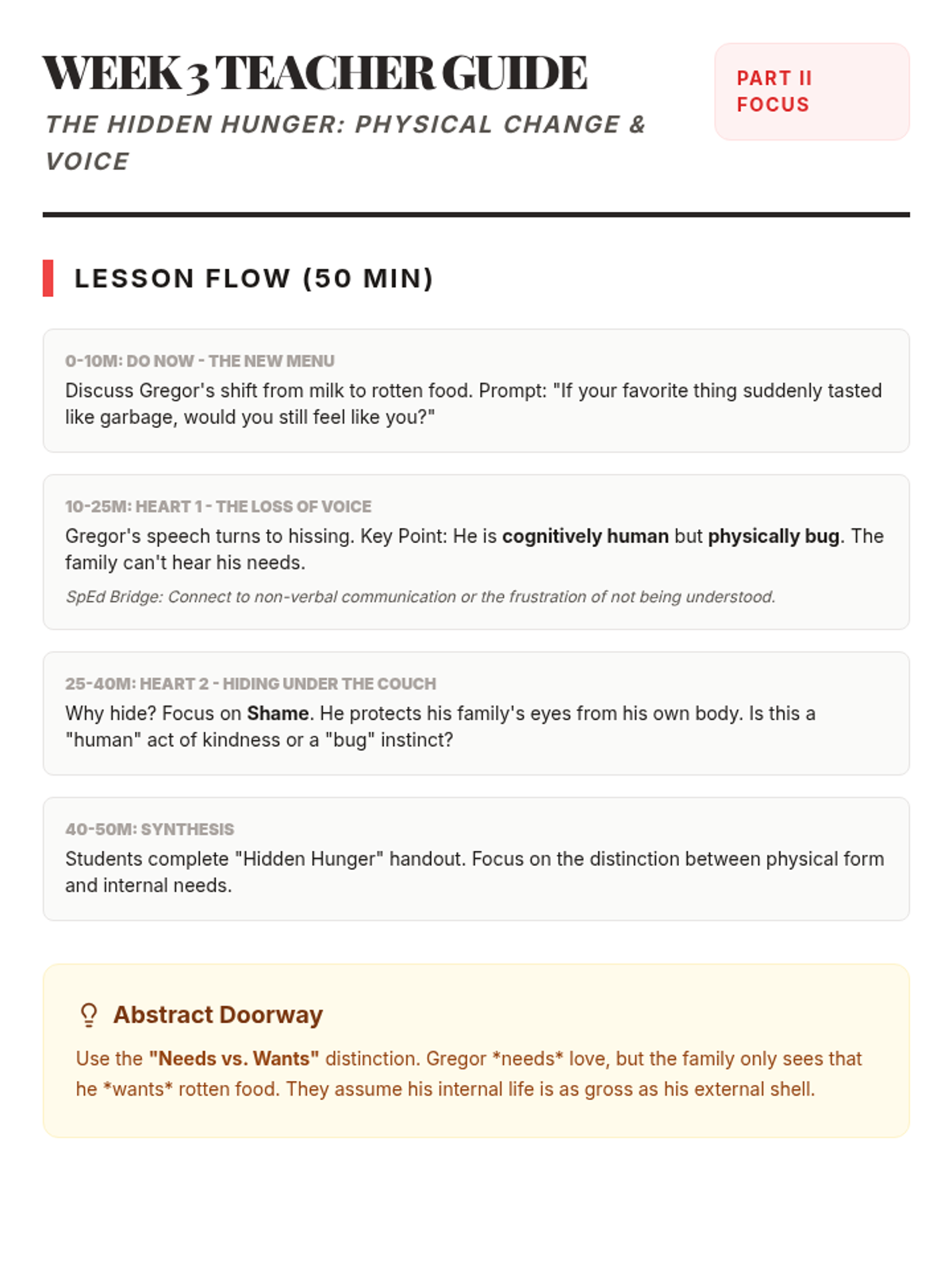
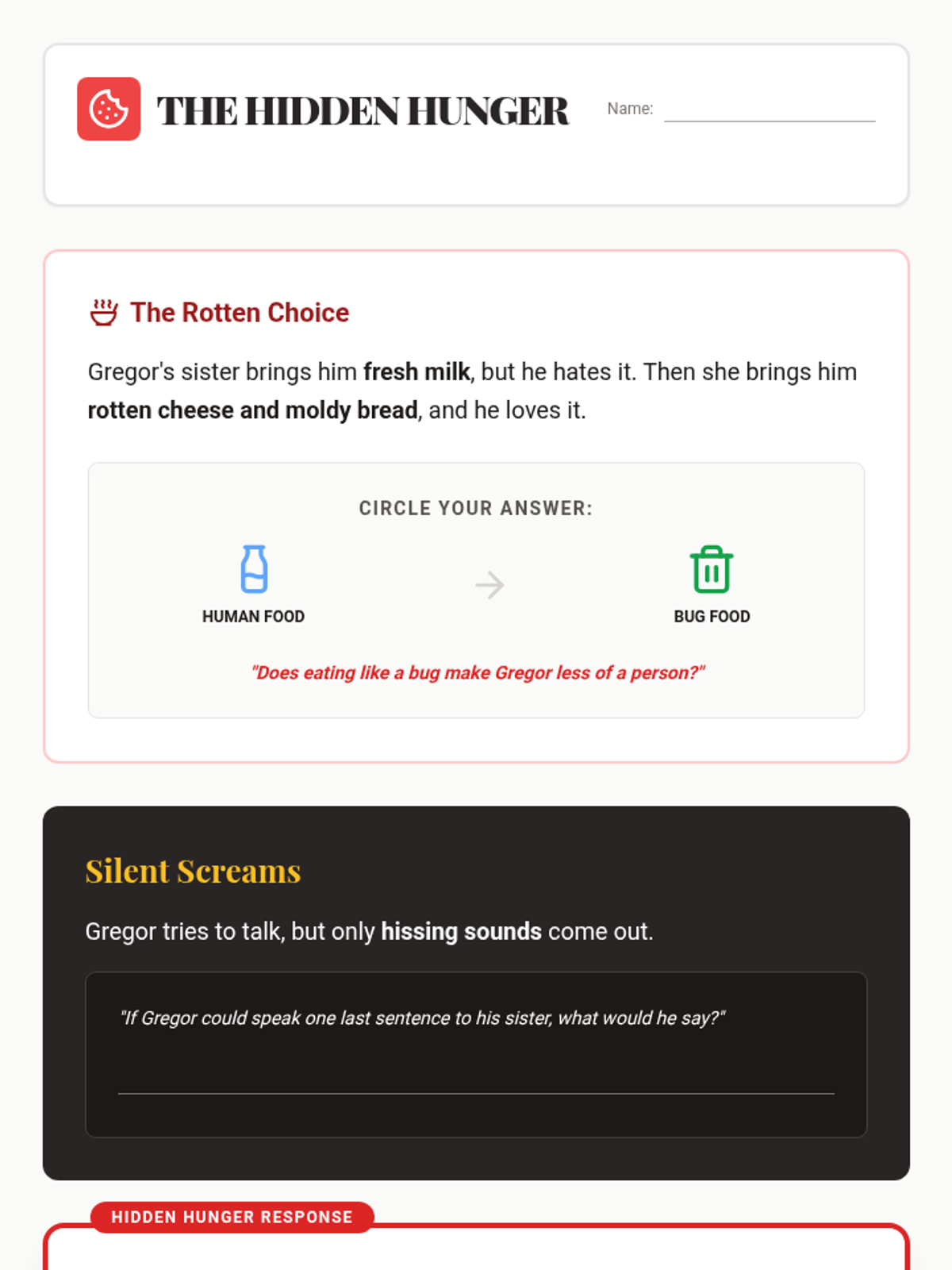
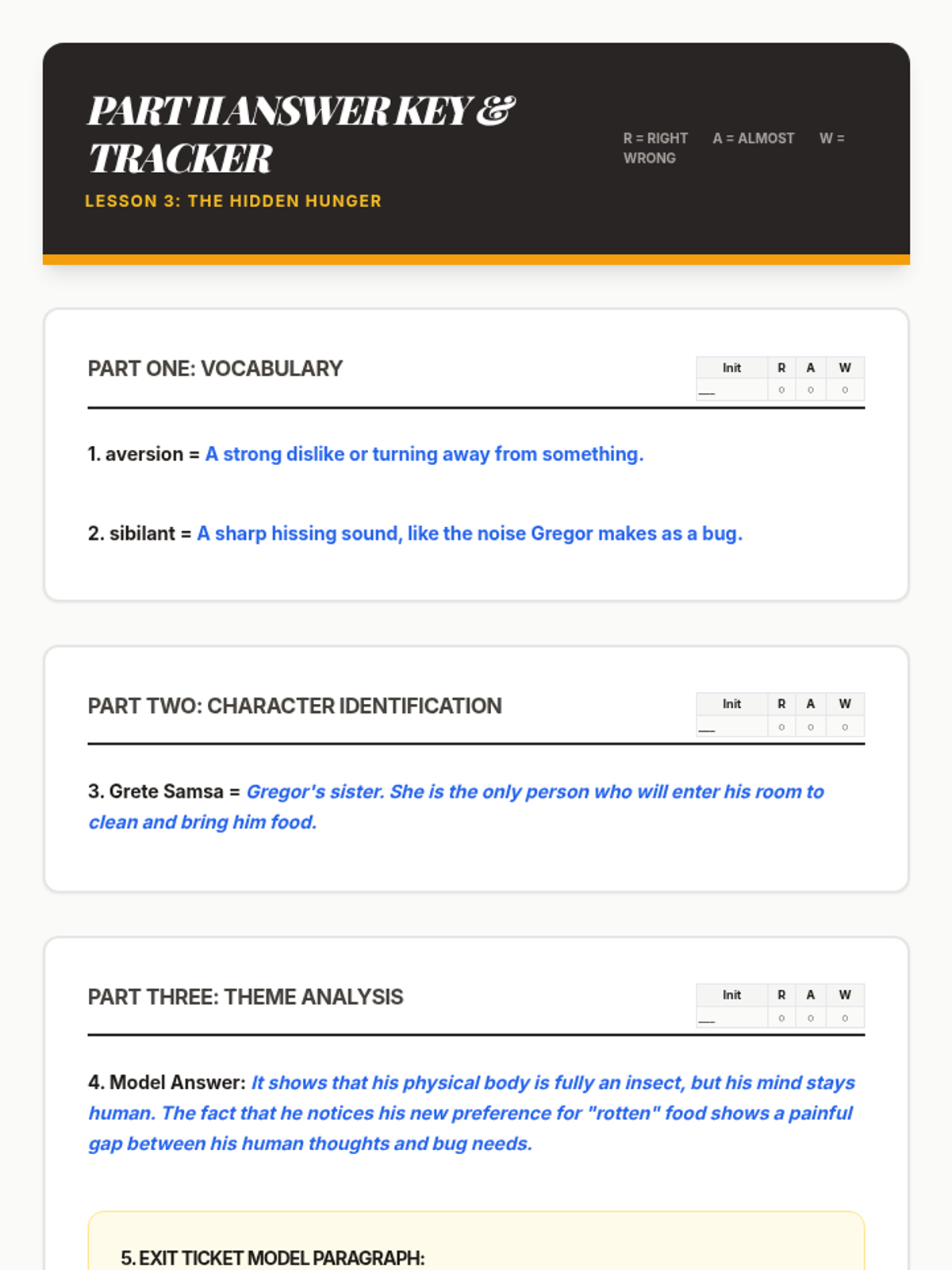
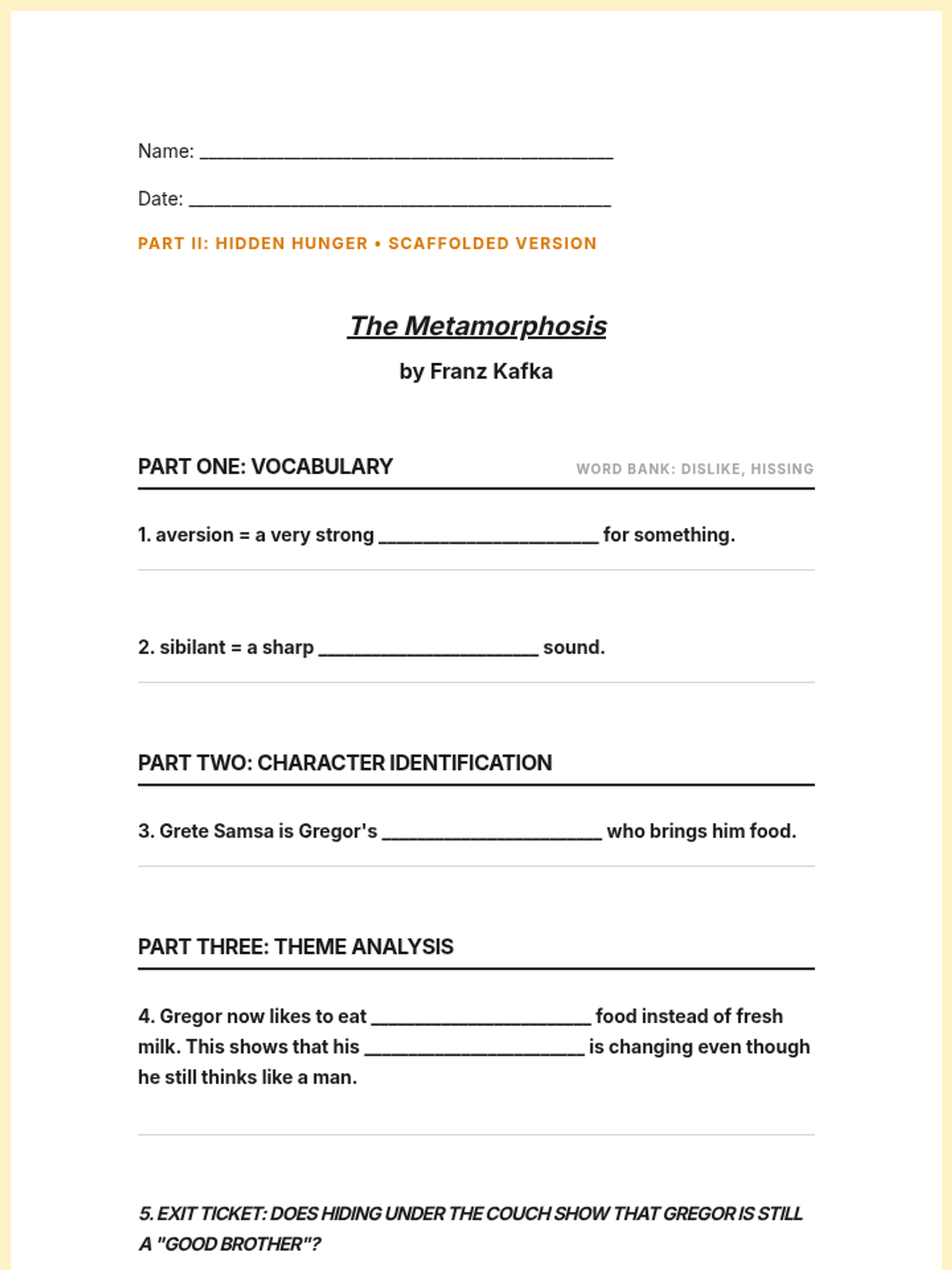
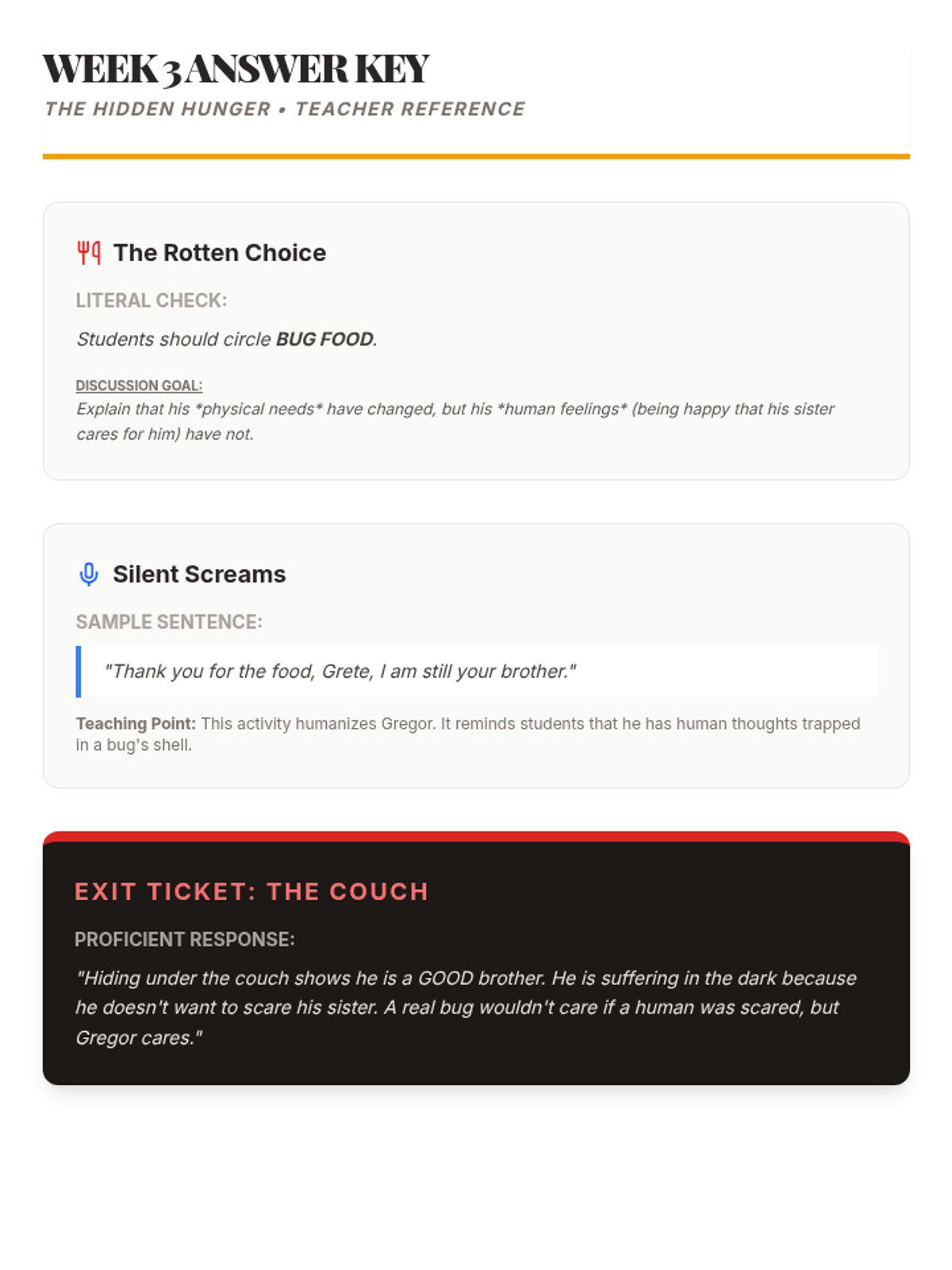
Covers the transition to Part II, focusing on Gregor's physical changes, his new diet, and the loss of his human voice.
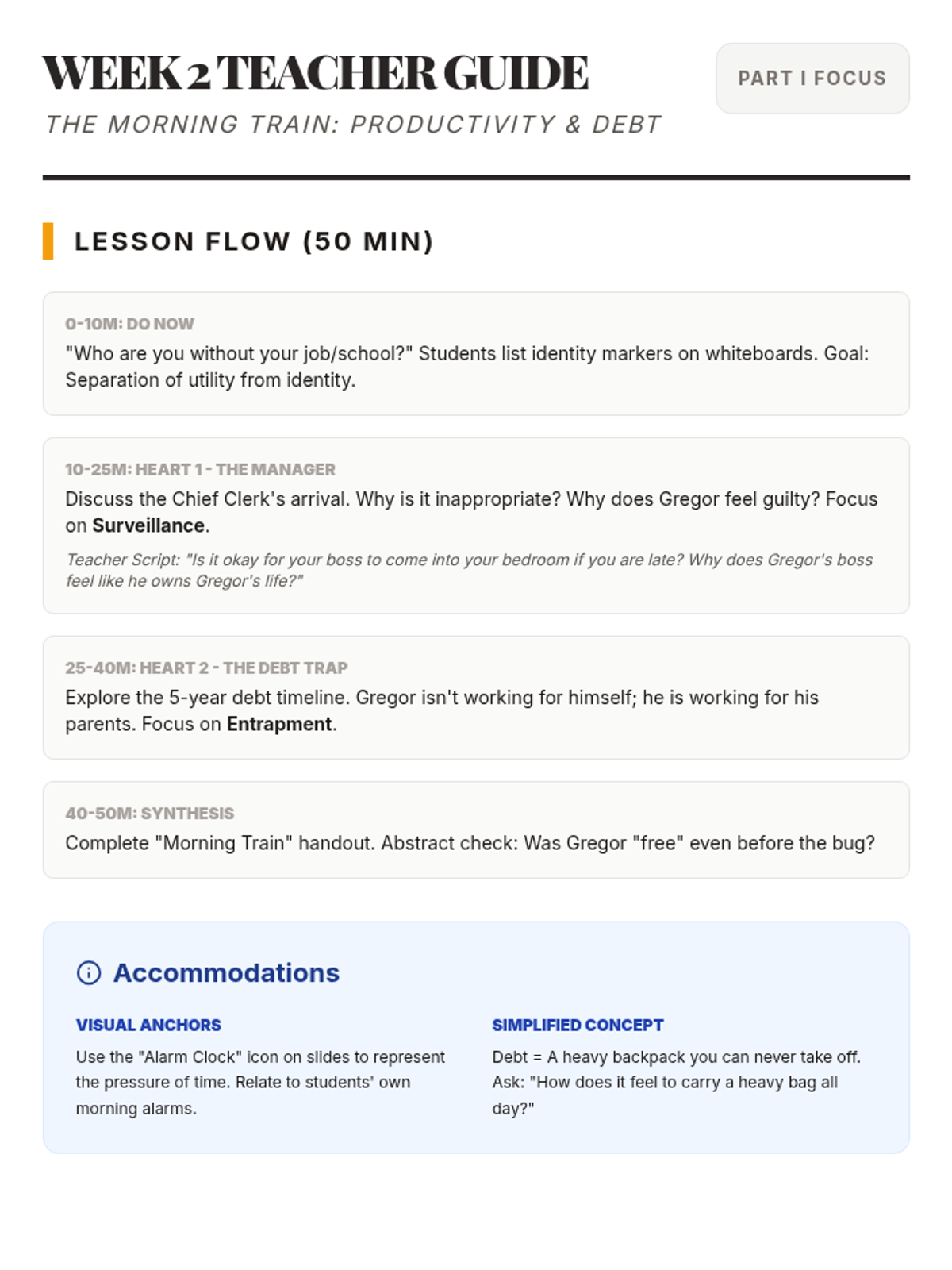
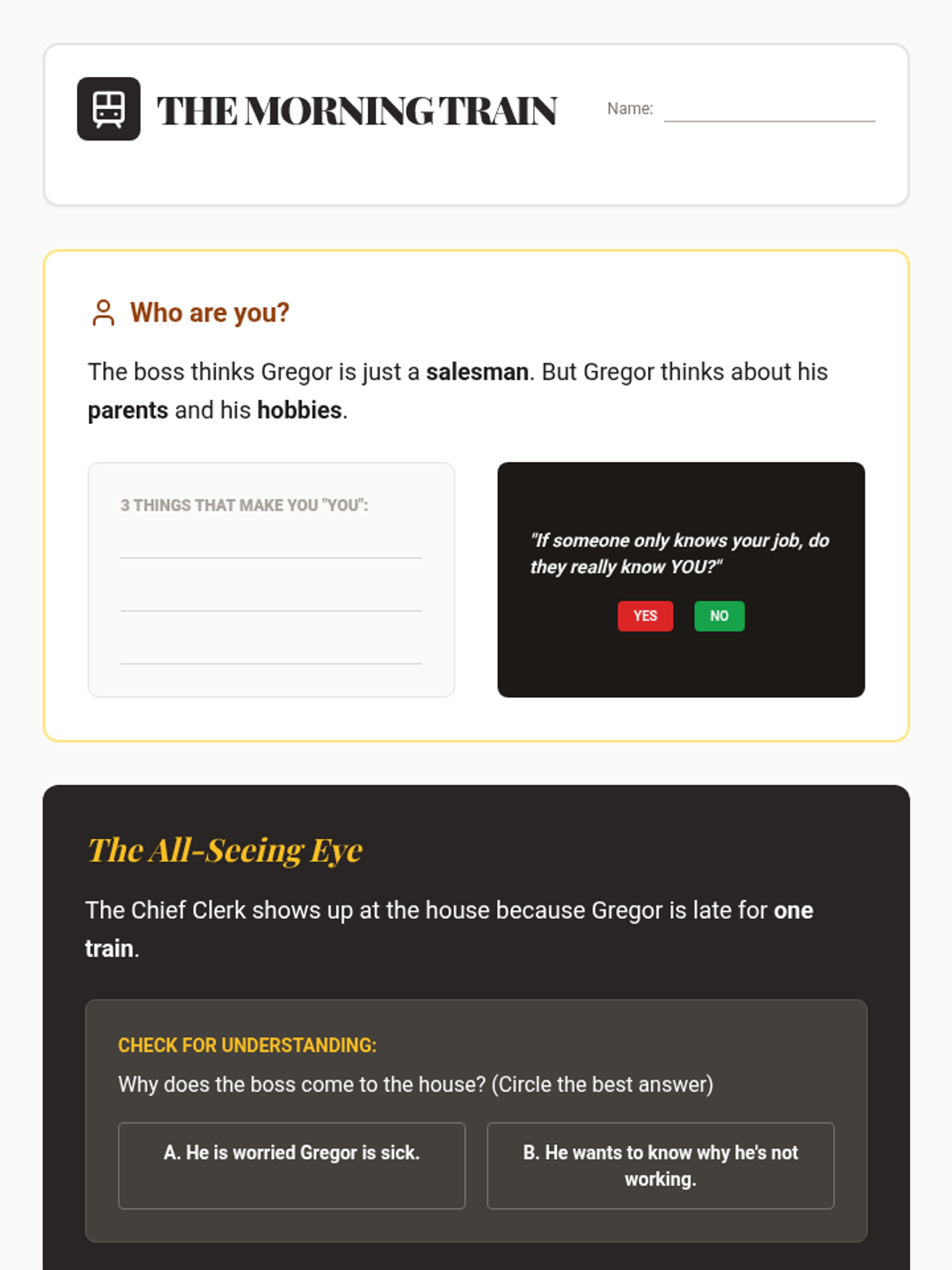
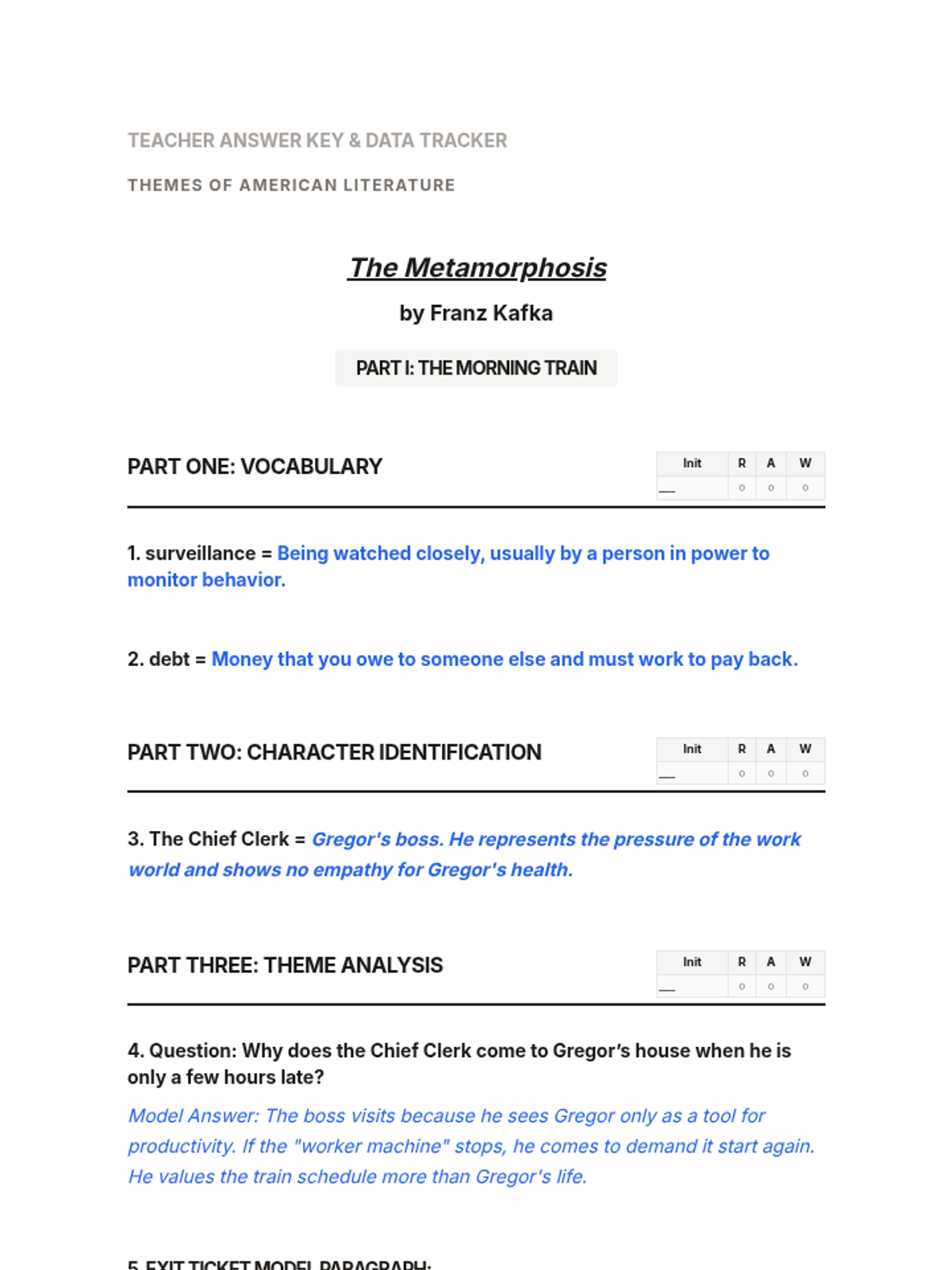
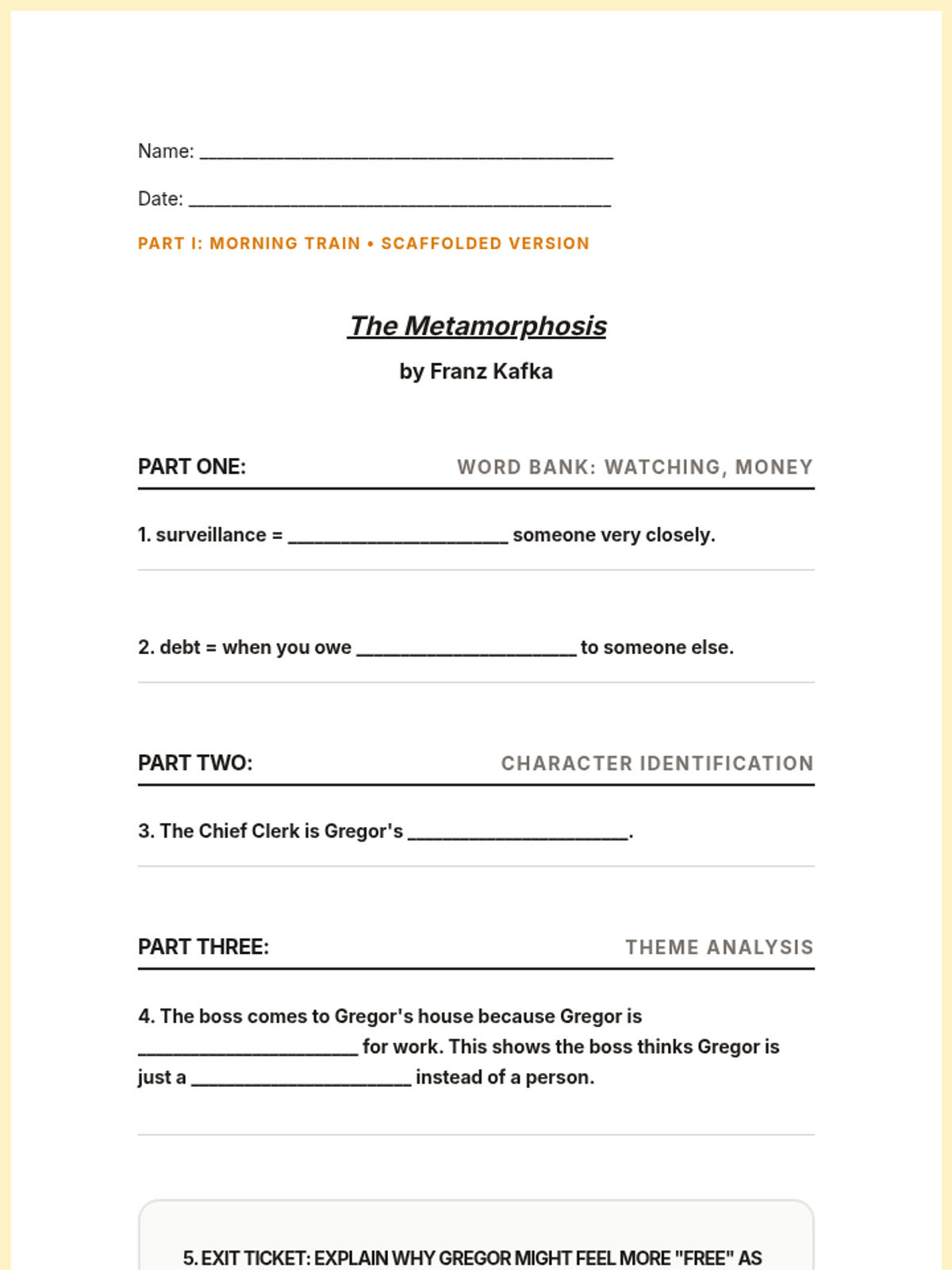
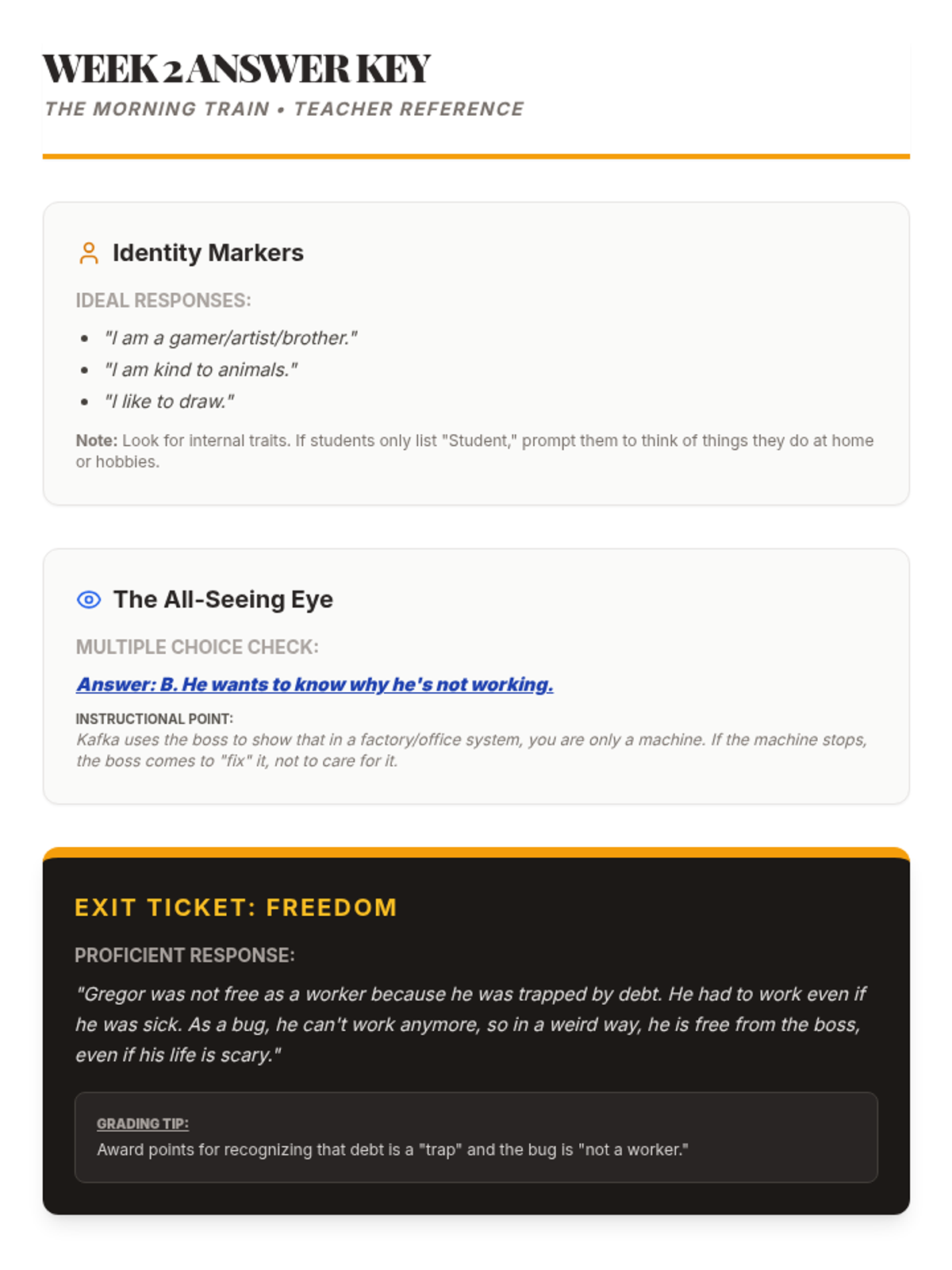
A focus on Part I of the novella, exploring the theme of work as identity and the manager's visit as a symbol of surveillance.
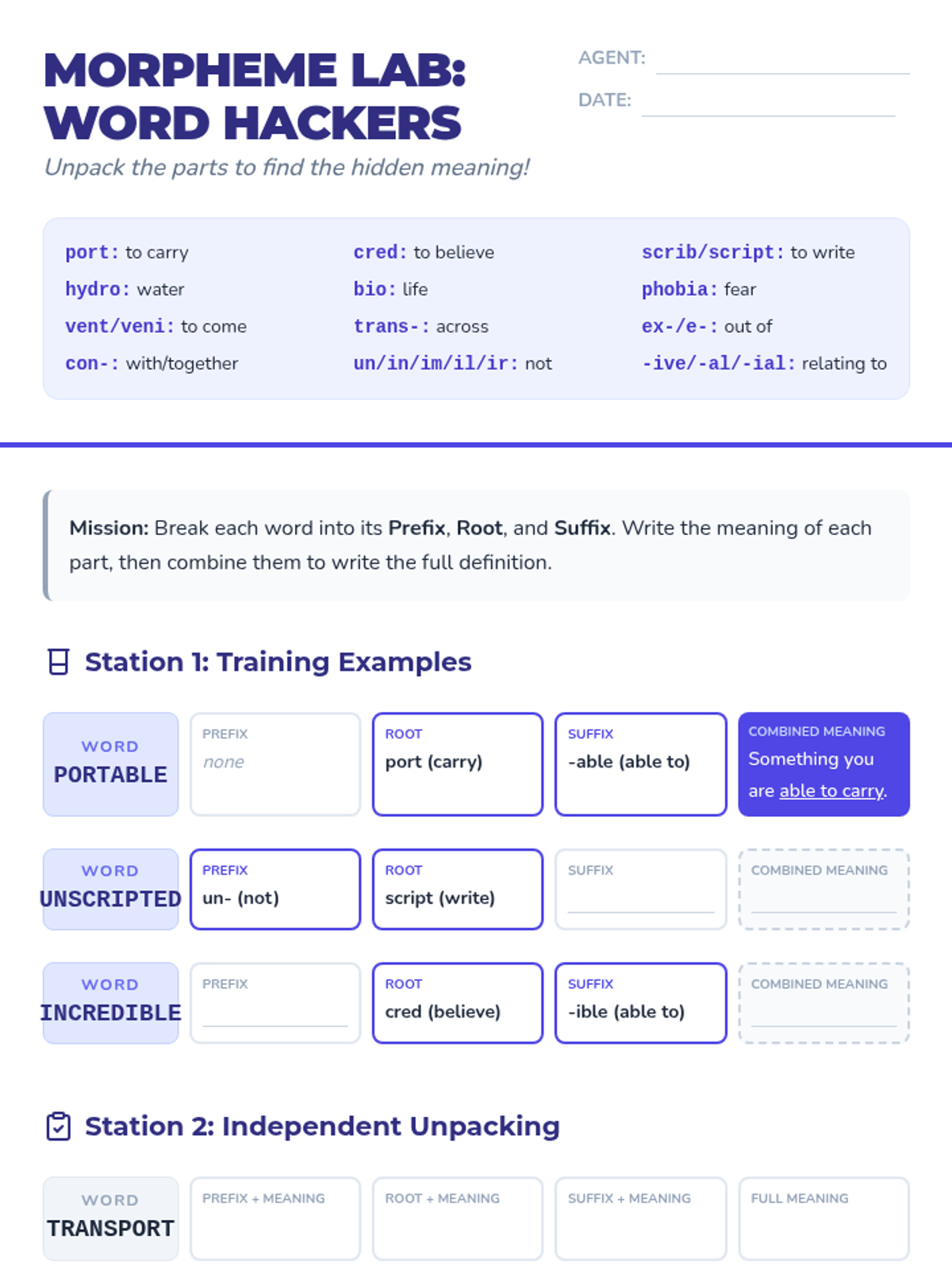
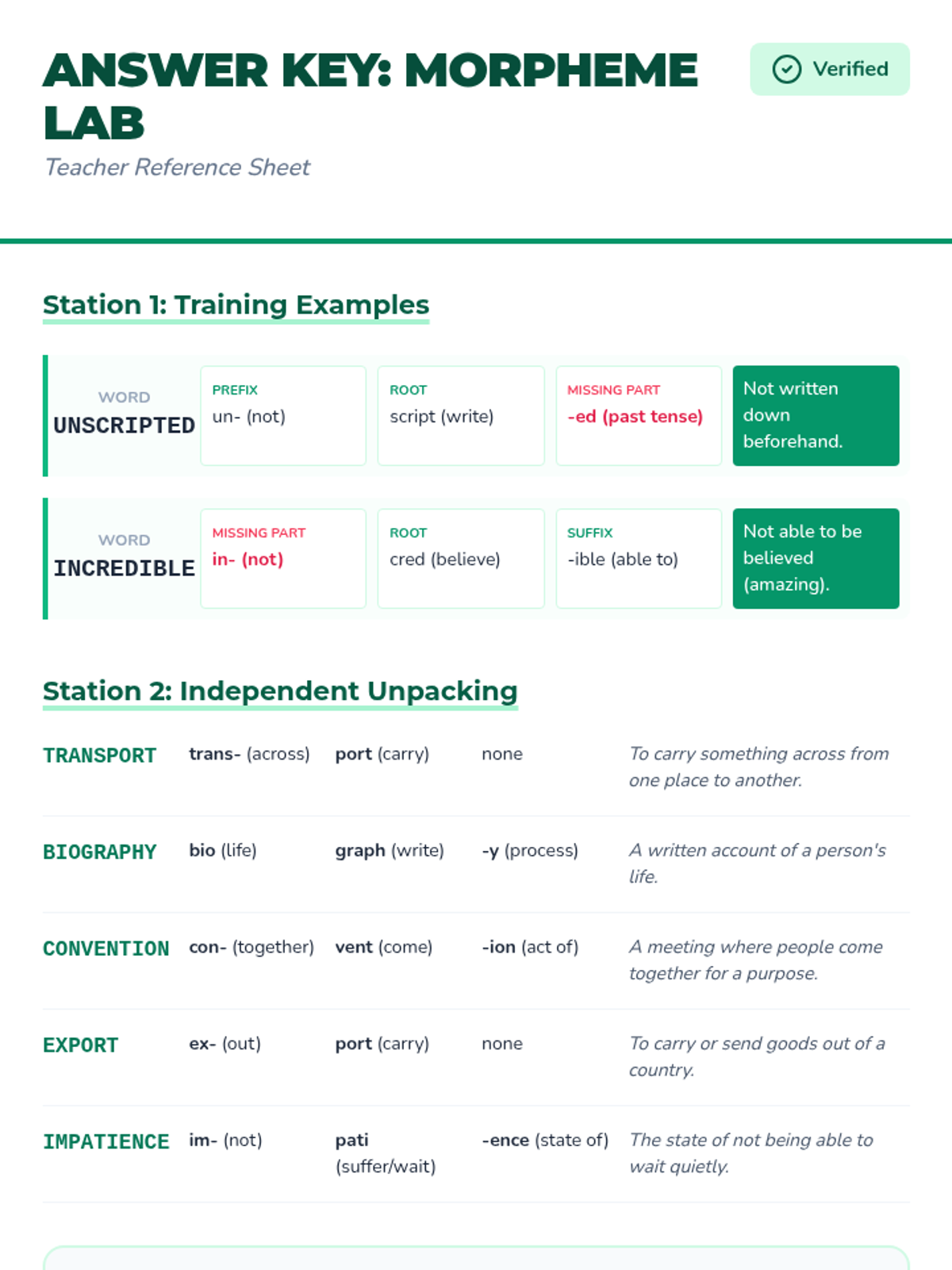
A 30-minute introductory lesson where students learn to decode complex words using a list of 24 common morphemes.
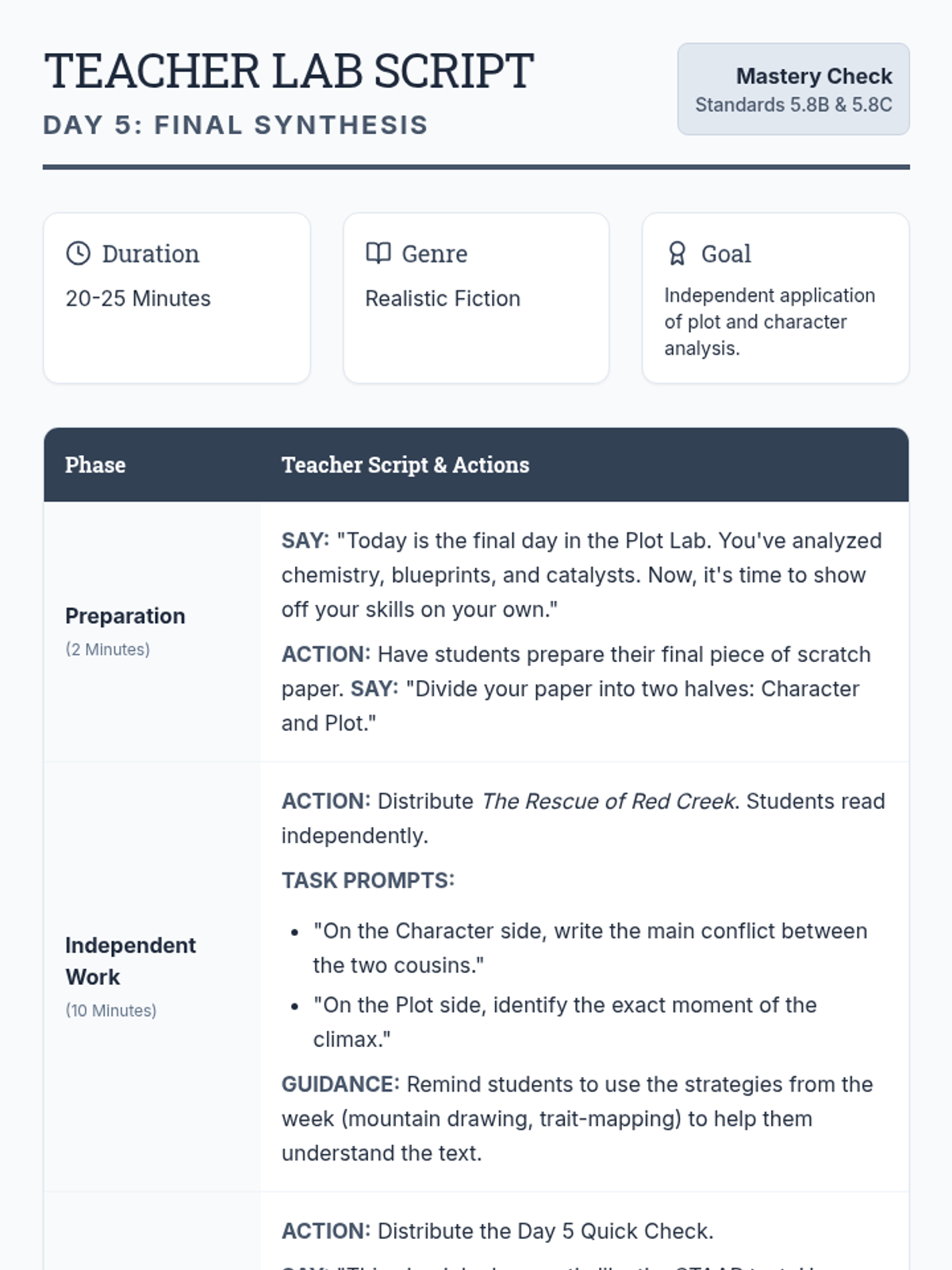
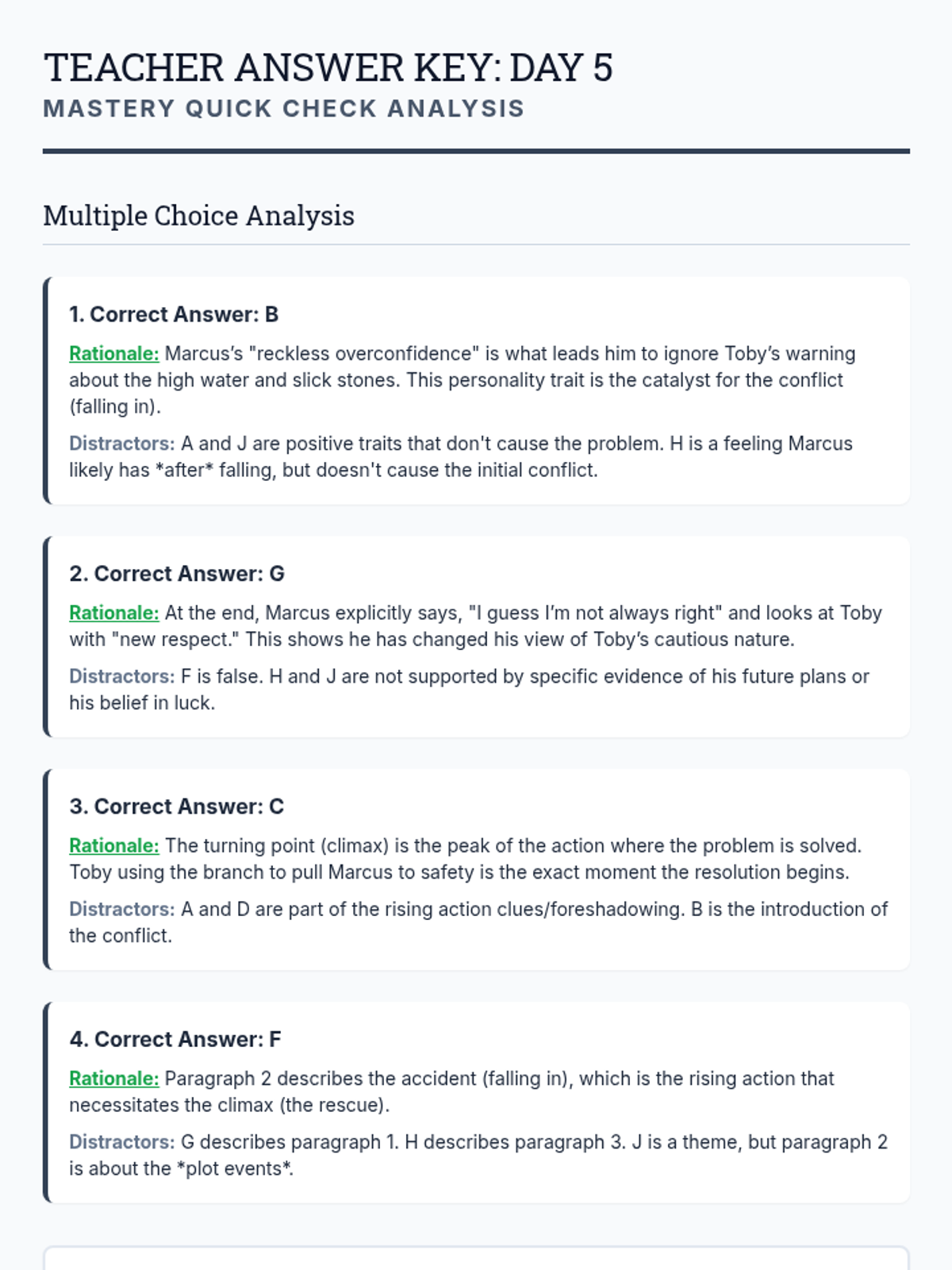
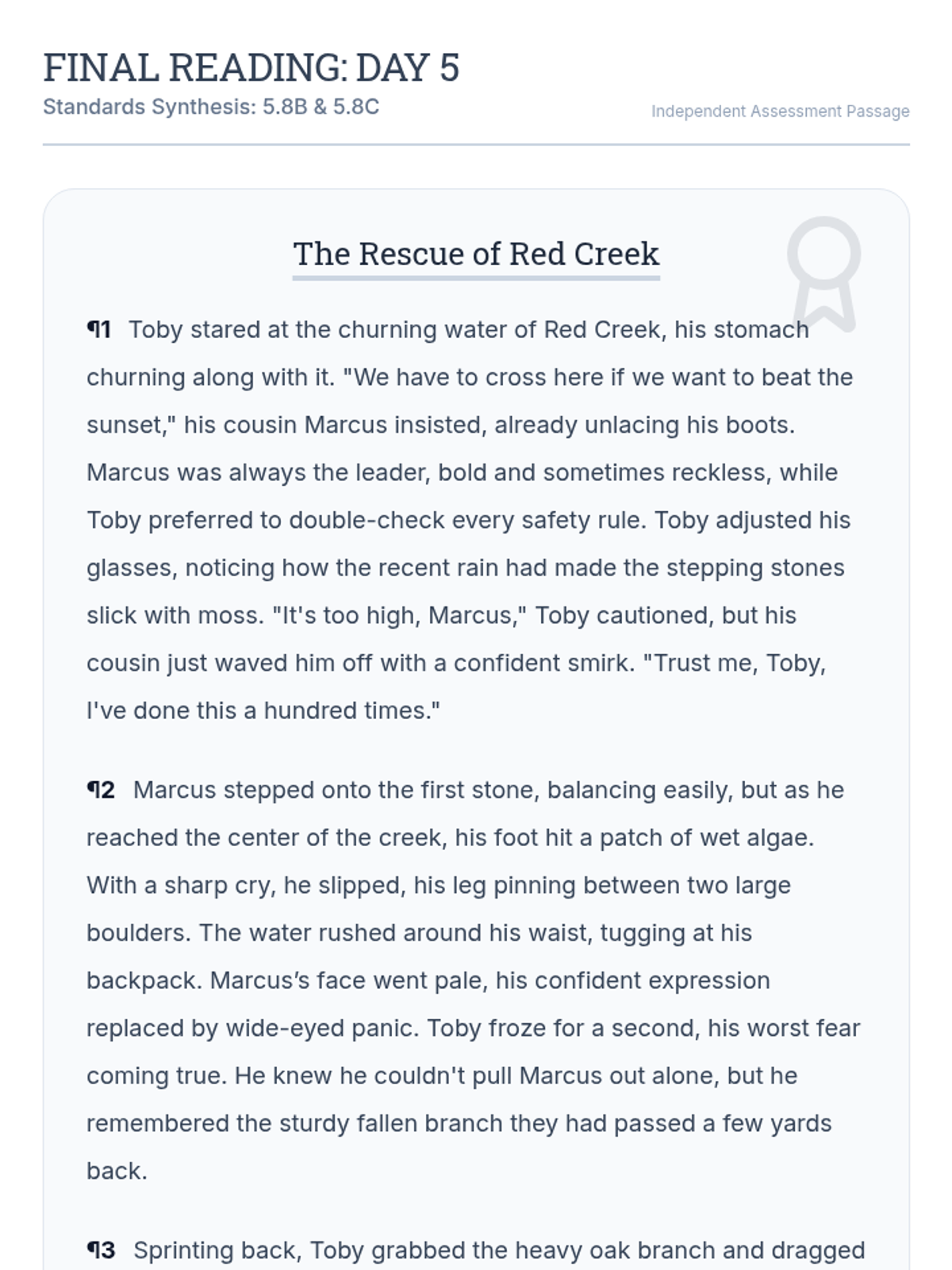
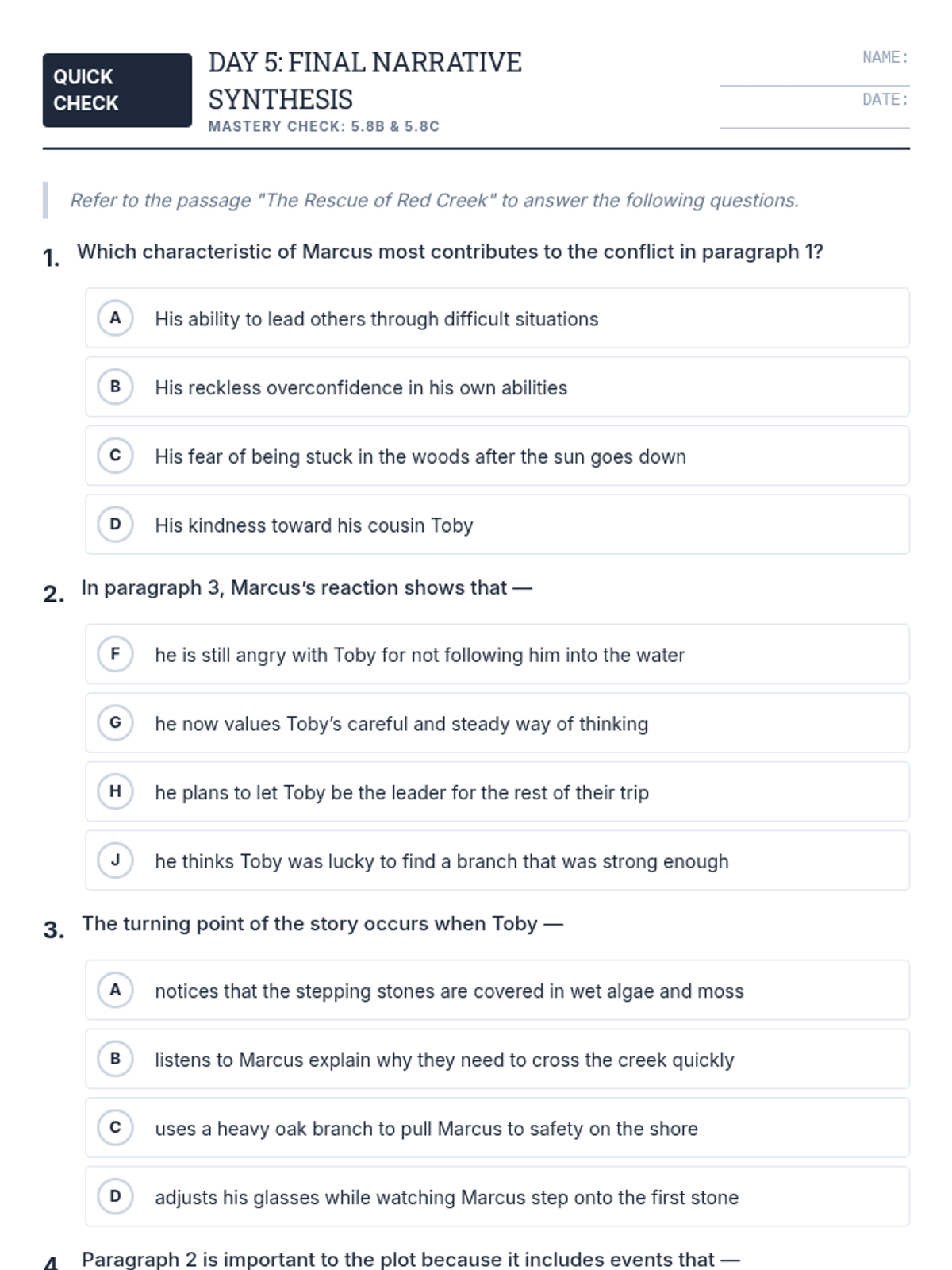
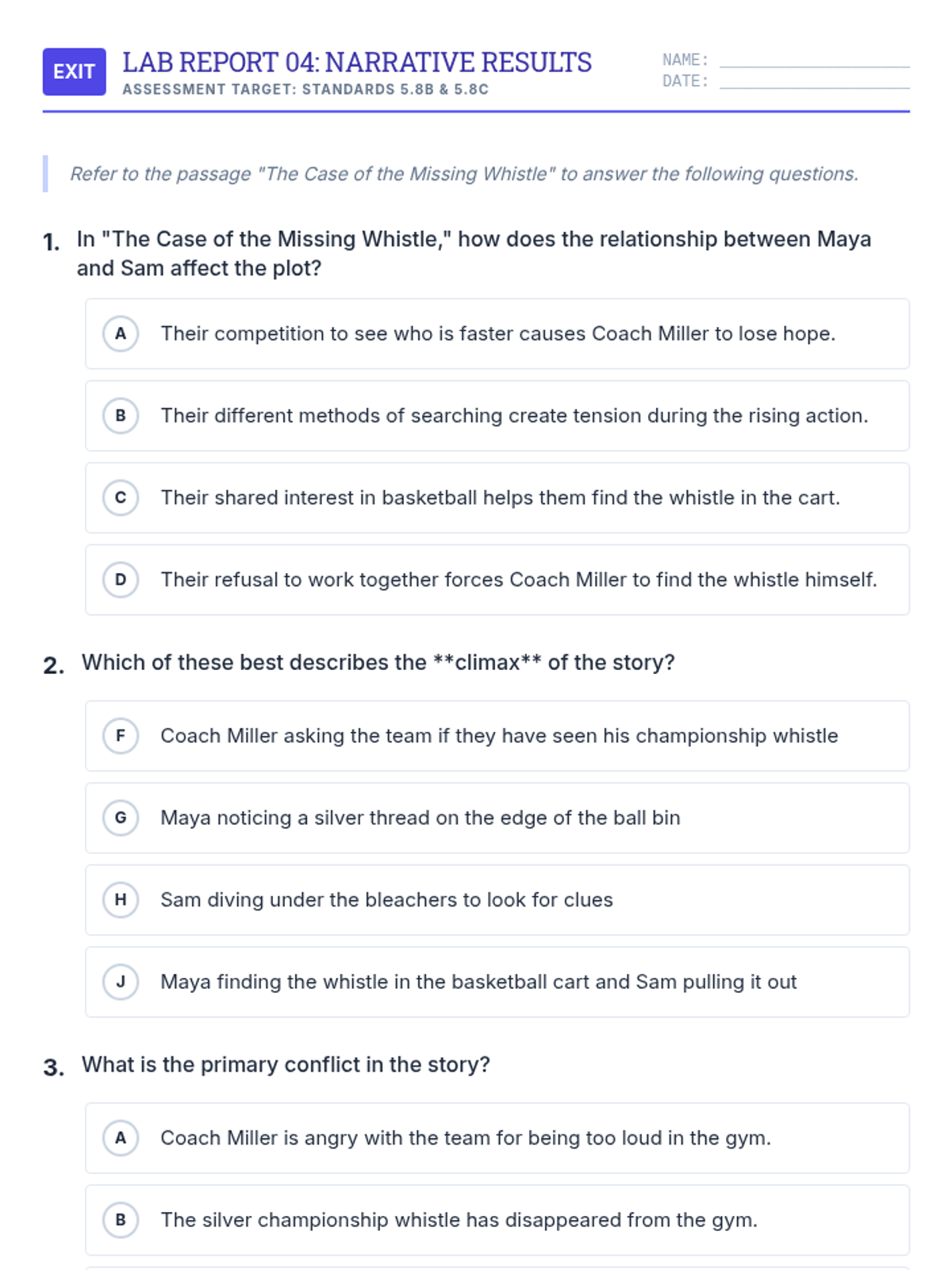
Day 5 serves as a final comprehensive quick check. Students read a new passage independently and apply their analysis of character relationships and plot structure to demonstrate mastery of standards 5.8B and 5.8C.
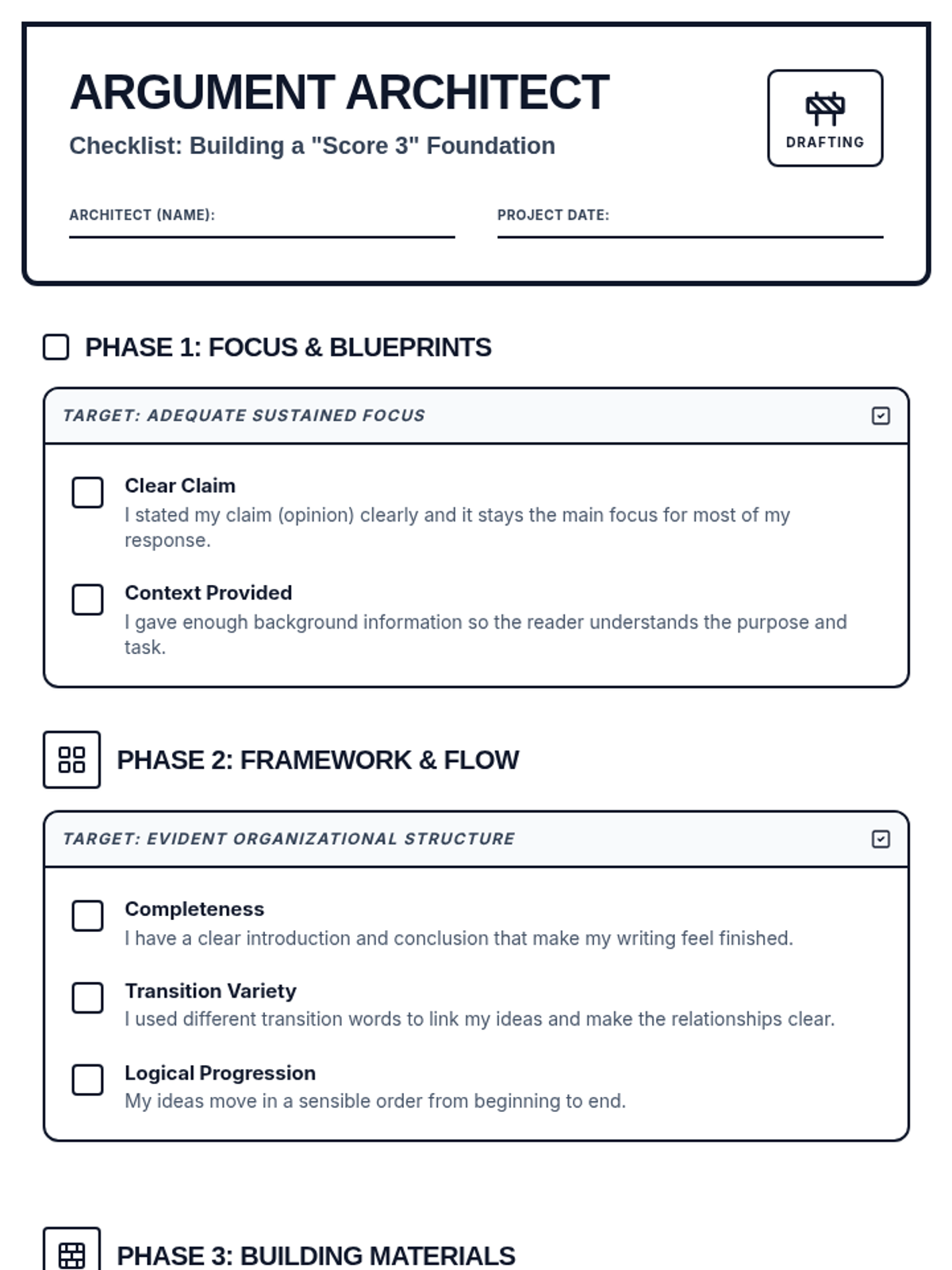
A lesson focused on helping students master the criteria for successful argumentative writing using a student-friendly checklist based on state-aligned rubrics.
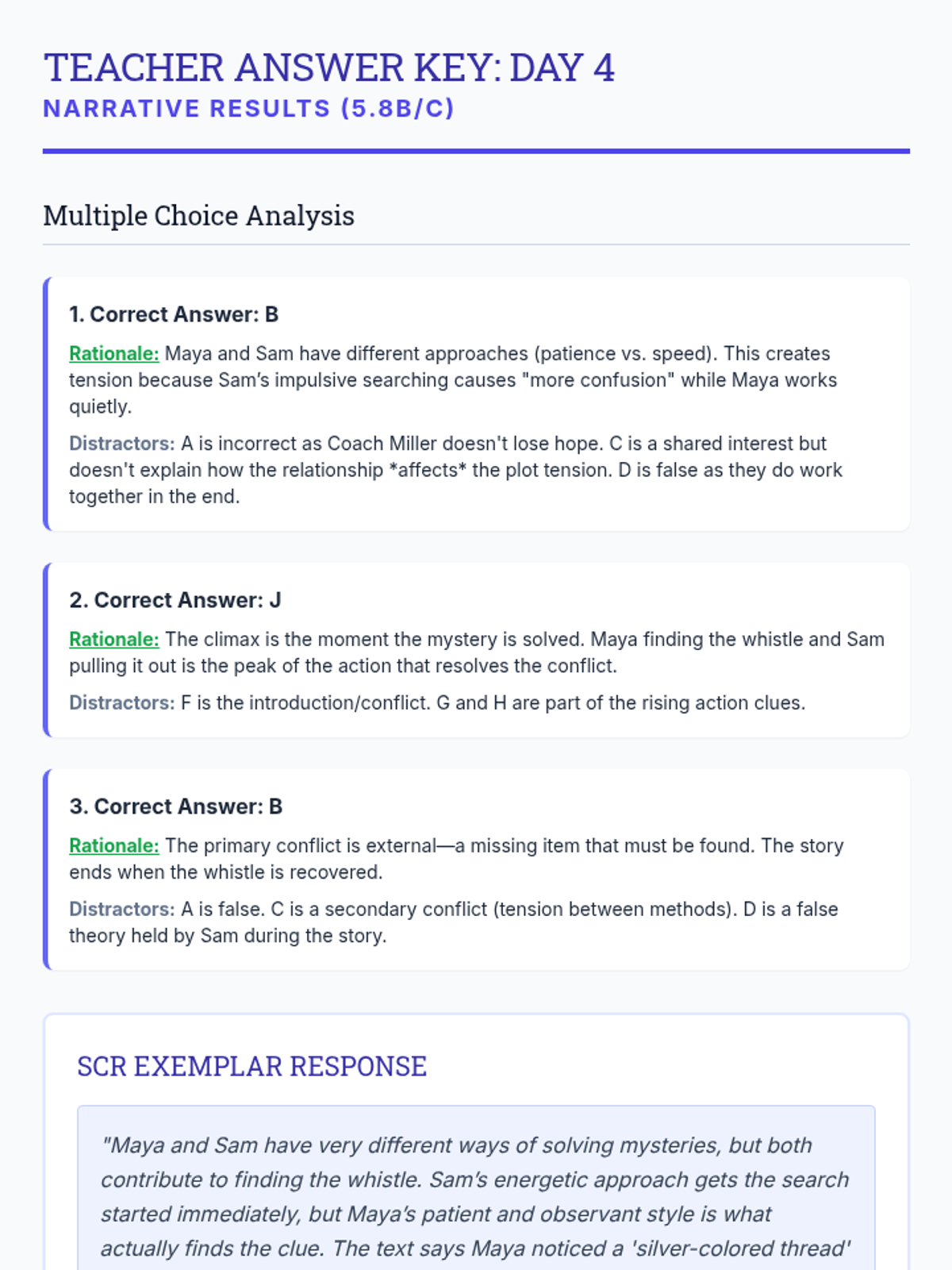
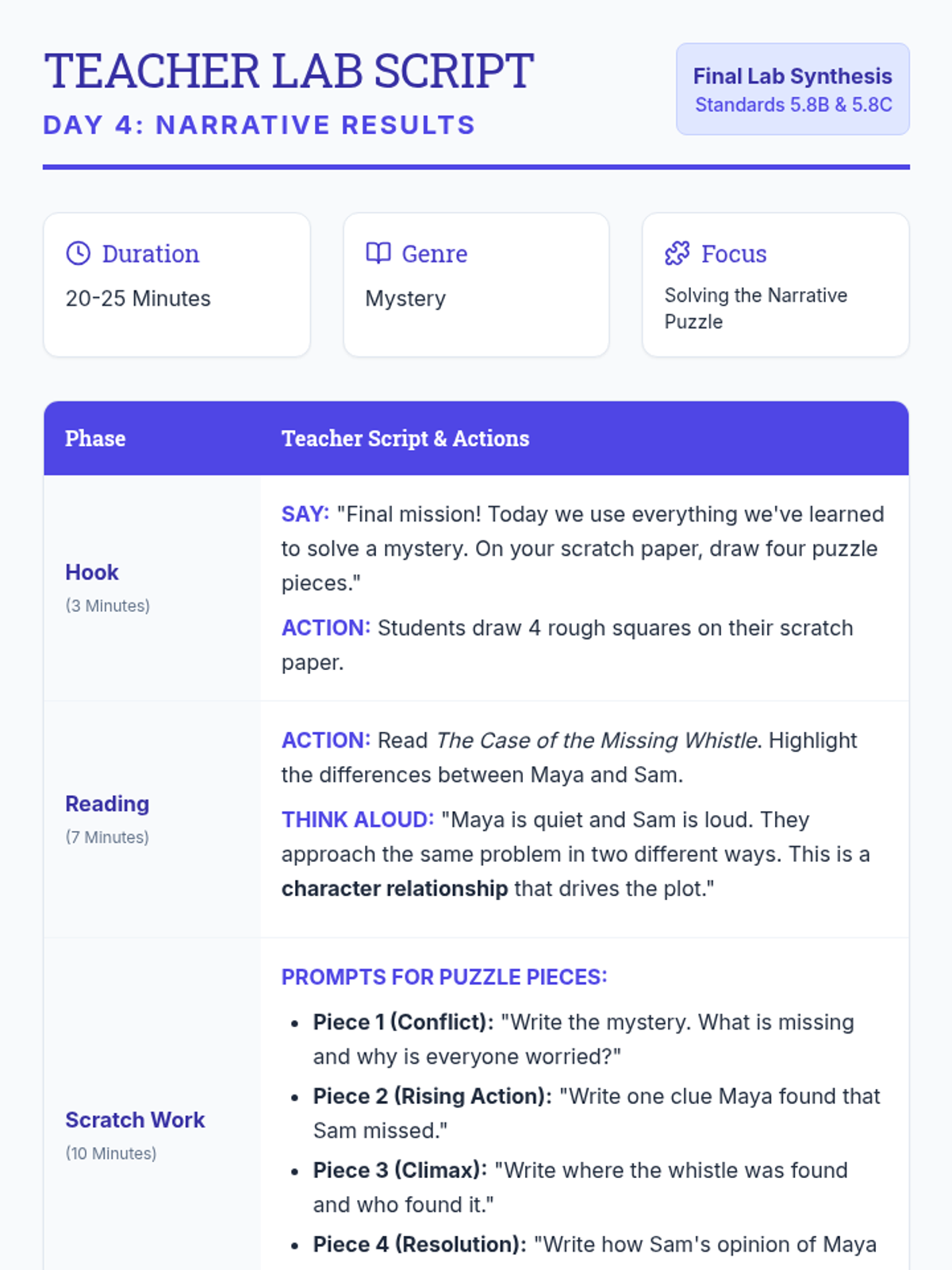
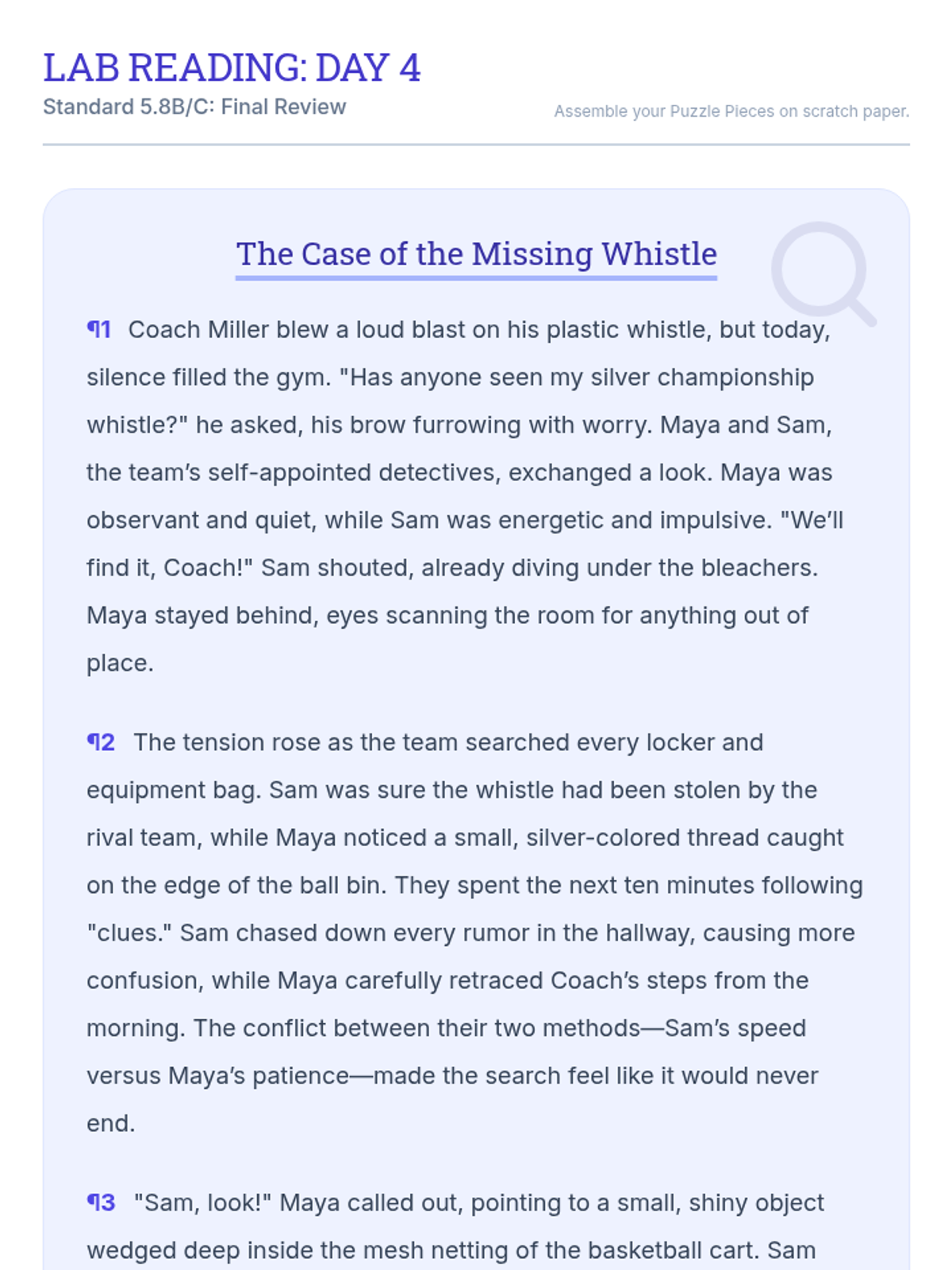
Day 4 serves as a synthesis day using a mystery genre. Students apply their knowledge of character conflict and plot resolution to solve a 'narrative puzzle' and complete a comprehensive assessment.
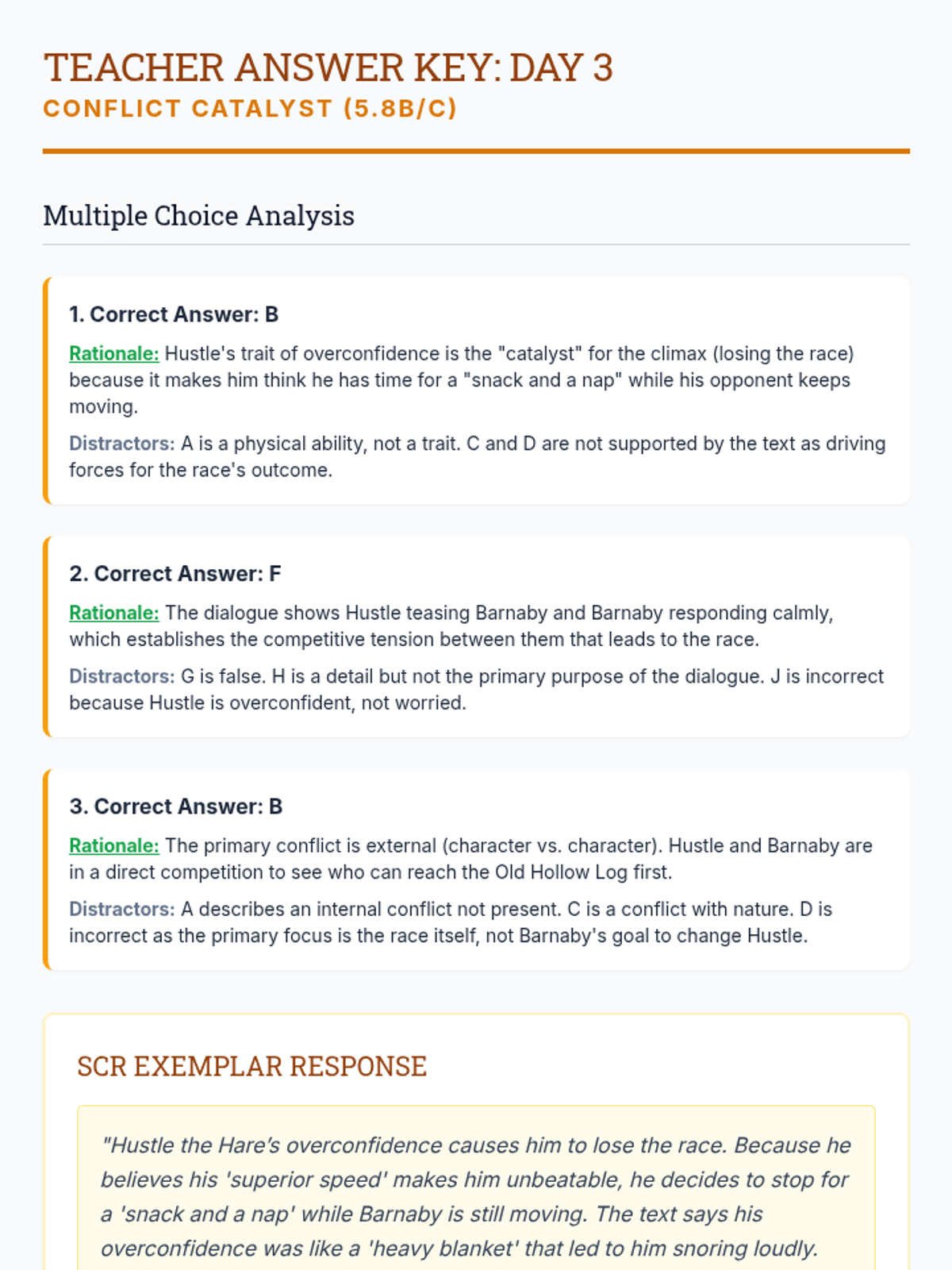
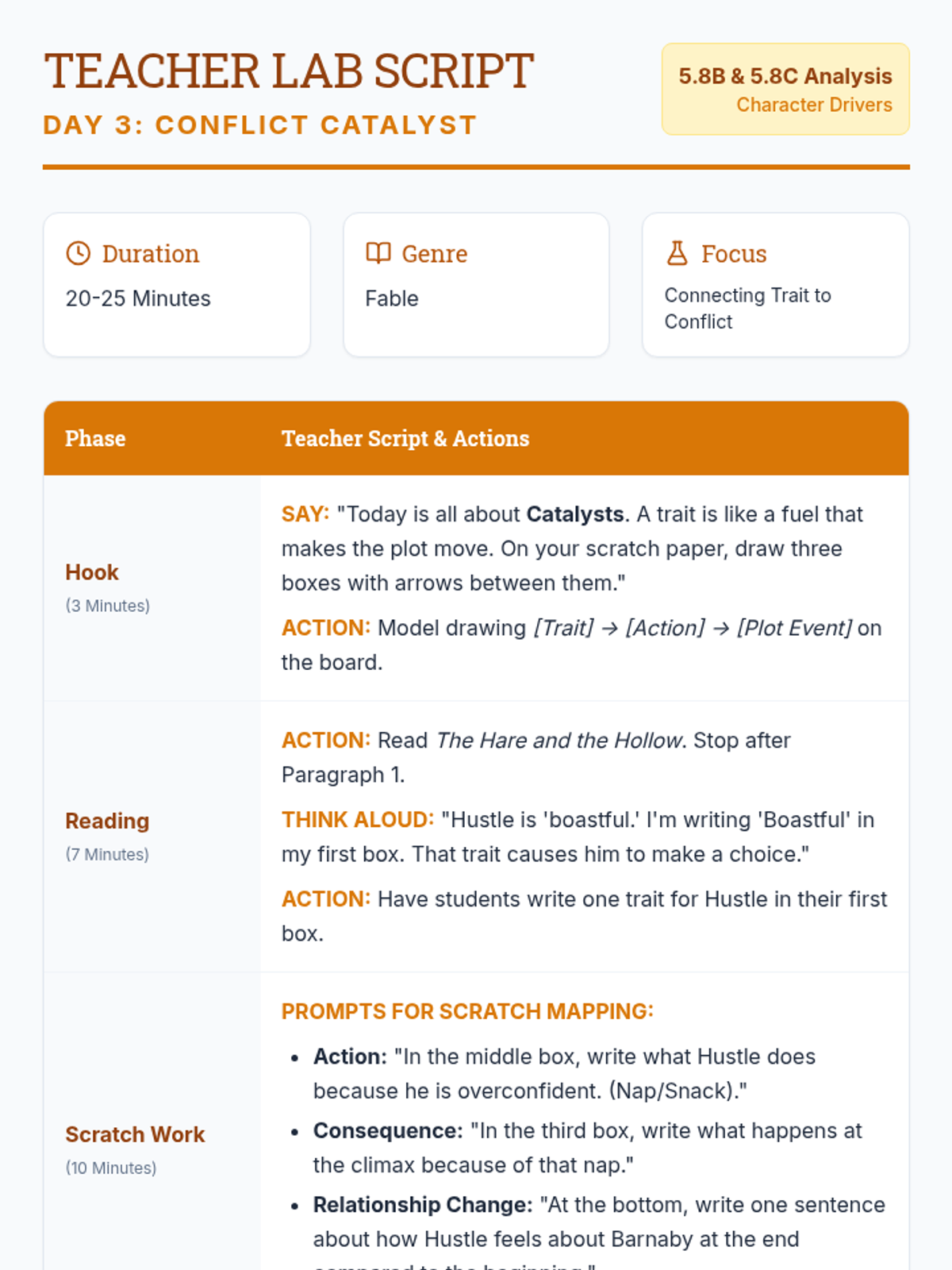
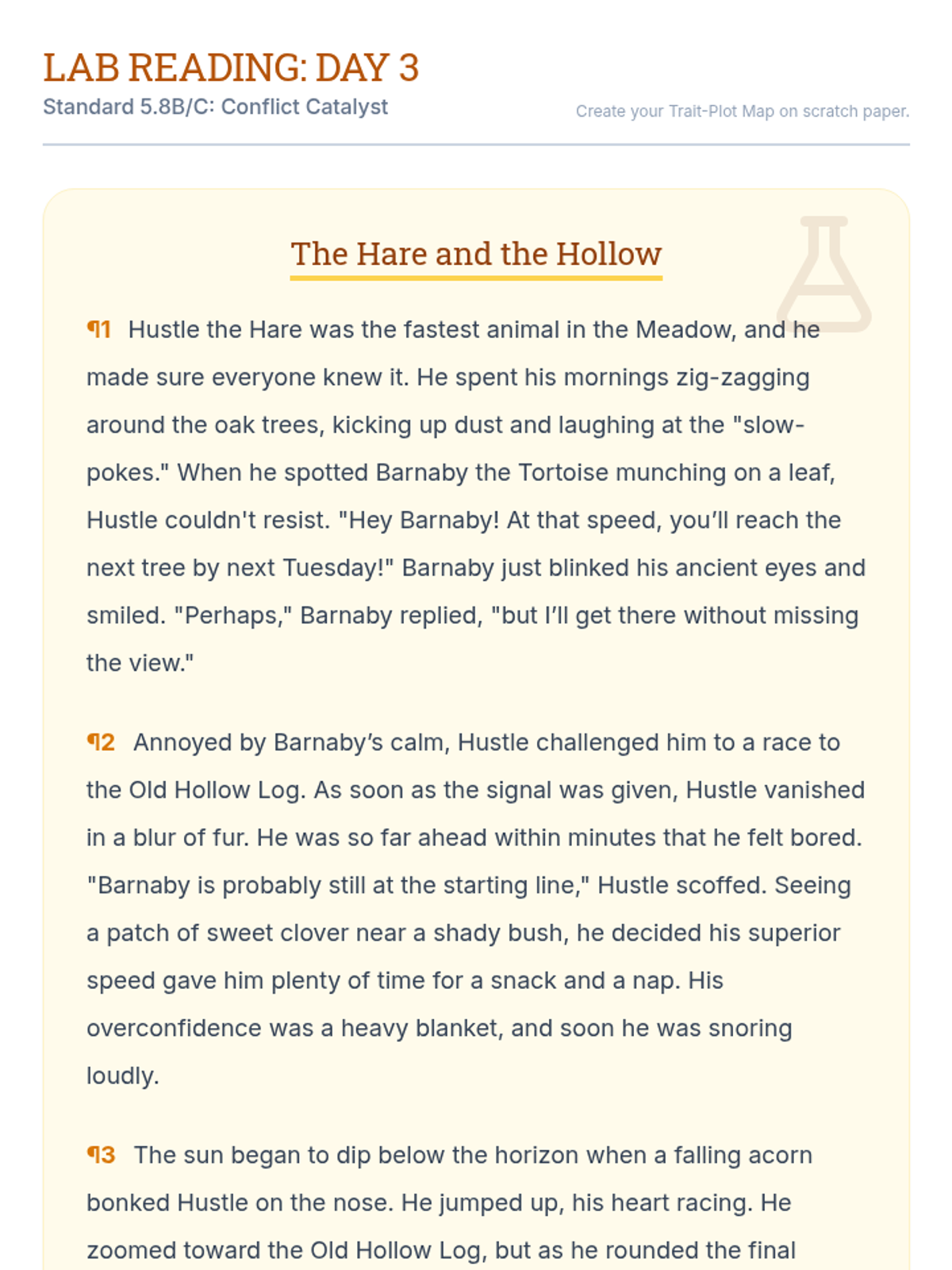
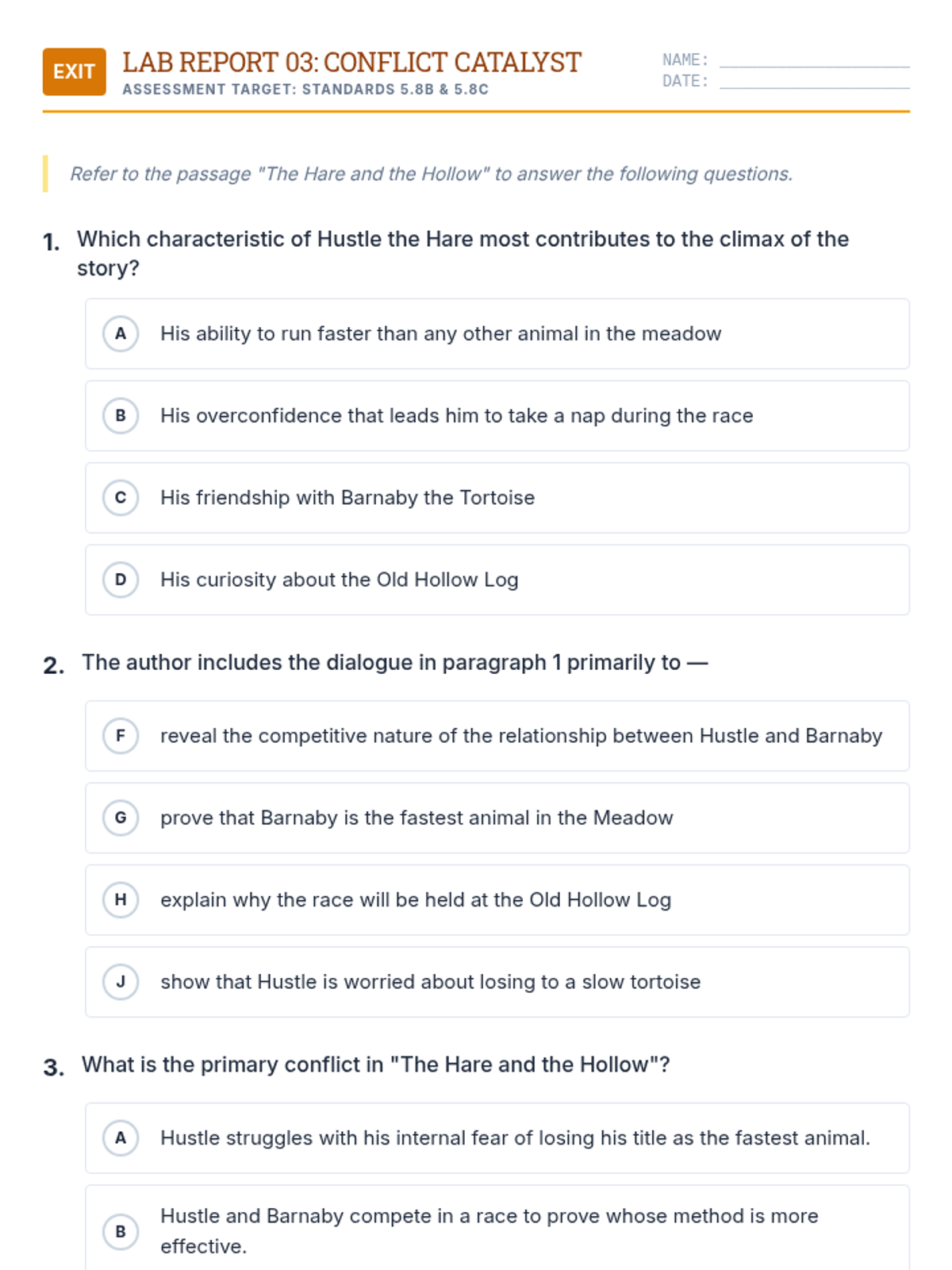
Day 3 integrates both character and plot (5.8B/C) using traditional literature (a fable). Students examine how a character's traits and choices create the conflict and lead to the climax.