Syllogisms, deductive validity, and the principles of inductive probability for evaluating evidence-based claims. Targets common logical fallacies and the construction of sound, persuasive arguments.
A comprehensive guide to teaching structured debate, focusing on argument construction, rebuttal strategies, and persuasive delivery for middle and high school students.
A lesson that bridges the gap between informational and narrative texts by applying detective skills to fiction. Students integrate character inferences with theme identification to solve 'literary mysteries,' analyzing fables like 'The Wisdom of the Cracked Pot' and 'The Kindness of the Lion.'
A lesson focused on identifying the central 'Big Picture' idea in informational texts using the 'Investigation Lens.' Students practice zooming out from specific details to synthesize the main message authors intend to convey, using cases about polar bear adaptations and Thomas Edison's persistence.
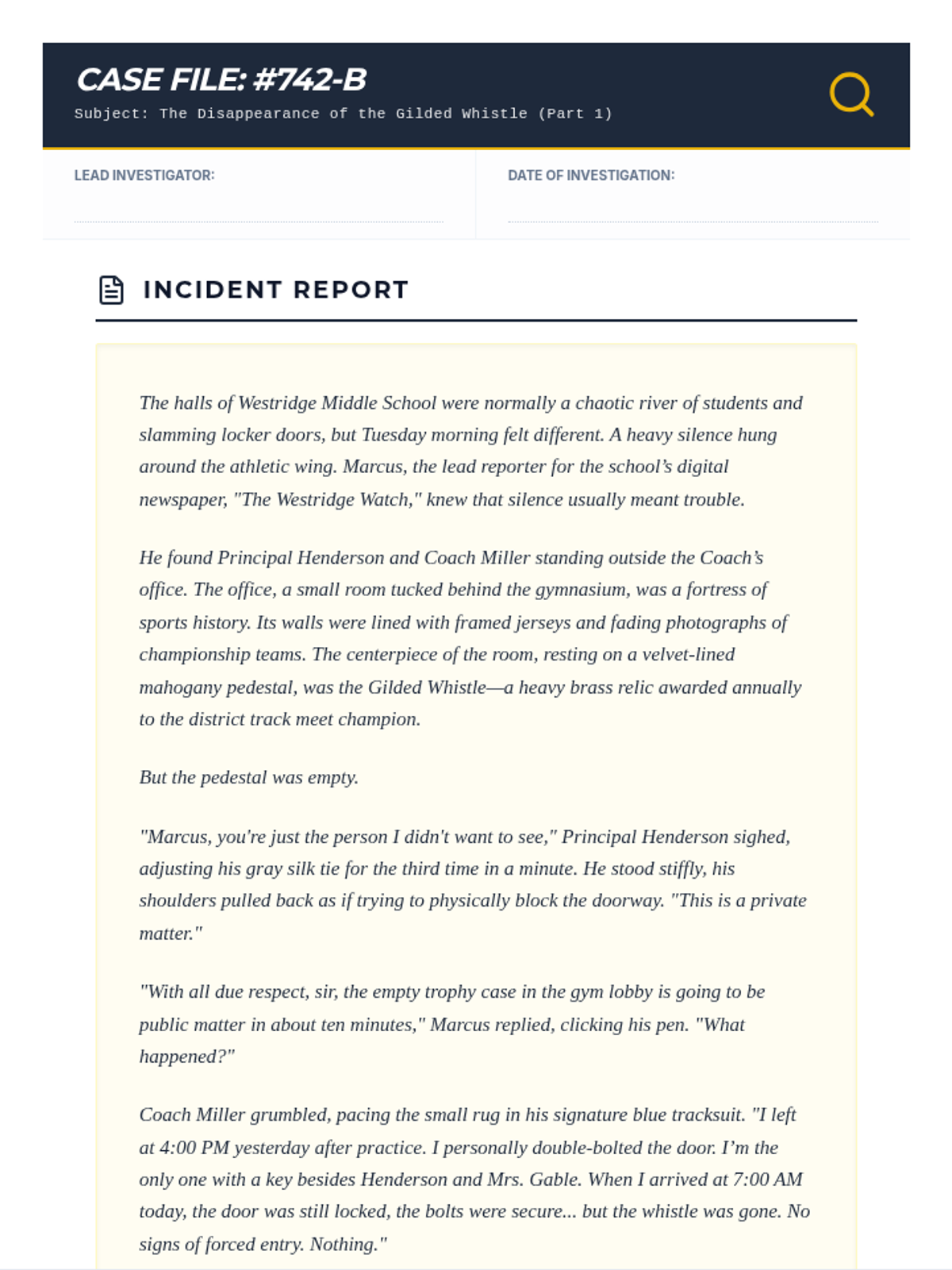
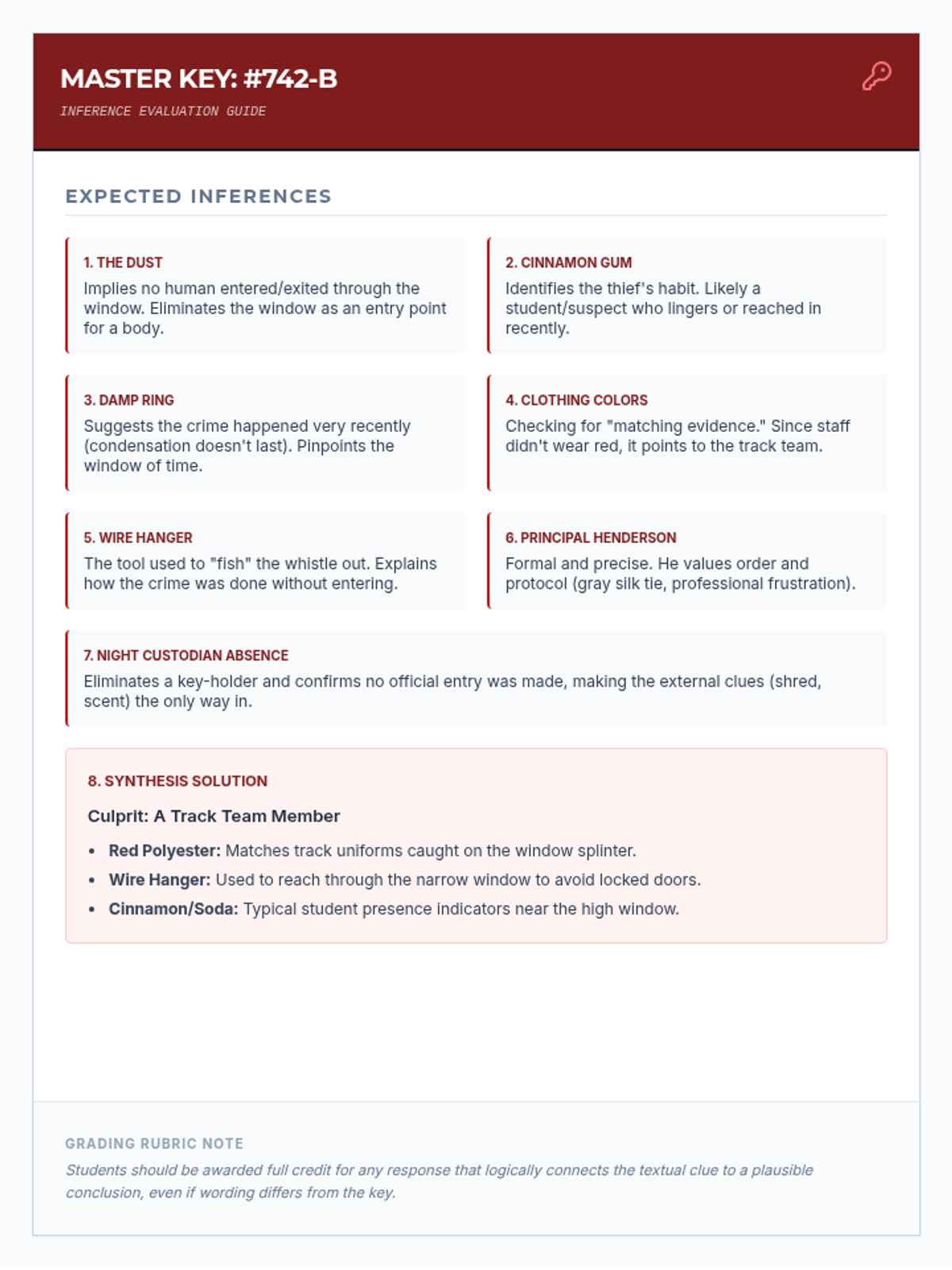
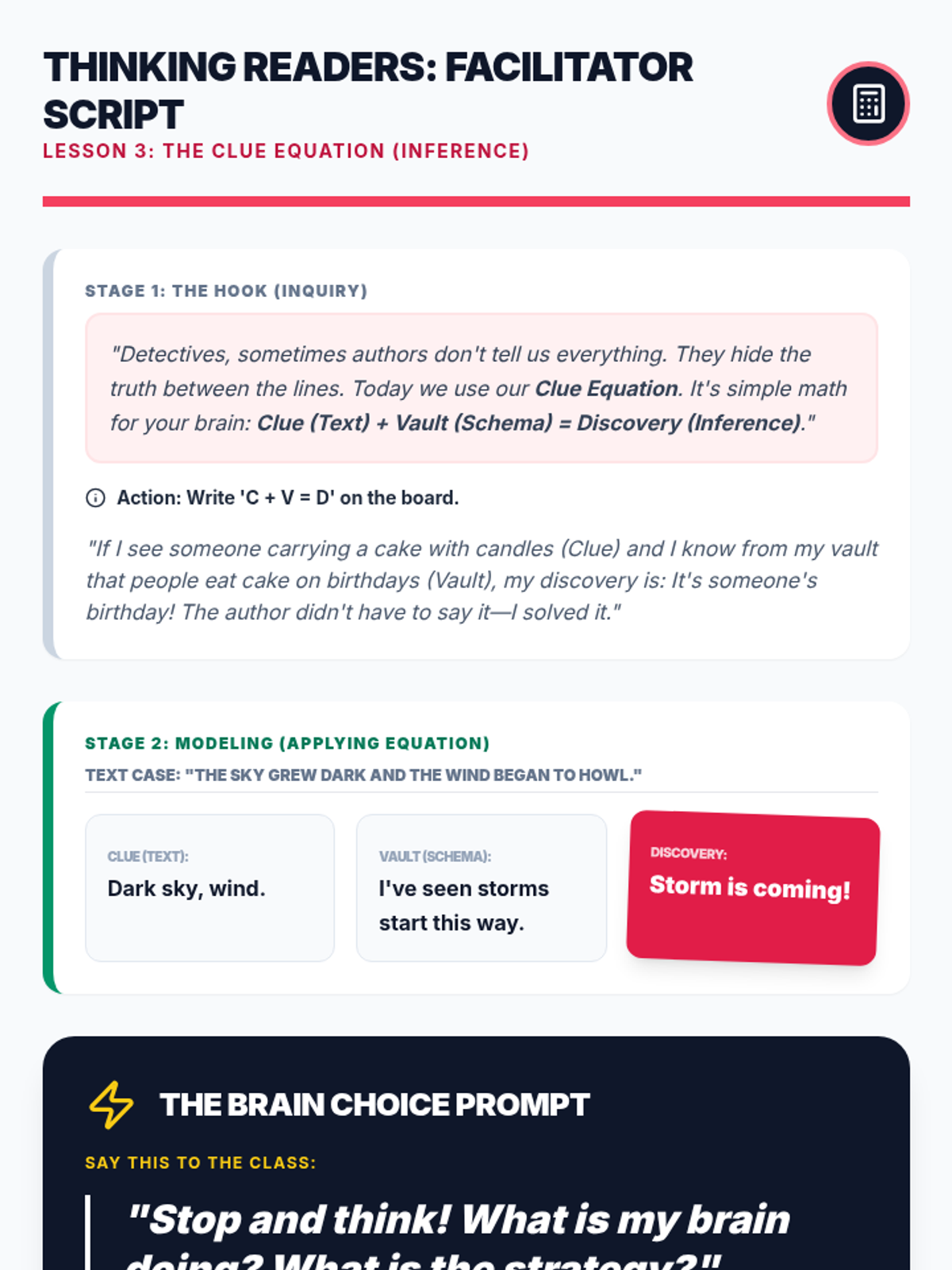
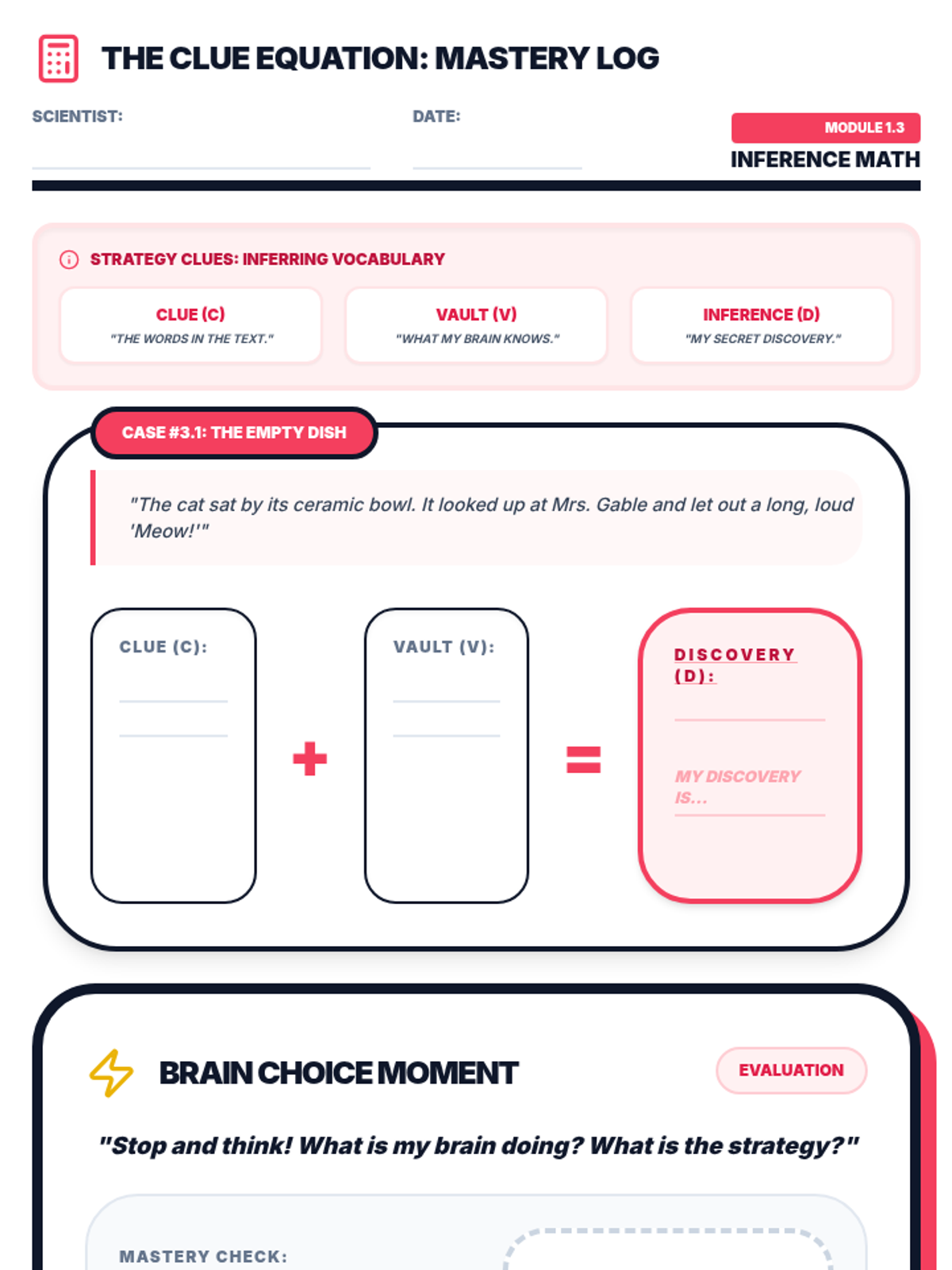
A foundational lesson on making inferences using text evidence and personal schema. Students learn 'The Detective's Equation' (Evidence + Schema = Inference) and apply it to solve short 'case studies' ranging from athletic disappointments to mysterious kitchen messes.
A comprehensive lesson focused on teaching students how to distinguish between vital and extra details in informational texts to identify key ideas and make inferences. Using a 'detective' theme, students analyze real-world topics like the invention of Band-Aids, the importance of bees, and medical 3D printing.
Teaches students to evaluate claims, analyze evidence, and craft strong argumentative responses for the NYS ELA exam.
Develops students' ability to identify central ideas and the specific evidence that supports them in informational texts.
Focuses on the essential vocabulary and structural frameworks needed to analyze complex middle school texts.
A lesson focused on Act 1 of 12 Angry Men, where students analyze initial evidence and engage in structured debates to practice evidence-based reasoning.
A 6th-grade lesson on distinguishing between anecdotal and solid evidence to build persuasive arguments. Students analyze a video case study, evaluate evidence types, and write a courtroom-style closing argument for a fictional 'crime.'
Students will learn to distinguish between interpretation, anecdotal evidence, and solid proof through a detective-themed investigation using video analysis and a collaborative ranking activity.
A middle school lesson focused on evaluating the strength of evidence in support of a claim, featuring a video analysis of social logic and a hands-on 'Evidence Barometer' sorting activity.
Students will learn to evaluate the strength of evidence and construct logical arguments using a detective-themed 'Logic Lab' approach. By analyzing a real-world text conversation and rewriting it with stronger support, they will master the concept of 'sufficient' evidence.
Students act as detectives to distinguish between cold, hard facts and personal interpretations using logic and evidence from a literary analysis video.
Students learn to evaluate informational texts using the Claim, Evidence, and Reasoning (CER) framework. They will compare a weak, clickbait-style source with a reputable one, using color-coding to analyze the strength of the evidence and the logic of the reasoning.
Students explore cause and effect through the lens of character motivation and high-stakes decisions, using Rube Goldberg machines as a metaphor for narrative chain reactions.
A 6th-grade ELA lesson focused on identifying analogies and explaining the logical connections between compared items using visual metaphors and a matching activity.
Students will learn to analyze character traits by making inferences and supporting them with explicit text evidence, inspired by the deductive reasoning of Hercule Poirot.
A small-group intervention lesson focused on the 'Text Clues + Background Knowledge = Inference' formula, using a detective theme to engage 4th-6th grade students. Includes video analysis, collaborative passage reading, and structured graphic organizers.
A detective-themed lesson where students learn to make logical inferences by combining text clues with background knowledge, using a Sherlock Bones video as a guide.