A middle school grammar lesson focusing on the distinction between count and mass nouns to master the usage of 'fewer' and 'less' using a linguistic and historical perspective.
A comprehension lesson focused on Chapter 13 of 'The Last Kids on Earth and the Nightmare King', where students analyze setting, character teamwork, and a major plot turning point involving a radio signal.
An immersive 30-minute ELA escape room where 6th-grade students solve noun, verb, and adjective puzzles to escape a deserted island.
An immersive 45-minute grammar escape room where 6th-grade students solve puzzles involving parts of speech, punctuation, and sentence structure to unlock 'The Grammarian's Vault'.
In this lesson, students will trace and evaluate arguments regarding school lunch policies, focusing on identifying claims, assessing the relevance and sufficiency of evidence, and determining if reasoning is sound.
A comprehensive deep-dive into standard RL 7.3, exploring how setting, character, and plot interact across five distinct genres through analytical passages and comparative slides.
A collection of five informational passages and assessments focused on RI.7.3, featuring modern icons like Simone Biles and Taylor Swift. Students will analyze how individuals and events are introduced and elaborated upon through anecdotes and examples.
A lesson focusing on the transition of the Watson family from Flint to Birmingham, analyzing setting development and character shifts in chapters 12 and 13.
A deep dive into Chapter 10 of 'The Watsons Go to Birmingham – 1963', focusing on how the Appalachian setting and the shroud of night symbolize the growing racial tensions as the family heads South.
A middle school lesson on visual rhetoric, teaching students how to analyze and use color, layout, and typography to influence audience perception in media and advertising.
A 60-minute writing workshop focused on elevating 7th-grade prose through varied sentence structures, precise vocabulary, and appositives. Students act as 'Draft Surgeons' to transform weak soccer-themed text into professional, engaging writing.
A lesson focusing on the cultural shift of the 1920s through the lens of flapper culture, designed with highly accessible text for middle school students reading at a 1st-grade level. Students will analyze diction to identify positive and negative connotations.
A mini-lesson for a 6th-grade resource room ELA class focusing on Auggie's character traits and his development throughout the first month of school in the novel 'Wonder'. This lesson uses a space-exploration theme and provides high levels of scaffolding.
A mini-lesson for 6th grade resource room students focusing on the theme of kindness and character perspective in the novel Wonder, specifically centered around Mr. Browne's first precept and the transition into middle school.
Students synthesize the entire novel's events, including the final chapter and afterword, to identify themes and analyze the resolution of the plot.
Students examine the setting's impact on the plot and synthesize details from Annemarie's encounter with the soldiers in the woods.
Students analyze character growth and the impact of point of view as Annemarie takes on a dangerous mission in chapters 13 and 14.
Focusing on chapters 11 and 12, students analyze plot elements and practice synthesizing information to summarize the escape to the boat.
Students evaluate plot details and suspense techniques used in chapters 9 and 10, focusing on the mysterious funeral of 'Great-Aunt Birte'.
Students investigate point of view and make deeper inferences about Uncle Henrik's role and the move to the coast in chapters 7 and 8.
Focusing on chapters 5 and 6, students track plot development and practice summarizing the high-tension events of the soldiers' midnight visit.
Students analyze character traits and make inferences about the changing atmosphere in Copenhagen as the Nazi occupation intensifies in chapters 3 and 4.
Students investigate Chapters 1-2, focusing on using 5th grade context clues (TEKS 5.3B) to decipher historical terminology and making logical predictions based on textual evidence (TEKS 5.6C) regarding the intensifying Nazi occupation.
This lesson introduces students to Manor Farm through the first chapter of Animal Farm, focusing on Old Major's rhetorical speech. Students will master high-level vocabulary, practice oral reading fluency through dramatic speech excerpts, and begin their reading of the first 10 pages.
An 8th-grade analysis lesson where students evaluate the benefits and drawbacks of mandatory homework versus extra credit using visual prompts and structured evidence.
The war ends and the Johansens look toward a future of rebuilding. Students evaluate the resolution of the novel and compare the fictional narrative to the historical facts presented in the Afterword.
The mission reaches its high-stakes climax as Annemarie faces the soldiers and delivers the package that determines the Rosens' survival. Students analyze the plot climax and the author's use of suspense and symbolic resolution.
Annemarie undertakes a dangerous solo journey through the woods to deliver a mysterious package, using her imagination to cope with intense fear. Students analyze character courage and the use of literary devices in suspenseful plotting.
Students synthesize the entire novel's events, including the final chapter and afterword, to identify themes and analyze the resolution of the plot. [5th Grade TEKS 5.7A, 5.8C]
A collection of sequence-wide resources, answer keys, and master documents for the Resistance Chronicles unit.
Students examine the setting's impact on the plot and synthesize details from Annemarie's encounter with the soldiers in the woods. [5th Grade TEKS 5.8A, 5.7C]
Students analyze character growth and the impact of point of view as Annemarie takes on a dangerous mission in chapters 13 and 14. [5th Grade TEKS 5.8B, 5.10E]
Focusing on chapters 11 and 12, students analyze plot elements and practice synthesizing information to summarize the escape to the boat. [5th Grade TEKS 5.8C, 5.7C]
Students evaluate plot details and suspense techniques used in chapters 9 and 10, focusing on the mysterious funeral of 'Great-Aunt Birte'. [5th Grade TEKS 5.8C, 5.9C]
Students investigate point of view and make deeper inferences about Uncle Henrik's role and the move to the coast in chapters 7 and 8. [5th Grade TEKS 5.10E, 5.8A]
Focusing on chapters 5 and 6, students track plot development and practice summarizing the high-tension events of the soldiers' midnight visit. [5th Grade TEKS 5.8C, 5.7D]
Students analyze character traits and make inferences about the changing atmosphere in Copenhagen as the Nazi occupation intensifies in chapters 3 and 4. [5th Grade TEKS 5.8B, 5.6F]
Students explore the opening chapters of Number the Stars, focusing on using context clues to understand the historical setting and making predictions about the Johansen family's future. [5th Grade TEKS 5.3B, 5.6C]
This lesson introduces 8th-grade students to the Claim-Evidence-Analysis (CEA) writing framework, focusing on how to construct objective arguments and effectively connect evidence to claims.
A foundational lesson on synonyms and antonyms that explicitly addresses thematic confusion (related vs. similar) using visual sorting activities and text-based practice.
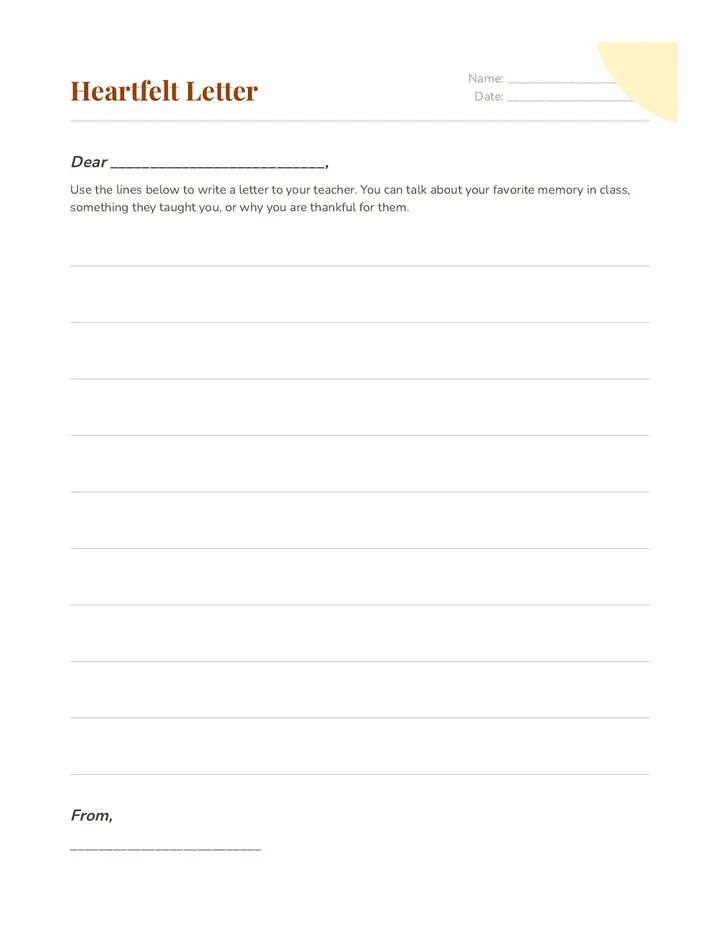
A collection of reflective and creative activities for Memorial Day, including a poppy craft writing activity, a gratitude letter template, and acrostic poems to honor fallen heroes.
A comprehensive lesson on analyzing poetry using the TPCASTT method, featuring a deep dive into Robert Frost's 'The Road Not Taken' and a gallery walk of diverse poems.
A lesson focused on identifying the central message and supporting it with text evidence from the story 'Seasons of Life'.