Students assemble a portfolio of three writing samples (science, mystery, and argument). They annotate their work, explaining their stylistic choices for voice.
A culminating week where students compile their work into a portfolio and perform a 'Final Verse' for their peers.
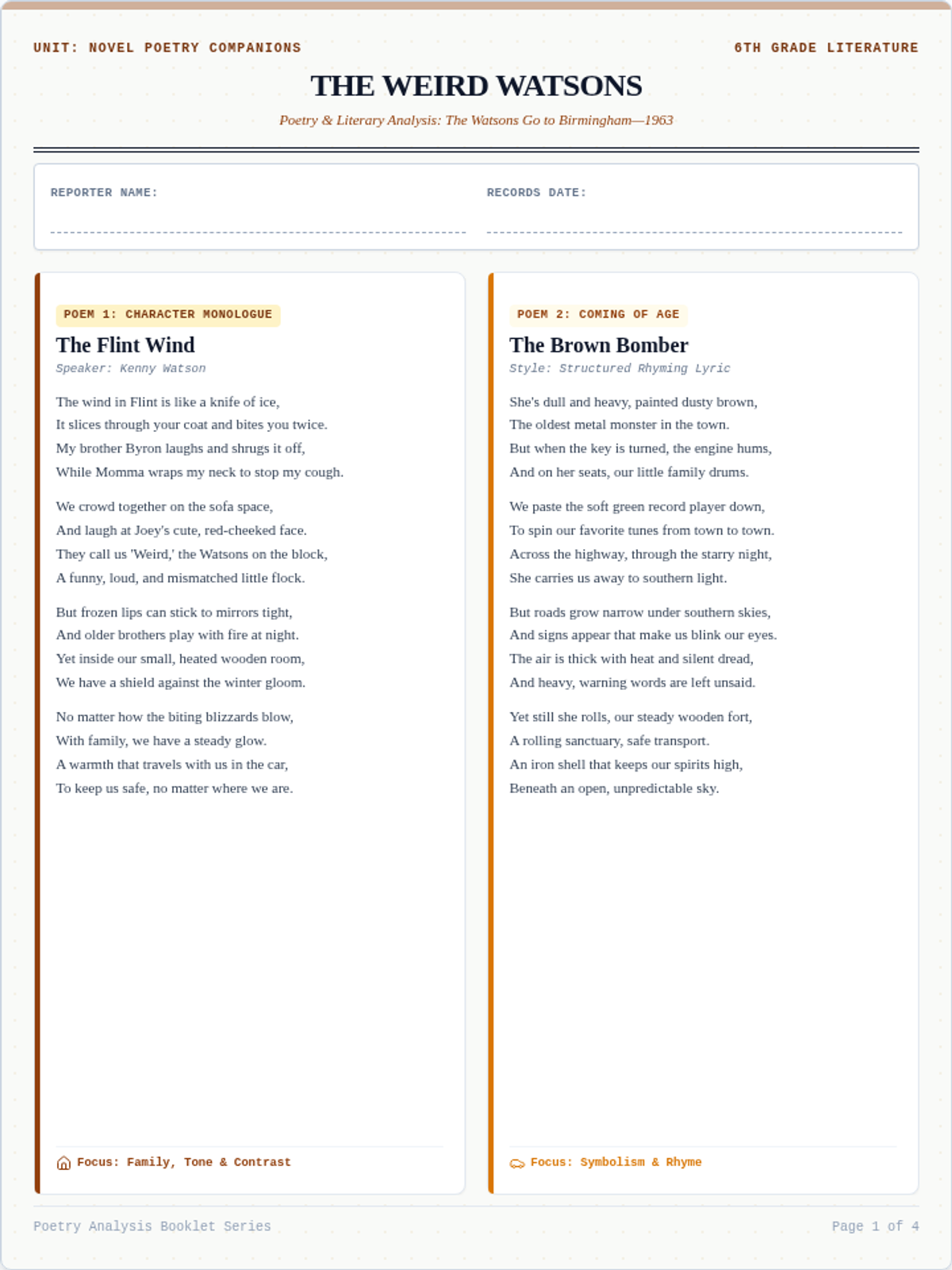
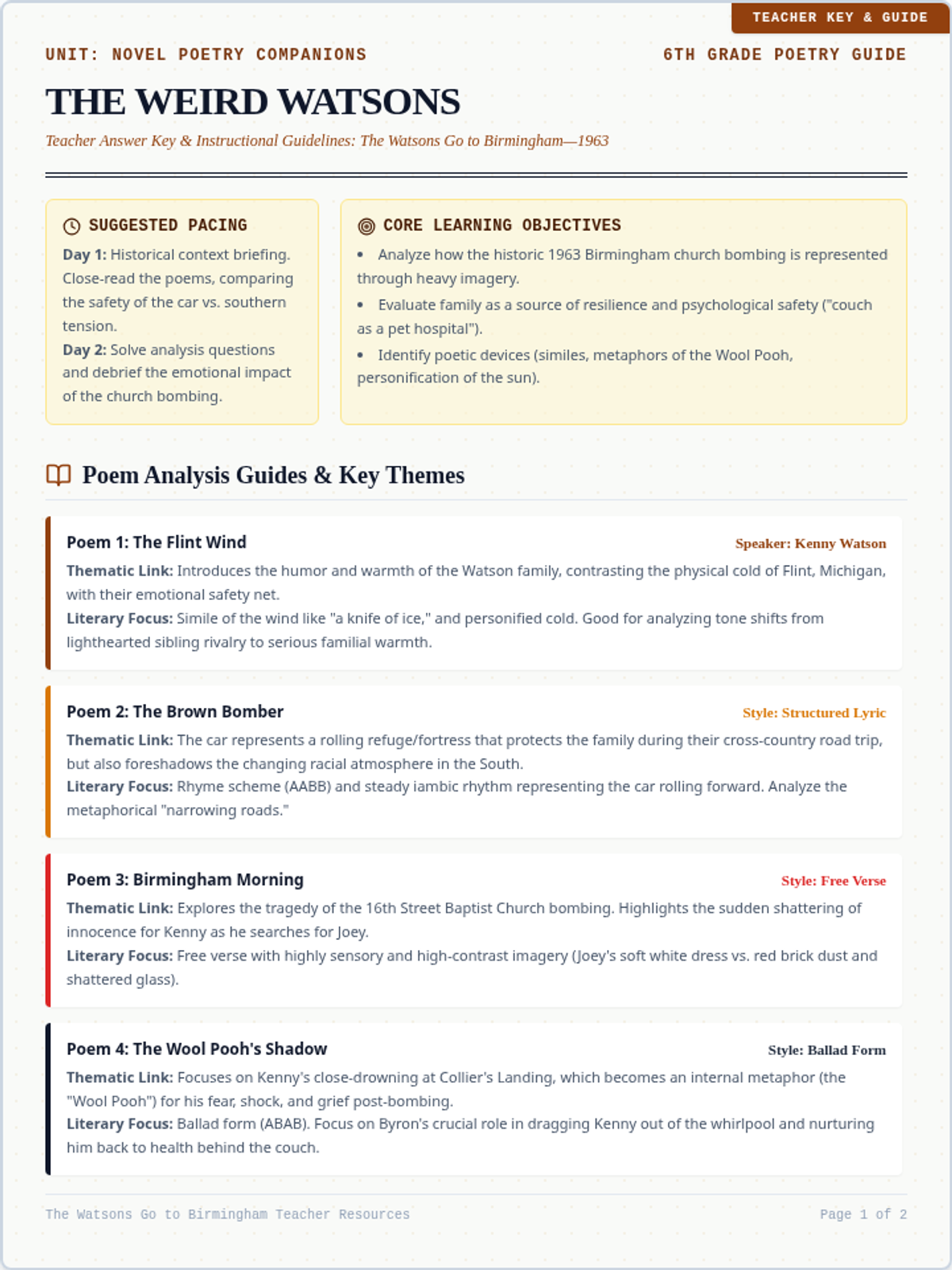
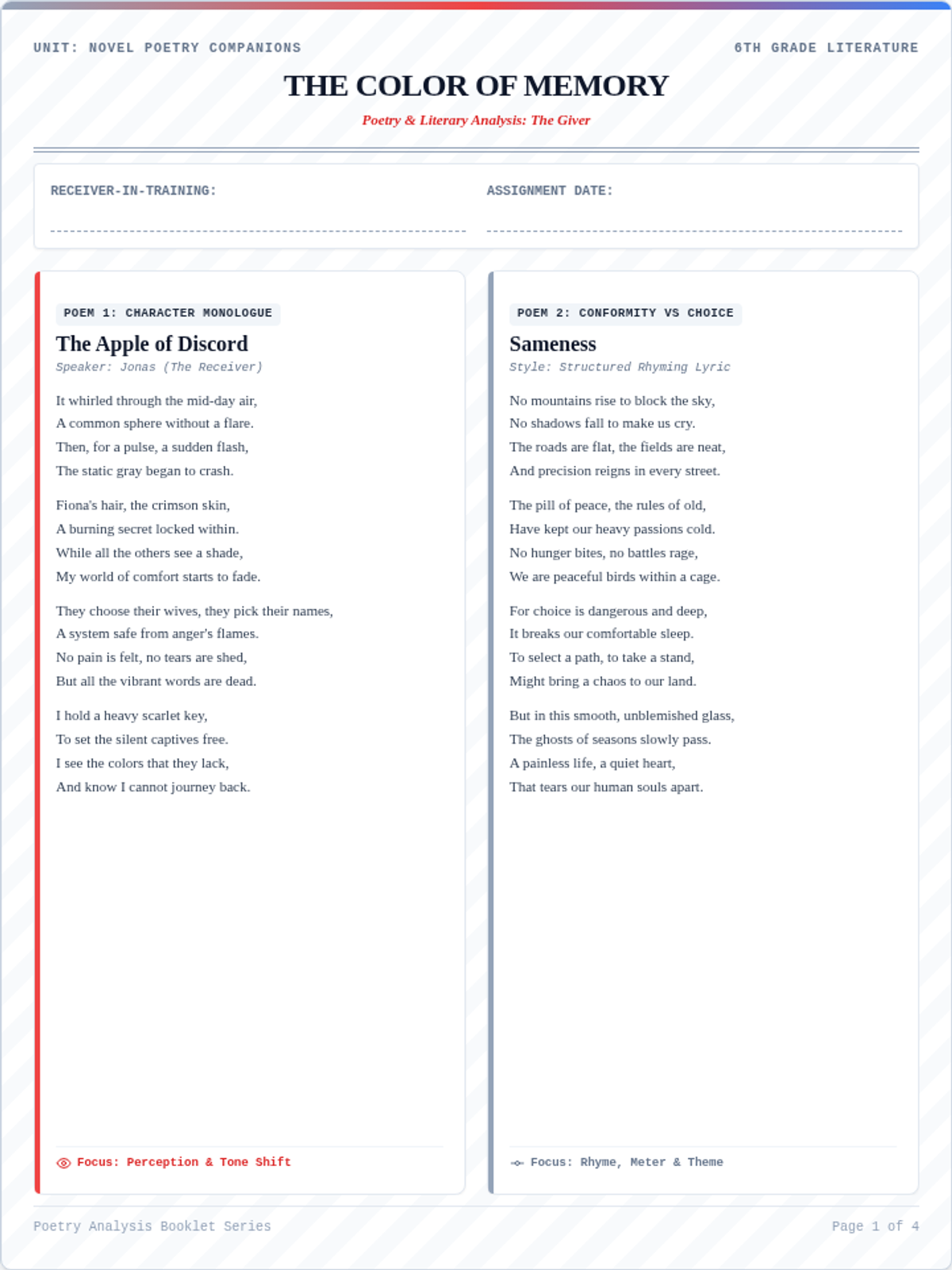
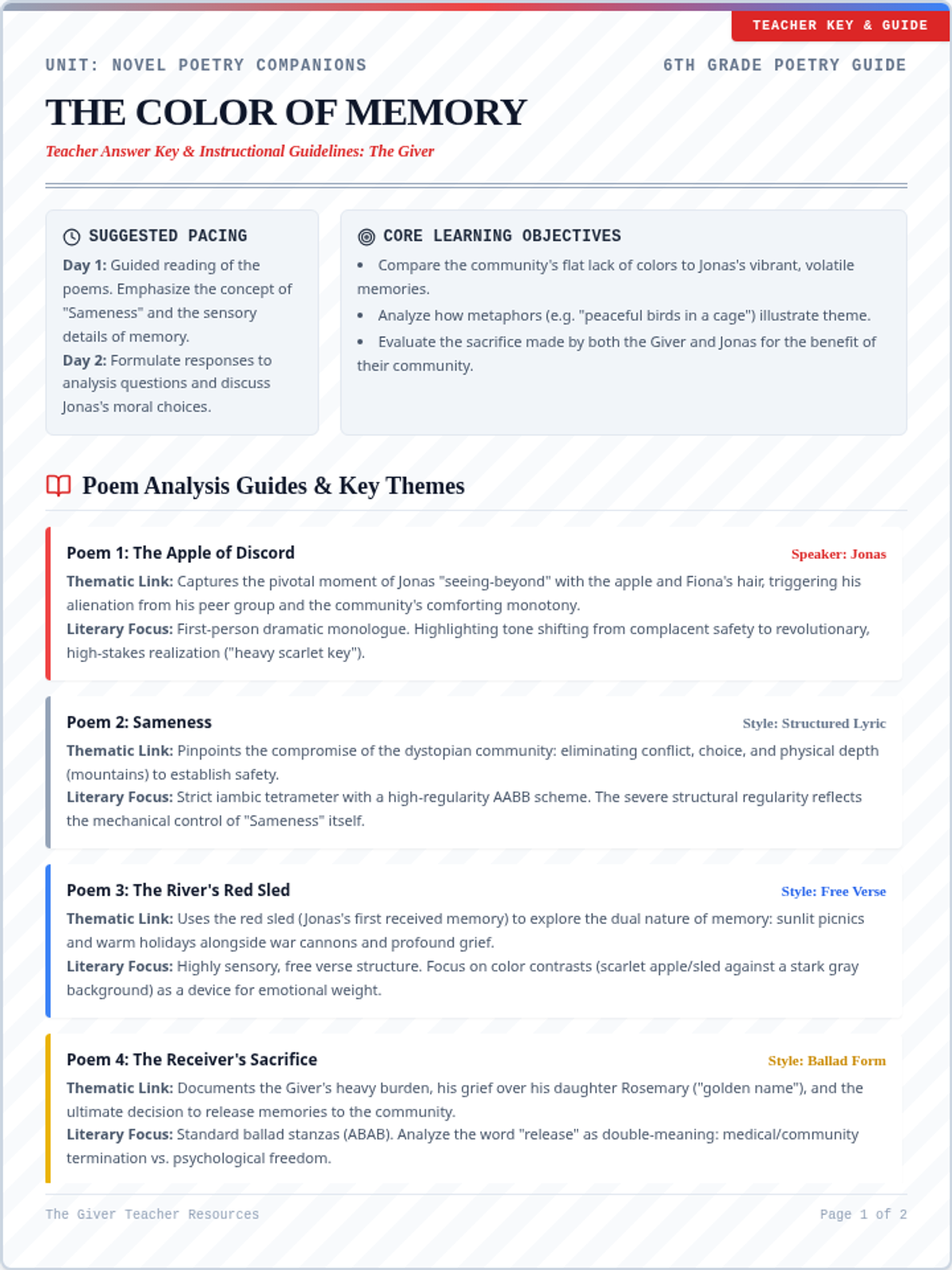
Teaching students that poems can tell stories. Students will read and write short narrative verses about everyday events.
Exploring the emotional side of poetry. Students will identify how a poem makes them feel and what 'vibes' the author is sending.
Helping students find the 'big idea' or lesson in a poem. Students will identify simple themes like bravery, friendship, and change.
Exploring how poems can make objects act like people (personification) and how words can sound like their meanings (onomatopoeia).
Introducing similes and metaphors as "secret comparisons." Students will use simple 'like' and 'as' structures to describe themselves and their world.
Focuses on building mental pictures using the five senses. Students will explore how simple words can describe smells, sights, and sounds in an urban or relatable environment.
An introduction to the rhythm and 'beat' of poetry. Students will learn to identify the steady pulse in verse and practice simple rhyme schemes using accessible vocabulary.
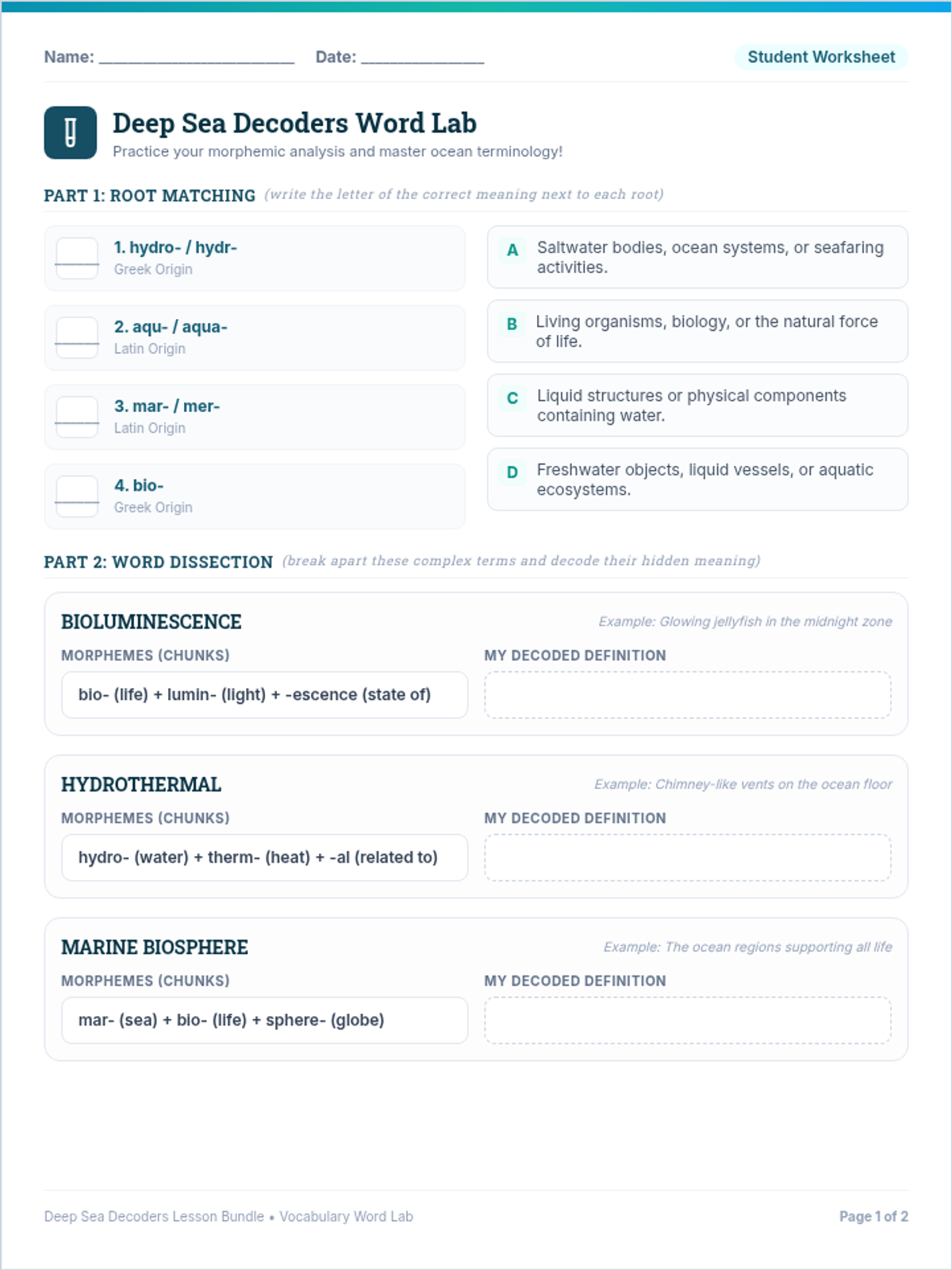
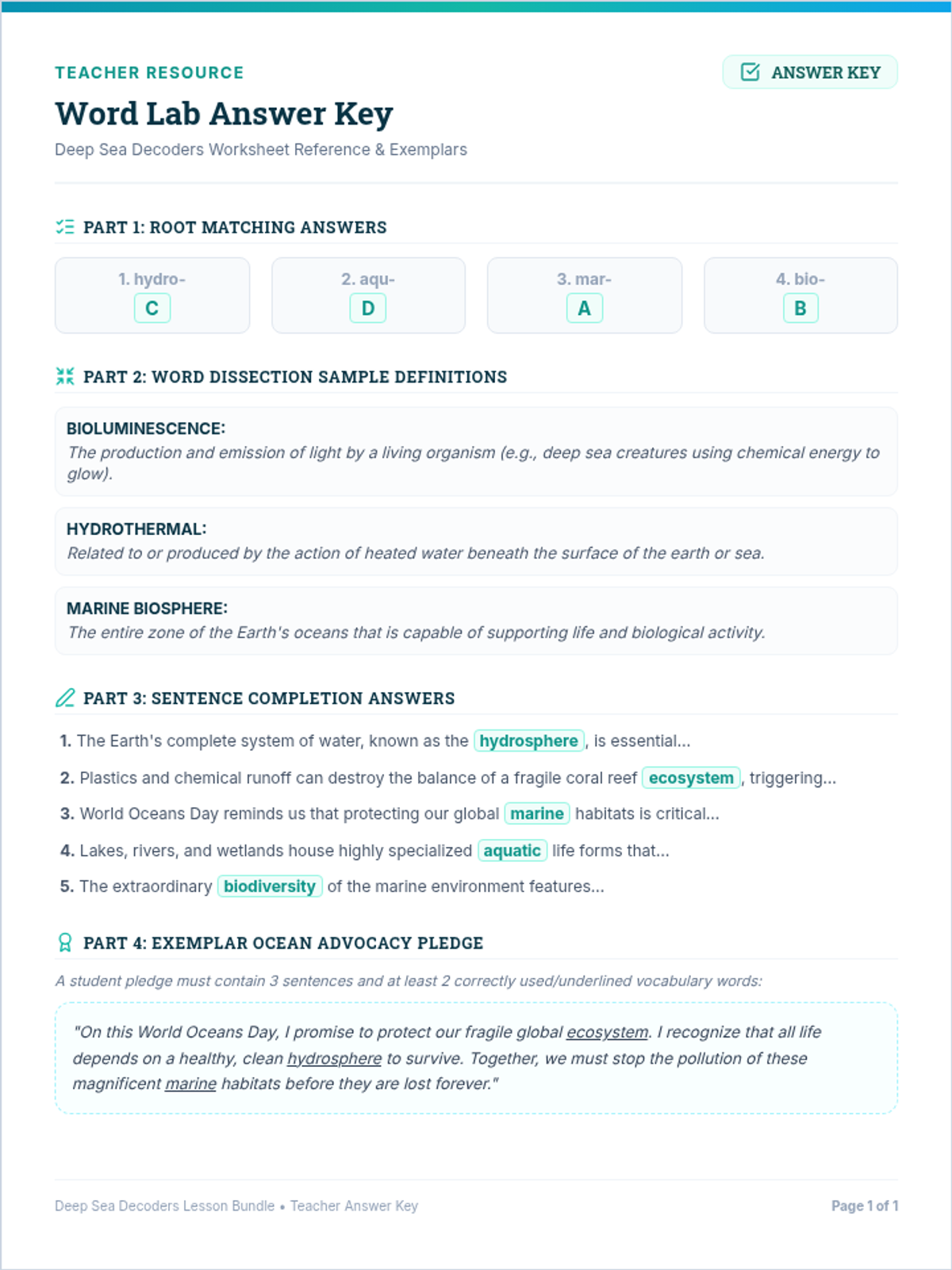
Combining prefixes, roots, and suffixes to decode complex multi-syllabic academic words.
Mastering Latin roots commonly found in academic literature and formal writing.
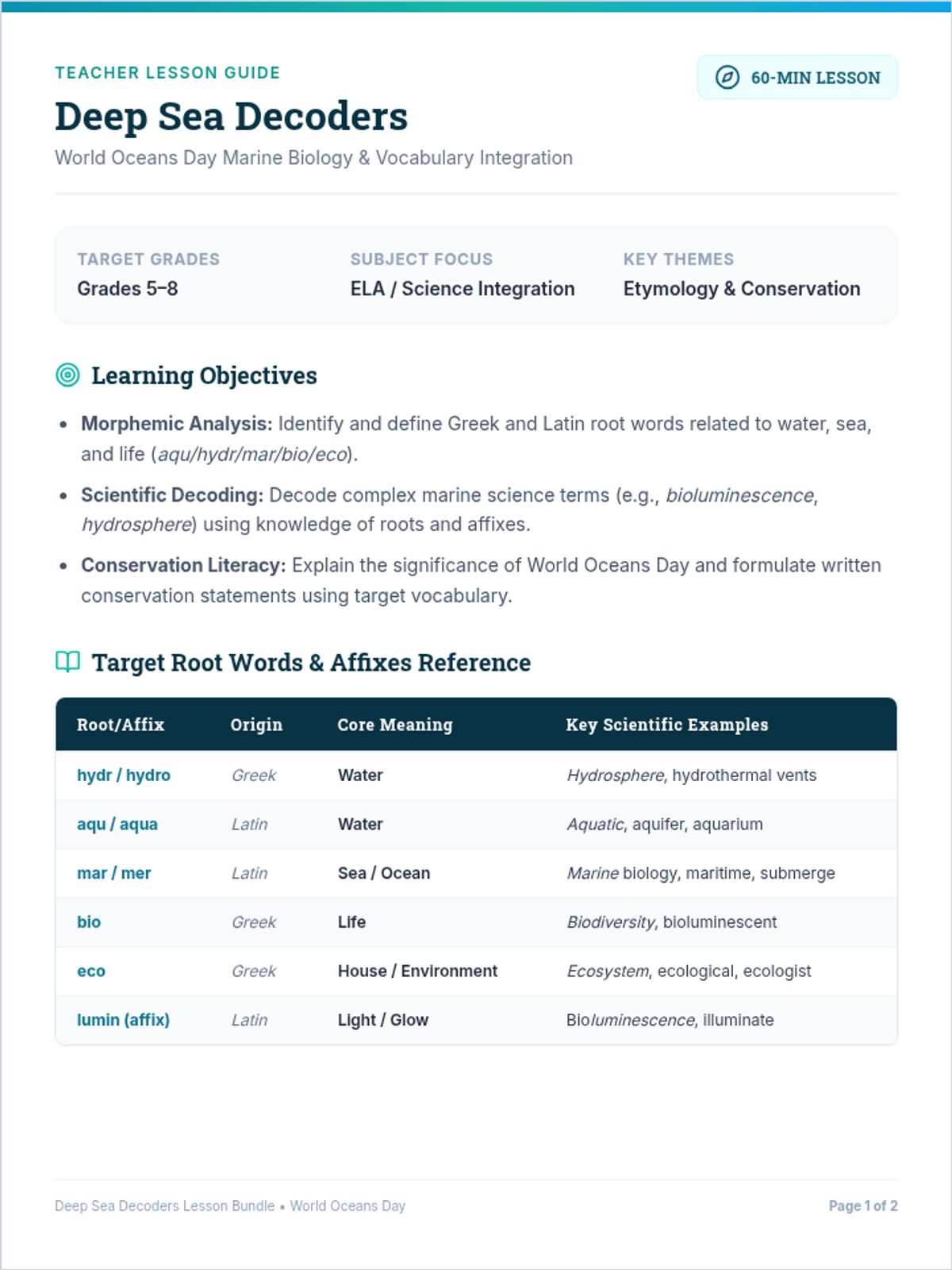
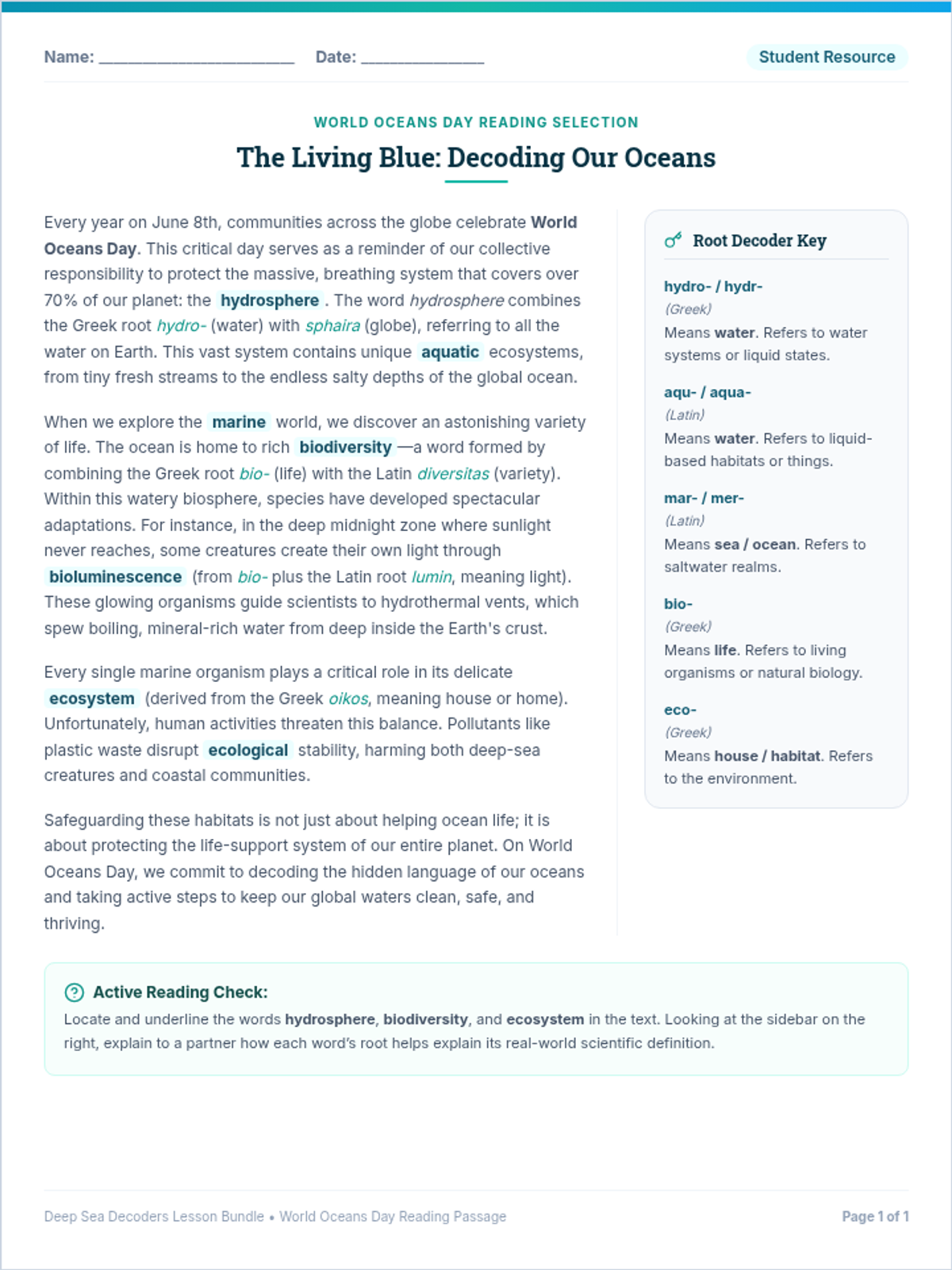
Identifying and defining core Greek roots that form the foundation of scientific and technical vocabulary.
Exploring high-frequency academic suffixes and their role in determining a word's part of speech.
Introduction to common academic prefixes and how they modify the meaning of base words.