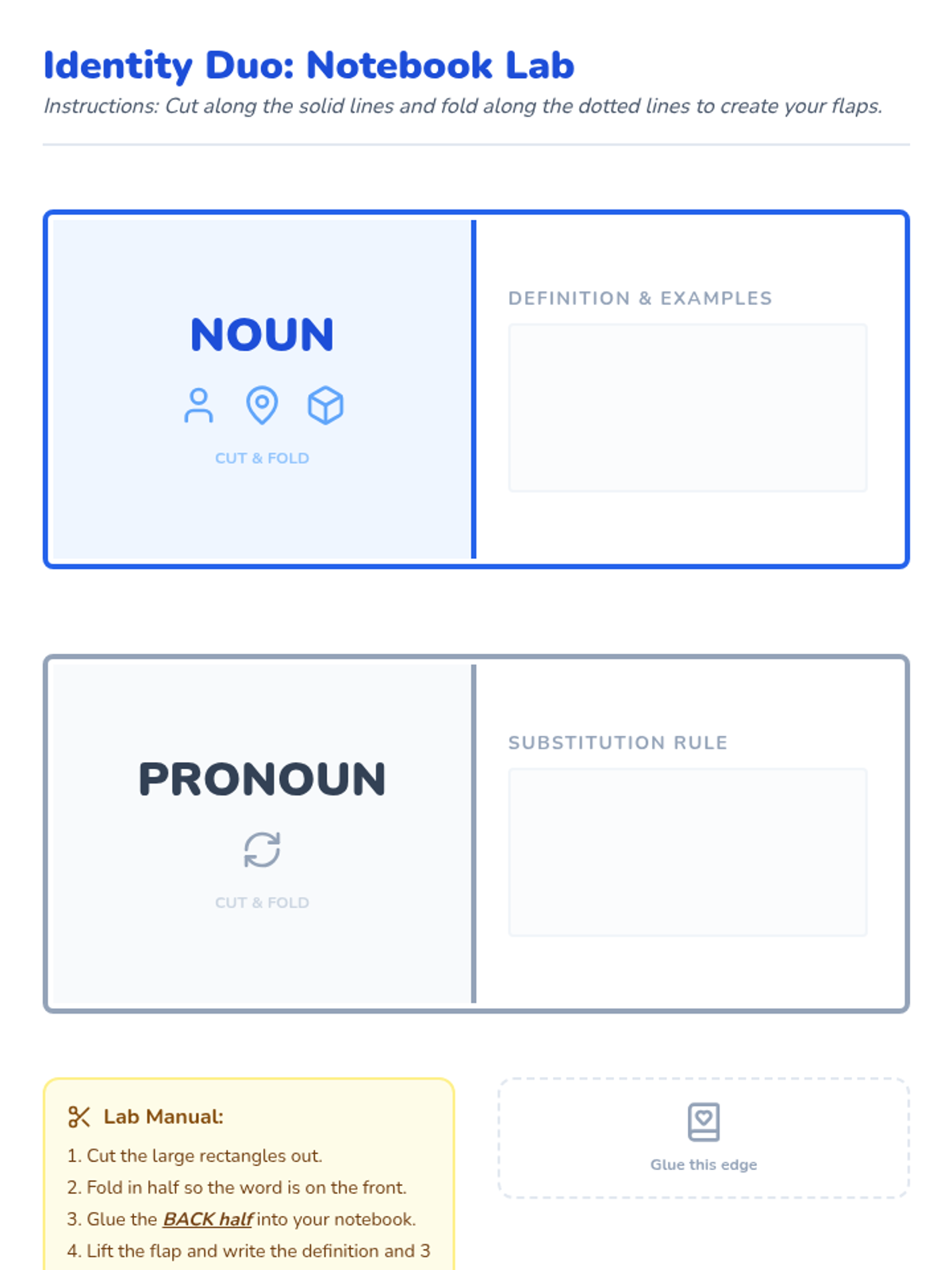
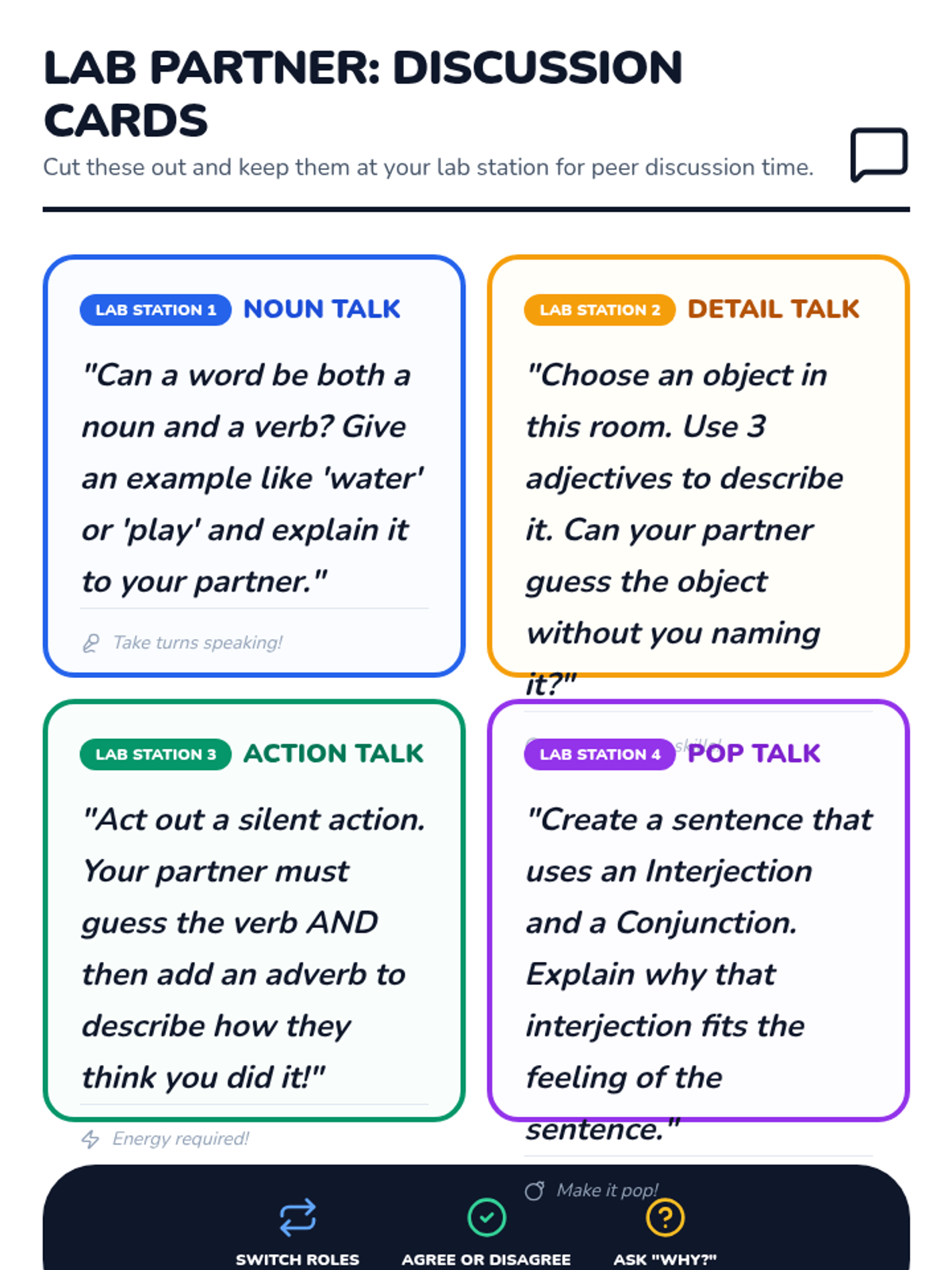
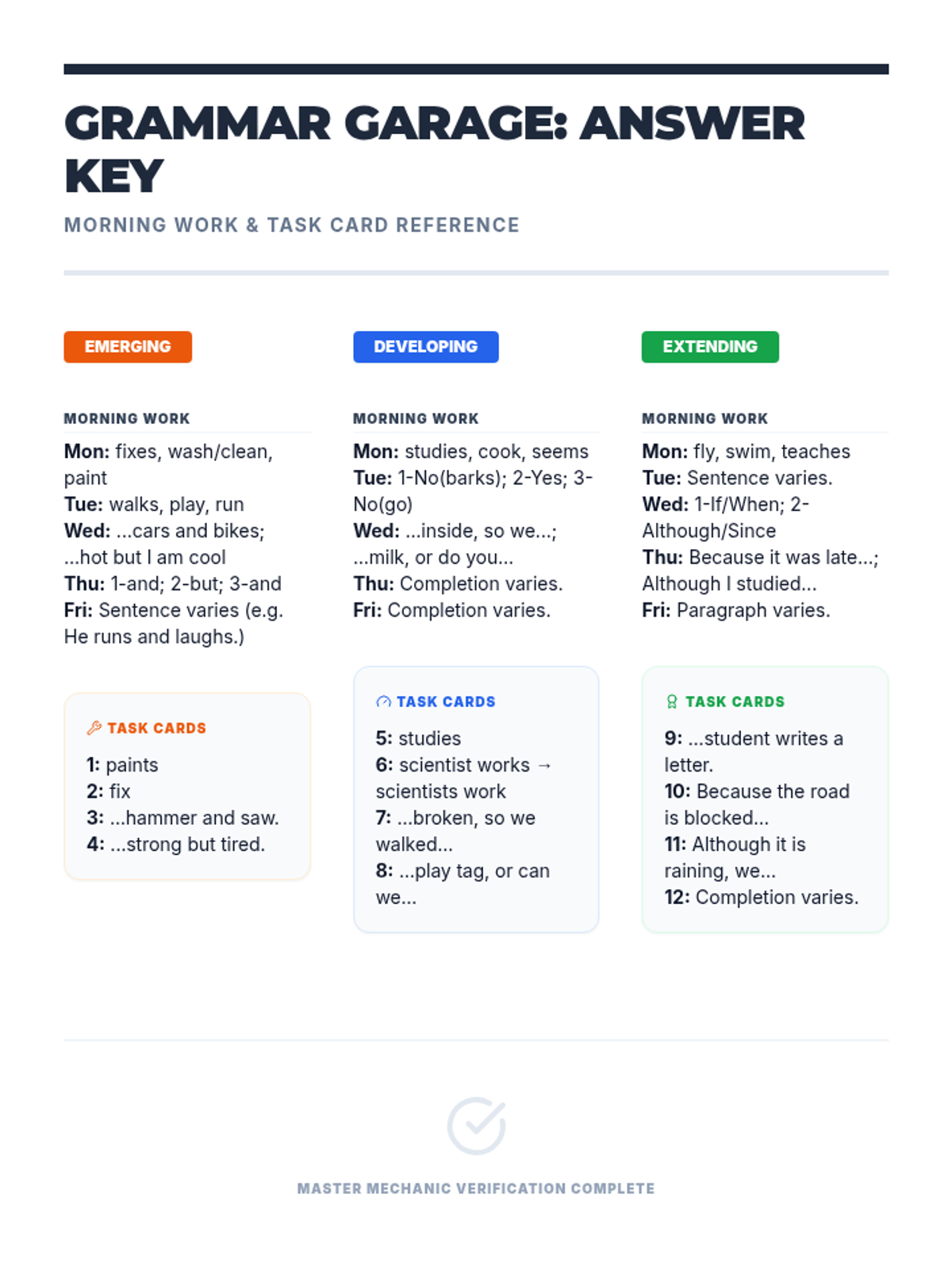
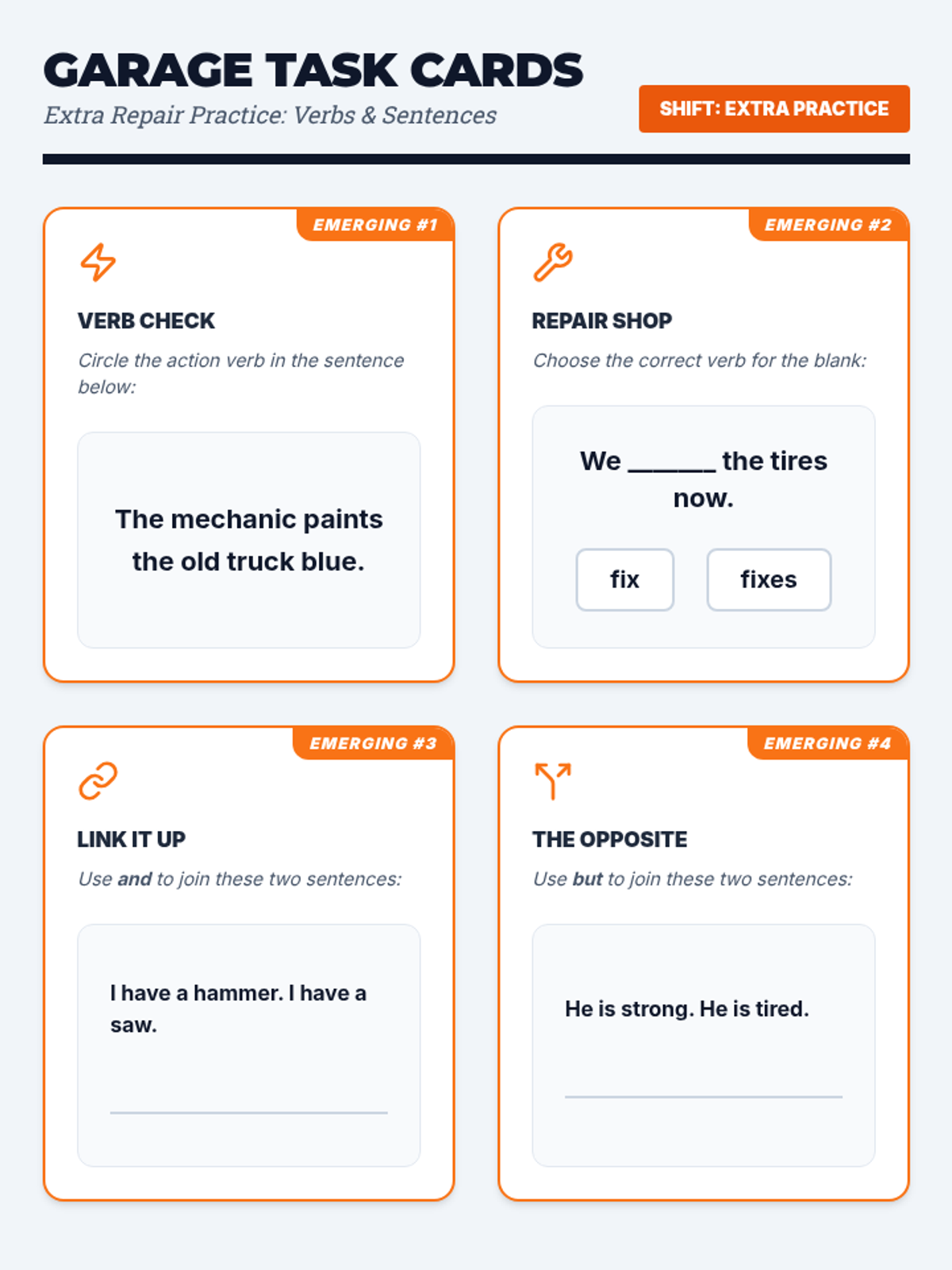
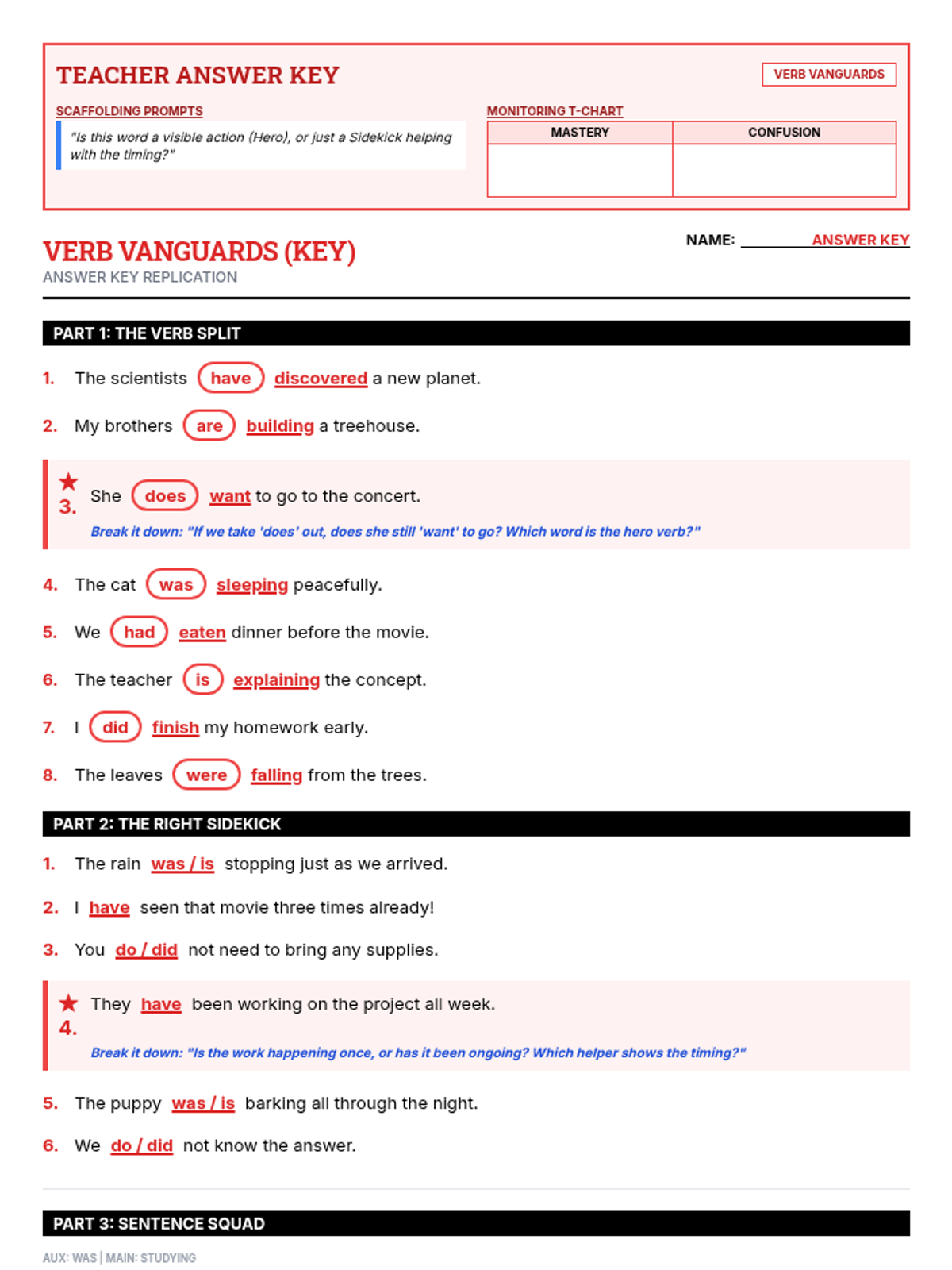
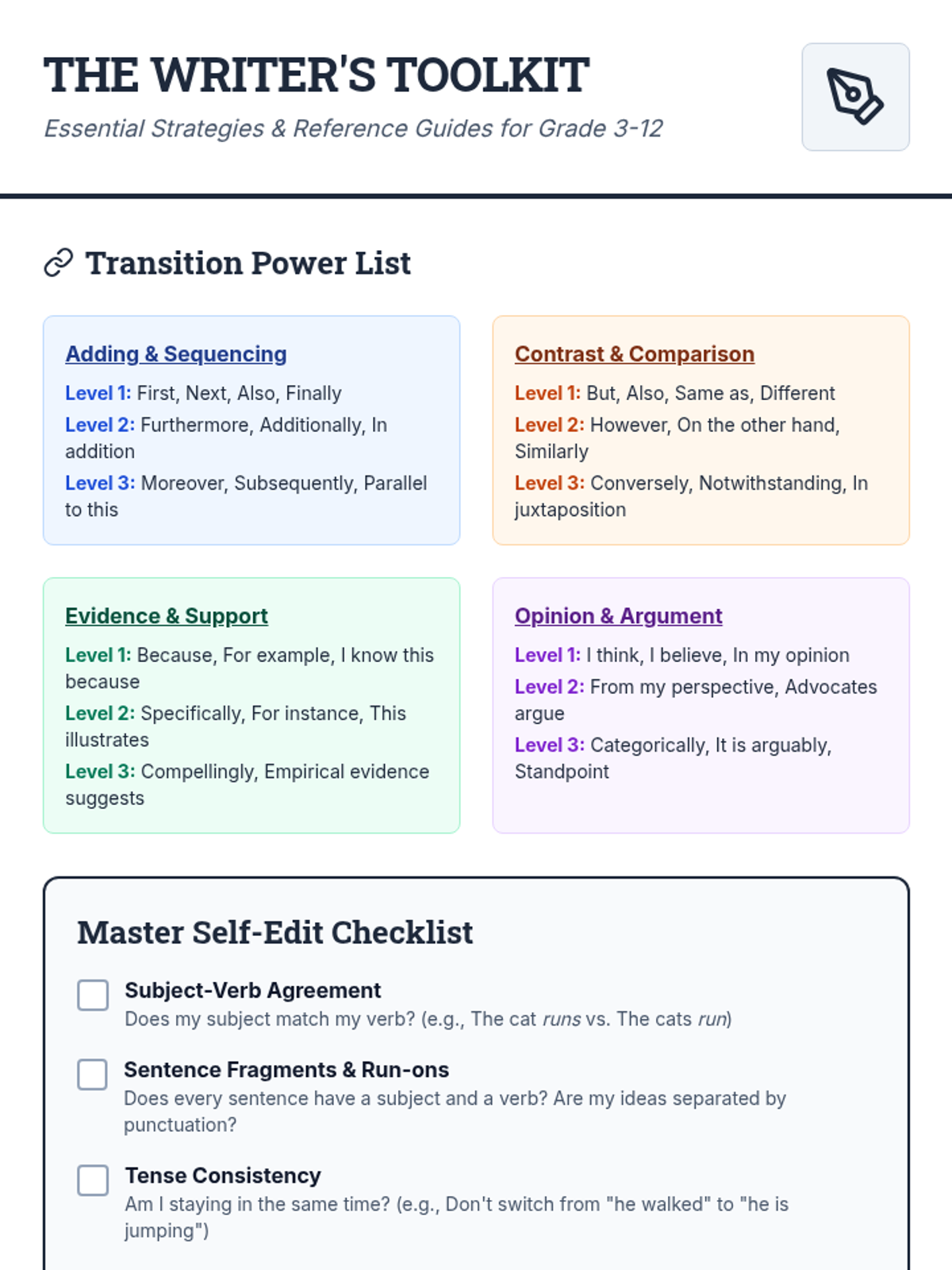
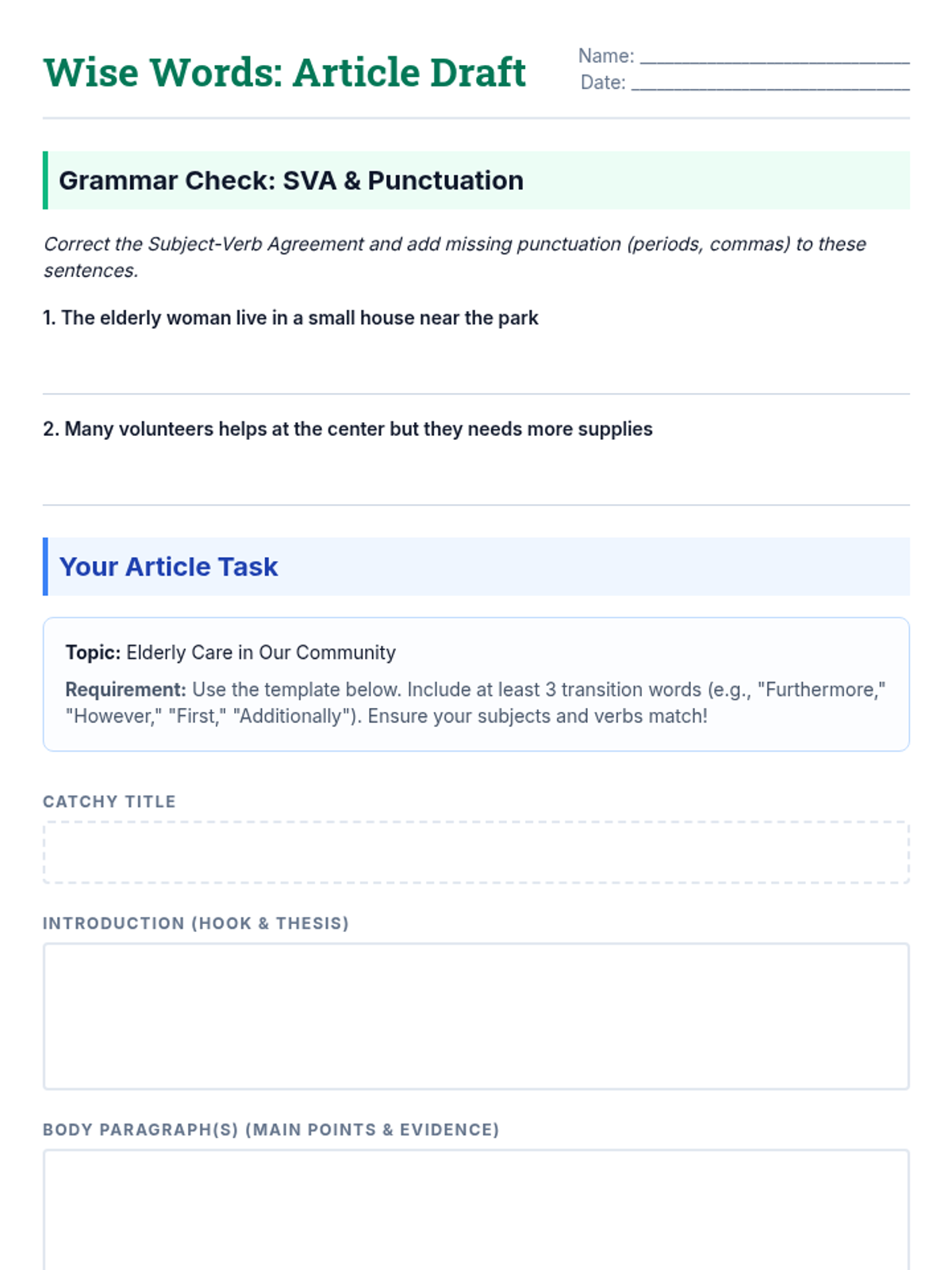
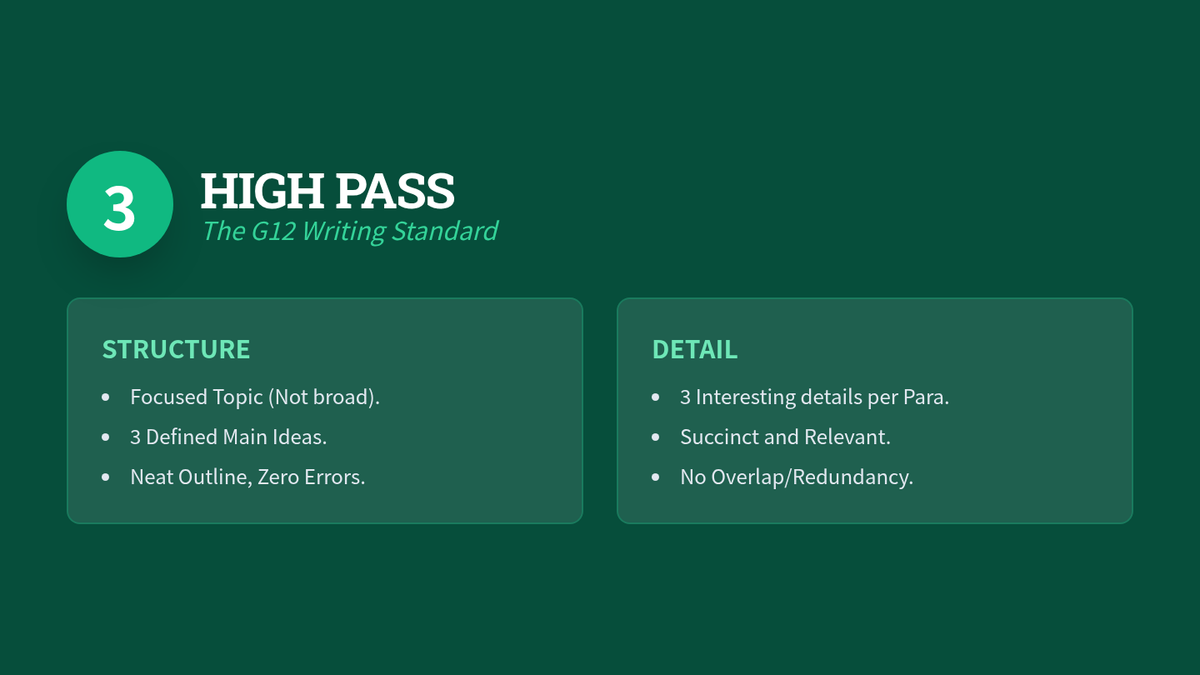
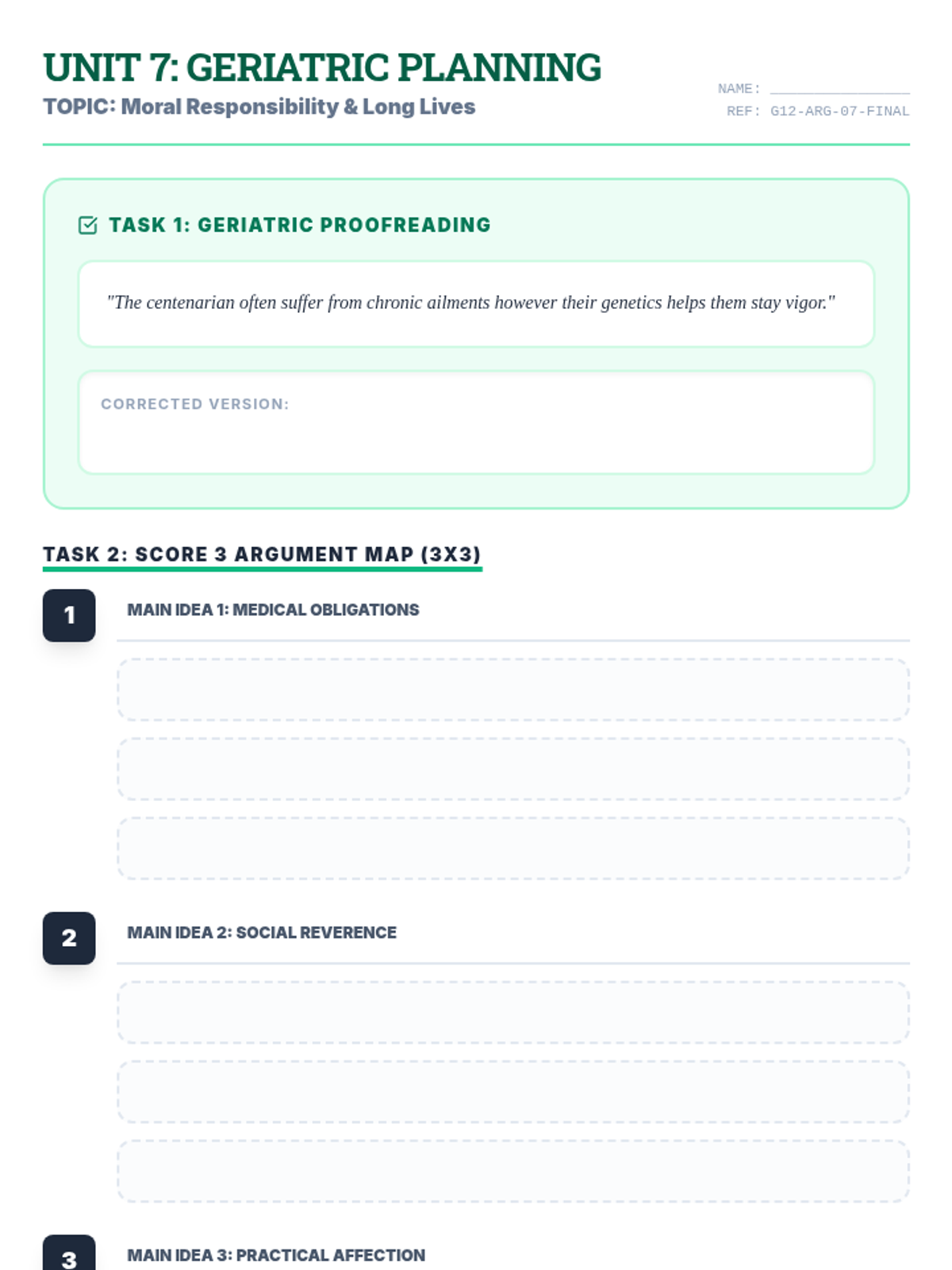
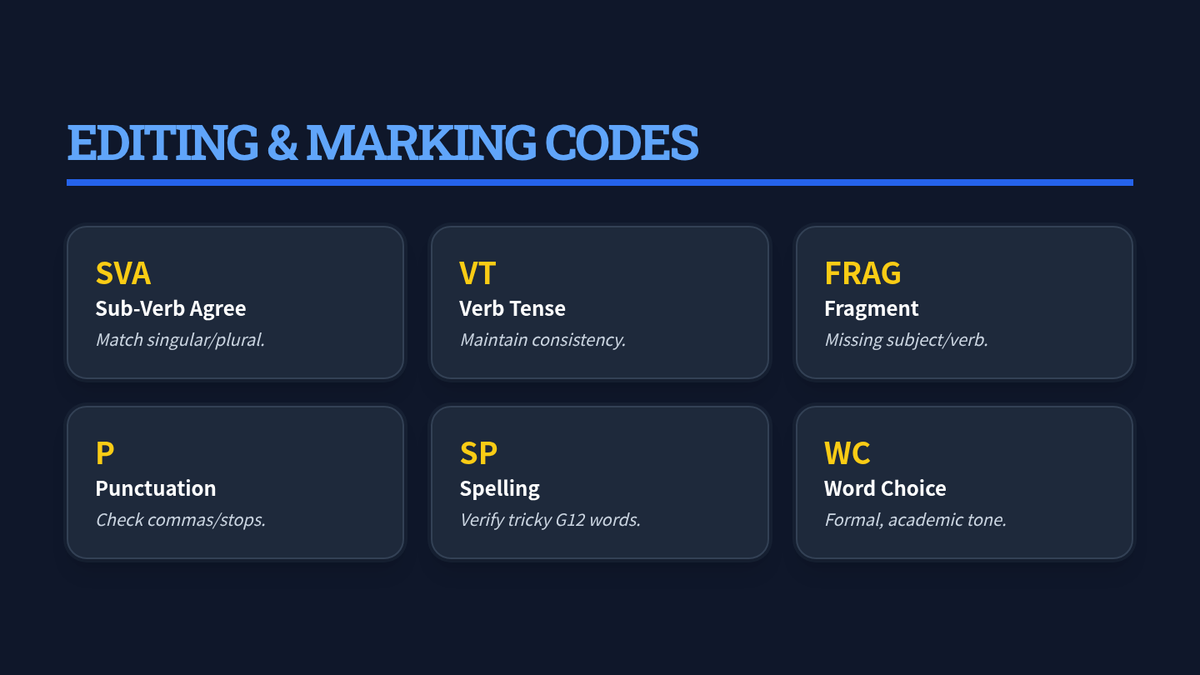
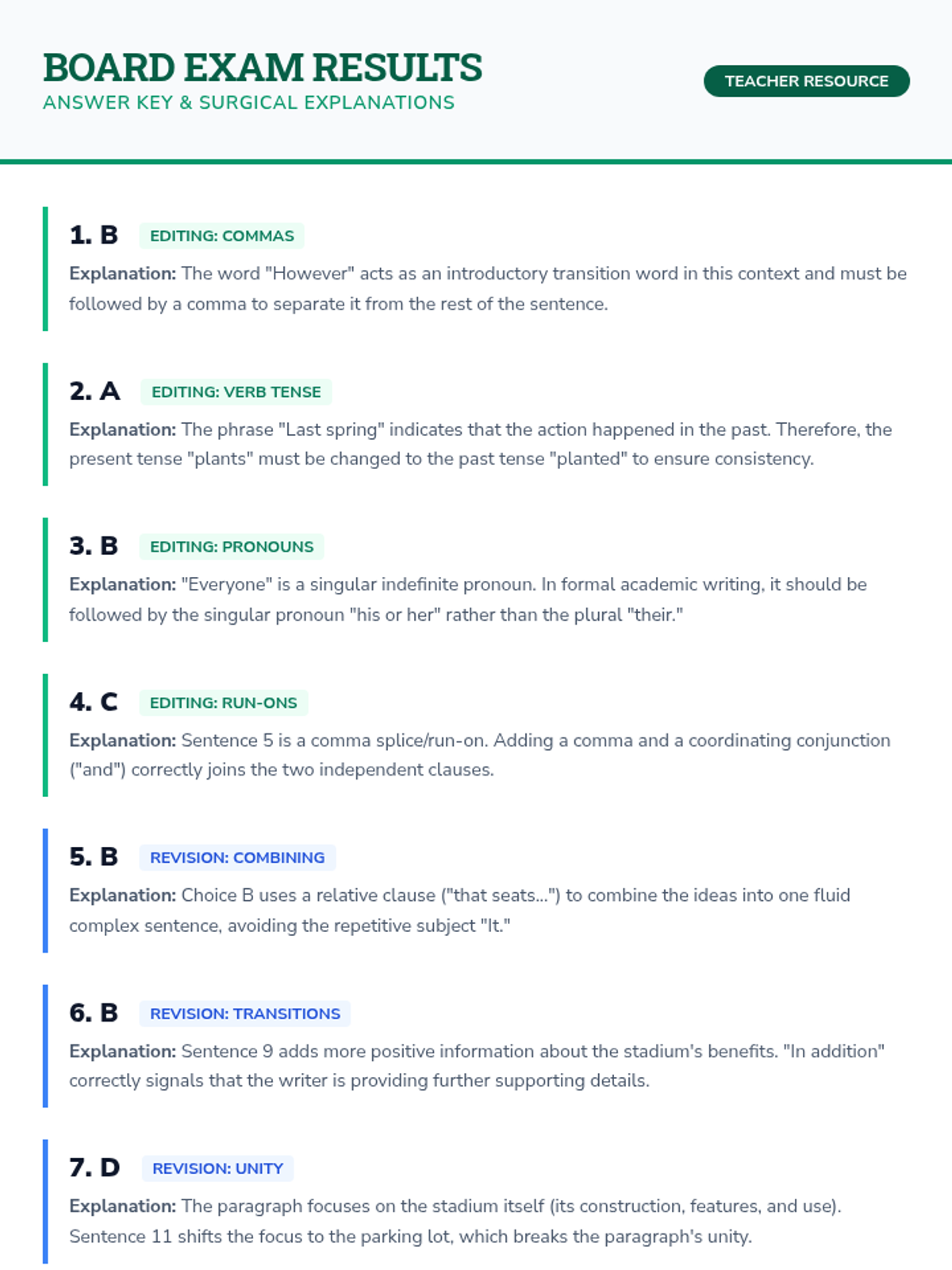
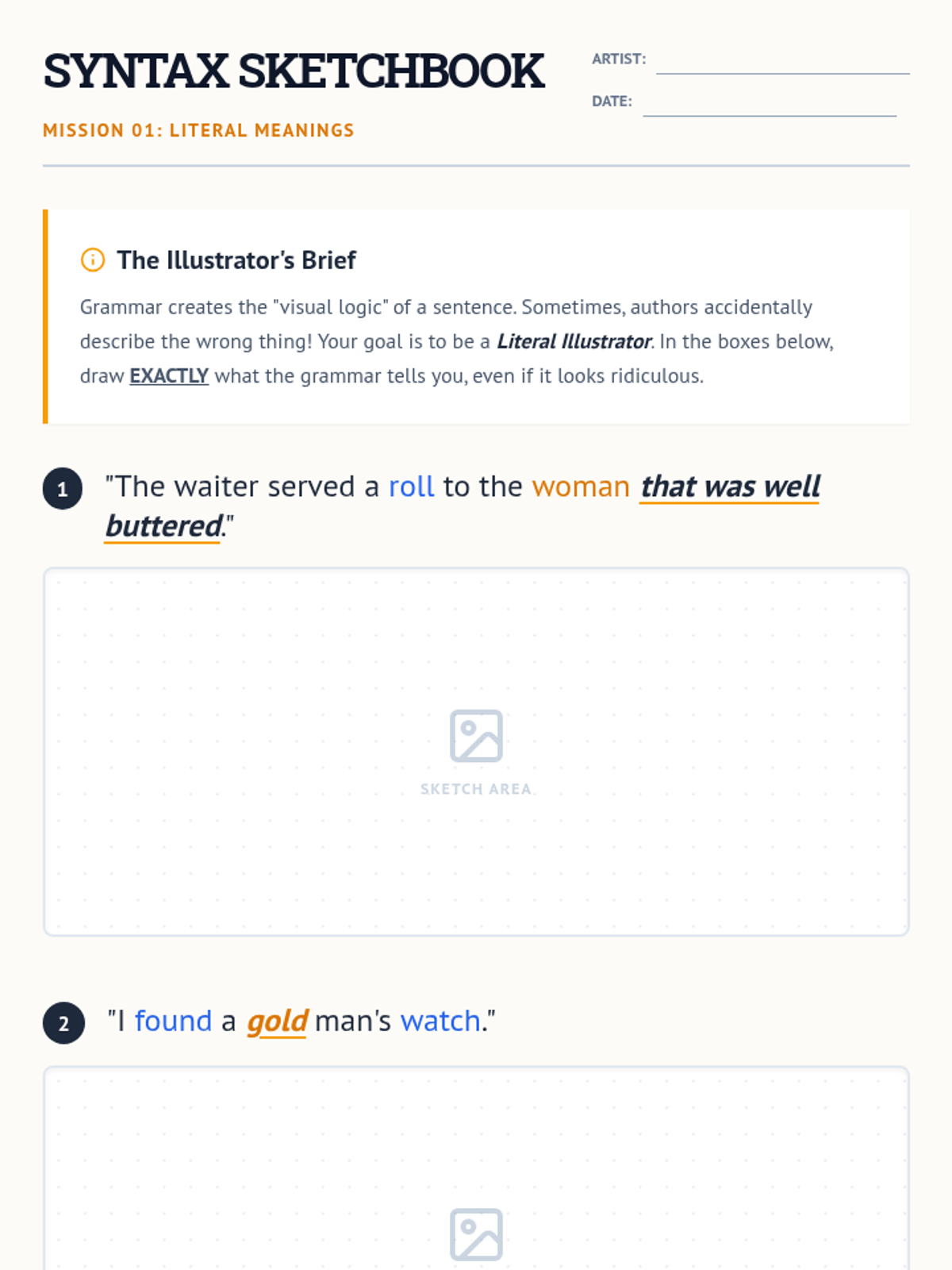
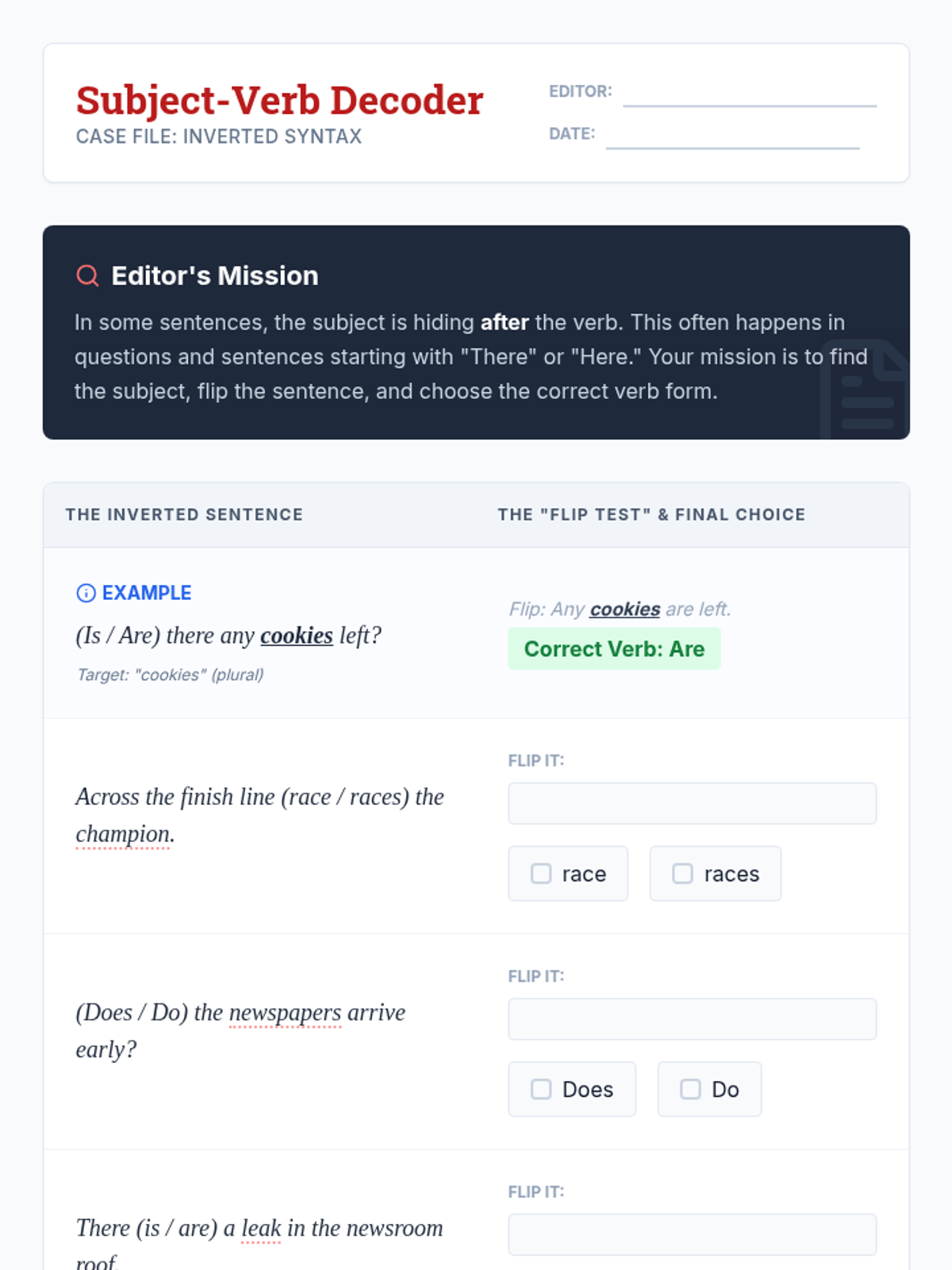
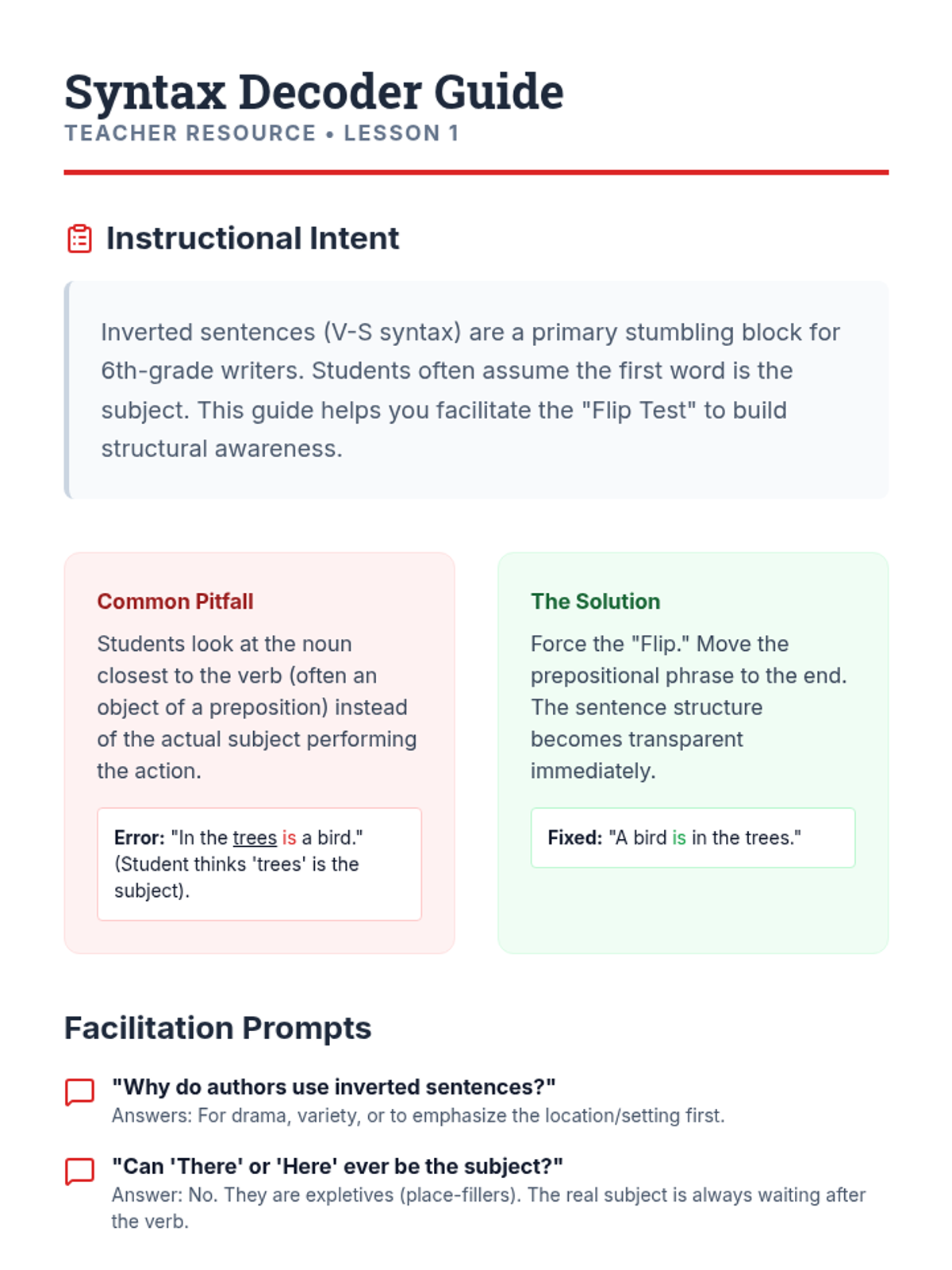
Sentence structure fundamentals, subject-verb agreement, and precise usage of parts of speech including pronouns, conjunctions, and adjectives. Targets technical accuracy through mastery of capitalization, punctuation, spelling, and verb mood.
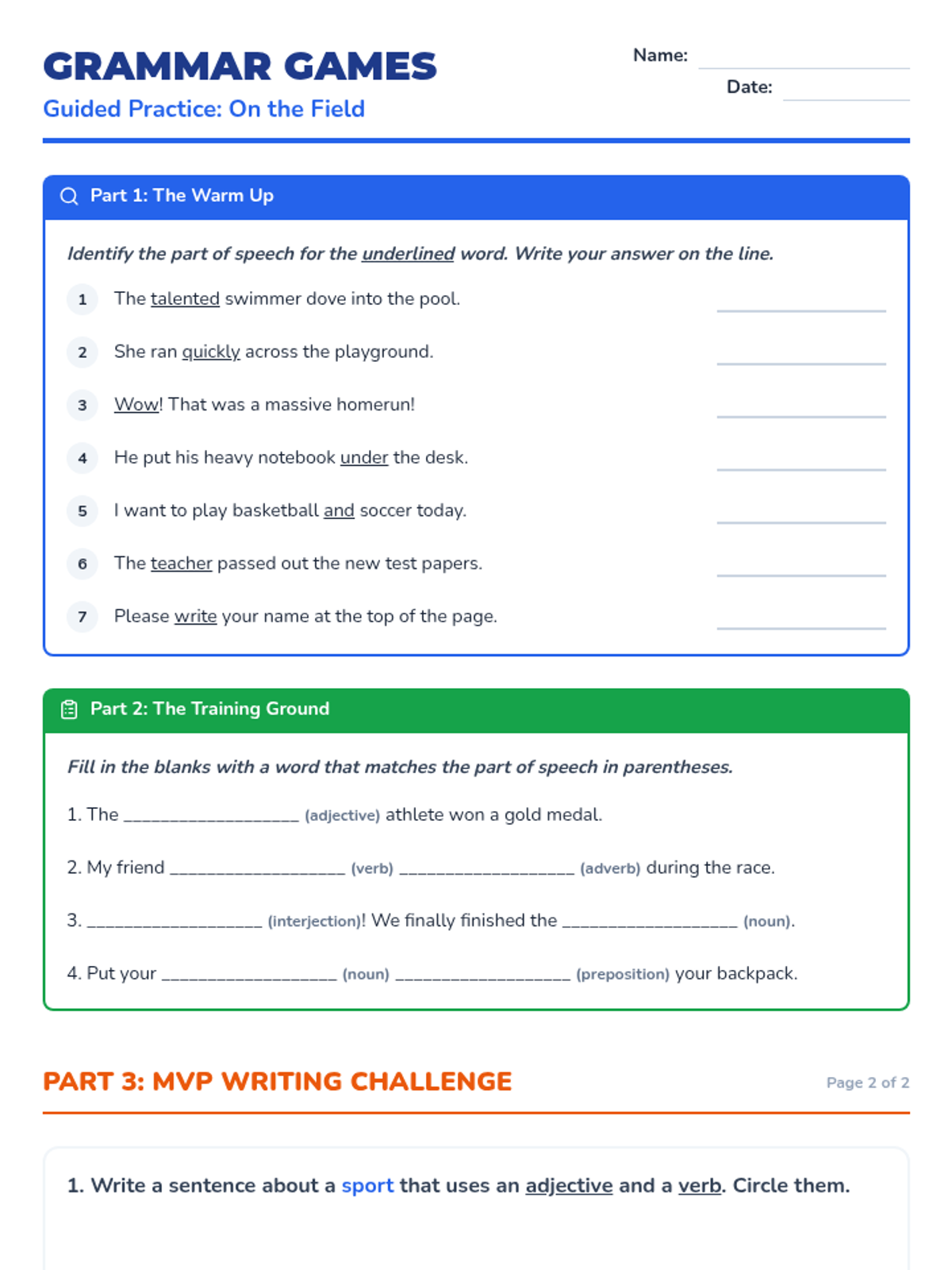
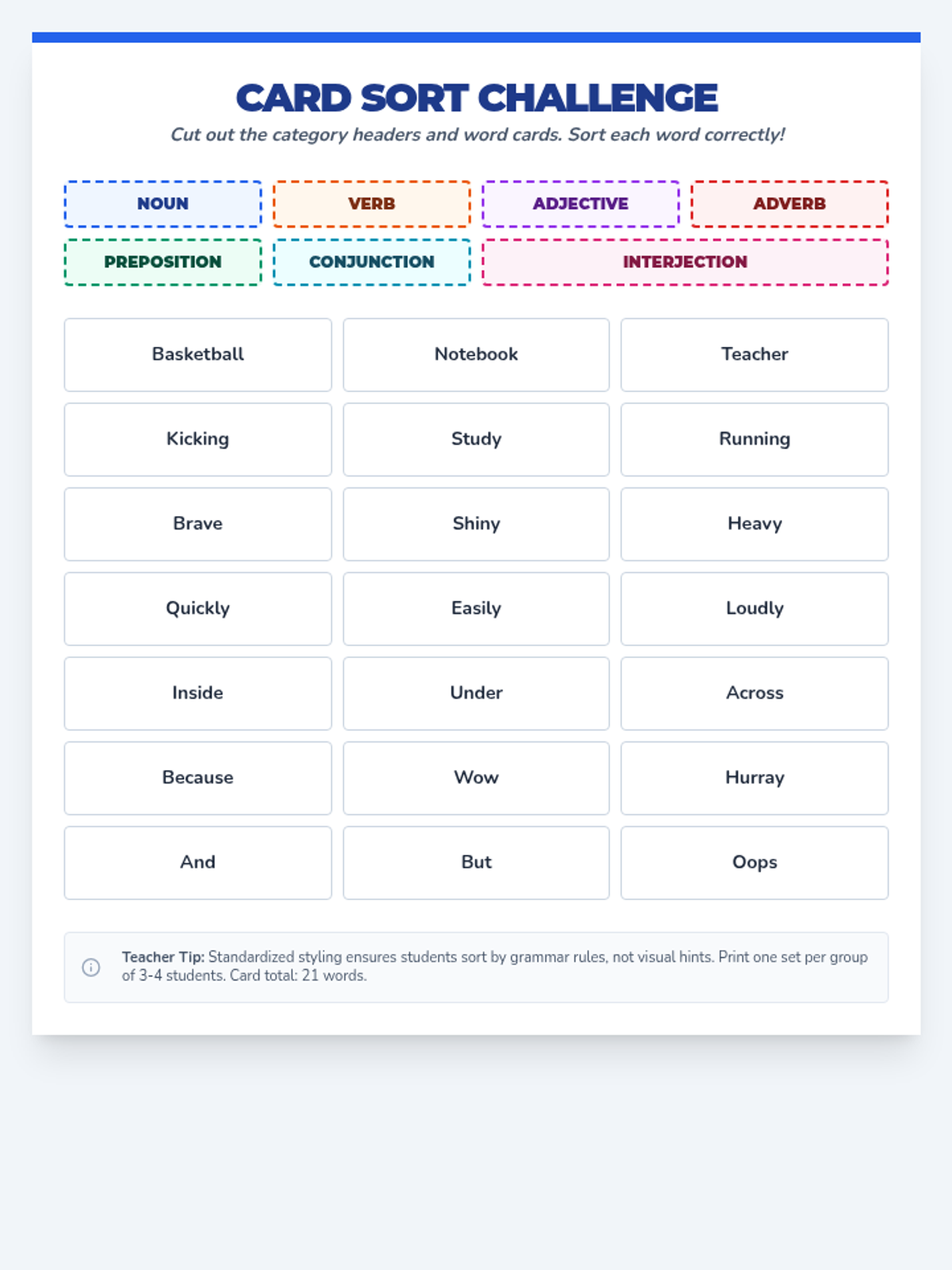
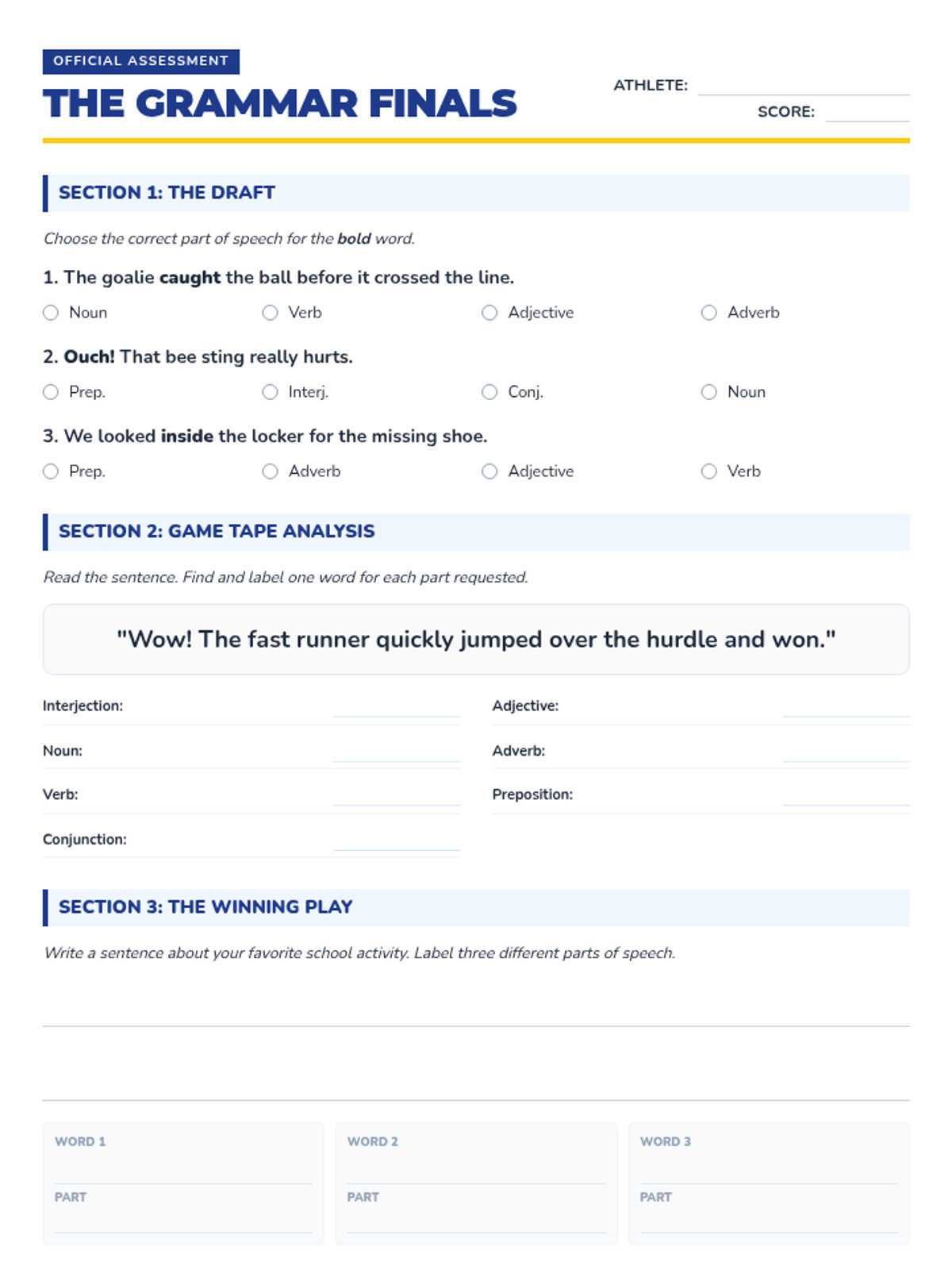
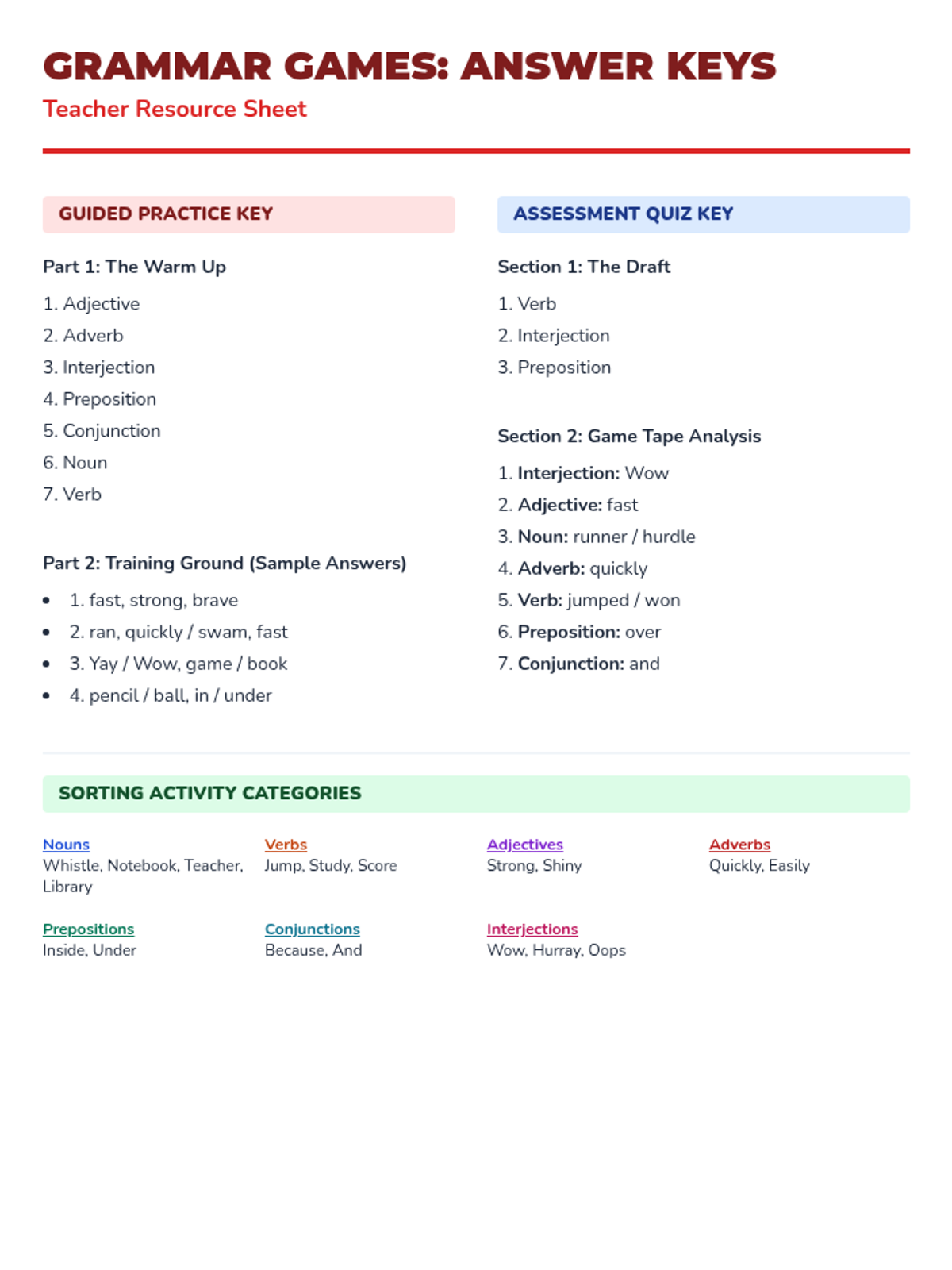
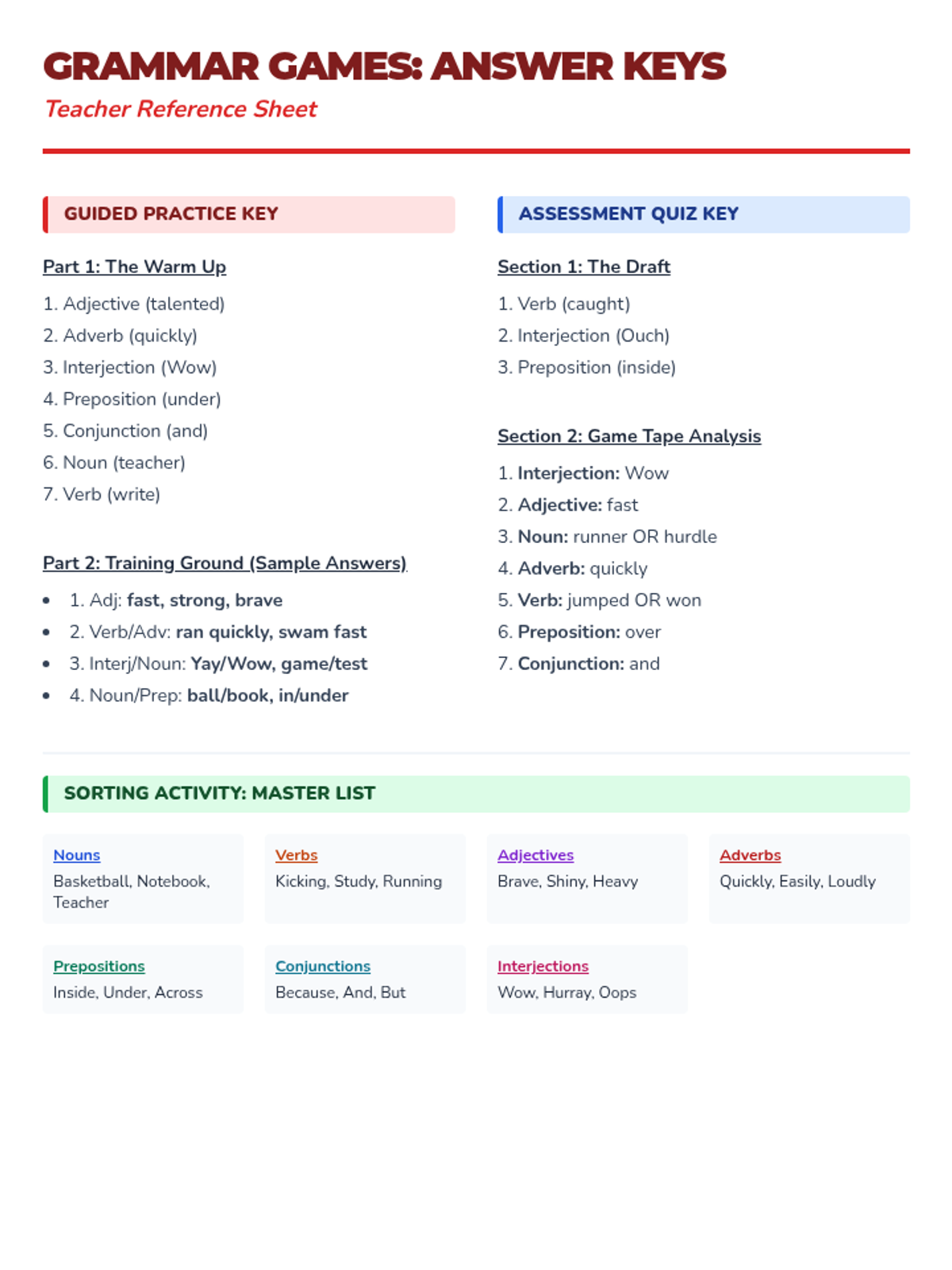
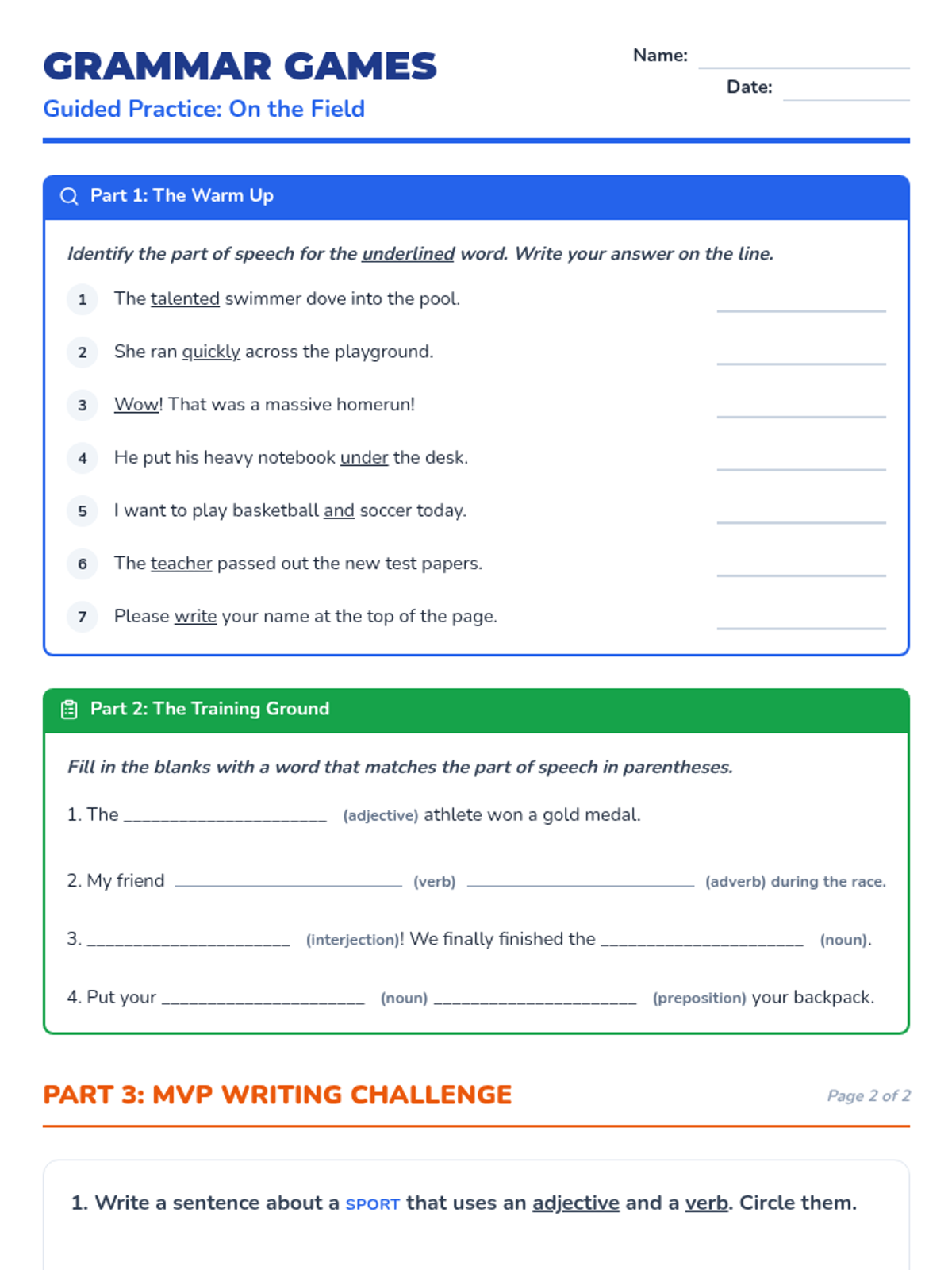
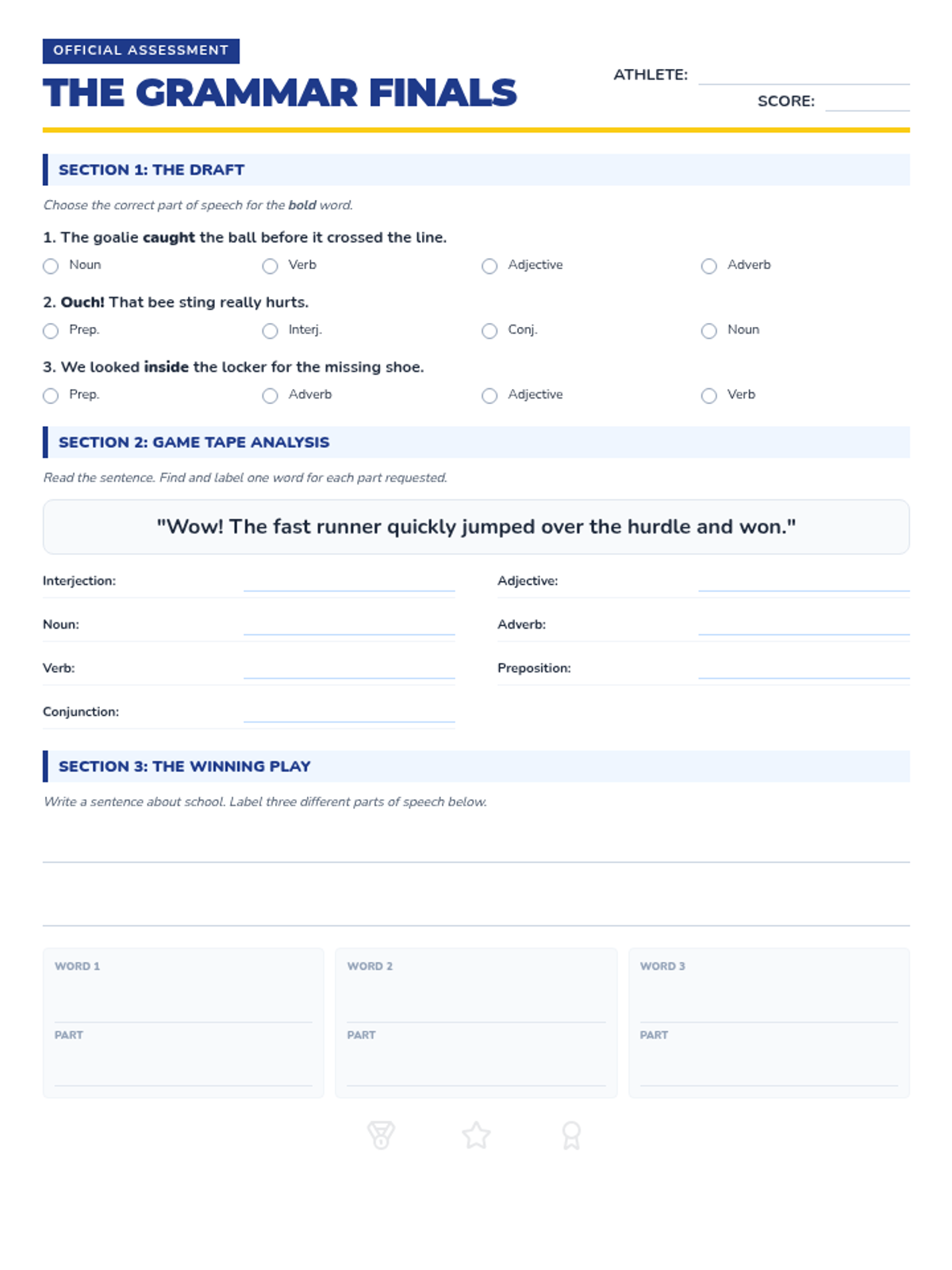
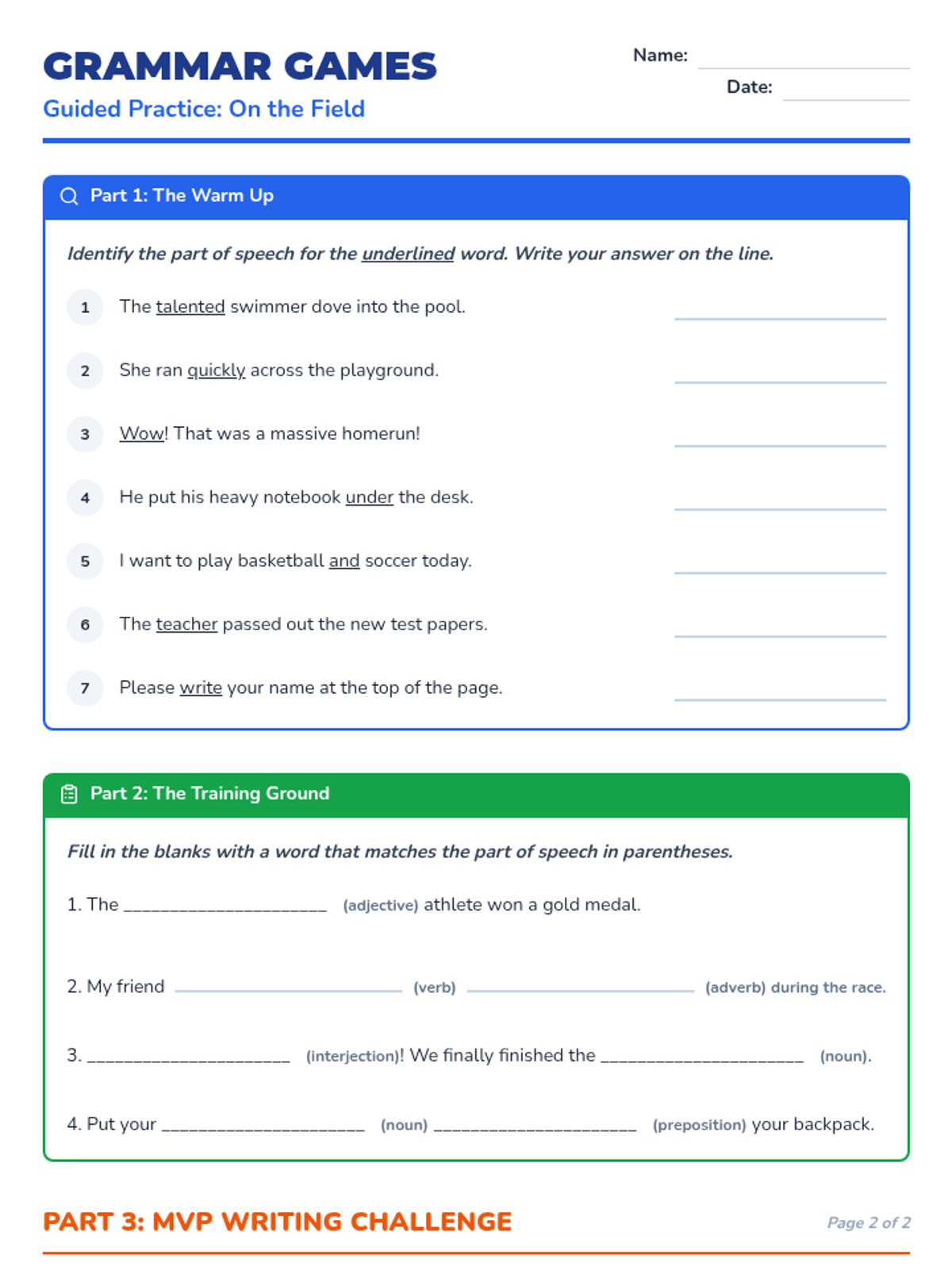
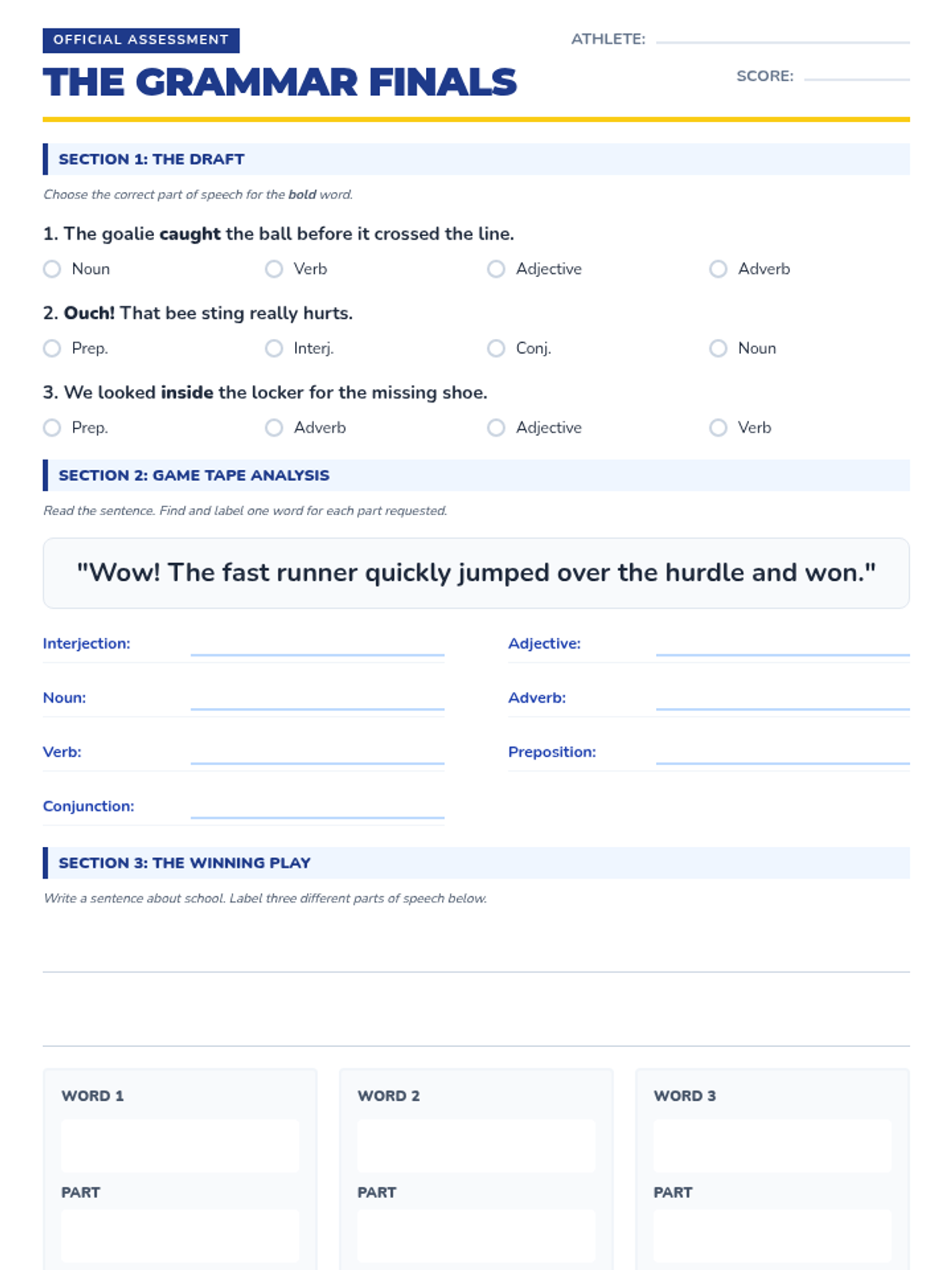
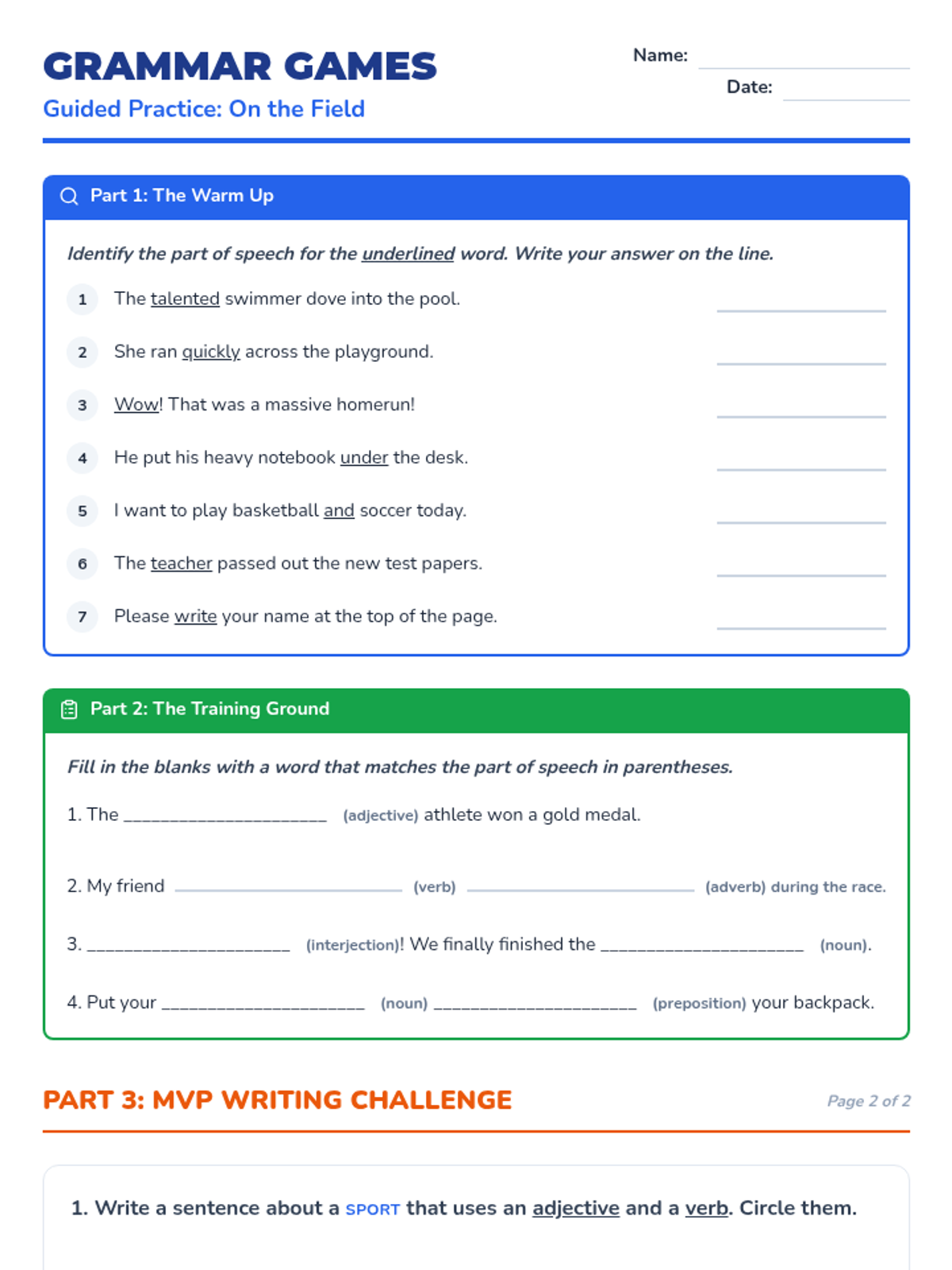
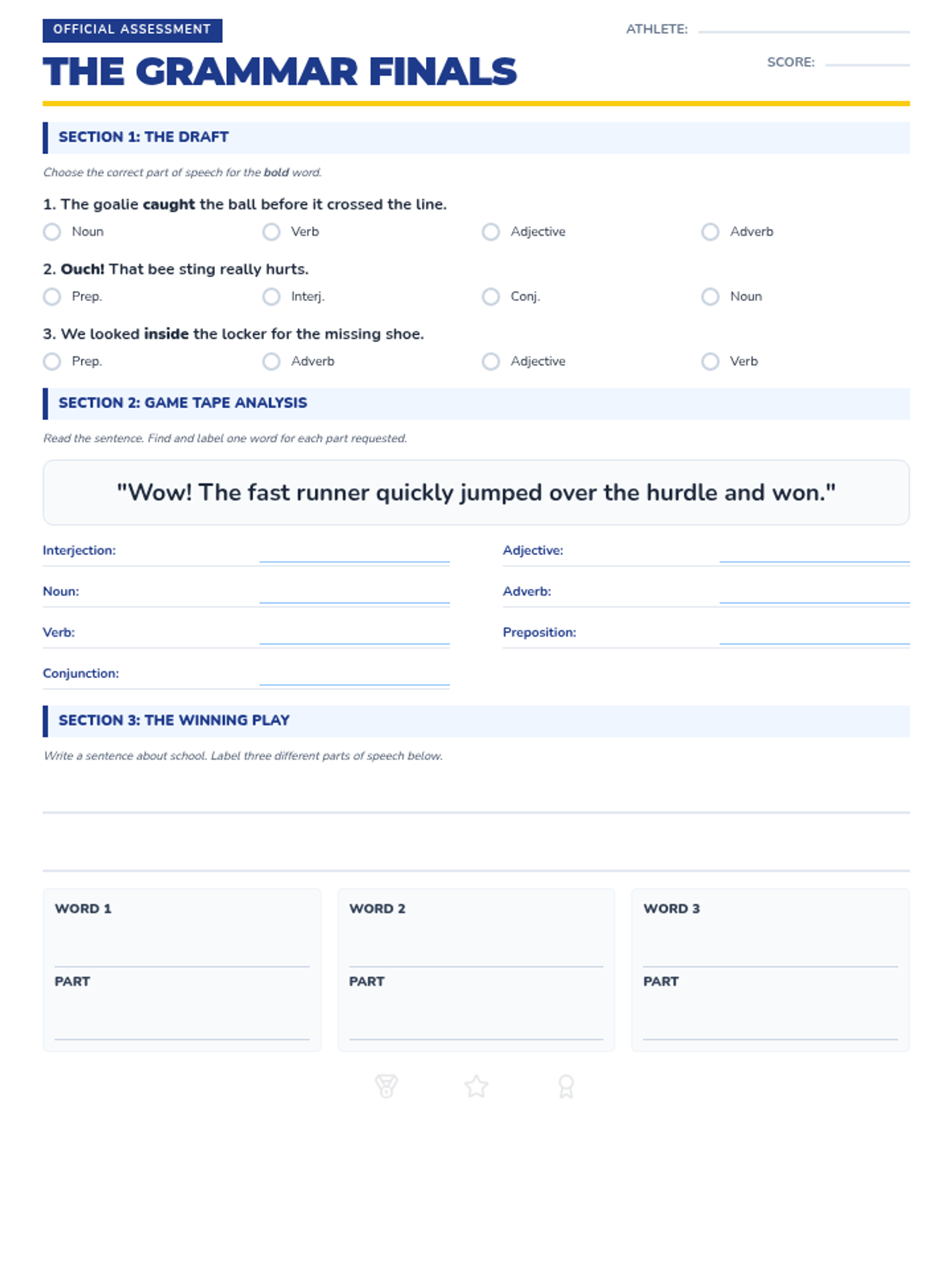
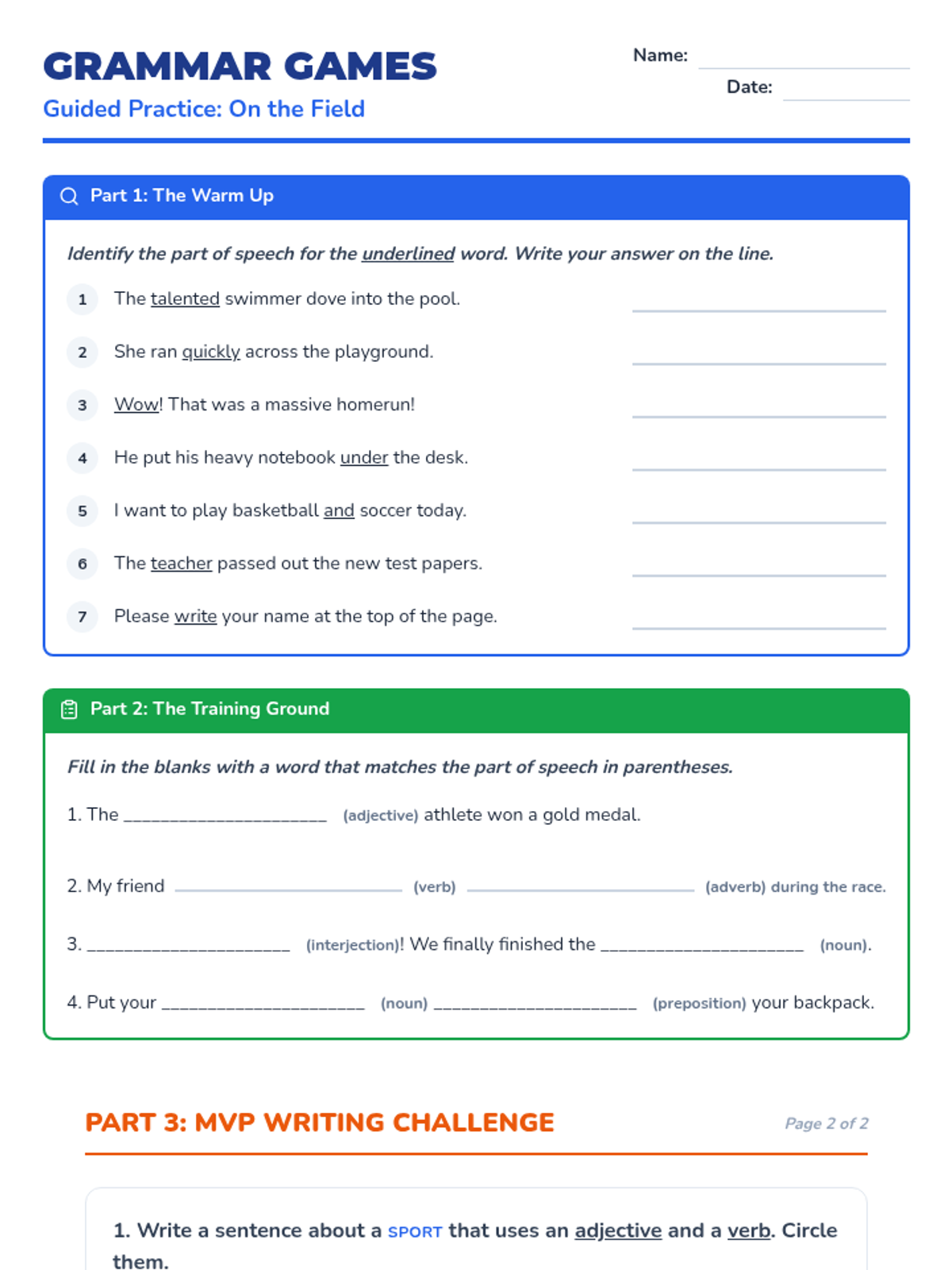
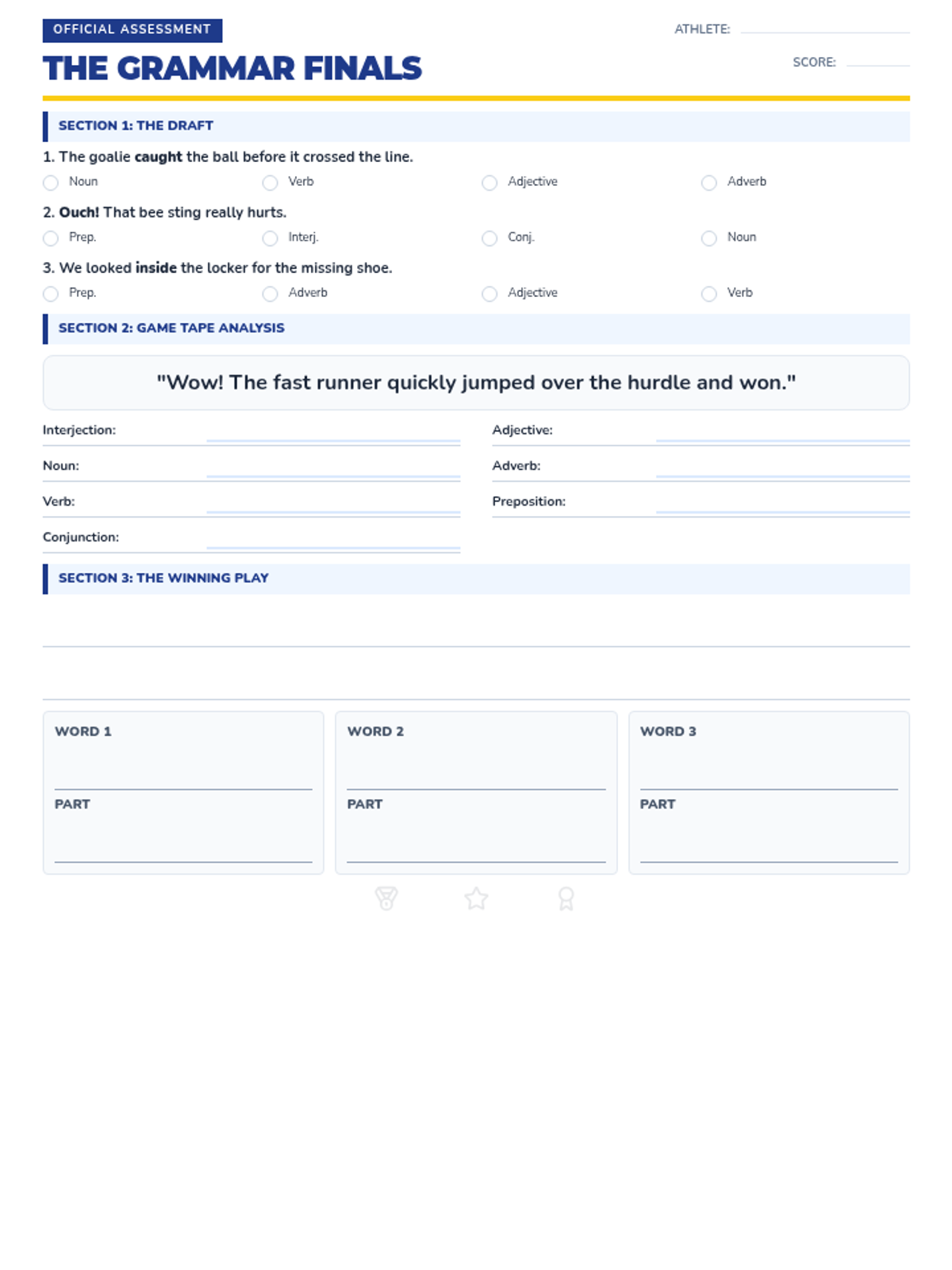
A comprehensive unit on identifying and using the seven primary parts of speech through the lens of sports, hobbies, and school life. Students progress from basic identification to complex sentence construction.
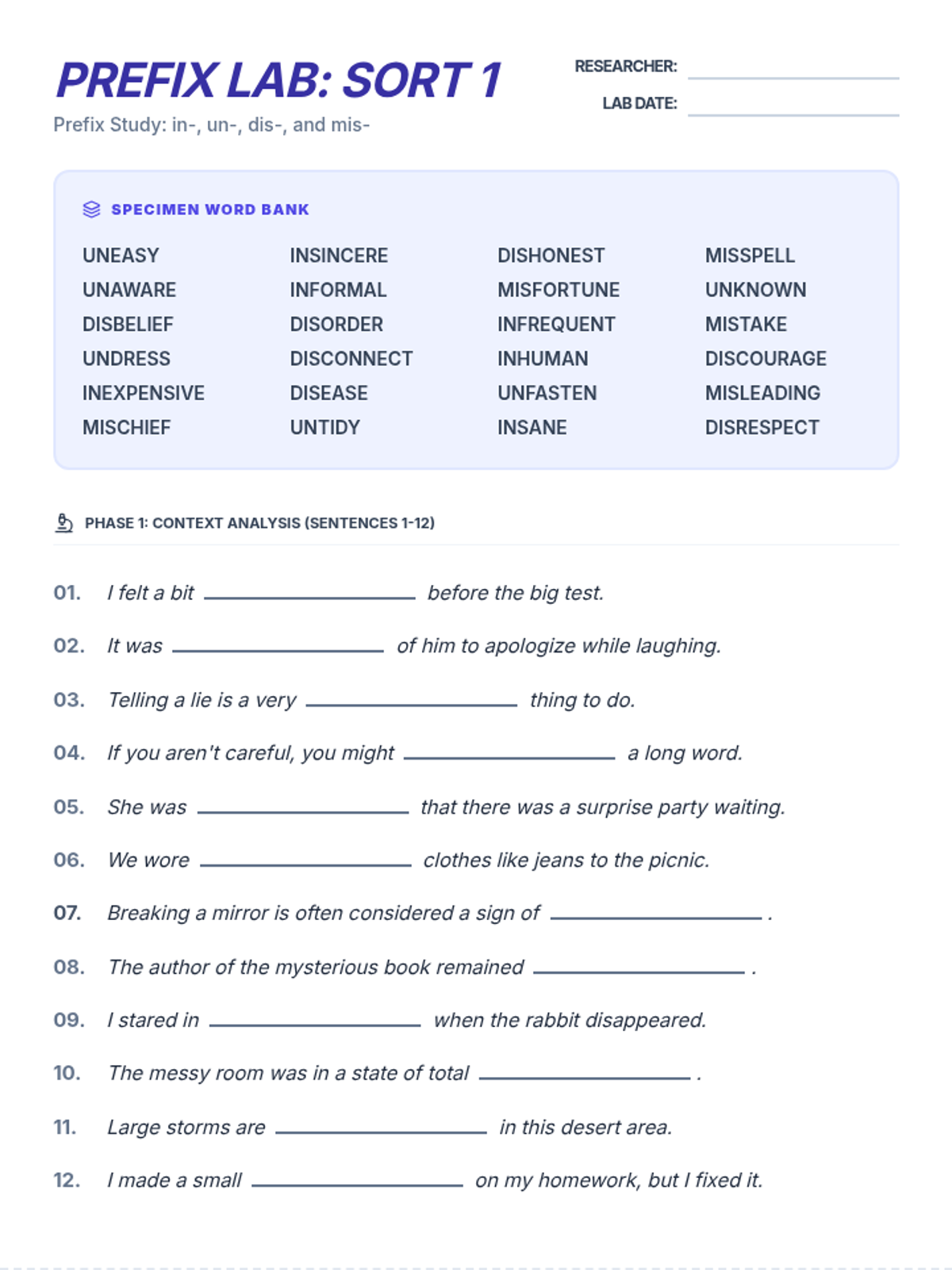
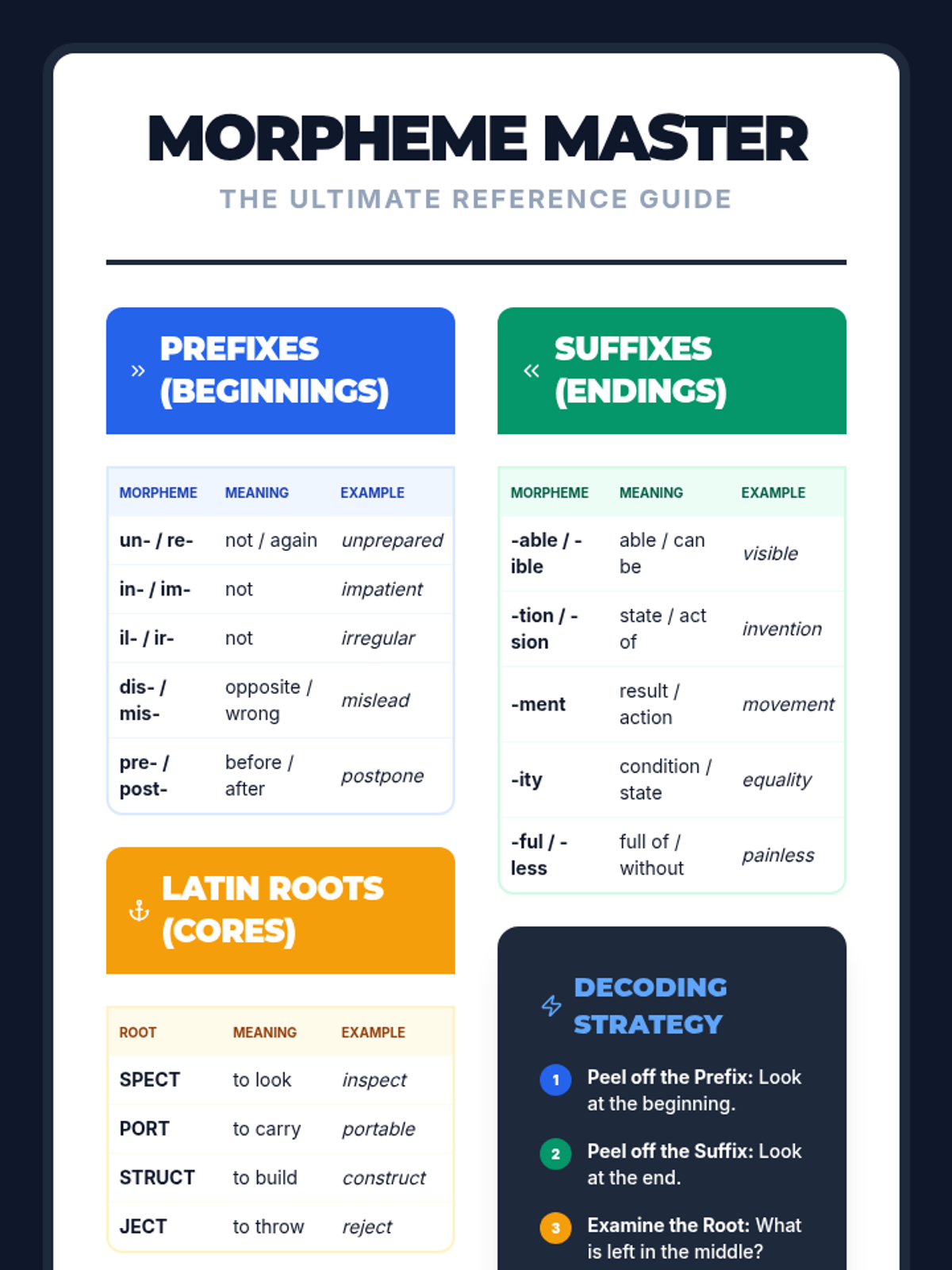
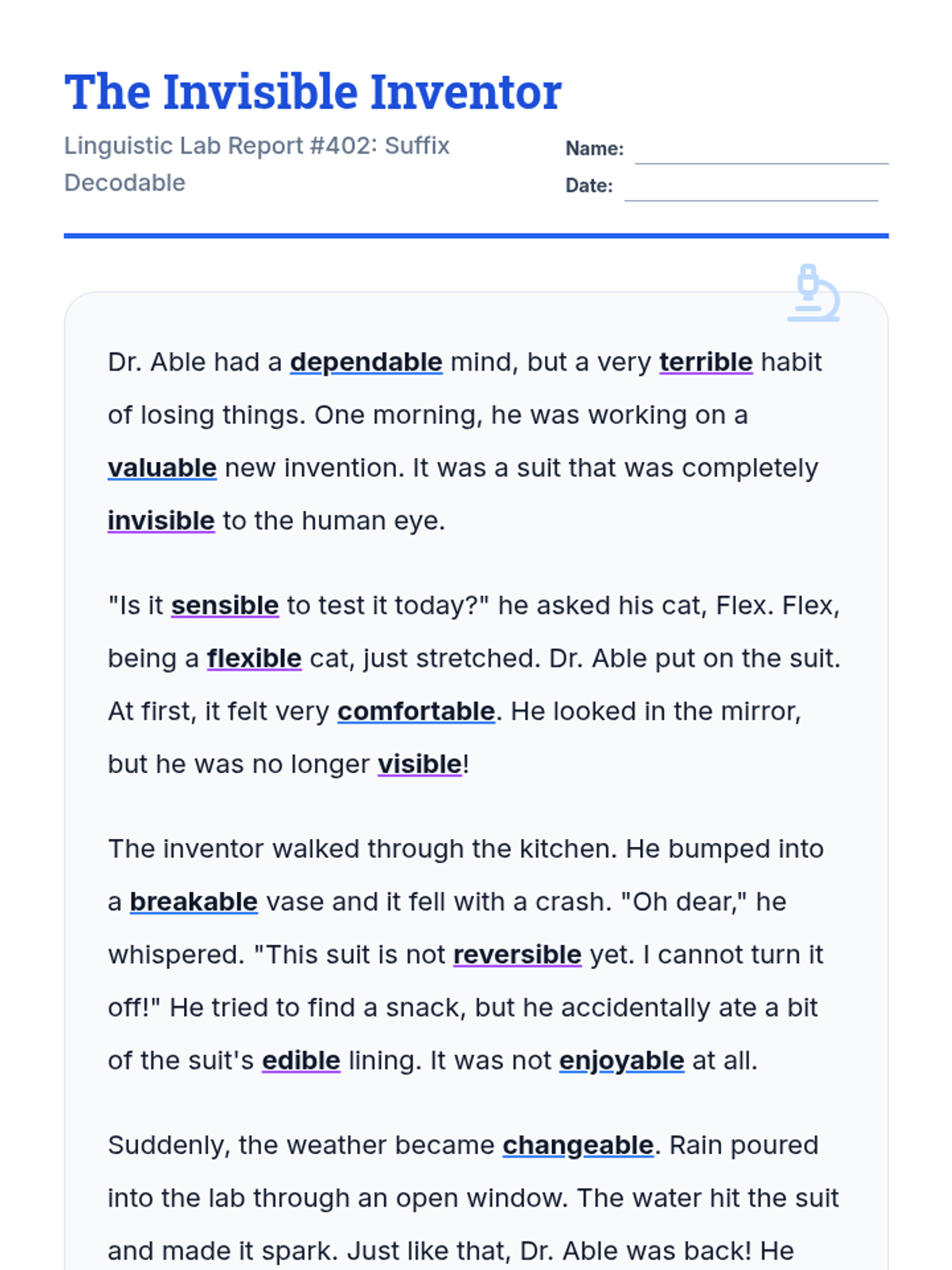
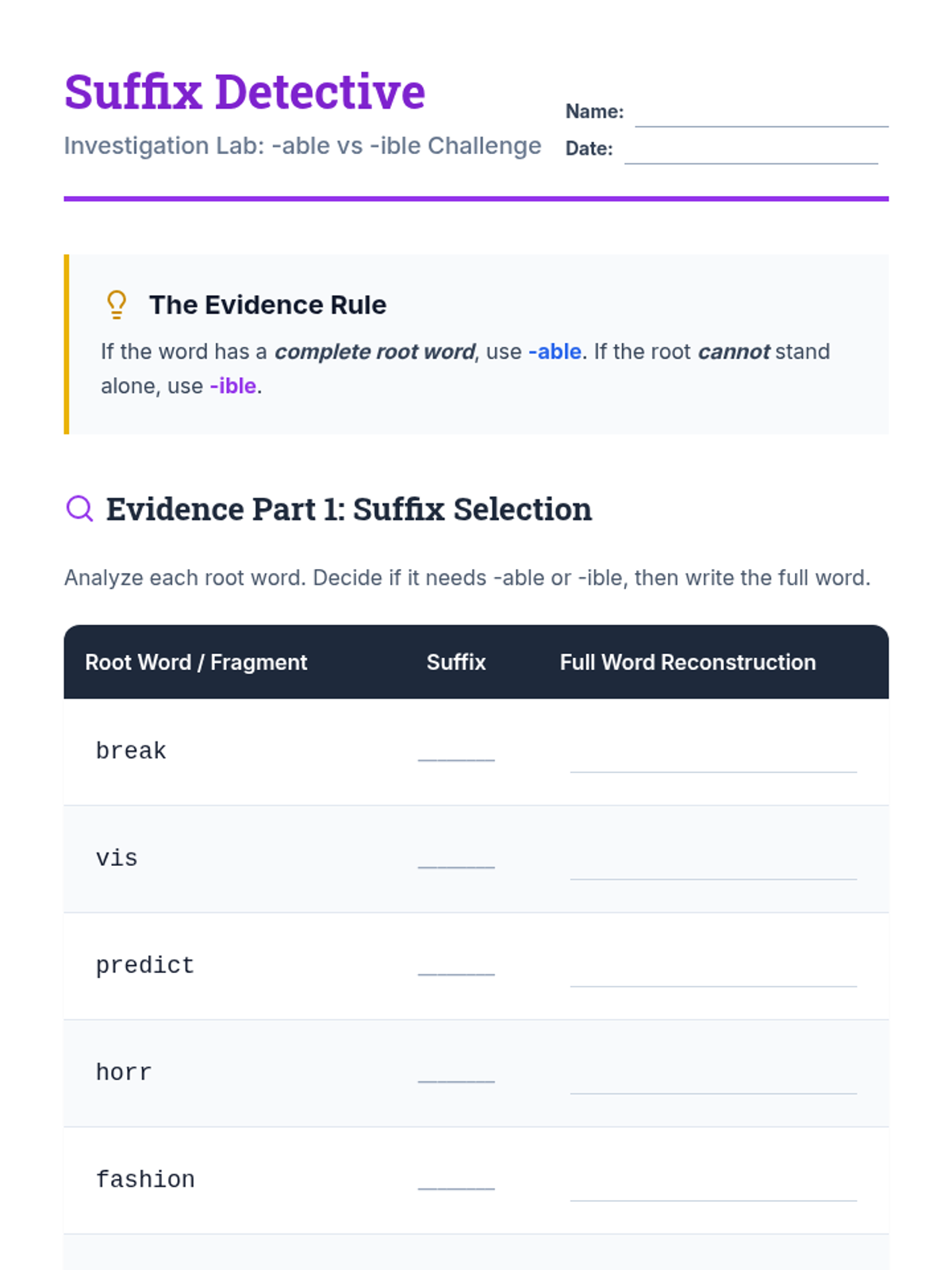
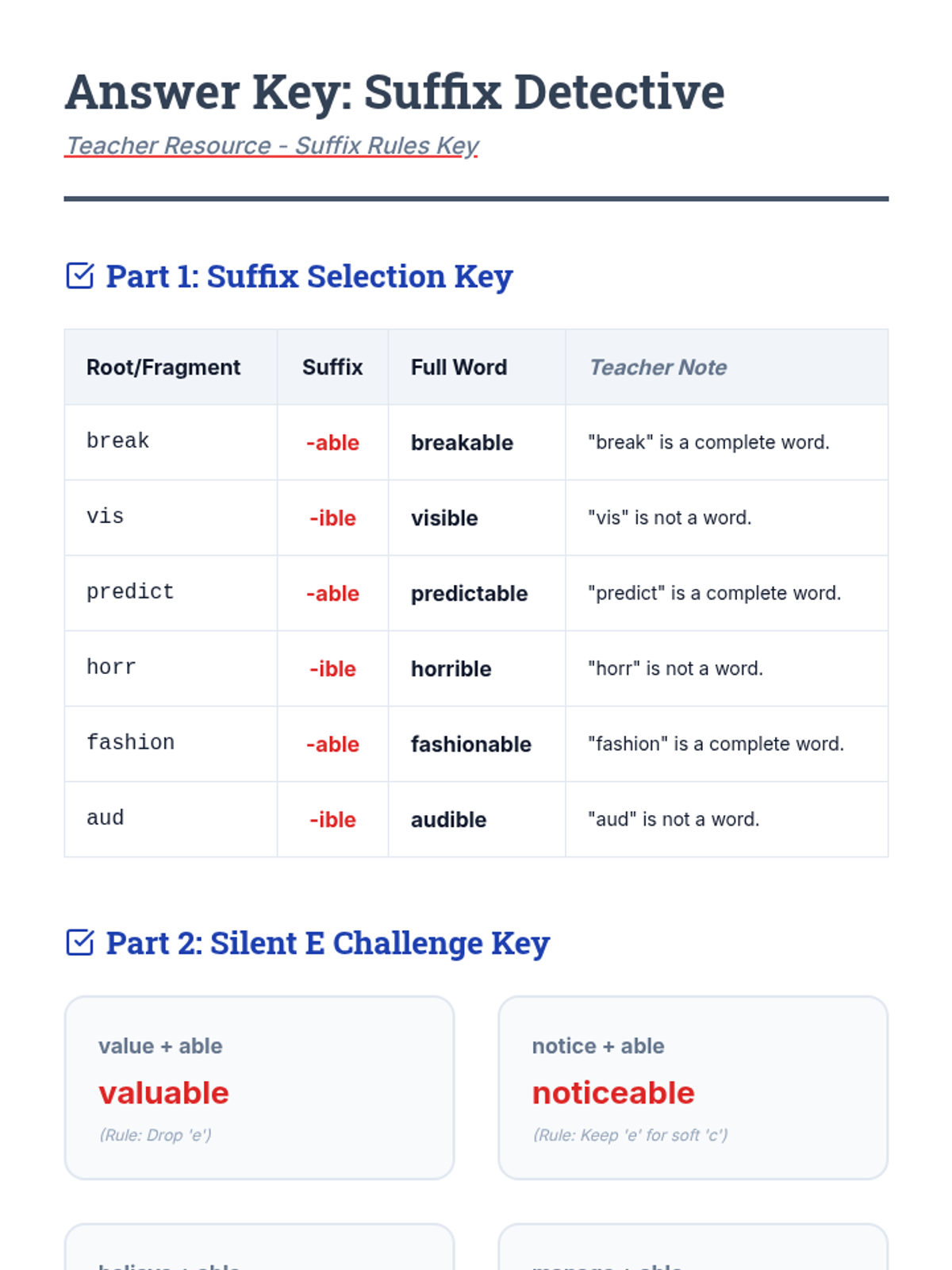
A series of prefix-focused labs designed to help students master common prefixes and suffixes through contextual application and logic puzzles.
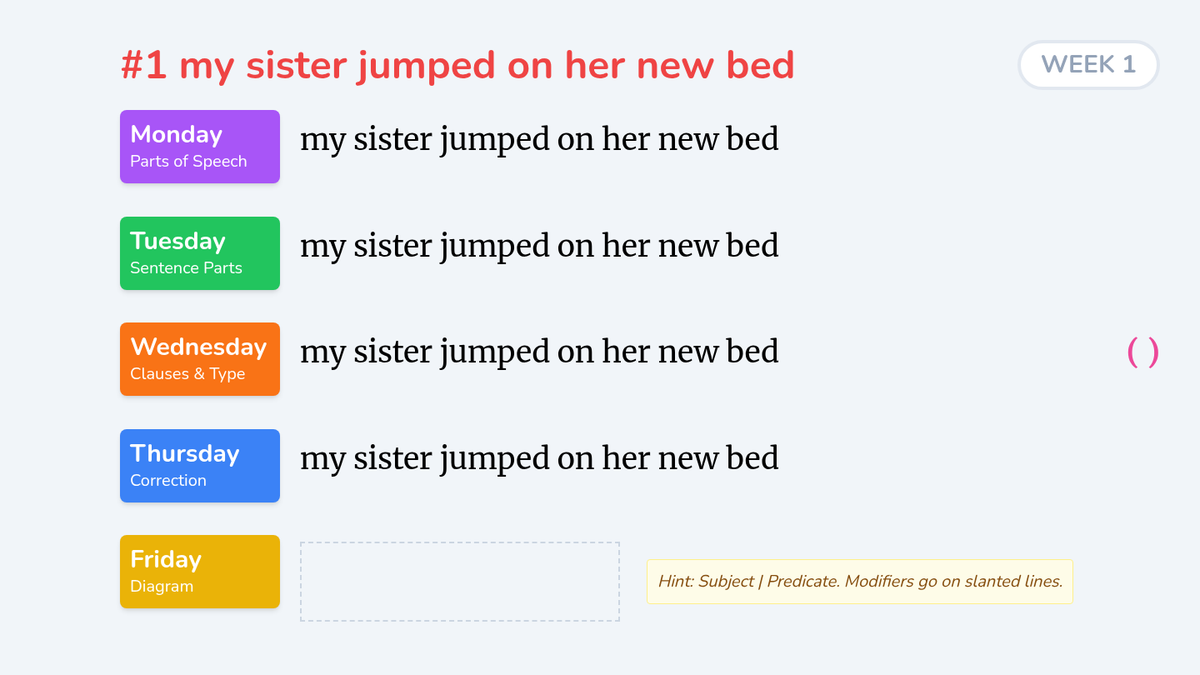
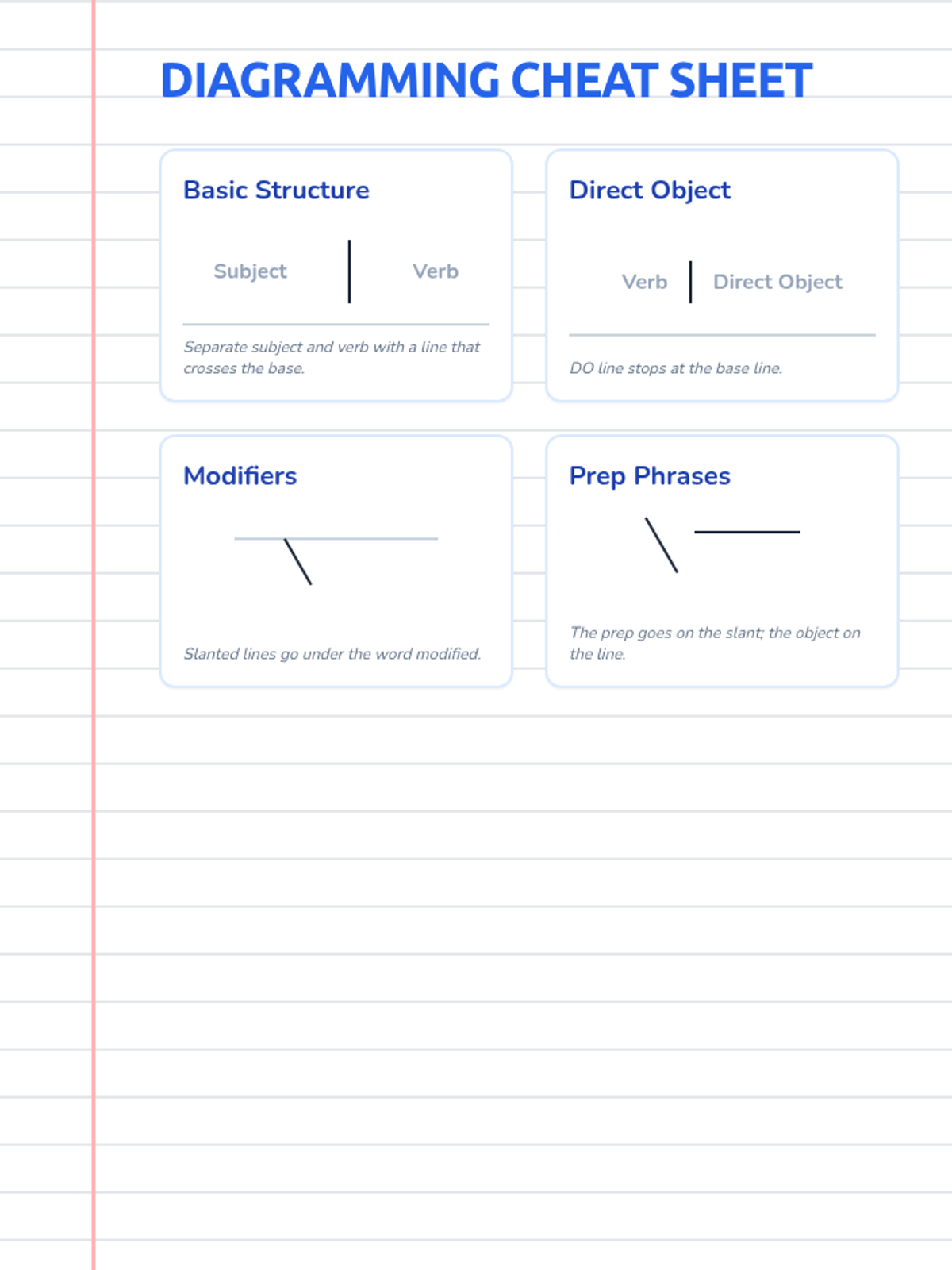
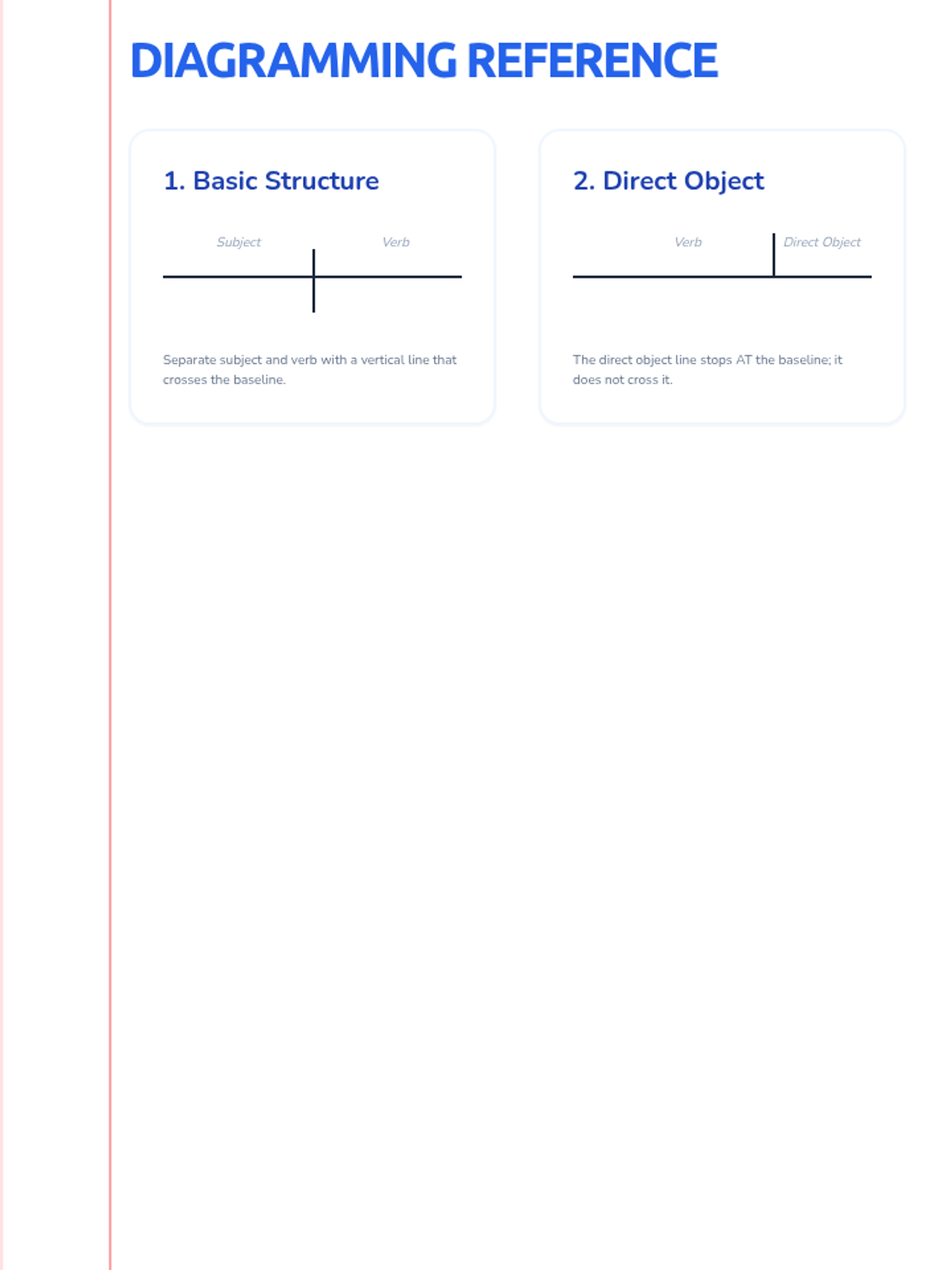
A comprehensive first semester of daily grammar practice focusing on sentence analysis, parts of speech, and diagramming.
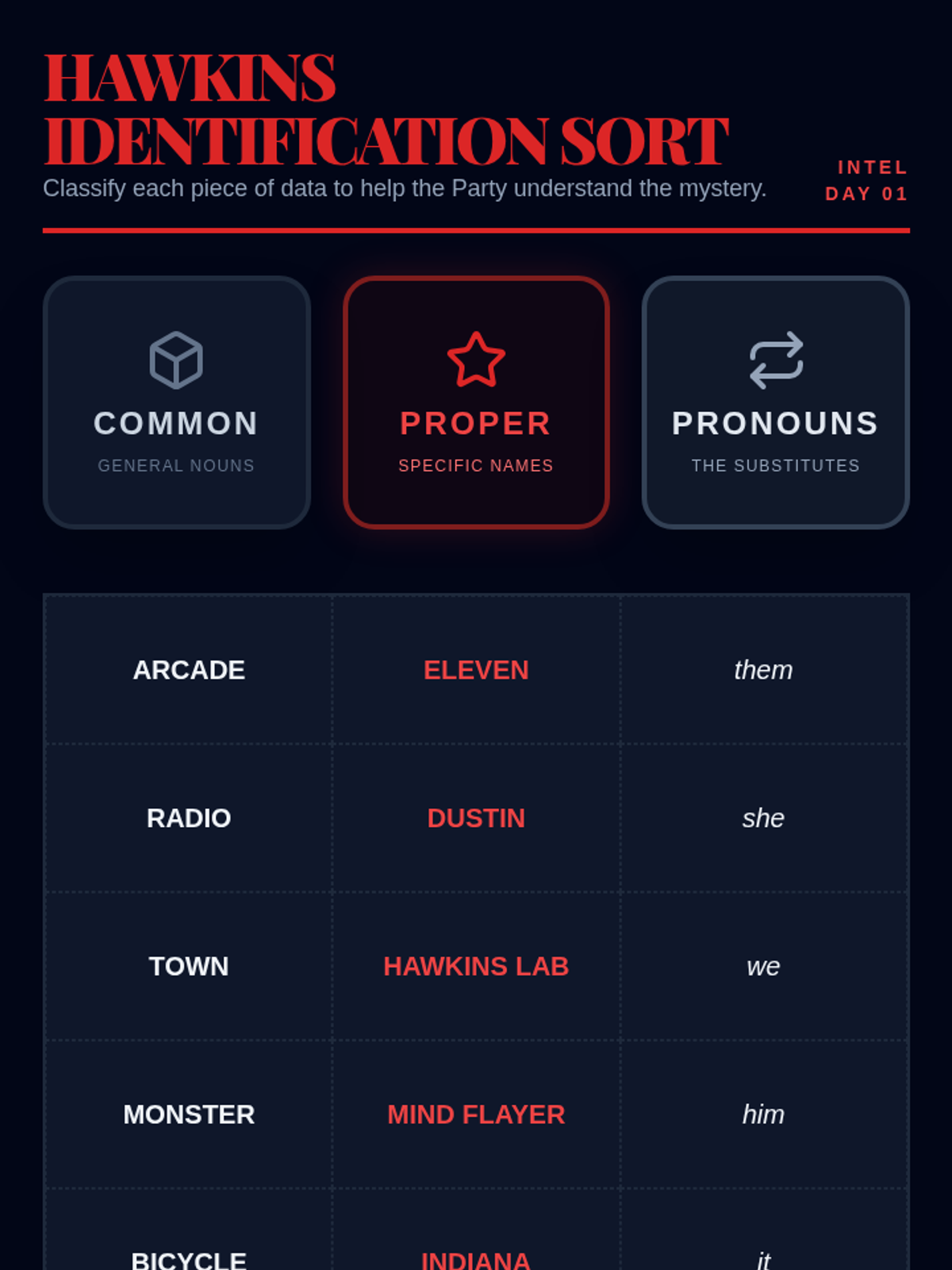
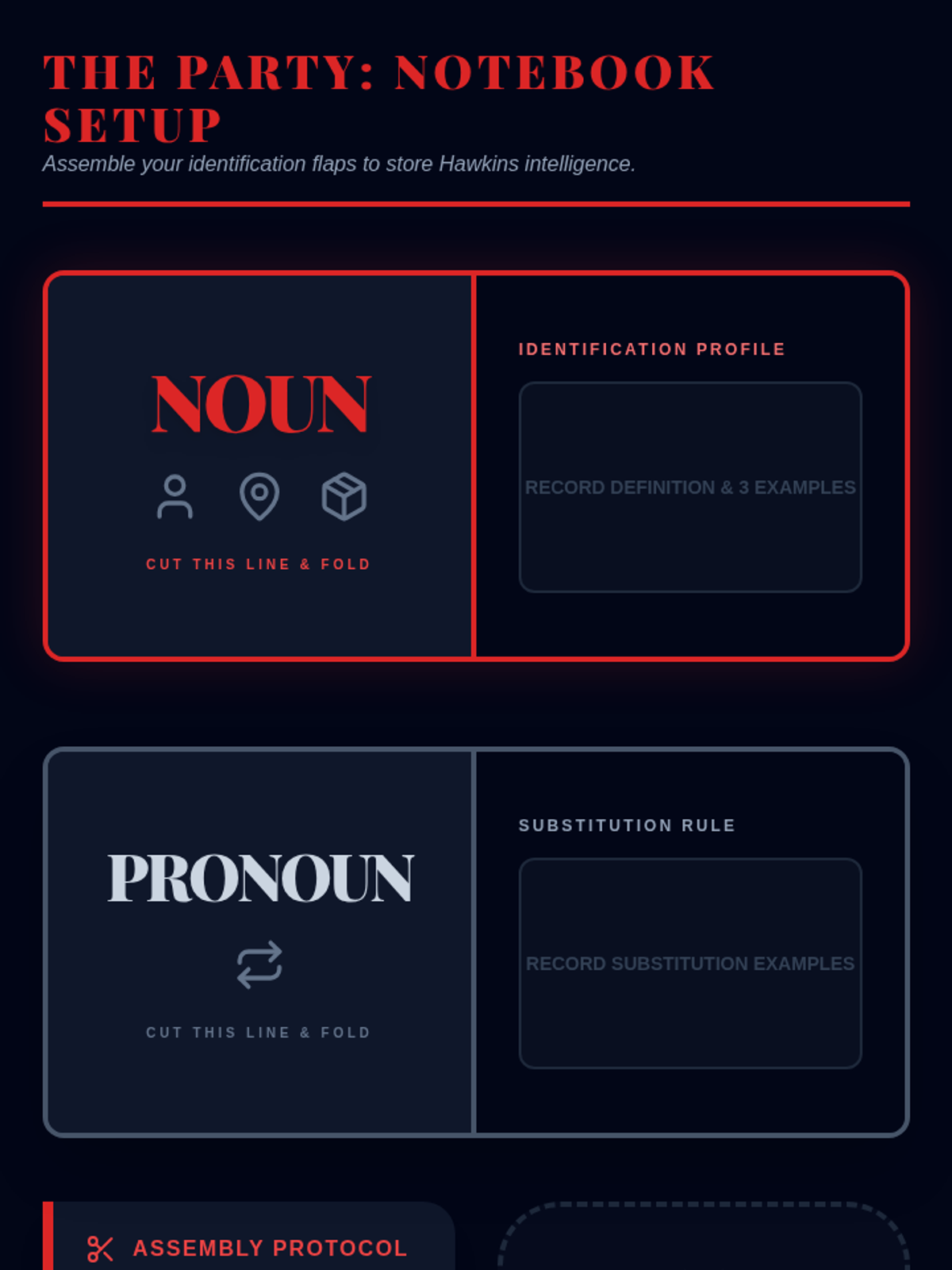
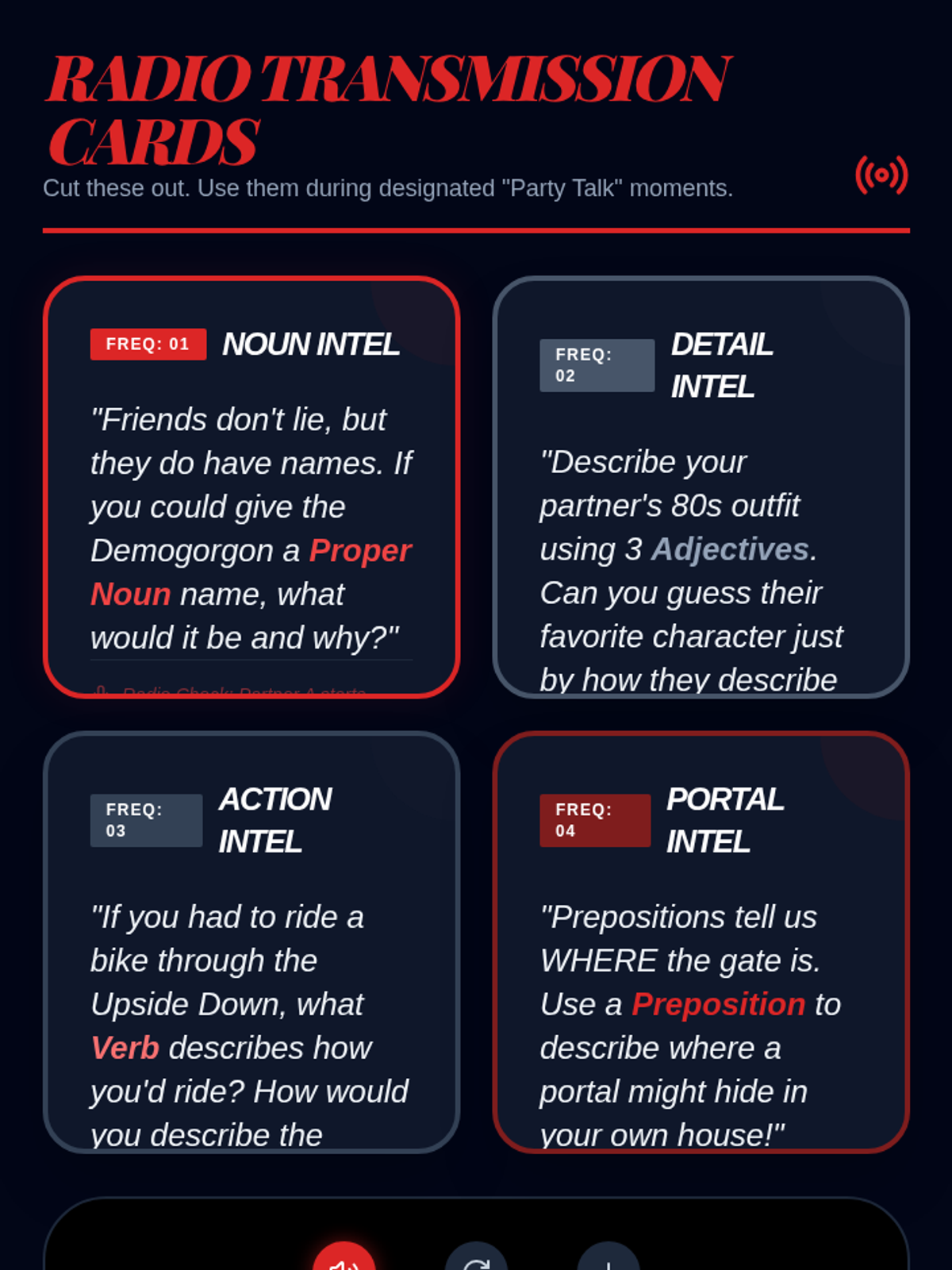
A retro, synthwave-inspired grammar unit for middle school resource room students. Students navigate the 'Upside Down' of parts of speech using themes of mystery, 80s nostalgia, and teamwork.
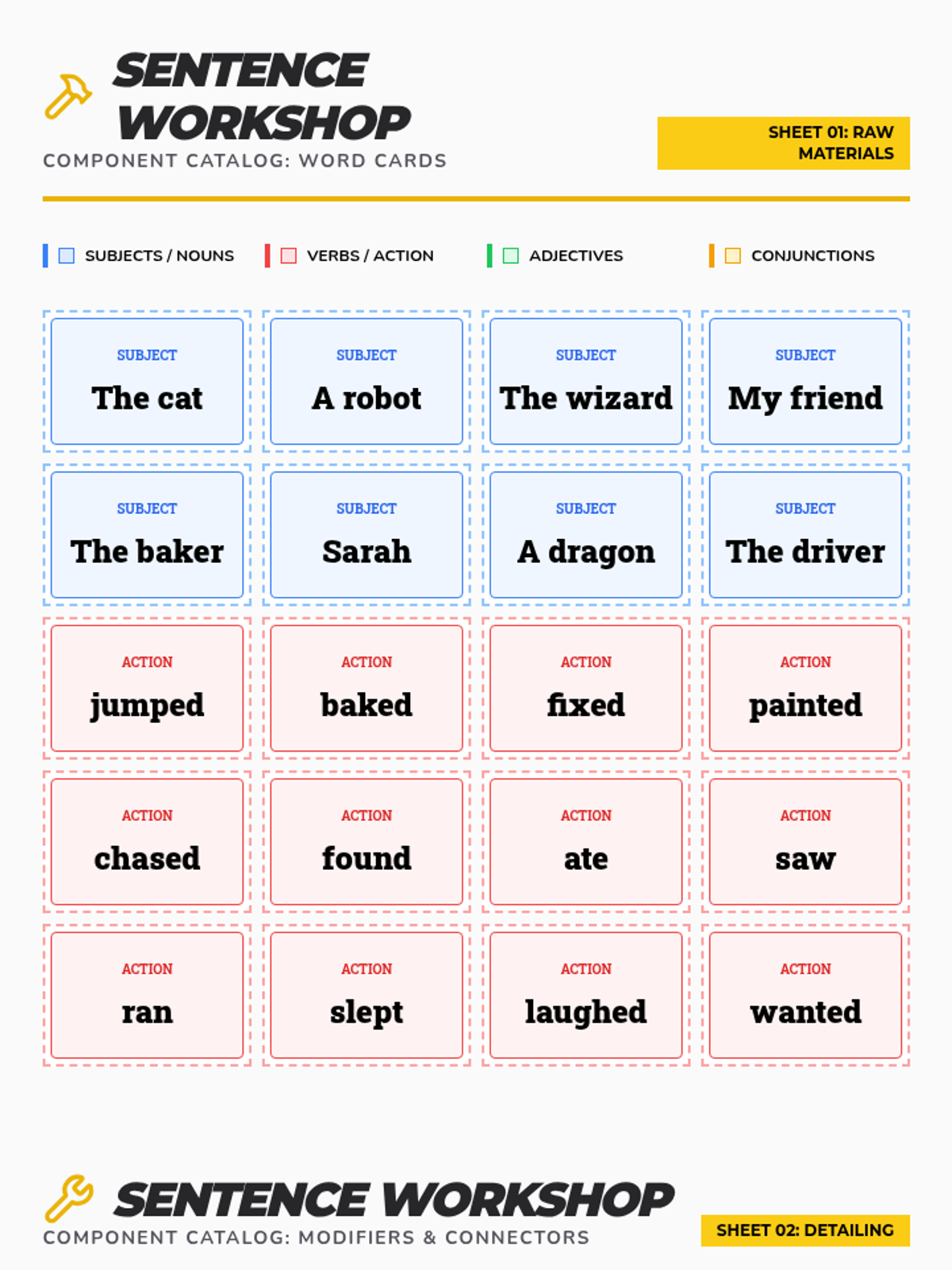
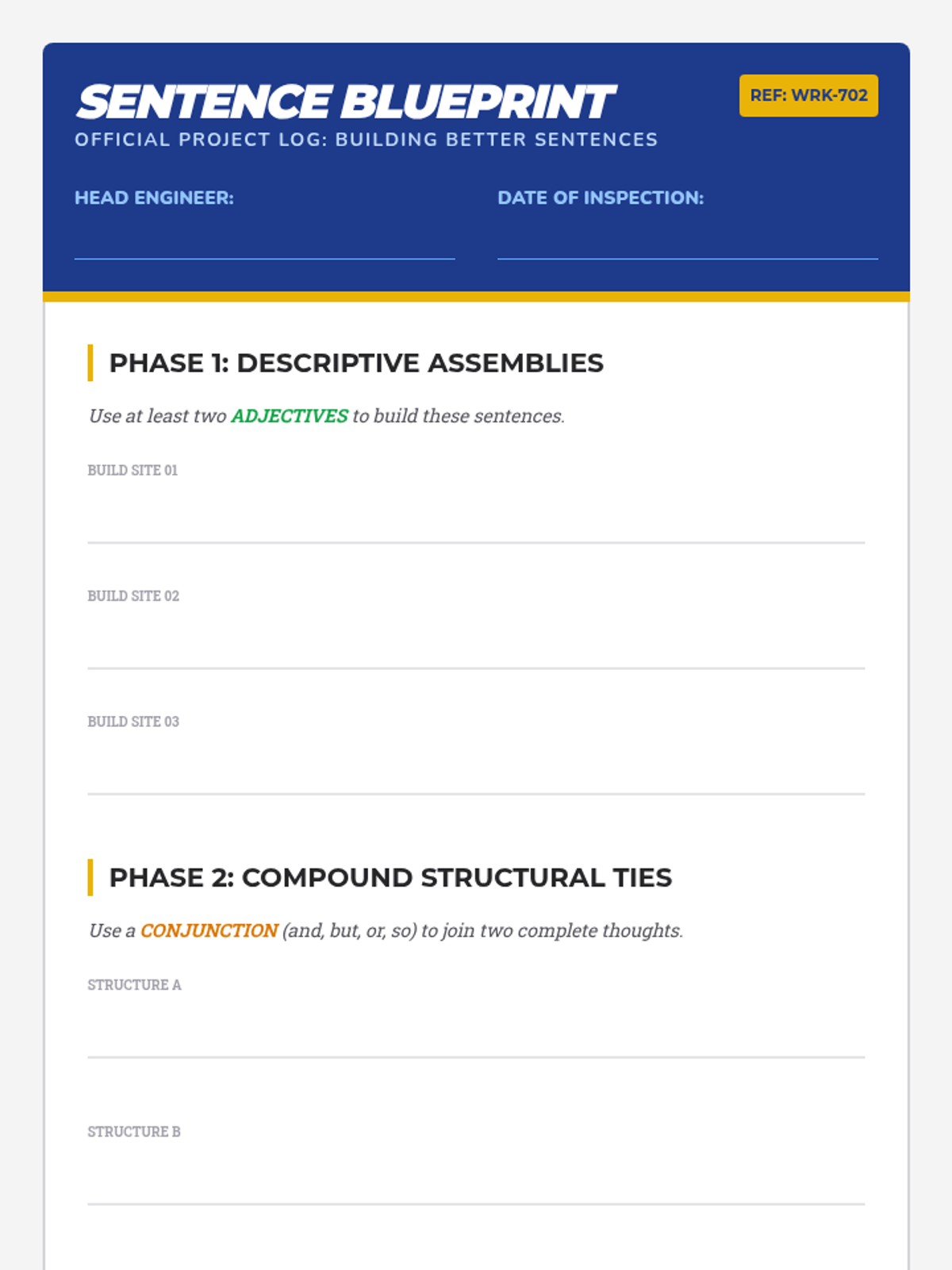
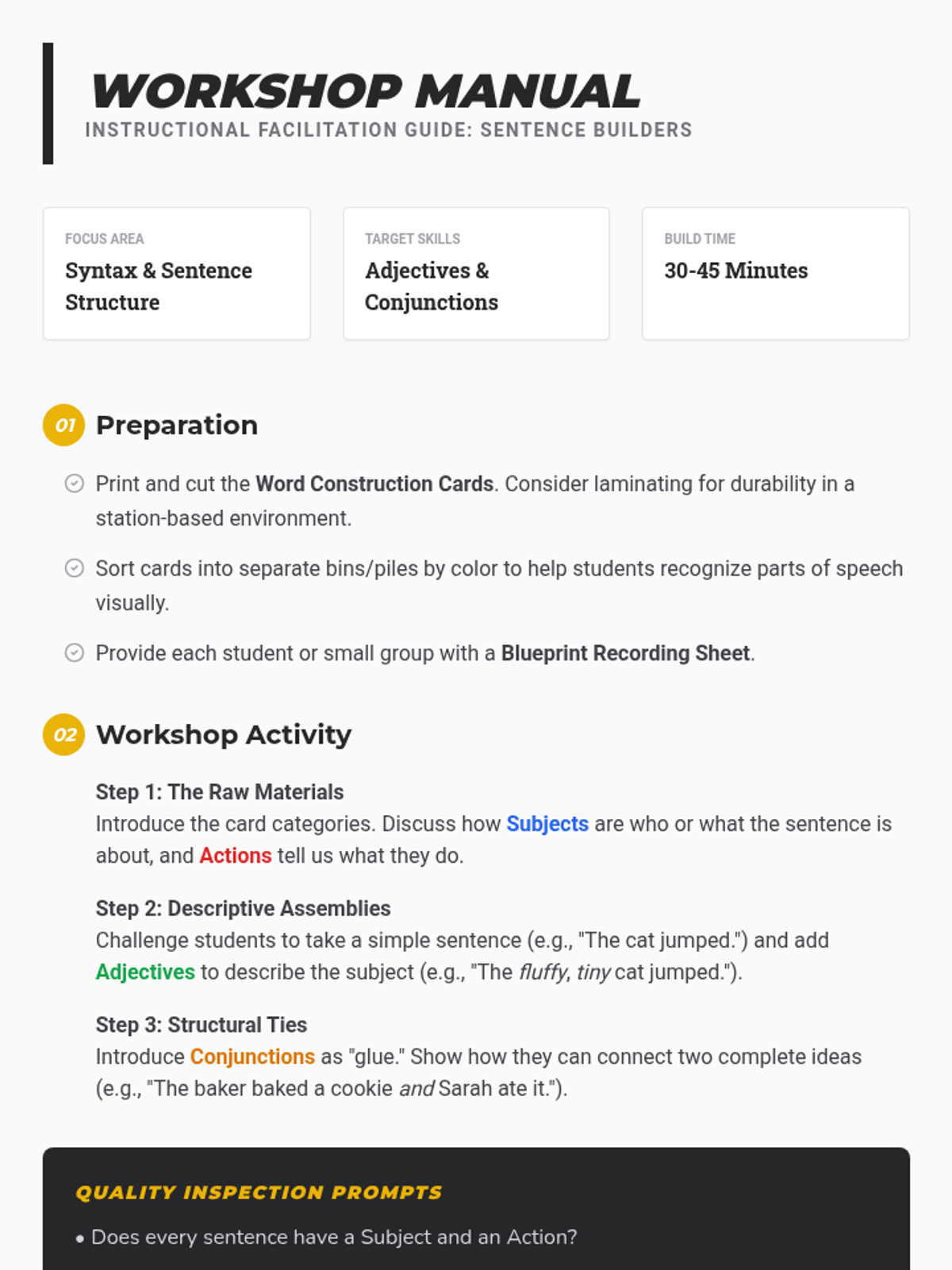
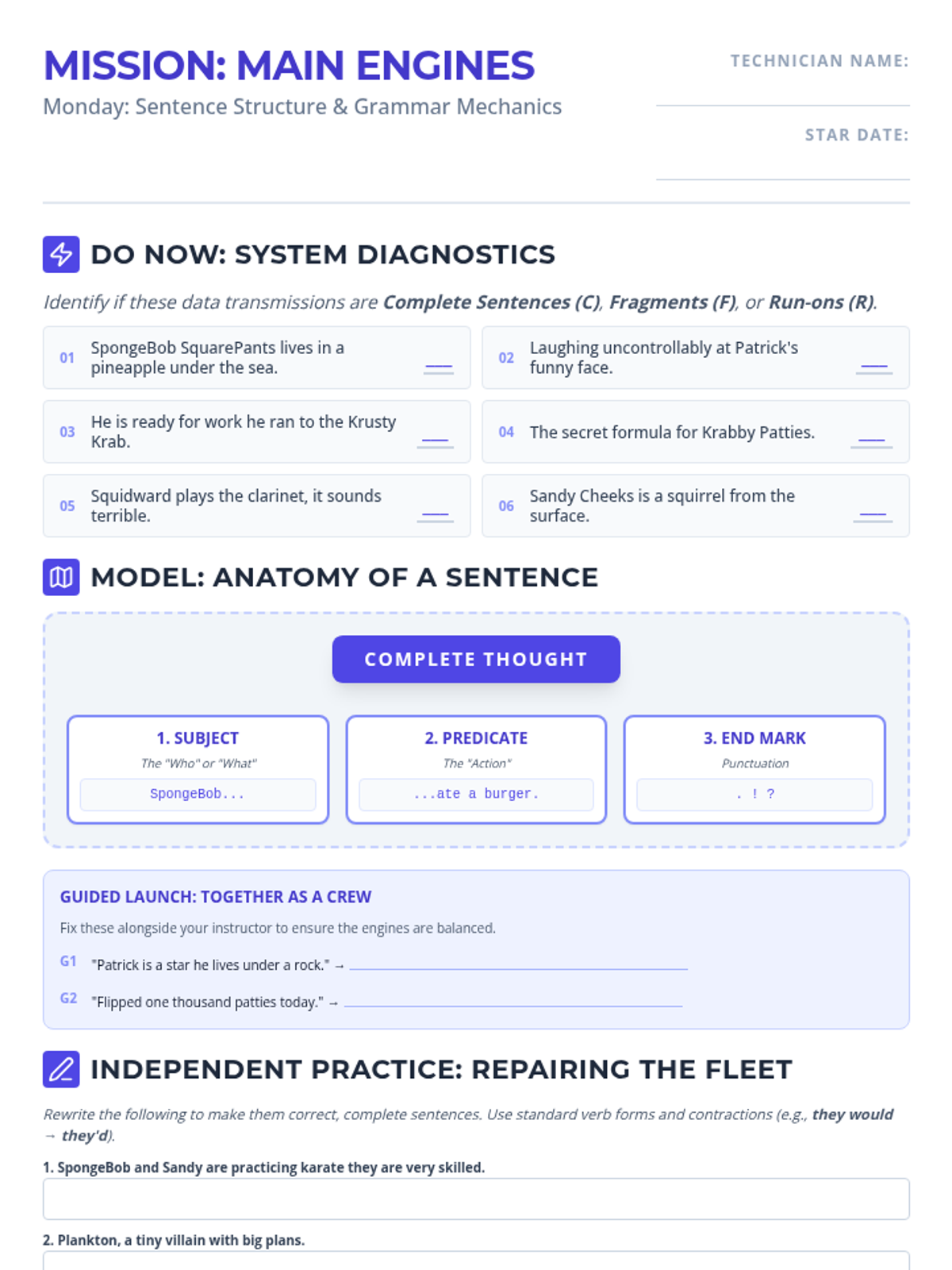
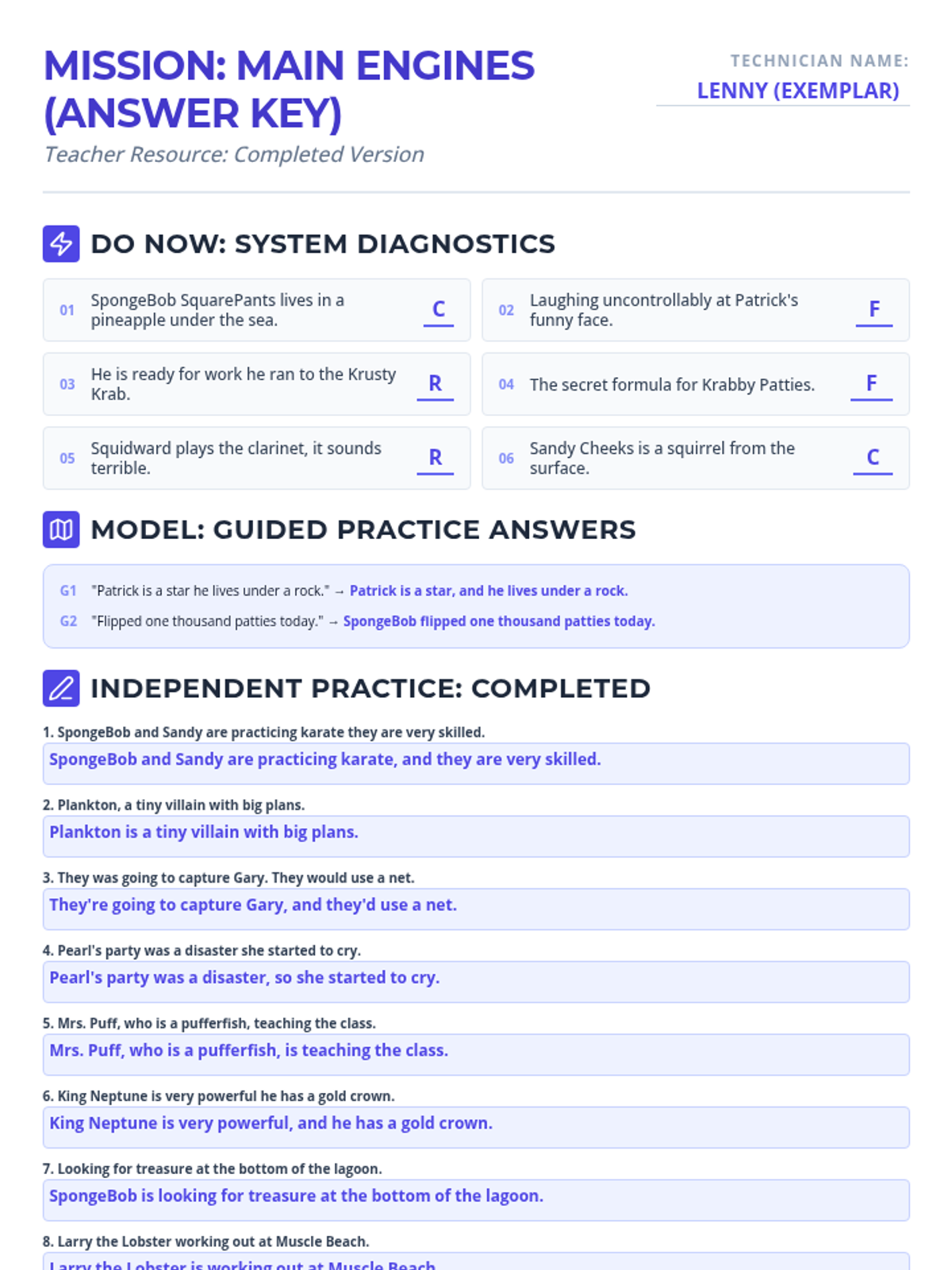
A series of hands-on workshops where students act as "sentence engineers," using word components to master syntax, sentence variety, and descriptive writing.
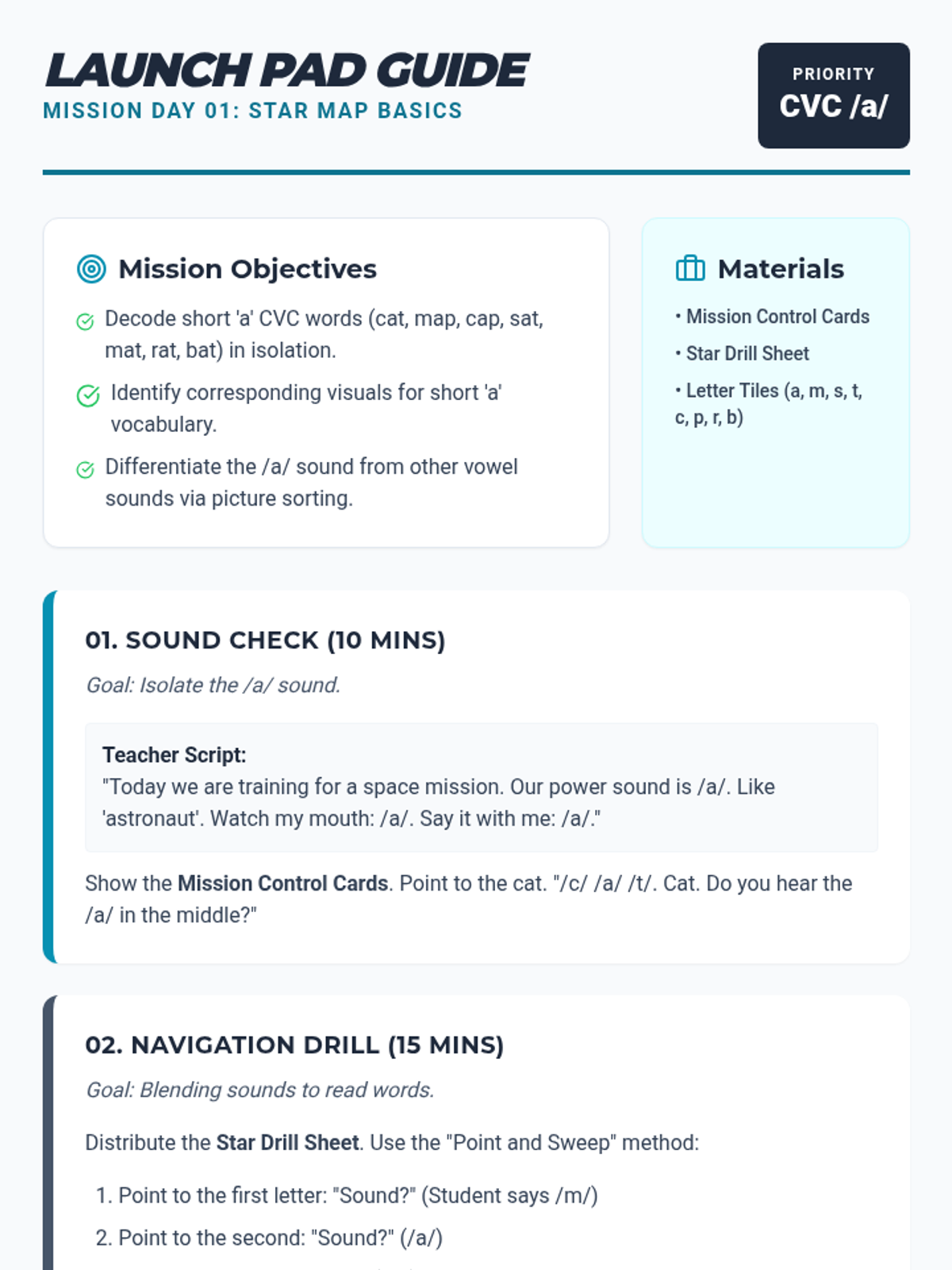
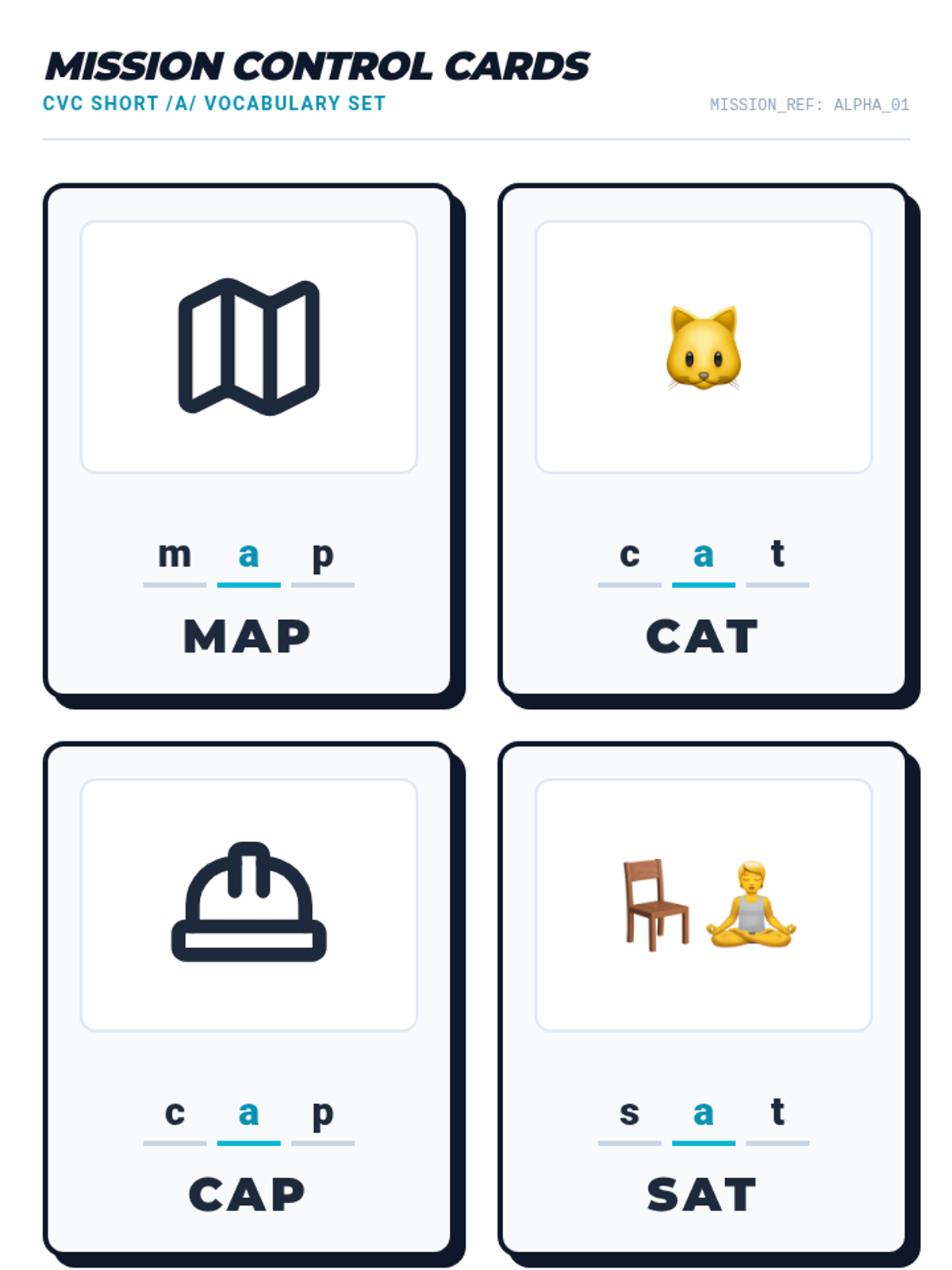
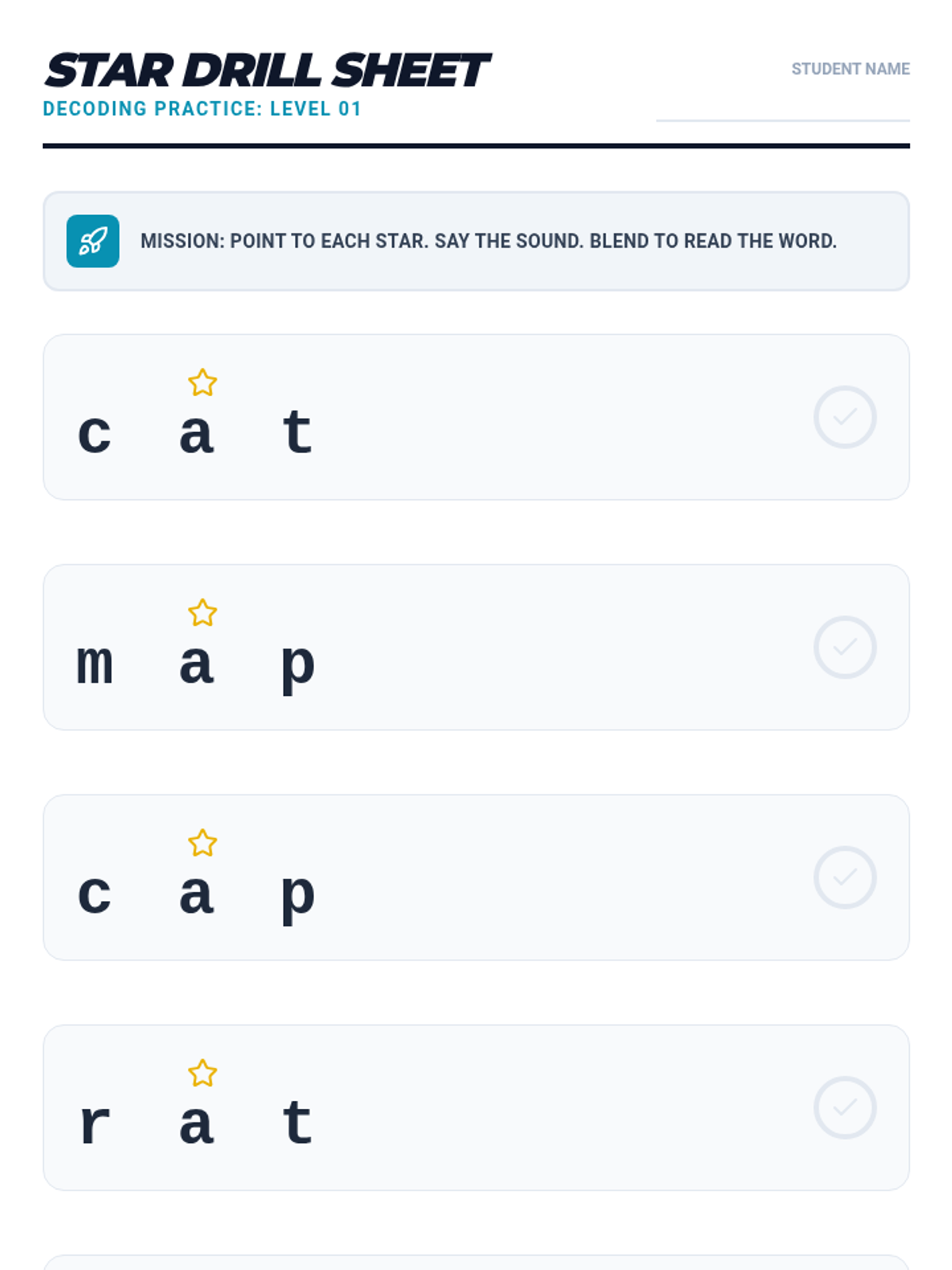
A 4-day intensive CVC short 'a' intervention for a 6th-grade ESL student, themed around space exploration to maintain age-appropriateness while focusing on foundational literacy.
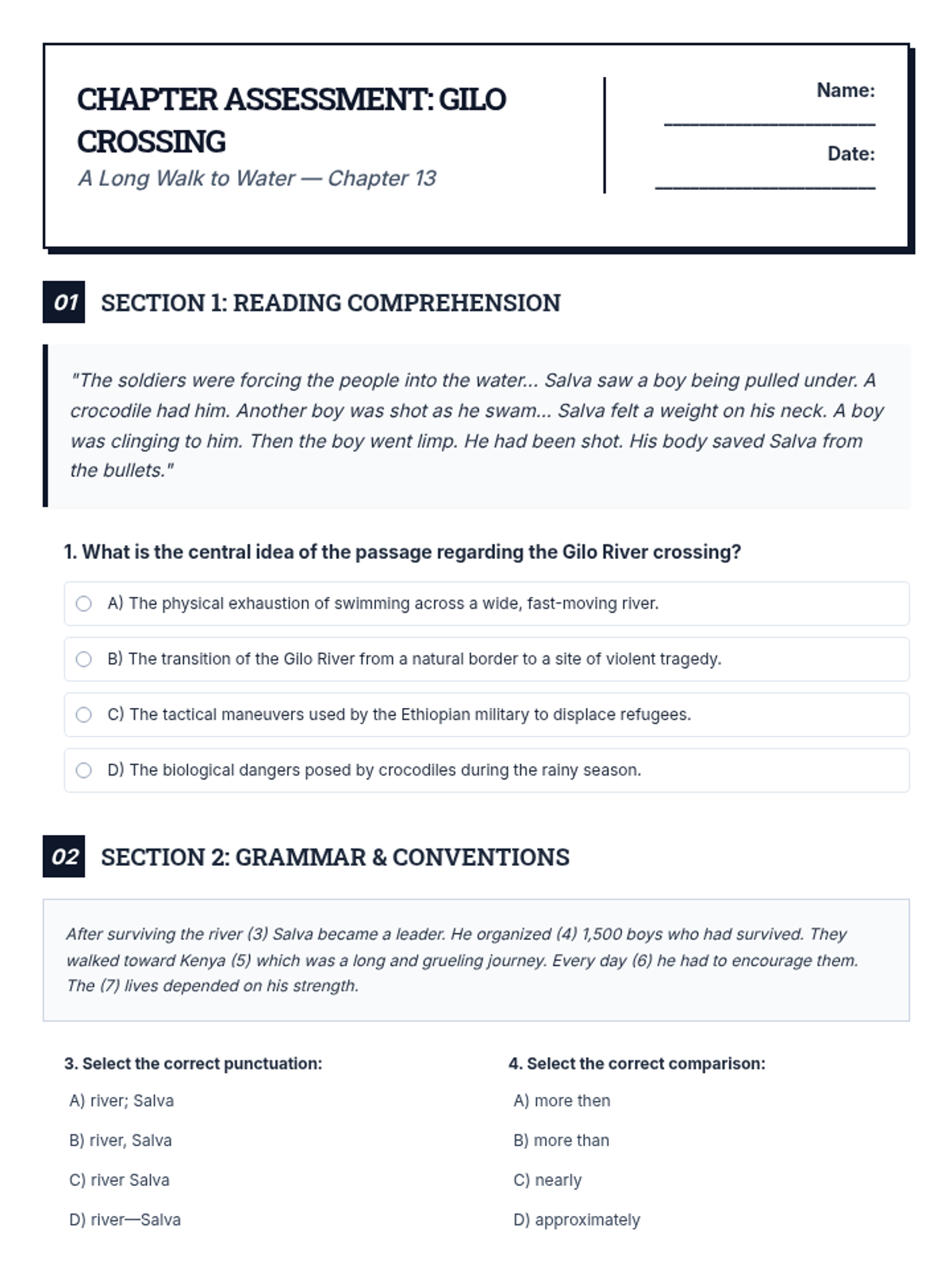
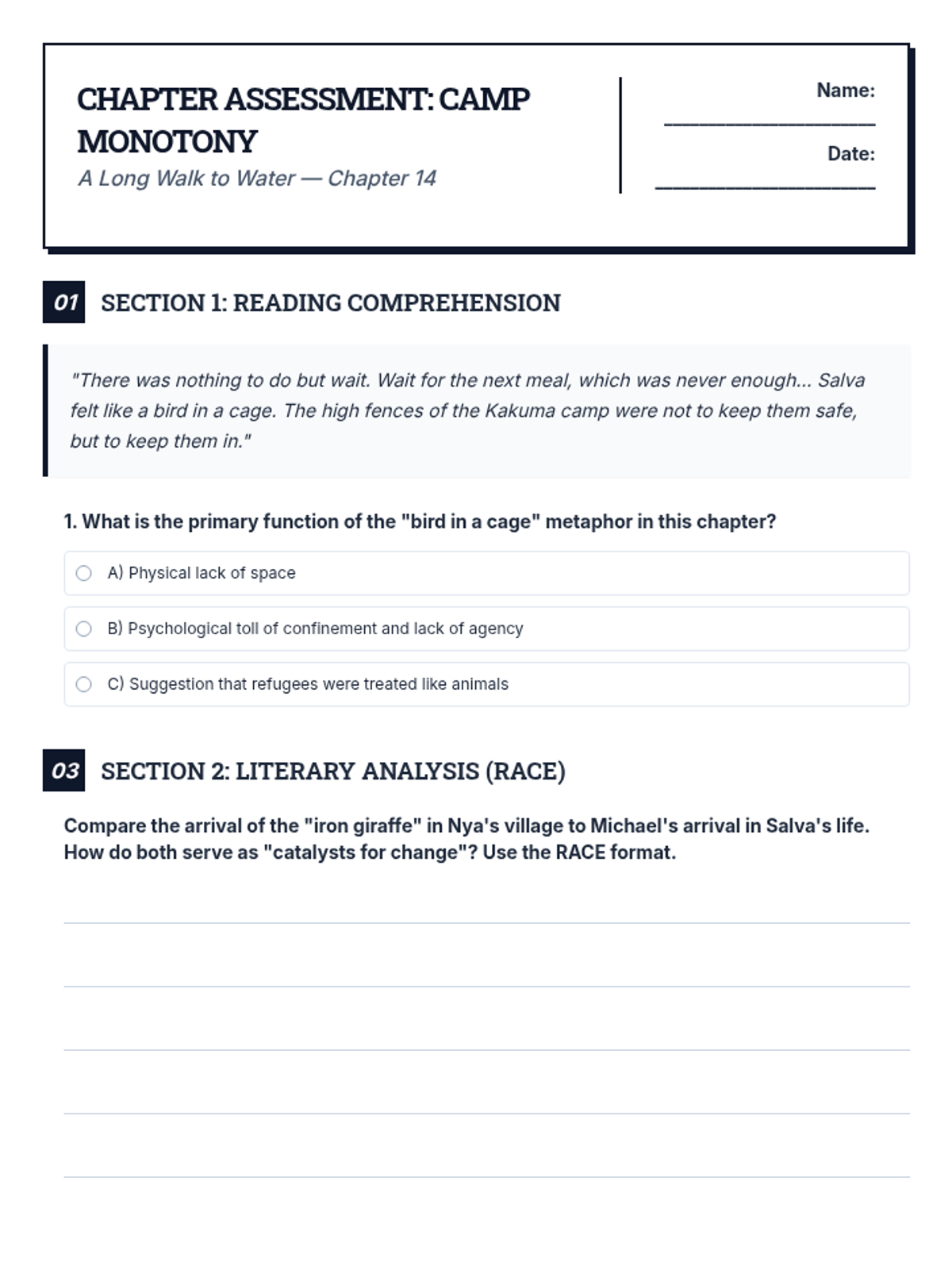
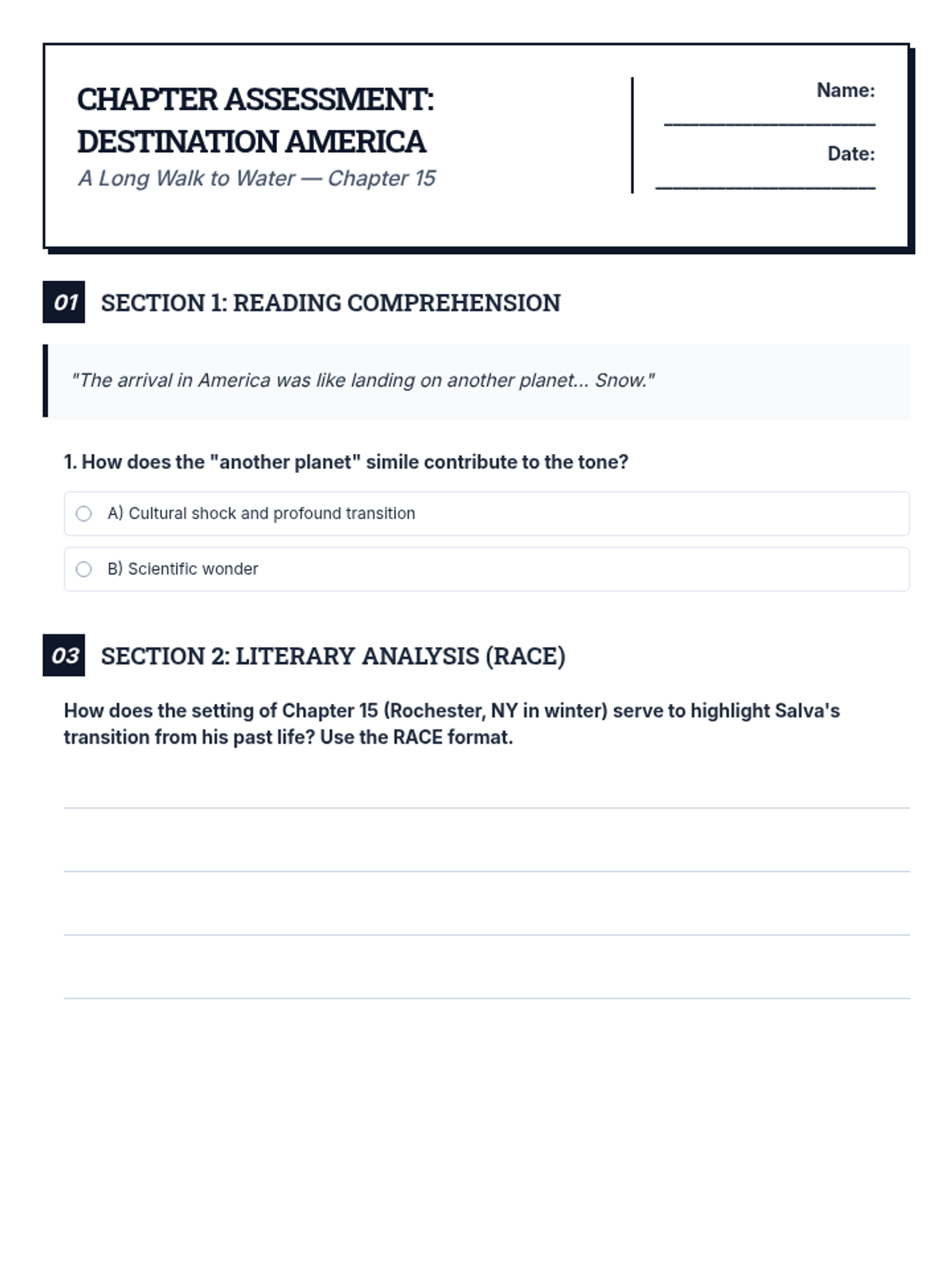
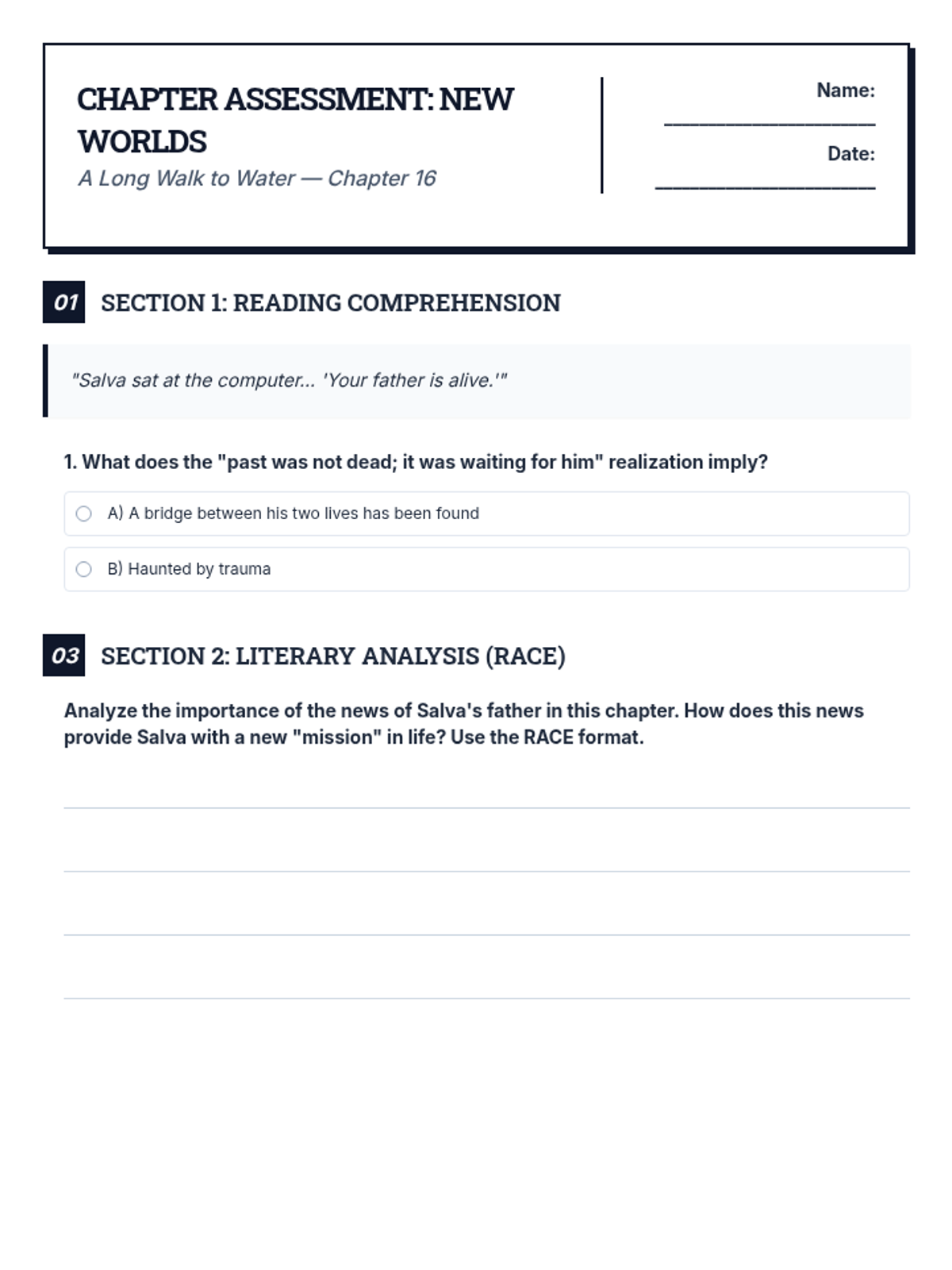
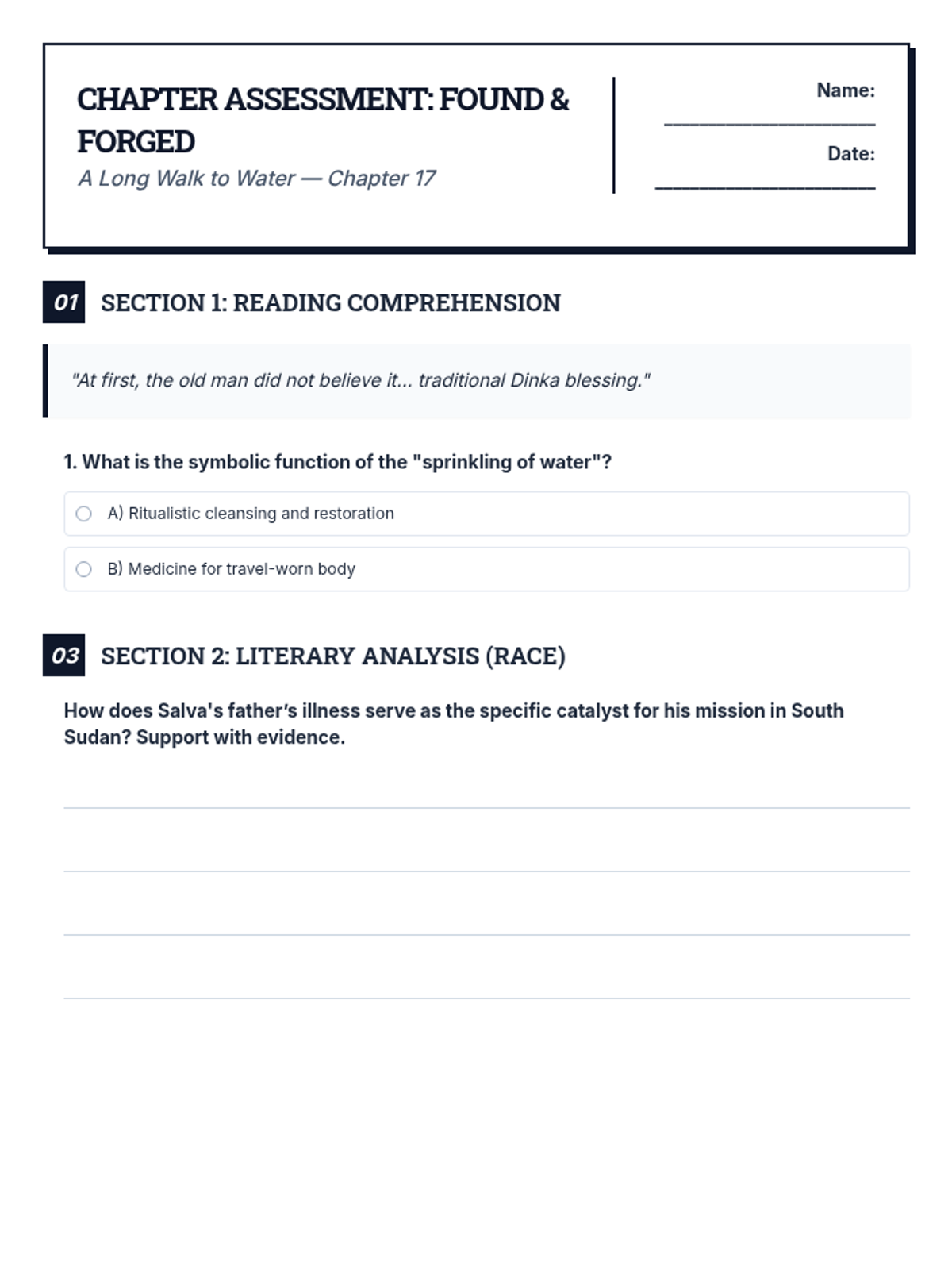
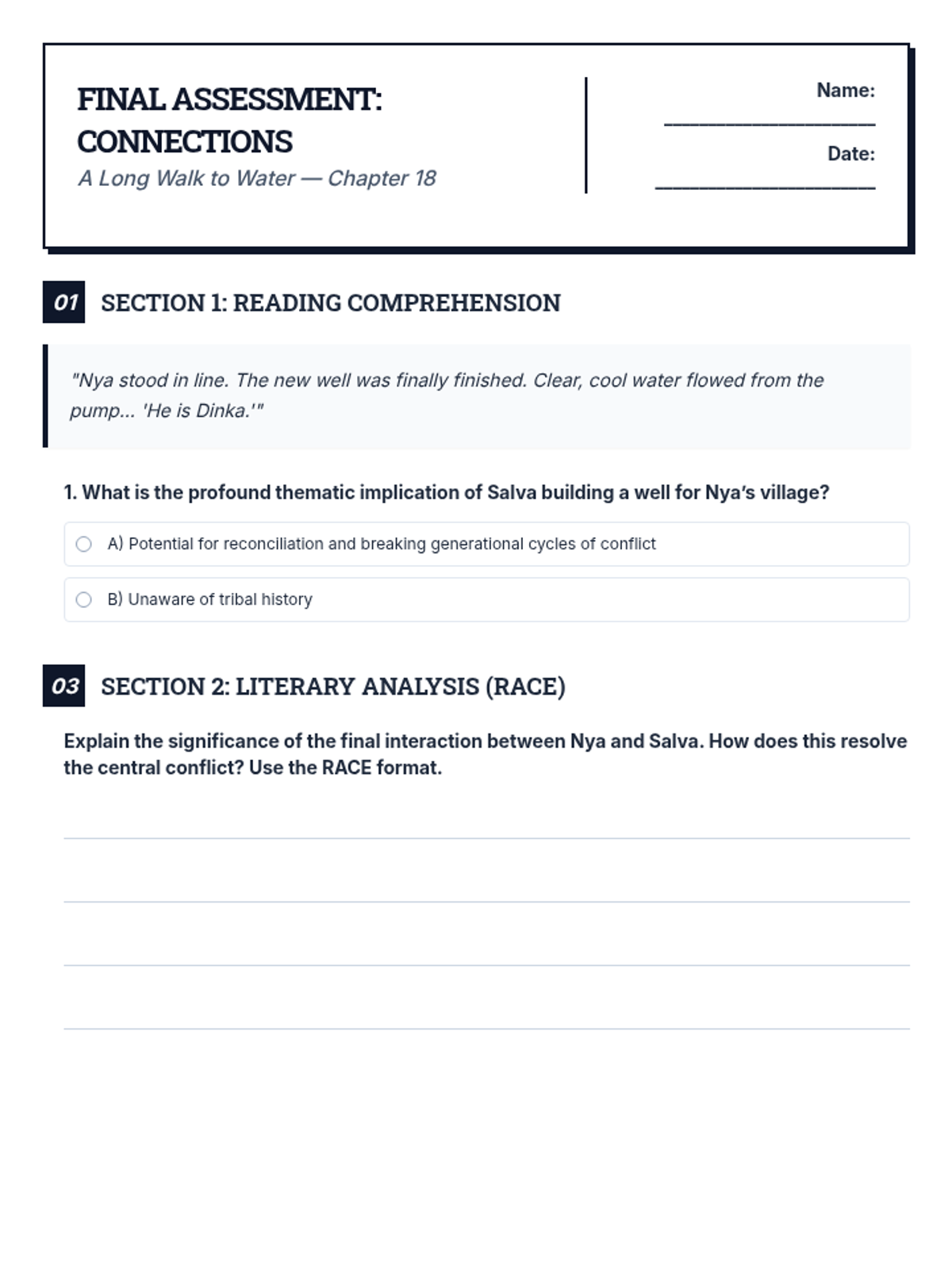
A comprehensive set of worksheets and answer keys for the final chapters of Linda Sue Park's 'A Long Walk to Water', focusing on Salva's journey to leadership and America, and the transformation of Nya's village through the arrival of water.
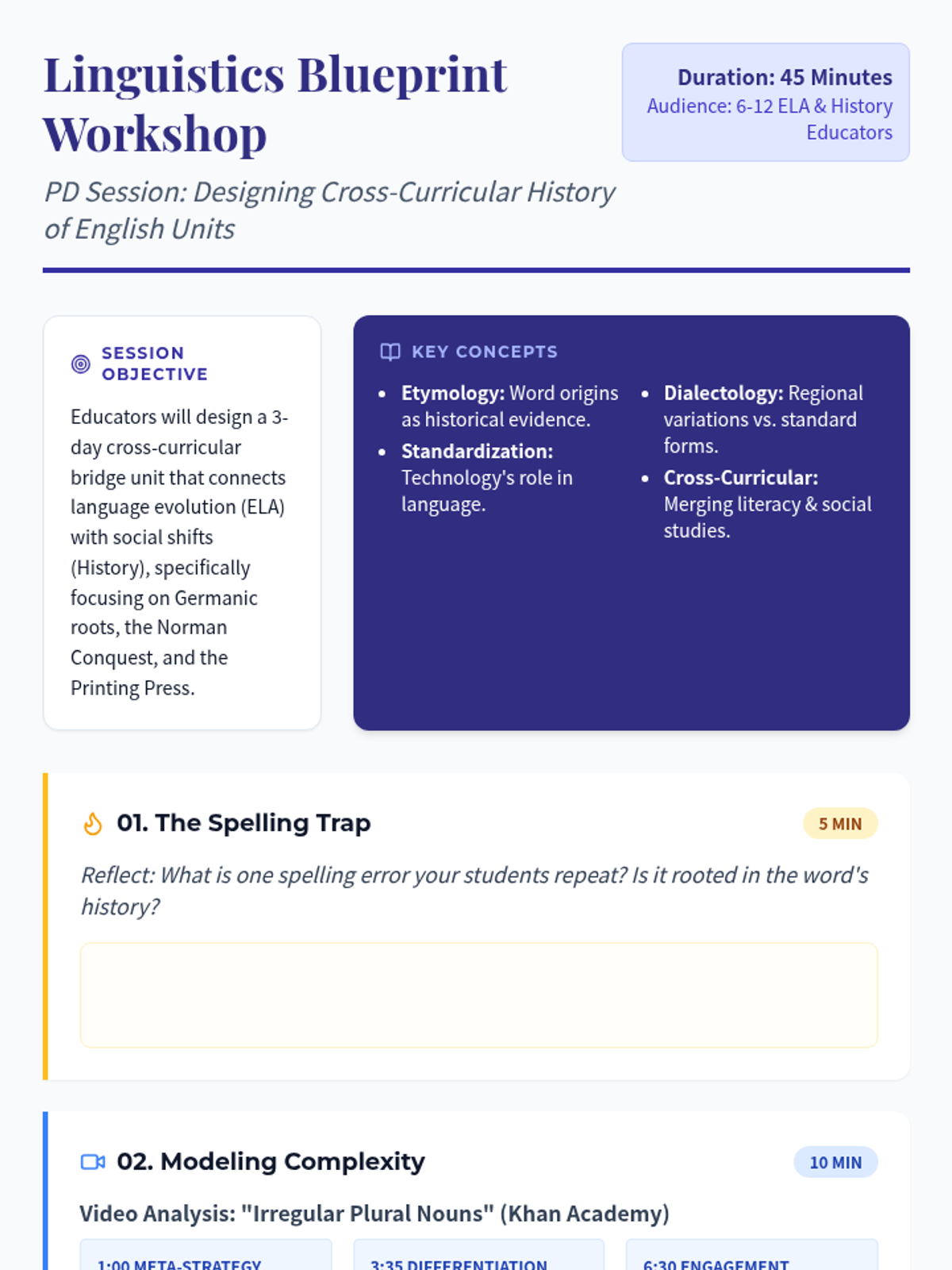
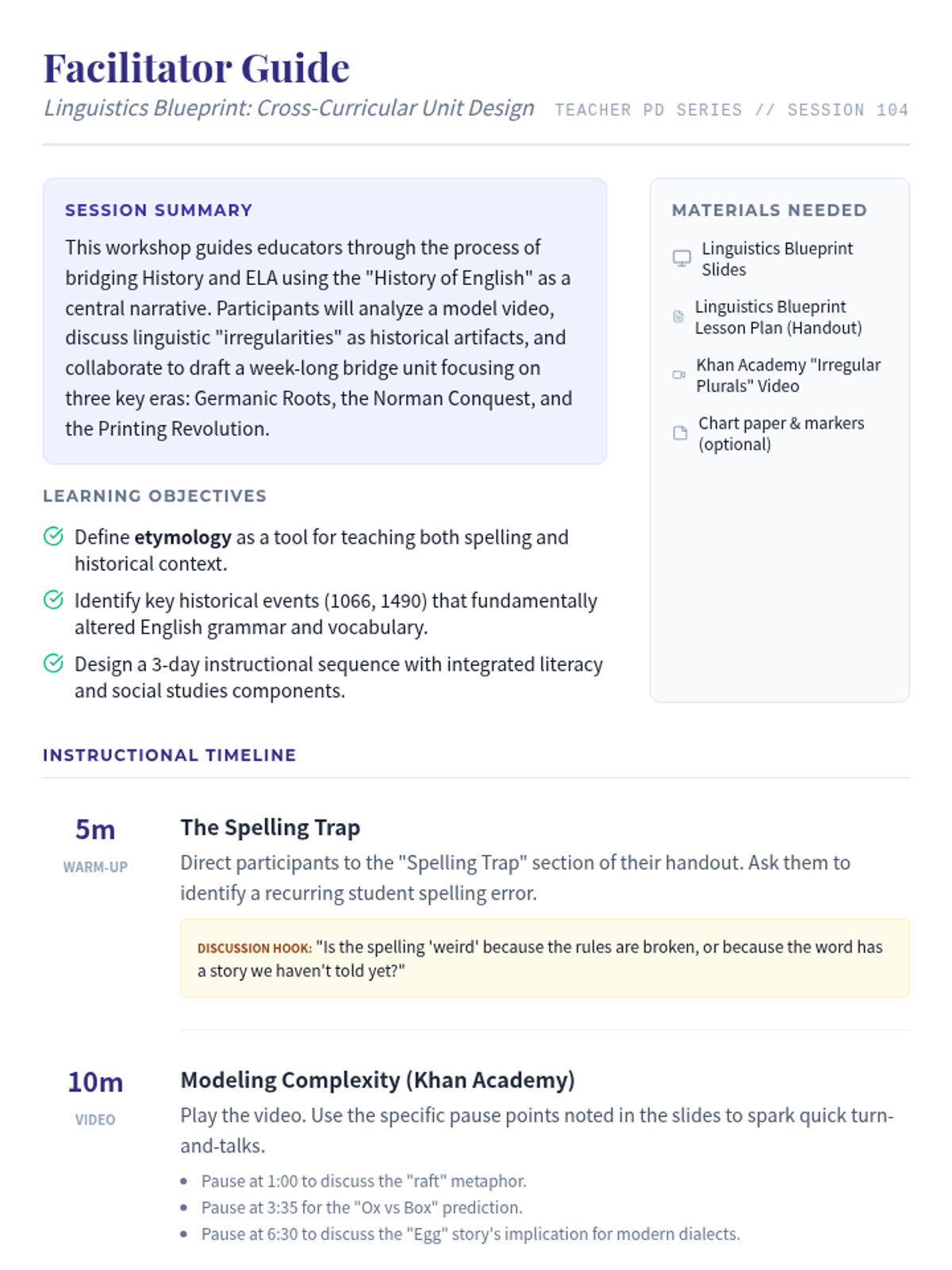
A curriculum development sequence focused on helping teachers bridge ELA and History through linguistics and etymology.
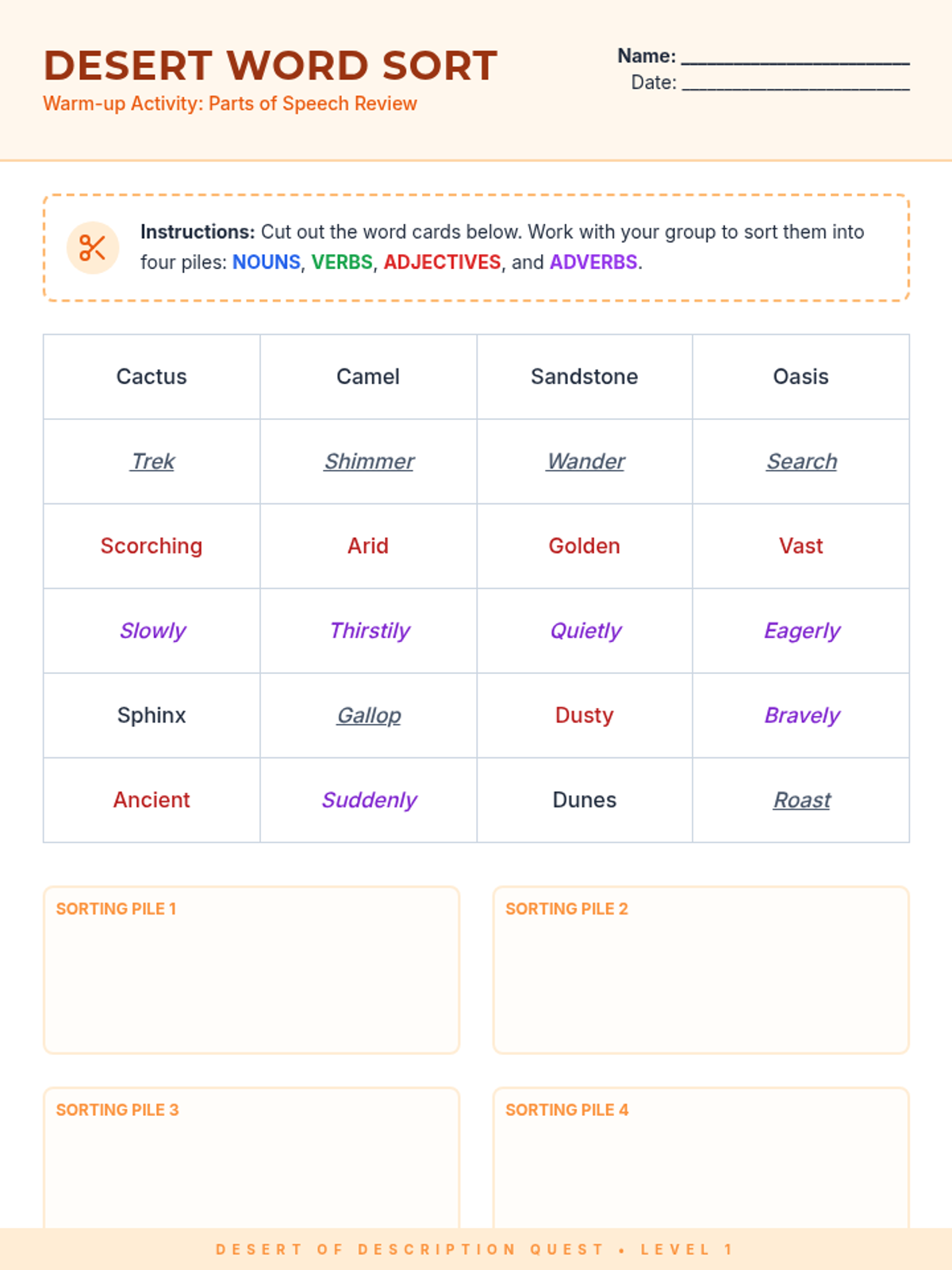
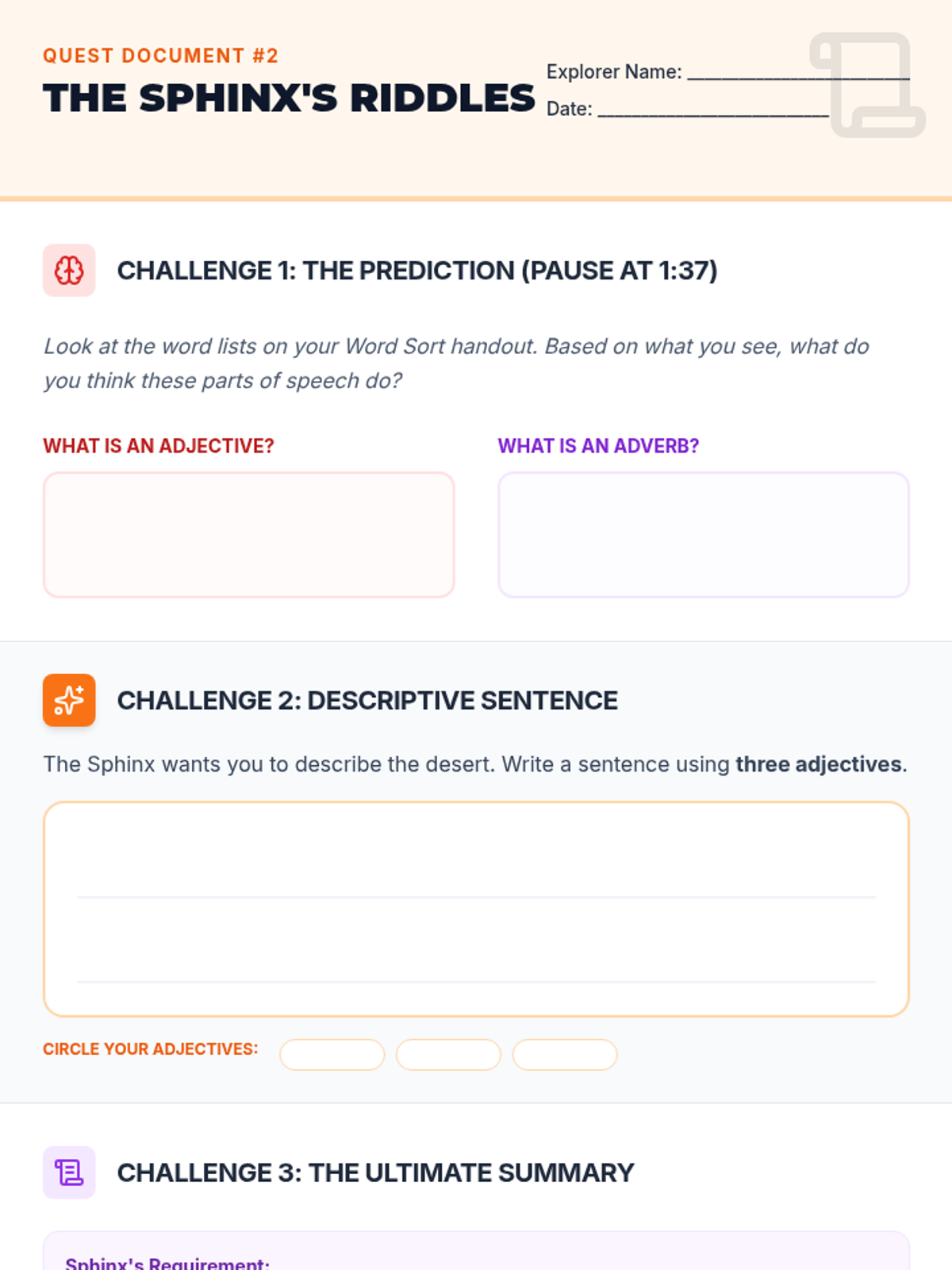
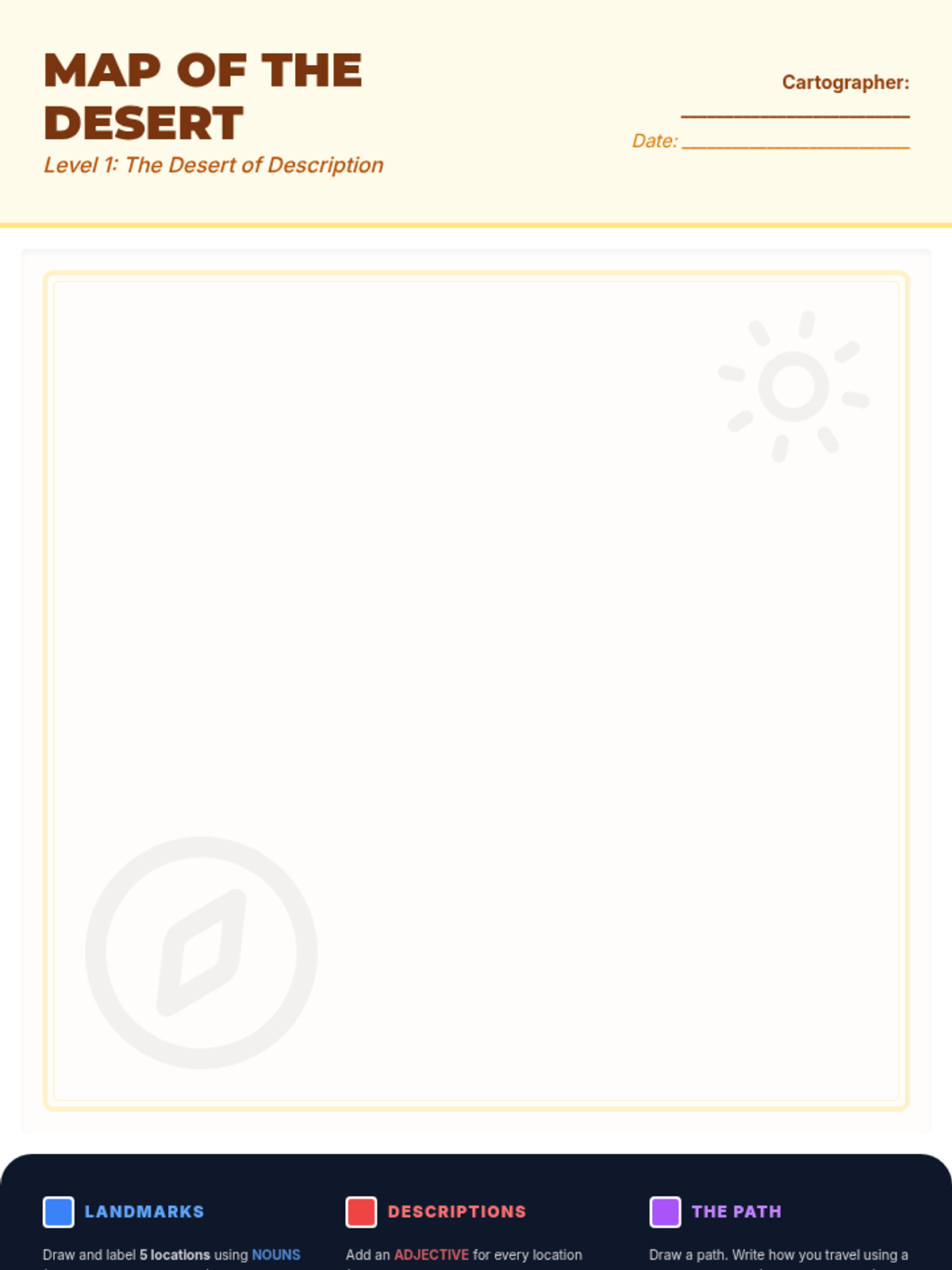
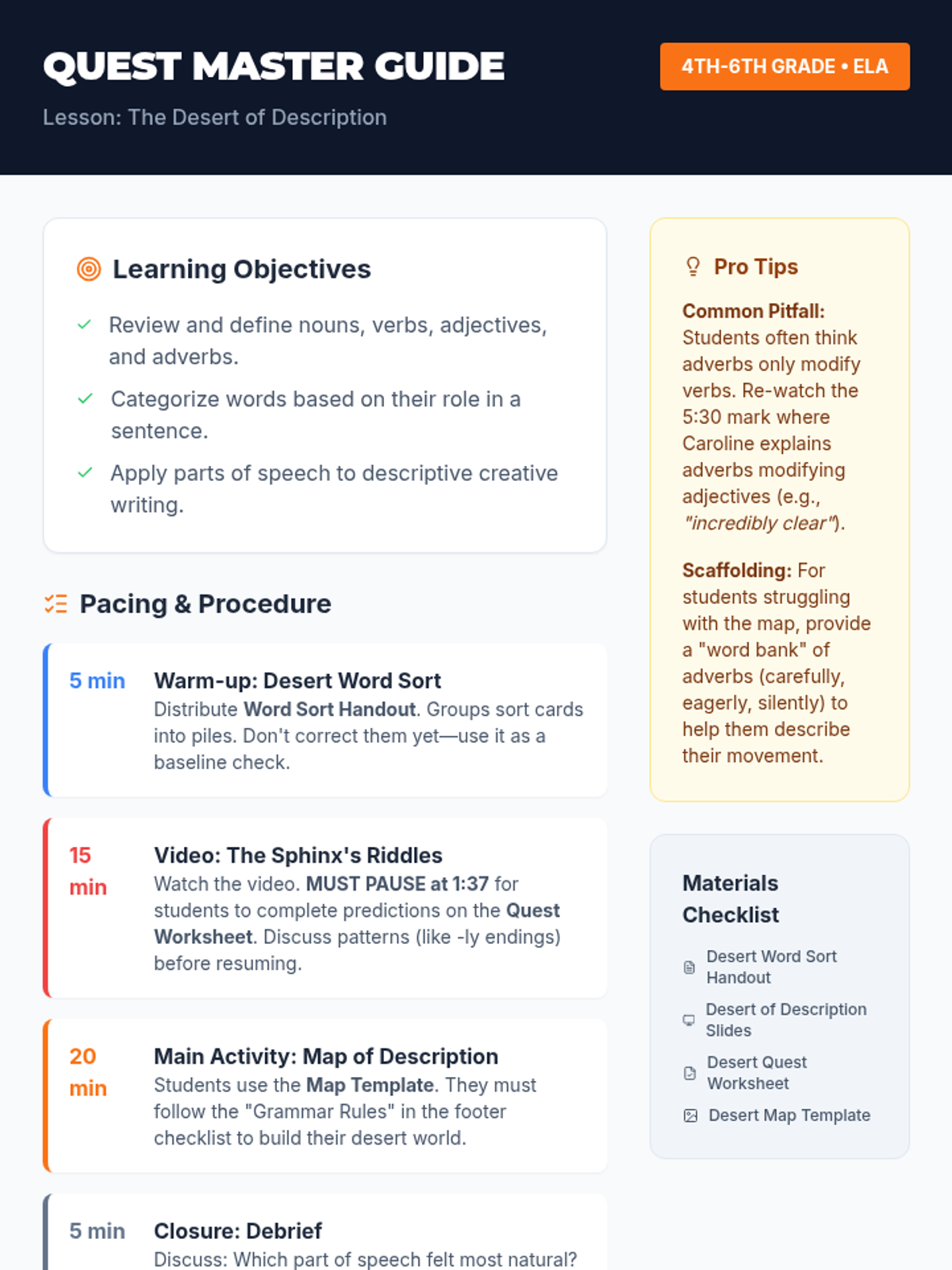
A remedial/review sequence for 4th-6th grade students focusing on parts of speech through a desert-themed adventure quest. Students identify and apply nouns, verbs, adjectives, and adverbs while building a descriptive map.
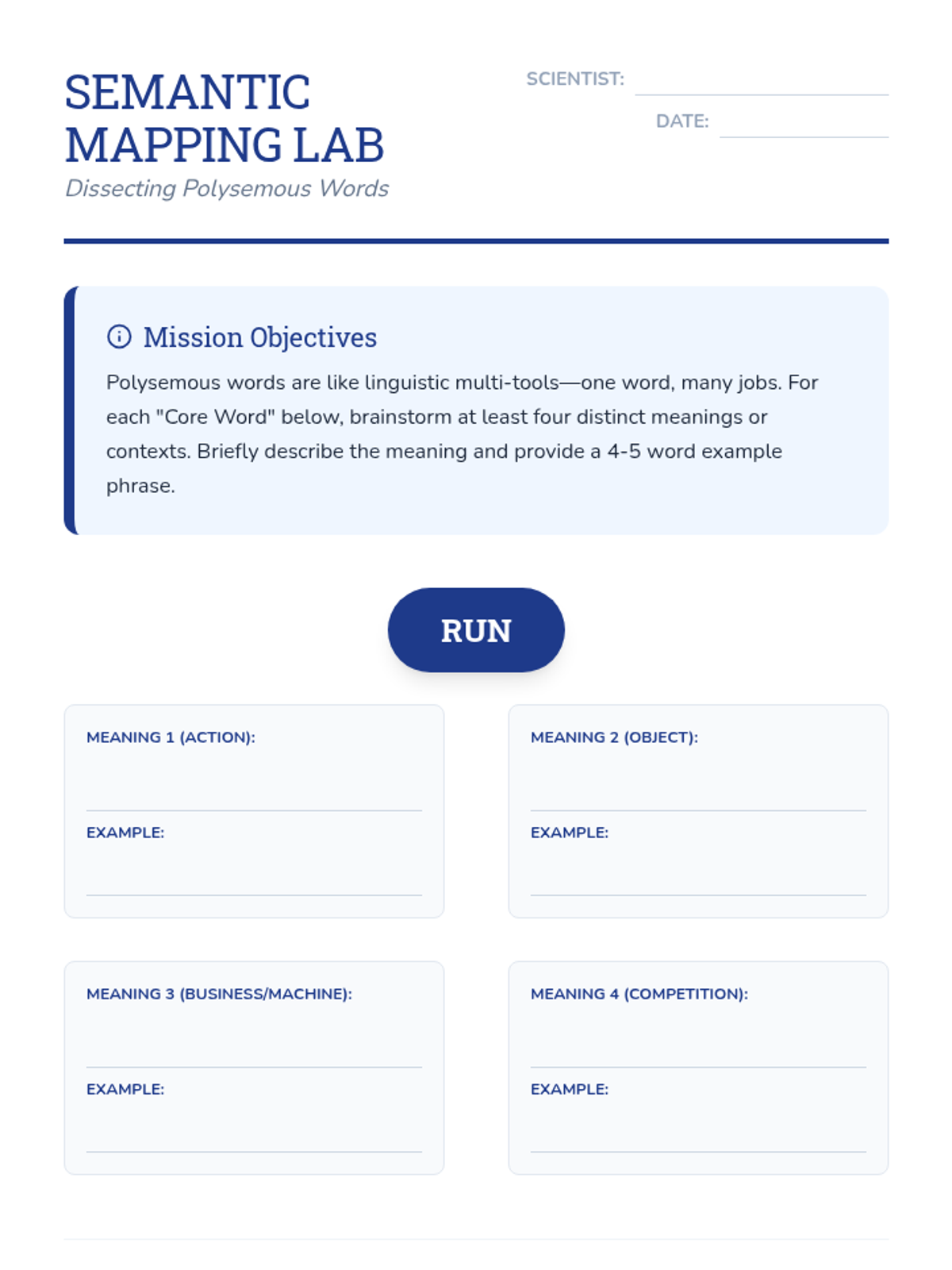
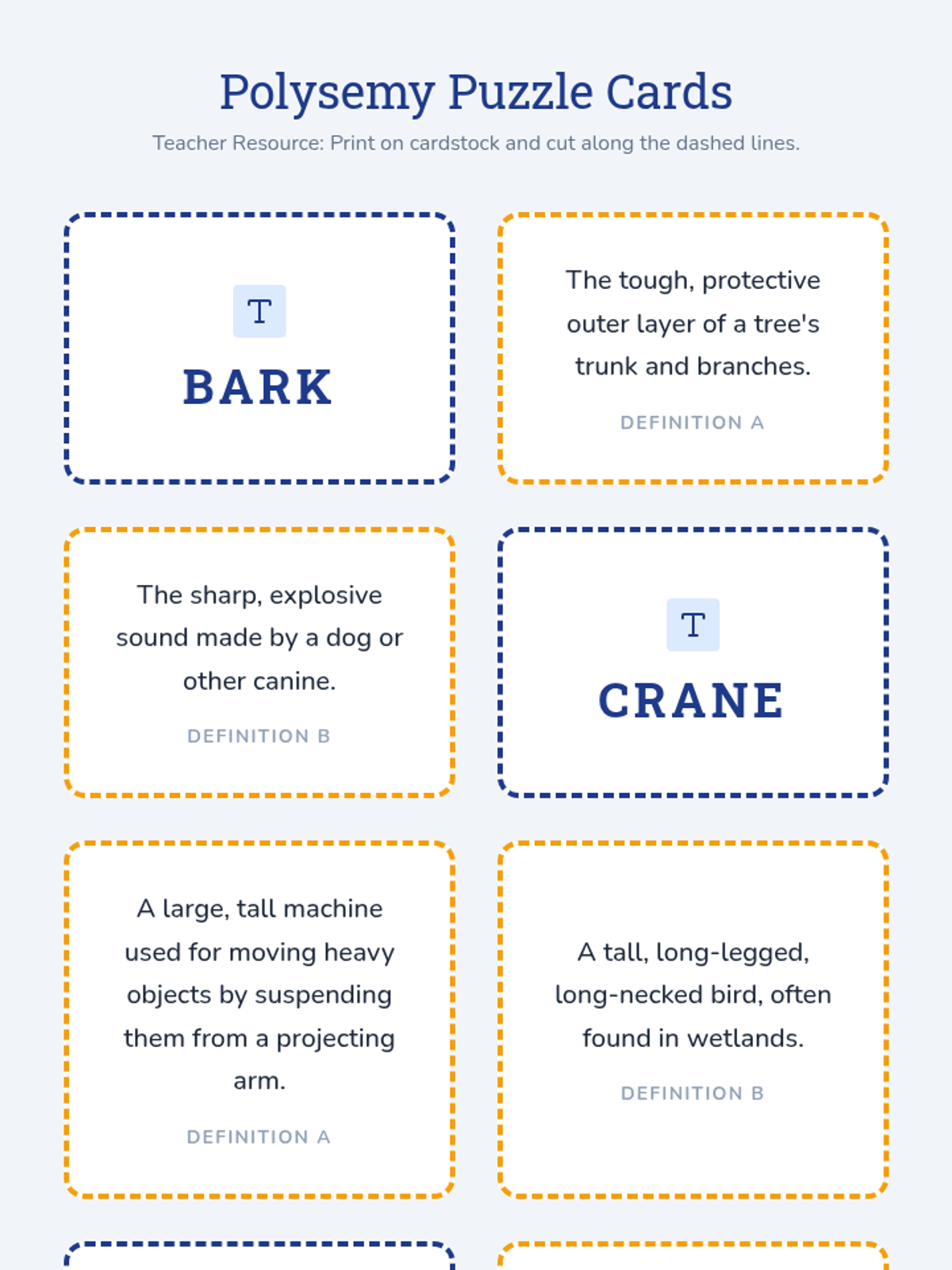
A 6th-grade ELA sequence exploring polysemy, homonyms, and homographs. Students learn to use context clues to differentiate between multiple meanings of a single word, improving reading comprehension and writing precision.
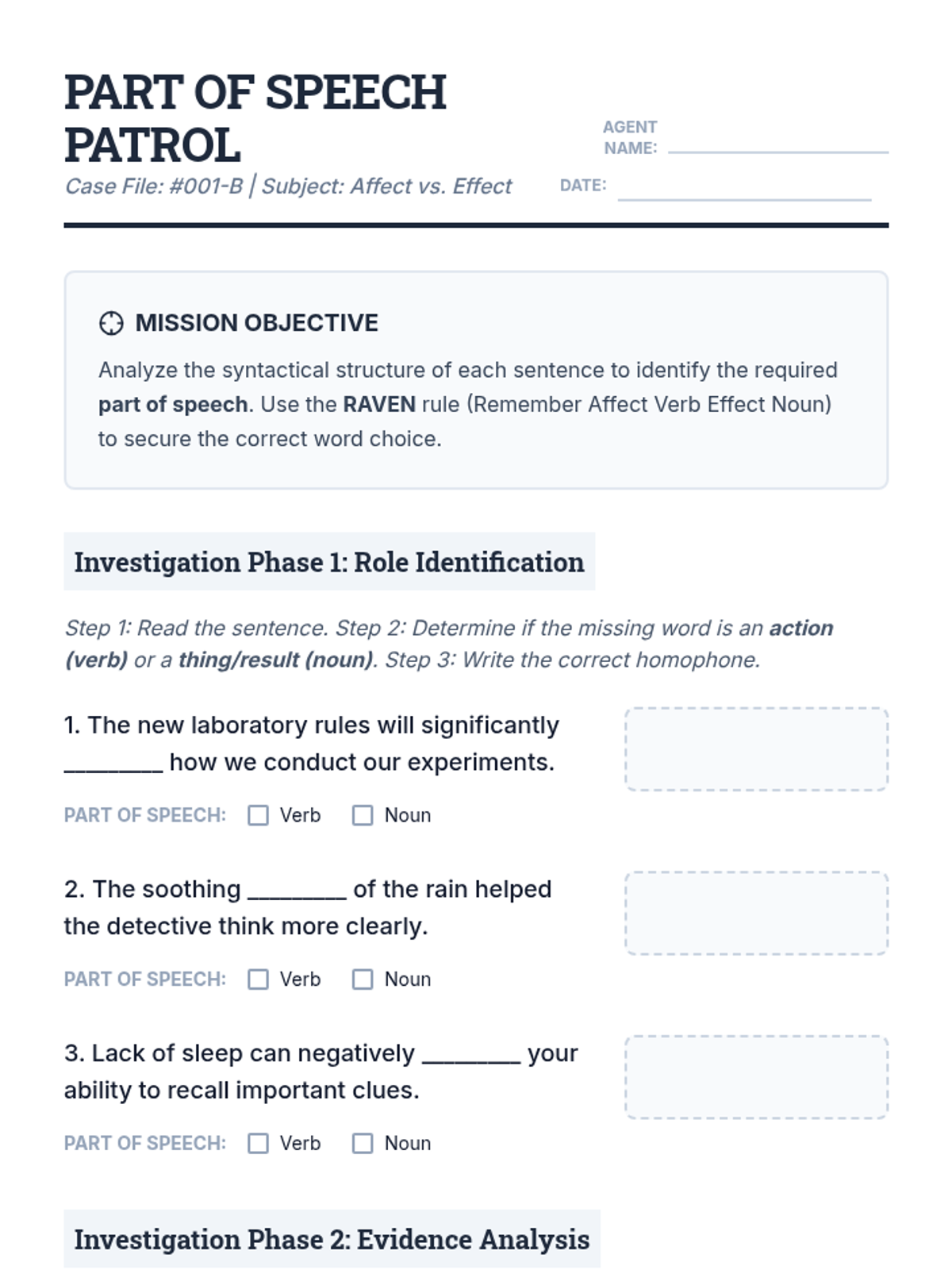
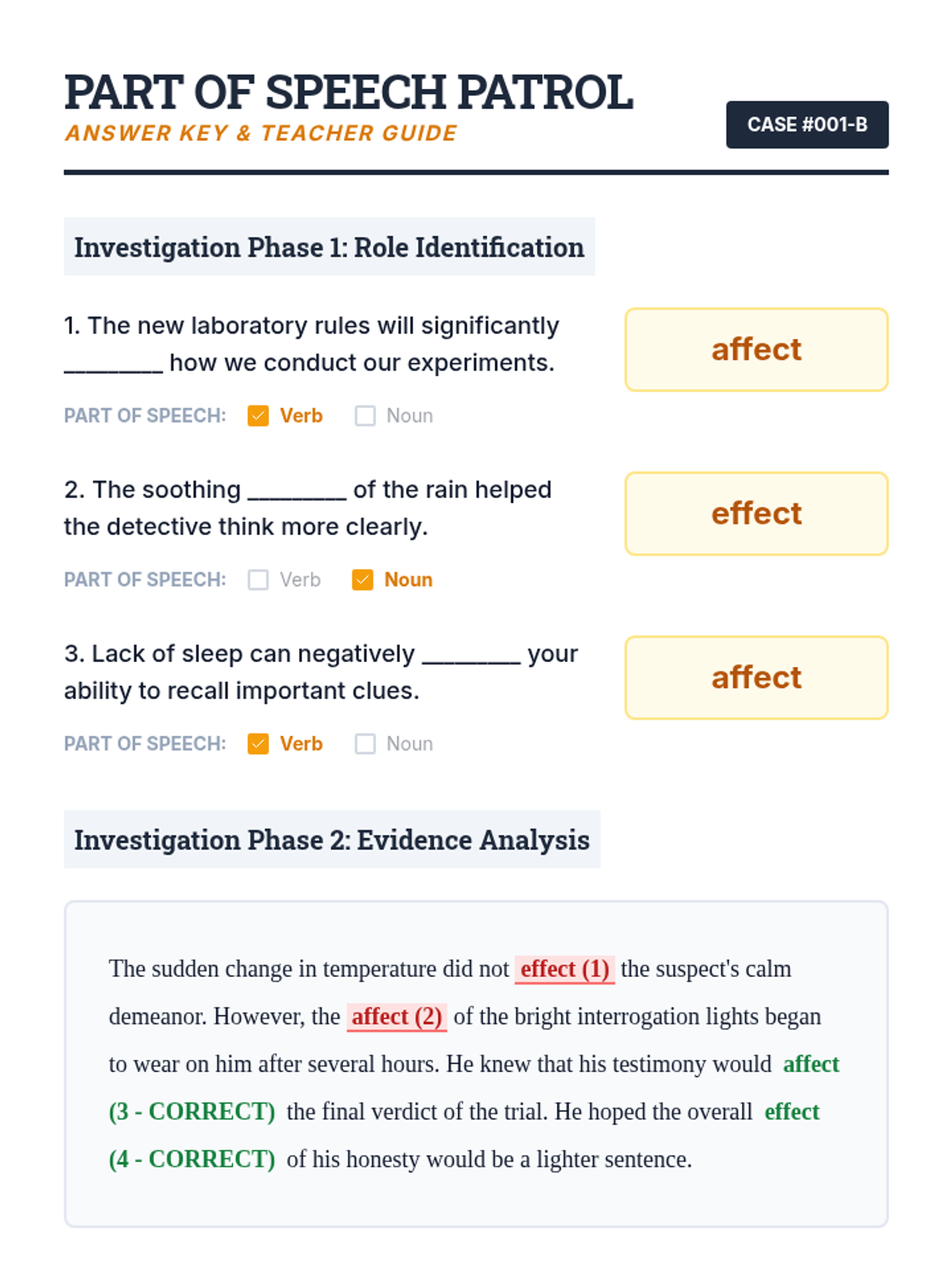
A rigorous, inquiry-based unit for 6th graders exploring how grammatical context and parts of speech dictate the spelling of homophones. Students analyze sentence structure, use replacement tests, and construct their own context-rich writing to master word choice.
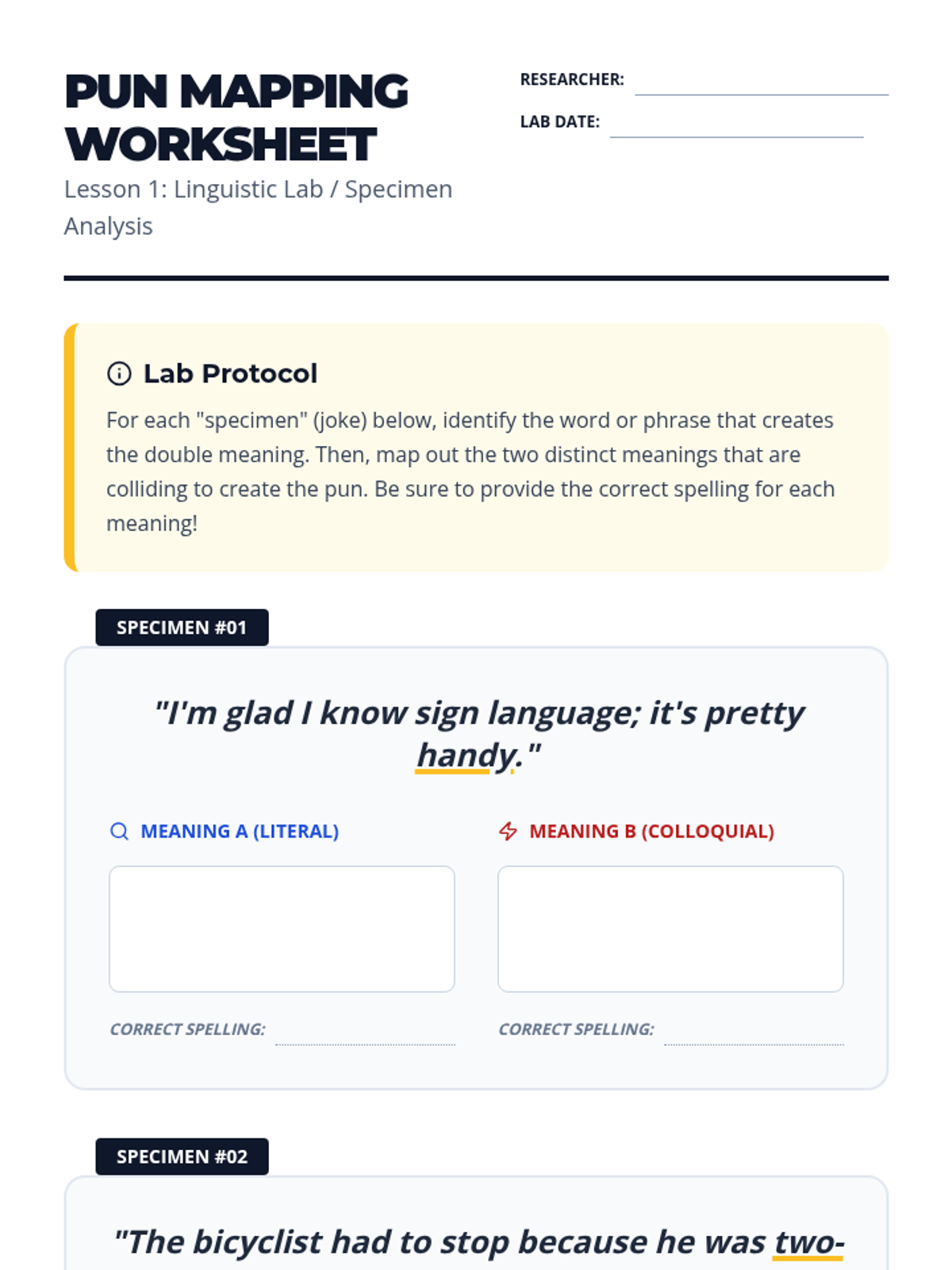
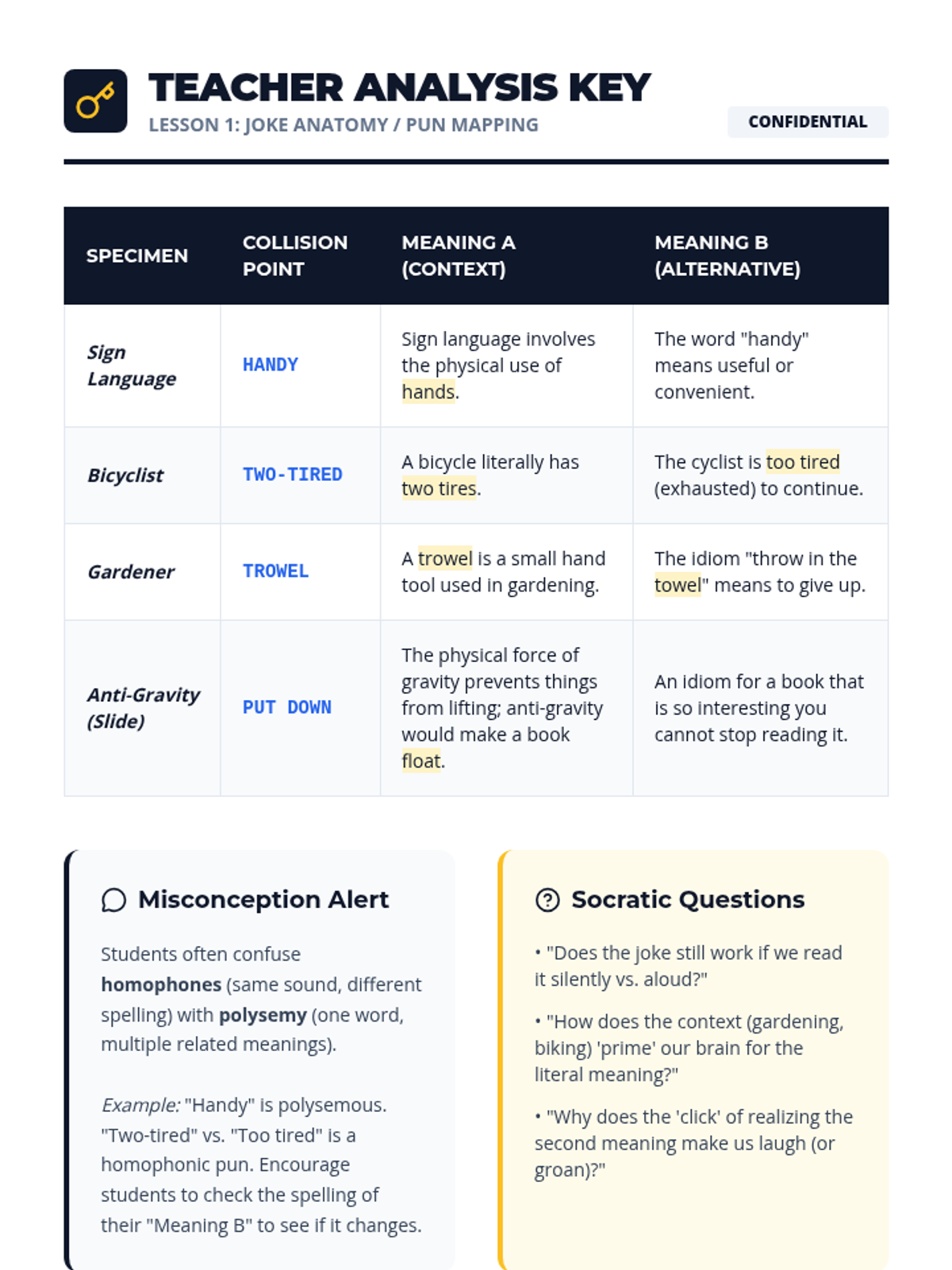
This sequence explores homophones and homonyms through the lens of humor and creative writing. Students move from analyzing simple puns to deconstructing literary wordplay in works by Shakespeare and Lewis Carroll, ultimately creating their own ambiguity-driven performances.
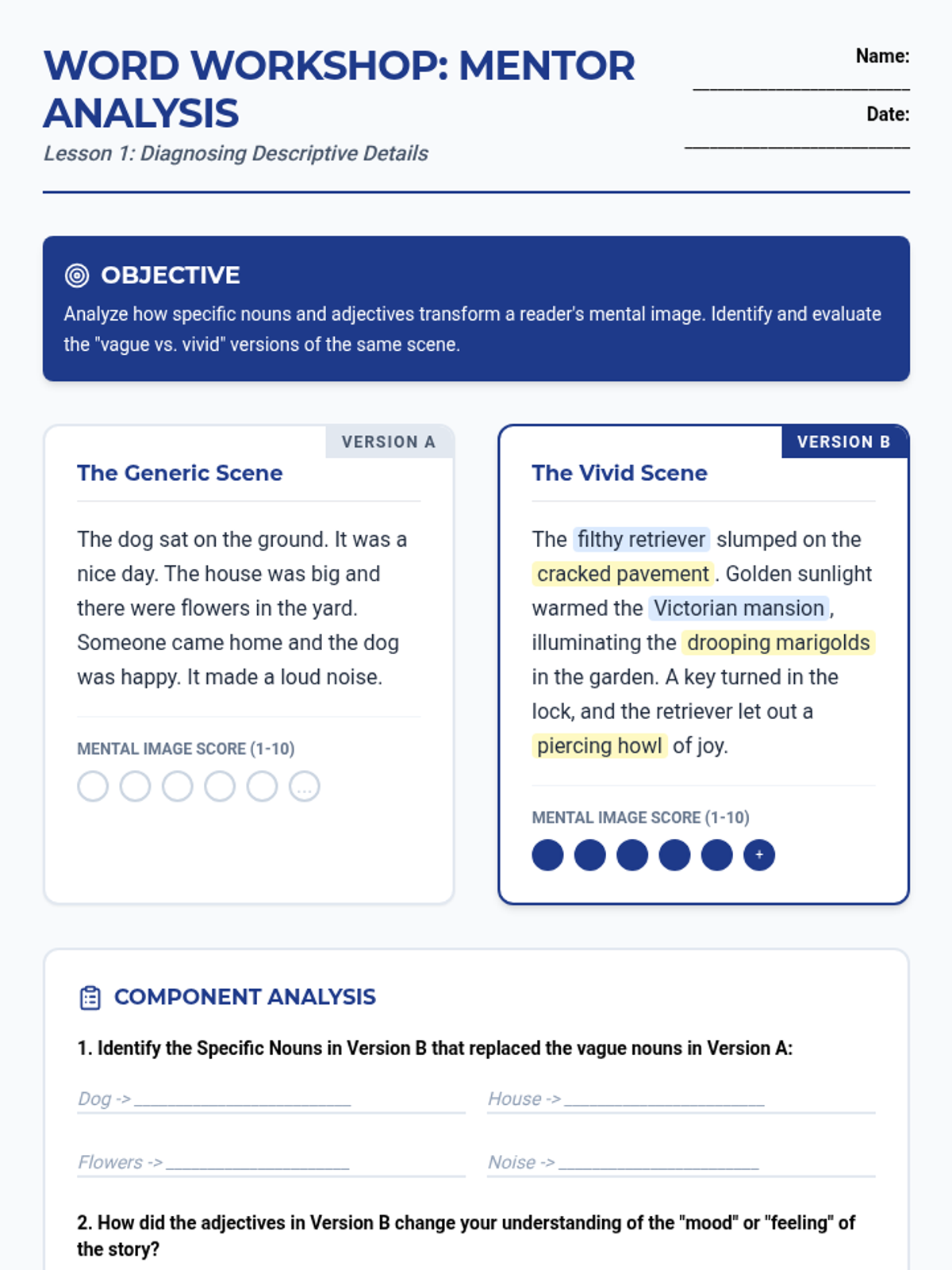
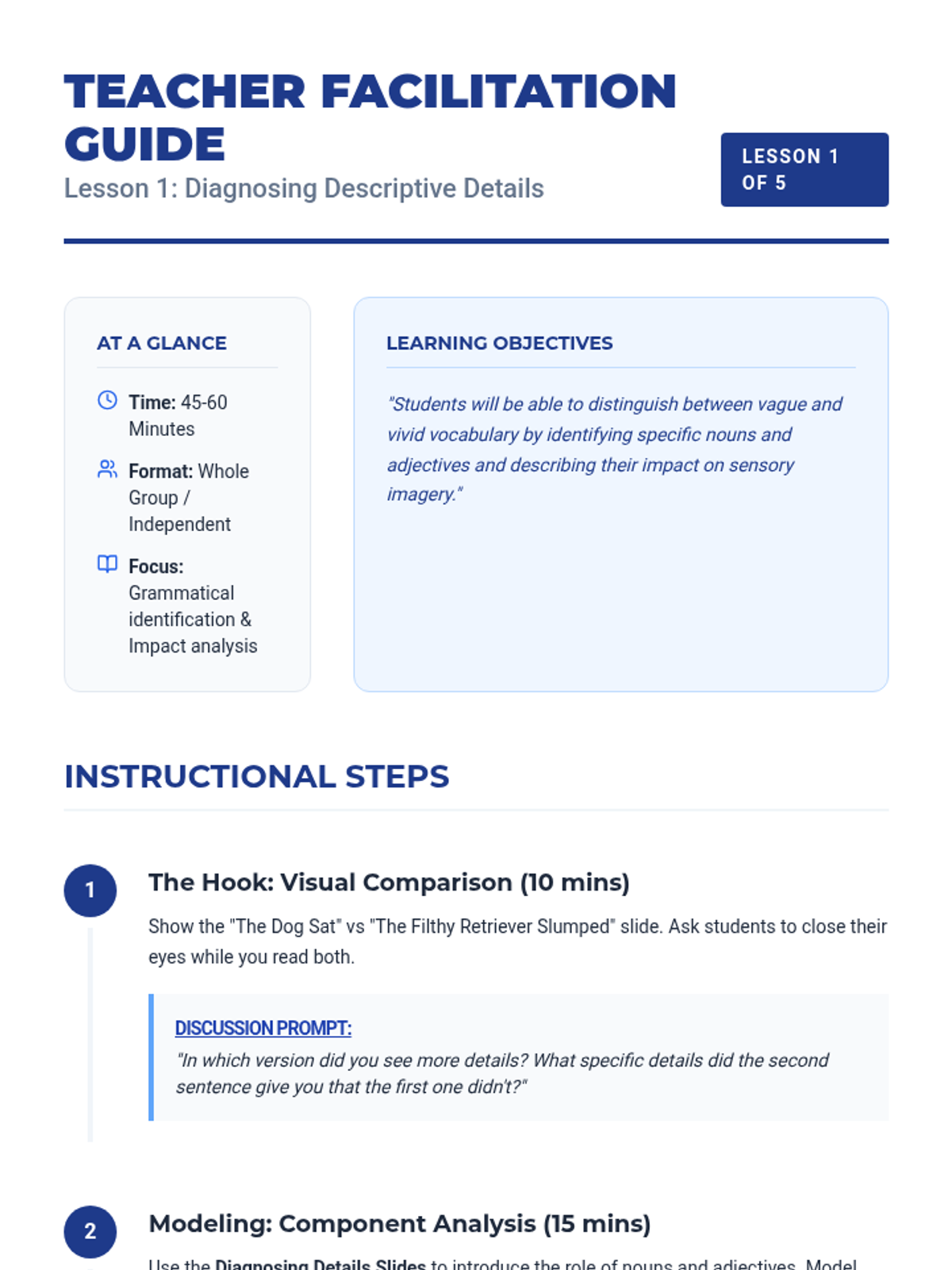
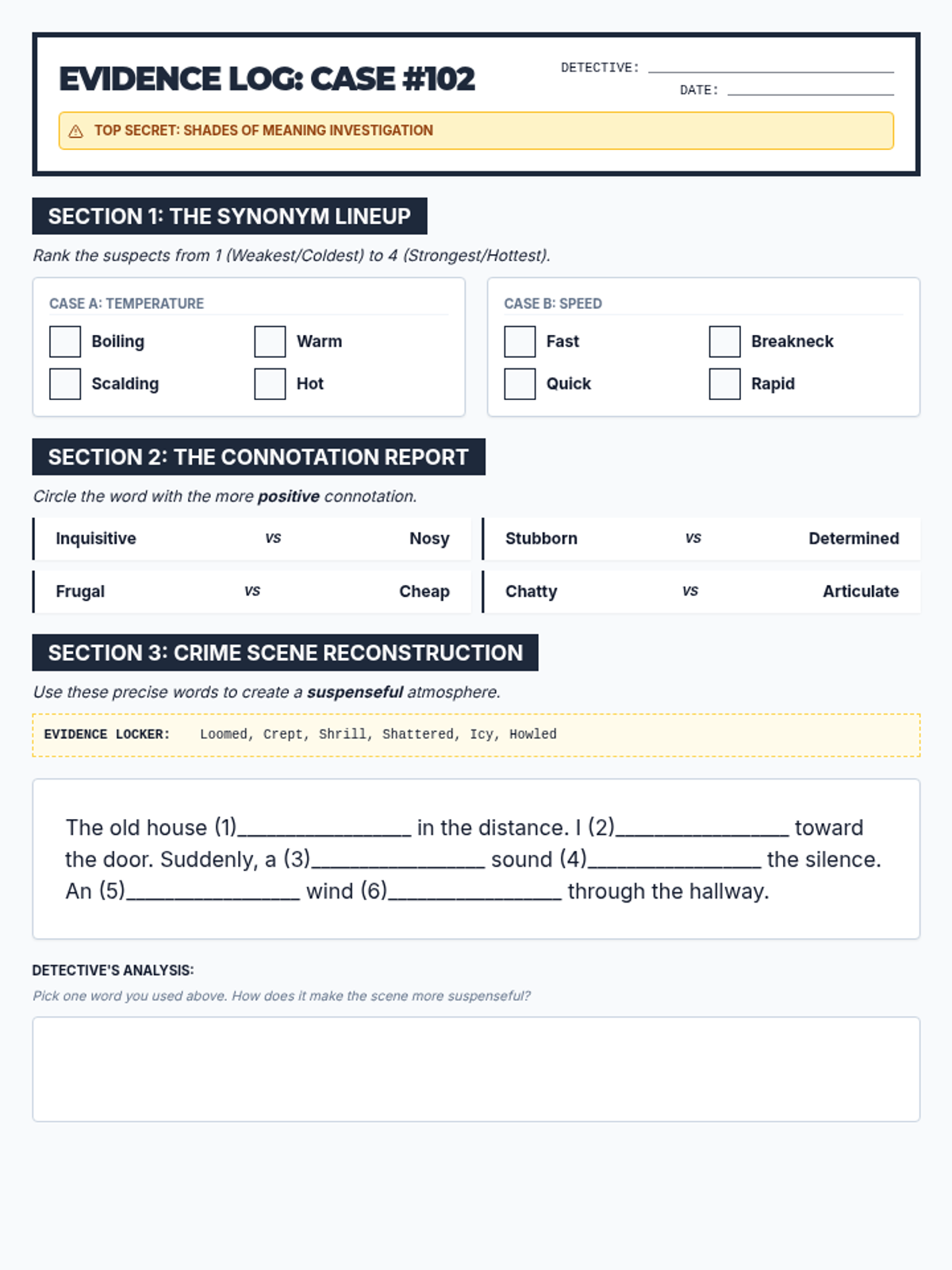
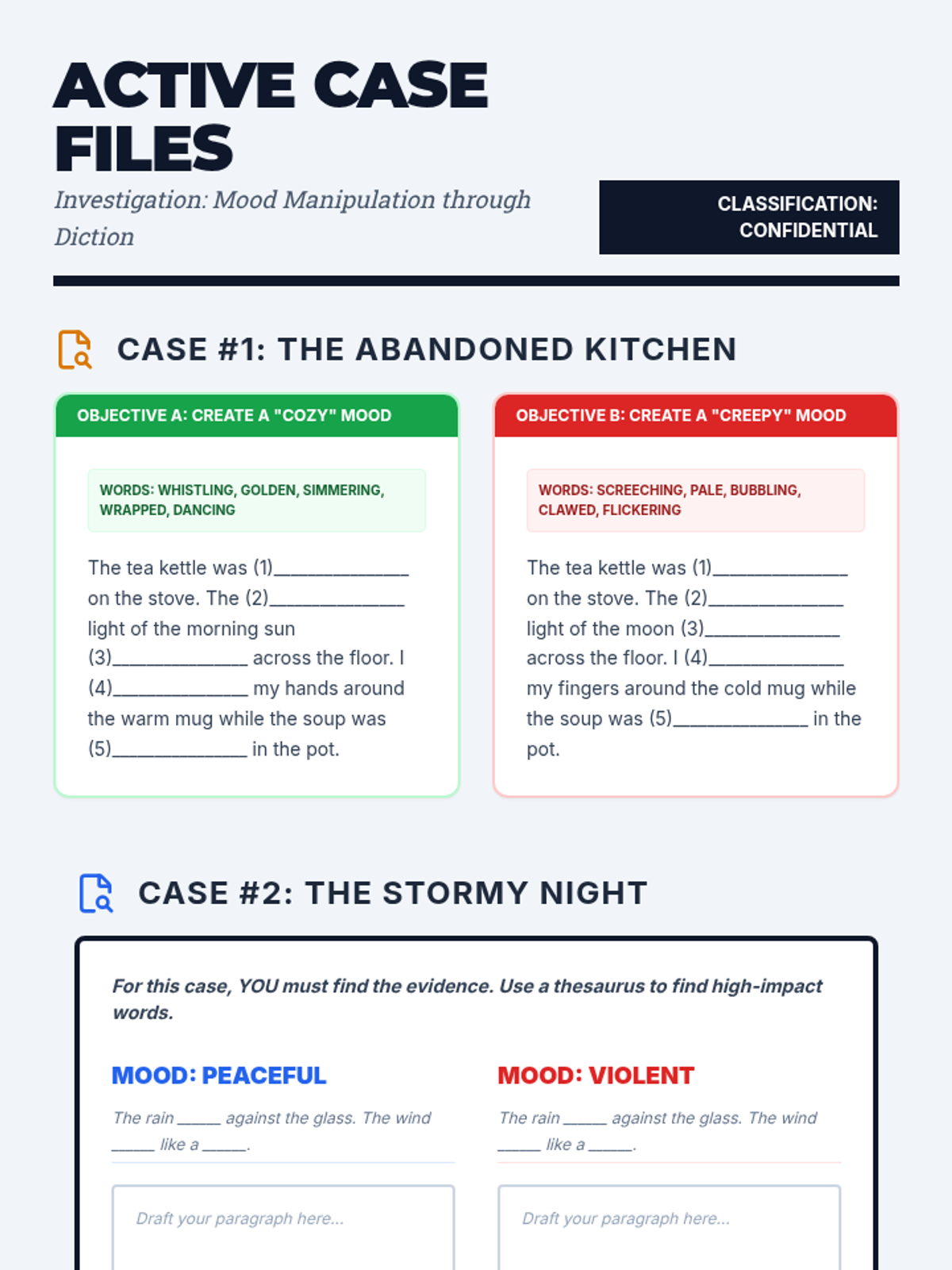
A 6th-grade ELA writing workshop sequence focused on vocabulary precision. Students learn to upgrade their descriptive writing by replacing vague generalities with concrete nouns and nuanced adjectives, culminating in a polished descriptive vignette.
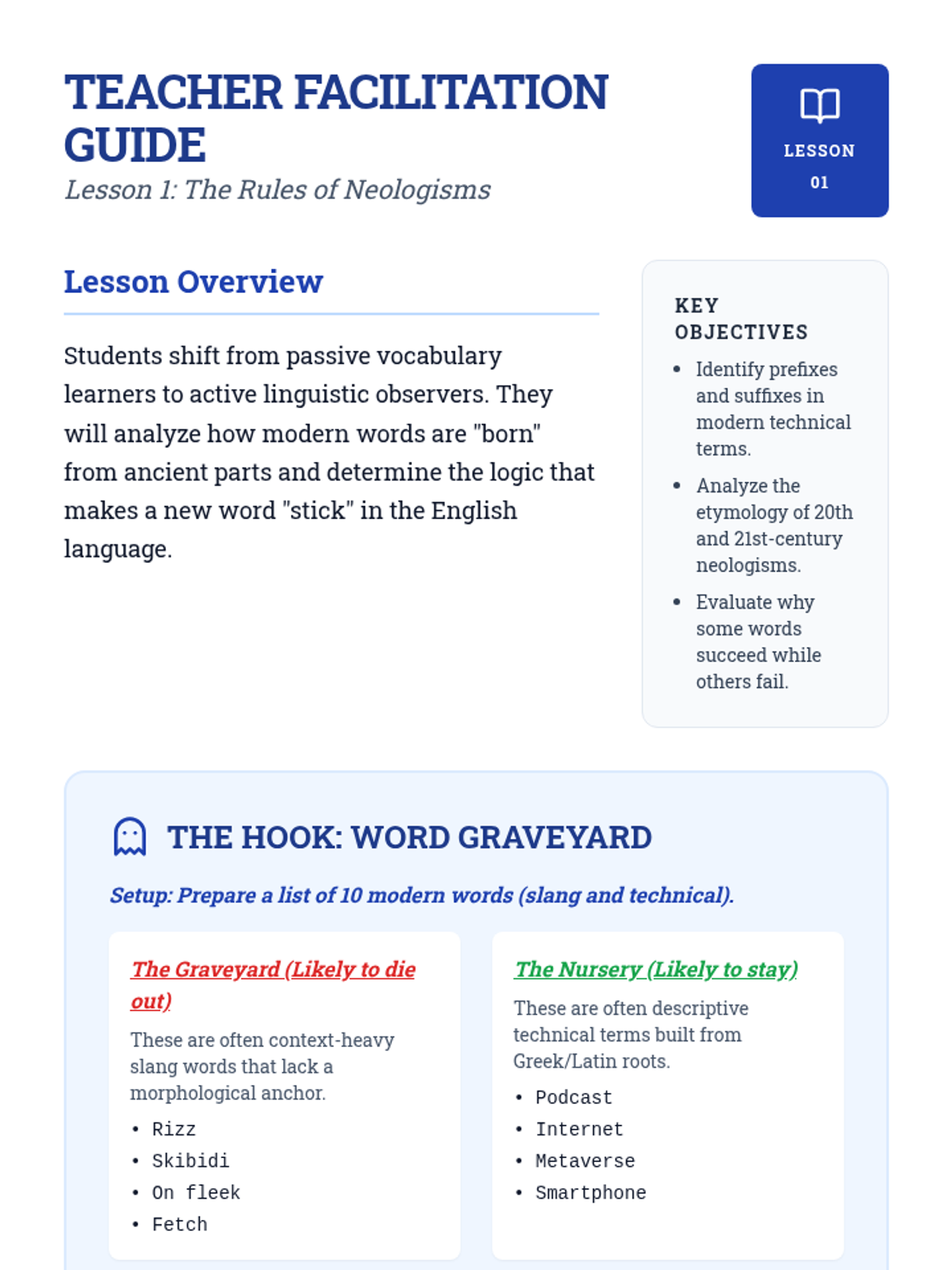
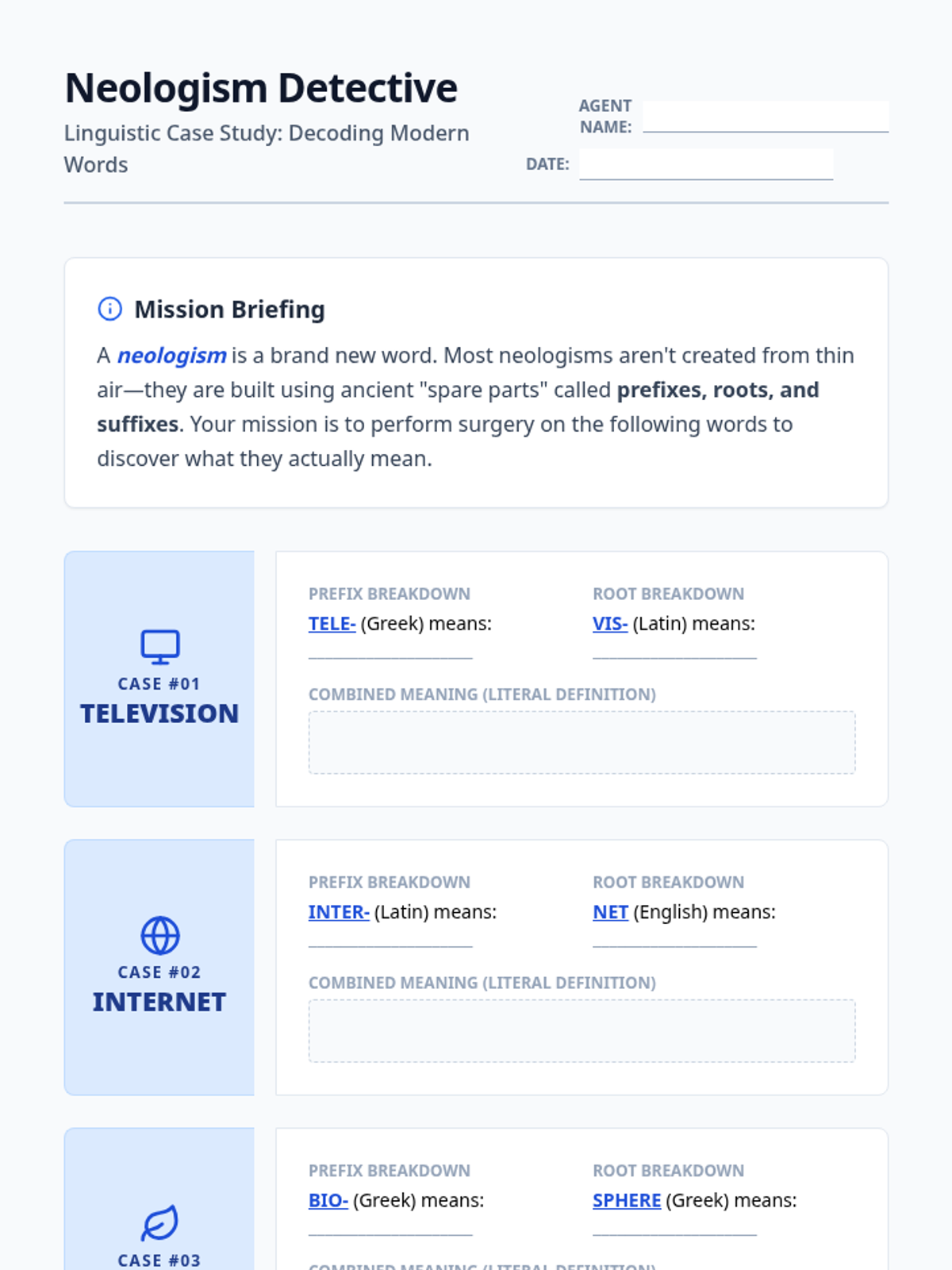
A project-based ELA sequence where 6th-grade students analyze the morphology of English, use affixes to create neologisms, and pitch inventions named using linguistic rules.
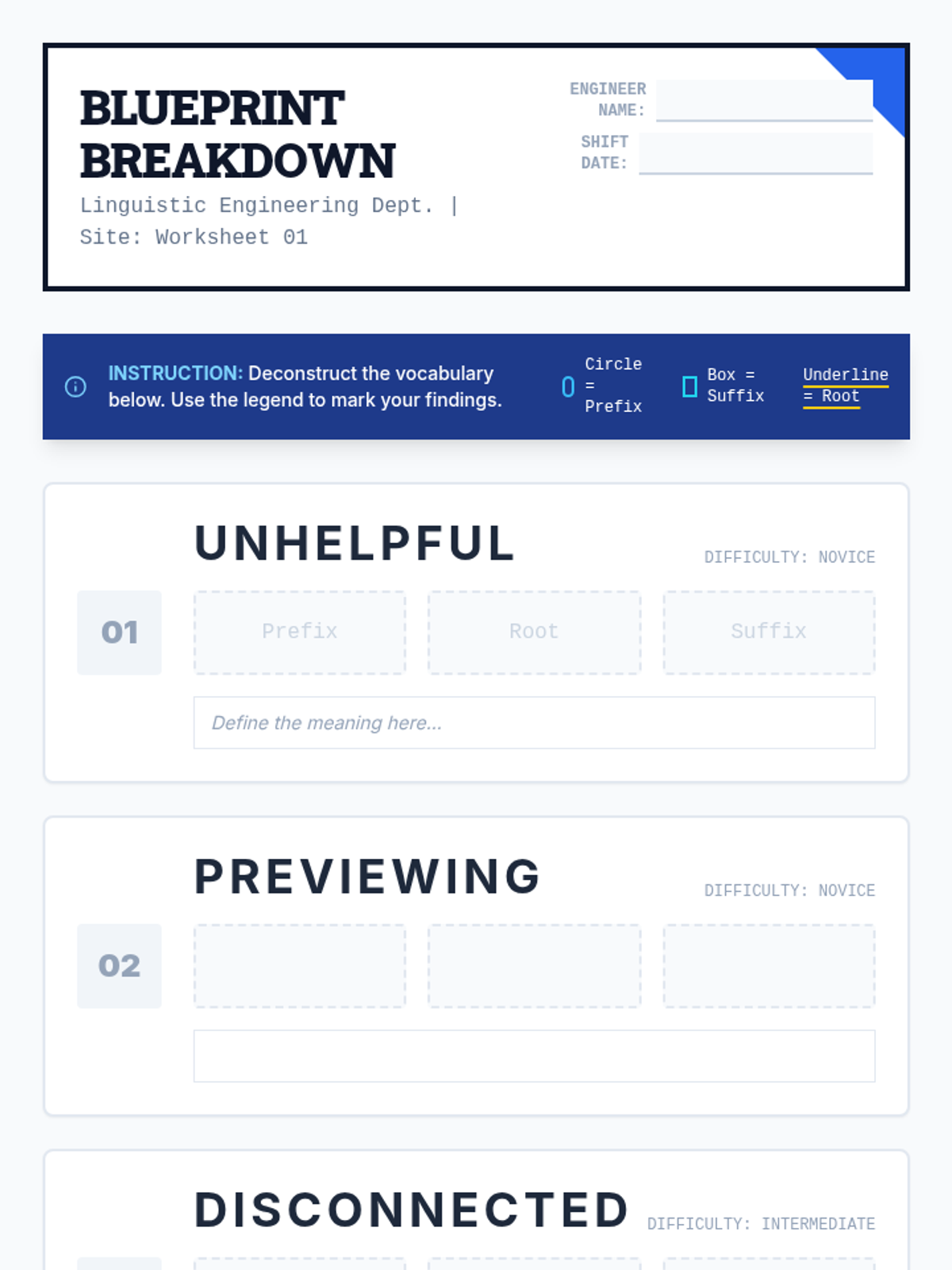
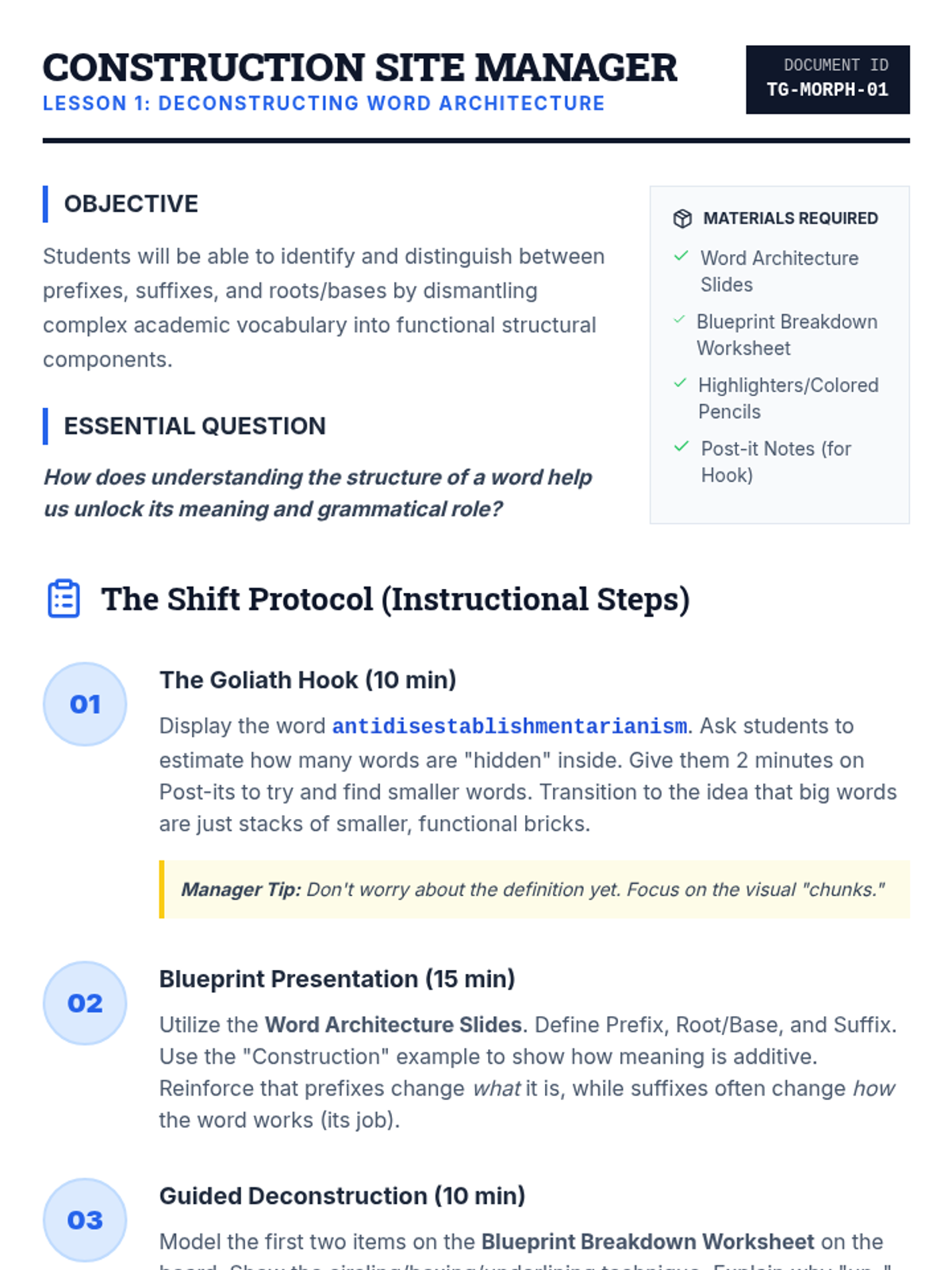
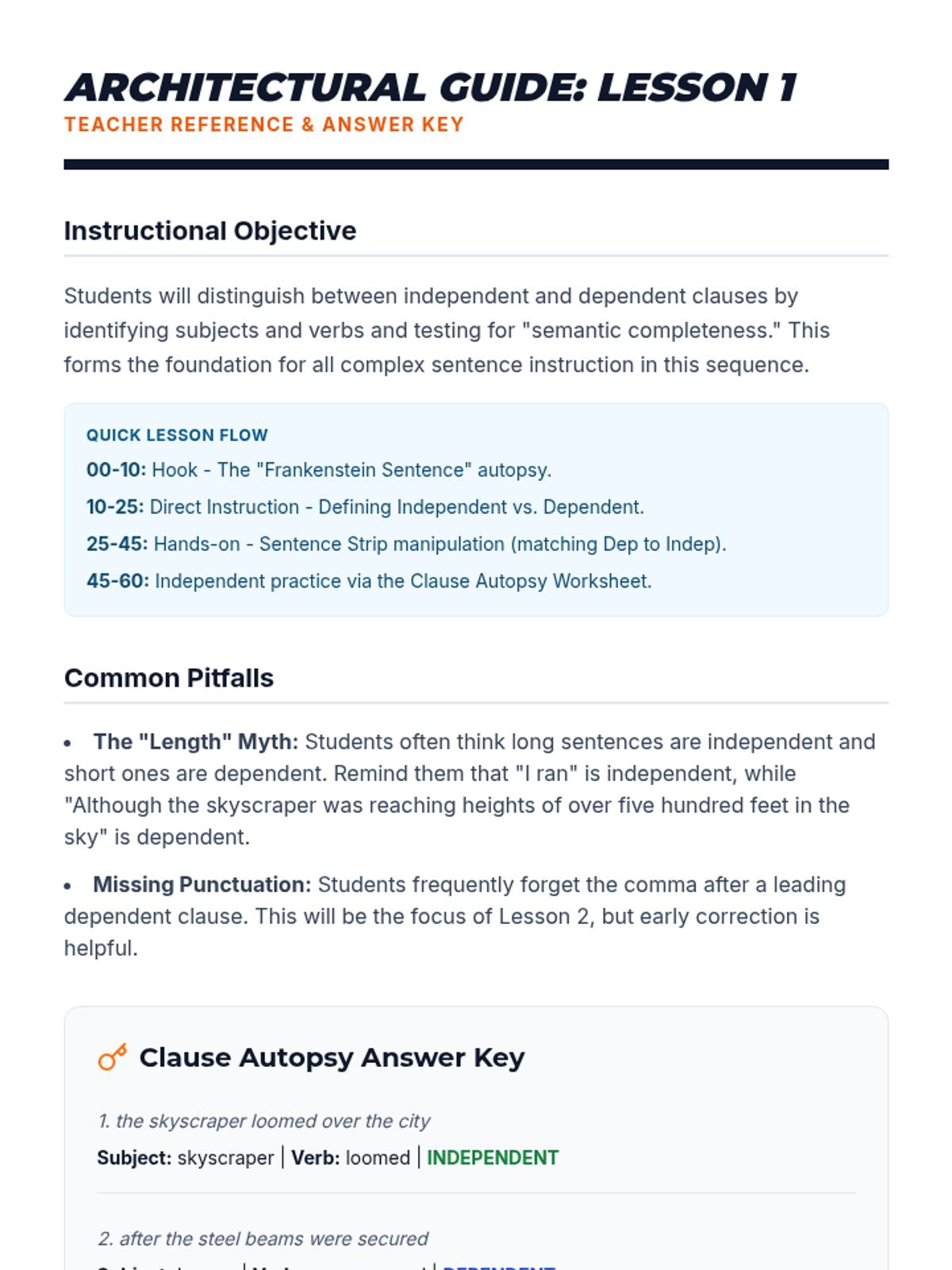
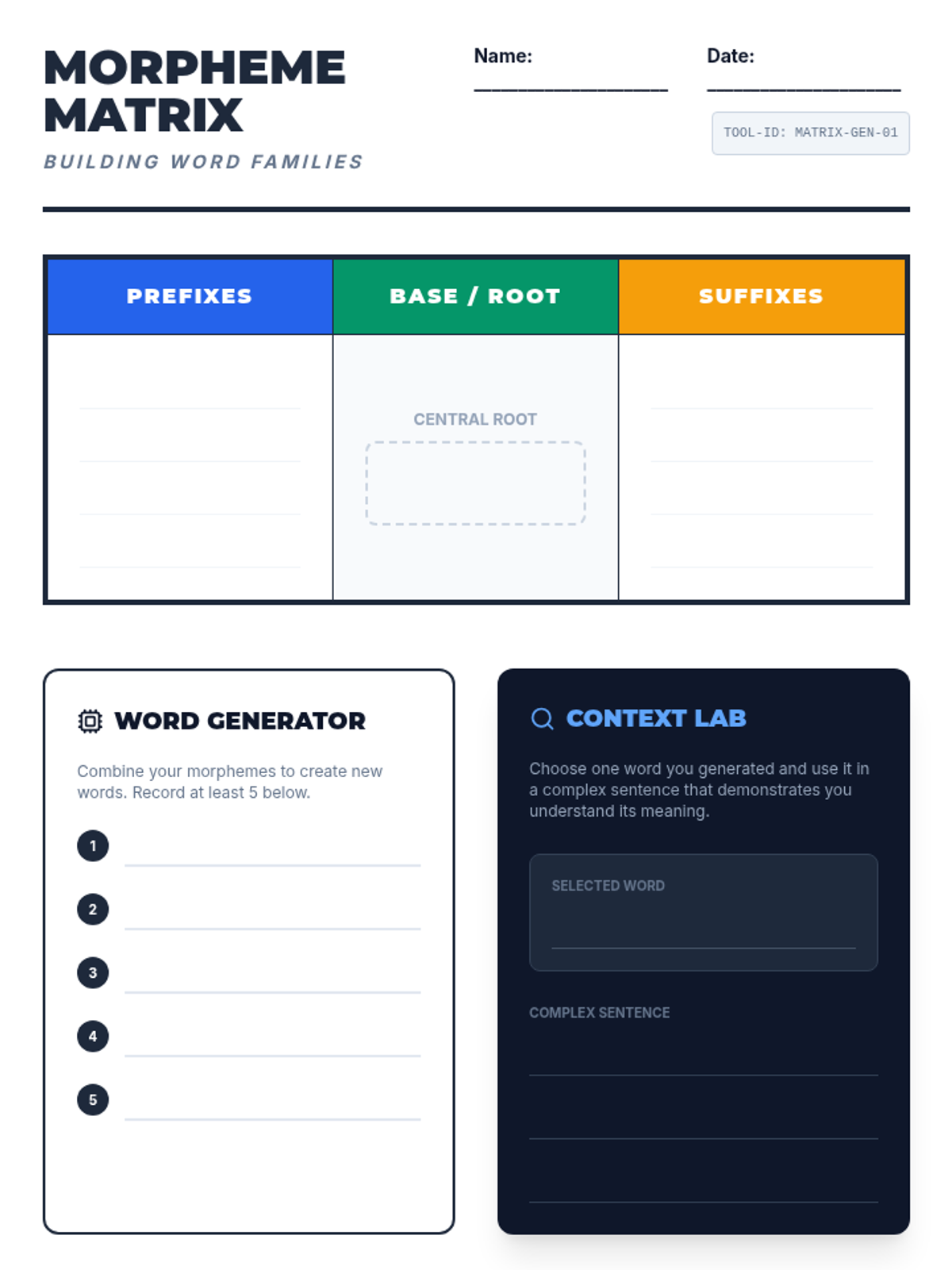
A comprehensive sequence for 6th-grade students exploring word morphology through an architectural lens. Students learn to dismantle and assemble words using prefixes, roots, and suffixes to unlock meaning and grammatical function.
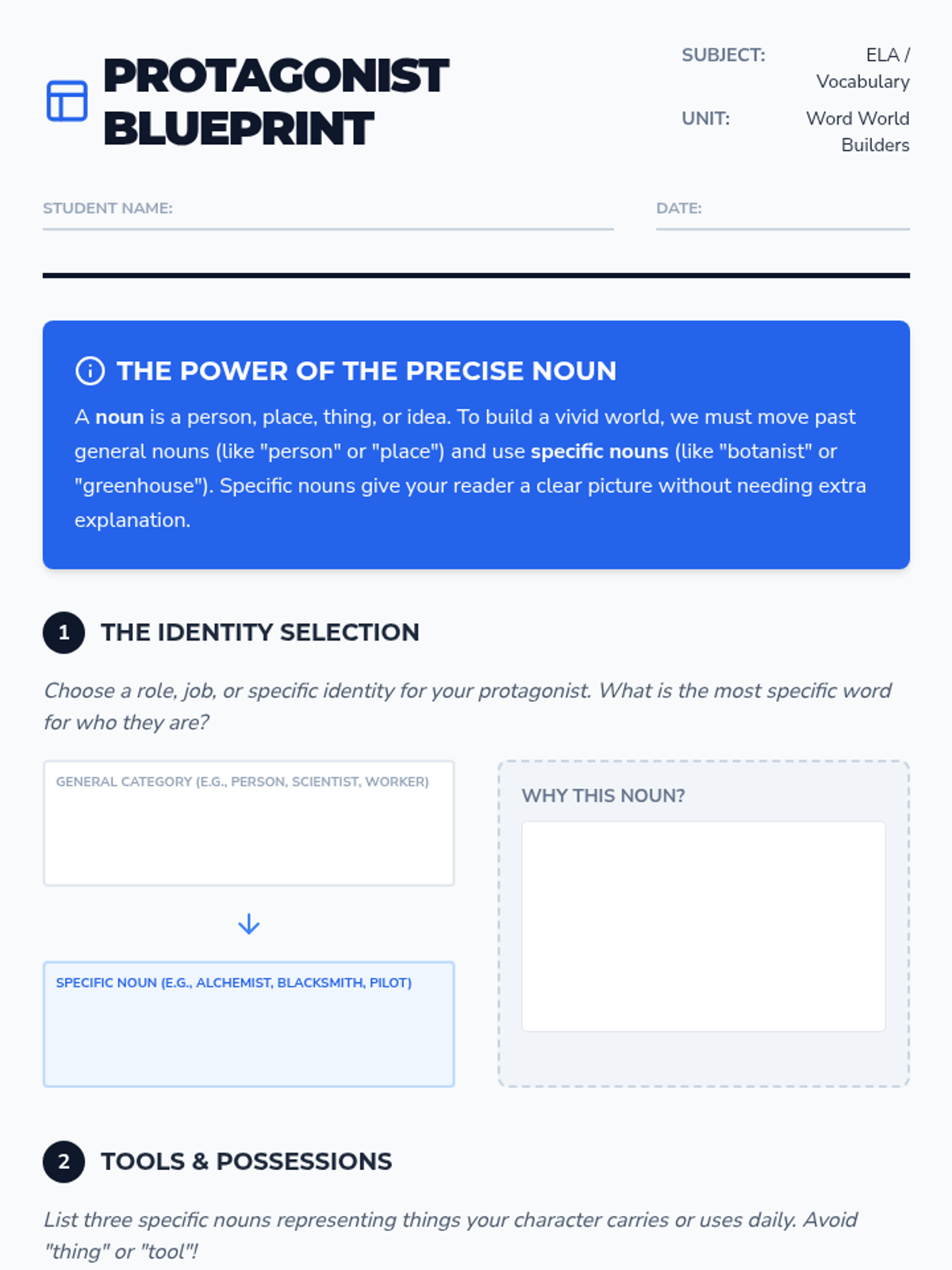
Students embark on a journey of fictional world-building, using precise nouns and vivid adjectives as their primary tools. They move from character identity to atmospheric settings, eventually crafting a polished narrative passage that demonstrates the power of descriptive imagery.
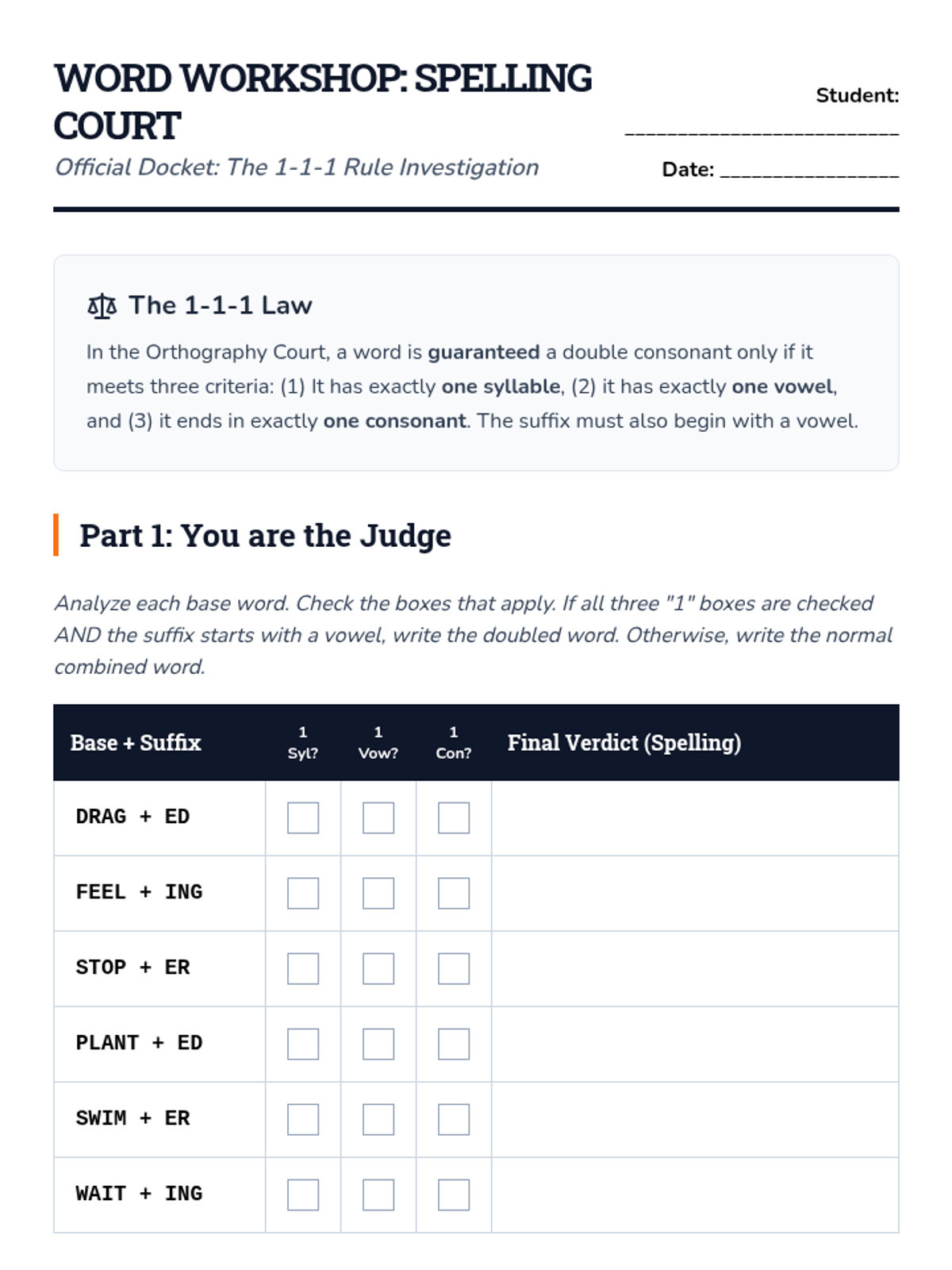
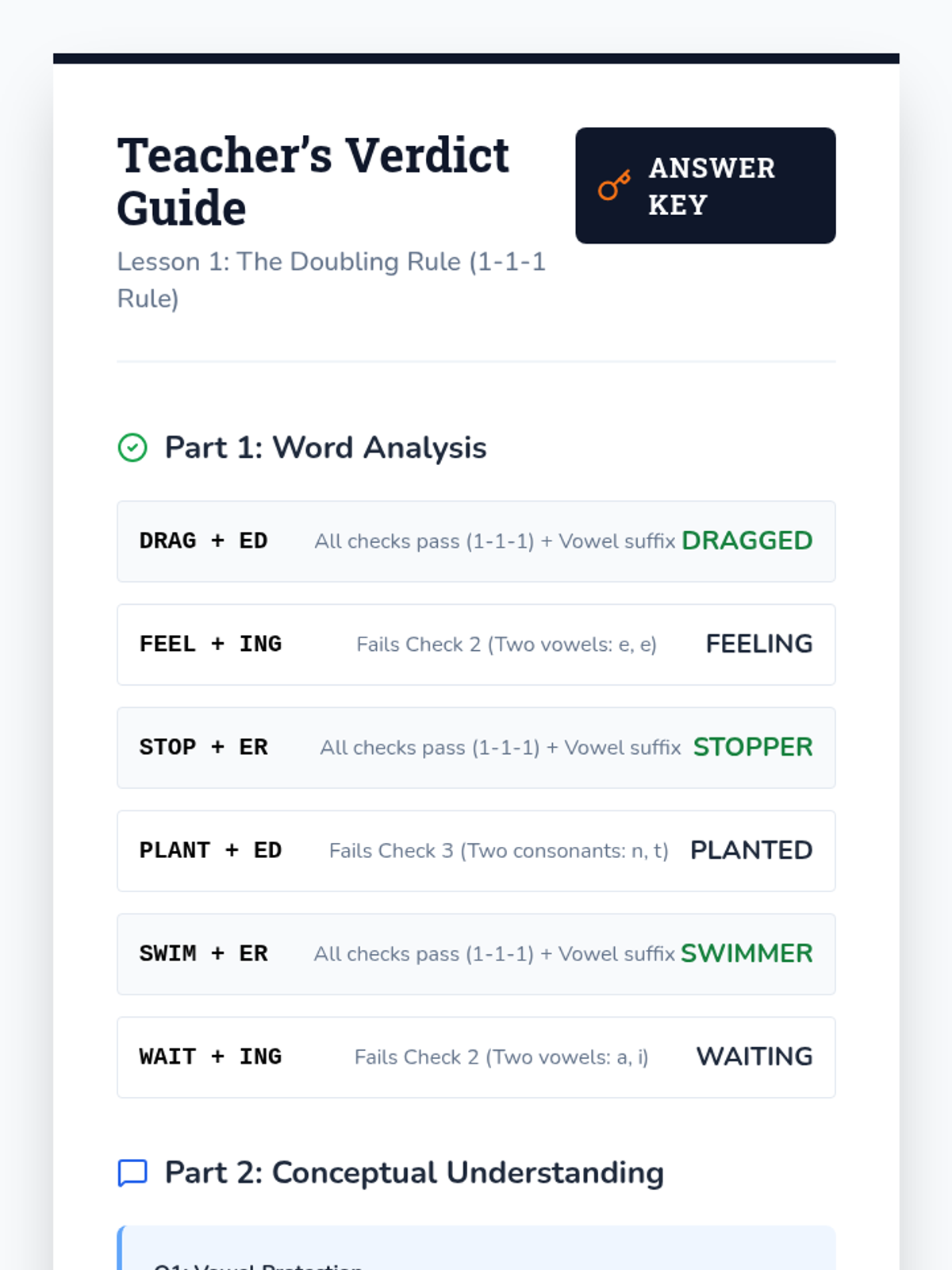
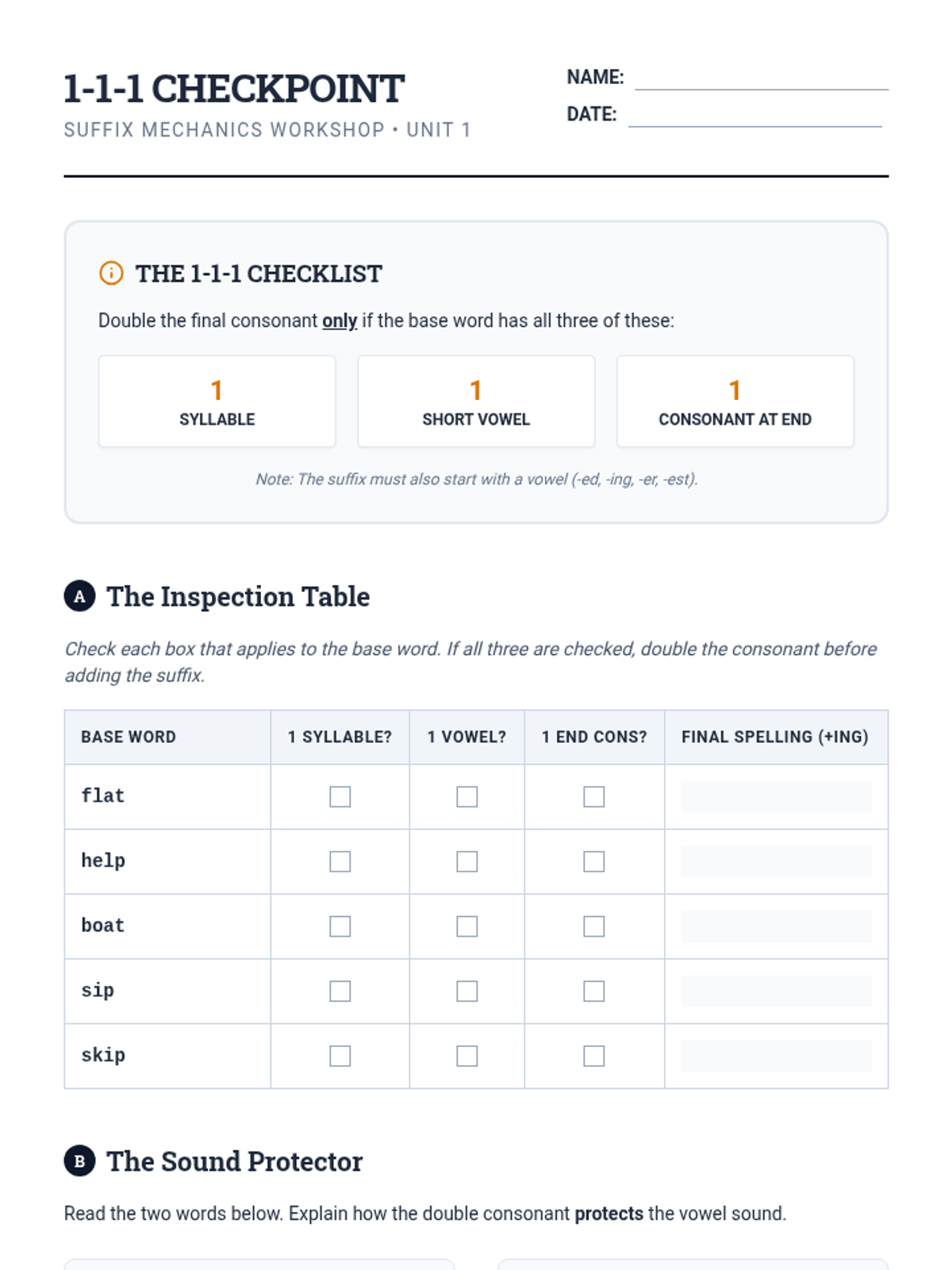
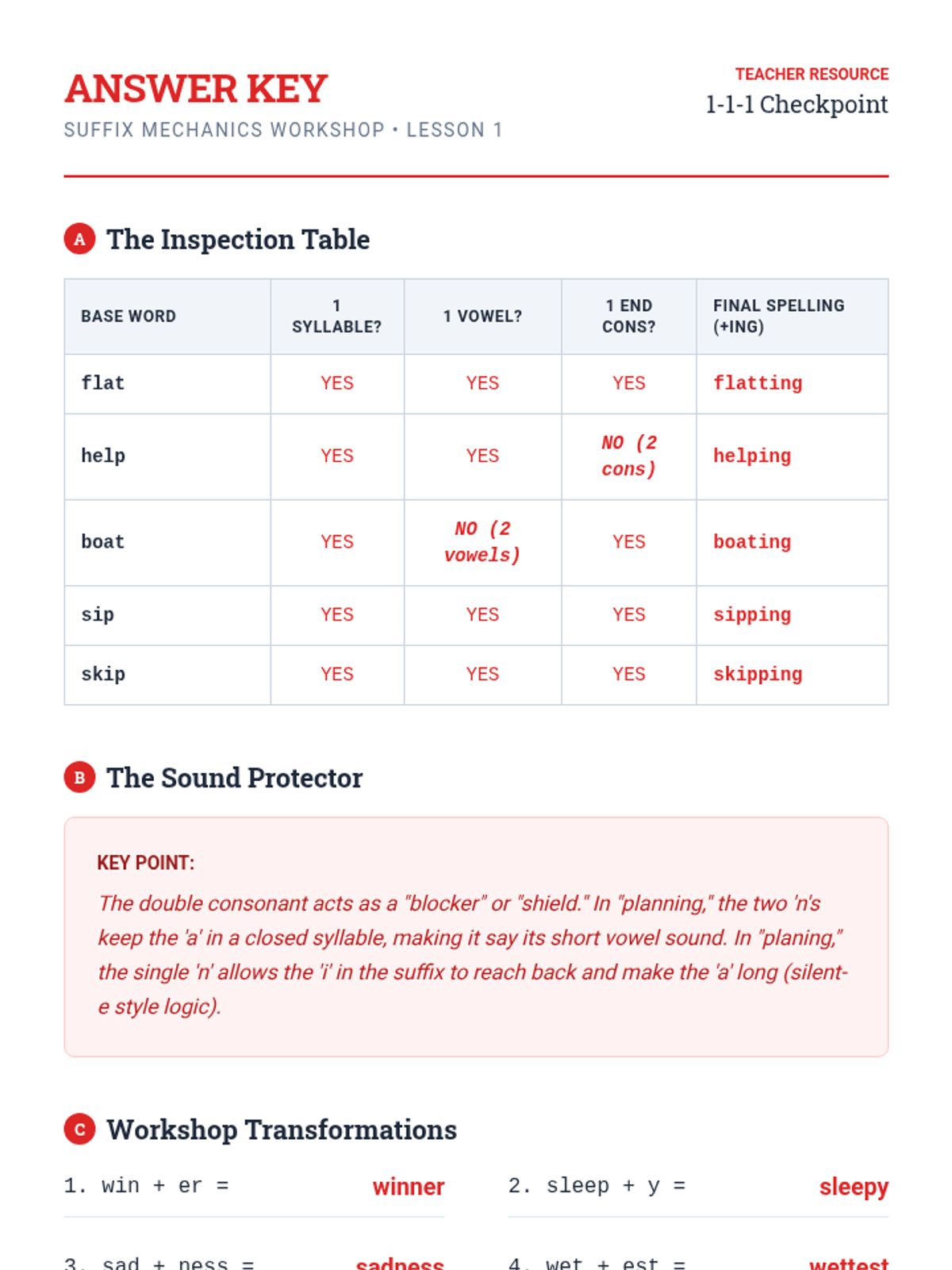
This sequence explores the orthographic transformations of base words when suffixes are added, focusing on the doubling rule, silent E, changing Y to I, and complex plurals. Students move from isolated practice to real-world editing through a workshop-themed approach.
A systematic study of suffix orthography rules including the 1-1-1 rule, silent e, changing y to i, and irregular plurals. Students learn the logic behind spelling changes to preserve vowel sounds and apply these rules in a final workshop.
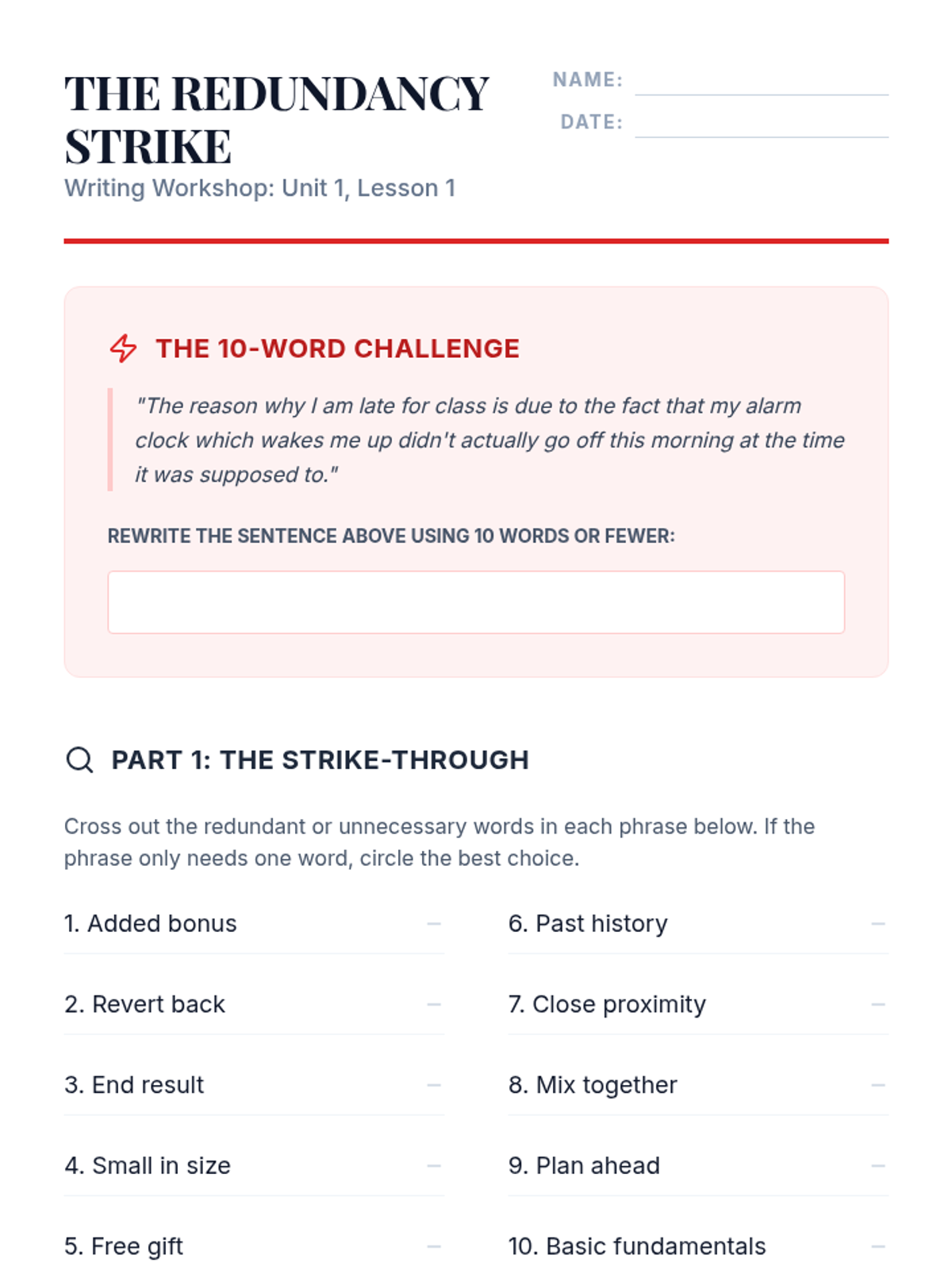
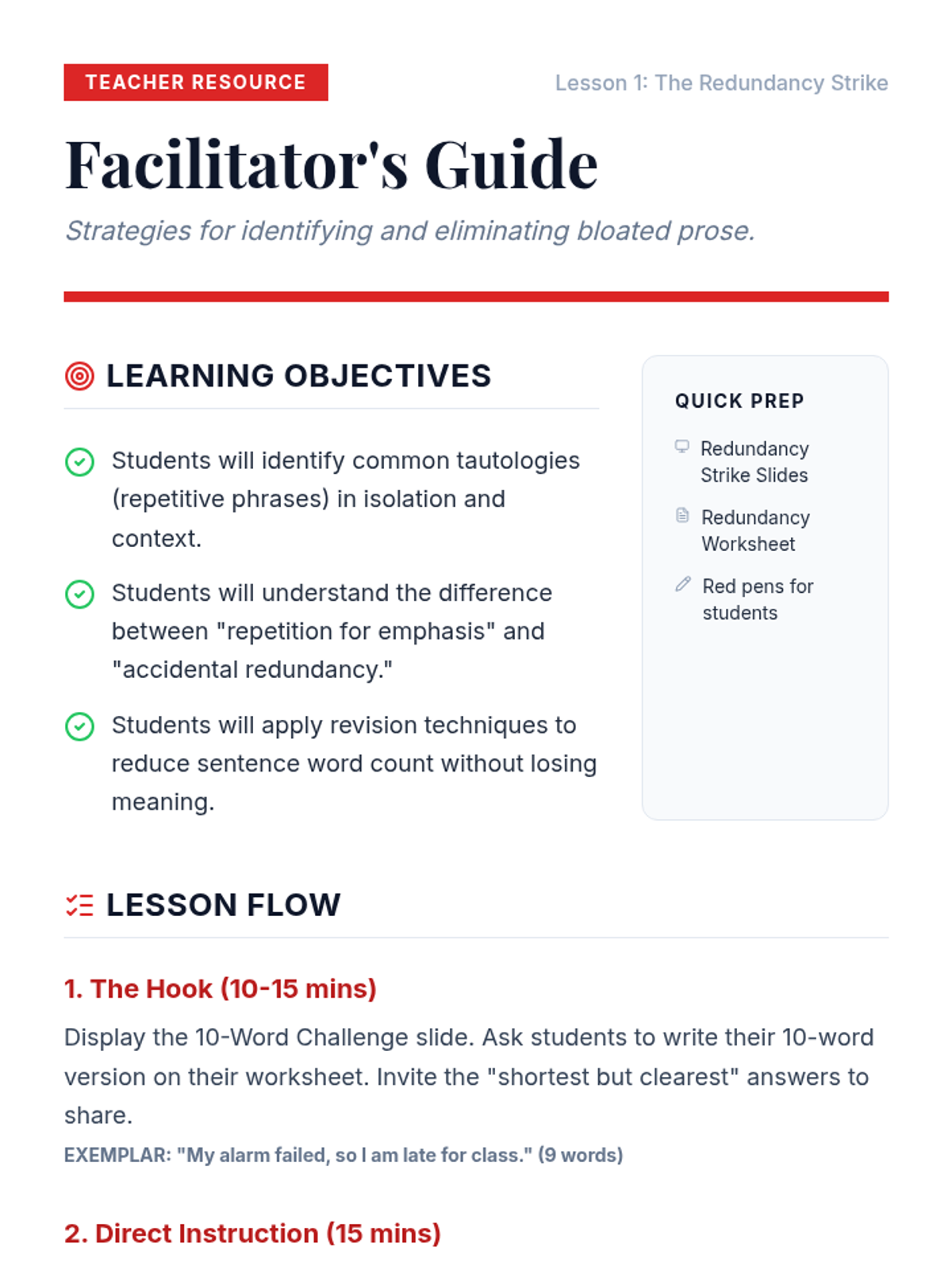
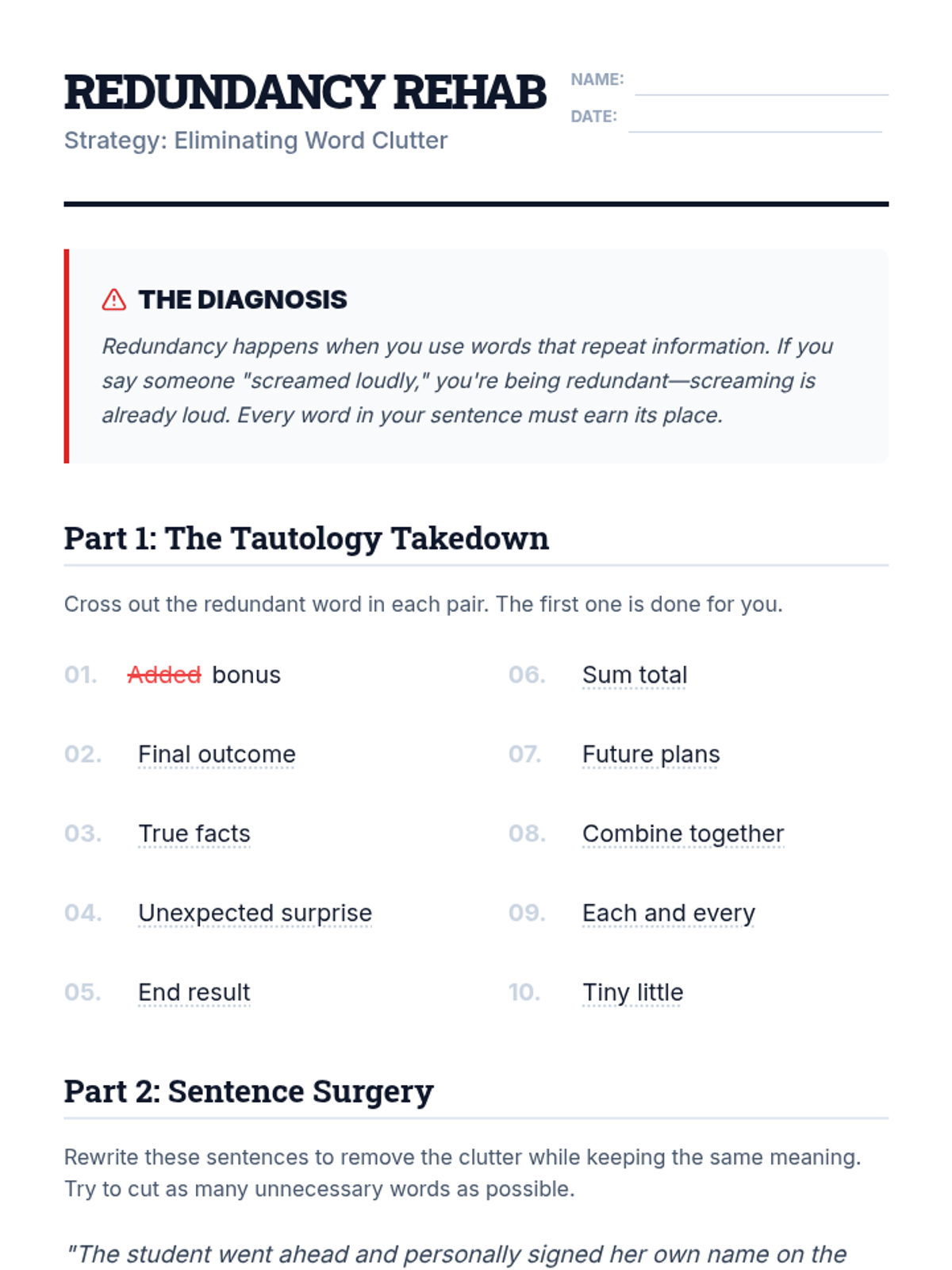
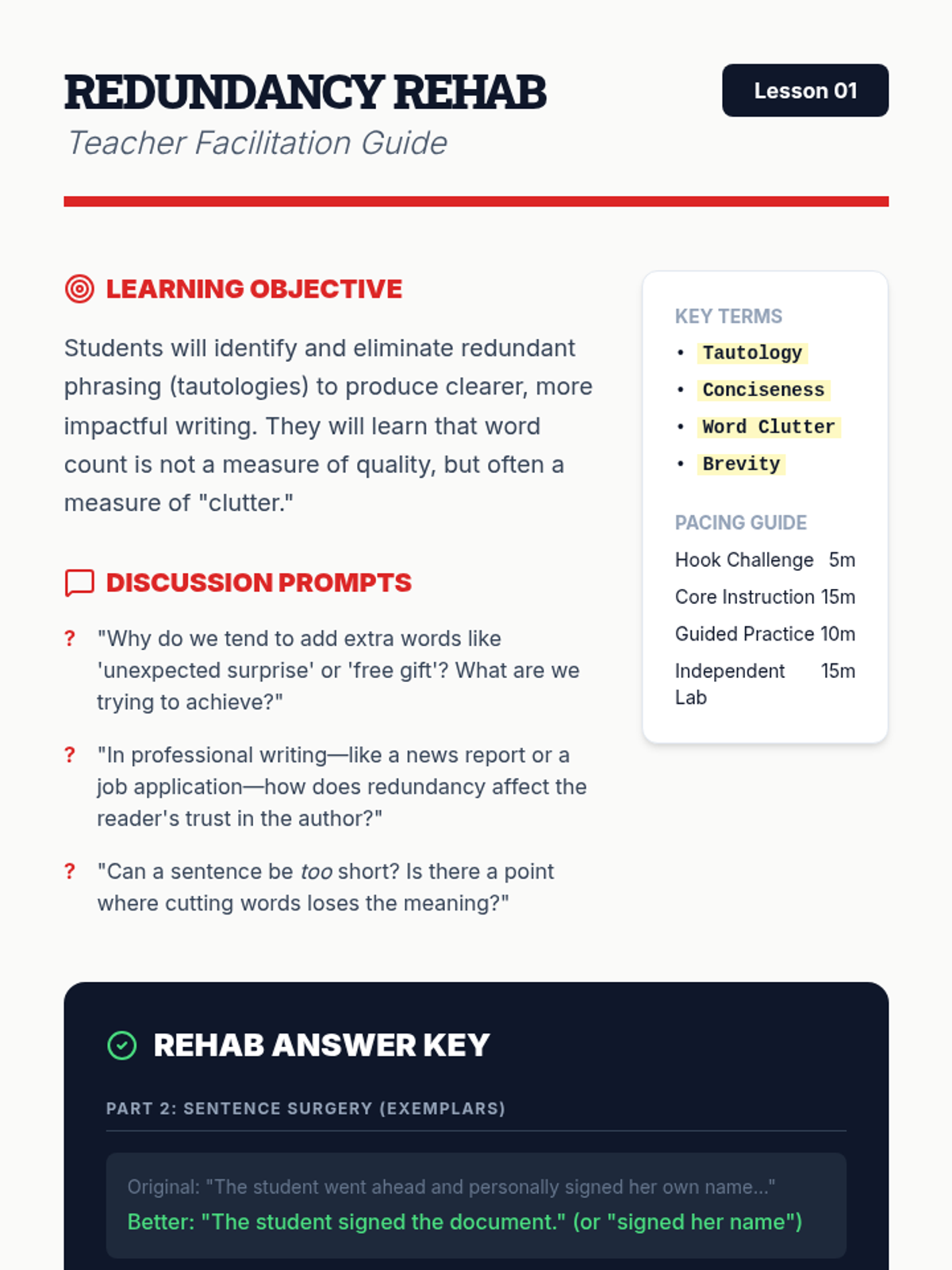
This sequence focuses on the foundational skills of word economy and vocabulary selection, teaching students to identify redundancies and replace vague language with precise alternatives. Learners will progress from sentence-level edits to full-text revision, transforming bloated prose into sharp, impactful writing.
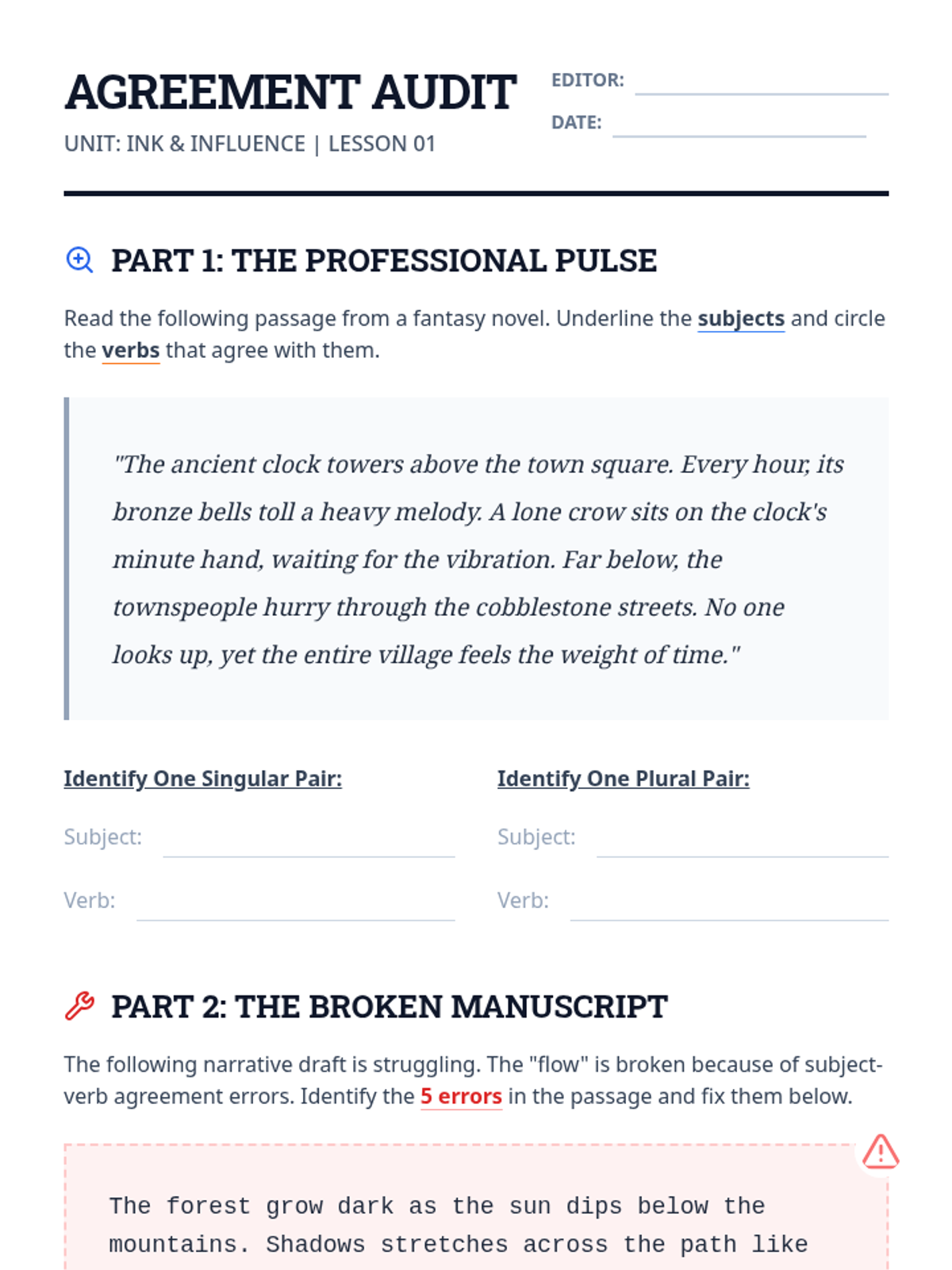
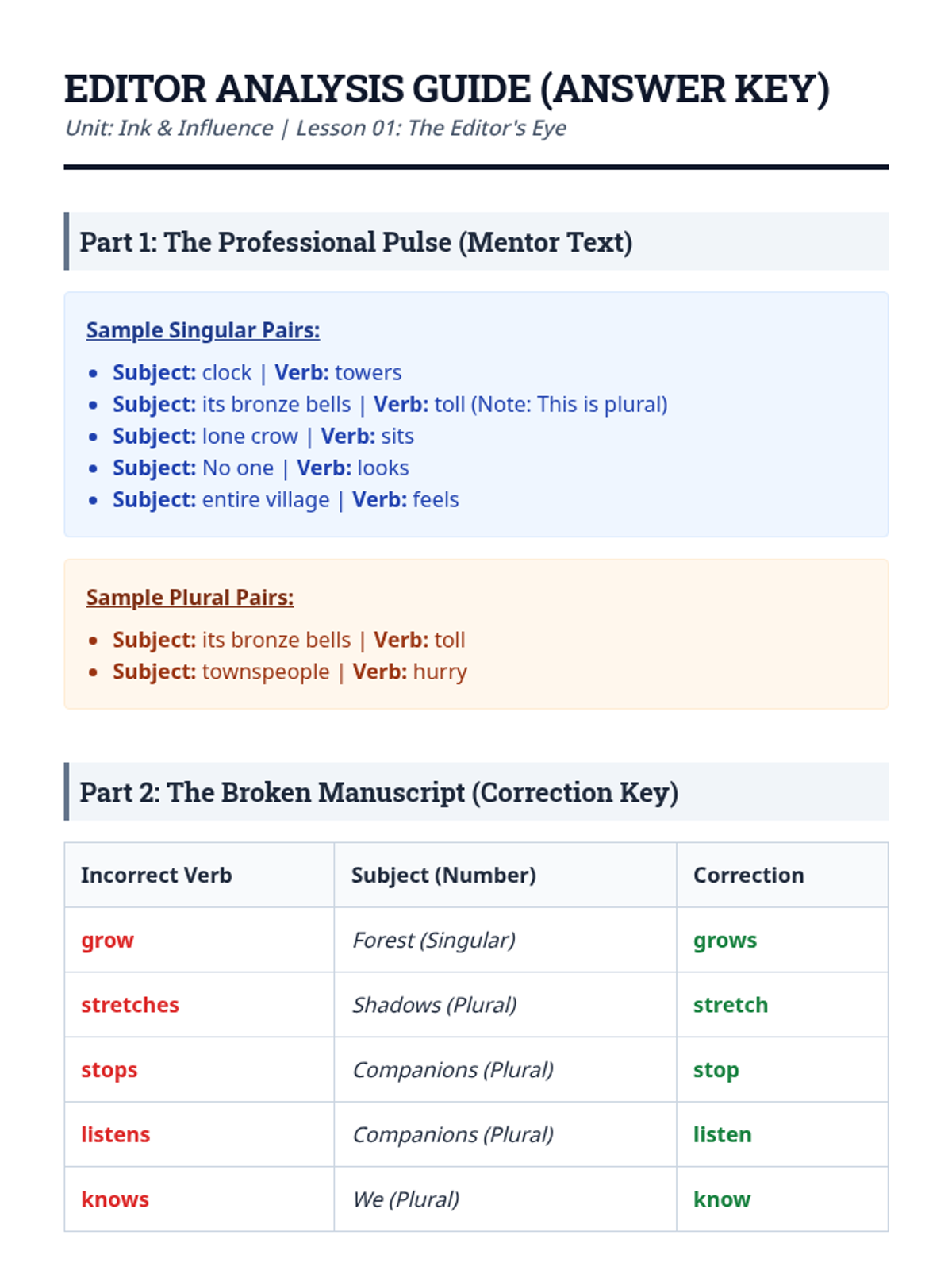
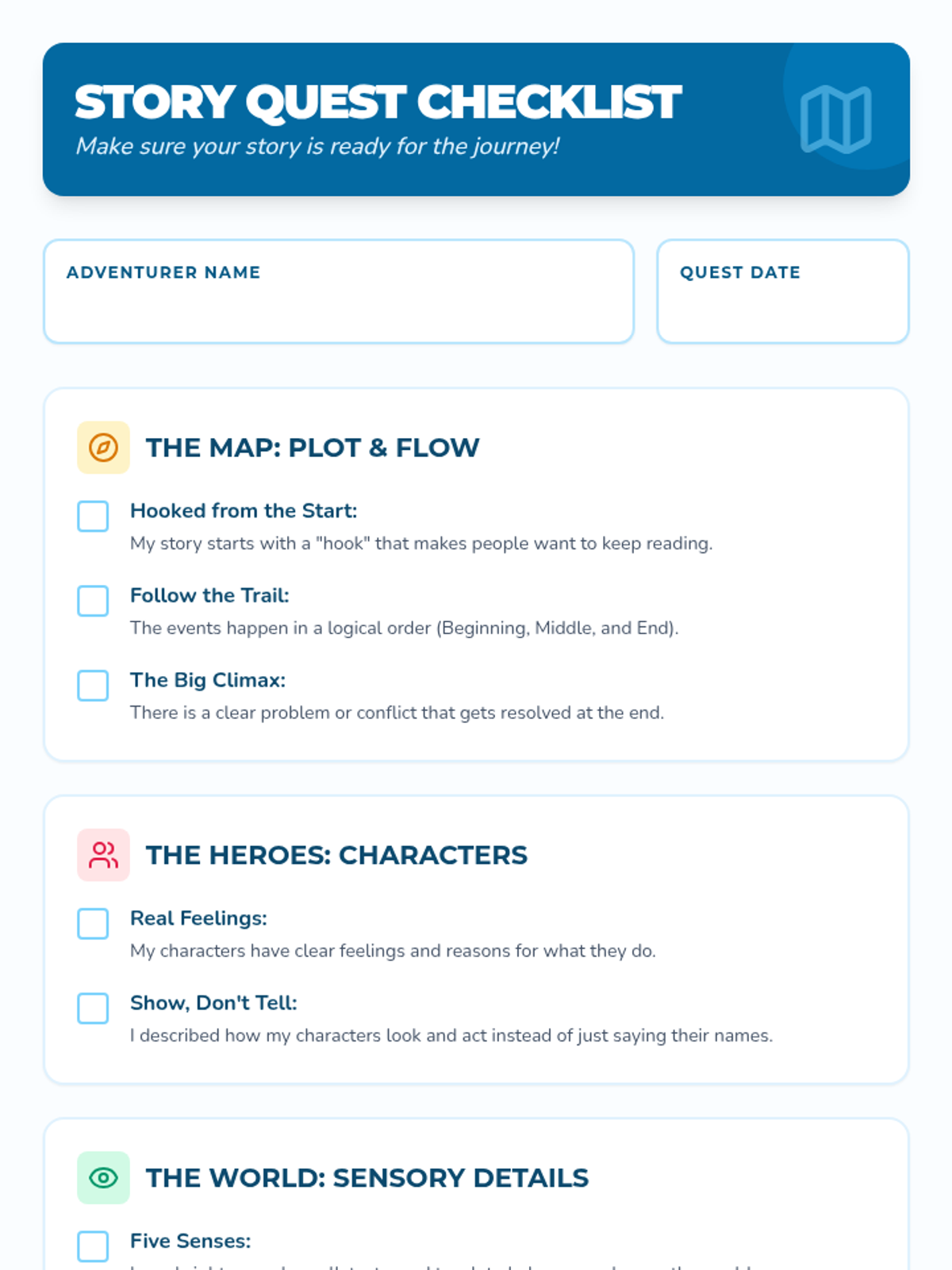
A 6th-grade ELA unit that integrates subject-verb agreement instruction into narrative writing. Students explore how grammatical precision enhances story flow and readability through mentor texts, drafting exercises with compound subjects and collective nouns, and peer review.
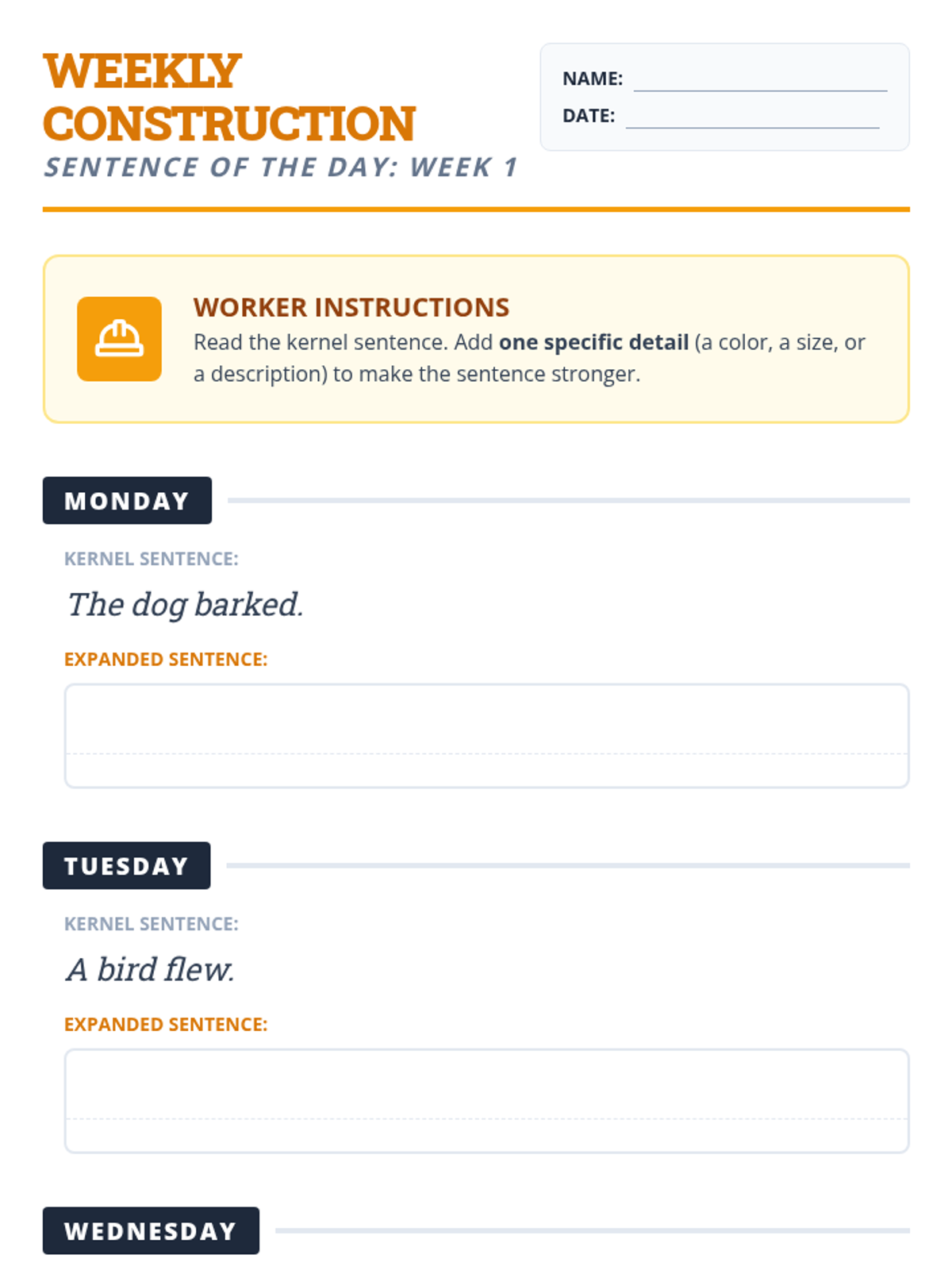
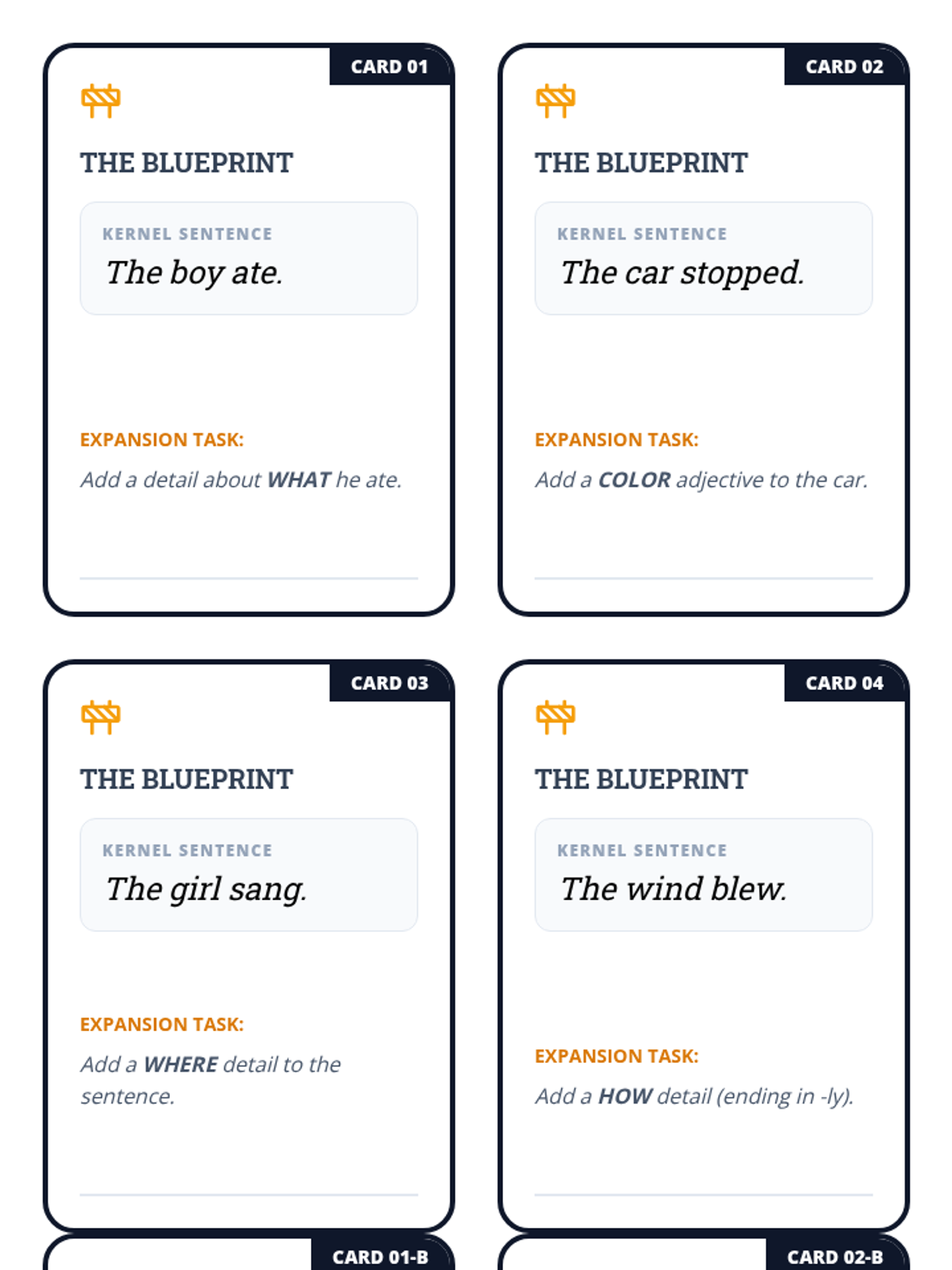
A comprehensive sequence focused on sentence expansion using the Hochman Method (The Writing Revolution). Students move from distinguishing fragments to expanding kernel sentences with 'Who, What, Where, When, Why' and logical conjunctions.
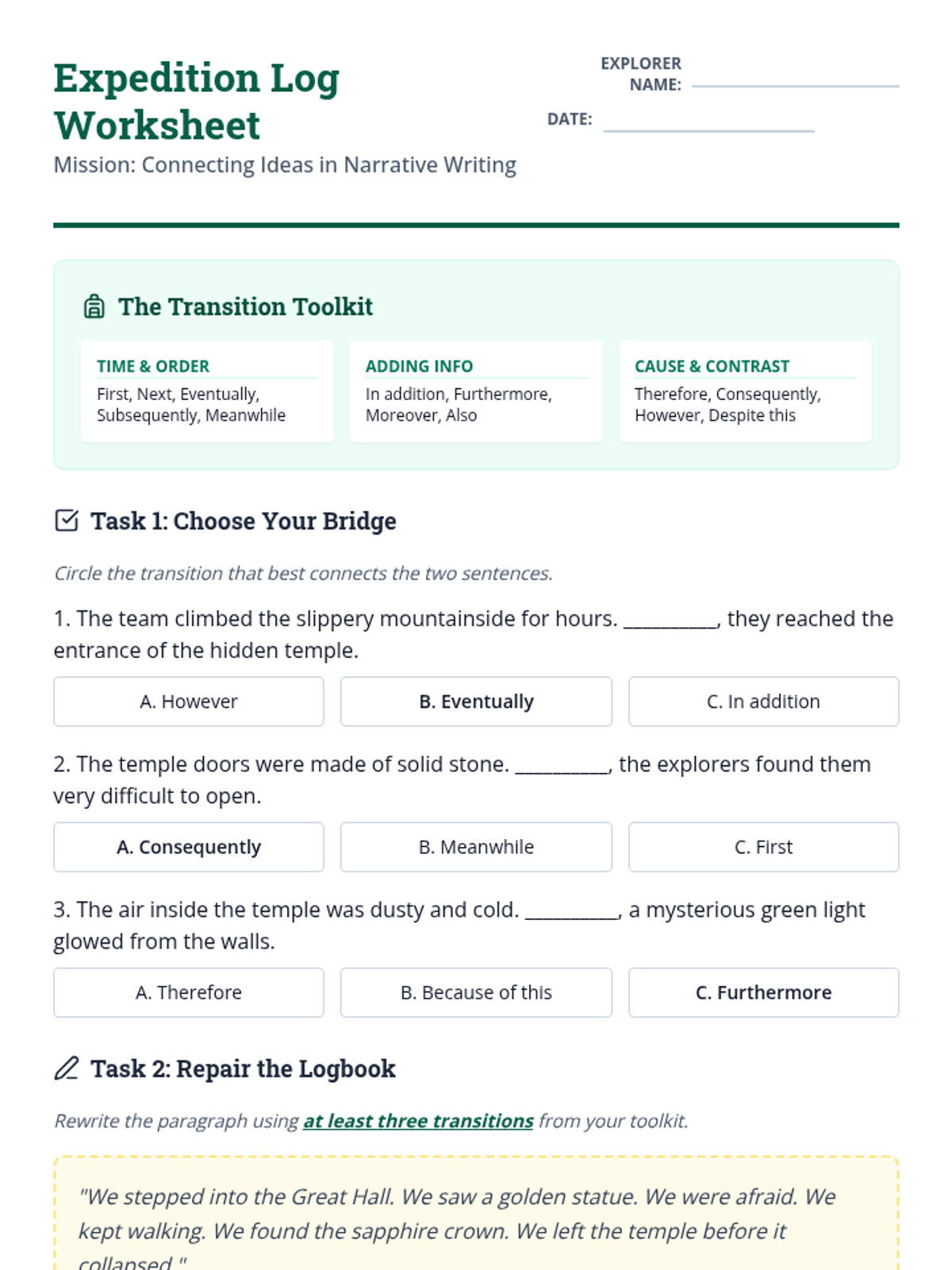
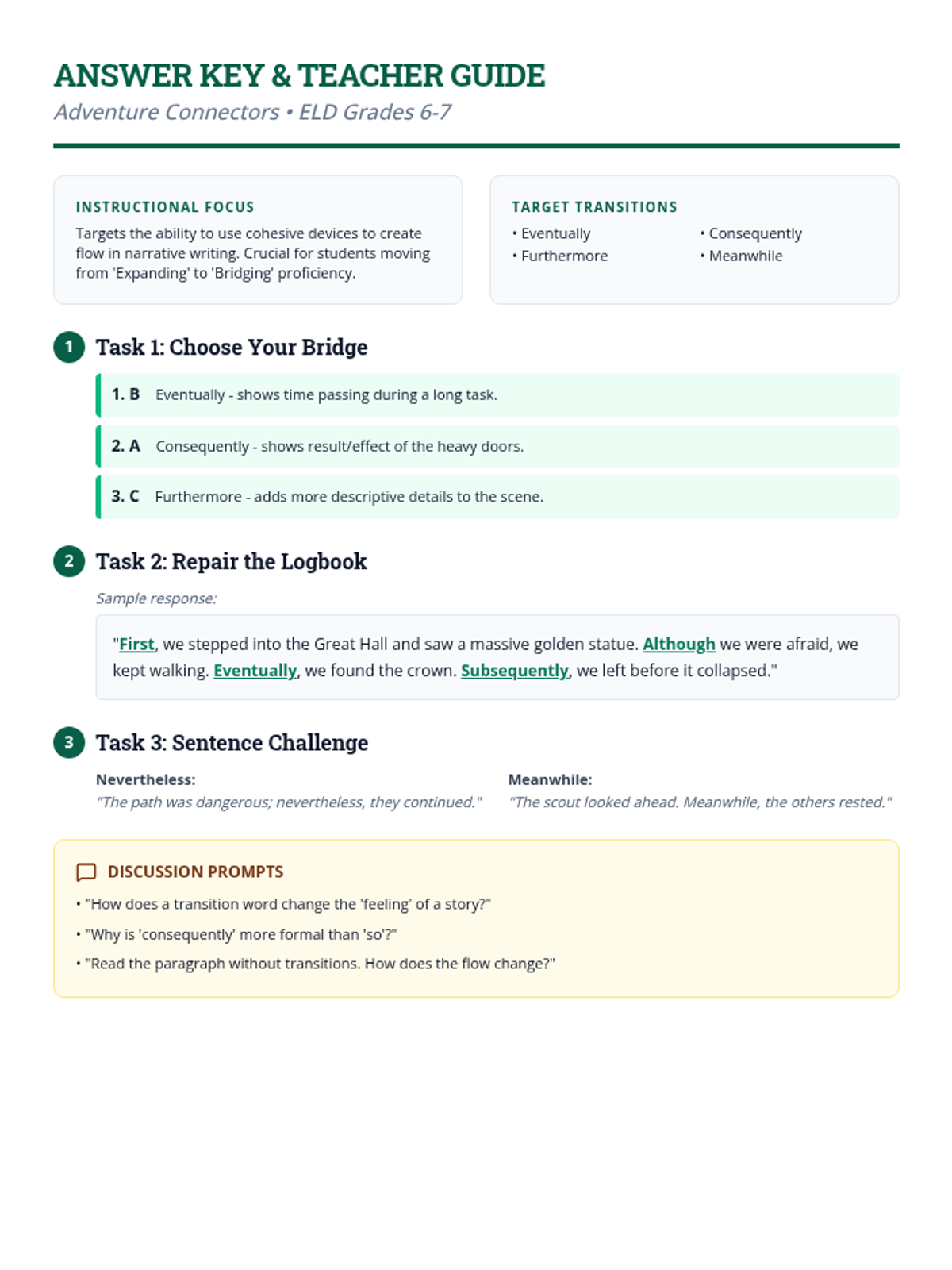
A series of ELD lessons focused on academic language and complex sentence structures through the lens of adventure and exploration.
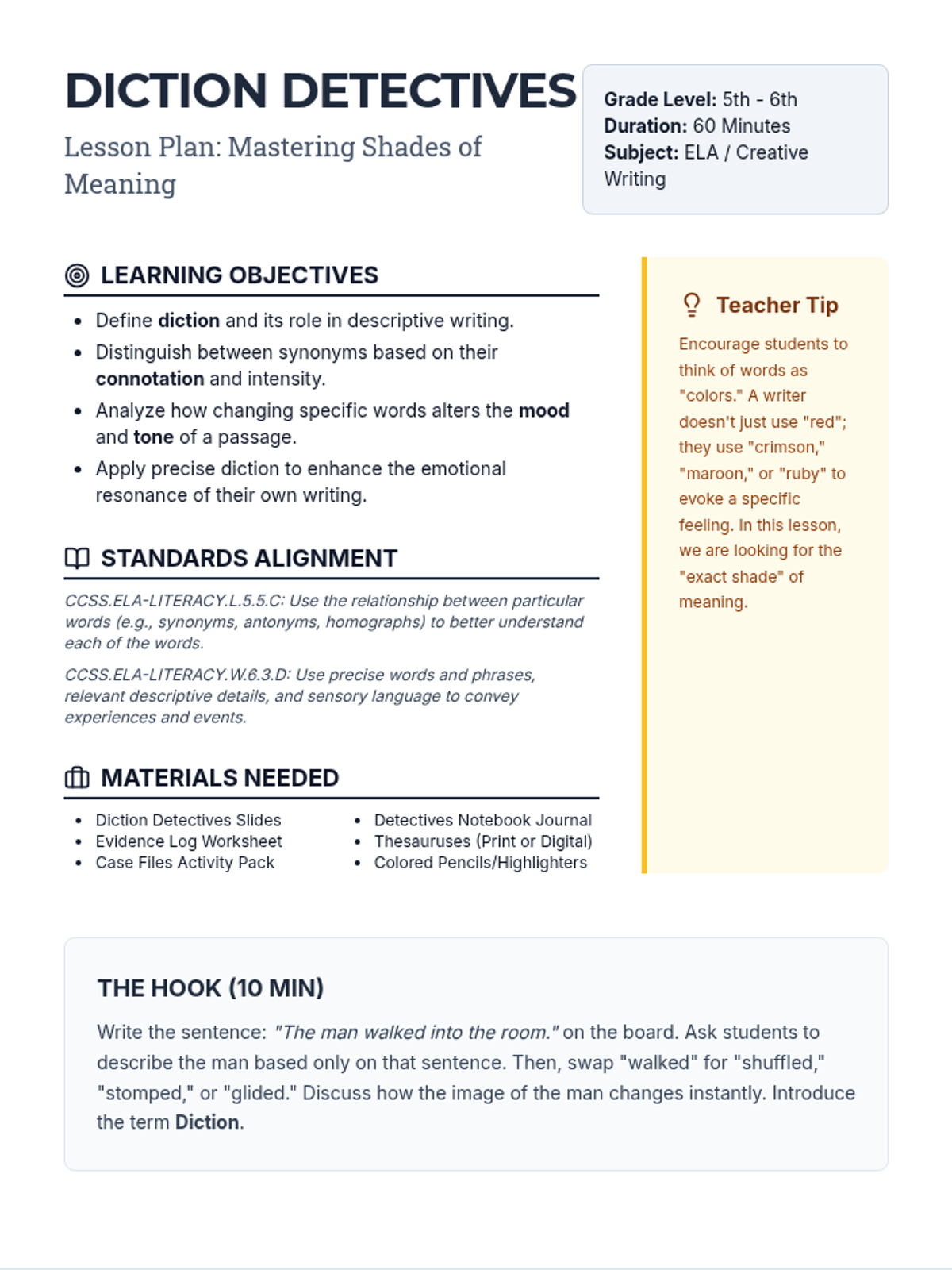
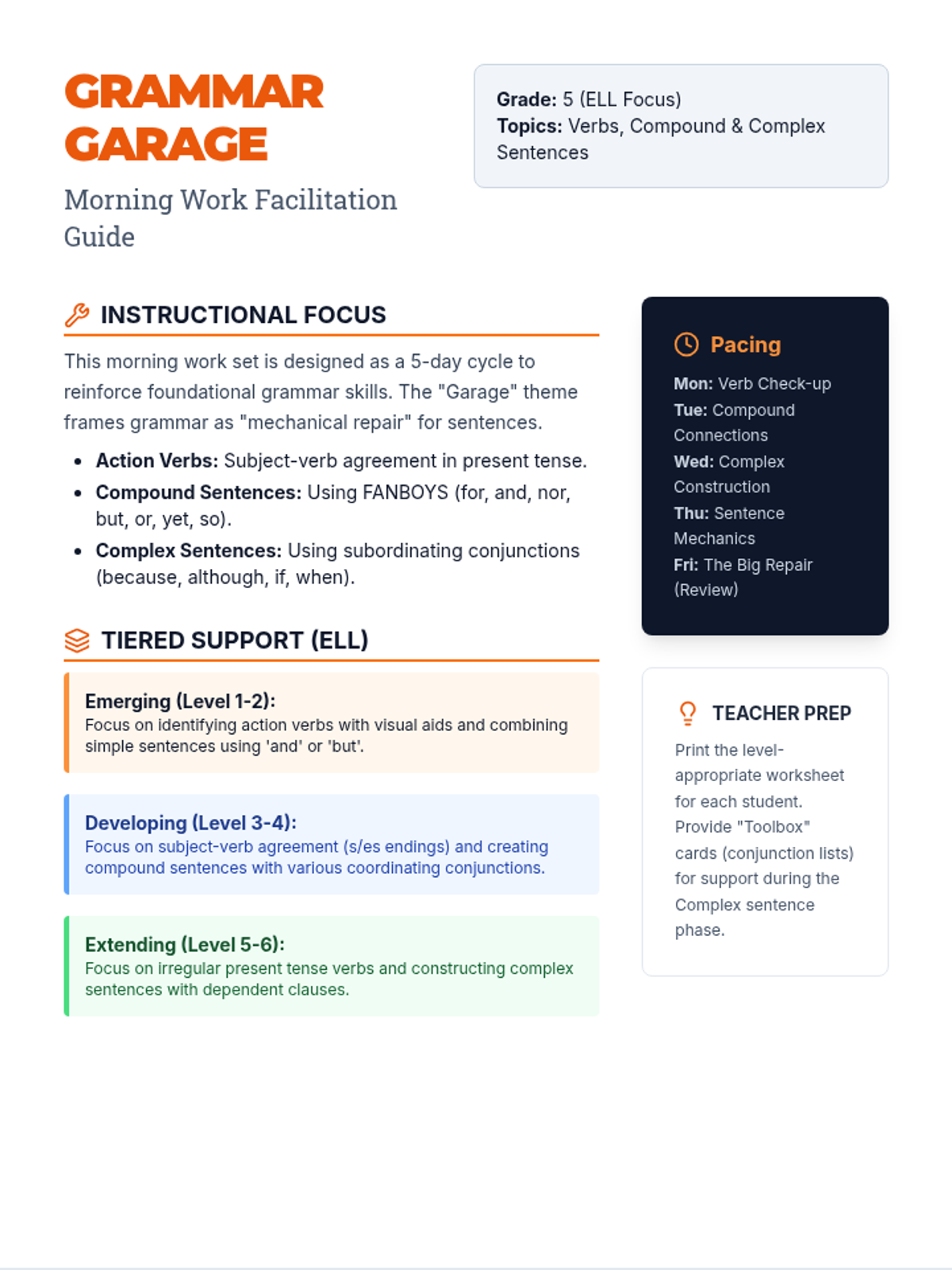
A collection of ELA resources focused on expanding vocabulary, refining diction, and mastering grammar mechanics through engaging, tiered activities.
A unit on essential writing and grammar skills, focusing on sentence structure and cohesion through verbs and transition words.
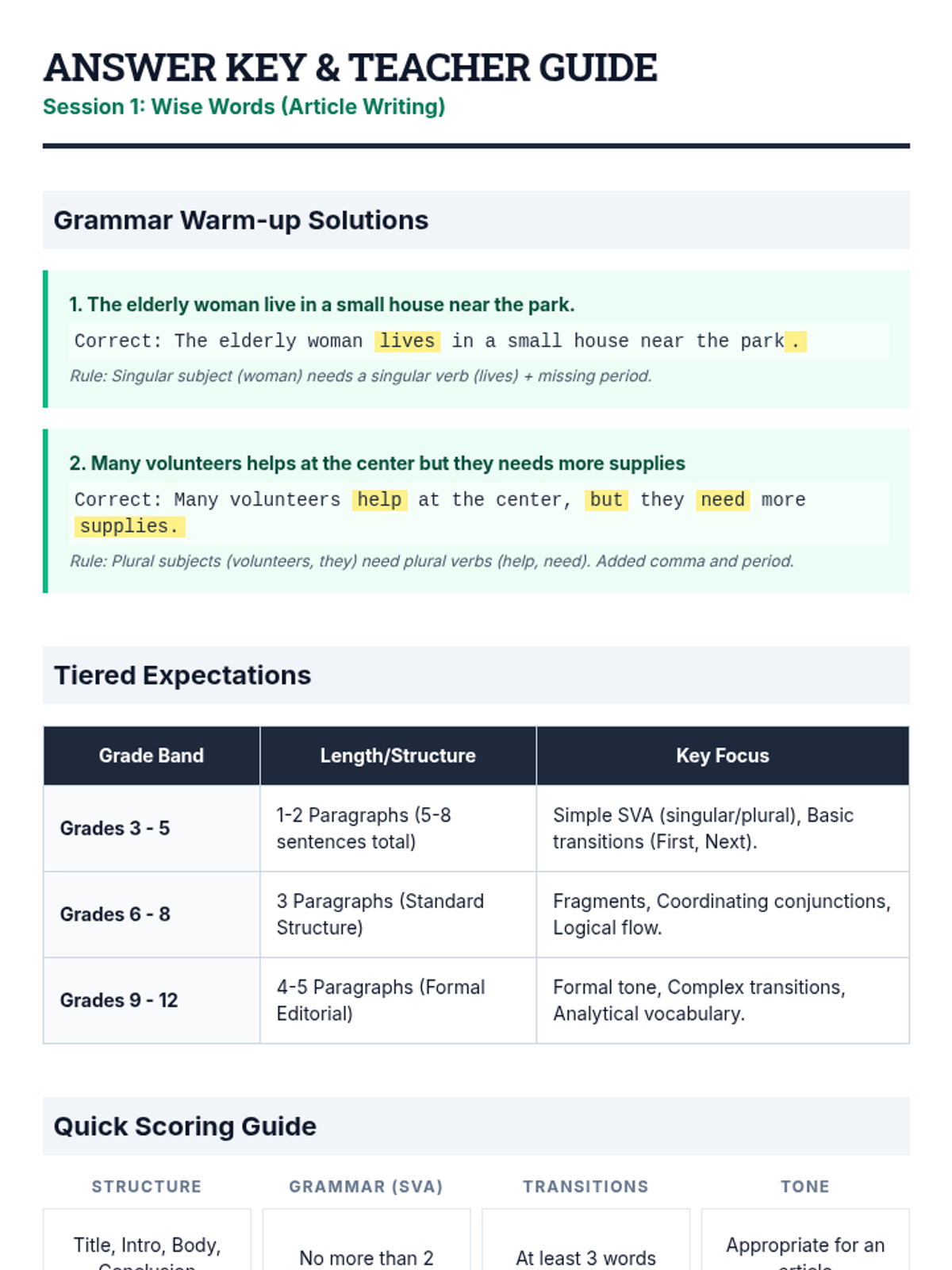
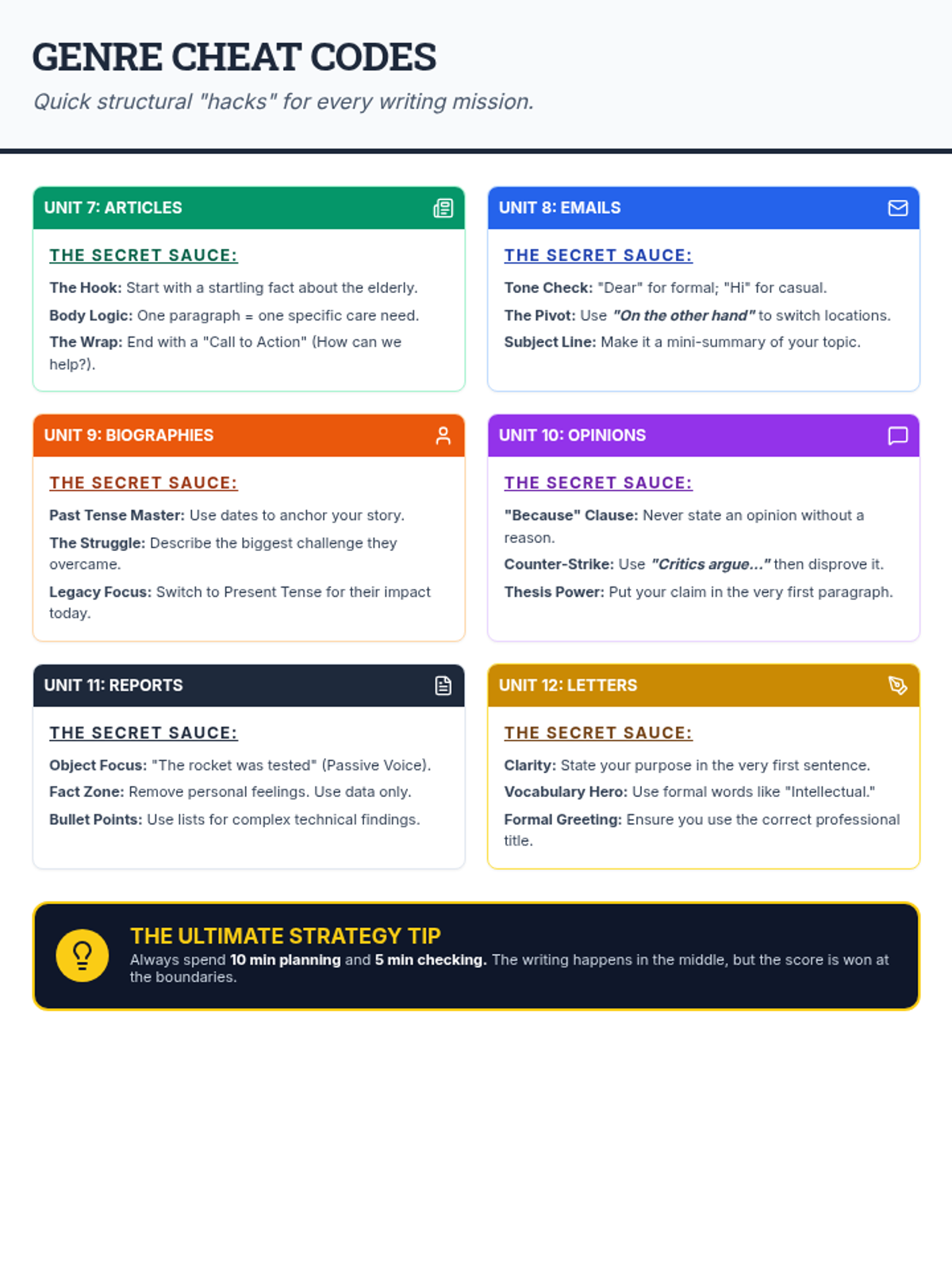
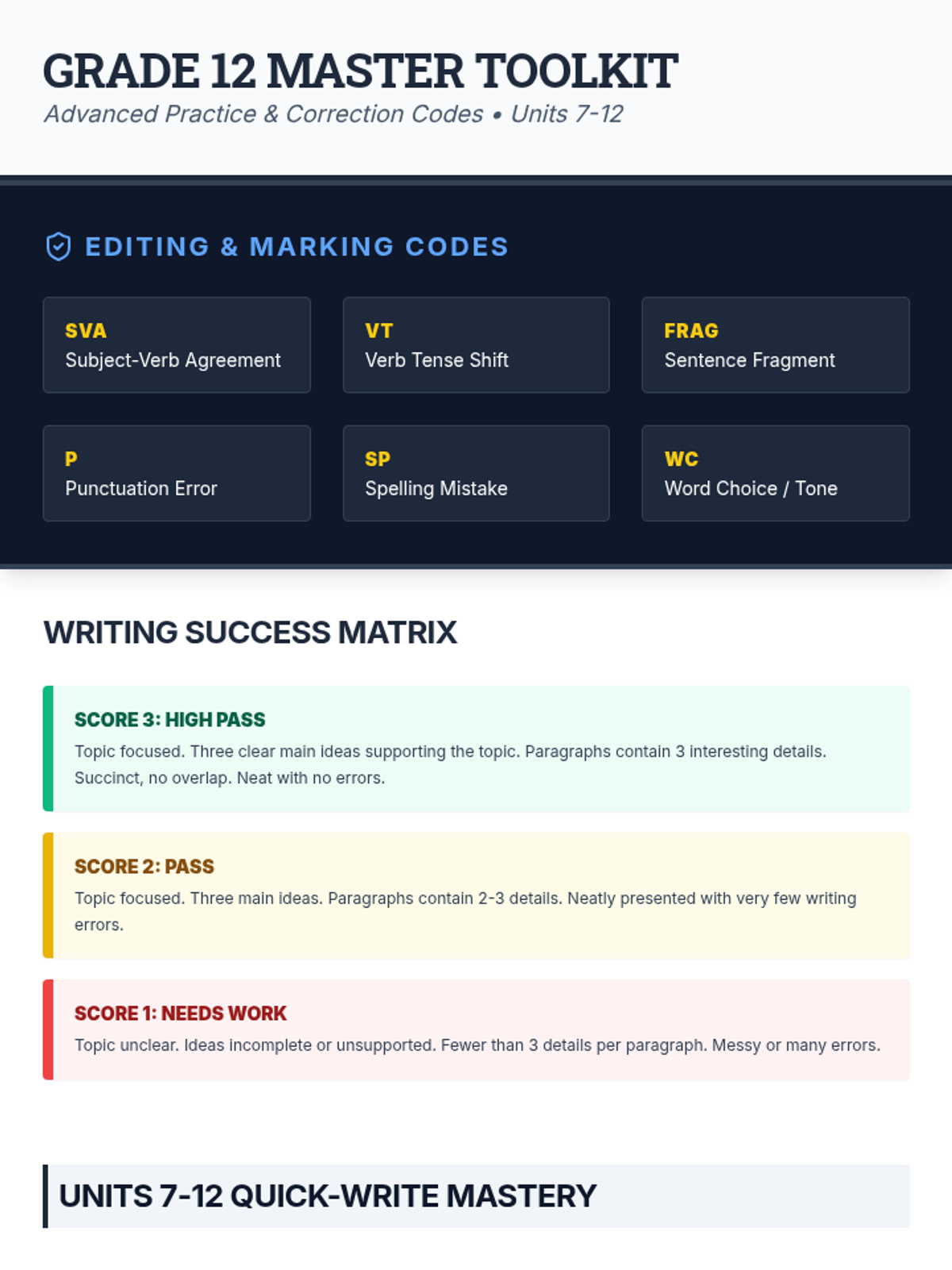
A comprehensive writing program for grades 3-12 focused on sentence and paragraph composition across six different genres, culminating in exam preparation and final assessments. The curriculum balances grammar foundations with creative and formal writing structures.
A unit on persuasive writing for 5th-grade students, focusing on structure, audience awareness, and linguistic scaffolding for ELL learners.
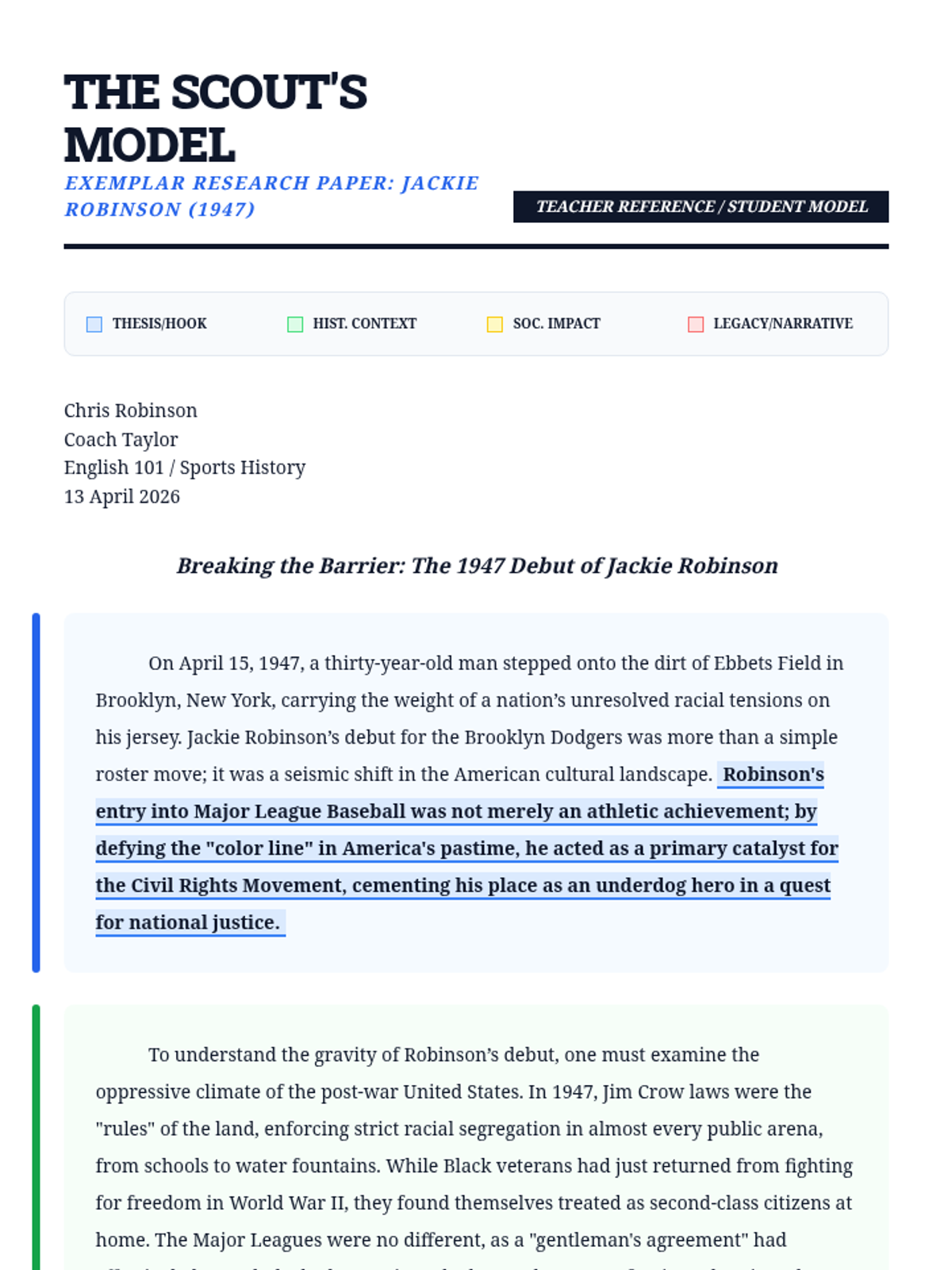
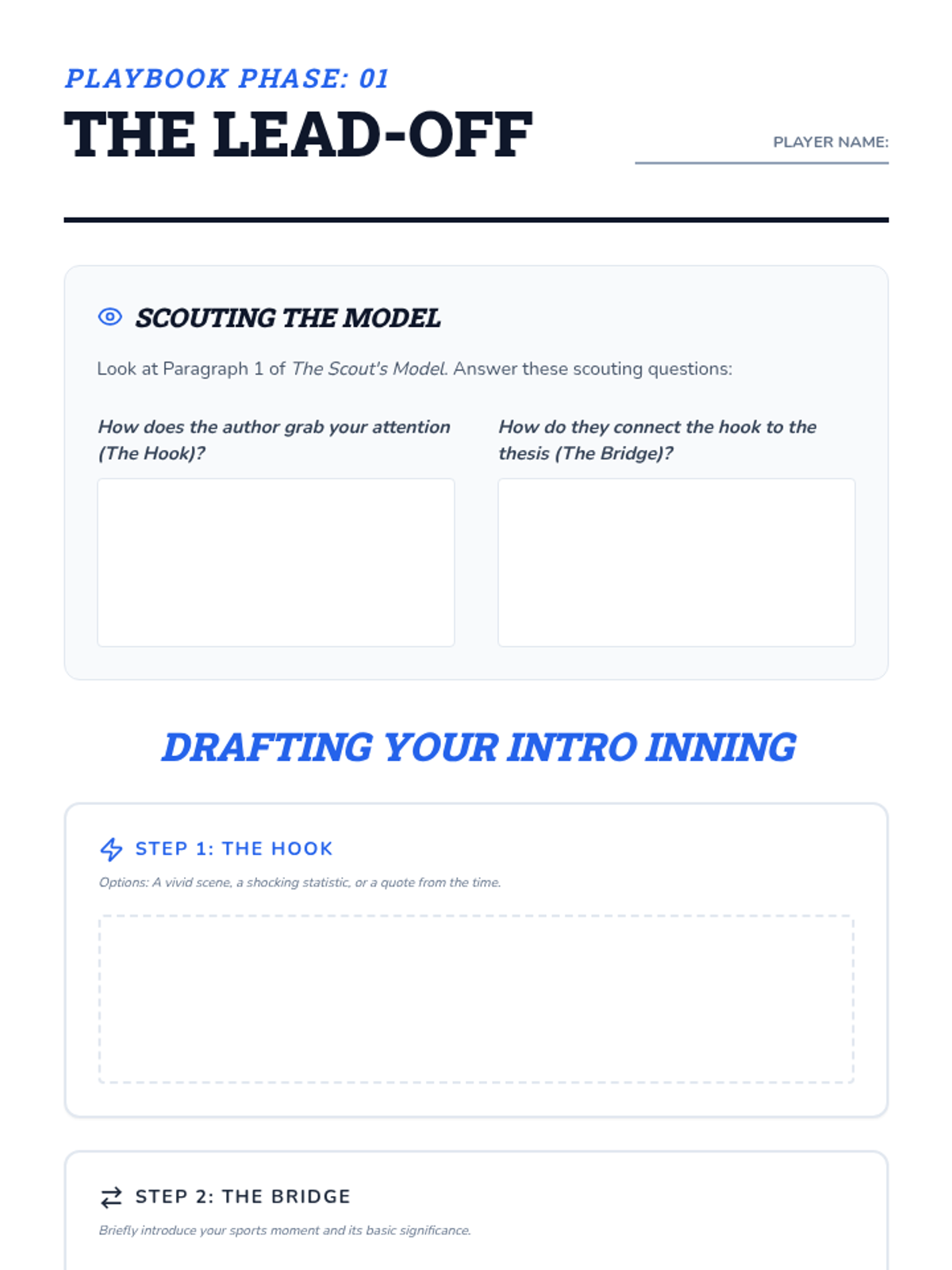
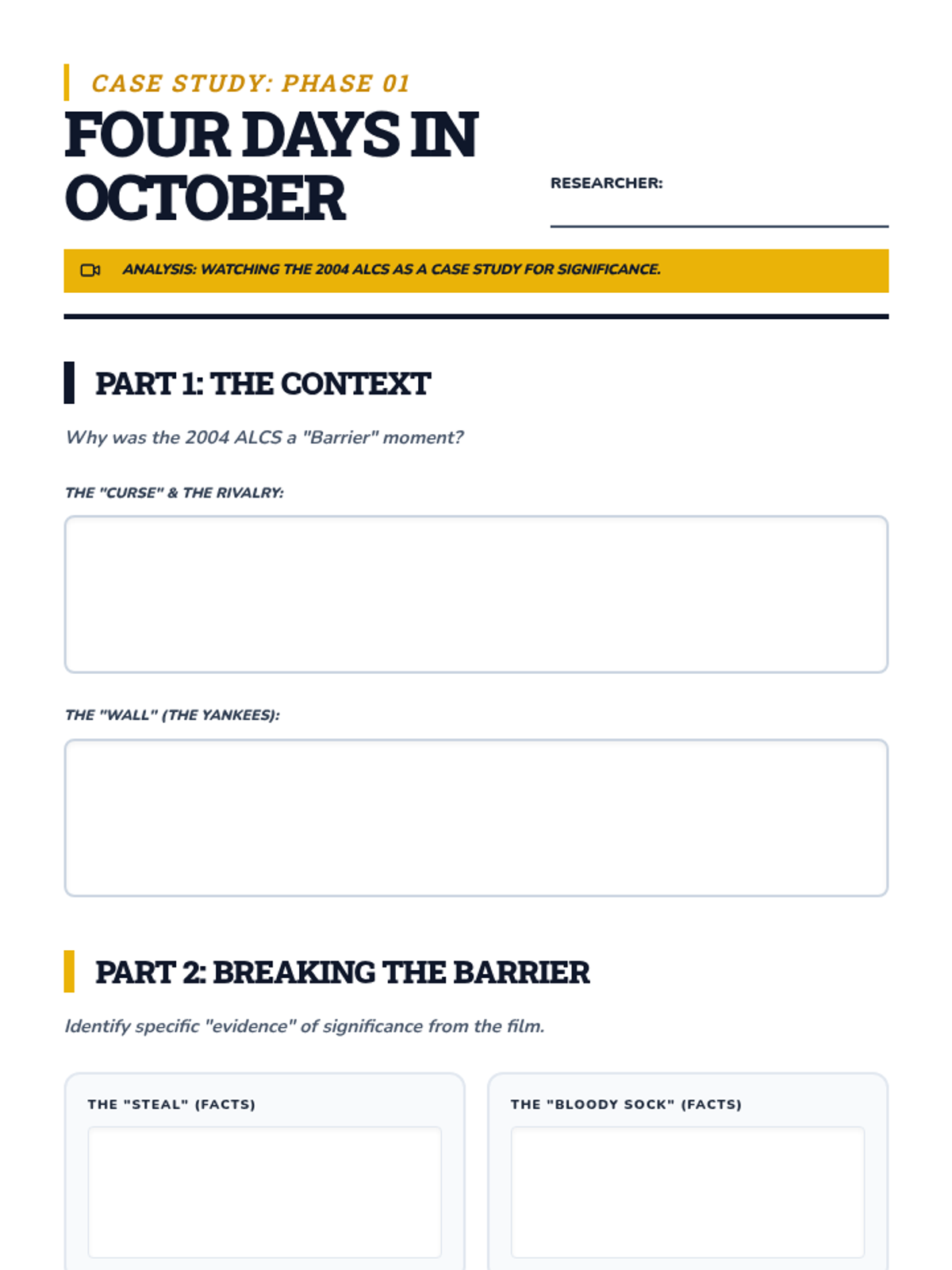
A 5-week research unit that scaffolds the process paragraph-by-paragraph. Students define significance, analyze the 'Four Days in October' case study, and turn in each paragraph separately, focusing on historical context, systemic barriers, and societal impact with a dedicated lesson on counterarguments.
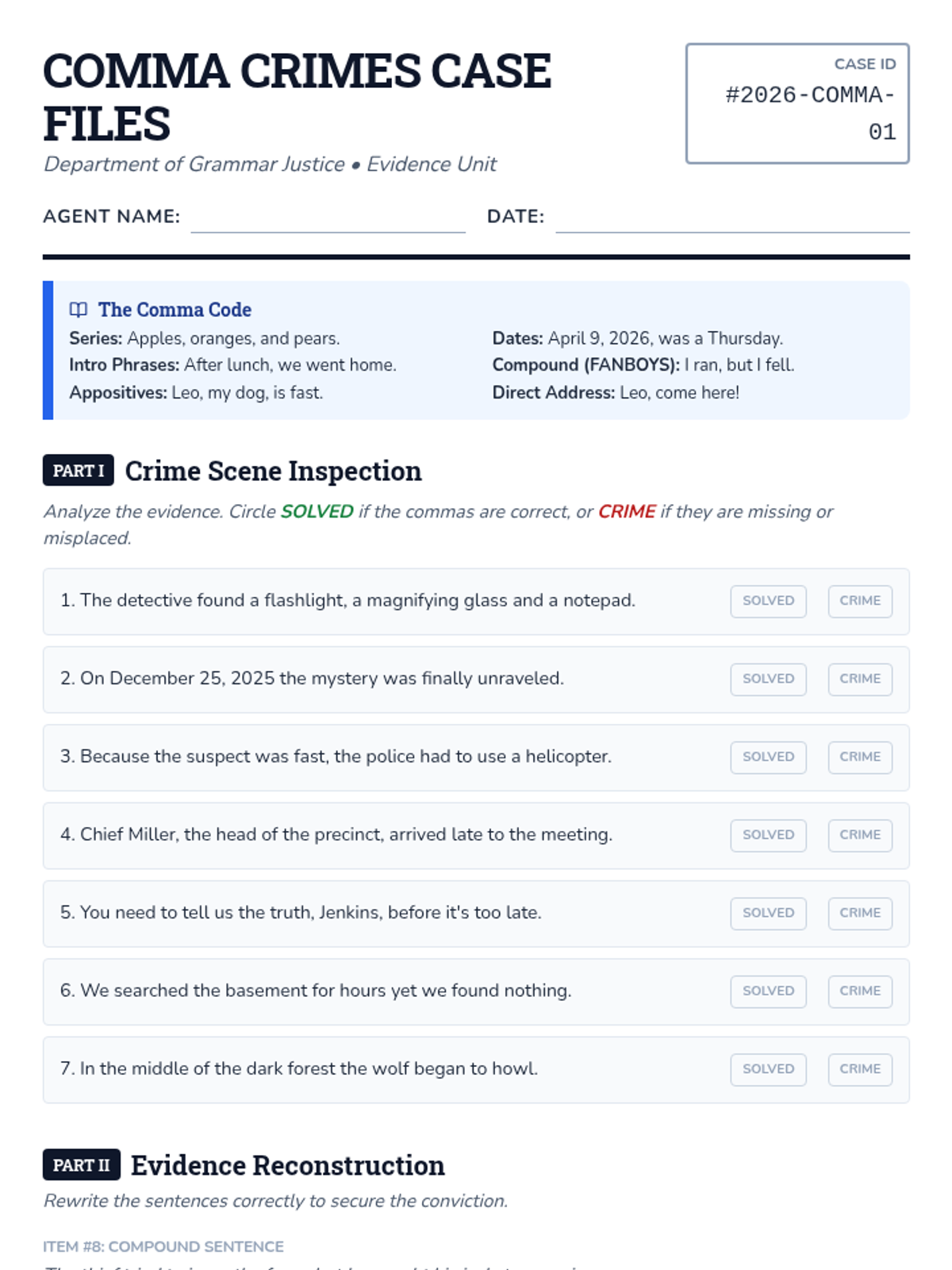
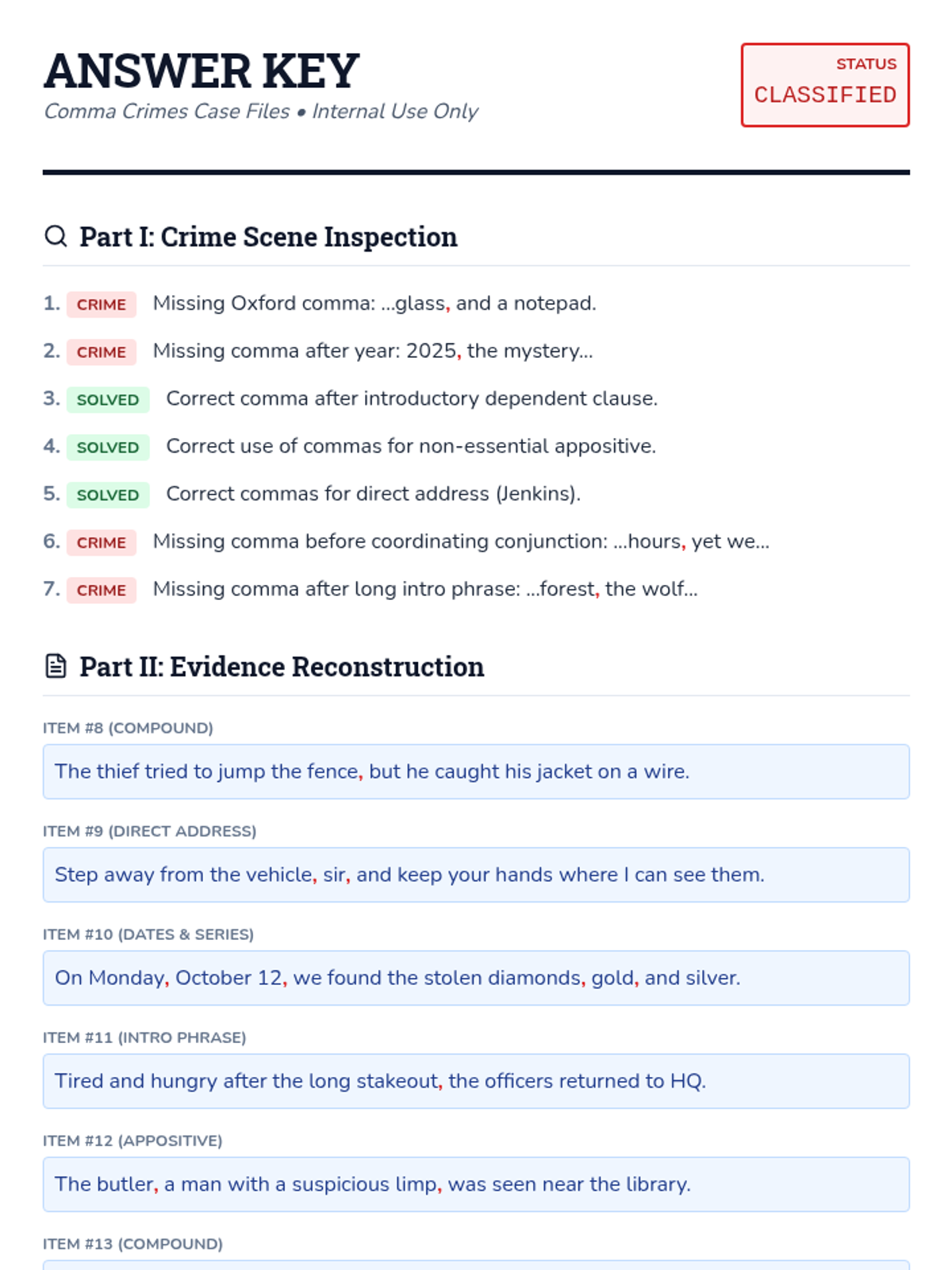
A grammar unit focused on punctuation mastery and sentence structure for middle school students.
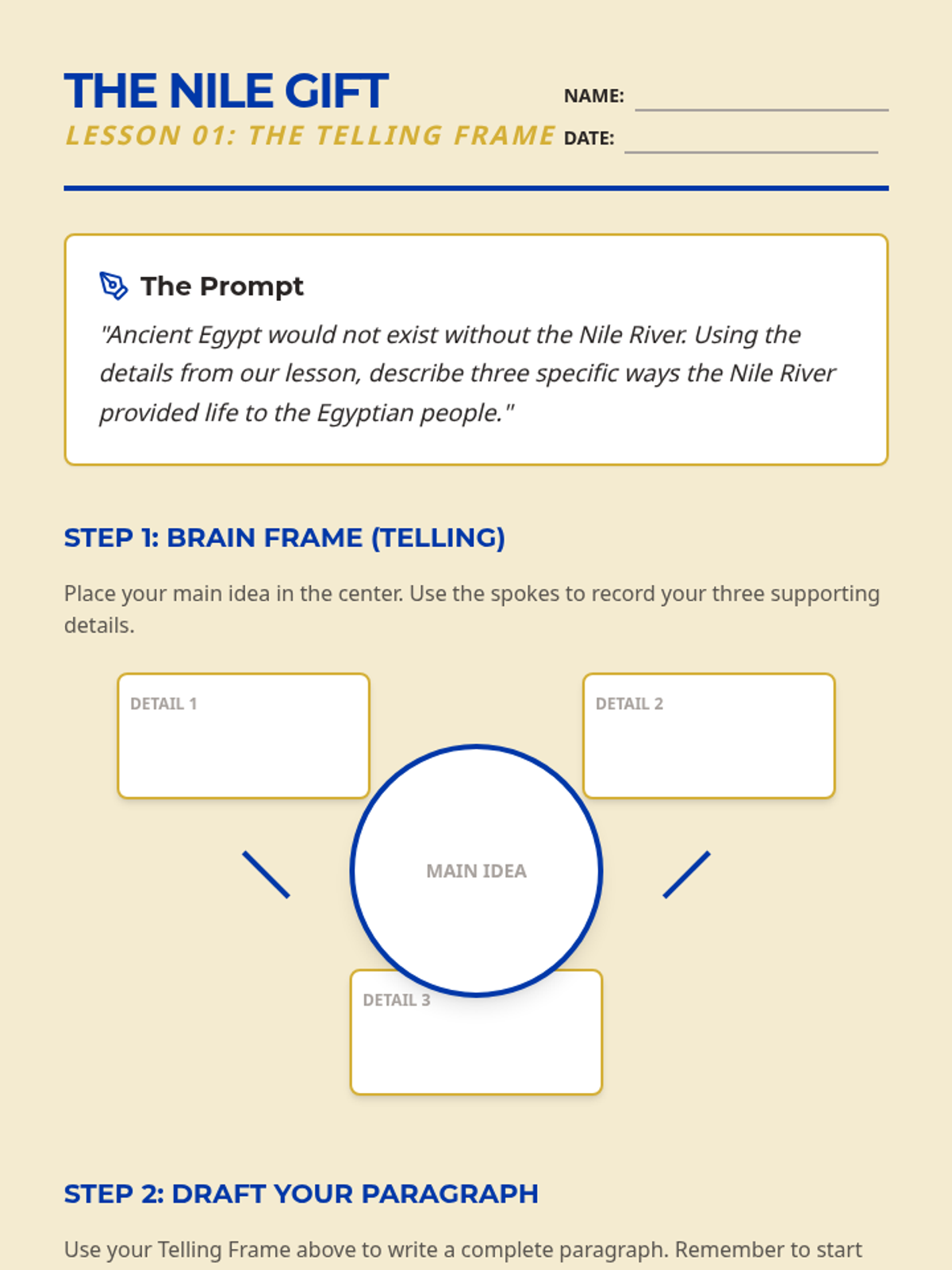
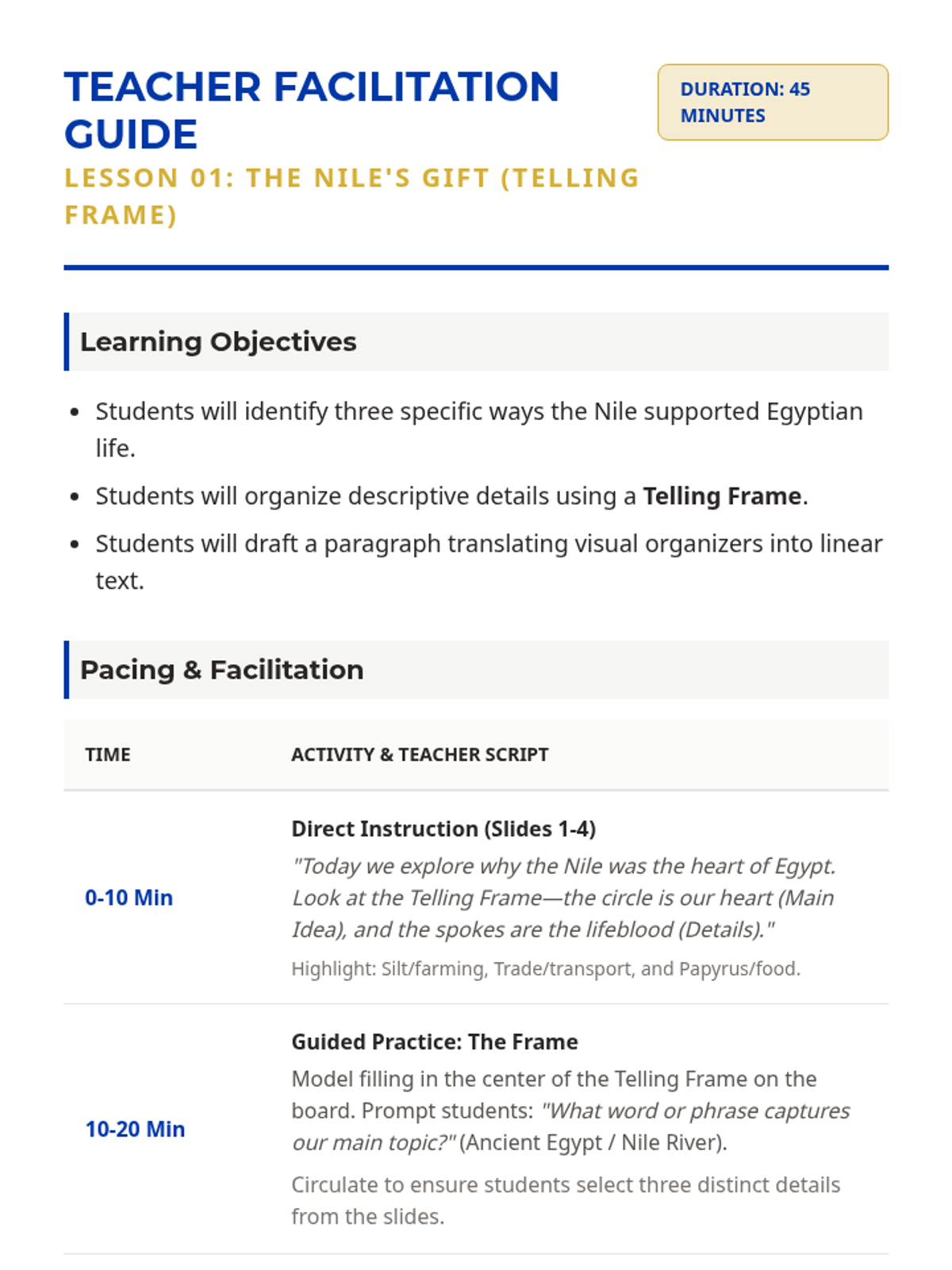
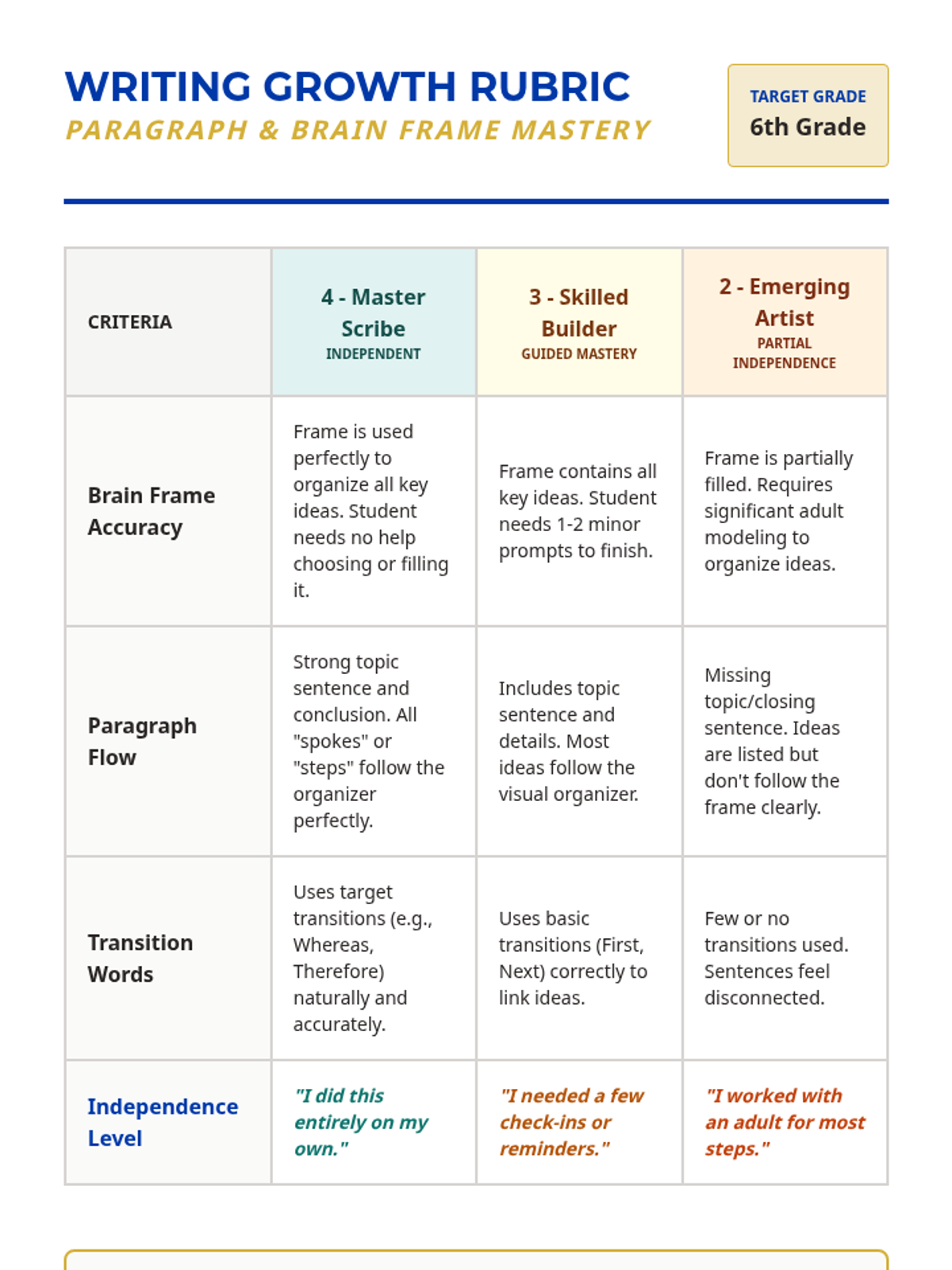
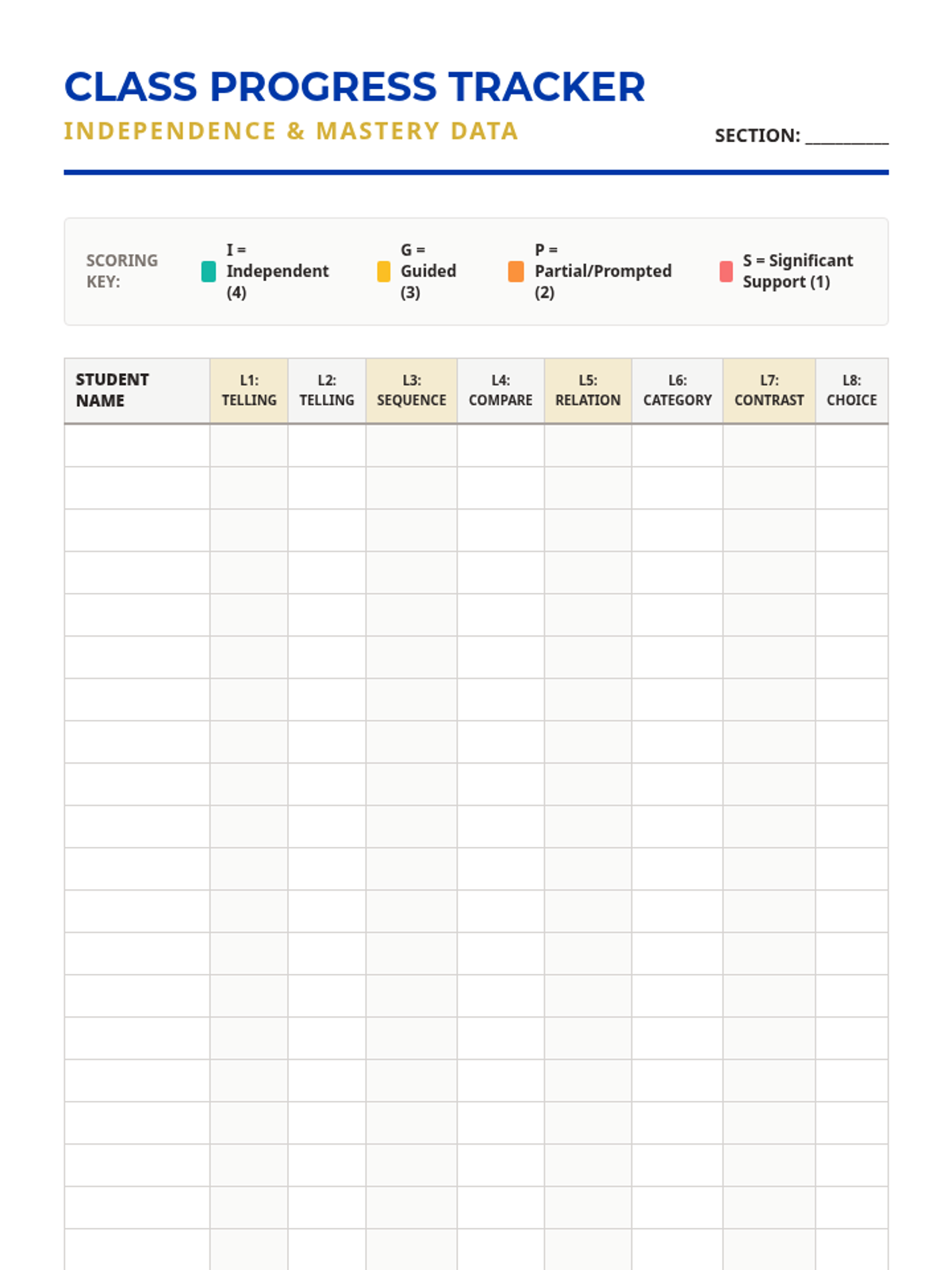
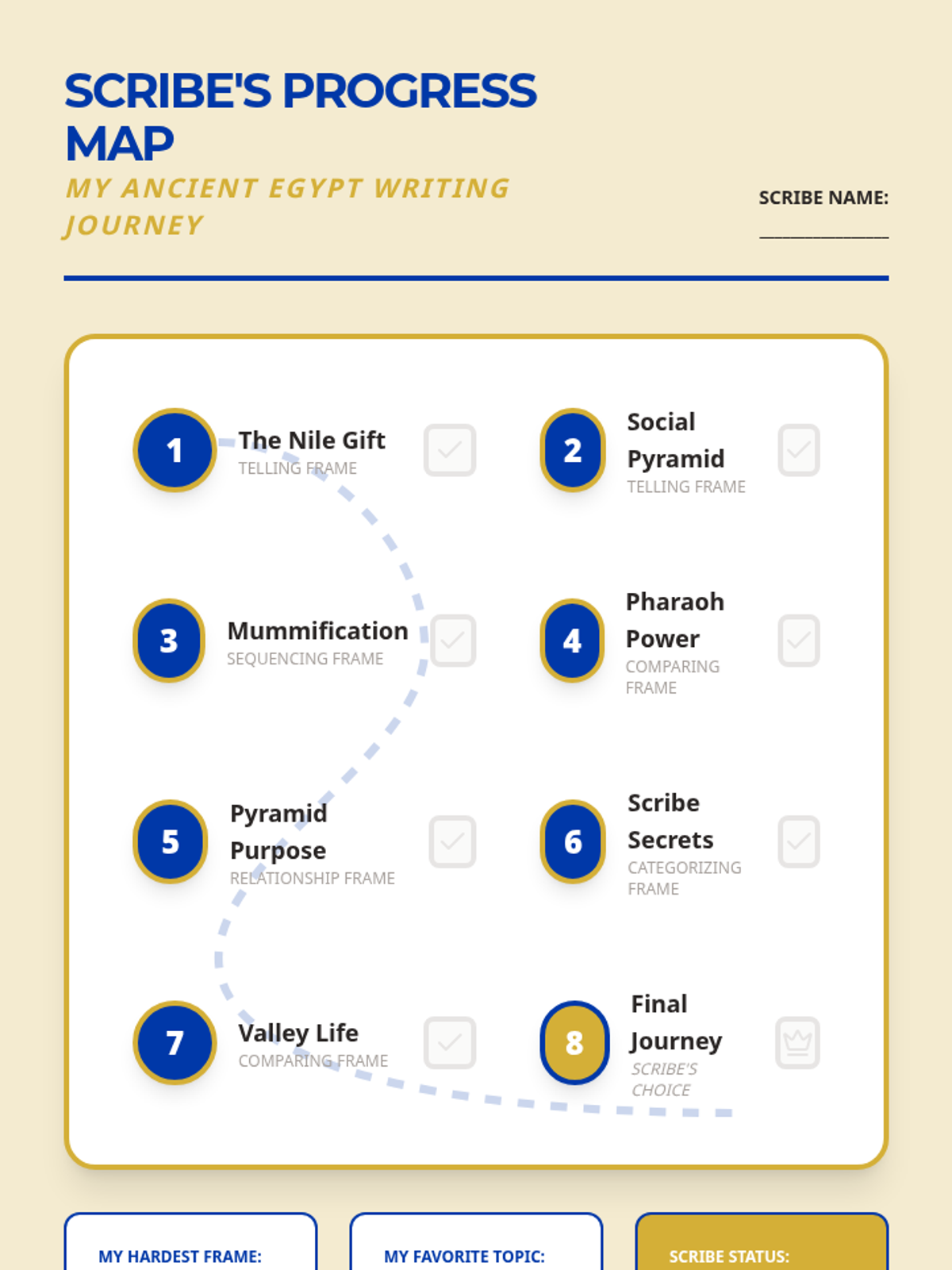
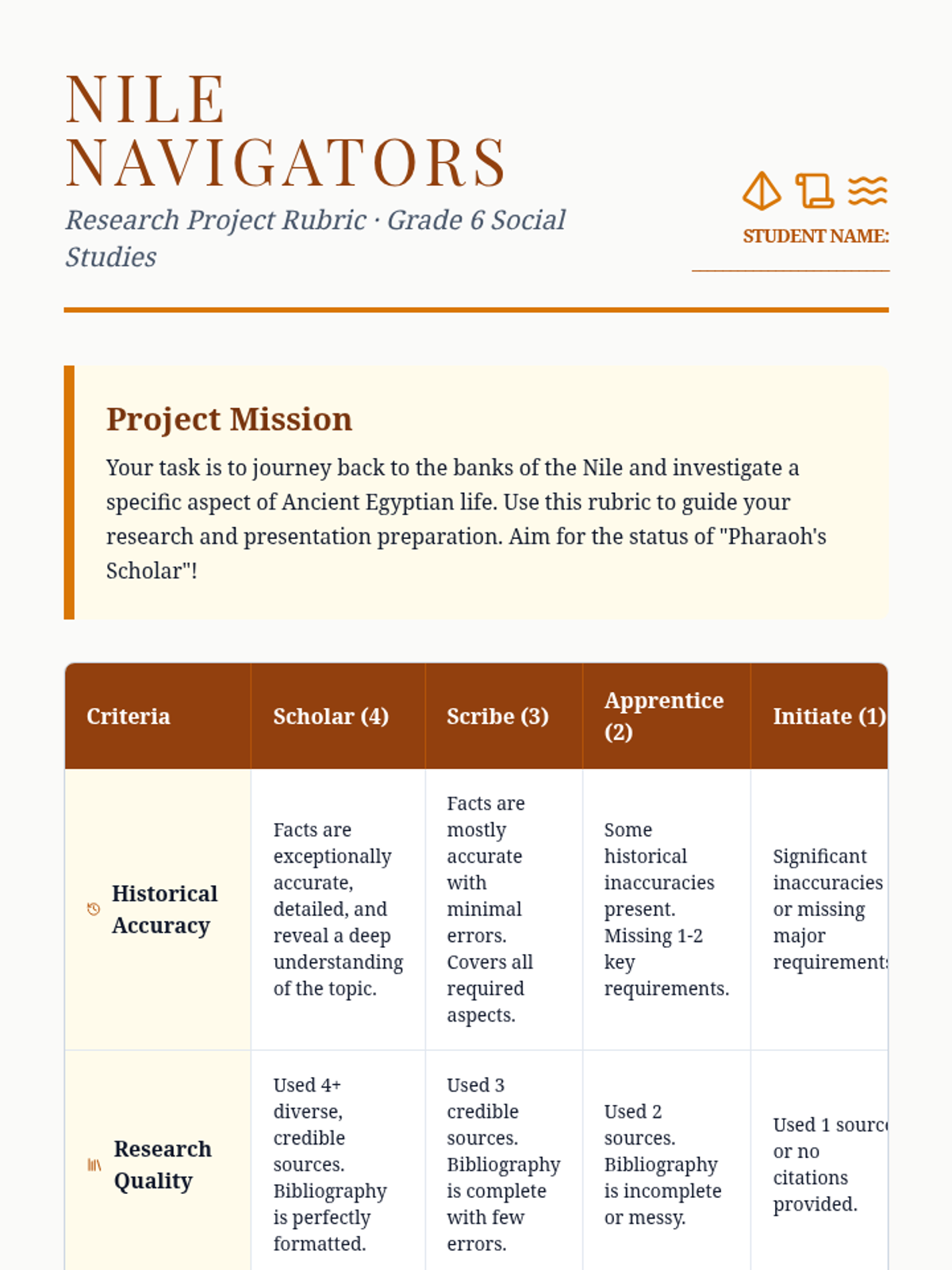
An 8-session writing program for 6th graders focused on Ancient Egypt, utilizing Brain Frames to build independence in paragraph organization and writing. Each session targets a specific visual organization tool and a historical topic to move students from guided to independent writing.
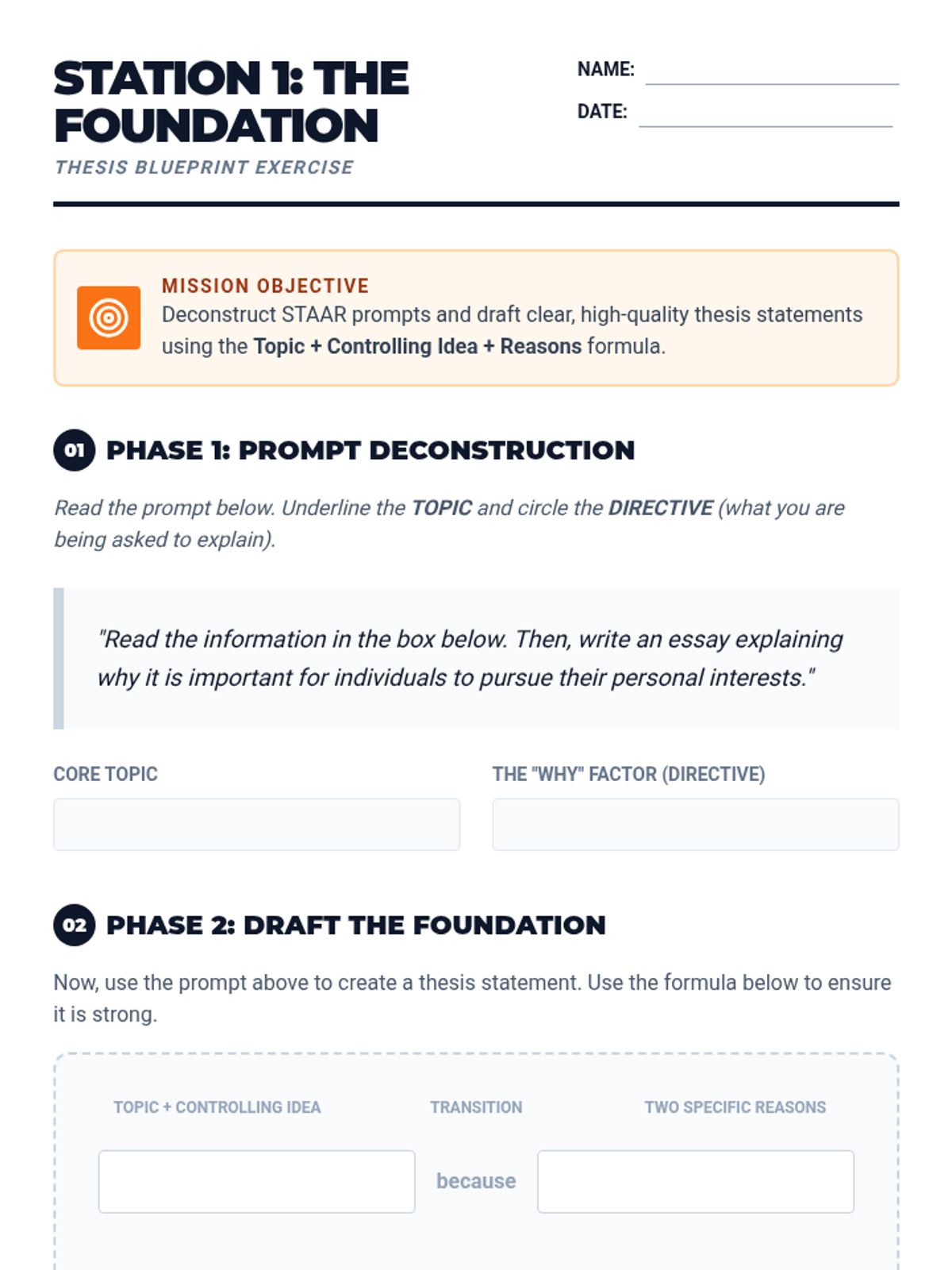
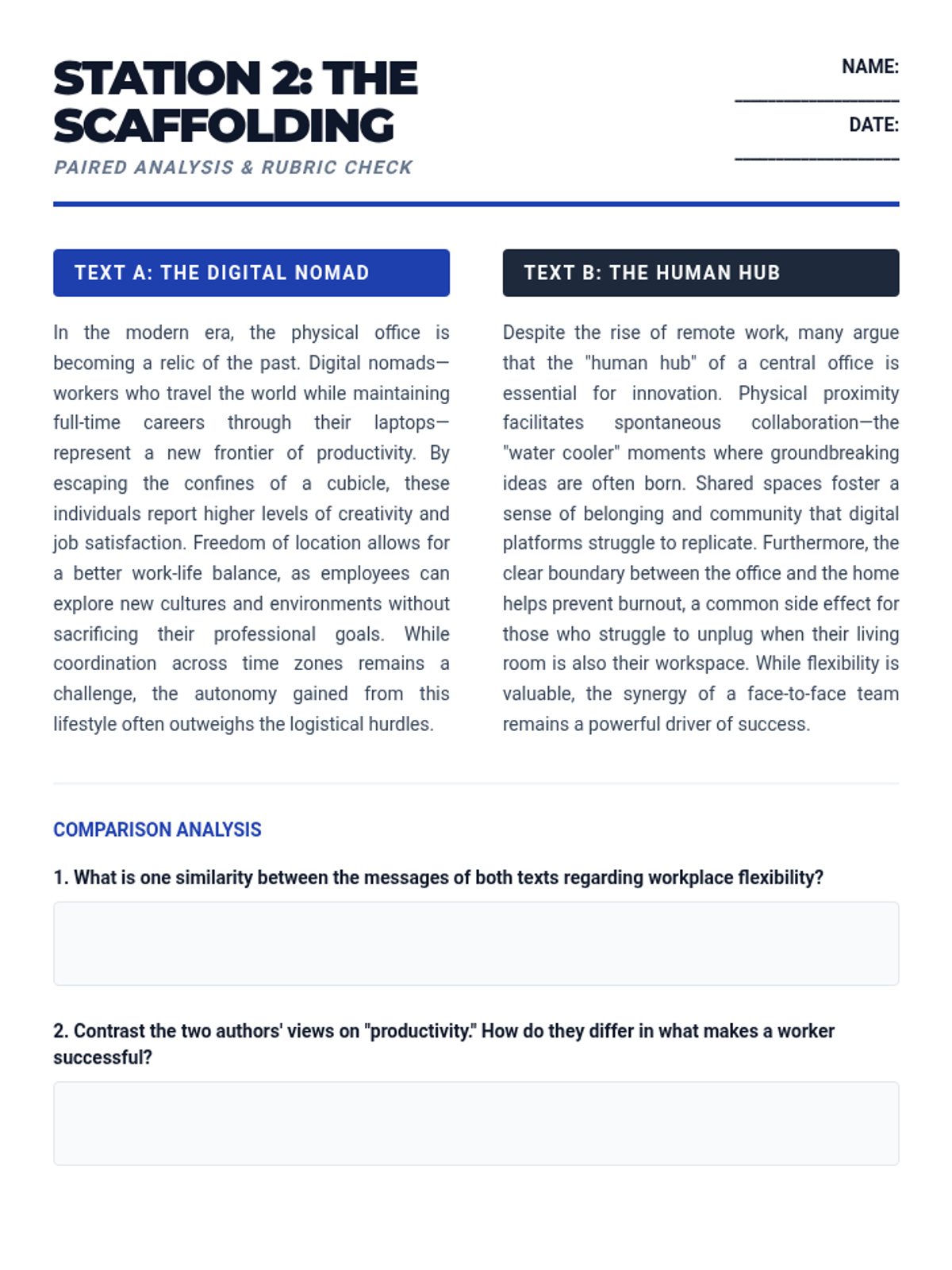
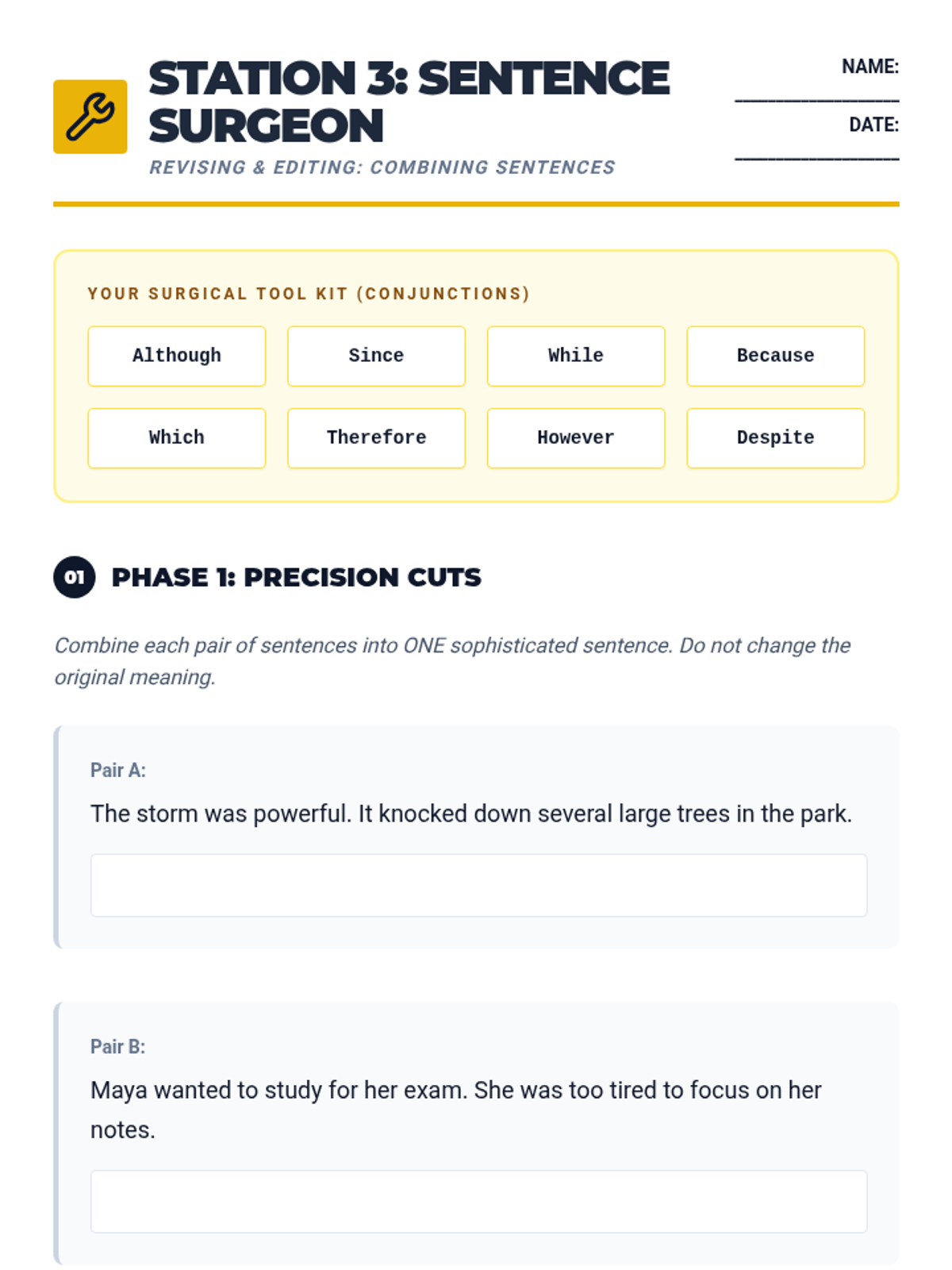
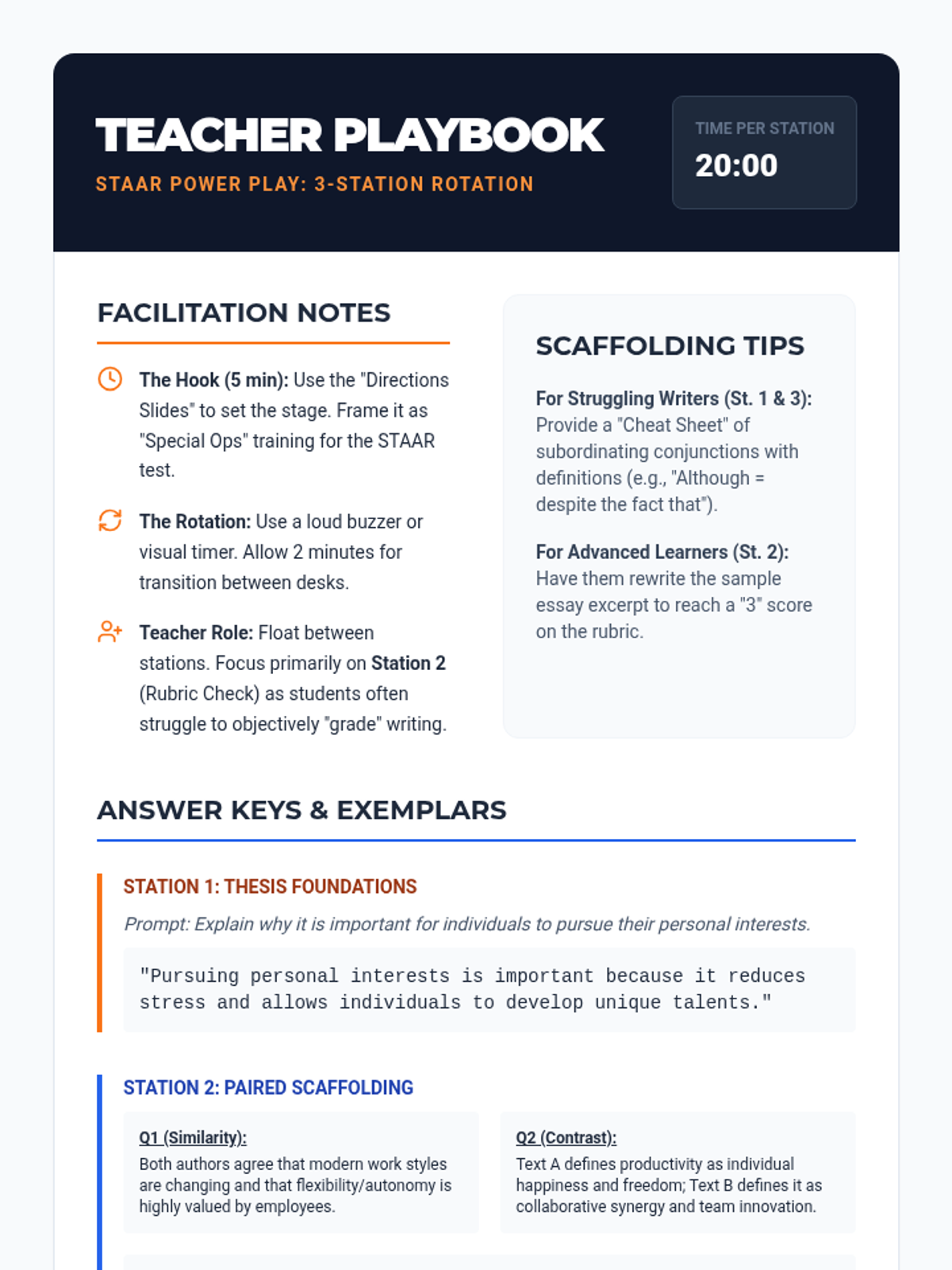
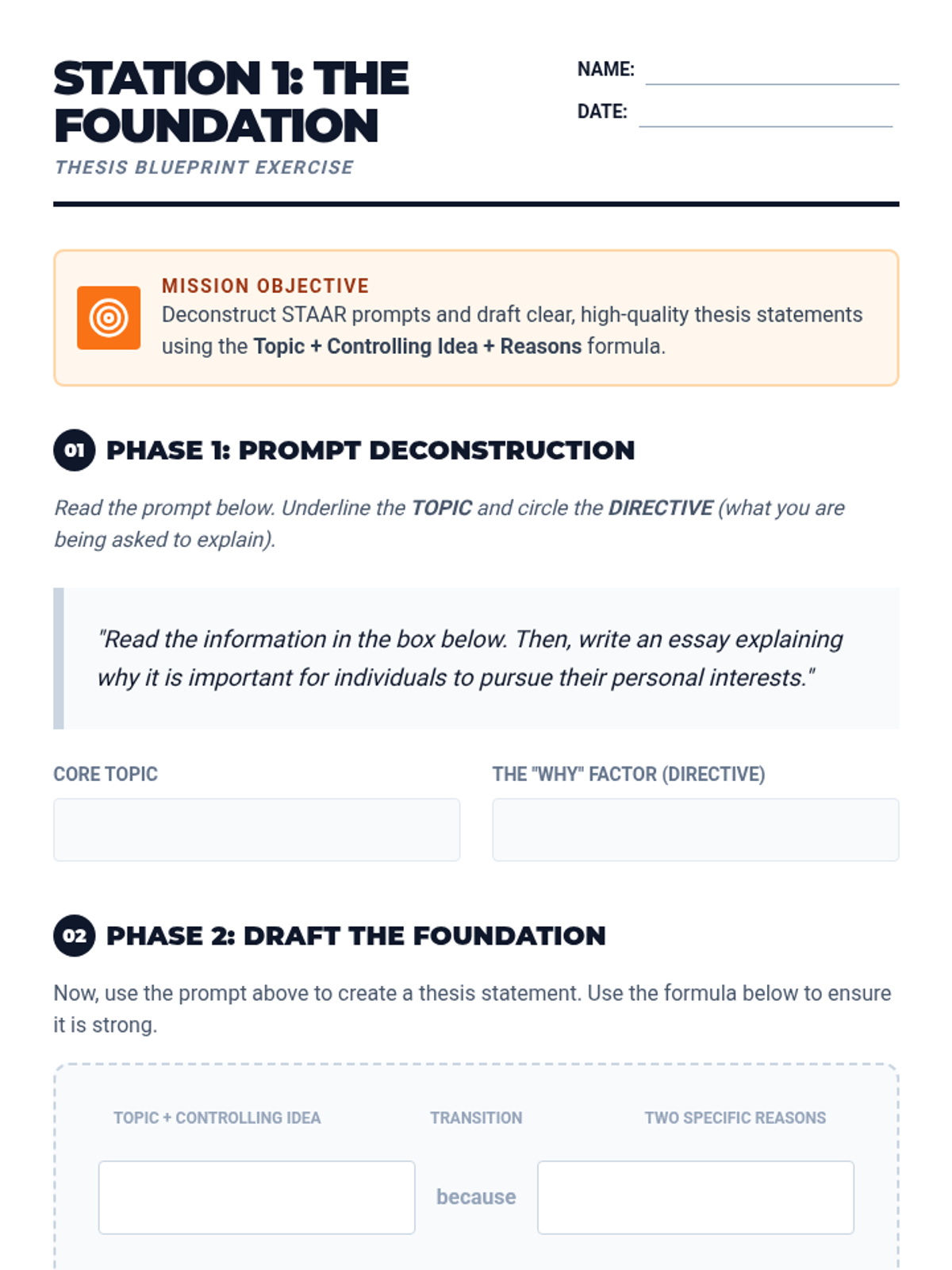
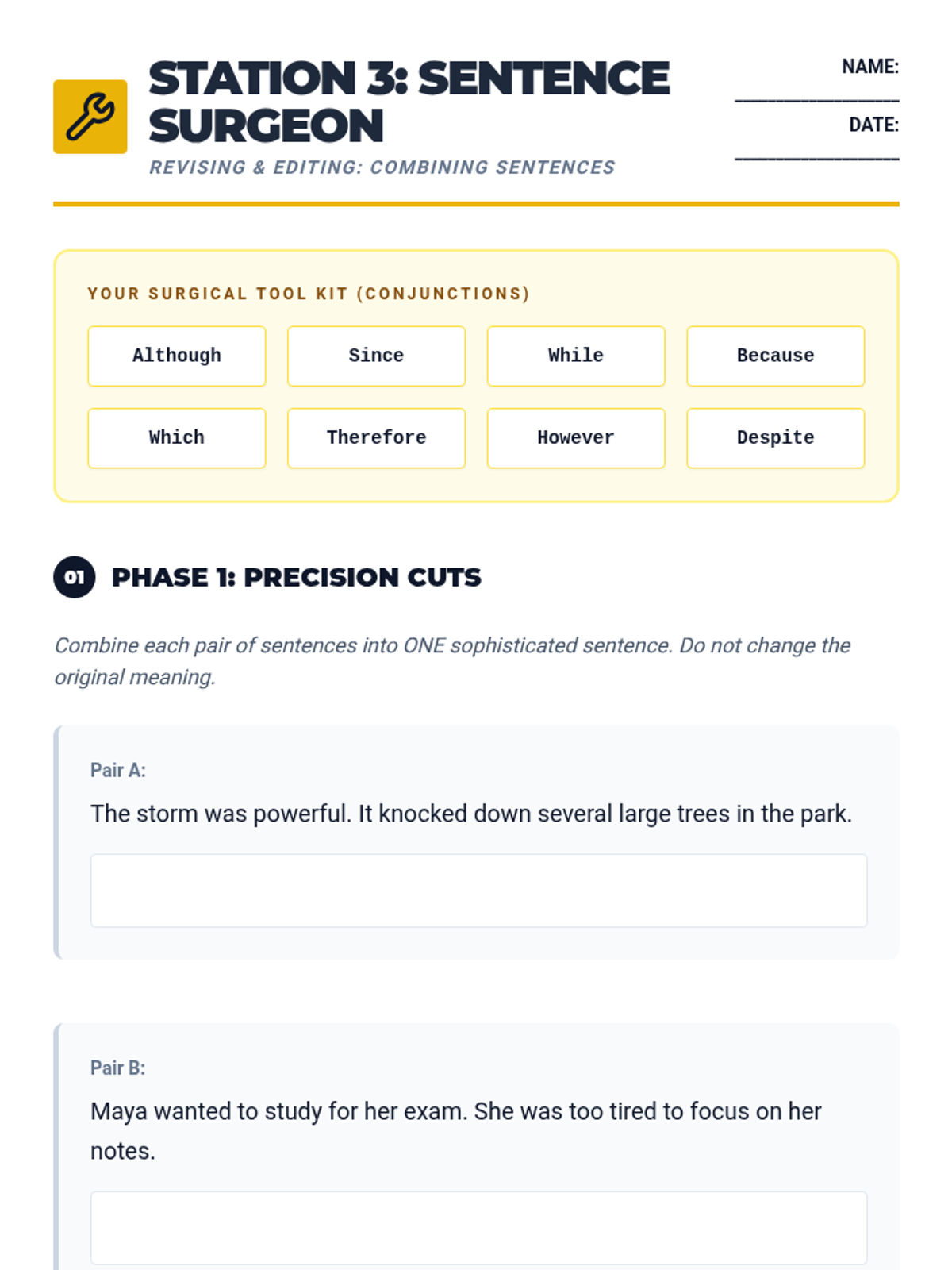
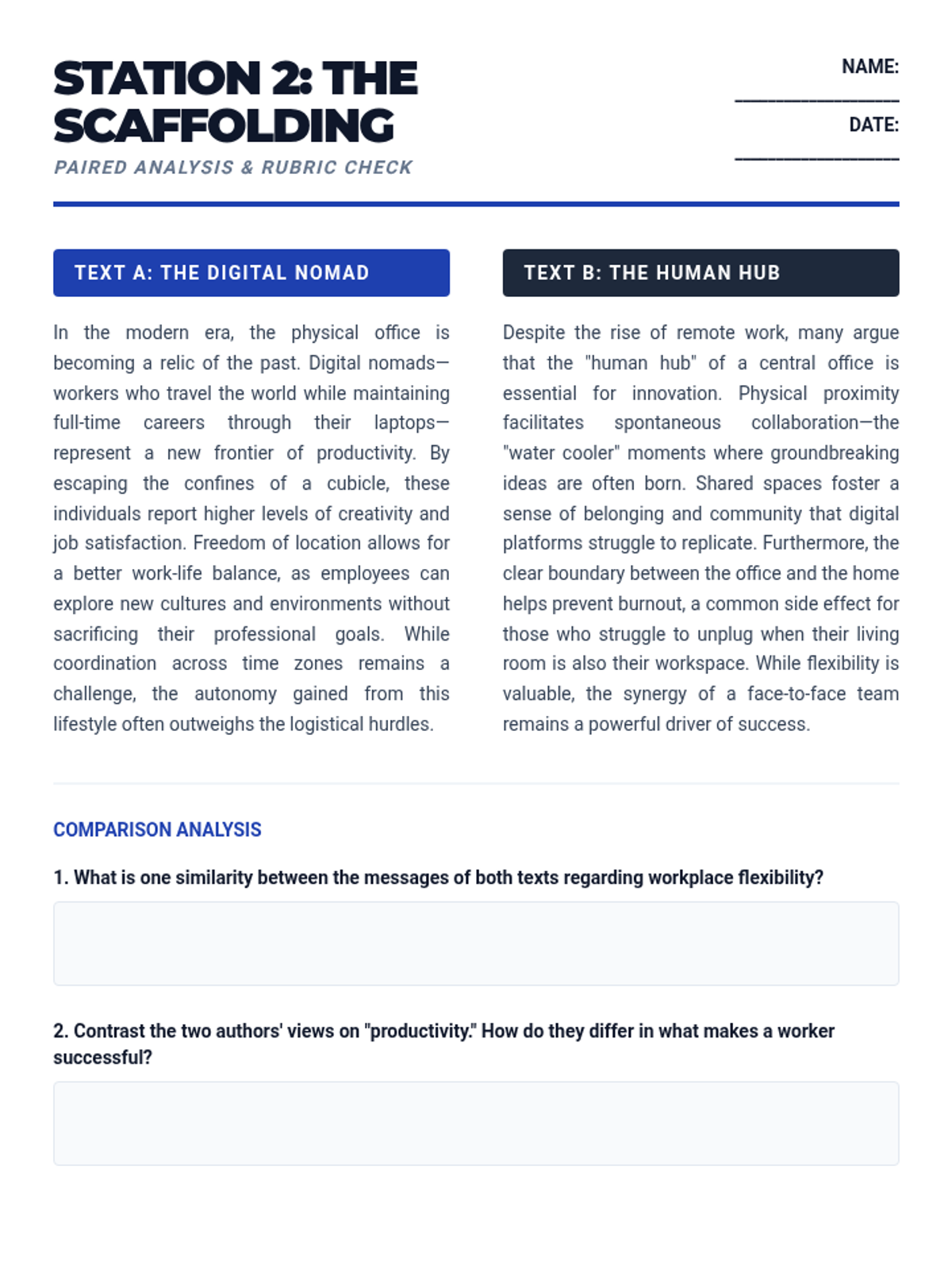
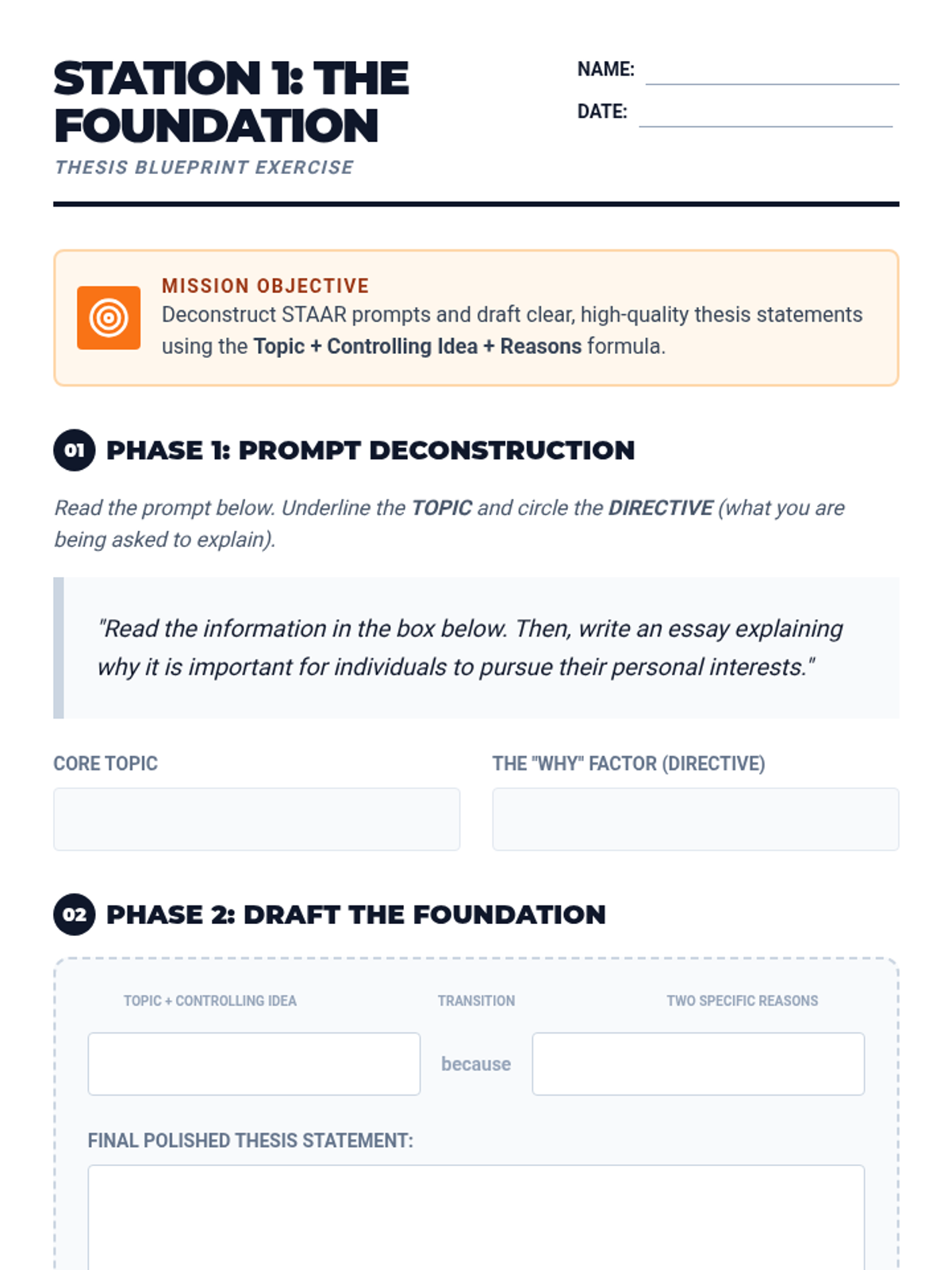
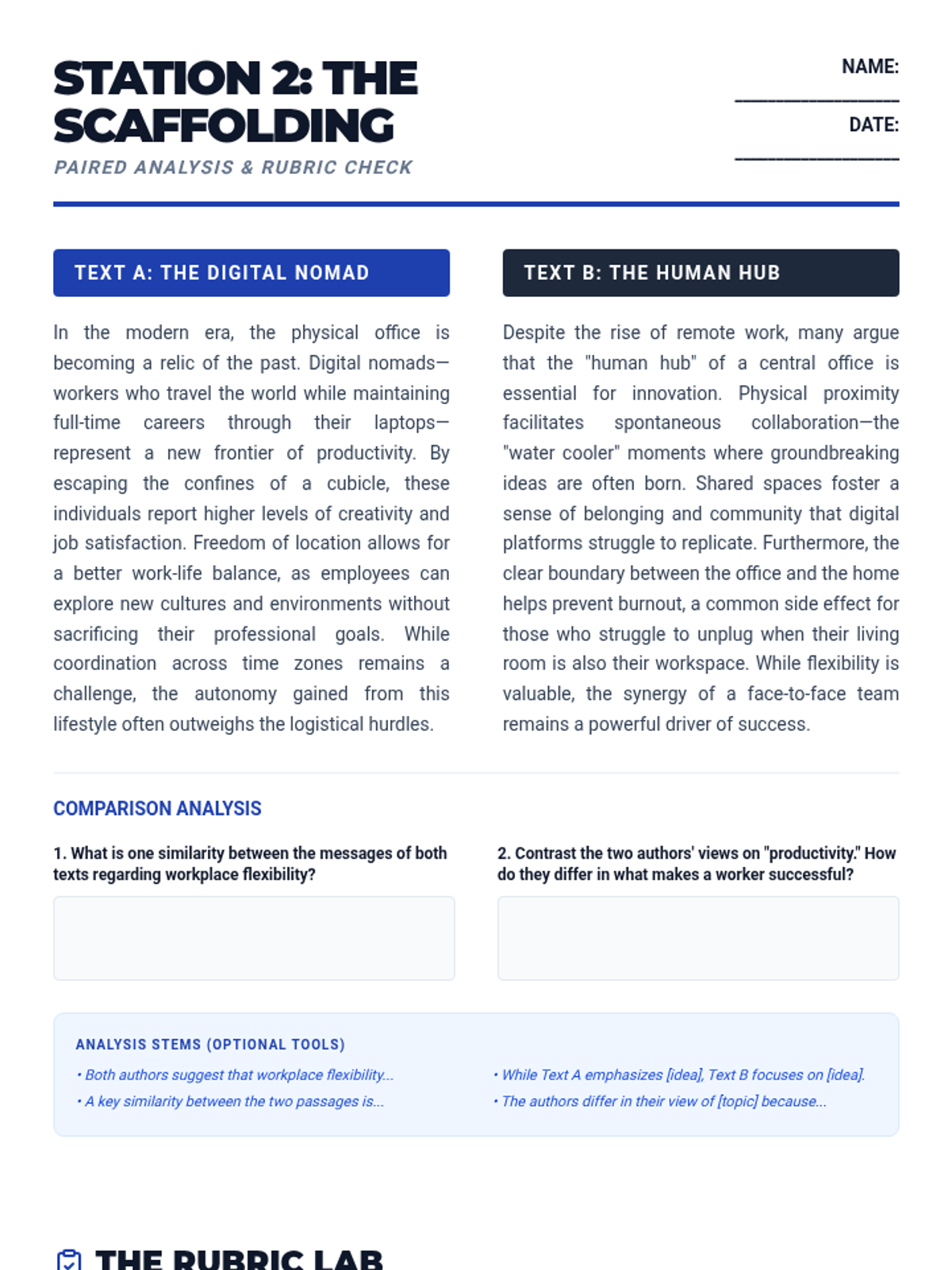
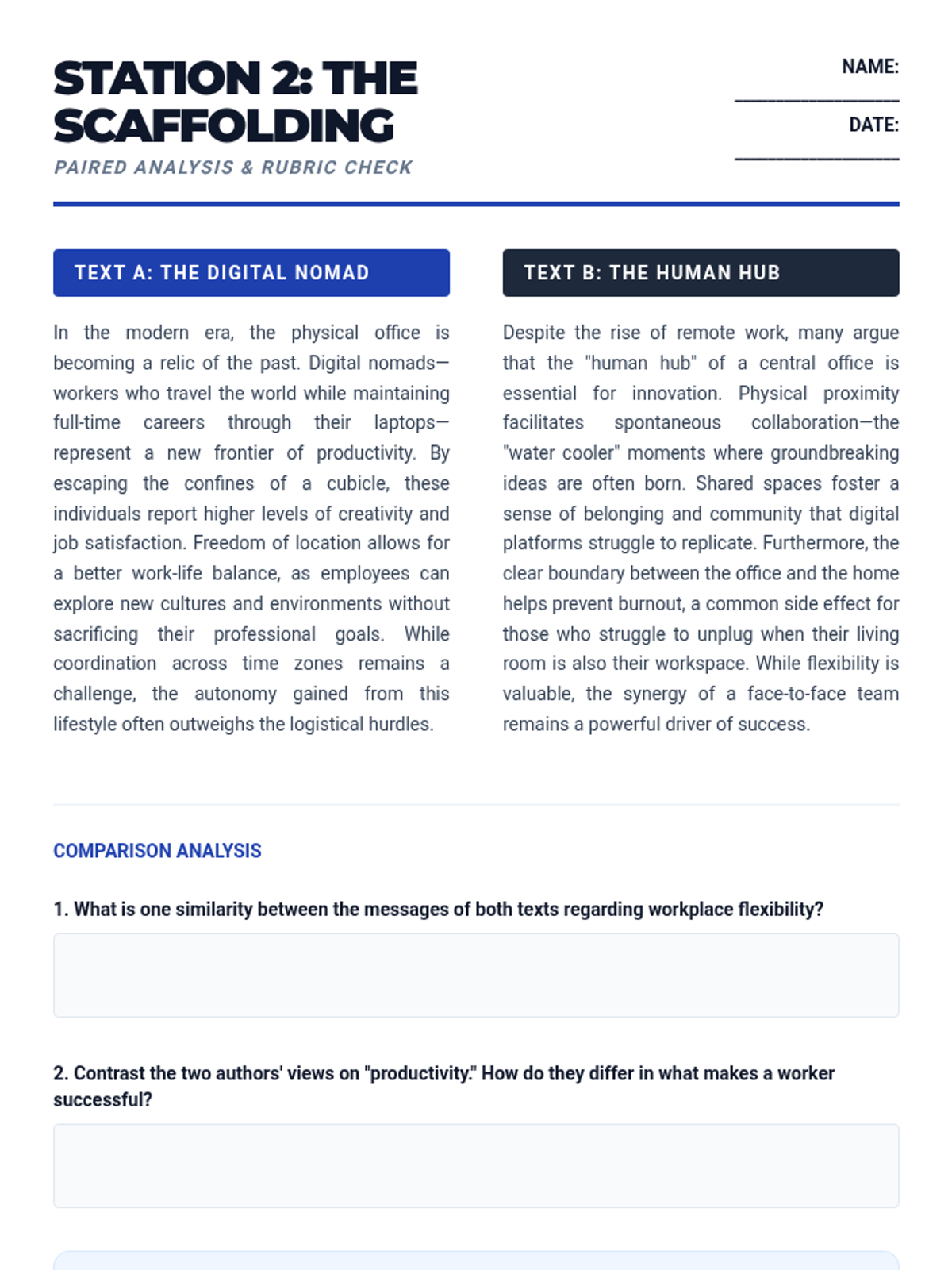
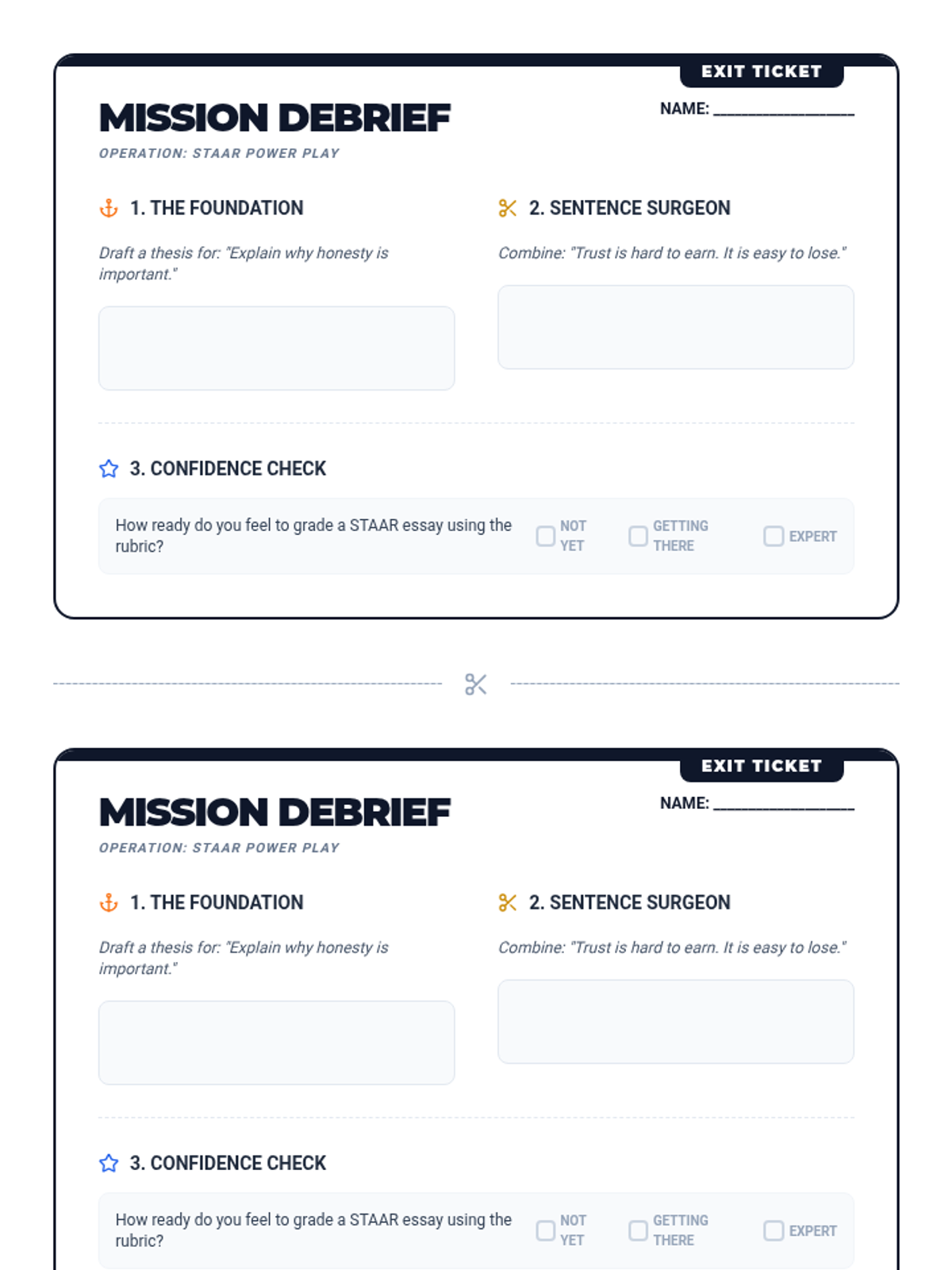
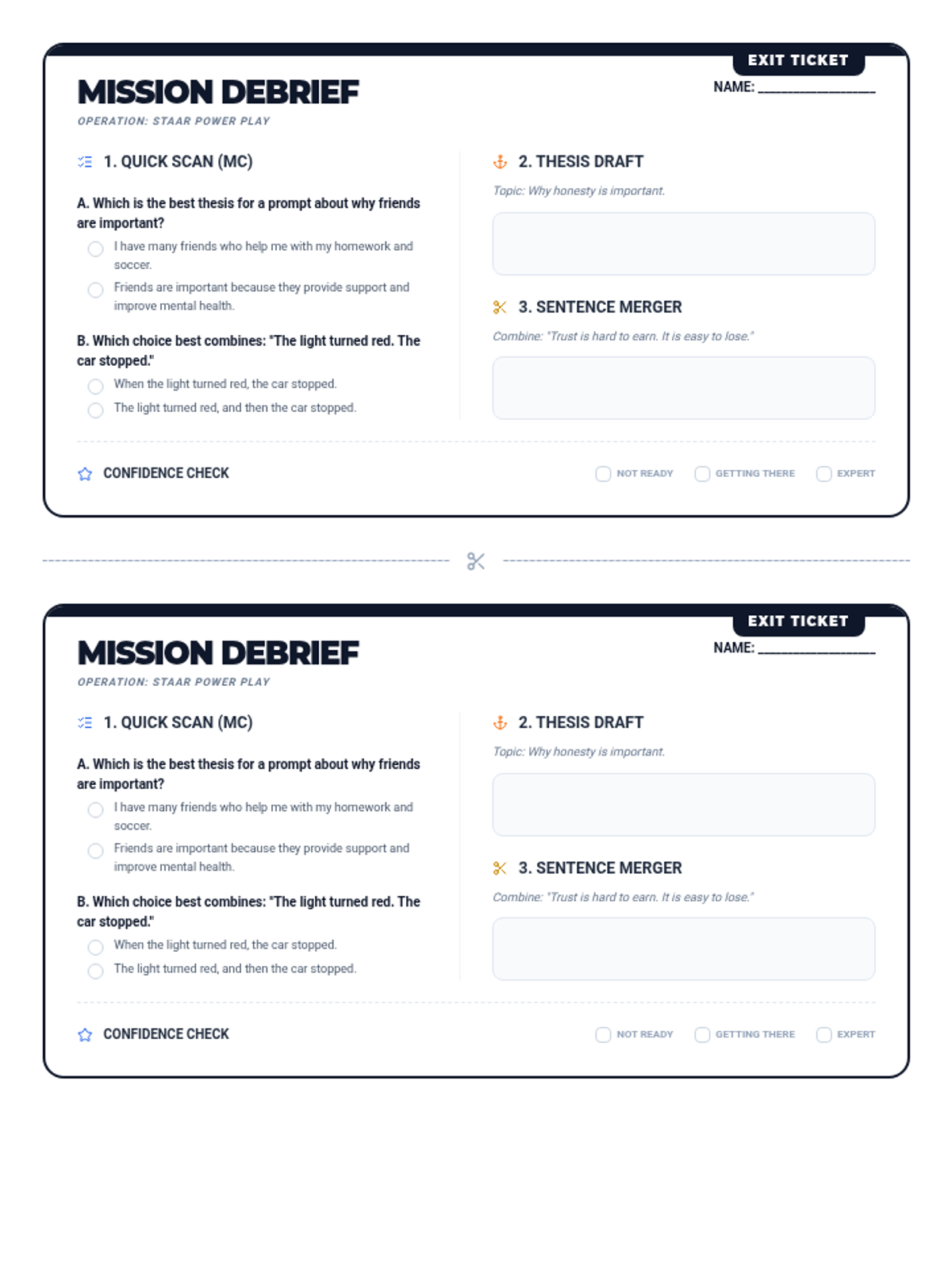
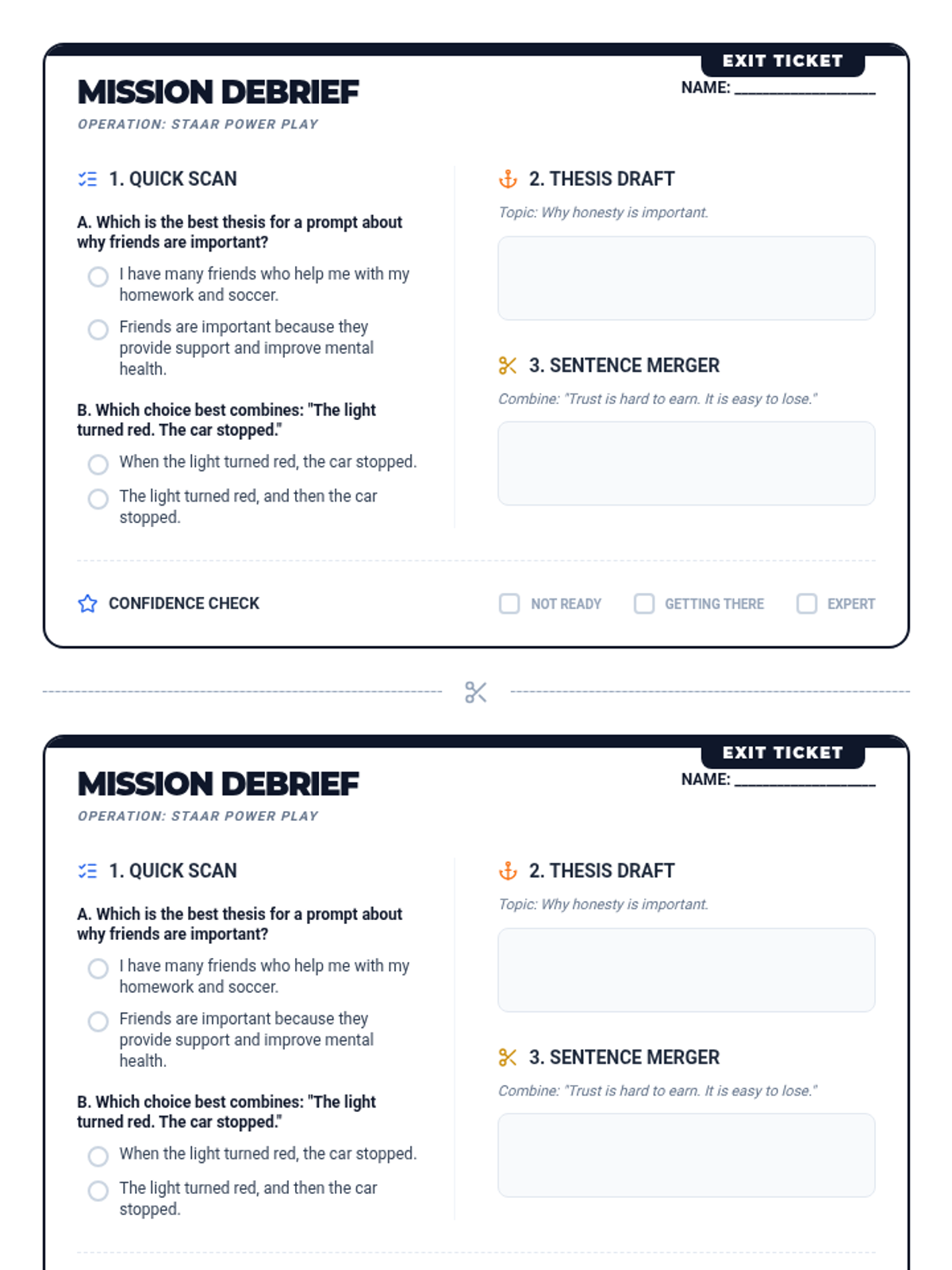
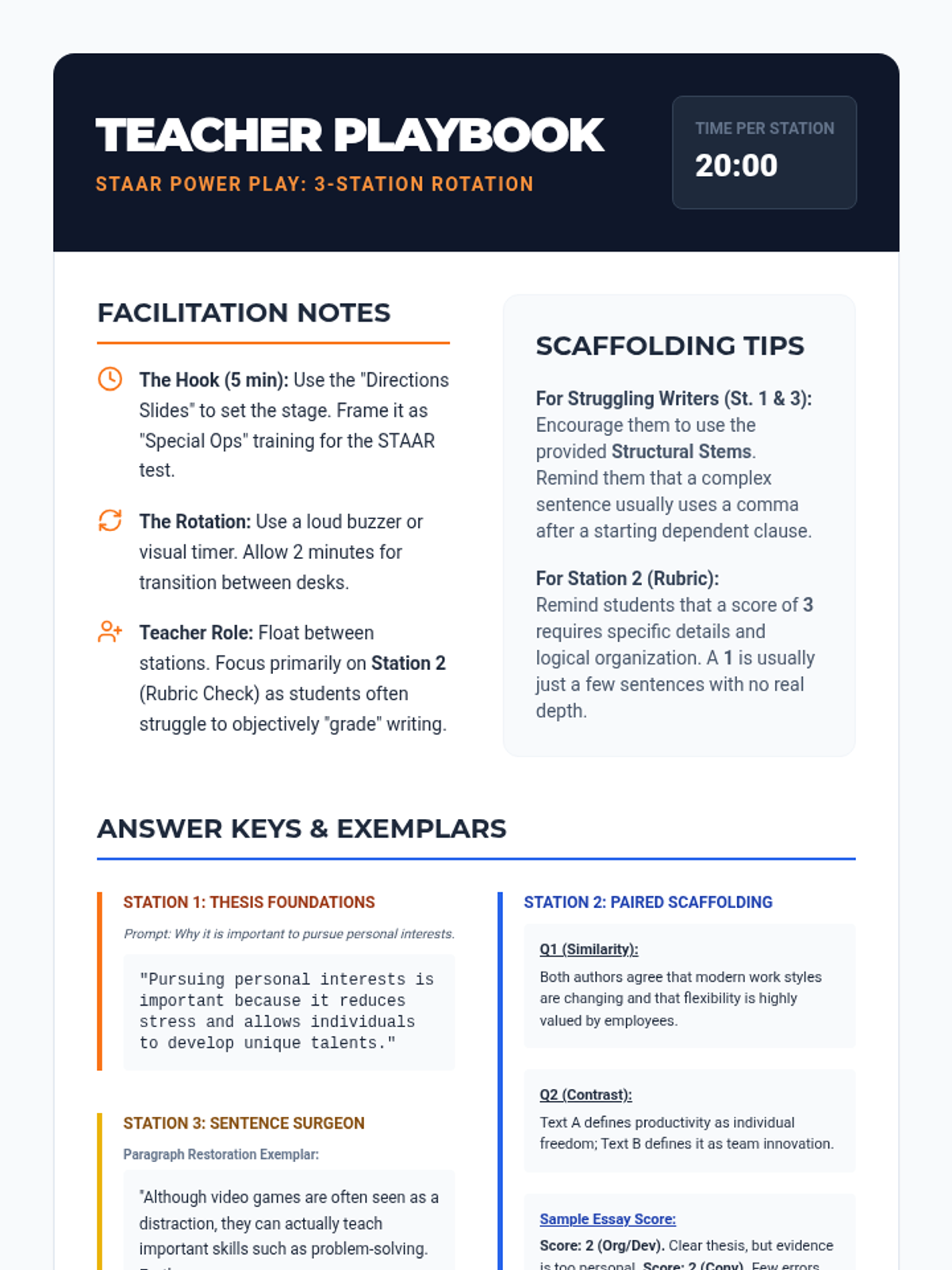
A series of three high-intensity stations designed to prepare students for the STAAR English assessment, focusing on thesis development, paired passage analysis, and sentence combining.
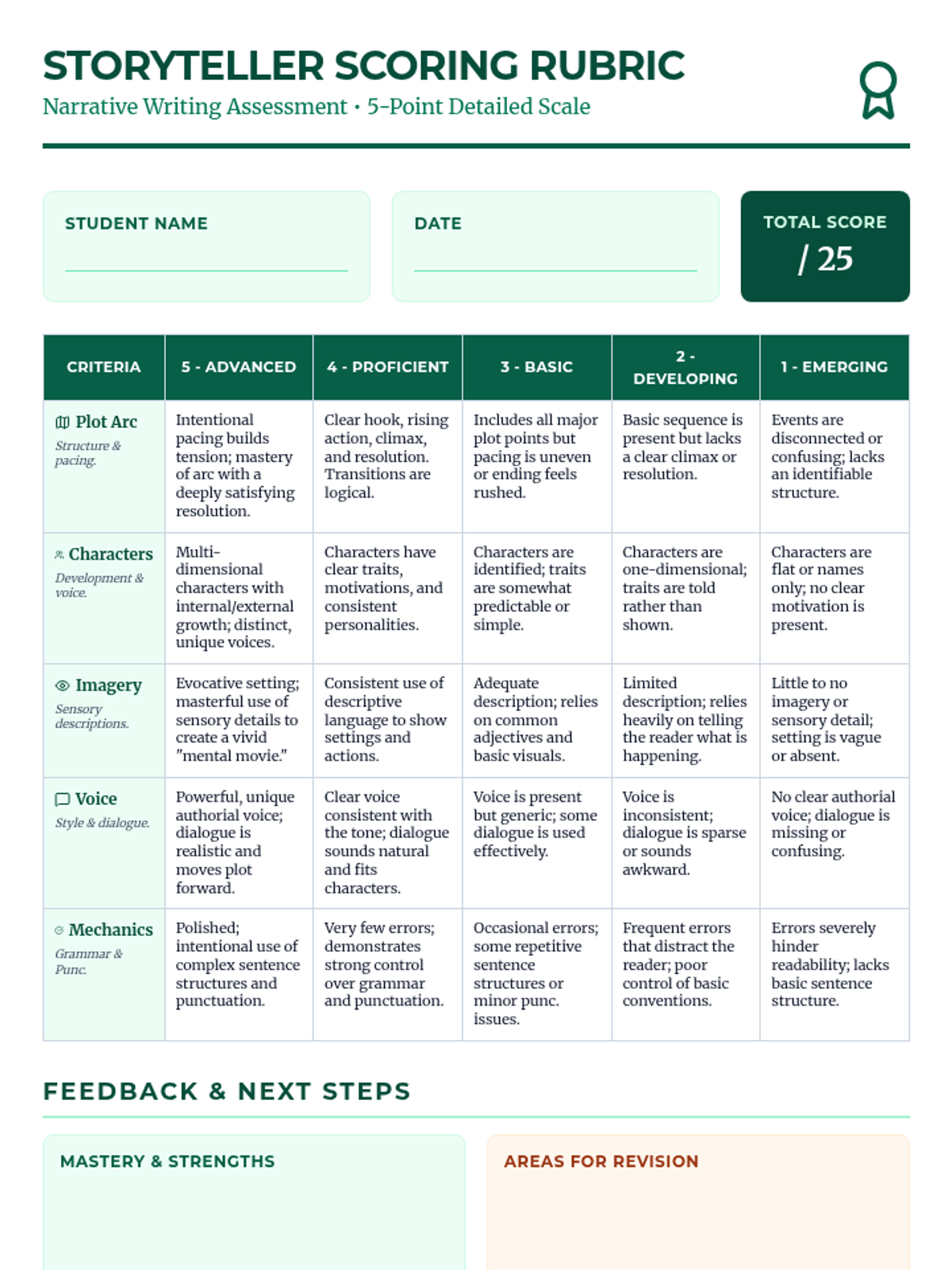
A comprehensive set of writing tools and rubrics across different genres to help students master various styles of storytelling and analysis.
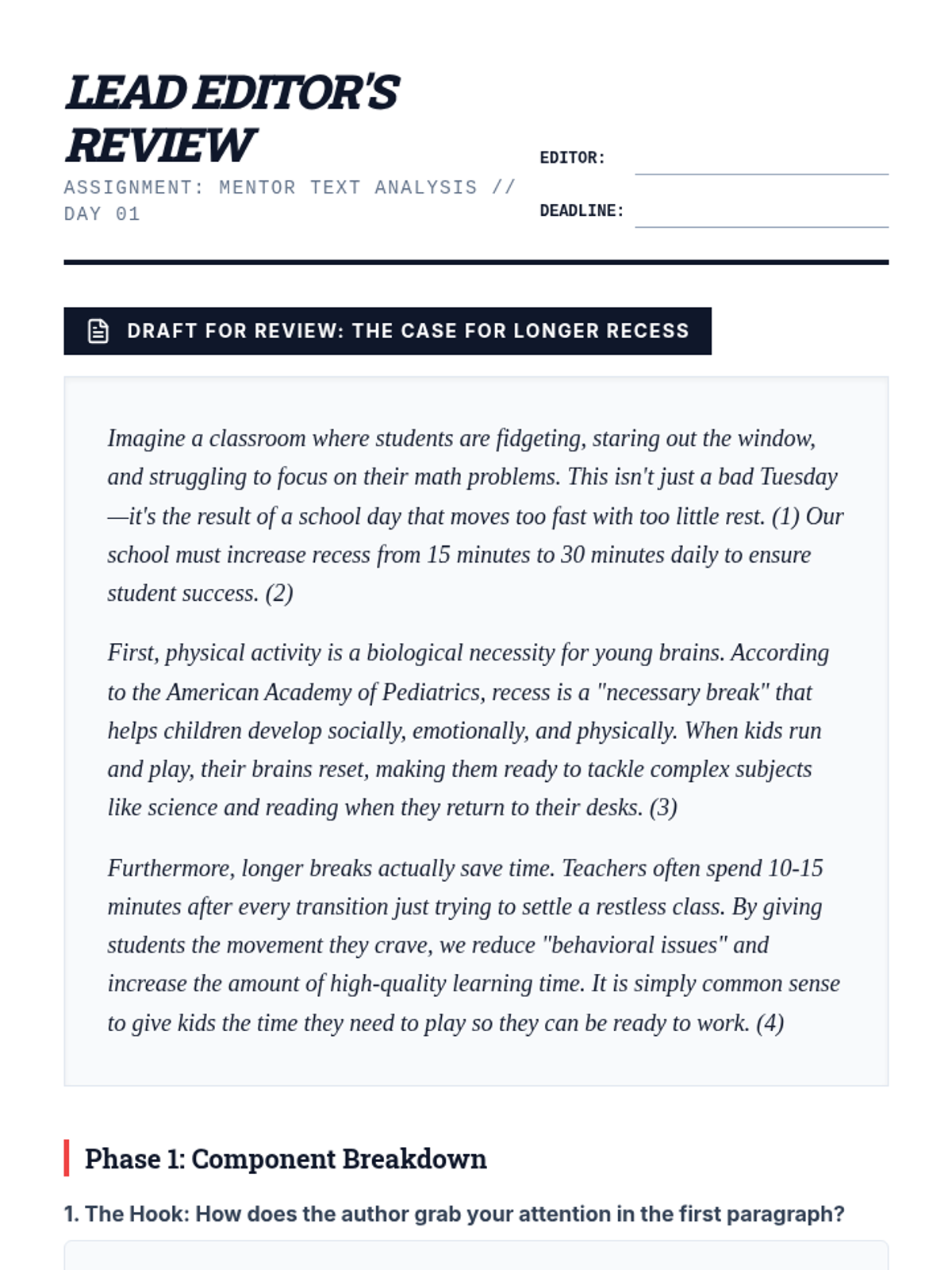
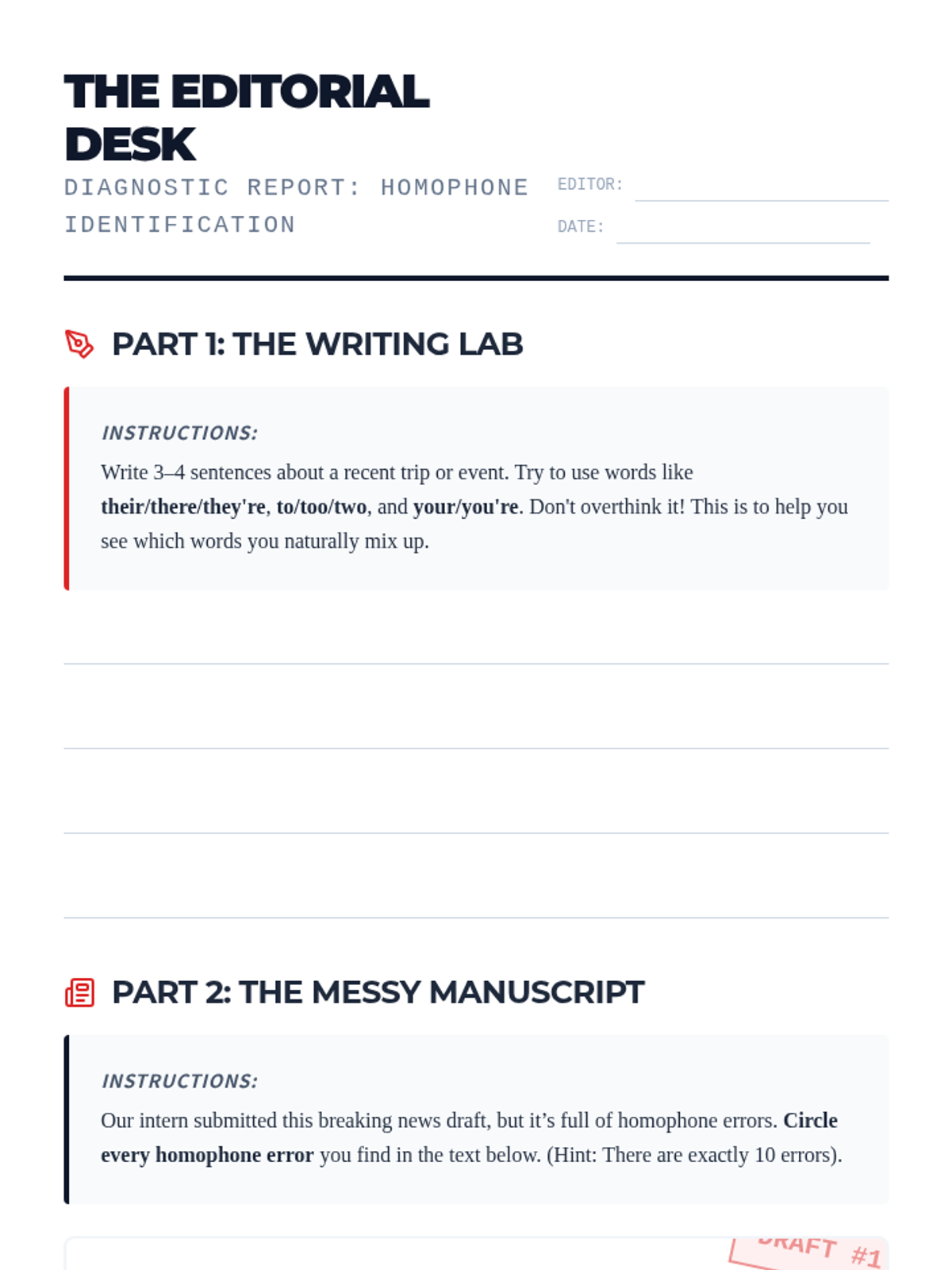
A comprehensive 5-day unit designed to take students from analyzing mentor texts to drafting and polishing their own persuasive essays. The unit uses a professional 'Editorial Office' theme to engage students as 'Lead Editors' of their own arguments.
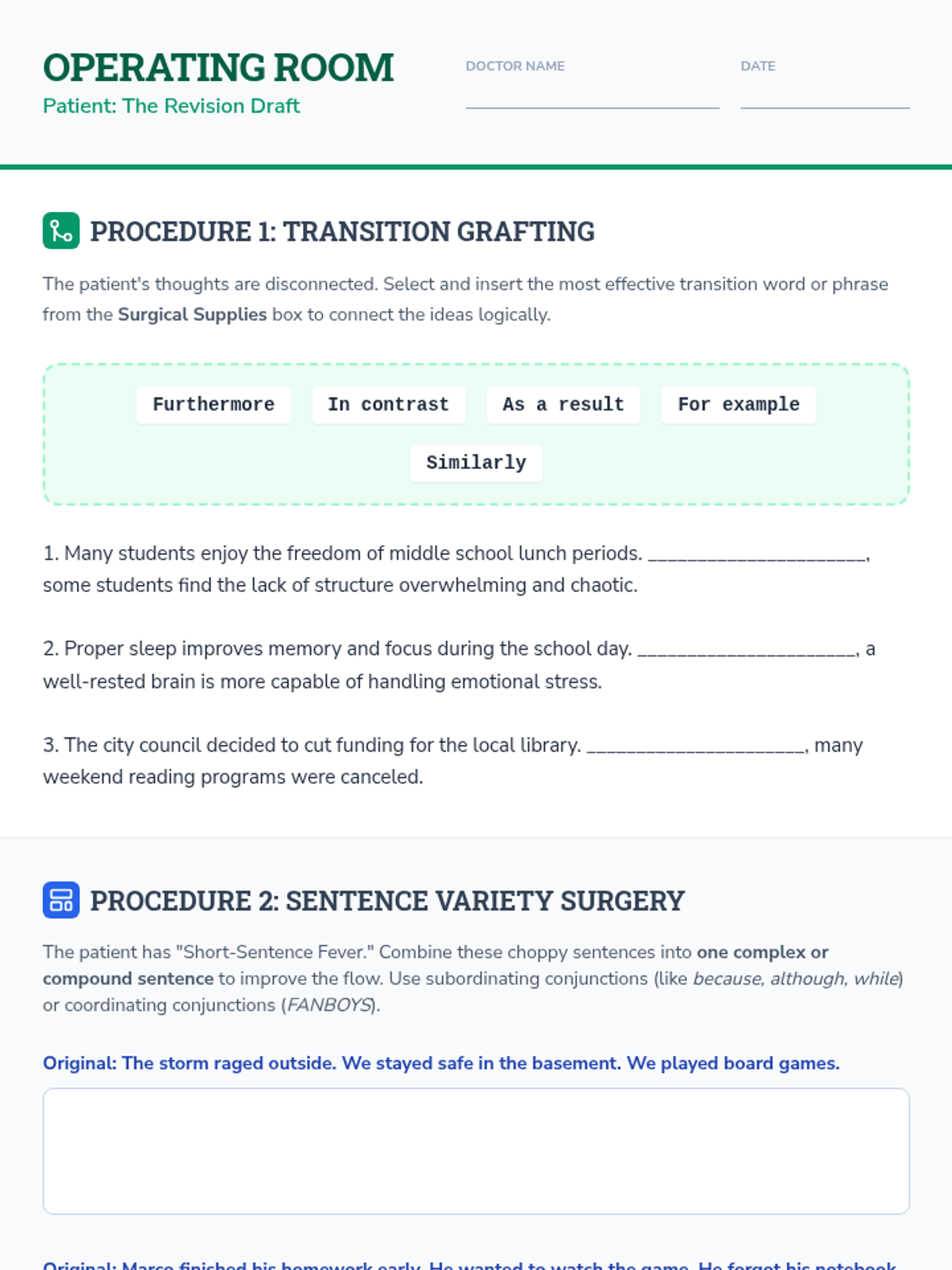
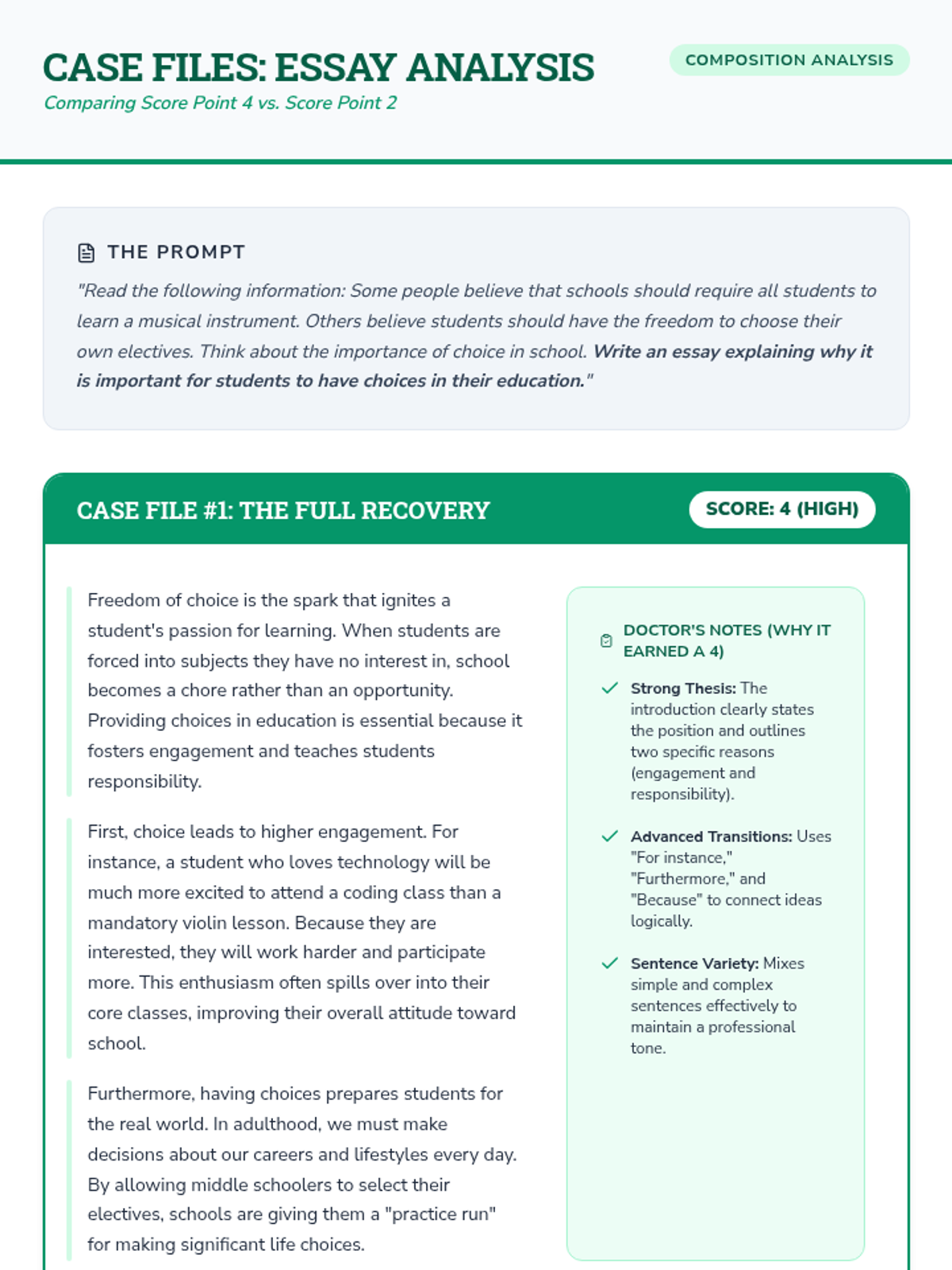
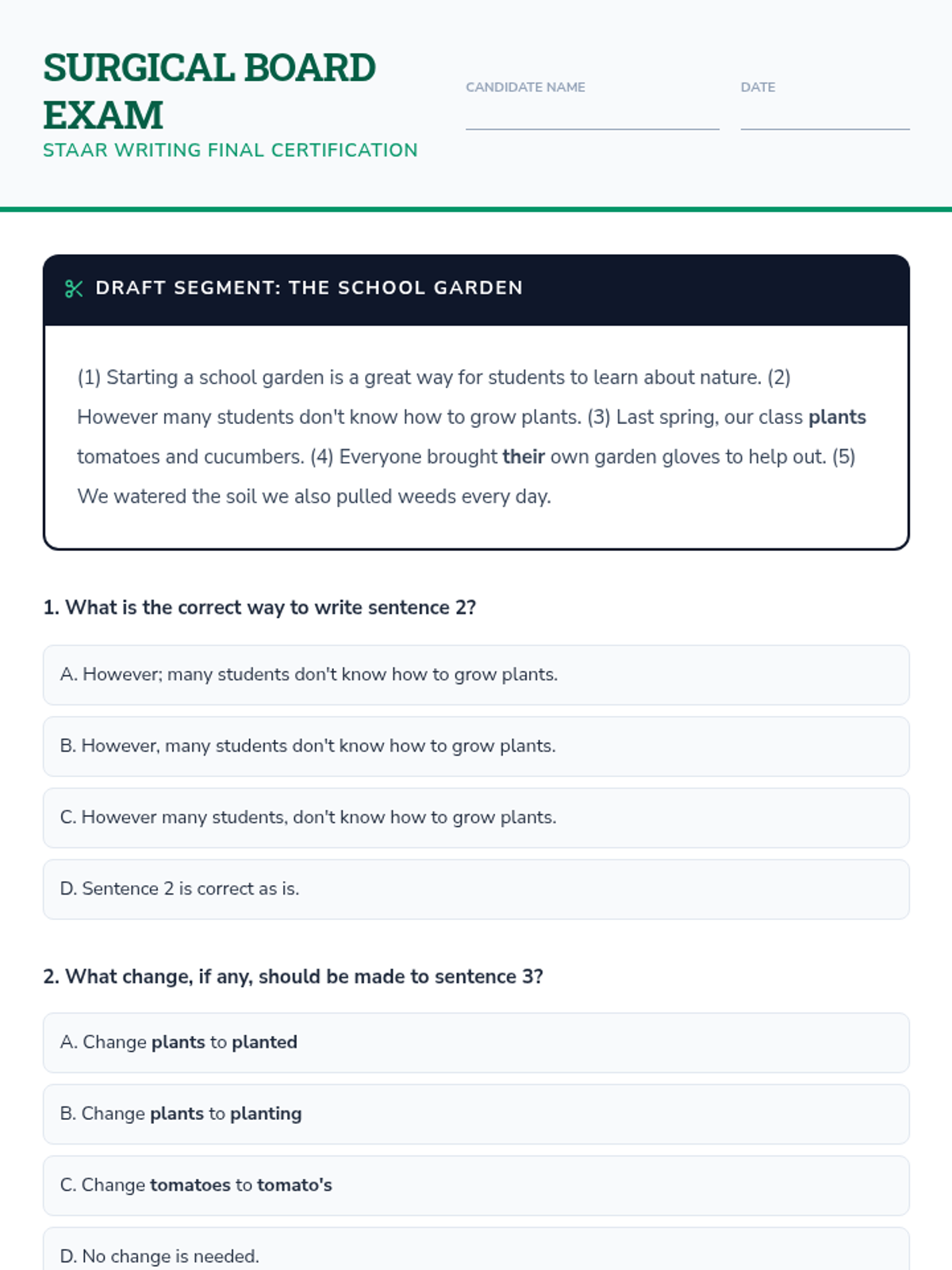
A masterclass in STAAR writing for grades 6-7, focusing on the Revision and Editing components of the RLA assessment through engaging, practical application.
A series of high-rigor reading and writing lessons designed to prepare middle school students for state-level standardized assessments.
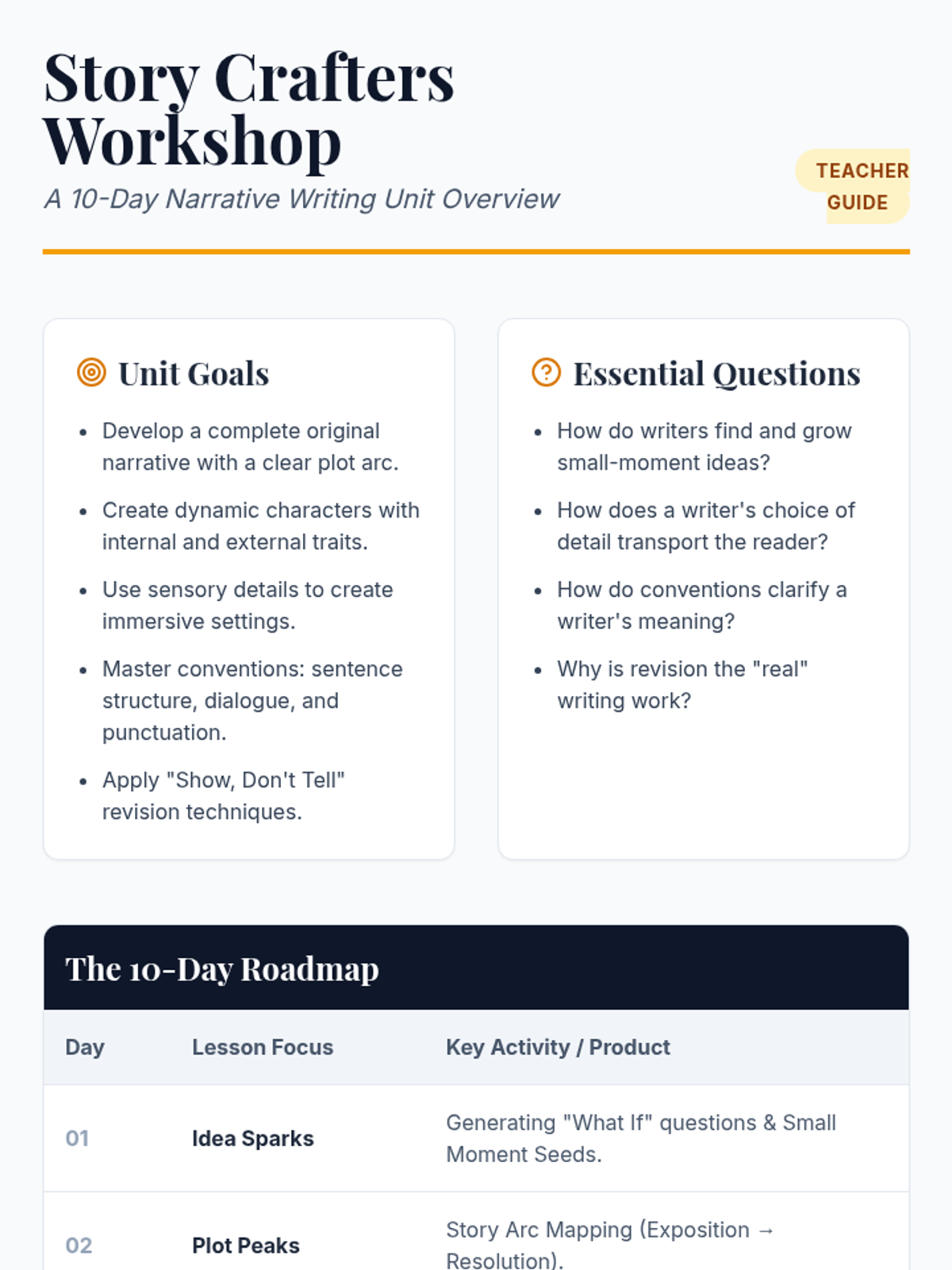
A 10-day immersion into narrative writing for upper elementary students, focusing on craft, structure, and grammar conventions.
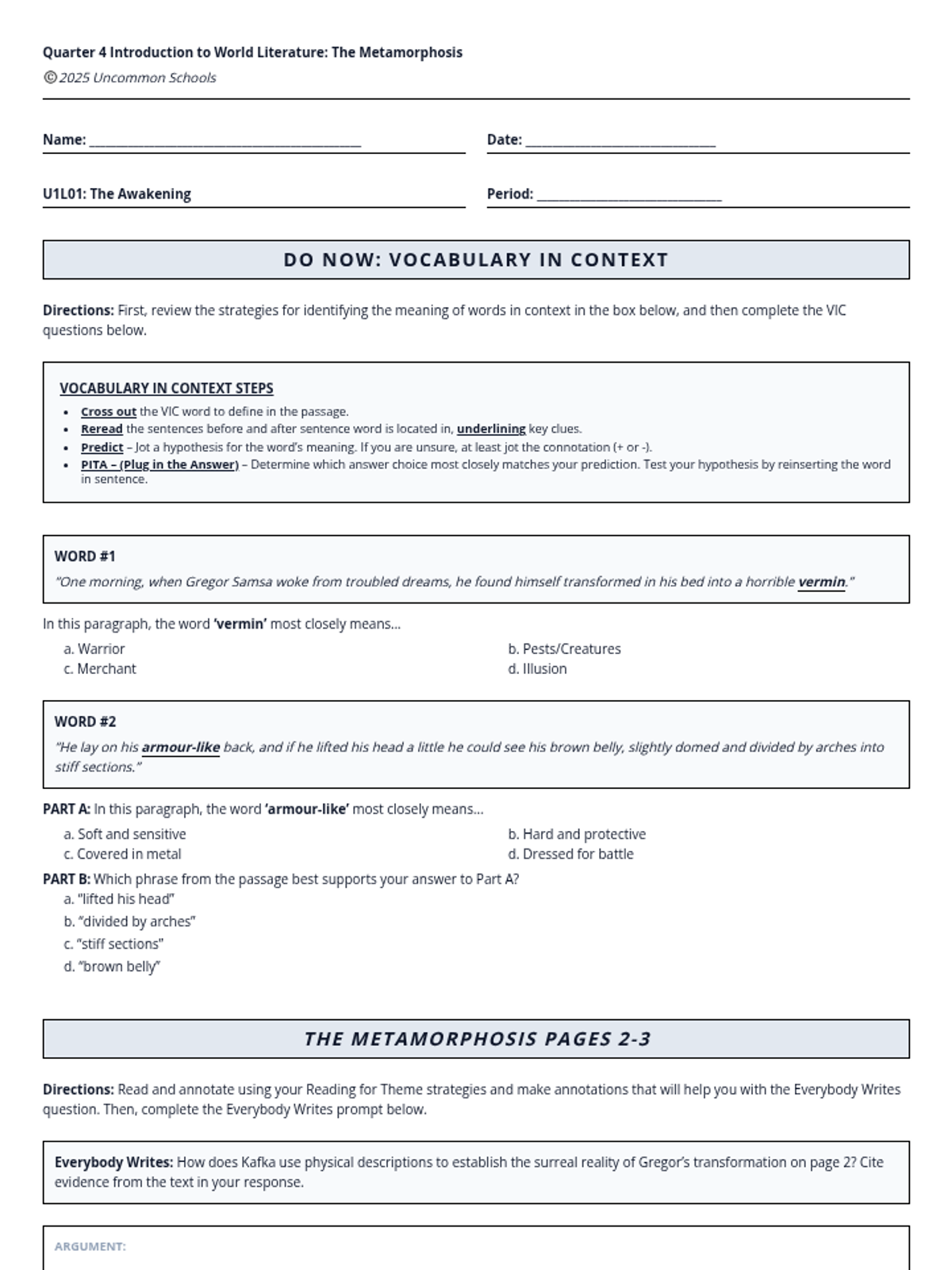
A four-day grammar intensive sequence designed to prepare students for the Introduction to World Literature IA Exam. Each lesson follows a consistent high-engagement structure: Do Now, Model with Concept Map, Solo Practice, and Exit Ticket, covering Sentence Structure, Punctuation, Clauses, and Vocabulary in Context.
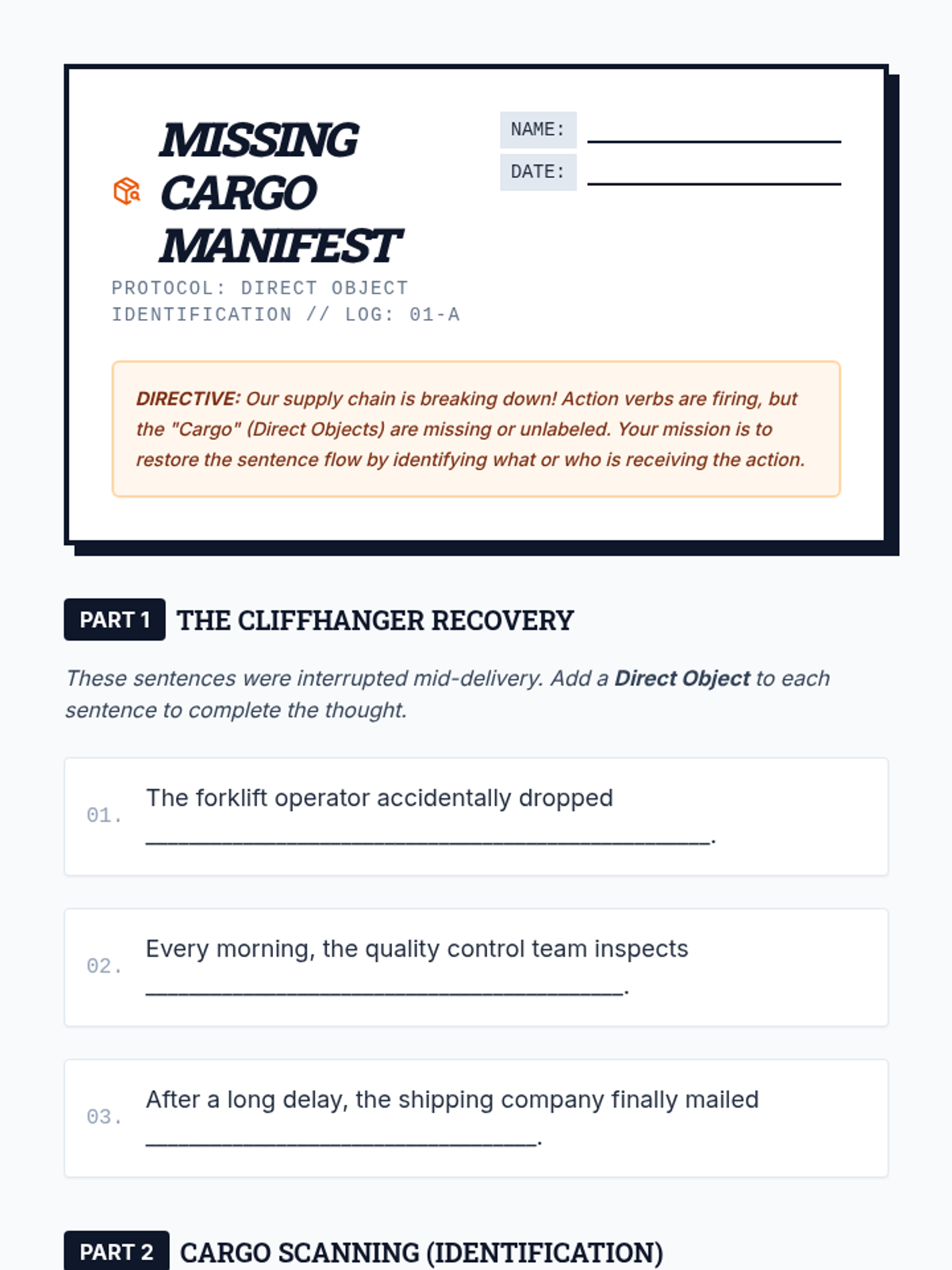
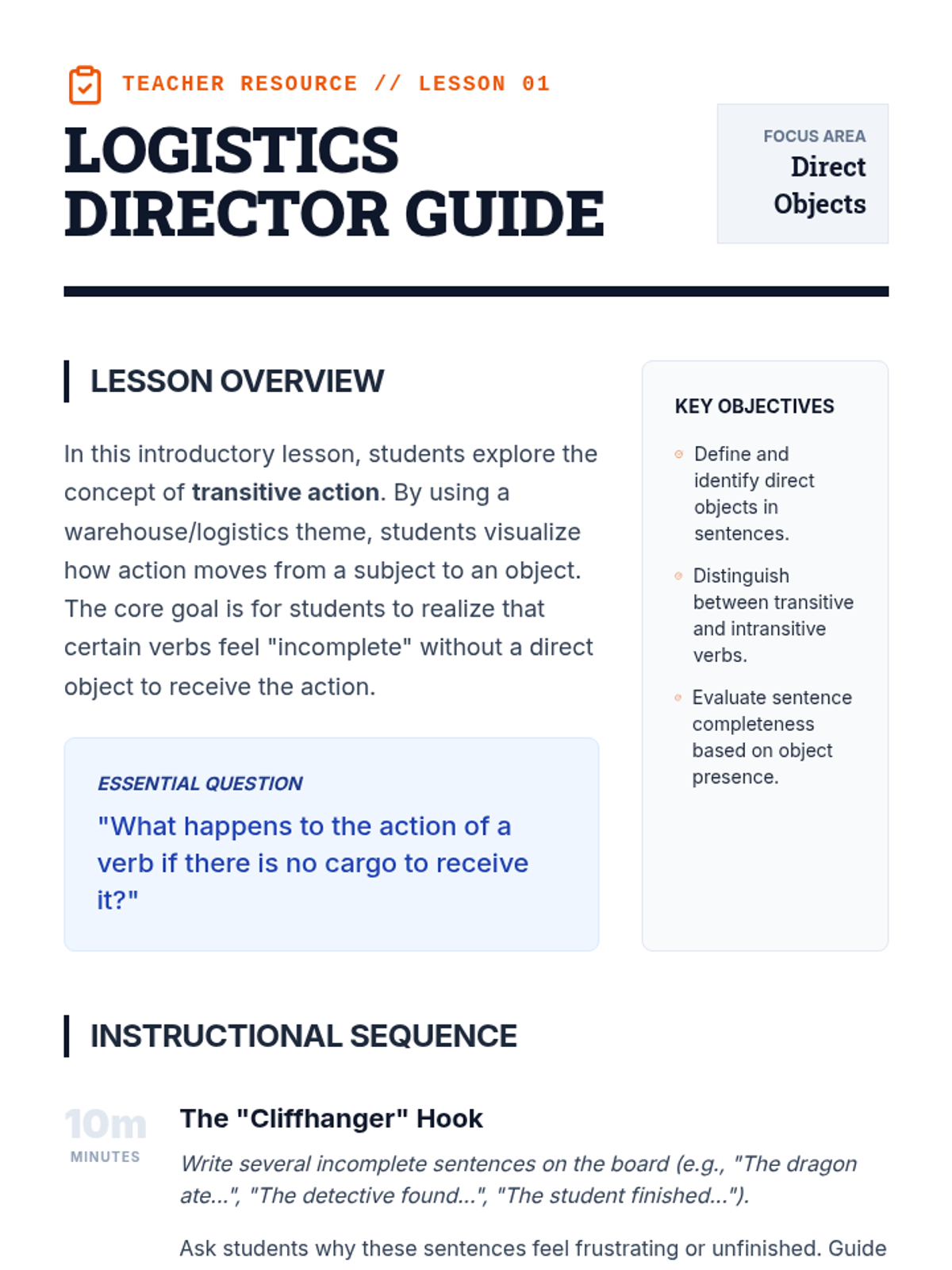
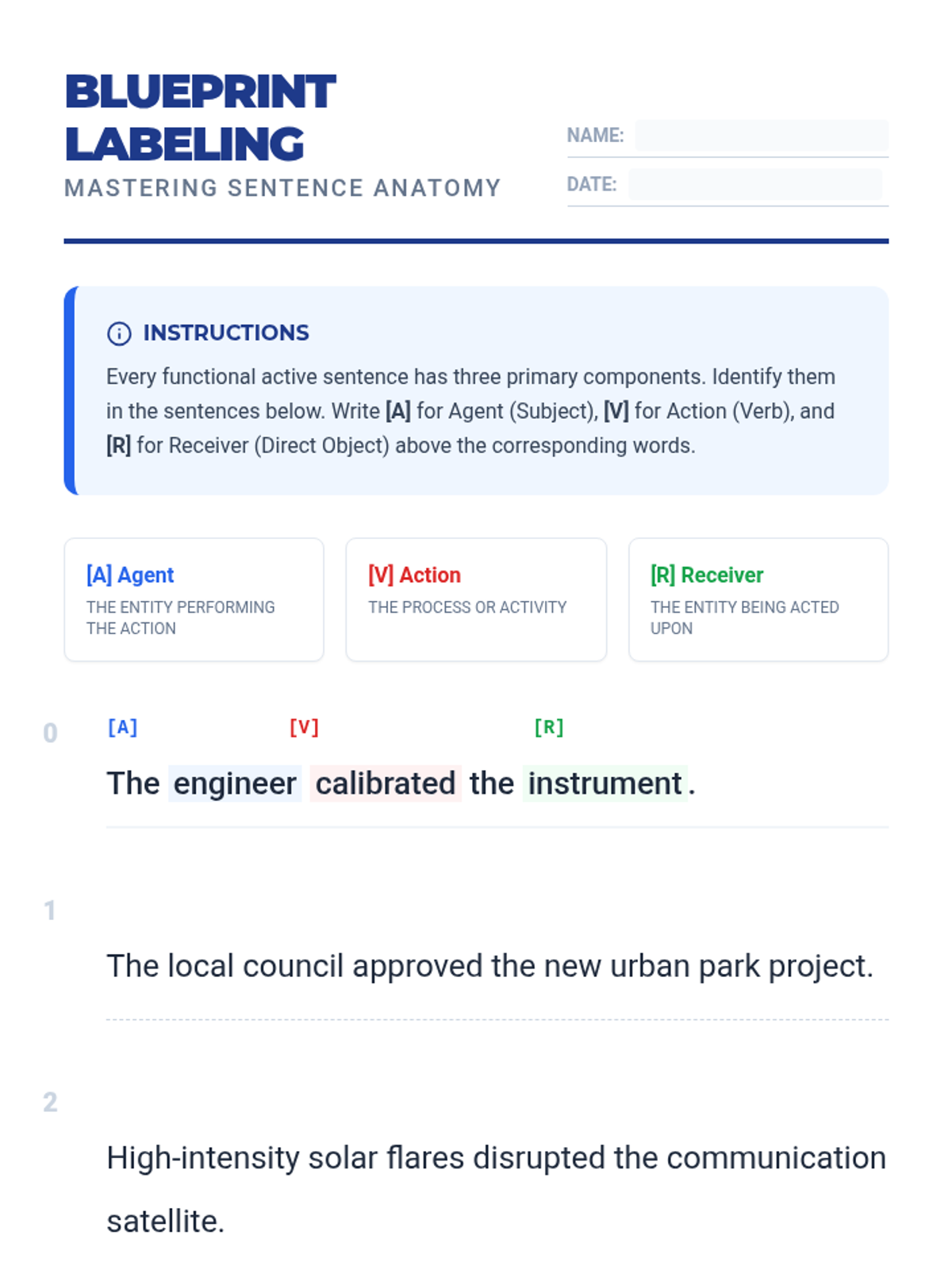
A comprehensive 6th-grade ELA sequence exploring the mechanics of direct and indirect objects. Students transition from identifying basic transitive action to manipulating complex sentence patterns and applying these structures in narrative writing using a 'Sentence Logistics' theme.
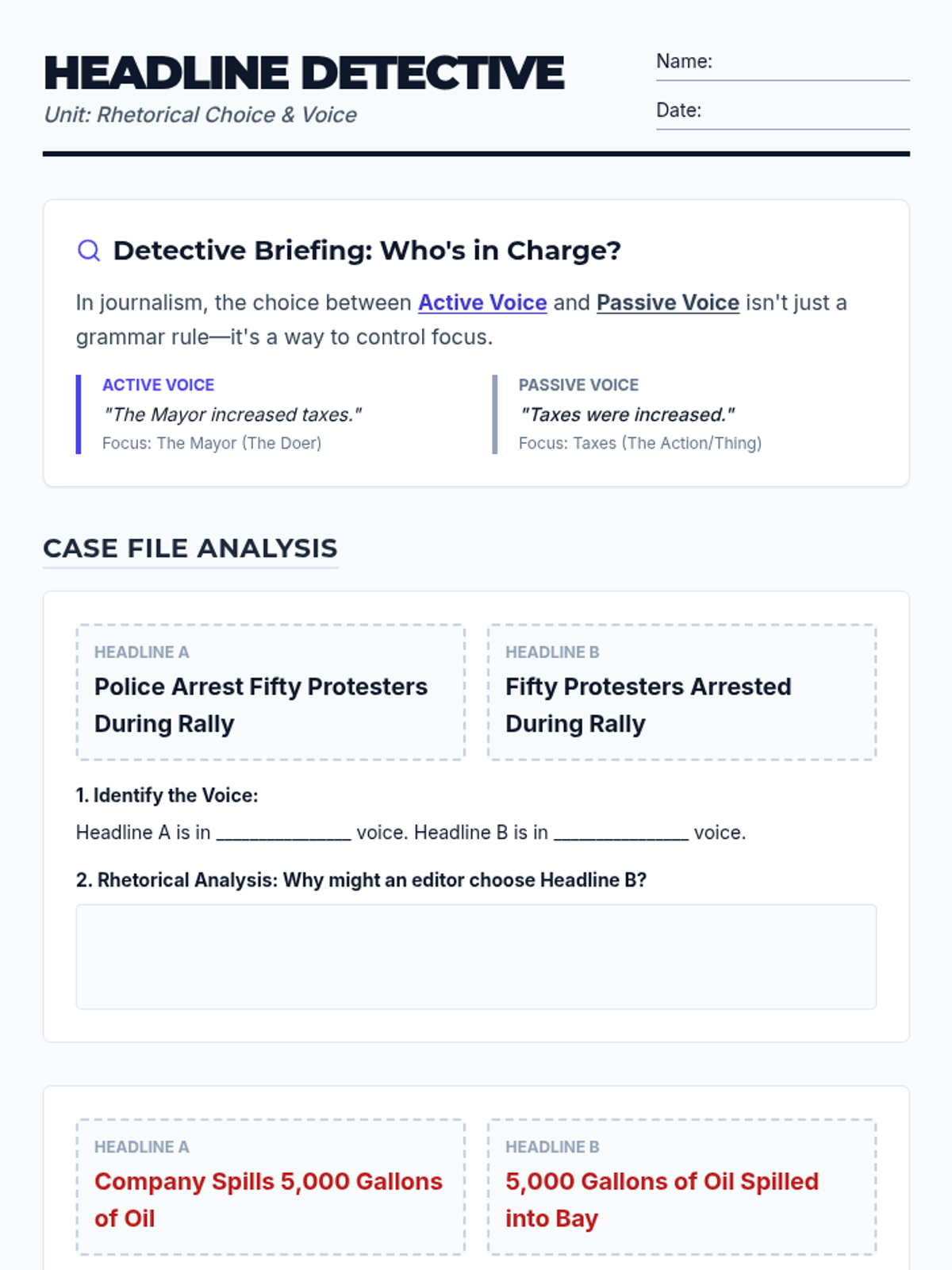
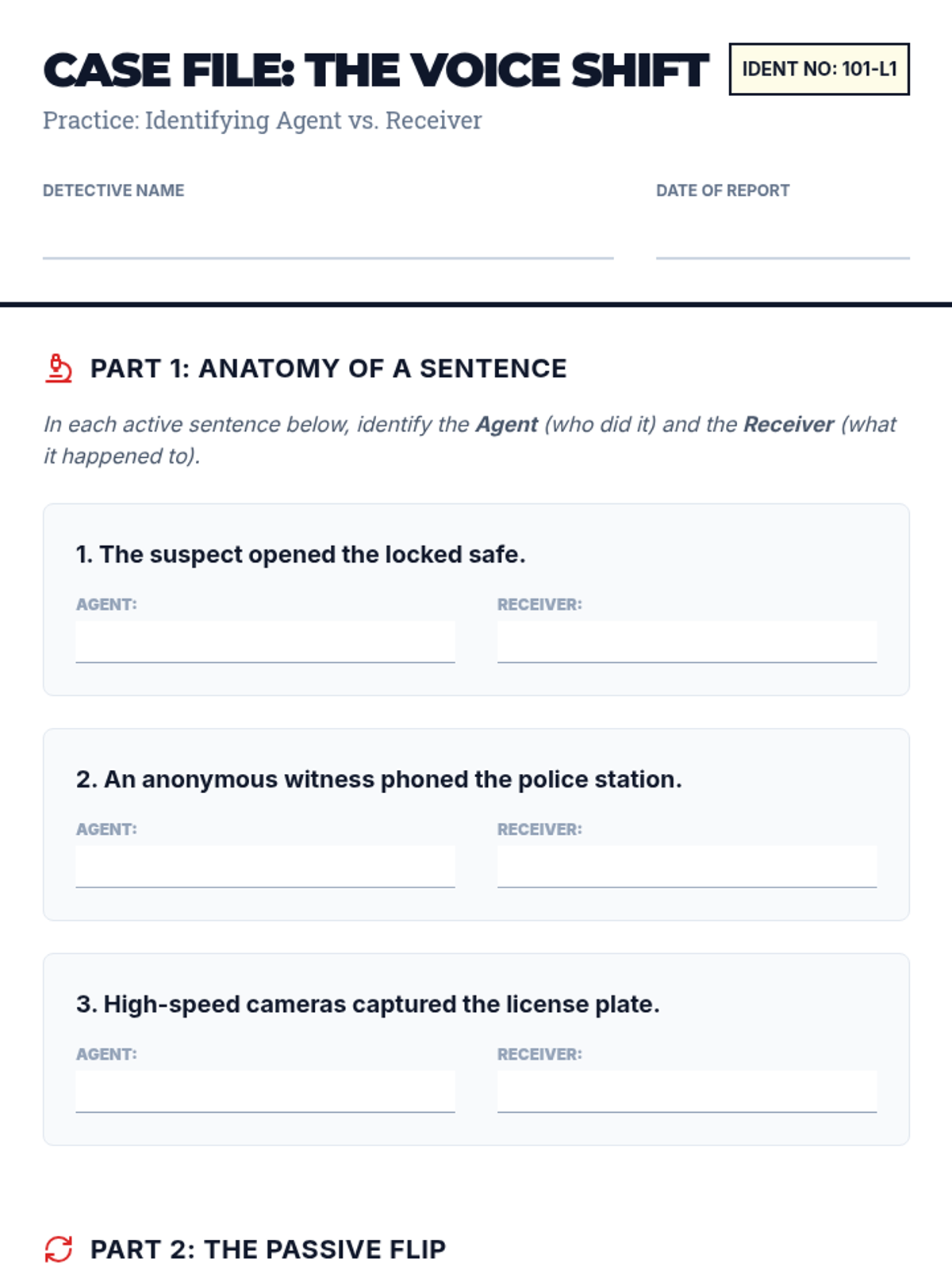
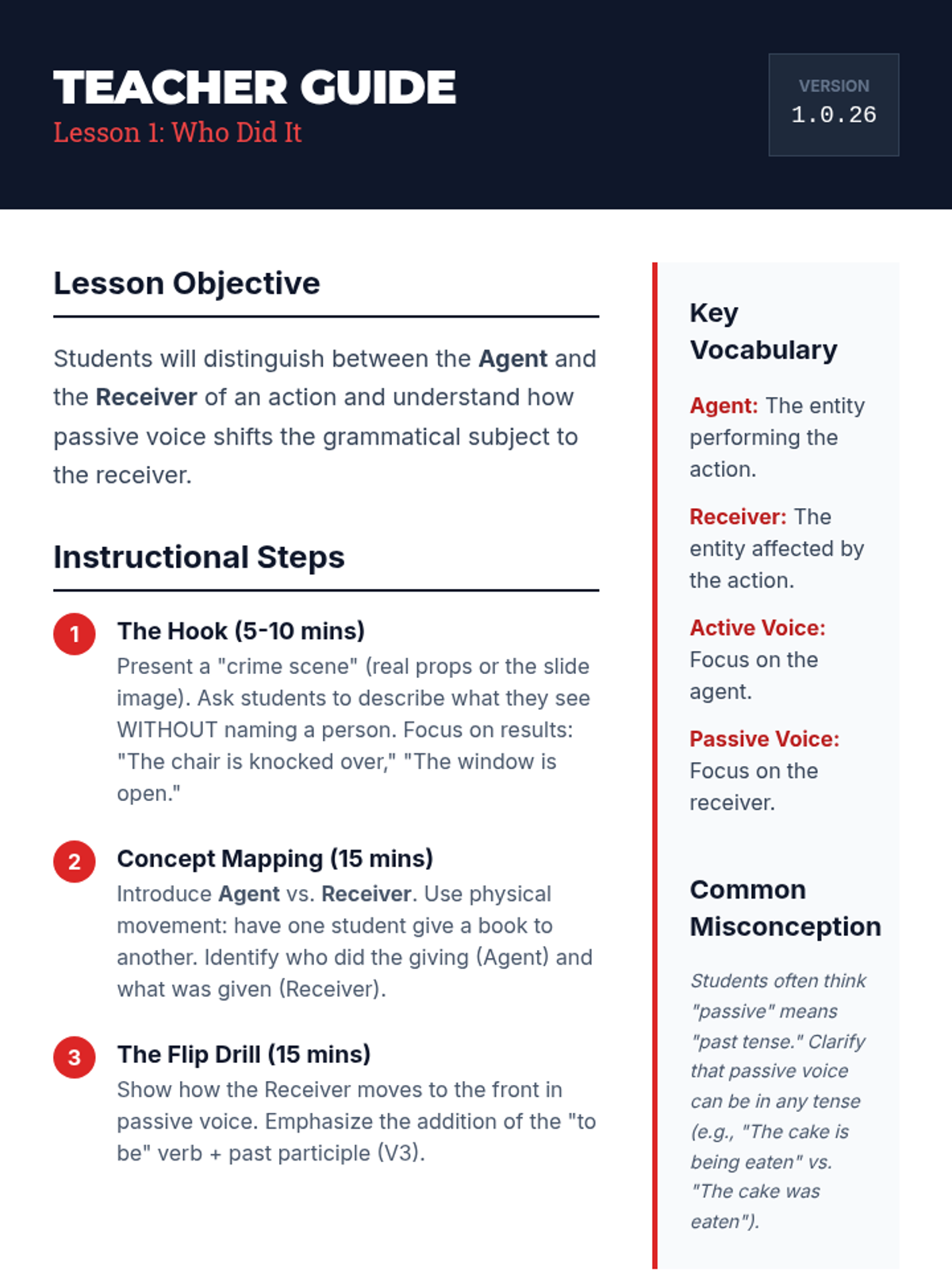
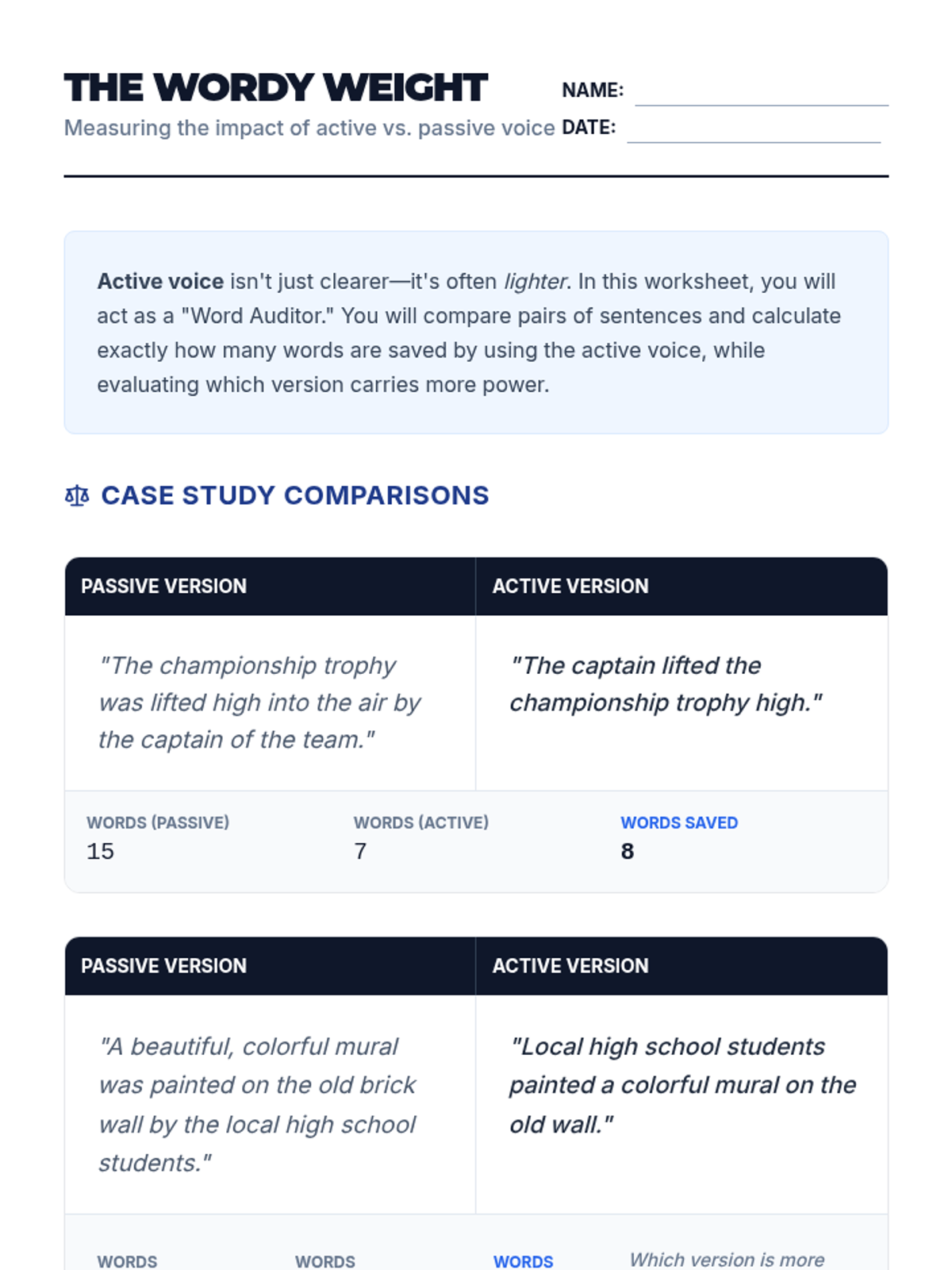
This sequence explores the rhetorical and stylistic implications of choosing active or passive voice. Students learn to use voice intentionally across different genres—media, science, mystery, and persuasion—to influence reader perception and focus.
This sequence teaches 6th-grade students to master the passive voice in formal reporting. Students move beyond basic grammar to understand the strategic use of passive voice in science, journalism, and process writing.
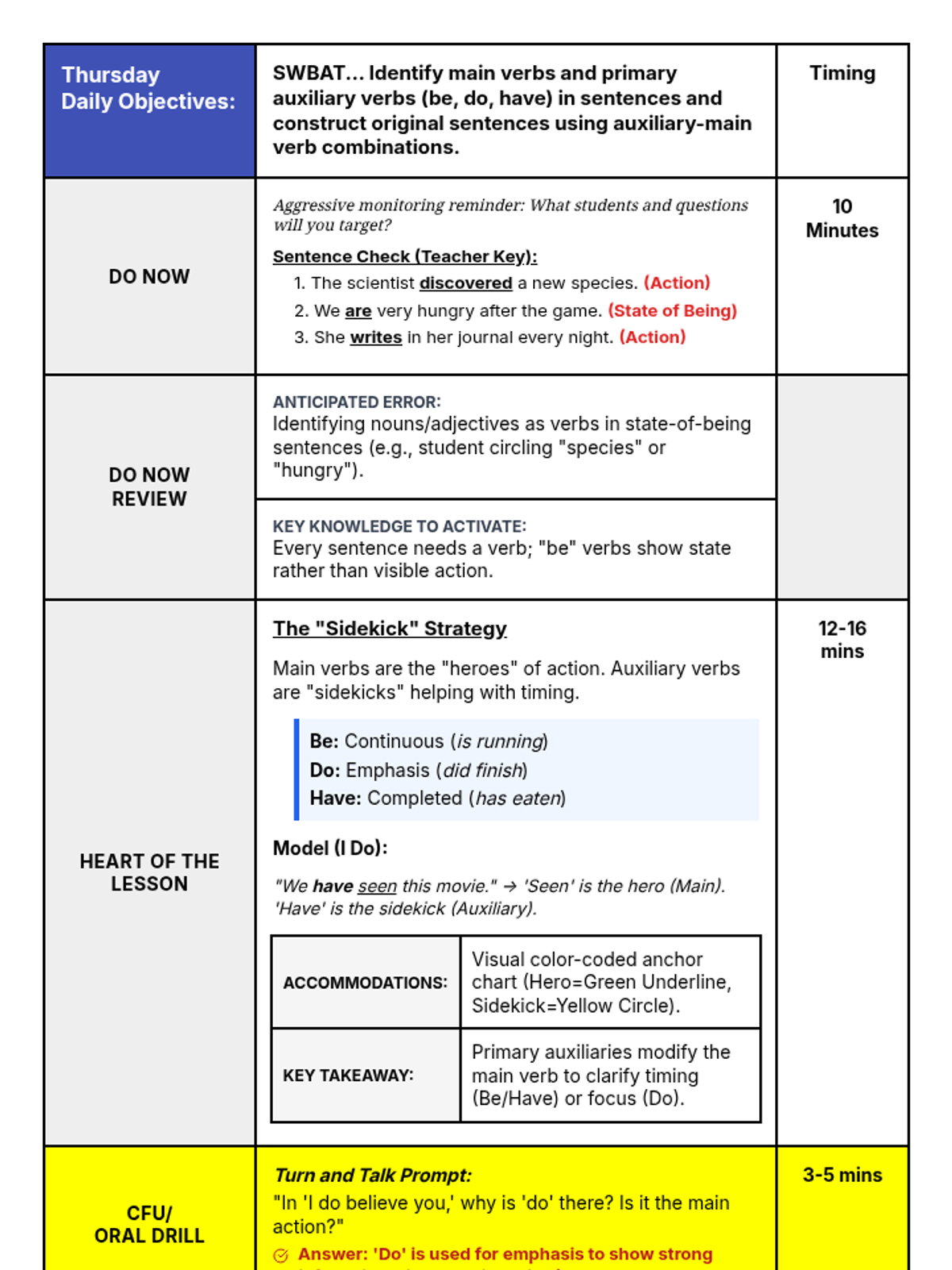
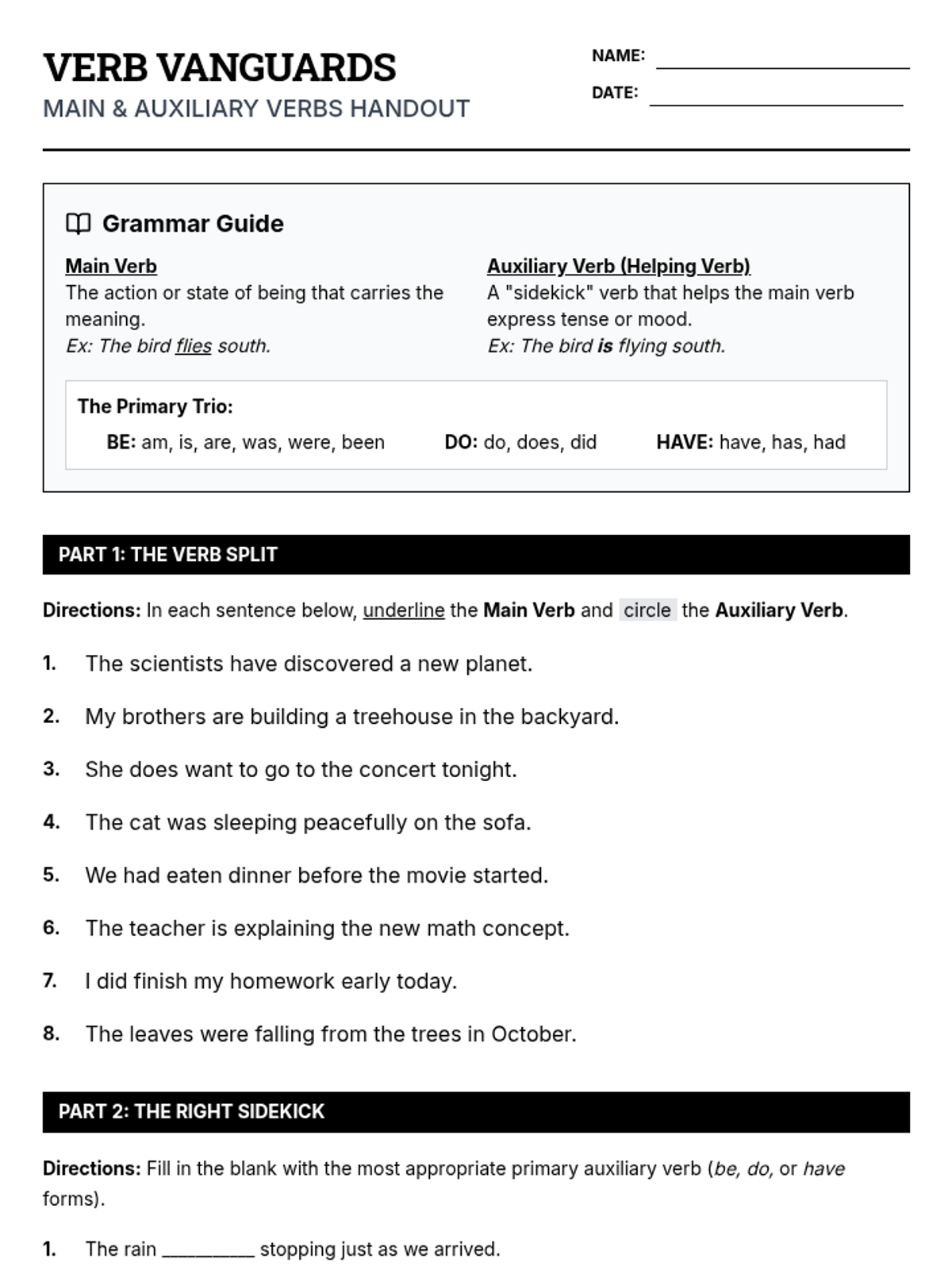
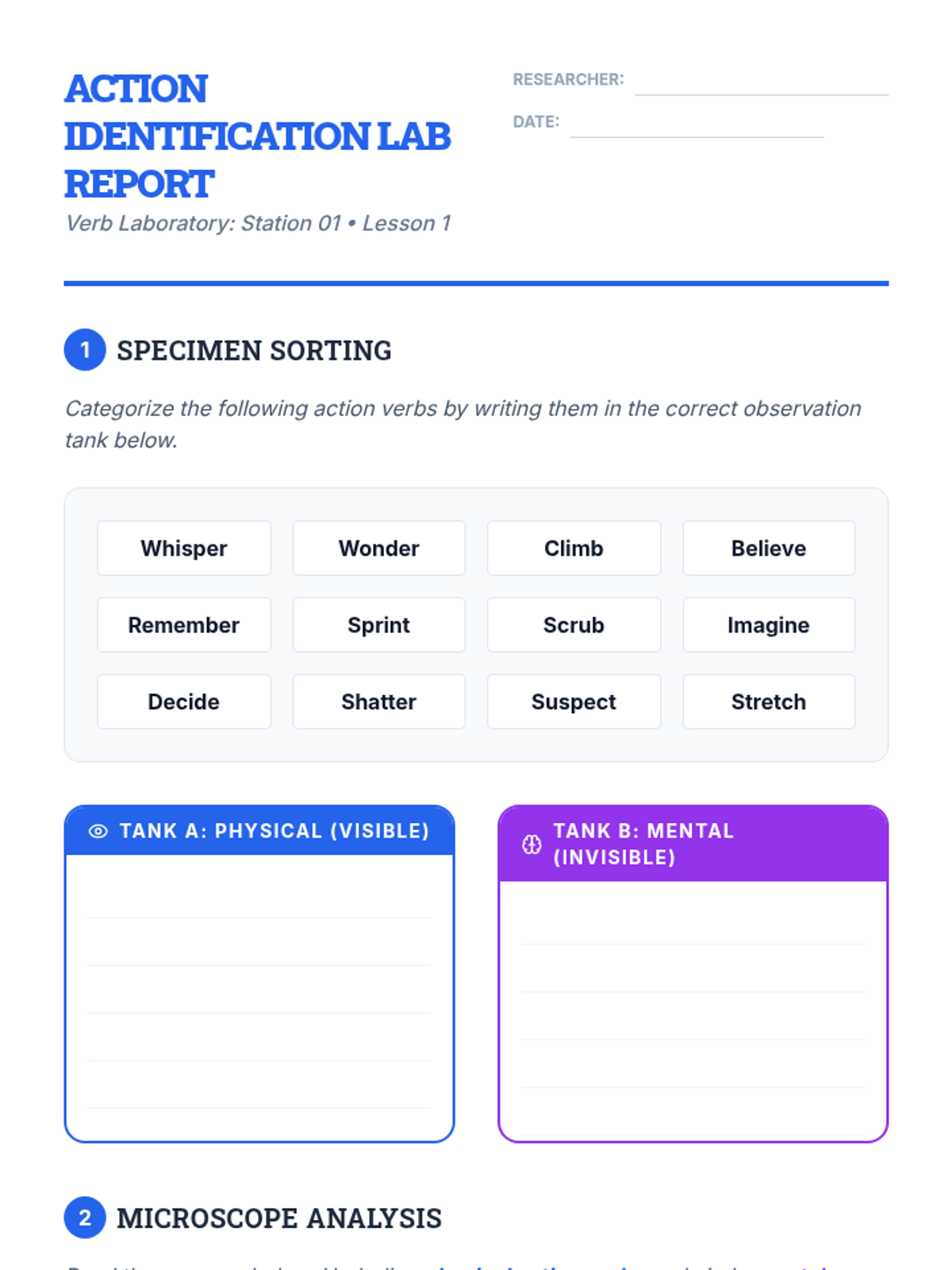
A comprehensive 6th-grade ELA sequence focused on the functions and categories of verbs. Students move from basic action identification to the sophisticated use of linking and helping verbs to enhance their writing.
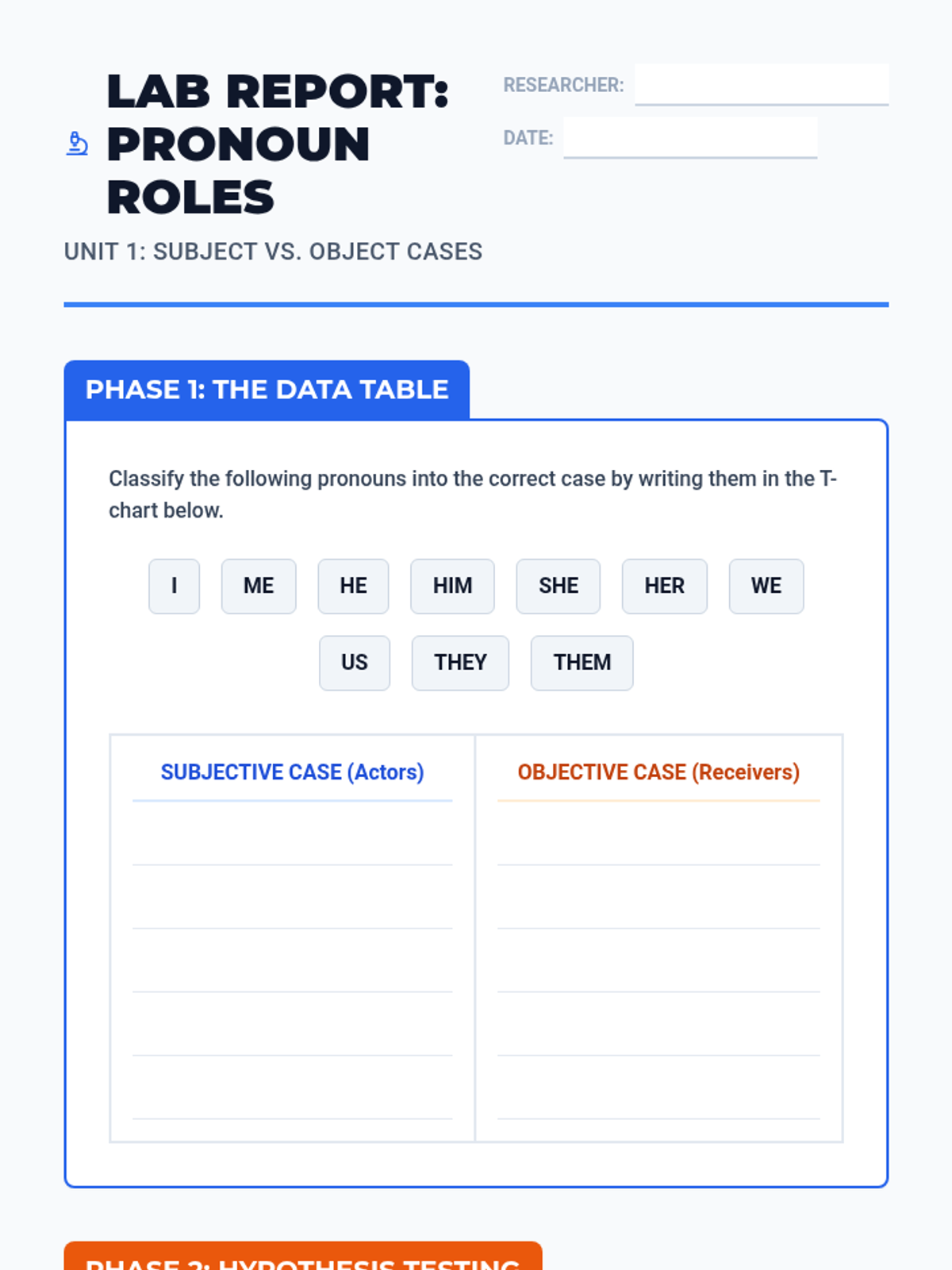
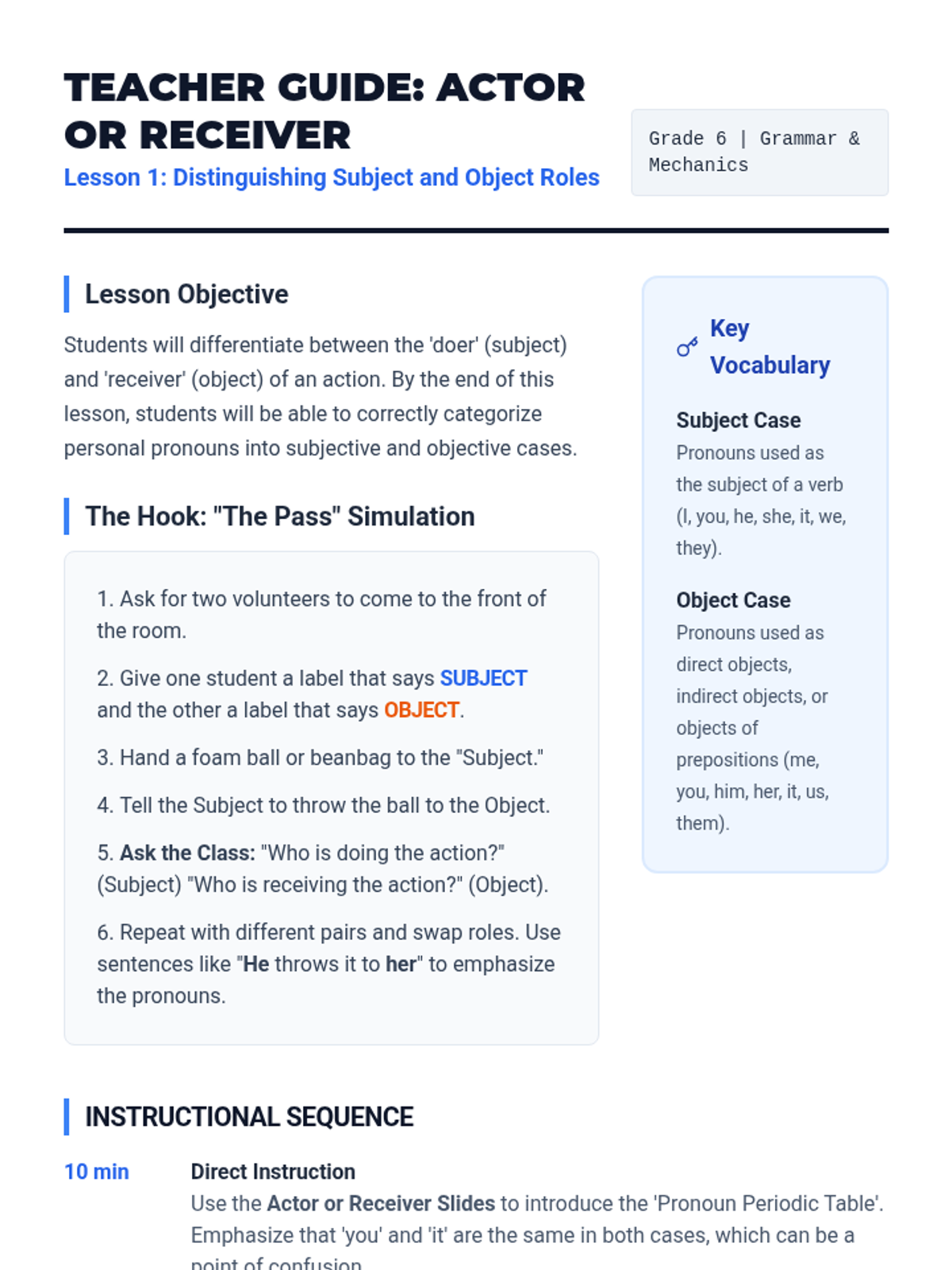
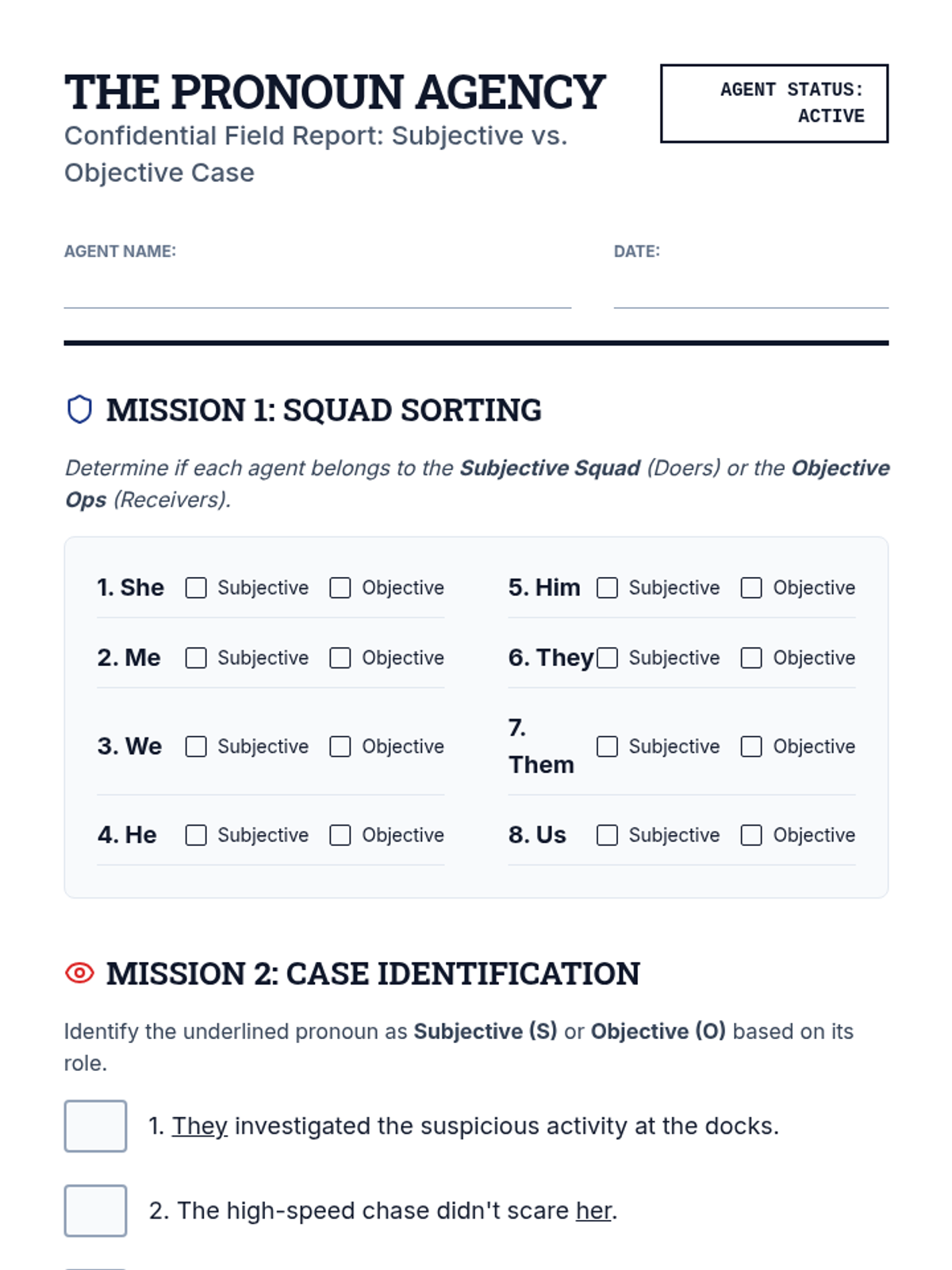
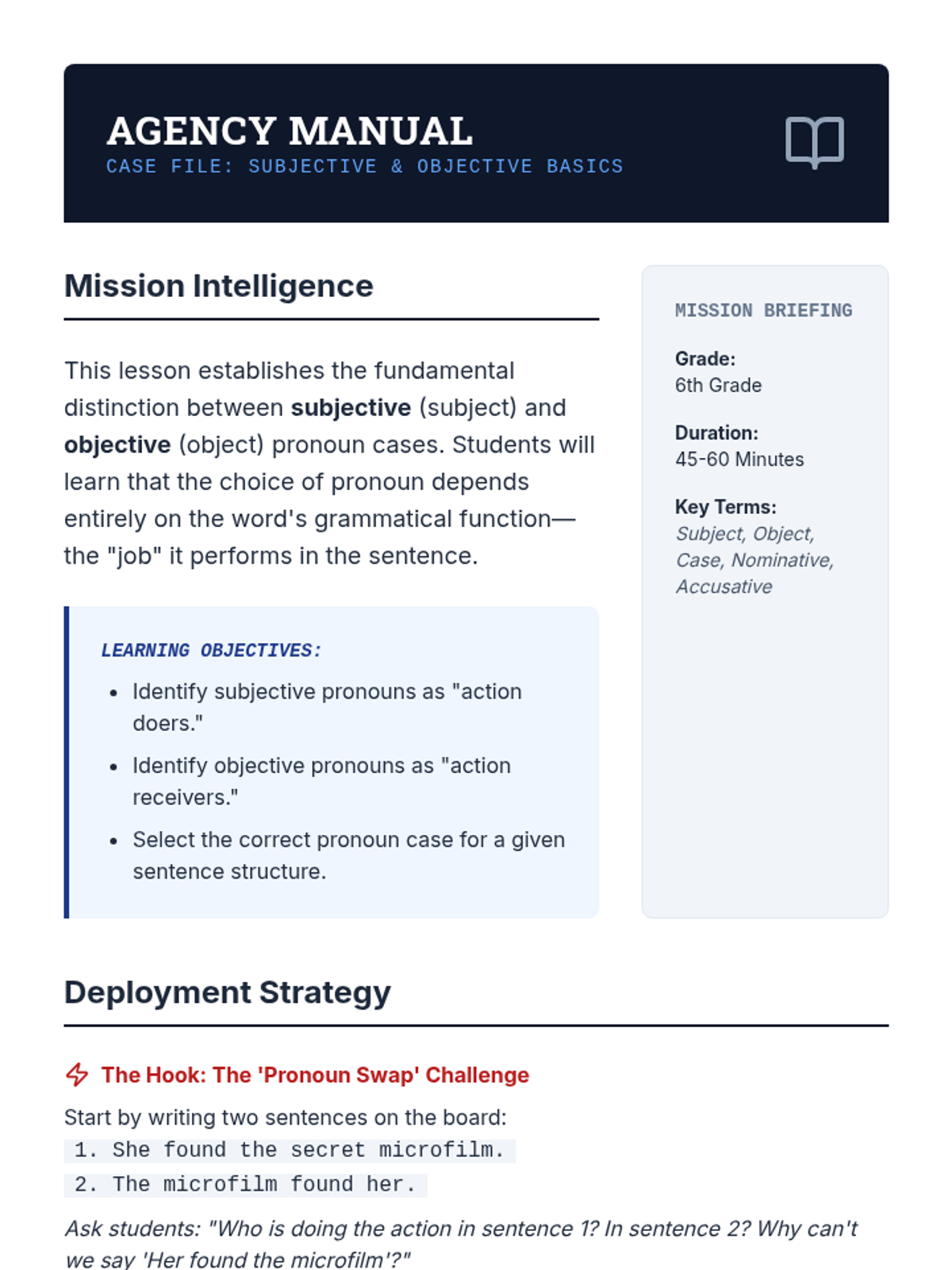
This sequence explores the distinction between subjective and objective case pronouns through the lens of a 'Grammar Lab.' Students move from basic identification to mastering compound structures and the tricky 'who vs. whom' distinction.
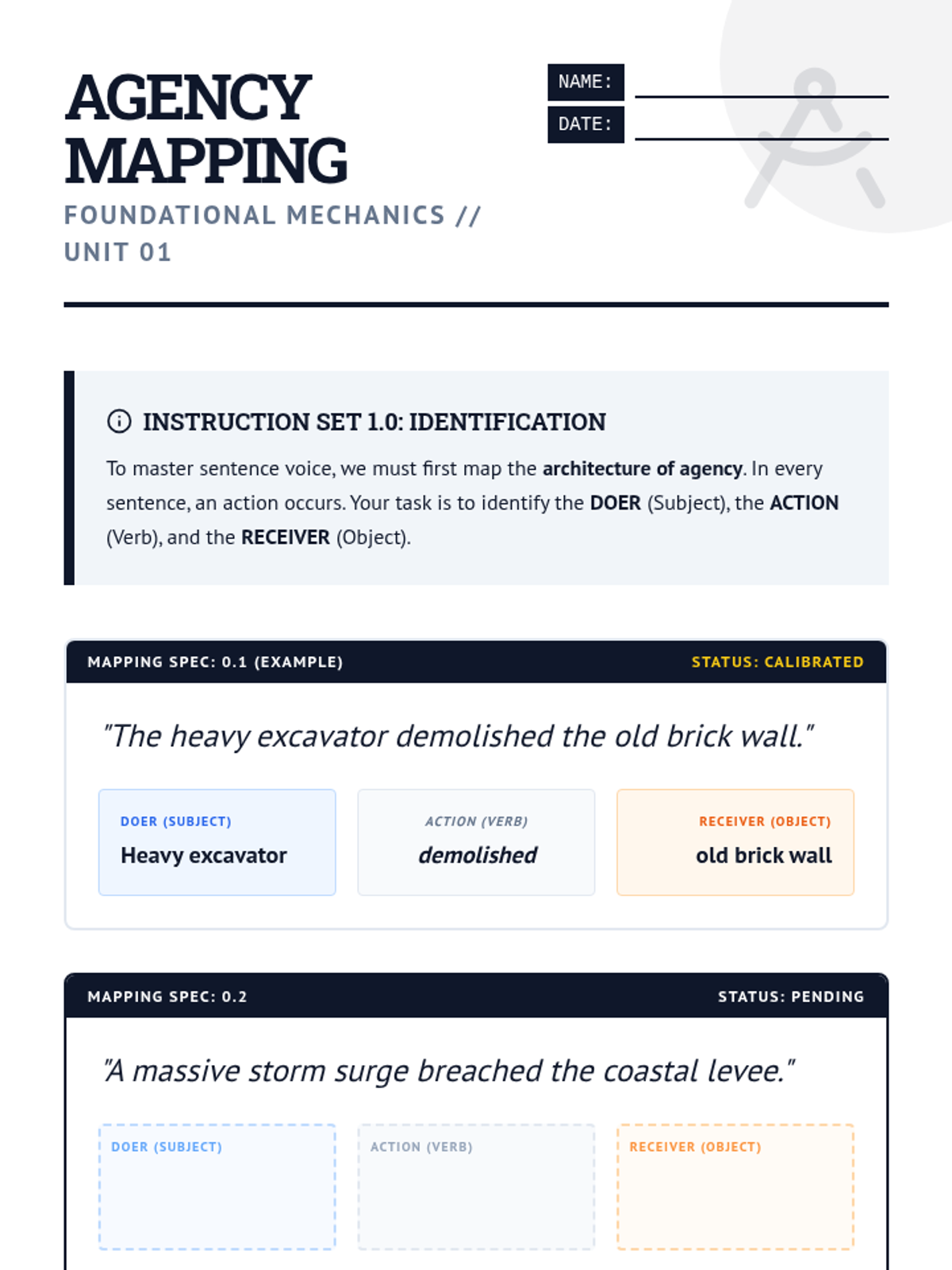
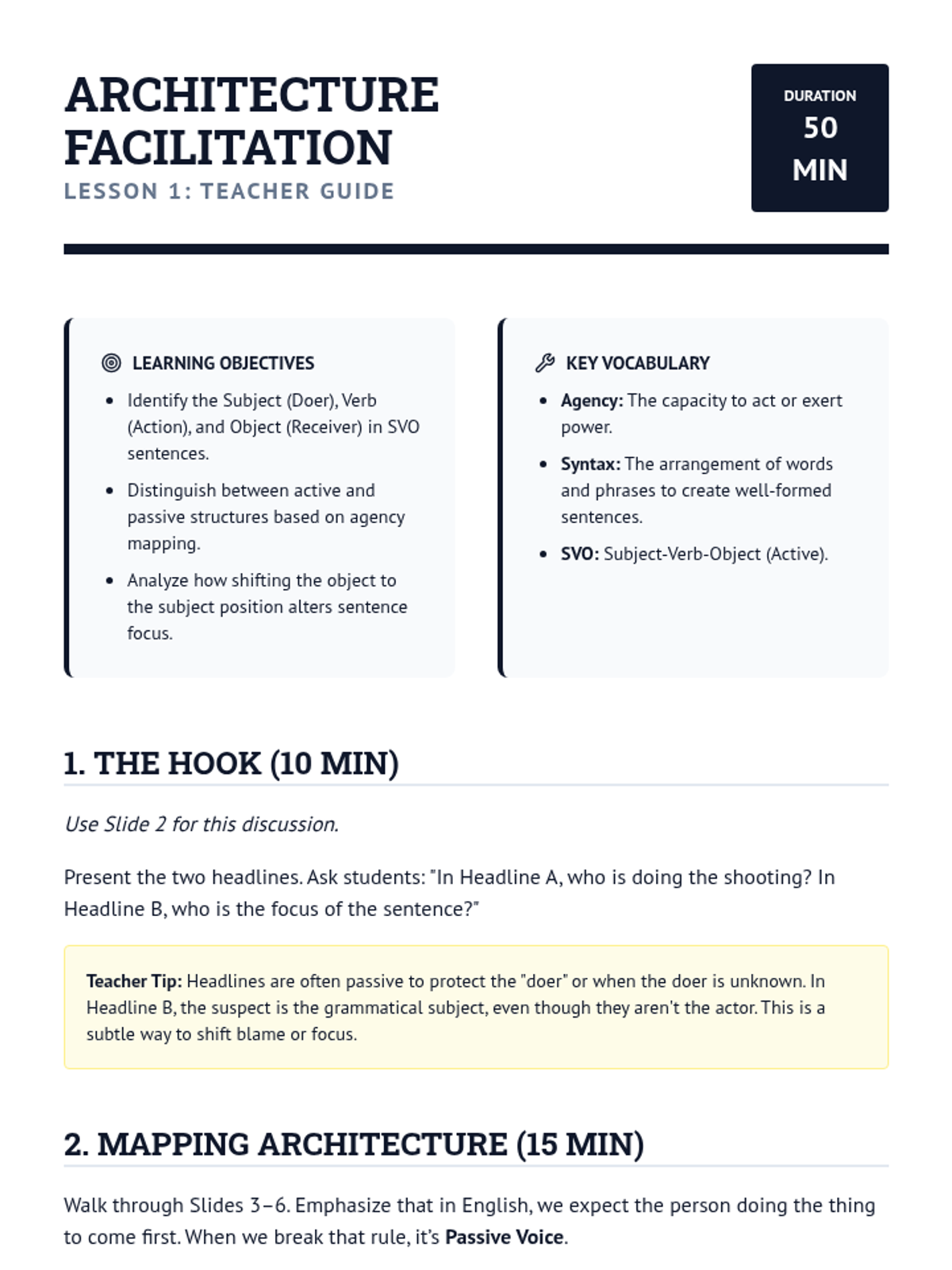
A technical dive into the grammar of active and passive voice. Students move from mapping sentence architecture to masterfully controlling sentence focus through voice manipulation.
This sequence treats sentence structure as a foundational skill, focusing on the grammatical mechanics of active and passive voice. Students move from deconstructing sentence anatomy to mastering complex syntactic transformations and editing for conciseness.
A comprehensive 6th-grade grammar sequence focusing on the correct application of subjective, objective, and possessive pronoun cases through a secret agent detective theme.
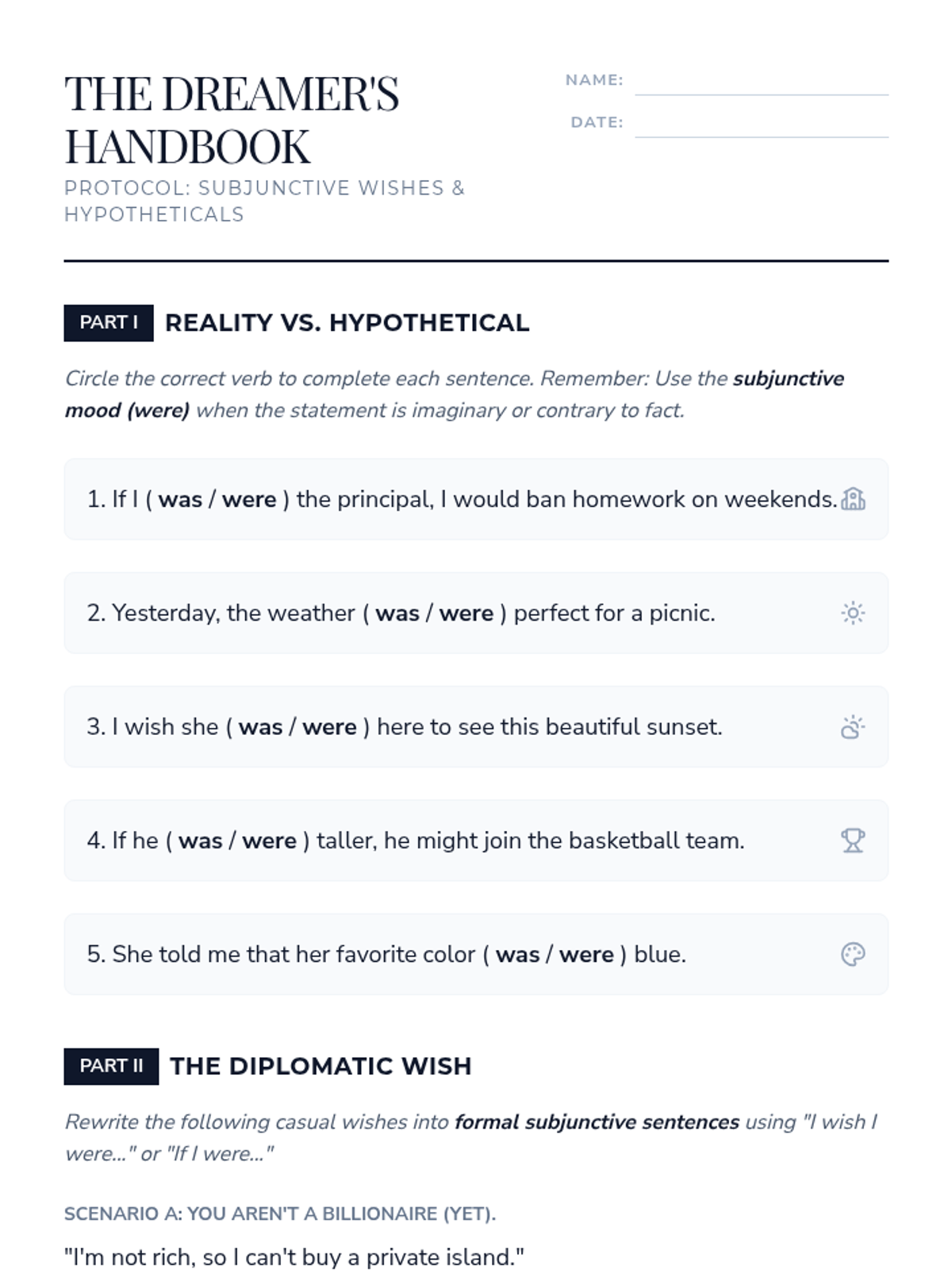
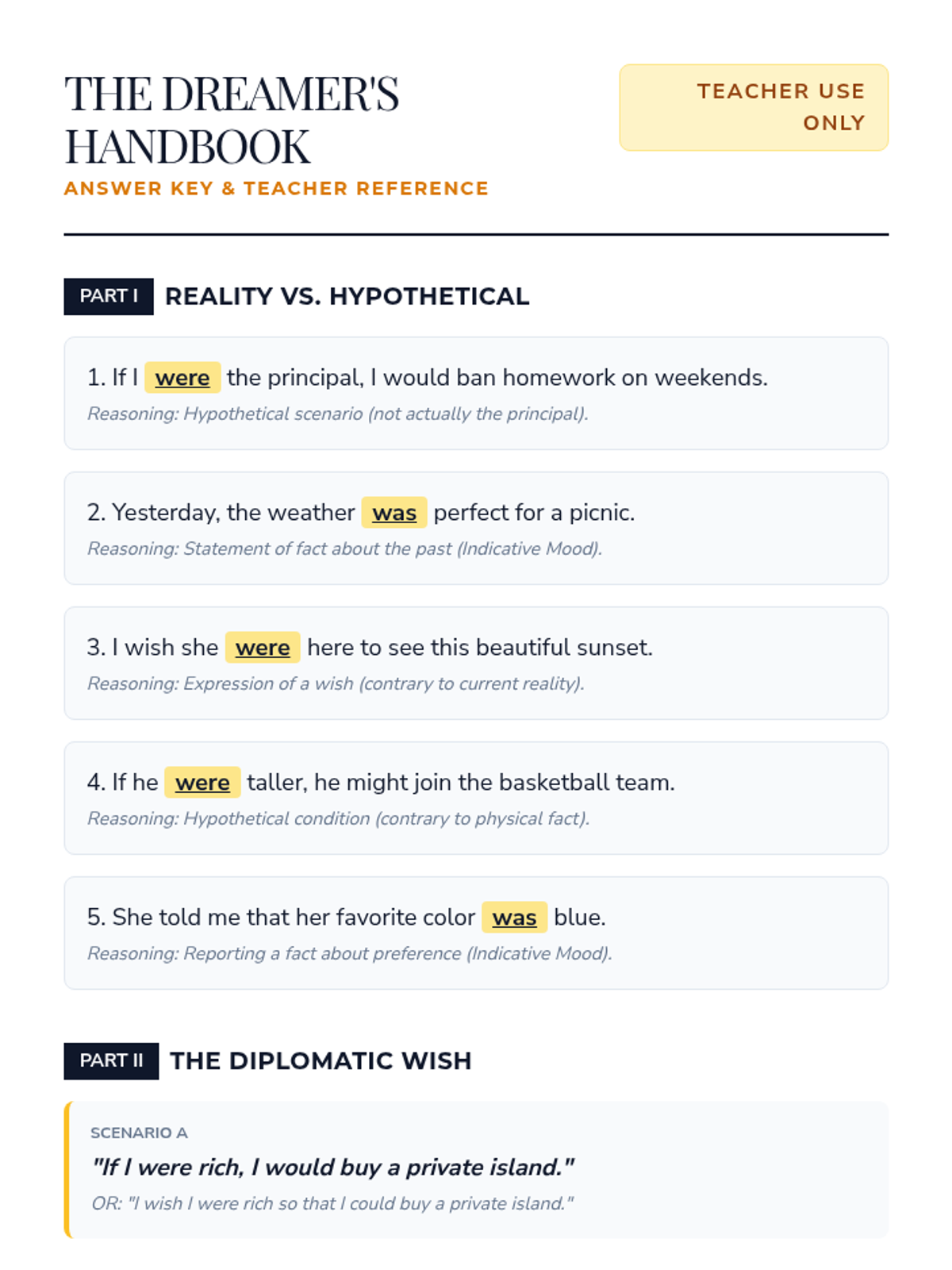
A comprehensive unit on the subjunctive mood, focusing on formal suggestions, demands, and wishes in high-level academic and professional communication. Students engage in simulations and formal writing to master complex grammatical structures.
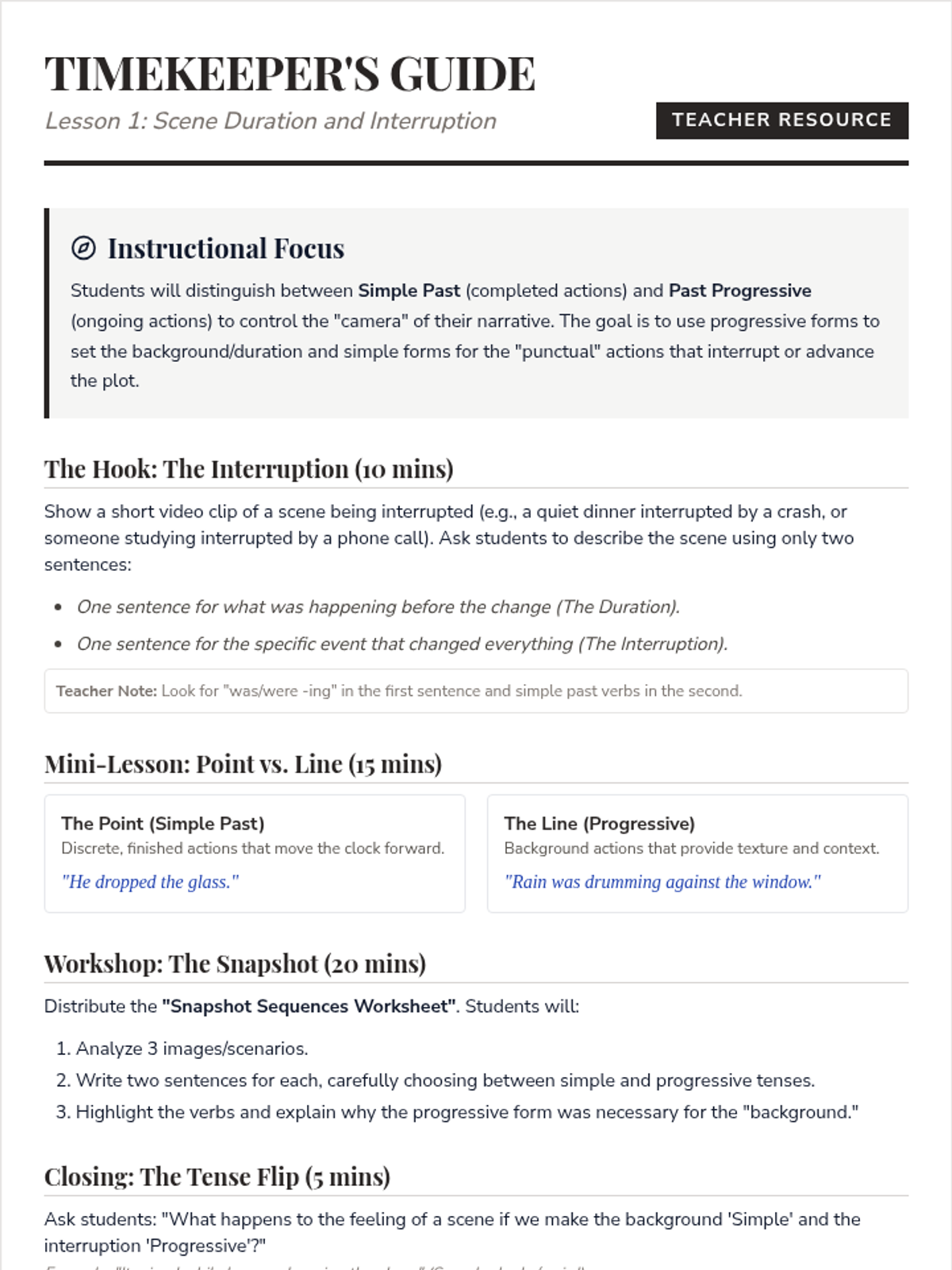
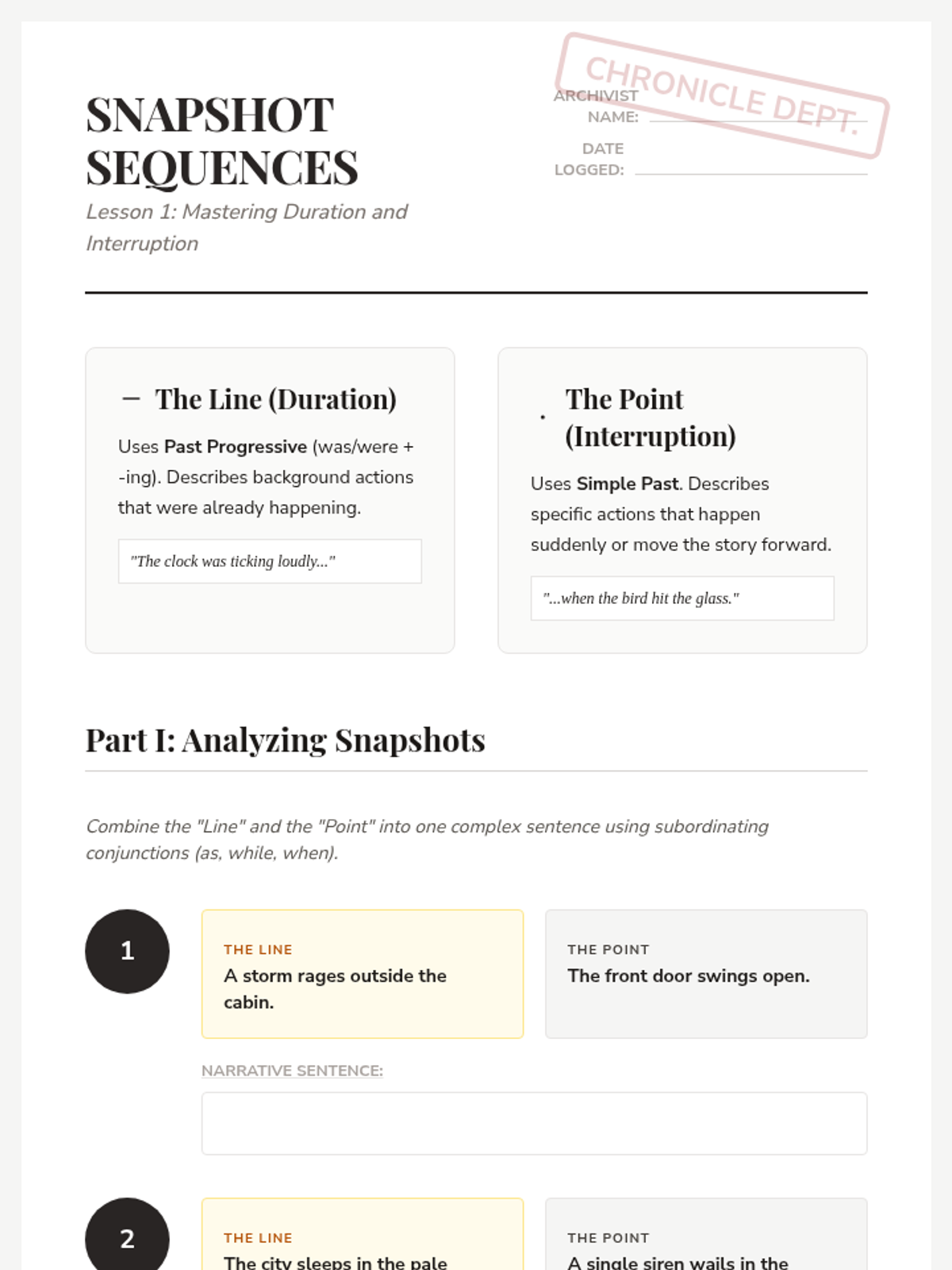
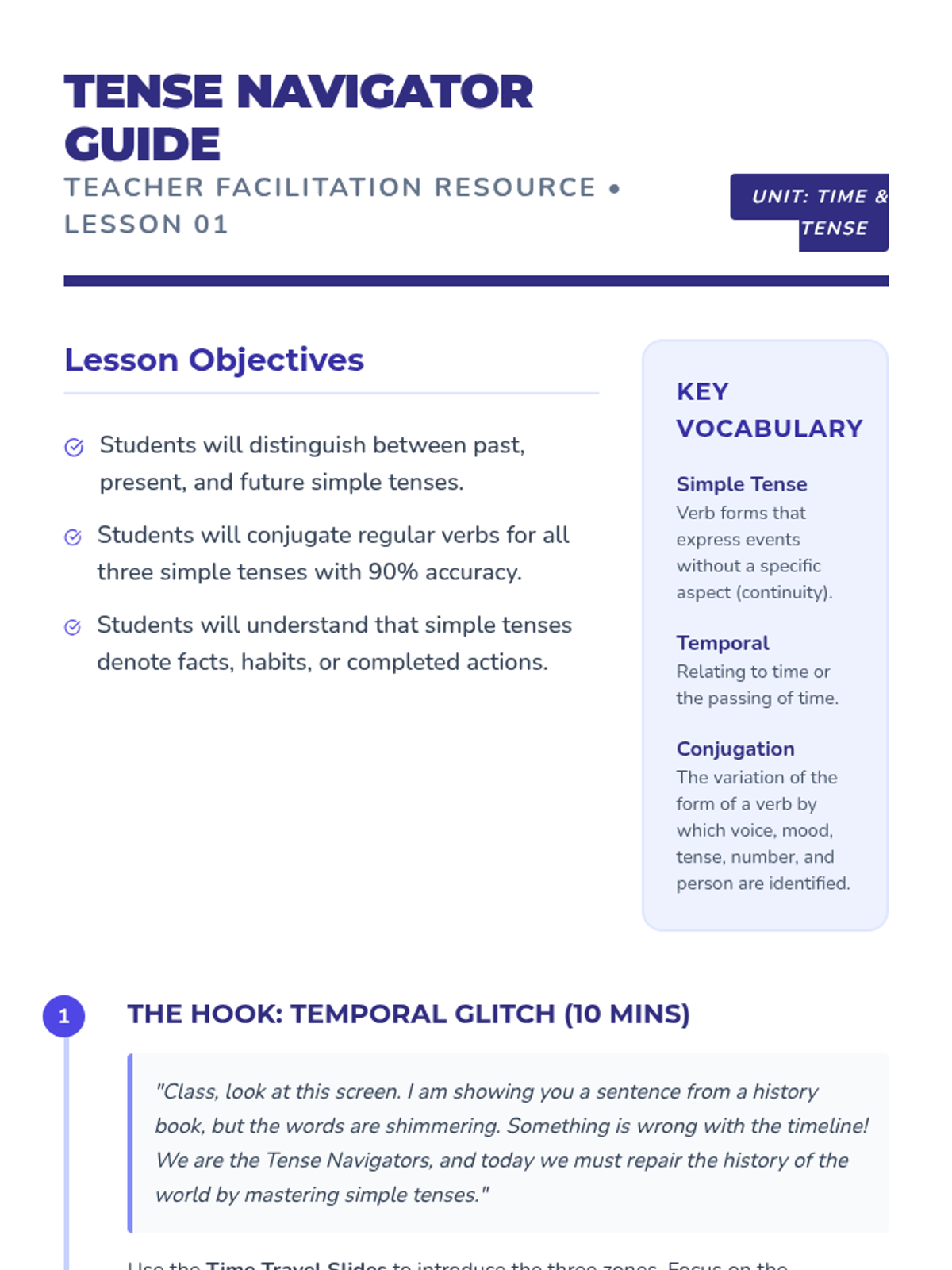
This sequence explores how verb tenses (simple, progressive, and perfect) function as tools for controlling chronology, duration, and pacing in narrative writing. Students will move from understanding basic tense distinctions to mastering complex non-linear storytelling techniques like flashbacks.
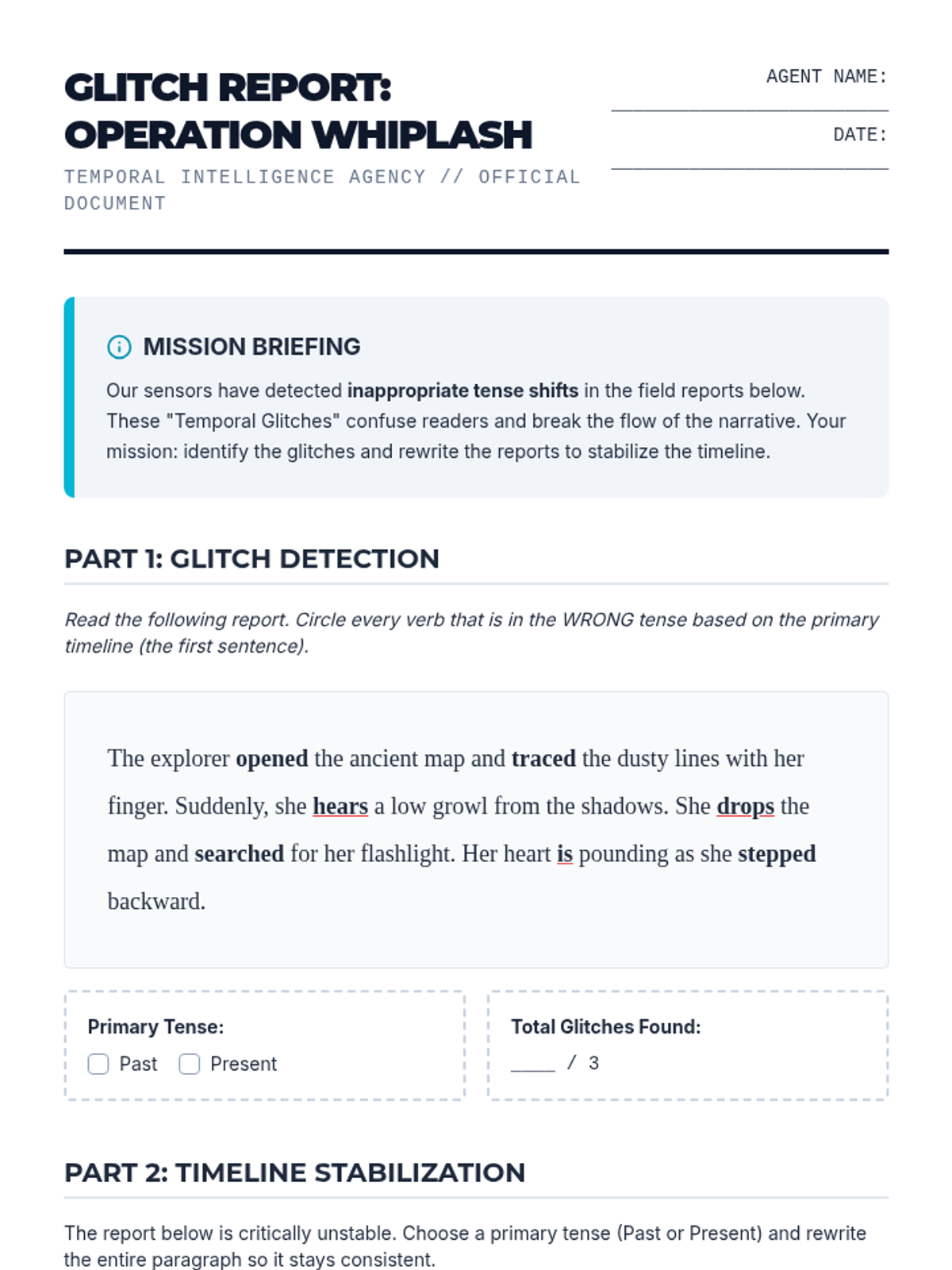
A 6th-grade ELA sequence focused on mastering verb tense consistency in narrative writing, moving from error identification to advanced techniques like intentional shifts for flashbacks.
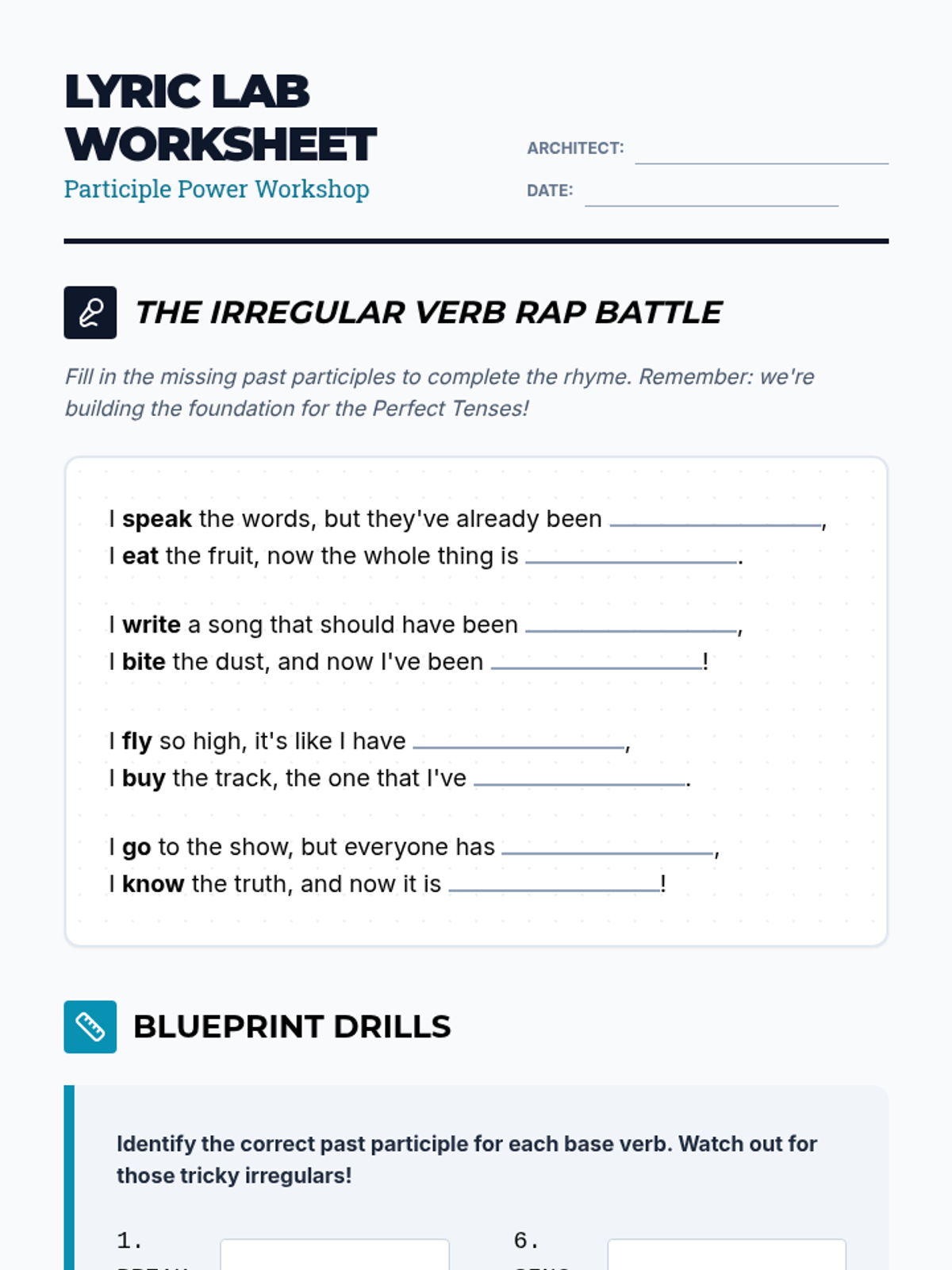
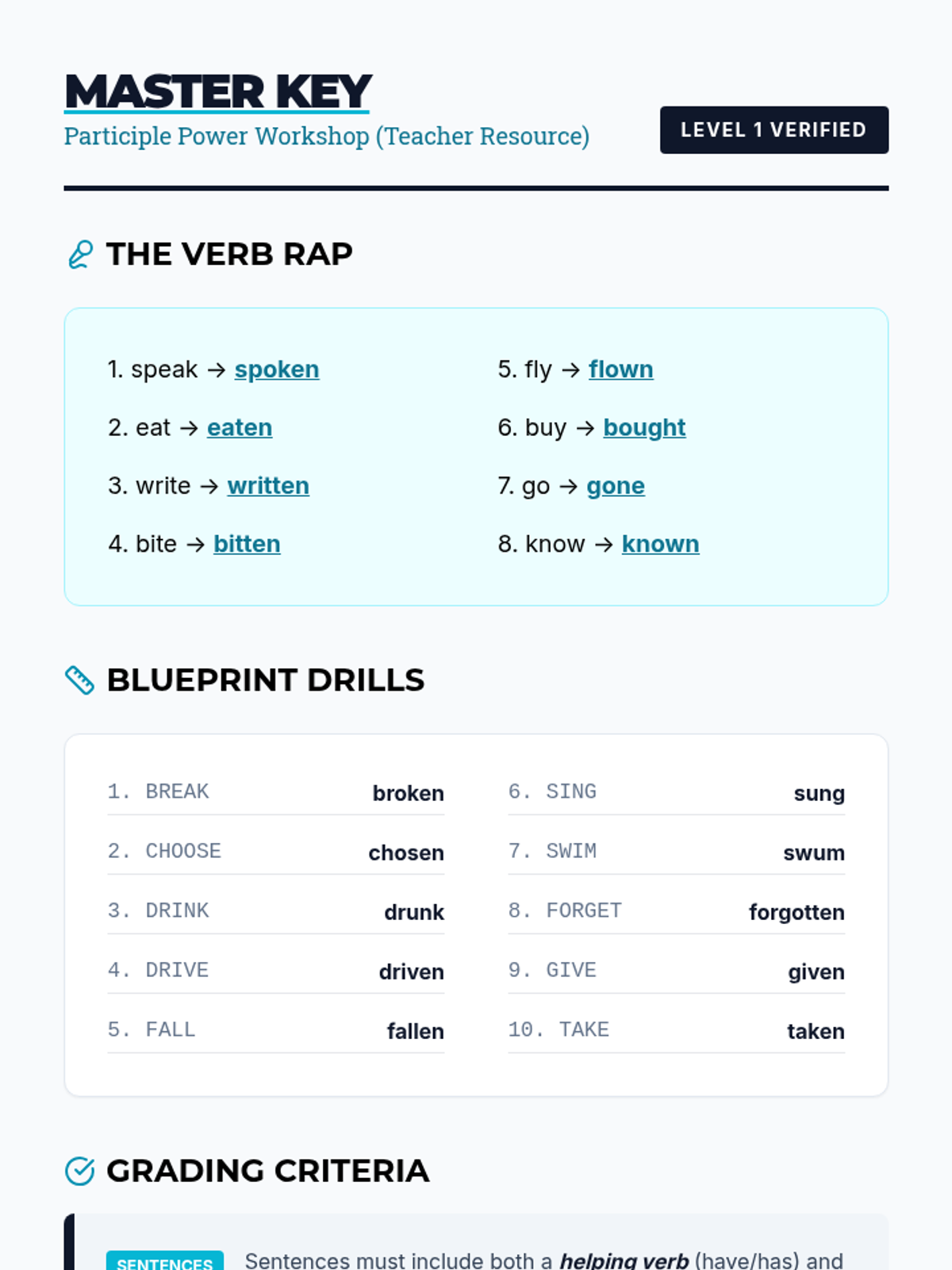
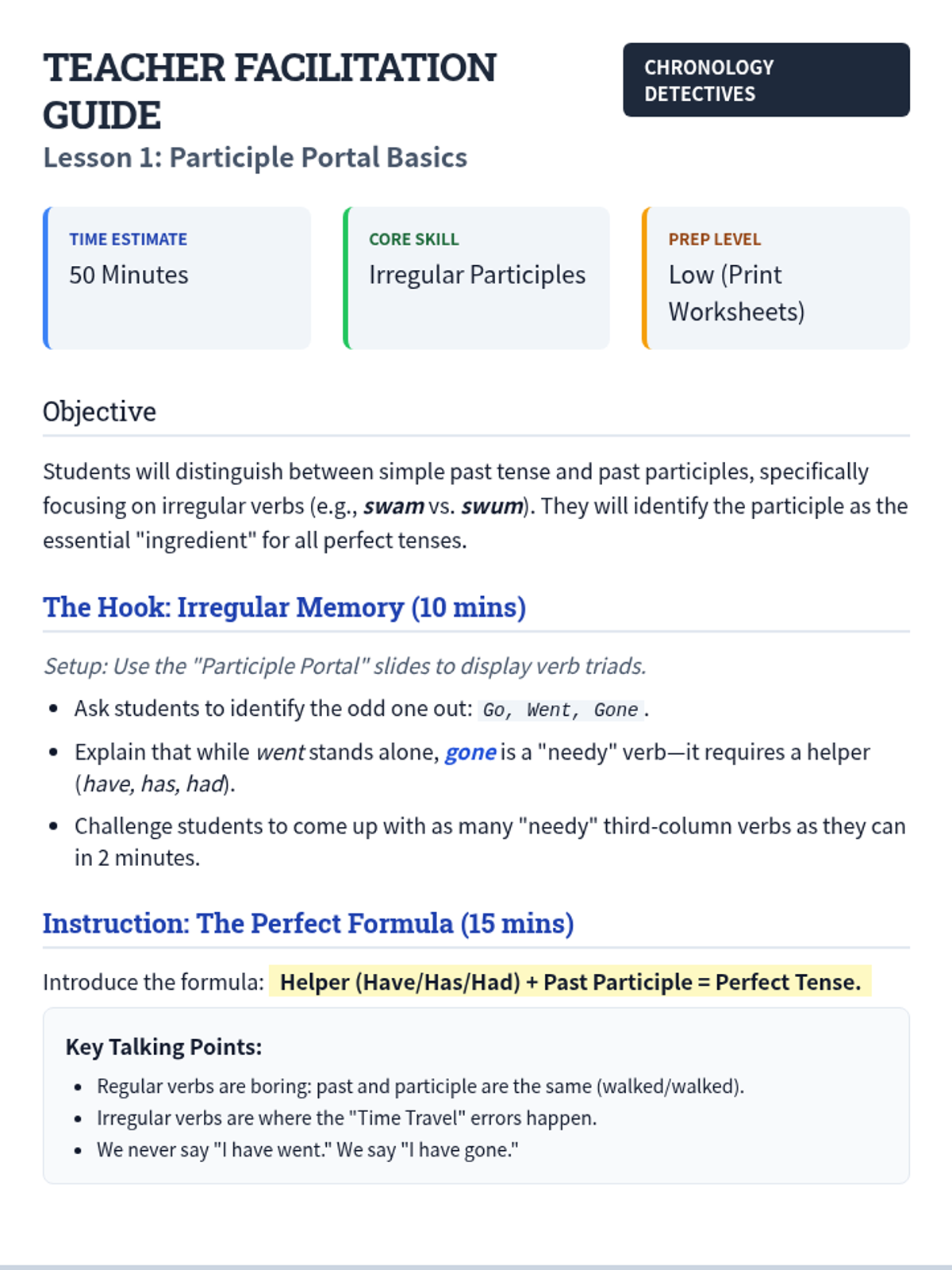
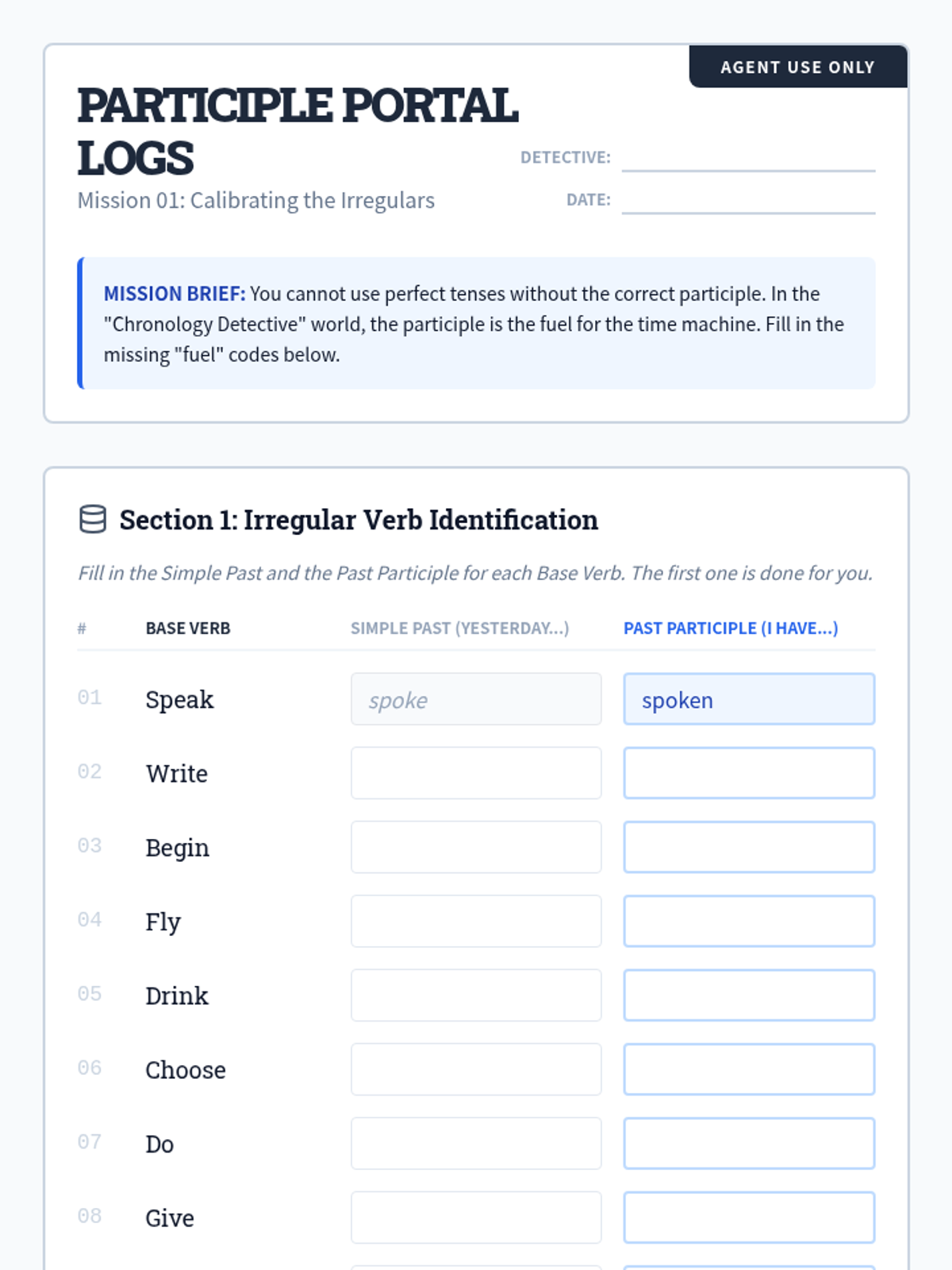
A comprehensive 6th-grade sequence on perfect verb tenses. Students progress from mastering irregular past participles to using present, past, and future perfect tenses to describe complex timelines in their own lives.
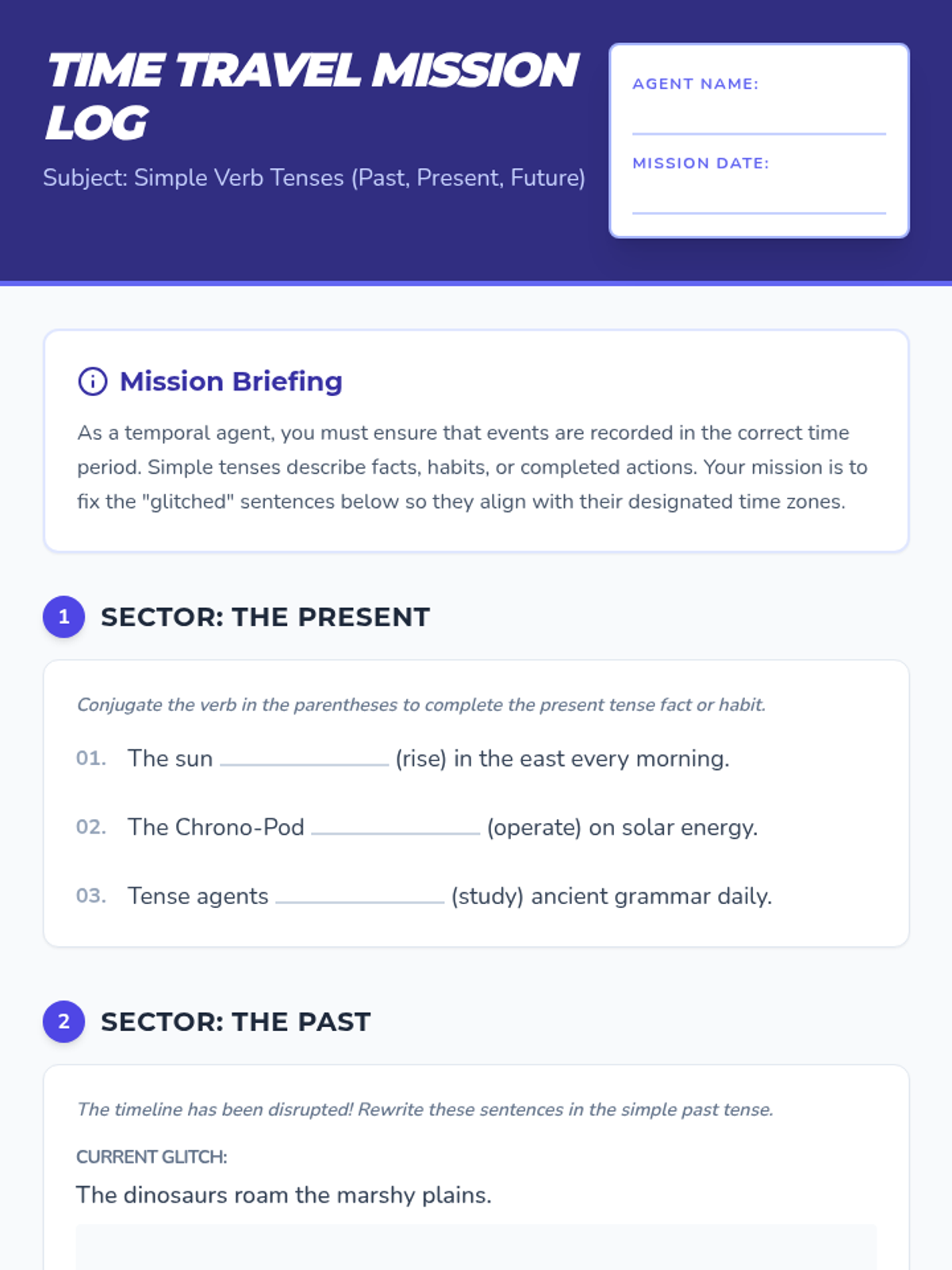
This sequence guides 6th-grade students through the mechanics of simple and progressive verb tenses. Students move from basic conjugation to nuanced usage through simulations, investigative timelines, and a final news broadcast project.
Students move from rote memorization of participles to deep analysis of timelines, understanding how perfect tenses link two points in time. The sequence uses logic puzzles and timeline mapping to demystify why and when to use 'have,' 'had,' and 'will have.'
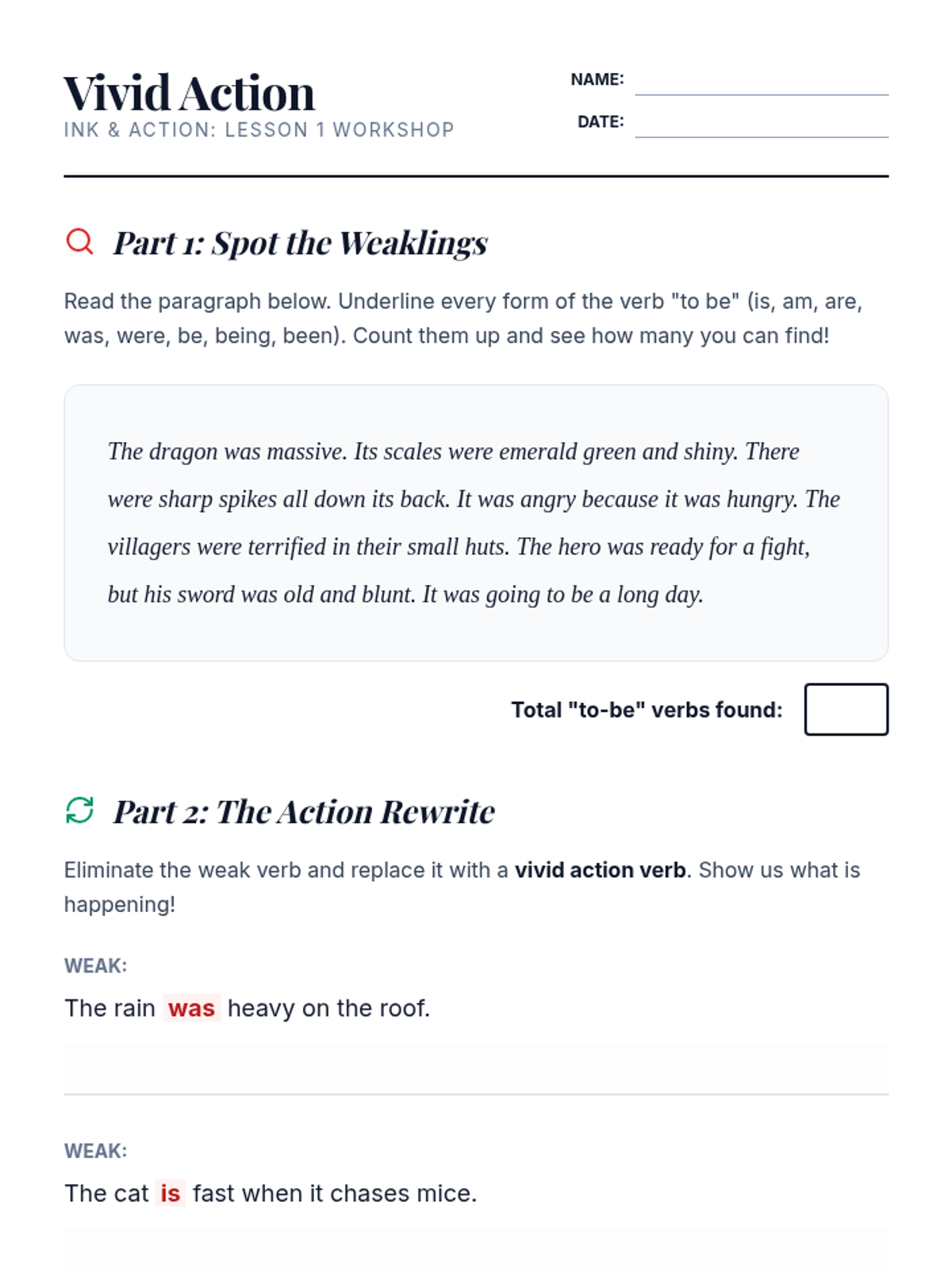
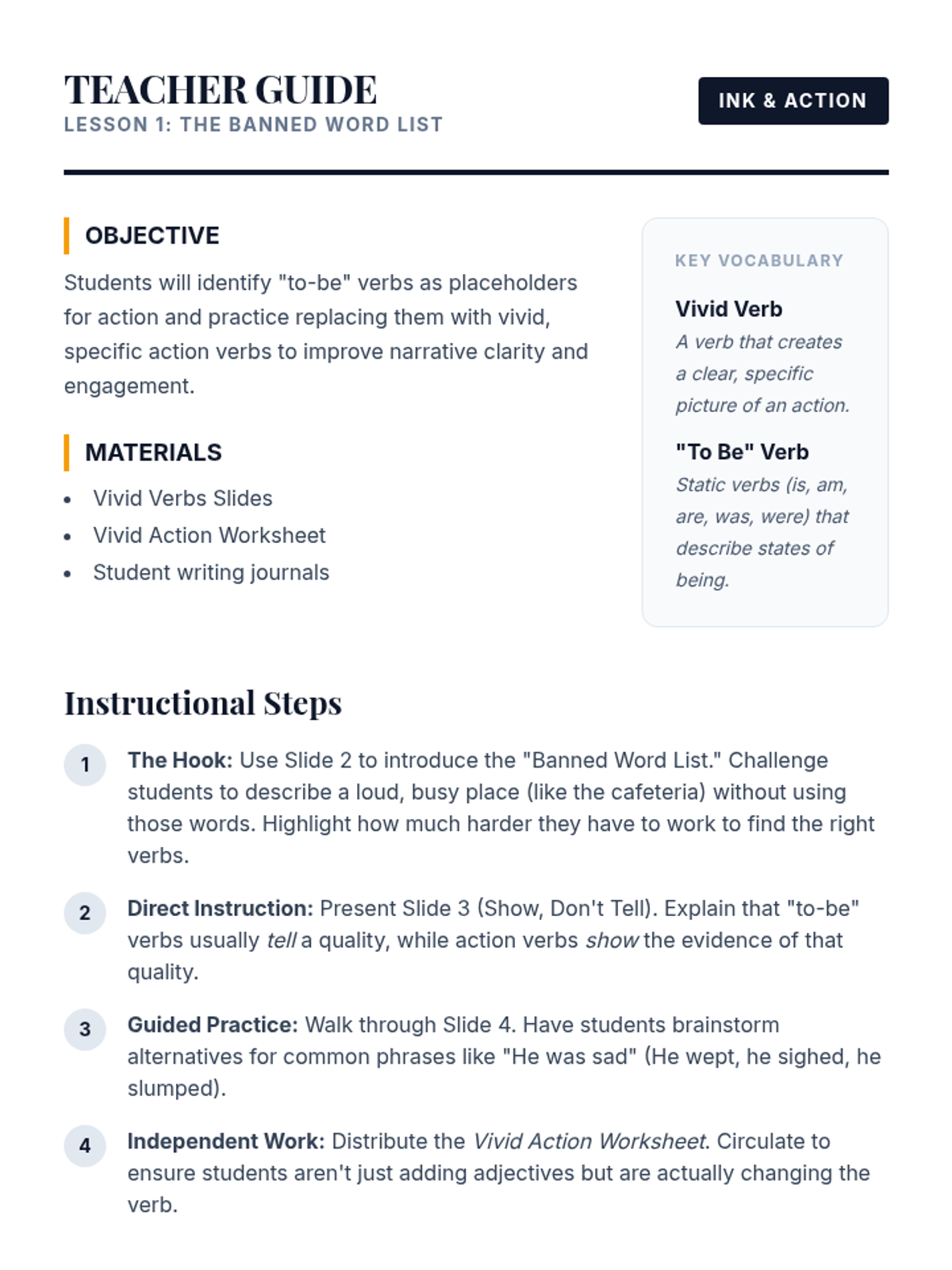
This project-based sequence applies verb knowledge to creative writing. Students focus on the stylistic impact of verbs, practicing how to shift tenses correctly within a narrative and how to replace weak 'to be' verbs with vivid action. The sequence culminates in a polished narrative piece that demonstrates mastery of tense consistency and strong verb choice.
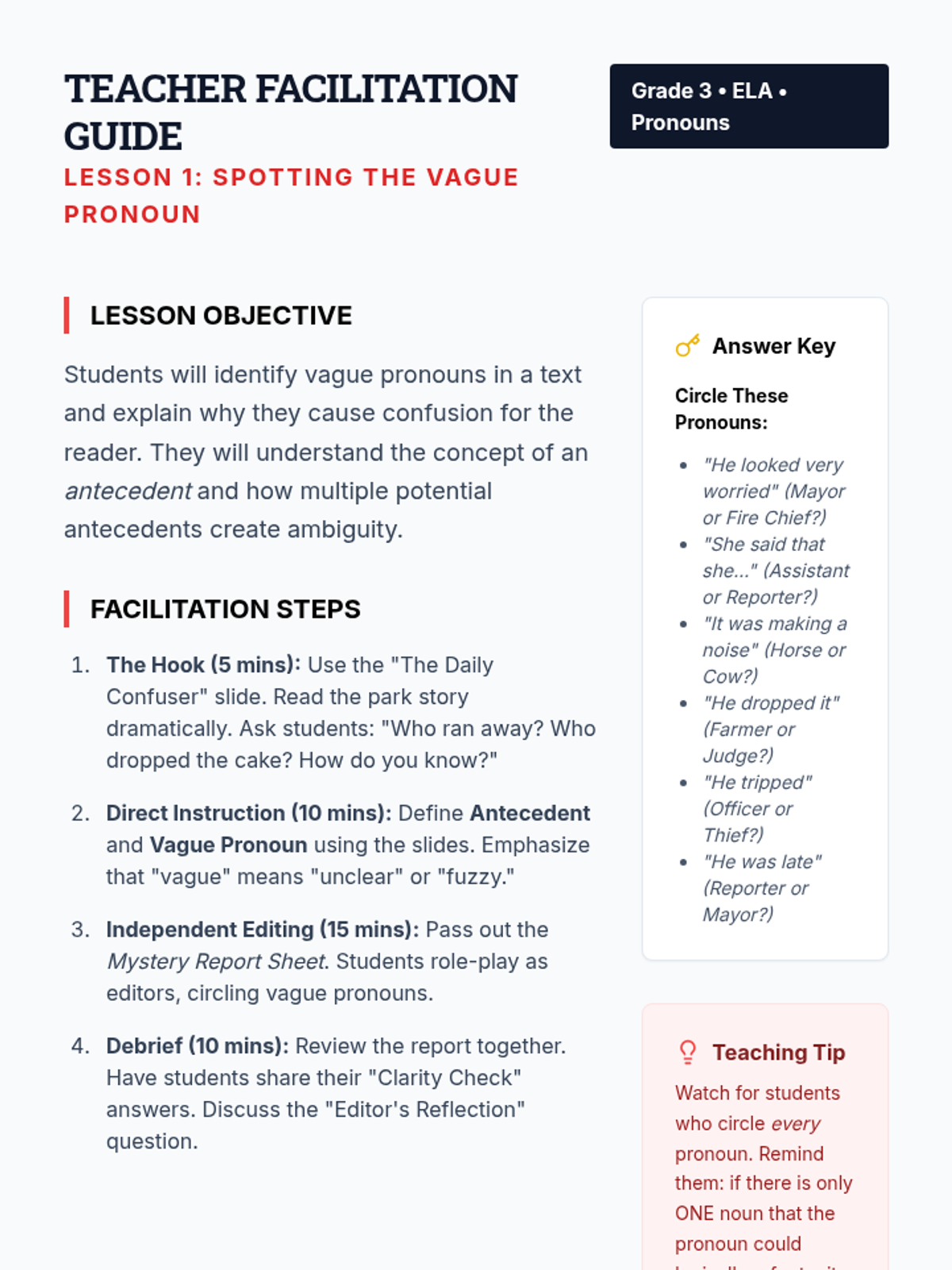
A 5-lesson unit where 3rd-grade students become professional editors, mastering pronoun clarity, agreement, and consistency through real-world simulation and skill-building activities.
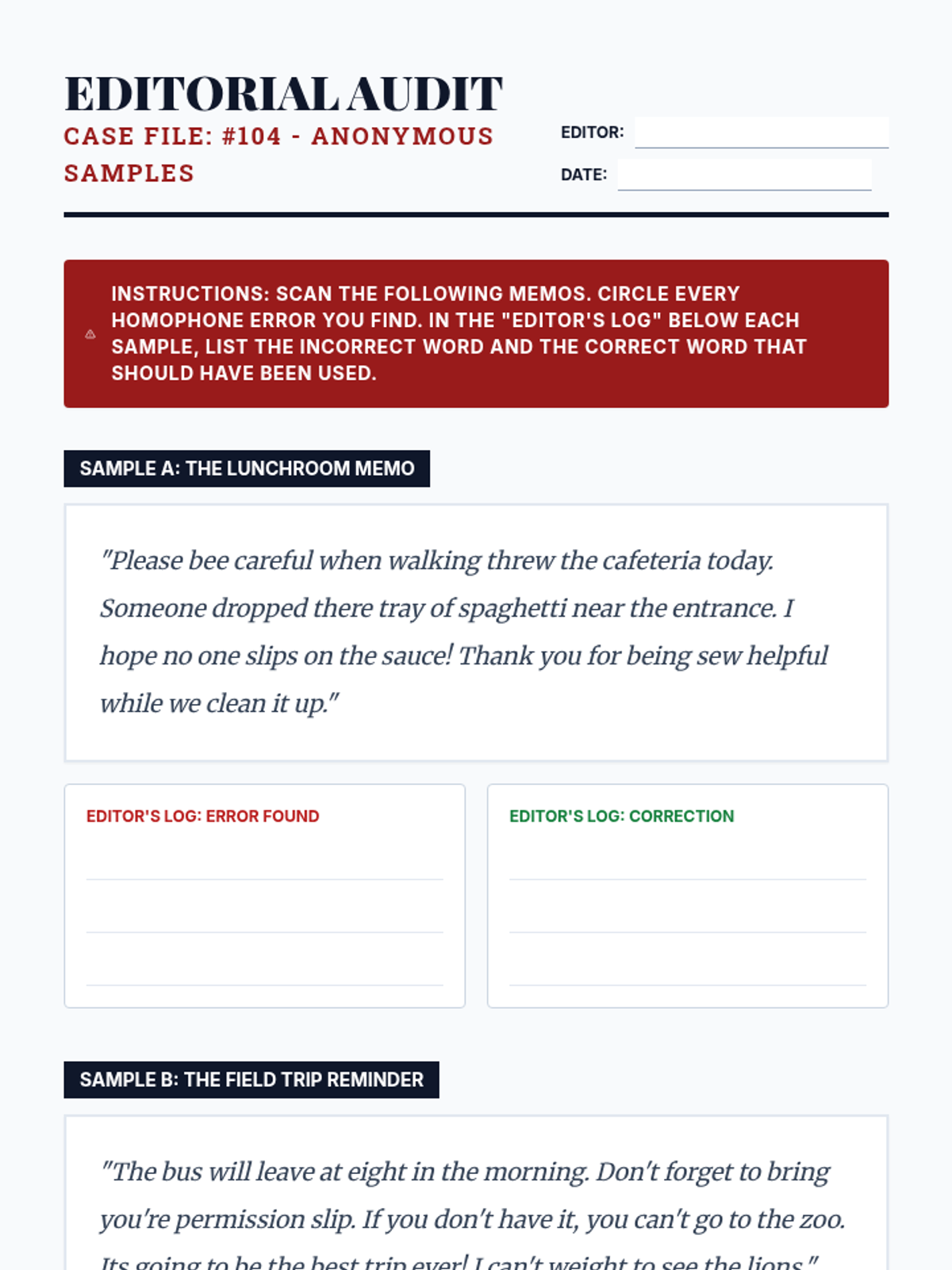
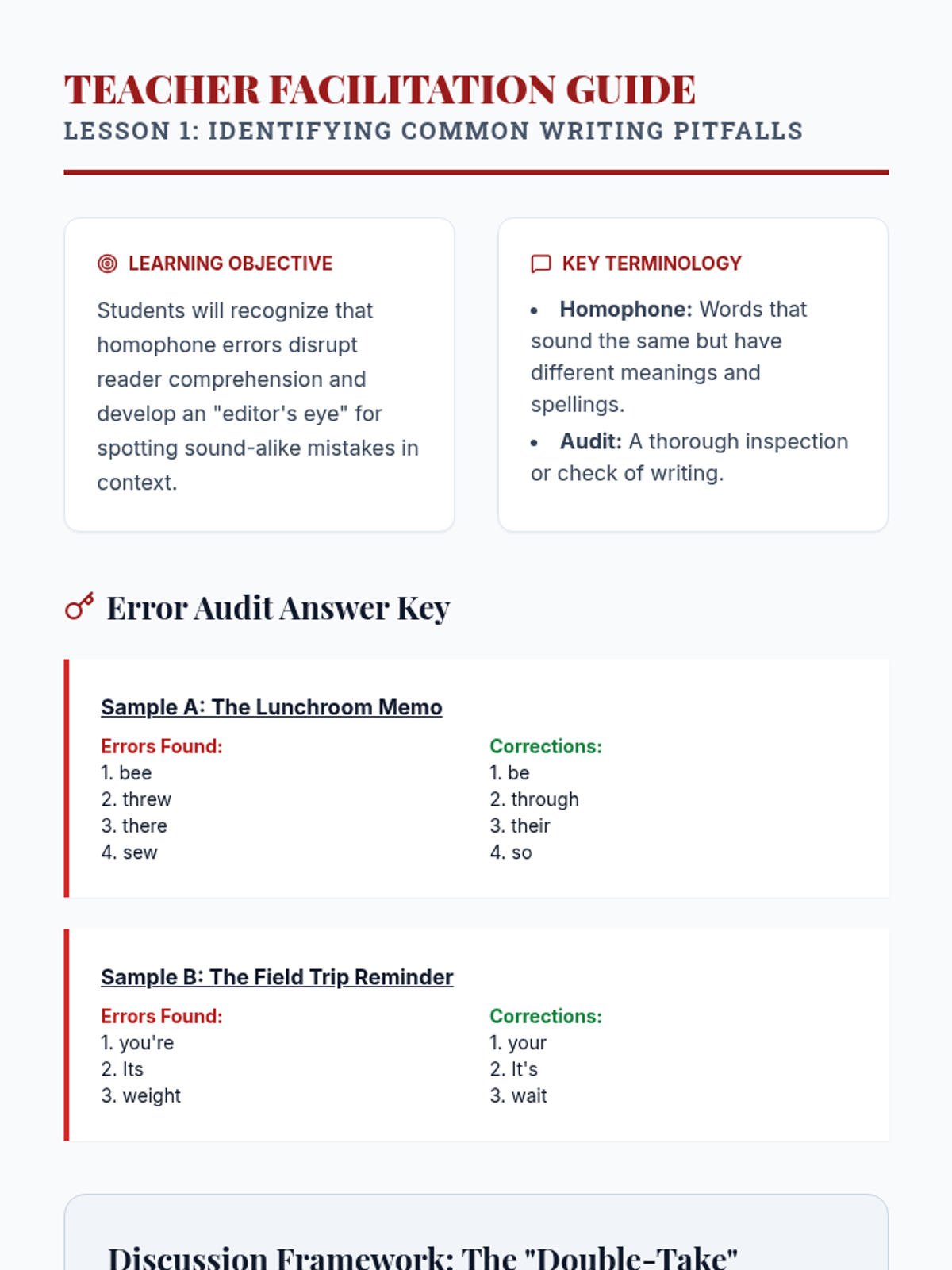
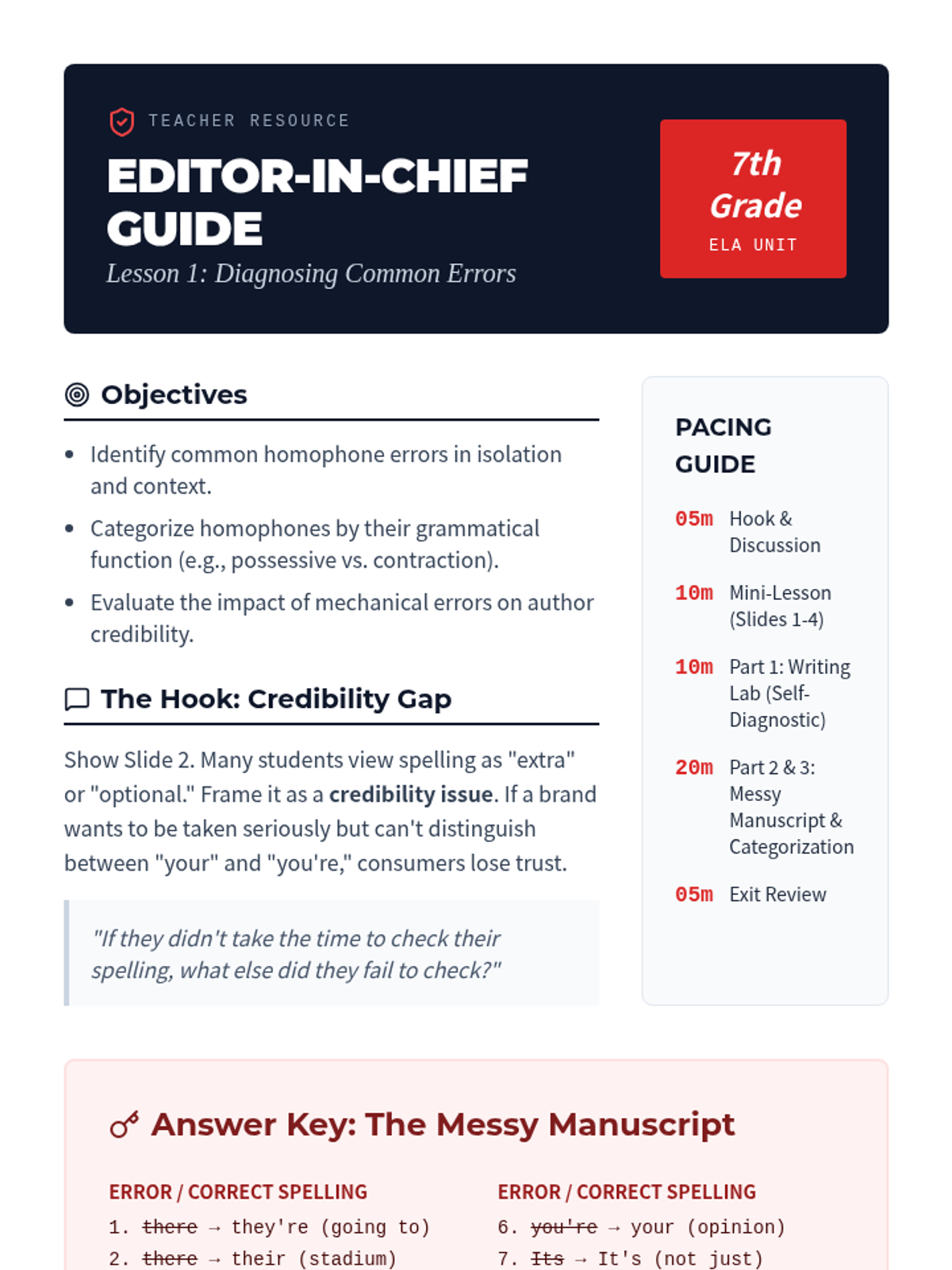
A writing workshop sequence focused on the practical application of homophones in composition. Students move from error identification in anonymous samples to mastering high-frequency homophones and performing peer edits, culminating in a comprehensive proofreading assessment.
A rigorous writer's workshop sequence targeting homophone accuracy in formal writing. Students master common and advanced homophones through grammatical analysis and peer-editing cycles.
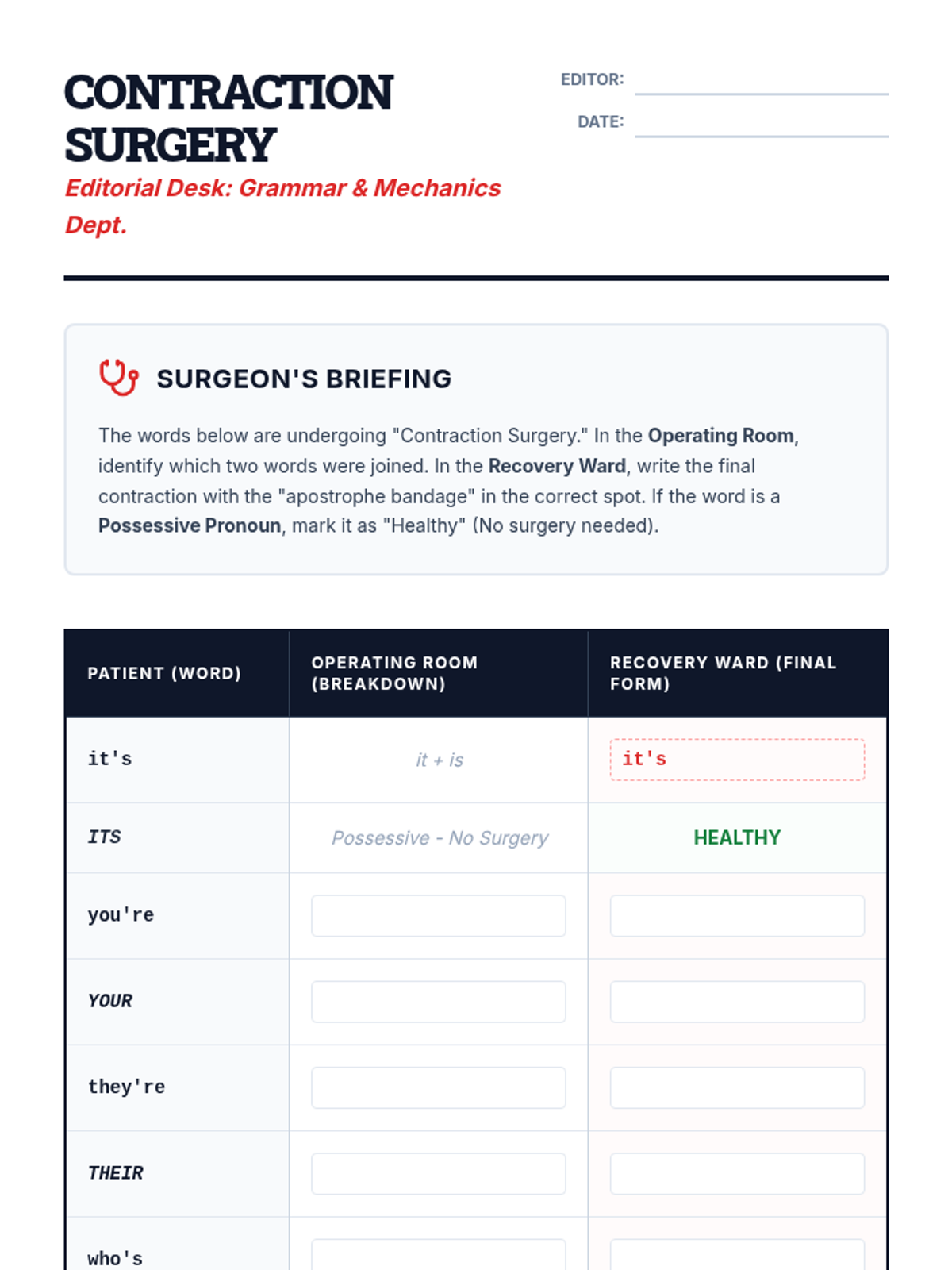
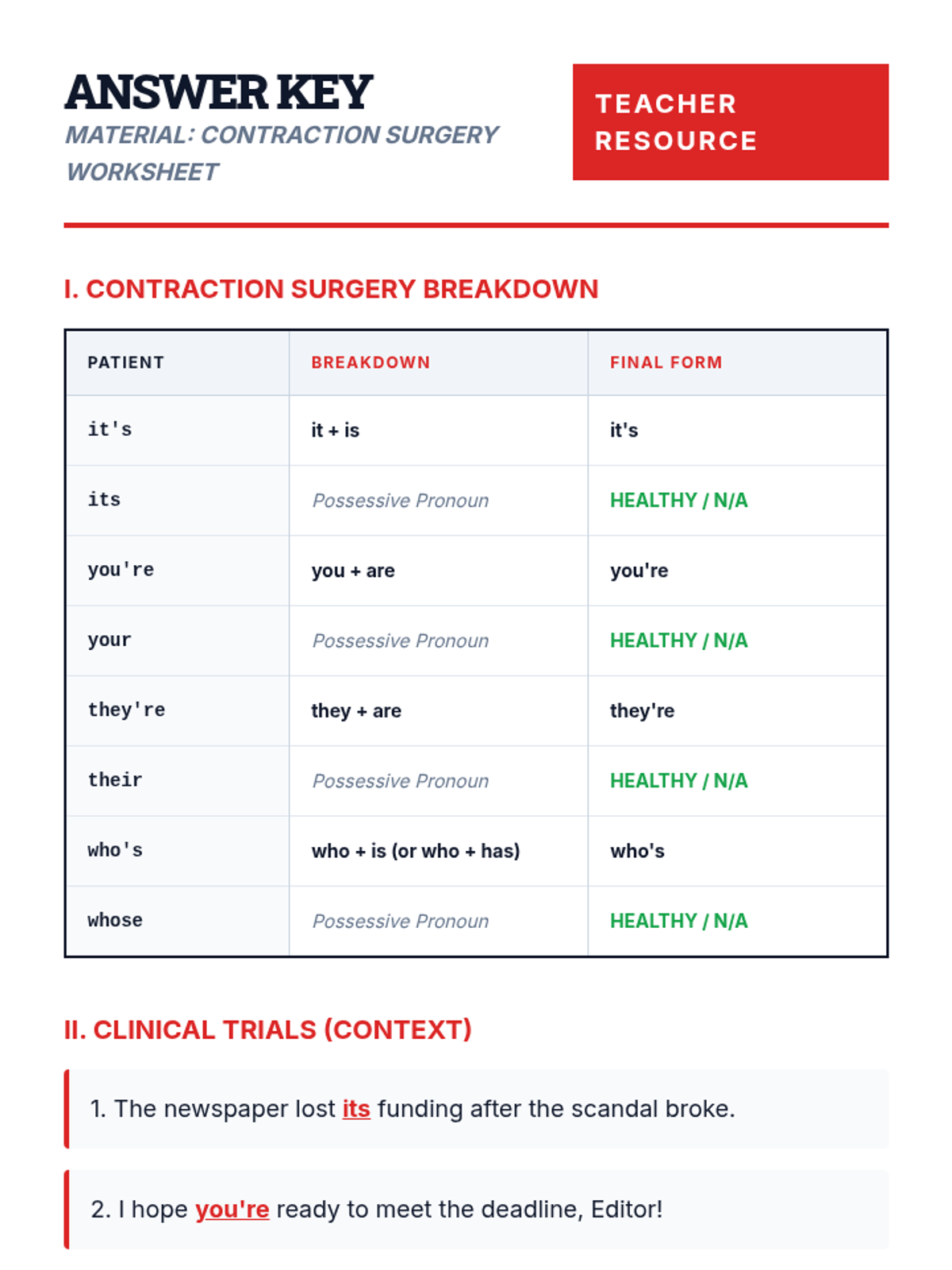
This sequence focuses on the practical application of homophone mastery through the lens of editing and professional communication. Students diagnose errors, master high-frequency triads, tackle advanced vocabulary, and apply their skills in real-world professional contexts before concluding with a peer-editing workshop.
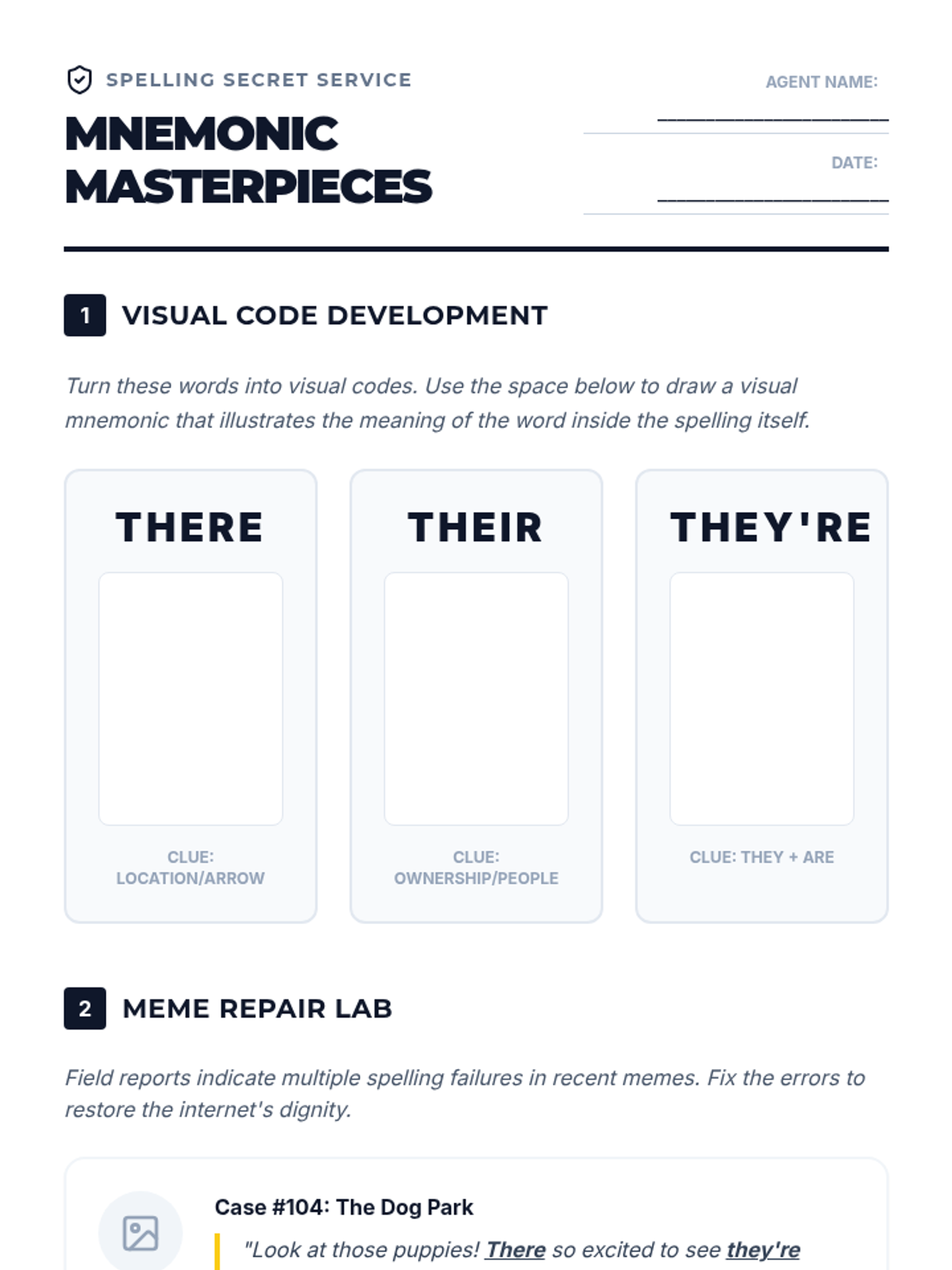
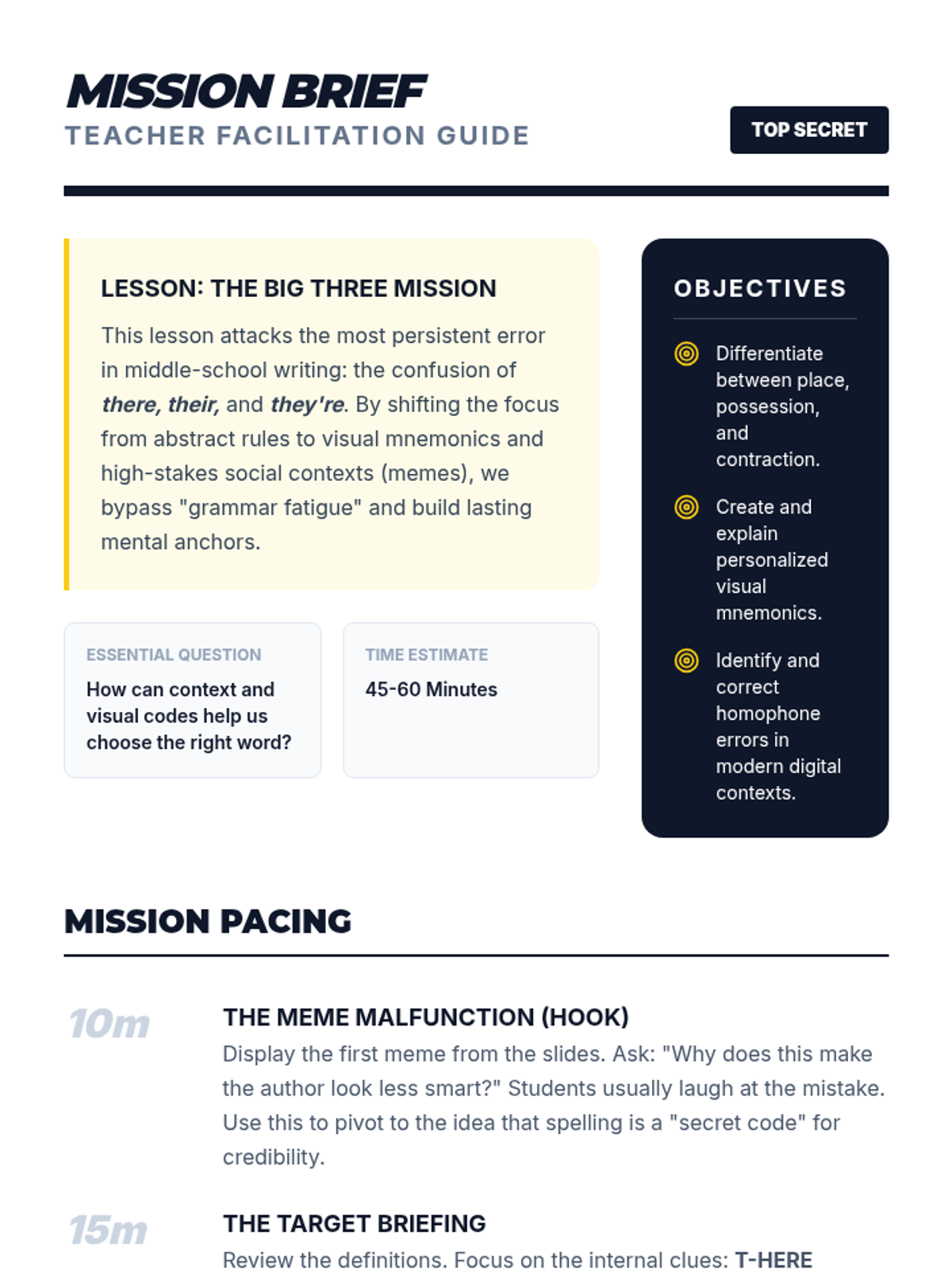
A high-energy, game-based sequence for 6th-grade students focusing on homophones, contractions, and tricky spelling patterns like the schwa sound. Students use visual mnemonics and context-based strategies to master frequent spelling errors.
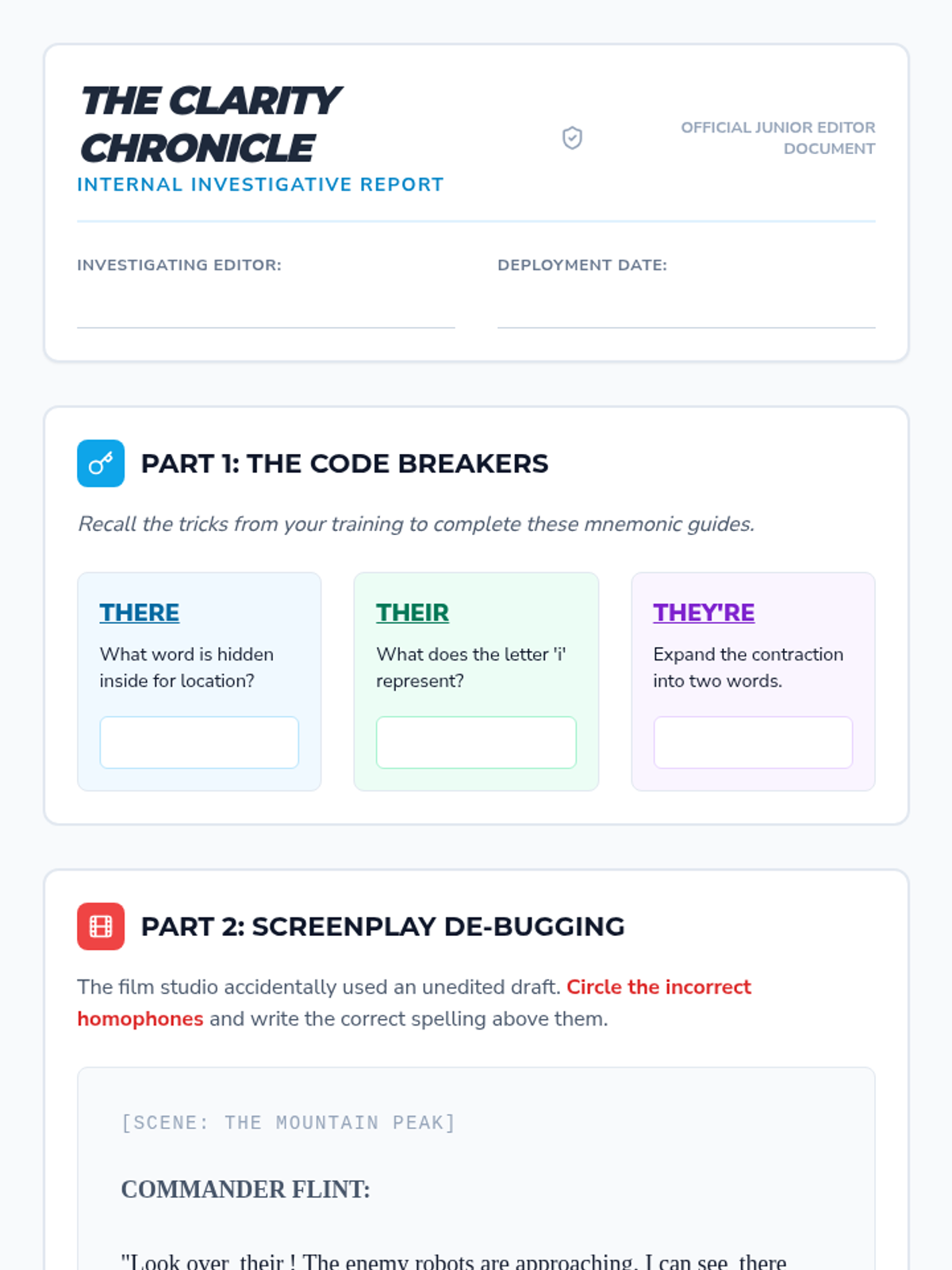
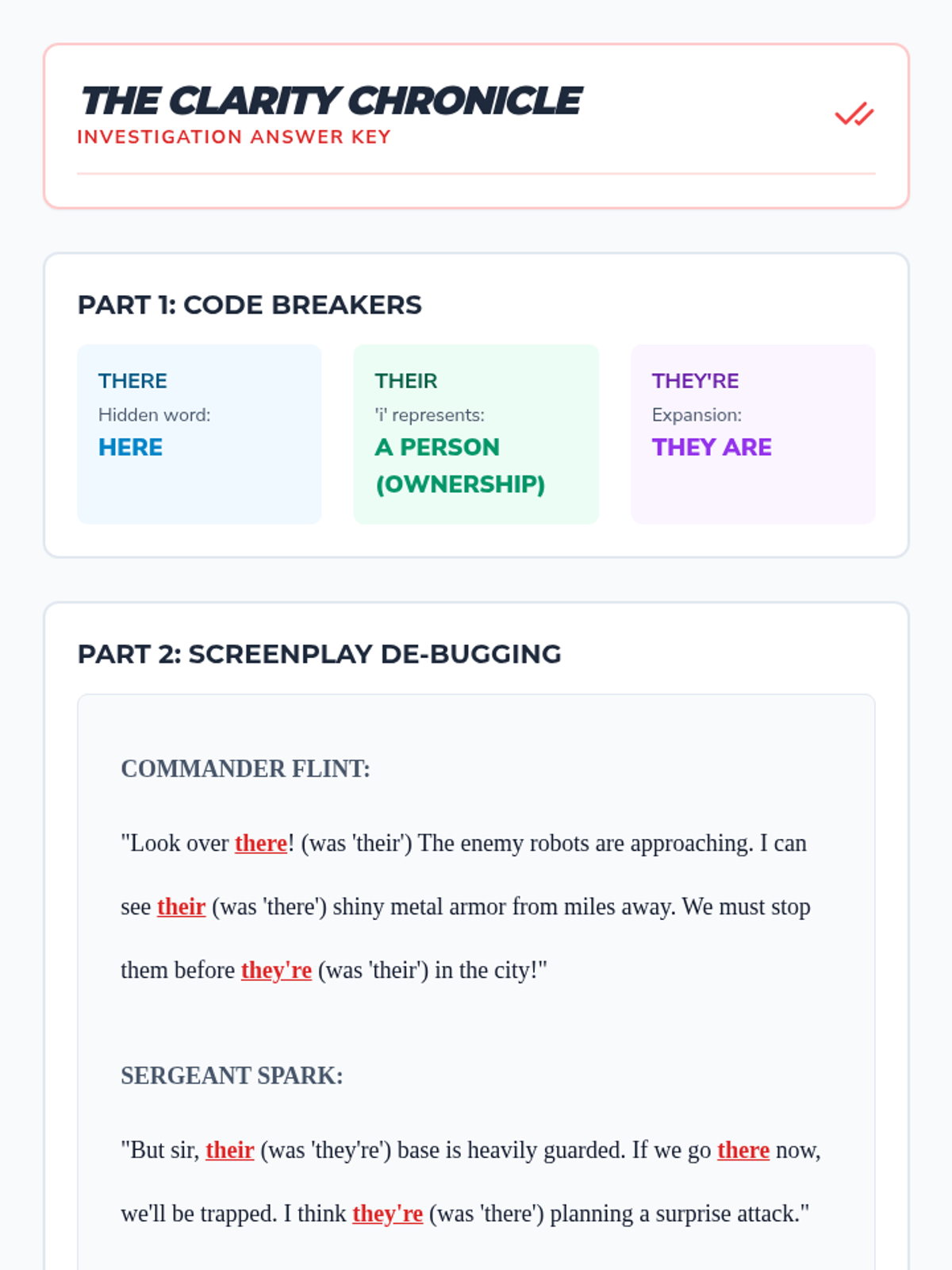
Students step into the role of professional editors at 'The Clarity Chronicle,' a top-tier editing agency. Over five lessons, they master the nuance of homophones and frequently confused words by analyzing context, creating mnemonics, and proofreading high-stakes documents to ensure semantic accuracy.
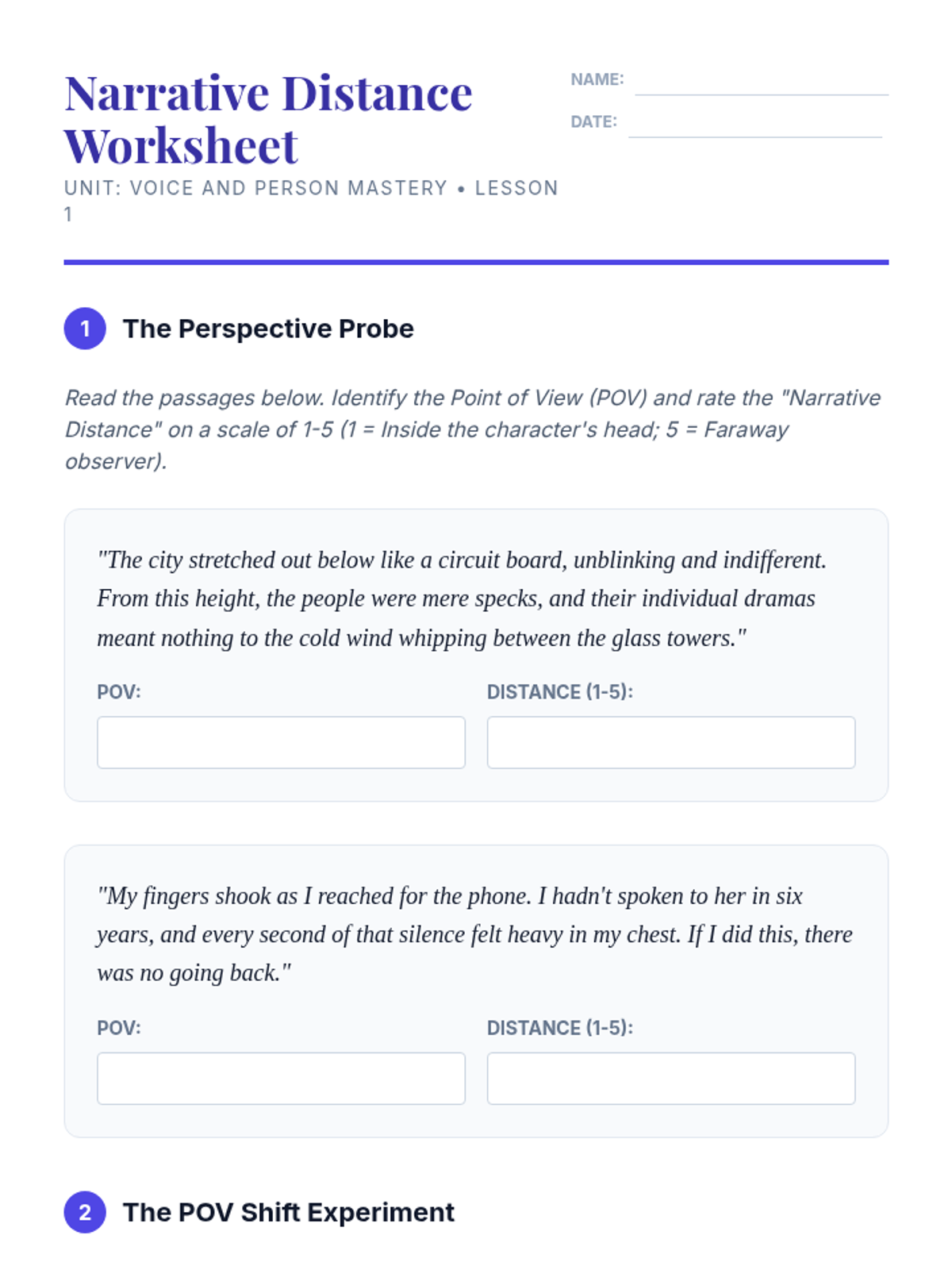
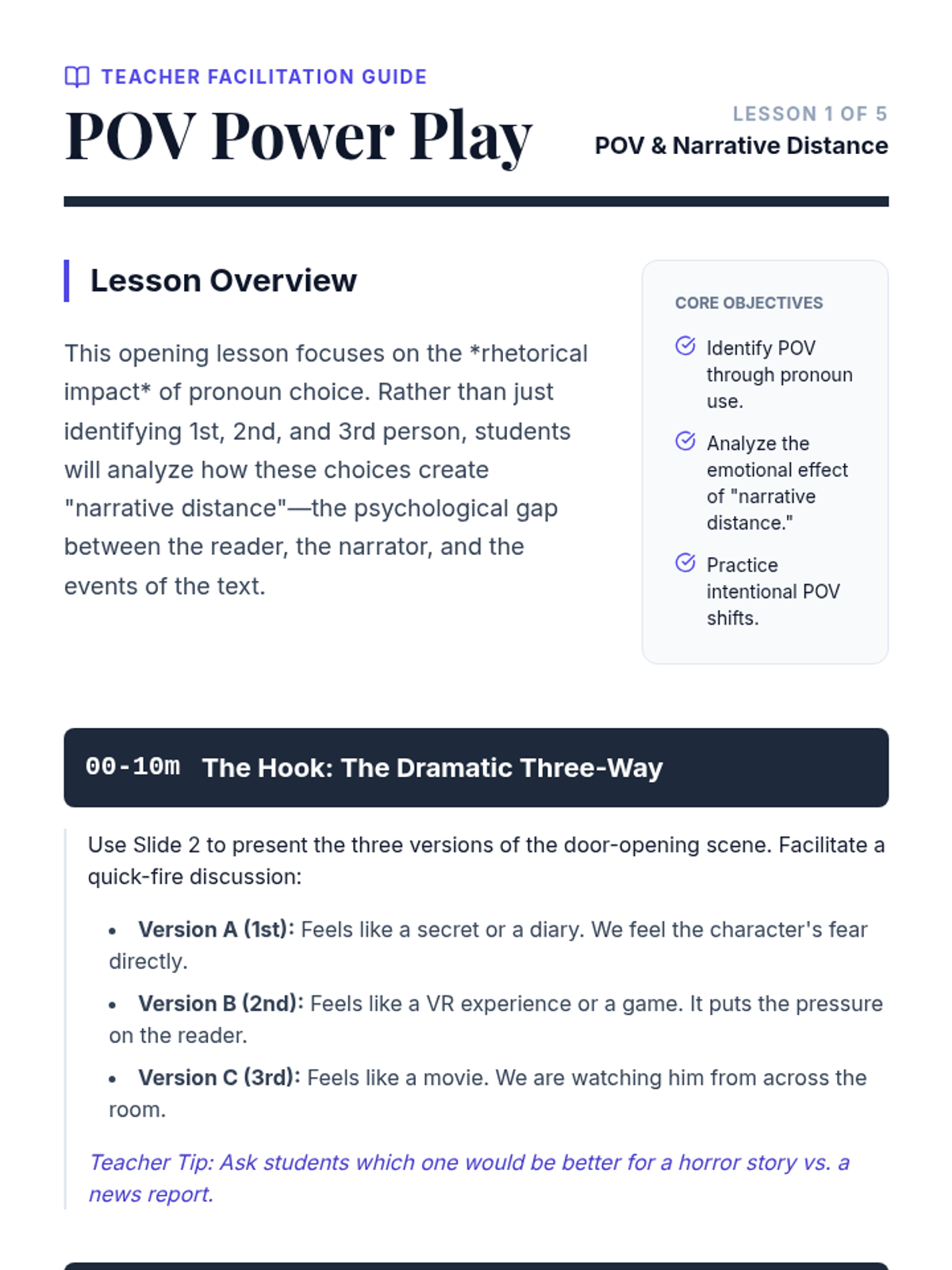
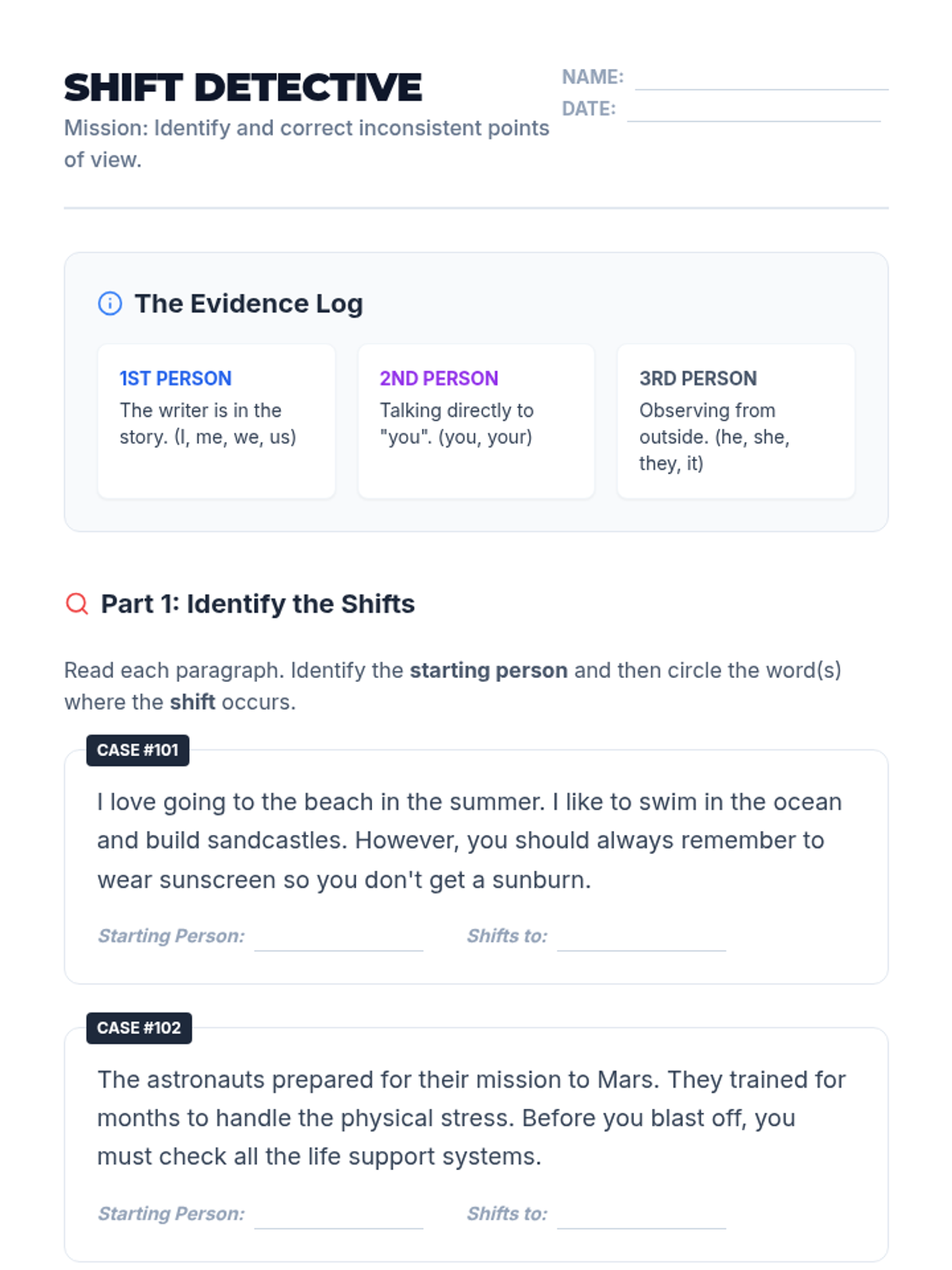
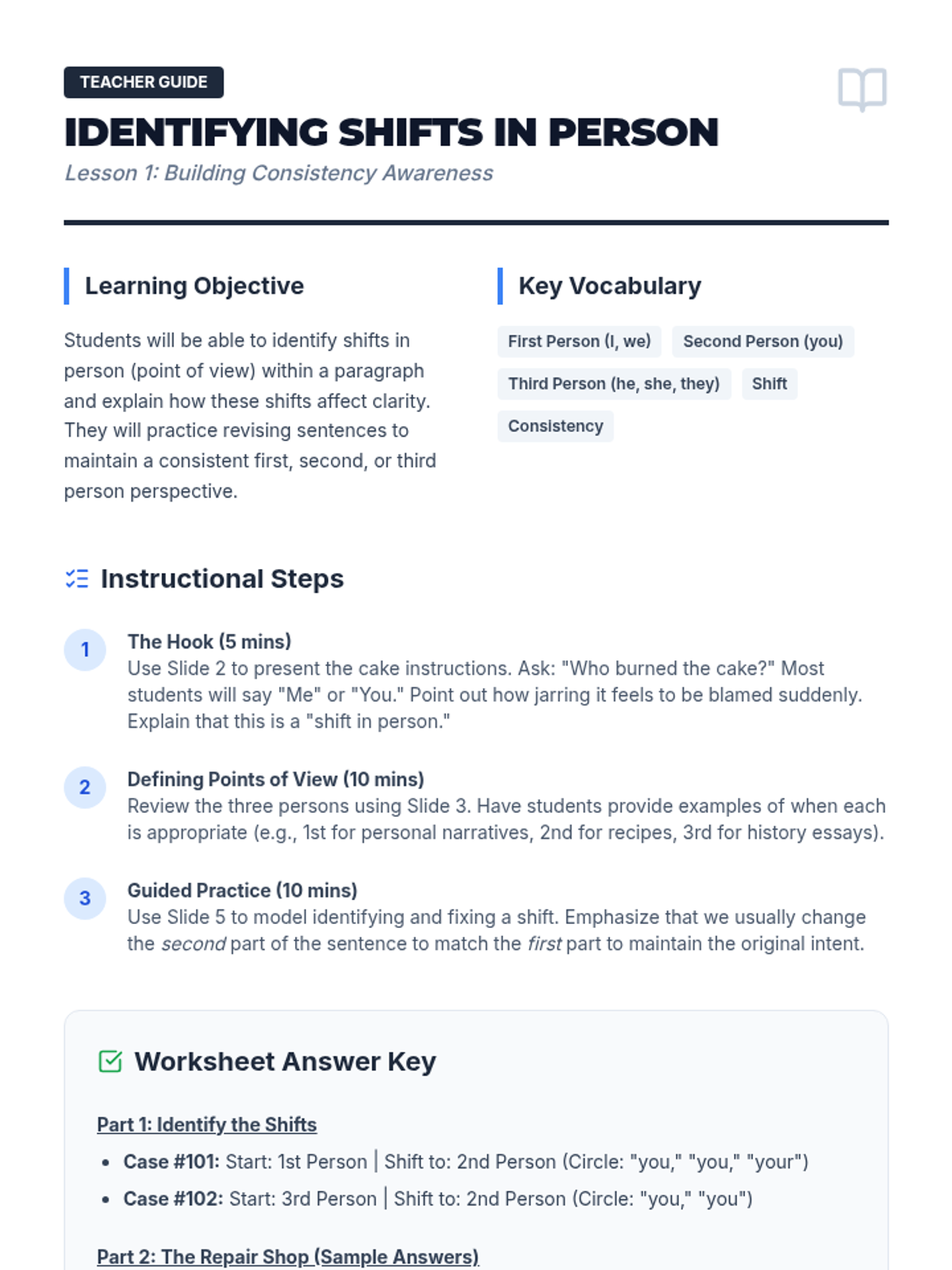
This sequence explores the stylistic impact of pronoun choice, specifically focusing on consistency in person (point of view). Students analyze how shifting from first to second or third person changes the tone and distance of a piece, moving from identifying awkward shifts to making intentional choices in narrative and argumentative writing.
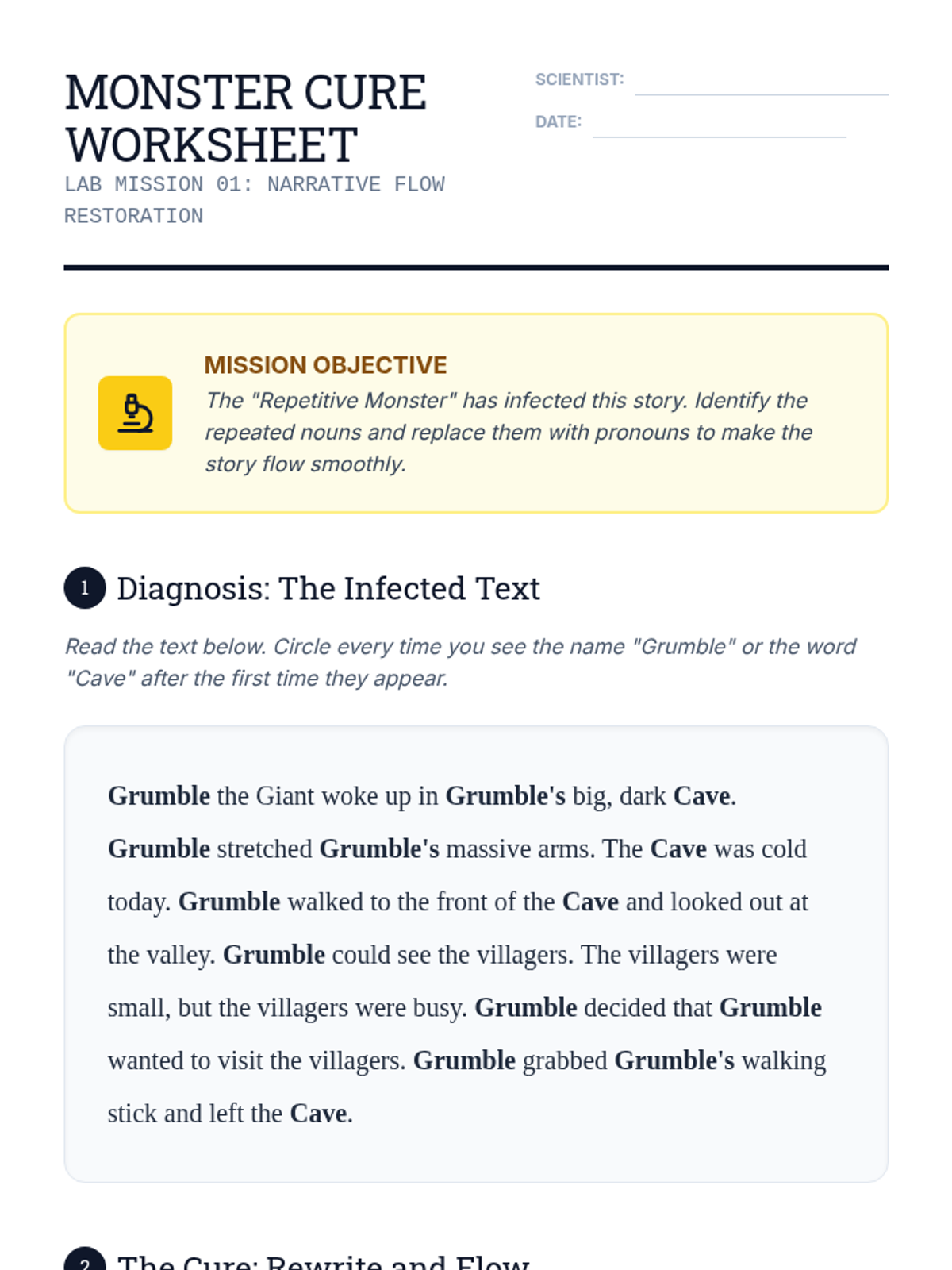
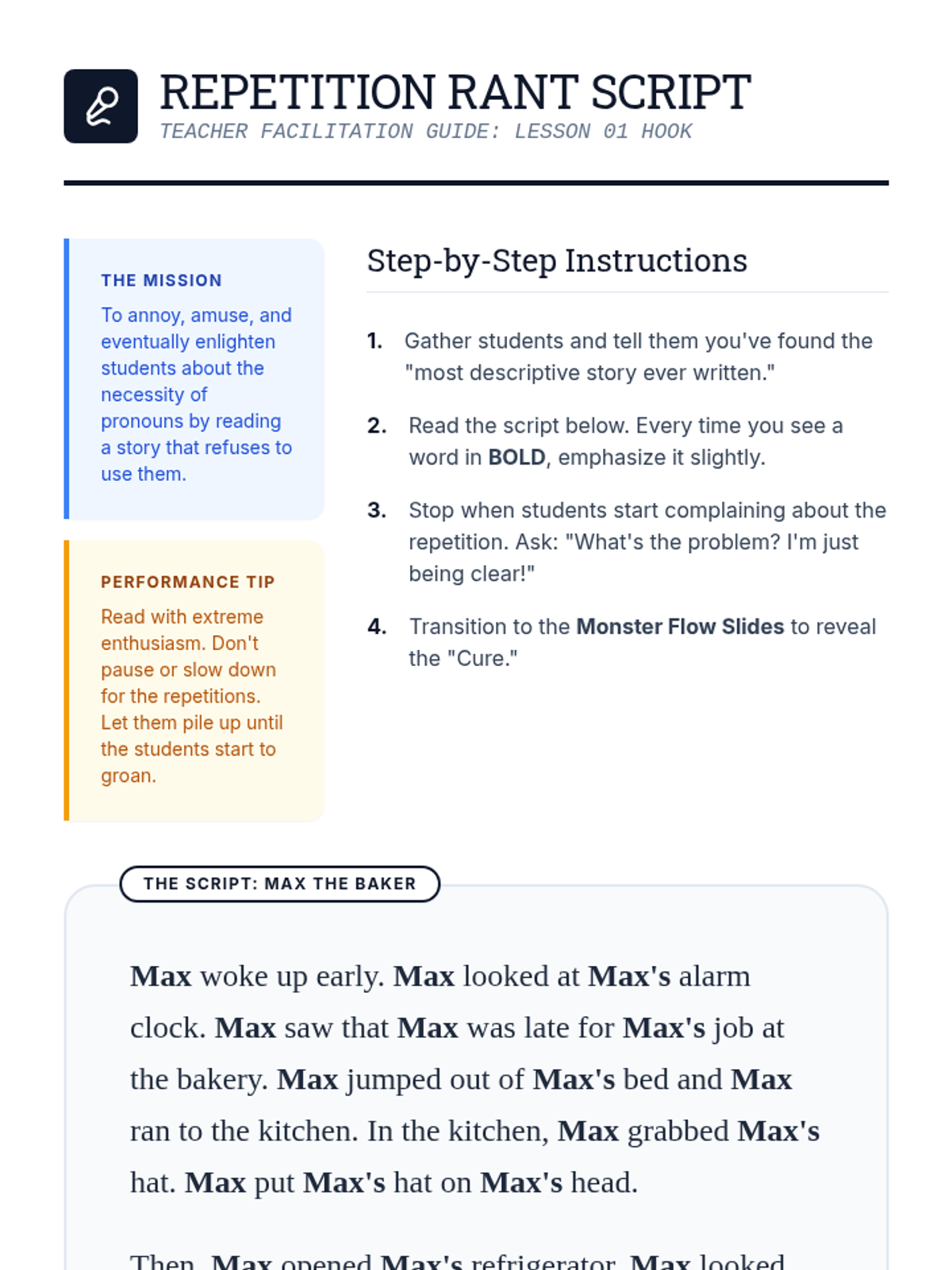
Students explore pronouns and antecedents as stylistic tools to improve narrative flow. They learn to replace repetitive nouns, manage multiple characters with clear pronoun references, and culminate in a polished character-driven story.
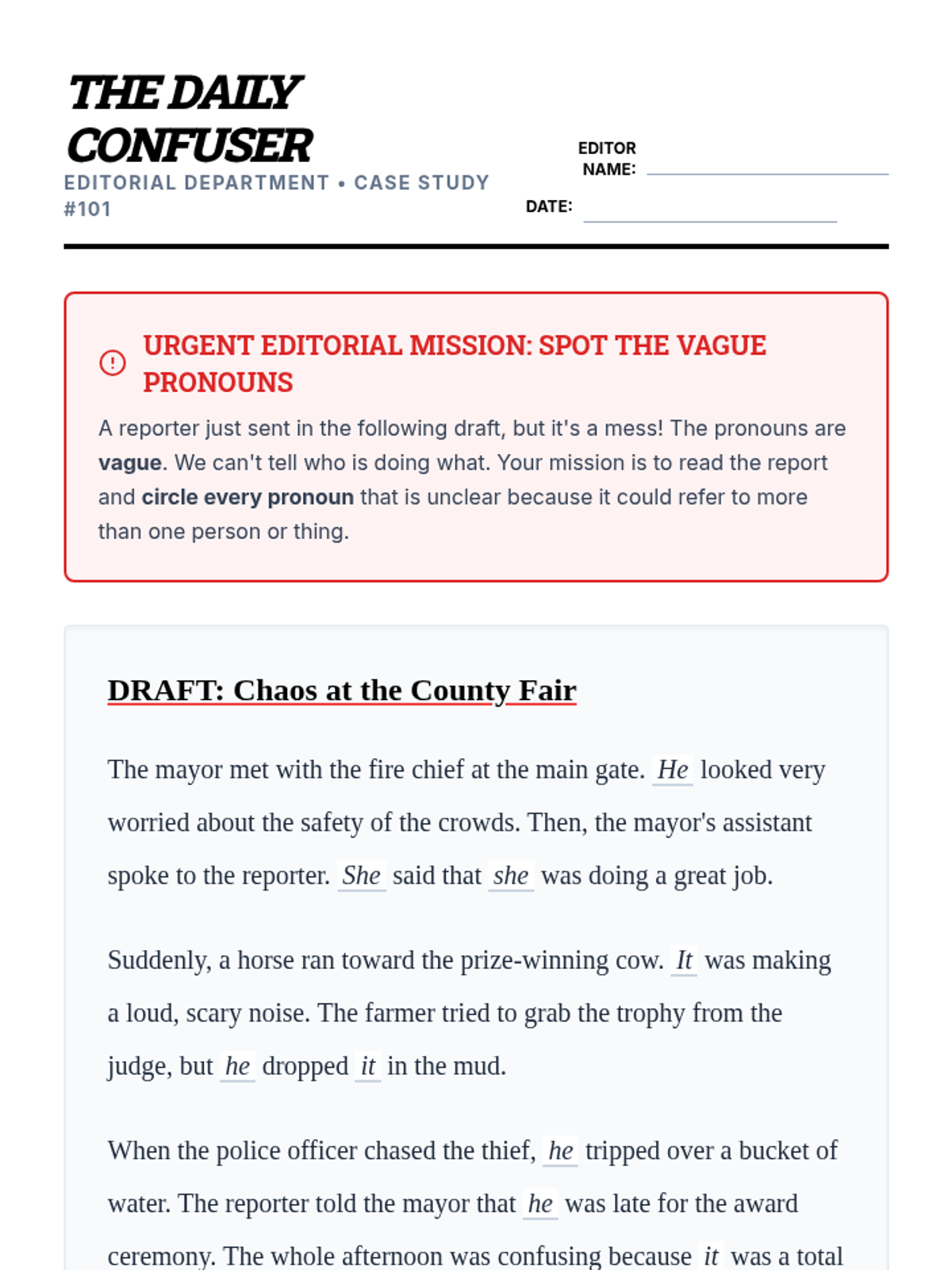
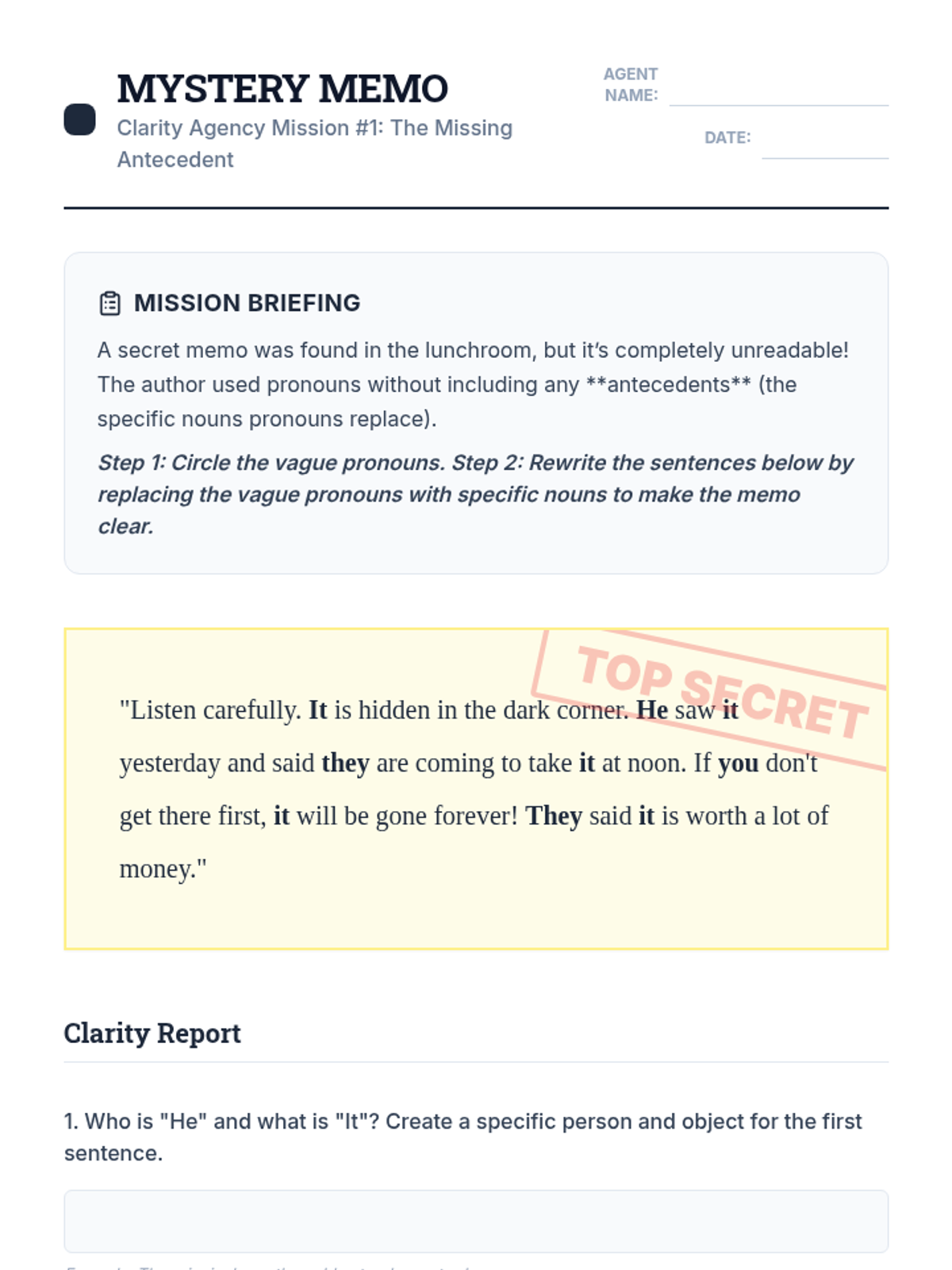
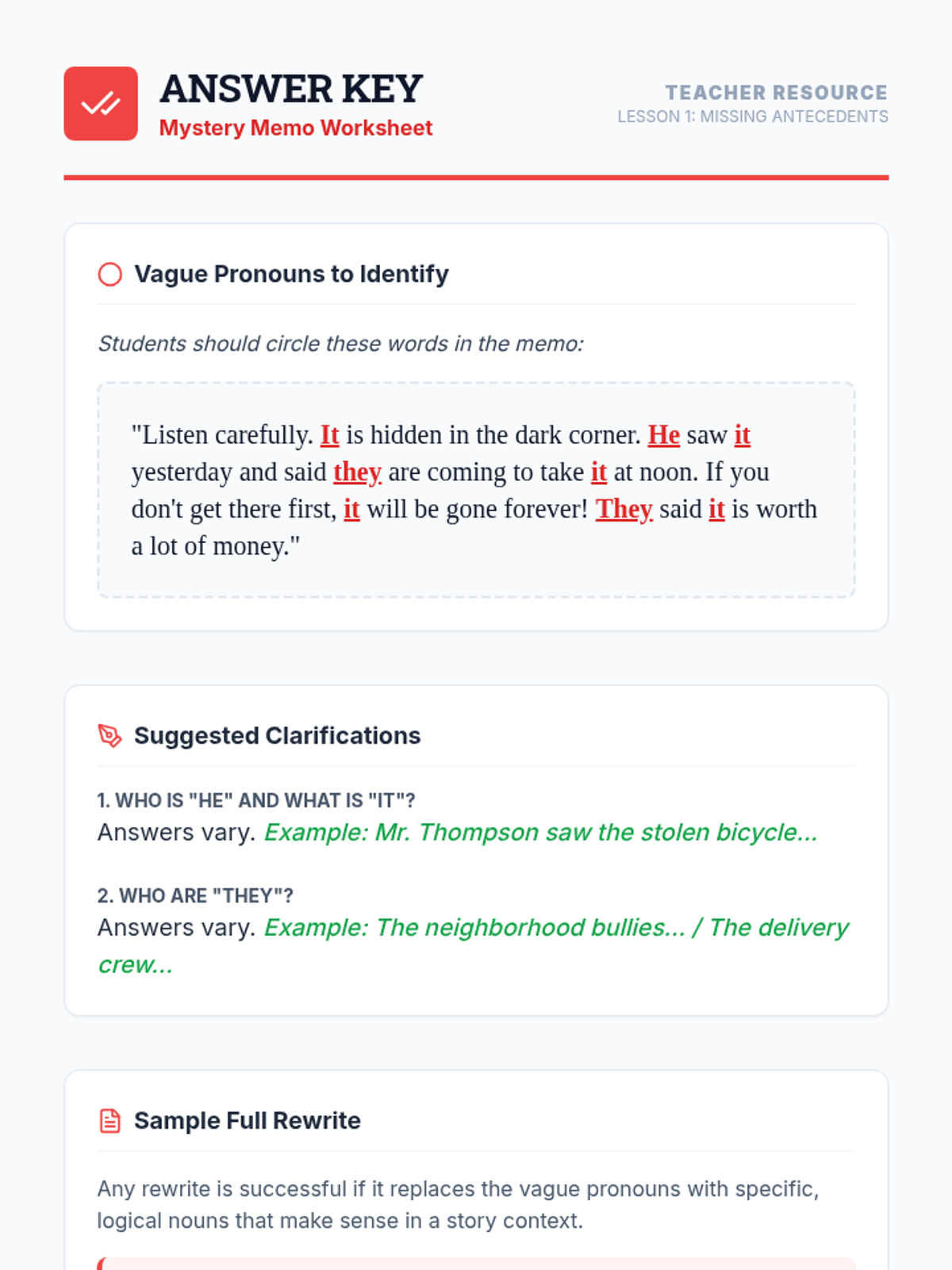
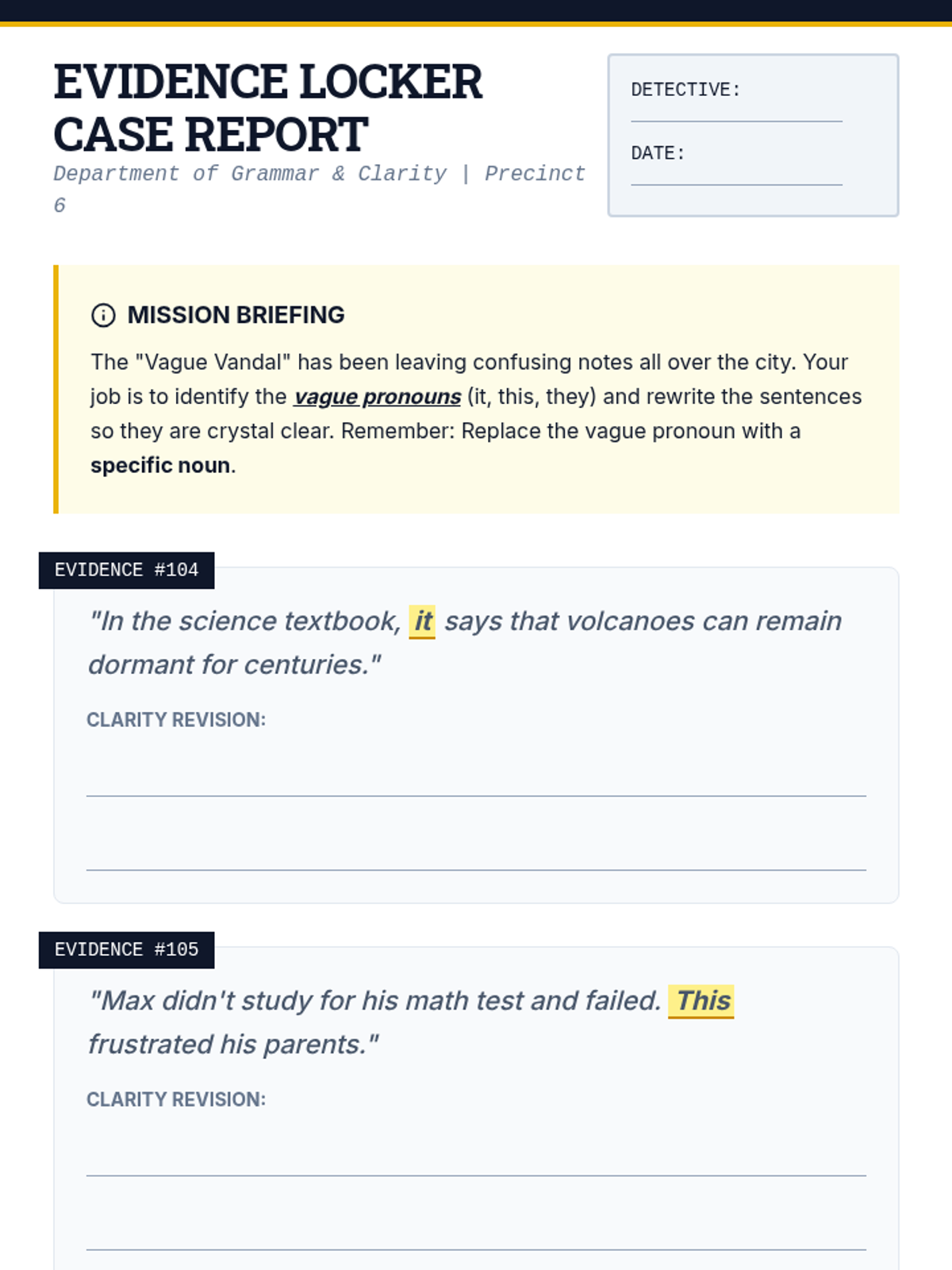
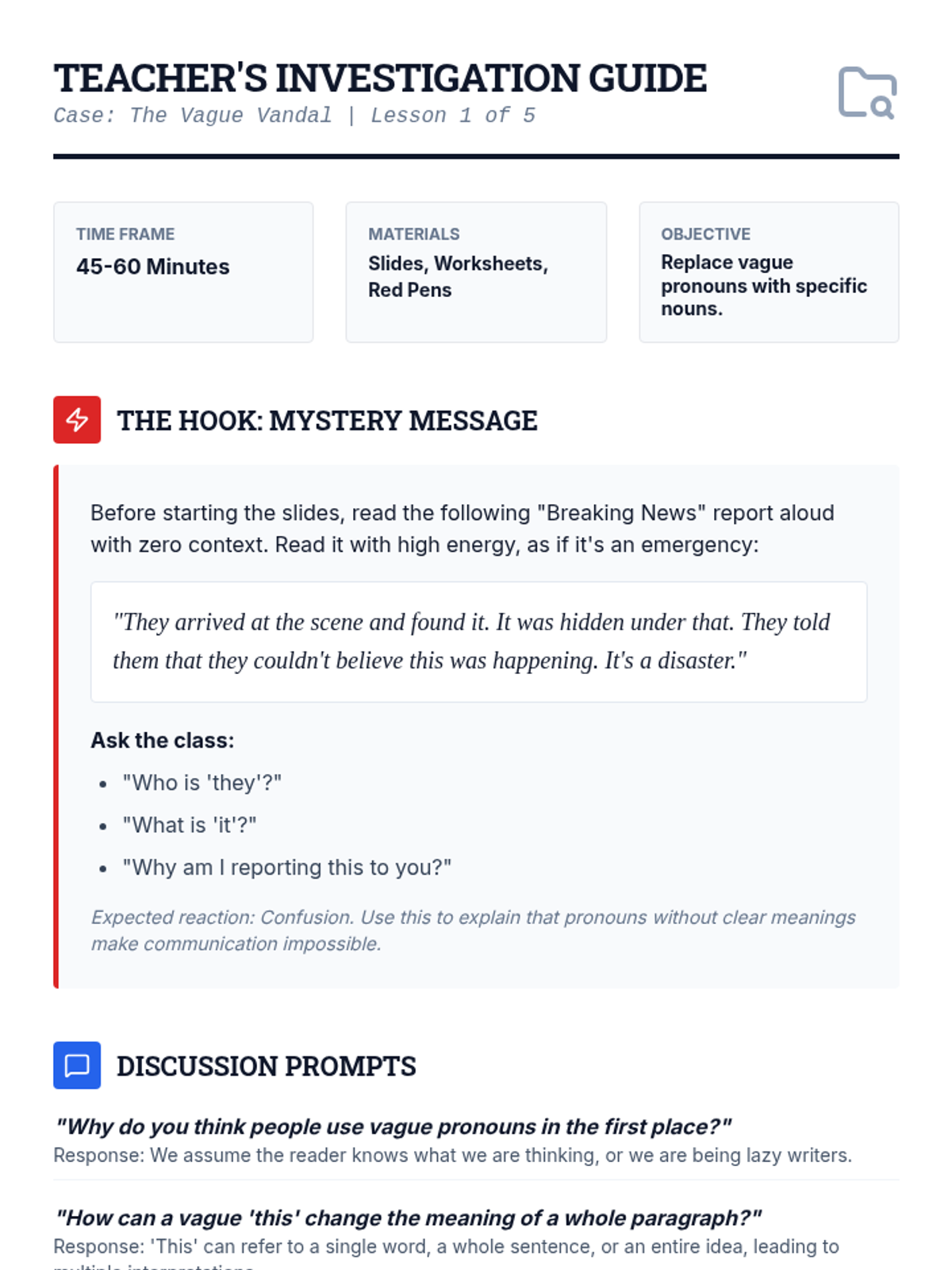
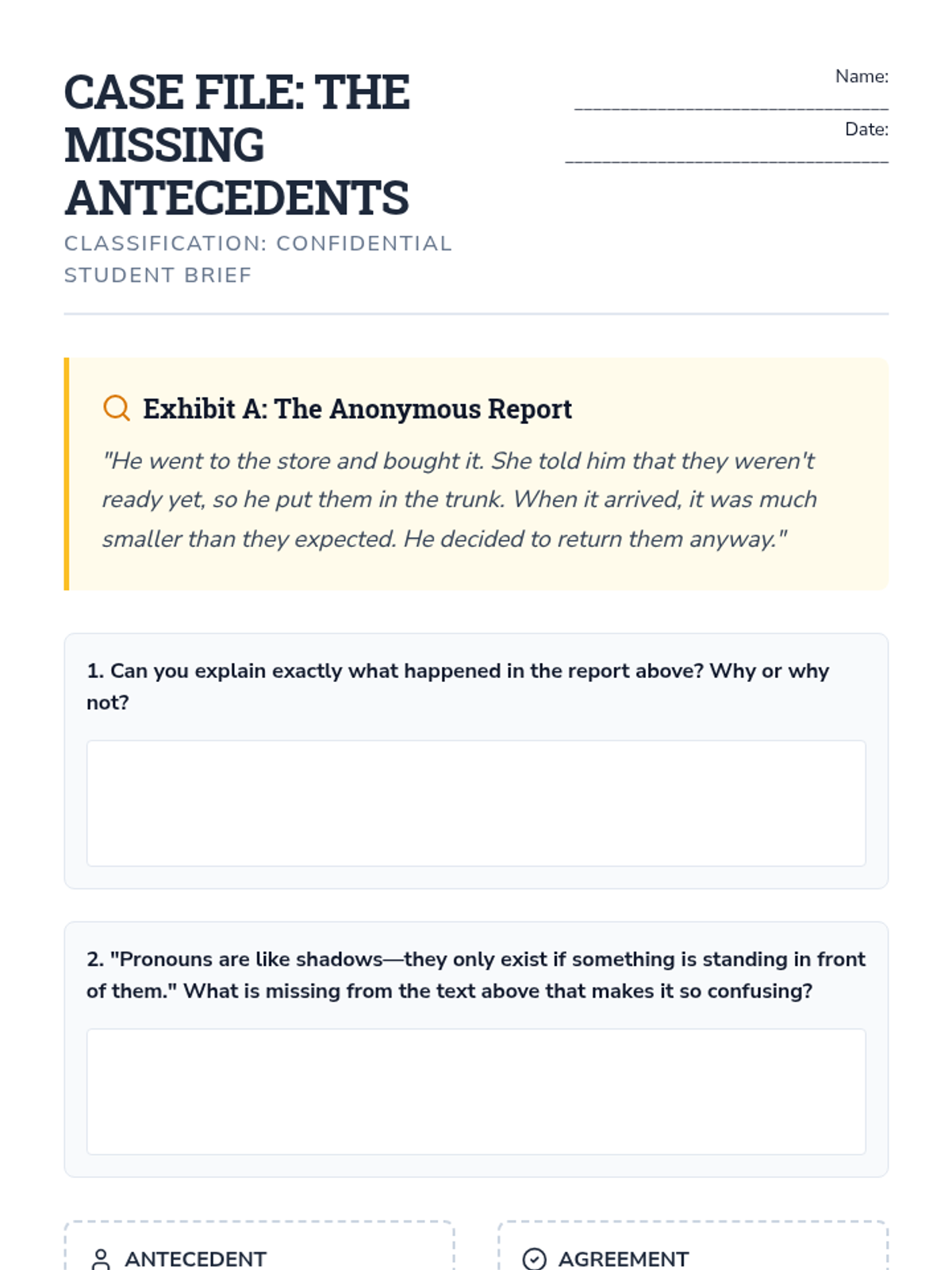
A detective-themed ELA sequence where students become 'Clarity Agents' to identify and fix vague or ambiguous pronoun references in their writing.
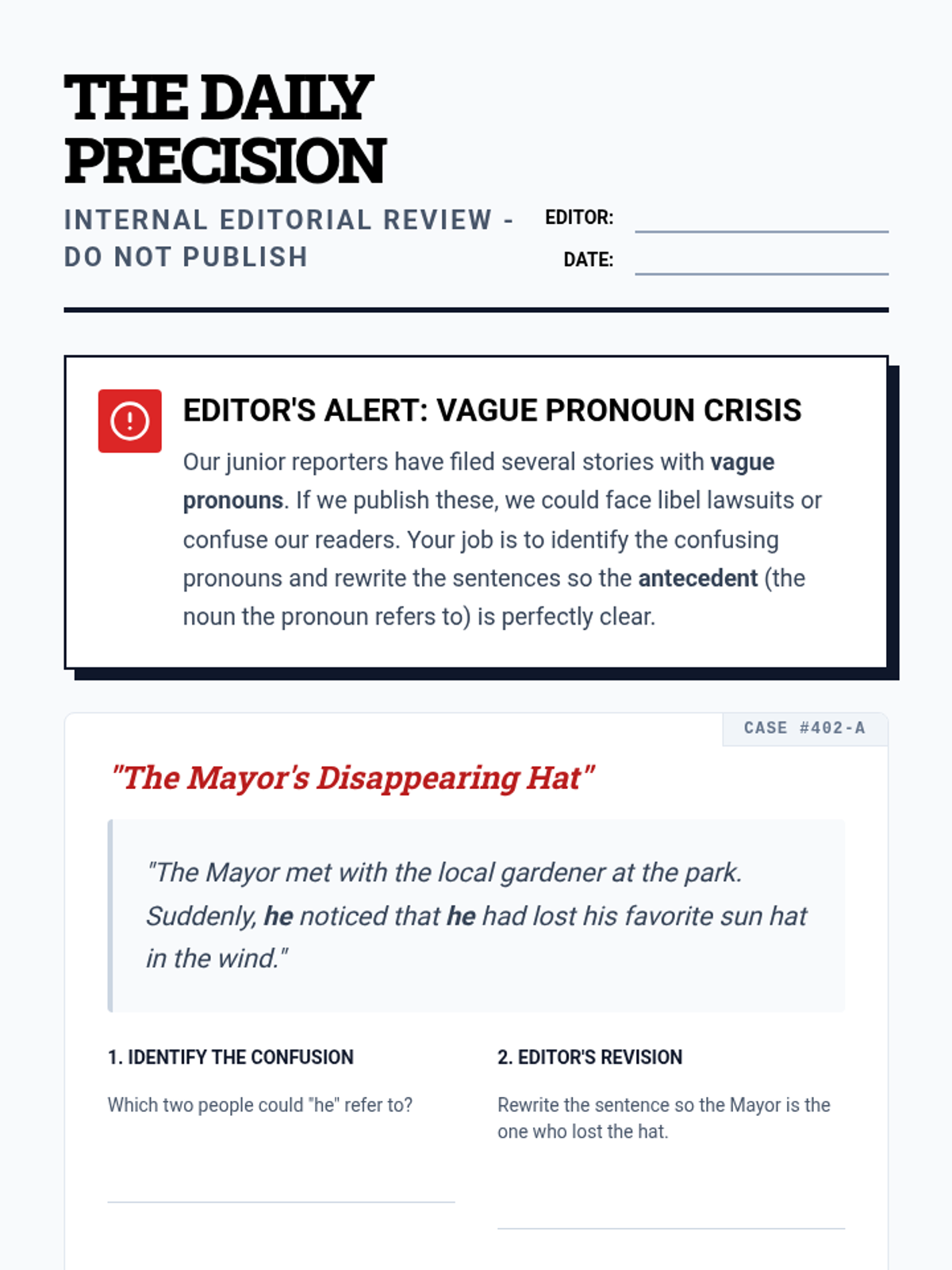
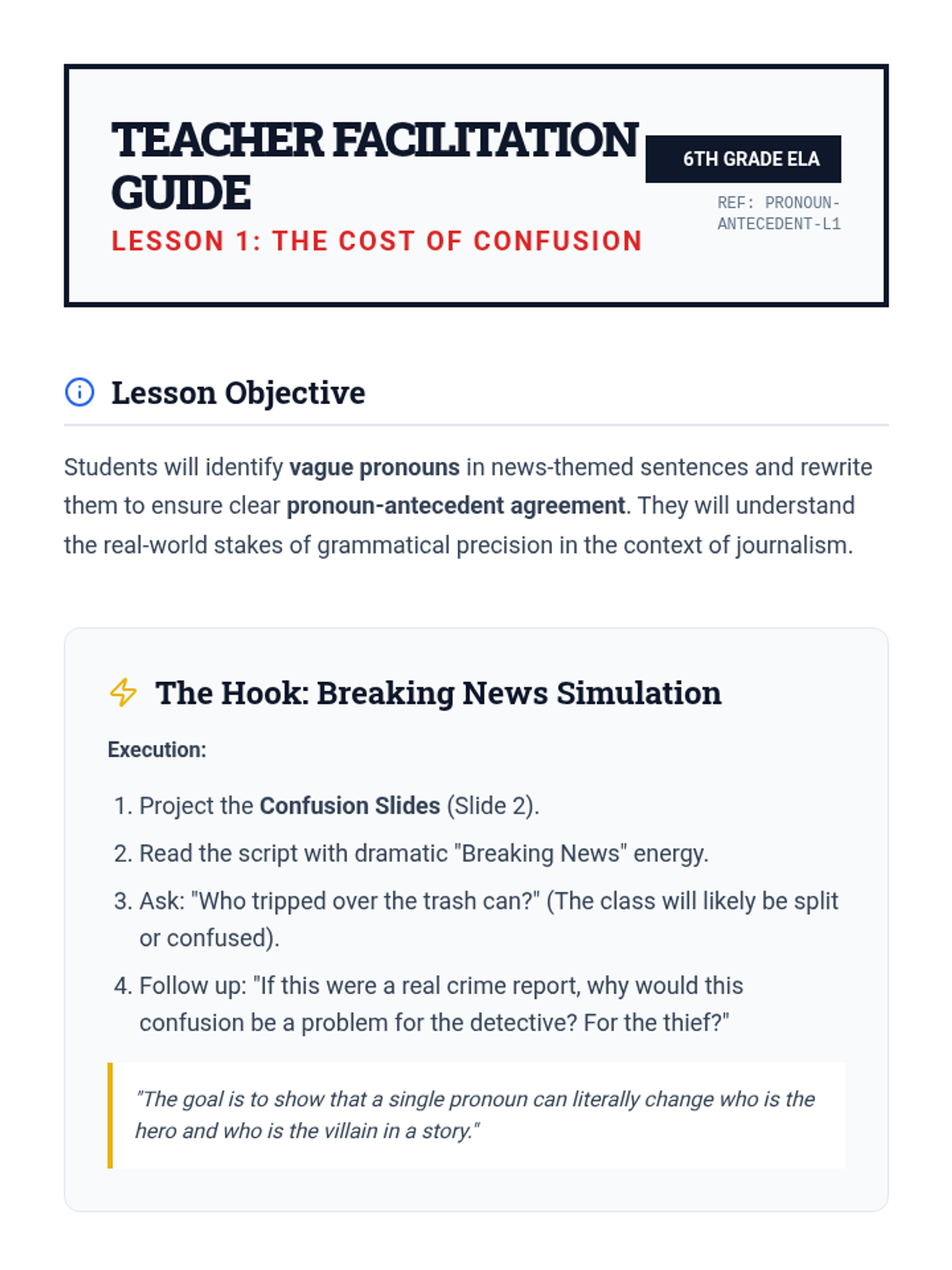
A journalism-themed sequence where 6th-grade students master pronoun-antecedent agreement by writing and editing news reports, exploring how grammatical precision prevents misinformation and libel.
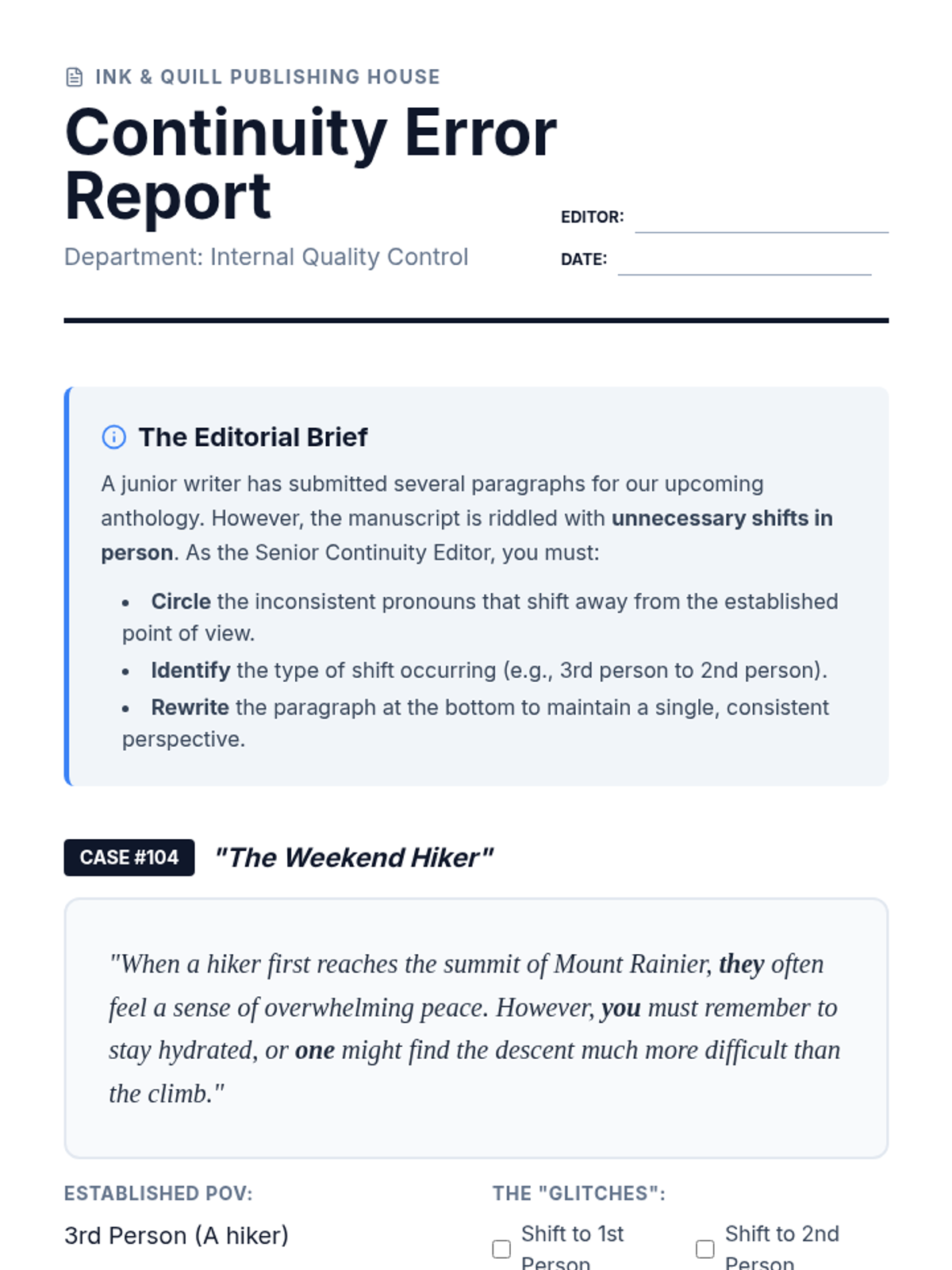
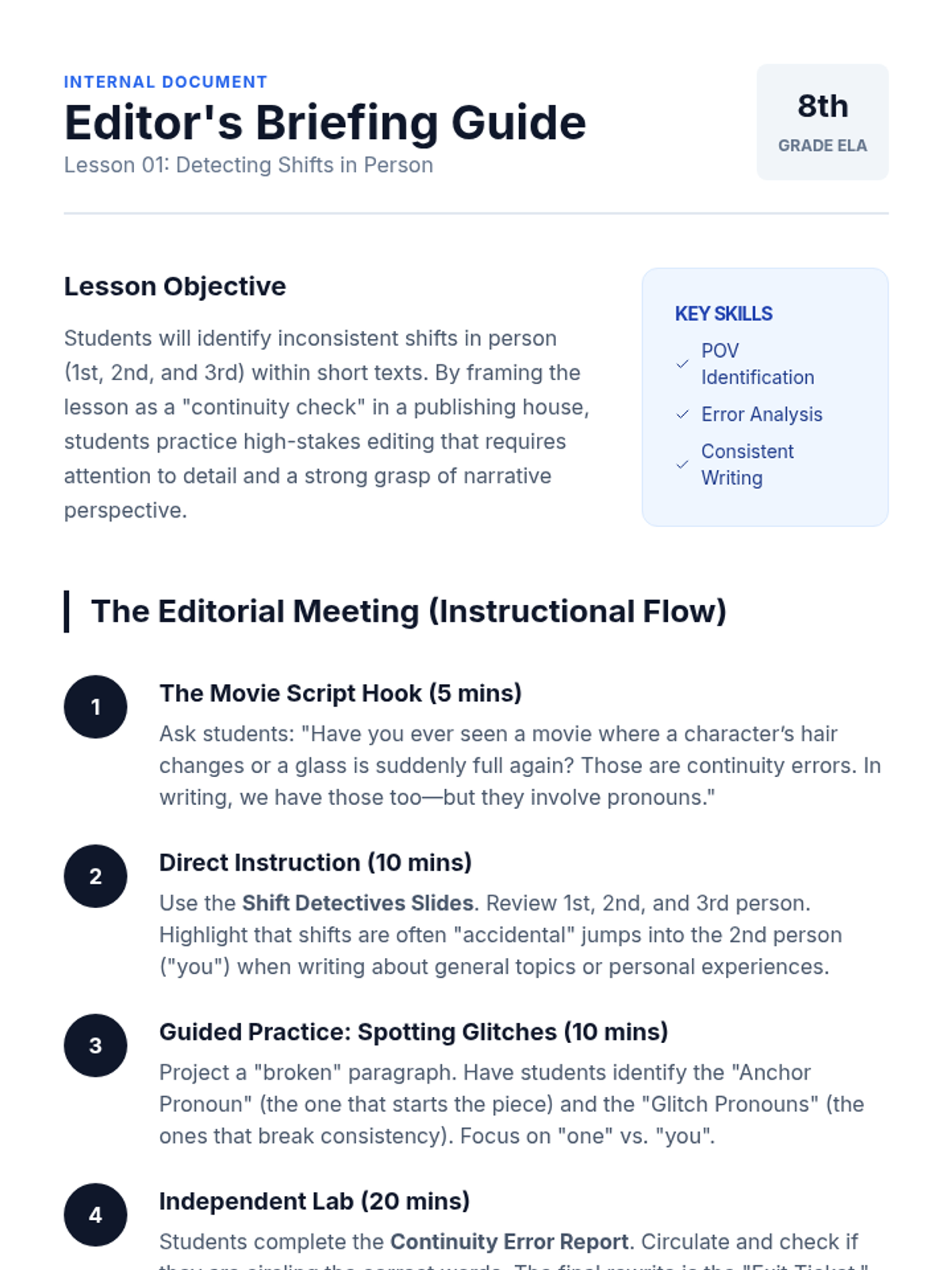
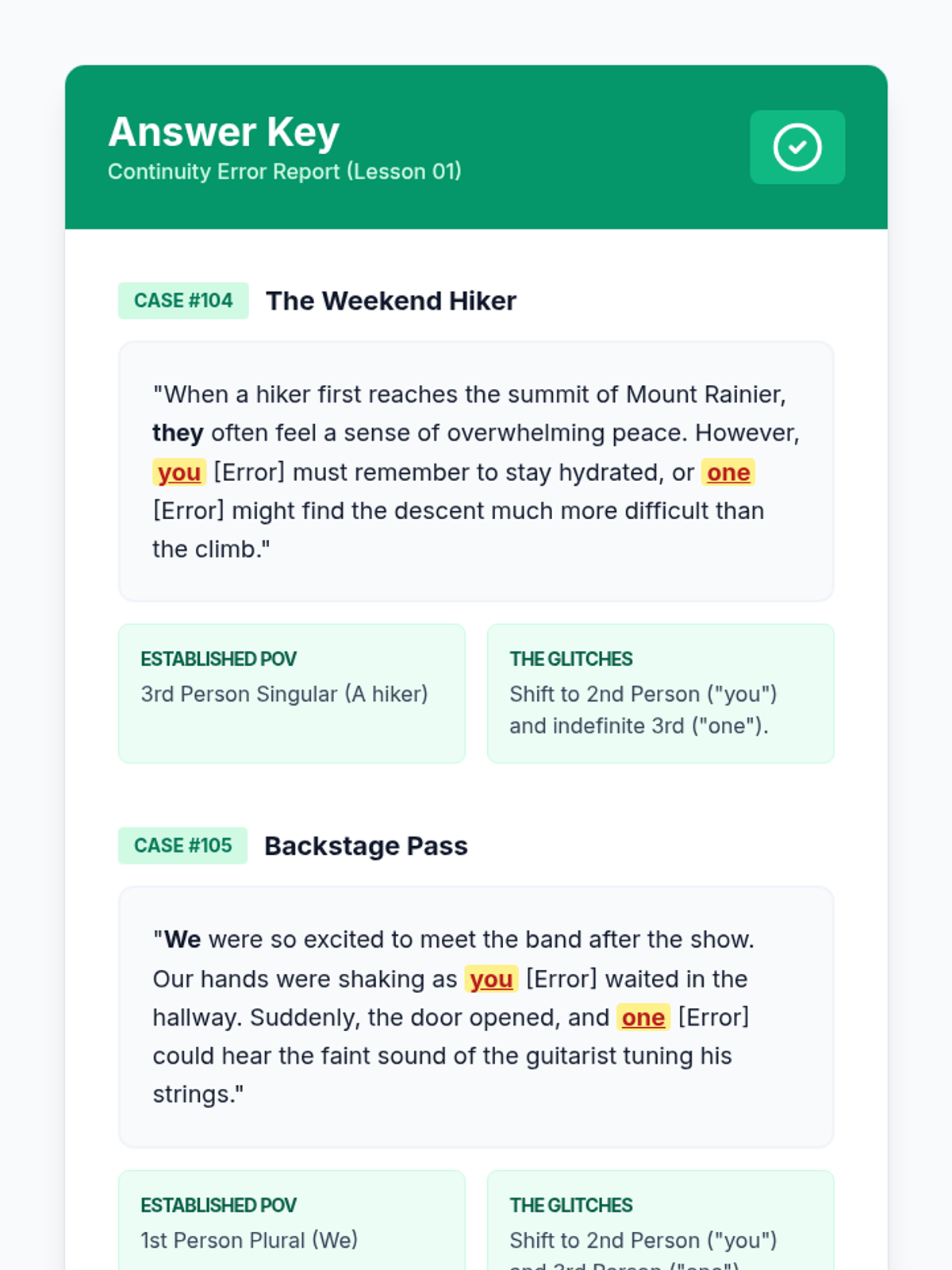
A comprehensive workshop-style sequence for 6th-grade students focusing on pronoun consistency. Students learn to identify and correct shifts in person and number to improve writing clarity and maintain a professional tone.
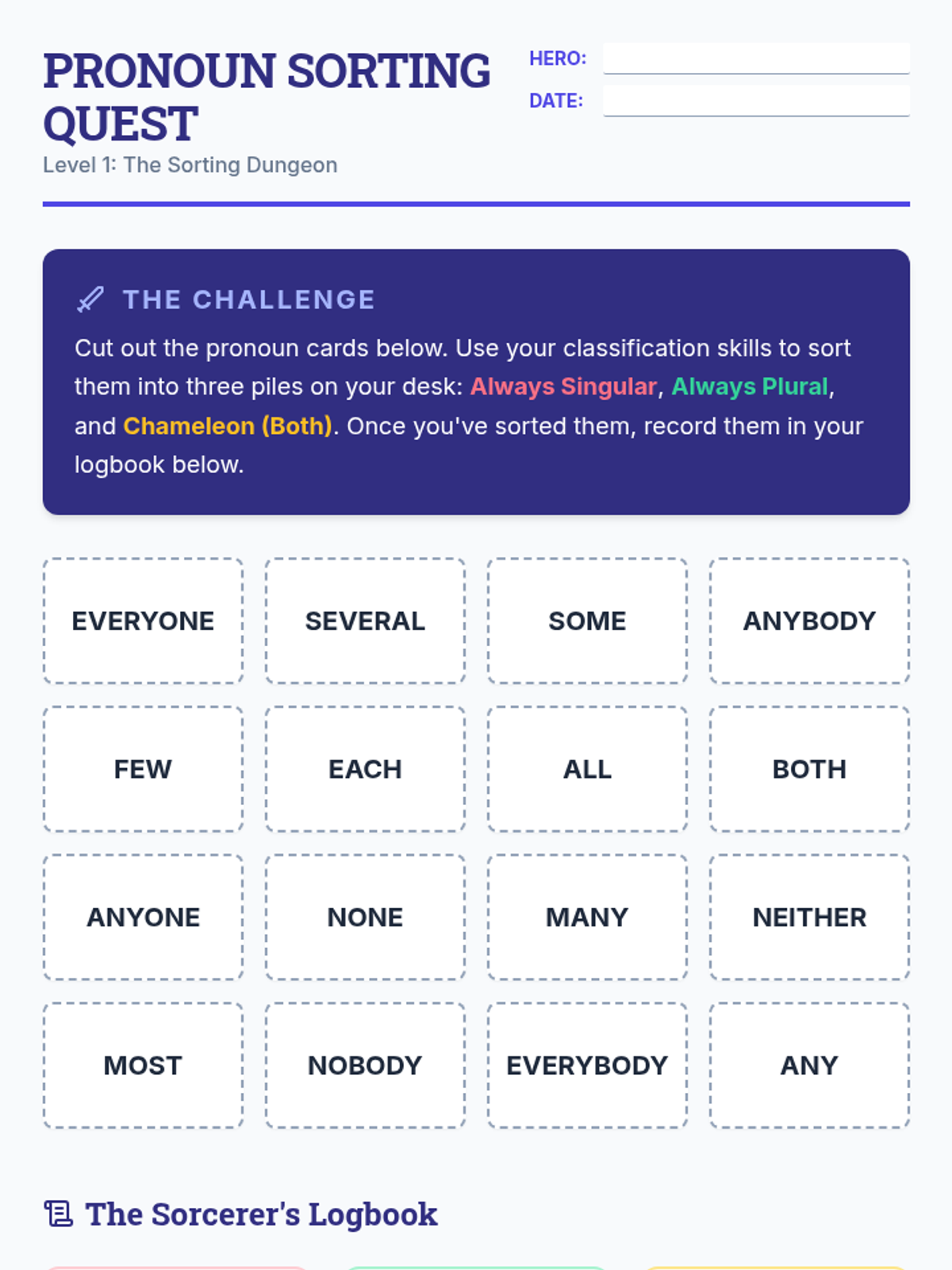
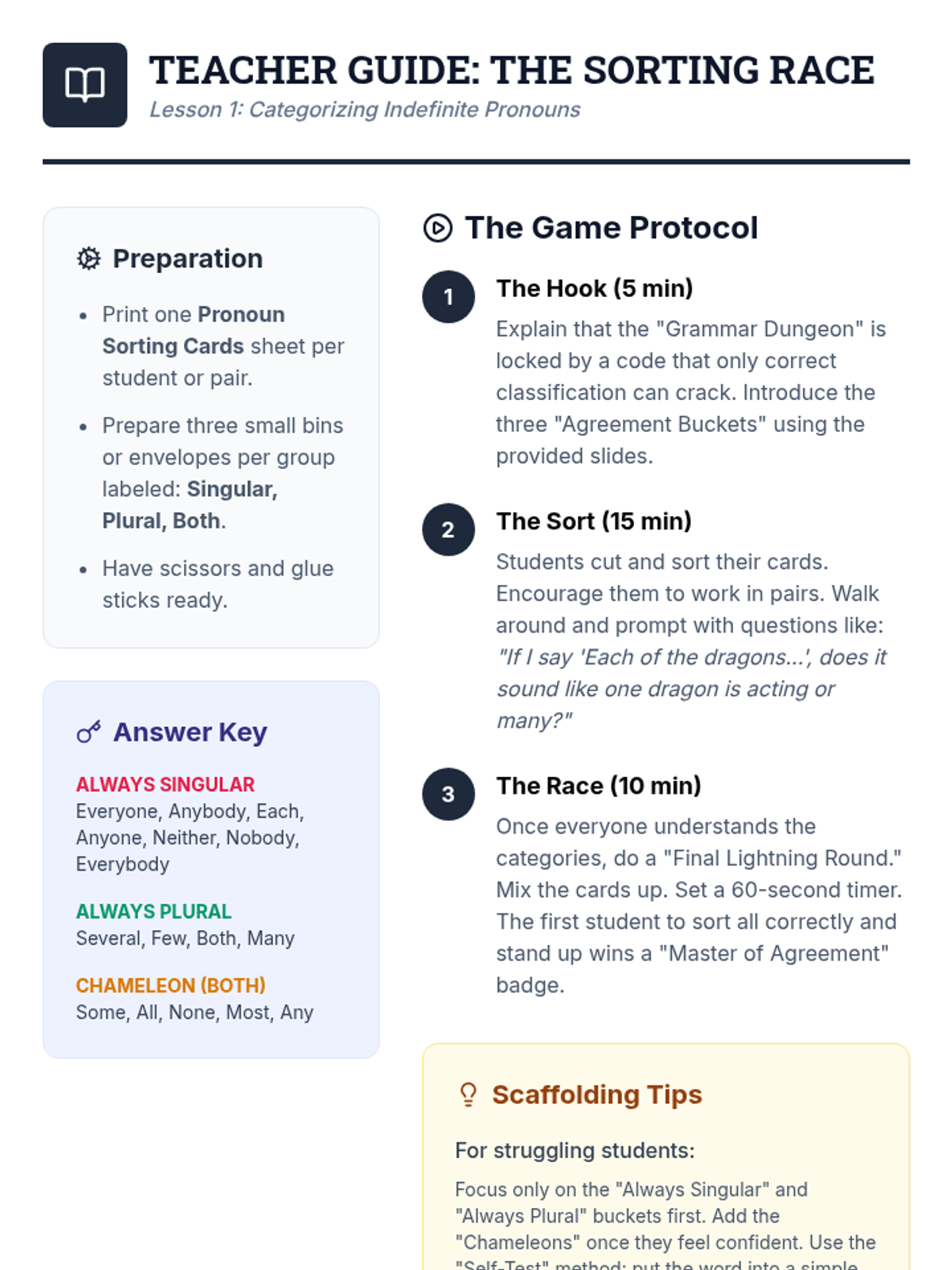
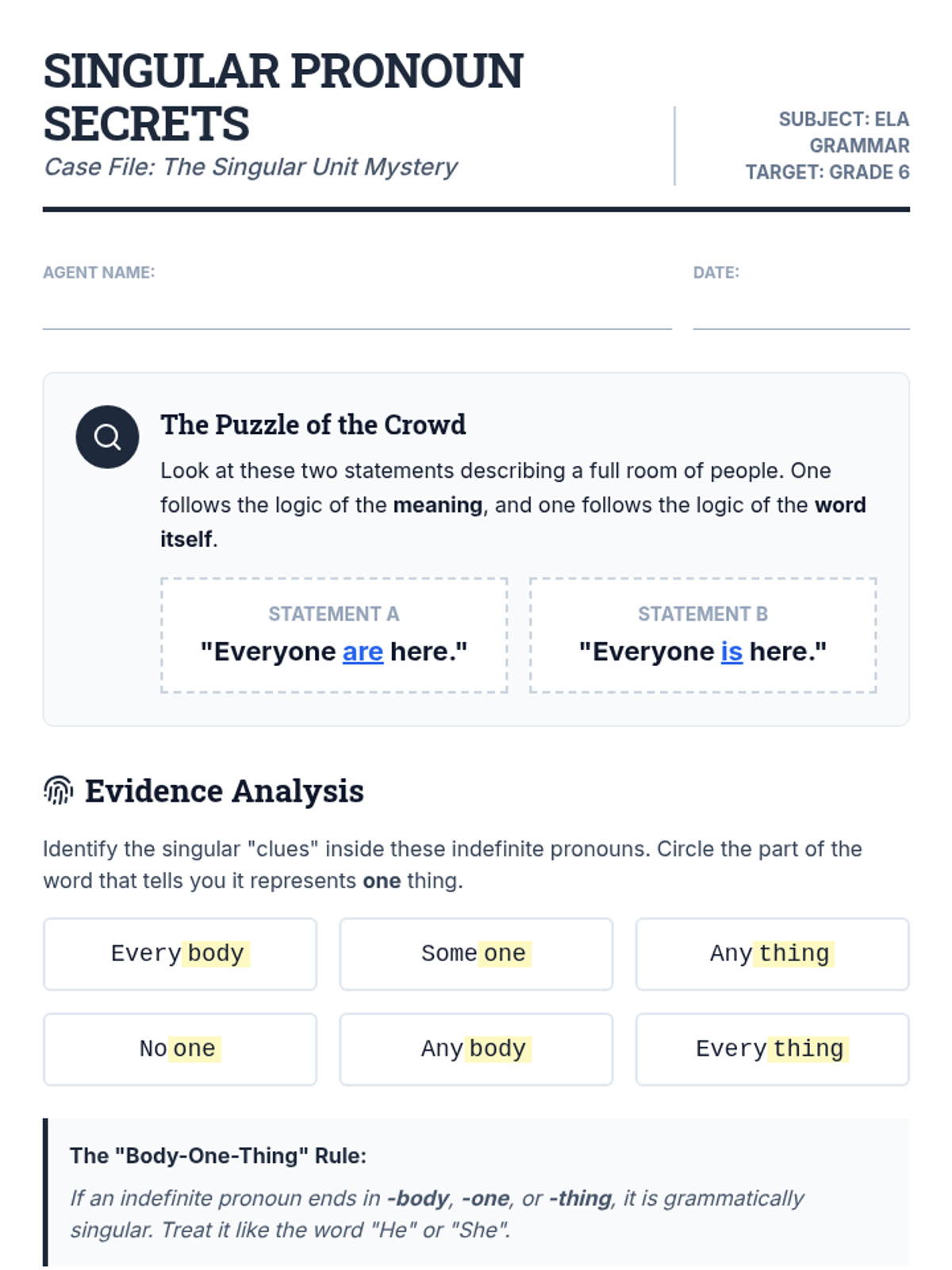
A gamified sequence designed for 6th-grade students to master indefinite pronoun agreement. Through a 'Grammar Dungeon' theme, students categorize pronouns, tackle the 'always singular' rule, analyze context-dependent pronouns, and navigate formal gender conventions.
This sequence guides 6th-grade students through the nuances of pronoun-antecedent agreement, specifically focusing on identifying and resolving vague and ambiguous references to improve writing clarity.
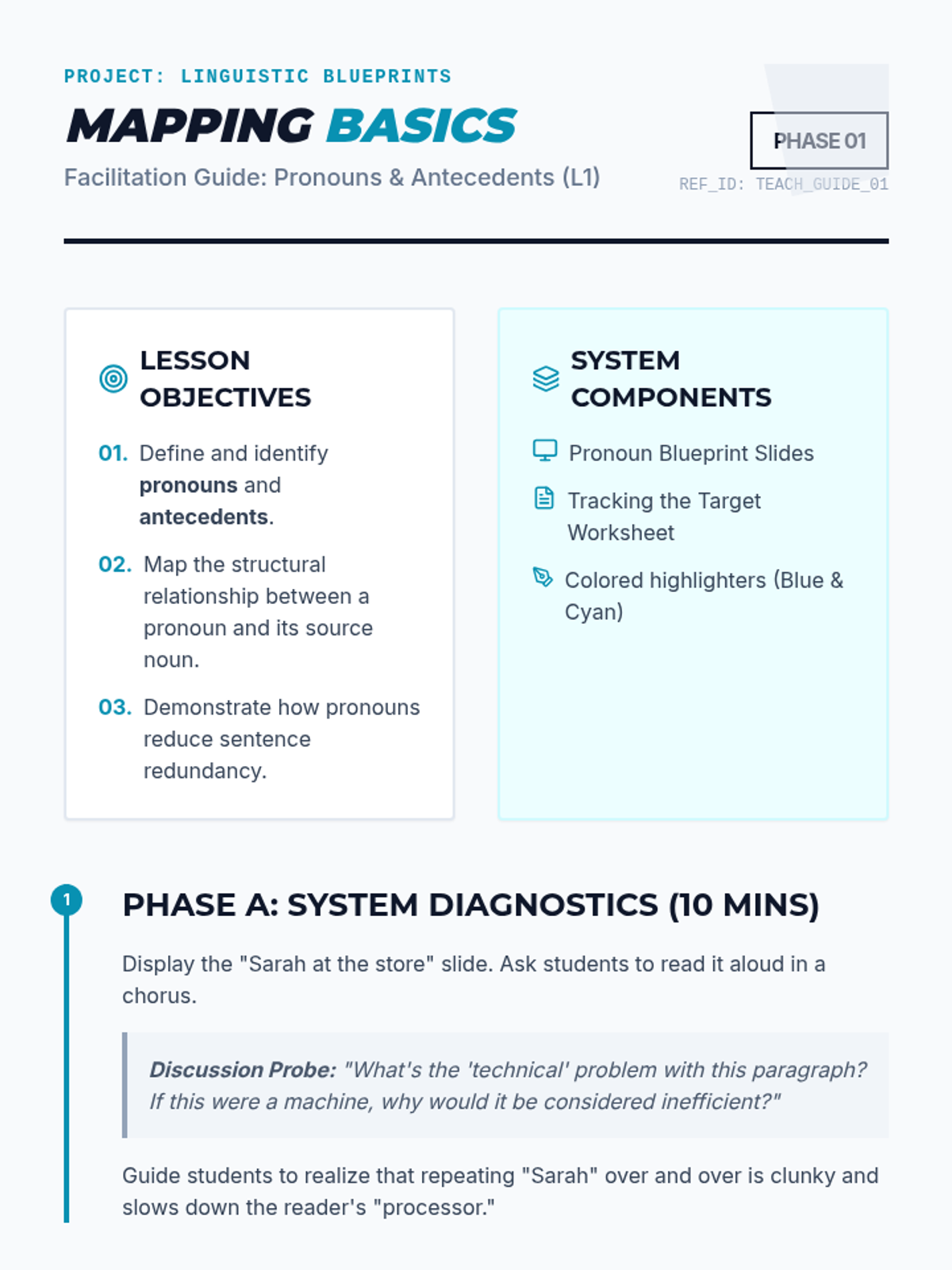
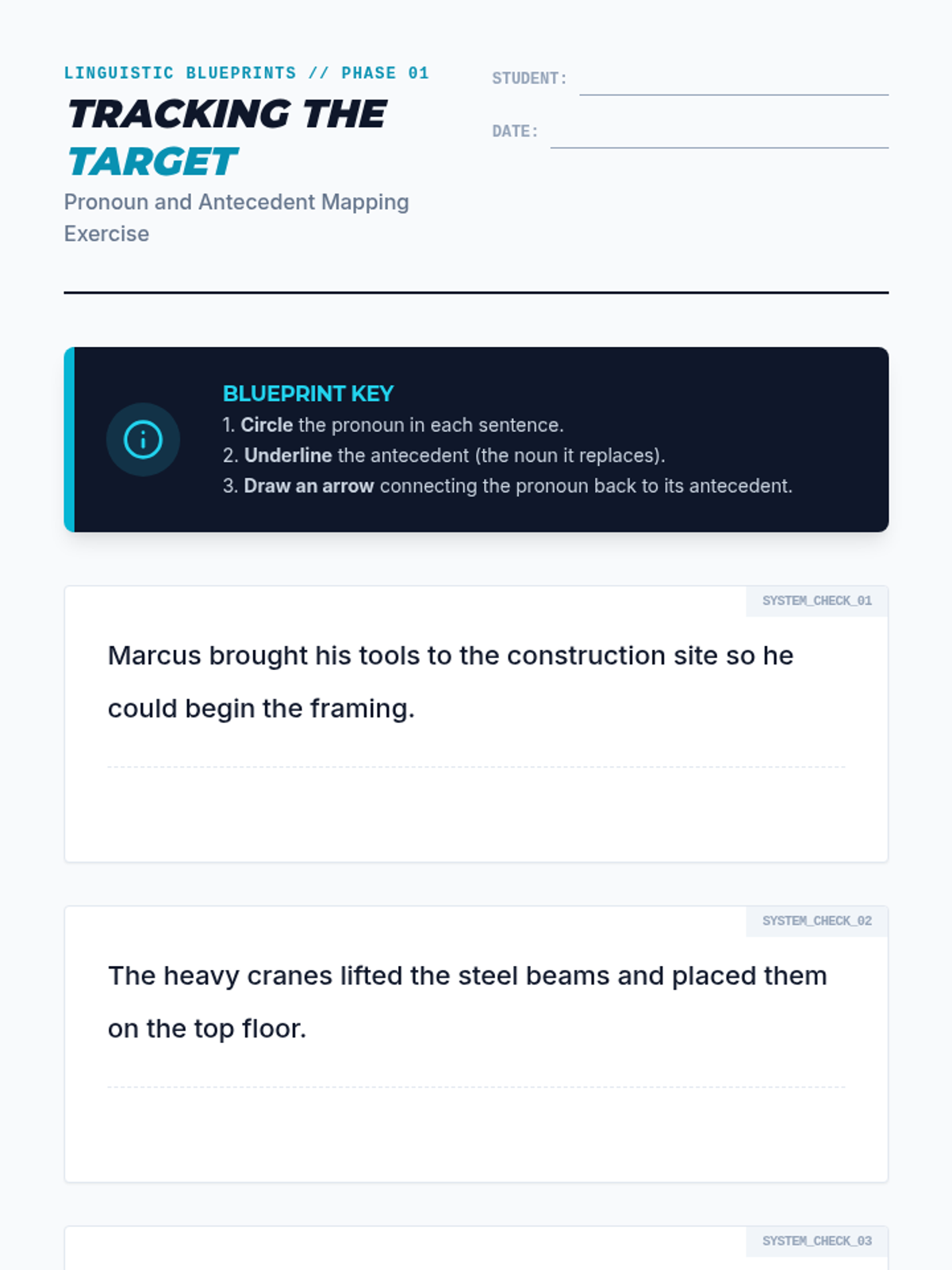
A comprehensive 5-lesson unit for 6th-grade students on pronoun-antecedent agreement. Students will learn to identify antecedents, match them by number, person, and gender, and handle complex compound subjects through a technical 'Linguistic Blueprints' theme.
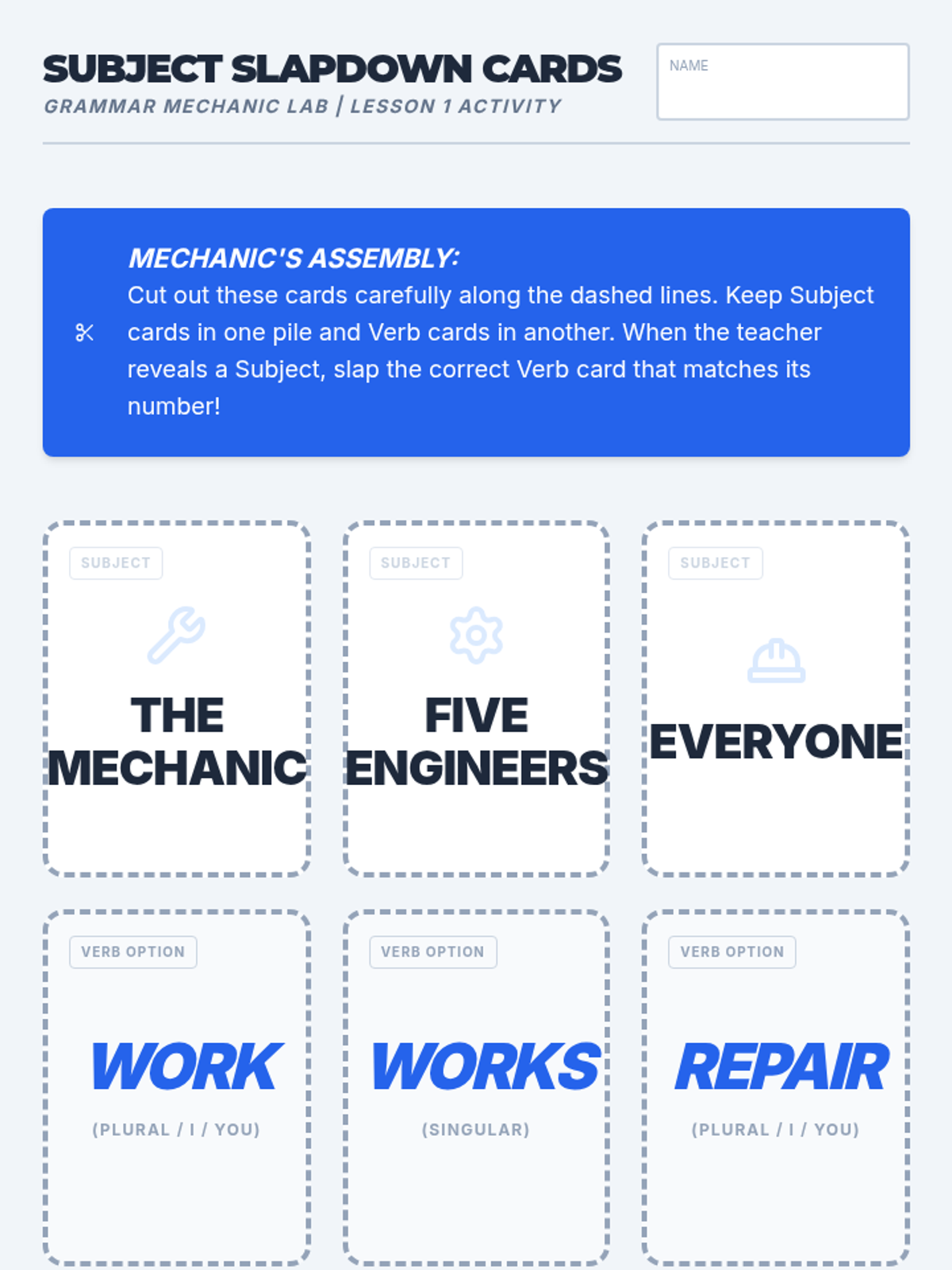
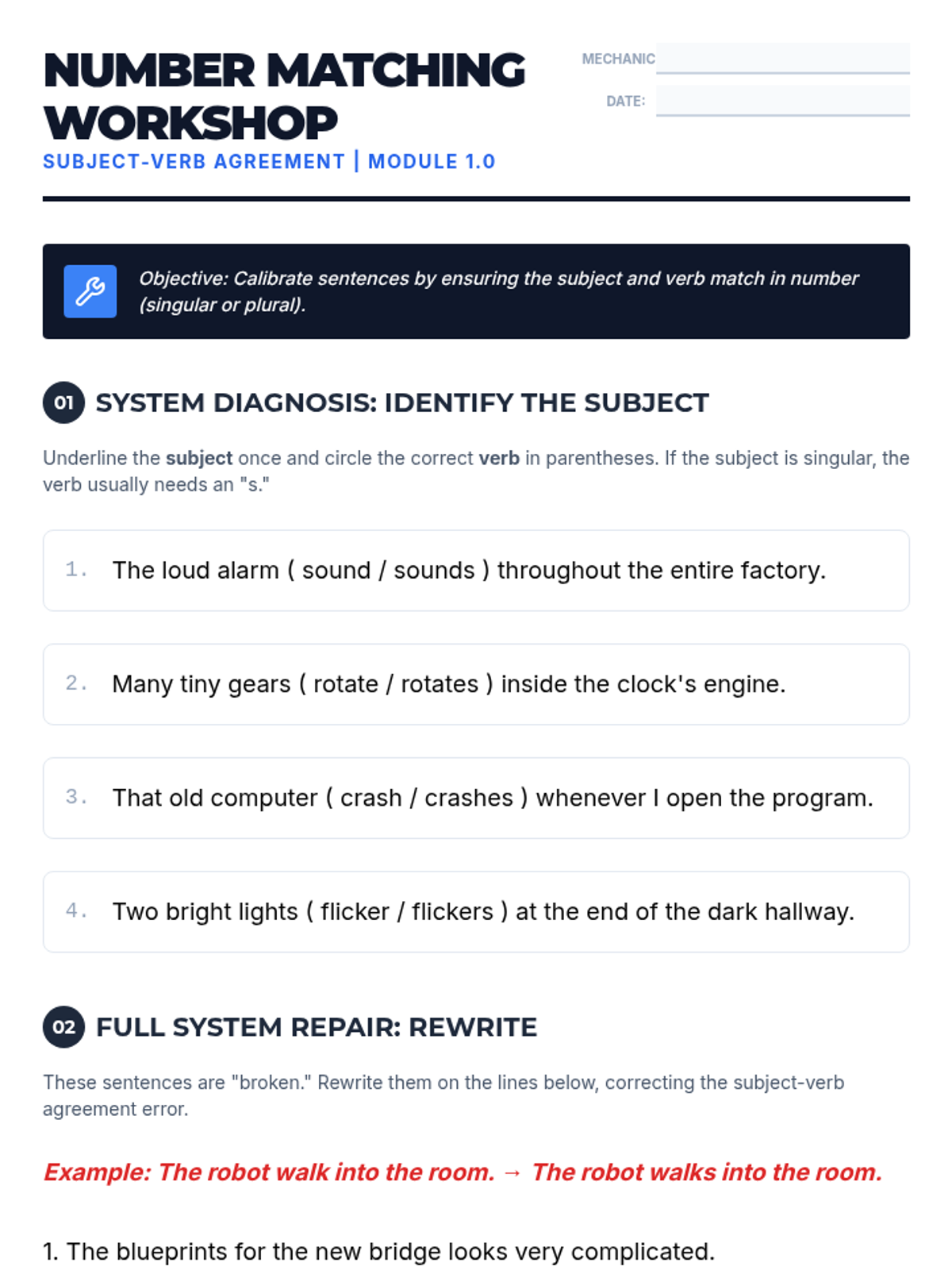
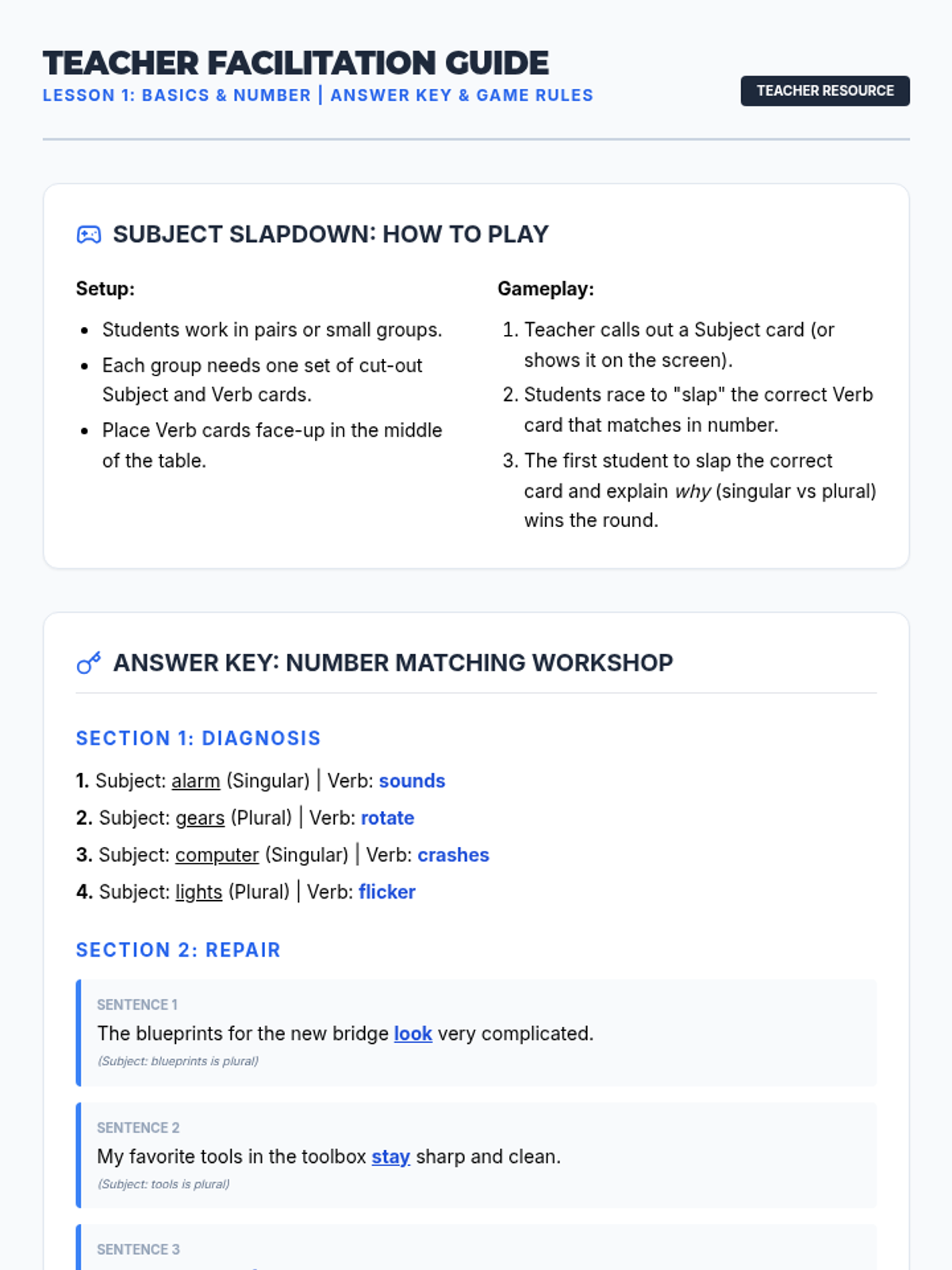
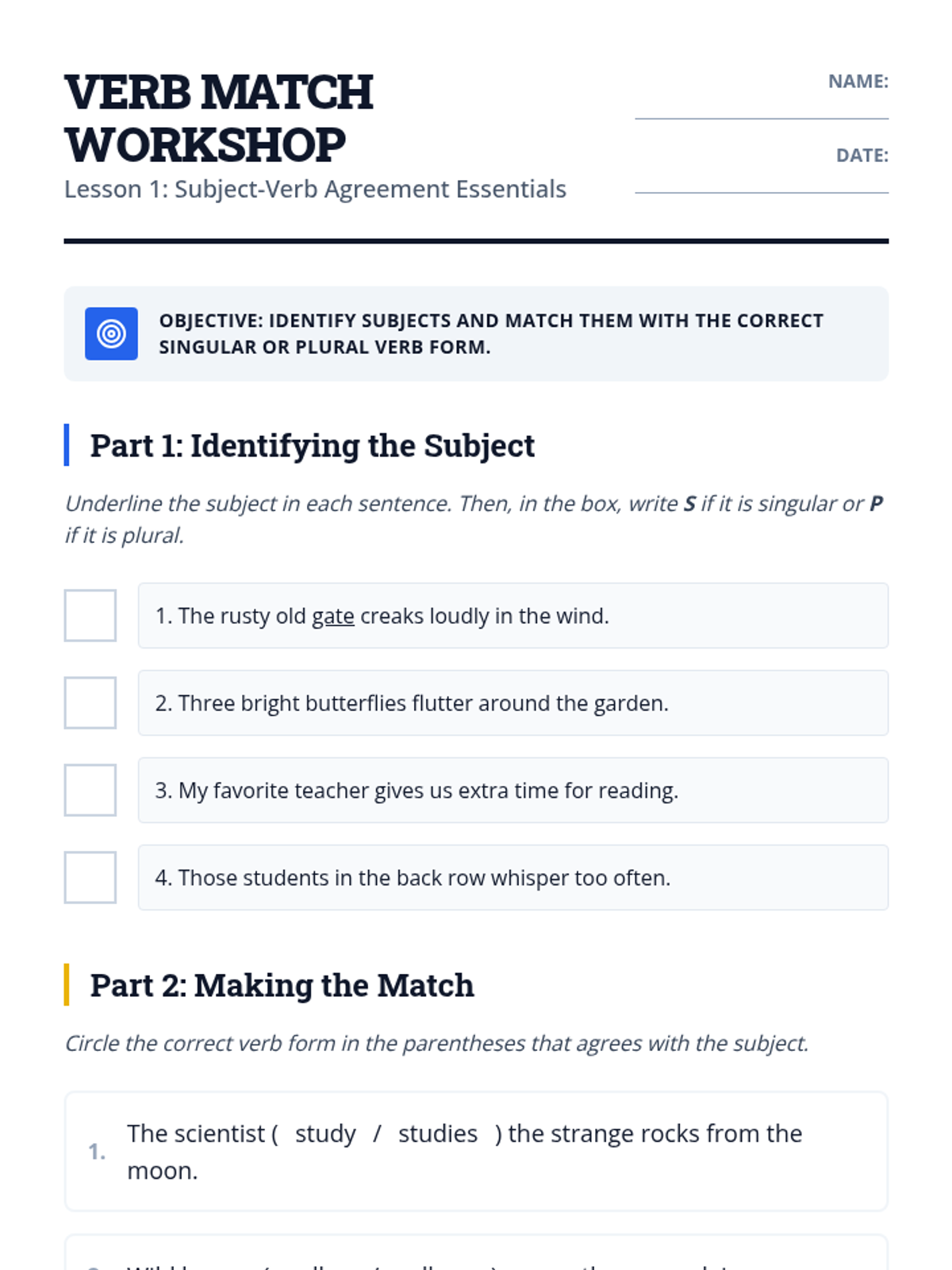
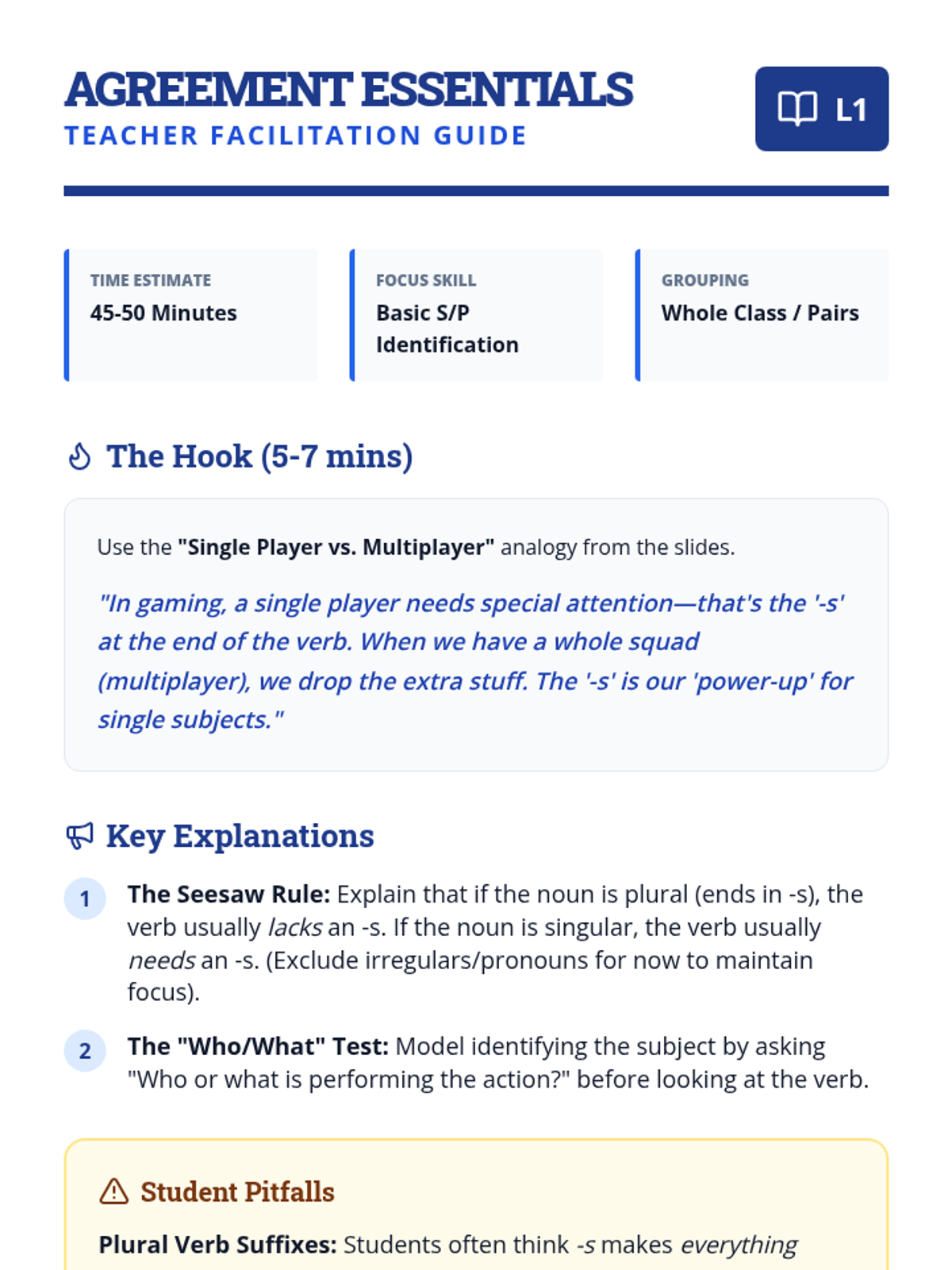
This workshop-style sequence transforms 6th-grade students into 'Grammar Mechanics' as they master subject-verb agreement in complex scenarios. Students progress from basic number matching to handling compound subjects, intervening phrases, and tricky indefinite pronouns, culminating in a comprehensive text-repair challenge.
A middle school grammar sequence where students act as professional editors at a publishing house to master pronoun consistency. They explore shifts in person, formal vs. informal registers, and the evolution of the singular 'they' through simulations and project-based learning.
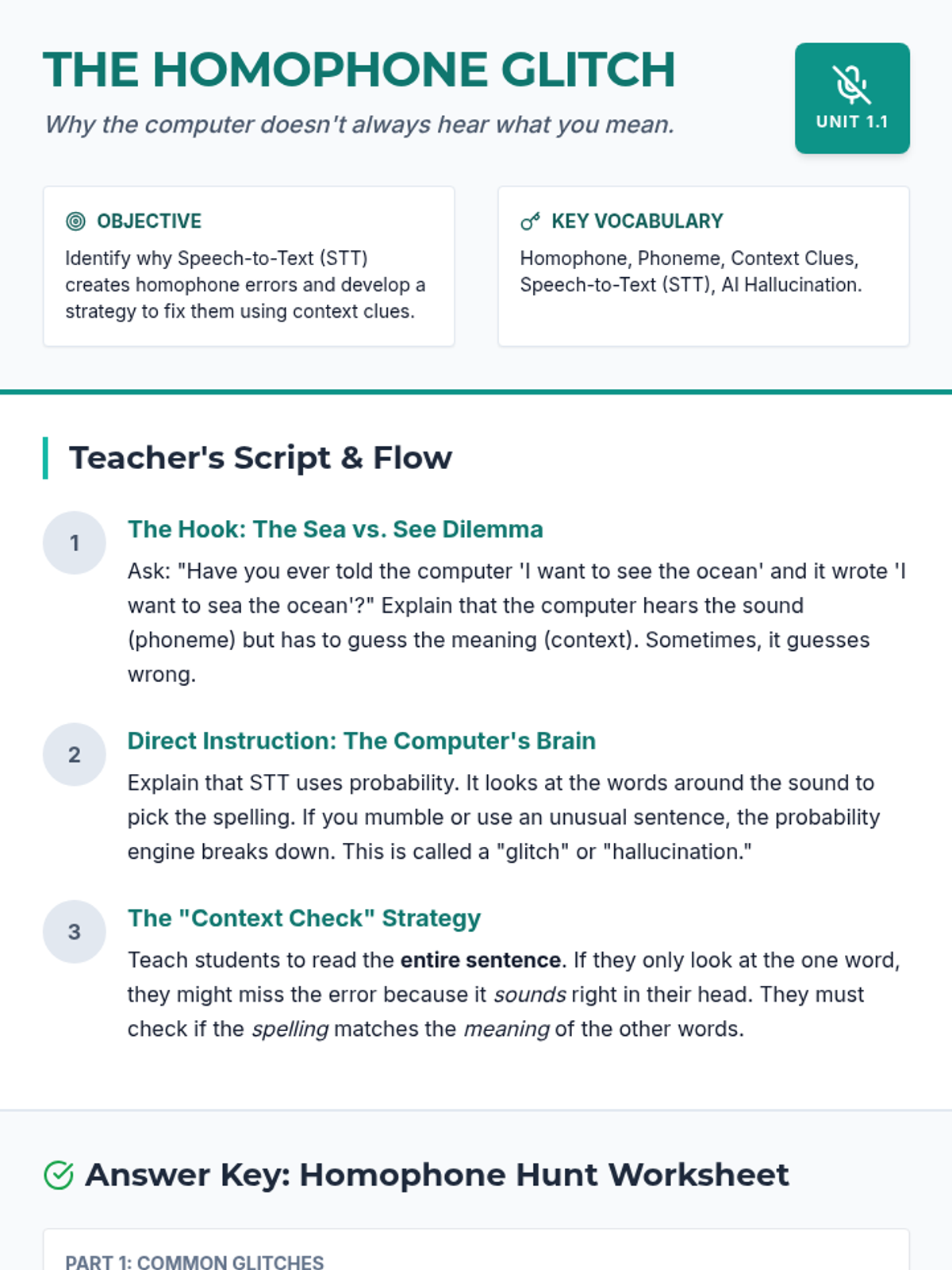
A sequence focused on the critical revision workflow for students using speech-to-text technology. Students learn to identify and fix common errors like homophone confusion, run-on sentences, and informal tone to turn raw dictation into polished academic writing.
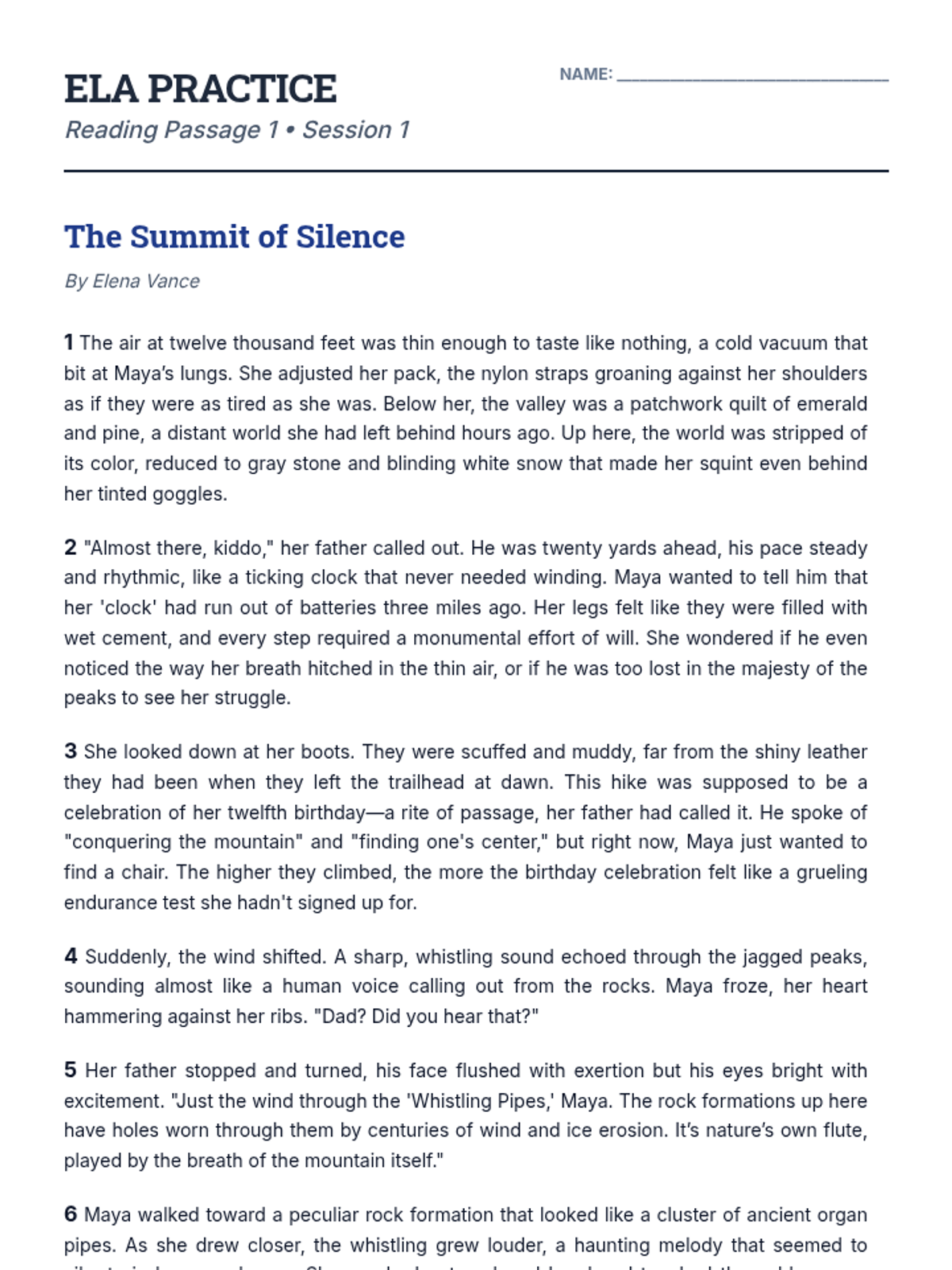
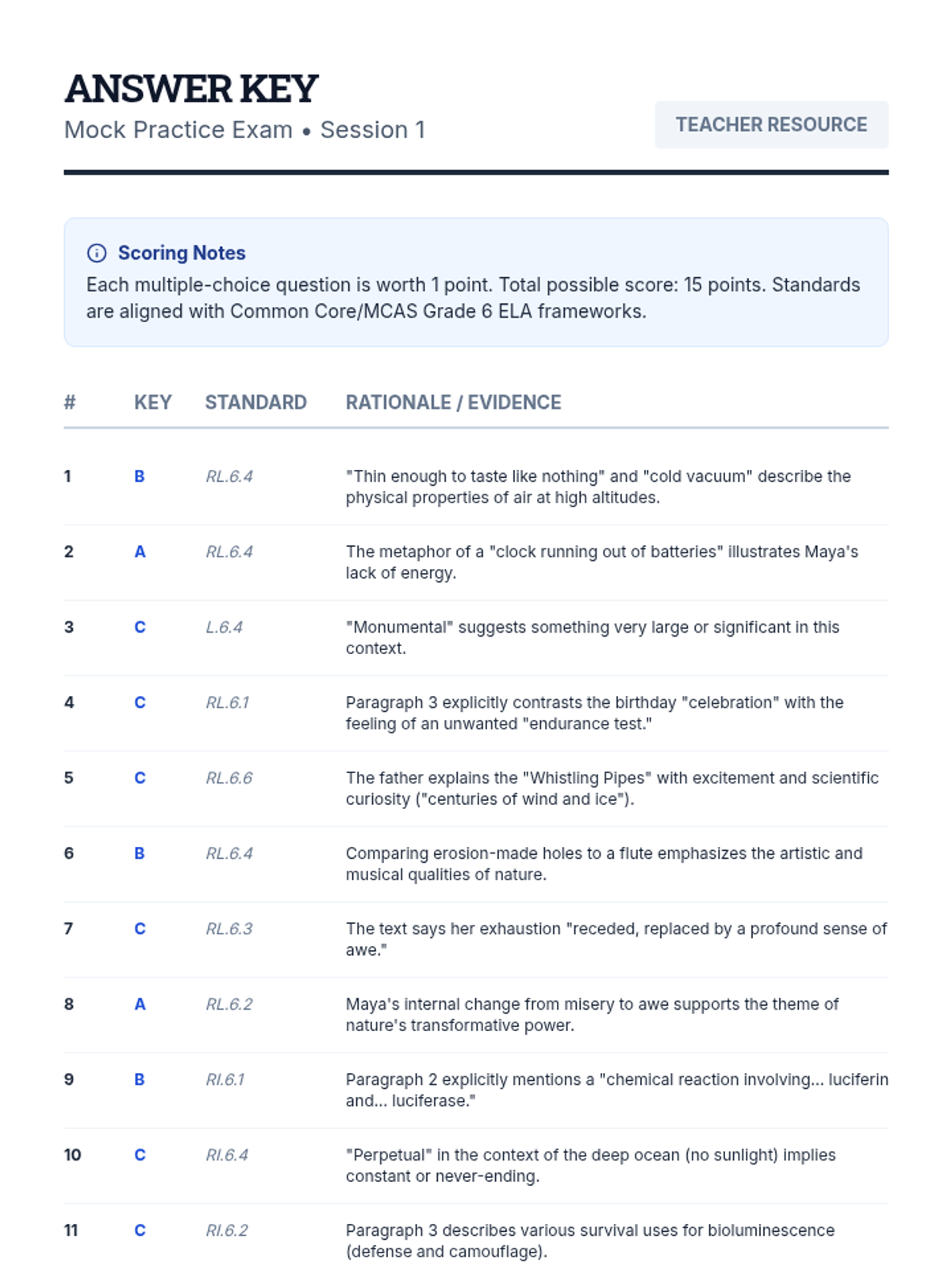
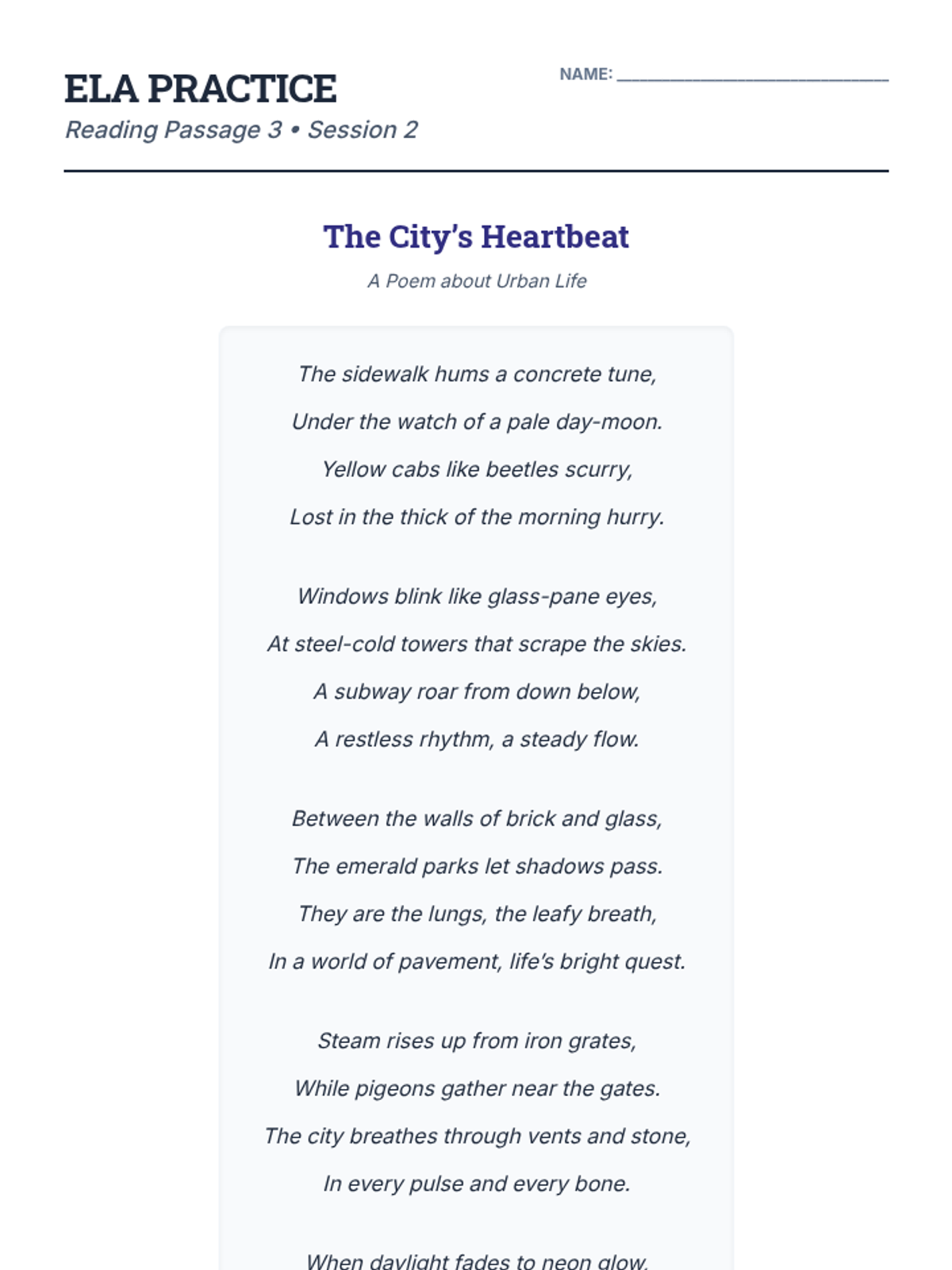
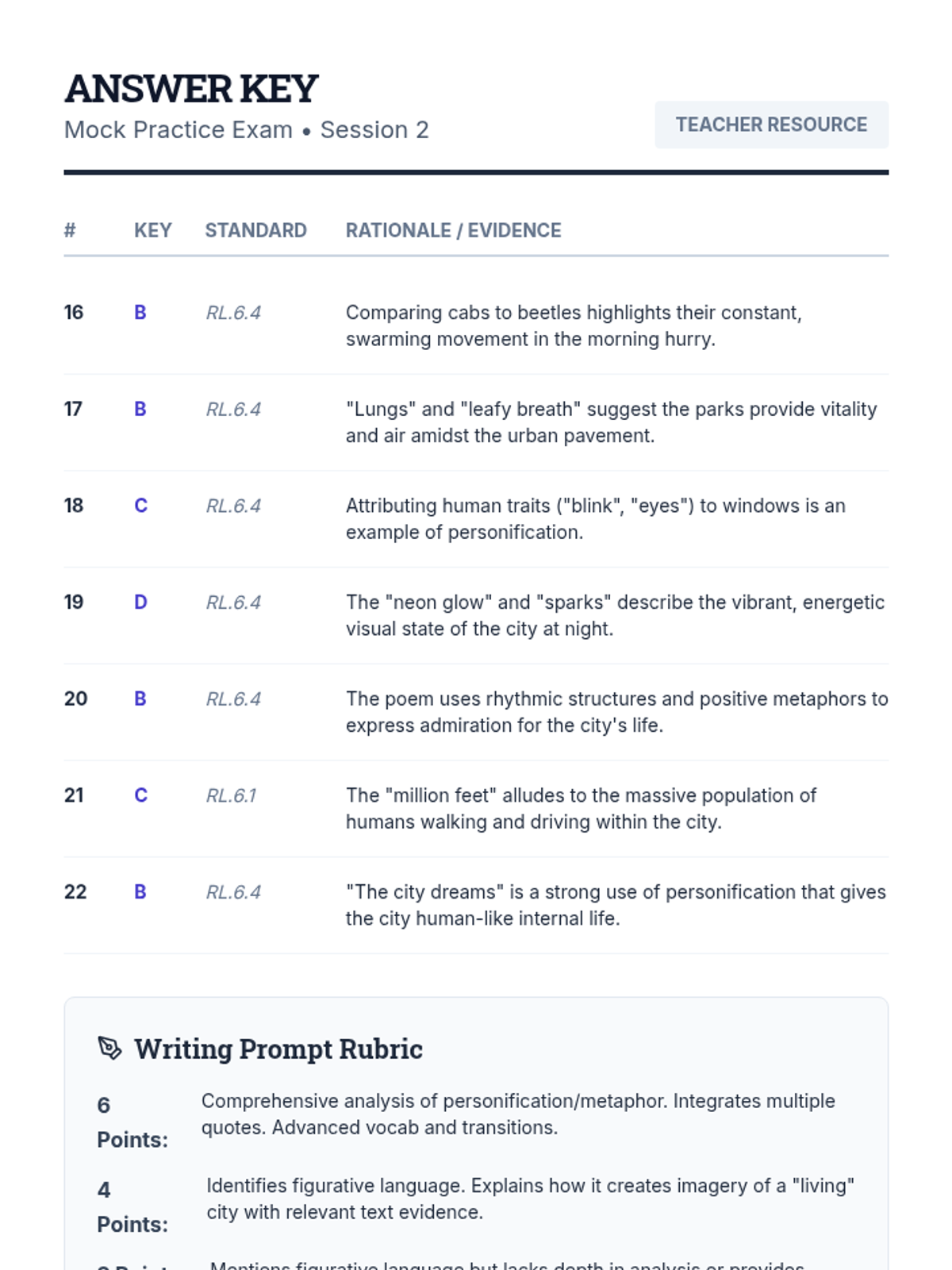
A comprehensive Grade 6 ELA MCAS preparation sequence designed to build stamina and familiarity with standardized testing formats through high-quality passages and standards-aligned questions.
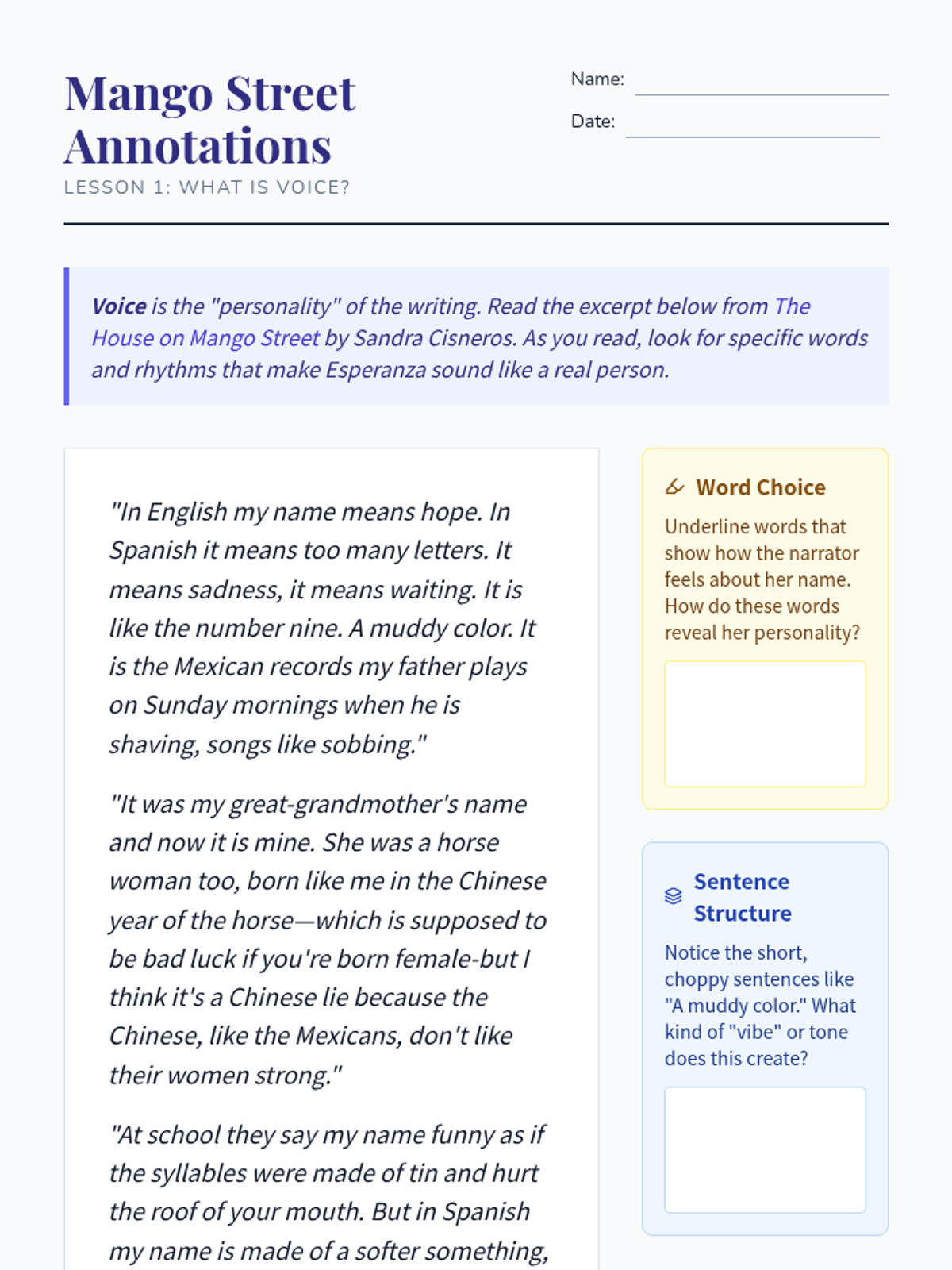
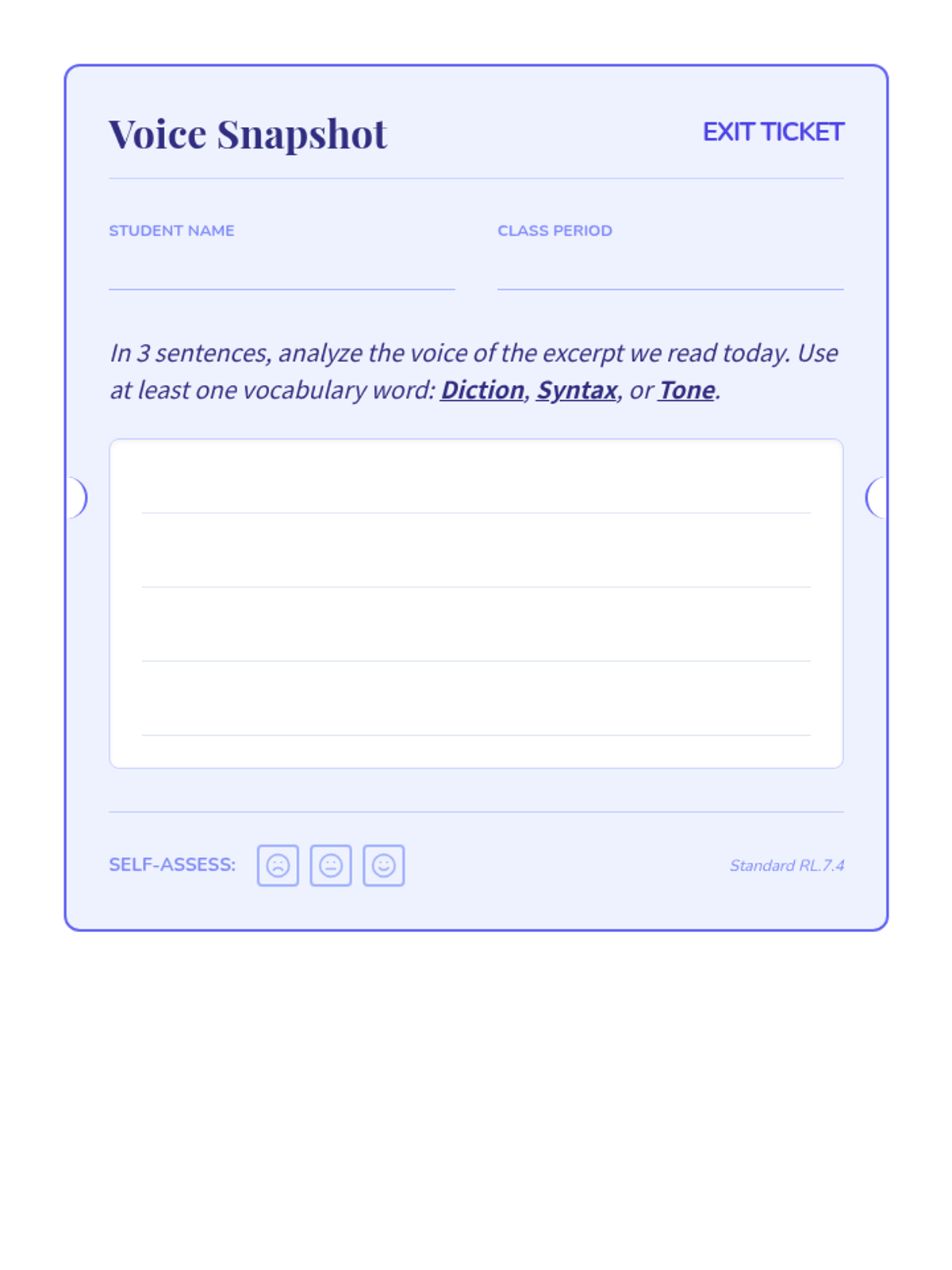
A three-lesson unit for grades 6-8 exploring authorial voice, identity, and perspective through contemporary literature and paired informational texts. Students analyze excerpts from diverse authors like Sandra Cisneros and Jason Reynolds to understand how language shapes narrative personality.
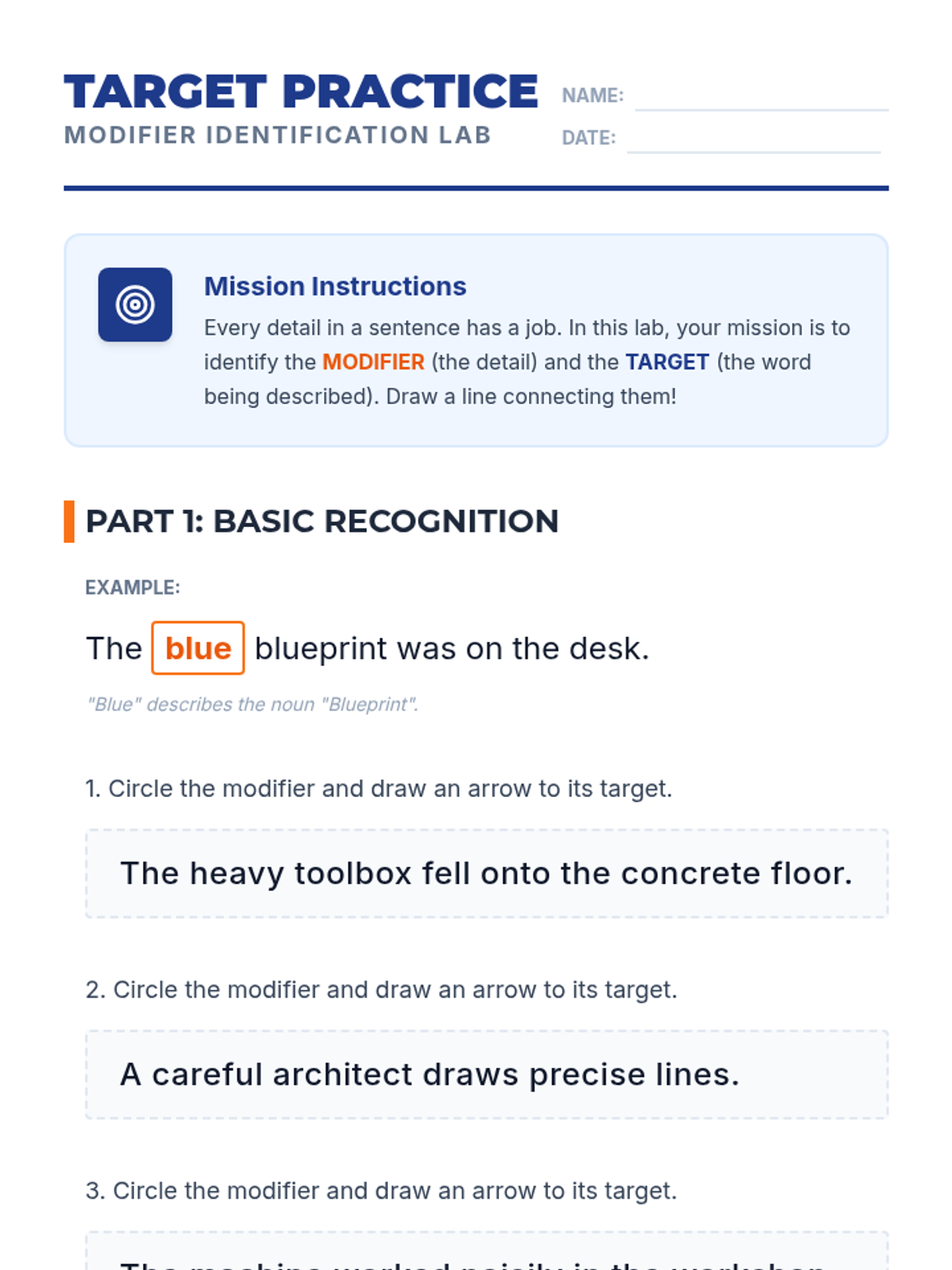
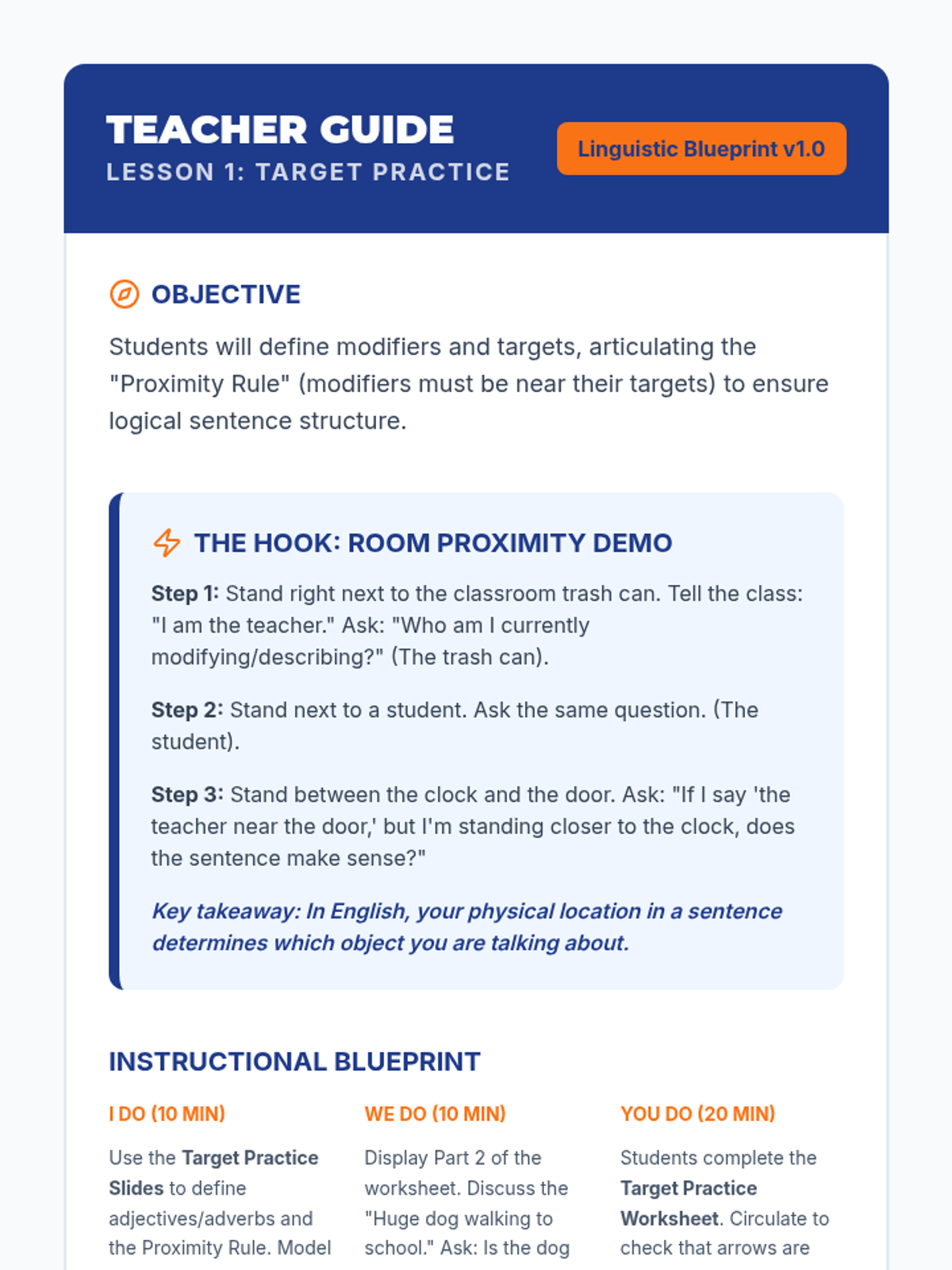
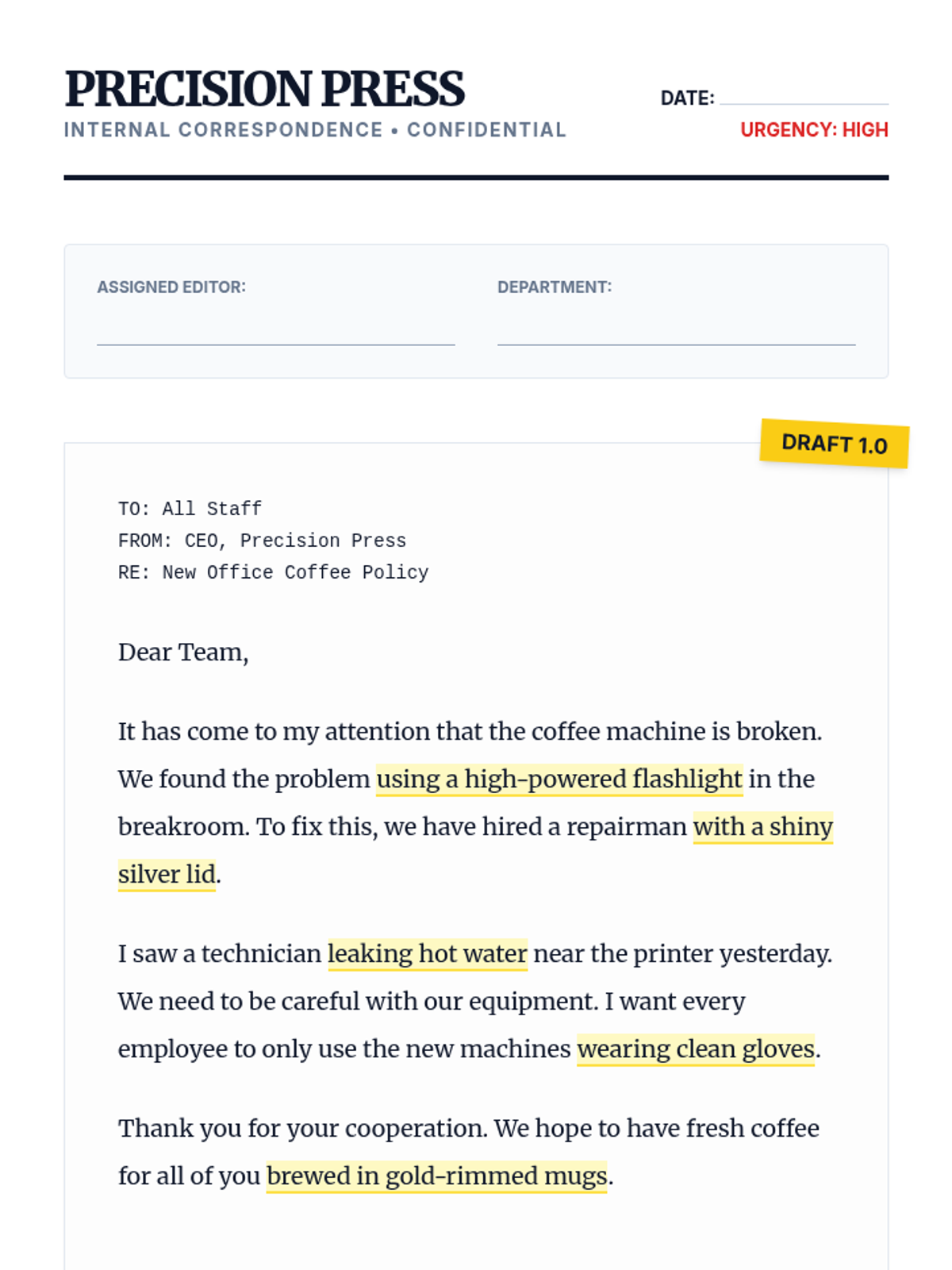
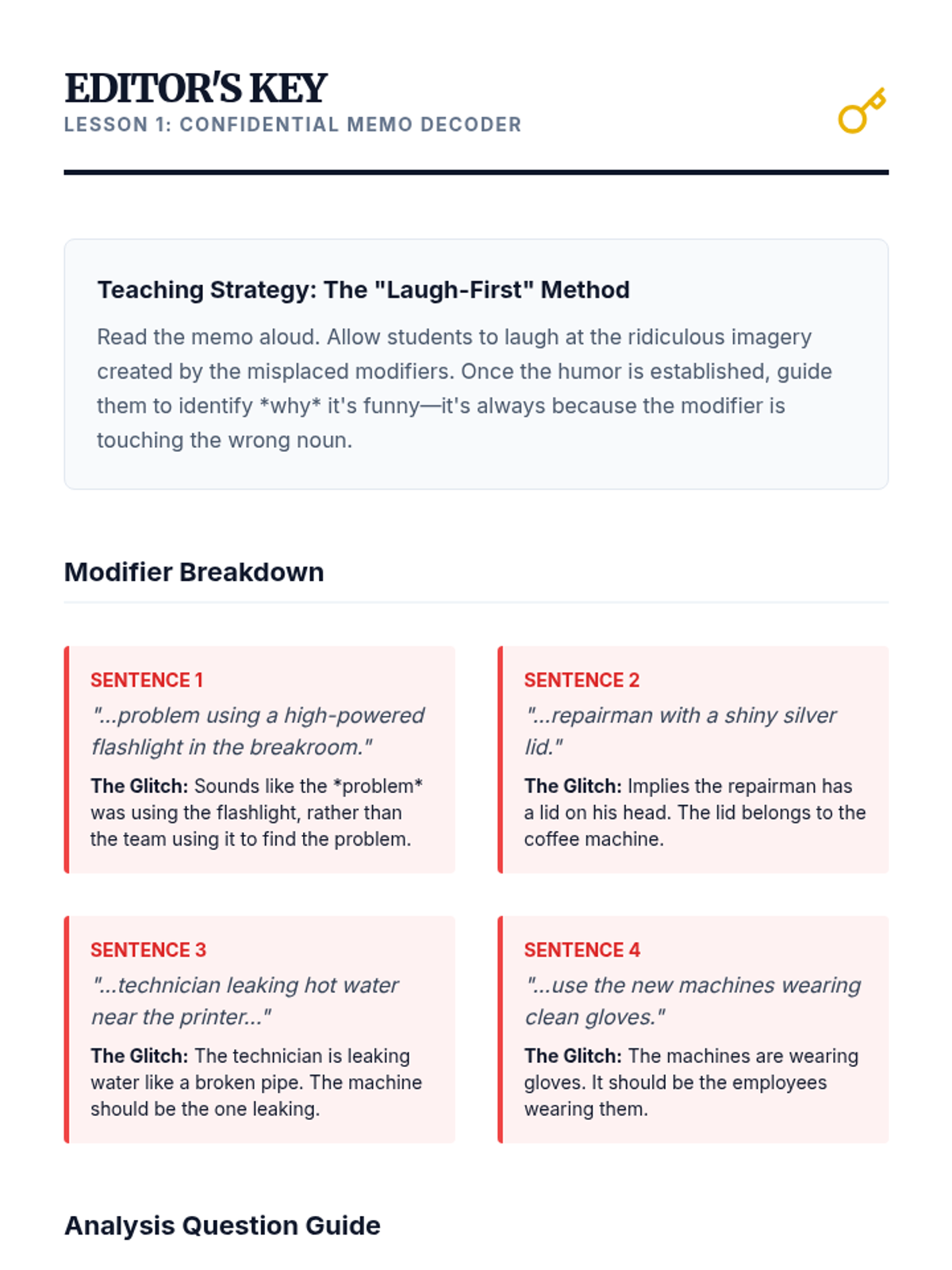
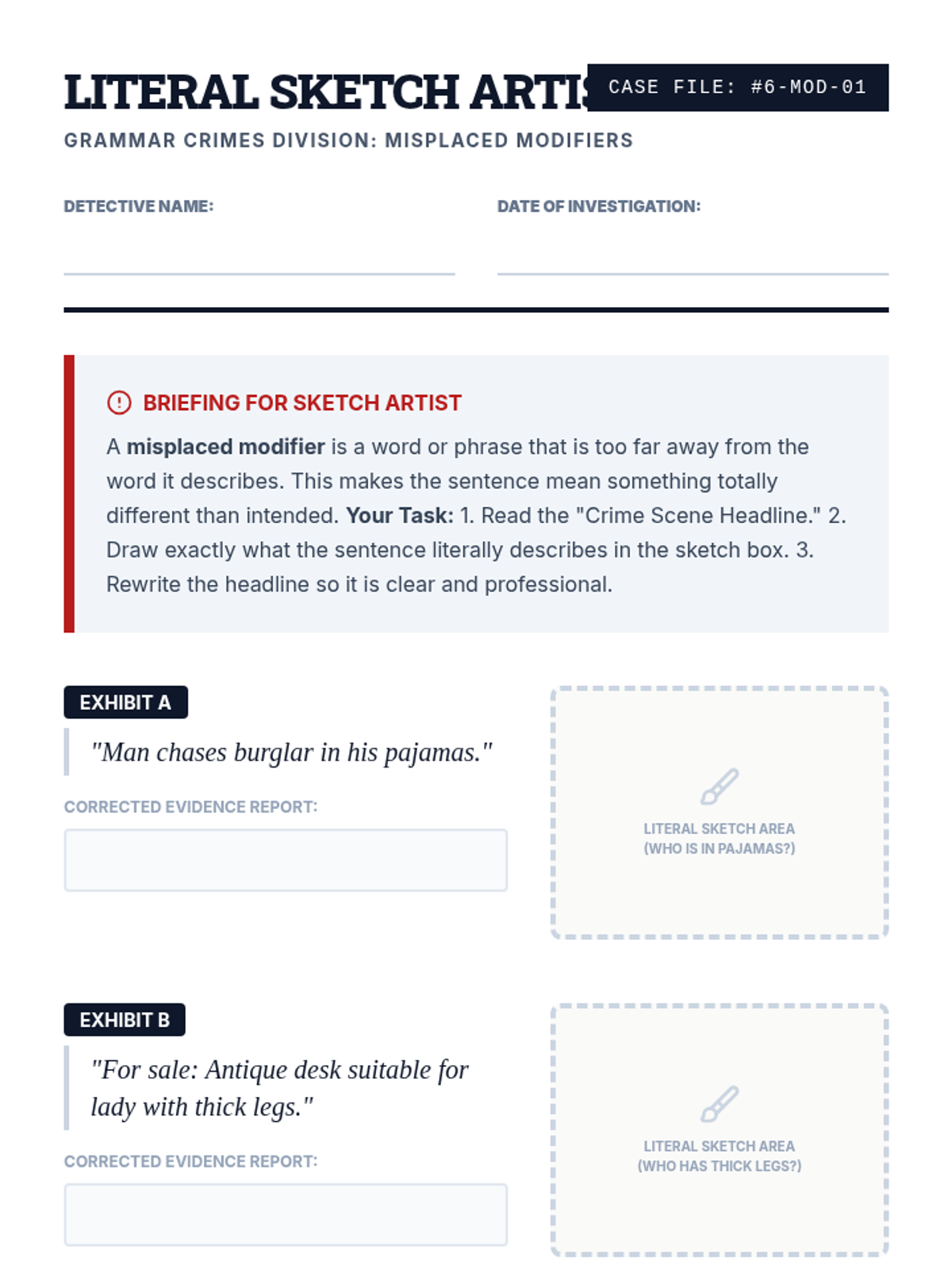
This sequence introduces the fundamental relationship between modifiers and the words they describe. Students begin by identifying basic adjectives and adverbs, then progress to prepositional phrases, learning that proximity determines meaning in English syntax. Through a workshop model, students practice moving modifiers within sentences to observe how meaning shifts based on placement. By the end of the sequence, students will be able to identify misplaced modifiers in simple sentences and rewrite them for logical clarity.
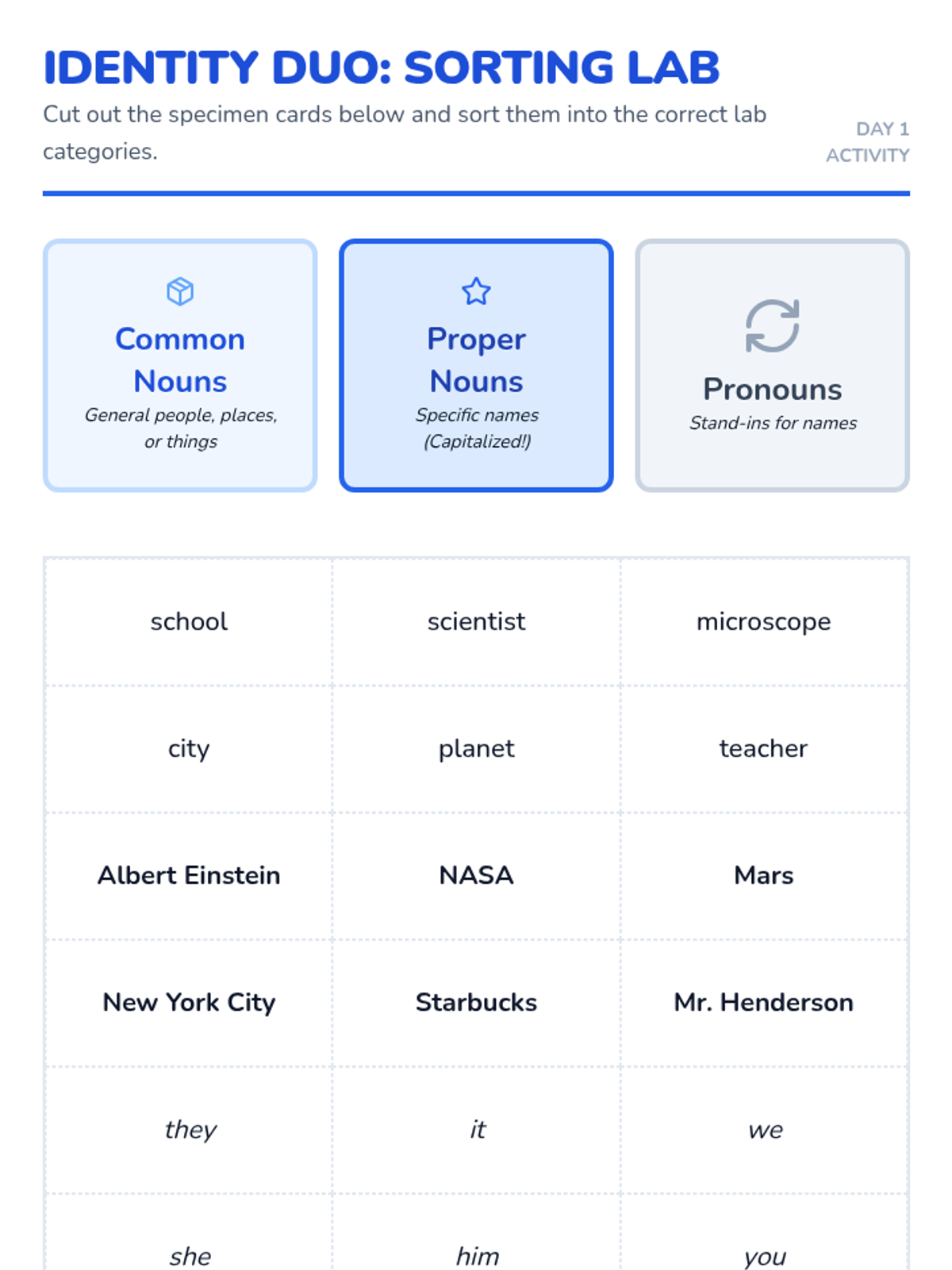
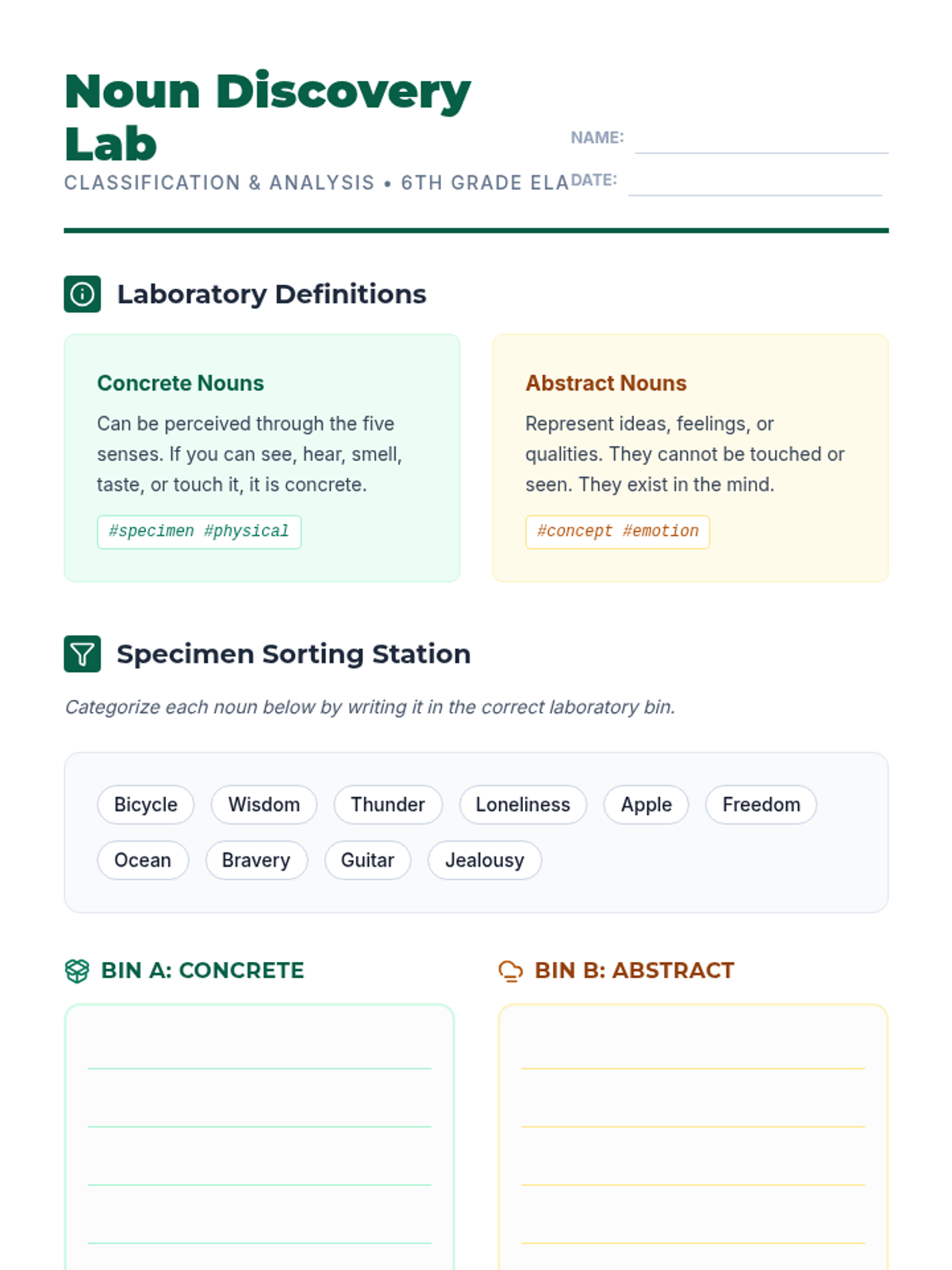
A comprehensive 6th-grade ELA unit focused on the precise use of nouns and adjectives to enhance descriptive writing. Students progress from basic classification to nuanced vocabulary selection and sensory integration.
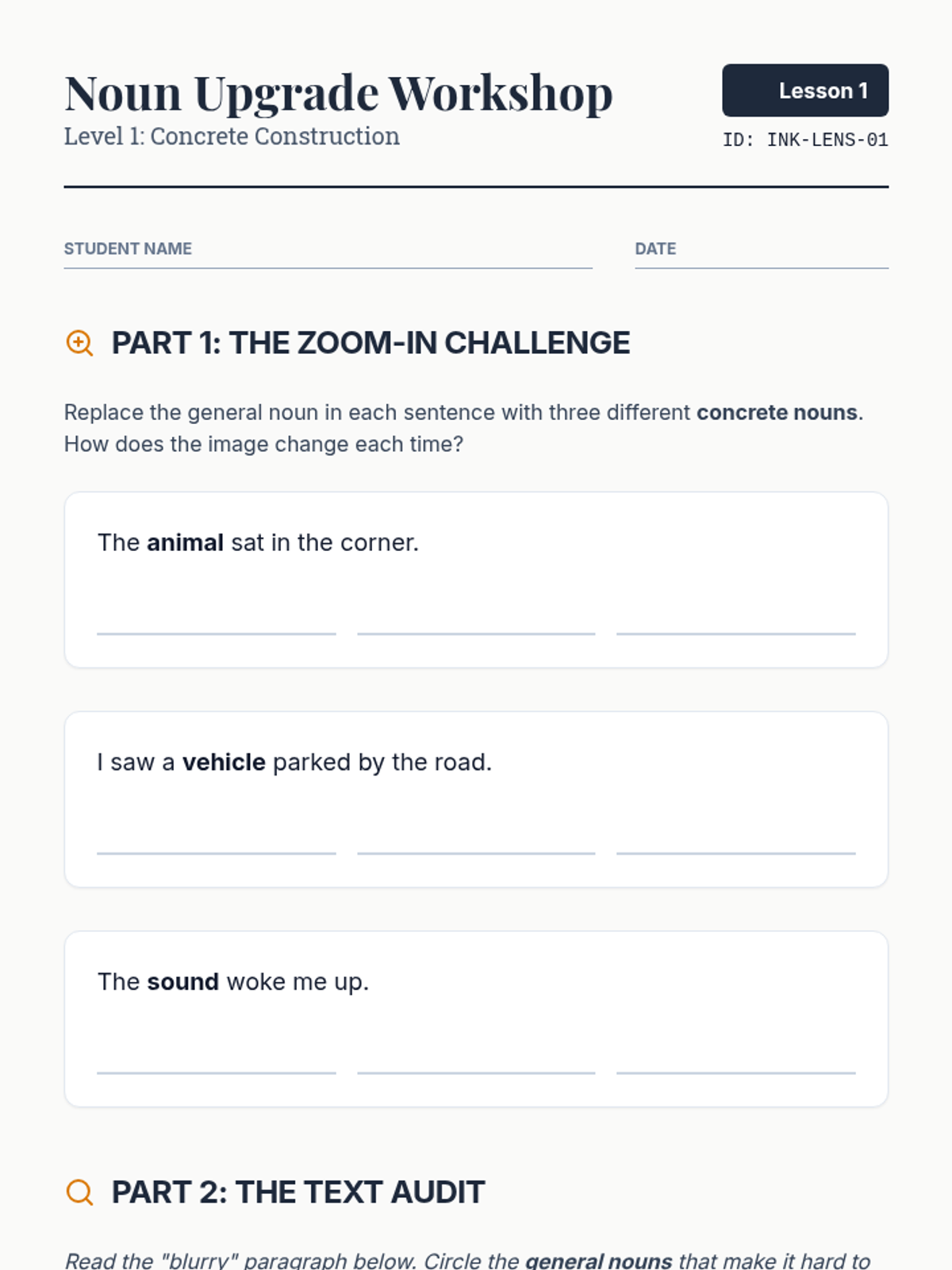
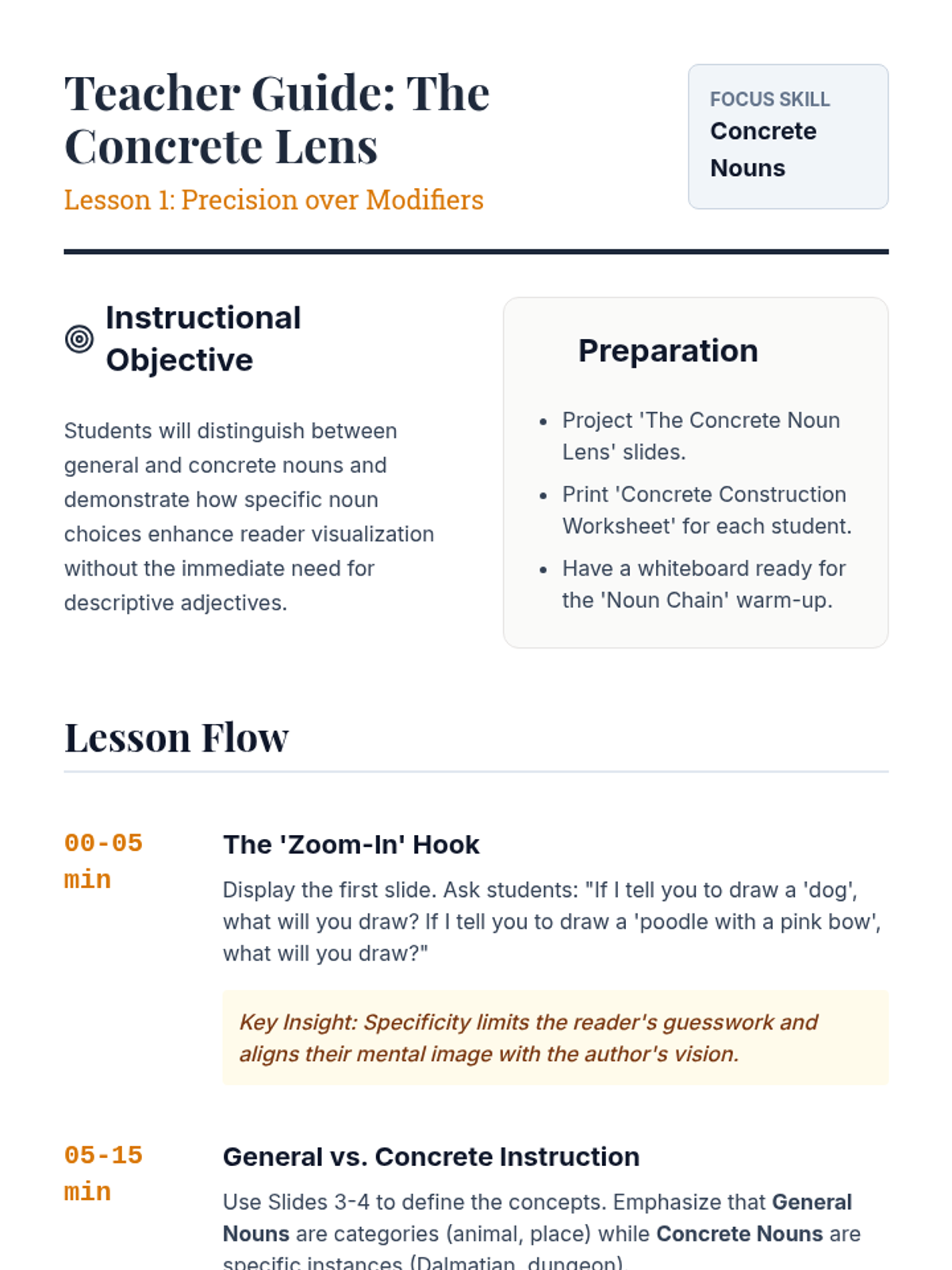
This writing workshop sequence moves students beyond basic identification of nouns and adjectives toward strategic application in narrative writing. Students practice replacing general nouns with concrete alternatives and weak adjectives with vivid modifiers to enhance reader visualization.
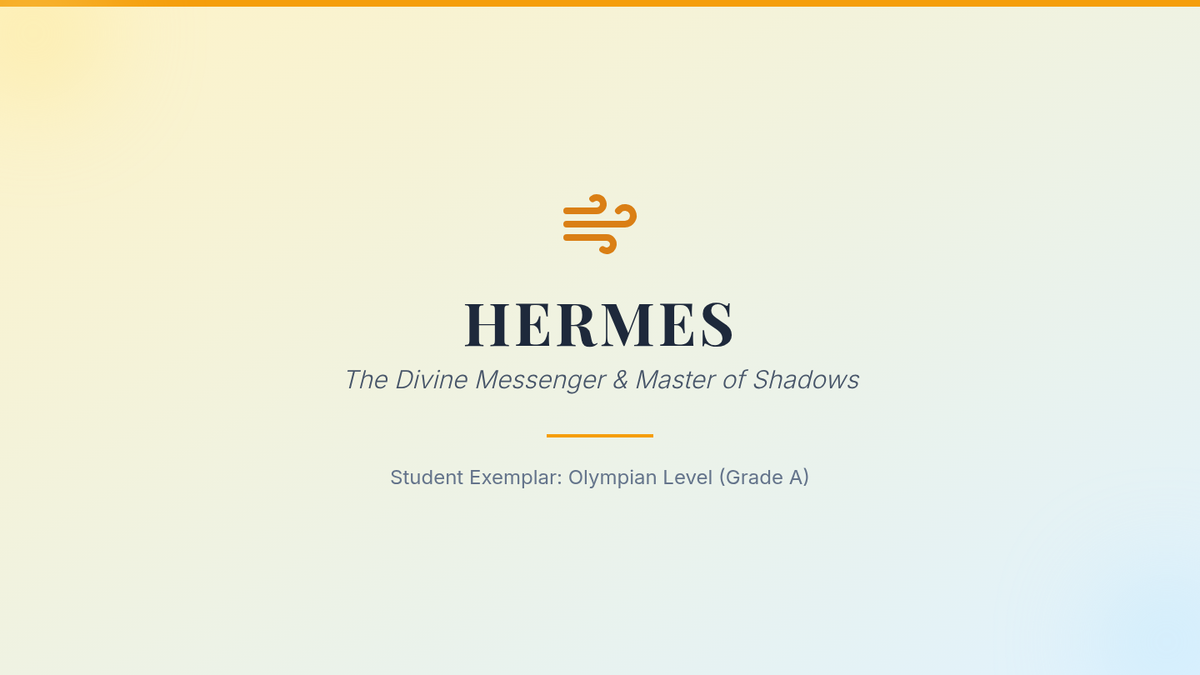
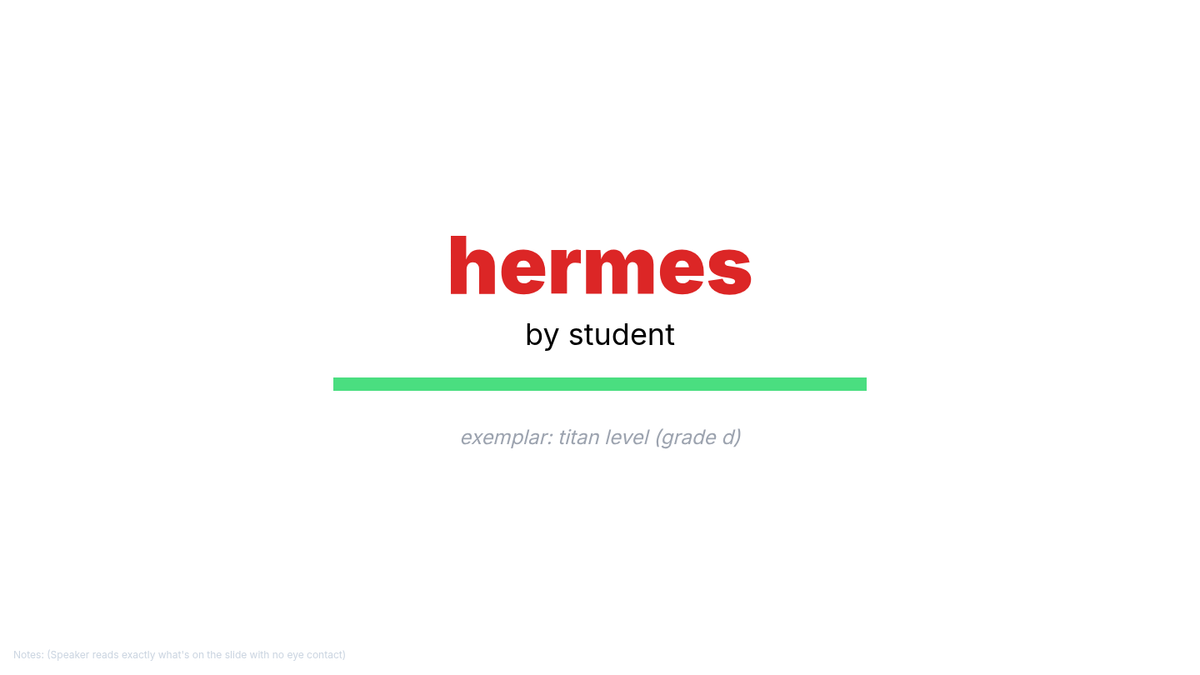
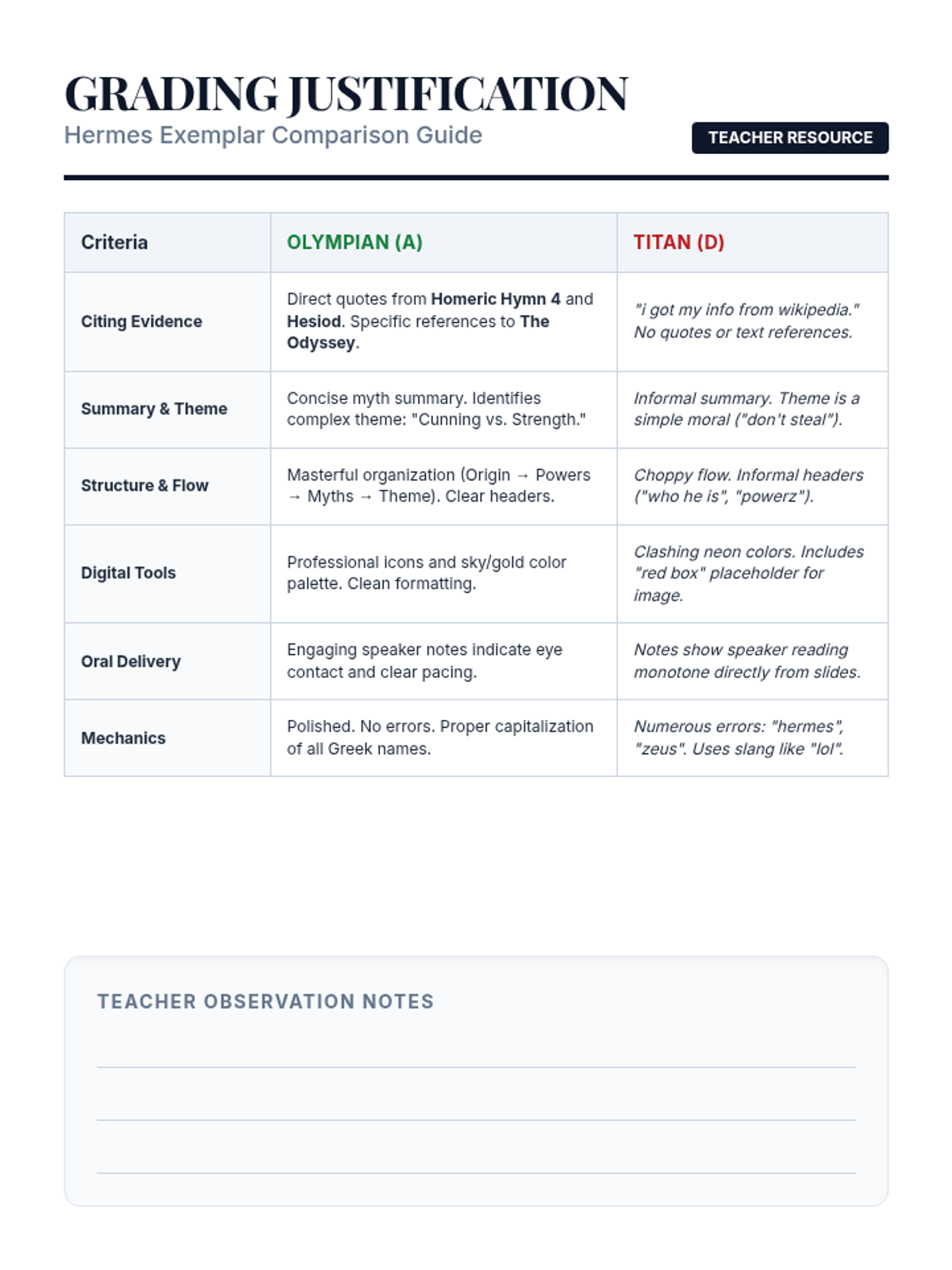
A sequence of exemplar presentations on Hermes designed to demonstrate high-achieving (A) and low-achieving (D) student work based on specific CCSS-aligned rubric criteria.
A series of thematic handwriting programs designed to improve fine motor skills and penmanship through daily practice sessions centered around fascinating educational topics like biology and history.
A collection of diverse educational resources across multiple grade levels and subjects, including social studies projects, science safety, early literacy, and writing assessment.
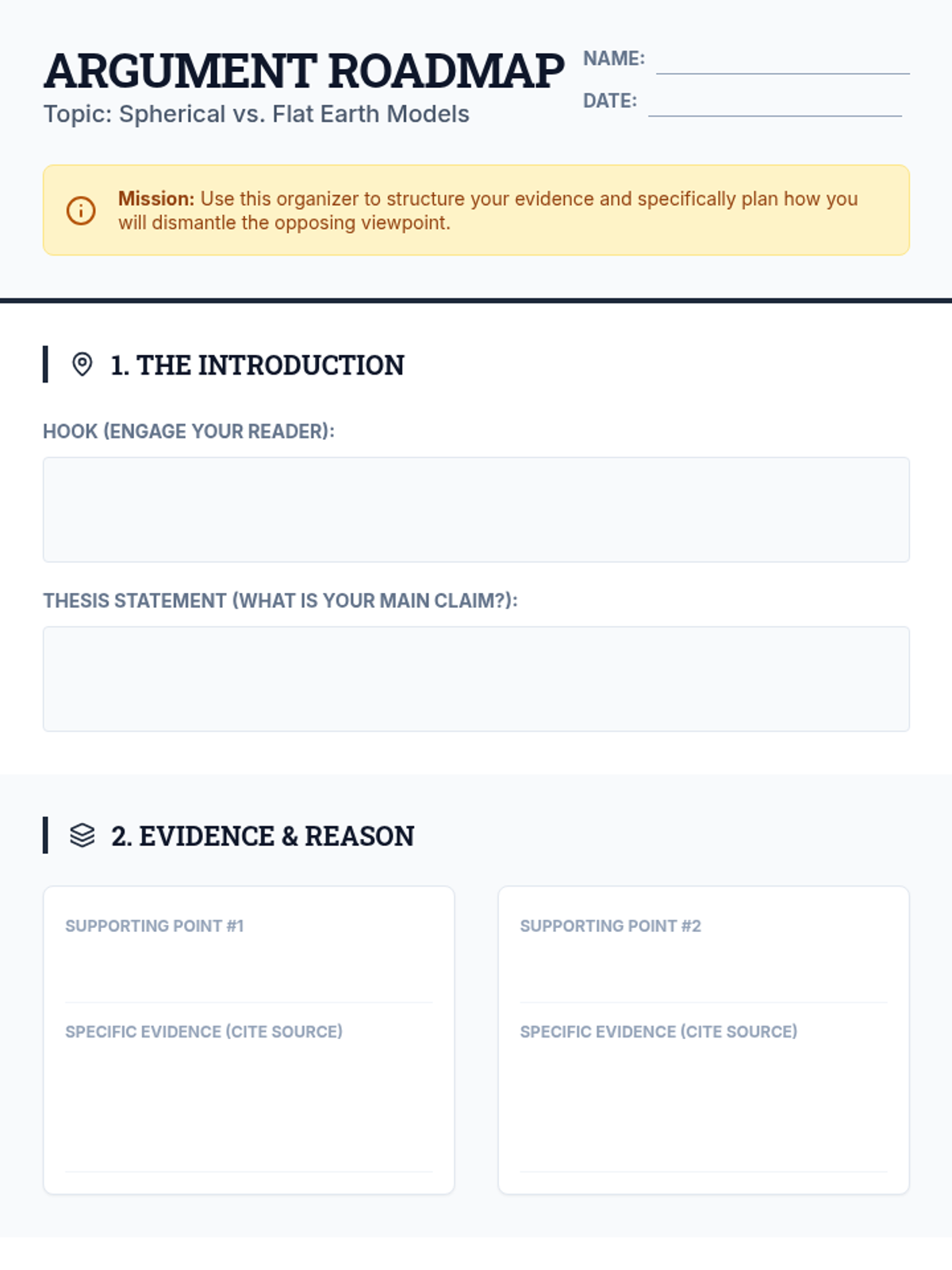
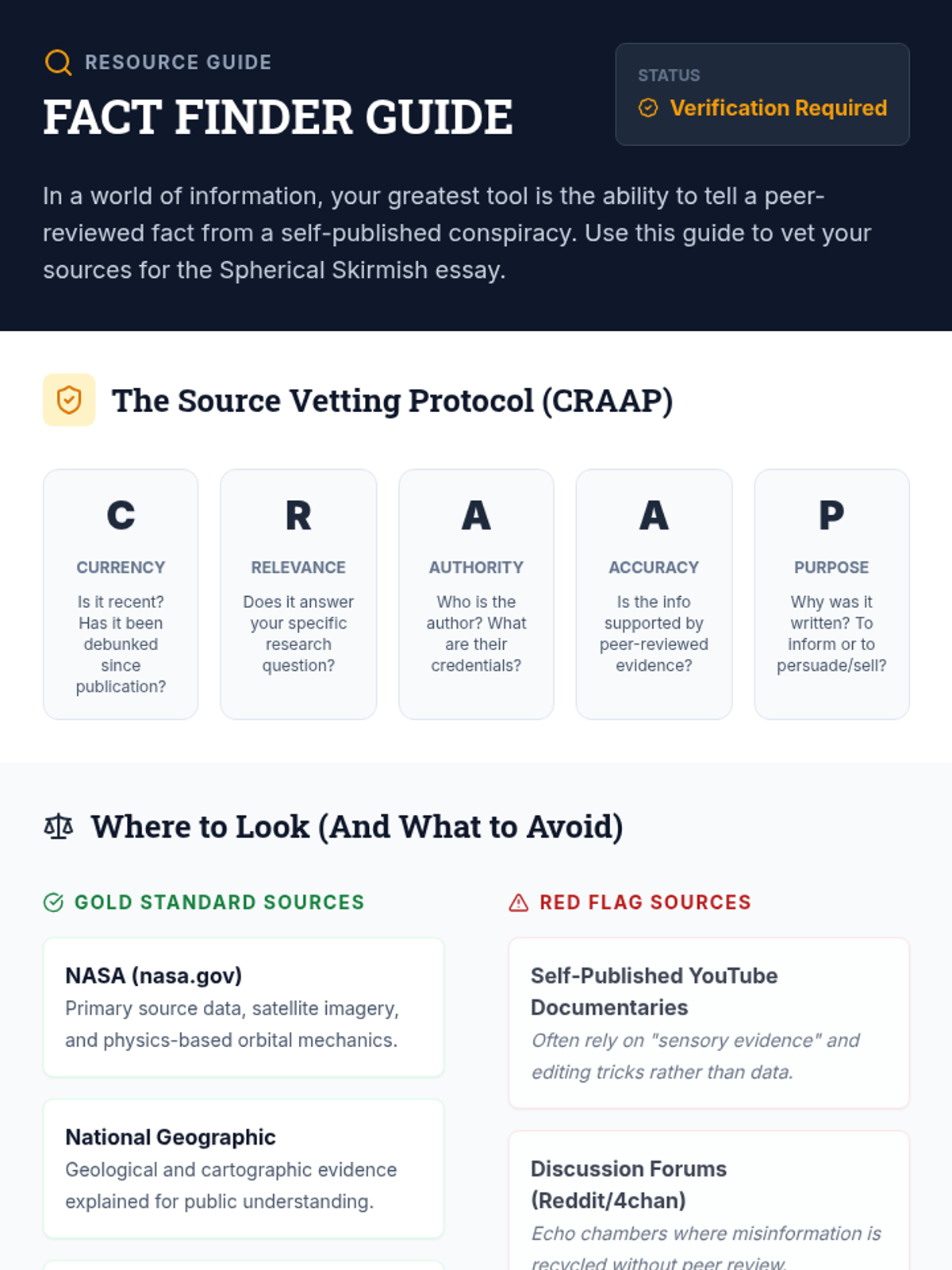
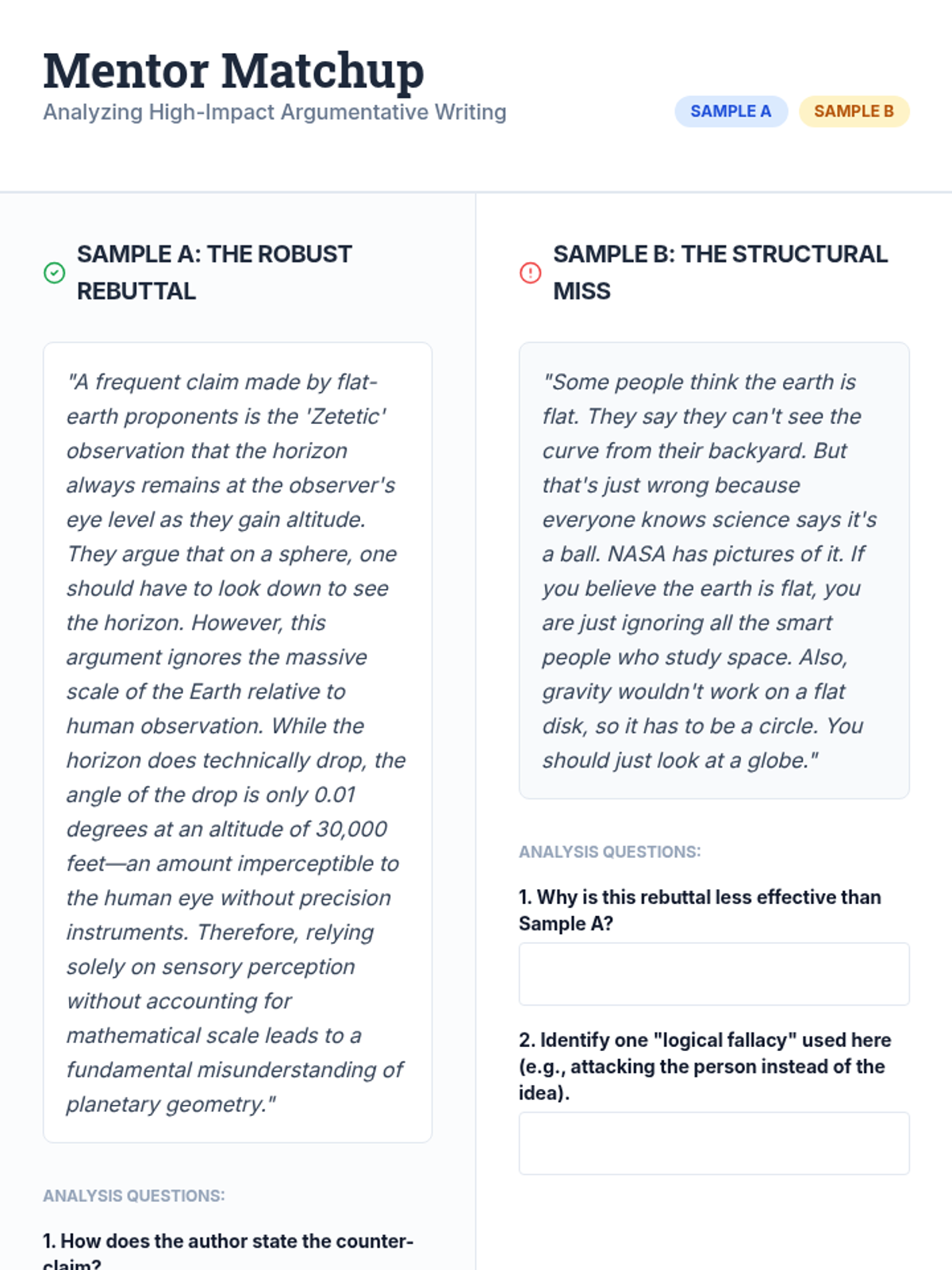
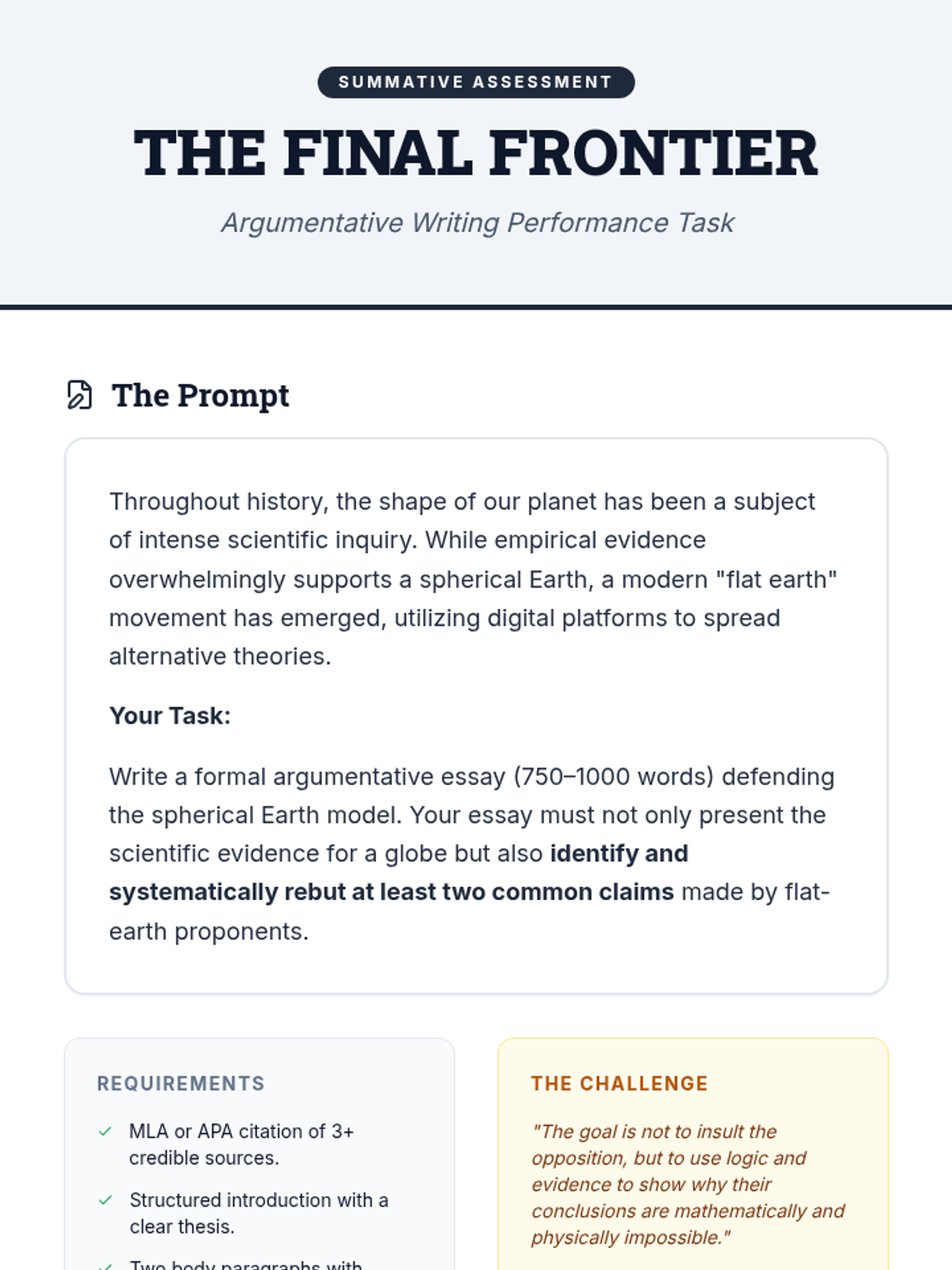
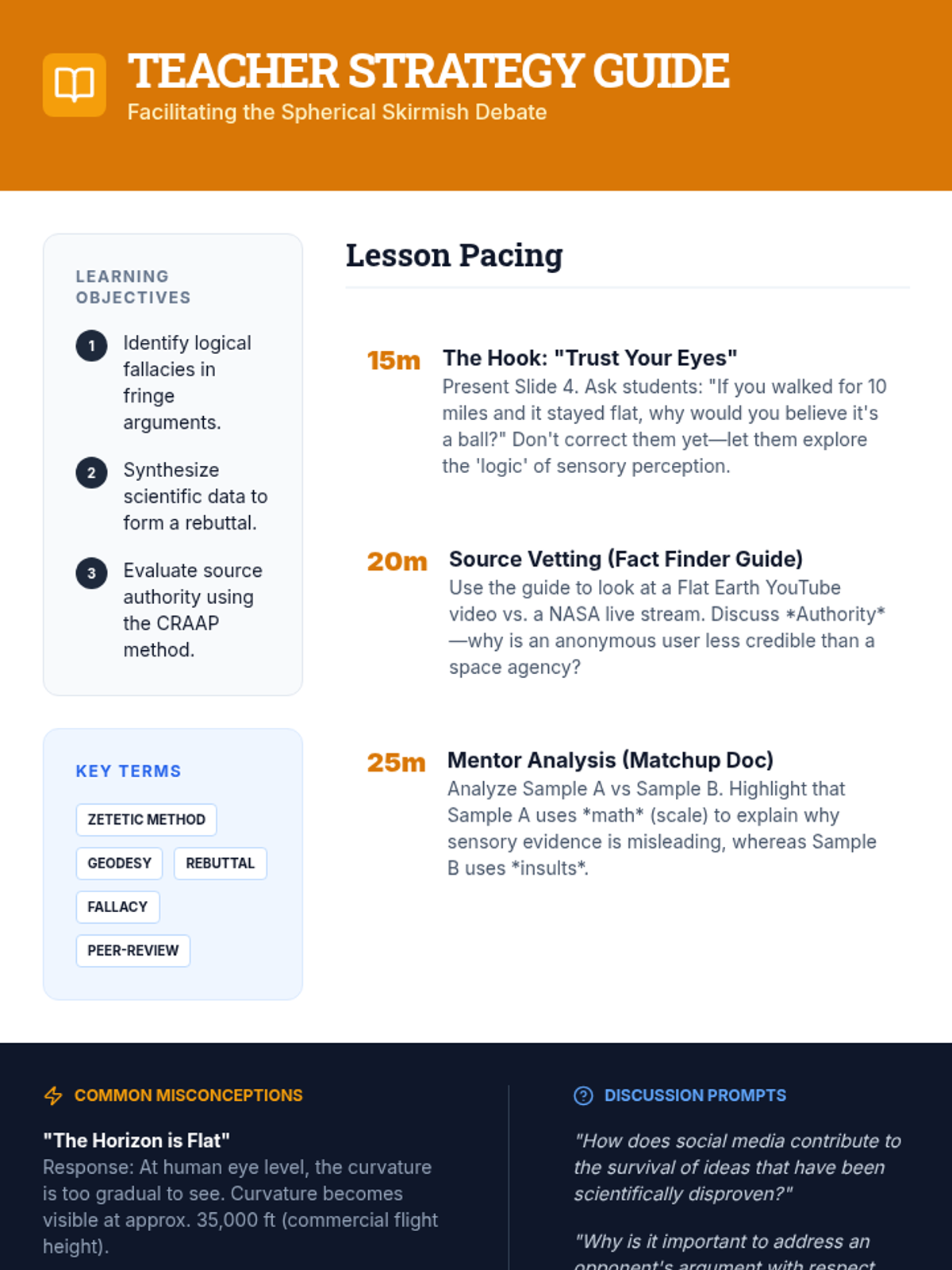
A comprehensive unit focused on mastering argumentative writing through the lens of the flat earth vs. round earth debate, emphasizing evidence-based reasoning and rebuttal techniques.
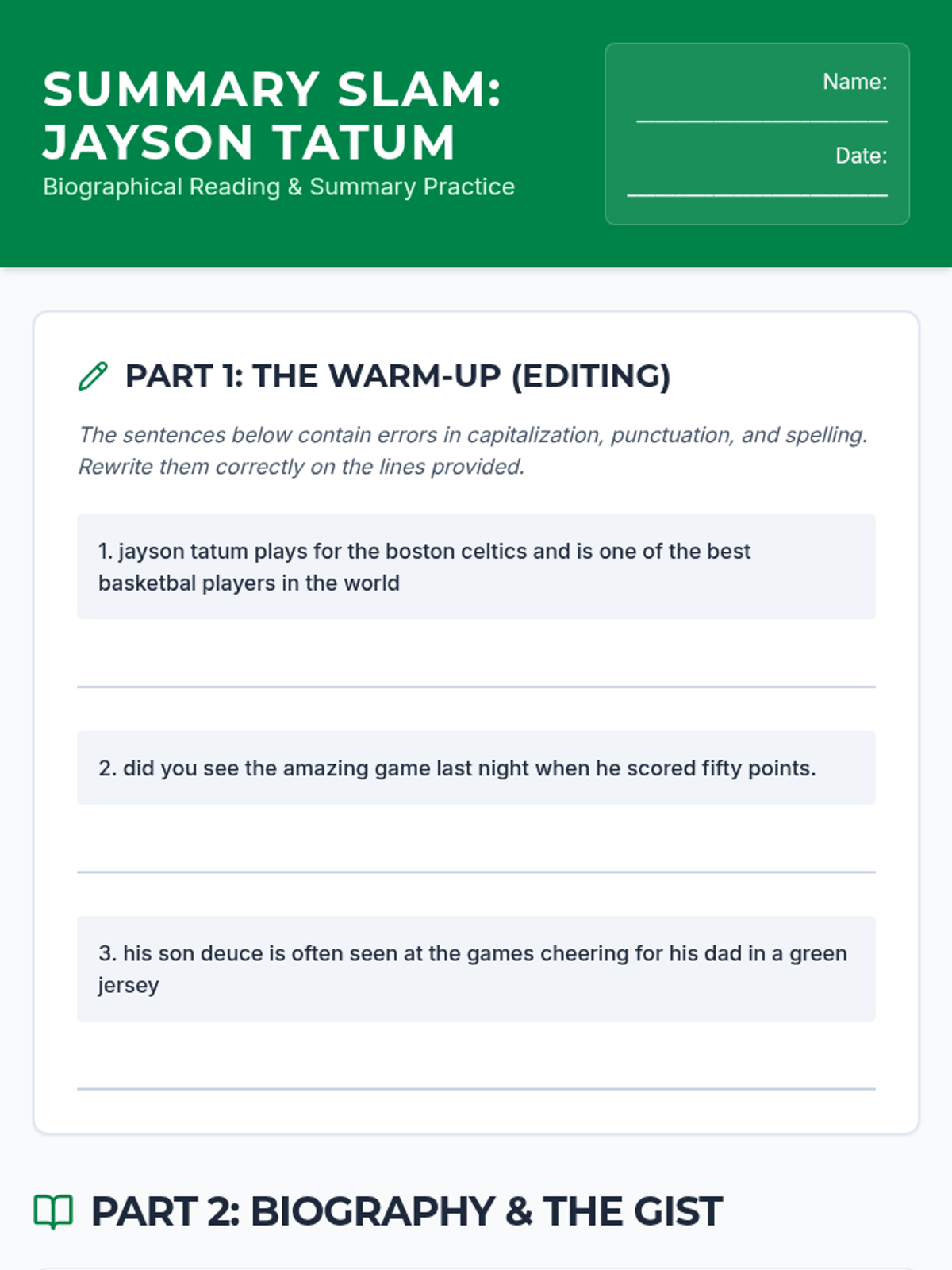
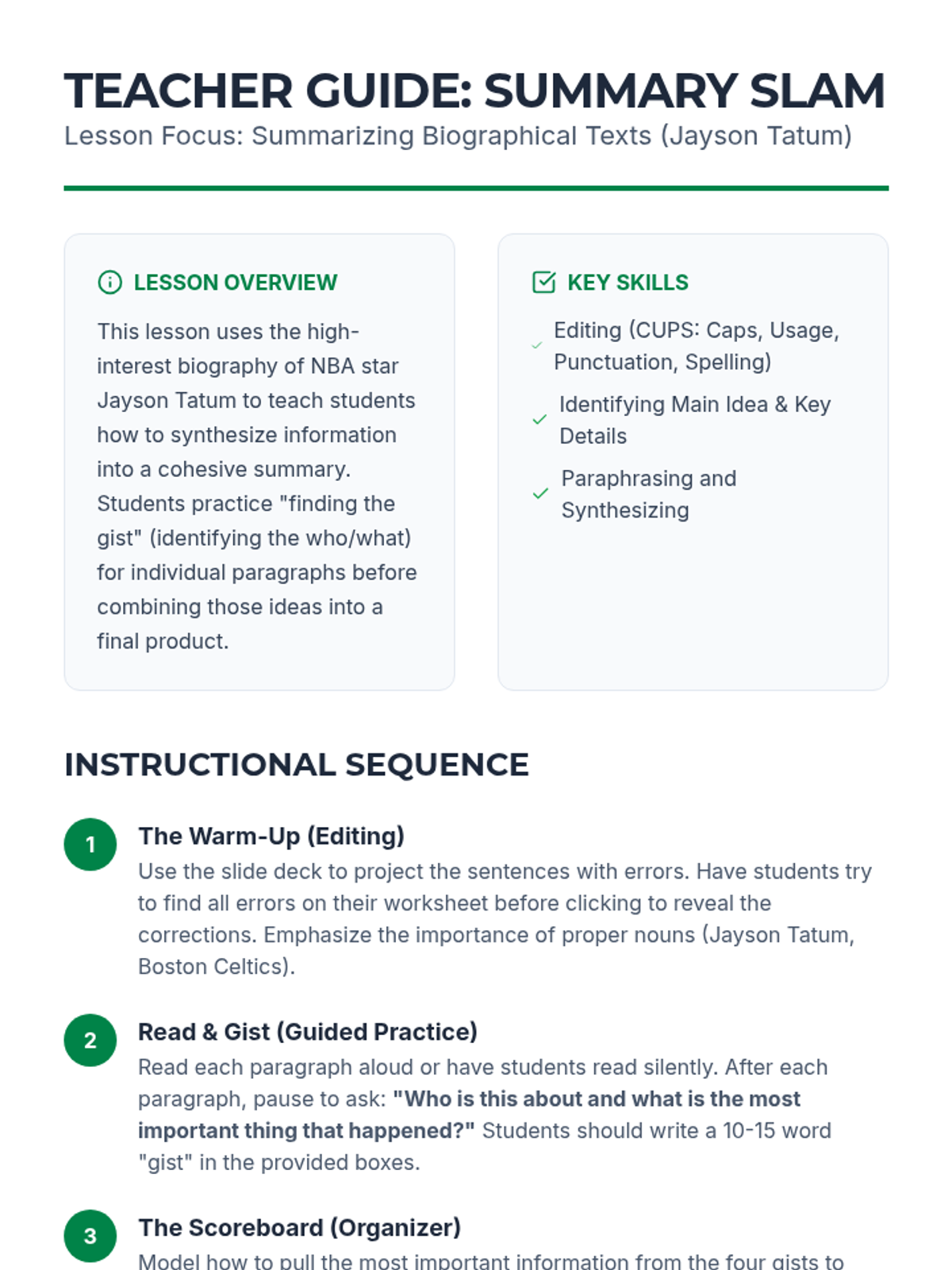
A series of high-energy ELA lessons focusing on reading comprehension, summarizing, and word study to boost literacy skills.
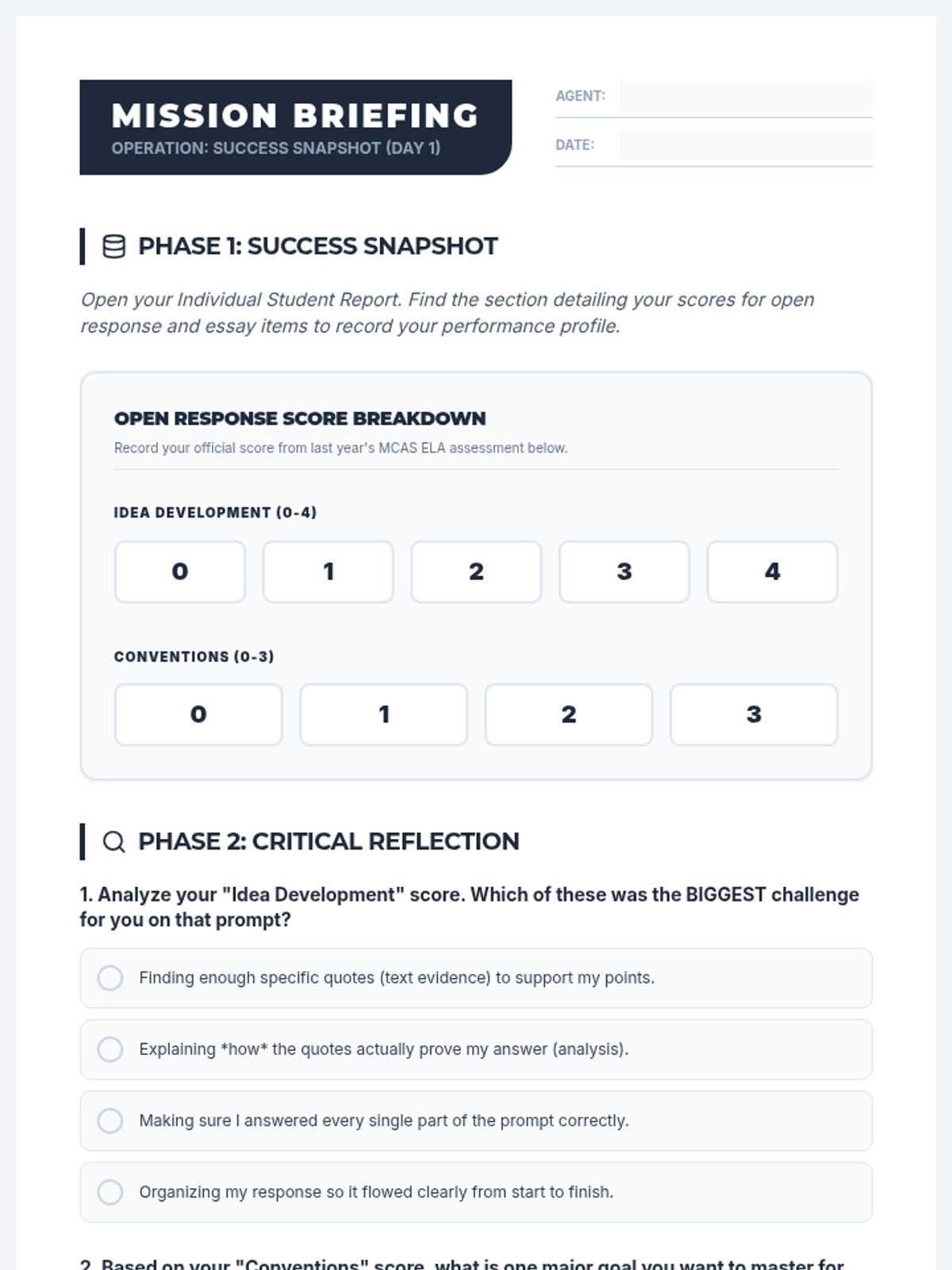
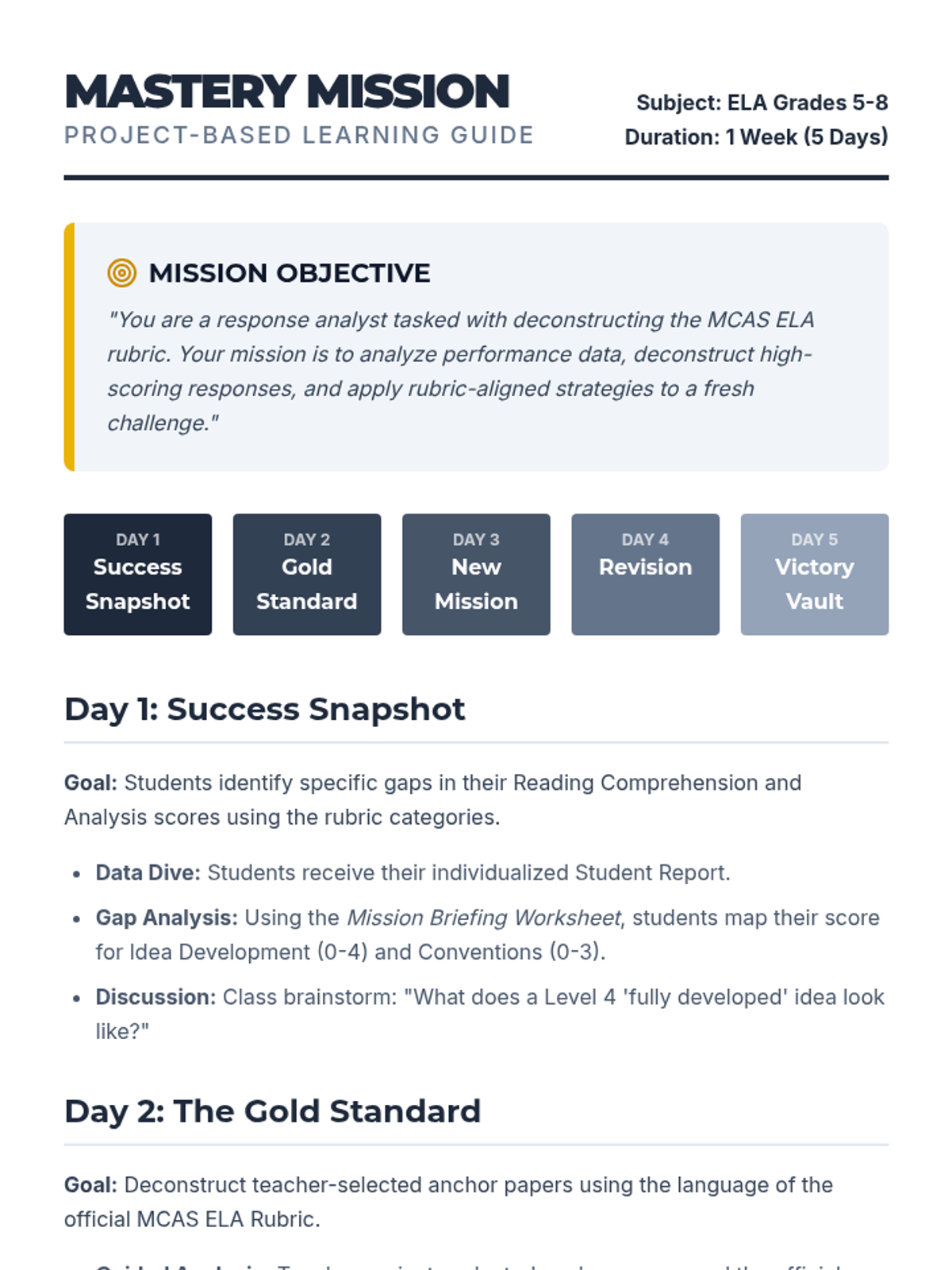
A project-based learning unit designed to help middle school students analyze their past MCAS ELA performance, deconstruct scoring rubrics, and create a personalized strategy playbook for upcoming assessments. Students move from 'investigating' their scores to 'rebooting' their responses and 'finalizing' their test-taking toolkit.
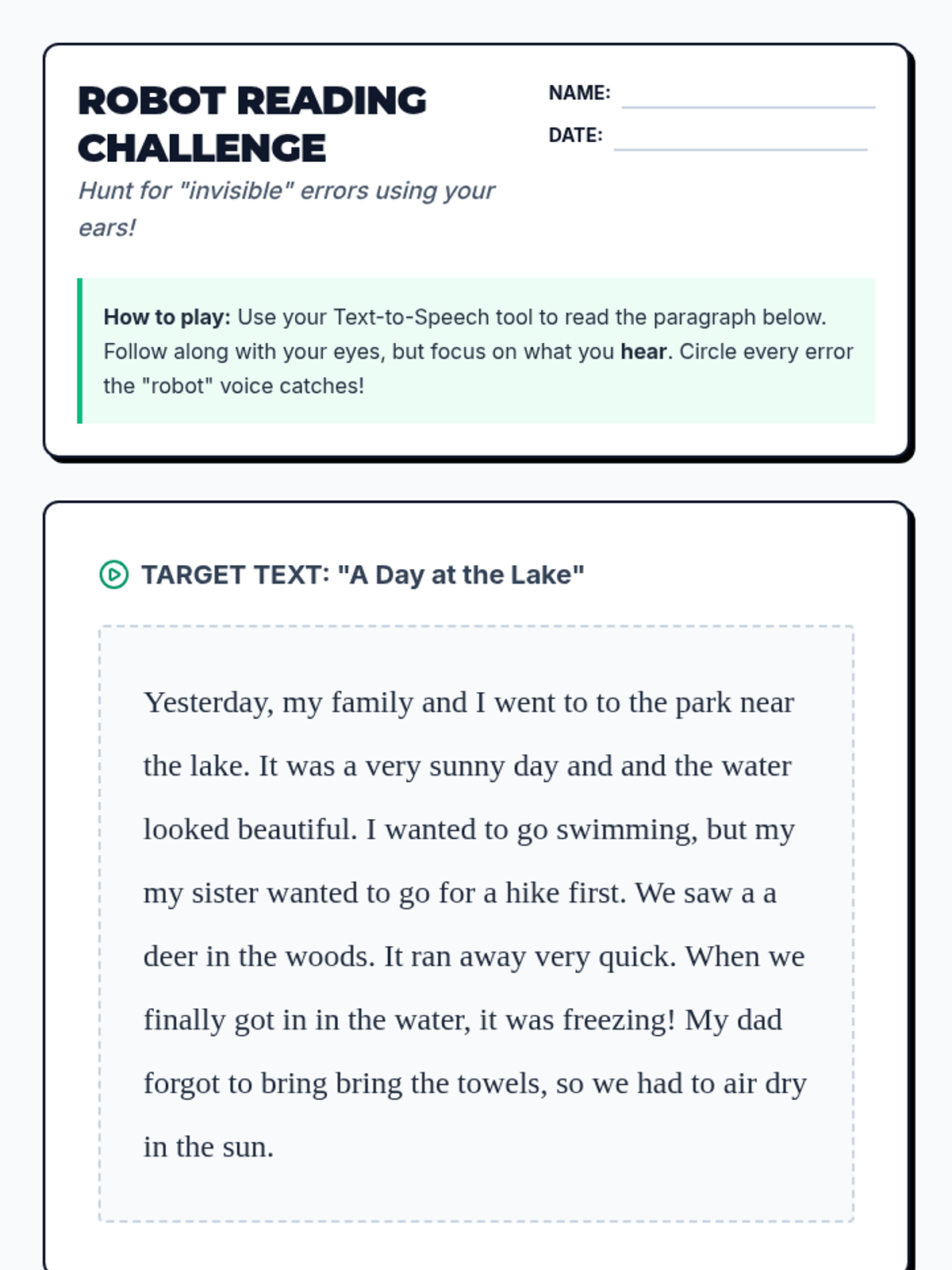
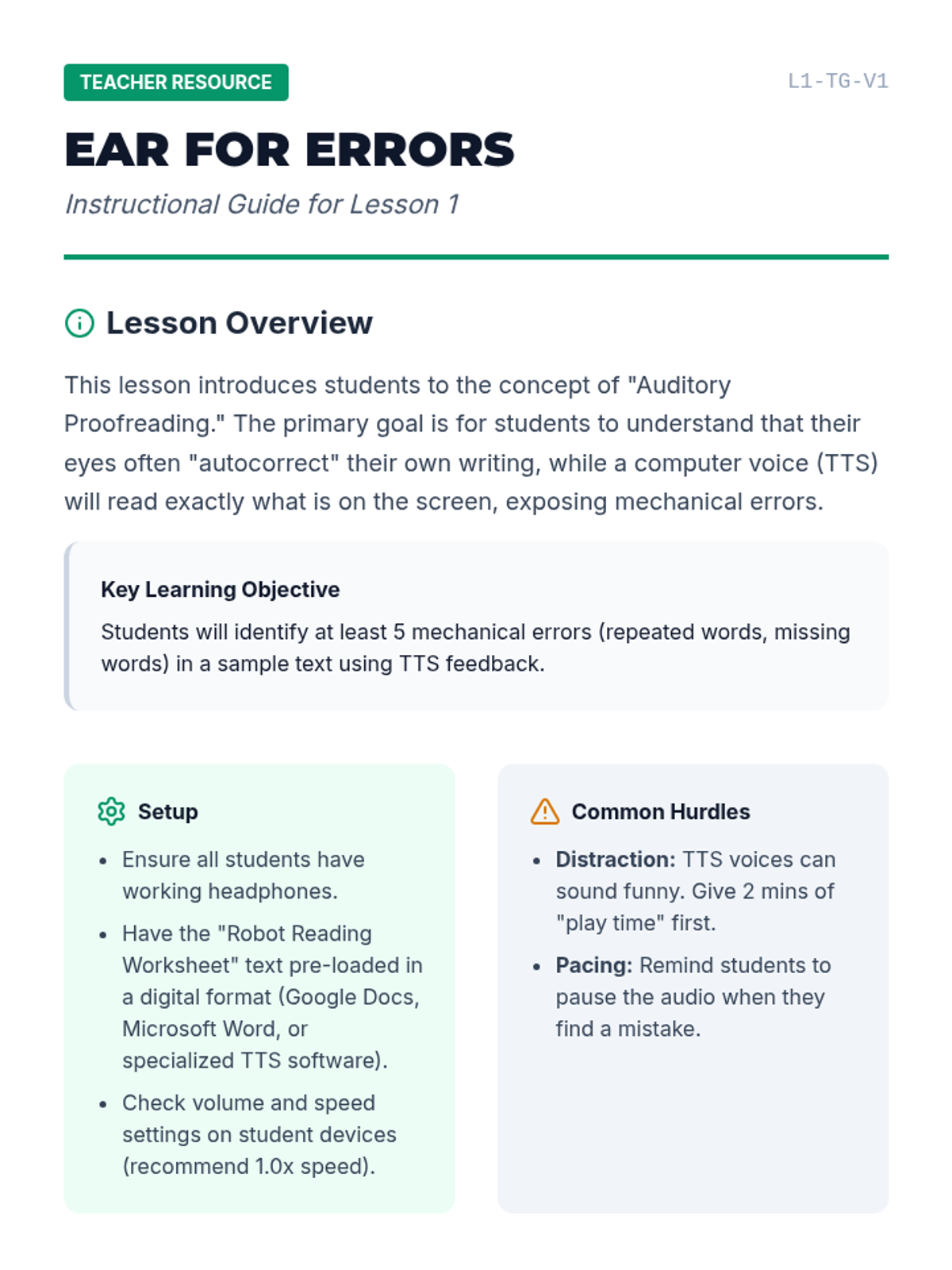
A 5-lesson sequence for 6th-grade students on using text-to-speech technology as a proofreading and editing tool to improve writing clarity, mechanics, and flow.
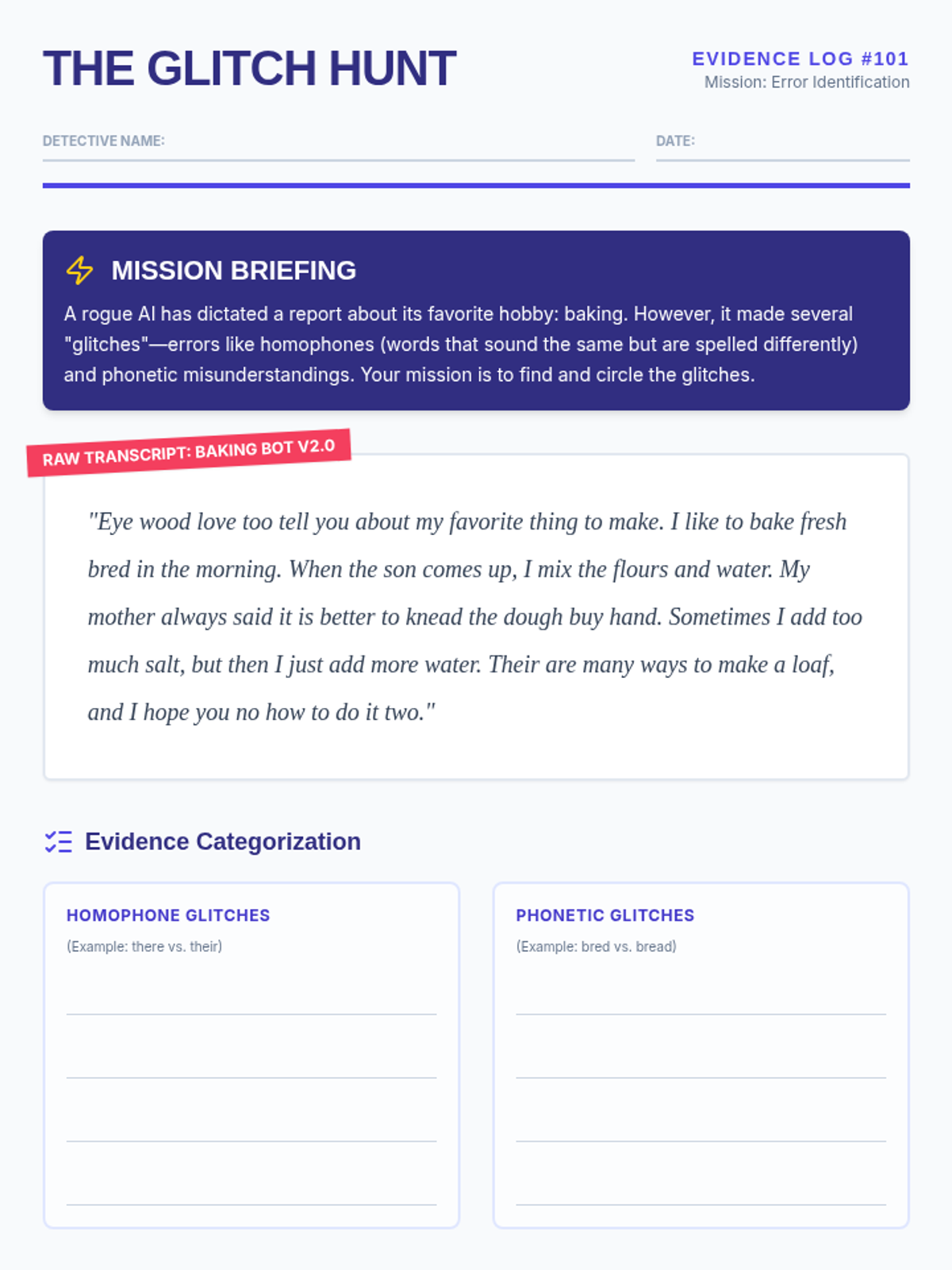
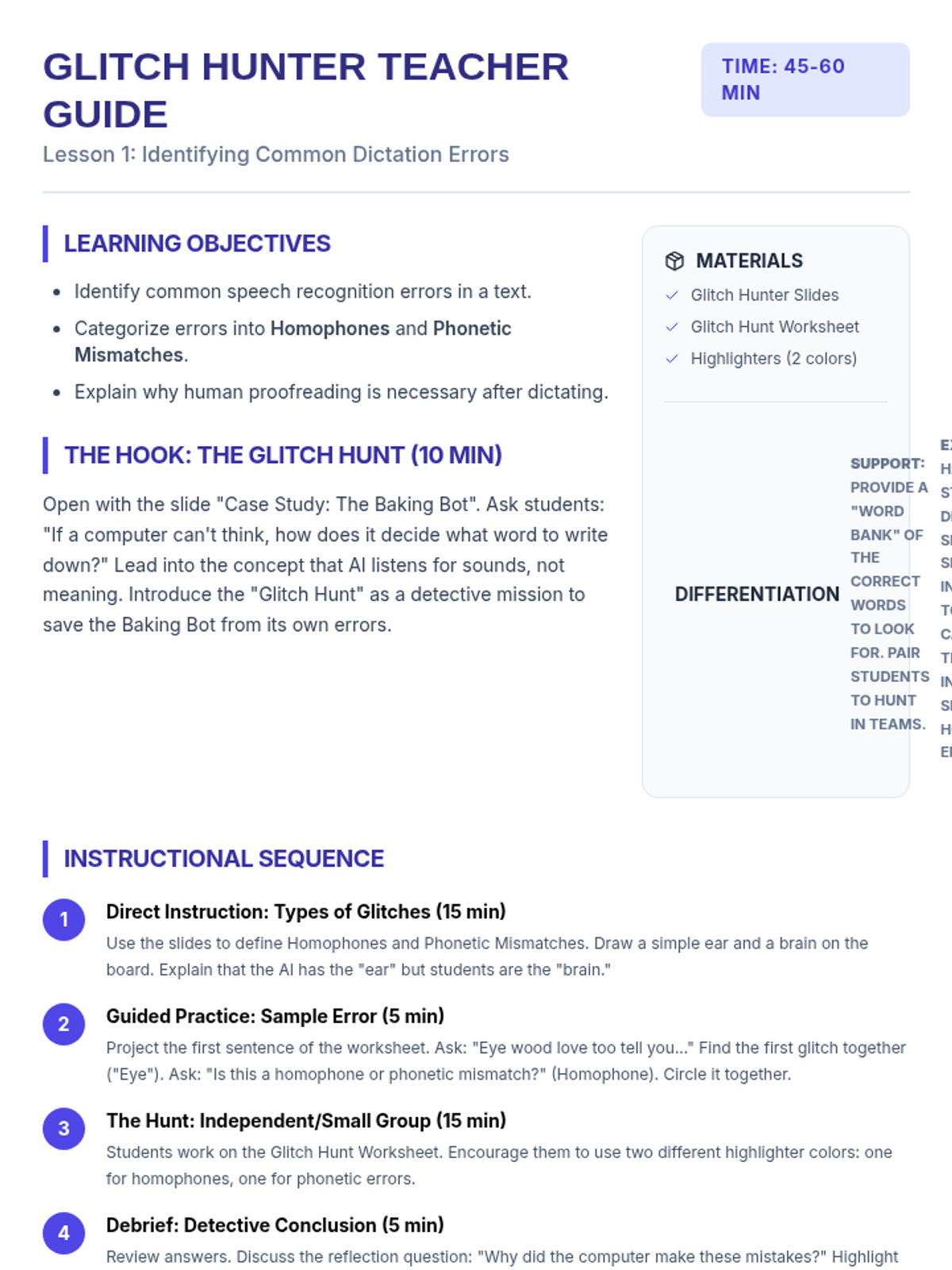
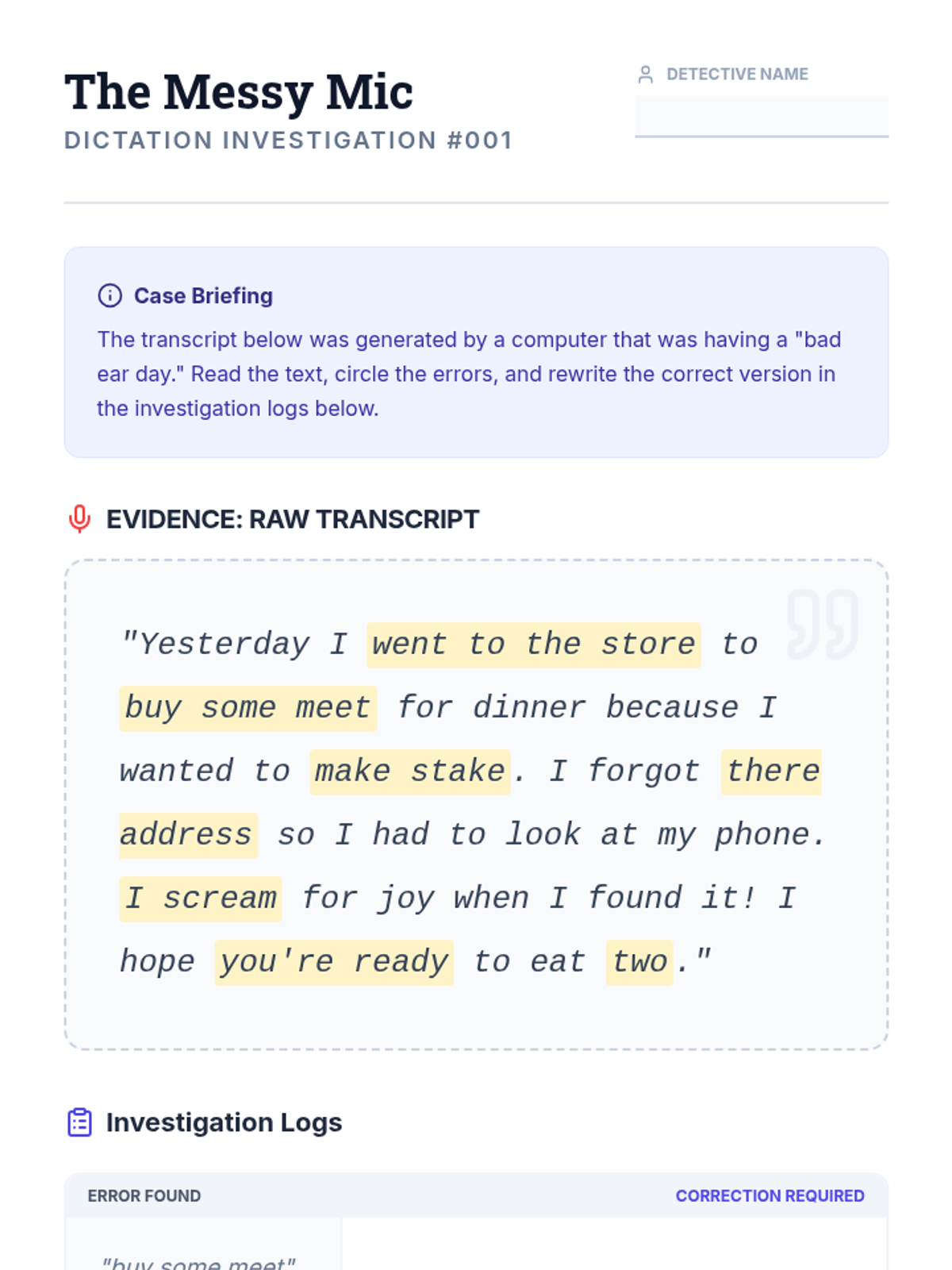
A comprehensive sequence designed for 6th-grade students to master the art of editing and refining text produced by speech recognition software. Students act as 'Digital Detectives' to identify AI glitches, apply systematic editing workflows, and format raw transcripts into professional documents.
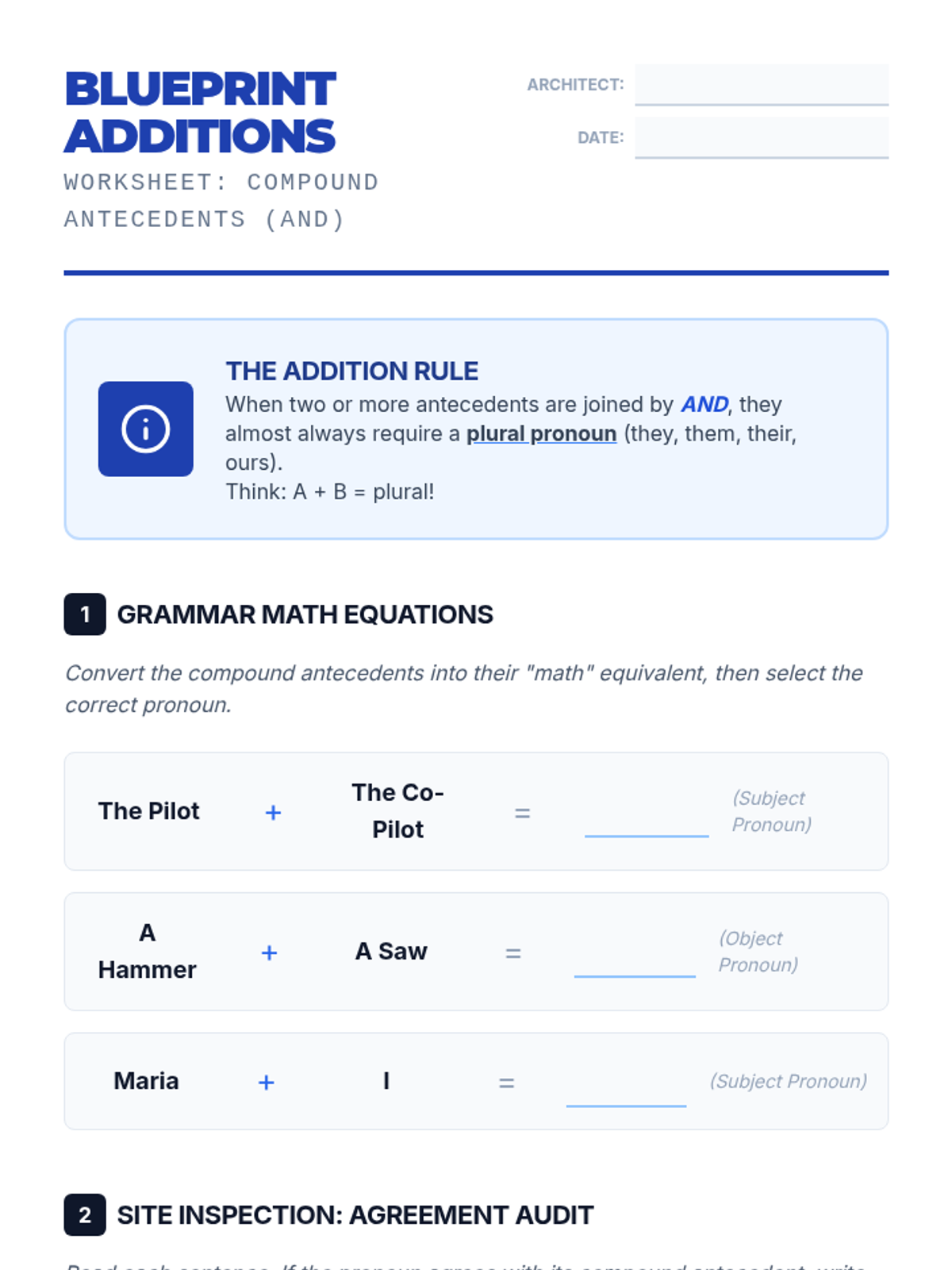
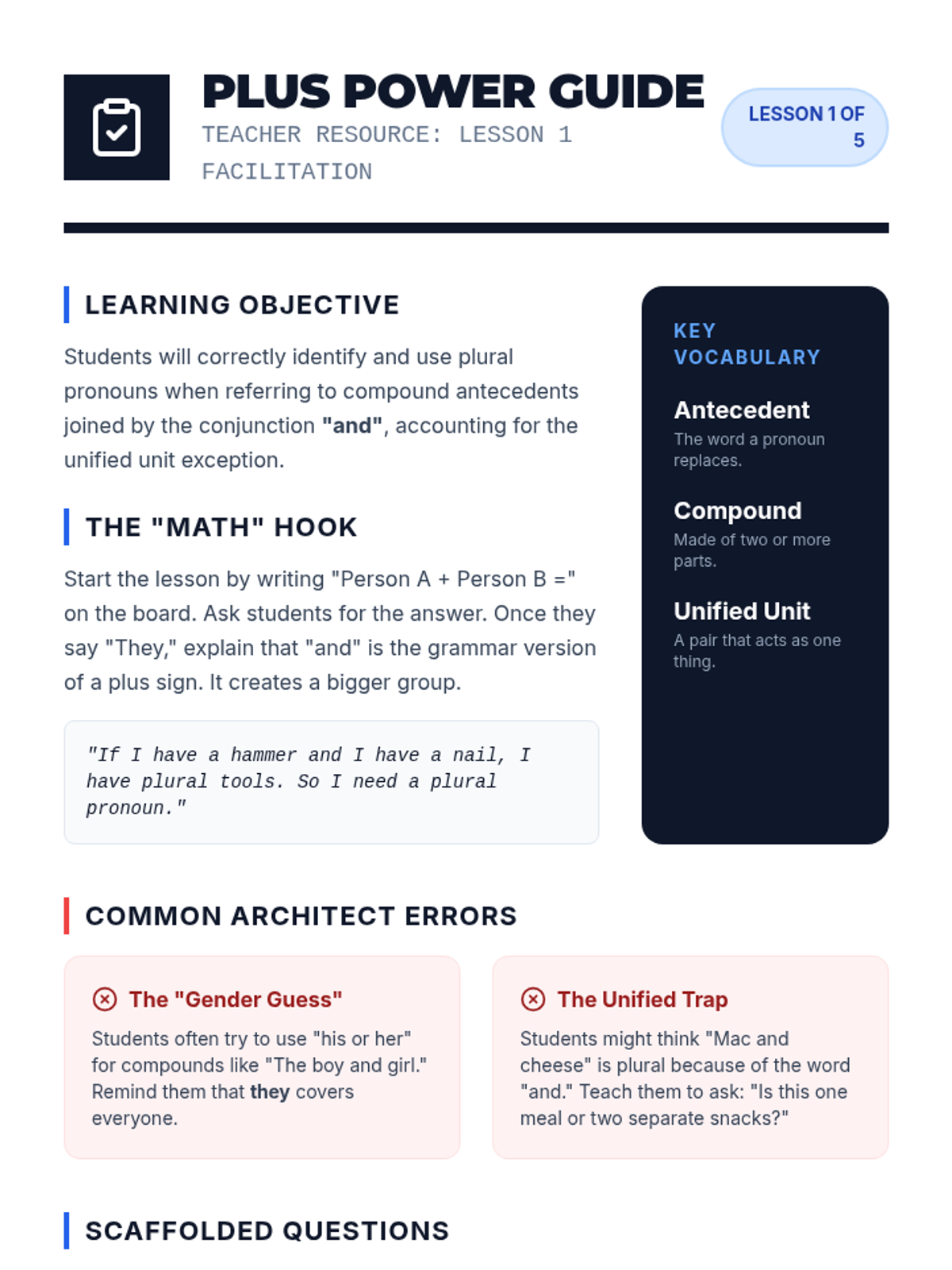
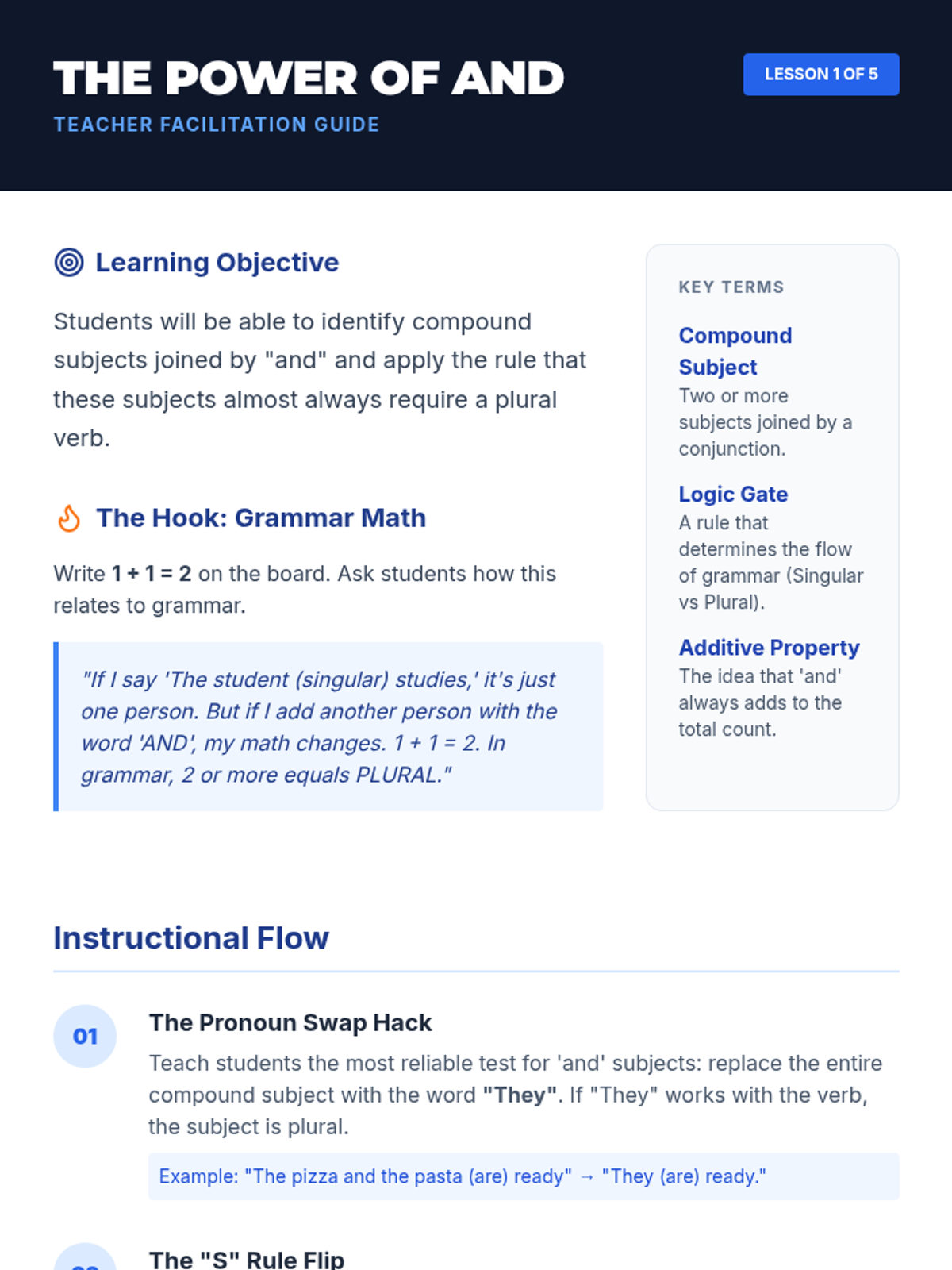
Students master the complexities of pronoun-antecedent agreement with compound subjects and collective nouns. Through an architectural lens, they learn to build stable sentences using the rules of 'And', 'Or/Nor', and the context of groups.
A 6th-grade grammar sequence focusing on pronoun clarity, ambiguous antecedents, and consistent point of view. Students act as 'Clarity Detectives' to eliminate vague writing and improve communication.
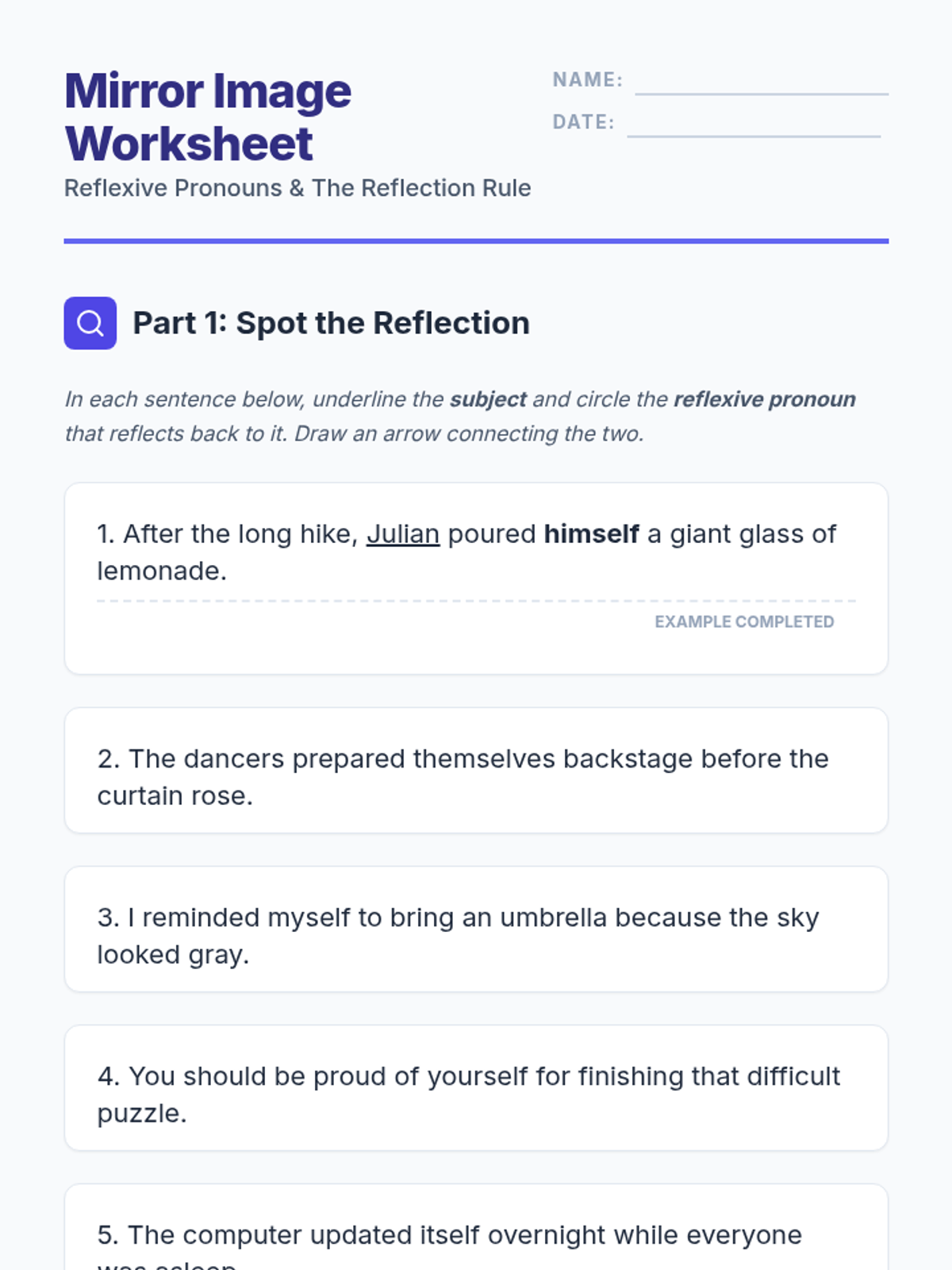
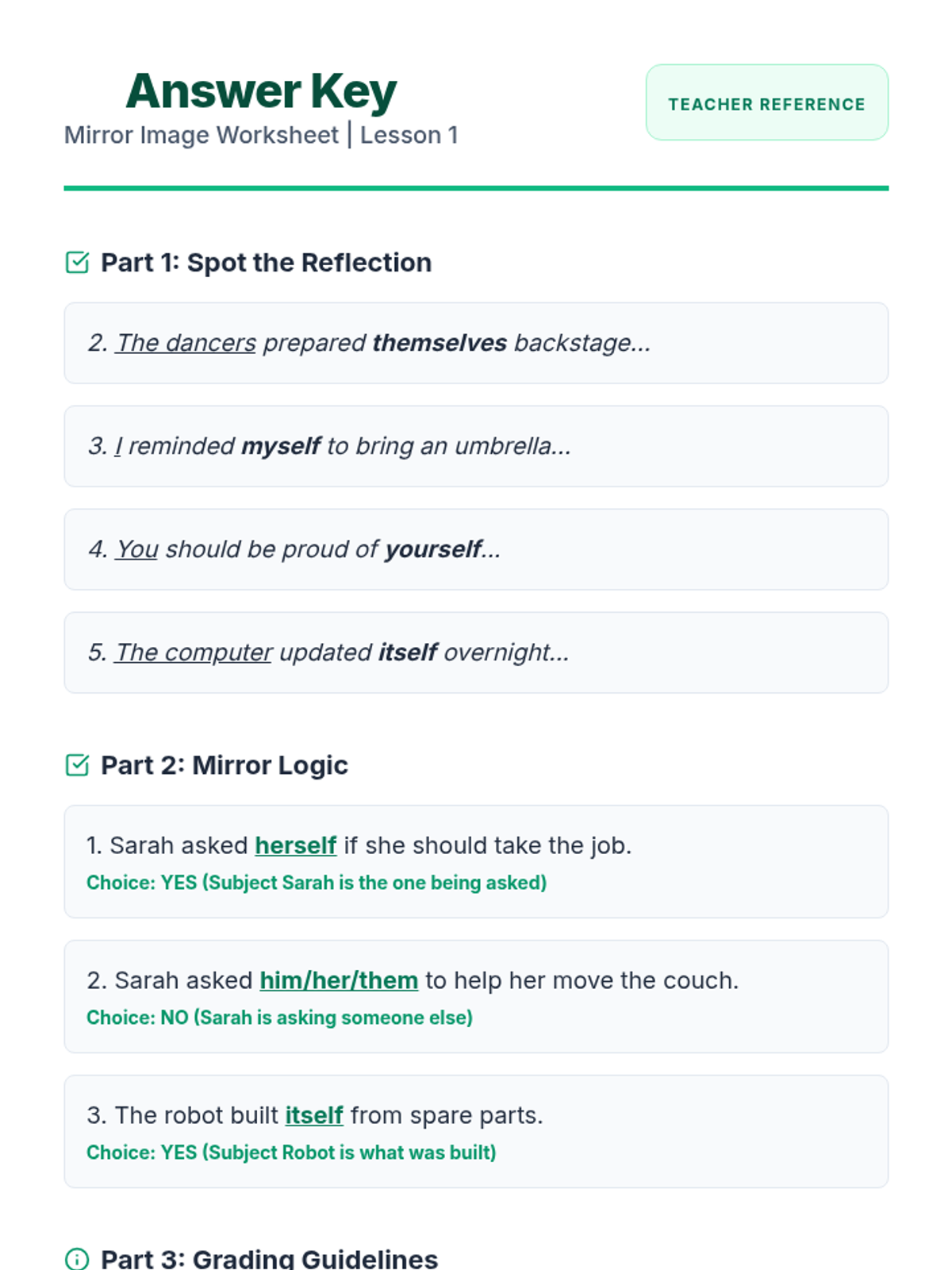
A comprehensive unit on reflexive and intensive pronouns, focusing on correct identification, usage, and correcting common hyper-correction errors. Students move from basic definitions to complex creative applications.
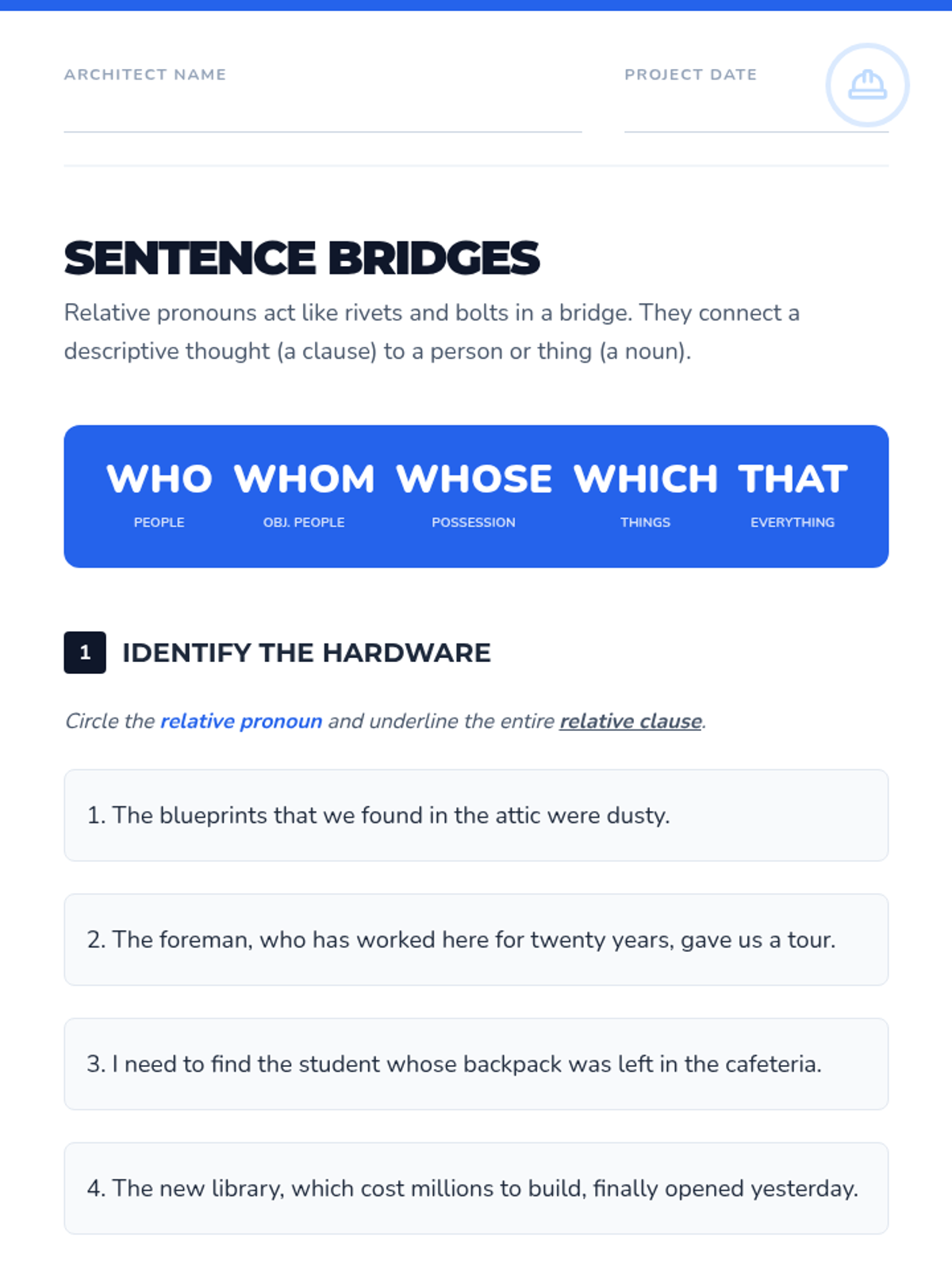
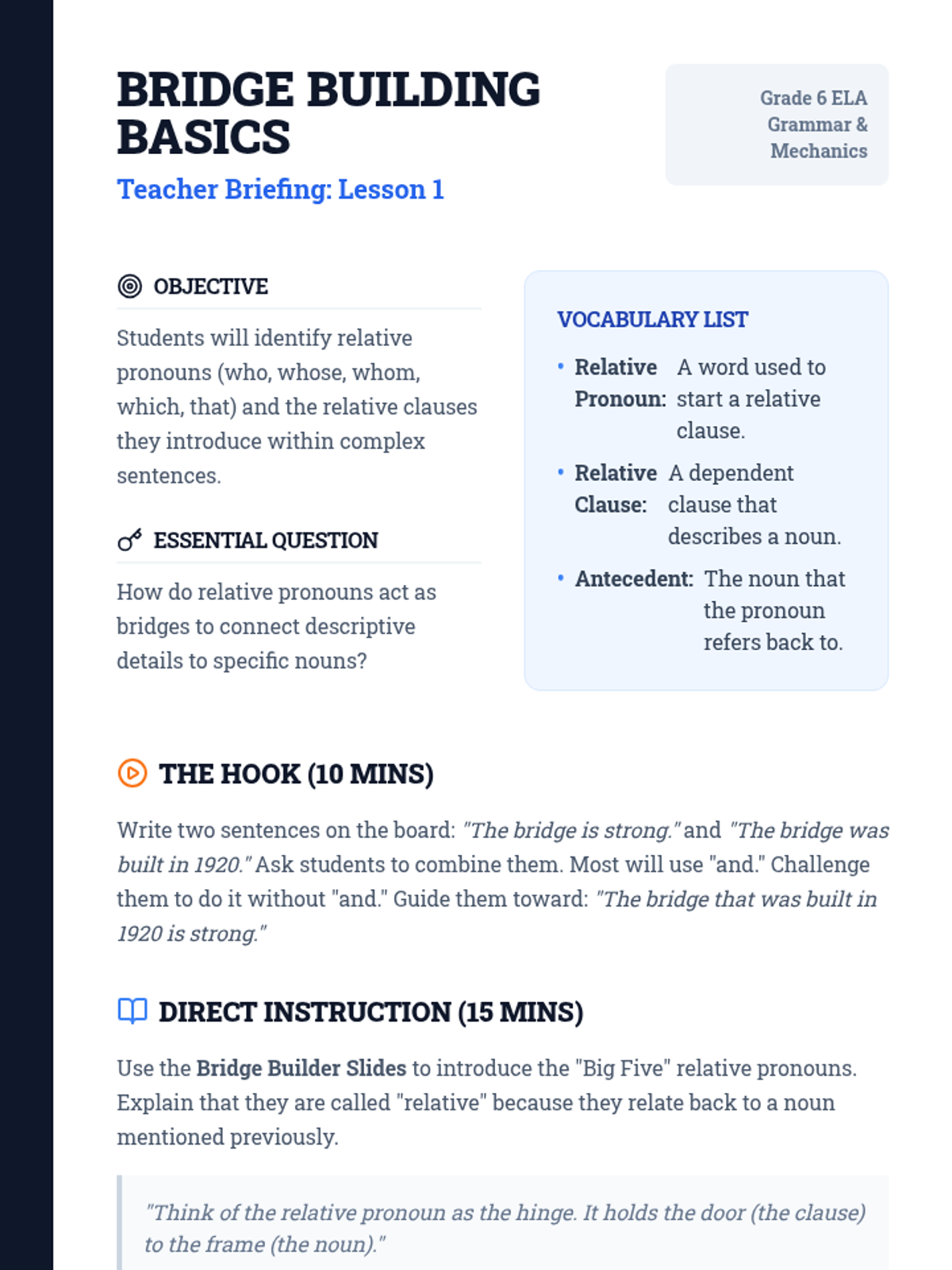
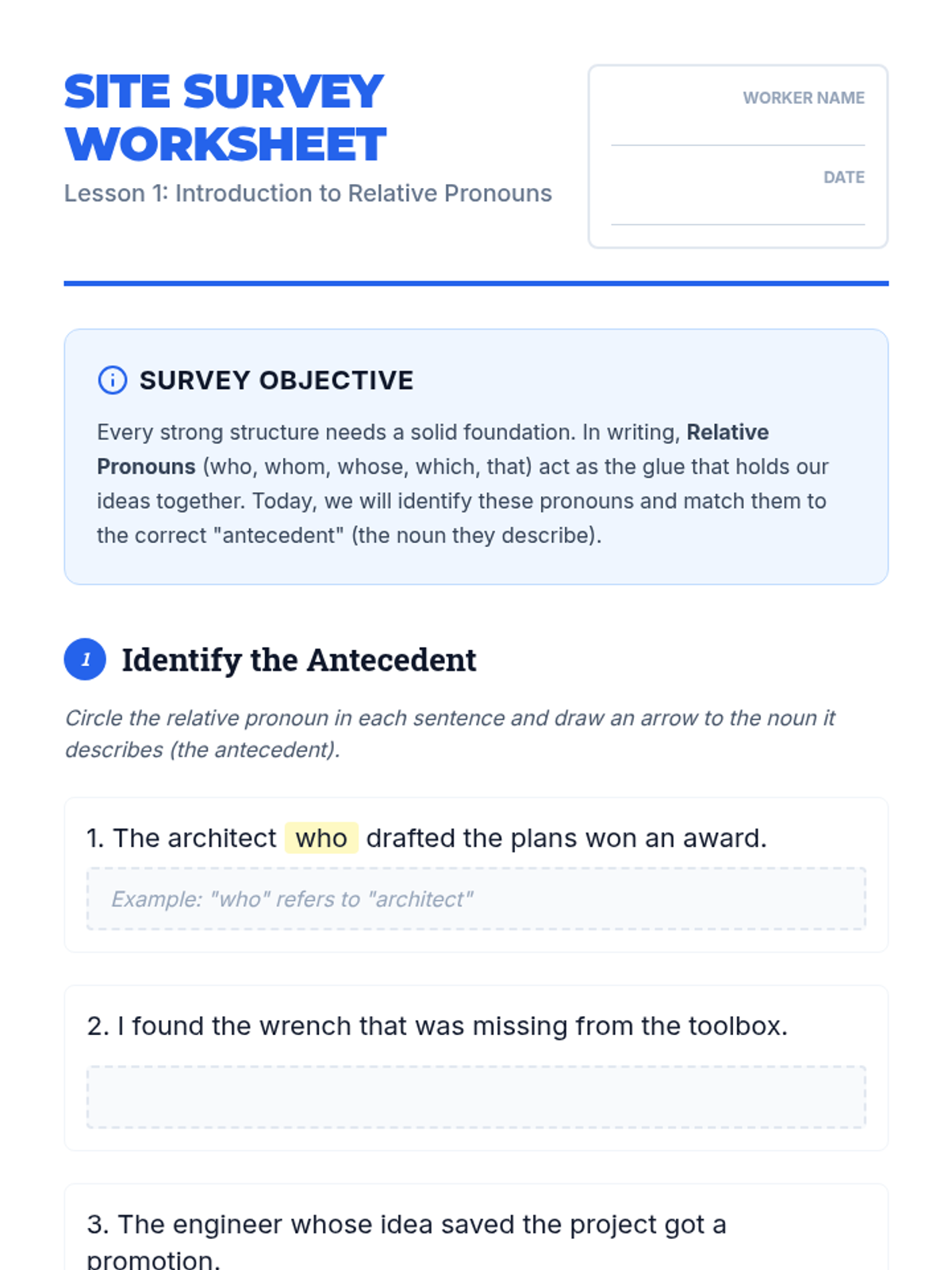
A comprehensive ELA sequence for 6th grade focused on using relative pronouns (who, whose, whom, which, that) to build complex, descriptive sentences and understand the nuances of restrictive vs. non-restrictive clauses.
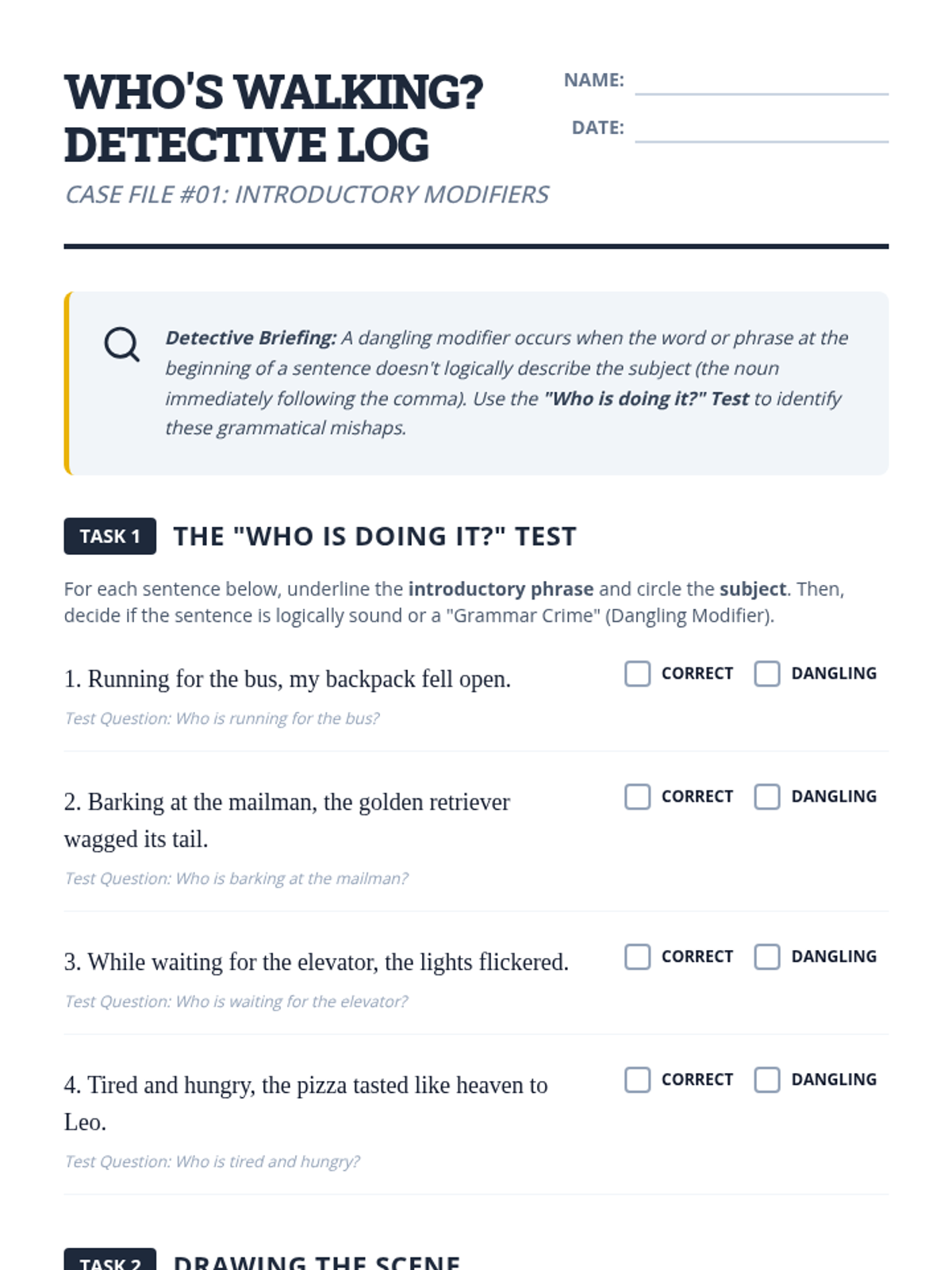
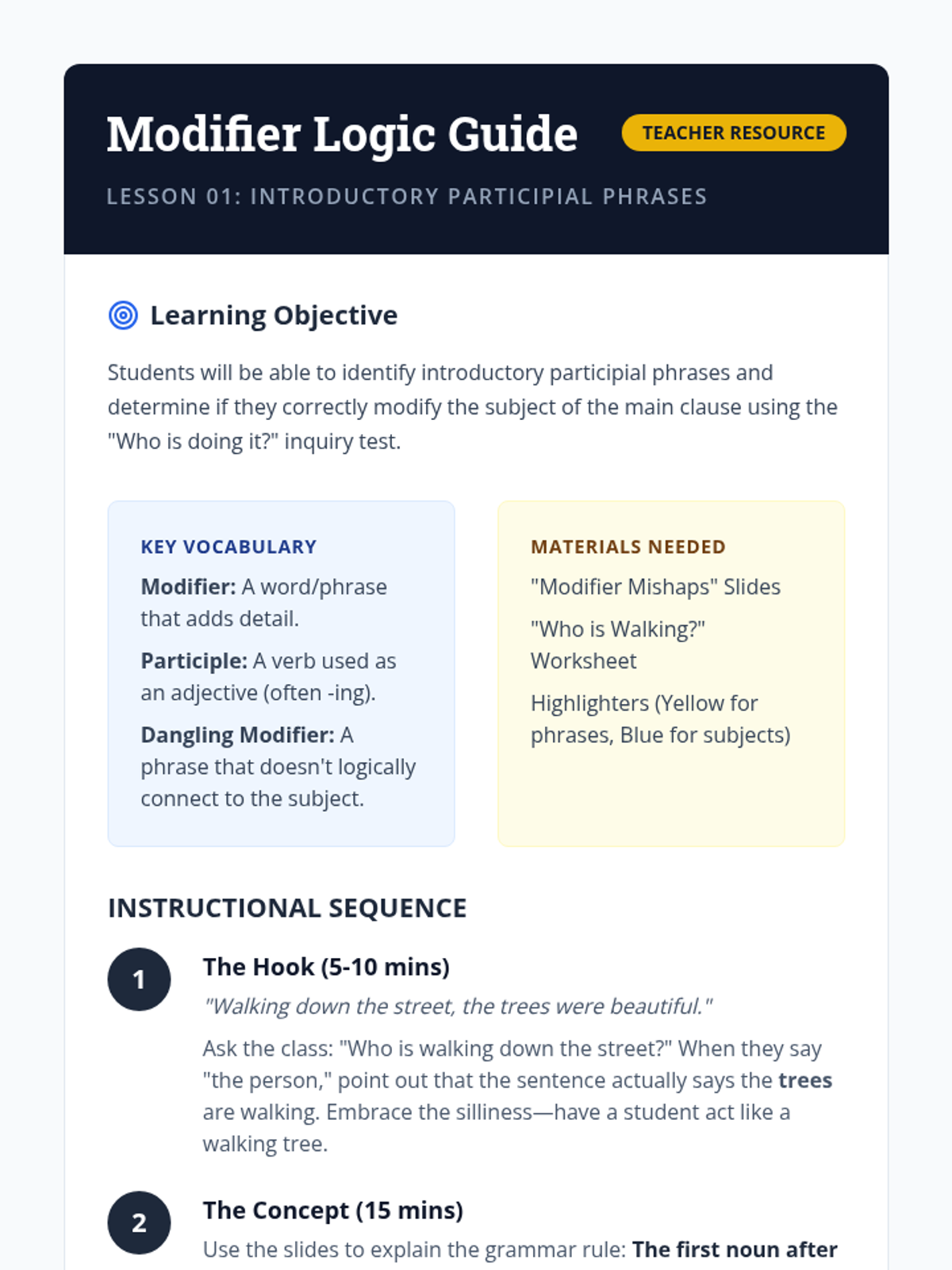
This sequence guides 6th-grade students through the intricacies of dangling modifiers and introductory phrases. Using a detective-themed 'Mystery' approach, students learn to identify, diagnose, and fix grammatical errors where the subject of a sentence doesn't logically match the opening action.
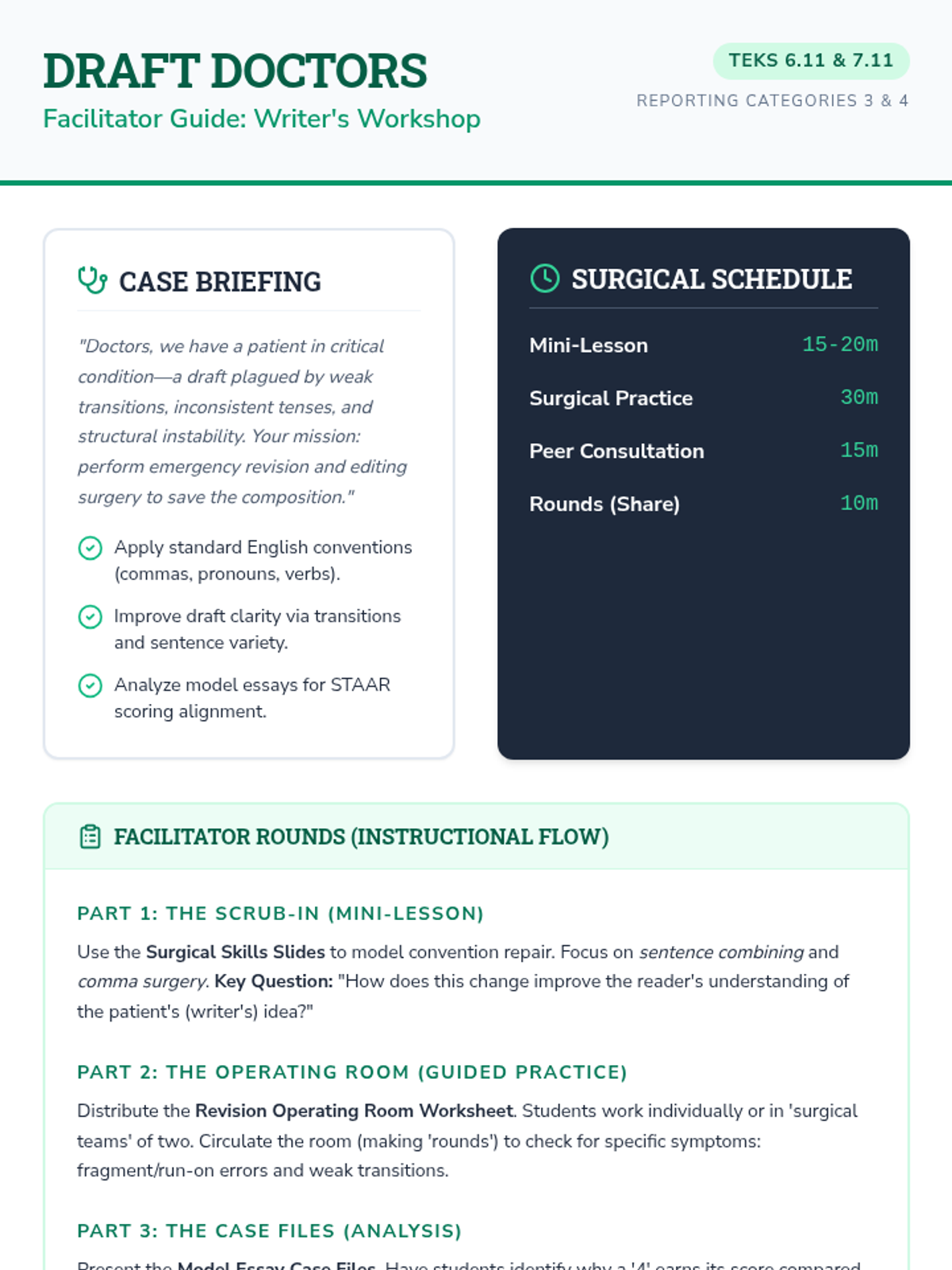
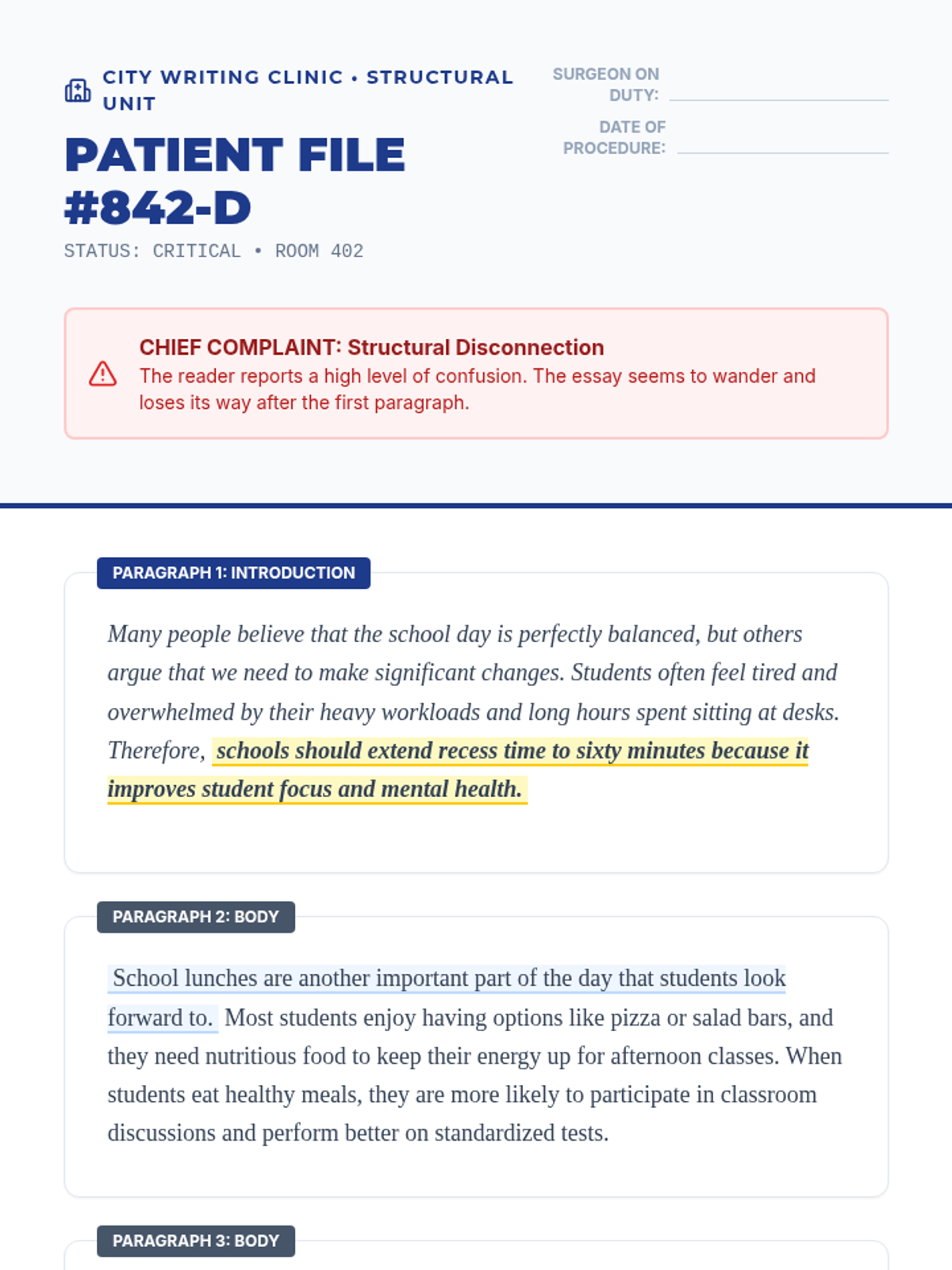
A 5-lesson unit focusing on diagnosing and repairing structural issues in writing, specifically targeting thesis statements and topic sentences through the metaphor of revision as 'surgery' or 'diagnosis.'
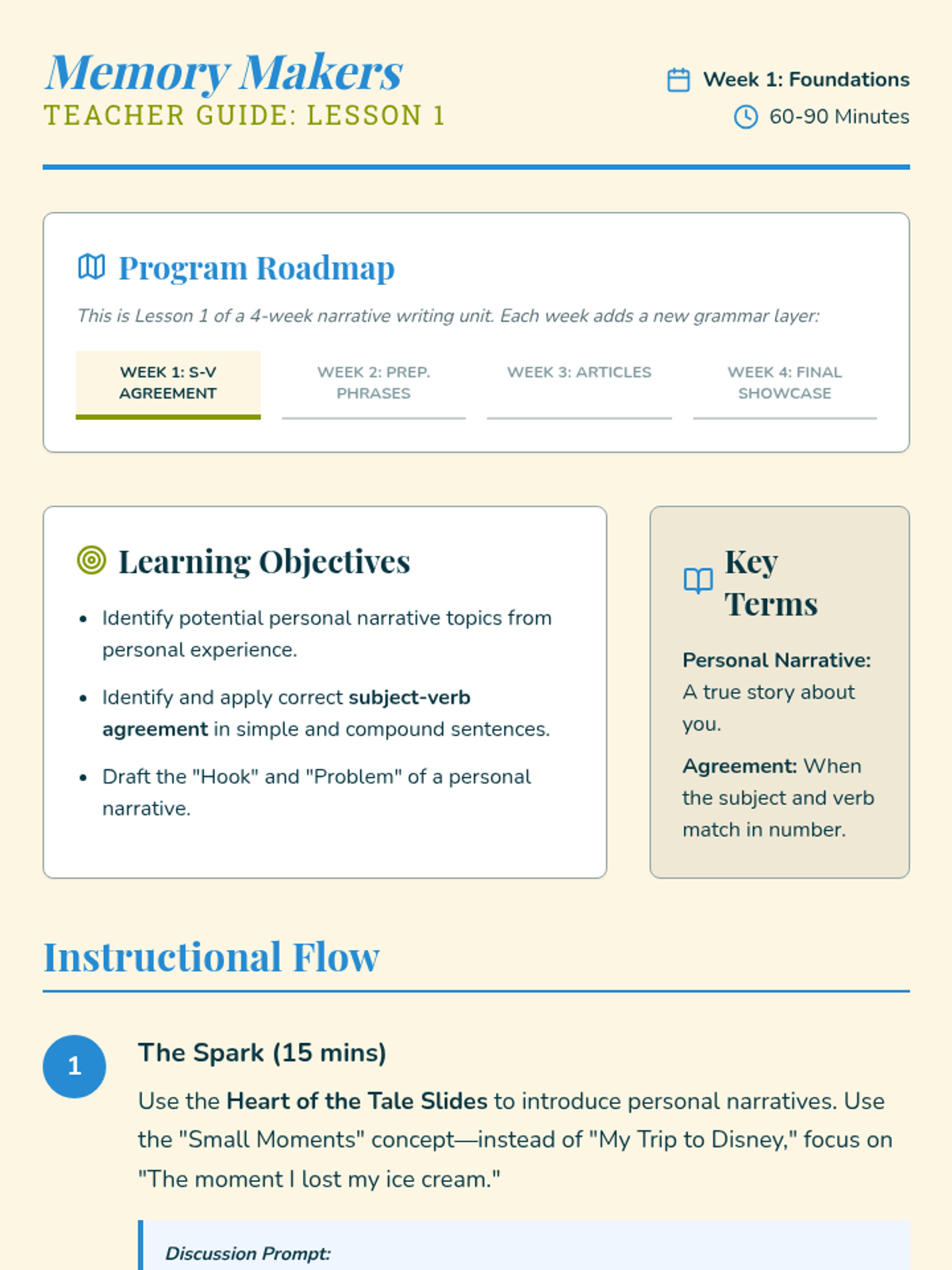
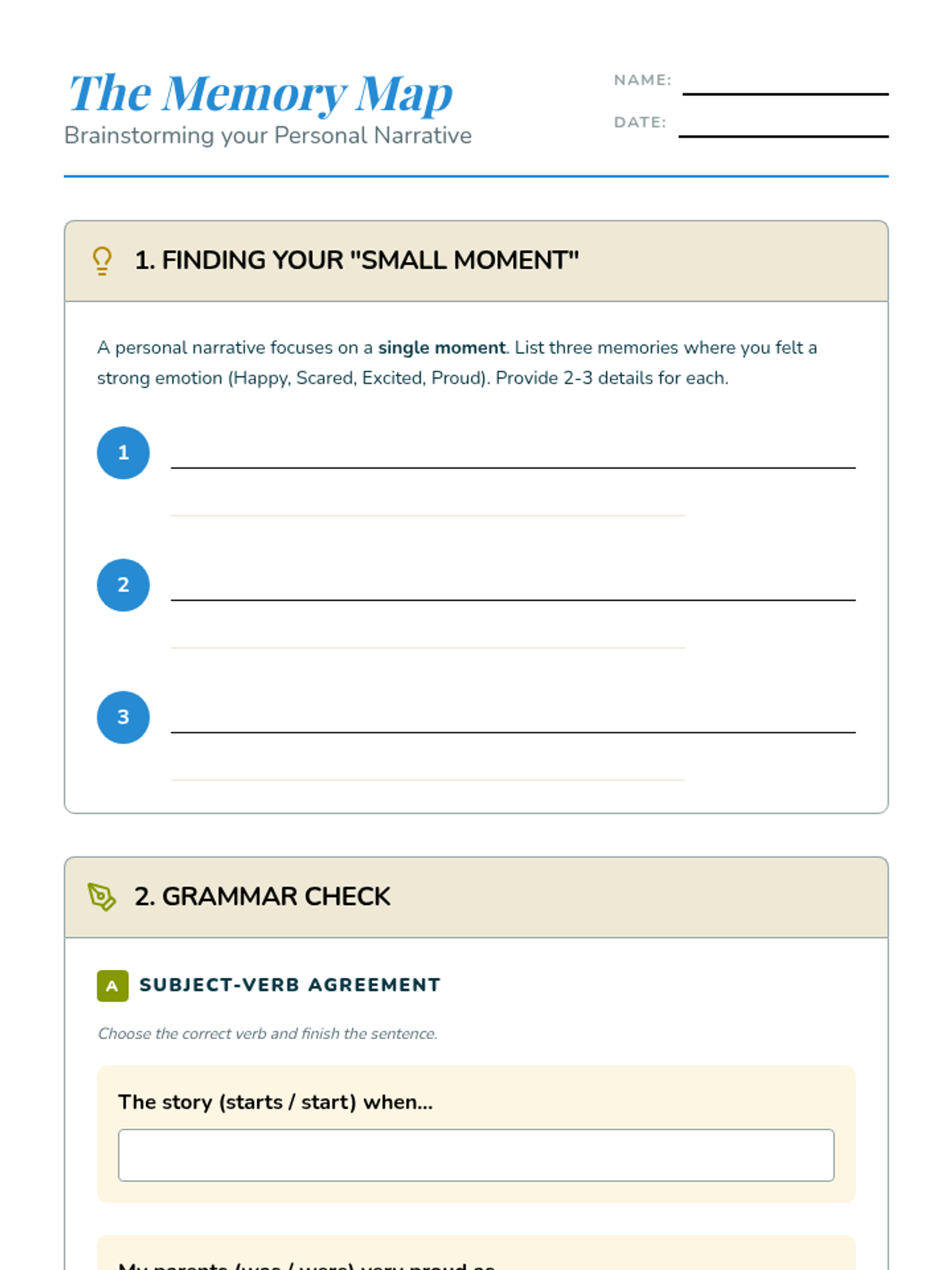
A 4-week program focused on personal narrative writing and oral presentation skills, with a heavy emphasis on subject-verb agreement, prepositional phrases, and the correct use of articles.
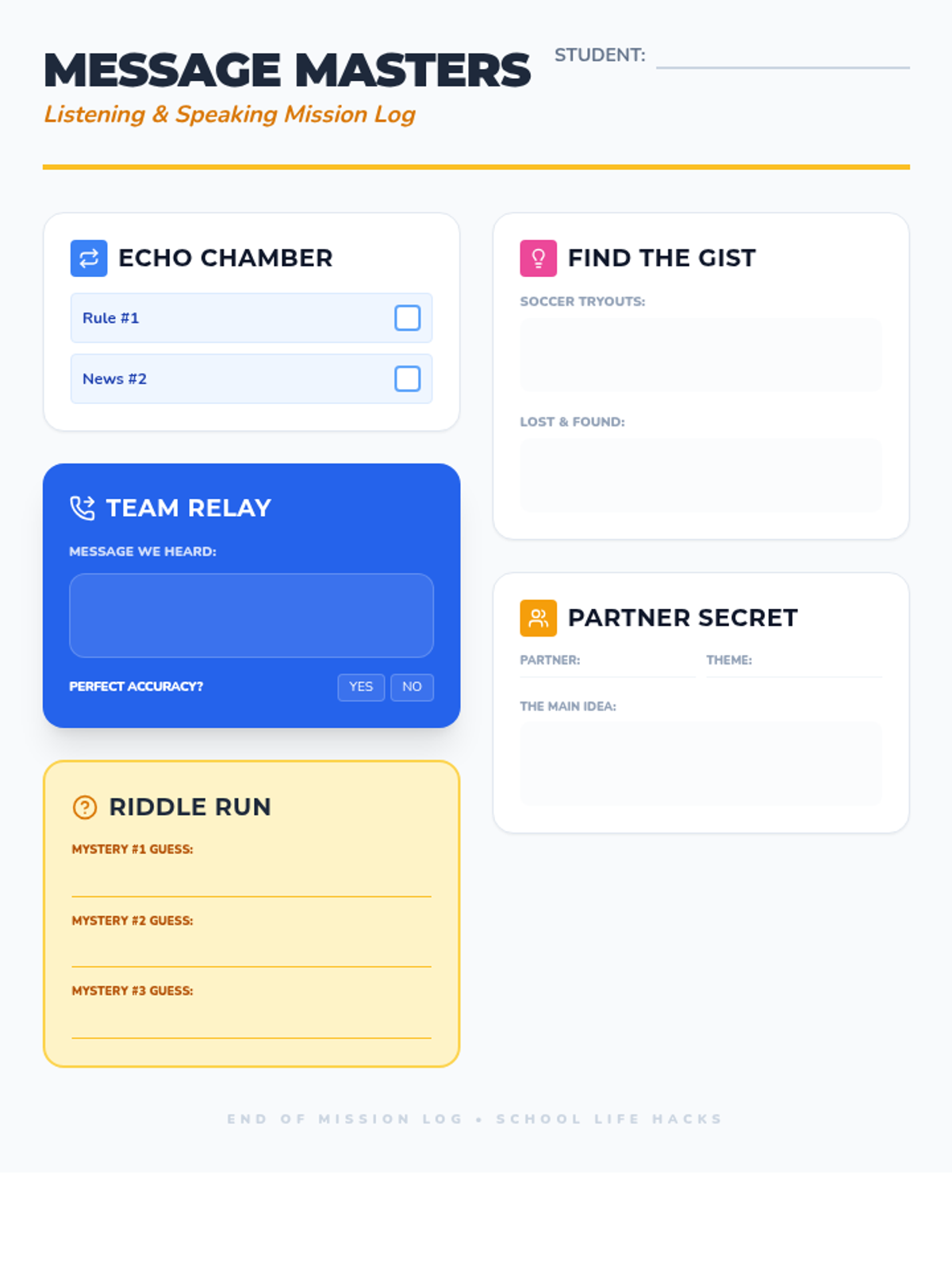
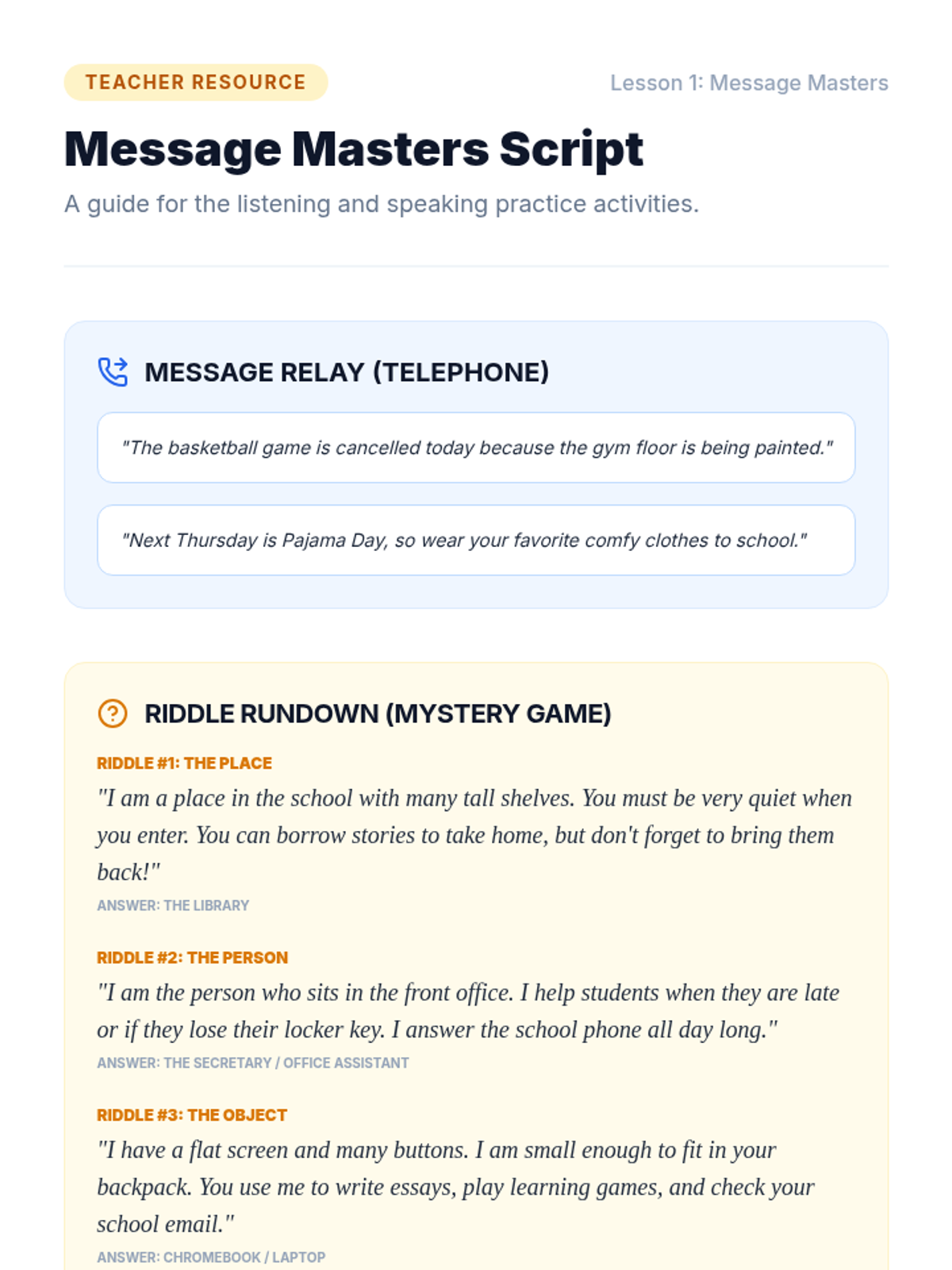
A 6-lesson mini-unit for 6th-grade ELD students focused on listening and speaking skills for ELPA preparation. Students practice listening for main ideas, repeating phrases, describing processes, supporting opinions, and using precise spatial language for drawing.
This sequence tackles the complexities of subject-verb agreement, moving beyond simple matching to handle difficult sentence structures. Students engage in error analysis to troubleshoot common pitfalls such as compound subjects, intervening prepositional phrases, and indefinite pronouns.
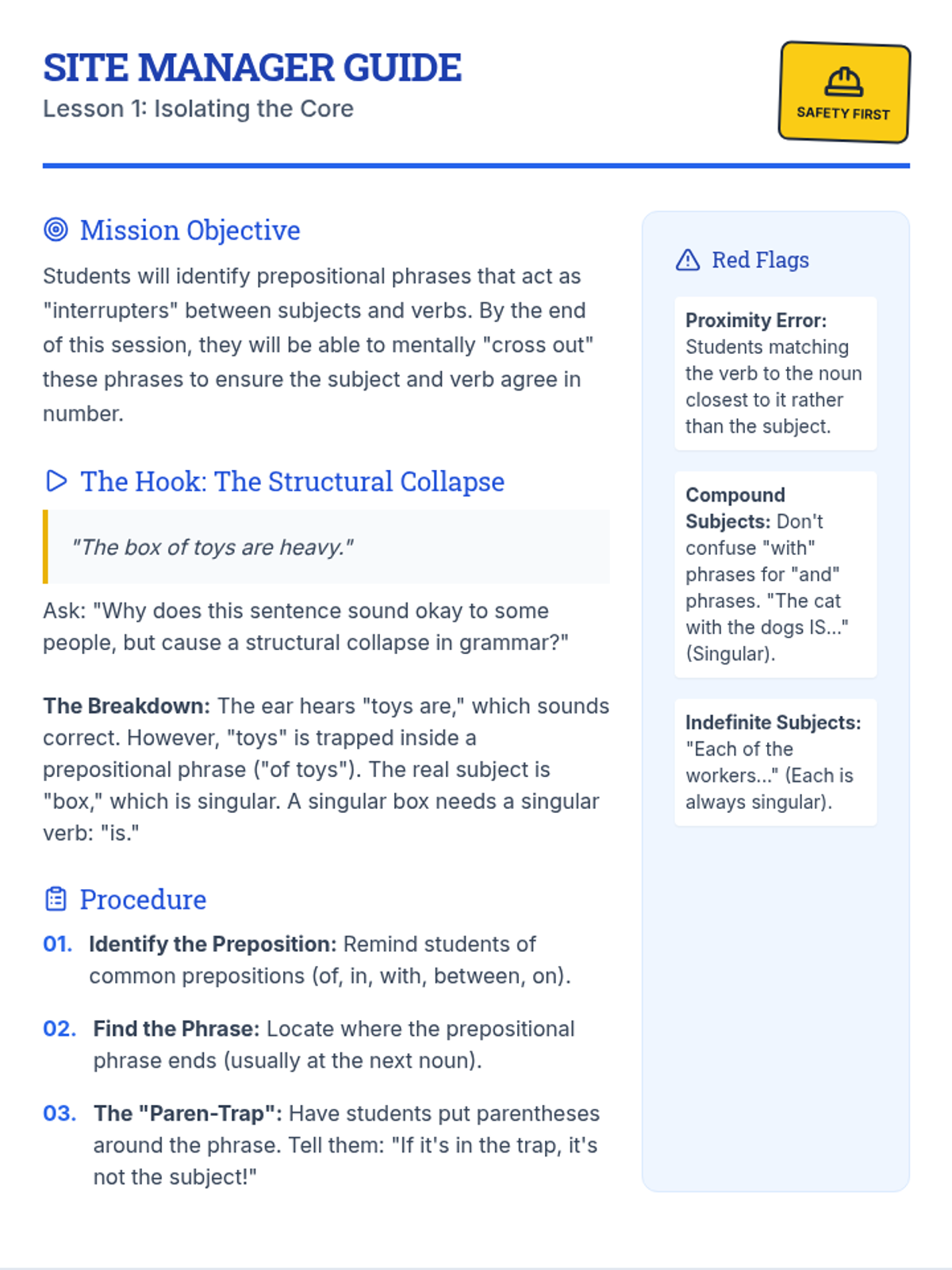
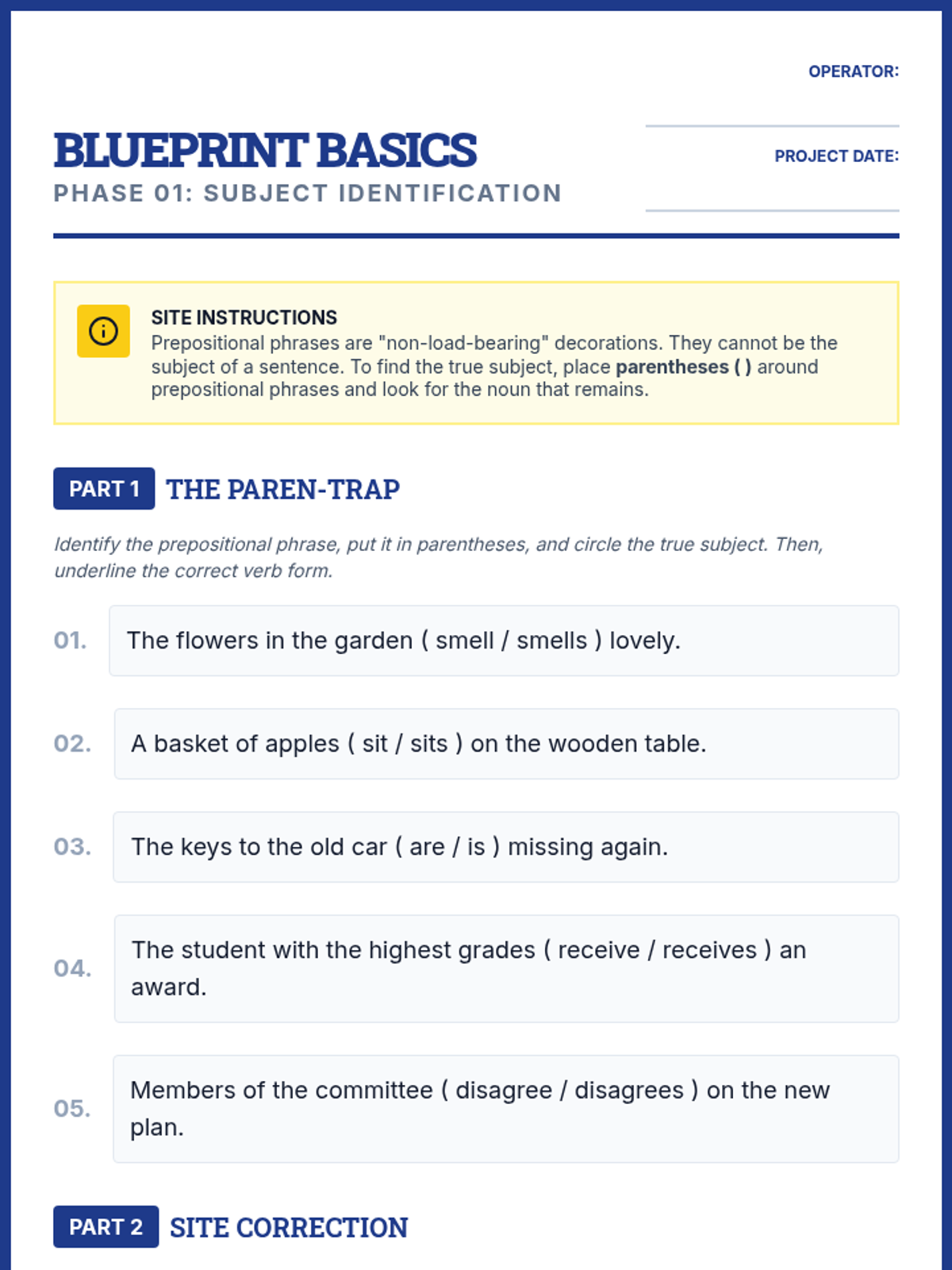
This sequence focuses on Subject-Verb Agreement when prepositional phrases intervene between the subject and the verb. Students learn to identify 'true' subjects, ignore 'interrupters', and maintain grammatical logic in complex sentence structures through a structural engineering-themed workshop approach.
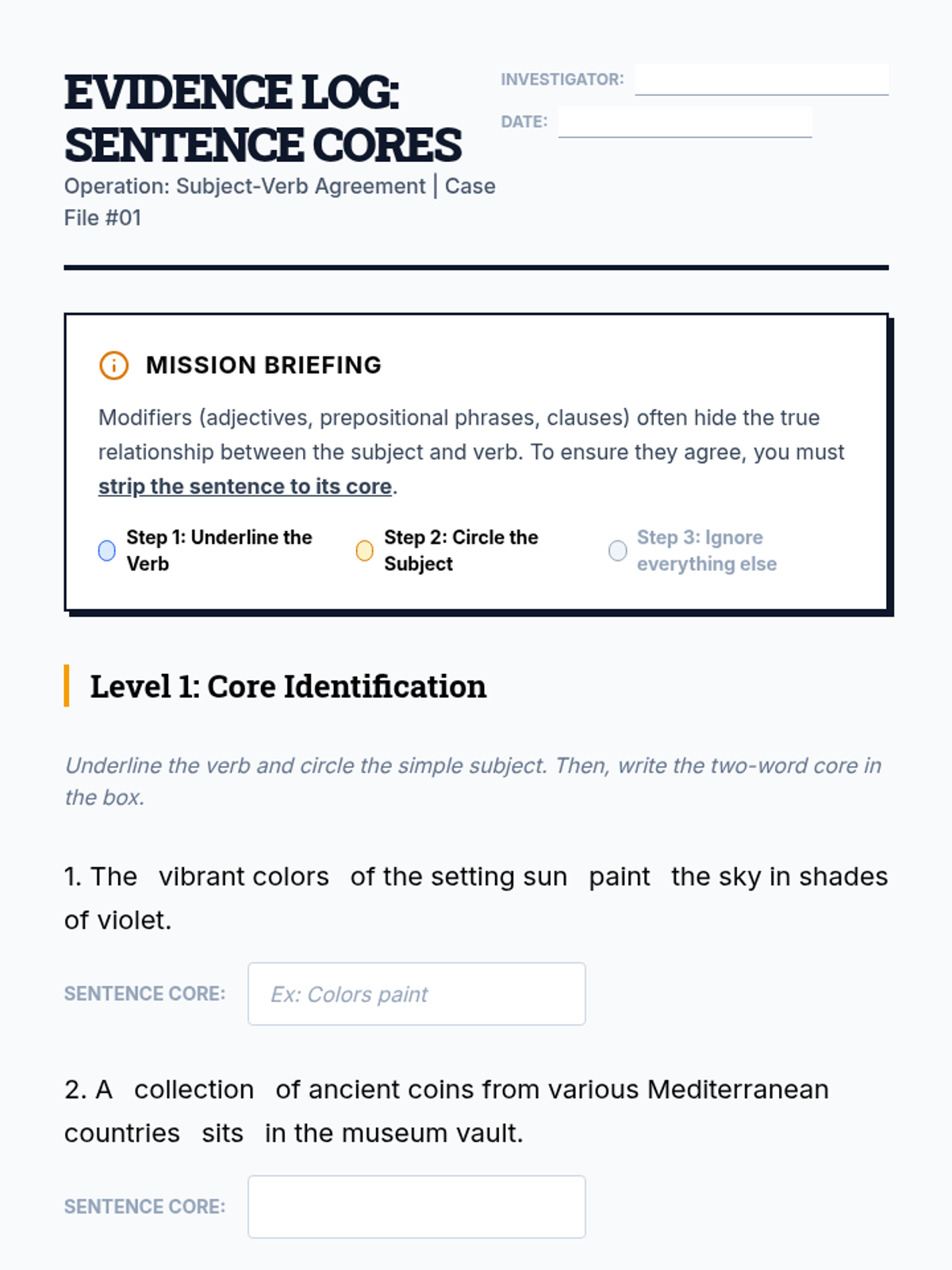
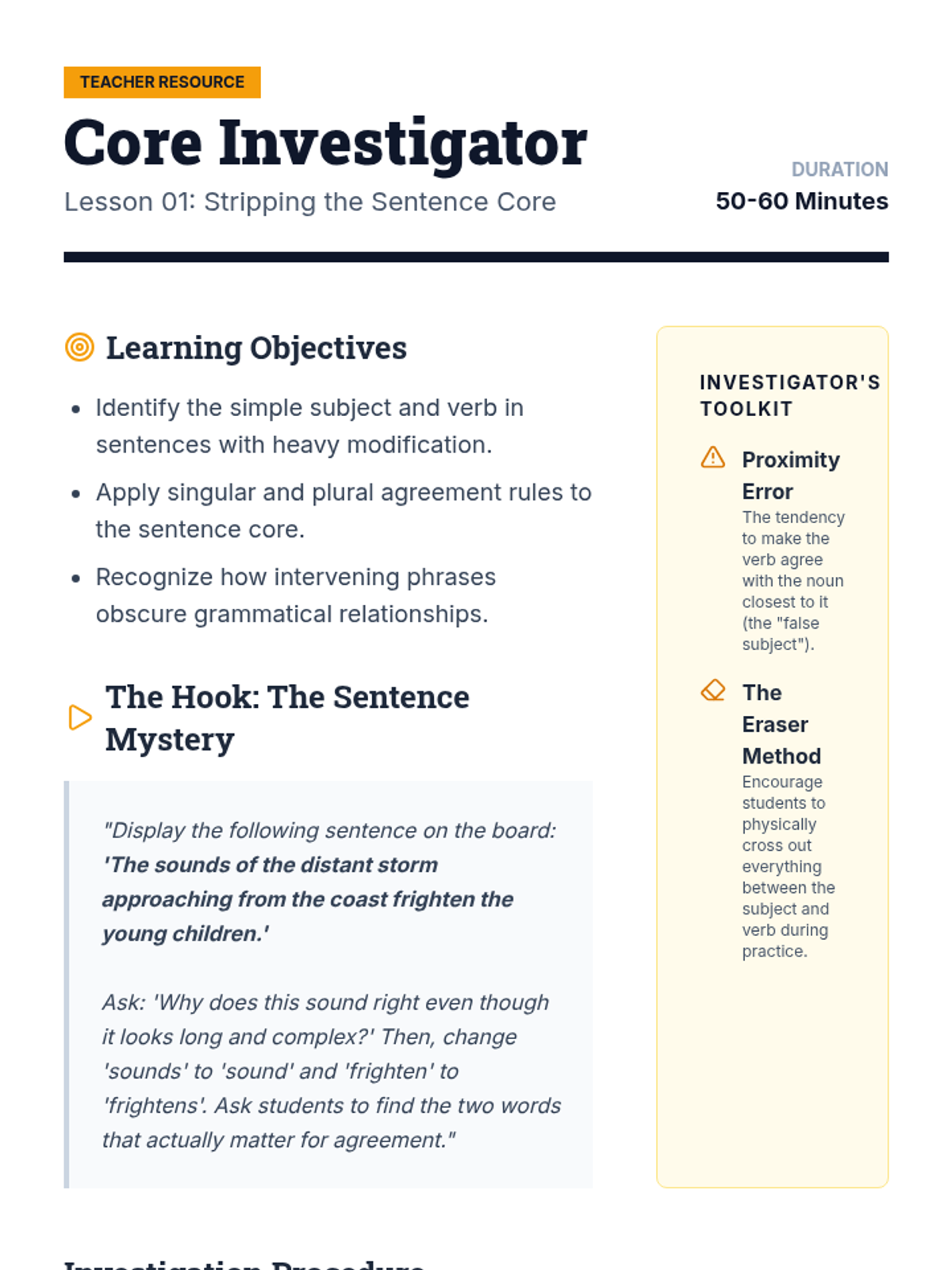
An inquiry-based grammar sequence where students act as linguistic investigators to master subject-verb agreement. Students learn to identify the sentence core, filter out prepositional phrases, handle appositives, and navigate complex modifiers like 'as well as'.
A comprehensive 6th-grade grammar sequence focusing on subject-verb agreement, particularly when subjects are separated from verbs by intervening prepositional phrases. Students progress from basic identification to complex editing and original construction.
An intensive writer's workshop for 6th graders focused on eliminating wordiness and selecting precise vocabulary. Students learn to cut redundancy, streamline syntax, and choose high-impact words to make their writing clearer and more authoritative.
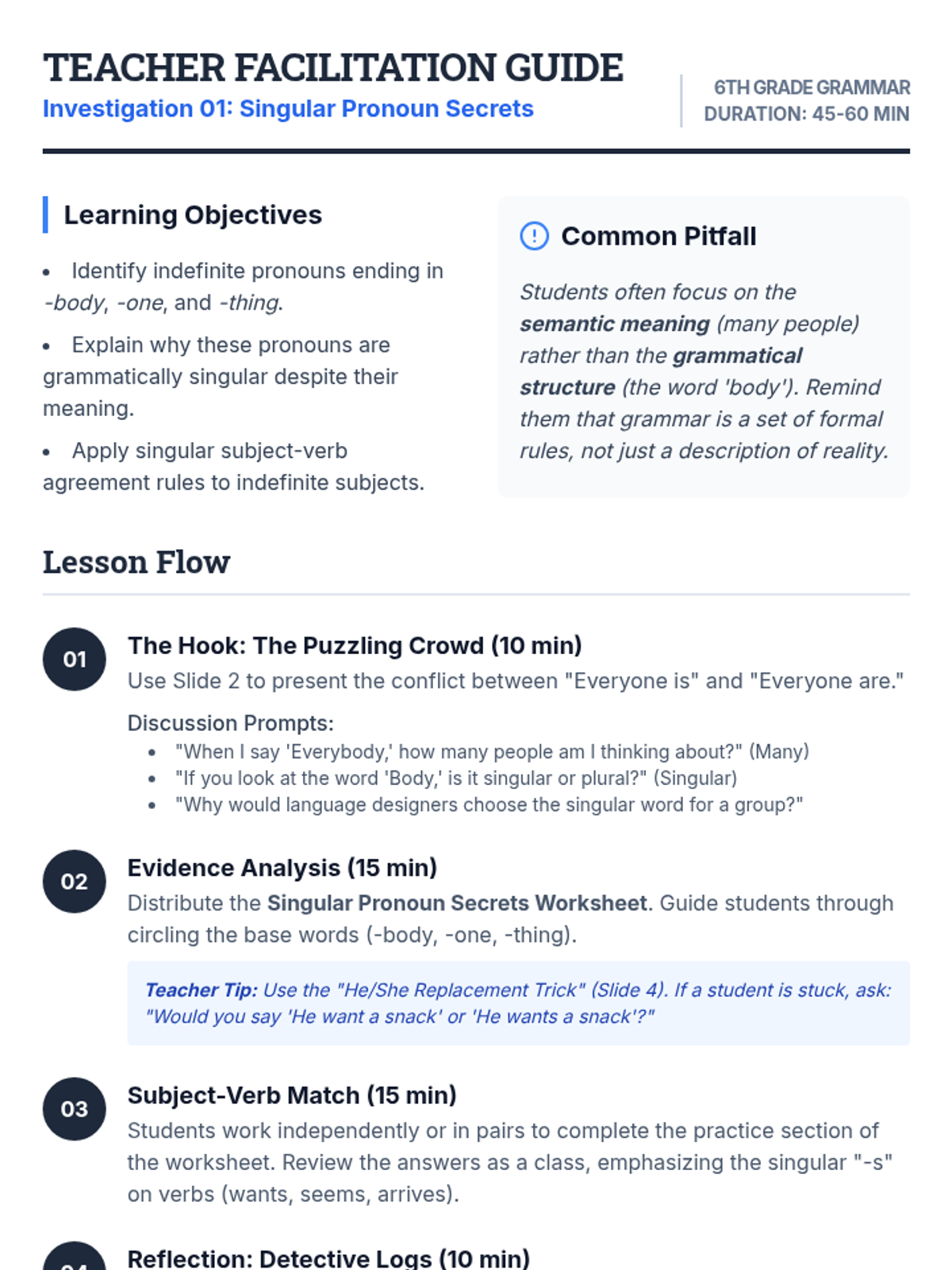
This inquiry-based sequence challenges 6th-grade students to navigate the logic of indefinite pronouns and their agreement with verbs. Students investigate patterns, debate 'chameleon' pronouns, and solve complex agreement puzzles to understand grammar as a logical system.
A series of lessons focused on mastering high-frequency academic action verbs like explain, compare, and justify to help students succeed in academic tasks and assessments.
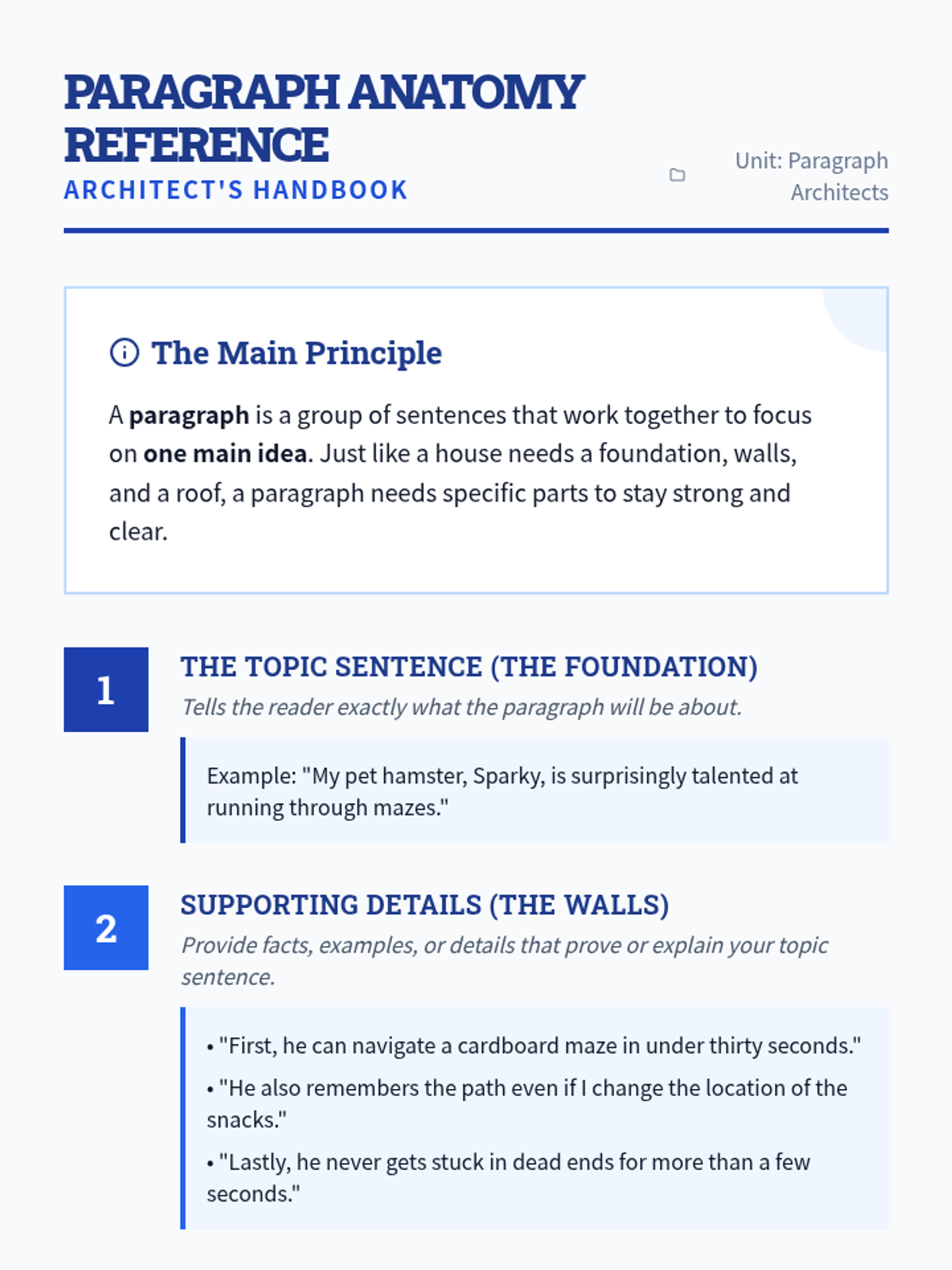
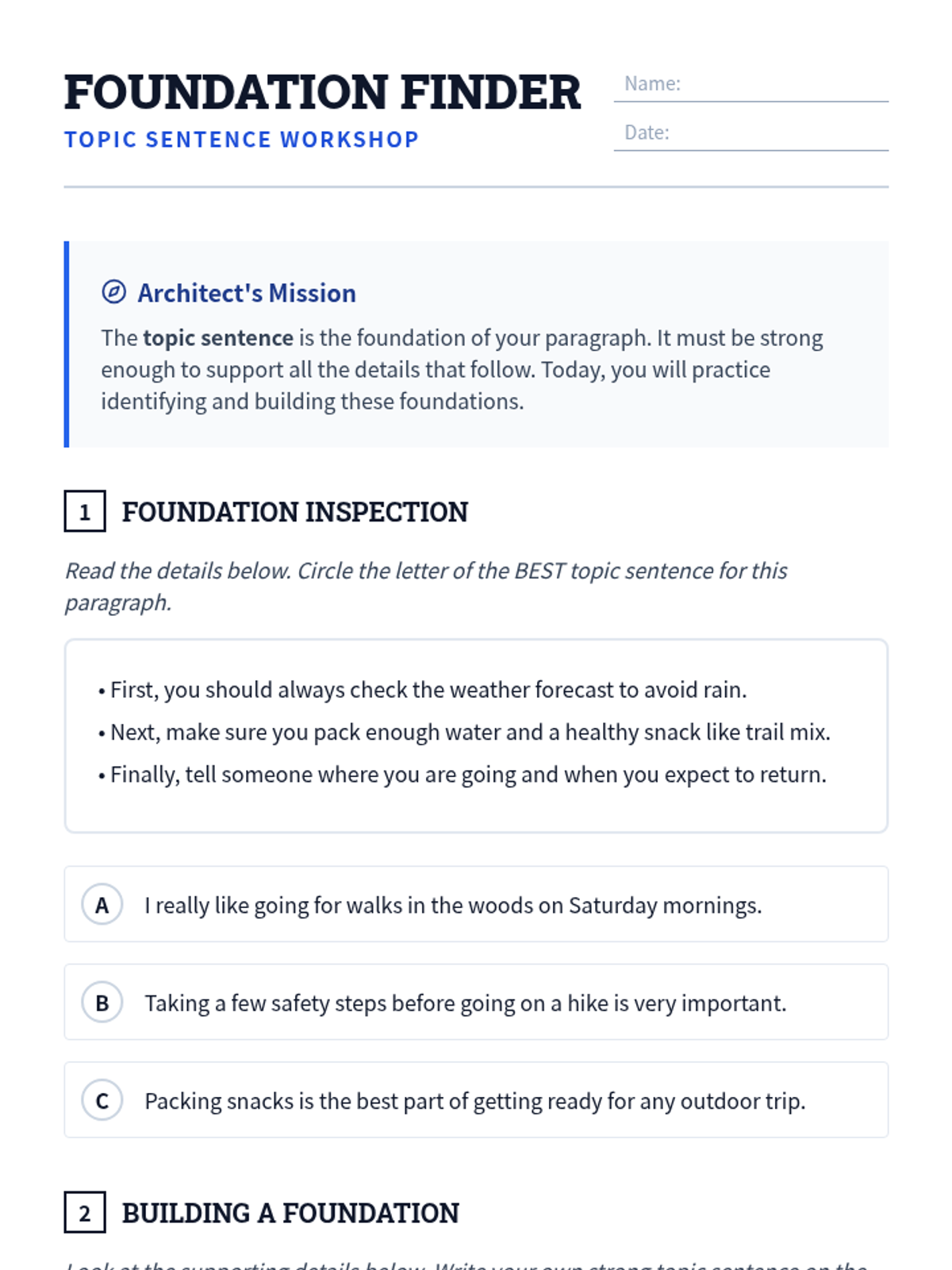
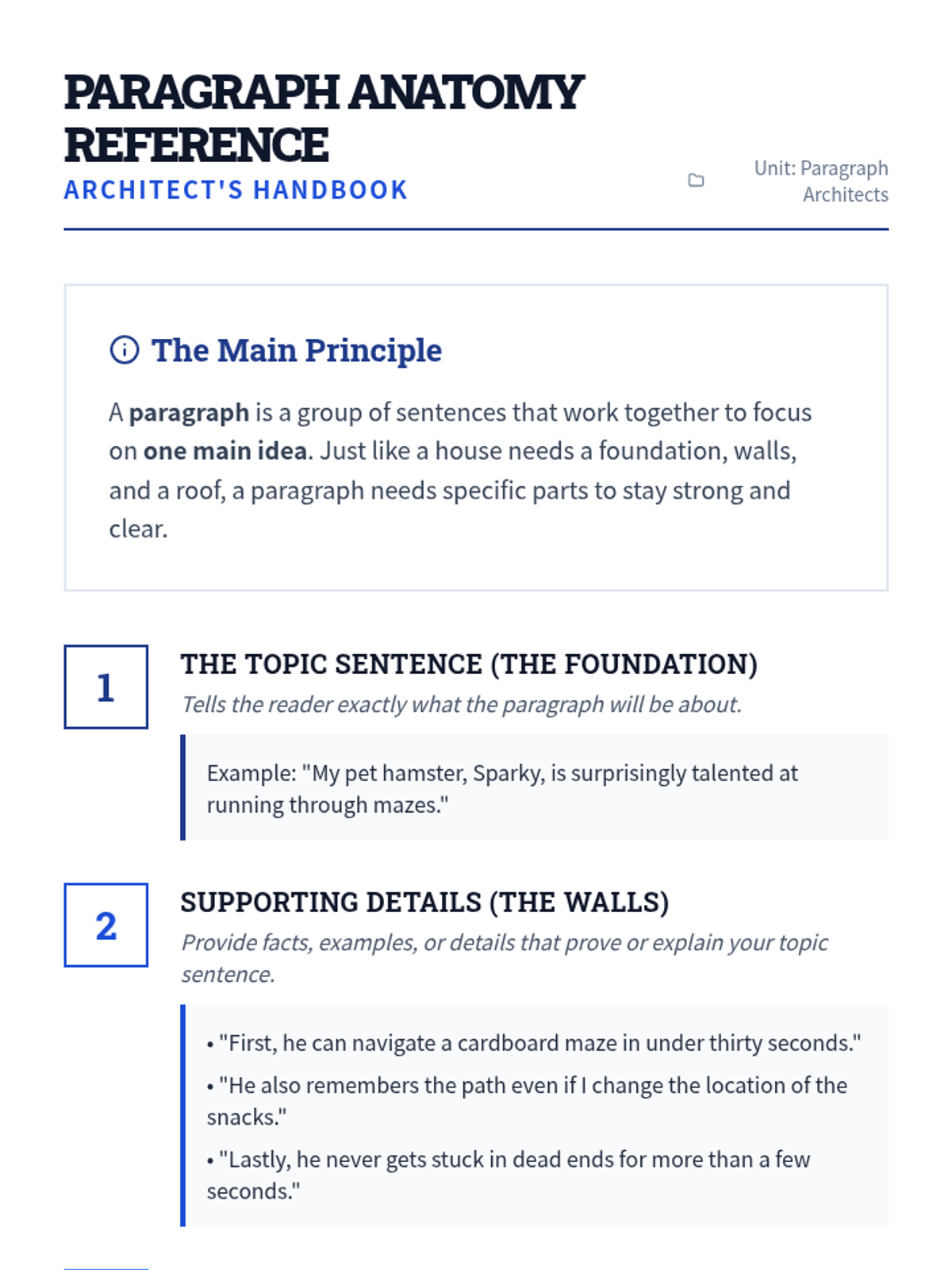
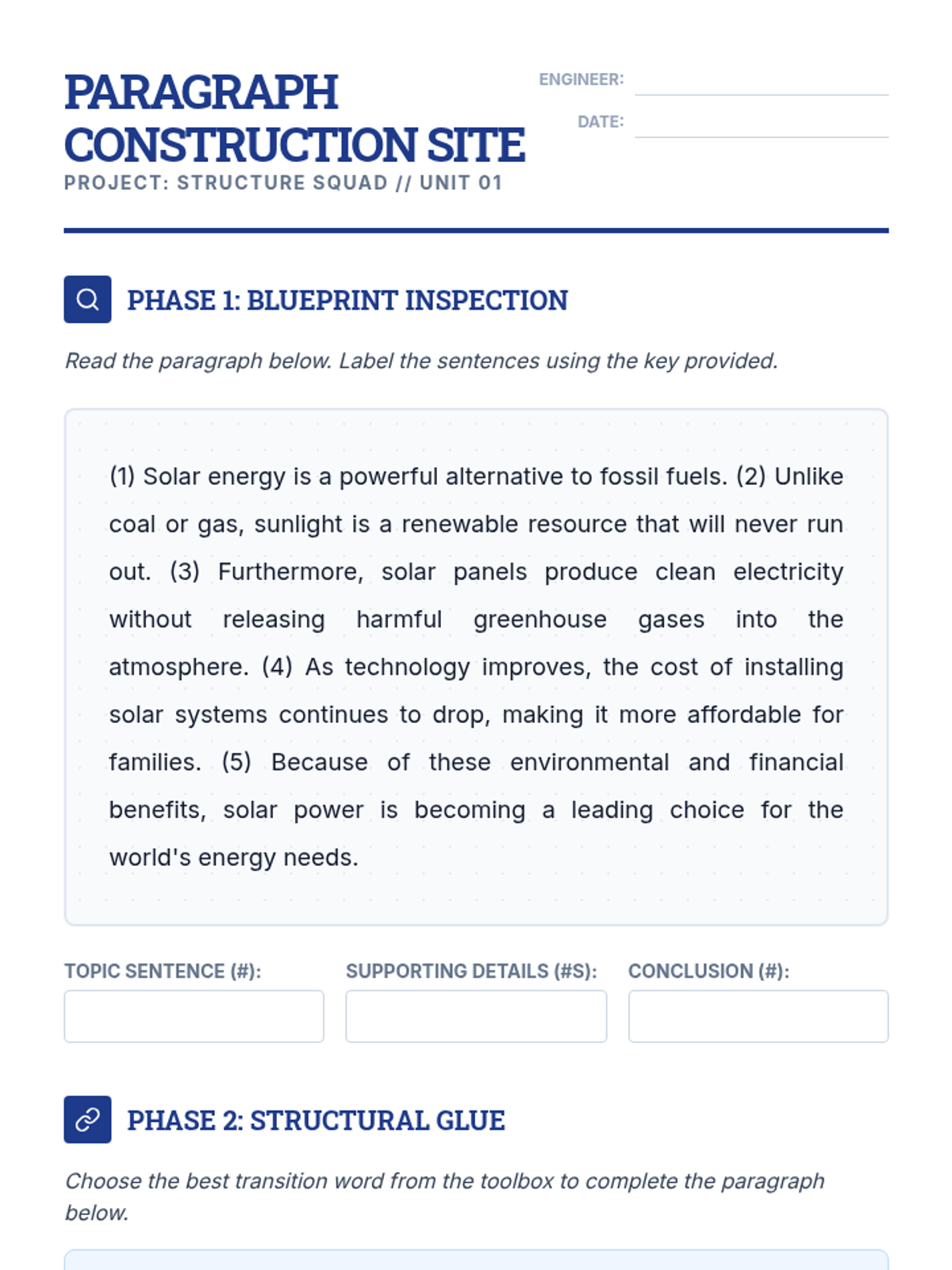
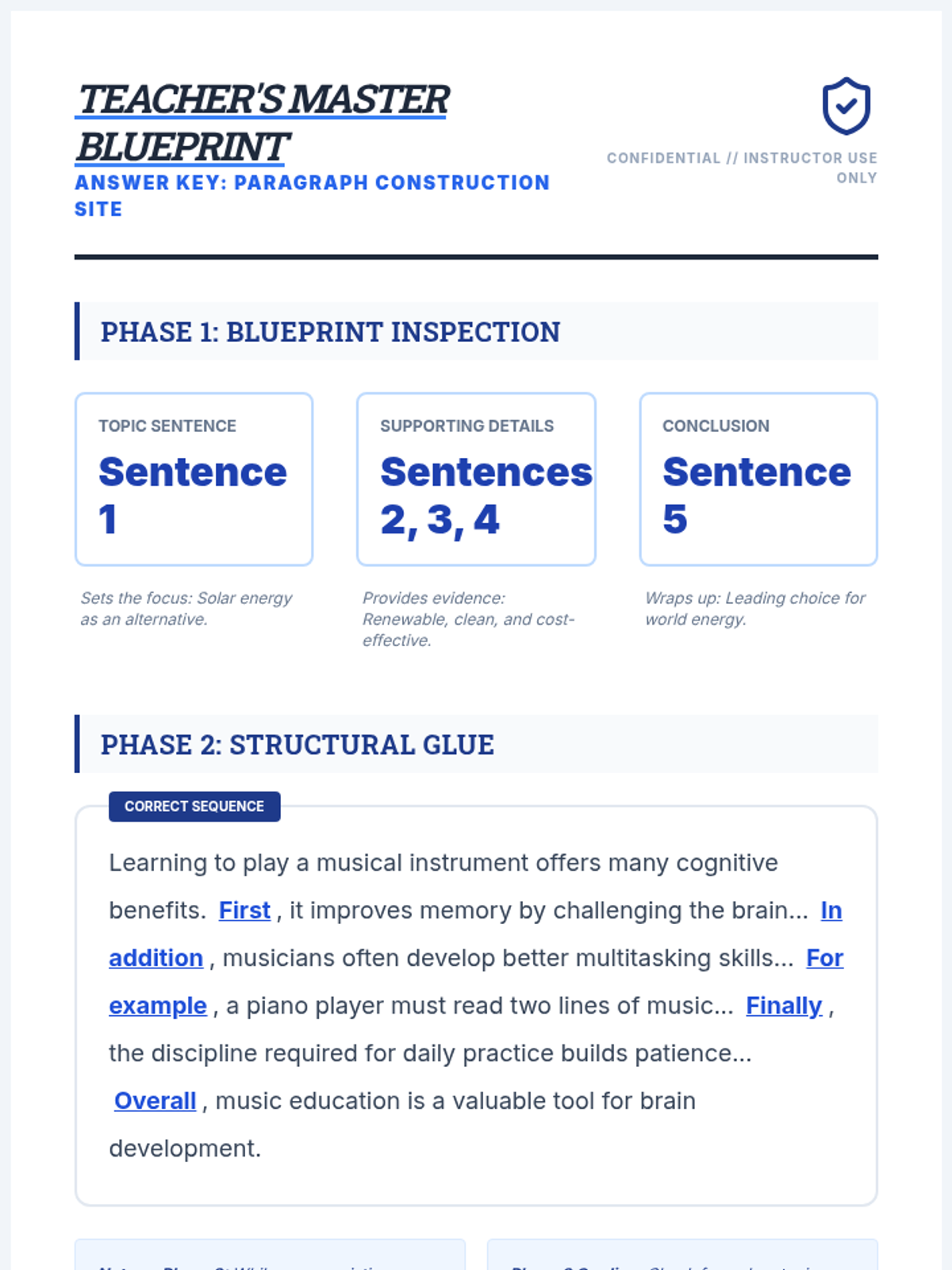
A comprehensive 2-week unit introducing students to the core components of paragraph writing, from topic sentences to concluding statements and transitions. The unit uses an architectural 'blueprint' theme to help students visualize the structure of their writing.
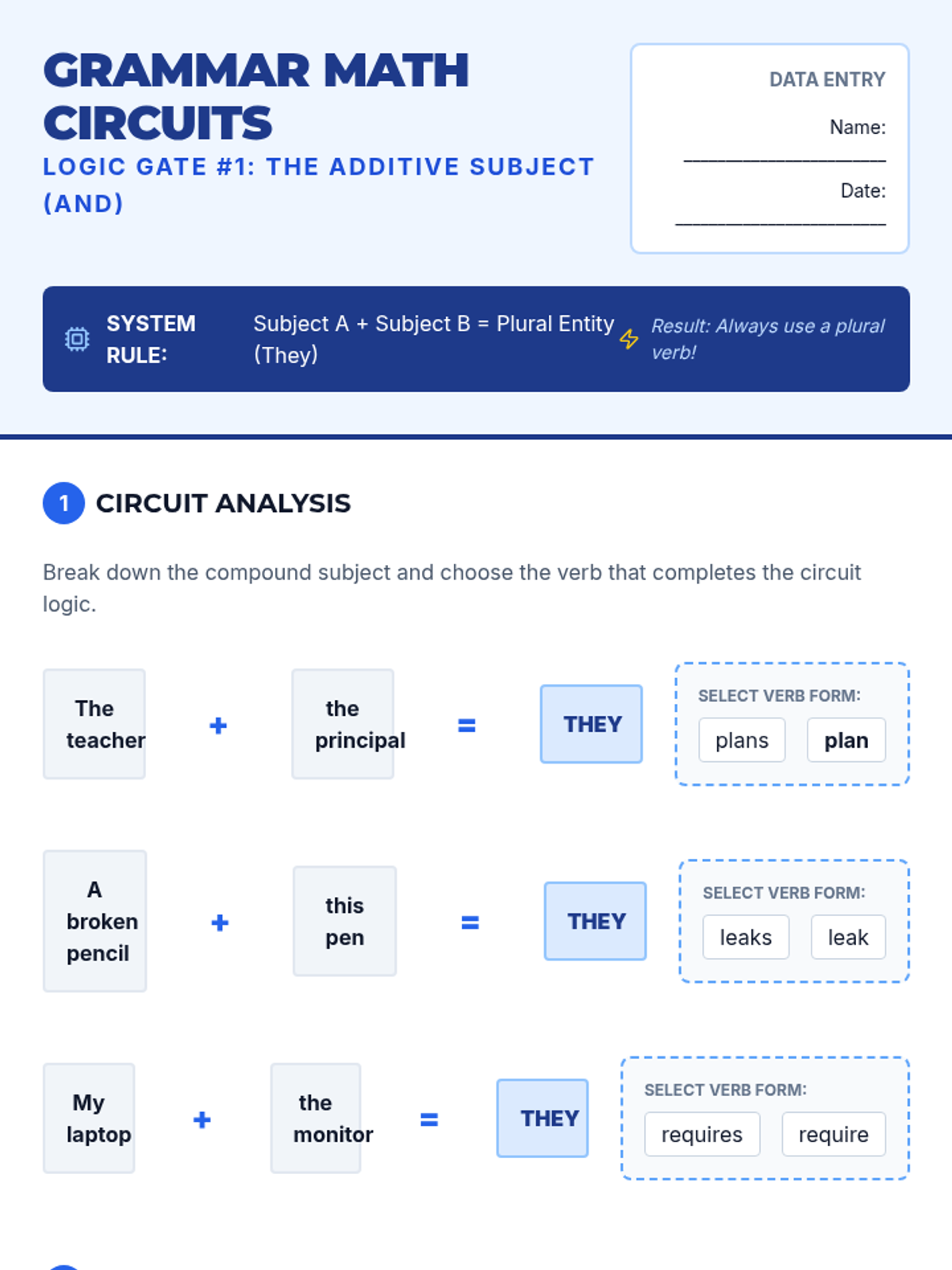
This 6th-grade ELA sequence explores the complexities of subject-verb agreement with compound subjects. Using a logical, game-based framework, students learn to distinguish between the additive nature of 'and' and the proximity rule of 'or/nor' through interactive simulations, grammar 'equations', and creative writing projects.
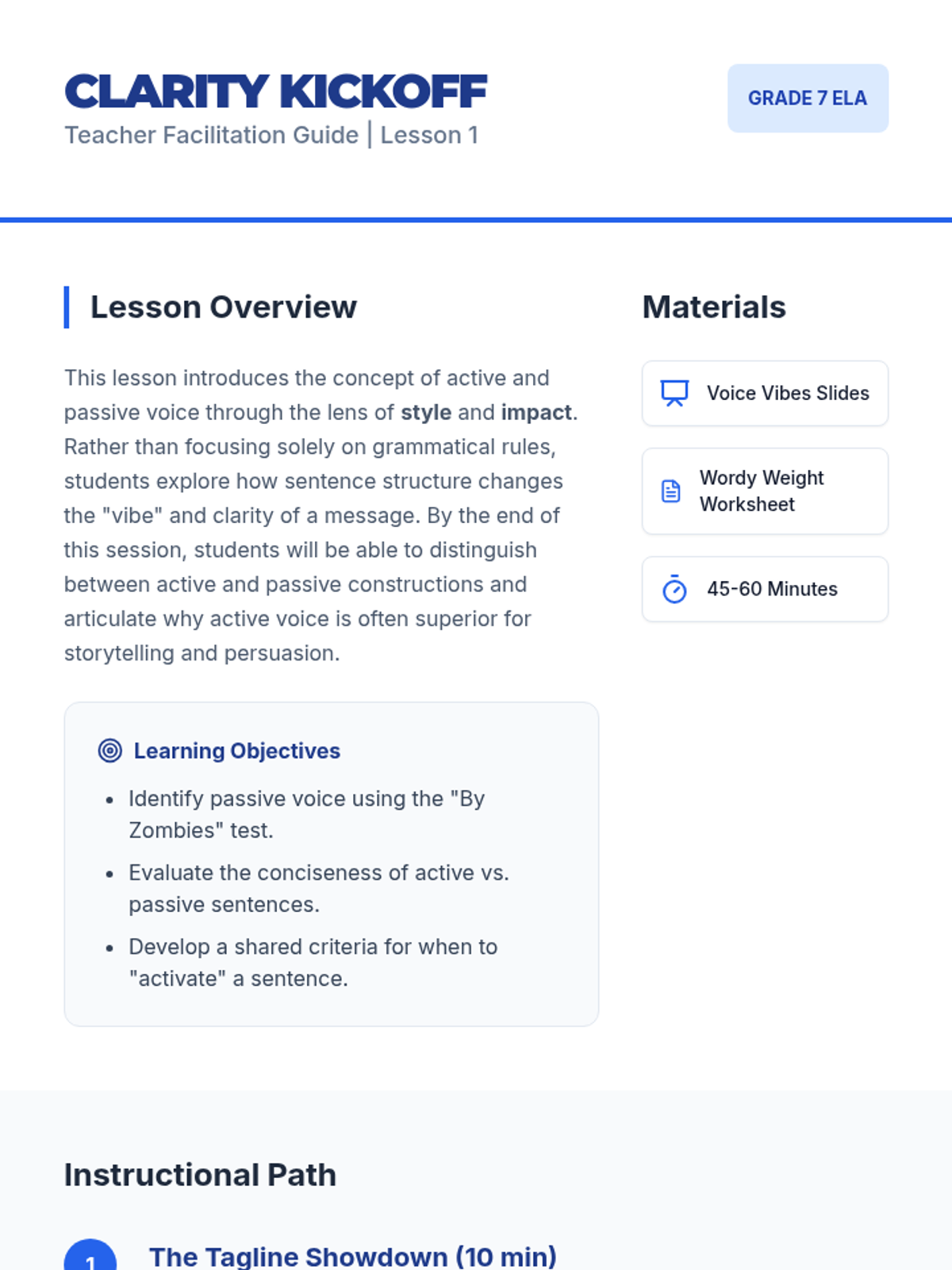
A middle school writing sequence focused on the mastery of active and passive voice. Students learn to identify passive constructions, evaluate their impact on clarity, and revise sentences to increase vigor and directness in their own writing.
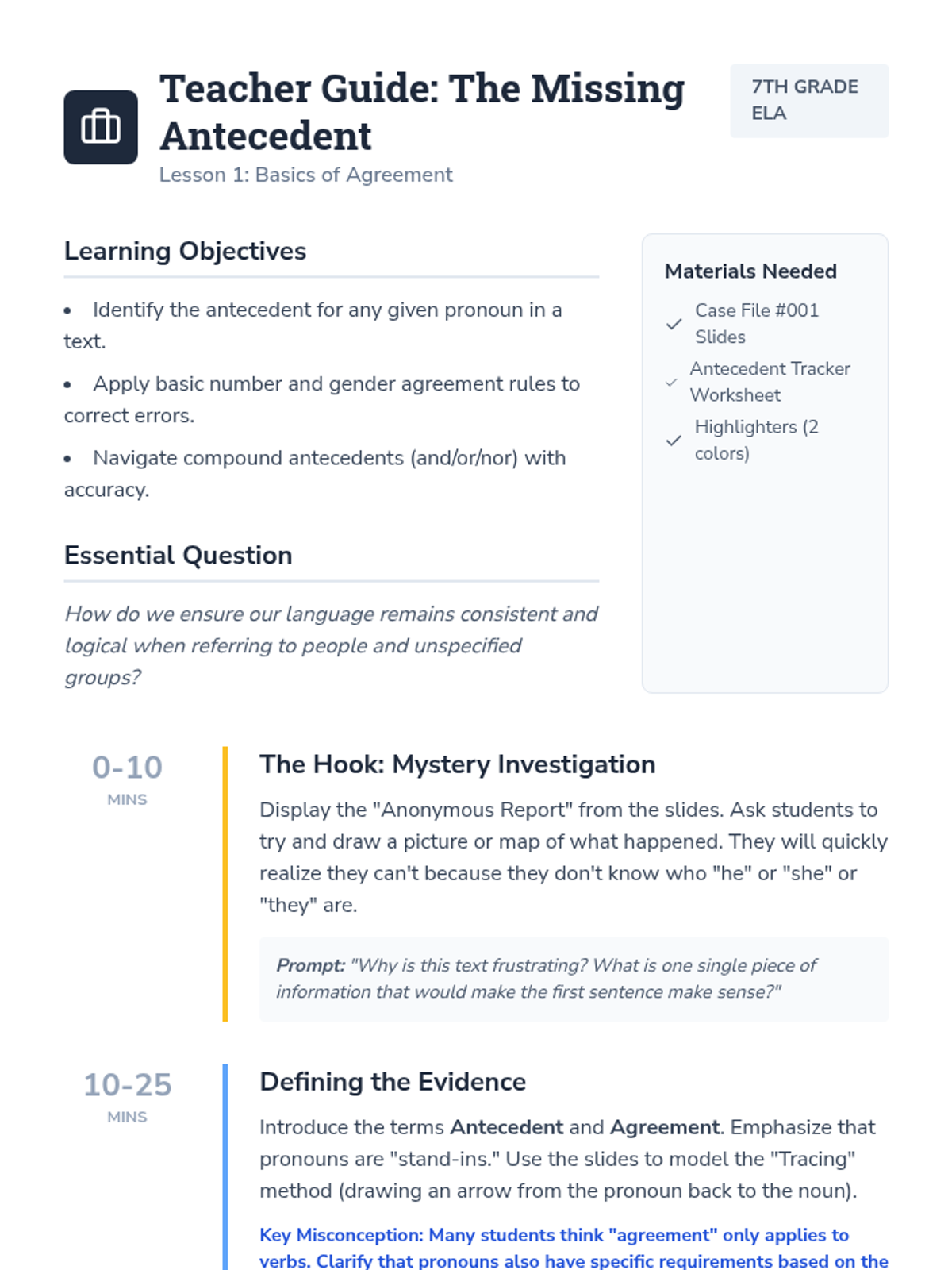
This inquiry-based sequence explores the logic of pronoun-antecedent agreement, from basic number and gender matching to complex indefinite pronouns and the modern singular 'they'. Students act as grammar detectives to investigate how language maintains consistency and clarity across different contexts.
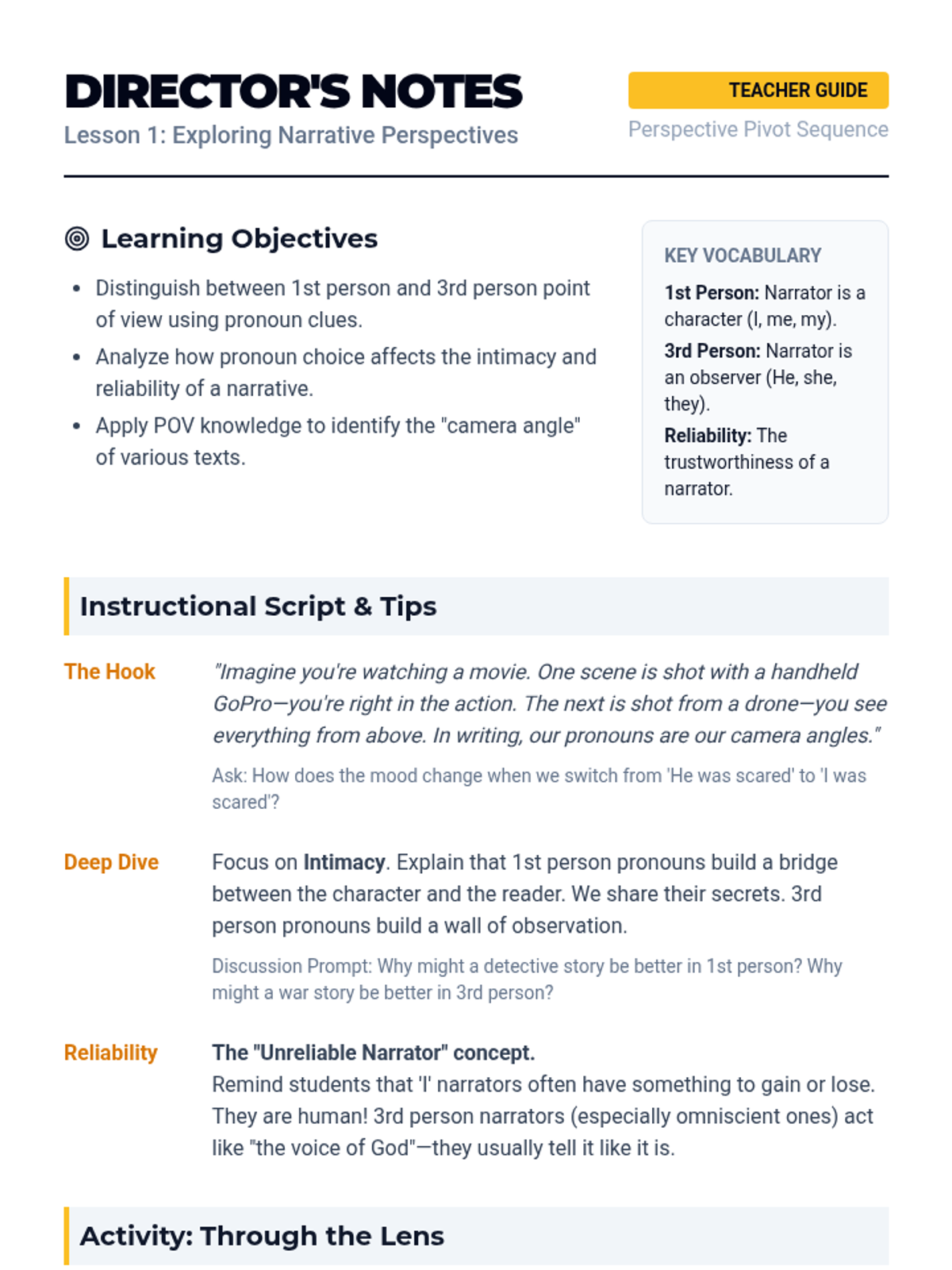
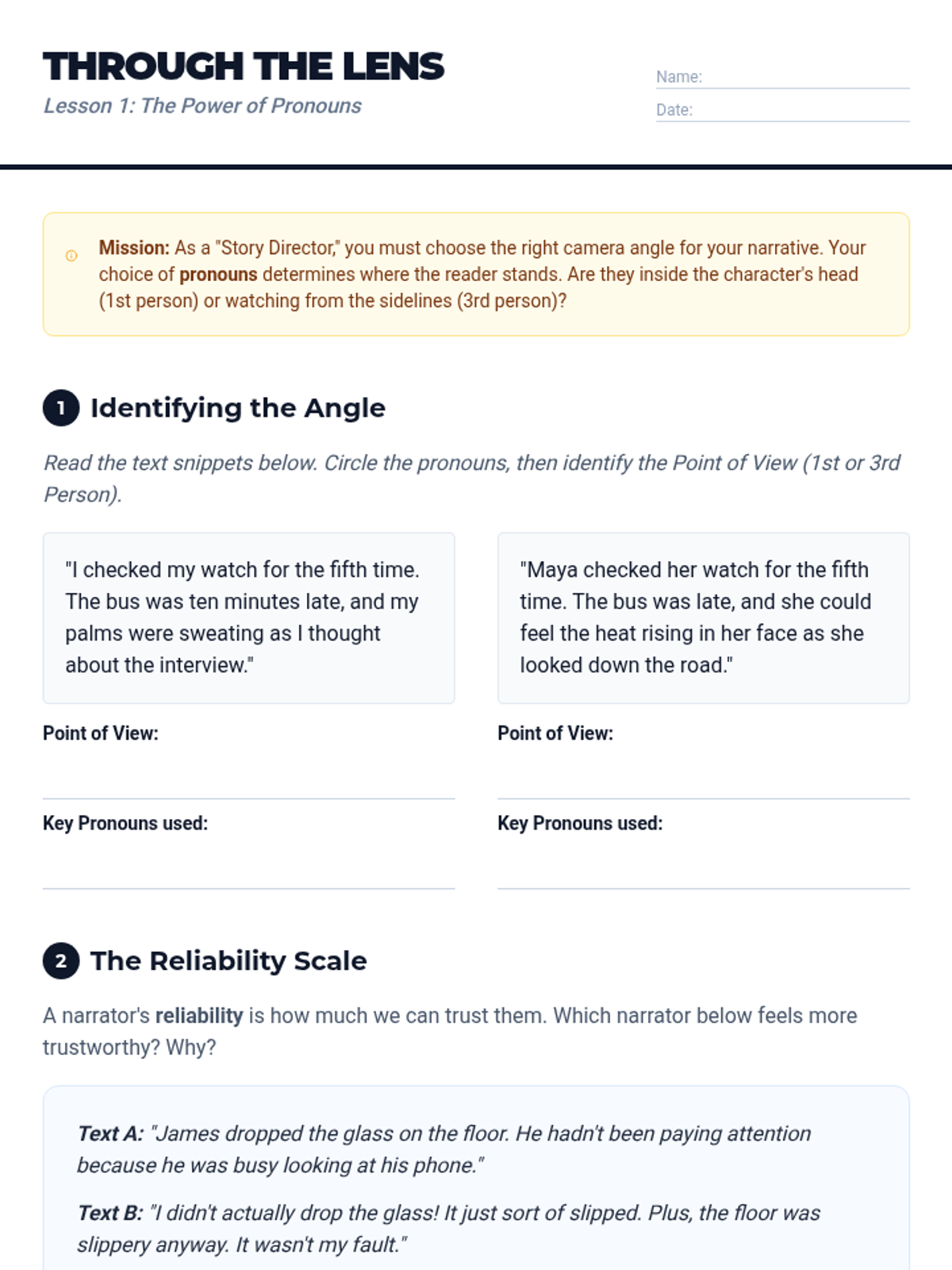
A creative writing and grammar sequence that explores how the choice of pronouns (1st vs. 3rd person) and specific pronoun types (intensive) influence narrative voice, intimacy, and reliability in storytelling. Students learn to maintain consistency and use pronouns as stylistic tools.
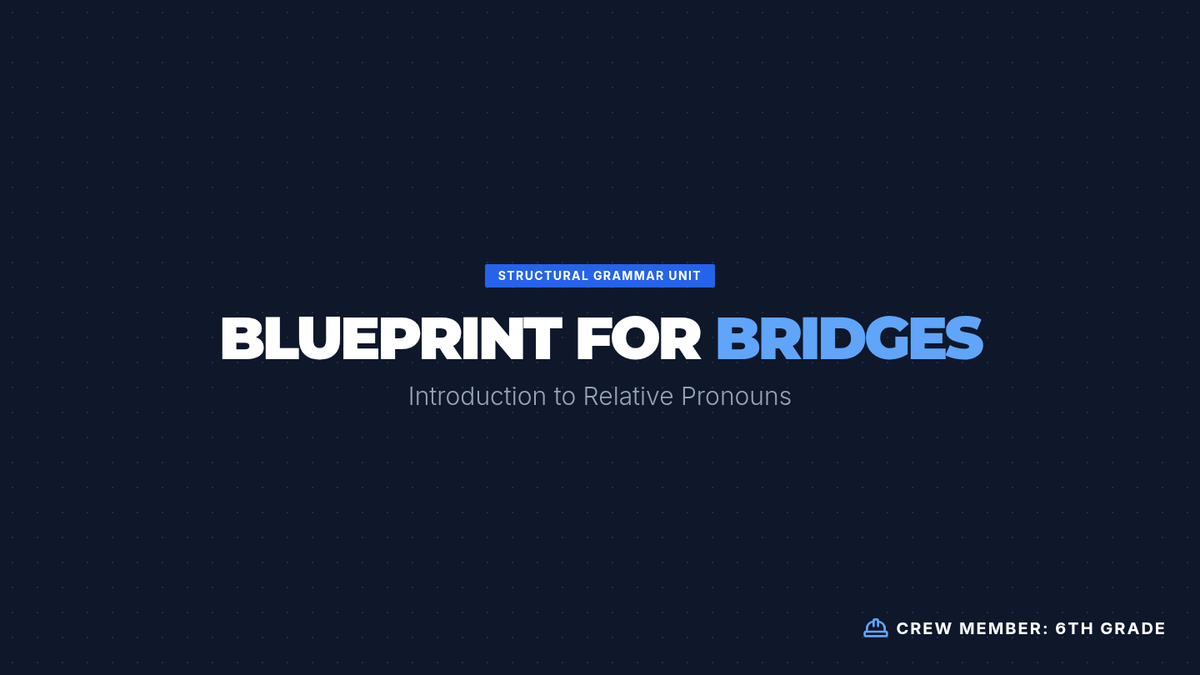
A 5-lesson sequence for 6th-grade students focusing on relative pronouns (who, whom, whose, which, that). Students learn to combine choppy sentences into complex ones, distinguish between restrictive and non-restrictive clauses, and use 'who' vs. 'whom' correctly through a 'Sentence Bridge' construction theme.
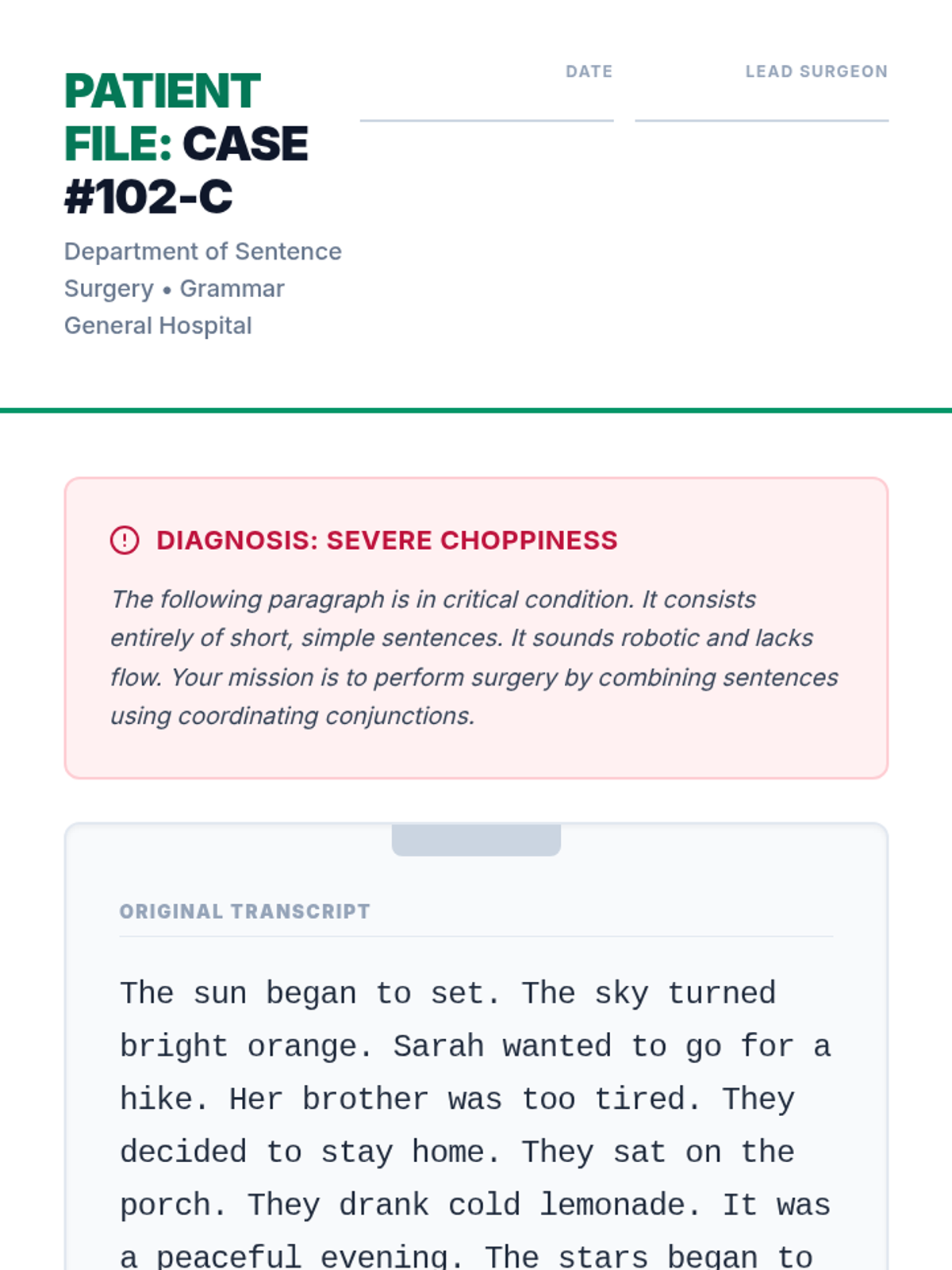
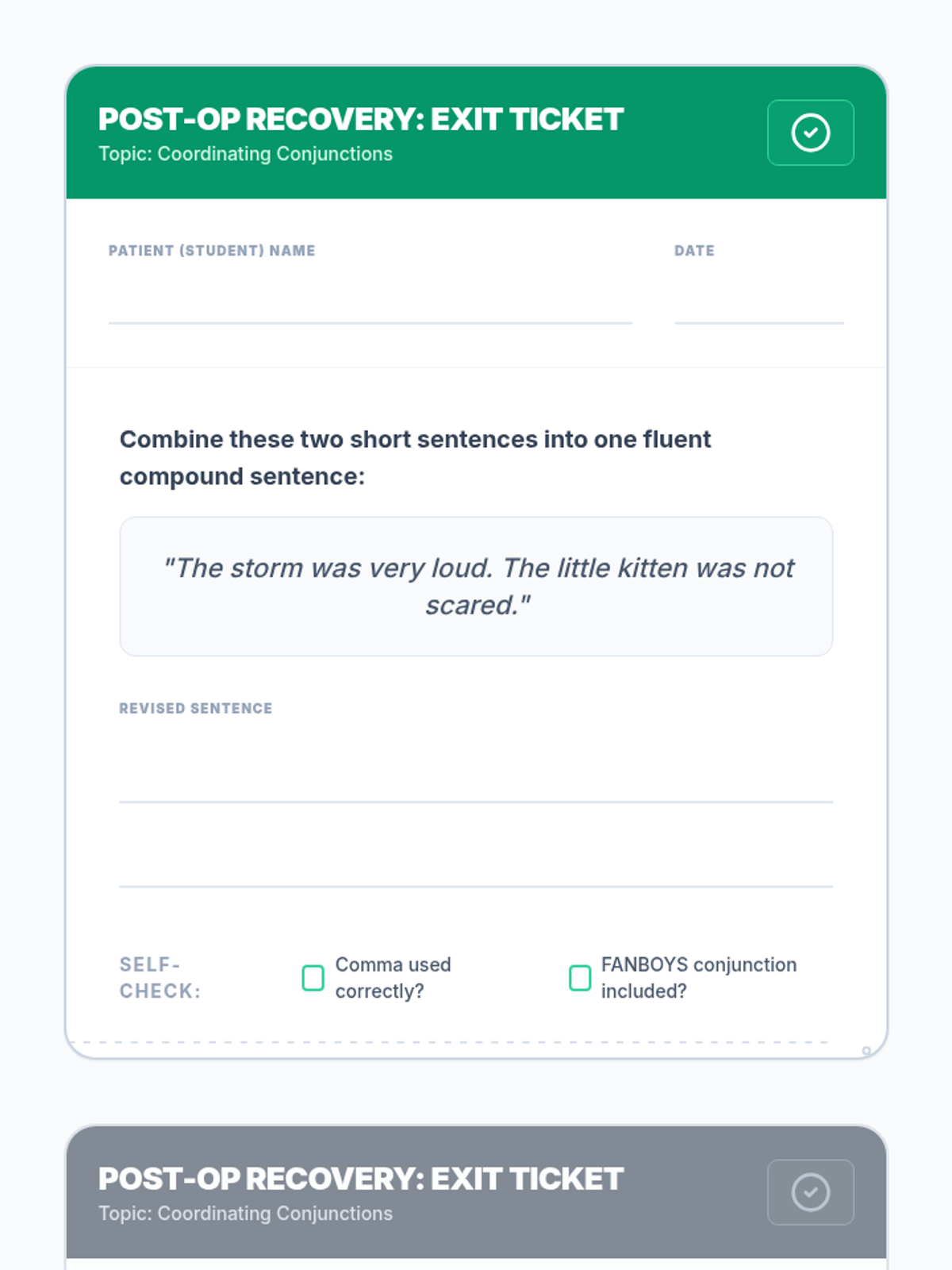
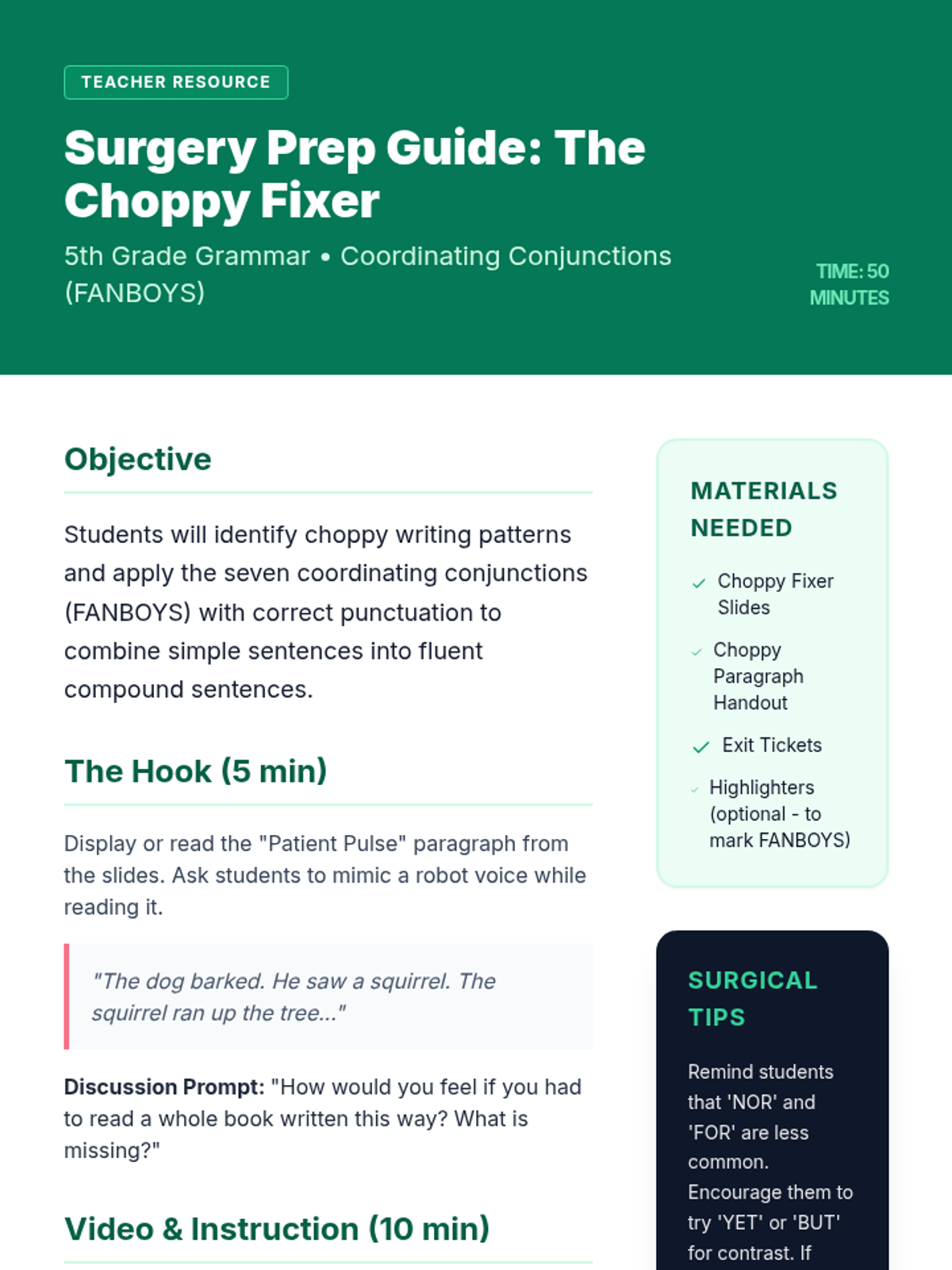
A lesson sequence focused on mastering coordinating conjunctions to improve writing flow and sentence variety. Students transition from short, choppy sentences to fluent compound sentences using the FANBOYS mnemonic.
A 5-lesson sequence for 6th-grade students on mastering dictation editing. Students move from identifying AI errors to mastering voice commands and a hybrid editing workflow that combines voice and manual corrections.
A comprehensive 5-lesson sequence for 6th graders to move beyond simple sentences by mastering complex structures, subordinating conjunctions, relative clauses, and appositives to enhance writing sophistication and flow.
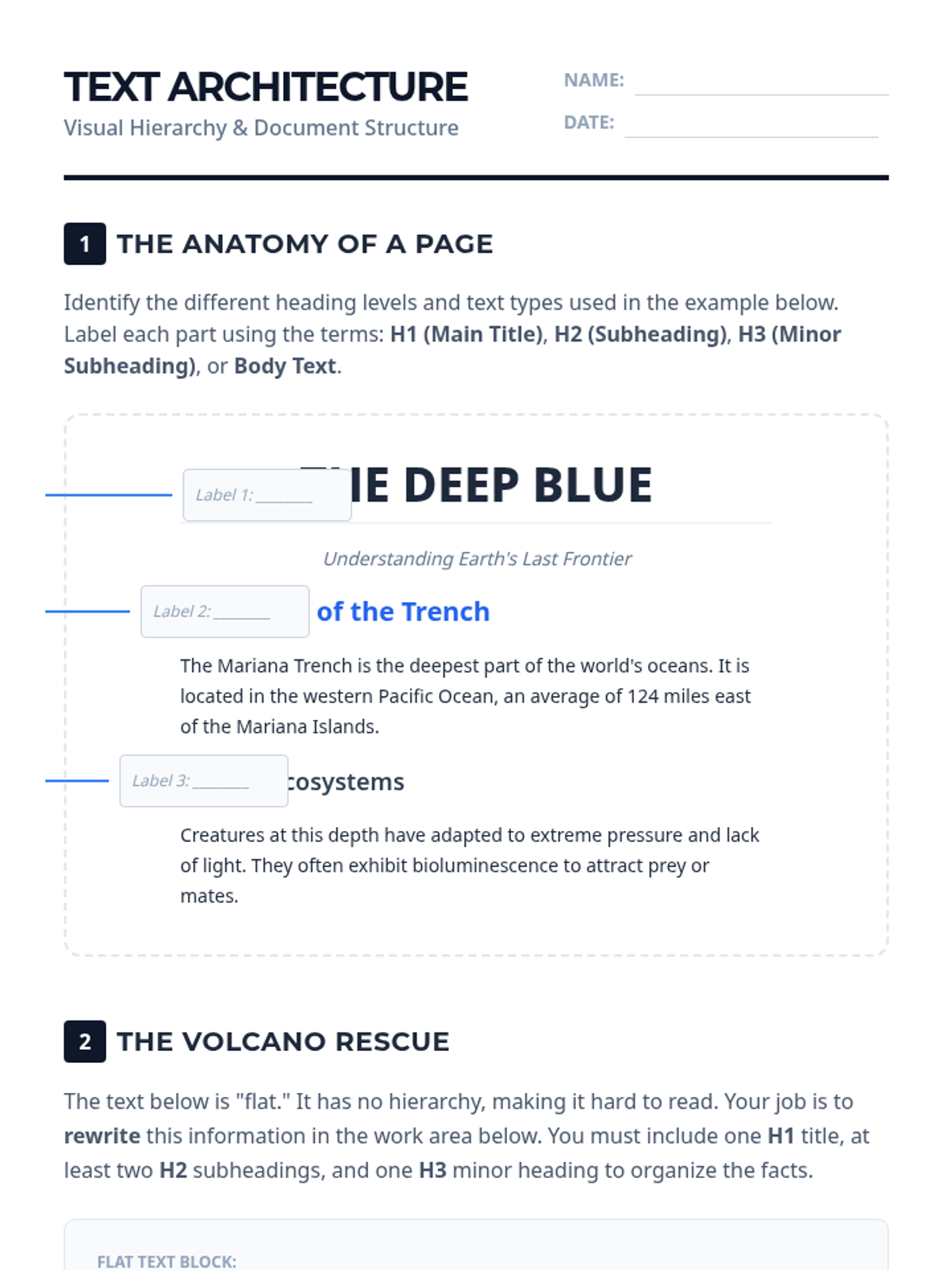
A project-based sequence for 6th grade students focused on the mechanics of document formatting, visual hierarchy, and professional layout standards to improve text readability.
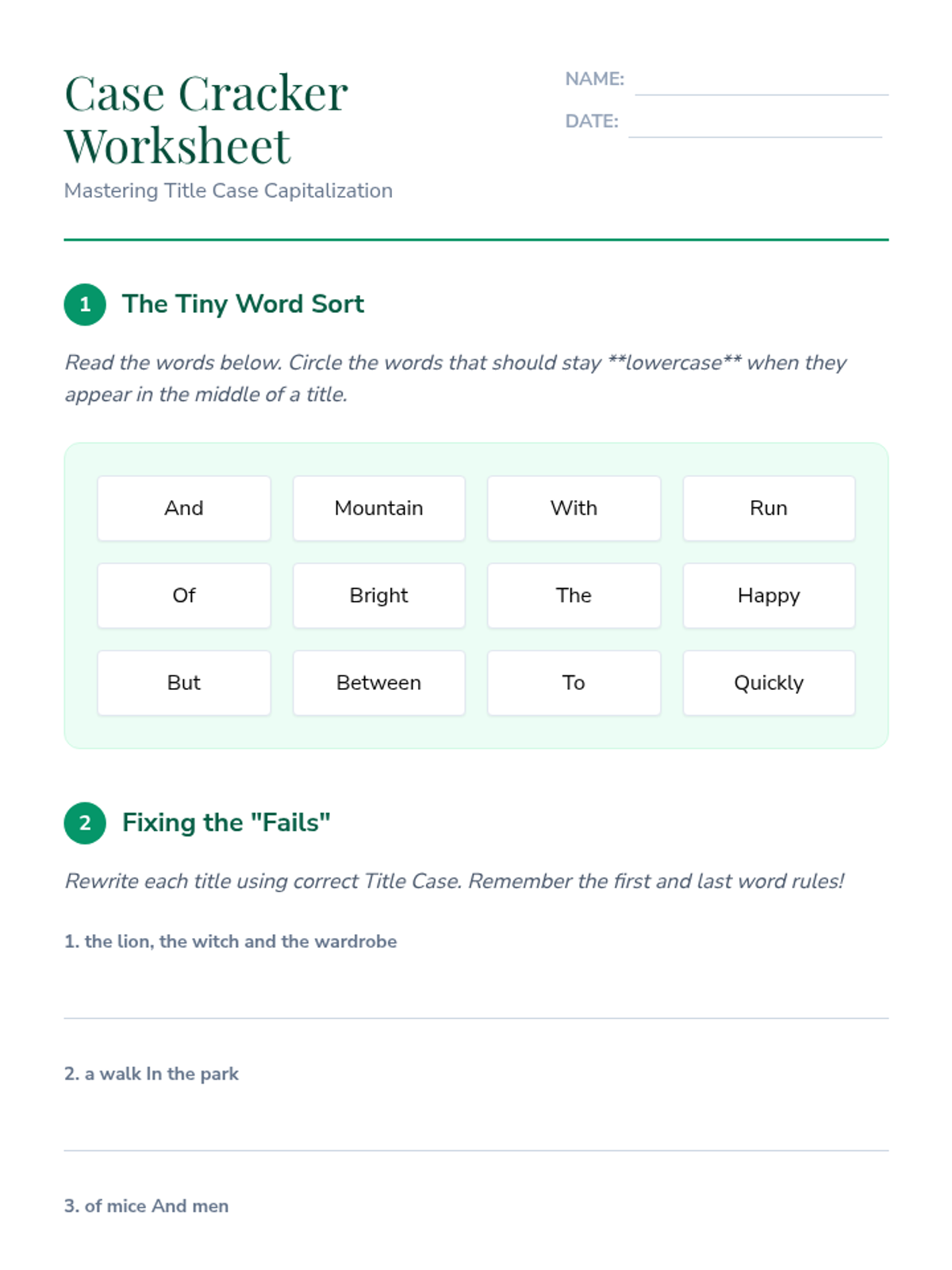
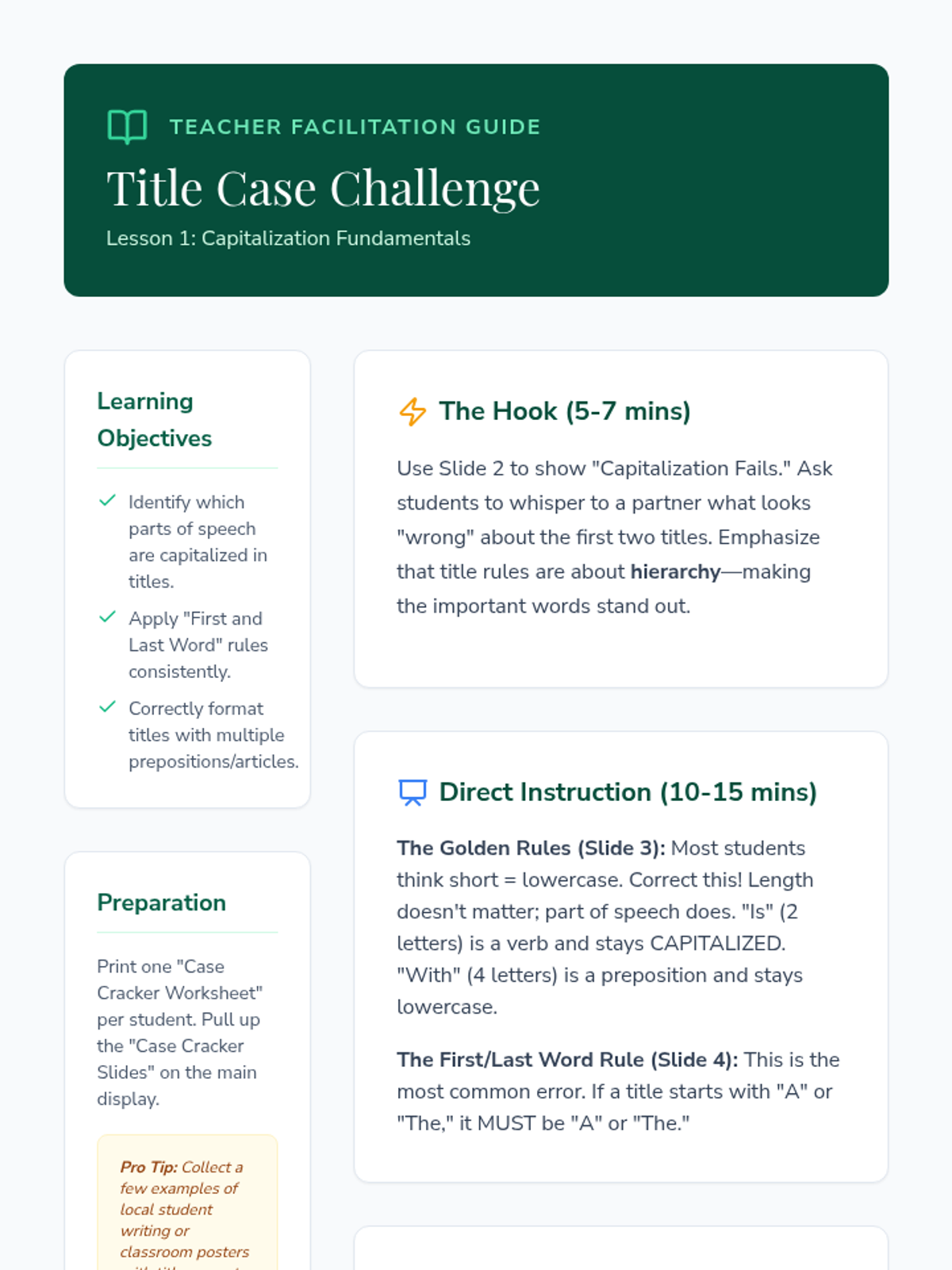
A comprehensive 6th-grade sequence on capitalization and formatting rules for titles. Students master Title Case rules, distinguish between italics and quotation marks for various media, and learn to format complex titles with subtitles and proper nouns.
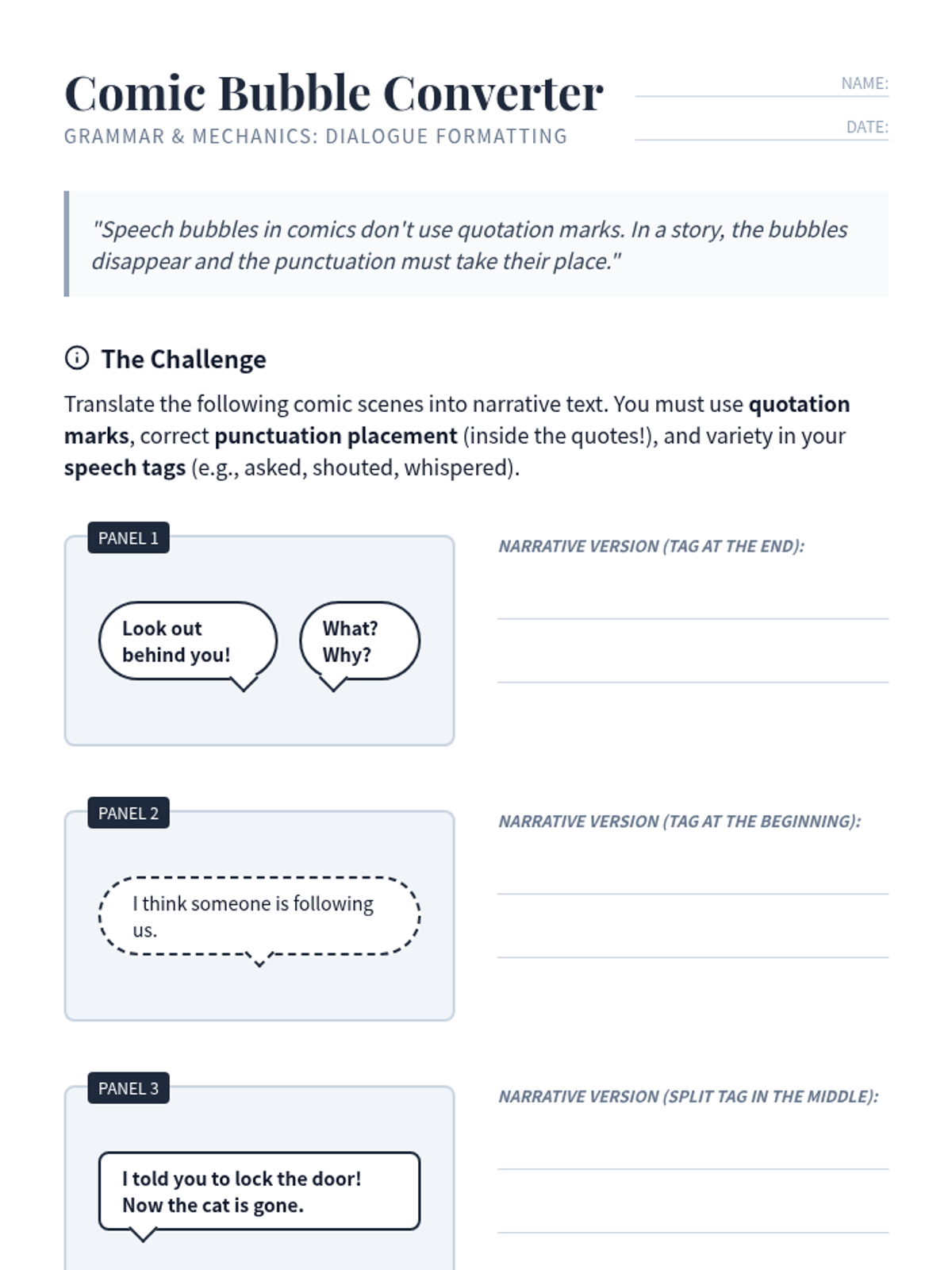
This sequence bridges the gap between creative writing and technical conventions by focusing on the mechanics of dialogue and narrative structure. Students explore how paragraph breaks, indentation, and quotation marks organize a story and clarify who is speaking.
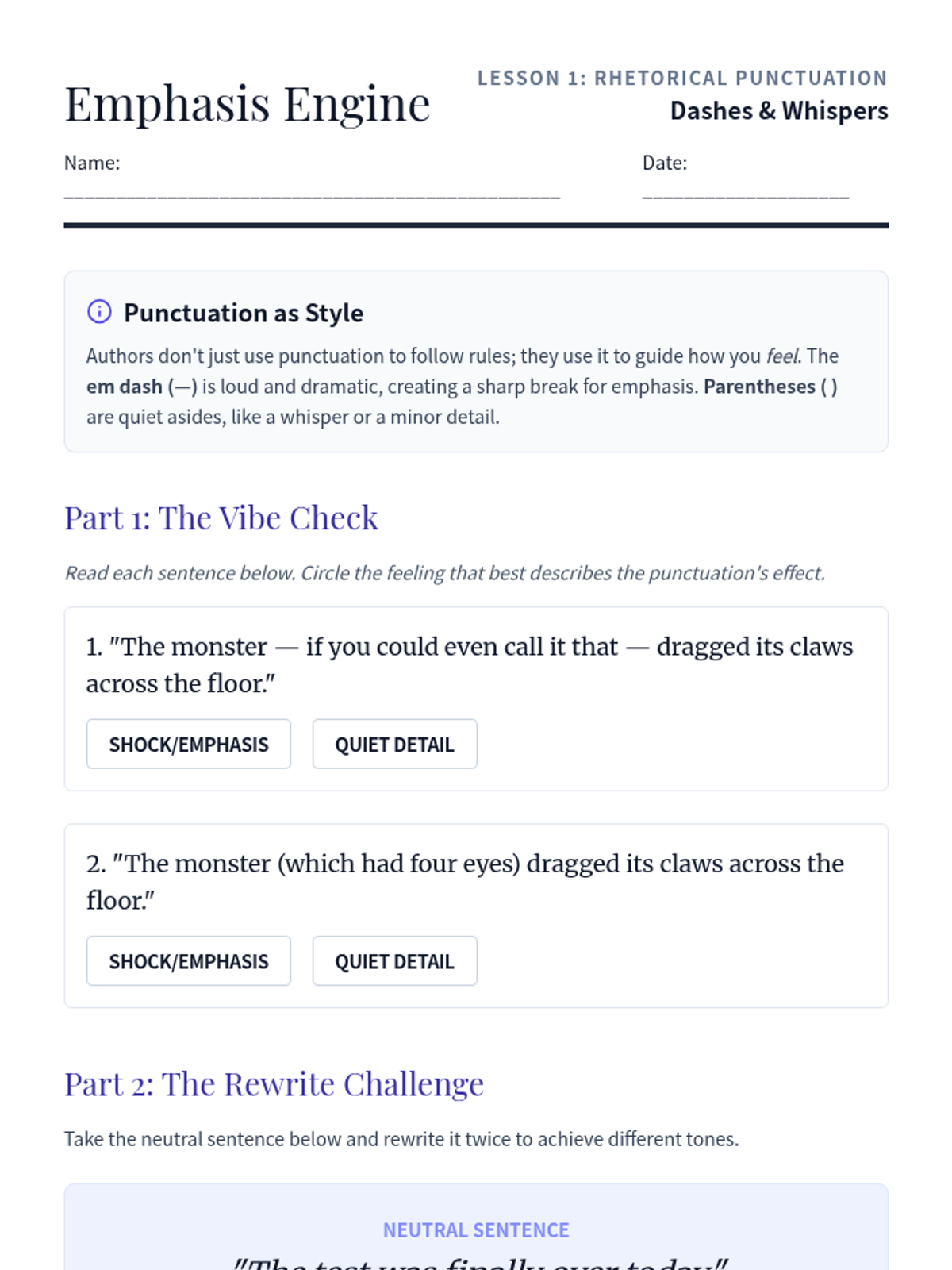
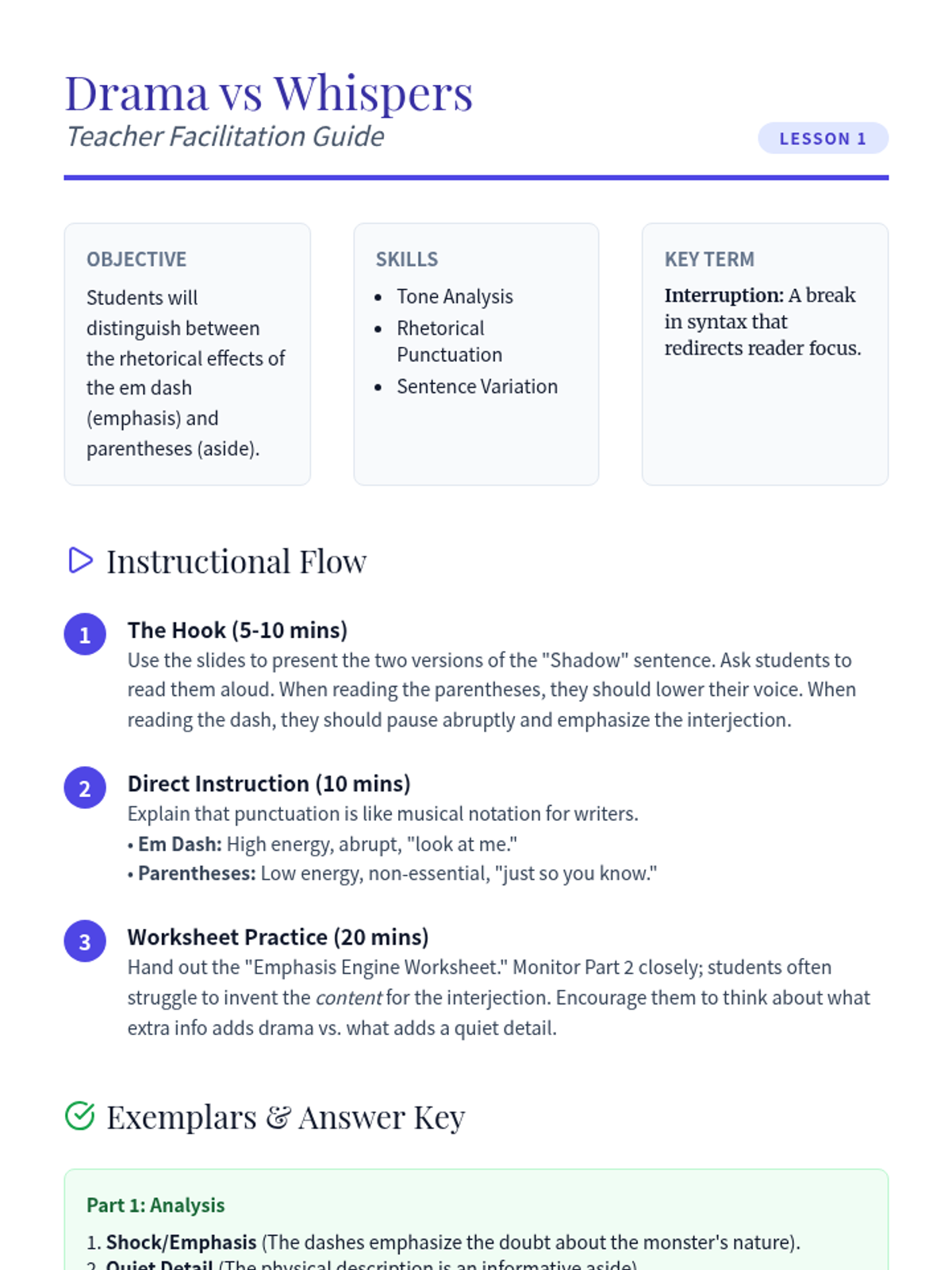
A middle school ELA sequence exploring punctuation as a rhetorical tool for style and voice. Students learn to use em dashes, parentheses, ellipses, and hyphens to control tone and pacing.
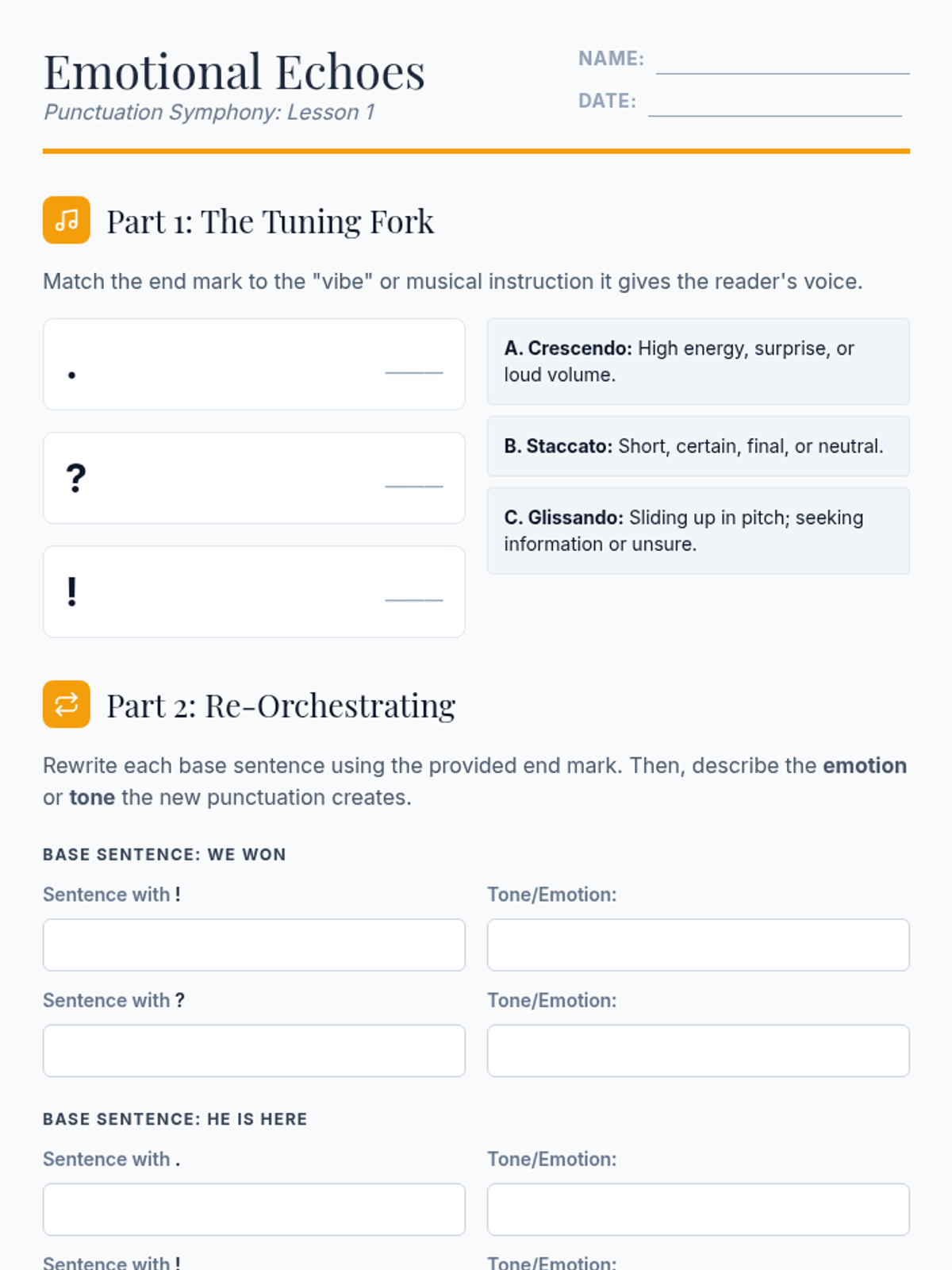
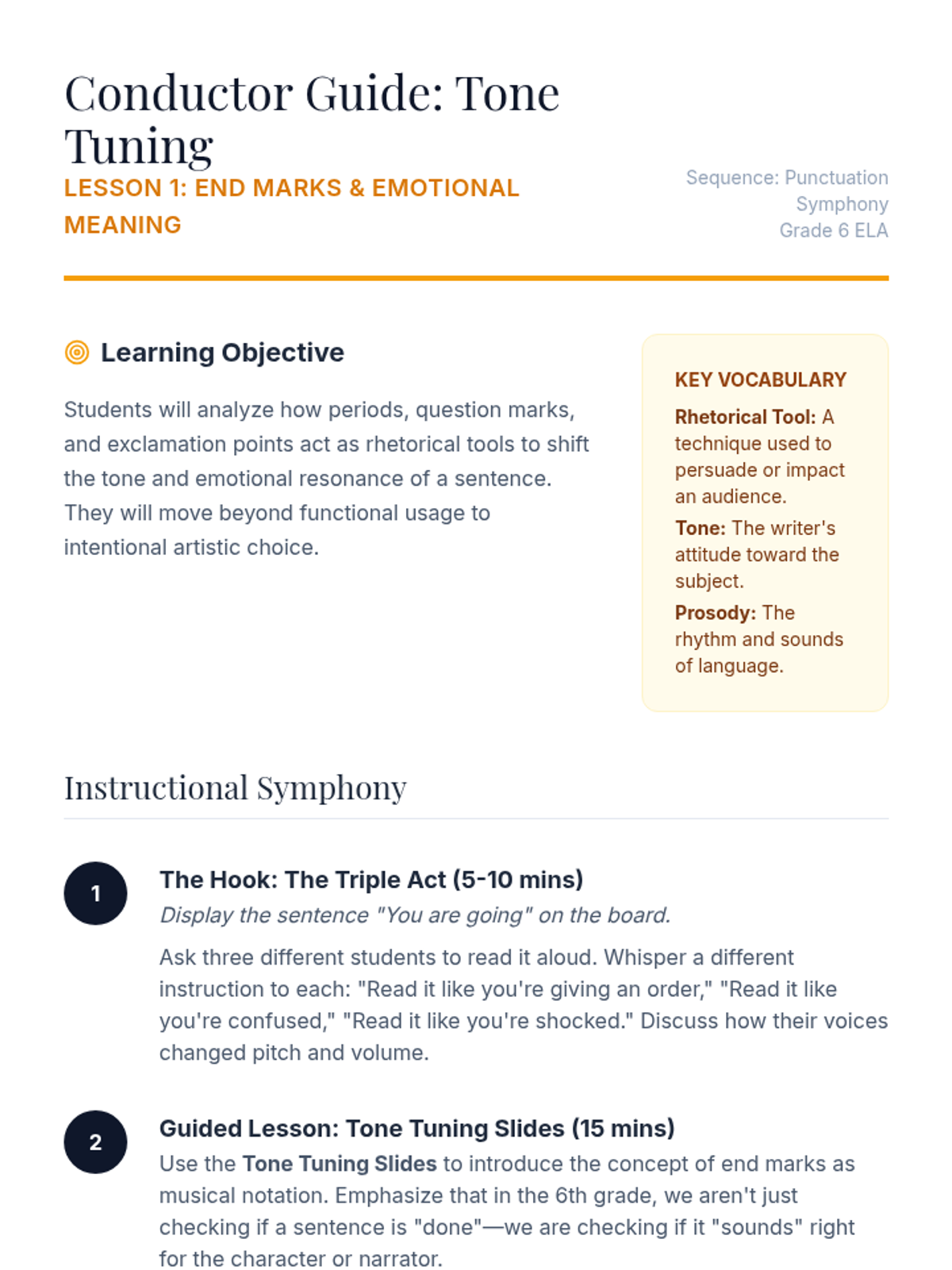
This advanced 6th-grade sequence treats punctuation as a rhetorical tool for voice, tone, and pacing. Students explore how dashes, ellipses, parentheses, and end marks act as 'musical notation' for the written word, moving beyond basic grammar to expressive writing.
A comprehensive 9-week study of Franz Kafka's 'Metamorphosis', focusing on argumentative writing through textual evidence and narrative expansion. The sequence utilizes graphic organizers, visual scaffolding, and increased opportunities to respond to deepen student engagement with the surrealist text.
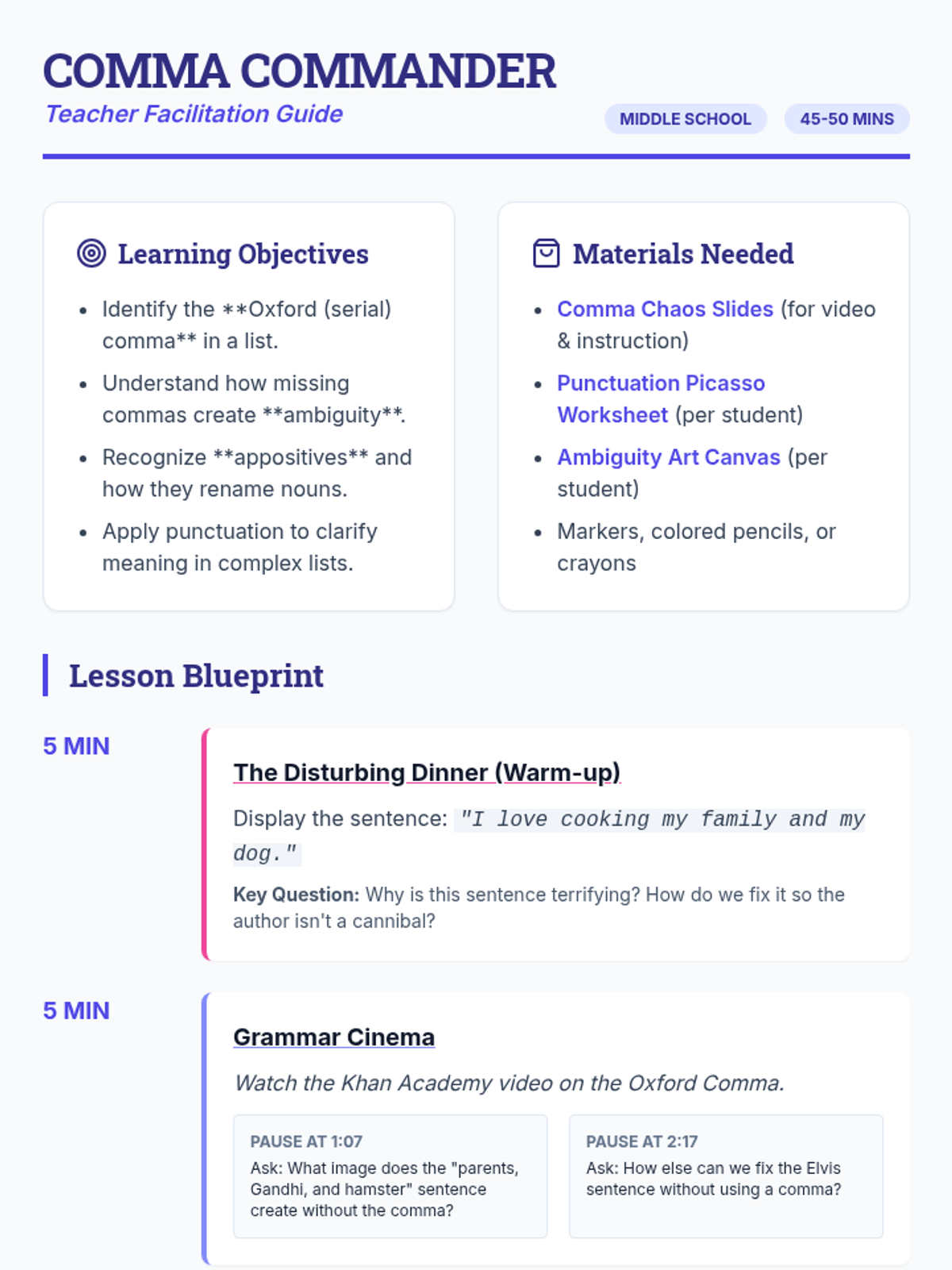
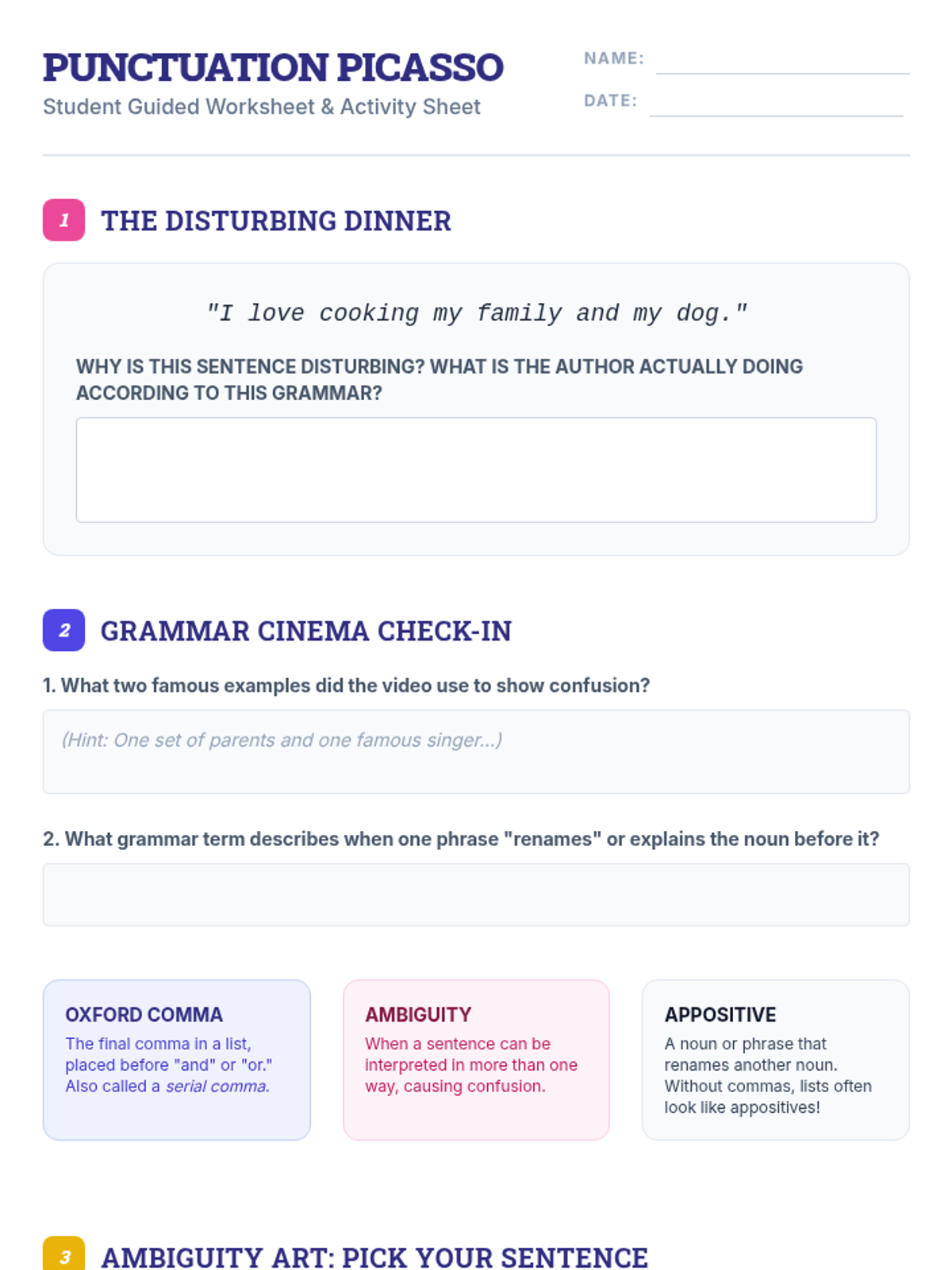
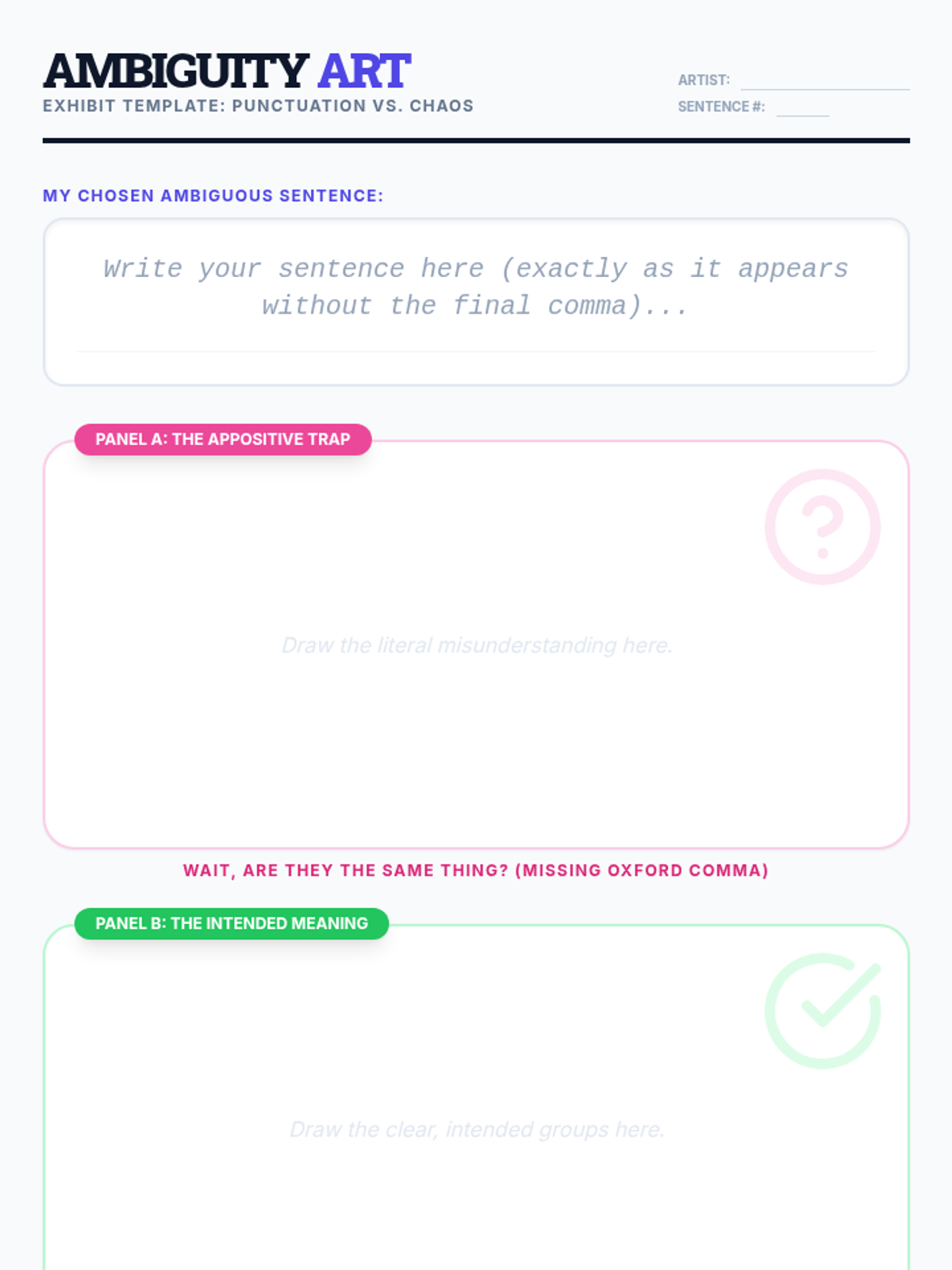
A short unit focusing on the power of punctuation, specifically the Oxford comma, to prevent ambiguity and the role of appositives in sentence structure.
A comprehensive unit on misplaced and dangling modifiers using a 'Linguistic Detective' theme. Students progress from intuitive ear-testing to technical categorization and stylistic analysis of split infinitives, culminating in a mastery escape room challenge.
A simulation-based sequence where students act as professional editors, mastering misplaced modifiers to ensure clarity and credibility in non-fiction writing.
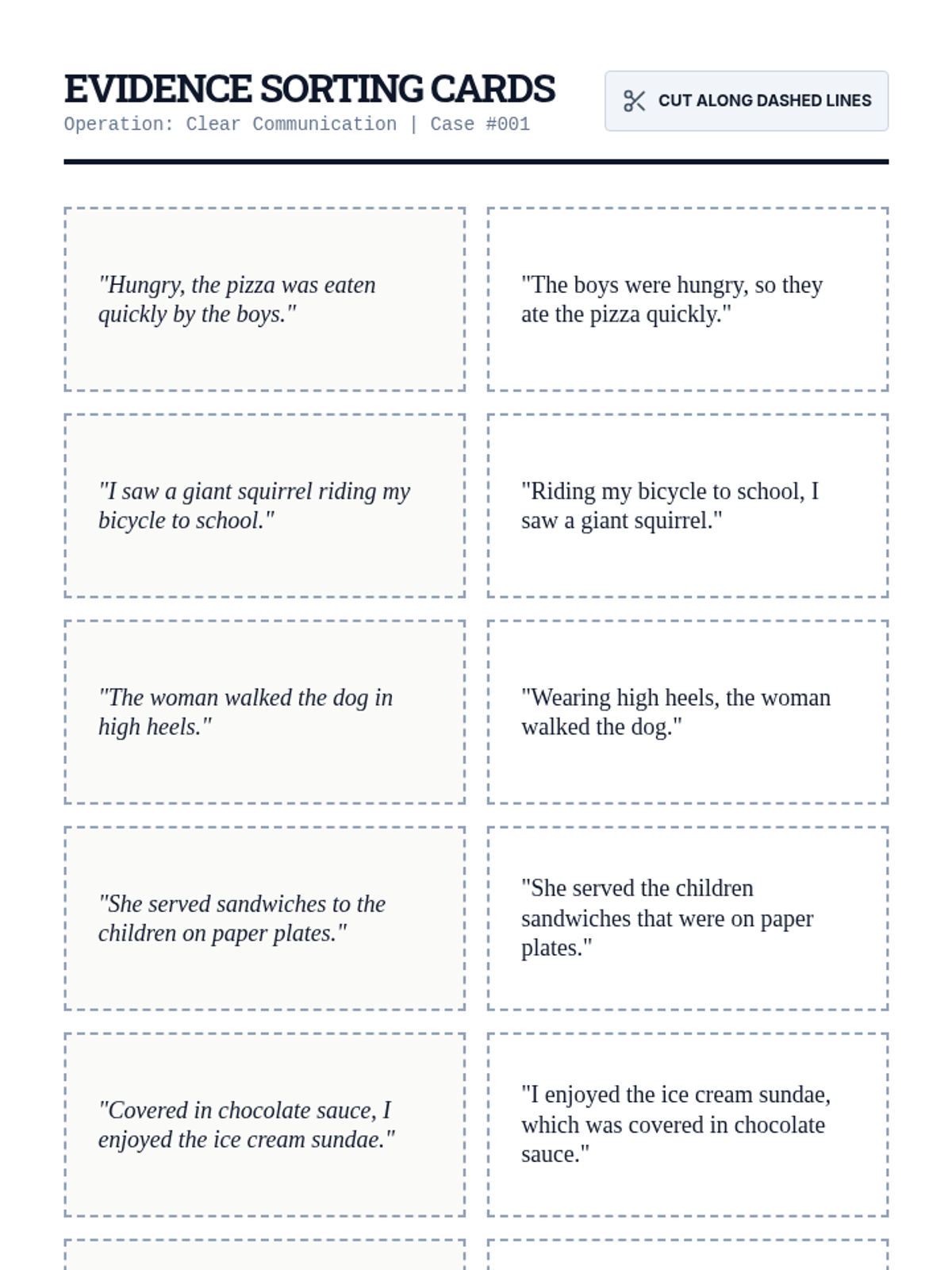
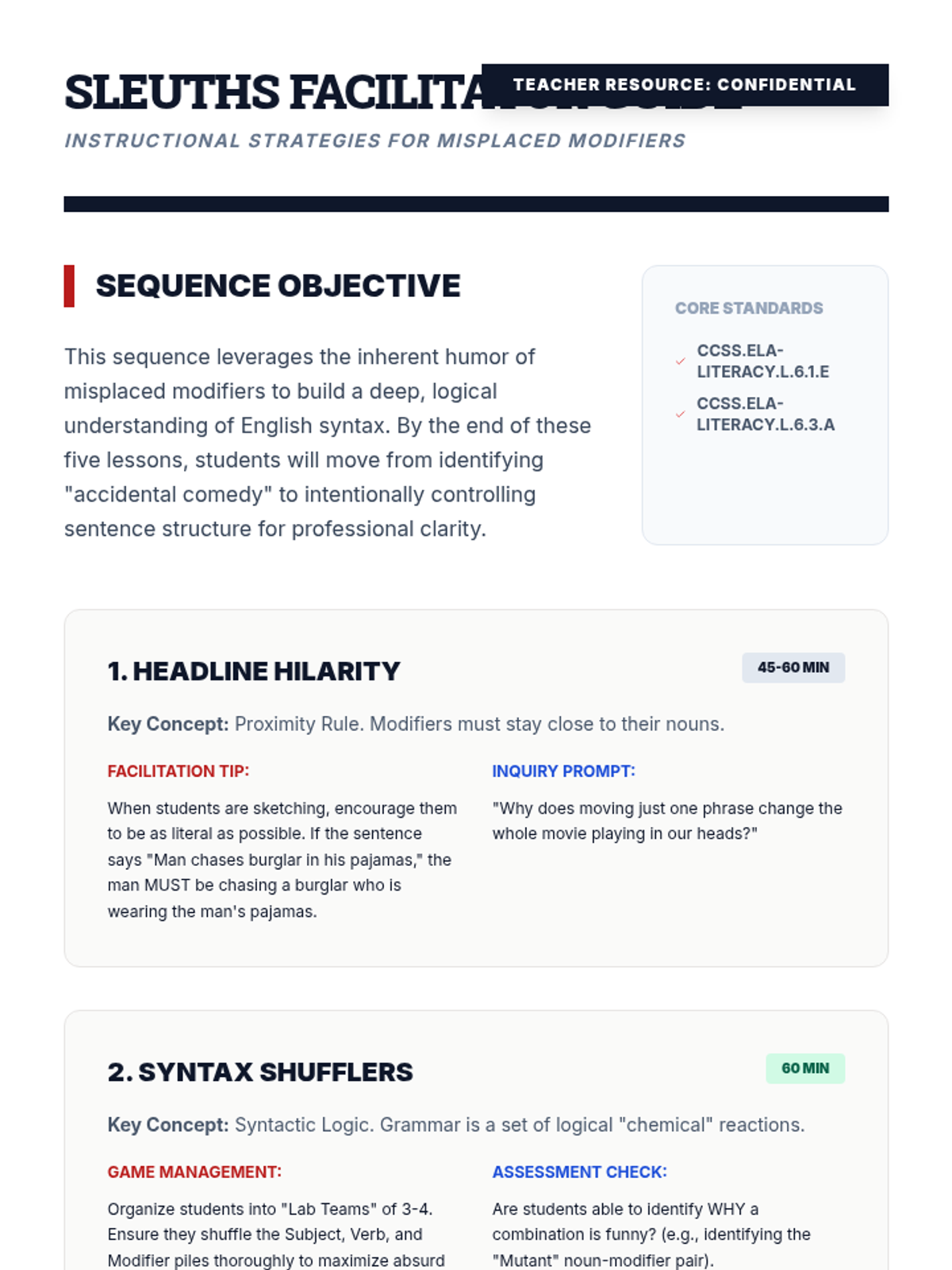
A deep dive into the logic of English grammar through the lens of misplaced modifiers. Students use inquiry and humor to master sentence structure and clarity.
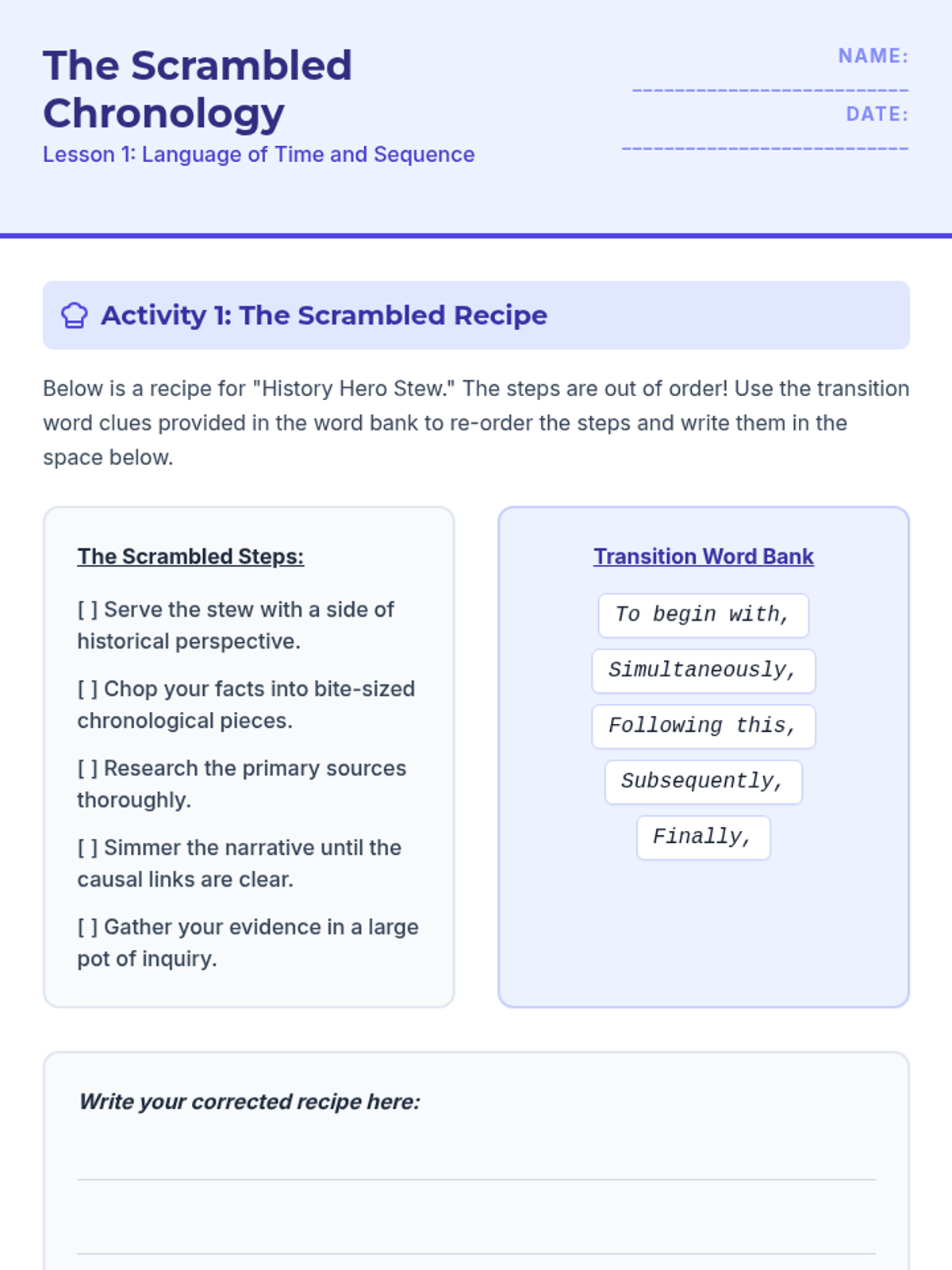
A 5-lesson sequence for 6th Grade students focusing on the intersection of historical chronology and causal writing. Students learn to use transition words, causal syntax, and narrative structure to explain not just when things happened, but why they happened, culminating in a published historical narrative.
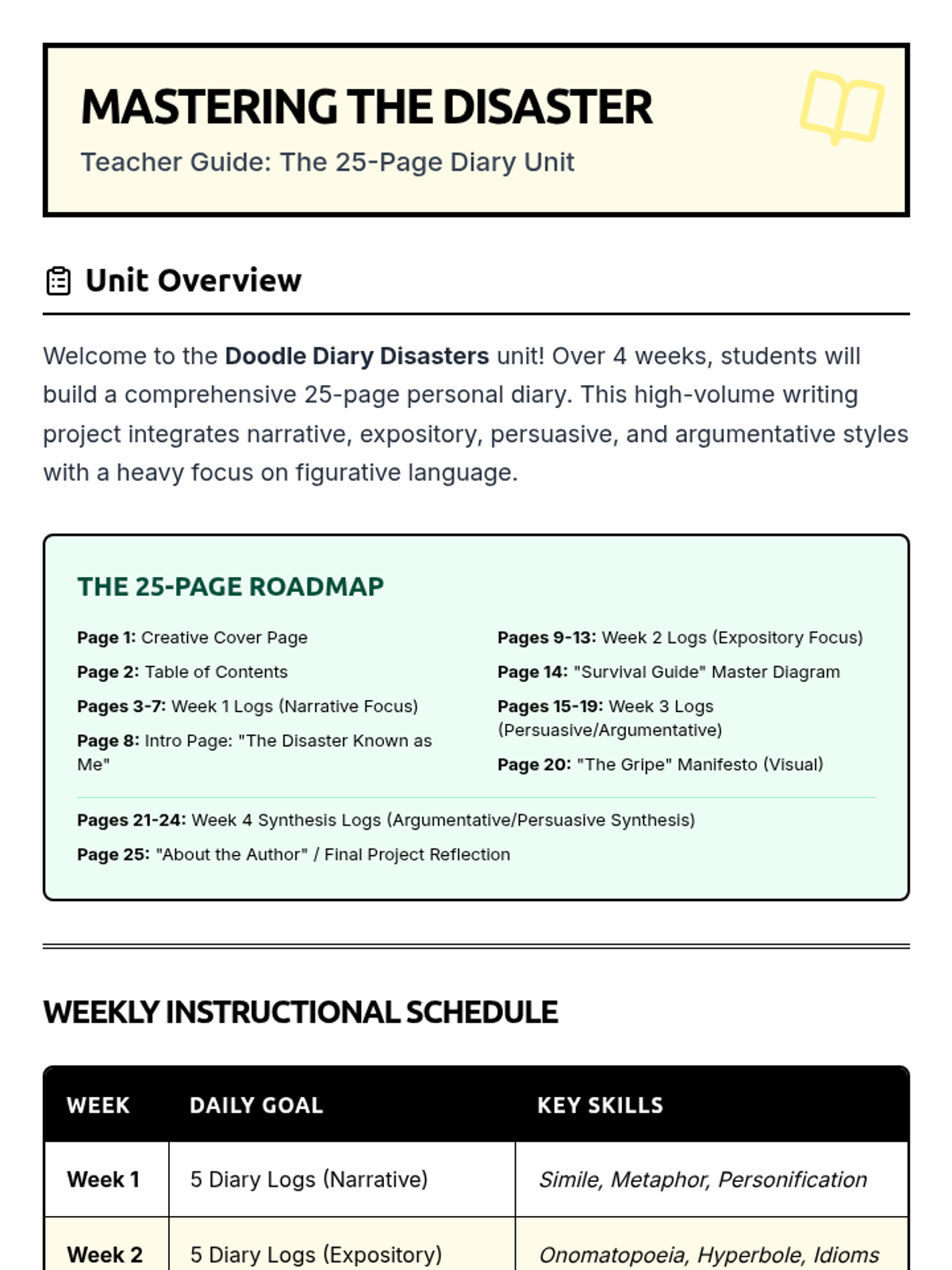
A 4-week writing unit where students create their own 'Wimpy Kid' style diary, exploring narrative, expository, argumentative, and persuasive writing alongside specific figurative language techniques.
A comprehensive writing unit that breaks down complex structures into manageable building blocks, from individual paragraphs to complete narrative arcs and multi-paragraph essays. Students learn to use blueprints to construct clear, logical, and engaging pieces of writing.
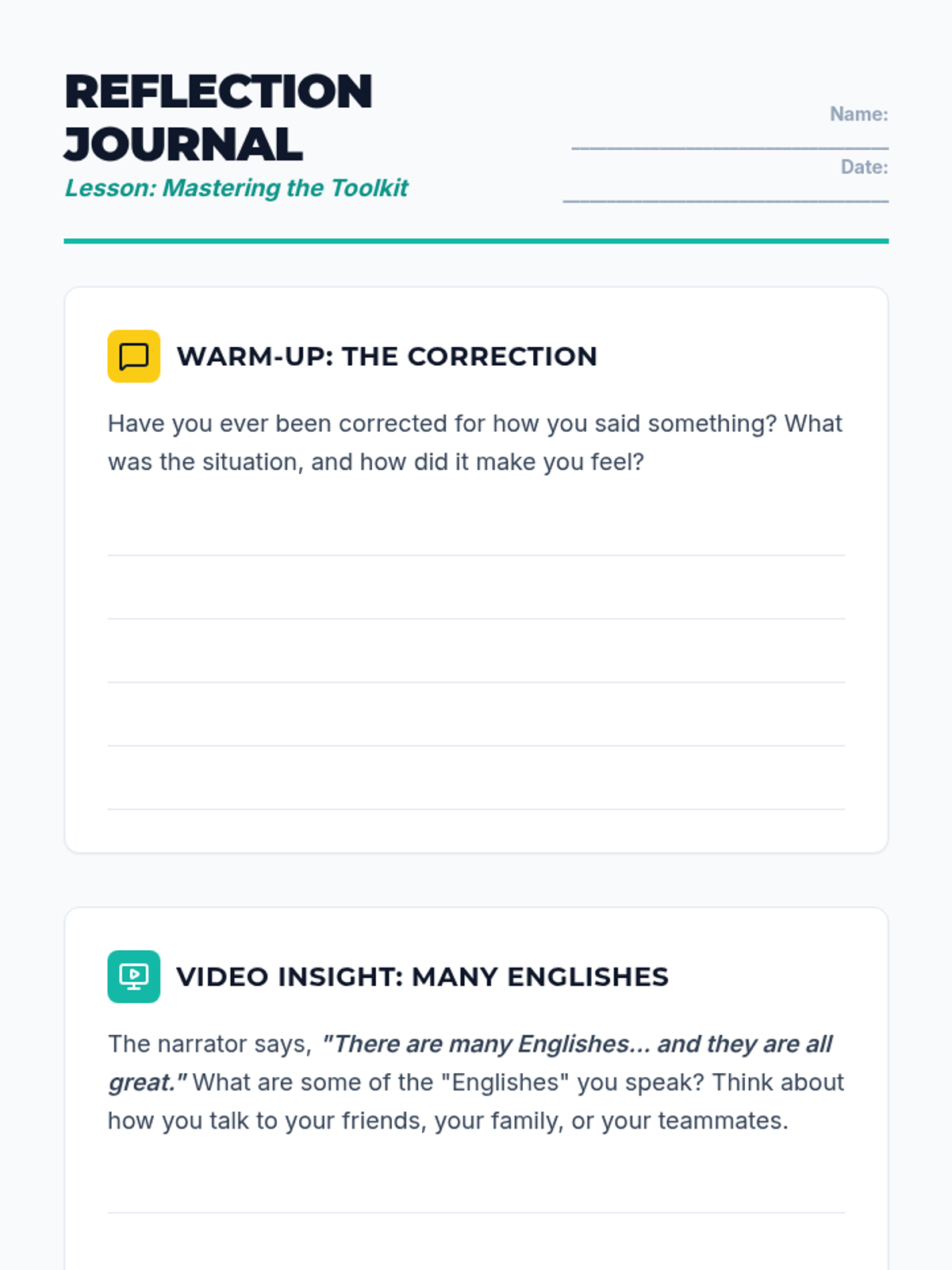
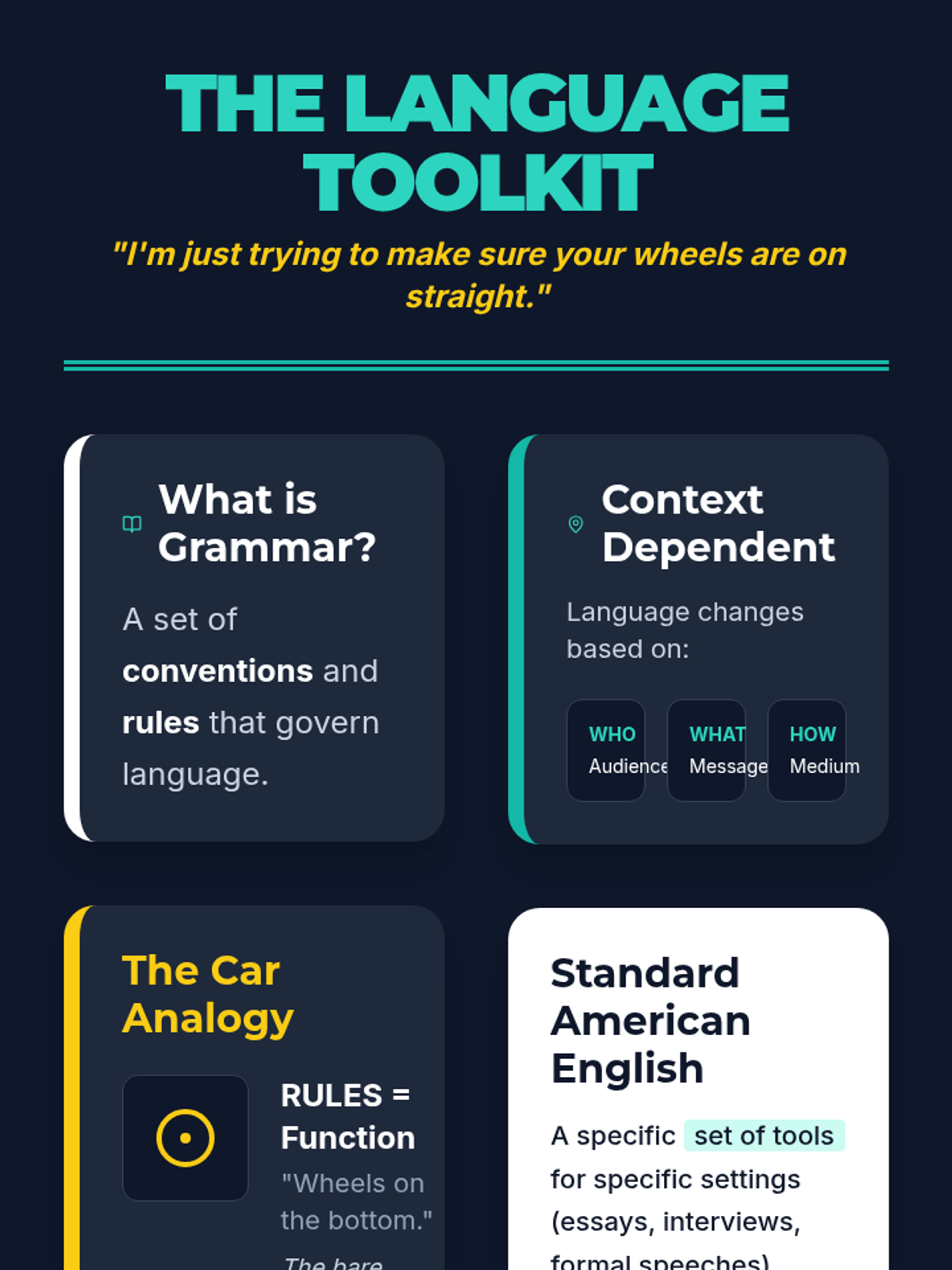
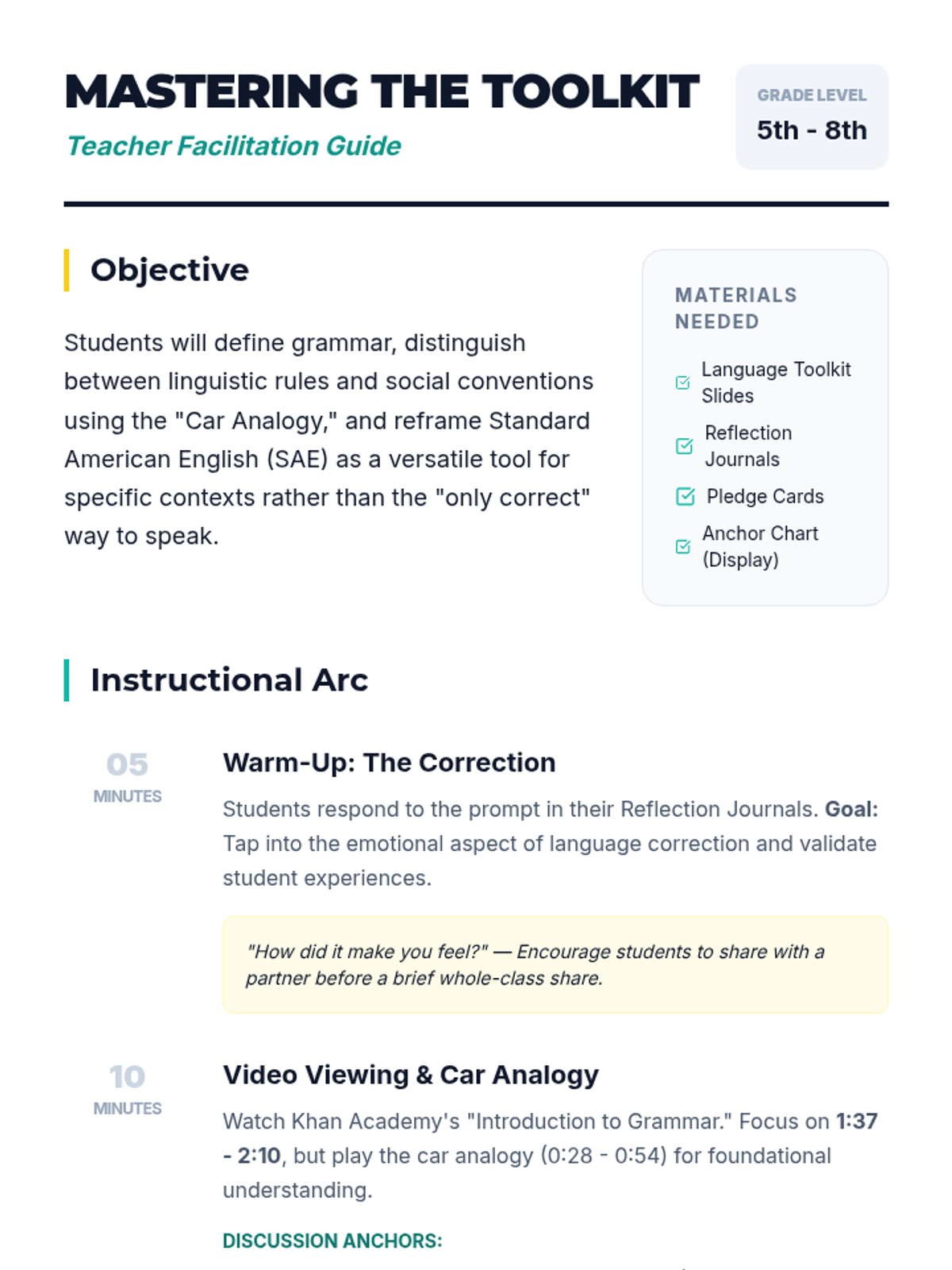
A lesson sequence exploring the concept of Standard American English as a versatile tool for communication, emphasizing that language varies by context and that all dialects are valid. Students analyze the 'car analogy' from Khan Academy to distinguish between fundamental grammar rules and social conventions.
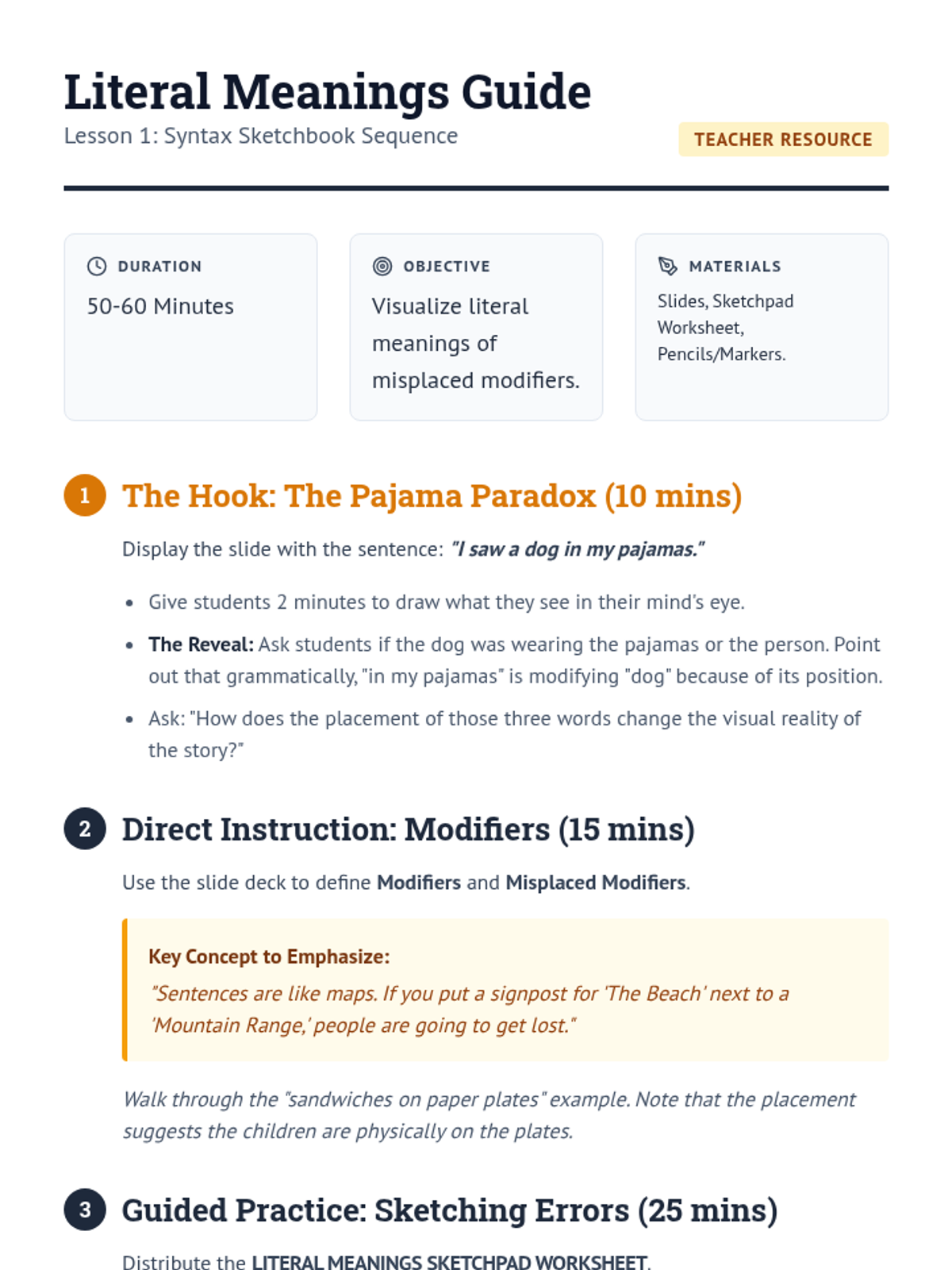
A 5-lesson 6th Grade ELA unit that uses visualization and illustration to help students identify and correct misplaced modifiers, culminating in a gallery walk of 'Before' and 'After' sentence corrections.
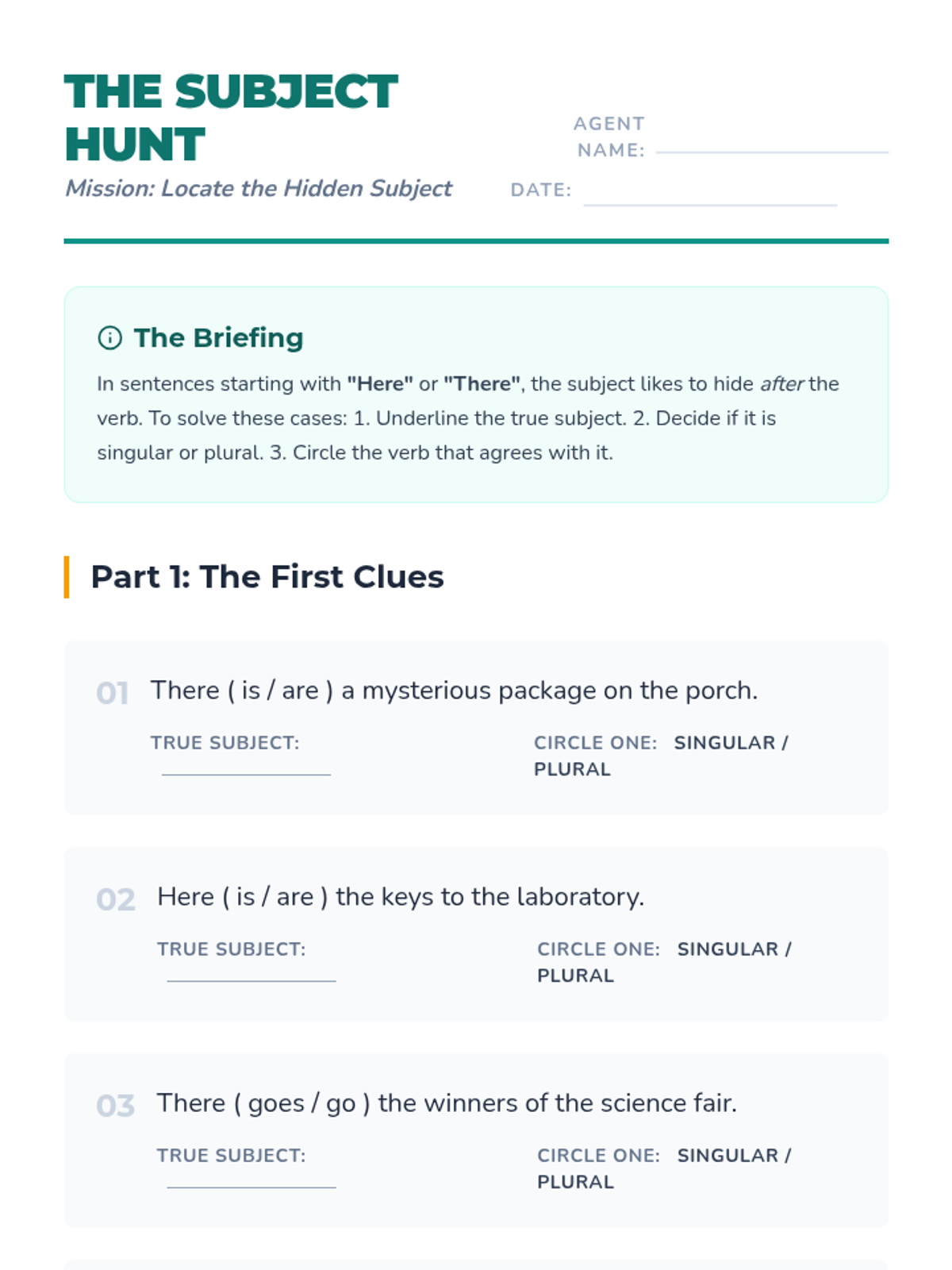
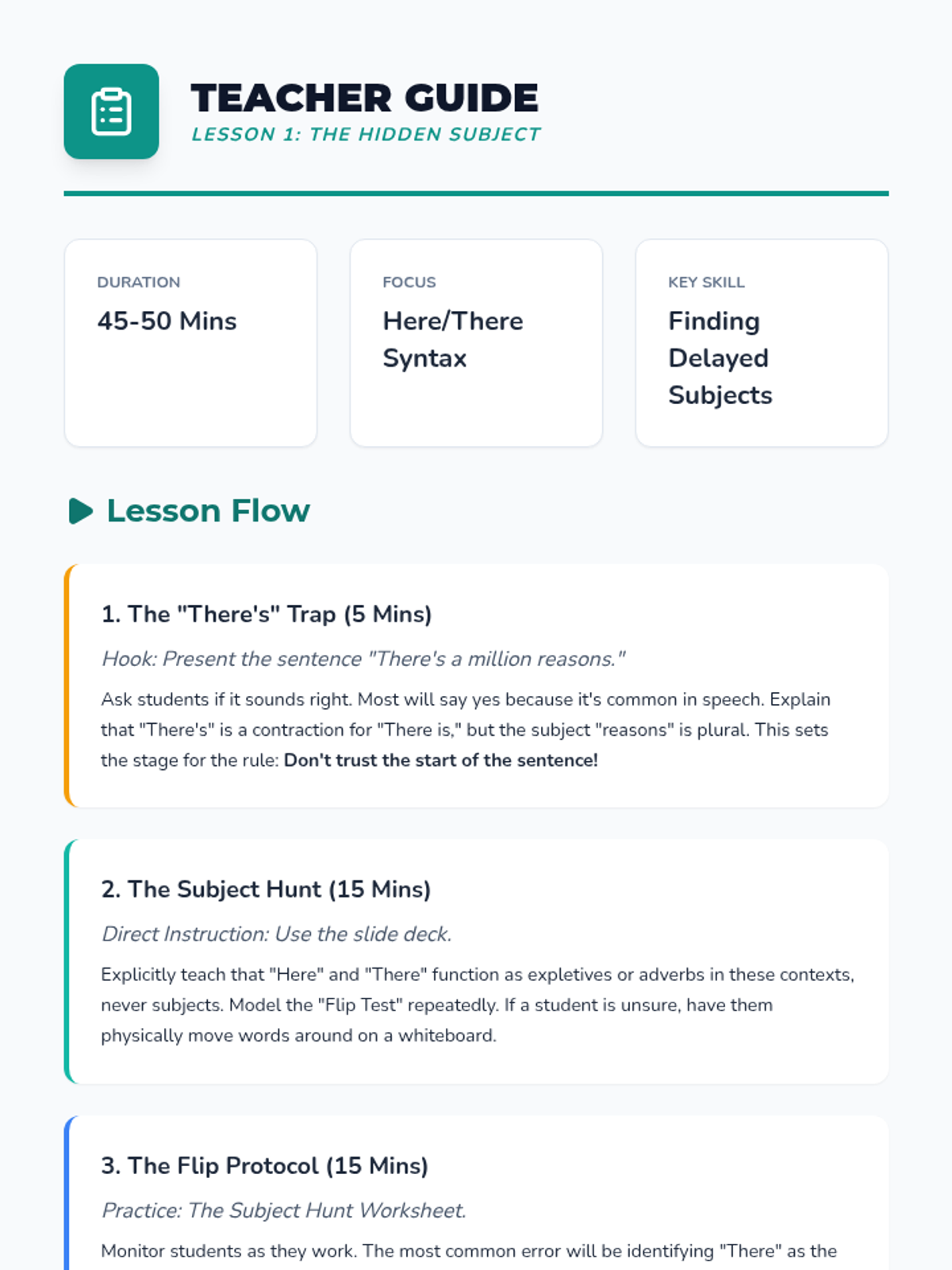
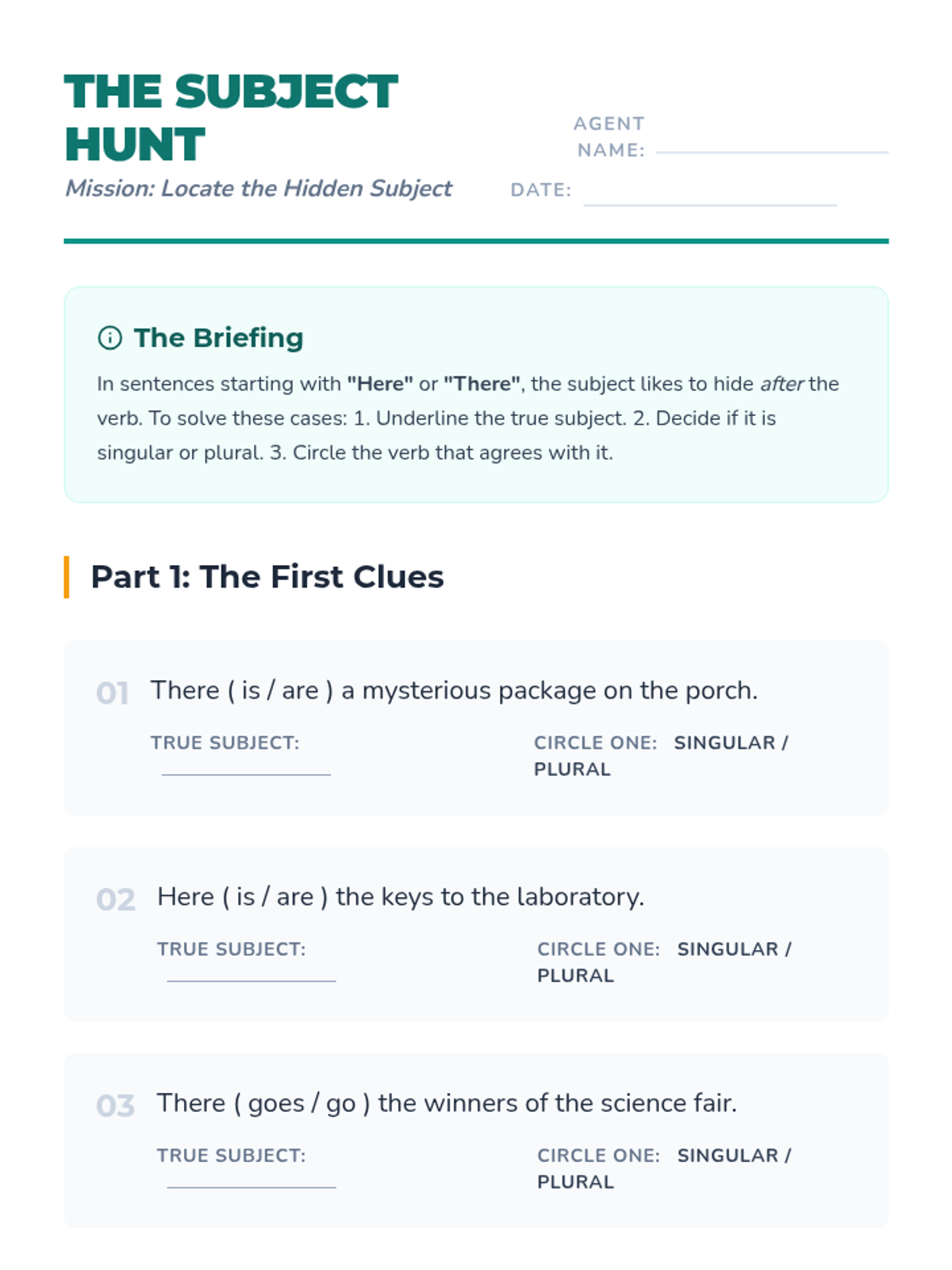
A professional simulation sequence where students act as copy editors to master subject-verb agreement in complex scenarios, including inverted sentences, existential 'there', and contractions. Students transition from isolated skill practice to full-scale text auditing and personal revision.
A comprehensive sequence for 5th-grade students focusing on subject-verb agreement in complex and inverted sentence structures. Students learn to navigate 'Here/There' starters, questions, and poetic word orders using the 'un-inverting' revision strategy.
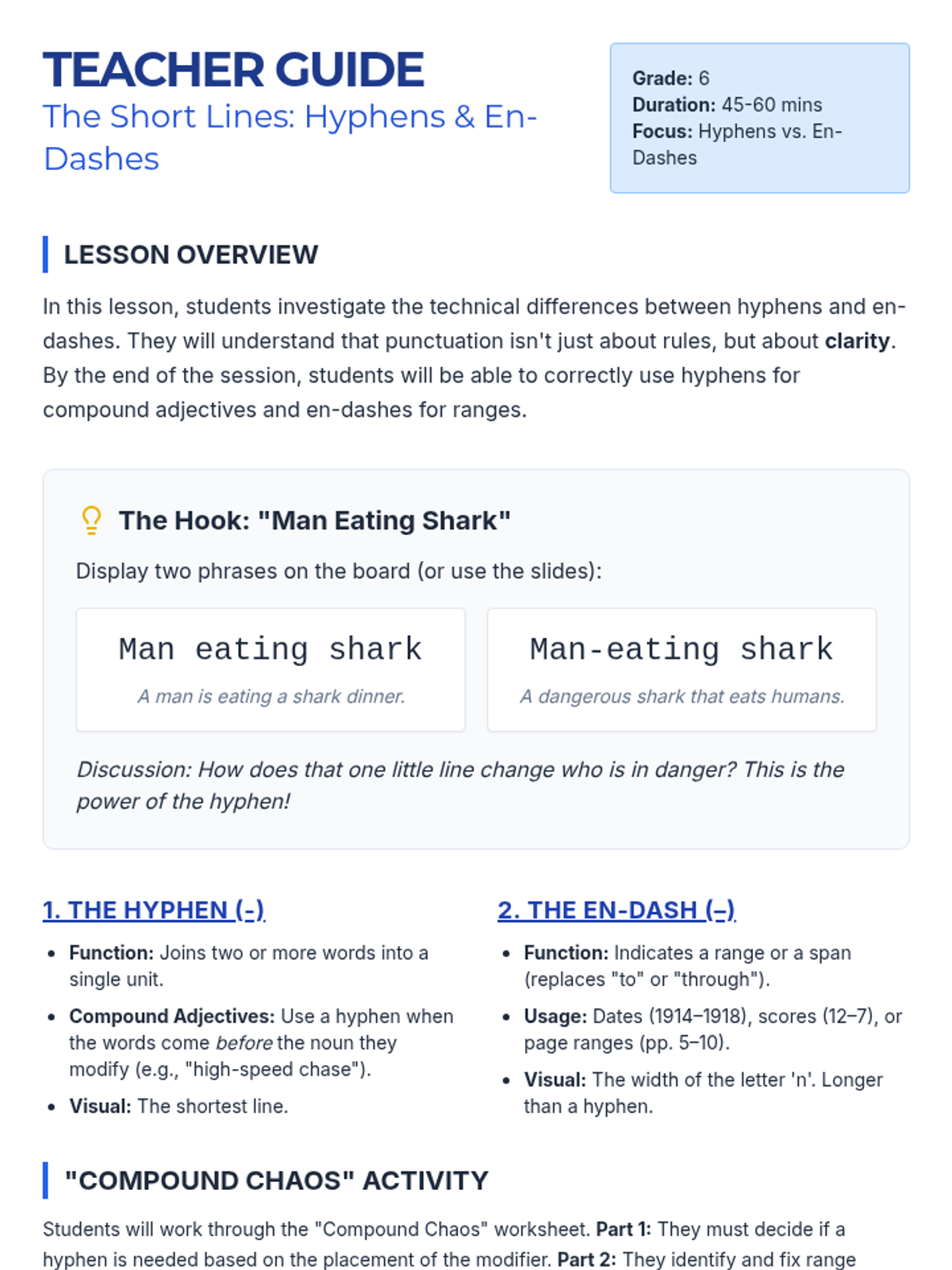
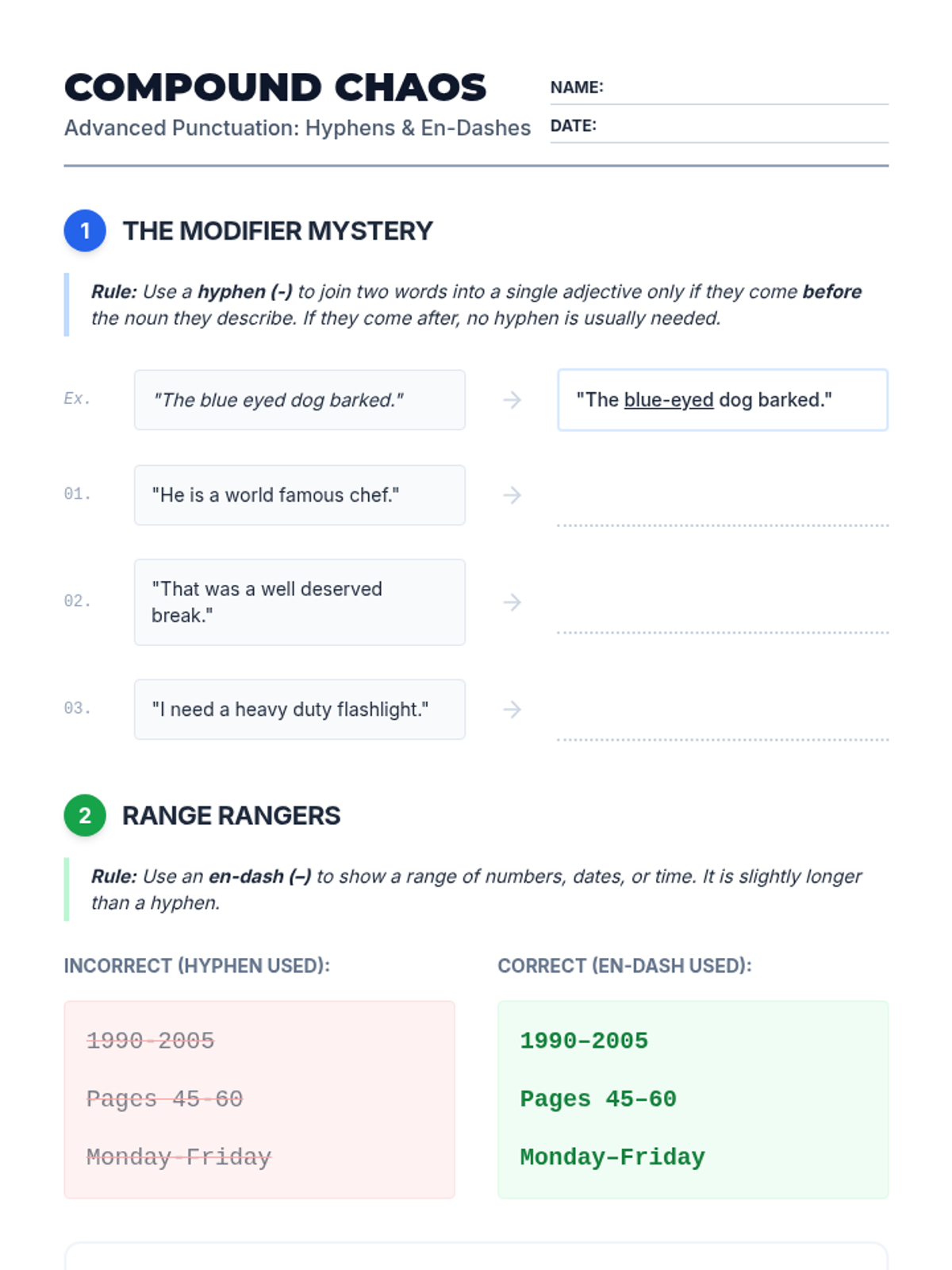
A comprehensive 6th-grade ELA sequence exploring the functional and stylistic uses of hyphens, en-dashes, em-dashes, and ellipses to enhance voice and clarity in writing.
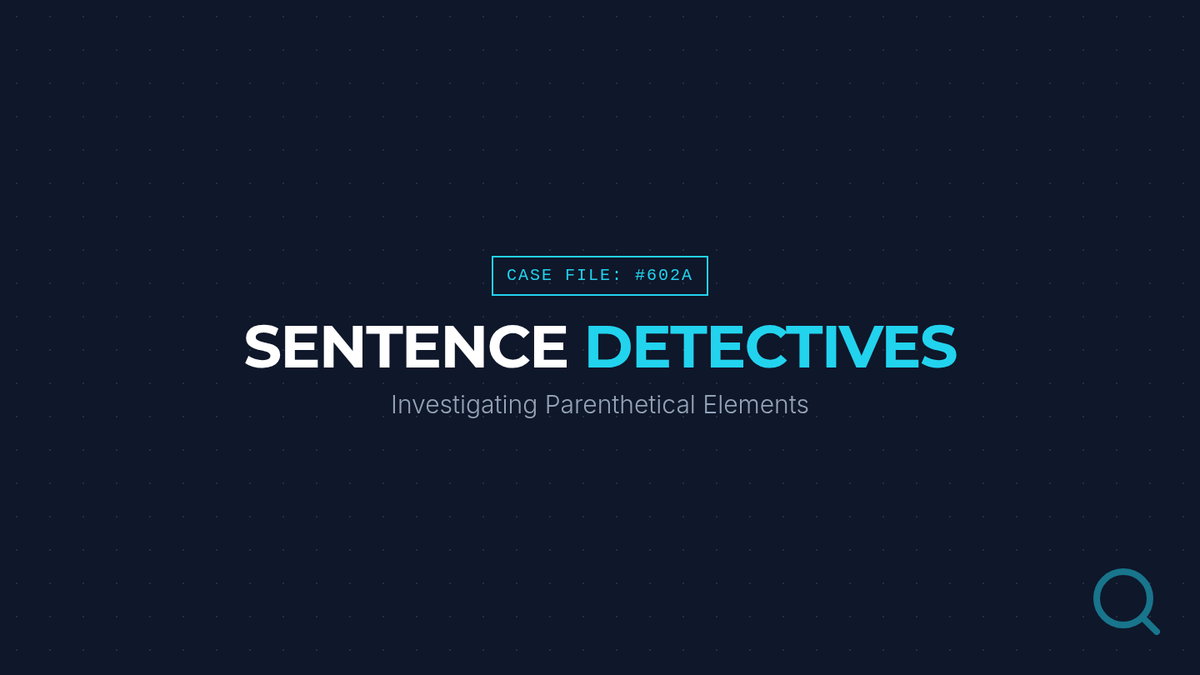
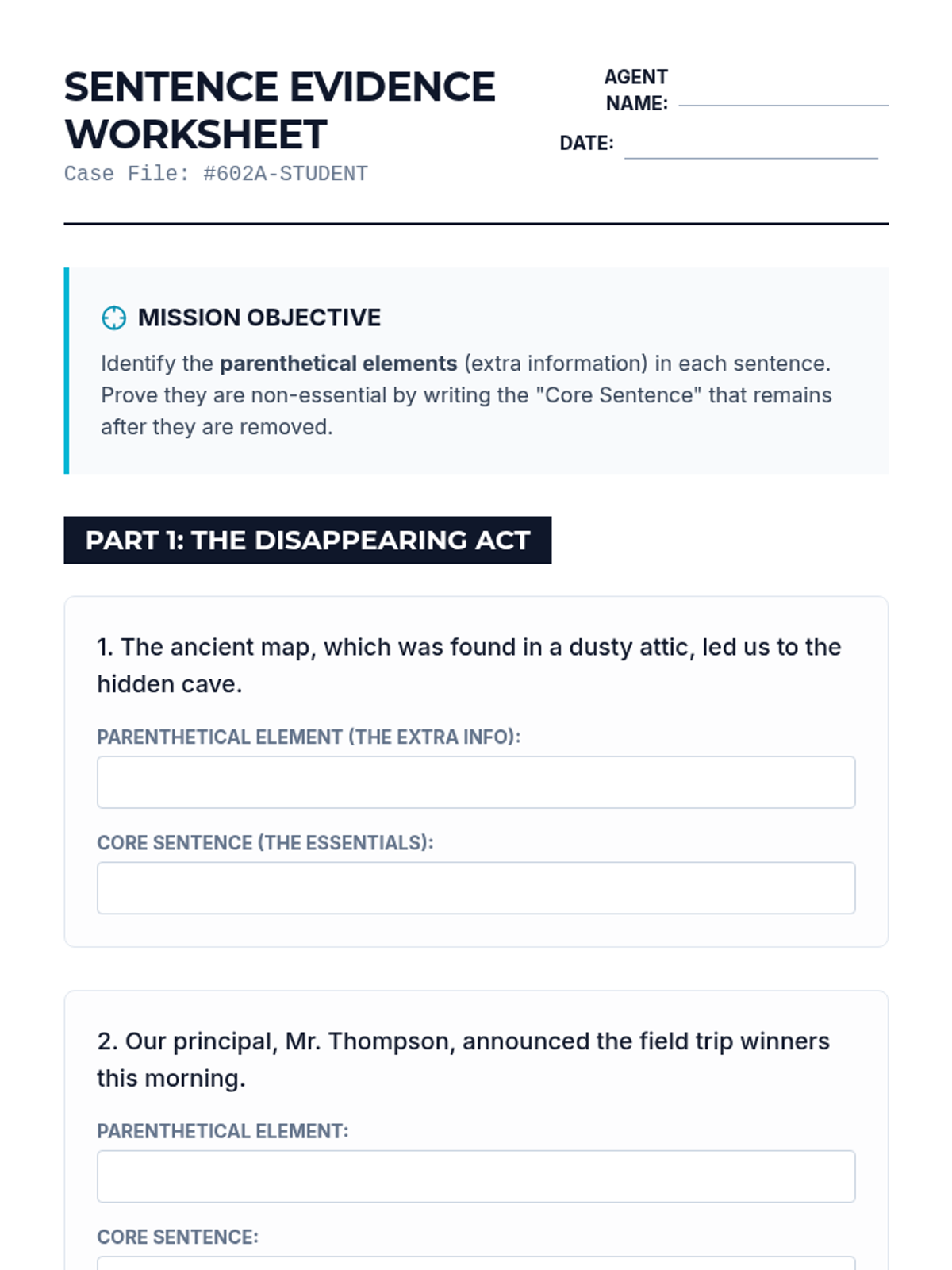
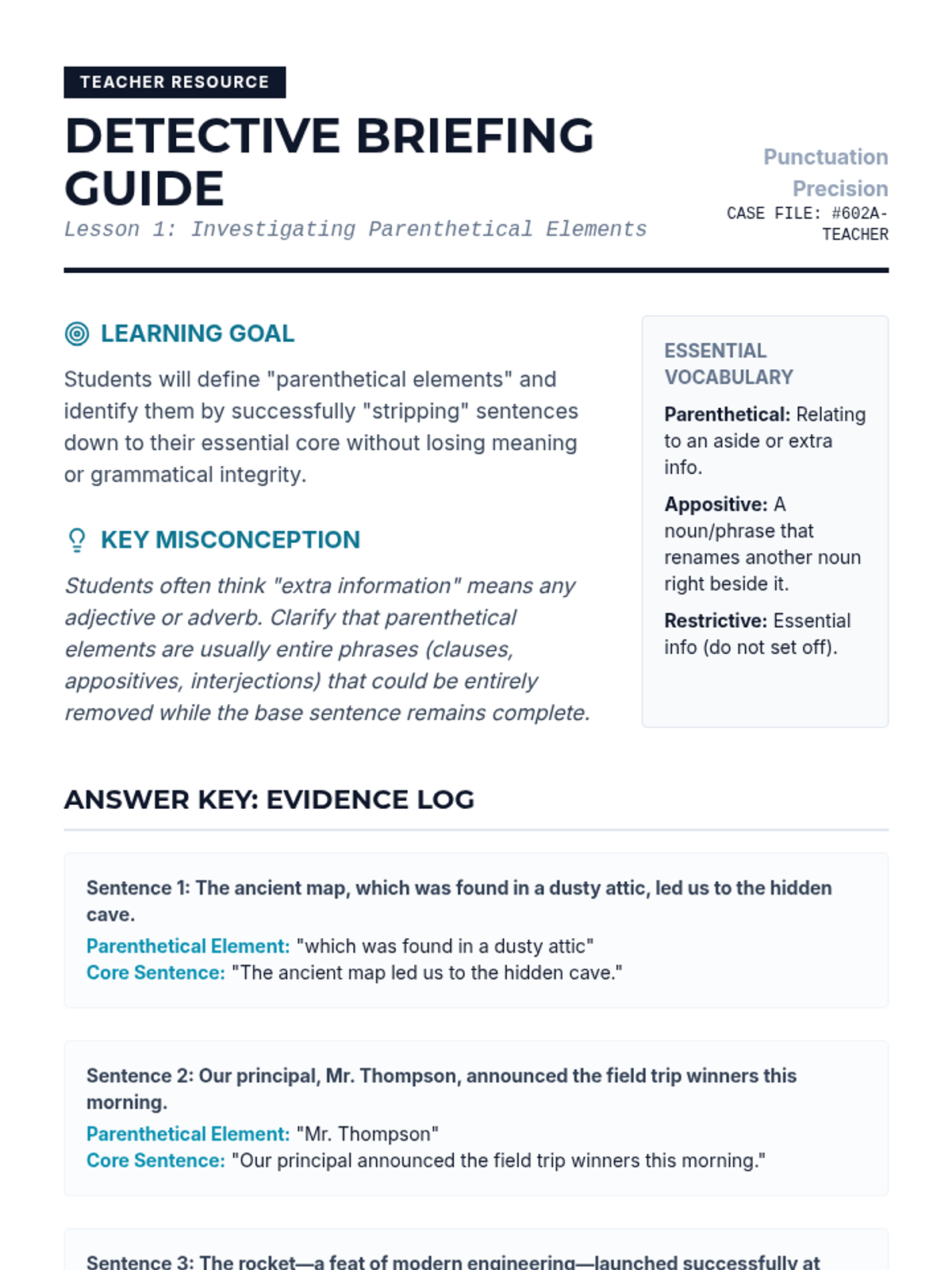
This 6th-grade ELA sequence guides students through the use of commas, parentheses, and dashes to set off parenthetical elements. Students investigate the rhetorical impact of each mark and learn to make intentional stylistic choices in their writing.
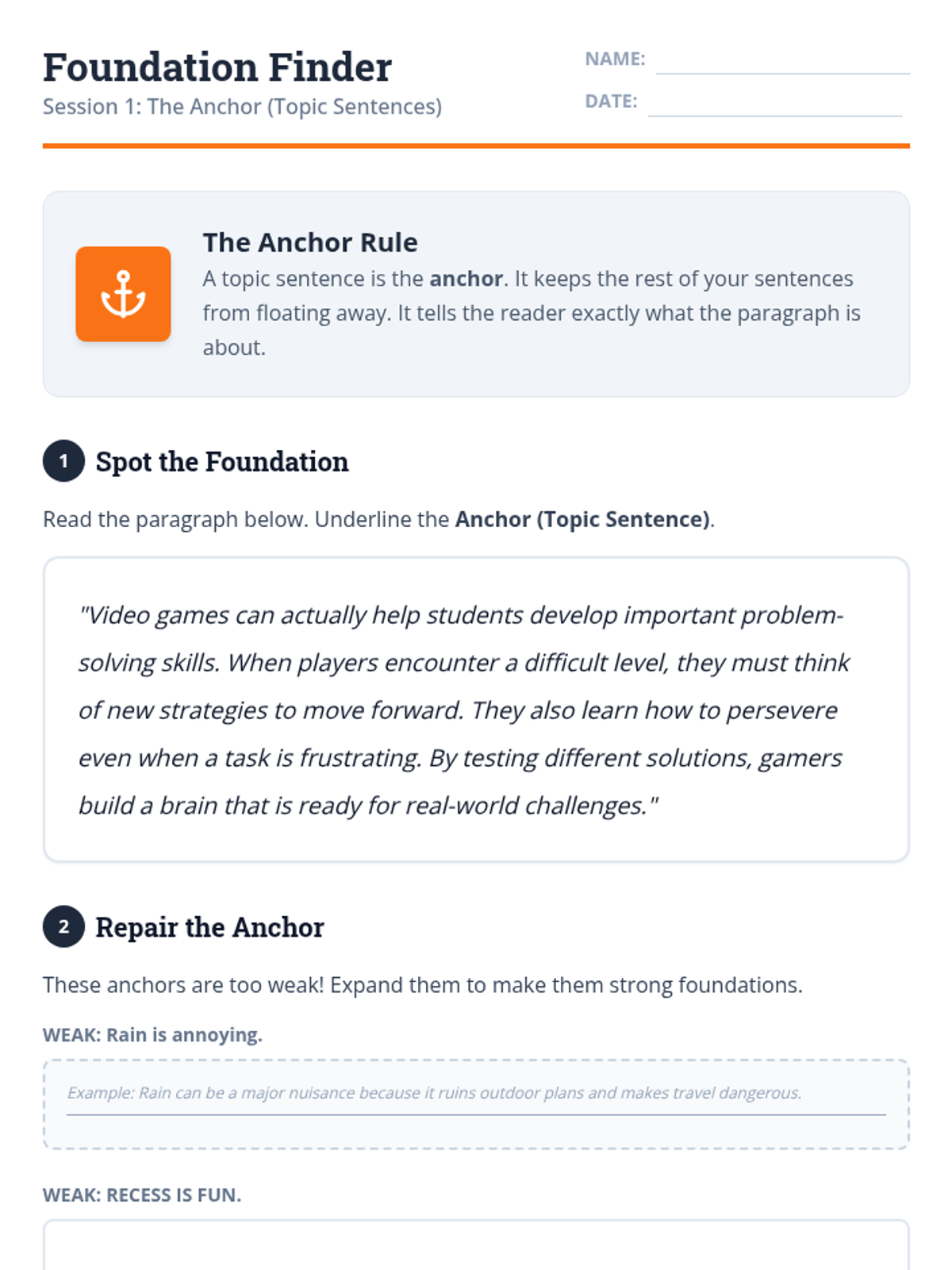
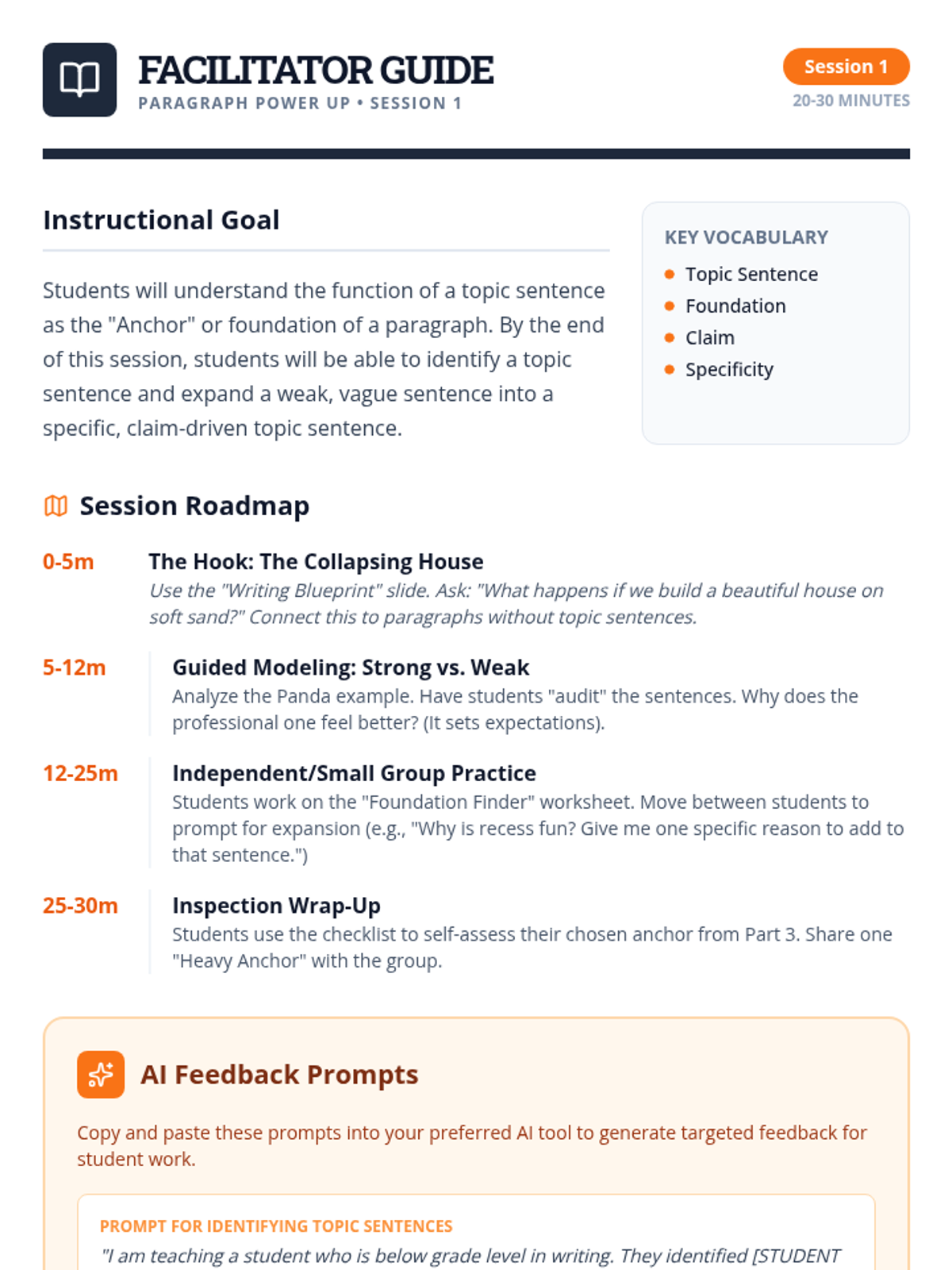
A 6-session intervention sequence designed for small groups of students below grade level. This sequence uses a 'Building Blocks' metaphor to teach structured paragraph writing, starting with topic sentences and moving through evidence, explanation, and conclusions, progressively reducing scaffolding to build independence.
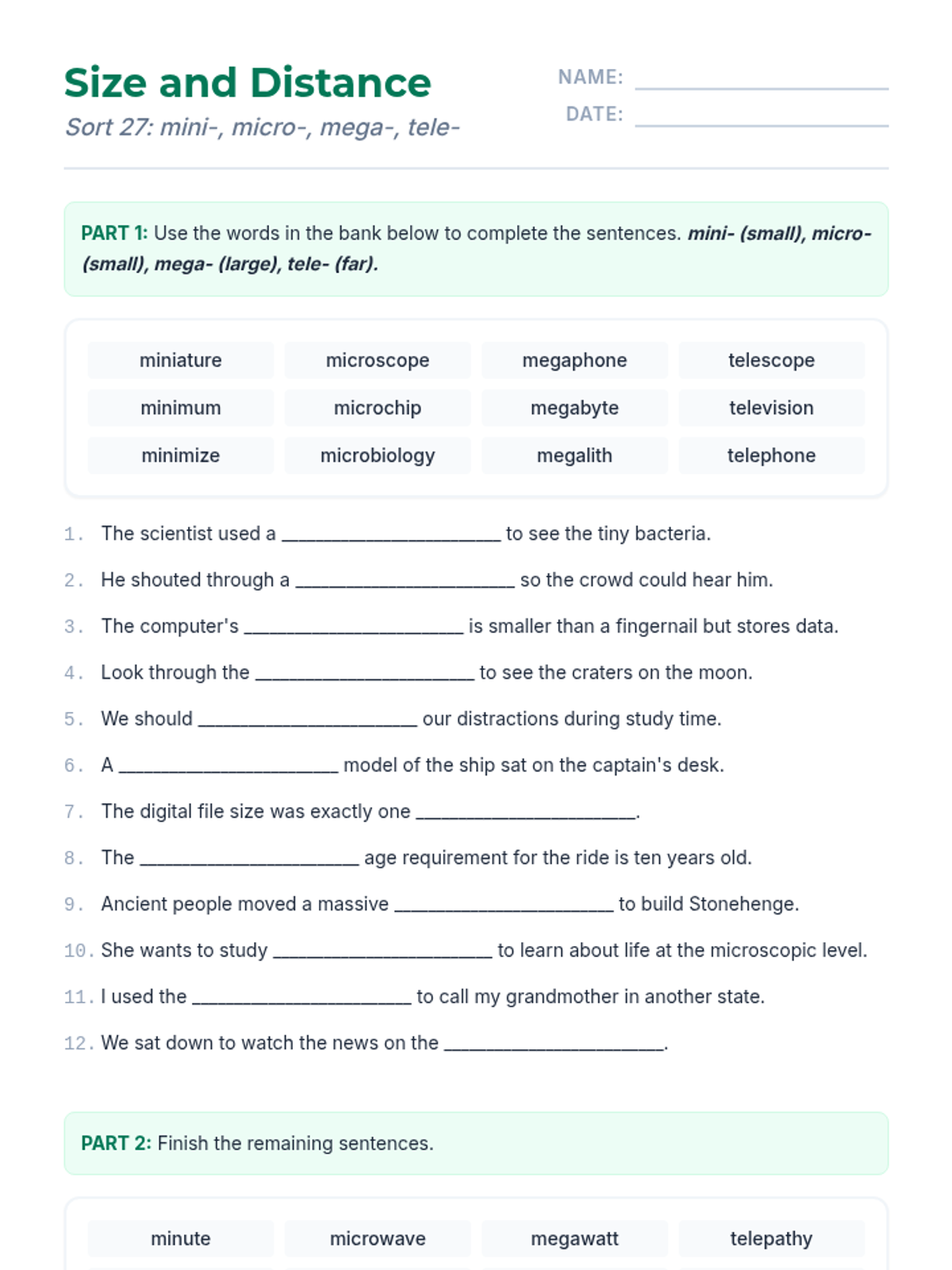
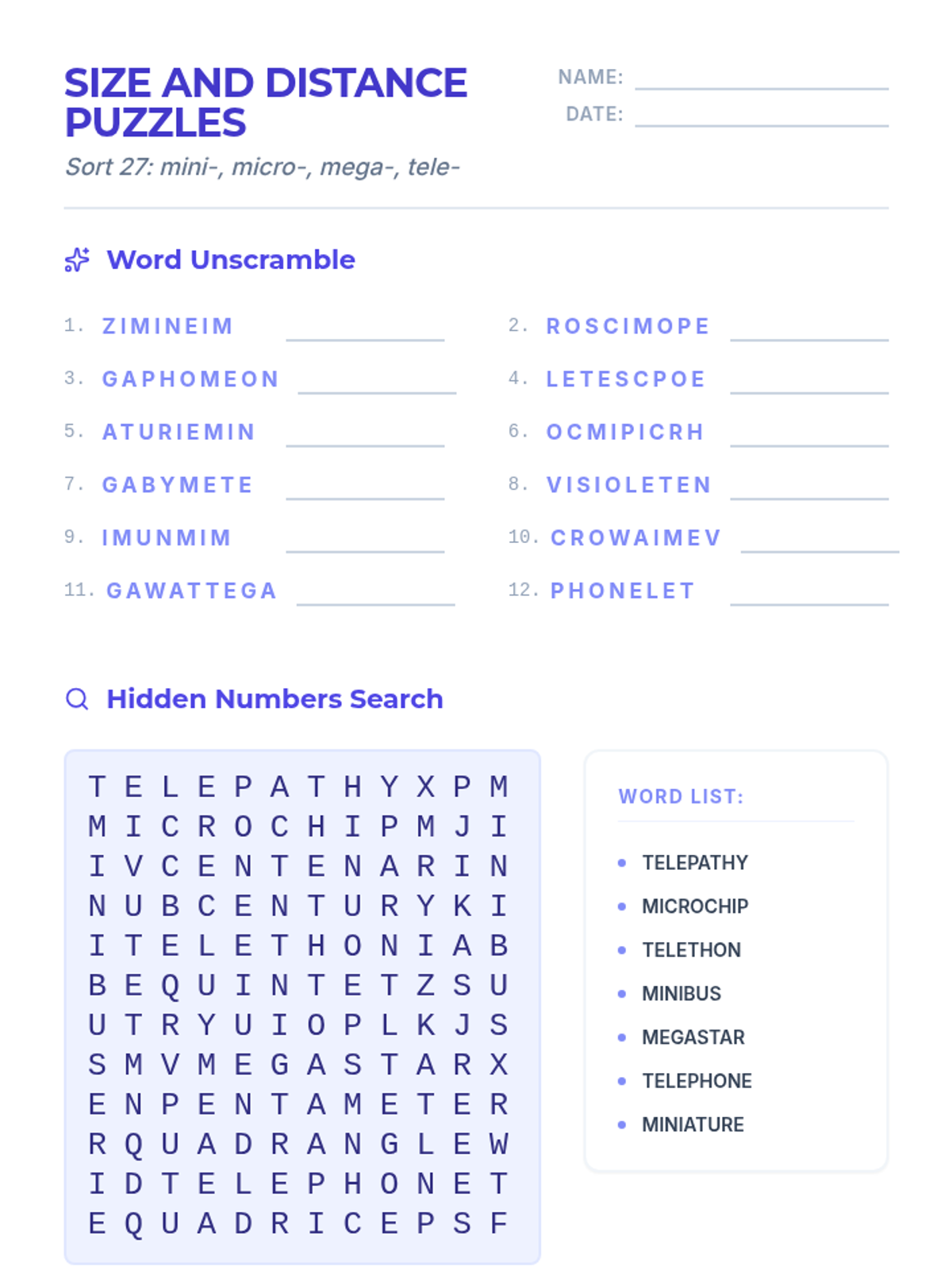
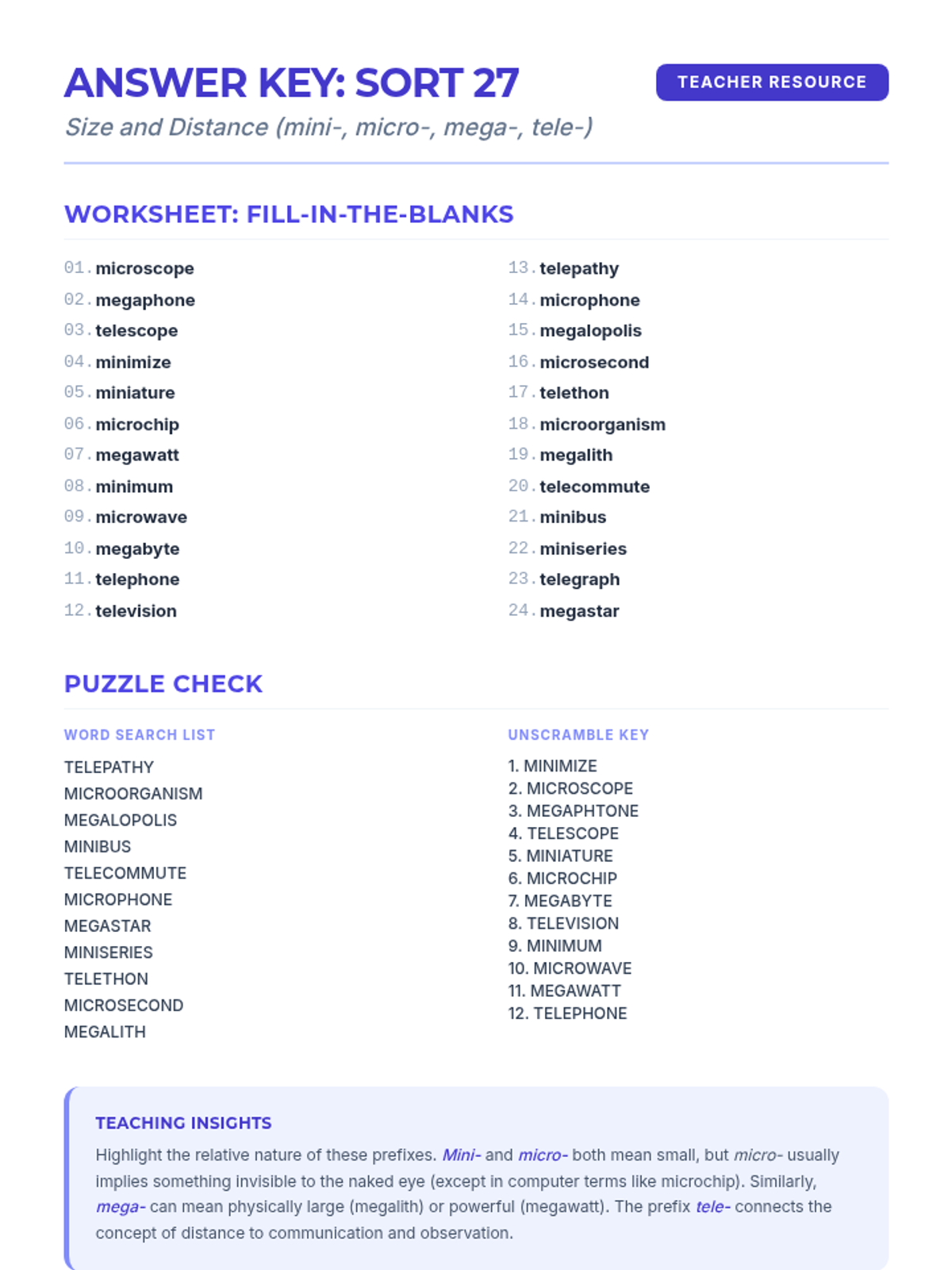
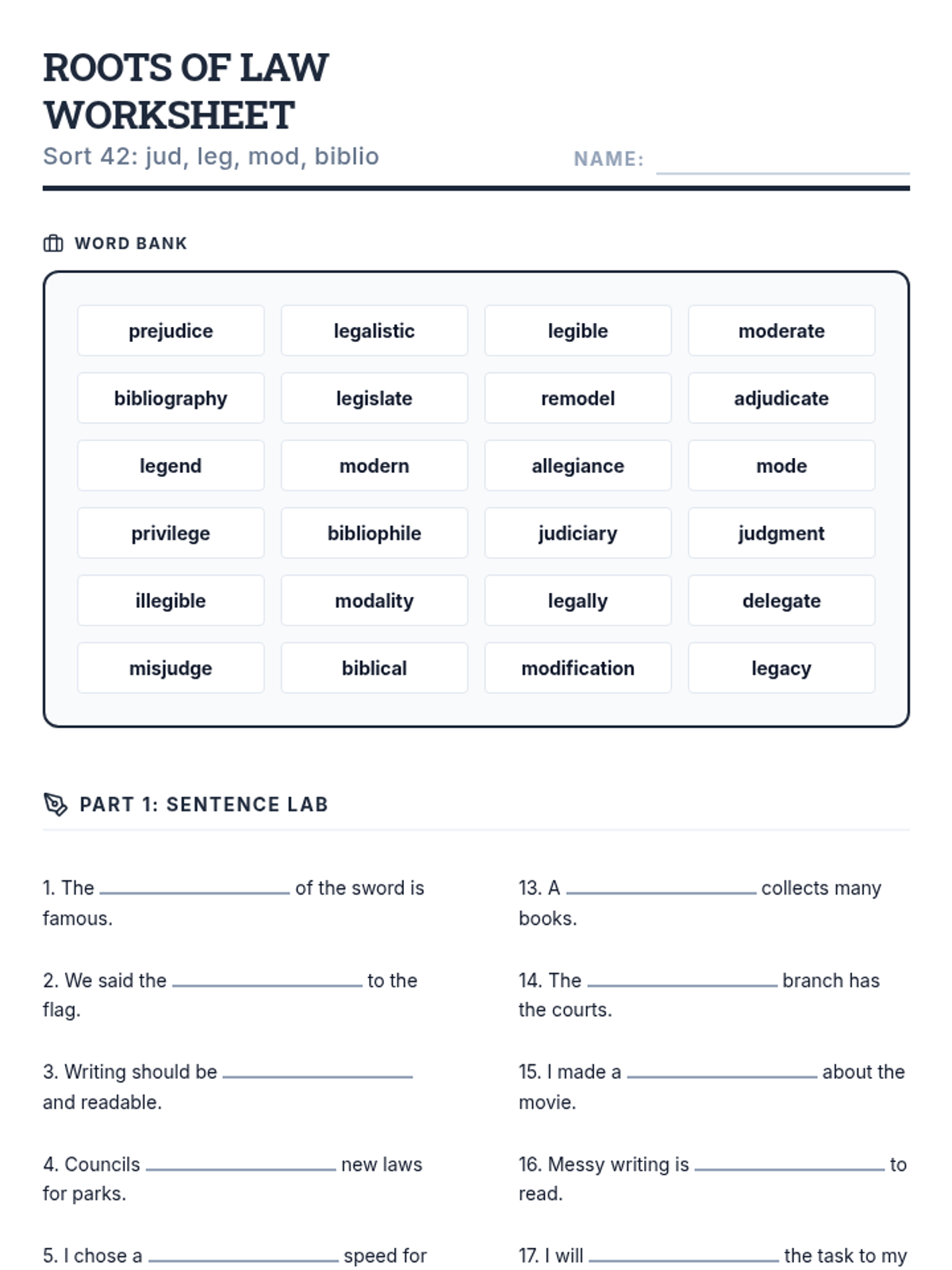
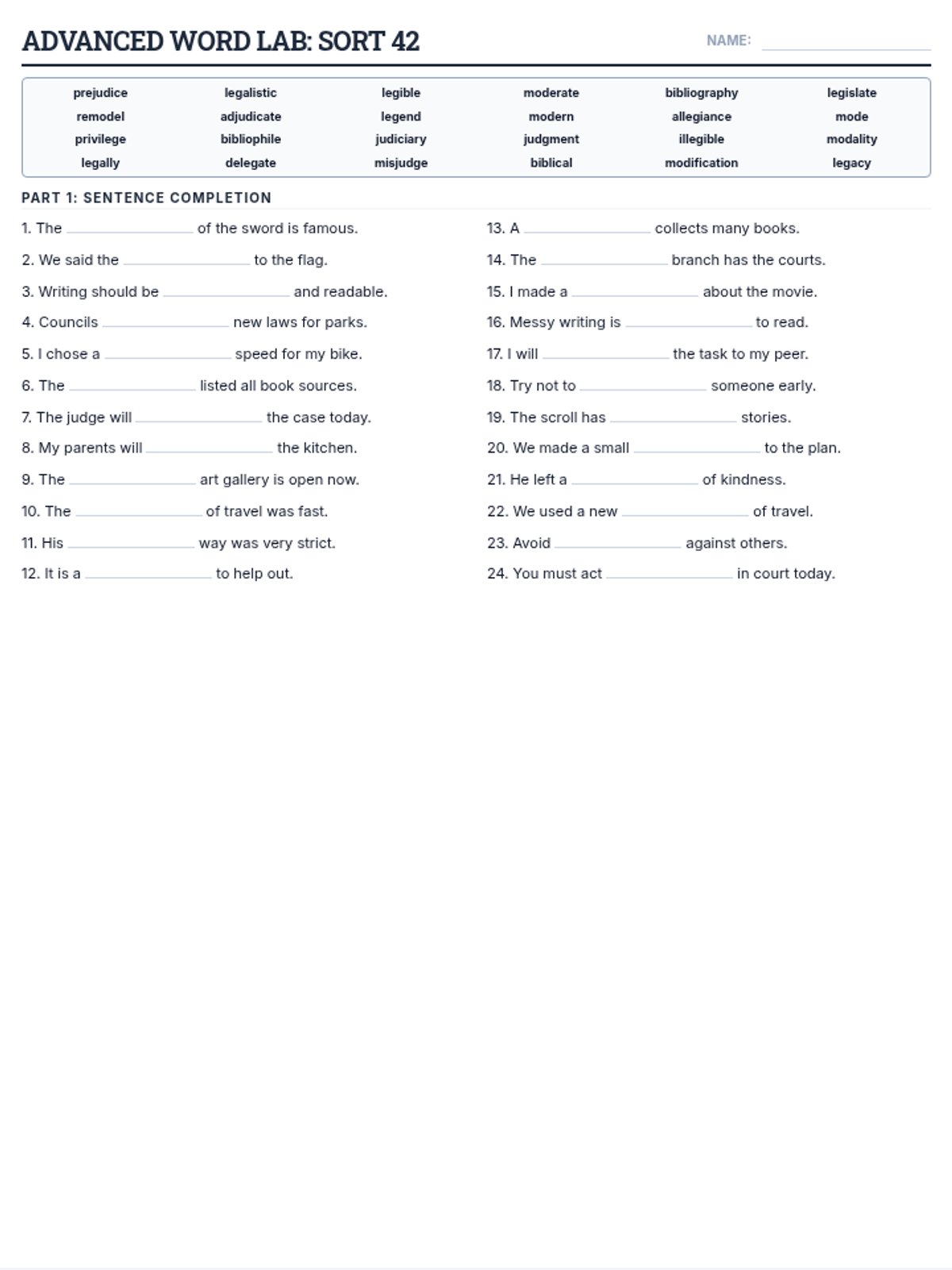
A comprehensive vocabulary and morphology curriculum covering prefixes, suffixes, Latin roots, and Greek roots through fill-in-the-blank exercises and engaging word puzzles.
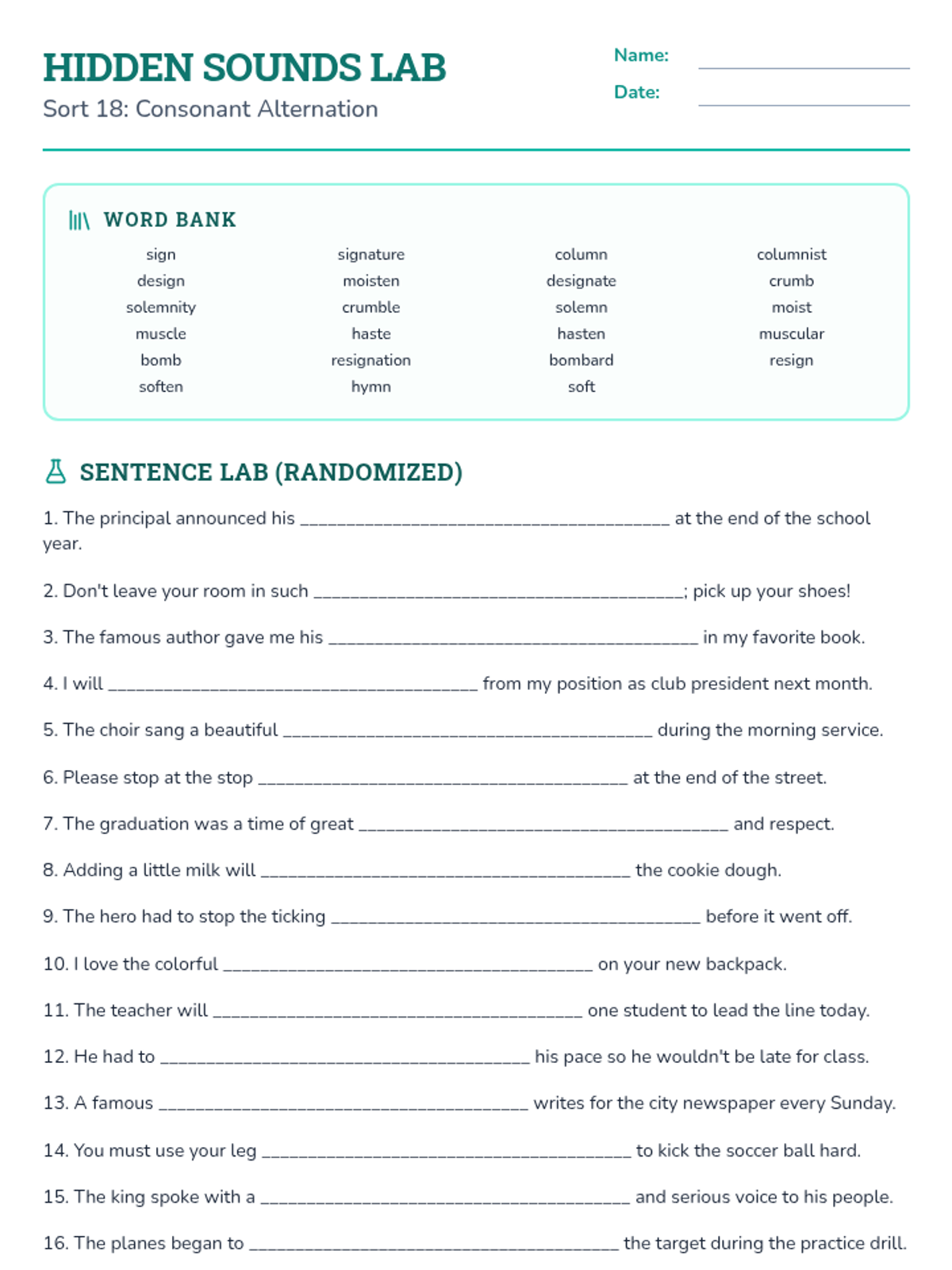
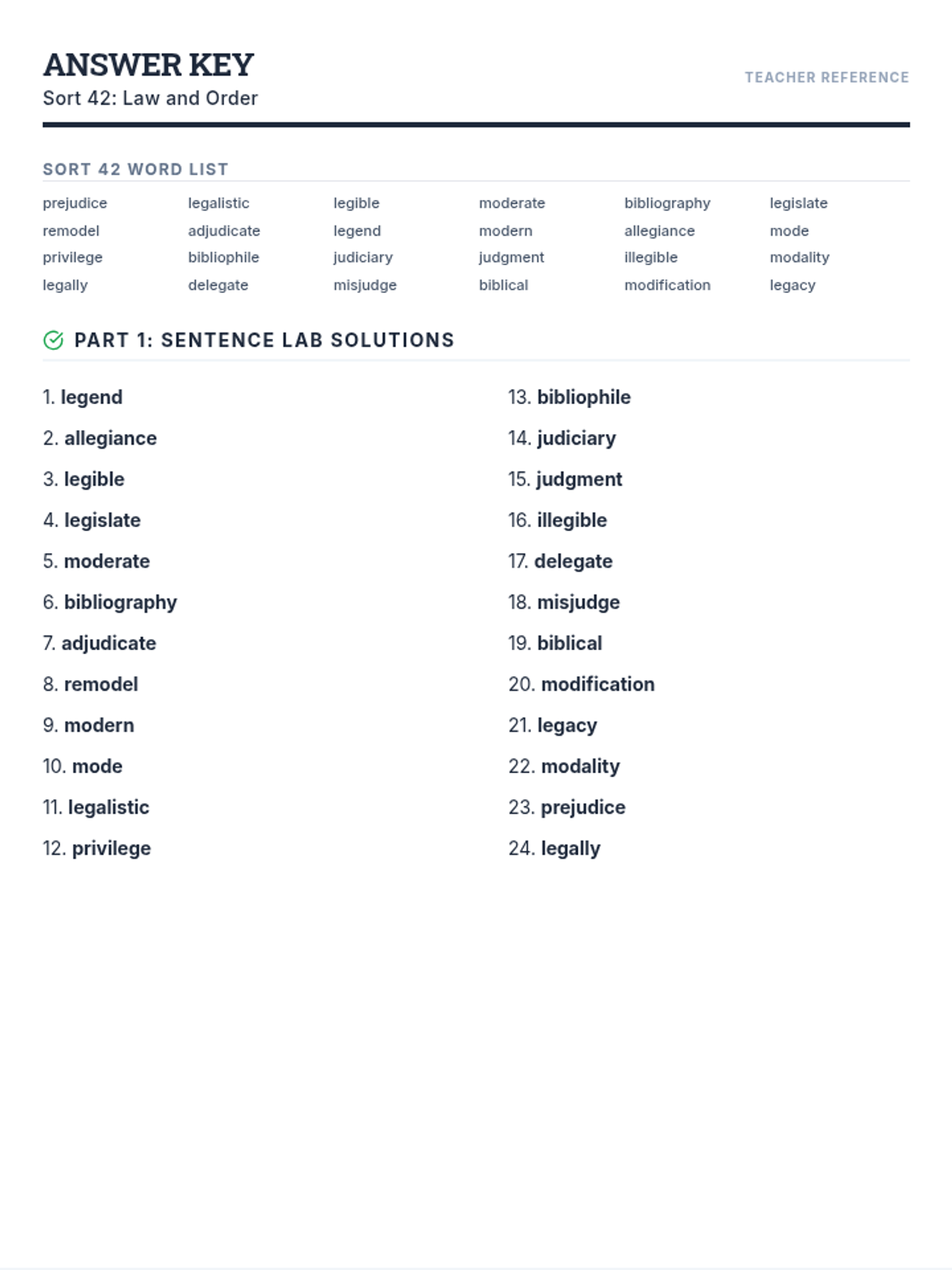
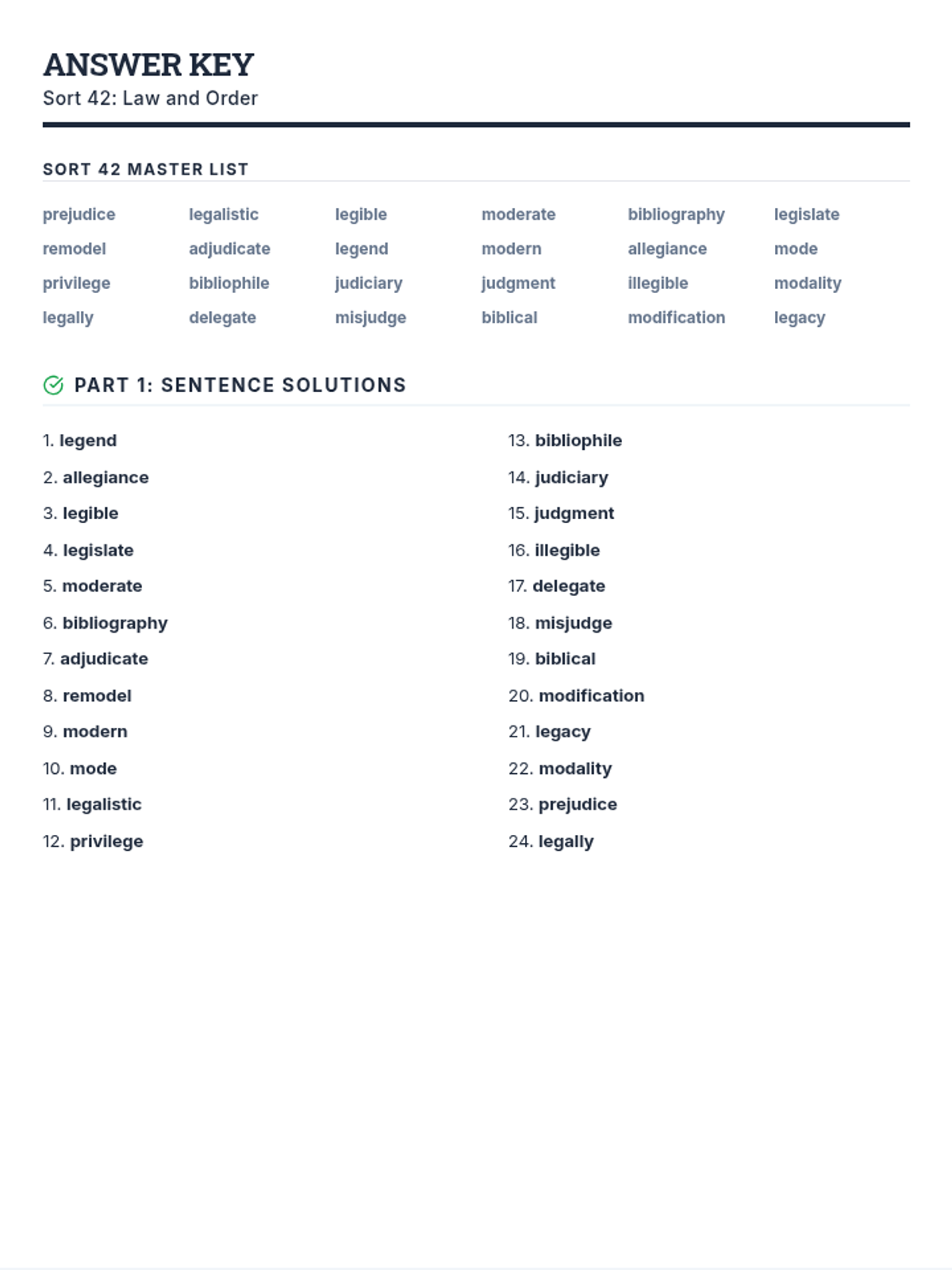
A comprehensive word study sequence for 4th-grade students covering spelling sorts 18 through 41, focusing on consonant and vowel alternations, suffixes, and Greek/Latin roots.
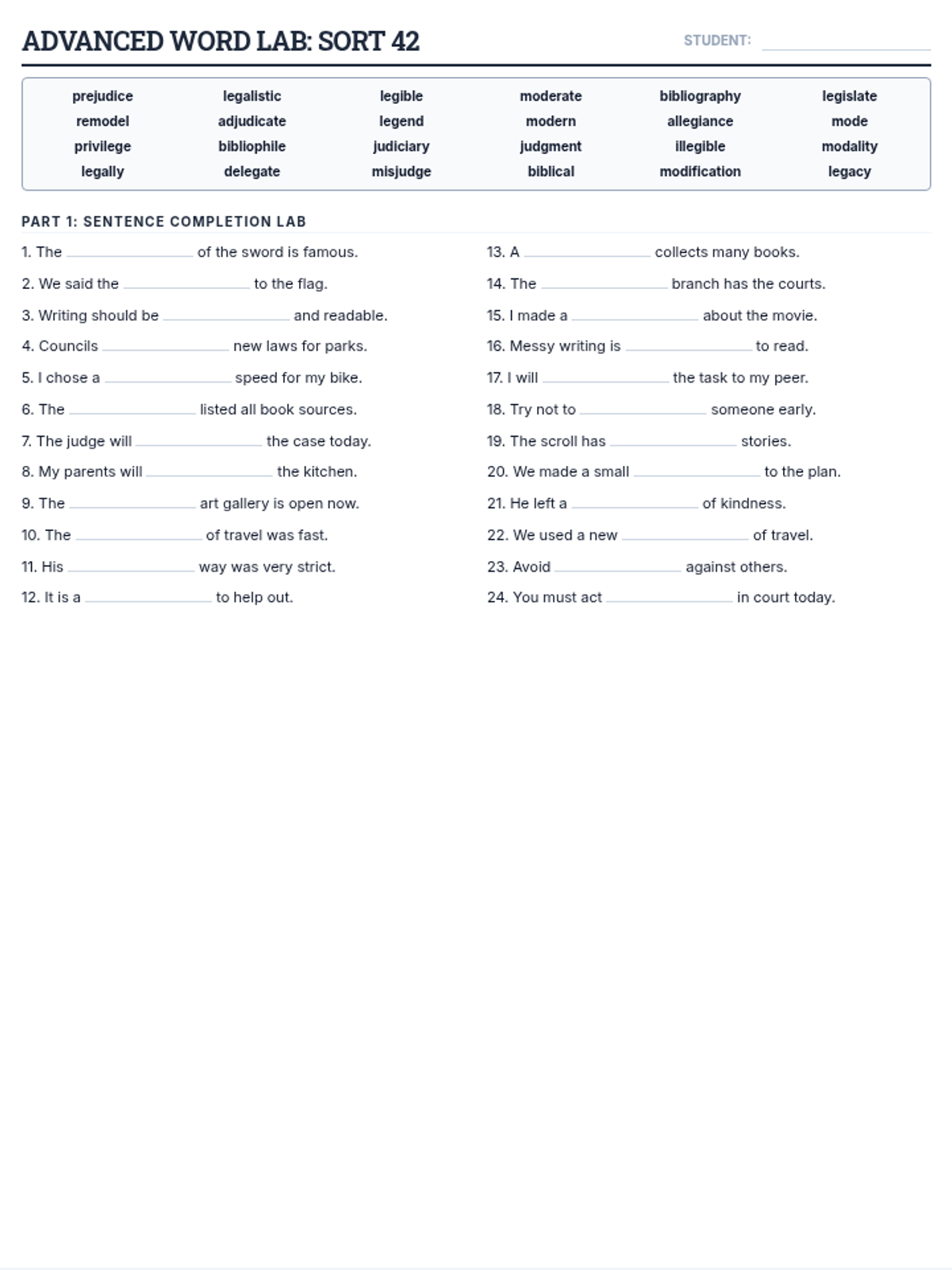
A mastery sequence for advanced word study, focusing on derivational roots, meaning-base spelling, and vocabulary expansion through puzzles and sentence application.
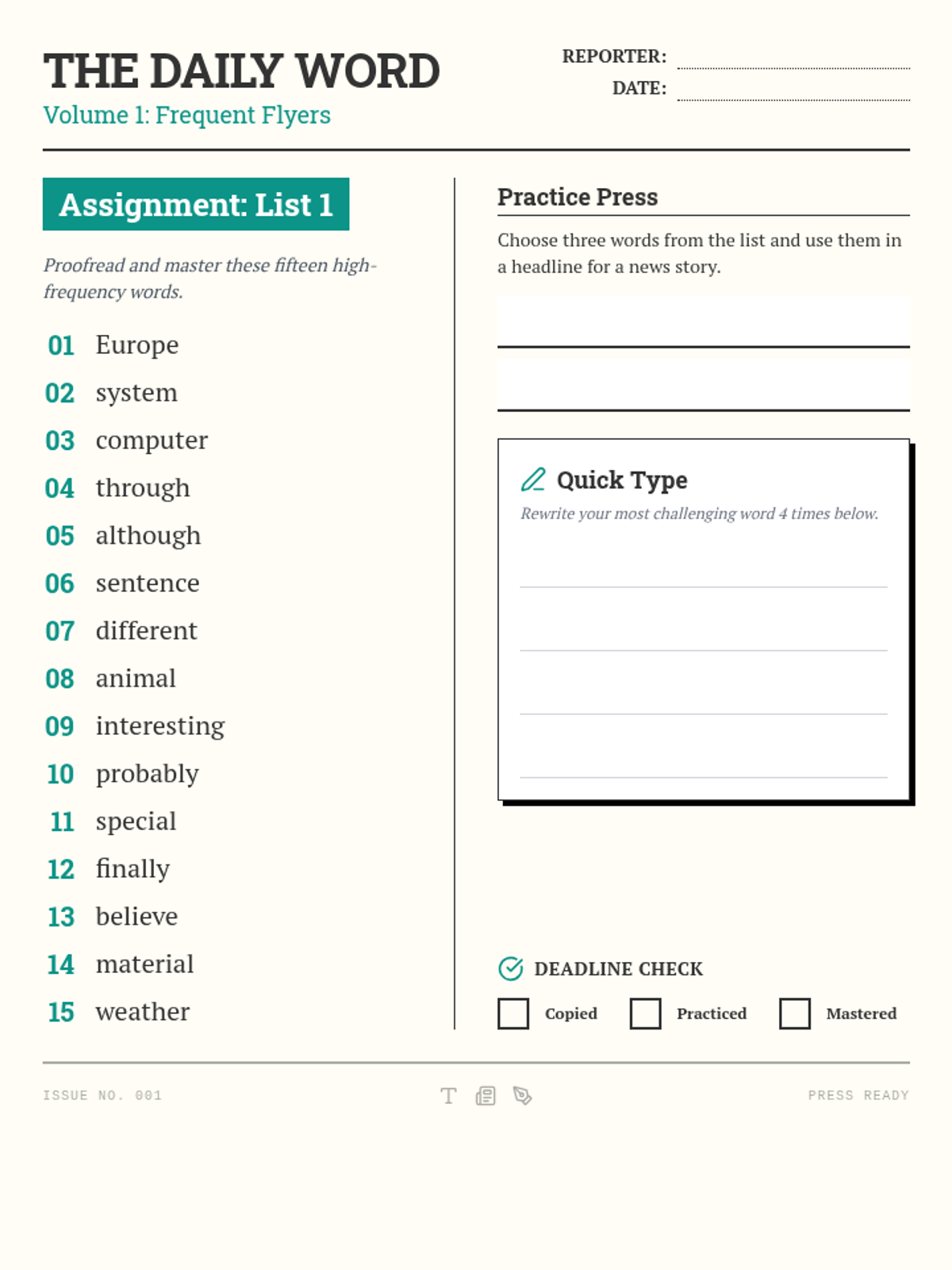
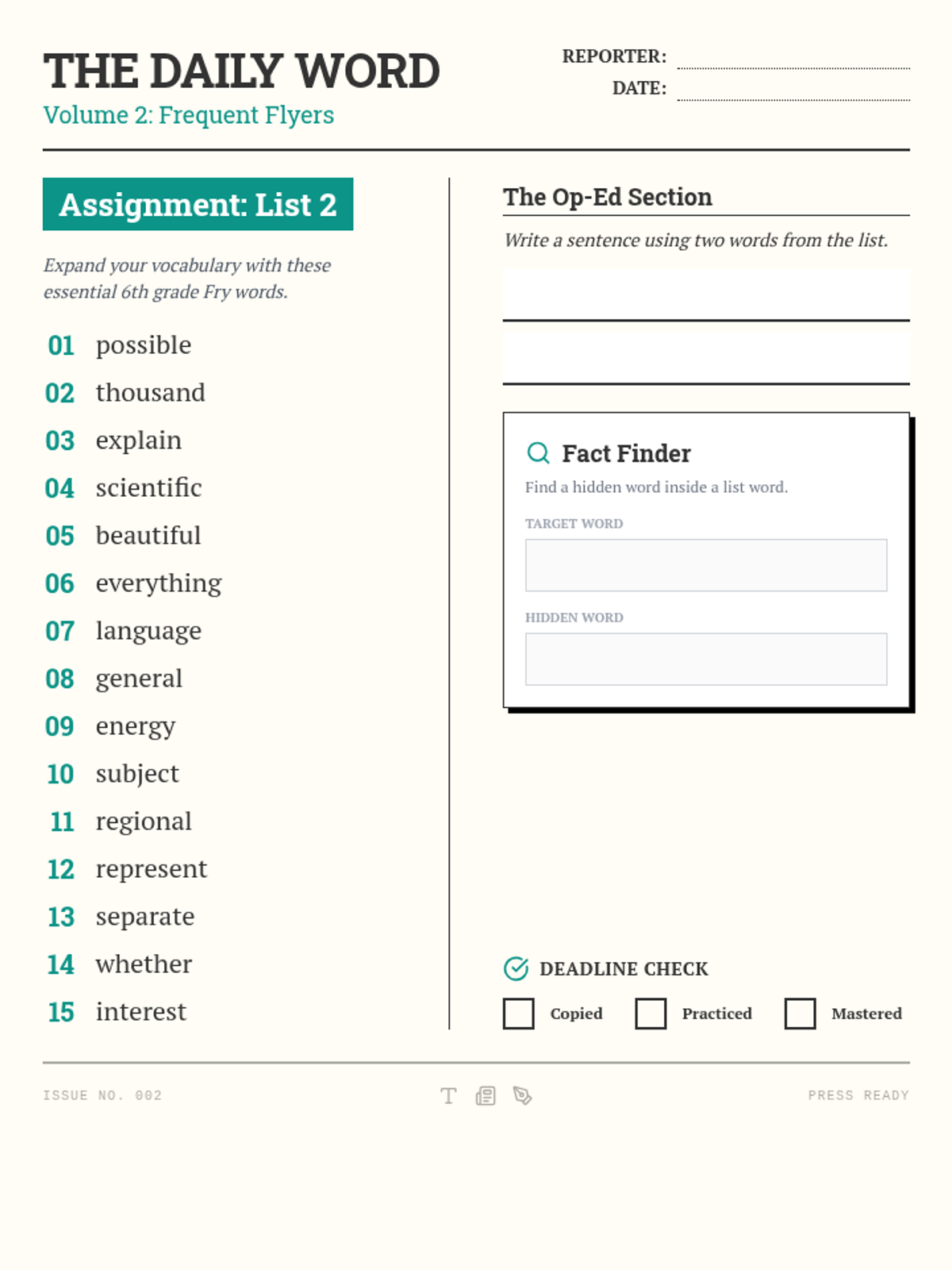
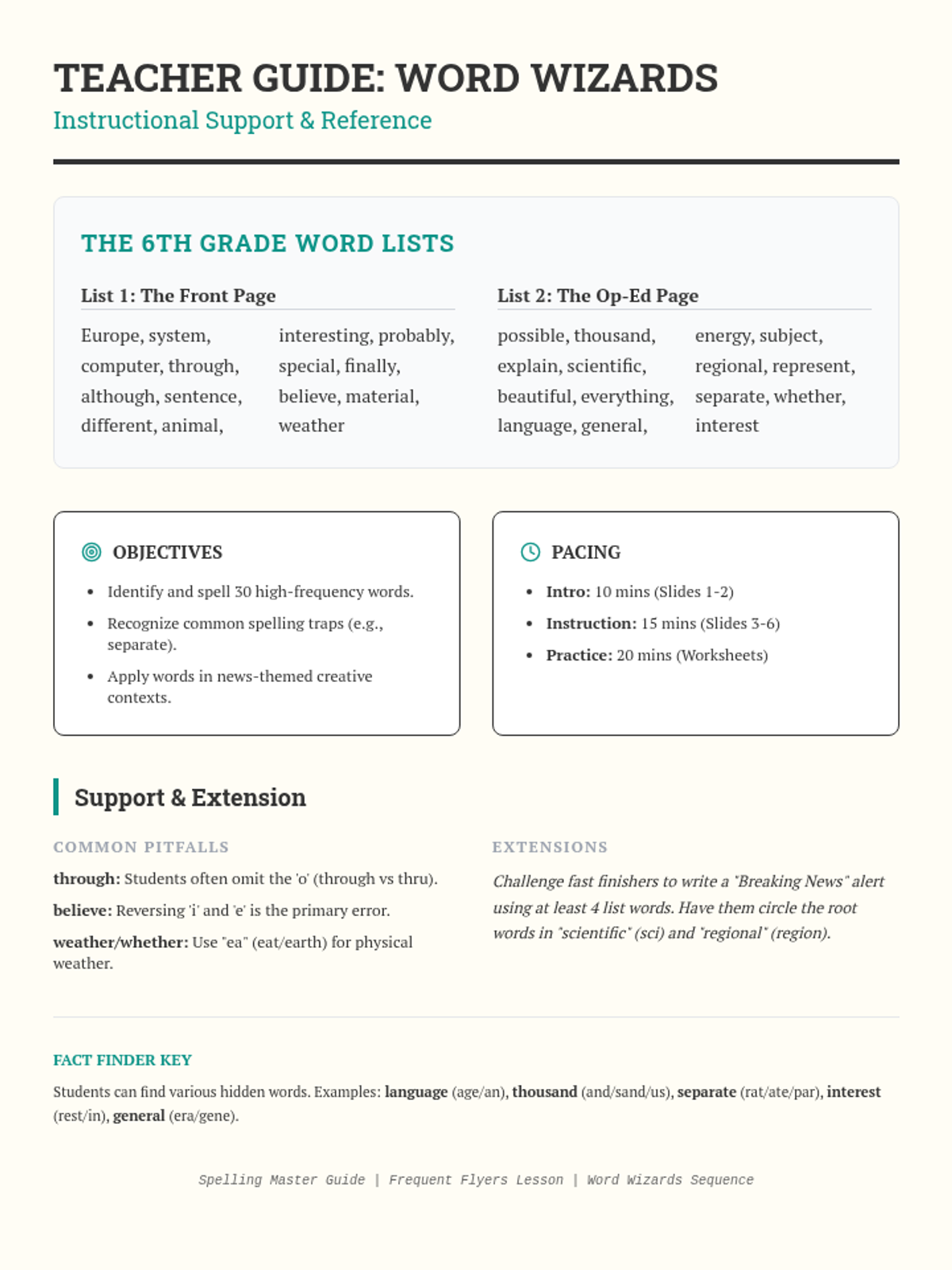
A spelling program for 6th graders focusing on high-frequency Fry words to build reading and writing fluency.
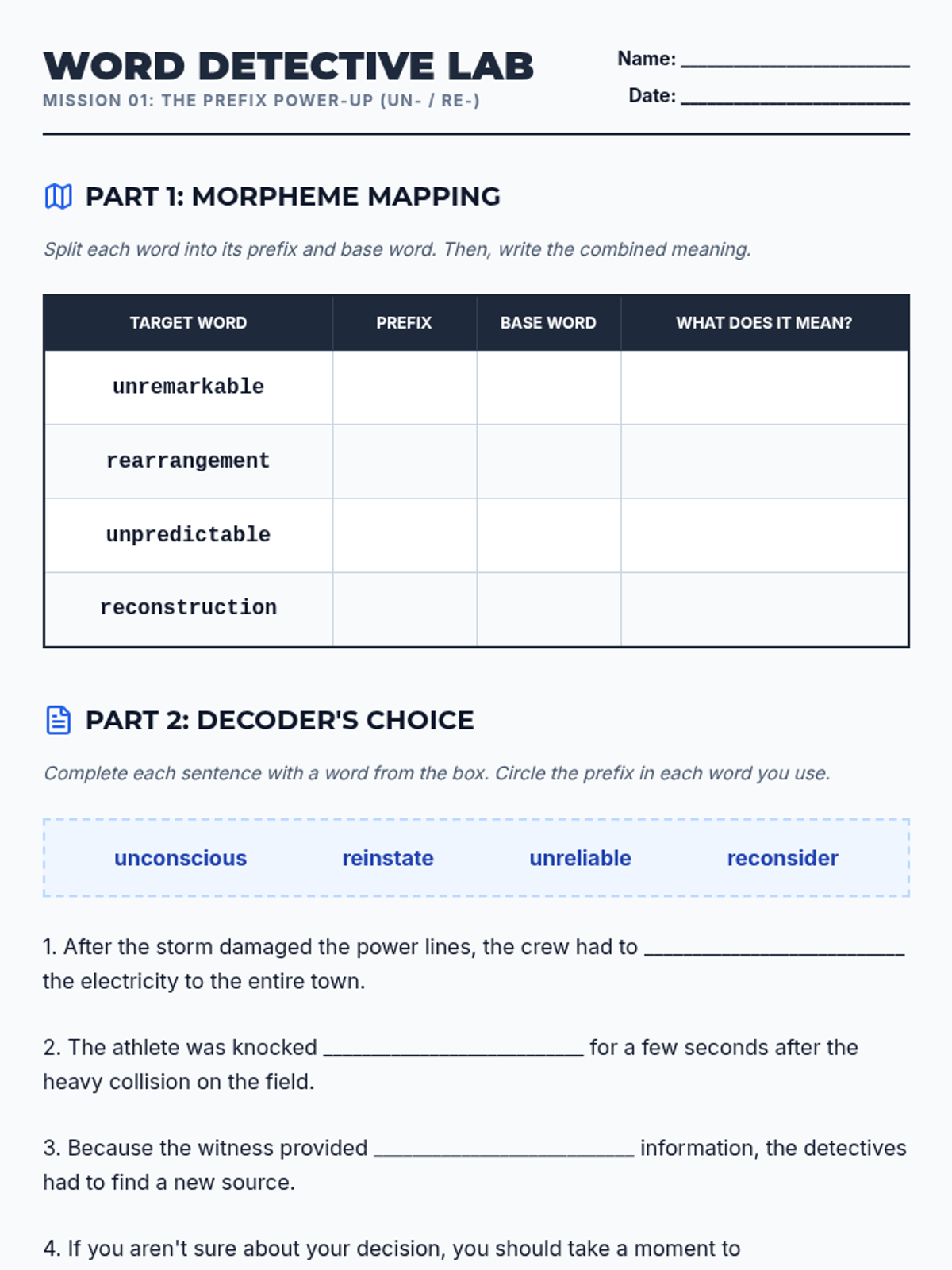
A dual-unit intervention sequence for 6th grade Tier 2 decoding. Unit 1 focuses on Morphology (Lessons 1-15). Unit 2 focuses on Syllable Types and Division Patterns (Lessons 16-30) through an architectural blueprint theme.
A series of lessons exploring complex spelling patterns including assimilated suffixes and chameleon prefixes to improve student decoding and spelling accuracy.
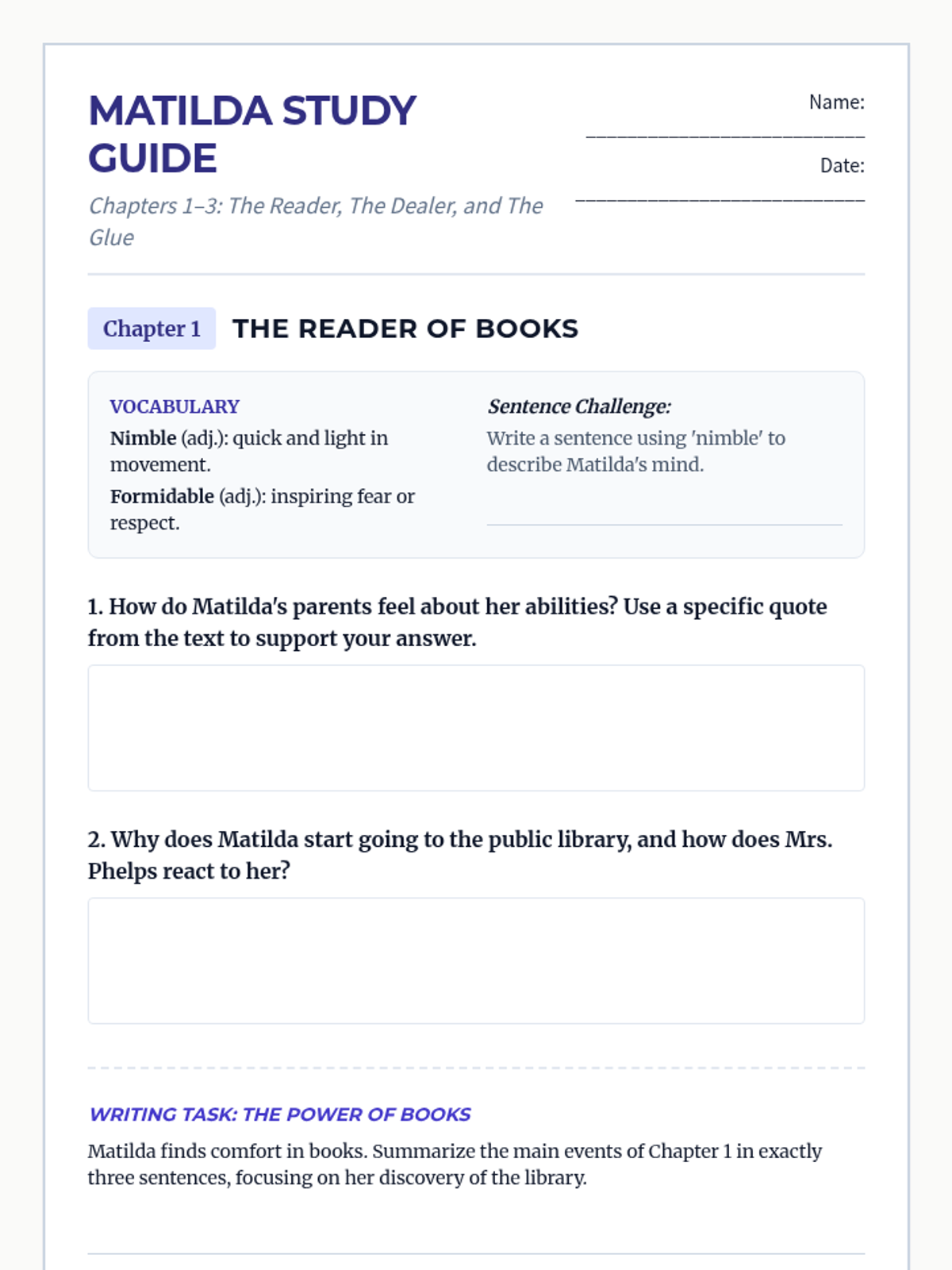
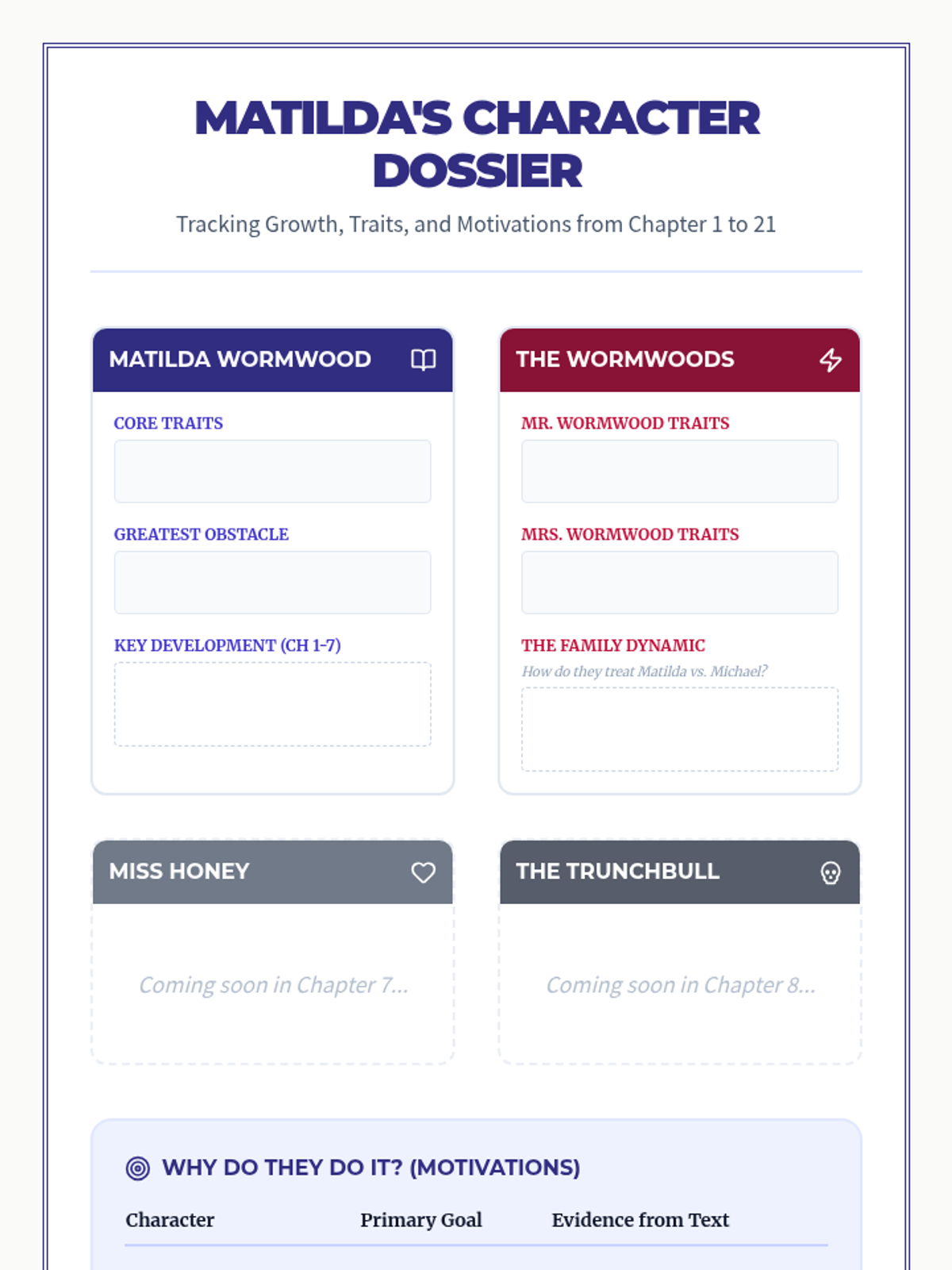
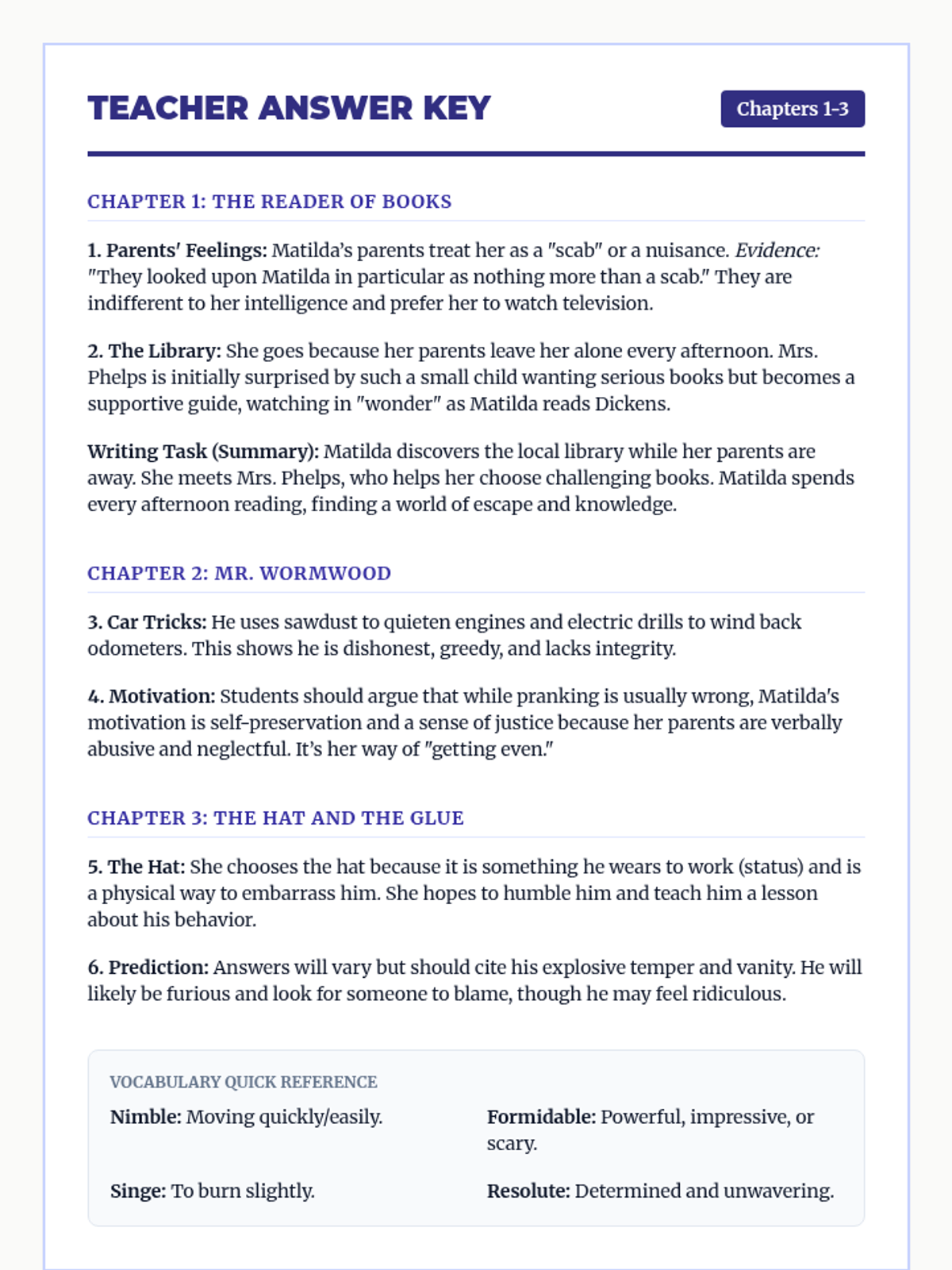
A comprehensive novel study for Roald Dahl's 'Matilda', focusing on character development, text evidence, and creative writing across 21 chapters.
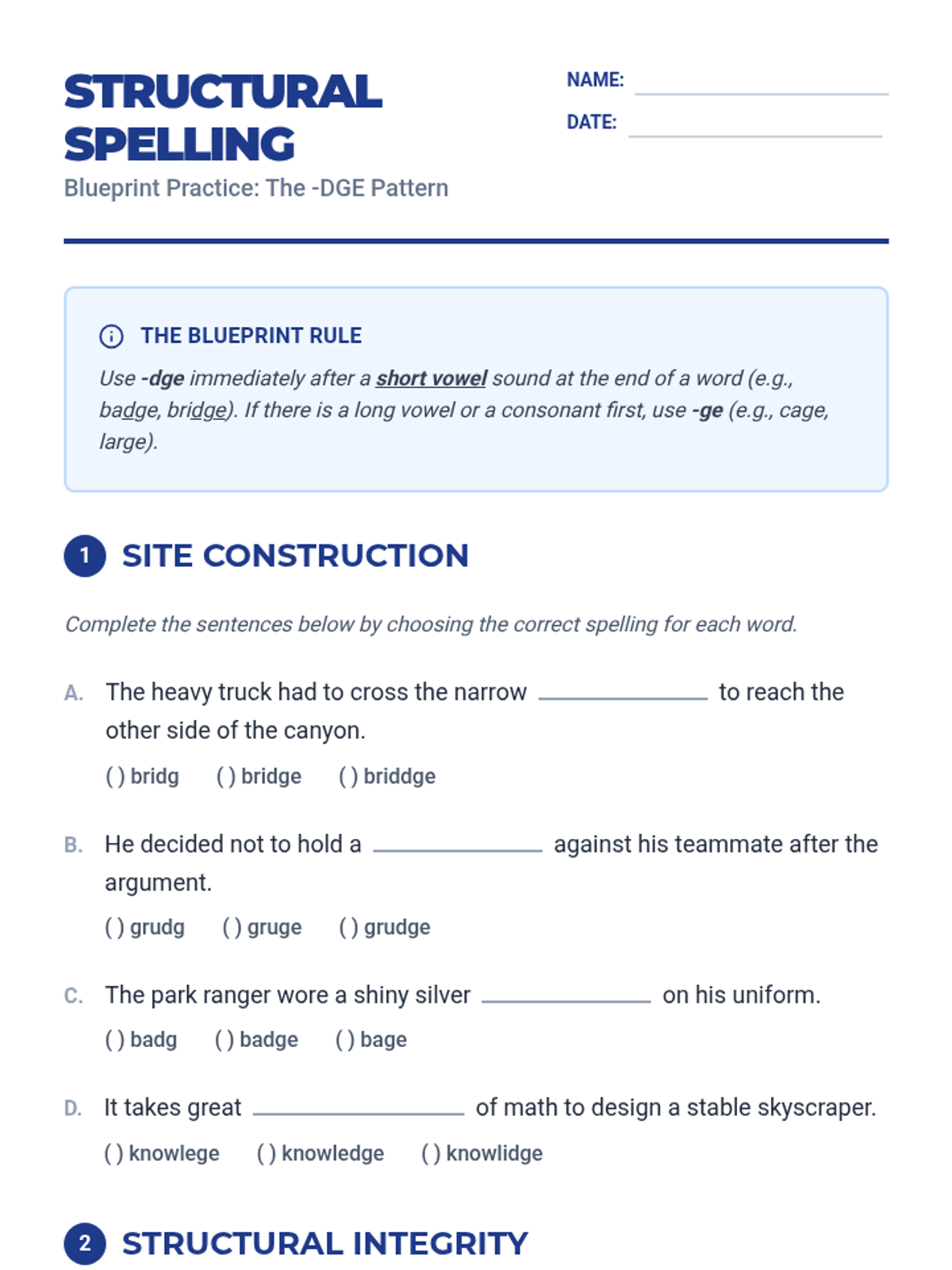
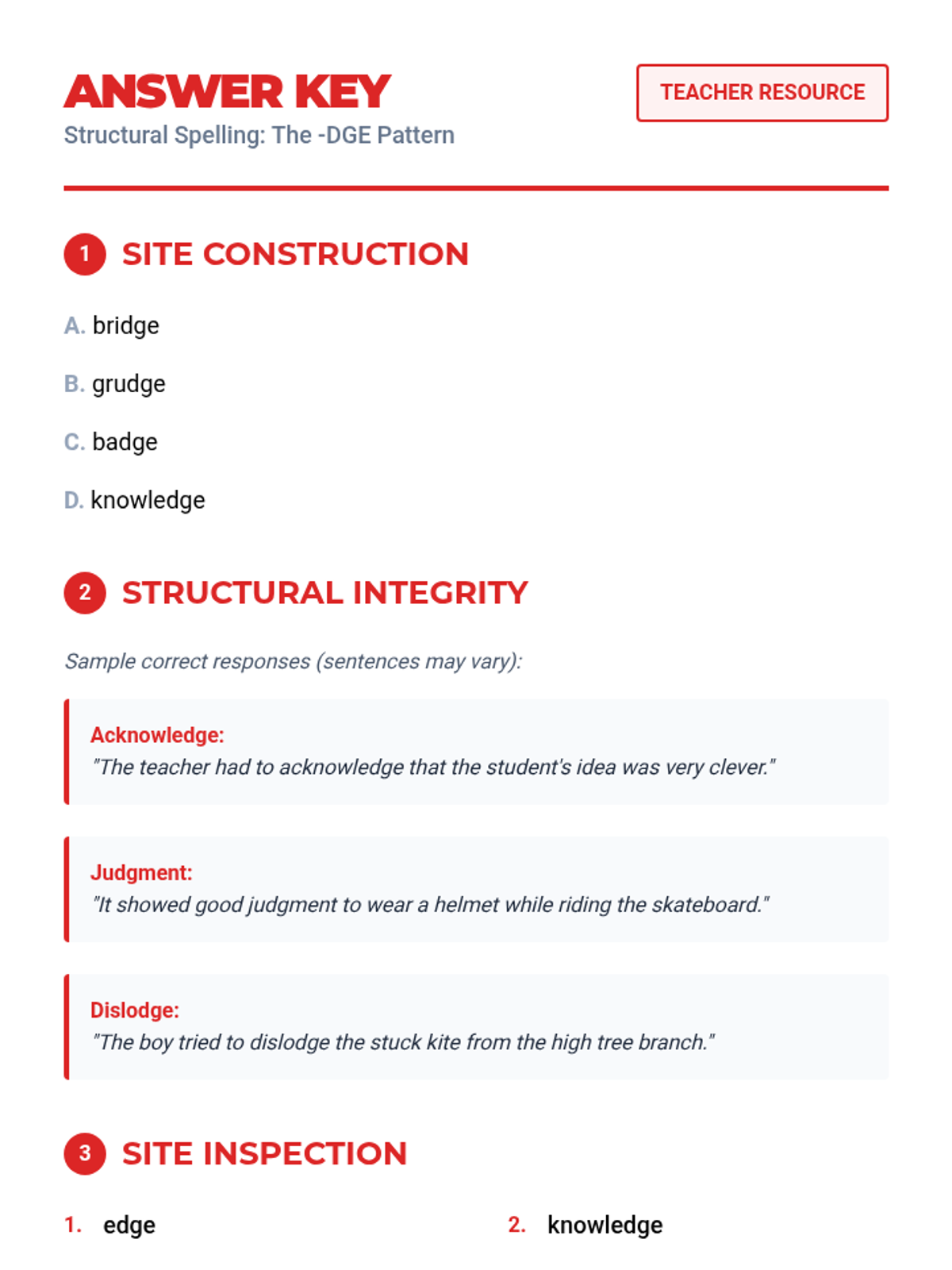
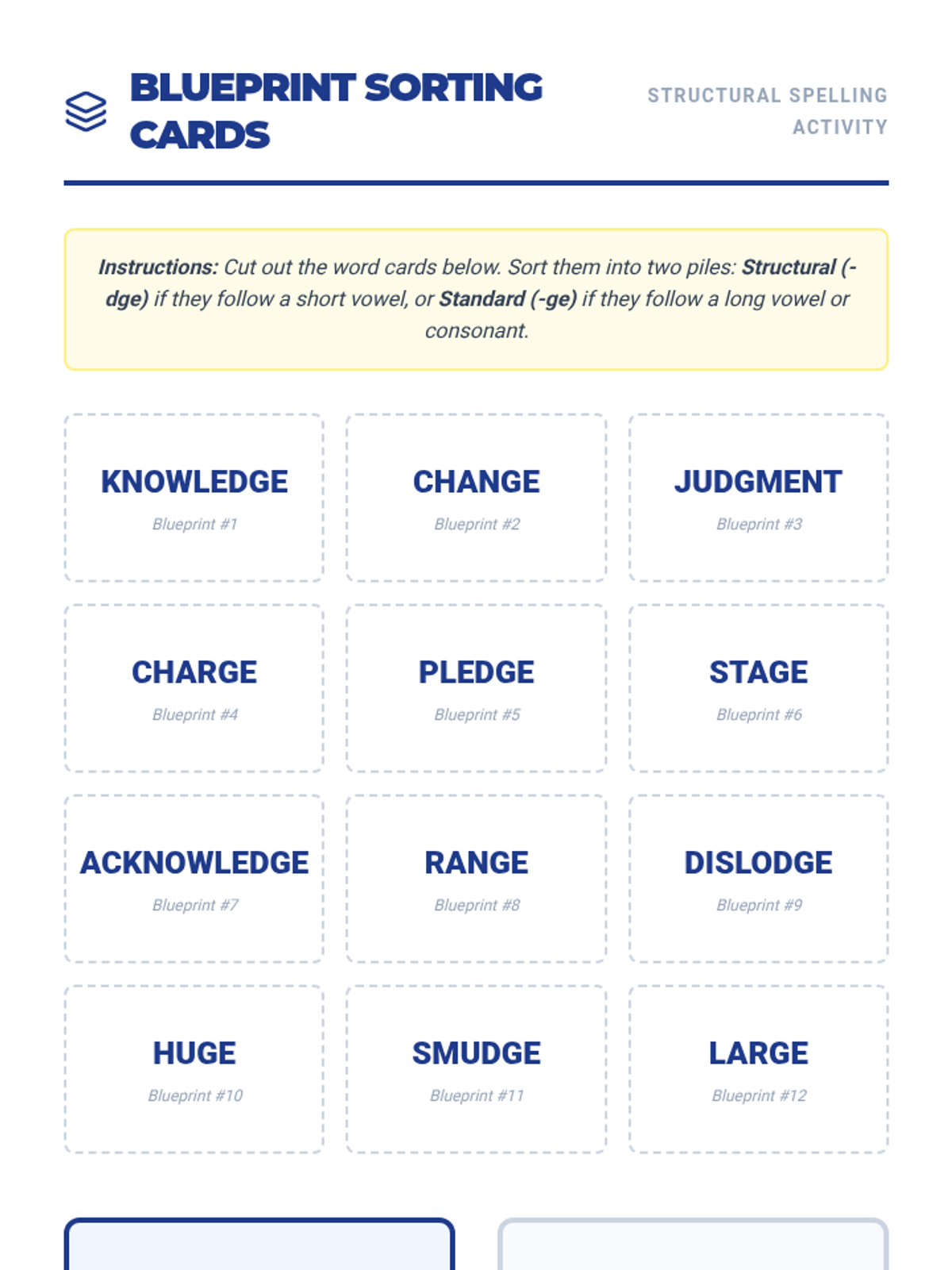
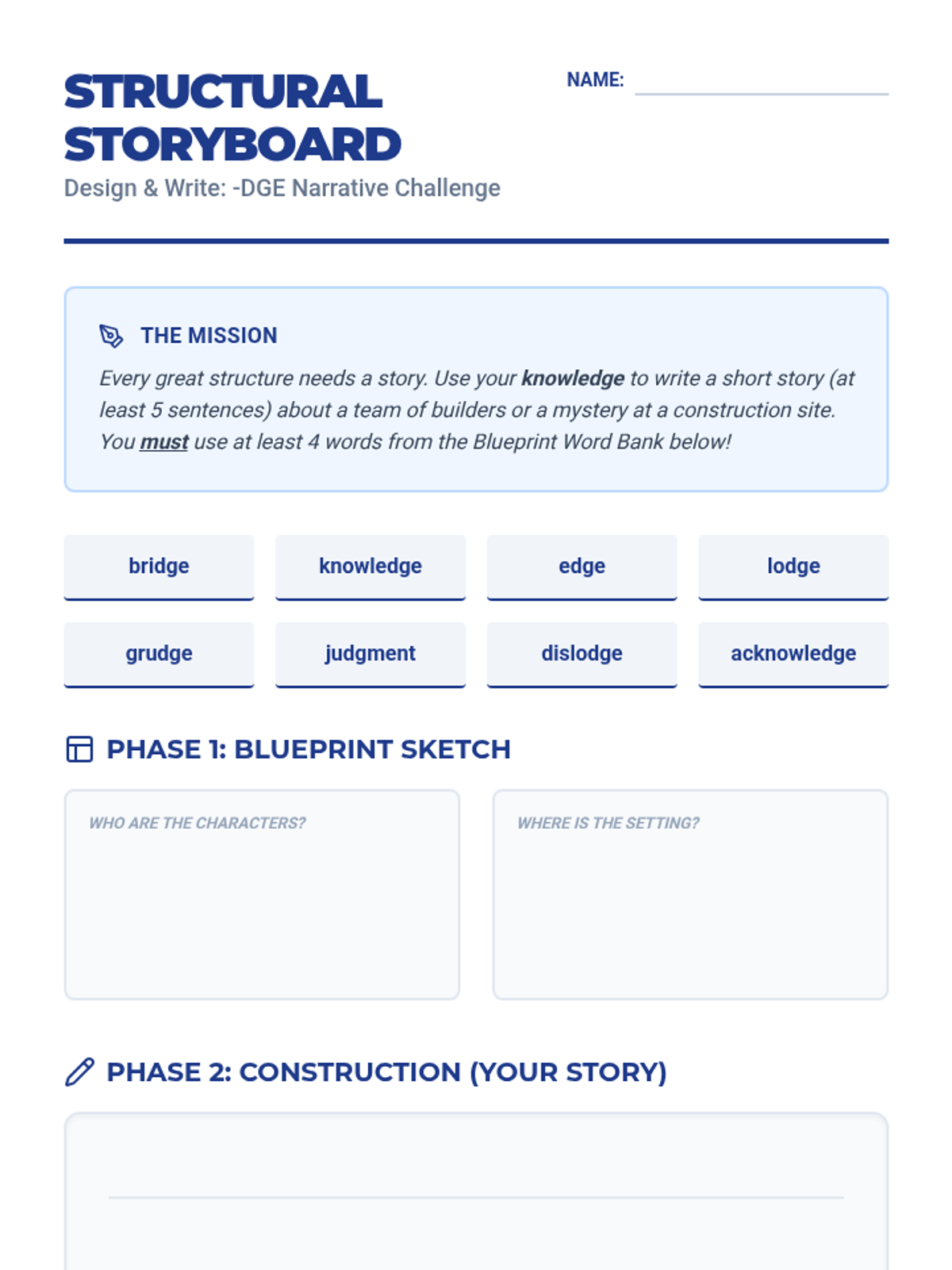
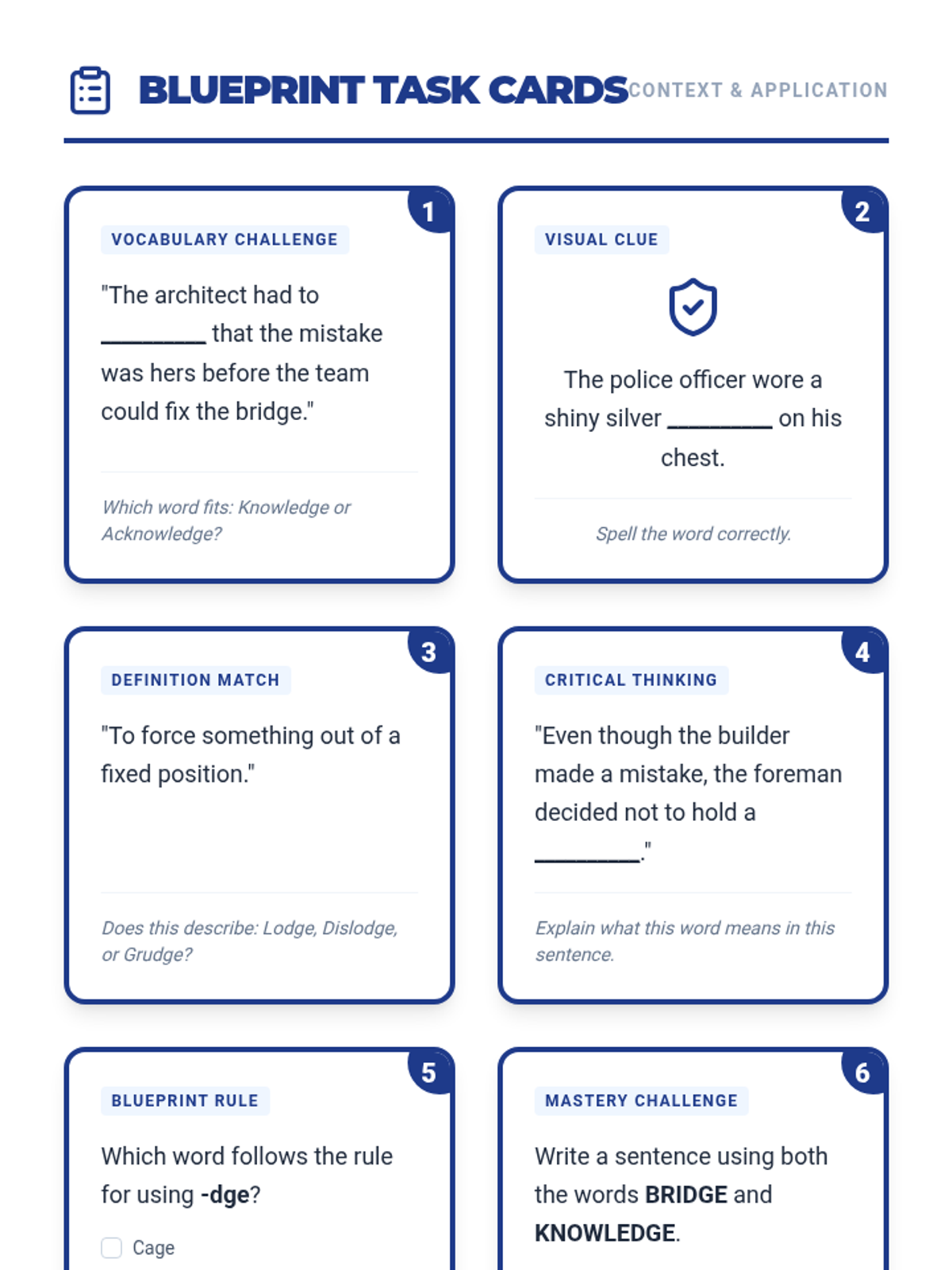
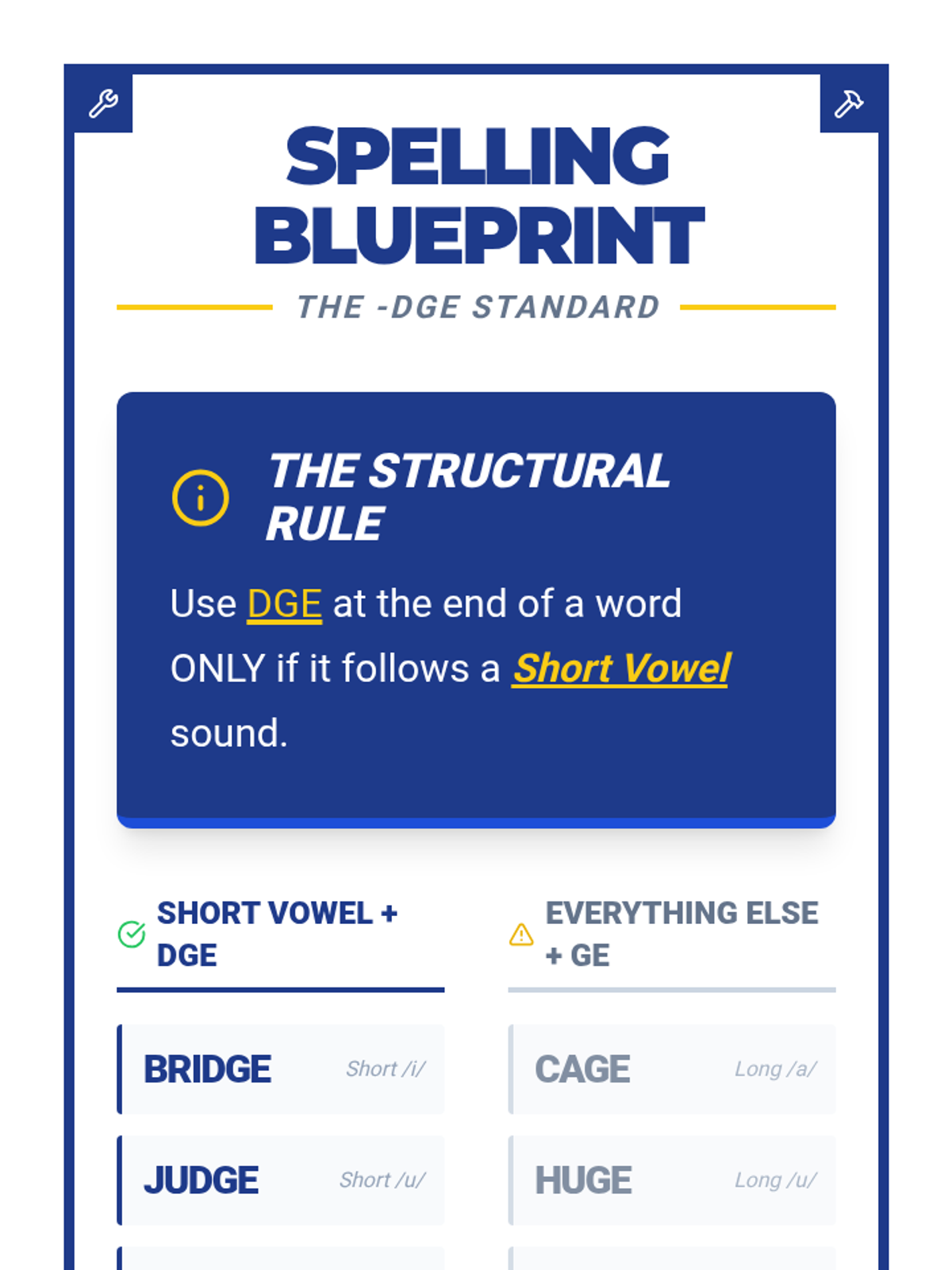
A specialized spelling sequence for middle school students, focusing on complex phonetic patterns and their practical application in reading and writing. The sequence uses a 'Blueprint' theme to treat word construction as structural engineering.