A lesson designed for high school students to master the unique skills required to read and interpret dramatic scripts, with a focus on dialogue and stage directions.
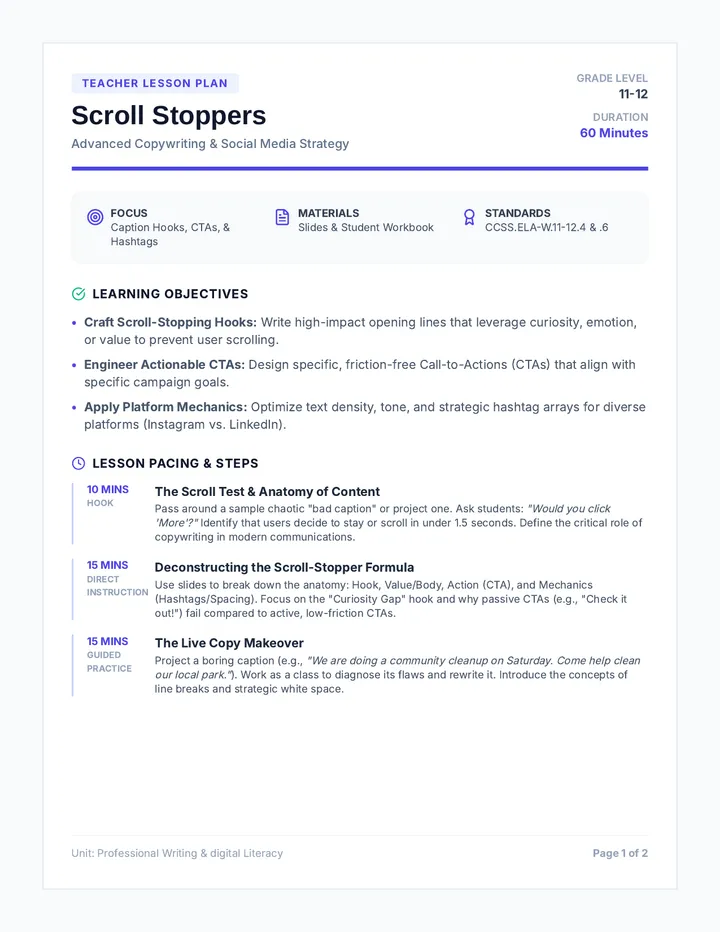
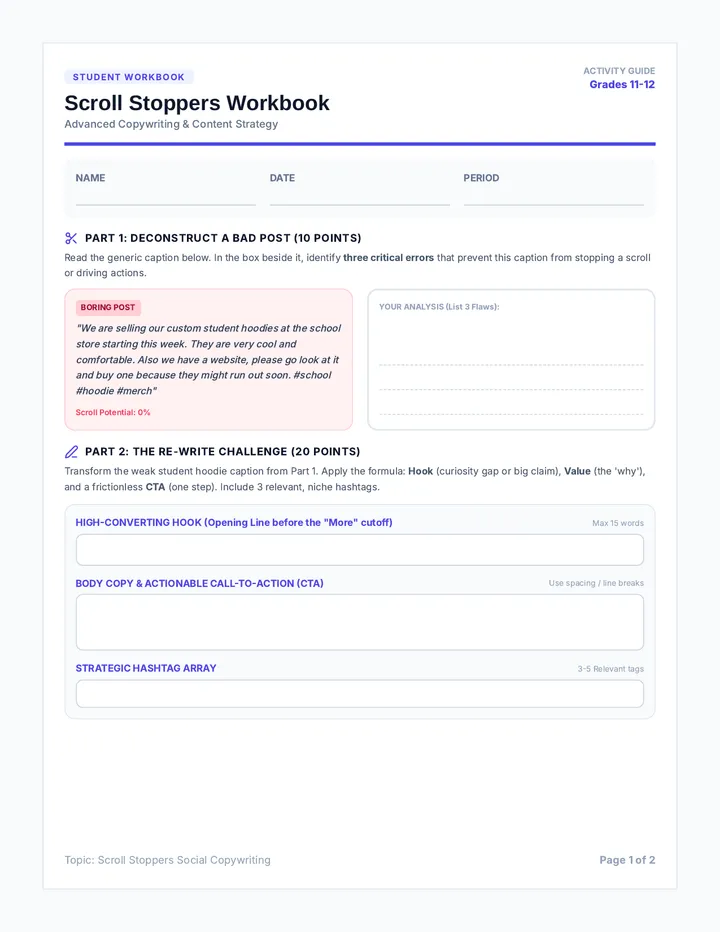
A comprehensive sequence for Grades 11-12 on building modern, high-performing social media content. Lesson 1 focuses on copywriting (captions, hooks, CTAs, mechanics), while Lesson 2 addresses graphic design principles (visual hierarchy, typography, and formatting for social feeds).
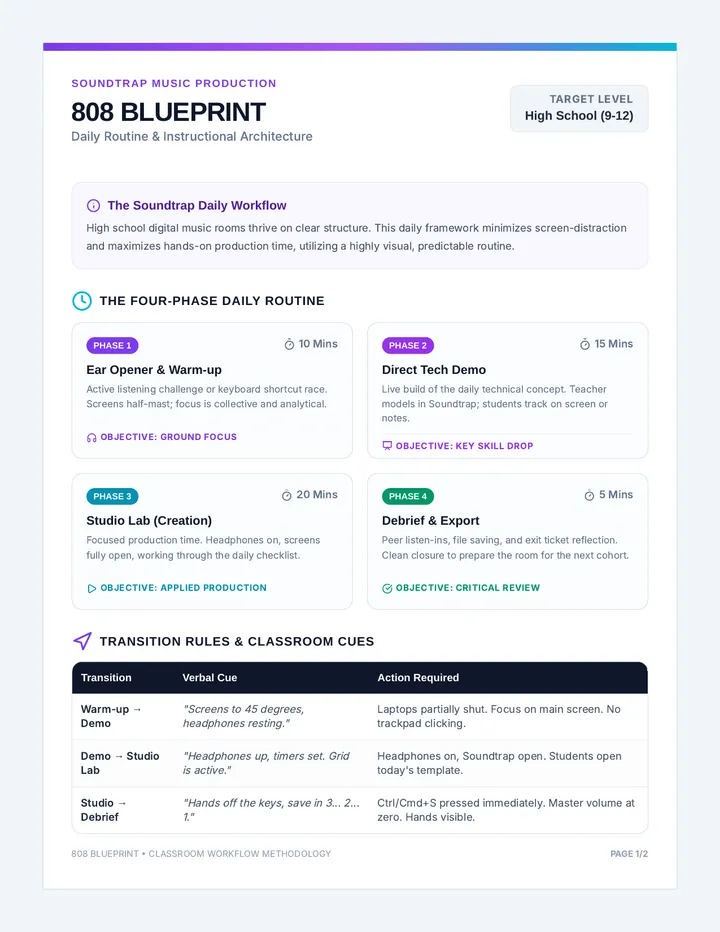
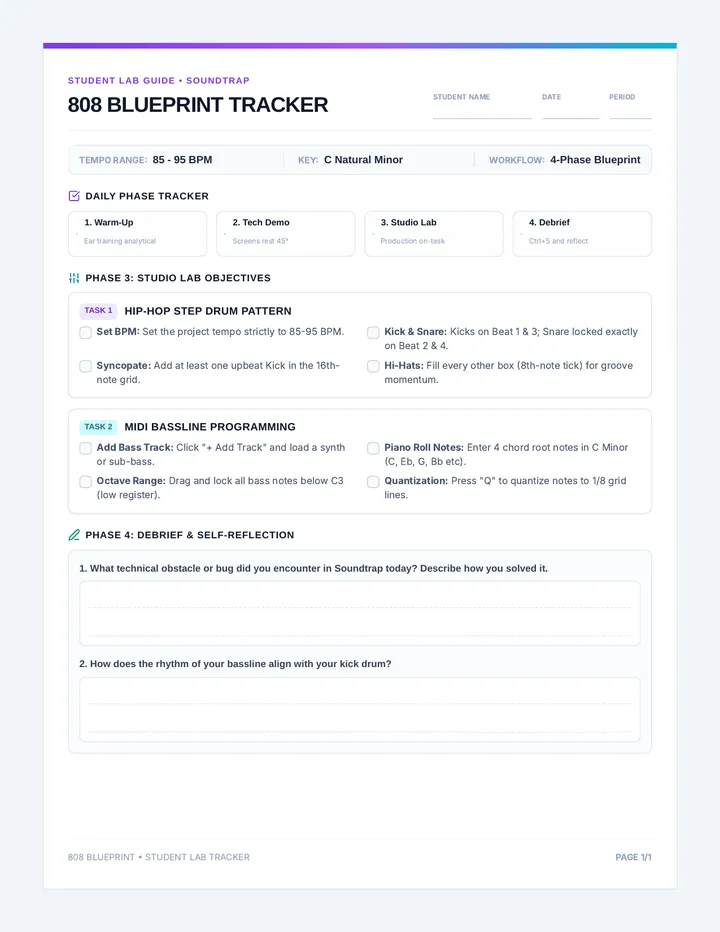
A comprehensive daily format lesson bundle for high school digital music production in Soundtrap. Students master the 4-phase daily workflow (Warm-up, Direct Instruction, Studio Lab, Debrief) while creating an authentic hip-hop beat using step sequencers and MIDI basslines.
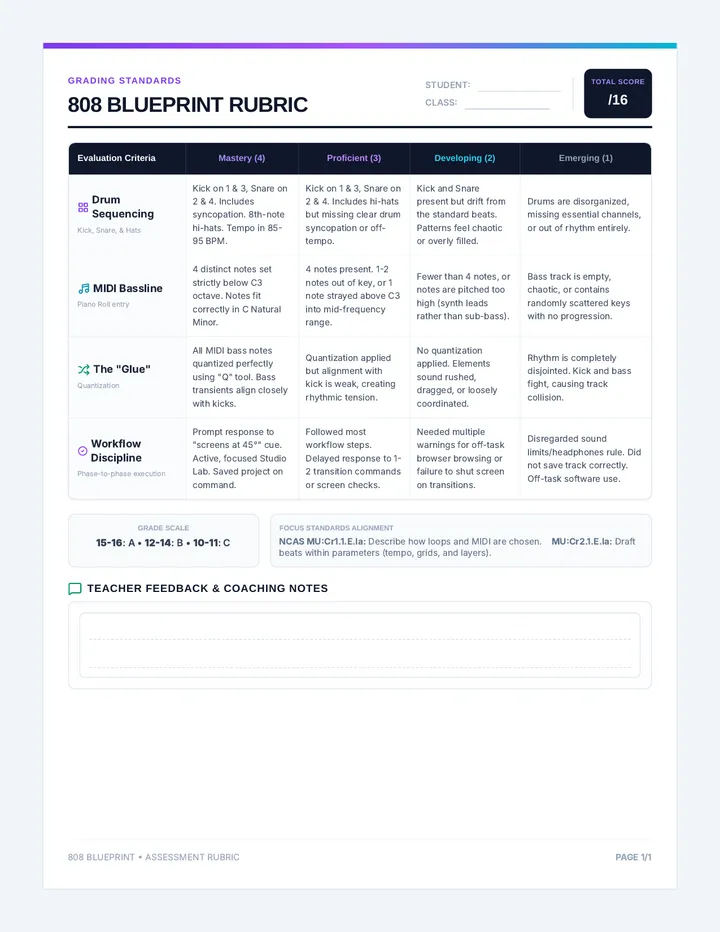
An assessment rubric for the 808 Blueprint music production project. Evaluates students across four technical and workflow dimensions: Drum Sequencing, MIDI Bassline, Rhythmic Alignment, and Workflow Discipline, with a dedicated teacher feedback section.
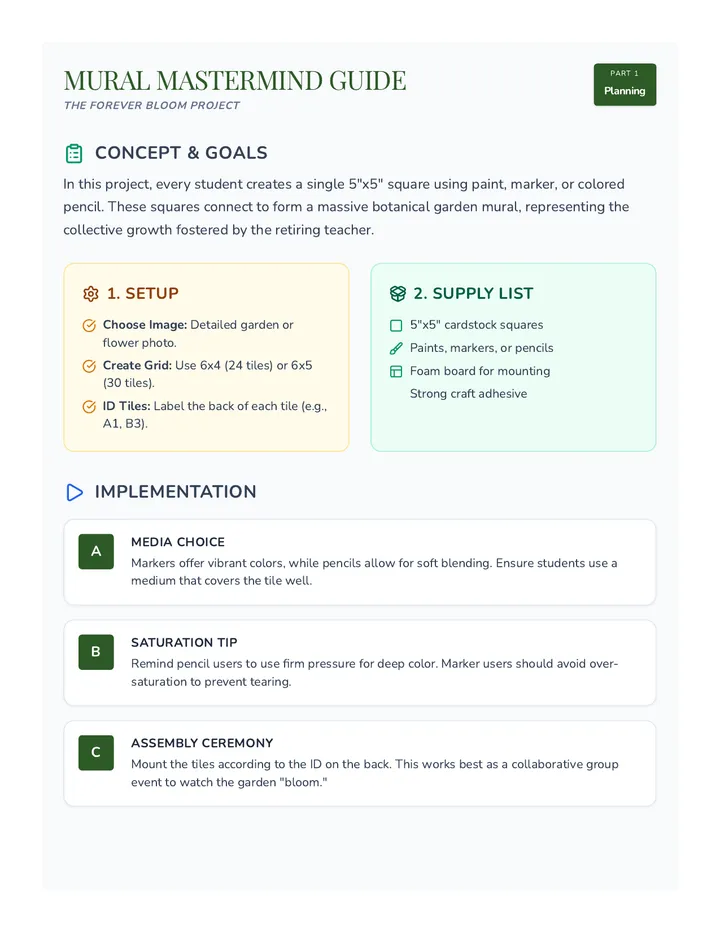
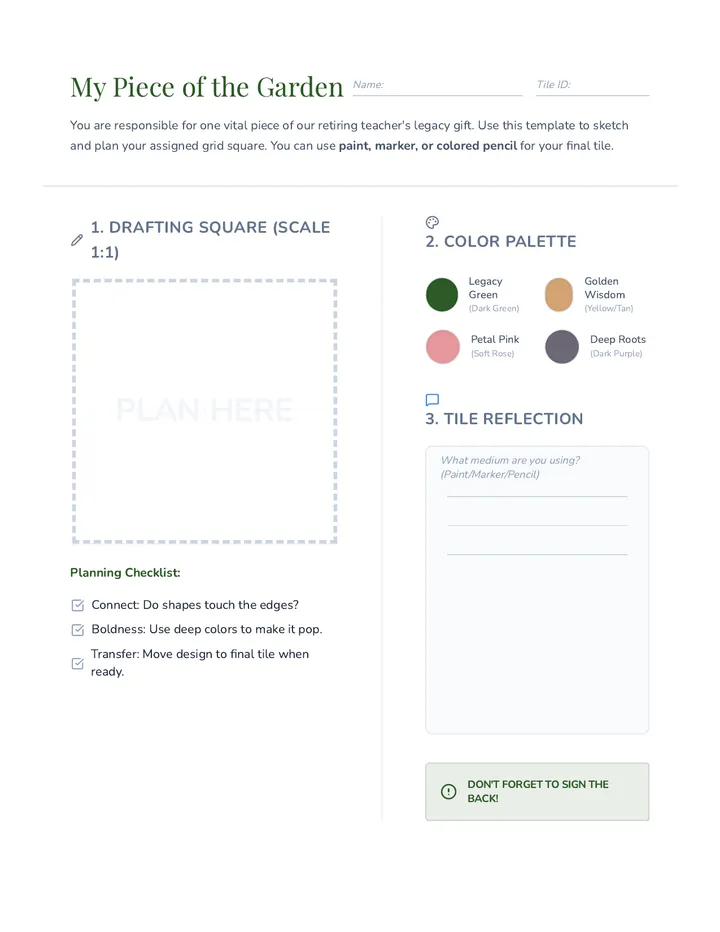
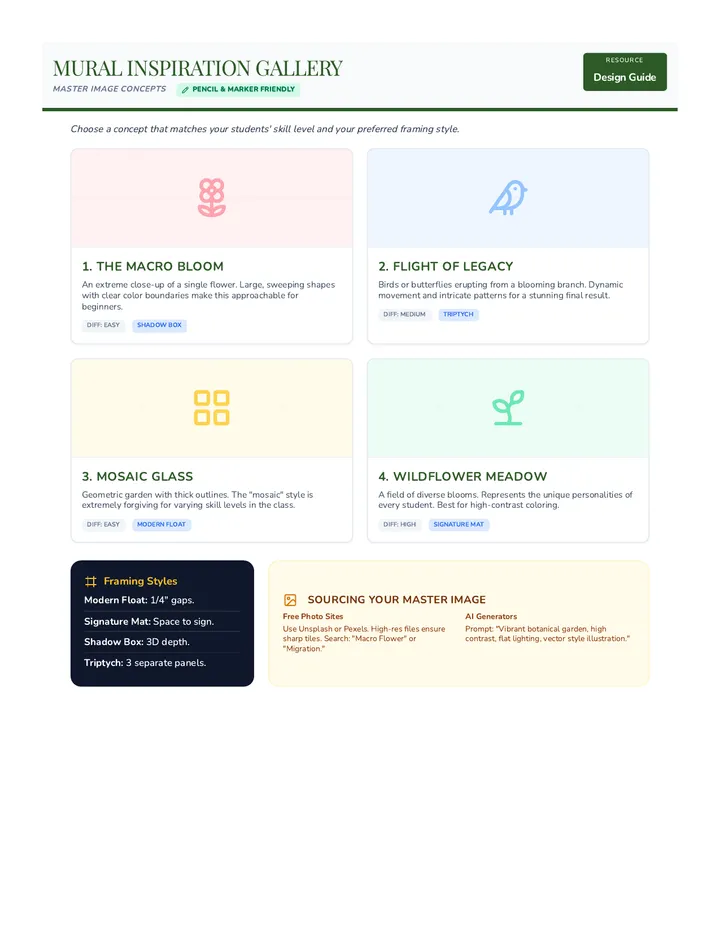
A collaborative art sequence where students create a large-scale mosaic mural to honor a retiring teacher, focusing on themes of growth, beauty, and legacy.
A collection of eye-catching announcements and flyers designed to communicate school updates, schedule changes, and campus news in a fun, engaging, and comic-style format.
A student-facing print-ready guide and checklist for the 808 Blueprint lesson. Features clear check-offs for each daily routine phase, specific technical requirements for their Soundtrap project, and a dedicated, light-colored handwritten reflection space.
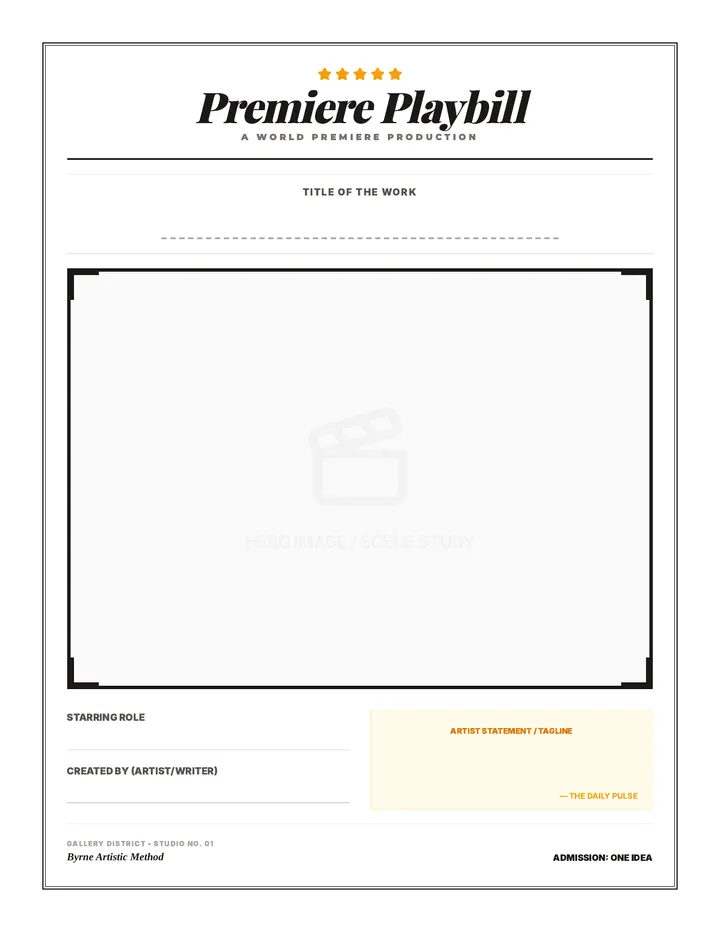
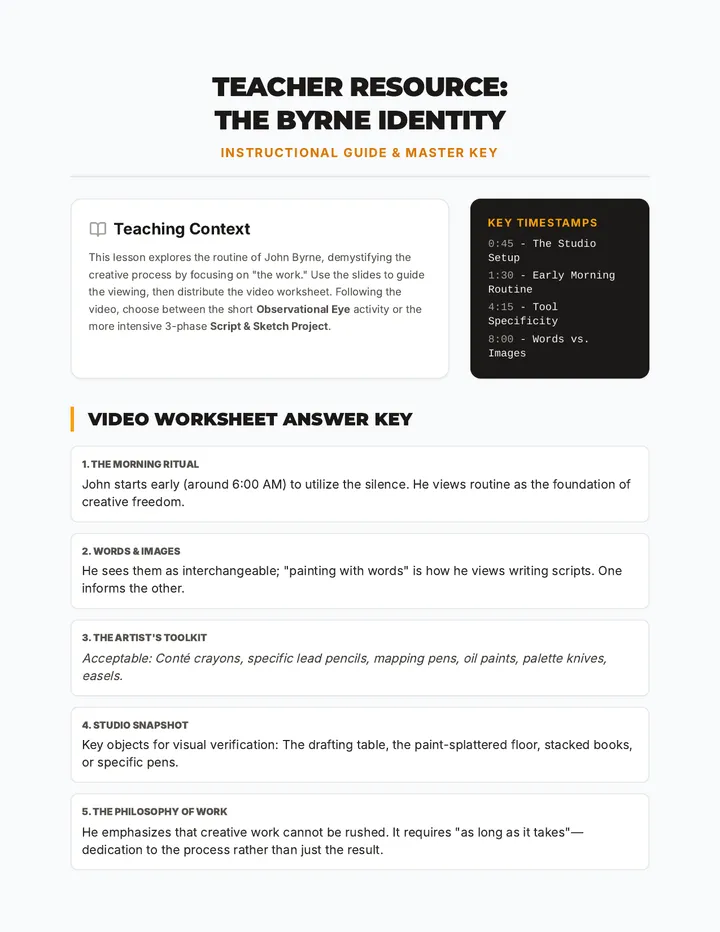
A sequence exploring the daily lives and creative processes of renowned artists, starting with John Byrne. Students observe artistic routines and apply those methods to their own creative practice.
An interdisciplinary unit exploring the Civil Rights Movement and Vietnam War Protest movements through historical inquiry of music as primary sources, paired with hands-on keyboard and guitar instruction.
A 2-page print-ready Teacher Guide detailing the structured 4-phase daily routine (Warm-up, Direct Instruction, Studio Lab, Debrief) and providing a lesson plan for teaching Hip-Hop beatmaking in Soundtrap. Includes transition cues, technical tips, and differentiation strategies.
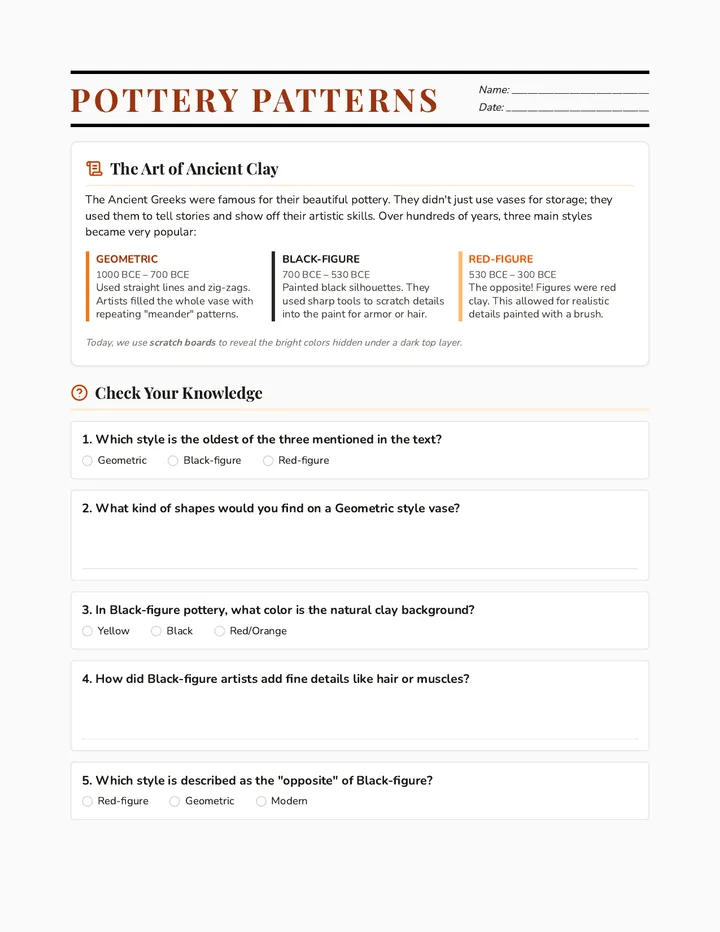
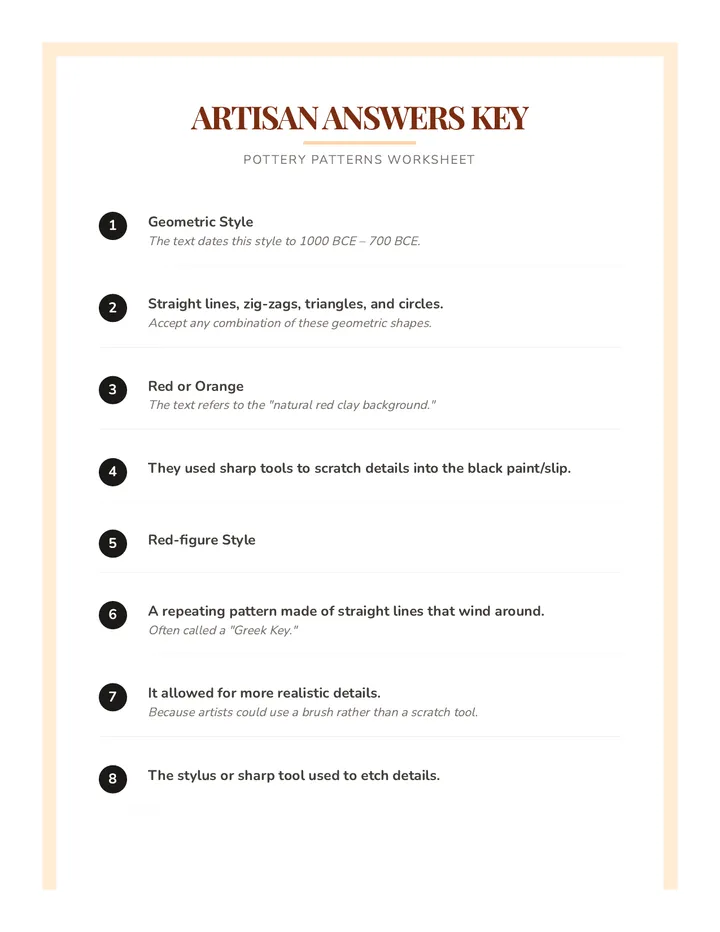
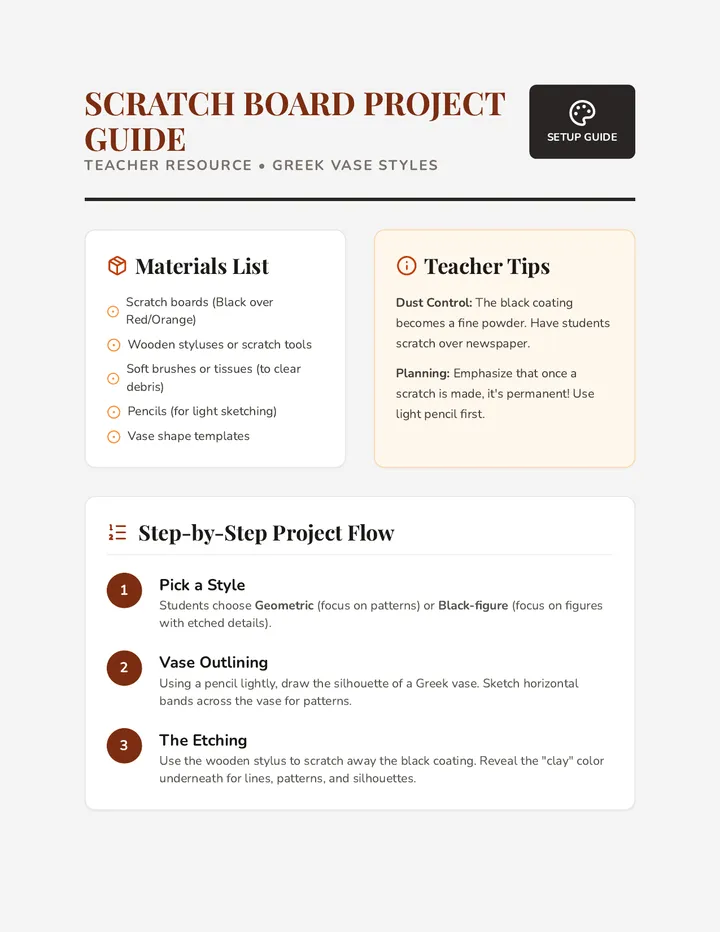
A series of lessons exploring the art and craftsmanship of Ancient Greece, focusing on pottery and visual storytelling. Students will learn about historical styles and apply them to modern hands-on art projects.
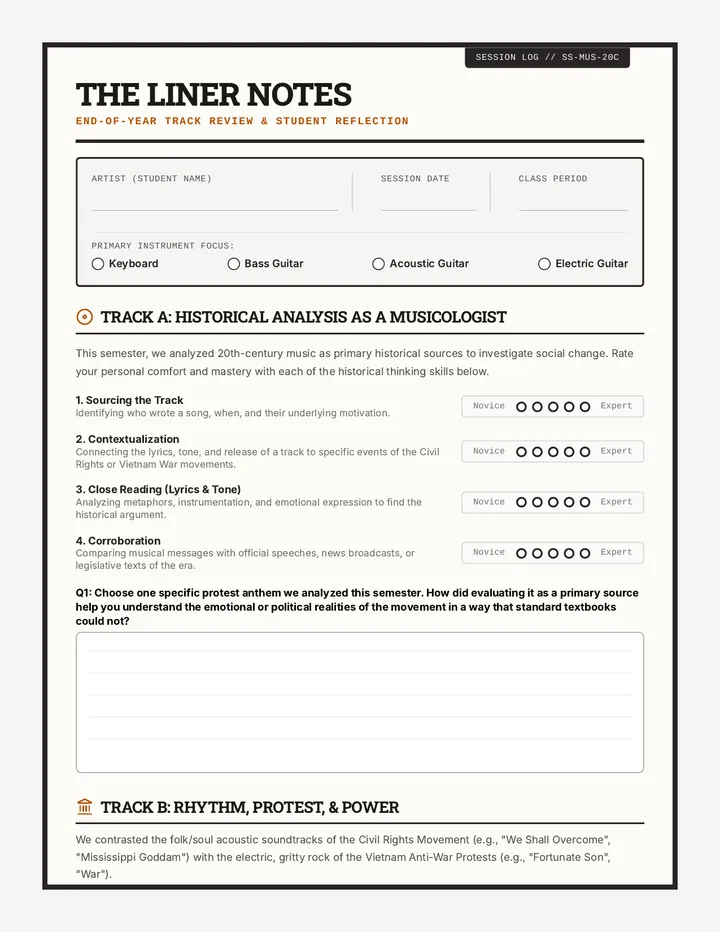
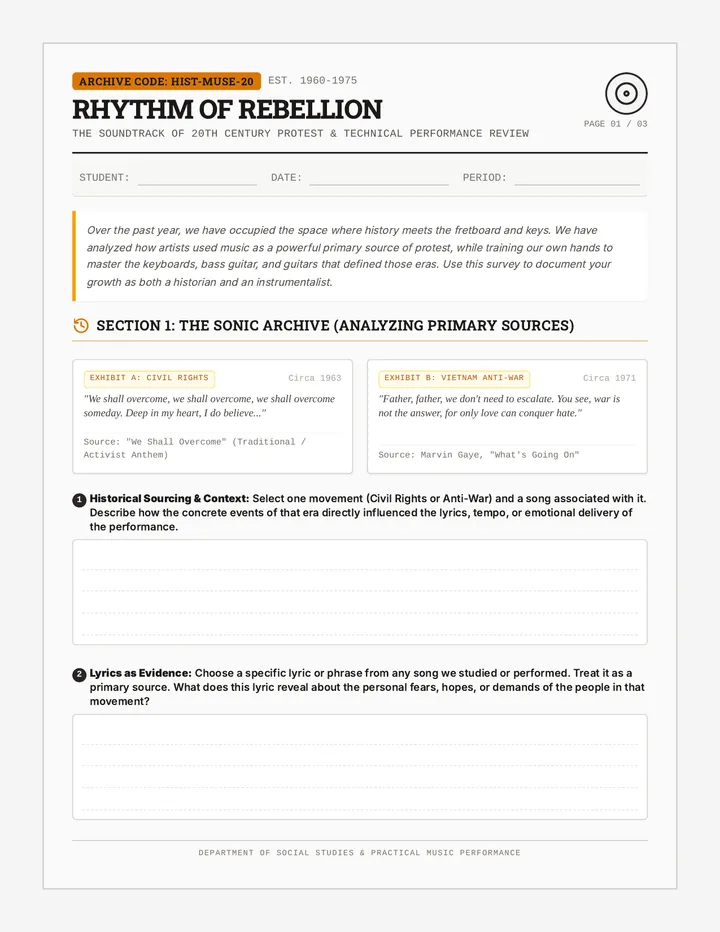
An end-of-year interdisciplinary reflection lesson where students analyze 20th-century protest music from the Civil Rights and Vietnam Anti-War movements as historical primary sources, while reflecting on their technical instrumental growth across keyboard, bass, and guitars.
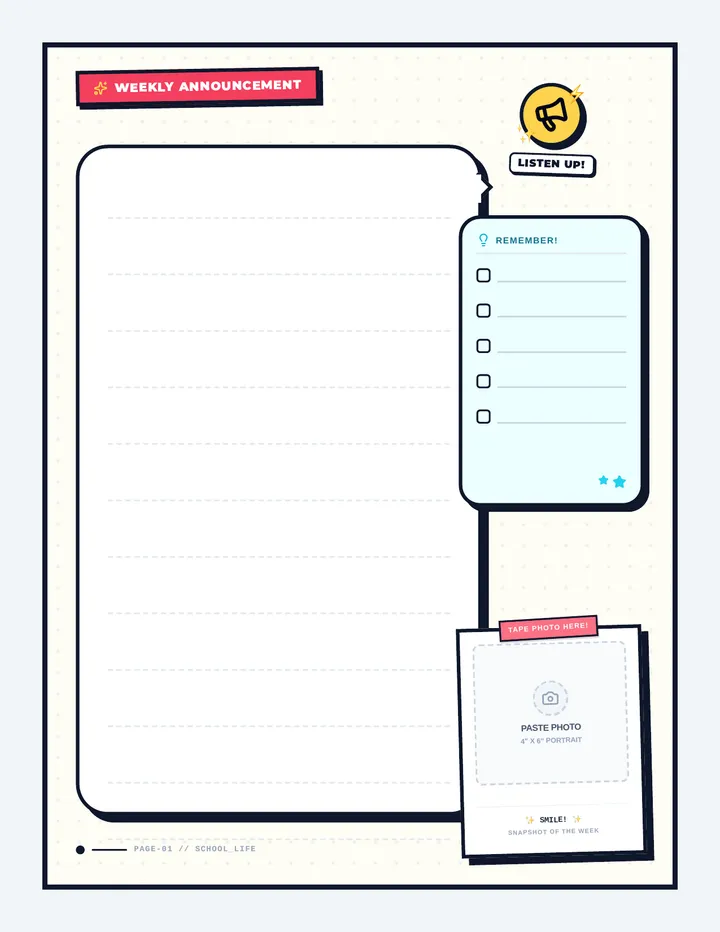
A highly engaging, comic-style school announcement flyer featuring a large, completely empty speech bubble on the left and a dedicated Polaroid photo frame in the bottom right. Designed for school updates and announcements with a playful and whimsical aesthetic.