A comprehensive lesson on macronutrients where students learn to analyze food labels, calculate caloric contributions, and design balanced meals through a collaborative 'Fuel Lab' investigation.
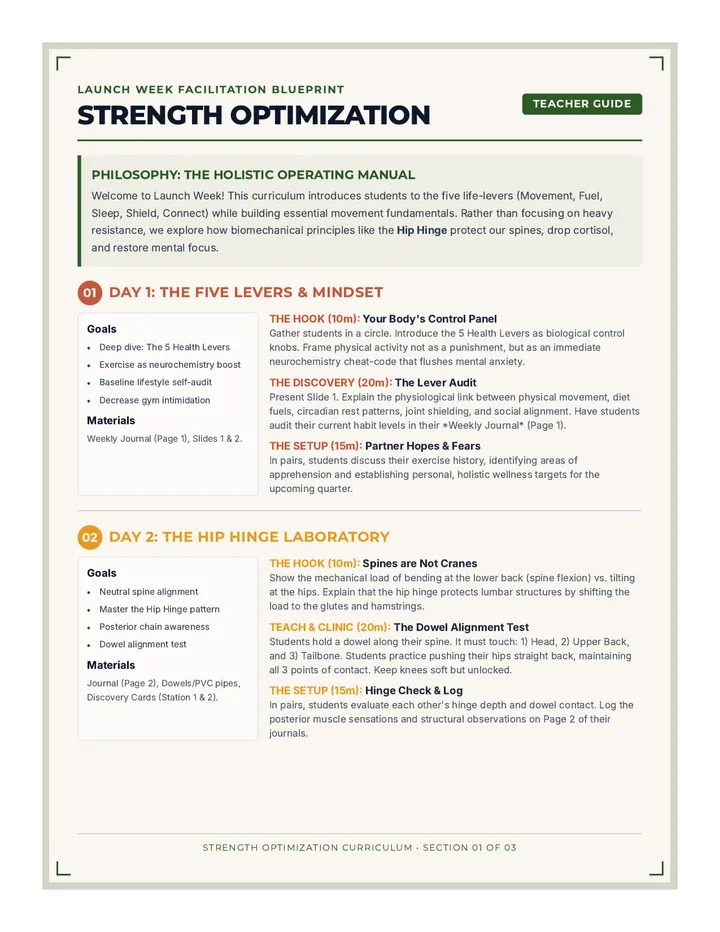
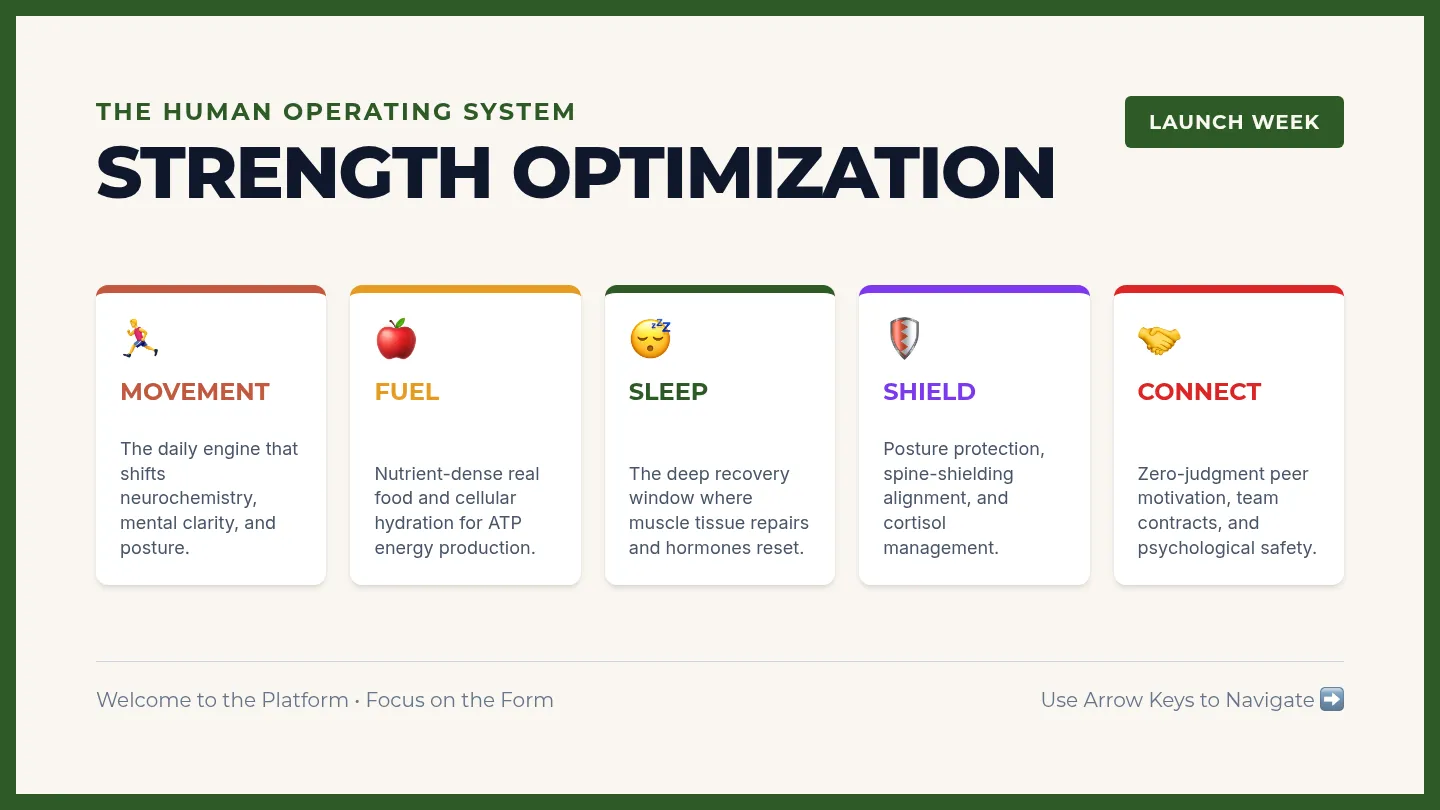
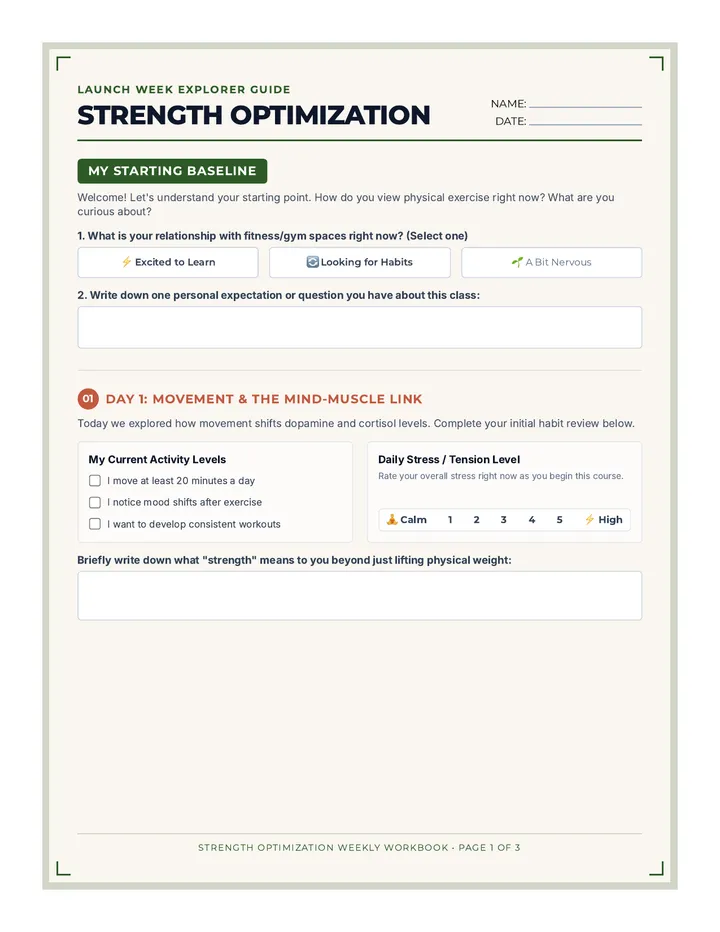
A five-day high school introductory physical education unit that blends basic strength training with five essential health levers (Movement, Fuel, Sleep, Shield, Connect) to optimize human performance and foster lifelong wellness.
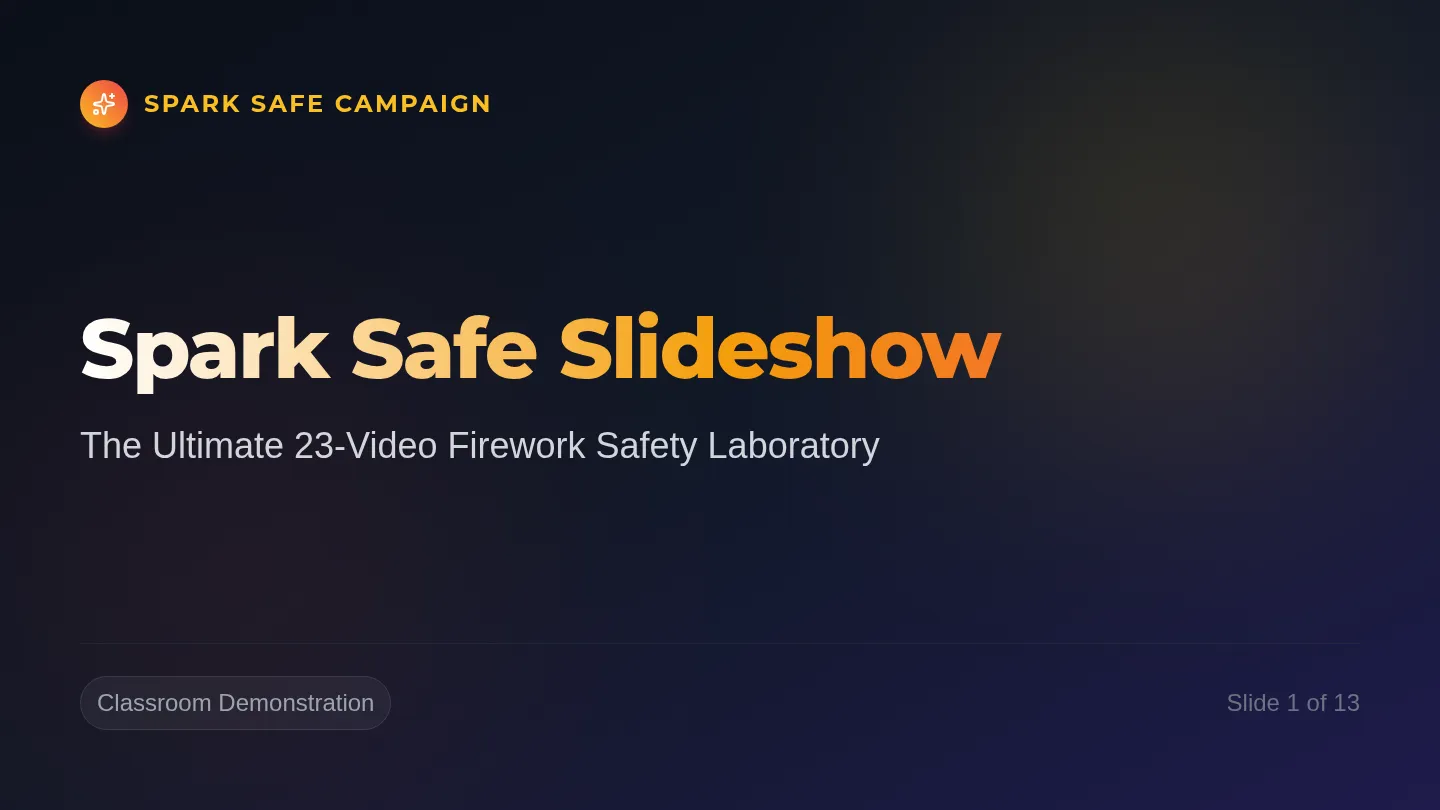
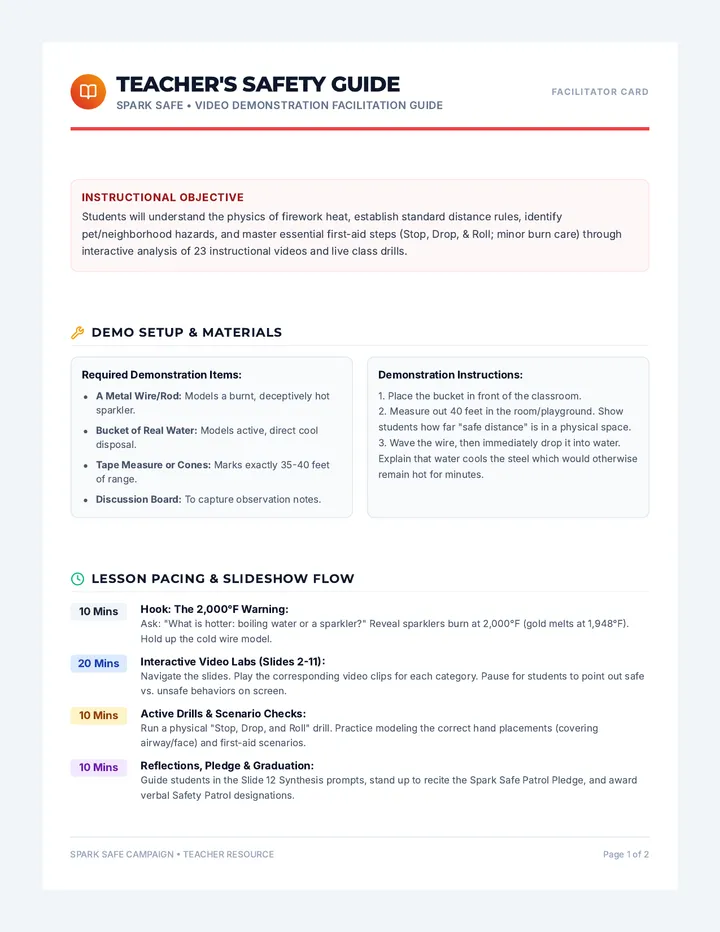
A comprehensive firework safety lesson covering spectator distance, safe sparkler handling, community laws, and emergency first aid. Includes a visually rich presentation, student worksheet, and teacher guide.
A revised 2-page print-ready teacher facilitation and demonstration guide optimized for a discussion-focused slideshow approach. Contains physical demonstration setups, an outline of the 13 video lab clips, verbal safety scenarios, and emergency checklists.
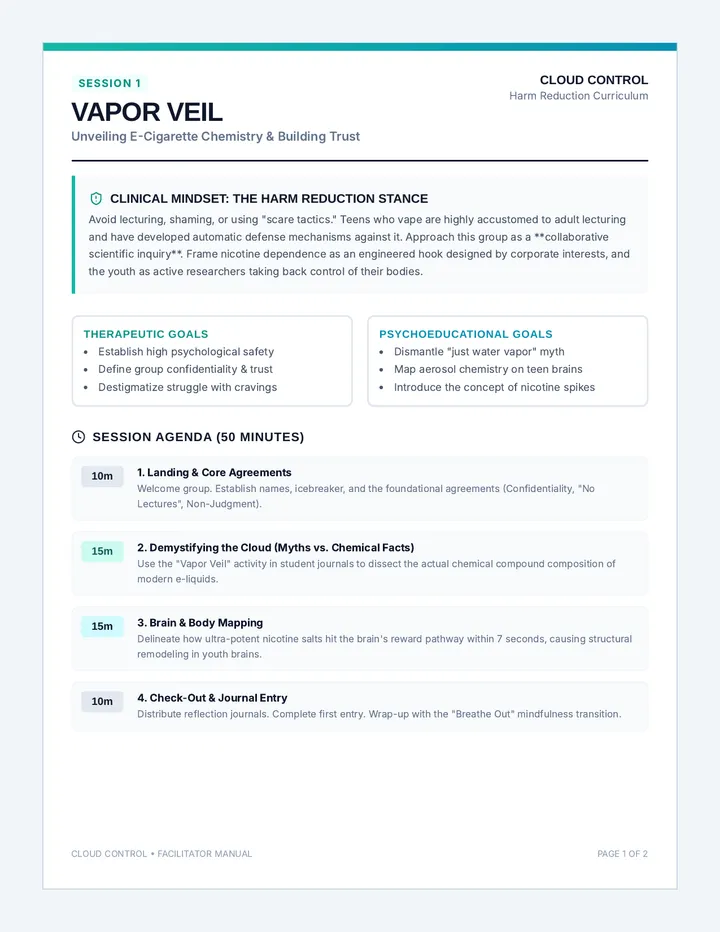
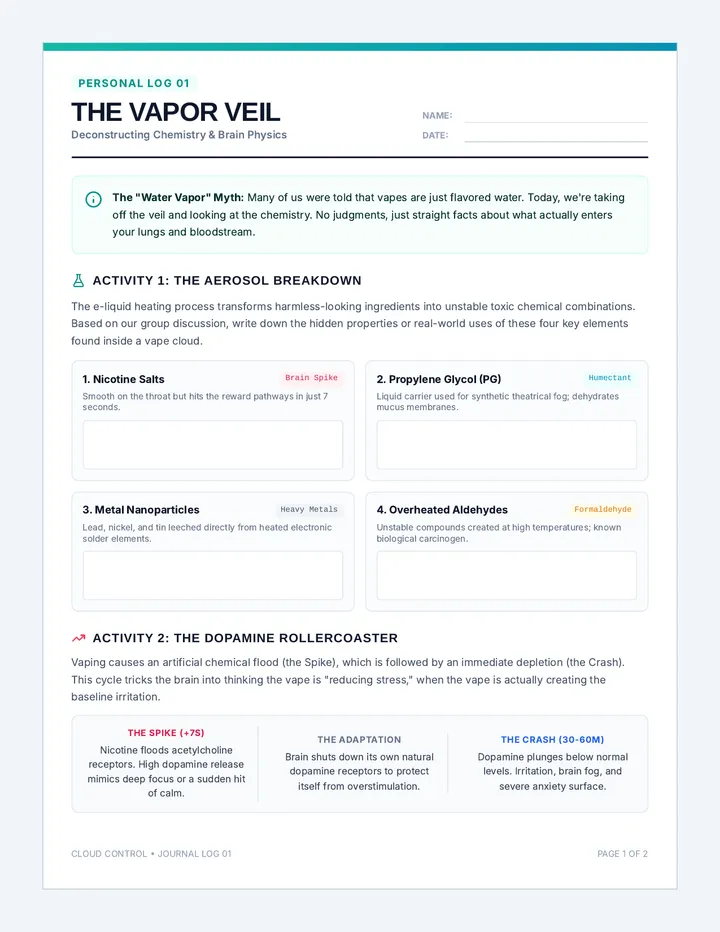
A comprehensive, 4-session harm reduction curriculum for high school support groups addressing vaping. Focuses on physical effects, industry marketing traps, trigger identification, and action-oriented gradual reduction plans.
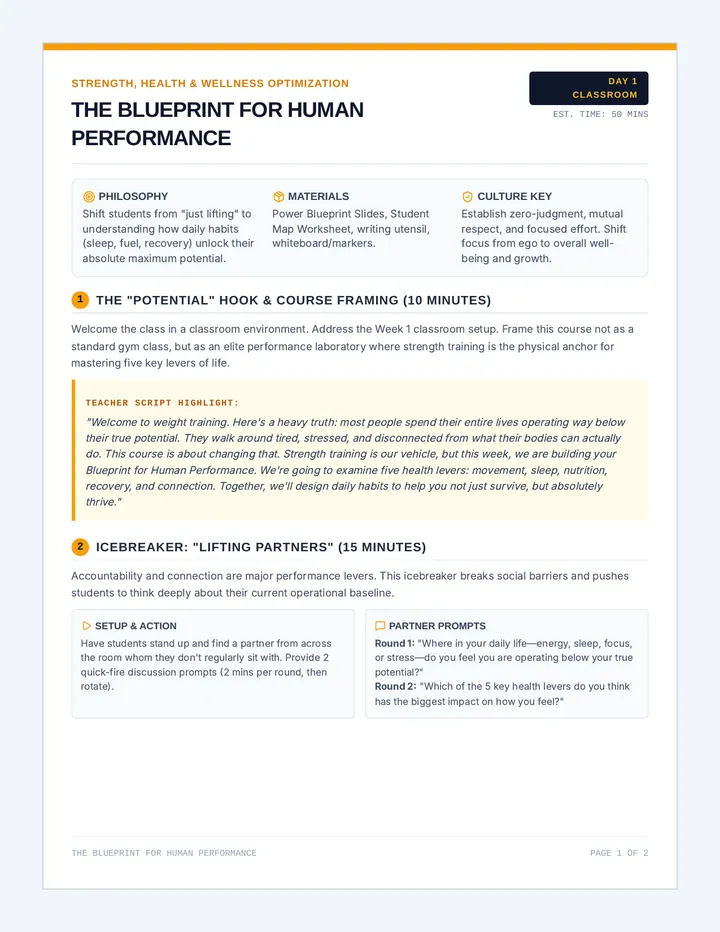
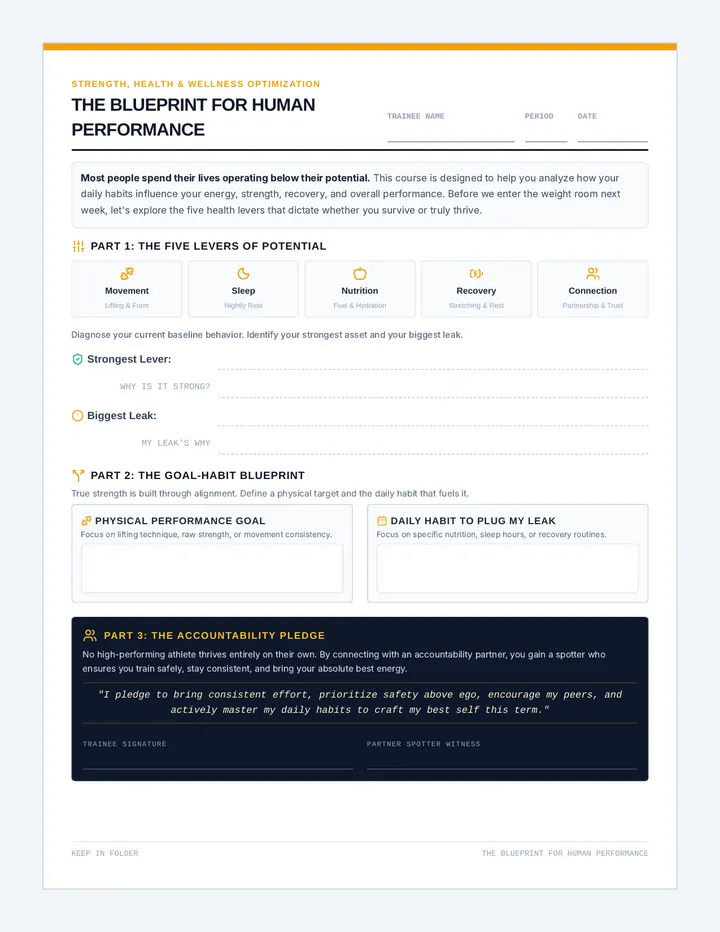
A high-impact first-day introductory lesson for weight training that establishes student buy-in by focusing on personal vision, intrinsic motivation, and goal setting before entering the weight room. Students explore their 'why' across five key health levers—movement, sleep, nutrition, recovery, and connection—to unlock their true physical and mental potential.
An expanded 13-slide firework safety demonstration presentation featuring all 23 user-provided video clips. Videos are organized into structured, themed "Video Labs" covering the science of fireworks, spectator safe zones, animated rules, sparkler handling, community respect, and emergency response.
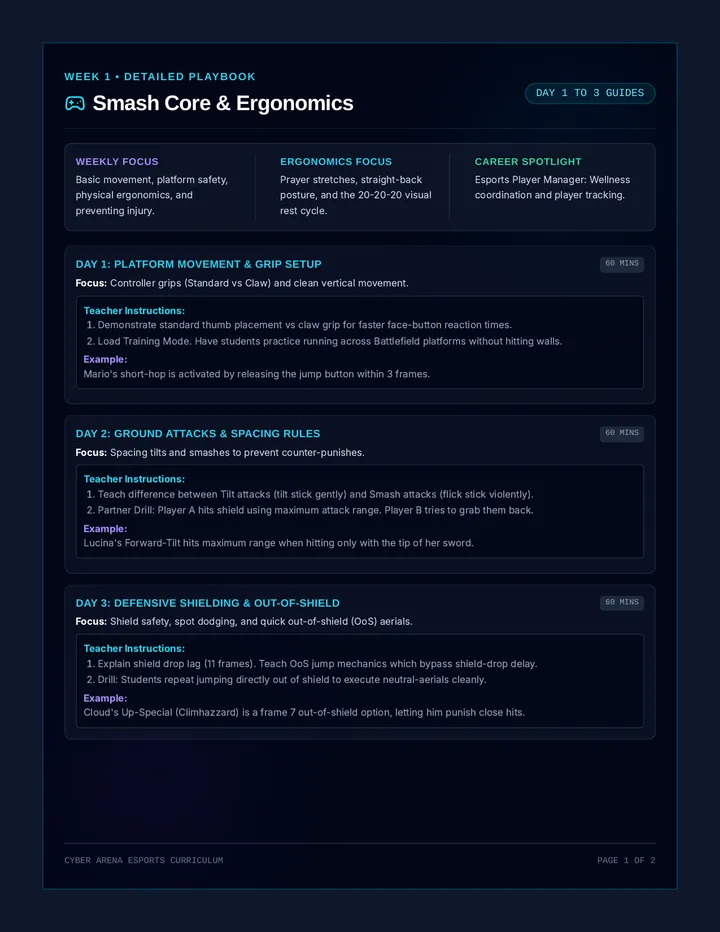
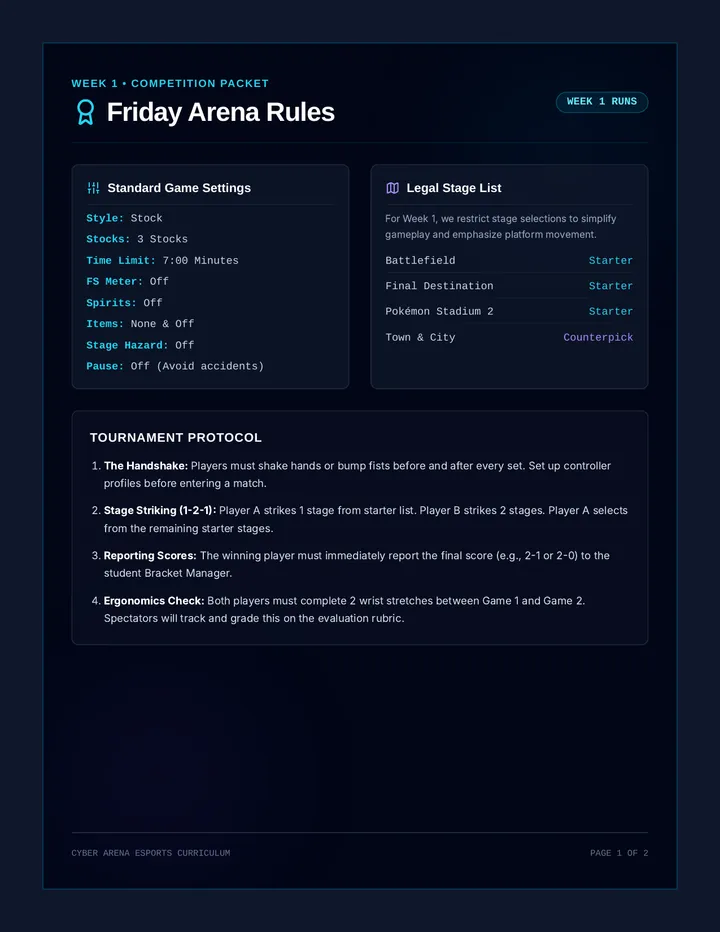
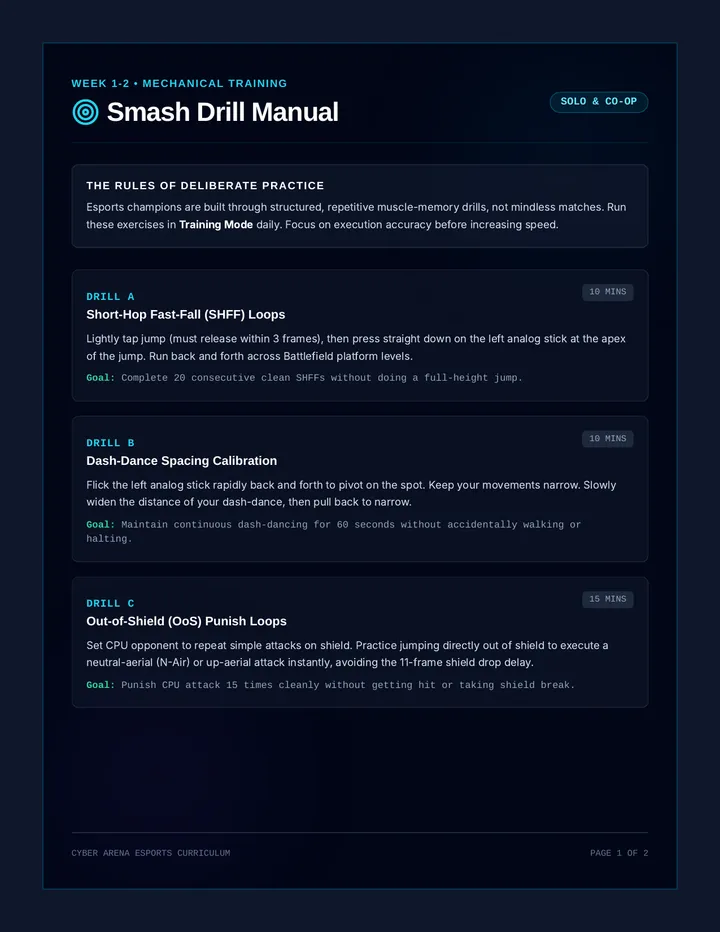
A high-tech 6-week curriculum for high school Esports, focusing on competitive Super Smash Bros. Ultimate and Minecraft. Students master game mechanics, character frame data, and competitive building while exploring industry careers and developing healthy physical and mental gaming habits.
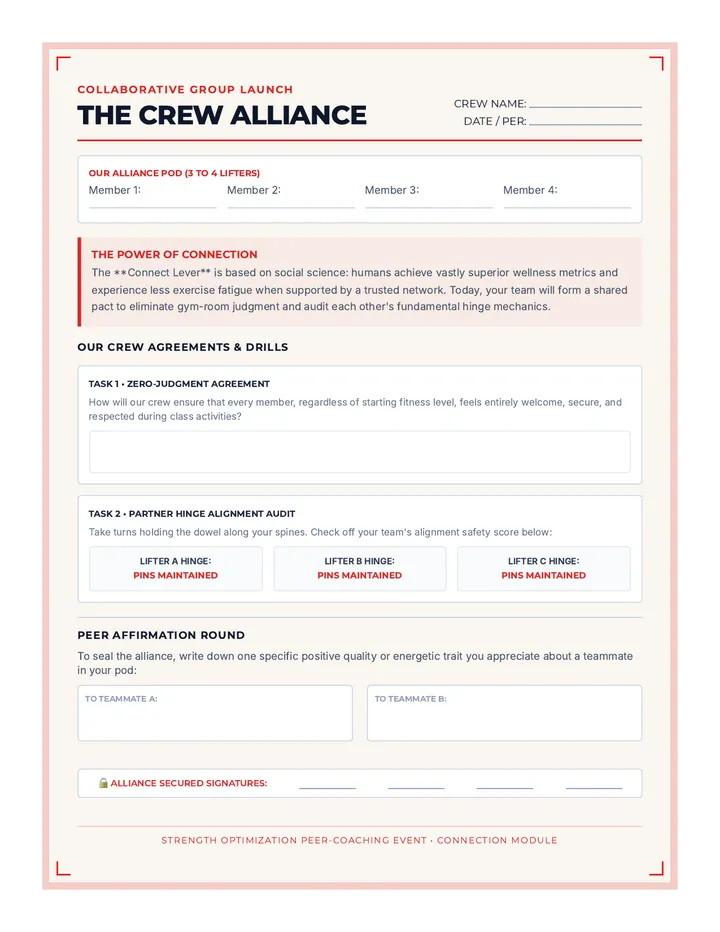
Day 5 focuses on the Connect Lever. Students explore community, supportive peer dynamics, and spotting, culminating in a collaborative team fitness challenge to solidify social support.
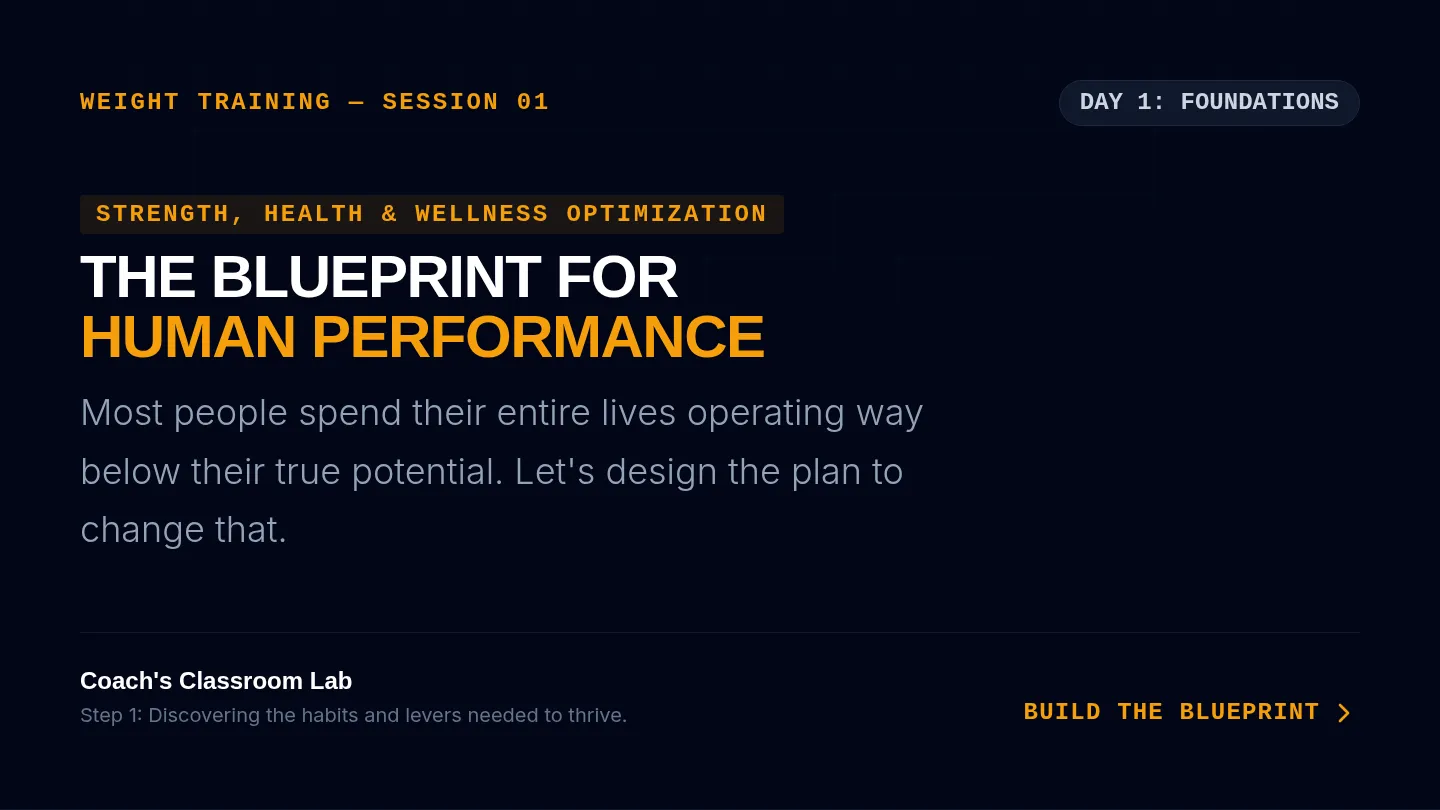
A high-impact, 6-slide digital presentation for the Day 1 weight training classroom session. Featuring a modern, high-contrast athletic theme, it guides students through exploring their primary motivations, introduces the concepts of physical and mental training blueprints, and sets expectations for stepping into the weight room in Week 2.
An engaging, print-ready student-facing goal-mapping worksheet. Styled as a modern training ledger, it helps students select their core motivators from the eight key desires, draft specific physical and mental growth goals, and complete an accountability partner contract.