A lesson for Grade 9 students exploring how dance reflects cultural identity, featuring a creative movement activity and group discussion.
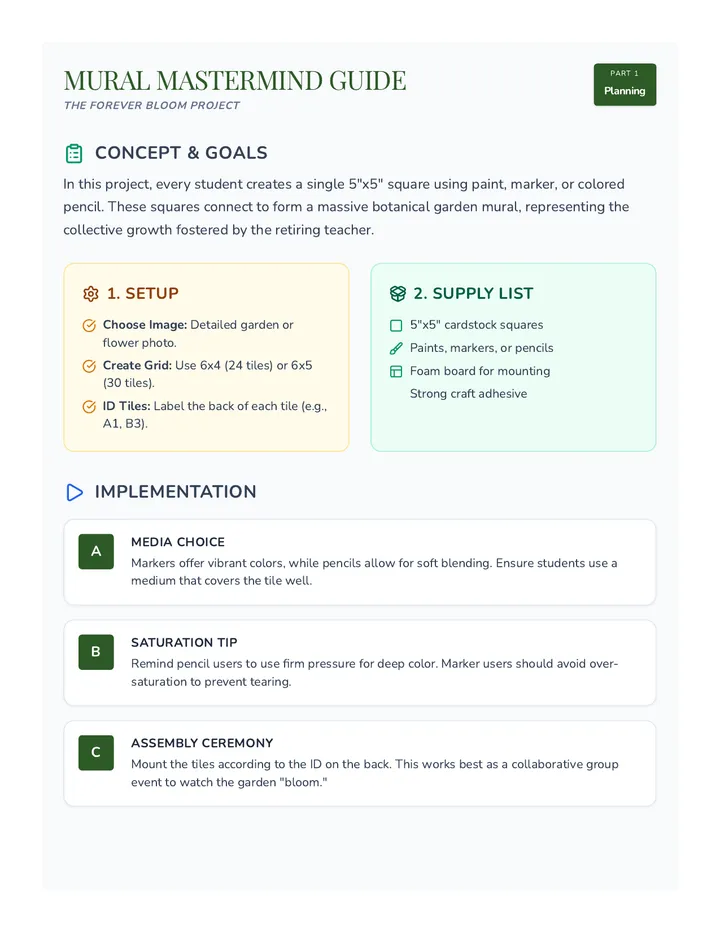
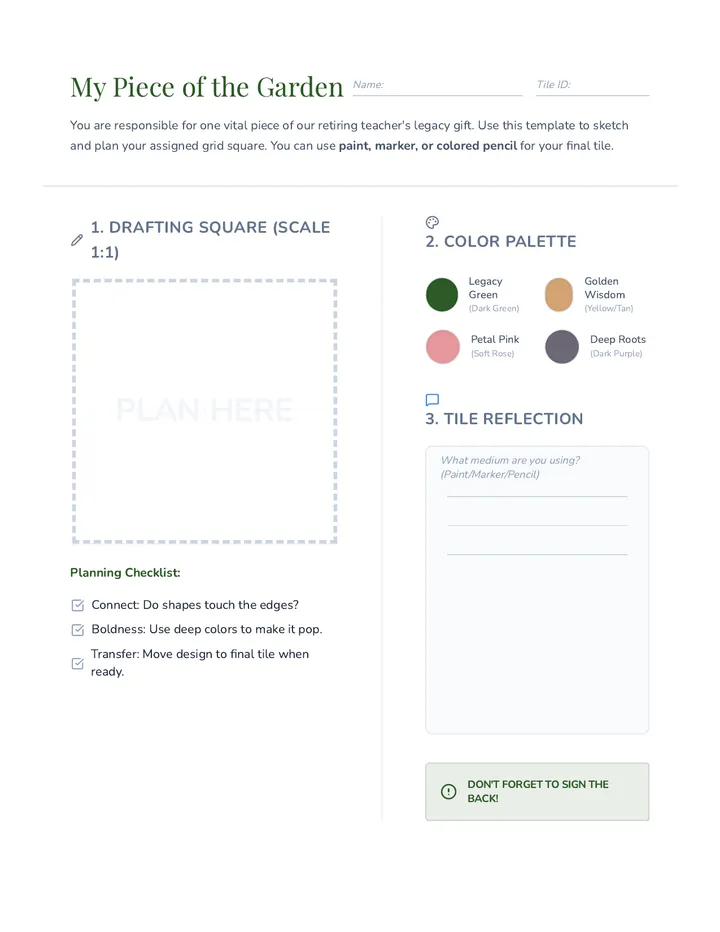
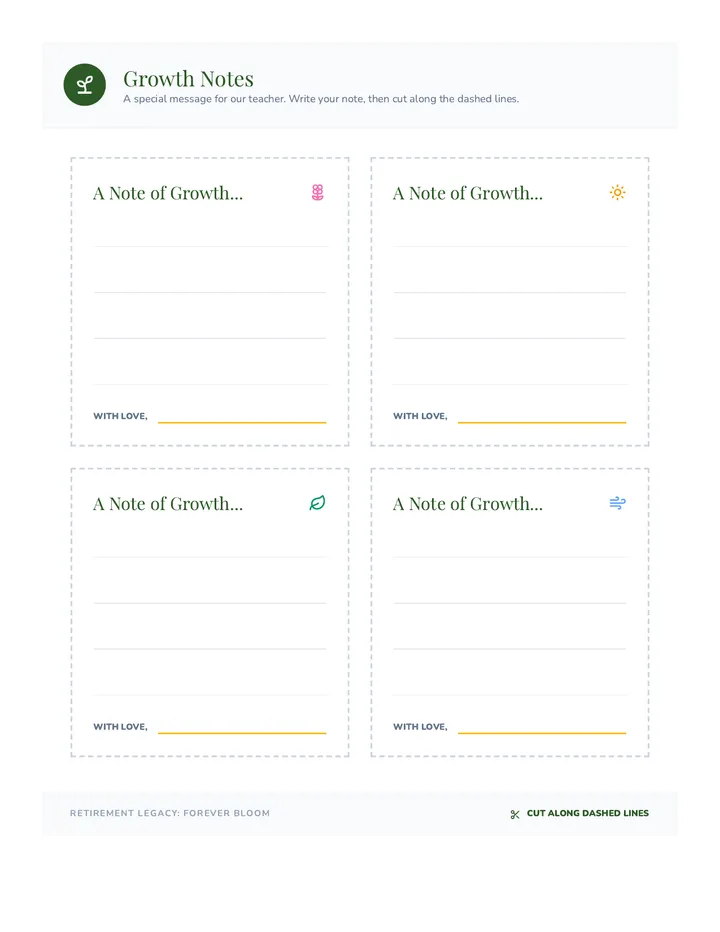
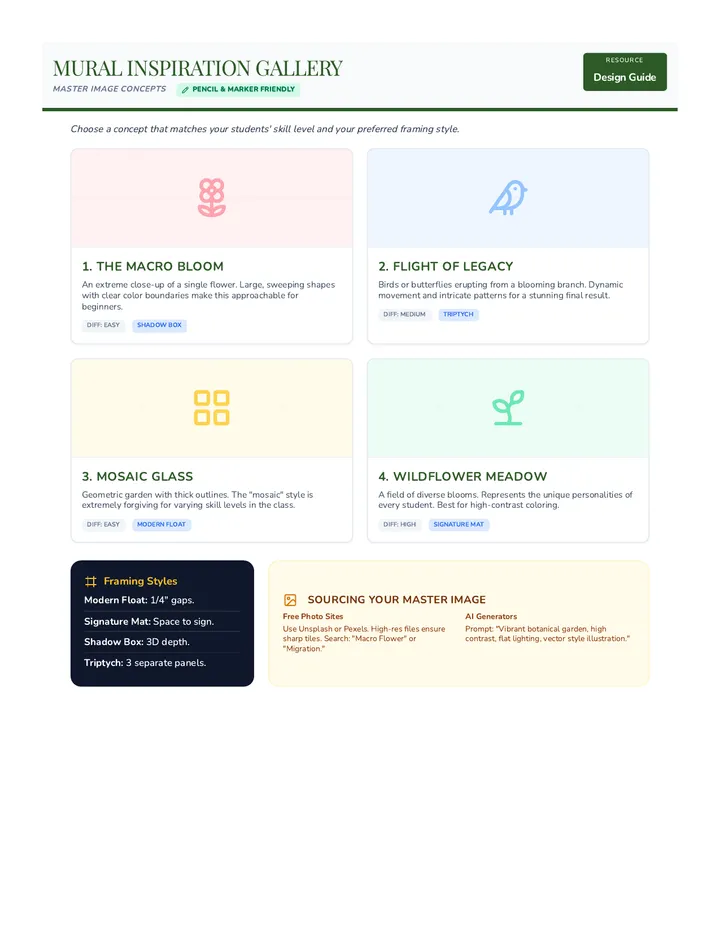
A collaborative art sequence where students create a large-scale mosaic mural to honor a retiring teacher, focusing on themes of growth, beauty, and legacy.
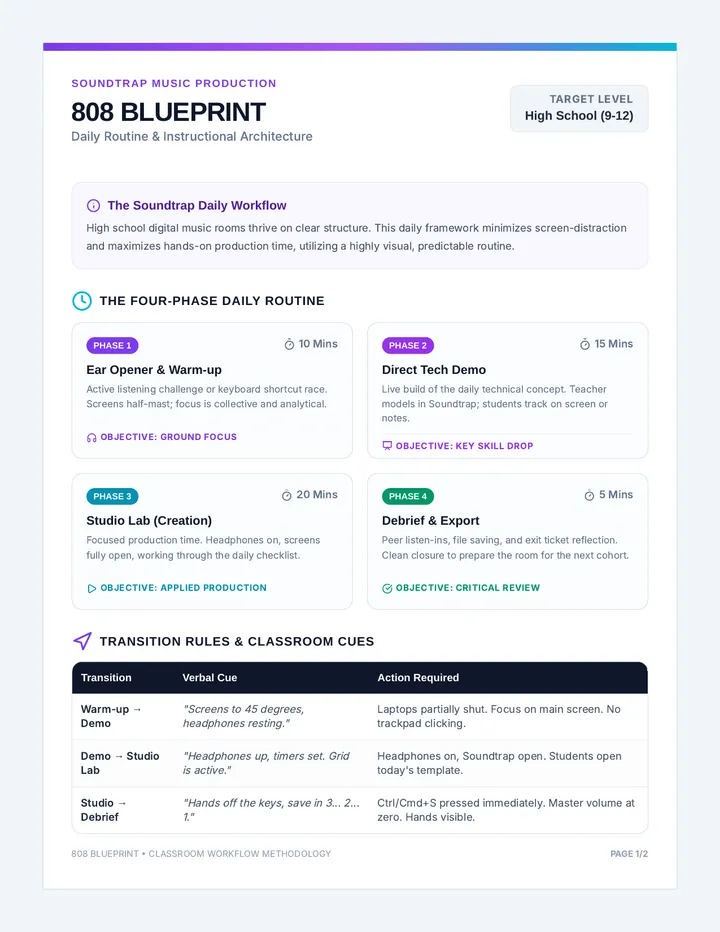
A comprehensive daily format lesson bundle for high school digital music production in Soundtrap. Students master the 4-phase daily workflow (Warm-up, Direct Instruction, Studio Lab, Debrief) while creating an authentic hip-hop beat using step sequencers and MIDI basslines.
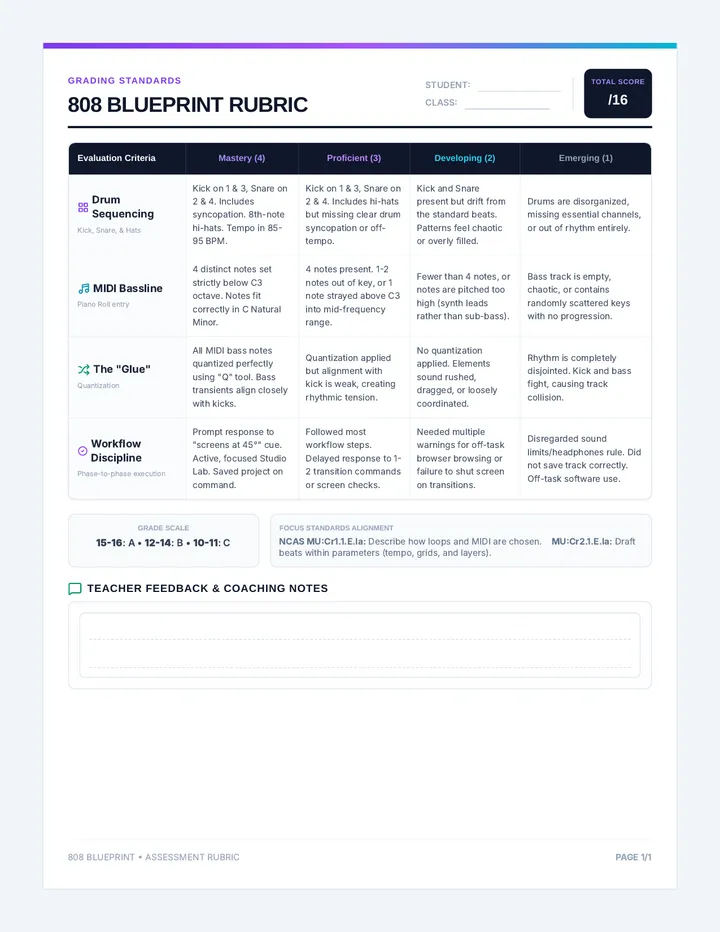
An assessment rubric for the 808 Blueprint music production project. Evaluates students across four technical and workflow dimensions: Drum Sequencing, MIDI Bassline, Rhythmic Alignment, and Workflow Discipline, with a dedicated teacher feedback section.
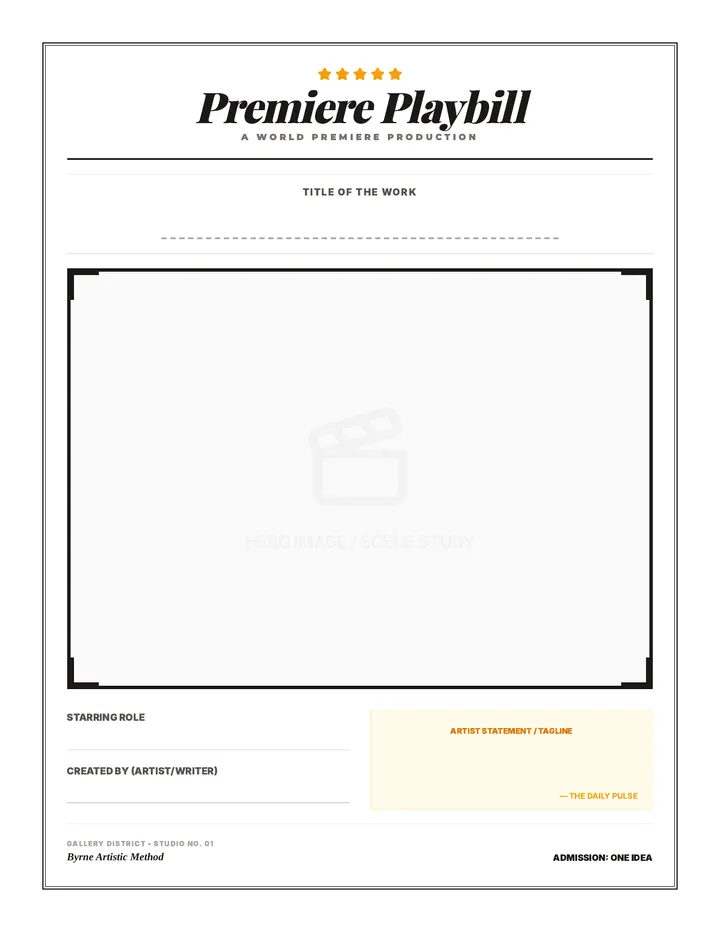
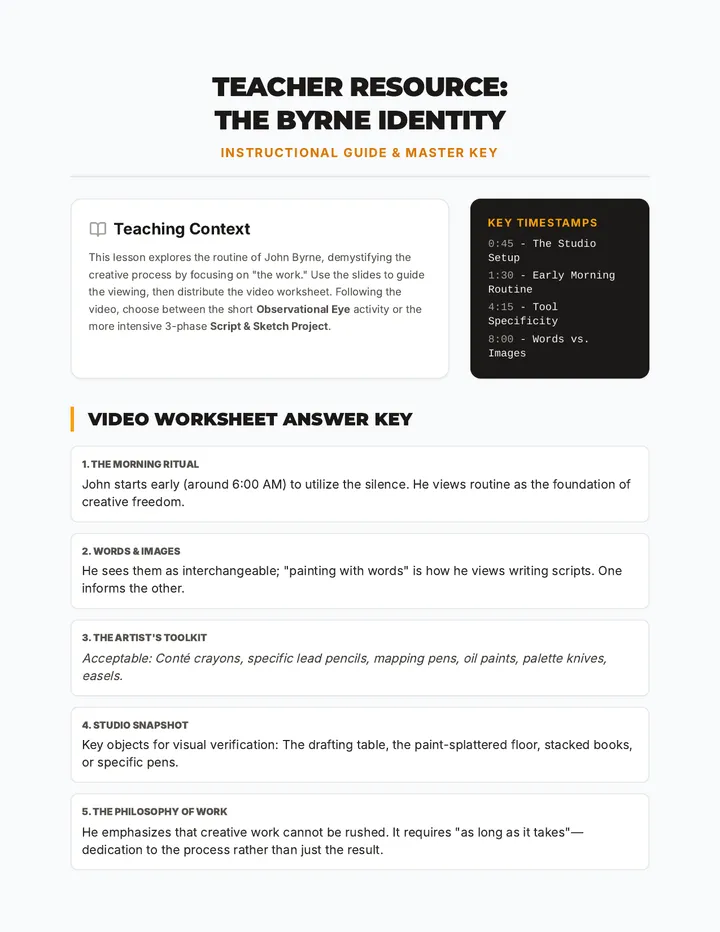
A sequence exploring the daily lives and creative processes of renowned artists, starting with John Byrne. Students observe artistic routines and apply those methods to their own creative practice.
A collection of eye-catching announcements and flyers designed to communicate school updates, schedule changes, and campus news in a fun, engaging, and comic-style format.
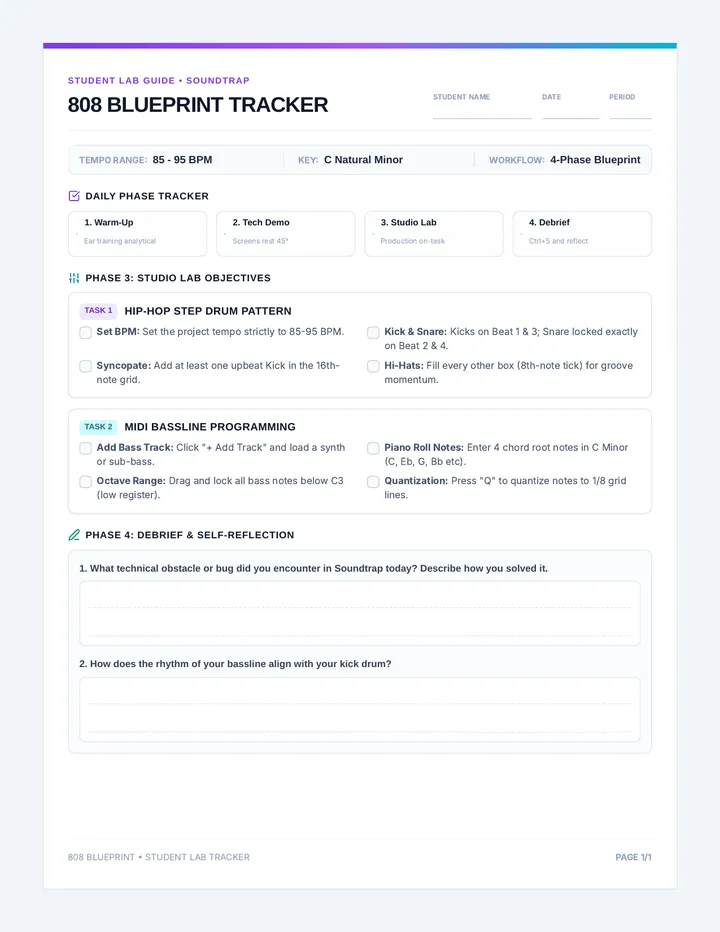
A student-facing print-ready guide and checklist for the 808 Blueprint lesson. Features clear check-offs for each daily routine phase, specific technical requirements for their Soundtrap project, and a dedicated, light-colored handwritten reflection space.
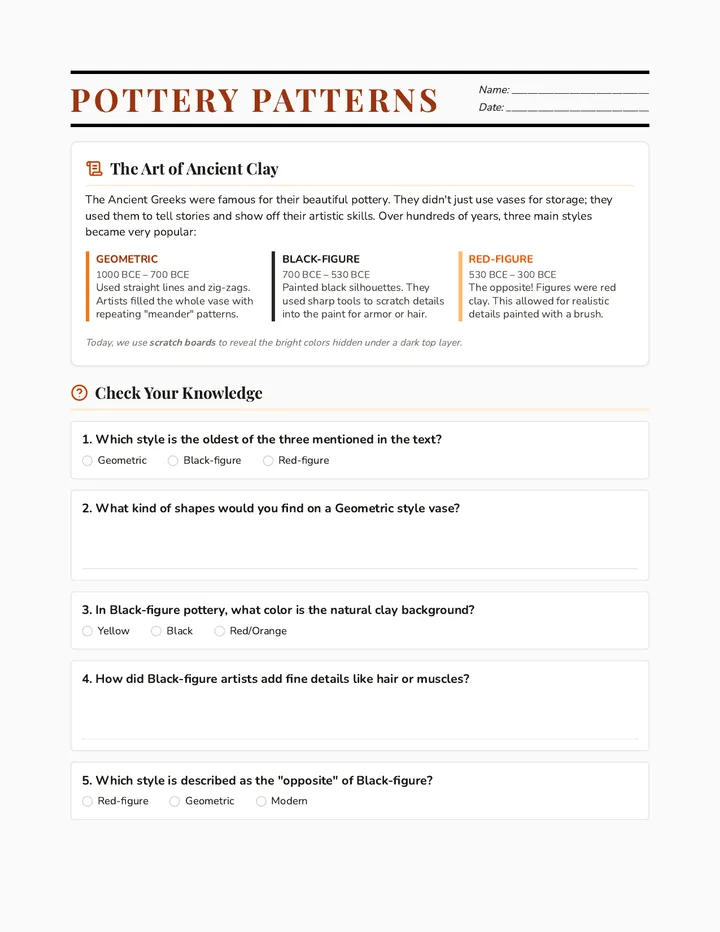
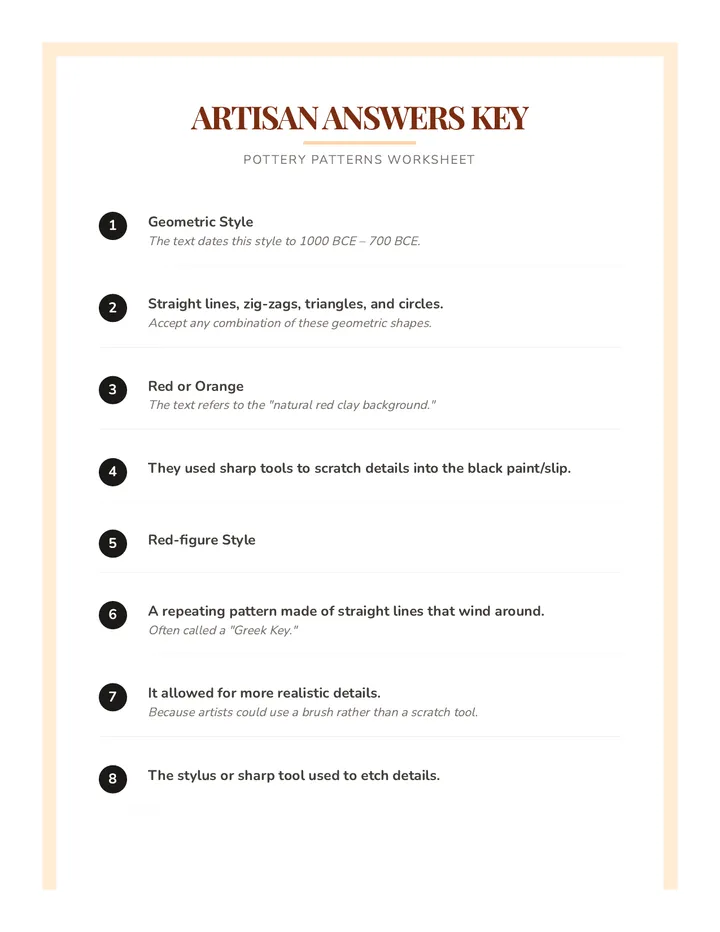
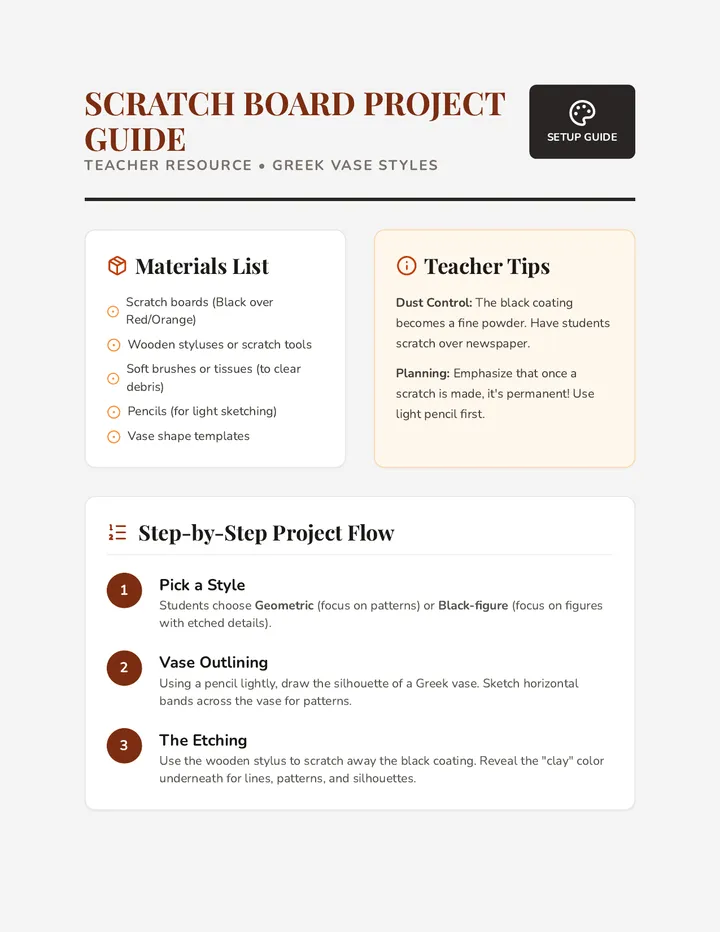
A series of lessons exploring the art and craftsmanship of Ancient Greece, focusing on pottery and visual storytelling. Students will learn about historical styles and apply them to modern hands-on art projects.
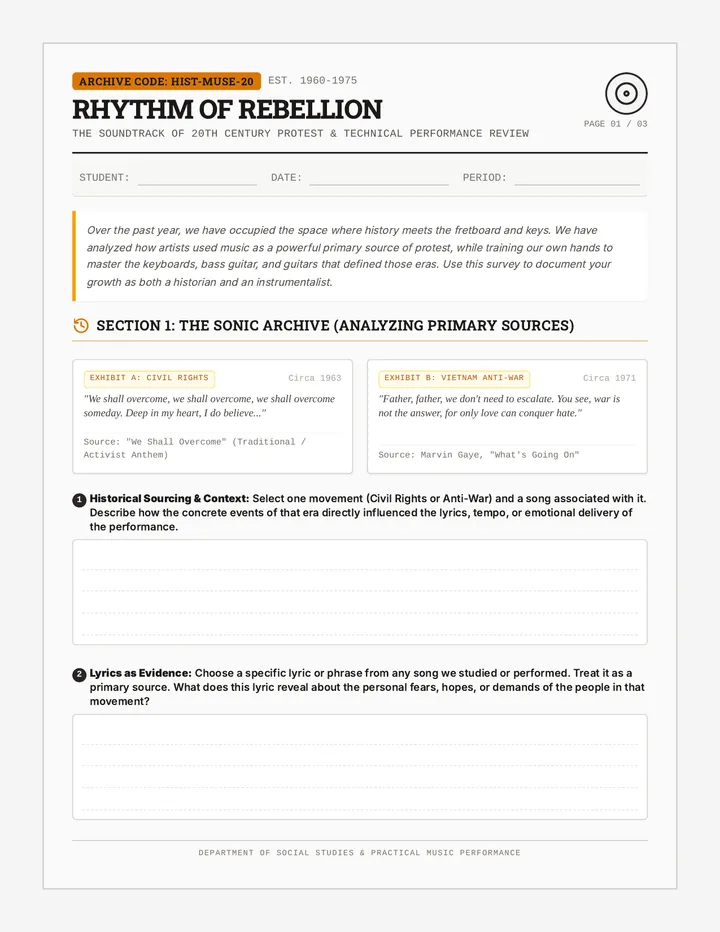
An interdisciplinary unit exploring the Civil Rights Movement and Vietnam War Protest movements through historical inquiry of music as primary sources, paired with hands-on keyboard and guitar instruction.
A 2-page print-ready Teacher Guide detailing the structured 4-phase daily routine (Warm-up, Direct Instruction, Studio Lab, Debrief) and providing a lesson plan for teaching Hip-Hop beatmaking in Soundtrap. Includes transition cues, technical tips, and differentiation strategies.
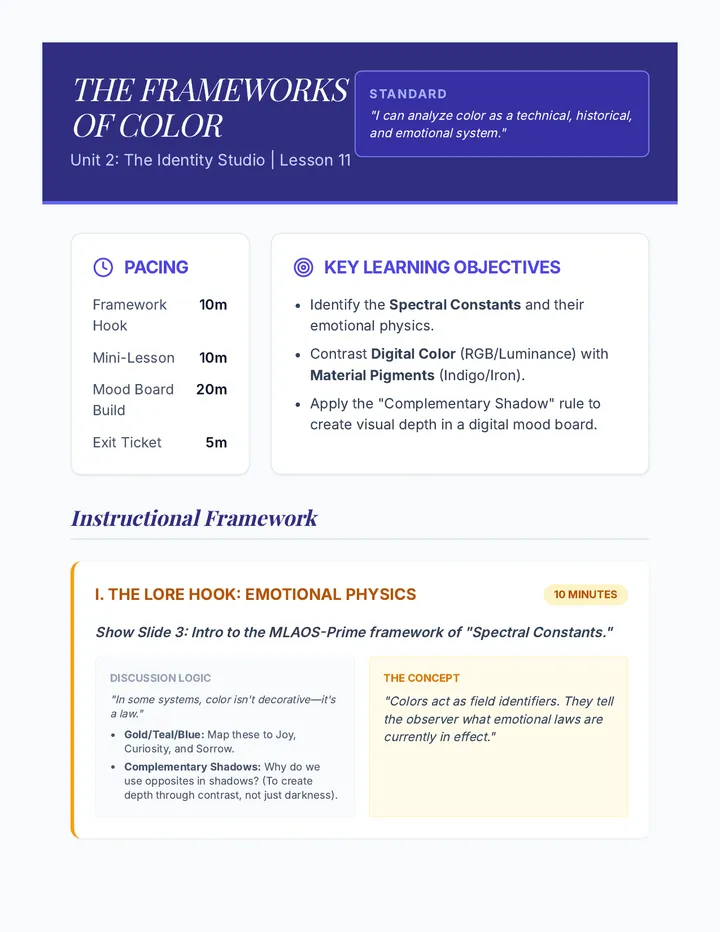
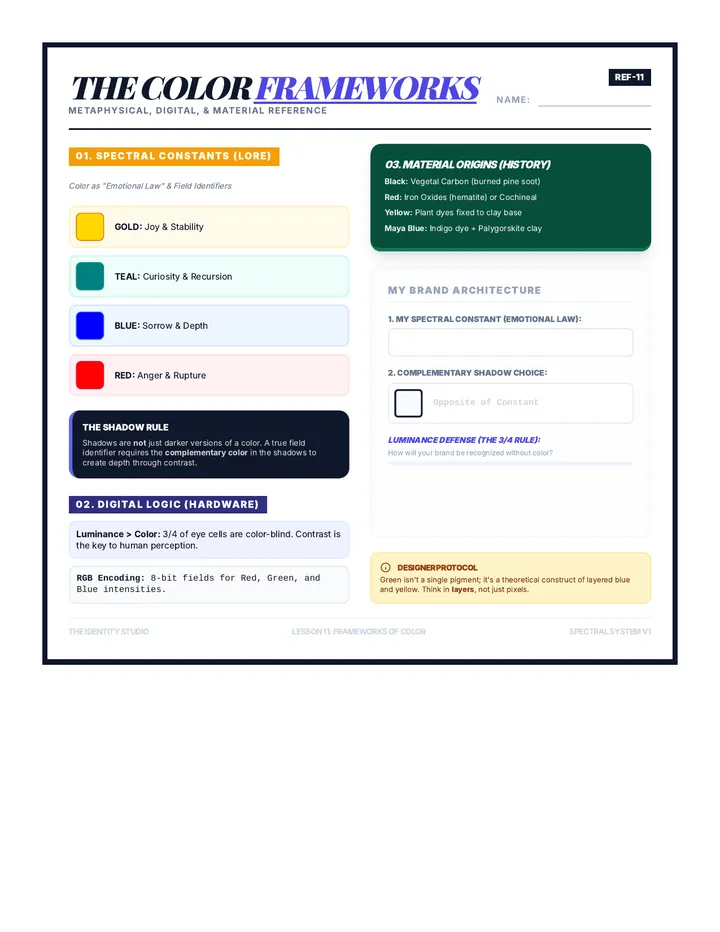
A unit focused on the visual principles of brand identity, moving from theory (color, type) to creation using vector-based tools like Google Drawing.
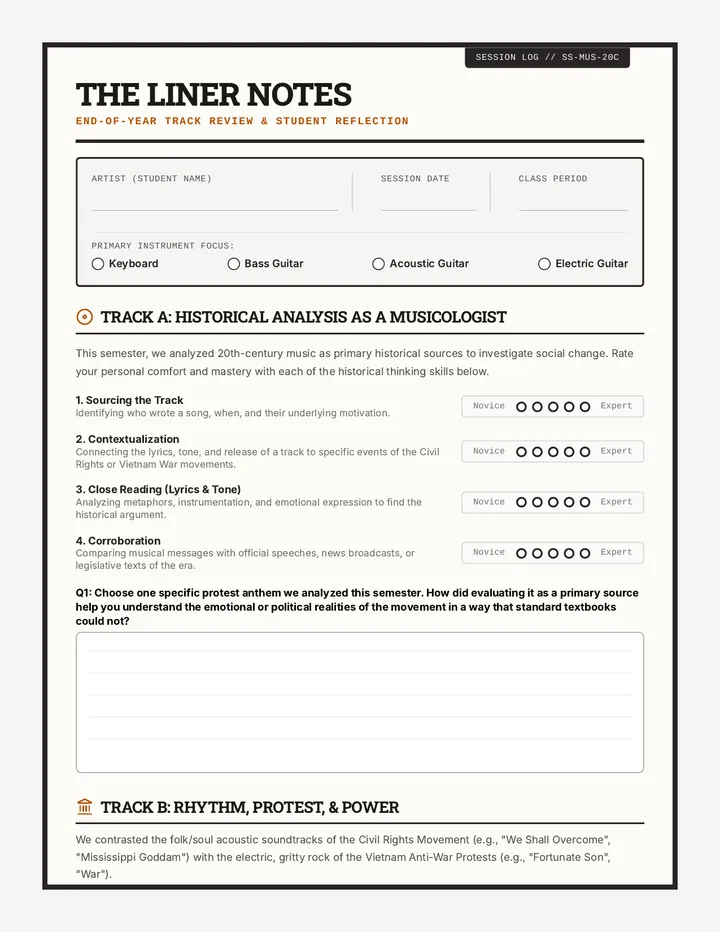
An end-of-year interdisciplinary reflection lesson where students analyze 20th-century protest music from the Civil Rights and Vietnam Anti-War movements as historical primary sources, while reflecting on their technical instrumental growth across keyboard, bass, and guitars.
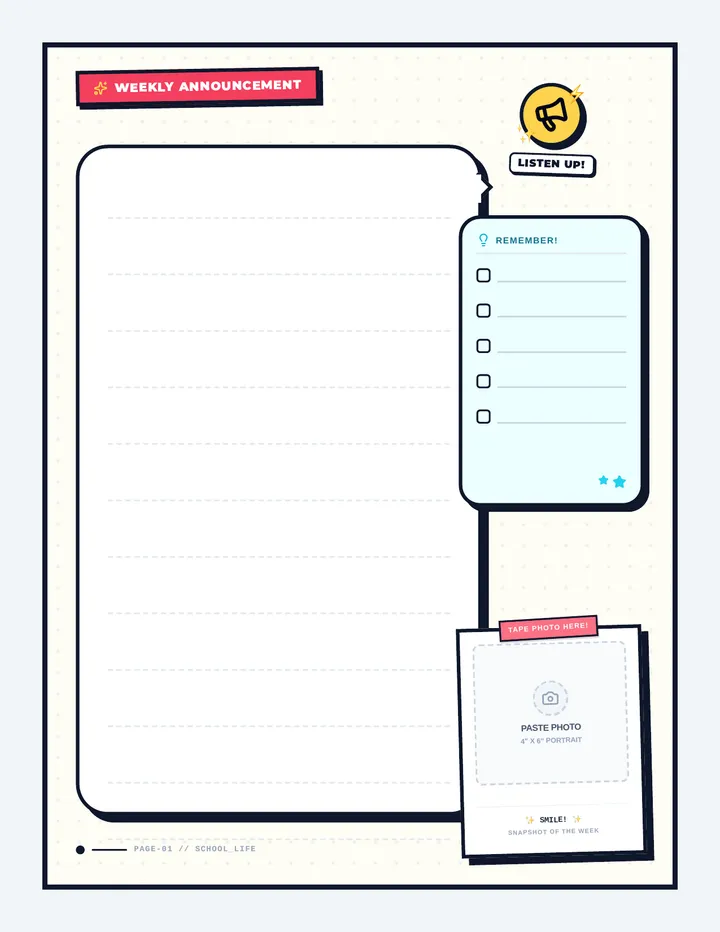
A highly engaging, comic-style school announcement flyer featuring a large, completely empty speech bubble on the left and a dedicated Polaroid photo frame in the bottom right. Designed for school updates and announcements with a playful and whimsical aesthetic.