Unified Curriculum Map
Curriculum Blueprint
Harmonic Inclusion Map
Aligning Music Foundations with Multisensory Song Tales
UDL Priority Track
Timeline: 8-Week Sequence
Music Foundations
Focusing on beat, rhythm, pitch, and basic notation.
Inclusive Song Tales
Narrative-based engagement for cognitive connection.
UDL Accommodations
Multisensory pathways for high physical engagement.
Phase 1: Setting the Pulse & Sparking the Narrative
Weeks 1 - 4
Week 1 Steady Pulse
Steady Beat & The Welcome Song-Tale
Introduce the core concept of a steady beat using heartbeat pulses. Students meet "Barnaby Bear" and mirror rhythmic movements to match physical paces.
UDL Pathway: Felt heartbeats, visual metronome lights, adaptive shaker toys.
Week 2 Pitch Contours
High & Low Pitch via Mountain Tales
Explore pitch height with visual mountain graphics. Trace high birds and low bears through melodic curves, translating physical posture into musical range.
UDL Pathway: Giant floor mountain mat, color-coded scarves, slide whistles.
Week 3 Icon Notation
Rhythm Icons & Character Chants
Transition tactile movements into iconic patterns. Use picture blocks representing sound lengths (long acorns, fast squirrels) to visually read rhythm patterns.
UDL Pathway: Magnetic sound block sets, textured touch boards, vocalization cards.
Week 4 Quarter/Half Notes
Standard Notation Intro & Song Landscapes
Convert visual icons into traditional quarter (ta) and paired eighth notes (ti-ti). Overlay notes on top of story illustrations to connect song logic with written language.
UDL Pathway: High-contrast color notes, dynamic light-up drum pads, rhythmic body taps.
Integrated Sequence: Music Foundations & Song Tales Page 1 of 2
UDL Core Pillar: Provide multiple means of representation by linking auditory song patterns to high-contrast visual icons and dynamic physical sensations.
Curriculum Blueprint
Harmonic Inclusion Map
Developing Mastery & Collaborative Orchestration
Unified Delivery
Timeline: 8-Week Sequence
Phase 2: Developing Expression & Team Collaboration
Weeks 5 - 8
Week 5 Melodic Patterns
Sol-Mi Melodic Dialogues & Character Voices
Practice two-pitch intervals (Sol and Mi) using hand signs. Integrate notation with story call-and-response dialogues where characters ask questions and reply in song.
UDL Pathway: Curwen hand sign flashcards, color-coded desktop bells (C-G), matching visuals.
Week 6 Dynamics
Dynamics & Tempo Story-Drama
Explore musical expression: loud (forte), quiet (piano), fast (allegro), slow (adagio). Students act out parts of a narrative storm sequence matching dynamic levels.
UDL Pathway: Dynamic card meters (large/small icons), textured wind fabrics, assistive mallets.
Week 7 Graphic Notation
Graphic Notation & Classroom Orchestration
Create unified class scores using simple graphic notation shapes. Conduct a mini-orchestra supporting a spoken story using standard and customized percussion.
UDL Pathway: Giant shared notation wall map, adaptive rhythm instruments, colored flashlight cueing.
Week 8 Celebration
Student-Led Showcase & Creative Celebration
Students co-create their own interactive story-tale endings and choose their favorite way to perform (singing, hand signing, drumming, or rhythmic movement).
UDL Pathway: Multiple performance modalities, peer-celebration stamps, visual rubric check-ins.
Unified Quick-Accommodations Matrix
Physical Access: Tape floor paths, place velcro rhythm tiles, use strap-on adaptive mallets, or assign floor instruments.
Cognitive/Sensory: Color-code high/low zones, provide sound-dampening earmuffs, use high-contrast notation boards.
Integrated Sequence: Music Foundations & Song Tales Page 2 of 2
UDL Core Pillar: Provide multiple means of action and expression by letting students communicate knowledge through multiple mediums (singing, drumming, body movement, or adaptive bells).
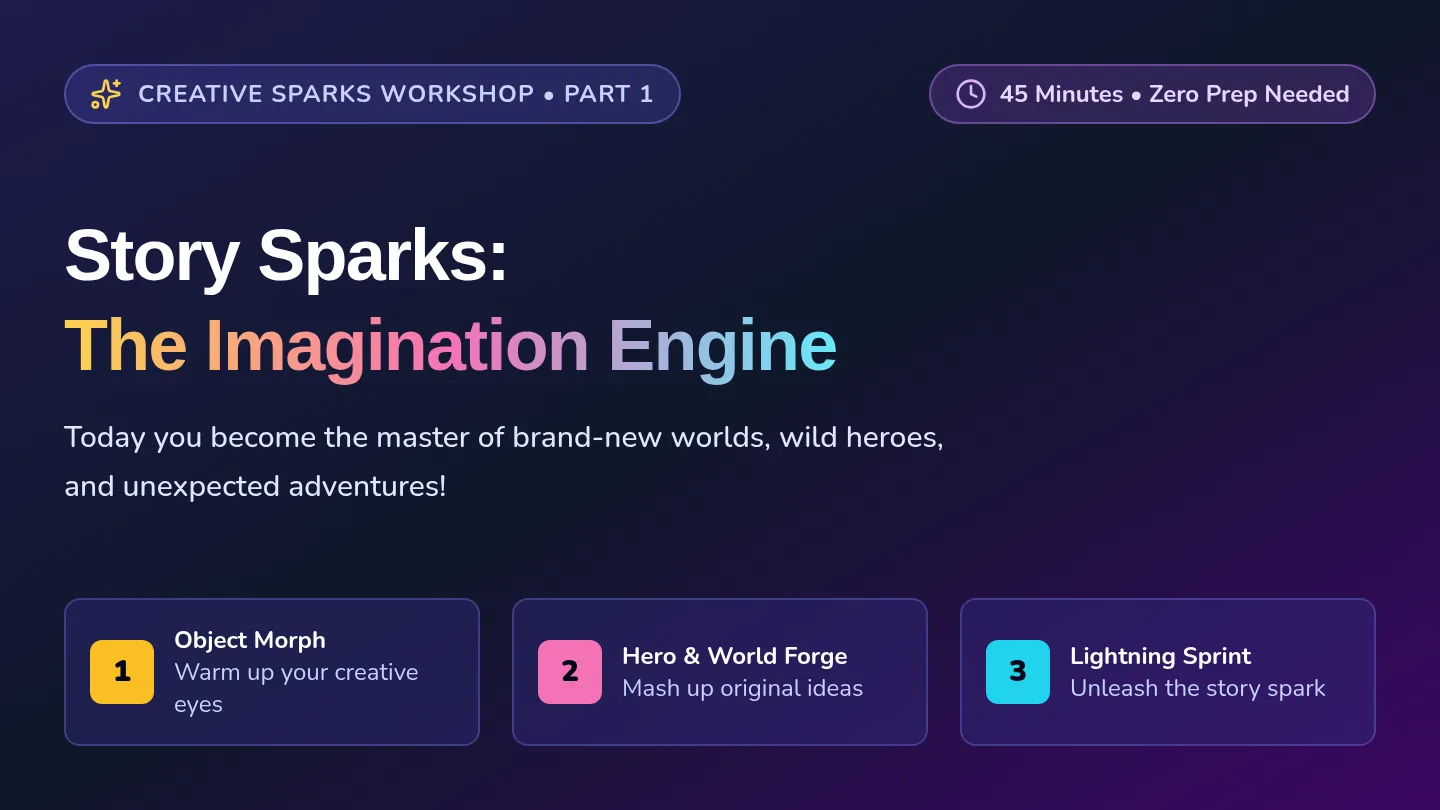
Narrative Notation Slides
Inclusive Music Makers
Sound and Story:
Narrative Notation
Let's follow the story, feel the heartbeat pulse, and read music with our favorite forest friends!
Let's play together! Slide 1 / 5
Chapter 1: The Steady Beat Slide 2 / 5
Feel the Heartbeat!
Music has a steady heartbeat called a pulse. It never stops and stays nice and steady, just like our feet walking.
How to Play: Tap your lap, tap your chest, or wave your hand to match the pulsing hearts on screen!
Steady Pulse Tracker
Beat 1
Beat 2
Beat 3
Beat 4
Tap... Tap... Tap... Tap...
Multisensory: Feel, tap, and look at the beats!
Chapter 2: High & Low Pitch Slide 3 / 5
Pitch Mountain Path
Some sounds fly high like birds. Some sounds walk low on the ground like bears. We call this pitch!
Active Play: Lift your hands way high up above your head for high sounds, and lower them down to your lap for low sounds!
1 HIGH PITCH
Singing Birds
Use pitch contours to climb up and down!
2 LOW PITCH
Walking Bear
Trace the lines of the mountain using your hand signs!
Chapter 3: Barnaby's Footsteps Slide 4 / 5
Reading the Rhythm
Barnaby Bear walks through the forest. When he walks slowly, he makes big Ta footsteps. When he runs quickly, he makes fast Ti-Ti steps!
Quarter Note (Ta) One Sound
Eighth Pair (Ti-Ti) Two Fast Sounds
Barnaby Bear's Rhythm Trail
Ta Step
Ta Step
Ti-Ti Running
Ta Step
Say and Clap: "Ta... Ta... Ti-Ti... Ta!"
Play along with shakers, drums, or adaptive tap blocks!
Chapter 4: Inclusive Choices Slide 5 / 5
Choose Your Way to Play!
Every student has their own unique instrument and voice. Select your favourite modality to participate in our final Song Tale!
Sing & Chant
Sing Barnaby Bear's story words or chant "Ta" and "Ti-Ti" aloud.
Play & Tap
Use a shaker, lap tap, drum pad, or color-coded desk bells.
Sign & Move
Use Curwen hand signs or trace pitch heights high/low with ribbons.
Unified Music Teacher Guide
Teacher Resource Kit
Unified Music Teacher Guide
Implementation & Multisensory Accommodations for Unified Classrooms
Facilitation Guide
Unit: Sound & Story
Universal Design for Learning (UDL) in Music
This guide provides direct actionable scaffolding for teachers to blend rhythm and pitch theory with narrative song tales. By providing multiple pathways of participation (vocal, kinetic, physical-instrumental), students with varying sensory or physical profiles achieve identical standards of musical mastery.
Step-by-Step Delivery Method
1
Establish Pulse first: Start each class with a visual and tactile metronome. Have students pat their lap to match a light flashing or a drum pattern before adding words.
2
Overlay Pitch Contours: Trace the "Pitch Mountain" visually. Use Curwen hand signs or colorful ribbons to make abstract pitch heights visible and physically felt.
3
Connect to Characters: Map rhythmic patterns directly to narrative characters (e.g., Bear footsteps = quarter notes; squirrel scampers = eighth notes).
4
Orchestrate as a Group: Give students choice in performance options. Combine vocalized rhythms, hand signs, adaptive bell-ringing, and body movement.
Classroom Accommodations Checklist
Sensory & Cognitive
- Use color-coded bell mats (Red C, Yellow E, Green G).
- Display large high-contrast visual icon blocks.
- Offer noise-dampening headphones during loud drums.
Physical & Kinetic
- Provide velcro egg shakers to wrap on palms/wrists.
- Mark floor bounds with high-contrast colored floor tape.
- Use dynamic soft-grip mallets for easier grip.
Unified Music Teacher Guide • Inclusive Facilitation Strategies Page 1 of 2
Teacher Assessment Kit
Unified Music Rubric
Evaluation Criteria Supporting Multiple Representation Modalities
Formative Tool
Unit: Sound & Story
Inclusive Performance Rubric
| Skill Category | Emerging (1 pt) | Developing (2 pts) | Proficient (3 pts) |
|---|
| Steady Beat & Pulse | Responds irregularly to external steady pulse cues. Needs guidance to re-establish sync. | Tracks pulse with minor sync deviations. Self-corrects when metronome changes speed. |