Mother Sauces Research Dossier
Culinary Arts Les Cinq Sauces Mères • Day 1 Investigation
Historical Research Dossier
The Evolution of the French Mother Sauces
Foundations of Classical French Gastronomy & Modern Culinary Evolution
Name:
Date:
Period:
Project Objective & Two-Day Roadmap
Phase 1 of 2
Research and visually present the history and evolution of each of the five French mother sauces. In Day 1, complete this deep-dive inquiry dossier using credible sources. In Day 2, you will transform these findings into a comprehensive visual representation (infographic, culinary timeline, or sauce family tree) illustrating why each sauce emerged, traditional methods, and modern culinary adaptations.
Approved Research Sources Checklist
Consult at least 2 credible sources • Write in full sentences
What’s Cooking America
French Guy Cooking
Escoffier Archives / Wiki
Medium / Culinary Journals
1
Origins and Historical Context
Where, when, and by whom was each fundamental sauce born?
Mother Sauce
When & Where Created? (Country/Region/Era)
Who is Credited with Creating It? (Historical Figures/Lore)
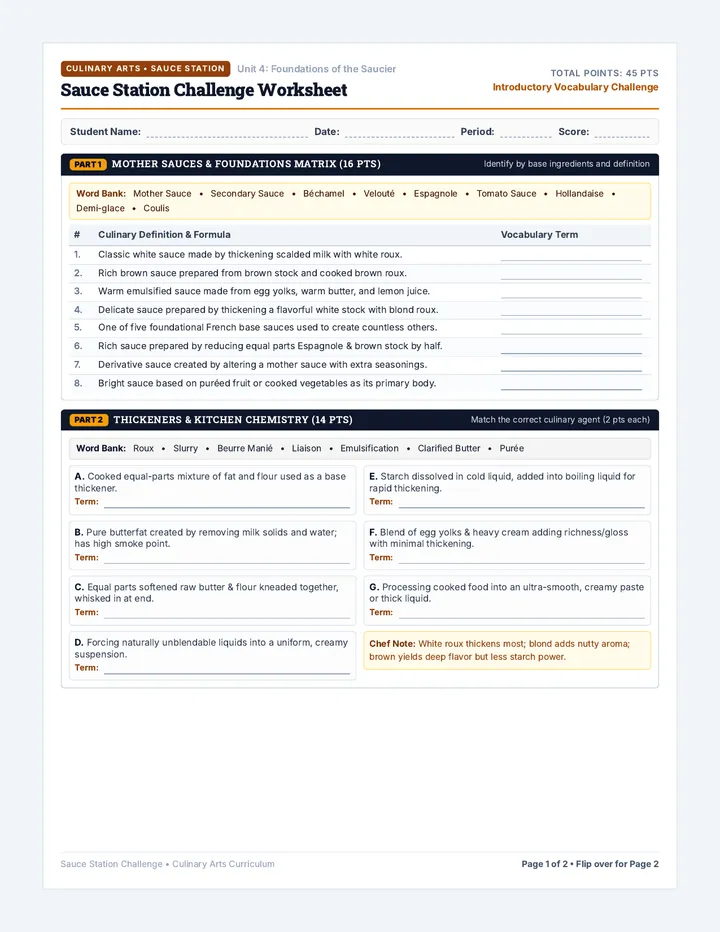
Béchamel White Roux + Milk
Velouté Blond Roux + White Stock
Espagnole Brown Roux + Brown Stock
Sauce Tomat Roux/Pork + Tomatoes
Hollandaise Warm Egg Yolk Emulsion
Key Historical Milestones: Marie-Antoine Carême codified 4 grand sauces in 1833; Auguste Escoffier later added Sauce Tomat and standardized Hollandaise in 1903.
Page 1 of 3
Mother Sauces Research Dossier • Day 1 Field Work
Part II & III: Purpose & Traditional Technique Page 2 of 3
2
Purpose, Culinary Need & Traditional Preparation
Why was it made & how was it cooked?
Analyze why each sauce was originally developed, how it served diners and chefs of that era (preservation, masking flavors, rich banquet status), and its authentic key ingredients and preparation methods.
Mother Sauce
Purpose & Development Why developed? Needs of chefs & diners?
Traditional Preparation & Techniques Original key ingredients & cooking methods
1. Béchamel Classic White Sauce
2. Velouté Velvety White Stock
3. Espagnole Rich Brown Sauce
4. Sauce Tomat Classic French Tomato
5. Hollandaise Warm Butter Emulsion
Culinary Technique Note: Notice how 3 sauces rely on flour-butter starch roux (white, blond, brown), 1 uses fat reduction & purée, and 1 relies on physical suspension (egg yolk lecithin emulsion).
Mother Sauces Research Dossier • Day 1 Field Work
Part IV: Modern Evolution & Day 2 Blueprint Page 3 of 3
3
Evolution Over Time & Modern Adaptations
From Royal Banquets to Contemporary Kitchens
Document how preparation has shifted (lighter textures, immersion blenders, reduced simmering time) and list major modern adaptations, famous daughter sauces (derivatives), and contemporary menu uses.
Mother Sauce
How It Changed Over Time Historical shifts in technique & ingredients
Modern Adaptations & Famous Derivatives Key daughter sauces & contemporary culinary uses
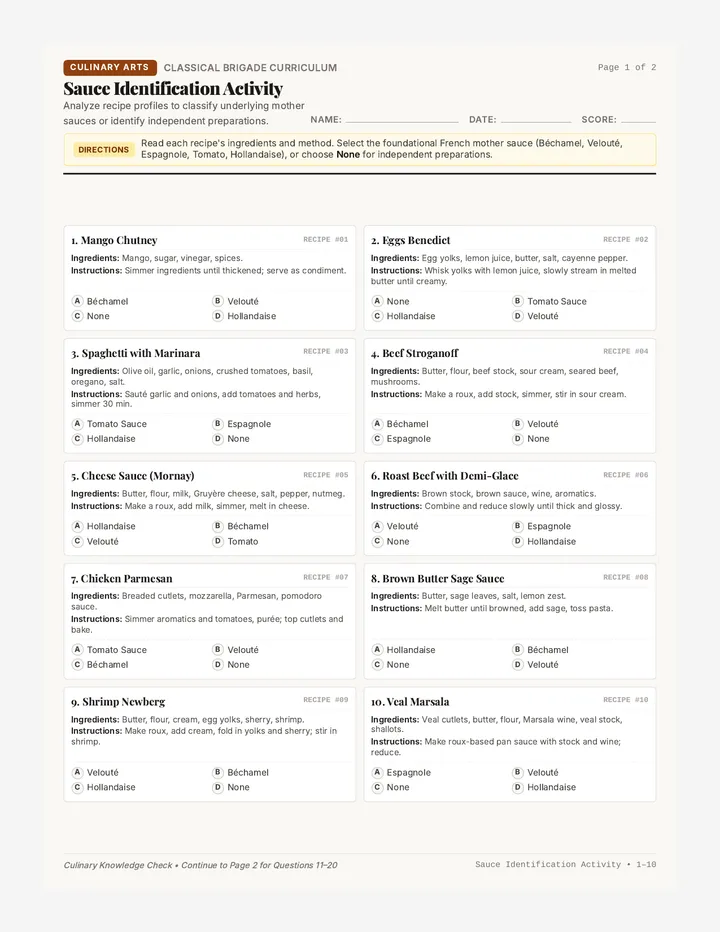
Béchamel e.g., Mornay, Soubise
Velouté e.g., Allemande, Suprême
Espagnole e.g., Demi-Glace, Bordelaise
Sauce Tomat e.g., Provençale, Marinara
Hollandaise e.g., Béarnaise, Mousseline
Day 2 Visual Blueprint: Brainstorming Your Visual Presentation
Tomorrow's Deliverable
Select Visual Format:
Comparative Infographic Poster
Family Tree / Mother-Daughter Chart
Chronological Evolution Timeline
Illustrated Recipe & Technique Map
Visual must show: why developed, traditional method, & modern changes.
Key Visual Concept & Layout Sketch Notes:
Teacher Verification / Day 1 Sign-Off: Save this completed dossier to build your Day 2 visual presentation!