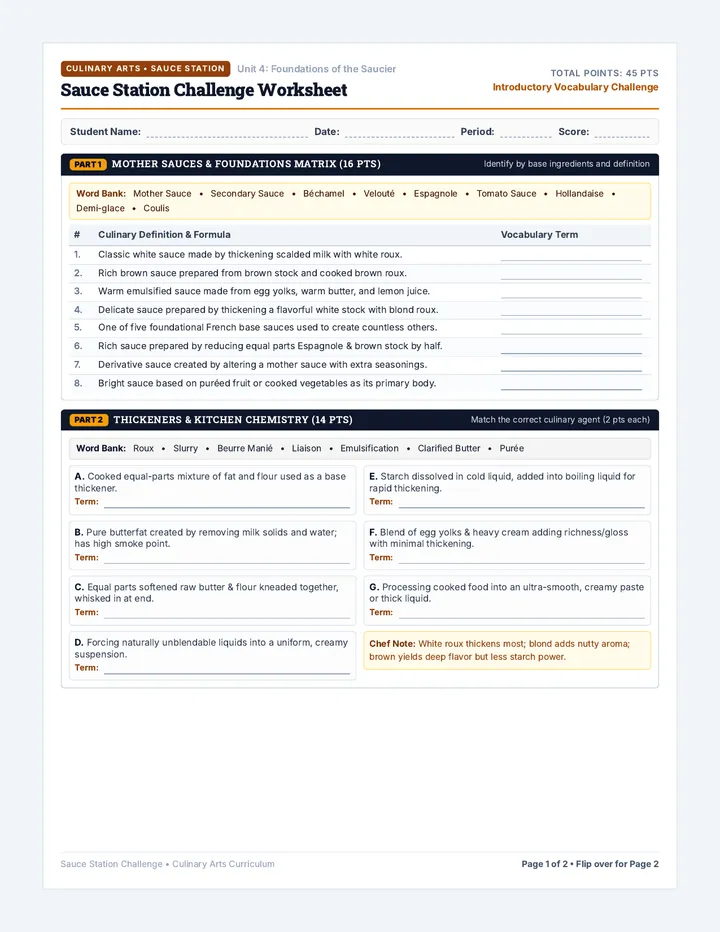
Genre Decoders Student Guide
Sound Lab // Reference Guide
GENRE DECODERS: CRACKING THE SONIC CODE
Middle School Music FIELD MANUAL #01
What Exactly is a Music Genre?
Think of a genre as a musical family or blueprint. It is a category that groups musical pieces that share similar conventions, instrumentation, rhythms, vocal techniques, and historical origins. Instead of random sounds, genres represent living traditions created by artists, communities, and cultures over decades.
The 5 Sonic Ingredients of Every Genre
01 // Sound Tools
Instrumentation
Acoustic vs. electric vs. digital. Are you hearing strings, distorted guitars, 808 kick drums, or brass?
Timbre & Texture
02 // The Pulse
Rhythm & Beat
The underlying groove. Does it swing, march evenly, stomp with a 4/4 kick, or use syncopated breakbeats?
Groove & Meter
03 // Speed
Tempo (BPM)
Beats Per Minute: Slow ballads (60-80 BPM), relaxed hip-hop (85-95 BPM), or high-energy EDM (125-130 BPM).
Pacing & Energy
04 // Delivery
Vocal Style
Rhythmic rap flow, operatic vibrato, raspy rock belting, smooth harmonized pop hooks, or instrumental only.
Voice & Tone
05 // Roots
Culture & Context
Where did it start? Concert halls, church halls, dance clubs, protest movements, or street block parties?
History & Purpose
The Great Sound Evolution: How Genres Connect
Music evolves by blending traditions
Genres don't exist in isolated bubbles. Almost every style you stream today is a descendant of earlier acoustic, vocal, and rhythmic traditions:
European Tradition
Classical: Complex harmony, orchestral orchestration, dynamic acoustic performance. Established structural forms like symphonies and concertos.
African-American Roots
Blues & Spirituals: Gave birth to Jazz, Rock, Funk, R&B, and Hip-Hop. Introduced blue notes, syncopation, call-and-response, and rhythmic groove.
Electronic Revolution
Synthesizers & Samplers: From disco and early techno to modern EDM, Trap, and Hyperpop. Replaced physical strings and skins with oscillators and loops.
Listener's Rule of Thumb
When you hear an unfamiliar song, don't ask "Do I like it?" first. Ask: "What instruments are playing? Where is the accent on the beat? How is the voice being used?" That's how sonic detectives crack the genre!
Unit 1: Music Literacy & Appreciation Page 1 of 2 // Reference Manual
Sound Lab // Field Guide
THE BIG SIX: GENRE SPOTLIGHT
Sonic Profiles QUICK REFERENCE
Classical 1600s – Present
Primary Instruments: Violins, cellos, flute, oboe, French horn, timpani, grand piano.
Beat & Rhythm: Guided by a conductor; complex meters, tempo changes (rubato), no drum kit.
Vocal Style: Often instrumental; when vocal, features trained operatic projection (vibrato).
Key Feature: Pure acoustic dynamics (whisper quiet to thunderous forte) without electric amplification.
Jazz 1910s (New Orleans)
Primary Instruments: Saxophone, trumpet, upright acoustic bass, piano, drum set with brushes.
Beat & Rhythm: Swing groove (uneven, bouncy eighth notes) and syncopation (unexpected off-beats).
Vocal Style: Expressive, soulful phrasing; "scat singing" (improvised nonsense syllables).
Key Feature: Improvisation—musicians compose solo melodies live on the spot!
Rock 1950s – Present
Primary Instruments: Distorted electric guitar, electric bass guitar, acoustic drum kit, keyboards.
Beat & Rhythm: Driving 4/4 meter with a strong heavy backbeat (snare hits on beats 2 and 4).
Vocal Style: Raw, energetic, belting, sometimes gritty or raspy; anthemic group choruses.
Key Feature: Powerful repeated guitar riffs and passionate themes of rebellion and energy.
Pop (Popular) 1950s – Mainstream
Primary Instruments: Synthesizers, programmed electronic drums, acoustic/electric guitars, vocals.
Beat & Rhythm: Steady, danceable, immediately accessible rhythms; medium-to-fast tempos.
Vocal Style: Polished lead vocals, autotune or vocal harmonies; clear, memorable lyrics.
Key Feature: Built around the hook—an irresistibly catchy melodic line you can't get out of your head!
Hip-Hop & Rap 1973 (Bronx, NYC)
Primary Instruments: Samplers, Roland TR-808 drum machines, turntables (scratching), sub-bass.
Beat & Rhythm: Rhythmic breakbeats, trap hi-hat rolls (fast triplets), boom-bap syncopation.
Vocal Style: Rhythmic rhyming speech (rapping or MCing) with intricate flow, cadence, and wordplay.
Key Feature: Sampling (borrowing recorded audio snippets from other songs) and storytelling.
Electronic / EDM 1980s – Present
Primary Instruments: Digital audio workstations (DAWs), digital synthesizers, sequencers, sub-woofers.
Beat & Rhythm: "Four-on-the-floor" (kick drum on every beat: 1-2-3-4) or syncopated breakbeats.
Vocal Style: Often looped vocal chops, short repeated phrases, or purely instrumental.
Key Feature: Dramatic dynamic arcs featuring risers, tension builds, and explosive "drops"!
The Modern Reality: Genre Blending
Today's artists constantly combine ingredients: Lil Nas X blended Hip-Hop & Country in "Old Town Road"; Olivia Rodrigo mixes Pop & Punk Rock; Gorillaz blends Electronic, Rock, and Hip-Hop. Knowing the ingredients helps you spot how modern artists invent new flavors!
Unit 1: Music Literacy & Appreciation Page 2 of 2 // Reference Manual
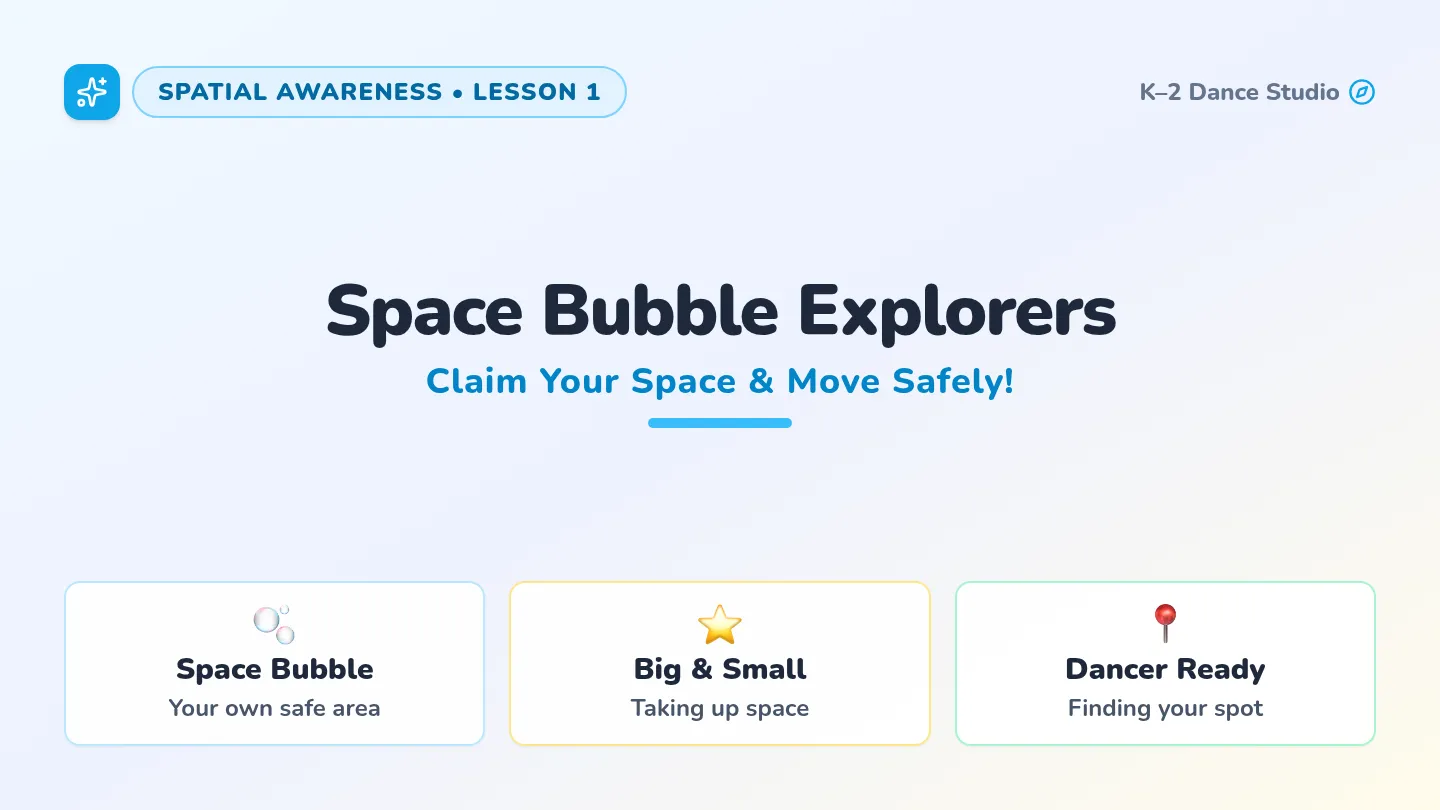
Genre Decoders Slides
Sound Lab // Unit 1
Middle School Music
Decoding the Sonic DNA of Sound
GENRE DECODERS
What makes rock roar, hip-hop bounce, and jazz swing? Discover the hidden ingredients that define the sounds of the world.
Investigation & Listening Guide 01 / 07
What is a Music Genre?
02 / 07
Core Definition
A category that groups music by shared traditions and conventions.
Genres are not accidental. They represent specific choices about instruments, rhythms, tempos, and messages crafted by artists across time.
It is Sonic Recipe
Specific instruments + distinct rhythm = unique flavor.
It is Cultural History
Born in specific cities, communities, and dance halls.
It Constantly Evolves
Musicians borrow, cross borders, and build new sounds.
Every song you love belongs to a musical family tree.
The 5 Sonic Ingredients
03 / 07
01
Instruments
Acoustic woodwinds, electric guitars, or 808 digital synths?
Timbre
02
Rhythm
Swung off-beats, 4/4 backbeats, or steady 4-on-the-floor?
Groove
03
Tempo
Slow ballad (70 BPM) vs. fast dance club banger (130 BPM).
Pacing
04
Vocals
Rhythmic rap flow, gritty rock belting, or pop hooks?
Delivery
05
Roots
Where did it originate and what purpose did it serve?
Culture
Master these 5 clues to decode any song you hear.
Acoustic Masterminds: Classical vs. Jazz
04 / 07
Classical
1600s – Present
- • Instruments: Full orchestra (violins, cellos, horns, flutes).
- • Beat: Fluid tempo, conducted dynamics, no drum set.
- • Key Clue: Strictly written sheet music and complex symphonic structures.
Jazz
1910s – New Orleans
- • Instruments: Saxophone, trumpet, upright bass, piano, drums.
- • Beat: Swing groove with bounce and syncopated off-beats.
- • Key Clue: Improvisation—musicians invent solos live in the moment!
Listening Lab Worksheet
Audio Lab // Listening Session
LISTENING LAB WORKSHEET
EAR TRAINING // LOG 01
Name:
Date:
Period:
Directions: Listen to two audio selections (assigned by your teacher or from your own playlist). Deconstruct their sonic ingredients and determine their genres.
1 Audio Stem Log #1 Track Analysis A
Song / Piece Title:
Artist / Composer:
1. Dominant Instruments:
Acoustic Strings / Orch Distorted Guitars / Bass Synthesizers / Digital Pads 808 Drums / Sample Loop
2. Rhythm & Pulse:
Swung / Bouncy eighths Heavy Backbeat (2 & 4) Four-on-the-Floor (1-2-3-4) Conducted / Free tempo
3. Vocal Delivery:
Identified Genre:
2 Audio Stem Log #2 Track Analysis B
Song / Piece Title:
Artist / Composer:
1. Dominant Instruments:
Acoustic Strings / Orch Distorted Guitars / Bass Synthesizers / Digital Pads 808 Drums / Sample Loop
2. Rhythm & Pulse:
Swung / Bouncy eighths Heavy Backbeat (2 & 4) Four-on-the-Floor (1-2-3-4) Conducted / Free tempo
3. Vocal Delivery:
Identified Genre:
Head-to-Head Comparison: Track #1 vs. Track #2
What is the single biggest musical difference between the two tracks you heard (think instruments, beat, or mood)?
Unit 1: Music Literacy & Ear Training Page 1 of 2
Applied Sonic Theory
GENRE MAPPING & SOUNDTRACK DESIGN
LAB WORK // PART 2
3 The Sonic Spectrum (Coordinate Map)
Where do genres live? In the 4 quadrants below, plot the following 4 genres based on their Energy (High vs. Low) and Sound Source (Acoustic vs. Electronic): EDM, Classical Symphony, Grunge Rock, Ambient Lo-Fi.
▲ High Energy / Fast Pace
Quadrant I: Acoustic + High Energy
e.g. Big Band Swing, Speed Rock
Quadrant II: Electronic + High Energy
e.g. Festival EDM, Trap Banger
Quadrant III: Acoustic + Low Energy
e.g. Classical Lullaby, Acoustic Folk
Quadrant IV: Electronic + Low Energy
e.g. Lo-Fi Beats, Chillwave Synth
▼ Low Energy / Relaxed Pace
4 Music Supervisor: Scoring the Scene
Film directors hire music supervisors to pick the perfect genre to match a movie's mood. Read each movie brief and choose the best genre with sonic evidence.
Scene A: Futuristic Cyber-City Chase