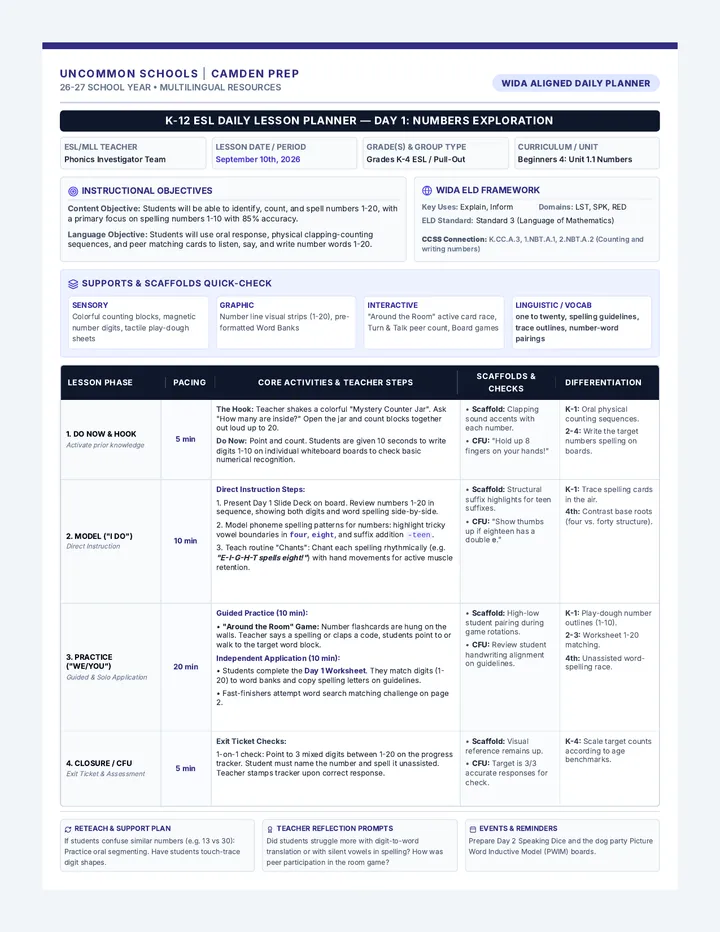
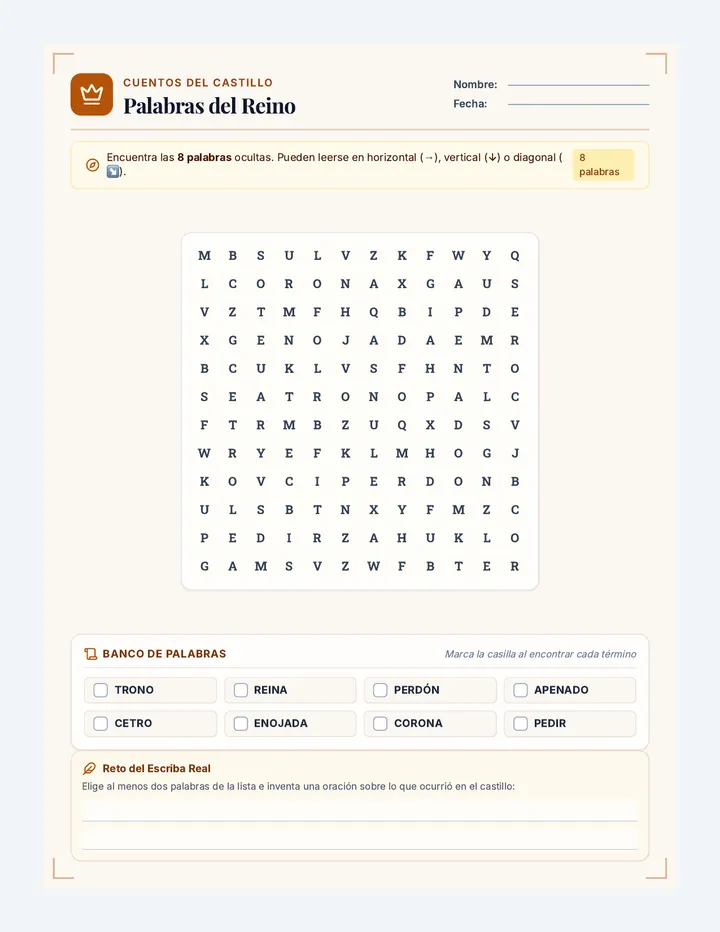
An elementary introductory Spanish lesson exploring numbers 1 to 10 through pronunciation drills, visual counting, choral repetition, and multi-sensory activities.
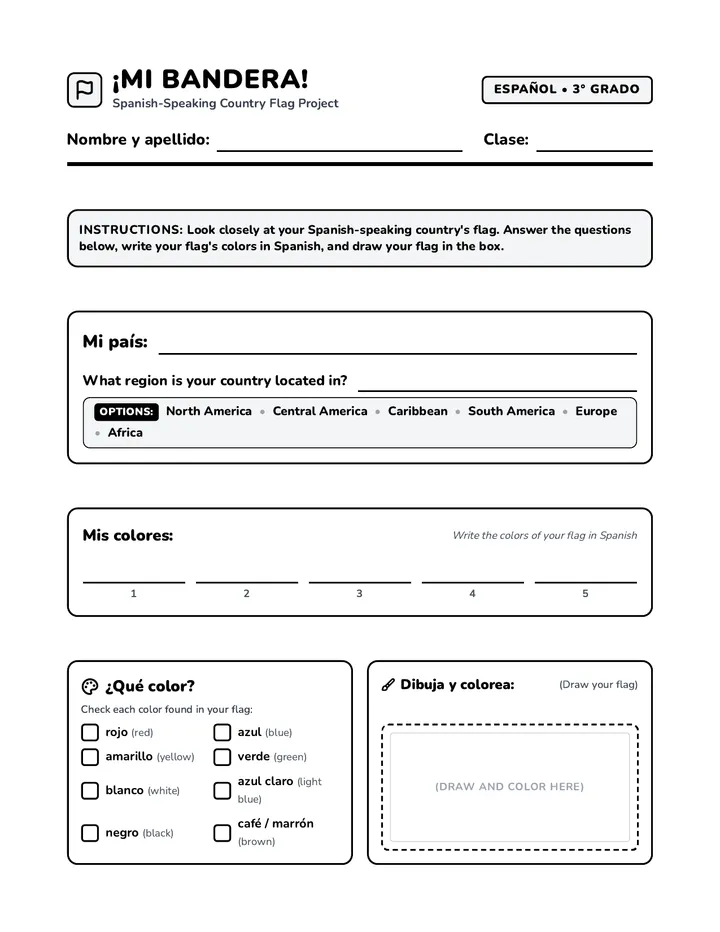
Model phrase: "Hay..." followed by the number in Spanish! ¡Cuenta con tus dedos y responde!
¿Cuántos hay? • Ronda 2
Point, count together, and complete the sentence frame!
¡Tu Turno!
¿Cuántas? Pregunta D
¿Cuántas manzanas hay?
Hay _____ manzanas
¡Cuenta y dilo en voz alta!
¿Cuántas? Pregunta E
¿Cuántas flores hay?
Hay _____ flores
¡Cuenta y dilo en voz alta!
¿Cuántos? Pregunta F
¿Cuántos lápices hay?
Hay _____ lápices
¡Cuenta y dilo en voz alta!
Remember: feminine words use "cuántas" (manzanas, flores)! ¿Quién sabe la respuesta?
¿Cuántos hay? • Ronda 3
Higher numbers require sharp eyes and loud voices!
¡Tu Turno!
¿Cuántos? Pregunta G
¿Cuántos peces hay?
Hay _____ peces
¡Cuenta y dilo en voz alta!
¿Cuántas? Pregunta H
¿Cuántas estrellas hay?
Hay _____ estrellas
¡Cuenta y dilo en voz alta!
¿Cuántos? Pregunta I
¿Cuántos corazones hay?
Hay _____ corazones
¡Cuenta y dilo en voz alta!
Speed test: Can you count in Spanish without translating to English? ¡Cuenta con cuidado!
¿Cuántos hay? • En el Salón
Count the classroom objects and complete each Spanish phrase!
Ronda Escolar
¿Cuántos? Pregunta J
¿Cuántos libros hay?
Hay _____ libros
¡Cuenta y dilo en voz alta!
¿Cuántas? Pregunta K
¿Cuántas tijeras hay?
Hay _____ tijeras
¡Cuenta y dilo en voz alta!
¿Cuántos? Pregunta L
¿Cuántos lápices hay?
Hay _____ lápices
¡Cuenta y dilo en voz alta!
Notice: Libros are masculine (cuántos), tijeras are feminine (cuántas)! ¡A practicar juntos!
¿Cuántos hay? • ¡Los Animales!
Count the friendly animals and say the sentence with confidence!
Ronda Animal
¿Cuántos? Pregunta M
¿Cuántos gatos hay?
Hay _____ gato
¡Cuenta y dilo en voz alta!
¿Cuántos? Pregunta N
¿Cuántos pájaros hay?
Hay _____ pájaros
¡Cuenta y dilo en voz alta!
¿Cuántos? Pregunta Ñ
¿Cuántos peces hay?
Hay _____ peces
¡Cuenta y dilo en voz alta!
Speak in full sentences: "Hay un...", "Hay cuatro...", "Hay seis..." ¡Muy bien hecho!
¡Veo, Veo en la Fiesta!
Scan the festival scene, find each item, and count them!
Desafío I-Spy
El Mercado de la Fiesta Observa con atención
¡Veo, veo algo especial en la fiesta!
¿Cuántos soles?
Hay _____
¿Cuántos trofeos?
Hay _____
¿Cuántas manzanas?
Hay _____
¿Cuántas campanas?
Hay _____
Can you also count how many stars are shining in the scene? ¡Ojos atentos de detective!
¿Cuántos hay? • ¡El Gran Marco!
The Ultimate Fiesta Count: Count each row in the Ten-Frame!
¡Desafío Final!
¿Cuántos regalos de fiesta hay? Marco de Diez
Hay _____ regalos de fiesta ¡Marco completo!
¿Cuántos trofeos hay?
Hay _____ trofeos
¿Cuántas notas musicales hay?
Hay _____ notas
Ten items completely fill our Spanish Ten-Frame! ¡A responder todos juntos!
¿Cuántos Dedos Ves?
Look at the hands, count silently, then shout the Spanish word!
Kinesthetic Drill
Ronda Rápida 1
2
dedos arriba
Son _____
¡Di el número!
Ronda Rápida 2
5
una mano llena
Son _____
¡Di el número!
Ronda Rápida 3
8
5 + 3 dedos
Son _____
¡Di el número!
Ronda Rápida 4
10
¡las dos manos!
Son _____
¡Di el número!
Total Physical Response (TPR): Move your body as you speak! ¡Levanta los dedos y grita la palabra!
¡Misión Cumplida!
Grades K–5
¡Gran Trabajo, Amigos!
You can now ask and answer: ¿Cuántos hay?
1: uno
[OO-noh]
2: dos
[DOHS]
3: tres
[TREHS]
4: cuatro
[KWAH-troh]
5: cinco
[SEEN-koh]
6: seis
[SAYSS]
7: siete
[see-EH-teh]
8: ocho
[OH-choh]
9: nueve
[NWEH-veh]
10: diez
[DYEHSS]
Next Step: Practice tracing and complete your worksheet!
¡Hasta luego!
seis [SAYSS] vs. siete [see-EH-teh]: Students frequently mix these up. Highlight that seis is 1 syllable, while siete has 2 syllables.
nueve [NWEH-veh]: Spanish 'v' is gentle and soft, pronounced almost like a light English 'b'.
diez [DYEHSS]: Ends with a sharp crisp 's' sound in Latin American Spanish; keep the vowel diphthong tight.
Differentiation & ELL Support
For Emerging Learners: Allow students to use physical counters/cubes on the ten-frame cards on Page 1 before writing. Pair with a bilingual buddy.
For Native/Heritage Speakers: Challenge students to create their own math equations in Spanish (e.g., "tres + cuatro = siete") or teach the class ordinal numbers (primero, segundo).
Movement Adaptation: Pair physical jumps or stomps with each number count to engage kinesthetic and energetic learners.