Flamenco Fingers Slides Flamenco Fingers
The Sound of the Spanish Guitar
The Guitar
In Spain, the Guitarra is a very special instrument.
It has strings that vibrate!
It can sound soft or very loud.
What is Flamenco?
Hands
Clapping rhythms with your palms!
Feet
Stomping on the wooden floor!
Feelings
Expressing happiness and power!
Palmas!
Follow the pattern with your hands!
CLAP
rest
CLAP
"Try to clap soft like a kitten, then loud like a giant!"
Ready to Listen?
Fast Music
Clap tiny little fast claps!
Slow Music
Stretch your arms wide between claps!
Flamenco Fingers Teacher Guide Teacher Guide: Flamenco Fingers
Lesson 1: The Spanish Guitar and Palmas
Kindergarten
Time
40 Minutes
Focus
Listening/Rhythm
Materials
Guitar Audio, Slides
The Hook (5 mins)
"Listen to these strings! Can your hands move as fast as a racing car? Let's see if we can keep up with the 'Zapateado' (fast footwork) sound of the guitar!"
Play a fast-paced Flamenco guitar track (like Paco de Lucía's 'Entre dos Aguas'). Encourage students to air-clapping in the air as fast as they can.
Instructional Steps
1
Introduce the Spanish Guitar
Show Slide 2. Discuss how the guitar is hollow and uses strings to make sound. Mention that in Spain, the guitar is like the heart of the music.
2
Palmas Practice (The "Claps")
Show Slide 4. Teach 'Palmas Sordas' (muffled claps by cupping hands) and 'Palmas Secas' (sharp claps). Practice simple 4-beat patterns: Clap - Clap - Rest - Clap.
3
Rhythm Echo
T: Clap-clap-clap. S: (Echoes) Clap-clap-clap. Vary the tempo! Go slow like a turtle, then fast like a hummingbird.
Discussion Prompts
Ask about Feelings:
"Does the guitar sound happy, sad, or exciting? Why?"
Ask about Volume:
"If we clap really softly, is it easier to hear the guitar strings?"
Differentiation Tips
For energetic students: Let them stand up and "stomp" the beat with their feet while they clap.
For sensory-sensitive students: Use "butterfly claps" (tapping fingers together) instead of full palm claps to reduce noise.
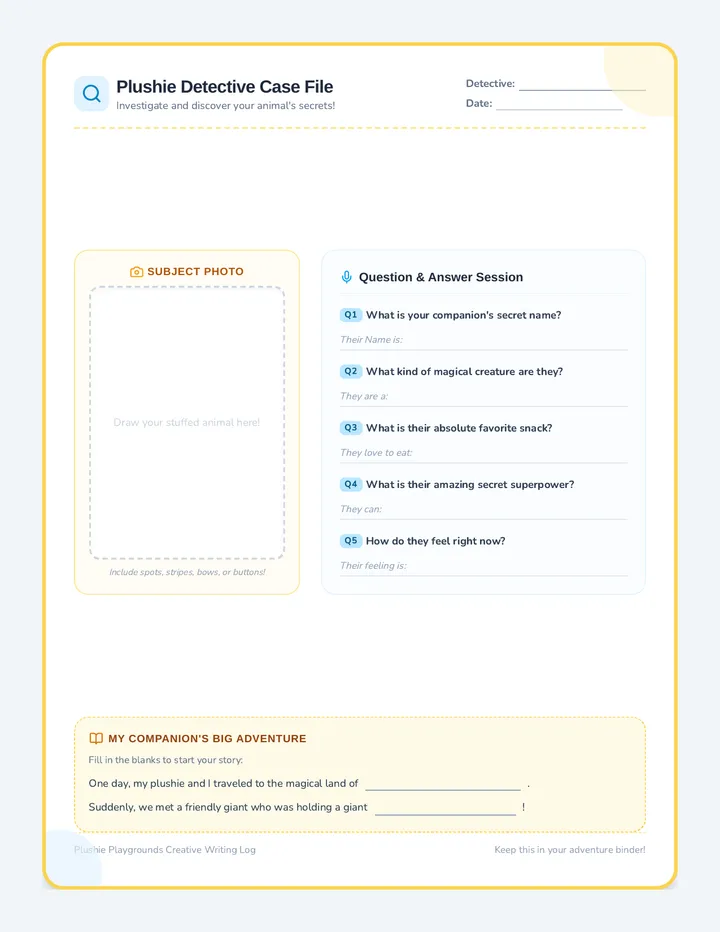
Clap the Beat Worksheet Clap the Beat!
Rhythm Adventure
Name:
Date:
1. Color the Spanish Guitarra
Use bright colors!
2. Trace and Clap!
Trace the circles and clap the pattern with your teacher.
A.
Clap-Clap-Music-Clap
B.
Fast-Slow-Fast-Slow
3. How did the music sound?
Circle the one you felt!
Happy
Fast
Slow
Maraca Magic Slides Maraca Magic
Shaking the Rhythm
🪇
🪇
Meet the Maracas
They are part of the Percussion family.
They are filled with seeds or beads!
When you shake them, they rattle!
We usually play with two at a time.
Let's Make a Shaker!
🥤
1. Container
A plastic egg or a small bottle.
🍚
2. The "Noisy" Bits
Rice, beans, or beads.
🎨
3. Decoration
Bright stickers and tape!
The Shaker Game
SHAKE!
FREEZE!
Watch the teacher's hand! High = LOUD, Low = SOFT.
Rhythm Echo
Listen to the beat and shake your maraca!
1
2
3
4
Can you shake it 10 times really fast?
Maraca Magic Teacher Guide Teacher Guide: Maraca Magic
Lesson 2: Percussion & Shaker Workshop
Kindergarten
Time
50 Minutes
Activity
Maker Workshop
Skill
Start/Stop Control
The Hook (5 mins)
"I have a secret noise behind my back... (Shake maraca gently). Is it a snake? Is it rain on a tin roof? No, it's a Maraca! In the Caribbean, this sound makes everyone want to move!"
Shaker Workshop Steps
1
Choose Your Fill
Let students test different "noises" (rice, beans, pasta). Ask: "Which one sounds like a tiny rain? Which sounds like a big drum?"
2
Assemble & Seal
Use plastic Easter eggs or small water bottles. Teacher Tip: Use colorful duct tape to seal them tightly so beans don't fly out during the dance!
3
Shake & Freeze Game
Use the visual cues from Slide 4. Raise hand high for LOUD shakes, low for SOFT shakes. Stop immediately when hands go behind back.
Cultural Context
Explain that maracas were originally made from dried gourds (like pumpkins) with seeds inside. They are used in many countries like Puerto Rico, Cuba, and Colombia.
Management Tip
Establish a "resting position." When the conductor says "Maracas asleep," students put their shakers in their laps or on the floor. No touching until "Maracas awake!"
Listening Discrimination Activity
Play three different tracks of Caribbean music (Salsa, Merengue, Son). Have students close their eyes and raise their hand every time they hear the shaker sound.
Track 1: Shaker focus
Track 2: Drum focus
Track 3: Mixed ensemble
Shaker Science Worksheet Shaker Science
Testing our Percussion
Name:
The Rhythm Lab 🪇
1. My Shaker Design
Draw your shaker here!
What is inside?
🍚 Rice (Soft Sound)
🫘 Beans (Loud Sound)
💎 Beads (Bright Sound)
2. Listen & Mark
When the teacher plays the music, circle the 🪇 when you hear it!
1
🪇
2
🪇
3
🪇
4
🪇
5
🪇
Shaker Master Check!
I can shake fast!
I can shake slow!
I can stop on "FREEZE!"
Dance Party Slides Dance Party!
Salsa & Merengue
💃 🕺 🎊
Why Dance?
🎂
To celebrate birthdays and parties!
👫
To have fun with our friends!
😊
To show we are happy!
"When the music starts, our feet want to move!"
1 - 2 - 3
The secret code for Salsa and Merengue!
1
2
3
Wait
Step... Step... Step... Pause!
Merengue: The Marching Dance
Left!
Right!
"Imagine you are marching on the spot, but your hips are wiggling like a bowl of jelly!"
Dance Battle!
Slow Motion
Dance like you are under water!
🐢
Turbo Speed
Dance like you are a buzzing bee!
⚡
Keep counting: 1 - 2 - 3 - Stop!
Step to the Beat Teacher Guide Teacher Guide: Step to the Beat
Lesson 3: Salsa & Merengue Intro
Kindergarten
Time
45 Minutes
Focus
Gross Motor Skills
Pattern
1 - 2 - 3 - (4)
The Hook (5 mins)
"Look at these kids dancing! (Play a short video clip of Salsa dancers). How fast are their feet moving? Is it faster than our palmas from last week? Let's see if we can learn their secret code!"
Dance Steps: The "How-To"
M
The Merengue March
Start with this as it's easier. "March in place like a happy soldier. Now, keep your feet on the ground and just wiggle your knees!" 1-2, 1-2, 1-2.
S
The Salsa Side-Step
Step out to the left (1), step back to center (2), step in place (3), and PAUSE (4). Repeat on the right. Say: "Step, Back, Home, Wait."
The "Secret Code" Counting Game
Practice counting out loud while moving. Kindergarteners often struggle with the 'pause' on 4.
Loud Count:
"ONE! TWO! THREE! (Shh...)"
Whisper Count:
"(one, two, three... CLAP!)"
Check for Understanding
"Why do people in Spain and Latin America dance at festivals?" (To celebrate, show joy)
"What happens on number 4 in our dance step?" (We wait / pause)
"Is Merengue like a march or a jump?" (A march)
Teacher Notes:
Don't worry about perfect technique! The goal is for students to feel the 4-beat structure and connect movement with happiness. If their hips don't wiggle, just encourage the marching!
Footprint Fun Worksheet Footprint Fun!
Learning the 1-2-3 Step
Name:
1. Follow the Feet!
Color the footprints to make a pattern. Point and count as you go!
1
Step Out
2
Step In
3
Home
4
Wait!
2. Dance Party Drawing
Draw yourself and a friend dancing! What are you wearing? (Maybe a colorful hat or dress?)
Draw your happy dance here...
How do you feel when you dance?
😊
Happy
💪
Strong
🥳
Excited
Tempo Trouble Slides Tempo Trouble
Fast vs. Slow
🐇
🐢
What is Tempo?
Tempo is the Speed of the music.
🏃♂️
Allegro
Fast and Exciting!
🧘♂️
Adagio
Slow and Peaceful...
The Music Clock
Musical Statues
1. Listen
Is it fast or slow?
2. Move
Match the beat!
3. FREEZE!
When the music stops!
Tempo Detectives
If it's FAST...
Use your tippy-toes and move your arms like a butterfly!
If it's SLOW...
Take GIANT steps like an elephant in the mud!
SUPER FAST!
Can you follow the Presto beat?
🐝
Bee Tempo!
Buzz around the room!
🐝
Tempo Trouble Teacher Guide Teacher Guide: Tempo Trouble
Lesson 4: Speed & Active Listening
Kindergarten
Time
45 Minutes
Skill
Active Listening
Goal
Self-Regulation
The Hook (5 mins)
"I'm going to walk across the room. Tell me if I'm a turtle or a rabbit! (Walk very slowly, then suddenly run). Music does the same thing! Sometimes it's sleepy, and sometimes it's zoomy!"
The Musical Statues Game Protocol
Round 1: Slow Adagio
Play slow Spanish ballads or soft guitar. Students move like they are in slow-motion syrup.
Round 2: Fast Allegro
Play fast Flamenco or Salsa. Students move their feet and arms quickly (but safely!).
The Freeze Moment
Cut the music abruptly. Students must hold their pose until the music starts again. This practices inhibitory control.
Spanish Vocabulary for Tempo
Rápido (Fast)
Lento (Slow)
Music Suggestions
Slow: "Lágrimas Negras" (Bebo & Cigala) or simple nylon guitar tracks.
Fast: "La Vida Es Un Carnaval" (Celia Cruz) or "Bamboleo" (Gipsy Kings).
Trick: Find a track that changes speed mid-song!
Discussion & Reflection
"When the music was 'Rápido', how did your heart feel? When it was 'Lento', how did your breathing feel?"
Tempo Tracker Worksheet Tempo Tracker
Rápido or Lento?
Name:
1. The Speed of Sound
Draw something FAST! ⚡
Example: A rocket or a cheetah!
Draw something SLOW... 🐌
Example: A snail or a cloud!
2. What do you hear?
Circle the animal that matches the music tempo!
Song 1:
🐇
🐢
Song 2:
🐇
🐢
Song 3:
🐇
🐢
❄️
The Freeze Challenge
I can stand as still as a statue when the music stops!
Grand Finale Slides GRAND FINALE!
The Classroom Parade
🪇 🎸 💃
Our Orchestra
Flamenco Hands (Palmas)
Maraca Shakers
Salsa Dancers
"Music is better when we do it TOGETHER!"
The Parade Route
1
Start: The Stage
2
Circle: The Rug
3
Finish: Big Bow!
"No running! Only Dancing!"
Showtime Roles
Team A: Musicians
Use your shakers and claps to keep the 1-2-3 beat!
🥁🪇
Team B: Dancers
Follow the music and use your happy 1-2-3 steps!
💃🕺
We will switch halfway through!
🎉
¡Fiesta Musical!
Congratulations, Musicians and Dancers!
Skill: Listening ✅
Skill: Rhythm ✅
Skill: Dancing ✅
Grand Finale Teacher Guide Teacher Guide: Grand Finale Parade
Lesson 5: Collaboration & Performance
Kindergarten
Time
50 Minutes
Focus
Teamwork
Project
Class Performance
The Hook (5 mins)
"Today is the big day! We've learned the guitar's secrets, the shaker's magic, and the dancer's steps. Now, we aren't just students... we are an ORCHESTRA! Here is your ticket to the Grand Parade!"
The Performance Protocol
1. Setup Station (10 mins)
Divide the class into two groups: "The Musicians" (holding shakers/ready to clap) and "The Dancers." Let them pick a 'prop' if available (scarves, hats).
2. The Parade Run (15 mins)
Play a medley of the music from previous lessons. The parade follows the route (Slide 3). Remind them: if the music changes speed, they MUST change their tempo!
3. The Great Switch (10 mins)
Dancers become musicians, and musicians become dancers. This ensures everyone practices both rhythm and gross motor skills.
Facilitation Tip
Be the "Grand Marshall." Use a whistle or a loud clap to signal the switch or the "Freeze" moments. Keep the energy high and praise students for following the beat!
Cultural Wrap-Up
At the end, sit in a circle. Ask: "How did it feel to make music with your friends?" Emphasize that in Hispanic culture, music is a way to bring community together.
Observation Checklist
Matches tempo changes
Follows 1-2-3 dance pattern
Cooperates with partners
Recognizes instruments
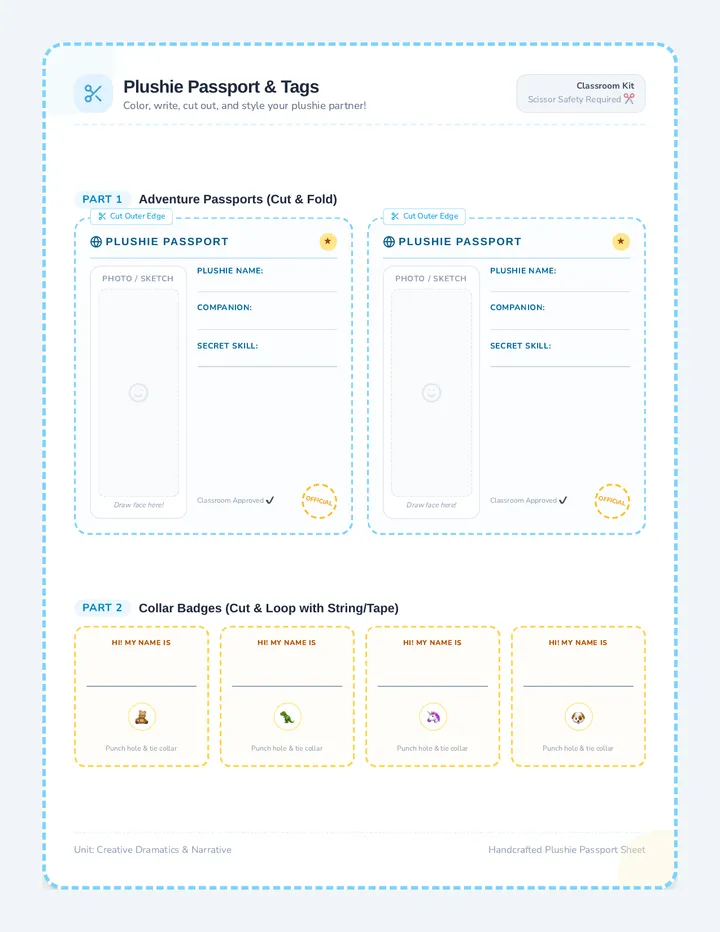
Parade Pass Worksheet Parade Passes!
Music & Dance Certificate
Rhythm & Roots Sequence 🎶
1. My Concert Tickets
Color and cut out your tickets for the Grand Parade!
MUSICIAN
Admit One
🪇 🎸 🥁
DANCER
Admit One
💃 🕺 ✨
2. My Favorite Part
Which instrument or dance did you like the most? Draw it below!
Draw your favorite musical memory...
Official Music Master
This certificate is awarded to:
🪇
Rhythm
🎸
Listening
🕺
Movement