A beginner Spanish sequence for 1st graders focused on numbers 1-10 and basic transactional language. Students use a market-themed project to practice counting, asking 'how many', and requesting items politely.
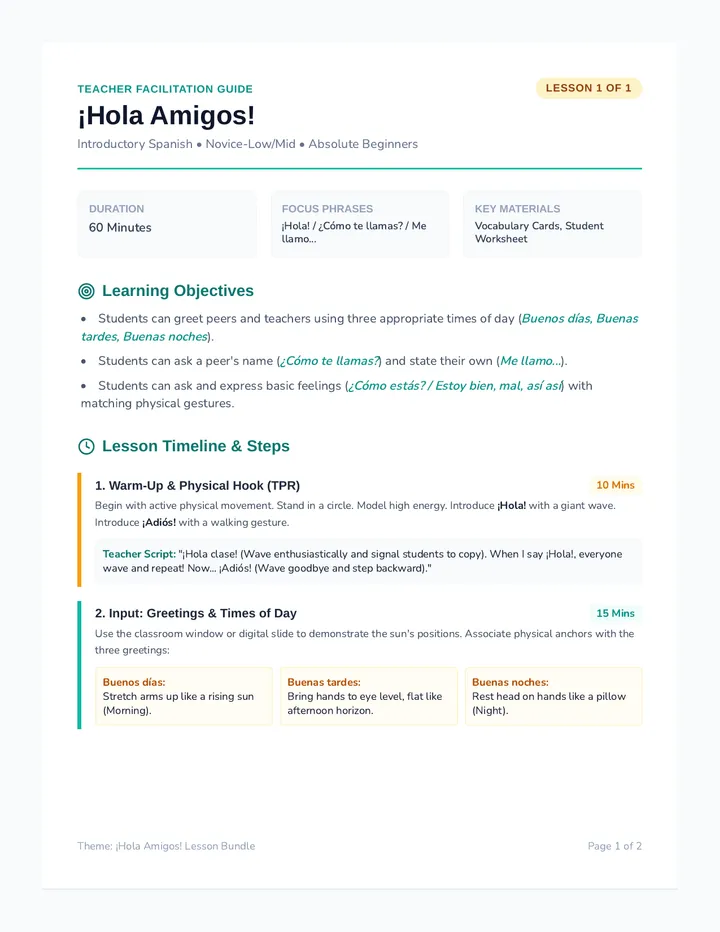
An introductory Spanish curriculum sequence for absolute novice-low beginners, teaching foundational communicative skills like greetings, introductions, numbers, and basic classroom requests.
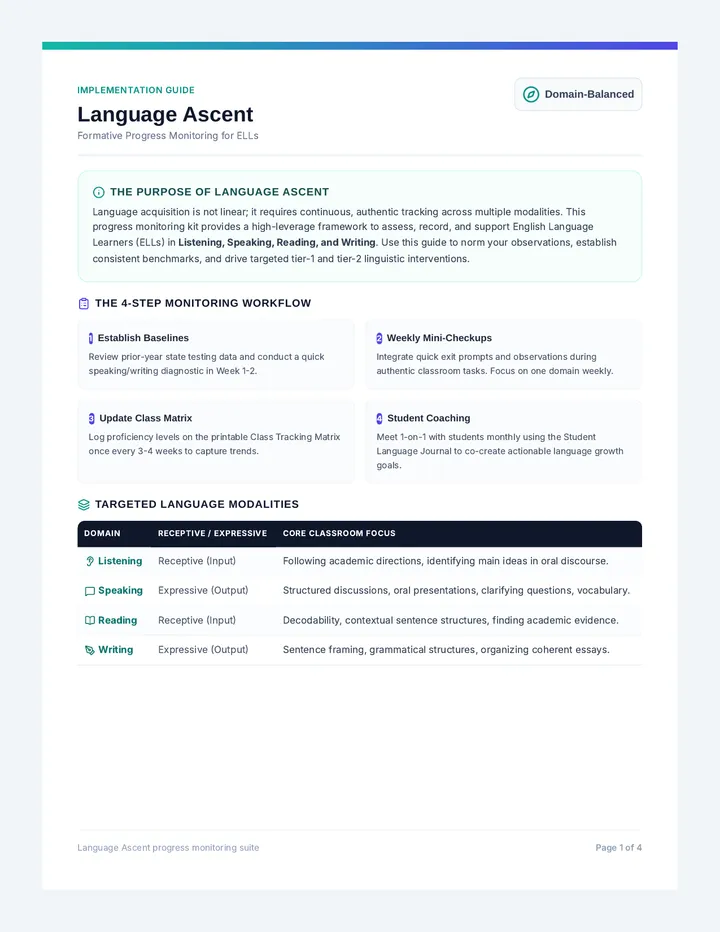
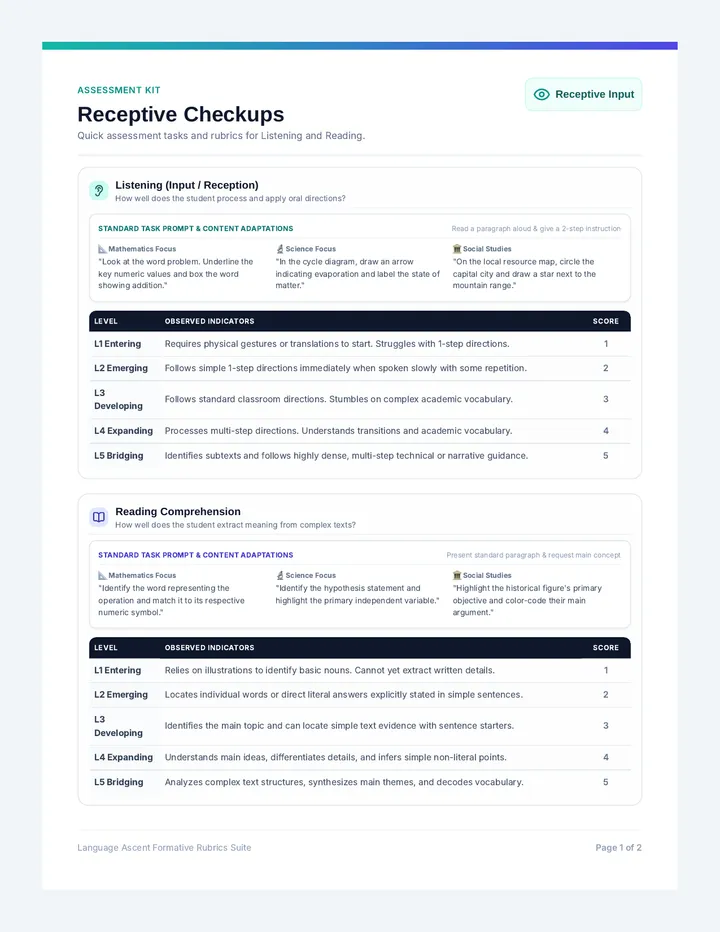
A comprehensive progress monitoring kit for English Language Learners (ELLs) across all four core language domains. Includes step-by-step teacher instructions, a printable class tracking matrix, a student self-monitoring journal, and quick formative assessment rubrics.
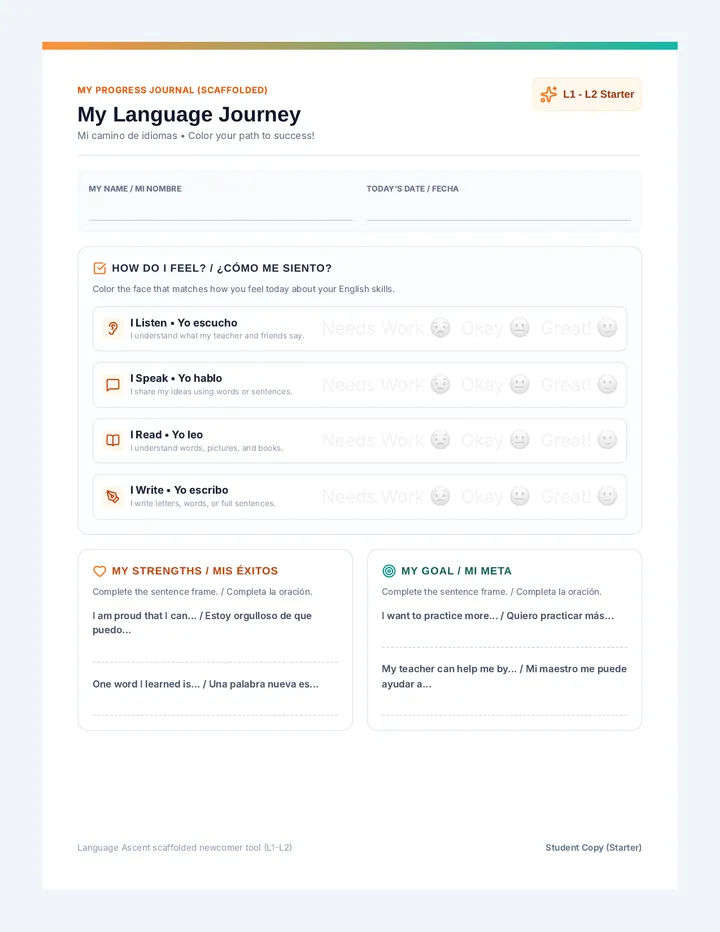
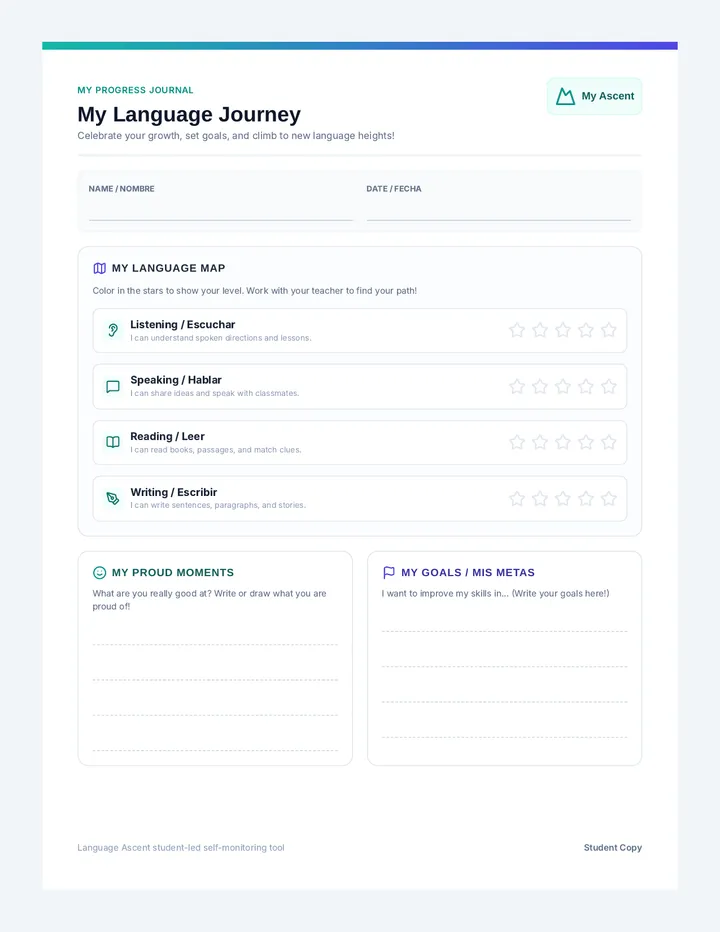
A highly scaffolded, visual, bilingual (English/Spanish) student self-monitoring journal page tailored for early language acquisition levels (L1-L2).
A series of lessons exploring different countries and cultures around the world through high-frequency vocabulary and comprehensible input strategies.
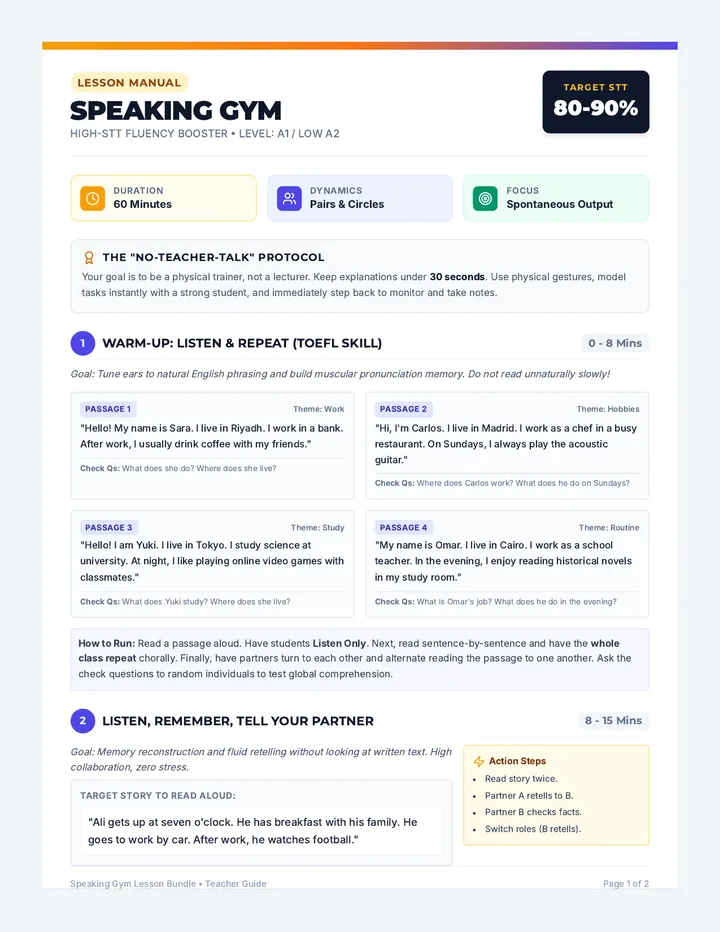
A high-energy, 60-minute speaking-focused lesson designed to maximize Student Talking Time (STT) to 80-90% for A1-A2 learners. Includes a structured progression from guided listening/repetition to free-flowing peer interviews and reflections.
Quick formative assessment prompts and rubrics across listening, speaking, reading, and writing domains to facilitate easy, real-time feedback.
An interactive ESL adventure for a first-grade reader, following Alex as he helps Little Red Riding Hood navigate a magical forest using directions, map skills, and prefix word-play.
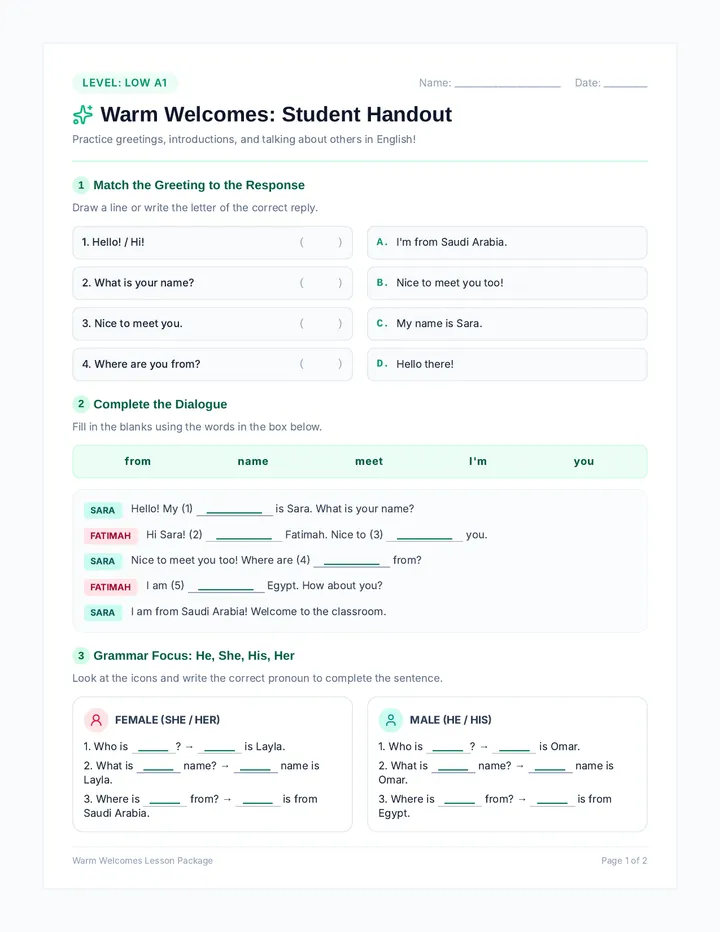
A highly communicative 60-minute hybrid lesson designed for adult and adolescent female Saudi learners at the low A1 level. It maximizes student talking time (STT > 80%) through interactive peer activities, visual pronoun drills, and simplified, culturally tailored worksheets.
A student-facing language learning self-assessment and goal-setting journal page to build student ownership and confidence.
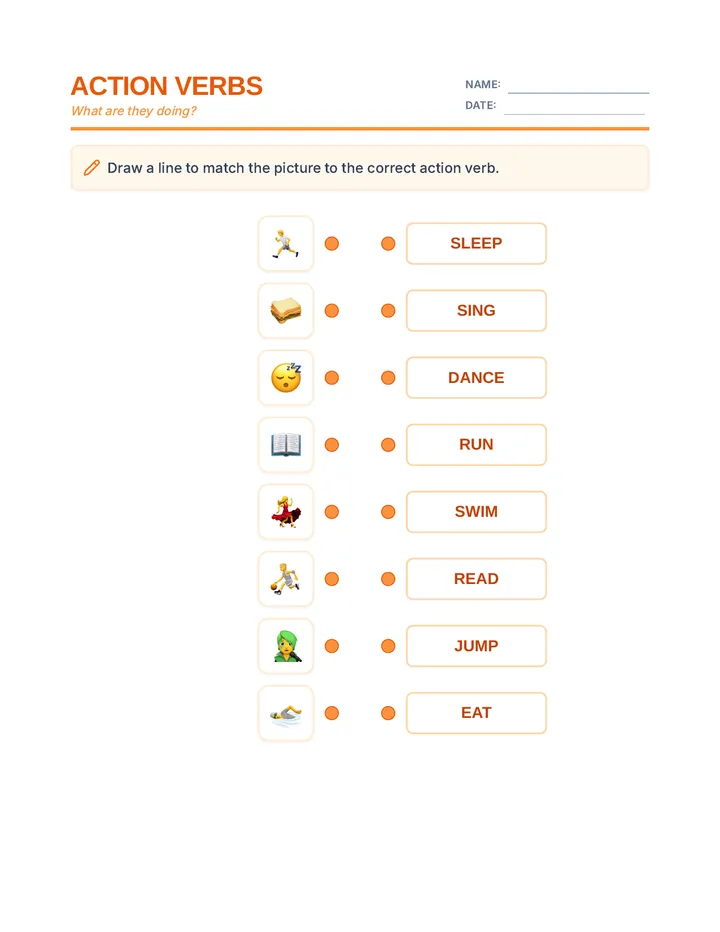
A vocabulary-focused unit designed to help English language learners master action verbs and basic prepositions through visual association and hands-on sorting.
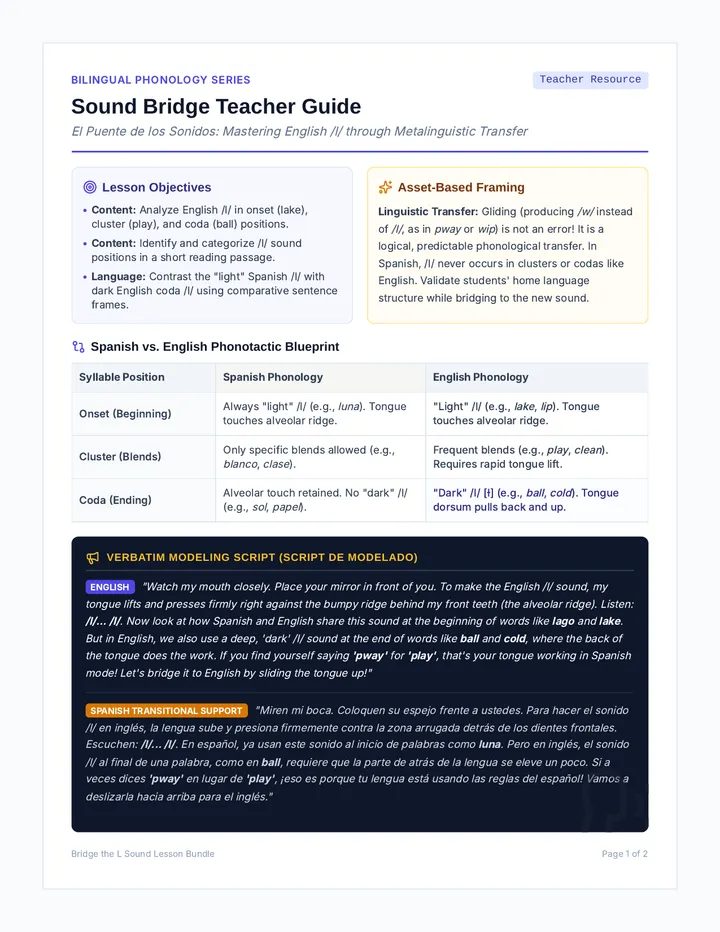
A comprehensive, asset-based phonology lesson designed for Spanish-speaking English Language Learners. The lesson focuses on the metalinguistic comparison of the /l/ sound in English and Spanish across onset, cluster, and coda positions, framing gliding (/l/ to /w/ transfer) as a predictable, logical phonetic bridge rather than an error.
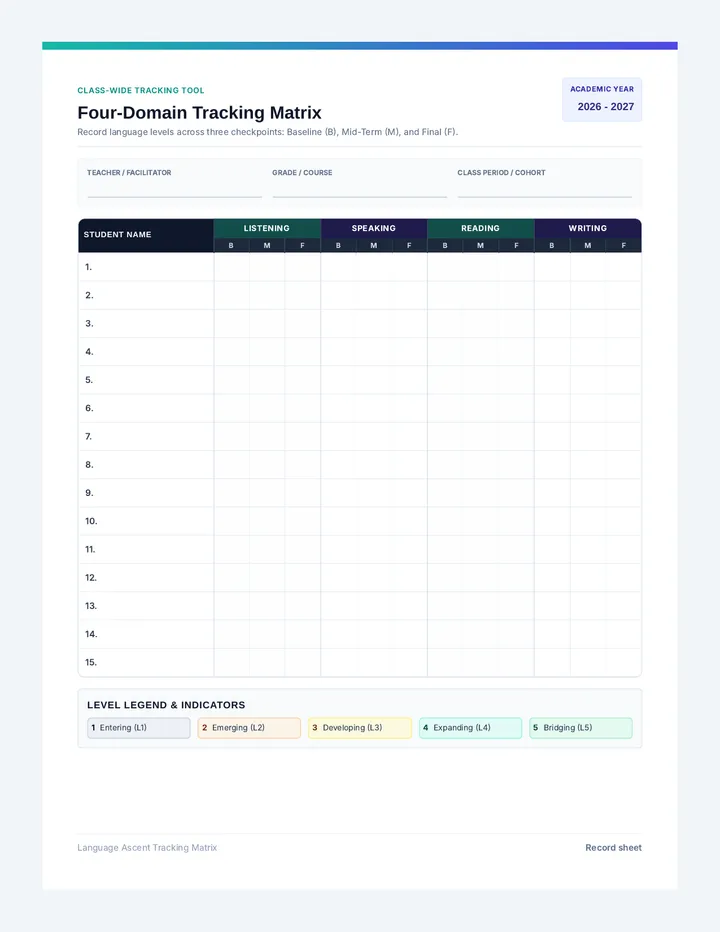
A printable class-wide progress monitoring matrix to track ELL students' development across all four language domains over three assessment intervals.