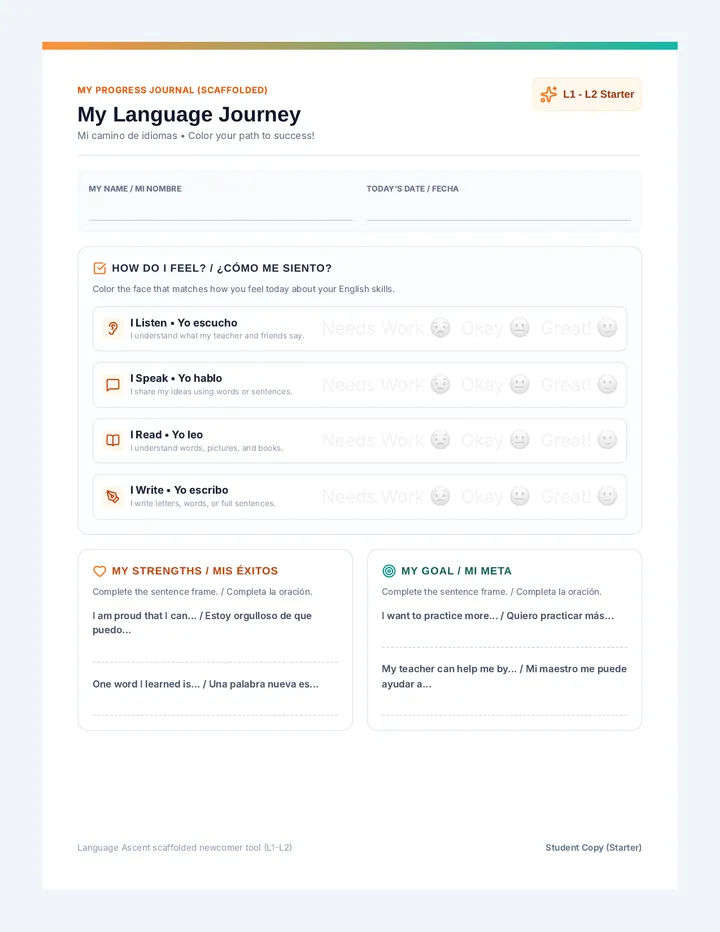
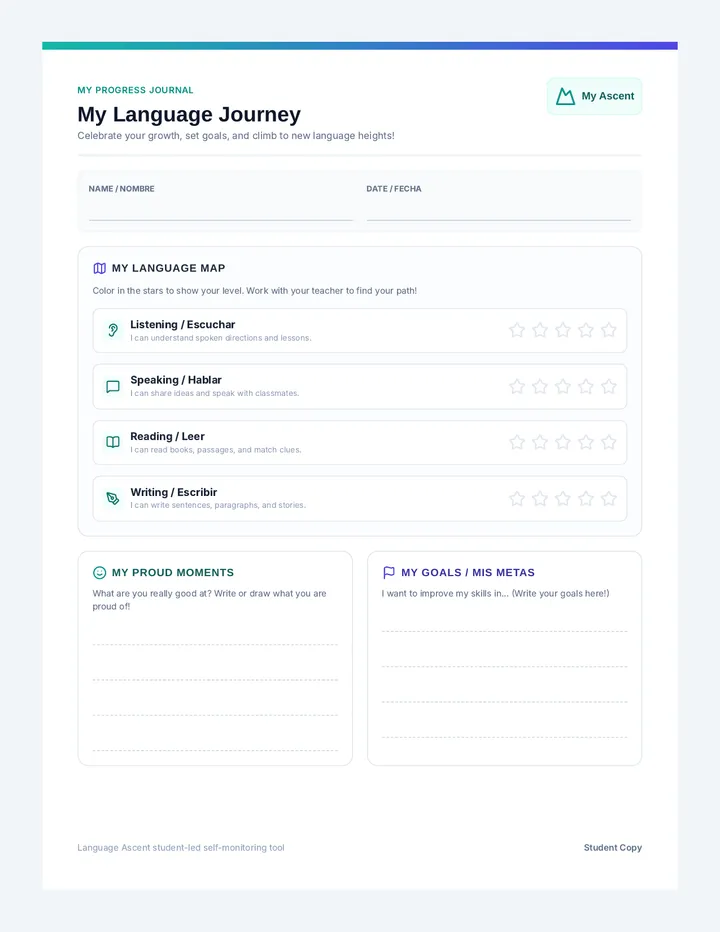
An end-of-year ESL project where students act as curators to create a 'Memory Museum' exhibit showcasing their academic growth and personal highlights from the 4th-grade year.
A series of lessons exploring different countries and cultures around the world through high-frequency vocabulary and comprehensible input strategies.
Une exploration ludique et critique du langage de la Génération Alpha, analysant l'évolution du slang Internet et son impact sur la communication moderne.
A series of lessons focused on baseball legends, designed for students with limited literacy and English language learners.
A foundational sequence designed to introduce total beginners to the Vietnamese language, focusing on essential communication and cultural nuances.
A comprehensive program for teaching phonological awareness to secondary ELLs, focusing on multisyllabic academic vocabulary and phoneme manipulation.
A training sequence designed to equip pre-service elementary school teachers with the foundational skills and practical tools needed to teach English as a Foreign Language (EFL).
A language learning sequence focused on practical conversation in Portuguese for A2 level students, specifically targeting healthcare interactions.
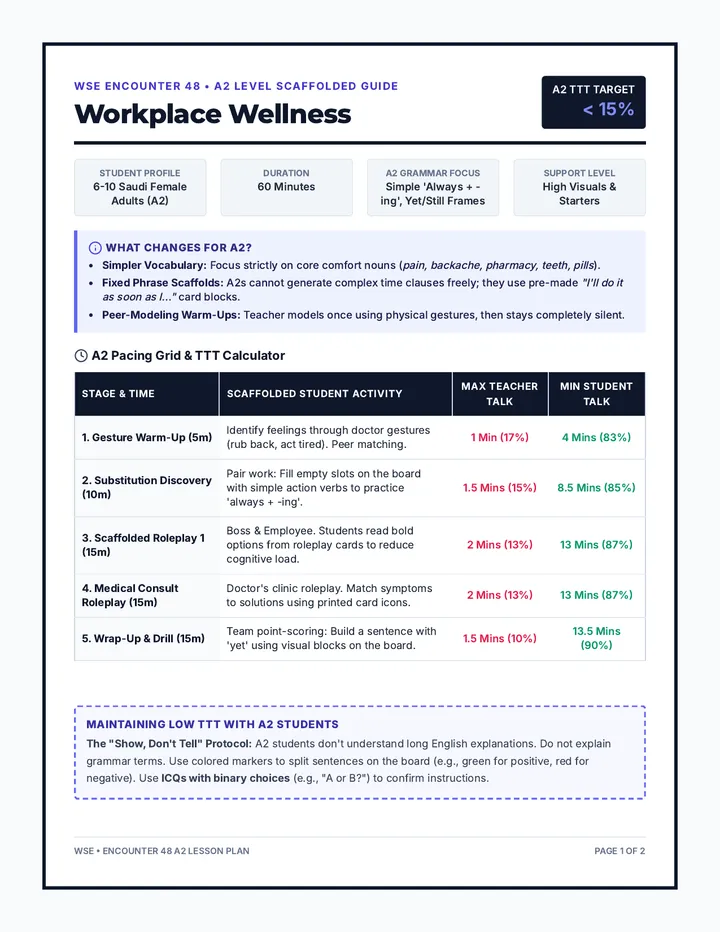
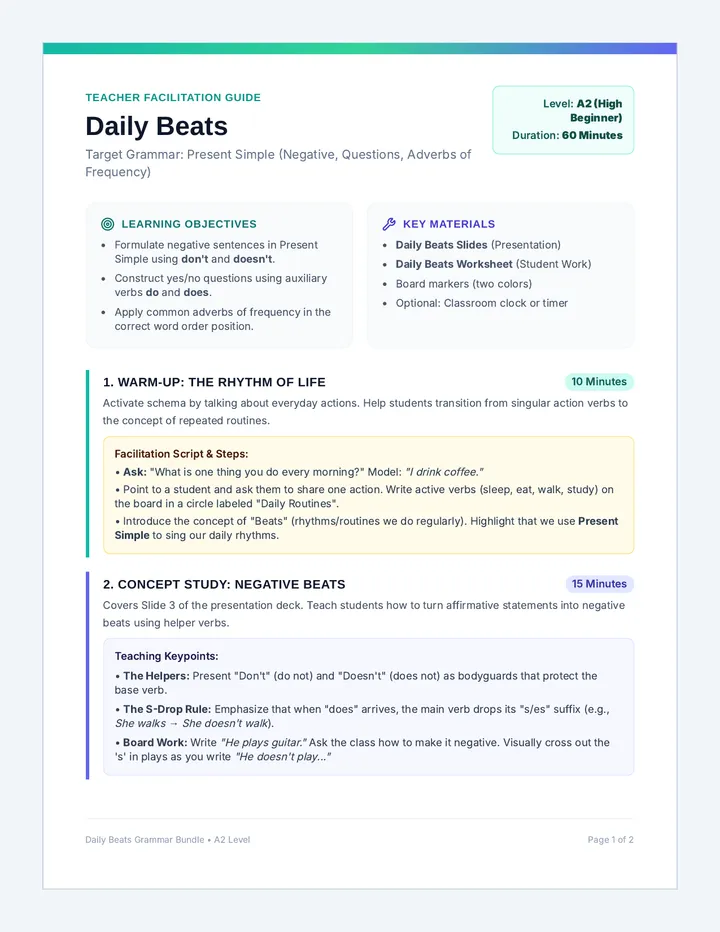
A beginner English sequence for adults focusing on essential auxiliary verbs in daily contexts like work, health, and shopping.
A comprehensive 30-day literacy program designed for Spanish-speaking English Learners, focusing on vowels, CVC blending, rhyming, and multisyllabic word decoding. The curriculum uses a 'construction' theme to build reading skills from the ground up, with specific support for ESL phonetic challenges.
A dynamic series of lessons designed to help upper elementary English Learners master complex language concepts like idioms, metaphors, and nuanced vocabulary through immersive, detective-themed activities.
A series of resources designed to help English Language Learners navigate and identify common classroom objects and areas through visual labeling and bilingual support.
A comprehensive study of derivational morphology focusing on 17 specific prefix and suffix sorts through contextual analysis and logic puzzles.
Une séquence d'alphabétisation complète en Bamanankan pour débutants, intégrant l'apprentissage des voyelles, des consonnes et des salutations de base à travers un livret imprimable et des supports visuels.
A two-lesson German introductory unit focusing on weather, seasons, and outdoor activities in Germany using Comprehensible Input (CI) methods. Students will learn to describe weather using 'Es ist' and activities using 'Man kann' through visual-heavy instruction and repetition.
An introductory Japanese language and culture unit for 8th grade that follows the 'TABI' (Journey) framework. Students explore geography, etiquette, writing systems, daily life, and traditional arts through immersive daily 45-minute lessons.
A comprehensive sequence on language mechanics, from phonetic marking of complex vowel sounds to the morphological analysis of Latin roots and affixes. Students develop deep decoding and encoding skills by investigating the building blocks of words.
A comprehensive curriculum framework for primary English Language Learners, aligning theme-based social studies and science units with WIDA's four Key Language Uses: Narrate, Inform, Explain, and Argue. This sequence provides instructional scaffolding for students at proficiency levels 1-3.
A high-energy, bite-sized introduction to American Sign Language designed for beginners with short attention spans. This unit uses gamified activities and visual aids to teach the alphabet, common people, classroom items, and expressions.
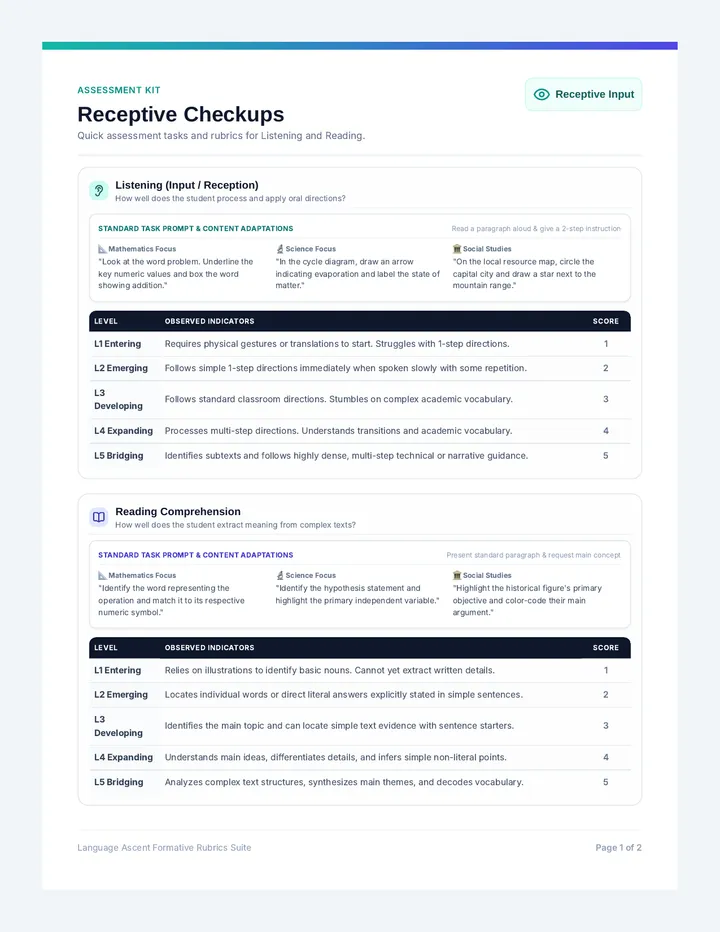
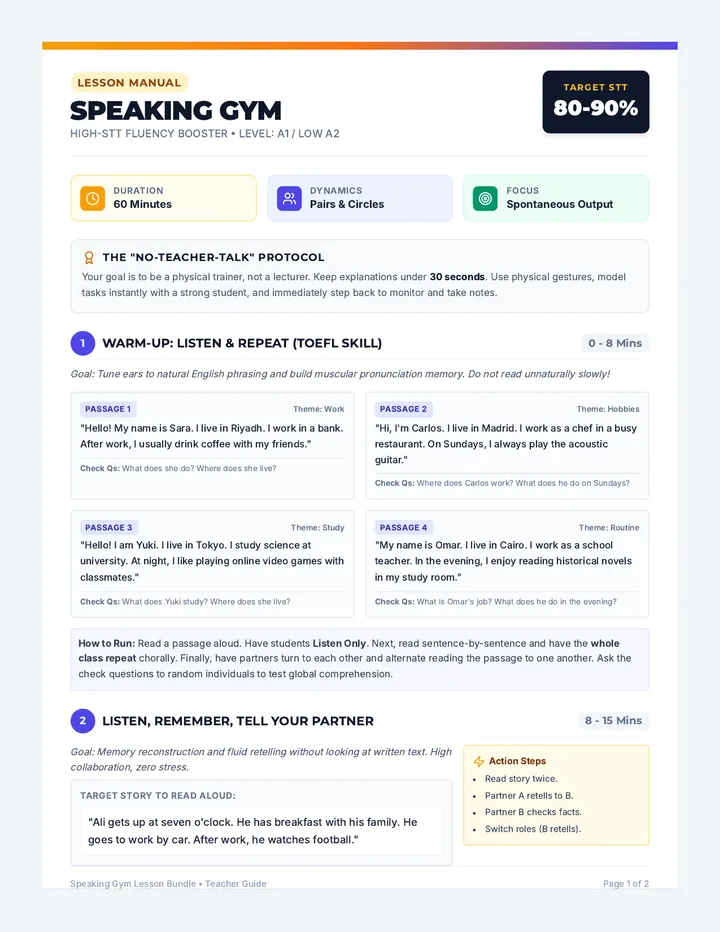
An immersive listening sequence designed for elementary-age beginner ESL students. This unit helps young learners navigate the routines, spaces, and social expectations of a primary school classroom, moving from basic imperative commands to understanding daily schedules and peer introductions.
A series of detective-themed spelling units for 4th grade, focusing on complex digraphs, blends, and vowel patterns through investigative activities.
A foundational grammar sequence for English Language Learners focusing on the use of definite and indefinite articles through visual storytelling and interactive games.
A high-energy Mandarin Chinese sequence for Pre-K students using the Total Physical Response (TPR) method. Students learn to respond to physical commands and action verbs through games and movement, building direct meaning without translation.
A foundational Mandarin Chinese sequence for Pre-K students focused on identifying family members. Students learn vocabulary for parents, siblings, and grandparents through interactive games, songs, and visual inquiry.
A Pre-K sequence focused on teaching basic Mandarin greetings and social etiquette through play, puppets, and a final tea party synthesis. Students learn phrases for hello, goodbye, thank you, and sorry in a culturally immersive environment.
A 5-lesson sequence for Pre-K students to learn basic self-introduction in Mandarin Chinese, covering name, gender, age, and personal preferences using simple sentence patterns.
A foundational sequence for Pre-K learners to explore the four tones of Mandarin Chinese through auditory play, physical movement, and vocal exploration. Students learn to associate pitch changes with meaning using relatable sounds like questioning 'Huh?' or firm 'No!' gestures.
A vibrant, Pre-K focused sequence exploring Spanish and Latin American holidays and traditions. Through hands-on crafts like piñatas, masks, and crowns, students learn about cultural celebrations while developing fine motor skills and emotional expression.
A sensory-rich sequence for Kindergarten students exploring staple foods from Latin America and Spain, focusing on origins, Spanish vocabulary, and the cultural significance of family dining. Students identify ingredients like corn, cacao, and tropical fruits through workshop-style activities and simulations.
A fun, interactive Spanish vocabulary sequence for Pre-K students focusing on family members and pets. Through songs, games, and creative projects, children learn to name the most important people and animals in their lives.
A physical and interactive Spanish vocabulary sequence for Pre-K students focusing on body parts and movement through Total Physical Response (TPR). Students learn through songs, games, and creative activities, culminating in a 'Simón Dice' challenge.
A Kindergarten sequence focused on foundational Spanish greetings (Hola, Adiós, Buenos días, Buenas noches), expressing basic emotions (bien, mal, más o menos), and counting 1-5. Students learn through songs, movement, and role-play culminating in a 'Mercado' market simulation.
This advanced Mandarin Chinese sequence for graduate students focuses on analyzing contemporary social issues through the lens of sophisticated rhetoric and four-character idioms (chengyu). Students explore urbanization, demographic shifts, and environmental policy to build a high-level academic vocabulary and persuasive argumentation skills.
This advanced Spanish sequence transitions 9th-grade students from intermediate proficiency to professional linguistic precision. It focuses on academic register, workplace vocabulary, logical connectors, and sociolinguistic etiquette through authentic simulations and analysis.
An immersive intermediate French sequence where students navigate travel scenarios in Paris, Dakar, and Montreal, mastering future, past, and conditional tenses through simulated real-world interactions.
This sequence explores the diversity of the Spanish language through a sociolinguistic lens, focusing on how culture, geography, and class influence communication for intermediate learners at the graduate level. Students analyze registers, regional slang, humor, and digital communication to understand the link between identity and language.
A specialized sequence for graduate students focused on decoding and synthesizing complex academic and technical texts in Spanish, covering article structure, syntax, argumentation, and data interpretation.
A comprehensive graduate-level sequence exploring the intersection of Spanish grammar and literary analysis. Students analyze the works of Boom and Post-Boom authors to master narrative timeframes, descriptive imagery, the subjunctive of uncertainty, and character voice, culminating in a formal literary critique.
This graduate-level sequence examines how linguistic choices, syntax, and grammatical structures like the subjunctive mood shape political narratives in Spanish-language journalism. Students analyze authentic texts from various Hispanic regions to deconstruct bias, recognize regionalisms, and synthesize conflicting perspectives.
A comprehensive exploration of classical morphology and technical etymology for undergraduate students, bridging the gap between ancient roots and modern technical, medical, and literary terminology.
This sequence immerses undergraduate students in the specific lexicon of Latin terminology frequently encountered in academic research, legal documents, and formal logic. Students progress from scholarly abbreviations to complex phrases used in argumentation and legal theory, emphasizing contextual application to enhance academic precision.
This sequence equips graduate students with high-efficiency strategies for reading and synthesizing academic French research. Students progress from rapid scanning techniques to deep syntactical analysis and precise translation of abstract theoretical concepts.
An advanced French literature sequence for graduate students, exploring the stylistic and philosophical depths of Francophone authors from Camus to Djebar. Students analyze the 'passé simple', 'écriture blanche', and themes of post-colonialism and Negritude to master literary interpretation in French.
This sequence immerses graduate students in the landscape of contemporary French journalism, focusing on current events and social debates. Students move from identifying the structural components of news articles to analyzing complex opinion pieces and synthesizing multiple perspectives on sensitive topics like secularism.
A comprehensive series for graduate students to master formal Mandarin communication within Chinese corporate environments. This sequence covers hierarchical protocol, negotiation tactics, the cultural nuances of 'face', formal written registers, and high-stakes meeting facilitation.
An advanced exploration of Mandarin character structure for graduate students, focusing on the semantic and phonetic logic of HSK 3-4 vocabulary to facilitate rapid lexicon expansion and academic reading skills.
A graduate-level sequence focused on the mechanics of Mandarin character production, bridging the gap between traditional handwriting discipline and modern digital input efficiency. Students refine stroke order, spatial balance, and digital literacy through workshops and professional projects.
An immersive sequence for Pre-K students exploring Chinese cultural traditions through sensory-rich activities, stories, and hands-on crafts. Students learn about the Lunar New Year, artistic brushwork, polite social customs, and the collaborative dragon dance.
A physical and auditory introduction to the four Mandarin tones for Pre-K learners, using movement, animal analogies, and games to make pitch concrete.
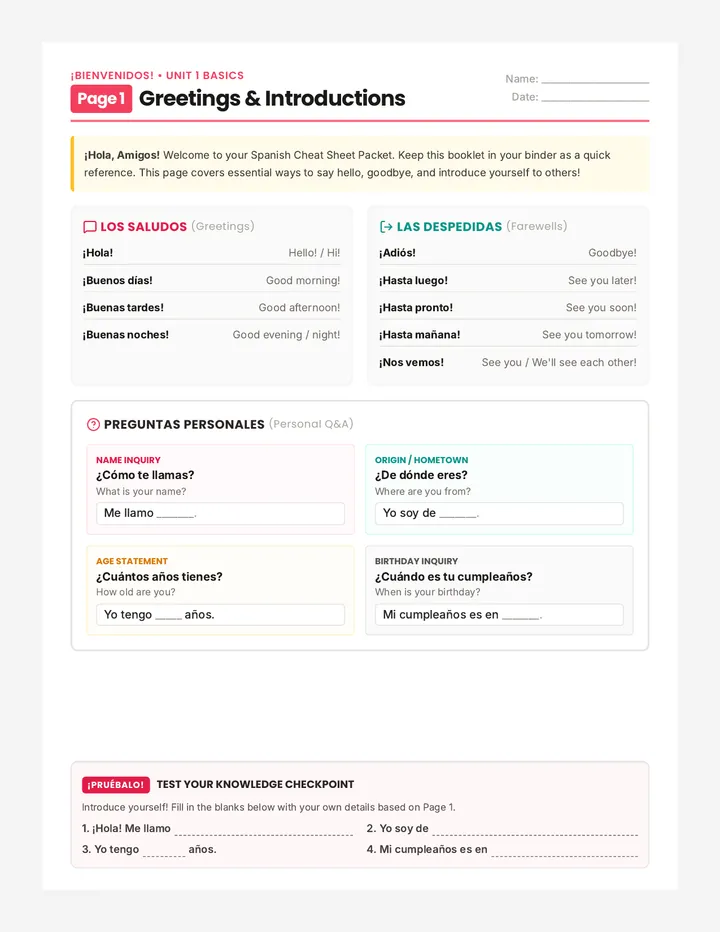
A comprehensive one-week introduction to Spanish for middle schoolers, focusing on greetings, introductions, and sharing personal interests through interactive role-play and collaborative activities.
A comprehensive 8th-grade French listening sequence focused on time-telling, school schedules, and daily routines using the 24-hour clock and school-themed vocabulary.