Animal Orchestra Worksheet Animal Parade
Matching Sounds to Creatures
Name:
Date:
Listen closely to the music from The Carnival of the Animals. Draw a line to match the instrument family or sound to the animal it represents!
🦢
The Swan
Slow & Graceful
🐘
The Elephant
Low & Heavy
🦘
The Kangaroo
Quick & Bouncy
🦁
The Lion
Loud & Royal
Double Bass
Deep Strings
Cello
Smooth Strings
The Pianos
Fast & High Notes
The Piano Scale
Low Roaring Notes
Draw your favorite animal from the parade below! Carnival Slides Animal Musical Parade
The Carnival of the Animals
🦁🐘🦢🦘
The Big Question
"How can music tell us a story without using any words?"
Today, we are going to use our ears to find out!
Program Music
🎵 Instrumental Music
Music played only by instruments (no singers!).
📖 Tells a Story
The music is meant to describe a scene, a character, or a story.
The Lion
Introduction & Royal March
🦁 Listen for the "Roar" in the pianos!
👑 Does it sound like a King walking?
Play: Royal March of the Lion
Play: The Elephant
The Elephant
Deep & Heavy
🐘 Listen to the Double Bass.
⚖️ Does it sound heavy or light?
The Swan
Smooth & Graceful
🦢 The Cello is the Swan.
💧 The Pianos sound like rippling water.
Play: Le Cygne (The Swan)
How did they do it?
🐢
When the music is SLOW, what animal is it?
🦜
When the notes are HIGH, what animal is it?
🐊
When the notes are LOUD, is it a scary or friendly animal?
Carnival Teacher Guide Carnival Teacher Guide
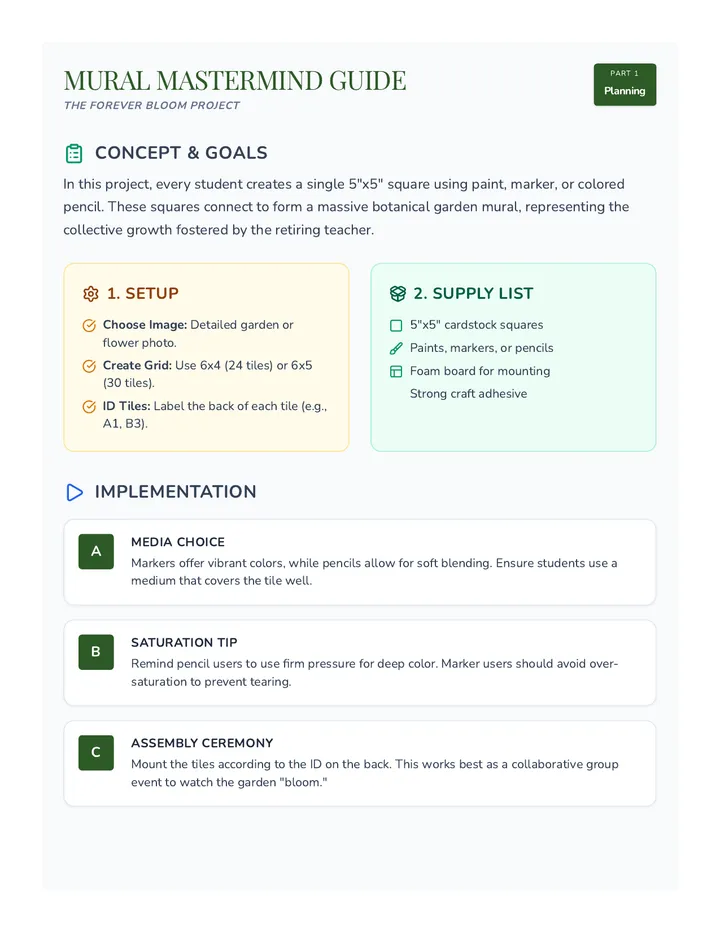
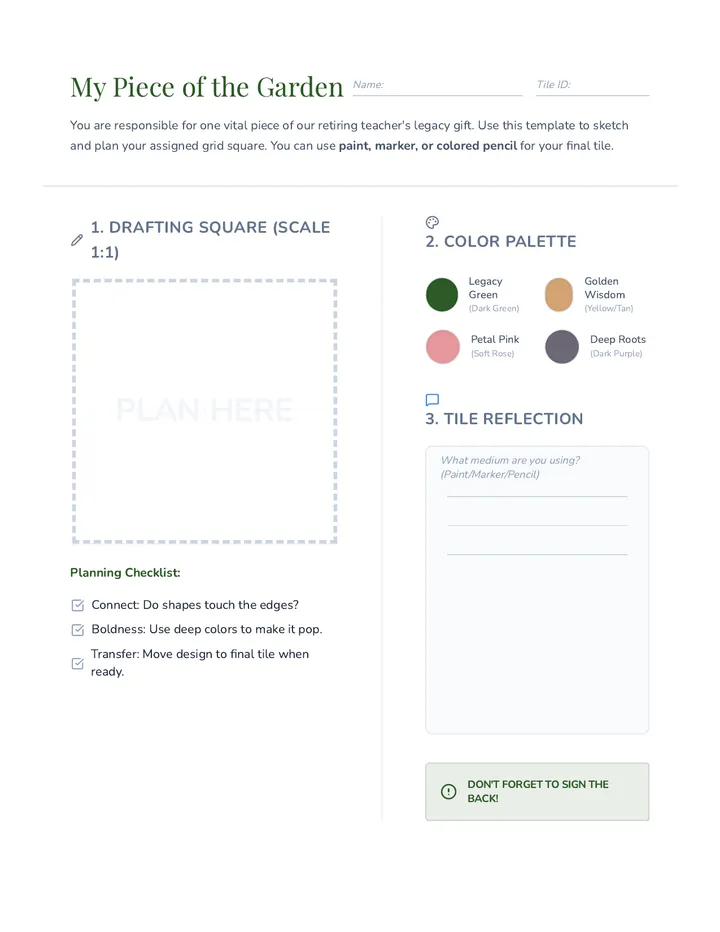
Lesson 1: Animal Musical Parade
Grade 1 • 45-60 min
Lesson Purpose
Students explore programmatic music by listening to Camille Saint-Saëns' The Carnival of the Animals . The goal is to identify how musical elements like tempo (speed), pitch (high/low), and dynamics (loud/soft) are used to depict specific animal characteristics.
Key Vocabulary
Program Music: Music that tells a story.
Timbre: The unique sound of an instrument.
Tempo: The speed of the music.
Teacher Preparation
Recordings Needed:
"Introduction and Royal March of the Lion"
"The Elephant"
"Kangaroos"
"The Swan"
Materials:
Carnival Slides (Instruction)
Animal Orchestra Worksheet (Student)
Pencils & Crayons
Instructional Steps
1
The Hook (5 min)
Ask: "If a cello wanted to sound like an animal, which one would it be? A tiny bird or a graceful swan?" Discuss how instruments can "act" like characters.
2
Direct Instruction (10 min)
Use the Carnival Slides to define Program Music. Explain that today they are detectives using their ears to find "animal clues" in the music.
3
Guided Listening (20 min)
Play the movements. For each one, ask students to close their eyes first, then reveal the animal.
The Lion
Listen for the chromatic scales (low to high) in the pianos. It sounds like a roar!
The Elephant
The Double Bass plays a clunky melody. Ask: "Is this animal heavy or light?"
The Kangaroos
Listen for the staccato (short, detached) notes in the pianos that "hop."
The Swan
The Cello is legato (smooth). Ask: "Does this sound like a fast or slow animal?"
4
Student Work (15 min)
Hand out the Animal Orchestra Worksheet . Re-play short clips as they match the animals to the instrument descriptions.
Differentiation Tips
Scaffolding: Show pictures of the instruments while the music plays.
Extension: Ask students to move like the animals as the music changes (Kinesthetic).
Peter Wolf Slides Characters in Concert
Peter and the Wolf
👦🐦🦆🐱🐺
Who's Who?
In this story, every character has their own special instrument.
When you hear the instrument, you know who is on stage!
👦
Peter
The Hero
The Strings
Violins, Violas, and Cellos!
Listen for Peter's Theme
High & Low Friends
🐦 Bird
The Flute
Fast, high, and chirpy!
🦆 Duck
The Oboe
A bit wobbly and "quacky."
Listen: French Horns
🐺
The Wolf
Dark & Scary
📯 3 French Horns playing together!
👂 Listen for the low, growling sounds.
Instrument Families
Woodwinds
Bird (Flute)
Duck (Oboe)
Cat (Clarinet)
Grandpa (Bassoon)
Strings
Peter (Violins & Cellos)
Brass & Percussion
Wolf (Horns)
Hunters (Timpani)
Character Listening Map The Forest Path
Peter and the Wolf Listening Map
Explorer Name:
Character Clues
👦
Peter
(Strings)
🐦
Bird
(Flute)
🦆
Duck
(Oboe)
🐱
Cat
(Clarinet)
👴
Grandpa
(Bassoon)
🐺
Wolf
(Horns)
🥁
Hunters
(Timpani)
Follow the path with your finger as you listen. Circle the character when you hear their music!
START
PETER'S GATE
👦
PETER
🐦
BIRD
🦆
DUCK
🐱
CAT
👴
GRANDPA
🐺
WATCH OUT!
🥁
HUNTERS
END
THE ZOO!
Can you draw a circle around the instrument that sounded the scariest?
Wolf Puppet Props Musical Puppet Show
Peter and the Wolf Character Props
Activity Instructions
1. Color the characters.
2. Carefully cut out the circles.
3. Tape a craft stick to the back of each circle.
4. Hold up your puppet when you hear their instrument play!
👦
PETER
Strings
🐦
BIRD
Flute
🦆
DUCK
Oboe
🐱
CAT
Clarinet
👴
GRANDPA
Bassoon
🐺
WOLF
French Horns
Peter Wolf Teacher Guide Peter Wolf Teacher Guide
Lesson 2: Characters in Concert
Grade 1 • 60 min
The Musical Story
Sergei Prokofiev's Peter and the Wolf is the ultimate example of character themes. Each character is represented by a specific instrument and a unique musical motif. Students will learn to map these "Leitmotifs" to the story's action.
Character & Instrument Key
Peter: String Orchestra (Violins, Cello)
Bird: Flute (High, chirping)
Duck: Oboe (Quacky, lower woodwind)
Cat: Clarinet (Sneaky, smooth)
Grandpa: Bassoon (Low, grumpy woodwind)
Wolf: 3 French Horns (Dark, scary)
Hunters: Timpani & Bass Drum (Gunshots)
Facilitation Steps
1
Instrument Intro (10 min)
Use the Peter Wolf Slides to play each character's theme. Have students mimic the instrument's playing position (e.g., pretend to play a flute for the bird).
2
Puppet Craft (15 min)
Distribute Wolf Puppet Props . While students color and cut, keep the character themes playing on a loop to build familiarity.
3
The Big Listen (25 min)
Play the full recording. Students use their Character Listening Map to track the journey and hold up their puppets when their character appears in the music.
4
Character Comparison (10 min)
Discuss instrument families. "The bird, duck, and cat are all in the Woodwind family. How did Prokofiev make them sound different?"
Extension: If time allows, play a game where you play a theme and students must move like that character (e.g., sneaky cat walk vs heavy grandpa walk).
Vivaldi Seasons Slides Seasons in Song
Vivaldi's Four Seasons
🌸☀️🍂❄️
The Musical Calendar
Antonio Vivaldi
"I want to write music that sounds exactly like the weather!"
Vivaldi used the violin to show us flowers blooming, dogs barking, and people shivering in the cold.
Spring
La Primavera
🐦 High, chirping violins (Birds)
💧 Flowing notes (Streams)
⚡ Fast, loud rumbling (A Storm!)
Listen: Spring
Listen: Winter
Winter
L'Inverno
🥶 Repeating, "shaking" notes (Shivering)
💨 Fast, icy scales (Wind)
⛸️ Slipping and sliding on ice!
Which one is which?
Mood A
Bright and Happy
Fast and Light
Sounds like Sunshine
Mood B
Tense and Shaky
Sharp and Cold
Sounds like Snow
Musical Colors
Music can make us think of colors!
If you heard Spring , would you draw with Green or Grey?
Weather Notes Worksheet Weather Notes
Vivaldi's Musical Seasons
Artist:
Date:
🌸
Part 1: Spring (The Bright Song)
The Colors I Hear
Draw or circle the colors this music makes you think of.
My Spring Picture
(Draw the birds or the flowers from the music)
❄️
Part 2: Winter (The Cold Song)
The Colors I Hear
Draw or circle the colors this music makes you think of.
My Winter Picture
(Draw the wind or the shivering person)
Which season made you feel more energetic?
SPRING
WINTER
Vivaldi Teacher Guide Seasons Teacher Guide
Lesson 3: Vivaldi's Moods
Grade 1 • 45 min
Lesson Overview
Students analyze how Vivaldi uses a single instrument family (Strings) to create vastly different moods and weather scenes. This lesson focuses on musical imagery and mood association .
🌸 Spring (Mvt I)
Birds: High-pitched violins playing trills (fast alternating notes).
Streams: Gentle, flowing sixteenth notes in the whole orchestra.
Storm: Sudden loud, fast notes representing thunder and lightning.
Key Question: "Does this music feel light or heavy?"
❄️ Winter (Mvt I)
Shivering: Rapid, repeated notes that sound like teeth chattering.
Icy Wind: Extremely fast descending and ascending scales.
Stamping Feet: Heavy, rhythmic chords as people try to stay warm.
Key Question: "How does the music make your body feel?"
Instructional Steps
1
Mood Mystery (5 min)
Play a clip of Winter first without showing the slide. Ask: "Is it hot or cold in this music? Why?"
2
Vivaldi's Secret (10 min)
Use the Seasons Slides to introduce Vivaldi. Explain that he wrote poems to go with the music so he knew exactly what sound to make!
3
Weather Notes (20 min)
Distribute the Weather Notes Worksheet . Play "Spring" while they color and draw. Pause to point out the birds. Repeat for "Winter."
4
Comparison Debate (10 min)
Ask: "If Vivaldi used a drum for the storm in Spring, would it still sound like Spring? Why or why not?" Discuss instrument choice.
Pro-Tip: Encourage students to "shiver" their arms during the Winter listening and "soar" like birds during Spring. This kinesthetic connection helps 1st graders internalize the tempo and articulation changes.
Sound Story Slides You are the Composer!
Creating Our Own Sound Stories
🥁🔔🪘🎶
The Composer's Mission
We are going to pick a story and use classroom instruments to bring it to life!
Just like Saint-Saëns and Vivaldi, we will tell a story without any words.
Pick Your Sounds
🥁
Drum
Thunder? Footsteps? A heartbeat?
🔔
Triangle
Magic? Ice? A tiny bird?
🪘
Shakers
Rain? Wind? A snake?
🥢
Rhythm Sticks
Knocking? Clocks? Running?
3 Steps to a Sound Story
1
The Character: Who is in your story? Pick a sound for them.
2
The Action: What happens? Is it loud or quiet? Fast or slow?
3
The Ending: How does it end? Fade away or a big crash?
Showtime!
"When we perform..."
✨ We are silent until the music starts.
✨ We watch our "Conductor" (the teacher).
✨ We listen to each other's sounds.
Sound Story Planner Worksheet Sound Story Planner
Tell a Story with Instruments!
Composer:
1 My Character
Draw the person or animal in your story.
2 My Instrument
Which sound matches your character?
🥁 Drum
🔔 Triangle
🪘 Shaker
🥢 Sticks
3 Musical Storyboard
Beginning
What is the character doing?
Middle
Something exciting happens!
End
How does the story finish?
Performance Readiness
Is my sound loud enough?
Is my sound fast or slow?
Can I perform without talking?
Sound Story Teacher Guide Composer Workshop Guide
Lesson 4: Creating Sound Stories
Grade 1 • 60 min
Lesson Objective
Students move from analysis to composition . They will select classroom instruments to represent specific narrative elements (characters, actions, settings) and perform their "sound stories" for their peers.
Recommended Sound Palette
Drums
Heavy, loud, steady footsteps, thunder.
Triangle
Magical, high, tiny, icy, bright.
Shakers
Continuous sound, rain, snakes, wind.
Wood Blocks
Short, sharp, knocking, clock, pecking.
Facilitation Steps
1
The Story Prompt (10 min)
Read a very simple 3-sentence story (e.g., "A little mouse walks through the kitchen. He finds a piece of cheese. A cat wakes up and the mouse runs away!").
2
The Planning Phase (15 min)
Pass out the Sound Story Planner . Students must choose their character sound first. Model this by picking an instrument for the mouse (e.g., triangle or shaker).
3
The Workshop (20 min)
Warning: This will be loud!
Allow students to explore the instruments in small groups. They should practice their 3-part storyboard: Intro sound, Middle (action) sound, and Outro sound.
4
Micro-Performances (15 min)
Each student or group performs their "movie score" while you or a student reads the story prompt again.
Management Tip: Use a "Hands on Shoulders" command to ensure silence when instructions are being given. Students may only touch instruments during the "Workshop" phase.
Musical Imagination Slides Music in My Head
Imagining Stories with Our Ears
💭🎞️🎻🎬
Our Musical Journey
🦁
Animals
Saint-Saëns
👦
Characters
Prokofiev
☀️
Weather
Vivaldi
The "Movie" in Your Head
🙈
Step 1: Close your eyes.
Step 2: Listen for the "Clues."
Step 3: What do you see?
The Mystery Story
Listen carefully...
This music is about a Troll King living deep under a mountain.
Does the music get faster or slower?
Listen: In the Hall of the Mountain King
Final Discussion
Which piece of music was your favorite?
Which composer told the clearest story?
Could you tell your own story with just a drum?
Music Movie Reflection Musical Movie
Reflecting on Our Imagination
Artist:
The Music Piece
In the Hall of the Mountain King
Musical Clues
FAST
SLOW
LOUD
SOFT
My Imagination Movie
Draw the story you saw in your head while listening.
The music made me think of...
Program Music • Grade 1 • Final Reflection