A high-energy, 30-minute lesson where 7th graders practice refusal skills through immersive role-play scenarios that test their loyalty and values.
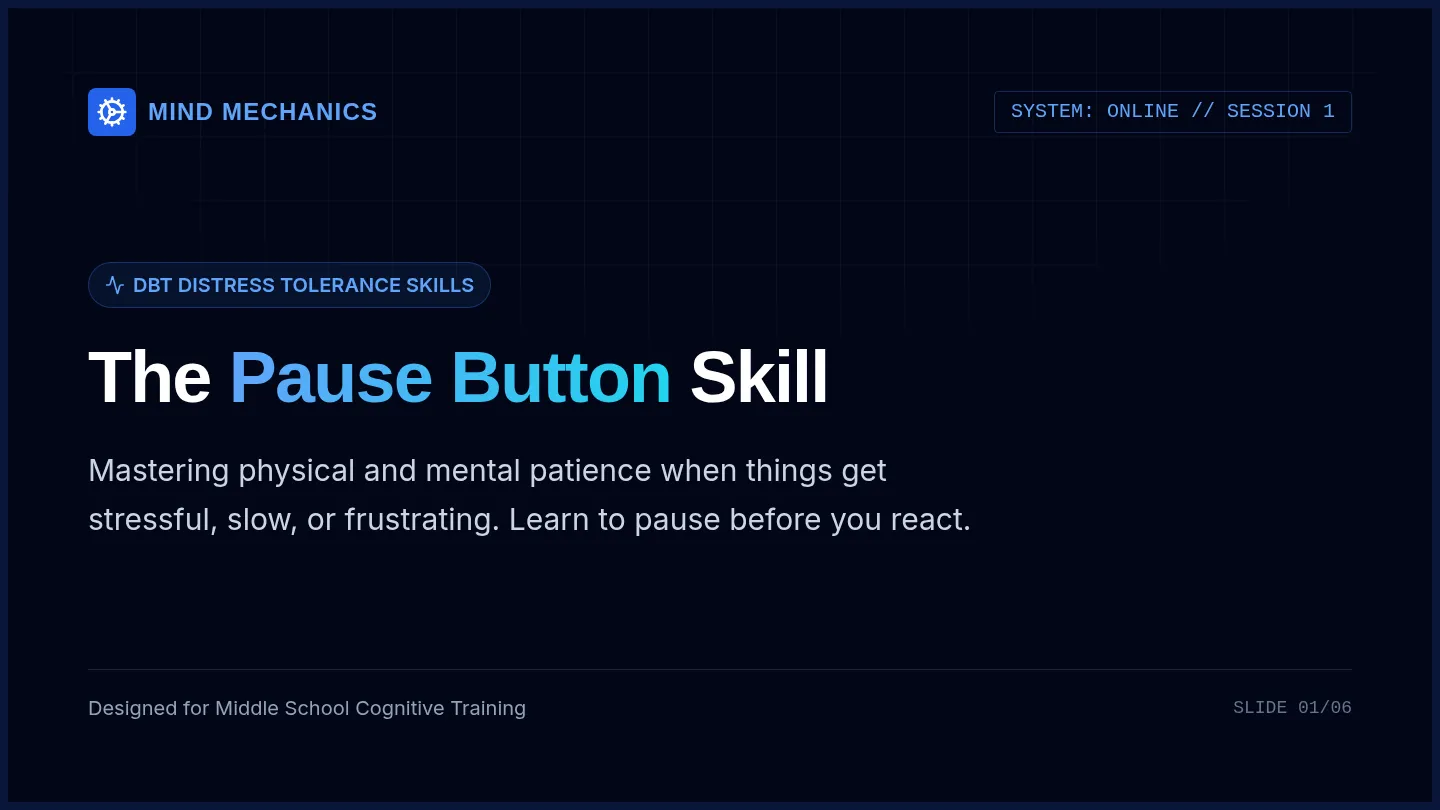
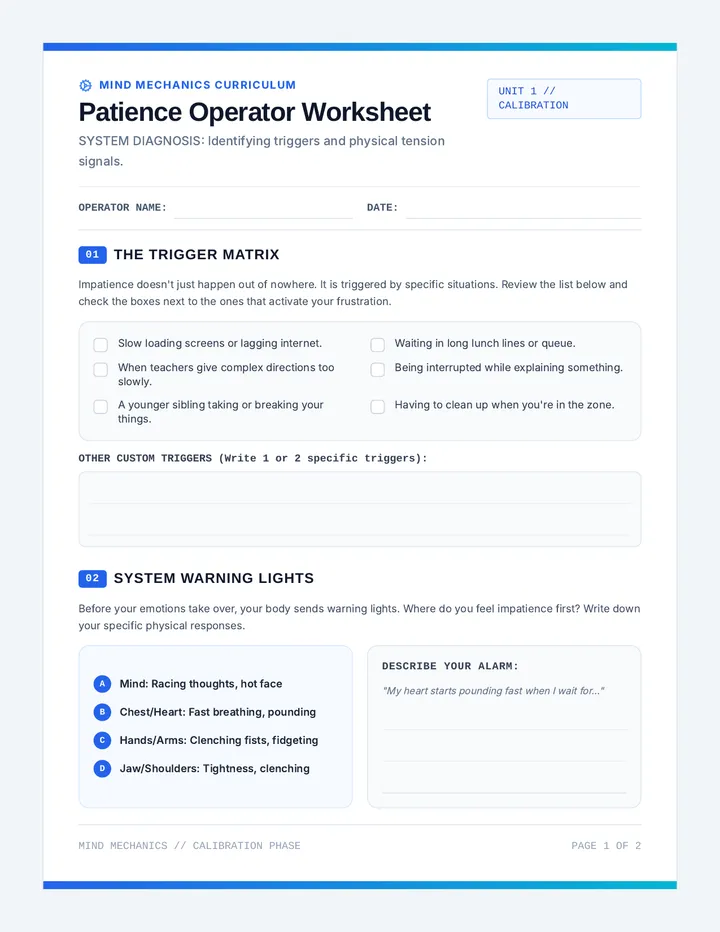
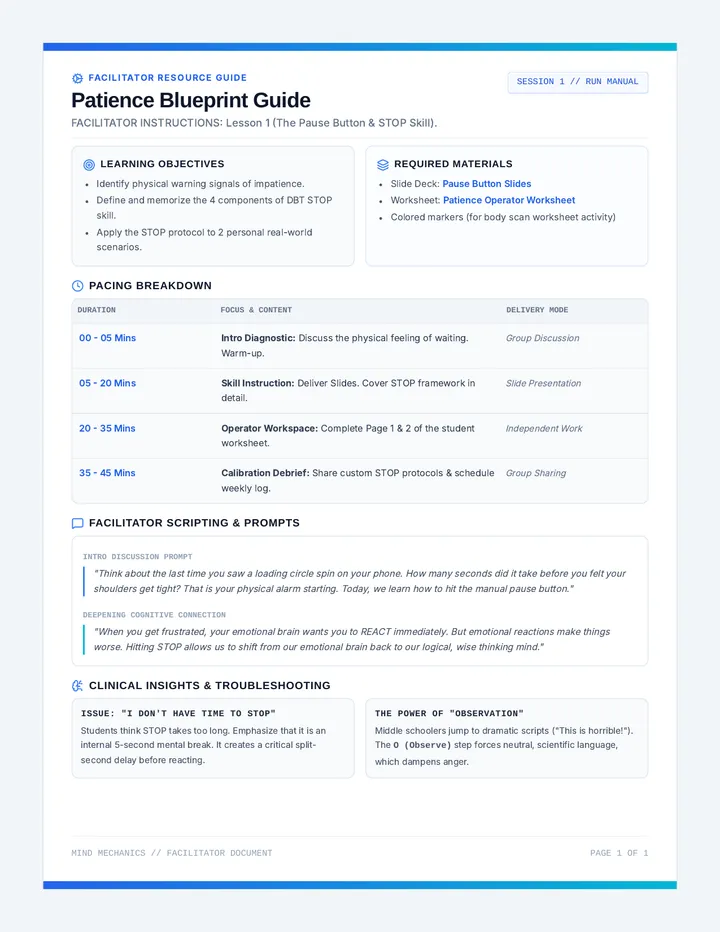
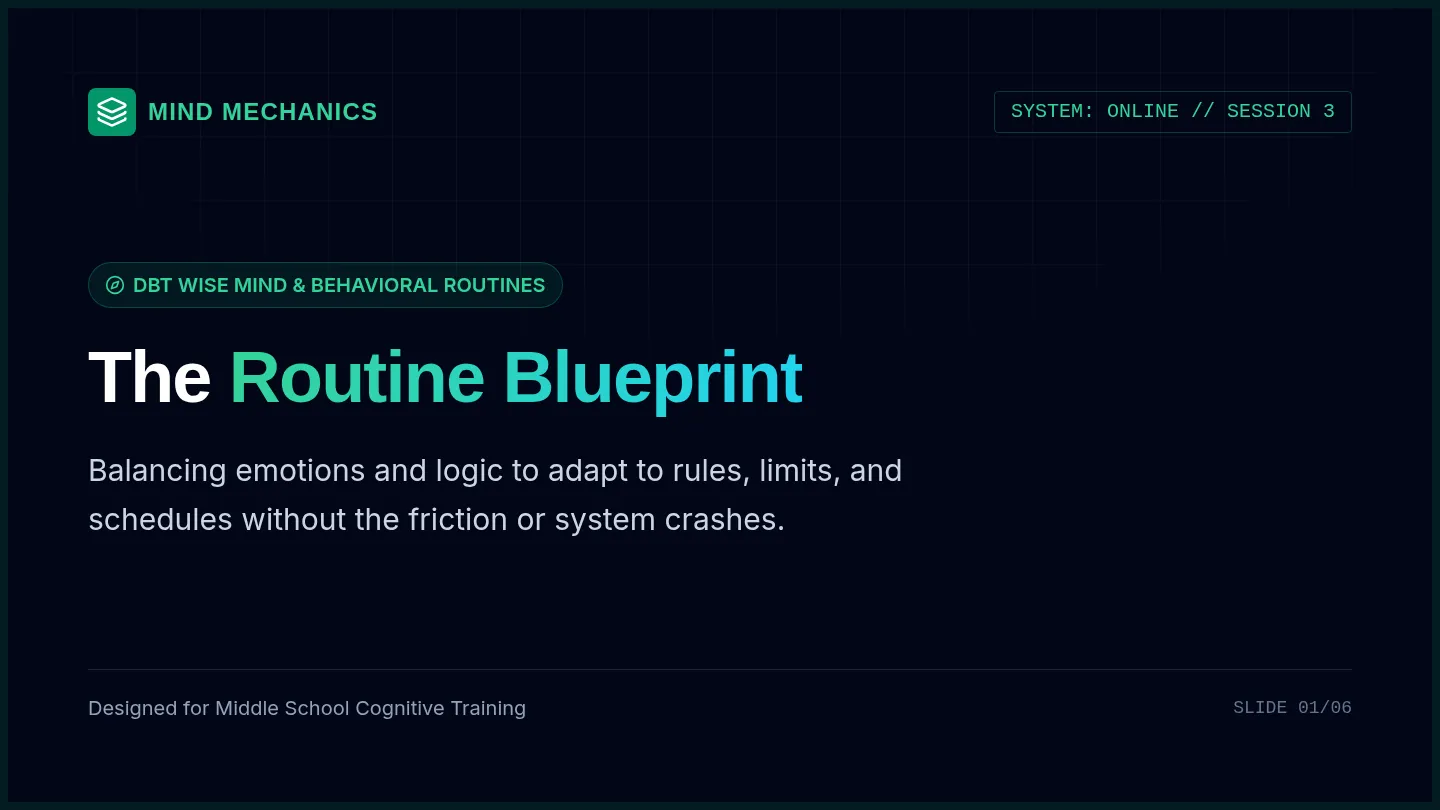
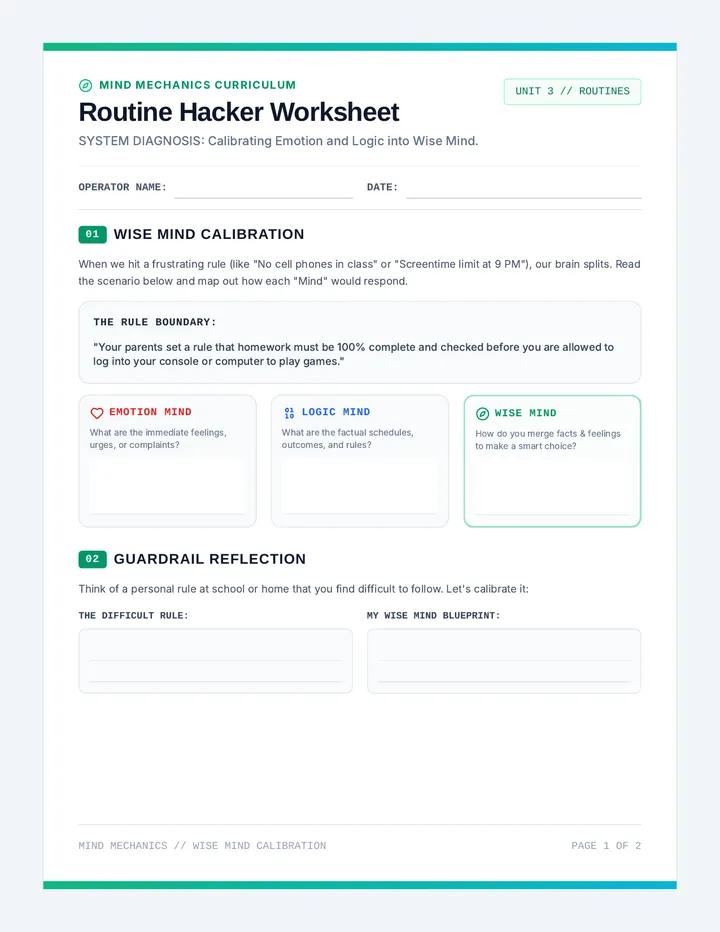
A three-part DBT and CBT curriculum designed to help middle school students build patience, reframe negative mindsets, and comfortably adapt to school and home routines.
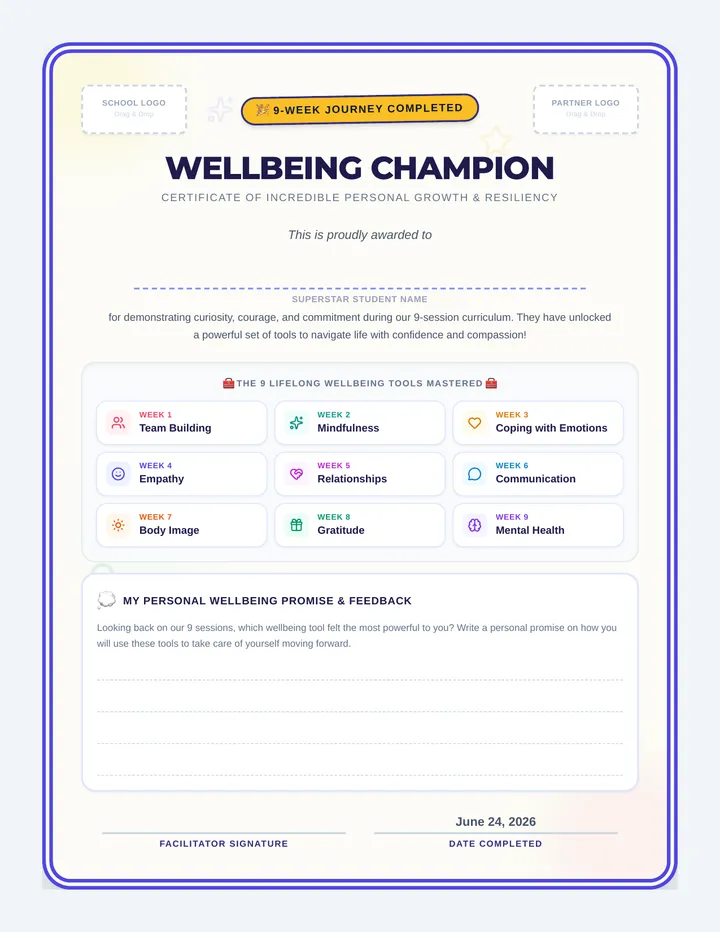
A celebratory lesson culminating a 9-week social and emotional wellbeing journey, reinforcing core concepts like mindfulness, coping with emotions, empathy, relationships, communication, body image, gratitude, and mental health, with a student certificate of achievement and personalized reflection.
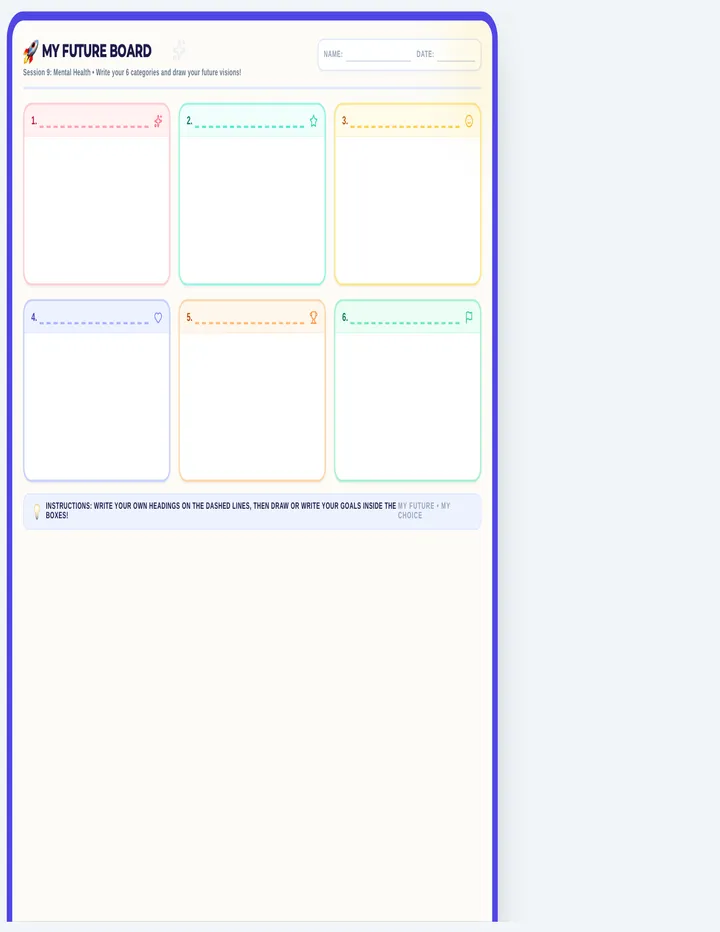
A landscape-format future vision board template for Year 5 and 6 students, featuring a 3x2 grid of drawing cards with pre-labeled categories representing key wellbeing pillars from the 9-week course, complete with student name/date fields and large blank work spaces.
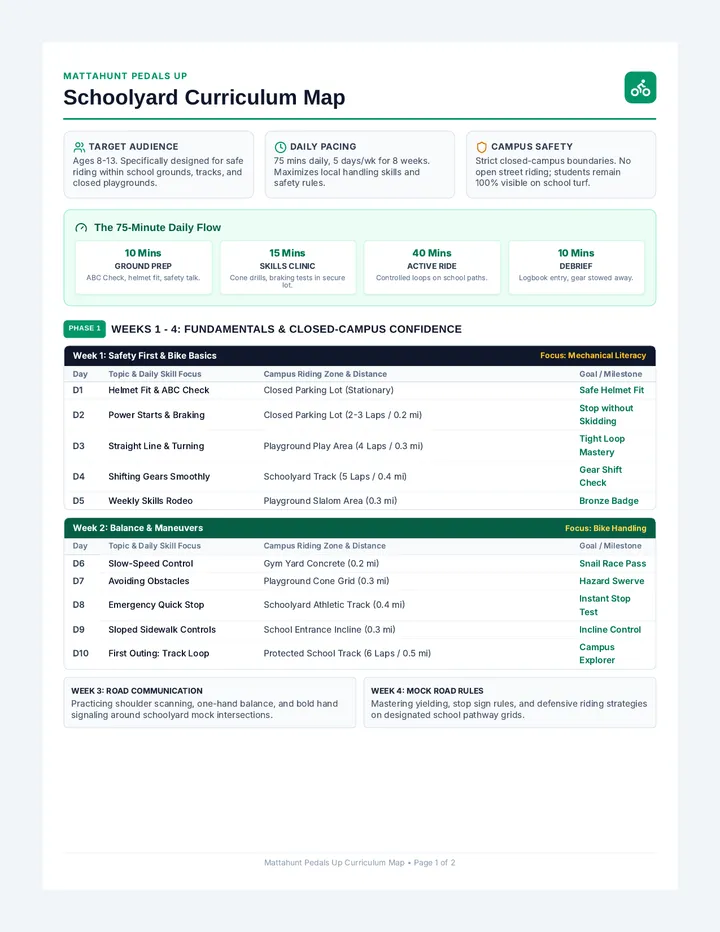
A comprehensive 8-week youth biking curriculum for ages 8-13, designed for 75-minute daily sessions. It includes an 8-week scope and sequence, instructor slide decks, a student ride log with checklists, and detailed exemplar lesson plans.
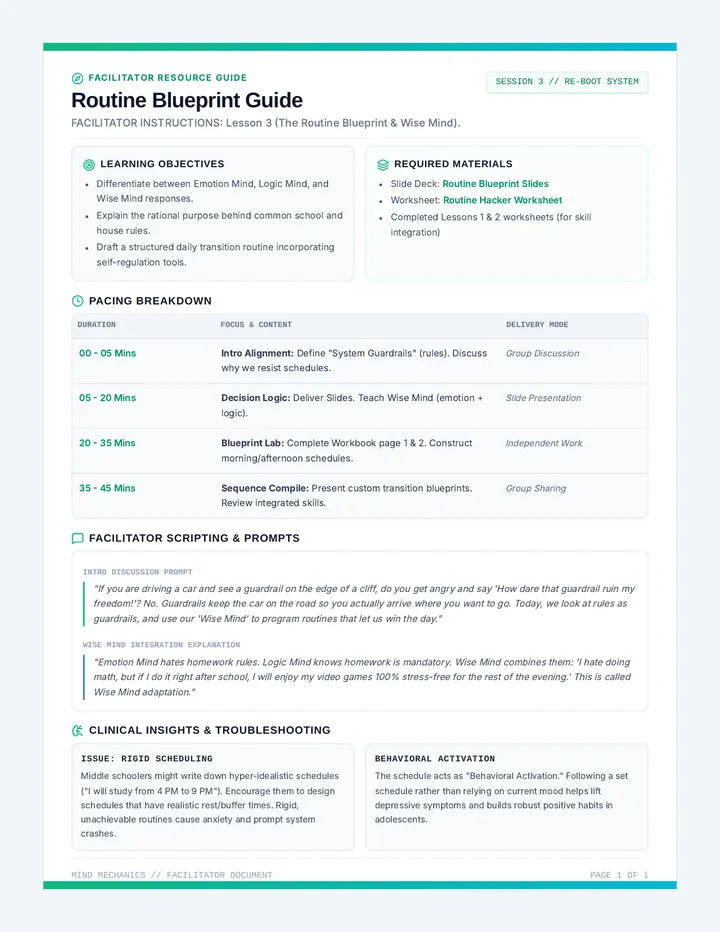
Focuses on adapting to rules, boundaries, and schedules by blending Wise Mind decision-making with practical self-regulation routines.
A celebratory, modern portrait certificate of achievement for completing the 9-week wellbeing course, featuring a 3x3 tool grid of course subheadings, double school logo placeholders, and a dedicated, light-background open reflection section for student commitments and feedback.
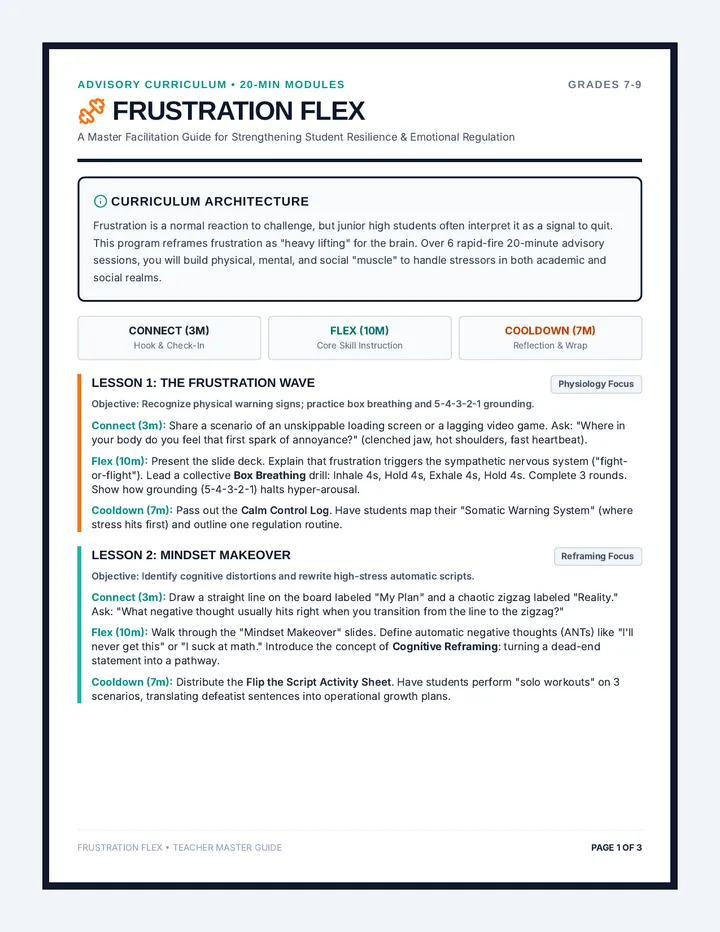
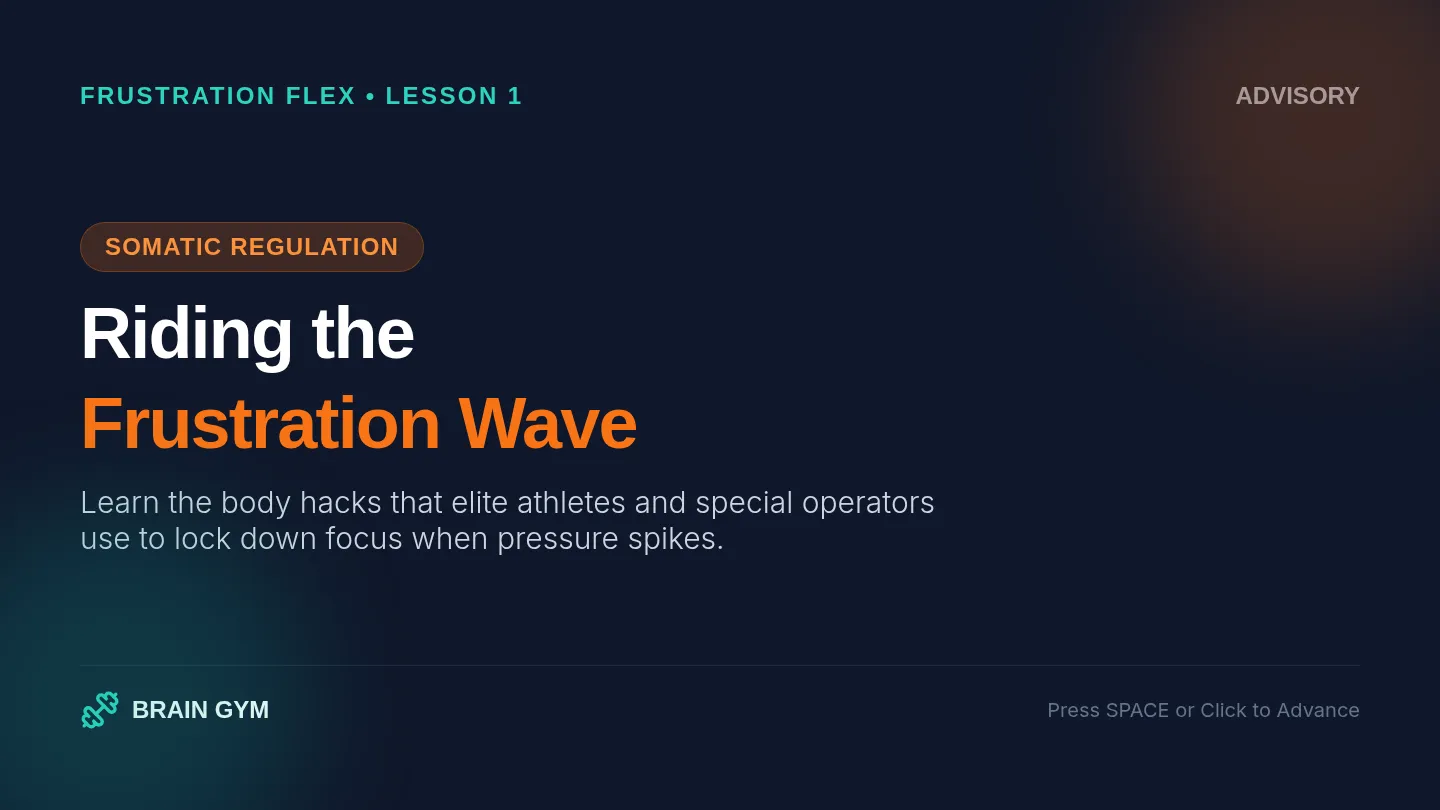
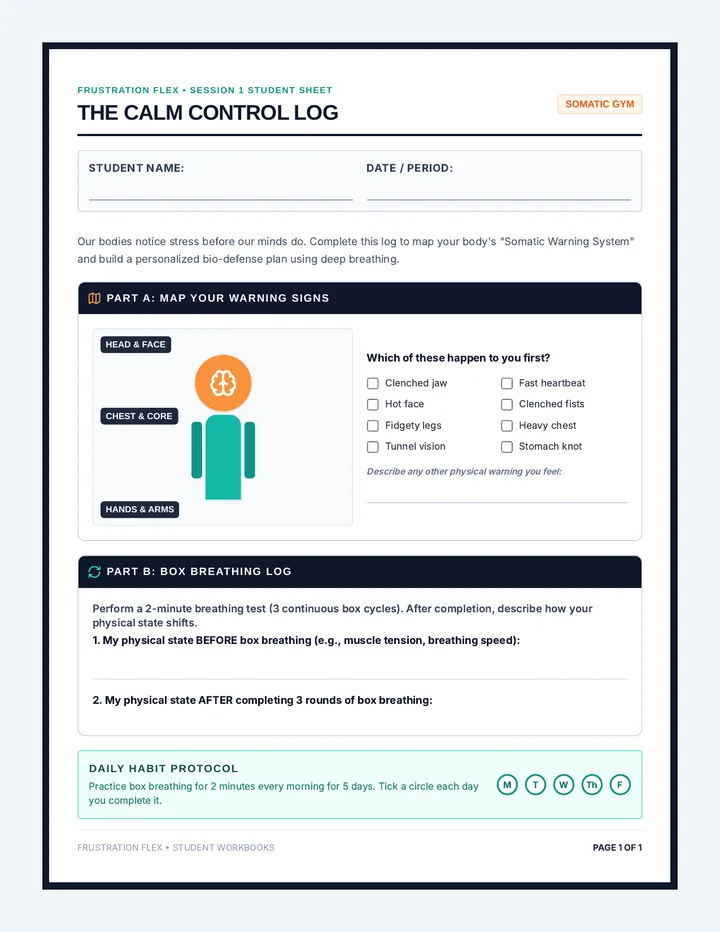
A six-lesson social-emotional learning sequence designed for 20-minute junior high advisory periods, equipping students with practical skills in physiological regulation, cognitive reframing, help-seeking, and social boundary setting.
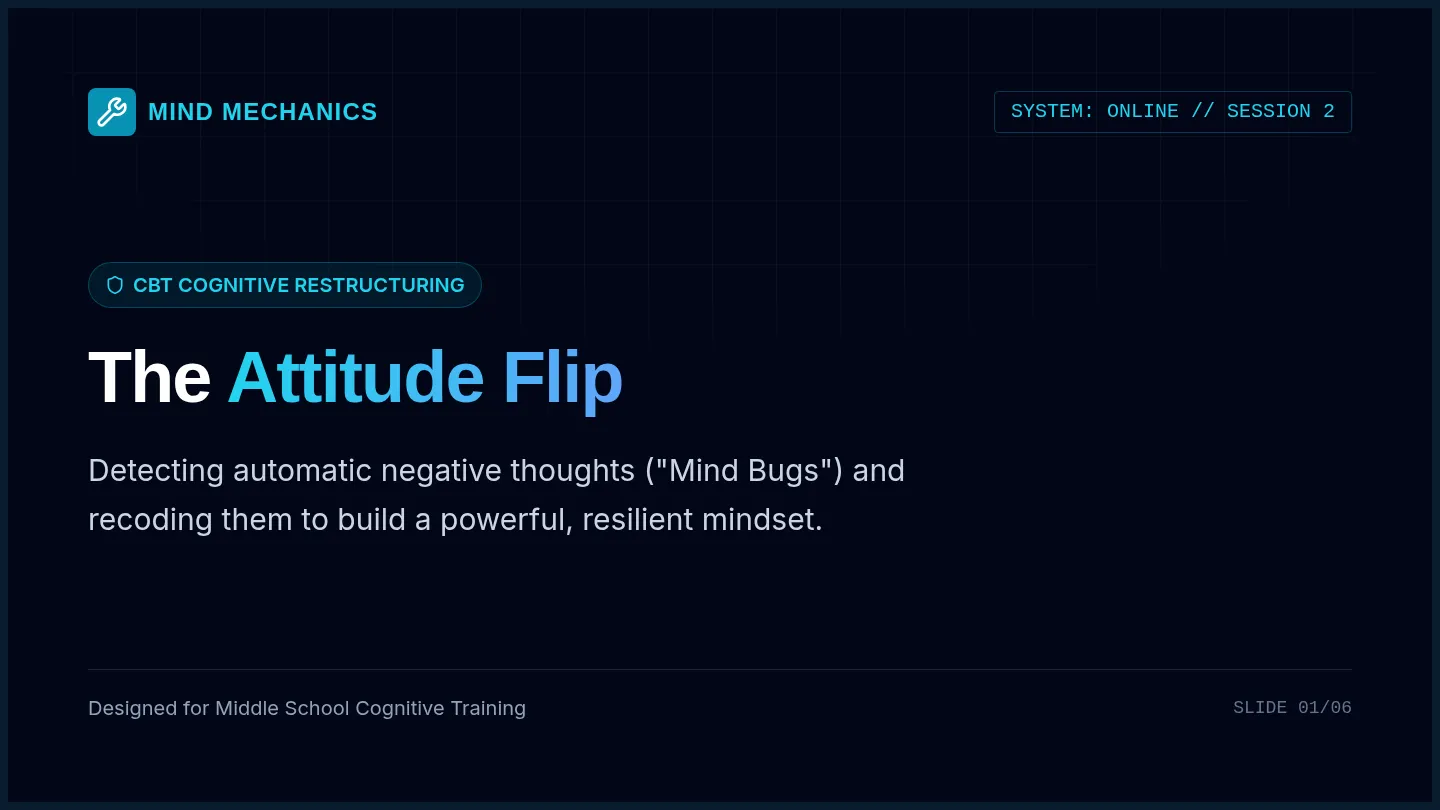
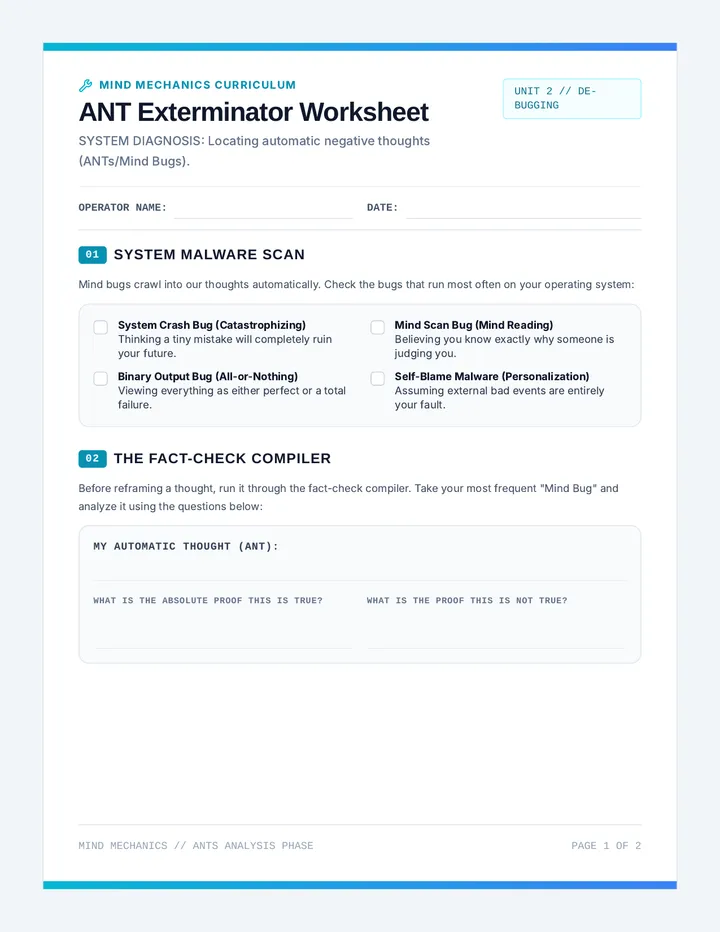
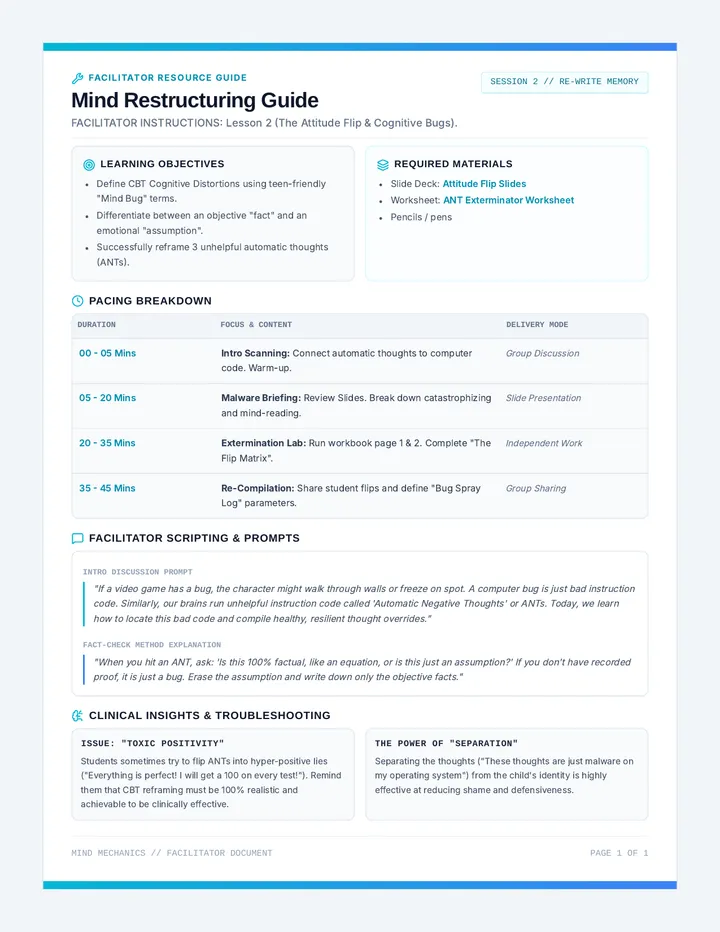
Teaches cognitive restructuring to identify automatic negative thoughts (ANTs), challenge cognitive distortions, and actively reframe mindsets for a more positive and adaptive attitude.
A comprehensive single-page facilitator guide outlining pacing, discussion scripts, activity mechanics, and clinical insights for delivering Lesson 3.