Introduction to numbers 1-3 in French (un, deux, trois) using rhythmic songs and physical movement. A balloon-popping hook builds excitement for counting aloud and internalizing the sequence.
Une leçon courte pour évaluer la capacité des élèves de Grande Section à identifier le son d'attaque d'un mot, se concentrant sur les voyelles de base et les consonnes occlusives.
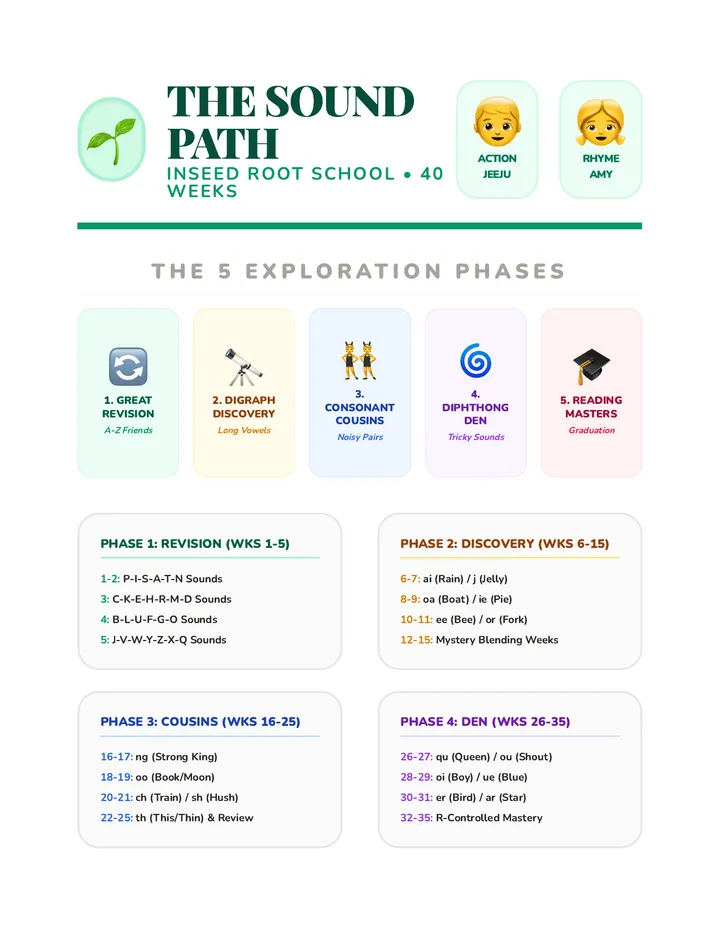
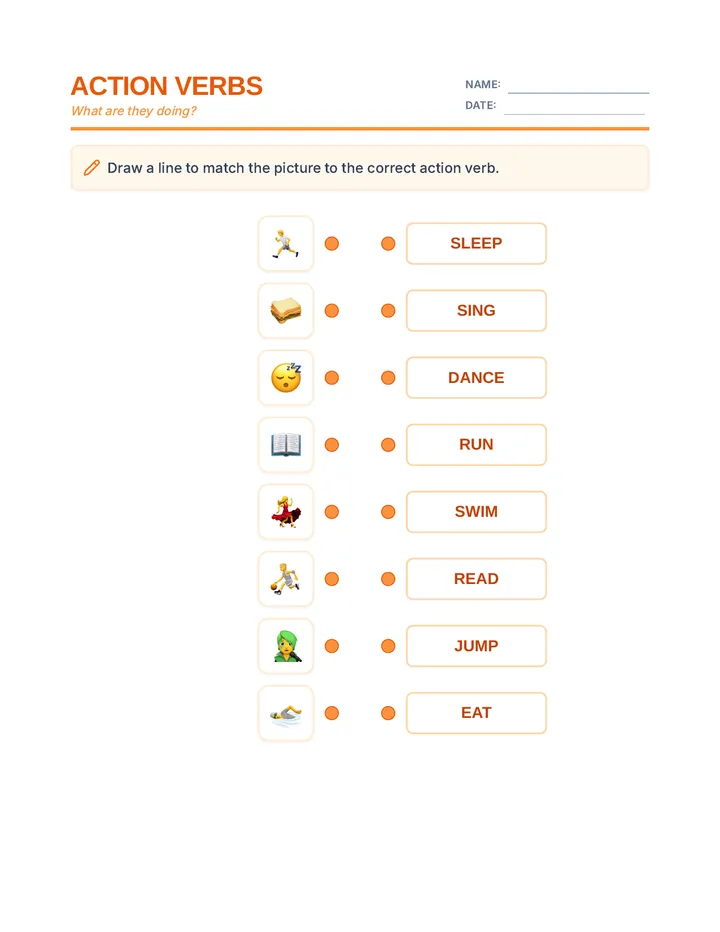
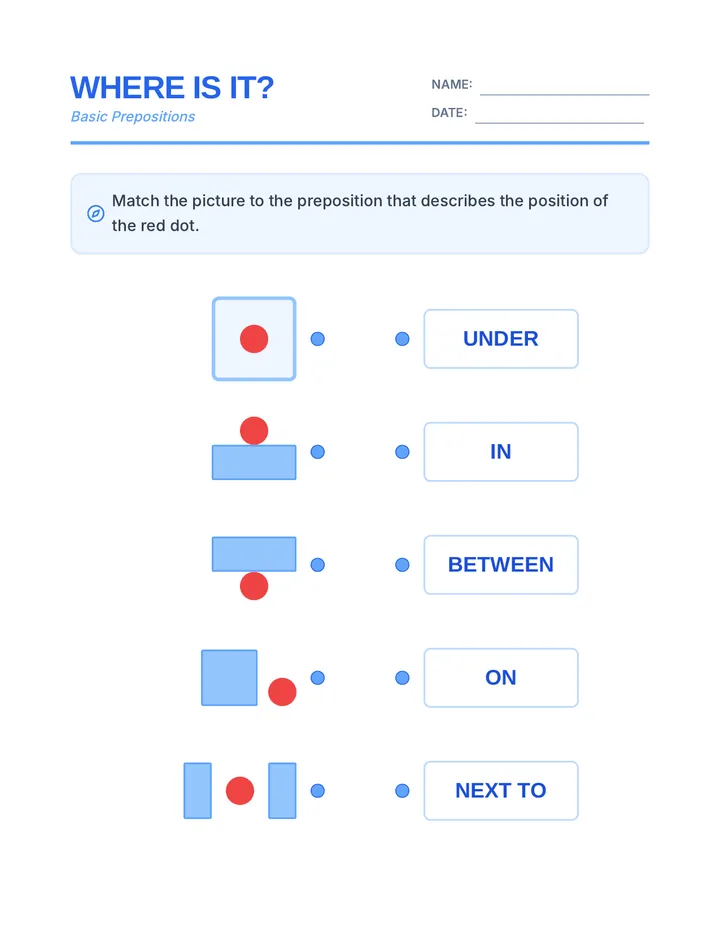
A comprehensive introductory English presentation for beginning learners, covering the alphabet, everyday objects, colors, shapes, actions, and basic stories.
Learn the signs for common classroom objects and a vibrant spectrum of colors to describe the world around you.
Explore signs for the people in our lives and learn how to use facial expressions to show feelings.
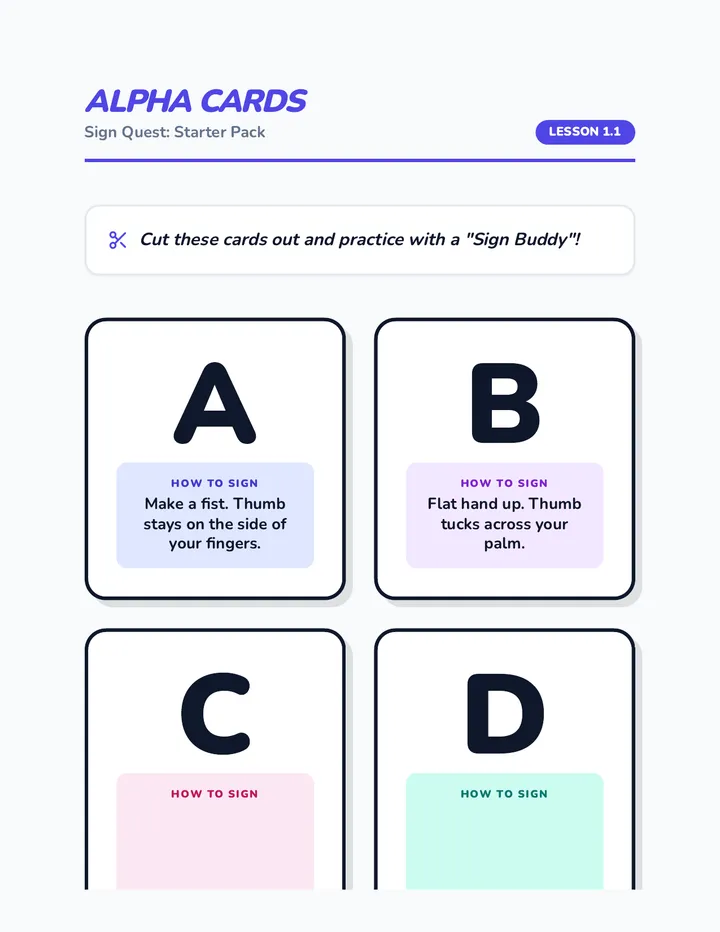
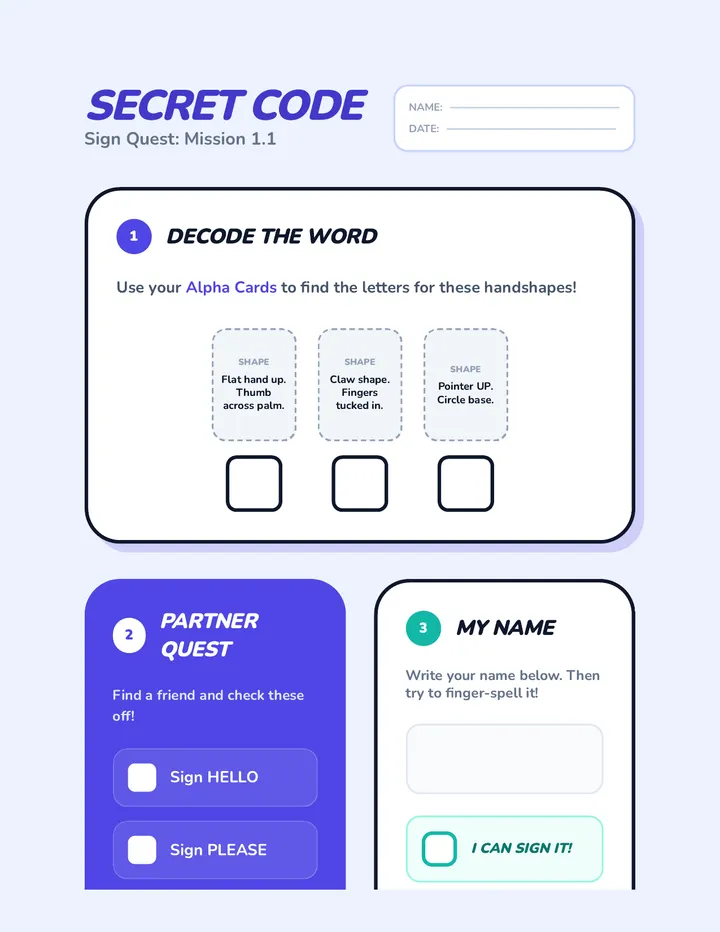
Jump into the basics of ASL with a focus on the manual alphabet and essential polite signs like hello, please, and thank you.
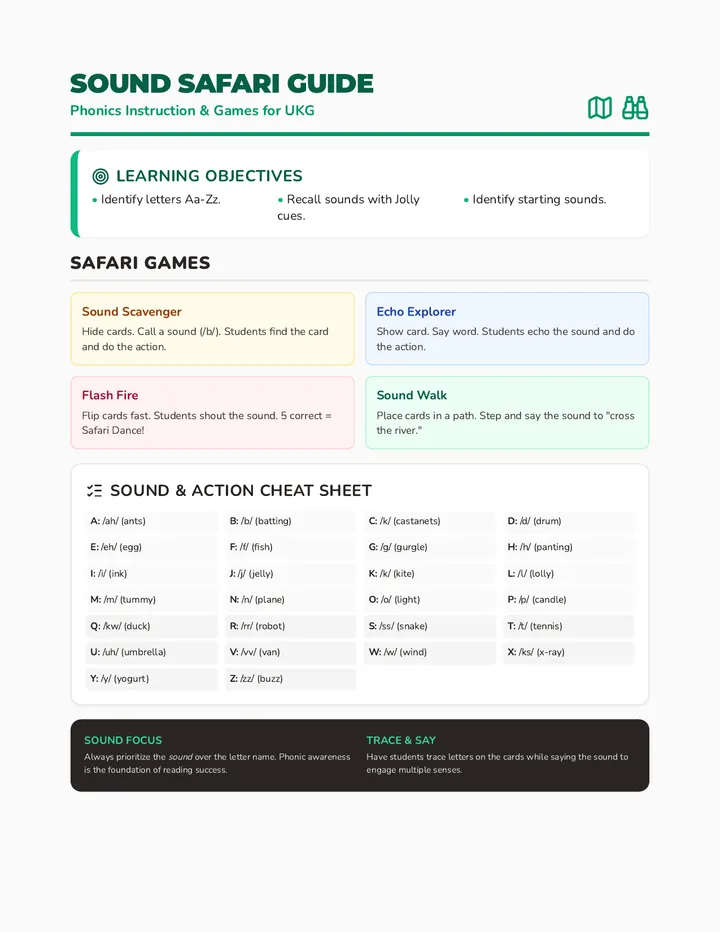
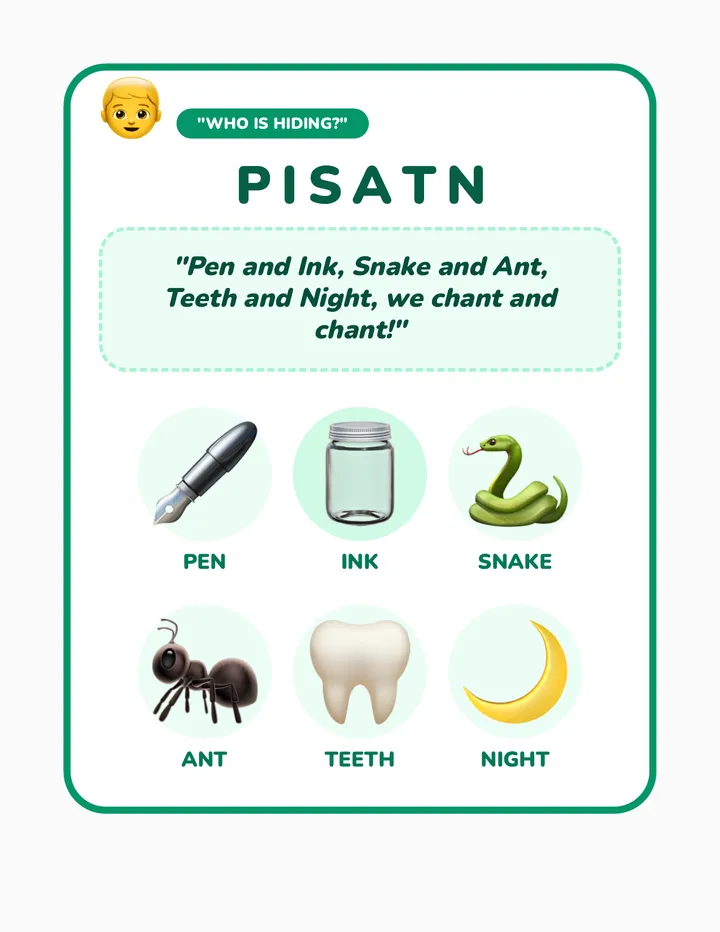
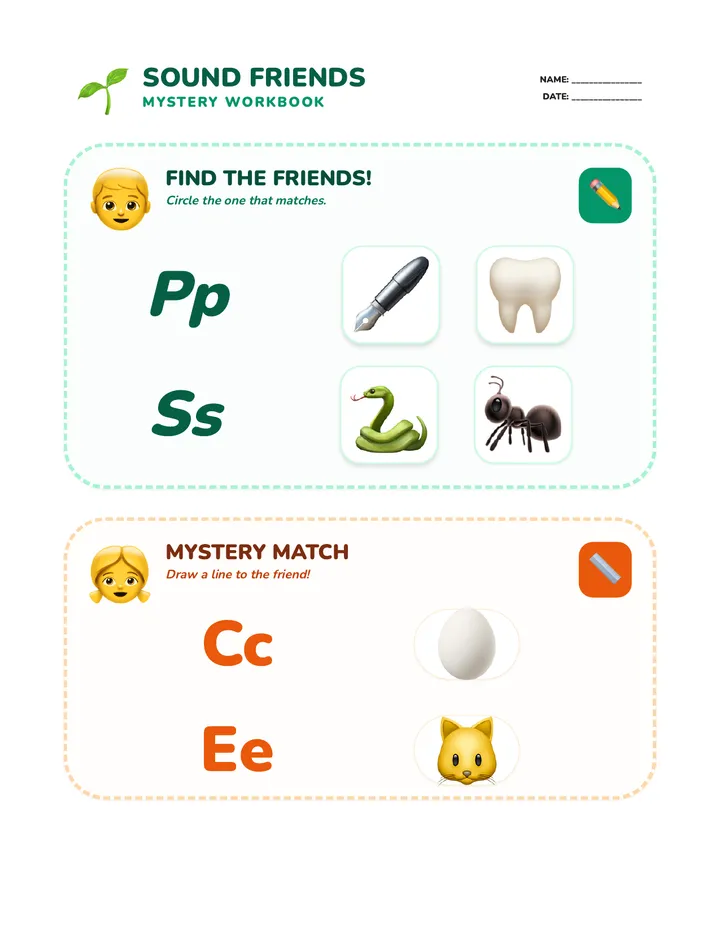
A comprehensive review of the beginning sounds for the letters b, c, f, t, m, and n using a 'Sound Lab' theme. Includes visual articulation supports and hands-on sorting activities.
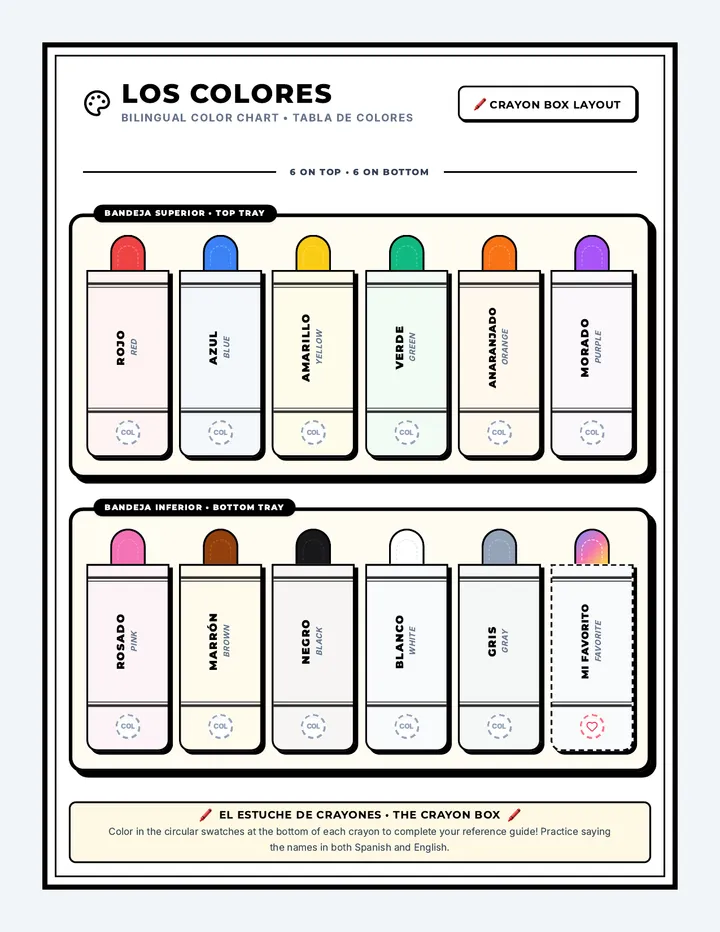
A vibrant introduction to Spanish for early learners (0-5) centered around a rainbow theme. This lesson plan provides 15 interactive play station ideas, a circle time presentation with songs and science, and bilingual support materials.
A lesson focused on animal characteristics and habitats, helping students build descriptive vocabulary.
Una mini-lección de 10 minutos diseñada para enseñar el sonido inicial de la letra 'p' y la formación de sílabas (pa, pe, pi, po, pu) a través de actividades visuales, juegos de emparejamiento y práctica individual.
An introductory lesson to common modes of transportation using a bilingual story and visual vocabulary support.
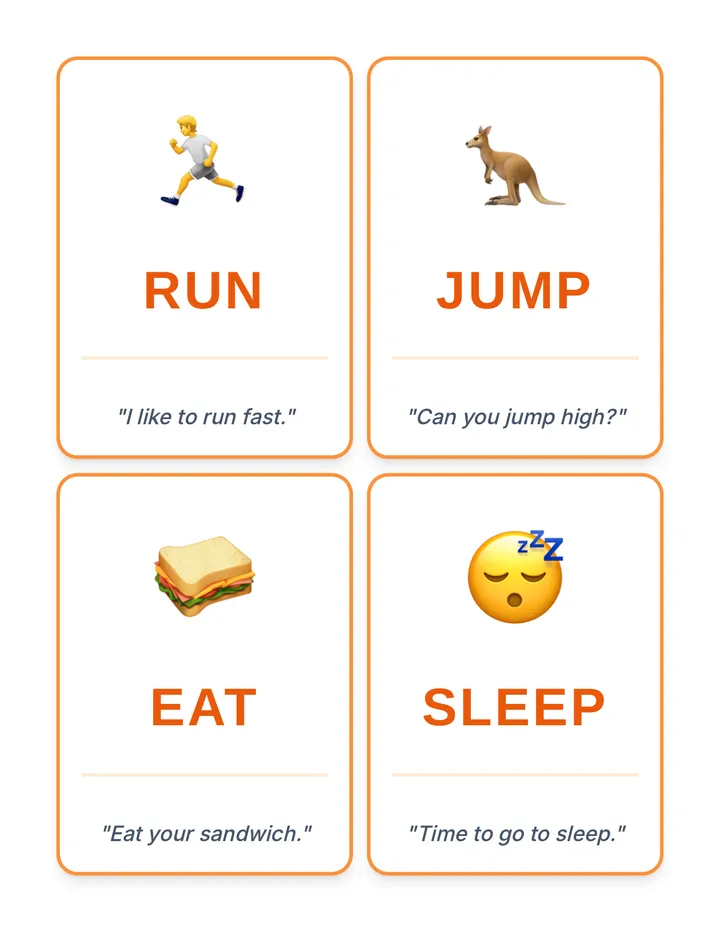
A beginner-level ESL lesson introducing 12 common animals and their characteristic movements through reading, writing, and movement-based games.
A Spanish letter formation and tracing program designed for Tier 3 students to master the alphabet, with a special focus on frequently reversed letters like b, d, p, and q.
Five days of structured handwriting practice in Spanish, progressing from basic vowels and consonants to full sentences. Each day includes tracing activities for uppercase and lowercase letters, related vocabulary, and sight word sentences.
A fun, movement-based lesson for early elementary ESL students to learn directional opposites (Up/Down, High/Low) using playground equipment and a catchy song. Students will engage in pronunciation practice, video analysis, and a partner dictation activity using character cut-outs.
A foundational ESL lesson focused on numbers 1-10, connecting spoken words, written forms, and quantities through music, video, and movement. Students engage in choral counting, video-based handwriting practice, and a classroom-wide labeling activity.
This culminating lesson applies the four tones to the syllable 'ma' to demonstrate how meaning changes (mother, hemp, horse, scold). Students participate in a listening game where they identify the correct image based on the tone they hear.
Students practice the sharp, falling pitch of the fourth tone, associating it with a firm 'No!' or a karate chop. The lesson focuses on energy and assertive vocalization to differentiate it from the other tones.
Students engage with the dipping pitch of the third tone, visualizing it as a roller coaster that goes down and up. Through physical bouncing movements, students practice the lower register dip required for this tone.
Learners practice the rising pitch of the second tone, associating it with the English questioning sound 'Huh?'. Students use upward arm movements to trace the sound as they practice rising vocal inflections.
A mastery-based lesson using 'Lǎoshī shuō' (Simon Says) to integrate all previous commands into complex sequences.
Learning 'Pāi shǒu' (Clap hands) and 'Tiào' (Jump) with rhythm and music to reinforce high-energy action vocabulary.
The sequence concludes with a song 'Wǒ ài wǒ de jiā', combining vocabulary with the verb 'to love' and expressive hand motions.
Focusing on sensory verbs 'Tīng' (Listen) and 'Kàn' (Look) through a detective-themed scavenger hunt.
Introducing 'Zǒu' (Walk) and 'Tíng' (Stop) using a Mandarin version of Red Light, Green Light to build impulse control and verb recognition.
Students learn 'Zhàn qǐ lái' (Stand up) and 'Zuò xià' (Sit down) through rapid-fire reaction games. focus is on gross motor response to auditory cues.
Students practice the sentence structure 'Zhè shì...' to introduce their own family members using photos or drawings.
Introduction to grandparents, Yéye and Nǎinai. Students explore generational structures using a visual family tree and storytelling.
In this synthesis lesson, students participate in a pretend tea party, applying all learned greetings in a social setting.
Exploration of siblings in Mandarin, focusing on older and younger distinctions. Students learn Gēge, Jiějie, Dìdi, and Mèimei through size-based activities.
Introduction to the terms for Mom and Dad in Mandarin. Students use finger puppets to practice Bàba and Māma while associating the words with parental figures.
Students explore empathy and repair by learning 'Duìbuqǐ' (Sorry) and 'Méiguānxi' (It's okay) through gentle role-play.
This lesson introduces 'Xièxie' (Thank you) and 'Bú kèqì' (You're welcome) through a gift-giving simulation.
Learners focus on 'Zàijiàn' (Goodbye) by enacting end-of-day routines and singing a Mandarin goodbye song.
Students learn 'Nǐ hǎo' (Hello) through a hand puppet interaction circle, focusing on eye contact and friendly body language.
A cumulative project where students create and present a poster incorporating all identity phrases learned in the sequence.
Expressing likes using 'Wǒ xǐhuān' with visual aids and preference paddles for colors and animals.
Learning numbers 1-5 and hand gestures to state age using the 'Wǒ... suì' sentence pattern.
Introducing 'nánhái' (boy) and 'nǚhái' (girl) through sorting activities and the 'Wǒ shì...' sentence pattern.
Students learn to say their name using the sentence pattern 'Wǒ jiào...' with a mirror-based introductory activity.
An introduction to the high, flat first tone using the 'Ahhh' sound and flat hand gestures to build steady pitch control.
In this culminating lesson, students combine the movements and rhythms they have learned. They participate in a structured dance circle, taking turns showing a move for their friends to copy.
Learners are introduced to the instruments of a Mexican Mariachi band, specifically the guitar, trumpet, and violin. They engage in role-play, pretending to play these instruments while marching in a line.
Students travel to the Caribbean to explore salsa rhythms using maracas and egg shakers. They practice shaking to the beat and learn simple hip movements, focusing on looseness and joy.
Focusing on Spain, students learn the basics of 'palmas' (clapping) and vigorous foot stomping associated with Flamenco. They watch a short, vibrant video of a dancer and try to mimic the posture and emotion.
The culminating lesson where students compare Spanish traditions with their own family celebrations. They create a page for a class book and share their favorite ways to celebrate.
Students learn about the gift-giving tradition of Three Kings Day (Día de Reyes). They decorate crowns and explore the custom of leaving out shoes for the visitors.
A gentle introduction to Día de los Muertos, emphasizing the celebration of happy memories. Students create paper marigolds and share stories about people or pets they love.
A lively exploration of Carnival traditions focusing on masks, feathers, and festive movement. Students design their own masks and participate in a classroom parade to rhythmic music.