A foundational ELD lesson for 1st grade Emerging learners focusing on identifying common animals and forming basic plurals by adding -s. Students will use visual cues and sentence frames to practice speaking and writing.
A comprehensive one-hour Spanish review session focusing on tricky syllables, basic grammar (subject, verb, adjectives), and market-themed vocabulary through interactive slides.
A series of 6 Spanish word search puzzles focusing on challenging orthographic patterns including diphthongs, silent H, tricky syllables (GUE/GUI, QUE/QUI, CE/CI, GE/GI), consonant blends (BR, TR, CL), and inverted syllables (AL, ER, IS). Each puzzle includes visual cues to support vocabulary development.
A 1st-grade ELD lesson focusing on family members and parts of the home. Students learn to identify family roles and describe where people are in a house using simple sentence frames.
A lesson focused on animal characteristics and habitats, helping students build descriptive vocabulary.
An introductory Irish Gaelic (Gaeilge) lesson covering greetings, animals, colors, and basic conversational questions with a focus on pronunciation.
Una mini-lección de 10 minutos diseñada para enseñar el sonido inicial de la letra 'p' y la formación de sílabas (pa, pe, pi, po, pu) a través de actividades visuales, juegos de emparejamiento y práctica individual.
A beginner-level ESL lesson introducing 12 common animals and their characteristic movements through reading, writing, and movement-based games.
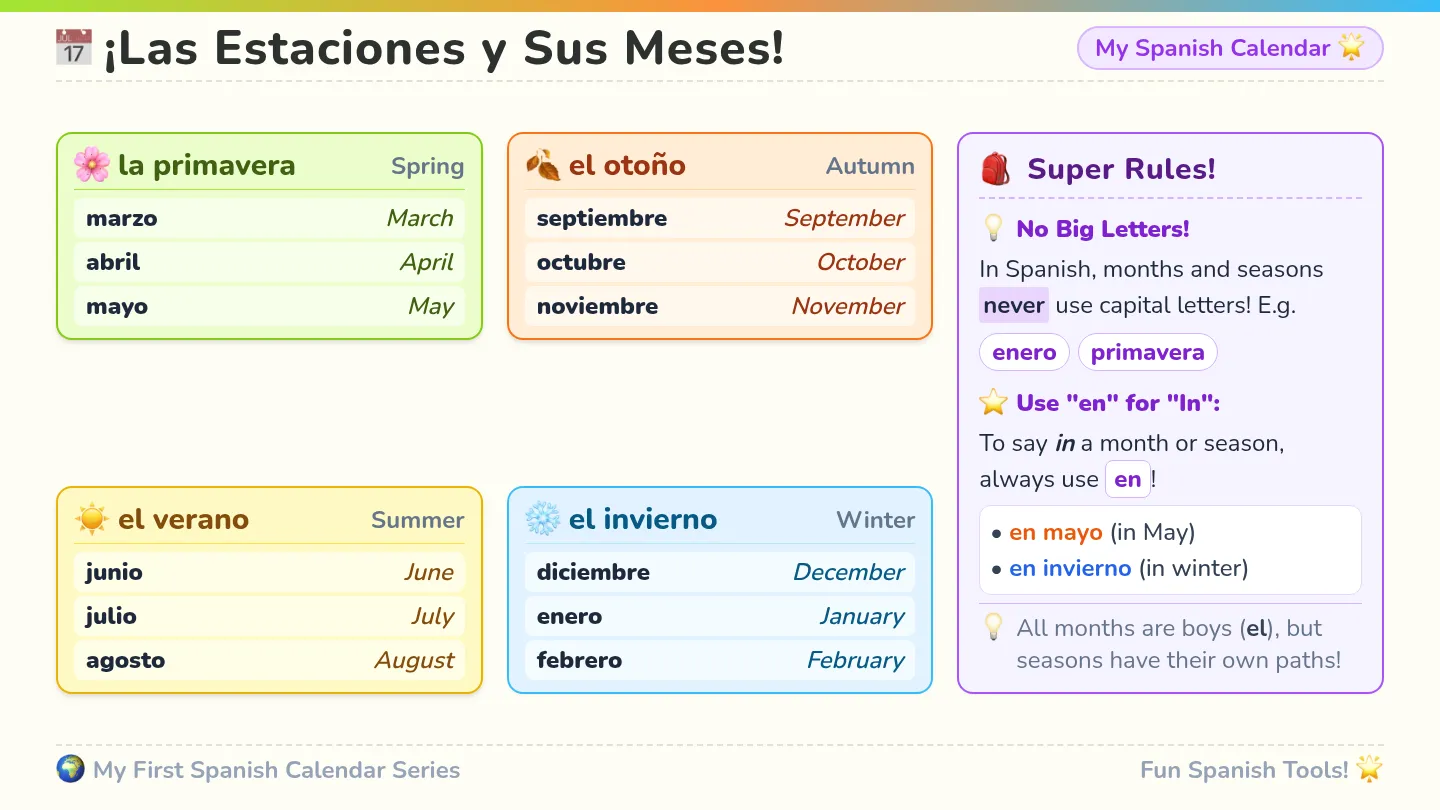
A vibrant introductory lesson to Spanish vocabulary related to springtime and the months of March, April, and May. Students will learn key seasonal terms through visual aids and interactive activities.
An interactive role-playing lesson where students practice food vocabulary and social skills by simulating a grocery shopping experience. Students take on roles as shopkeepers and customers to use target language in a functional context.
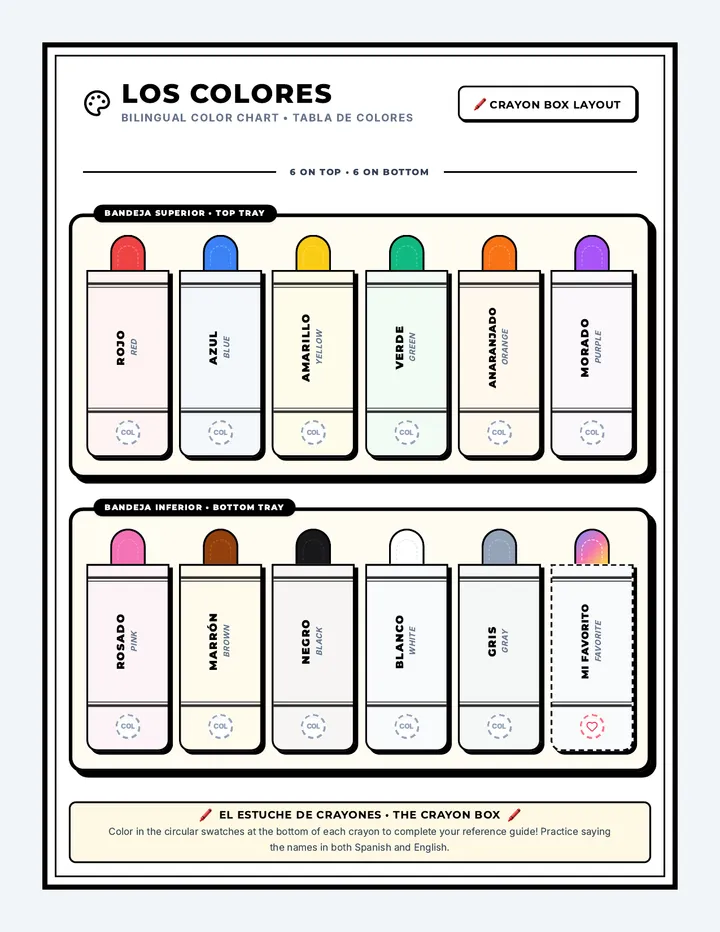
A Spanish letter formation and tracing program designed for Tier 3 students to master the alphabet, with a special focus on frequently reversed letters like b, d, p, and q.
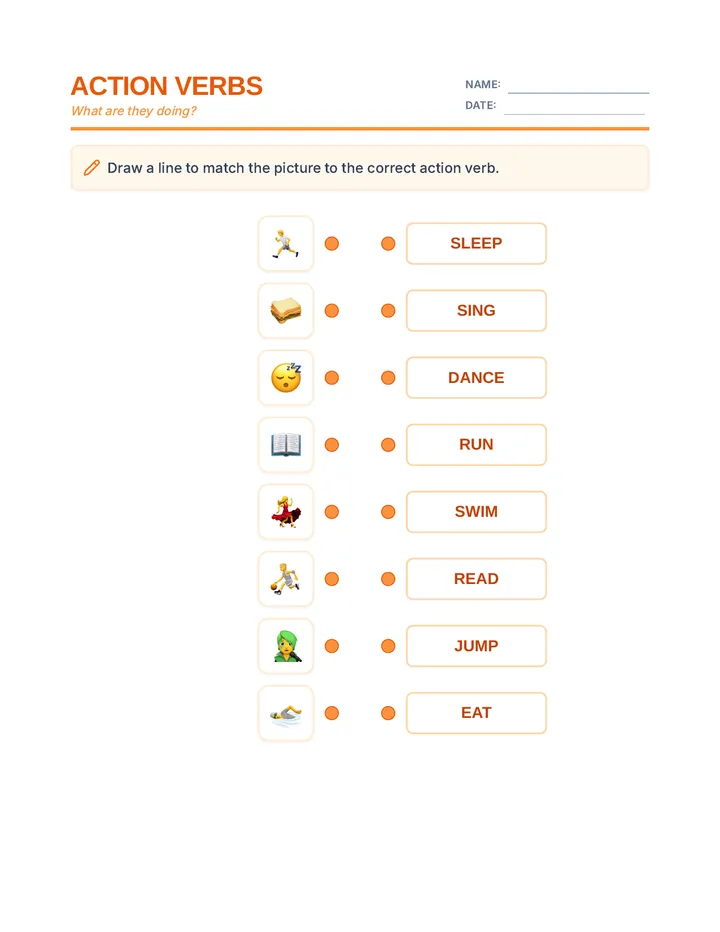
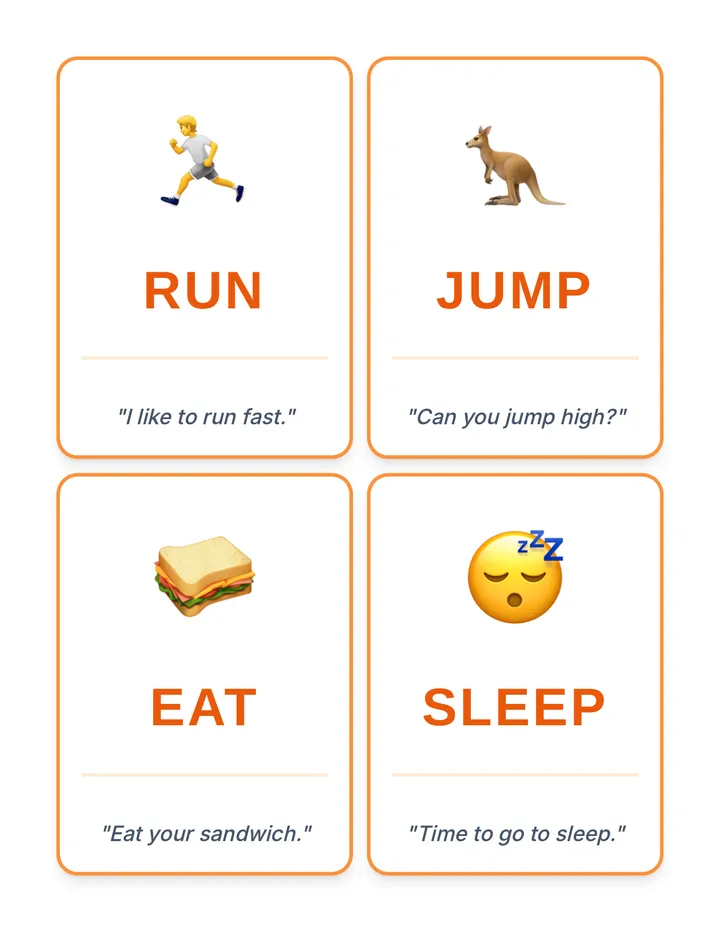
A collection of introductory materials for learning common action verbs in English, featuring visual aids and multilingual translations in Chinese and Portuguese.
A culminating simulation of a full elementary school day where students use all their listening skills to navigate transitions, lunchroom rules, and social interactions.
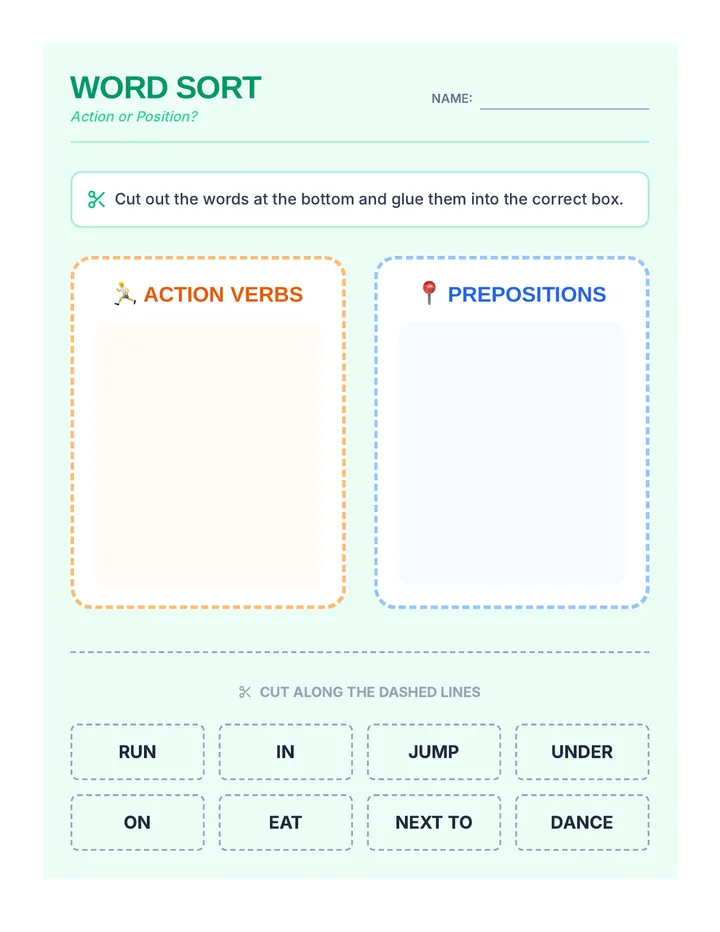
A detective-themed lesson focusing on prepositions of place and identifying common elementary classroom objects like cubbies, book bins, and art supplies.
Students learn to listen for and use basic social greetings, introductions, and classroom-sharing phrases with their peers.
Focuses on listening for numbers and time in the context of the elementary school schedule, including lunch, recess, and 'specials' like art and music.
Students practice recognizing and responding to essential classroom commands (stand up, sit down, line up, carpet time) through high-energy movement activities.
Una lección enfocada en la estructura gramatical de oraciones en español, utilizando diferentes tiempos verbales (presente, pasado, futuro y gerundio) con una temática divertida de animales.
Five days of structured handwriting practice in Spanish, progressing from basic vowels and consonants to full sentences. Each day includes tracing activities for uppercase and lowercase letters, related vocabulary, and sight word sentences.
Una serie de flashcards diseñadas para ayudar a los estudiantes a dominar las sílabas trabadas en español (br, bl, tr, pr, pl, gr, cl, cr, fl, dr, fr, gl). Cada tarjeta incluye una palabra ilustrada con el grupo consonántico resaltado.
Una lección interactiva diseñada para que los estudiantes de primaria dominen las sílabas trabadas (bl, br, cl, cr, fl, fr, gl, gr, pl, pr, tr) a través de actividades de decodificación, escritura y lectura comprensiva con una temática de laboratorio mágico.
A foundational lesson for Level 1 English Learners to practice constructing simple Subject-Verb and Subject-Verb-Adjective sentences using visual scaffolds and word banks.
A lesson focused on the cultural tradition of sending Valentine's Day cards, designed for ESL students to practice functional reading and writing skills.
A fun, movement-based lesson for early elementary ESL students to learn directional opposites (Up/Down, High/Low) using playground equipment and a catchy song. Students will engage in pronunciation practice, video analysis, and a partner dictation activity using character cut-outs.
A vibrant, high-energy vocabulary reinforcement lesson for 1st-grade ESL/ELL students focused on identifying and labeling body parts through song, movement, and a creative monster-building activity.
A foundational ESL lesson focused on numbers 1-10, connecting spoken words, written forms, and quantities through music, video, and movement. Students engage in choral counting, video-based handwriting practice, and a classroom-wide labeling activity.
A Kindergarten/1st Grade ESL lesson focusing on oral language development through comparative and superlative adjectives (long, longer, longest, short, shorter, shortest) using zoo animal comparisons.
A beginner ESL lesson focused on identifying and using prepositions of place (on, under, below, in front of, behind, above) through a fun bedroom investigation theme.
A foundational grammar lesson for ESL/ELL students focusing on the four most common irregular verbs (be, have, do, say) and their past tense forms through video analysis and scaffolded storytelling.
A lesson for English Language Learners to identify and practice common American idioms using visual aids and video-based instruction. Students will explore literal vs. figurative meanings and practice using idioms in spoken sentences.
A fun, high-energy phonics lesson where students learn the 'silent H' rule for 'wh' words through a silly video and a fast-paced word relay.
A dynamic lesson for ESL/ELL students to master subject and object pronouns through physical movement and visual examples from Khan Academy. Students practice the 'switcheroo' by tossing a ball and transforming sentences in real-time.
A beginner ESL lesson focused on prepositions of movement through song, character interaction, and physical role play. Students will learn to describe direction using words like into, out of, through, around, toward, past, up, and down.
A high-energy Kindergarten lesson where students connect letter names to visual symbols through music and movement. Students use pointers to track letters on a classroom chart in time with a reggae-style alphabet song.
A 1st-grade phonics and sight word lesson focused on the word 'cut' and the 'ut' word family, featuring a catchy song and a hands-on sentence scramble activity.
A 1st-grade ESL-focused lesson centered on the sight word 'did', teaching students to distinguish between question and statement intonation through music and a 'Punctuation Police' roleplay activity.
An introductory lesson using a visual 'tale of two elephants' to distinguish between specific (the) and general (a/an) nouns.
This lesson focuses on vowel shifts in irregular past tense verbs, specifically the 'say' to 'said' and 'flee' to 'fled' transitions, helping Elementary ESL students master tricky pronunciations through visual aids, sorting, and partner practice.
A comprehensive lesson for Beginner/Intermediate ELLs focusing on the Simple Aspect (Past and Future). Students will explore the timeline of language through visual aids, a Khan Academy video, and interactive "Will Wall" activities.
A royal-themed phonics lesson for 1st graders to master the 'qu' digraph through a video-based challenge and a 'Queen's Scroll' word hunt activity.
A focus on muralism and telling stories through art. Students collaborate to create a class mural reflecting their learning from the sequence.
Students investigate native ingredients like corn, tomatoes, and cacao. They learn about the origins of popular foods and how they bring people together.
An exploration of Flamenco and Salsa. Students compare rhythms and movements, learning how music tells a story of cultural heritage.
A look at iconic structures like pyramids and castles. Students observe shapes and materials used in architecture across the Spanish-speaking world.
Students are introduced to the globe and identify where Spanish is spoken. They receive boarding passes and learn basic greetings to start their cultural journey.
A culminating simulation where students take turns being buyers and sellers in a classroom market. They use greetings, questions, and requests to 'buy' items for a craft.
Students practice the phrase 'Dame [number], por favor' to request items. They learn the importance of politeness and listening for specific numerical details in a transaction.
Students learn to ask '¿Cuántos hay?' and respond with the correct number. They practice visual discrimination and counting through an 'I Spy' market activity.
Building on the first five numbers, students learn 6-10 (seis to diez). They practice sequencing and grouping collections of items to represent these larger quantities.
Students learn the numbers 1-5 (uno to cinco) through movement, chanting, and finger-counting. They associate the sounds of the Spanish words with physical quantities.
A synthesis project where students conduct a class wellness survey, collect data, and report findings using third-person conjugations.