Sophisticated syntax, formal registers, and classical Chinese influences for complex composition. Develops skills in argumentative essays, professional correspondence, and stylistic nuance.
This advanced Mandarin writing sequence focuses on the art of journalism and editorial commentary. Students transition from the objective 'inverted pyramid' of news reporting to the persuasive, subjective voice of op-eds, mastering professional vocabulary and rhetorical strategies along the way.
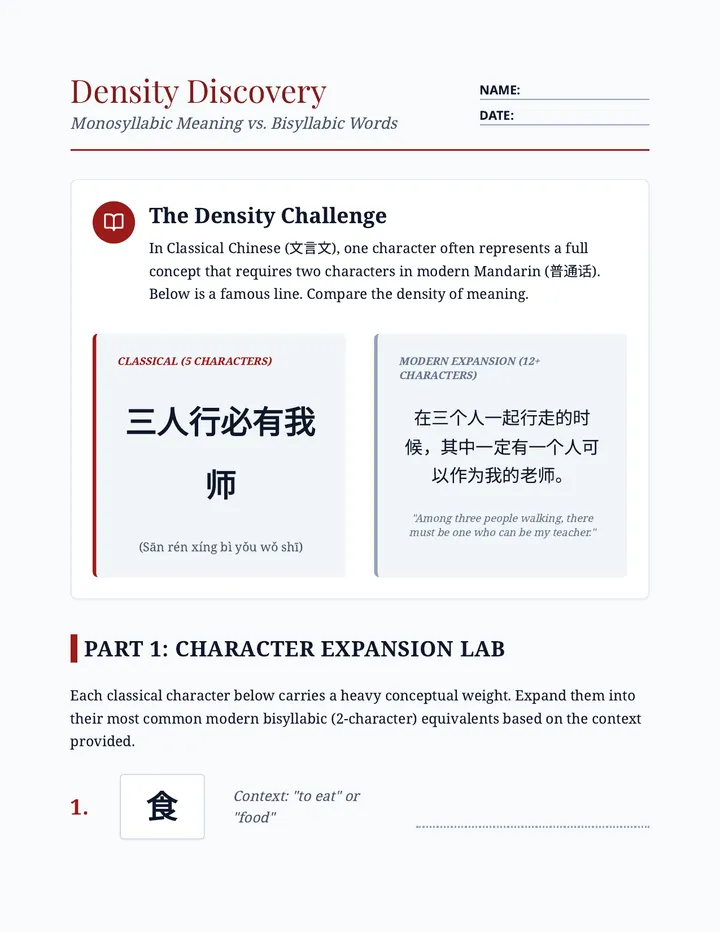
A deep dive into the transition from Classical Chinese (Wenyanwen) to modern Mandarin, exploring character density, classical particles, philosophical aphorisms, and poetic imagery to enhance advanced language proficiency.
A specialized sequence for graduate students to master the formal register of Chinese news media. The course covers headline syntax, economic reporting logic, passive structures in incident reports, bias in editorials, and cross-regional news synthesis.
This advanced Mandarin Chinese sequence immerses undergraduate students in the complexities of international business negotiation. Students master professional vocabulary (shumianyu), corporate hierarchy, and the cultural nuances of 'face' through simulations and case studies, culminating in a high-stakes joint venture negotiation.
This advanced Mandarin Chinese sequence for graduate students focuses on analyzing contemporary social issues through the lens of sophisticated rhetoric and four-character idioms (chengyu). Students explore urbanization, demographic shifts, and environmental policy to build a high-level academic vocabulary and persuasive argumentation skills.
A sequence for graduate students focusing on advanced Mandarin narrative techniques, rhetorical strategies, and descriptive mastery to bridge the gap between functional language and expressive fluency.
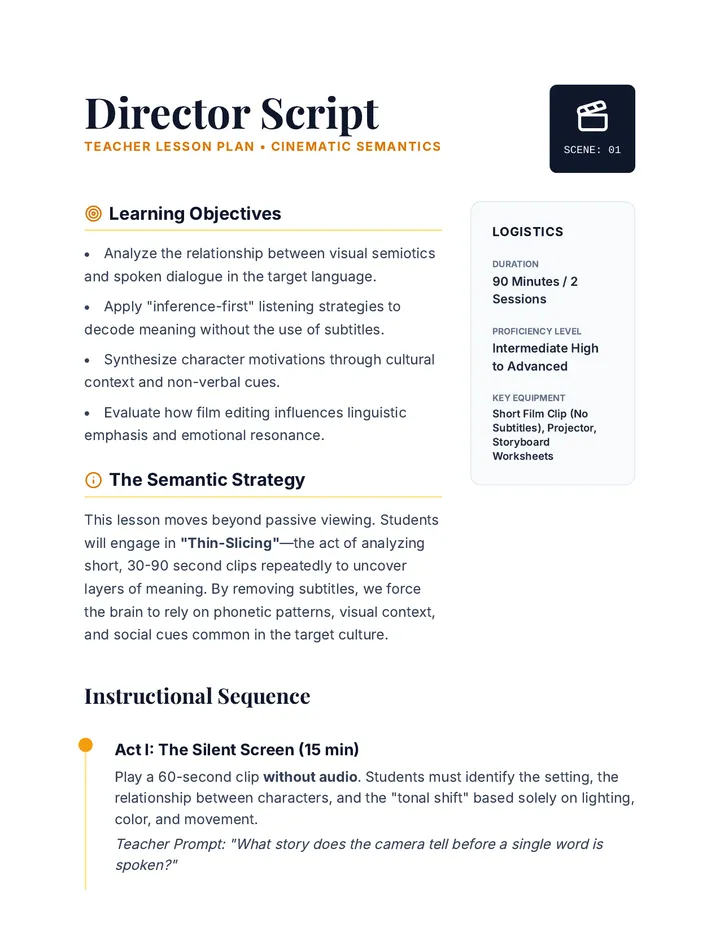
A comprehensive framework for foreign language educators to guide students through deep linguistic and cultural analysis of film, focusing on visual storytelling and advanced listening strategies.