A fun, hands-on art lesson where students explore emotions through character design, creating unique creatures using various colors and shapes.
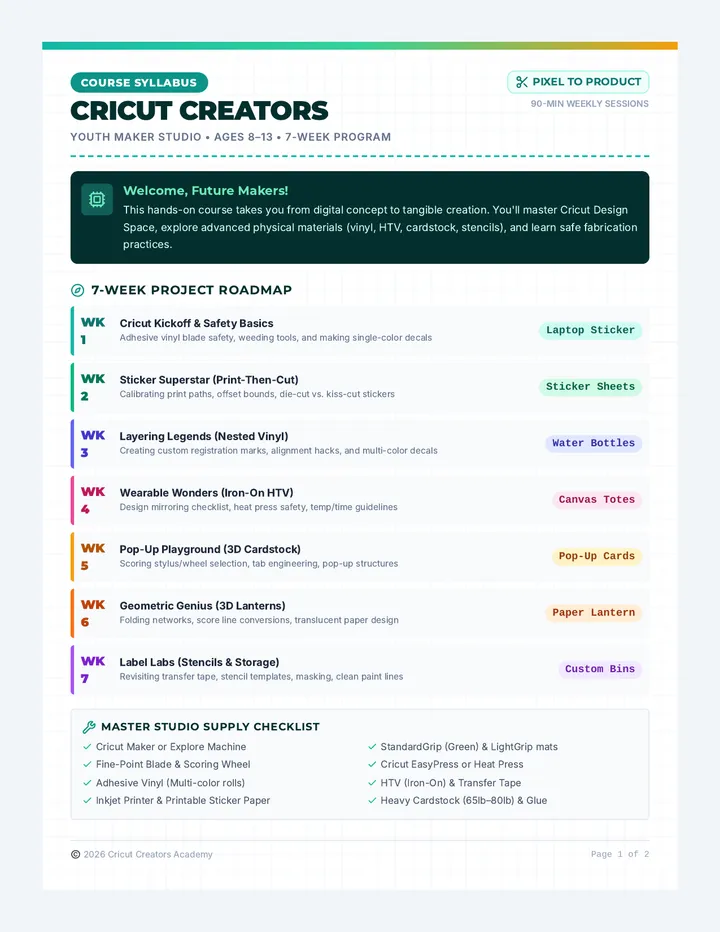
A 7-week beginner-friendly Cricut Design Space and crafting course designed for youth ages 8-13. Students transition from pixel to product, mastering vinyl, heat transfer, 3D papercrafting, and custom labeling while emphasizing safety and creative prototyping.
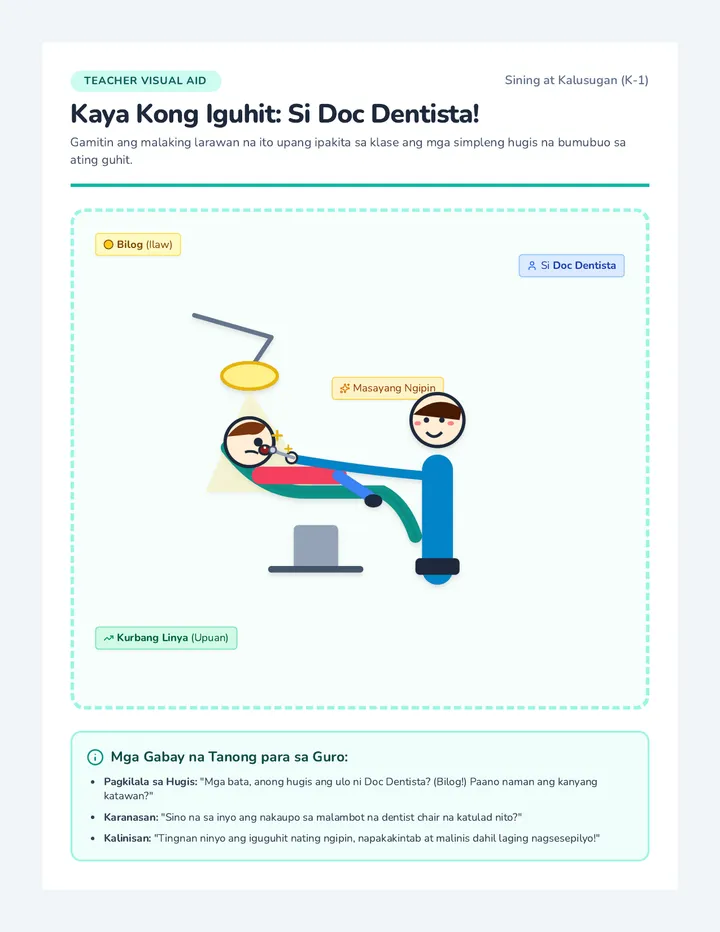
Isang aralin sa sining at kalusugan para sa mga mag-aaral sa Preschool at Kindergarten upang matutong gumuhit ng simpleng eksena sa dentista habang binabawasan ang takot sa pagpapabunot ng ngipin.
Isang gabay sa pagguhit para sa mga mag-aaral ng Preschool at Kindergarten. Naglalaman ito ng malaking visual aid para sa guro at hakbang-hakbang na paraan upang madaling maiguhit ang isang bata sa dentista.
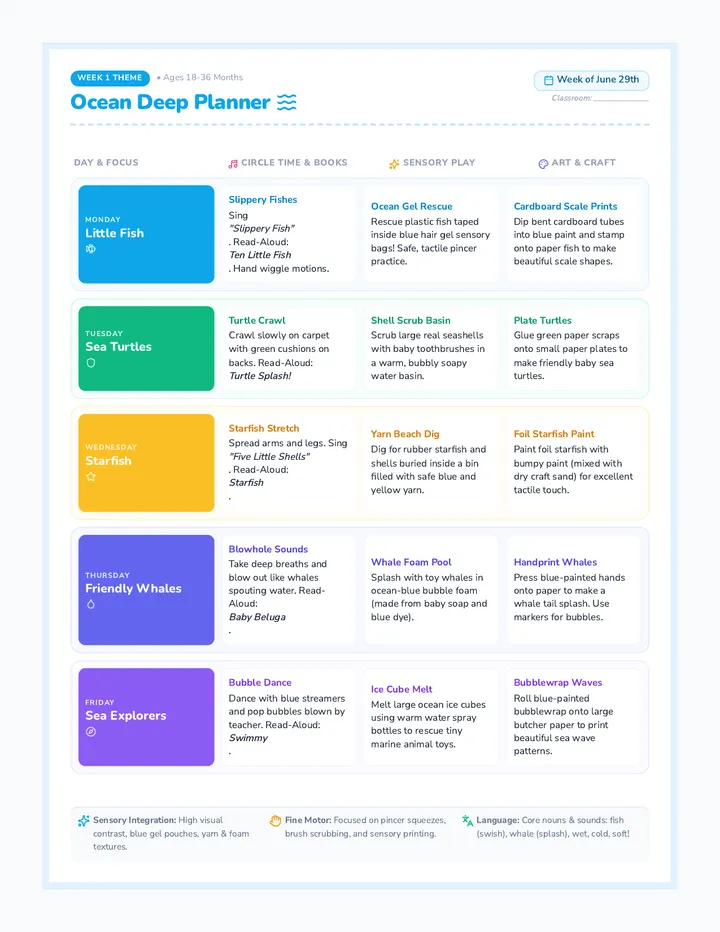
An elite 8-week summer curriculum sequence for toddlers aged 18-36 months, exploring sensory-rich, non-food themes of Ocean, Beach, Pond, Picnics, Garden Helpers, Insect Detectives, Jungle Beats, and Icy Cool-Down.
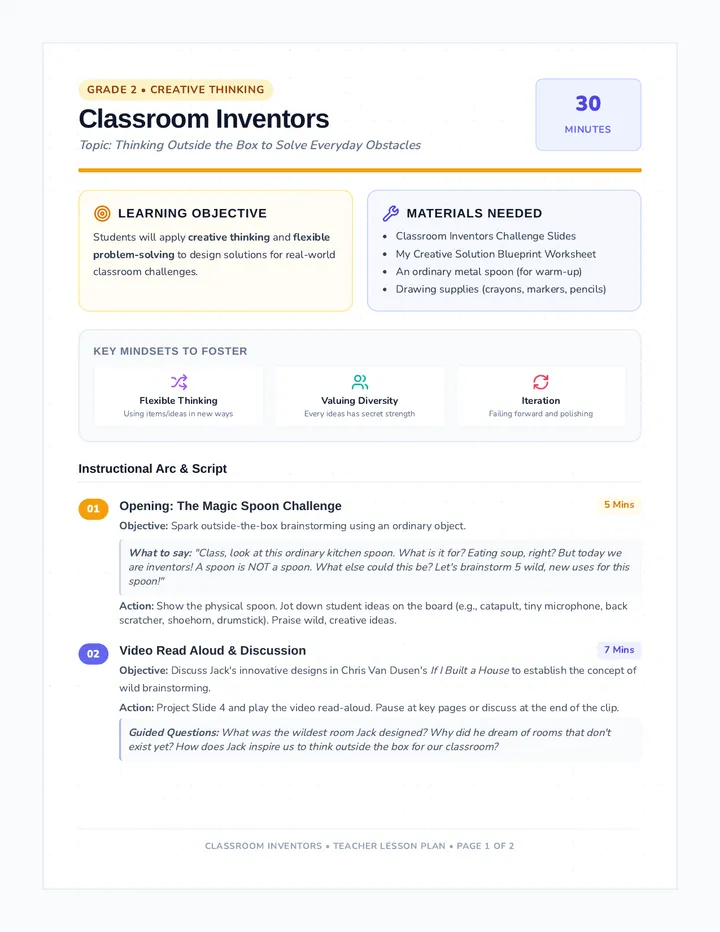
A 2nd-grade lesson on flexible problem-solving and creative thinking. Students learn to think outside the box by brainstorming inventive solutions to common classroom challenges, promoting resilience, diverse perspectives, and design thinking.
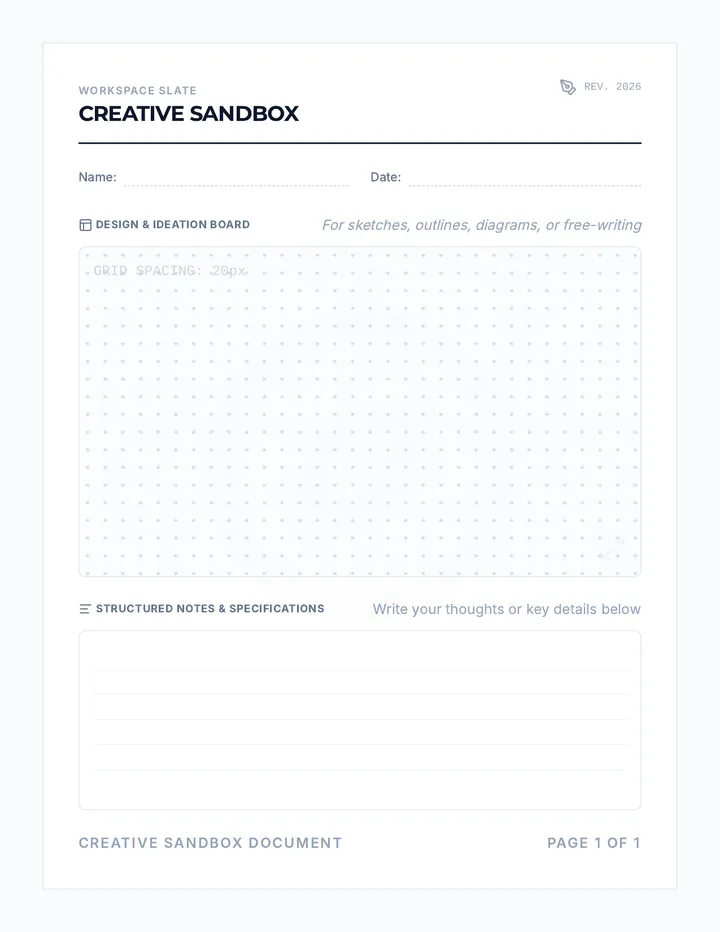
A beautiful, minimalist, and highly versatile blank student workspace designed as a creative sandbox. Features a professional header, name/date inputs, a dot-grid sketching arena, and ruled lines for brainstorming, planning, or writing.
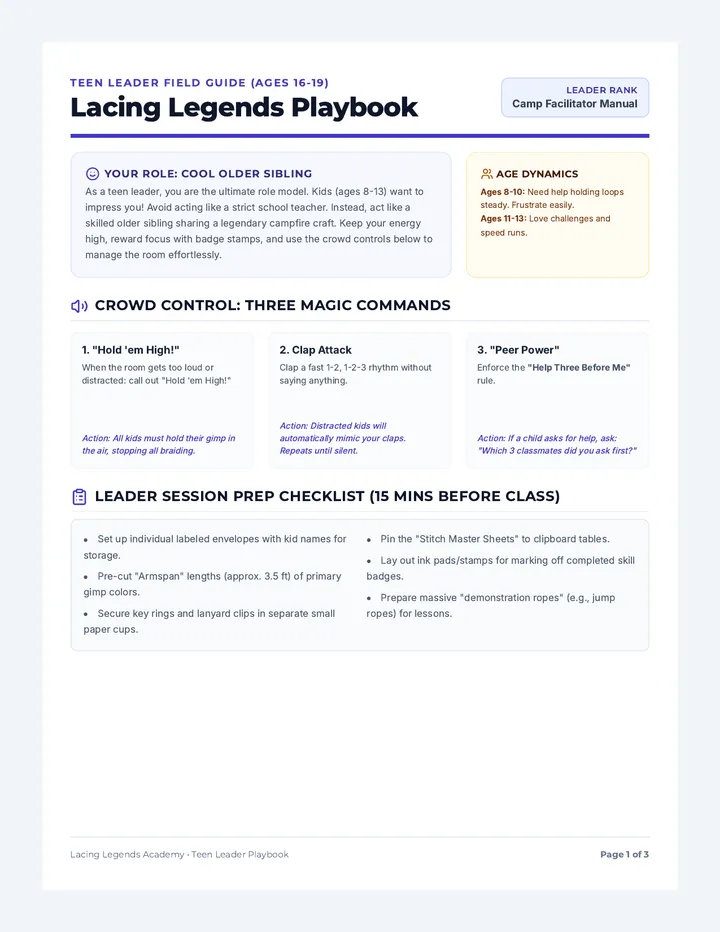
A comprehensive 7-week plastic lacing (gimp) curriculum for youth ages 8-13. This program guides students from absolute beginners to master crafters, focusing on the Starter, Square (Box), and Circle (Barrel) stitches to create custom keychains and bracelets.
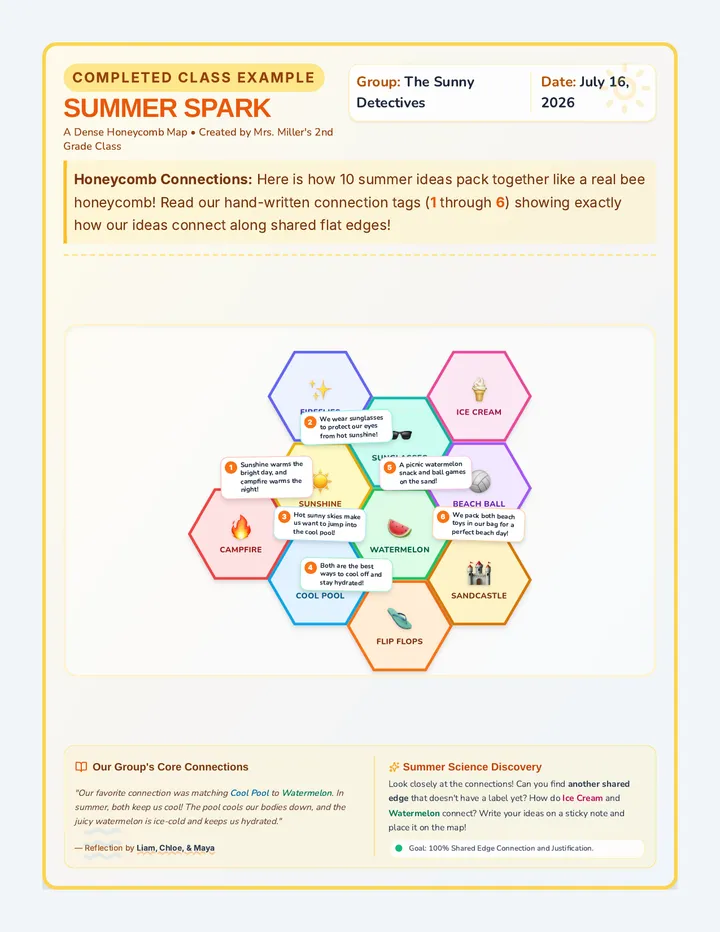
A creative lesson exploring seasonal connections and critical thinking using hexagons. Students link sensory concepts, activities, and memories of summer.
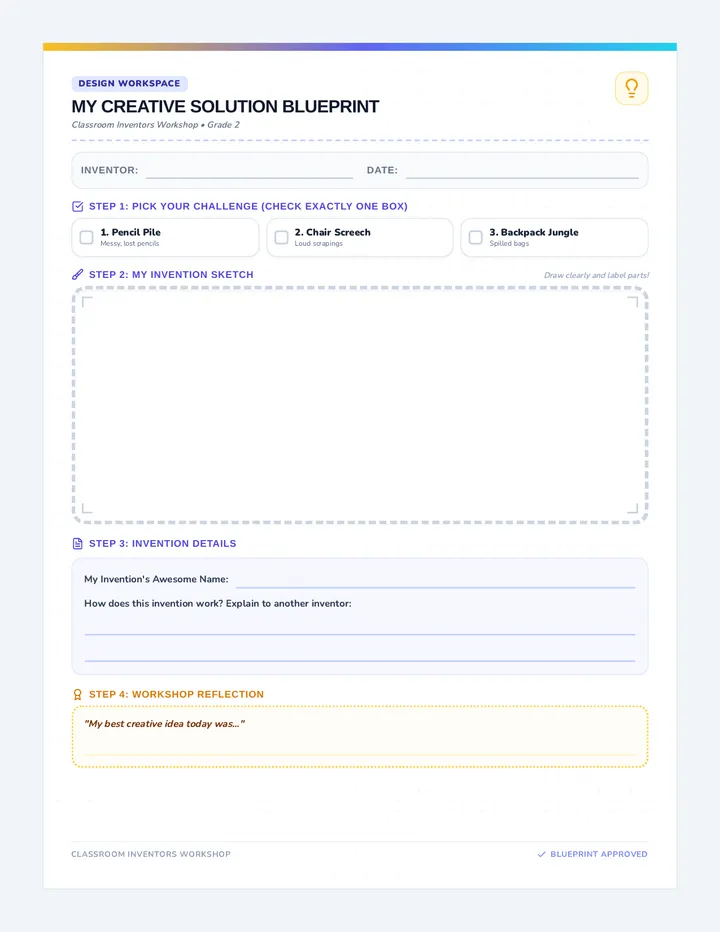
A highly structured, visually engaging, and print-ready creative problem-solving blueprint worksheet for second-grade students to sketch, name, and describe their inventions.
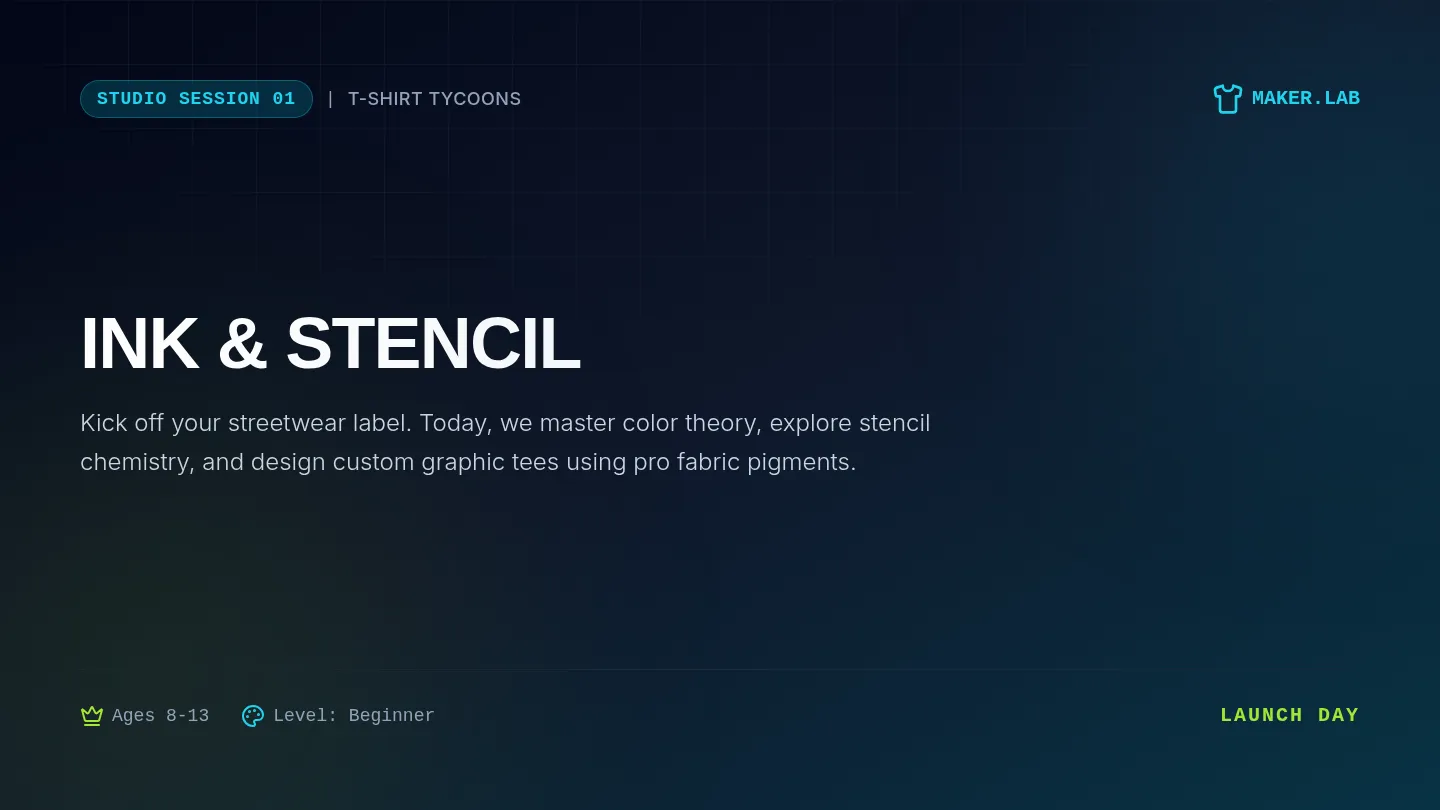
A 7-week youth wearable art and entrepreneurial course where students ages 8-13 design, dye, cut, and press custom custom t-shirts using pro-level makerspace techniques.
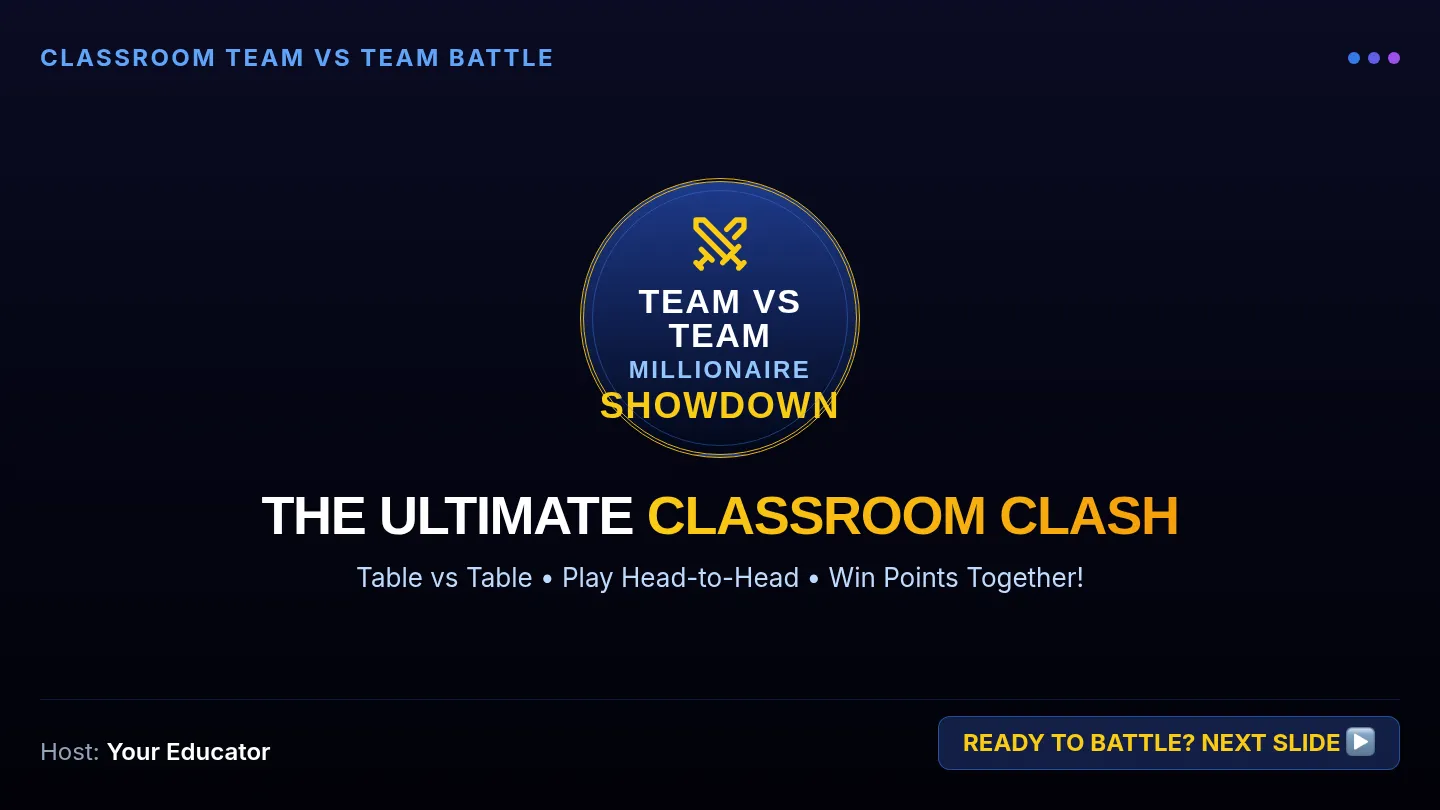
An immersive, game-show style classroom trivia challenge covering topics from pop culture and sports to hobbies and general knowledge. Includes a high-impact presentation slide deck and a detailed Host Guide to facilitate gameplay, engagement, and learning.