Color theory, perspective, and composition techniques using diverse media like charcoal, watercolor, and acrylics. Develops foundational sketching skills and advanced painting methods.
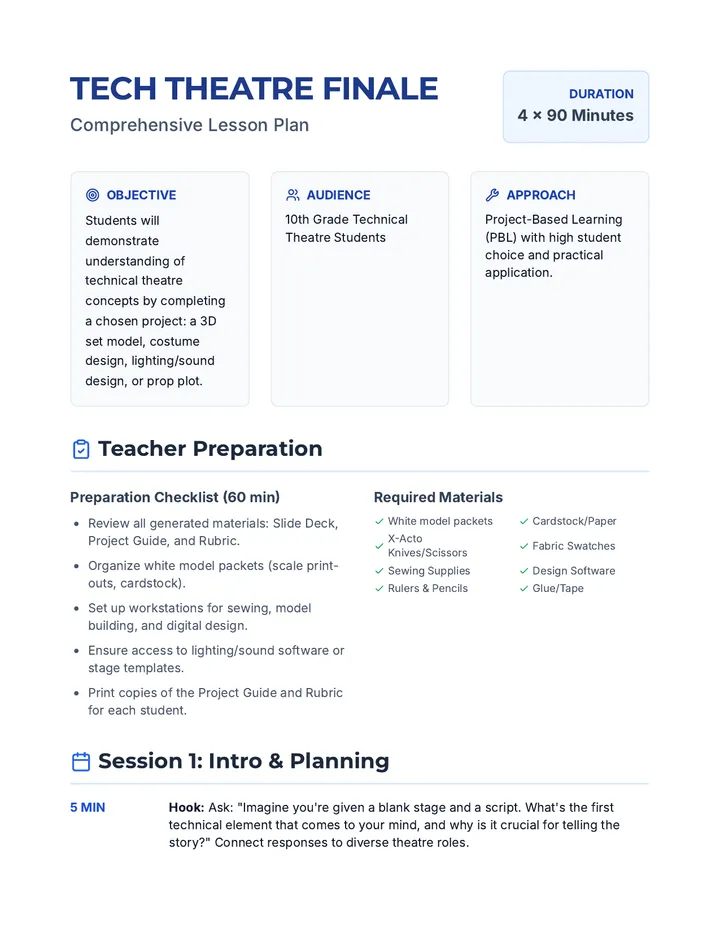
A 4-session project-based final exam where 10th-grade students demonstrate technical theatre mastery through set, costume, lighting, sound, or prop design.
This hands-on sequence introduces 4th graders to the visual and engineering side of theater. Students analyze scripts to design environments, draft scale floor plans, build 3D scenic models, and fabricate props, emphasizing spatial reasoning and storytelling through physical space.
Students investigate how costumes and properties (props) function as tools for character development and storytelling. The sequence guides students through the process of distinguishing between prop types, exploring costume psychology, fabricating safe props, and mastering backstage organization.
This 4th-grade sequence explores how traditional arts and crafts function as vessels for cultural heritage. Students learn to 'read' artifacts like narrative quilts and pottery as historical texts, ultimately creating their own heritage artifacts to preserve personal or family stories.
This sequence explores the transition from Medieval to Renaissance art, focusing on the development of linear perspective, human anatomy in art, and the cultural shift toward Humanism. Students will analyze masterpieces like 'The School of Athens' and apply mathematical principles to create their own realistic artworks.
This sequence explores the artistic revolution of the Renaissance, focusing on the shift from Medieval symbolism to Renaissance realism through the lens of mathematics and anatomy. Students will analyze historical works and apply technical skills like linear perspective to understand how art reflects cultural values.