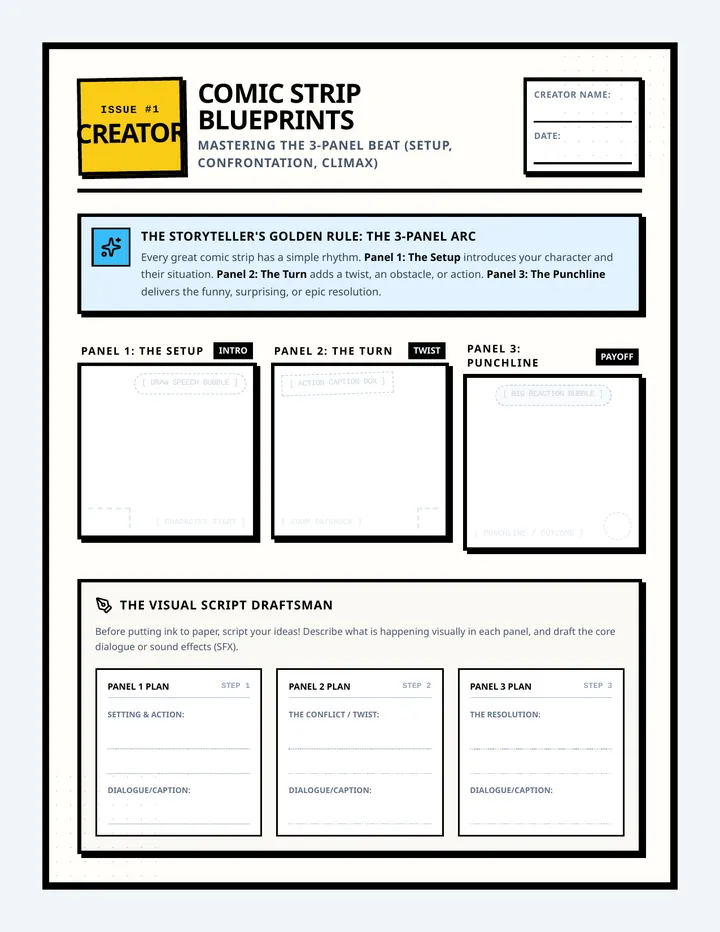
A cumulative student assessment mission log for Lesson 5, where students document their settings and results for three technical photography challenges.
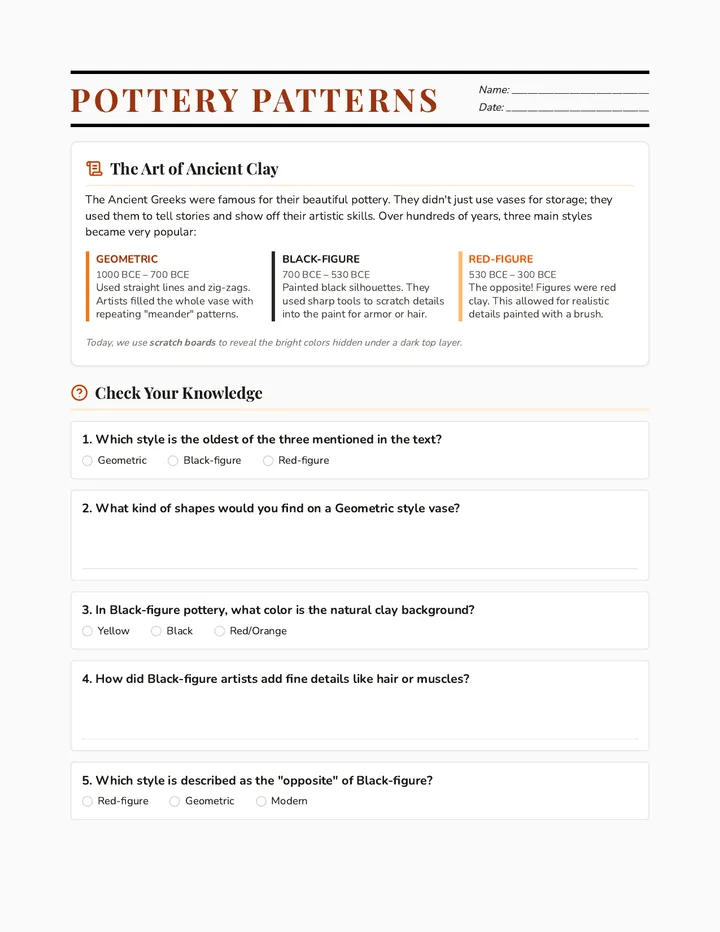
A one-page worksheet designed to help students write a biographical paragraph about Claude Monet using structured sentence starters based on a provided mind map. It includes large guided completion areas and a final writing space with 8 extra-large lines (48px height) for students who need more space.
Instructions for the Mystery Performance Lab, guiding students through solo reading, role assignment with tie-breakers, plot analysis, fluency practice, and final presentation.
A comprehensive 2-page follow-up worksheet for students to complete after performing or watching mystery plays. Focuses on fluency self-reflection, high-rigor character analysis, comprehension of plot devices like red herrings, and social-emotional debriefing. Optimized for print with writing lines instead of boxes. Updated terminology to "Character Change".
Six lengthened mystery/problem-solving plays featuring 4-5 characters each. Each play includes increased plot complexity, red herrings, and higher rigor dialogue focused on social-emotional conflicts. Includes a reusable analysis log template. Themes are strictly school-based with no space or weapon-related content. Every script and the analysis log are formatted to fit on a single page. Optimized with writing lines and no heavy boxes.
A student worksheet for analyzing the plot structure of a play, including sections for setting, characters, beginning, middle, end, problem, and solution. Optimized with writing lines and no heavy boxes. fits on one page.
A short model play script titled "The Missing Lunchbox" used to demonstrate play structure, characters, and dialogue. Features a friendship-based problem and solution. Dinosaur theme used for the lunchbox.
Instructional slides teaching the components of a play script (dialogue, stage directions), plot elements (beginning, middle, end, problem, solution), and fluency skills.
A teacher facilitation guide for the 'Stagecraft Secrets' lesson. It includes clear learning objectives, a timed lesson flow, practical facilitation tips for classroom activities, and a complete answer key for the 'Backstage Pass Worksheet'.
A comprehensive student worksheet for grades 4-6 designed to reinforce stagecraft fundamentals. It includes a vocabulary matching section, a stage directions grid to label, and a creative 'Set Design Challenge' focused on a mysterious clock tower attic. The design uses a professional technical blueprint aesthetic.
A vibrant, high-contrast slide deck introducing the fundamentals of stagecraft. It covers the definition of theater tech, the 'Big Five' departments (Set, Props, Lights, Sound, Costumes), a comprehensive guide to stage directions, and an introduction to the set design challenge.
A teacher's guide for implementing reader's theater in the classroom, including pacing suggestions, instructional goals, and discussion prompts.
A spacious, easy-to-read version of the Snow Detective reader's theater script and RL.1 exit ticket, designed with larger fonts and a 2-page layout. Fits on two pages (front and back).
A spacious, easy-to-read version of the Jack Fame reader's theater script and RL.1 exit ticket, designed with larger fonts and a 2-page layout. Fits on two pages (front and back).
A spacious, easy-to-read version of the Smart Bears reader's theater script and RL.1 exit ticket, designed with larger fonts and a 2-page layout. Fits on two pages (front and back).
A spacious, easy-to-read version of the Sneaker Ella reader's theater script and RL.1 exit ticket, designed with larger fonts and a 2-page layout. Fits on two pages (front and back).
A balanced, easy-to-read version of the Wolf Kitchen reader's theater script and RL.1 exit ticket, designed with appropriate fonts and a 2-page layout to save paper while remaining accessible to young readers.
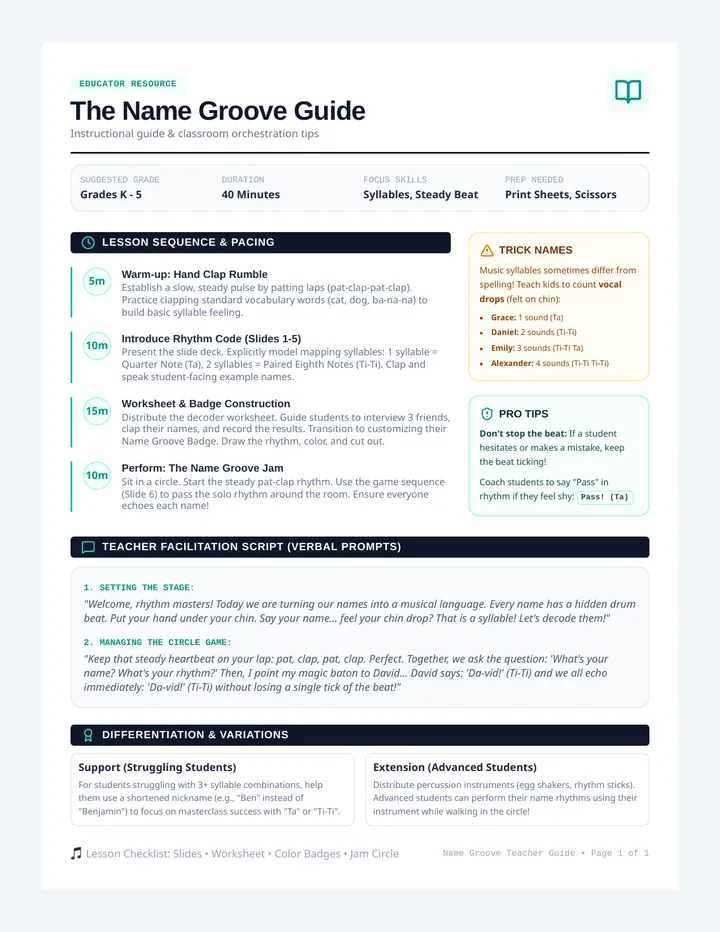
A two-page printable student handout for a printmaking lesson, presented in a landscape (16:9) format. It features three distinct jelly printing techniques: texture plate rubbings, botanical resists, and magazine/laser image transfers, complete with an expanded "Studio Cheat Sheet" of tips and a mastery checklist.
A two-page printable student handout for a printmaking lesson, rotated to a landscape (960x720) format. It features three distinct jelly printing techniques: texture plate rubbings, botanical resists, and magazine/laser image transfers, complete with side-by-side illustrated instructions and a mastery checklist.
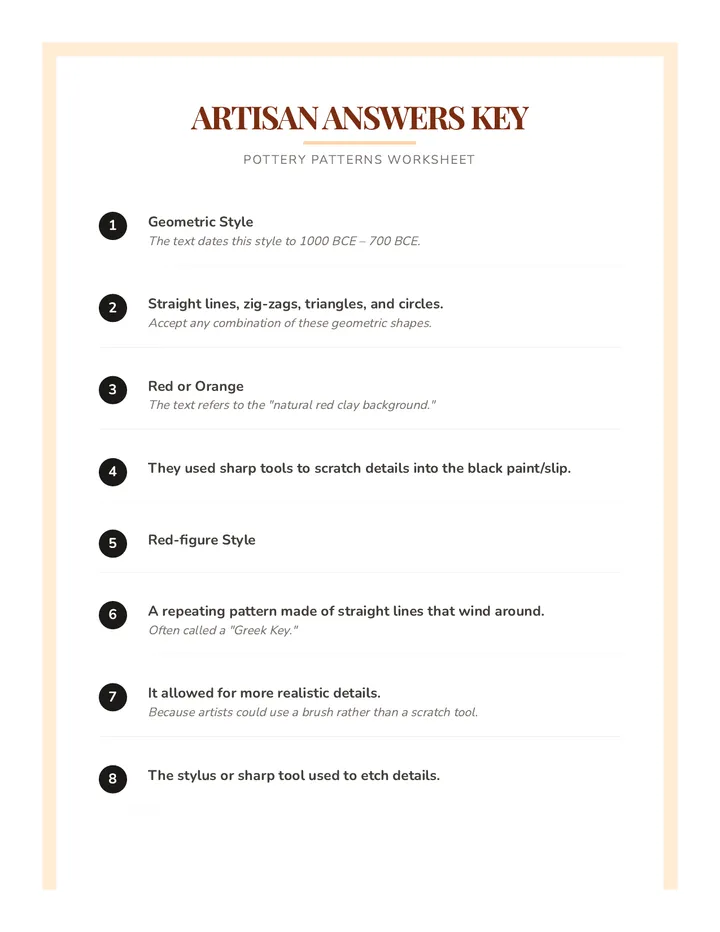
An answer key for teachers to verify student matching in the Art Element Match-Up game.
A colorful slide deck introducing the four core elements of art (line, shape, color, and texture) with visual definitions and examples.
A printable file folder game kit including labels, a matching board, and visual example cards for the core elements of art.
Teacher answer key for the Harlem Gallery Journal Packet, including correct multiple-choice selections and suggested responses for higher-order thinking questions.
A guided question packet for students with 1st-grade reading levels to follow along with the Met's Harlem Renaissance exhibition tour. Includes 18 visual multiple-choice questions and 2 short-answer prompts. Revised for better page breaks and answer uniformity.
The corrected teacher answer key for the Colorful Canvas Search Worksheet, ensuring all 20 words are properly highlighted and the page fits on a single sheet.
A large-print word search focusing on 20 color words, designed with high contrast and clear lettering for accessibility. All elements fit on a single page for ease of use.
Teacher reference for the Note Knocker Exit Ticket. Includes answers for treble clef pitch identification, rhythm math, and scale terminology.
Summative answer key for the Theory Titan Review. Contains complete pitch identification, rhythm math solutions, and scale/interval theory.
Teacher answer key for the Symbol Scout Identification worksheet. Provides clear mapping for vocabulary matching, rhythmic identification, and harmony challenges.
A detailed answer key for the Music Map Guided Notes, covering staff basics, rhythm calculations, scale patterns, and interval identification. Features highlighted answers for easy teacher reference.
A double-up exit ticket for quick assessment of rhythm calculations and basic pitch identification. Features a corrected 5-line musical staff and clearer questioning. Designed for student use.
A comprehensive unit review for beginner music theory, encompassing pitch, rhythm, scales, and harmony. Includes CSS-rendered staff lines and notes for identification. Designed as a summative assessment.
A focused identification and matching worksheet for music theory symbols, vocabulary, and rhythm values. Features a professional layout with clear visual categorization and student-friendly work areas.
A two-page guided notes packet covering the essentials of music theory, including the staff, rhythm, scales, key signatures, intervals, and triads. Includes active practice areas and structured note-taking sections.
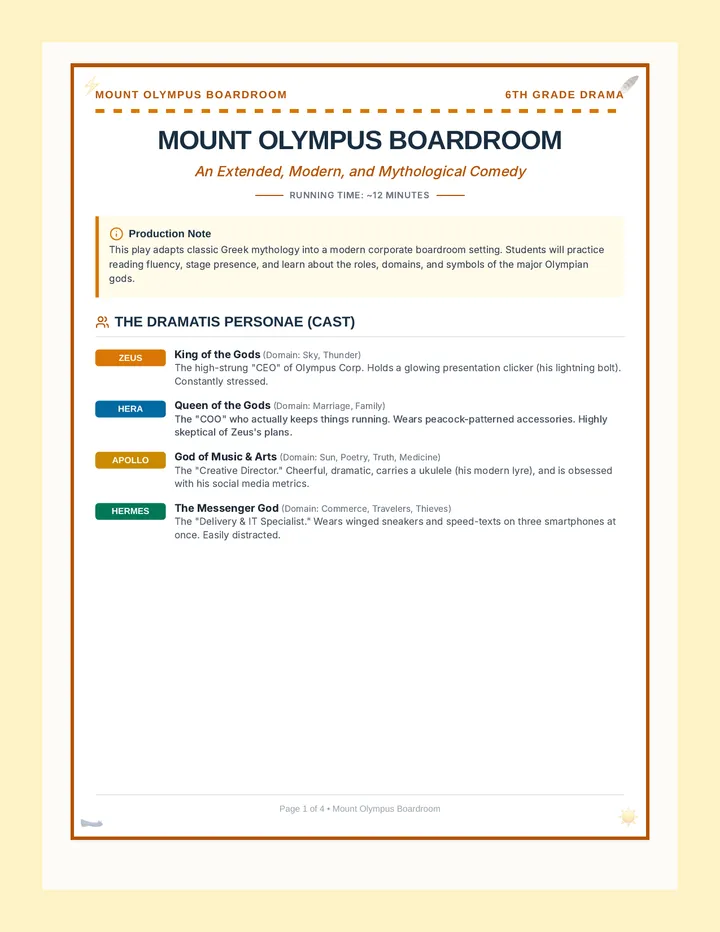
A five-day slide deck introducing the major Greek Olympians, revised for better contrast, consistent patterns, and constellation connections on all days.
A comprehensive teacher's guide for the Starlit Olympians week, revised to fix page breaks and clarify the relationship between lessons and reading sheets.
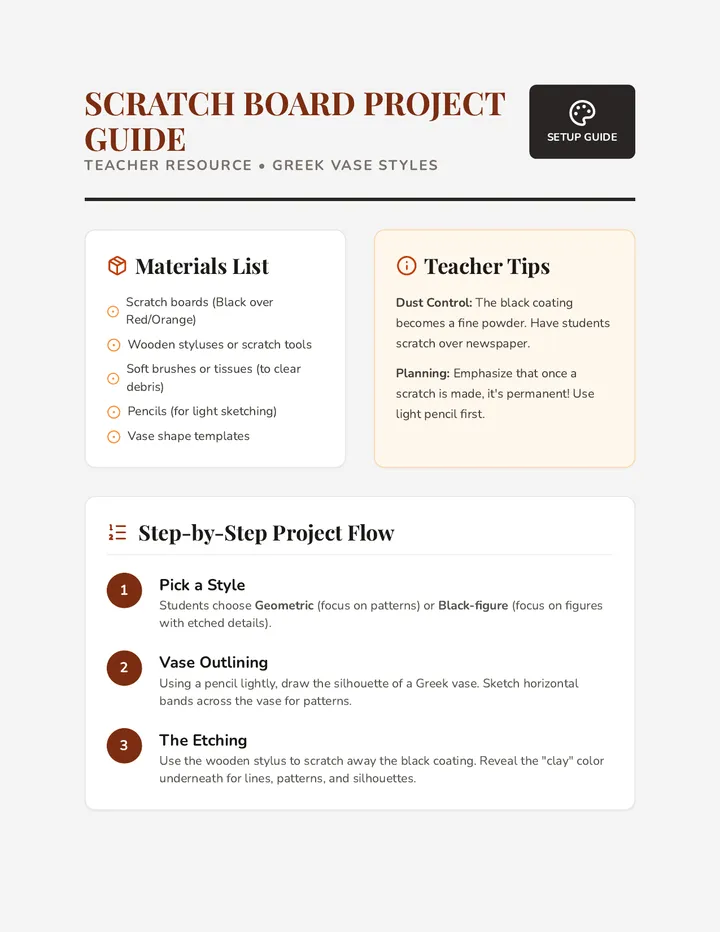
A craft guide for creating "Constellation Looms". Revised to force single-page layout, improve step legibility, and add student name fields.
An instructional guide for an Olympian Shield painting project. Revised for page breaks, list uniformity, and increased student writing space with darker dotted lines.
The final reading and discussion sheet for the week. Revised for layout efficiency, increased response areas, and handwriting guides.
A reading and discussion sheet centered on Poseidon. Revised for better spacing, higher contrast, and added handwriting guides.
A reading and discussion sheet focused on Zeus and Hera, their symbols, and the Aquila constellation. Revised for layout efficiency and added guided writing lines.
Updated classroom presentation for the 5th-grade showcase, featuring "Hawaiian Roller Coaster Ride", drumming for "Lion Sleeps Tonight", and a vocal medley.
A performance rubric for the 5th-grade showcase repertoire, including ukulele, drumming, and vocal medley criteria.
A detailed teacher-facing lesson plan aligned with the Danielson Framework, focusing on a 5th-grade performance medley including ukulele, drumming, and singing.
A comprehensive answer key and teacher resource guide for the Stage Secrets reading passages. Includes answers for both 800L and 500L Lexile versions, along with instructional tips and discussion prompts.
A simplified reading passage and comprehension questions about Shakespearean theater, leveled to a 500L Lexile. Includes a visual-heavy layout with simplified vocabulary definitions for early readers or English language learners.
A reading passage and comprehension questions about Shakespearean theater and boy actors, leveled to an 800L Lexile. The material explores the historical context of performance, social opposition, and the diverse audience of the era.
A teacher's guide containing lesson objectives, an answer key for the worksheet, and discussion prompts to facilitate the film music lesson. Revised for layout consistency and contrast.
A creative composition activity where students design a character and create a musical motif to represent them, focusing on tempo, instrumentation, and pitch. Re-designed to fit on one page with toner-friendly light backgrounds.
A worksheet featuring reading passages about John Williams and Hans Zimmer, vocabulary matching, and fill-in-the-blank questions about film music concepts.
A visual presentation introducing key concepts of film music, focusing on motifs vs themes, and the works of John Williams, Hans Zimmer, and the Ghostbusters theme. Includes knowledge check slides.