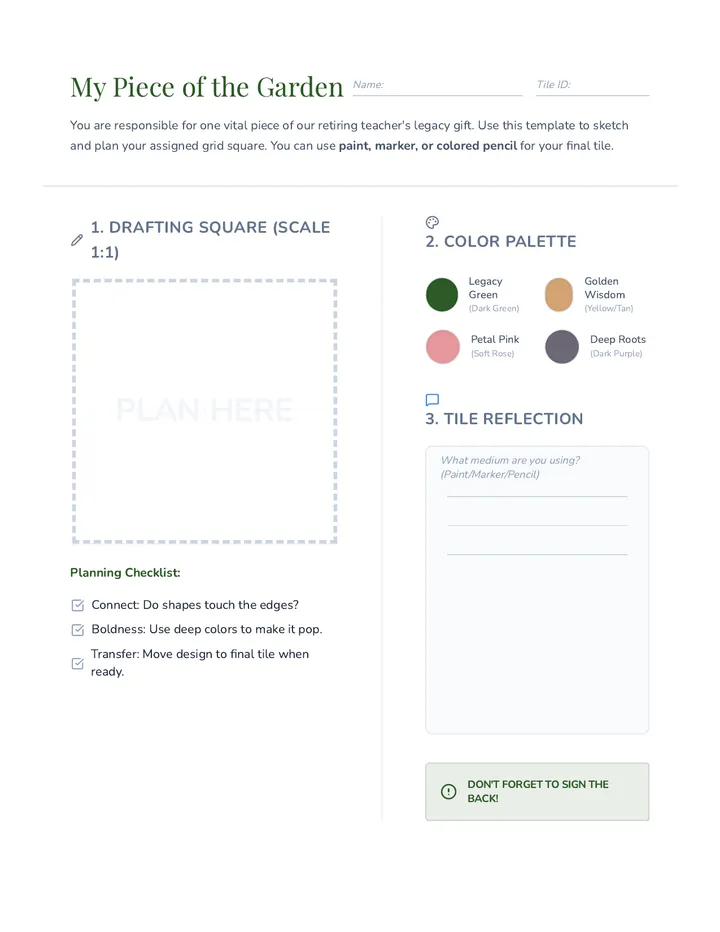
A creative art lesson where students express gratitude and joy by creating a sunshine-themed collage using warm colors and positive sentiments.
Students work in small groups to rehearse and perform mystery plays, analyzing their specific plot structures and reflecting on social-emotional themes.
Students learn the fundamental components of a play script and use a model play to identify setting, characters, and plot structure.
An introductory lesson into the world of stagecraft, covering the 'Big Five' areas of technical theater, stage directions, and the roles of the tech crew. Students will learn how magic is made behind the scenes through visual slides and a hands-on set design challenge.
An independent practice lesson where students read an adventure play and apply their skills in analyzing drama elements, vocabulary, and textual evidence.
A guided lesson featuring a mystery play where the teacher models how to analyze drama structures, use text evidence, and determine word meanings before students practice with guided support.
Students practice and perform five unique fractured fairy tale scripts, each featuring exactly five characters to support collaborative group work.
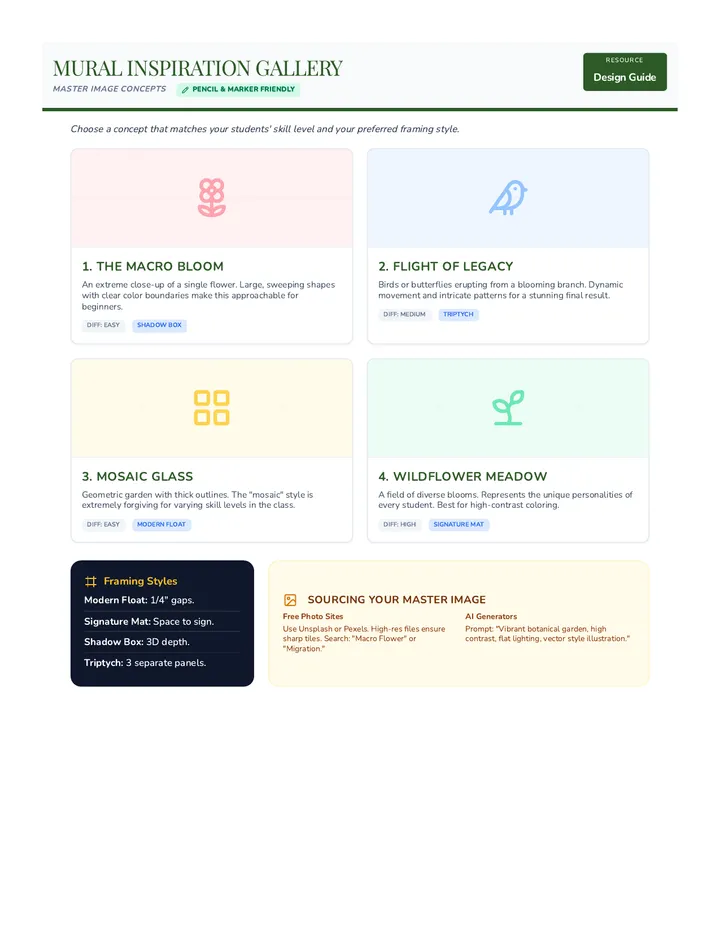
A final unit integrating all skills to create large-scale works inspired by the natural world and global art traditions.
A deep dive into the lives and styles of iconic painters, focusing on impressionism, surrealism, and pop art.
Explores tactile art-making through paper tearing, layering, and found-object assembly.
Focuses on the fundamentals of line, shape, and color through wet and dry media, inspired by landscape and portraiture.
A 40-minute guided art lesson for grades K-3 that introduces the 7 elements of art through a single integrated drawing activity and supporting mini-tasks. Ideal for substitutes, this lesson builds a 'Creative Creature' step-by-step.
A musical exploration where students use the growth of a plant to understand crescendo and decrescendo through movement and voice.
A comprehensive substitute-friendly lesson introducing the 7 Elements of Art to students in grades K-3 through visual exploration and hands-on practice.
A beginner's guide to drawing classroom objects using basic geometric shapes. Students learn to identify and use circles, triangles, squares, rectangles, and ovals through simple step-by-step visual instructions.
In this lesson, students will identify circles, squares, rectangles, triangles, and ovals in common classroom objects. They will then follow visual, step-by-step directions to draw these objects themselves using primary colors.
A kindergarten lesson focused on identifying and using basic geometric shapes (circle, square, triangle, rectangle, oval) to draw familiar outdoor objects. Students follow three-step visual guides to build their artistic confidence through shape recognition.
A lesson for kindergarteners on how to use basic shapes to draw common outdoor settings and objects, following a step-by-step approach to build artistic confidence.
A hands-on introduction to Gelli plate printing, covering basic monoprinting, texture building with plates, botanical resists, and advanced image transfer techniques.
A hands-on file folder game and introductory lesson focusing on four core elements of art: line, shape, color, and texture. Students learn to identify these elements through visual examples and interactive matching.
A Gifted and Talented Kindergarten lesson exploring the life and geometric abstract art of Piet Mondrian, focusing on primary colors, grids, and artistic balance.
A guided exploration of the Harlem Renaissance exhibition at the Met Museum, designed for students with emerging reading skills to engage with art history through literal and inferential questions.
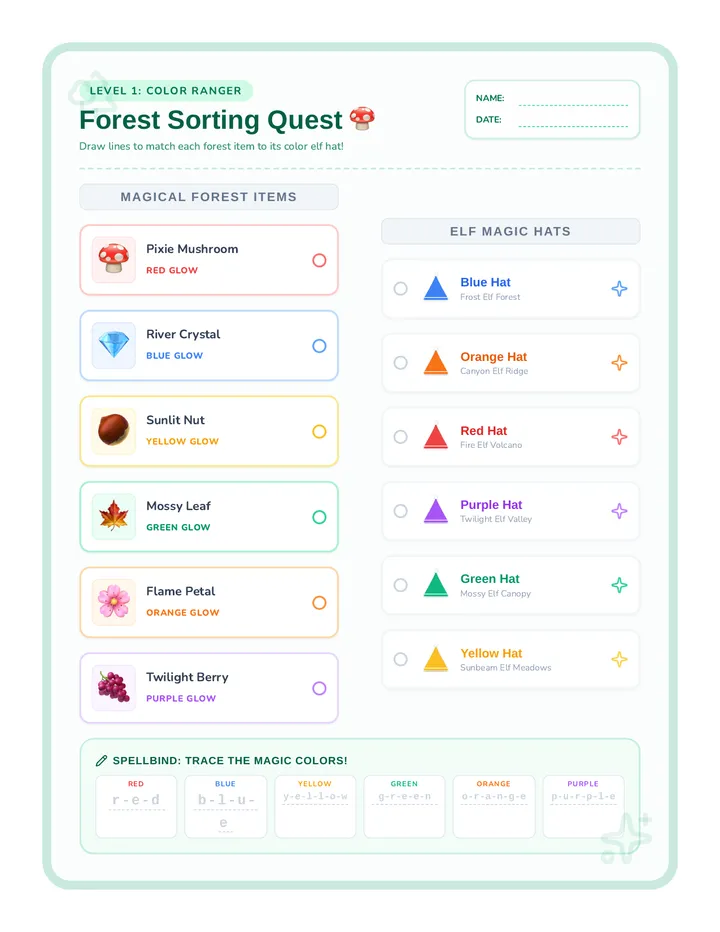
A creative exploration of colors through a word search activity, designed for young artists or those needing large print accessibility.
A fun, hands-on lesson for kindergarteners to learn how to dress basic shape-based figures using primary colors and simple patterns. Students will practice identifying shapes and making creative choices for their character's outfits.
A simple, step-by-step drawing lesson for kindergarteners to learn basic facial features. Students will follow along to draw eyes, a nose, and a mouth on a circle.
A kindergarten art and geometry lesson where students learn to construct human figures using five basic shapes: circles, triangles, squares, rectangles, and ovals.
A series of hands-on spring-themed craft activities for kindergarteners that focus on fine motor skills, shape recognition, and pre-writing strokes. Students practice cutting, gluing, and drawing through structured, visual step-by-step instructions.
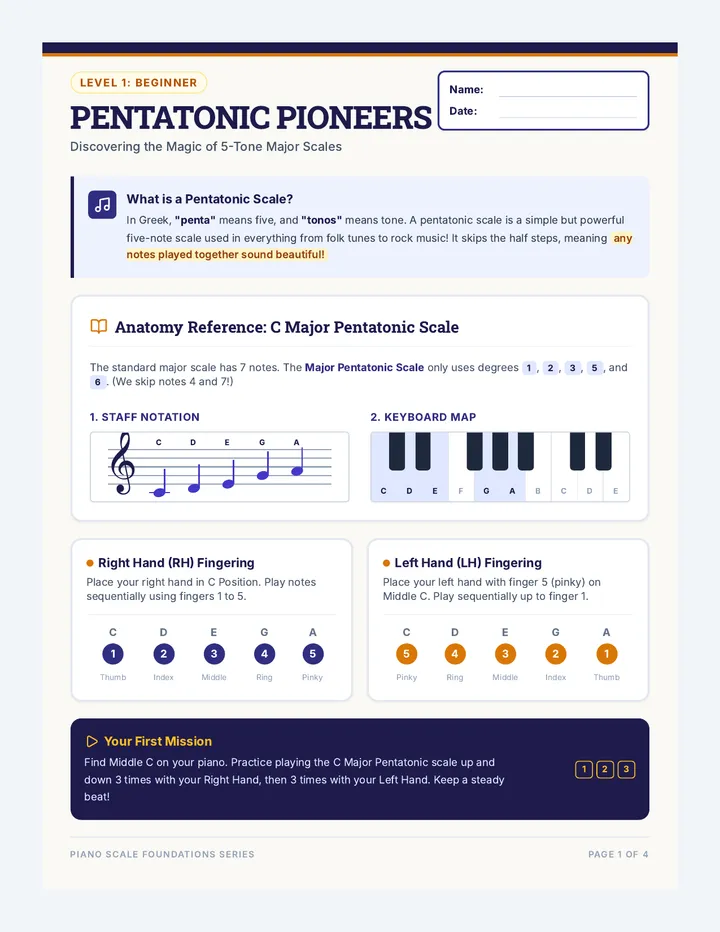
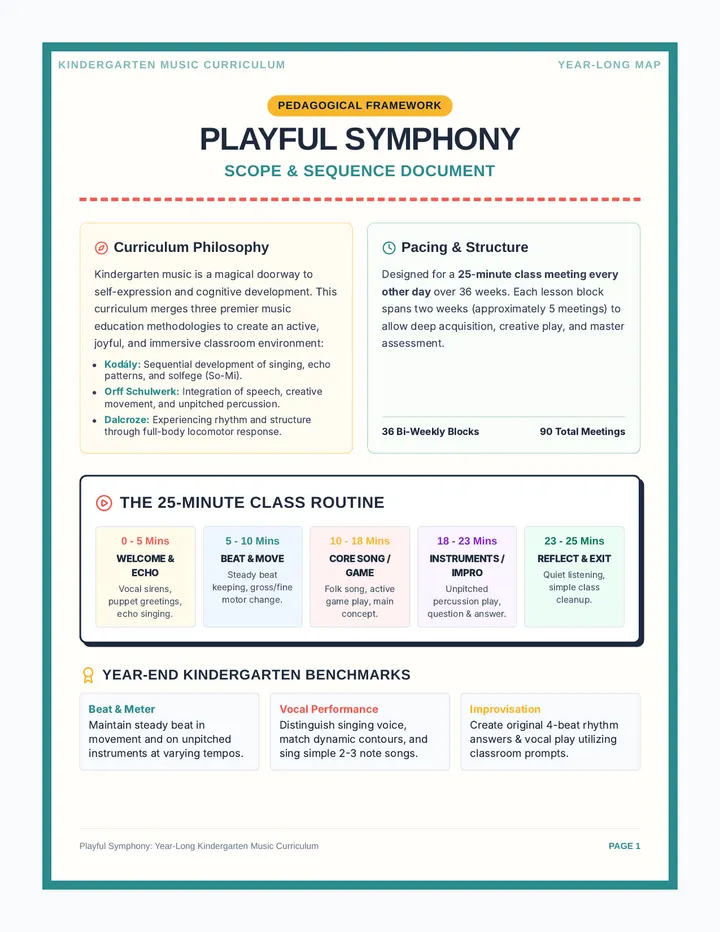
A foundational dive into music theory basics, covering rhythm, pitch, scales, and harmony for beginners.
An introductory lesson to the world of musical theatre for 3rd graders, focusing on the 'Three Pillars': acting, singing, and dancing. Students will explore how these elements combine to tell stories on stage.
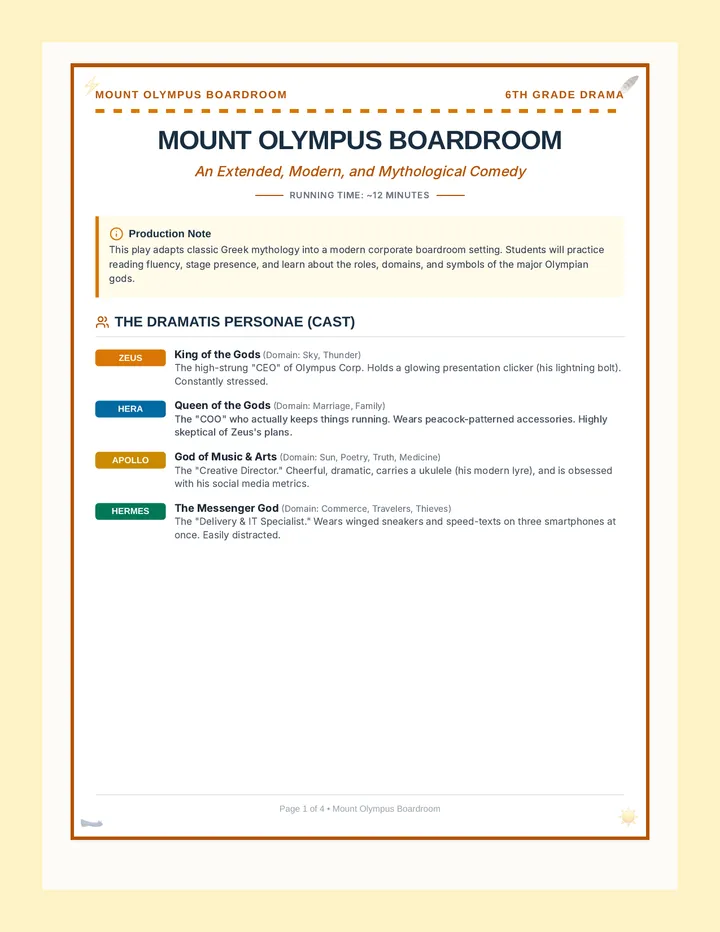
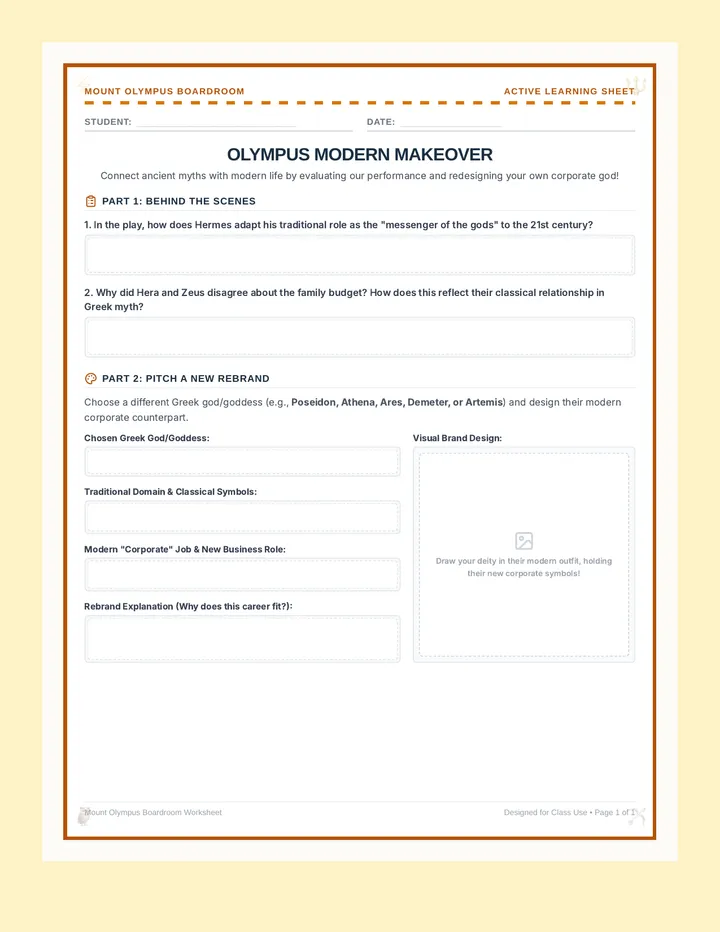
Exploring Hermes and Aphrodite, ending the week with a final reading sheet and a wrap-up discussion on Olympian legacies.
The stories of Apollo and Artemis, focusing on the moon, the sun, and the constellation Orion. Students will create popsicle stick constellation looms.
A focus on Athena and Ares, contrasting wisdom and war. Students will complete an Olympian Shield painting project.
Exploration of Poseidon, his domain over the sea, and the constellation Delphinus. Includes a reading sheet and discussion.