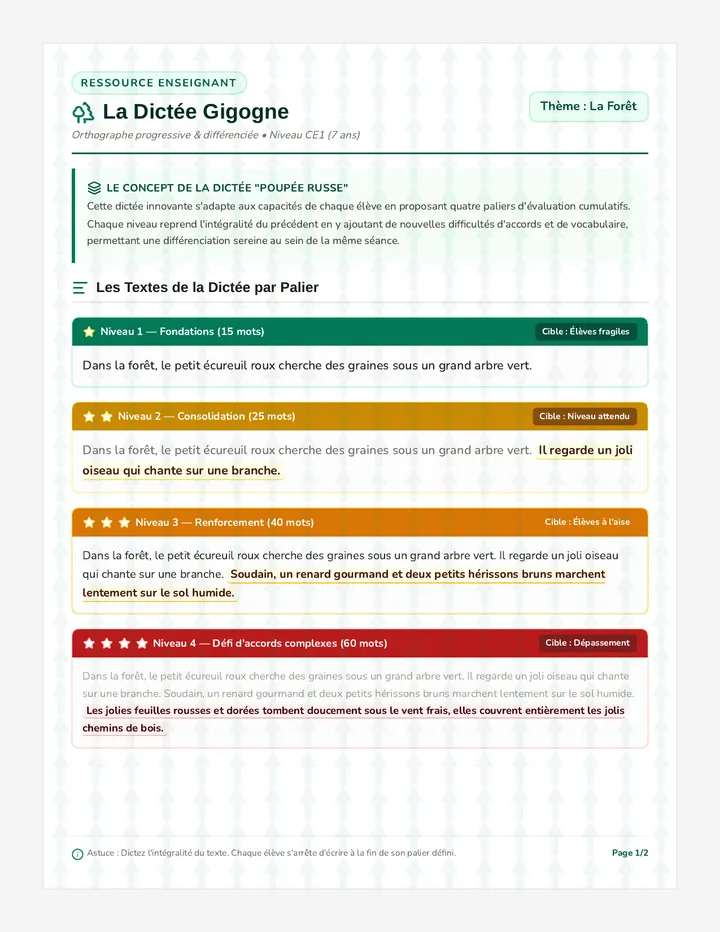
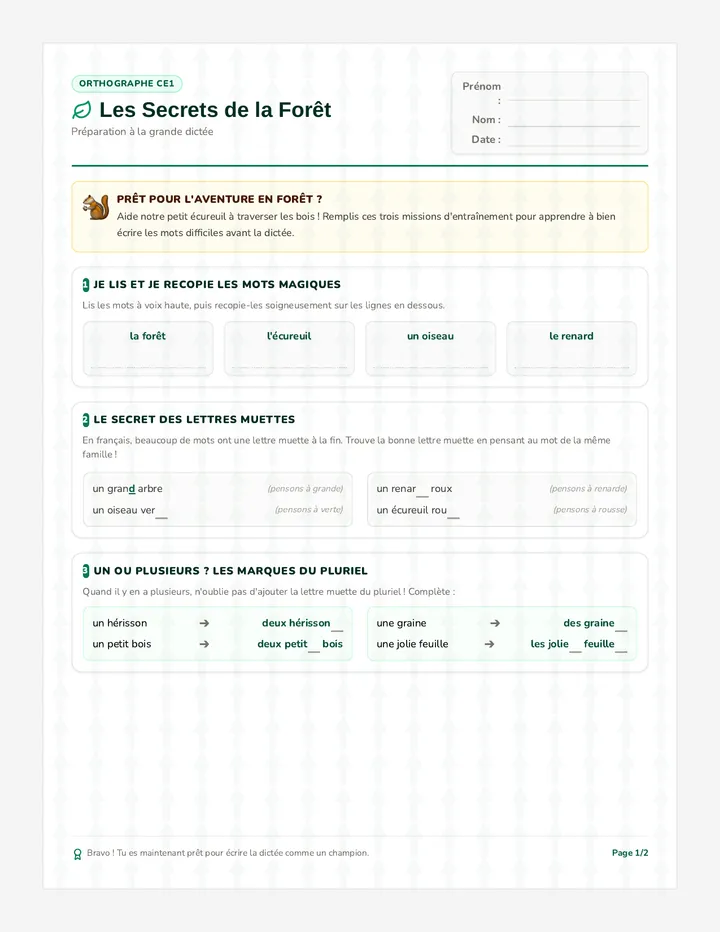
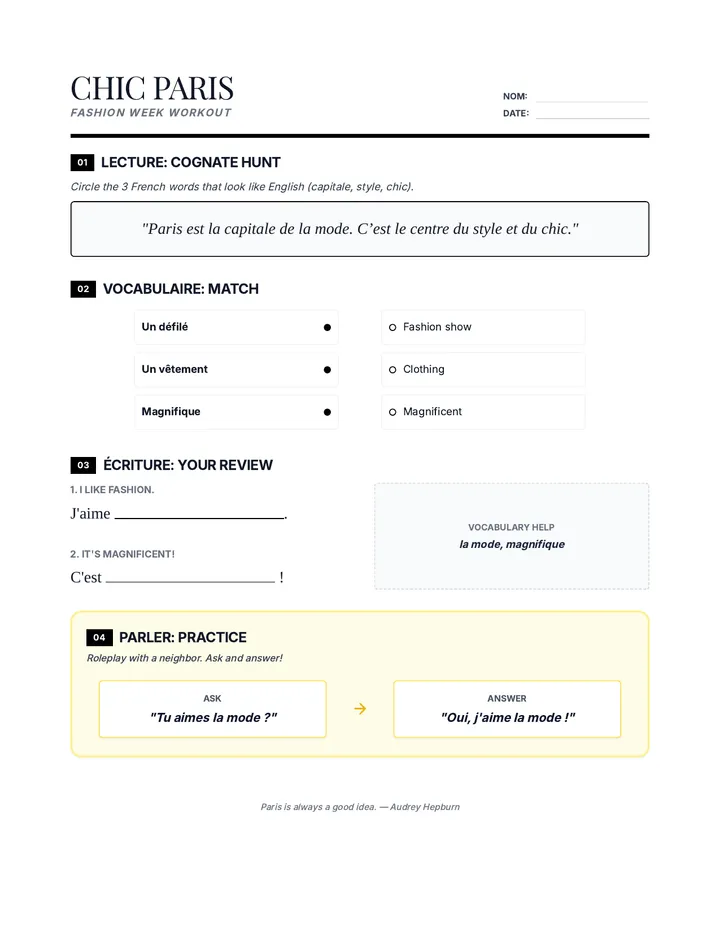
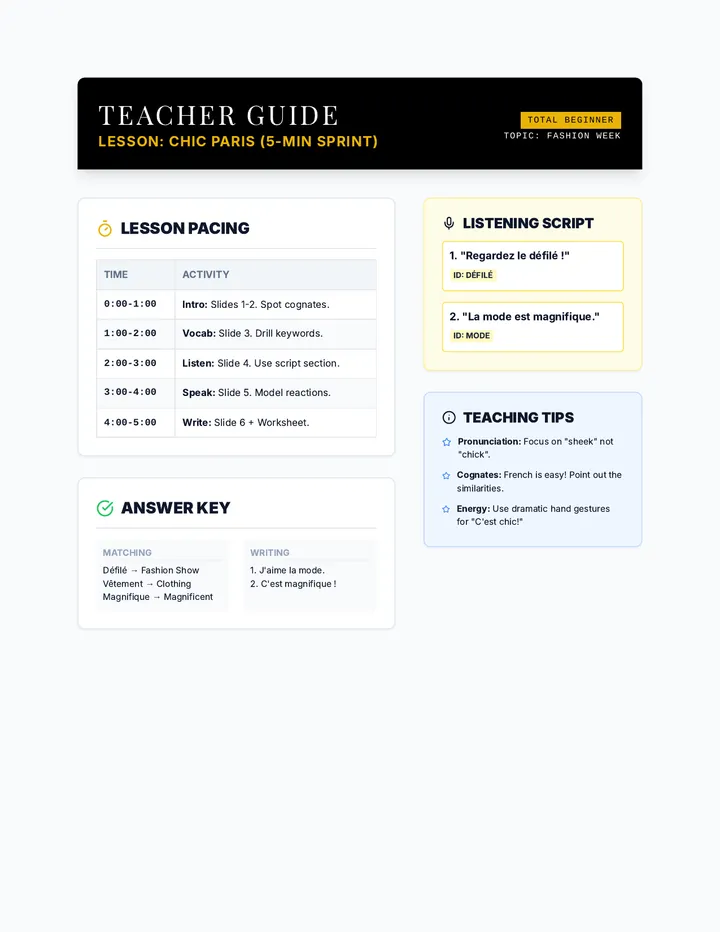
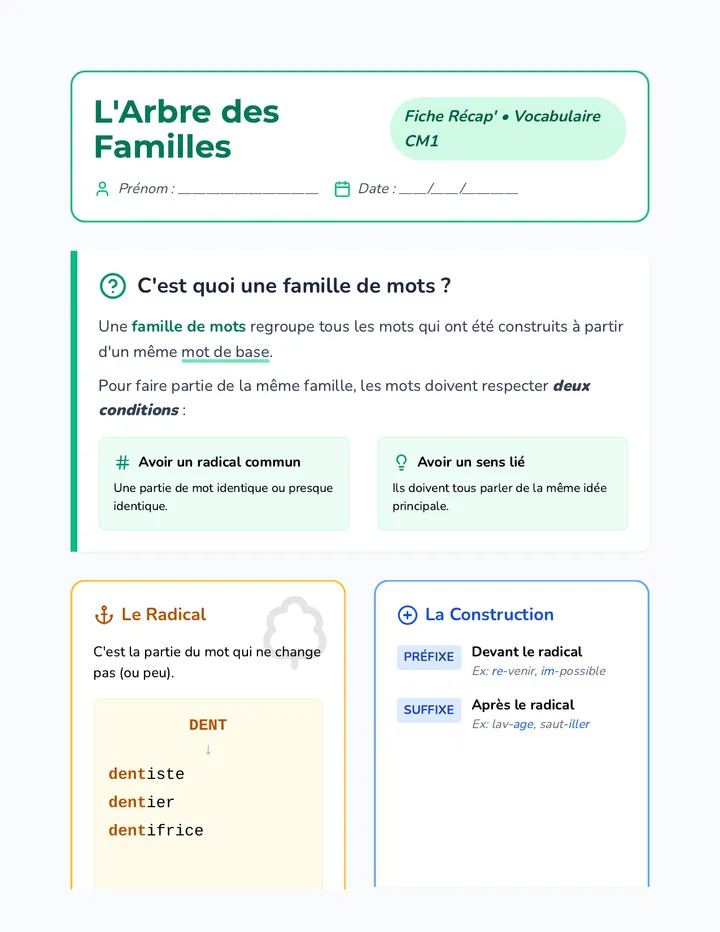
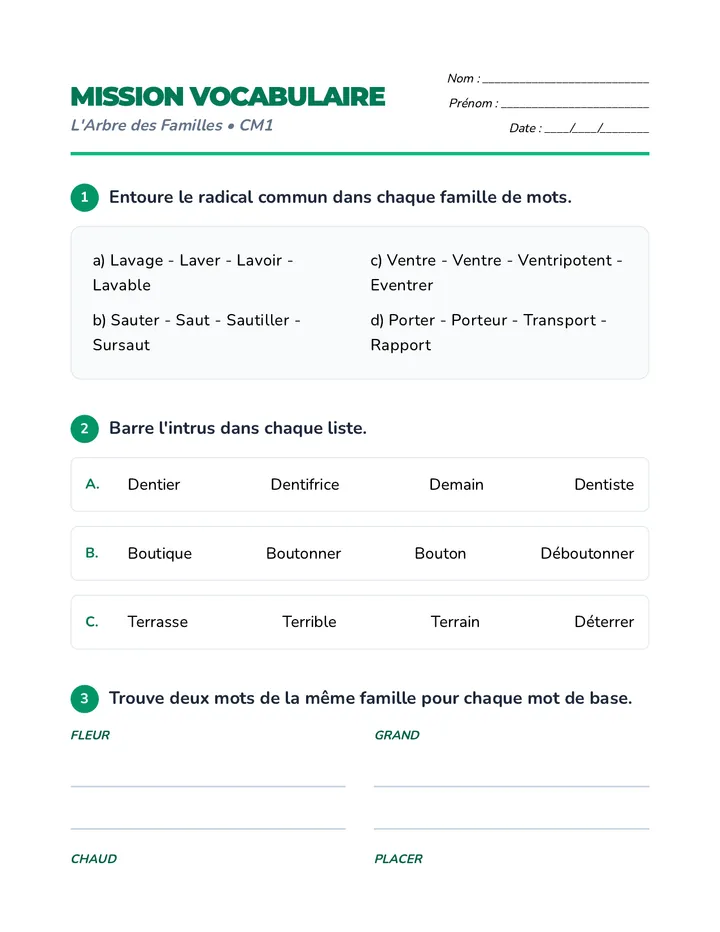
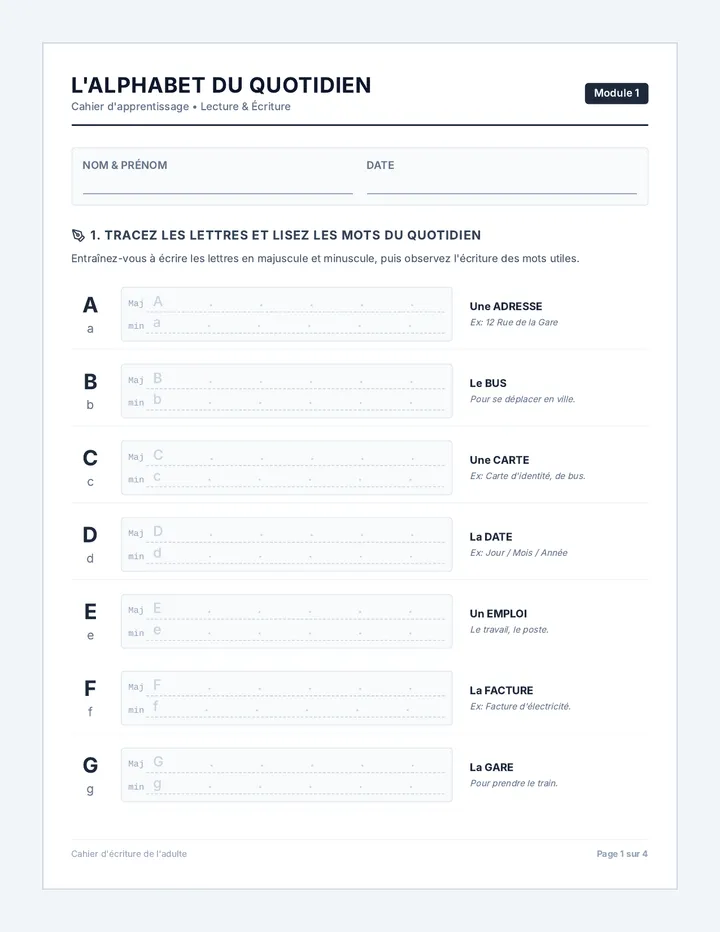
Comprehensive French language instruction spanning basic literacy to advanced oral and written communication. Strengthens grammar, vocabulary, and cultural understanding through targeted exercises in listening, reading, and composition.
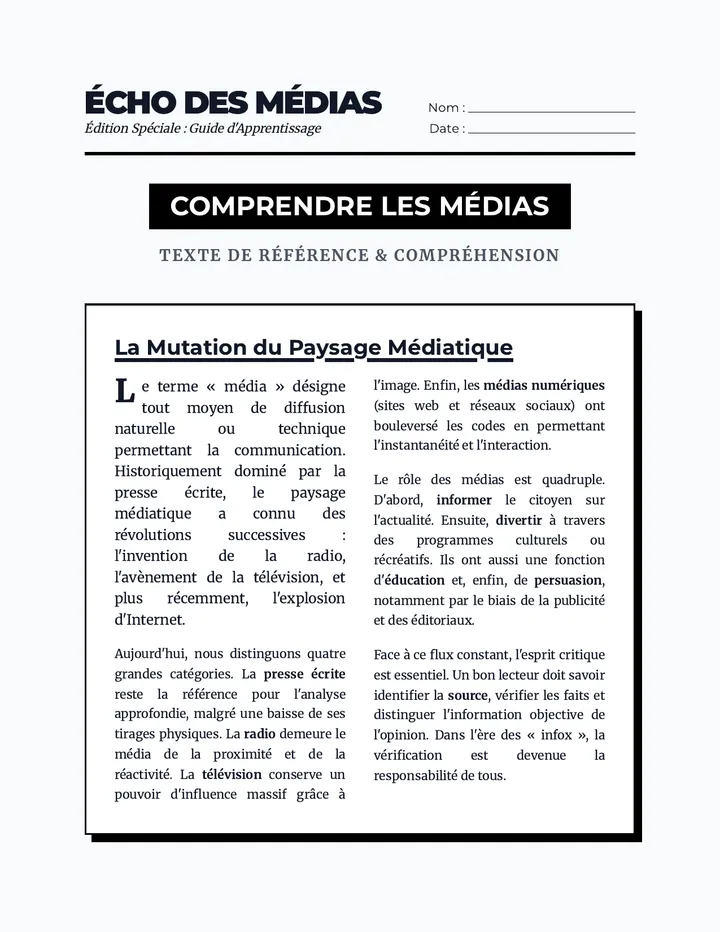
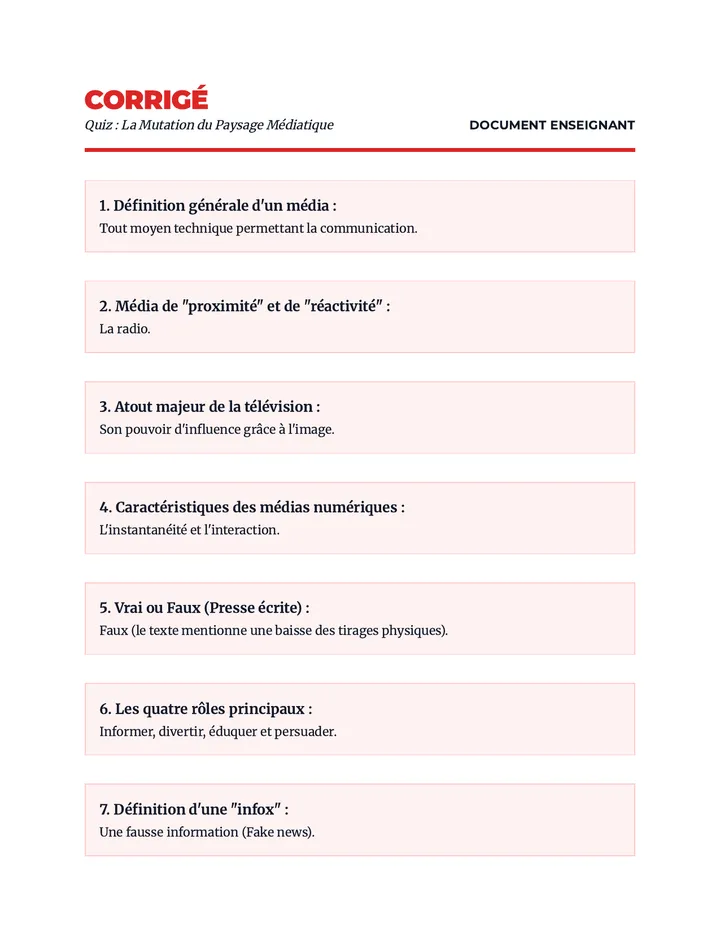
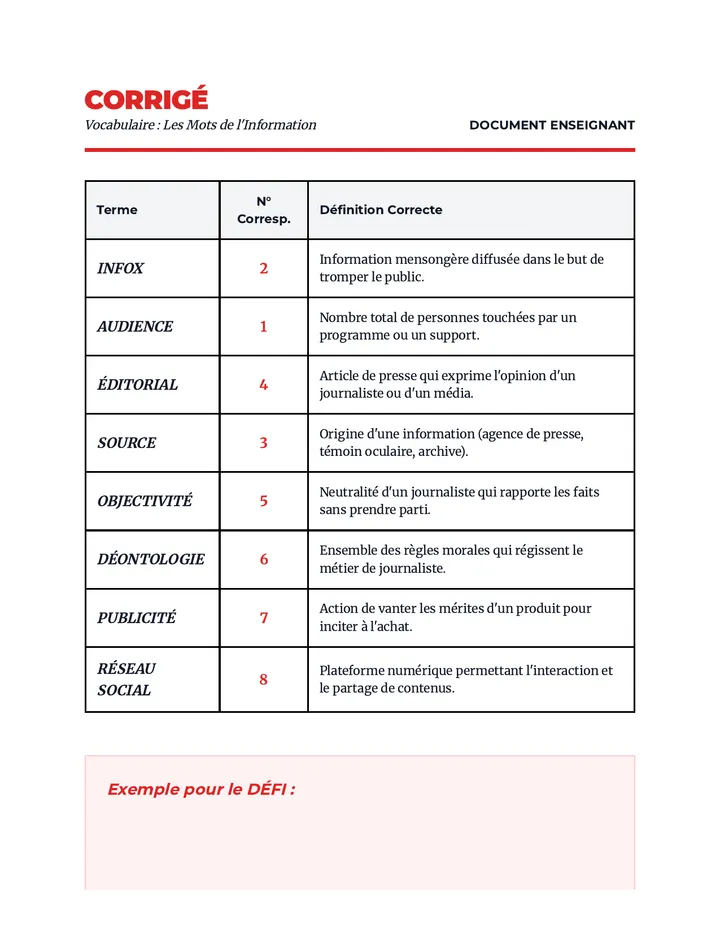
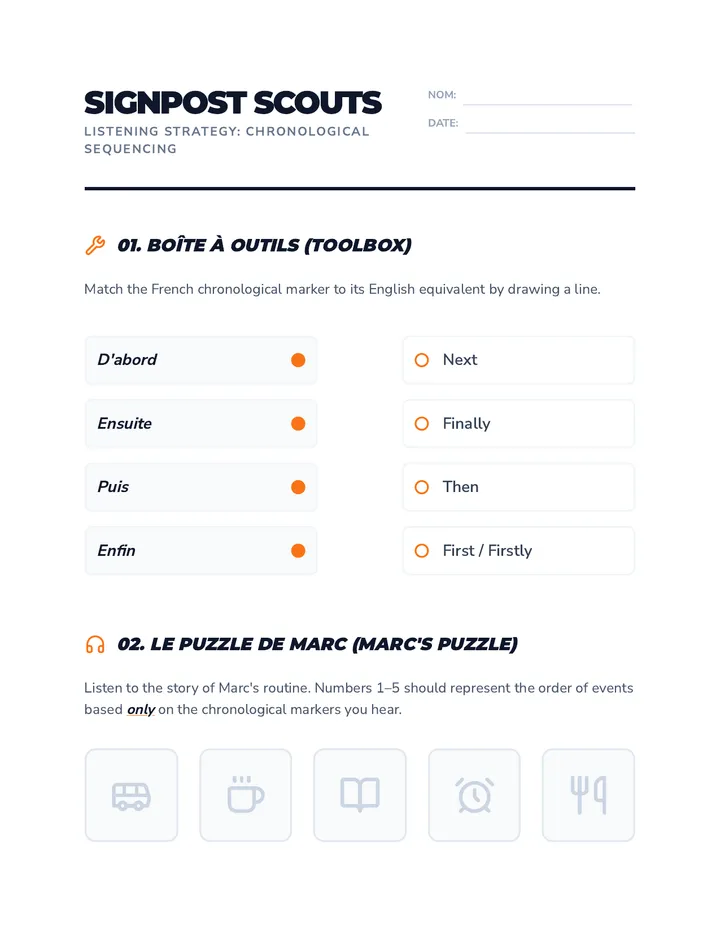
A project-based sequence for beginner French students focused on decoding media through narrative structures, logical connectors, and 'gist' listening strategies. Students move from identifying chronological signposts to analyzing news segments, street interviews, and cultural advertisements, culminating in a media analysis project.
A sequence for undergraduate students focusing on building pragmatic listening skills in French social contexts, from basic greetings to complex scheduling and narrative comprehension.
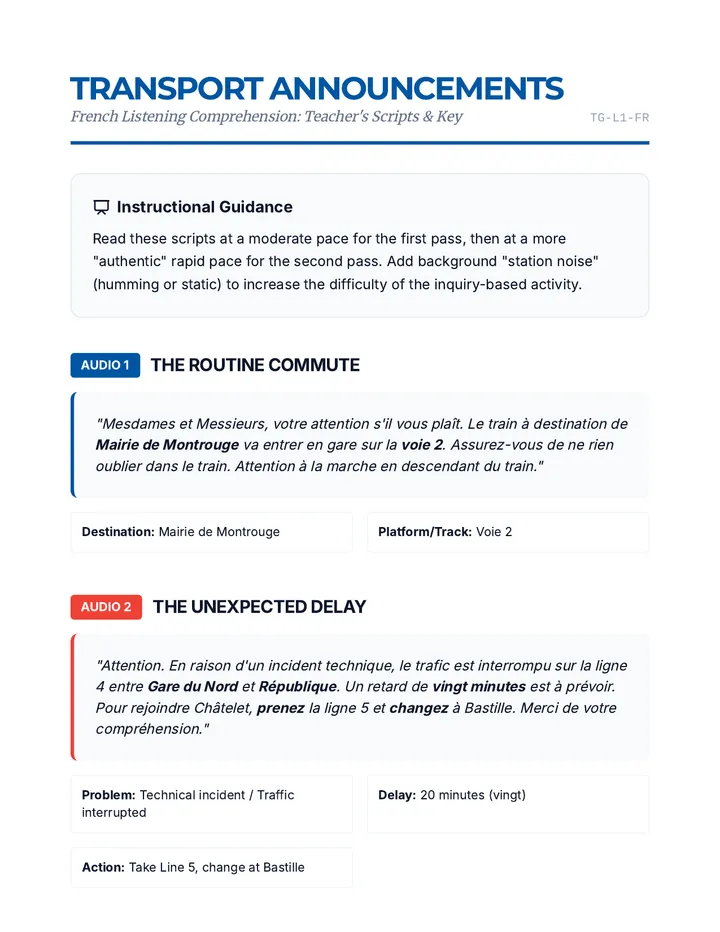
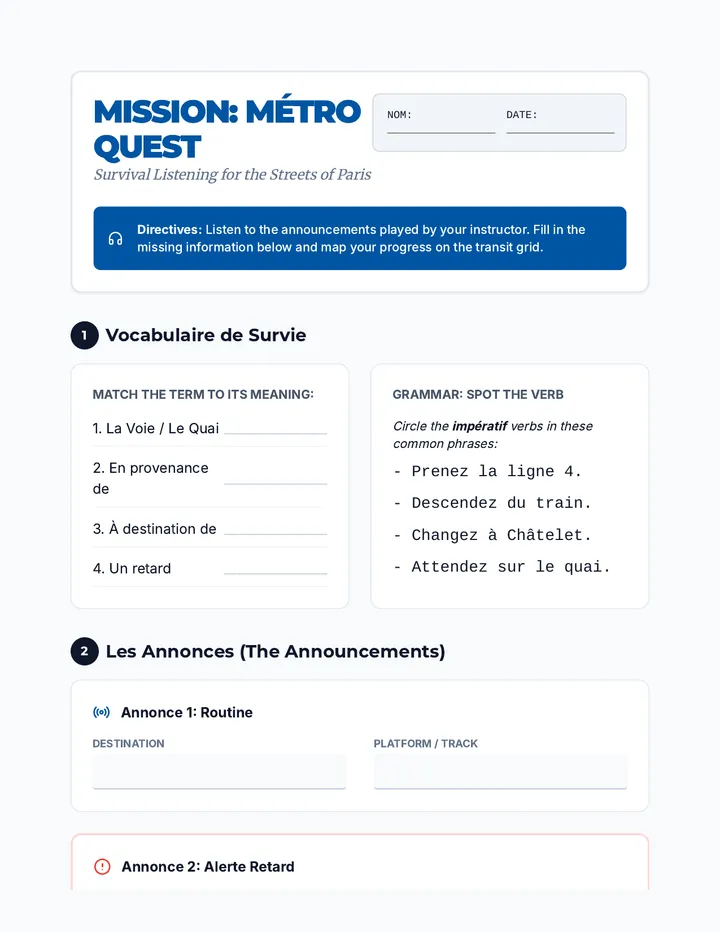
An inquiry-based French listening sequence for beginners focusing on functional navigation of public spaces in Francophone cities. Students learn to filter essential information from ambient noise in transport, weather, street directions, retail, and emergency contexts.
A project-based sequence for 8th-grade French students focused on listening skills for navigating a city, following directions, and conducting commercial transactions. Students progress from identifying places to synthesizing complex instructions in a final scavenger hunt.
A comprehensive 8th-grade French listening sequence focused on time-telling, school schedules, and daily routines using the 24-hour clock and school-themed vocabulary.
This sequence introduces 8th-grade students to the foundational auditory skills required for French proficiency. Students progress from isolating specific phonemes and nasals to recognizing cognates, distinguishing formal and informal registers, and finally comprehending full personal introductions.
This sequence transitions 11th-grade French students from transactional listening to understanding descriptive narratives. Students analyze audio profiles of diverse Francophone individuals to understand physical descriptions, personality traits, and daily routines, culminating in the synthesis of a complete personal narrative.
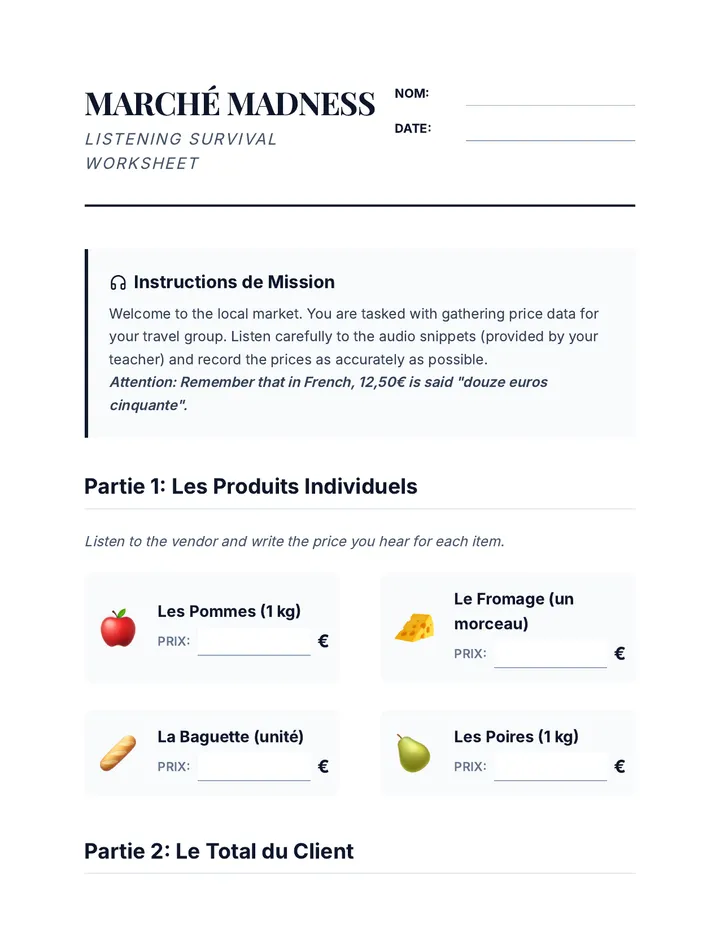
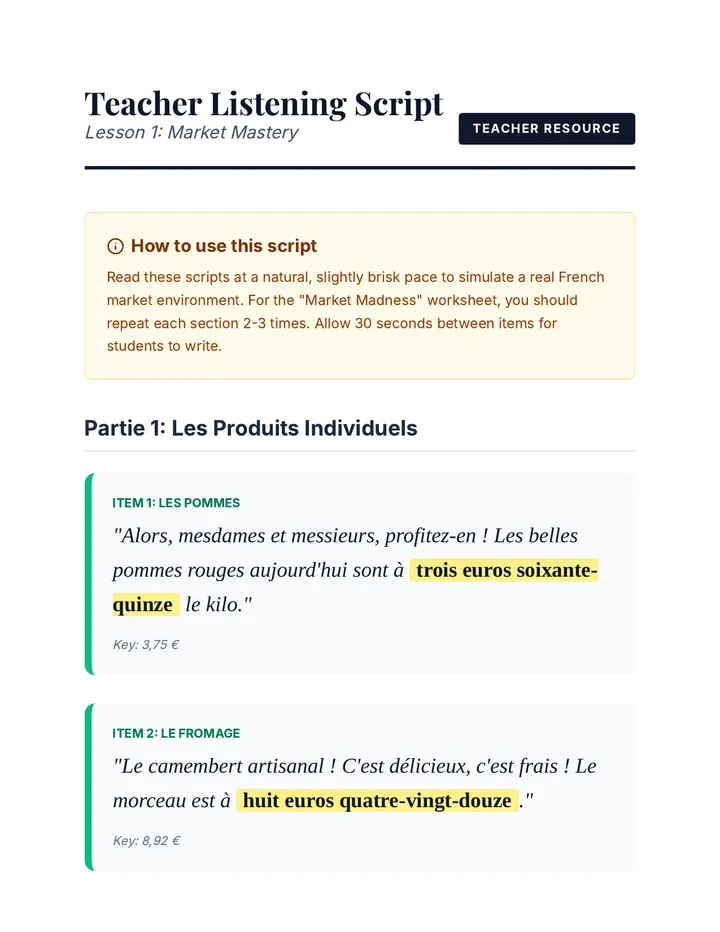
A high-stakes travel simulation building French listening proficiency in logistics: numbers, time, prices, and directions. Students navigate virtual 'survival' scenarios where accurate information processing is the key to a successful journey.
A foundational sequence for 11th-grade French students to master the phonetic nuances and social cues of spoken French, moving from vowel discrimination to full biographical synthesis.
This sequence guides 9th-grade French beginners through the art of listening for meaning rather than just words. Students learn to use cognates, context, social registers, and emotional tone to interpret narratives and dialogues, culminating in the ability to summarize global meaning.
An immersive 9th-grade French sequence focused on 'survival listening'. Students navigate real-world travel scenarios including transportation, dining, and shopping, learning to extract essential data from spoken French.
A beginner French listening sequence for 10th graders focused on navigating real-world travel scenarios. Students develop auditory comprehension through simulated interactions in cafes, train stations, boutiques, and emergency situations.
A beginner French listening sequence where students act as social observers, analyzing registers, personal details, family structures, and preferences through auditory scripts.
This sequence builds foundational auditory skills for beginner French learners, focusing on phonetic discrimination, number recognition, and parsing sentence boundaries to develop comprehension.
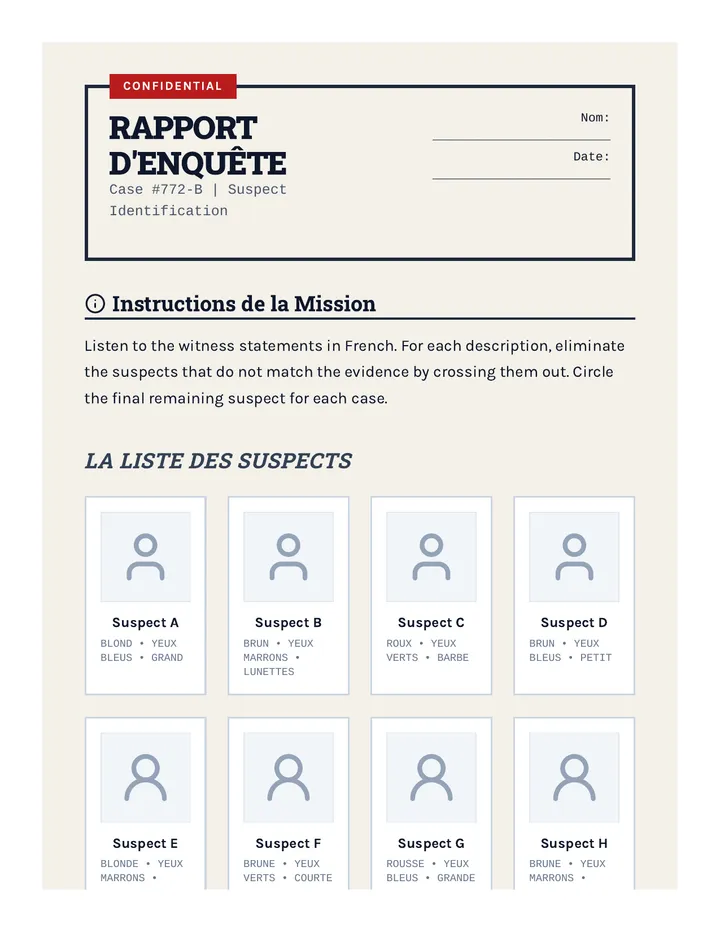
A game-based French listening sequence for 7th graders where students act as detectives to decode physical descriptions, preferences, family ties, and food orders to solve a final mystery.
An immersive introductory sequence for 7th-grade French students focused on decoding the auditory landscape of the French language, from basic phonemes to complex social interactions.
A 5-lesson sequence for 6th Grade French beginners focusing on listening comprehension through TPR, commands, spatial descriptions, and directional movement. Students act as 'Language Agents' on various missions to decode and execute instructions in French.
A 5-lesson unit for 6th-grade French students focusing on auditory comprehension of greetings, alphabet, numbers, and personal identity using a 'Language Detectives' theme. Students progress from isolating sounds to synthesizing full personal profiles from audio input.
A five-day auditory immersion for high school seniors to master the essential listening skills required for navigating a French-speaking city, from airport announcements to social interactions and emergency responses.
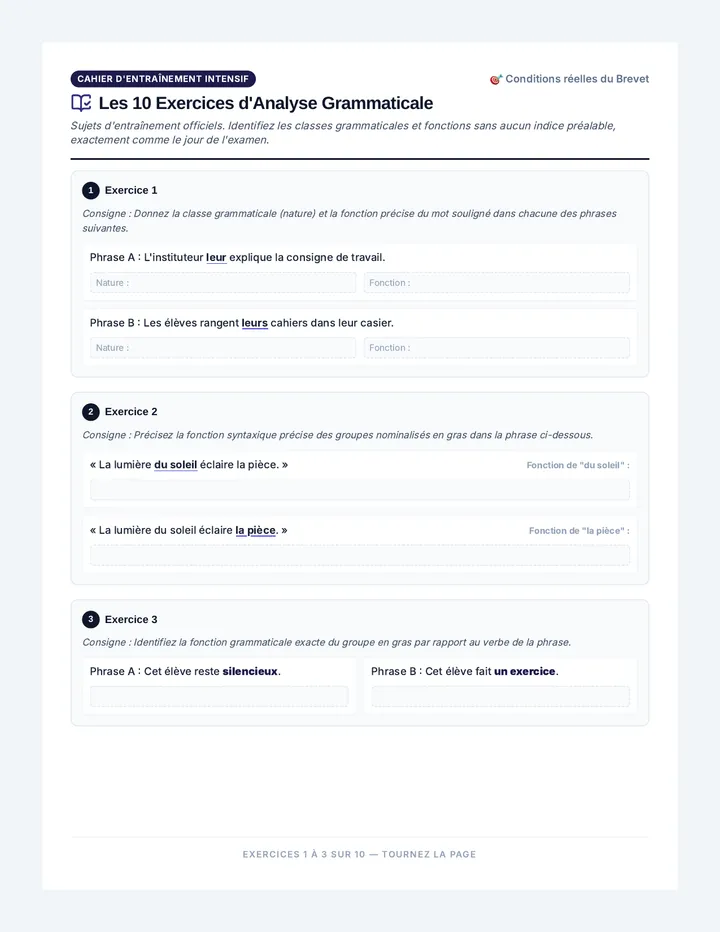
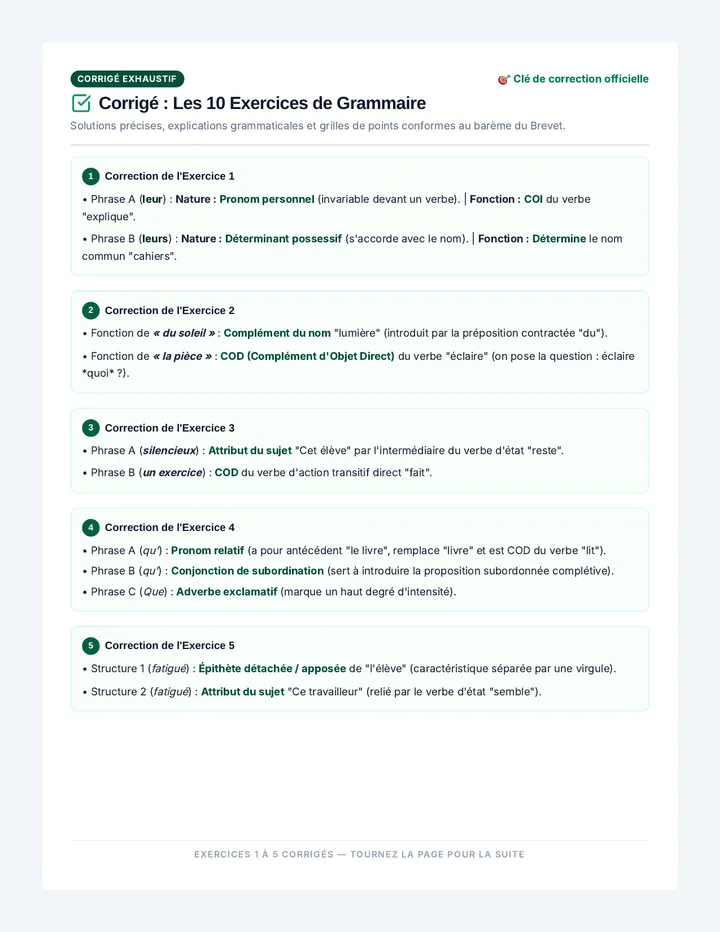
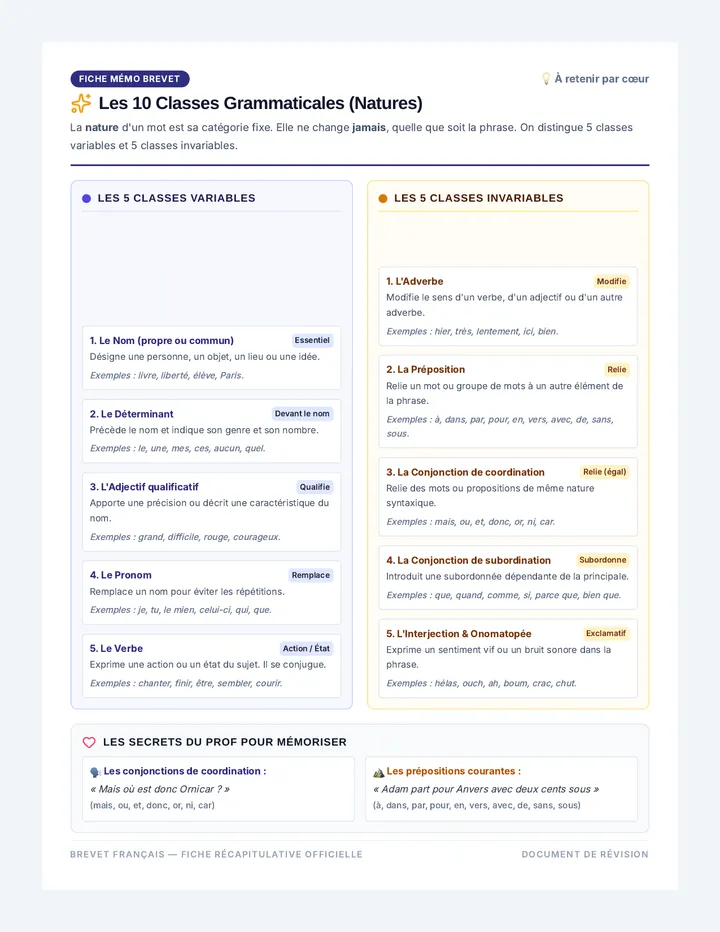
A graduate-level introductory course deconstructing French grammar as a logical system. This sequence moves beyond rote memorization to explore the 'why' behind sentence structure, focusing on subject-verb agreement, negation, question formation, and complex sentence building.
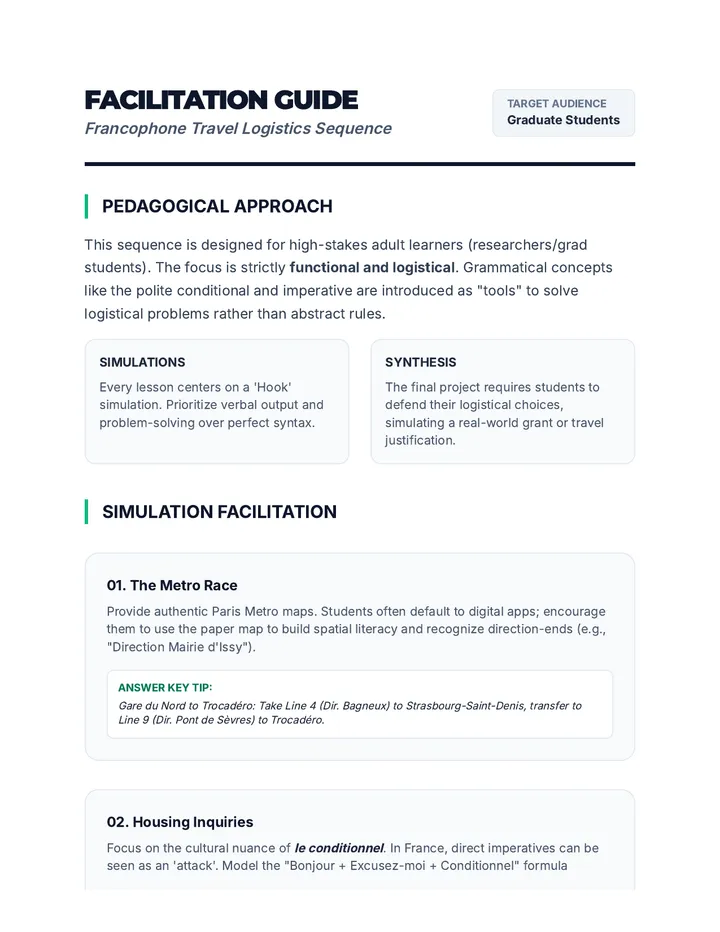
A specialized French language sequence for graduate students focusing on the practical logistics of travel, research trips, and fieldwork in Francophone regions. Students progress from basic navigation and housing to complex financial transactions and itinerary planning.
A 4th-grade French sequence focused on café culture, polite communication, and currency. Students learn to navigate a restaurant setting through immersive simulations and role-play.
This sequence introduces 4th-grade students to French family vocabulary and possessive adjectives. Students will learn to describe their family members and pets, ending with the creation of a personalized family tree project.
A 4th-grade French sequence focused on classroom communication through Total Physical Response (TPR) and immersive games. Students move from labeling their environment to requesting permission and solving a culminating scavenger hunt using functional vocabulary and imperatives.
Students move beyond simple introductions to expressing personal identity, preferences, and traits using the verbs 'être' and 'aimer'. The project-based learning arc culminates in the creation of a 'Star Student' poster where students present who they are in French.
An inquiry-based exploration of French communities where students learn to identify landmarks, use spatial prepositions, and provide directions. Students develop practical communication skills while virtually navigating Francophone cities.
This sequence guides 5th-grade students through describing people in French, covering family vocabulary, the verb être, and the rules of adjective agreement. Students move from basic identification to complex descriptive writing within a 'French Portrait Gallery' theme.
A 5th Grade French unit where students learn to express their likes, dislikes, and hobbies using 'aimer', 'adorer', 'détester', and negation, culminating in a personal identity profile project.
Students explore French culture through politeness and classroom navigation. They learn 'magic words', object names, and teacher commands through TPR and role-play to function effectively in a French-speaking environment.
Students master French numbers 0-20, months of the year, and personal data (age and birthdays) through rhythmic activities, games, and simulations. The sequence culminates in a classroom birthday celebration that puts their new linguistic skills into a cultural context.
A comprehensive introduction to French auditory comprehension for undergraduate beginners, focusing on vowel discrimination, nasal sounds, connected speech (liaisons), consonant nuances, and intonation patterns. Students progress from sound isolation to full-sentence transcription.
A foundational sequence for beginner French students focusing on phonetics, nasal sounds, liaisons, and intonation to improve listening comprehension and transcription skills.
This sequence introduces graduate students to French through authentic media, focusing on cognates, context clues, and basic discourse. Students progress from decoding headlines to discussing cultural habits and expressing opinions on global themes.
A 4th-grade French sequence focused on mastering greetings, introductions, and basic social etiquette. Students learn to navigate formal and informal social registers, express emotions, and use politeness markers through interactive simulations and games.
A 5th-grade French sequence focused on practical logistics: numbers, dates, time, and scheduling. Students engage in a travel-themed simulation to master essential communication skills for navigating daily life in a Francophone environment.
This sequence introduces 5th-grade students to foundational French communication, focusing on greetings, introductions, and cultural nuances of address. Through interactive games and role-play, students build the confidence to conduct basic social exchanges in French.
Students learn to describe their family and pets in French, mastering vocabulary for relatives and pets, sentence structures with 'J'ai', and numbers, culminating in a creative family poster presentation.
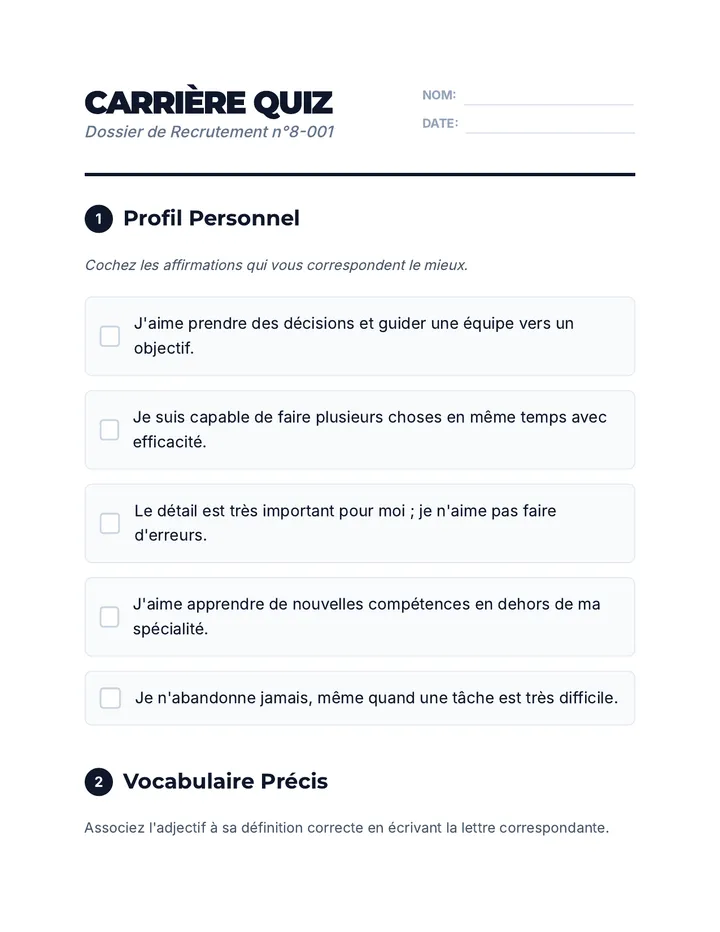
An immersive sequence where 8th-grade students master intermediate French professional vocabulary, formal communication strategies, and cultural workplace etiquette through simulated career scenarios.
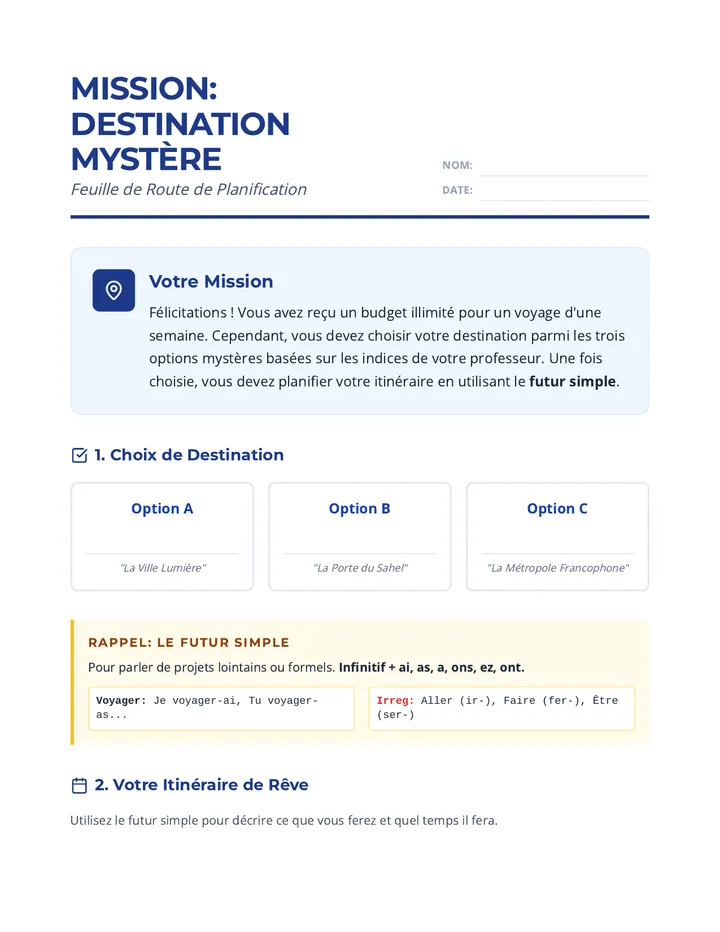
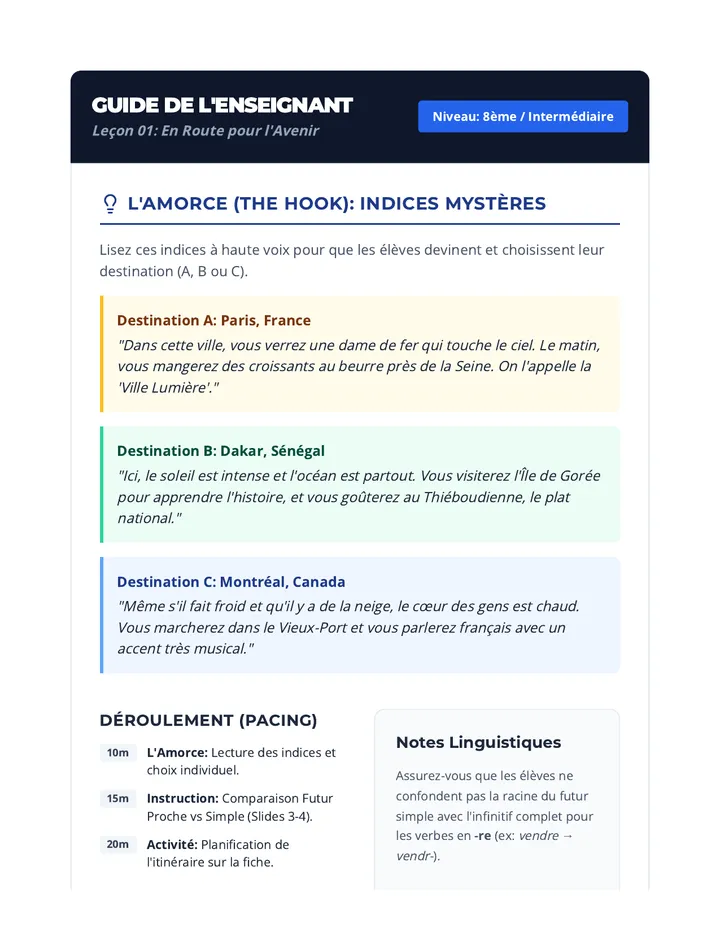
An immersive intermediate French sequence where students navigate travel scenarios in Paris, Dakar, and Montreal, mastering future, past, and conditional tenses through simulated real-world interactions.
Students act as linguistic anthropologists creating a specialized 'Field Guide to Foreign Expressions' for a chosen professional or cultural domain. They investigate the etymology, usage, and visual representation of foreign terminology to explain their chosen field's linguistic history to a lay audience.
An advanced French literature sequence for graduate students, exploring the stylistic and philosophical depths of Francophone authors from Camus to Djebar. Students analyze the 'passé simple', 'écriture blanche', and themes of post-colonialism and Negritude to master literary interpretation in French.
This sequence immerses graduate students in the landscape of contemporary French journalism, focusing on current events and social debates. Students move from identifying the structural components of news articles to analyzing complex opinion pieces and synthesizing multiple perspectives on sensitive topics like secularism.
This sequence equips graduate students with French communication skills for academic and professional networking, focusing on formal registers, research descriptions, and scheduling.
This sequence introduces 3rd-grade students to basic French communication centered on emotions and physical states. Students progress from simple greetings to expressing specific needs and sensations, culminating in a class-wide survey project.
This sequence helps undergraduate students build a foundational ability to describe themselves, their families, and their daily lives in French. Students transition from basic adjectives to complex reflexive verbs, culminating in a real-world roommate interview simulation.
This sequence equips graduate students with high-efficiency strategies for reading and synthesizing academic French research. Students progress from rapid scanning techniques to deep syntactical analysis and precise translation of abstract theoretical concepts.
This advanced sequence explores the architecture of literary French, focusing on the passé simple, imparfait du subjonctif, and formal syntactic structures. Students move from morphological recognition to active stylistic analysis and translation, culminating in the ability to manipulate high-register prose.
A comprehensive module for advanced French students focused on the morphology, function, and stylistic impact of literary tenses (passé simple, passé antérieur, and imperfect subjunctive) in formal narrative. Students transition from passive recognition to active analysis and formal composition.
A graduate-level writing sequence focused on deconstructing and reconstructing French literary voices through the study of register, pastiche, and narrative authority. Students analyze styles ranging from 18th-century satire to modern fragmentation to master the art of register manipulation.
This sequence guides advanced French students through the recognition and analysis of literary tenses (passé simple and imparfait du subjonctif) in classic literature, culminating in a creative stylistic imitation project.
This sequence for graduate students explores the sophisticated art of French rhetoric, moving from the analysis of historical political oratory to the creation of contemporary op-eds (tribunes). Students master advanced stylistic figures, the logic of concession, and the rhythmic flow of prose to wield language as a powerful tool for intellectual influence.
This advanced French sequence for graduate students explores the intersection of language, power, and media. Students master the specialized vocabulary of French institutions, analyze rhetorical strategies in political speeches, and decode the nuances of satirical press to understand how socio-political discourse shapes French national identity.
This advanced French grammar sequence explores the complexities of hypothetical 'si' clauses, focusing on the conditional past and pluperfect tenses. Students transition from reviewing basic structures to analyzing historical regrets and creating alternative history narratives.
A graduate-level sequence exploring the stylistic nuances of the French language, focusing on literary registers, semantic precision, idiomatic subversion, and creative constraints to master advanced vocabulary.
A comprehensive exploration of the French passé simple, focusing on its role in classical literature, its relationship with other past tenses, and its stylistic impact on narrative voice. Students move from recognition to creative application through analysis of fairy tales and modern transformations.
This advanced French sequence equips graduate students with the linguistic precision and cultural mastery required for high-stakes professional negotiations, diplomacy, and corporate leadership in the Francophone world. Students will master complex registers, financial terminology, and strategic communication styles through simulations and case studies.
A comprehensive unit for advanced French students focusing on the mastery of literary tenses (passé simple, imparfait, and plus-que-parfait) within the context of narrative fiction. Students transition from passive recognition to active production, culminating in a class anthology of original short stories.
A sequence for advanced French students exploring abstract and philosophical concepts. It covers existentialism, ethics, aesthetics, and the structure of the French philosophical dissertation, emphasizing high-level vocabulary and argumentative skills.
A culminating French sequence where students master advanced grammar through narrative storytelling. Students integrate complex tenses, moods, and syntax to draft, edit, and present original short stories.
A sequence for 12th Grade Advanced French students to master the art of cinema critique. Students progress from learning technical film vocabulary to writing professional-grade film reviews and conducting comparative cultural analyses of French and international cinema.
This sequence explores the power of advocacy writing in French, focusing on the historical context of 'l'engagement' and the linguistic tools needed to write manifestos and open letters for social change. Students develop advanced writing skills using the subjunctive, modal verbs, and emotive vocabulary while exploring their roles as civic actors.
A comprehensive unit for advanced French students focused on recognizing and analyzing literary tenses (Passé Simple and Passé Antérieur) to understand narrative pacing and linguistic register in classic literature.
A comprehensive unit for advanced French students focused on the art of the 'Synthèse'. Students develop the analytical and writing skills necessary to integrate multiple perspectives into a single, objective narrative, preparing them for high-level examinations like DELF B2/C1 and AP French.
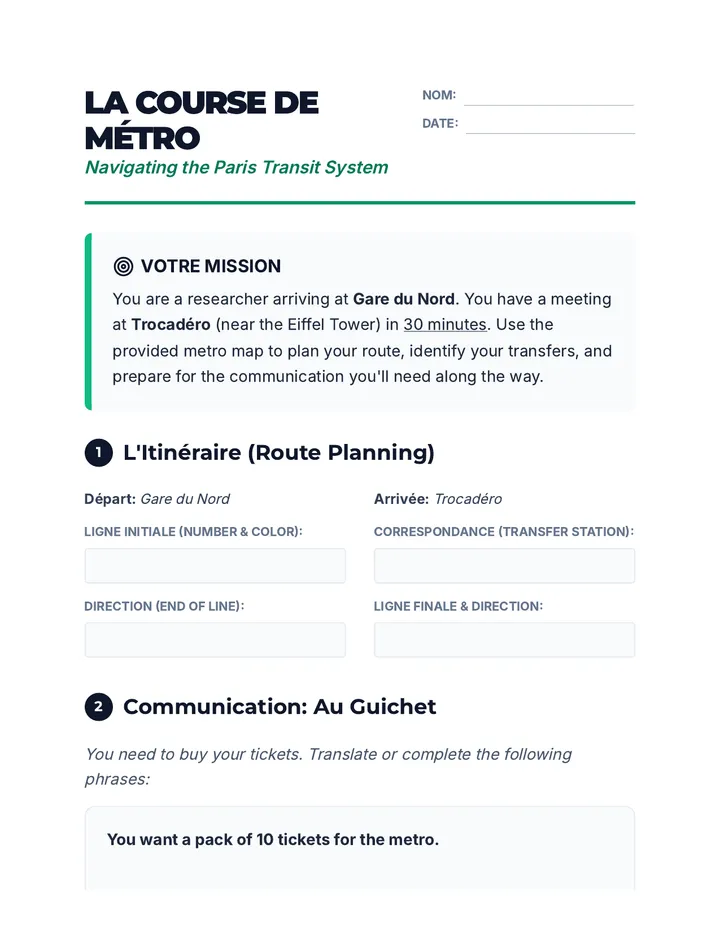
This sequence teaches undergraduate students how to navigate French cities and public transportation systems. Students will progress from basic vocabulary for urban places to mastering prepositions, the imperative mood for directions, and complex transit logistics, culminating in a comprehensive Parisian travel project.
A comprehensive unit on French transactional communication, focusing on numbers, politeness, menu navigation, and preferences within dining and shopping contexts.
A specialized French language sequence for graduate students focusing on high-frequency 'scripts' for navigating daily life and commerce in French-speaking environments. Each lesson centers on a specific transactional domain: commerce, transport, hospitality, dining, and emergencies.
A 4th-grade French immersion sequence focusing on school vocabulary, noun gender, and prepositions through interactive games and project-based learning. Students explore their immediate environment to build foundational language skills.
A 3rd-grade French introductory sequence focusing on identifying, labeling, and describing classroom objects through tactile engagement and visual association. Students progress from basic noun identification to using color adjectives and commands, culminating in a 'Living Museum' presentation.
A comprehensive sequence for 3rd-grade students to master French numbers from 0 to 100, focusing on pronunciation, logical patterns, and real-world application through games and a market simulation.
A 5-lesson unit for 9th-grade French beginners focused on navigating a French café. Students progress from basic vocabulary to a full-scale simulation, mastering polite requests, menu reading, and survival phrases along the way.
A beginner French sequence for 9th graders focused on expressing likes, dislikes, and hobbies. Through interactive games and a culminating 'Speed Friending' event, students learn vocabulary and grammar to build social connections.
A beginner French sequence for undergraduate students focused on scheduling, time management, and making future plans using the near future tense. Students progress from calendar basics to negotiating complex itineraries for a weekend trip.
An advanced French grammar sequence for undergraduate students focused on the power of nominalization to create dense, formal, and concise academic writing. Students progress from morphological basics to complex syntactic transformations and academic abstract composition.
An advanced French grammar sequence focusing on the causative construction (Faire + Infinitive) and verbs of perception (Laisser, Voir, Entendre). Students will master the distinction between agency and causation, pronoun placement in complex structures, and the nuances of permission and perception.
This advanced French sequence explores the sociolinguistic dimensions of grammar, focusing on how language shifts between 'langue populaire', 'langue standard', and 'langue soutenue'. Students develop the ability to navigate different social contexts by mastering register-specific grammatical structures, from slang reductions to formal inversions.
A comprehensive advanced French grammar sequence focusing on the mastery of double object pronouns and adverbial pronouns (y, en). Students progress from basic object identification to complex oral fluency in real-time communication.
This advanced French grammar sequence explores the subtle semantic distinctions between the indicative and subjunctive moods. Students move beyond rote memorization to analyze how mood choice influences rhetoric, certainty, and subjectivity in complex composition.
This advanced French sequence explores the sociolinguistic layers of the French language, from slang and Verlan to formal 'soutenu' register. Students develop the ability to navigate social contexts through grammatical precision and vocabulary choice, mastering the art of code-switching.
This sequence explores the linguistic process of nominalization in French, moving from morphological mechanics to the stylistic application in formal academic and professional writing. Students will learn to transform verbs and adjectives into nouns to increase lexical density and establish a sophisticated, authoritative tone.
This advanced French writing sequence guides graduate students through the art of cultural criticism, from building a specialized aesthetic vocabulary to crafting sophisticated 'chroniques culturelles'. Students explore the balance of subjectivity and analysis while mastering the journalistic conventions of French intellectual publications.
An intensive graduate-level study of French stylistics focusing on syntactic nuance, word order, and the 'art of the sentence.' Students master inversion, hypotaxis, complex verb moods, and punctuation to refine their writing with professional and literary precision.
A comprehensive sequence for graduate students focusing on professional French writing, covering etiquette, reports, grant proposals, crisis communication, and career documentation. Students navigate a workplace simulation to master high-level register and organizational communication.
An advanced French grammar sequence for 11th-grade students focusing on nominalization to achieve a formal, academic writing style. Students progress from basic word formation to complex sentence restructuring and finally to writing professional abstracts.
This sequence prepares graduate students for the rigors of French academic writing, focusing on register, logical cohesion, syntactic density, and the synthesis of research materials. Students progress from analyzing scholarly discourse to producing a professional-grade research abstract.
A comprehensive sequence for advanced French students focused on mastering various linguistic registers, from street slang and Verlan to the highly formal style soutenu, culminating in creative stylistic exercises.
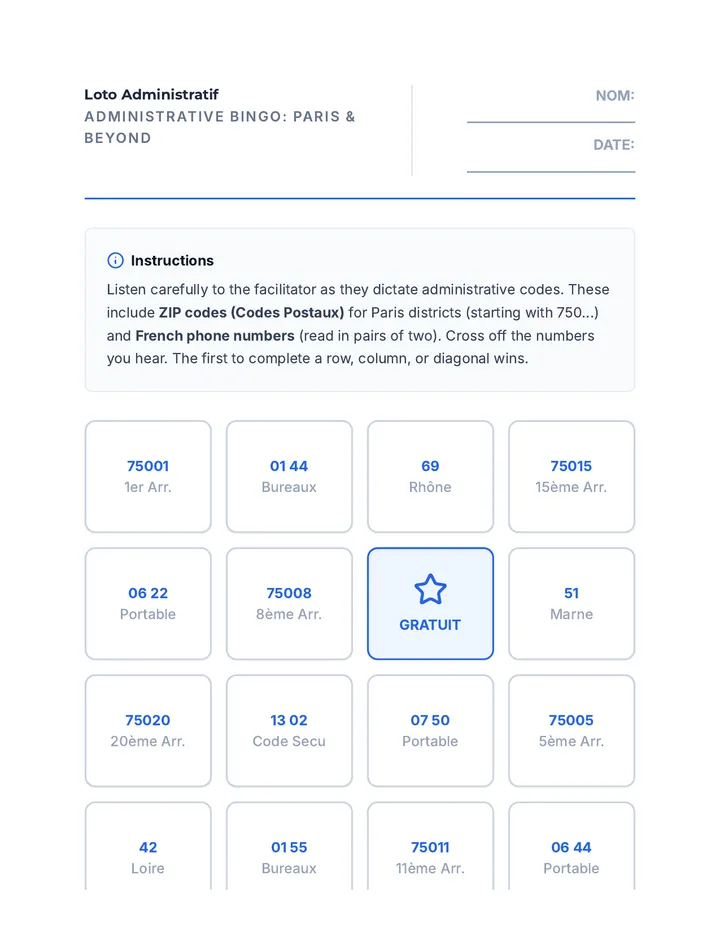
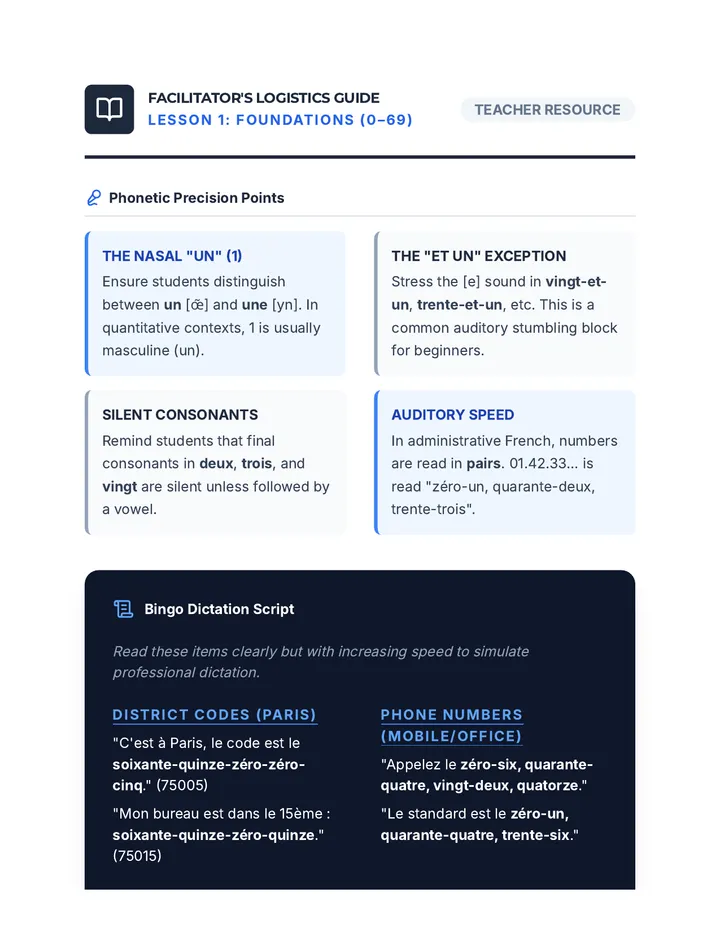
A specialized French vocabulary sequence for graduate students and professionals, focusing on quantitative literacy, logistics, budgeting, and data reporting in French-speaking academic and administrative contexts.
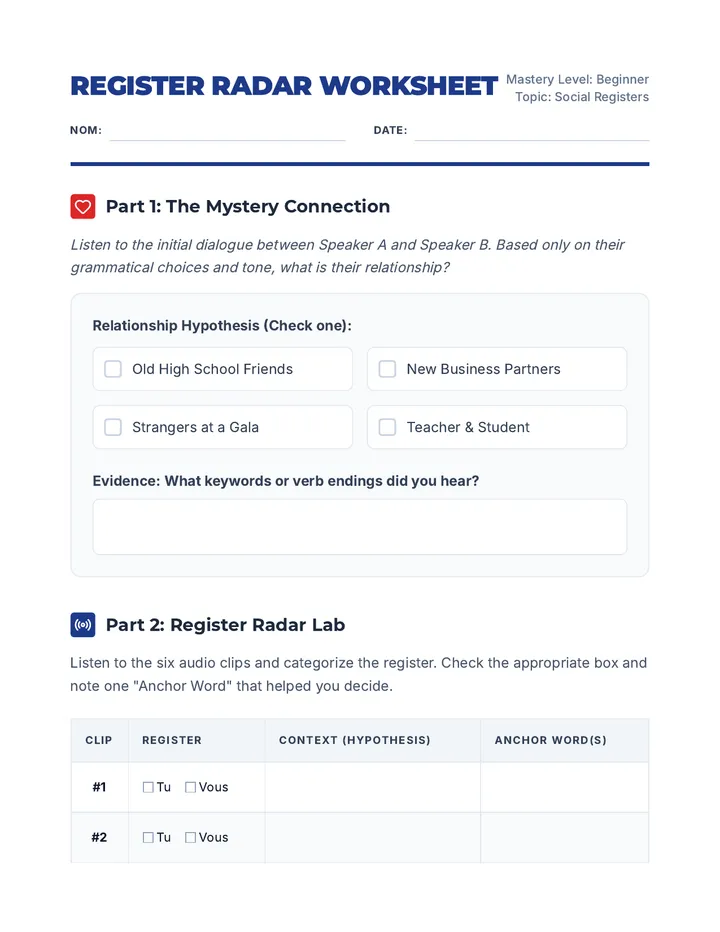
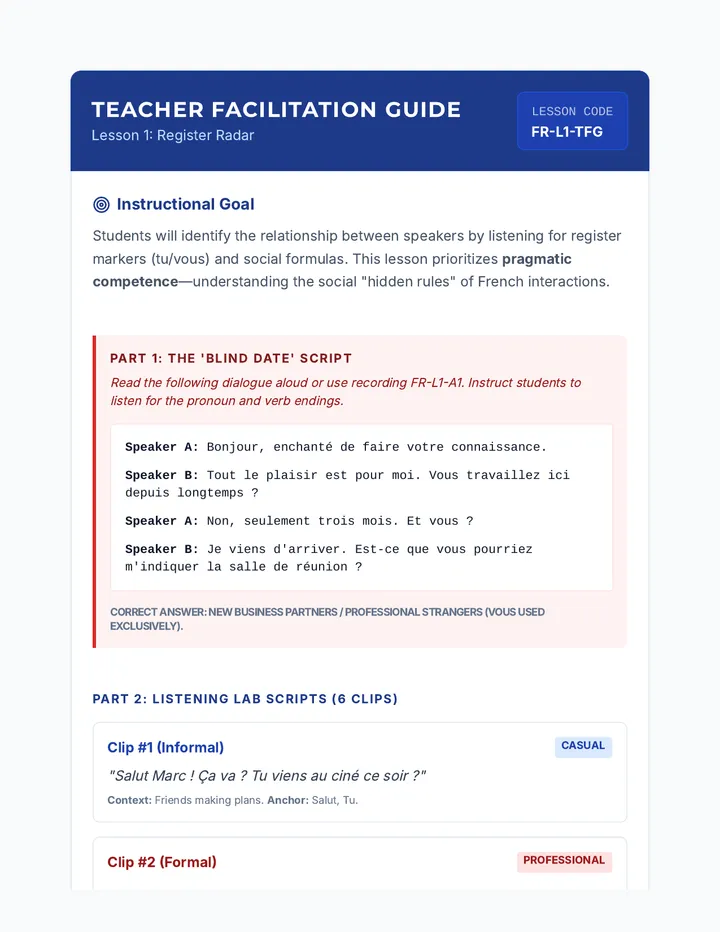
This sequence addresses the critical sociolinguistic nuances of French greetings and introductions, specifically tailored for academic and professional contexts. Students analyze the complex distinction between formal (vous) and informal (tu) address, mastering the hierarchy of titles used in French universities and businesses.
An advanced French grammar sequence for 11th graders focusing on the mechanics, usage, and rhetorical effects of the passive voice in journalistic contexts. Students transition from mechanical transformations to analyzing how the choice of voice affects agency and objectivity in news reporting.
A comprehensive exploration of French linguistic registers, moving from 'argot' to 'langue soutenue'. Students learn to navigate and manipulate tone, grammar, and vocabulary to suit diverse social contexts and audiences.
A comprehensive sequence for advanced French students focused on the sociolinguistic nuances of register, slang (argot), Verlan, and regionalisms. Students move beyond textbook grammar to achieve authentic cultural fluency by mastering the art of code-switching.
An advanced French writing sequence for 11th-grade students focused on mastering linguistic registers (slang, standard, and formal). Students develop stylistic flexibility by analyzing and rewriting texts for different contexts and audiences, culminating in a creative adaptation project inspired by Raymond Queneau.
A comprehensive 11th-grade French sequence focusing on global social issues and geopolitics. Students develop advanced vocabulary and advocacy skills through the study of human rights, migration, poverty, and the role of NGOs in the Francophone world.
An advanced French sequence for 11th-grade students focused on analyzing journalistic tone, media bias, and the linguistics of Francophone news. Students move from decoding headlines to producing their own news segments.
A sequence for intermediate French students focusing on the art of cultural criticism. Students develop advanced vocabulary and rhetorical skills to write professional-style reviews of books, movies, and restaurants.
A comprehensive sequence for intermediate French students focused on the mechanics of journalistic writing, including the passive voice, indirect discourse, and objective synthesis. Students assume the role of reporters to master formal, fact-based communication.
This sequence prepares intermediate French students for the professional world by mastering the nuances of Francophone business etiquette. Students will transition from informal language to high-register formal writing, culminating in a professional application portfolio.
This sequence guides undergraduate students through the complexities of French academic argumentation, known as the dissertation. Students master structural organization, the strategic use of logical connectors, and the nuances of formal register to build persuasive, balanced essays.
An analytical approach to French phonology for graduate students, focusing on the mechanical production of sounds, nasal vowels, liaison, and prosody. Students move from individual phonemes to fluid sentence-level communication through articulatory awareness.
A comprehensive immersion into formal French social and professional etiquette, designed for high school upperclassmen. Students transition from understanding basic pronoun registers to navigating complex professional introductions and networking scenarios.
A comprehensive exploration of hypothetical structures in French, moving from basic 'si' clauses to complex expressions of regret, media nuance, and formal conditions. Designed for undergraduate students to master the nuances of causality and abstract reasoning.
This sequence explores the subjunctive mood in French relative clauses, focusing on indefinite, negative, and superlative antecedents. Students delve into the philosophical distinction between reality and desire, learning to navigate the grammatical nuances of doubt and subjectivity.
An advanced French grammar sequence focusing on the causative construction 'faire + infinitive' and 'laisser + infinitive'. Students explore the nuances of agency, delegation, and permission through practical scenarios and linguistic analysis.
A comprehensive exploration of advanced French hypothetical structures, moving from standard 'si' clauses to mixed conditionals and sophisticated alternatives. Students master the logic of regret, possibility, and consequence through simulations and analytical exercises.
A comprehensive unit for 11th Grade French students exploring the causative construction (faire/laisser + infinitive). Students master the nuances of delegation, permission, and reflexive services through the lens of luxury concierge services and professional scenarios.
This advanced French sequence explores the nuance of the subjunctive mood through the lens of formal argumentation and debate. Students progress from identifying subjective triggers to spontaneously using complex grammatical structures to express doubt, emotion, and necessity in persuasive contexts.
A graduate-level exploration of French syntax, focusing on double pronoun placement, the imperative, nominalization, complex relative pronouns, and techniques of emphasis (mise en relief) to achieve academic fluency.
This advanced French grammar sequence for graduate students explores the nuanced application of the subjunctive mood as a rhetorical and semantic tool. Students move beyond basic rules to master mood selection in relative clauses, the stylistic 'ne explétif', temporal sequencing with the past subjunctive, and sophisticated rhetorical framing using conjunctions.
An advanced French grammar sequence focused on voice manipulation in media. Students explore the passive voice, pronominal verbs, and the indefinite subject 'on' to understand how agent suppression impacts objectivity and responsibility in journalistic and political contexts.
A high-level sequence for advanced French learners focusing on the syntactic structures necessary for academic writing and professional discourse. Students master complex relative pronouns, participles, emphatic structures, and logical connectors to build elegant, cohesive arguments.
An advanced French sequence focusing on the mastery of indirect speech and tense concordance. Students move from basic tense shifts to complex question transformations and narrative reporting, all within a vintage journalism-themed framework.
A comprehensive 5-lesson sequence for advanced French students focused on mastering the present participle and gerund to improve narrative flow, describe simultaneous actions, and express causality concisely.
An advanced French grammar sequence focusing on the passive voice and its alternatives, specifically tailored for 12th-grade students to master formal reporting and journalistic objectivity.
A comprehensive immersion into advanced French business vocabulary, focusing on formal correspondence, financial analysis, negotiation tactics, and crisis management for undergraduate students.
A comprehensive advanced French sequence exploring the intersection of media, politics, and language. Students analyze authentic journalistic registers, election structures, and rhetorical strategies to prepare for high-level participation in Francophone discourse.
A high-level intermediate French writing unit focused on media literacy, cultural synthesis, and persuasive writing. Students analyze journalistic styles from the Francophone world to develop their own critical voices in French.
This sequence refines 11th-grade French narrative skills, focusing on the interplay between the passé composé and imparfait. Students master descriptive writing, narrative pacing, and character development to create immersive short stories.
This intermediate French sequence guides 10th-grade students through the subjunctive mood using an inquiry-based approach. Students move from distinguishing objective facts to expressing doubt, necessity, and emotion, culminating in a creative advice column writing project.
A comprehensive writing sequence for 10th-grade French students focusing on the nuanced use of past tenses (imparfait, passé composé, and plus-que-parfait) within narrative storytelling. Students transition from descriptive scene-setting to complex narrative structures involving flashbacks and dialogue.
This sequence refines intermediate French students' ability to write sophisticated reviews of cultural products. By mastering relative pronouns (qui, que, dont, où) and comparative structures, students move beyond simple sentence patterns to create mature, professional-style critiques for a school blog or magazine.
A comprehensive sequence for 9th-grade French students to master the subjunctive mood through the lens of persuasive writing and editorial journalism. Students move from basic concept differentiation to constructing sophisticated arguments.
A specialized advanced French course focusing on the synthesis and analysis of scientific and technical texts. Students explore nominalization, causality, and academic register through themes of climate change, bioethics, and emerging technology.
Students analyze the French media landscape to identify bias, rhetorical structures, and cultural nuances in journalism, culminating in writing their own editorial in French.
A high-level grammar sequence for 12th Grade French students focusing on the mastery of advanced relative pronouns (dont, lequel, ce qui/que/dont) to enhance syntactic complexity and academic writing maturity.
This advanced French grammar sequence guides 11th-grade students through the formation and nuanced usage of the present participle and gerund. Students move from basic conjugation to sophisticated narrative techniques, learning to express simultaneity and causality with stylistic precision.
A comprehensive sequence for 11th Grade Advanced French focusing on conjunctions that trigger the subjunctive mood, emphasizing logical relationships in analytical writing.
This advanced French grammar sequence focuses on 'discours indirect' (reported speech) and the 'concordance des temps'. Students master pronoun shifts, tense backshifting, and temporal/spatial adjustments through a journalism-inspired curriculum, culminating in a formal interview profile.
A comprehensive sequence for advanced French students to master complex relative pronouns (dont, lequel, ce dont) to create more cohesive and sophisticated writing. Students progress from identifying gaps in basic syntax to 'upgrading' their own prose with advanced connectors.