Comprehensive French language instruction spanning basic literacy to advanced oral and written communication. Strengthens grammar, vocabulary, and cultural understanding through targeted exercises in listening, reading, and composition.
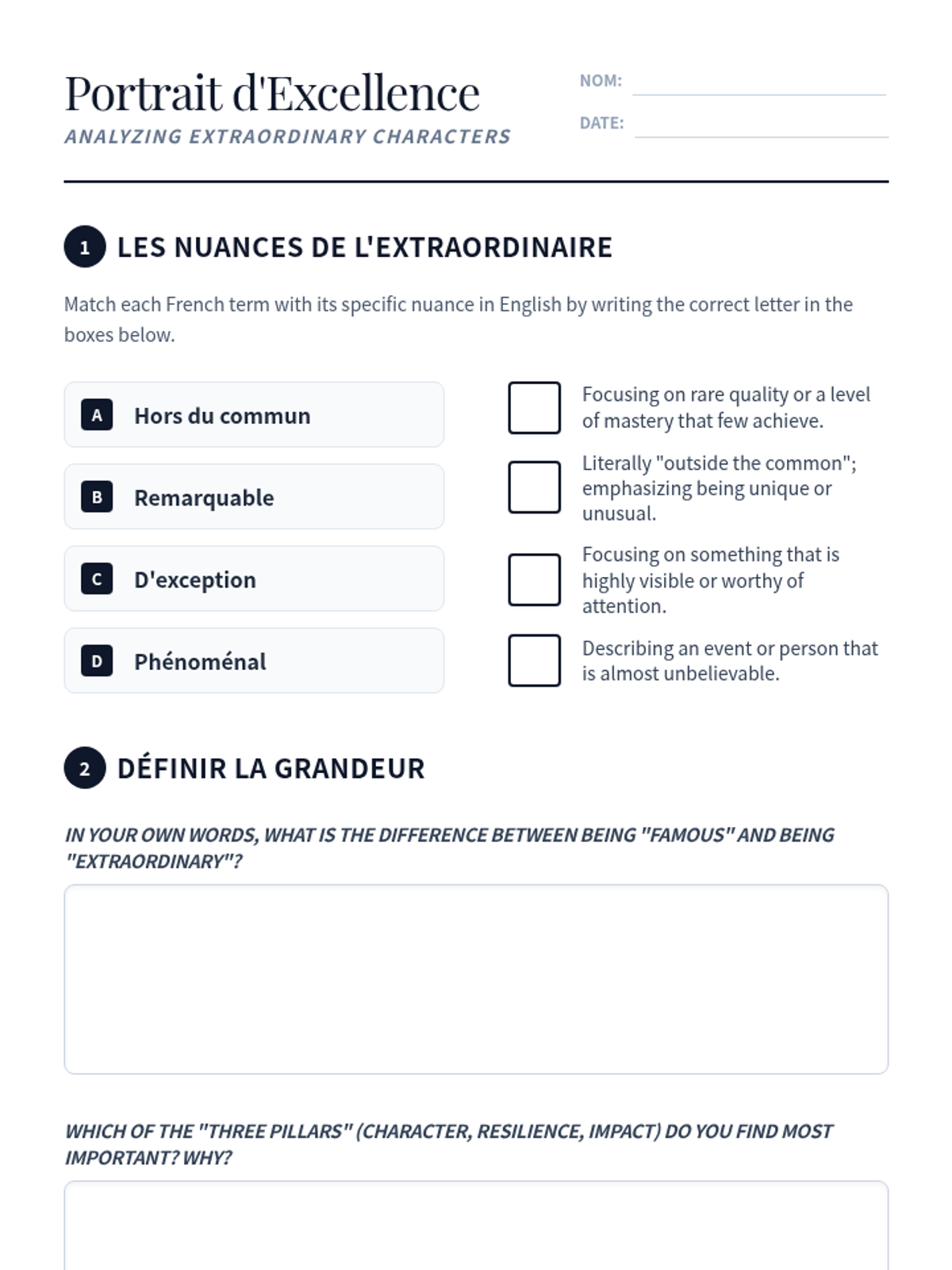
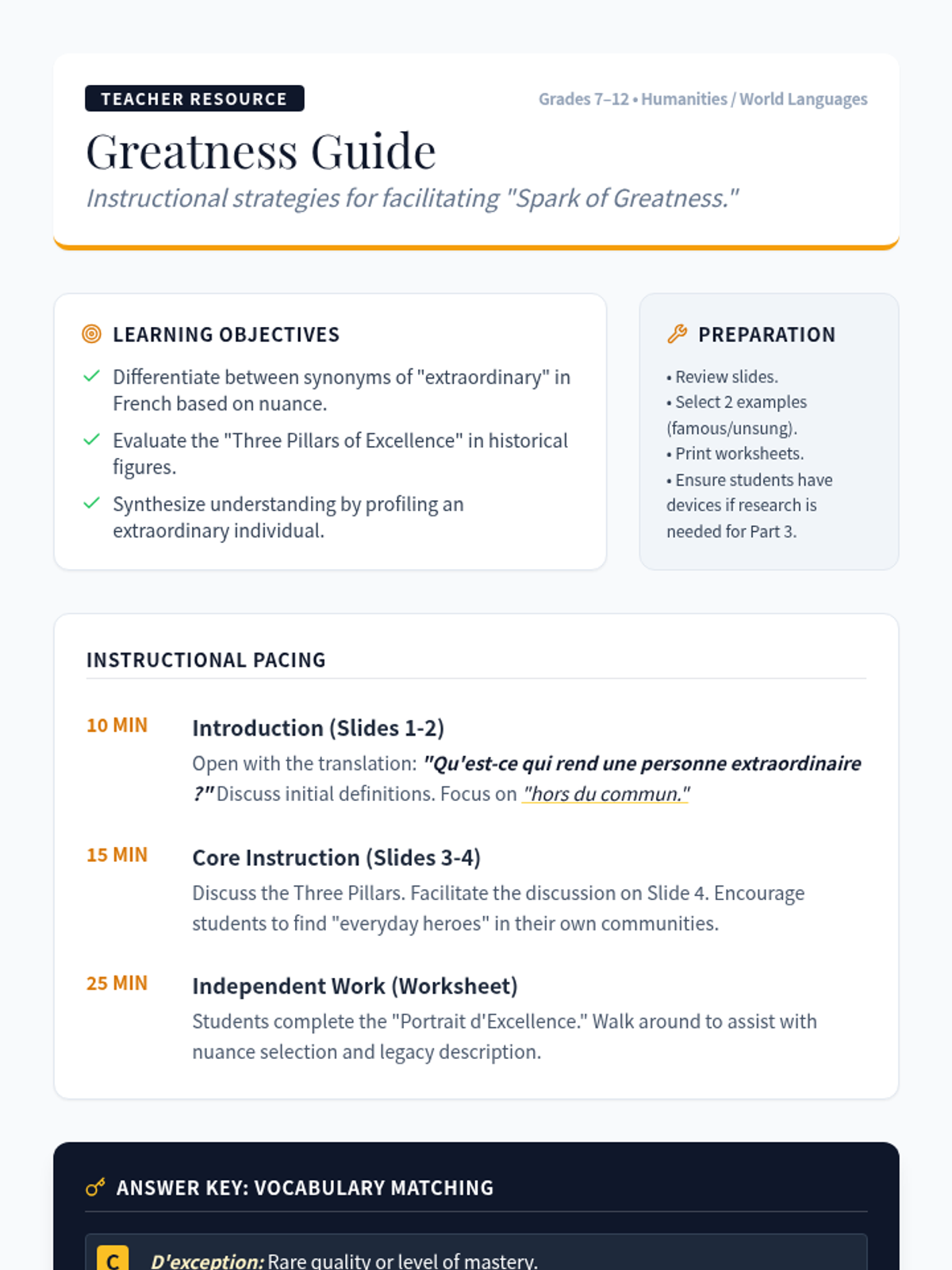
A lesson exploring the qualities that define an extraordinary person, focusing on character traits, resilience, and impact. Students will learn the nuances of the French word 'extraordinaire' and its synonyms while reflecting on historical and personal figures of excellence.
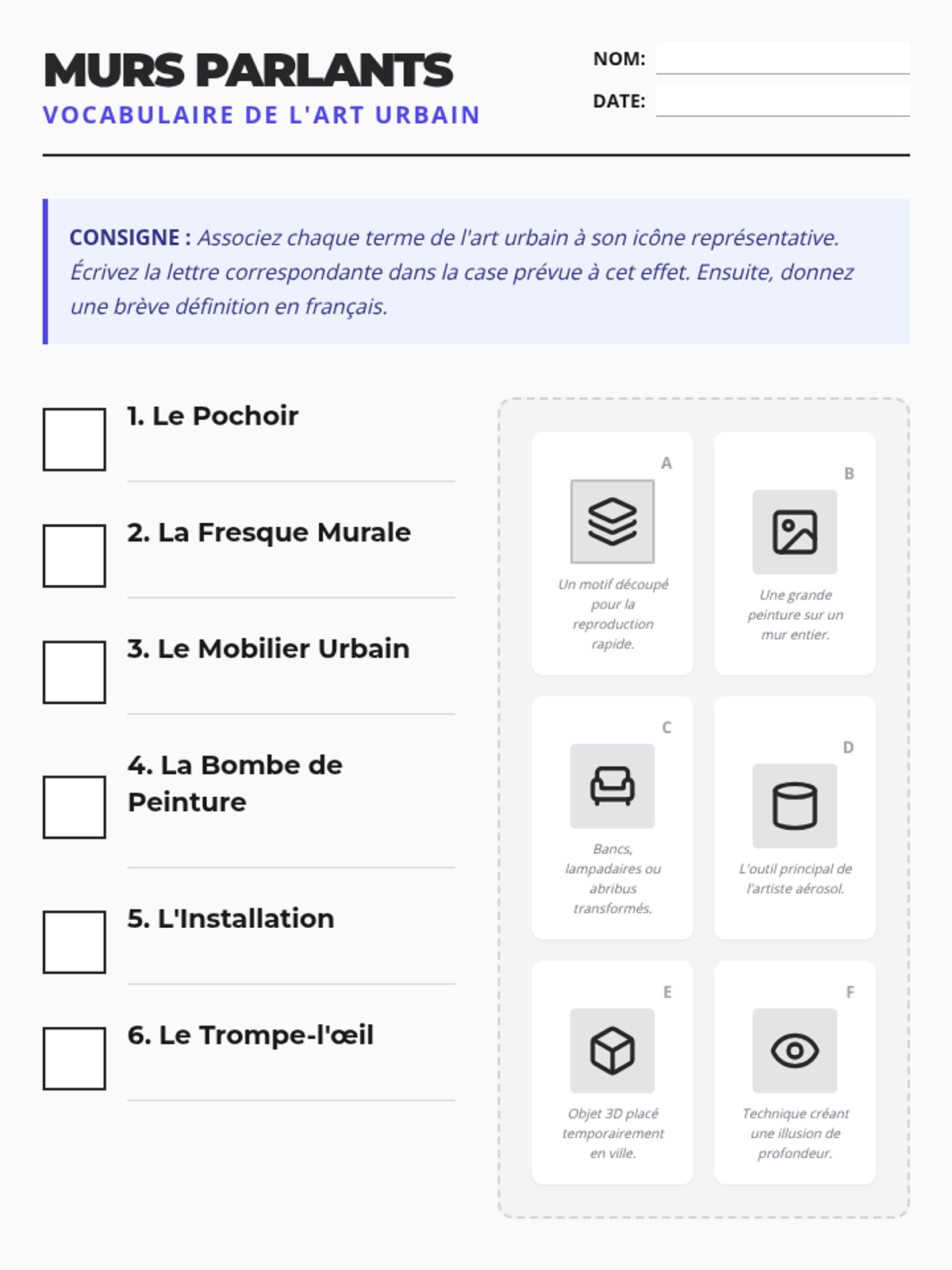
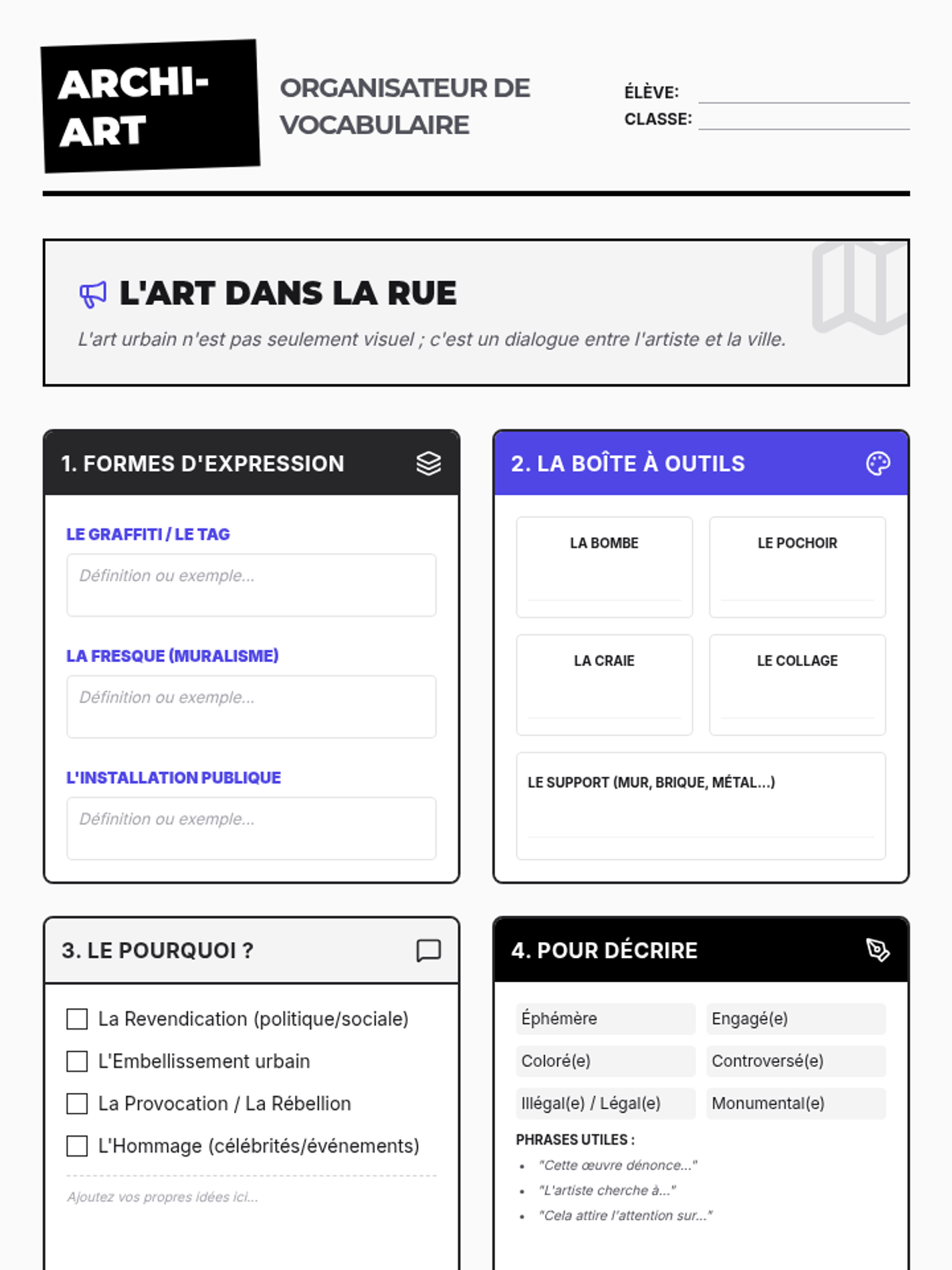
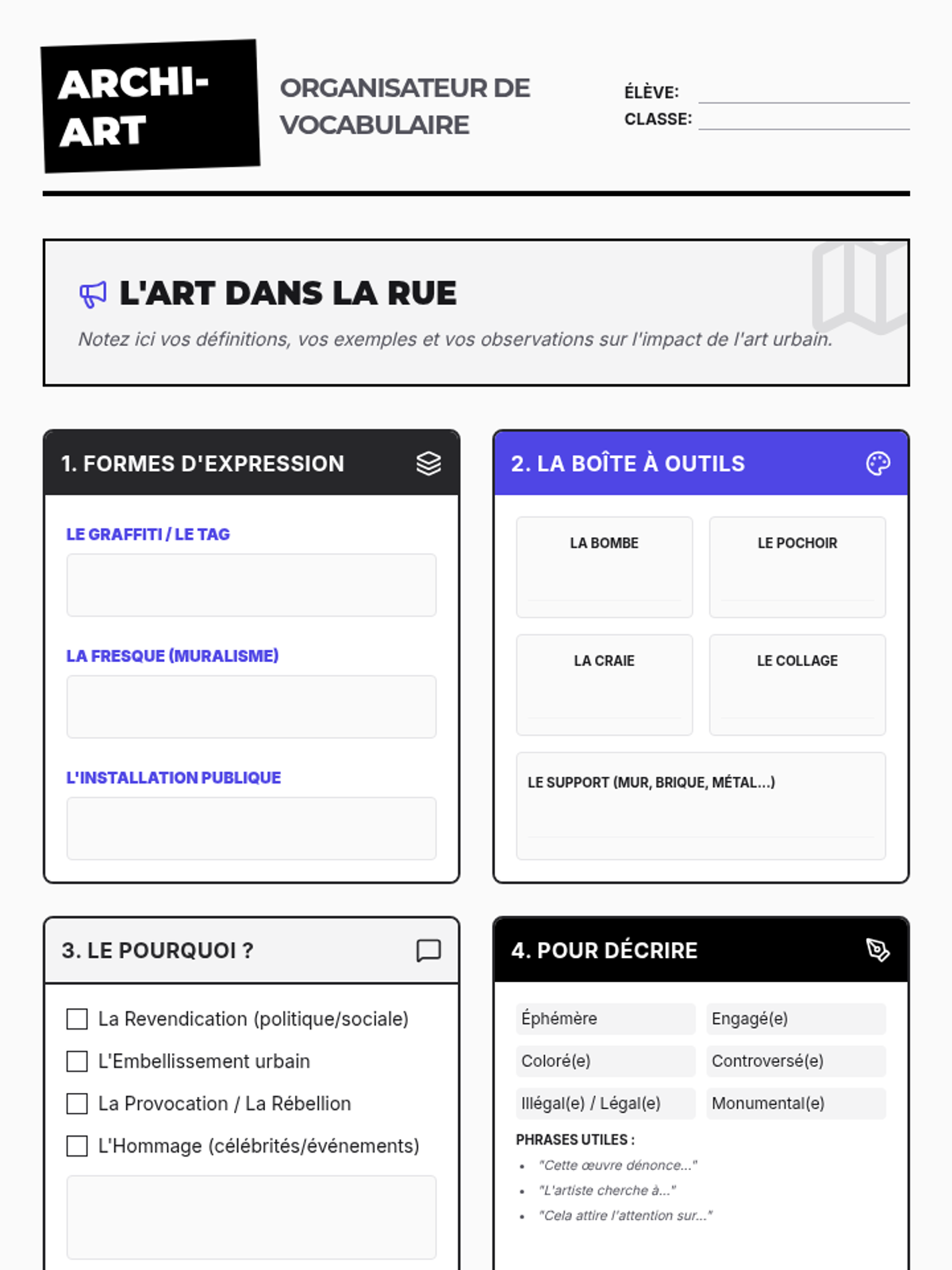
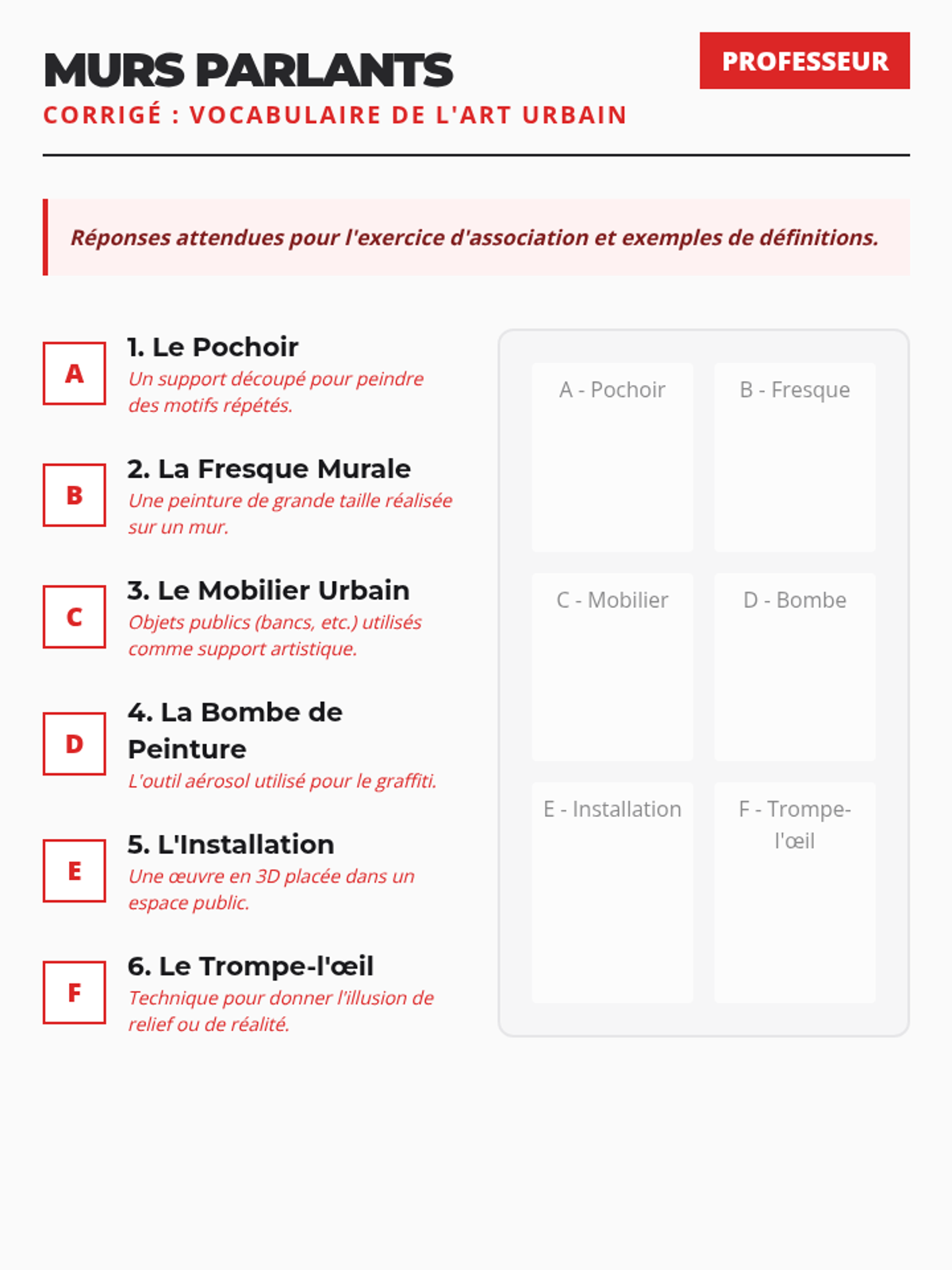
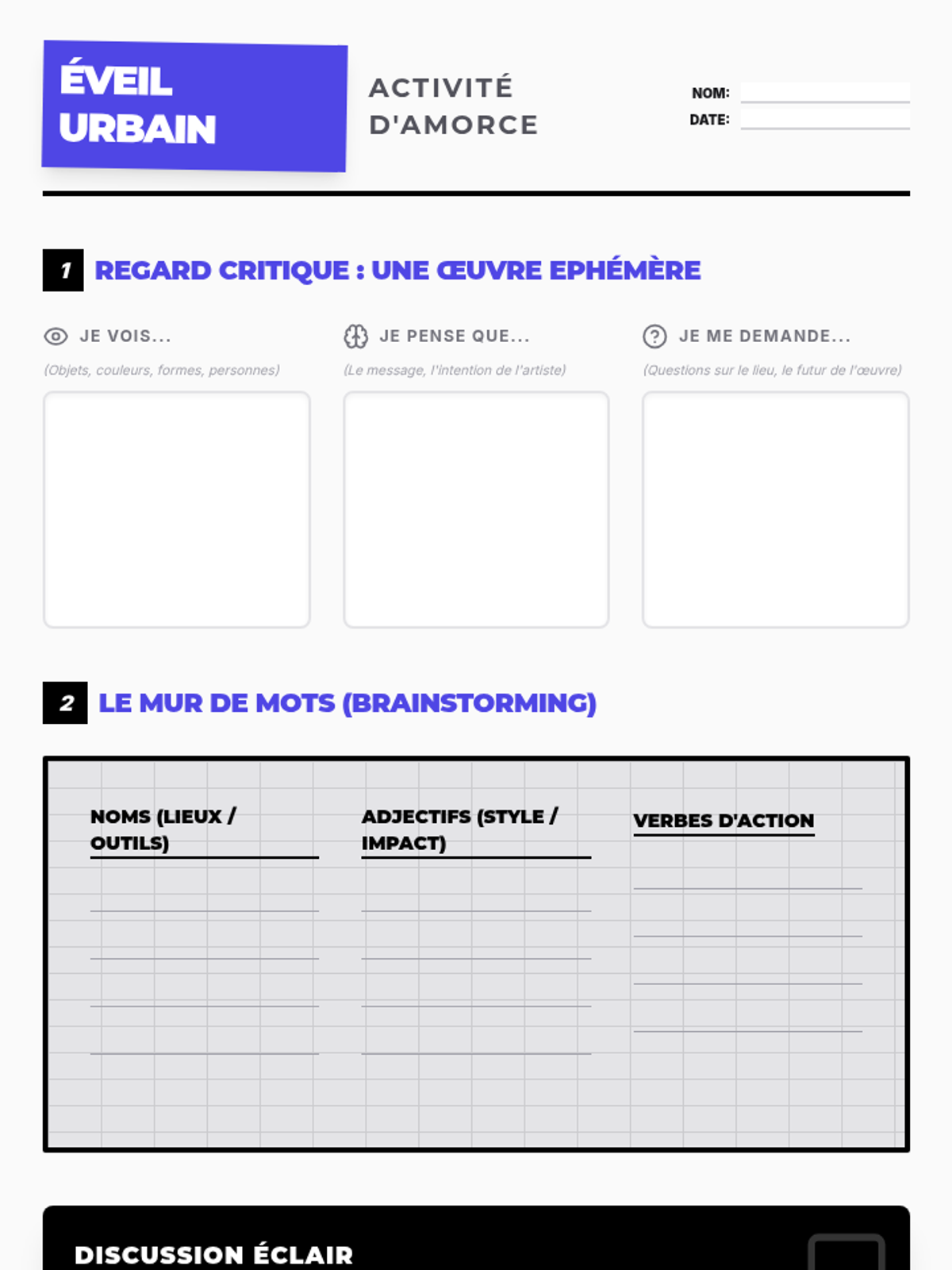
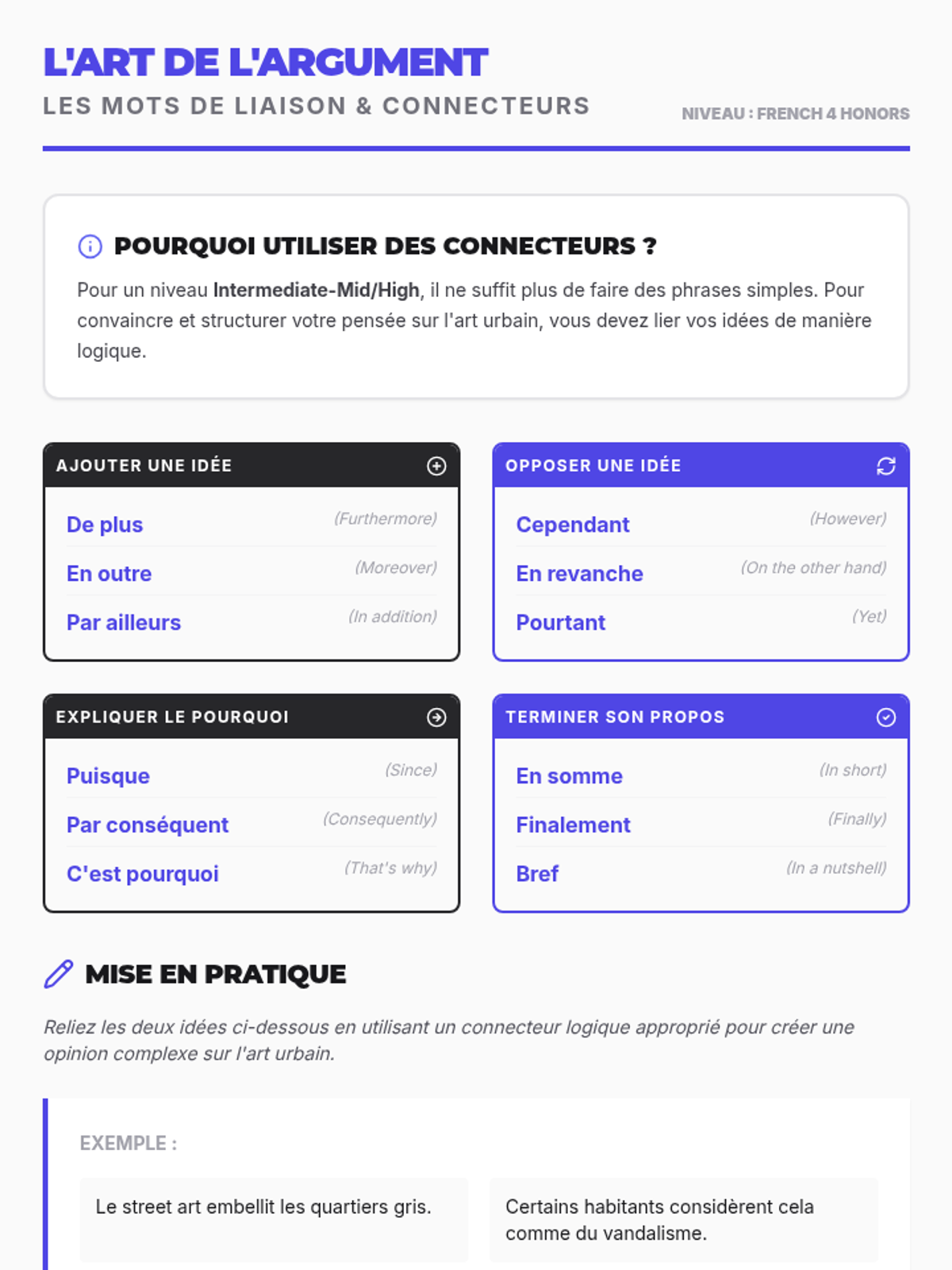
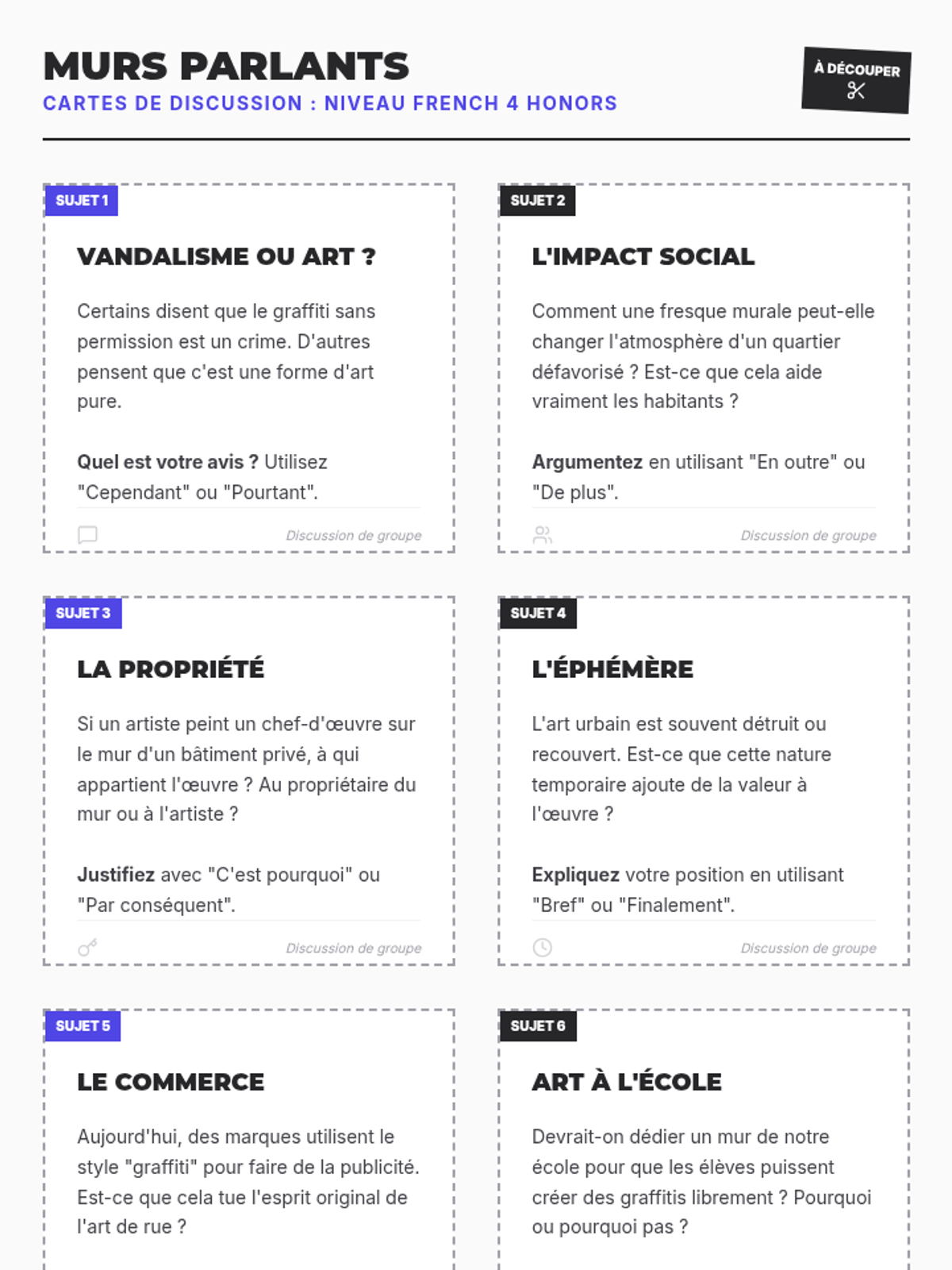
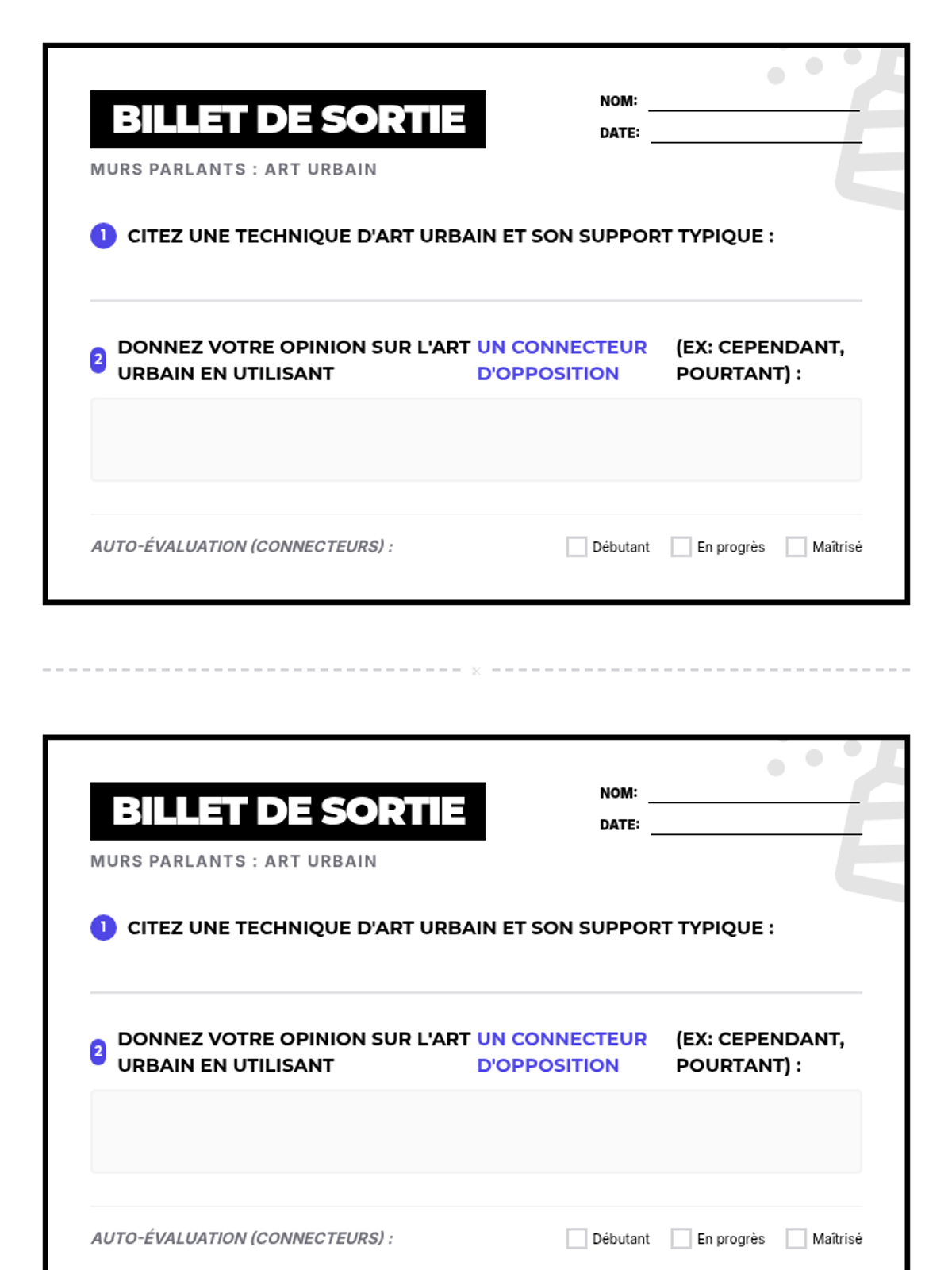
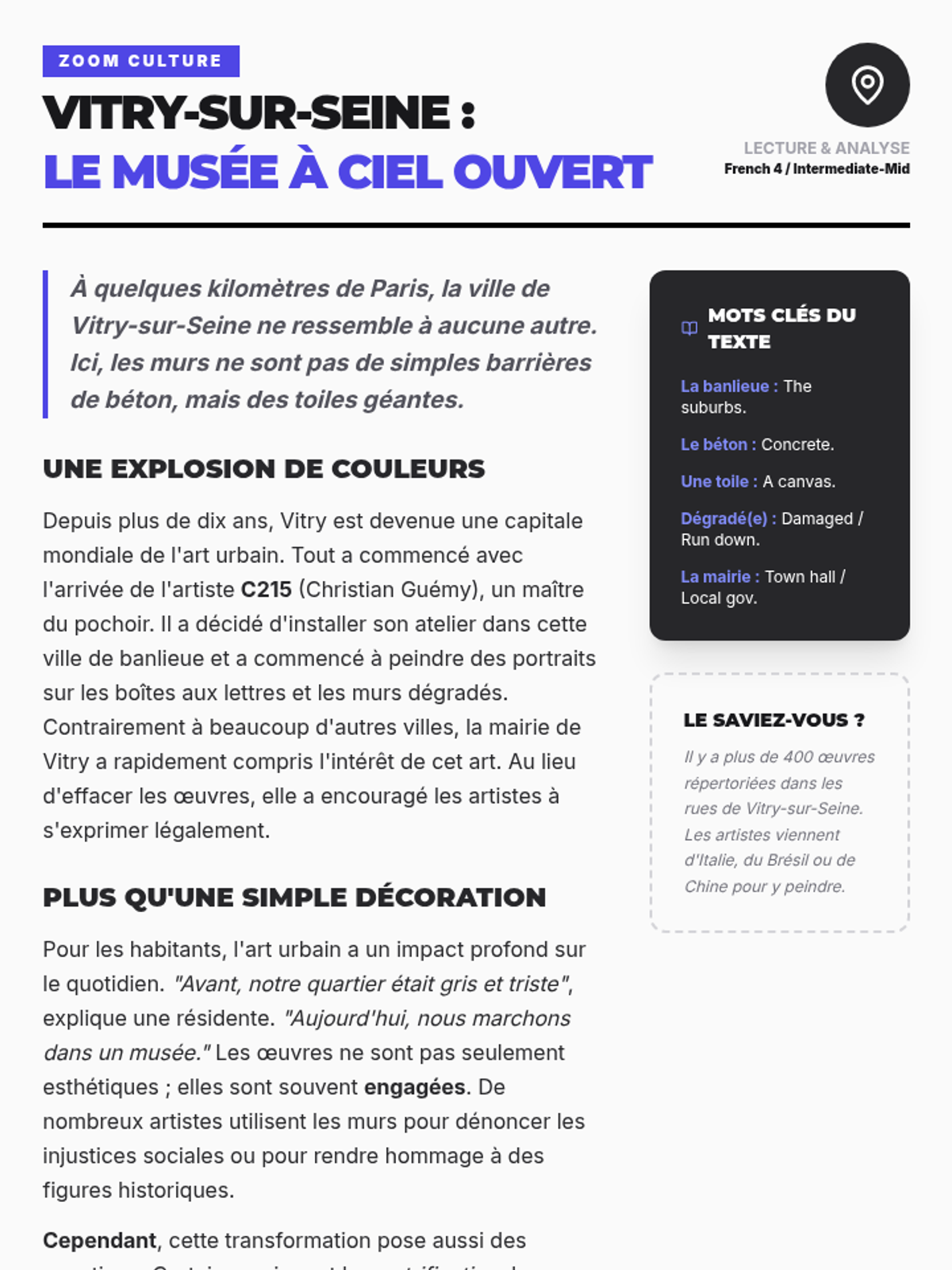
A high school French 4 lesson exploring the vocabulary and cultural impact of urban art, including murals, graffiti, and public installations. Students will learn to describe techniques, materials, and the social messages behind street art.
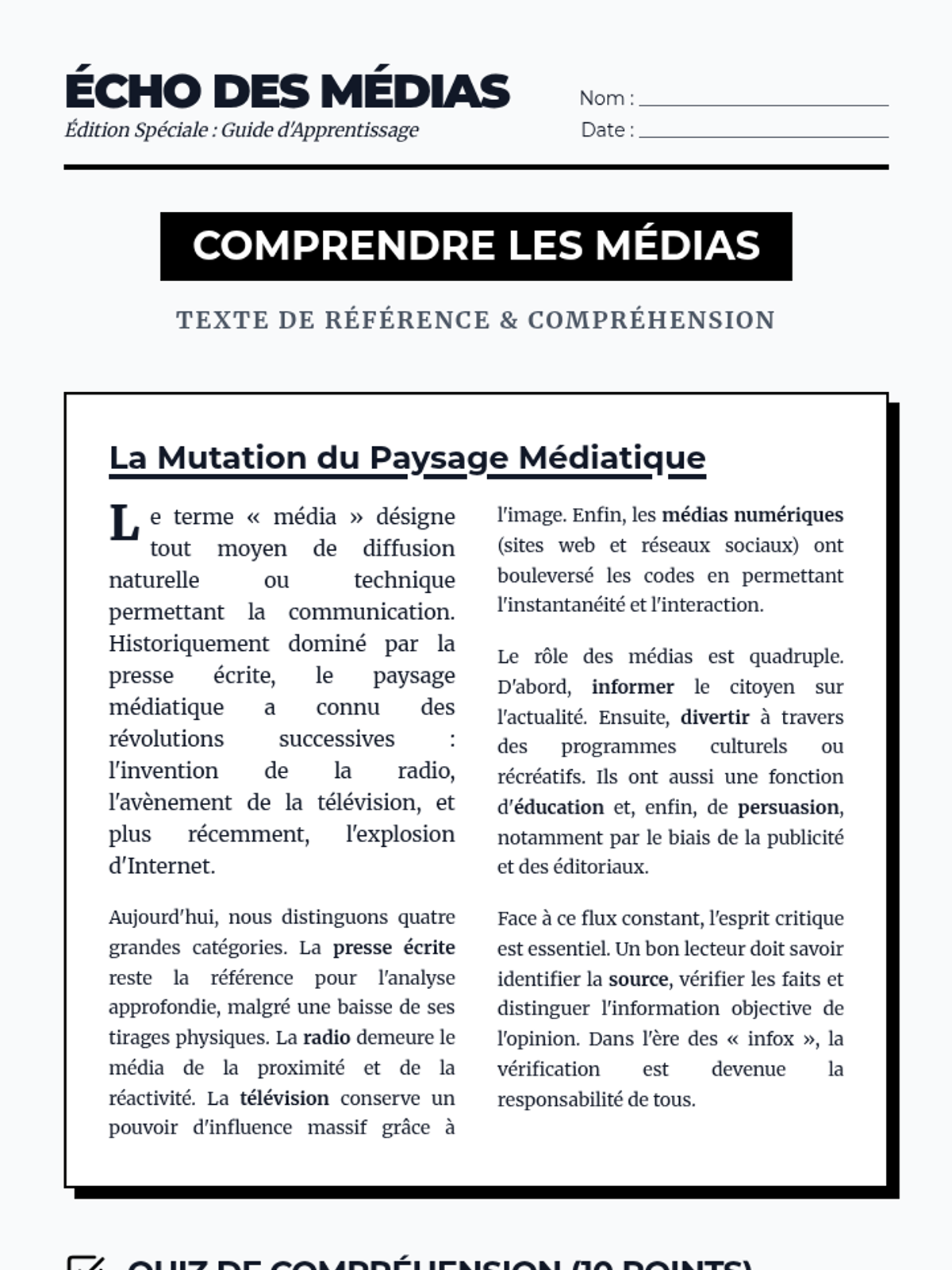
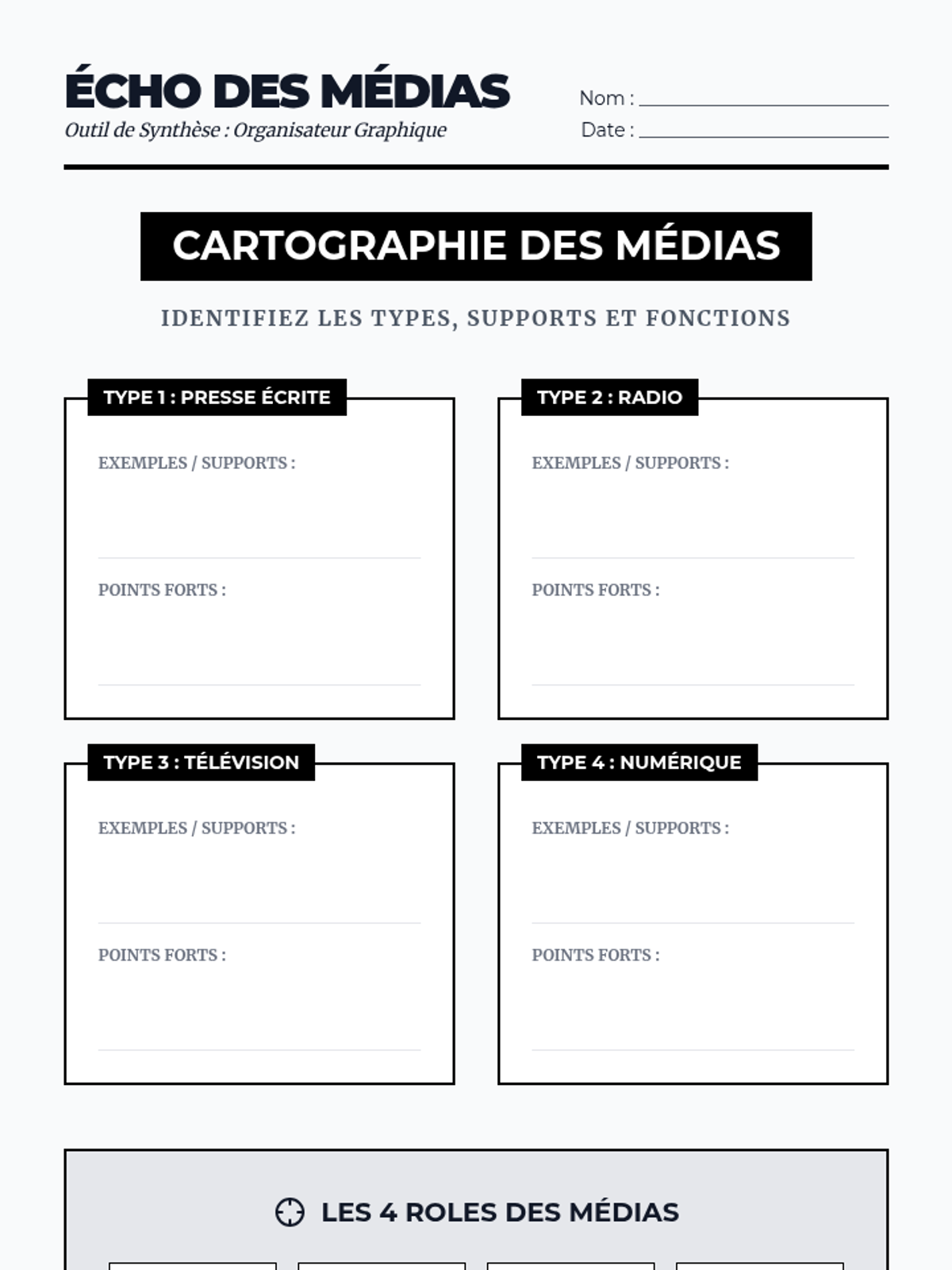
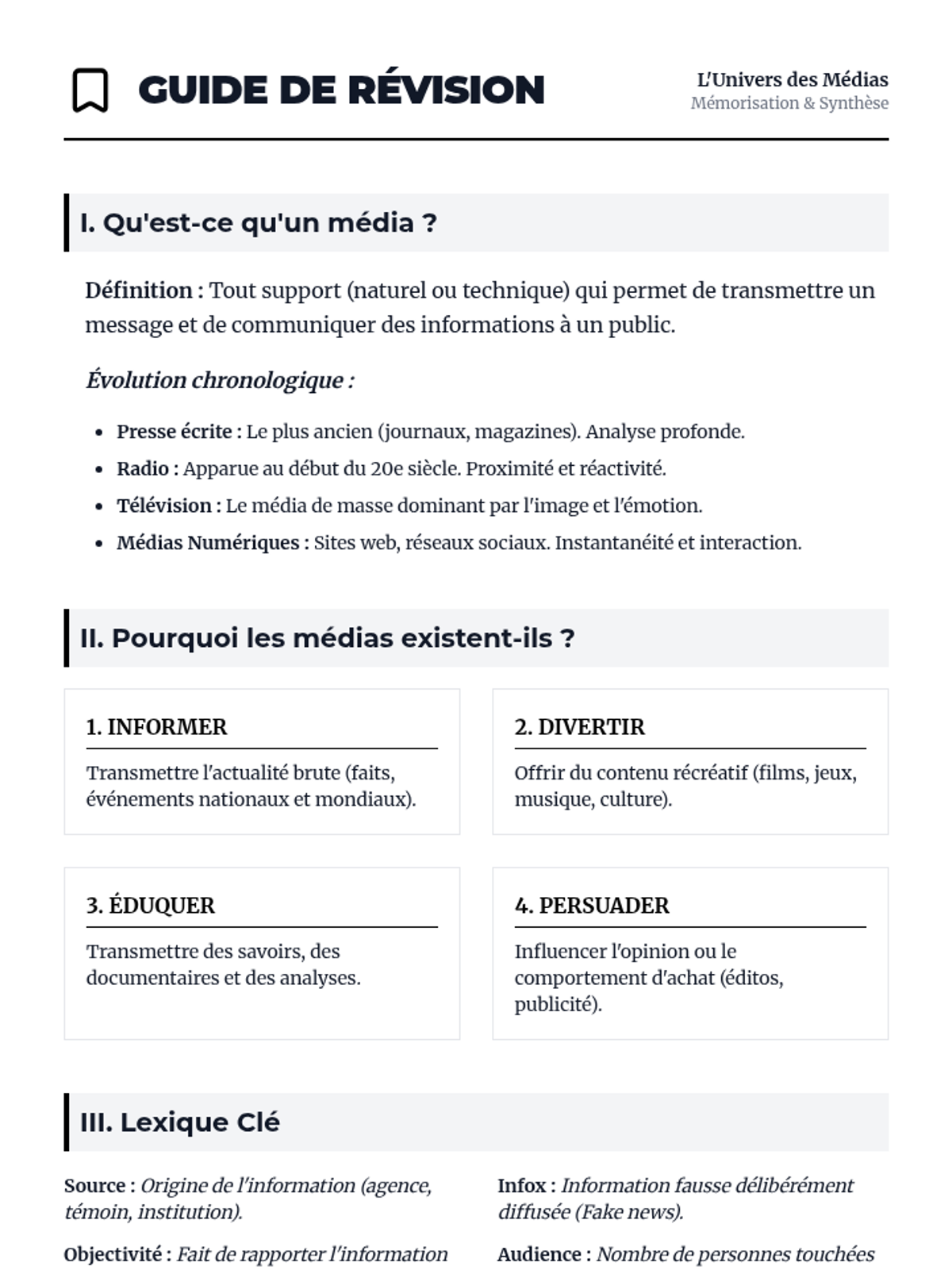
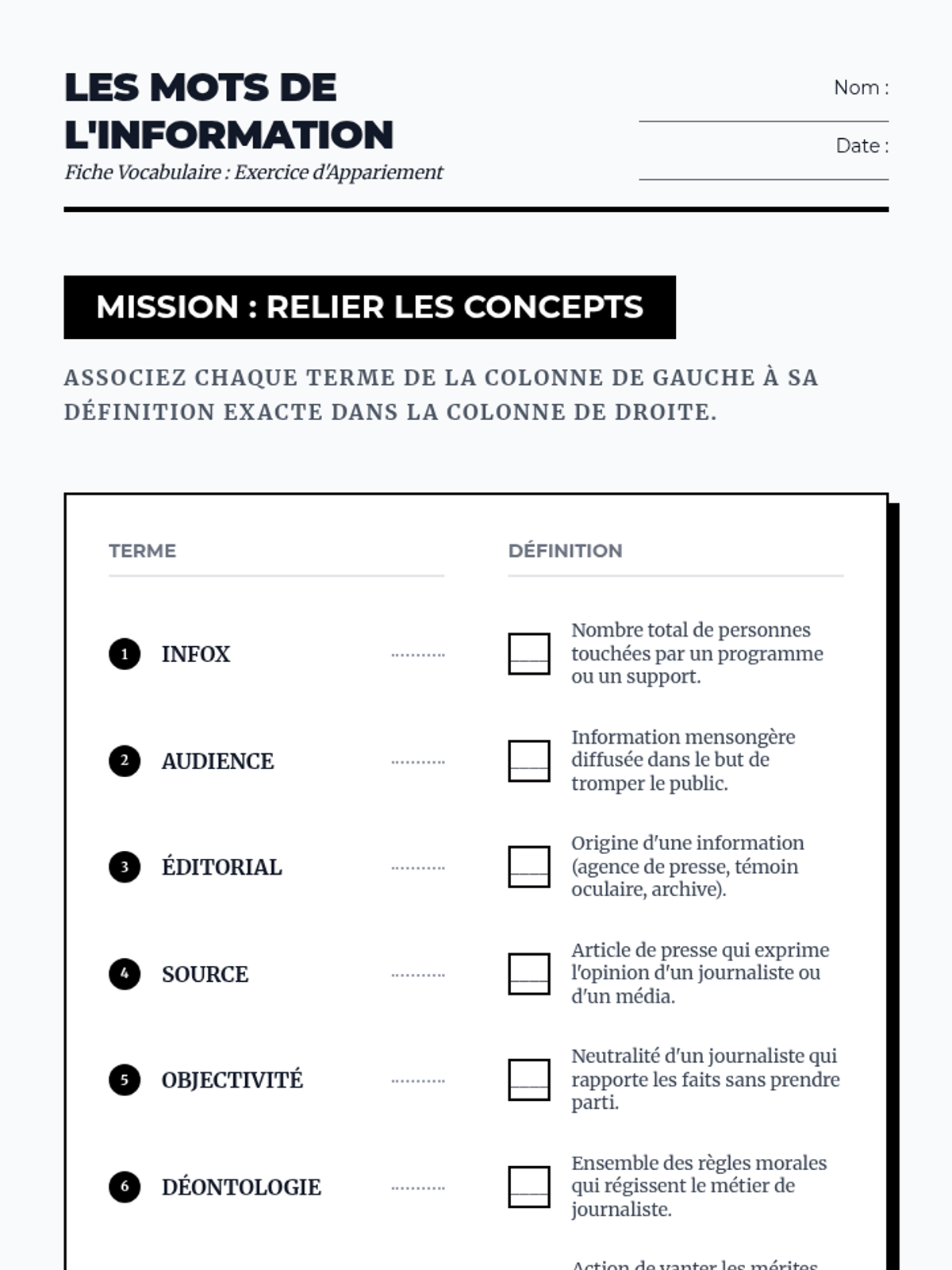
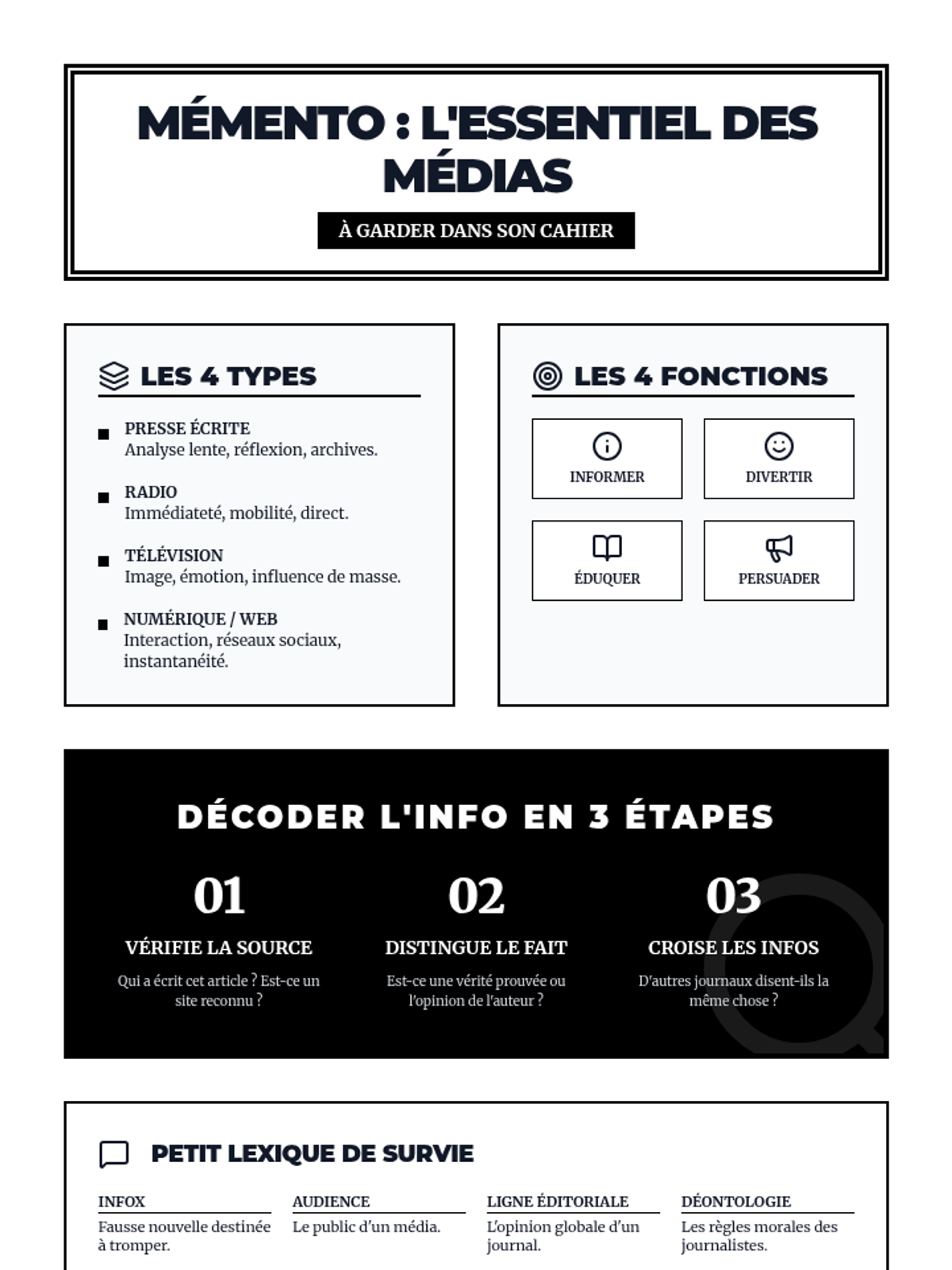
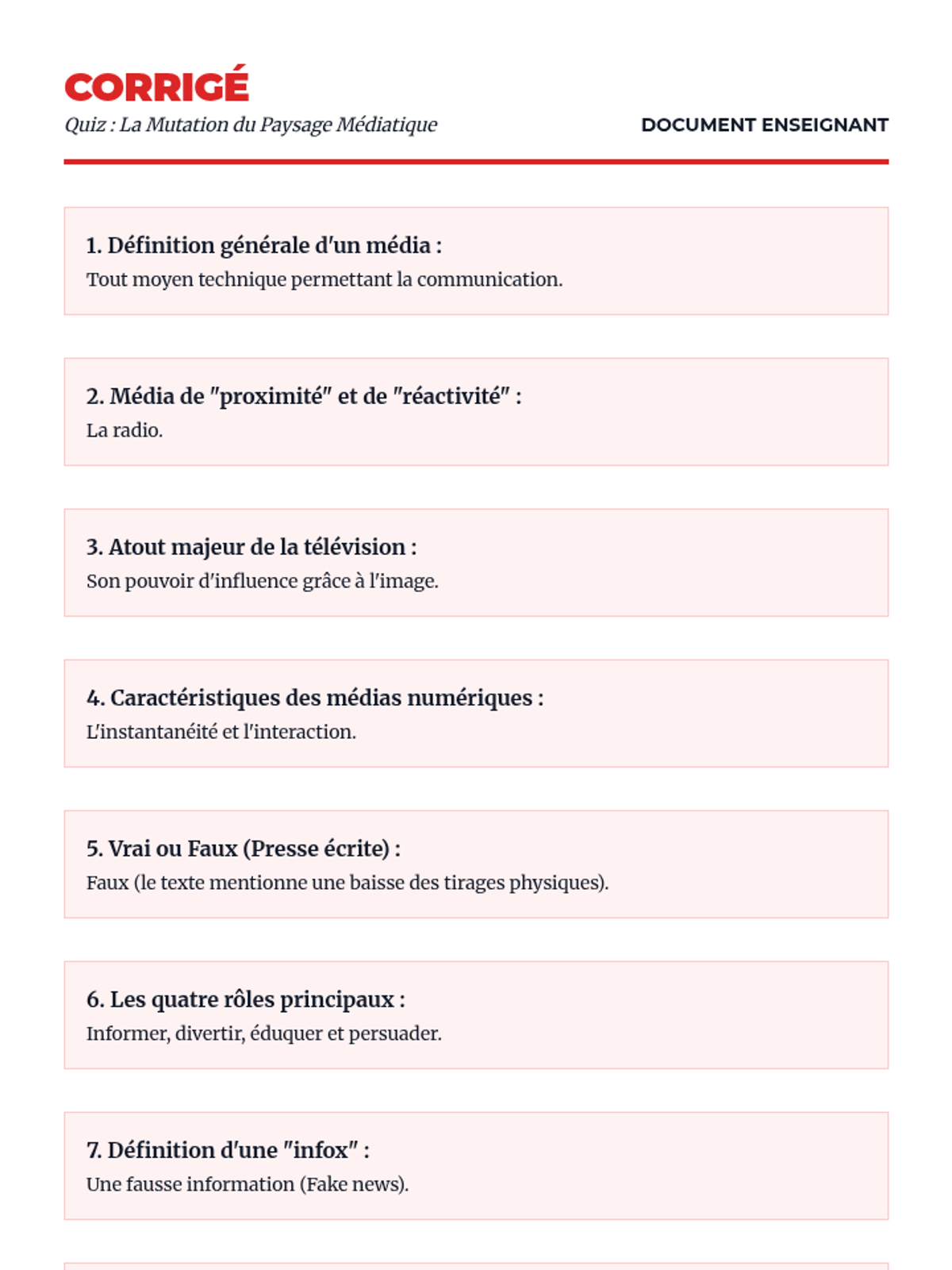
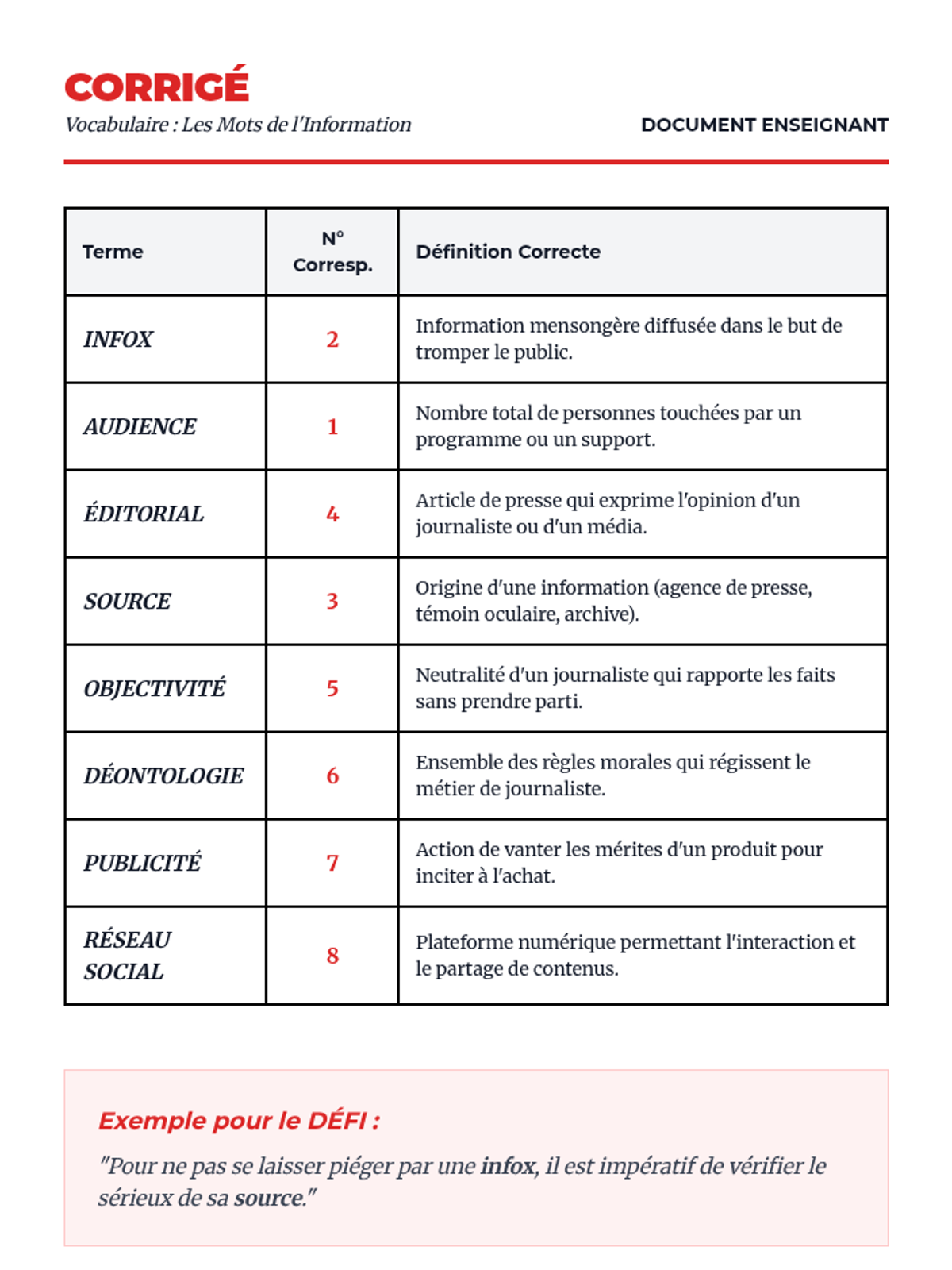
Cette leçon explore la diversité des médias modernes, de la presse écrite aux réseaux sociaux, tout en développant les compétences de lecture et de vocabulaire en français.
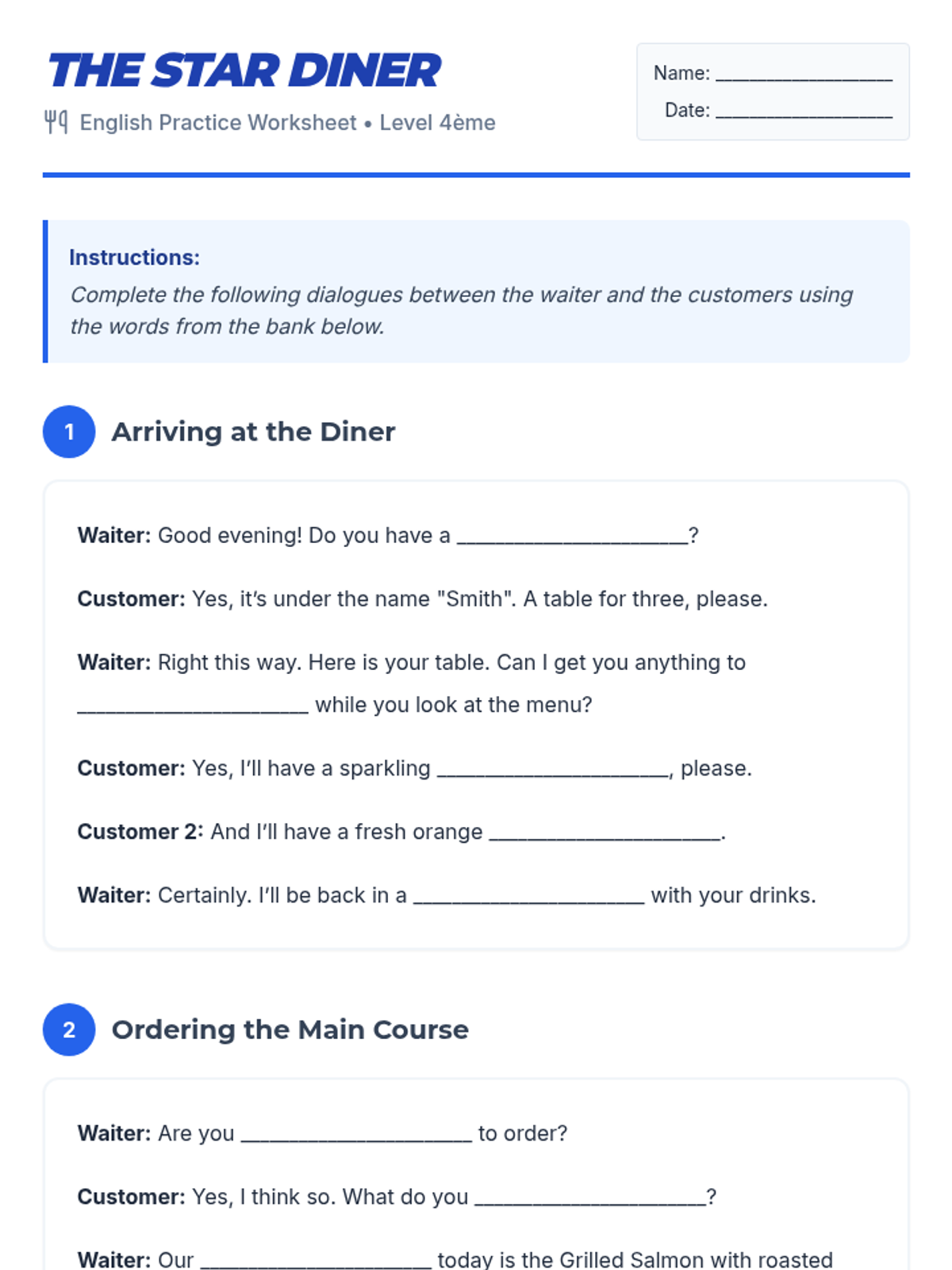
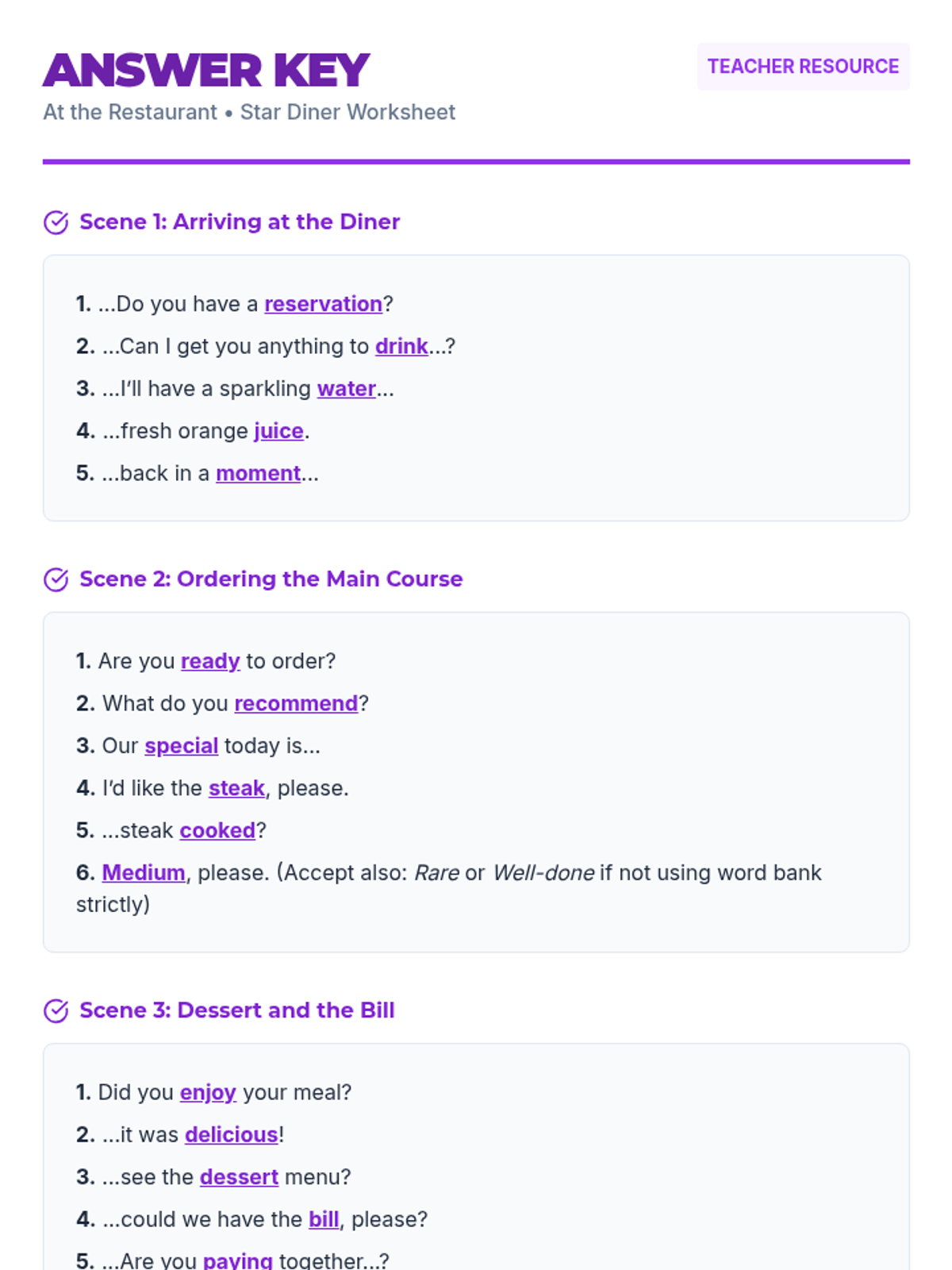
Une leçon interactive centrée sur les interactions sociales au restaurant, permettant aux élèves de maîtriser le vocabulaire de la commande, du service et du paiement.
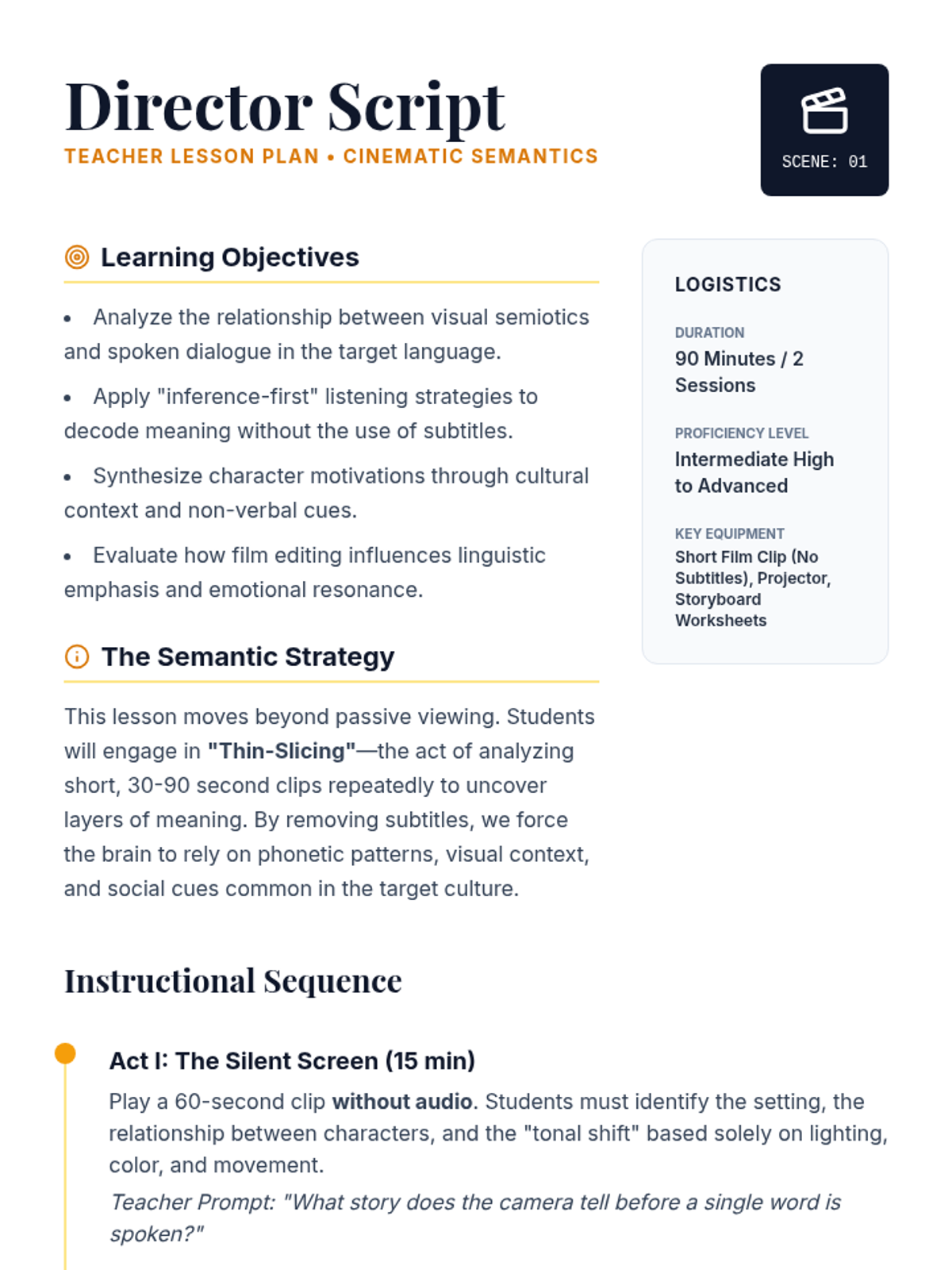
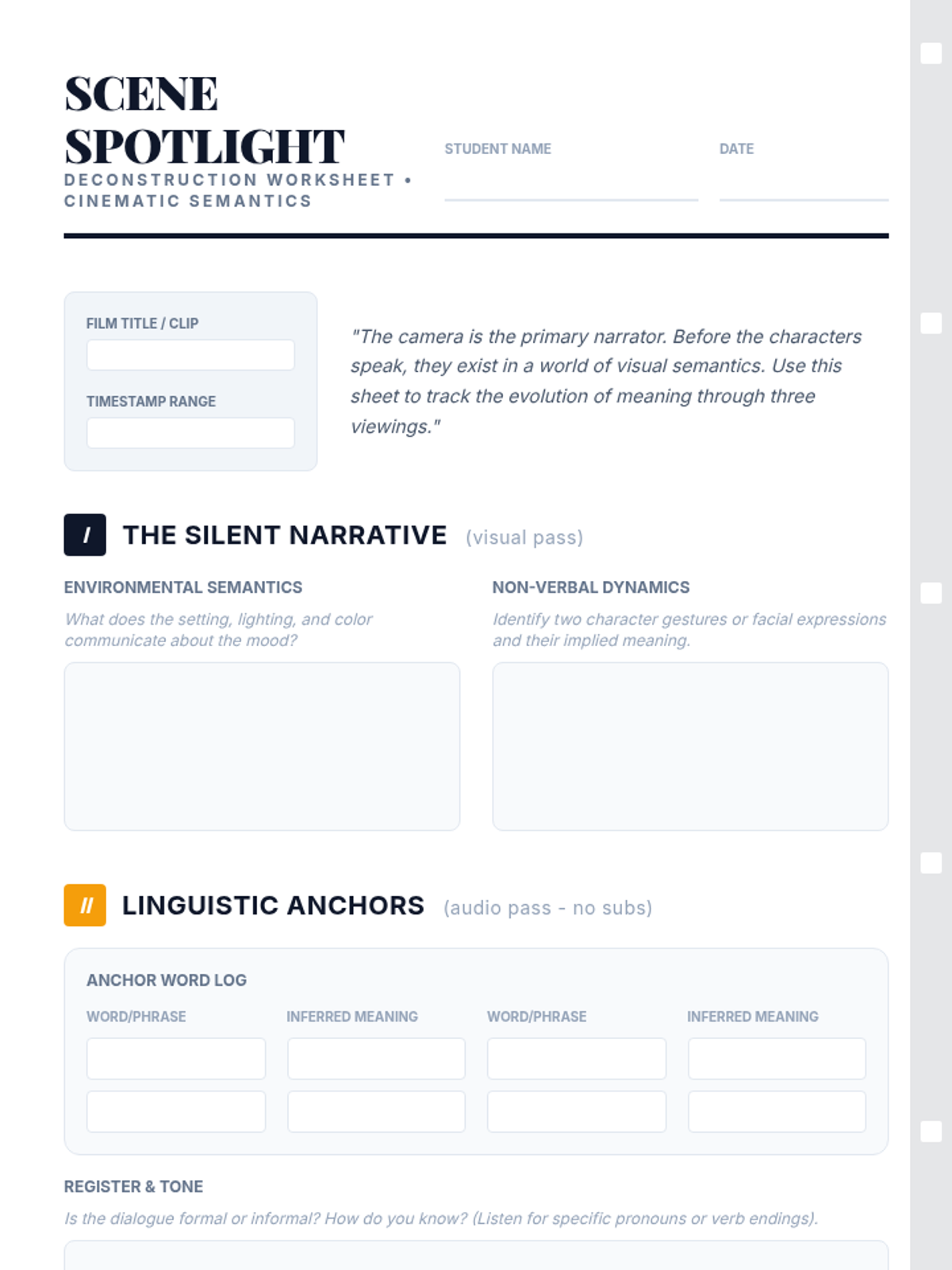
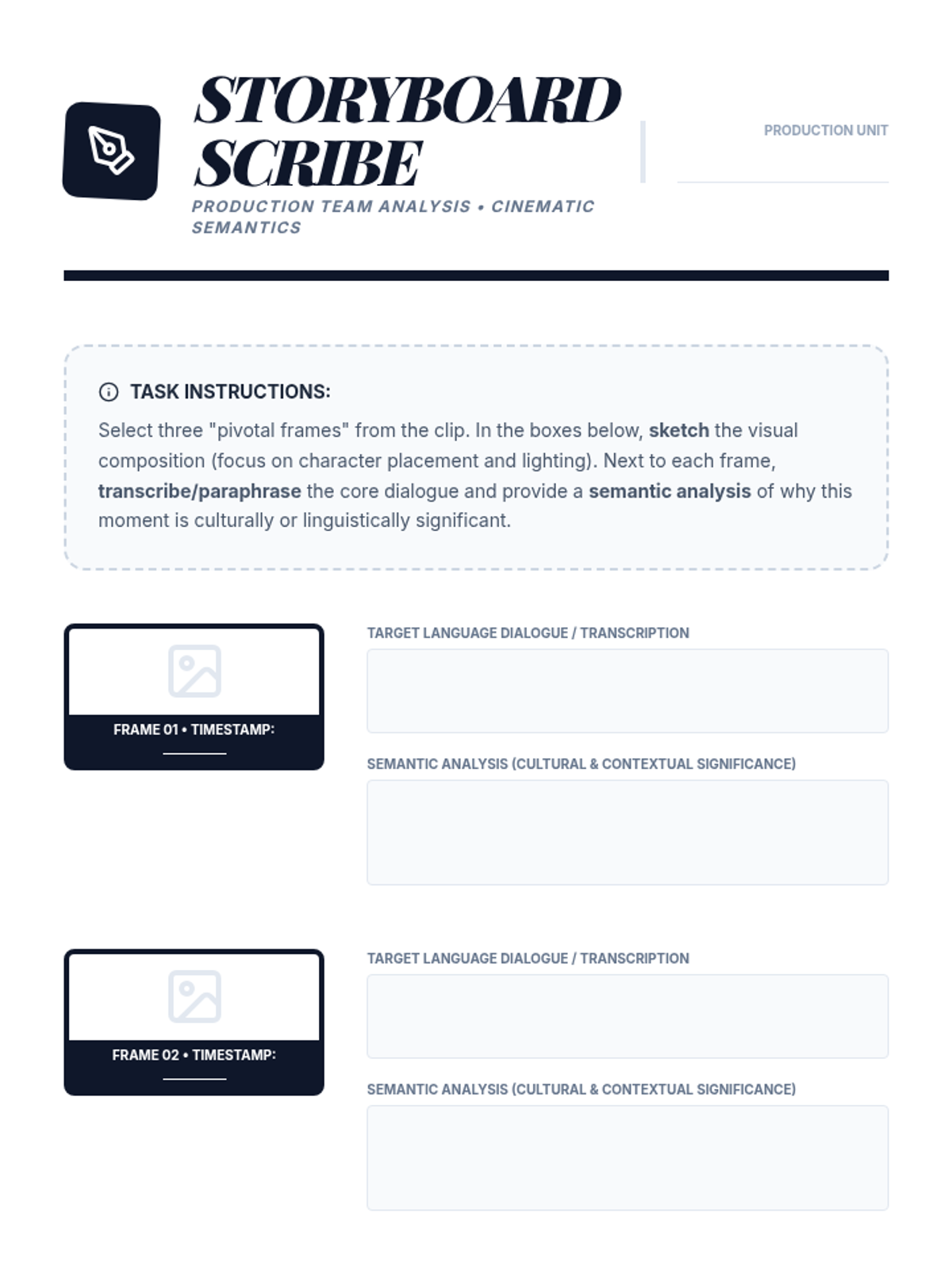
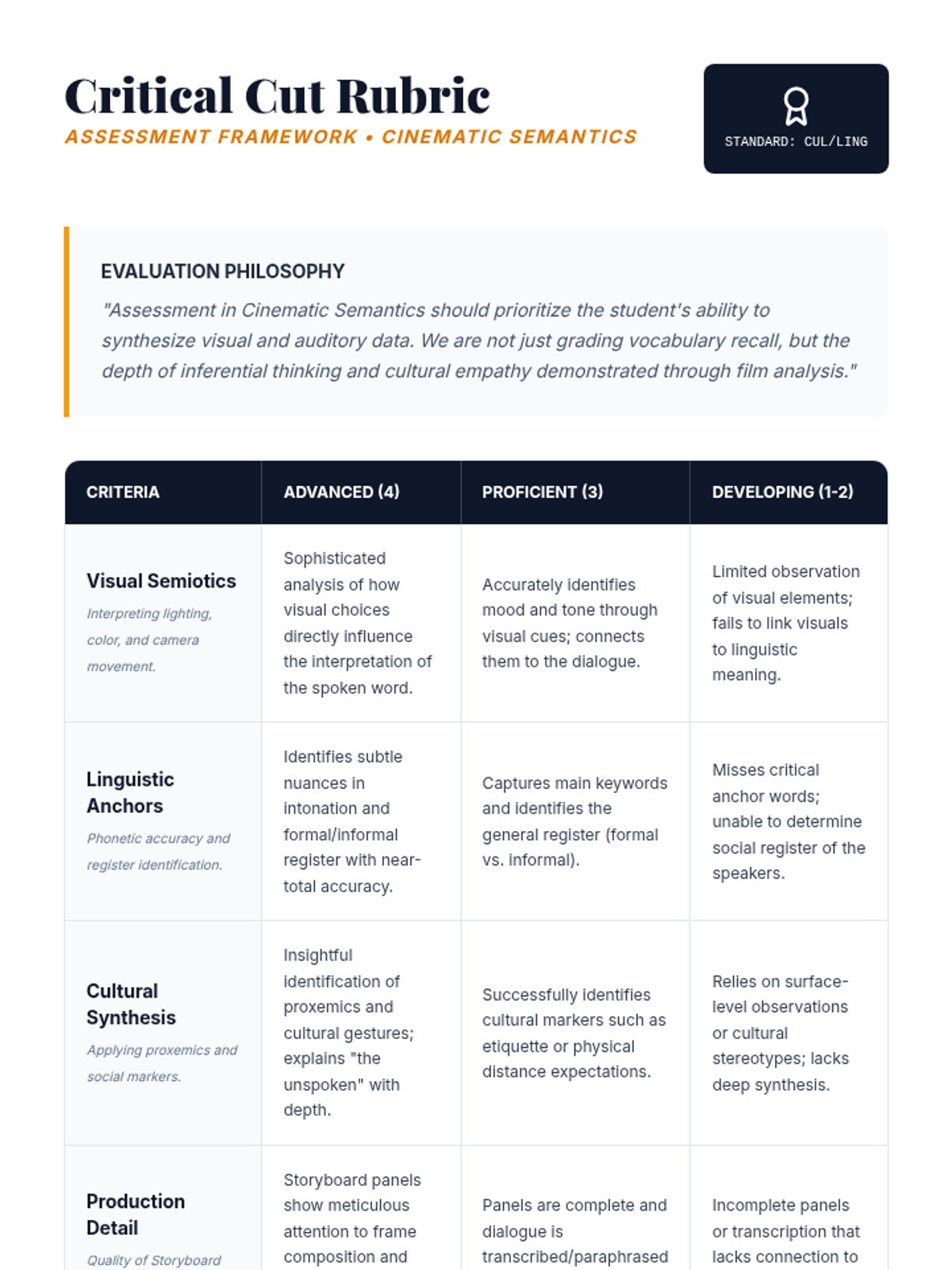
A comprehensive framework for foreign language educators to guide students through deep linguistic and cultural analysis of film, focusing on visual storytelling and advanced listening strategies.
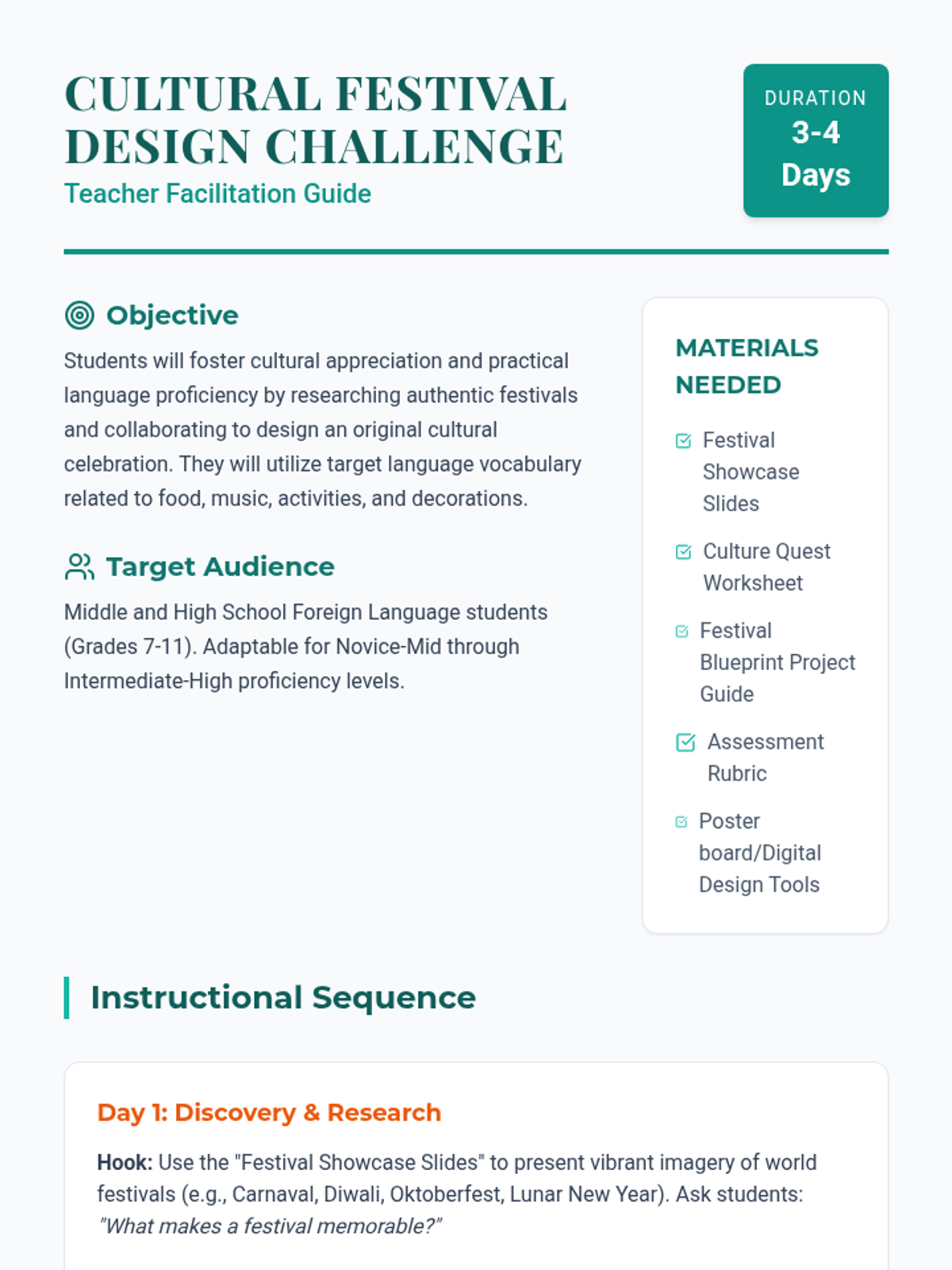
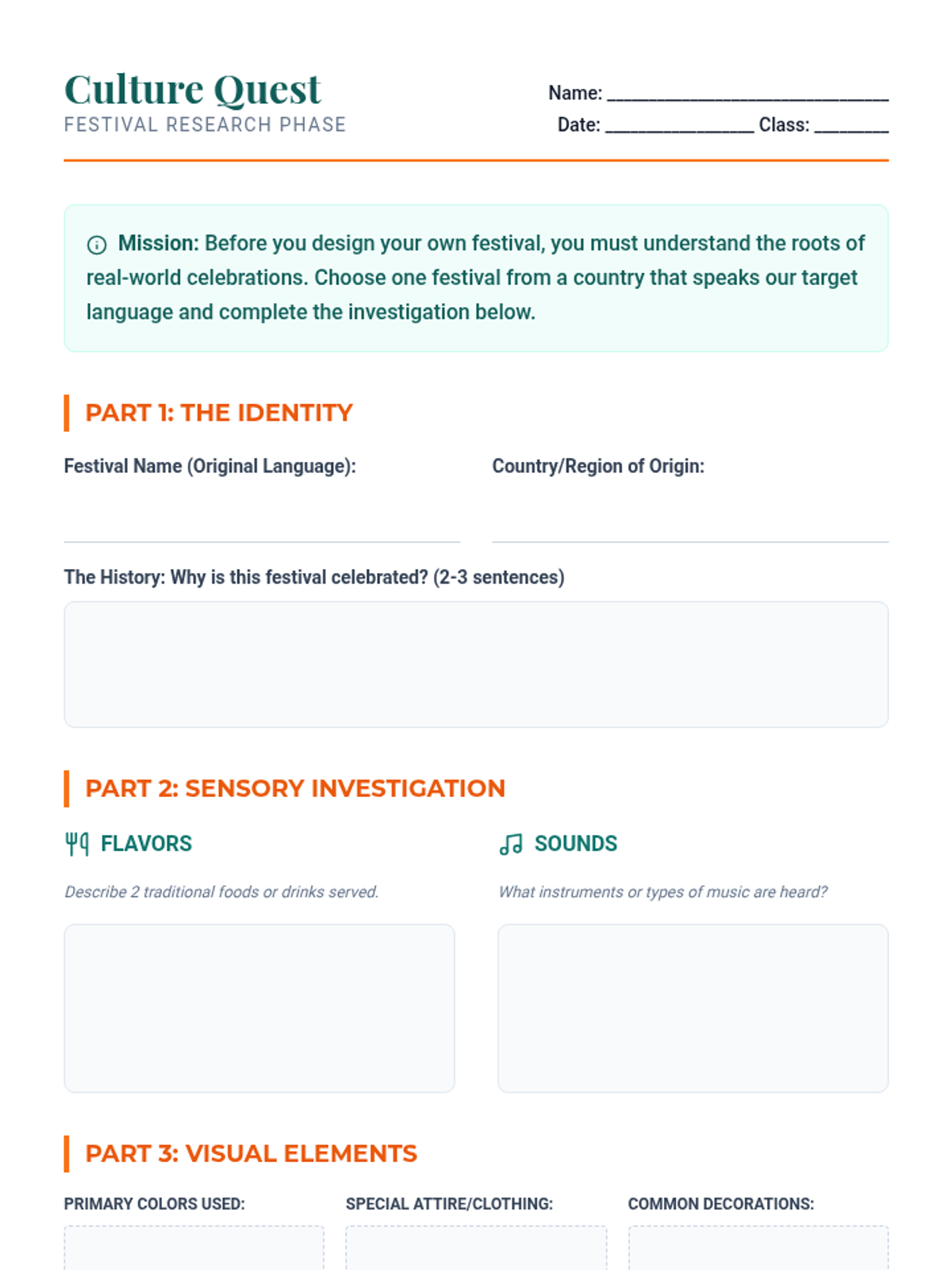
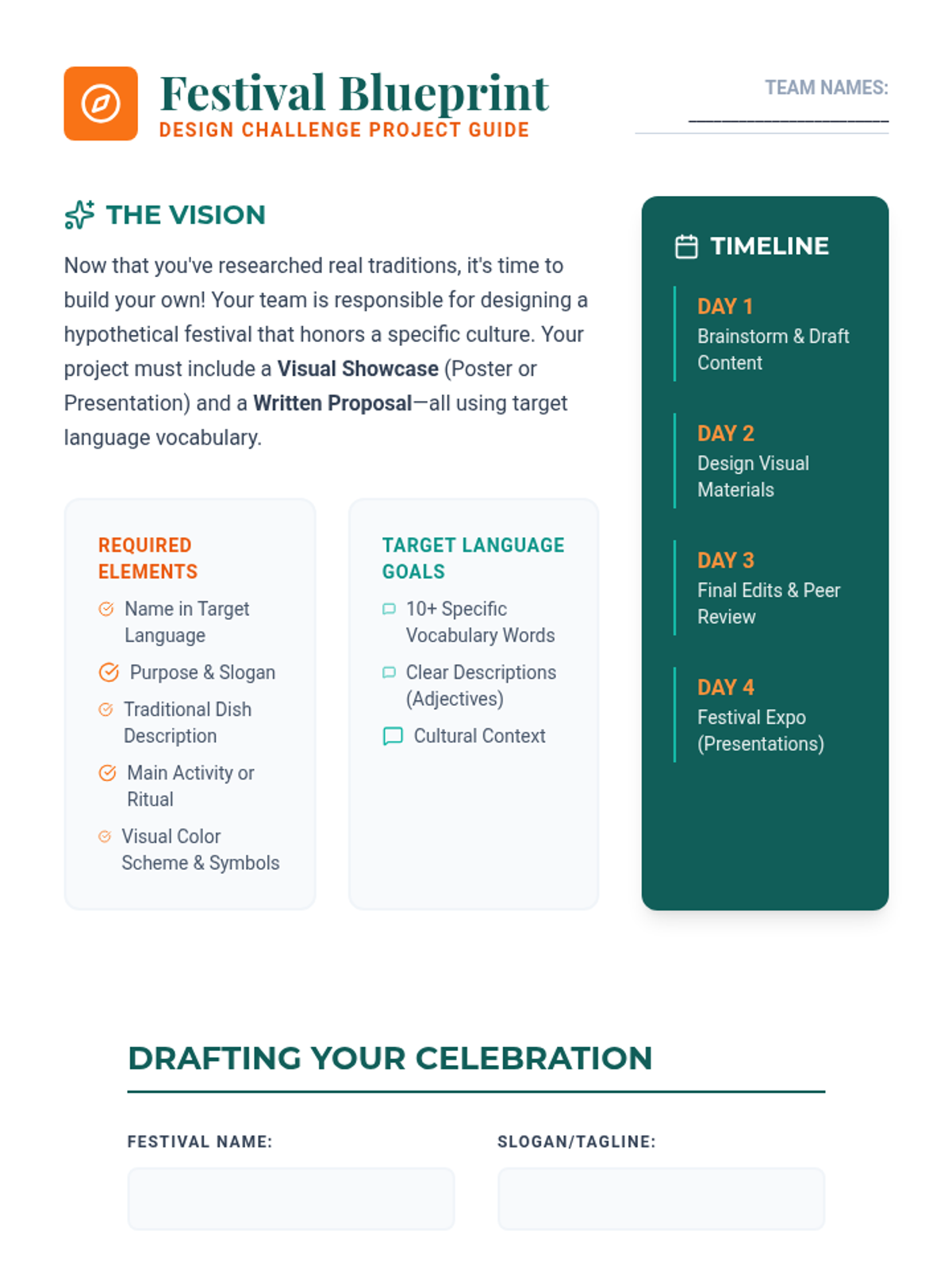
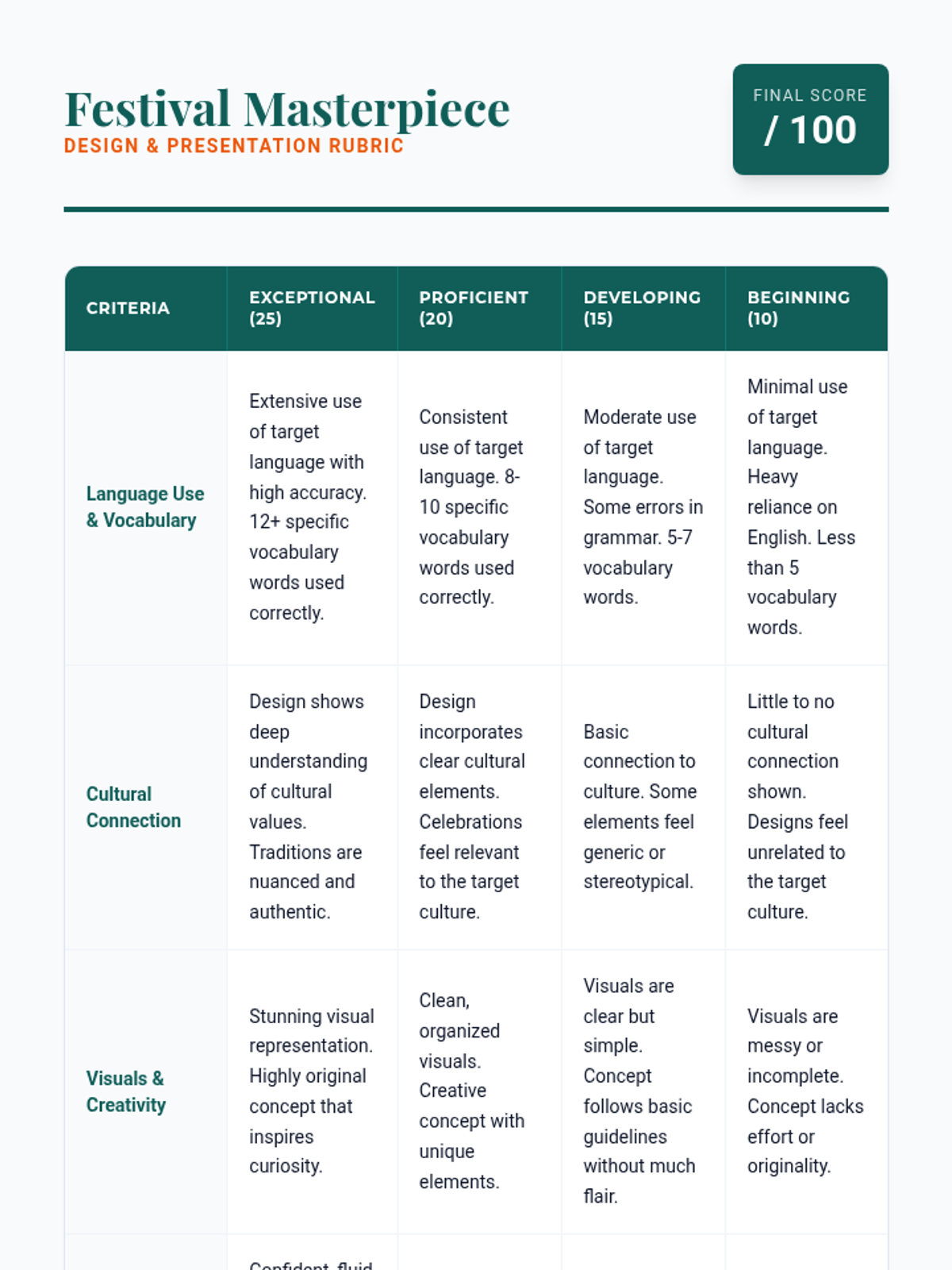
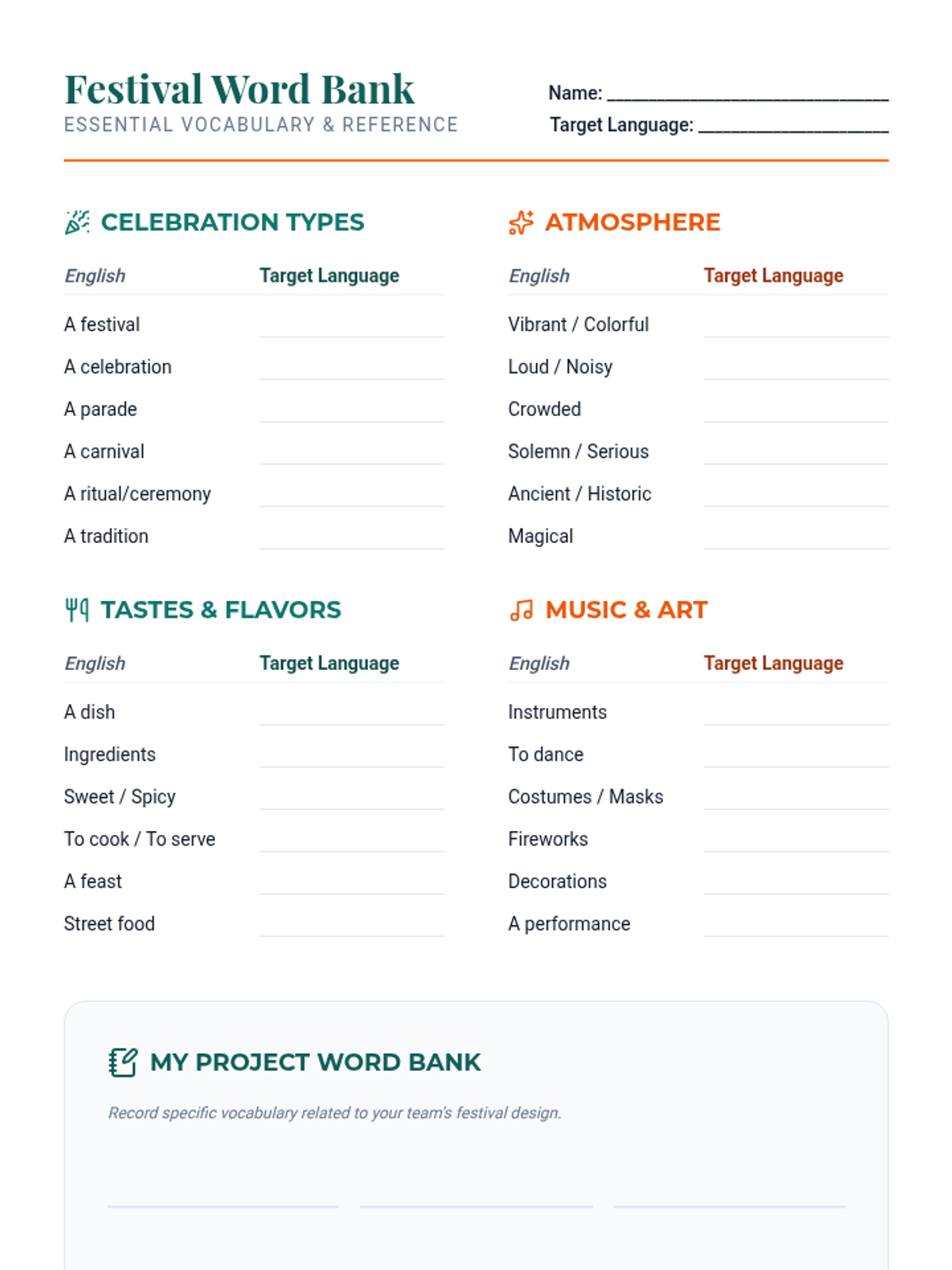
A collaborative project-based lesson where students research real-world cultural festivals and then design their own unique celebration, applying target language vocabulary for food, music, and traditions.
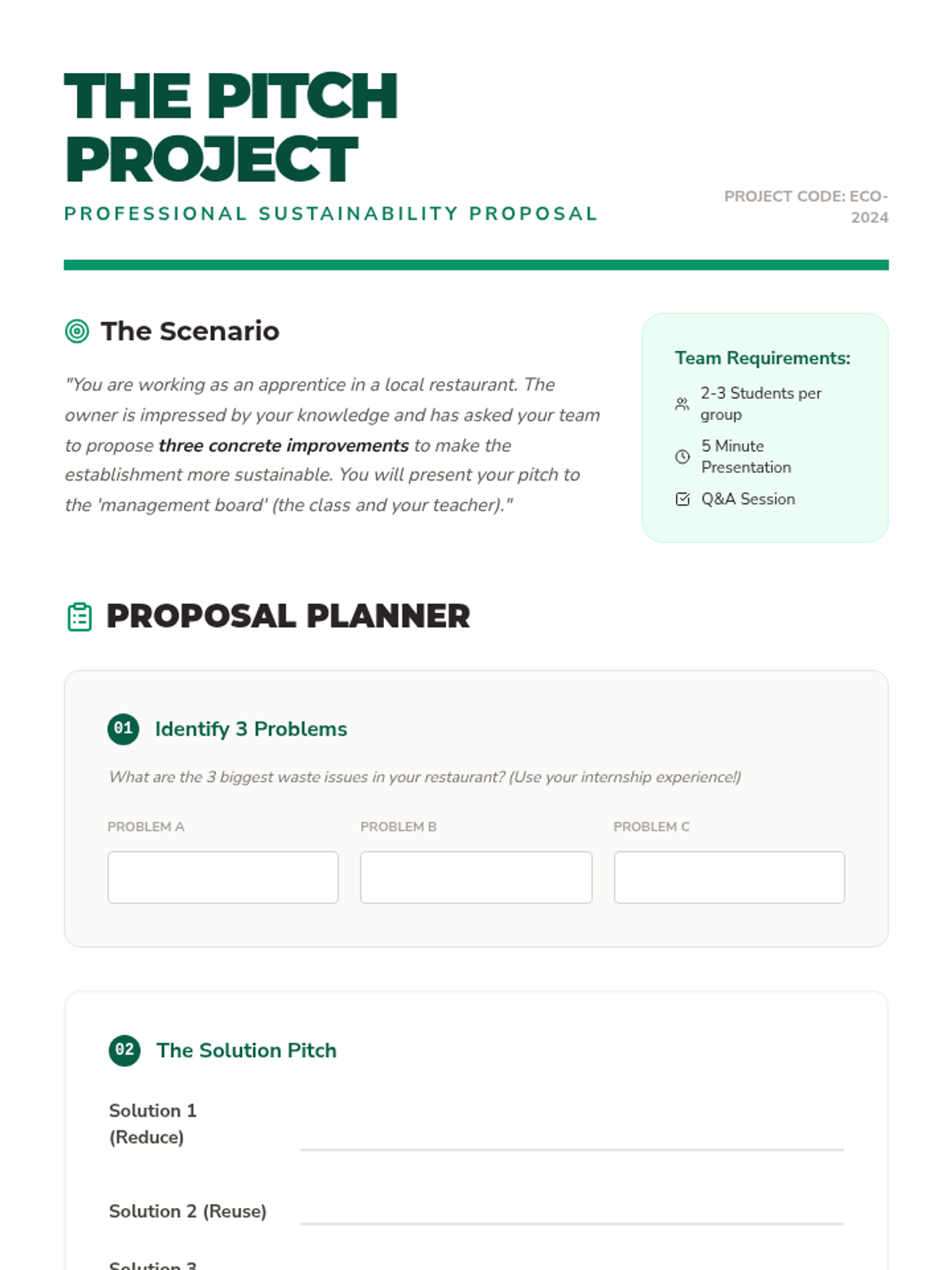
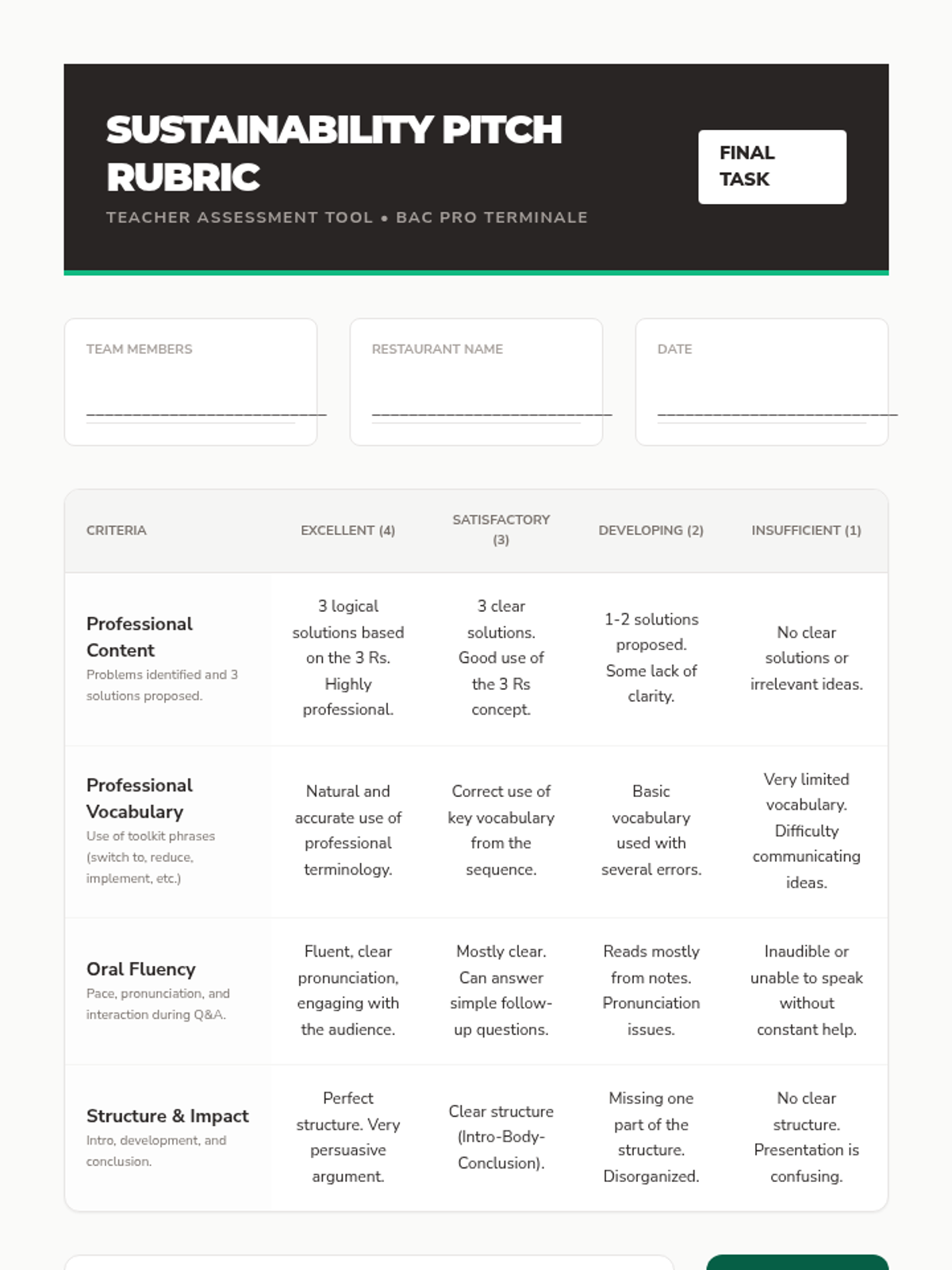
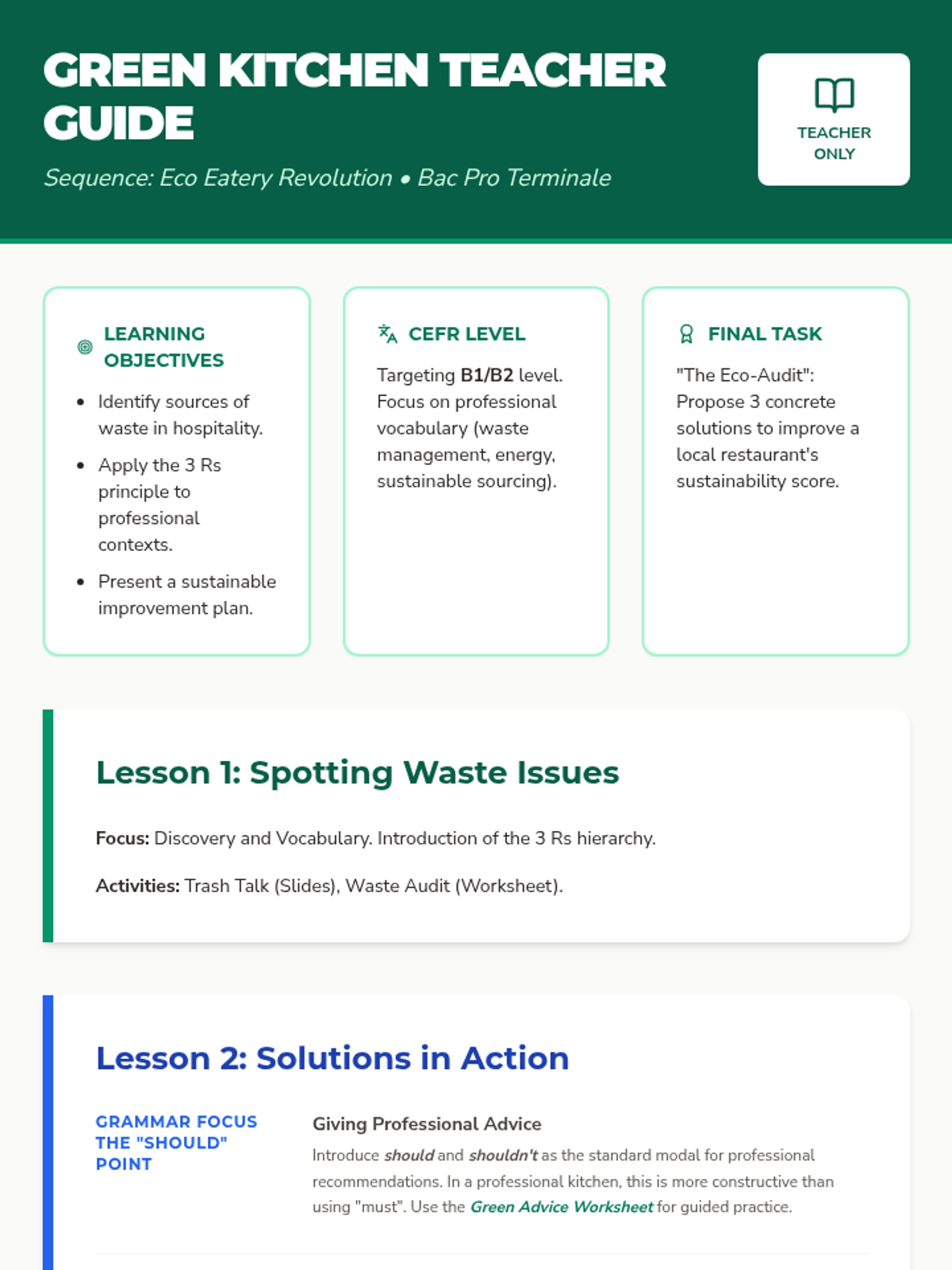
The culmination of the sequence where students work in teams to prepare and deliver a professional pitch proposing three sustainable solutions for a local restaurant.
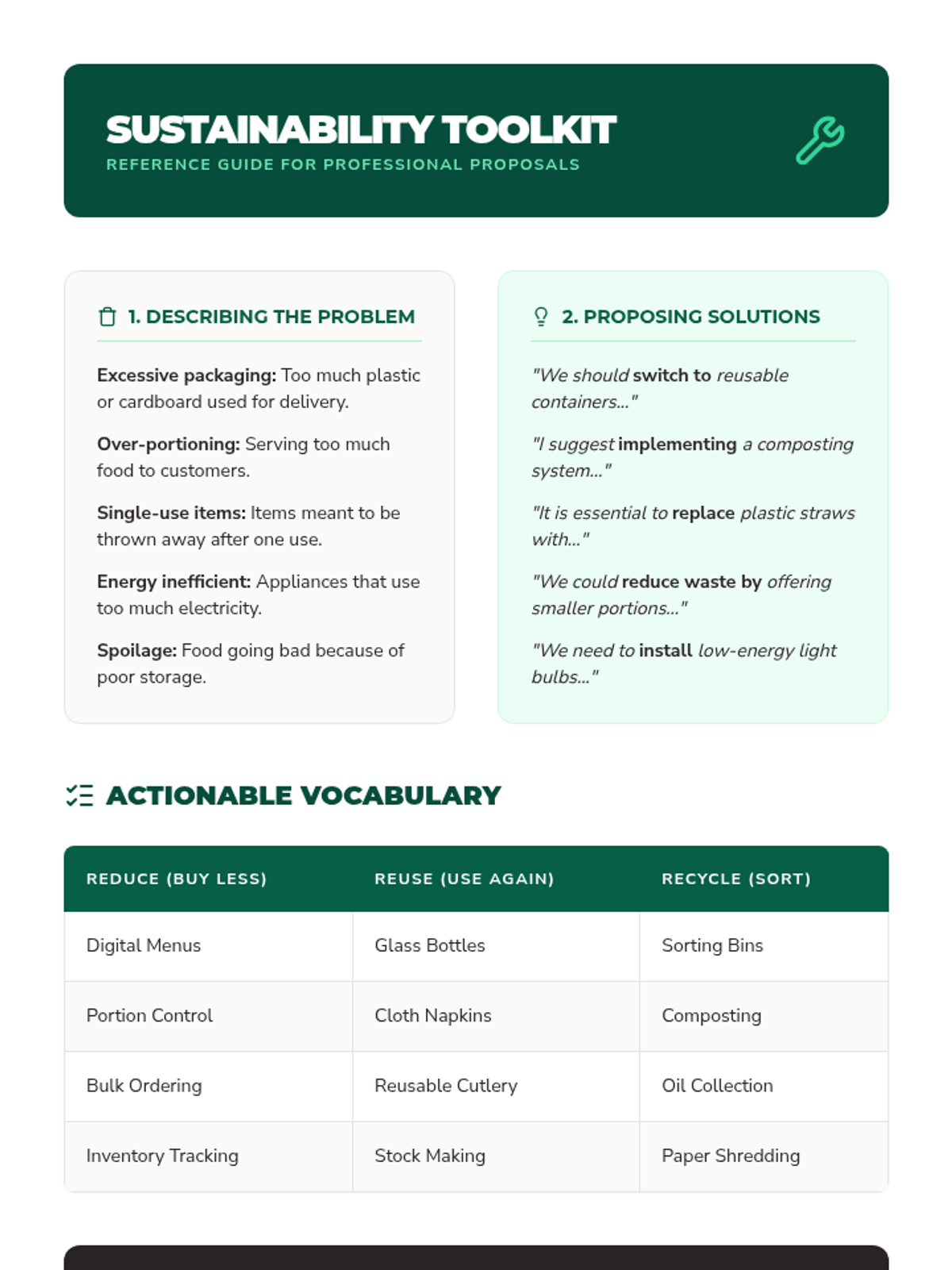
Students research sustainable alternatives for common restaurant problems and build a professional vocabulary toolkit for their final proposal.
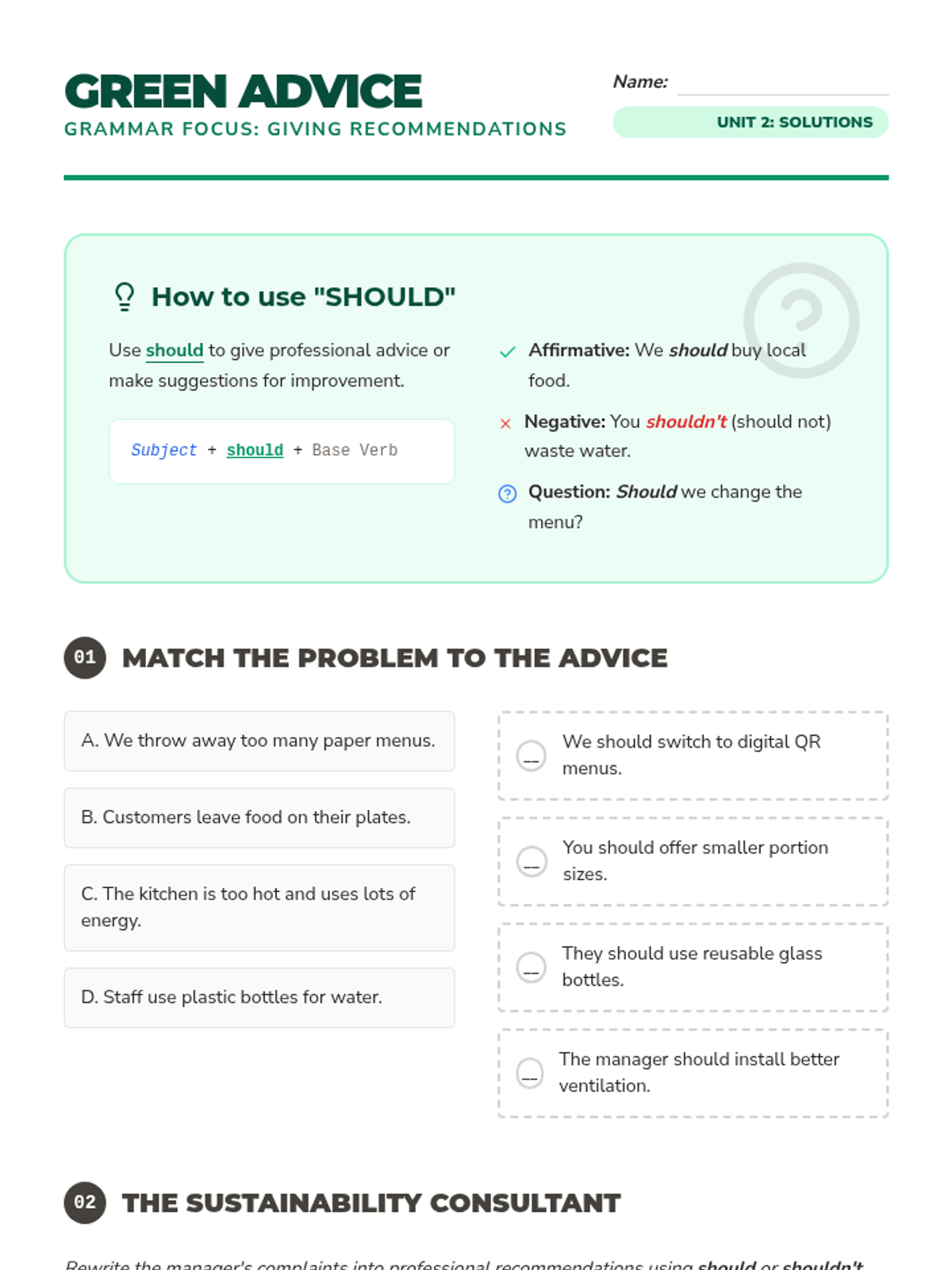
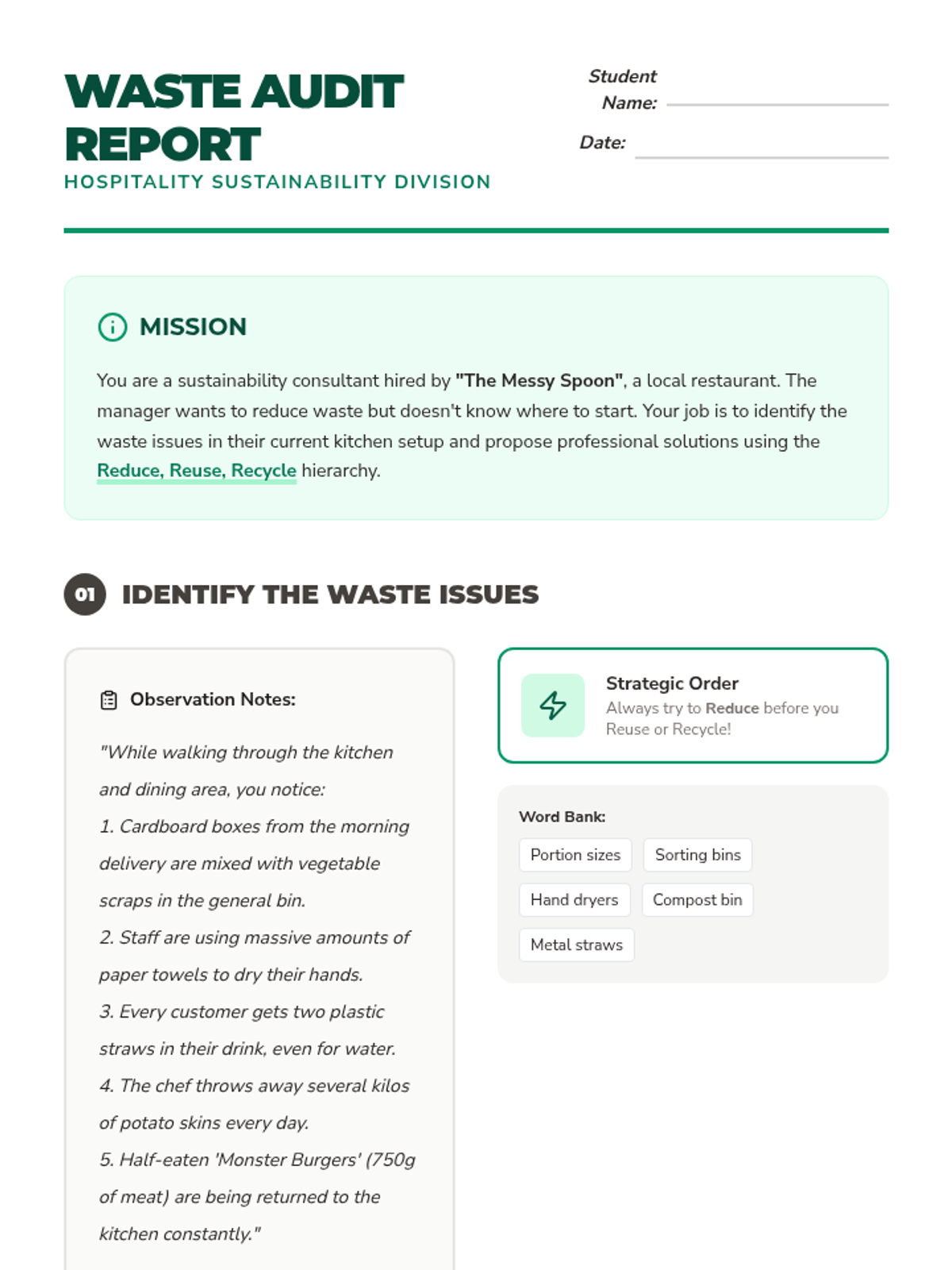
Students identify common waste issues in restaurant environments and learn the vocabulary of the 3 Rs (Reduce, Reuse, Recycle).
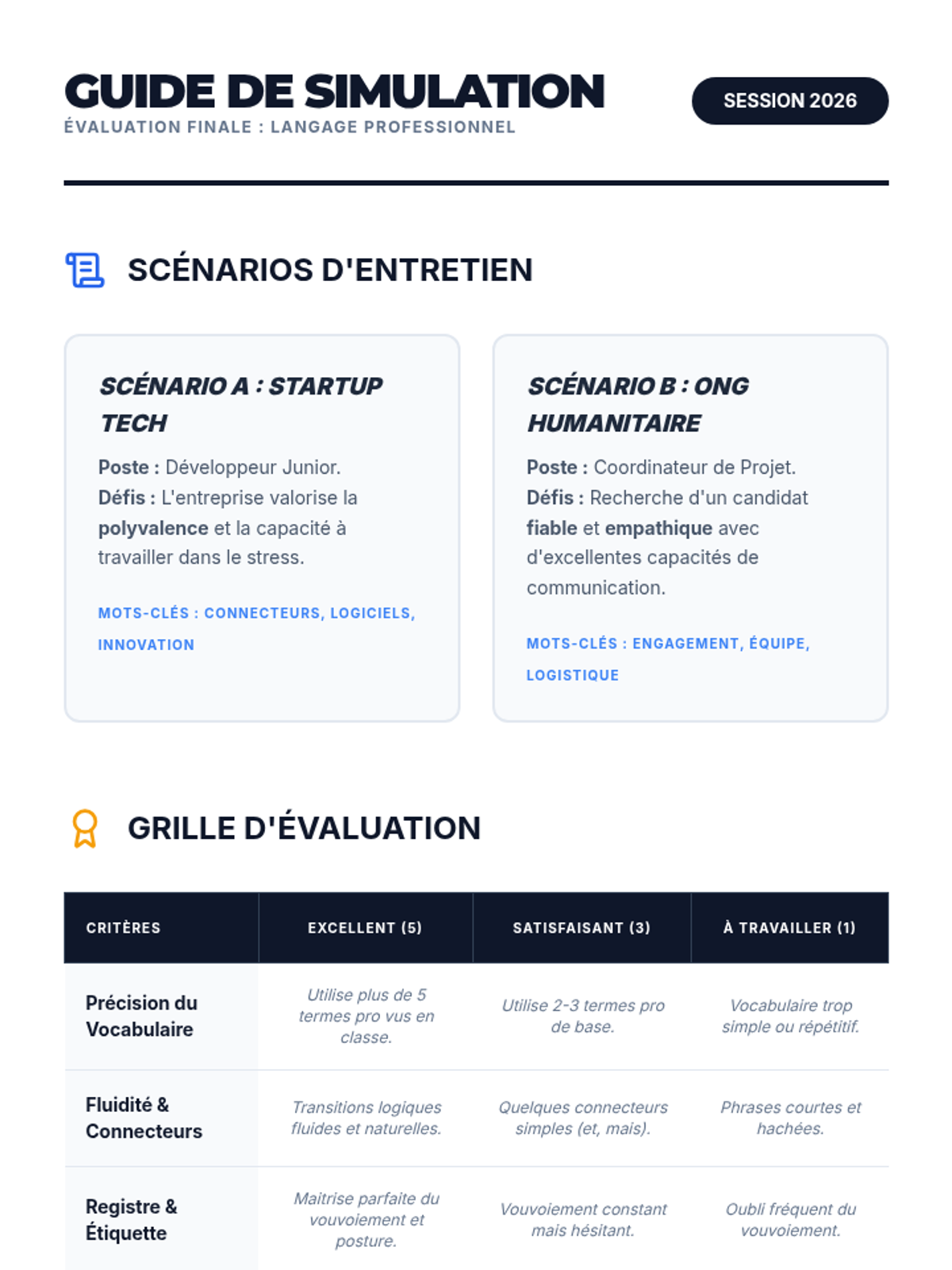
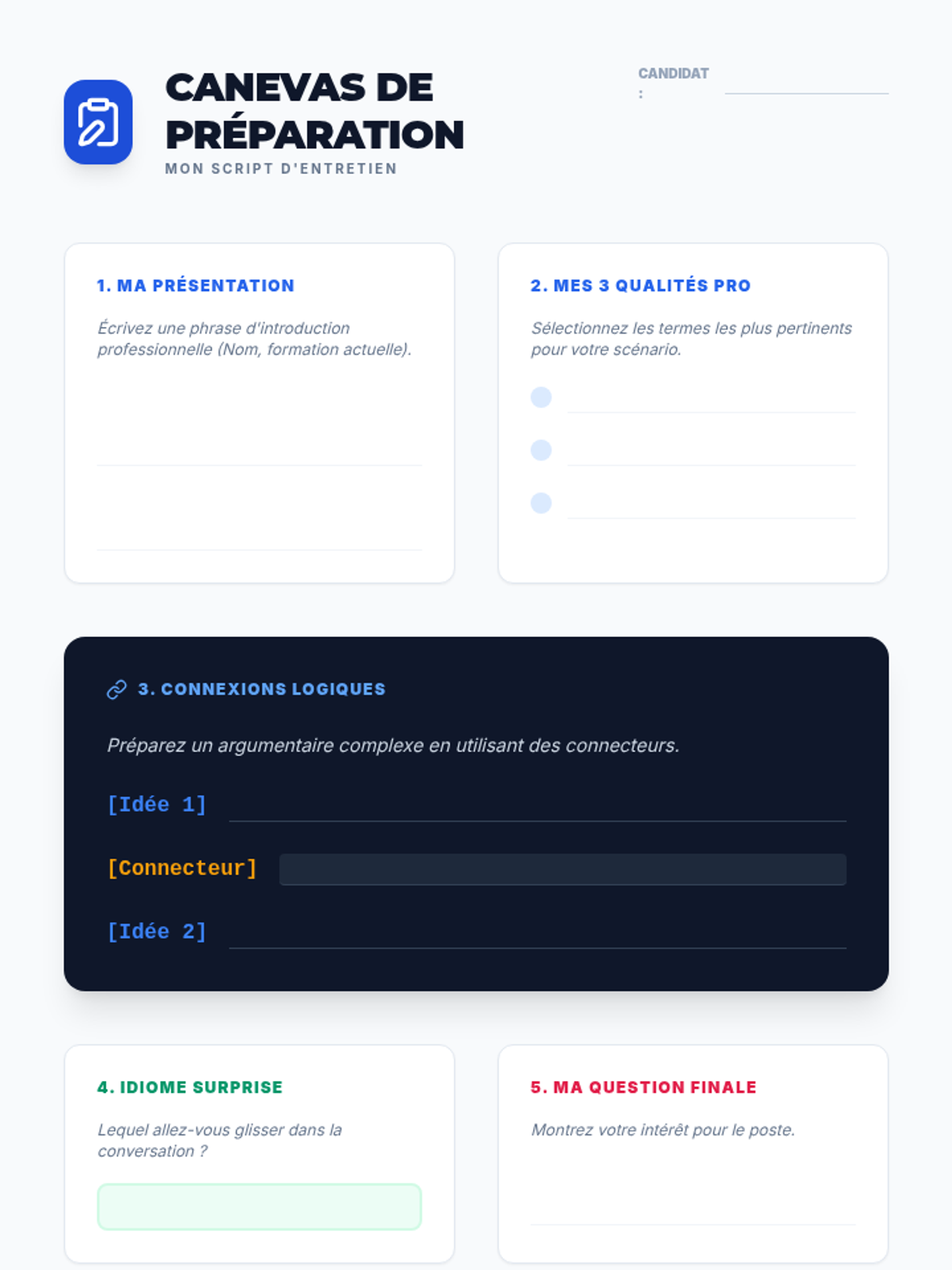
Synthesizing the unit's vocabulary, students participate in mock job interviews using the precise vocabulary, connectors, and formal register practiced.
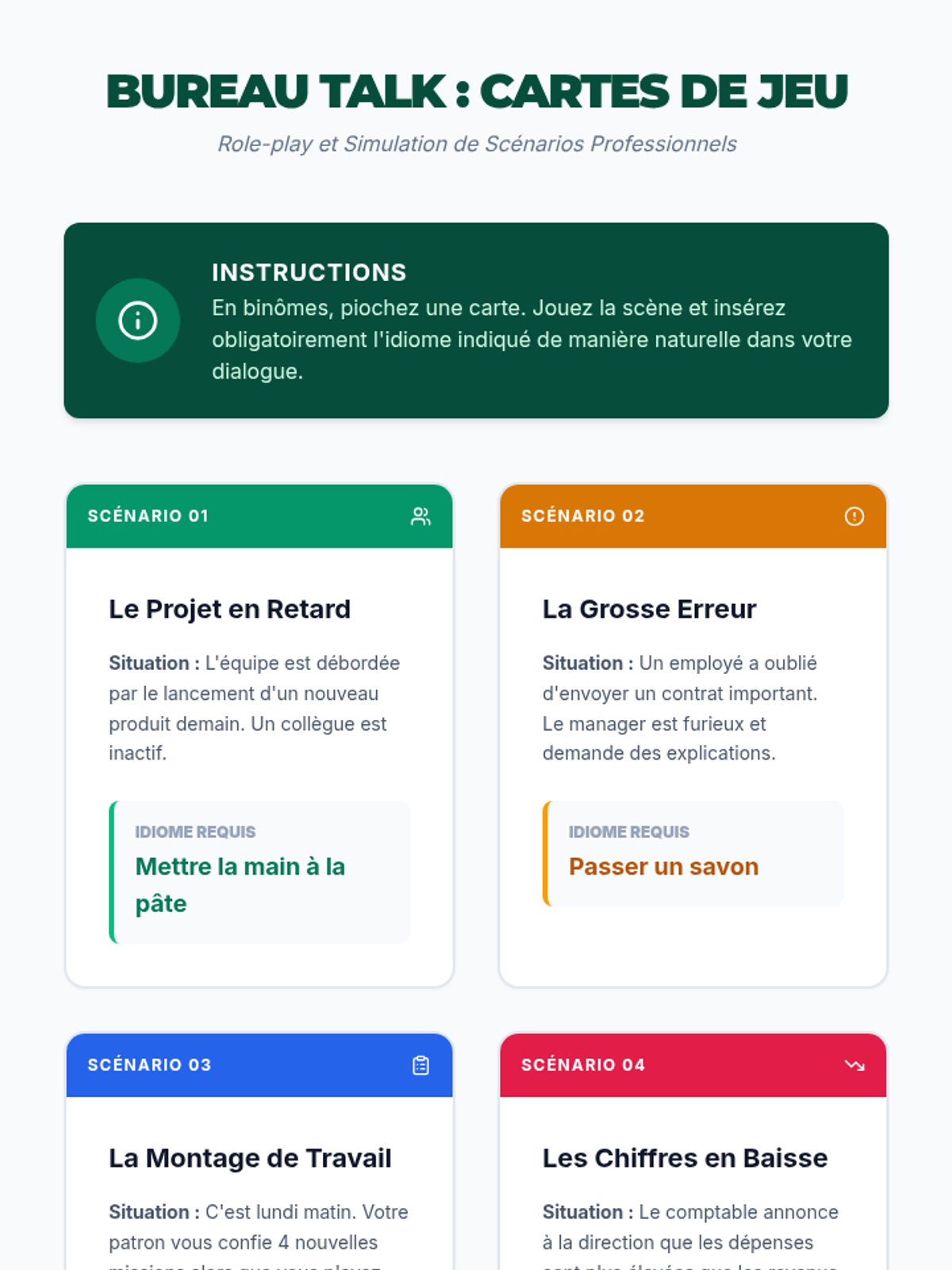
This lesson introduces high-frequency idiomatic expressions relevant to work and effort, focusing on cultural nuance and office scenarios.
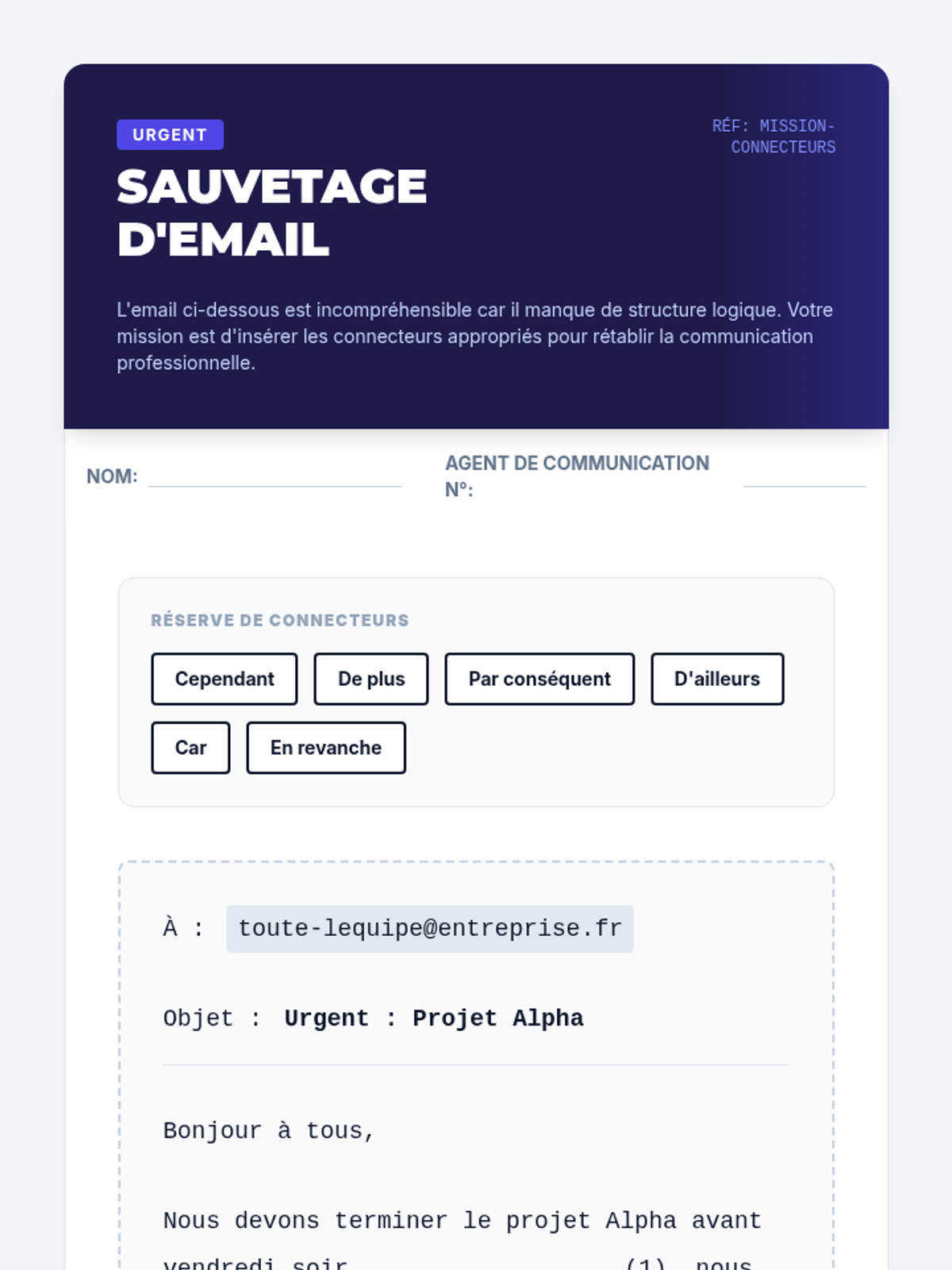
Students elevate their sentence complexity by incorporating logical connectors to transform simple sentences into cohesive, professional paragraphs.
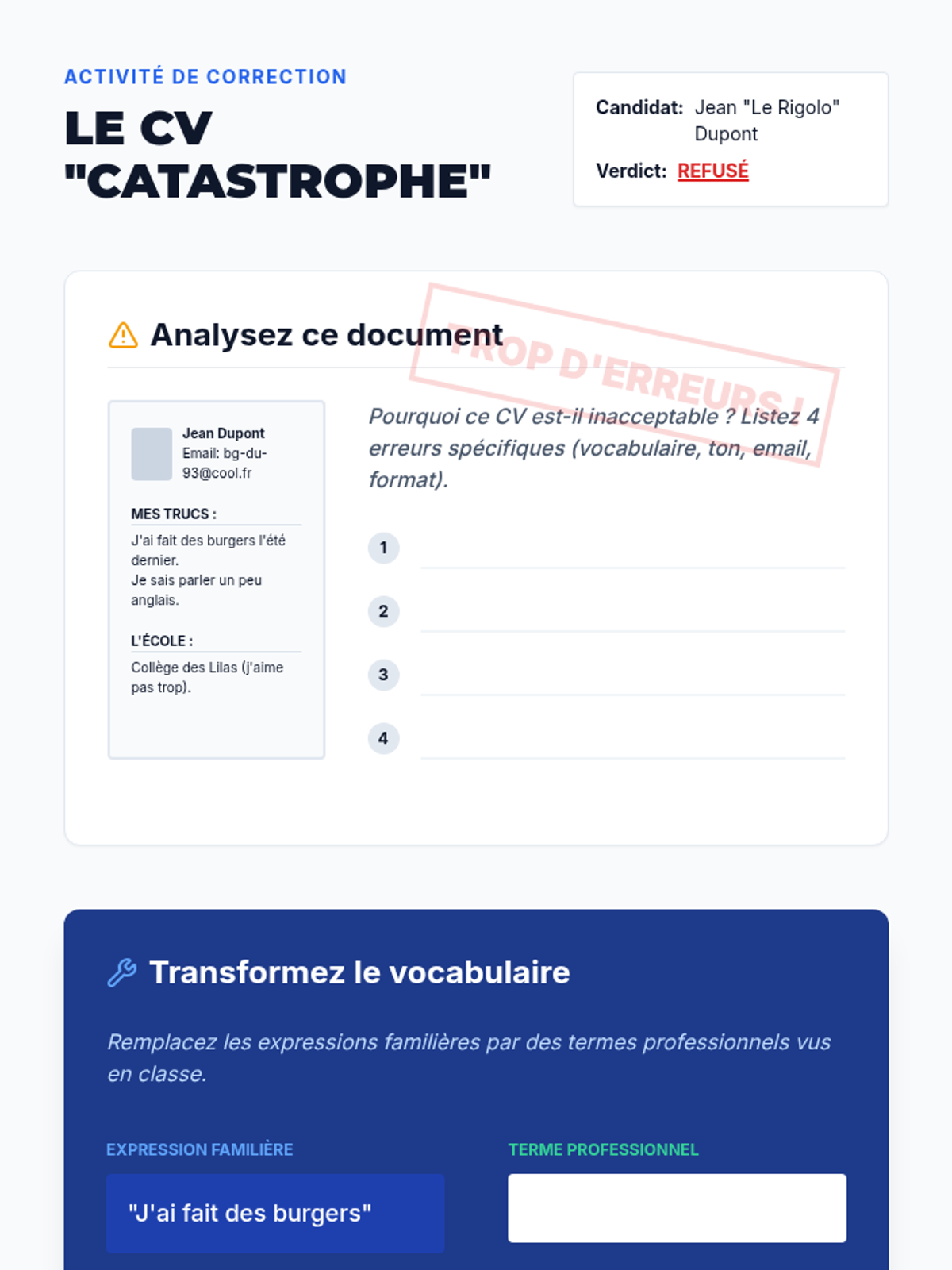
Focusing on written expression, this lesson guides students through the structure of a standard French 'CV' (Curriculum Vitae) and identifies key formatting standards.
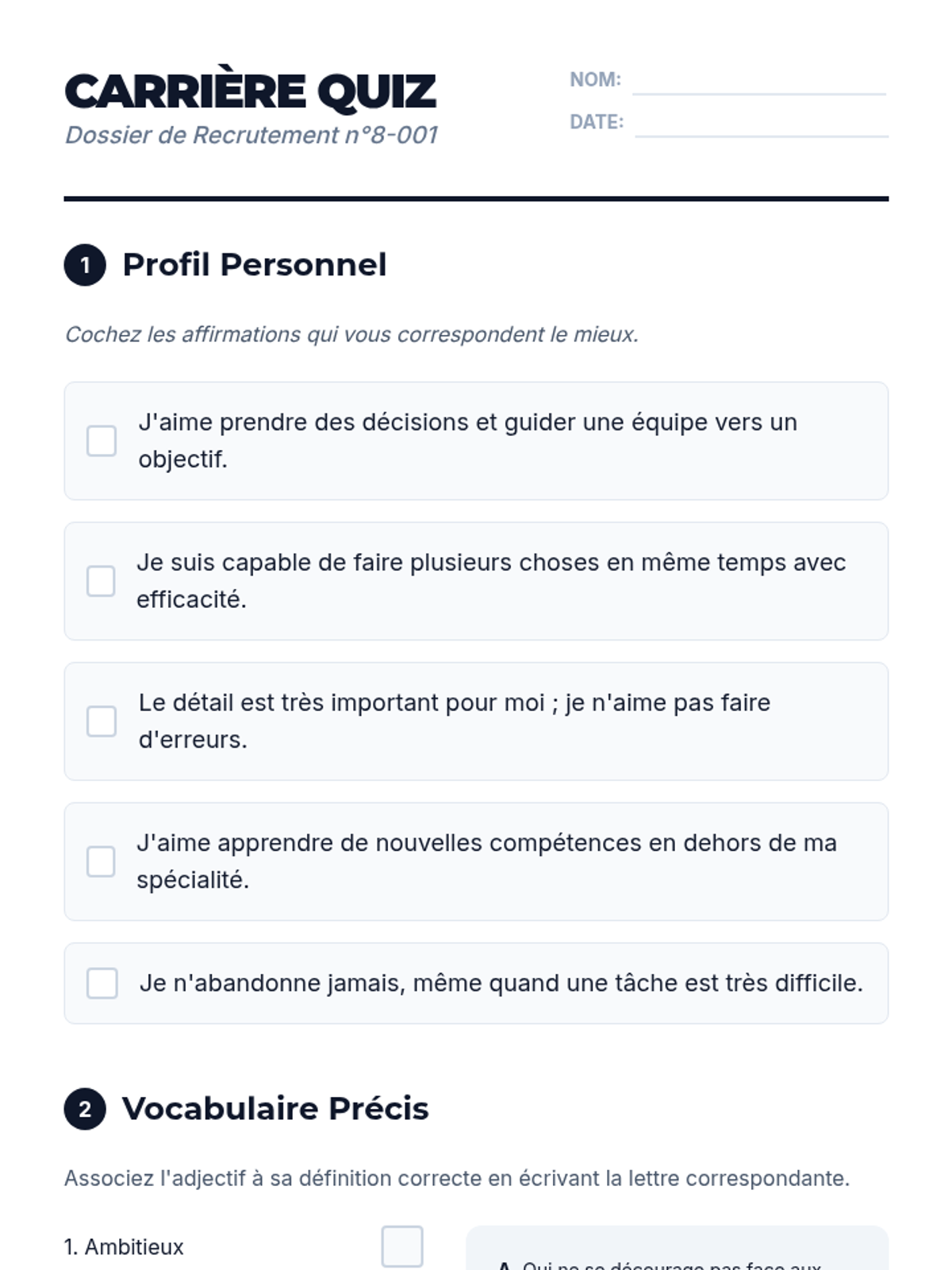
Students explore a variety of professions and the specific personality traits required for each using nuanced adjectives like 'ambitieux,' 'fiable,' and 'polyvalent.'
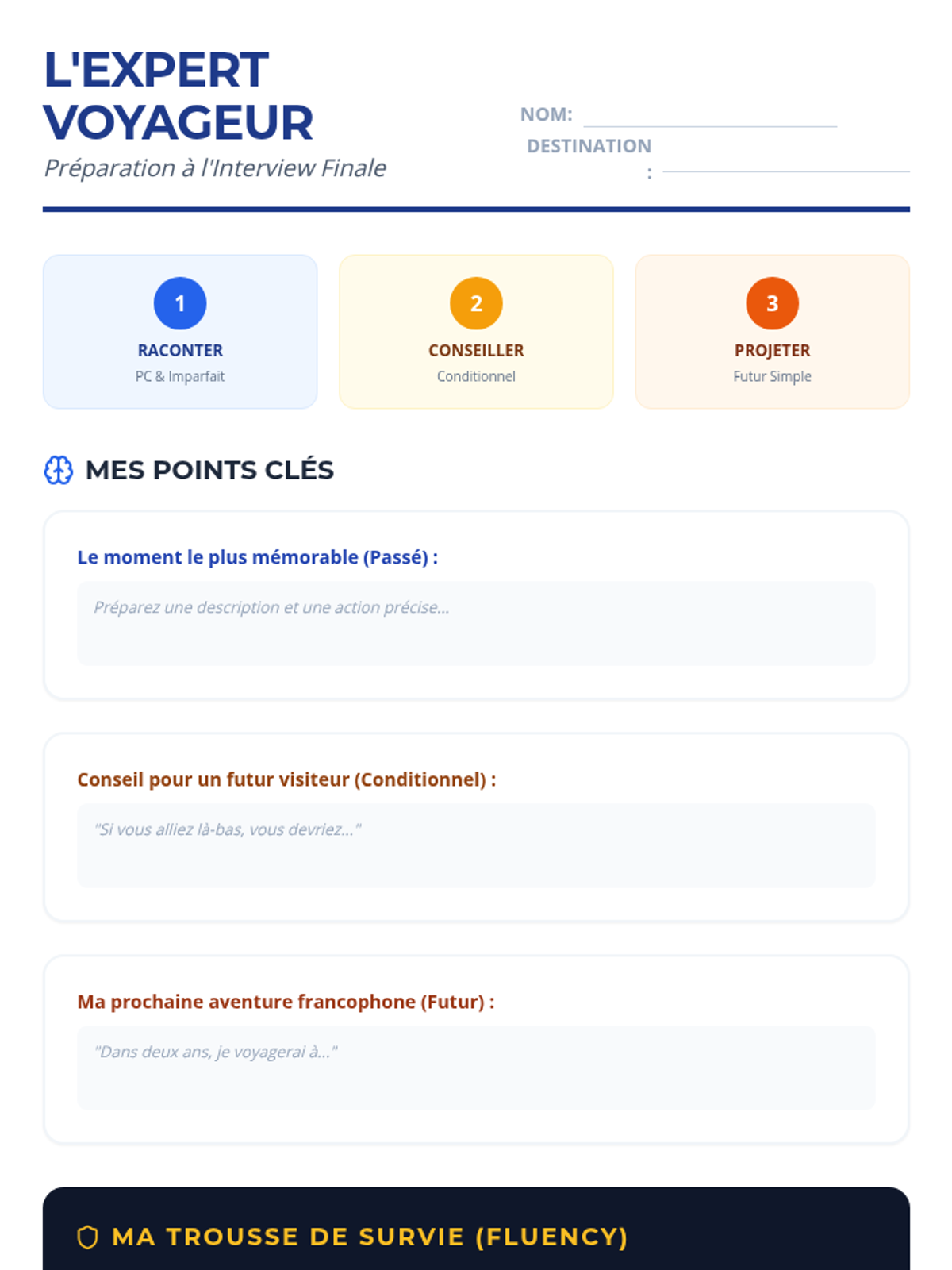
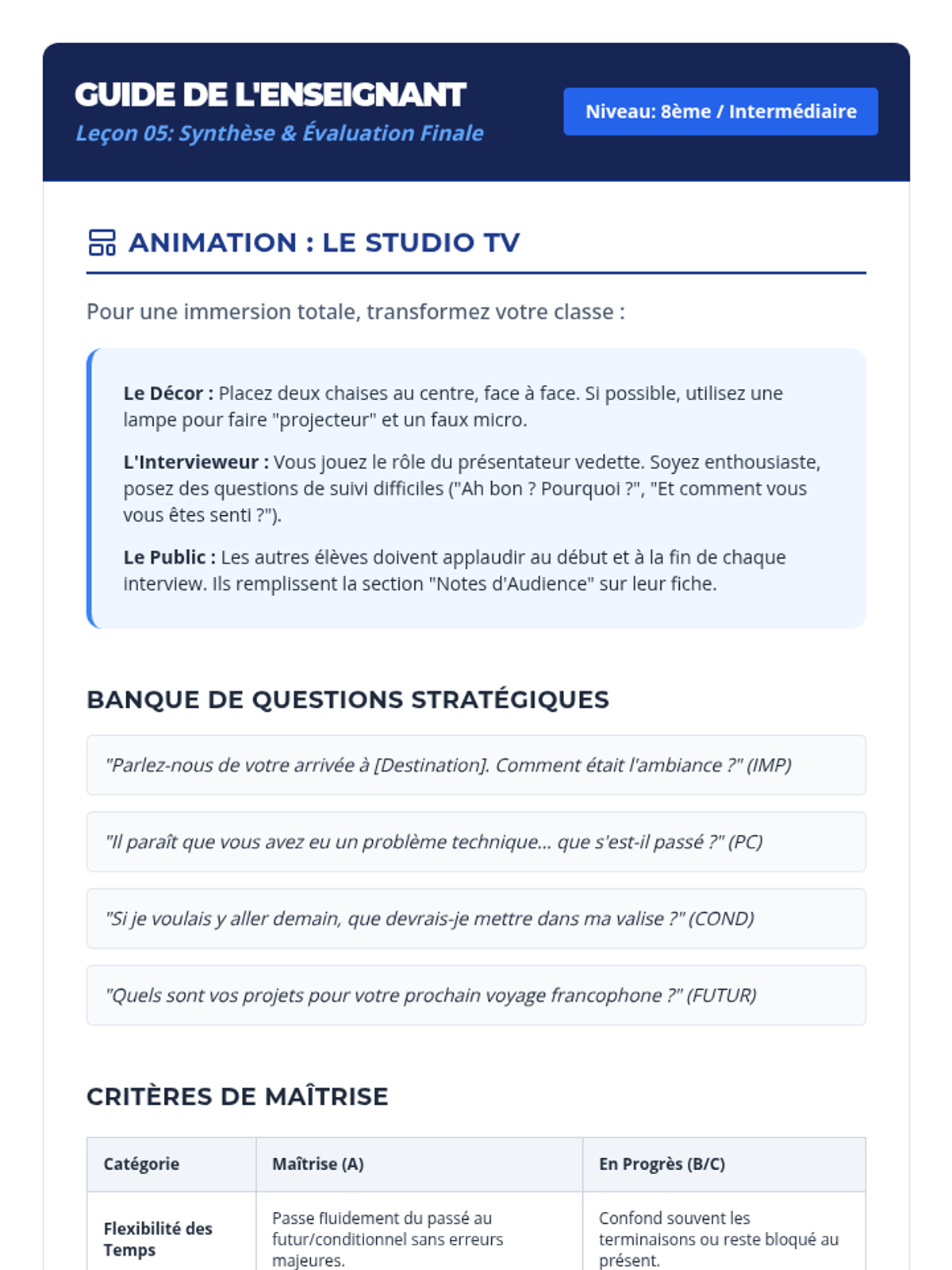
The sequence culminates in a mock TV interview where students synthesize their travel experiences, using multiple tenses and circumlocution strategies.
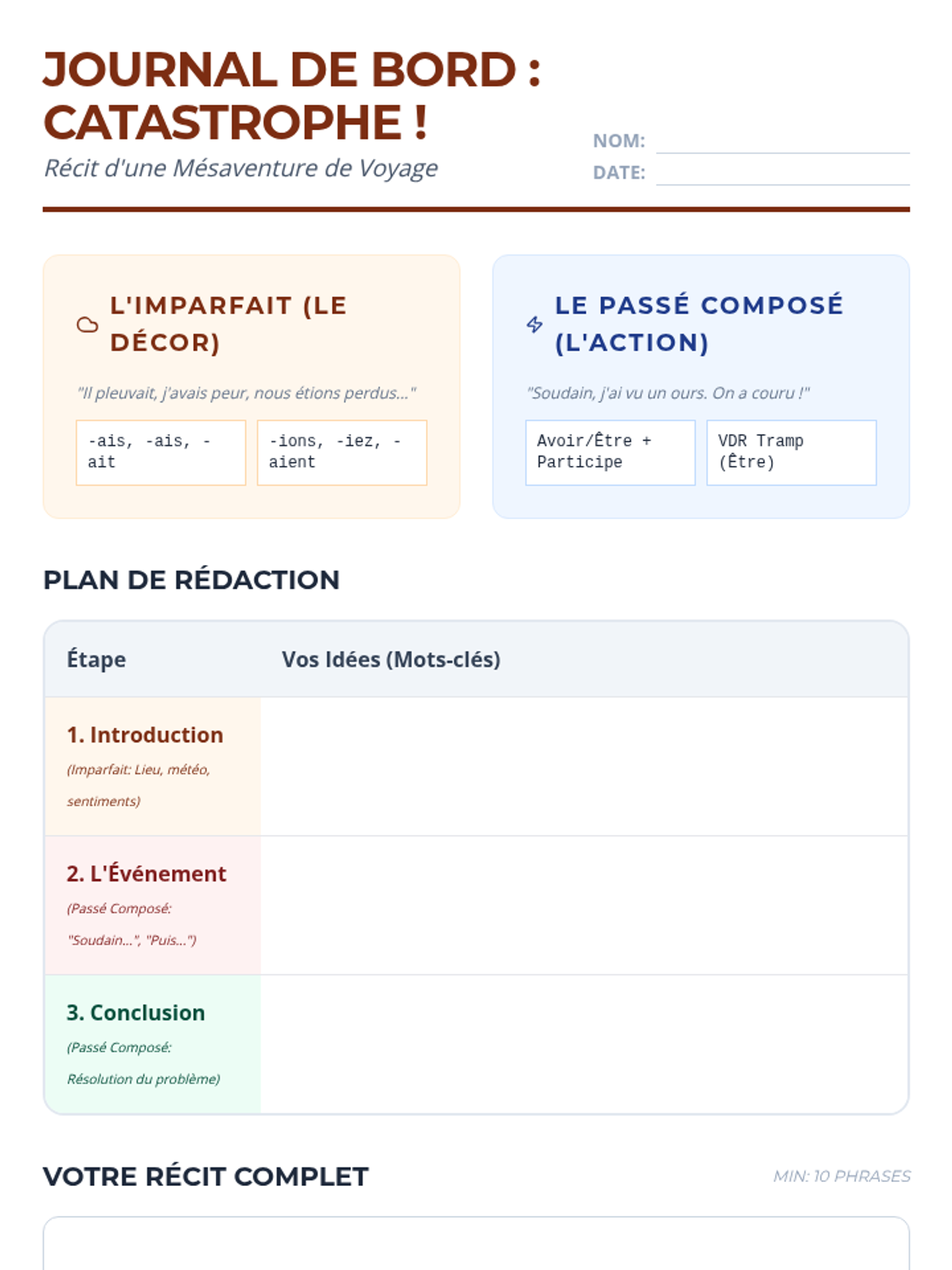
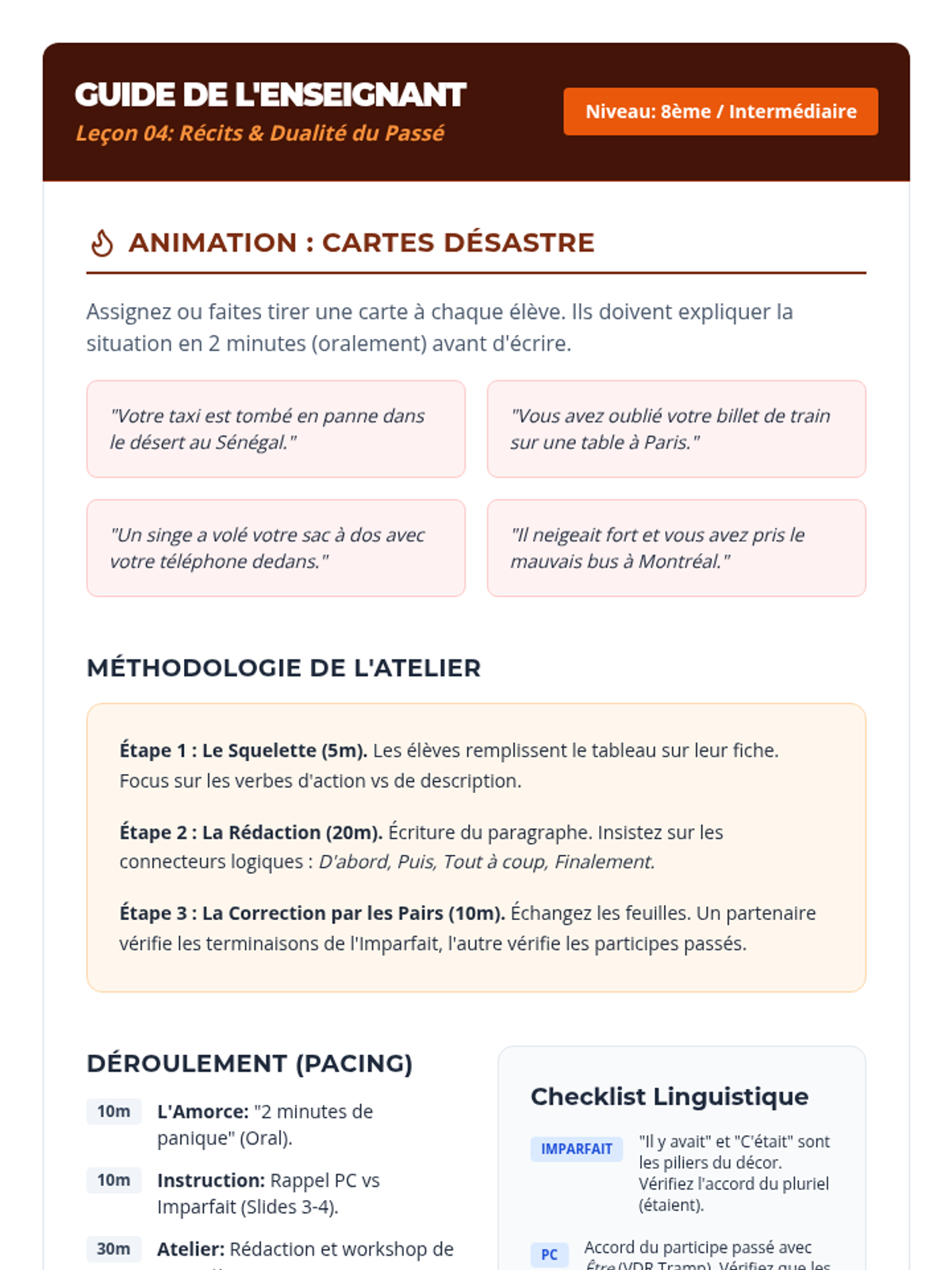
Students master the interplay between Passé Composé and Imparfait by narrating travel mishaps and setting the scene for their stories.
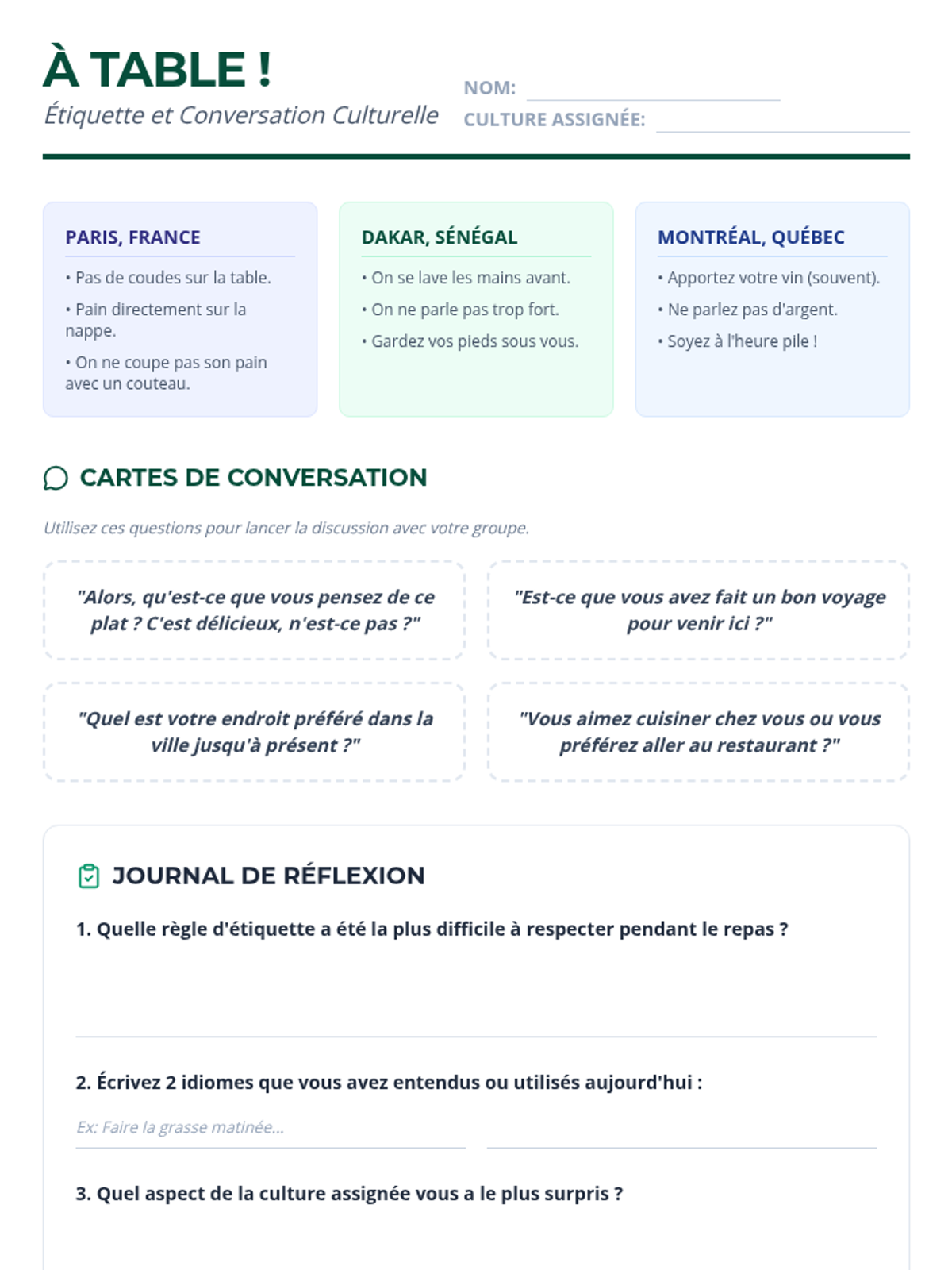
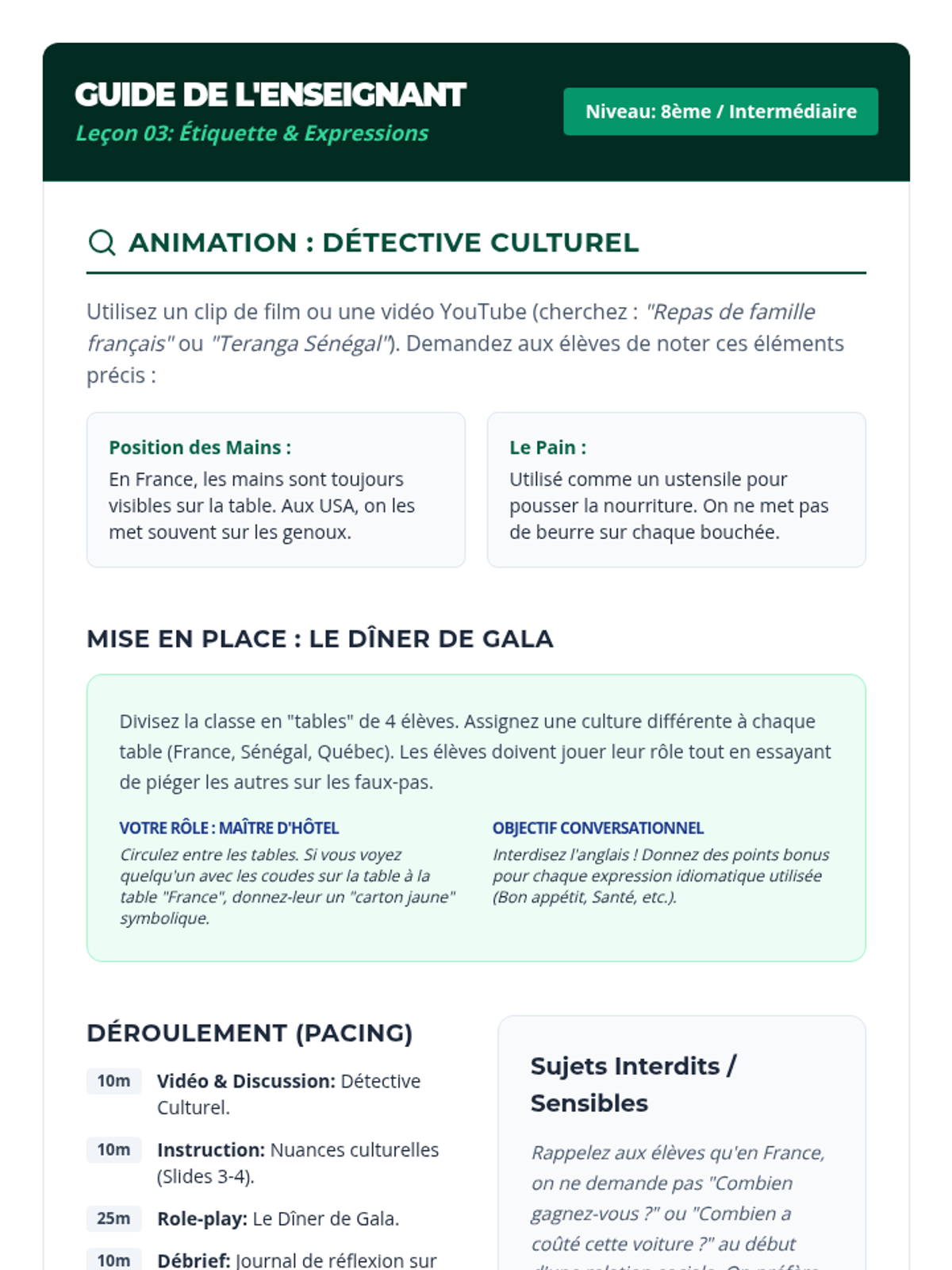
Students explore dining etiquette and social norms across the Francophone world, practicing idiomatic expressions and conversational maintenance.
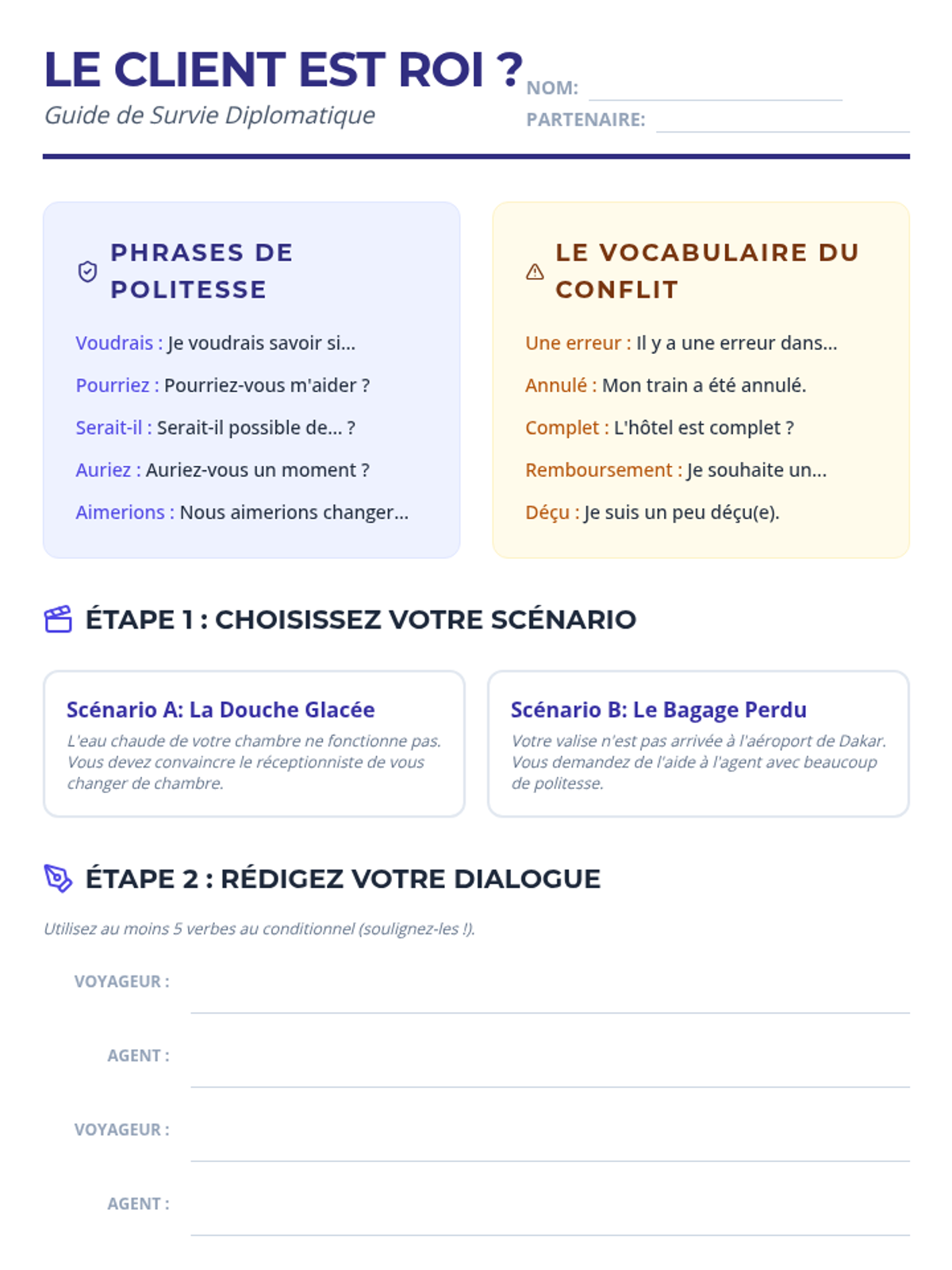
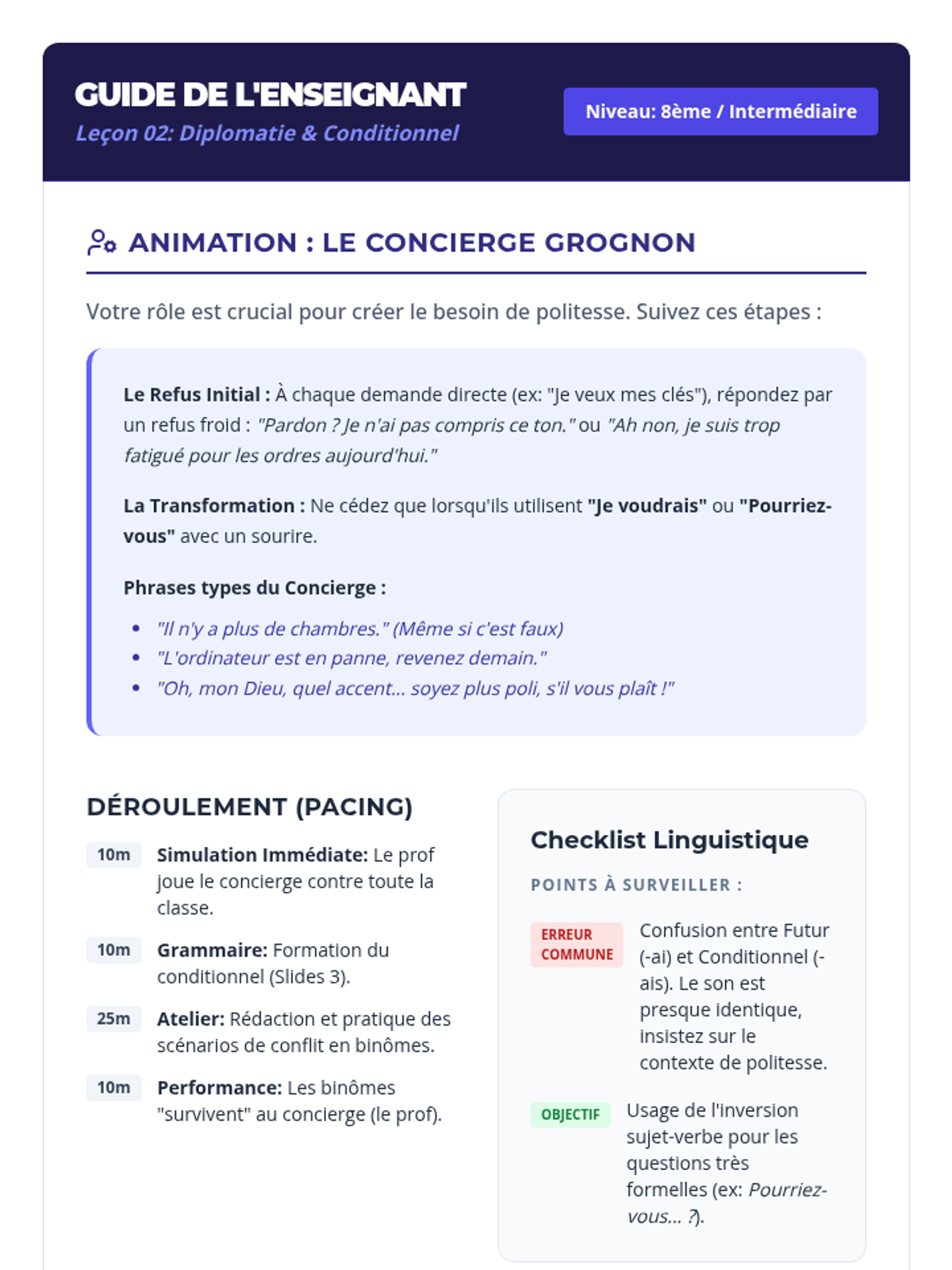
Focusing on the conditional mood, students practice polite service interactions and conflict resolution in hotels and transit hubs.
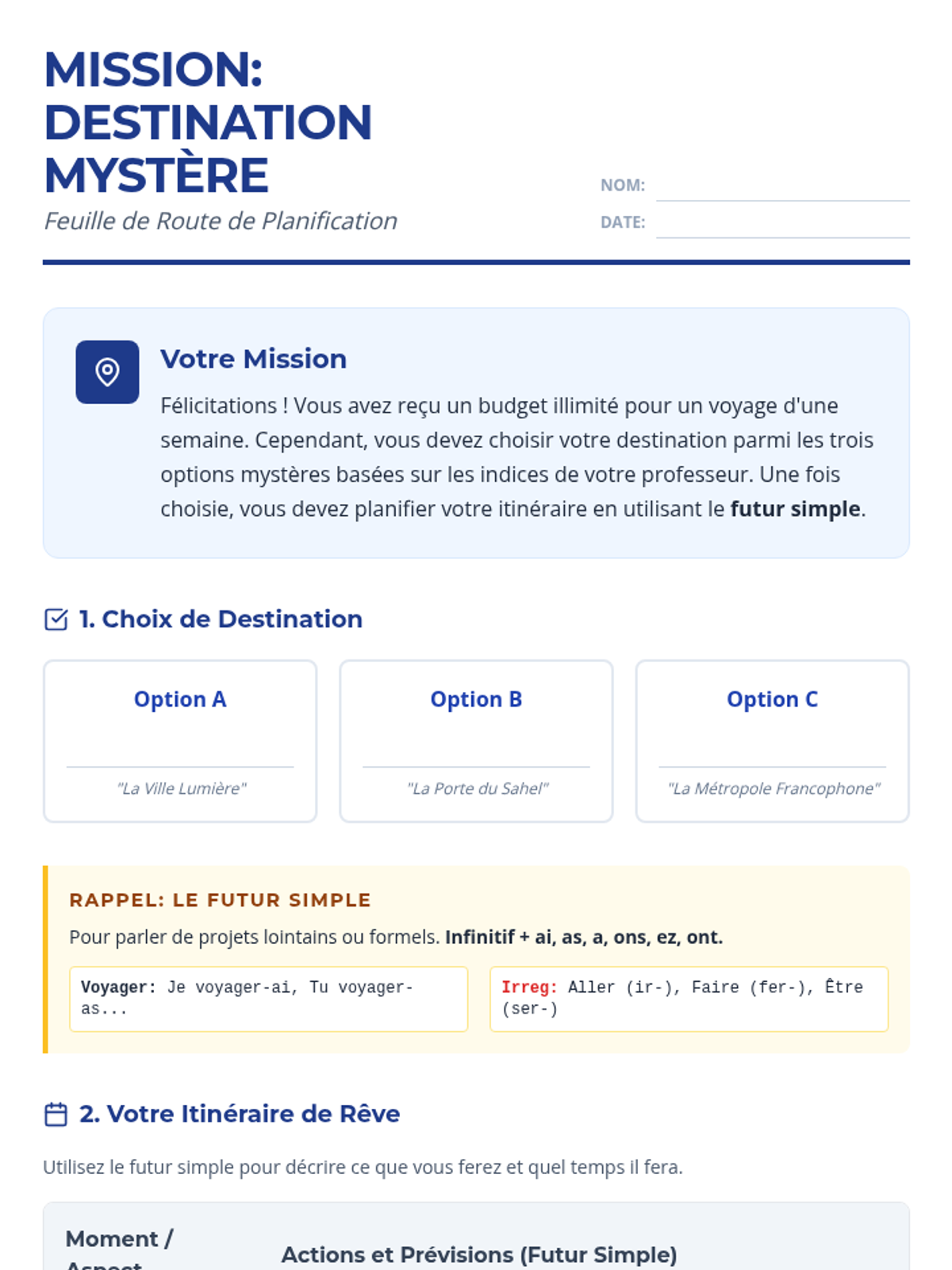
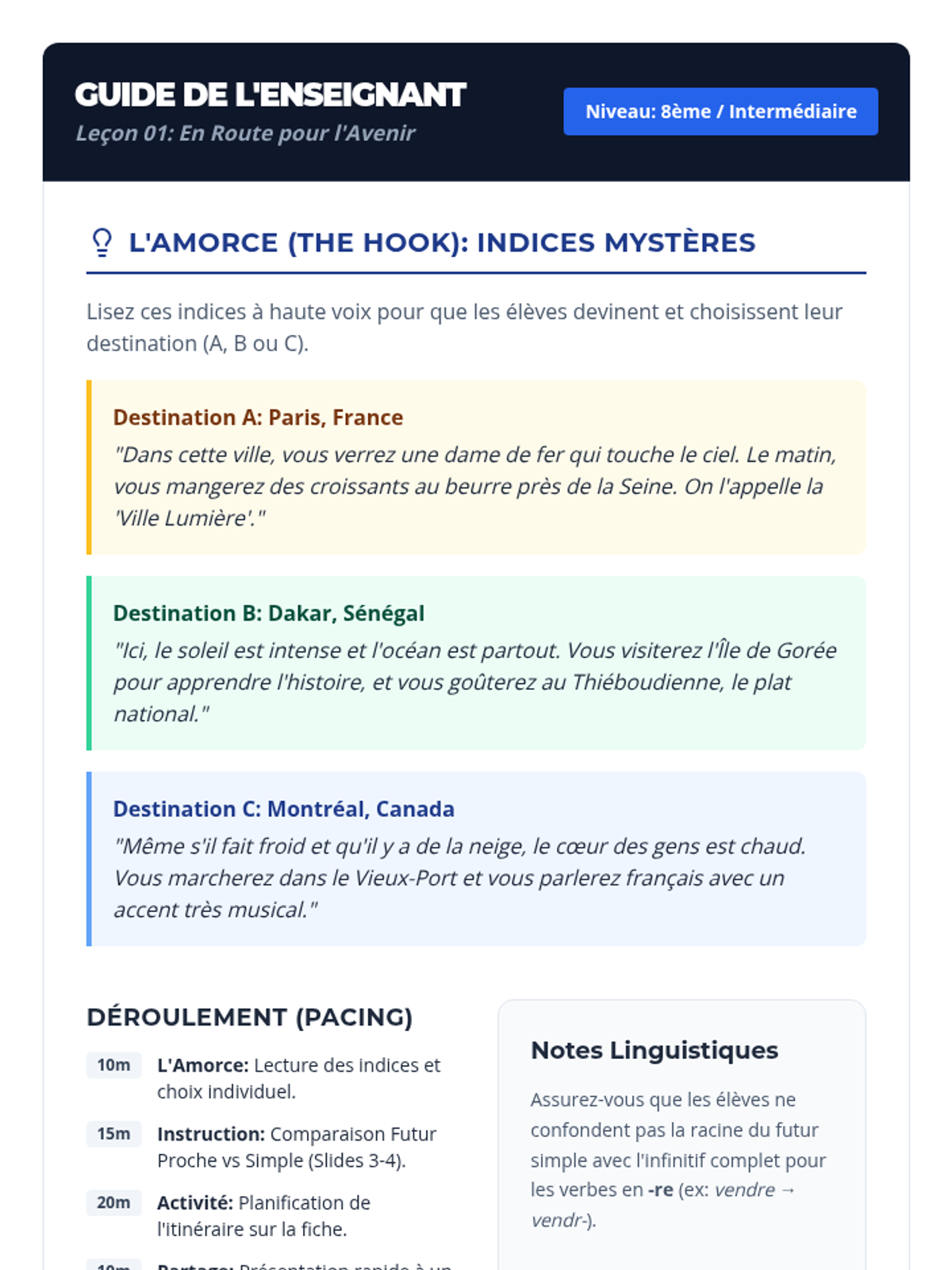
Students transition from near future to simple future to plan detailed itineraries for Dakar, Paris, or Montreal, predicting weather and scheduling logistics.
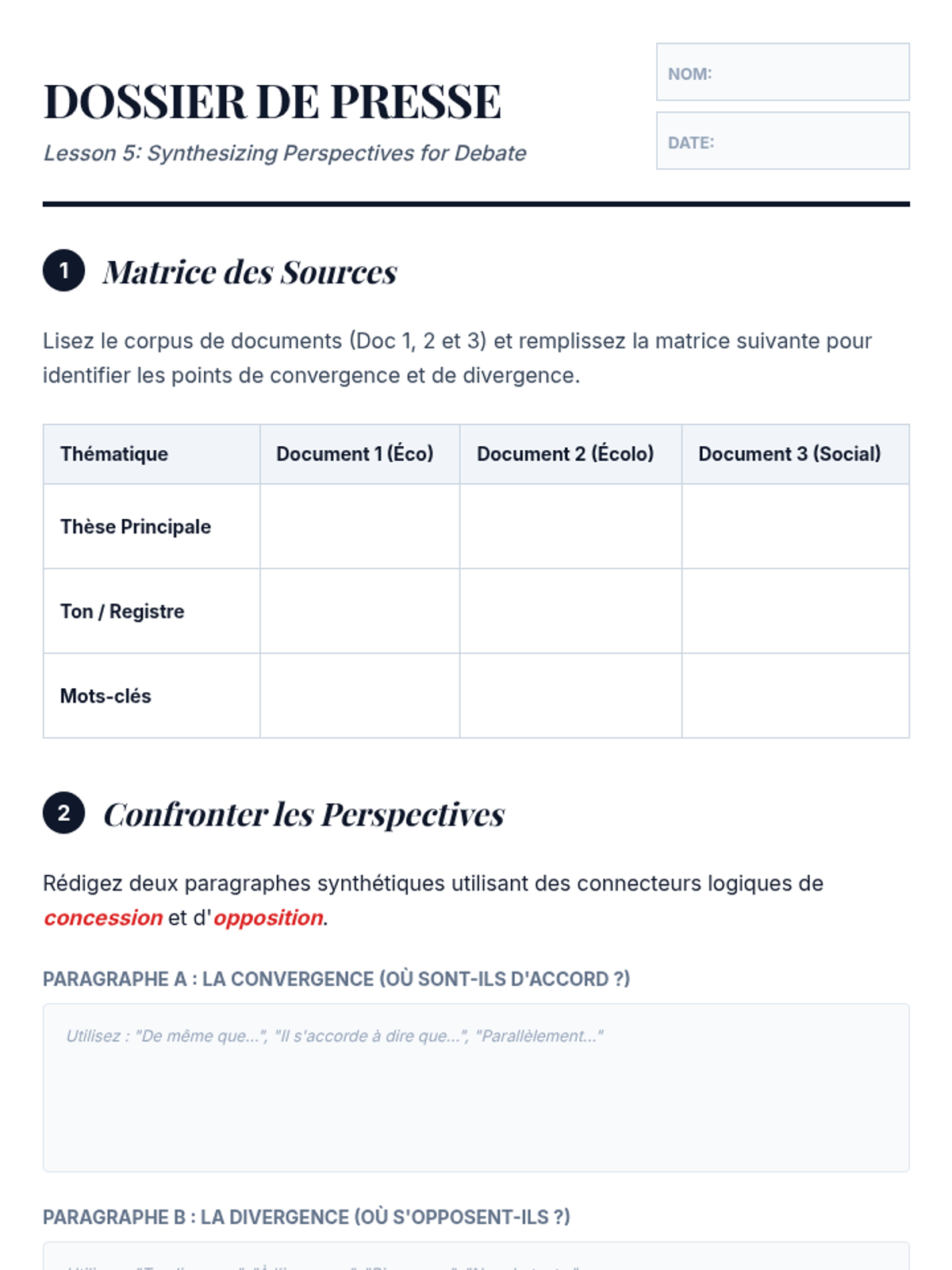
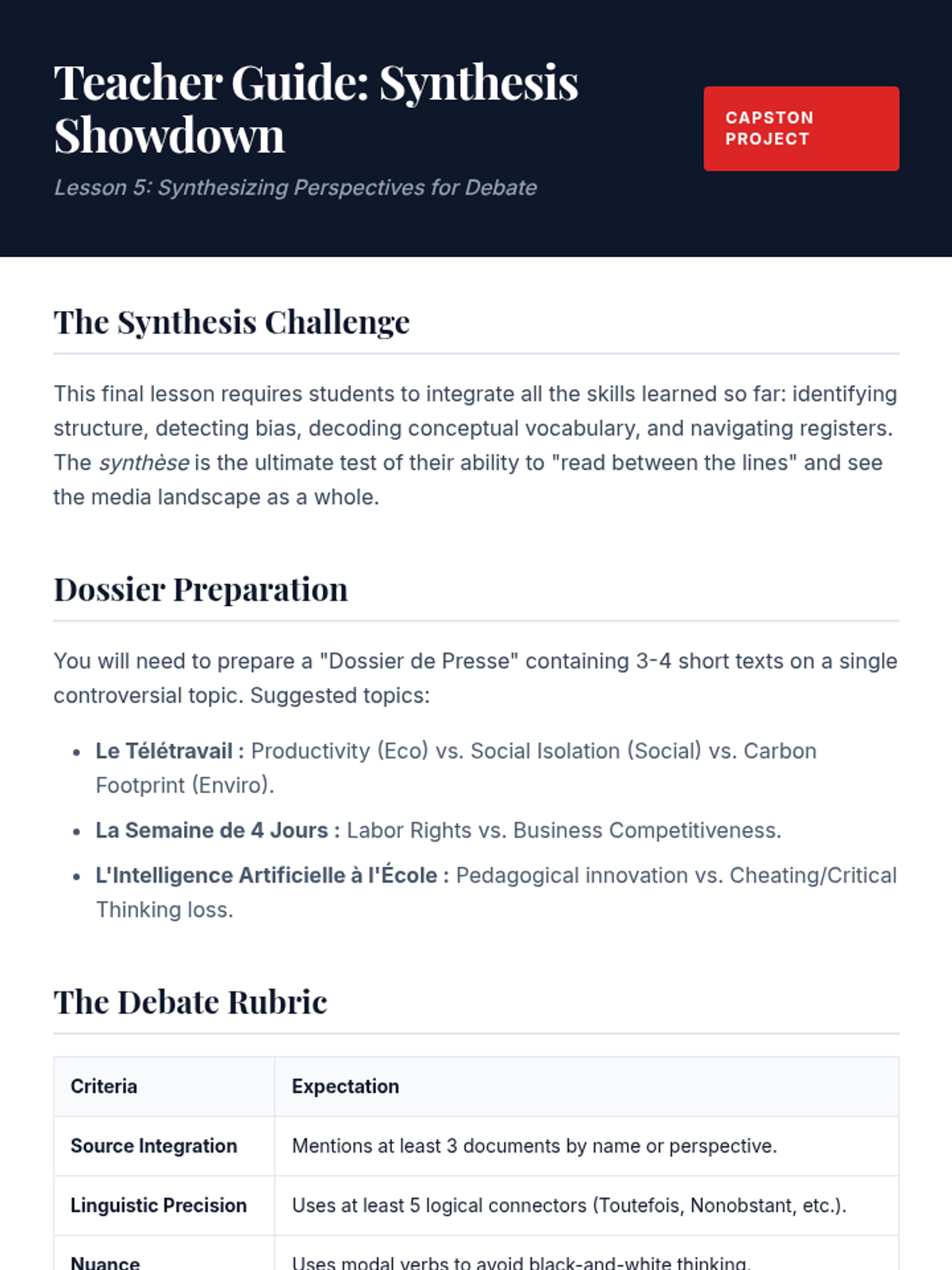
Culminating lesson where students synthesize information from multiple sources to prepare for a debate or written synthesis.
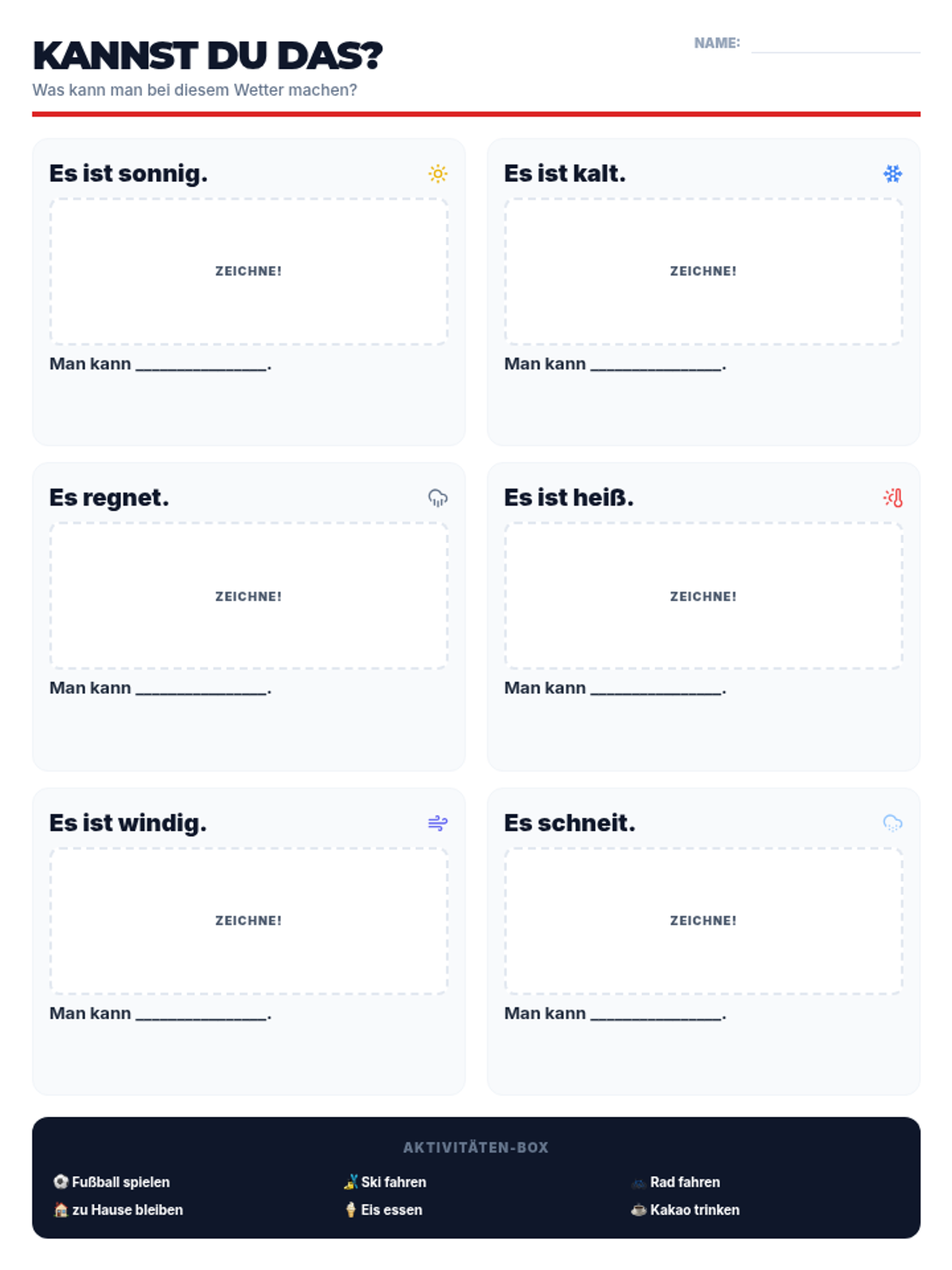
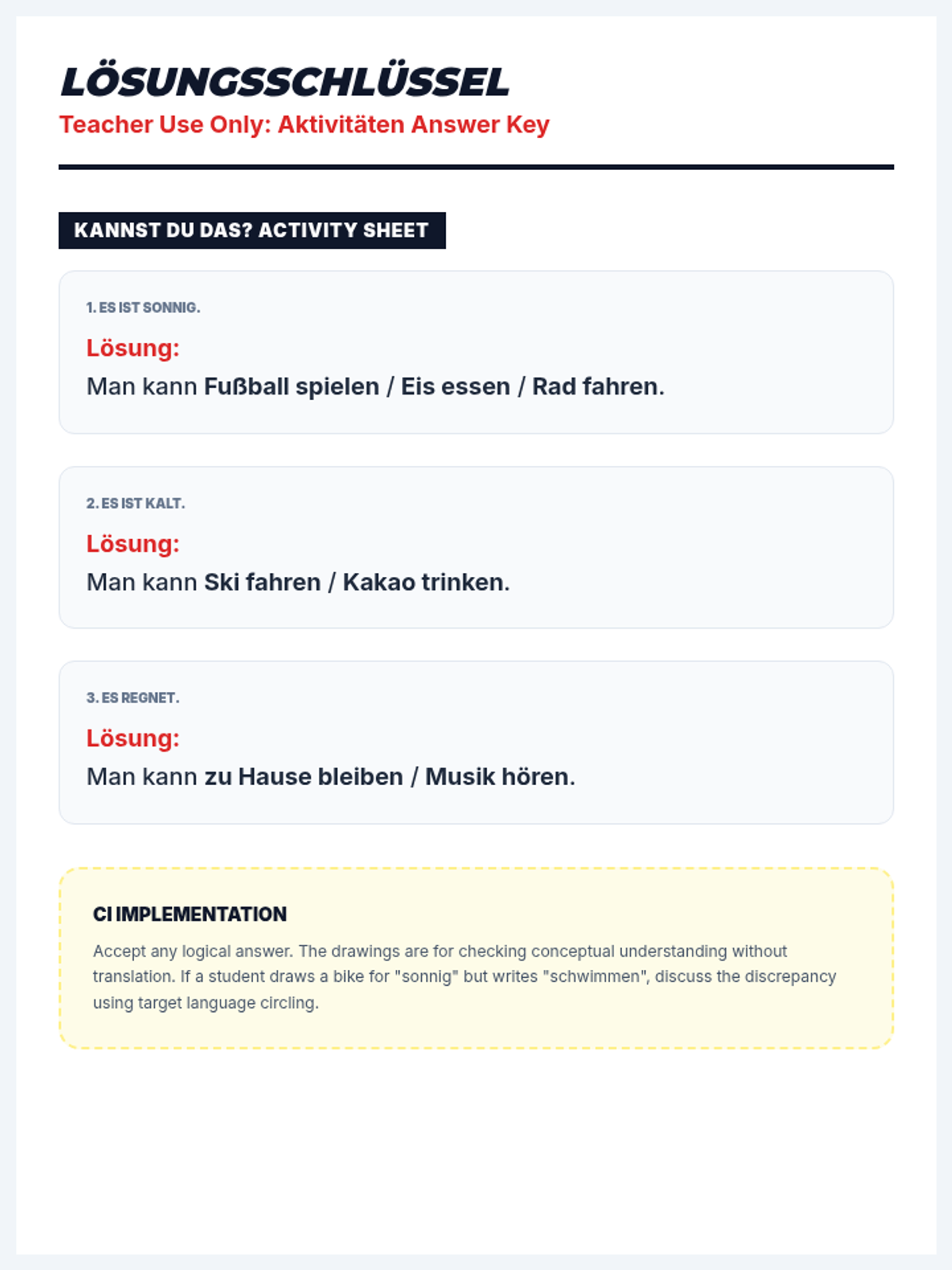
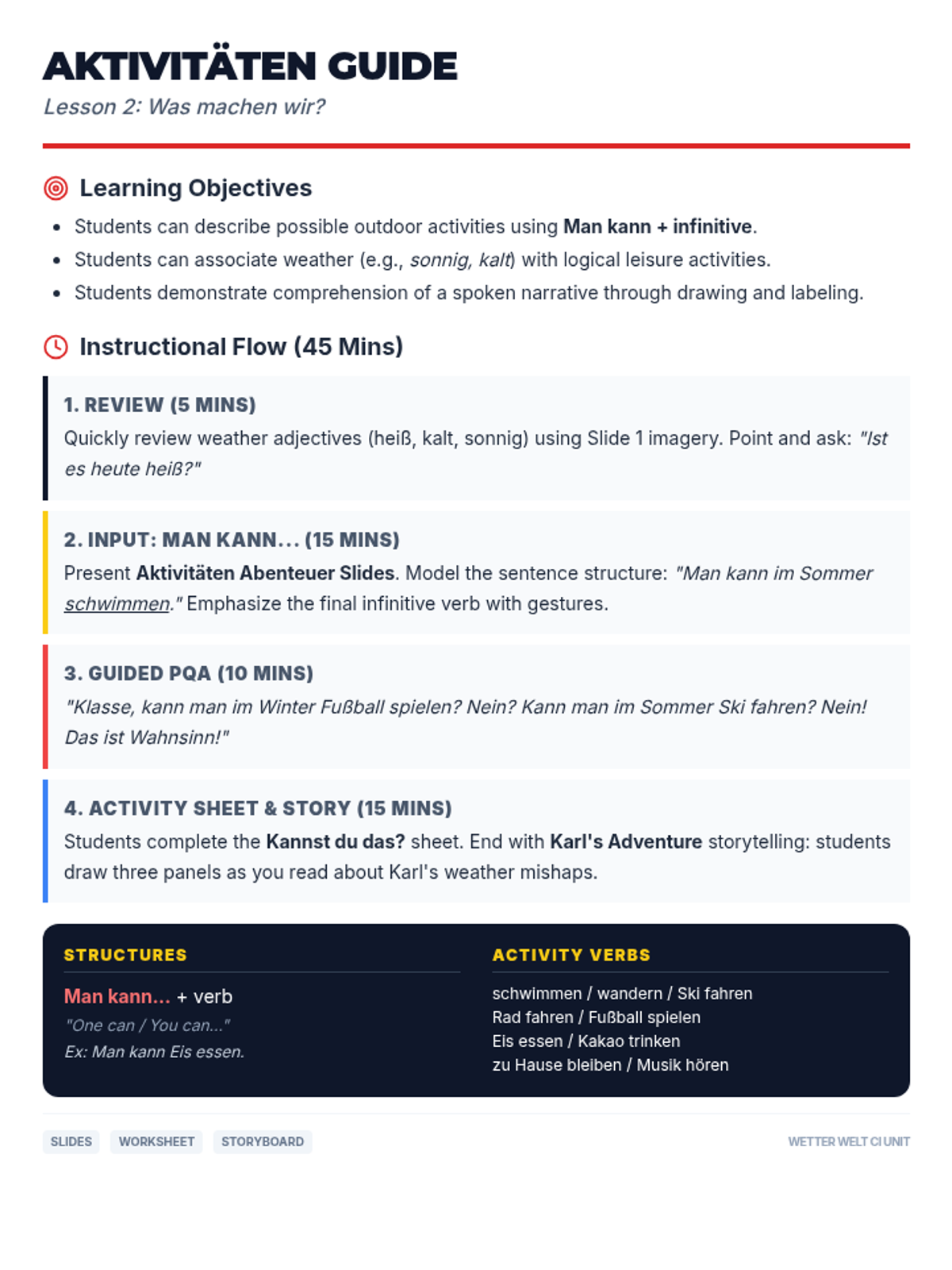
Building on weather knowledge to discuss outdoor activities using 'Man kann' + infinitive. Students will connect specific weather conditions to possible leisure activities in Germany.
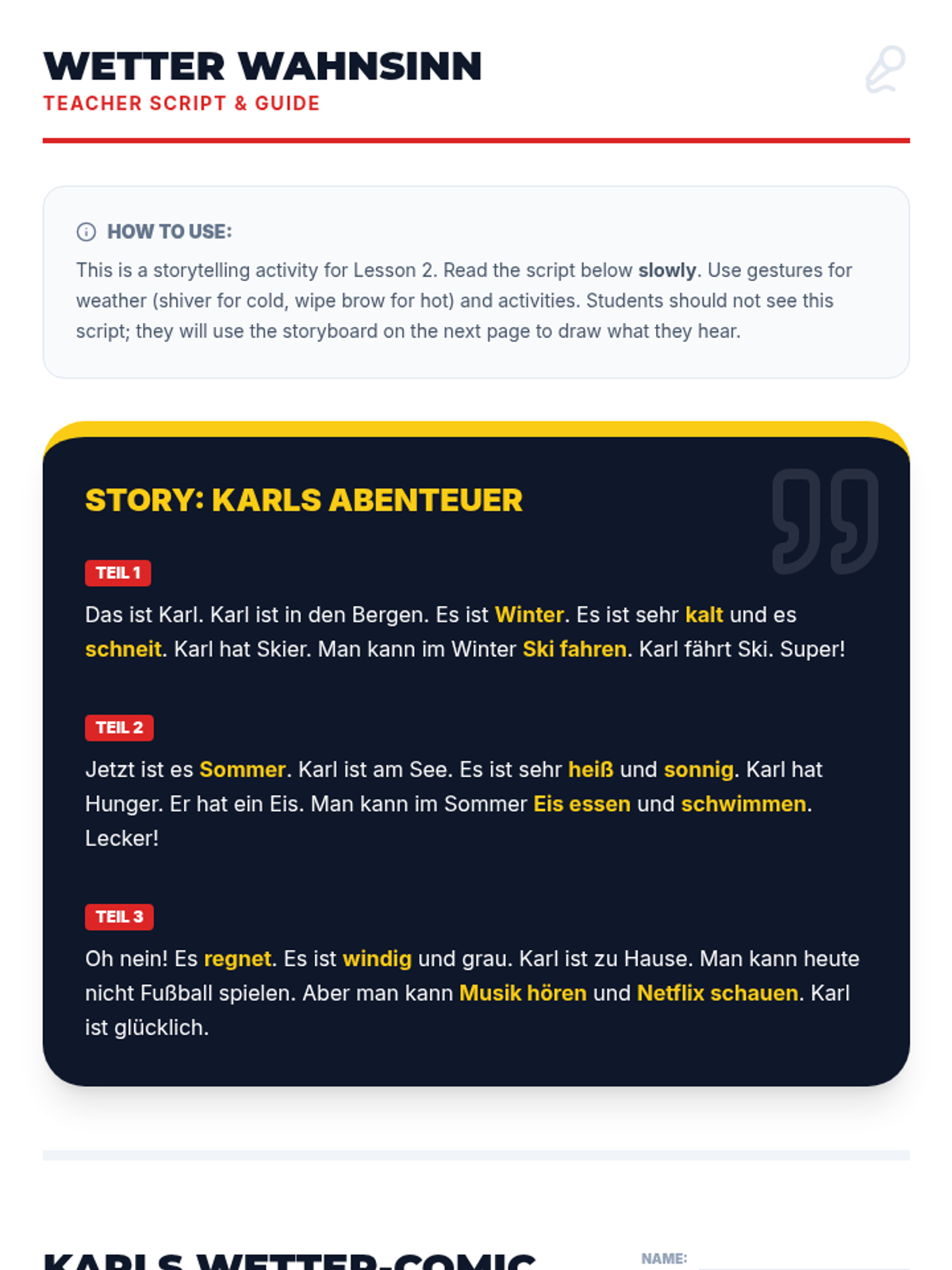
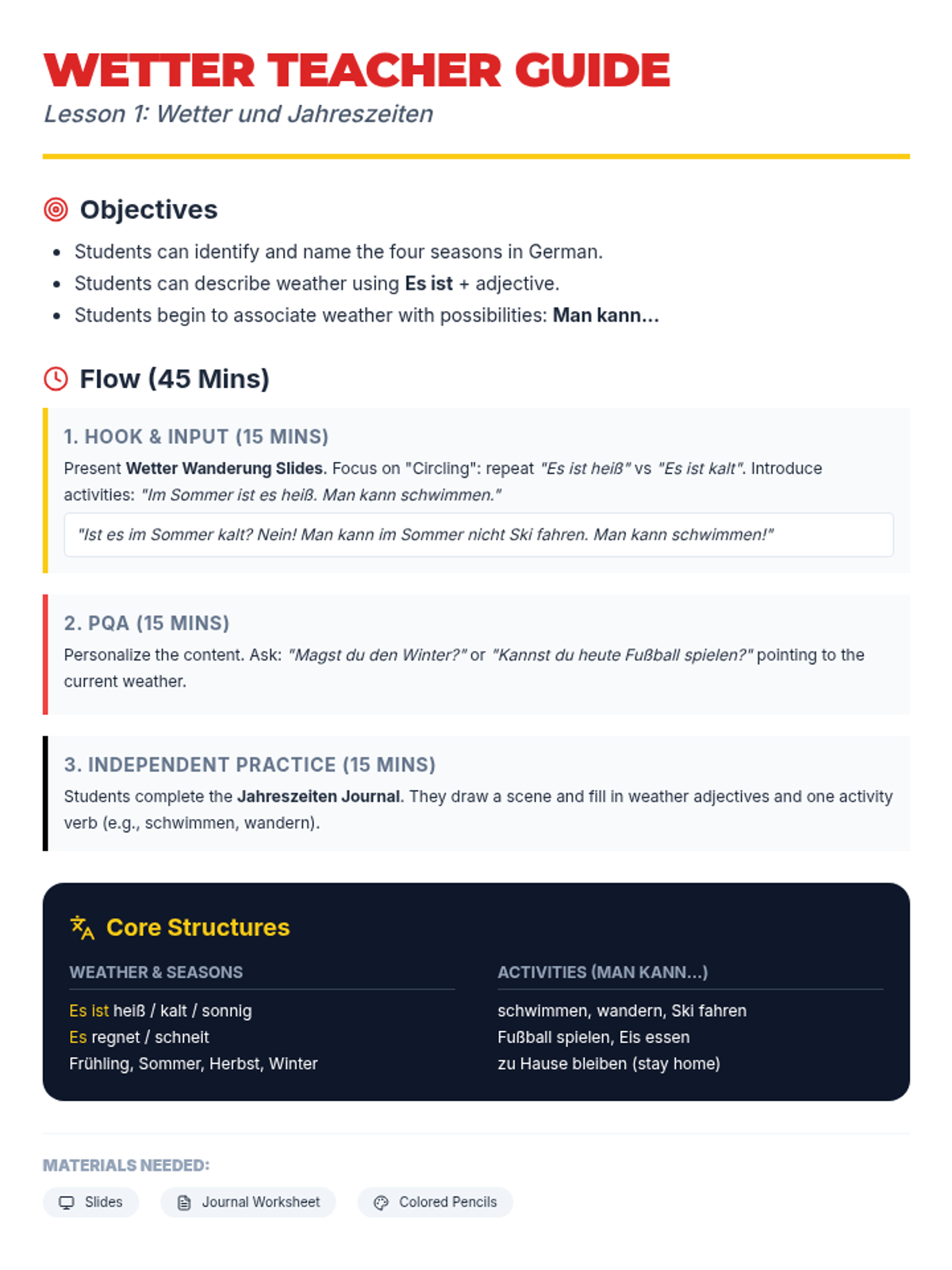
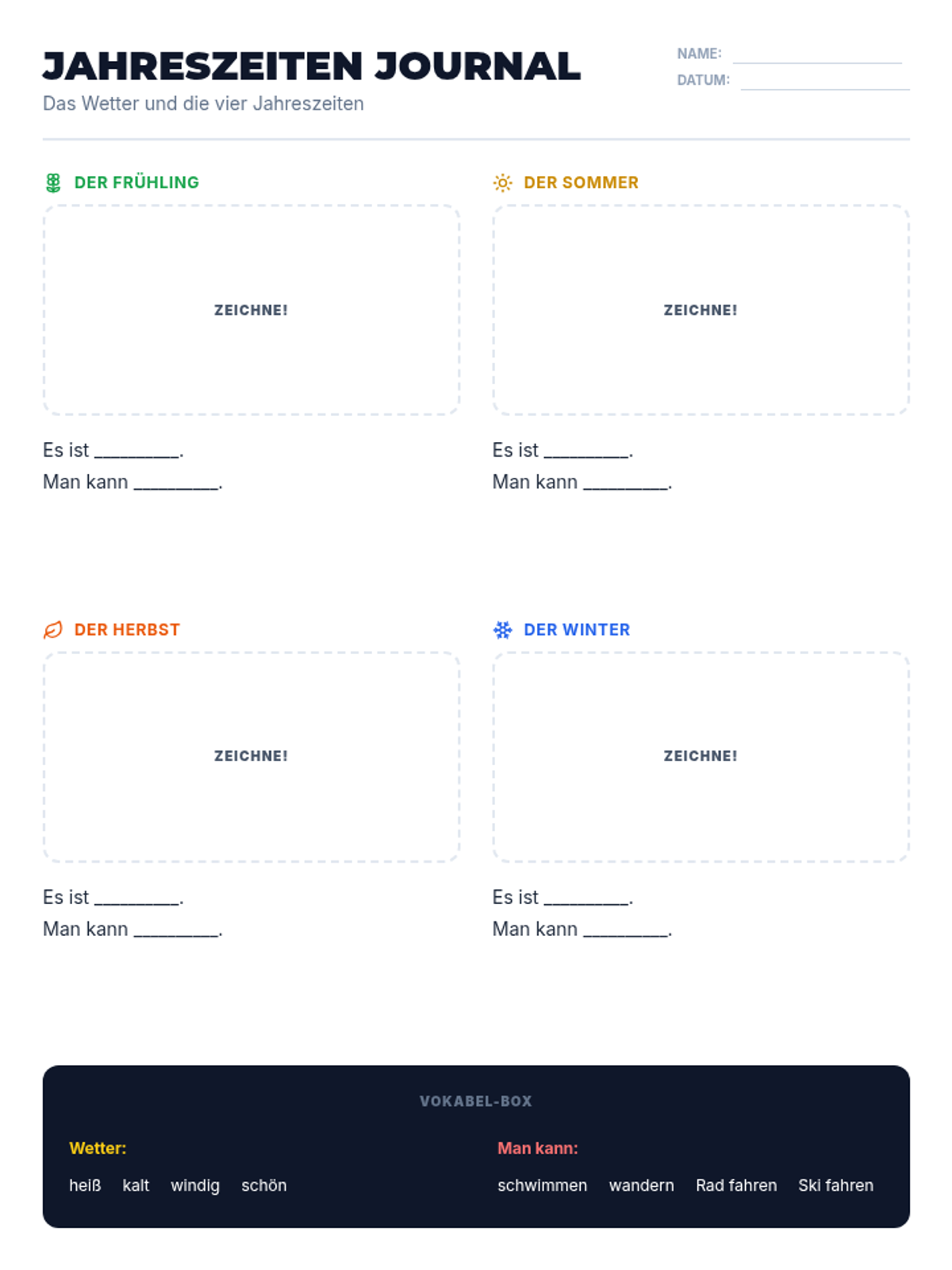
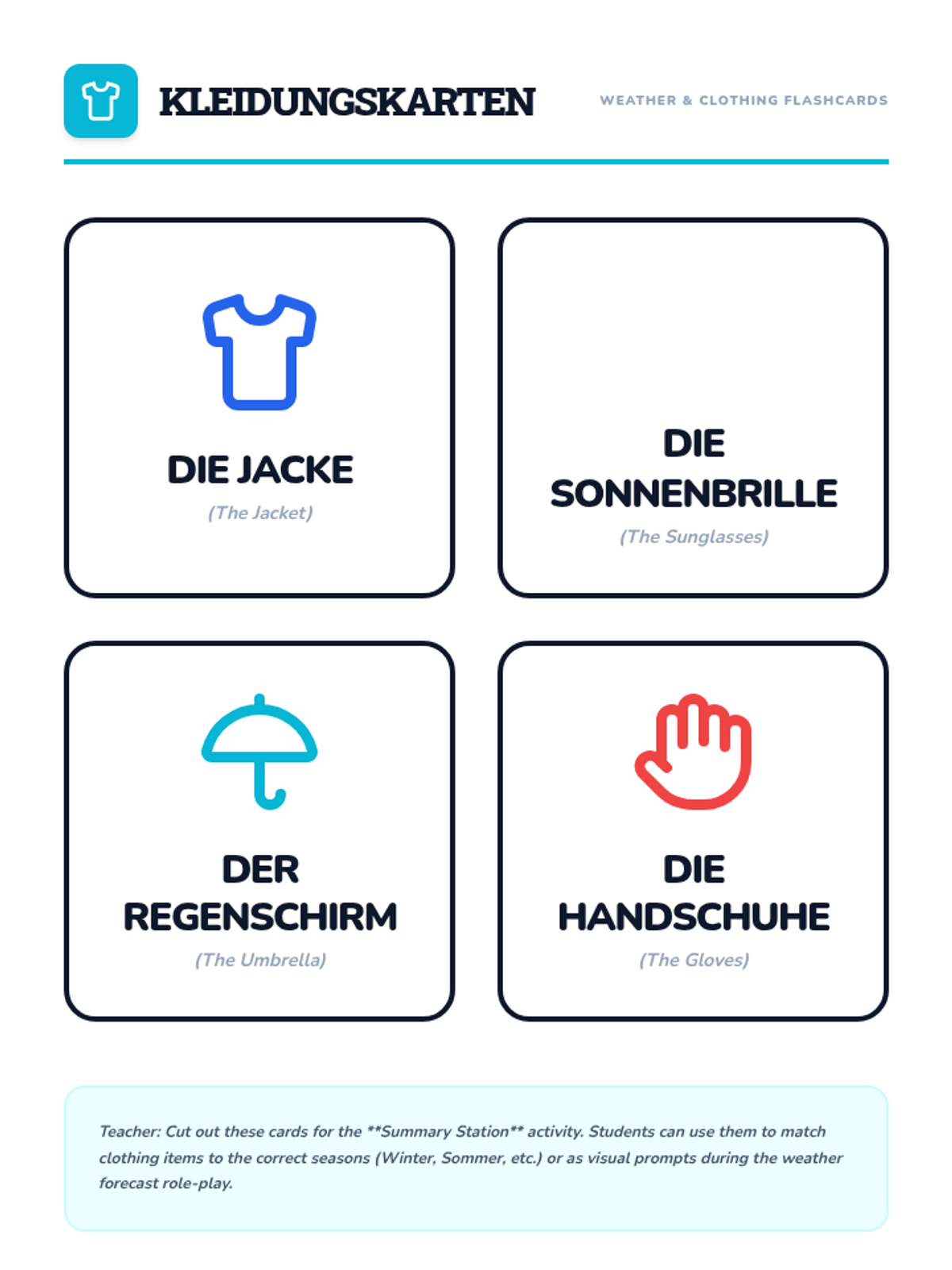
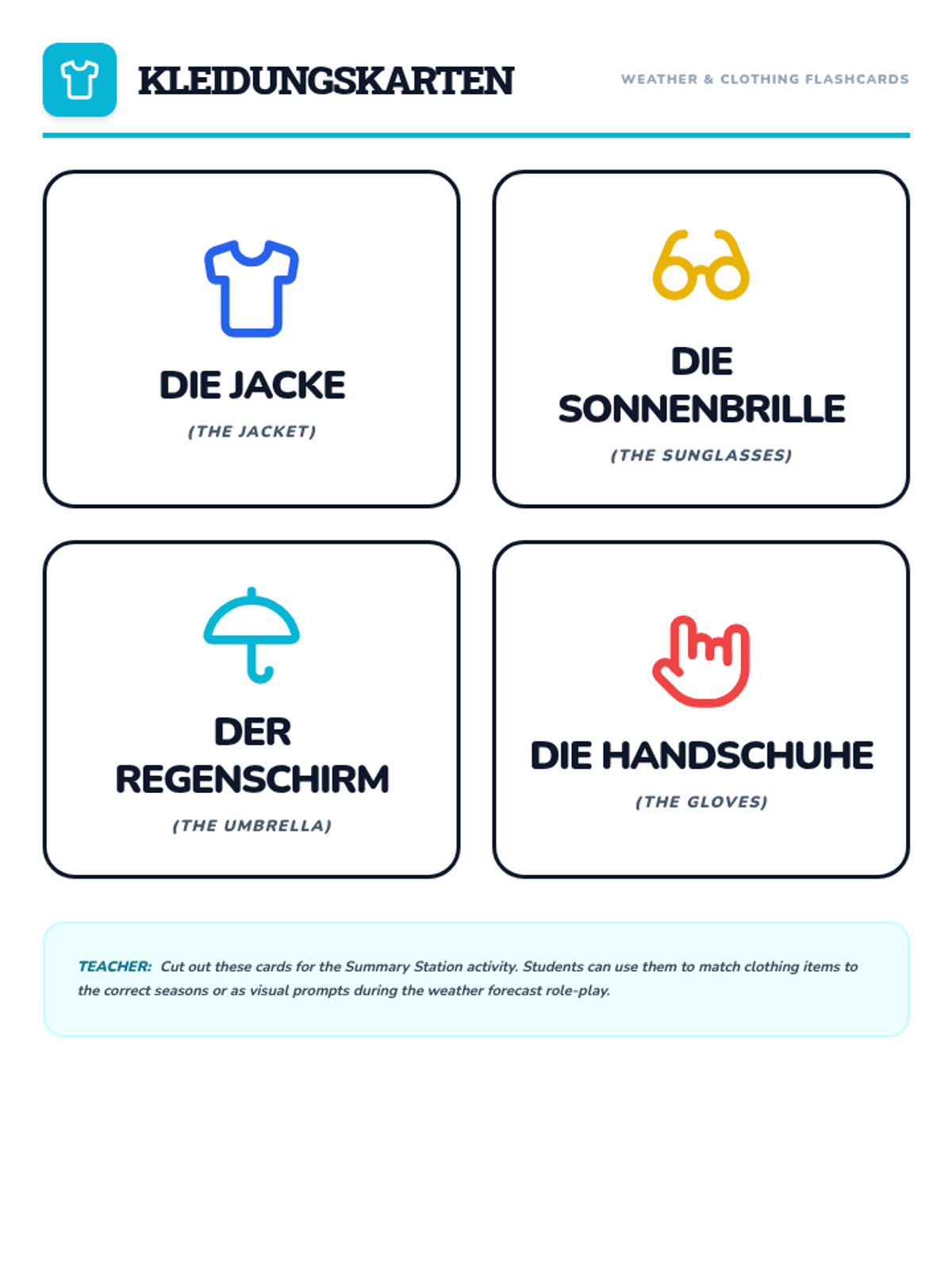
Introduction to weather vocabulary and seasons in Germany using high-frequency structures. Students will practice 'Es ist...' with weather adjectives through visual storytelling and repetition.
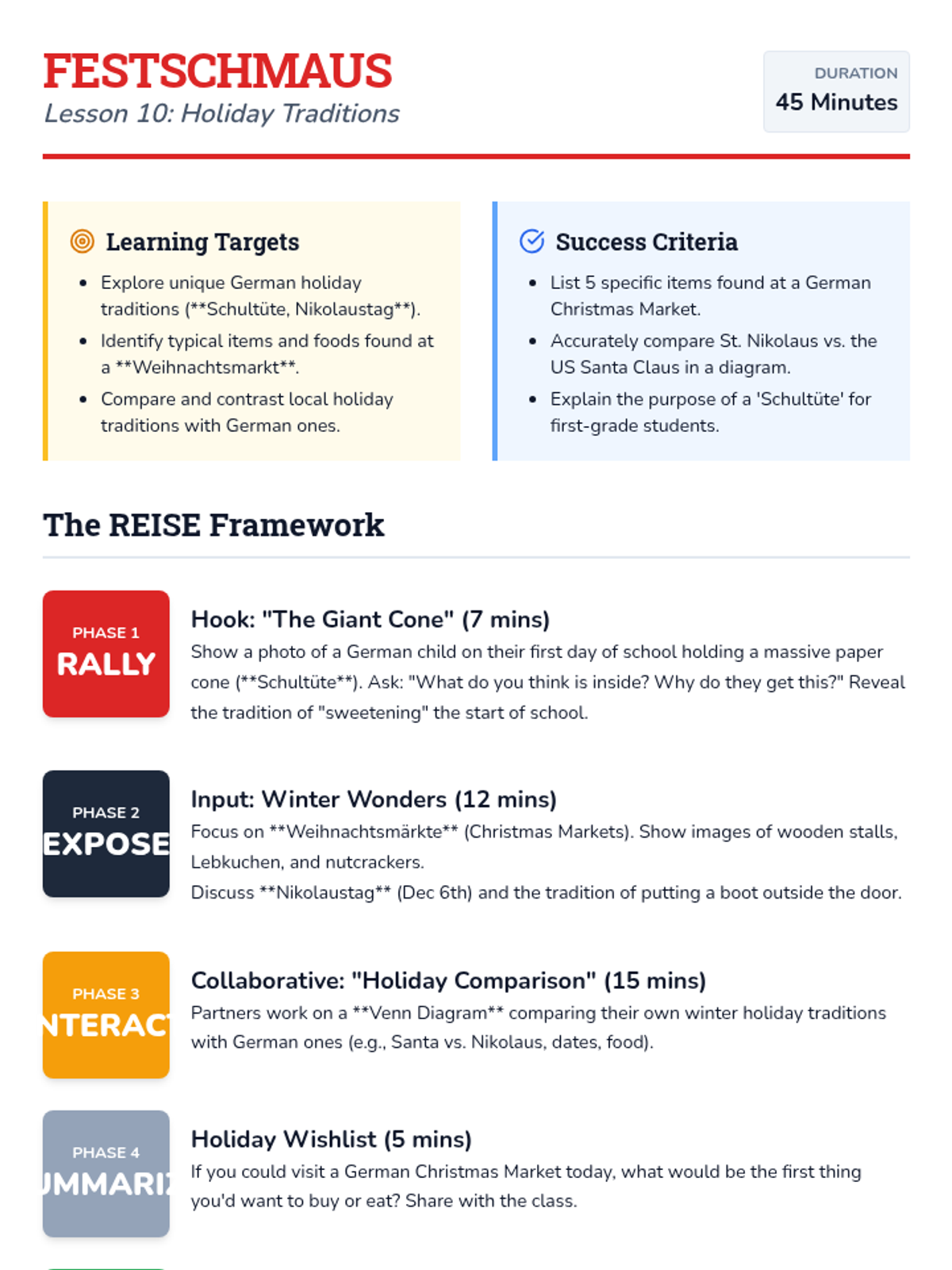
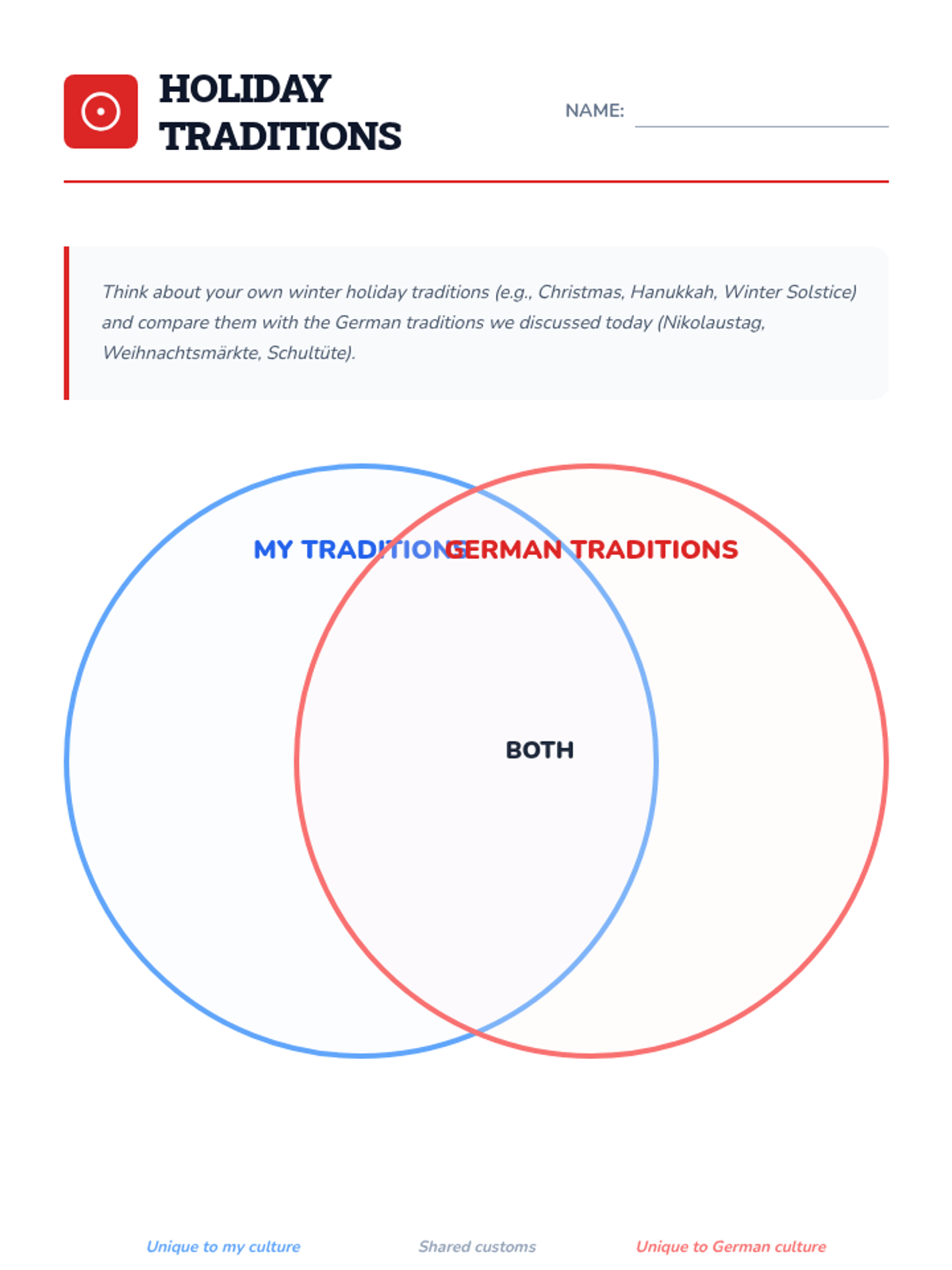
A festive conclusion focusing on German holiday traditions, including 'Schultüte' and 'Weihnachtsmärkte'. Students compare local and German celebrations using Venn diagrams.
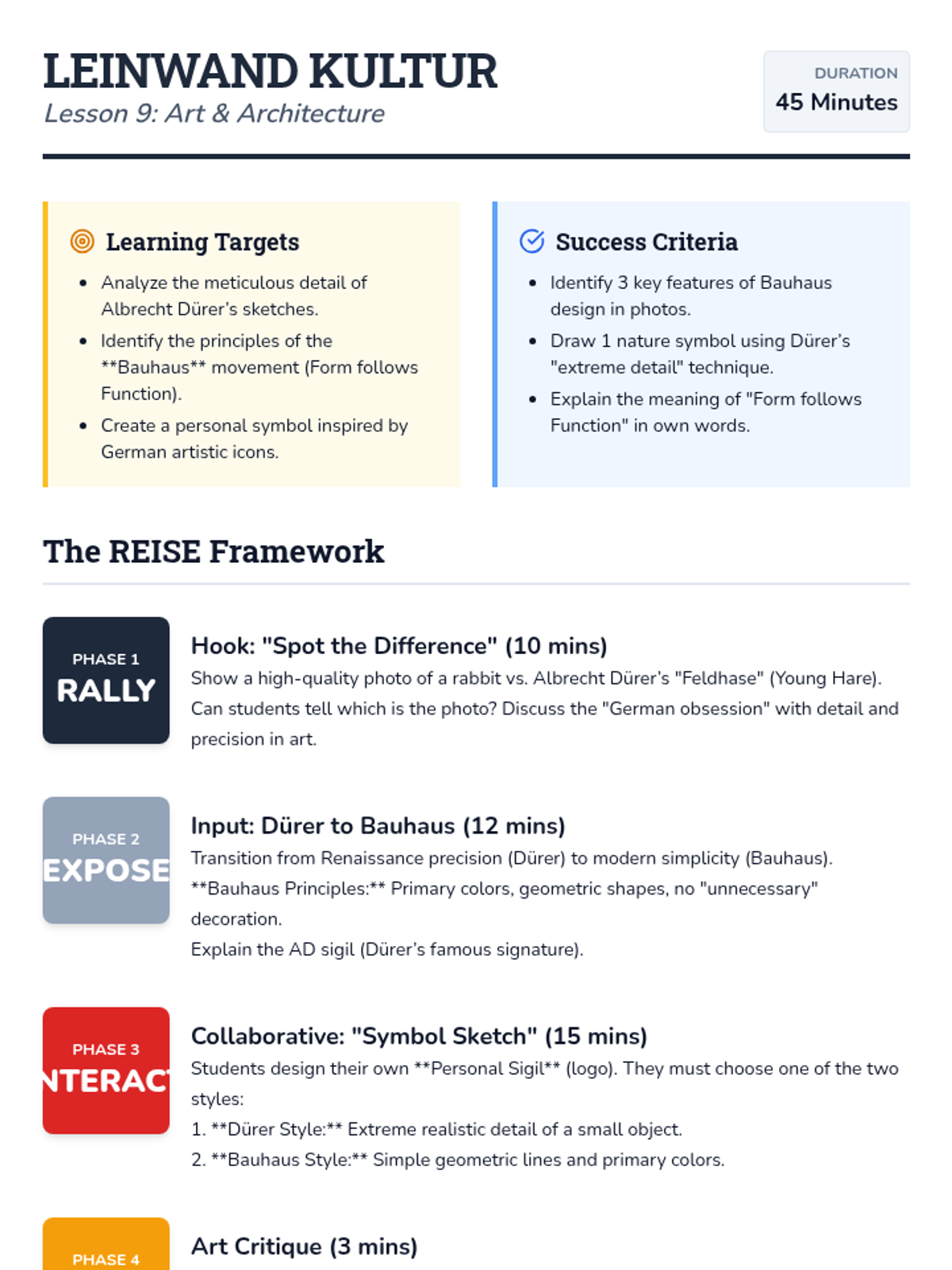
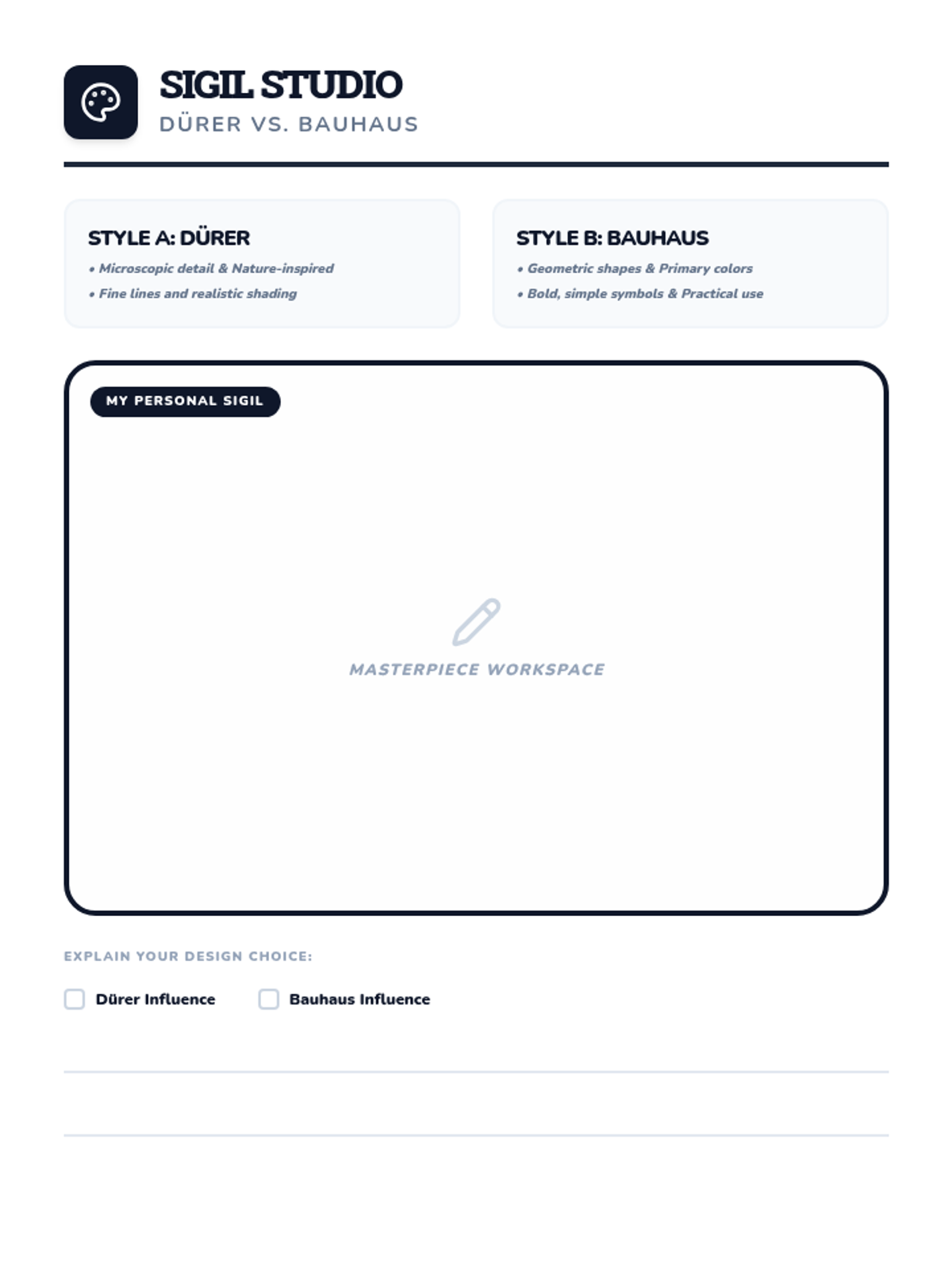
Analyzing the meticulous detail of Albrecht Dürer and the modernism of the Bauhaus movement. Students create their own symbols inspired by these German artistic icons.
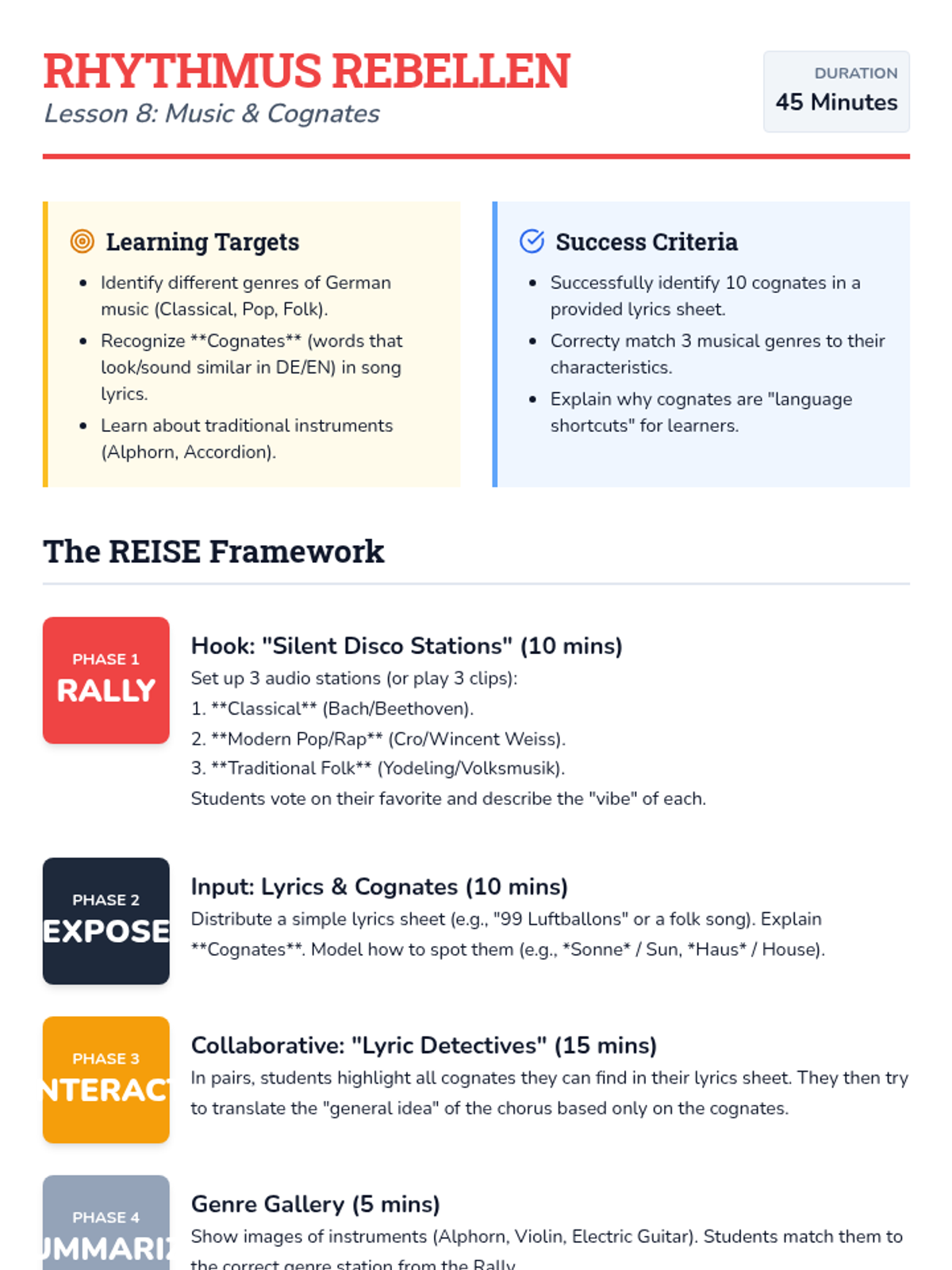
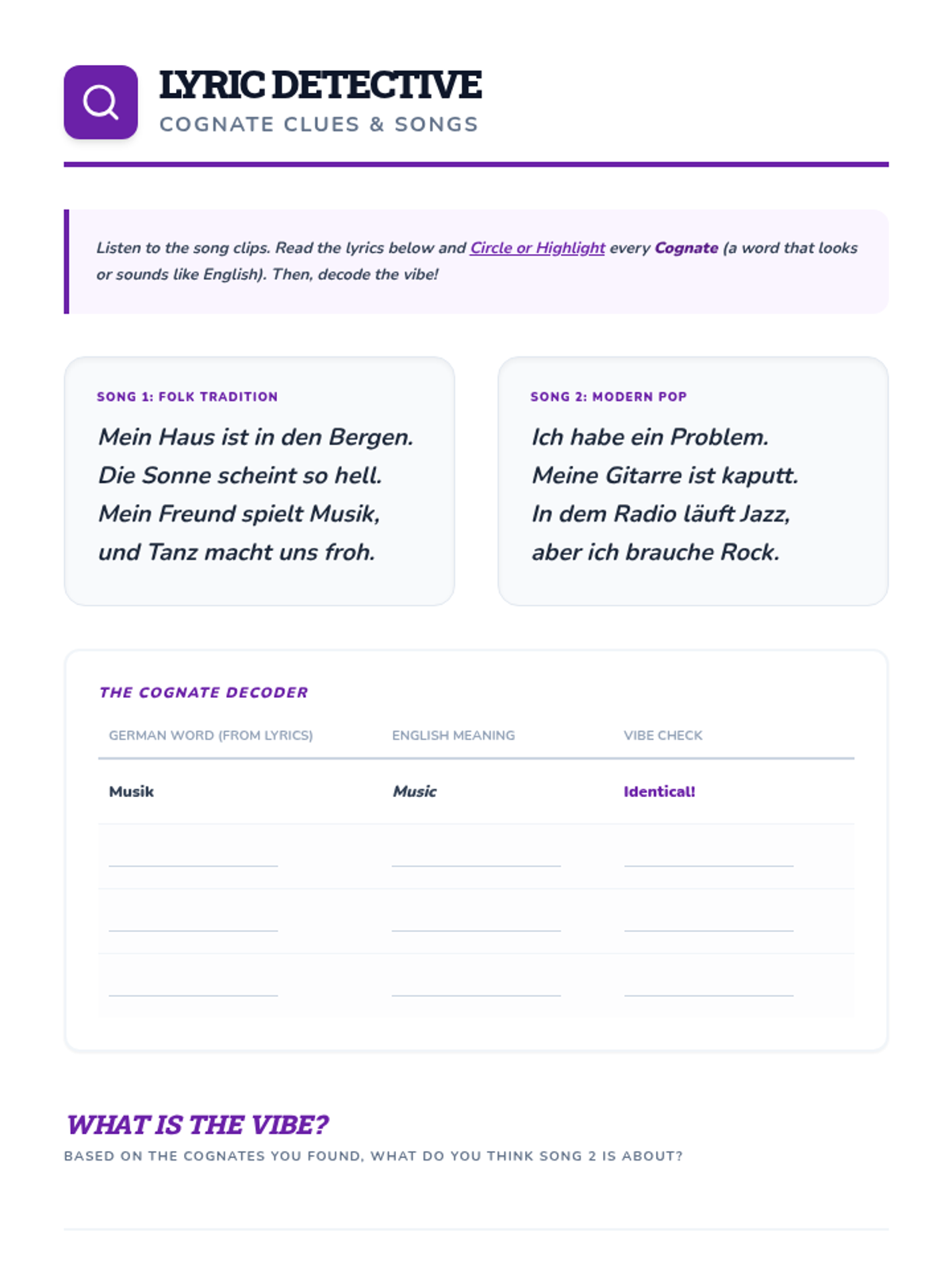
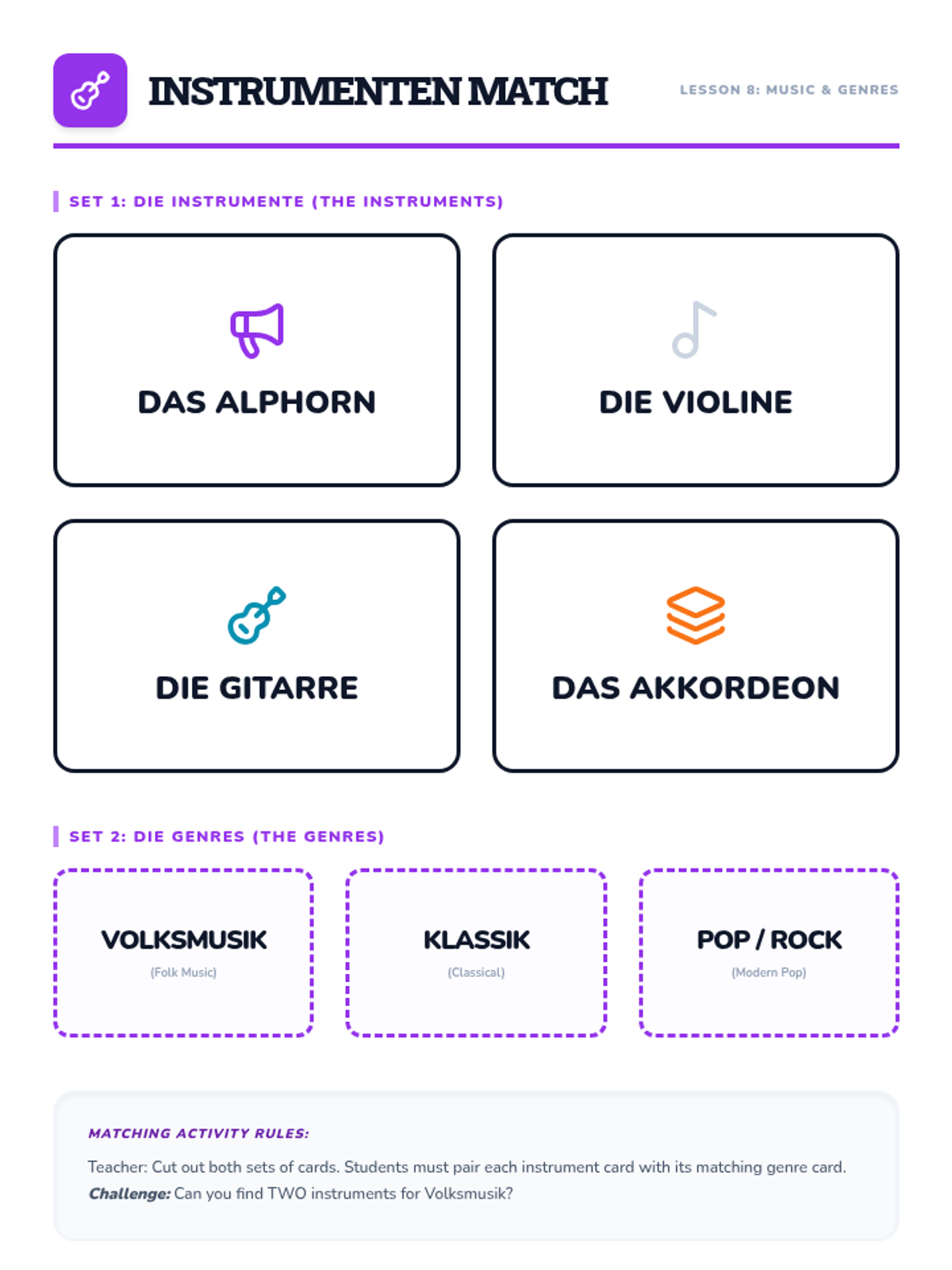
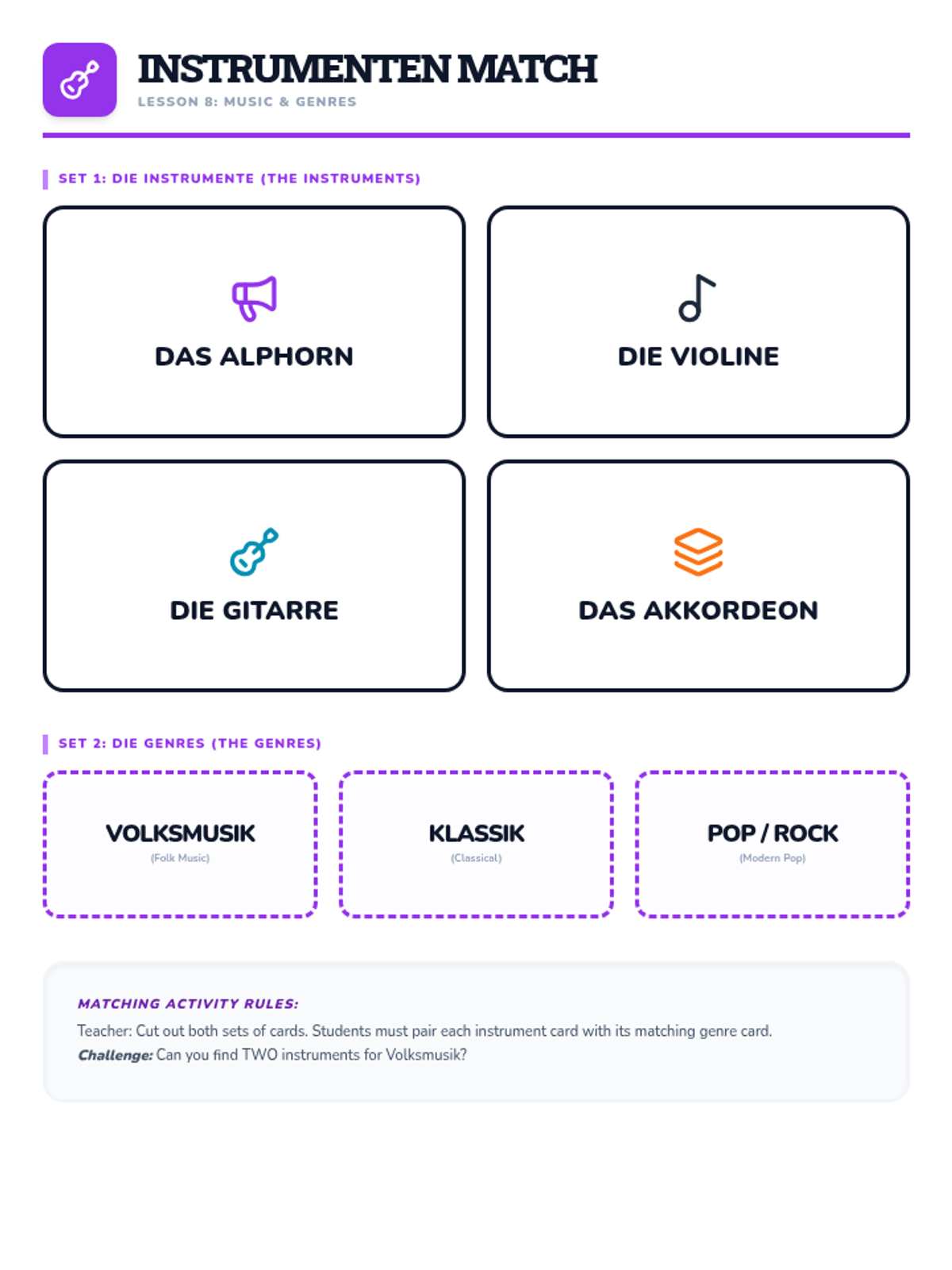
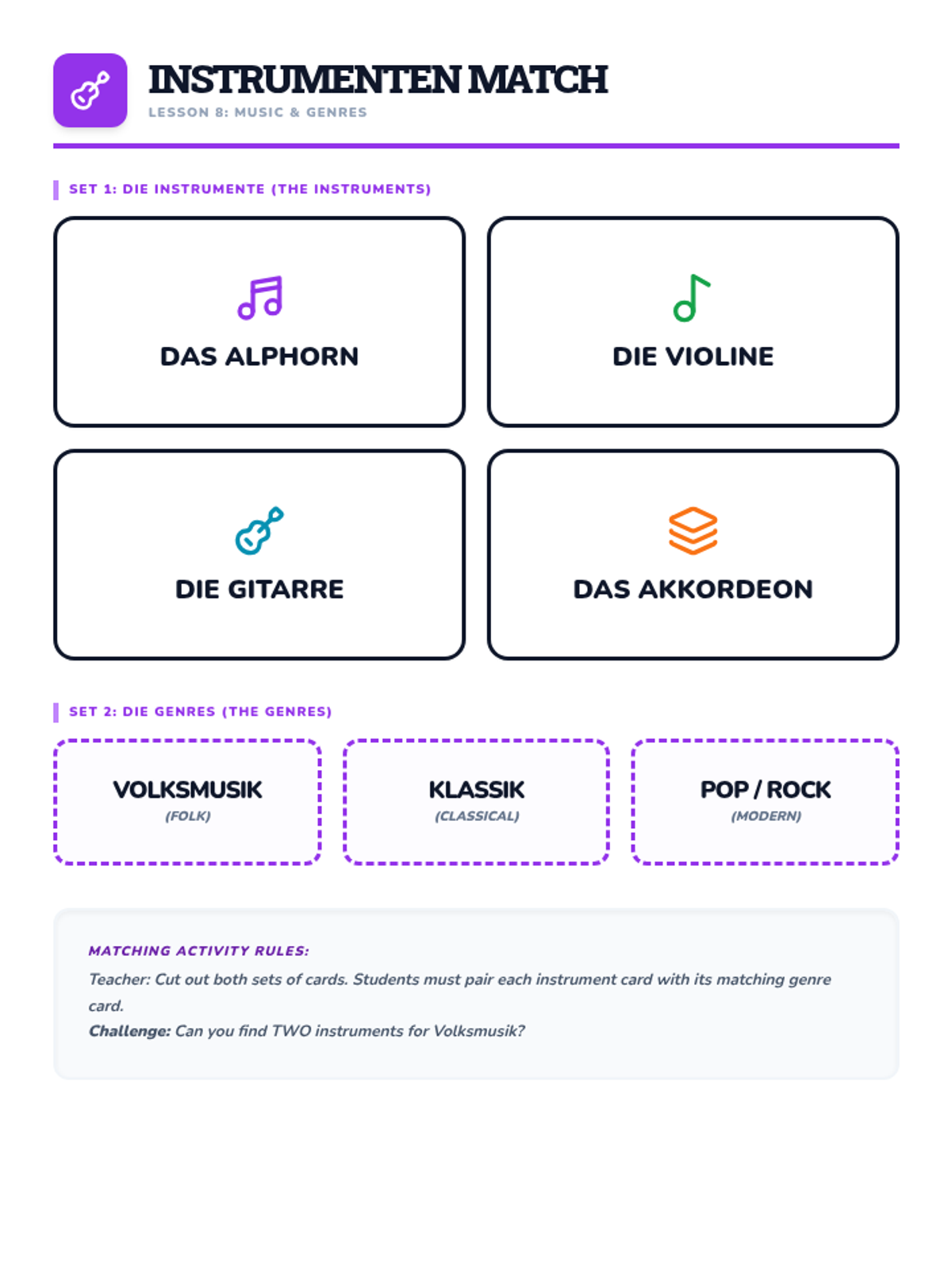
An exploration of German music from classical roots to modern pop and folk. Students analyze lyrics for cognates and identify traditional instruments.
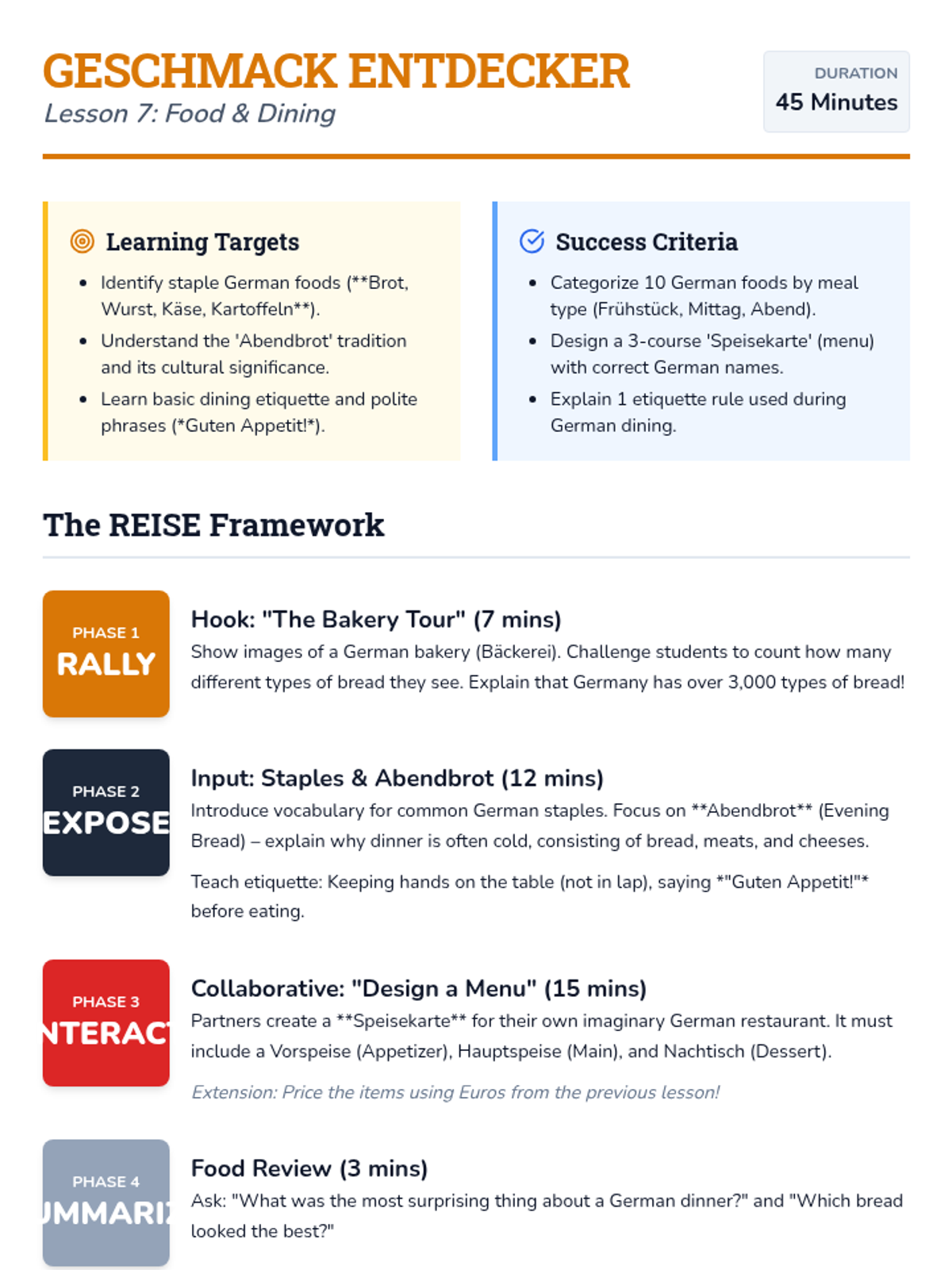
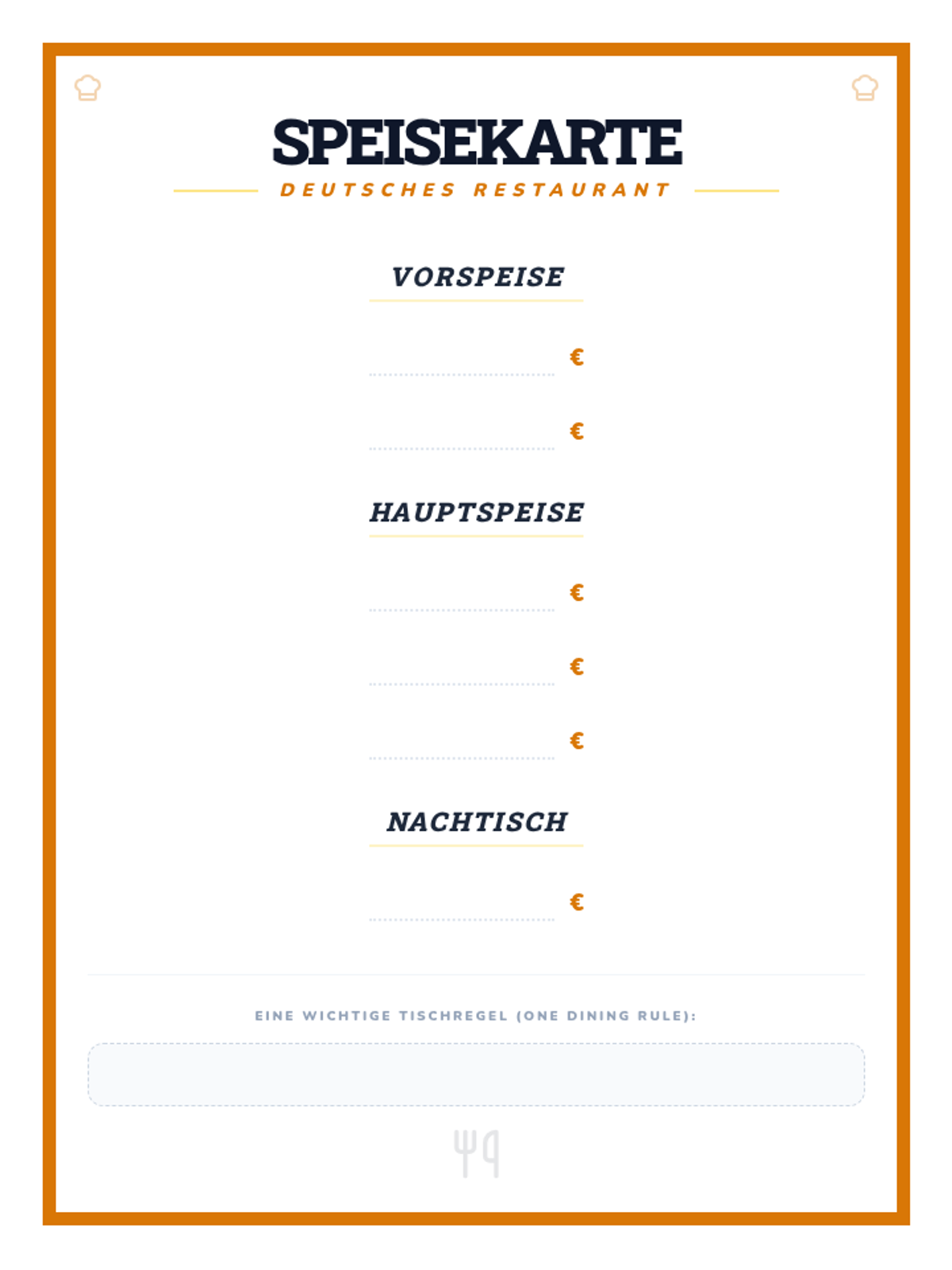
A culinary tour of German staples like bread and sausage. Students explore the 'Abendbrot' tradition and design their own German menu (Speisekarte).
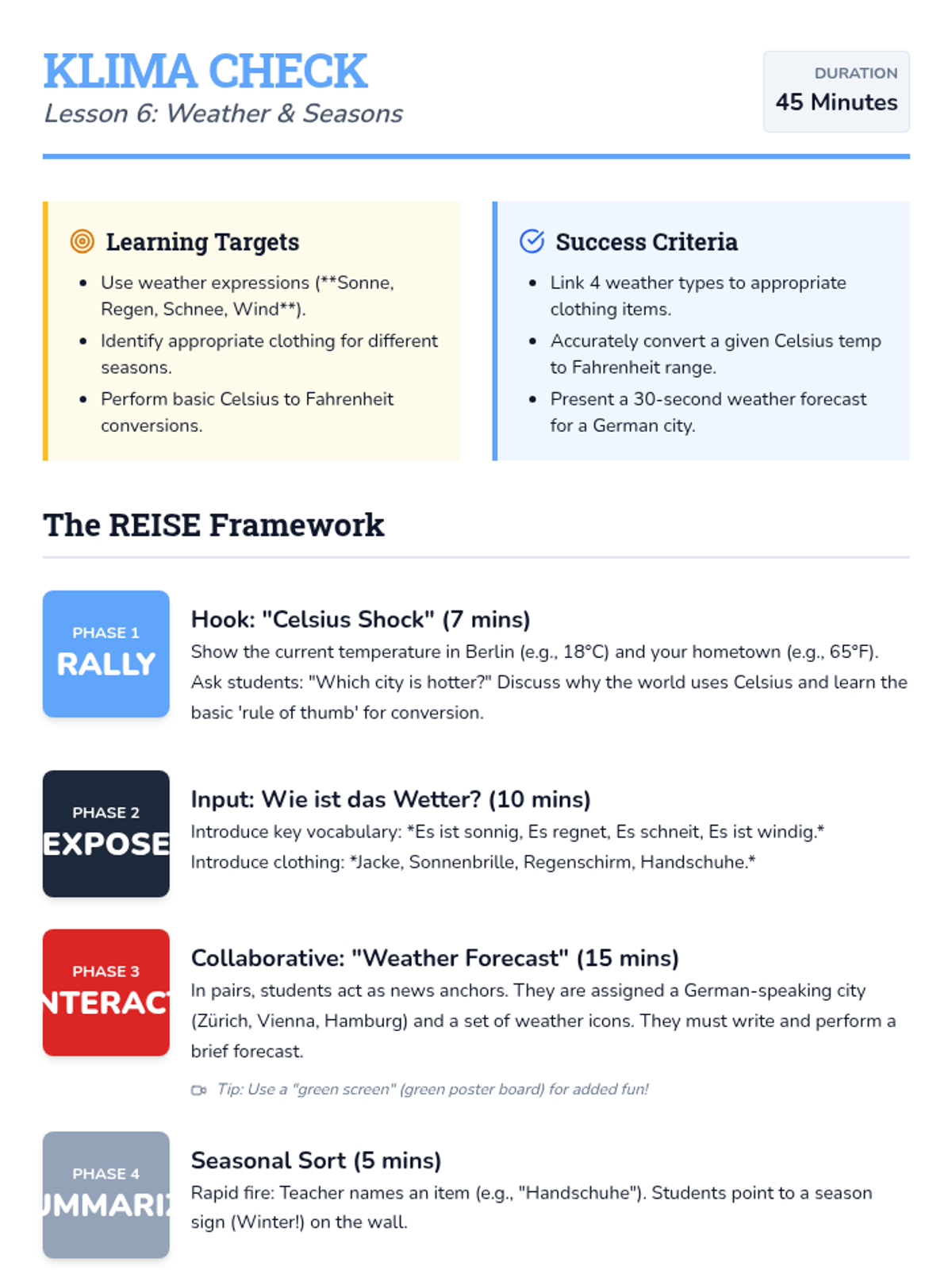
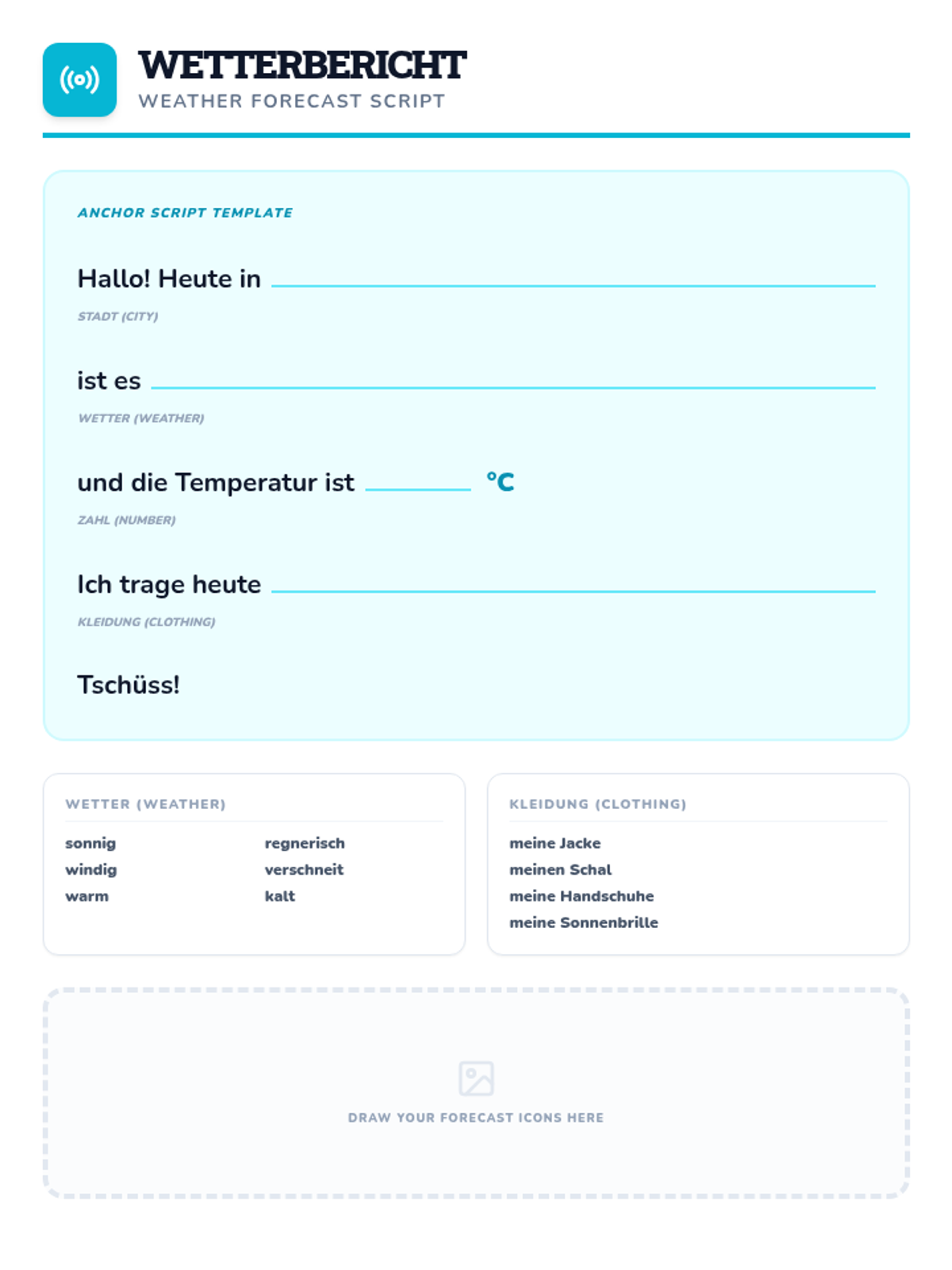
Weather expressions and seasonal clothing. Students convert Celsius to Fahrenheit and present a weather forecast for various German-speaking cities.
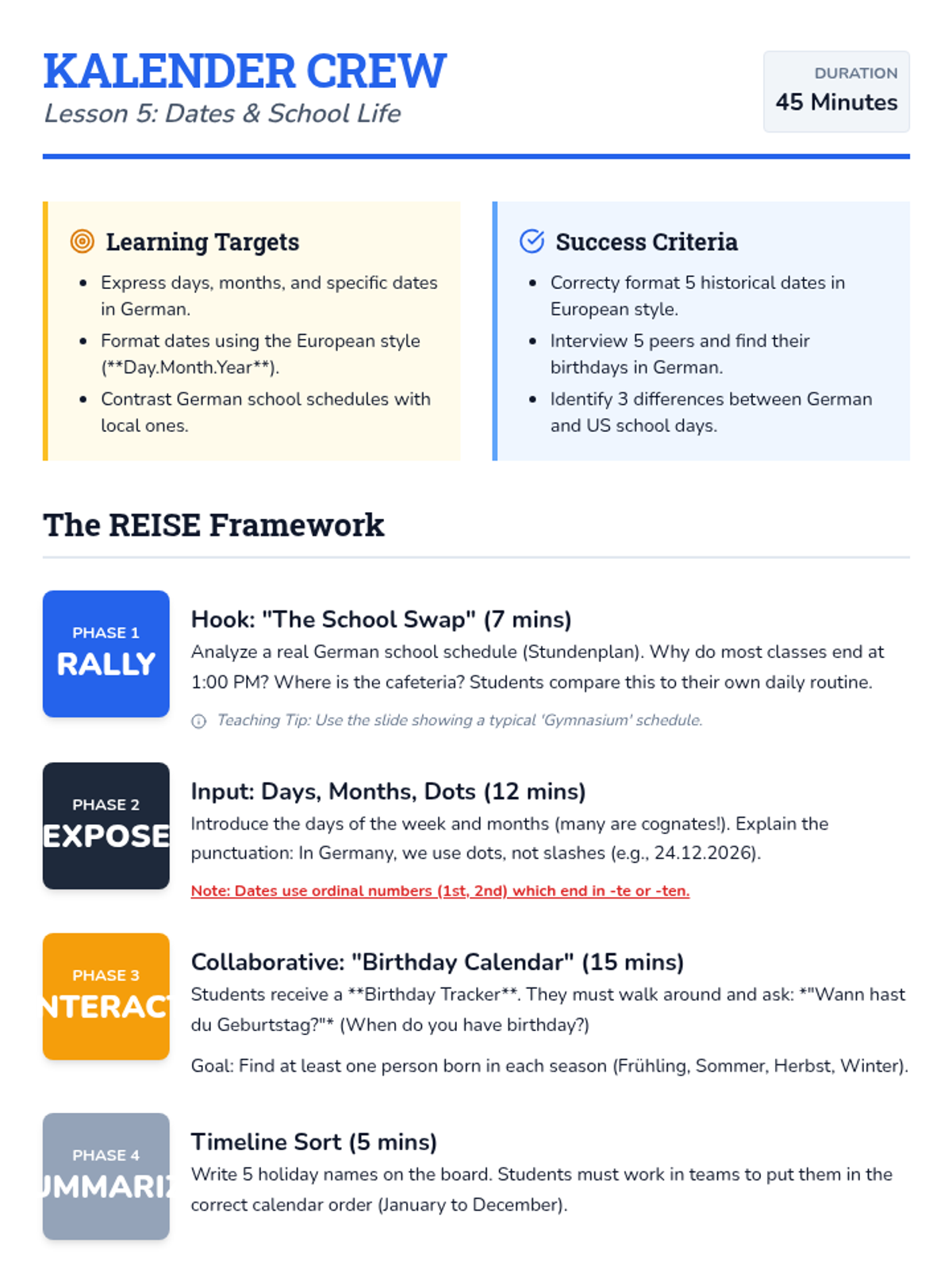
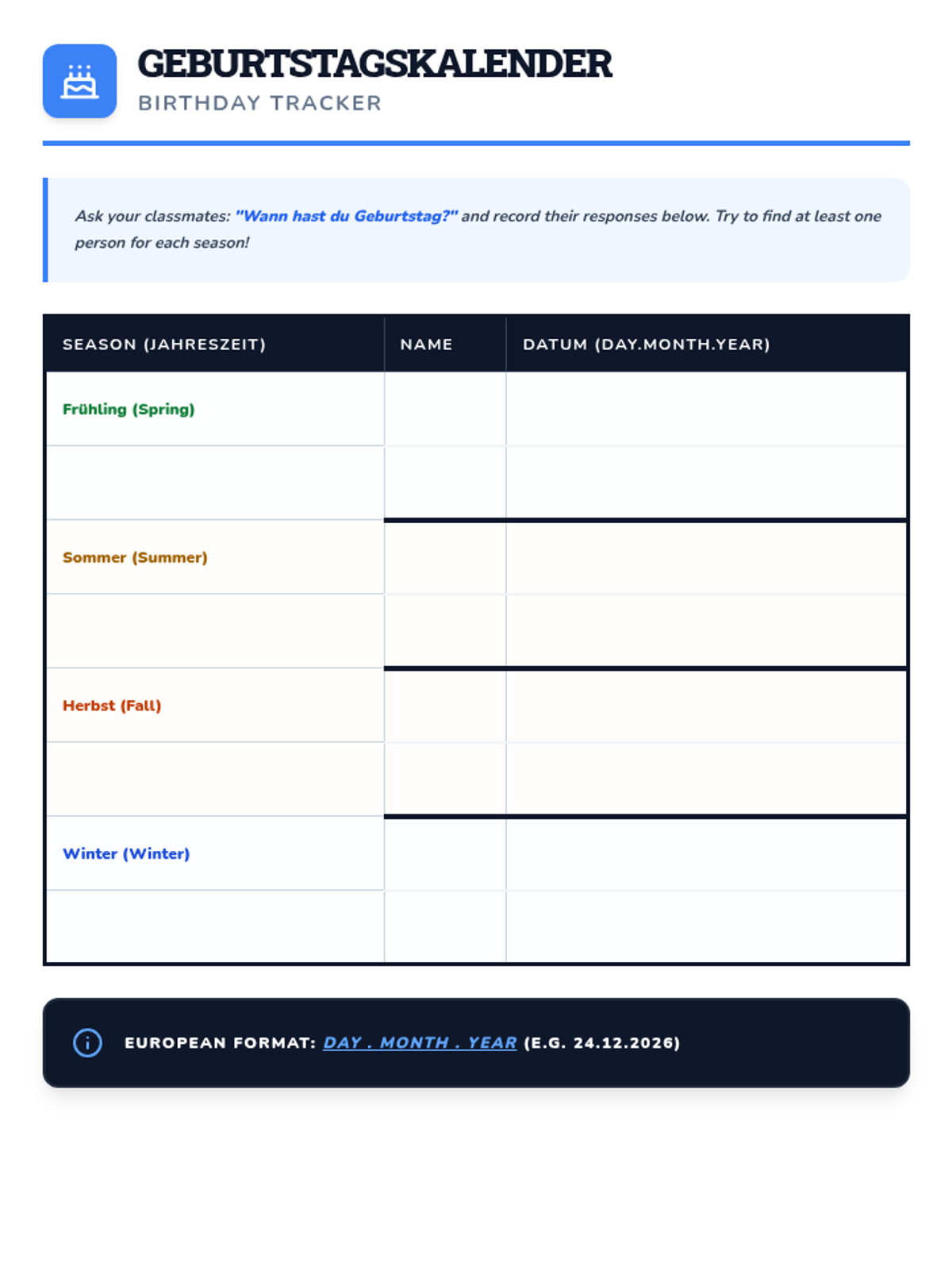
Exploring the German calendar and school system. Students learn date formatting (Day.Month.Year) and compare their school schedules with a typical German 'Halbtagsschule'.
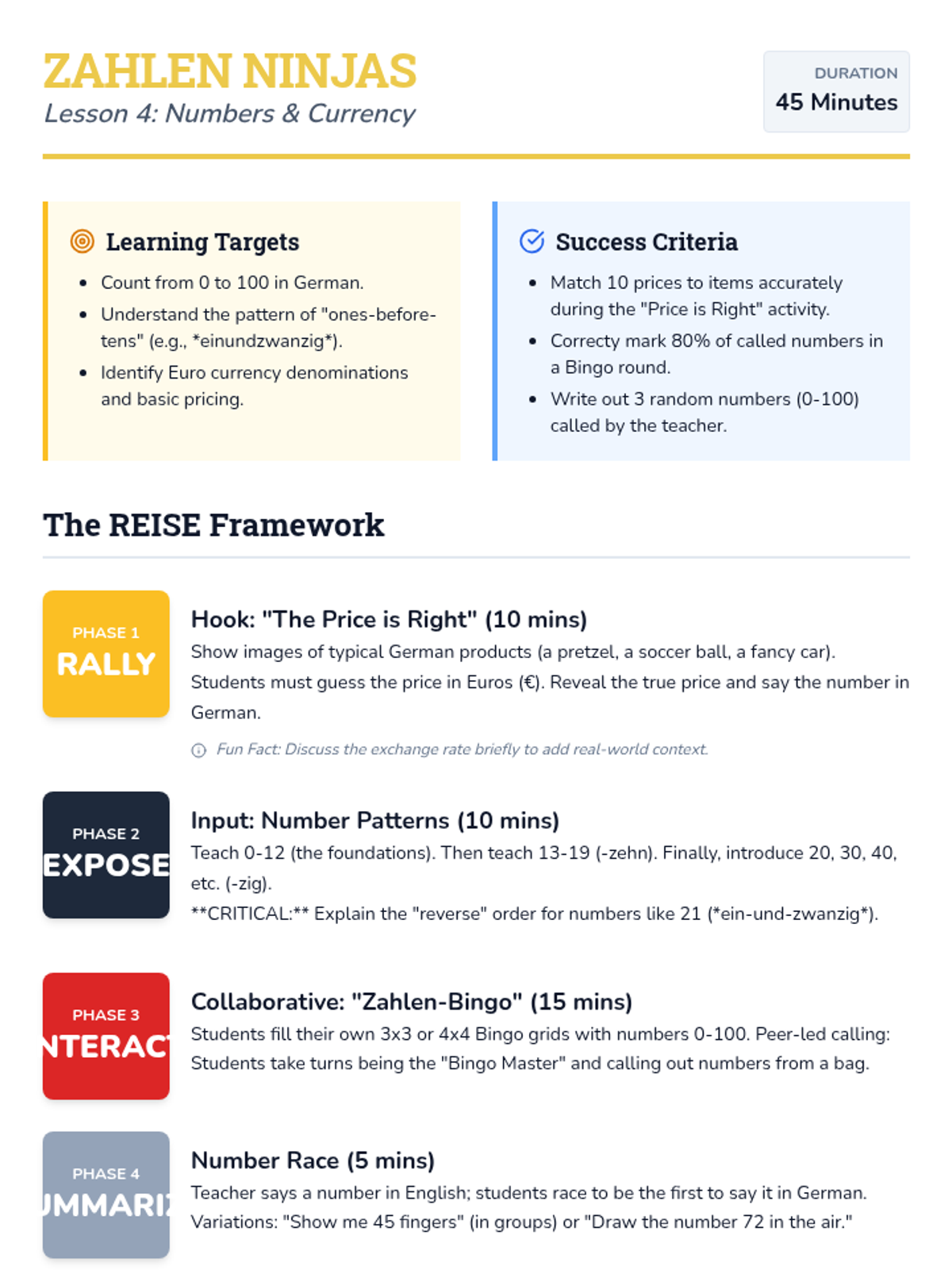
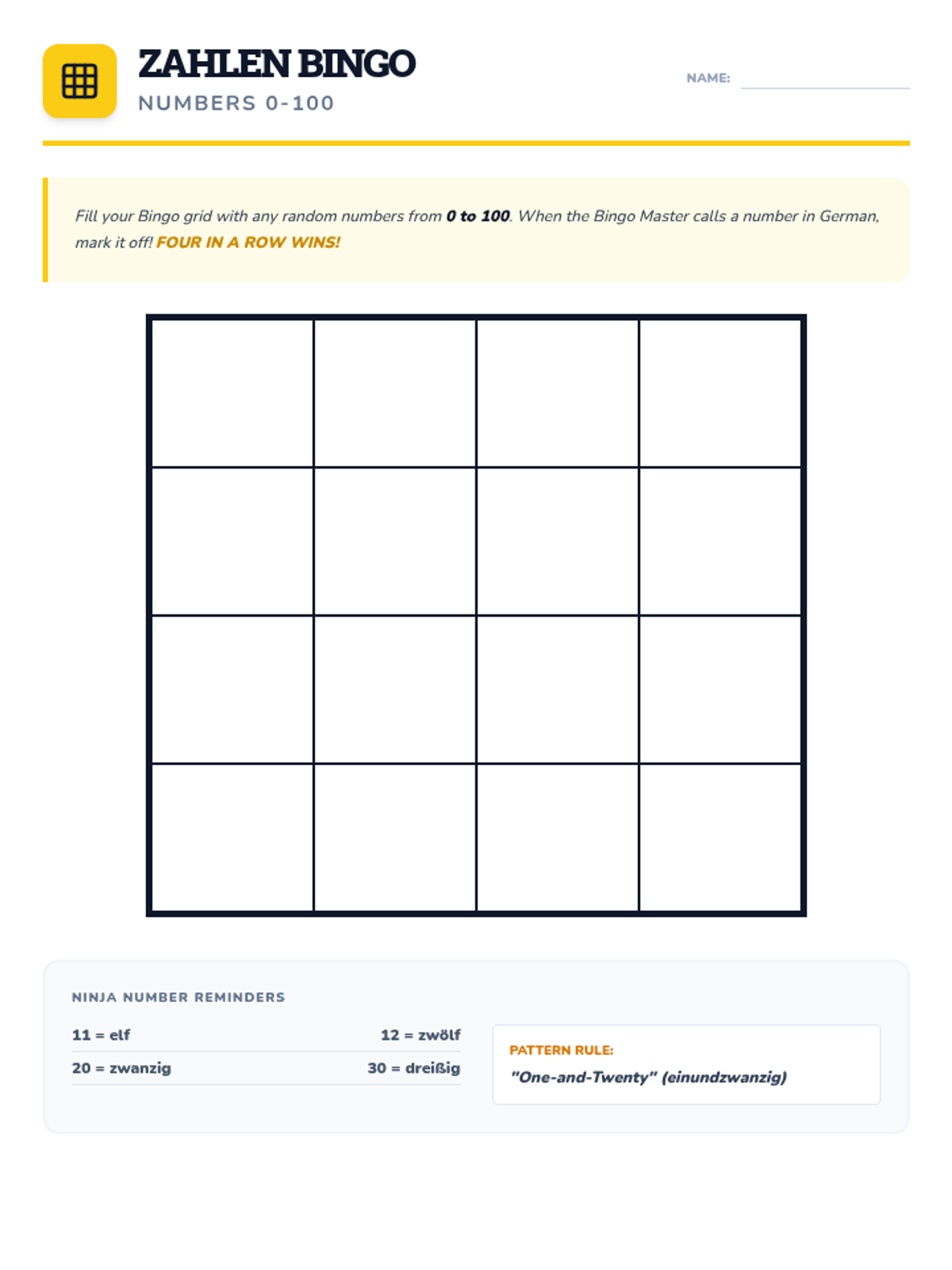
Students master counting up to 100 and explore the Euro currency. They participate in a German-themed 'Price is Right' and peer-led Bingo rounds.
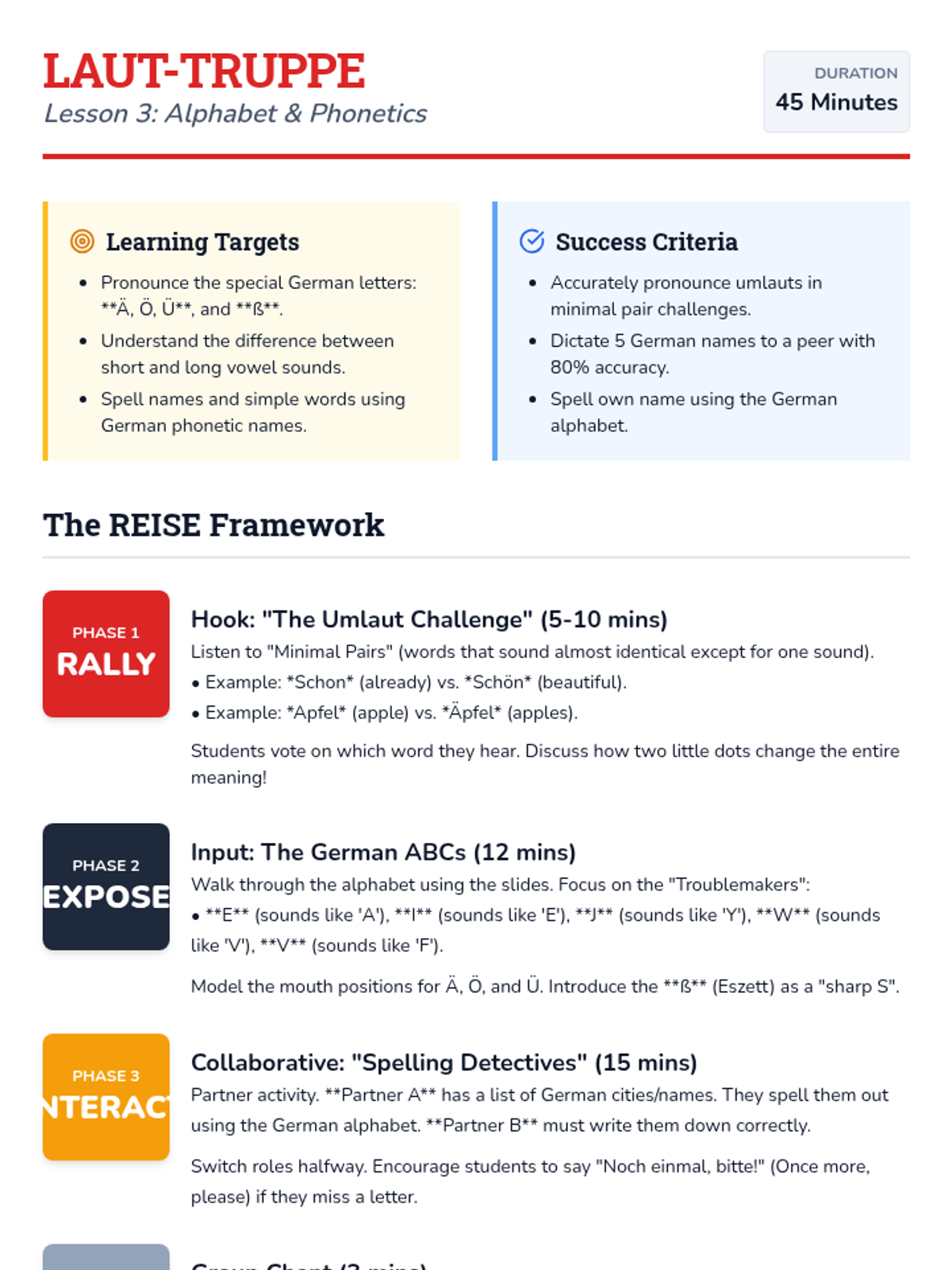
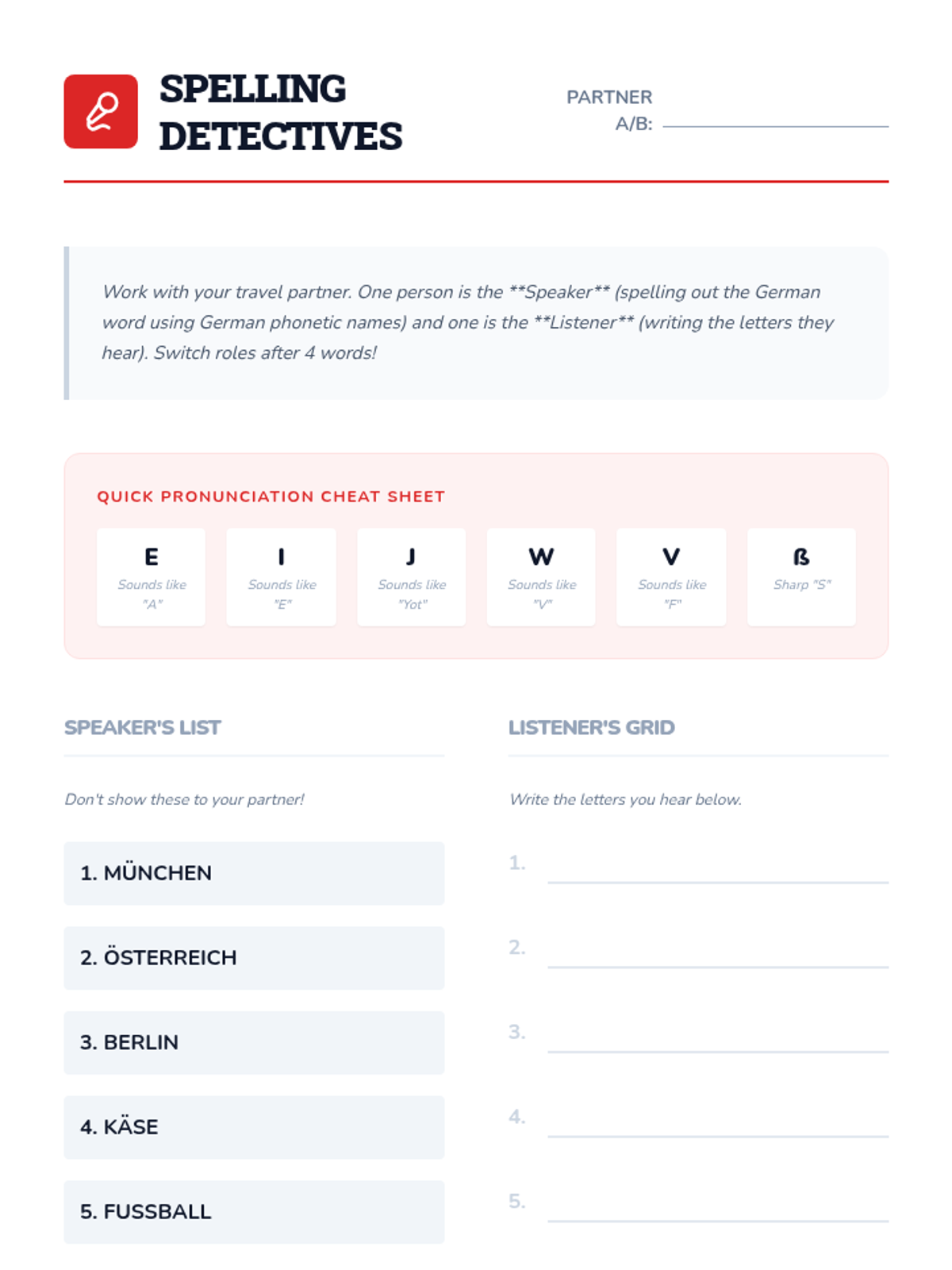
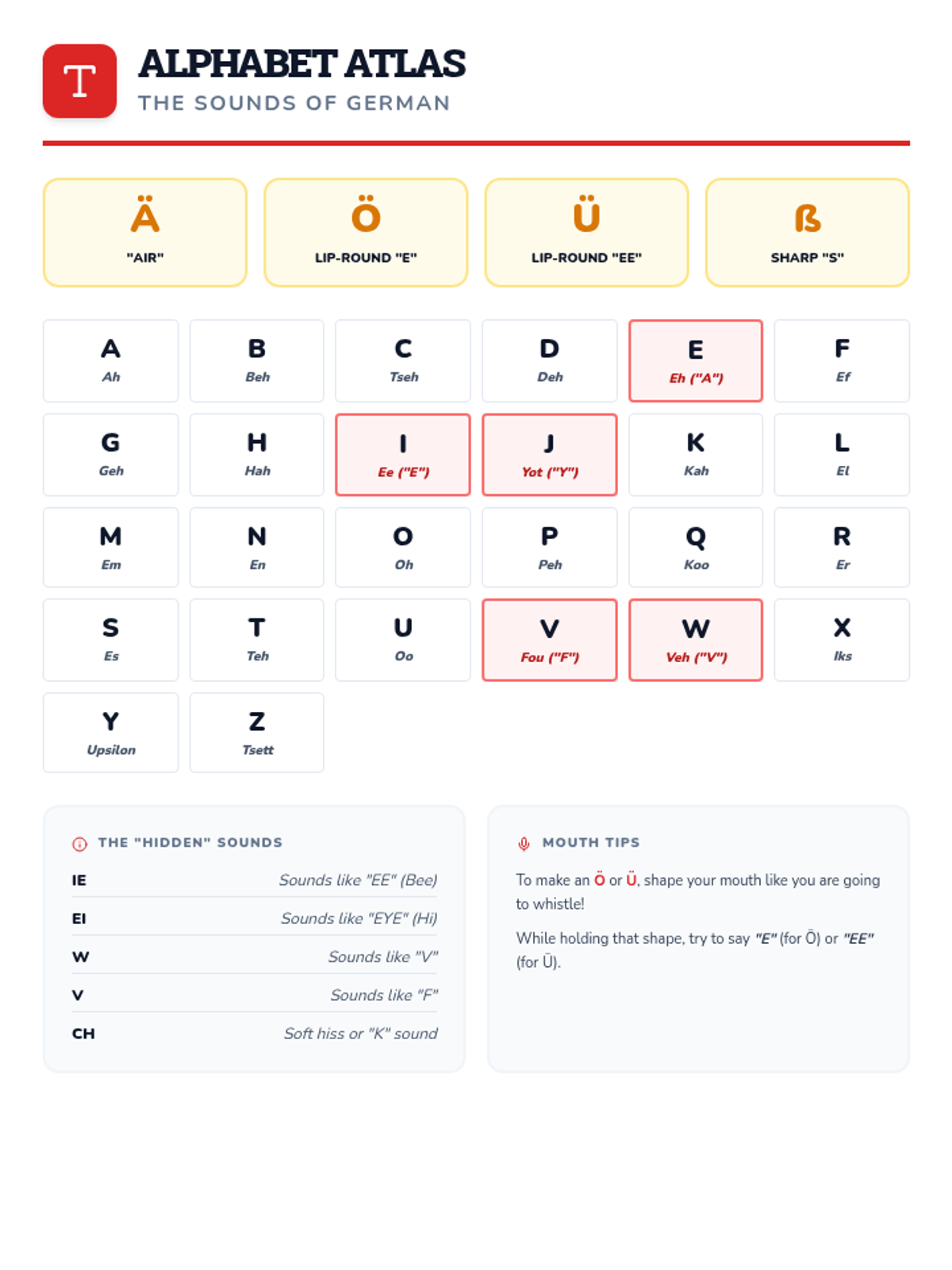
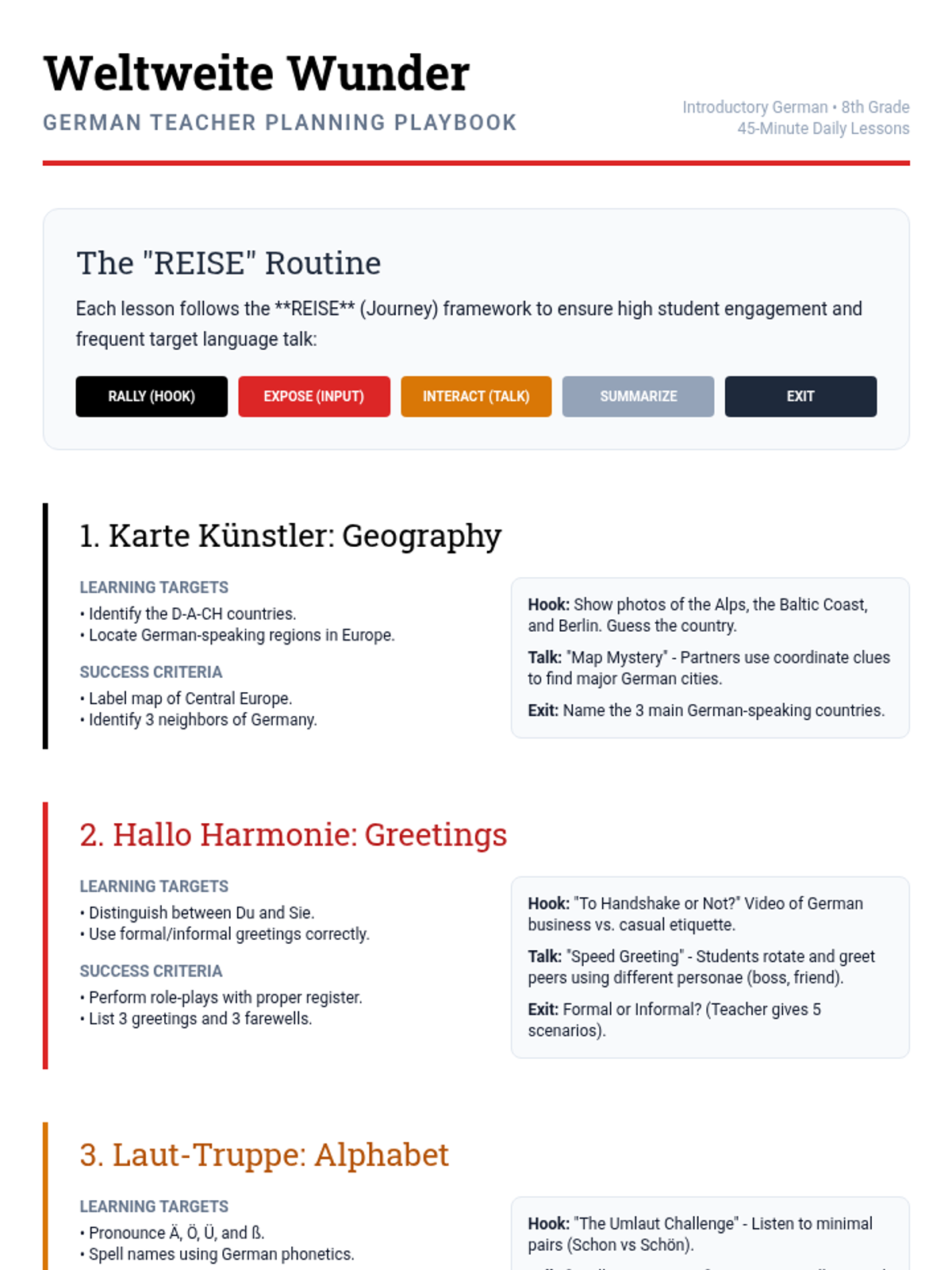
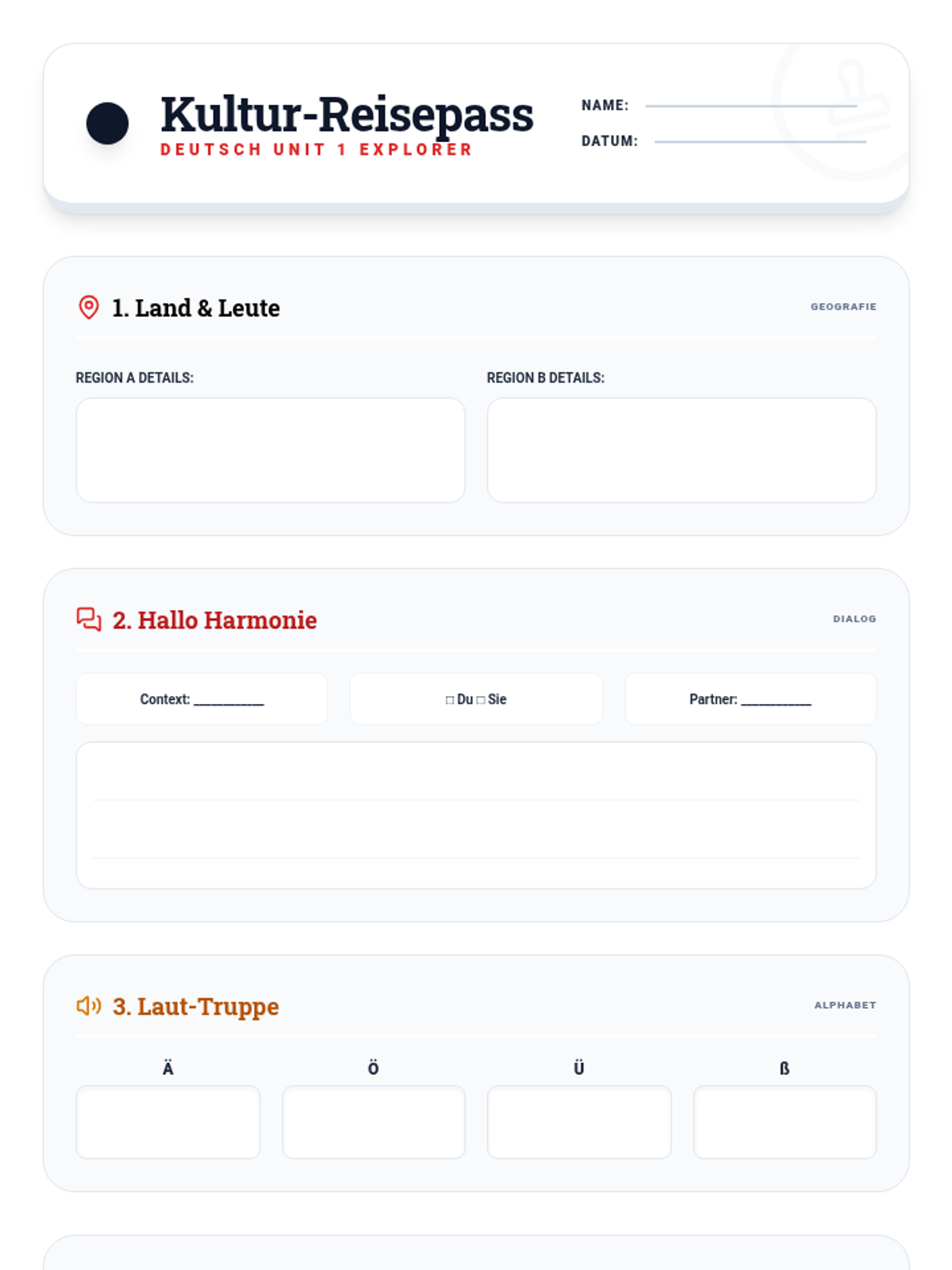
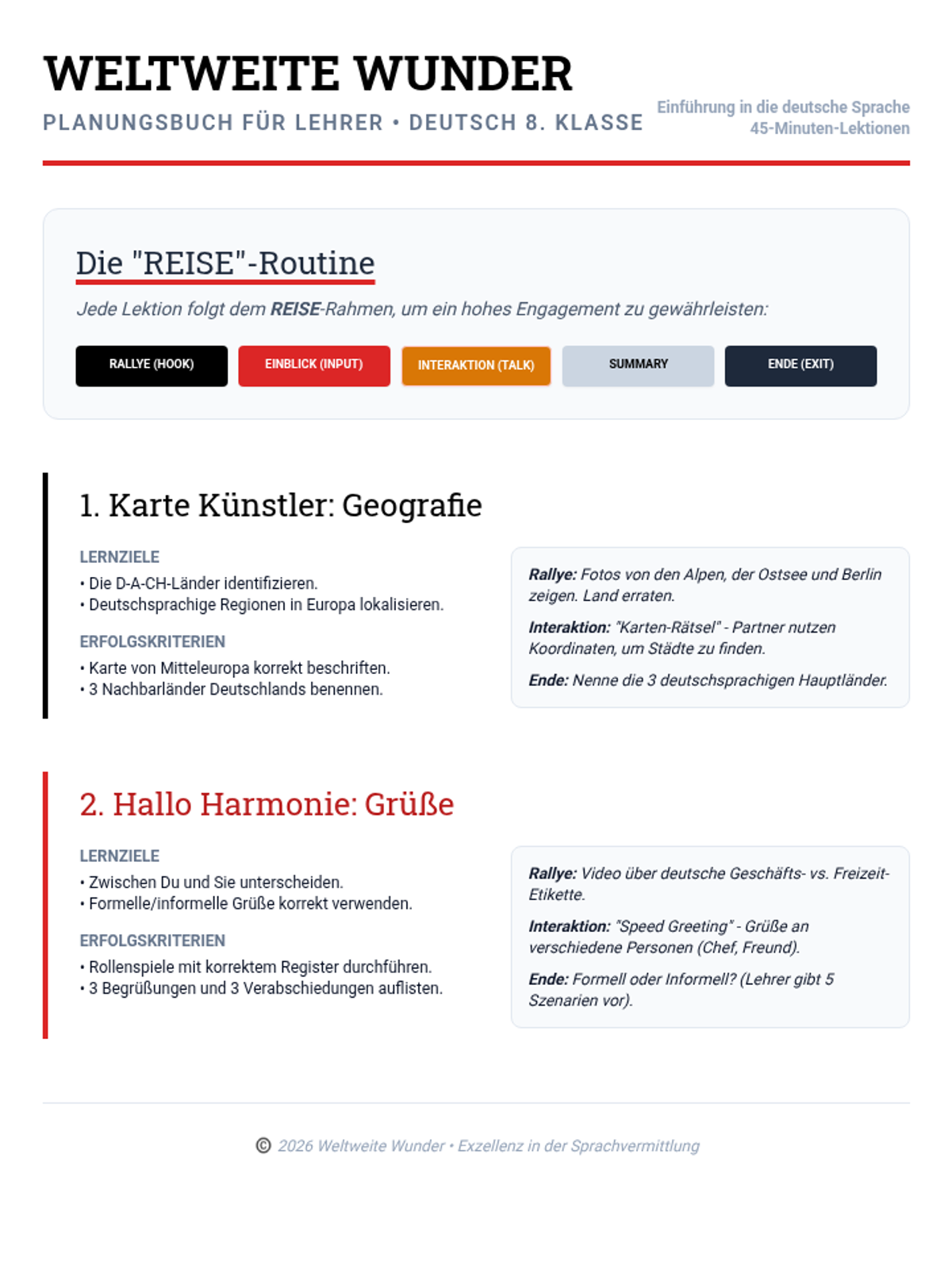
A phonetics-focused lesson covering the German alphabet, with special attention to the unique letters Ä, Ö, Ü, and ß. Students practice spelling names and identifying phonetic sounds.
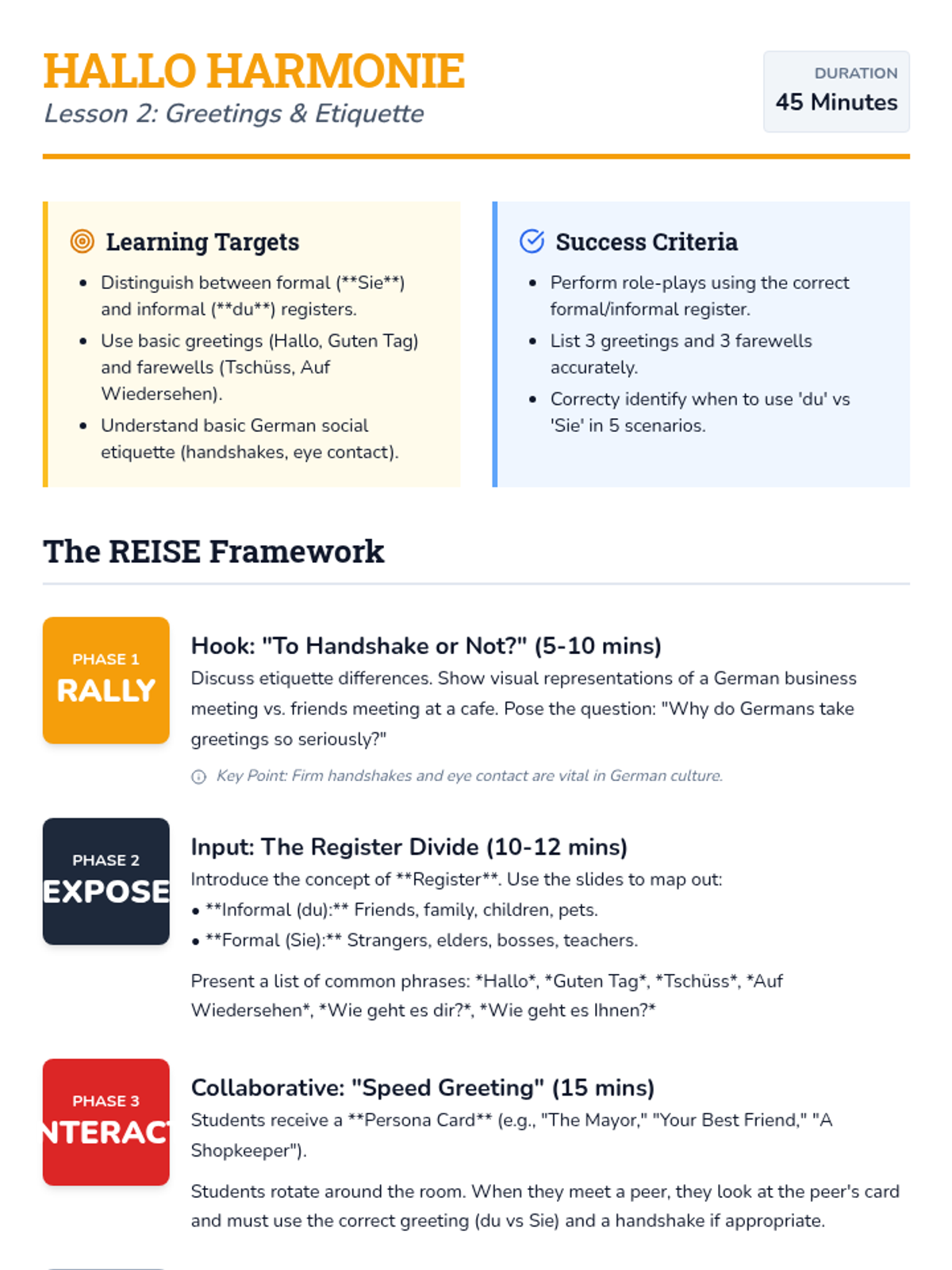
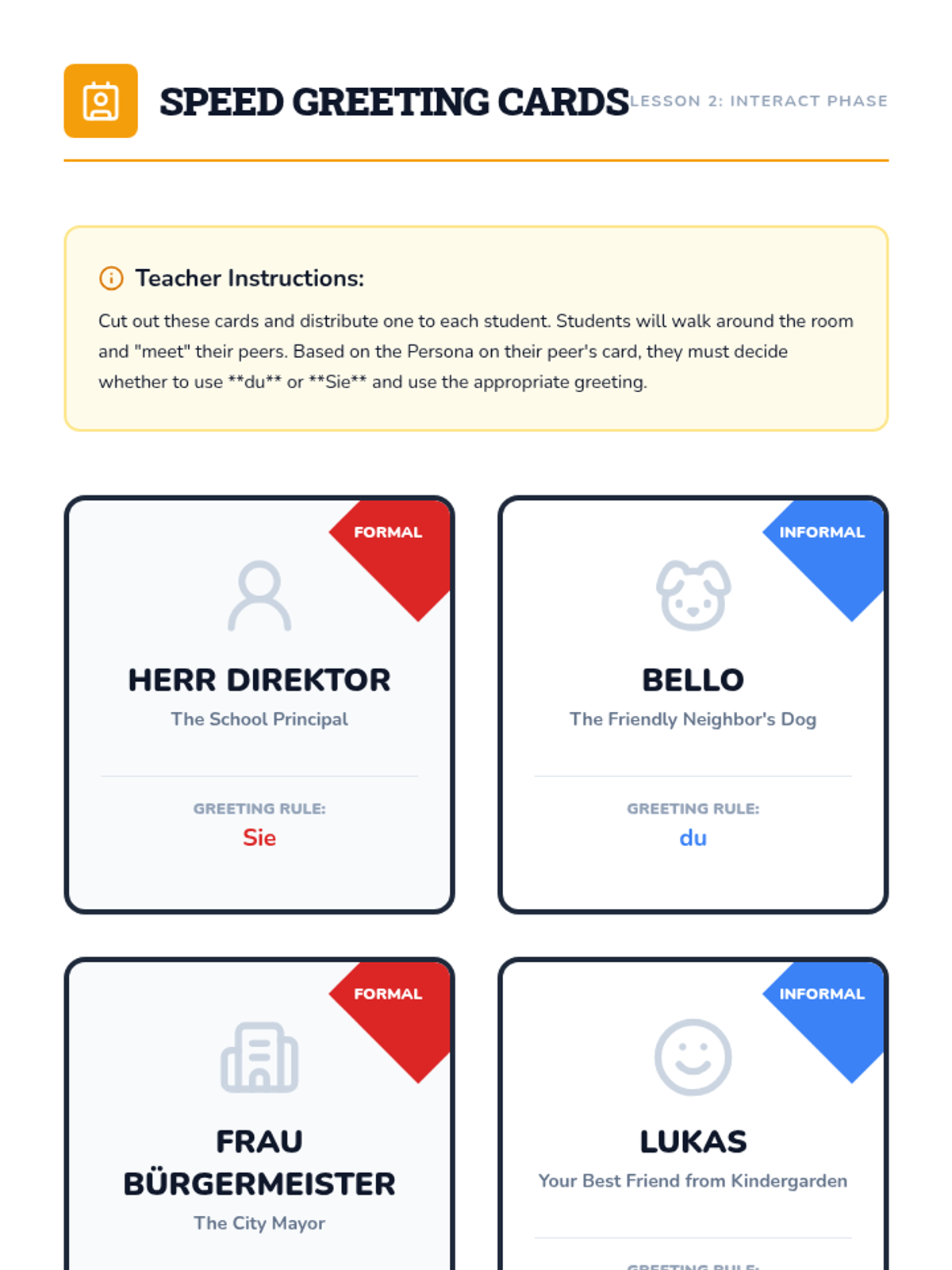
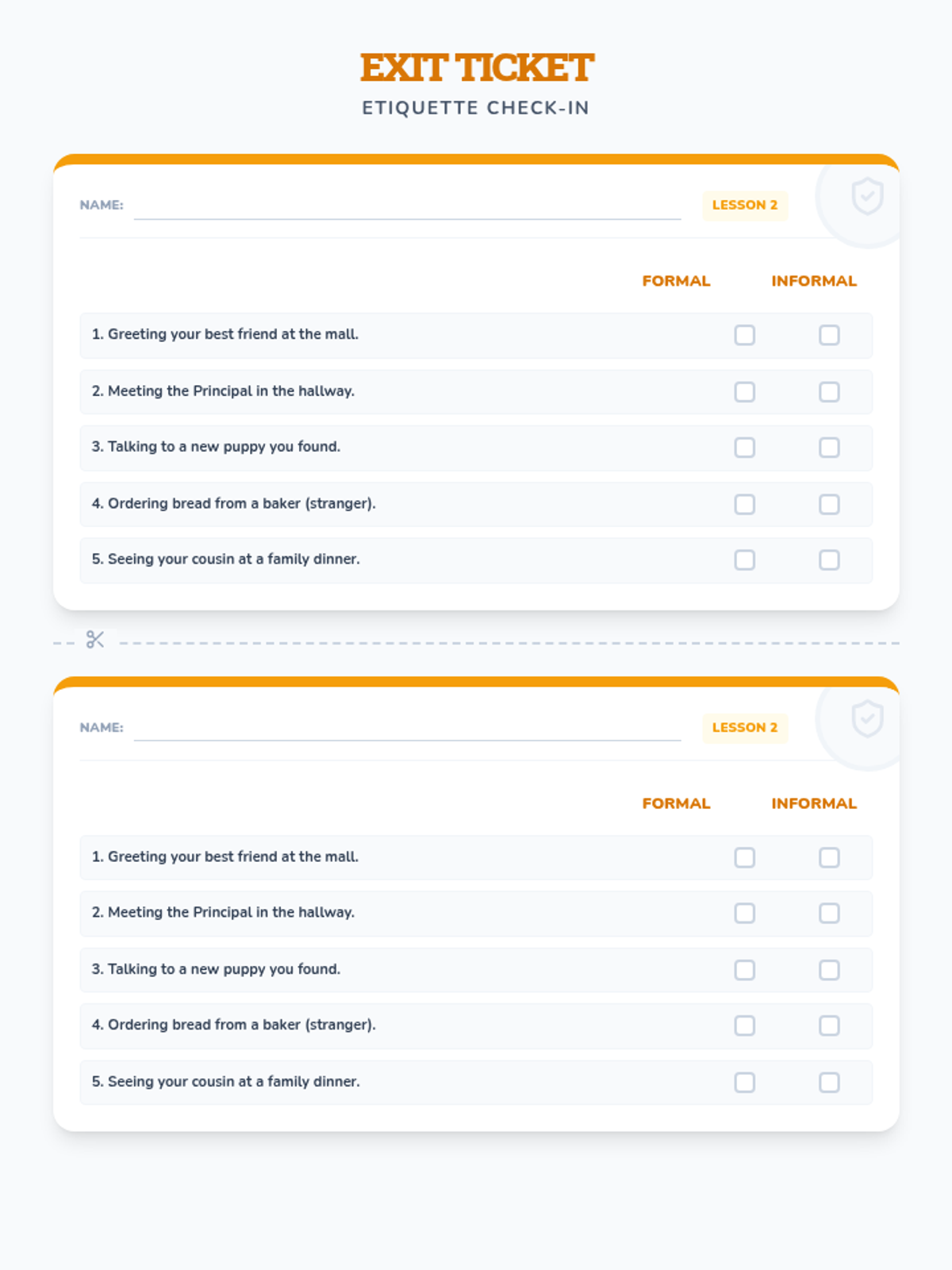
Students learn the nuances of German social interaction, specifically the distinction between the formal 'Sie' and informal 'du'. Activities include role-playing greetings with different personae.
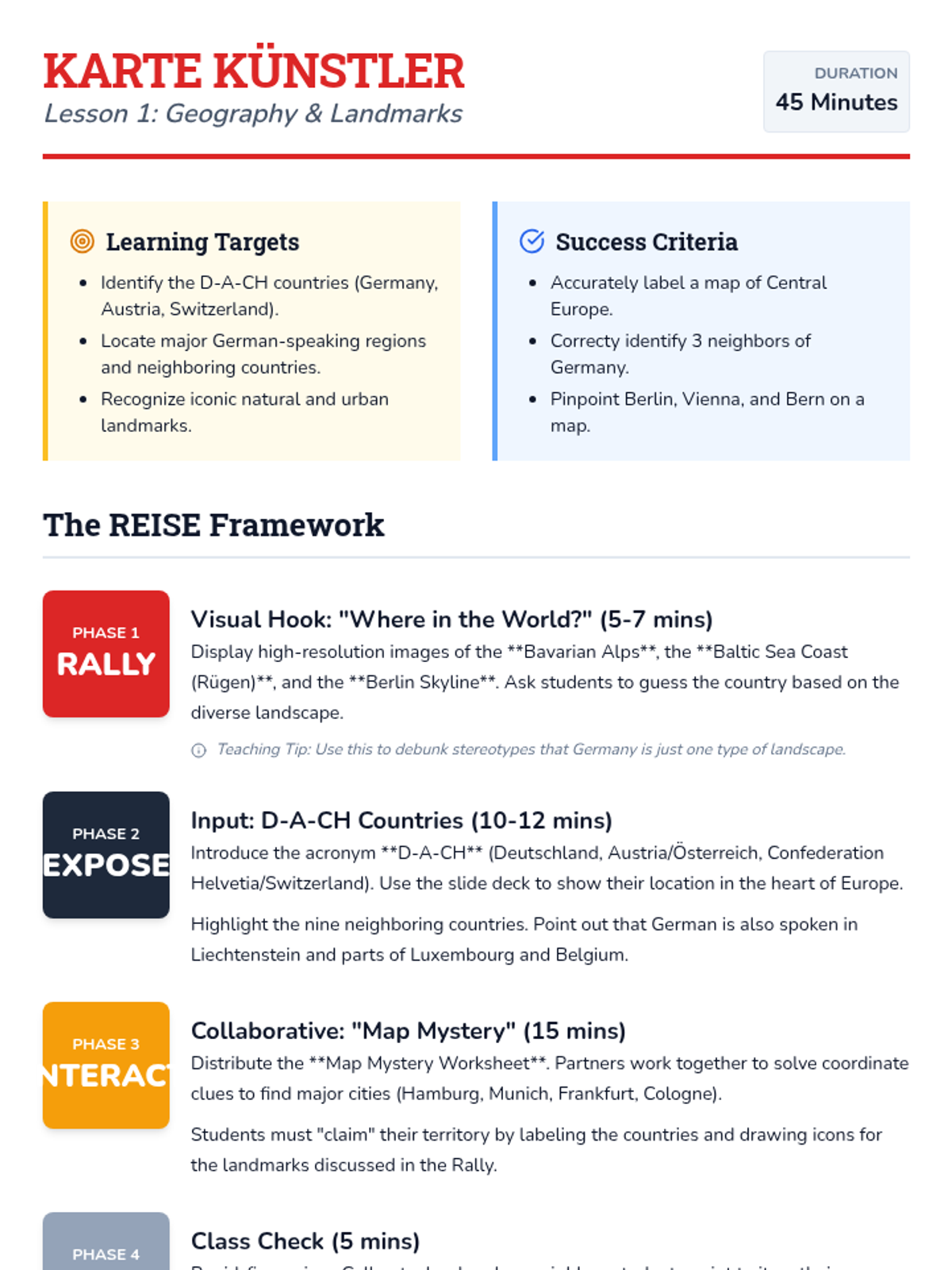
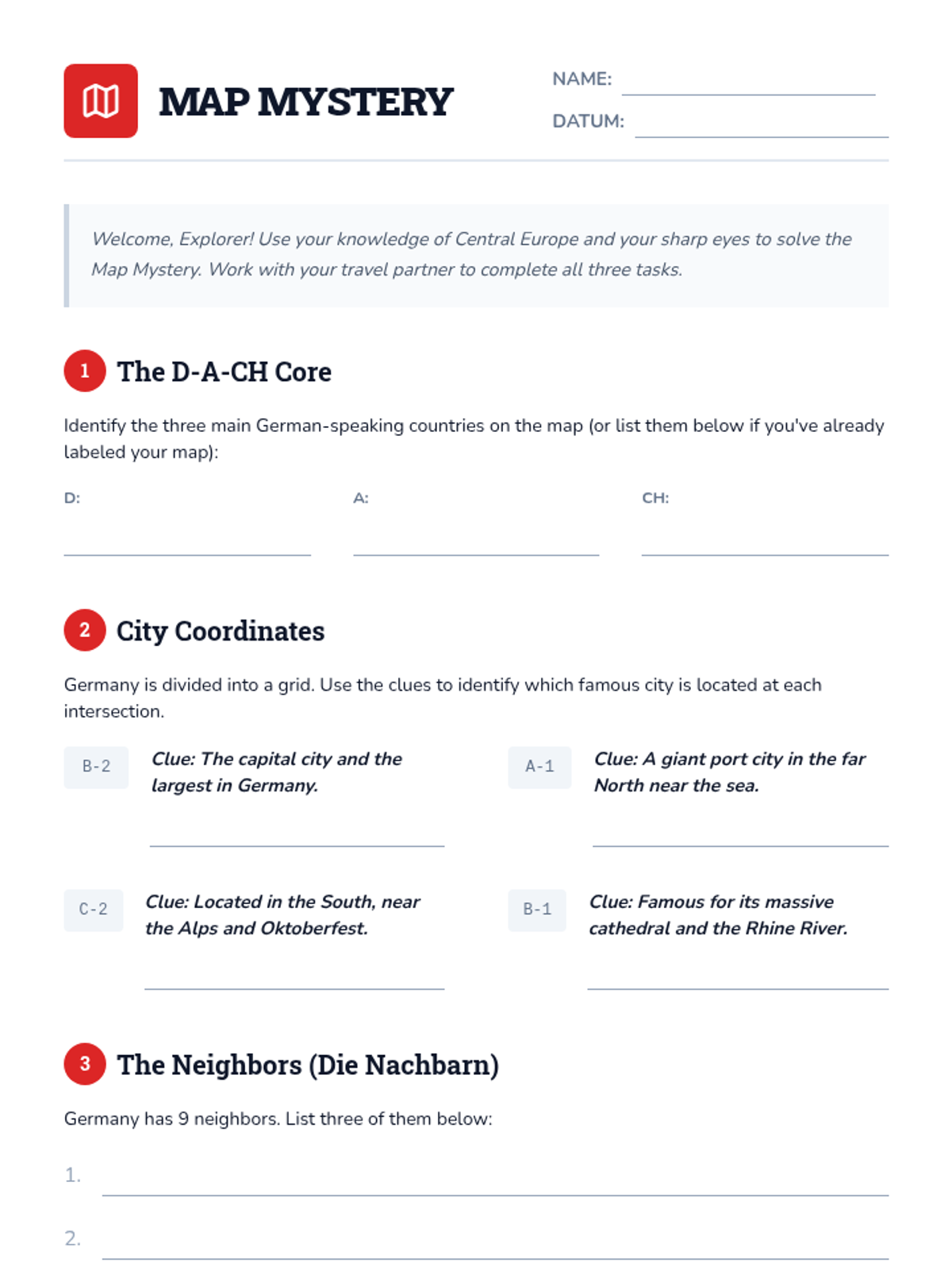
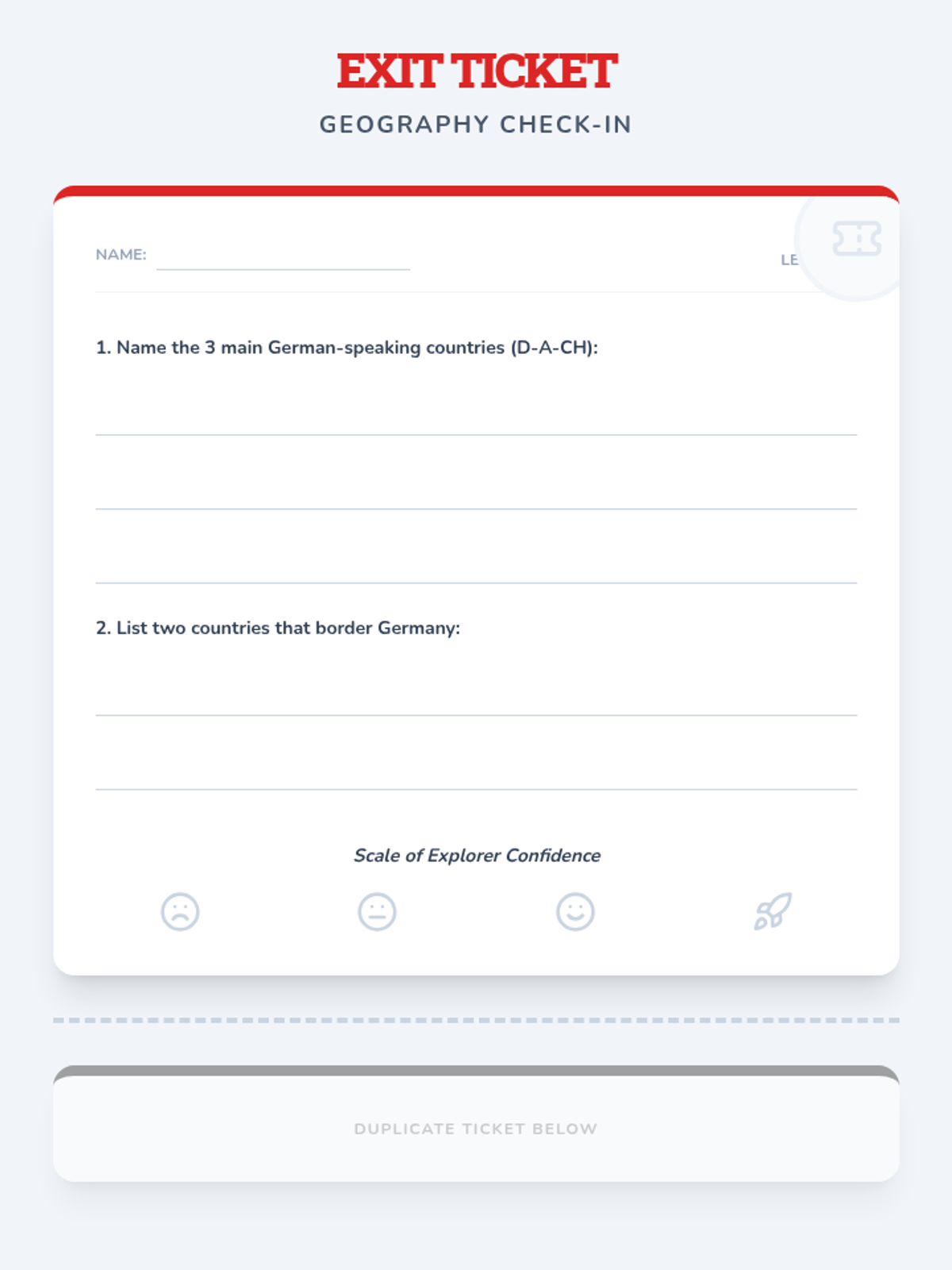
Students explore the geography of Central Europe, focusing on the D-A-CH countries (Germany, Austria, Switzerland) and major landmarks. Activities include a visual hook of the Alps and Baltic coast and a coordinate-based map mystery.
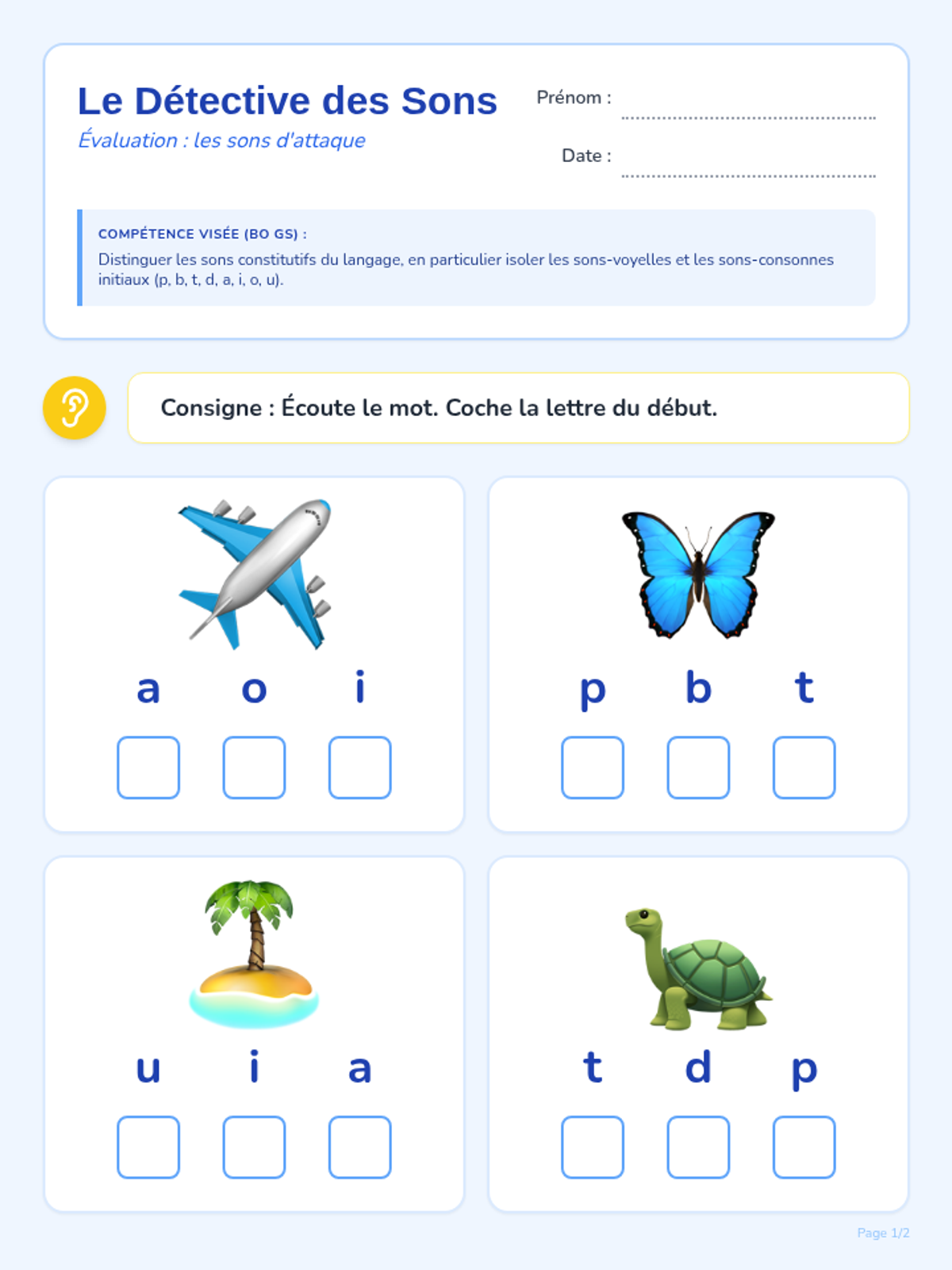
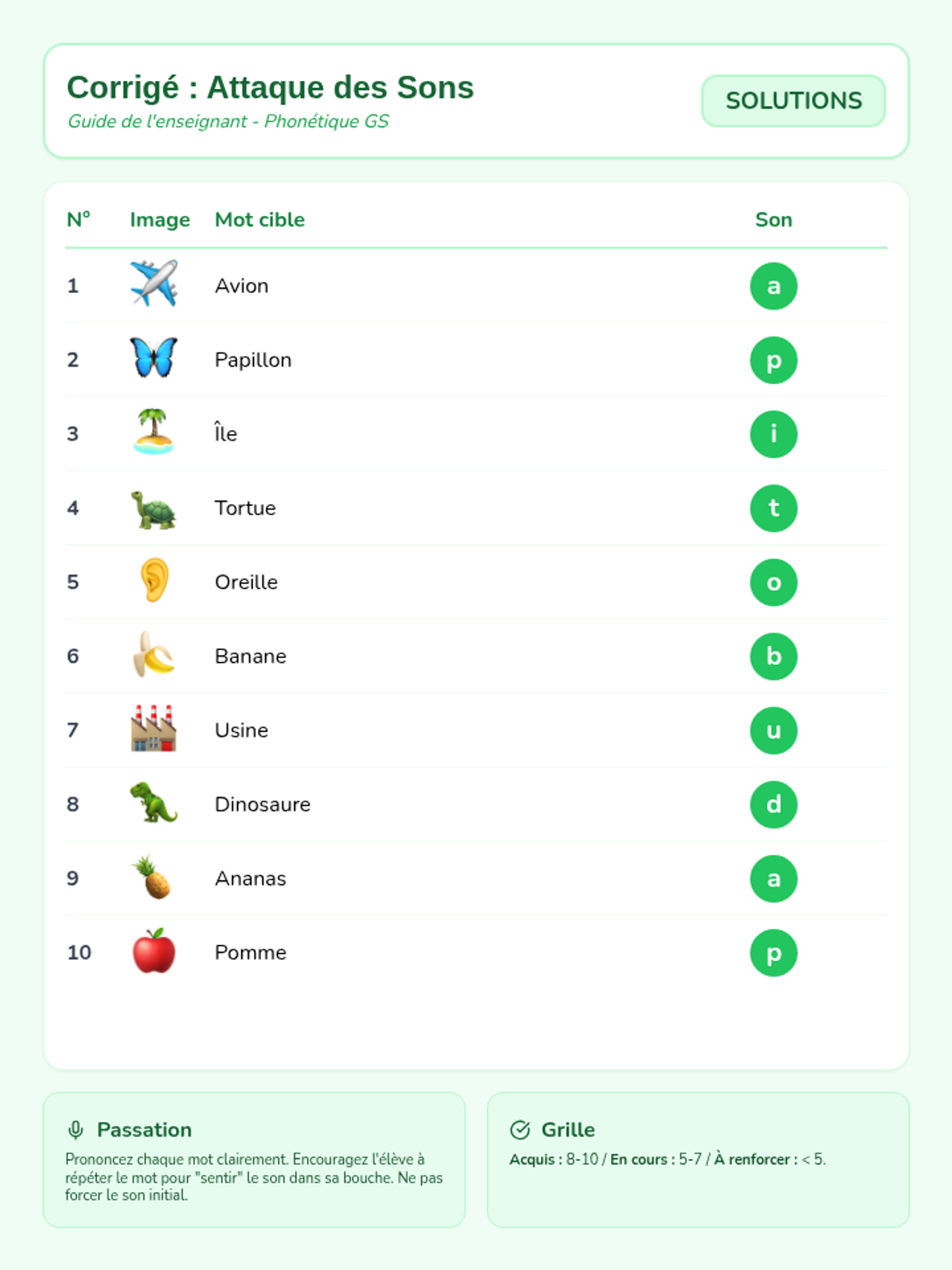
Une leçon courte pour évaluer la capacité des élèves de Grande Section à identifier le son d'attaque d'un mot, se concentrant sur les voyelles de base et les consonnes occlusives.
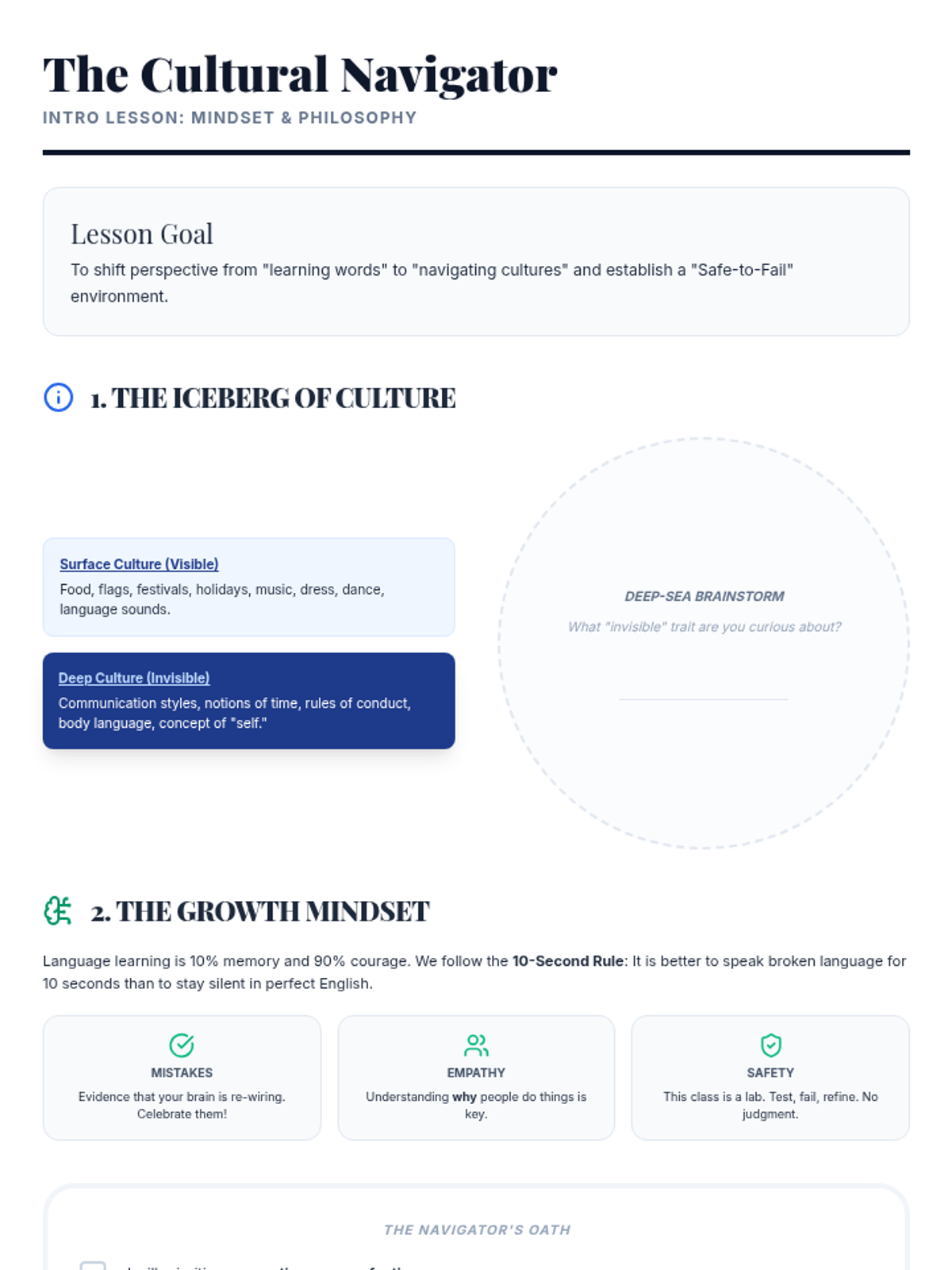
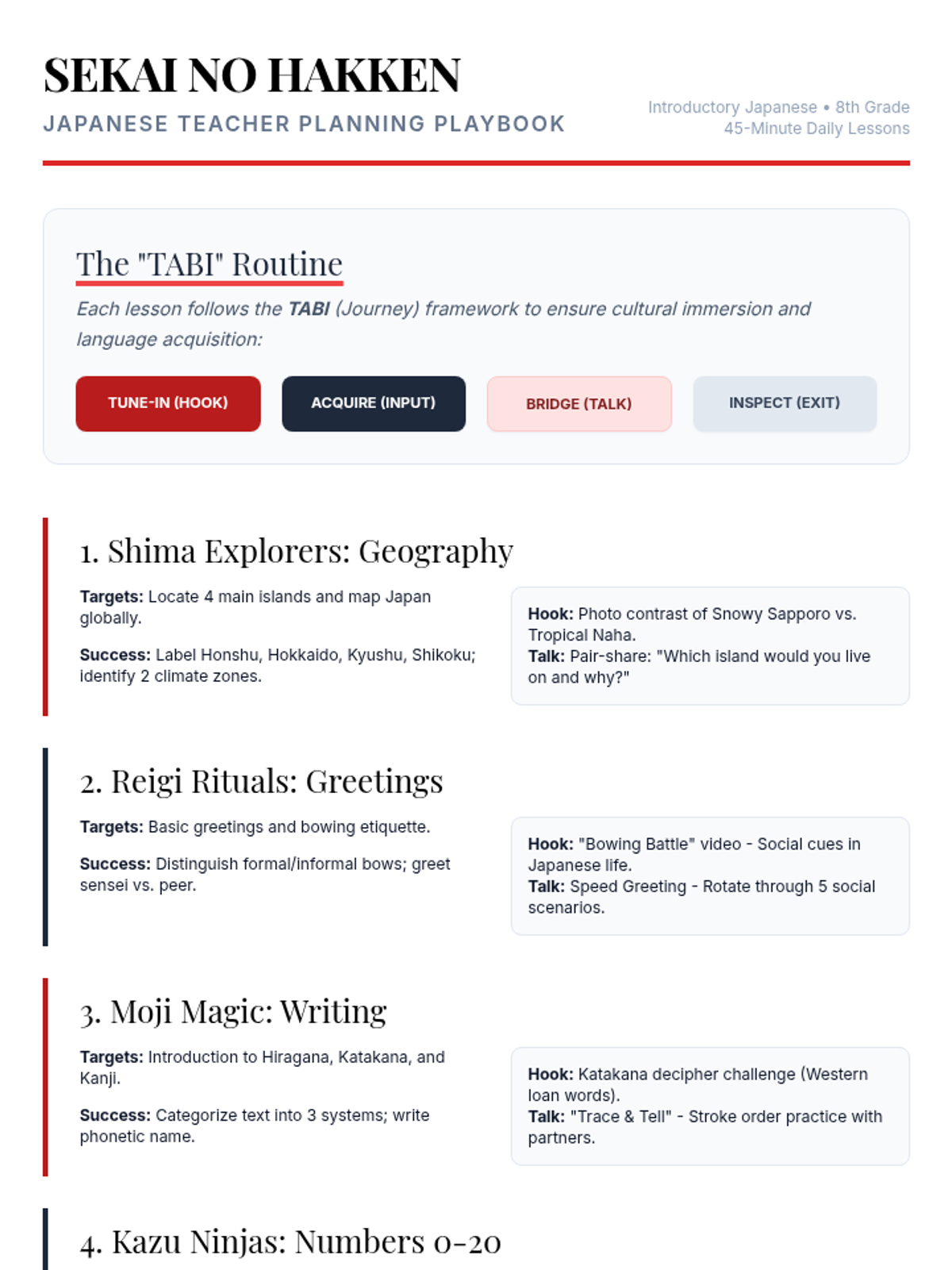
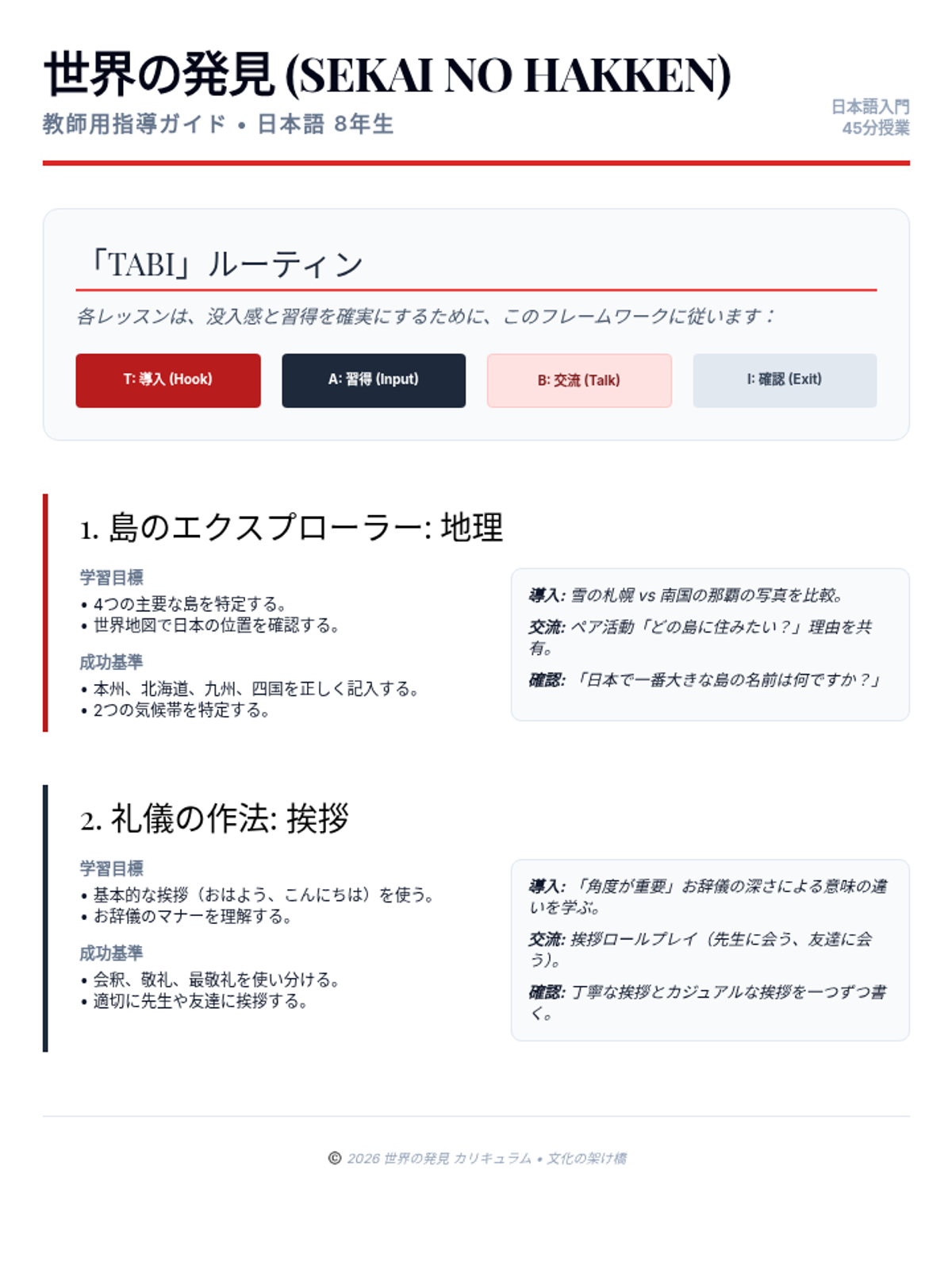
Foundational lessons designed to establish common learning routines (PASAPORTE, REISE, TABI) and introduce the philosophy of cultural empathy and language acquisition.
The final unit showcase where students present their cultural research and linguistic progress.
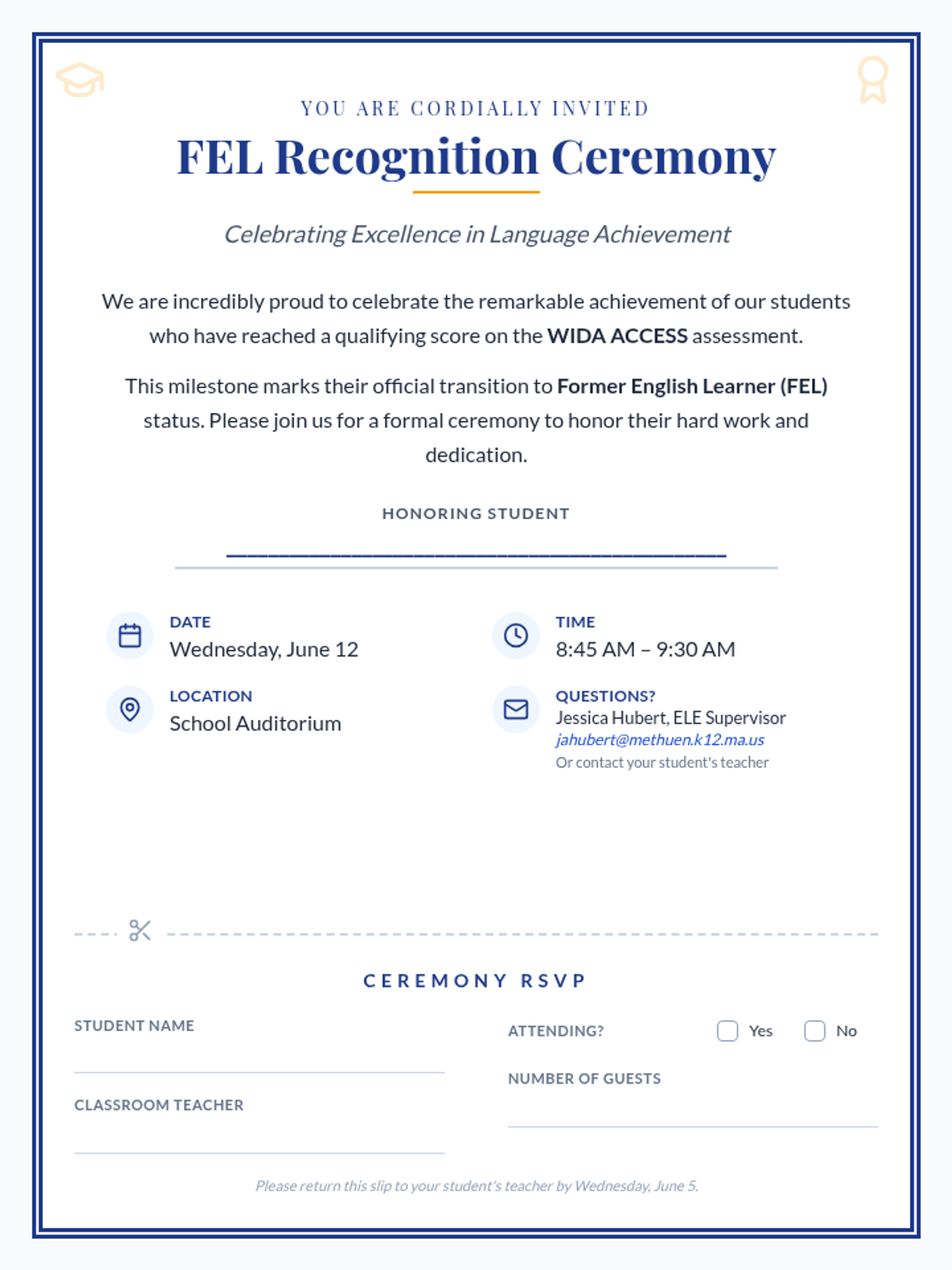
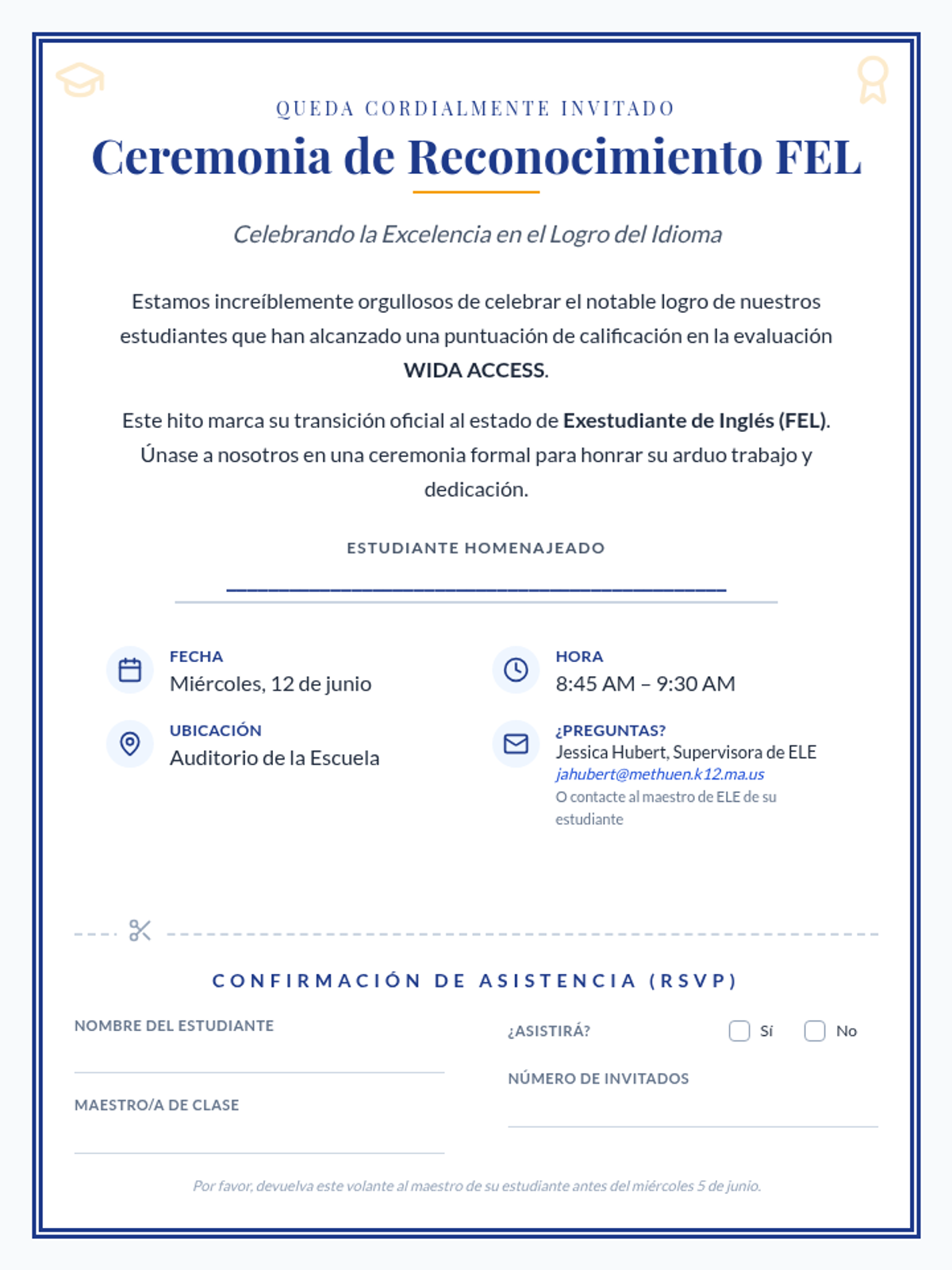
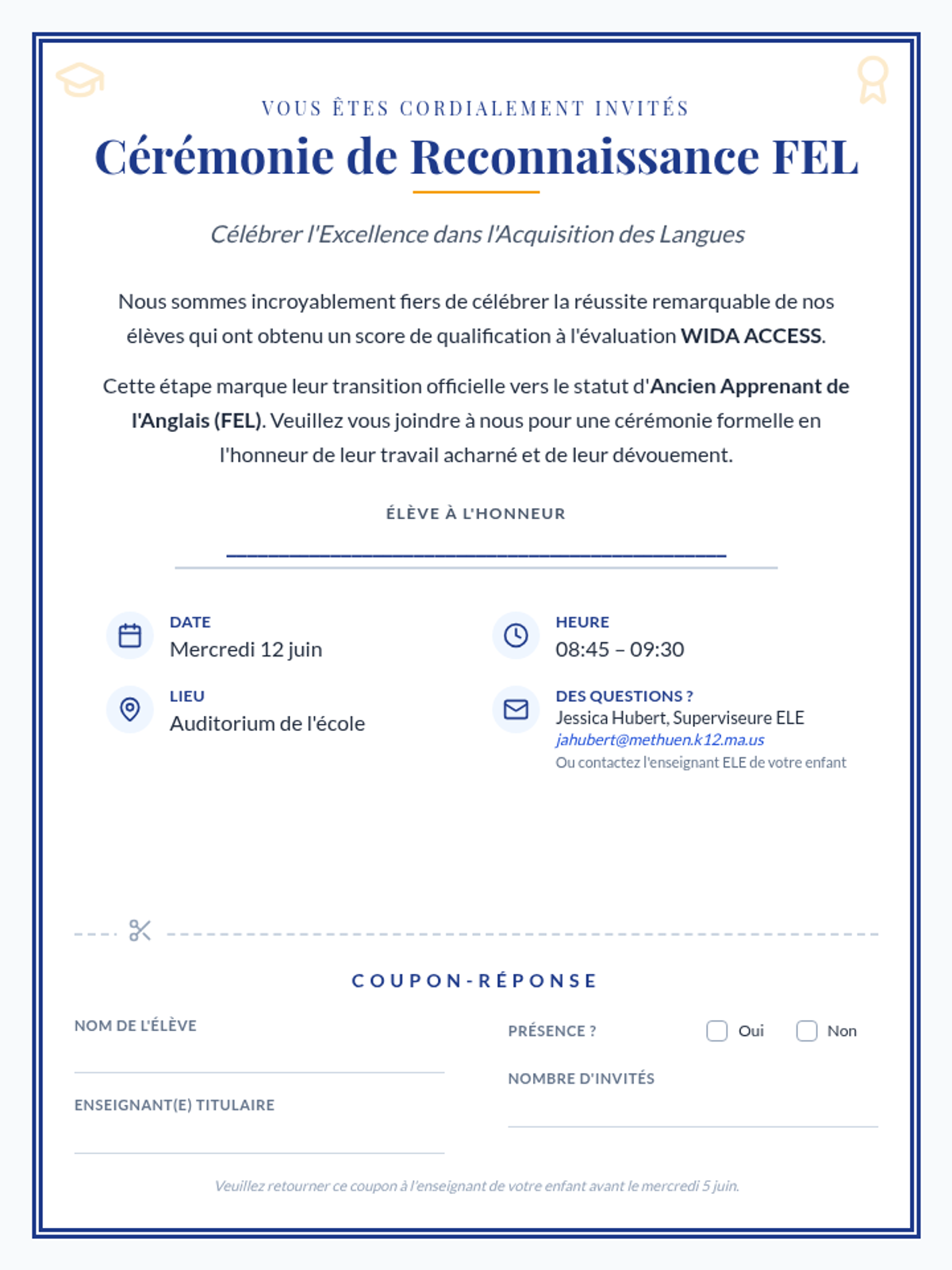
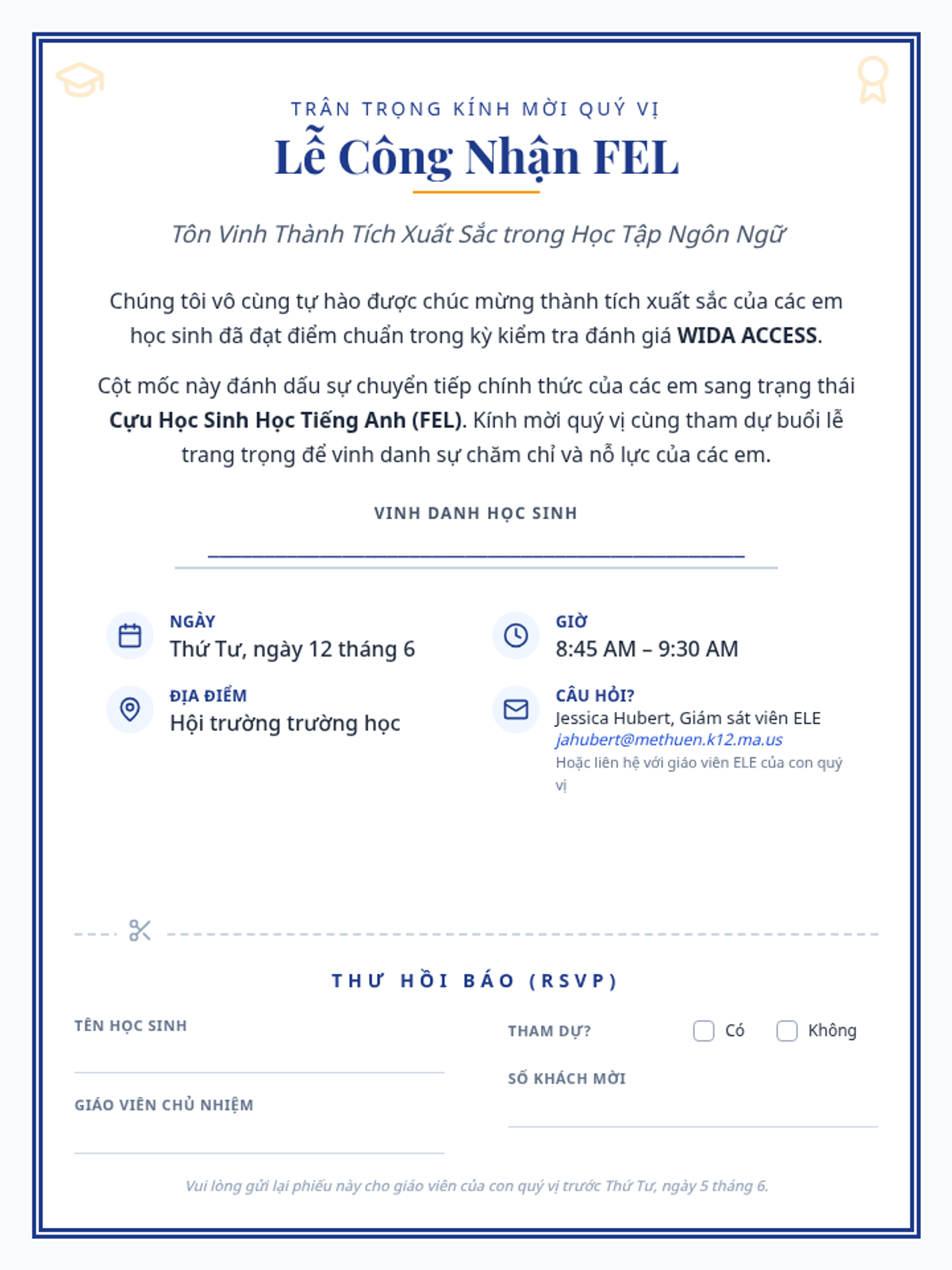
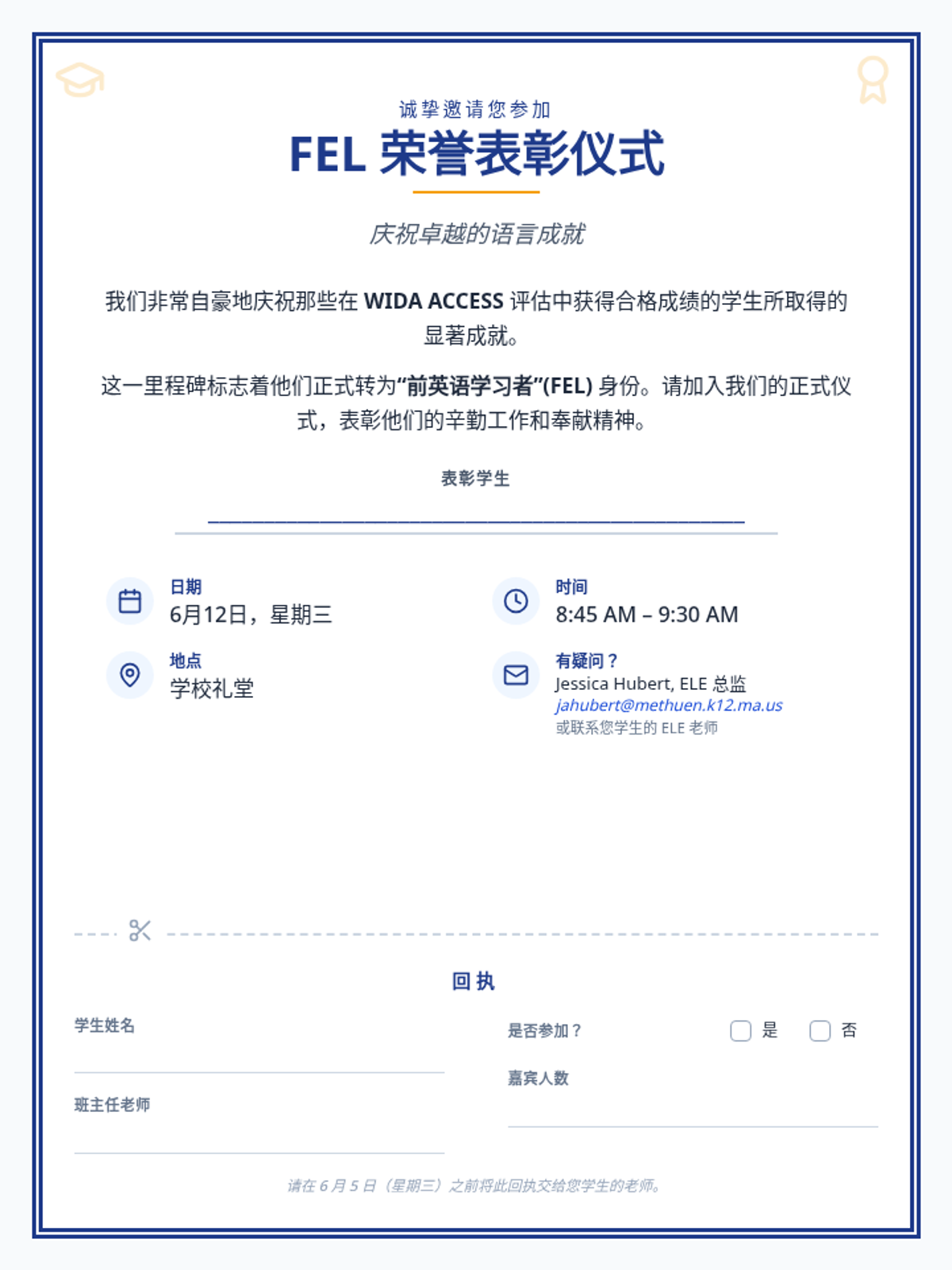
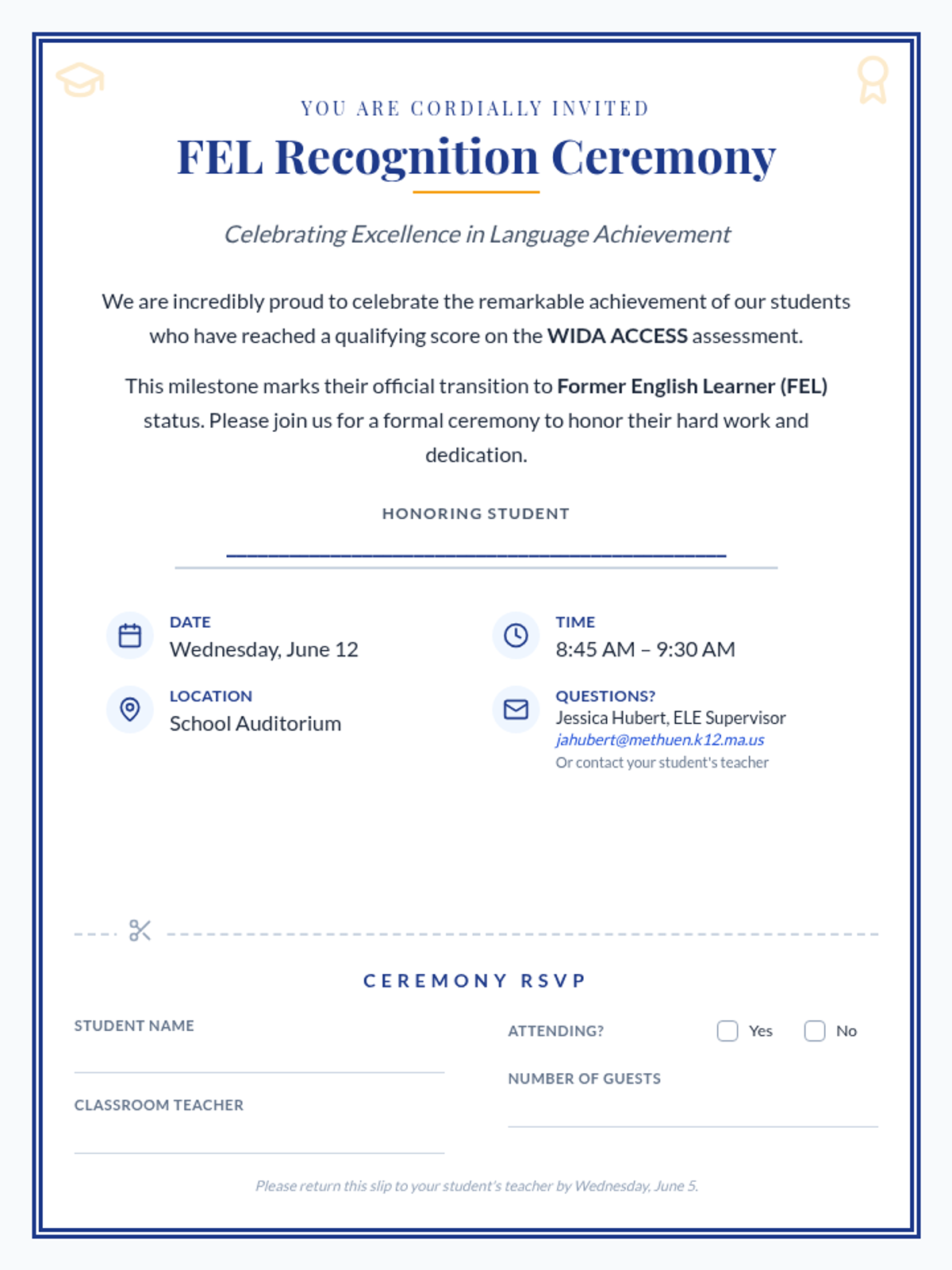
A collection of formal invitation flyers for the FEL Recognition Ceremony, provided in multiple languages to ensure all families can celebrate their student's transition from English Language Education services.
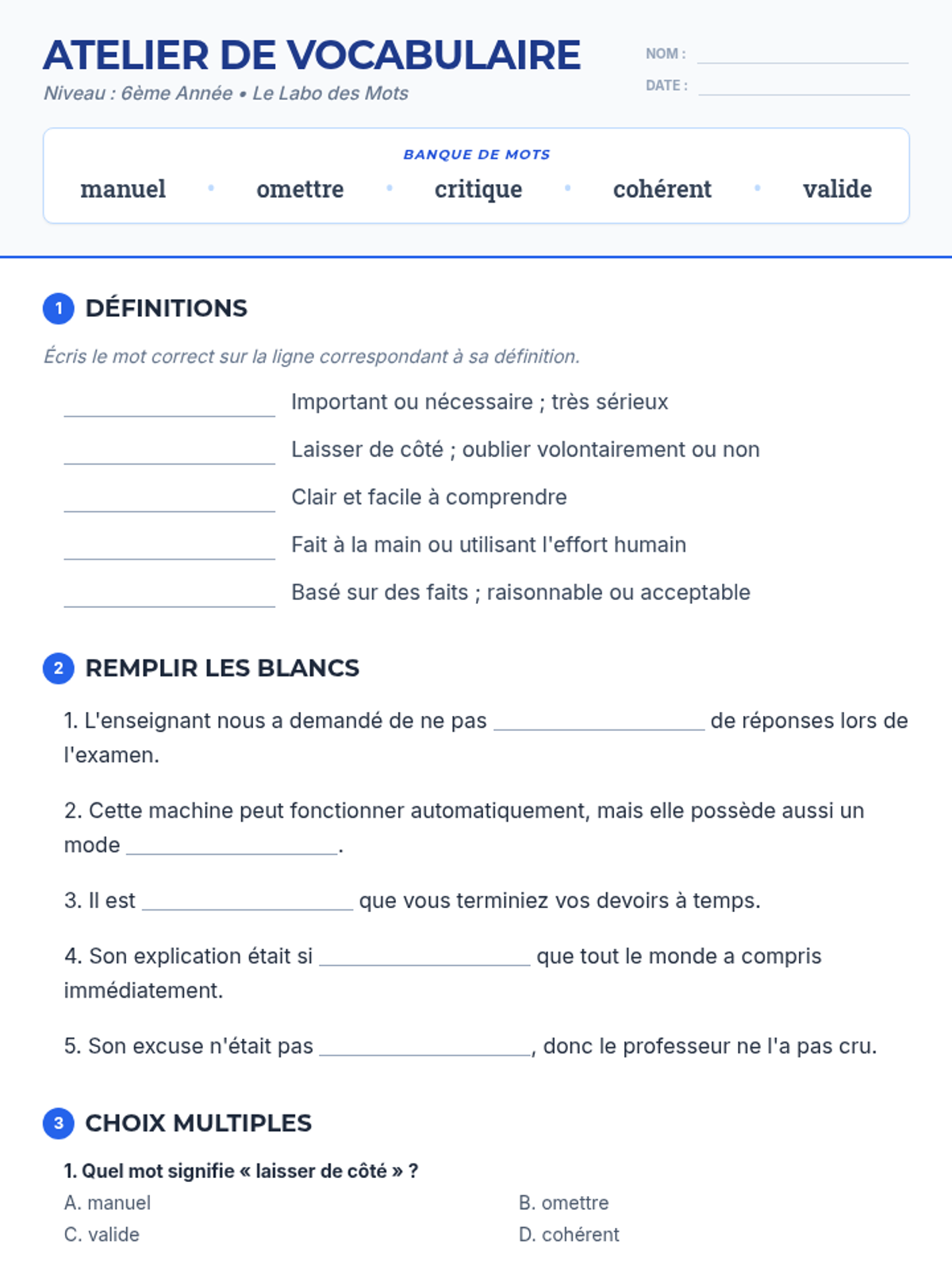
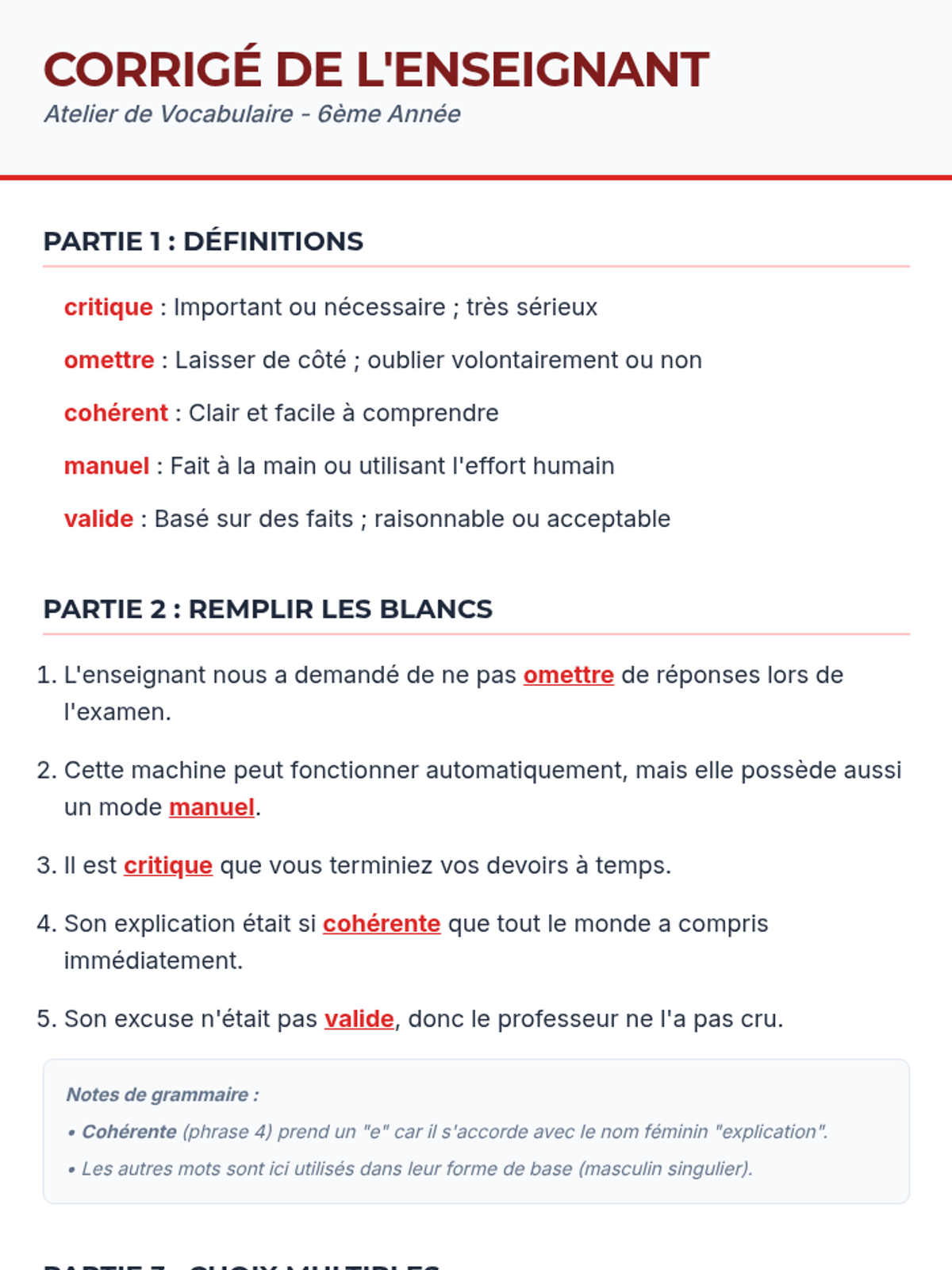
Une leçon de vocabulaire pour les élèves de 6ème année, axée sur cinq mots académiques essentiels. La leçon comprend une présentation pour l'enseignement direct, une fiche d'exercices pour la pratique et un corrigé pour l'enseignant.
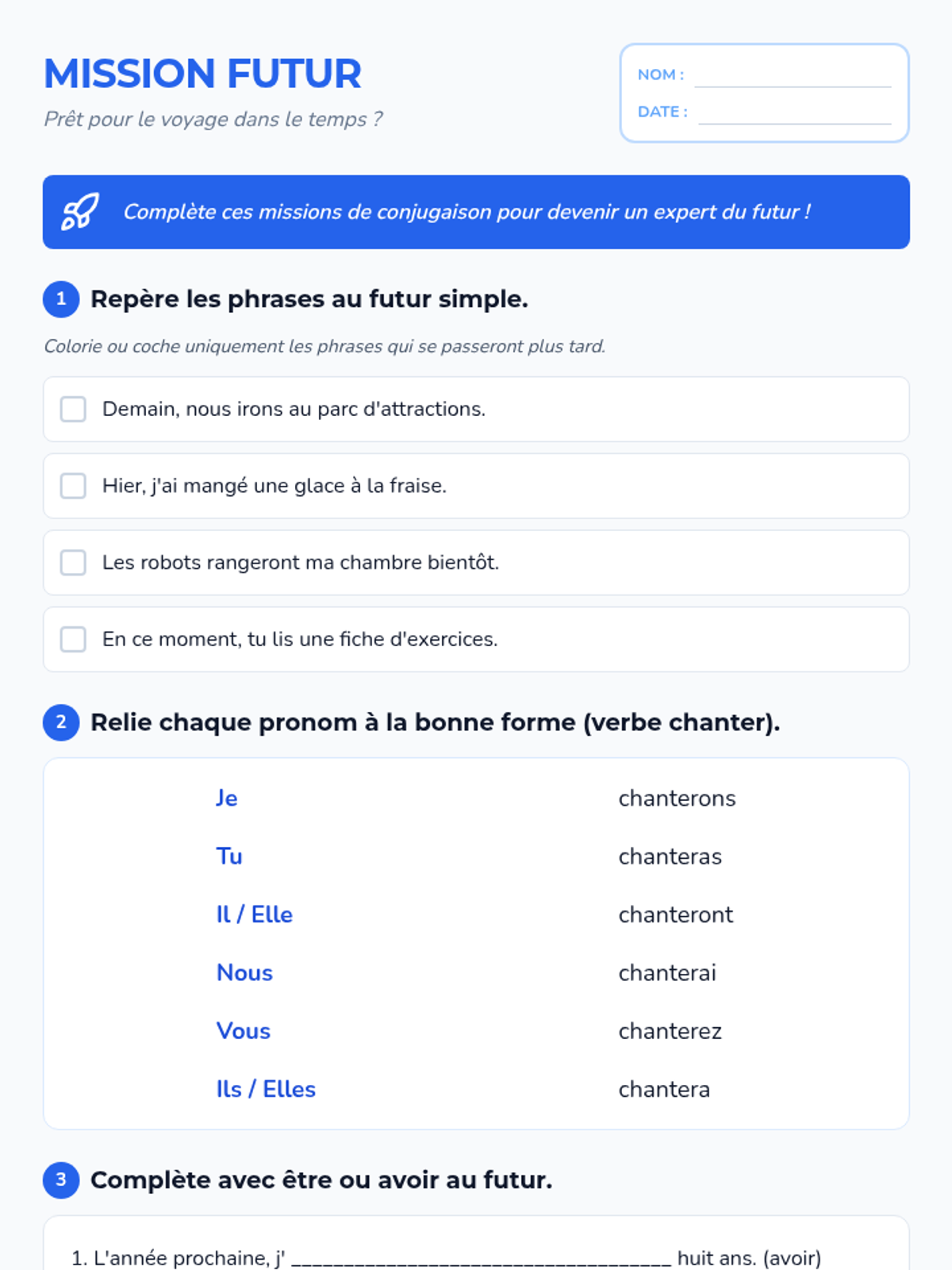
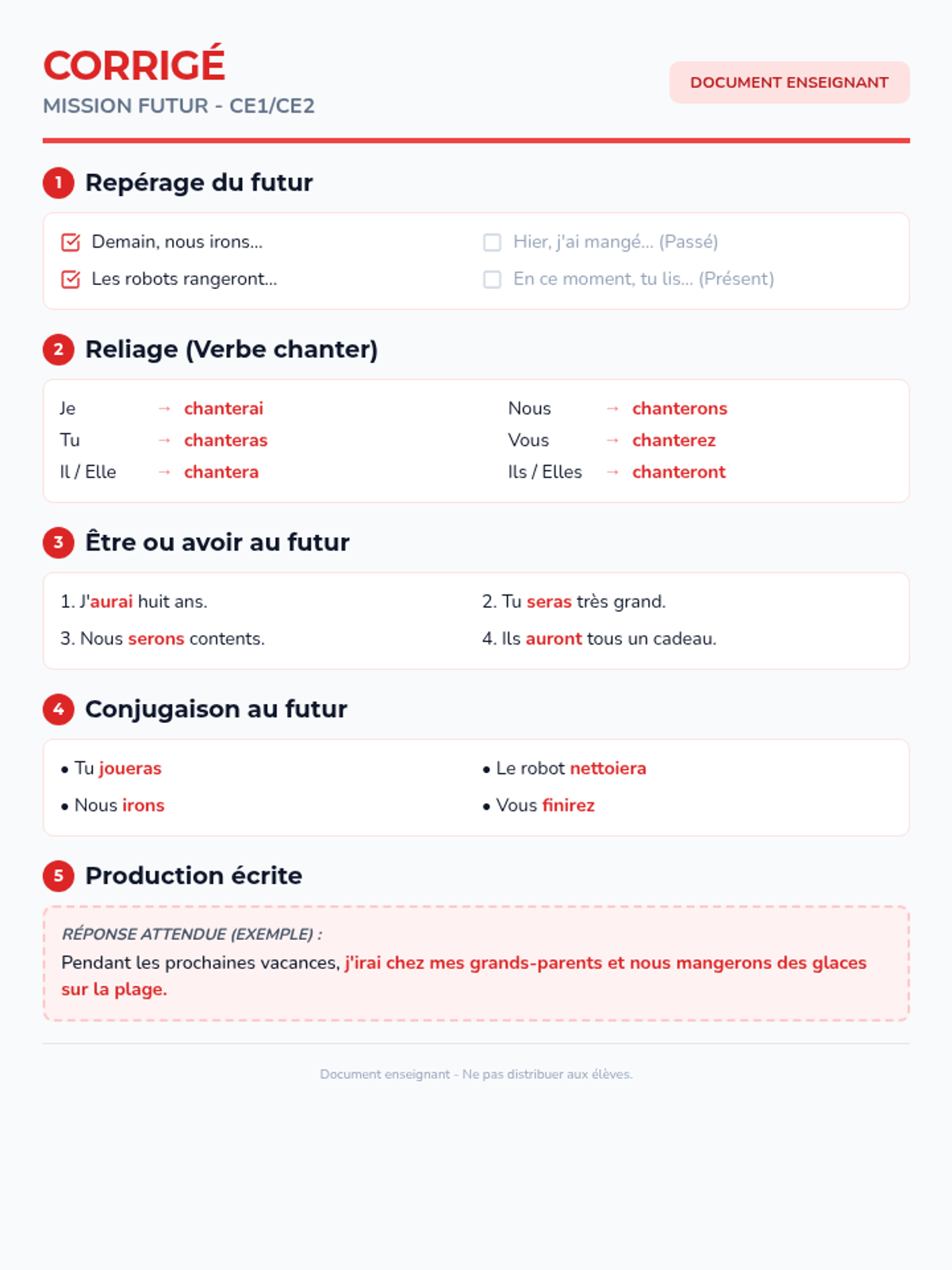
Une leçon sur la conjugaison au futur simple pour les élèves de CE1 et CE2, axée sur les verbes en -er, être et avoir, ainsi que les verbes fréquents.
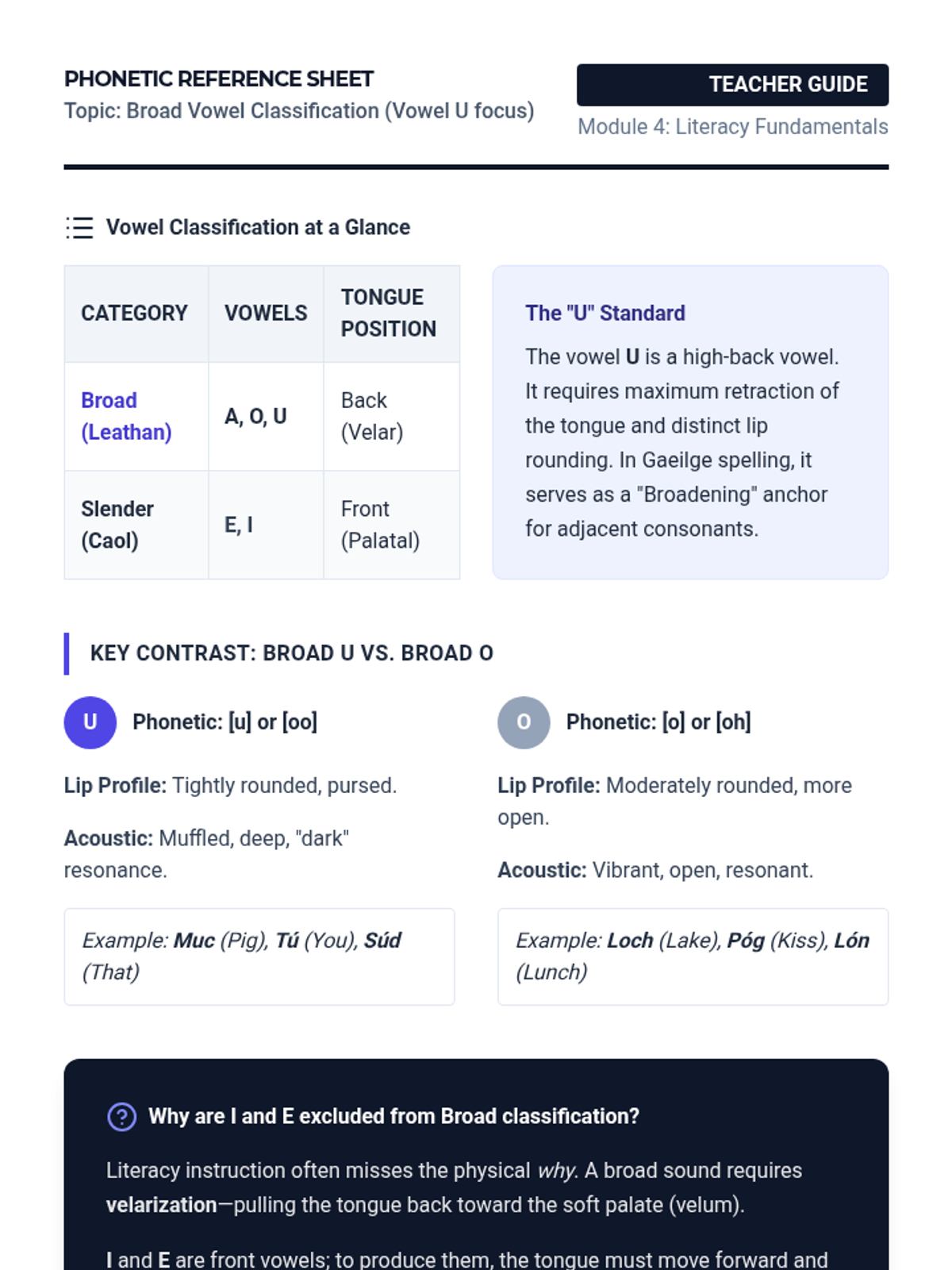
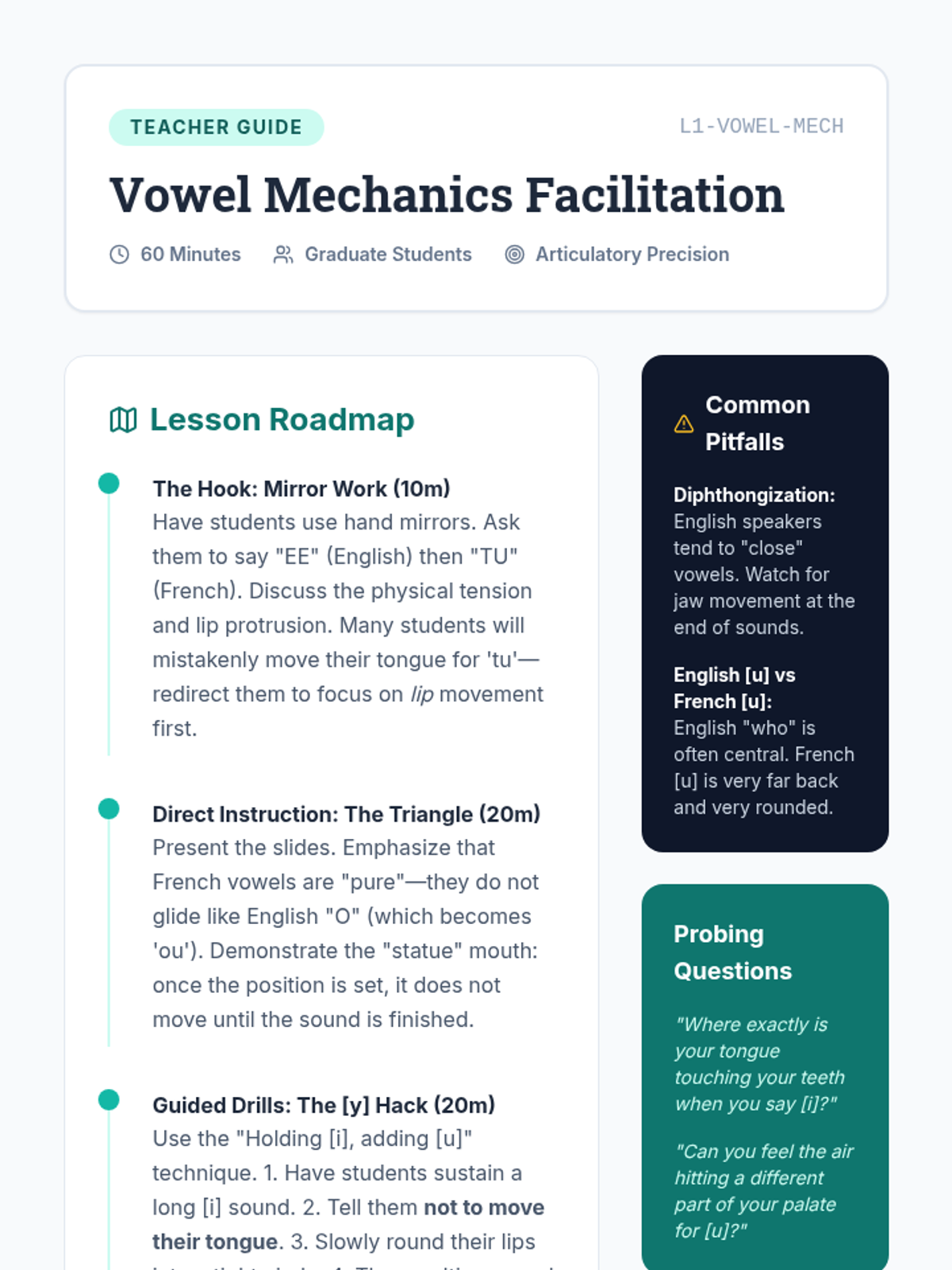
A professional development session for educators focusing on the phonetic properties and instructional strategies for teaching broad vowels, specifically focusing on the vowel 'U'.
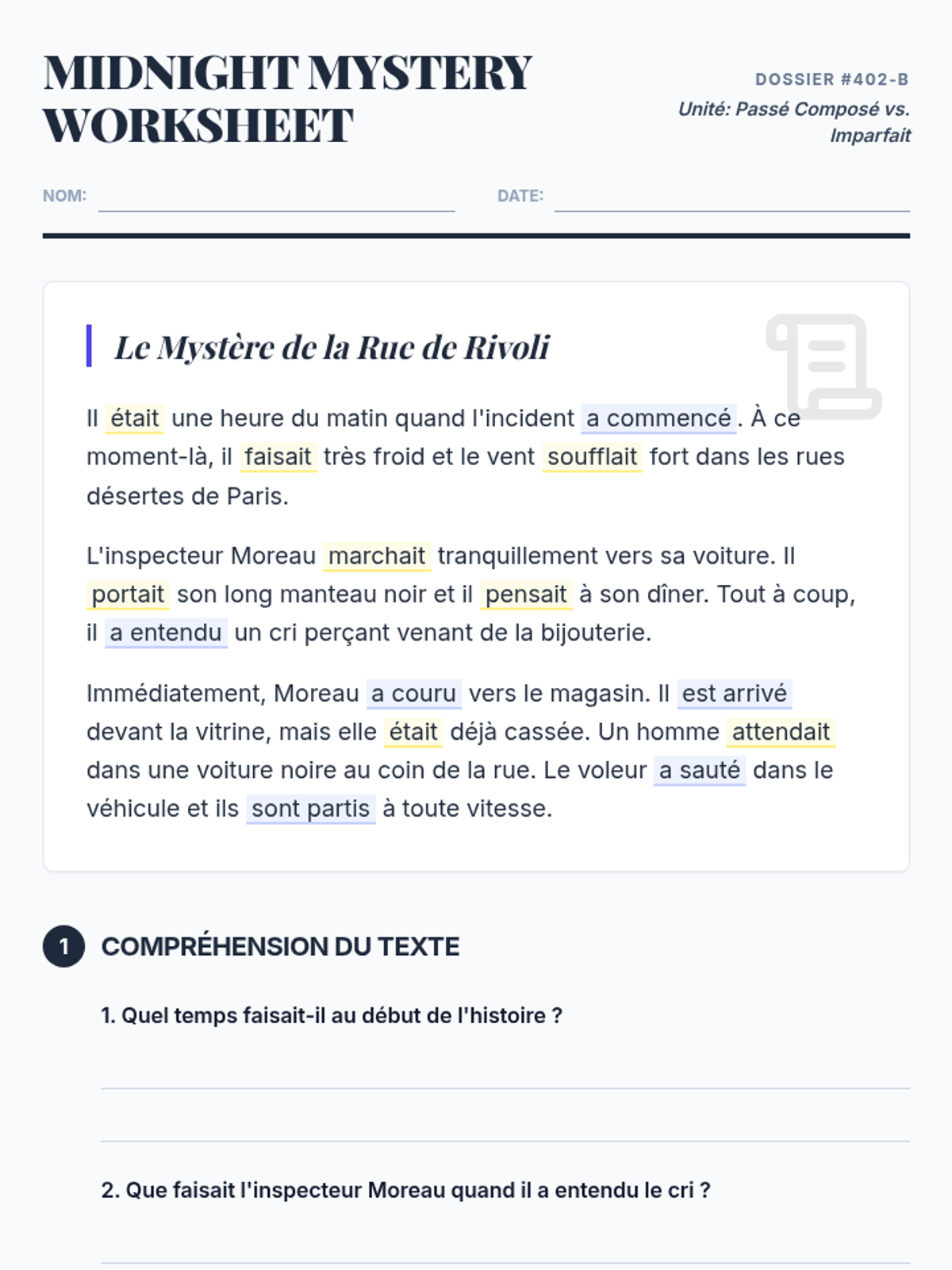
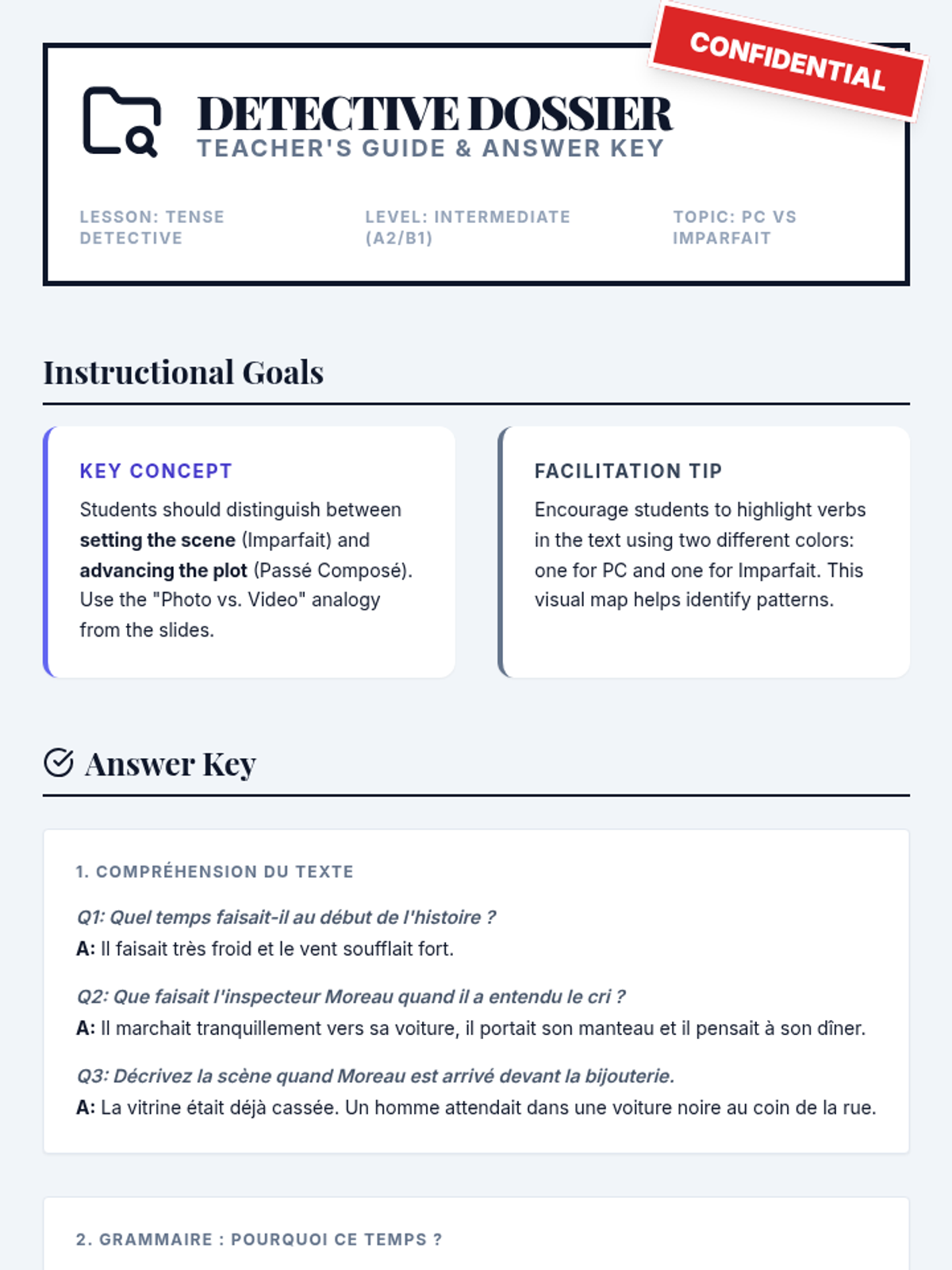
A French grammar lesson focused on distinguishing between the Passé Composé and Imparfait through a mystery narrative. Students learn to set the scene with descriptions (Imparfait) and identify completed actions (Passé Composé).
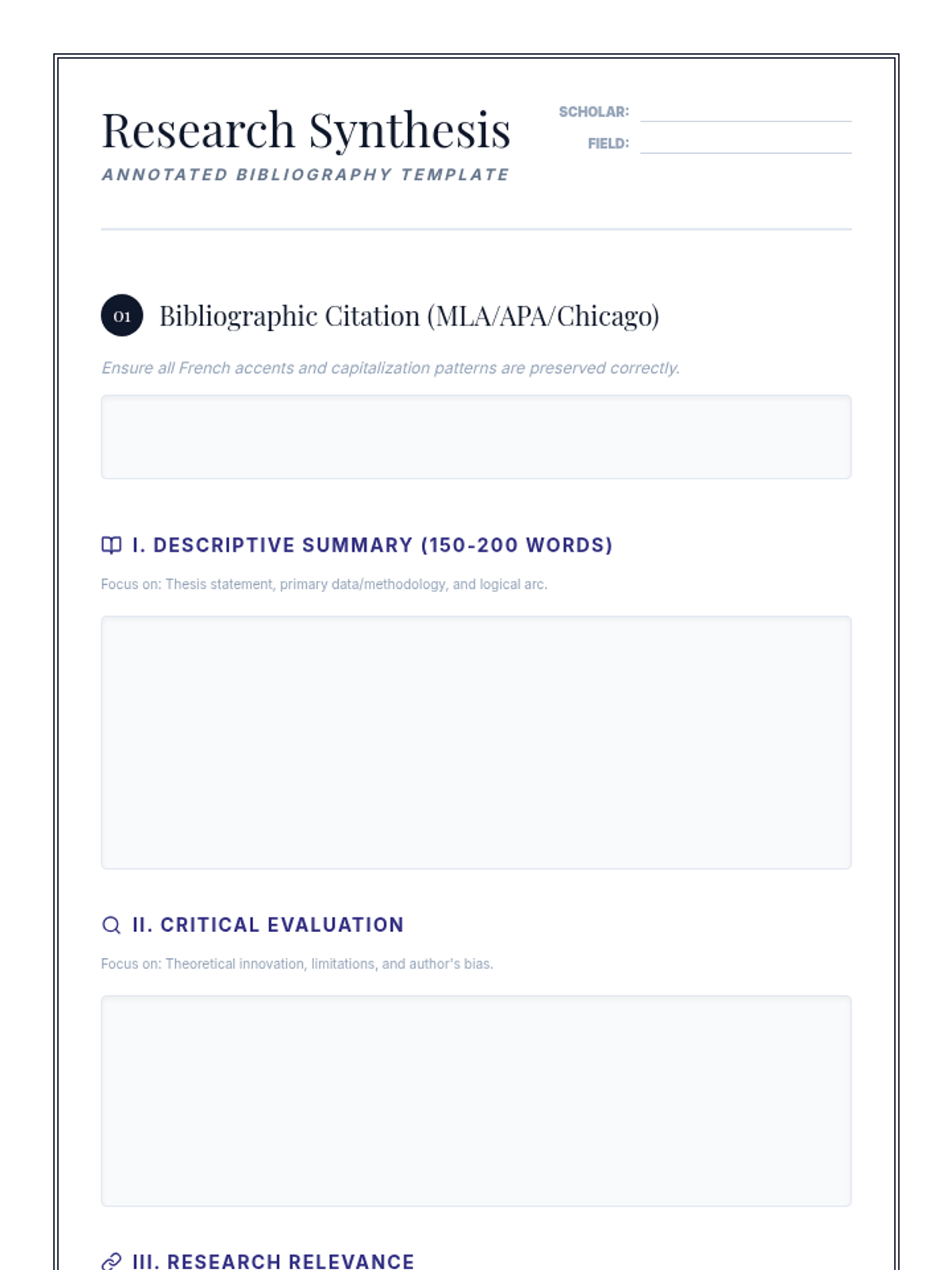
Students synthesize their skills to create an annotated bibliography entry for a French source in their own research field.
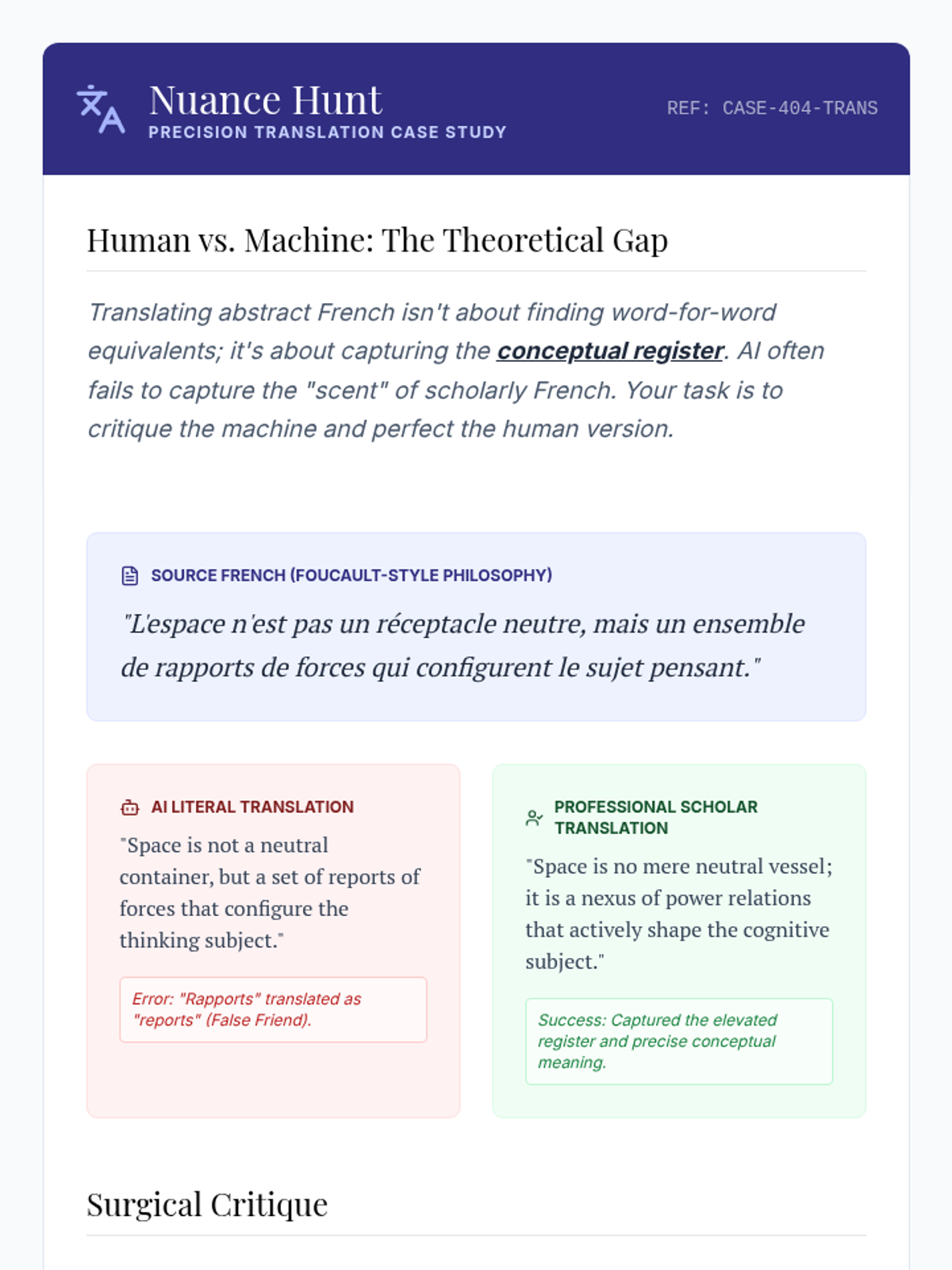
Students practice precise translation of abstract concepts, focusing on maintaining nuance and avoiding literal 'translationese'.
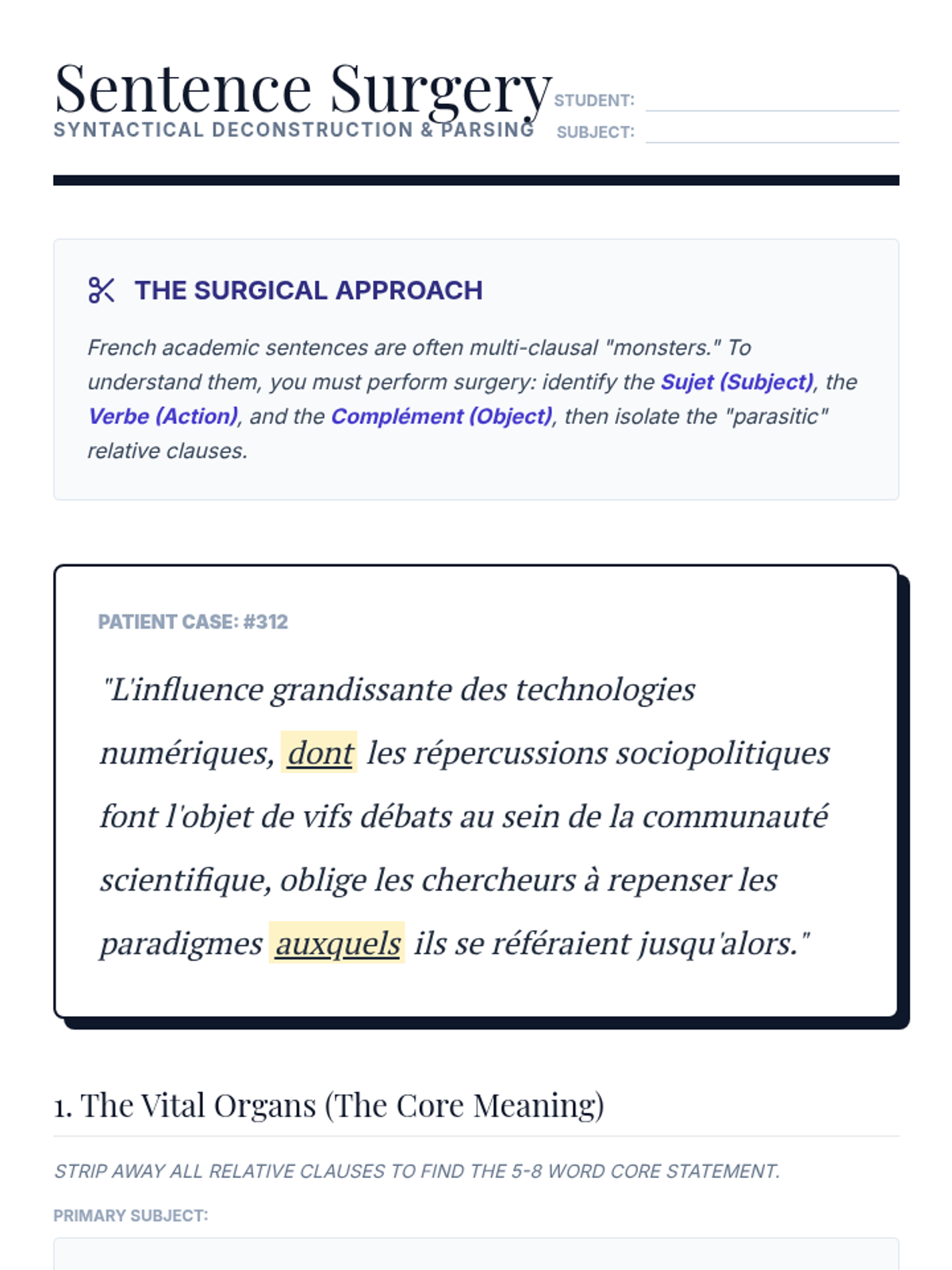
This lesson focuses on parsing long, complex French sentences by identifying core components and relative clauses.
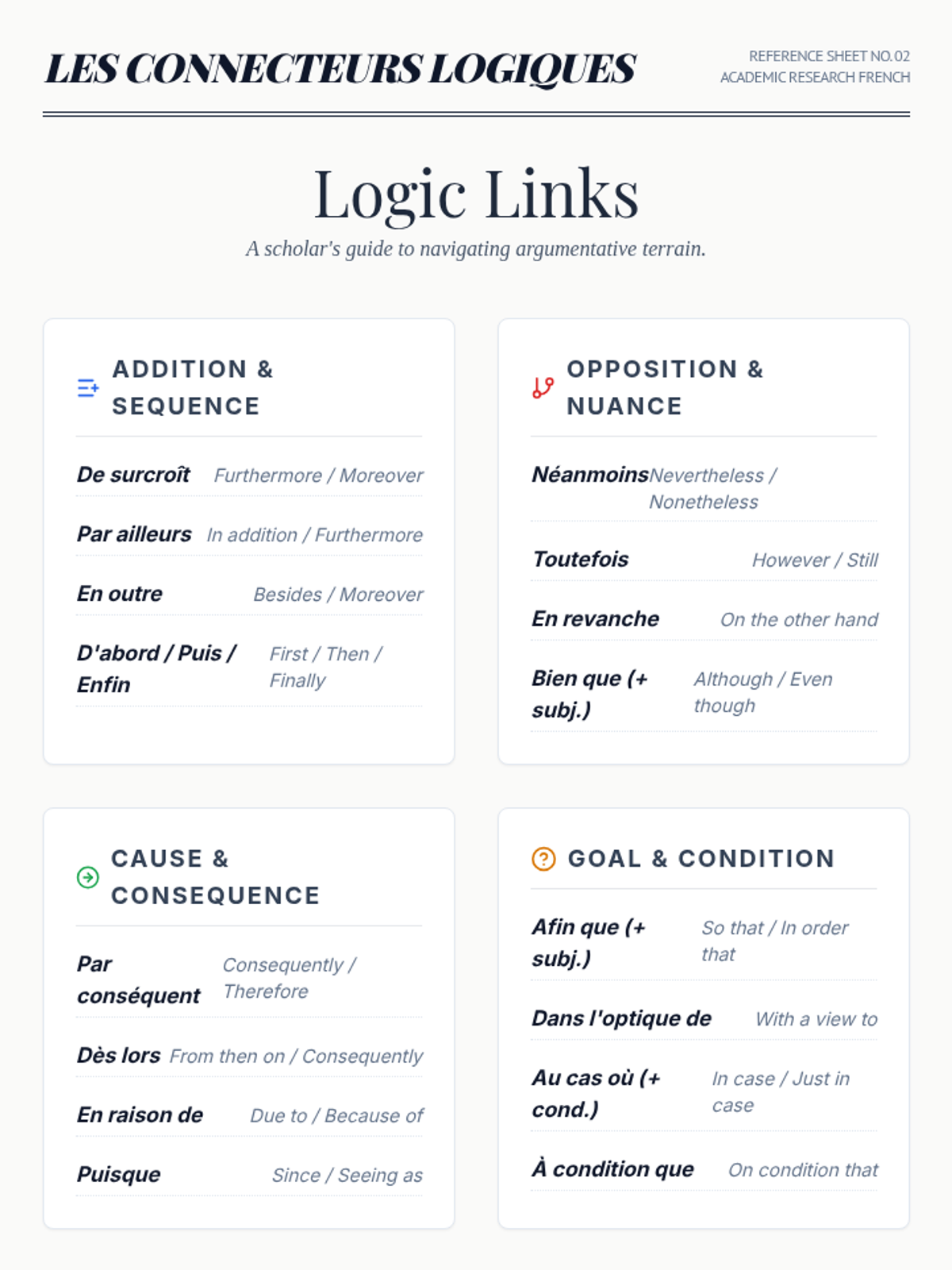
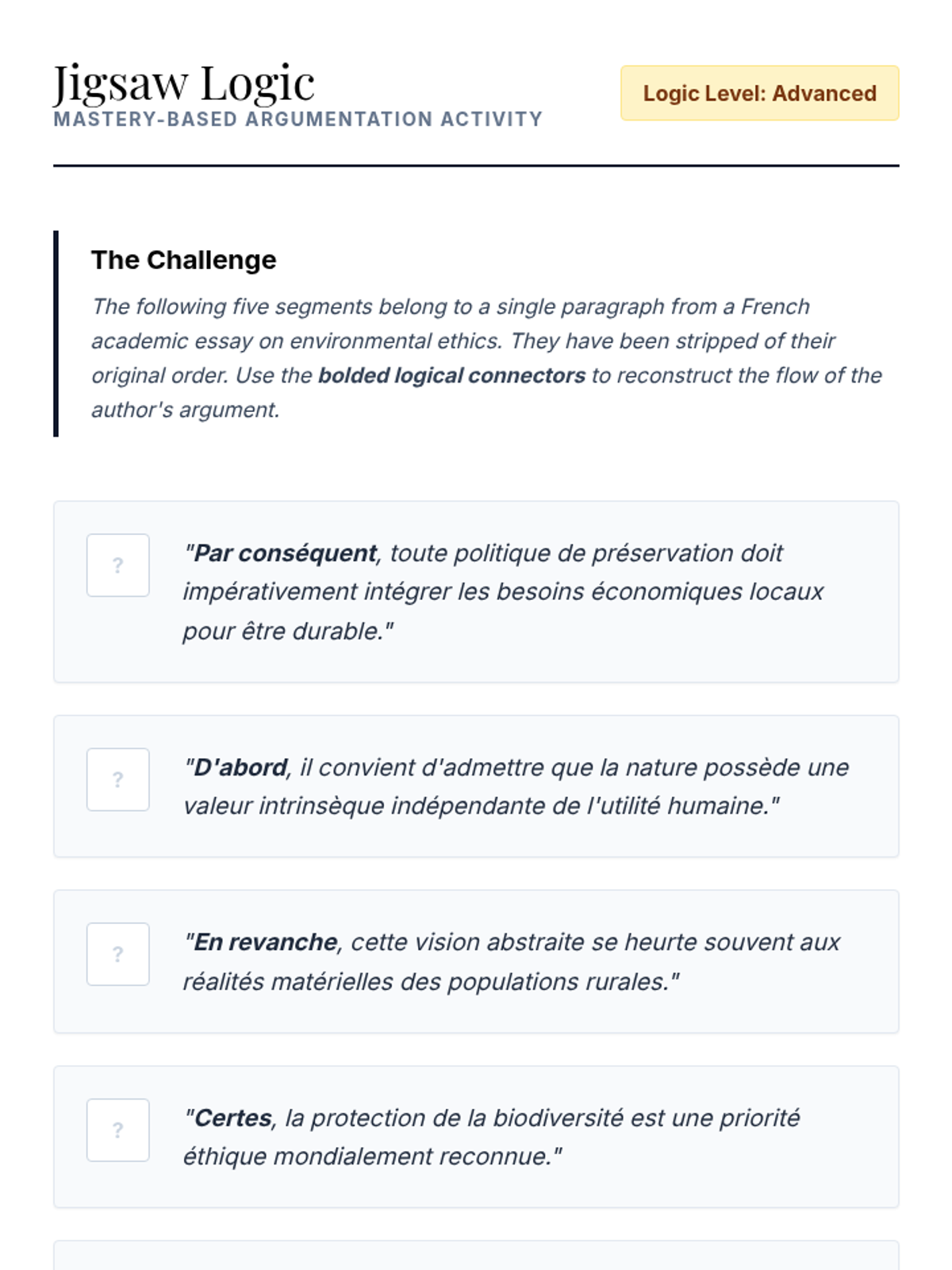
Students analyze logical connectors (les connecteurs logiques) to map out the structure and flow of academic arguments.
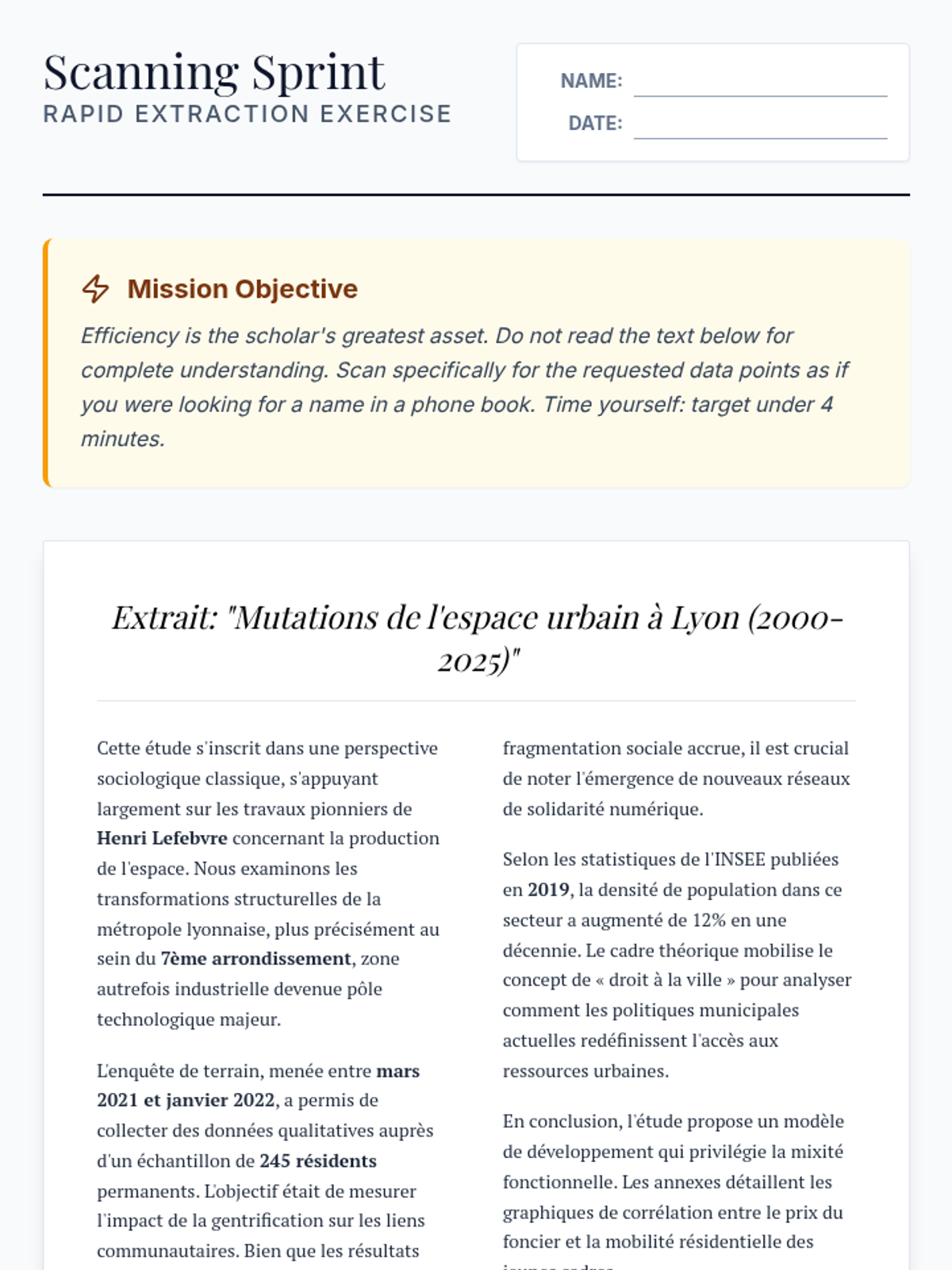
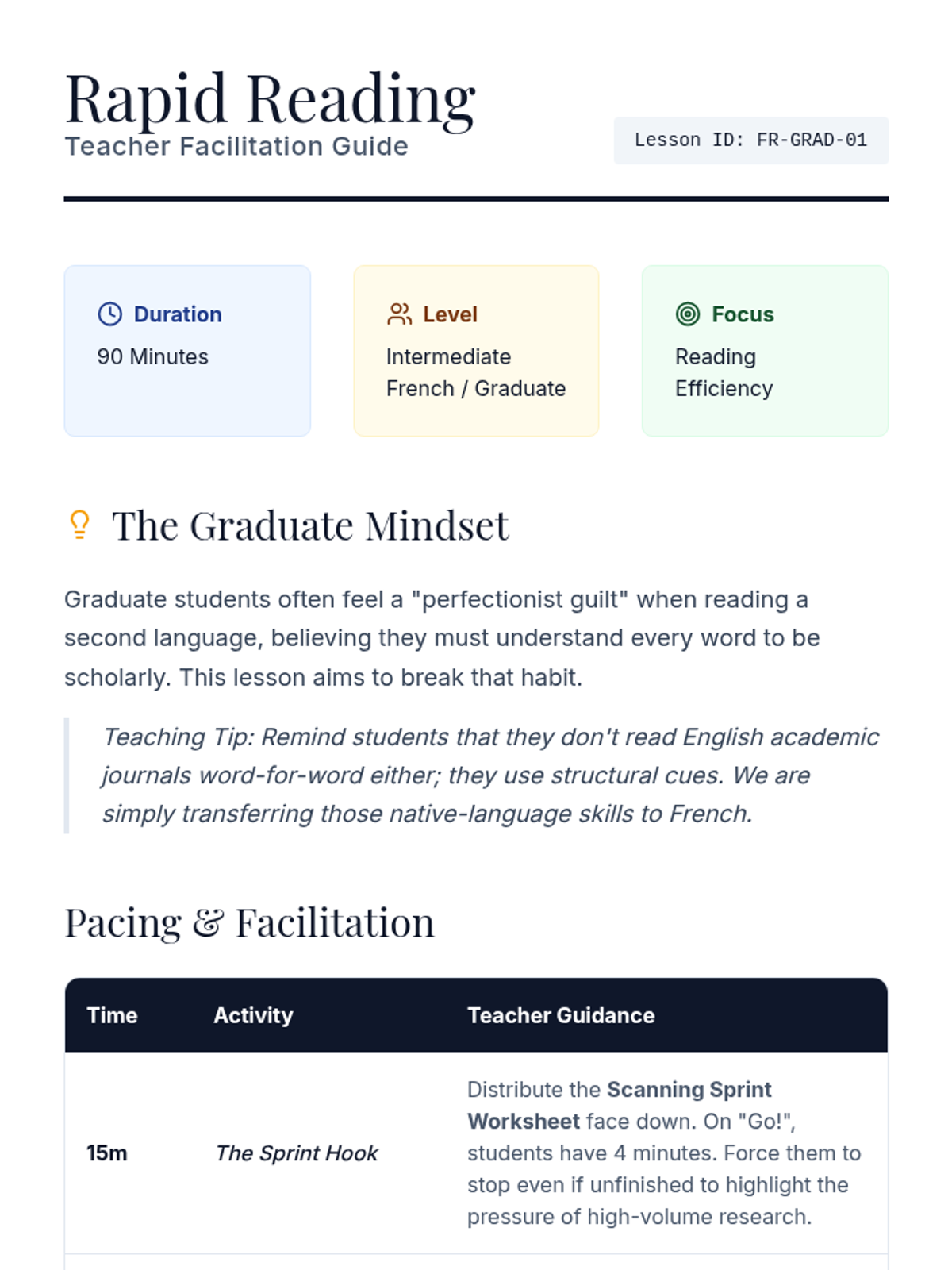
Students practice rapid reading techniques using academic abstracts to identify key terminology and data without getting bogged down in every word.
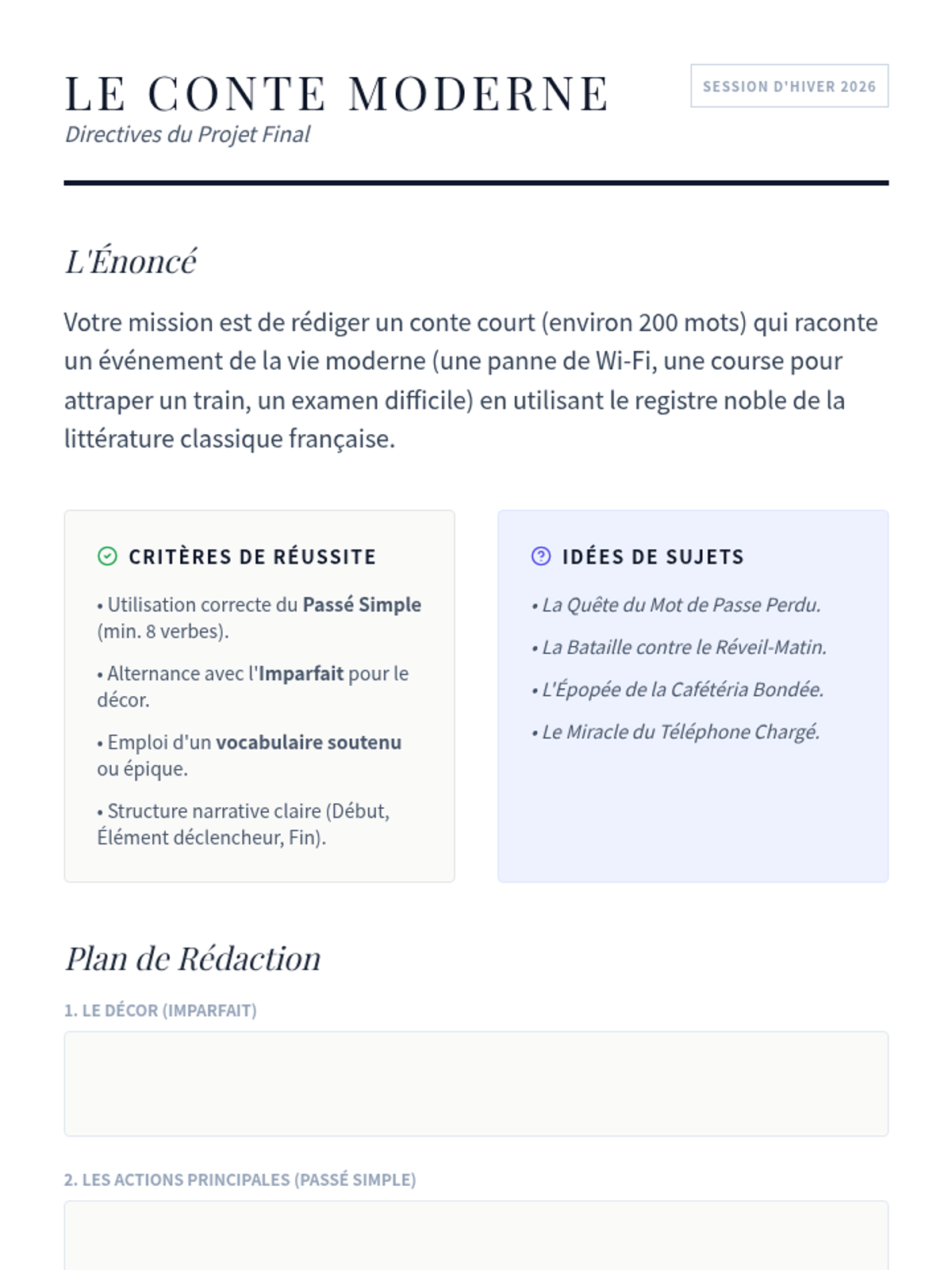
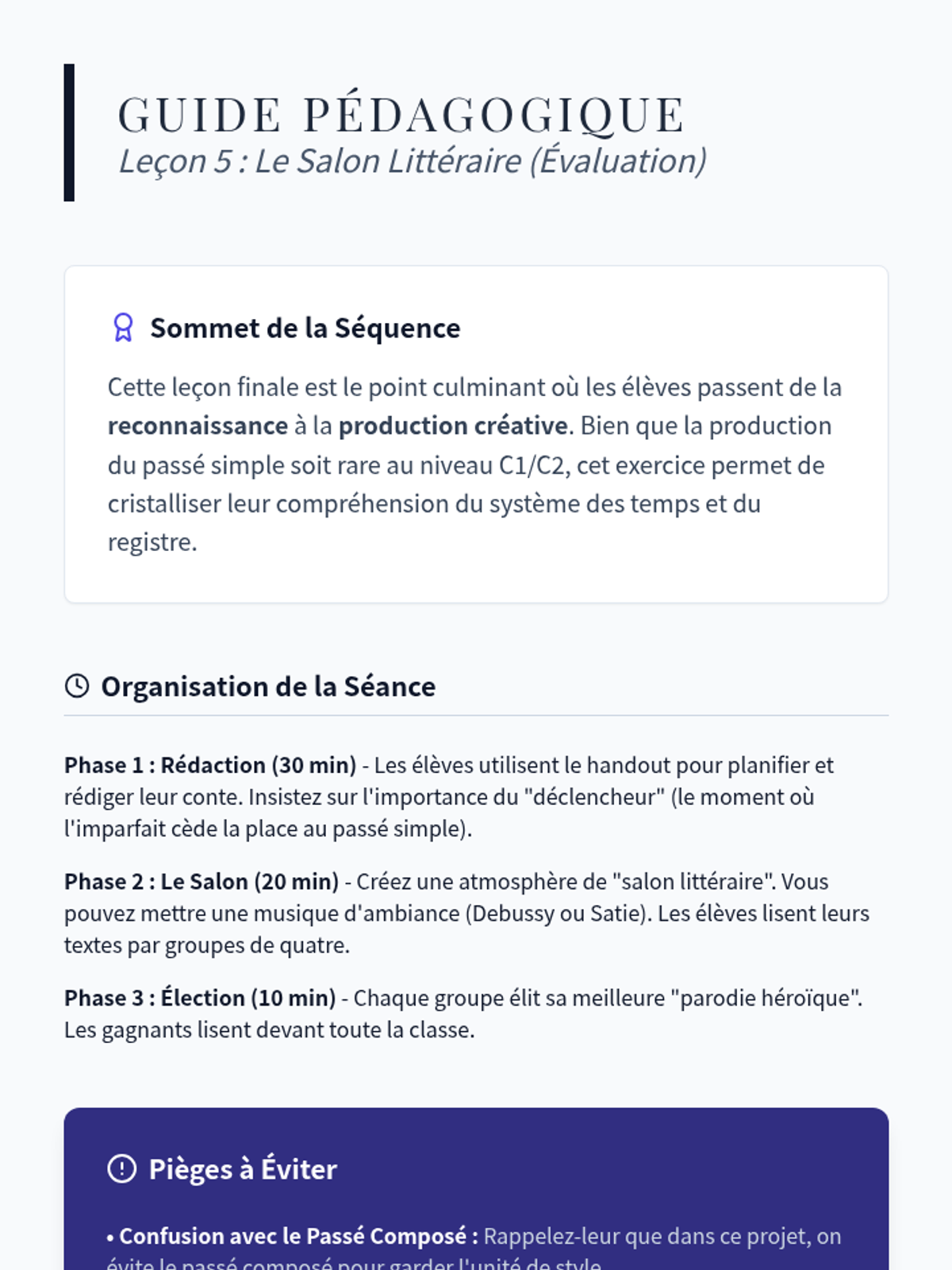
Students write a short 'fairy tale' set in modern times, utilizing the passé simple for the main actions. They share stories in a 'literary salon' setting.
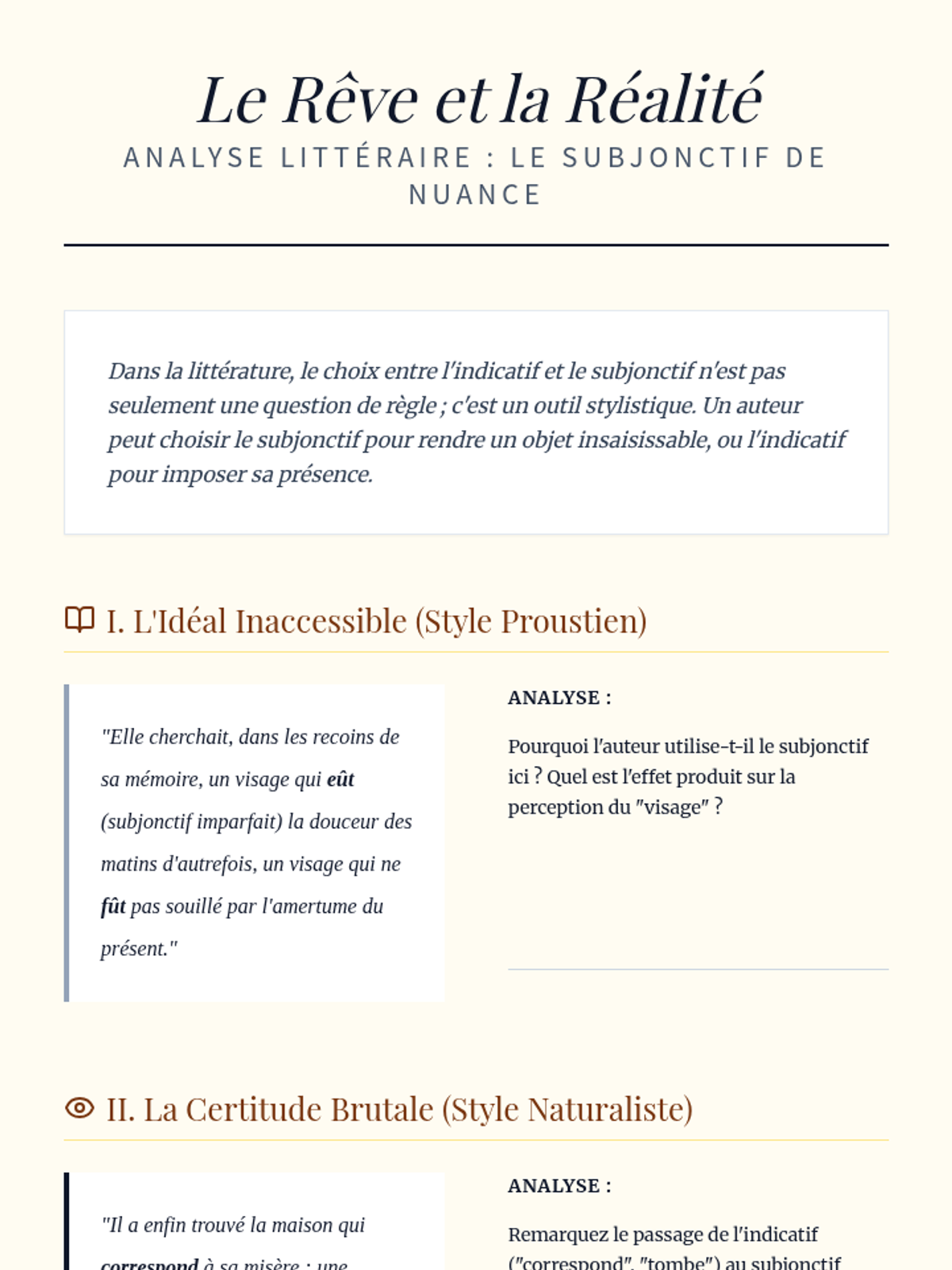
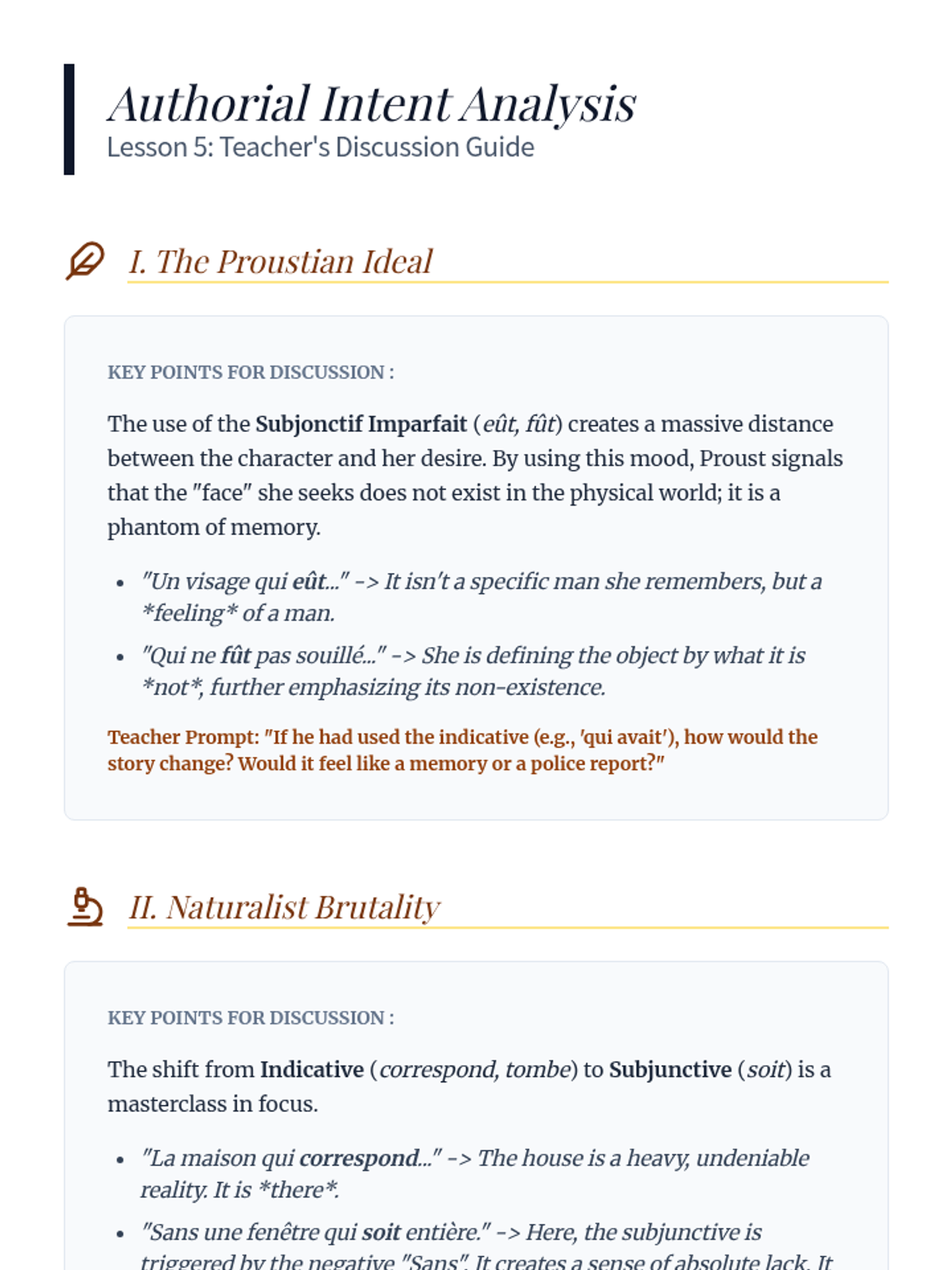
A literary case study analyzing how authors use the subtle shift between moods to create stylistic effects of uncertainty or idealization.
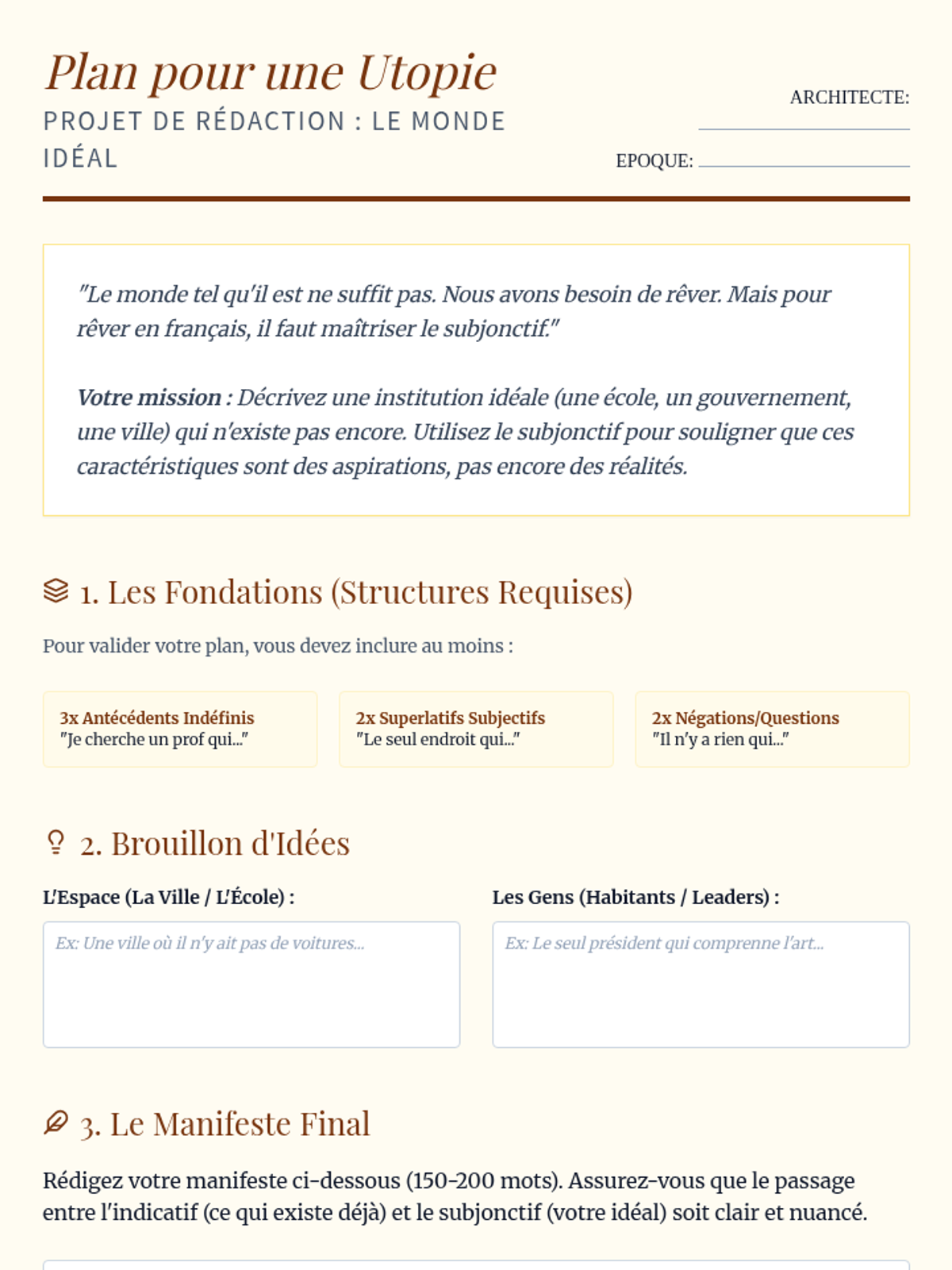
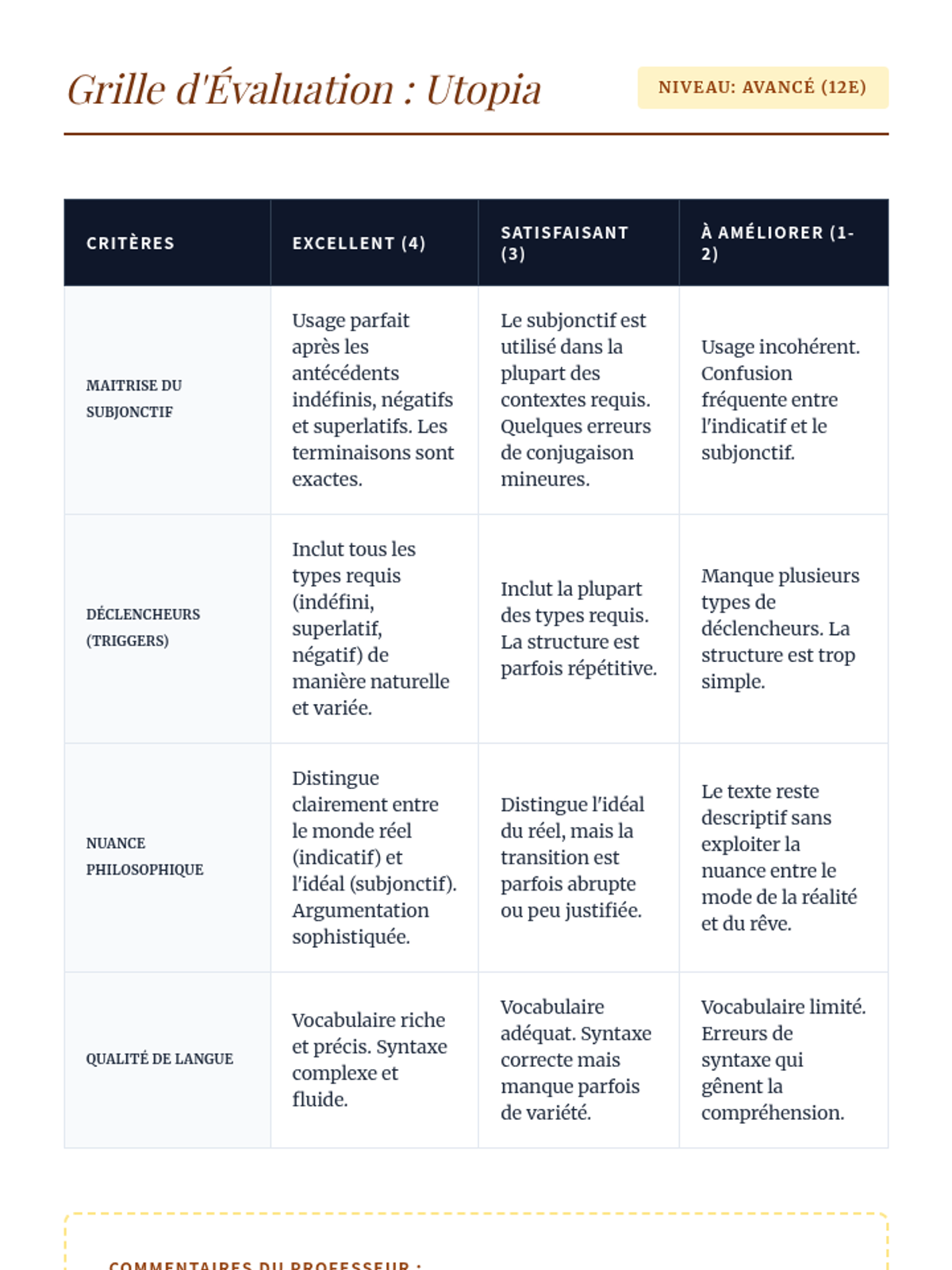
Students apply their knowledge to describe an ideal, hypothetical world, using the subjunctive to maintain the boundary between dream and reality.
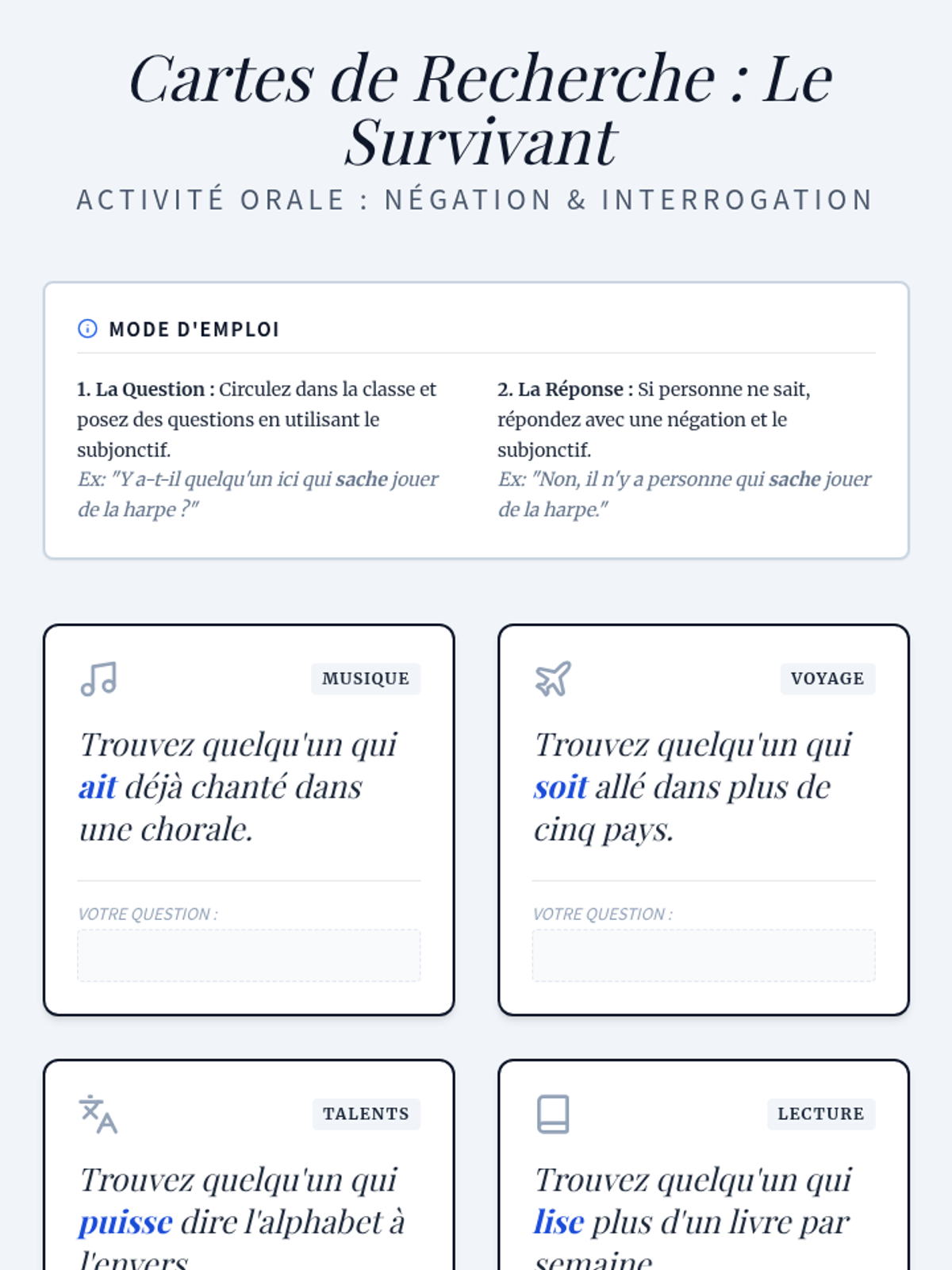
Focuses on the grammatical necessity of the subjunctive following negative statements and interrogative clauses in the main sentence.
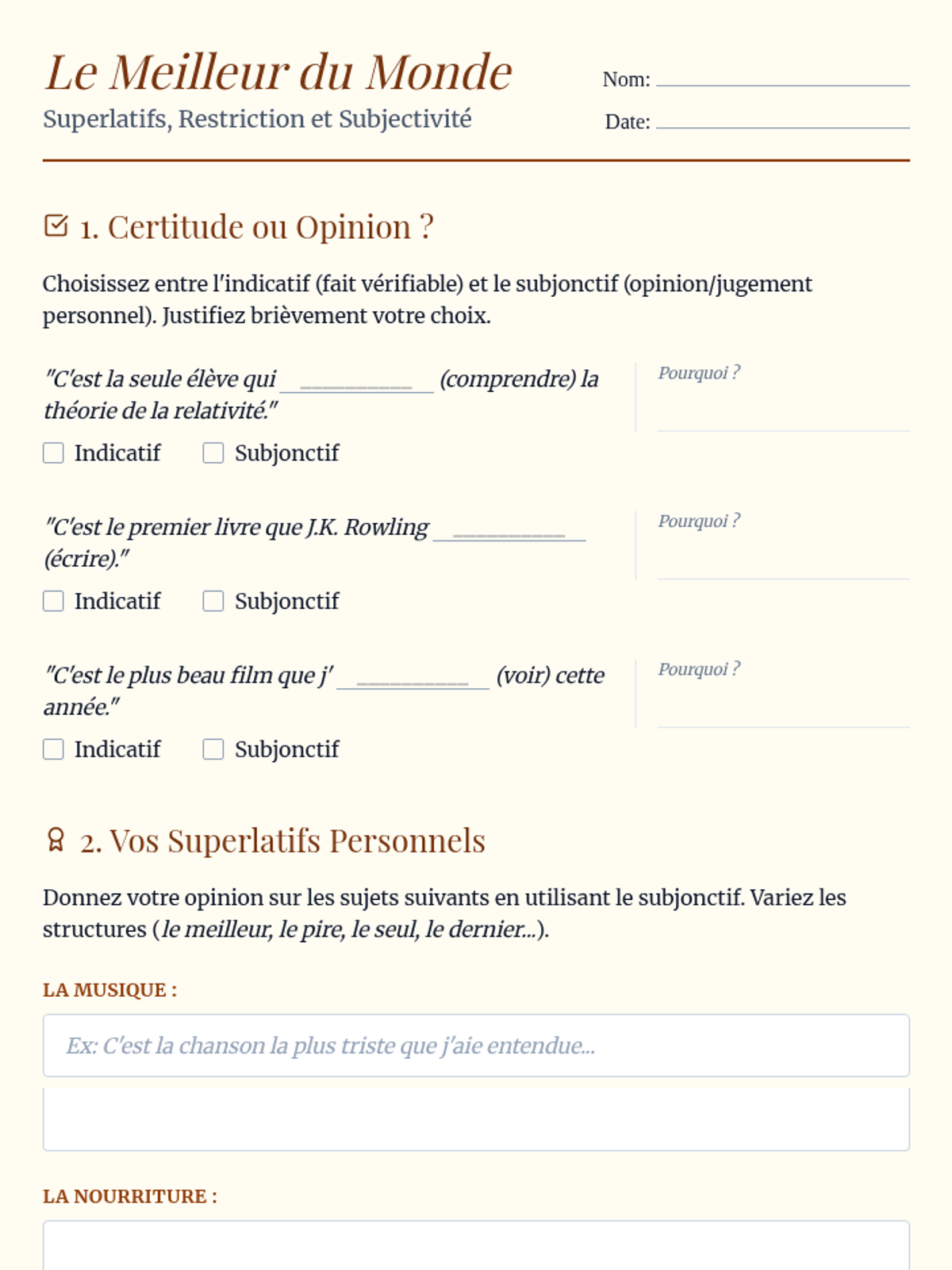
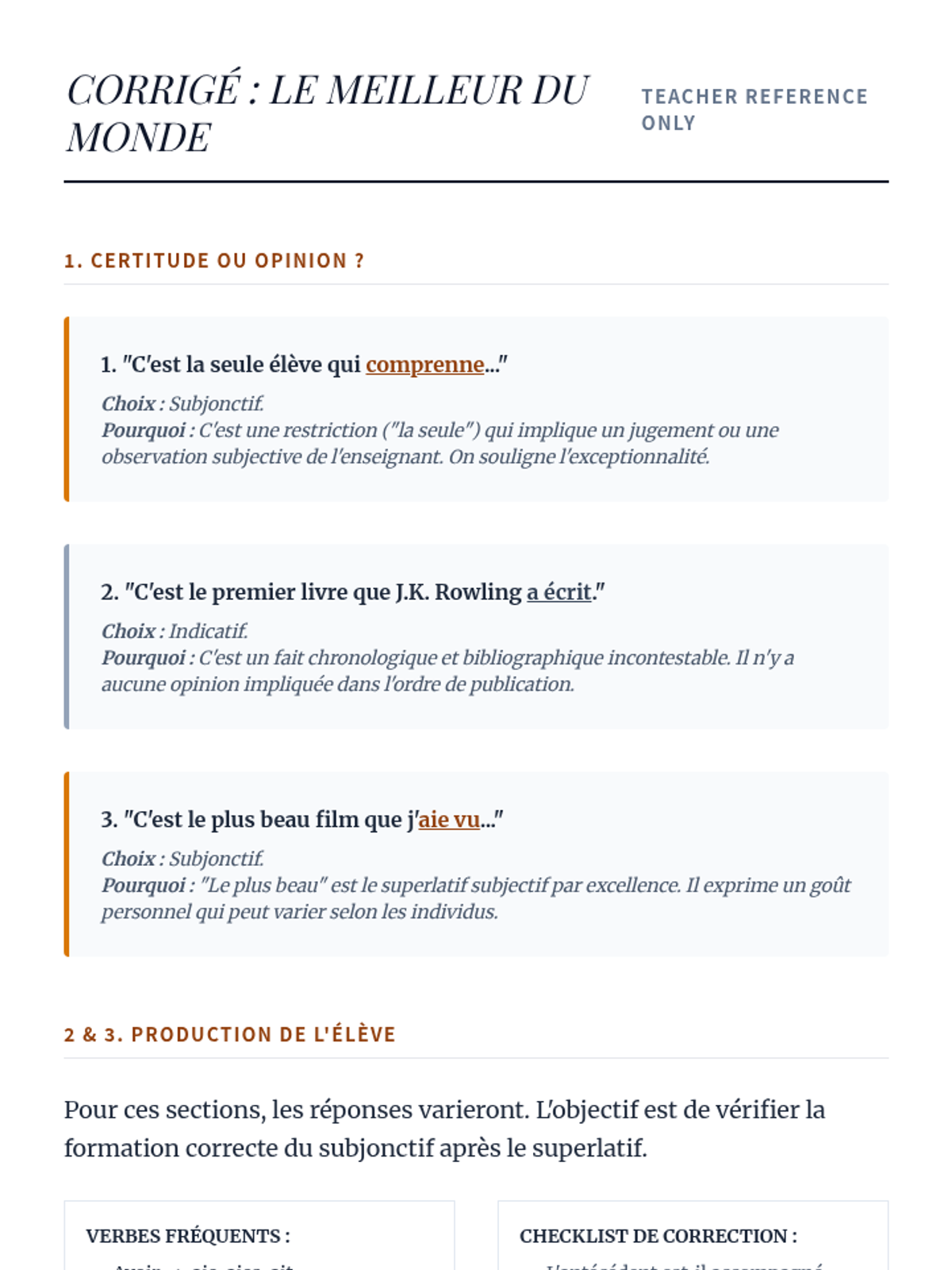
An exploration of how superlatives and words like 'le seul' or 'l'unique' trigger the subjunctive to signal subjective opinion rather than objective fact.
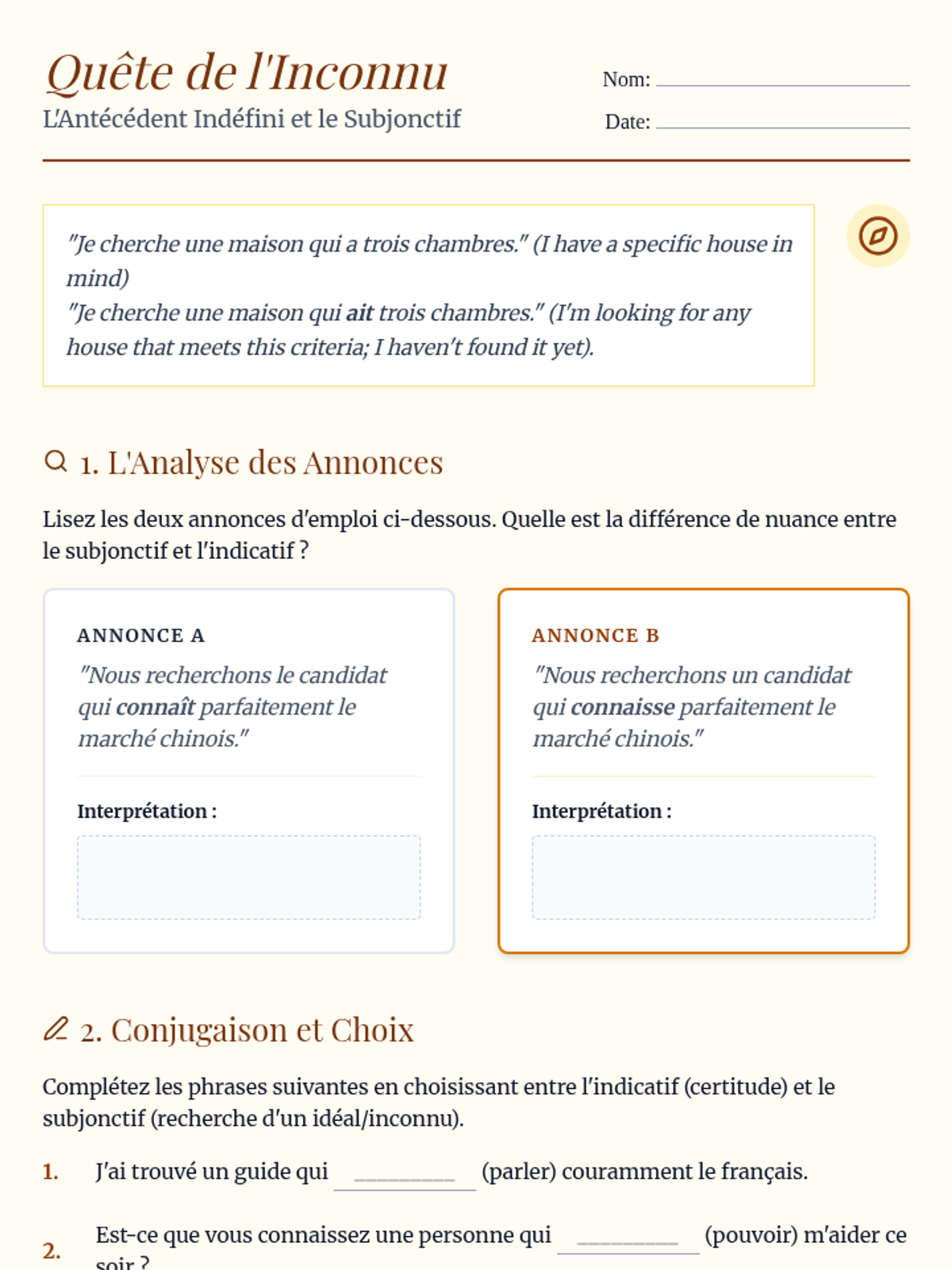
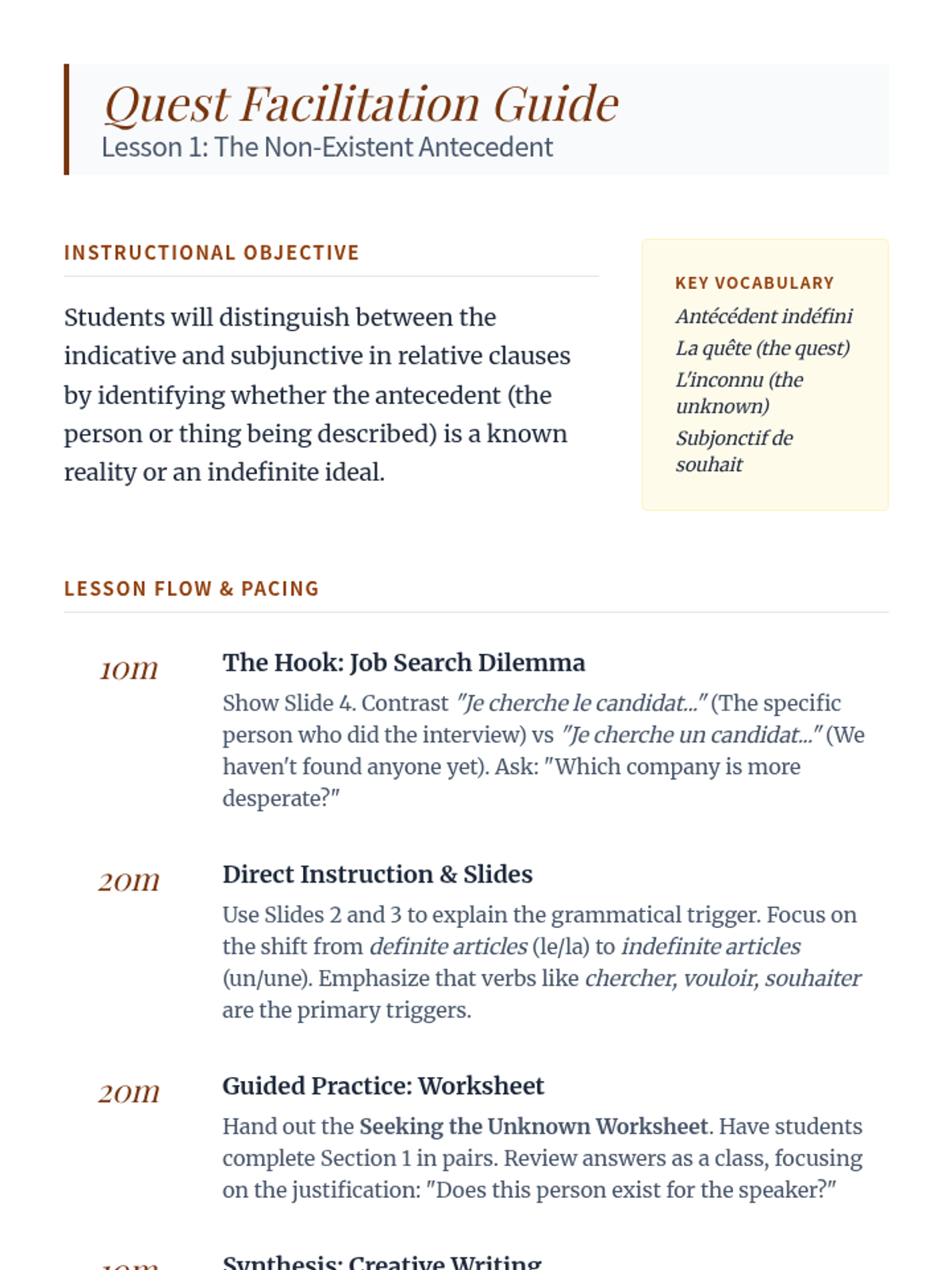
Students contrast the use of the subjunctive and indicative in relative clauses when seeking objects or people that may or may not exist. through the lens of 'questing' for the unknown.
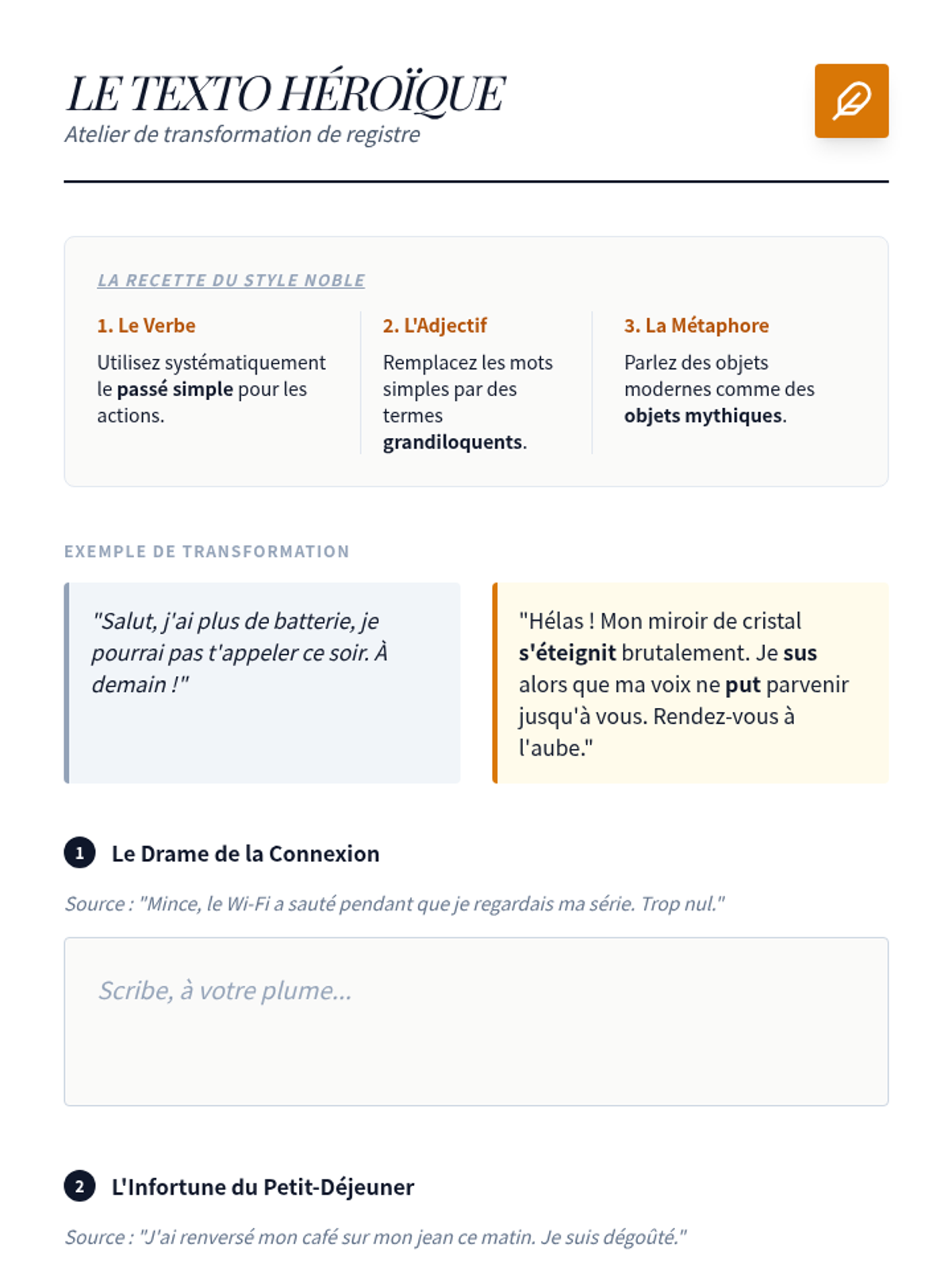
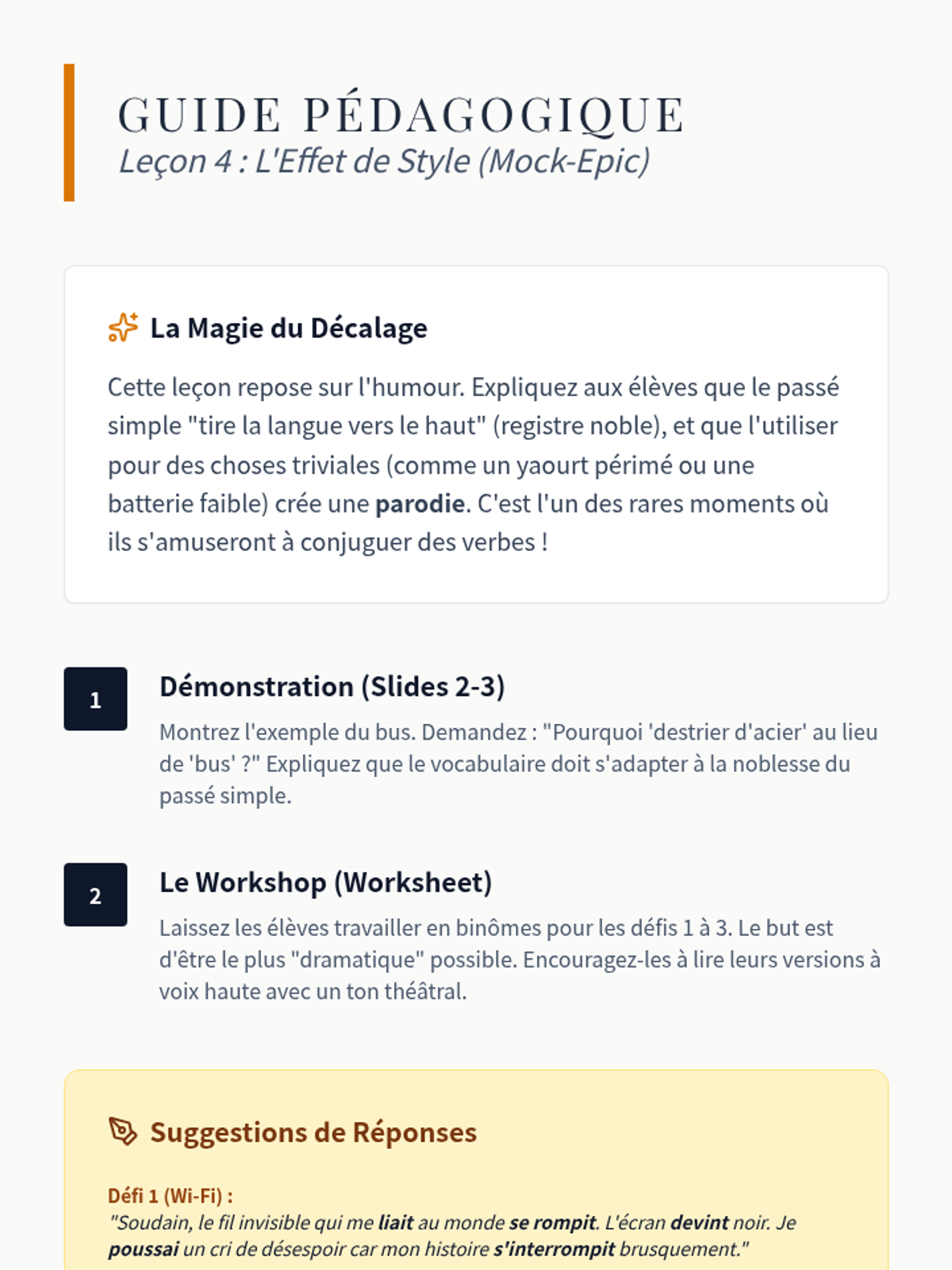
Students take a contemporary email or text message recounting an event and rewrite it using the passé simple to create a mock-epic tone. This highlights the stylistic gap between spoken and literary French.
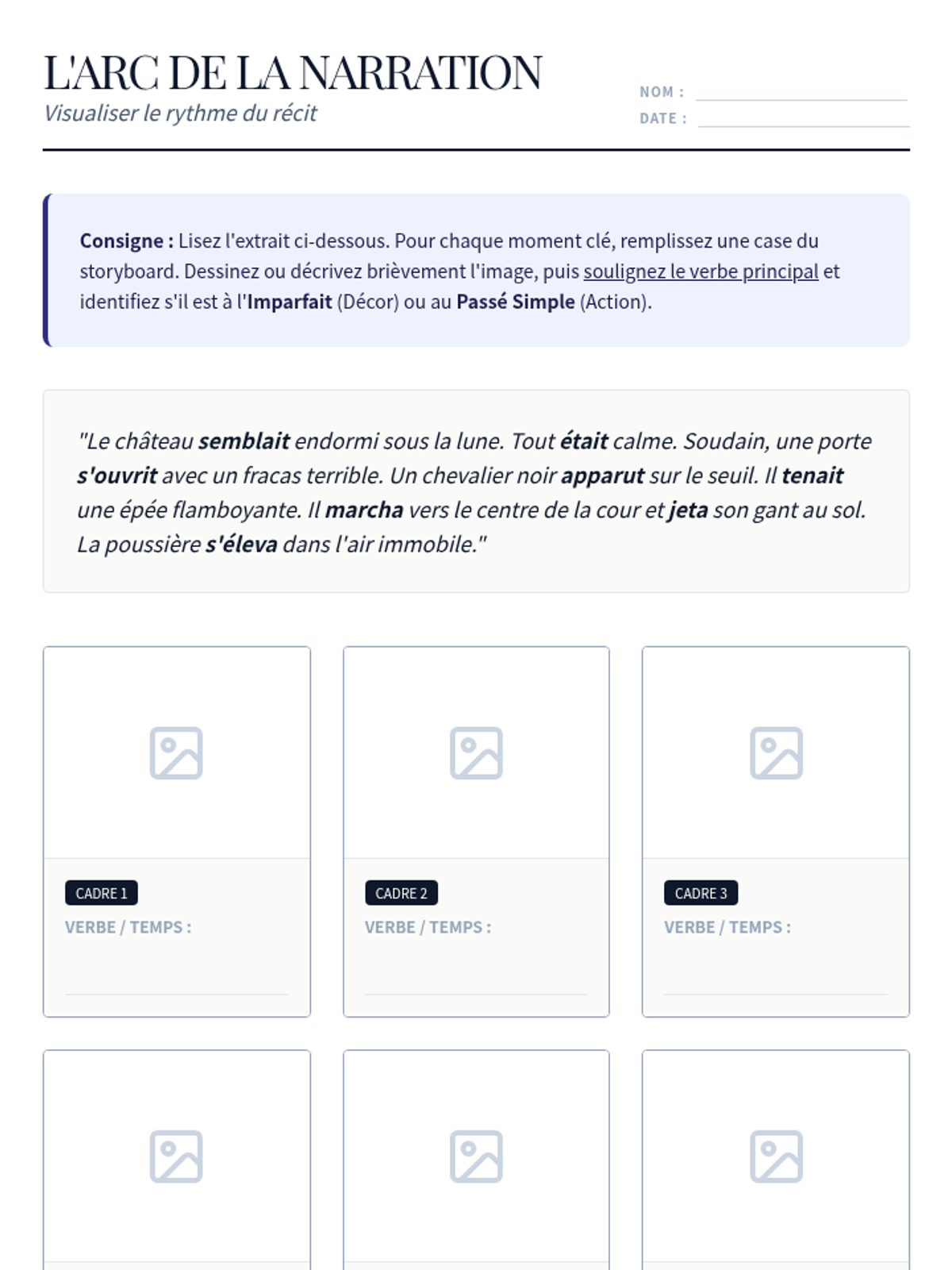
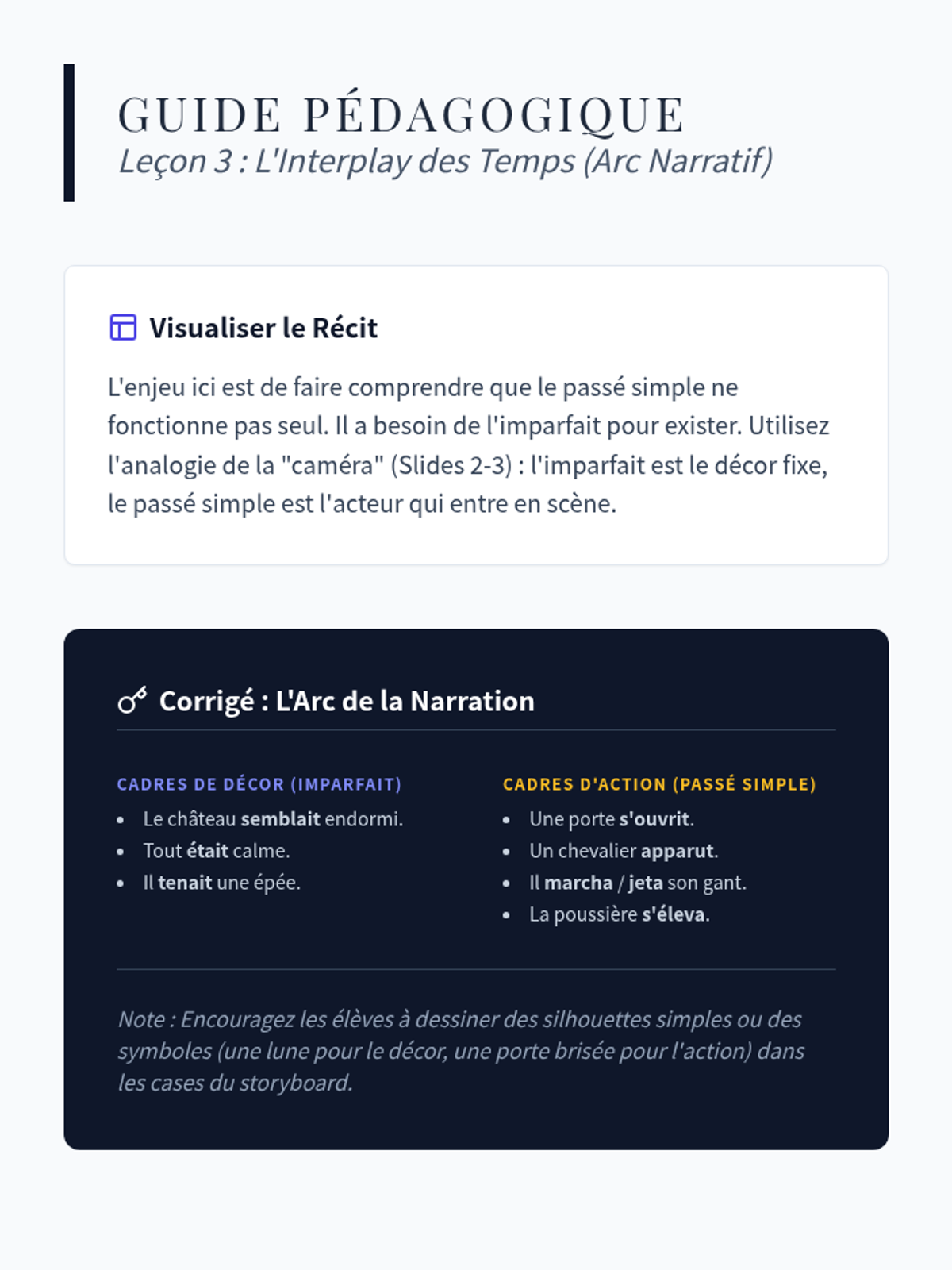
Students analyze how authors switch between description (imparfait) and plot action (passé simple). They diagram the timeline of a short story to visualize this relationship.
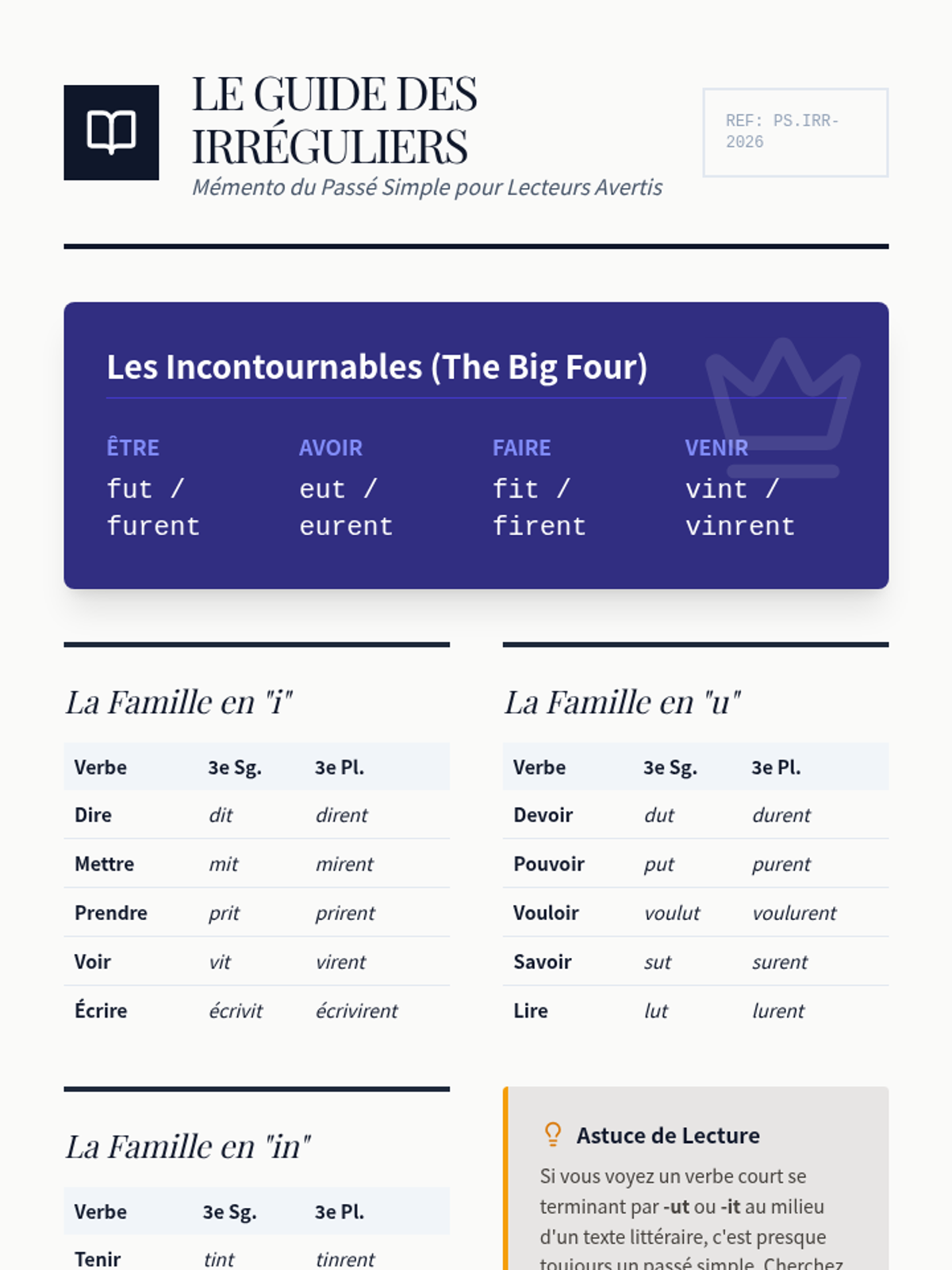
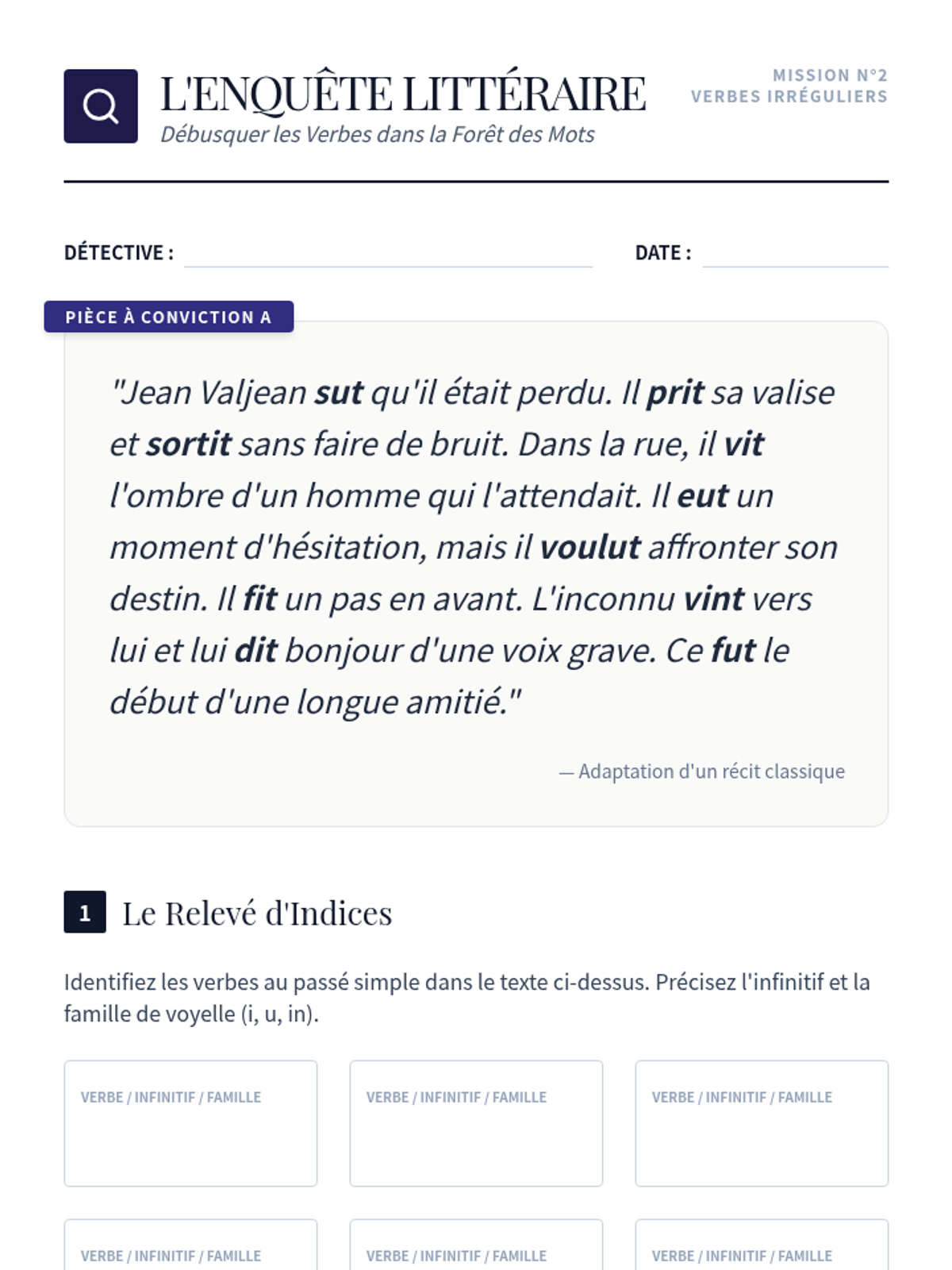
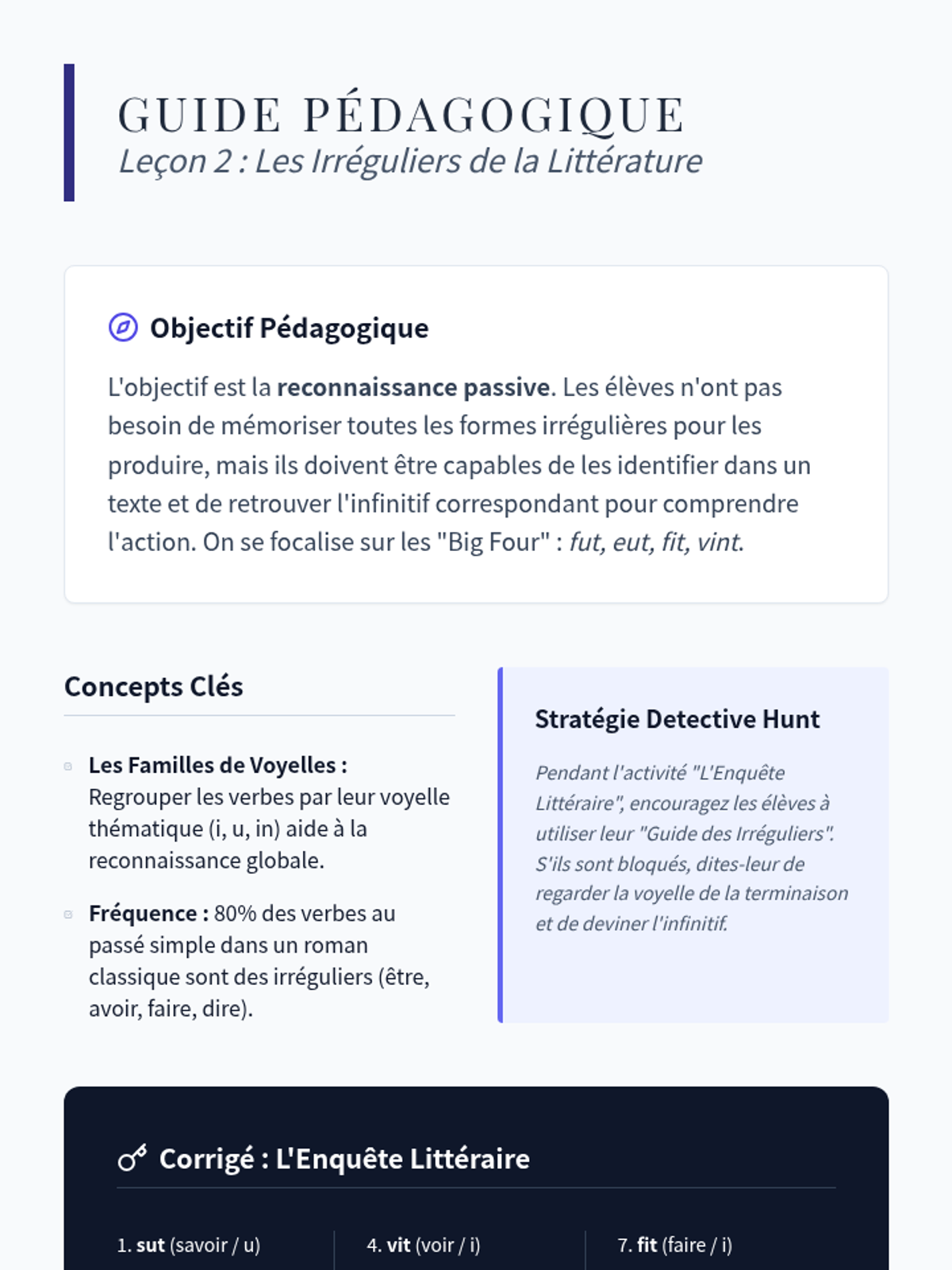
Focusing on the 'big' irregulars (fut, eut, fit, vint), students translate literary excerpts into modern French. They create a reference guide for these high-frequency literary forms.
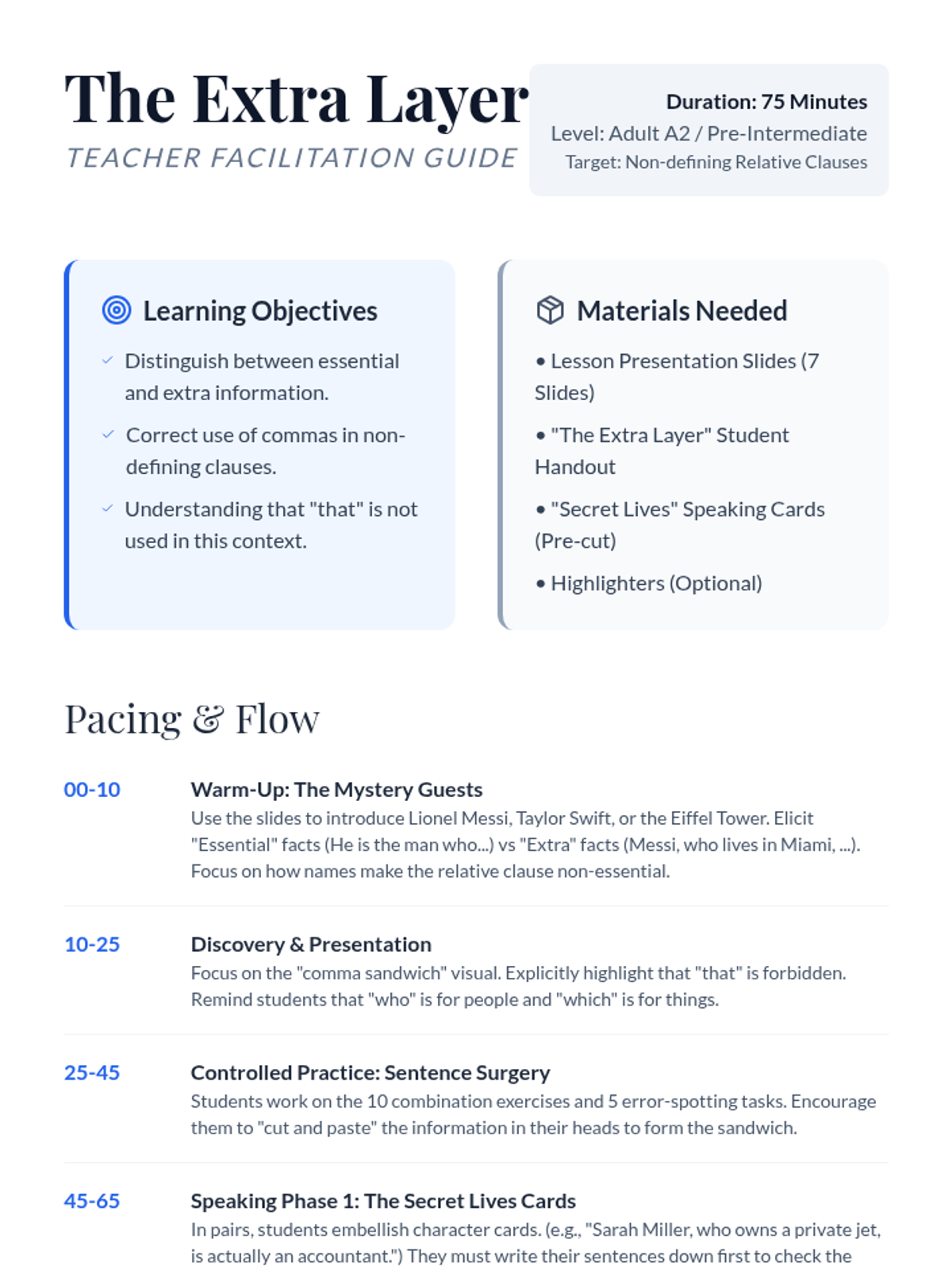
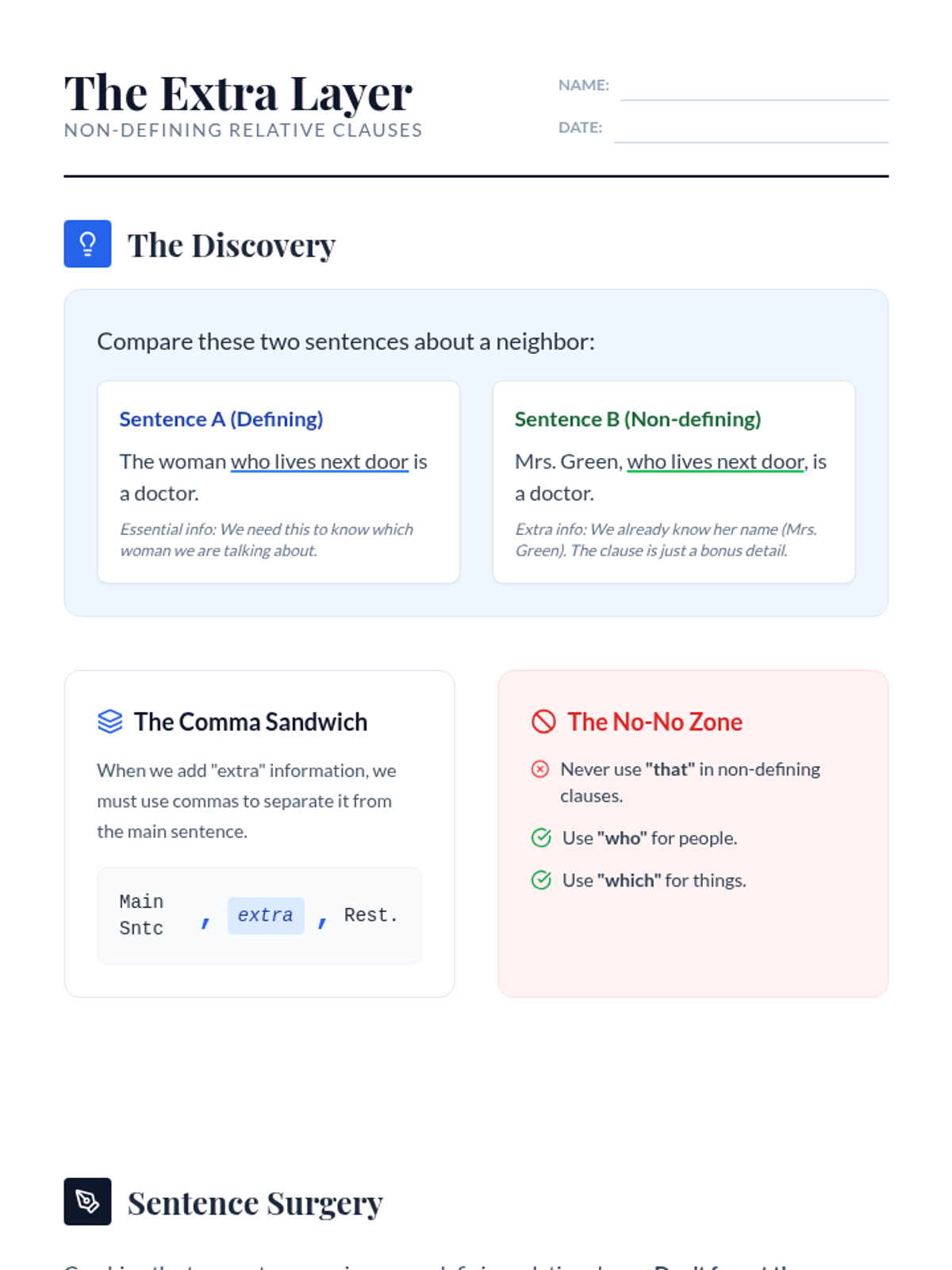
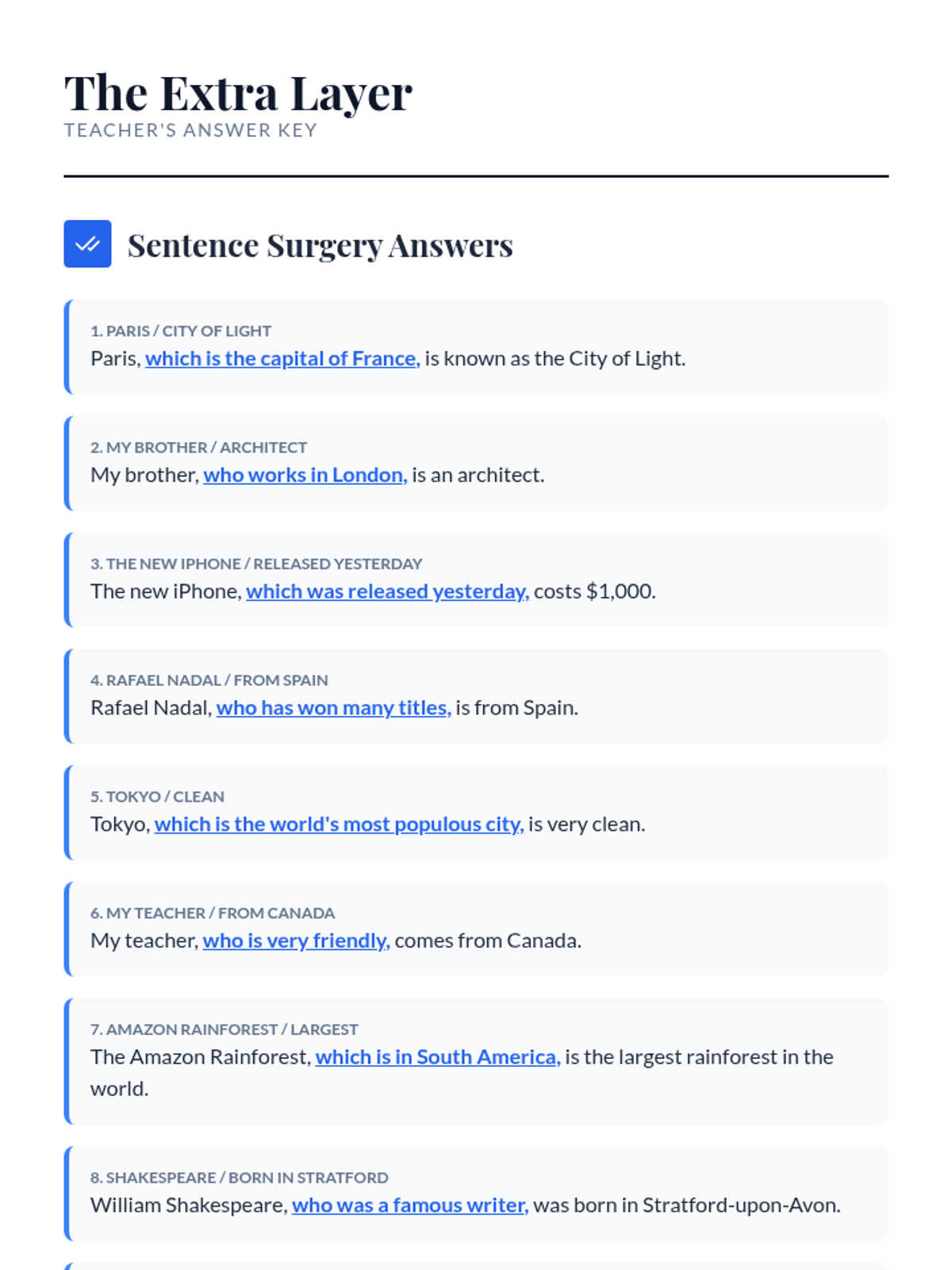
A comprehensive lesson for adult A2 learners focusing on non-defining relative clauses, featuring a blend of grammatical instruction and high-engagement speaking activities.
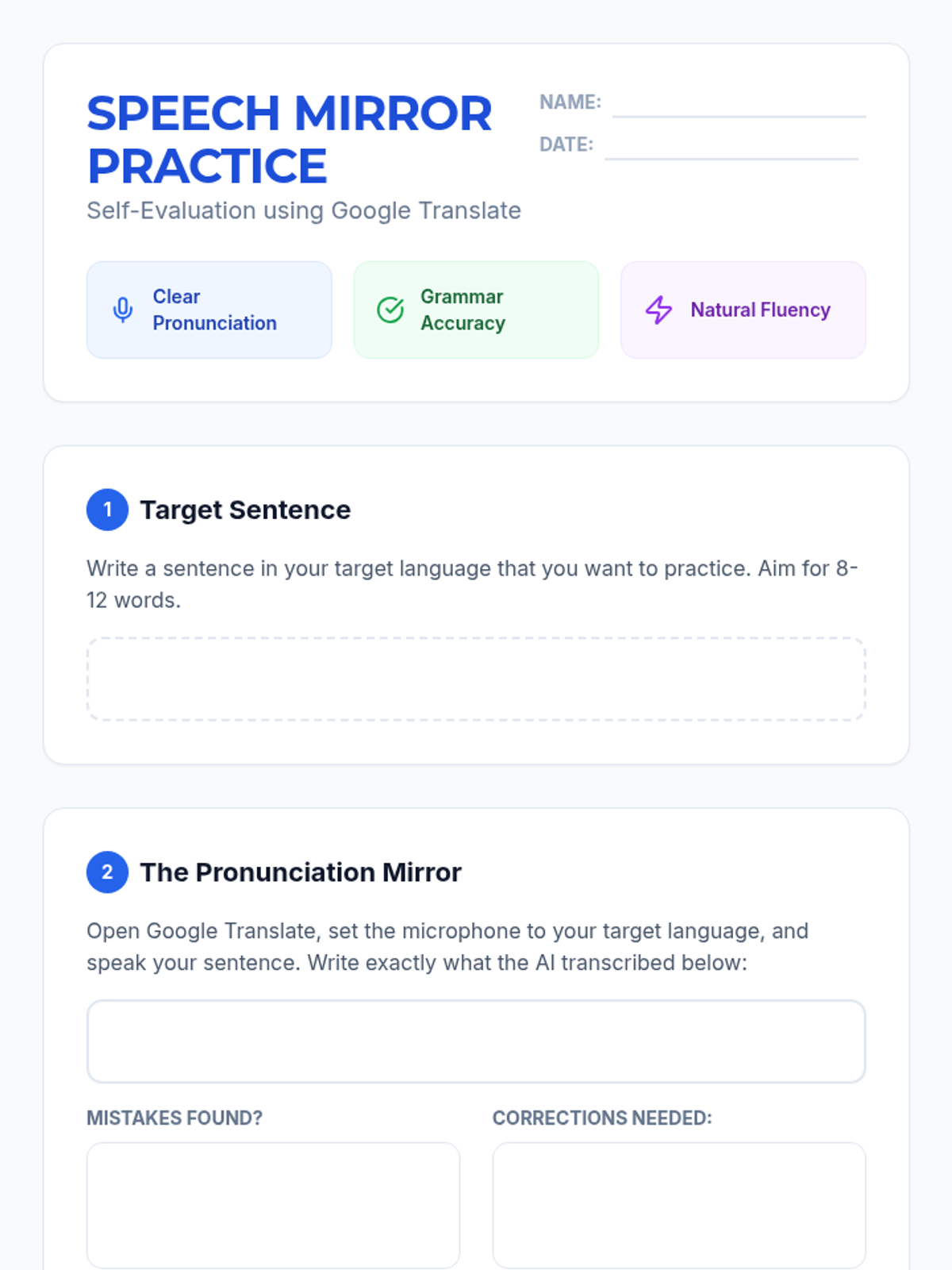
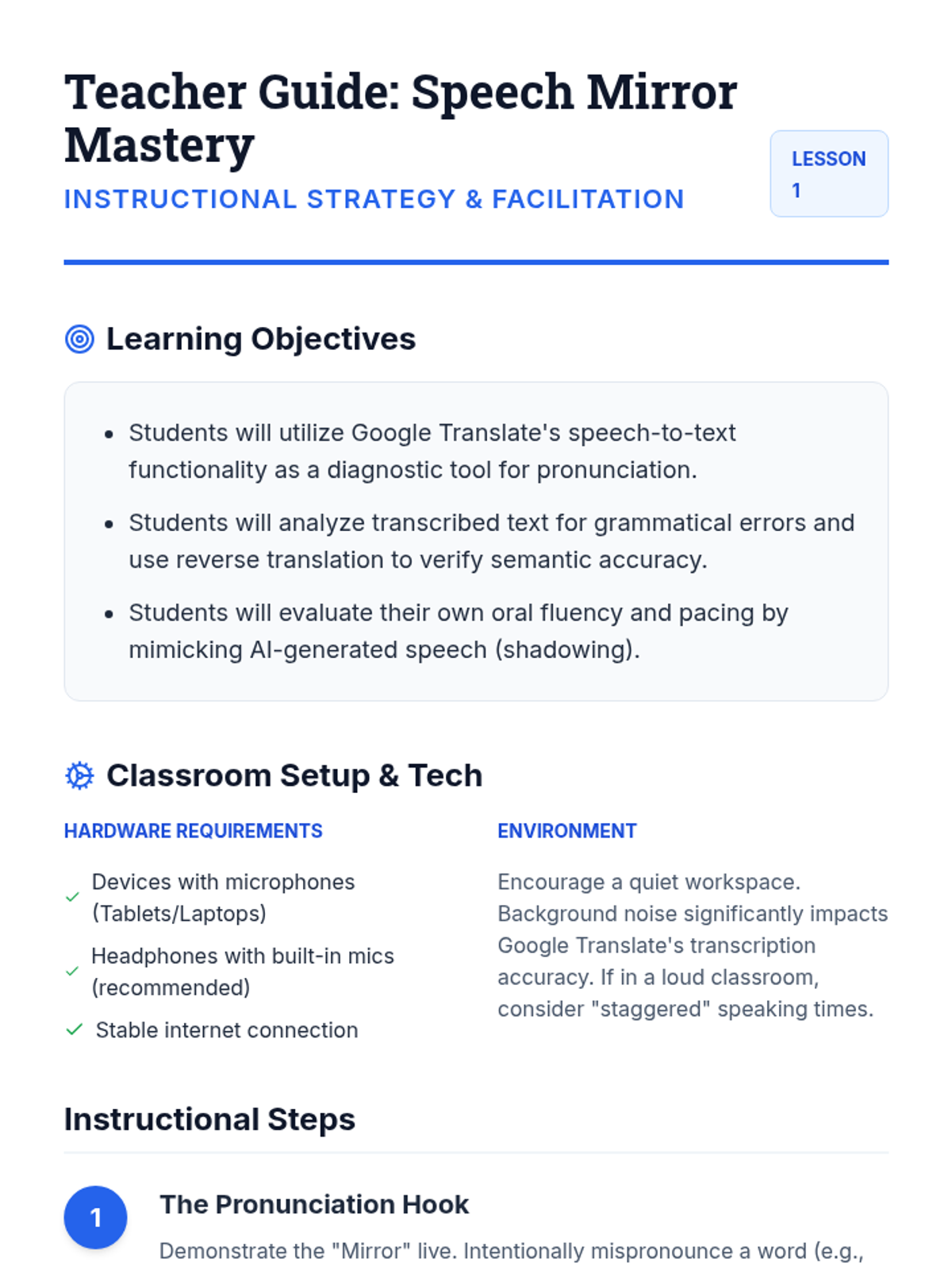
This lesson teaches students how to use Google Translate's speech-to-text and text-to-speech features to self-evaluate their spoken language. Focus areas include pronunciation clarity, grammatical accuracy of transcribed text, and oral fluency.
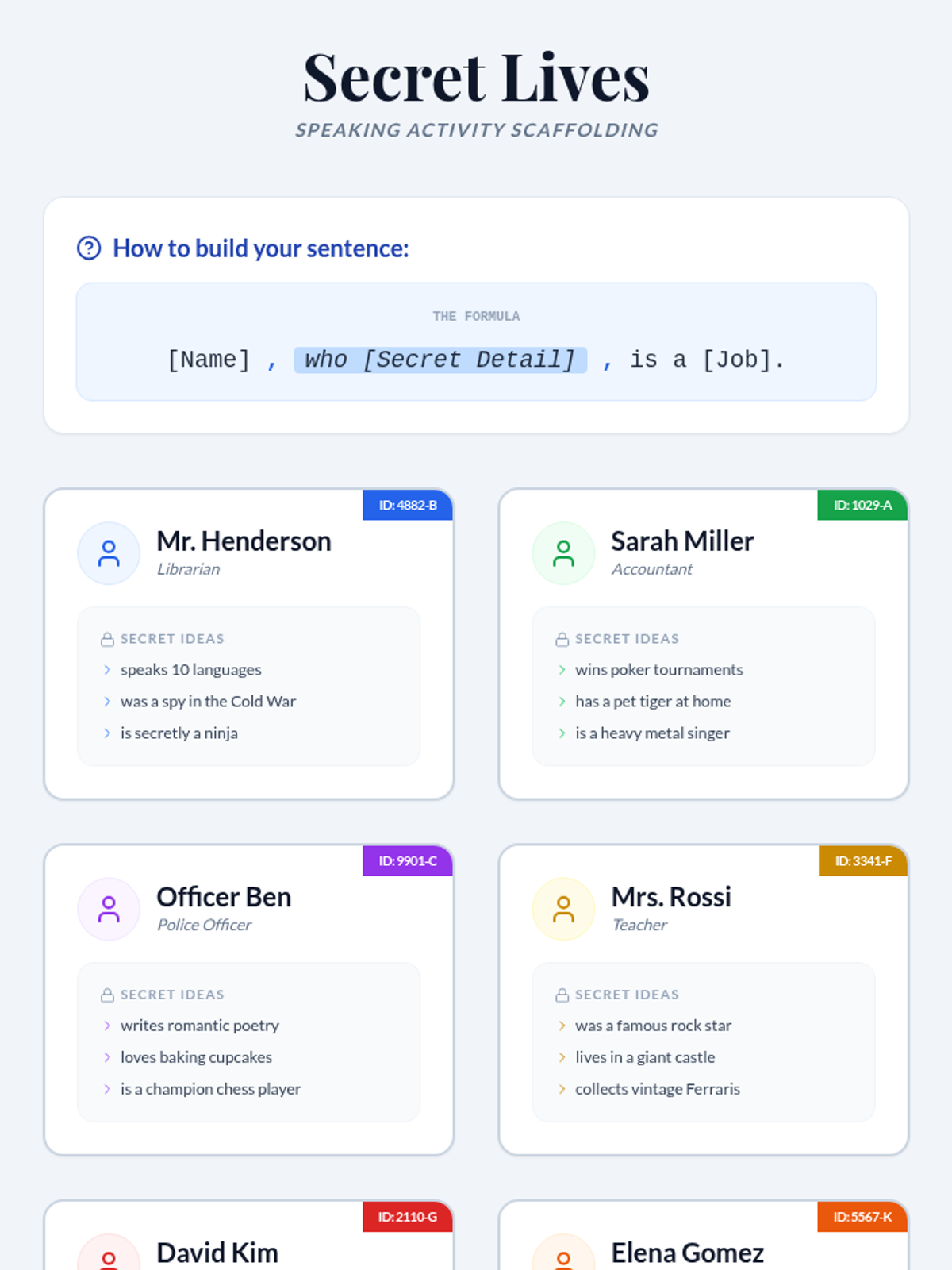
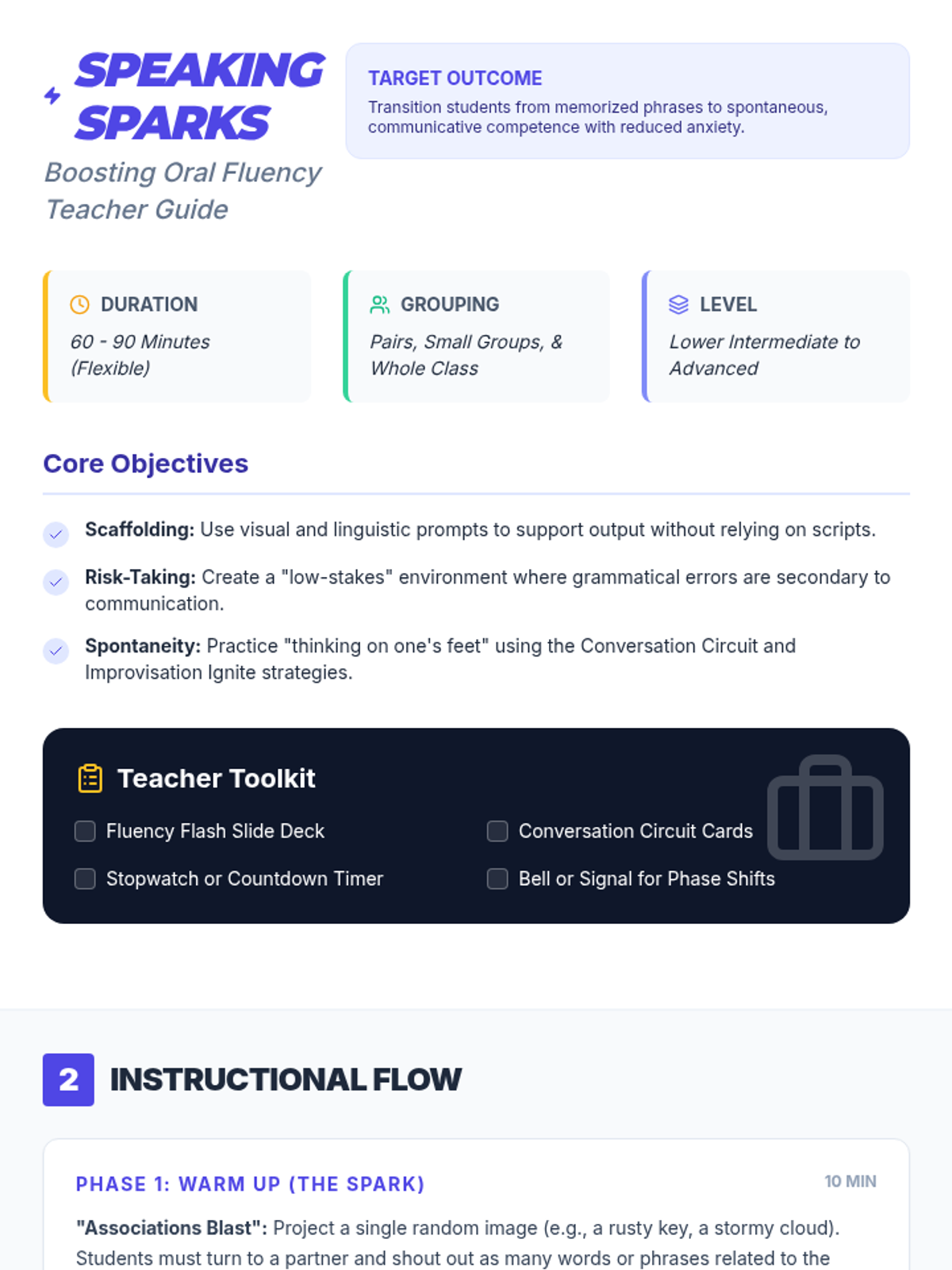
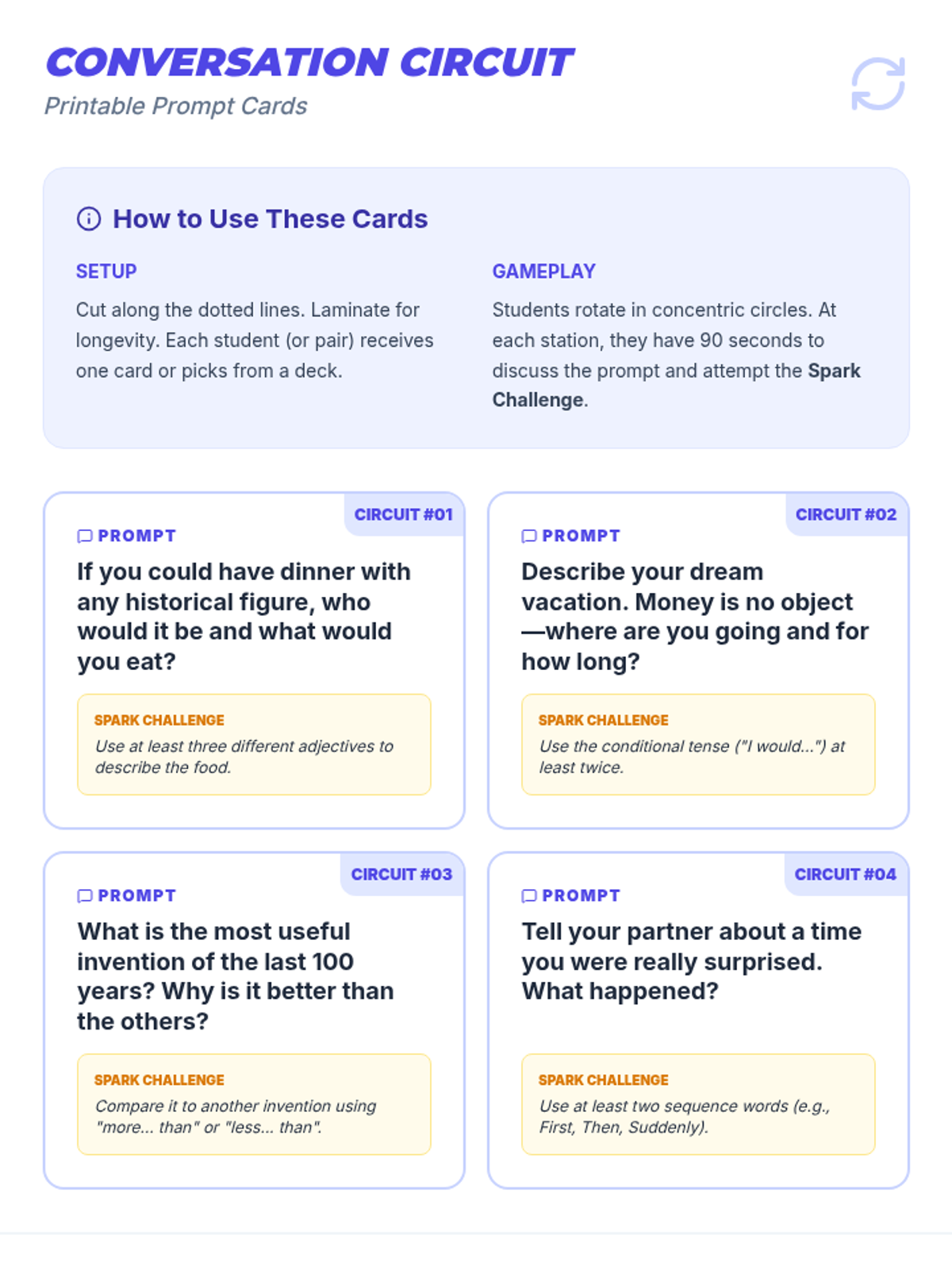
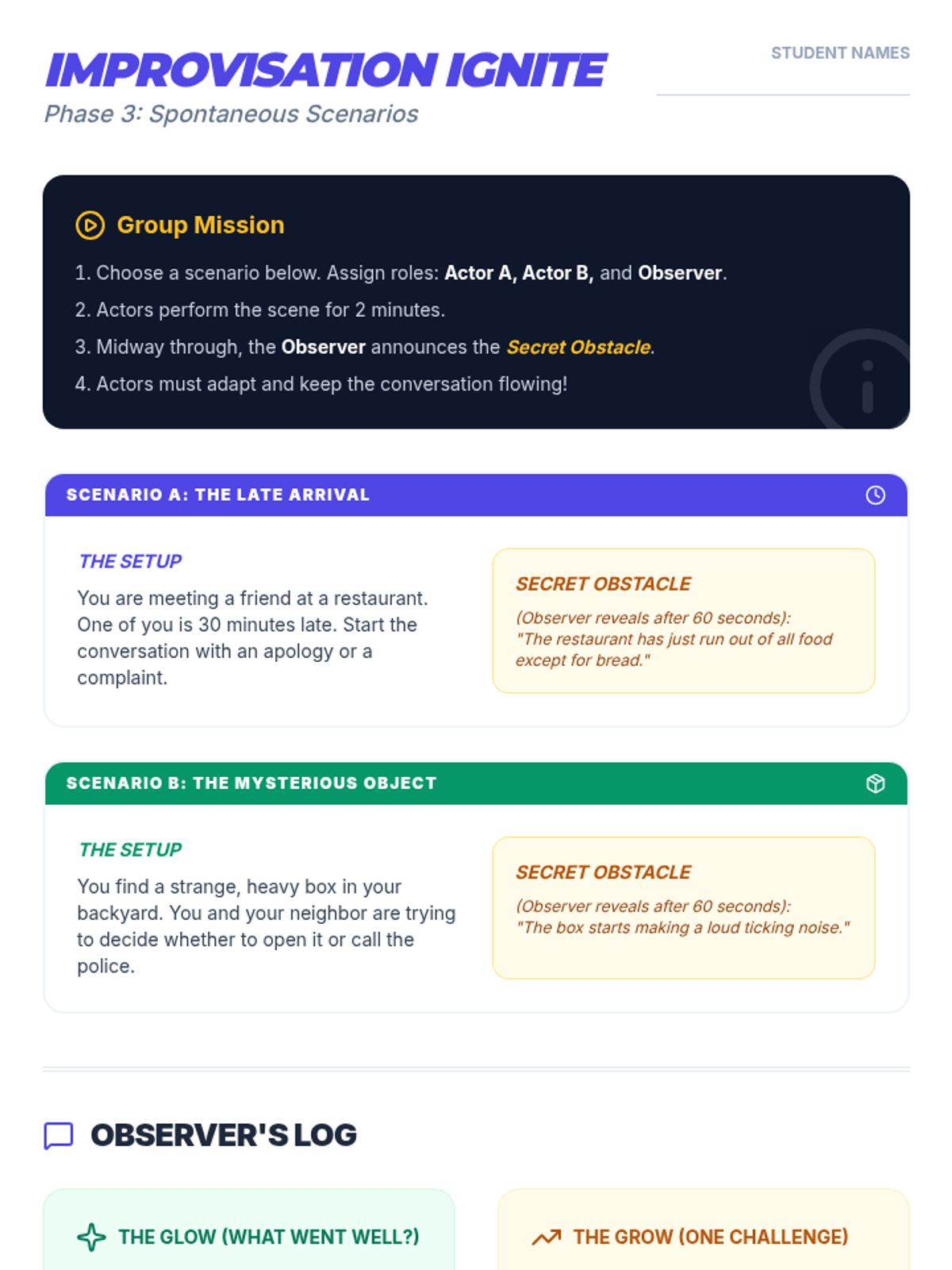
A comprehensive toolkit for foreign language teachers to bridge the gap between rote memorization and spontaneous oral communication through interactive activities and low-stakes scaffolding.
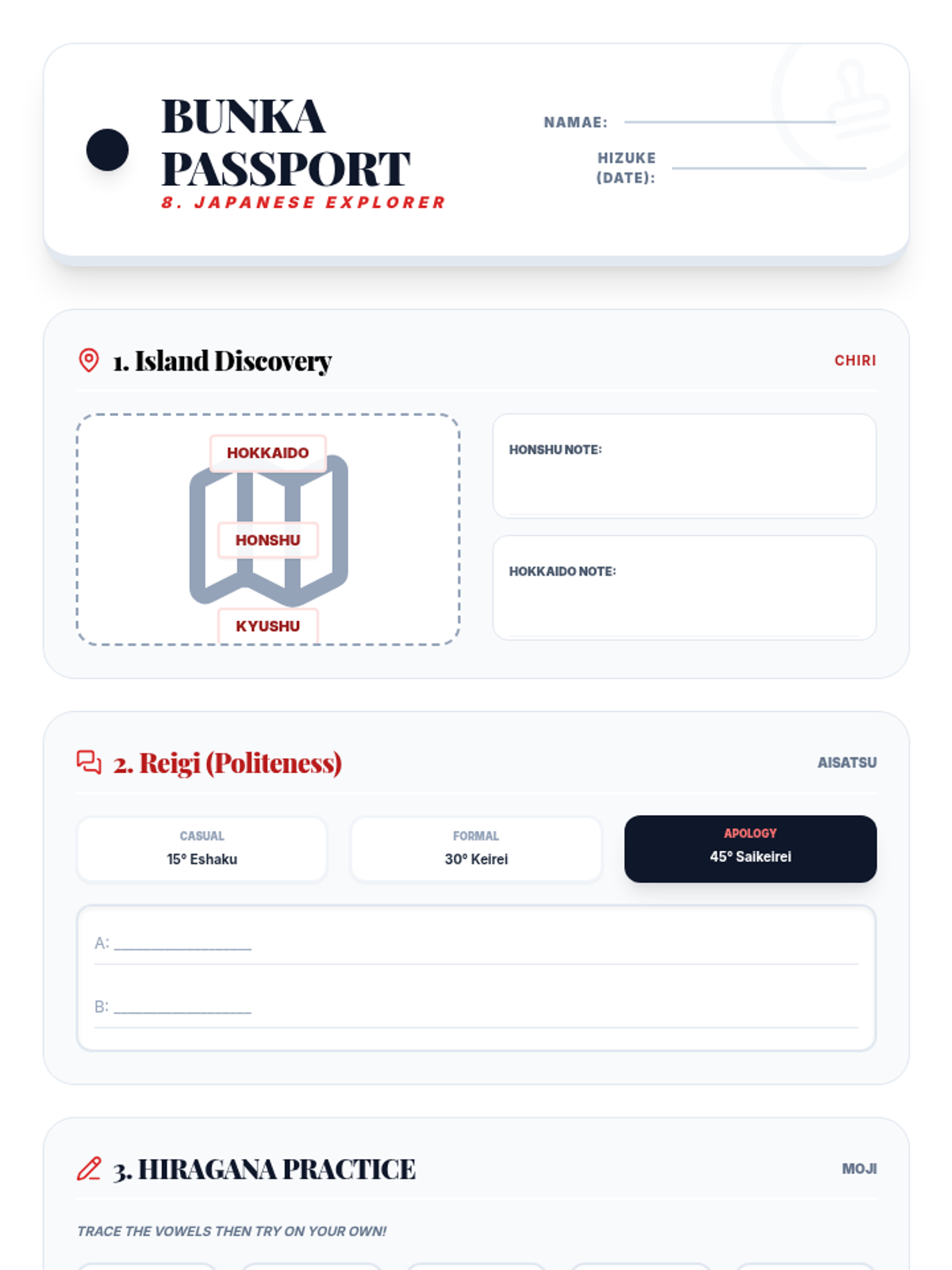
Exploring the four main islands of Japan and comparing the diverse climates from Hokkaido to Okinawa.
The final showcase where students present their cultural discoveries and language skills.
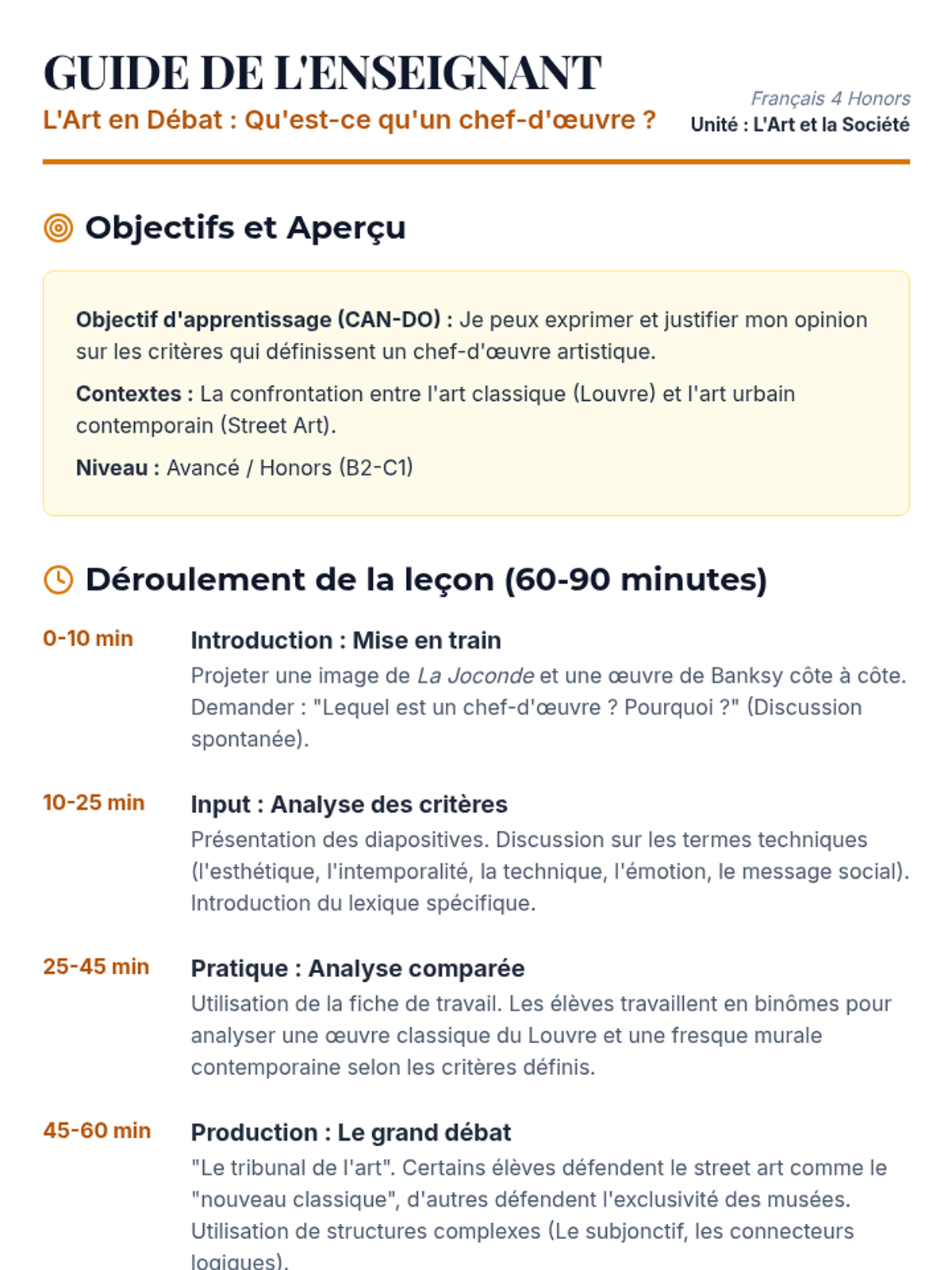
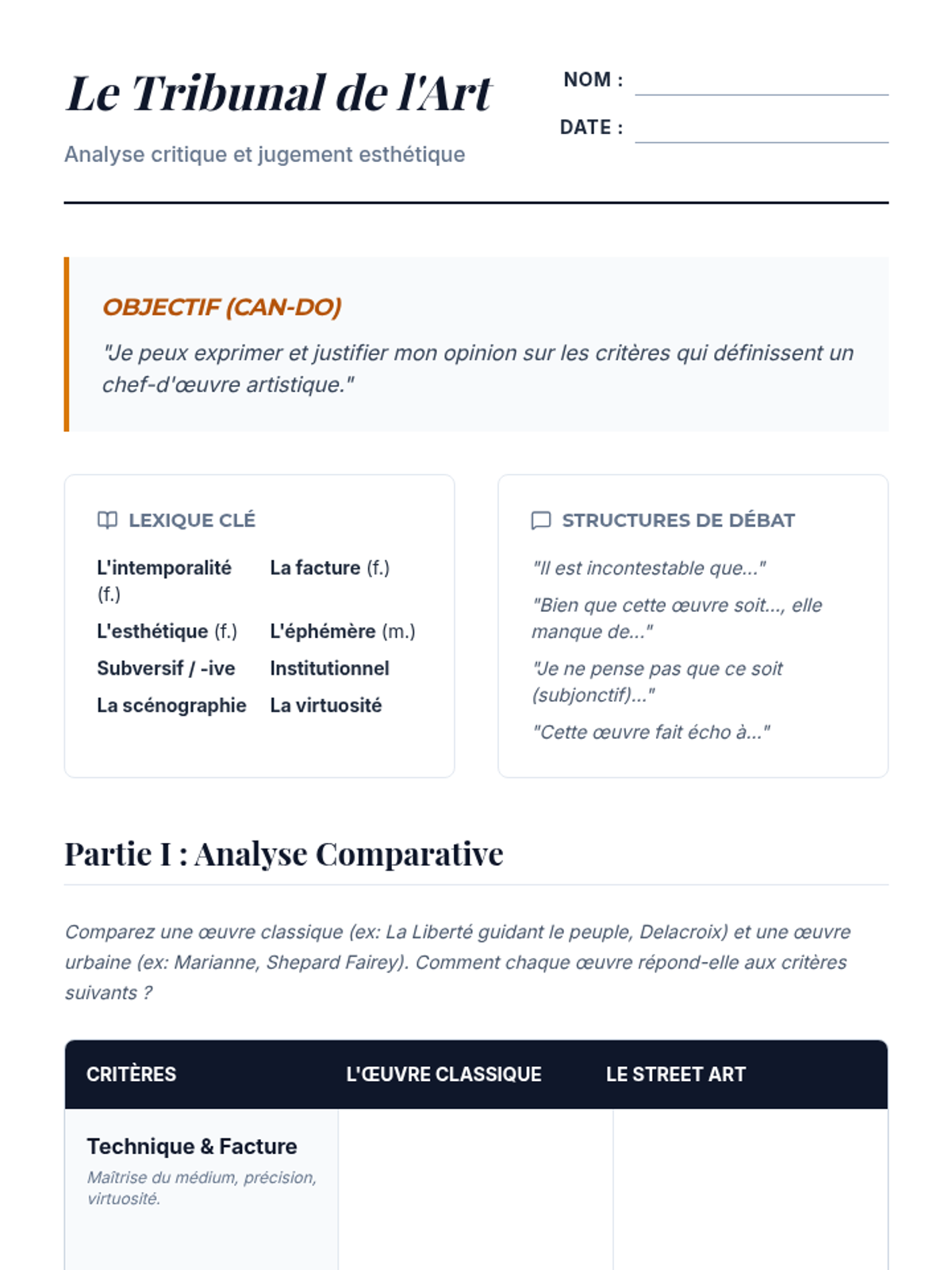
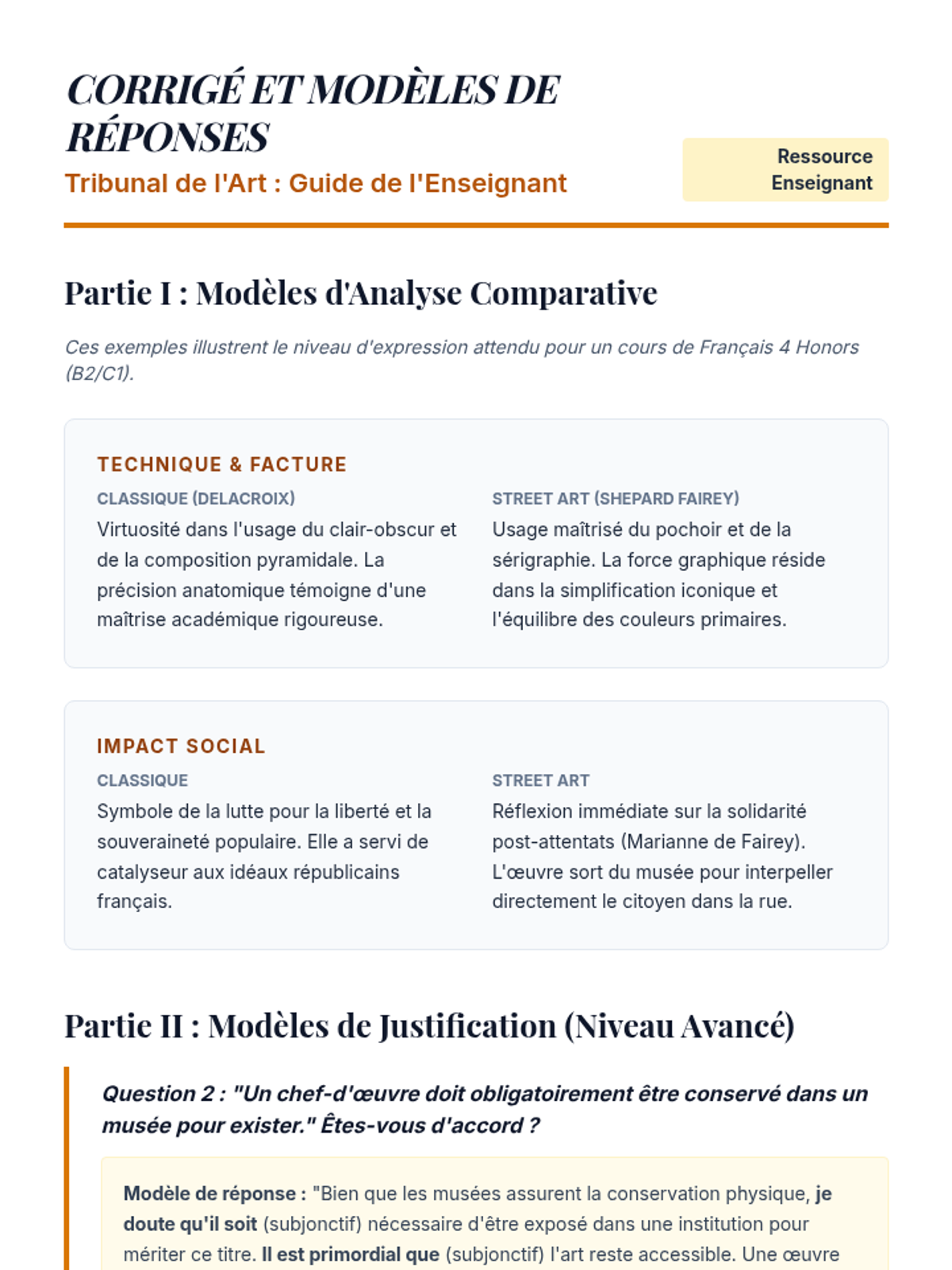
A high-level French Level 4 Honors lesson where students evaluate and debate the criteria that define a 'masterpiece,' comparing classic Louvre works with contemporary street art.
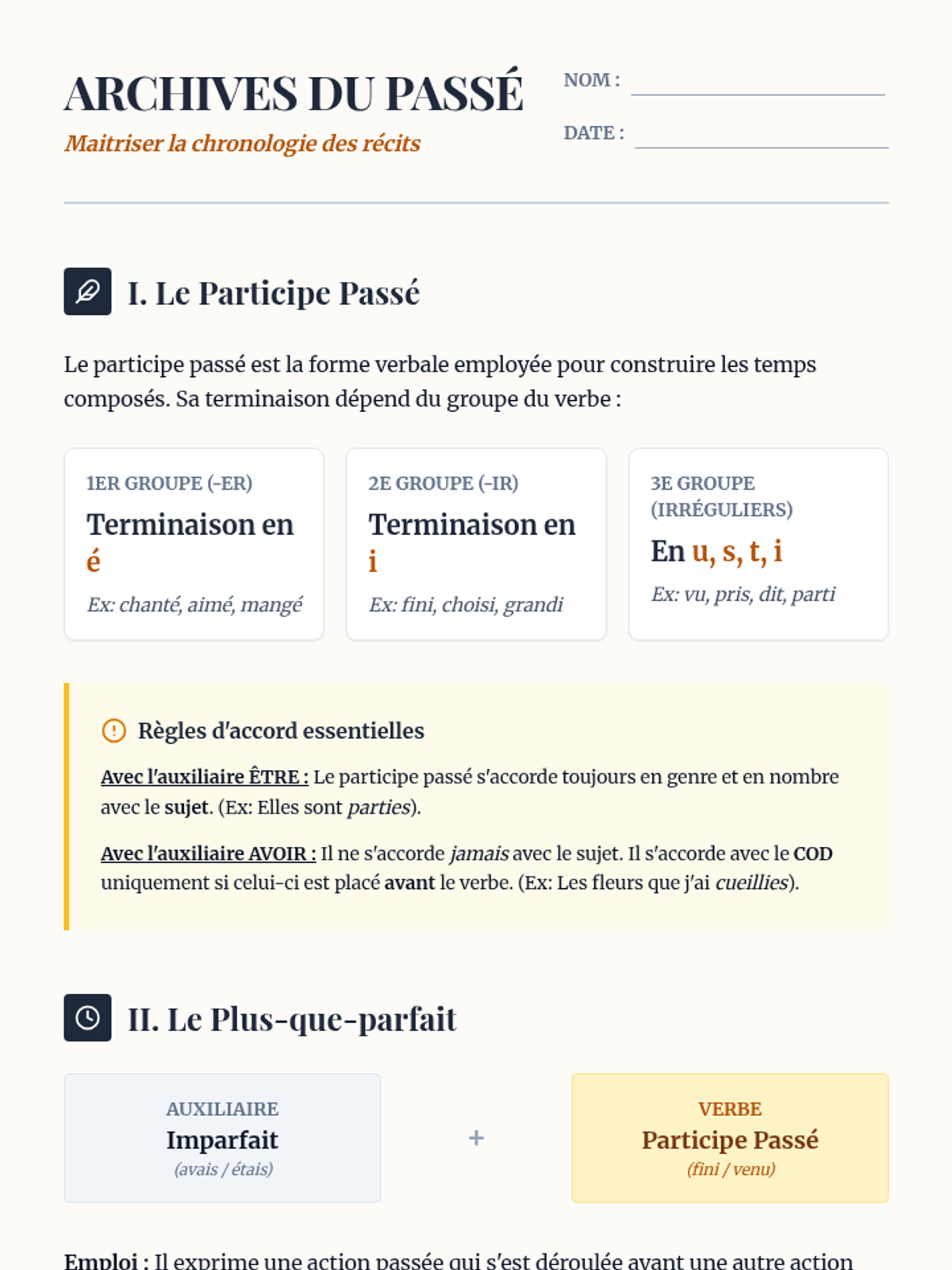
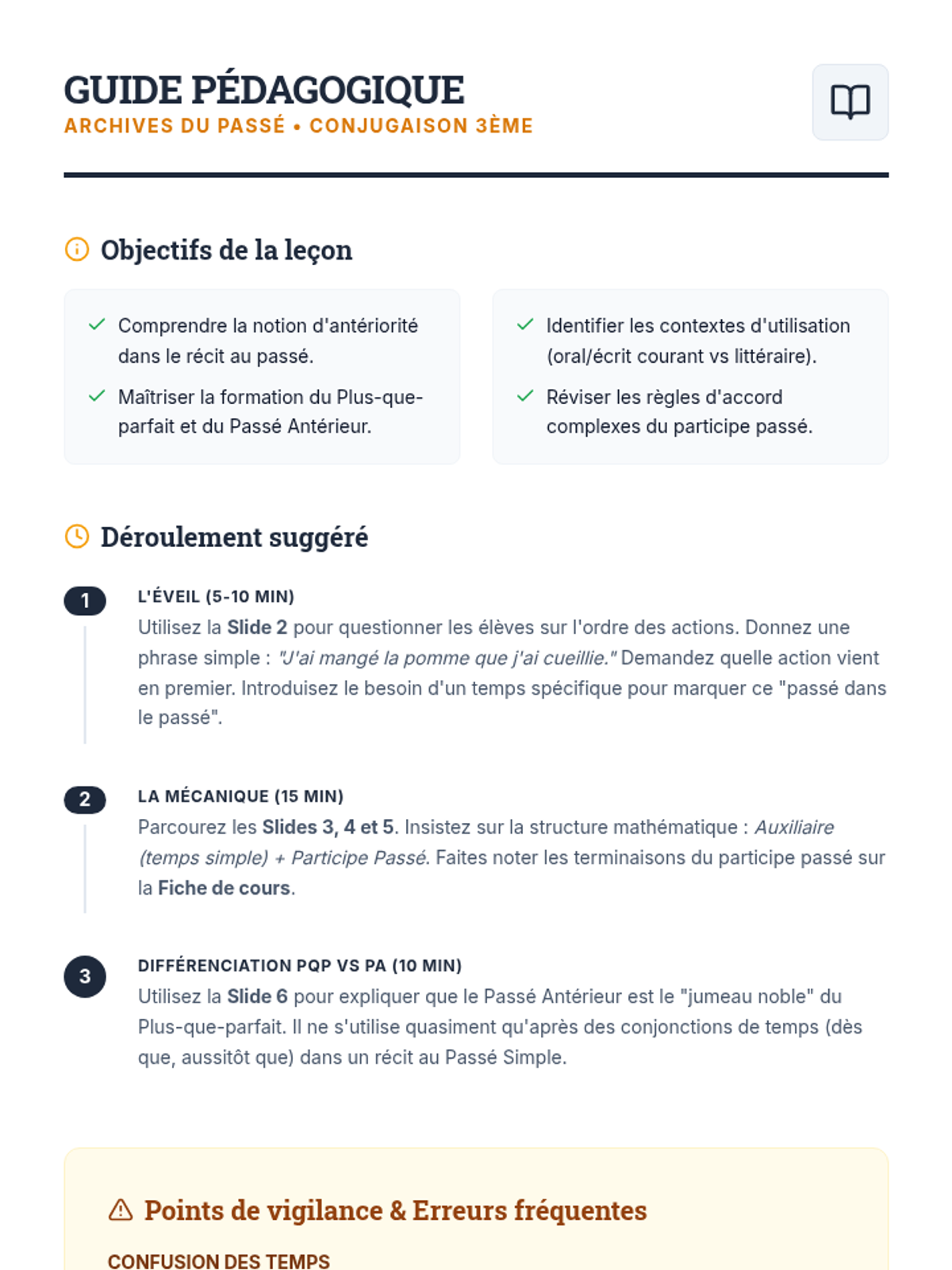
Cette leçon explore la formation et l'emploi du participe passé, du plus-que-parfait et du passé antérieur, en mettant l'accent sur la chronologie des actions passées.
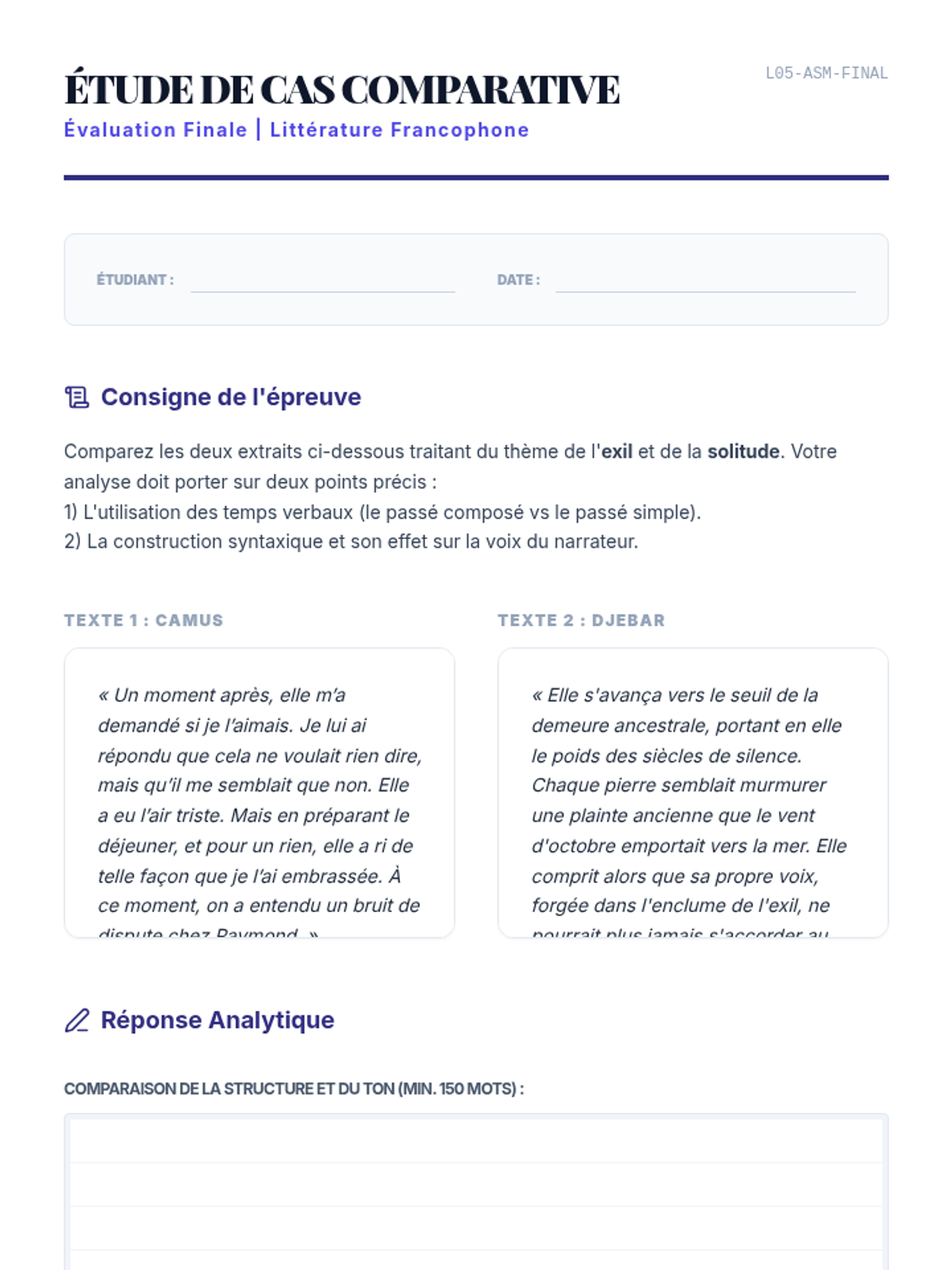
Synthesize skills by performing a comparative analysis of two Francophone texts, focusing on register, tone, and thematic expression of exile.
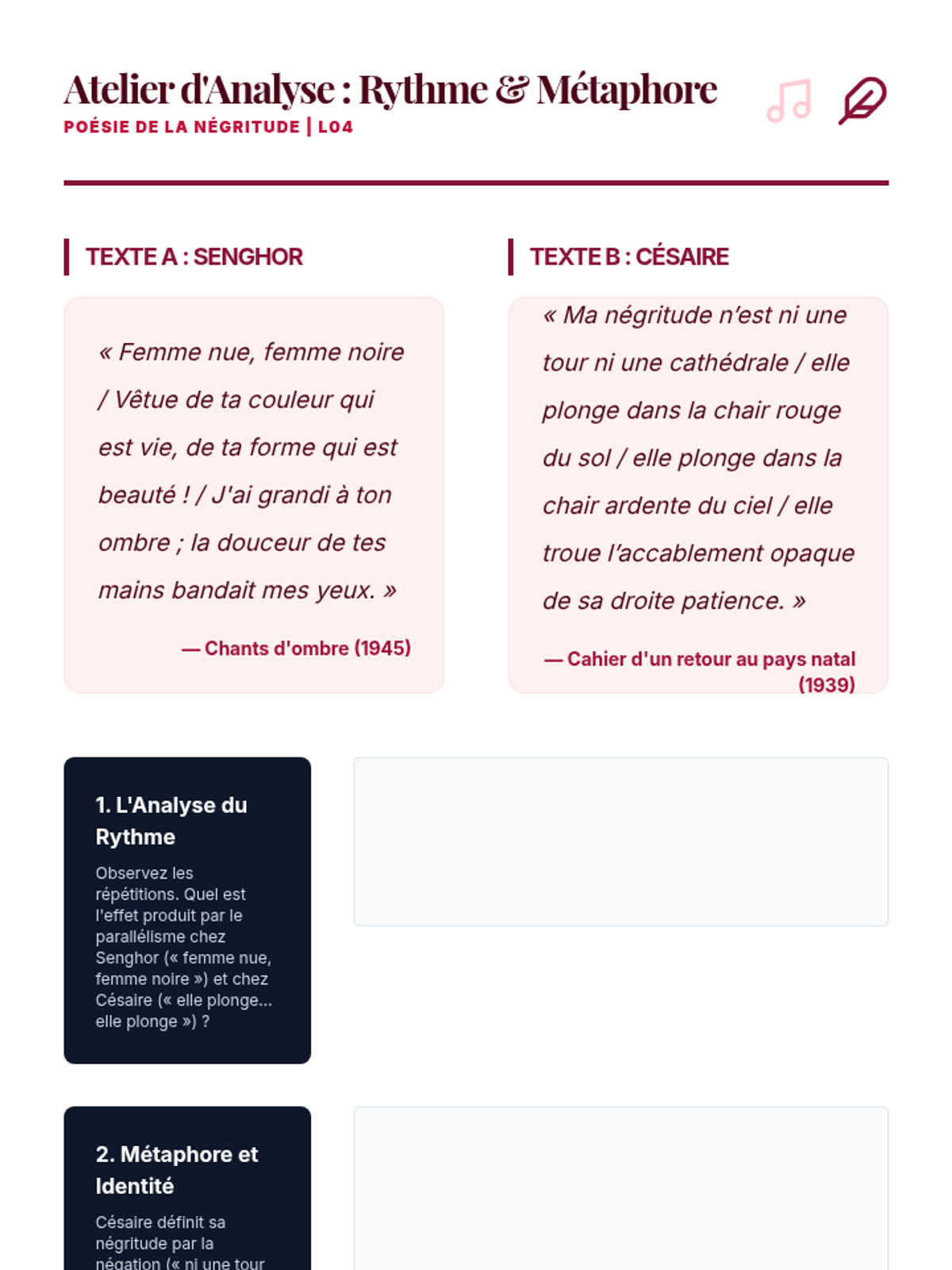
Explore the rhythmic and subversive power of Negritude poetry through the works of Césaire and Senghor, focusing on metaphor and linguistic identity.
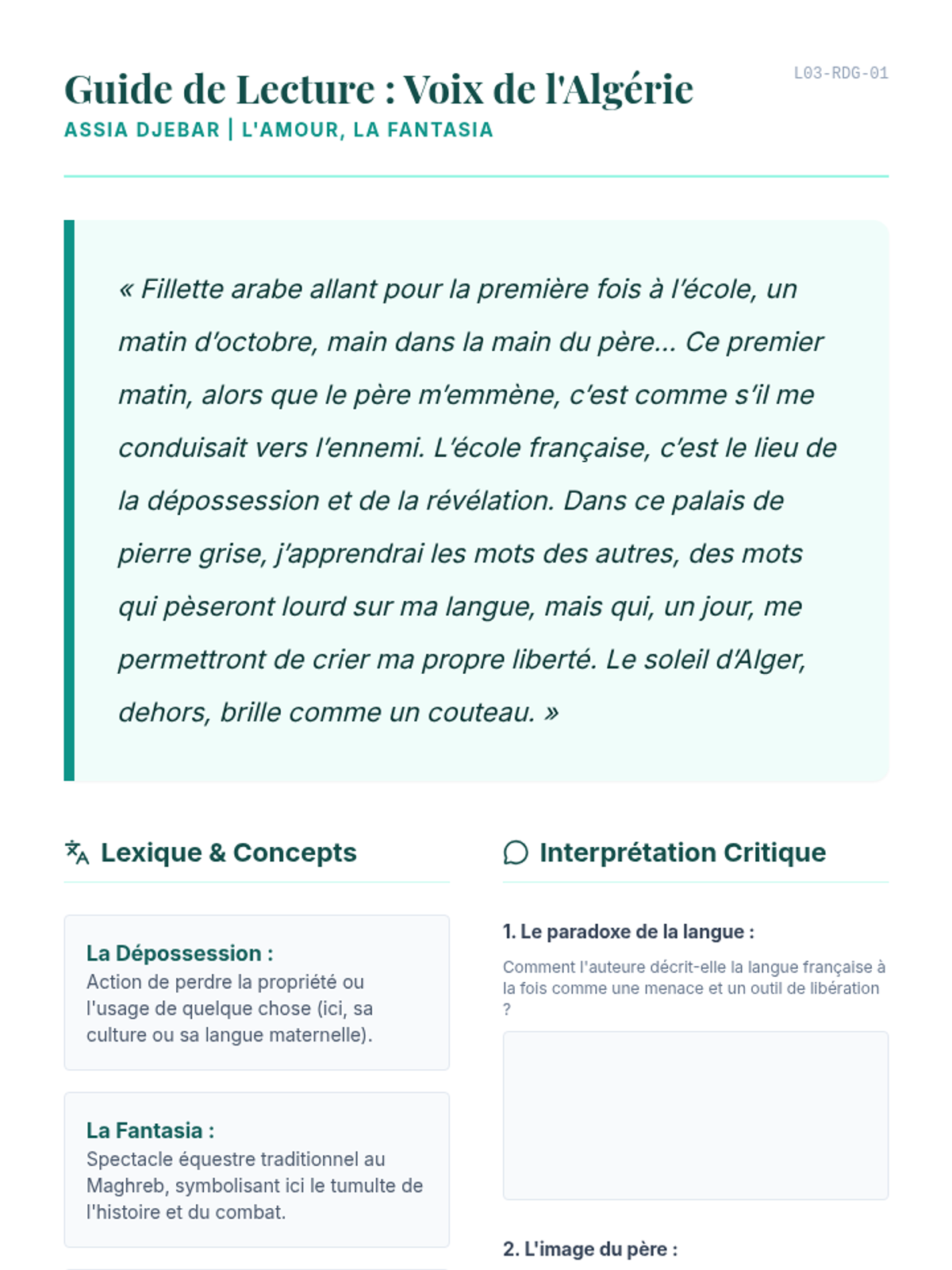
Analyze post-colonial narratives by Djebar and Ben Jelloun, focusing on descriptive imagery, sensory vocabulary, and the construction of identity.
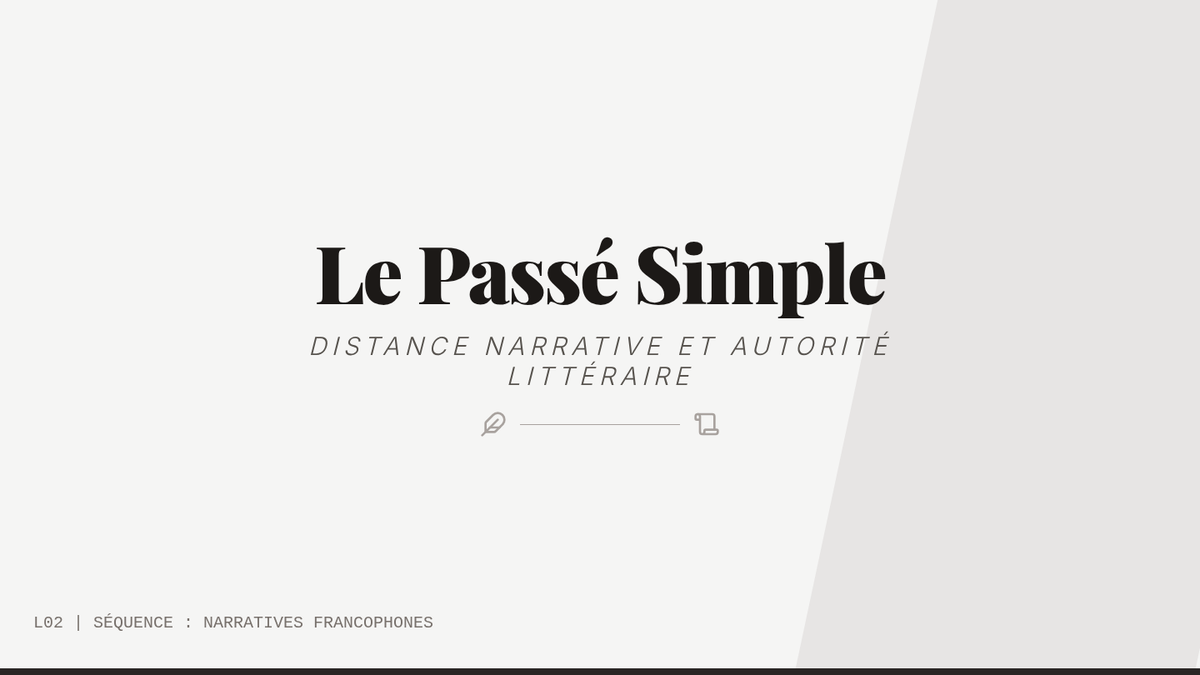
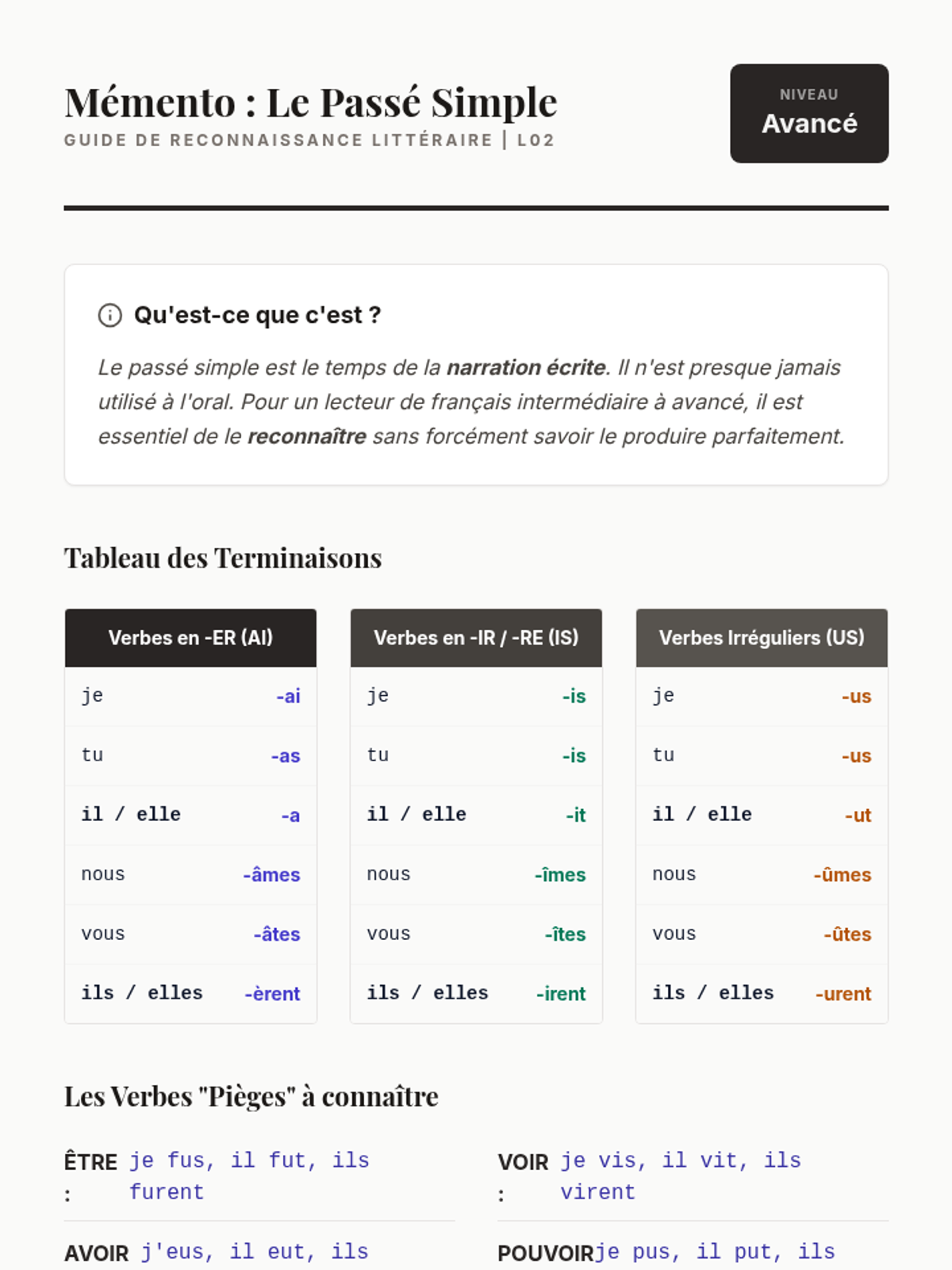
A mastery-focused lesson on identifying and interpreting the 'passé simple' in 19th and 20th-century French literature to understand narrative distance.
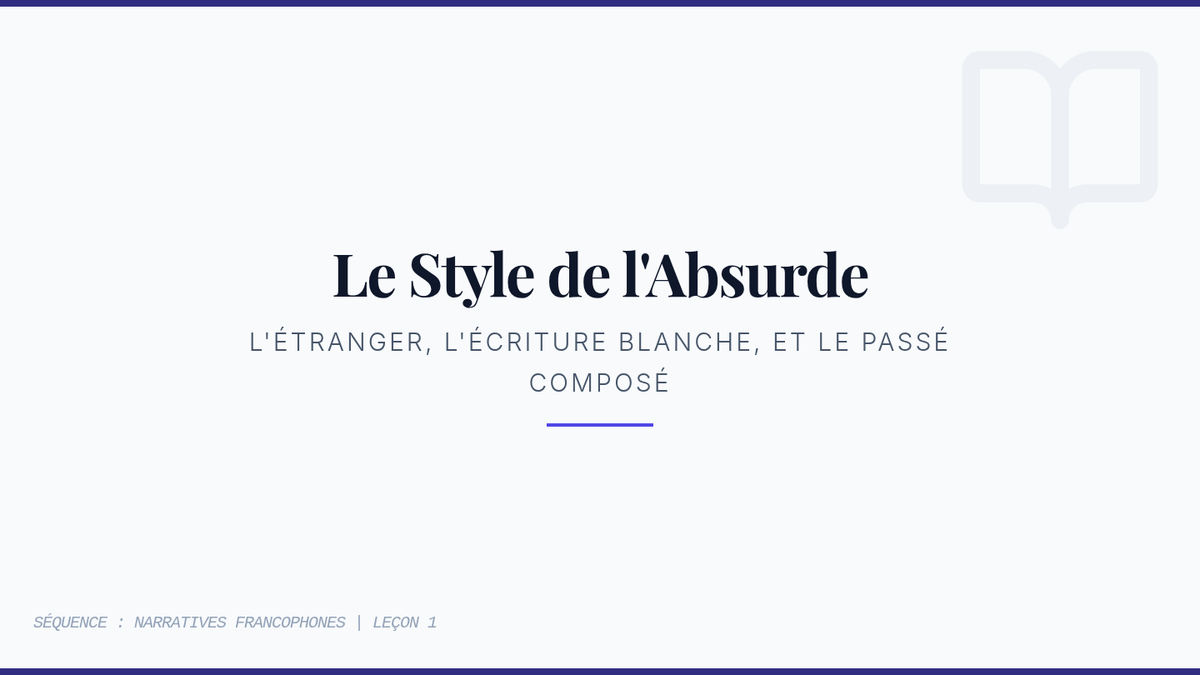
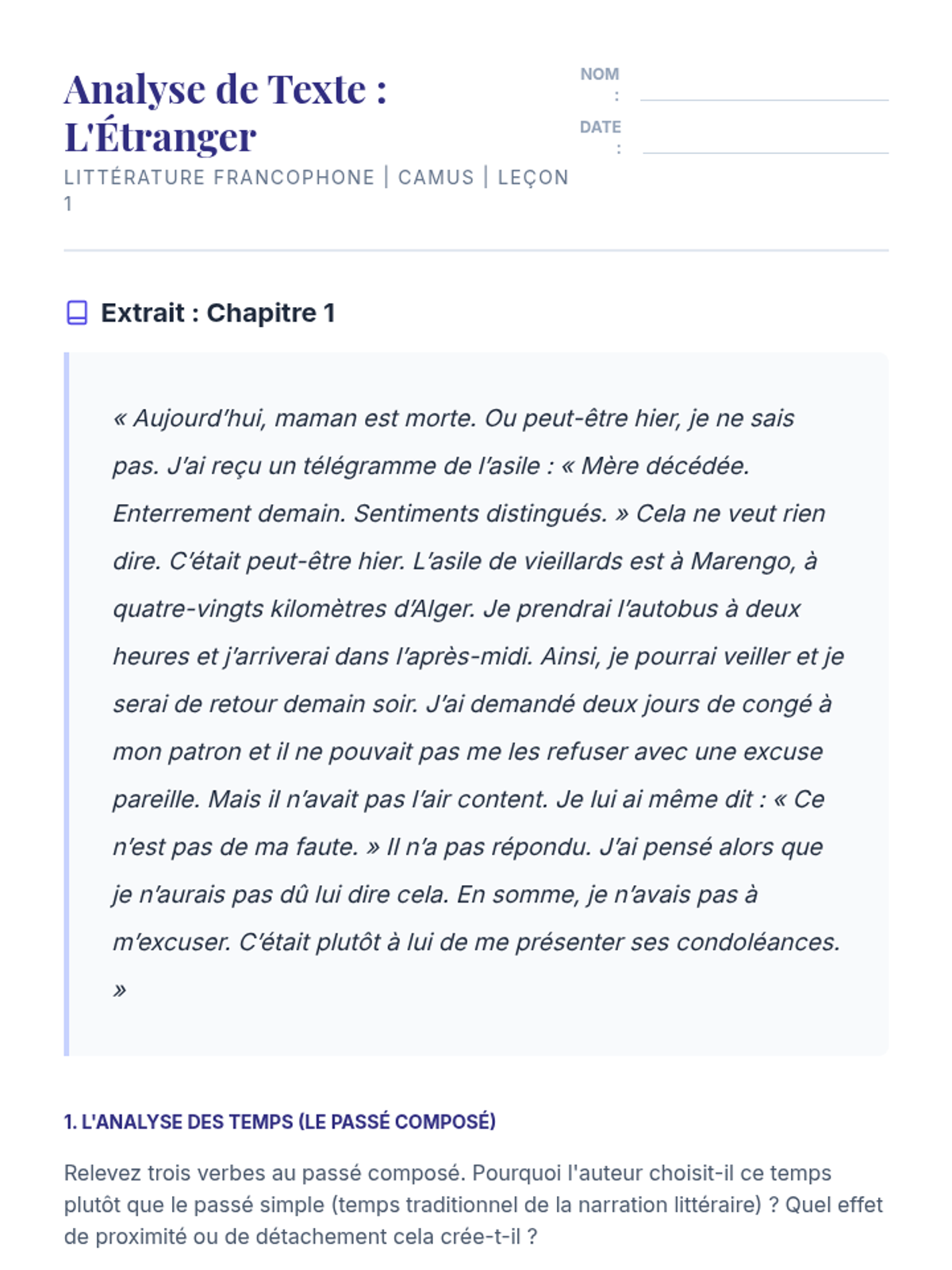
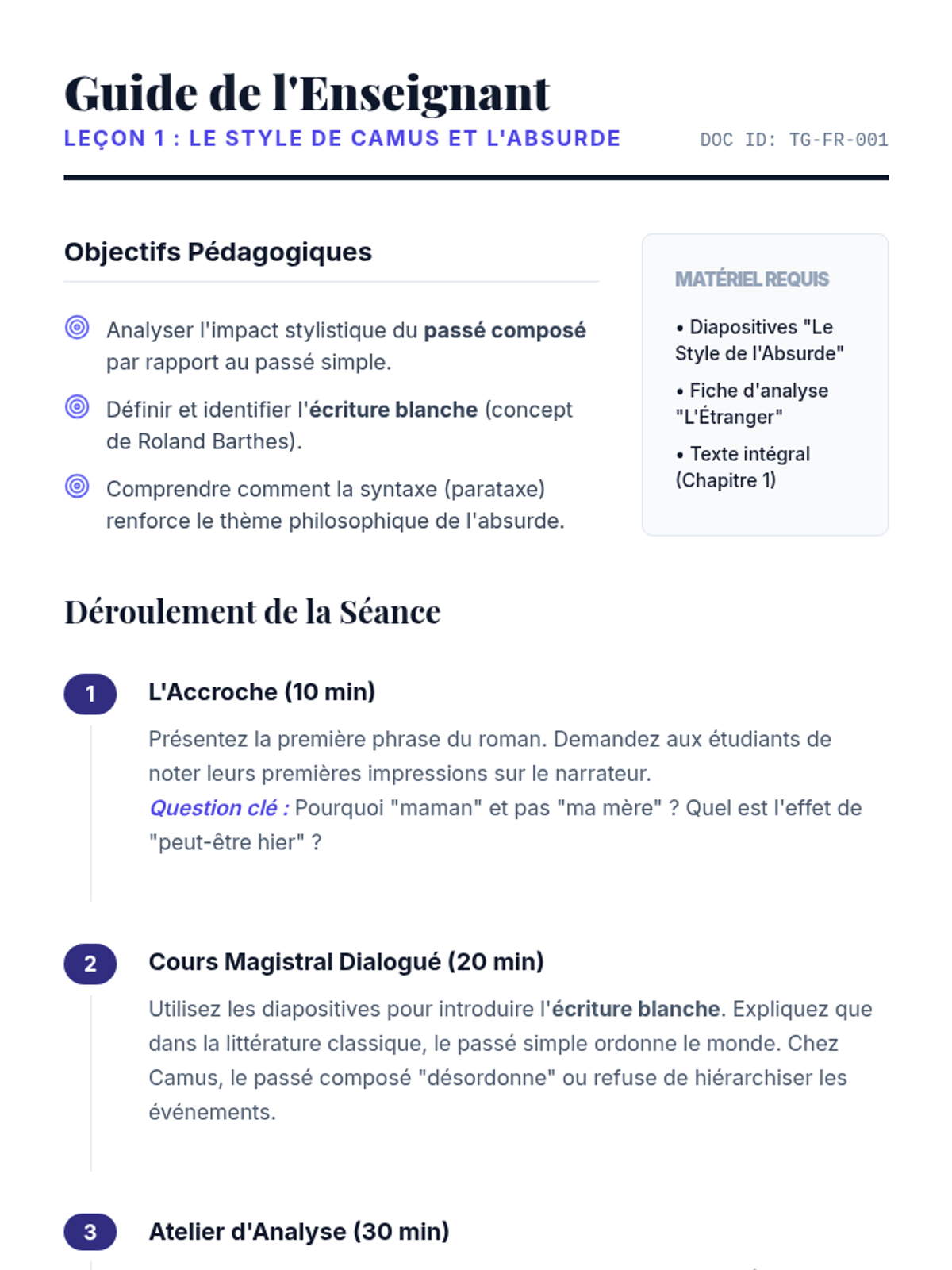
Examine the opening of Camus' 'L'Étranger' to understand how grammatical choices like the 'passé composé' create existential detachment and 'écriture blanche'.
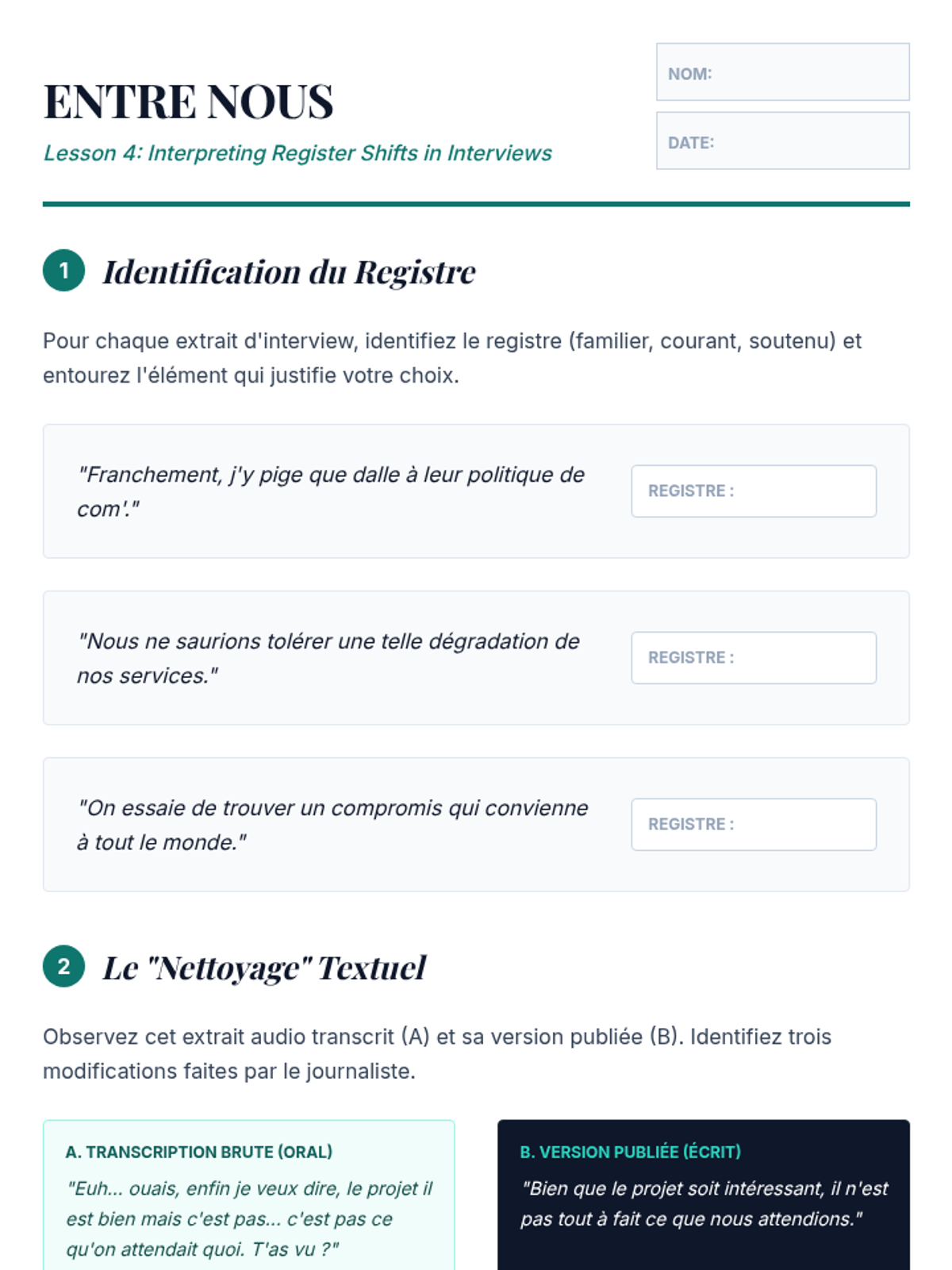
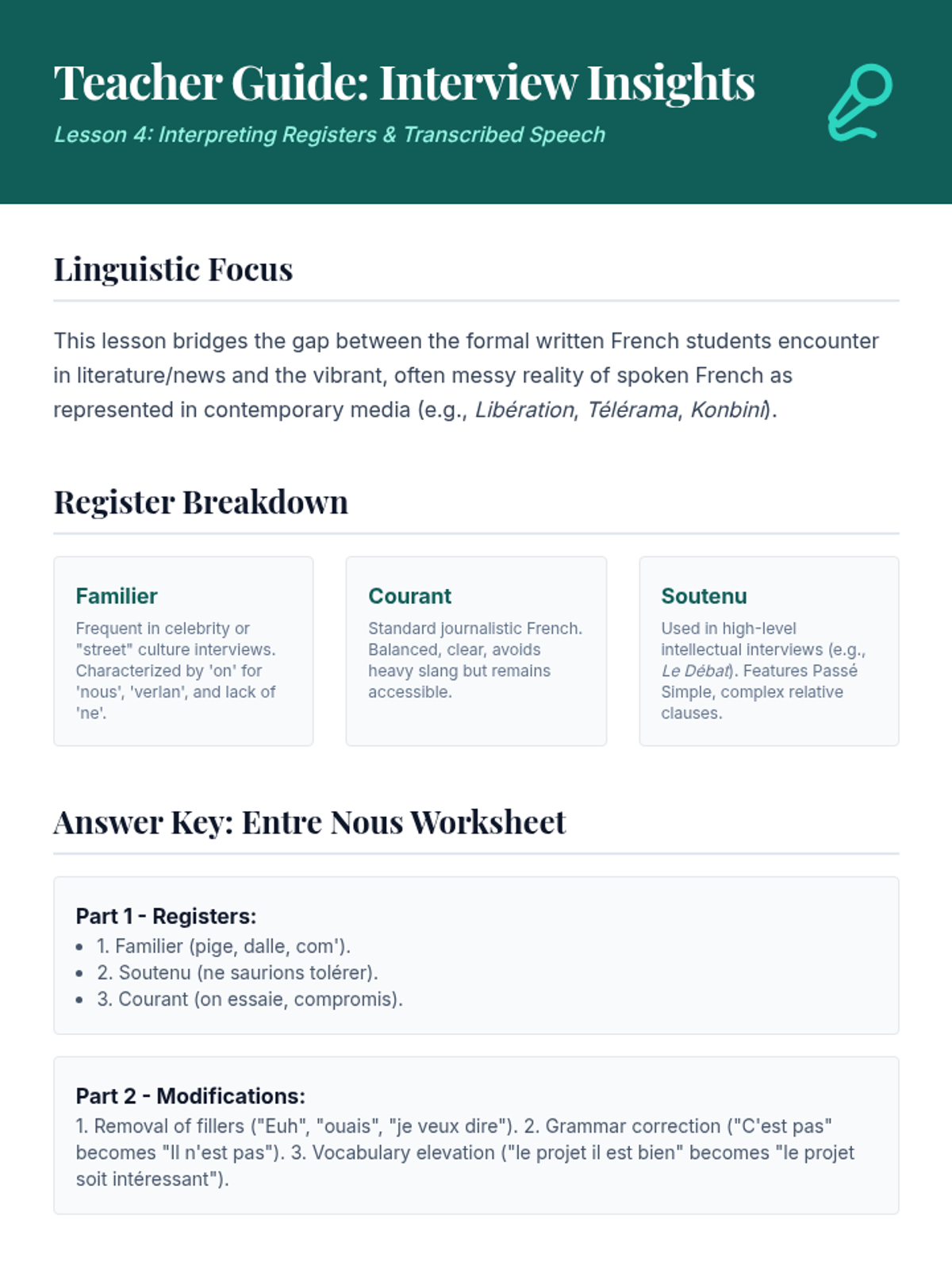
Focuses on reading interviews and transcribed speech, identifying register shifts and the representation of spoken French.
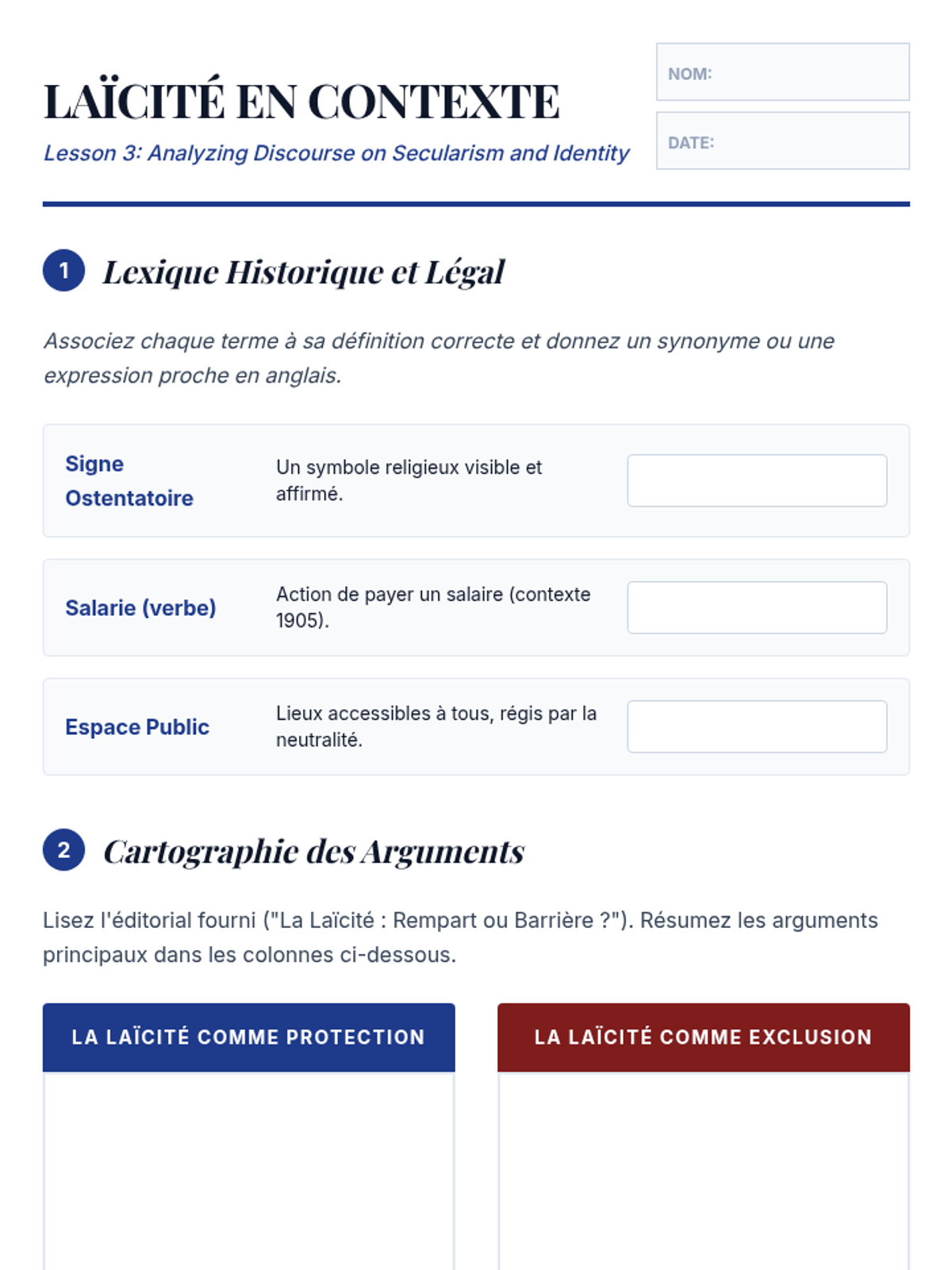
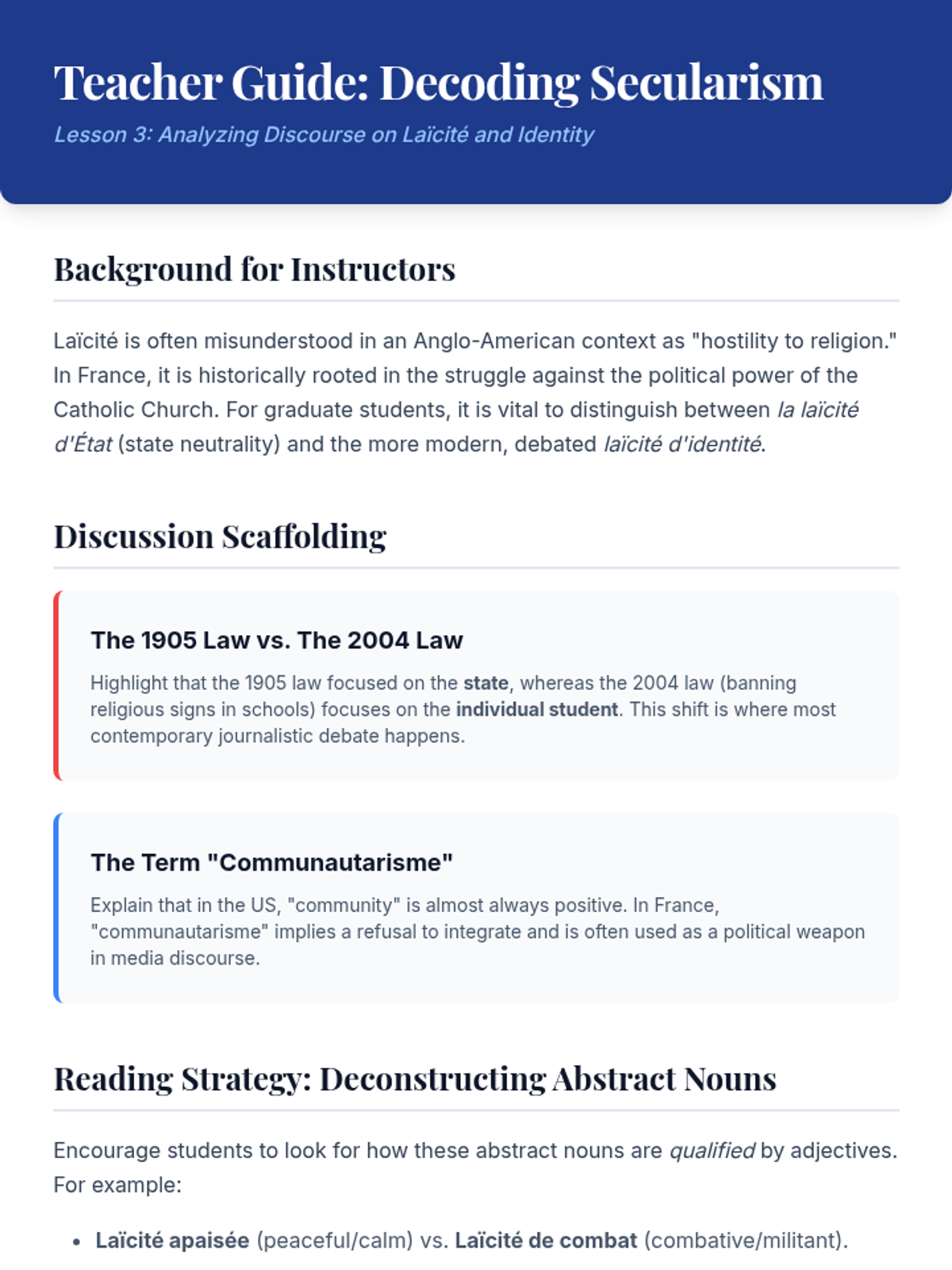
Students read complex texts regarding the French concept of secularism, decoding historical and legal vocabulary.
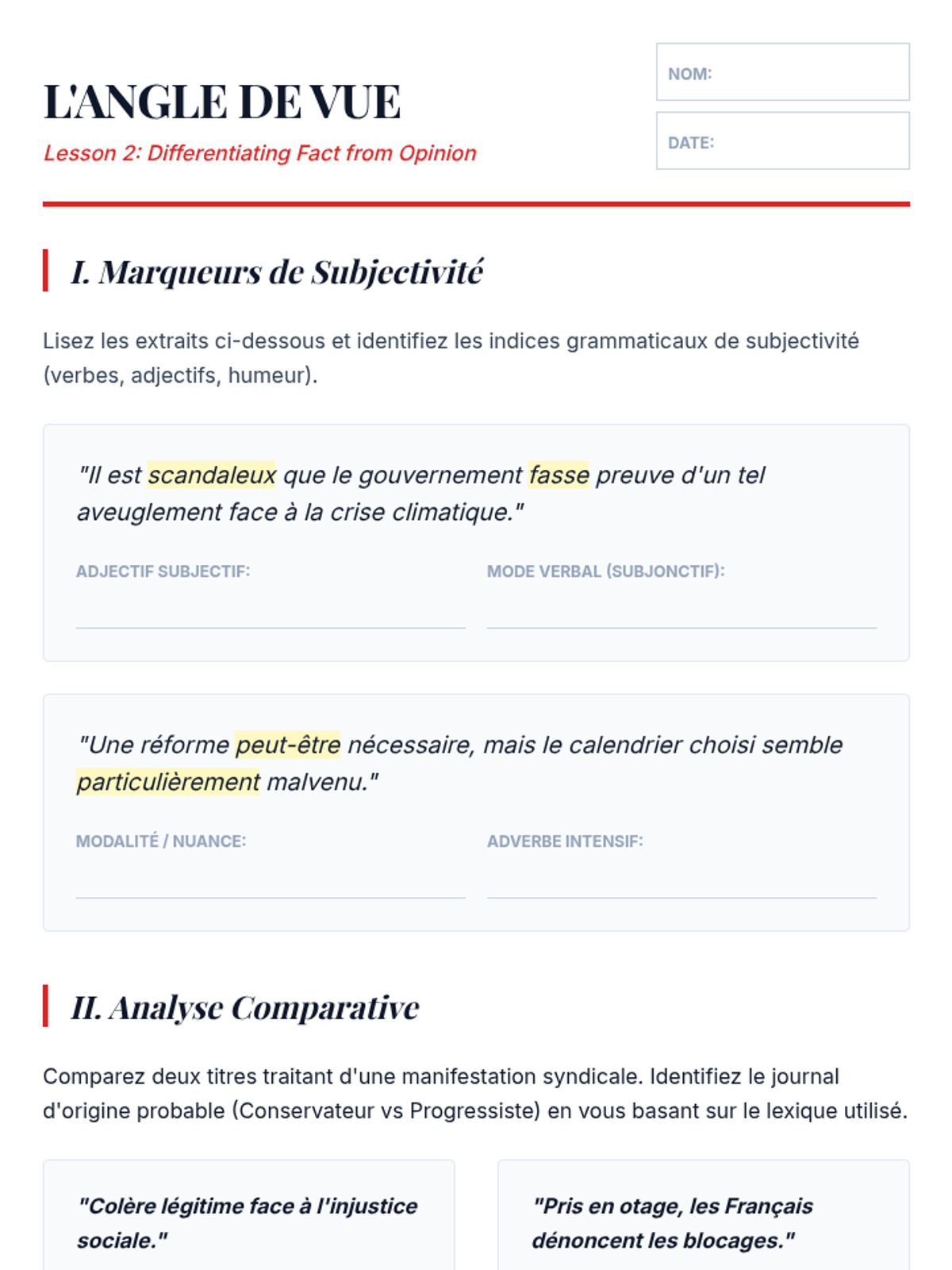
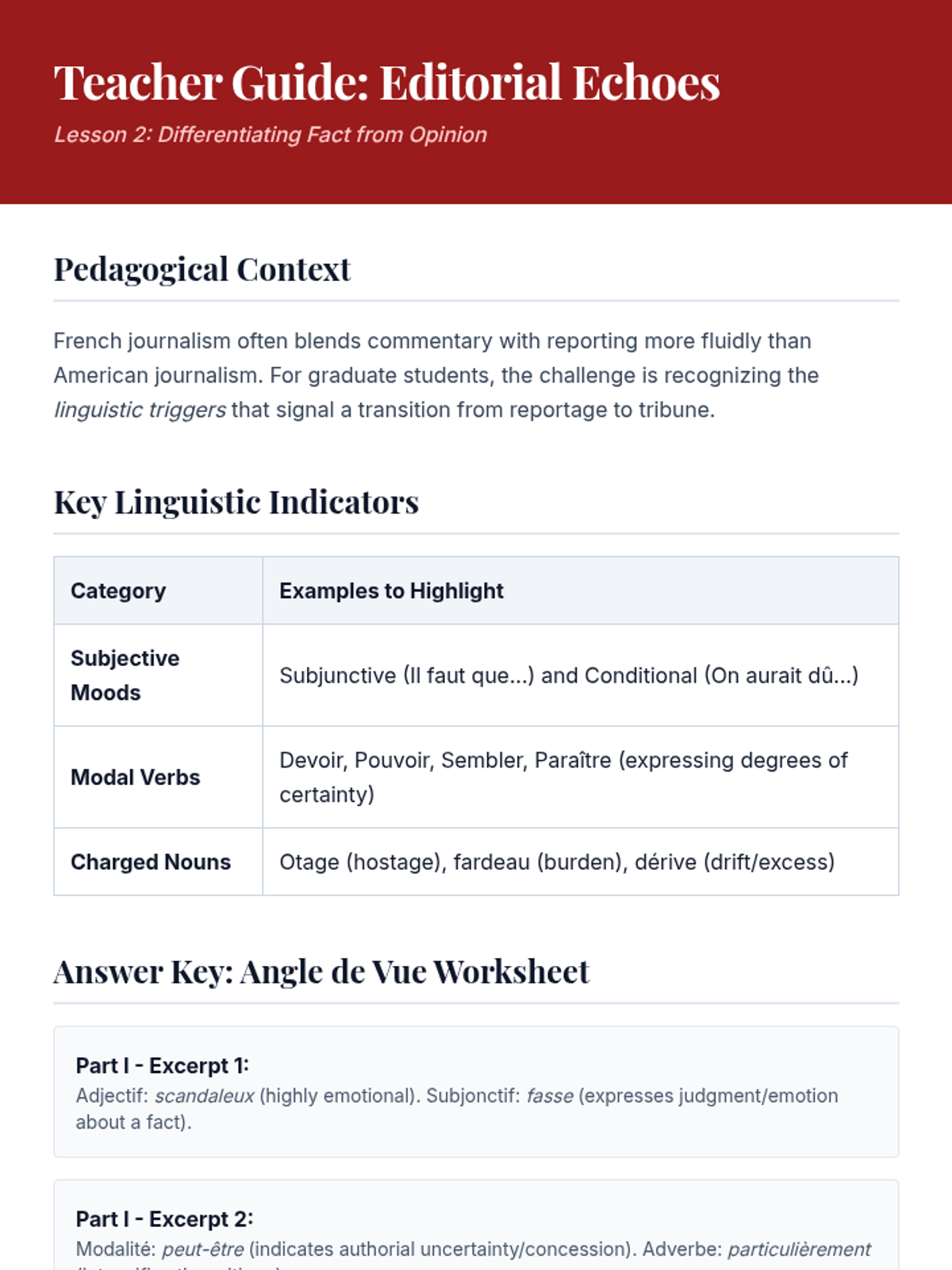
Learners examine 'les tribunes' (op-eds) to distinguish objective reporting from subjective argumentation through linguistic markers.
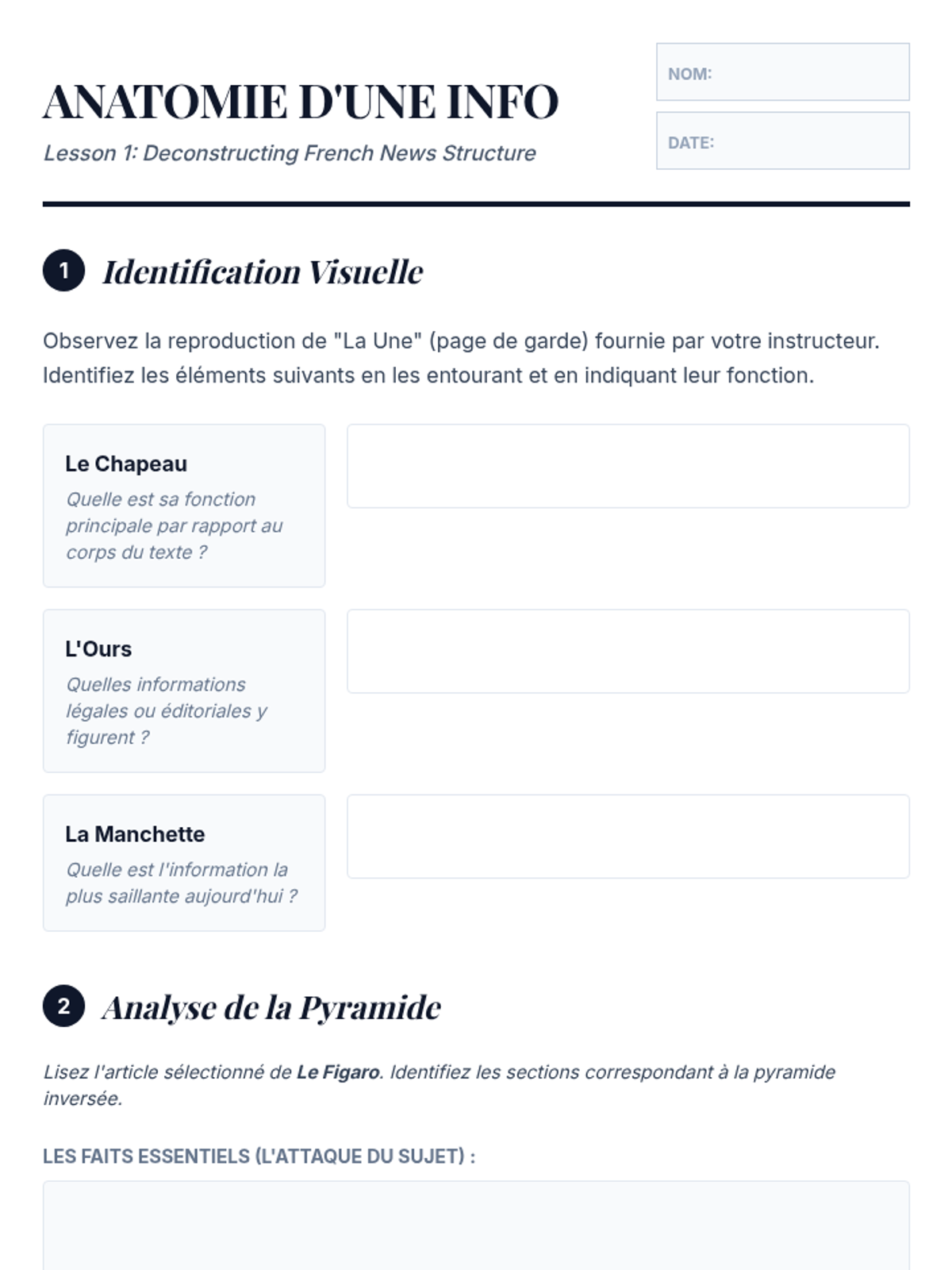
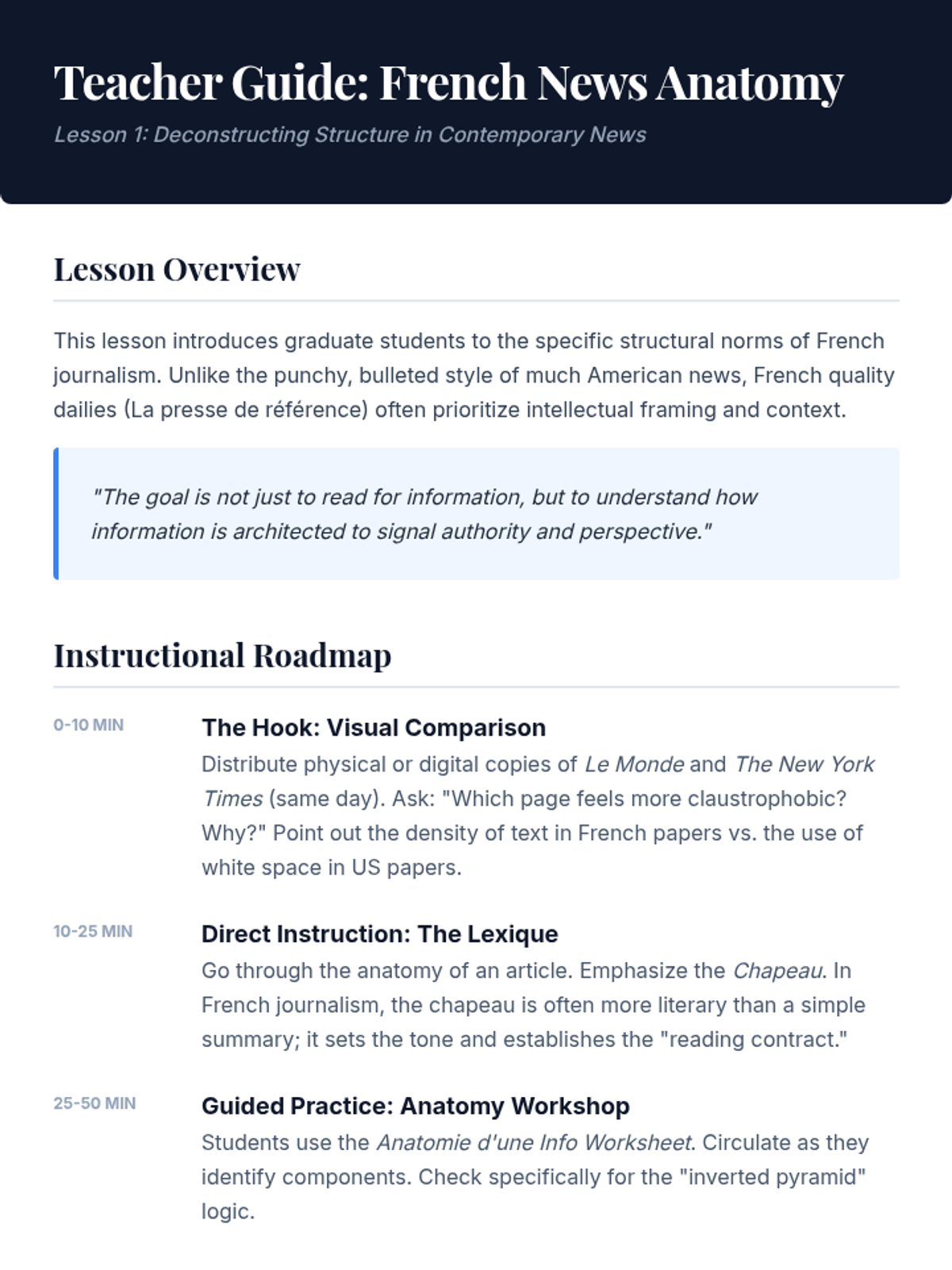
Students analyze the layout and structural components of articles from major newspapers like Le Monde and Le Figaro, identifying the 'chapeau' and inverted pyramid structure.
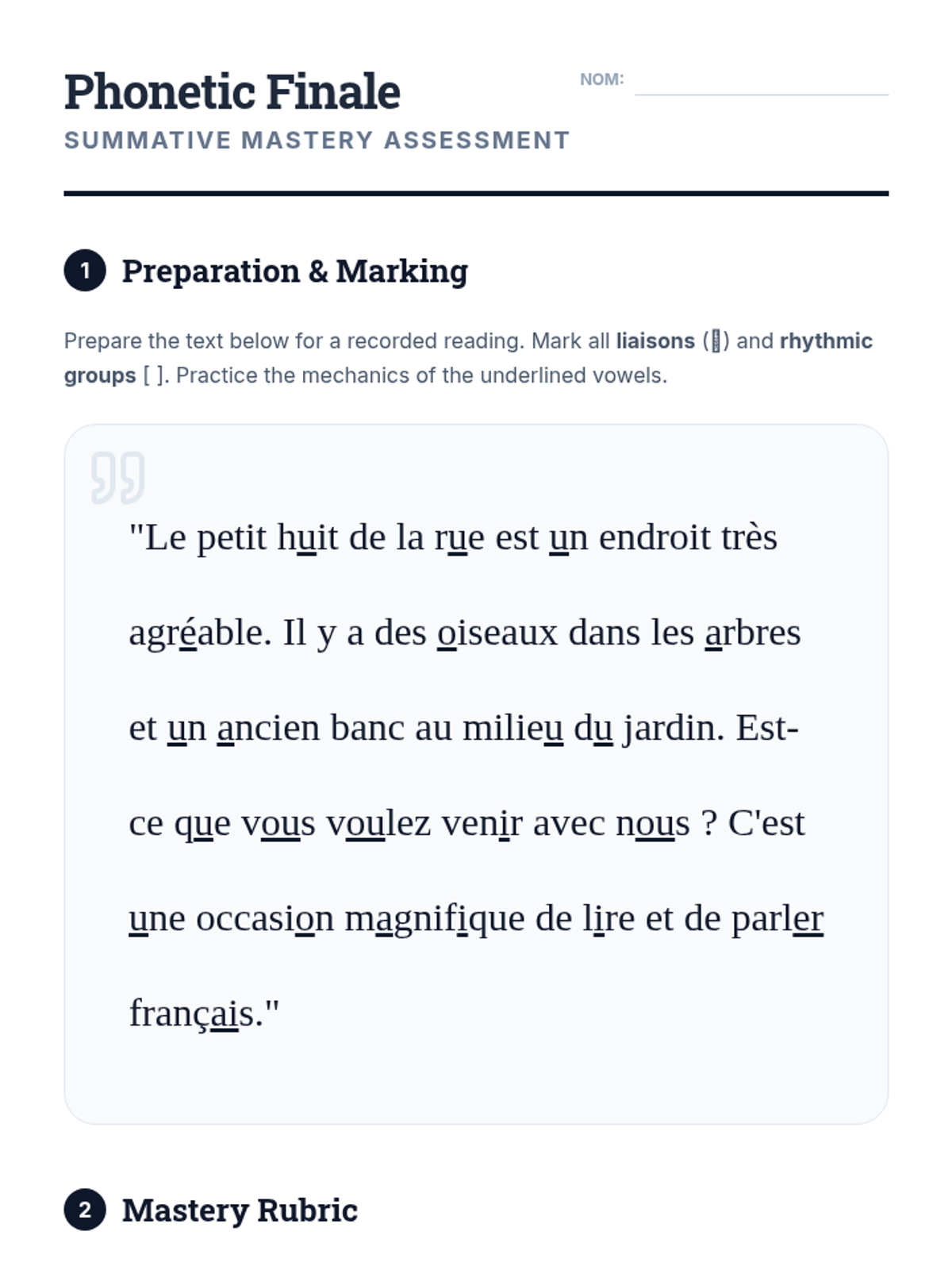
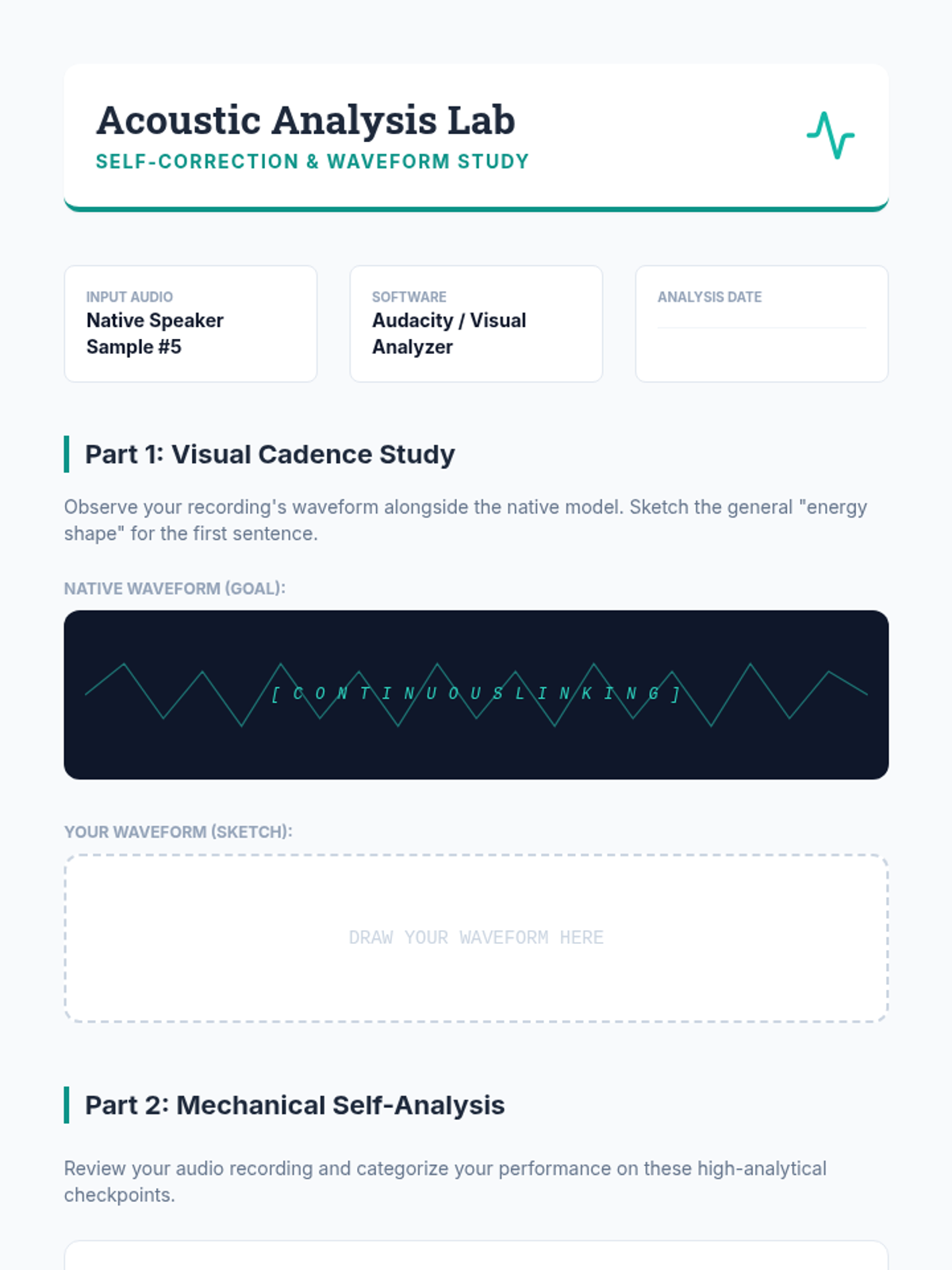
The culmination of the sequence where students use shadowing techniques to internalize native speed. They perform a final reading assessment and conduct a self-analysis of their recording.
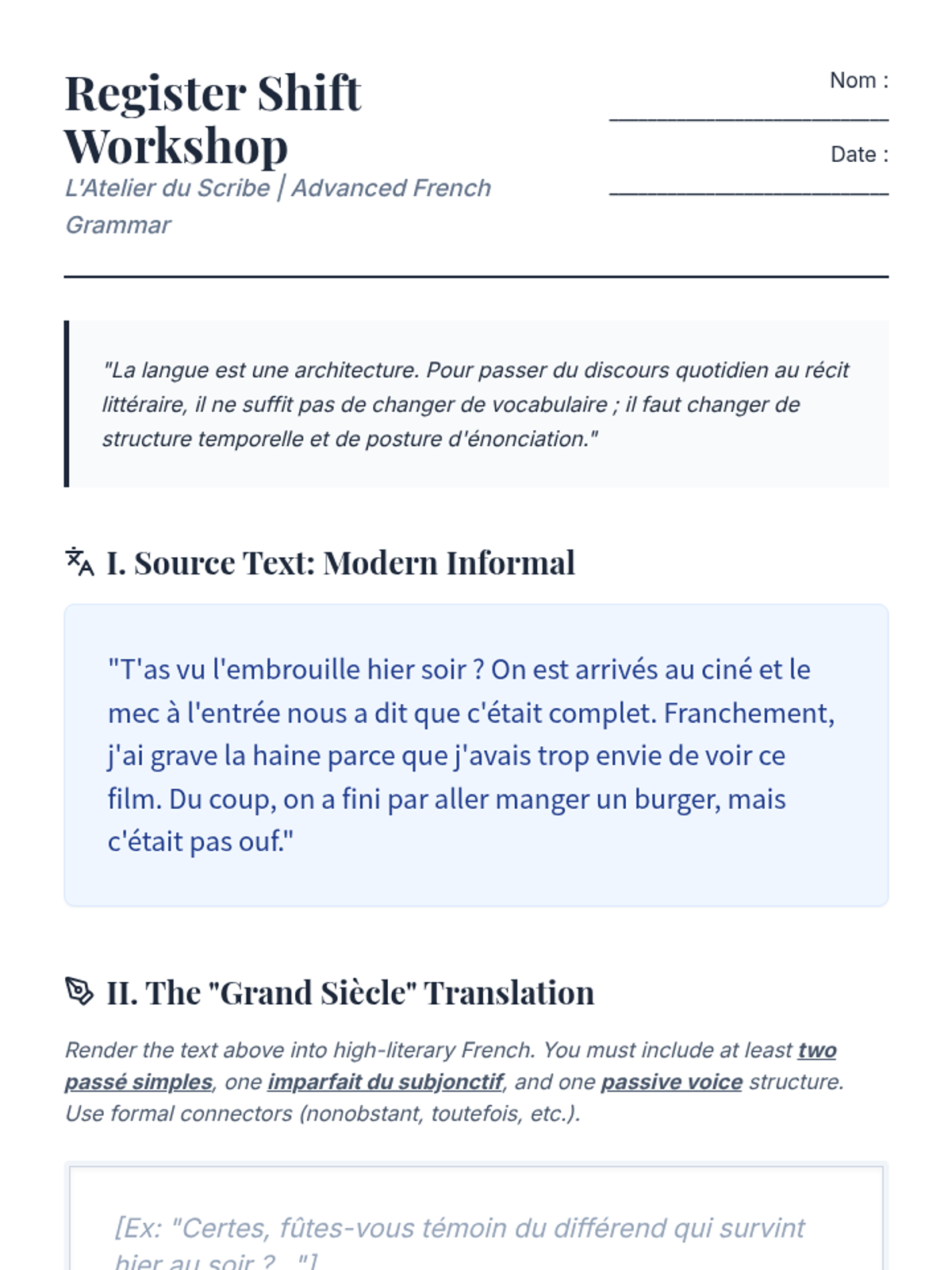
A bidirectional translation workshop moving between informal spoken French and high-literary style, applying all learned structures to elevate register.
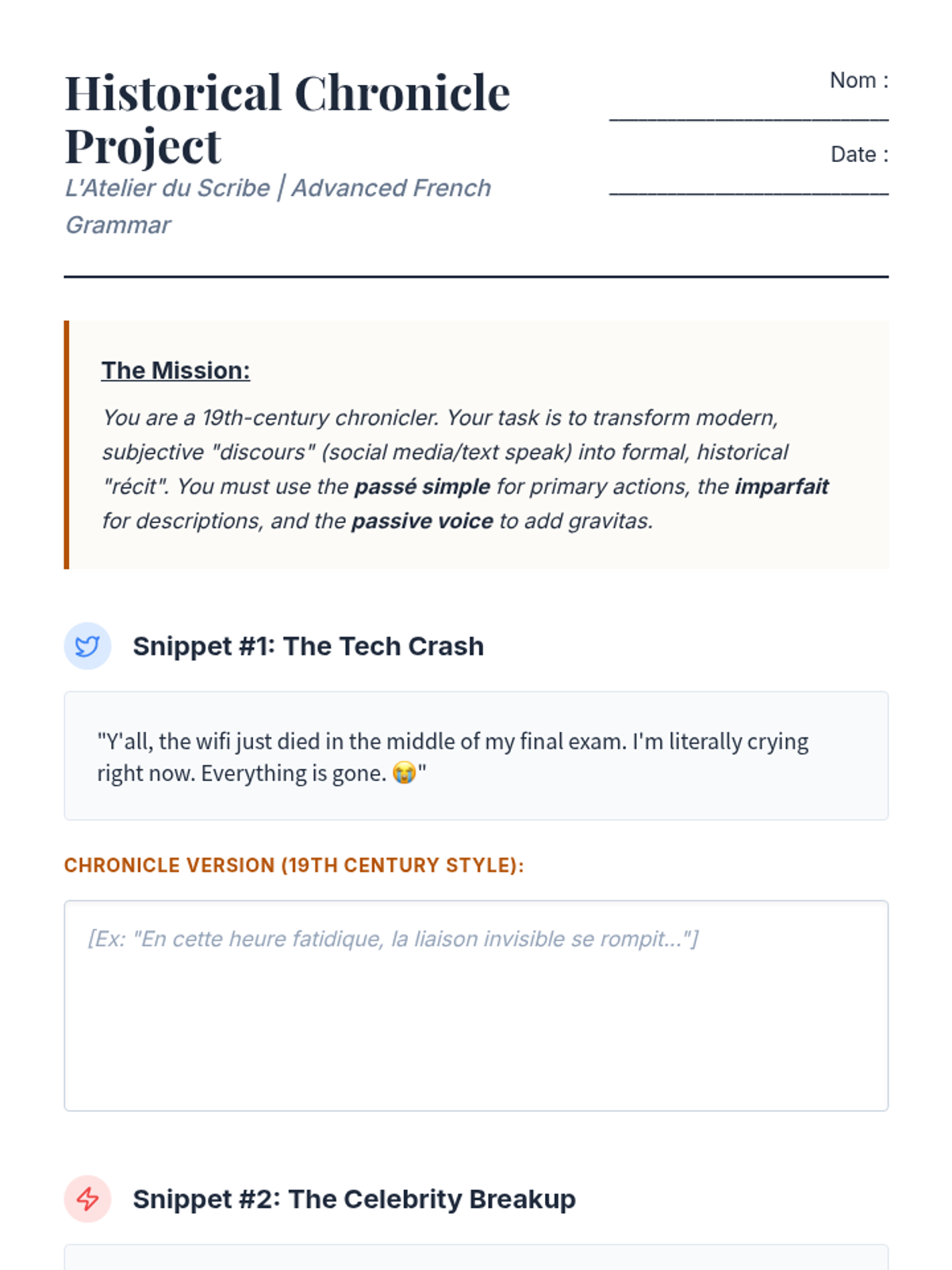
Students analyze the linguistic distinction between 'récit' and 'discours' and practice transforming modern news into 19th-century chronicles.
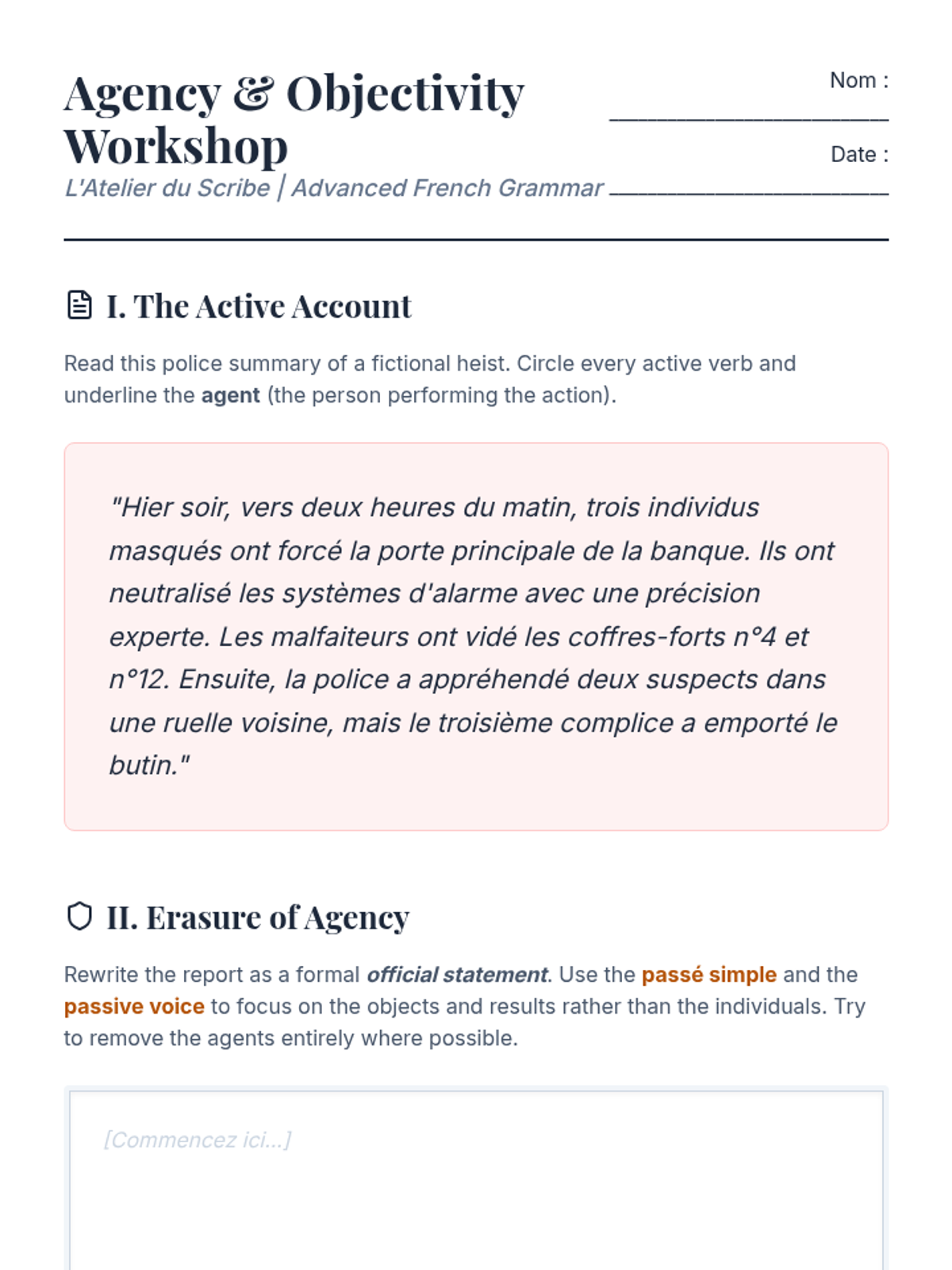
A workshop on using the passive voice to control agency and objectivity in formal writing, with a focus on maintaining literary tense consistency.
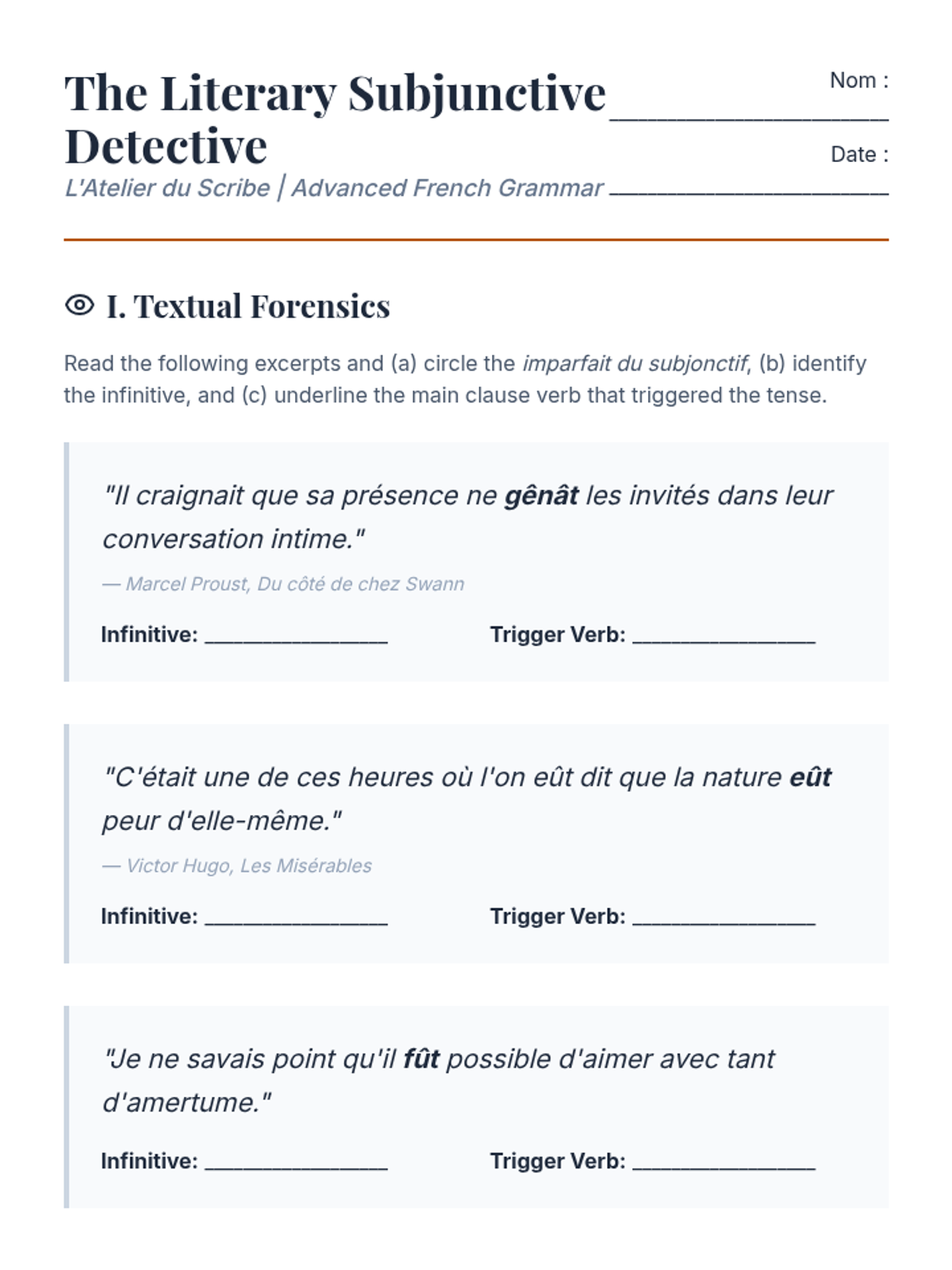
An exploration of the imparfait du subjonctif, its triggers through 'concordance des temps', and its socio-stylistic weight in presidential oratory and classic literature.
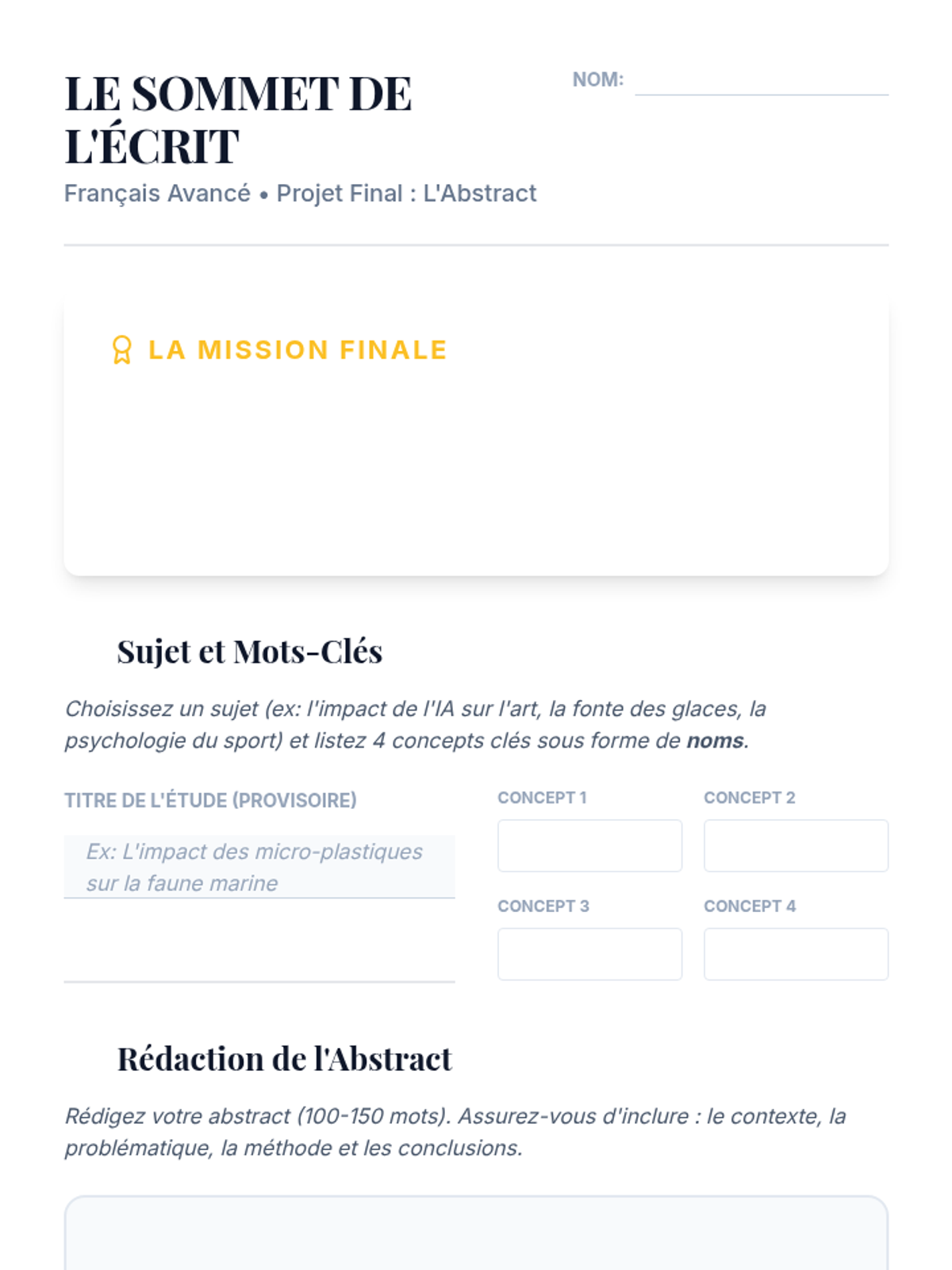
The capstone lesson where students produce a formal research abstract. They synthesize all previous skills to create a professional summary of a hypothetical academic study.
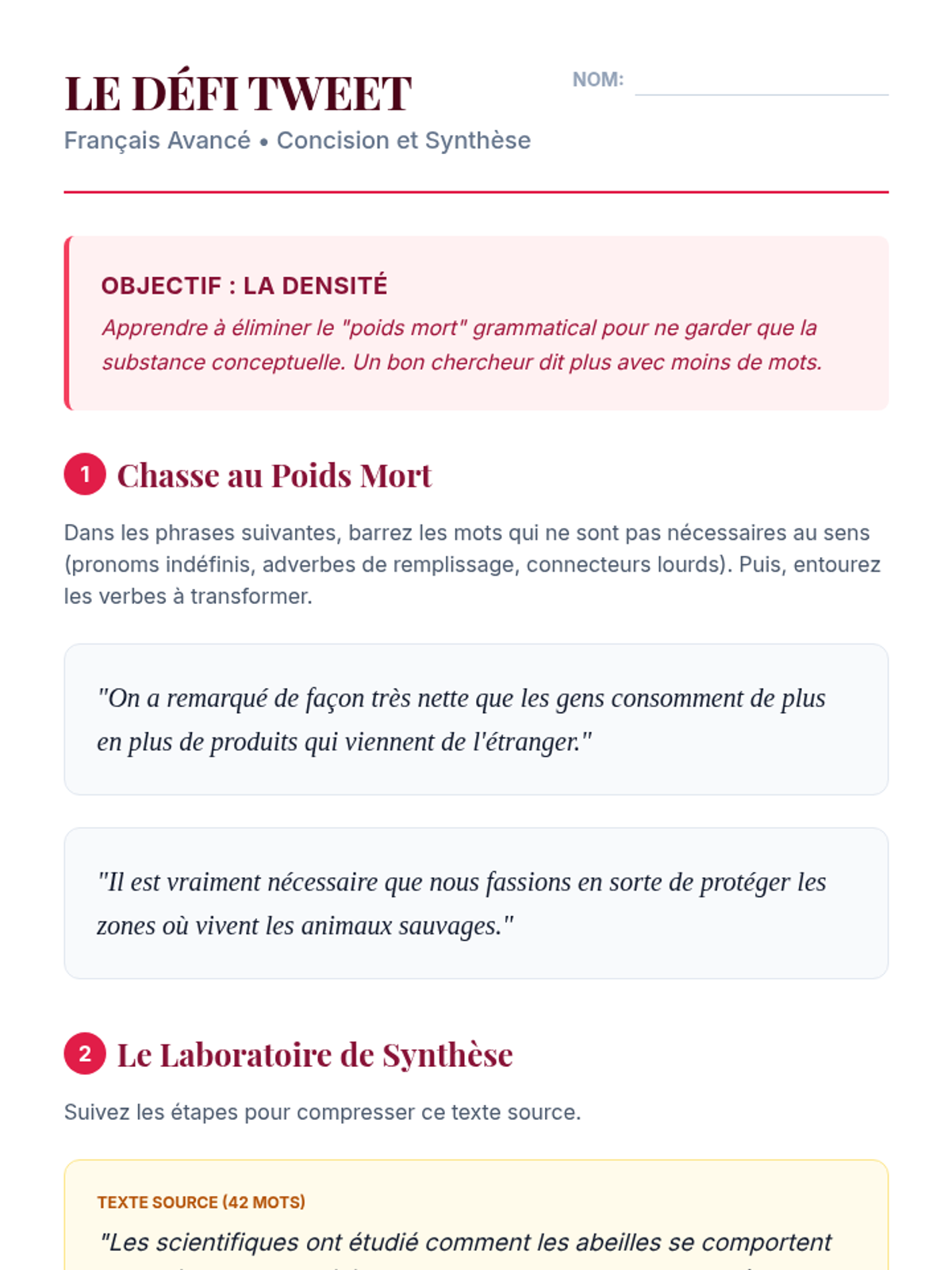
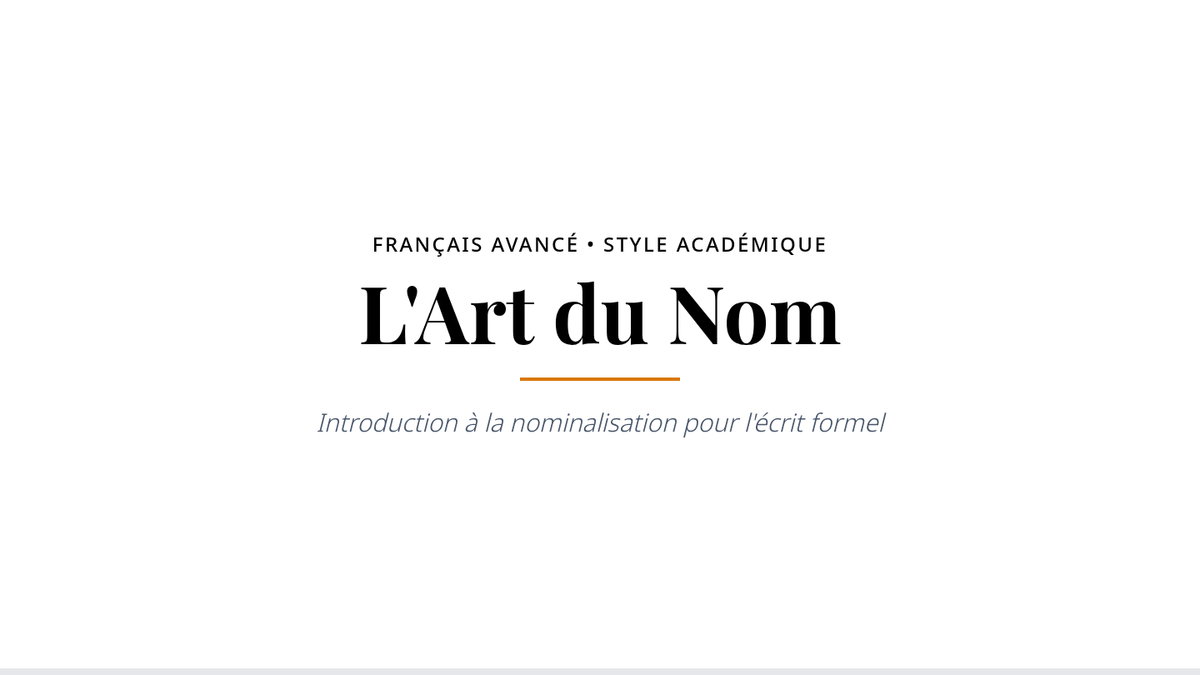
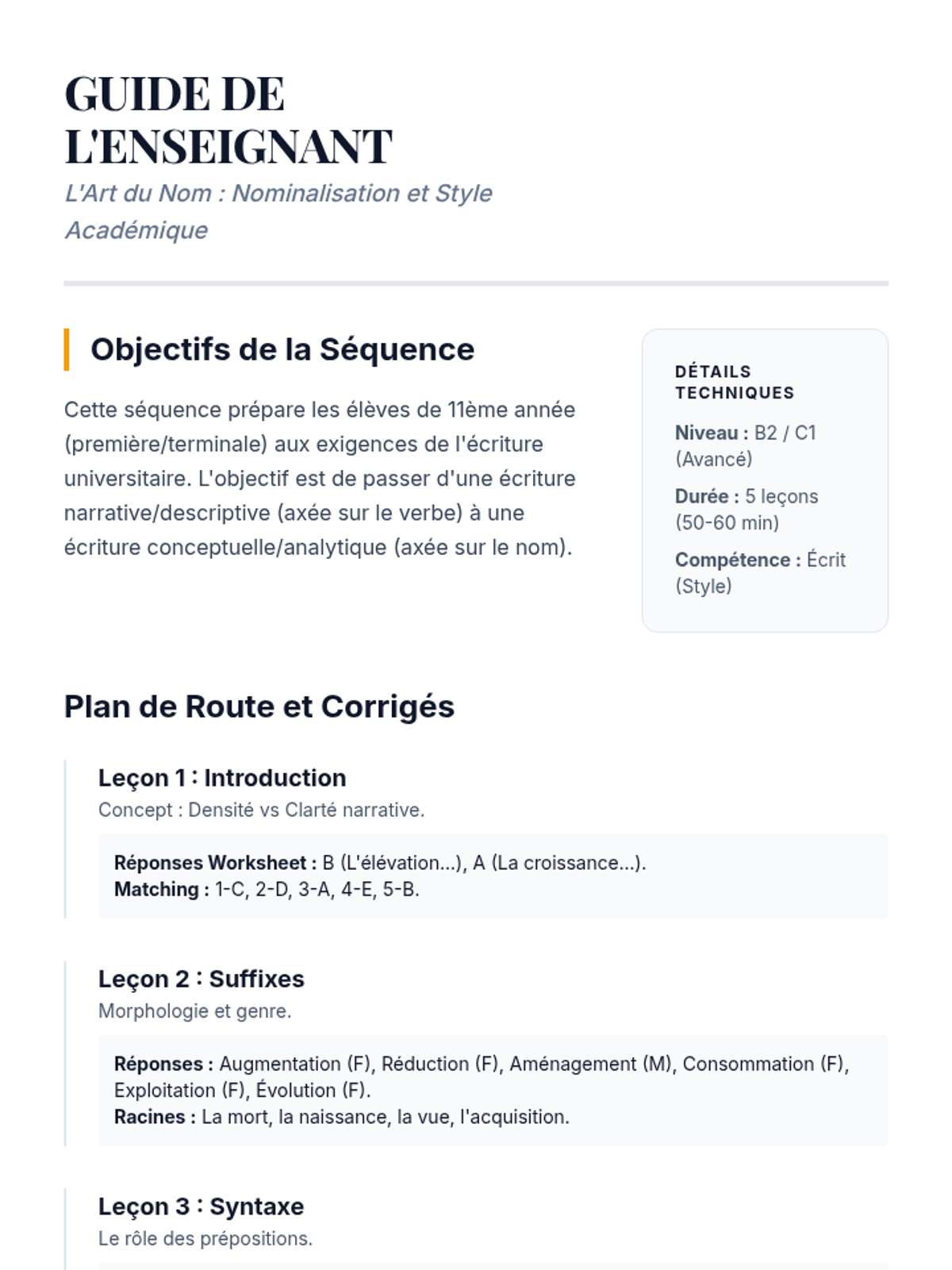
Students apply nominalization techniques to condense complex information. They practice summarizing paragraphs into single, information-dense sentences suitable for high-level academic notes.
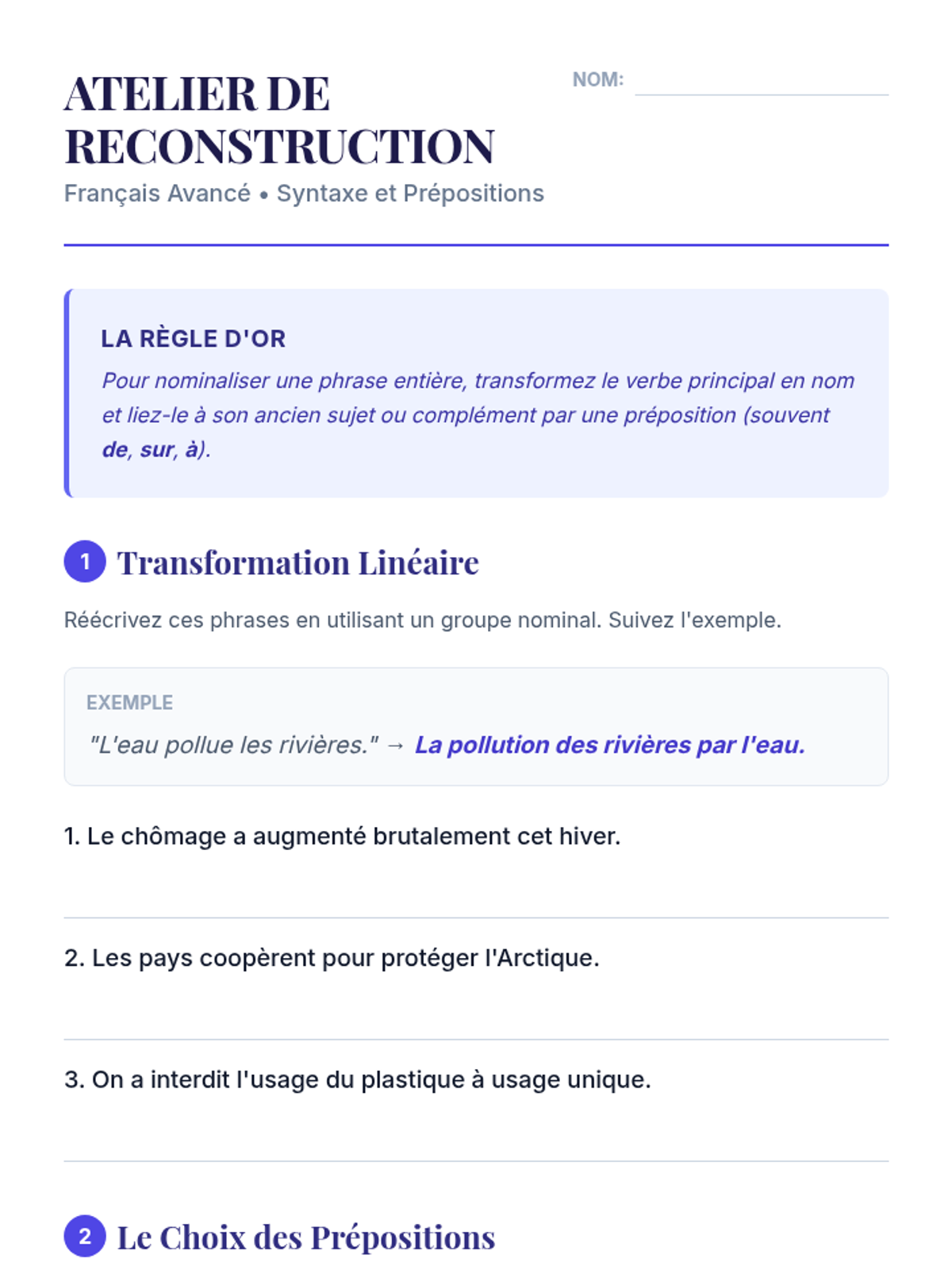
Focuses on the grammatical changes required when moving from a clause-based sentence to a phrase-based one. Students master the use of prepositions and possessive structures in academic writing.
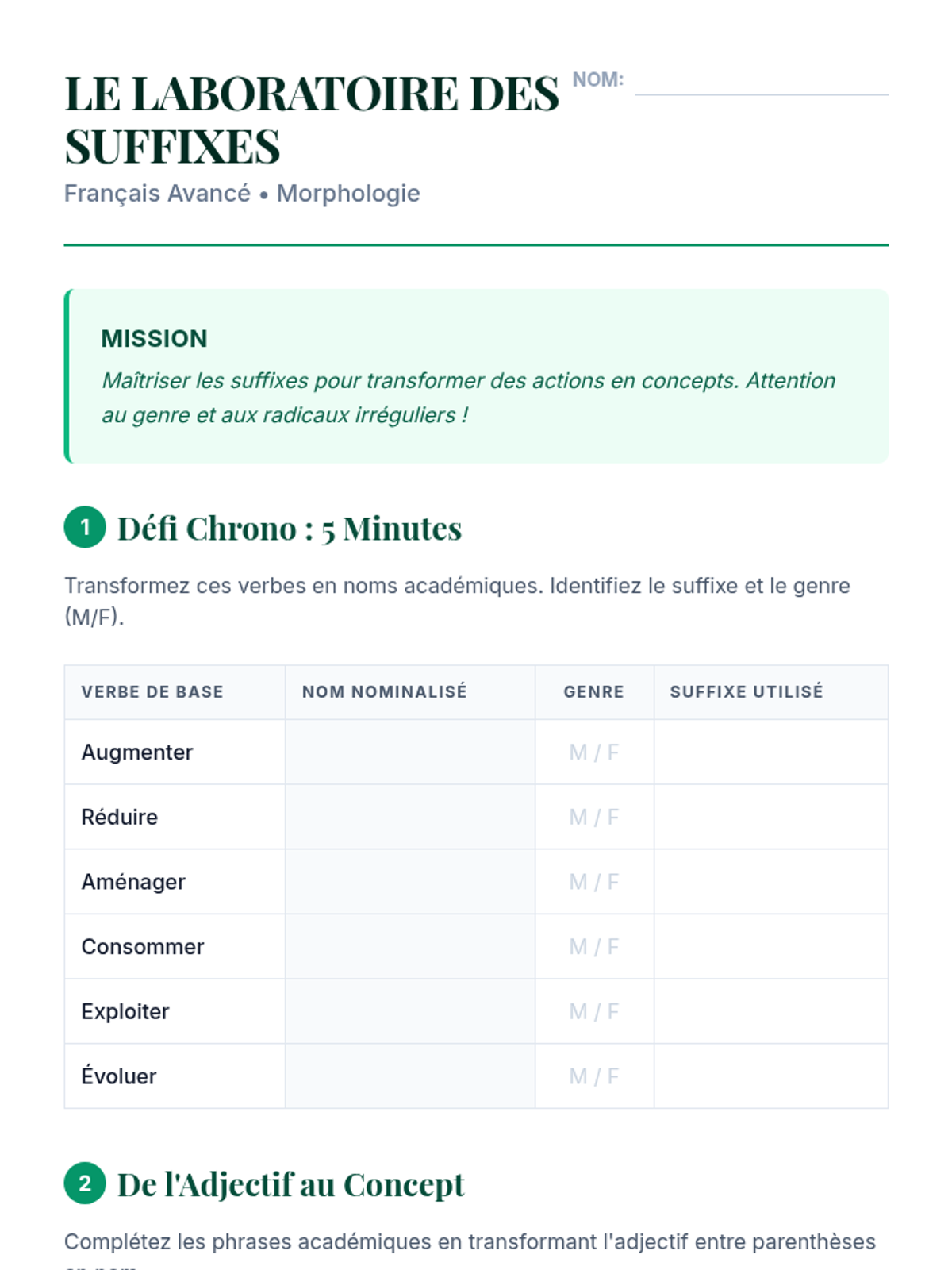
A deep dive into French morphology focusing on common suffixes used to transform verbs and adjectives into nouns. Students learn to predict word forms and recognize gender patterns in nominalized nouns.
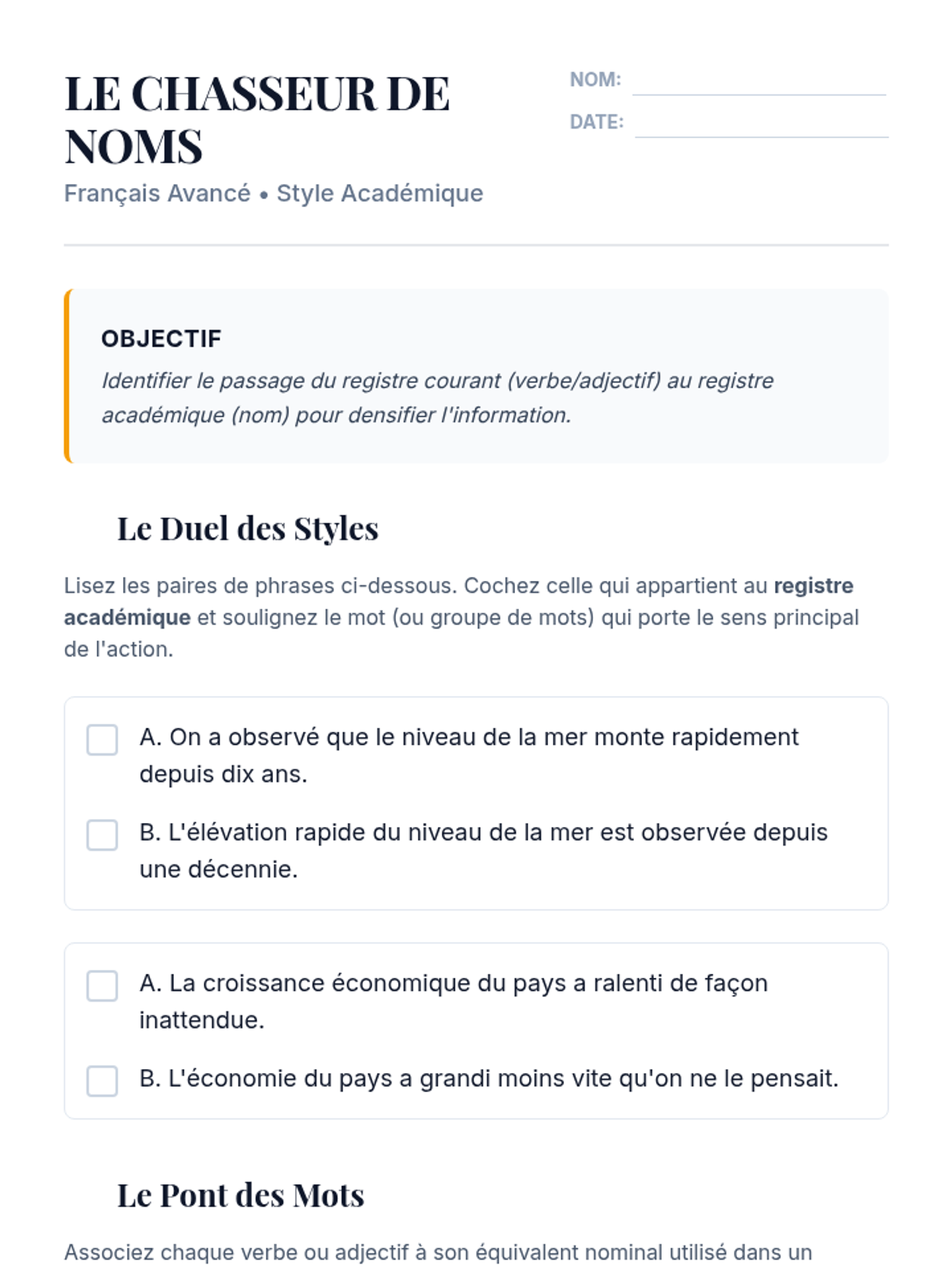
Students explore the shift from verbal to nominal structures to understand how academic French achieves a formal tone. They compare different registers and identify the impact of nominalization on sentence density.
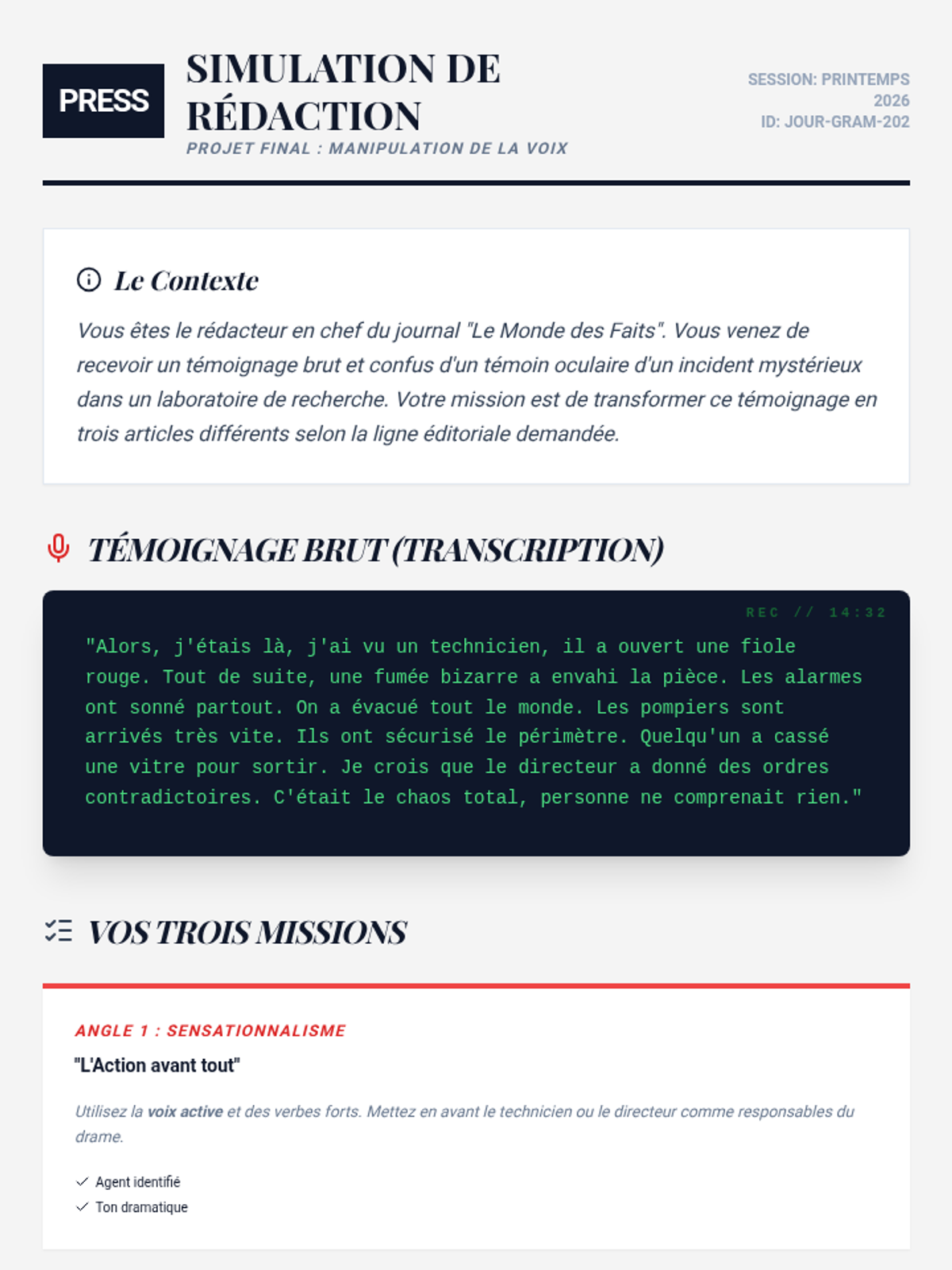
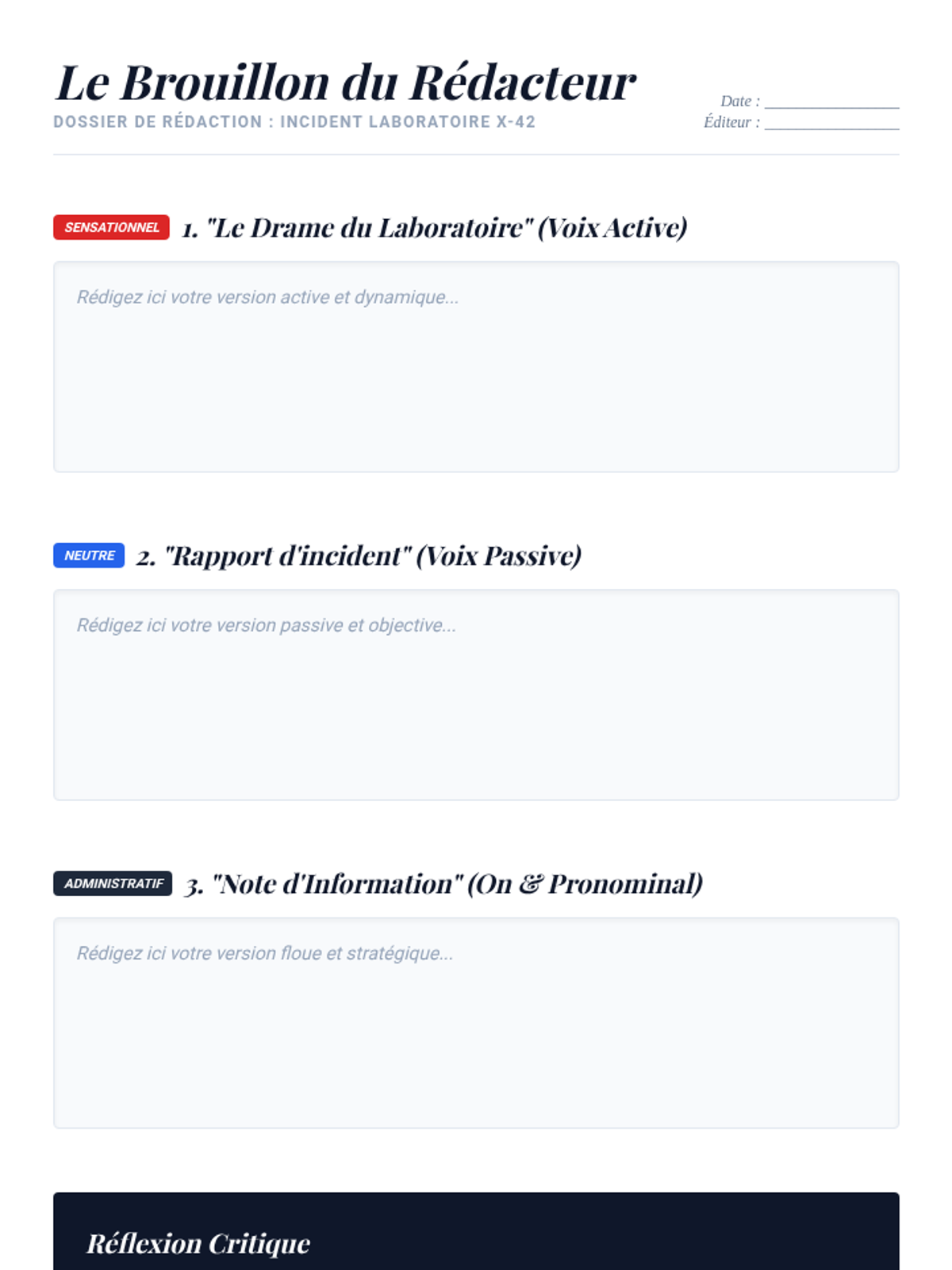
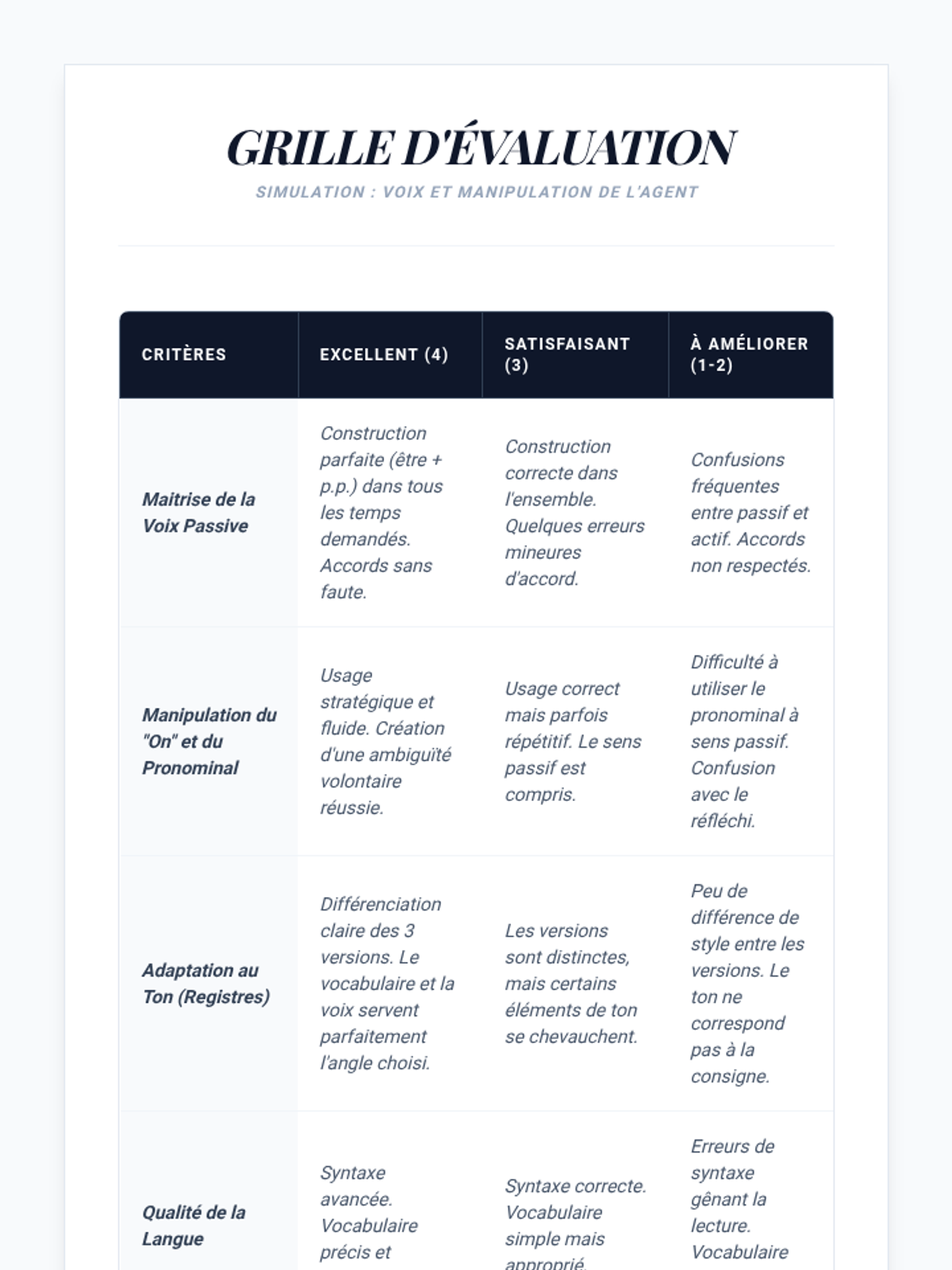
Students act as editors, rewriting a chaotic witness account into three versions: a sensationalist active account, a neutral passive report, and a formal administrative summary.
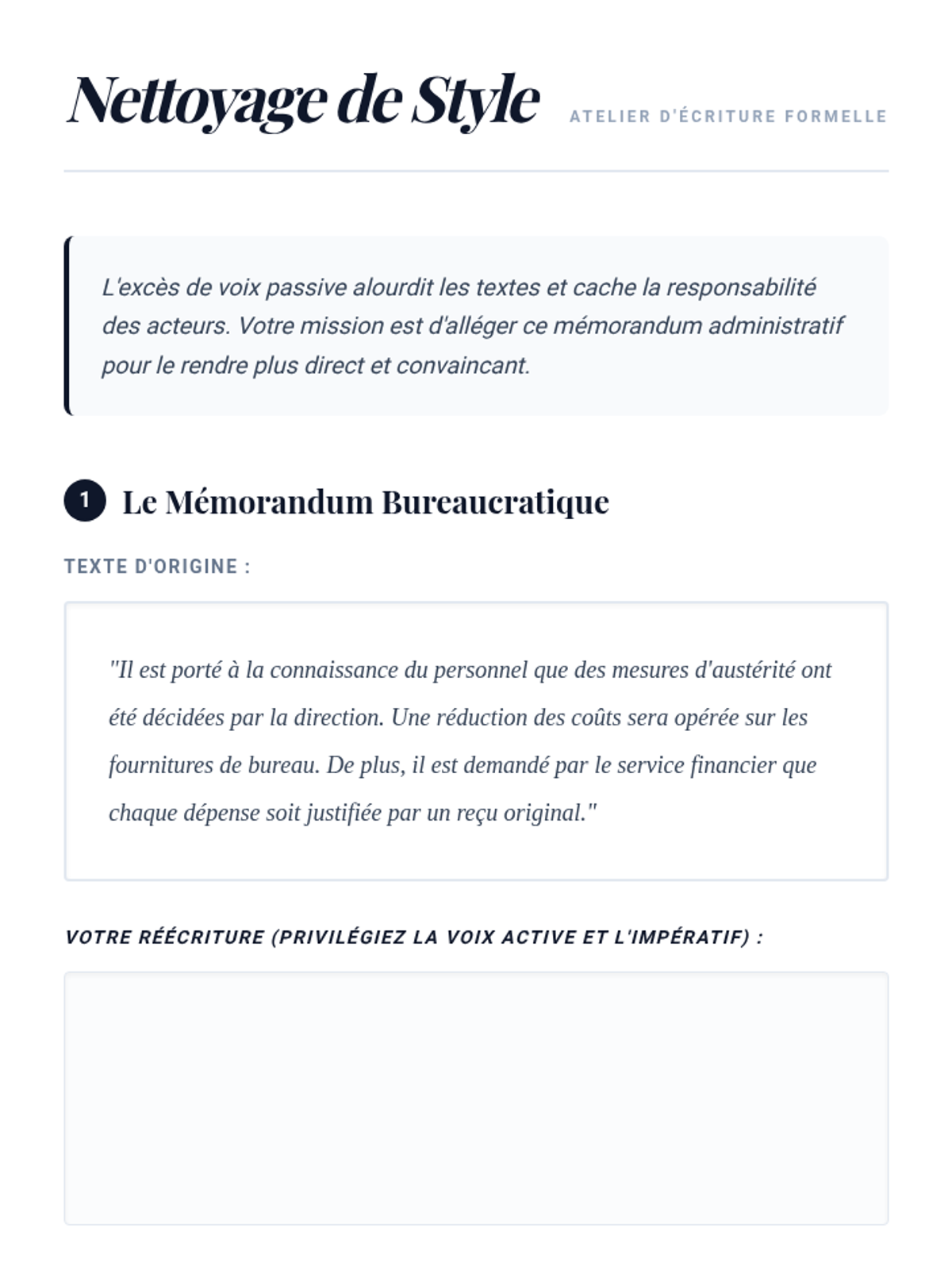
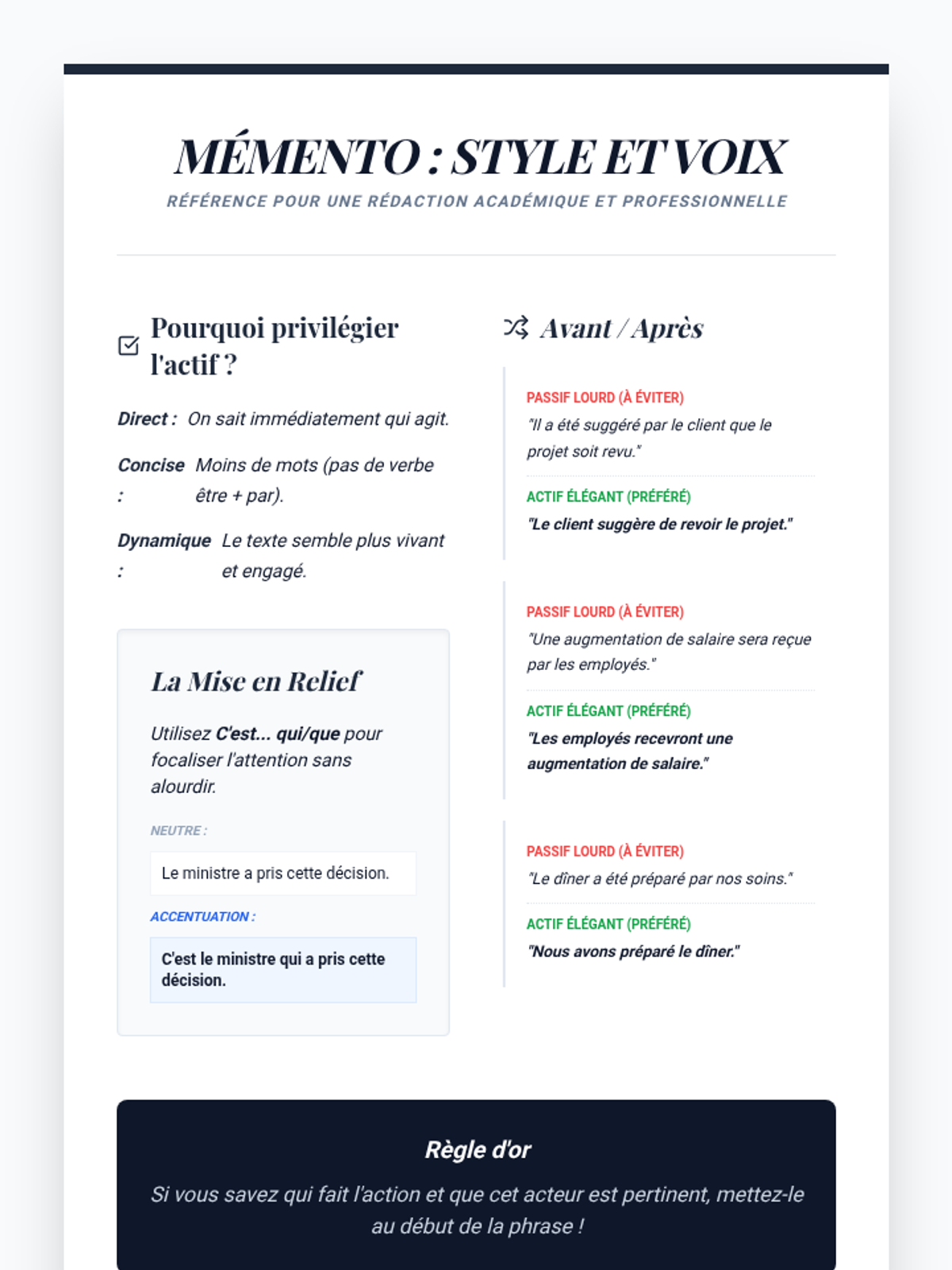
While knowing the passive is important, avoiding it is often better for style. Students practice transforming heavy passive sentences into active ones or using 'C'est... qui' structures.
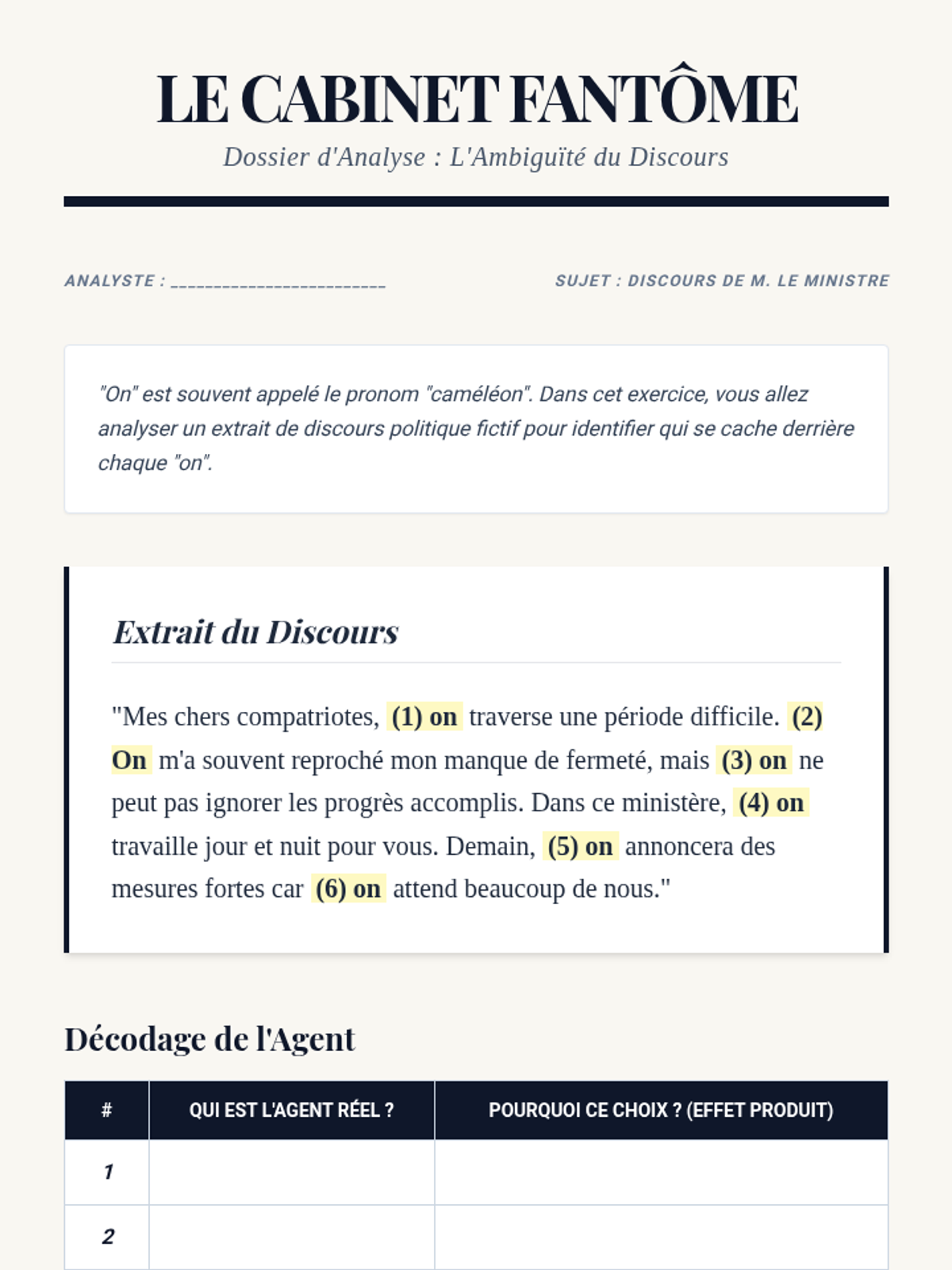
Students explore the versatility of 'on' to replace 'nous', 'les gens', or a passive construction. They discuss the ambiguity of 'on' in political speech.
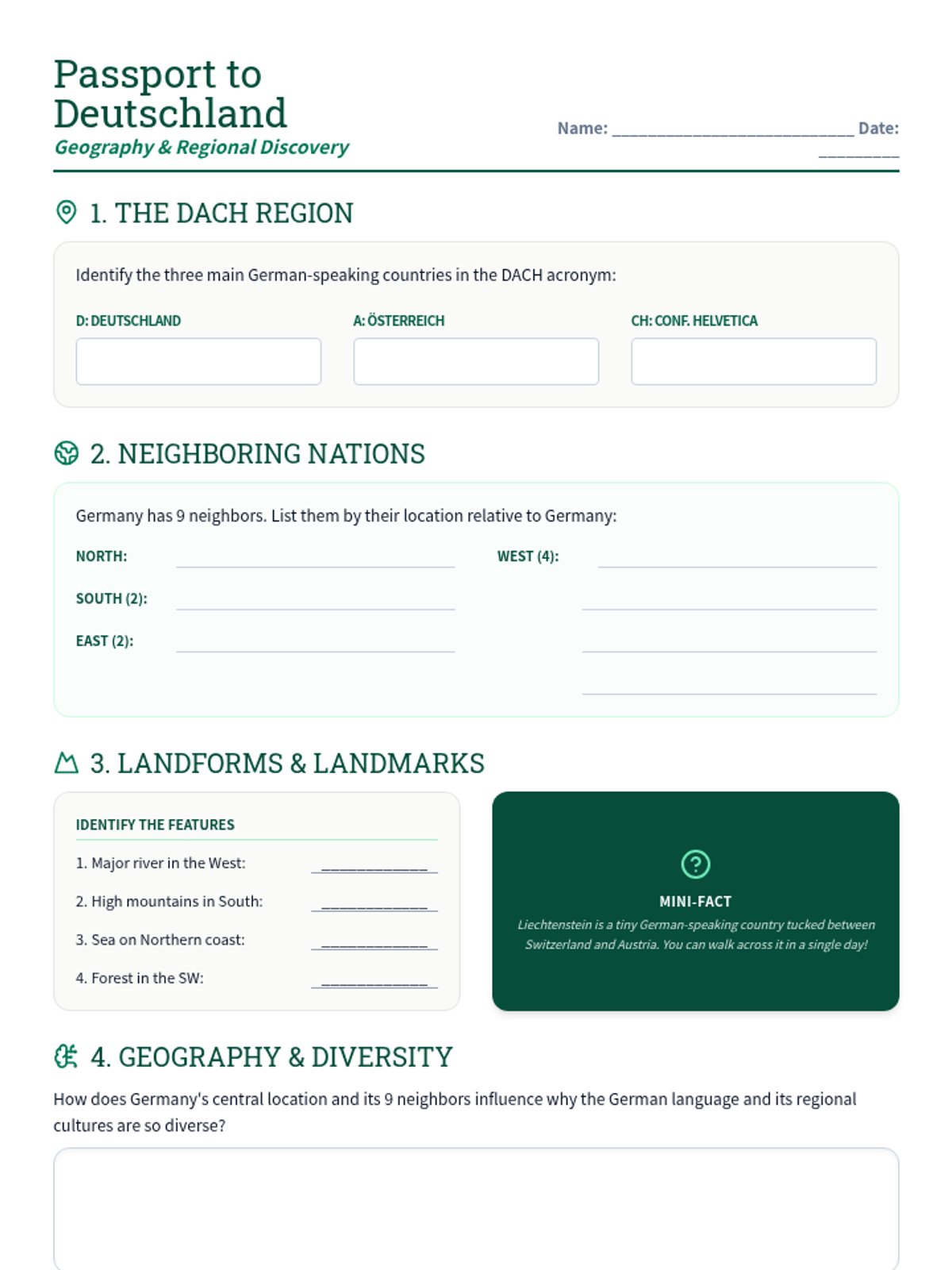
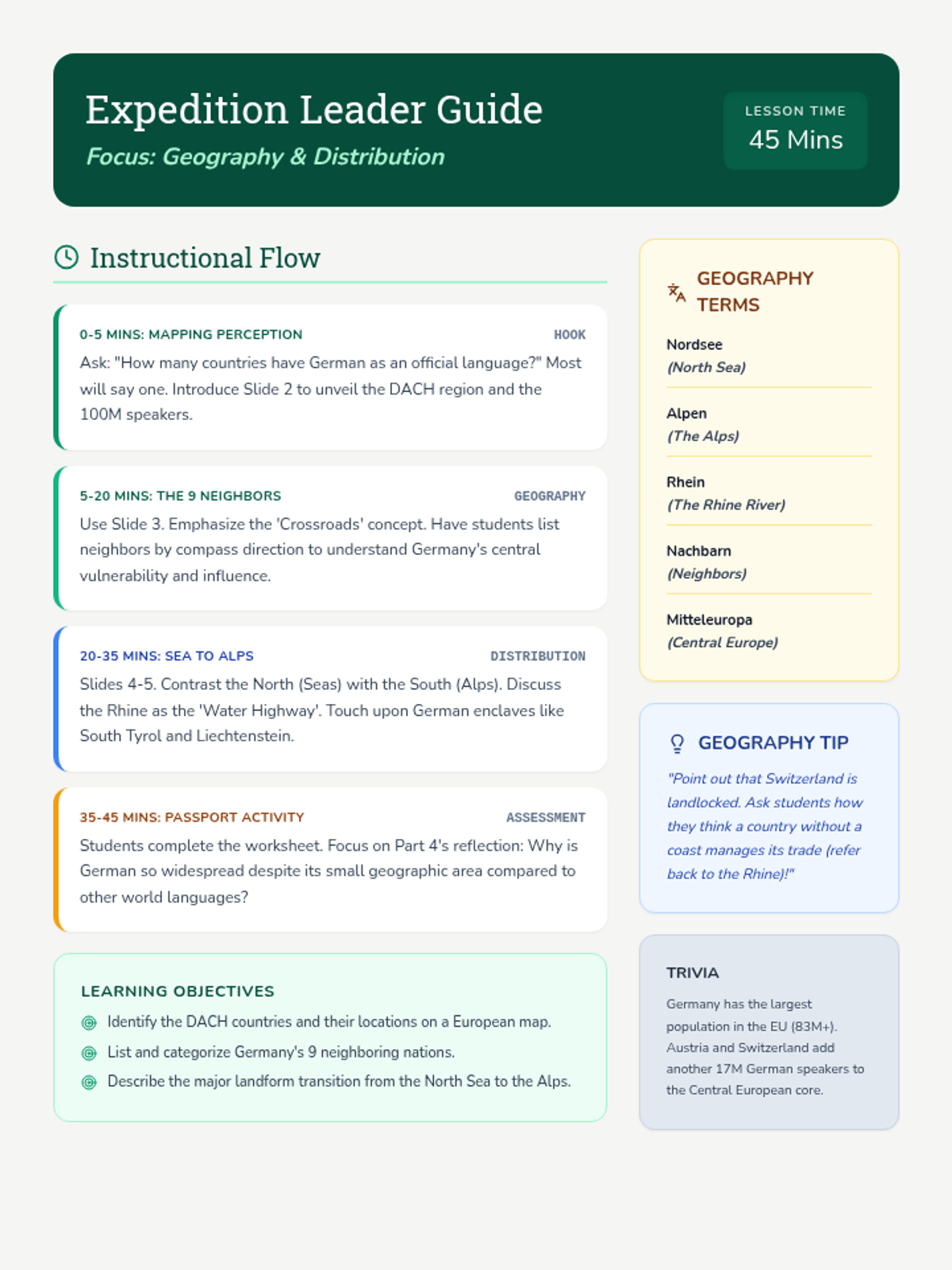
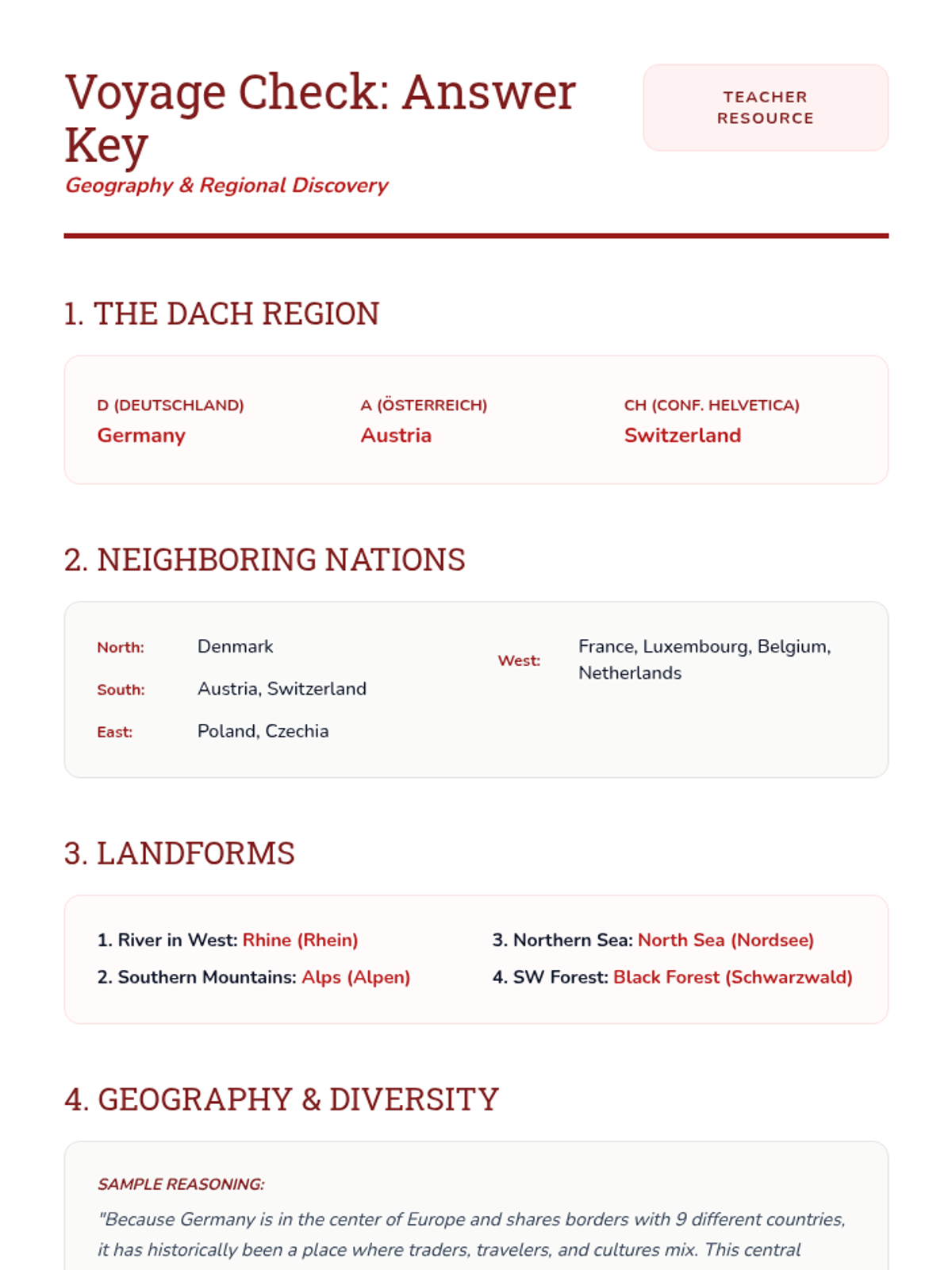
An introductory 45-minute lesson exploring the geography of German-speaking regions and the vibrant cultural traditions that define them. Students will map the DACH region and discover festivals like Oktoberfest and Karneval.
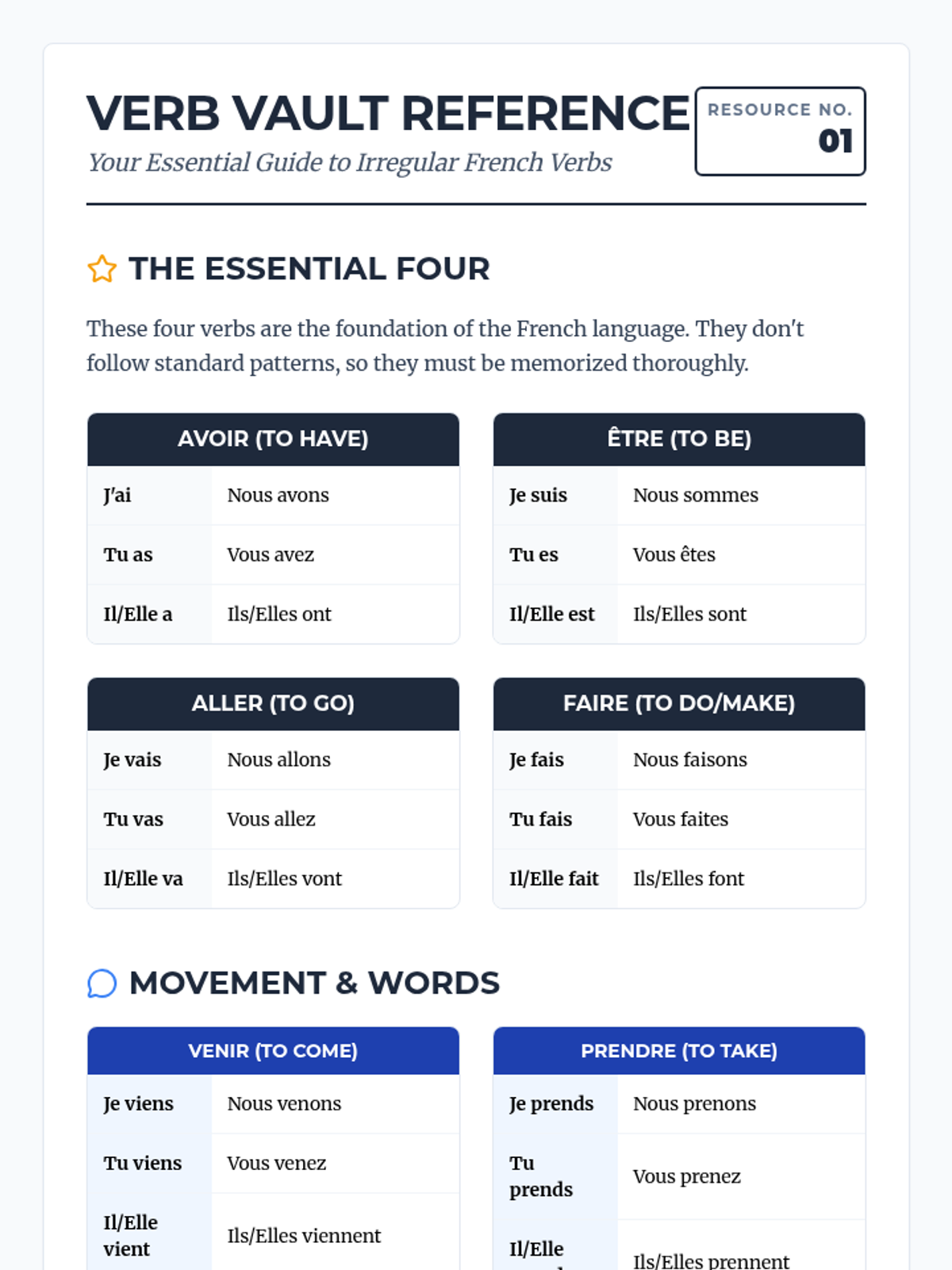
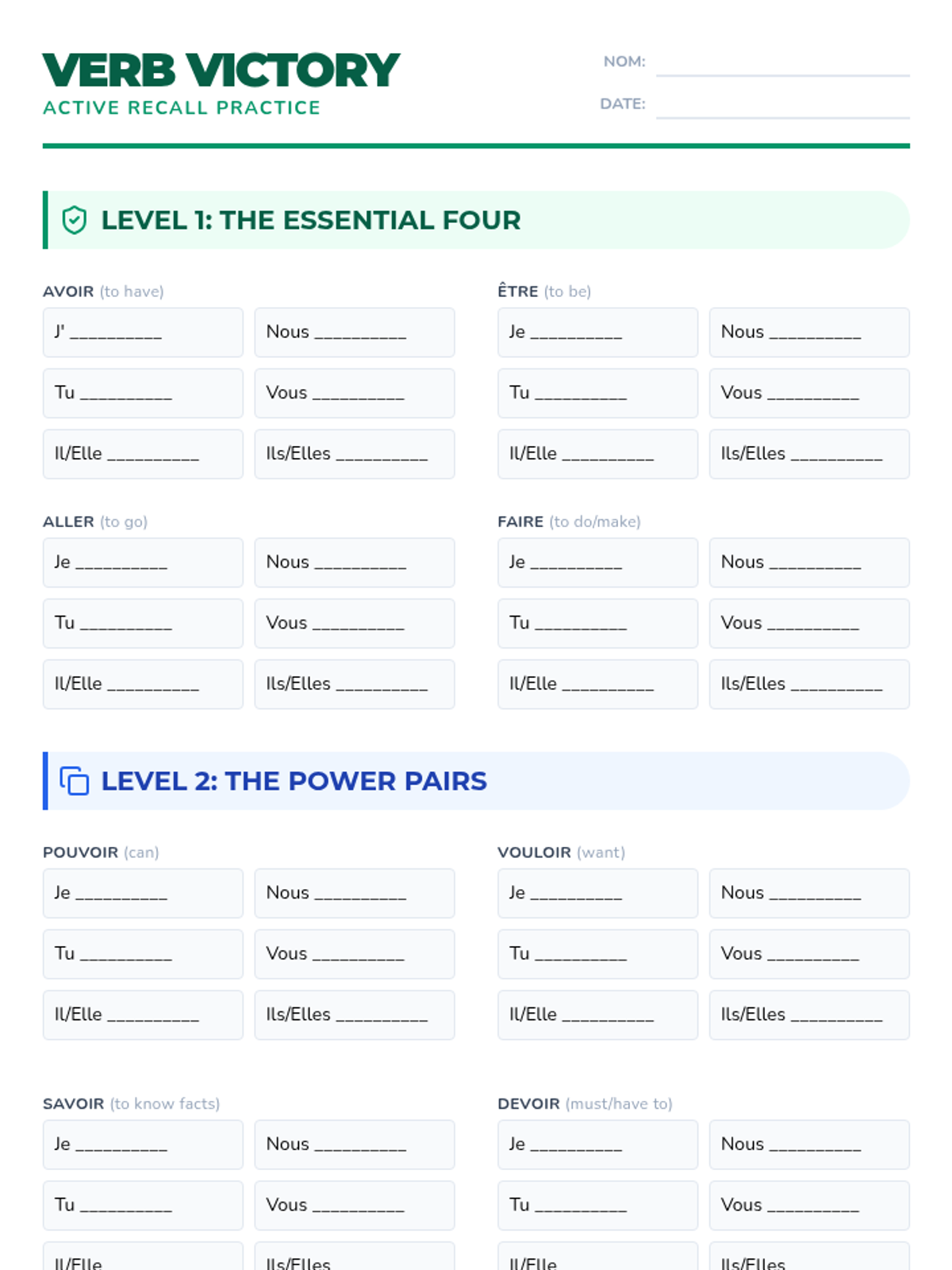
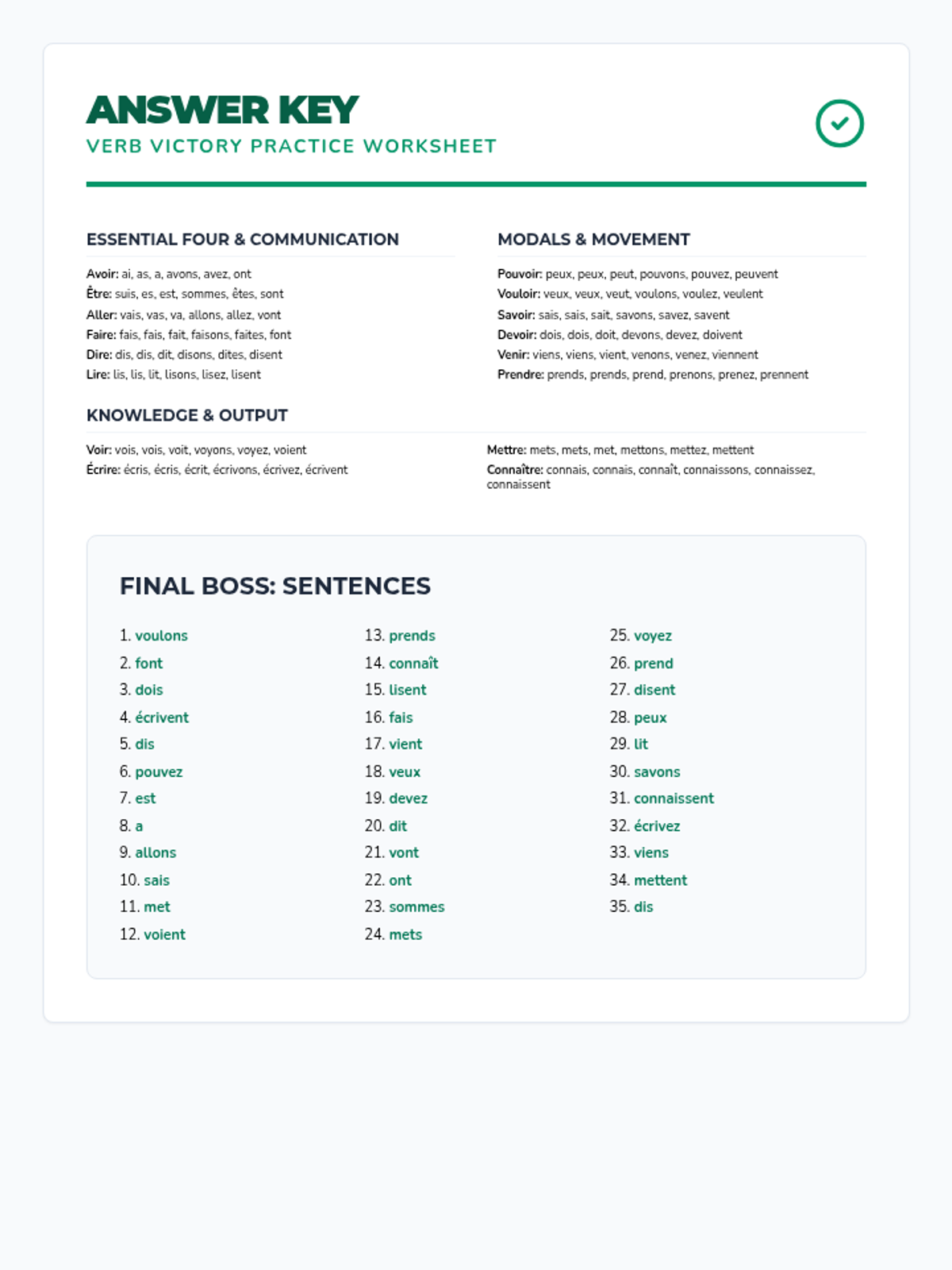
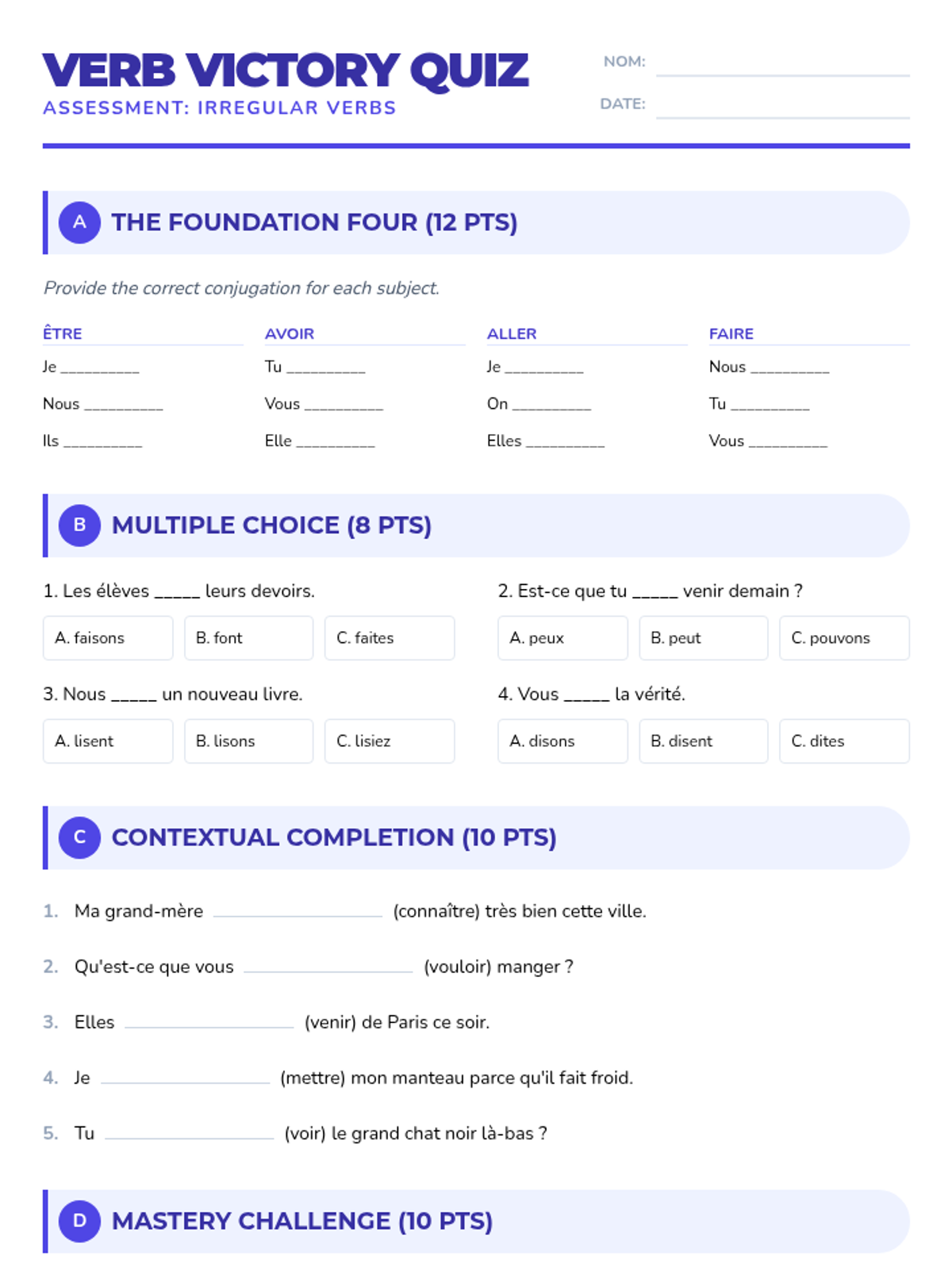
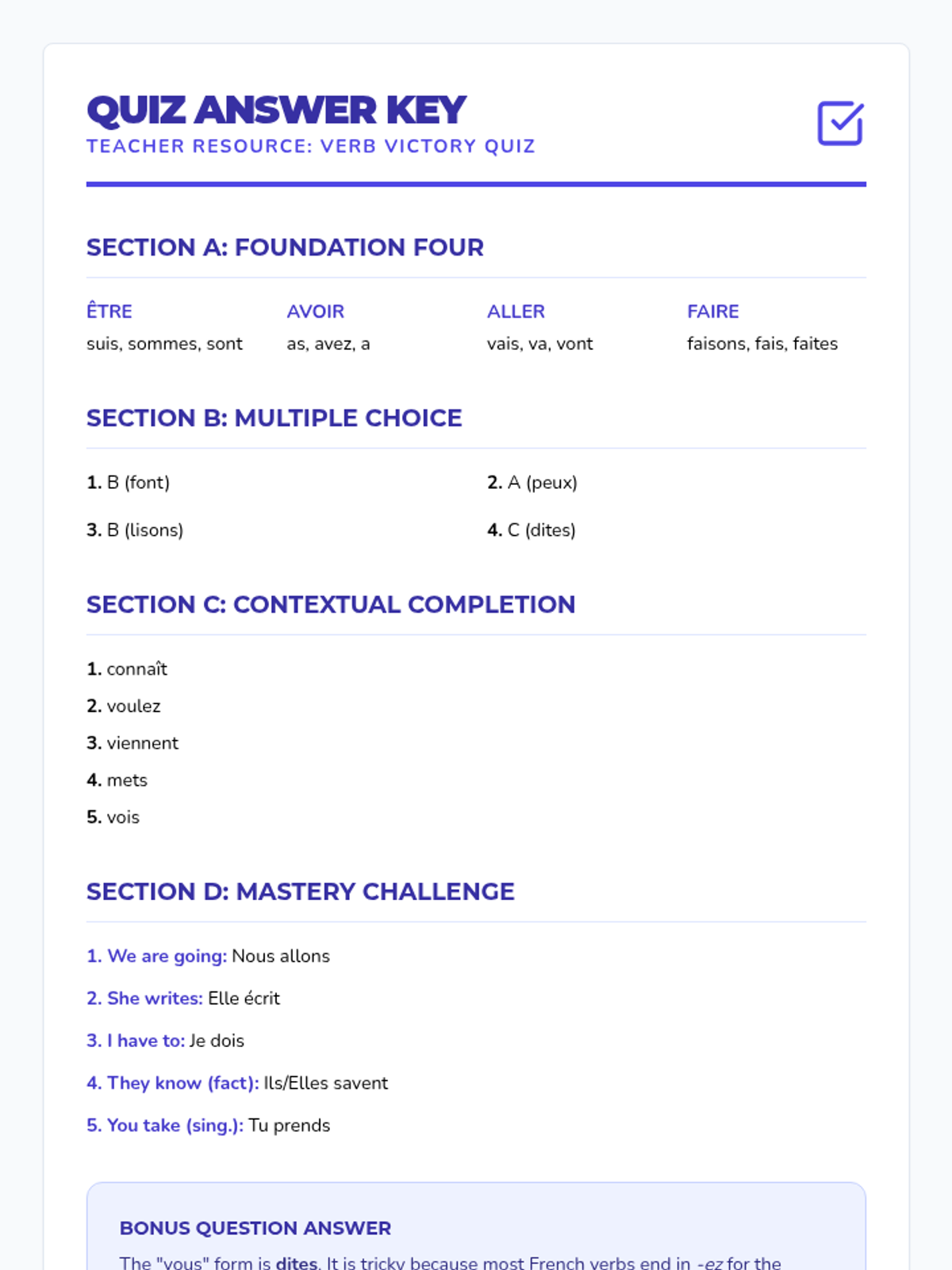
A comprehensive guide and practice set for mastering the most common irregular French verbs, focusing on patterns, comparisons, and active recall.
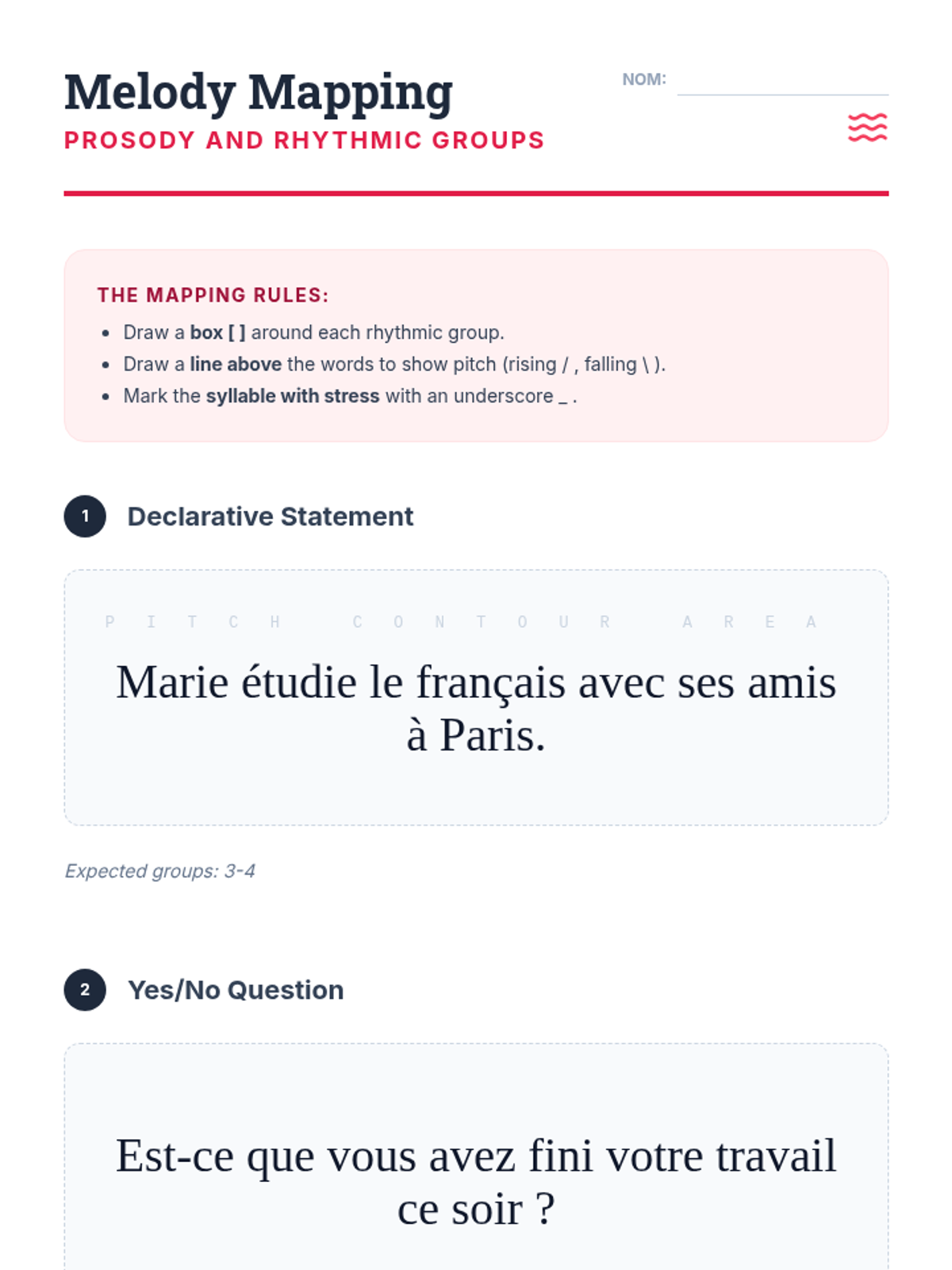
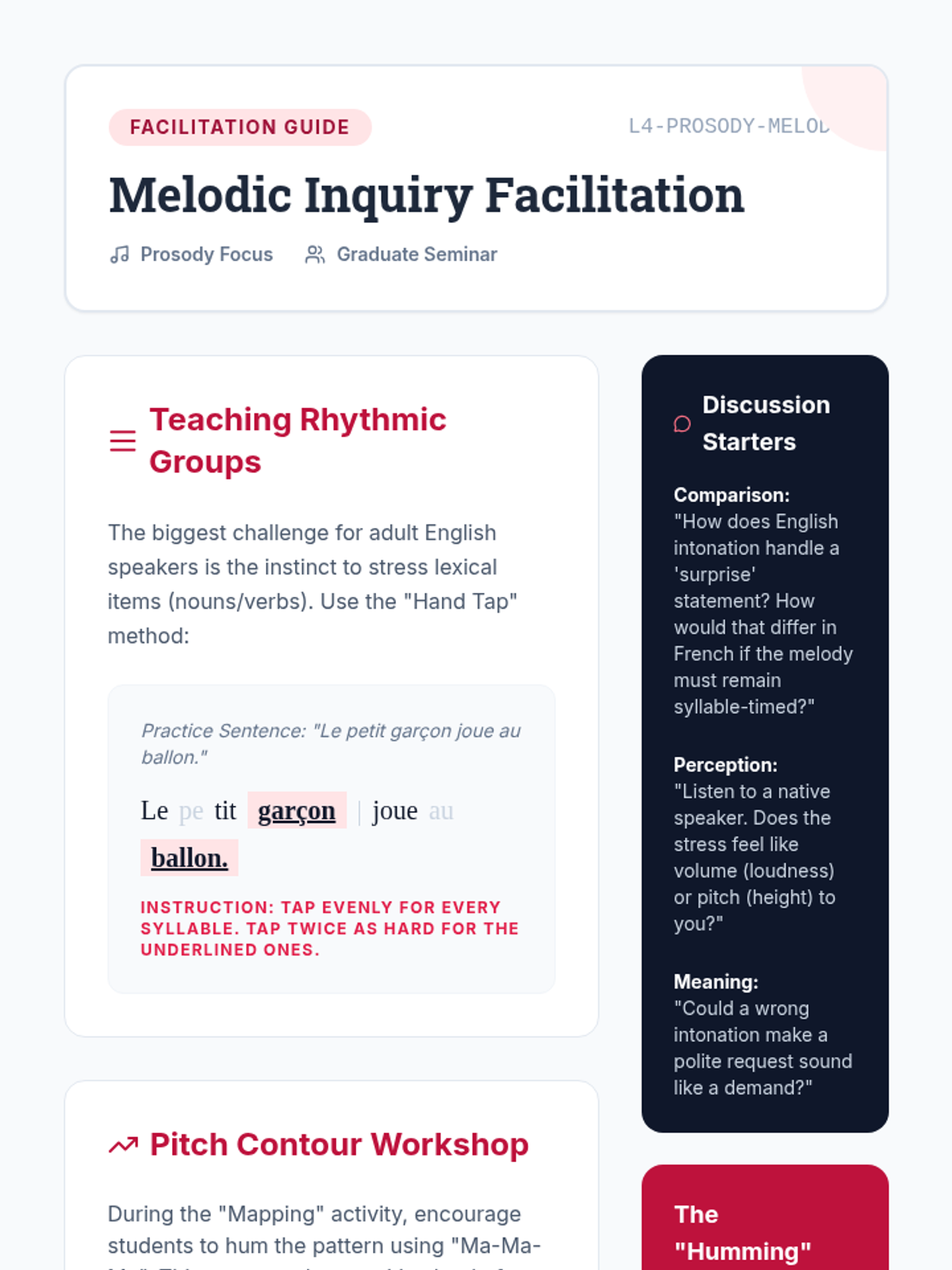
Study of French prosody, focusing on the rise and fall of pitch in statements versus questions. Students map pitch contours and practice rhythmic grouping.
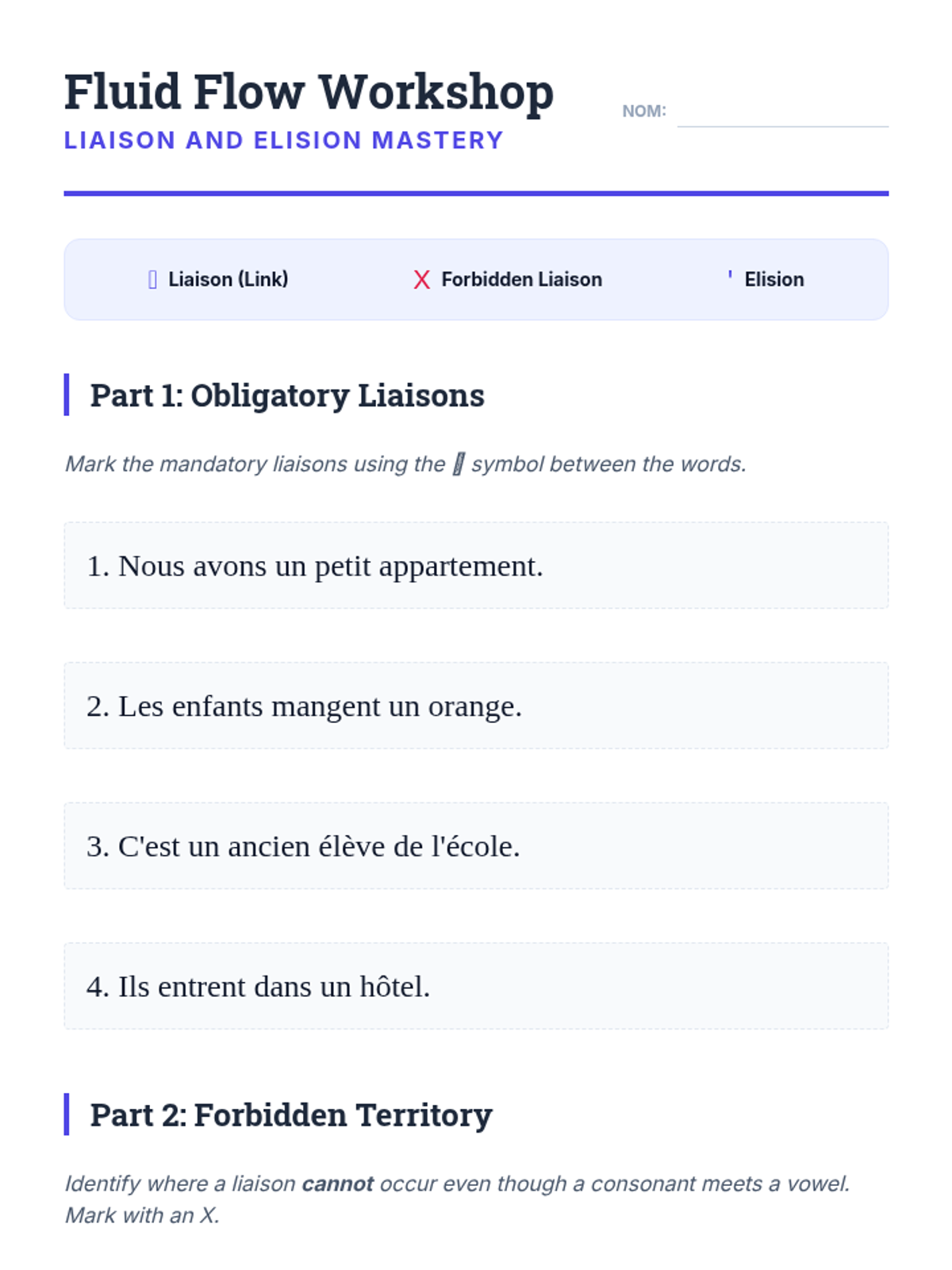
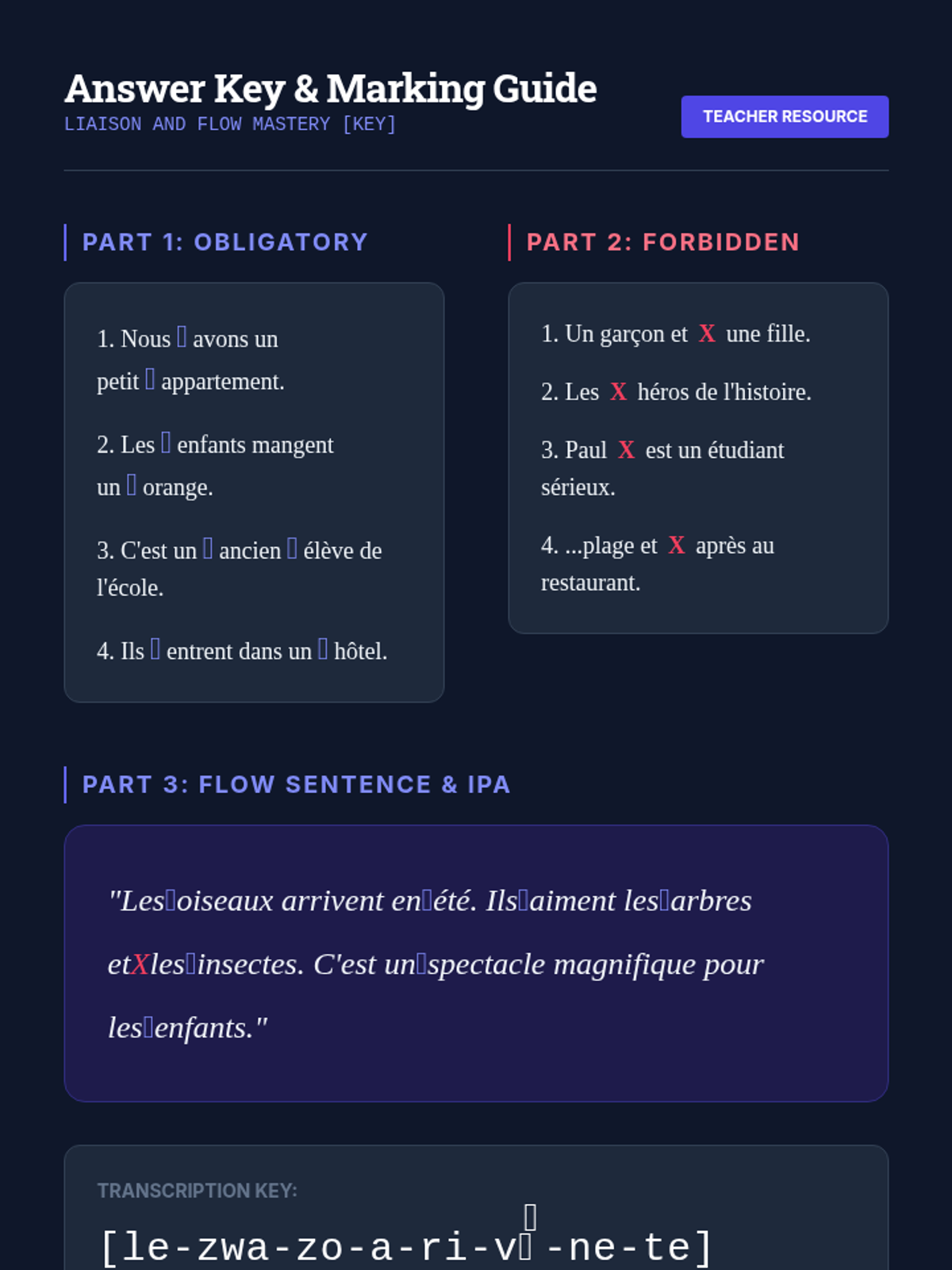
Exploration of the rules governing liaison and elision to achieve the characteristic fluid sound of French. Students practice marking and executing word connections.
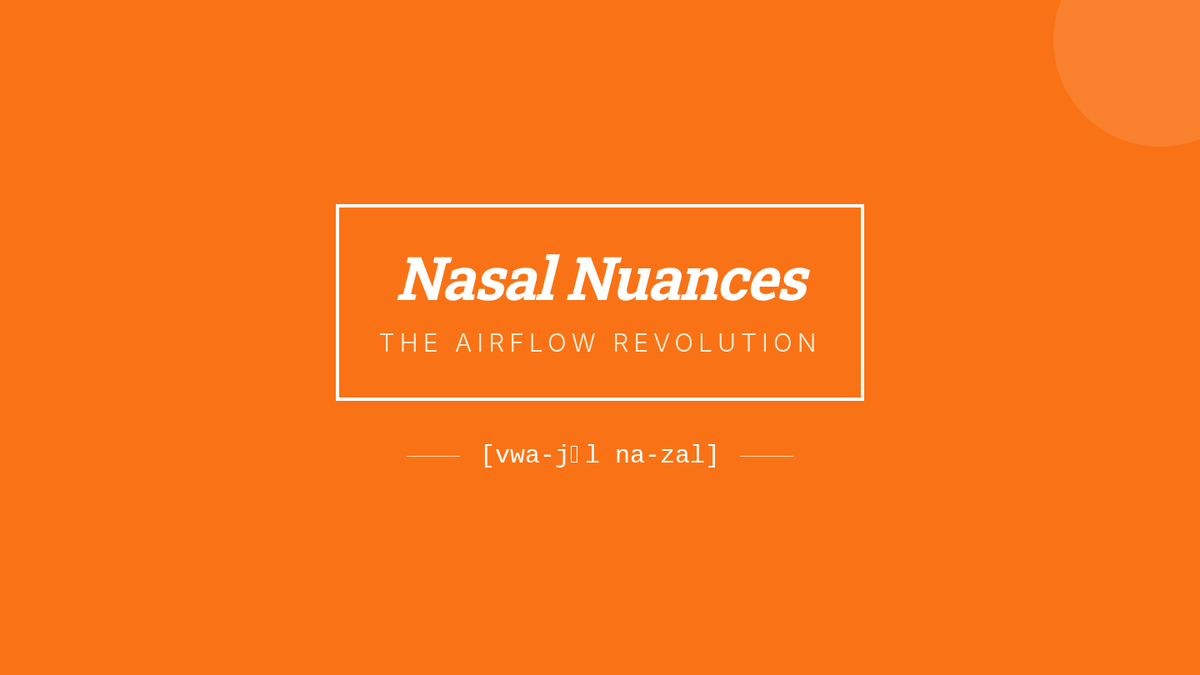
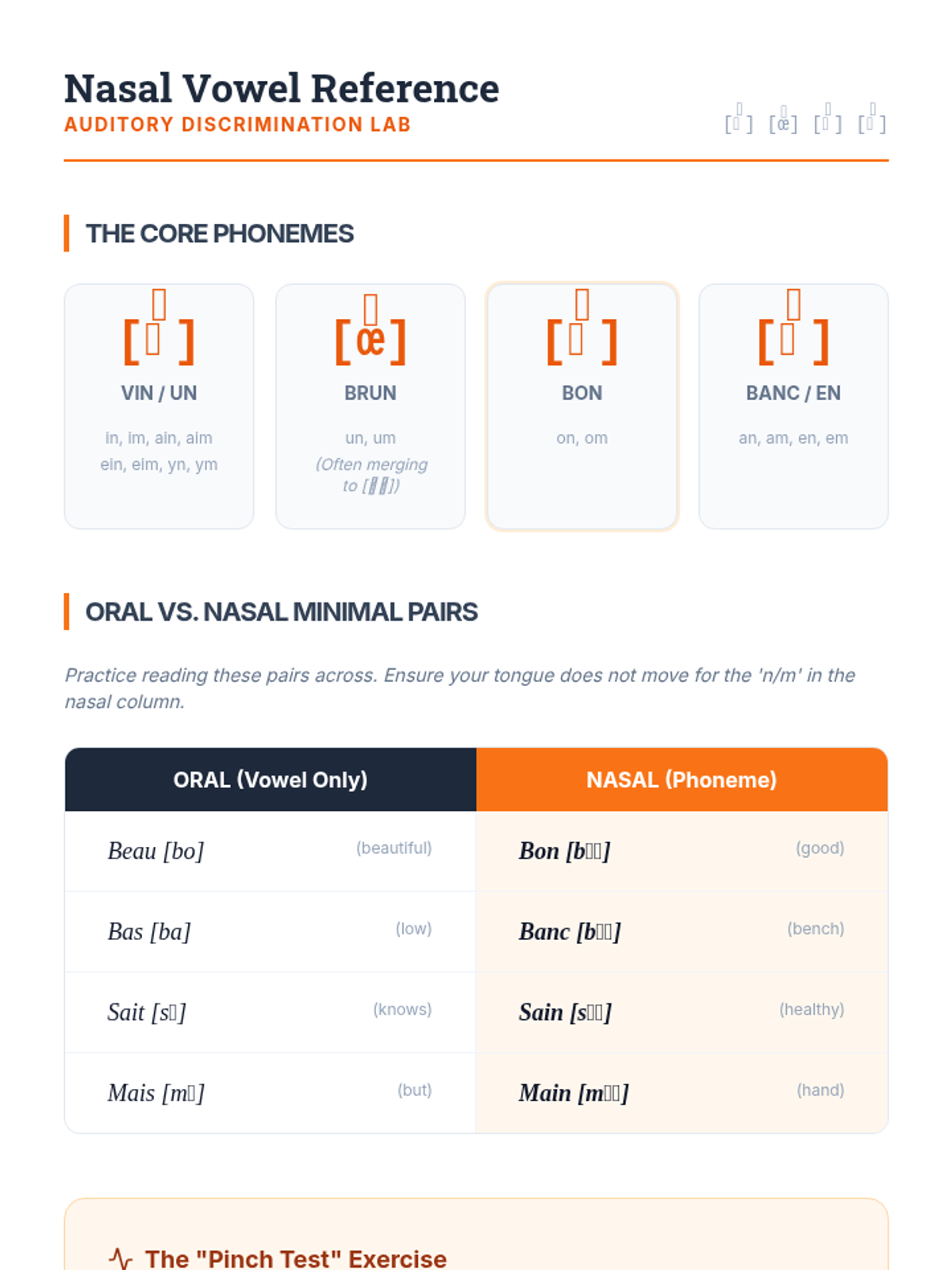
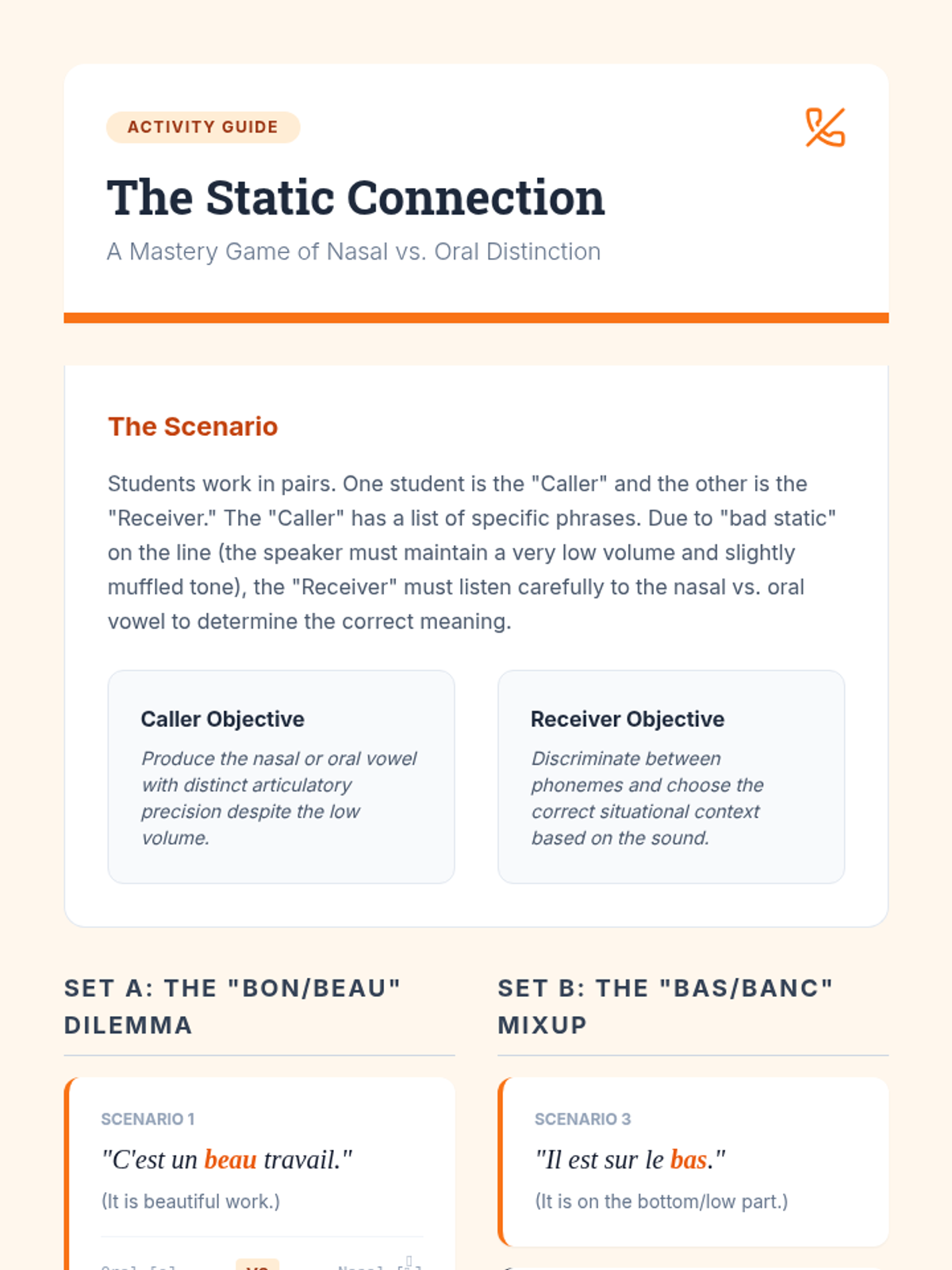
A deep dive into the four primary nasal vowels of French. Students learn to control airflow and distinguish nasal sounds through minimal pair exercises.
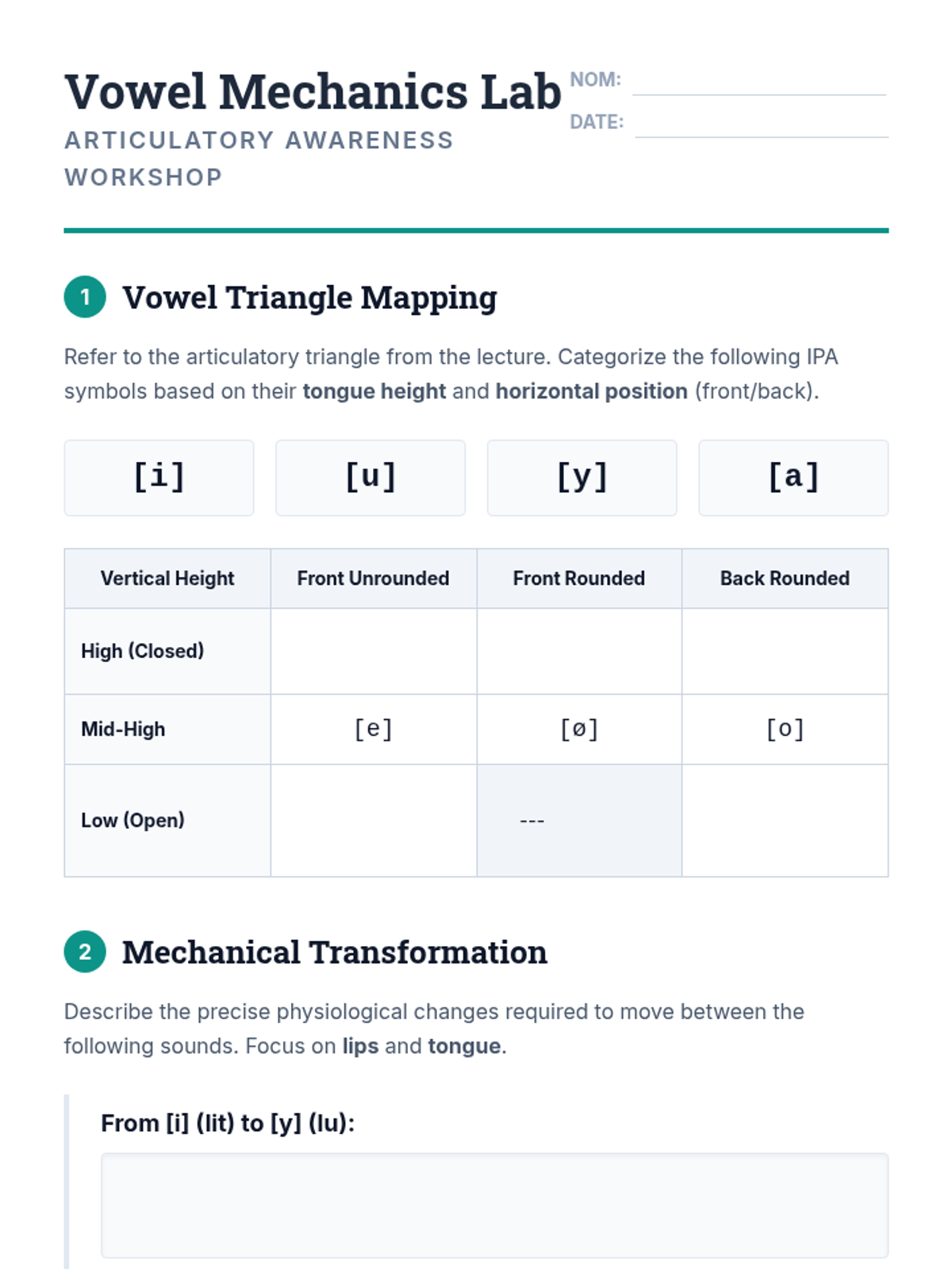
Students analyze the French vowel triangle and the mechanics of lip rounding and tongue height. Using the International Phonetic Alphabet (IPA), they practice producing pure vowels like [y] and [u].