Students learn to listen for and identify time using the 24-hour system commonly used in France, matching spoken times to clock faces.
A comprehensive lesson for Spanish I/II students to learn and practice vocabulary related to love and relationships in the context of Valentine's Day. Students will move from interpretive vocabulary acquisition to interpersonal and presentational sentence building.
Students will learn and use Spanish vocabulary for love and relationships, progressing from identifying terms to writing original sentences about emotions and ideal partners.
A lesson focused on the life of Selena Quintanilla, using the past tense to analyze how an author's diction and syntax build mood and tone in a biographical text.
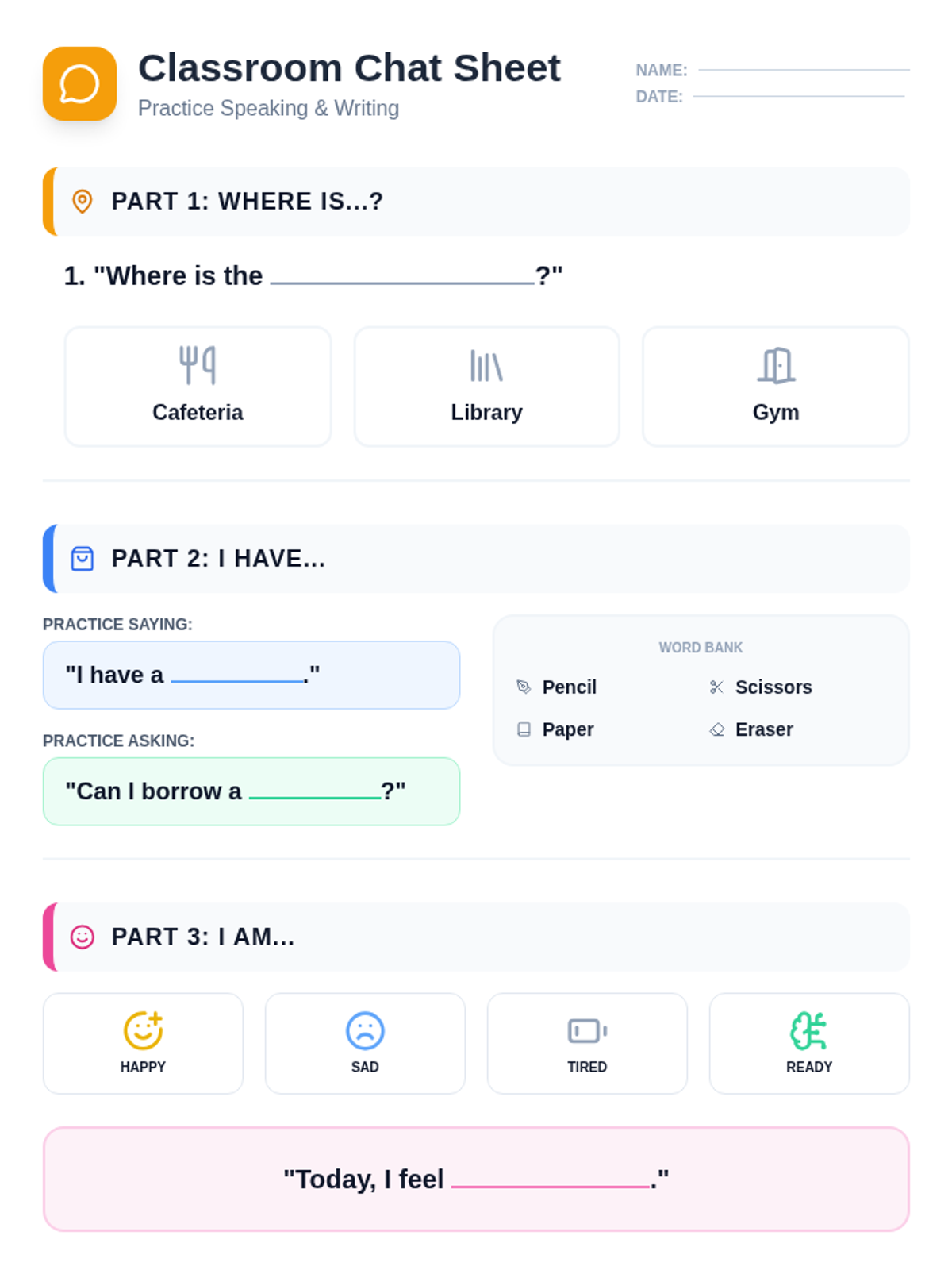
A foundational lesson for Level 1 English Learners to practice constructing simple Subject-Verb and Subject-Verb-Adjective sentences using visual scaffolds and word banks.
A comprehensive lesson on the Spanish imperfect tense, focusing on childhood descriptions and habits using a scrapbook theme. includes instructional slides, note-taking guides, and intensive conjugation practice.
A comprehensive 100-minute direct instruction lesson on the Spanish imperfect tense, focusing on describing childhood habits and routines. Includes visual slides, a guided note-taking packet, and an assessment.
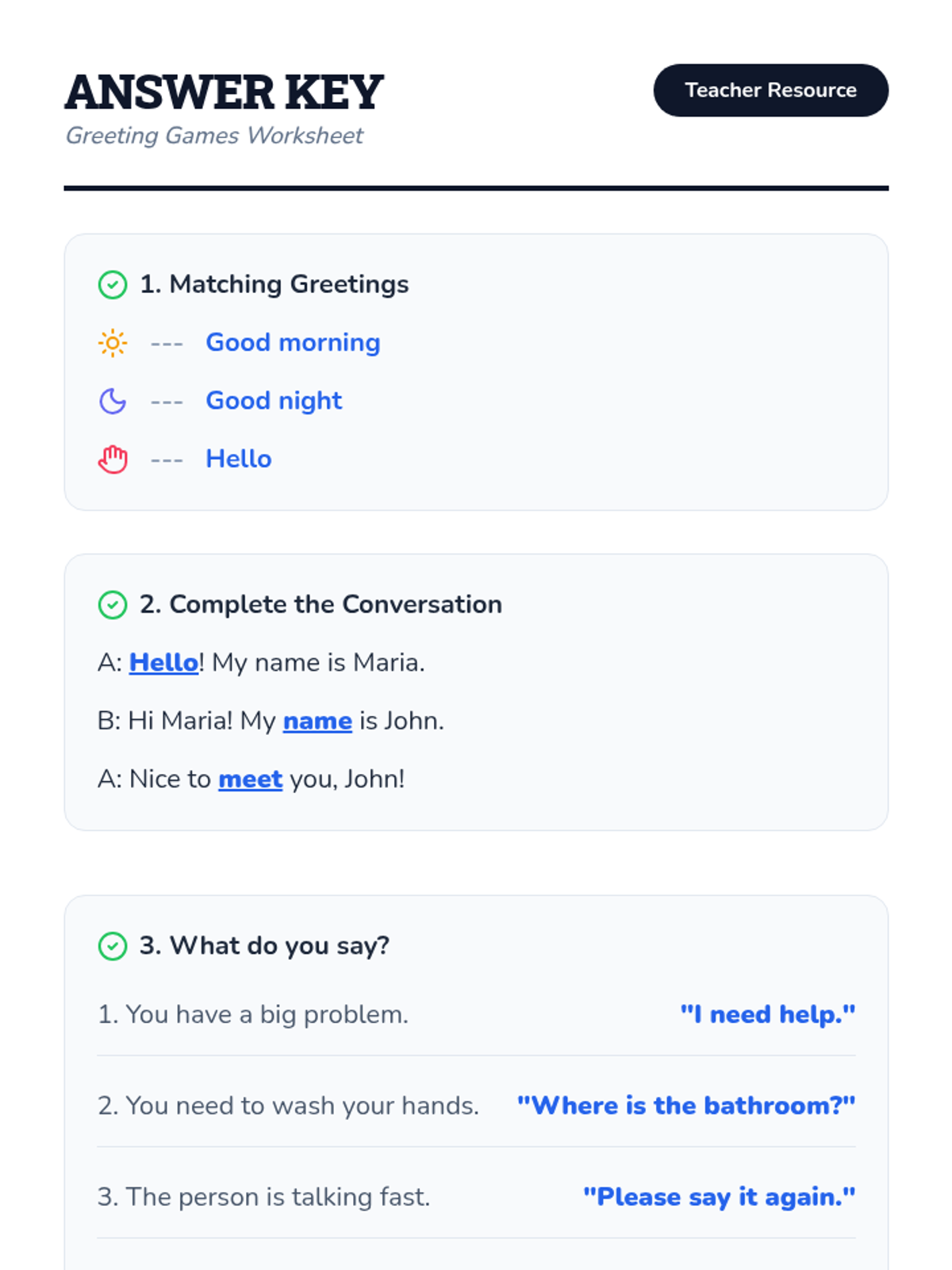
A foundational lesson covering essential German greetings and introductions alongside an introduction to the German case system (nominative, accusative, and dative). Students will practice social interactions and understand how nouns change based on their role in a sentence.
A comprehensive 100-minute lesson on the Spanish imperfect tense, focusing on nostalgic descriptions and childhood routines through structured notes, slides, and a 30-question conjugation challenge.
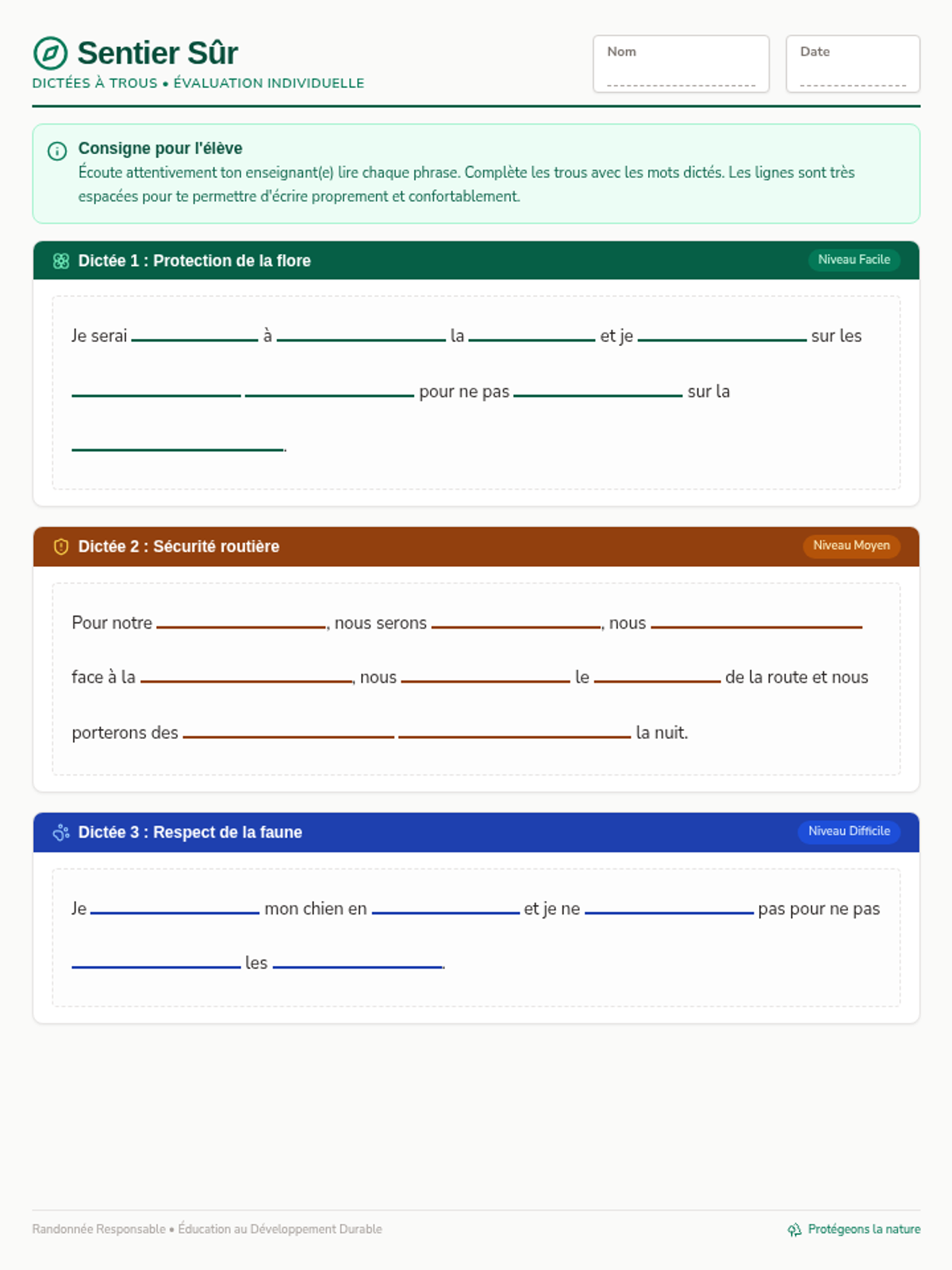
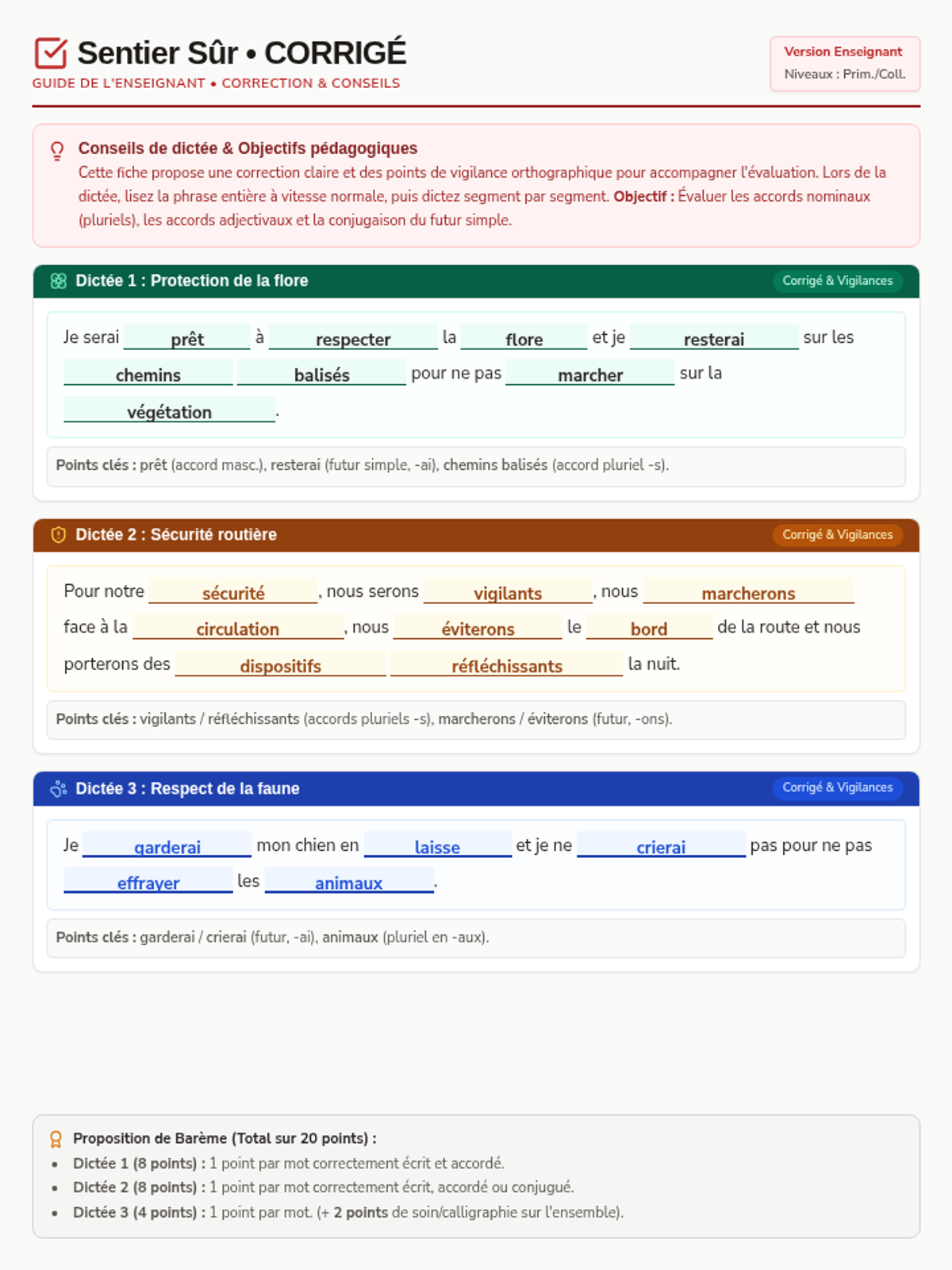
Cette leçon explore la formation et l'emploi du participe passé, du plus-que-parfait et du passé antérieur, en mettant l'accent sur la chronologie des actions passées.
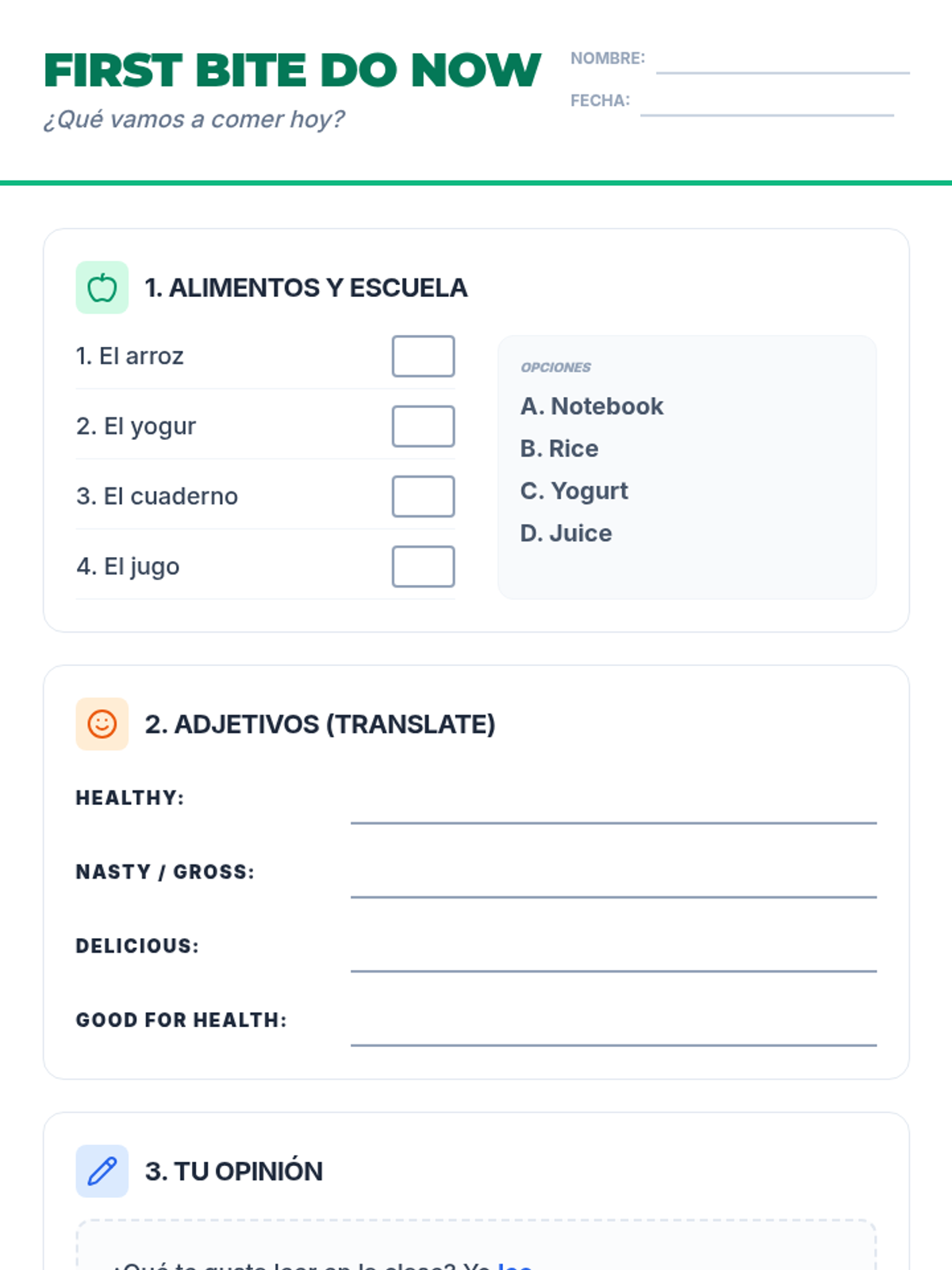
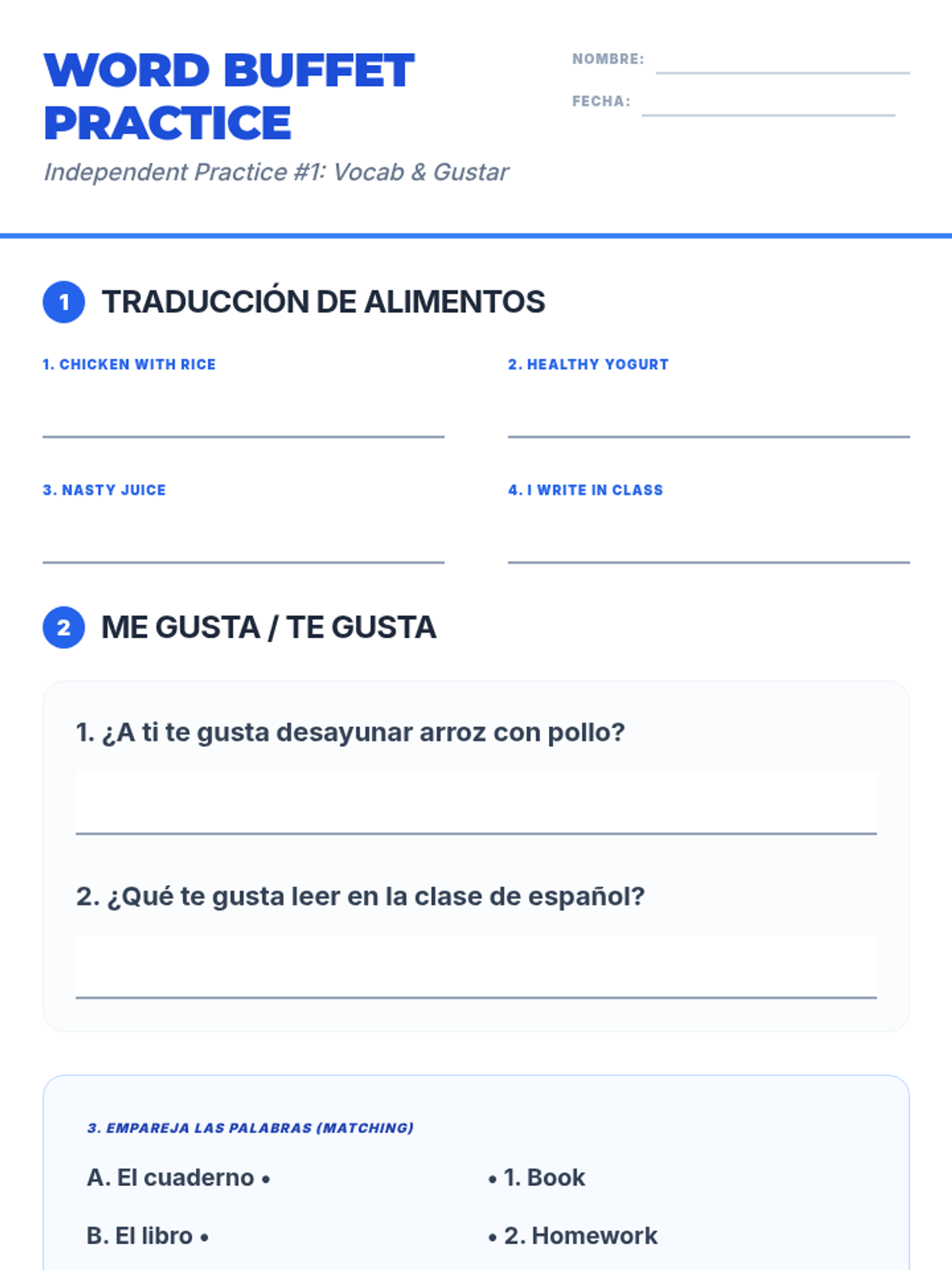
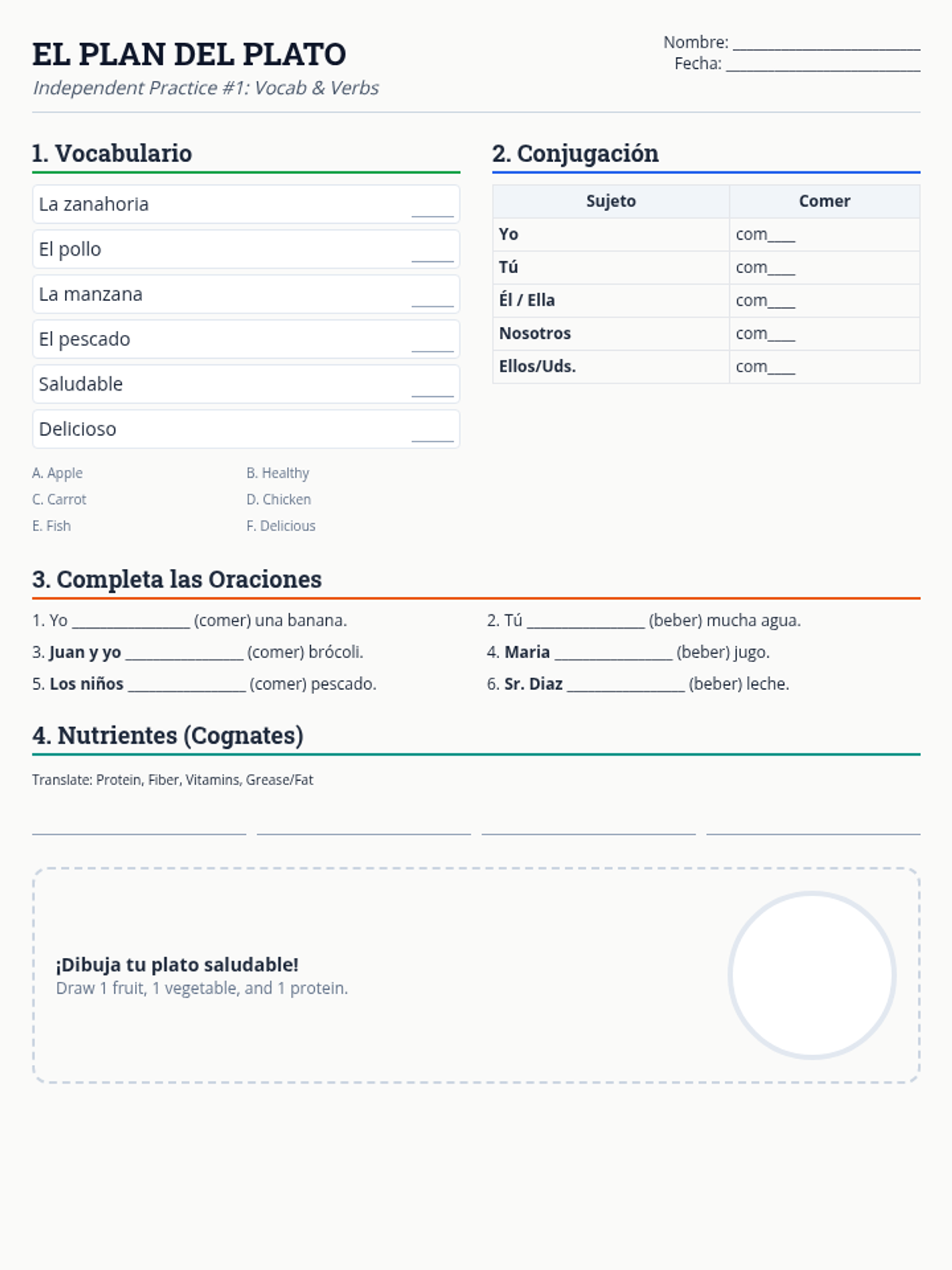
An immersive culinary language lesson for adult learners focusing on food vocabulary, restaurant interactions, and cultural dining customs.
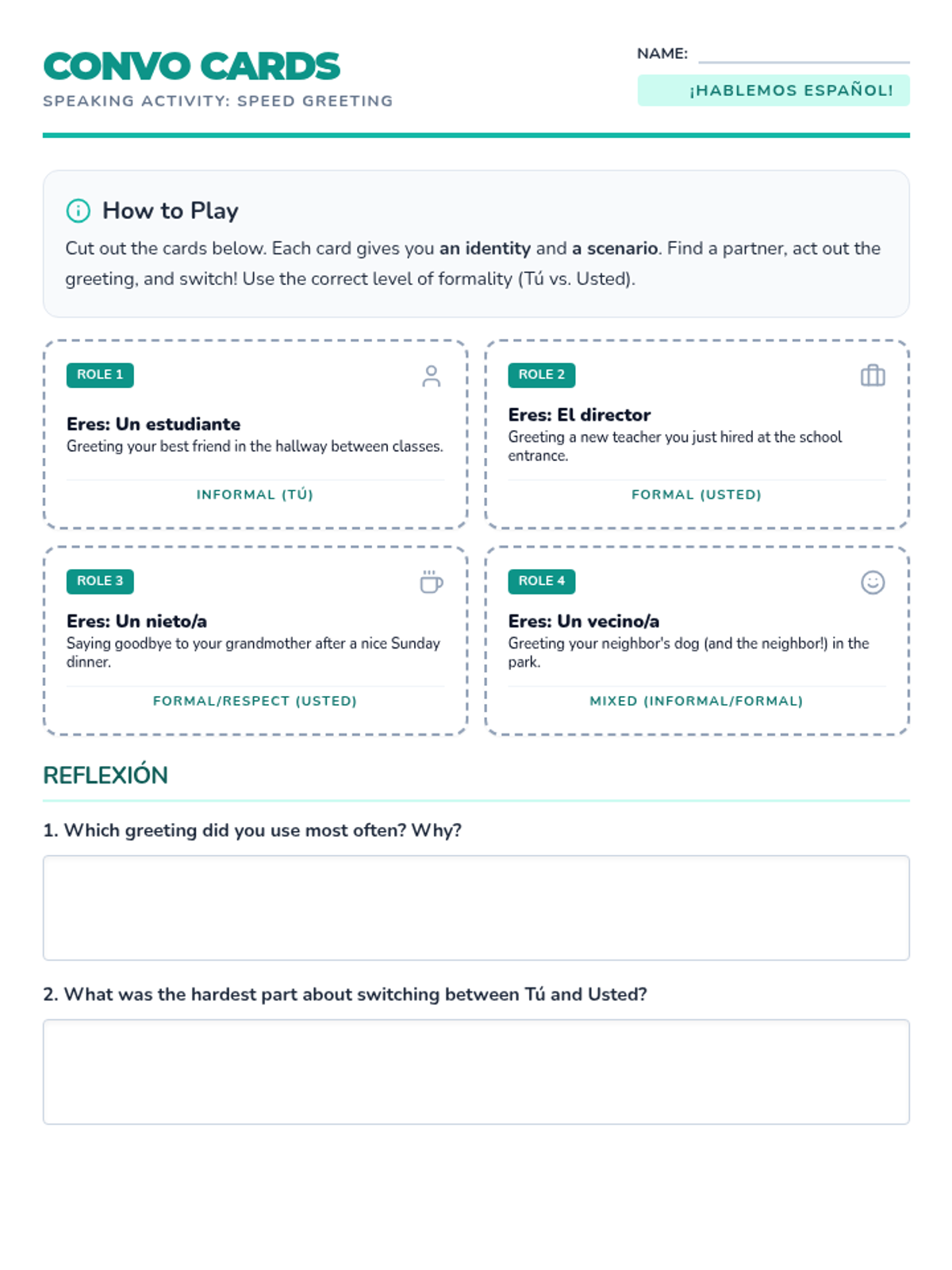
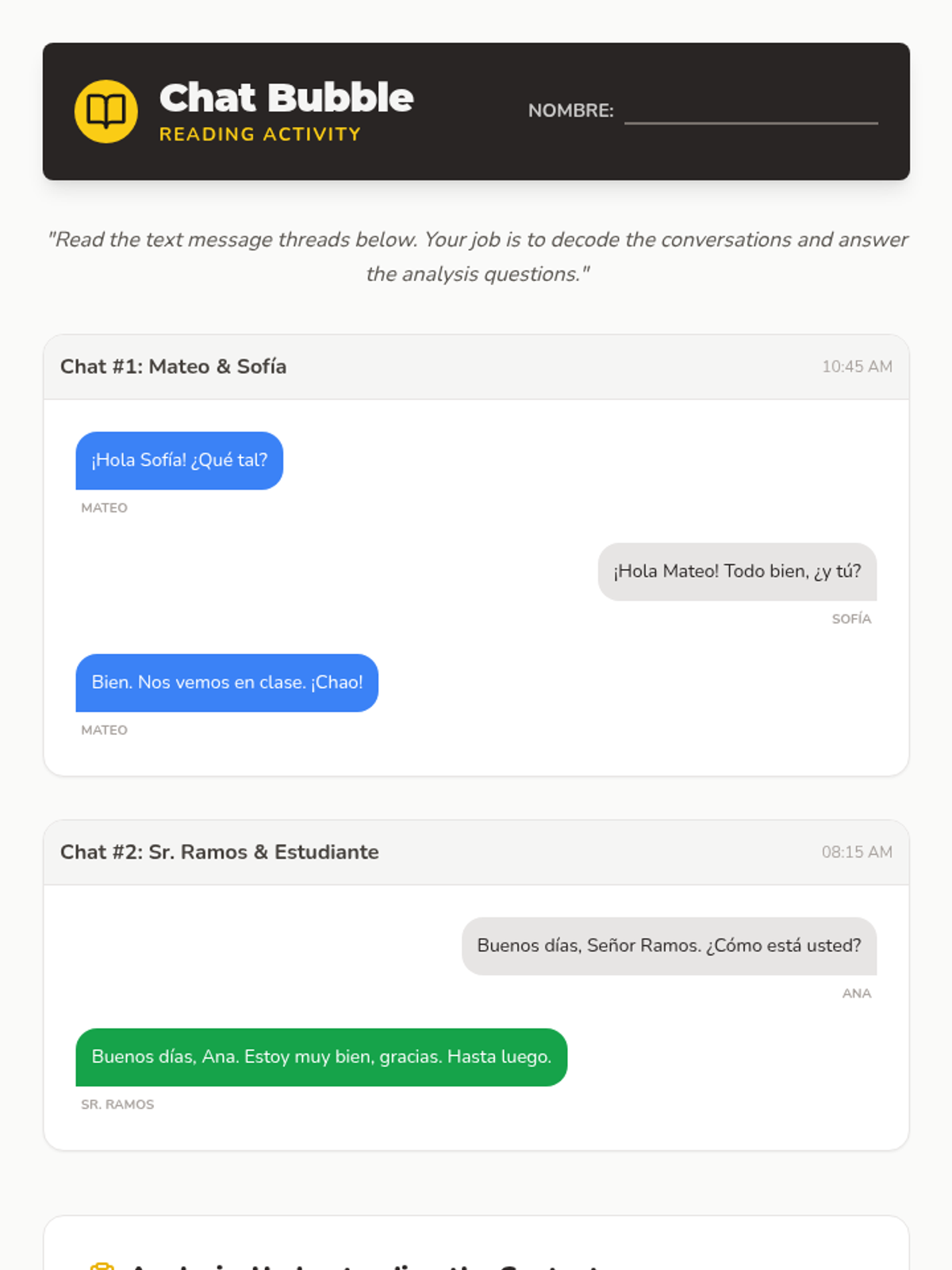
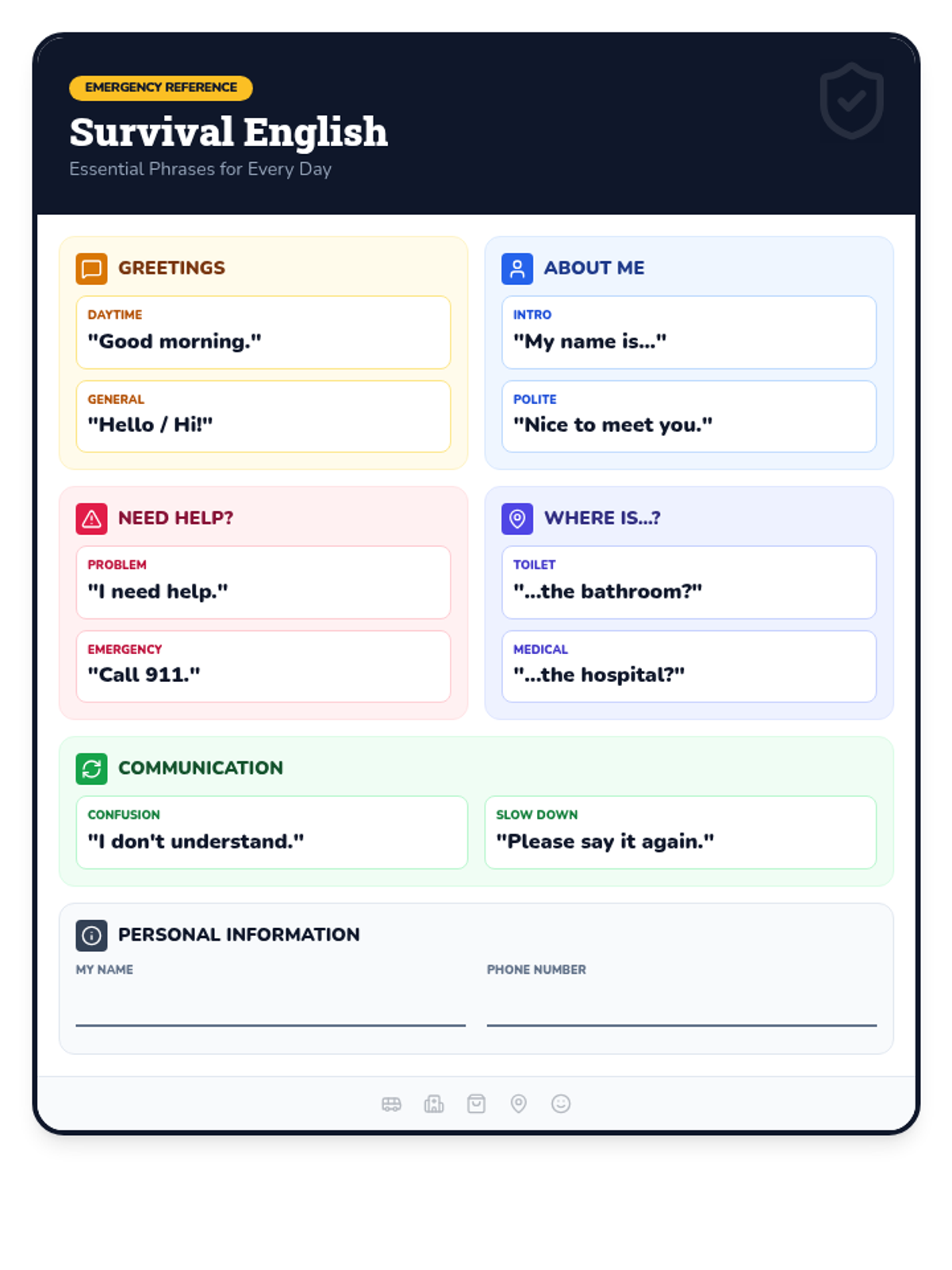
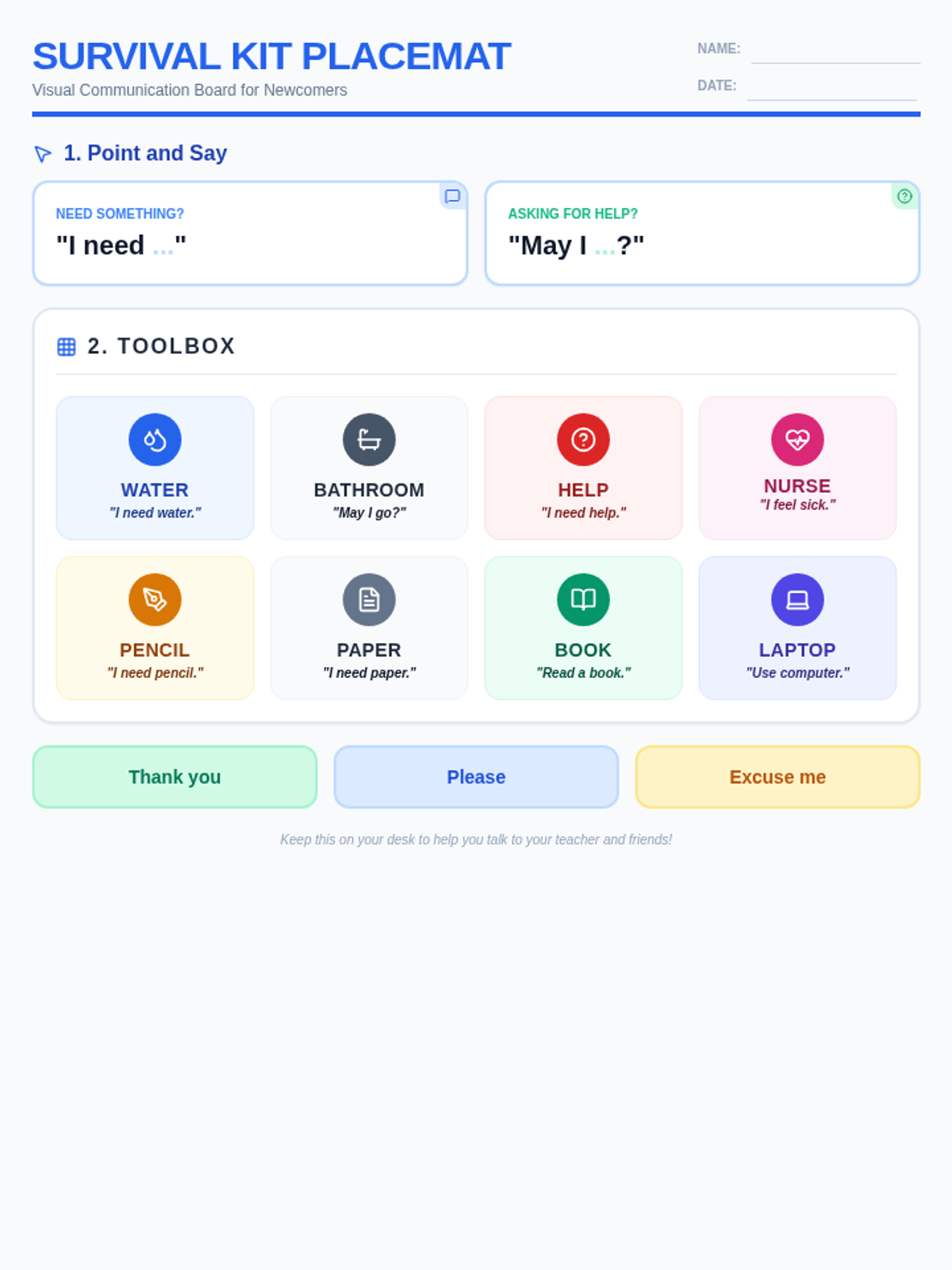
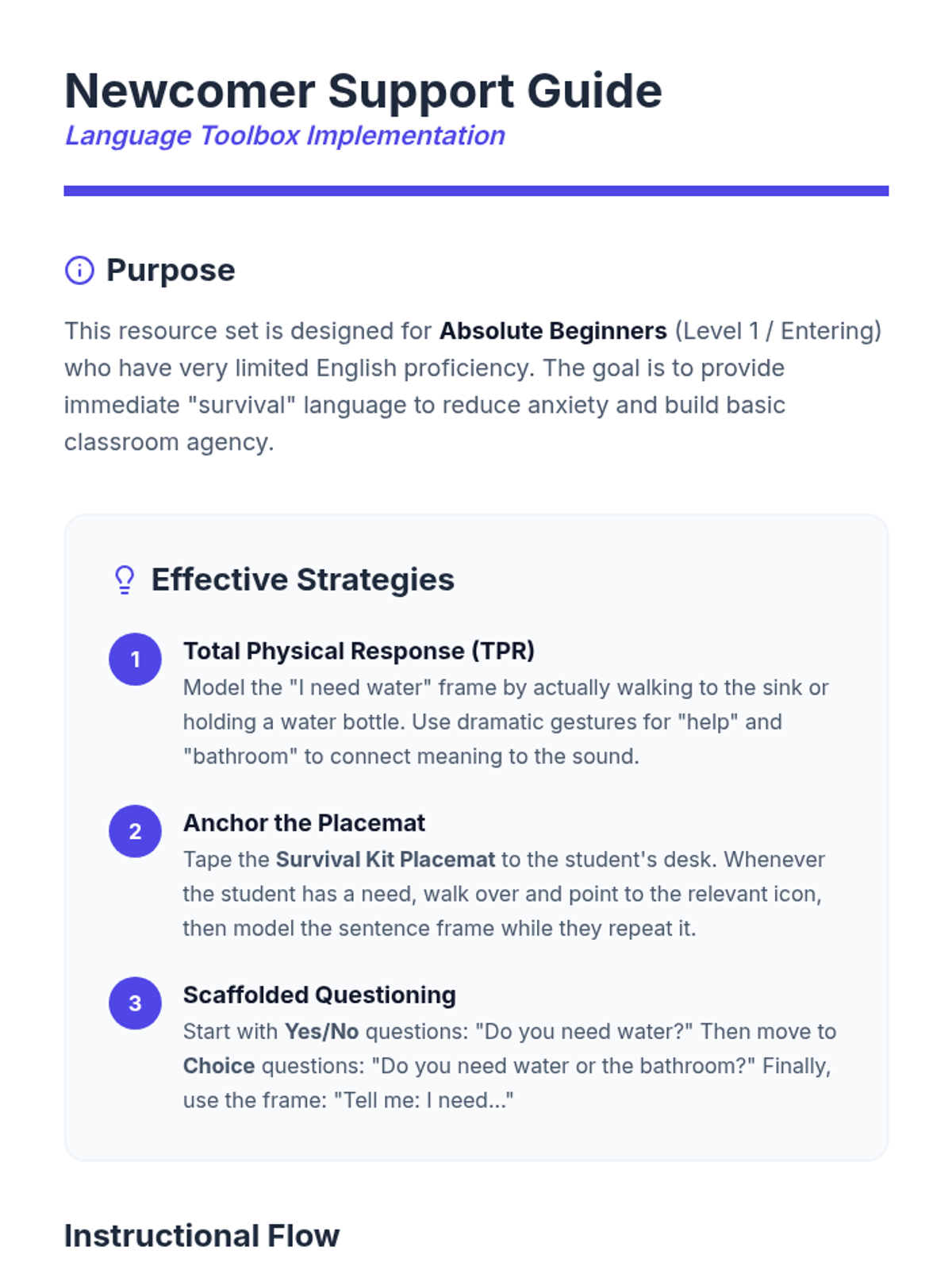
A comprehensive toolkit for foreign language teachers to bridge the gap between rote memorization and spontaneous oral communication through interactive activities and low-stakes scaffolding.
An introductory lesson to American Sign Language covering the alphabet, numbers 1-10, family members, and common household objects. Students will practice both expressive and receptive skills through various activities.
Una lección centrada en el tercer capítulo de la memoria de Melba Pattillo Beals, explorando los eventos iniciales de la integración de Central High School.
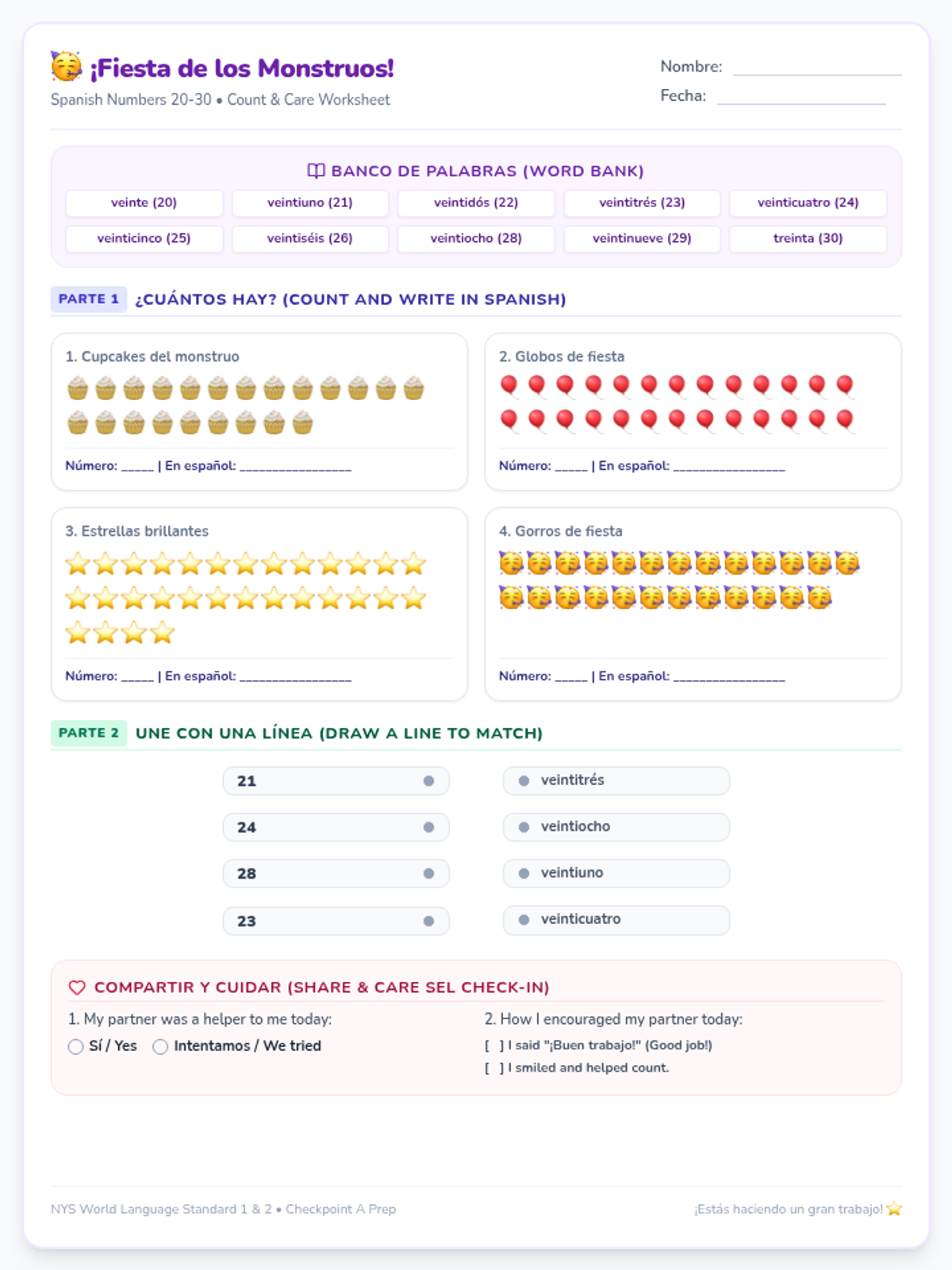
A follow-up lesson on household chores (quehaceres) focused on reinforcing vocabulary through visual practice and sentence construction. Students will engage with 30 different practice items ranging from simple identification to contextual application.
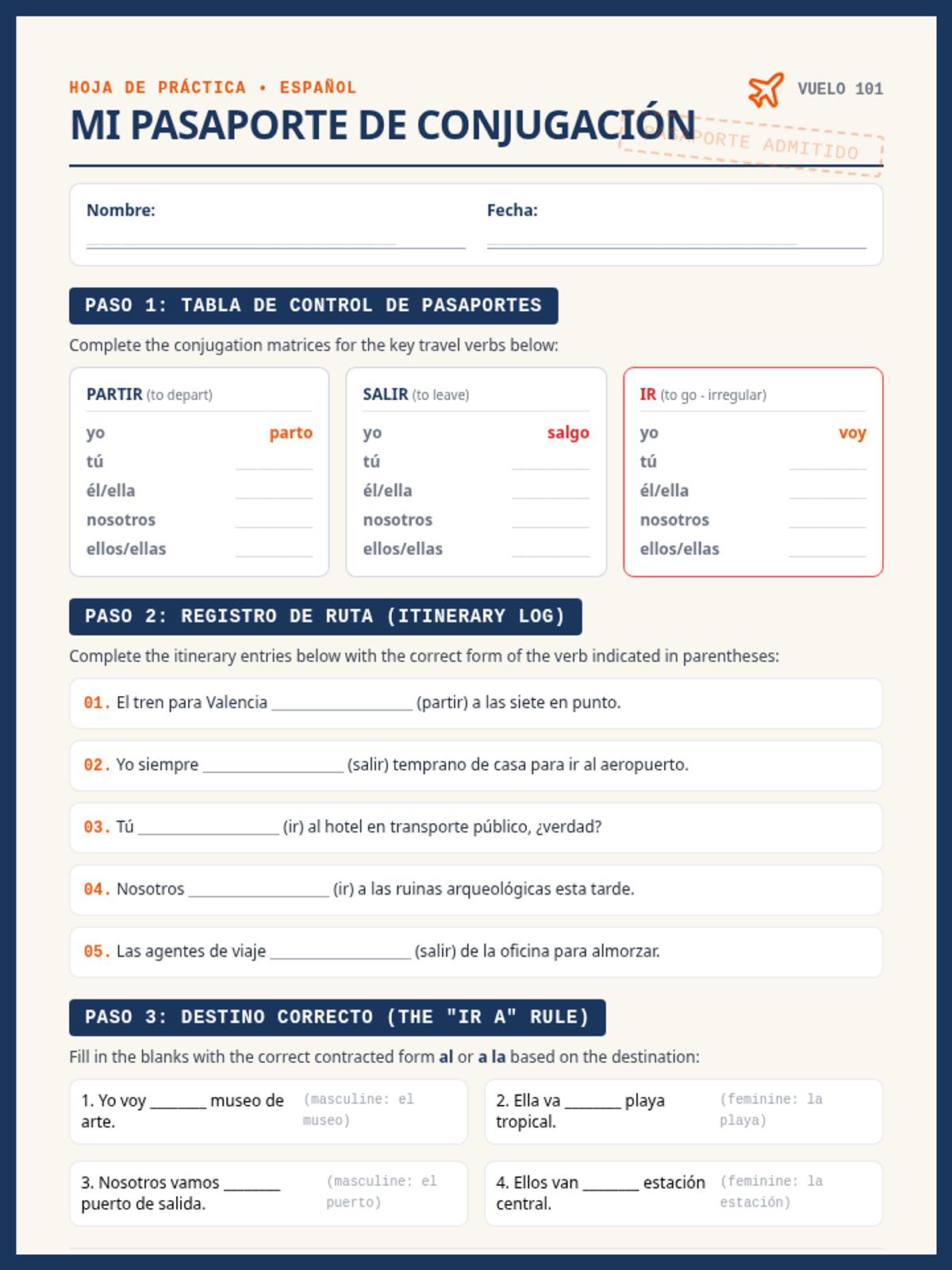
A comprehensive lesson focused on Spanish household chore vocabulary, the 'tener que' + infinitive grammar structure, and cultural reflections on domestic responsibilities.
A lesson focused on the cultural tradition of sending Valentine's Day cards, designed for ESL students to practice functional reading and writing skills.
A lesson exploring the linguistic connections between Latin, Romance languages, and English through the lens of 'linguistic detective work.' Students identify cognates and understand the historical influence of the Roman Empire on modern speech.
A fun, movement-based lesson for early elementary ESL students to learn directional opposites (Up/Down, High/Low) using playground equipment and a catchy song. Students will engage in pronunciation practice, video analysis, and a partner dictation activity using character cut-outs.
A vibrant, high-energy vocabulary reinforcement lesson for 1st-grade ESL/ELL students focused on identifying and labeling body parts through song, movement, and a creative monster-building activity.
A foundational ESL lesson focused on numbers 1-10, connecting spoken words, written forms, and quantities through music, video, and movement. Students engage in choral counting, video-based handwriting practice, and a classroom-wide labeling activity.
A foundational grammar lesson for ESL/ELL students focusing on the four most common irregular verbs (be, have, do, say) and their past tense forms through video analysis and scaffolded storytelling.
A lesson for English Language Learners to identify and practice common American idioms using visual aids and video-based instruction. Students will explore literal vs. figurative meanings and practice using idioms in spoken sentences.
A whimsical, 'Time Wizard' themed lesson where ESL students master prepositions of time through categorization, a guided video analysis, and a sentence scramble activity. Students will learn to distinguish between point-in-time, duration, and deadline prepositions.
An intermediate ESL lesson focusing on prepositions of purpose ('for') and characteristics ('with') through a hands-on classroom object gallery activity.
An intermediate ESL lesson focused on the physical 'geography' of vowel shifts in irregular verbs, using Khan Academy's vowel-shift video as a central teaching tool.
A beginner-friendly ESL lesson focusing on the simplicity of modal verbs, emphasizing that they never change form (no conjugation). Students explore 'can' and 'will' through a collaborative 'Superpower Circle' activity and reflective writing.
A 1st-grade phonics and sight word lesson focused on the word 'cut' and the 'ut' word family, featuring a catchy song and a hands-on sentence scramble activity.
This lesson focuses on helping intermediate ELL students choose the correct relative pronouns (who, that, which) based on whether the antecedent is a person or a thing, using the 'Cranky Witch' mnemonic from Khan Academy.
An intermediate ESL lesson focused on mastering the pronunciation of the most irregular English verbs, specifically targeting vowel shifts in 'said/fled' and silent 'L' in 'could/should/would'.
A lesson focusing on the spatial relationships of opposite prepositions (In/Out vs. On/Off), specifically addressing common ESL errors regarding transportation and enclosed spaces.
A comprehensive lesson for Beginner/Intermediate ELLs focusing on the Simple Aspect (Past and Future). Students will explore the timeline of language through visual aids, a Khan Academy video, and interactive "Will Wall" activities.
This culminating lesson applies the four tones to the syllable 'ma' to demonstrate how meaning changes (mother, hemp, horse, scold). Students participate in a listening game where they identify the correct image based on the tone they hear.
Students practice the sharp, falling pitch of the fourth tone, associating it with a firm 'No!' or a karate chop. The lesson focuses on energy and assertive vocalization to differentiate it from the other tones.
Students engage with the dipping pitch of the third tone, visualizing it as a roller coaster that goes down and up. Through physical bouncing movements, students practice the lower register dip required for this tone.
Learners practice the rising pitch of the second tone, associating it with the English questioning sound 'Huh?'. Students use upward arm movements to trace the sound as they practice rising vocal inflections.
A mastery-based lesson using 'Lǎoshī shuō' (Simon Says) to integrate all previous commands into complex sequences.
Learning 'Pāi shǒu' (Clap hands) and 'Tiào' (Jump) with rhythm and music to reinforce high-energy action vocabulary.
The sequence concludes with a song 'Wǒ ài wǒ de jiā', combining vocabulary with the verb 'to love' and expressive hand motions.
Focusing on sensory verbs 'Tīng' (Listen) and 'Kàn' (Look) through a detective-themed scavenger hunt.
Introducing 'Zǒu' (Walk) and 'Tíng' (Stop) using a Mandarin version of Red Light, Green Light to build impulse control and verb recognition.
Students learn 'Zhàn qǐ lái' (Stand up) and 'Zuò xià' (Sit down) through rapid-fire reaction games. focus is on gross motor response to auditory cues.
Students practice the sentence structure 'Zhè shì...' to introduce their own family members using photos or drawings.
Introduction to grandparents, Yéye and Nǎinai. Students explore generational structures using a visual family tree and storytelling.
In this synthesis lesson, students participate in a pretend tea party, applying all learned greetings in a social setting.
Exploration of siblings in Mandarin, focusing on older and younger distinctions. Students learn Gēge, Jiějie, Dìdi, and Mèimei through size-based activities.
Introduction to the terms for Mom and Dad in Mandarin. Students use finger puppets to practice Bàba and Māma while associating the words with parental figures.